

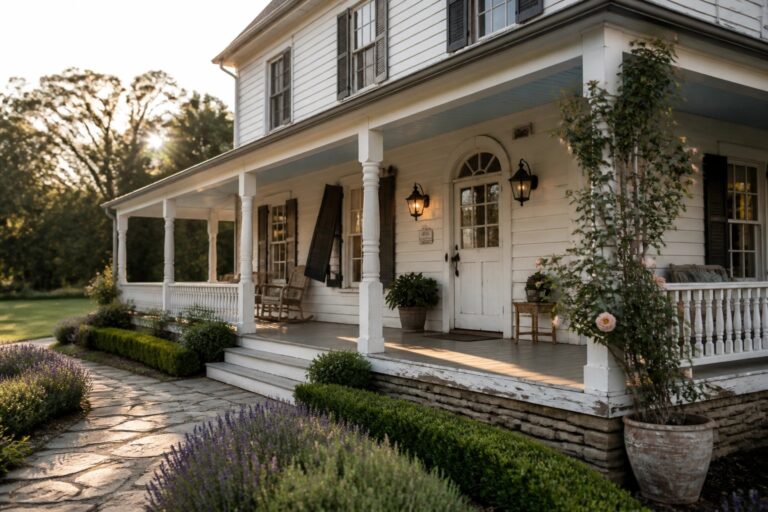
I’ve spent time driving past old farmhouses and seeing how certain siding choices and rooflines hold up once they face real weather and daily use.
The front entry and porch details often catch attention first because they shape how the whole house reads from the street.
Some ideas only make sense once you test them on your own facade.
I keep wondering which window trim styles I would try first if I had a place with a similar footprint.
Materials that echo the original structure usually blend better than ones that stand out too sharply against the existing lines.
Covered Porch With White Columns
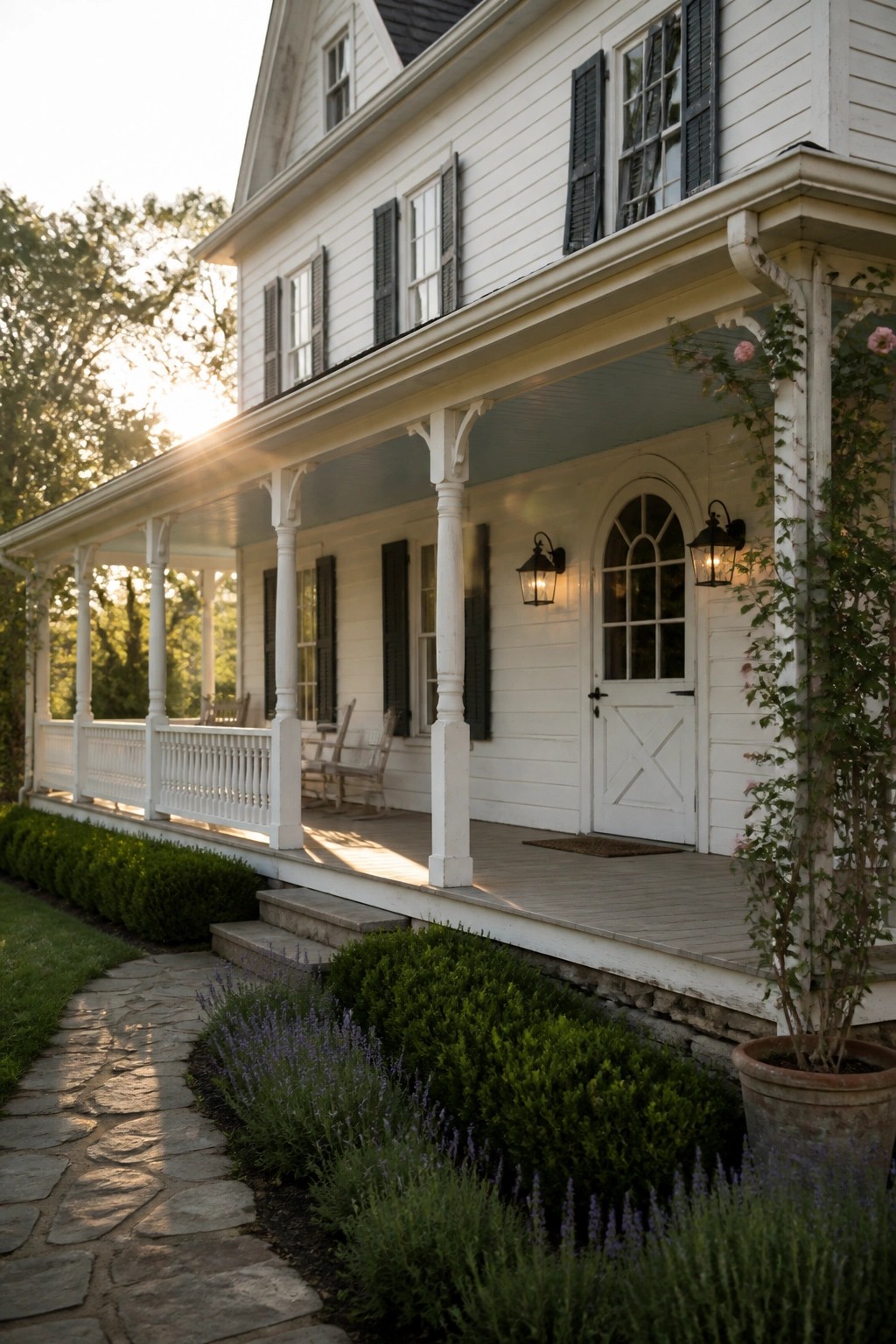
A covered porch like this one adds real presence to a farmhouse without needing much extra detail. The tall white columns hold up the roof and create a steady rhythm along the front, which helps the house feel grounded and welcoming at the same time.
This works best on homes with simple siding where you want to add depth at the entry. Match the column color to the trim and keep the railing straightforward so the porch feels like it has always been there.
Define the Entry With a Gate
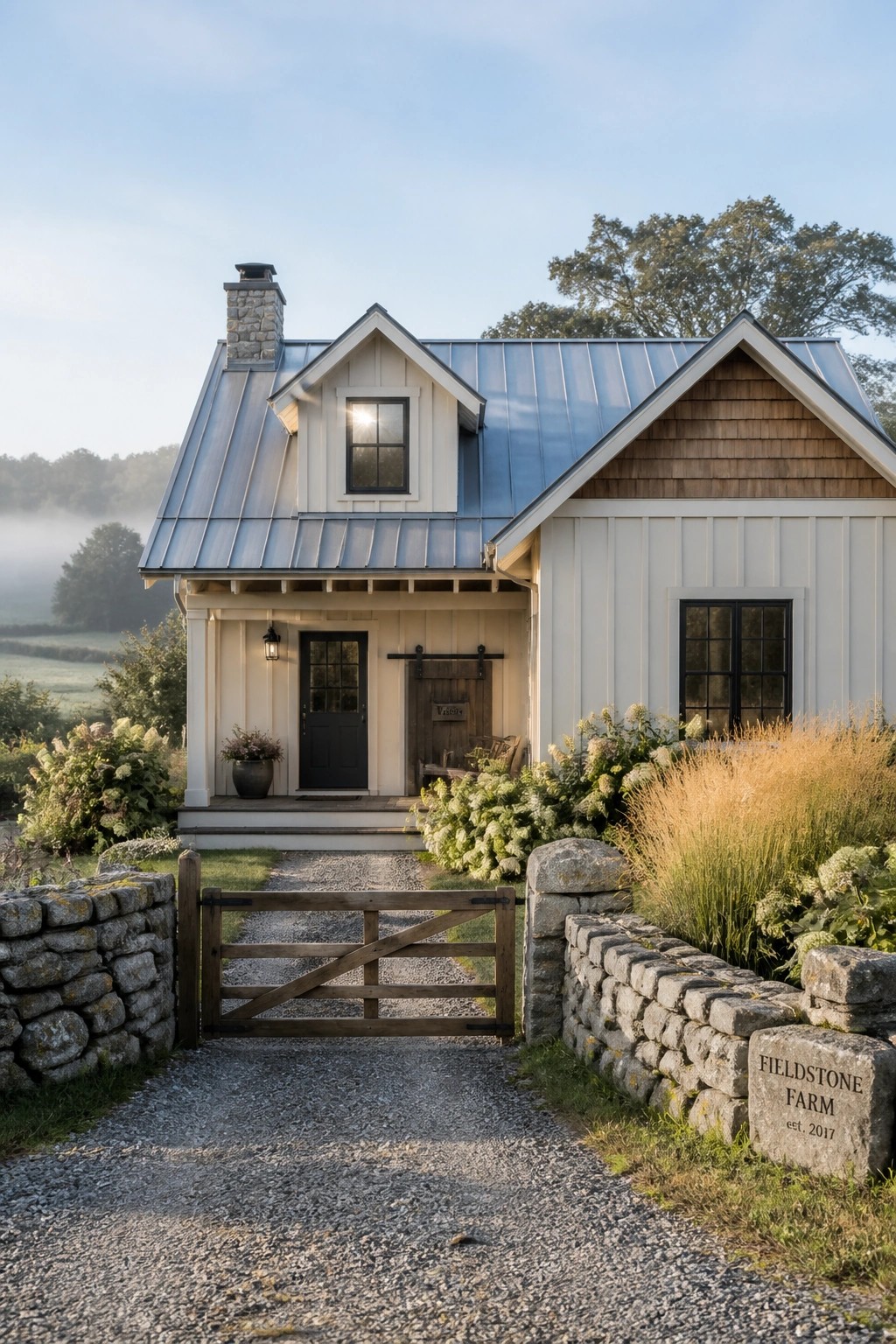
A simple gate at the end of the drive does more than keep things in or out. It gives the whole front a settled look and makes the house feel like it has a clear starting point. On farmhouses, this small addition often pulls the eye forward and makes the approach feel intentional without any extra fuss.
Stone pillars on either side help the gate feel grounded and keep it from looking like an afterthought. This works best on homes with some land in front, where the gate can sit back from the road. Just keep the design plain so it matches the house instead of competing with it.
Rocking Chairs On The Porch
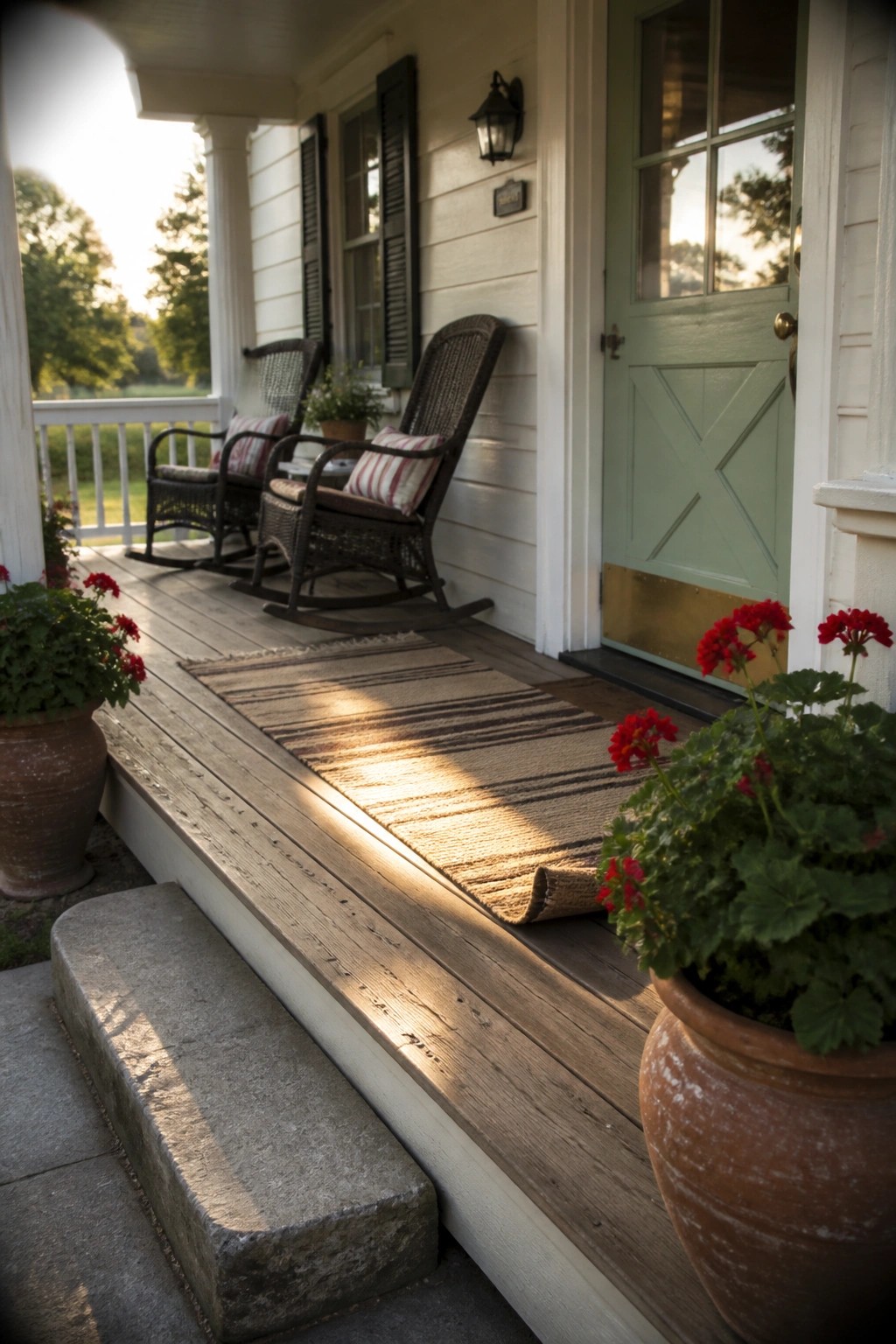
Rocking chairs turn a basic porch into a place meant for sitting. They bring a steady, old-fashioned rhythm that fits right in with farmhouse style and makes the space feel lived in.
Set a pair side by side near the door and add a simple striped rug underneath. This works on most older homes and needs little else to feel right.
Mix Siding Colors on Connected Sections
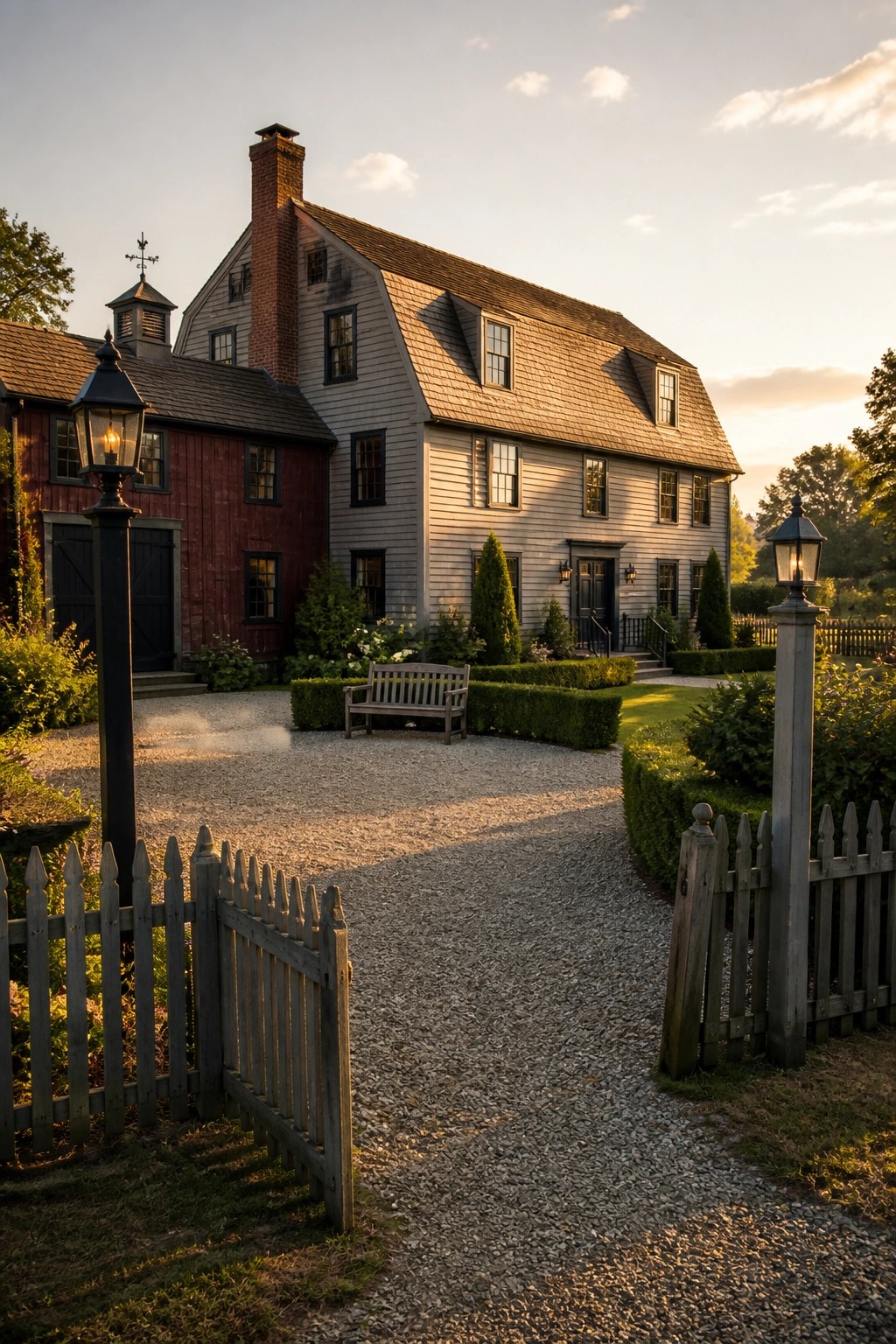
Many old farmhouses grew over time, and painting attached parts in different colors keeps that natural look without making the whole place feel like one flat block. The red wing next to the gray main house adds some depth while still reading as one home.
This works best on houses that already have a smaller addition or barn-style section. Stick to two or three colors max, and make sure the trim stays consistent so it does not turn into a jumble.
Stone Arch Entries
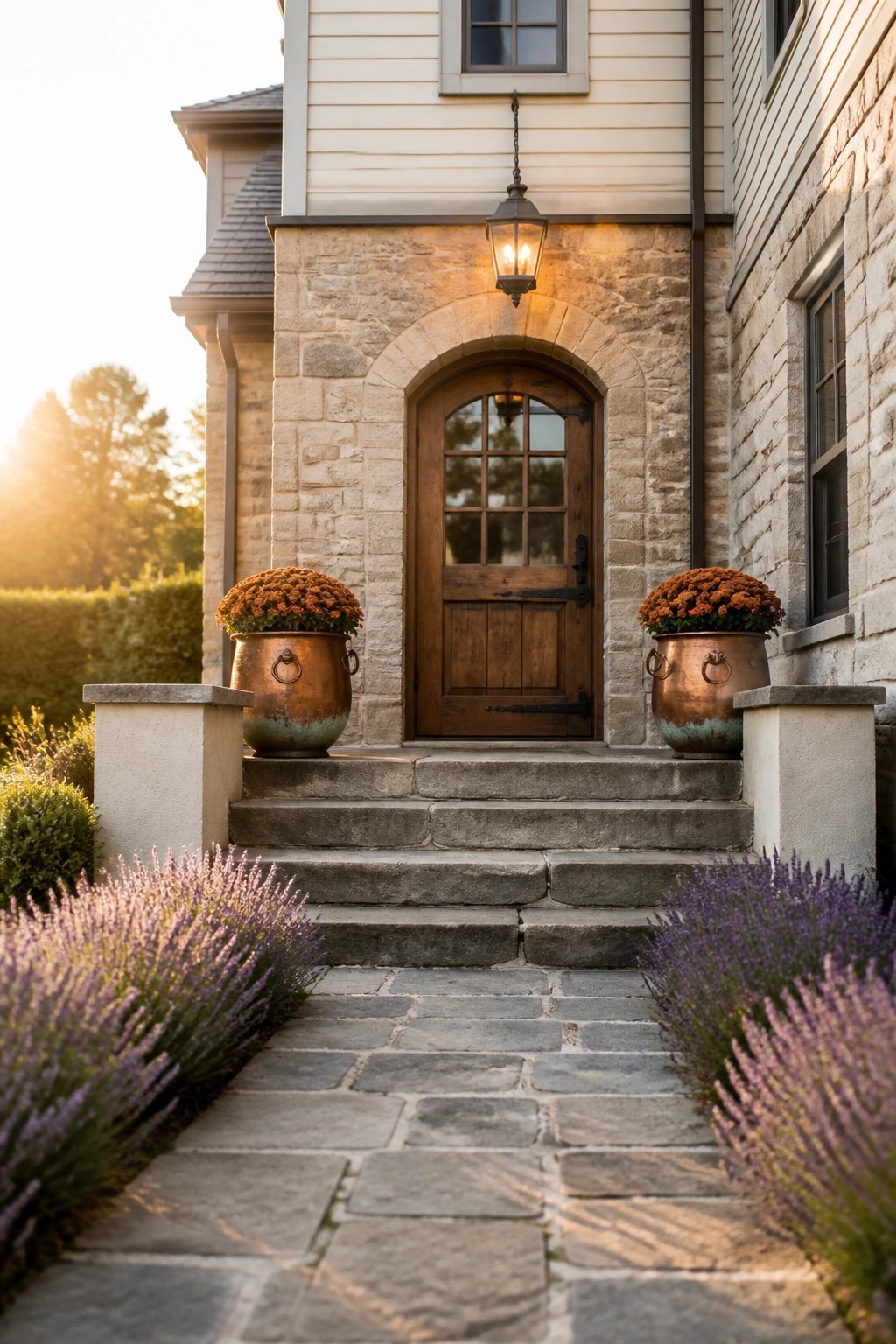
A stone arch over the front door gives an old farmhouse that settled, permanent look without needing a lot of extra trim or decoration. It frames the door nicely and makes the entrance feel solid and intentional, which works especially well on homes with mixed stone and siding.
This detail suits houses that already have some stone or want a bit of texture on the facade. Keep the arch simple in shape and match the stone to any existing foundation or chimney work so it feels like part of the original structure rather than an add-on.
Dark Metal Roofing on White Farmhouses
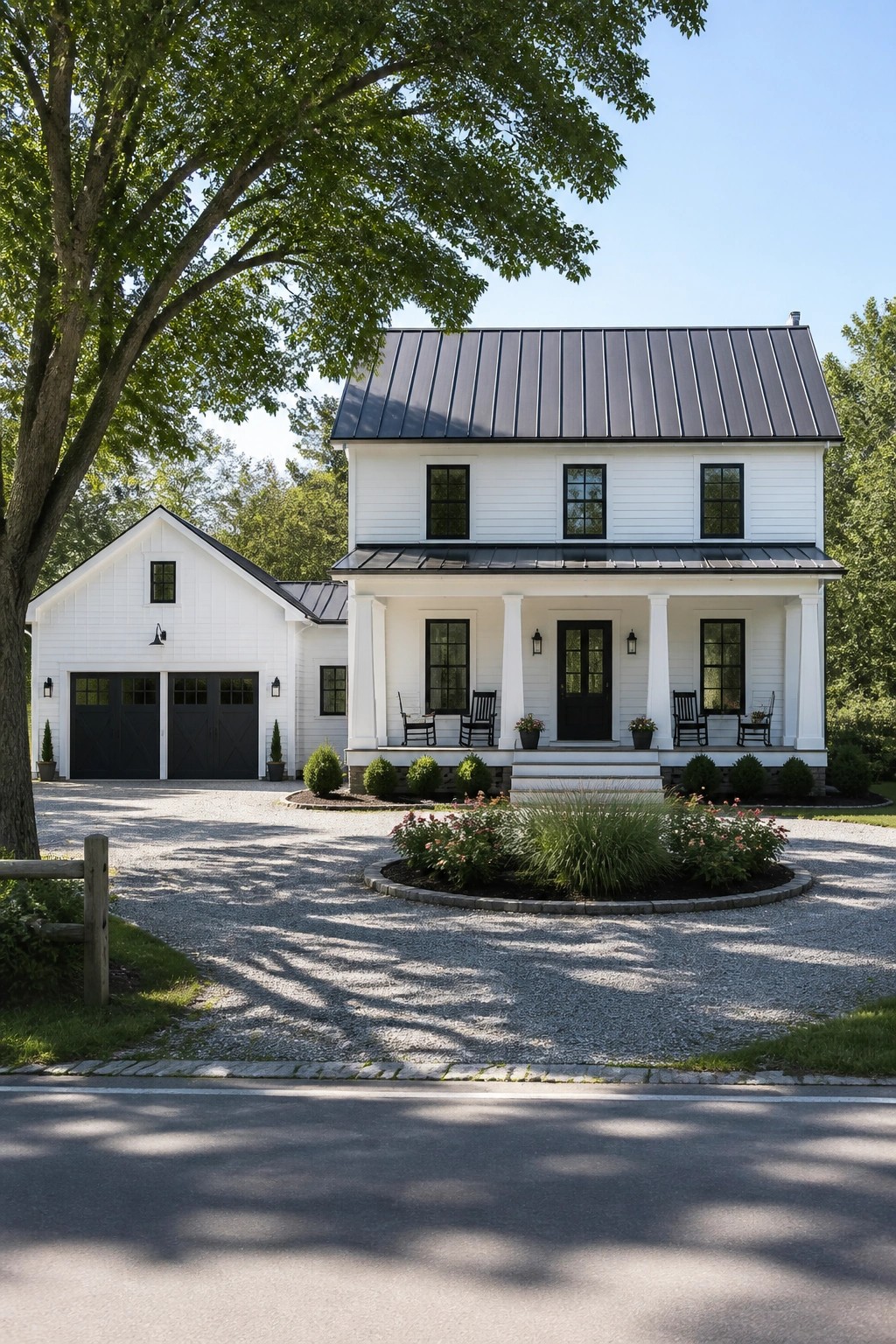
A dark metal roof gives a white farmhouse a clear shape and a bit of weight that white roofs often lack. The contrast keeps the look simple but still interesting, and it holds up well over time without needing much attention.
This works best on homes with straightforward lines and few extra details. Match the roof color to your windows and doors so the whole exterior feels connected instead of busy.
Raised Beds Along a Garden Path
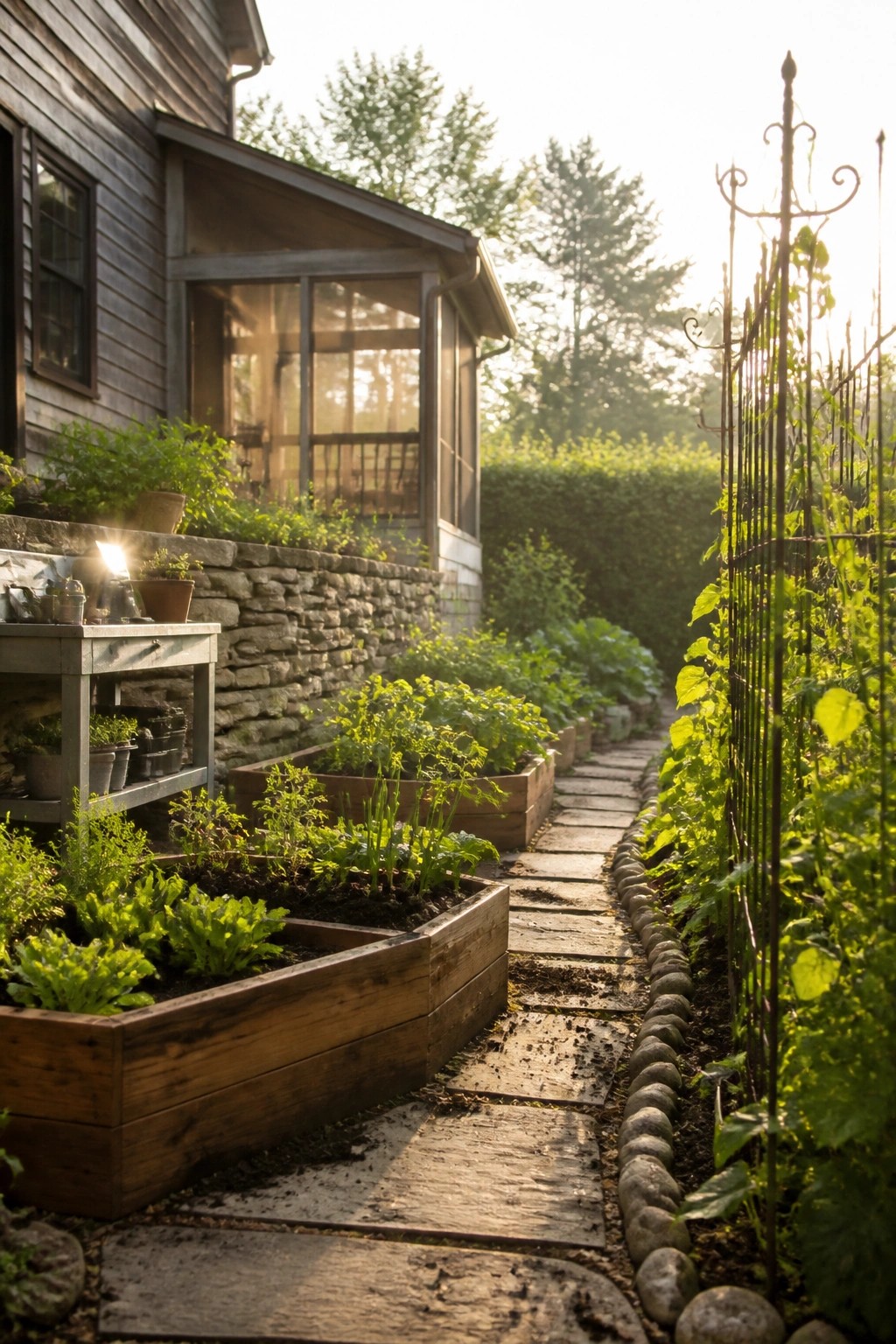
Raised beds placed right along a side path give an old farmhouse a practical garden without crowding the main yard. The beds keep plants organized, make harvesting easier, and add a clear edge that feels like part of the house rather than something tacked on later.
This works best on homes that already have a narrow walkway along one side. Keep the beds low enough to reach across and use a simple fence or trellis behind them so vines can climb without blocking light to the windows.
Mix Shingles With Brick On The Facade
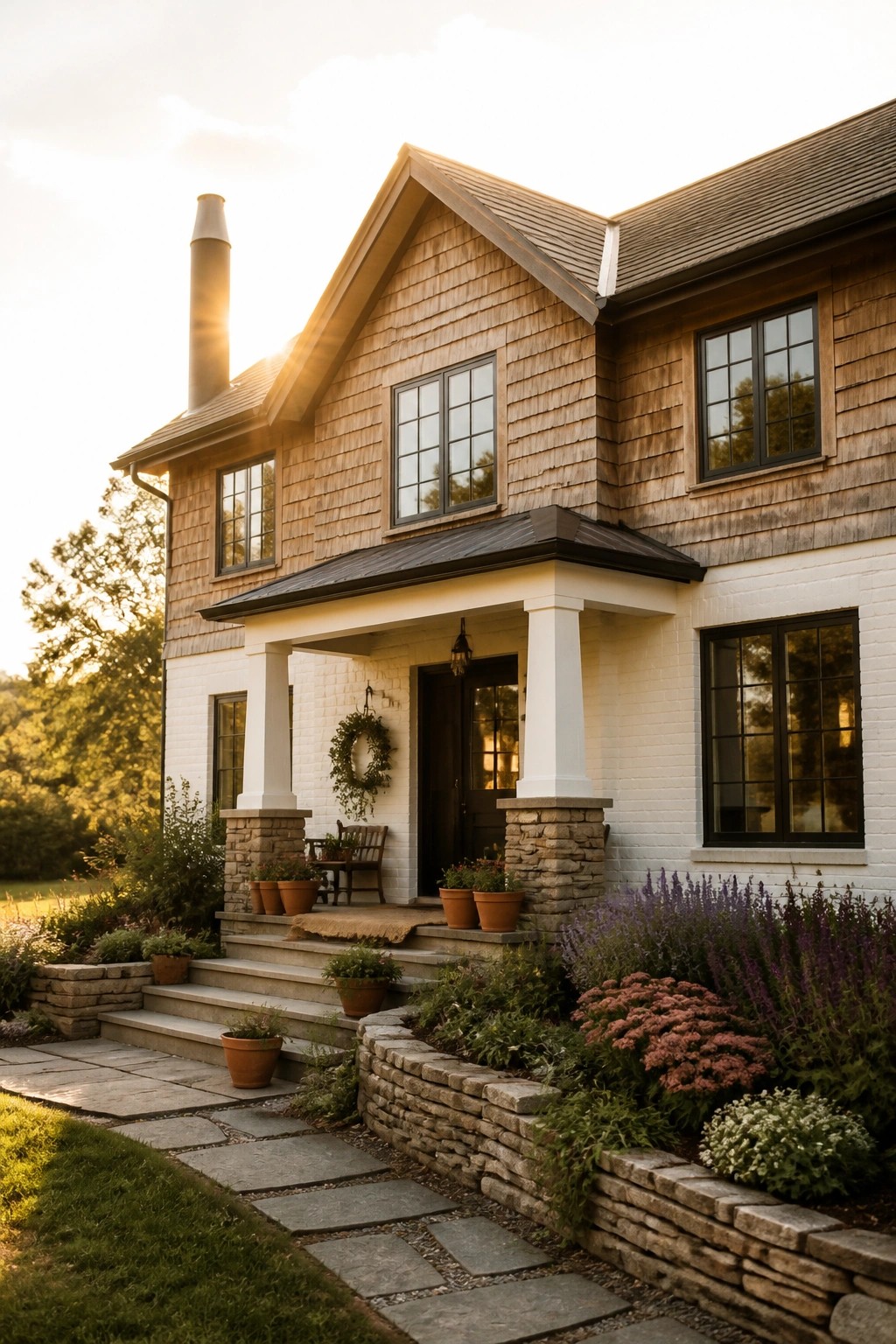
Many older farmhouses get their character from a simple mix of materials. Wood shingles on the upper level add texture and warmth while white brick below keeps the look clean and grounded. The contrast feels natural and holds up over time without needing much extra detail.
This approach works well on homes with a clear roofline break or a front porch that needs a solid base. Stick to two materials at most and let the roof and windows do the rest. Too many finishes can start to feel busy.
A Bold Painted Door
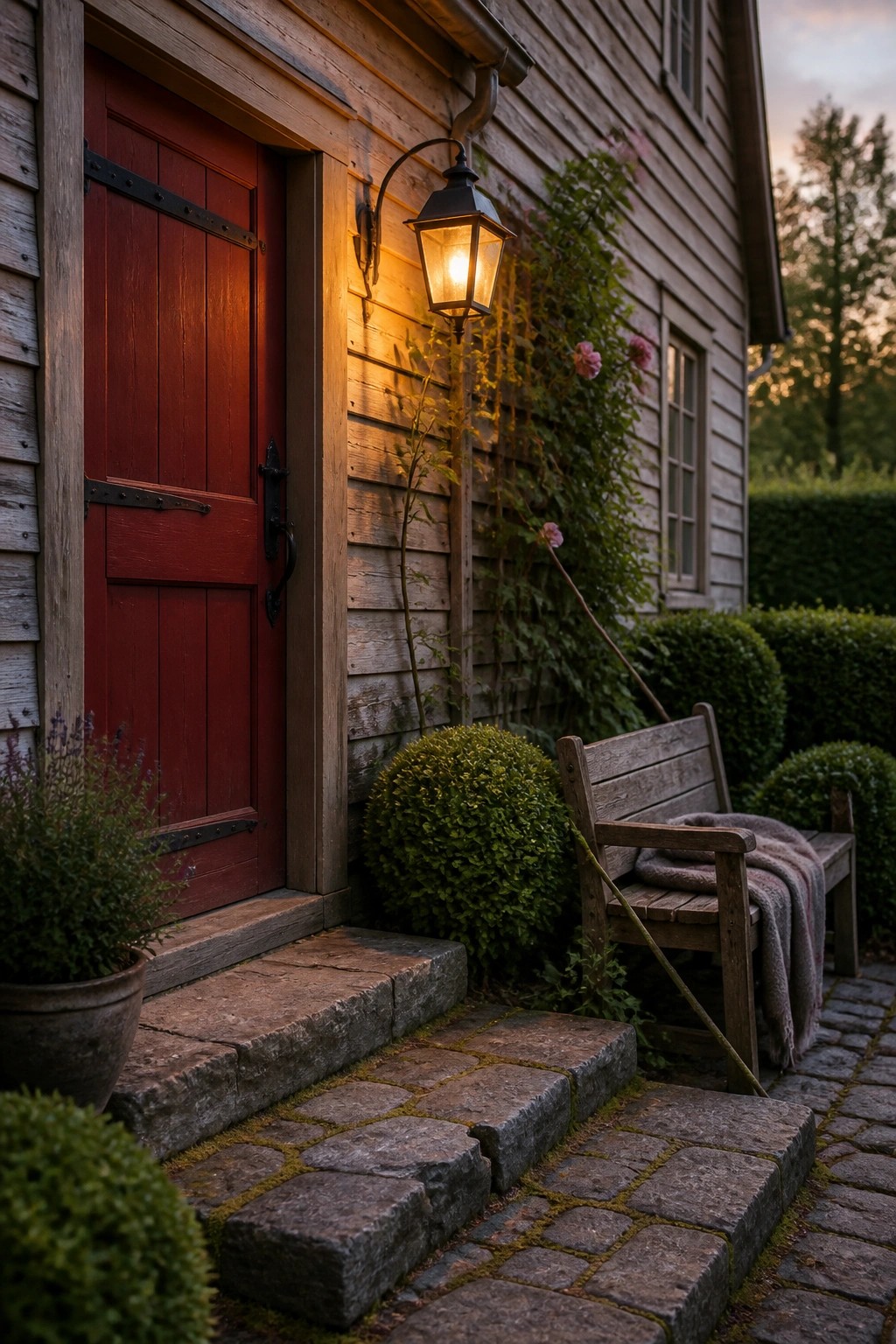
One of the simplest ways to give an old farmhouse more presence is to paint the front door a strong, solid color. The deep red here stands out against the gray wood siding and draws attention straight to the entry without any extra trim or decoration.
This approach works best on straightforward houses where the siding and roofline stay quiet. Use black hardware and a single wall lantern to keep the focus on the door color, and choose a paint made for exterior wood so it lasts through the seasons.
Add a Pergola Over the Outdoor Table
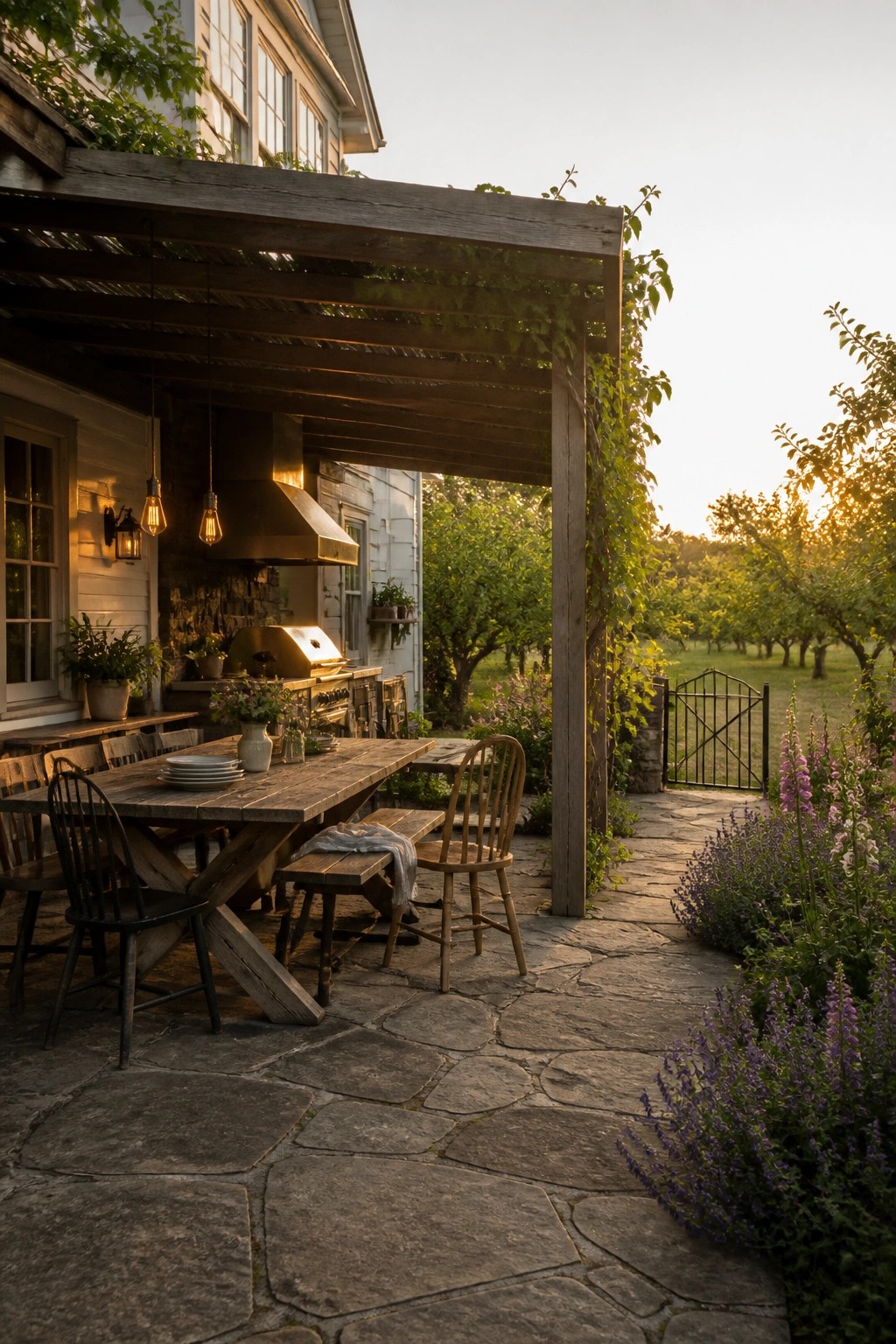
A pergola over the patio gives an old farmhouse a natural spot for meals without building a full room. It marks the space, offers some shade, and keeps the view open to the yard and fields beyond.
This works best on homes that already have a back or side door close to the kitchen. Keep the wood simple and let it weather so it blends with the house. Place the table and chairs where people can move in and out easily, and leave the sides open so the garden still feels part of the setup.
Soft Green Paint With Dark Shutters
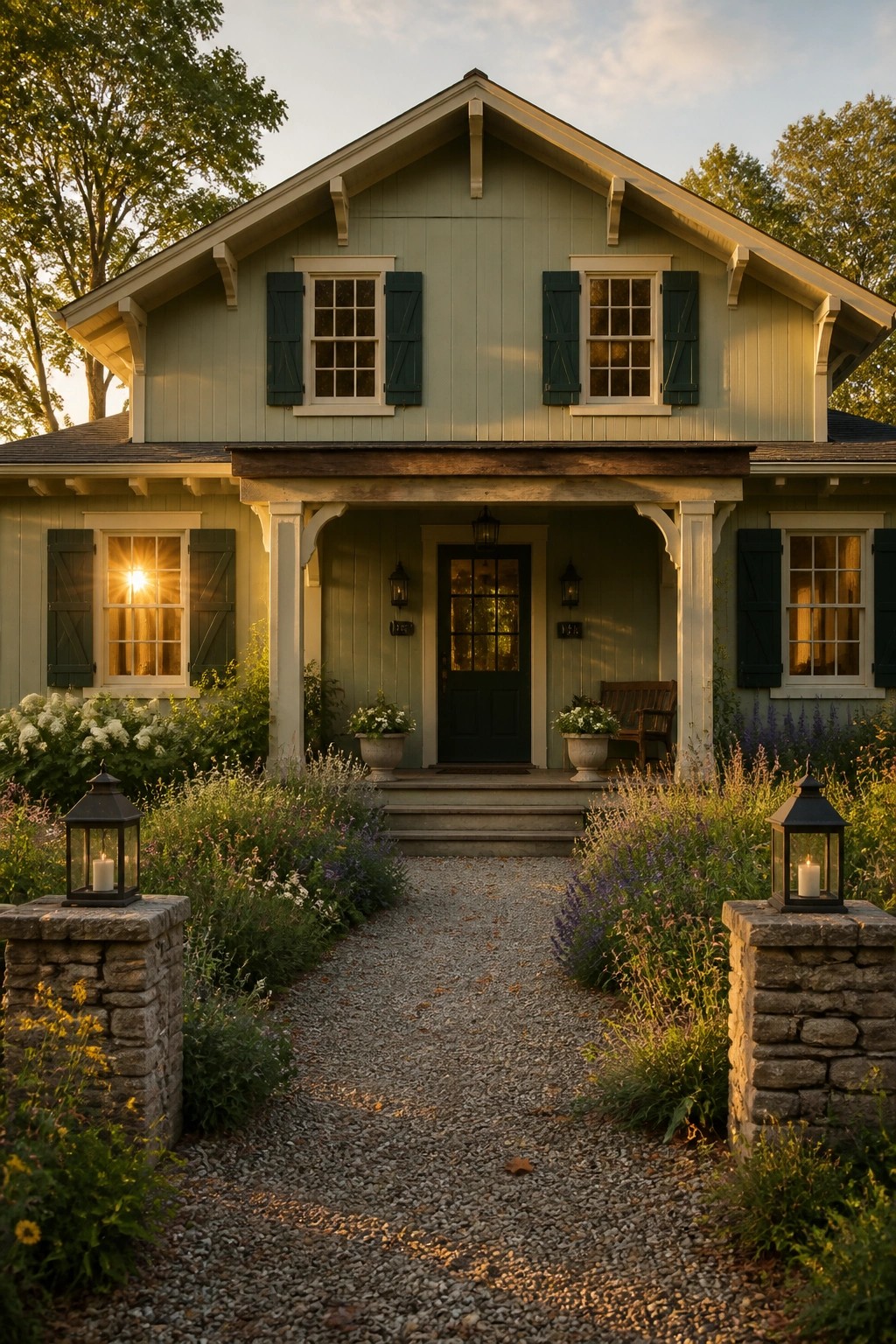
A soft green exterior paired with dark shutters gives an old farmhouse that settled, classic look without trying too hard. The color feels calm and works with most roof tones and trim styles.
This approach suits homes that already have a simple gable or balanced window layout. Keep the shutters a true dark green or black so the contrast stays clean, and avoid adding too many extra colors that might compete with it.
Paint the Front Door a Bright Color
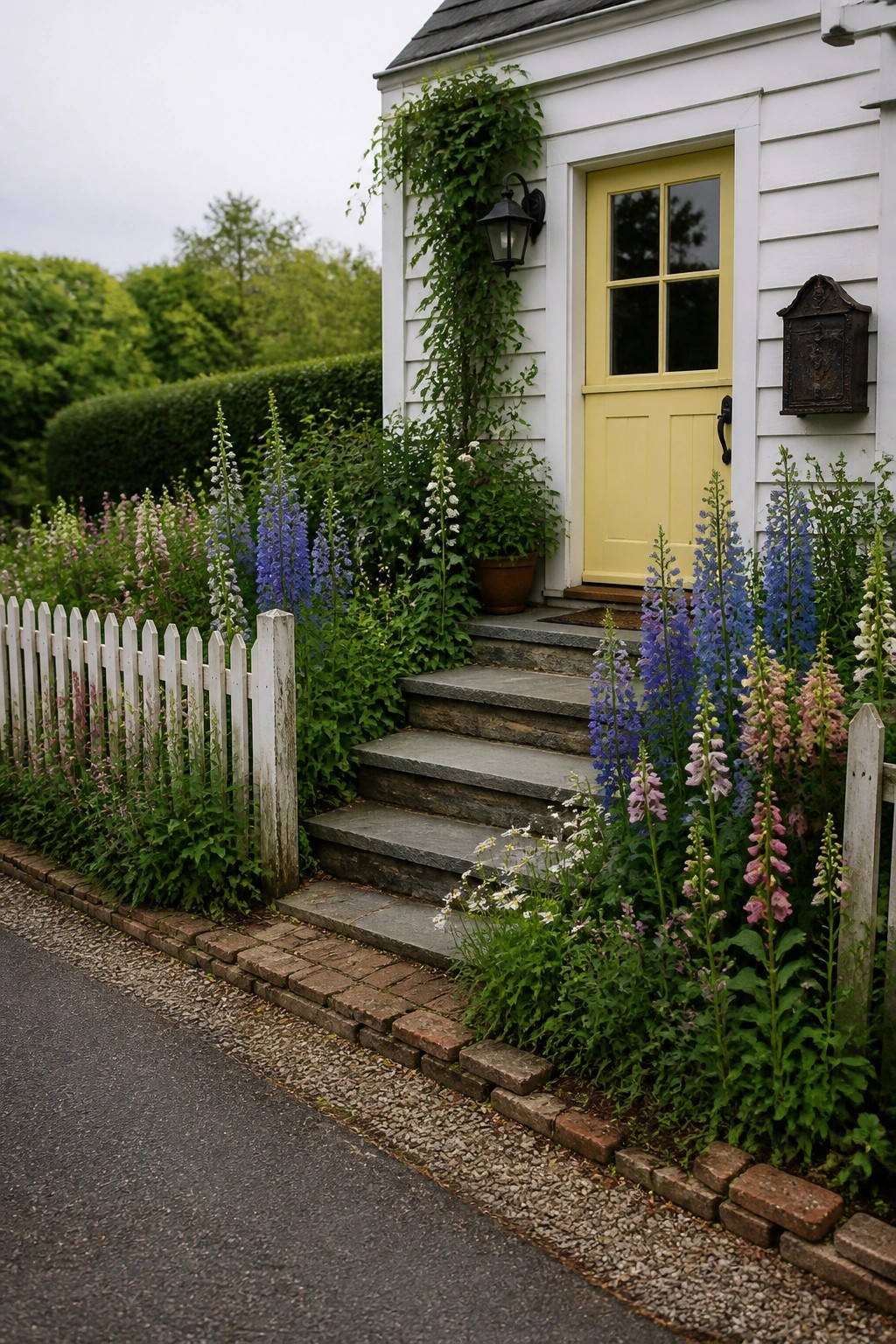
A painted door in a sunny shade like yellow gives a white farmhouse a welcoming look without much effort. It stands out against the siding and makes the entry feel more personal right away.
This works well on older homes where the rest of the exterior stays simple and classic. Keep the trim and hardware understated so the color stays the focus, and add a few plants nearby to soften the steps.
Wicker Chairs for the Porch
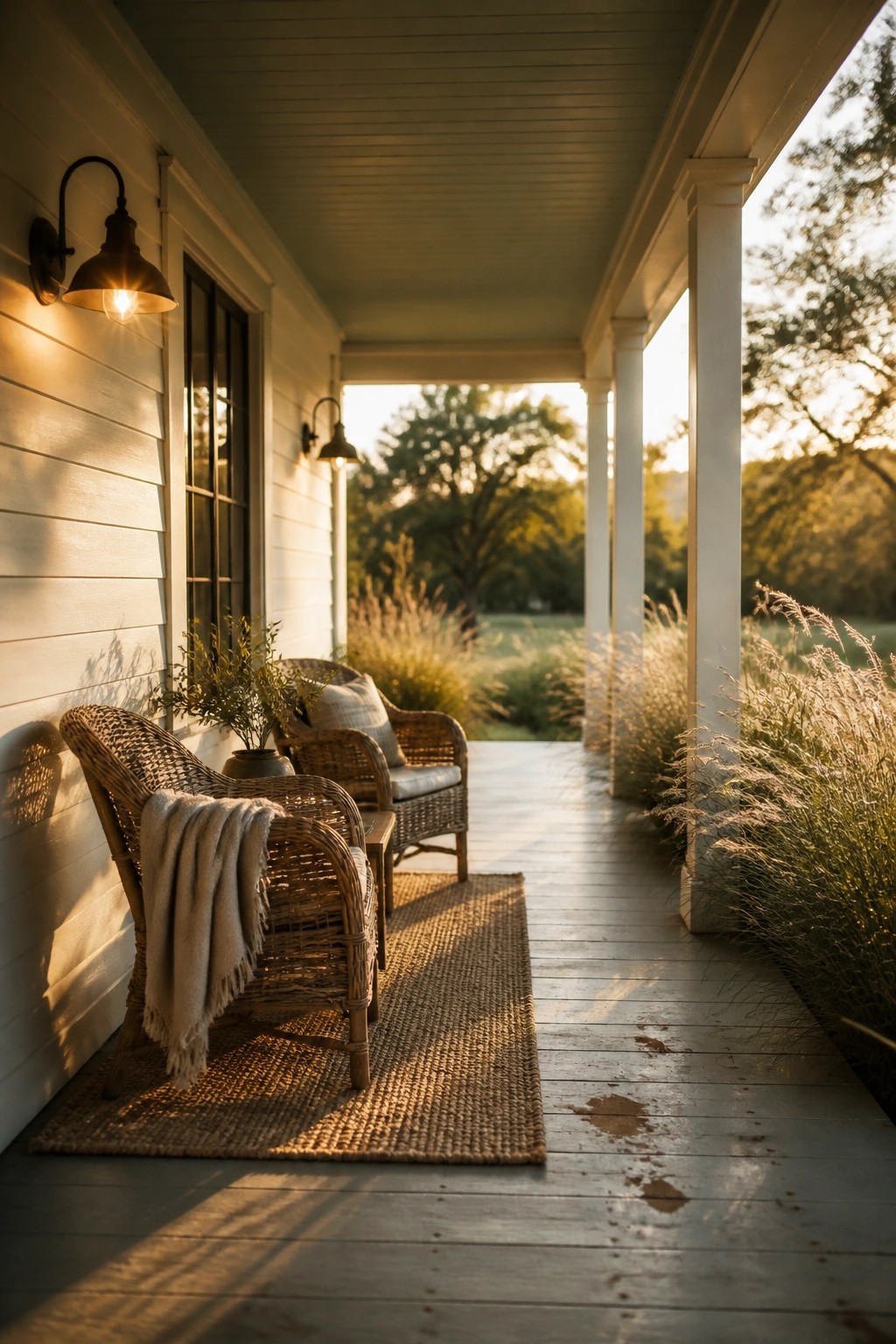
Wicker chairs give a porch an easy, natural seat without adding weight or clutter. They suit farmhouse style because the material feels at home next to wood siding and simple railings.
Set two chairs side by side with a small table between them and a flat rug underneath. This works best on older homes where you want seating that can stay out year-round and still looks relaxed rather than dressed up.
Terracotta Pots by the Door
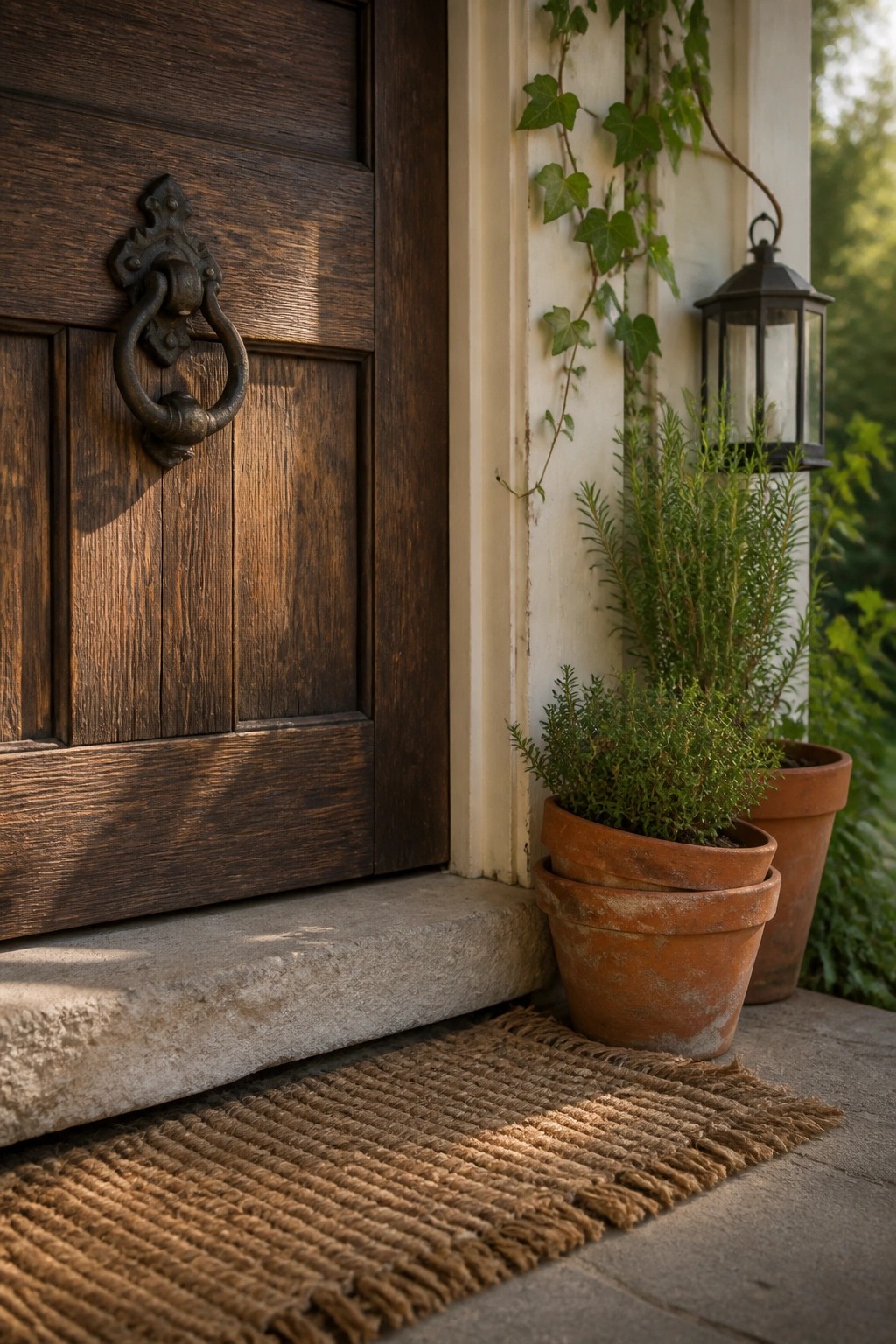
Placing a few aged terracotta pots filled with herbs or small shrubs next to the front door brings an easy country feel to any farmhouse. The weathered look of the pots adds texture that matches older wood and stone.
This works best when the pots are grouped at different heights and kept simple. It suits homes that already have natural materials and gives you a spot to add seasonal color without much work.
Stone Paths That Connect the House to the Garden
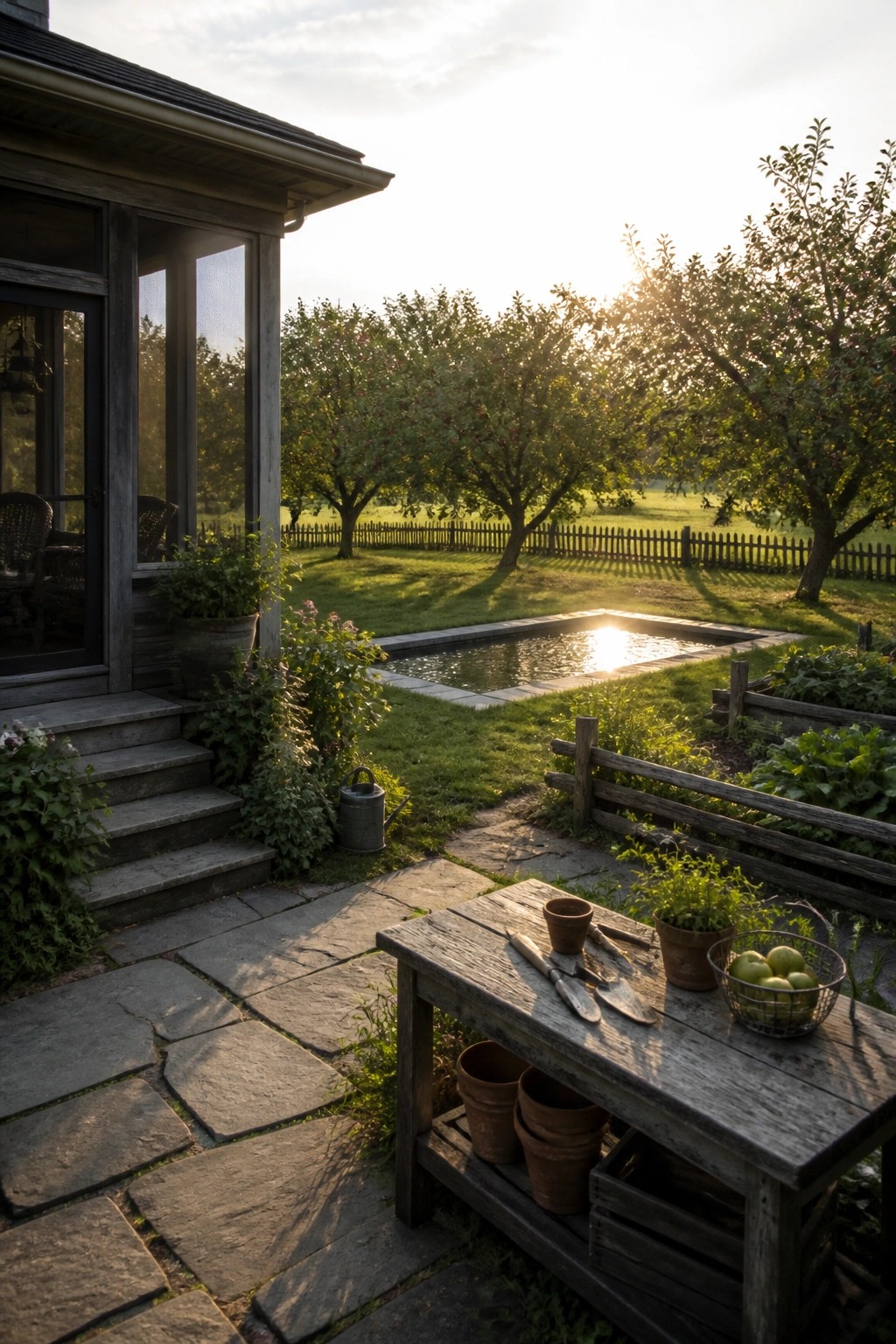
A stone path made from irregular slabs gives an old farmhouse a practical way to move between the porch and the garden without creating a formal look. It keeps the ground usable in wet weather and lets the landscape feel like part of the house rather than something separate.
This approach works best on homes with simple siding and a clear side or back entrance. Keep the stones slightly uneven and let low plants soften the edges over time. Avoid perfectly straight lines or matching the path too closely to the house materials.
Add a Gravel Fire Pit Area
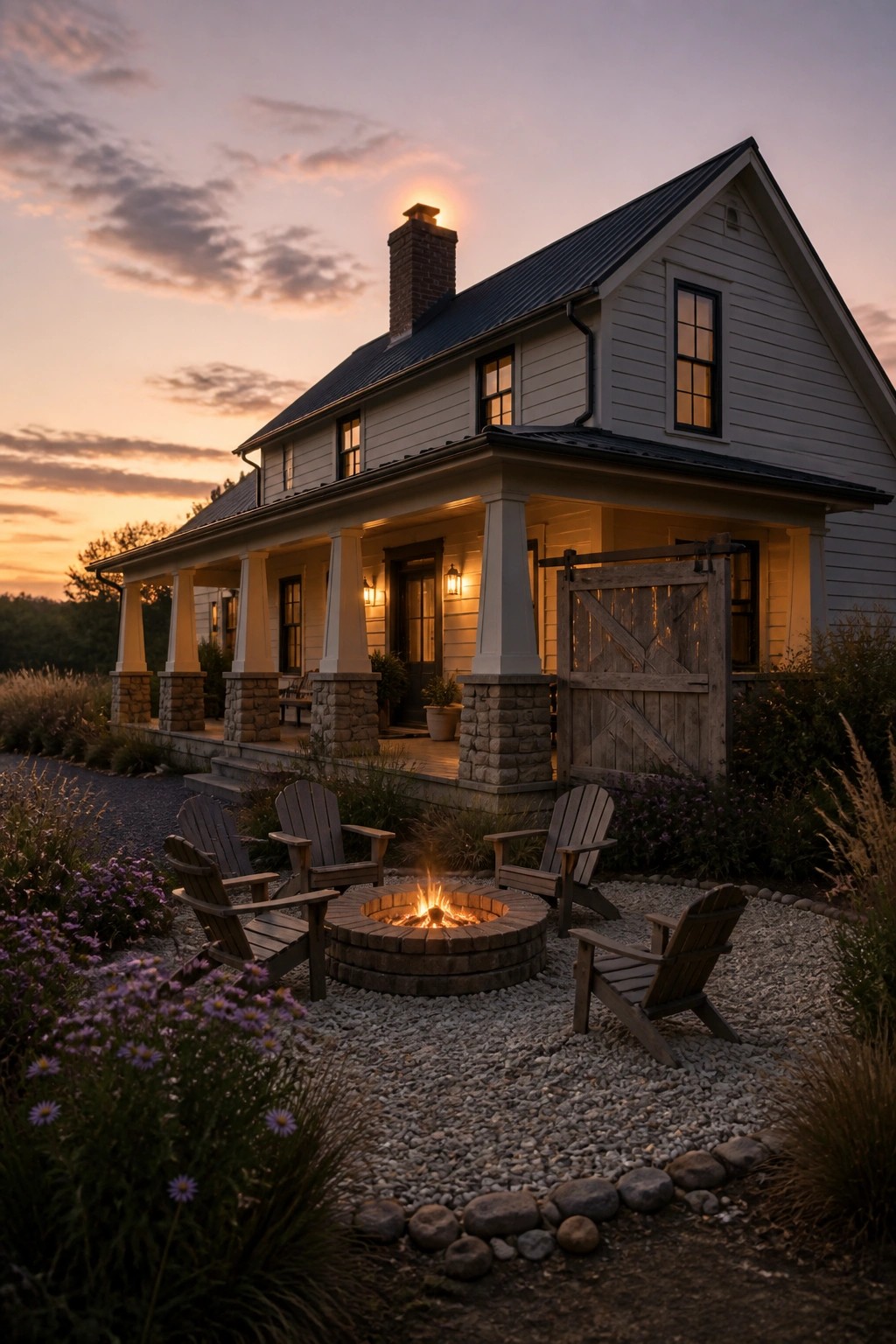
A fire pit set on gravel near the house creates an easy spot to gather outside without building a full patio. It keeps the area simple, practical, and connected to the rest of the yard.
This setup works best on farmhouses that already have some open ground in front. Use a few chairs around the pit and let nearby plants soften the edges so it feels like part of the landscape rather than an added feature.
Pair a Red Barn with a White Farmhouse
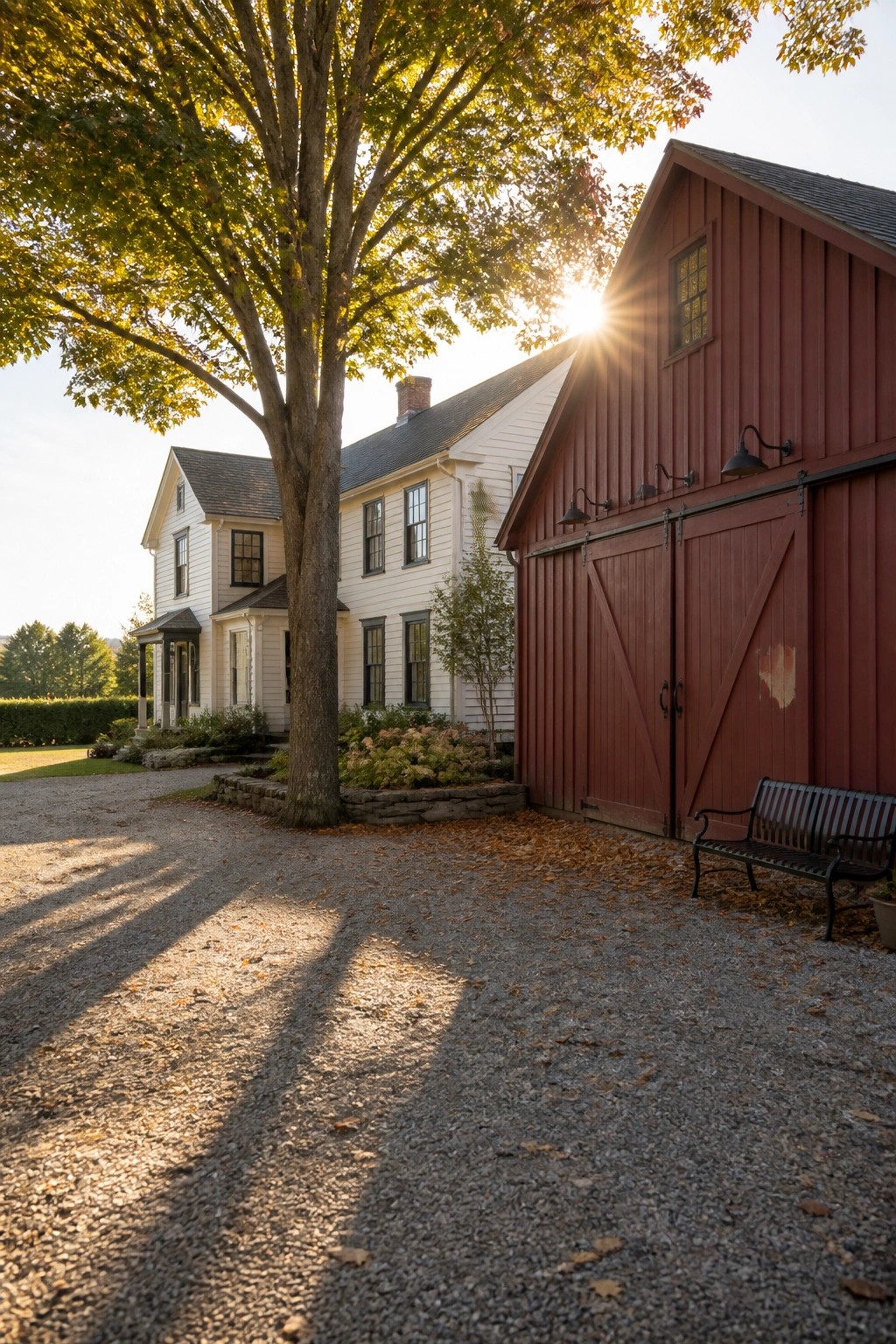
A red barn next to a white house gives an old farmhouse that classic country look without much effort. The strong color contrast makes both buildings stand out while still feeling like they belong together.
This works best on properties with some open space where the barn can sit beside or slightly behind the house. Keep the barn siding simple and vertical, and let the red stay bold rather than trying to match it to any trim on the house.
Window Boxes Add Simple Charm
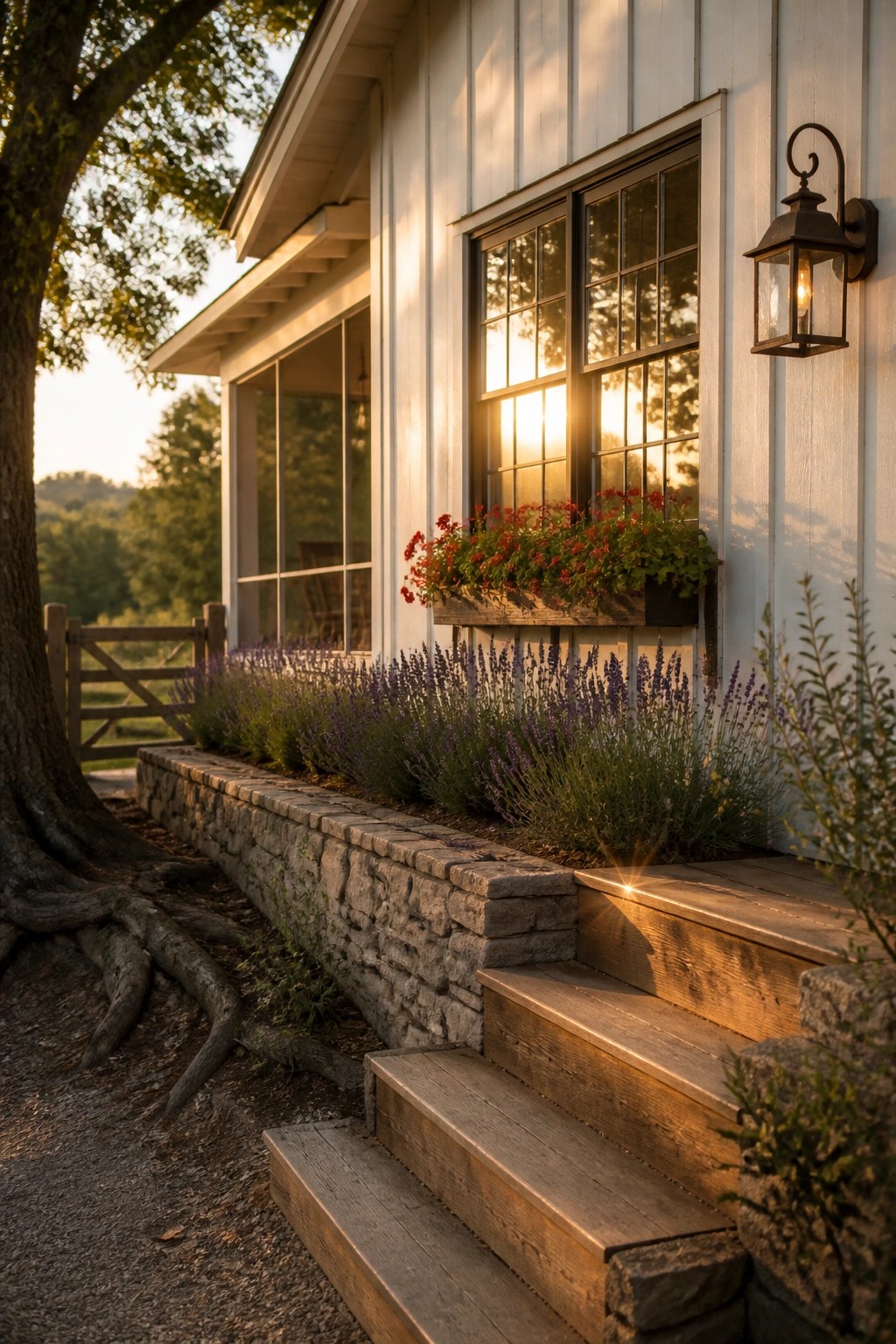
Window boxes give an old farmhouse a quick touch of color without any major changes to the structure. They sit right under the windows where the eye lands first and soften the look of plain siding.
They suit homes with straightforward lines and work best when the box matches the wood tones already on the house. Keep the planting simple and change it with the seasons so it stays fresh year after year.
Stone Columns at the Entry
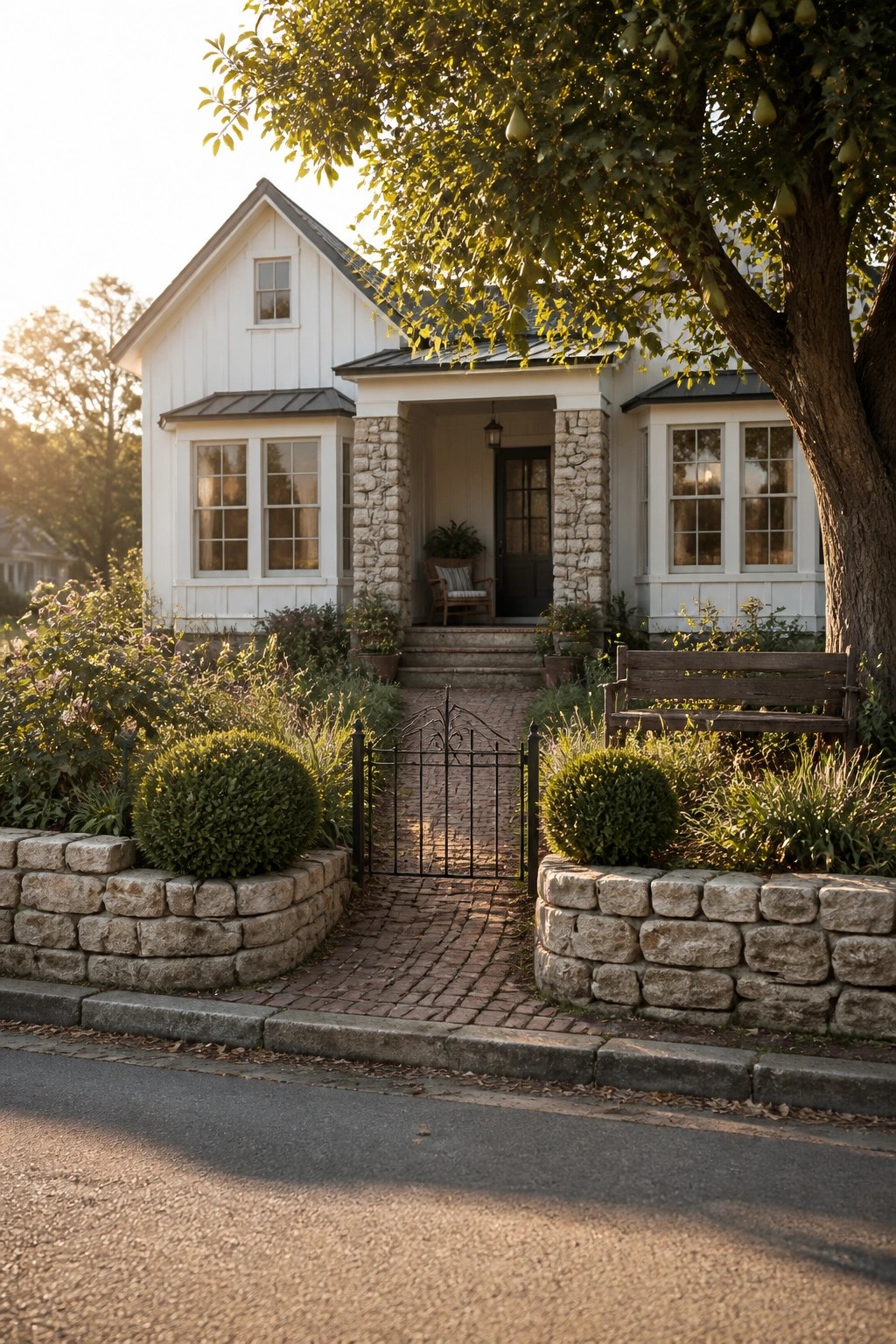
Stone columns give a farmhouse entry real weight without making it feel heavy. They work especially well against white siding because the natural texture breaks up the flat surface and adds that settled, older look most people want in this style.
Try them on a simple gable porch or even just flanking the front door if the house is smaller. Keep the stone local and fairly light in color so it does not overpower the rest of the exterior. The only thing to watch is scale. Too much stone and the house can start to feel like a lodge instead of a farmhouse.
Frequently Asked Questions
Q: Can I mix a few of these ideas without making the outside look cluttered?
A: Start with just two or three features that already suit your house shape. A metal roof paired with simple board and batten siding often feels balanced on its own. Add one more detail like a wooden gate only if the first changes still leave open space around the windows.
Q: How do I keep old wood siding looking fresh after a few years?
A: Clean it once a season with a soft brush and mild soap to stop mildew from settling in. Touch up any peeling spots right away with the same paint color so the whole surface stays even. This routine keeps the classic look without needing a full repaint each time.
Q: What if my windows sit too close together for shutters?
A: Skip the shutters and focus on the trim instead. Paint the existing frames a deep color that stands out against the siding. The contrast alone gives that timeless farmhouse feel without crowding the glass.
