

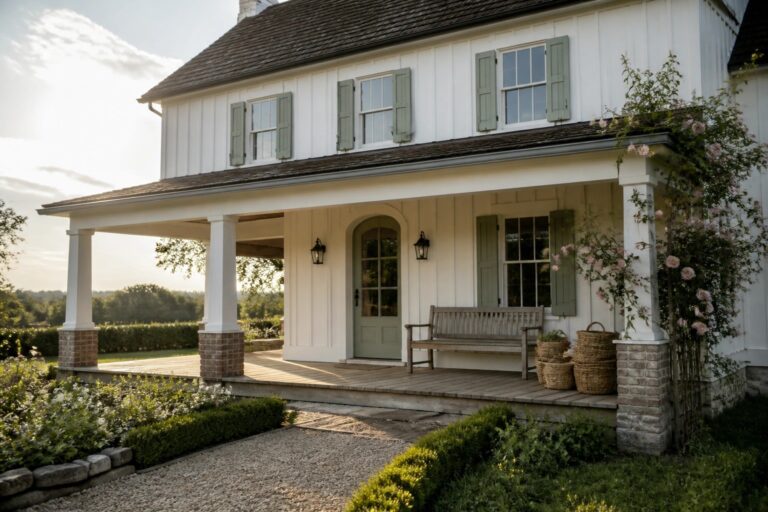
When I drive past older farmhouses the rooflines and window placements tend to stand out first and set the tone for everything else.
Materials like wood siding and stone foundations hold up differently once they age and that shift often adds more character than any new finish could.
Some choices just work better in person.
I usually check how the front door sits with the porch because the scale there decides whether the whole facade reads as balanced or slightly off.
Paying attention to those proportions has helped me spot which details are worth adapting when a house needs a bit more history without looking forced.
White Siding With Green Shutters
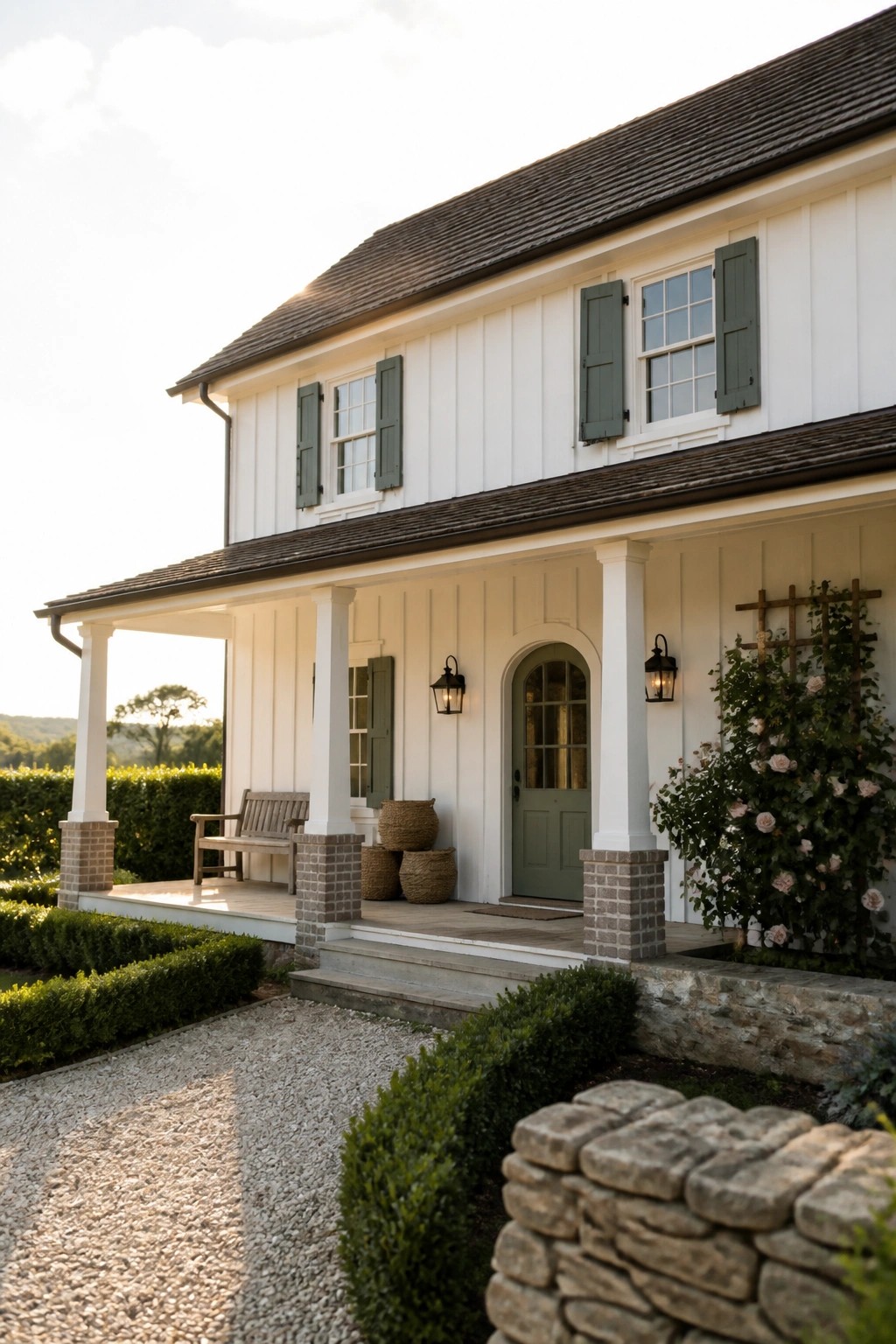
White siding paired with green shutters gives a farmhouse that clean, settled look without much extra effort. The color contrast keeps the house bright while the shutters add just enough definition around the windows. It works especially well on two-story homes that already have a straightforward shape and roofline.
This approach suits older homes or new builds meant to feel established. Keep the green on the softer side so it ages nicely, and make sure the shutters are sized to match the windows. Too many competing colors on the trim or door can take away from the simple effect.
Center the Door With Matching Windows
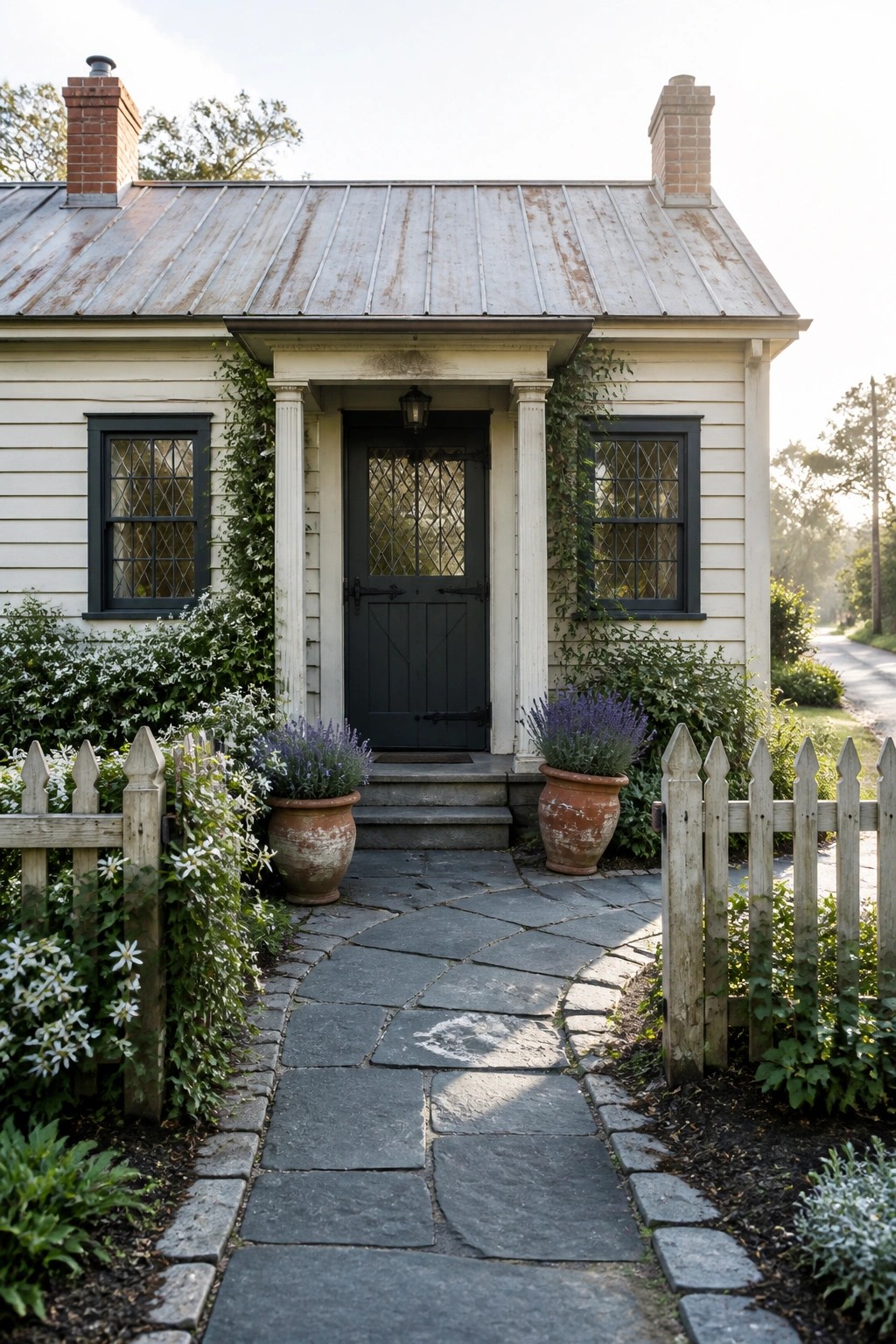
Many older farmhouses use matching windows on each side of the front door to create a balanced look. The windows sit at the same height and share the same trim style, which keeps the entry simple and orderly without extra decoration.
This approach works best on smaller homes that already have a straightforward shape. It draws attention to the door while keeping the whole front clean. Just match the size and panes on both sides and avoid adding too many other details around the entry.
Pick a Deep Color for the Front Door
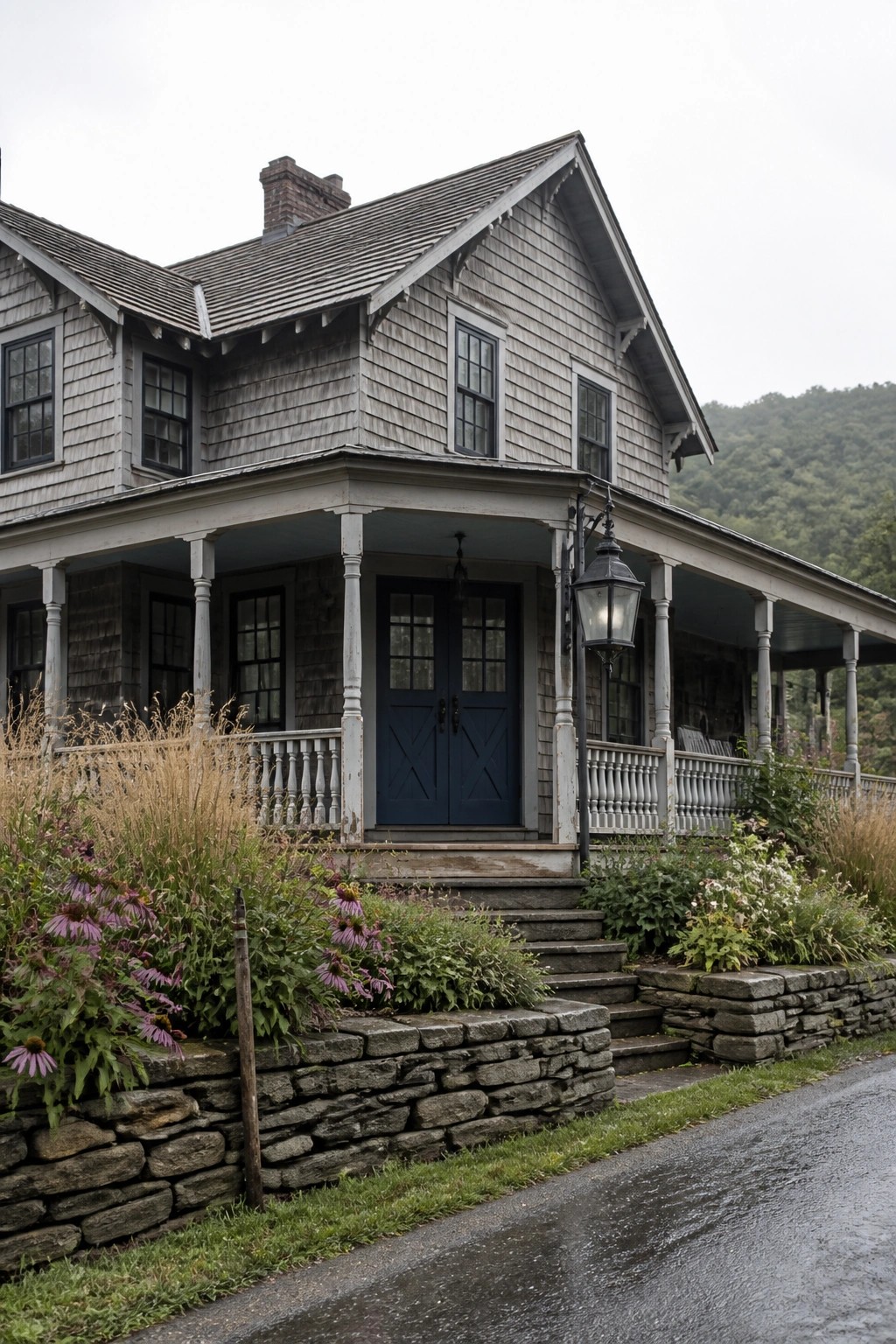
A strong painted door gives a classic farmhouse real presence without any extra fuss. The dark blue double doors here sit right in the middle of the porch and pull everything together, even against all the gray siding and white trim. It feels like the kind of simple choice that has been around for generations.
This works best on homes with a clear front porch and some age to the materials. Keep the rest of the palette quiet so the door can do the work, and make sure the color has enough depth to stand out from a distance. Stone walls or steps nearby only make the contrast feel more natural.
Add a Covered Porch for Classic Farmhouse Character
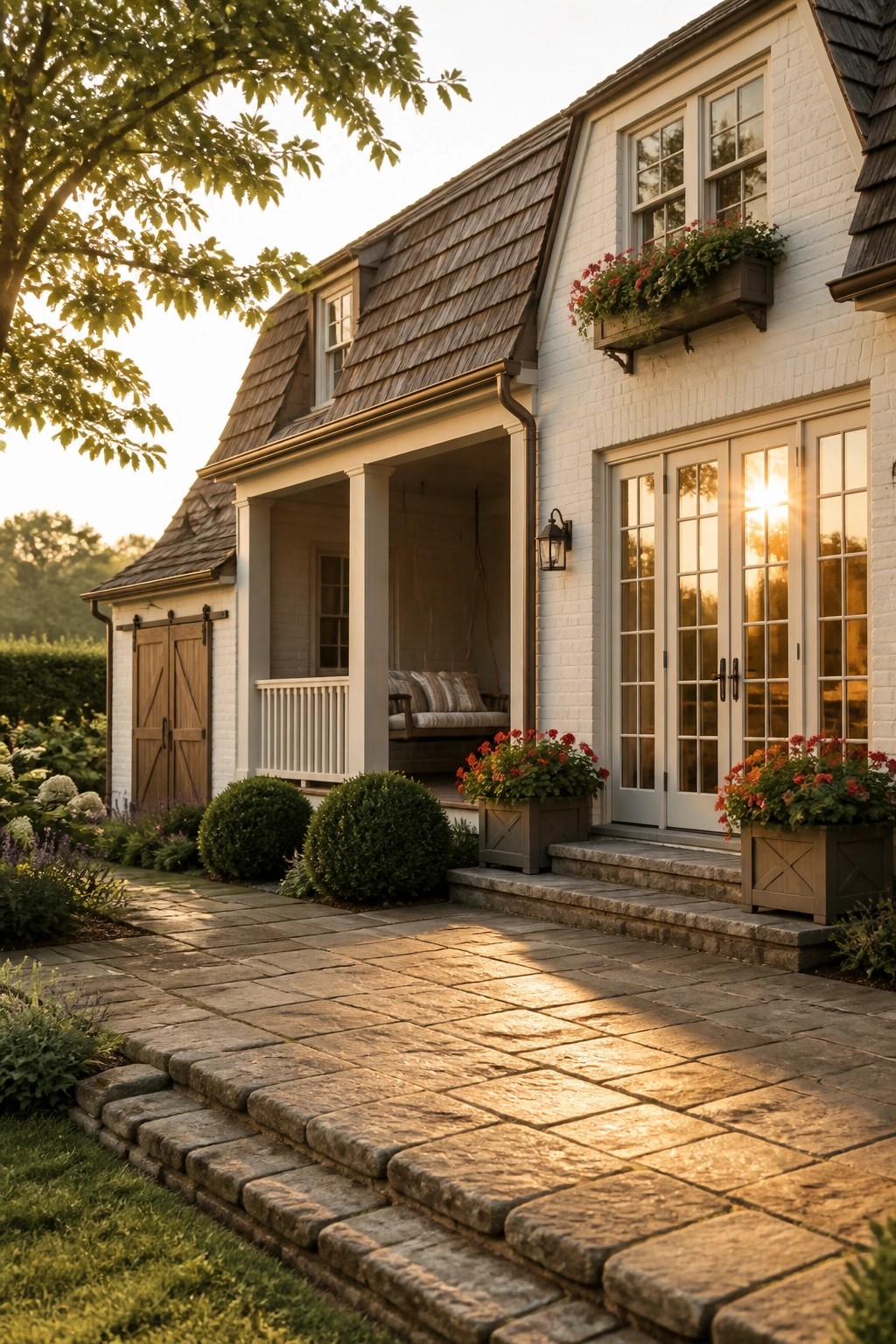
A covered porch with simple columns and a swing gives a farmhouse that settled, historic look right away. It creates a clear entry point and adds depth to the front of the house without needing fancy details.
This works best on homes with a gabled roofline where the porch can tuck under the main roof. Keep the trim and railings plain so the structure feels like it has always been there.
Balanced Windows Around the Front Door
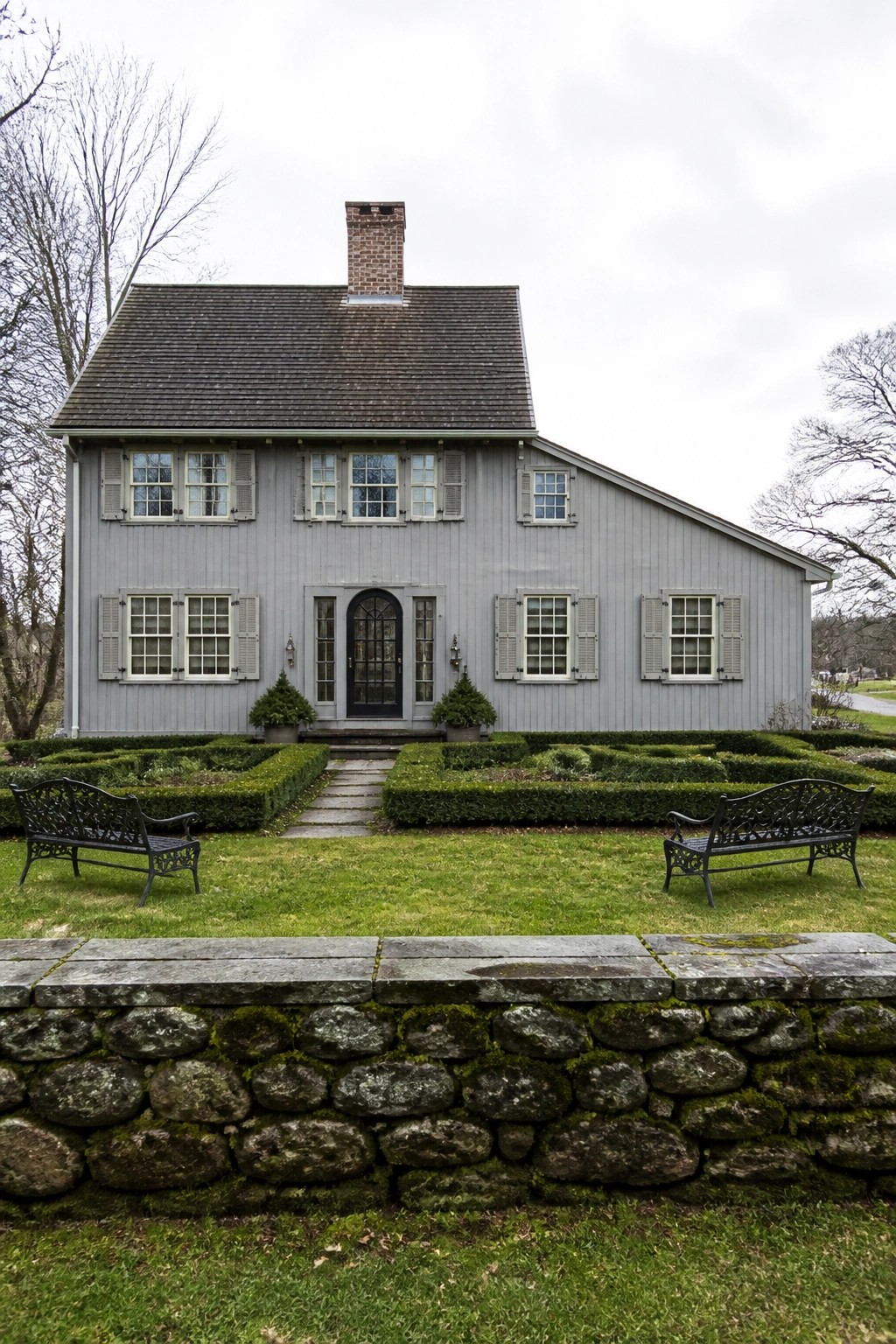
A simple row of evenly spaced windows on each side of the entry makes the whole front feel settled and classic. This kind of balance shows up often on older farmhouses because it keeps the eye moving in a calm, steady way instead of jumping around.
It works best on homes with a straightforward shape and a clear center point. If your windows already sit at different heights or widths, try to match them as closely as you can when replacing or adding new ones. Stick to the same size and spacing rather than adding extra trim or shutters that might throw things off.
Wooden Benches For Farmhouse Porches
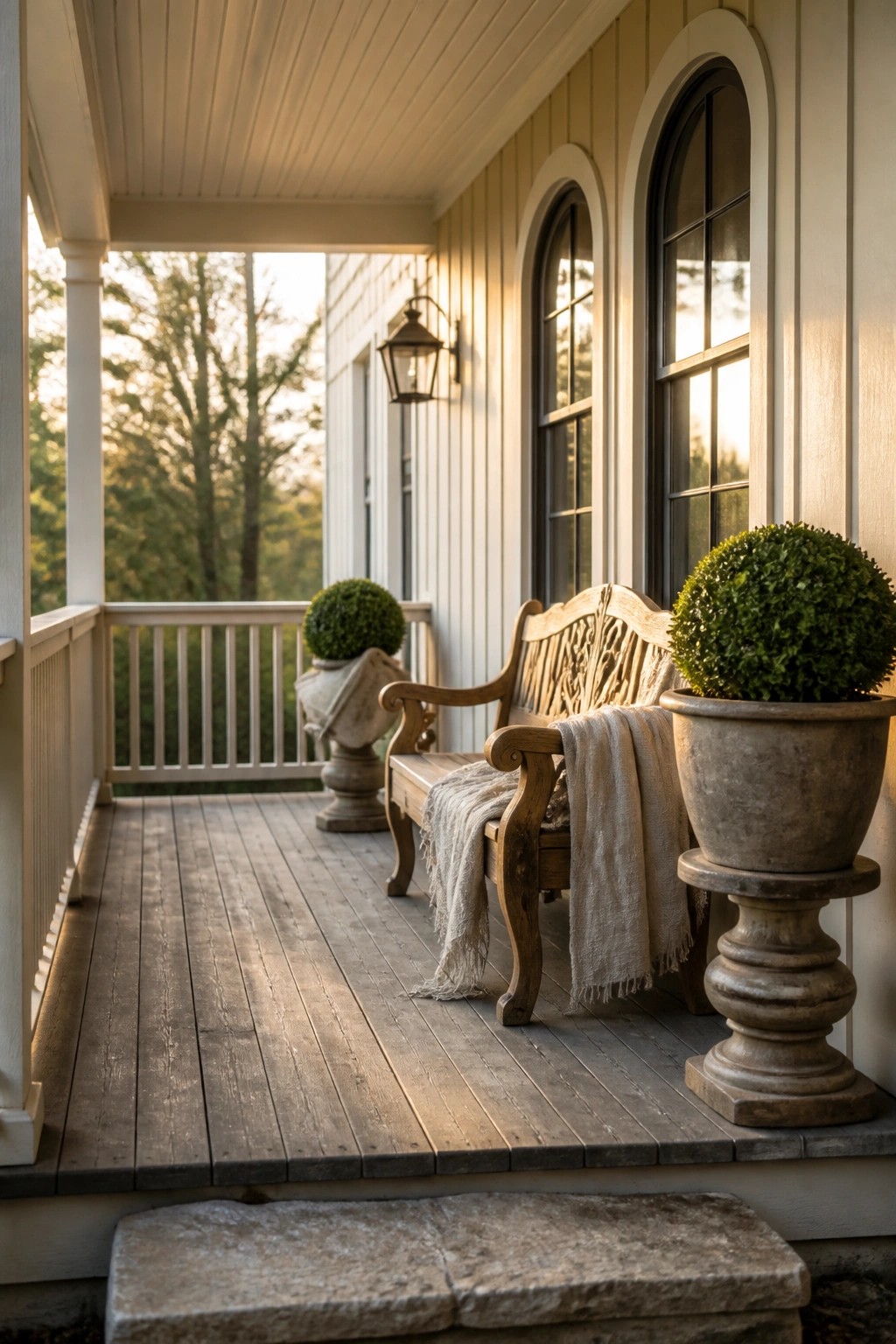
A wooden bench gives a porch that settled, lived-in look many old farmhouses have. It takes up little space yet makes the area feel ready for use right away.
Set the bench along the front or near a window where people can sit and talk. Add a folded throw for comfort and keep everything else simple so the wood stays the main feature.
Add a Portico to Frame the Front Door
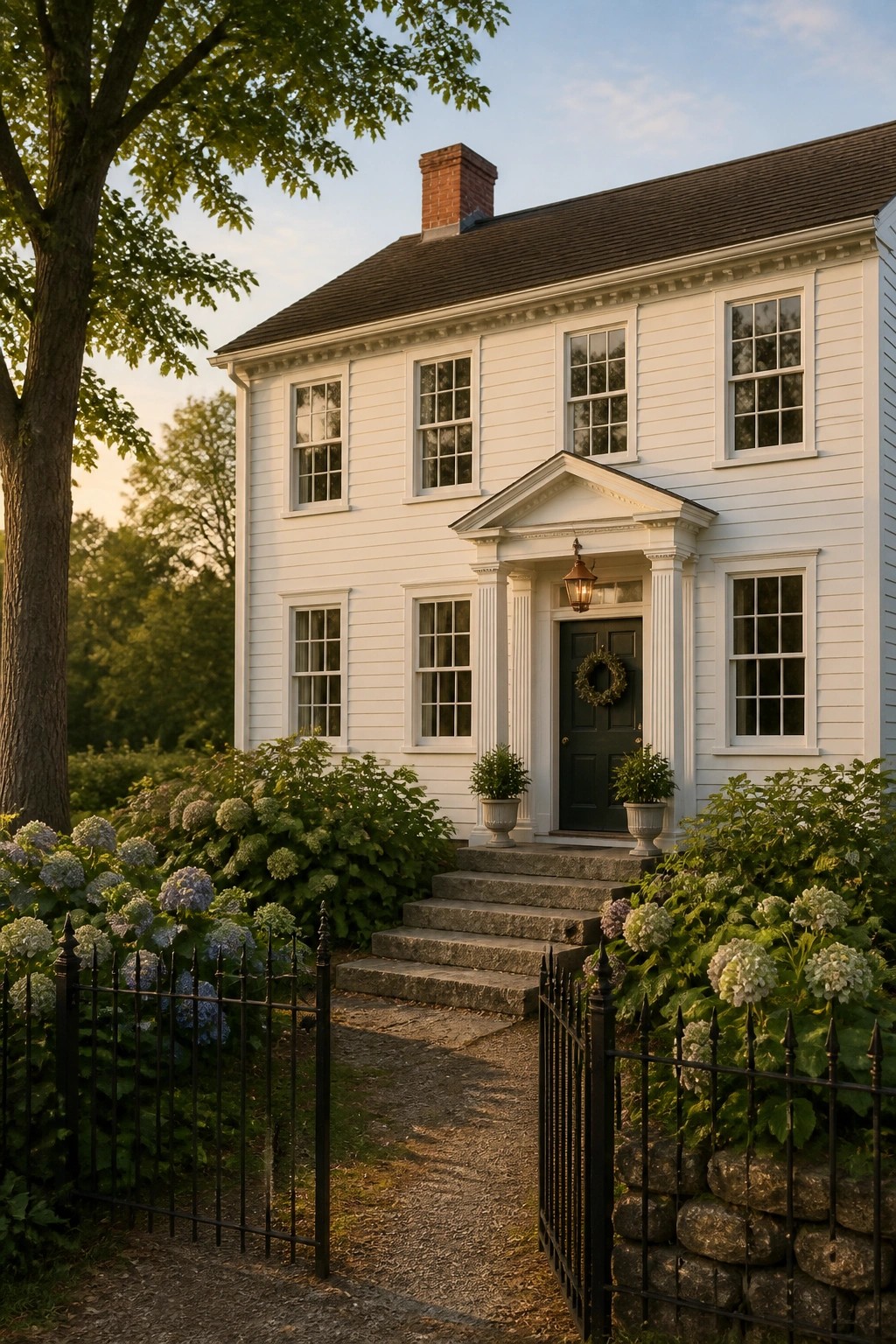
A portico gives the entry a bit more weight without making the whole house feel formal. On a simple white farmhouse it creates a clear focal point that reads as classic rather than plain.
Keep the columns slender and the roofline low so the detail stays in scale with the rest of the house. This approach works best on symmetrical facades where the door sits dead center.
Dark Siding on a Classic Farmhouse
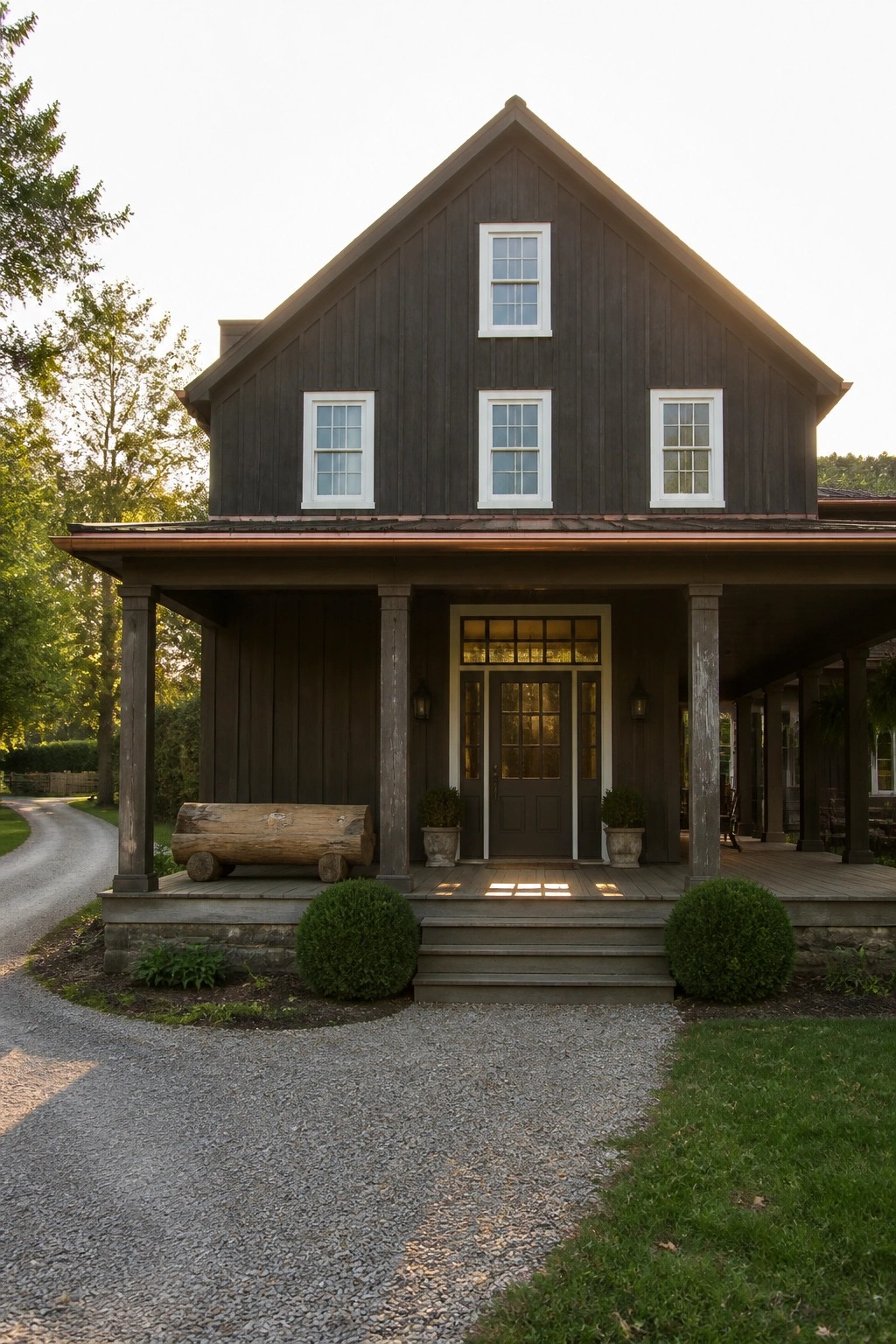
Many older farmhouses look their best when the siding is painted a deep color instead of the usual white or light gray. The dark tone makes the shape of the house feel more solid and helps it blend into the surrounding trees and fields without disappearing.
This works especially well on homes that already have a good front porch and simple window placement. Keep the trim bright so the doors and windows stay easy to read, and test the color on a large section first since it can shift a lot in different light.
White Siding With Wood Doors
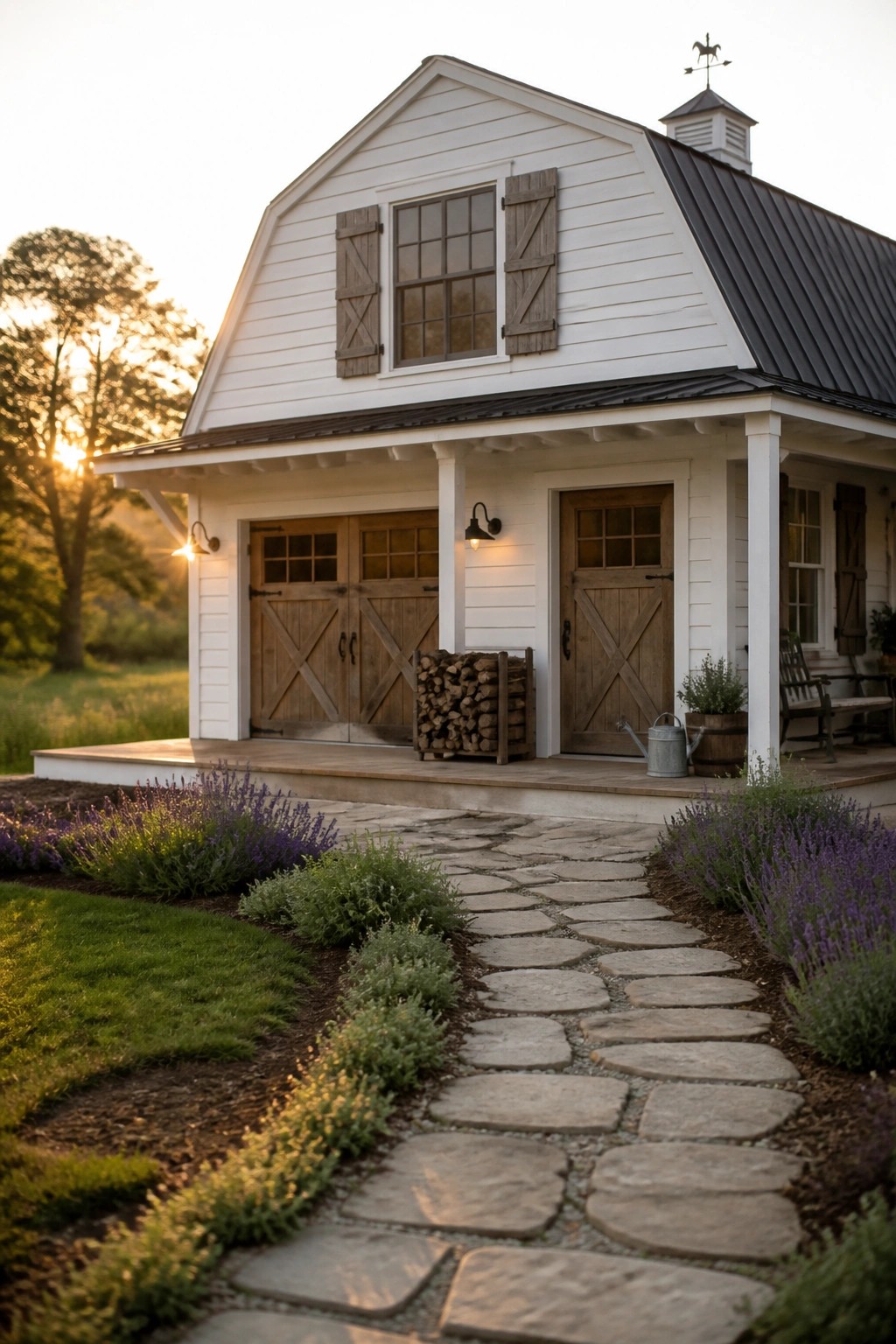
White siding keeps a farmhouse looking bright and simple. The wood doors and shutters add just enough contrast to make the whole front feel grounded and a little more historic without extra trim or color changes.
This works well on homes with straightforward rooflines and gable ends. Use it when you want the doors to do most of the talking and keep maintenance low.
Mix Painted Siding With Natural Wood For Character
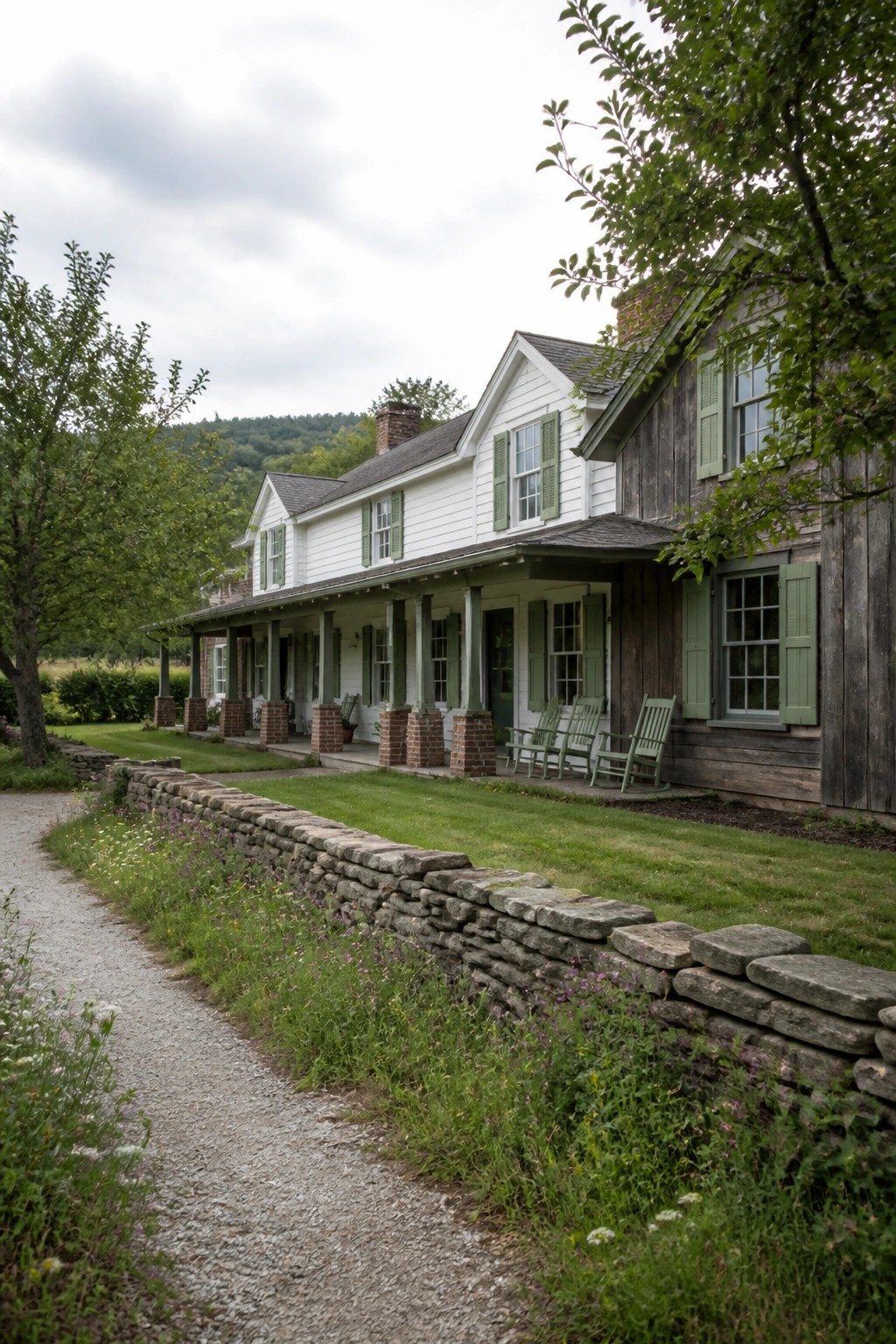
Many older farmhouses look more authentic when they use more than one siding type on the same wall. Painted white boards next to darker weathered wood give the house a sense of age and make the facade feel like it was added to over time.
This approach works best on longer homes where one material can cover the main body and the other can highlight a wing or end section. Keep shutters and trim in a single accent color so the mix stays balanced rather than busy.
Add a Simple Portico Over the Door
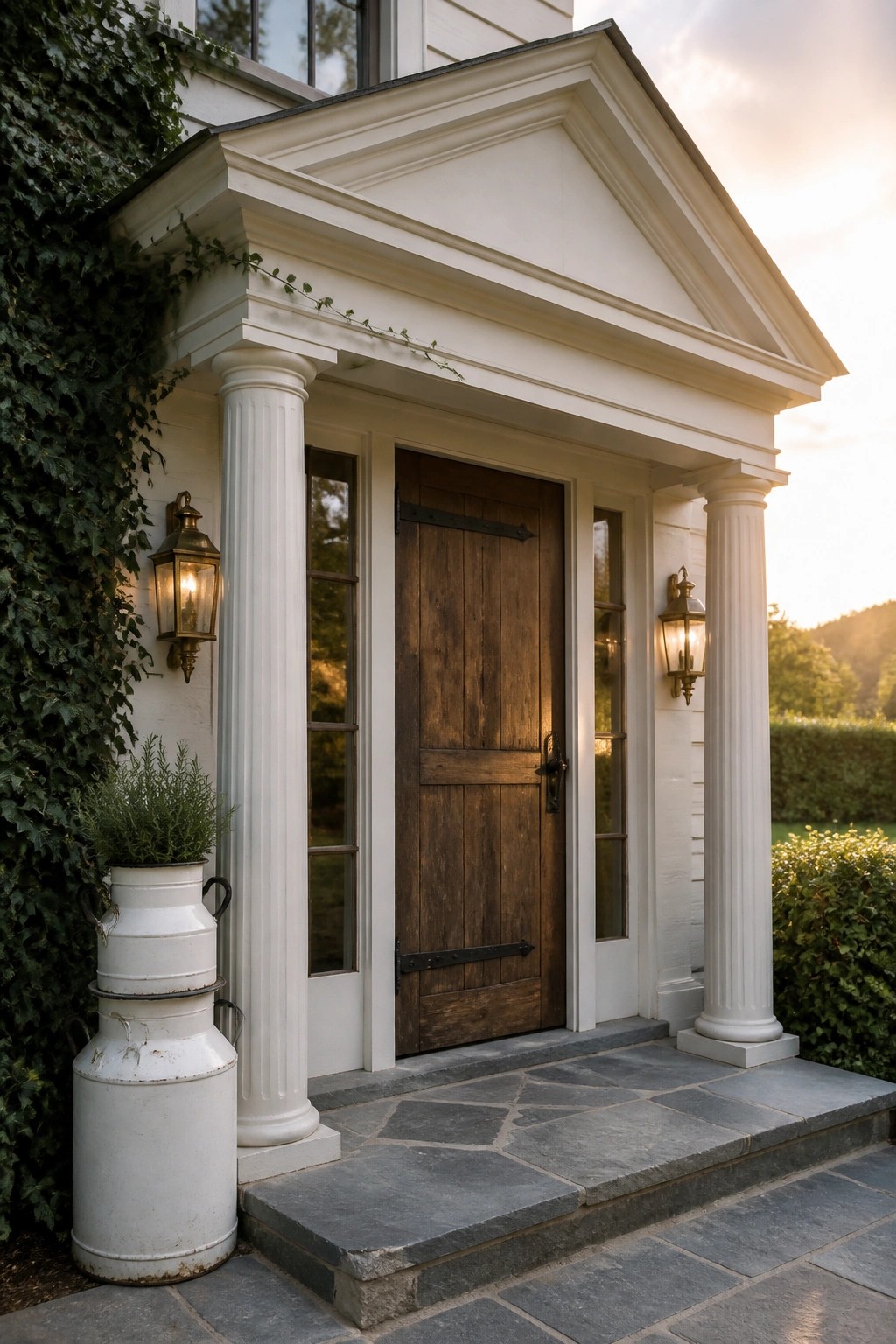
A portico with columns and a pediment gives a farmhouse entry real presence. It reads as classic without trying too hard, and the white columns against the siding create a clean break that makes the door feel more important.
This detail works best on homes that already have some trim or gable detail. Keep the columns straightforward and the pediment modest so it feels like part of the original house rather than an add-on.
Timber Supported Entries
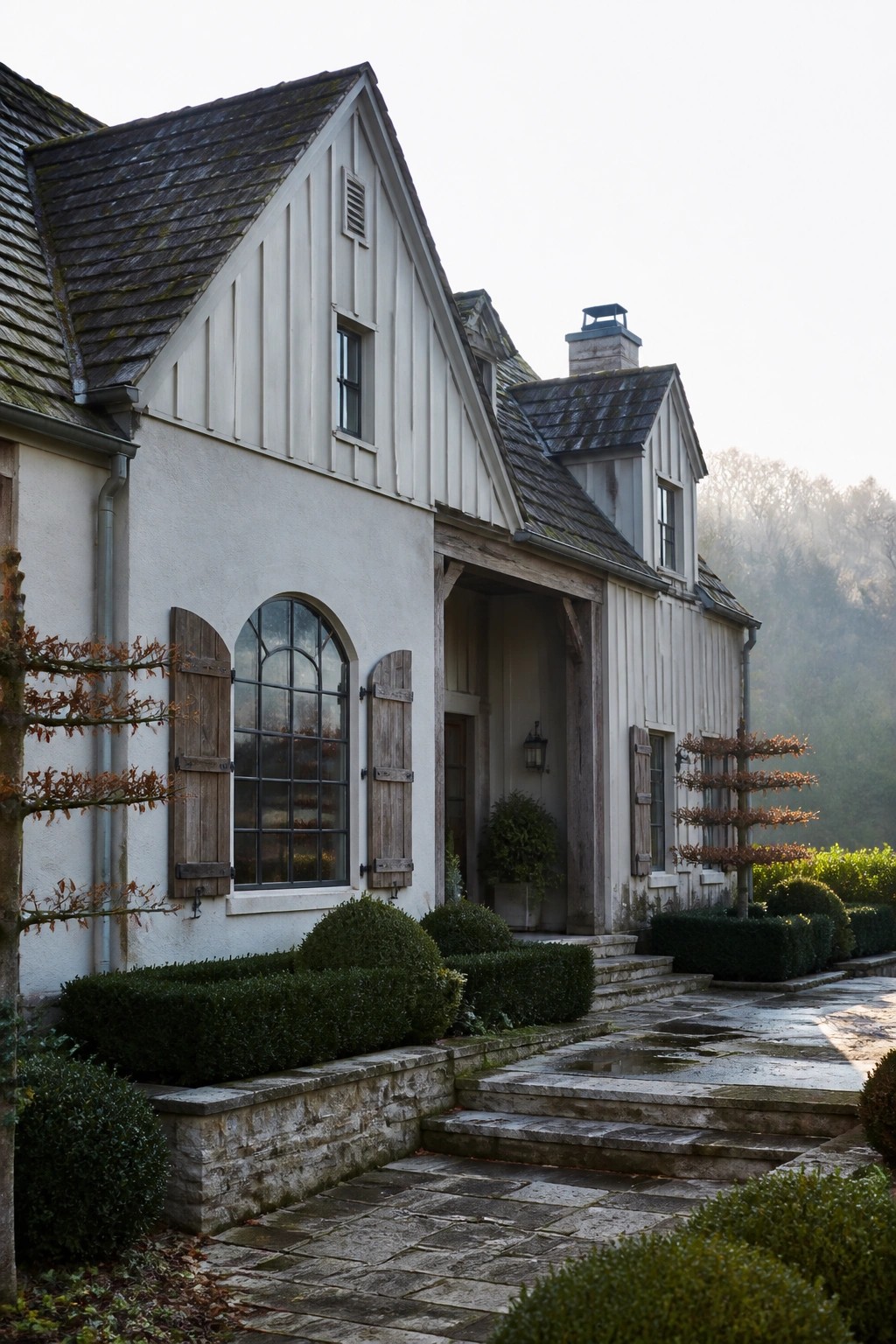
Many classic farmhouses use heavy timber beams to frame the front entry instead of a fully enclosed porch. This simple structure adds weight and age to the facade while keeping the look open and welcoming. It works especially well against white or light siding where the wood can stand out clearly.
Place the beams where they can support a small roof overhang right above the door. Keep the rest of the entry plain with a basic door and minimal lighting so the wood remains the main feature. This approach suits older style homes or new builds trying to feel established without adding extra trim or decoration.
Stone Fireplaces Built Into the Exterior
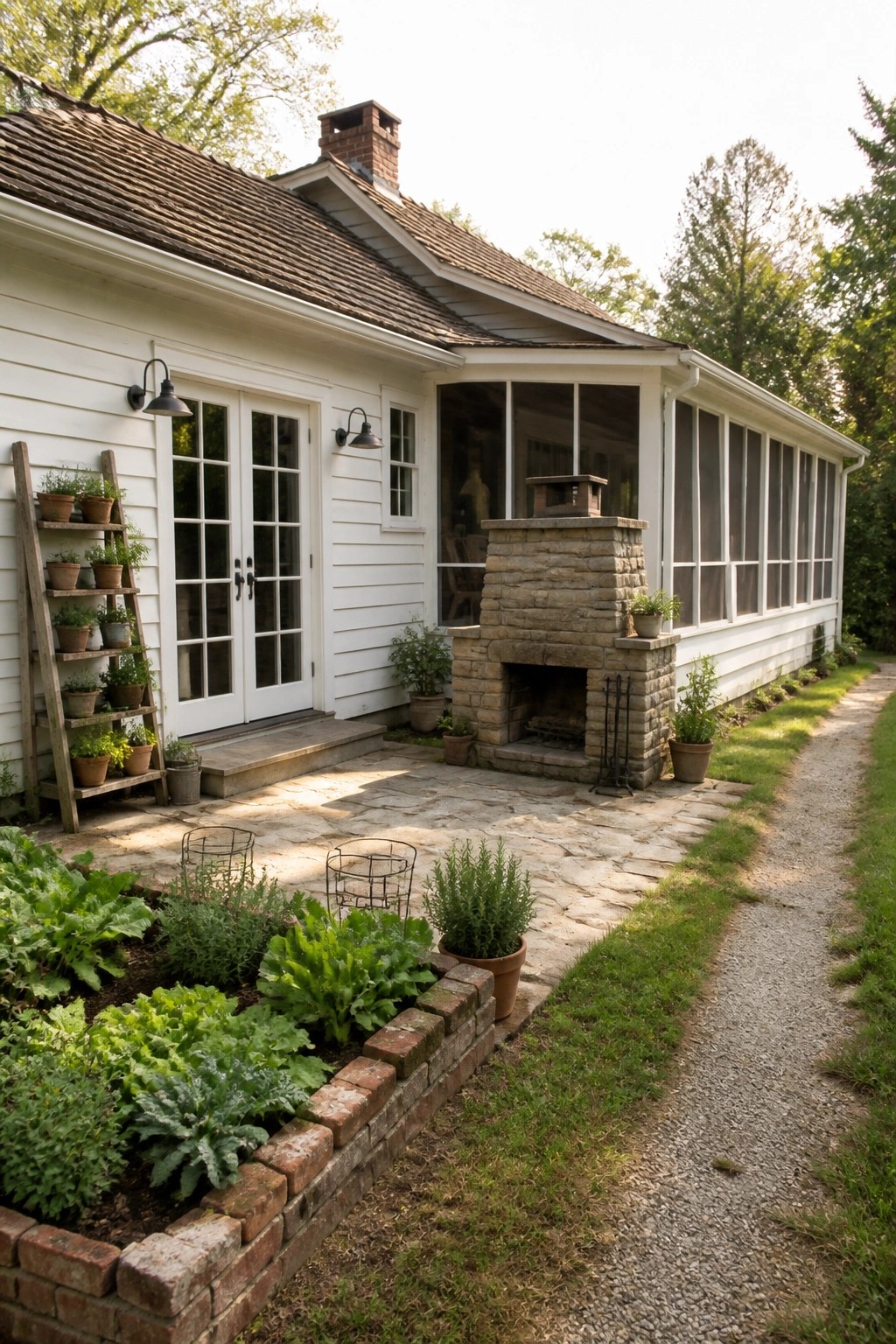
A stone fireplace right on the side of the house gives a farmhouse that settled, historic look without much fuss. It turns the wall into a usable spot for sitting outside even when the weather cools off a bit. The rough texture of the stone also breaks up all the white siding so the whole place feels a little less plain.
This works best on homes that already have some age or are trying to look like they do. Keep the stone in a natural color and let the chimney run up the wall so it reads as part of the original structure. Just make sure the scale stays right for the house so it does not overpower the rest of the facade.
Center the Entry for Classic Symmetry
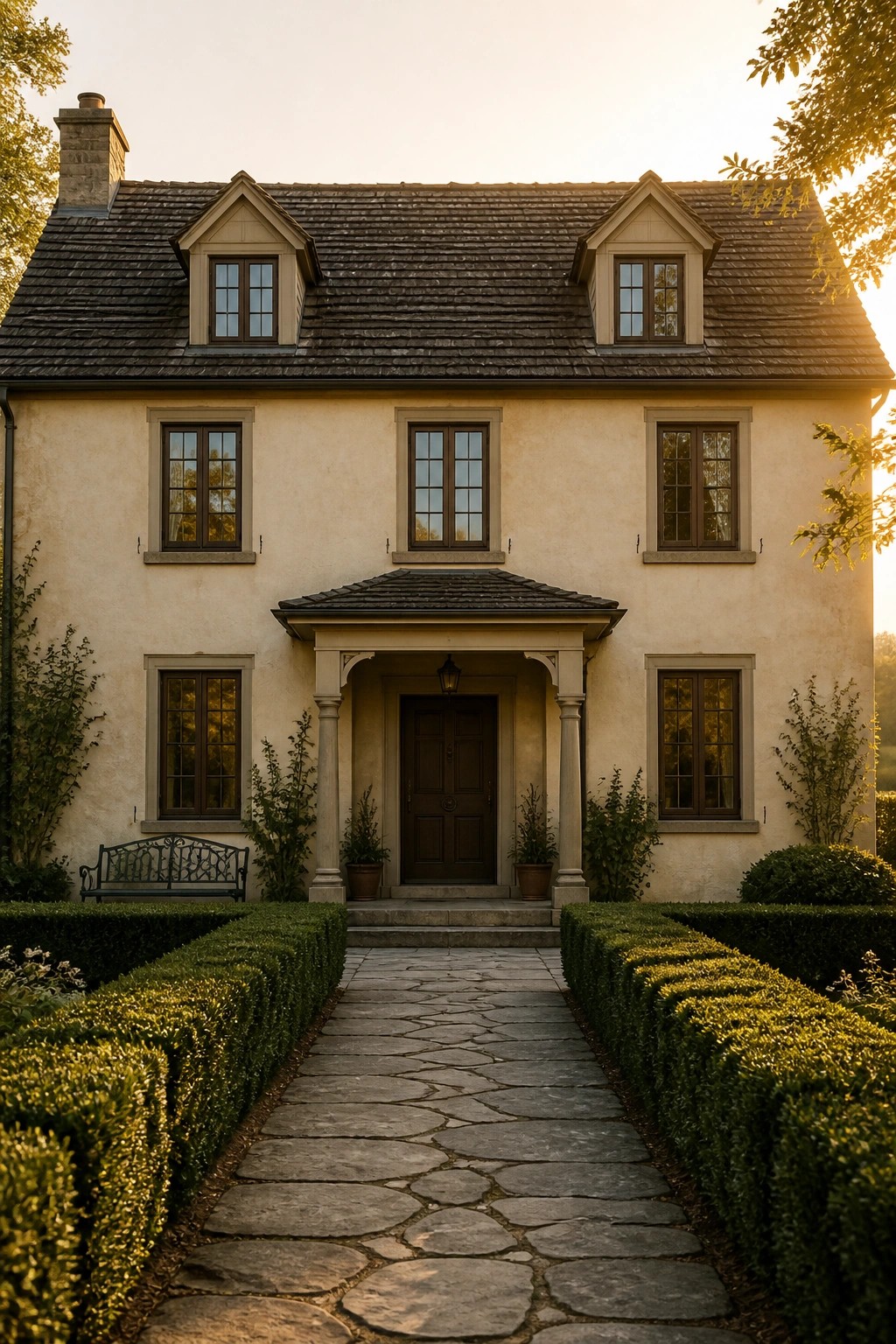
A centered front door with matching windows on either side gives the house an orderly, settled look that feels naturally historic. The small portico supported by columns adds just enough presence without overpowering the rest of the facade.
This layout works especially well on rectangular farmhouses where the roofline stays simple. It helps the house feel balanced from the street and makes the entrance easy to find, which suits most traditional styles without needing extra decoration.
Paint the Front Door a Deep Green
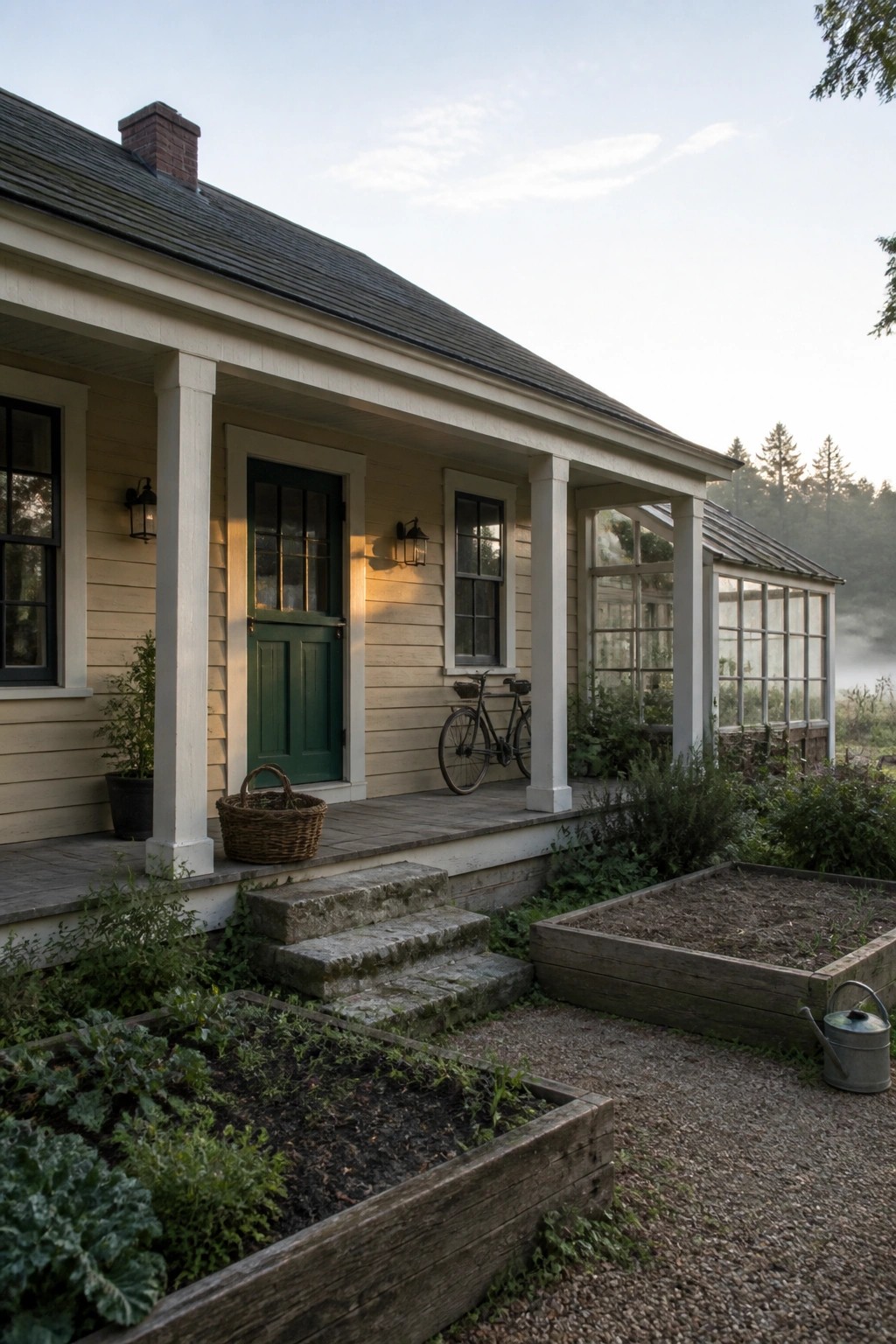
A deep green door gives a simple farmhouse a clear focal point and helps it feel more rooted in older styles. The color works against light siding and keeps the rest of the facade from looking too plain.
This approach suits houses with basic porches and straightforward rooflines. Use it when you want the entry to stand out without adding extra trim or shutters.
Add A Picket Fence Out Front
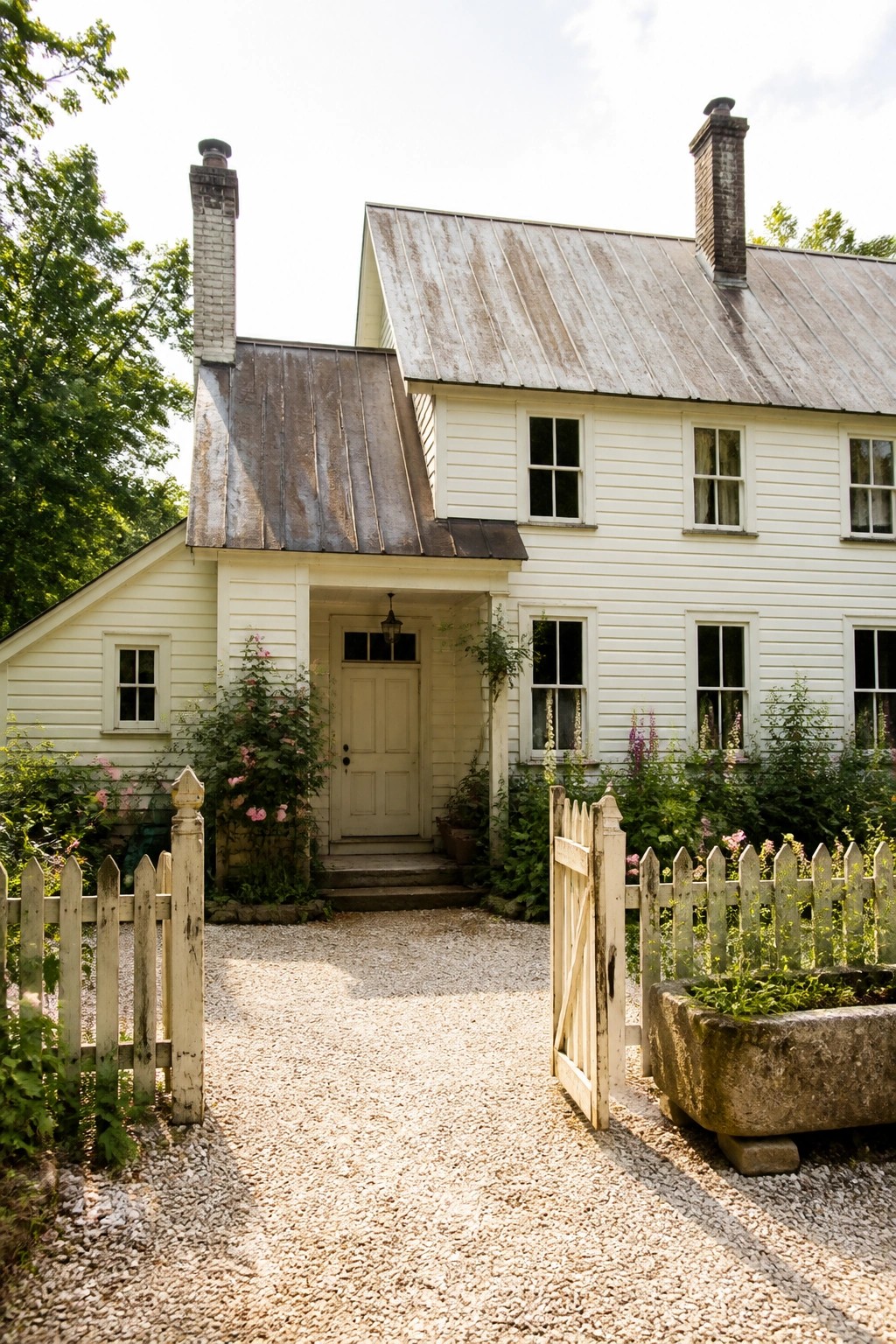
A simple white picket fence gives the whole front a settled, historic look without much effort. It marks the boundary clearly and makes the house feel more like a classic farmhouse instead of just a building sitting on gravel.
This works best on homes with a straight path to the door. Keep the fence low, paint it white, and let a gate swing open toward the house. Skip fancy details or tall sections that start to feel formal.
Stone Piers On The Porch
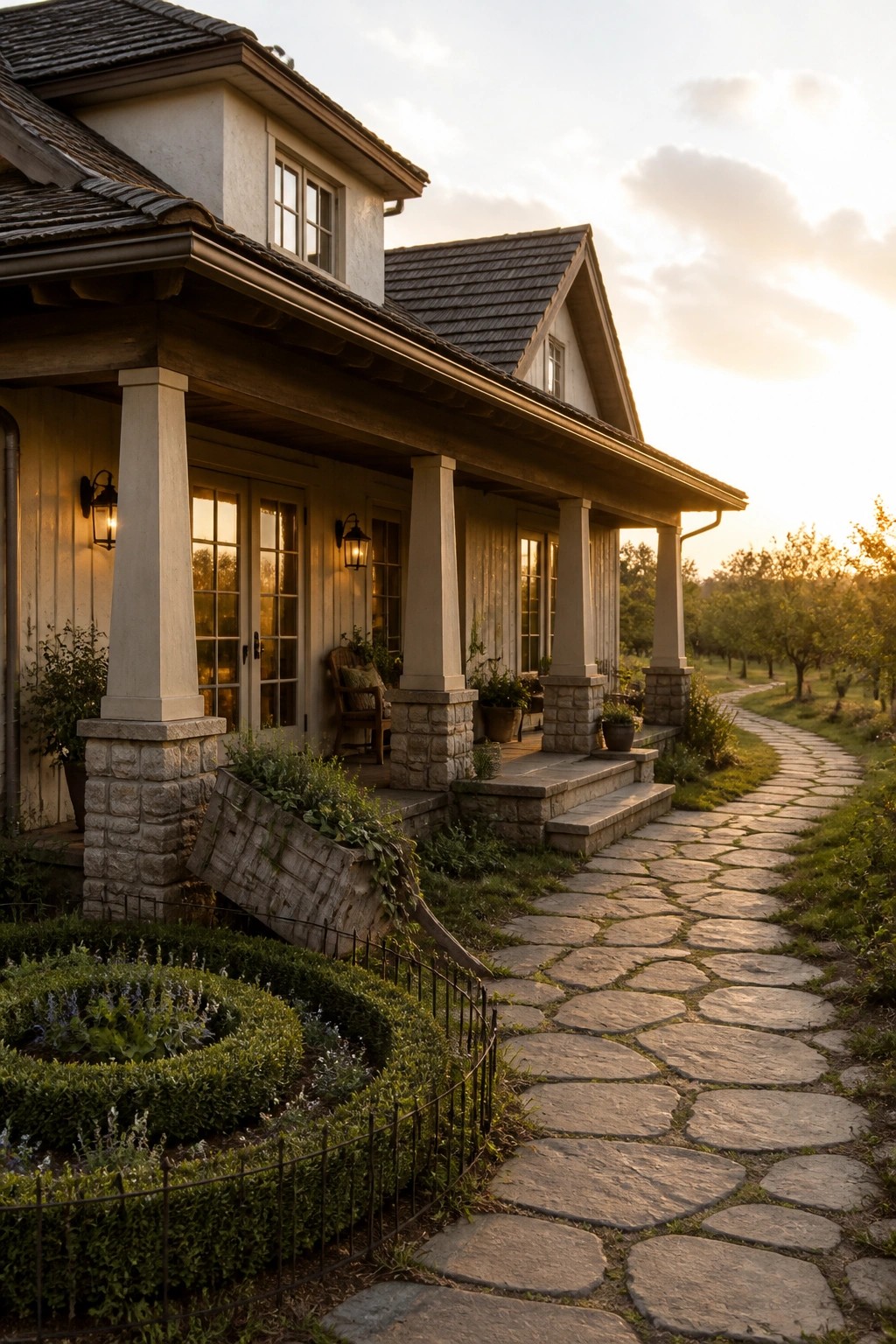
Stone piers give a porch real presence without overpowering the rest of the house. They anchor the structure and add a sense of age that wood alone rarely achieves.
This approach works best on farmhouses with a wide front porch where the entry needs more weight. Keep the upper columns simple and let the stone carry the heavier look. It pairs naturally with wood siding and helps the house feel settled on its site.
Frequently Asked Questions
Q: How can I add a wraparound porch to my house without it looking tacked on?
A: Measure your existing roofline first so the new porch ties into it at the same height. Use simple square posts and beadboard ceilings to echo older farm builds. This keeps the addition feeling like it has always been there.
Q: My windows are modern and vinyl. Should I replace them to get that historic farmhouse look?
A: Swap them for wood ones with divided panes if your budget allows. The change alone brings back the right scale and shadow lines that vinyl lacks.
Q: What fence style pairs well with these exterior ideas?
A: Stick to low wood pickets or split rails in a natural finish. They frame the house and let the main features stand out without competing.
