

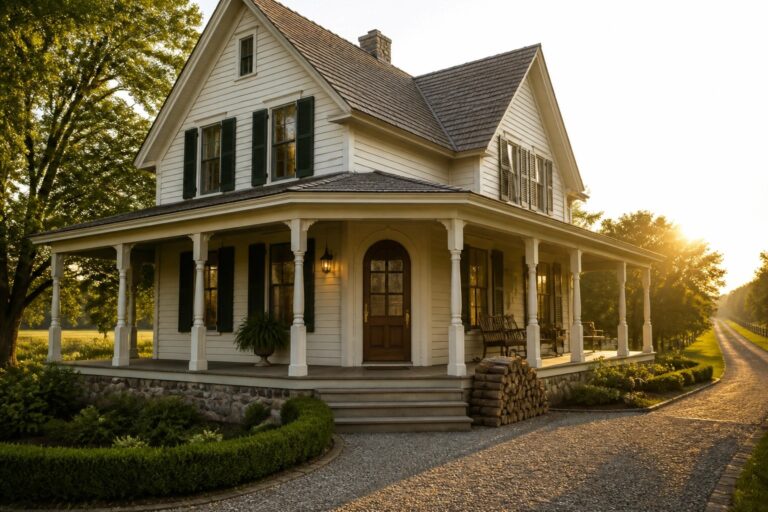
I have spent time looking at older farmhouses and noticed that the exteriors which hold up best rely on straightforward material choices like wood siding and simple trim details.
When I drive through rural areas the homes with balanced rooflines and clear entry points always read stronger from the road even after years of wear.
Window placement changes more than most people expect.
A few of those original approaches to porch depth and foundation height still make sense today because they tie the whole front together without extra ornament.
I would try scaling one or two of those siding and entry combinations on my own place before deciding on anything larger.
Dark Shutters Against White Siding
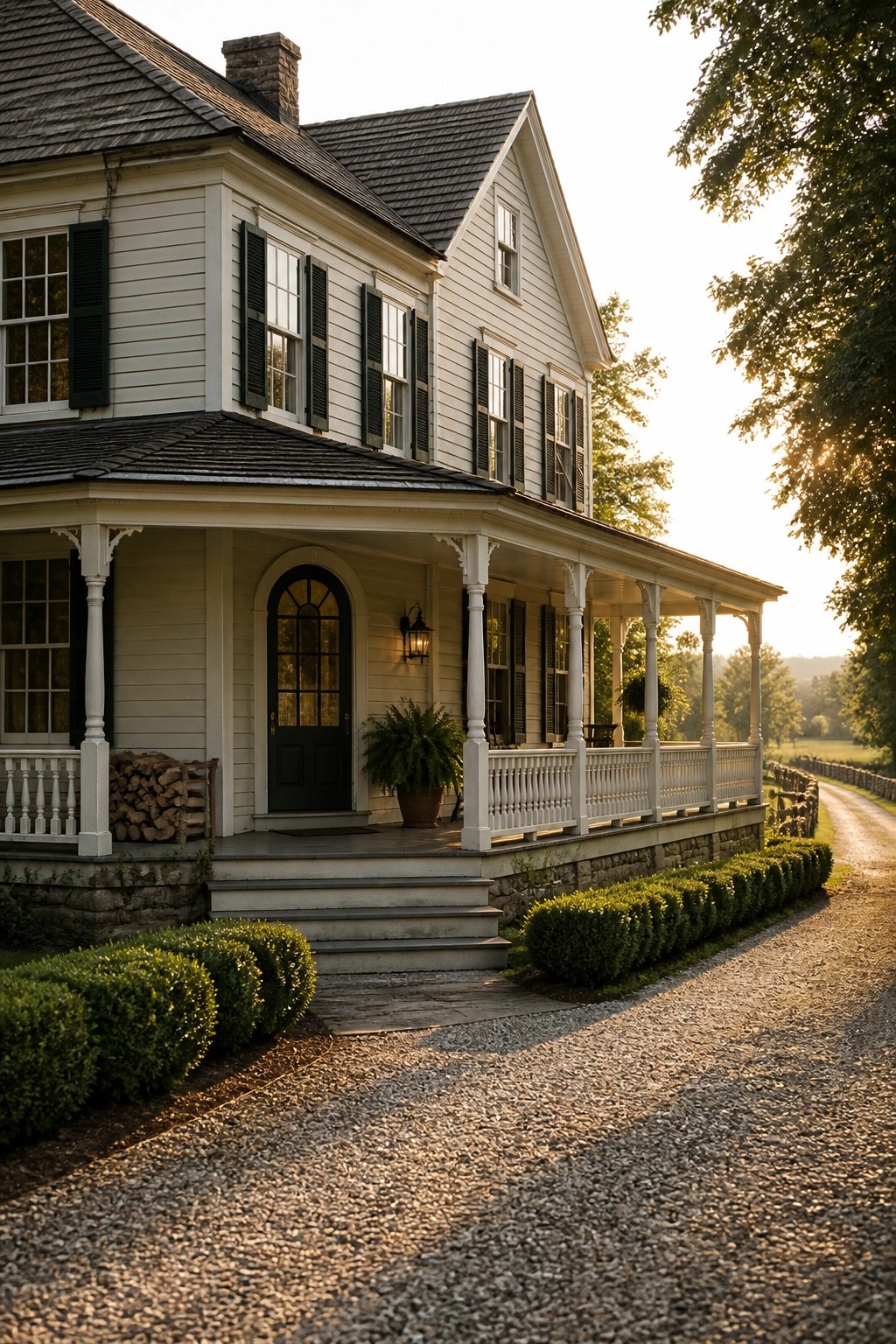
Many older farmhouses relied on dark shutters to give the front a clear sense of order. The contrast breaks up the white siding and makes the windows feel more intentional rather than just scattered across the wall.
This approach works best on houses with fairly even window placement. Keep the shutters a true black or deep green and match the front door to them so the whole front reads as one simple idea instead of several competing colors.
Center the Entry on a Gable Front
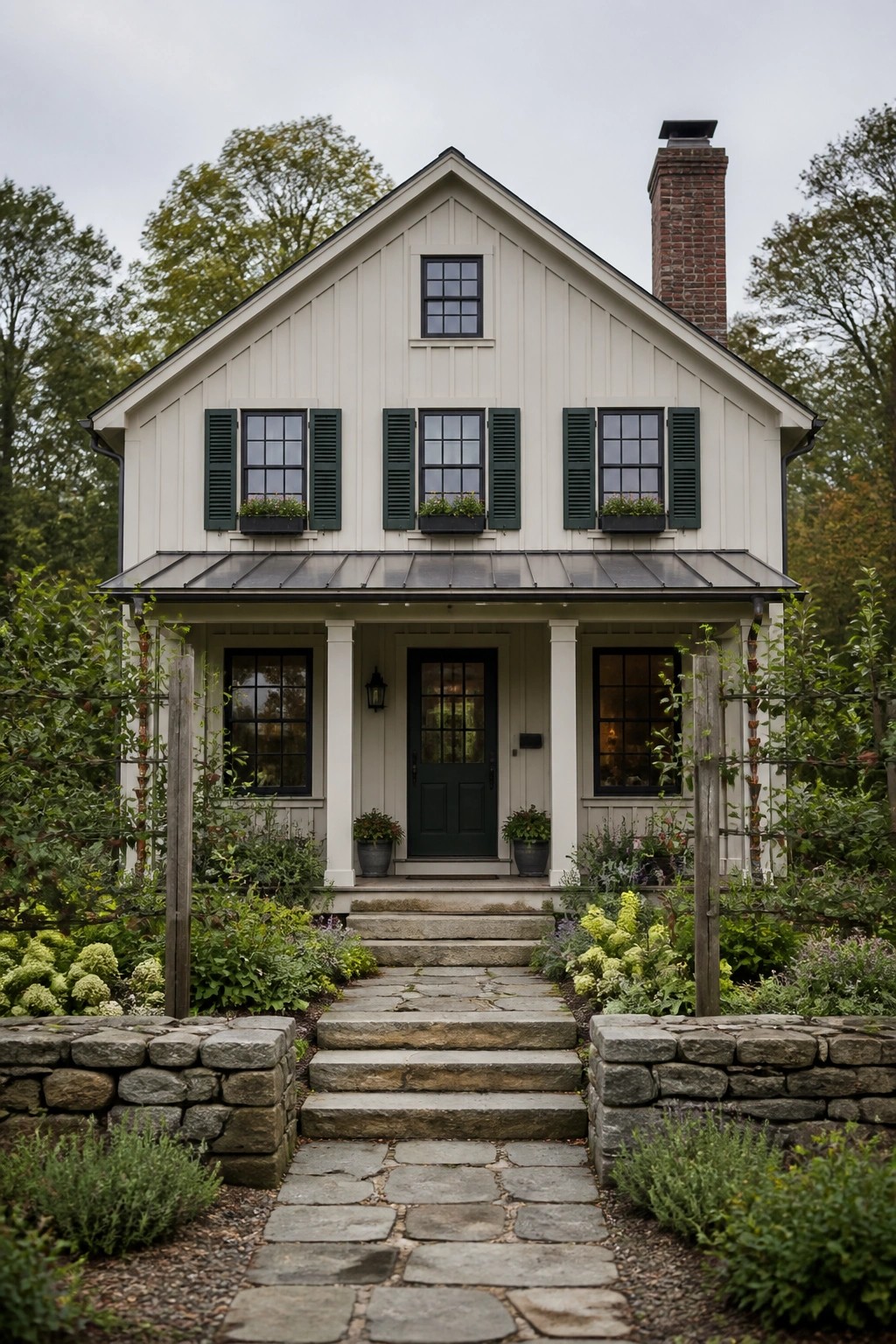
A centered front door under a small porch works especially well on gable-front farmhouses. It keeps the whole face balanced and gives the house a straightforward, welcoming look that has stayed popular for over a century. The dark door and matching shutters help the entry stand out without extra trim or decoration.
This approach suits homes that already have a simple roofline and clean siding. Keep the path straight and fairly narrow so it leads the eye right to the steps. Avoid spreading windows too far apart or adding wide wings that break the symmetry.
Let the Front Door Stand Out
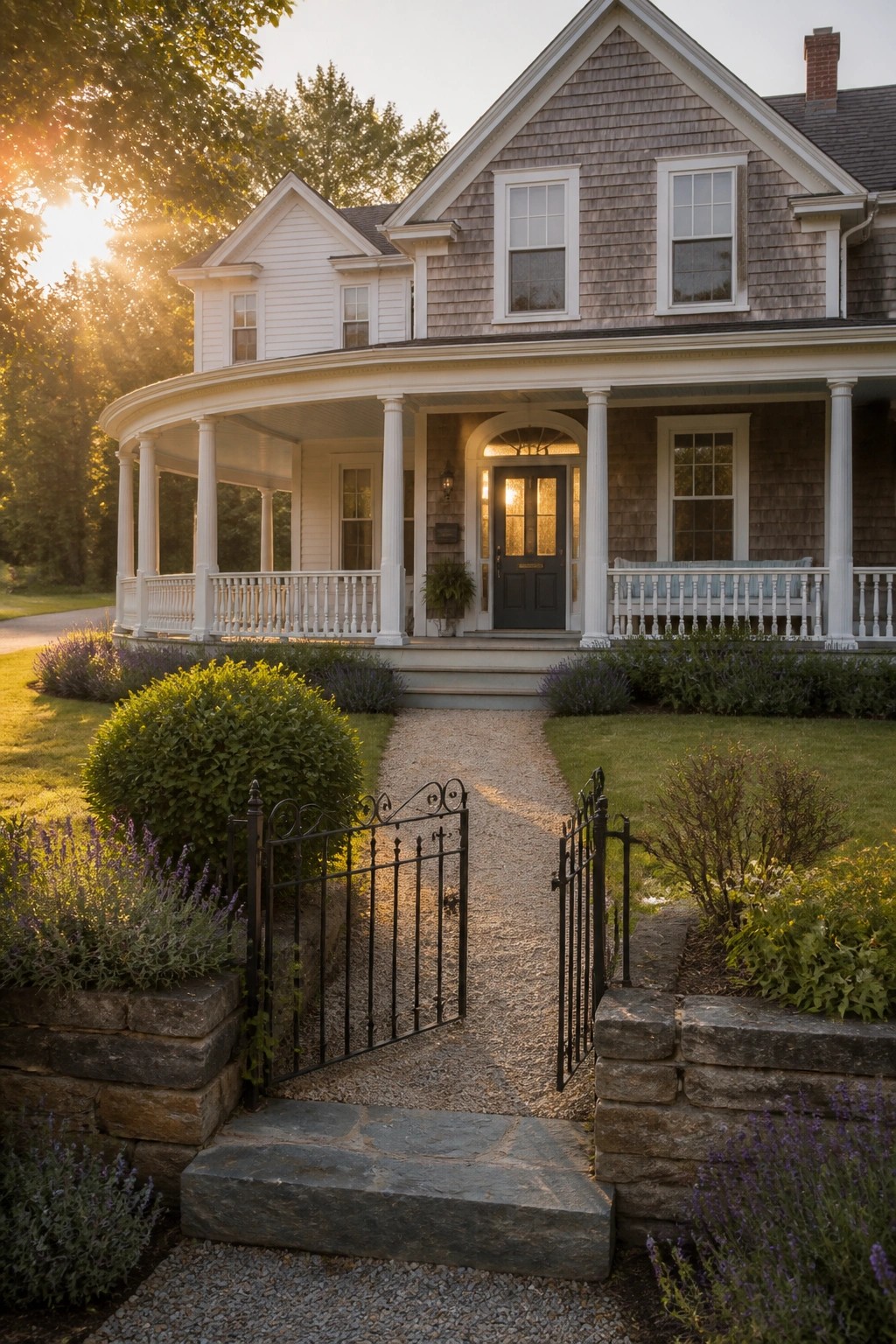
A dark front door can give a 1900s farmhouse a clear focal point without any extra trim or decoration. The contrast against lighter siding makes the entry easy to spot from the road and keeps the whole look simple and balanced.
This works best on homes with white or light gray exteriors and a straightforward porch. Keep the door color deep but not too bright, and add a small transom or side lights if the style allows. Avoid busy hardware or too many plants right at the threshold.
Porch Columns on Brick Piers
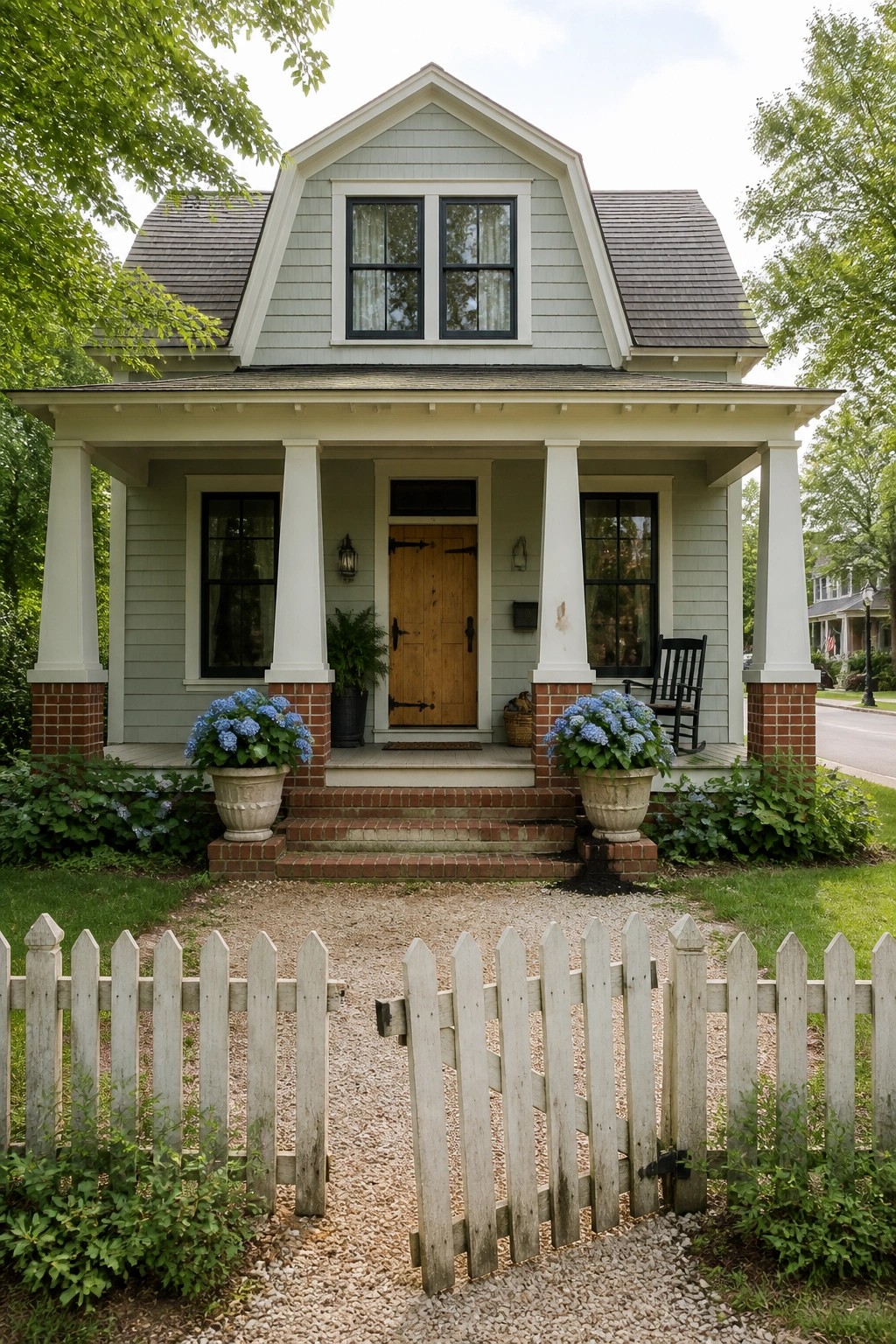
A simple way to give a farmhouse porch more weight is to set the columns on low brick piers. It keeps the look grounded and adds a bit of texture without extra trim or decoration.
This setup works on both older homes and new builds that want the same feel. Just match the brick to any existing foundation work and keep the columns plain and white.
Mix Stone And White Siding On The Facade
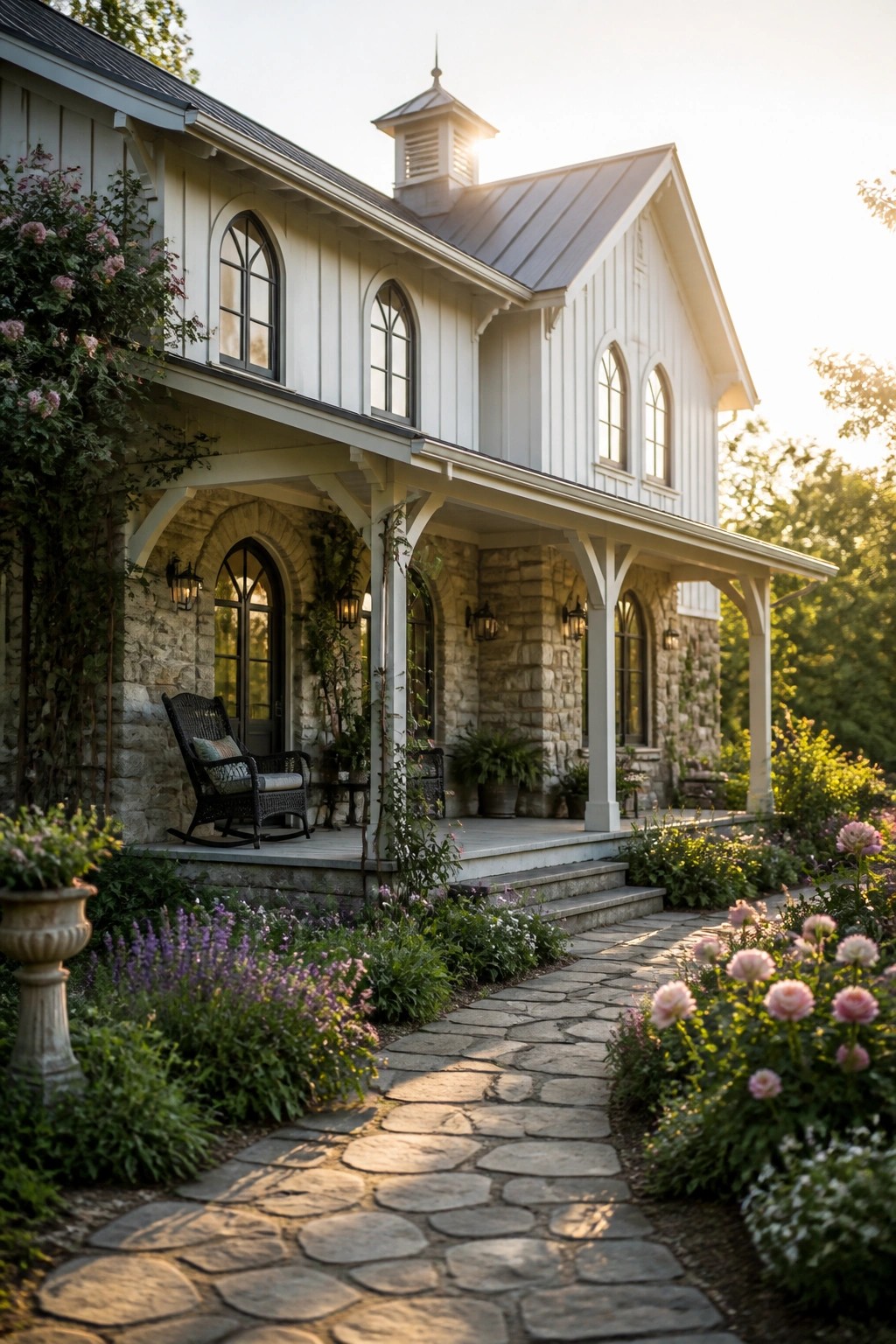
Many older farmhouses gain a lot from this simple material change. The stone gives weight and texture near the ground while the white siding keeps the upper walls light and clean. It prevents the house from feeling too heavy or too plain.
This works best on homes with a similar roof pitch and porch structure. Keep the stone limited to the base or lower walls so it does not overwhelm the design. The contrast also helps the house sit nicely with surrounding gardens and paths.
Paint the Front Door a Soft Color
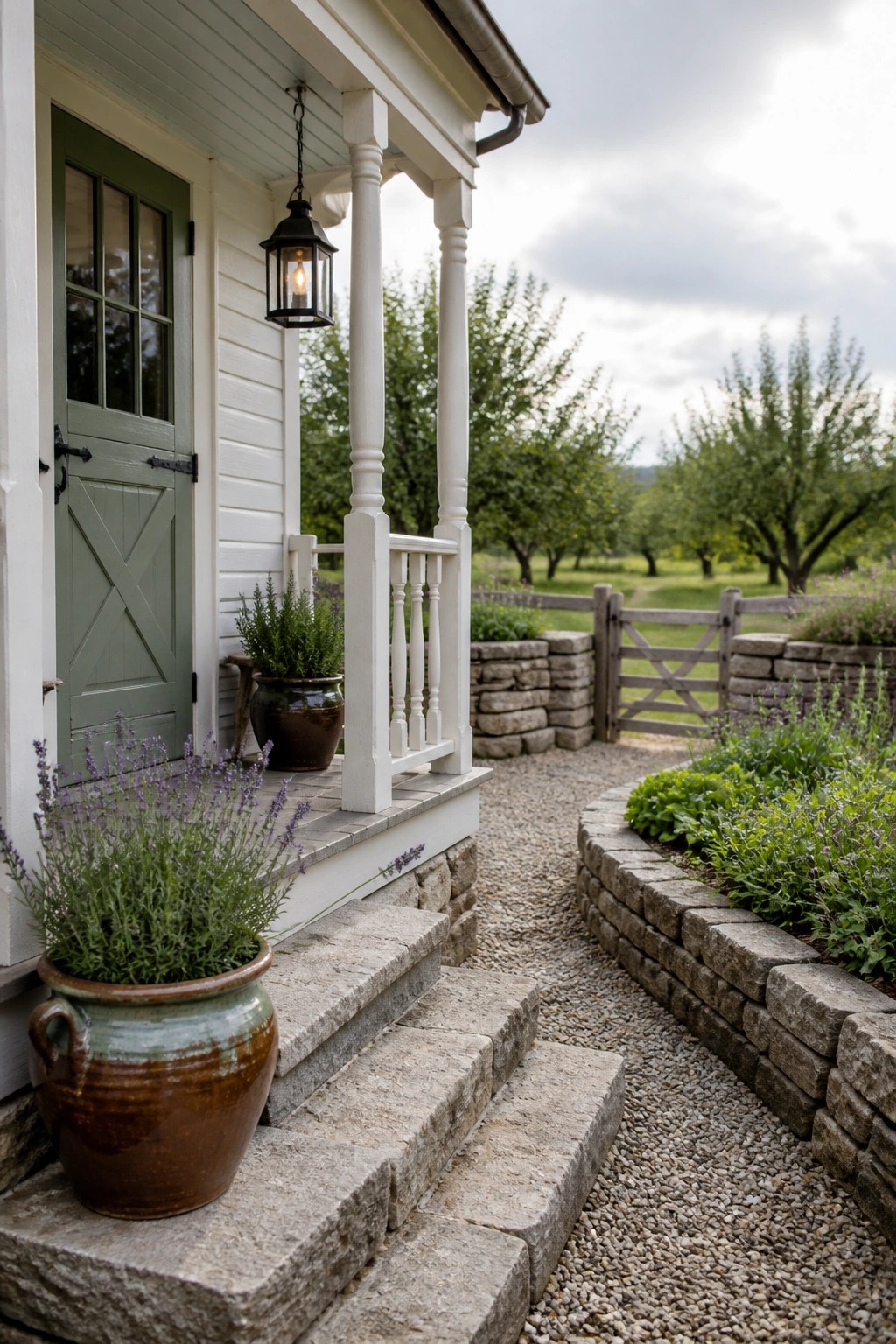
A soft painted door gives a simple farmhouse a welcoming touch that still feels right at home with the rest of the exterior. It draws the eye to the entry without needing fancy trim or extra details.
This idea works best on houses with white or light siding. Keep the surrounding trim clean and white, then let the door color do the work. Stone steps and a few potted plants are enough to finish the look.
Centered Porch Entries On Farmhouses
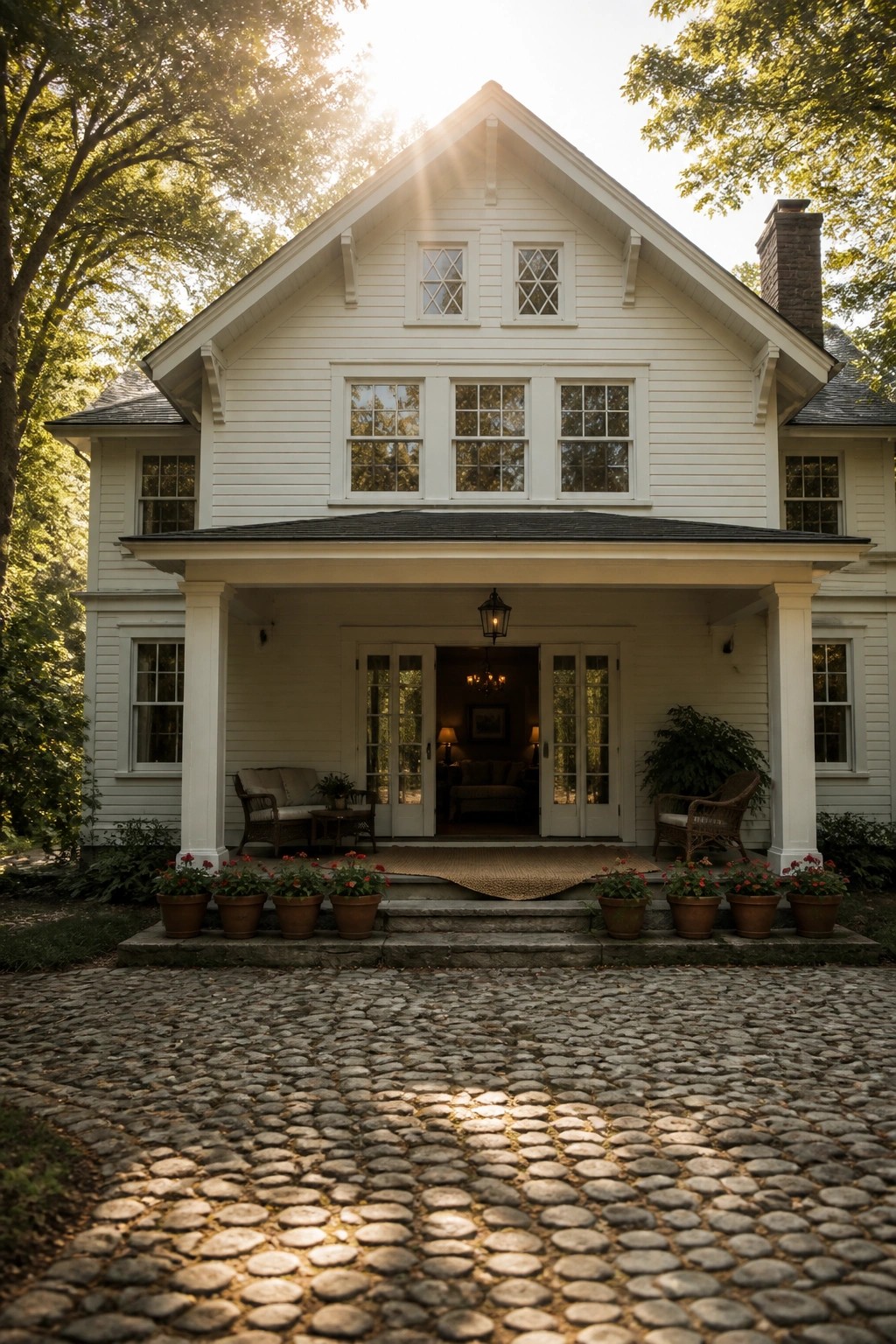
A wide front porch with double doors in the middle helps a farmhouse exterior feel balanced and open. It draws attention to the entrance without adding extra trim or decoration, which keeps the whole front looking clean and simple.
This approach works best on homes with white siding and a gable roof. Keep the porch depth modest and line up the doors with the windows above so the facade stays symmetrical.
Brick Walkways That Enhance Farmhouse Entries
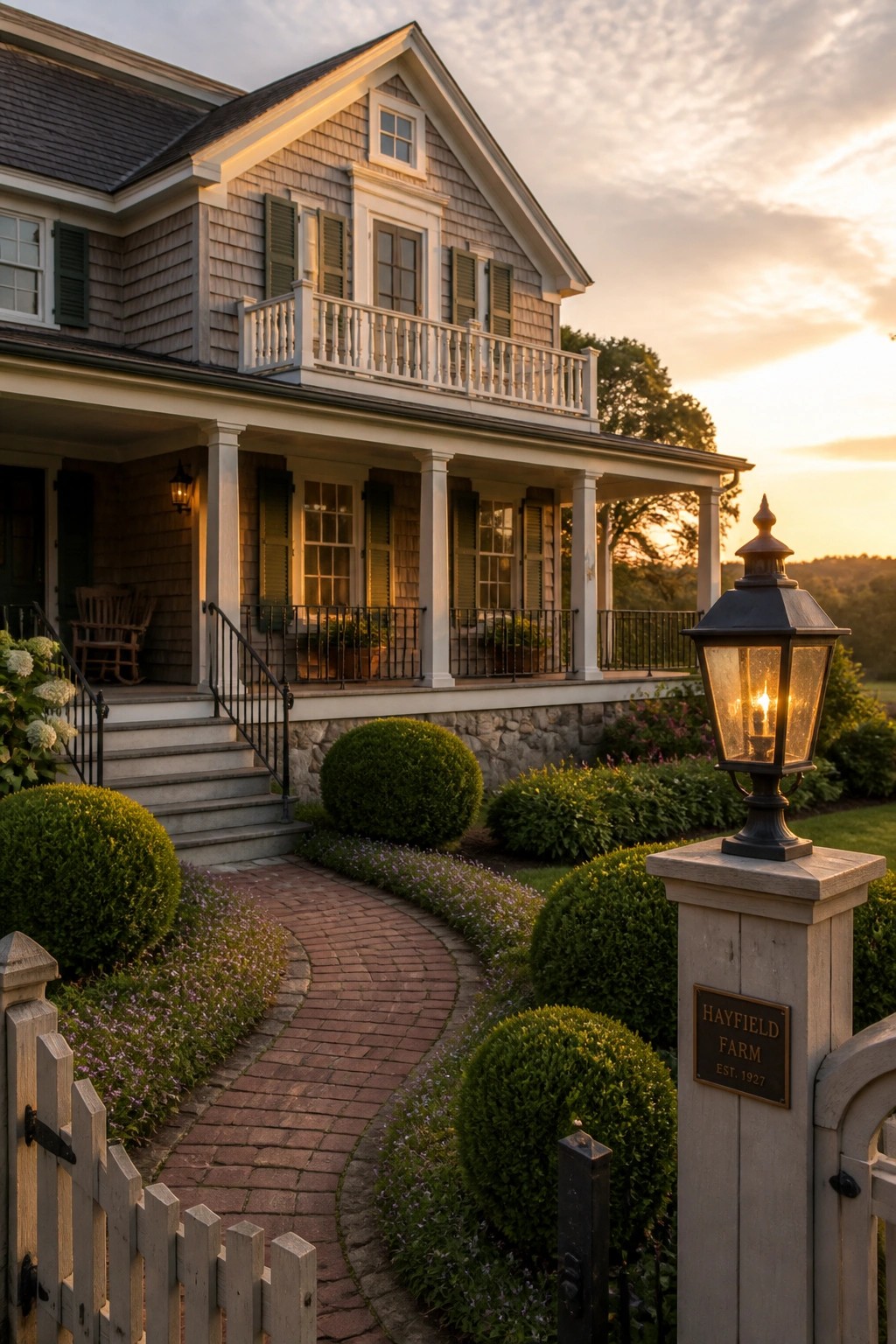
A brick walkway adds a simple, practical touch that makes the approach to a farmhouse feel more complete. It guides people toward the porch without looking overly formal, and the material holds up well over time while blending with older homes.
This works best on properties where the house sits back from the road or driveway. Keep the path a modest width, let it curve gently if the lot allows it, and pair it with basic plantings along the edges rather than anything too elaborate.
Dark Trim On Light Siding
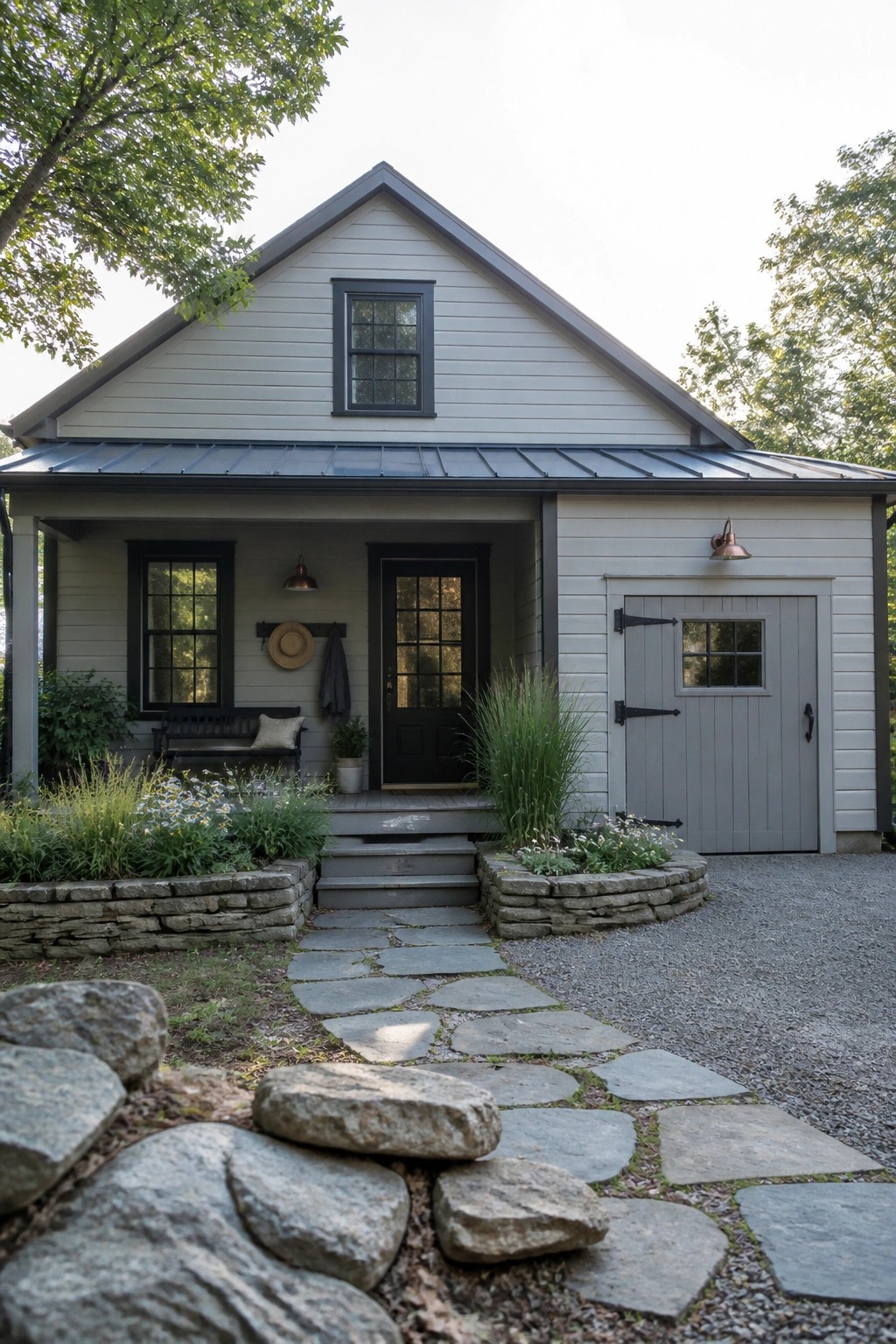
Dark trim gives a light farmhouse exterior more shape and makes the windows and door feel intentional. It is a simple way to add contrast without adding extra details or changing the overall form of the house.
This approach works best on homes with clean siding and a straightforward roofline. Keep the trim color deep and consistent across the windows and front door so the look stays balanced rather than busy.
Dark Door Against White Siding
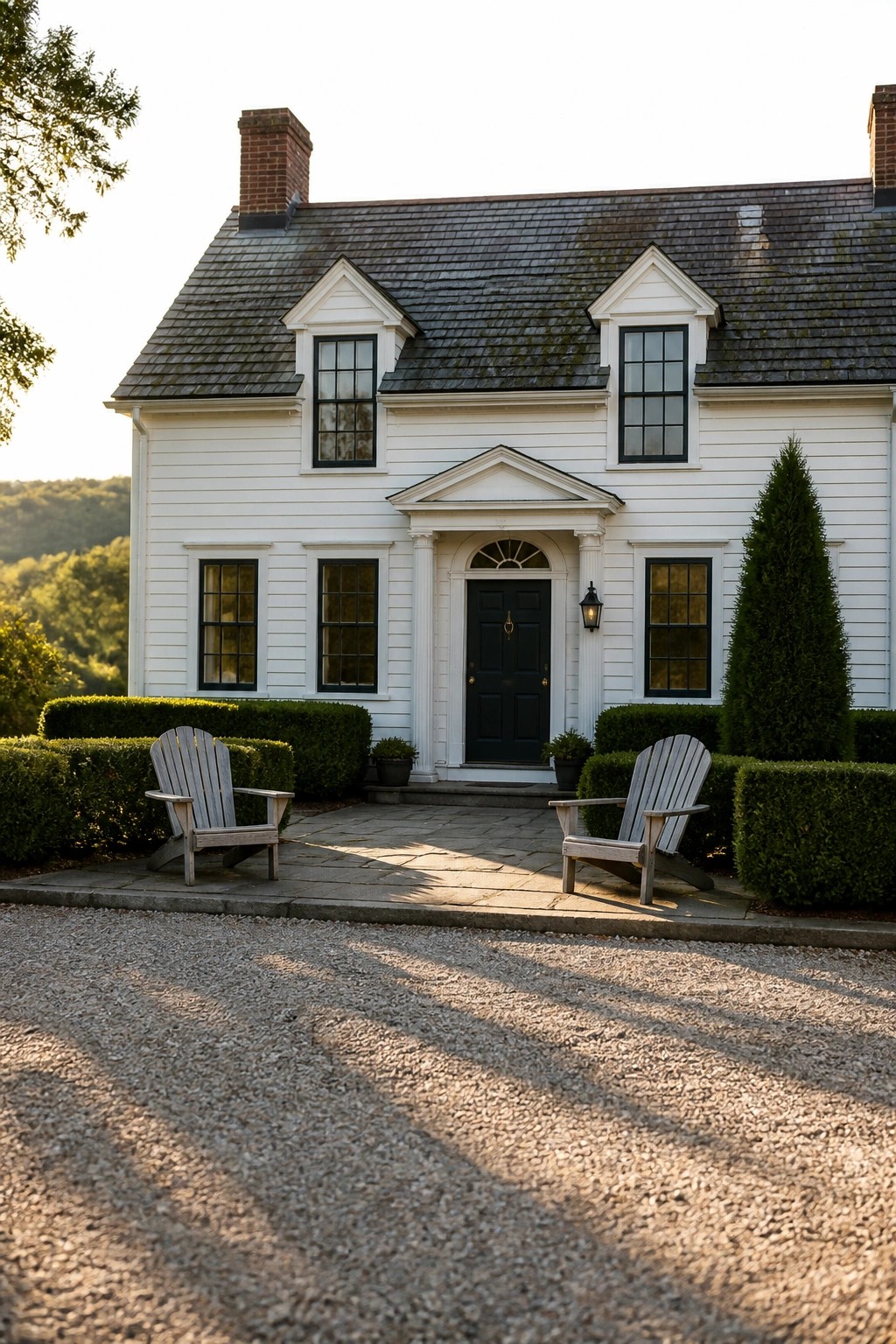
Many 1900s farmhouses stay simple with white siding and let the front door carry the contrast. A dark door gives the entry weight and makes the house feel more grounded without added trim or color elsewhere.
This works best on symmetrical facades where the door sits in the center. It suits homes that already have balanced windows and clean lines, and it holds up well even when the rest of the exterior stays plain.
Weathered Wood Siding Keeps the Look Authentic
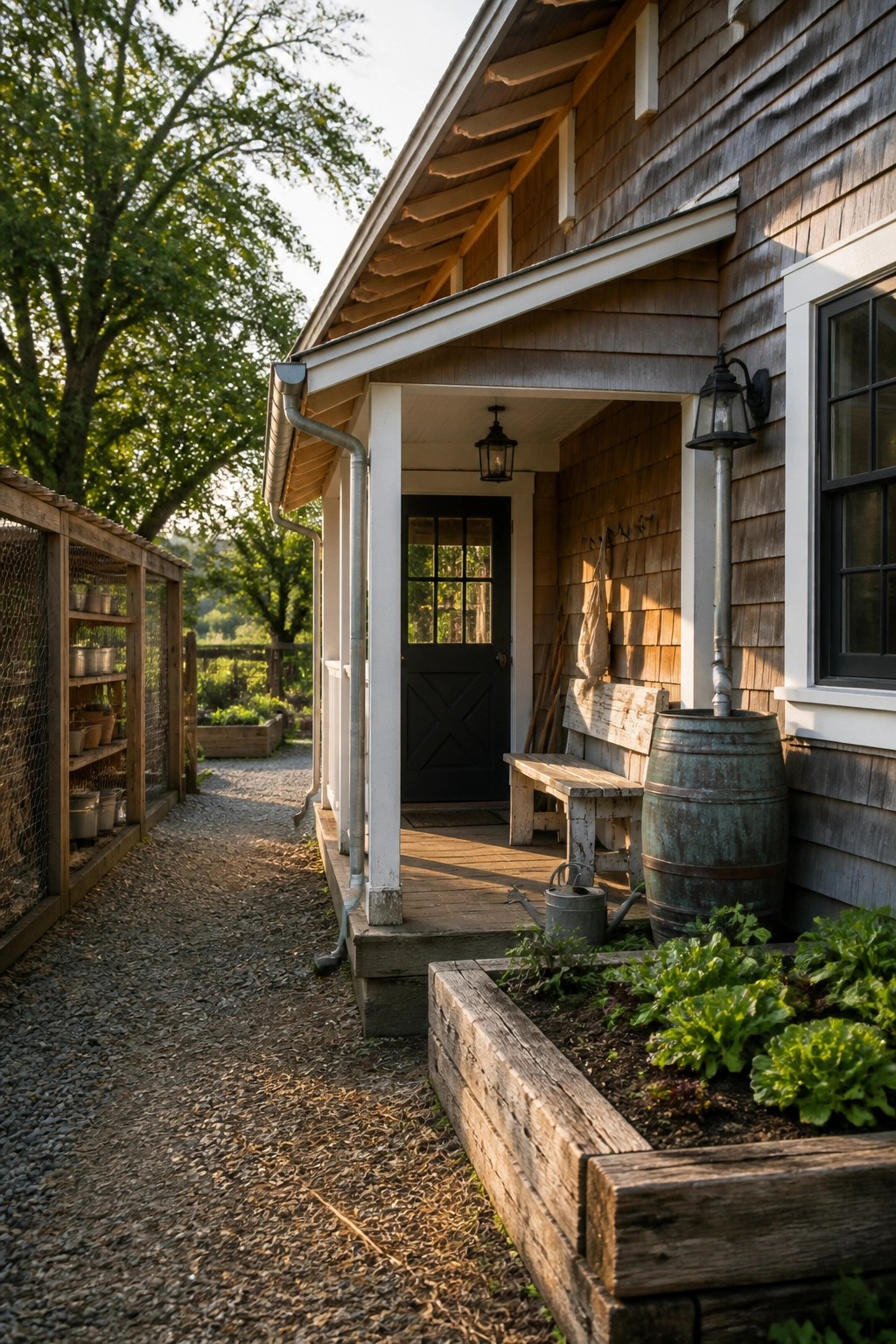
Many older farmhouses rely on wood siding that has already started to gray and soften. This approach avoids a brand new appearance and instead lets the material settle into the landscape over time. It pairs well with basic white trim and a dark door for contrast without adding extra colors or patterns.
This works best on homes that already have some age or sit in rural settings. Stick with real wood or a close siding match rather than anything too uniform. The goal is to let the surface develop its own variation instead of trying to control every tone.
Brick Bases With White Siding
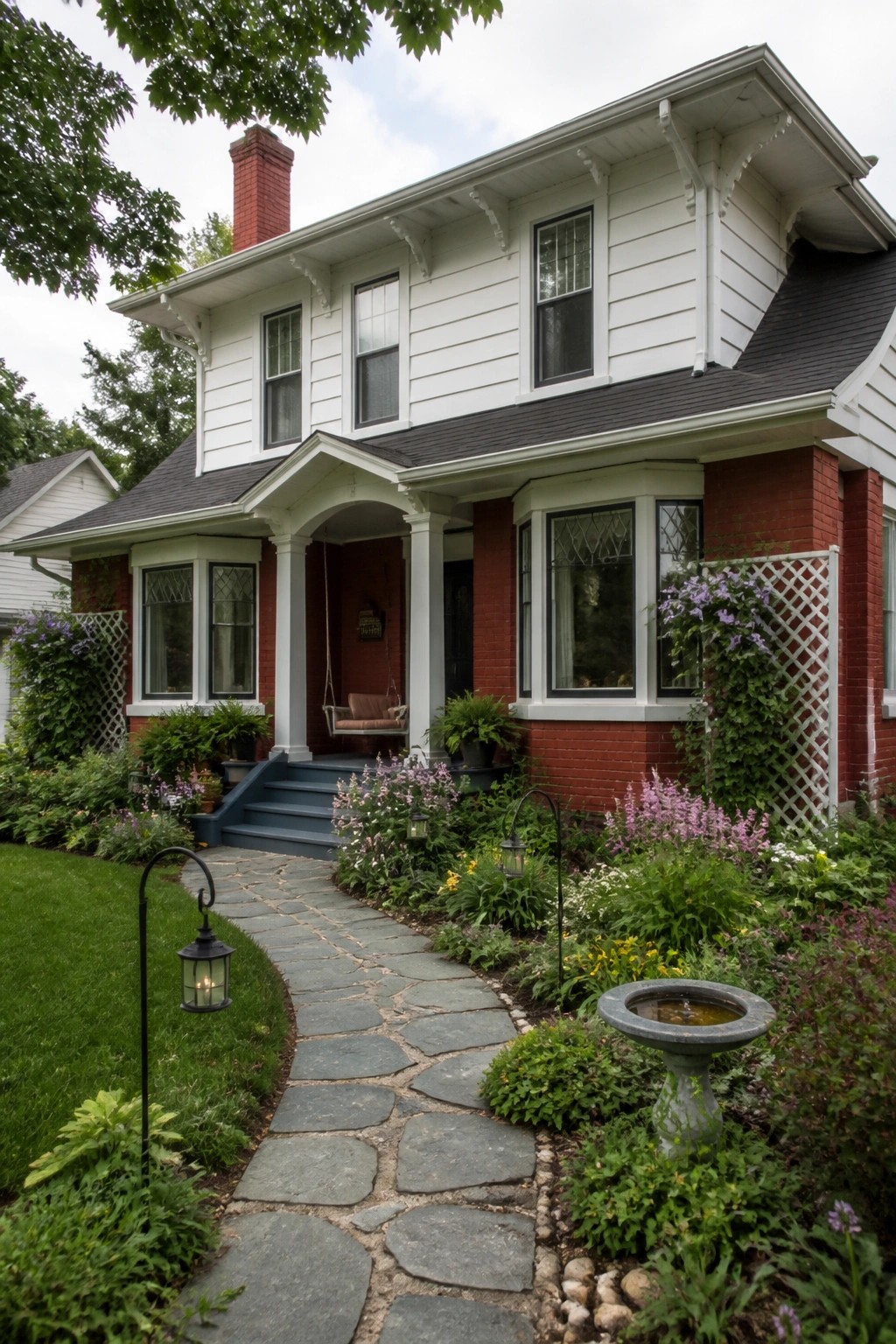
Many 1900s farmhouses used brick on the lower walls and white siding above. The mix gives the house a solid base while keeping the upper part light and simple.
This approach works well on older homes that need a bit more weight near the ground. It suits most farmhouse styles and holds up over time without looking heavy.
Line the Entry Path with Low Beds
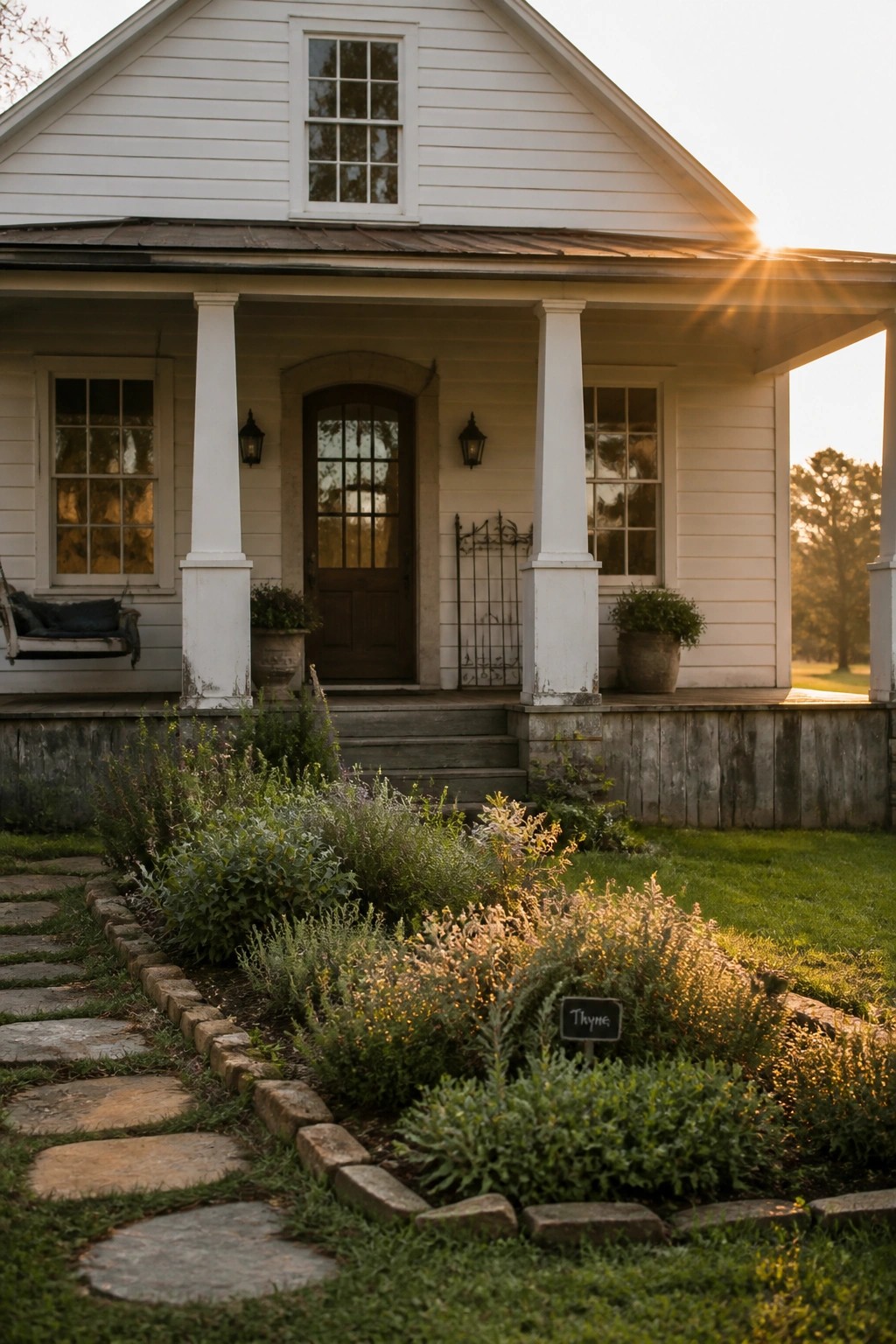
A stone path edged in brick and bordered by low herbs and perennials gives a farmhouse a settled, lived-in look. It turns the walk from the yard into something useful instead of just a strip of grass, and the plants soften the base of the house without hiding it.
This setup works best on homes with a clear front walk and room for narrow beds on each side. Keep the plants under two feet so the path stays easy to follow, and choose herbs or tough perennials that can handle foot traffic and sun.
Rocking Chairs On The Porch
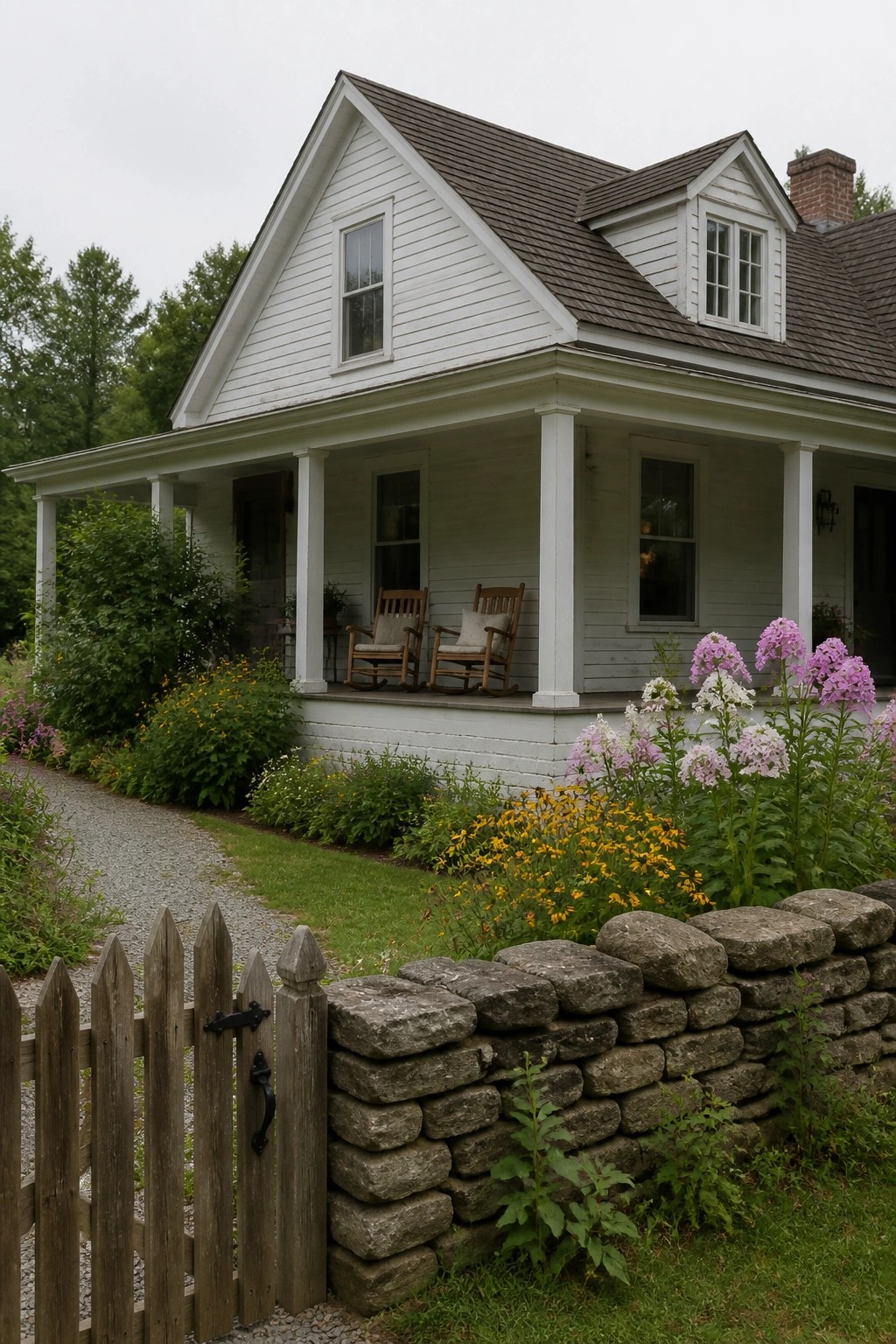
A covered porch looks better when it has a couple of rocking chairs. They give the front of the house a settled look and make the space feel ready to use instead of just for show.
This works well on older farmhouses or new builds that want the same feel. Keep the chairs simple and wooden, and place them where they face the yard or street. Avoid crowding the porch with too much else.
Frame The Entry With White Columns
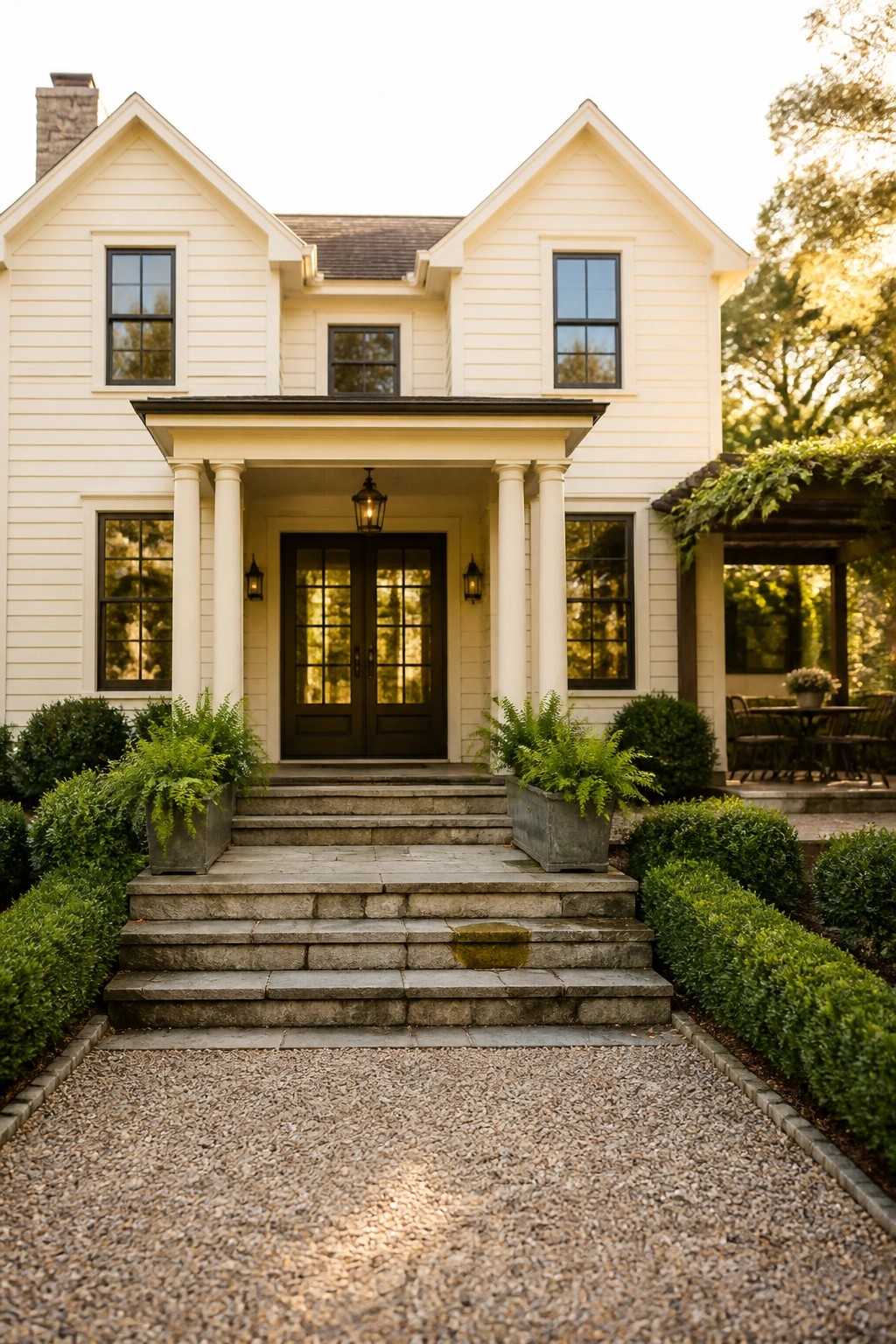
A small portico with simple white columns gives a 1900s farmhouse a clear center point. It keeps the look balanced and draws attention straight to the door instead of letting the whole front fade into the siding.
This works best on symmetrical houses where the door sits in the middle. Keep the columns plain and match them to the trim color, then use a darker door to create contrast. Avoid adding extra trim or details that would make it feel busy.
Large Planters Beside the Front Door
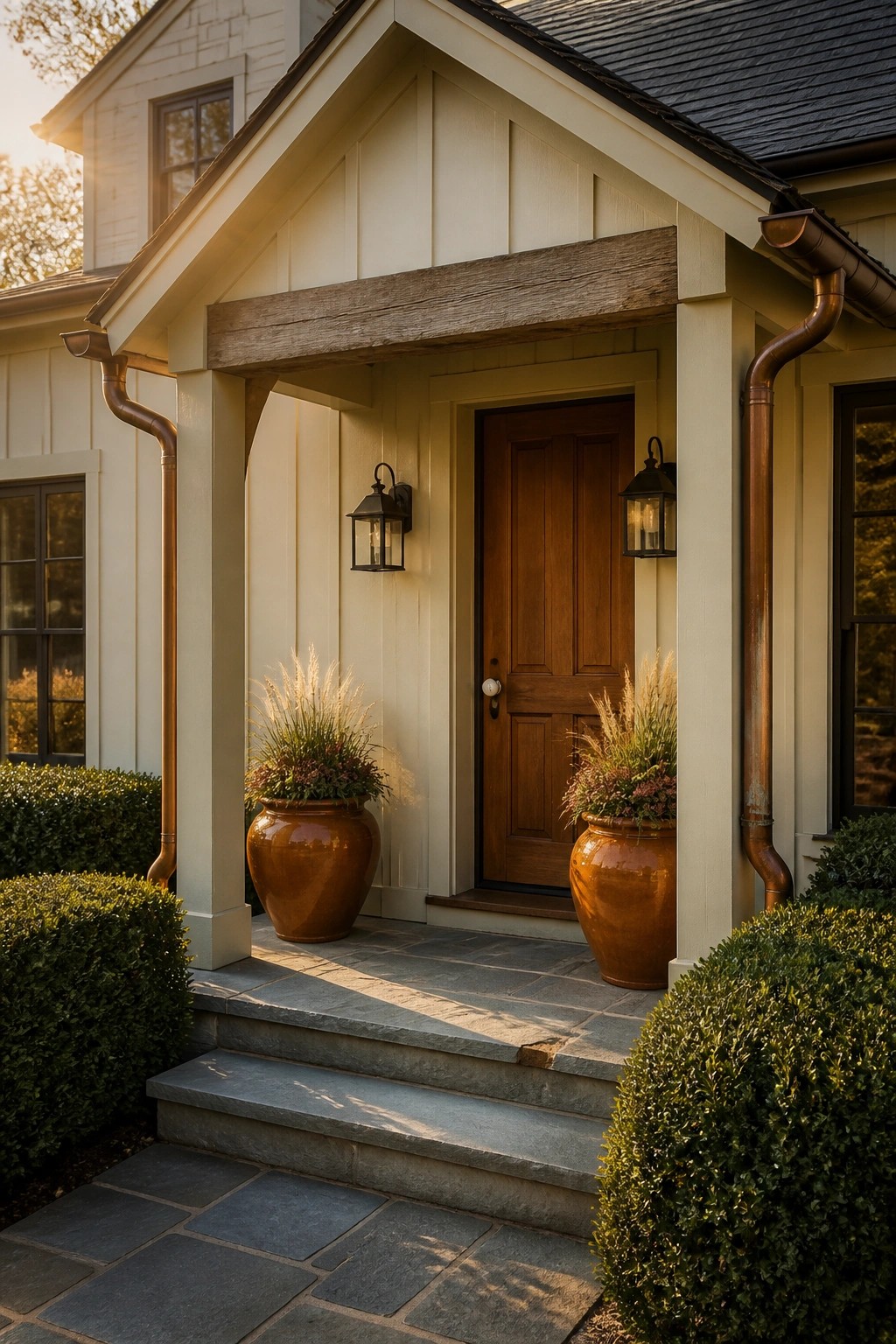
A pair of oversized planters can make a simple entry feel more complete. They bring height and some softness to the door without adding built-ins or extra trim.
This approach suits farmhouses with clean siding and a centered door. Place the pots on the porch or at the base of the steps, keep the planting tall but not messy, and choose a pot color that picks up the roof or hardware tones.
Brick Paths Lined with Raised Beds
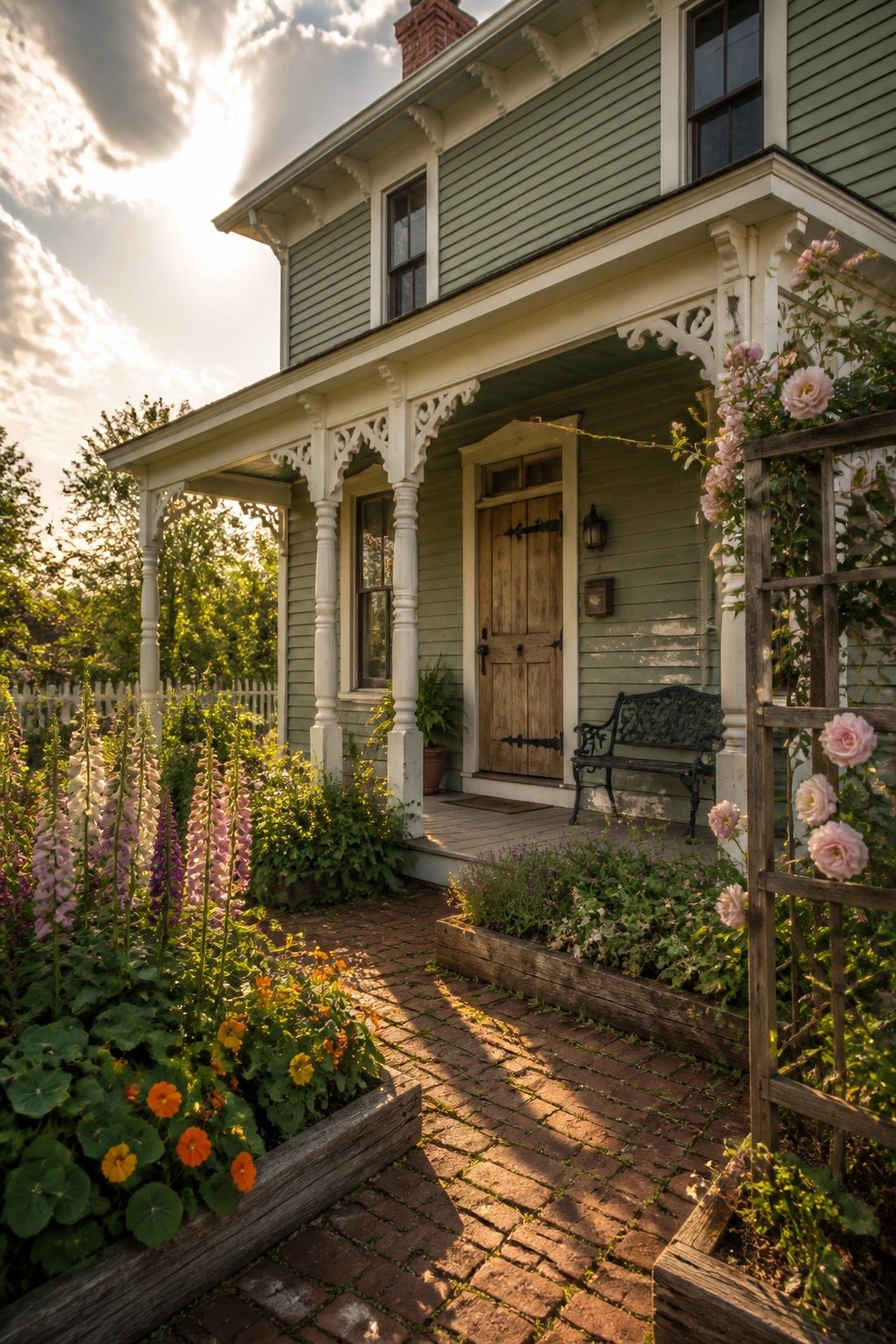
A brick path gives the front of an older farmhouse a clear sense of arrival. It feels practical underfoot and adds a bit of structure that works well with the simple lines of these houses. The raised beds along the edges keep the planting neat without making the walk feel closed in.
This setup works best on homes that already have some garden space in front. Keep the beds low and use the same wood tone as any porch trim so everything stays connected. Avoid making the path too narrow or the beds too tall, or the whole approach starts to feel crowded.
Center the Front Door
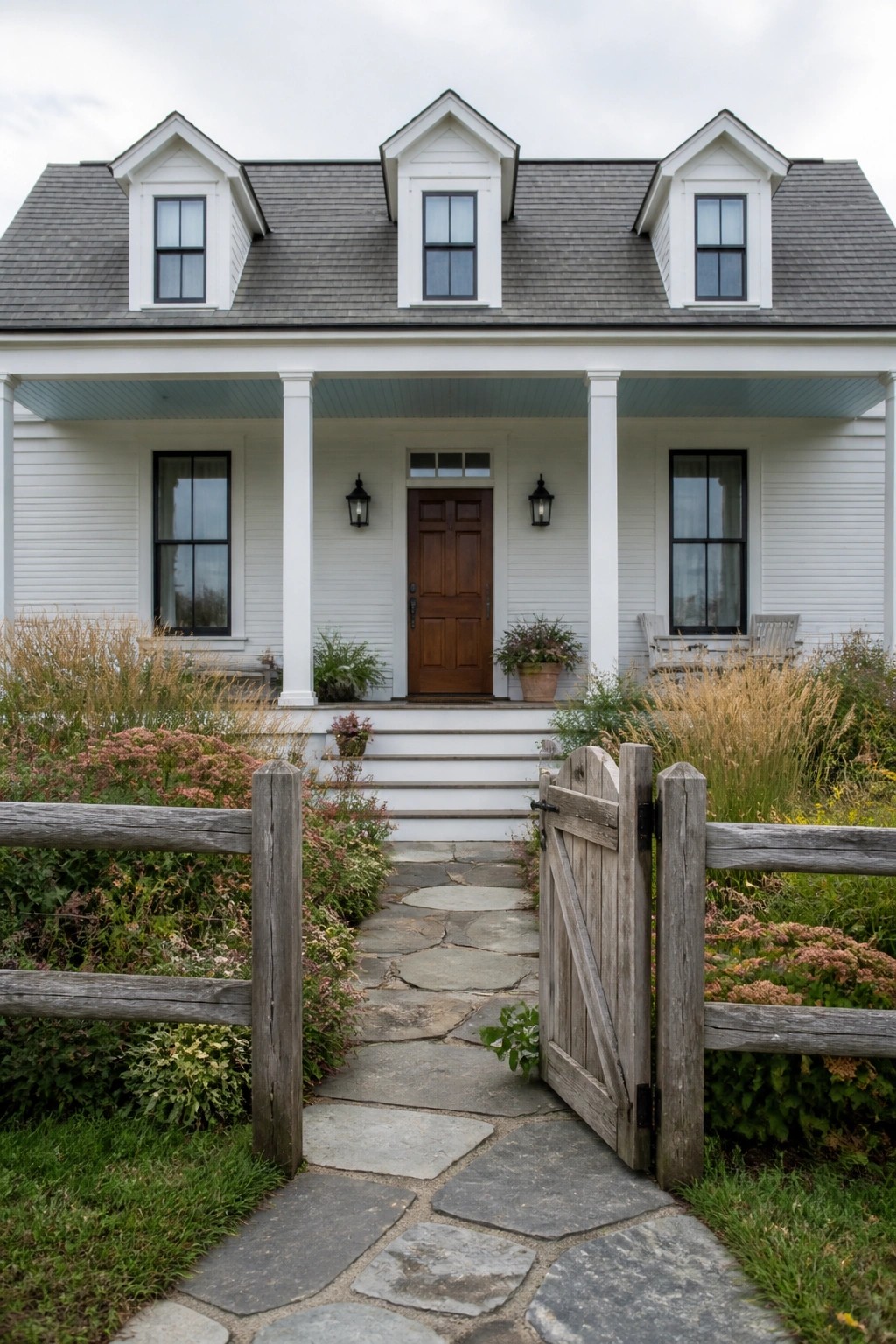
A centered front door gives the whole house a steady, balanced look that feels right for older farmhouses. It draws the eye straight to the entrance without any fuss, and the porch columns on either side help frame it naturally.
This works best on homes with a simple rectangular shape. Keep the windows even on both sides and avoid adding too many extra details around the door itself. The result stays classic without feeling forced.
Curving The Path To The Porch
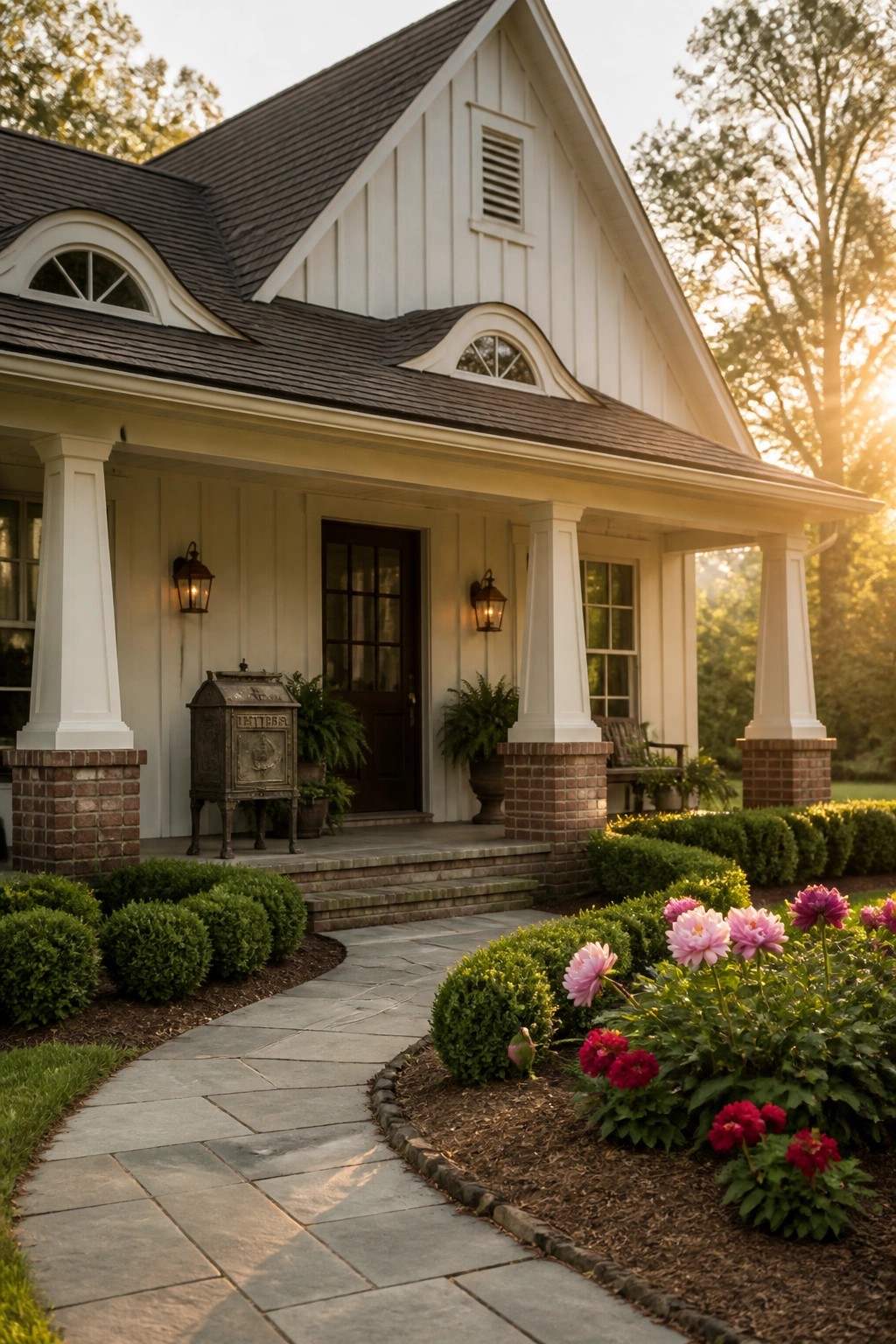
A straight path to the door works fine, but a gentle curve often feels more relaxed on a farmhouse. It softens the approach and makes the whole front feel less formal while still guiding visitors clearly to the steps.
This layout works best on homes with a bit of lawn in front and a simple porch. Keep the edges planted with low shrubs and flowers so the path blends into the yard instead of cutting across it like a sidewalk.
Mixing Stone With Wood Siding
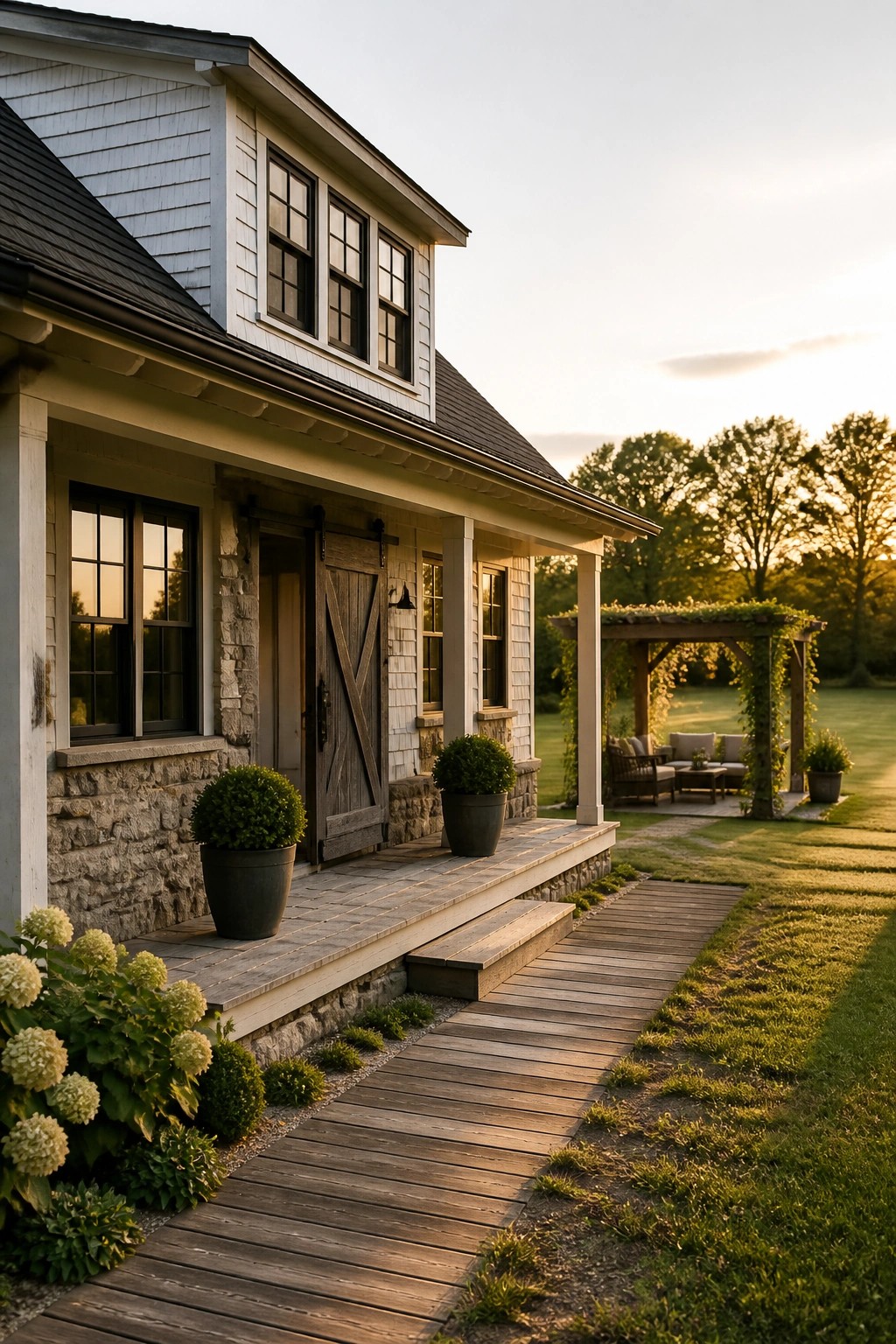
A stone base paired with wood siding remains one of the simplest ways to give a farmhouse exterior weight without making it feel heavy. The lower section grounds the house while the lighter siding above keeps the look balanced and familiar.
This approach works best on homes where the foundation sits a little higher or where you want a clear break between the ground and the main walls. Use local or rough-cut stone if possible and keep the siding a soft white or cream so the materials do not compete.
Stone Steps For A Simple Farmhouse Entry
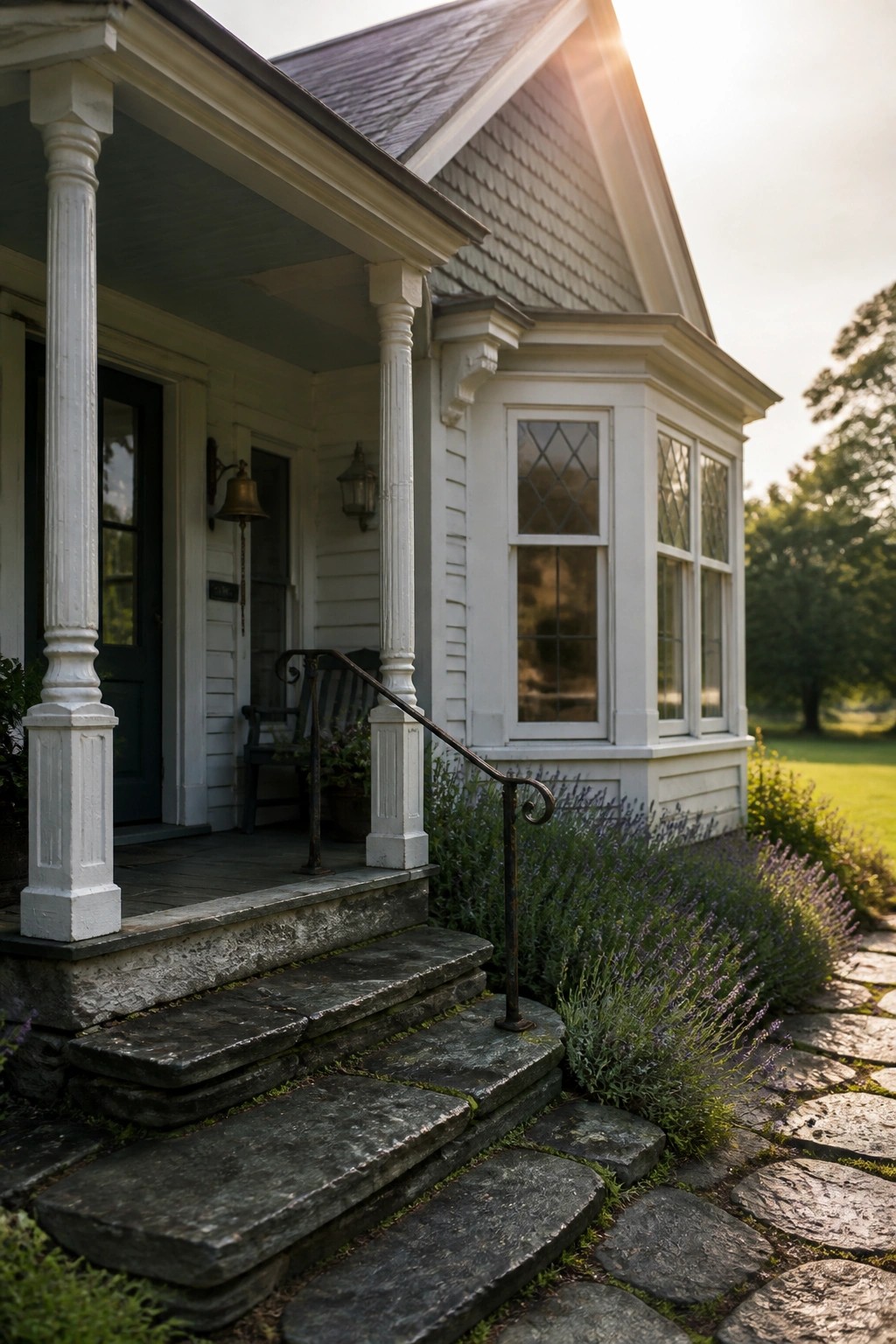
Stone steps give a farmhouse entry real weight without trying too hard. They age well, handle weather, and make the approach feel solid rather than temporary. Many older homes already have this detail, and it still reads as practical today.
Use local or reclaimed stone when you can, and keep the railing simple so it does not compete with the house. This works best on homes with a clear front path and a porch that sits a few steps above grade. Avoid thin pavers or overly polished materials that fight the rustic feel.
Stone Patios Next To The House
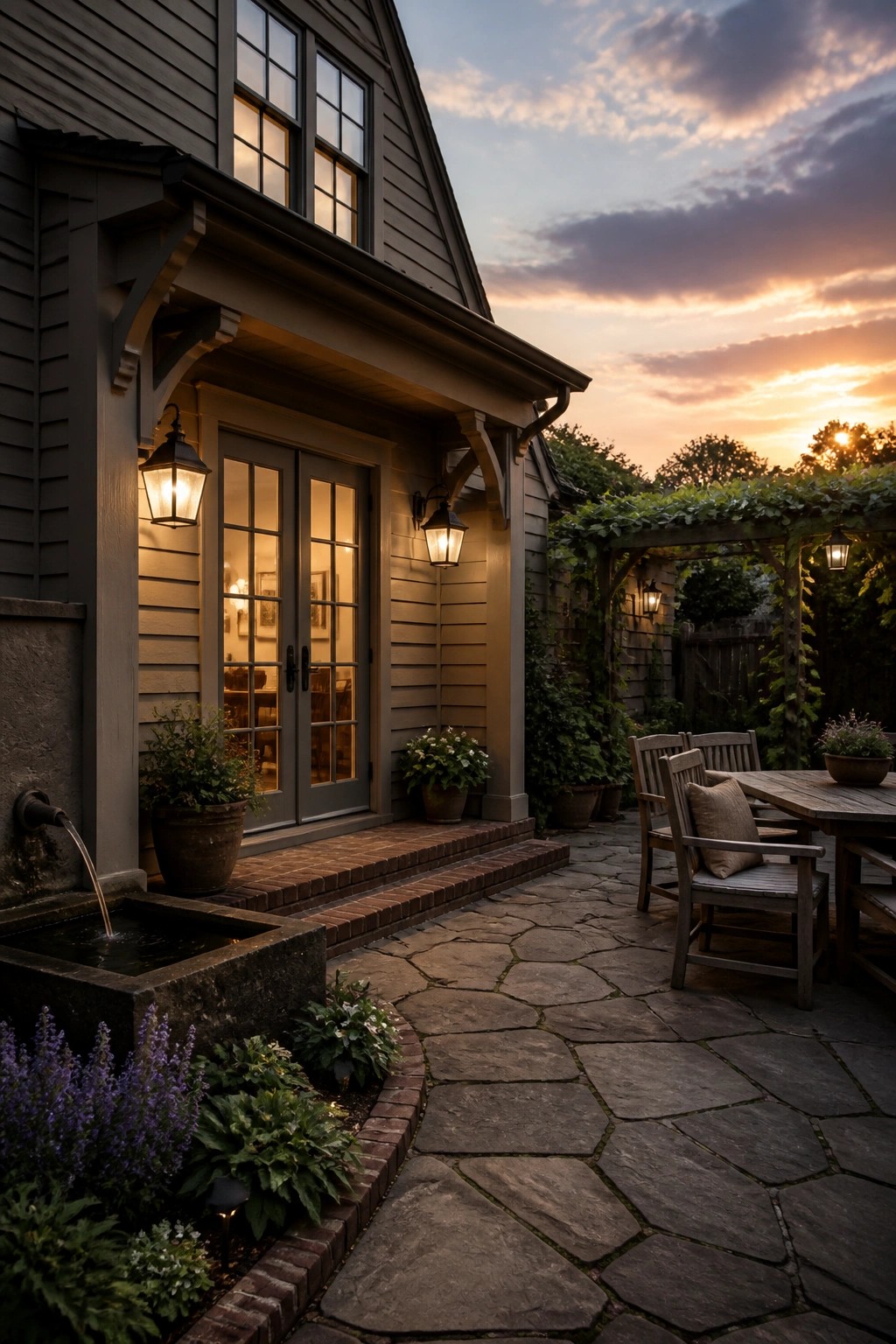
A stone patio set right against the house gives you an easy outdoor spot without much fuss. It works especially well on older farmhouses because the natural material sits comfortably with wood siding and simple trim. The flat pavers also handle foot traffic from the door without looking messy.
This setup suits homes that already have a side or back entry you use often. Keep the furniture simple and low so the space stays open and practical. Watch the slope of the ground so water drains away from the foundation instead of pooling near the steps.
Stone On The Porch Bases
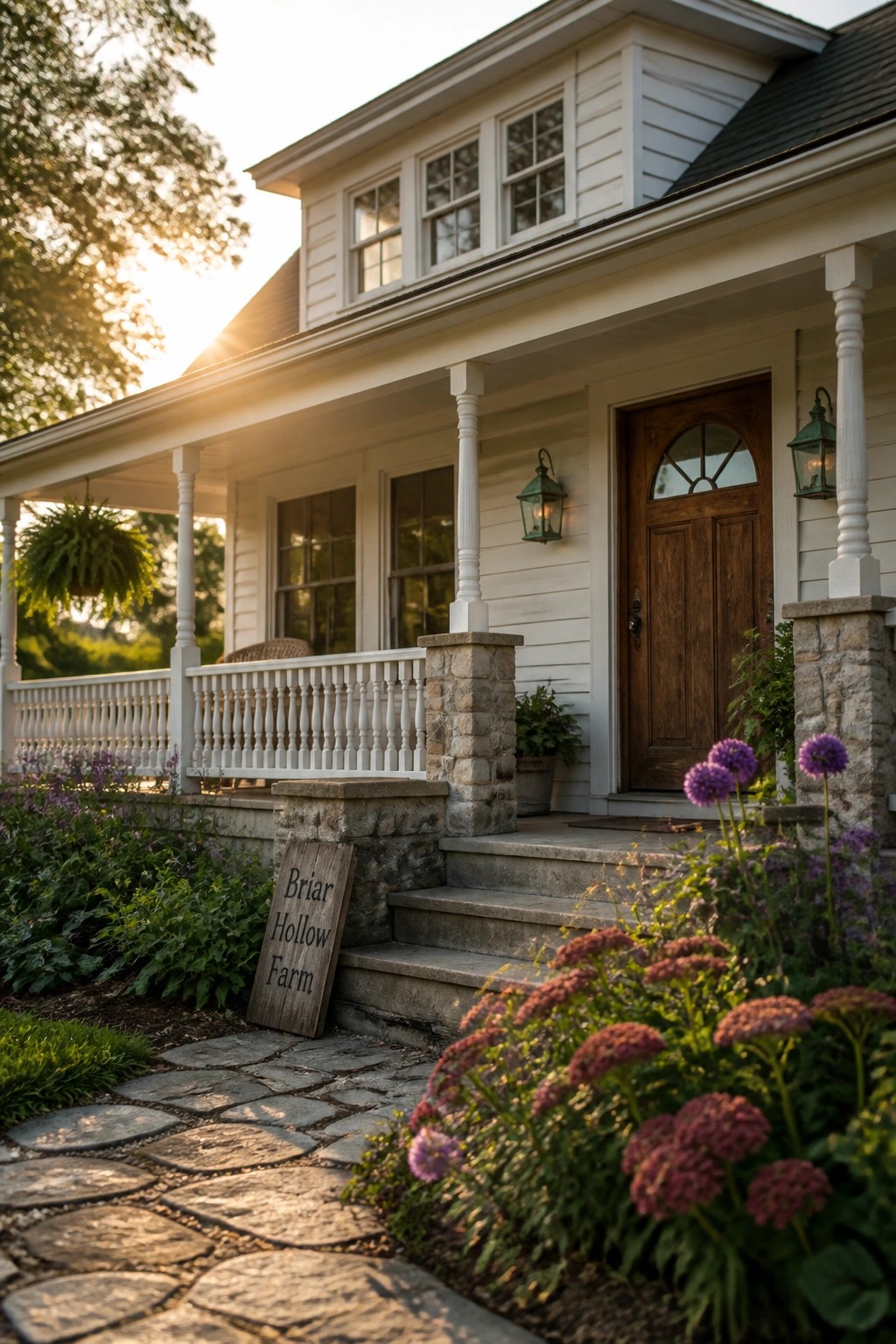
Stone works well on the porch bases of older farmhouses because it adds weight and texture without needing much else. It keeps the white siding from looking too light and gives the whole front a settled look that lasts.
Try it on homes with simple wood siding and a covered porch. Use a local stone that matches the ground color and keep the rest of the trim white so the stone does the main job.
Adding a Small Portico to the Front Door
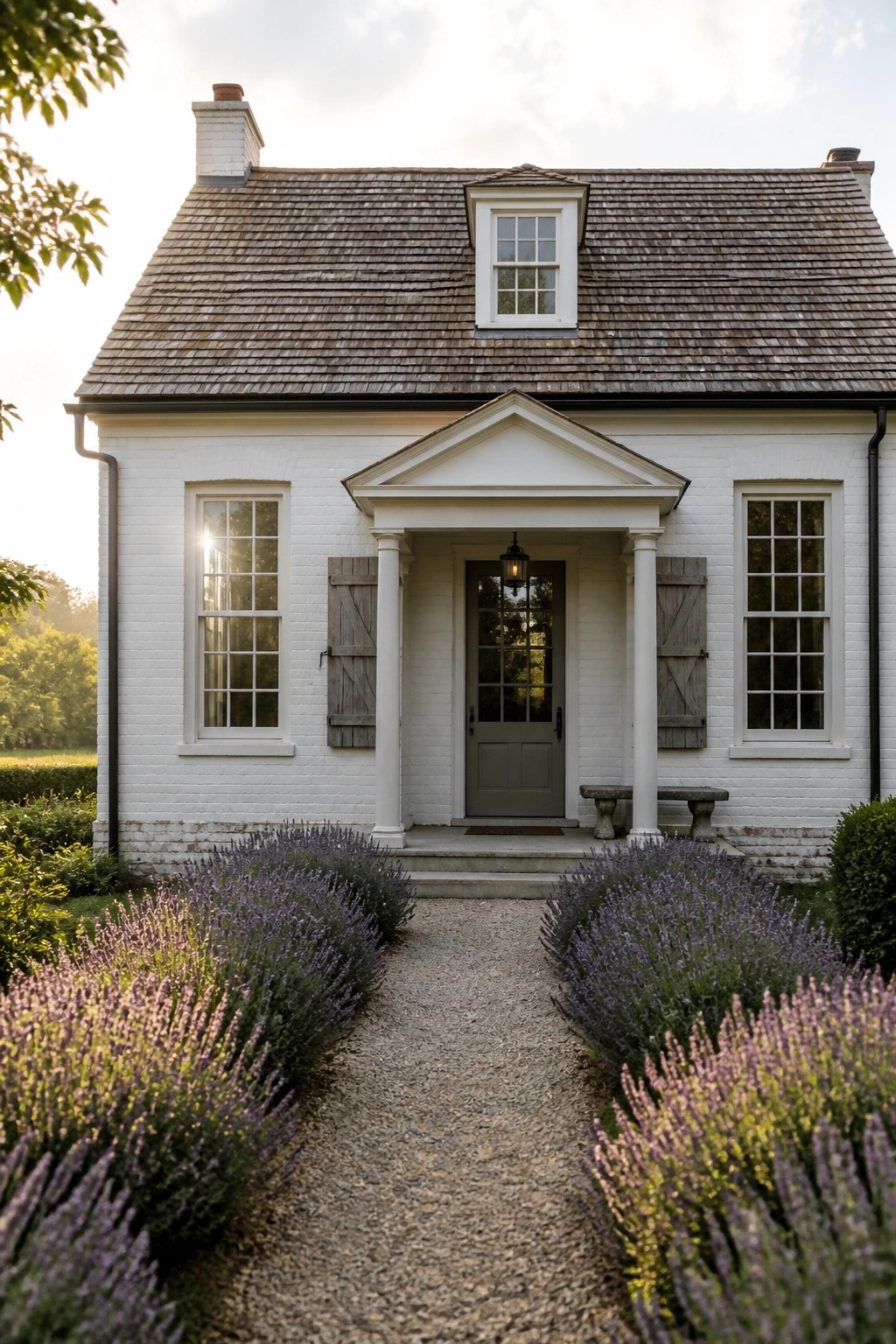
A simple portico with columns and a pediment gives a farmhouse front door more weight without making the whole house feel formal. It creates a clear focal point on an otherwise plain facade and helps the entry feel more intentional. The white brick and gray door in this example show how well that contrast works.
This approach suits both restored 1900s homes and new builds that want a classic look. Keep the columns straightforward and match the trim color to the rest of the house so it blends in. Avoid oversized versions that overpower a modest roofline.
Frequently Asked Questions
Q: How do I choose colors that feel authentic to a 1900s farmhouse? A: Start with soft whites or warm grays for the main body. Pick one accent color for the trim and shutters based on what feels right for your region. Test samples on the actual wall before committing.
Q: What if my house lacks a big front porch? A: Add a small covered entry with simple posts. Keep the roofline low and use materials like wood or metal that match the era. This small change brings in that welcoming farmhouse vibe right away.
Q: How do I maintain the exterior over time? A: Check the paint and wood every spring for wear. Touch up spots as soon as you notice them to prevent bigger issues.
Q: Can these ideas work if I have vinyl siding already? A: You can still layer on details like brackets or window boxes. Focus on the roof style and door choice to shift the overall feel. Many people refresh their look this way without replacing everything.
