

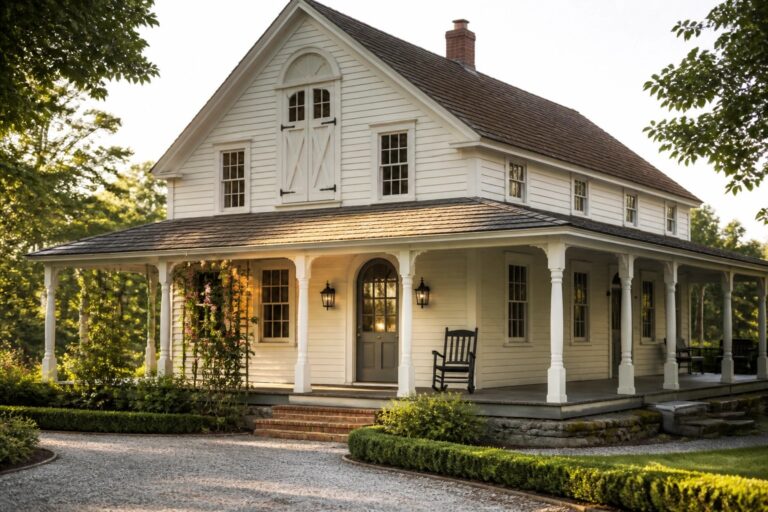
I’ve always paid attention to how historic farmhouses sit on their lots because the way the facade meets the ground affects the whole appearance more than most people expect.
Materials like weathered wood or classic brick often give these homes their character but only when they are chosen to match the original roof pitch and window sizes.
Details matter here.
I usually start by looking at the porch structure since it can either add depth or just sit there looking added on.
Adapting one of these looks means checking how the entry and siding will age with the local weather instead of just copying a photo.
Front Porches with Simple White Columns
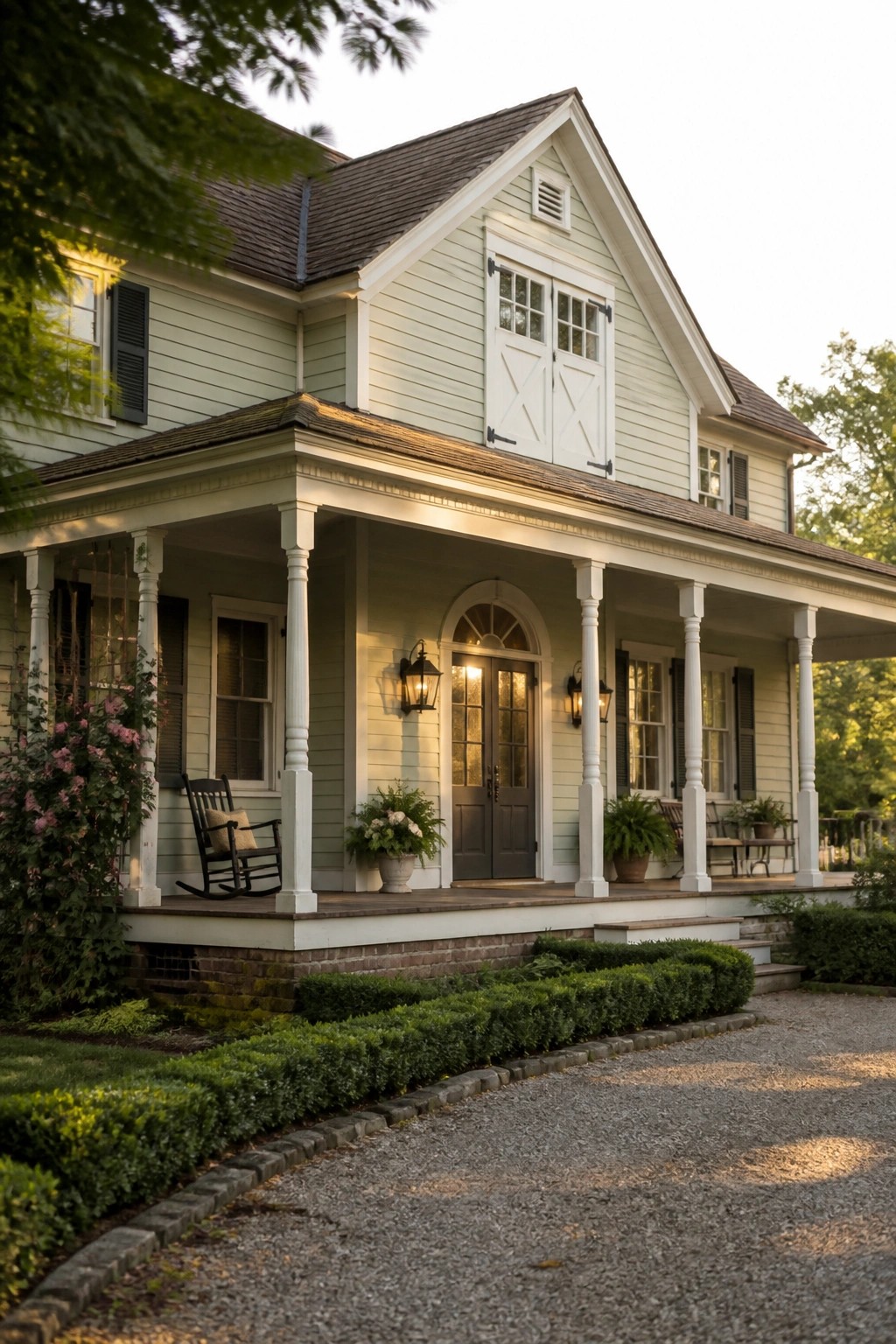
A row of tall white columns under a deep porch roof gives a farmhouse that settled, historic look without much fuss. The columns break up the facade and pull the eye toward the center, which helps the whole front feel balanced and welcoming.
This works best on houses with light siding and a straightforward roofline. Keep the columns plain rather than ornate, and make sure the porch floor sits low enough to feel connected to the yard.
White Siding With Black Shutters
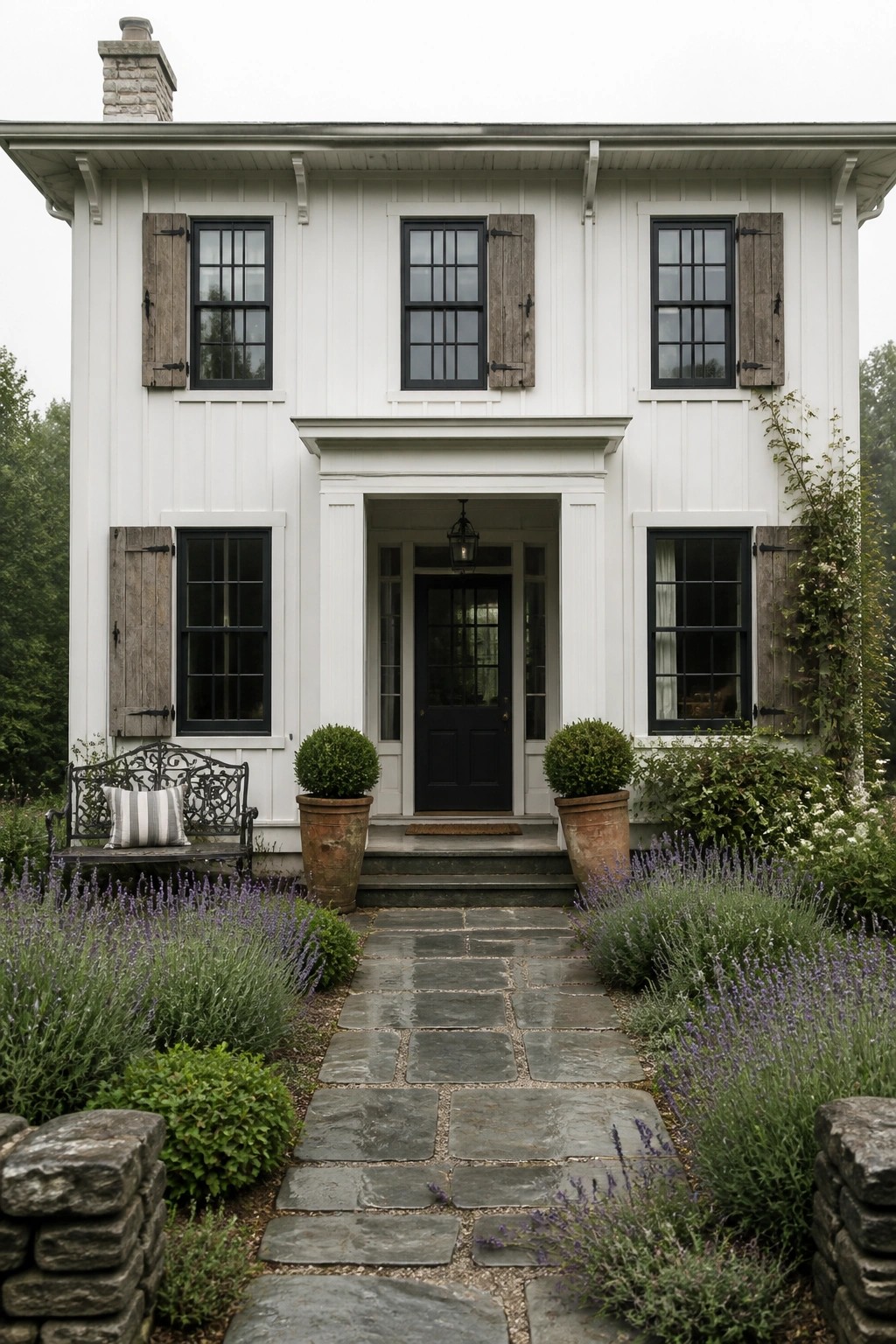
White siding paired with black shutters gives a farmhouse that crisp, settled look without needing much else. The dark frames stand out against the light walls and help the windows feel more intentional, which suits older homes that already have good proportions.
This works best on symmetrical houses where the windows line up evenly across the front. Keep the shutters simple and avoid adding too many extra dark pieces if the siding already has some age or texture to it.
Weathered Wood Siding With Metal Roofing
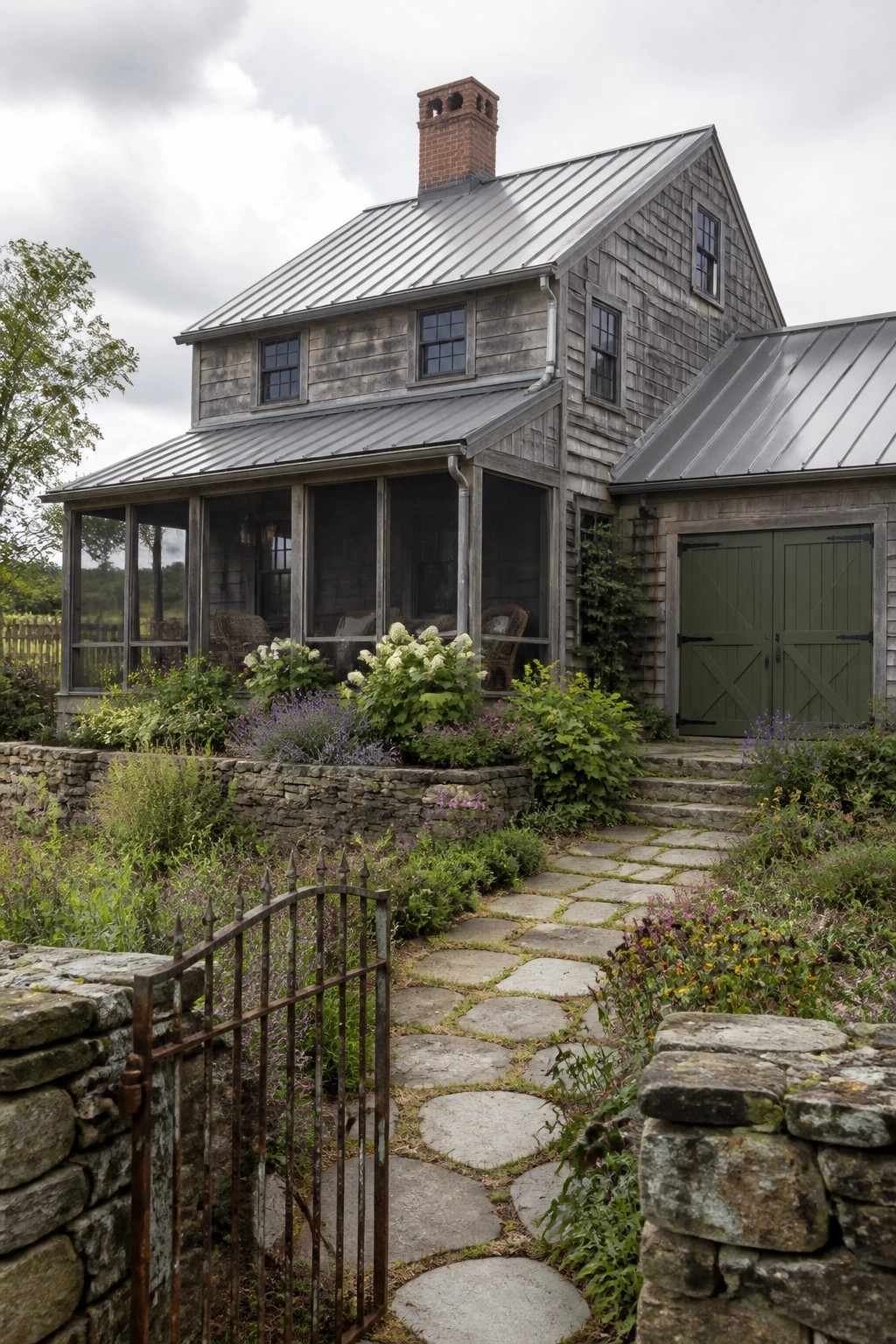
Many older farmhouses gain a lot of character when the wood siding is left to age naturally instead of being painted over and over. The gray tones that develop over time pair well with a simple metal roof, which adds contrast without looking too new or polished.
This approach suits homes in rural settings or anyone restoring a farmhouse who wants low maintenance without losing the original feel. Just make sure the wood stays sound underneath, since metal roofs can last decades while the siding needs occasional checks for rot or damage.
Stone Paths With Low Retaining Walls
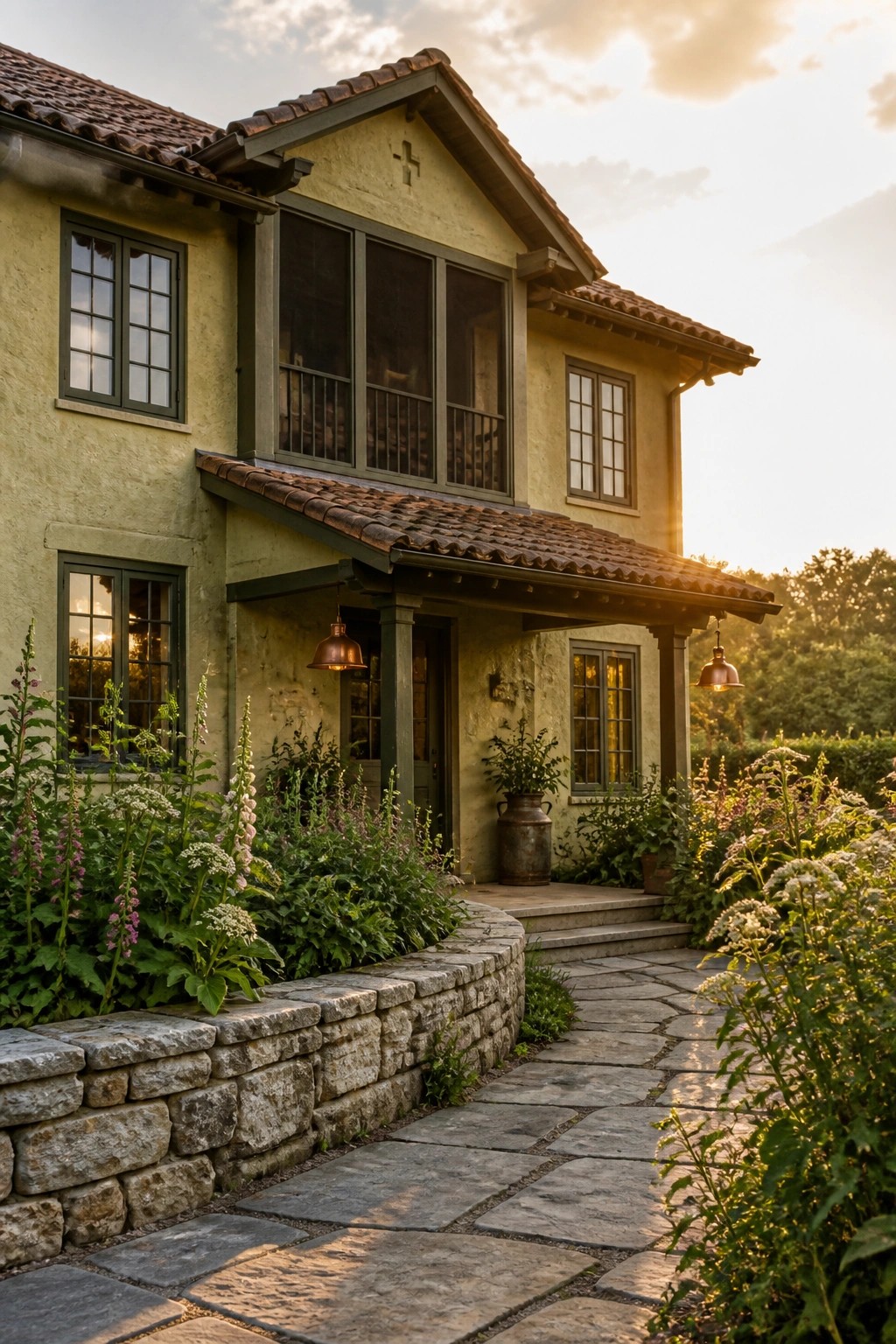
A low stone wall next to a paver path gives the front approach a settled, finished look that fits right in with older farmhouses. It keeps the garden beds from spilling onto the walkway and makes the whole entry feel more intentional without adding any extra decoration.
This setup works best on homes where the ground slopes a bit or where you want to raise the planting area near the house. Use the same local stone for both the wall and the path so they read as one simple feature rather than separate elements.
Rocking Chairs on the Front Porch
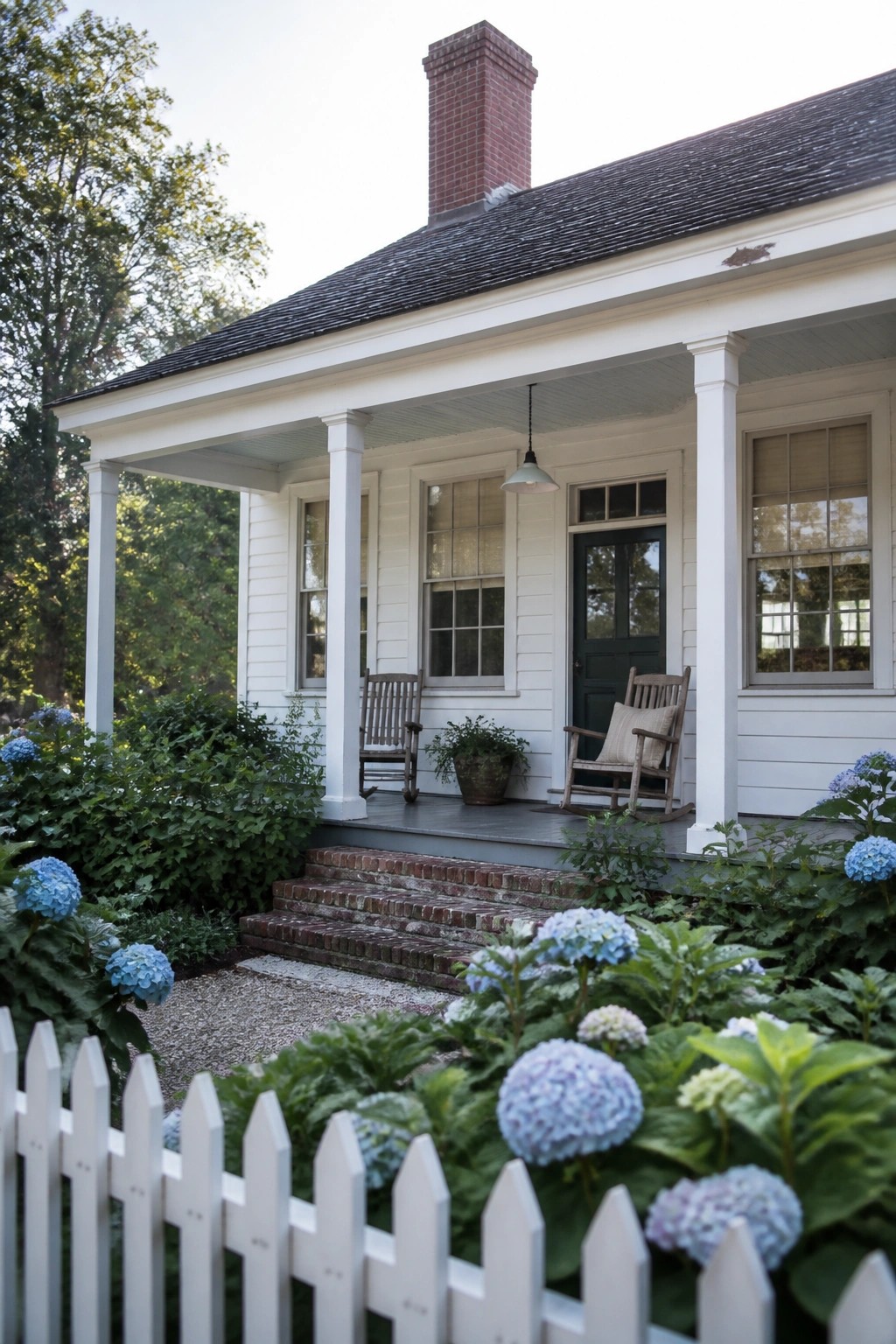
Rocking chairs give a historic farmhouse porch an easy sense of age and use. They fit the simple lines of older homes and turn an empty porch into something that feels lived in without extra decoration.
This approach works best on homes that already have a covered porch and a fairly plain facade. Keep the chairs in natural wood and limit other furniture so the rockers remain the main detail people notice first.
Choose A Carved Wooden Door
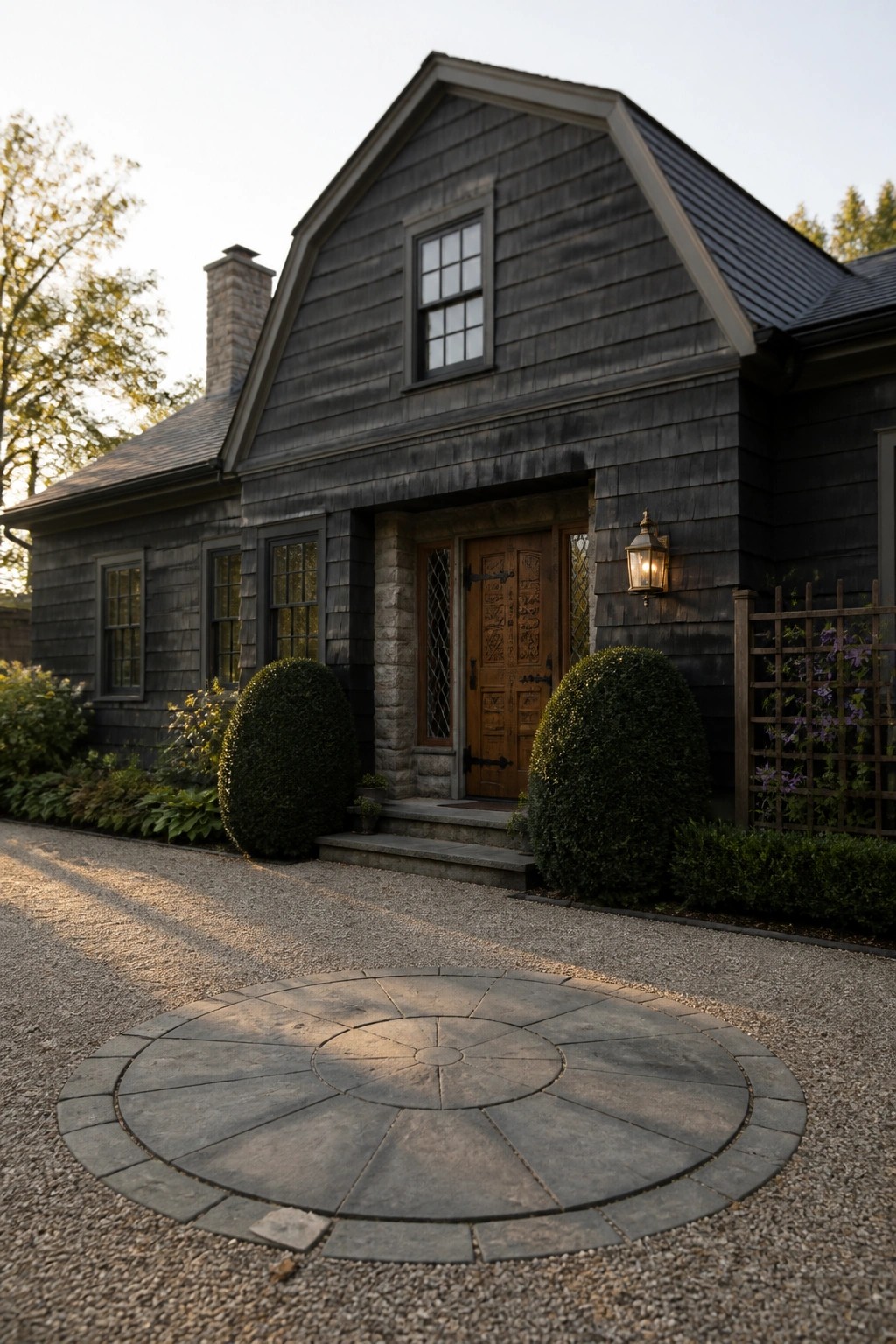
A carved wooden door adds instant age and personality to a farmhouse exterior. It draws attention without needing extra trim or fancy details around it, and the dark wood pairs naturally with simple shingle siding.
This approach works best on homes that already have a quiet facade. Keep the surrounding materials simple so the door stays the focus, and make sure the scale feels right for the width of the entry.
Dark Door Color Against Light Siding
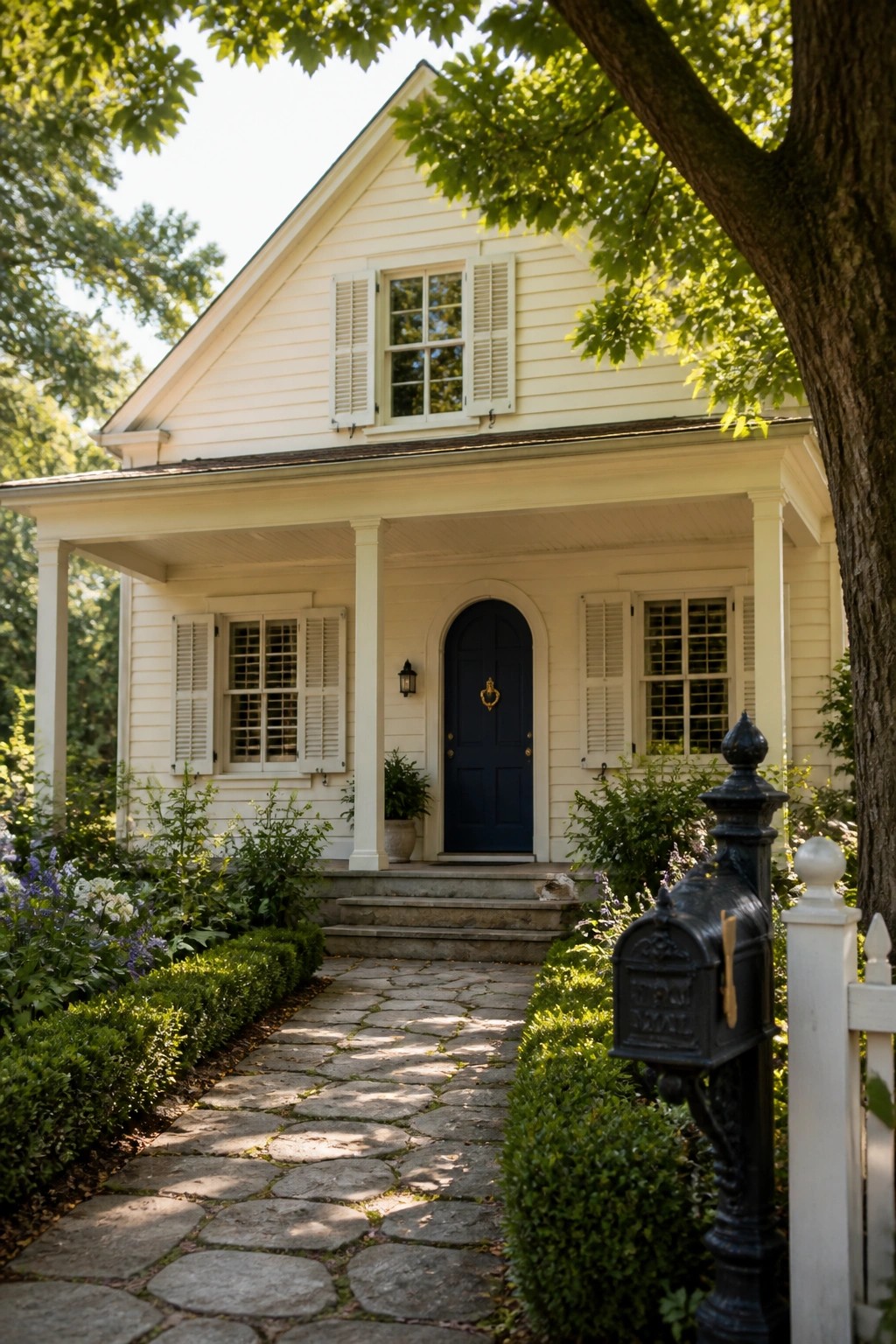
A dark door gives a light historic farmhouse more weight on the front. The deep navy stands out cleanly against the pale siding and white trim, so the entry feels intentional rather than washed out.
This approach suits older homes with simple gables and modest porches. Keep the rest of the trim white and let the door carry the contrast. It works best when the siding stays soft and the door color stays rich rather than bright.
Low Stone Walls for Farmhouse Character
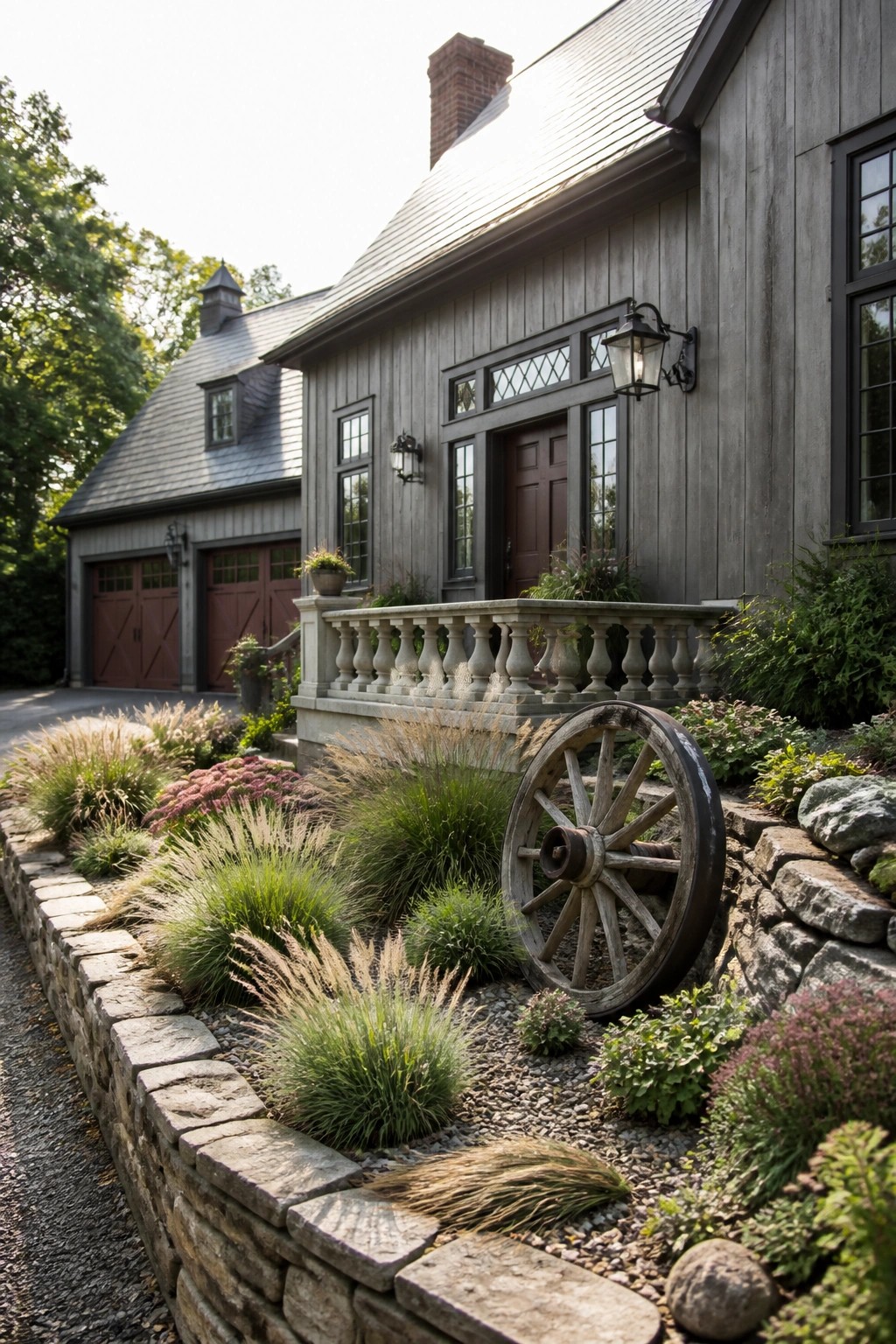
A low stone wall gives the front of a historic farmhouse a clear edge and helps the whole place feel more settled. It works especially well when the house sits a little above the driveway or lawn, since the wall can follow the slope without looking forced.
Try matching the stone to any existing foundation work so it reads as part of the original structure rather than an add-on. Keep plantings loose and a little wild right behind the wall so the stone stays the main feature instead of getting lost in heavy landscaping.
Use Matching Planters at the Entry
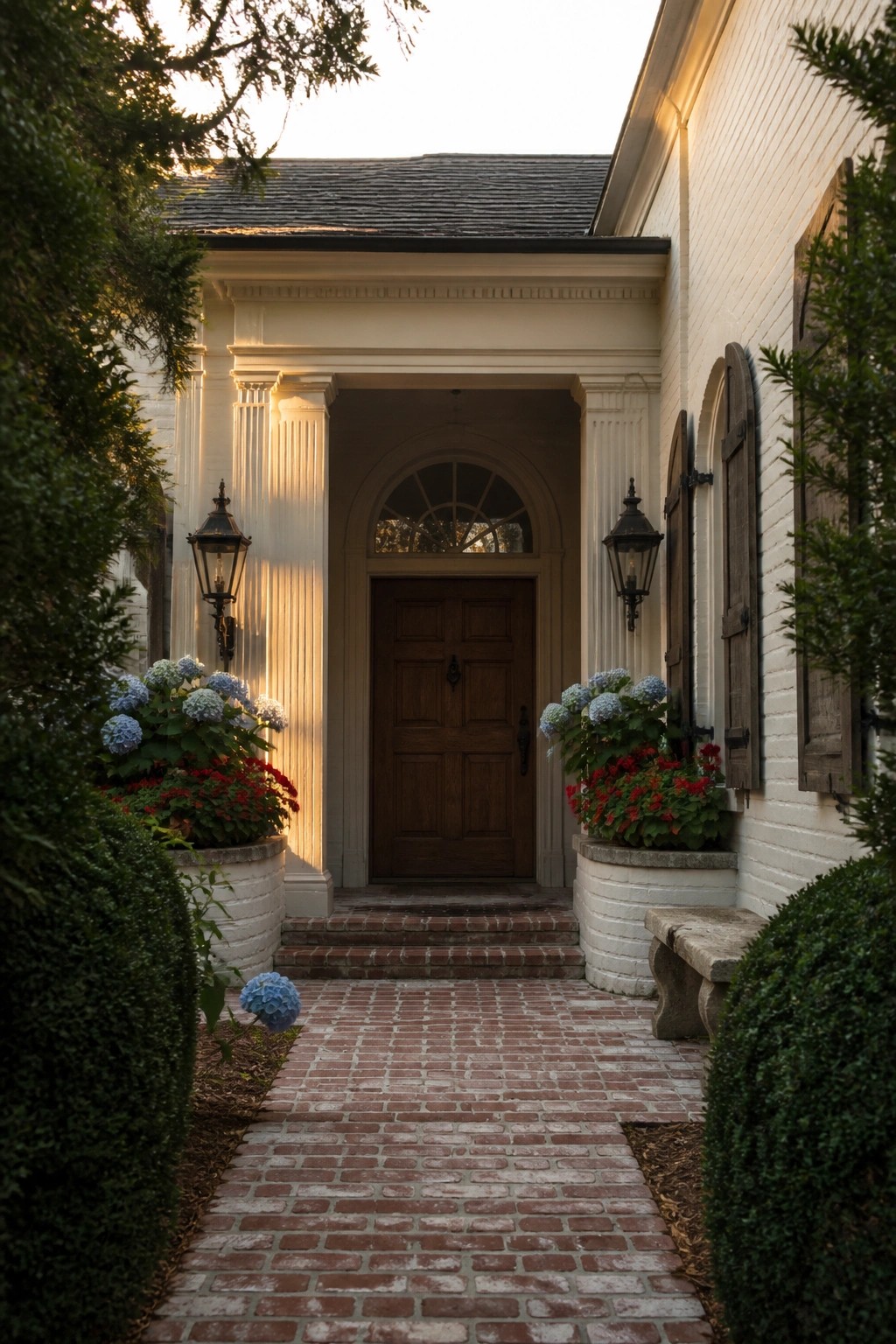
Matching planters on either side of the steps give an entry a settled, balanced look. The repetition keeps things simple and helps the door stay the center of attention instead of letting the whole front feel scattered.
This works well on older homes that already have some symmetry in the windows or columns. Choose the same size containers and keep the plantings similar in height and color so the effect stays calm. Just leave enough room on the path so people can walk through without brushing the leaves.
Pergola Covered Dining Next To The House
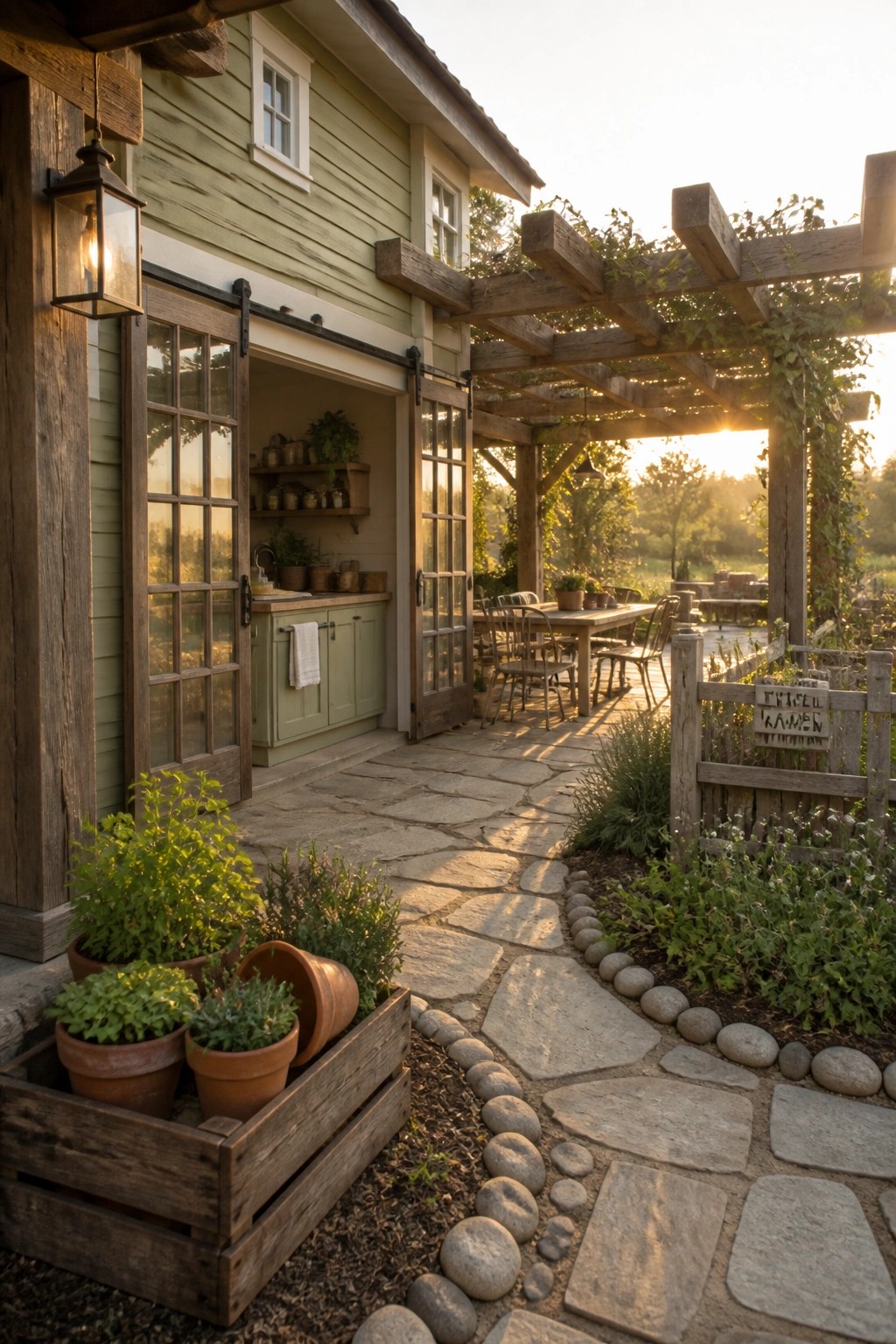
A pergola attached right to the side of the house makes the outdoor dining area feel like a natural extension of the home. It gives shade and structure without closing the space in, and the wood ties in with the older farmhouse look.
This setup works best on homes with a bit of yard space where meals can move outside easily. Keep the table and chairs simple, and let vines grow over the top if you want more cover over time.
Center the Porch for a Symmetrical Look

A centered porch with windows placed evenly on both sides gives the front a calm and orderly feel. This simple layout makes the house look settled and complete without extra trim or ornament.
It works especially well on smaller or mid-size farmhouses that already have a straightforward roofline. Keep side plantings low so the balance stays easy to see from the road.
Vintage Metal Furniture For The Patio
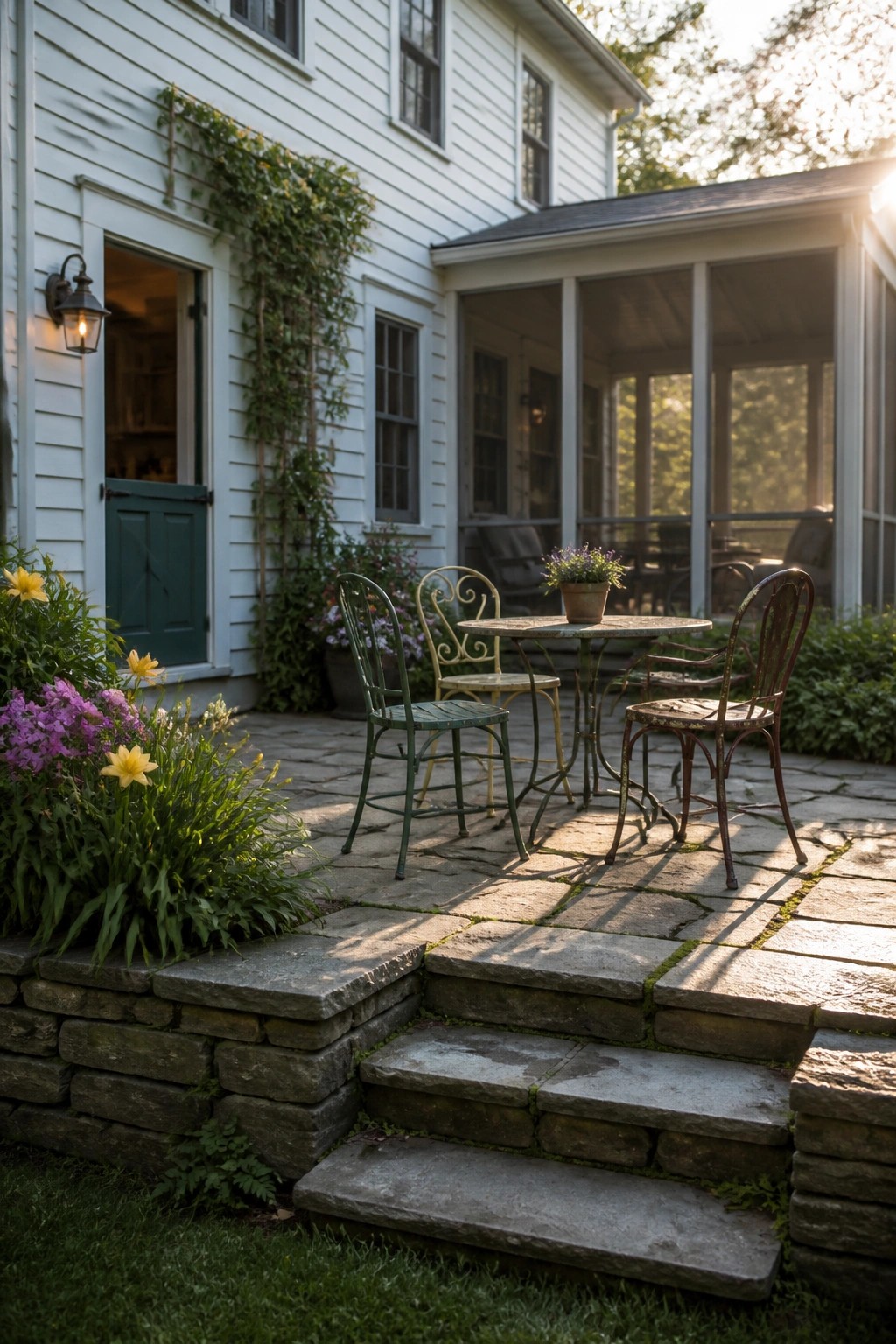
Vintage metal chairs bring a relaxed, collected look to an outdoor seating spot. They feel at home next to an older house and do not need much styling to look right. A few mismatched pieces around a simple table can make the space feel used and welcoming instead of staged.
This works best on a stone or brick patio where the furniture can sit low and blend with the hardscape. Keep the set small so the area stays open, and let the natural patina show rather than painting everything to match. It suits farmhouses or older homes that already have some age to the exterior.
Mix Stone And Timber On The Facade
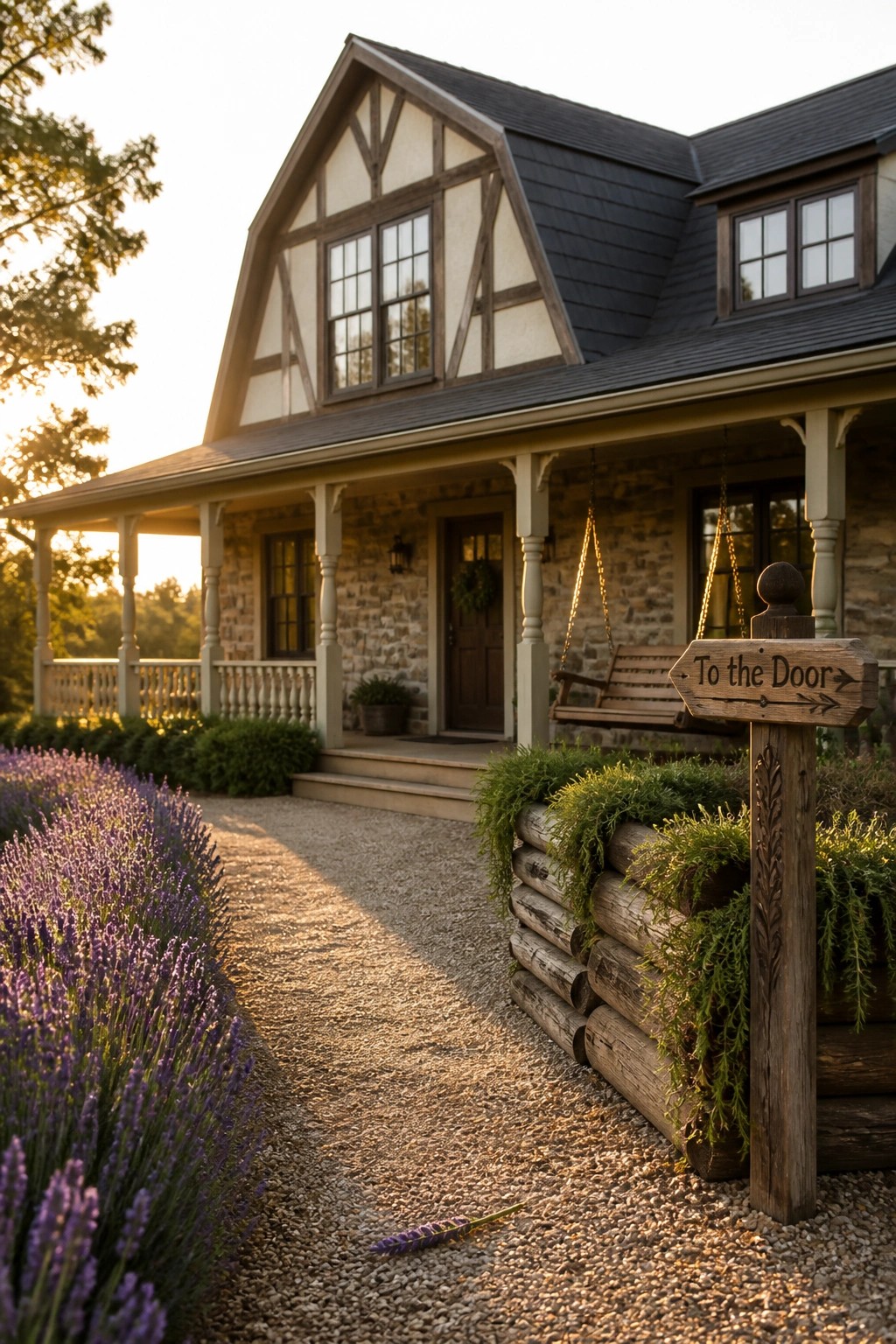
Stone and timber together give a farmhouse exterior the kind of weight and age that paint alone cannot create. The lower walls stay solid and grounded while the timber work on the gables adds pattern and history without any extra trim.
This combination suits homes that already have a simple roofline or a main gable facing the road. Use real stone where it meets the ground and keep the timber color close to the roof so the whole front stays calm and consistent.
Dark Door On White Siding
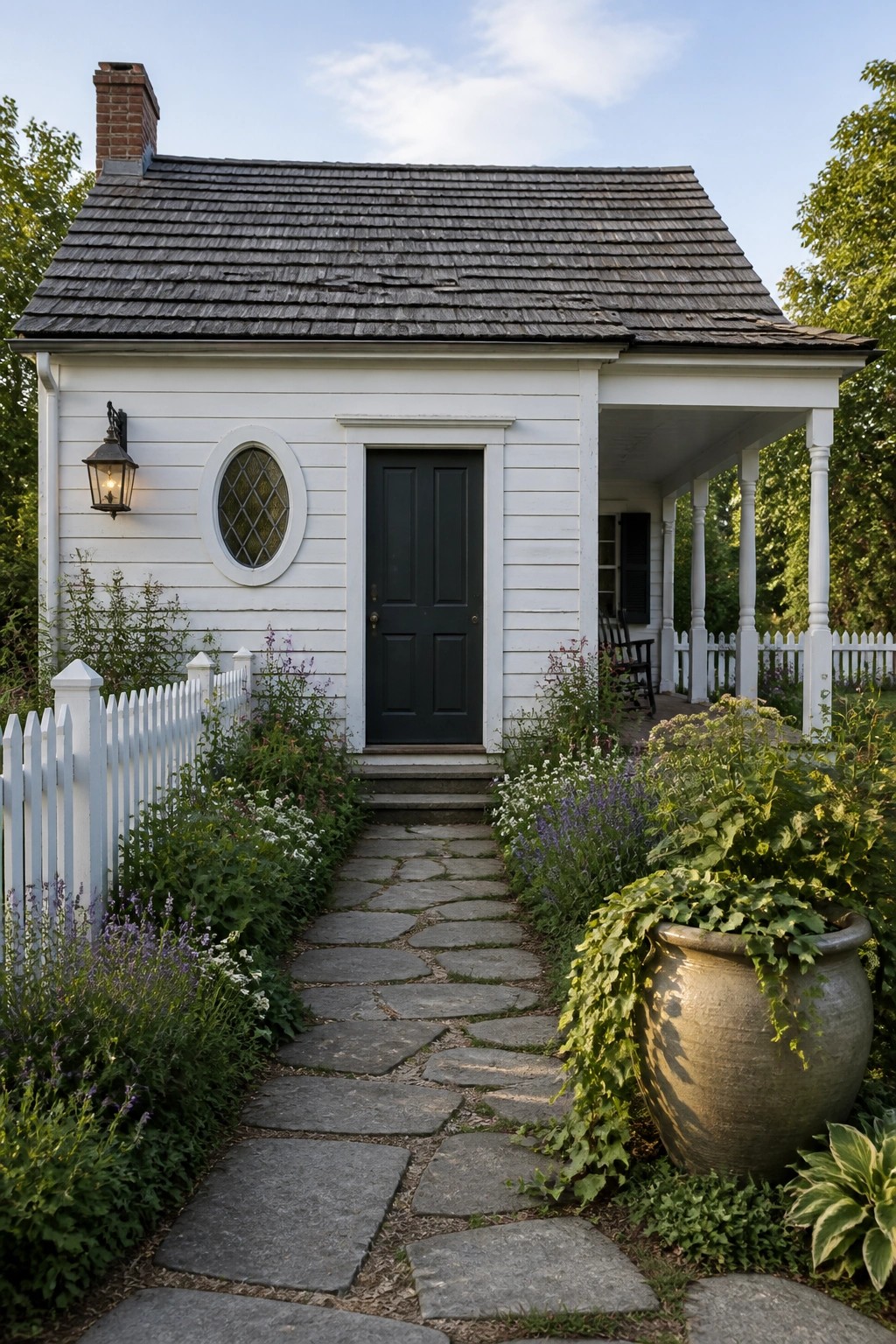
A dark front door gives a white farmhouse exterior a clear focal point without any extra trim or decoration. The contrast feels classic and helps the entry read as the main feature right away.
This works best on smaller homes where you want the facade to stay simple. Paint the door a deep shade and keep surrounding details minimal so the look stays balanced.
Stone Paths to the Front Porch
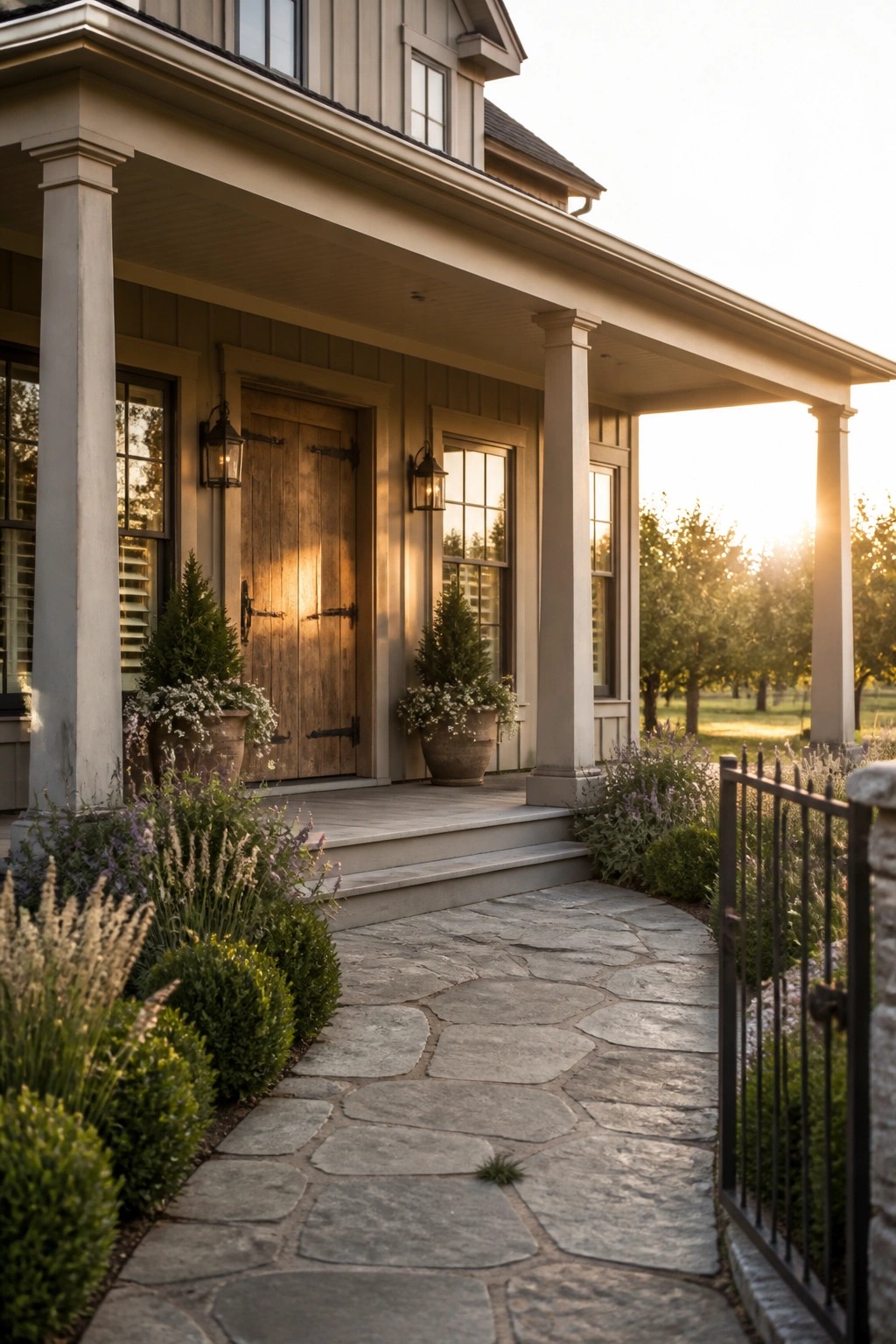
A stone path gives a farmhouse entry a settled, lived-in look that fits the style well. It connects the house to the surrounding land without adding anything fussy or formal.
This works best on homes with a bit of yard space in front. Keep the path fairly wide, use irregular stones, and let low plants grow along the edges so the walk feels natural rather than stiff.
Stone Chimney Details On Farmhouse Exteriors
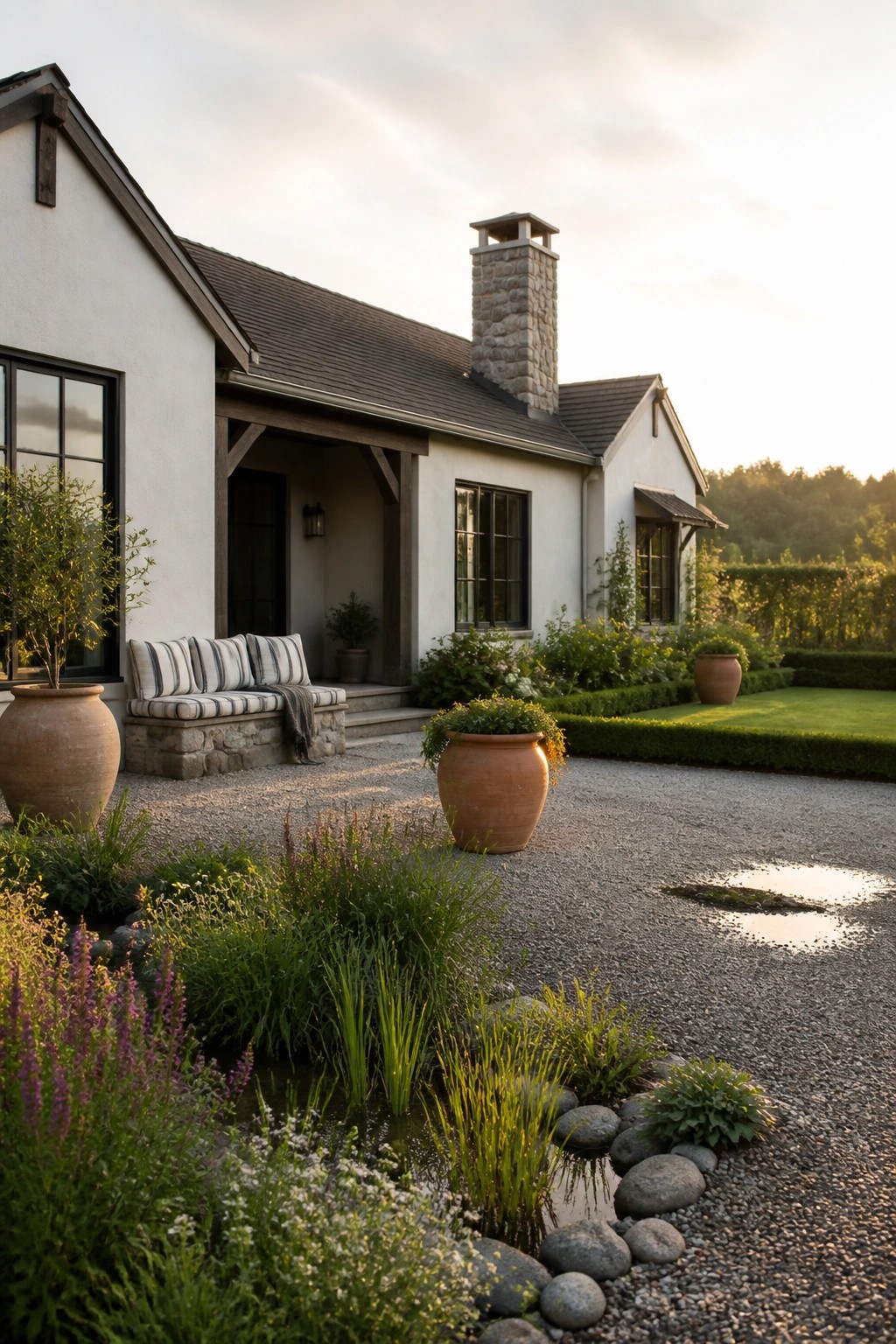
A stone chimney gives the exterior an immediate sense of age and weight. It breaks up the roofline and adds texture that plain siding alone cannot provide.
This works well on homes with light walls and simple trim. Keep the rest of the materials understated so the stone becomes the main feature rather than competing with other details.
Frequently Asked Questions
Q: How do I pick paint colors that feel true to an old farmhouse without overthinking it?
A: Stick with soft whites or warm grays that echo aged plaster and weathered wood. Test samples on a small section of siding first so you see how the light hits them at different times of day. That simple step keeps the whole exterior looking settled rather than freshly applied.
Q: My house has plain modern windows. Can I still get that vintage character without a full replacement?
A: Add wooden shutters in a muted tone and simple divided-light grilles that clip on the inside. These details break up the flat glass and pull the eye toward the trim work you already have. Focus on one window at a time if the budget feels tight.
Q: The front door looks too new next to everything else. What quick fix helps most?
A: Swap the hardware for matte black or oil-rubbed bronze and add a small transom window above if the frame allows. The change shifts attention to the door’s shape and makes it feel like it has always been there.
