

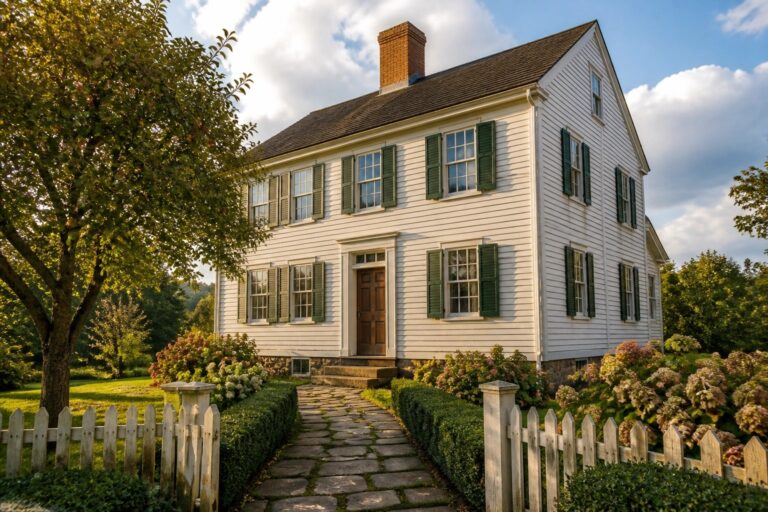
When I walk past older farmhouses built in the 1800s, the clean lines of the siding and the way the porch sits against the main structure always stand out first from the street.
Early American style relies on understated details like board and batten or simple gables that keep the facade from feeling busy.
Details matter more than people expect.
I have found that choosing the right paint color for trim can change how the whole exterior reads even when the main materials stay the same.
Saving photos of rooflines and entryways that feel balanced has become my first step before making any changes to the outside of a house.
White Siding With Dark Shutters
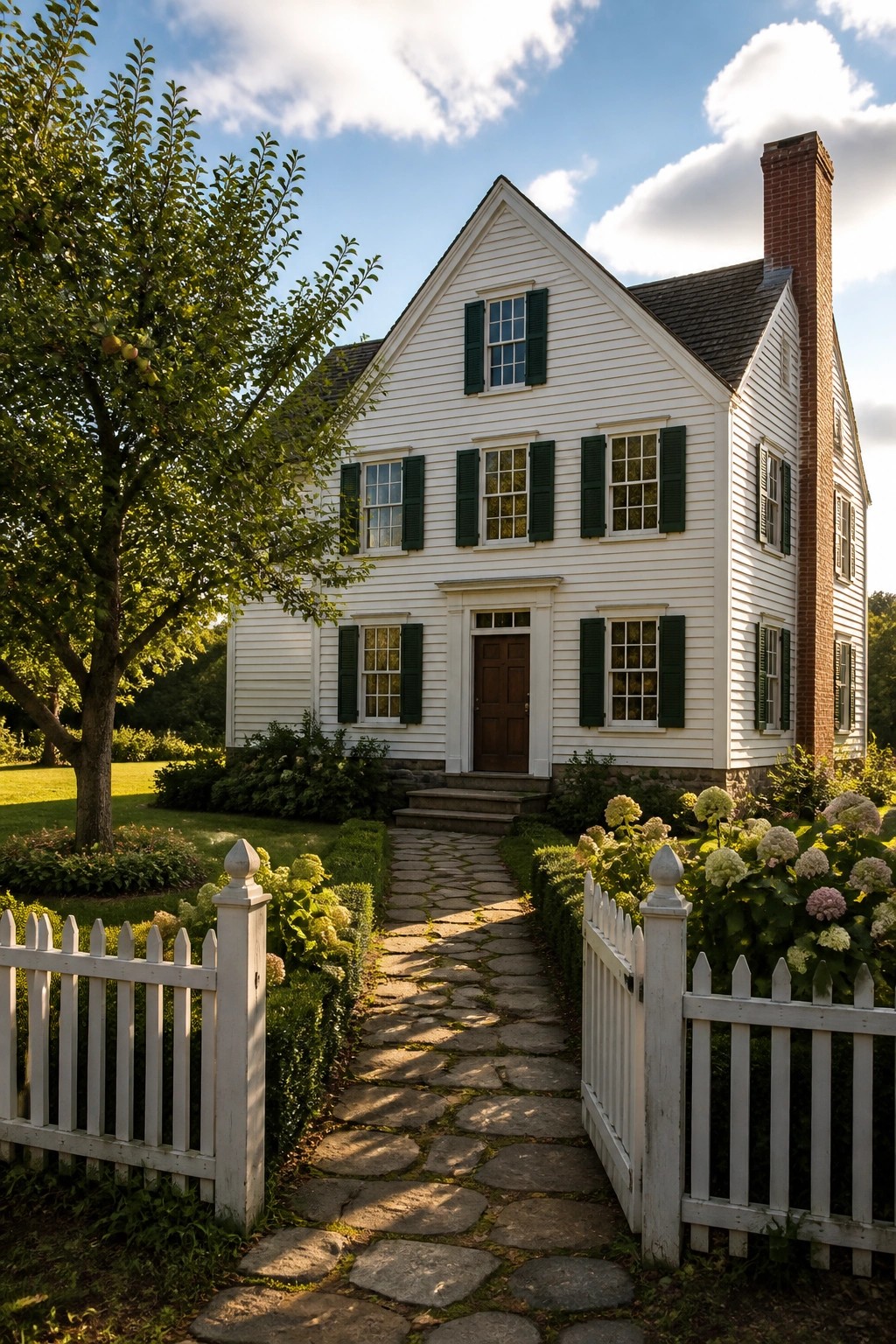
White siding and dark green shutters give an old farmhouse that clean early American look without needing much extra detail. The high contrast keeps the house bright even on cloudy days and makes the windows stand out in a simple way.
This works best on symmetrical houses where the windows already line up evenly. Use a deep green or black for the shutters and keep the front door in a warm wood tone so the whole front stays balanced and easy to maintain.
Wraparound Porches on Farmhouses
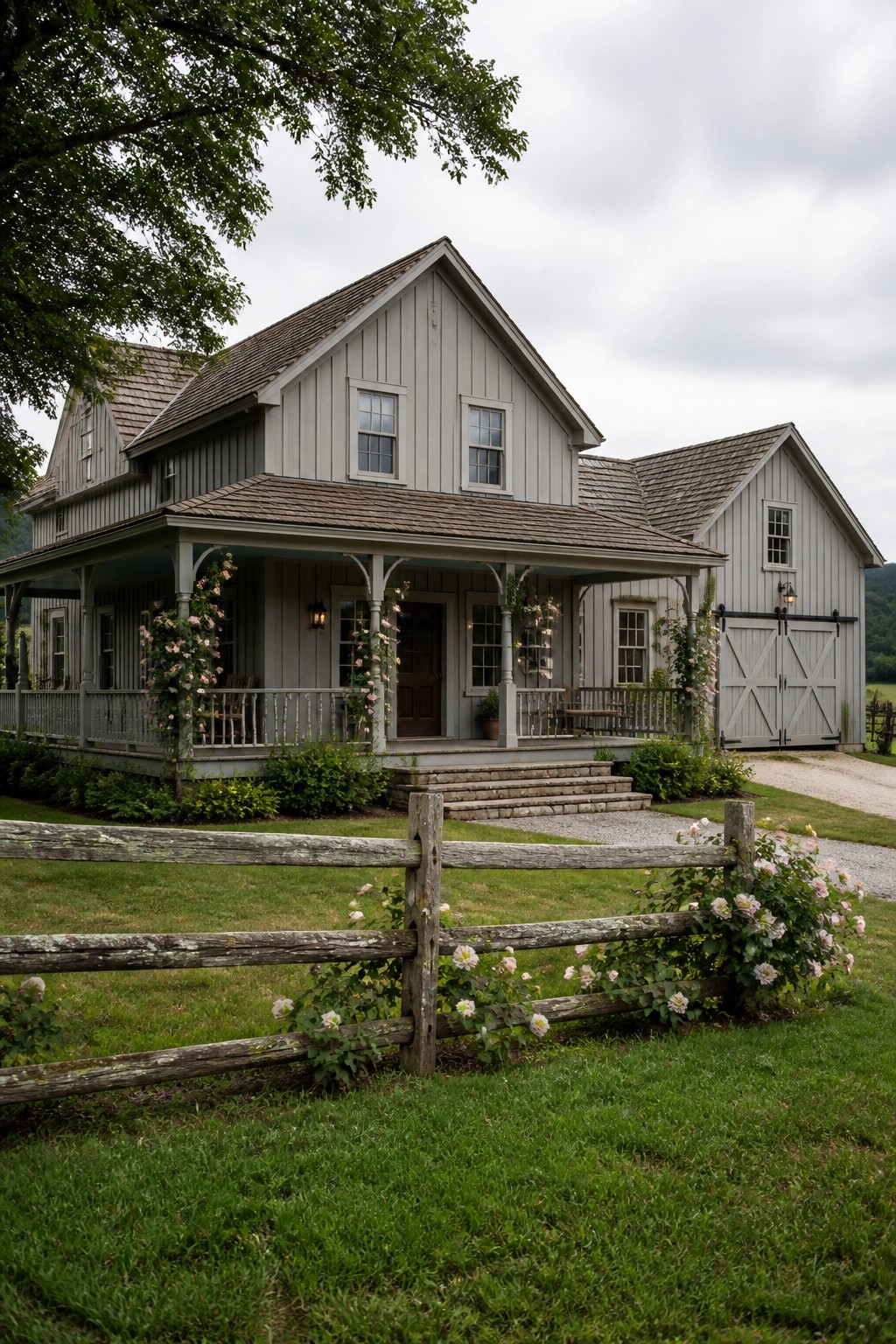
A wraparound porch gives an 1800s farmhouse its main sense of welcome. It stretches along the front and turns the corner, creating shade and a place to sit without adding any fussy details. The simple posts and low railing keep the look honest to the period while making the house feel larger from the road.
This works best on homes with a similar roof pitch and siding width. Keep the finish on the wood posts light so the climbing plants stand out without competing. Avoid painting the porch floor too dark, since it shows dirt quickly in a rural setting.
Build A Low Stone Wall To Define The Front Approach
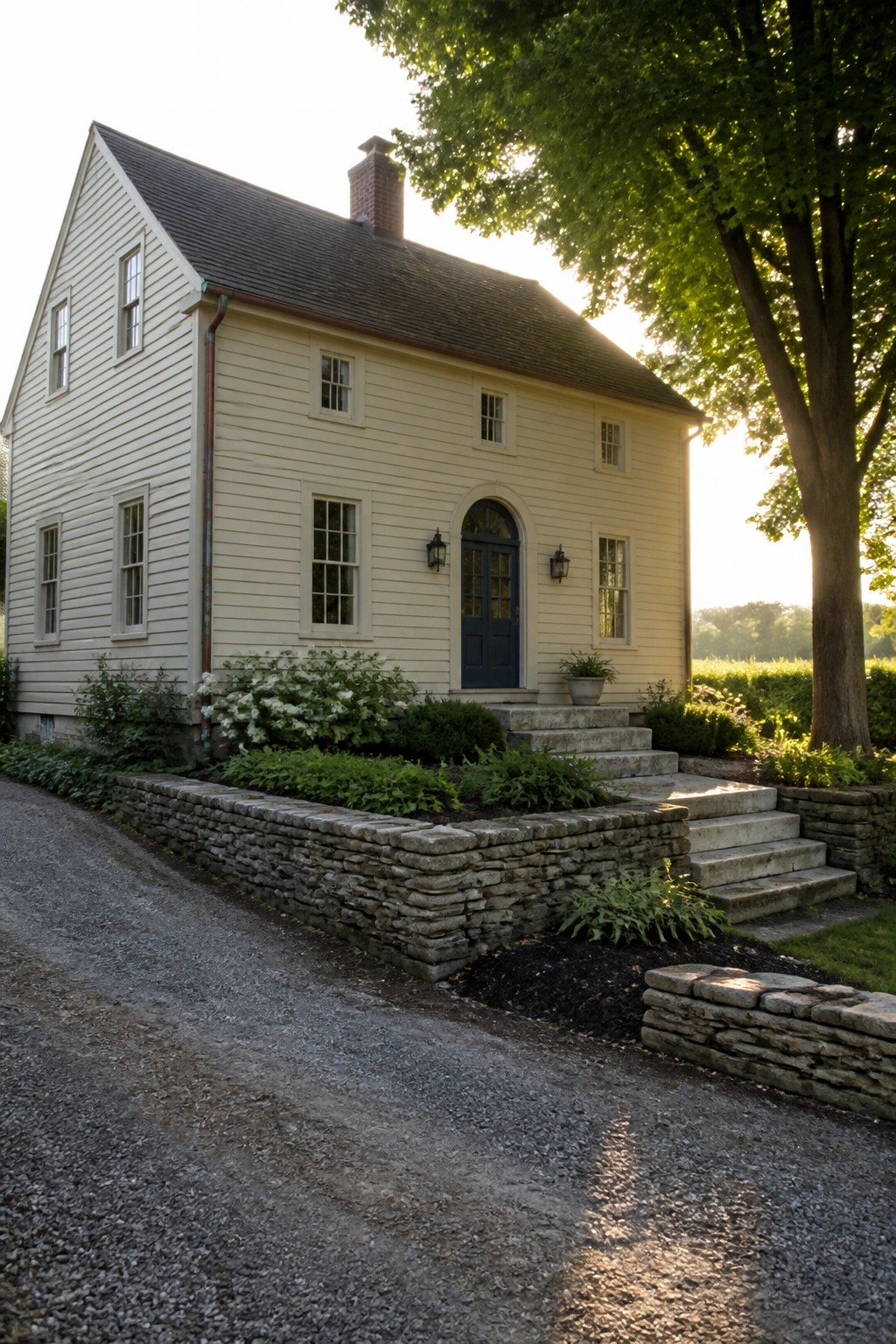
A low stone wall gives the house a clear boundary without making the entry feel closed off. It turns a simple gravel drive into a more intentional path and helps the house sit a little higher and more settled on the lot. Many 1800s farmhouses used this same move to handle slight changes in grade while keeping everything practical.
The wall works best on homes with a similar setback and a fairly flat approach. Keep the stone simple and local if possible, and let it step up naturally toward the door rather than running in one straight line. Avoid making the wall too tall or adding heavy capping that starts to feel formal.
Dark Paint Colors For Farmhouse Exteriors
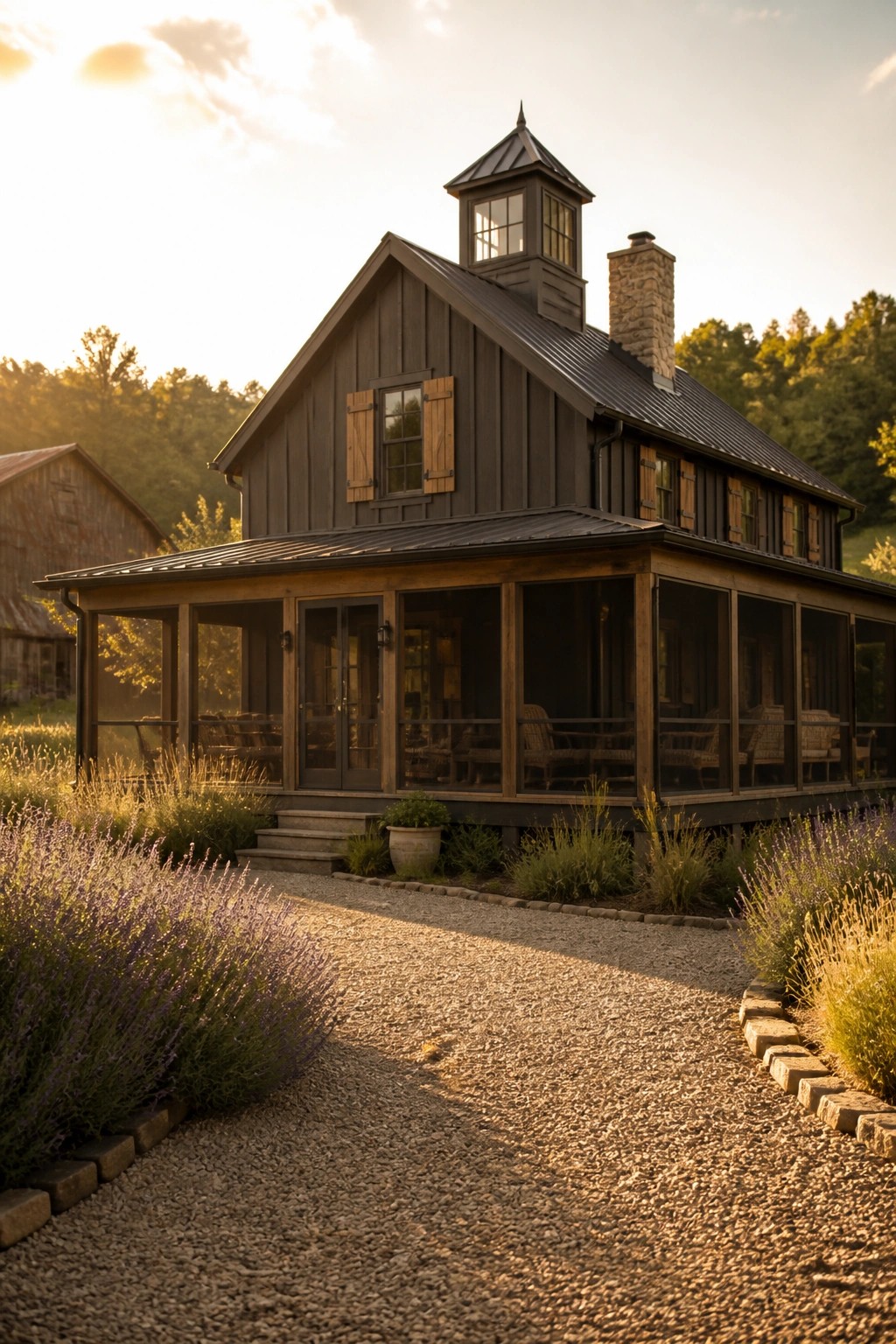
Many older farmhouses look better with a darker paint color on the siding. It gives the house more weight and helps it sit nicely against trees and open land instead of fading into the background.
This works best on homes that already have a simple roofline and balanced windows. Keep the trim and shutters lighter so the shape stays clear and the house does not feel too heavy.
Pediment Details Over the Front Door
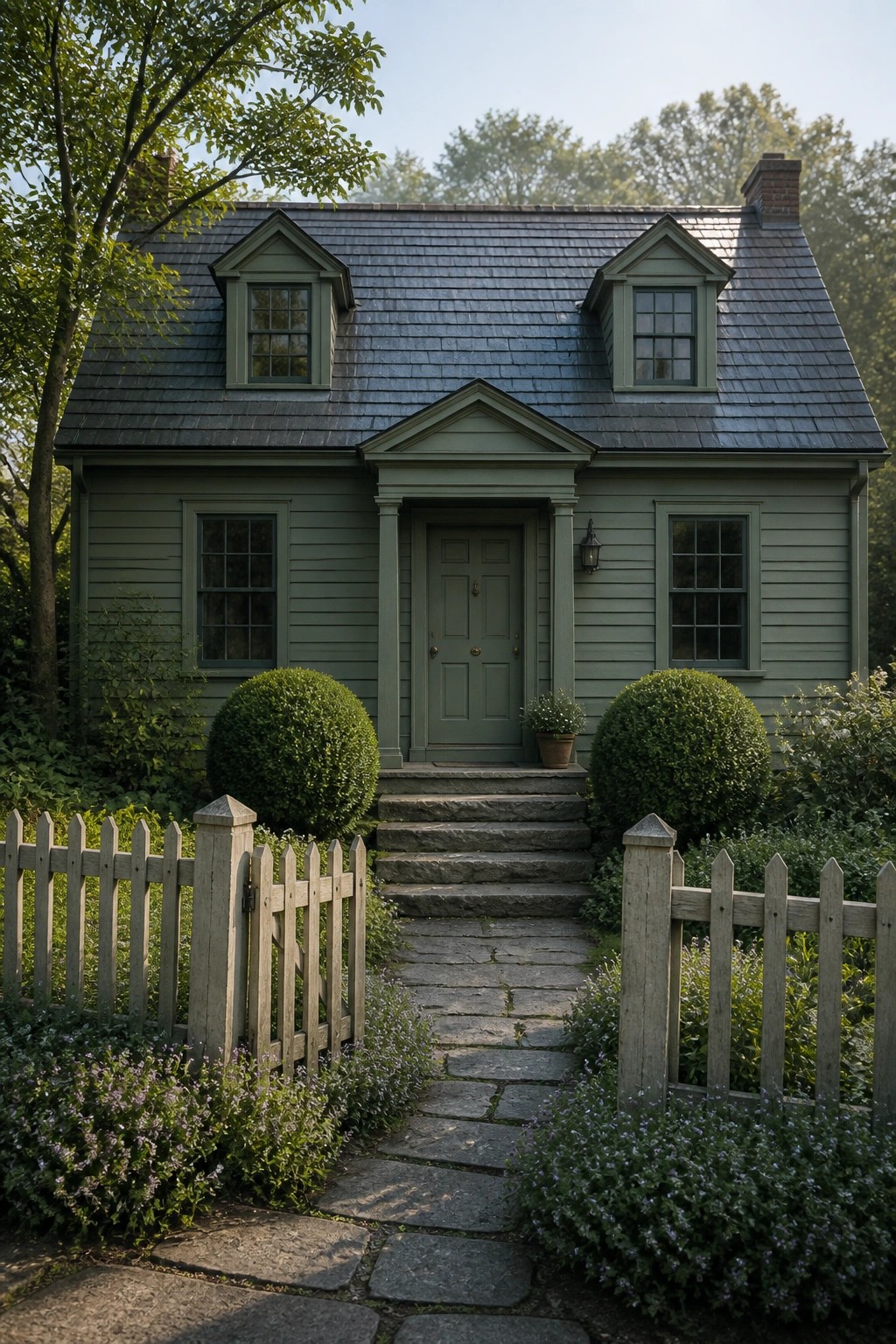
A modest pediment above the entry gives a farmhouse that settled, early American look without adding much extra trim. It centers the whole facade and makes the door feel like the main point of the house rather than just another opening in the siding.
This works best on homes that already have a fairly symmetrical front. Keep the scale small, match the paint to the window and door trim, and let the roofline above do most of the work. Overly large or ornate versions can start to feel added on later.
Stone Foundations With Brick Chimneys
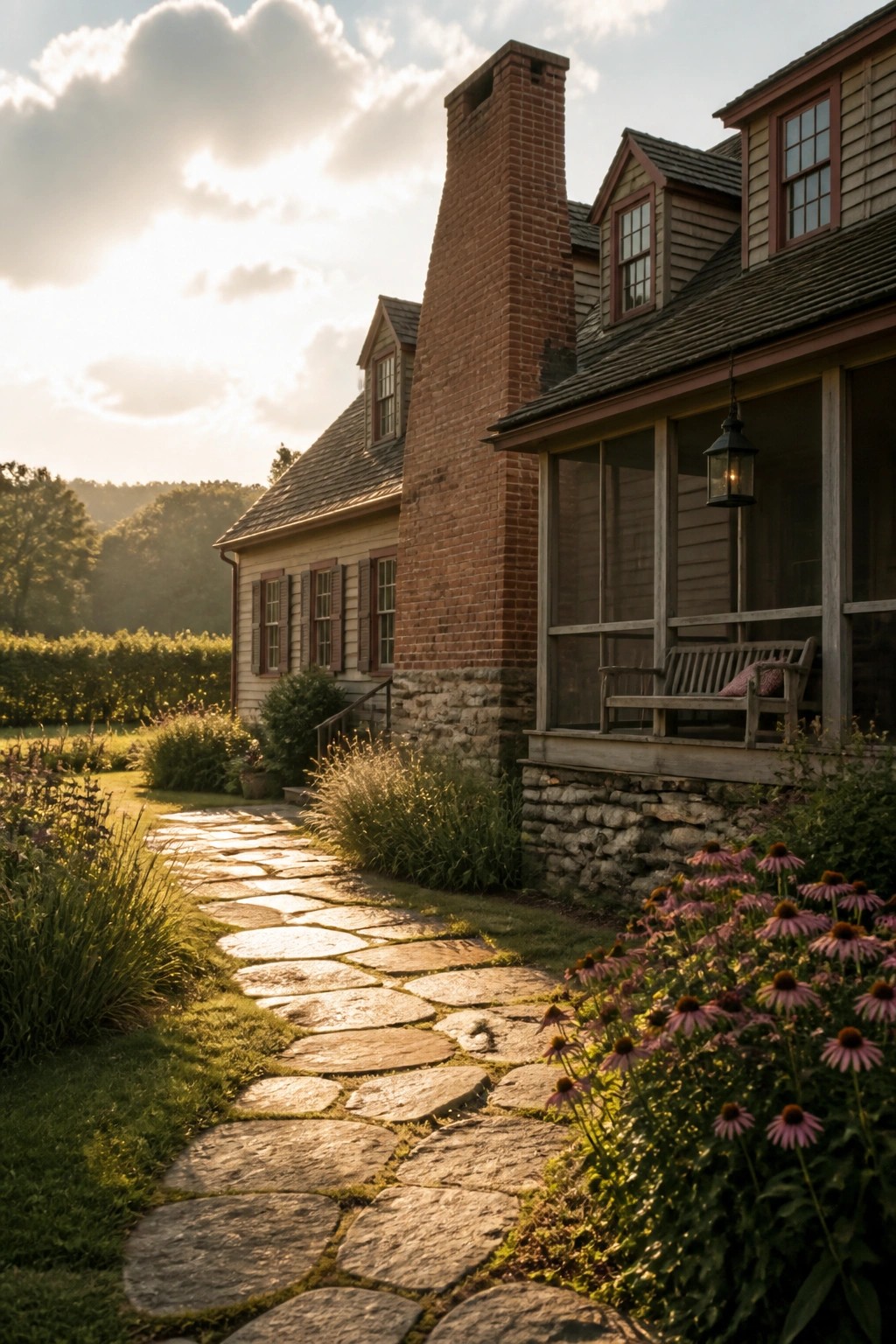
Many 1800s farmhouses used a low stone base to anchor the whole structure. It gives the house a solid, settled look that works especially well with wood siding above.
Add a tall brick chimney rising straight from that stone and the materials play off each other without any extra trim. This approach suits older homes in open settings where you want the exterior to feel simple and lasting.
Center the Entry for Strong Symmetry
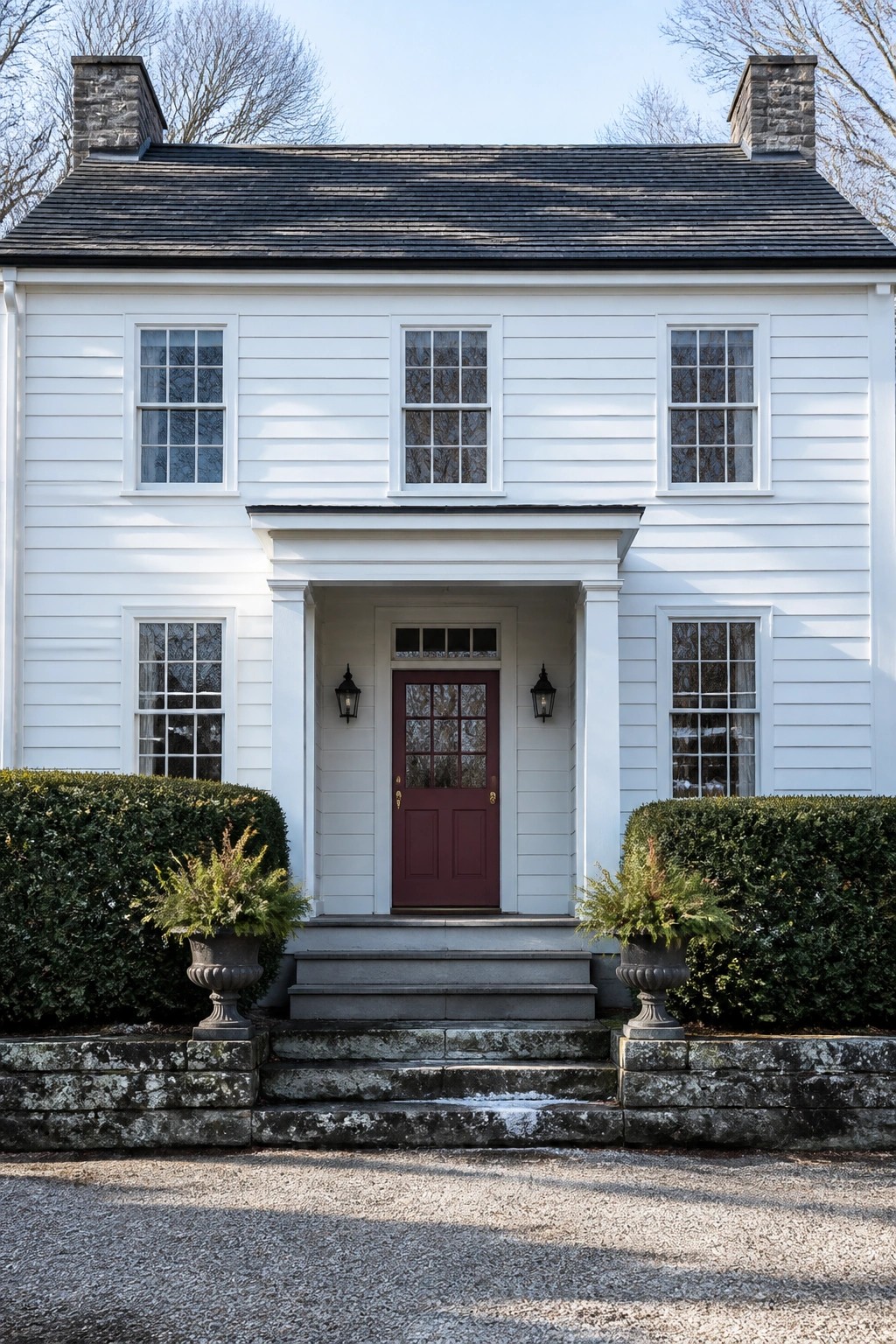
Many older farmhouses use a centered door to pull the whole front together. It keeps the windows balanced on each side and gives the house a steady, orderly look without extra decoration.
This works best on simple rectangular homes where you want the entry to feel direct and welcoming. Match the spacing of the windows on both sides of the door and keep any overhang modest so the focus stays on the center.
Symmetrical Window Placement
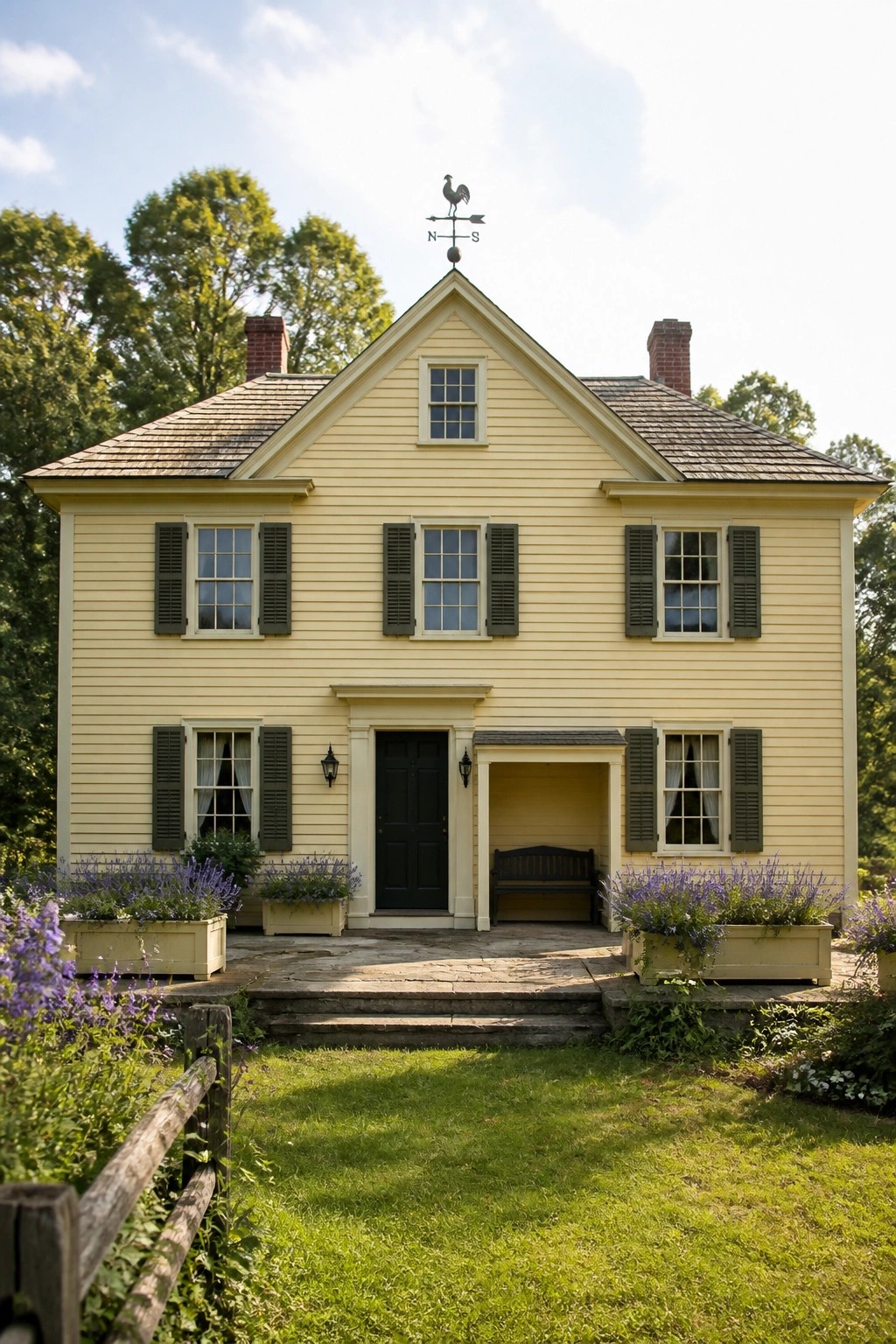
Many 1800s farmhouses relied on even window spacing and a centered front door. This layout keeps the whole front looking orderly and grounded without extra trim or decoration.
It works best on homes with simple siding and a straightforward roofline. Line up the windows floor to floor and add matching shutters so the pattern stays clear from the street.
Match Siding on Outbuildings
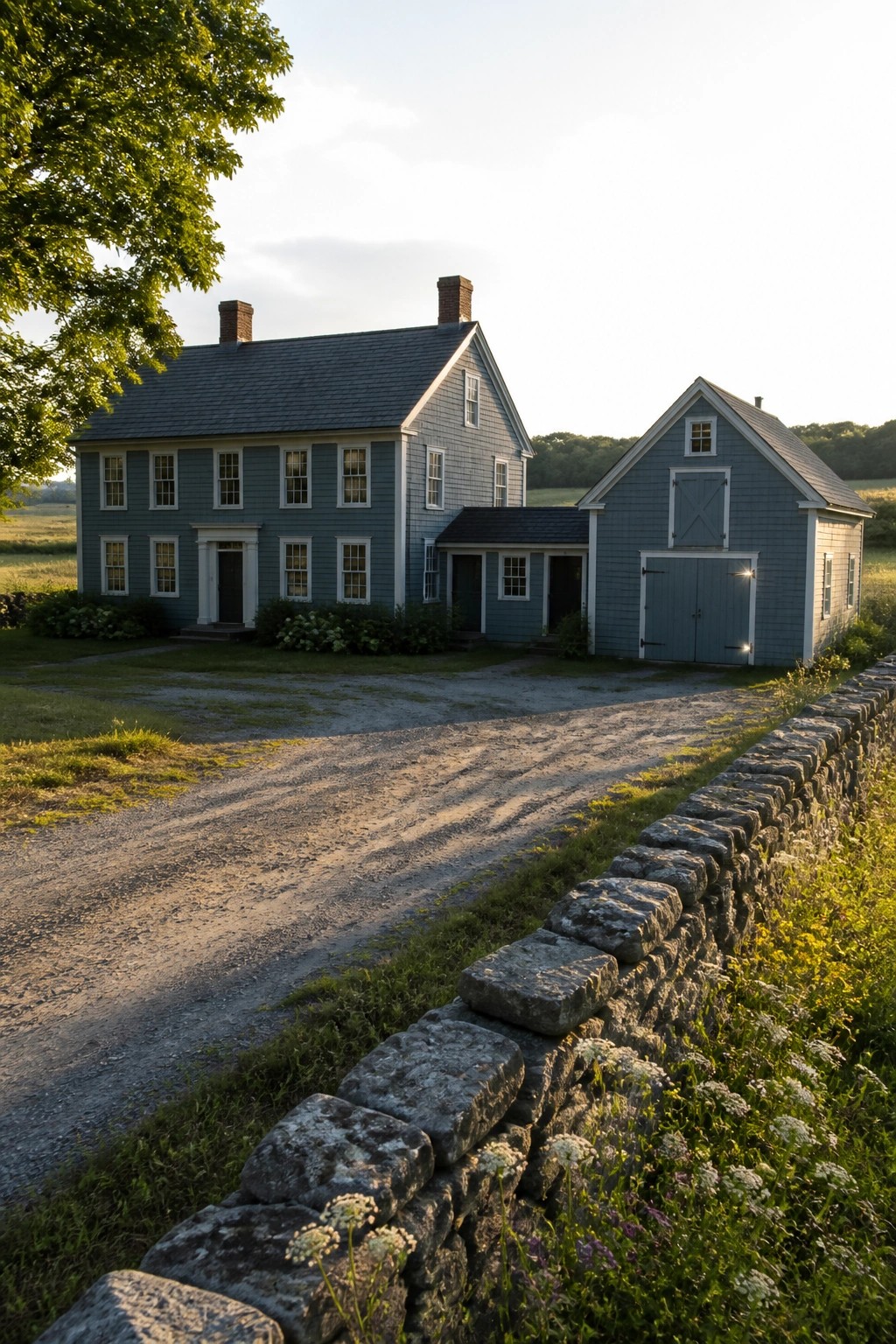
Many early farmhouses kept the barn or carriage house close to the main home and finished both with the same siding and color. This simple choice makes the buildings read as part of one original property instead of separate structures added over time.
The approach works best on rural lots where the buildings sit near each other. Stick with the same wall color and keep trim details minimal so the eye moves easily from house to outbuilding without a break.
Pedimented Entries on Old Farmhouses
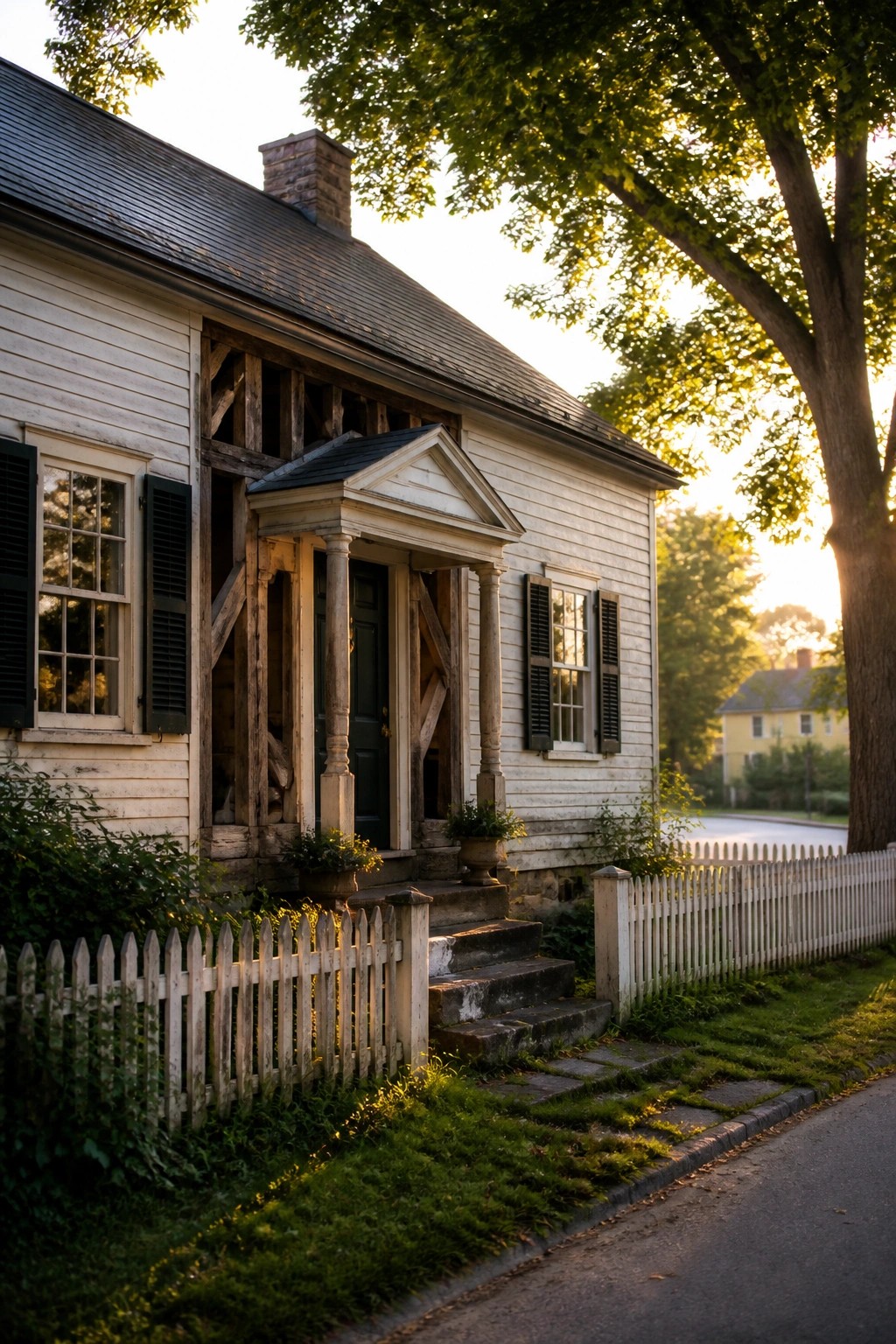
A small pediment over the front door adds that early American touch to a simple farmhouse facade. It gives the entry a bit of structure and history without needing extra trim or fancy details.
This works well on houses that already have a straightforward roofline and basic siding. Keep the supporting posts or columns plain, and match the paint so the whole thing feels like it belongs to the original build.
An Arched Door With A Pediment
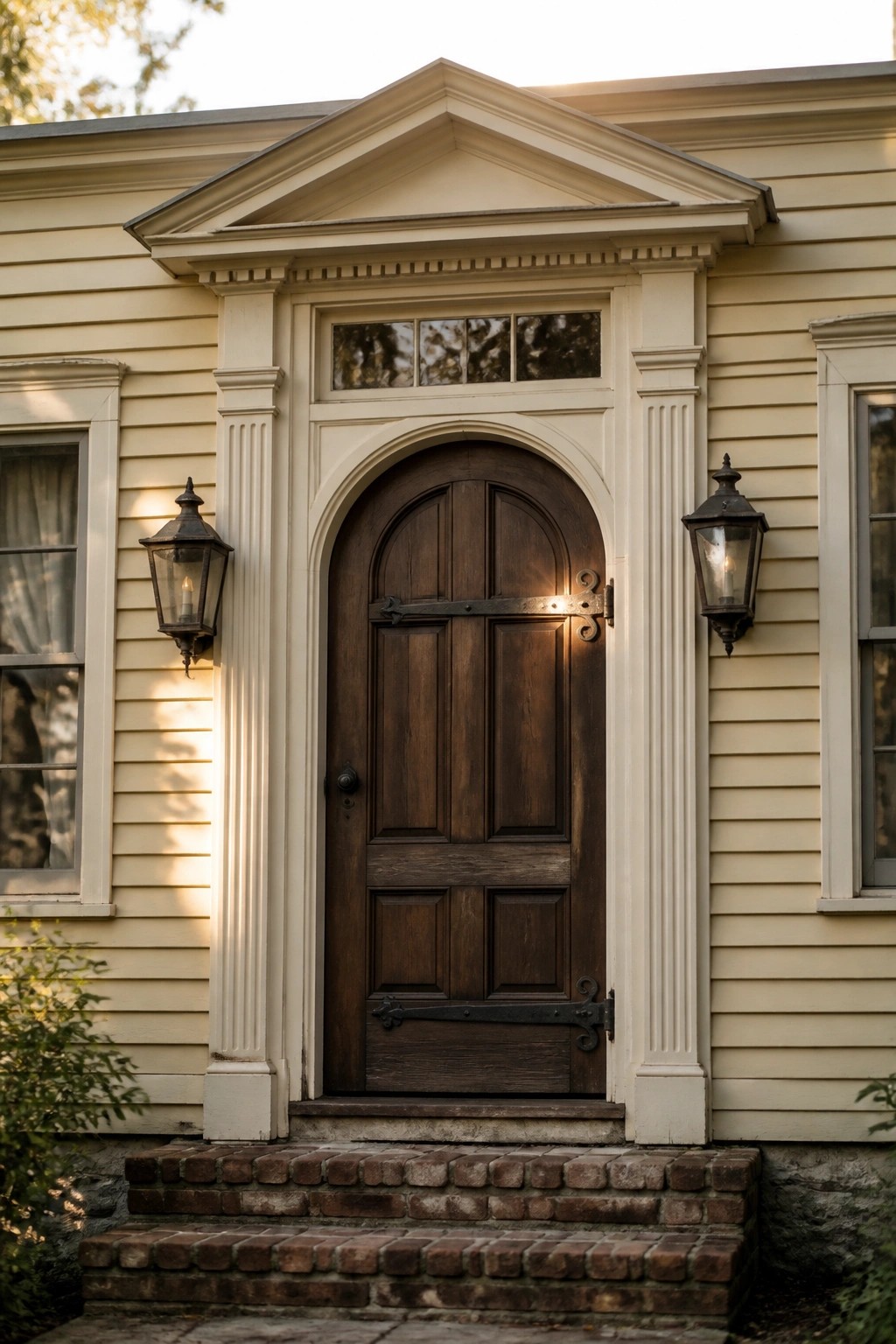
Many older farmhouses used a pediment and an arched door together to give the entry a bit more weight. The shape feels balanced and ties the whole front of the house together without needing extra trim or decoration.
This works best on a centered doorway. Keep the door in a dark wood tone, use simple black hardware, and add a pair of lanterns on each side. It suits homes that want a classic look without becoming too formal or busy.
Screened Porches on Farmhouses
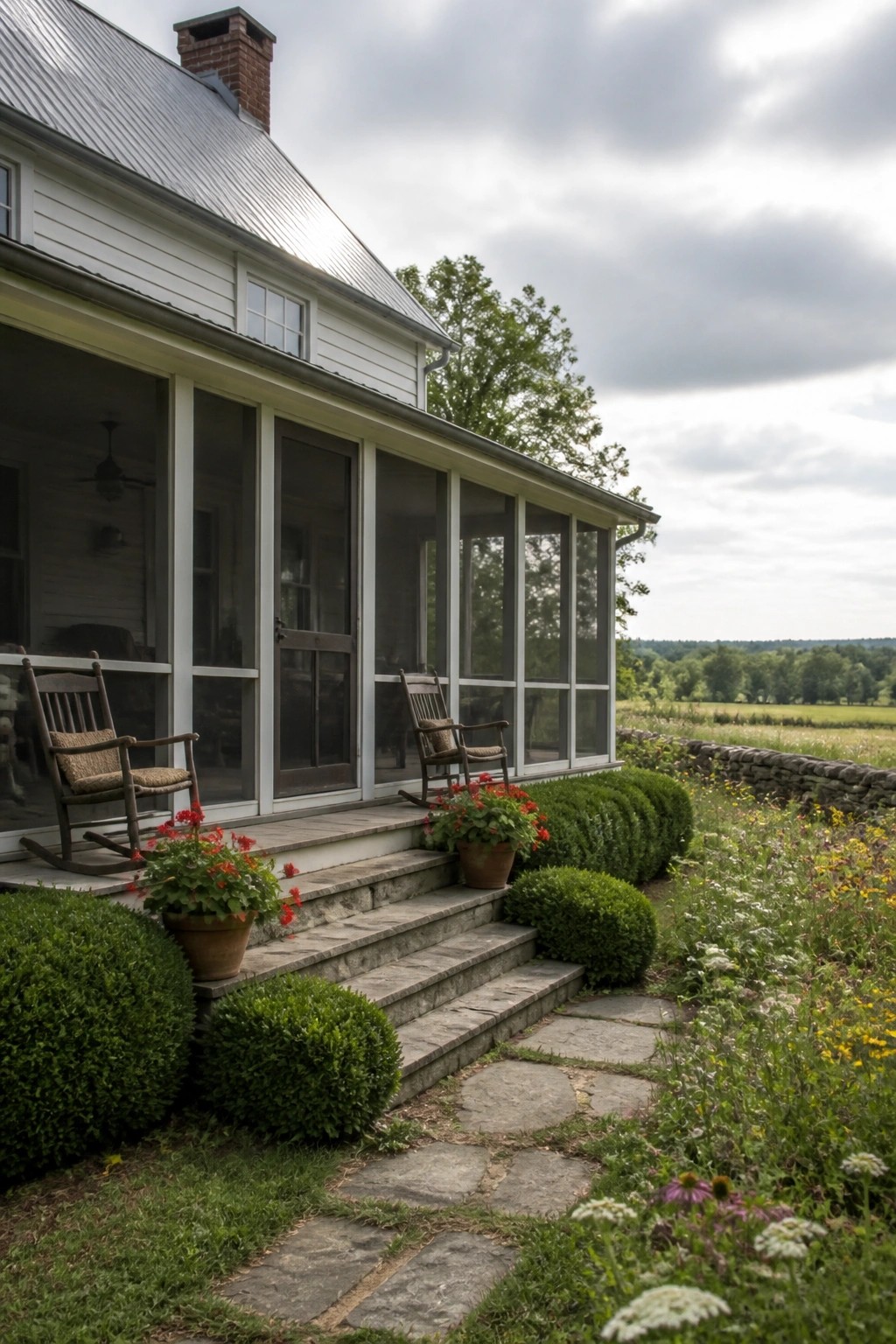
A long screened porch works well on an 1800s farmhouse because it adds usable outdoor space without changing the simple lines of the house. The screening keeps insects out while still letting in light and air, so the porch feels like a natural extension of the rooms inside.
Place a few plain rocking chairs along the length and keep the trim minimal. This approach suits homes that already have a decent run of wall on the side or front, and it pairs best with basic wood siding and a metal roof rather than fancier details.
Stone Paths for Farmhouse Curb Appeal
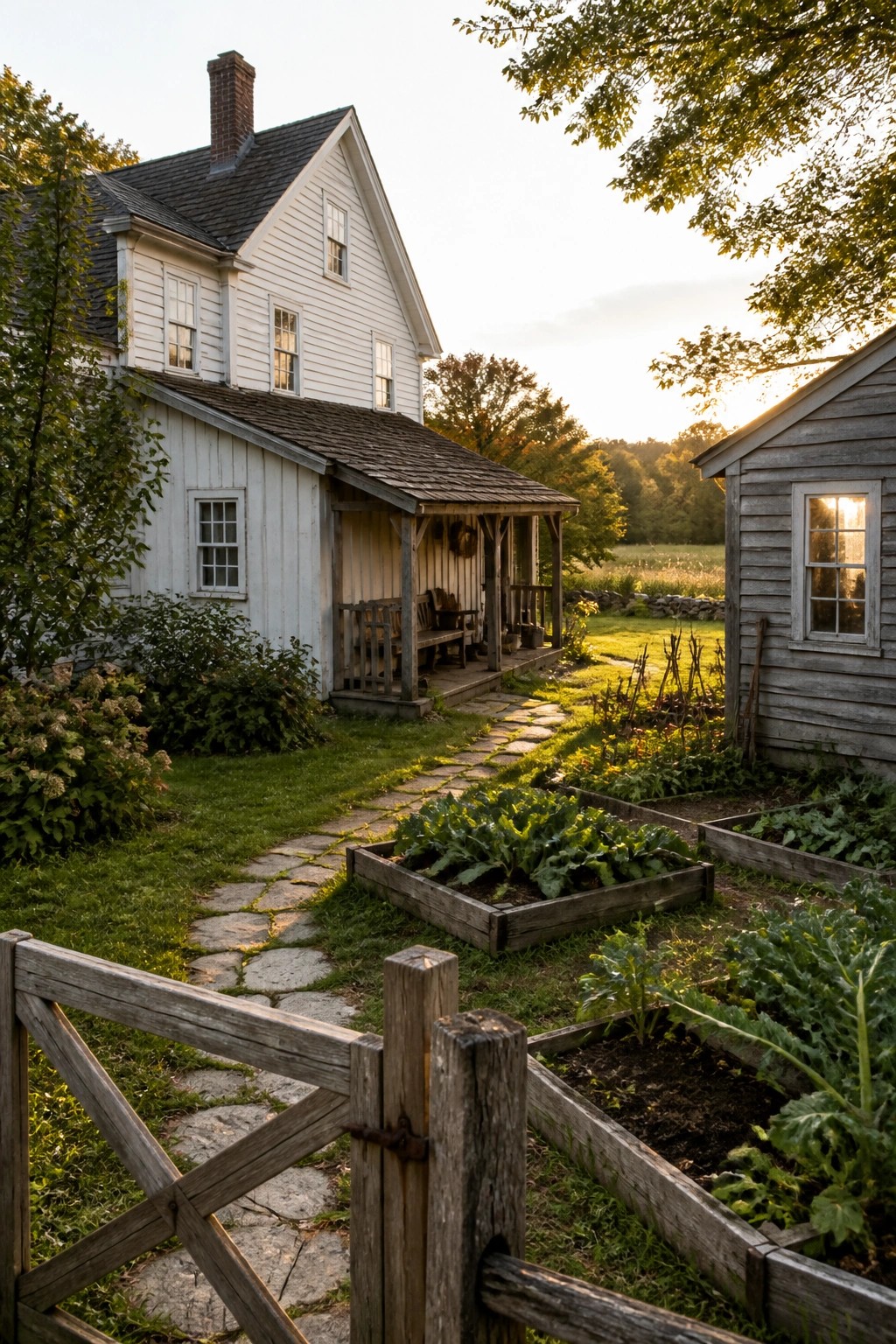
A stone path gives an 1800s farmhouse that settled, lived-in look right from the road. It connects the house to the garden without feeling formal, and the uneven edges keep the whole scene feeling relaxed and practical.
Use local stone if you can, and let it wind a little instead of running in a straight line. This works best on homes with simple siding and a front porch, where the path can lead straight to the steps without extra landscaping clutter.
Symmetrical Window Arrangement
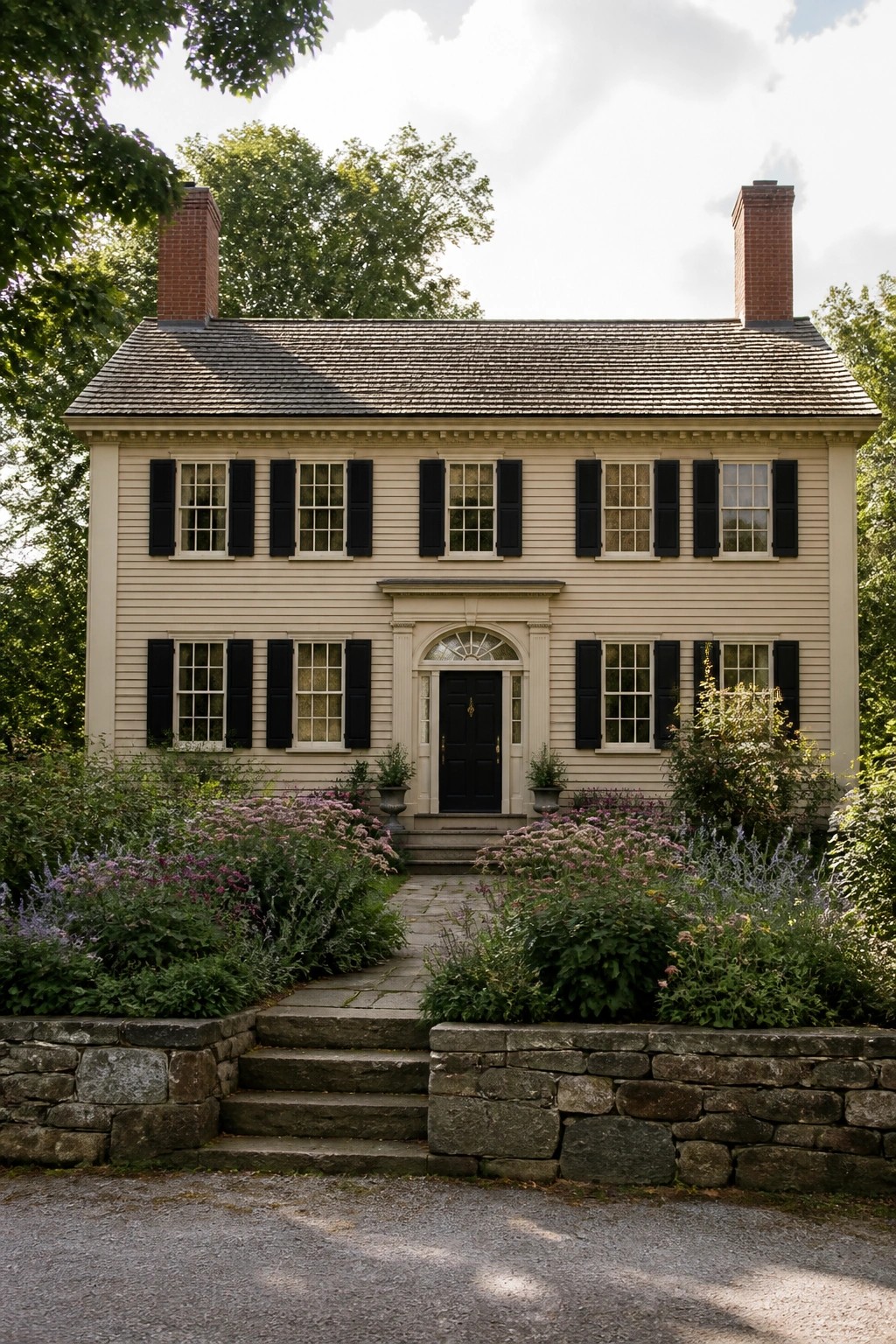
Many 1800s farmhouses use even window placement to give the front a steady, balanced feel. Matching the number and size of windows on each side of the door keeps the whole facade looking orderly without extra trim or decoration.
This approach works best on simple rectangular houses with light siding. Line up the shutters evenly and keep the spacing consistent from one side to the other so the symmetry stays clear from the road.
Center a Simple Porch on the Front Facade
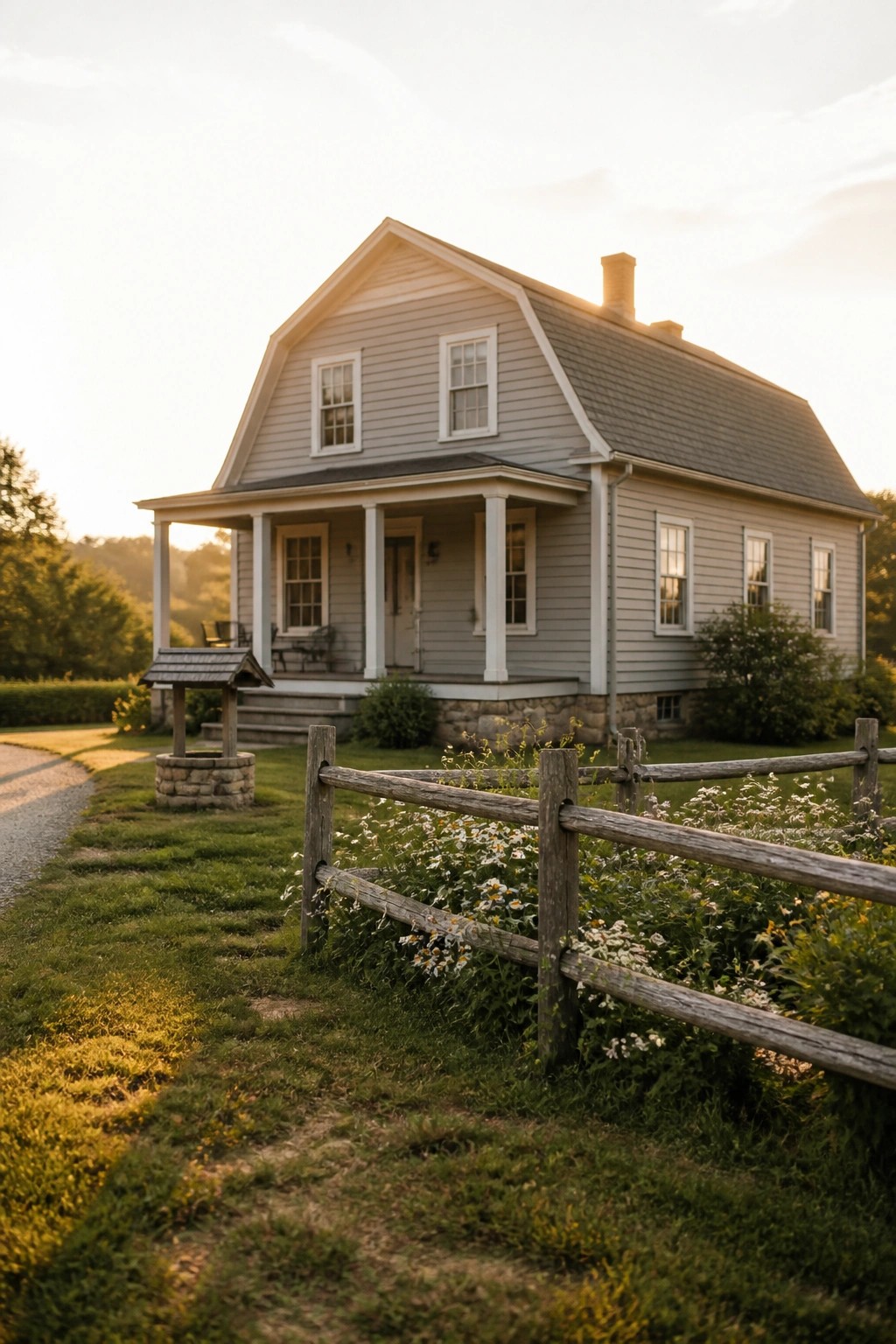
A centered porch with plain white columns gives an 1800s farmhouse its main point of interest. The rest of the facade stays quiet, so the porch does the work of making the house feel settled and open.
This layout suits homes with a clean gable roof and even window spacing. Keep the posts basic and avoid extra trim if you want the same straightforward Early American result.
Gravel Paths With Stone Borders
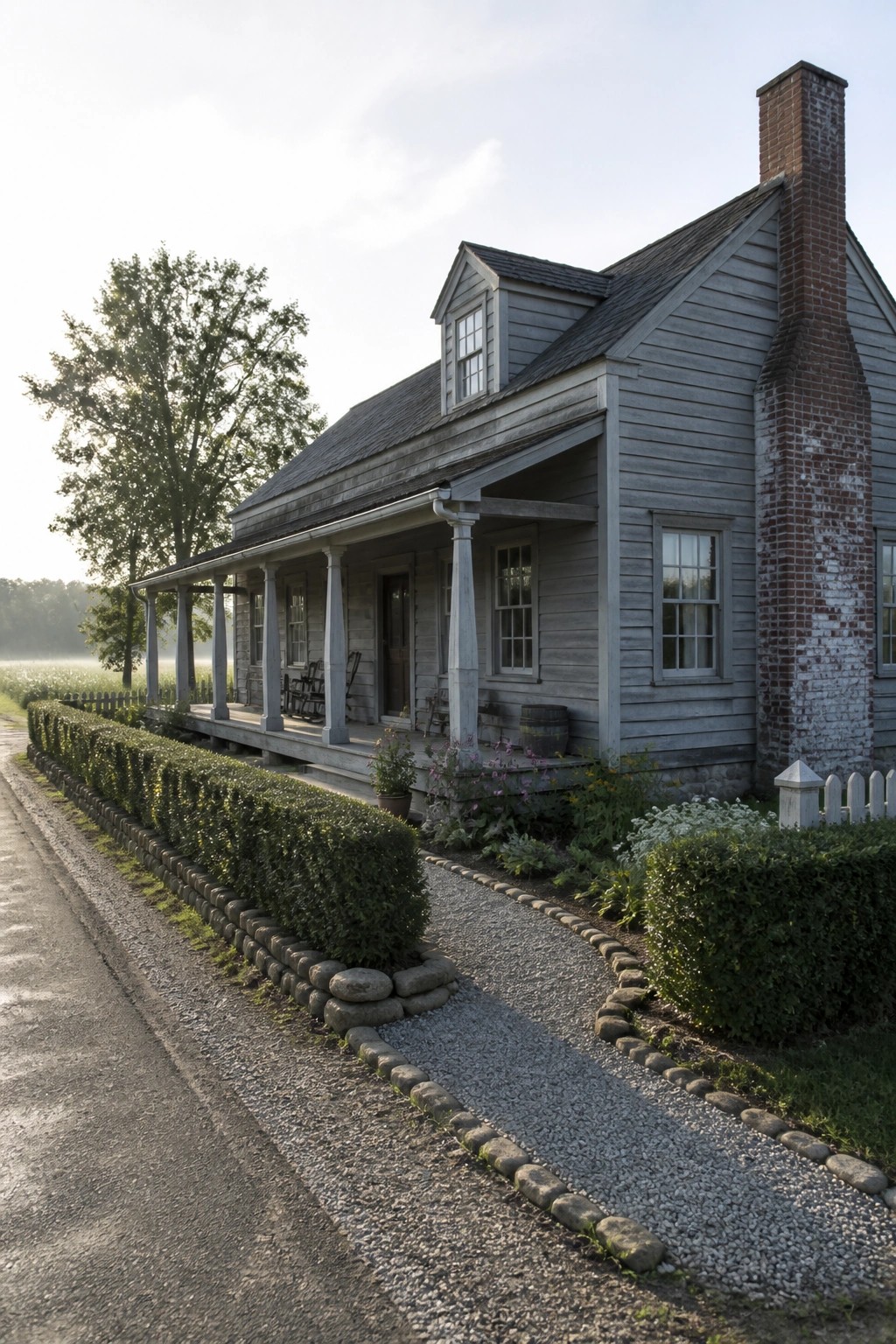
Gravel paths work well around old farmhouses because they feel practical and unpretentious. The stone edging keeps the gravel in place while giving the walkway a finished look that still matches the age of the house.
This approach suits early American style homes best when the path stays fairly narrow and follows the natural lines of the property. It helps direct visitors toward the porch without adding anything too polished or modern.
Add Lanterns for Soft Porch Lighting
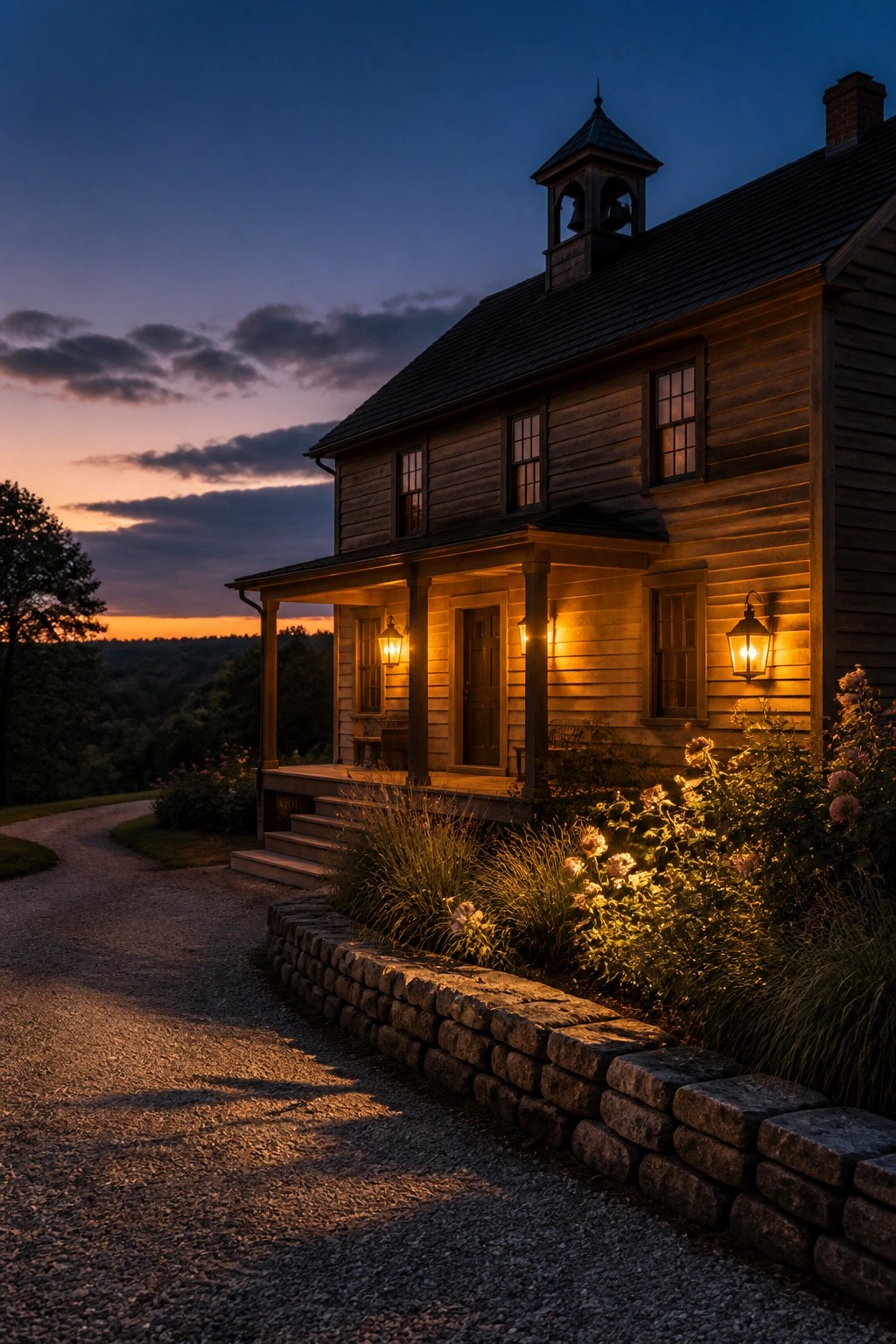
Lanterns placed along the porch posts and outer walls give an old farmhouse a gentle glow after dark. The light sits low and close to the wood, so it brings out the texture of the siding without overpowering the simple lines of the house.
This approach works best on early American homes that already have a deep porch and straightforward trim. Space the lanterns evenly near the door and main windows, and keep the bulbs warm so the effect stays soft rather than harsh.
Lean a Wooden Ladder Against the Siding
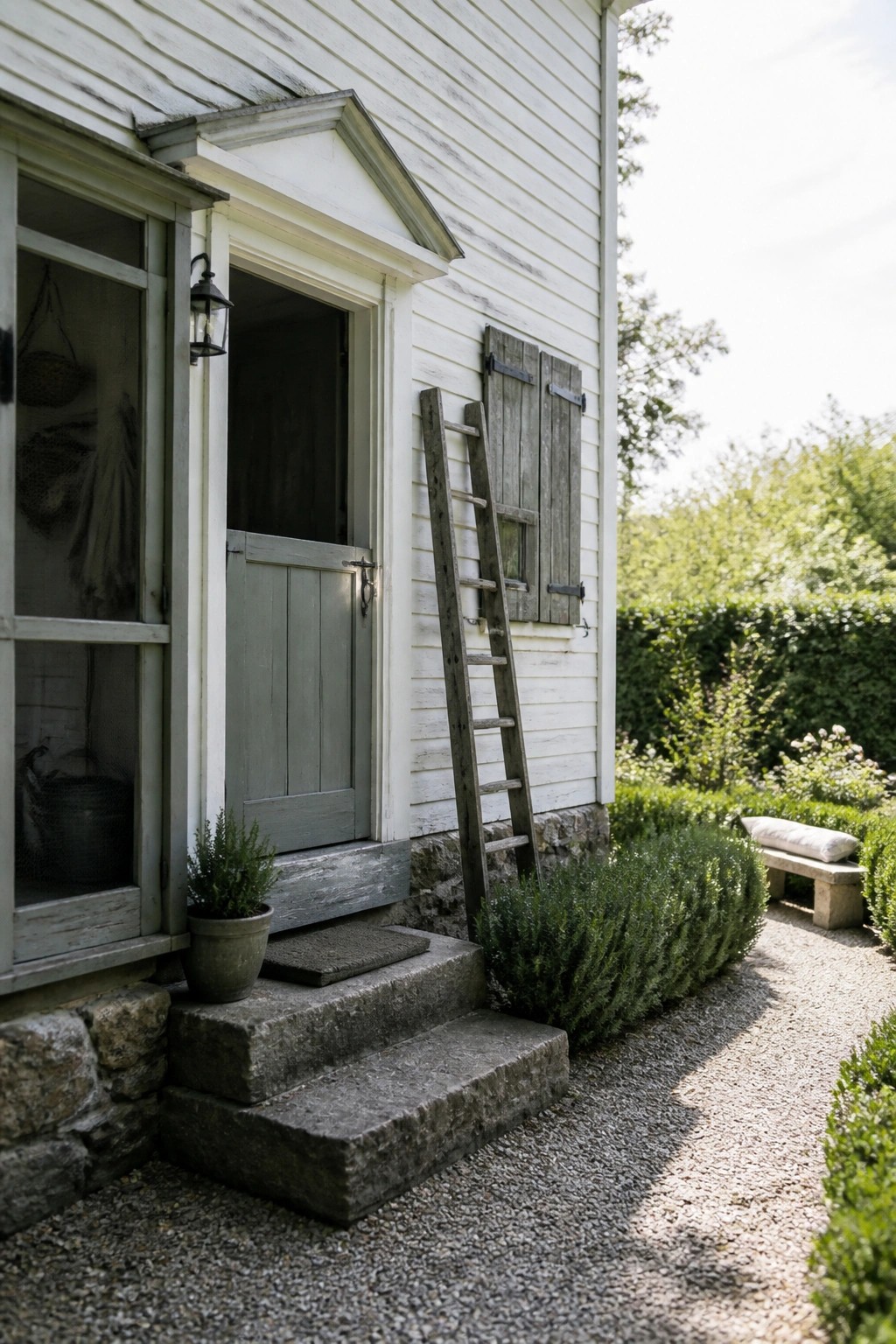
A wooden ladder leaned against the house gives an old farmhouse a practical, settled look that feels right at home on early American exteriors. It adds height and texture without needing fancy trim or extra paint.
This detail suits homes with plain siding and a simple entry. Place it near a door or window where it can stay put, and choose one that already shows some age so it blends with the rest of the weathered wood.
Frequently Asked Questions
Q: Which exterior colors match 1800s farmhouses best?
A: Soft whites and warm beiges stand out nicely against the landscape. Pair them with deep trim colors for contrast. This keeps the early American feel without going too bright.
Q: Can I update the windows without losing the style?
A: Choose double hung styles with divided lights. They let in light while looking true to the period. Avoid big modern panes that break the old look.
Q: What porch details really add to the exterior?
A: Simple posts and a metal roof overhead work wonders. Add a few rocking chairs to finish it off. The ones shown in the ideas give great examples.
