

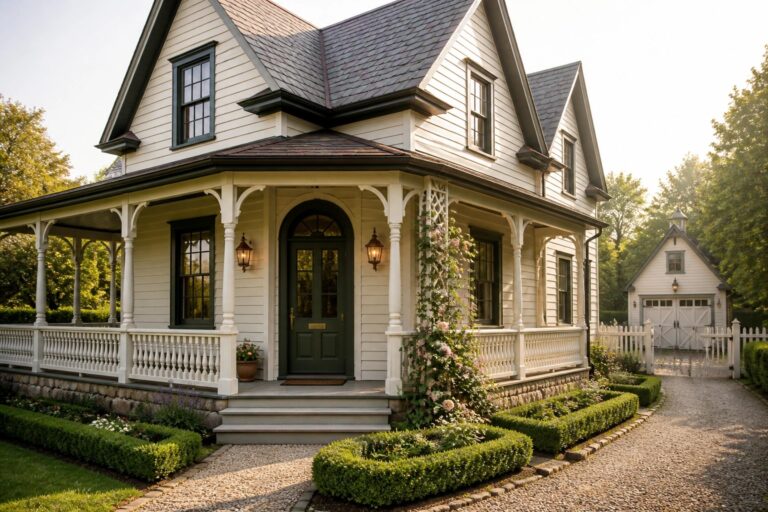
I have always paid attention to how a farmhouse exterior settles into its surroundings before anything else catches my eye.
Some porch additions end up looking tacked on unless the proportions line up with the original roof pitch.
I would test a few siding combinations on paper first because paint and material choices shift a lot once they hit sunlight.
The right entry door can pull the whole front together in ways that surprise you later.
Small trim details often decide whether the house feels cohesive or just busy from the street.
Line the Front Walk with Low Boxwood Hedges
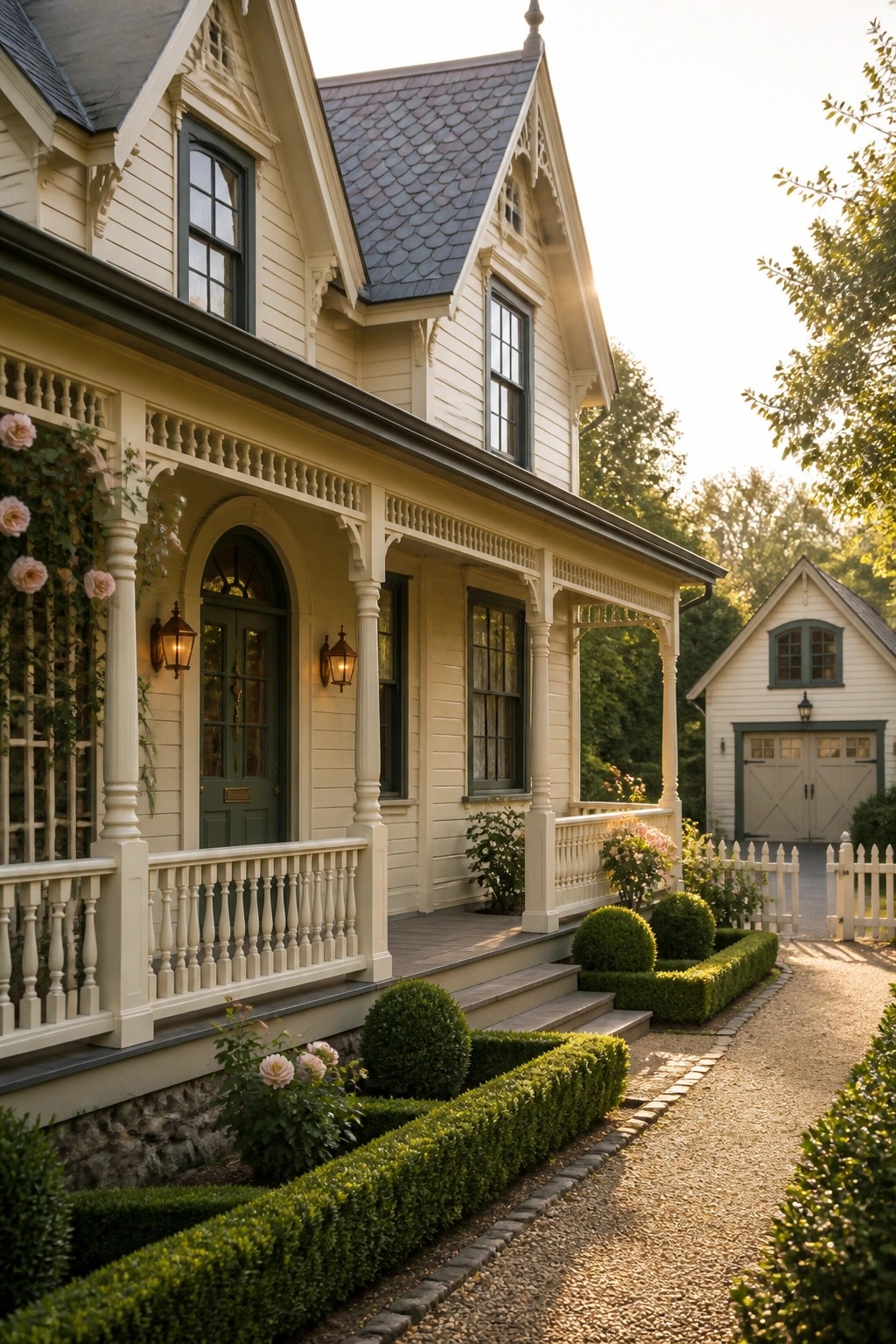
Low boxwood hedges give a Victorian farmhouse a clean, orderly look without feeling stiff. They guide the eye straight to the entrance and make even a simple gravel path feel intentional. The rounded shapes also soften the vertical lines of the house and porch.
This works best on homes with a clear front approach and enough space for the hedges to grow evenly. Keep them neatly trimmed a couple of times a year, and match the gravel or stone to the house trim so everything feels connected. It is a simple change that adds a lot of structure.
Add a Tower
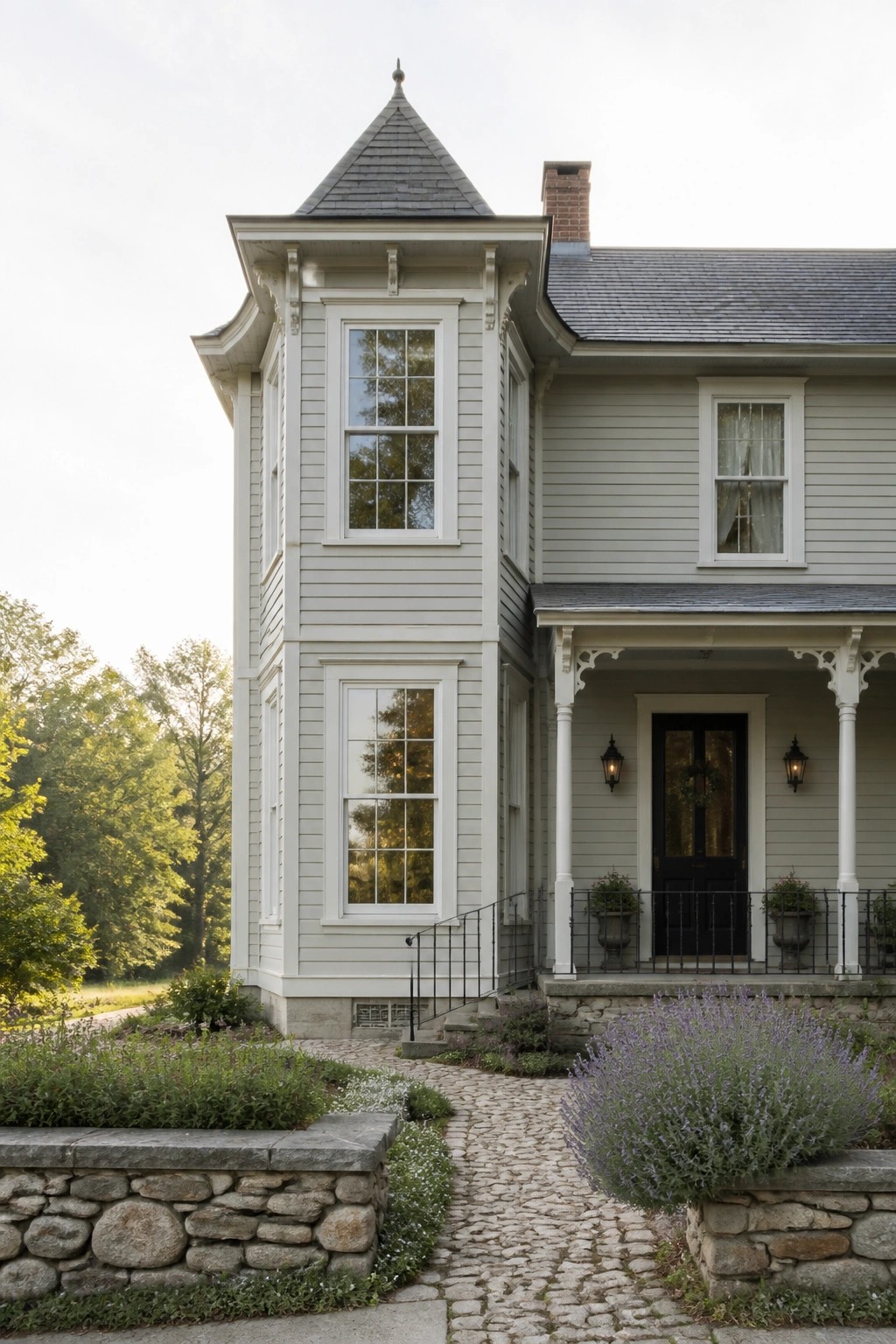
A tower gives a Victorian farmhouse that classic silhouette without needing a lot of extra space. It breaks up a long roofline and draws the eye upward, which makes the whole house feel taller and more interesting than a simple rectangular shape.
This works best on homes with enough side or front yard to show it off. Keep the siding color consistent with the rest of the house so the tower reads as part of the original structure rather than an add-on.
Let White Trim Stand Out Against Dark Siding
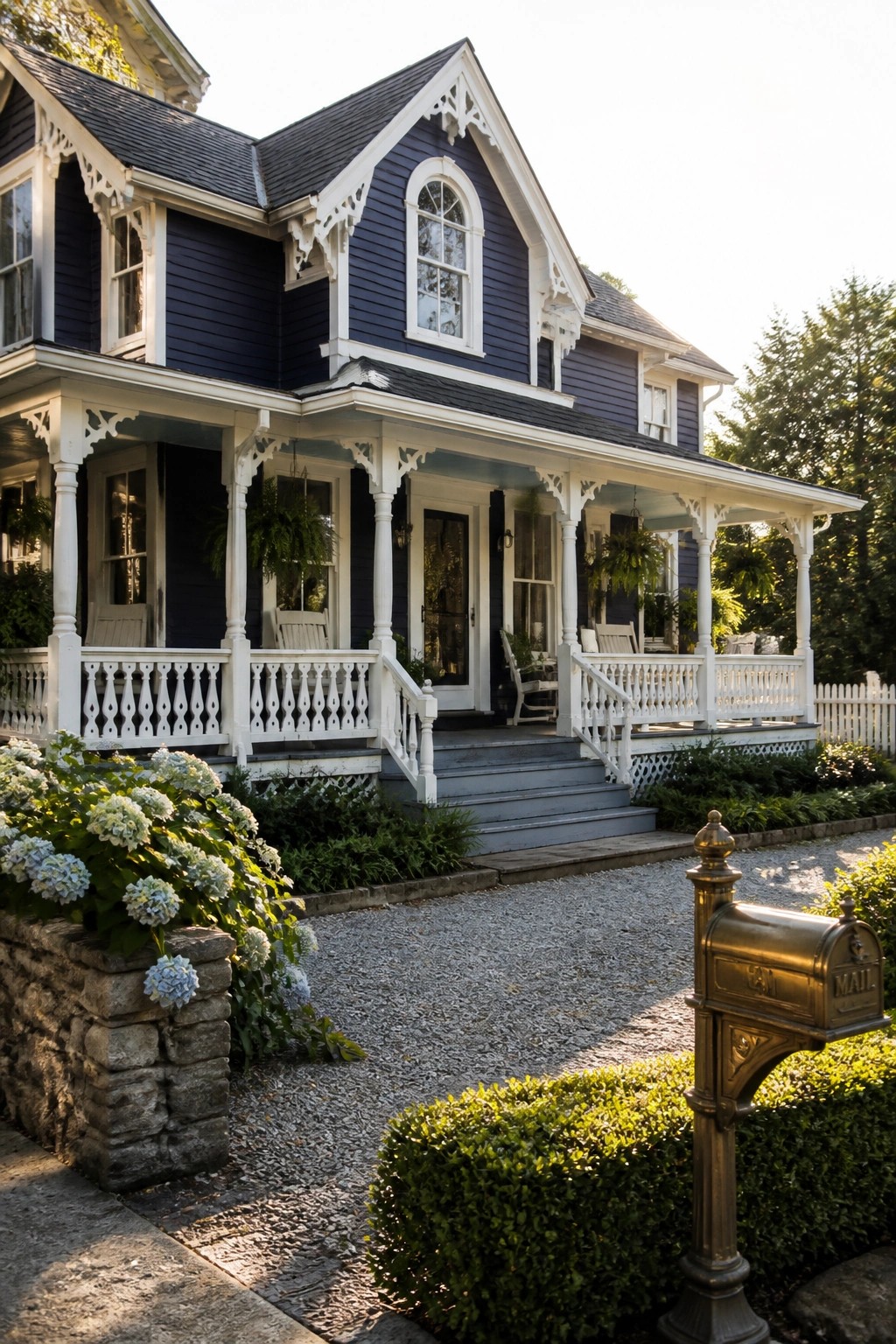
Deep navy siding paired with crisp white trim makes the ornate details on a Victorian farmhouse read clearly from the street. The white porch railings, brackets, and window frames stand out sharply against the dark background and keep the whole facade from feeling heavy.
This color move works best on homes that already have plenty of architectural trim. It suits older farmhouses in particular because it respects the original detailing while giving the exterior a fresh, updated look. Just keep the trim paint in good condition, since any chips show up quickly against a dark wall.
Brick Chimney Contrast
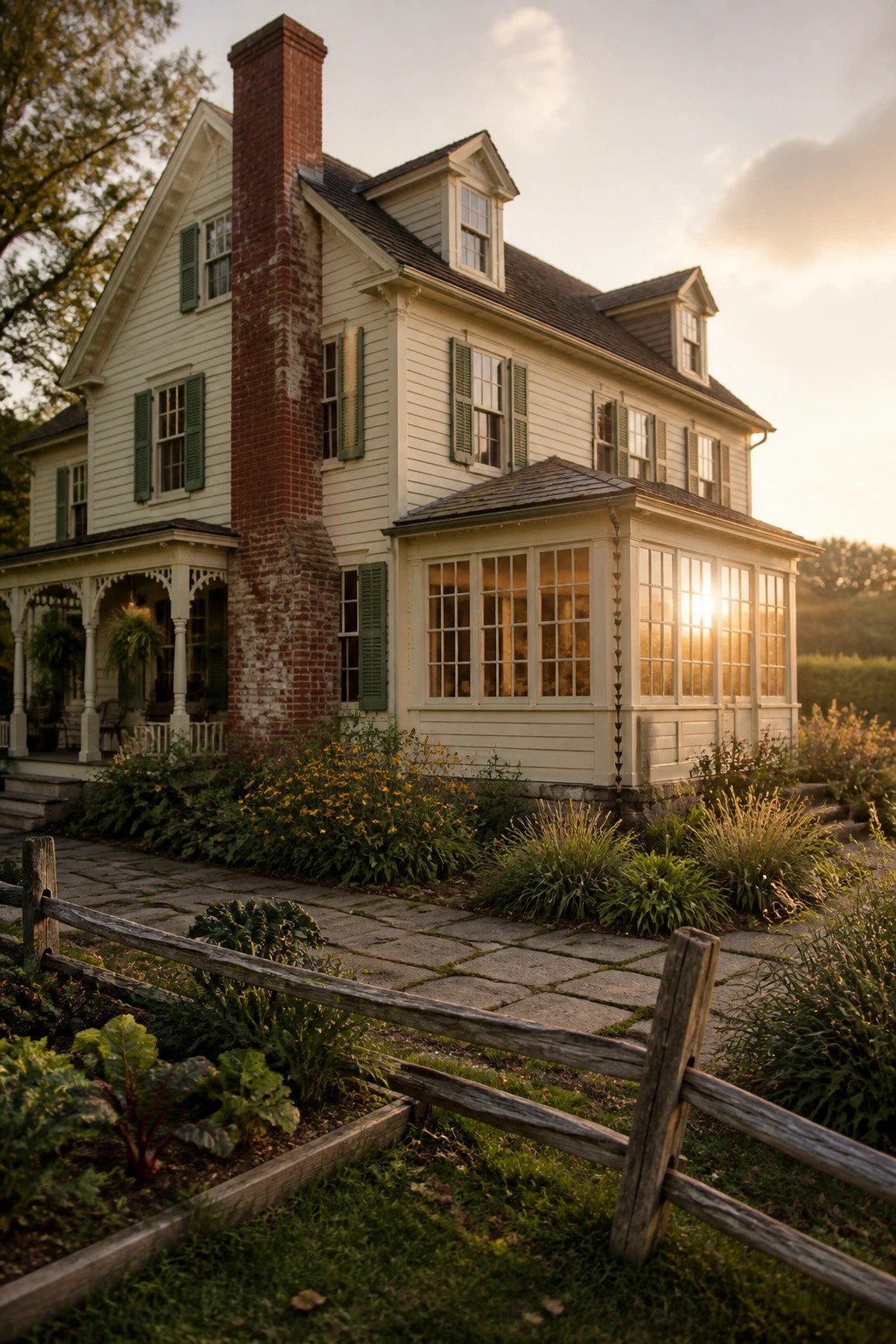
A tall brick chimney can give a Victorian farmhouse real presence without any extra effort. The rough texture and warm color stand out nicely against light siding, and it breaks up the flat look that sometimes happens with all painted wood.
This works best on older homes where the chimney already exists or can be rebuilt in a similar style. Keep the brick a bit weathered if possible, and let it run the full height so it feels like part of the original structure rather than an add-on.
Arched Doorways For Farmhouse Entries
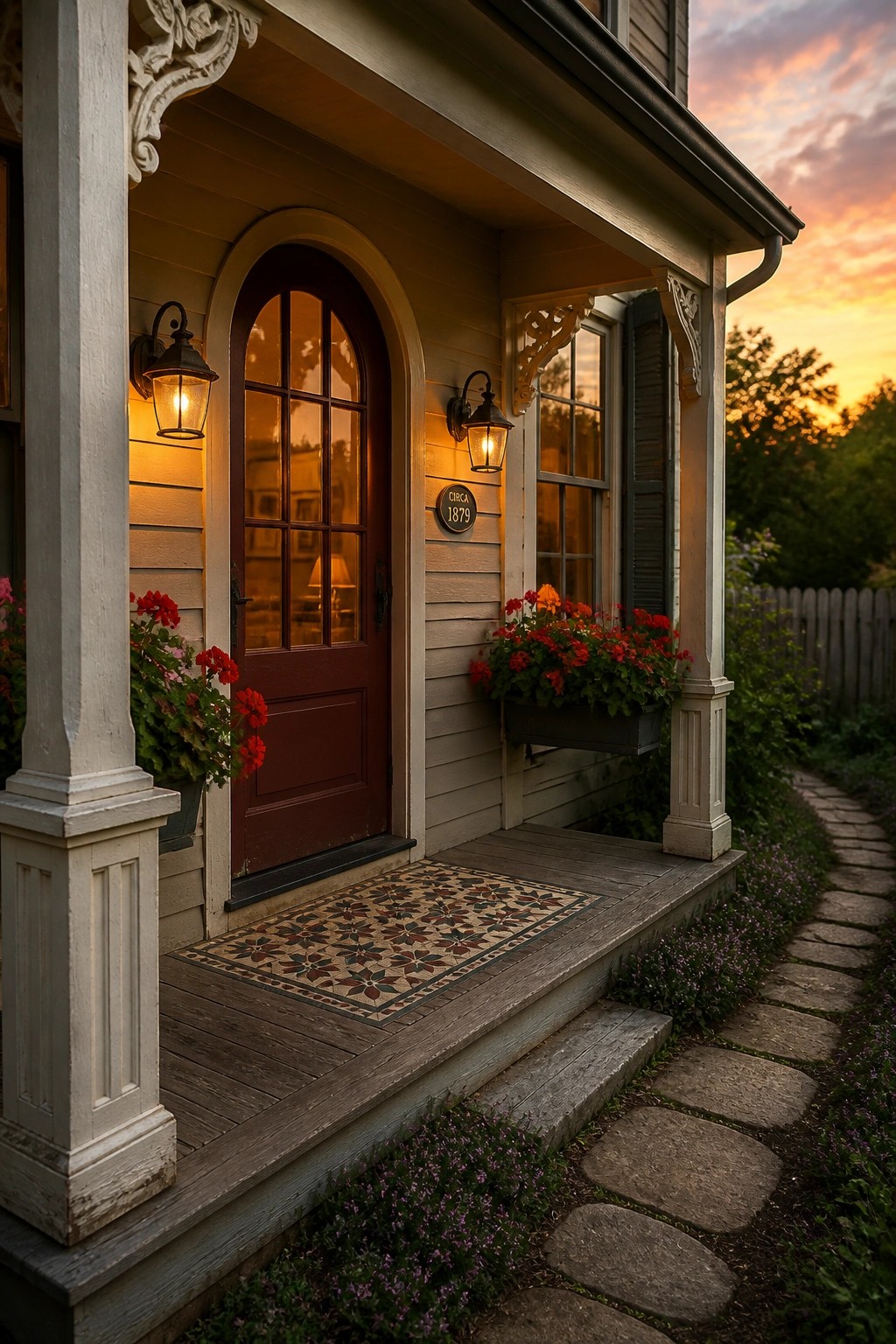
An arched front door gives a Victorian farmhouse a softer shape that breaks up the flat lines of the siding. It works especially well on homes with simple trim because the curve adds just enough detail without needing extra decoration.
This approach suits older homes or new builds that want a classic touch. Keep the door color rich and add a pair of lanterns on either side so the entry stays visible and balanced at night.
Soft Yellow Siding For Farmhouse Exteriors
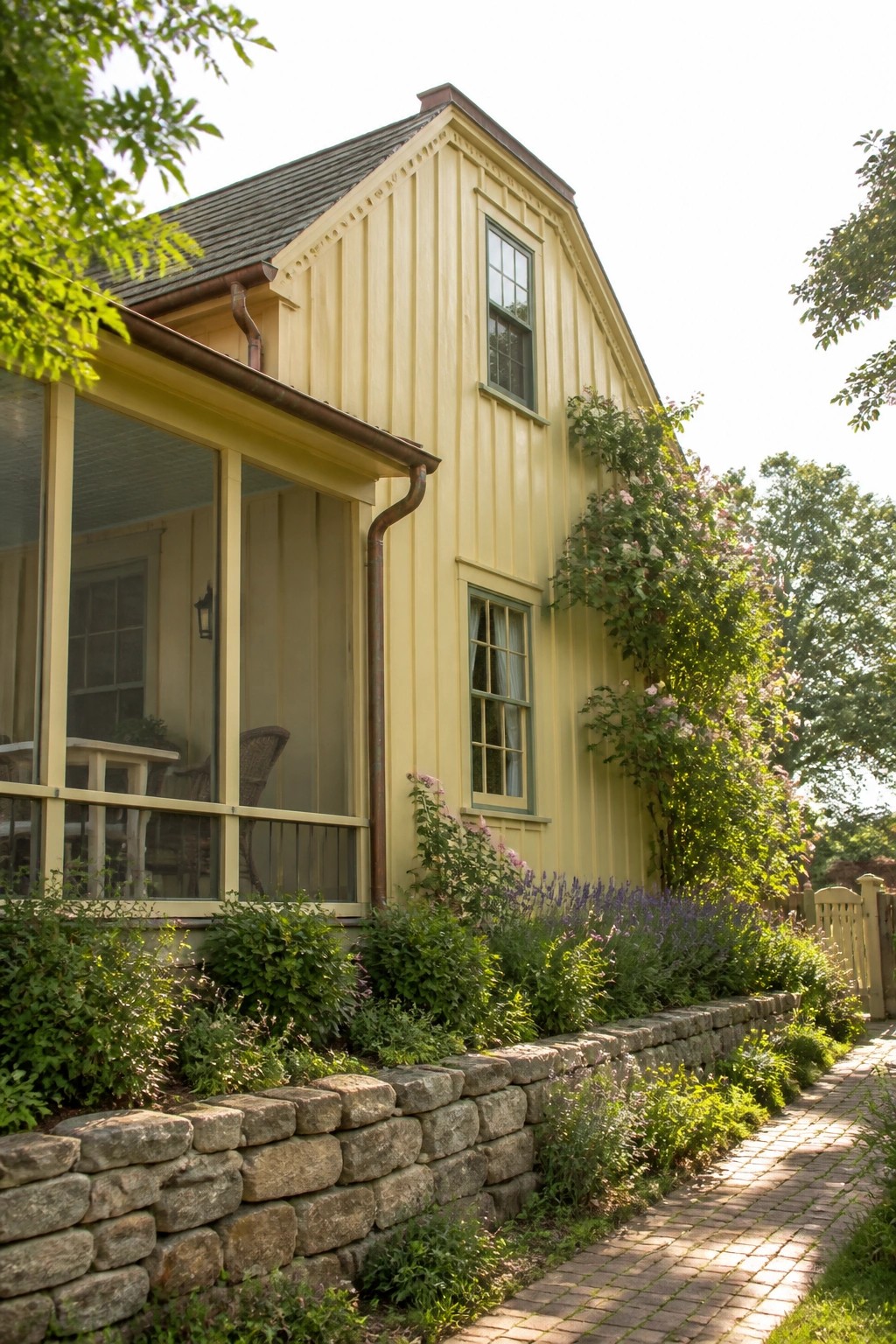
A soft yellow works well on a Victorian farmhouse because it keeps the look light and welcoming. The color brightens the whole structure without competing with the trim or roof details.
It pairs best with stone at the base and plenty of greenery nearby. Stick to a muted shade rather than a bright one if you want the house to feel settled instead of flashy.
Define The Entry With A Picket Fence Gate
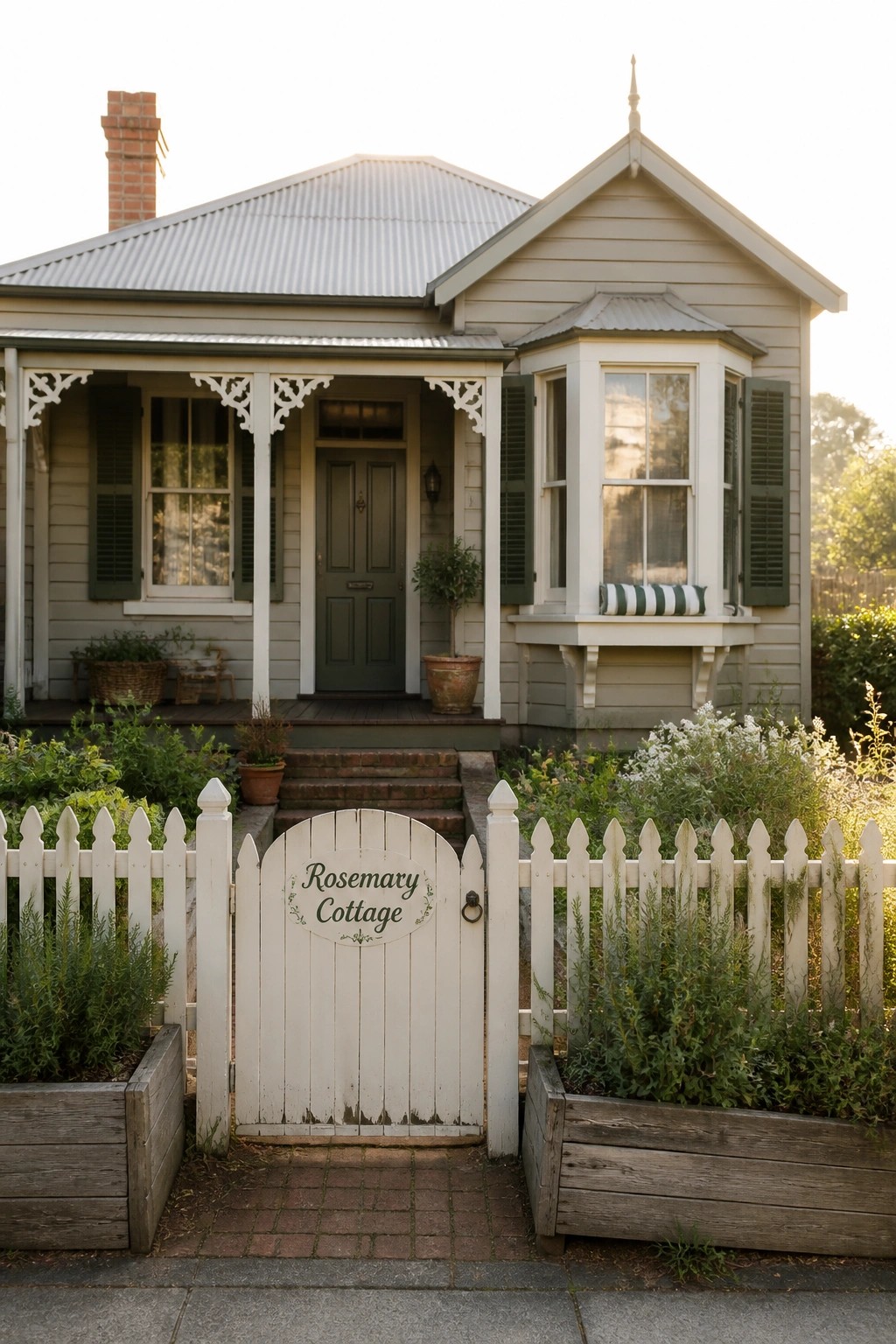
A white picket fence and gate give a Victorian farmhouse that settled, friendly look from the street. It marks the front without closing the house off and pairs well with the porch and simple siding.
This approach works best on smaller lots where the path to the door is short. Keep the fence height modest and use a plain gate style so it does not compete with the house details.
Frame the Front Door With Matching Lanterns
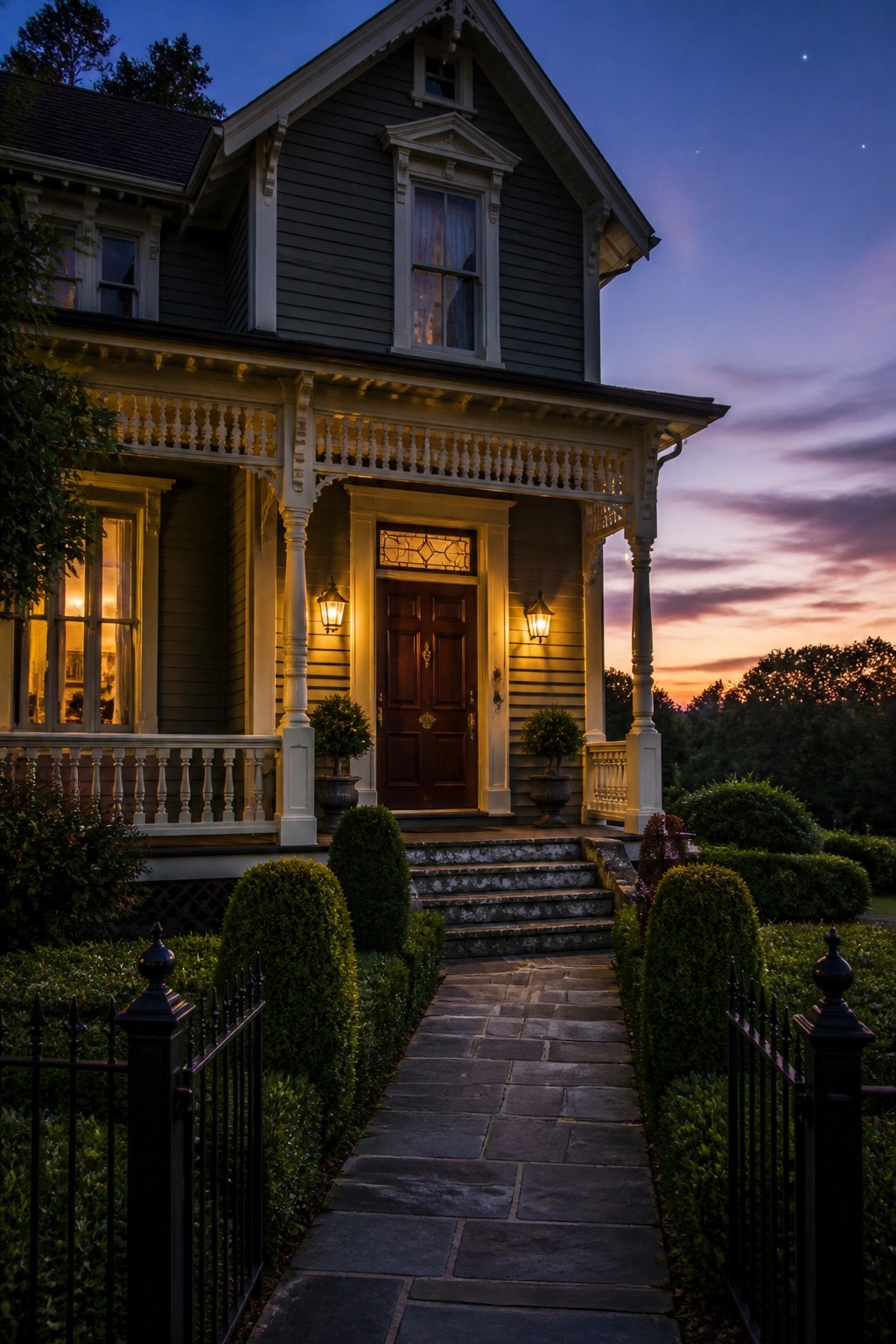
Placing a pair of lanterns on either side of the front door gives the entry a clear focal point. It works especially well on Victorian farmhouses where the door already has some detail, because the lights help the eye land right there instead of wandering across the whole facade.
Keep the lanterns simple and scale them to the door size. They look best when they sit at about eye level and match the finish on the door hardware or porch columns. This approach adds just enough light for safety while keeping the overall look calm and balanced.
Add a Front Porch with an Upper Balcony
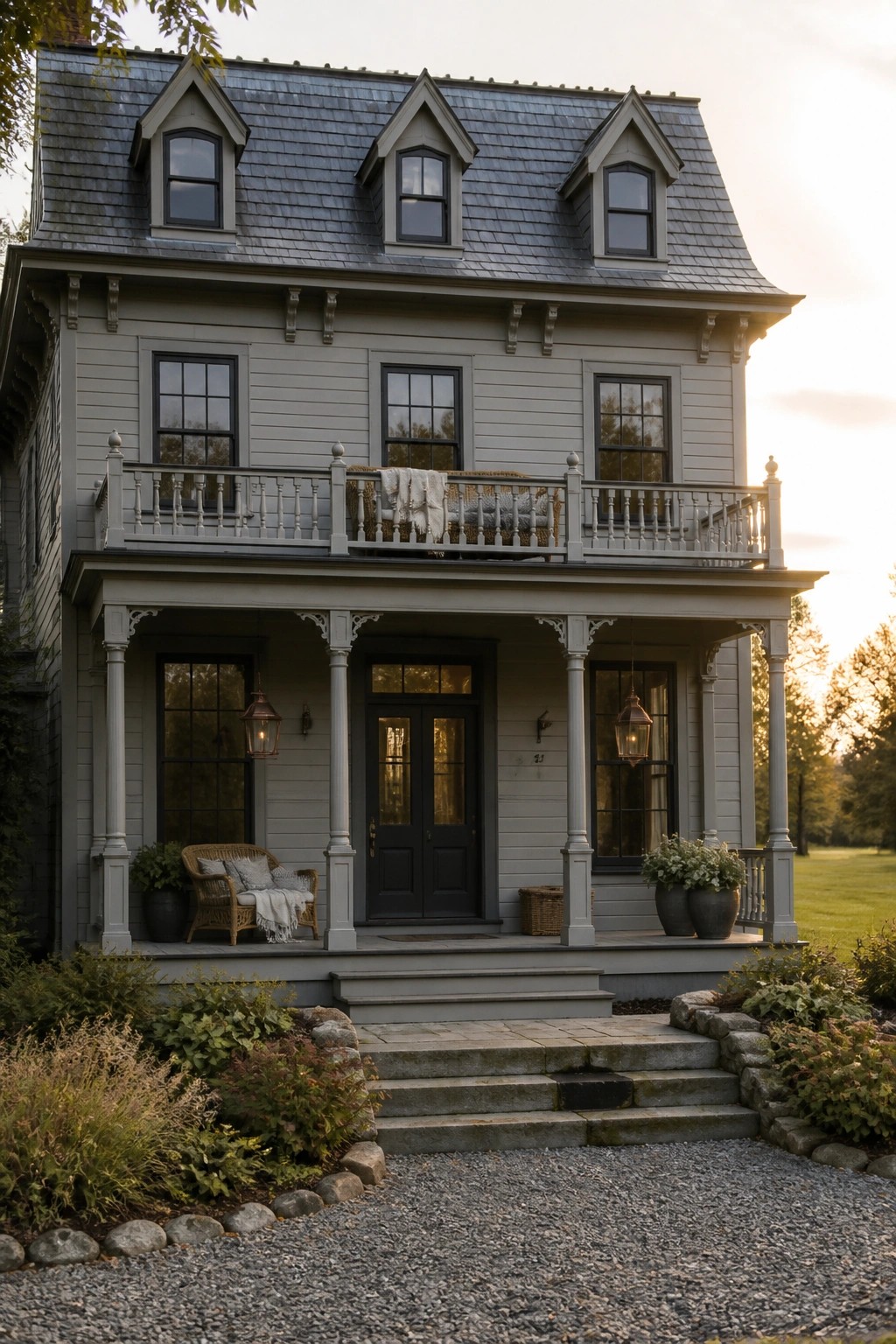
A covered porch with a balcony directly above it gives a Victorian farmhouse real presence. The lower level creates a welcoming entry and usable outdoor space, while the upper balcony adds height and breaks up the facade without extra decoration.
This setup works best on homes that already have a centered door and evenly spaced windows. Keep the columns straightforward and repeat the same railing detail on both levels so the whole front feels pulled together.
Stone Walkways For A Welcoming Entry
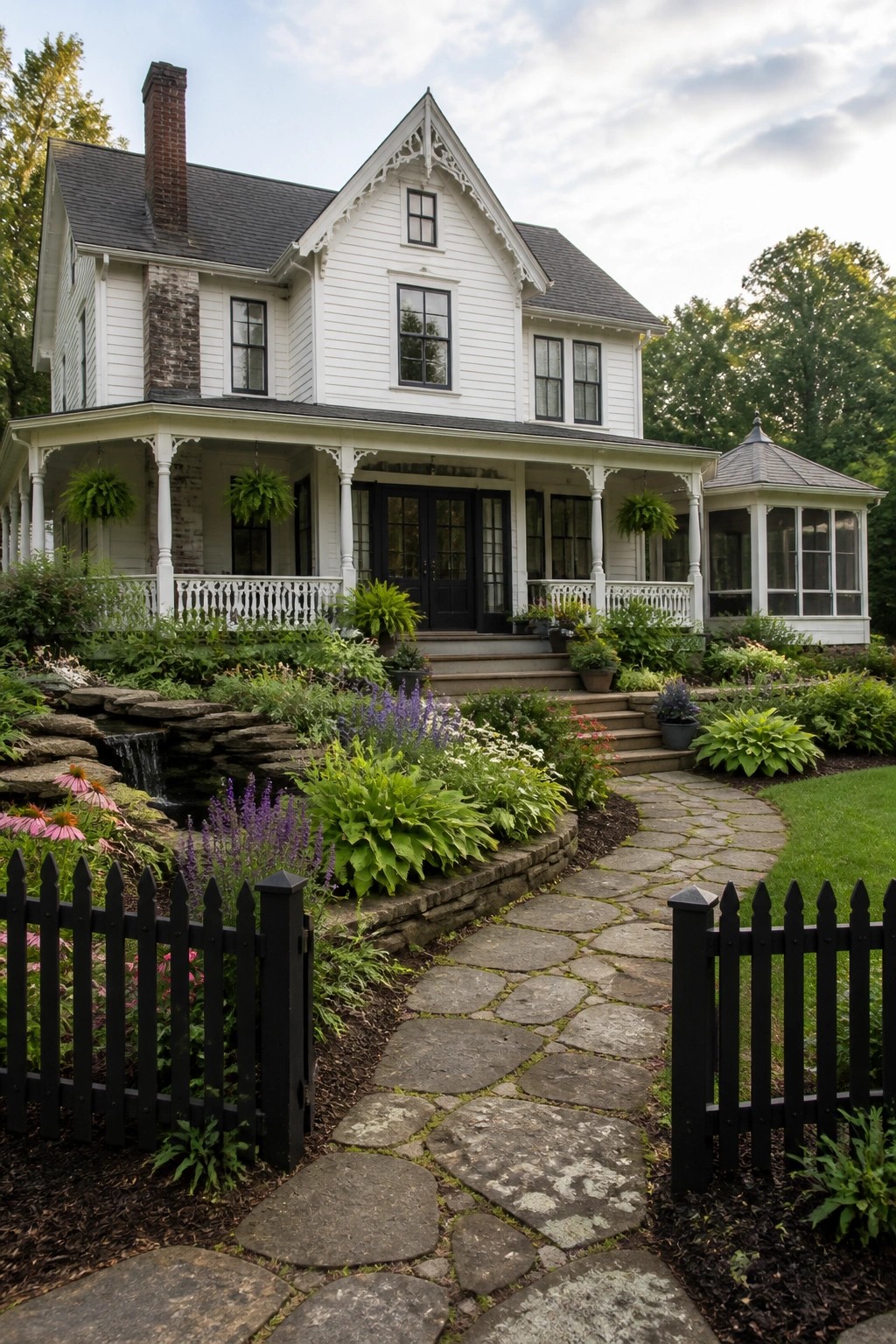
A winding stone path makes a Victorian farmhouse feel more approachable. It breaks up the lawn and gives the front of the house a settled, lived-in look instead of a straight shot from the street to the door.
This works best on homes with a bit of depth between the road and the porch. Keep the stones irregular and let low plants spill over the edges so the path feels like part of the garden rather than a separate feature.
Use a Spindle Railing on the Porch
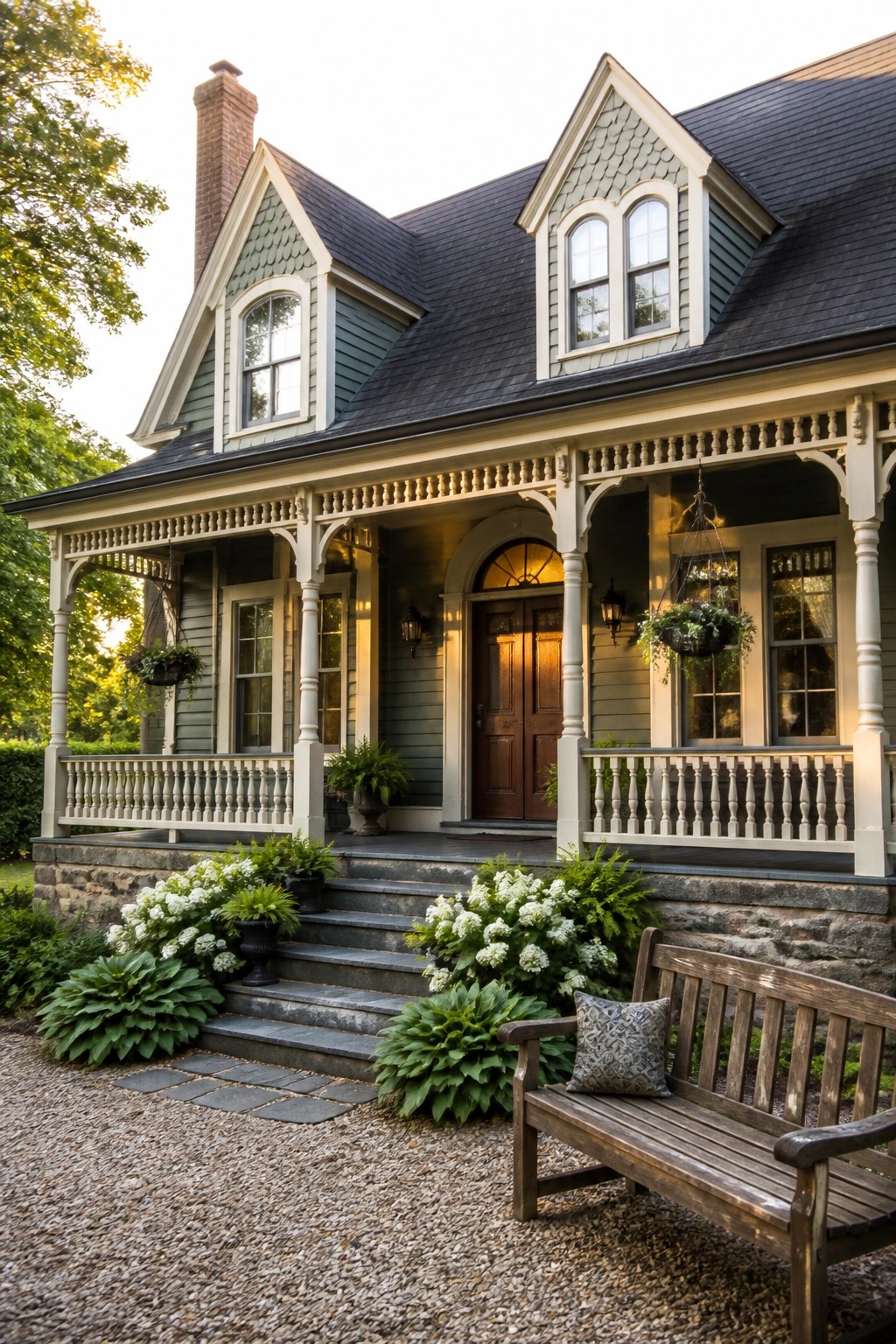
A spindle railing along the porch adds the right amount of detail to a Victorian farmhouse without making it feel fussy. It creates a clear boundary between the house and the yard while keeping the entry open and easy to approach.
This works best on homes with a simple gable or two and a moderate roof overhang. Match the spacing and thickness of the spindles to any other trim on the house, and paint them a light color so they read cleanly against the siding.
Mix Shingles And Siding On The Facade
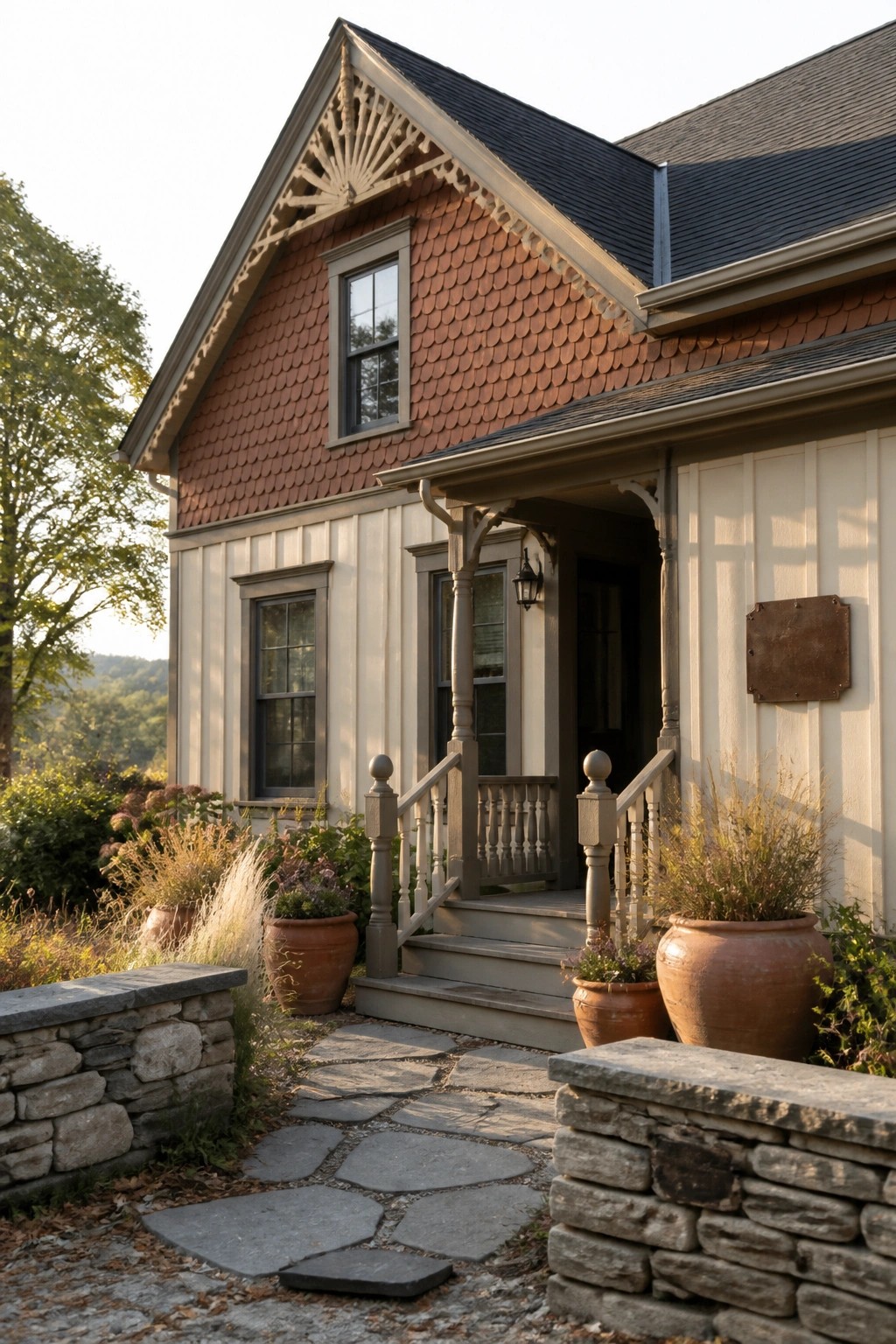
Mixing fish scale shingles on the upper gable with horizontal siding below gives a Victorian farmhouse a layered look without much extra work. The contrast adds texture and keeps the front from feeling flat or one-note. Many older homes already have this kind of break in materials, so it feels natural rather than forced.
This approach works best on houses with a clear gable or second story that can carry the shingles while the lower walls stay simpler. Keep the colors close in tone if you want a calmer result, or let one stand out if the house needs more presence. Just make sure the transition line is clean so the two materials meet neatly.
Deep Green Siding With Cream Trim
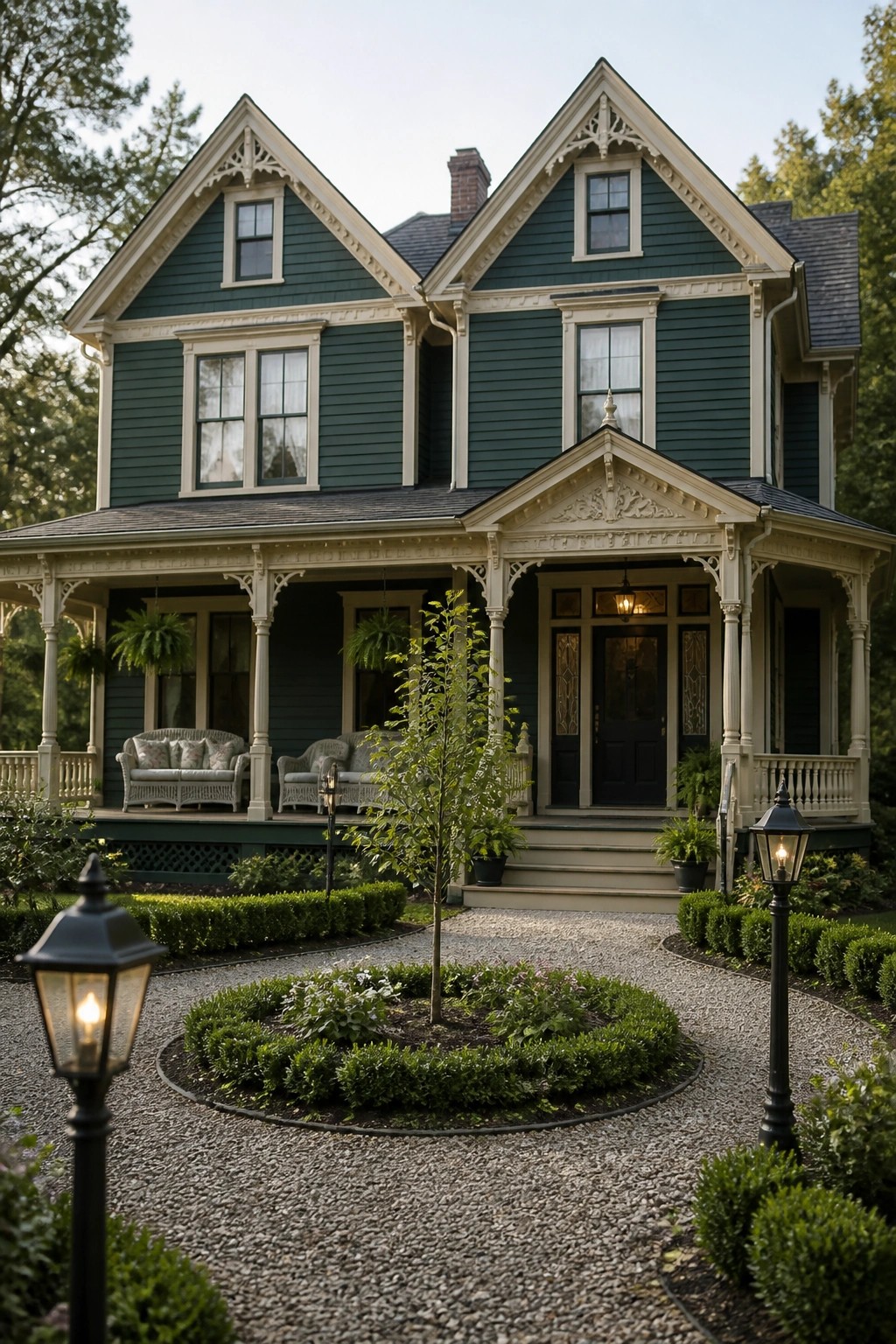
A deep green exterior gives a Victorian farmhouse real presence while still feeling grounded. The color makes all the white trim, gables, and porch details stand out clearly without needing extra decoration.
This approach works best on homes that already have strong architectural lines and plenty of trim to highlight. It also pairs well with simple landscaping so the house itself stays the main focus.
Add A Wooden Chair To Your Porch
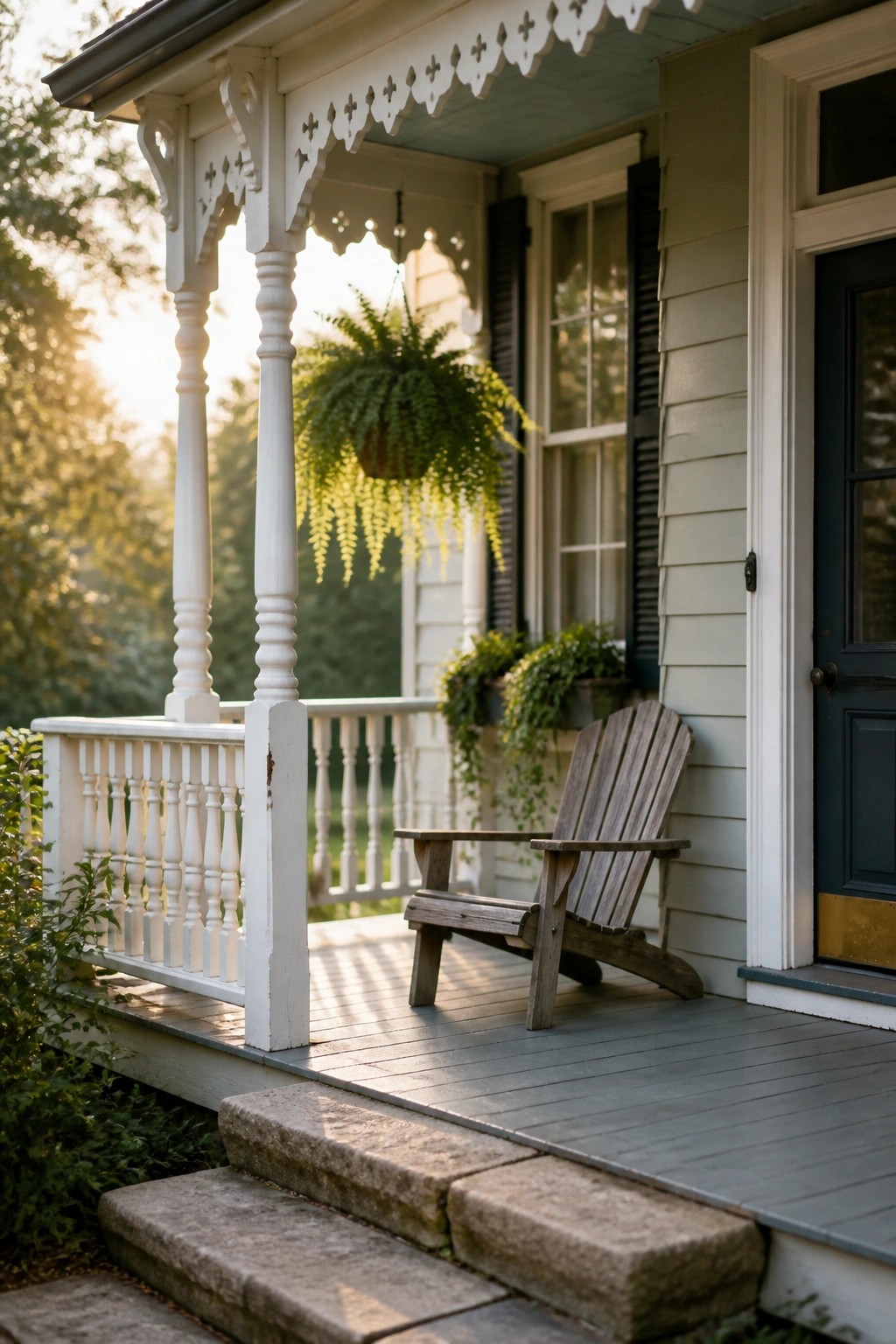
A simple wooden chair on the porch gives the whole front a relaxed and lived-in look. It creates an easy place to sit without crowding the space, and the weathered finish pairs naturally with older farmhouse details.
Try setting one near the steps or railing on a house with similar trim and siding. It works best when kept to just one or two chairs so the porch still feels open and easy to walk across.
Brick Paths That Welcome You Home
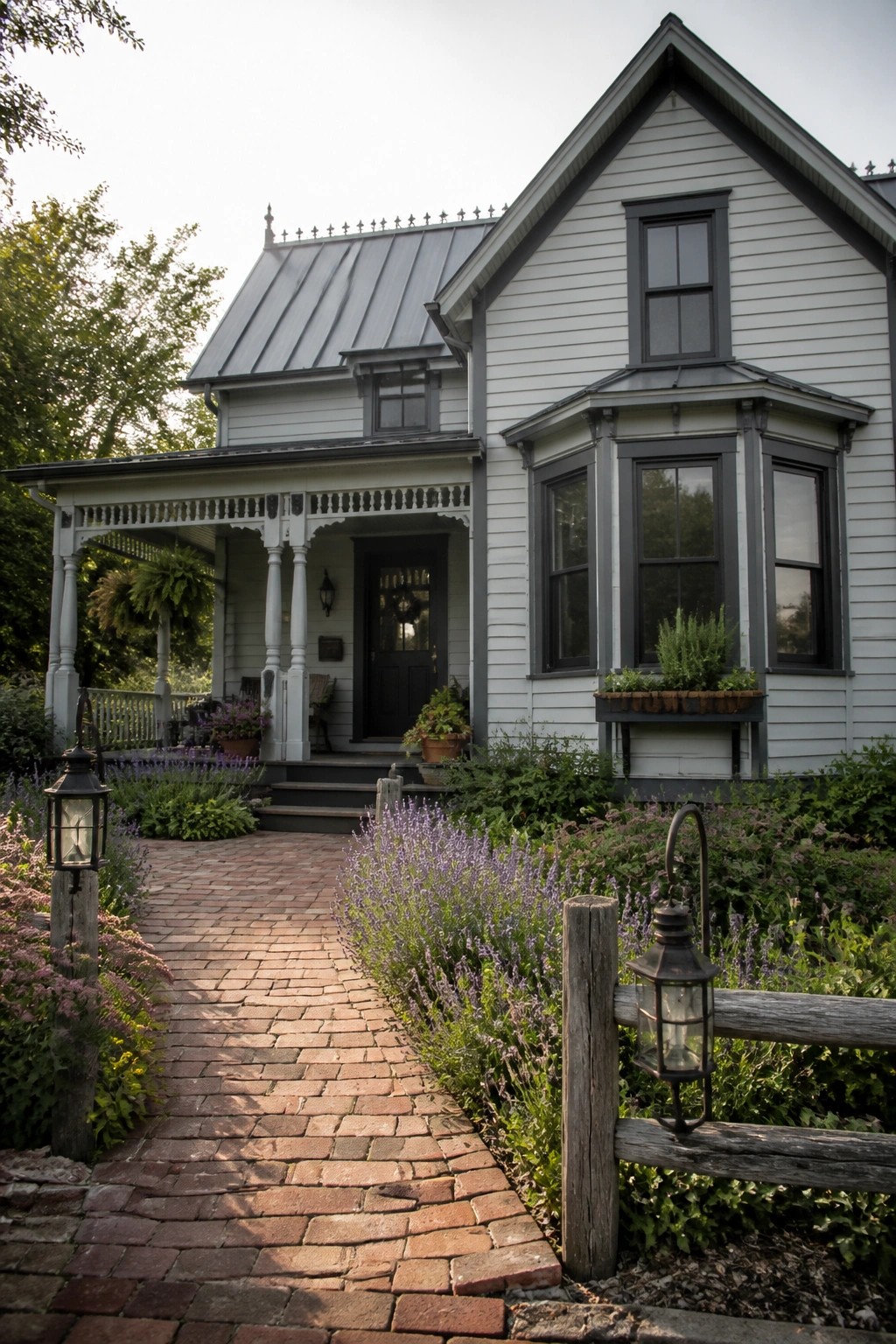
A brick path gives the front of a Victorian farmhouse a settled, lived-in feel. It leads the eye straight to the door and adds texture that works with both the siding and the garden beds on either side.
This approach works best on homes that already have some depth between the street and the porch. Keep plantings low and loose along the edges so the path stays visible, and add simple post lights if you want a little evening glow without extra fixtures.
Dark Front Doors On White Exteriors
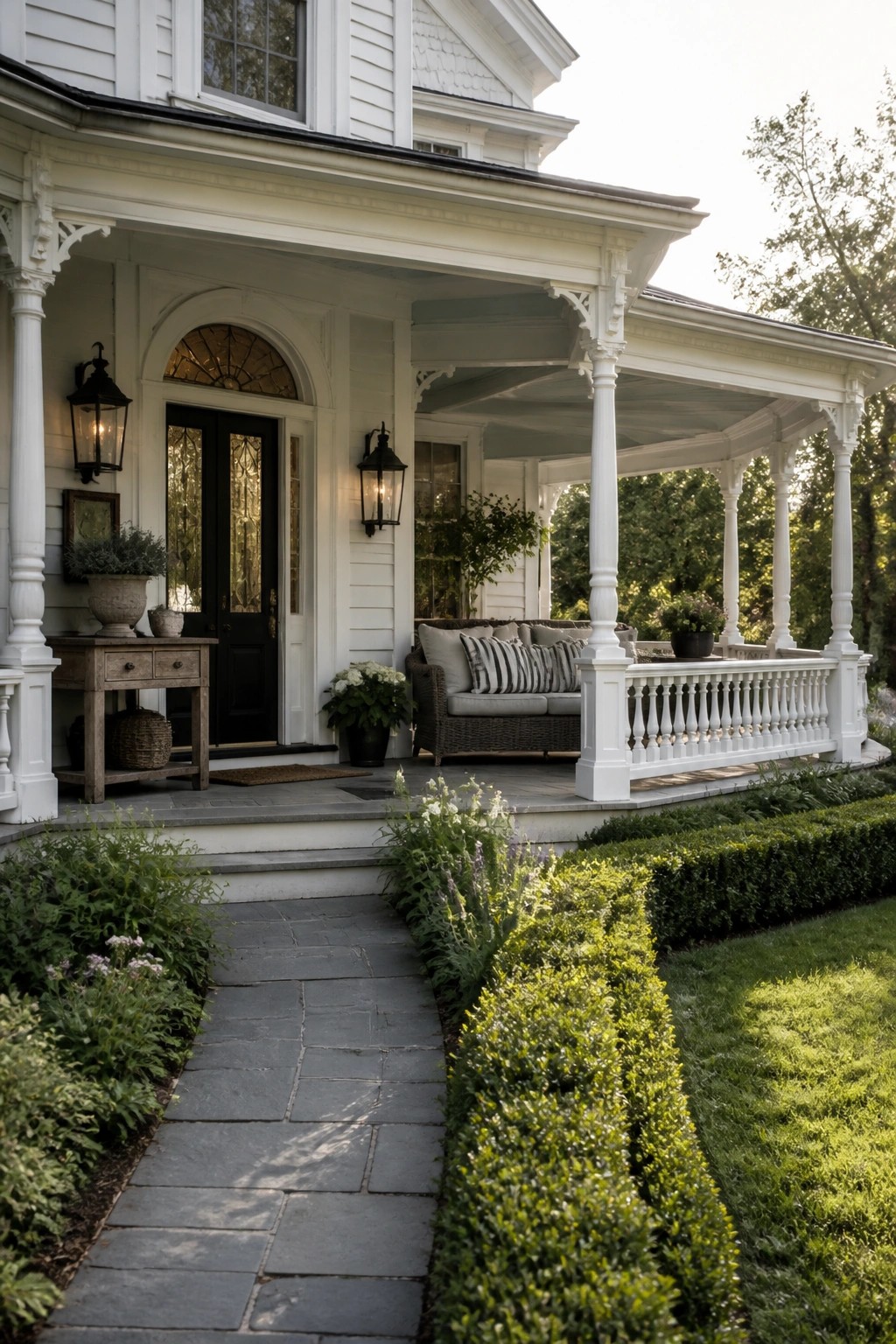
A black front door stands out nicely against white siding and trim. It gives the entry a clear focal point without needing extra color or decoration. The look feels balanced on older homes that already have lots of detail around the windows and porch.
This works best on farmhouses or Victorian styles where the door sits under a covered porch. Keep the hardware simple and add one or two lanterns if the area gets little natural light. Avoid busy patterns on the door itself so the contrast stays clean.
Stone Steps With Intricate Railings
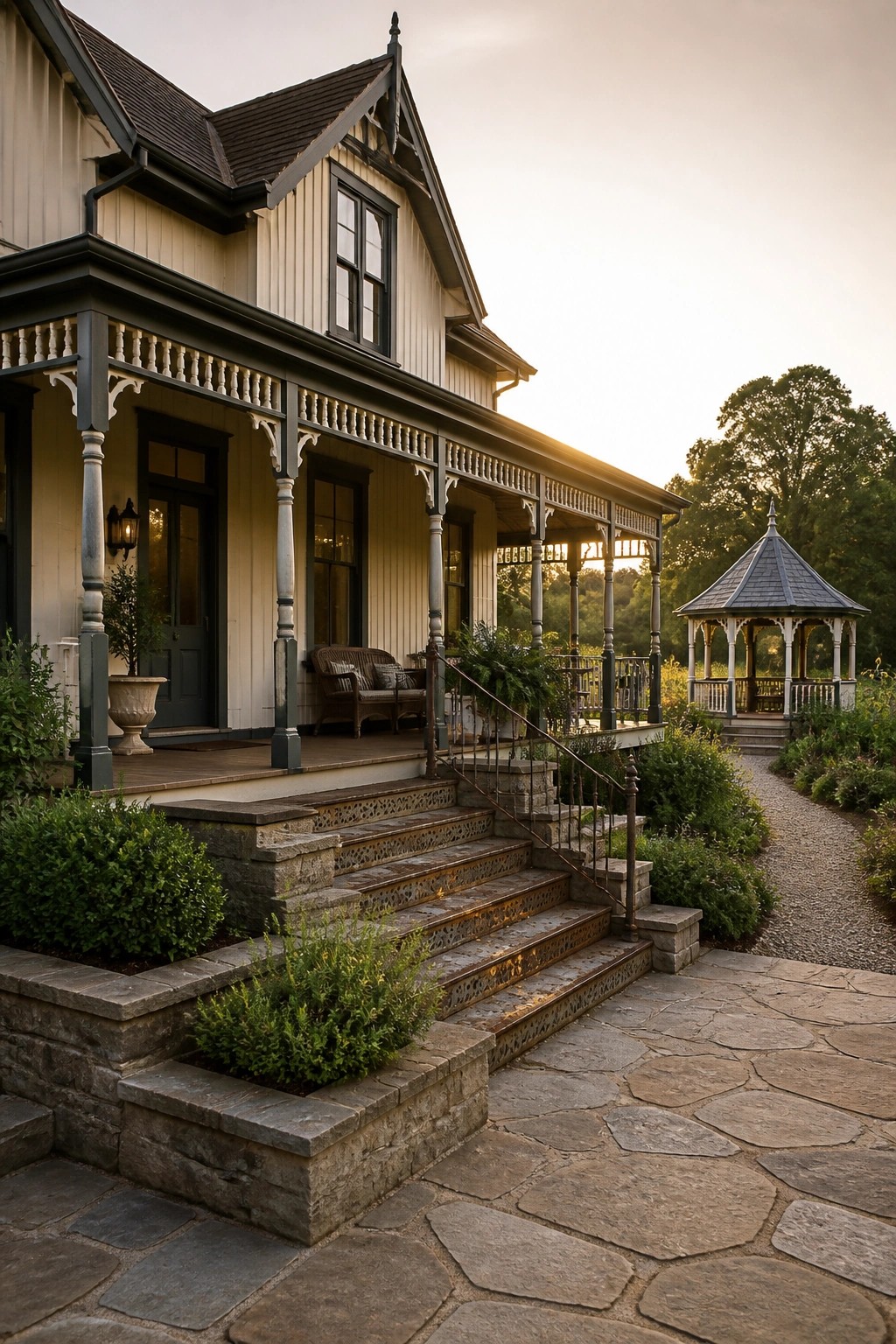
Stone steps give a Victorian farmhouse entry a solid, grounded look that pairs well with the style. The weight of the stone balances the lighter wood siding and trim above it, while the railings bring in just enough pattern without overwhelming the front.
This approach works best on homes that sit a bit above the yard or driveway. Match the railing design to other metal or wood details on the porch so everything feels connected, and choose a stone that holds up in your climate.
Add a Porch Swing
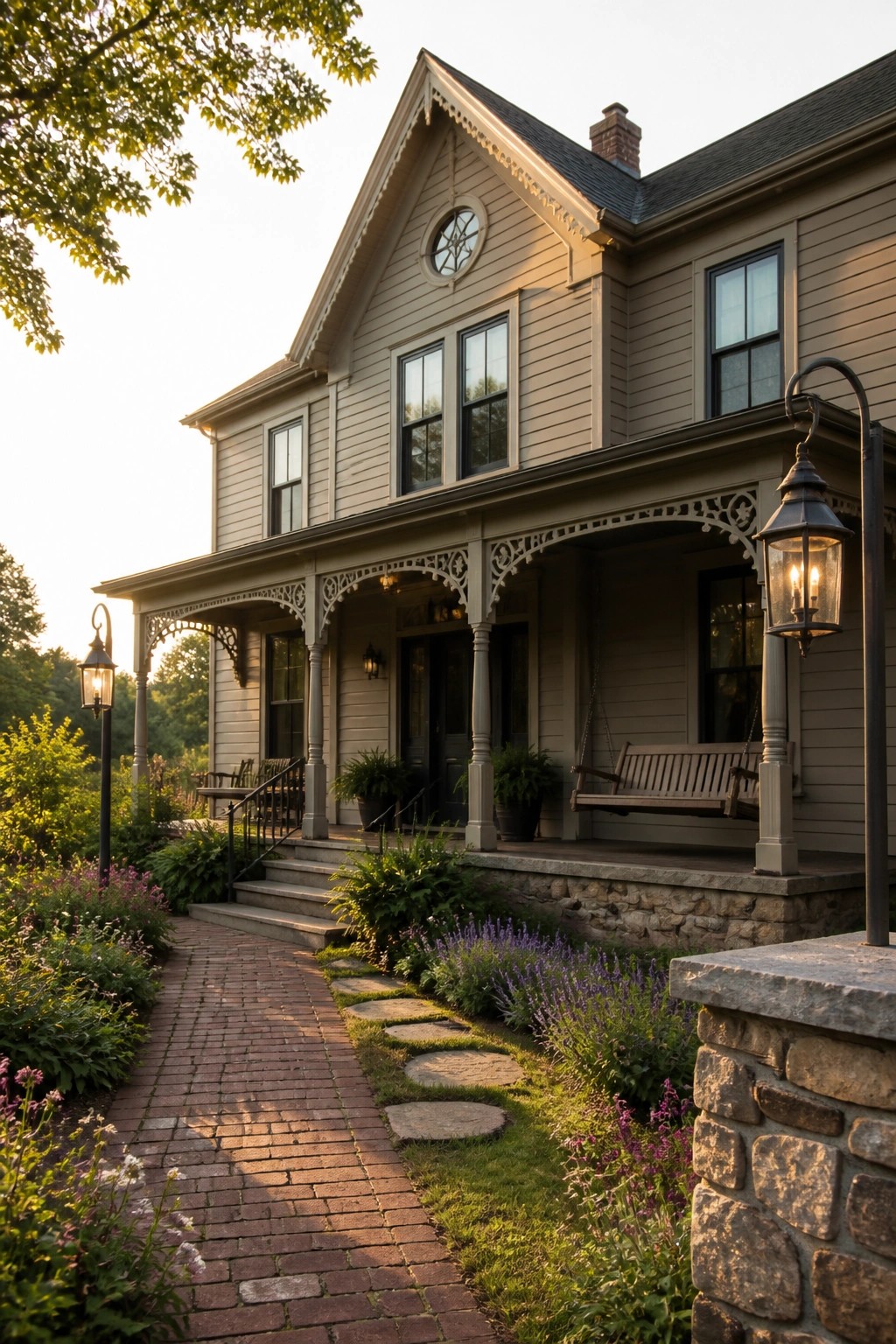
A porch swing gives the front of a Victorian farmhouse a lived-in feel without much effort. It turns the porch into a spot people actually use instead of just walking past.
Hang it where there is enough room to swing freely and keep the rest of the seating simple. This works best on homes with wide porches that already have some trim detail.
Design A Covered Porch With Trim Details
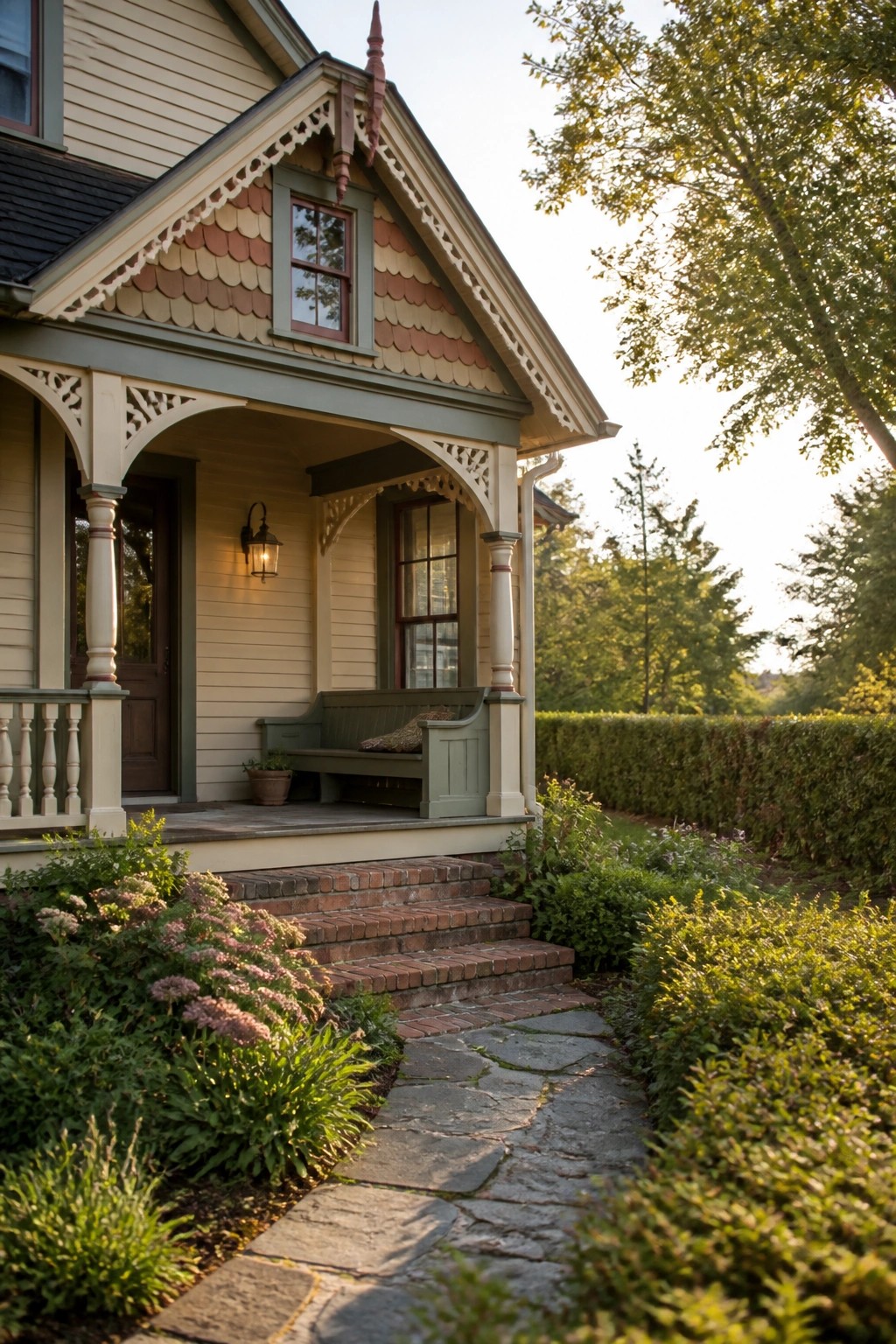
A covered porch with some trim work gives a Victorian farmhouse a clear focal point at the front. It turns a plain door into something more welcoming and adds depth to the facade without needing major changes.
This approach works best on homes that already have a gable or overhang you can build under. Keep the trim simple rather than ornate, and match the porch floor to the siding color so it feels like part of the house instead of an add-on.
Add a Stone Path with Black Fencing
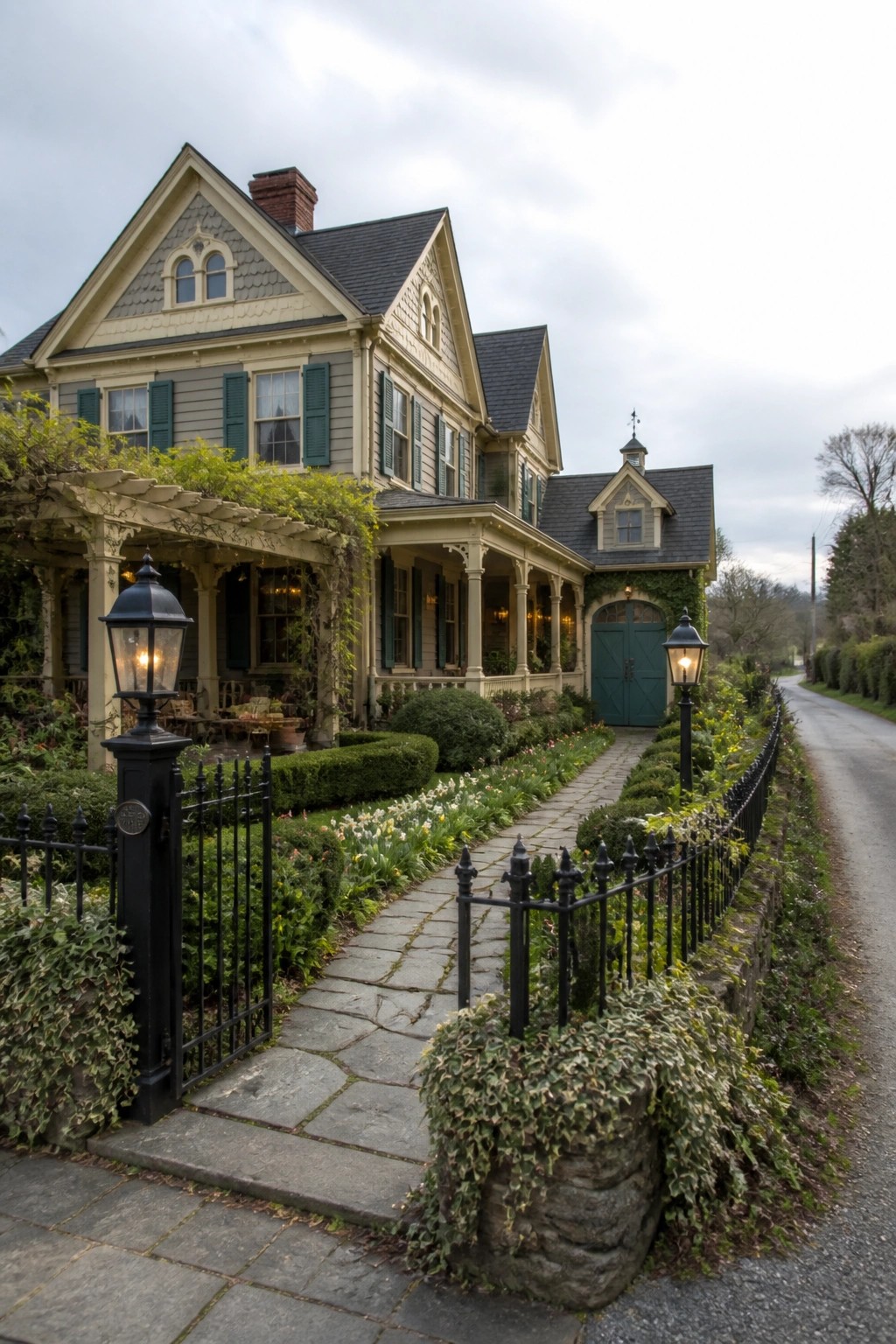
A stone path lined with a black metal fence gives the front of a Victorian farmhouse a clear sense of arrival. It breaks up the lawn and guides people straight to the door without feeling overly formal. The fence adds structure while still letting the garden feel open.
This approach works best on homes with a decent setback from the road. Keep the fence height modest and choose a path width that feels comfortable for two people walking side by side. Match the stone color to any existing hardscape around the house so the whole entry feels connected.
Frequently Asked Questions
Q: Can I mix modern windows with Victorian farmhouse details on the outside?
A: Pick simple frames in a classic color that match your trim. They let in plenty of light while the surrounding details carry the old style.
Q: What’s the easiest way to add charm with paint colors?
A: Start with a soft white base and layer in one or two muted tones on the trim and accents. This keeps things light and true to the style without too much fuss.
Q: How do I handle landscaping around a Victorian farmhouse exterior?
A: Keep plantings simple with a few climbing vines or boxwoods near the porch. They frame the house nicely without overwhelming the architecture.
