

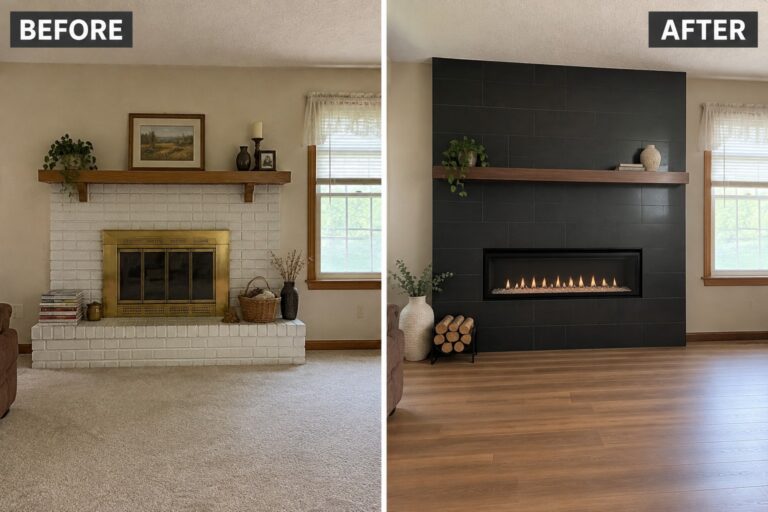
A fireplace can feel like an awkward leftover when its surround is dated, undersized, or out of step with the rest of the room.
I find that updating the materials and proportions often helps the whole space feel more settled, even when the layout stays exactly the same.
The difference can be satisfying without requiring a full room renovation.
These fireplace updates show how paint, tile, stone, and thoughtful details can give a living area a clearer focal point while keeping it comfortable for everyday use.
I’d save the ideas that suit your home’s style and scale, then consider which changes would make your own hearth feel more finished.
Make The Fireplace Wall The Main Feature
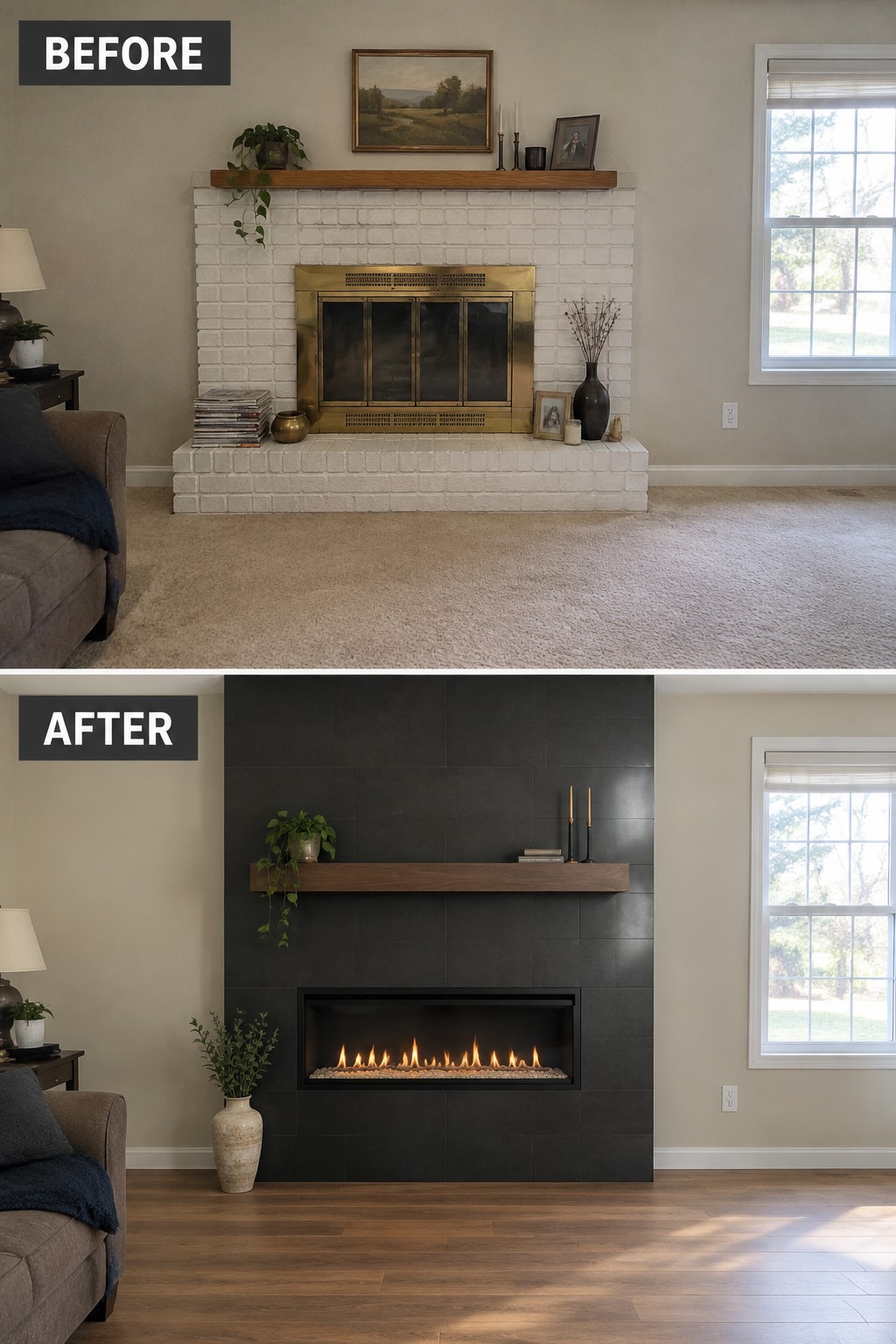
Replacing the dated brick surround with dark tile gives the fireplace a cleaner, more current look. The simple wall finish lets the firebox stand out without needing a lot of extra decoration.
This idea works well when an older fireplace takes up much of the room but feels tired. Choose a tile that suits the room’s scale, and keep the mantel simple so the wall remains the focus.
Make The Fireplace Wall The Main Feature
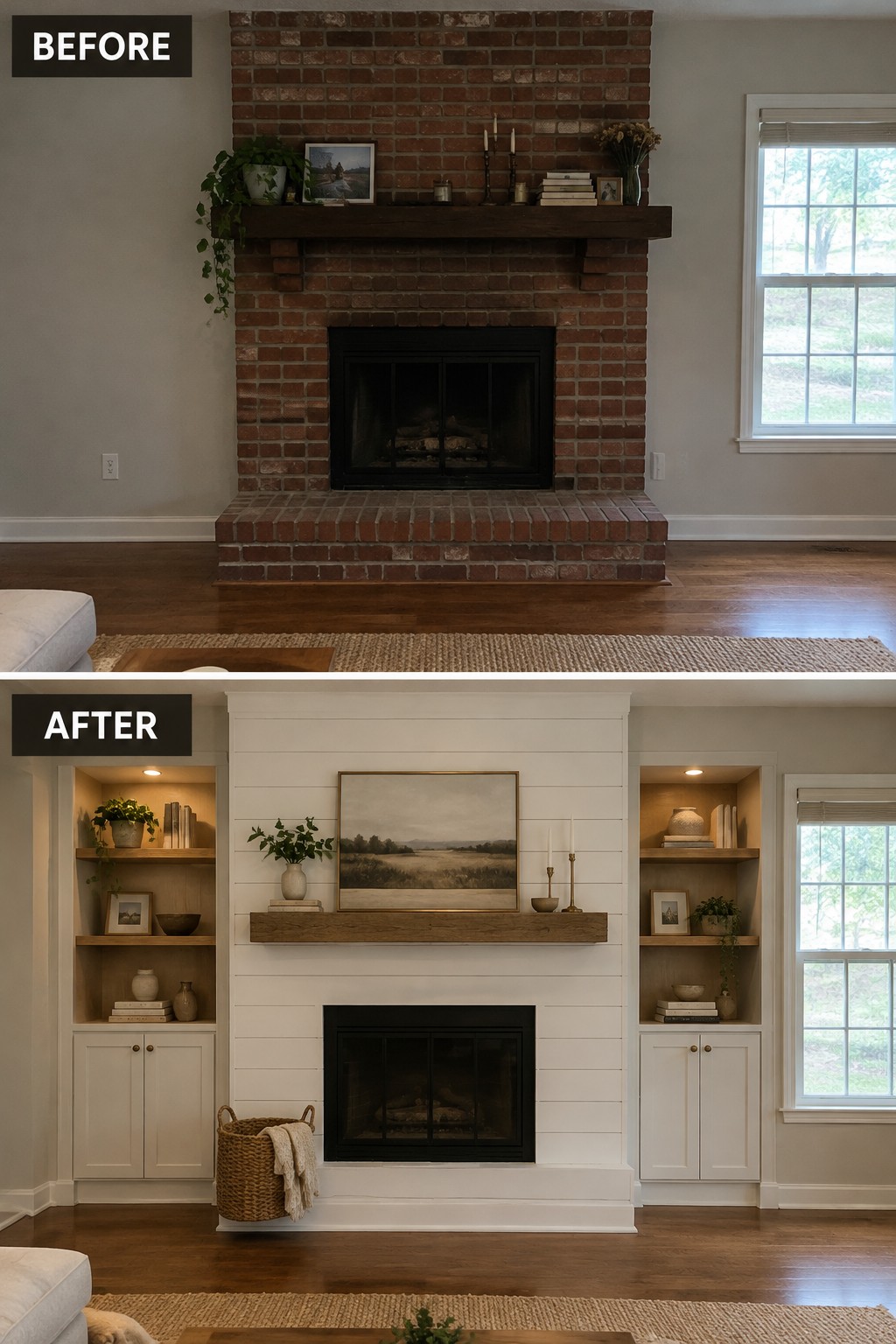
Replacing the exposed brick with white paneling gives the fireplace a cleaner, more finished look, while built-in shelves make the whole wall feel planned. The fireplace stays the focus without competing with a busy surround.
This idea works well when an older fireplace feels heavy or disconnected from the rest of the room. A simple surround and matching built-ins can update the wall, but keep the shelves lightly styled so they do not crowd the fireplace.
Make The Fireplace Wall The Main Feature
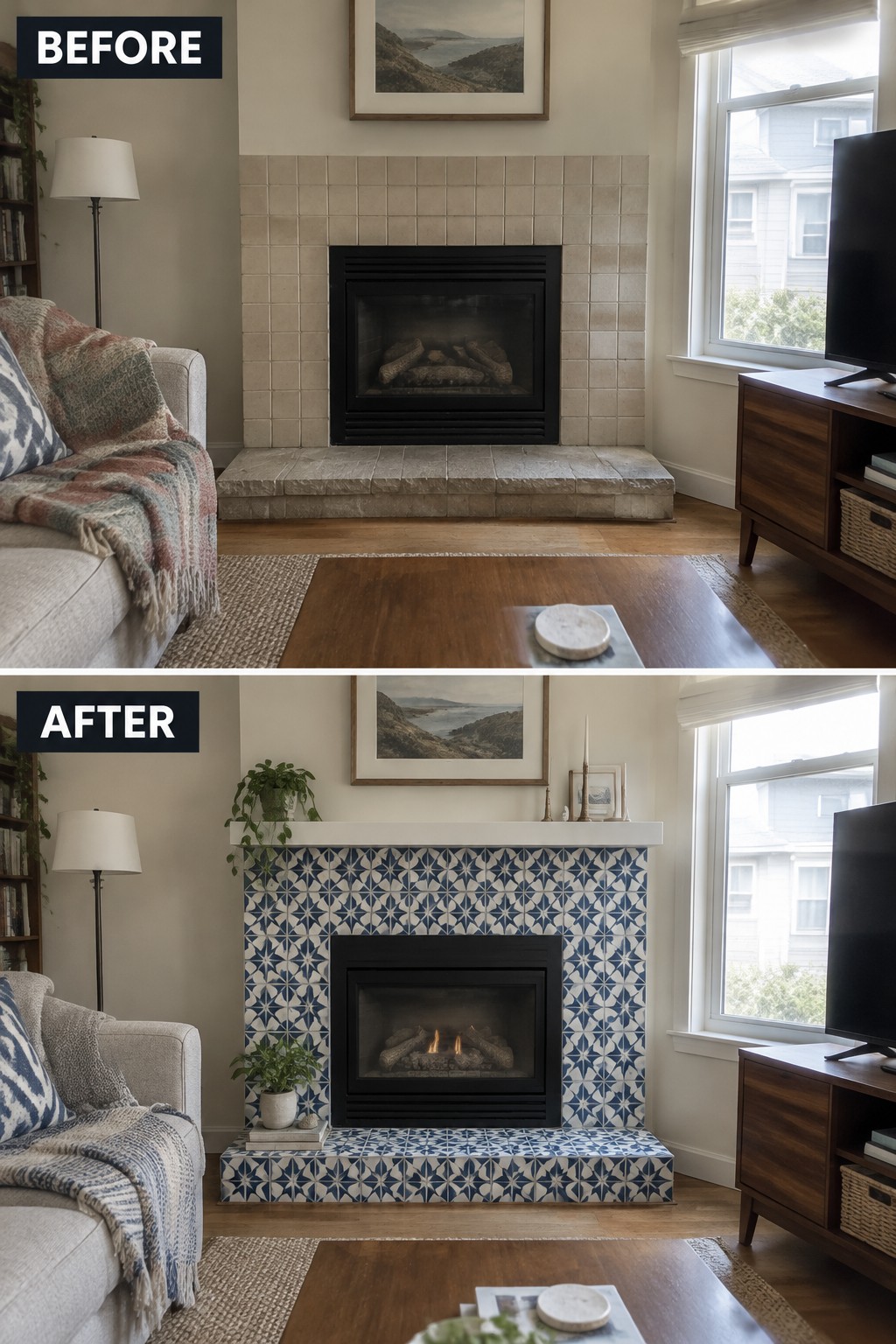
The plain tile surround gave this fireplace a dated look, while the blue patterned tile makes the whole wall feel like a clear focal point. Keeping the black fireplace insert in place lets the new surround change the room without replacing everything.
This idea works well when the fireplace is already in good condition but the surrounding tile feels tired. Choose a pattern that suits the room, and keep the rest of the wall fairly simple so the surround can stand out without making a small space feel busy.
Make The Fireplace Wall The Main Feature
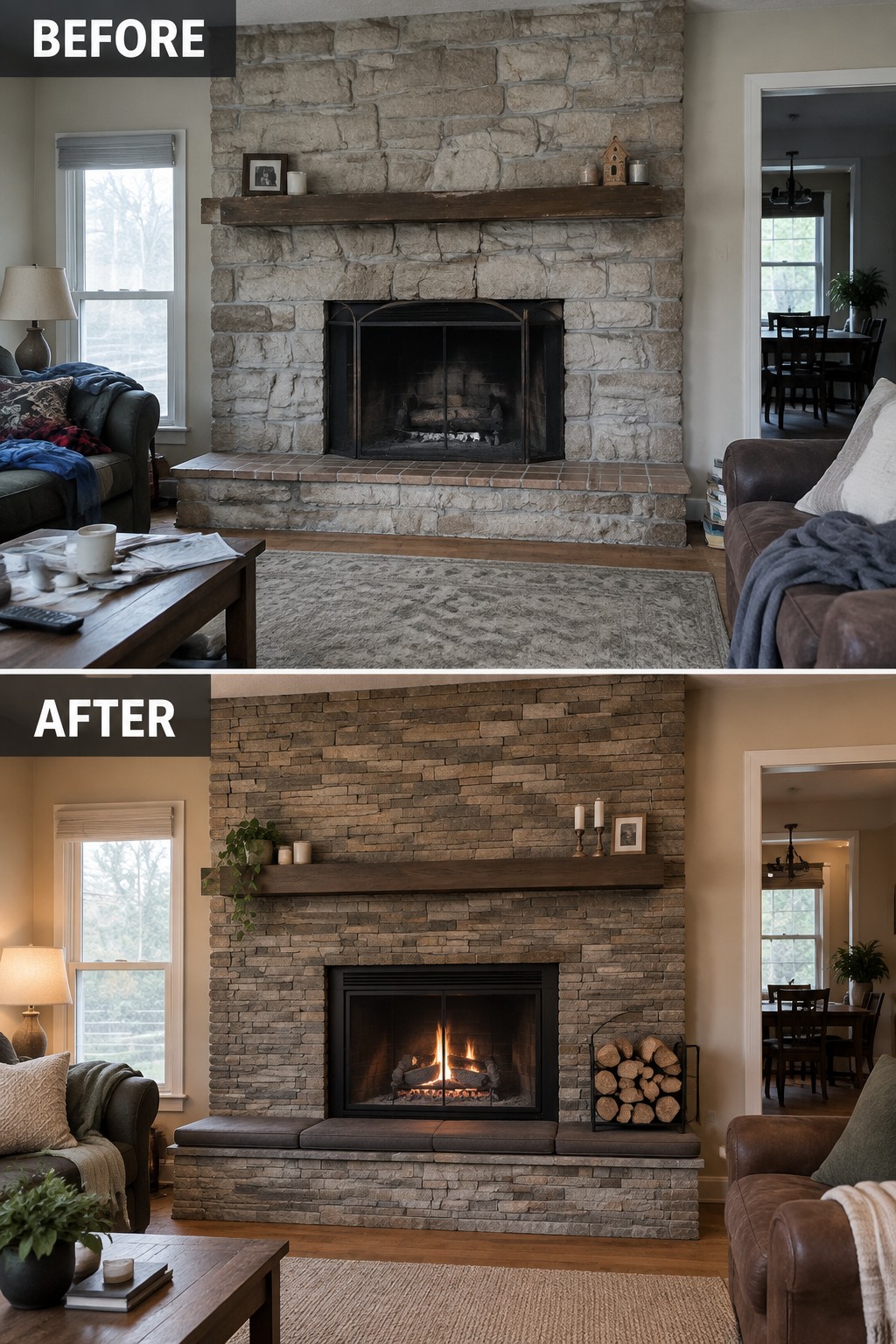
A dated stone surround can make the whole living room feel tired. Here, a darker, more even stone finish and a refreshed firebox turn the fireplace into the room’s clear focal point.
If you’re updating an older fireplace, keep the surrounding finishes simple so the new surround can stand out. Check that any changes to the firebox and surround suit the fireplace type and meet local safety requirements.
Update An Older Fireplace Surround
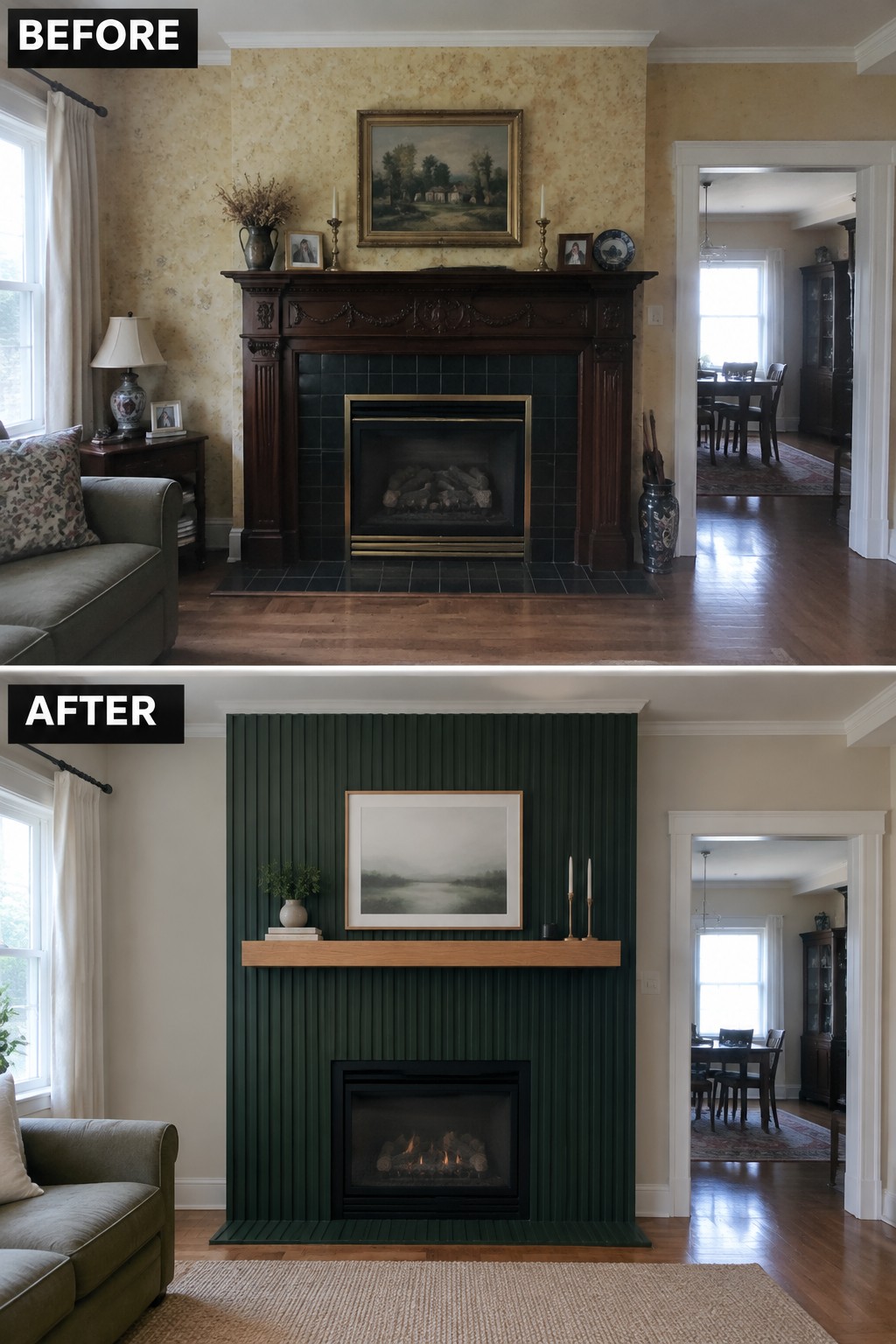
The original fireplace had a dark, ornate mantel and patterned wallpaper that made the wall feel busy. Replacing them with a simple wood mantel and deep green paneling gives the fireplace a clearer focal point without changing its basic place in the room.
This idea suits an older home where the fireplace feels dated but still works well. Keep the new surround in proportion to the firebox, and choose a wall finish that complements the room rather than competing with it.
Turn A Smoky Fireplace Into A Working Focal Point
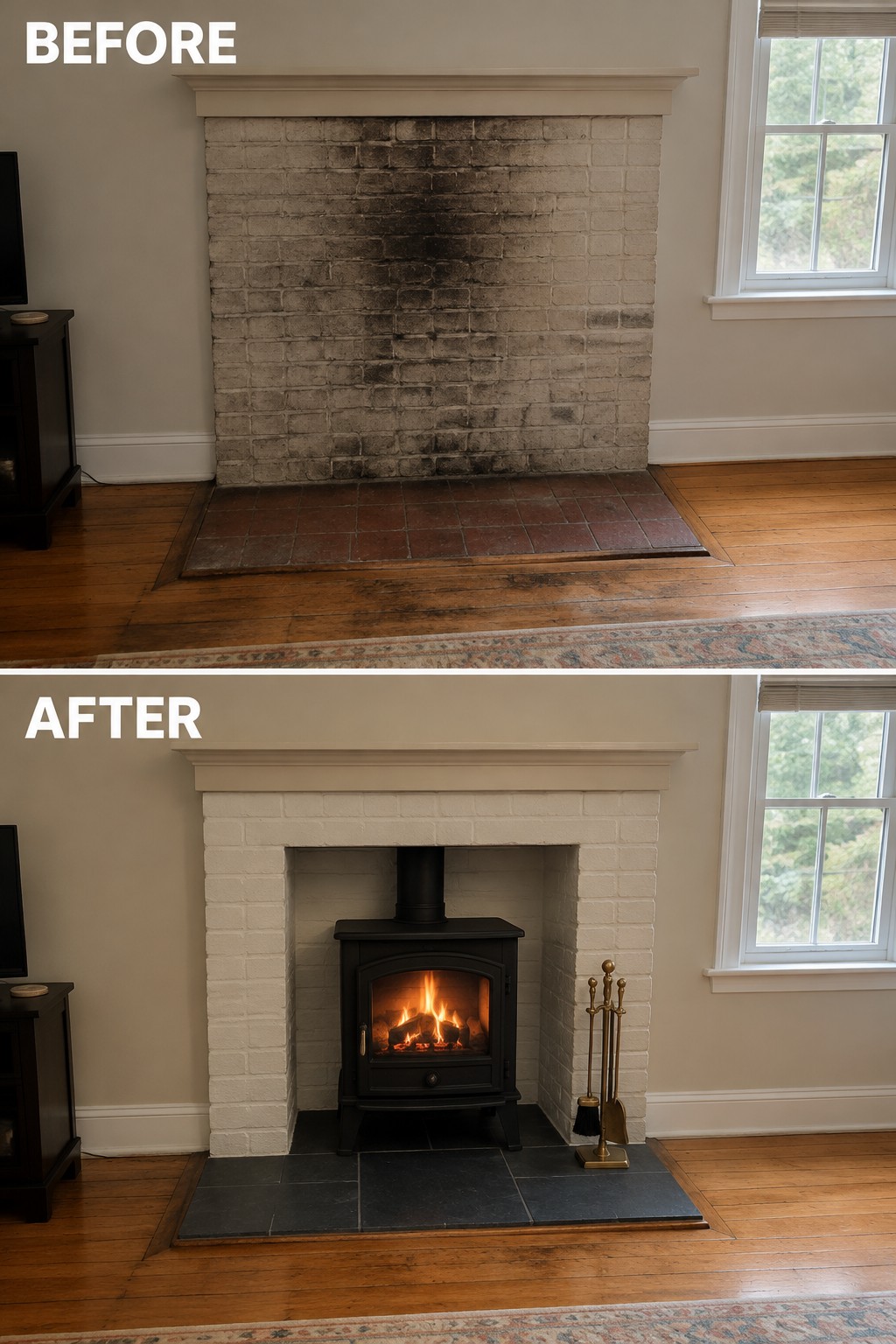
The old brick fireplace looked neglected, so the room’s main feature was not doing it any favors. Cleaning up the surround and adding a wood stove turns it into a useful focal point without changing the basic layout.
This idea works well in older homes where an existing fireplace is sound but no longer suits the room. Keep the surround simple, and check that the stove and flue are installed to local safety requirements.
Give The Fireplace A Fresh Surround
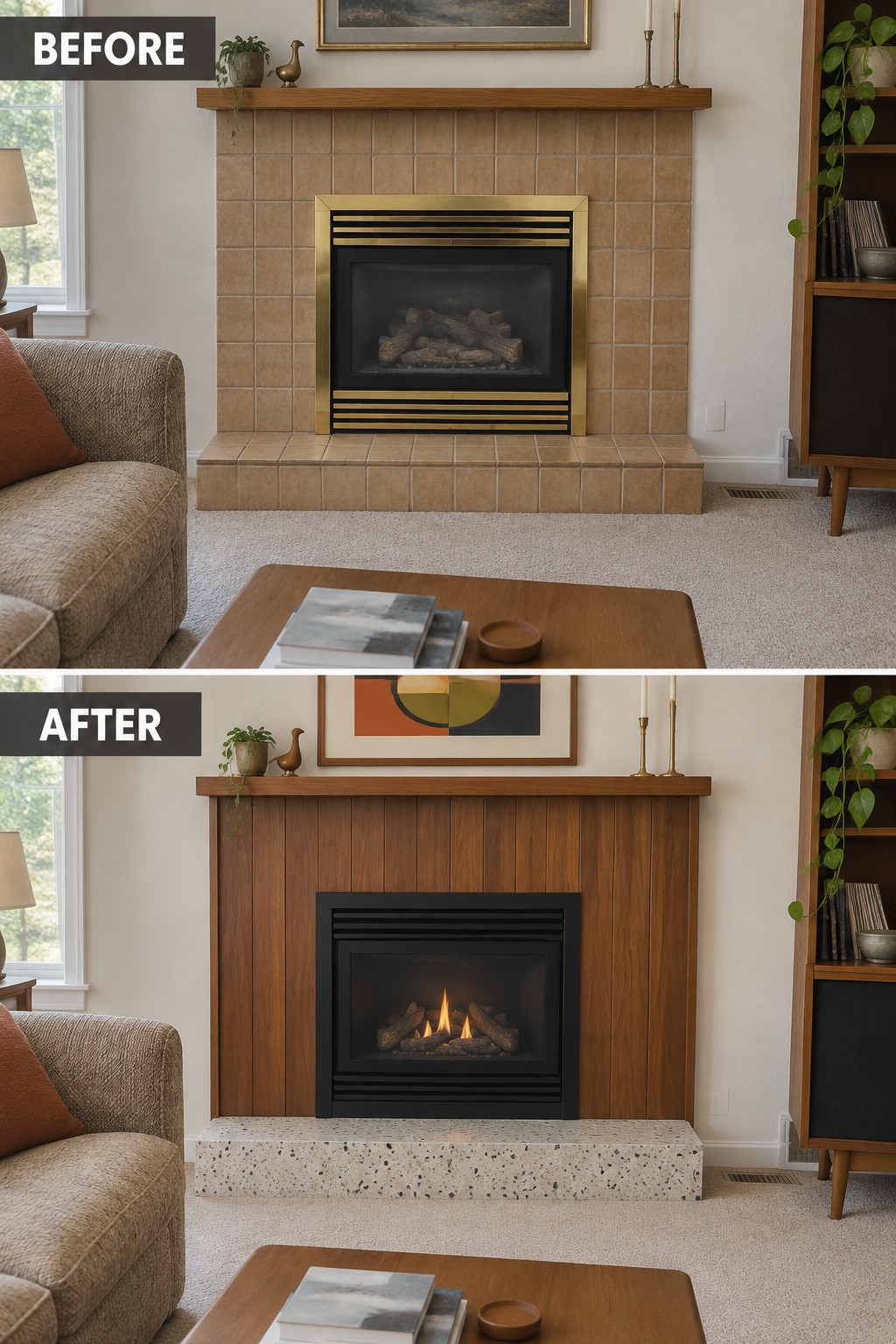
Replacing the dated tile with vertical wood paneling makes the fireplace feel like a planned focal point instead of a separate, older feature. The simple surround change gives the room a more cohesive look without altering the overall layout.
This idea works well when the fireplace itself is in good shape but its surround feels out of step with the rest of the room. Choose a finish that suits the home, and keep the surround simple so the fireplace remains the main feature.
Update A Plain Fireplace With A Marble Surround
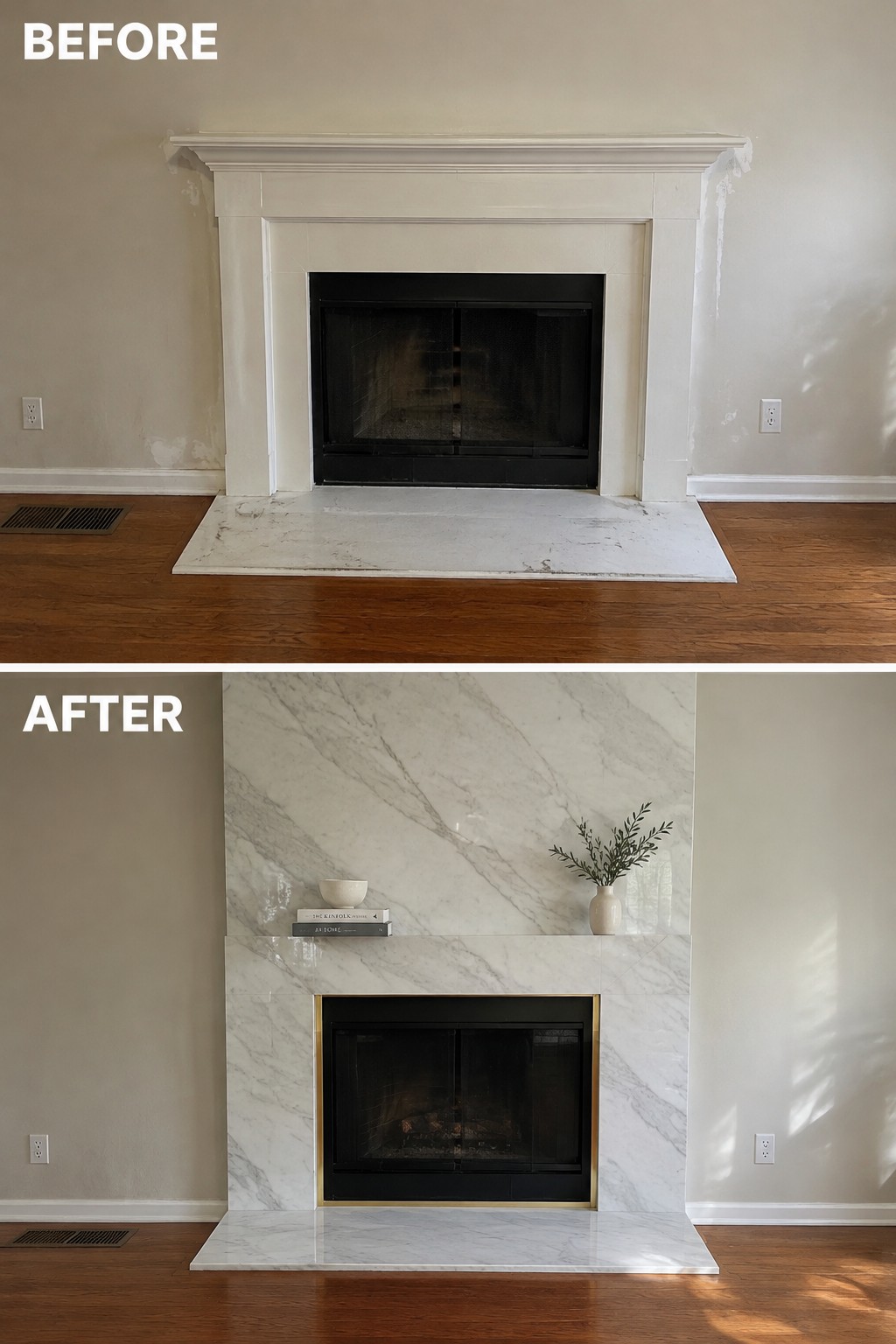
Replacing the dated mantel and worn hearth with marble makes the fireplace wall feel like a clear focal point. The large slabs carry the finish up the wall, so the change feels more complete than simply repainting the old surround.
This idea works well when the fireplace is the main feature of a living room but the existing surround feels tired. Choose a stone pattern that suits the room, and keep the nearby decor simple so the fireplace can stand out without making the wall feel busy.
Replace A Brick Fireplace With A Streamlined Surround
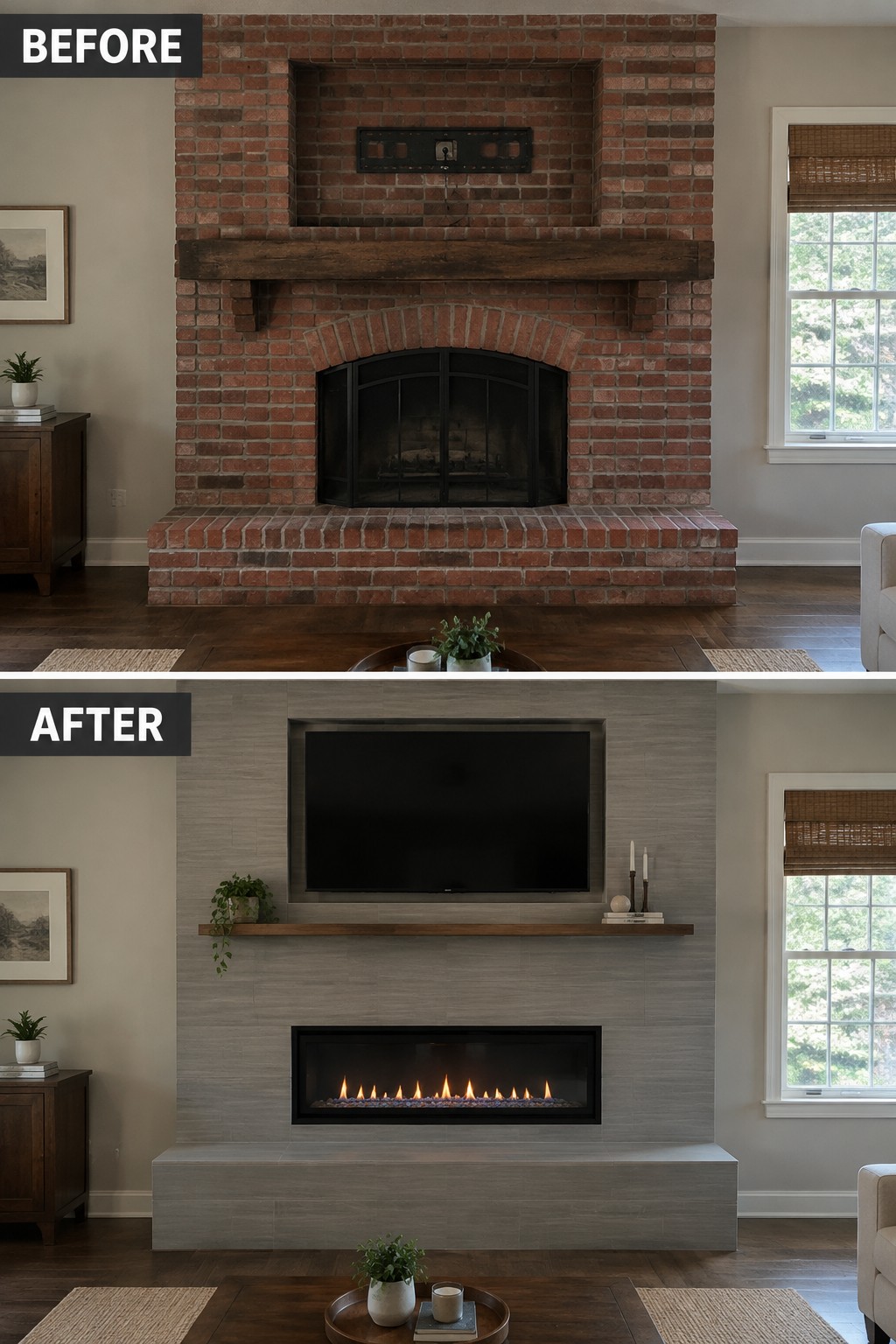
The old brick fireplace takes up much of the wall, while the remodel gives it a cleaner, more current look with a simple gray surround and a long, narrow firebox. Keeping the fireplace as the main feature helps the room feel organized instead of letting a dated surround dominate it.
This approach can work well when a bulky brick fireplace feels out of step with the rest of the home. Choose a durable finish that suits the room, and keep the new surround’s proportions in scale with the wall and firebox.
Replace Stone With A Plaster Fireplace Surround
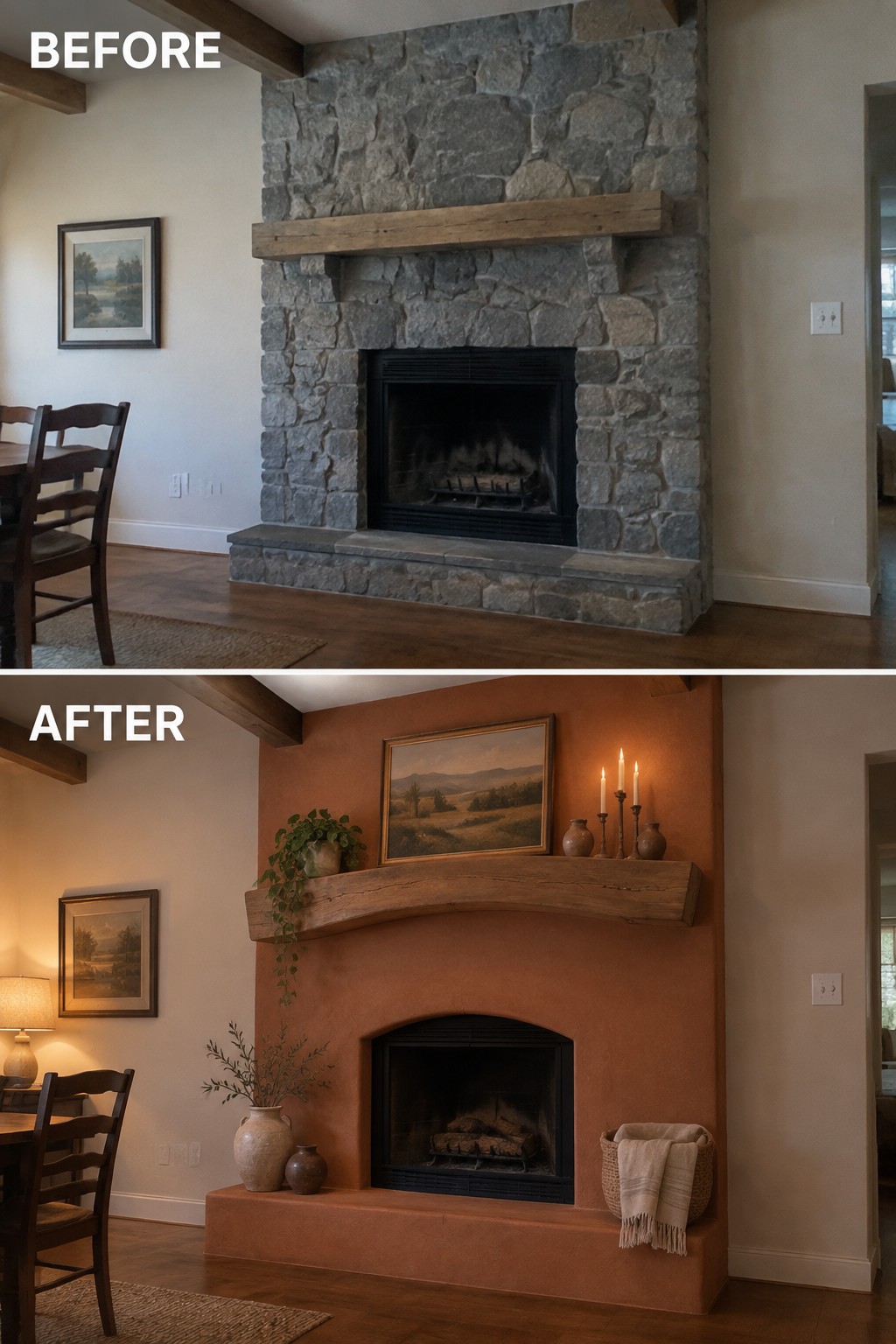
The rough stone fireplace takes up much of the wall, while the smoother terracotta-colored surround in the updated room gives it a simpler, more unified look. Keeping the wood mantel and black firebox lets the fireplace stay the focal point without the stone competing for attention.
This approach can suit a room where a bulky stone surround feels too heavy. A plaster finish can simplify the shape and bring in color, but it needs to be suitable for use near a fireplace. Check the product’s heat rating and local requirements before choosing a finish.
Extend The Fireplace Surround Into A Feature Wall
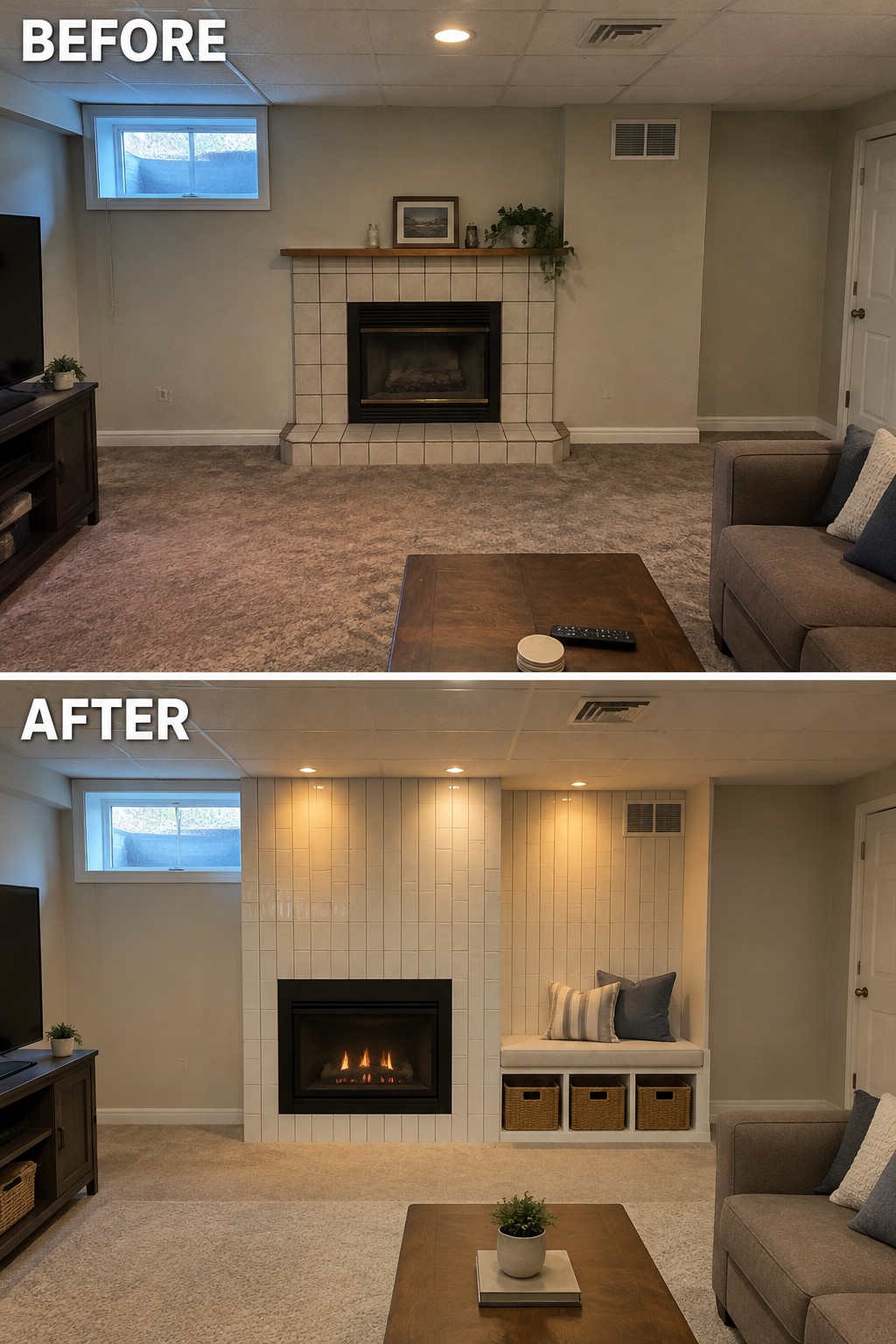
The fireplace feels more like part of the room after its tiled surround extends across the wall and up to the ceiling. The original fireplace had a small tiled area, while the update gives it a clear focal point and adds a built-in bench beside it.
For a similar look, choose a tile that suits the room and plan the fireplace and any seating as one feature. Check that the wall can support the added materials, and keep the surrounding furniture simple so the fireplace still stands out.
Give A Tired Fireplace Wall A Fresh Look
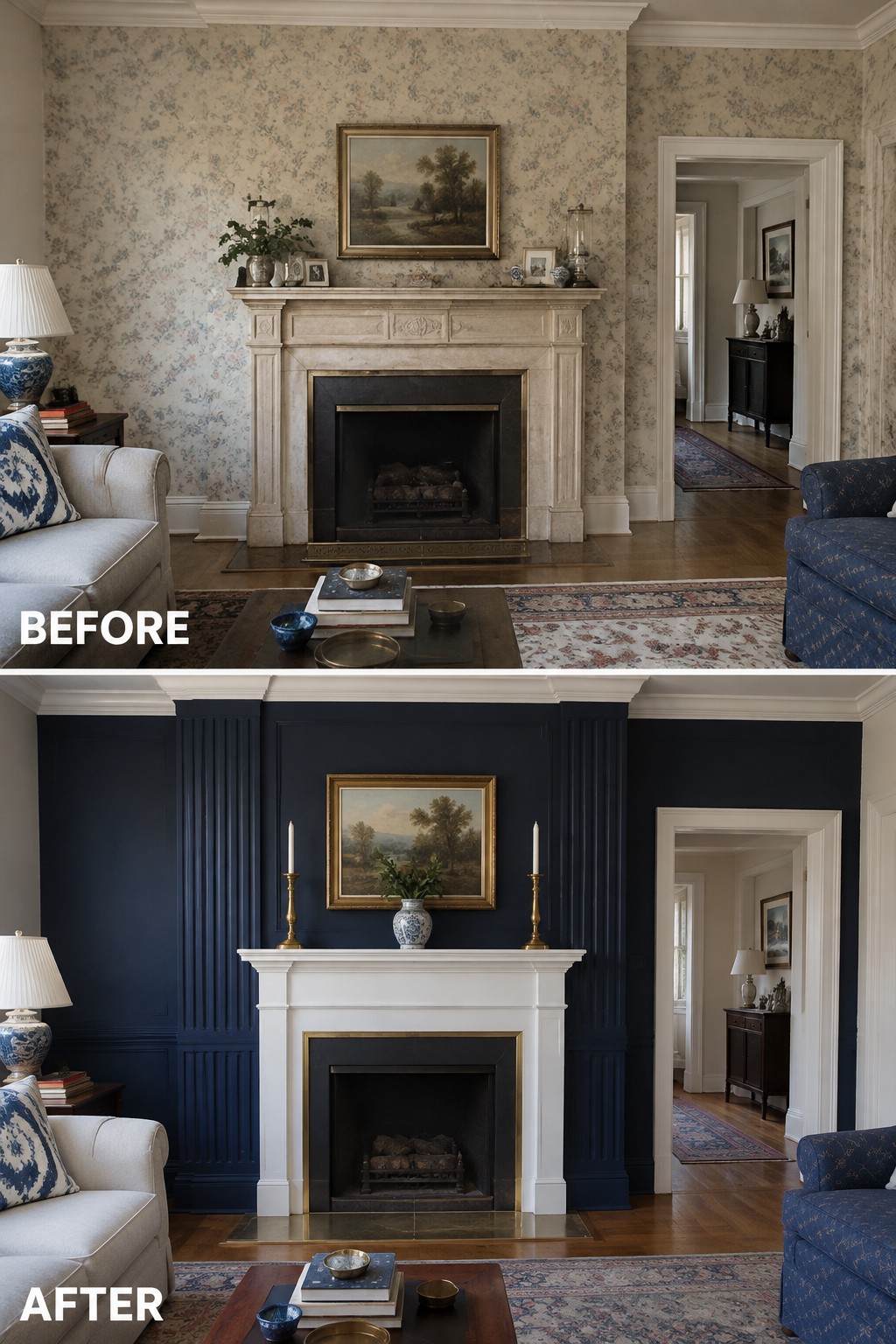
The floral wallpaper and ornate stone surround made this fireplace wall feel busy. Painting the wall a deep navy and replacing the surround with simple white trim gives the fireplace a clearer shape and makes it the room’s focal point.
This idea works well when the fireplace is in good condition but the surrounding finishes feel dated. A strong wall color can help define the area, while a cleaner surround keeps the look from getting too busy. Try a paint sample beside the existing flooring and trim before committing.
Replace A Dated Fireplace With A Simple Surround
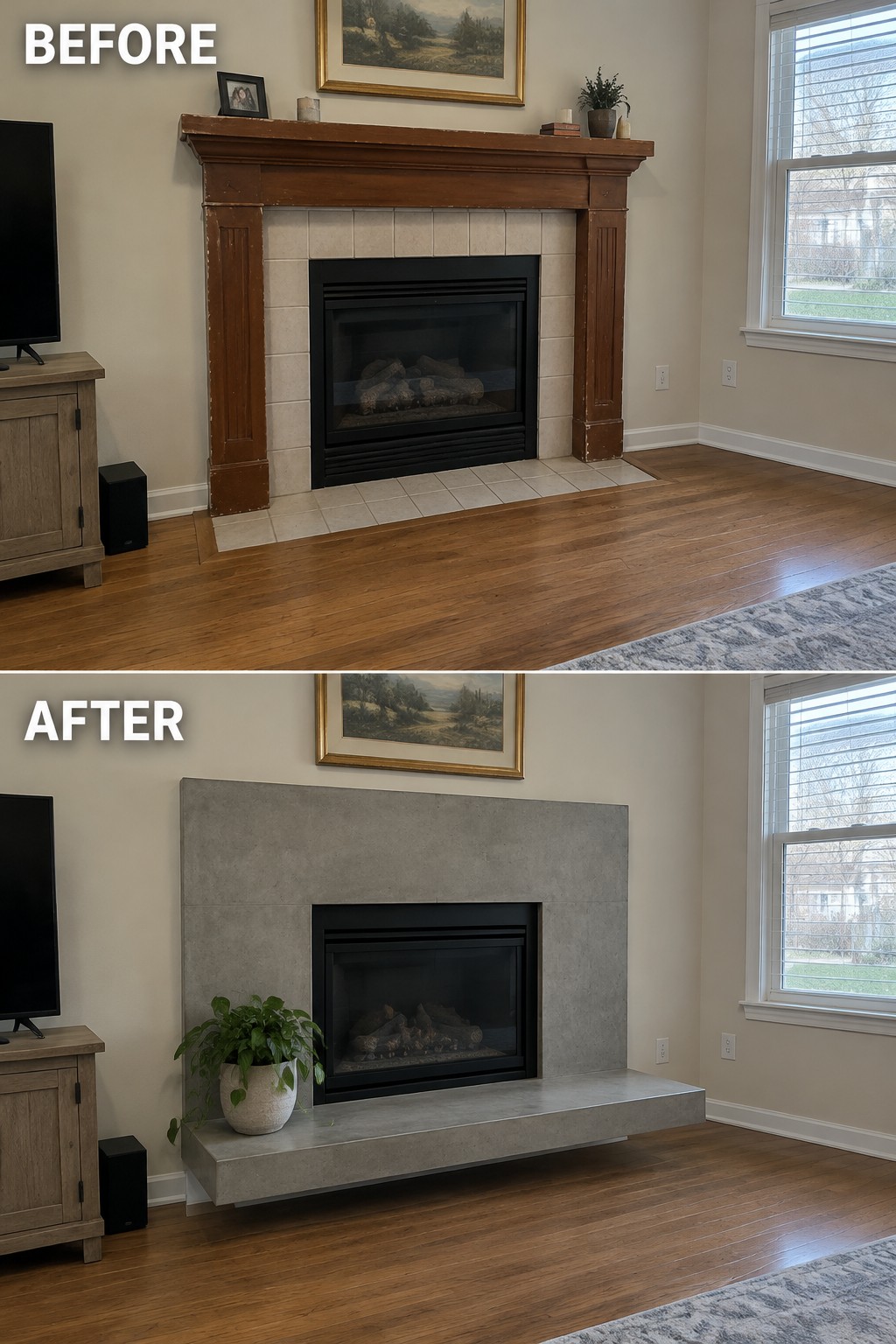
The old wood mantel and small tile surround made the fireplace feel like a separate, dated feature. A broad concrete-look surround gives the wall a cleaner shape and lets the fireplace stand out without adding fussy details.
This idea works well when the fireplace is already in a useful spot but its trim feels out of step with the room. Keep the surround simple, and check that its proportions suit the firebox so the finished wall feels intentional rather than oversized.
Refresh A Tiled Fireplace Surround
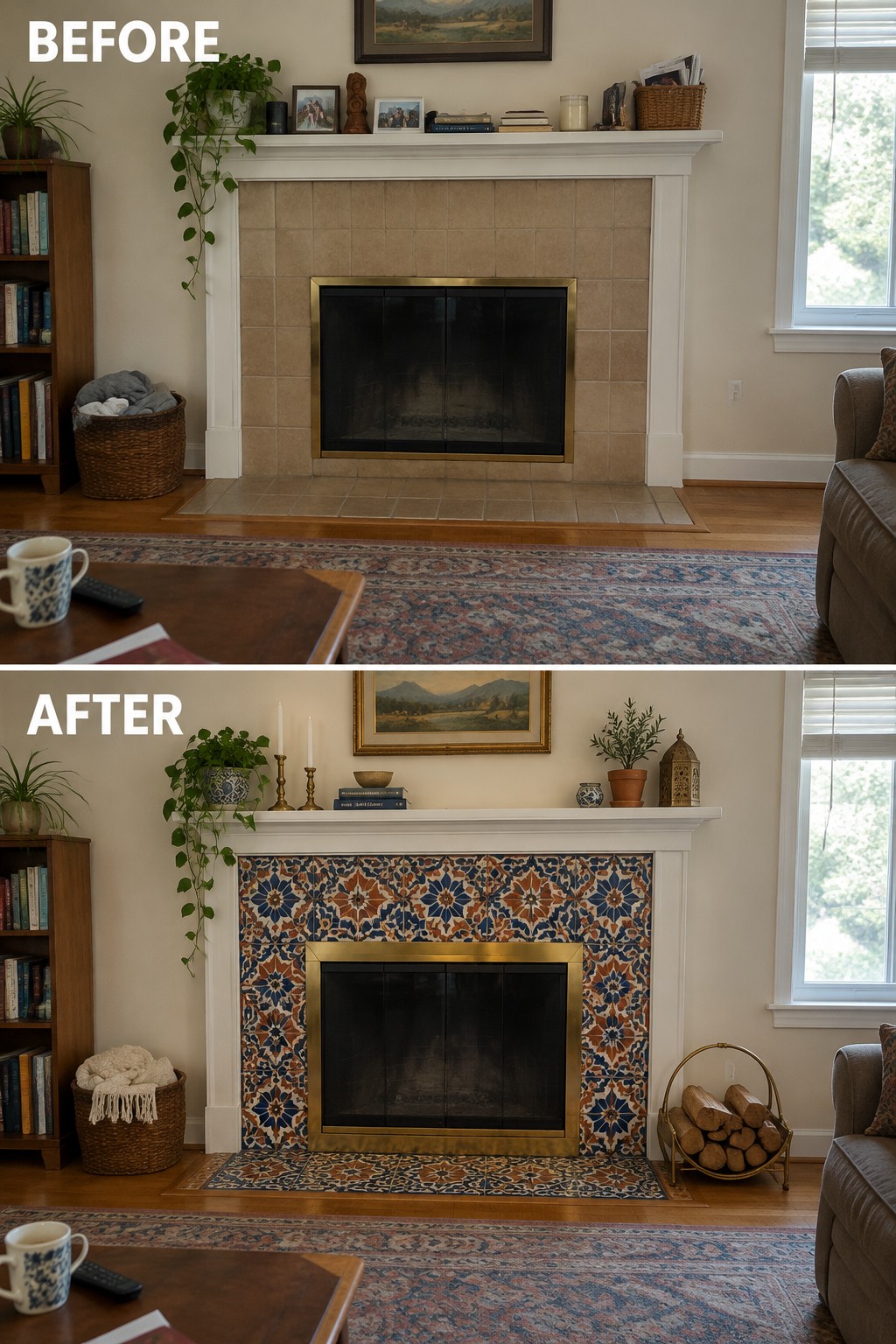
The plain beige tiles made this fireplace feel dated, while a patterned surround gives the wall a clear focal point. The new tile changes the character of the room without replacing the fireplace or mantel.
This idea works well when the fireplace is in good shape but its surround feels tired. Choose a tile pattern that suits the room, and keep the surrounding finishes simple so the fireplace remains the main feature.
Simplify The Fireplace Wall With A Plaster Surround
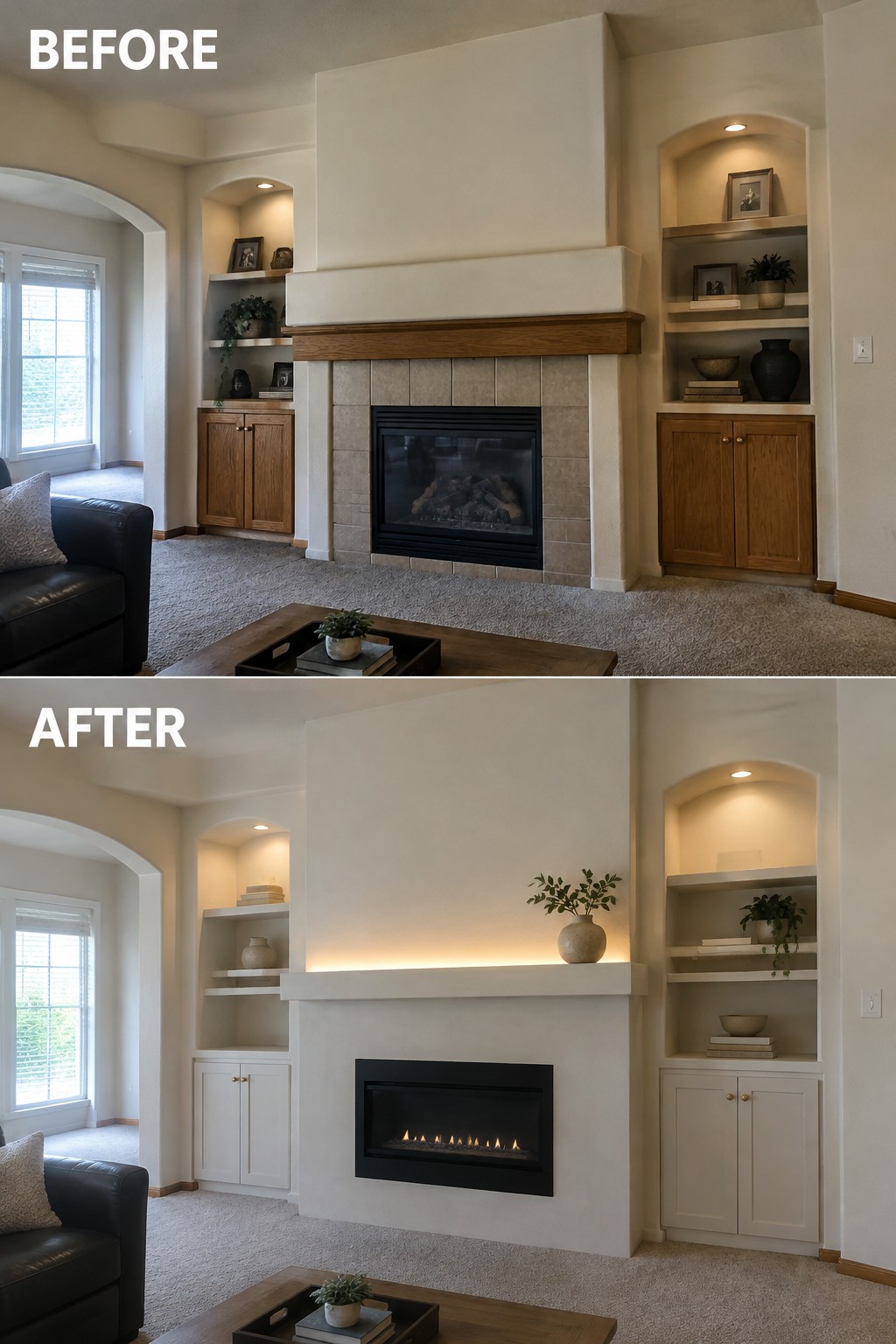
The old tile and wood mantel made the fireplace feel busy, while the updated plaster surround gives the wall a cleaner, more unified look. A slim, recessed firebox keeps the focus on the fireplace without adding more visual clutter.
This approach suits a living room where the fireplace already has a strong central position. Keep the surround simple, and choose a firebox size that fits the wall rather than overpowering it.
Turn A Covered Patio Fireplace Into A Seating Area
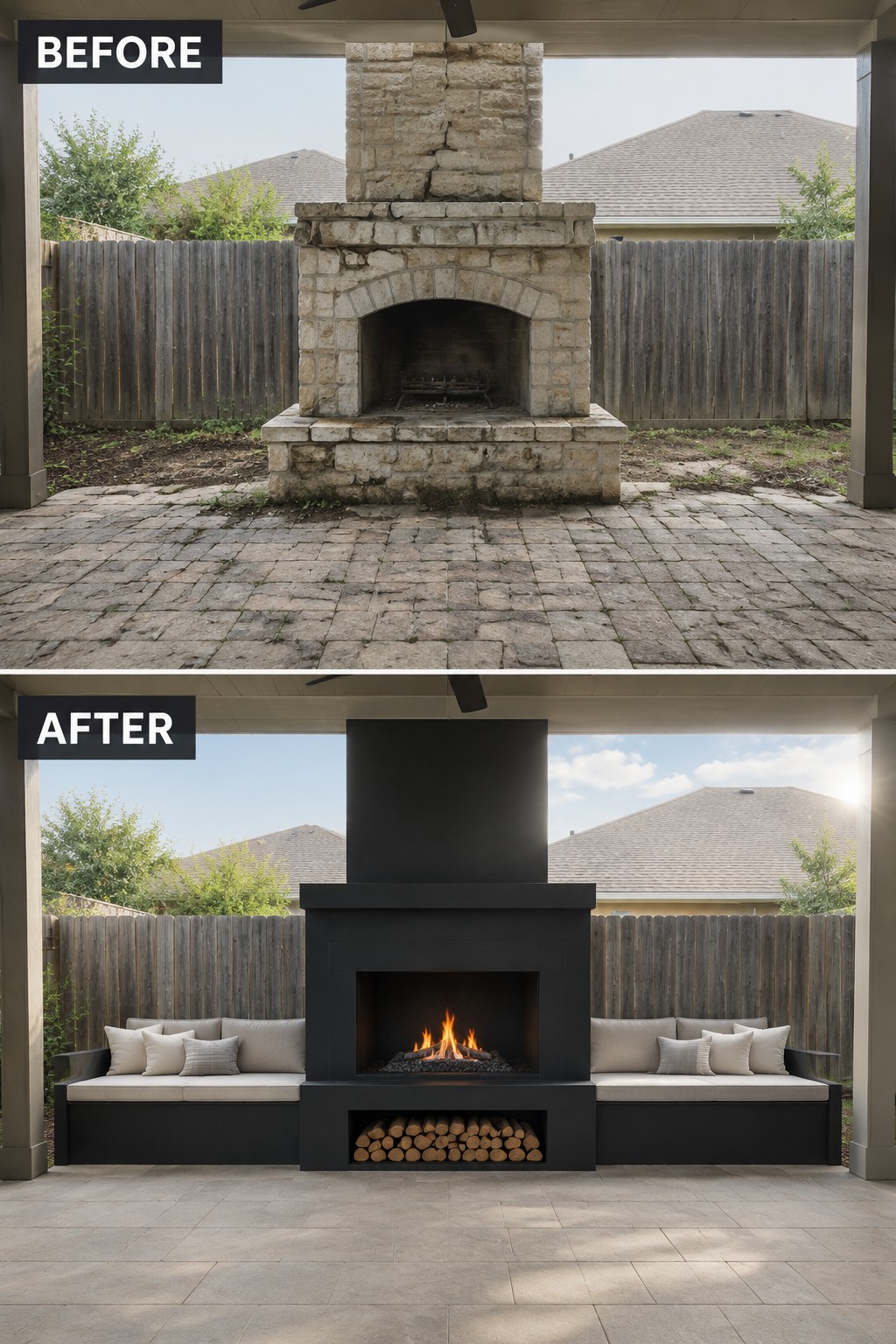
The old stone fireplace took up the middle of the patio, but it did little to make the space useful. Replacing it with a clean-lined fireplace and built-in benches turns the wall into both a focal point and a place to gather.
This idea works well on a covered patio where you want seating without filling the floor with separate furniture. Keep the bench depth comfortable and leave enough room to walk through; weather-resistant cushions make the built-in seats more practical.
Frequently Asked Questions
Q: Can I update my fireplace surround without replacing the whole fireplace?
A: Yes. If the firebox and chimney are in good shape, you can often refresh the surround with tile, stone, brick, or a new mantel. Check that your chosen materials are suitable for the heat around your fireplace.
Q: Can I tile over an existing brick fireplace?
A: Often, yes, as long as the brick is firmly attached, clean, and fairly even. Loose or crumbling areas need repair first so the new tile has a solid surface to grip.
Q: What’s a good way to make a dated fireplace feel more modern without a big remodel?
A: Painting the brick or replacing just the mantel can make a noticeable difference for less than a full makeover. Test paint colors in the room first, since the firelight can change how they look.
Q: Should I choose the surround before or after picking a new mantel?
A: Choose them together if you can. Their colors, materials, and proportions affect how the whole fireplace reads, so it helps to compare samples side by side before anything gets installed.
