

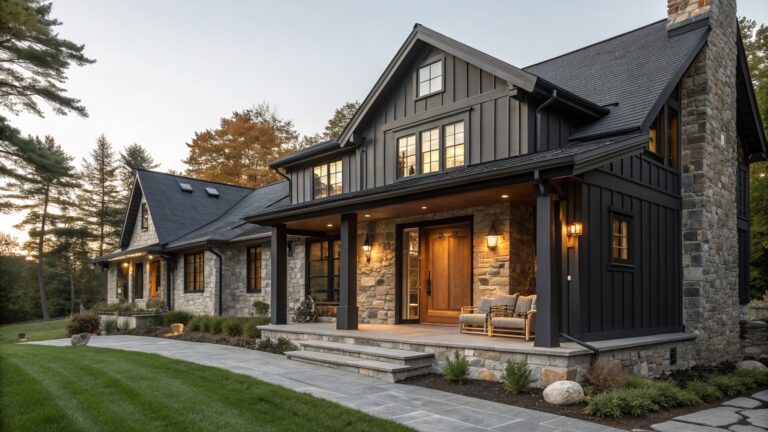
When I look at homes with black siding and stone accents the first thing that stands out is how the stone breaks up the dark mass without making the place feel heavy.
Roof overhangs and the way entries are framed play a bigger role than most people expect in keeping the style grounded.
Stone placement decides everything.
I would start by mapping out the foundation line on paper before committing to any layout because that step reveals which ideas actually suit the house shape.
Over time these choices show up in how the exterior ages and holds its presence through different seasons.
Pair Black Siding With Stone
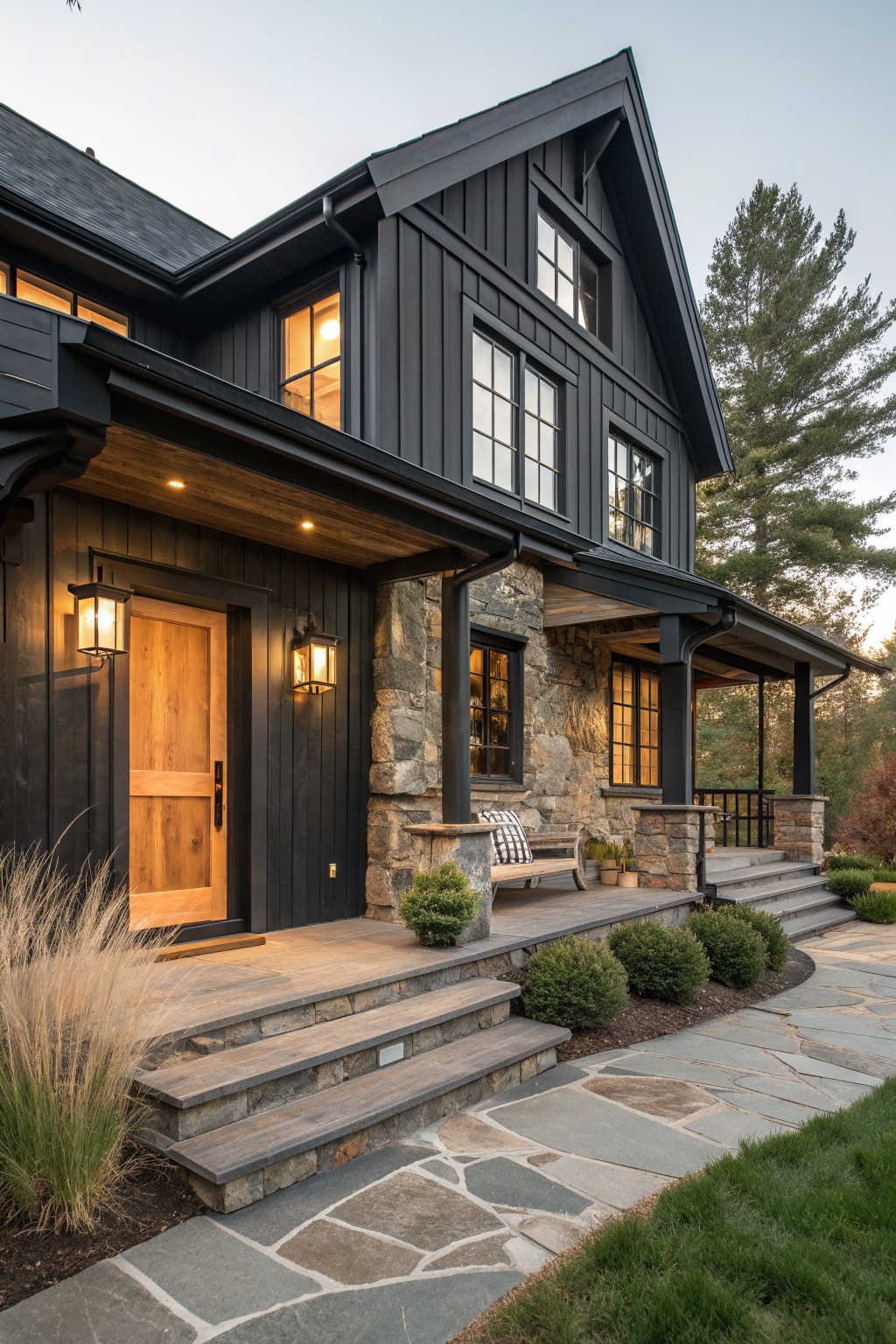
Black siding can feel heavy on its own, but adding stone keeps the look grounded without losing the modern edge. The rough texture breaks up the flat dark surface and gives the house a more solid base that fits a rural or wooded setting.
This works best on homes where the stone covers the lower walls or chimneys rather than scattered accents. Keep the stone in natural tones so it contrasts cleanly with the black, and avoid covering too much of the siding or the contrast disappears.
Mix Black Siding With Stone
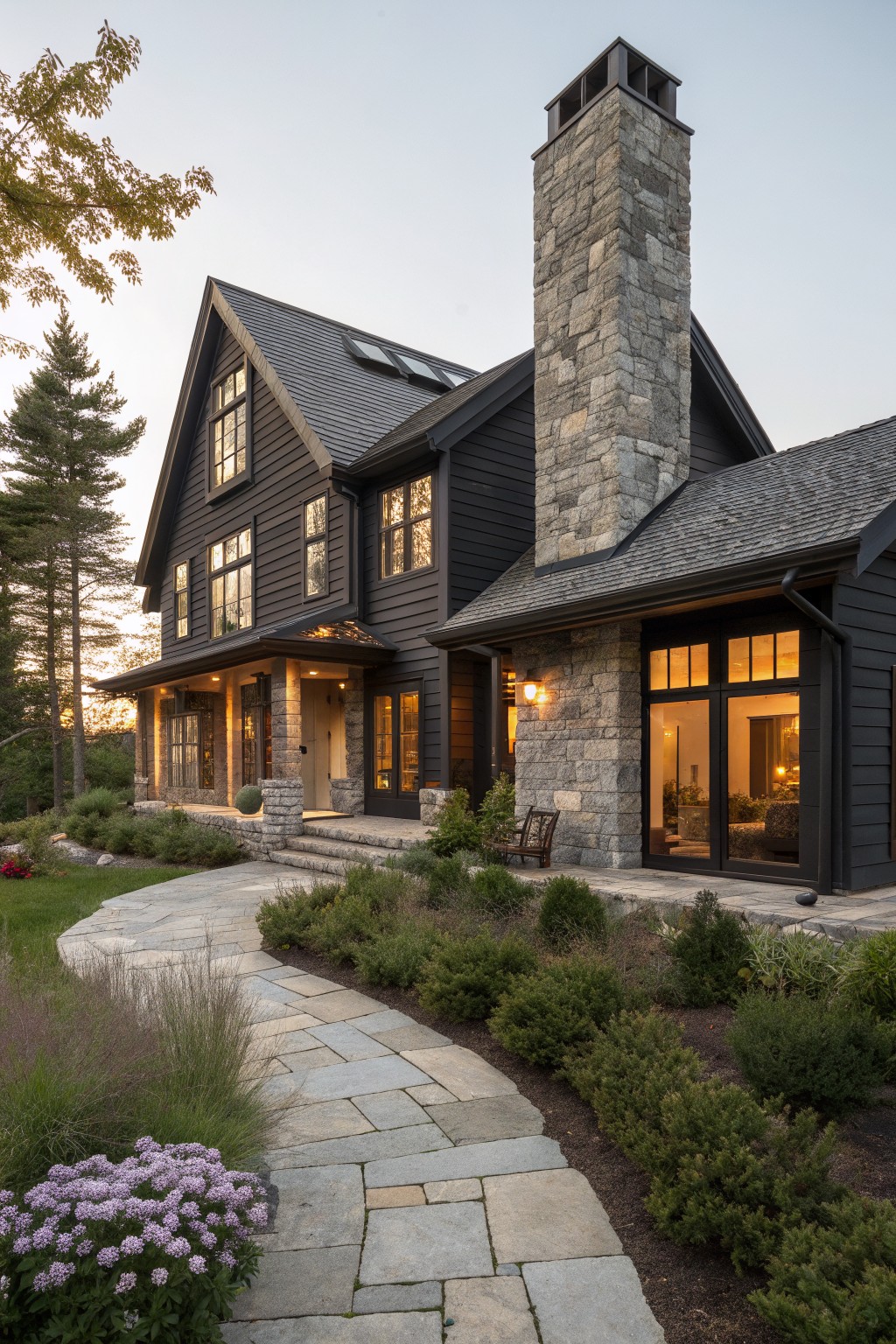
One way to keep a black house from feeling too heavy is to bring in stone on key spots like the chimney or the base. The natural texture breaks up the dark color and adds a layer of warmth without losing the modern edge.
This works well on homes with strong rooflines or in wooded settings. Try it first on a chimney if you want a clear focal point, or start smaller around the entry to see how the materials sit together.
Pairing Black Siding With Stone Accents
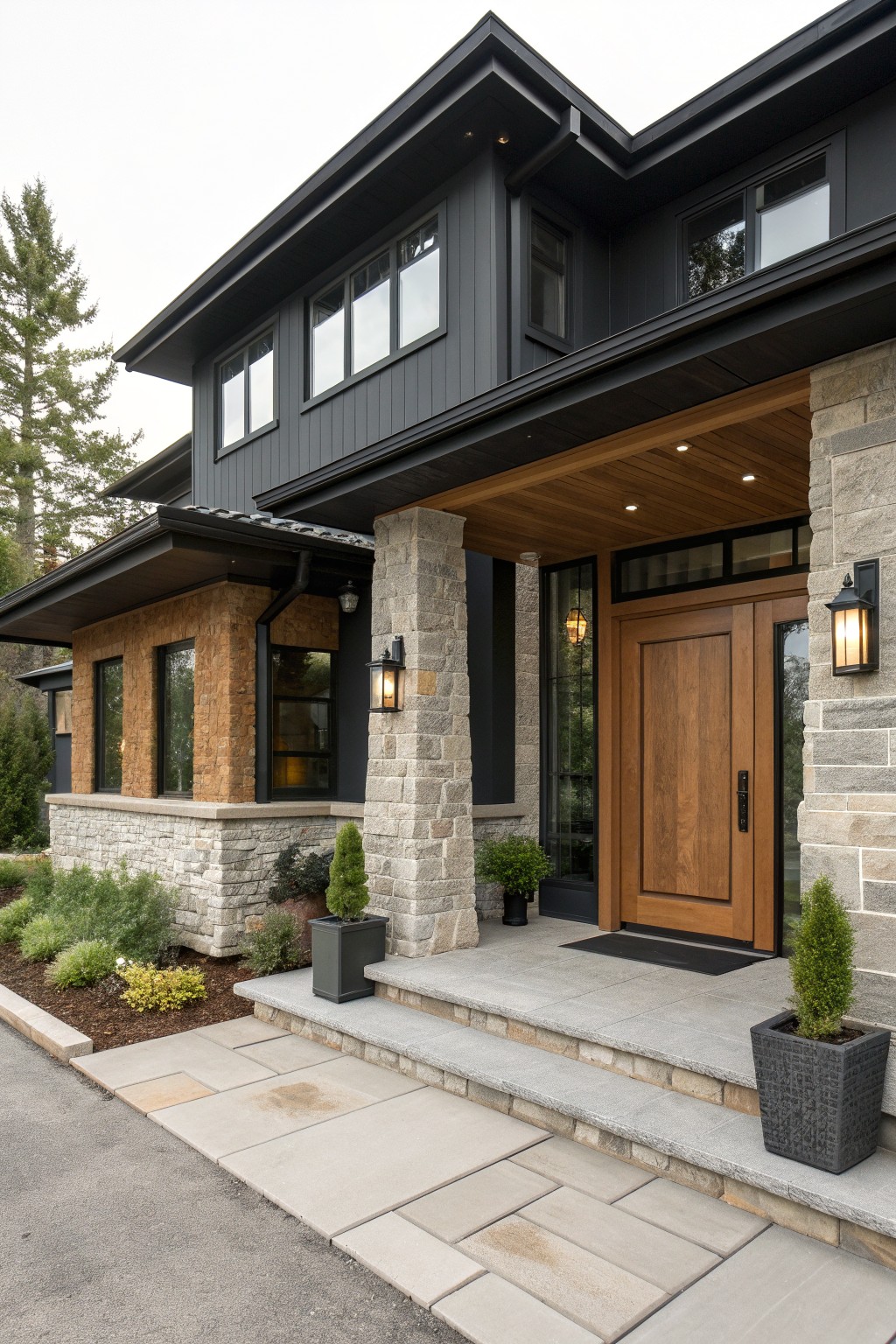
Black siding can feel flat on its own, so adding stone at the base and on columns gives the house weight and texture. The stone breaks up the dark color and keeps the look from turning too stark or modern.
This approach works best on houses with a simple roofline and a clear entry point. Start with the front porch area or lower walls, and keep the stone in natural tones so it balances the black without competing with it.
Anchor an Outdoor Patio With a Fireplace
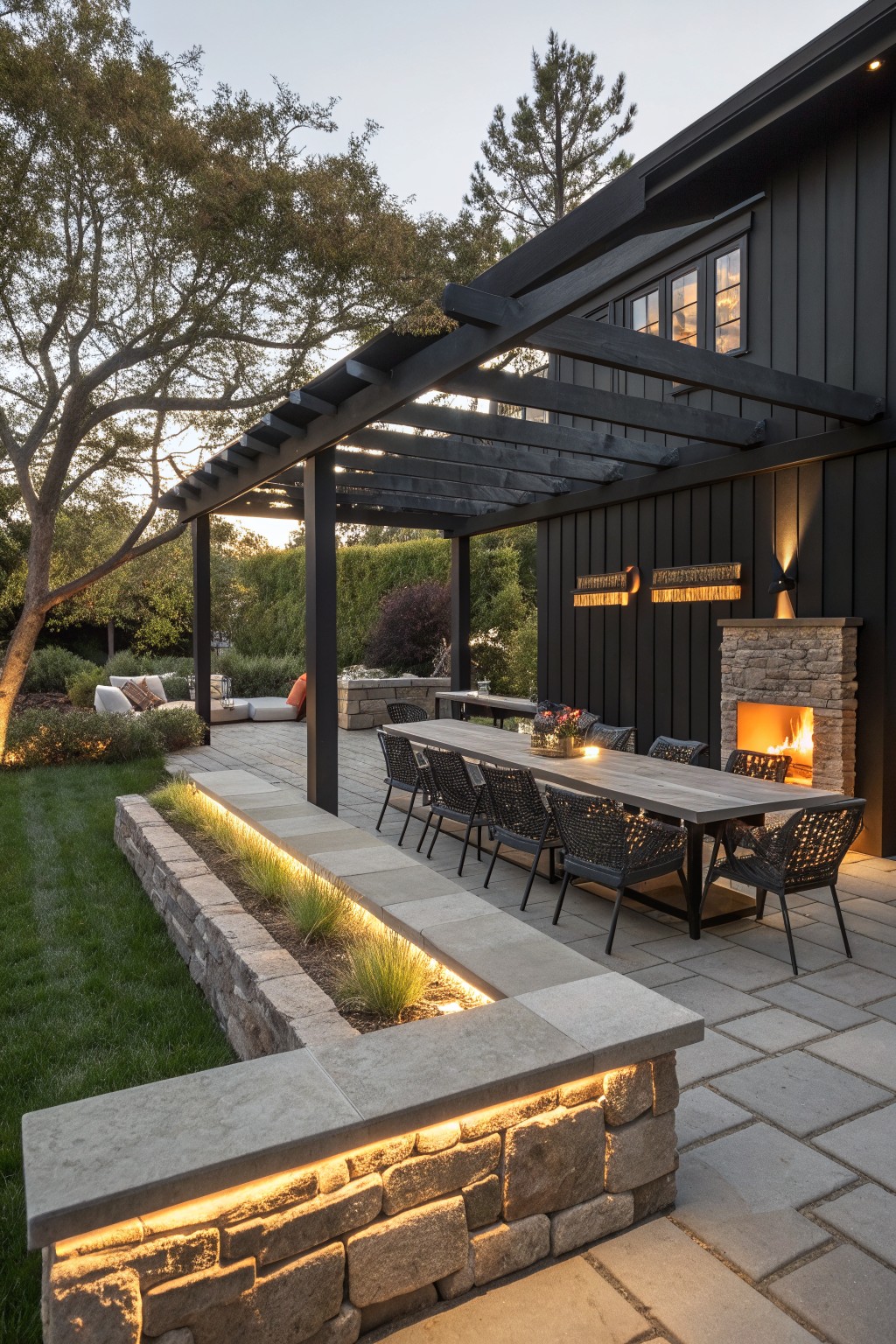
A fireplace built into the side of the house turns a basic patio into a space people actually use after the sun goes down. The heat source keeps the area comfortable on cooler evenings, and the light from the fire adds a focal point without needing much else.
This setup works best on homes with dark siding where the stone stands out. Place the dining table close enough to feel the warmth but not so close that smoke becomes an issue. Make sure the chimney is tall enough to clear the roofline so the smoke does not drift back toward the seating.
Black Siding To Frame An Outdoor Patio
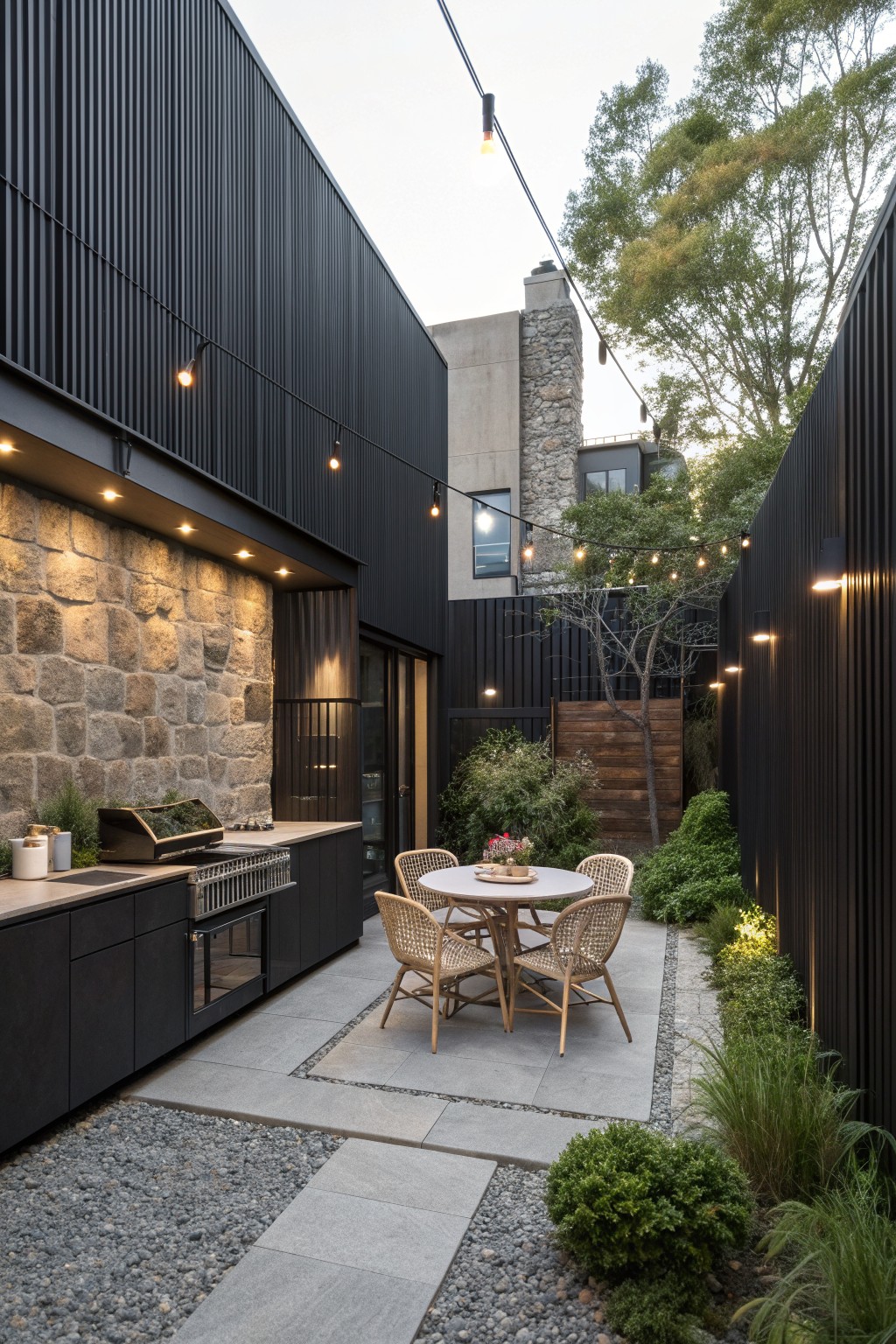
One simple way to make a small yard feel like an actual room is to let the house walls do the enclosing. The black siding on both sides creates a clear boundary, while the stone wall anchors the kitchen area so everything stays contained without needing extra structures.
This approach works best on narrow lots or homes where you want the outdoor space to feel connected to the house rather than open and exposed. Keep the seating and plants low so the dark walls stay the main feature and the space does not feel crowded.
Covered Porches That Hold a Full Dining Table
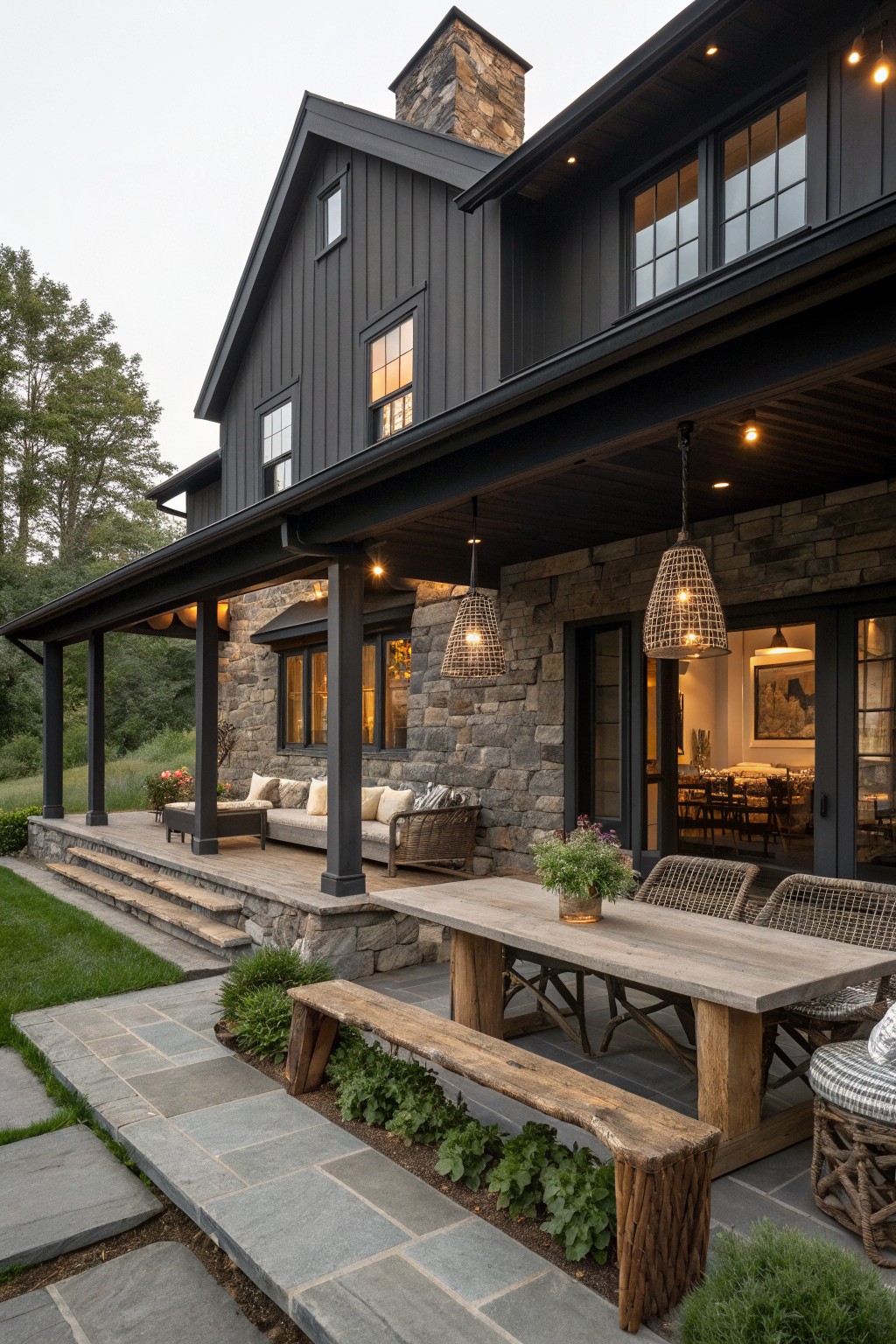
A covered porch works best when it can handle real use instead of just a couple of chairs. Placing a long table right against the house lets the space serve as an outdoor dining room without adding another structure. The stone wall behind it gives a solid backdrop that feels grounded and keeps the setup from looking temporary.
This approach works well on homes that already have a deep overhang and some stone on the exterior. Keep the furniture simple with wood and basic seating so the focus stays on the table itself. Avoid crowding the edges with too many extra pieces or the area starts to feel cramped instead of open.
Black Doors On Stone Houses
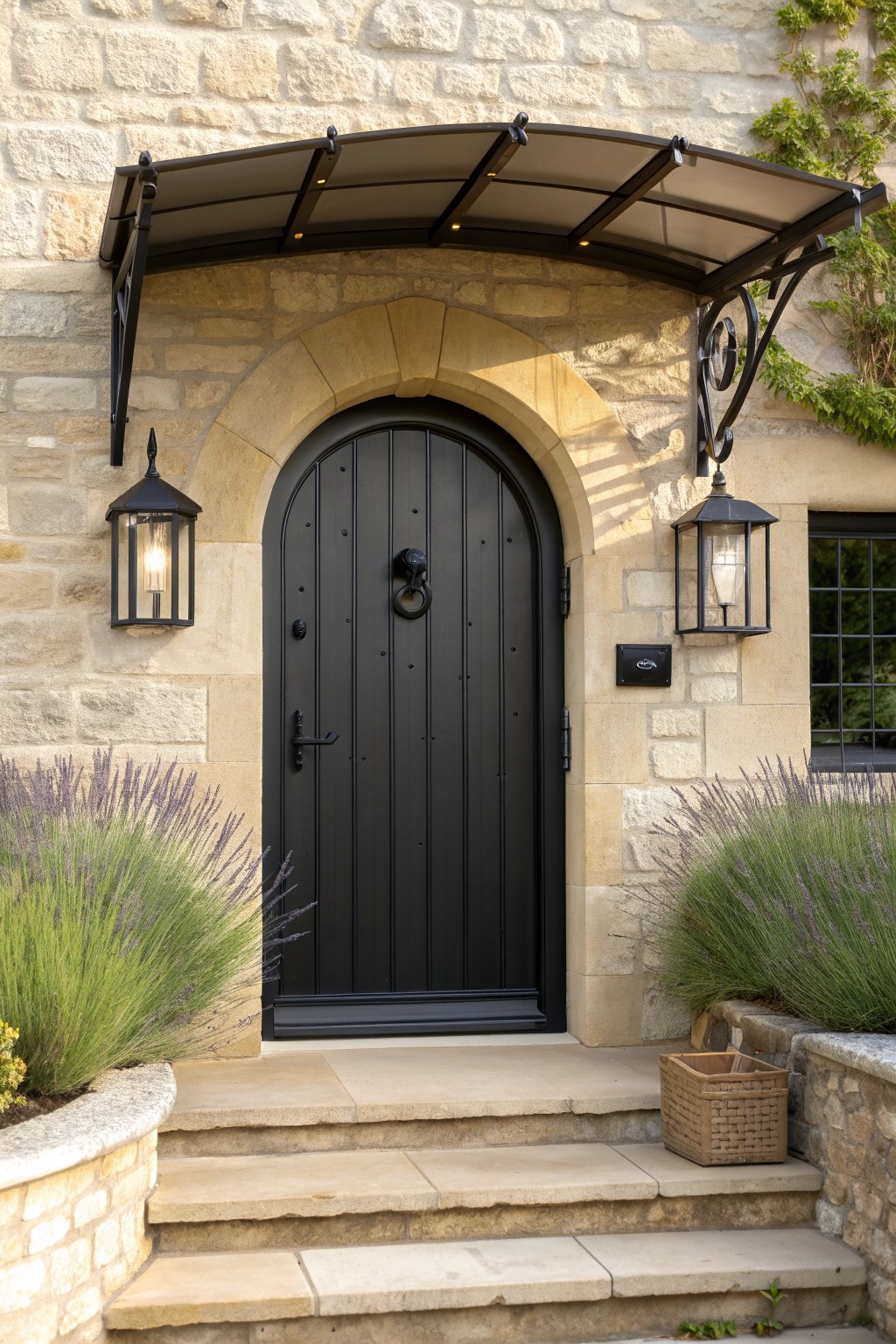
A black door gives a stone house clear definition at the entry. The dark color stands out against the lighter stone without fighting it, and it keeps the whole front feeling grounded rather than busy.
This approach works best on homes with natural or light-toned stone where the contrast can do the work. Keep hardware and trim minimal so the door stays the main point instead of competing with extra details.
Black Siding And Stone For Pool Areas
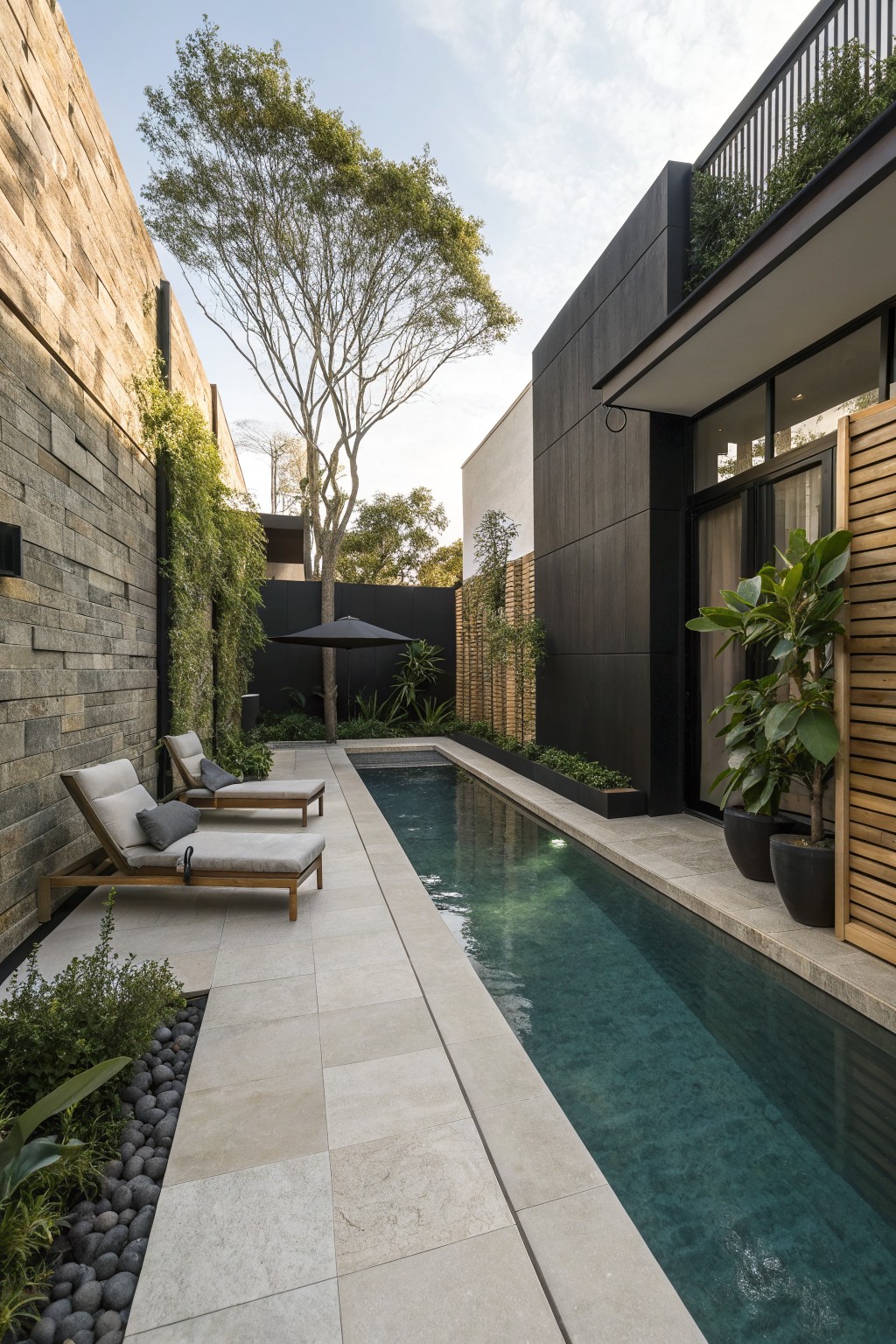
The dark siding on the house next to the stone wall gives the whole pool area a solid, grounded look. It keeps the space feeling simple and tied together instead of busy or overly styled.
This works best on homes with a narrow side yard or courtyard where you want water without crowding the layout. Keep the stone sections lower so the black surfaces stay dominant and the area does not feel closed in.
Stone Paving With Black Brick Exteriors
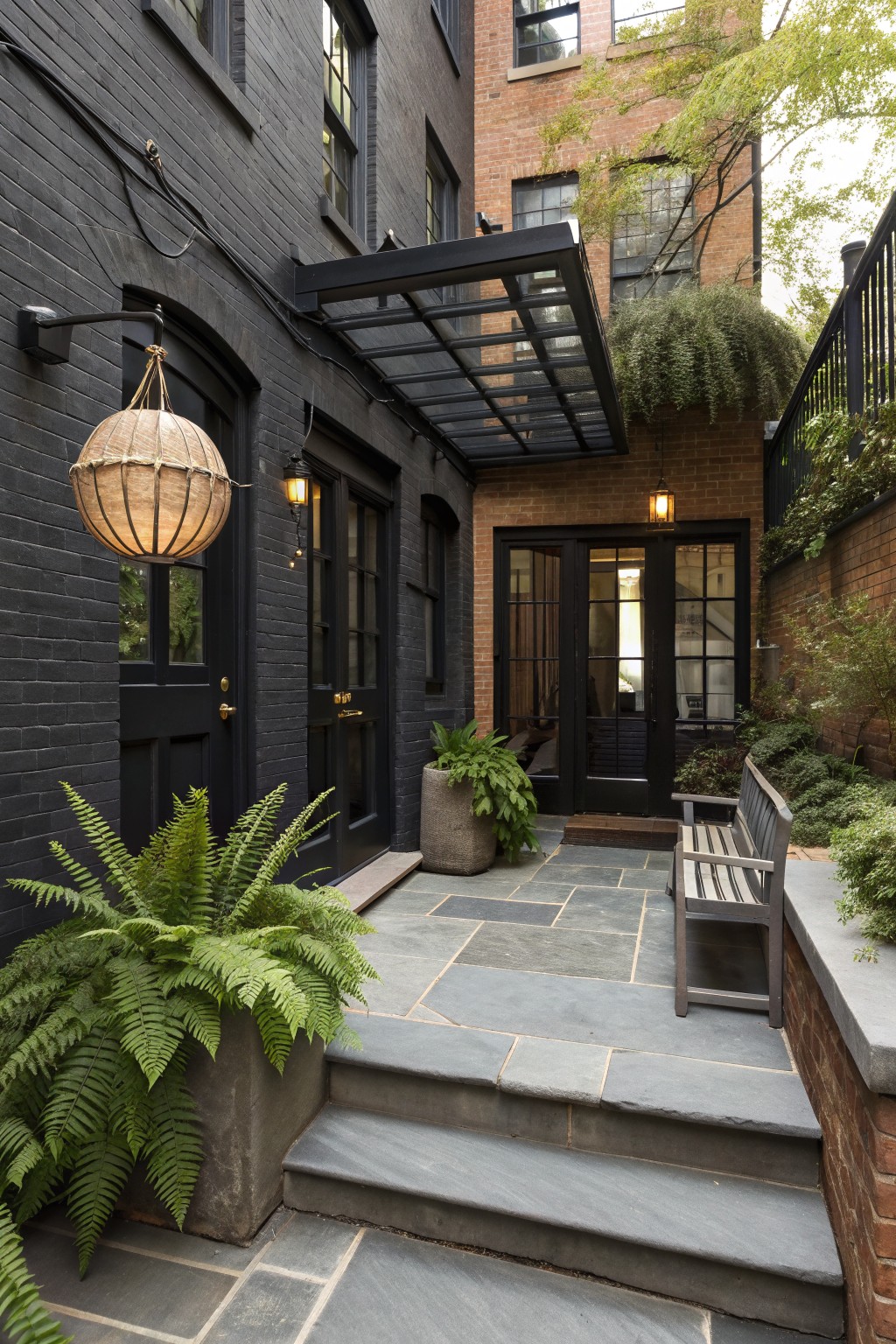
Stone paving pairs well with black brick because it adds texture and keeps the dark walls from feeling too heavy. The contrast gives the whole entry a settled, older look that still reads modern.
This works best on houses that already have some architectural detail like arched openings or multiple doors. Stick with large, irregular slabs for the steps and ground plane, and limit extra colors so the black and stone stay the main story.
Built In Stone Seating Along The Porch
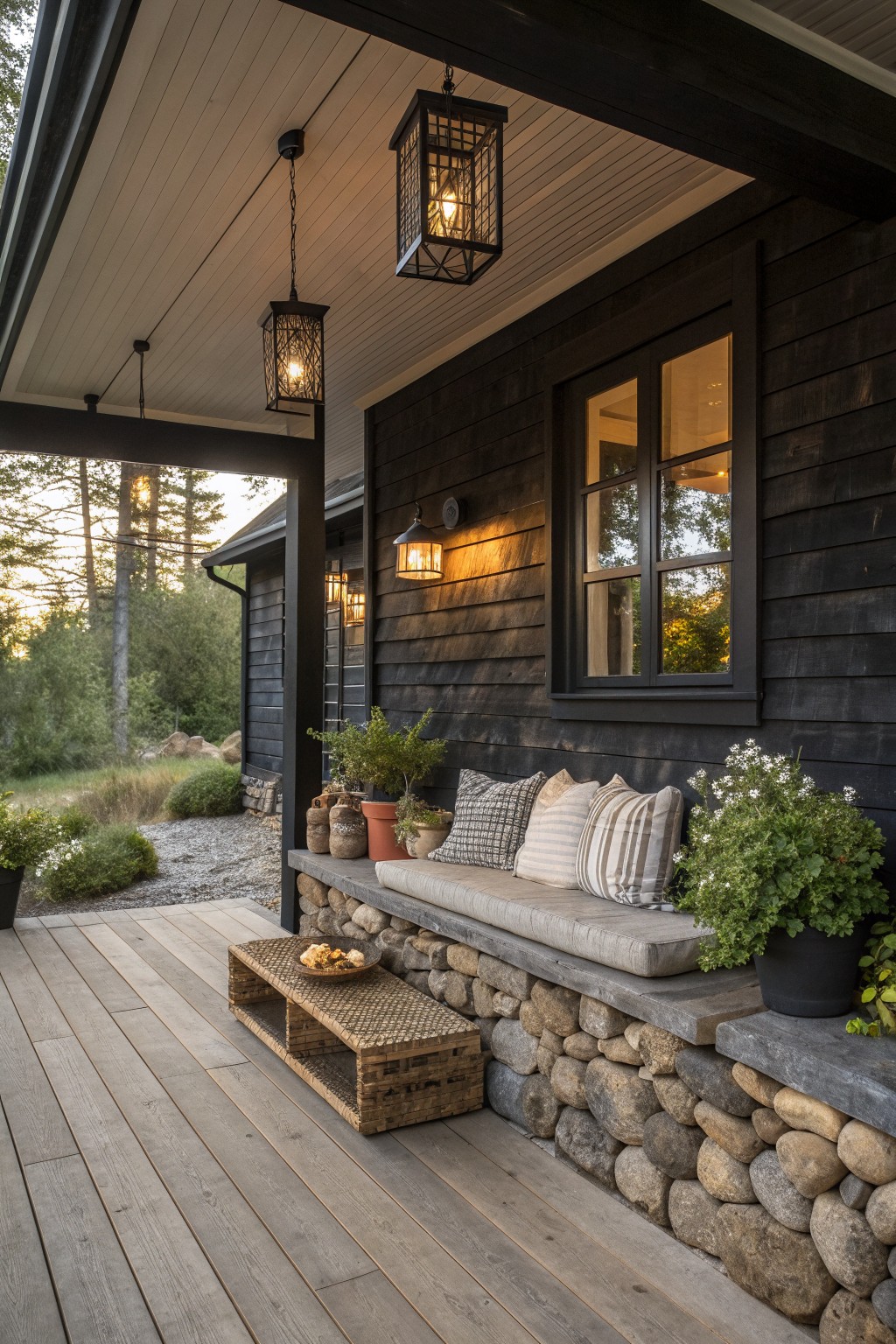
Building seating right into the stone base of a house gives the porch a solid, lasting feel without extra furniture taking up space. The bench becomes part of the structure itself, so it holds up well to weather and daily use while keeping the area open and simple.
This works best on homes where the foundation or porch edge already uses stone, especially in rustic or cabin style builds. It suits black or dark siding because the light stone creates a clean contrast and gives you a place to sit without crowding the deck.
Stone Accents Built Into Black Walls
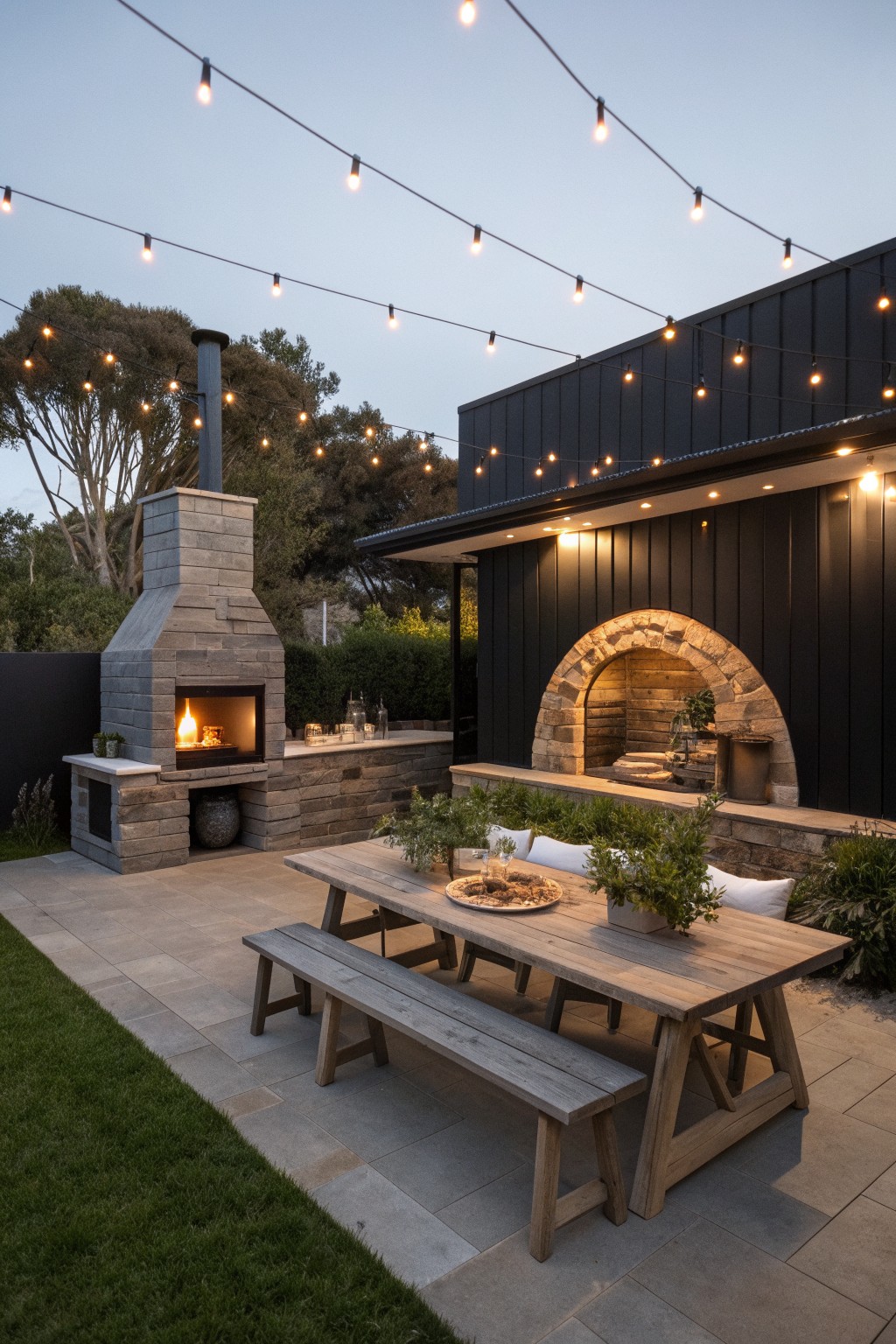
Stone works well against black siding because it adds texture and a sense of permanence without making the space feel heavy. In this setup the arched oven sits right in the wall so the cooking area feels like part of the house rather than something added later. The result is a clean look that still reads as rustic.
This approach suits homes where the patio sits close to the main structure and the owners want a place to cook and gather without building a separate structure. Keep the stone simple and let the black wall do most of the work. Too many extra materials can start to feel busy.
Black And Stone Exterior Mixes
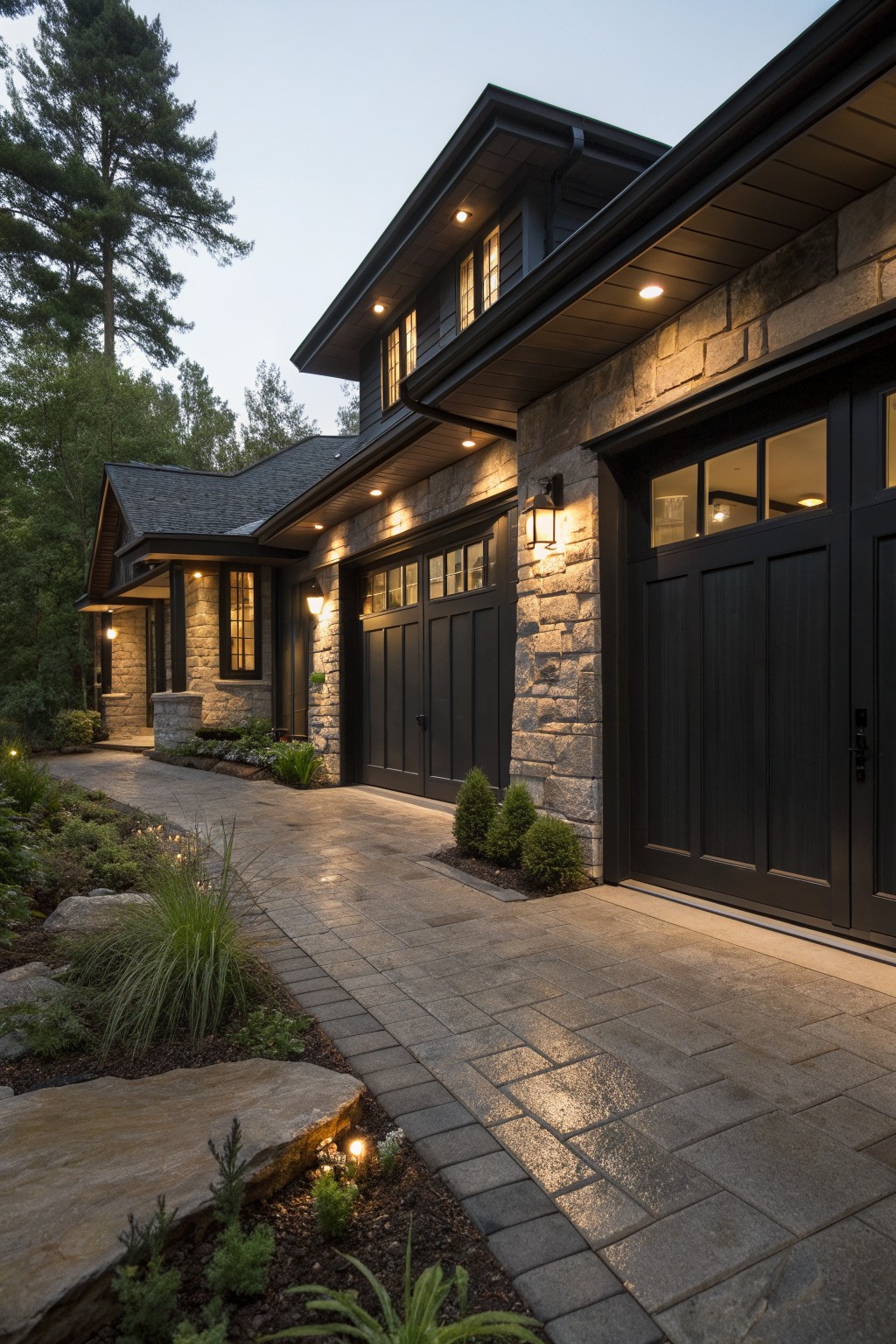
Black works well with stone because it gives the natural texture a sharper edge. The dark paint or siding keeps the stone from looking too heavy or old-fashioned while still letting the material show its character. Many people like this mix on homes that sit among trees since the black helps the house blend in at a distance.
This approach suits houses that already have some stonework or are adding it for interest. Keep the black on larger surfaces like siding or garage doors and let the stone stay in smaller sections so the contrast stays balanced. Too much of either one can tip the look toward either too stark or too heavy.
A Central Fire Pit For The Patio
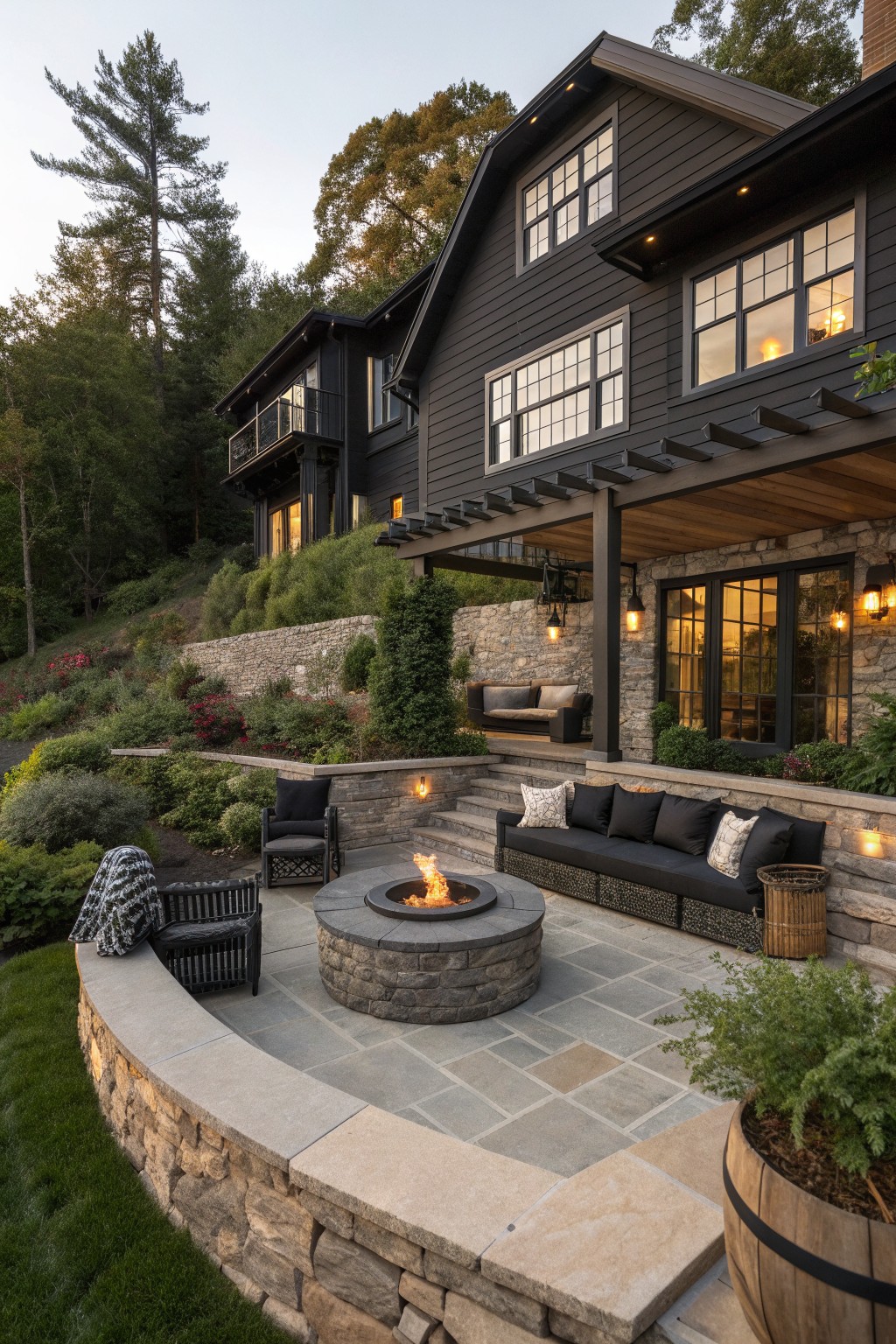
A fire pit placed right in the center of a patio gives the whole area a clear purpose. People tend to gather there without much prompting, and it works especially well when the rest of the seating stays low and simple.
This setup suits homes that already have stone walls or paving because the fire pit can echo those materials without adding extra layers. Keep the surrounding furniture to a minimum so the space stays open and easy to move through at night.
Black Railings on Stone Balconies
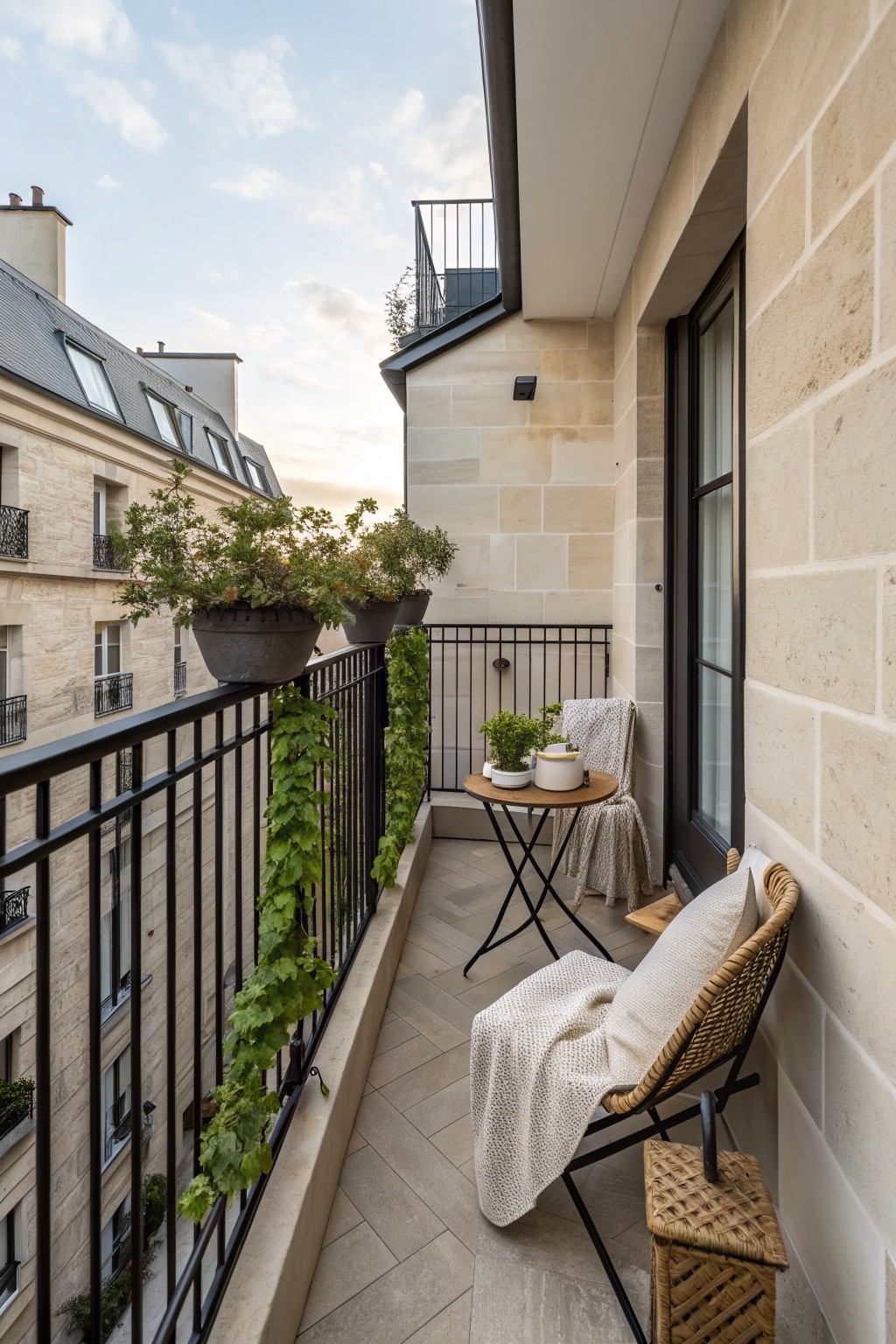
Black railings give a stone balcony a clear edge that feels both simple and finished. The contrast keeps the space from looking too soft or plain while still letting the natural stone show through.
This approach works well on homes with light stone walls where you want a bit of definition without adding bulk. Stick to a few pieces of seating and a small table so the railing stays the main detail and the view stays open.
Black Doors With Stone Walls
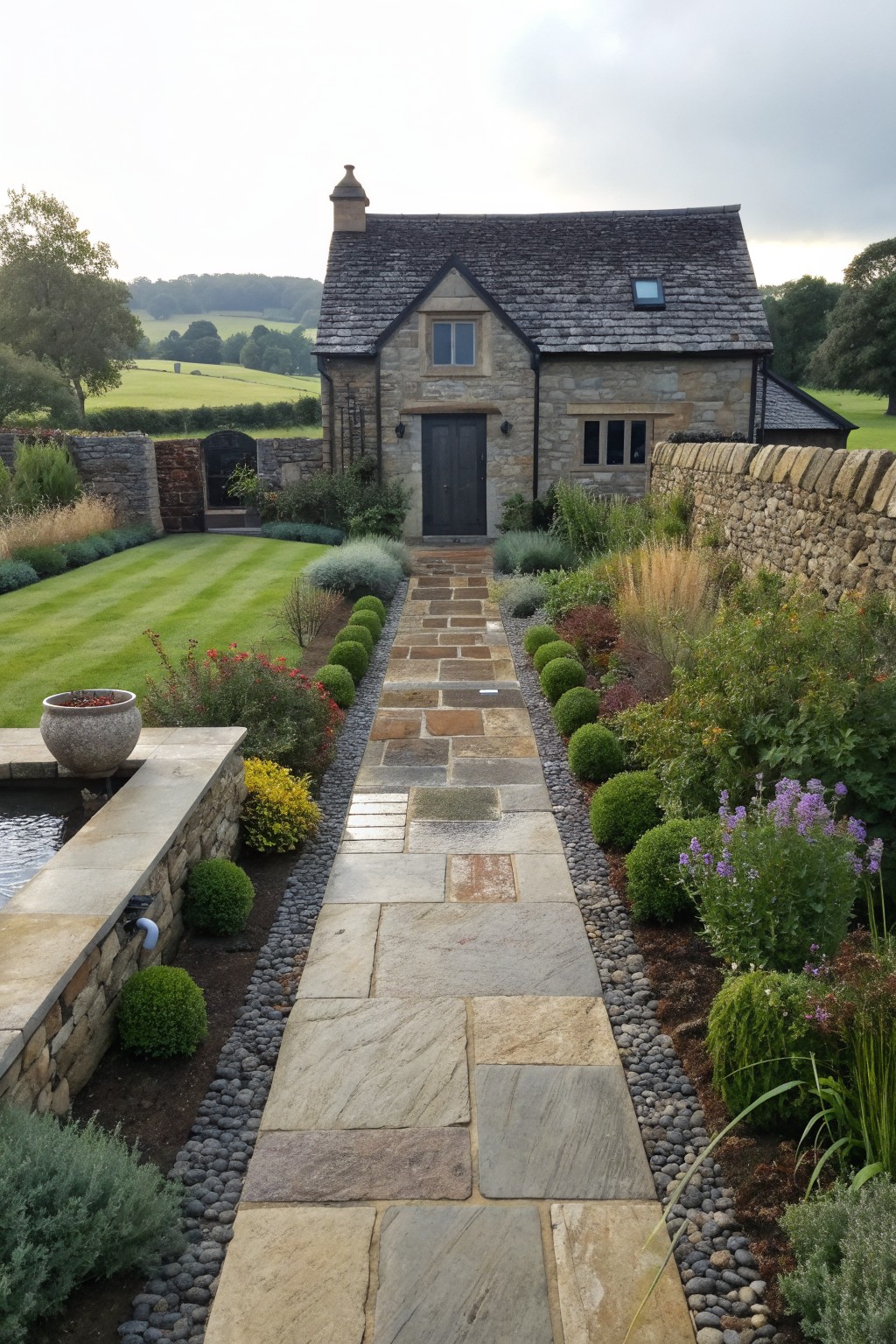
A black door gives a stone house a clear focal point without needing much else. The dark color stands out against the natural stone and keeps the whole front from looking flat or too traditional.
This approach works best on homes with light or mixed stone tones. Keep the rest of the trim simple so the door does the work, and make sure the door itself has a matte or low-sheen finish to match the rustic feel.
Stone Walls for an Outdoor Shower
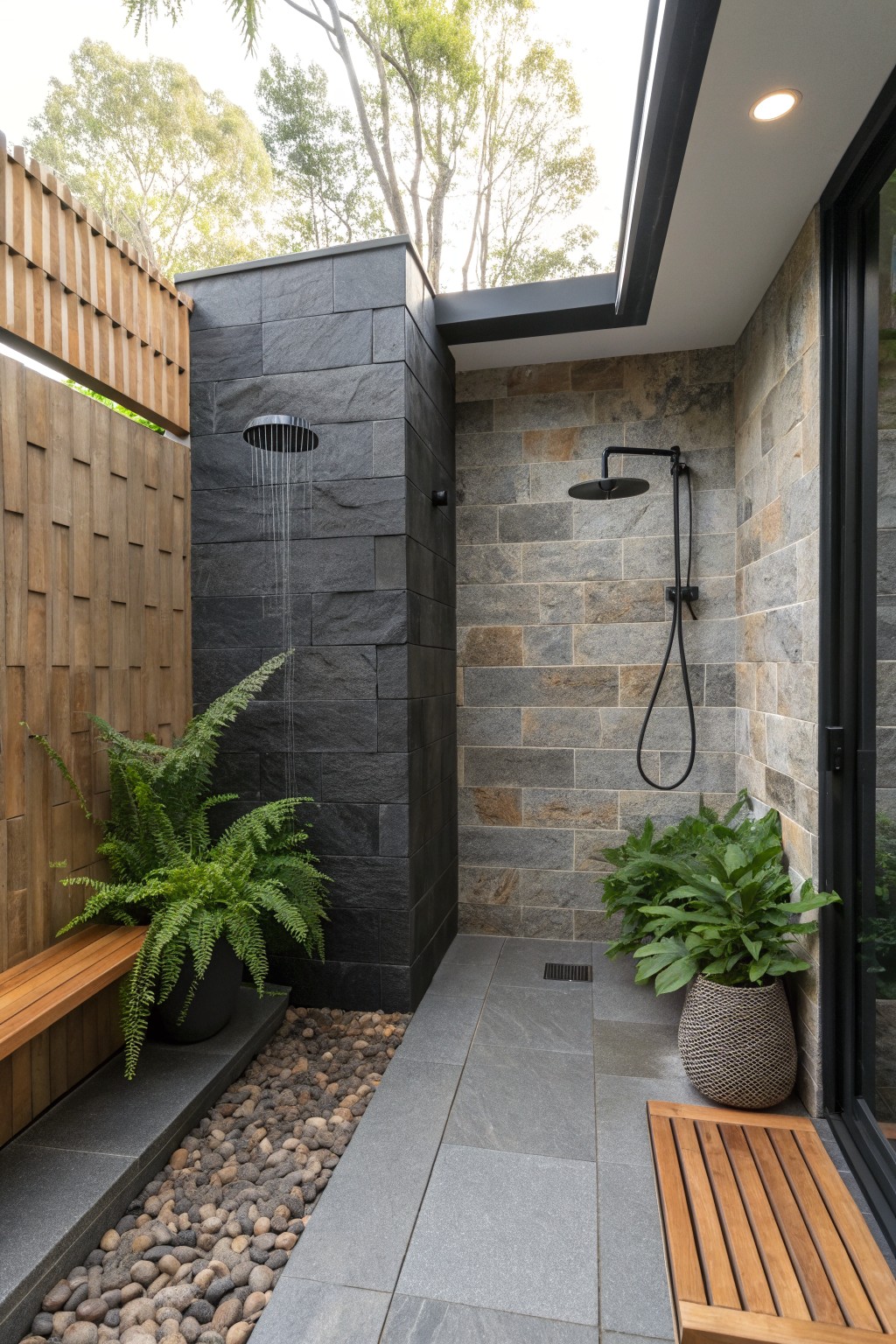
An outdoor shower holds up better when it sits inside stone walls instead of standing out in the open. The dark stone gives the space a solid back and sides while the lighter mixed stone on the facing wall keeps the whole thing from looking too dark or closed in. This approach turns a simple shower into something that feels built into the yard rather than added on later.
Place it along the side of the house or next to a deck where people already walk through after being outside. Black fixtures stay simple and clean against the stone, and a couple of wood benches give a place to set towels or sit while rinsing off. It works on most homes with a bit of yard space, as long as you keep the floor sloped for drainage.
Stone Walls to Create a Flat Patio on Sloped Ground
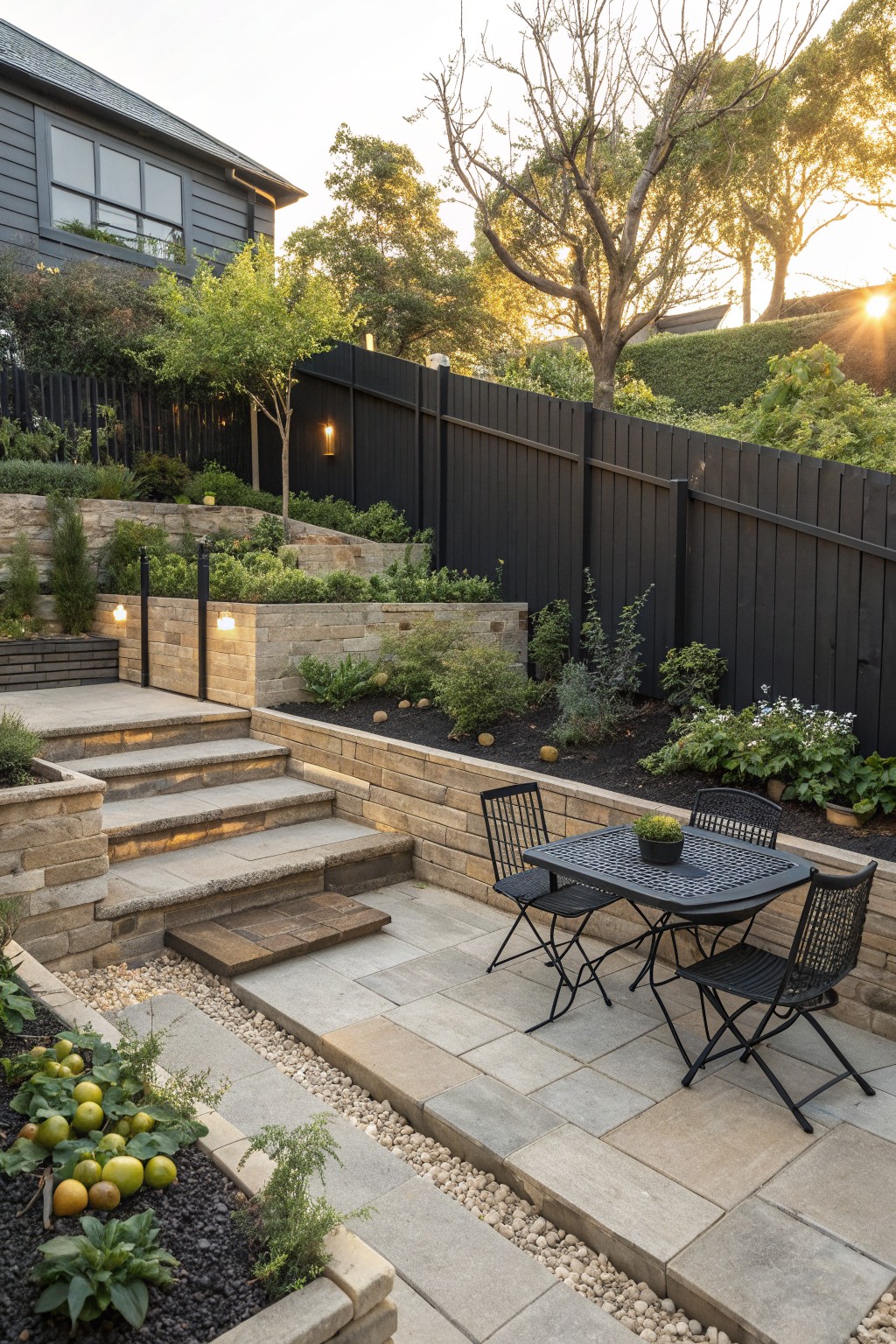
Stone retaining walls make it easier to turn a hillside into a usable outdoor space. They hold back the soil, create level ground, and give you a solid base for a patio without major regrading.
This setup works best on homes where the yard drops away from the house. Match the wall height to the seating area so the table and chairs sit comfortably, and add a simple path of pavers or gravel to connect the levels. Keep the stone color close to any existing hardscape so the whole area feels tied together.
Hanging Pendants Over Outdoor Dining Tables
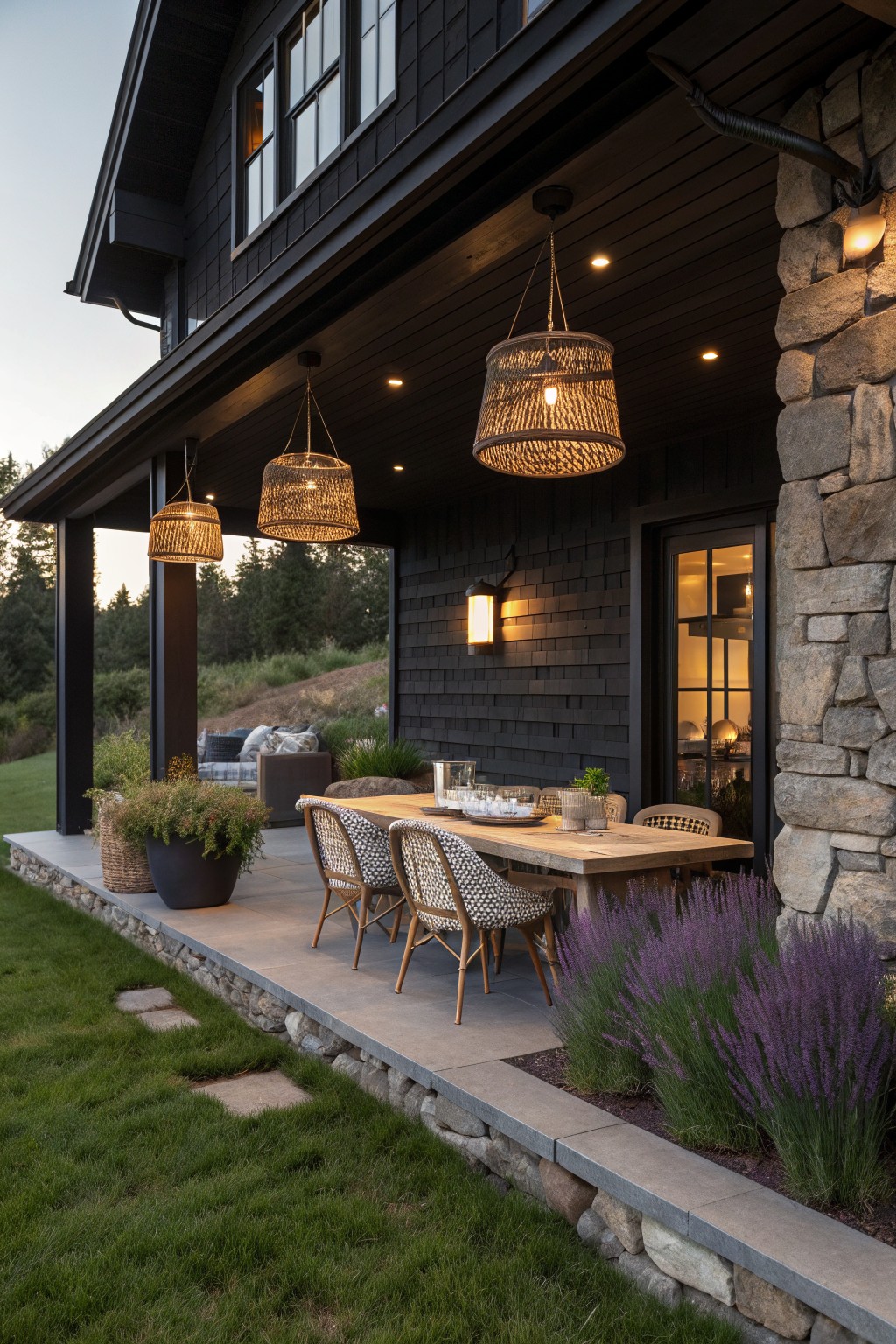
Many covered porches feel more finished when you hang a few pendant lights right over the dining table. The lights create a clear spot for meals and keep the area from feeling like just an extension of the yard once the sun goes down.
This approach works best on homes with deep overhangs where you can run the wiring without much trouble. Stick with natural materials like woven shades so the look stays casual and fits the rustic side of the house rather than fighting it.
Frequently Asked Questions
Q: How much stone should I mix with black siding to avoid a heavy look? A: Start with stone on the foundation and one accent wall only. This keeps the black dominant while the stone adds texture and grounds the whole house.
Q: Will black paint make the house bake in summer sun? A: It can pull in more heat than lighter colors. Pair it with good attic ventilation and wide eaves so the stone sections stay shaded part of the day.
Q: What if I want to add some wood without breaking the rustic vibe? A: Use reclaimed beams or shutters in a gray-brown tone. Place them around windows and the front door to warm up the black and stone together.
