

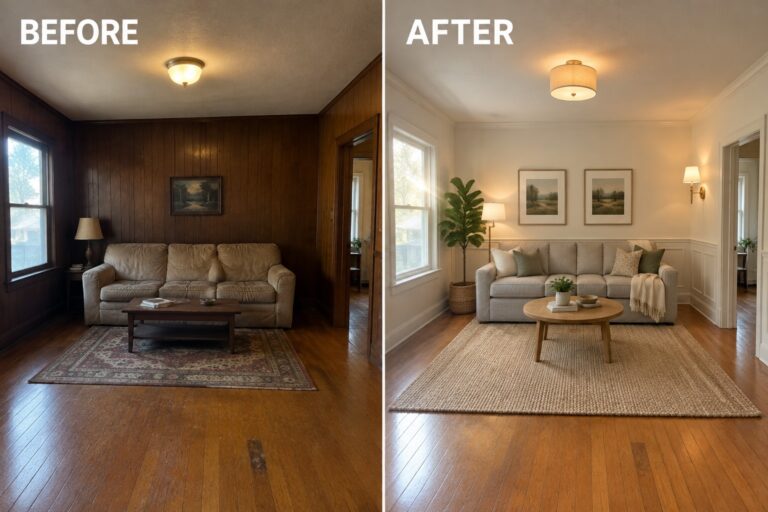
Older homes often have good bones but can feel dated, cluttered, or a little neglected when finishes and details no longer work well together.
I’m drawn to updates that make a house feel more cared for without turning a manageable project into a costly renovation.
Fresh paint, thoughtful lighting, repaired trim, and small layout adjustments can make familiar rooms and exterior details feel more useful and cohesive.
The best changes do not need to be dramatic.
Seeing a clear difference through practical choices is satisfying, and many of these ideas are easy to adapt to an older home at your own pace.
Make A Plain Living Room Feel Finished
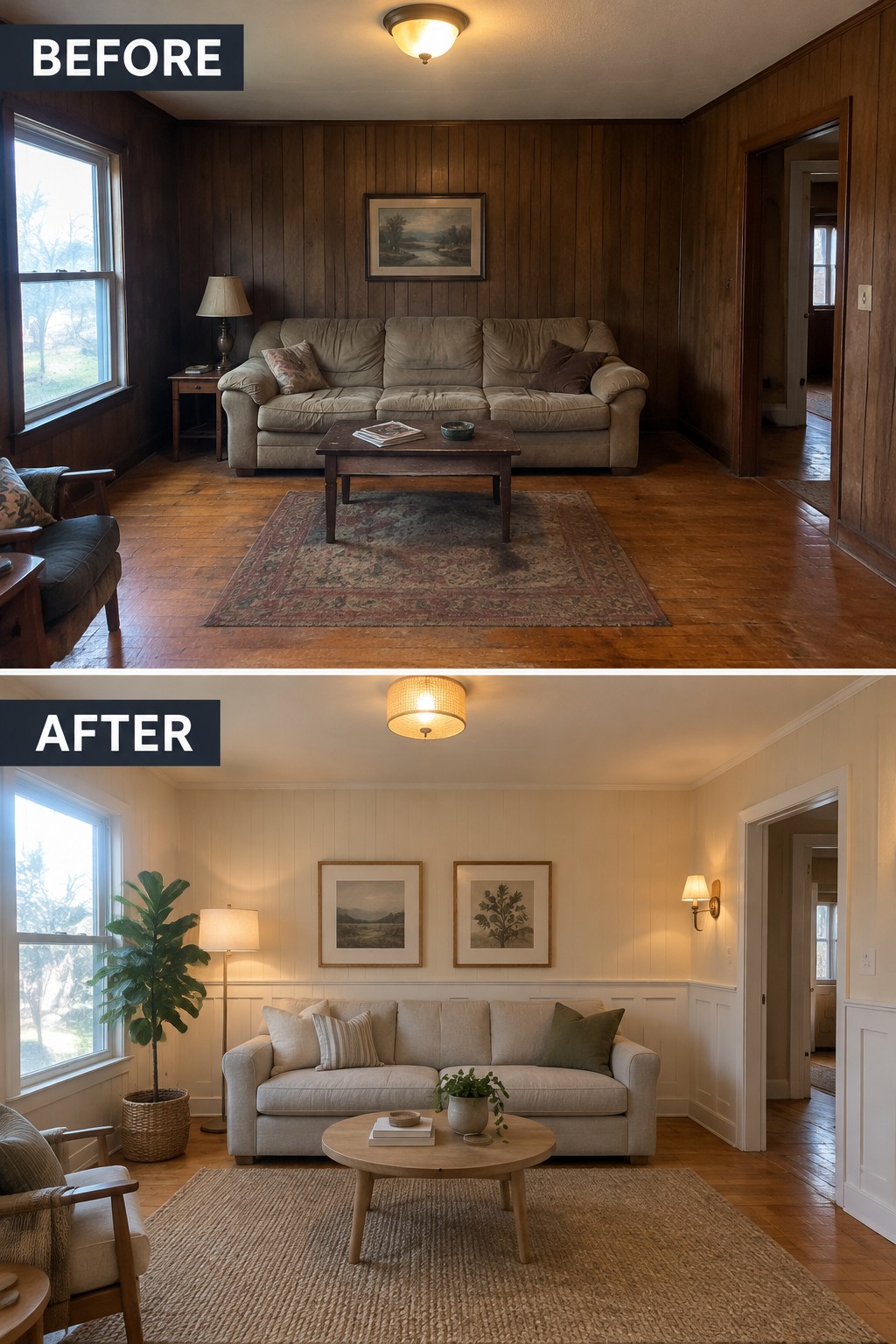
Replacing the dark wall paneling with light paint and adding a larger rug makes the room feel brighter and more settled without changing its layout. The simple update gives the existing living room a clearer, more comfortable look.
In an older home, paint and a well-sized rug can go a long way before you consider bigger projects. Choose a rug that fits beneath the main seating, and keep the wall color light if the room has limited natural light.
Make A Small Kitchen Feel More Current
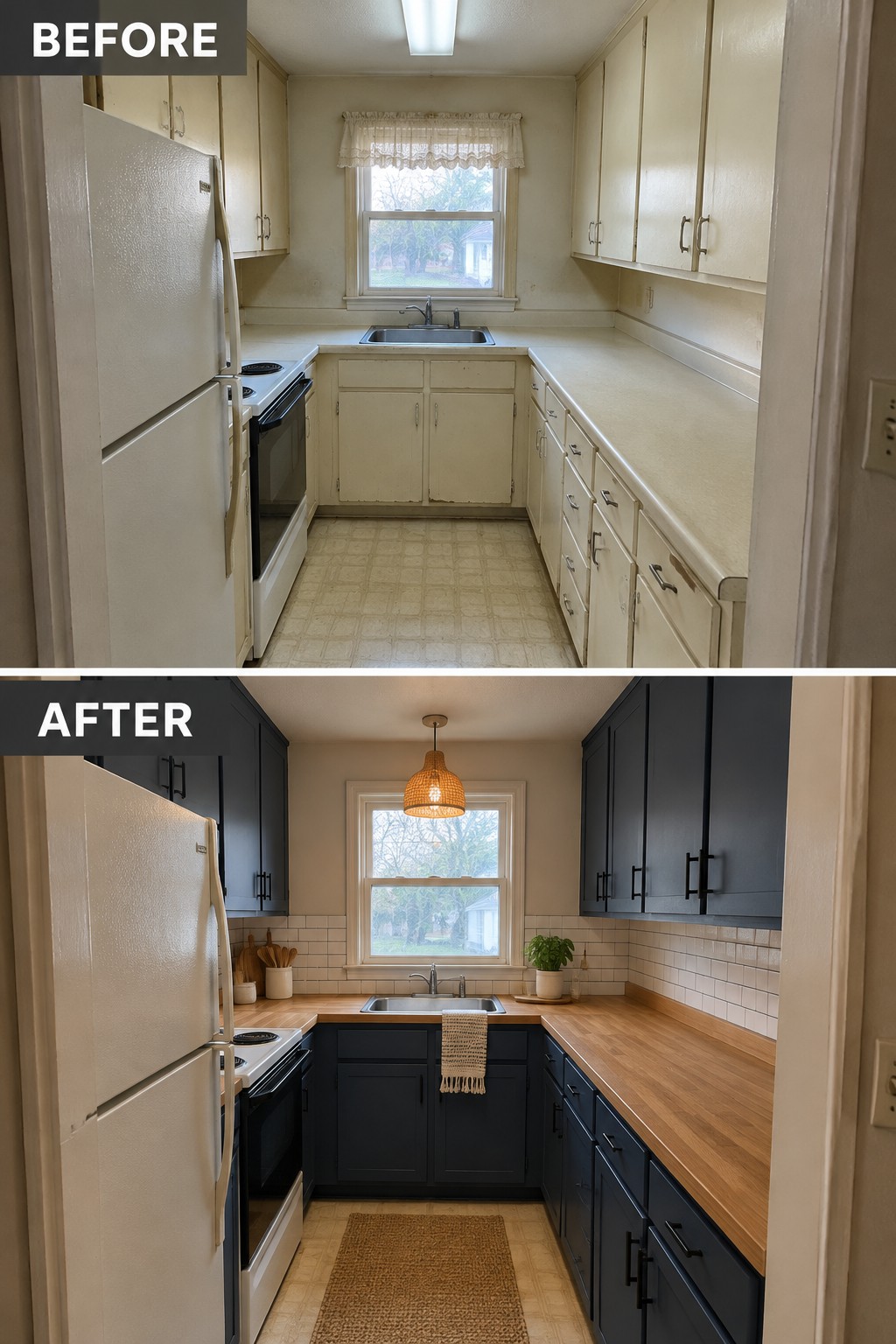
This kitchen feels more usable after a simple finish update. Painting the old cabinets a deep color and replacing the worn counters with wood gives the narrow room a clearer, more finished look without changing its layout.
For a similar update, keep the existing cabinet boxes if they’re in decent shape, then paint them and choose one practical countertop material. In a small kitchen, sticking to a few finishes helps the space feel less busy and keeps costs down.
Update An Old Bathroom Without Moving Fixtures
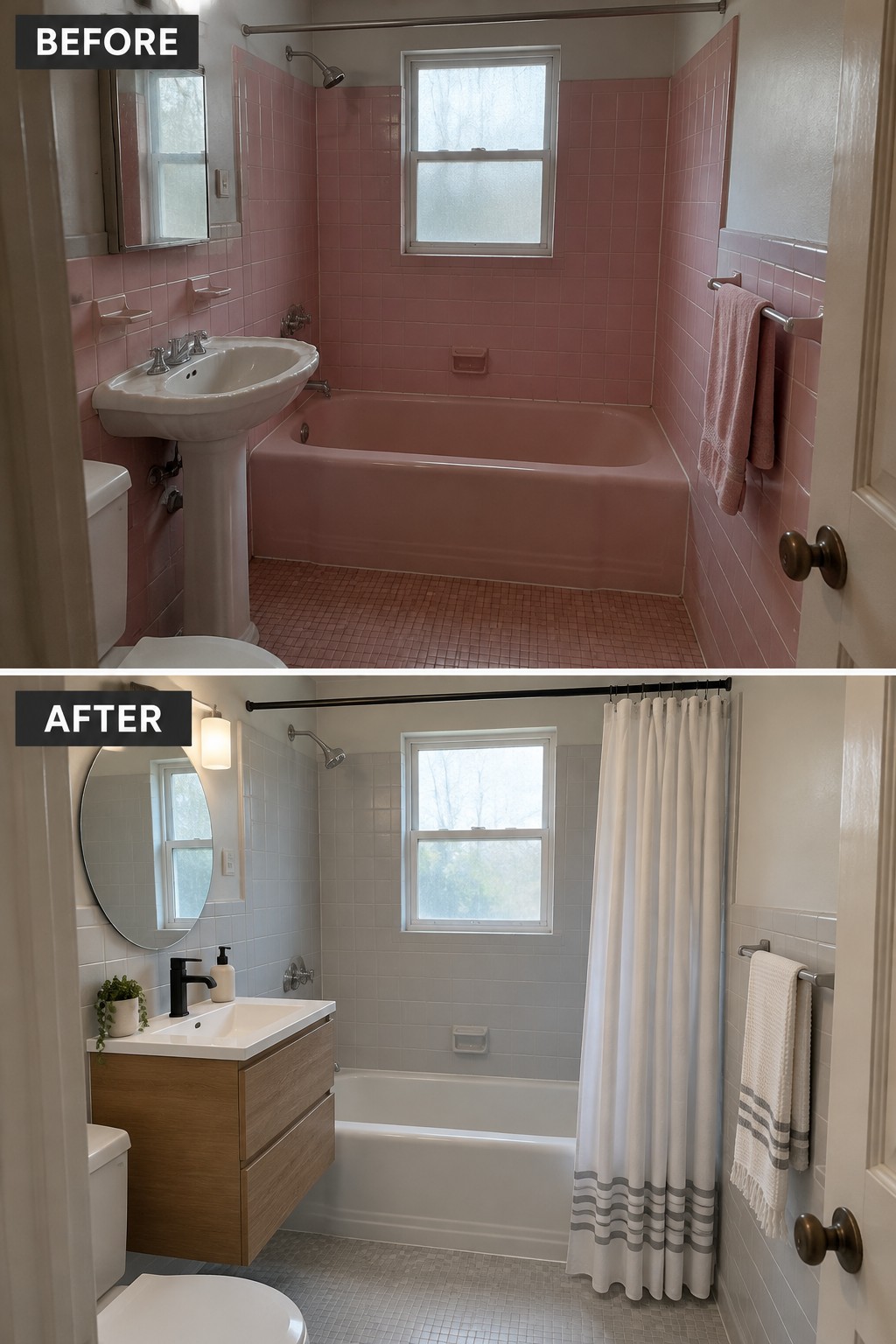
Replacing dated finishes can make an old bathroom feel much fresher without changing its layout. Here, the pink tile and tub give way to lighter finishes, while the sink is updated with a compact vanity.
Keeping the tub and main plumbing in place helps limit the scope of the work. In a small bathroom, a modest vanity can also add useful storage, but check its measurements first so there is still room to move.
Make A Narrow Entryway More Useful
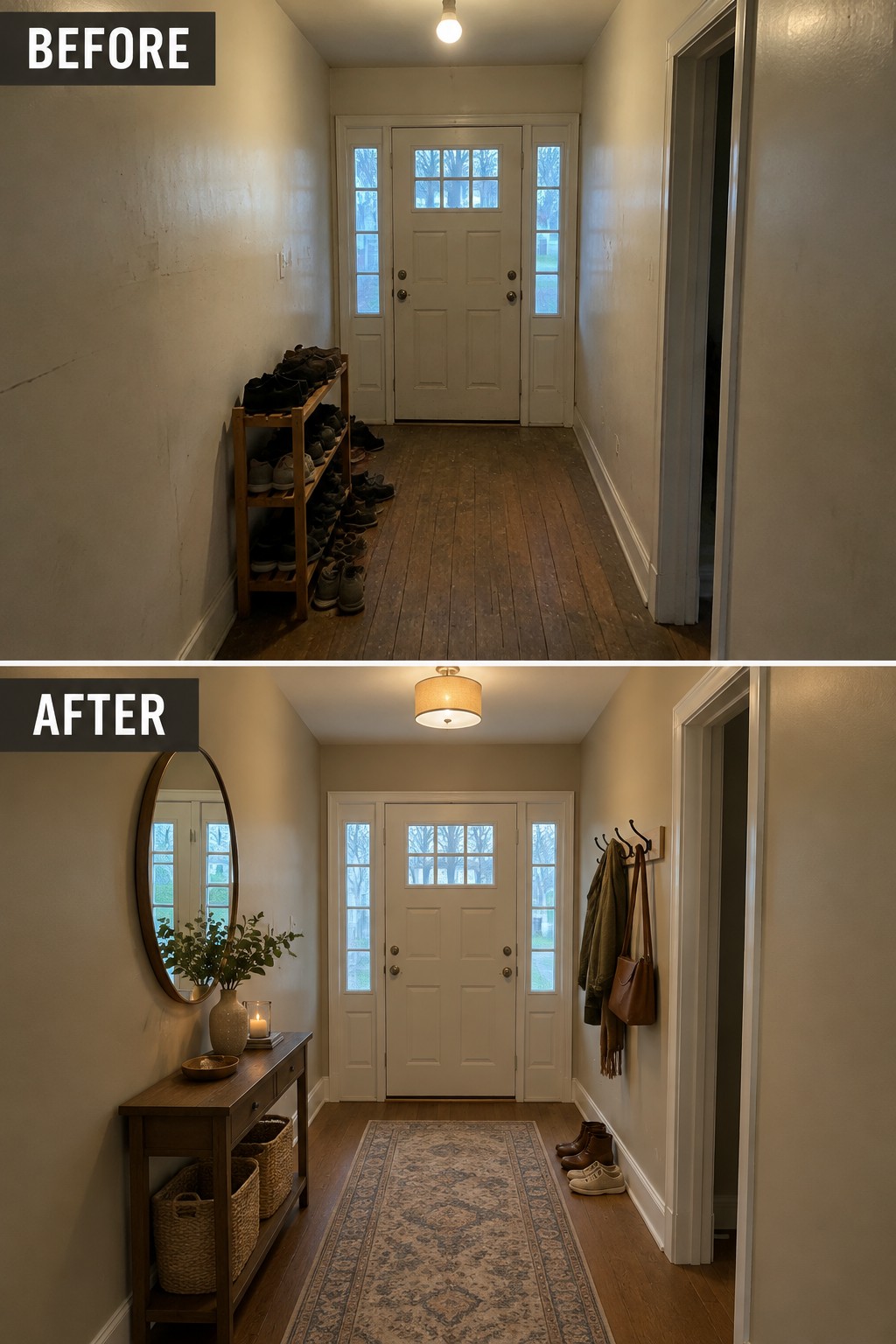
The shoe rack and worn floor made this entry feel cluttered and unfinished. A slim console and runner give the hallway a clearer purpose, while keeping the walkway open.
This approach suits a narrow entry where storage and floor space are both limited. Choose a shallow table, use baskets for small items, and leave enough room to pass comfortably.
Make A Bedroom Feel Calmer With Simple Changes
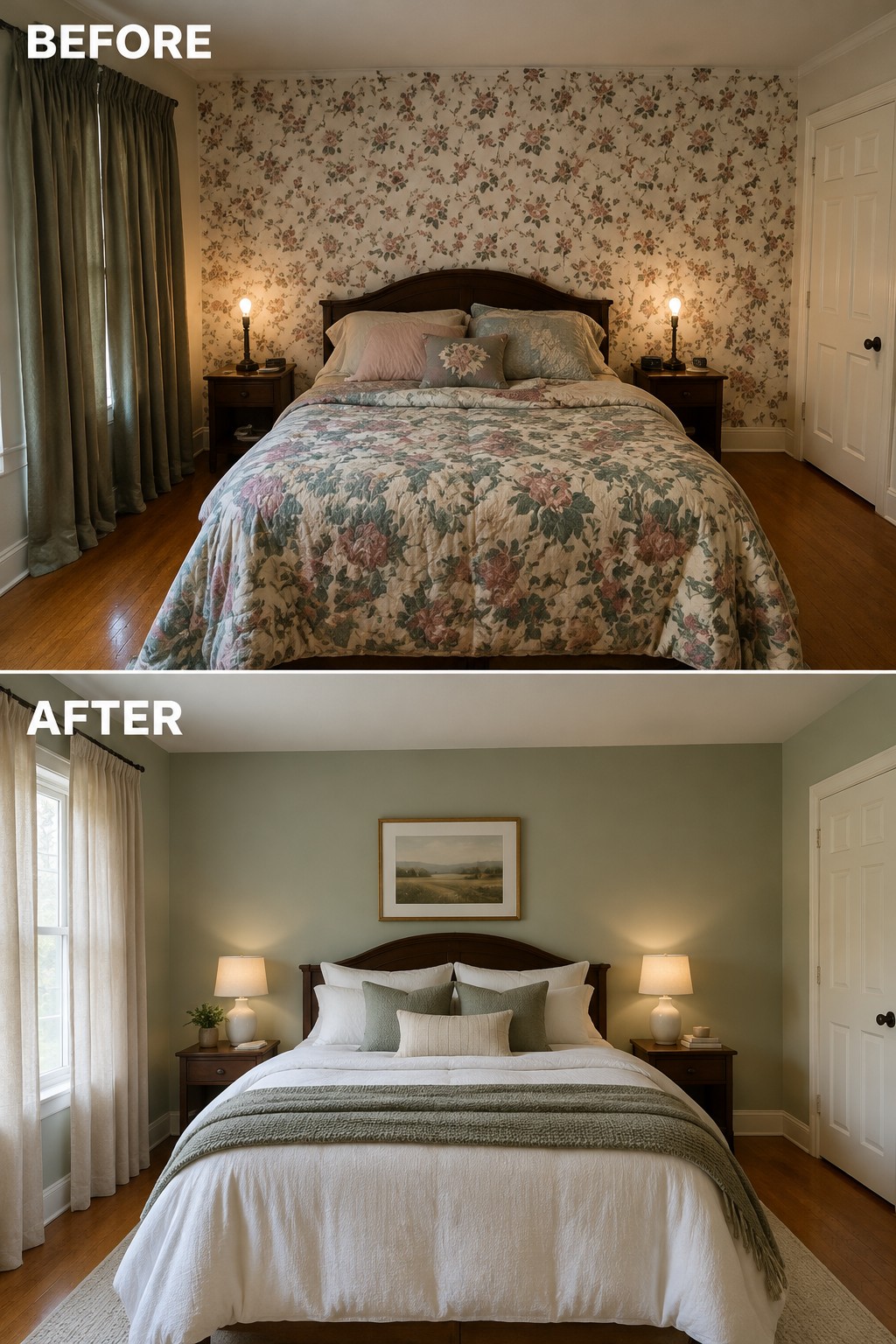
The busy floral wallpaper and matching bedding made this bedroom feel crowded. Replacing them with muted green walls and simple white bedding gives the room a calmer look without changing its basic layout.
In an older home, paint and fresh bedding can make a noticeable difference without major work. Choose a wall color you can repeat in a throw or pillow, and keep the patterns limited so the room still feels comfortable.
Make A Dining Room Feel More Finished
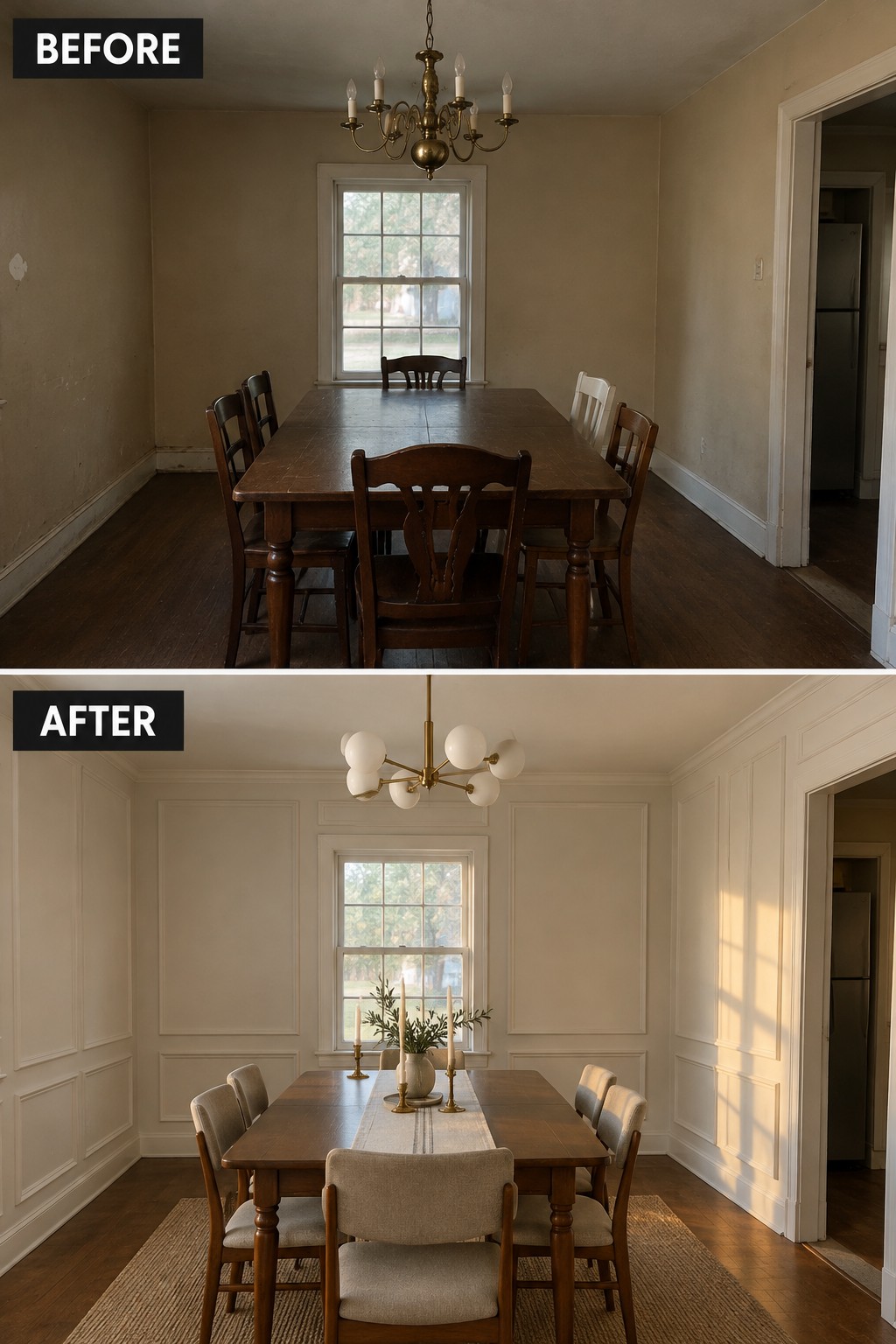
The room feels more put together once the walls have simple trim and a rug defines the dining area. Those changes give the existing table a clearer place in the room without requiring a new layout.
In an older dining room, adding wall molding and a rug can make plain walls and bare floors feel more intentional. Keep the trim simple and choose a rug large enough for chairs to stay on it when pulled out.
Update The Fireplace Wall With Paint
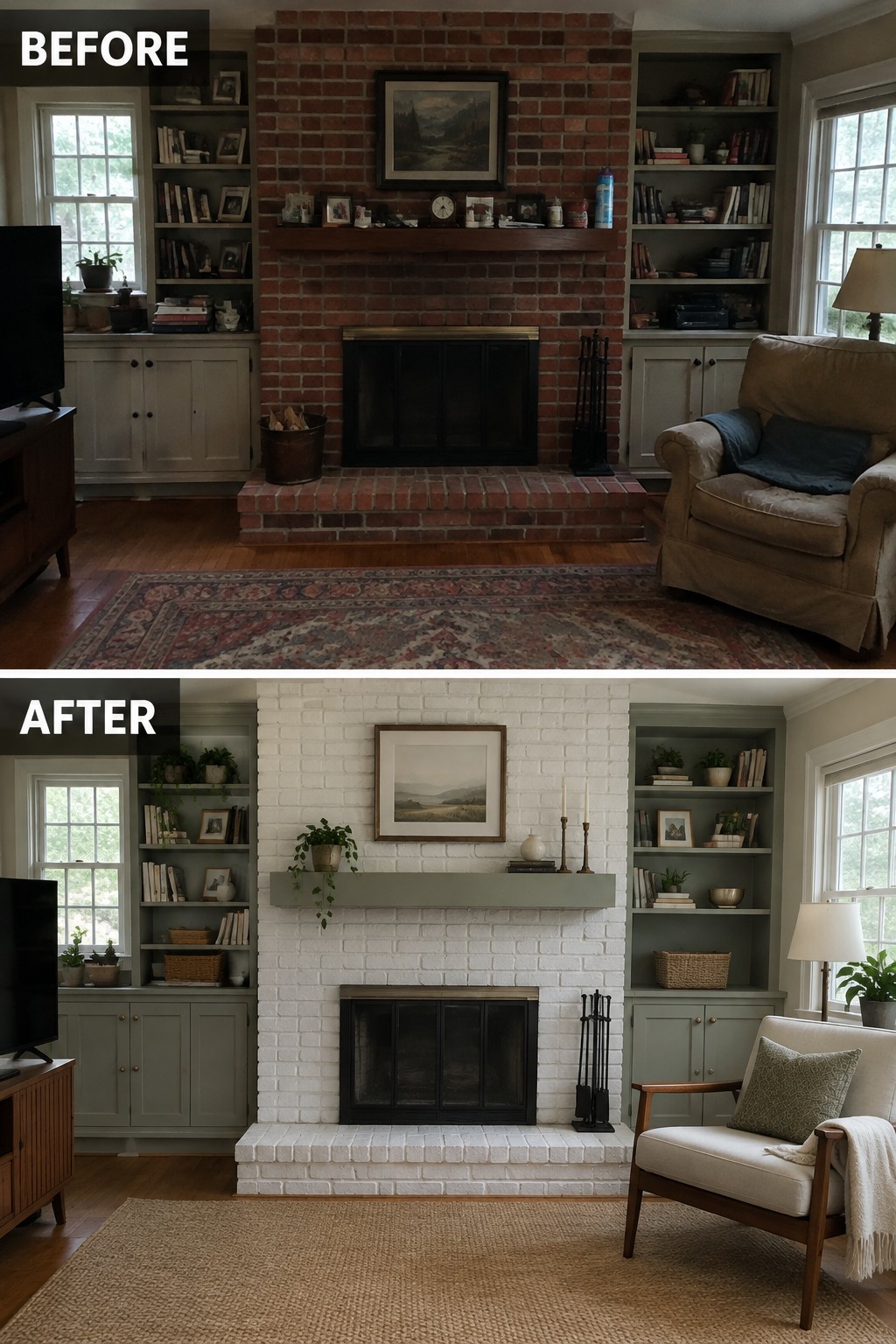
Painting the brick fireplace white gives this living room a lighter, more settled look without changing the room’s layout. The fireplace becomes a clear focal point, while the muted mantel helps it feel at home in an older house.
If you have a brick fireplace that feels dark or dated, try a sample on an inconspicuous spot before painting the whole surface, since brick absorbs paint differently from drywall. Keep the mantel simple so the fireplace remains the main feature.
Make A Basement Living Room Feel More Finished
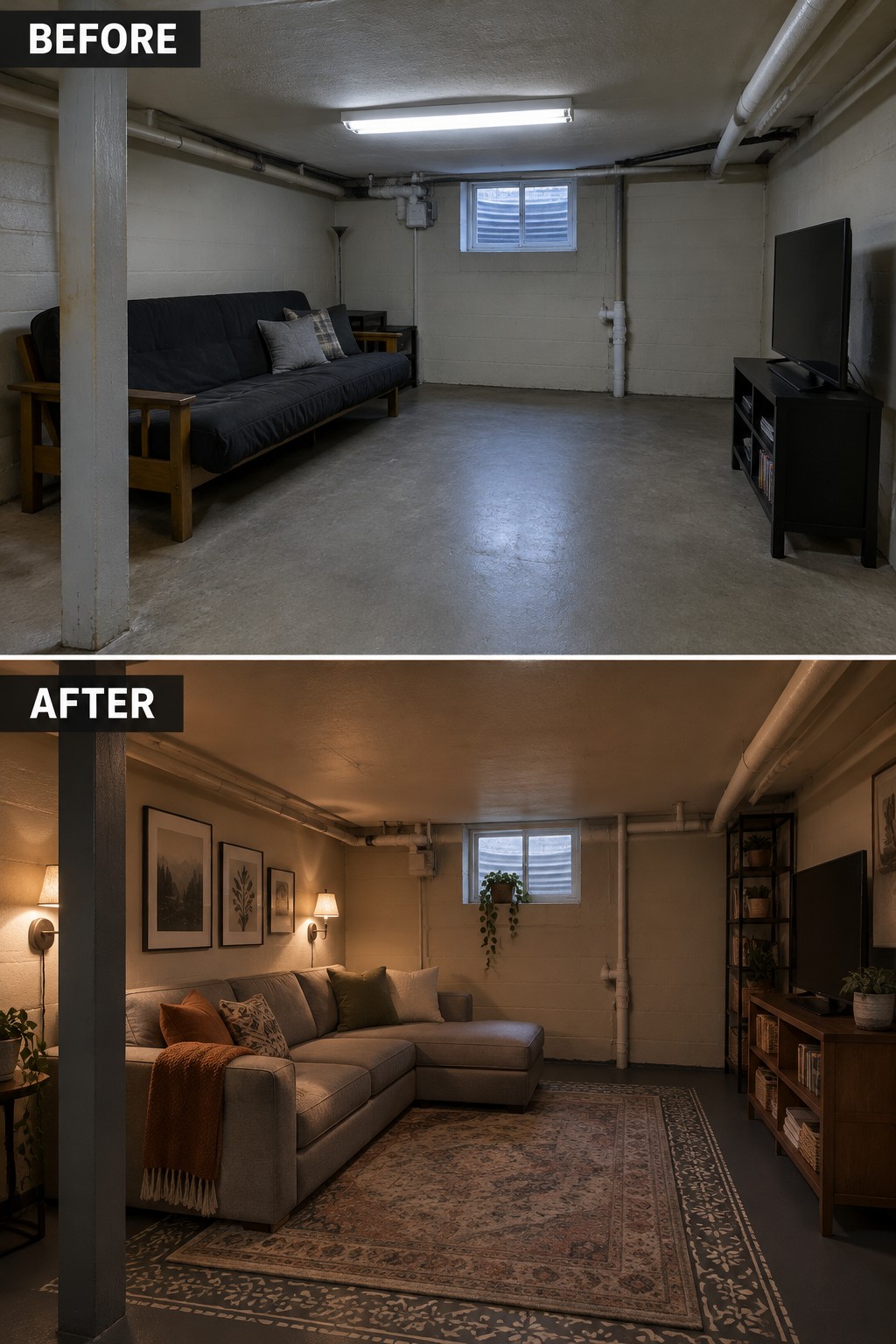
The basement went from an open, bare room to a more comfortable living area, with a large rug helping define the seating zone. That simple change gives the room a clear purpose without needing major construction.
In a basement with concrete floors, start with a rug large enough to sit under the main furniture, then arrange the seating so people can move around it easily. Check that the rug suits the room’s dampness and traffic before choosing one.
Organize A Pantry With Simple Storage
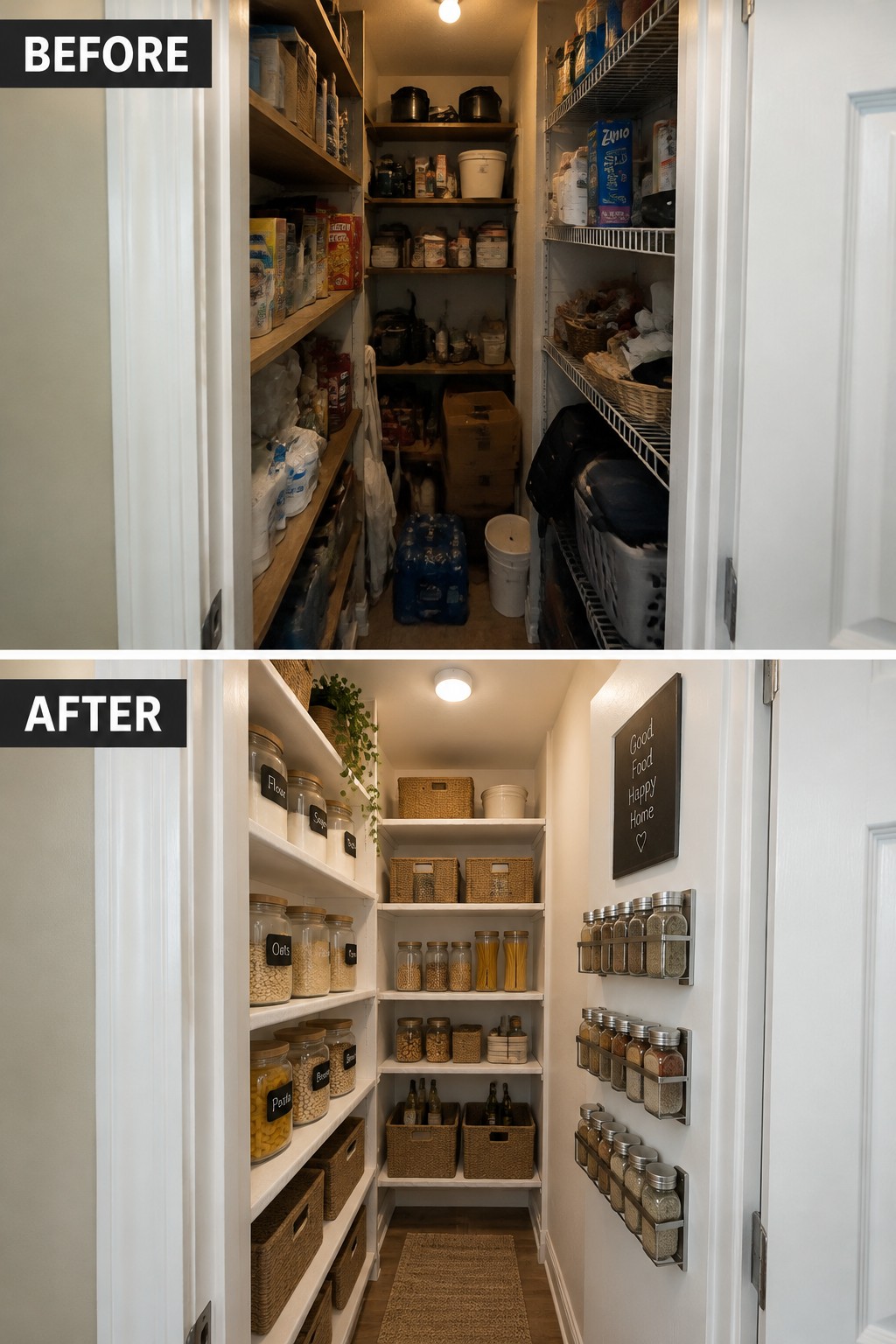
Replacing cluttered shelves with labeled jars and baskets makes a pantry easier to use without changing its layout. Grouping similar foods together also helps you see what you have and avoid buying duplicates.
Start by clearing out expired items, then choose containers that fit your shelves and the foods you use most. In a narrow pantry, keep everyday staples within easy reach and avoid filling every shelf so there’s still room to move things around.
Turn A Small Nook Into A Useful Home Office
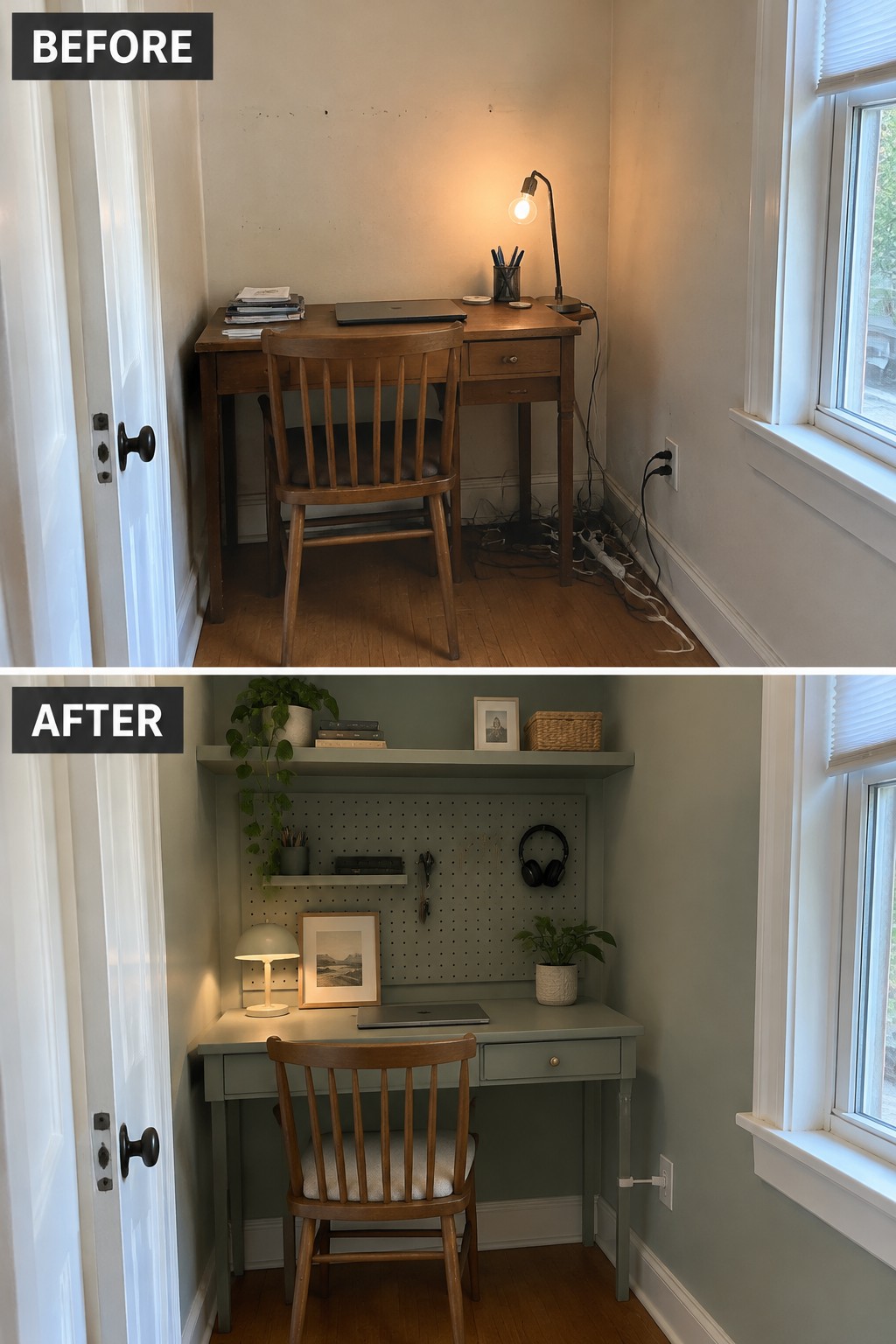
A cramped desk area can work much better when it has a clear setup and storage. Here, a simple desk and chair are paired with a pegboard, giving everyday supplies a place to go and freeing up the desktop.
This idea suits a spare corner or small room where a full office is not practical. Add a wall organizer above a desk that fits the space, and keep only the items you use often within reach so the nook stays easy to work in.
Give An Old Staircase A Cleaner Look
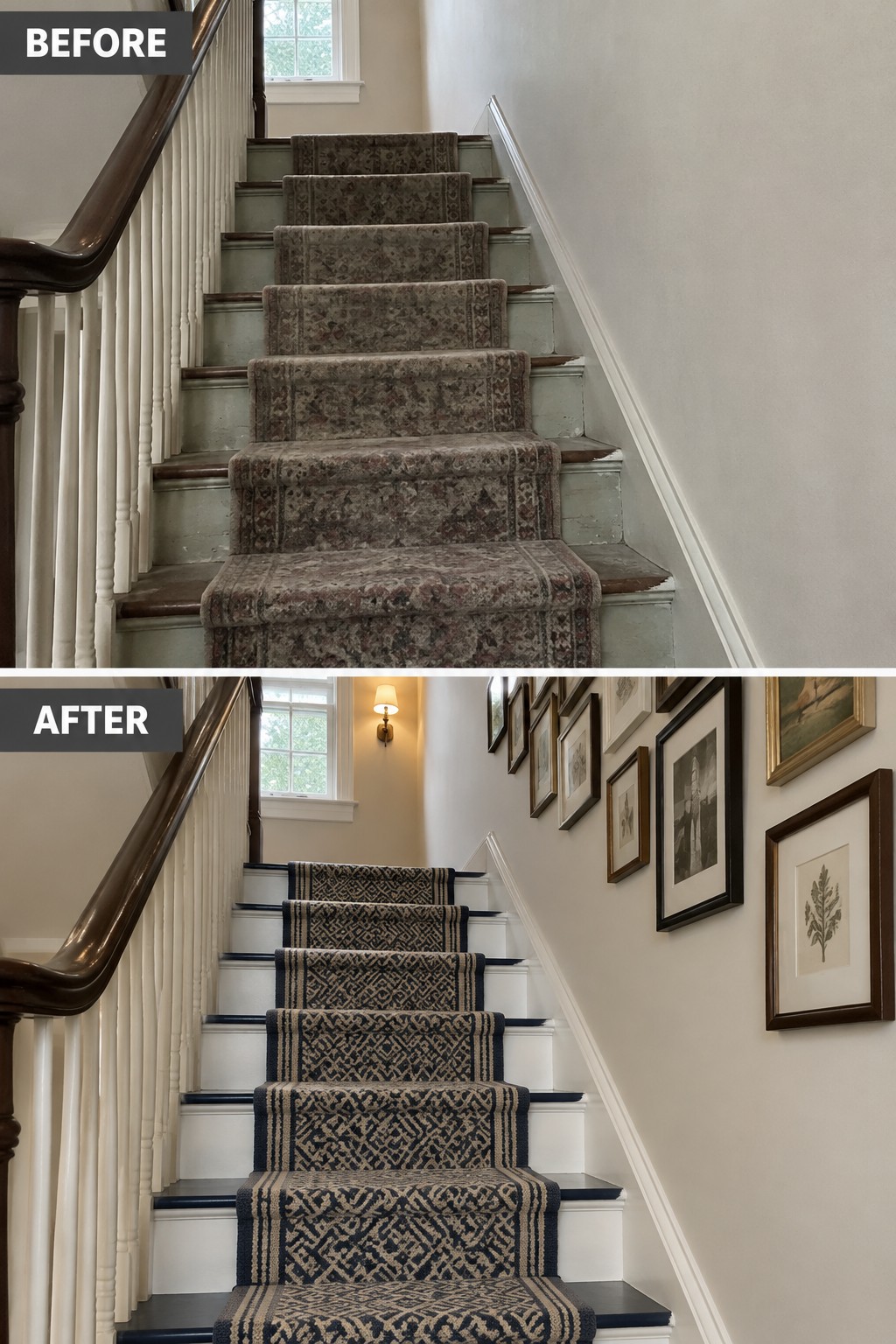
Replacing a worn stair runner can make an old staircase feel cared for without changing its structure. Here, a fresh patterned runner and crisp white risers update the stairs while keeping their traditional character.
For a similar refresh, measure each step carefully and choose a runner that suits the width of the stairs. A durable, patterned style can hide everyday wear, but secure installation matters, especially on a busy staircase.
Replace Worn Bathroom Surrounds With Simple Tile
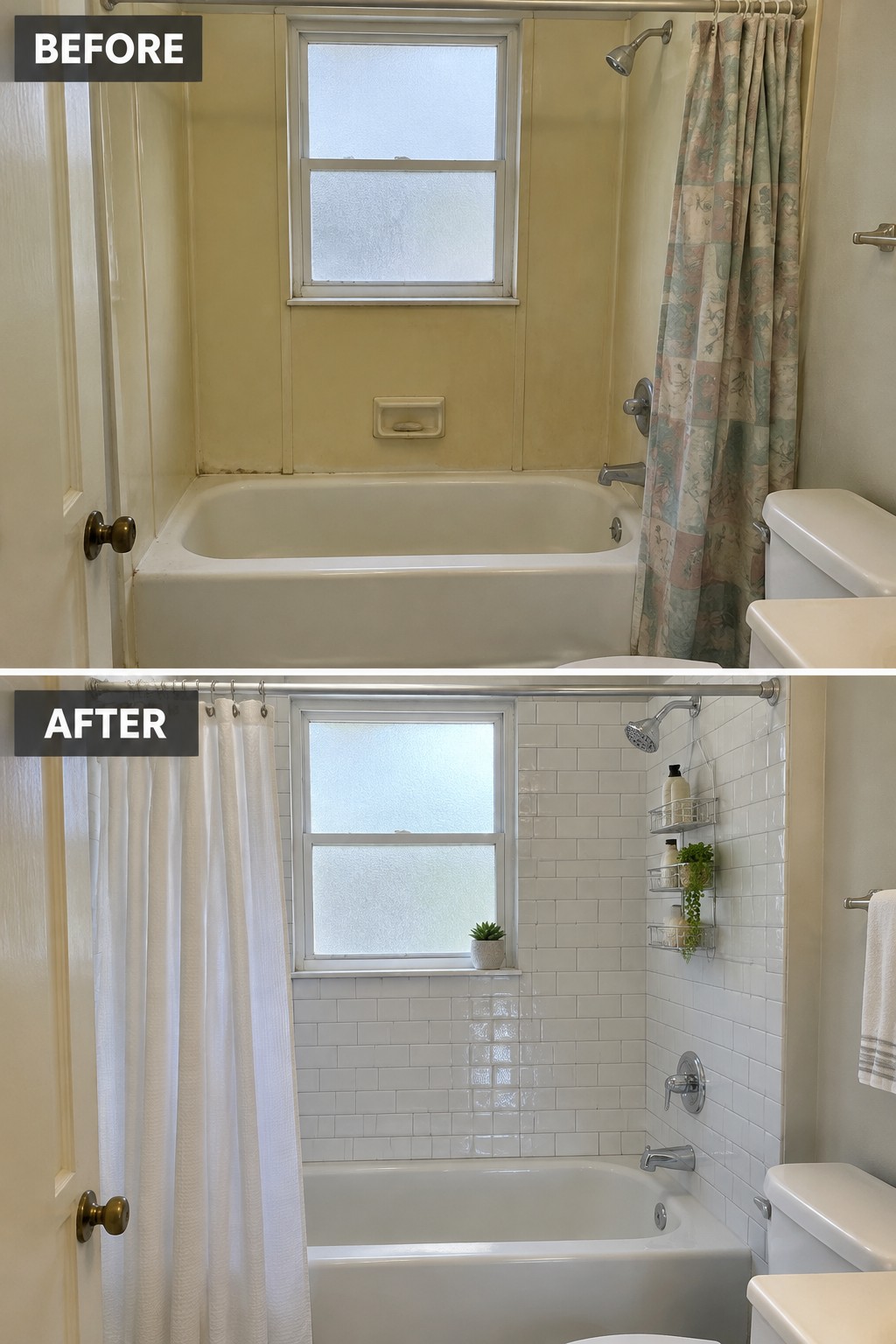
The old tub and its location stayed in place, but replacing the yellowed wall panels with white tile made the bathroom feel much cleaner and more current. It’s a practical update when the fixtures still work and a full remodel isn’t in the budget.
For a similar project, keep the tub and plumbing where they are and focus on the surround. Choose a straightforward tile that suits the age and scale of the room, and check that the walls are properly waterproofed before installation.
Make A Closet Easier To Use With Simple Storage
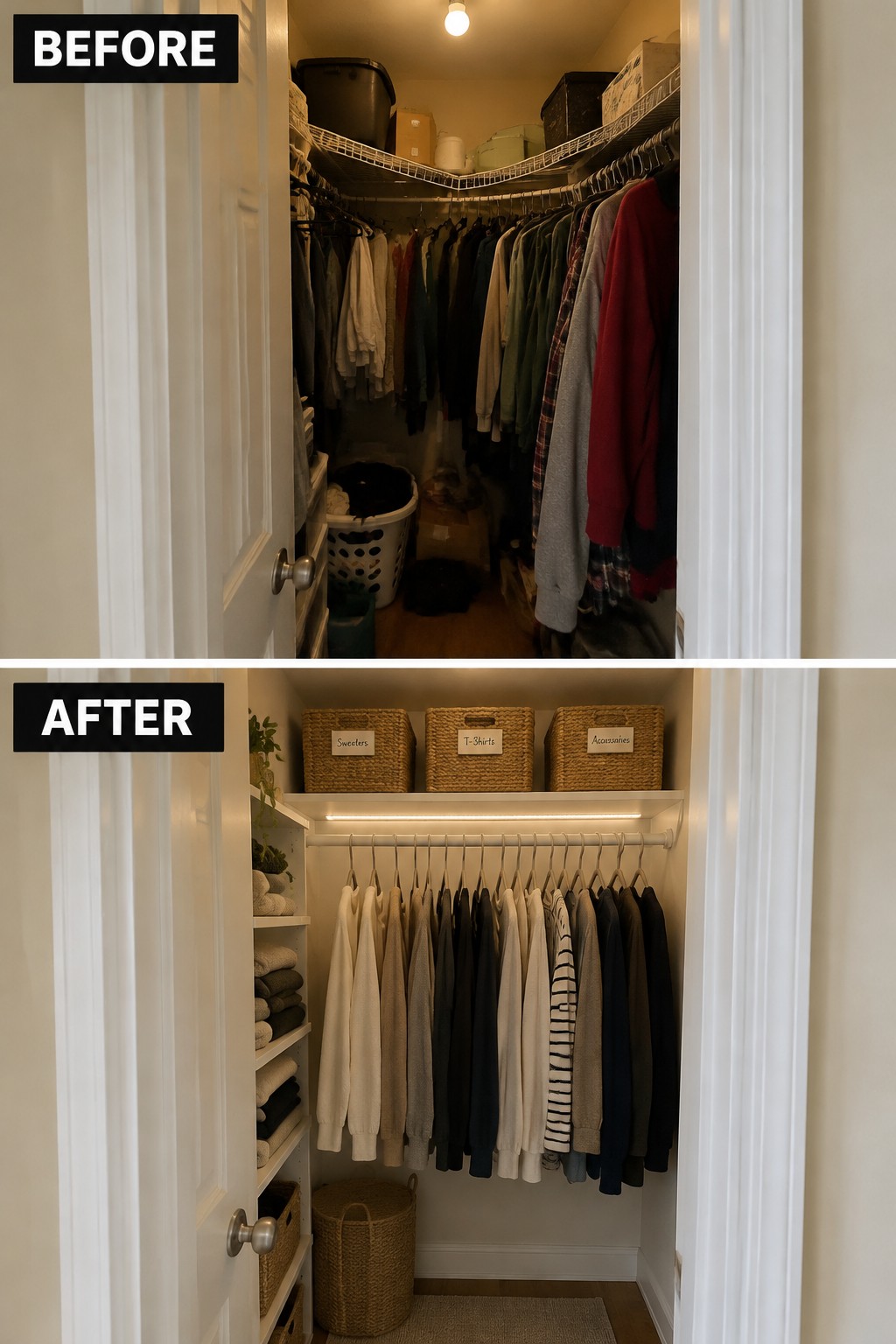
A crowded closet is harder to use than it needs to be. Here, adding a shelf with labeled baskets and a clear hanging area gives everyday clothes a place to go without changing the room’s layout.
In a small closet, start by sorting out what you actually wear, then add storage that fits the space. Matching baskets can keep smaller items together, while a short shelf for folded clothes makes better use of vertical space. Avoid packing the hanging rod too tightly so clothes remain easy to reach.
Refresh A Breakfast Nook With Built-In Seating
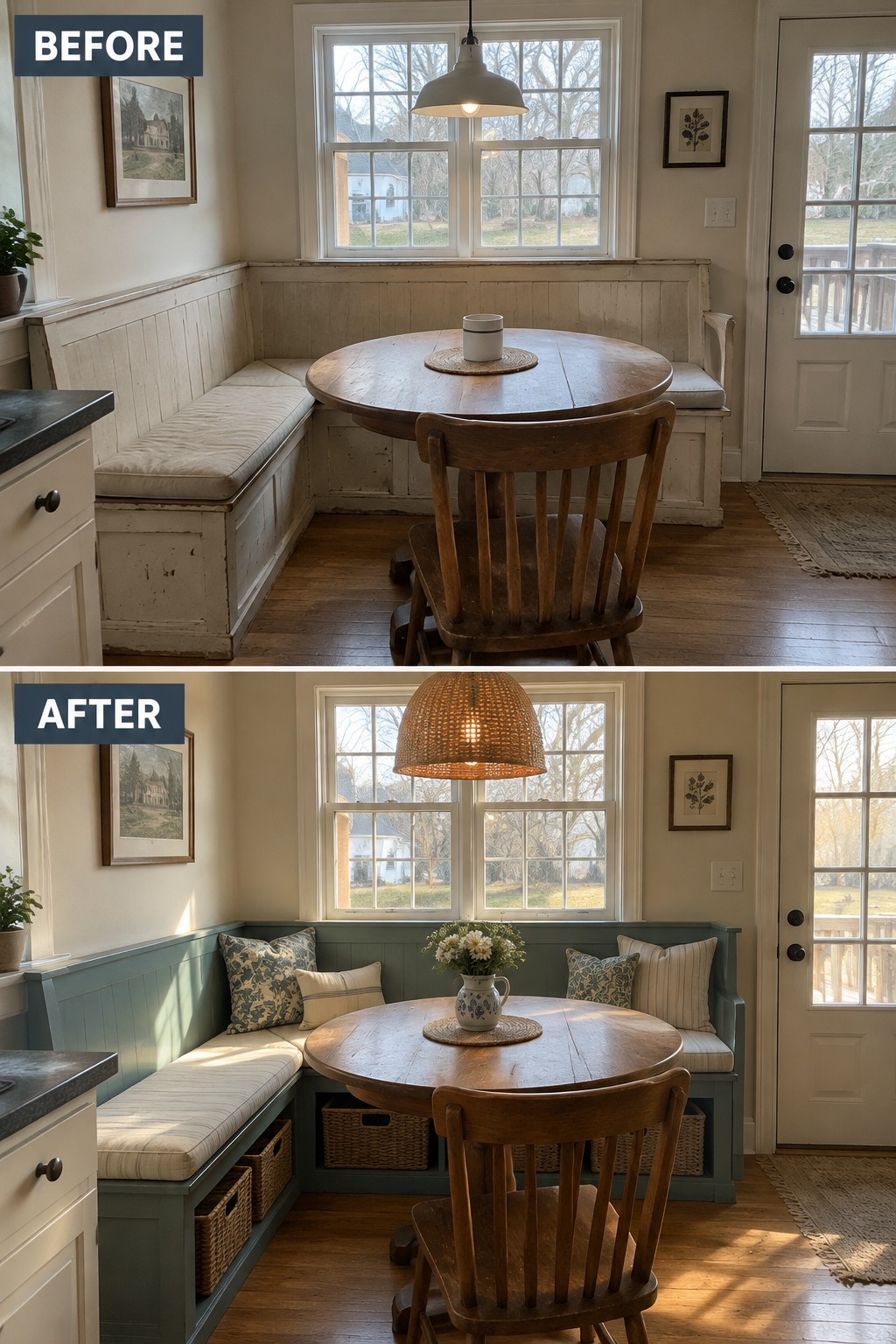
An older breakfast nook can feel tired even when the layout still works. Painting the built-in bench a muted green and adding cushions and baskets makes this one feel more cared for without changing its footprint.
This idea suits a small kitchen corner where a regular dining set would take up too much room. Keep the bench, add a few washable cushions, and use baskets below for things you want close at hand. A fresh coat of paint can go a long way.
Refresh A Bathroom Vanity Without Replacing The Layout
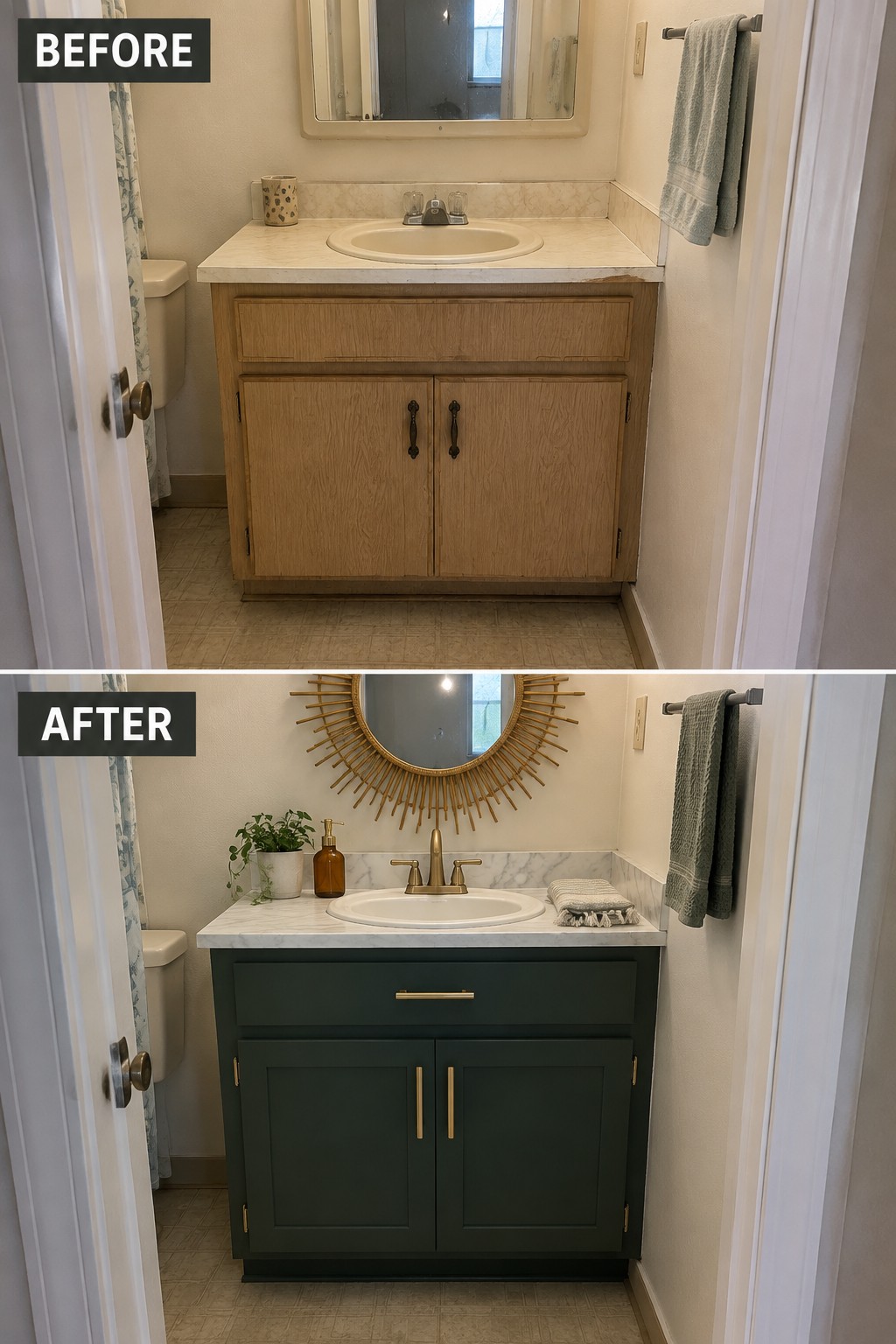
The old vanity made the bathroom feel dated, but the sink and fixtures stayed in place. A fresh coat of deep green paint and updated hardware gave the existing cabinet a cleaner look without changing the room’s layout.
This is a practical approach when the vanity is still sturdy and the plumbing works well. Prep the cabinet carefully, use paint made for cabinetry, and choose hardware that fits the existing holes when possible to keep the job simpler.
Make Built-In Shelves Look More Organized
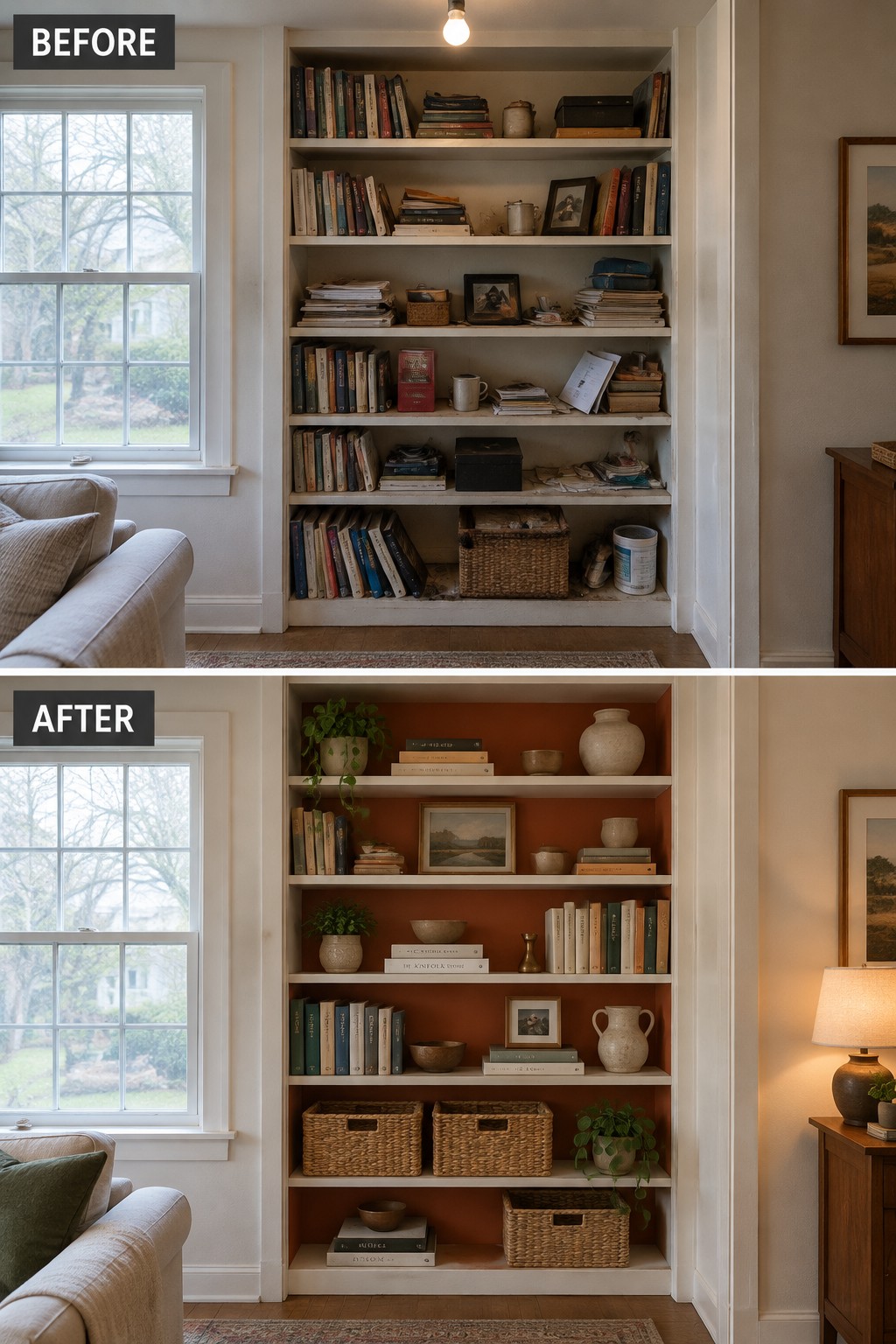
A crowded bookcase can make a room feel untidy, even when there is plenty of storage. In this makeover, the shelves are painted a warm color and the books are grouped more selectively, giving the built-in a clearer, calmer look without changing its structure.
Try the same idea with shelves you already have: remove anything you do not need, leave some open space, and repeat a few colors or materials. Baskets can hide smaller items, but avoid filling every shelf just because there is room.
Turn A Spare Closet Into A Home Office
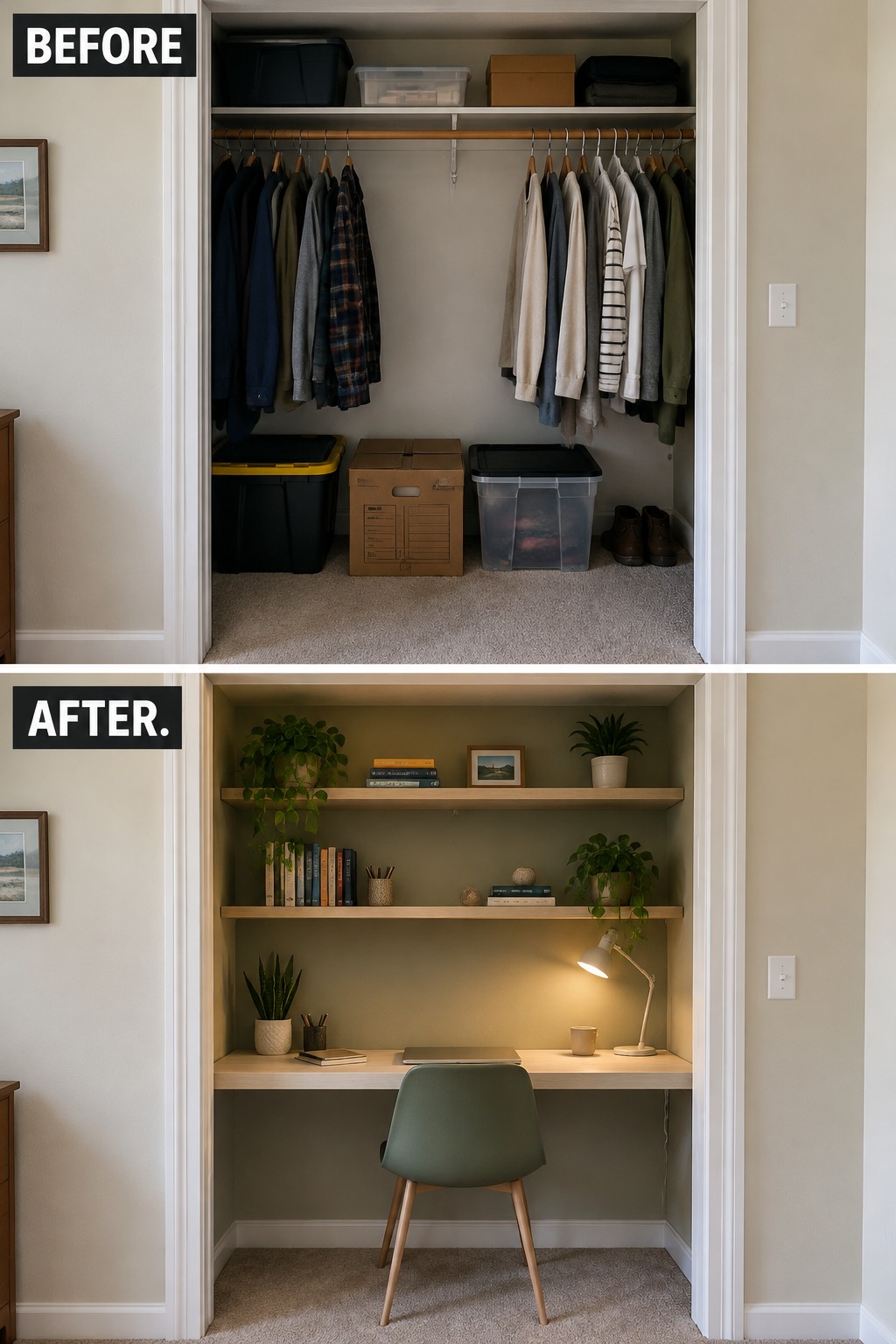
Replacing a crowded closet with a compact desk area gives an unused spot a clear purpose. The shelves provide room for books and supplies, while the desk creates a small work surface without changing the room’s layout.
This idea works well in a bedroom or hallway where a full office would take up too much space. Clear the closet first, then plan the desk height and shelf spacing around what you actually need. Keep the chair able to slide in easily so the nook stays practical.
Use A Rug To Define The Living Room
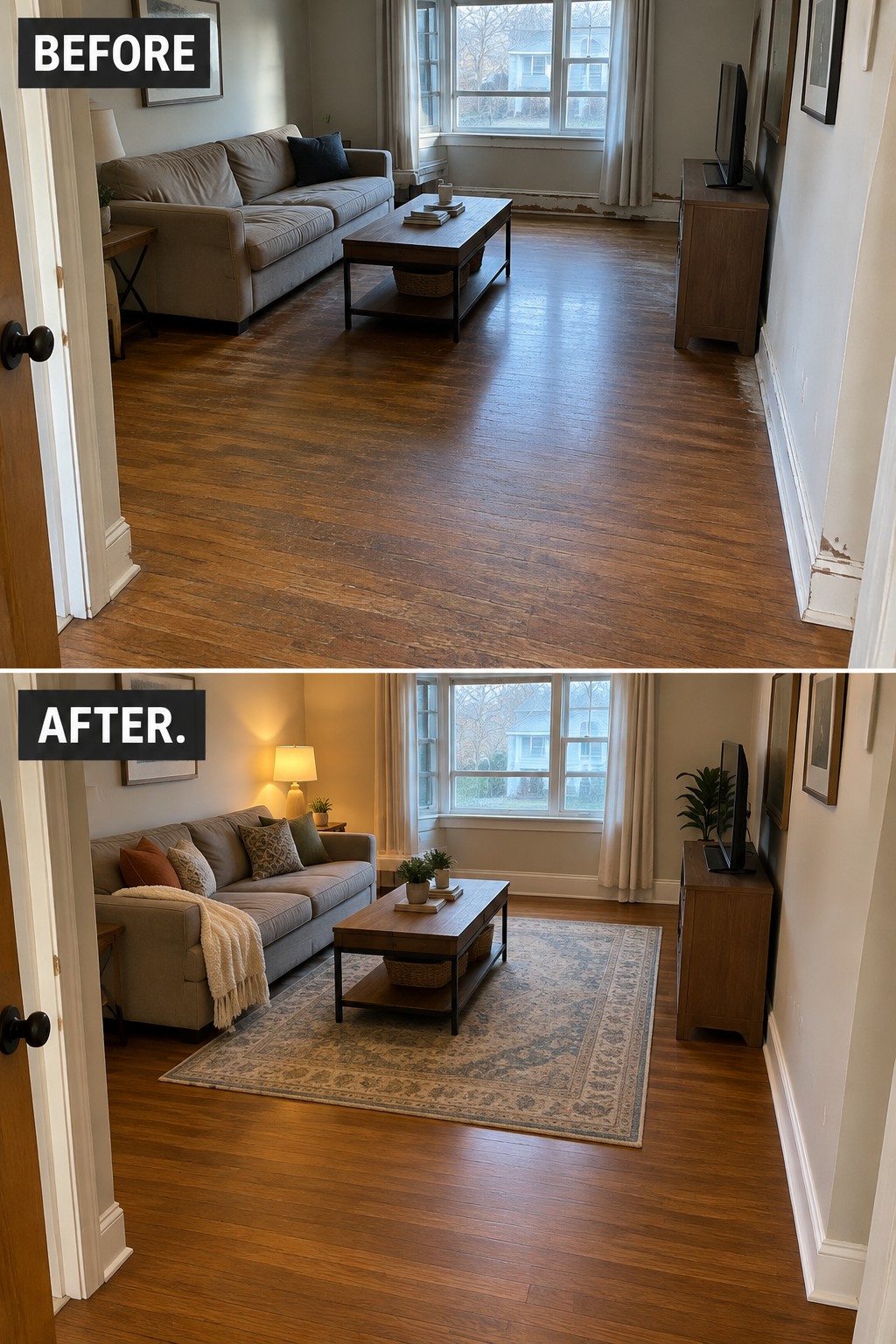
The large rug gives this living room a clear seating area and makes the open floor feel more intentional. In the earlier setup, the furniture sat on bare wood, so the room felt less settled. The rug ties the sofa and coffee table together without changing the layout.
This idea works well in older rooms where you want to keep the original floors visible. Choose a rug large enough for the main furniture to sit on it, and leave a border of floor around the edges so the room does not feel crowded.
Turn A Bare Entryway Into A Useful Drop Zone
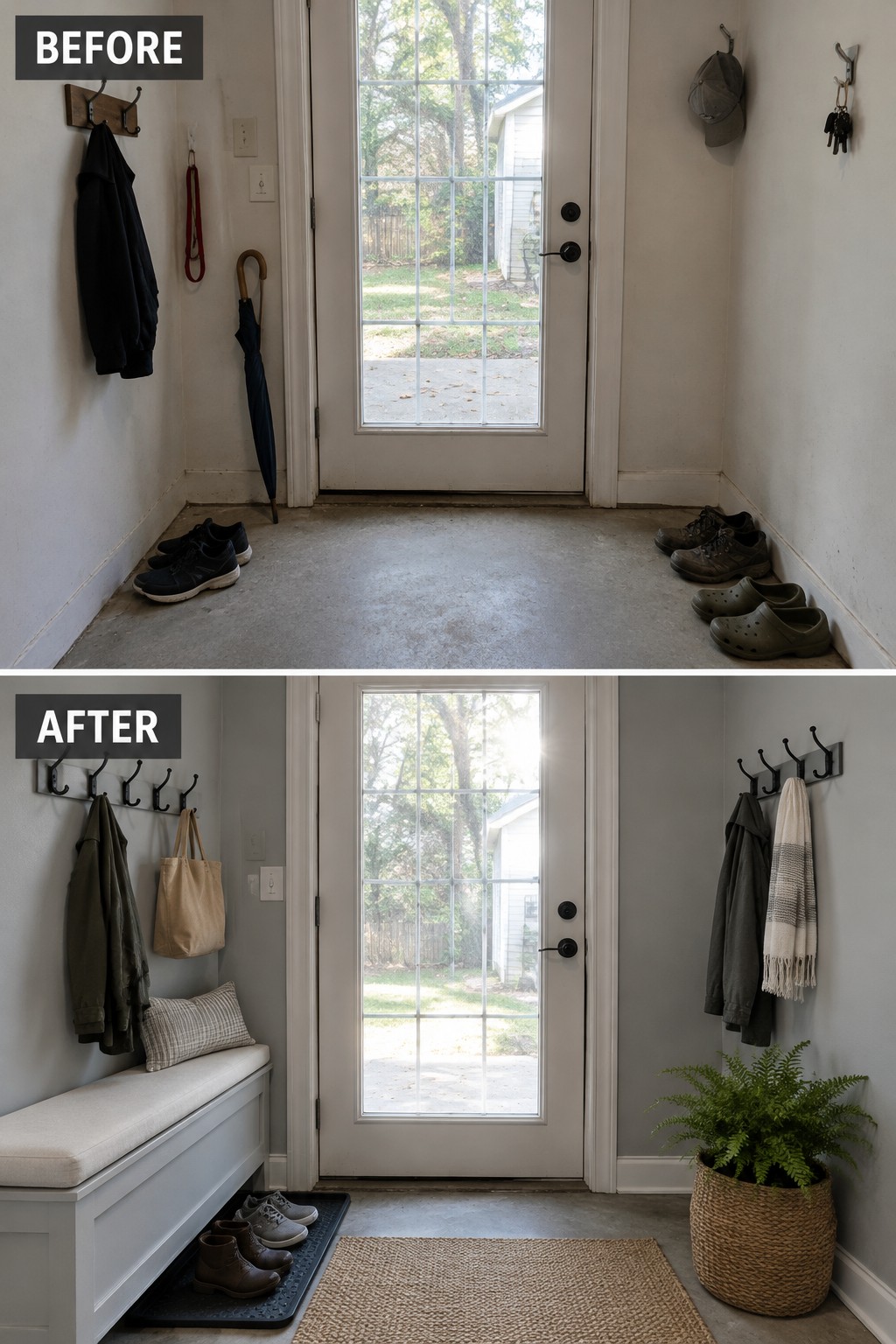
The entryway works better when it has a clear place for everyday things. Here, wall hooks and a storage bench replace scattered shoes and coats, while the bench gives people a spot to sit while taking off their shoes.
In a narrow entry, use hooks for the items you reach for most and choose a bench that fits without blocking the walkway. A shoe tray underneath helps keep dirt contained, and a few hooks can make a small space easier to manage without changing the layout.
Frequently Asked Questions
Q: What’s the best place to start if I can only afford one small update?
A: Pick the room or feature you notice every day, then tackle a change with a visible payoff, like fresh paint, new cabinet hardware, or better lighting. A tidy, finished-looking entry can make the whole house feel more cared for.
Q: How do I make old woodwork look better without replacing it?
A: Clean it first, then see whether a gentle touch-up or fresh coat of paint is enough. If the wood has peeling paint or damaged areas, test your plan in a hidden spot before working across the whole room.
Q: Can I update an old kitchen without changing the cabinets?
A: Yes. Painting the cabinet doors, swapping the knobs, and adding a simple backsplash can make a big difference while keeping the existing layout. Start with clean, sound cabinets so your updates have a good surface to cling to.
Q: How can I keep a budget makeover from turning into a bigger project?
A: Set a spending limit and finish one area before starting another. Leave sound walls, floors, and built-ins alone, and fix small maintenance issues before covering them with cosmetic updates.
