

Homes from the 1930s often have details worth keeping, even when the rooms feel dated or no longer work well for daily life.
I like renovation ideas that improve how a home functions without sanding away the character that makes it feel rooted in its time.
Thoughtful changes to storage, finishes, and layout can bring more ease to everyday routines while letting original features remain part of the story.
The best updates feel clear but not forced, with old and new details working together rather than competing.
I’d save the ideas that suit the home’s original character and adapt them to what needs attention first.
Make A Plain Living Room Feel Finished

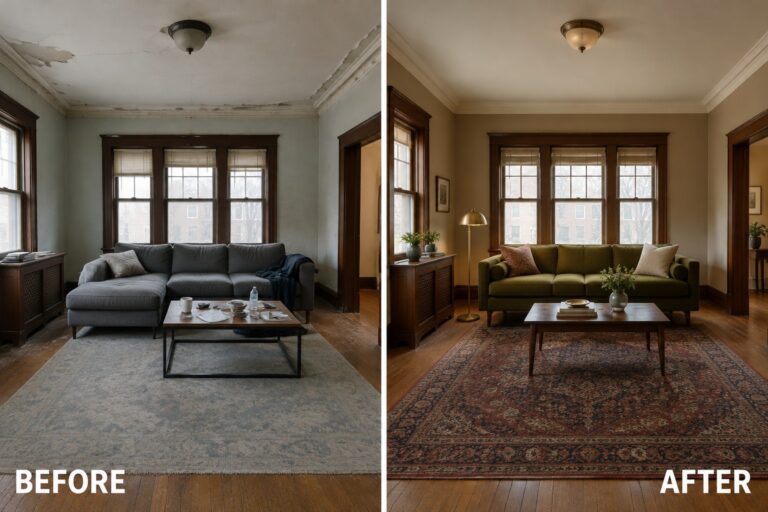
The room feels much more settled once the damaged ceiling and worn surfaces are repaired and the seating area has a clear focal point. In the finished room, a patterned rug defines the space around the sofa and coffee table, rather than leaving the furniture scattered across a bare floor.
In a 1930s home, a rug can help a living room feel complete without hiding its period character. Choose a size that reaches under the front legs of the sofa, and leave enough open floor around the edges for easy movement.
Turn A Recessed Cabinet Into Built-In Shelving

The old cabinet had useful space, but its peeling backing and wire shelves made it feel more like a catchall than part of the room. Replacing them with simple wood shelves and a painted beadboard back gives the recess a finished look while keeping the storage.
This idea suits older homes with an existing wall niche or cupboard. Keep the shelves in proportion to the opening, and leave some room between books and display pieces so the shelves stay useful rather than crowded.
Make The Fireplace The Room’s Main Feature
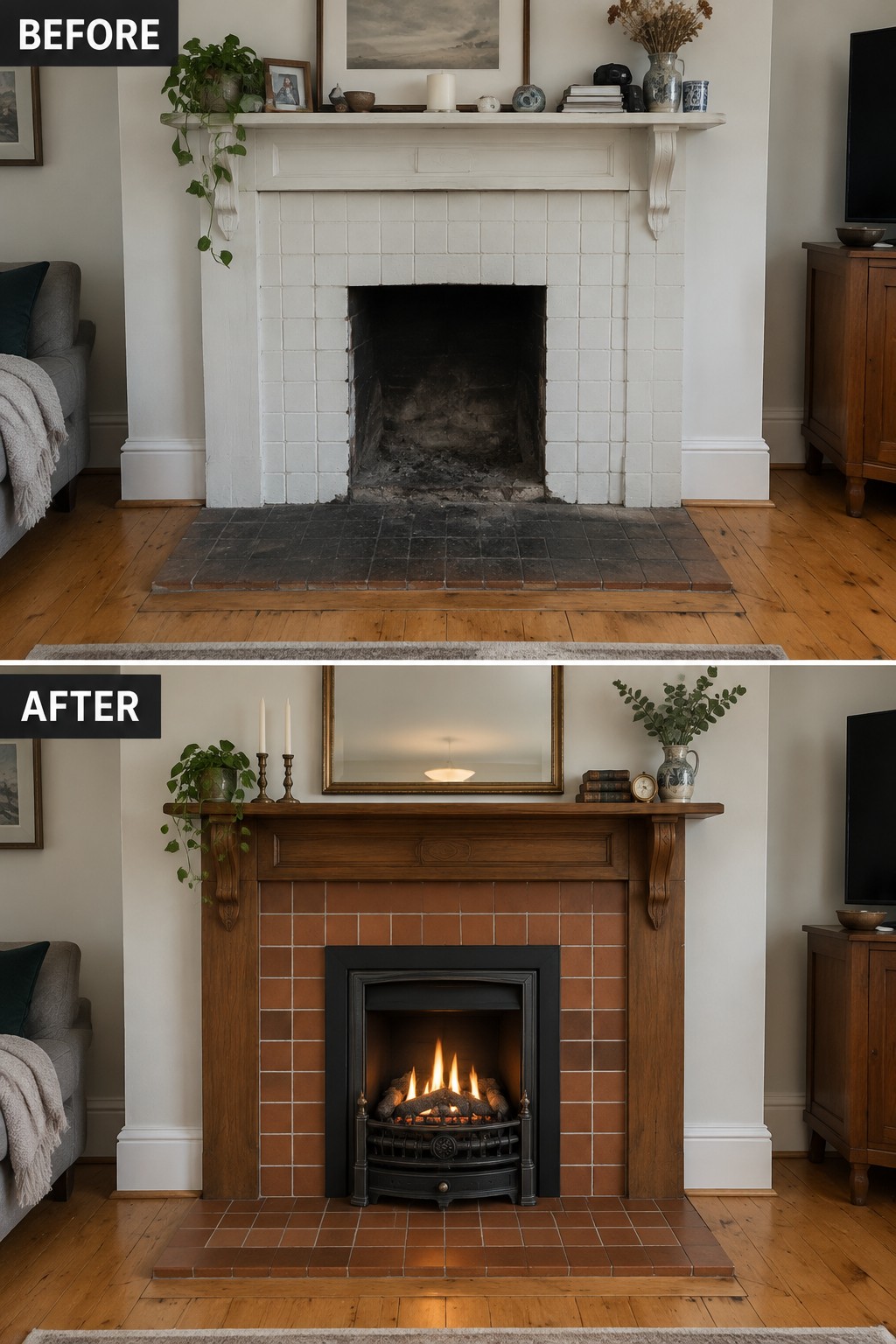
A tired fireplace can make an older room feel unfinished. Here, a dark wood mantel and a working firebox replace the plain, worn fireplace, giving the room one clear focal point while keeping its traditional character.
In a 1930s home, keep the update in scale with the original architecture. A simple mantel and period-appropriate tile can refresh the fireplace without making it look out of place, and a properly fitted insert can make it more practical to use.
Add Open Shelving To A Period Kitchen

Replacing rows of dated upper cabinets with open shelving makes a small older kitchen feel less closed in while keeping everyday dishes easy to reach. Here, the shelves sit beside the original window, leaving it as the room’s natural focal point.
In a 1930s home, try this on one section of cabinetry rather than removing every upper cabinet. Keep the shelves tidy and useful, and retain enough closed storage for items you would rather keep out of sight.
Give The Dining Room A More Practical Layout
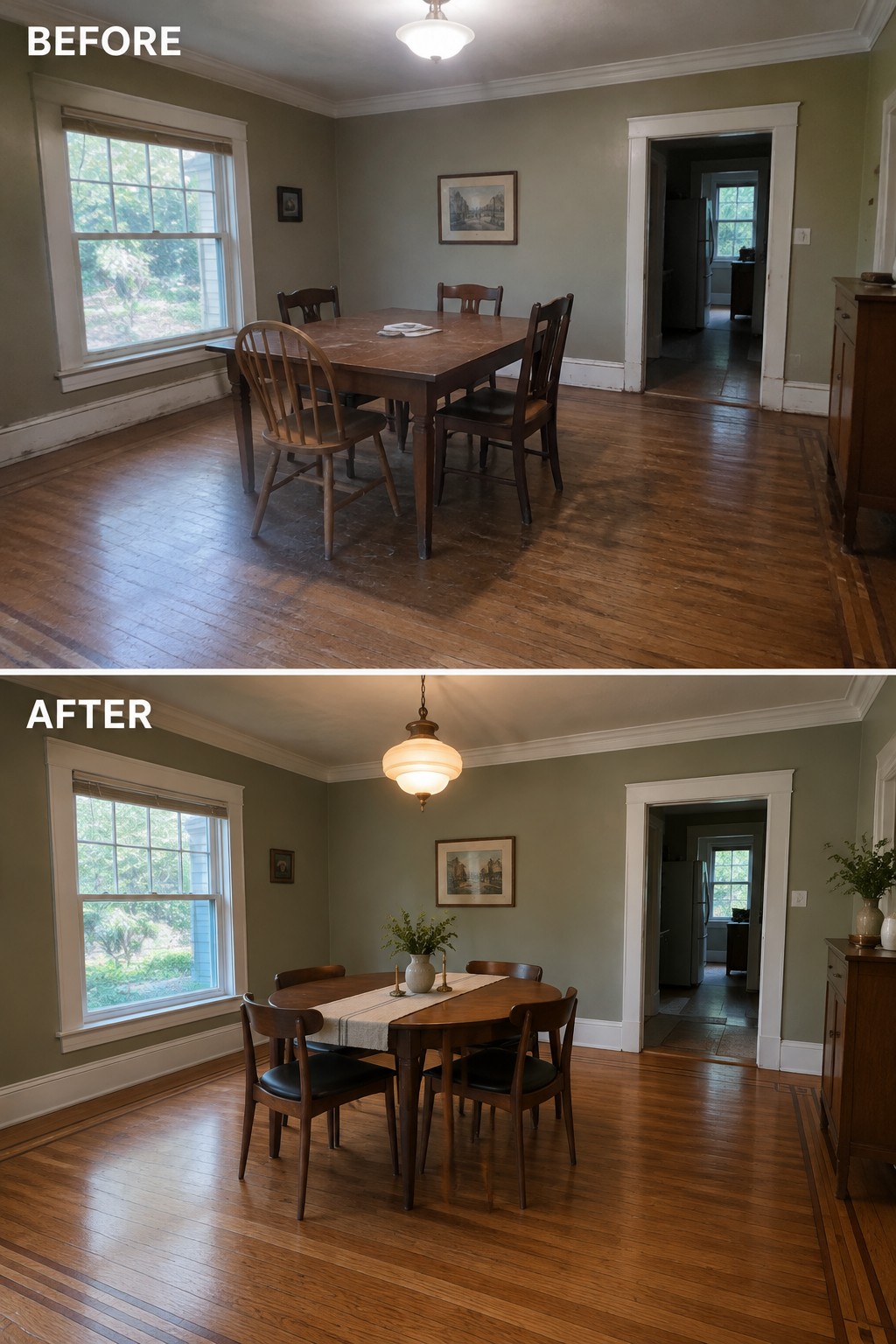
The old dining room felt awkward partly because its large rectangular table took up so much floor space. A smaller round table makes it easier to move around and gives the room a more comfortable setup for everyday meals.
This idea works well in a narrow dining room or one that also serves as a passage between rooms. Choose a table that leaves clear walking space, and keep the chairs easy to pull out.
Refresh Old Windows Without Losing Their Character
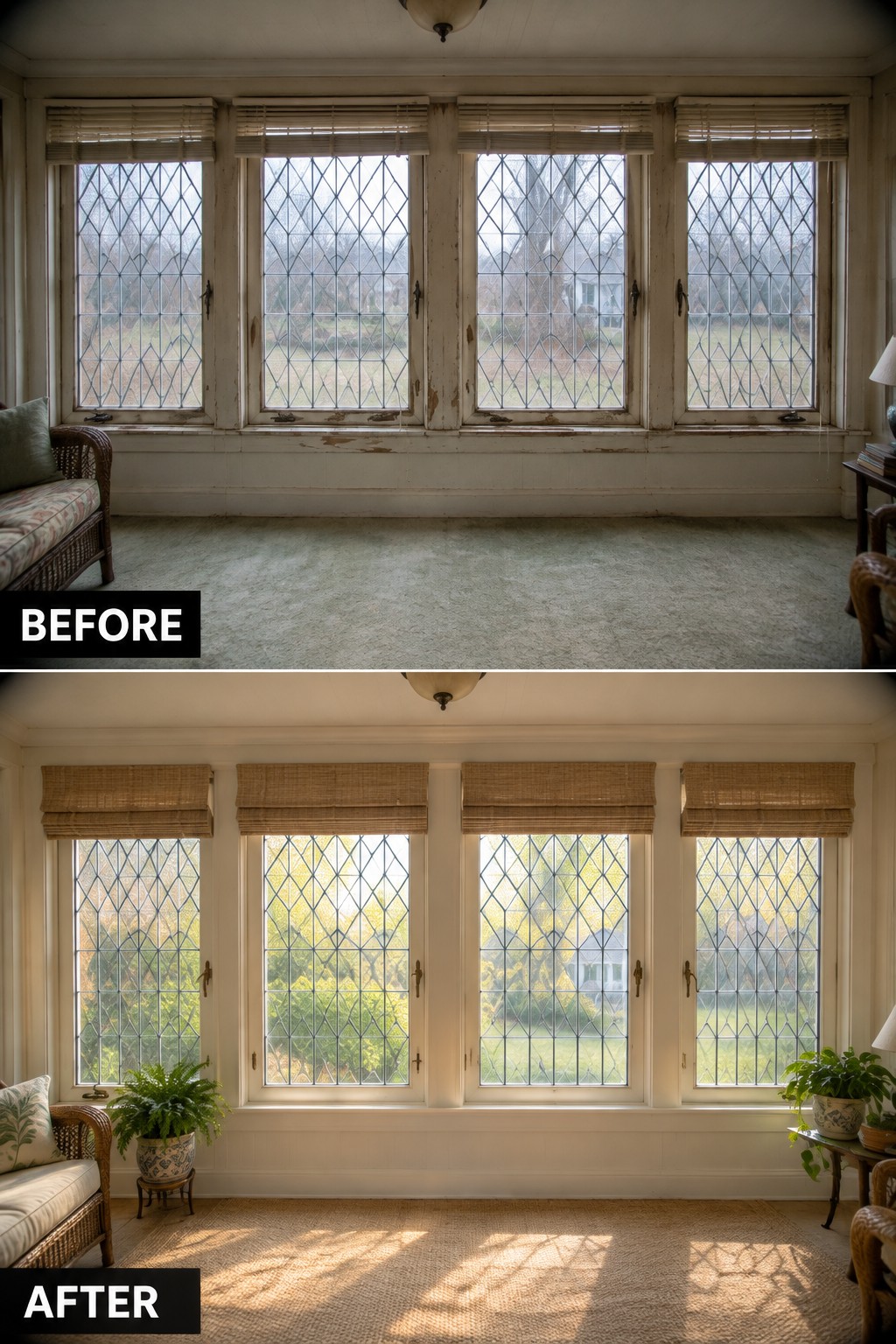
The original windows are a strong period detail, but worn frames and tired blinds make the room feel neglected. Cleaning up and repainting the wood, then fitting simple woven shades, keeps the leaded glass as the focus while making the whole room feel cared for.
In a 1930s home, it is often worth repairing original windows rather than replacing them. Choose shades that sit neatly above the glass, and keep their color quiet so the window pattern still shows.
Restore Period Style In A Small Bathroom
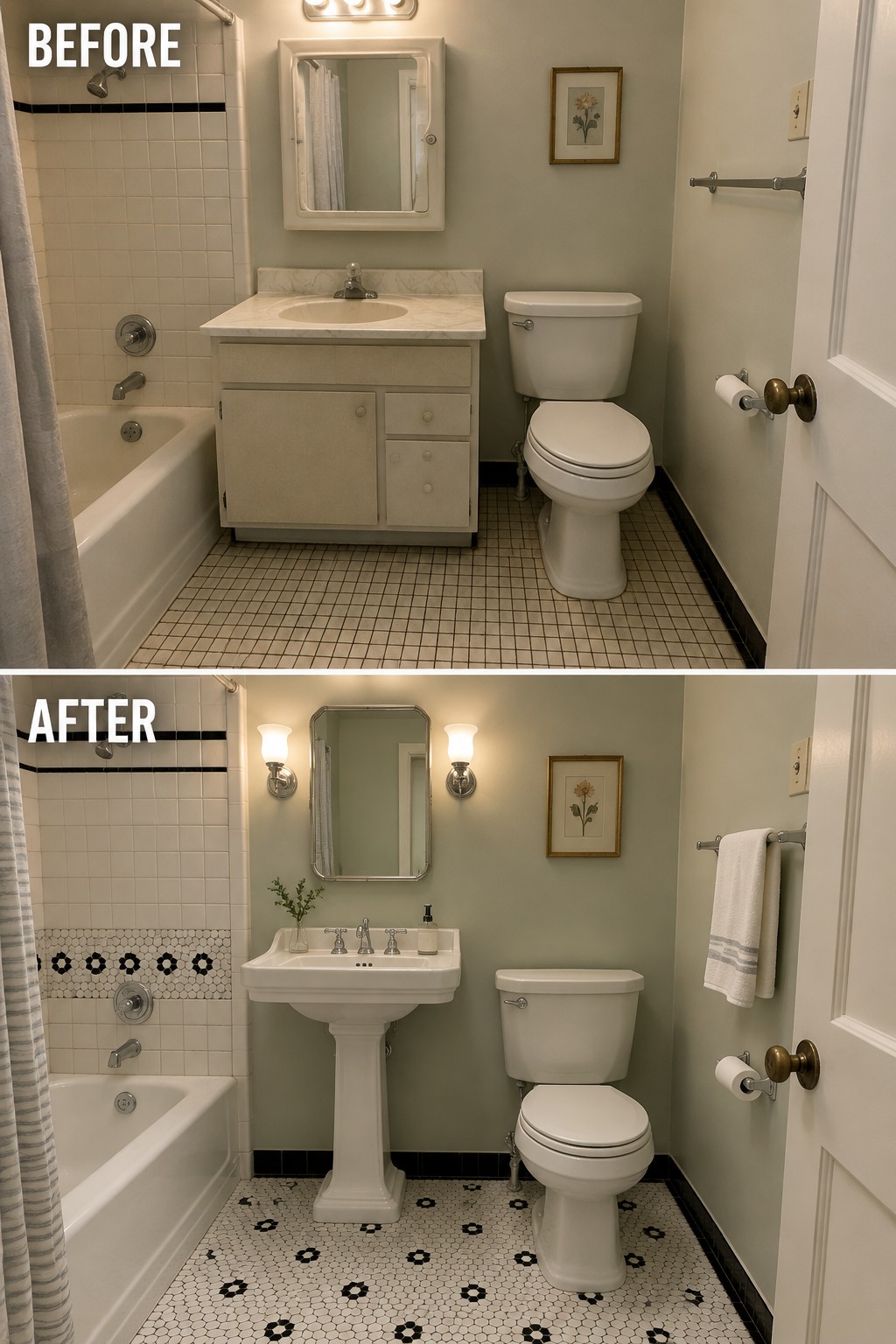
Replacing the bulky vanity with a pedestal sink brings back a simple, old-fashioned feel that suits a 1930s home. The patterned floor gives the room a clear period detail without changing its basic layout.
In a small bathroom, a pedestal sink can free up floor space and make the room feel less crowded. Keep the surrounding finishes simple, and choose a classic tile pattern that works with the home’s age rather than competing with it.
Give A Narrow Hallway A Finished Look

The hall feels more complete when the floor has a clear pattern instead of a plain runner. In this entry, patterned tile brings character to the narrow space while keeping the walls and door familiar.
In an older home, encaustic-style tile can suit the period details and make a hardworking entry easier to clean. Keep the pattern in proportion to the hallway, and choose colors that work with the existing woodwork.
Replace Worn Stair Carpet With A Period-Style Runner
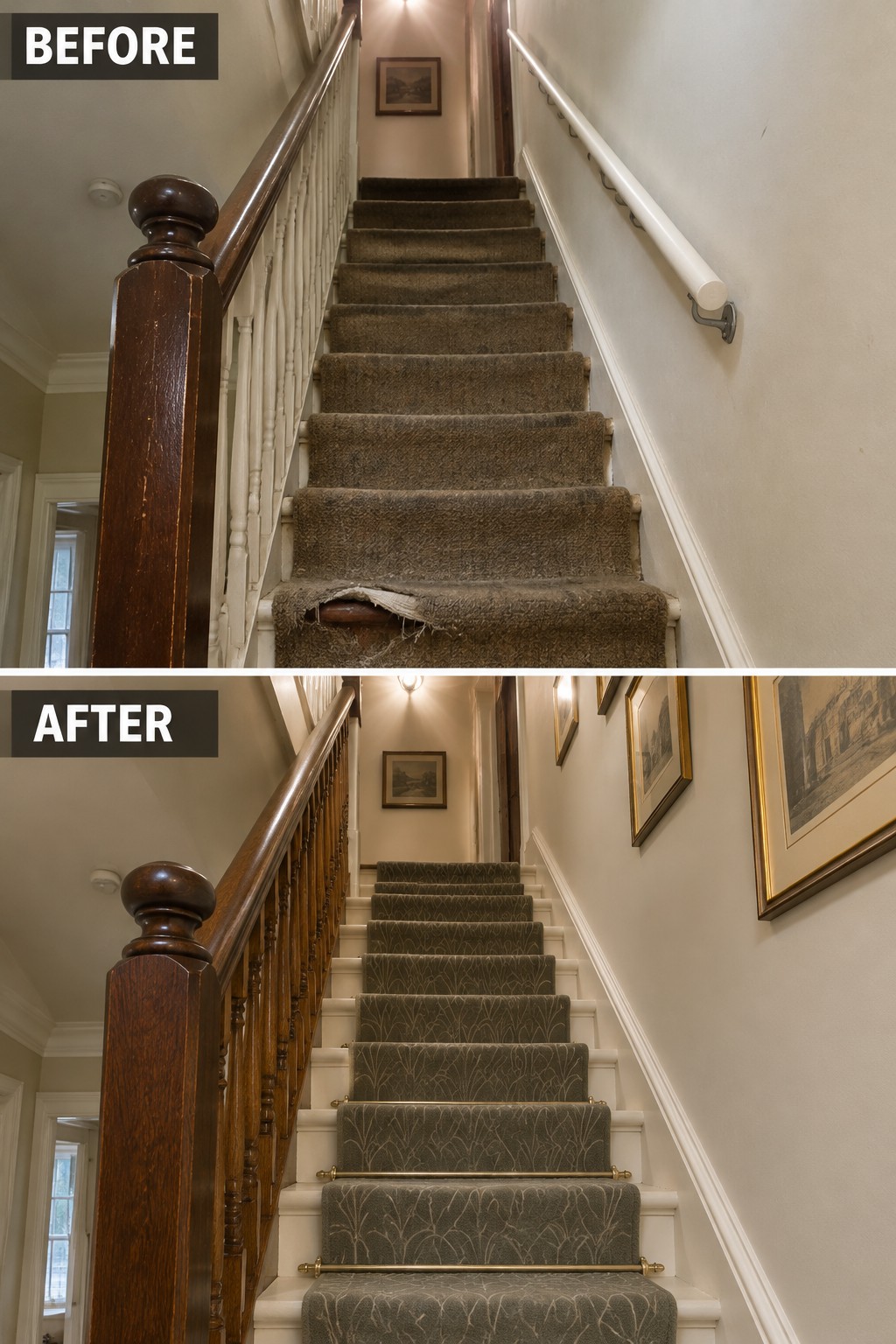
The staircase works better with a fitted runner that leaves the painted treads visible. In the original, the carpet was frayed and covered the full steps; the new patterned runner gives the stairs a neater finish while keeping the woodwork in view.
This approach suits older homes where the staircase is part of the character. Choose a durable runner with a subtle pattern, and have it fitted securely so the edges stay tidy and the steps remain safe.
Add A Window Seat With Useful Storage

A built-in window seat turns an unused alcove into a comfortable place to sit, while the drawers make good use of space that might otherwise go to waste. Here, a bare recess becomes a simple reading nook without hiding the original window trim.
This idea suits a small bedroom, landing, or living room with a deep window alcove. Keep the seat low enough to sit comfortably, and use drawers or lift-up storage below for blankets and books.
Turn A Cluttered Pantry Into Useful Storage

The pantry works better when everyday food has a clear place to go. In the after photo, wire shelves have been replaced with solid shelves and matching jars, making the storage easier to see and use. The change suits an older home because it improves a tucked-away space without changing the room’s basic character.
For a similar pantry, start by clearing out expired food, then group items by use before choosing containers. Measure the shelves carefully, and avoid filling every inch; a little open space makes it easier to put groceries away.
Use Lighting To Finish A Period Bedroom

The bedroom feels more settled once the harsh fluorescent ceiling fixture is replaced with a warm pendant. Keeping the decorative ceiling medallion gives the update a natural connection to the home’s older details.
In a 1930s bedroom, choose a fixture that suits the room’s scale and works with existing period features rather than competing with them. A dimmer can make the light more useful for reading and winding down.
Make A Closet Easier To Use With Better Storage
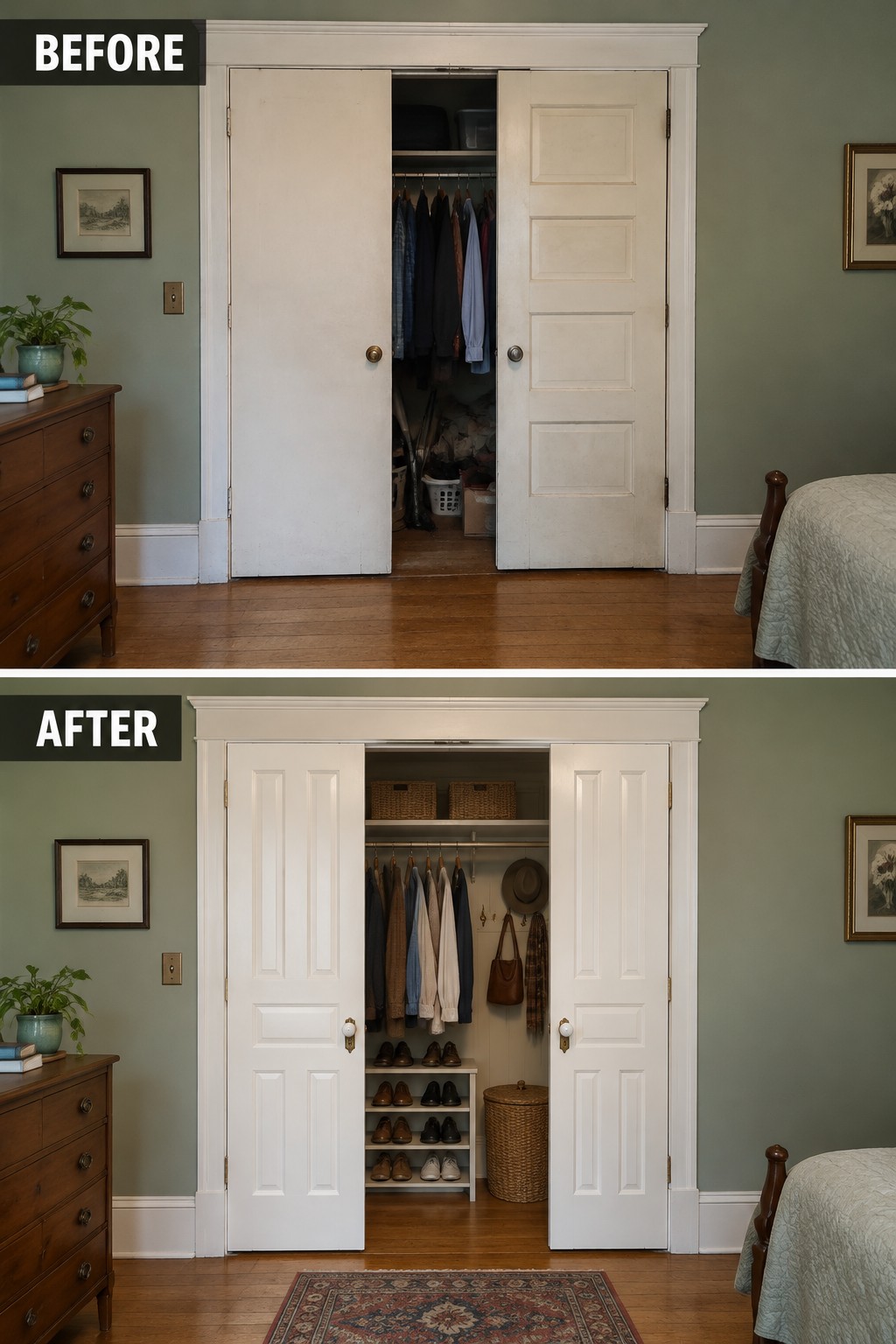
Replacing awkward, mismatched closet doors with matching folding doors makes the opening easier to access, while shelves and a hanging rod give the space a clearer purpose. The shoe shelves in the finished closet keep pairs together and off the floor.
In an older home, this idea can make a shallow or cramped closet more useful without changing the room’s layout. Measure carefully before adding shelves, and leave enough space for the doors to fold open and for clothes to hang without crowding.
Make A Small Dining Nook Feel More Welcoming

Replacing the plastic table and chairs with a round wooden set gives this narrow dining nook a clearer, more comfortable purpose. The round shape makes it easier to move around the table, while a rug helps define the eating area.
In a small breakfast room, choose a table that leaves a clear path to the door and avoid oversized chairs. A simple runner can protect the tabletop and bring a little softness without crowding the space.
Make A Laundry Room More Practical With Built-In Storage
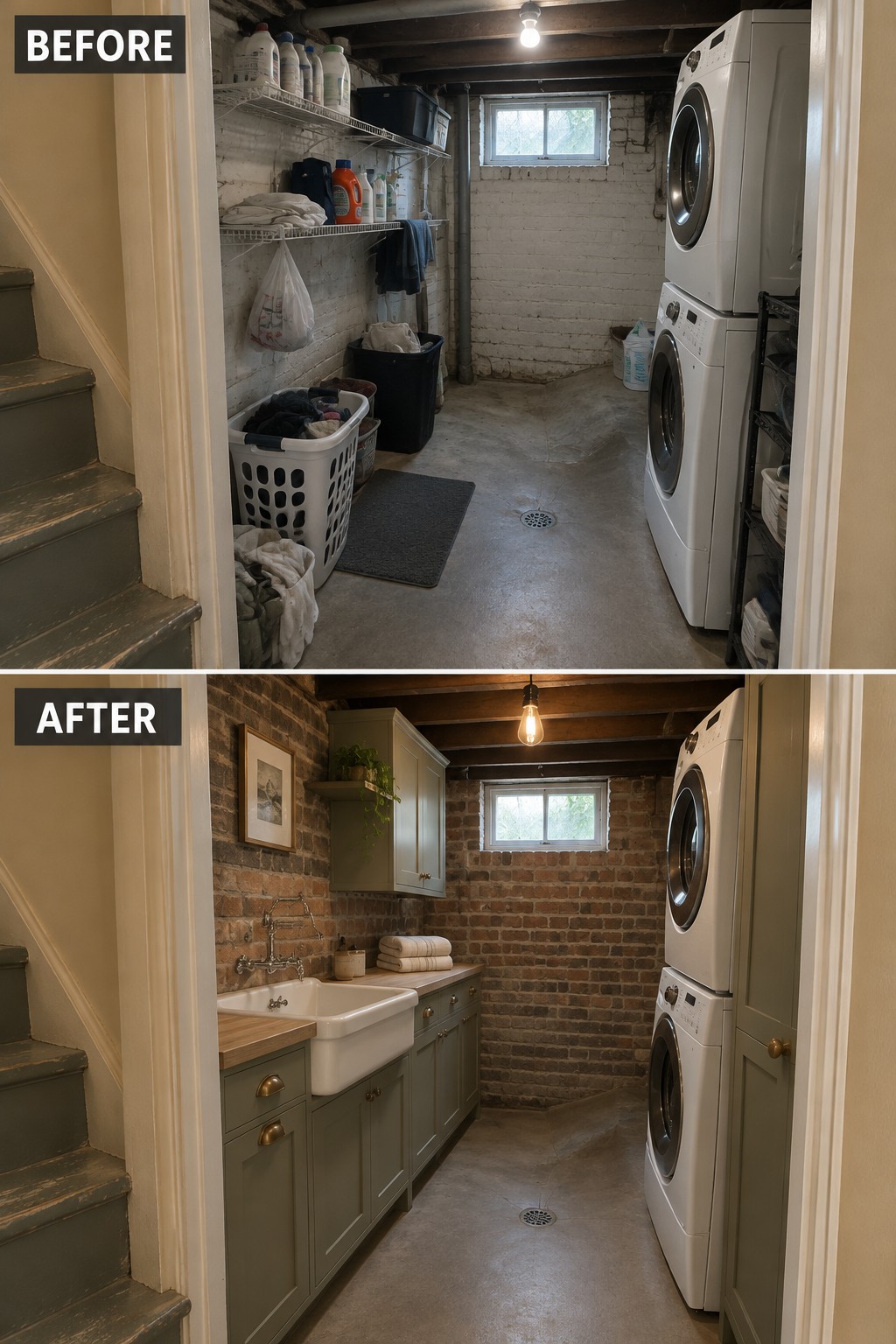
The old laundry area had open shelves and baskets competing for space. Adding fitted cabinets around the sink gives supplies a place to go and makes the room easier to use, while the exposed brick keeps some of the home’s older character.
In a narrow utility room, use cabinets where they won’t block access to the machines, and keep frequently used items within easy reach. A sink with nearby counter space is especially handy for treating stains or handling laundry by hand.
Give A Small Bathroom A Simpler Vanity

Replacing the wide, crowded vanity with a smaller freestanding one makes this narrow bathroom feel less cramped. The clear counter and open space around the sink let the original tilework remain part of the room’s character.
In a period bathroom, choose a vanity that suits the room’s scale rather than filling every inch of wall. A muted painted finish can feel at home beside older tile, while a simple countertop keeps the area practical and easy to use.
Refresh A Narrow Hallway With Paint And Order
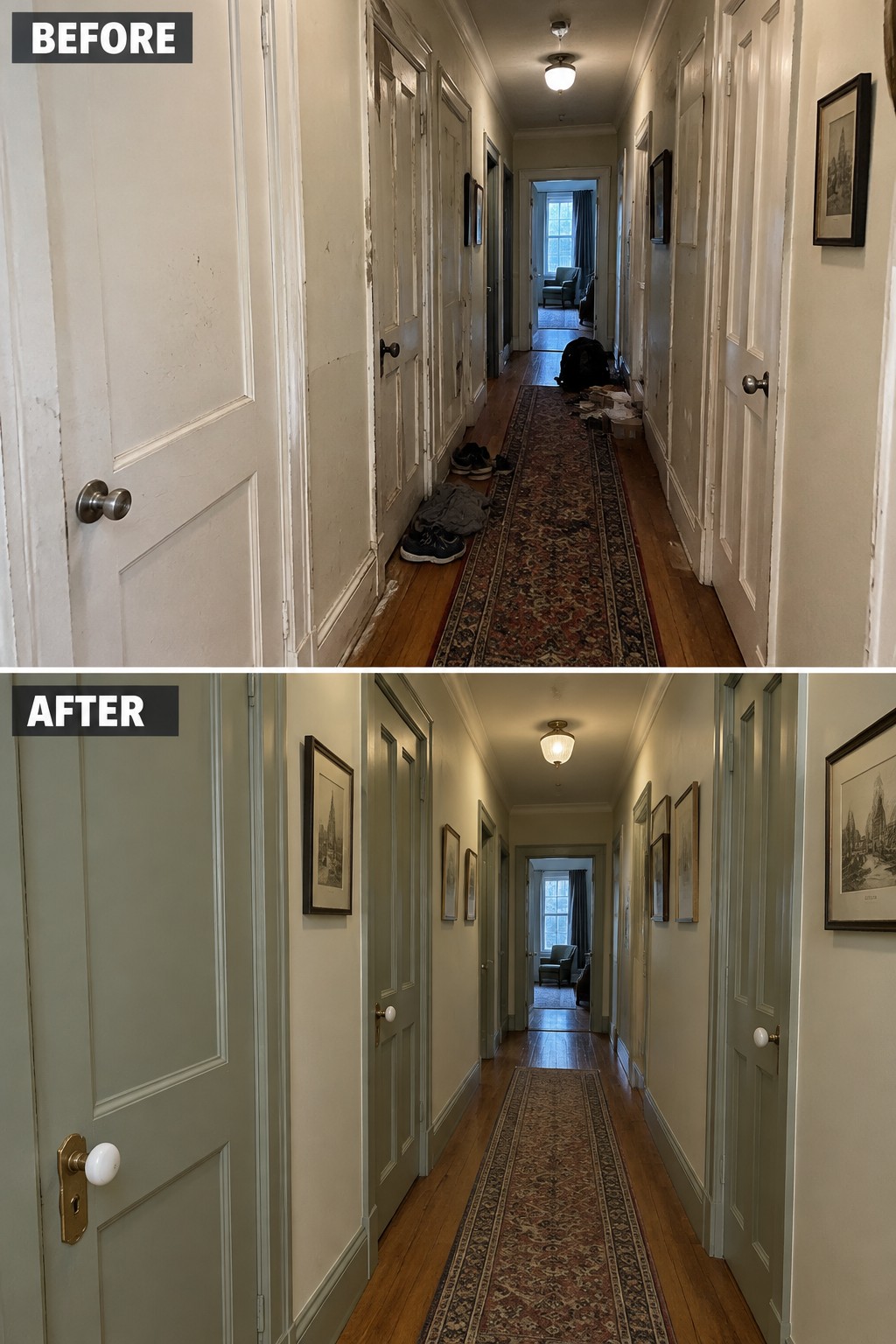
A narrow hallway can feel neglected when the paint is worn and shoes collect along the floor. Here, fresh wall color and a clear path make the corridor feel cared for, while the runner still suits the home’s older character.
In a period home, repainting the walls and trim is a practical place to start before adding decor. Keep everyday shoes in a small storage spot, and leave enough room for people to pass comfortably.
Turn An Empty Alcove Into A Useful Desk Area

A narrow alcove can become a practical home office with a desk sized to fit the space. In this room, adding a simple desk and chair gives an unused corner a clear purpose without taking over the floor.
This idea works especially well in older homes with small recesses or awkward spaces. Measure carefully before choosing a desk, and keep the setup simple so there is still room to sit and move comfortably.
Use Lighting To Give A Dining Room More Character
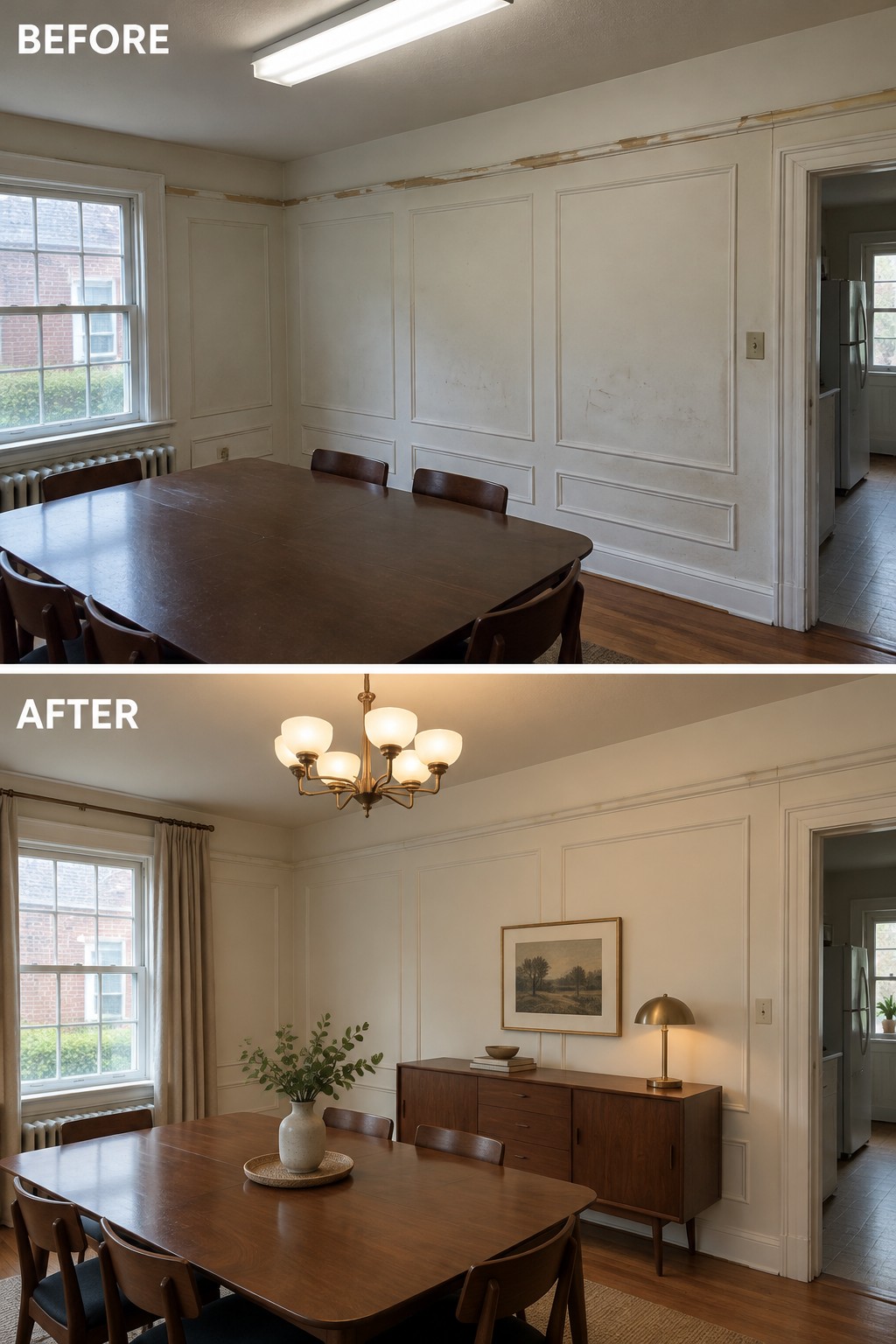
Replacing the plain ceiling fixture with a traditional chandelier gives this dining room a clearer focal point and suits the period-style wall trim. The room feels more finished without changing its original architectural details.
In a 1930s home, choose a fixture that fits the table and room, then use warm bulbs for comfortable everyday meals. Keep the design simple enough to work with the existing trim rather than competing with it.
Refinish The Original Clawfoot Tub

A worn clawfoot tub can remain the bathroom’s main feature without looking neglected. Here, refinishing the chipped, discolored surface gives the tub a clean white finish while preserving its period character.
If the tub is sound, reglazing can be a practical alternative to replacing it, especially in a bathroom with original tile. Have the surface properly prepared and repaired first, since a fresh coating won’t hide damage underneath.
Add Open Shelving To A Period Kitchen
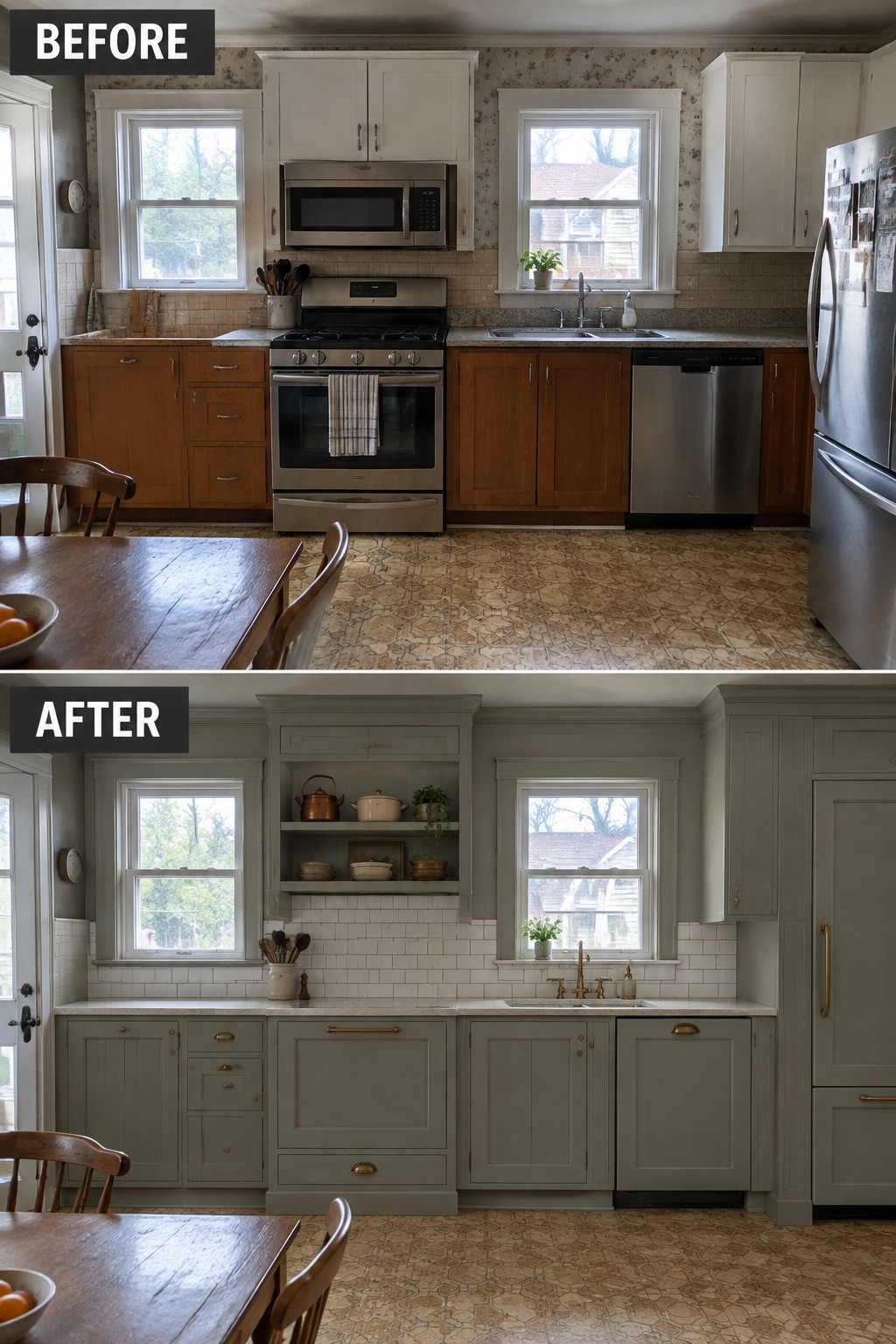
Replacing the closed cabinets above the range with open shelving gives this kitchen a more fitting, lived-in look. The shelves keep everyday dishes and a few useful pieces close at hand, while the tiled backsplash remains visible.
In a 1930s kitchen, try this in one small section rather than removing all the upper cabinets. Keep the shelves sturdy and simply styled, and leave enough closed storage for items you do not use often.
Make A Breakfast Nook Feel Finished

The built-in benches give this small dining nook a clear purpose, while the round pedestal table leaves room to move through the space. Replacing worn finishes and clutter with refreshed seating and a properly set table makes the nook feel ready for everyday meals.
In a 1930s home, keep the original bench layout if it still works, then repair the woodwork and choose durable upholstery that suits the period. A round table is useful in a tight nook, but leave enough space to slide in and out comfortably.
Frequently Asked Questions
Q: How can I update a 1930s kitchen without losing its original character?
A: Keep details that still work, such as built-in cabinets, glazed tile, or a vintage sink, and focus changes on worn finishes and outdated appliances. If you add modern storage, simple fronts and period-friendly colors help it sit quietly alongside the original features.
Q: What should I do if old wood trim has been painted?
A: Check a small, hidden spot before stripping anything, since the wood may be damaged or less attractive underneath. If it looks good, remove paint carefully and repair the trim rather than replacing it.
Q: Can modern plumbing and electrical work fit into a period-style renovation?
A: Yes. A qualified contractor can update wiring and pipes while keeping visible details, like switch plates and light fixtures, in keeping with the house’s age. Ask about safety upgrades early, before walls and floors are finished.
Q: Which original features are worth saving?
A: Look first at features that give the house its identity, such as built-ins, old doors, stair rails, and distinctive tile. Keep what’s sound, and repair it where practical.
