


Victorian farmhouses can lose much of their character when old trim gets covered, stripped back, or left looking tired.
I’m always drawn to renovations that make original woodwork feel like part of everyday life again, rather than a detail saved only for show.
Fresh paint, thoughtful repairs, and practical room updates can bring out the trim’s warmth while making the house work better for modern routines.
The change can be quiet but satisfying.
I’d save a few of these approaches for a home where the historic details are still there, waiting for the right care.
Make The Living Room Feel Finished

The room feels more settled once the furniture has a clear arrangement and a rug defines the seating area. In the earlier version, the open floor and scattered furnishings left the living room feeling unfinished; the new layout gives the space a practical center without hiding its original character.
This approach works well in older homes where the trim and fireplace already have plenty of presence. Start with a sofa and rug sized for the room, then leave enough open floor for easy movement rather than filling every corner.
Restore The Staircase To Bring Back Its Character

Replacing the worn stair runner and restoring the dark wood banister gives this entry its old-house character again. The staircase becomes a clear focal point, while the runner adds pattern without hiding the original woodwork.
In a Victorian farmhouse, keep the trim and staircase details that are still in good shape, then choose a runner that suits the scale of the stairs. A fitted runner can protect the treads and bring color into a narrow hall without making it feel crowded.
Restore Original Trim To Give A Dining Room Character

The plain dining room feels more settled once the walls have dark green paint and wood wainscoting. Restoring or adding period-appropriate trim can give an older farmhouse a stronger sense of character without changing the room’s basic layout.
If you’re working with original woodwork, check its condition before painting or replacing it. Where trim is missing, match the scale and style of what remains, and let the woodwork be the main feature rather than crowding the walls with extra decor.
Give A Plain Kitchen More Character
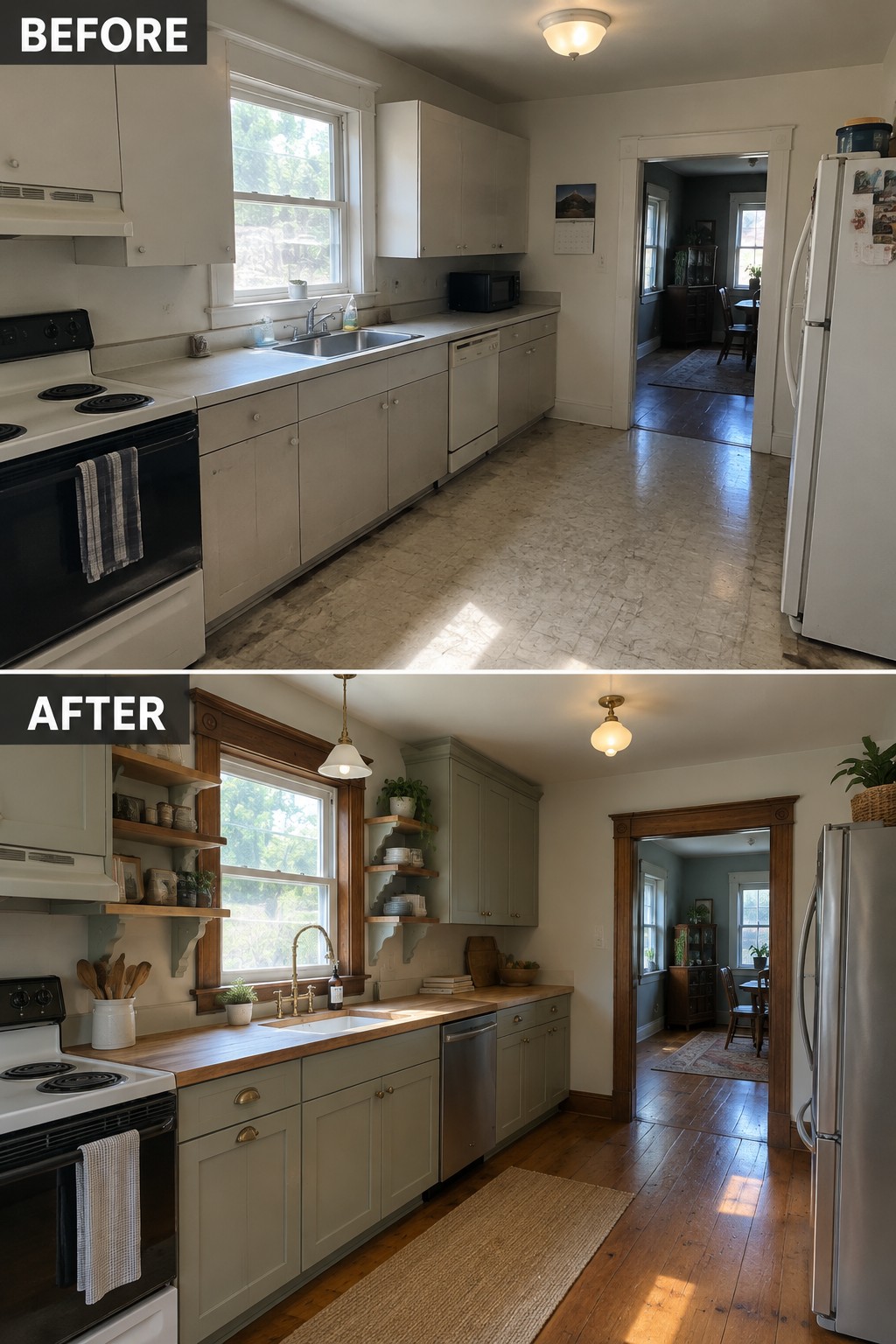
The kitchen feels more settled after the plain, worn finishes are replaced with muted green cabinets, a wood countertop, and open shelves. The wood around the window adds a period detail that suits an older home without requiring a full change to the room’s layout.
In a farmhouse kitchen, try keeping the cabinet color simple and using one natural material, such as wood, for the counters or window trim. Open shelves can show everyday dishes, but leave enough closed storage so the room stays practical.
Turn An Empty Bedroom Into A Finished Room
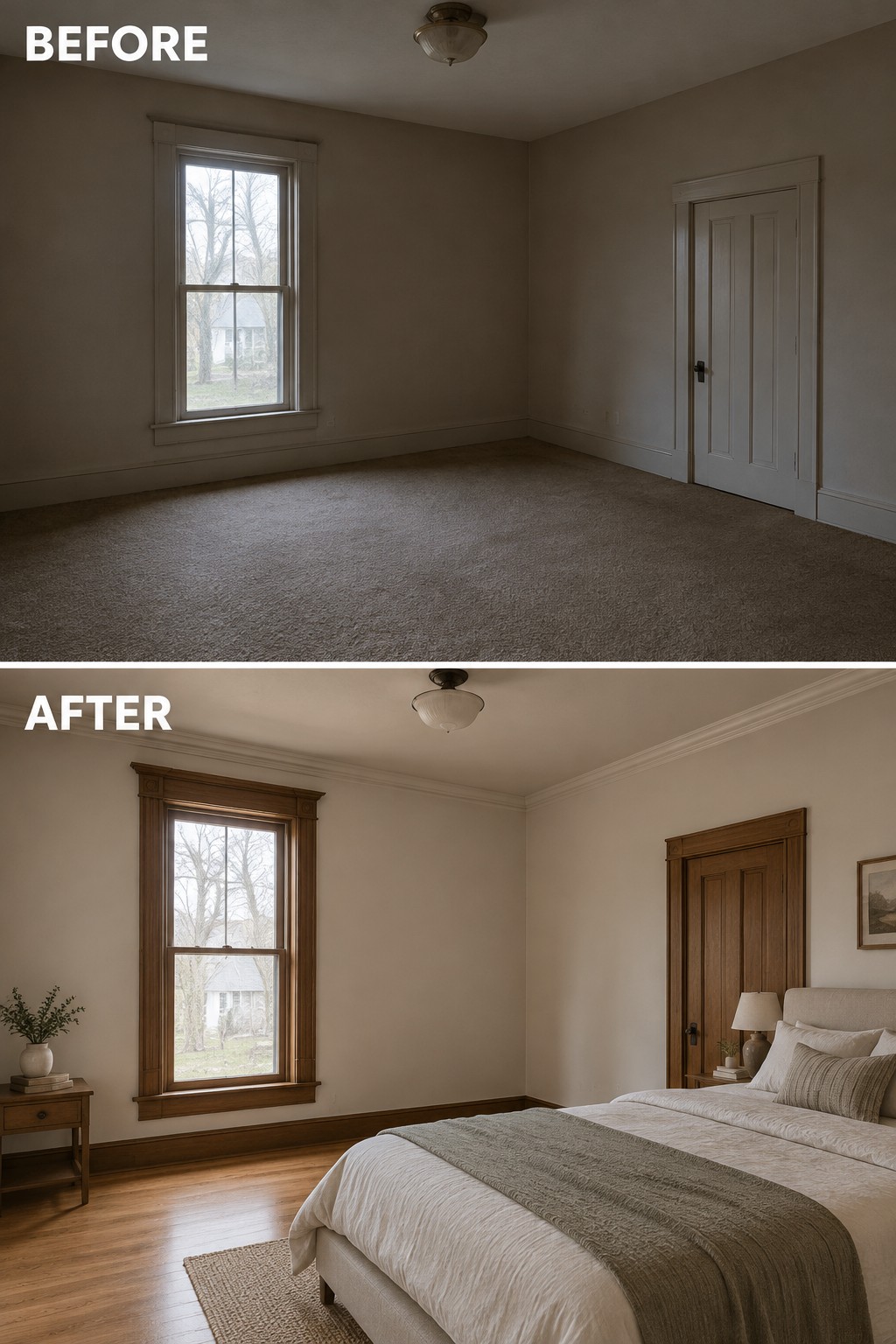
The bedroom feels much more complete once it has a clear purpose and a few well-chosen pieces. In the after photo, the bed and rug make the room usable, while the wood trim gives the plain walls some character.
In an older home, keep original trim visible and let it guide your choices for furniture and finishes. A bed that fits the room and a rug placed partly beneath it are a good start; leave enough open floor to move around comfortably.
Bring Back Original Trim To Give A Bathroom Character

The bathroom feels more considered after the bulky vanity and shower curtain are replaced by simpler fixtures and a tiled shower. The restored wood trim around the window gives the room a clear focal point and suits an older home without making the space feel fussy.
If you are updating a similar bathroom, keep original trim where it is in good shape and let it stand out against a simple wall color. A pedestal sink can also help a narrow room feel less crowded, but check that you have enough storage elsewhere.
Add Built-In Shelving Around A Window
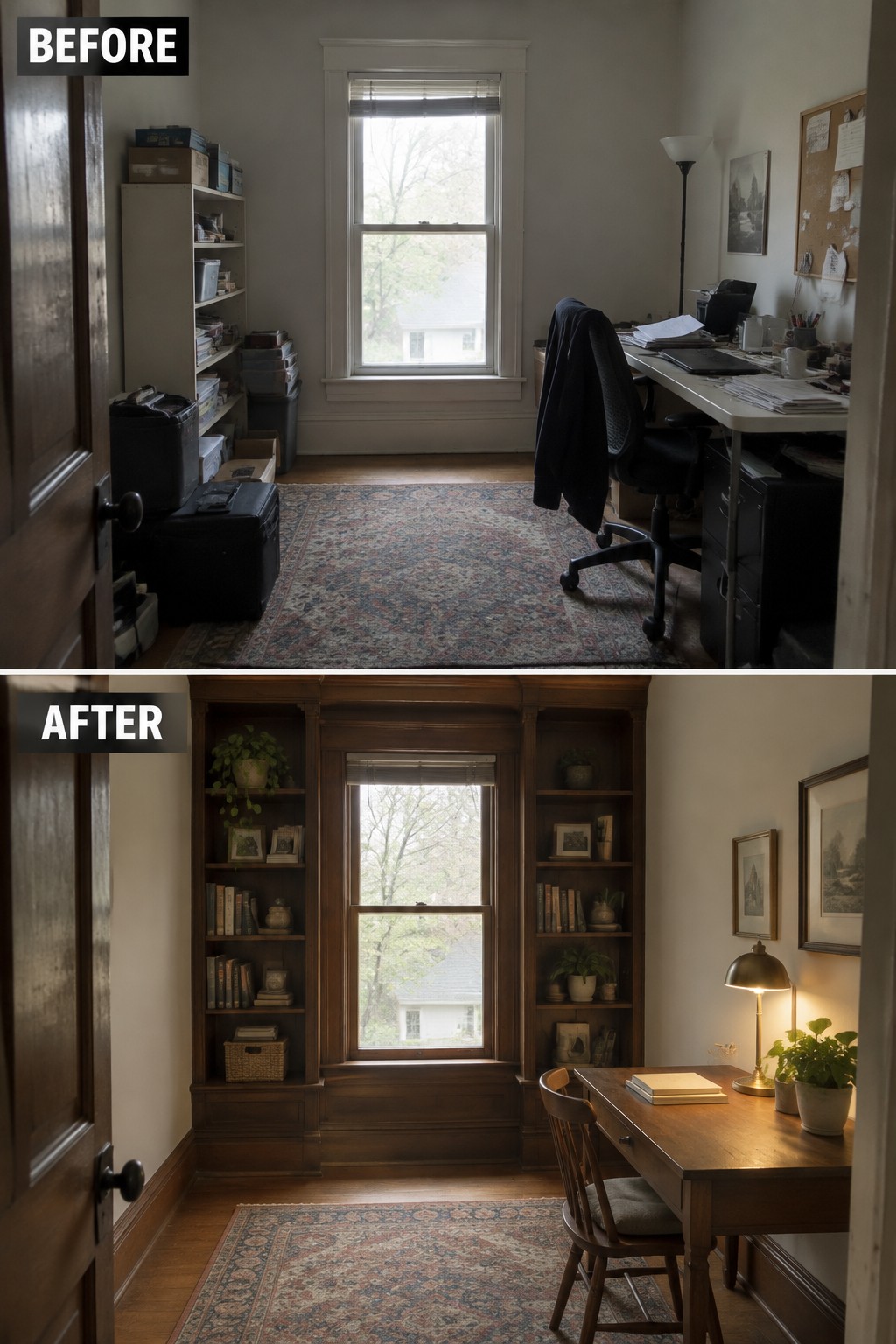
In this office, open storage and a crowded desk gave way to built-in shelves that make the window wall feel purposeful. The bookcases also provide a home for everyday items, so the room feels tidier without losing its original character.
In an older home, built-ins can make use of awkward wall space and suit the existing trim. Keep the shelves useful rather than filling every inch, and plan their depth so the window still gets plenty of light.
Make The Entryway More Practical
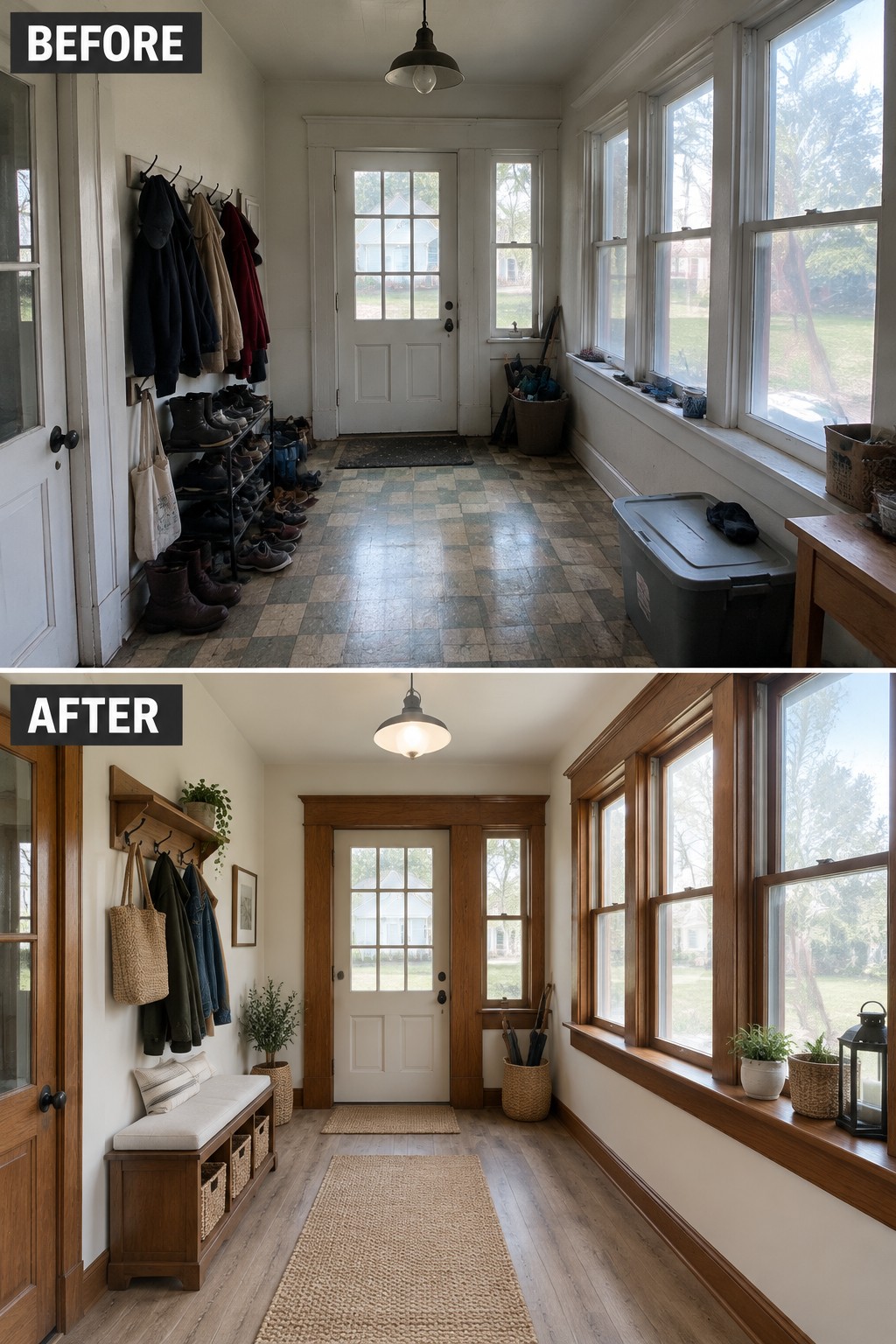
The cluttered mudroom works better as a simple landing spot for coats and shoes. Replacing the crowded shoe racks with a bench and baskets gives everyday items a place to go while keeping the walkway clear.
This approach suits a farmhouse entry or enclosed porch where people come in and out often. Choose a bench that fits the wall without narrowing the path, then use a few baskets to keep smaller items contained.
Make A Dark Hallway Feel Finished

A narrow hallway can feel neglected when it is dim and bare, even if its original woodwork is still in good shape. Here, brighter paint, a simple runner, and wall lighting make the space feel cared for while letting the older trim remain part of the room.
For a similar result, keep the floor clear enough for easy passage and choose a runner that fits the hall without bunching at doorways. A few framed pictures can fill a long blank wall, but leave the woodwork visible rather than covering it up.
Restore Original Woodwork To Give A Small Bathroom Character

The plain bathroom feels more considered after the white vanity and trim are replaced with darker woodwork. Restoring or matching original wood details can bring character to a small room without changing its basic layout.
In a Victorian farmhouse, look for existing trim or doors worth repairing before adding new finishes. A wood vanity can echo those details, but keep the floor and walls simple so a compact bathroom does not feel crowded.
Turn An Unused Alcove Into A Window Seat

The narrow storage nook becomes useful once it is cleared and fitted with a simple bench. Restoring the window trim in a warm wood finish also gives the little alcove a clear focal point without changing the room’s layout.
In an older home, an awkward recess or former storage space can often hold a built-in seat. Keep the bench depth comfortable, add a cushion, and leave enough room to move through the space.
Make The Fireplace Wall The Main Feature

A living room can feel much more settled when the fireplace becomes its clear focal point. Here, the plain white surround gives way to a detailed wood mantel, and the seating is arranged to make the fireplace feel central rather than overlooked.
In an older home, keep the original fireplace opening and trim if they are in good shape, then choose a mantel style that suits the house. A rug can help define the seating area, but leave enough clear floor space to move around comfortably.
Turn A Small Dining Nook Into A Built-In Banquette

A plain folding table does little to define a dining area, but a fitted corner bench makes the space feel planned and gives it a clear purpose. Here, the built-in banquette replaces the temporary setup and makes better use of the corner.
This approach suits older homes where a separate dining room may be small or awkwardly shaped. Keep the table sized for easy movement, and use a seat cushion that can handle everyday meals.
Make A Nursery Feel Finished With A Rug
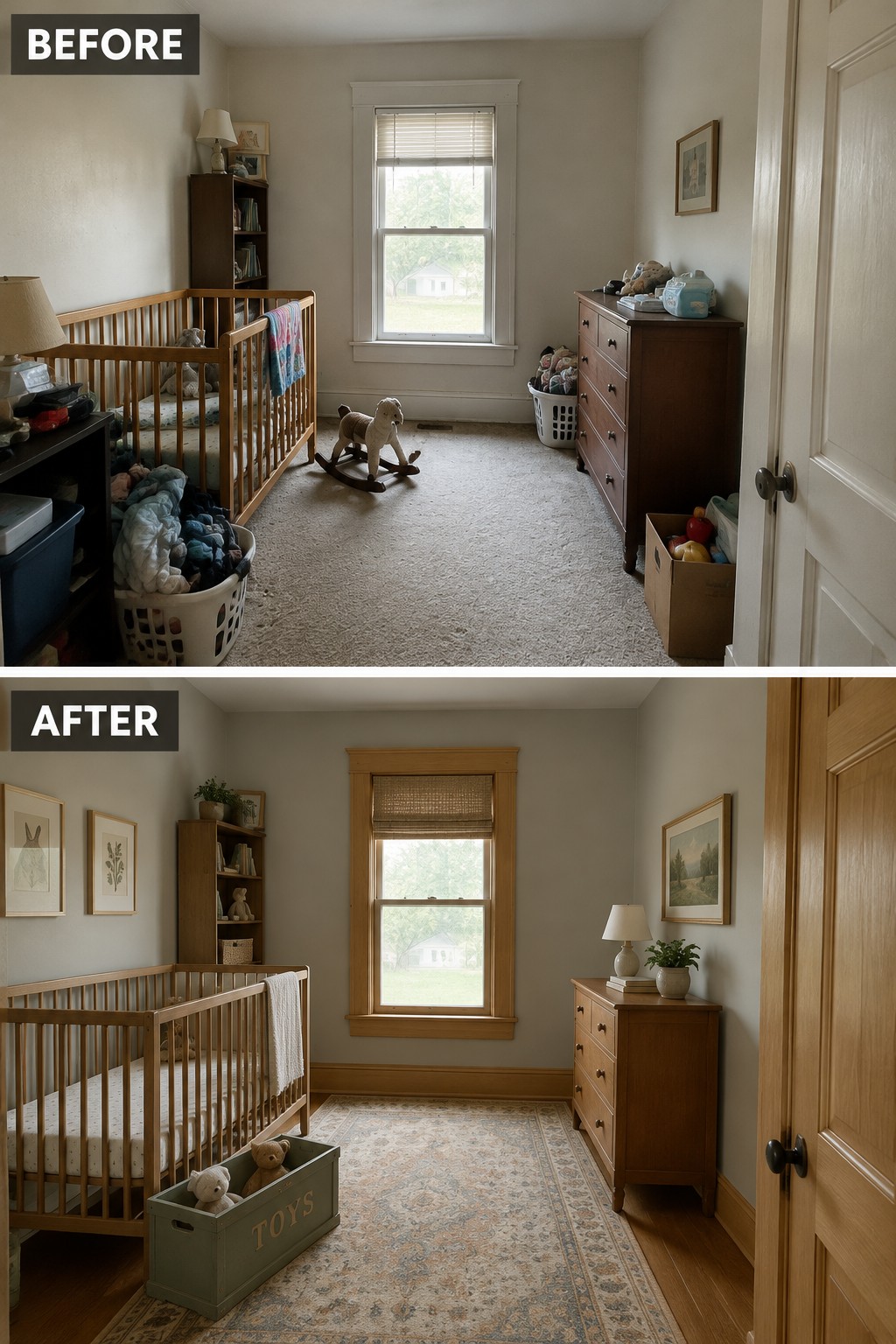
The nursery feels more settled once the clutter is cleared and a patterned rug defines the open floor. In the before photo, the carpet is mostly bare, while the after photo uses the rug to give the room a clear center without taking space away from the crib.
In an older home, a rug can also bring a little color and pattern into a simple room. Choose one large enough to sit beneath the main furniture, and leave a clear path around the crib and dresser.
Turn The Attic Into A Usable Bedroom

An attic can feel like a storage space when its walls and floors are unfinished. Here, fresh wall finishes and a simple bed turn the cramped-looking room into a comfortable place to sleep, while the exposed beams keep its older-house character.
This idea works well in farmhouse attics with sloped ceilings, where a low bed can fit beneath the roofline without crowding the center of the room. Start by finishing the surfaces, then choose furniture that leaves a clear path through the space.
Make The Laundry Room Feel More Organized

Replacing open wire shelves with sturdy wood shelves and baskets gives this laundry room a clearer place for supplies. The wood trim and countertop also make the practical space feel more finished without changing its basic layout.
In a small laundry room, use baskets to group items and keep only everyday supplies within easy reach. A countertop over the machines can provide a useful folding surface, but leave enough room to open the doors and move around.
Add Built-In Storage To Make A Closet More Useful

The closet works better once storage is planned around the way it is used. In the after photo, shelving and hanging space make room for both clothes and shoes, while baskets keep smaller items contained. The clear floor also makes the narrow space easier to use.
In an older home, built-ins can make a small closet feel more orderly without changing its footprint. Measure what you need to store before choosing shelf heights, and leave enough room to move through the center. A simple layout is often more useful than packing in extra shelves.
Make A Basement Living Room Feel Finished

A basement can feel like a spare storage area when it has bare walls and mismatched seating. Here, the seating area feels more settled with simple wall paneling and a large rug that defines where the living room begins.
In a lower-level room, start with one rug sized to fit beneath the main seating, then arrange the furniture so people can talk comfortably. Paneling can suit an older home, but even a fresh coat of paint and a few well-placed lamps can help the space feel more like part of the house.
Frequently Asked Questions
Q: How can I tell whether the original trim is worth restoring?
A: Look for solid wood, crisp details, and trim that still feels firmly attached. Even if the paint is chipped, a careful repair may preserve more character than replacing it with new, simpler molding.
Q: Should I strip old paint from Victorian trim?
A: Not automatically. Older paint may contain lead, so test it before sanding or scraping, and use a qualified professional if it does. Sometimes a gentle cleaning and a fresh coat are all the trim needs.
Q: Can new wiring or insulation be added without damaging the trim?
A: Often, yes. Ask your contractor to plan routes through walls, floors, or less visible areas before work begins, and point out any pieces that need special care.
Q: What if some sections of trim are missing?
A: Save a sample of the closest original piece and have a carpenter match its profile. A close match usually looks more natural than using a noticeably different stock molding throughout the room.
