


Old brick homes have plenty of character, but worn trim, dated paint, or an overlooked entry can leave the facade feeling tired.
I find that the best updates respect the brick rather than trying to hide it, using period-appropriate details to bring the whole exterior into better balance.
A carefully chosen trim color, a tidier porch, or refreshed landscaping can make the home feel more cared for without calling for a full renovation.
The change can be quietly satisfying, especially when the original character still comes through.
I’d save ideas that suit the age and style of the house, then adapt them to what the facade actually needs.
Restore Period Details To Improve Curb Appeal

The house feels more cared for once its worn entry and trim are restored. In the finished version, the porch details are cleaner and the front door is a deep green, giving the brick facade a more welcoming look without changing its traditional character.
For an older brick home, repair and repaint existing trim before replacing it, and choose a door color that suits the brick and period style. Keeping the updates in scale with the original architecture helps the house look refreshed rather than out of place.
Update A Brick Home’s Porch And Trim

The porch gives this brick house a clearer, more welcoming entry. Replacing the worn porch details with substantial trim and columns helps the facade feel cared for while preserving its original character.
On an older brick home, focus on trim that suits the house’s proportions rather than adding elaborate details. A well-defined porch roof and simple, sturdy columns can make a noticeable difference without changing the brick itself.
Give A Brick Facade A More Finished Entry

The entry makeover gives this brick home a clearer focal point. A more detailed pediment and white trim around the door make the entrance feel in keeping with the house, while the dark green door and shutters give the facade a simple, consistent color scheme.
On an older brick home, updating the entry trim can make a noticeable difference without covering up the brick. Keep the proportions in step with the house, and choose a trim color that suits its existing features rather than adding too many new finishes.
Give The Entry A More Welcoming Look

The worn doorway made this brick facade feel neglected. Replacing the plain, weathered surround with period-appropriate trim and an arched fanlight gives the entry a clear focal point while still suiting the older home.
For a similar update, keep the door and surrounding details in a palette that fits the brick, then use trim to bring out the home’s original character. A fresh coat of paint may be enough for sound woodwork, but badly damaged trim may need repair or replacement first.
Bring Back Period-Appropriate Trim

The plain white gable siding made this brick home feel less connected to its original style. Adding dark Tudor-inspired trim gives the facade a clearer pattern and makes the brick look like part of a more finished exterior.
On an older brick home, trim can restore character without covering the masonry. Keep the details in keeping with the house’s age, and repeat the trim color across the gables and window frames for a consistent look.
Use Period-Appropriate Trim To Refresh A Brick Facade

The brick stays the main feature, but simple changes to the trim give the house a more cared-for look. In the updated exterior, white window trim and wood shutters bring back a clear period style, while the plain entry feels more finished.
For a similar brick home, choose trim and shutter colors that suit the age of the house rather than adding too many decorative details. A consistent approach around the windows can make a tired facade feel more cohesive without changing the brick itself.
Restore Historic Trim To Refresh A Brick Facade

The brick facade stays much the same, but restoring the worn cornice and adding period-appropriate window and door trim gives the rowhouse a more finished look. The details suit the building’s age and improve its curb appeal without changing its basic character.
On an older brick home, start by repairing or restoring existing trim where possible, then choose replacements that fit the home’s original style. A few well-matched details can go a long way, so avoid adding ornate trim that feels out of place.
Restore The Porch To Suit The House

The porch’s plain, worn railing made this old brick home feel less cared for than its architecture deserved. Replacing it with traditional cream-colored railings and decorative posts gives the exterior a more finished look while keeping the porch in keeping with the house’s period style.
For a similar update, choose porch details that suit the age and character of the home rather than adding modern trim that feels out of place. If a full rebuild isn’t practical, fresh paint and repairs to the existing railing can still make a noticeable difference.
Give A Plain Brick Facade A More Finished Look
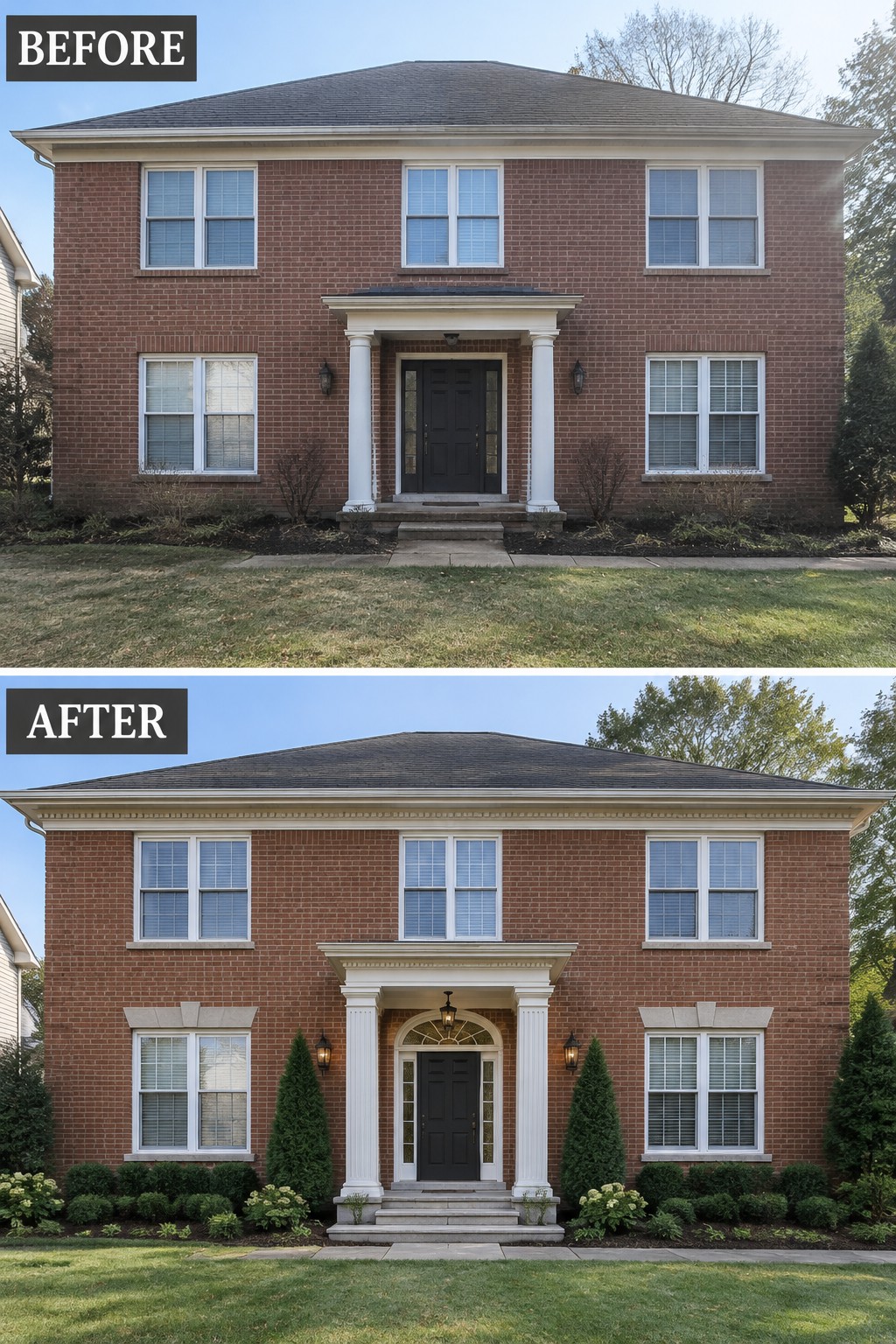
The brick exterior was already in good shape, but the simple entry made the front of the house feel unfinished. More substantial columns and a shaped detail above the door give the entrance a period-appropriate character without changing the brick itself.
On a traditional brick home, focus trim updates around the front door first. Match the scale and style of the house, and avoid adding ornate details that compete with the brick.
Add A Deep Porch To Give The Brick Facade More Character

The original shallow porch left much of the brick front looking plain. Extending the roof and adding substantial wood posts gives the entrance a stronger period-appropriate shape without hiding the brick.
This approach suits older homes with a simple front facade. Keep the post size and trim in proportion to the house, and choose finishes that work with the existing masonry. A porch should feel like part of the original design, not an oversized add-on.
Make A Wraparound Porch Suit The House
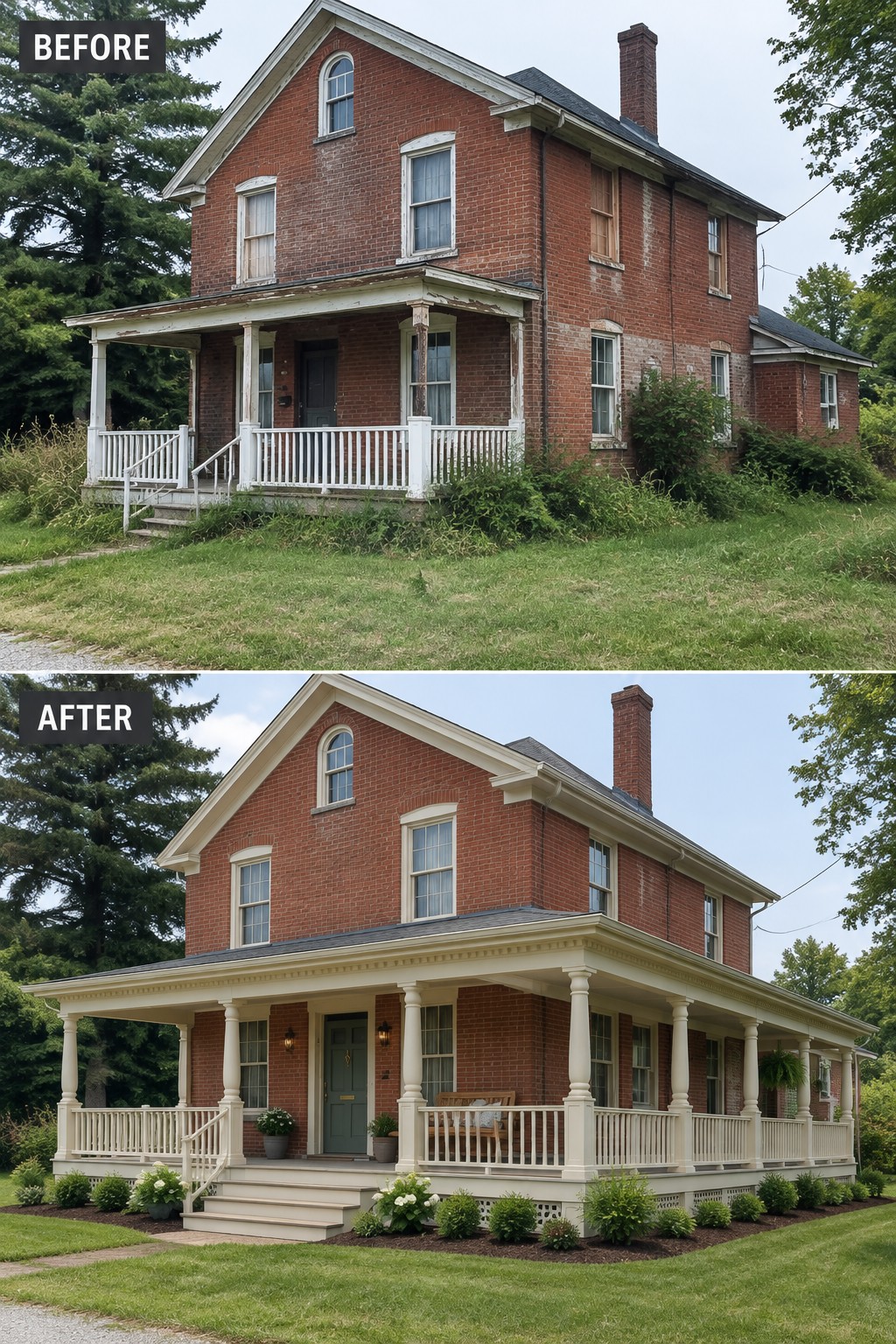
The small, worn porch made the brick house feel neglected. Rebuilding it as a broad wraparound porch, with substantial white trim, gives the older home a more finished look while keeping the addition in scale with its traditional design.
For a similar update, choose porch proportions and trim details that fit the house rather than simply making the porch as large as possible. Check that steps and walkways remain easy to use, and keep the finish simple enough to complement the brick.
Refresh A Brick Facade With A More Defined Entry

The updated porch gives this brick house a clearer, more welcoming front entrance. Its simple gabled roof and square columns suit the home’s traditional shape, while the wood door gives the entry a distinct focal point.
On a similar house, start by making the porch feel proportional to the facade rather than adding extra decoration. Choose straightforward trim and columns that fit the home’s age and style, and keep the doorway clear enough for easy access.
Restore Decorative Trim On A Brick Facade

The plain window openings and worn cornice made this old brick building feel less finished than it could. Restoring period-style trim around the windows brings back some of the detail that suits the facade, without hiding the brick that gives the house its character.
On a similar home, keep new or repaired trim in scale with the original architecture. Start with the windows and cornice, and match the profiles and materials to what remains; overly elaborate replacements can look out of place.
Restore The Entry To Suit The Brick Facade

The worn porch and peeling white paint made this old brick house look neglected. Restoring the porch trim and leaving the brick exposed gives the front a more finished look while keeping its traditional character.
On an older home, repair the existing columns and porch details before adding new ornament. A dark front door and simple shutters can help the entry feel coordinated without competing with the brick.
Add Period-Appropriate Trim To A Brick Entry

The plain brick facade feels more complete after the entry and windows gain substantial cream-colored trim. The arched doorway keeps its original shape, while the added details give the front of the house a clearer focal point.
On an older brick home, trim that suits the house’s age can make a bigger difference than adding lots of decoration. Keep the existing window and door shapes in mind, and choose trim proportions that look at home with the brick rather than overpowering it.
Restore Period Trim To Bring Out A Brick Facade

The plain brick facade gains a more finished look with period-style trim around the windows and a detailed cornice. These architectural details suit the age and character of a traditional row house without changing the brick itself.
On an older home, choose trim that fits the building’s proportions rather than adding decoration everywhere. Restoring or recreating a few consistent details around the windows and roofline can make the whole facade feel more considered.
Make The Entry Feel True To The House

Replacing the plain concrete steps with a broader stone entry and restoring the gable trim gives this brick home a more finished, period-appropriate look. The changes work because they suit the house’s existing materials rather than competing with them.
For an older brick home, start by choosing trim and entry materials that look at home with the original architecture. A more substantial stoop can improve the approach, but keep its size in scale with the facade and leave a clear path to the door.
Restore Character To A Plain Brick Facade
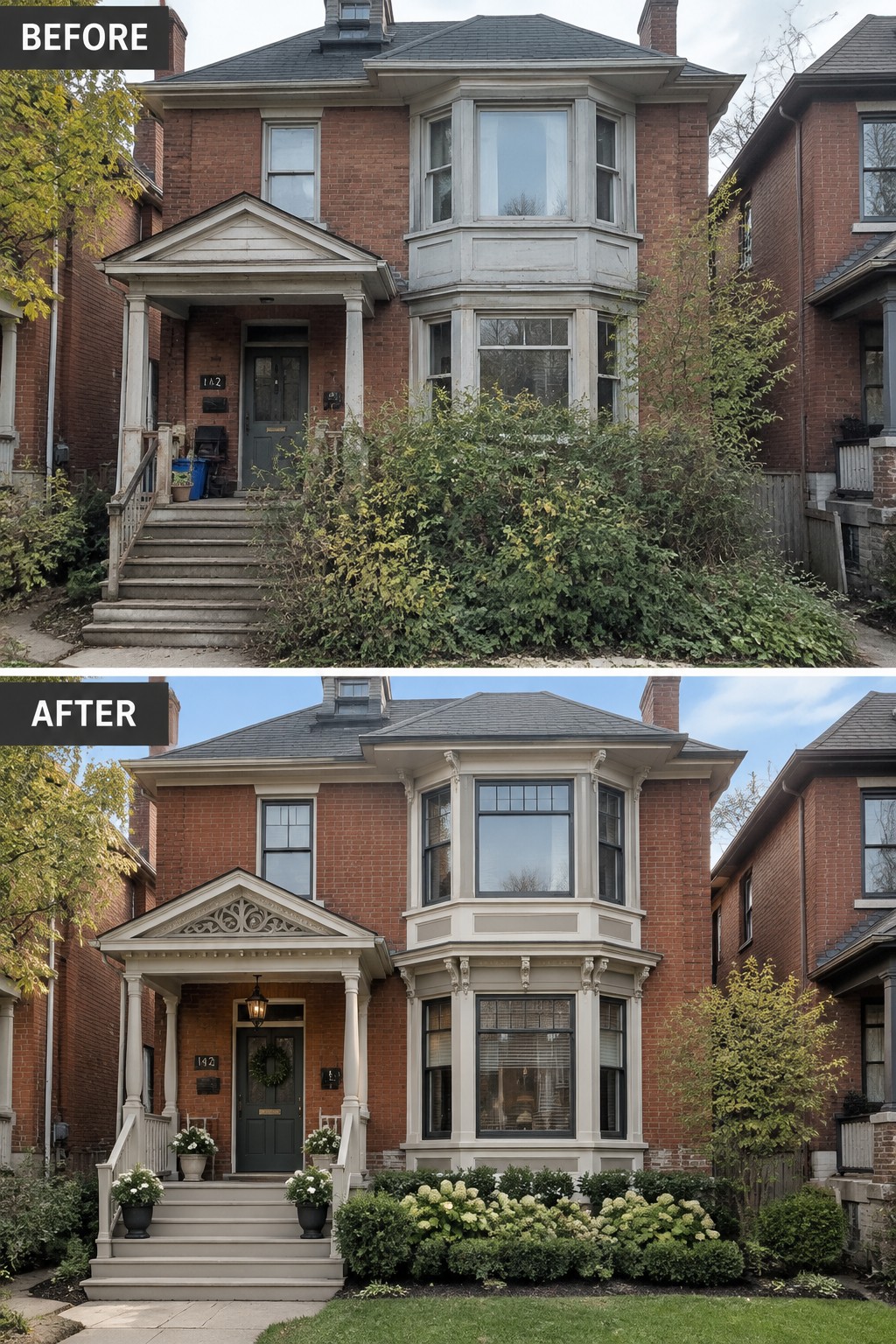
The brick exterior was already a strong feature, but worn trim and an overgrown entry made the house look neglected. Restoring the porch details and bay-window trim gives the facade back some of its original character without changing the brick.
On an older home, matching the trim to the house’s period can make a bigger difference than adding modern decorations. Look for shapes and proportions that suit the existing architecture, and repair sound original details where possible. Keep plantings low enough to leave the entry and windows visible.
Use Consistent Trim To Refresh A Brick Facade
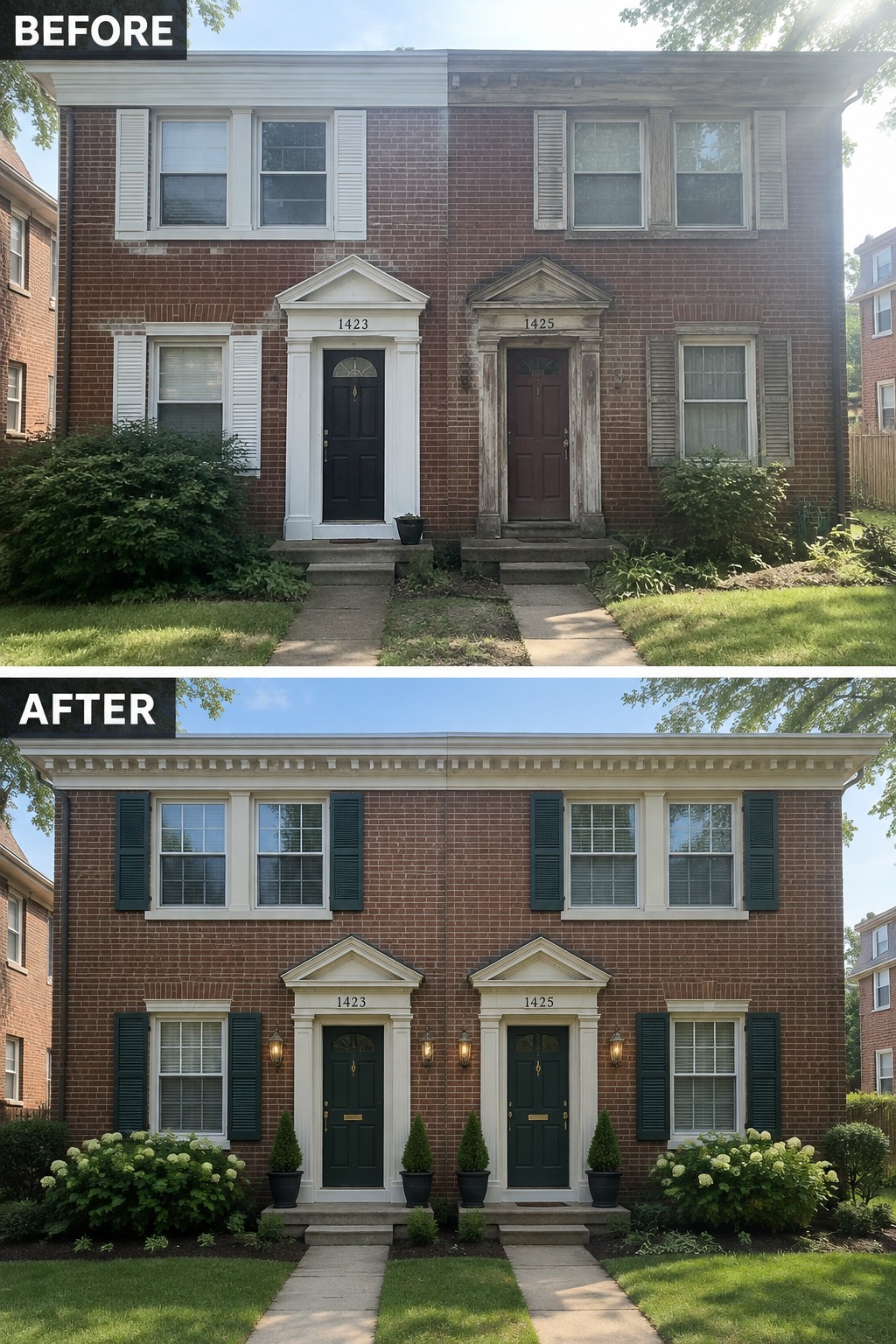
The updated shutters, window trim, and matching entry details give this brick duplex a more orderly, period-appropriate look. In the before photo, the two doorways feel mismatched; the refreshed trim helps them read as part of one building.
For a similar home, choose trim and shutter colors that suit the brick, then repeat them across both units. Keeping the original brick as the main feature makes the update feel right for an older house without requiring a full exterior renovation.
Frequently Asked Questions
Q: How can I tell whether my brick needs cleaning or painting?
A: Start by checking for dirt, mildew, and loose mortar before thinking about paint. Gentle cleaning may be all the brick needs, and paint can be difficult to remove later.
Q: What trim colors work well with an old brick exterior?
A: Warm white, muted cream, and deep green often sit nicely beside traditional red or brown brick. Test a small patch in daylight, since brick can make a color look different than it does on a paint chip.
Q: Can I add period-style trim without changing the whole facade?
A: Yes. Updating the porch posts, window casings, or fascia can make a noticeable difference while leaving the brick untouched. Match the trim’s scale to the house so it feels like it belongs there.
Q: Should I repair the mortar before replacing the windows?
A: If the mortar is cracked or missing, address it first. Sound masonry gives the new window work a better starting point and helps prevent small problems from getting worse.
