


Craftsman homes have a warmth that can get lost when original woodwork is painted over, worn down, or hidden by clutter.
I’m drawn to the way built-in cabinets, window seats, and sturdy trim can make a room feel more useful while keeping its character intact.
Restoring those details takes a careful hand, since fresh finishes should support the old craftsmanship rather than make everything look new.
Even small repairs can bring a room into better balance and make its original features easier to appreciate.
I’d save the ideas that suit your home’s age and layout, then adapt them to preserve what makes it distinctive.
Restore The Built-Ins And Let Them Lead

Restoring the original bookcases and fireplace gives this living room a clear focal point and makes its Craftsman character easier to appreciate. The cleaner, richer woodwork stands out against the green walls, while the room feels more finished without changing its basic layout.
If your home has built-ins or a detailed mantel, start by cleaning and repairing the wood before deciding whether it needs refinishing. Keep nearby decor simple so the original craftsmanship remains the main feature.
Make The Fireplace Wall The Main Feature
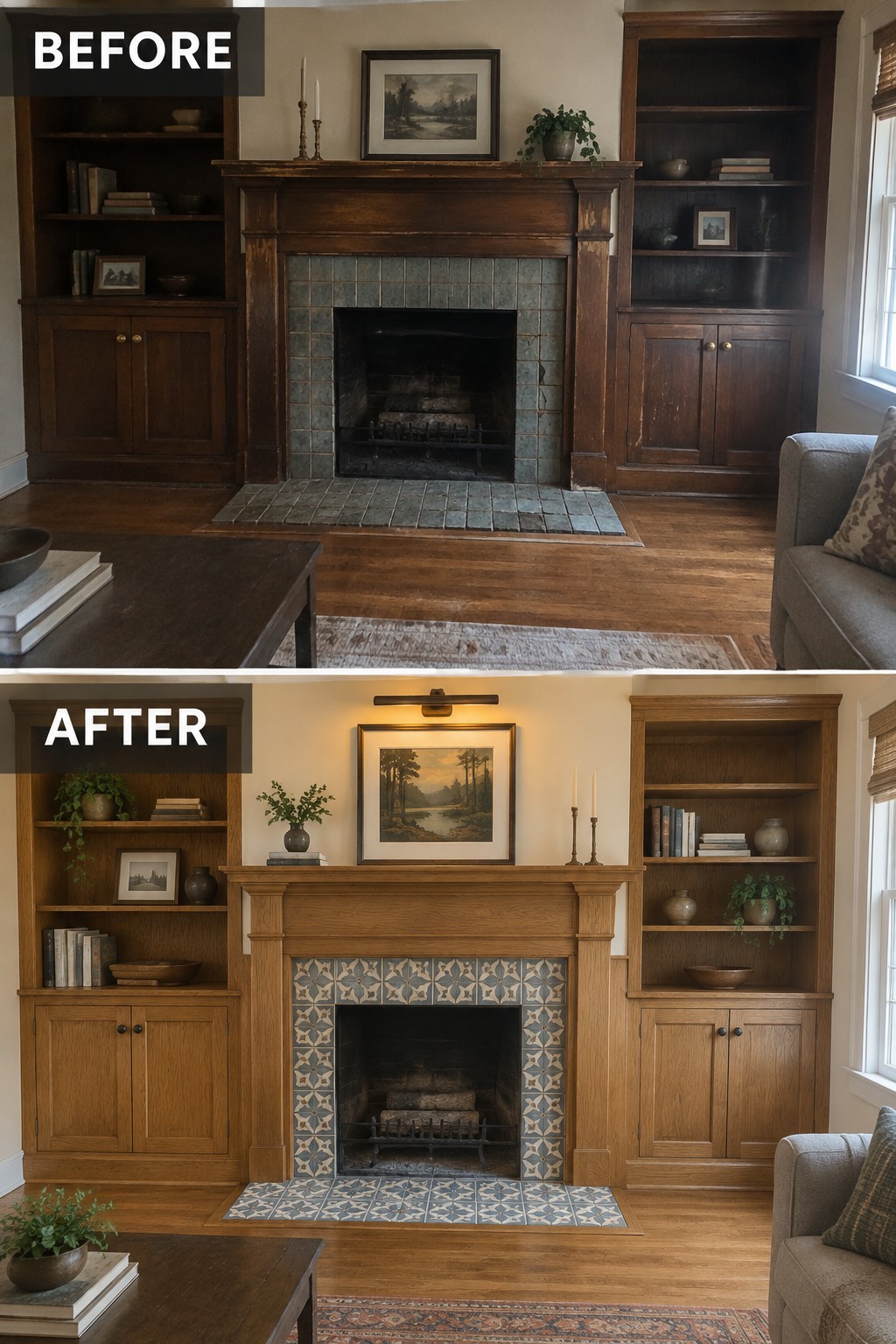
The fireplace already had the built-ins to make it a focal point, but the dark, worn finish and plain tile made the whole wall feel tired. Refinishing the wood and replacing the tile with a patterned design gives the original woodwork a clearer purpose without removing its Craftsman character.
This approach suits older homes with a fireplace and built-in shelving that are still in good shape. Keep the wood details, choose a tile that fits the home’s style, and avoid filling every shelf so the fireplace remains the focus.
Bring An Original Dining Room Built-In Back To Life

The built-in hutch is the natural focus of this Craftsman dining room, but its empty, cloudy glass made it feel neglected. Cleaning the glass and filling the shelves with everyday dishes brings the original woodwork back into use without changing its character.
If your home has a similar cabinet, start by cleaning it well and checking that the doors and shelves are sturdy. Display a few useful pieces, then leave some open space so the contents are easy to see. It’s a practical way to make old built-ins feel cared for again.
Make Built-In Storage Work Harder
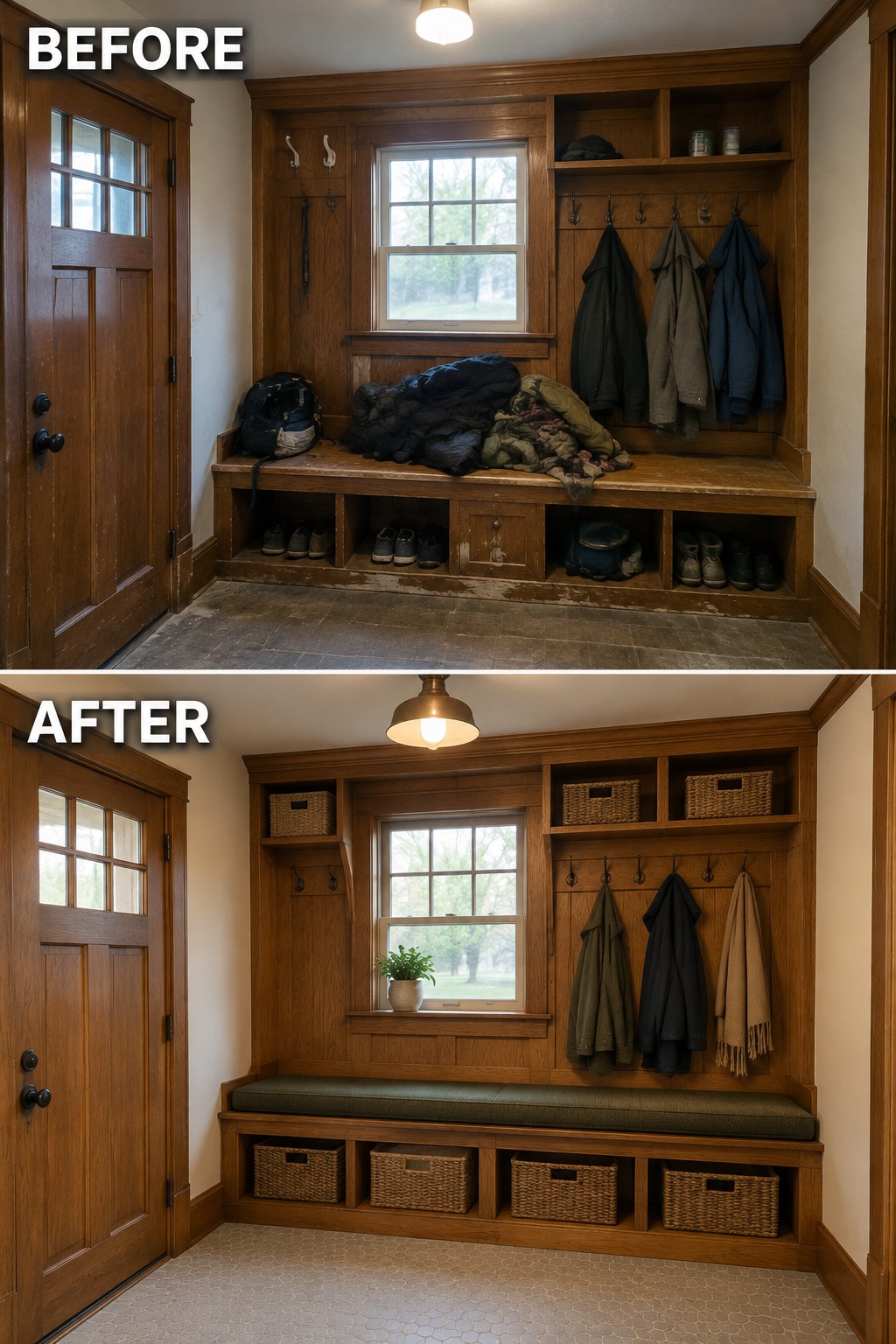
The old entry bench had become a catchall for loose gear. Reworking the original wood built-in with a proper seat cushion and baskets makes the space tidier while keeping the Craftsman woodwork as the main feature.
This idea suits a mudroom or entry where storage needs to be easy to use every day. Measure the cubbies before choosing baskets, and leave enough room on the bench to sit comfortably.
Refresh Original Built-Ins With A Simple Bedroom Setup

The built-in wardrobes are the room’s main feature, but the cluttered bed and dim shelves make them easy to overlook. A neatly made bed and a small lamp in the open shelf area help the original woodwork feel cared for without changing it.
In a Craftsman bedroom, keep the built-ins in good repair and let their wood finish guide the rest of the room. A tidy bed and a few useful pieces on open shelves are enough; too many decorations can compete with the cabinetry.
Refresh A Built-In Desk For Everyday Use
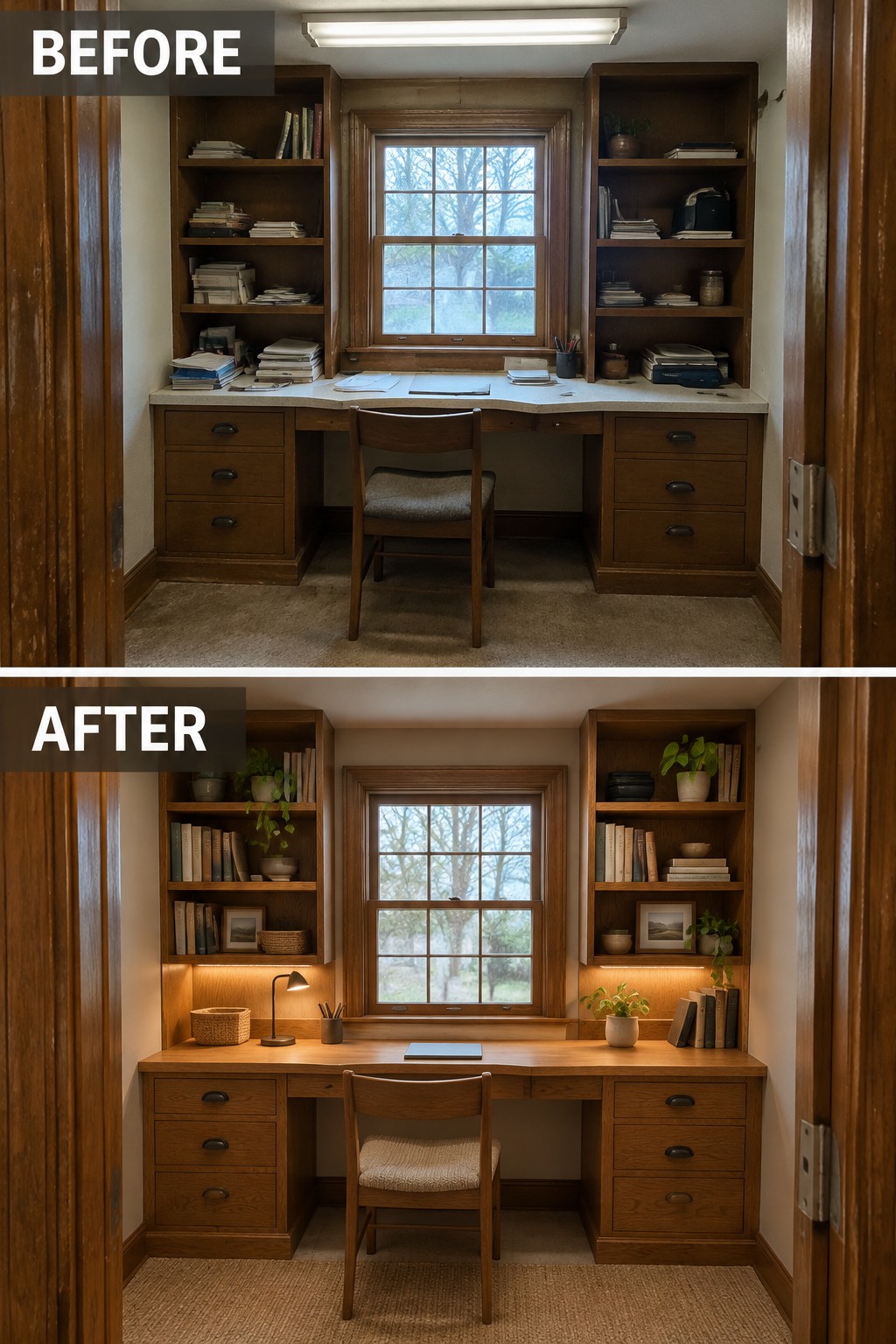
The old desk had plenty of storage, but loose papers and a dim overhead light made it feel more like a catchall than a place to work. Clearing the shelves and desk, then adding books, a task lamp, and warm shelf lighting, gives the built-in a clear purpose while keeping its original woodwork in use.
This idea suits a small study nook or spare room where a full renovation is not practical. Start by sorting what belongs on the shelves, keep the work surface mostly clear, and add a lamp where you actually need light.
Turn A Stair Landing Into A Useful Reading Nook

An unused stair landing can become a comfortable place to pause when its original built-in bench is put back to work. Here, the worn seat becomes a small reading nook with a fitted cushion, while the woodwork remains the main feature.
This idea suits older homes with a window seat or a wide landing. Choose a cushion that fits the bench, then add just one or two pillows so the seating stays practical and the built-in remains visible.
Make A Narrow Hallway Feel Finished

A narrow hallway can feel neglected when the trim is worn and the walls are bare. Here, fresh paint and restored woodwork make the passage feel cared for, while the small shelf gives it a useful stopping point without taking up much room.
In an older home, keep the original paneling and door trim when you can, then repair and refinish them instead of covering them up. A slim shelf or a single piece of wall art can finish the space, but leave the walkway clear.
Refinish The Kitchen Built-Ins

The kitchen’s built-in cabinets were useful, but their worn paint and cluttered shelves made them feel tired. Refinishing them in a warm wood tone brings out their original character and gives the room a more settled look.
If you have older built-ins, keep the original cabinet layout where it still works and focus on careful repairs and a durable finish. A consistent set of jars can make open shelves easier to keep tidy, but leave some room so the storage stays practical.
Make A Built-In Breakfast Nook Comfortable Again
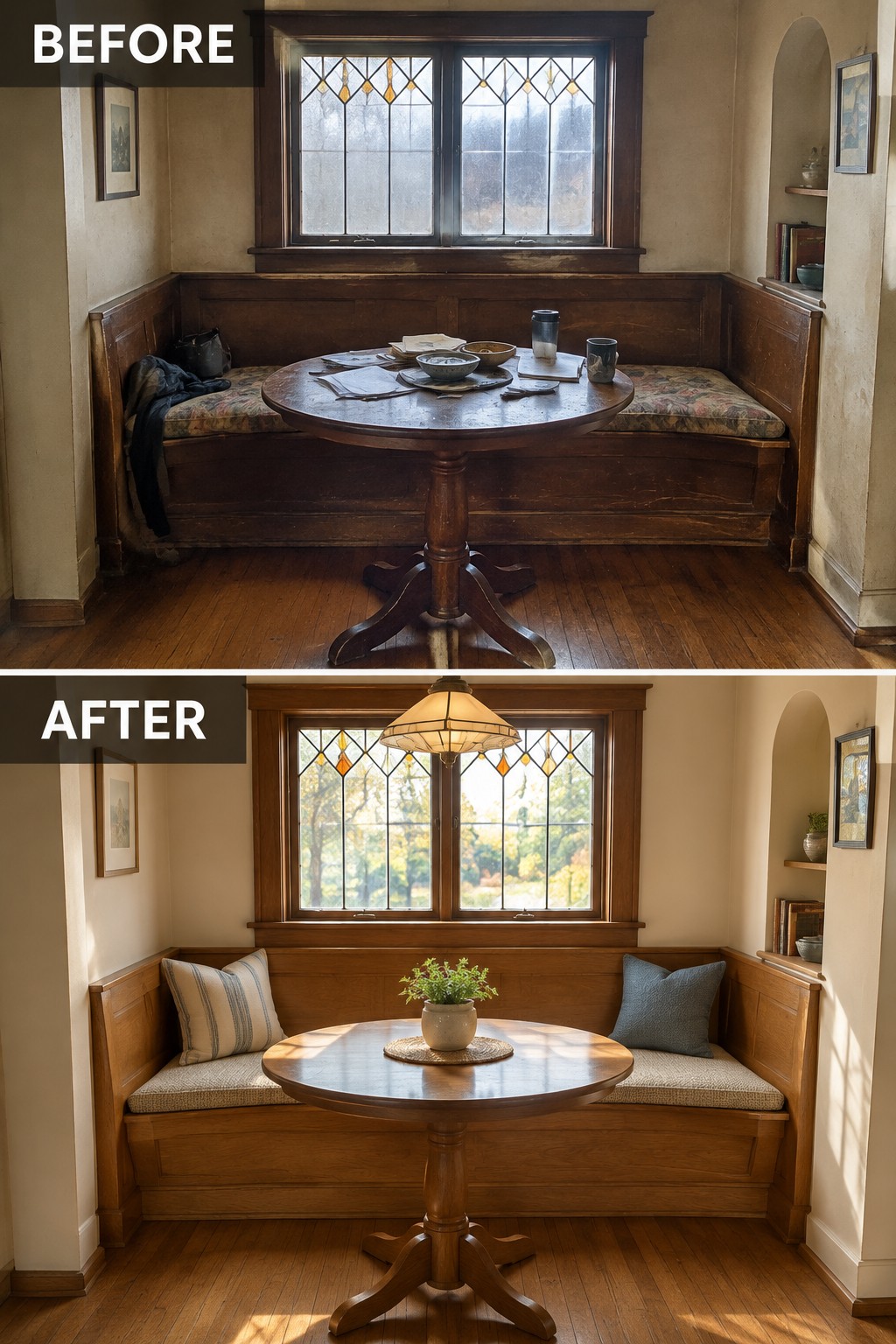
The nook works better once the original bench is treated as a place to sit and eat, not a spot to collect clutter. Clearing the table and adding simple cushions turns the built-in seating into a useful part of the room while keeping its woodwork in view.
For a similar setup, start by clearing the bench and checking that the seat is comfortable and sturdy. Choose cushions that fit the bench without crowding it, then keep the table surface mostly open so there’s room for everyday meals.
Refresh An Original Vanity Without Replacing It
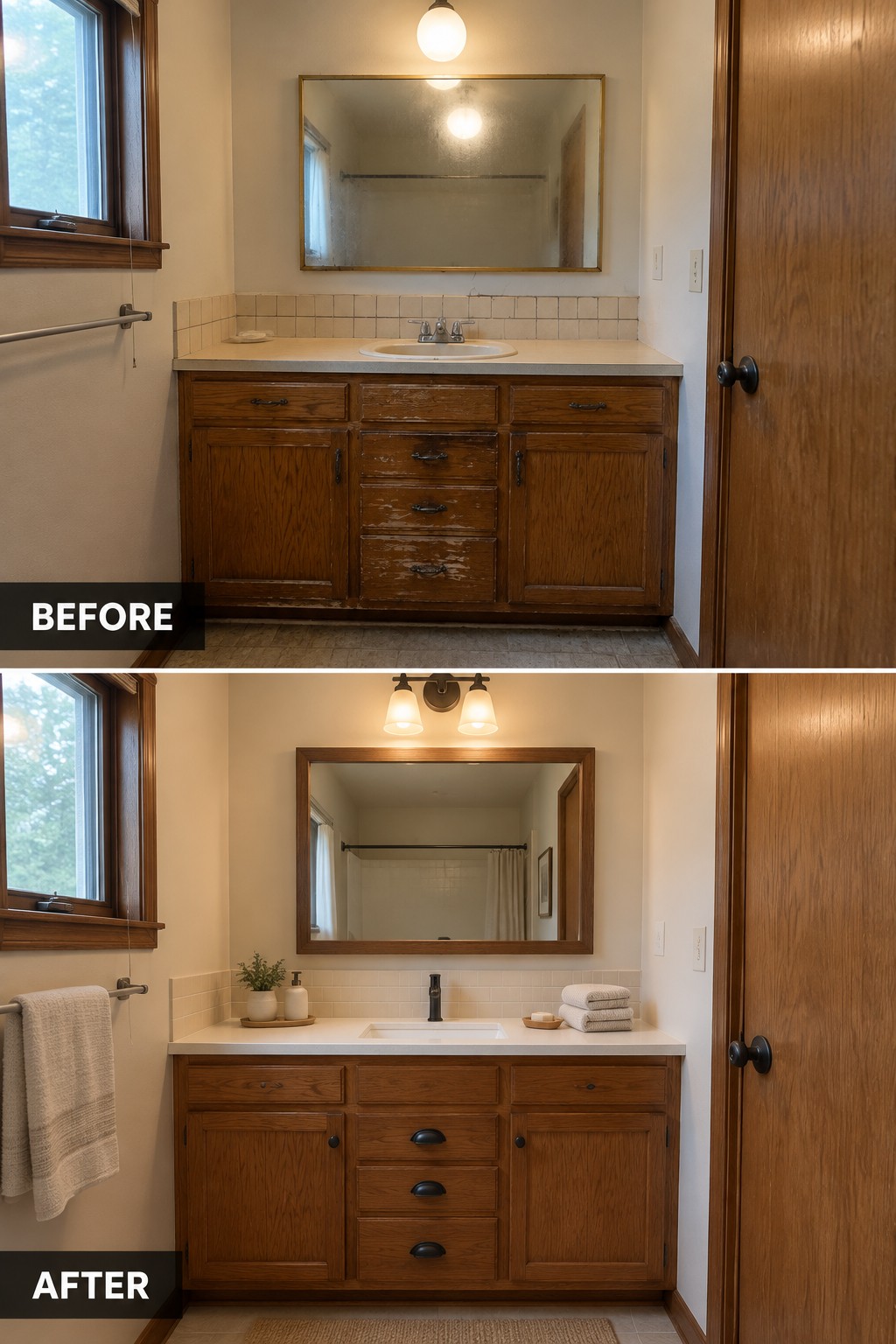
The worn wooden vanity makes this bathroom feel dated, but the makeover shows how much can improve when the original cabinetry is repaired and given a cleaner countertop and hardware. Keeping the wood preserves the character of an older home while making the sink area feel more cared for.
If your bathroom has sound original cabinets, start by fixing damaged surfaces and loose doors before deciding what to replace. A new countertop and simple hardware can update the vanity without losing its connection to the rest of the home’s woodwork.
Make A Laundry Room Built-In More Useful

The open shelving in this laundry room had become a catch-all for supplies and laundry, making it hard to keep things tidy. Reworking the built-in shelves into clear storage zones, with baskets for smaller items and folded towels in easy reach, gives the room a calmer, more practical setup.
In an older home, keep the original woodwork and adjust the shelves to fit what you actually store. Use a few matching baskets to hide everyday supplies, but leave some open space so the built-in doesn’t feel crowded.
Restore The Original Window Seat

A worn built-in window seat can become the main feature of a small room once its woodwork is repaired and it has a comfortable cushion. Here, the refreshed seat gives the enclosed porch a useful place to sit without bringing in bulky furniture.
Check the bench for loose boards and damaged paint before choosing a finish. A fitted cushion makes it more comfortable, but keep its thickness modest so the seat still feels connected to the original woodwork.
Restore A Built-In Wall As The Room’s Main Feature

The built-in has plenty of character, but cluttered shelves and a dated TV setup make it feel less useful. Reorganizing the shelves and updating the finish lets the original woodwork stand out while keeping the wall practical for everyday storage.
If you have a similar feature in a Craftsman home, start by clearing the shelves and deciding what needs to stay accessible. Group books and a few simple decorative pieces, and keep open space around the screen so the shelves do not feel crowded.
Refresh Original Built-Ins With A Thoughtful Room Setup

The built-in bookcases are the room’s strongest feature, but they feel neglected when the shelves are mostly empty and the walls look worn. Restocking them with books and a few ceramics makes the woodwork feel useful again, while the small seating area gives the room a clear purpose.
In a Craftsman home, start by cleaning and repairing original woodwork rather than covering it up. Arrange books in groups and leave some open space on the shelves; a chair nearby can turn the room into a comfortable reading spot without crowding the built-ins.
Turn Under-Stair Storage Into A Reading Nook

An under-stair cupboard can become useful living space instead of a spot for boxes. Here, built-in shelves and a small bench turn the awkward recess into a compact reading nook, while the woodwork suits the home’s Craftsman character.
If you have a similar space, keep the bench shallow enough to leave room to sit comfortably, and use shelves for books or a few everyday items. A small reading light helps, but avoid filling every shelf so the nook still feels easy to use.
Turn A Mudroom Built-In Into A Useful Landing Spot
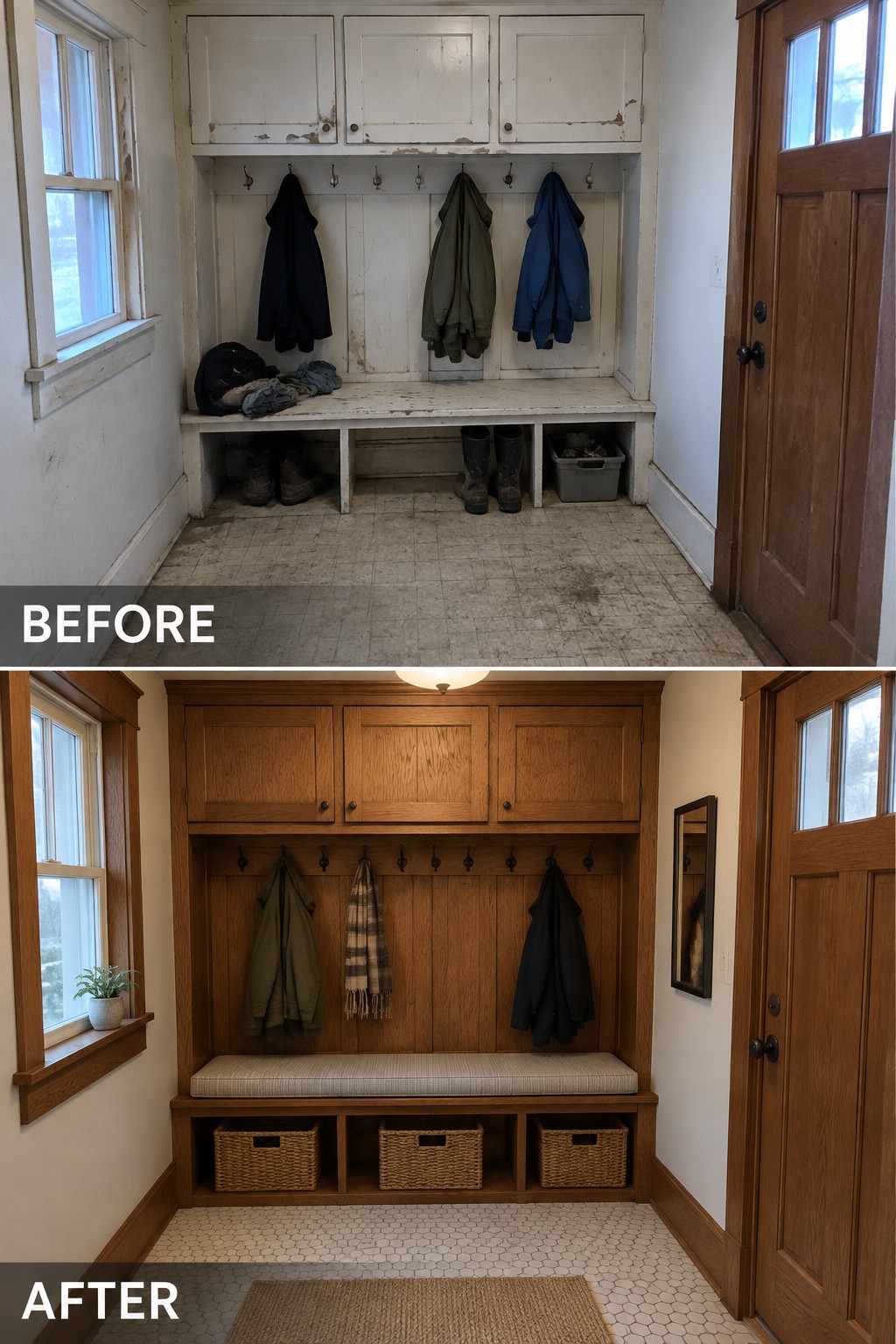
The worn entry built-in becomes much more useful once its storage is repaired and the bench is made comfortable. The hooks and upper cabinets remain the main features, while a cushion and baskets give everyday coats, shoes, and smaller items a clear place.
In a Craftsman home, keep original woodwork where you can and focus on making it work for daily routines. Add a bench cushion that fits the seat and baskets sized for the lower cubbies, but leave enough room to sit and move around.
Frequently Asked Questions
Q: How can I tell whether an old built-in is original or a later addition?
A: Look for clues like woodwork that matches the rest of the room, trim that fits neatly against the floor and walls, and construction details that seem consistent with the house’s age. If you’re unsure, check old photos or ask a preservation-minded carpenter before removing anything.
Q: What should I do if the built-in has layers of old paint?
A: Start by checking whether the paint could contain lead, especially in a home built before 1978. Once you know it’s safe to proceed, test a small, hidden area and remove only what’s needed to reveal and repair the wood.
Q: Can I update a Craftsman built-in without losing its original character?
A: Yes. Keep the original shape, trim, and hardware where possible, then make practical changes inside, such as adding adjustable shelves. A fresh coat of paint can work too, but don’t rush to cover beautiful wood.
Q: How do I restore damaged wood trim without replacing the whole piece?
A: For small dents or missing corners, a skilled carpenter can patch the damaged area with matching wood and shape it to follow the original profile. Save any loose pieces and take clear photos before work begins so the repair can match the surrounding trim.
