

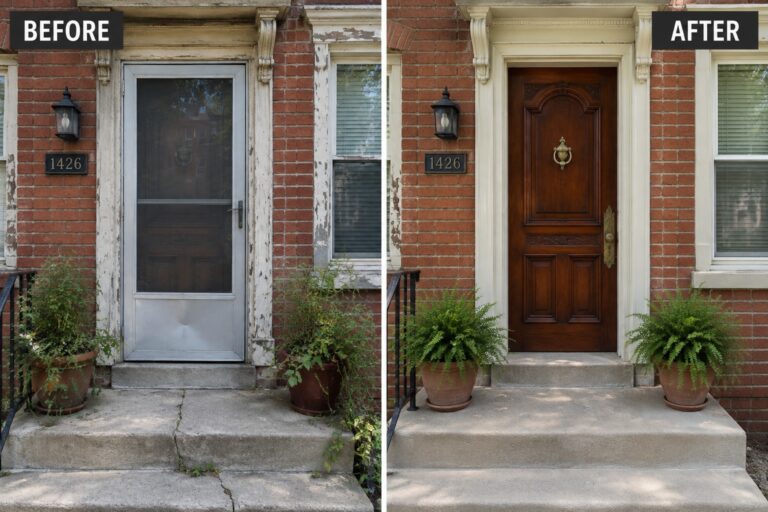
Original doors can give a historic home much of its character, but years of wear, chipped paint, or awkward repairs can make them feel neglected.
I’m always drawn to restorations that keep those details in place while making the doors work smoothly for everyday life.
Careful repairs, fresh finishes, and thoughtful hardware can make an entry feel cared for without erasing the history that makes it distinctive.
The change is often satisfying precisely because it respects what was already there.
These projects offer practical details worth saving and adapting in an older home of your own.
Restore The Front Door To Refresh The Entry
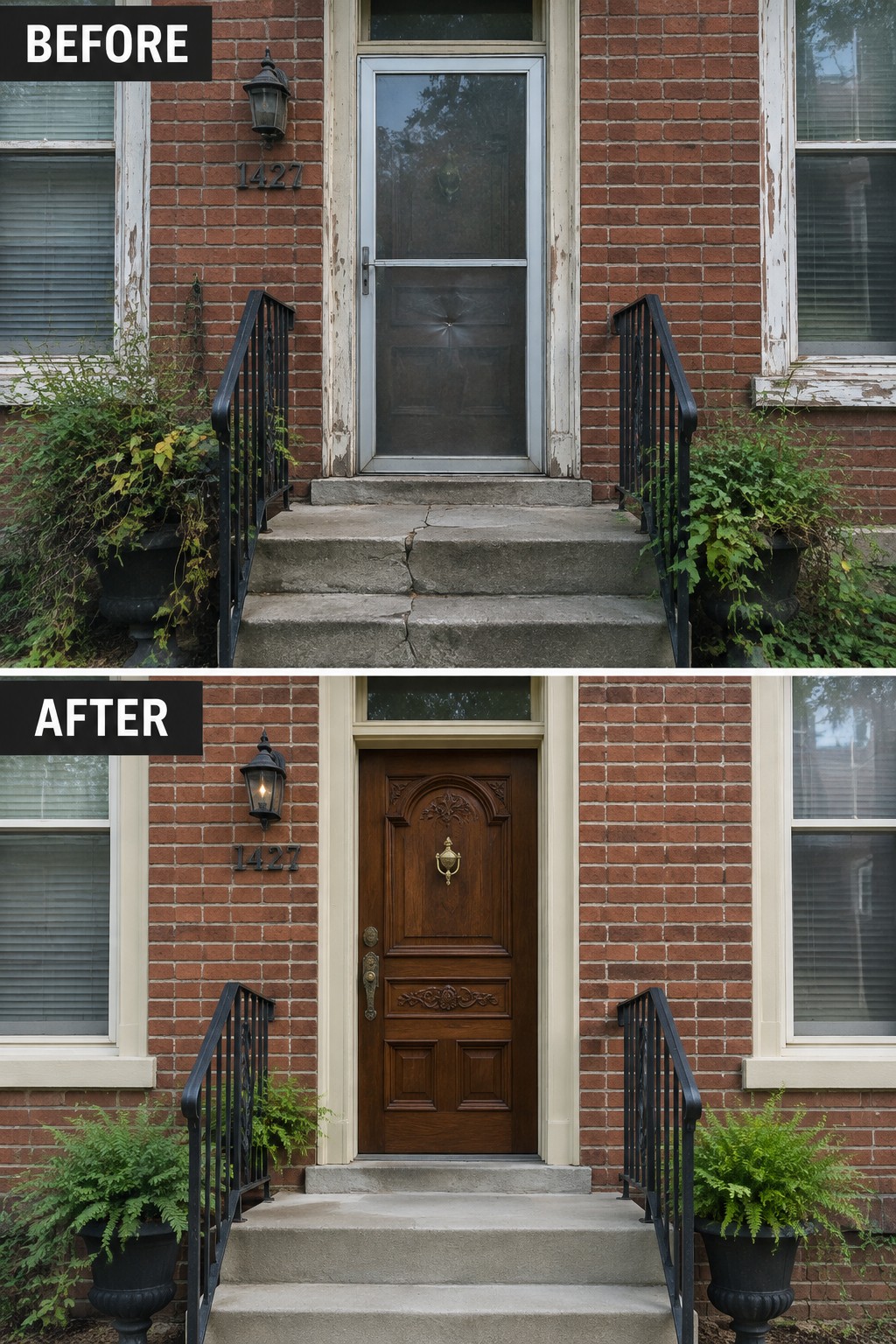
A worn entry can make the whole front of an older home feel neglected. Here, replacing the damaged screen door with a carved wood door gives the entrance a clear focal point while keeping the brick facade intact.
If the original door is beyond repair, choose a replacement that suits the home’s age and proportions. Keep the surrounding trim simple and in good condition so the door can stand out without making the entry feel overly new.
Make A Worn Porch Feel Like A Welcoming Entry
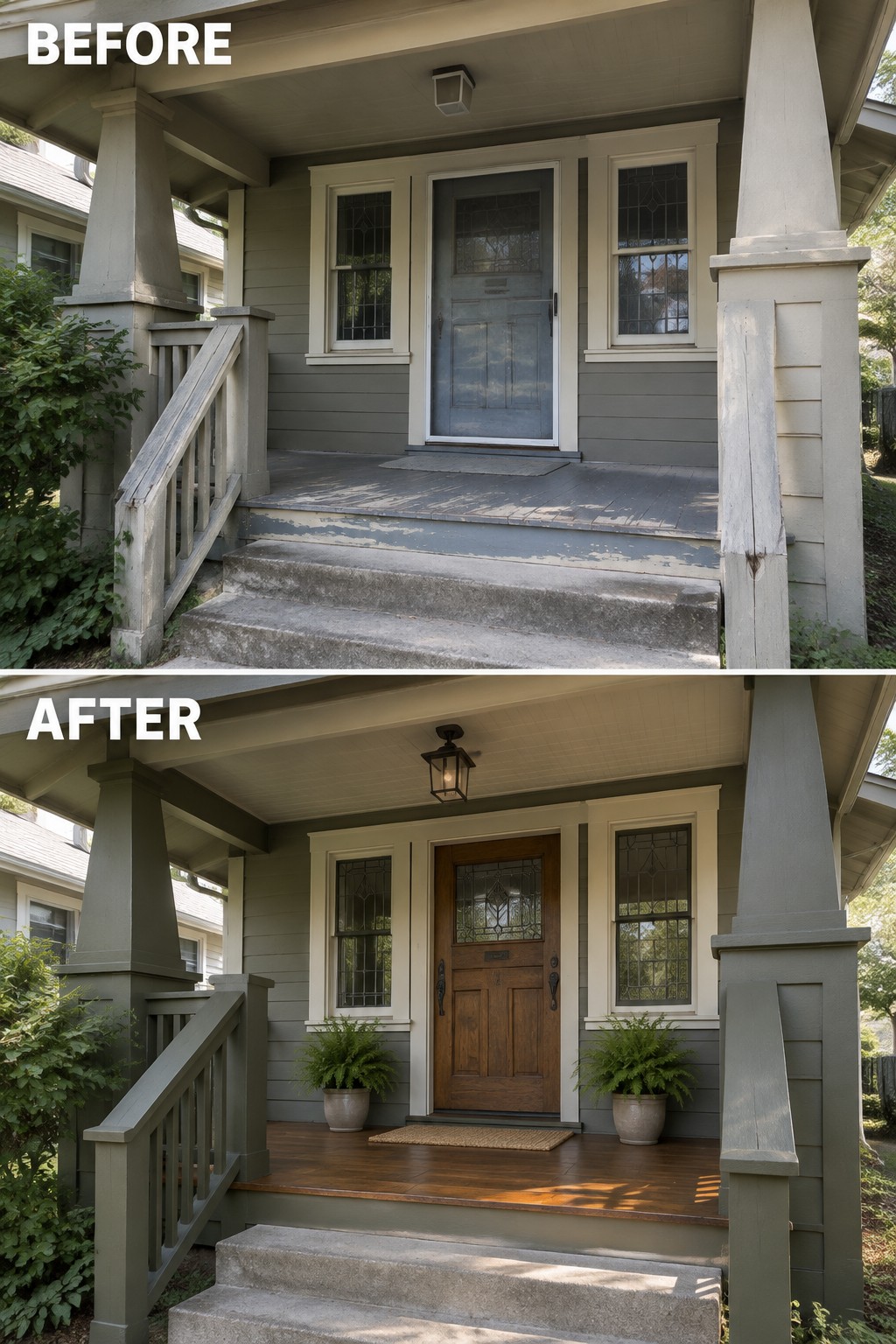
A porch can feel neglected even when the house itself has good bones. Here, a fresh finish on the wood door gives the entry a clear focal point, while the worn porch floor has been refinished to make the space feel cared for.
For an older home, keep the original door if it is sound and restore its finish rather than replacing it. A durable porch-floor finish can complete the update, but choose one suited to outdoor exposure and leave the steps and walkway clear.
Restore The Front Door With A Fresh Coat Of Paint

A worn front door can make an otherwise well-kept historic facade look tired. Here, repainting the original door a muted blue gives the entry a cleaner look while keeping its traditional panels and hardware in place.
For an older home, choose a color that suits the brick and existing trim, and repair the door before painting. Keeping the original door preserves a bit of the home’s character without requiring a full entry replacement.
Restore The Front Door As The Entry’s Main Feature
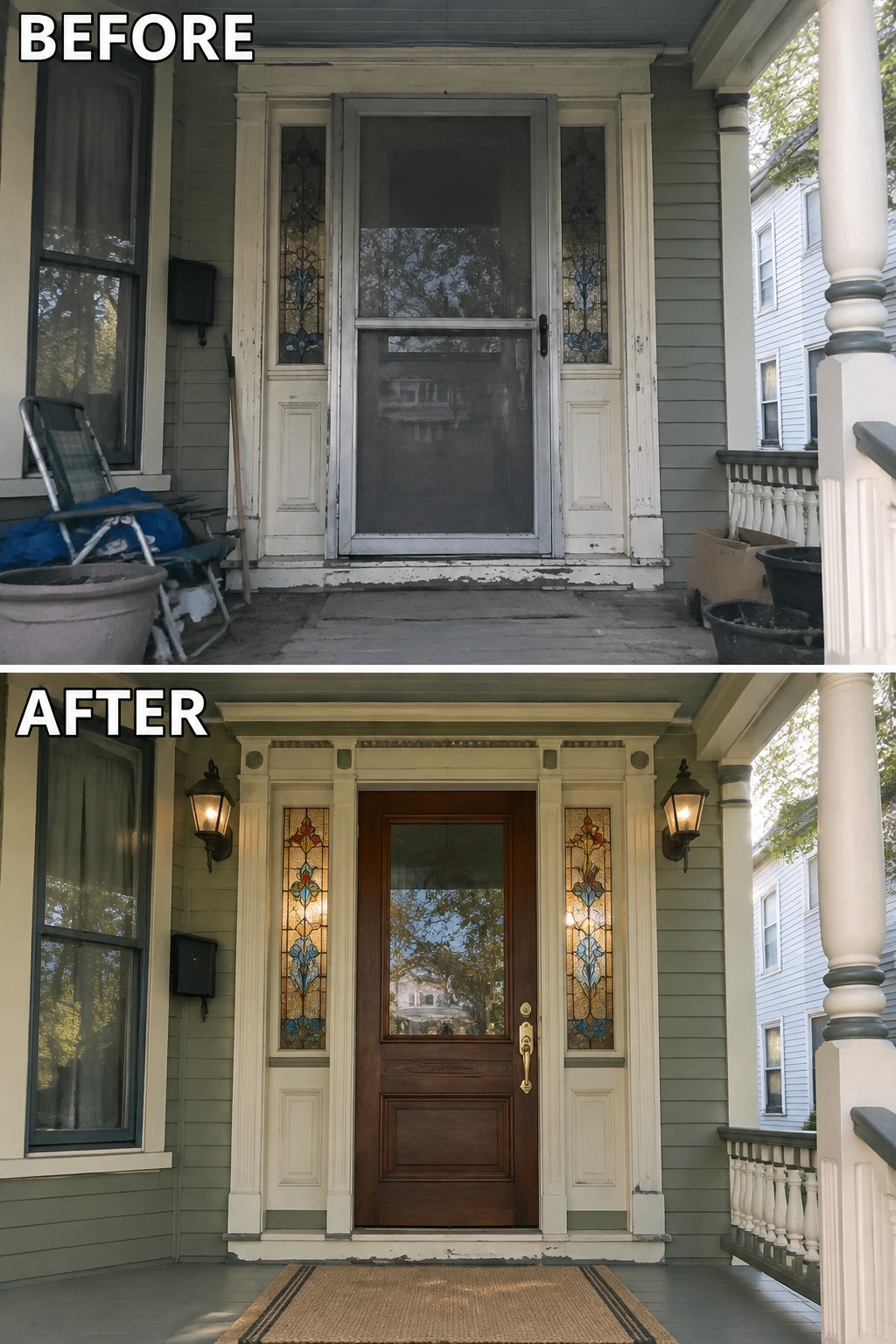
Replacing the worn screen door with a solid wood door makes the porch feel more considered while keeping the original stained-glass sidelights as part of the entry. It’s a useful approach for an older home: let the door lead, and preserve the details that give the doorway its character.
If your original door can be repaired, keep it and focus on refinishing it or updating the hardware. When a replacement is needed, choose a style and size that suit the existing trim so the entry still feels true to the house.
Restore Original Door Hardware
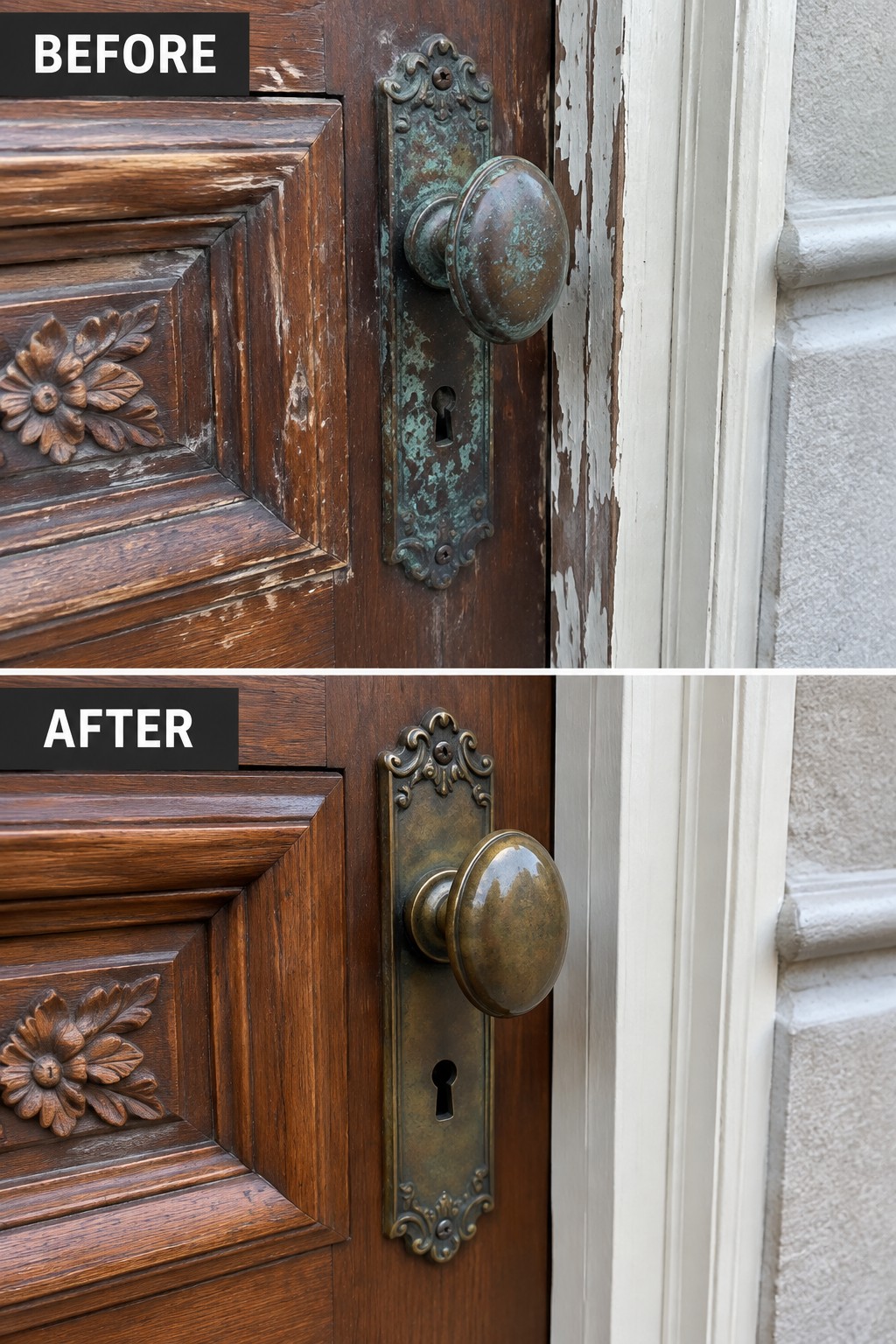
Restoring the original hardware can refresh an old door without replacing the pieces that give it character. Here, cleaning up the tarnished knob and backplate makes them easier to see against the wood, while keeping the door’s historic look intact.
For a similar project, start by gently cleaning the hardware and checking whether its finish can be revived before buying replacements. This approach suits older doors with sound, distinctive fixtures; avoid harsh polishing that could remove the aged patina.
Replace A Worn Entry Door With A Wood-and-Glass Door

The entry feels more finished once the peeling door surround is cleaned up and the plain gray door is replaced with a wood door that has glass panes. The new door suits the stone exterior while keeping the original entry’s character.
For a historic home, choose a door style and finish that fit the age and materials of the house. If you want more daylight in the entry, glass panes can help, but make sure the door still offers the privacy and security you need.
Refresh A Historic Entry With A Repaired Front Door
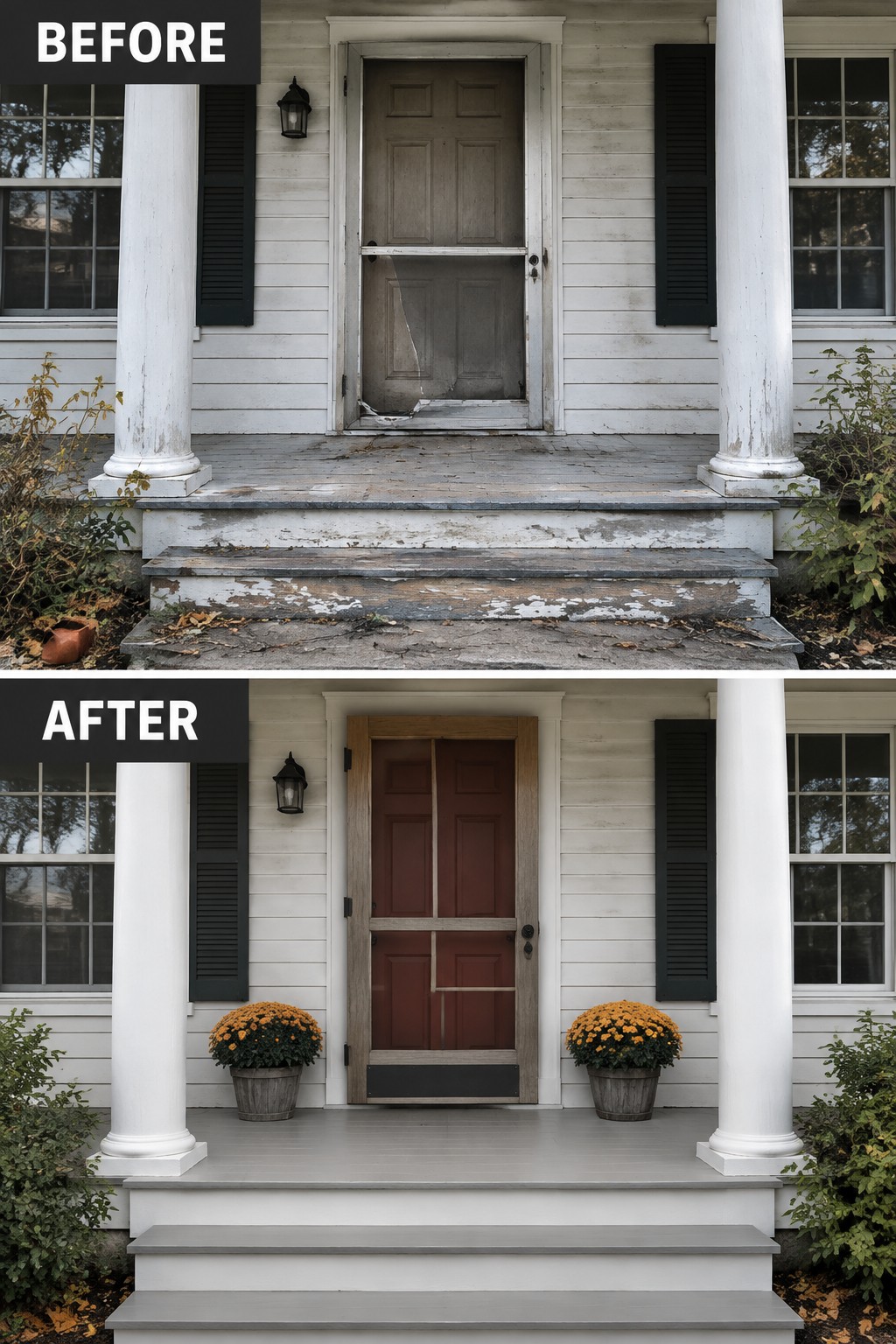
The entry feels cared for again once the damaged door is repaired and its original panel design is brought back into view. The deep red finish gives the door a clear focal point without making the old house feel overly modern.
For a similar project, keep the door’s original shape and hardware where possible, and choose a paint color that suits the home’s age. Repairing the porch steps and adding a pair of simple planters can help finish the entrance without taking attention from the door.
Make The Historic Entry Feel Welcoming

Restoring the original wood door gives this historic entry a clear focal point without replacing the character of the house. The barred entrance in the before photo is gone, and the restored door, warm porch lights, and simple planters make the steps feel cared for.
For an older home, start by repairing the original door and choosing finishes that suit its style. Add lighting near the entrance, and keep planters out of the way so the steps remain easy to use.
Repaint The Original Door In A Heritage Color

The worn red door has been repainted a deep green, giving the historic entry a cleaner look while keeping its original arched shape and iron hardware. A fresh, suitable paint finish can make an old door feel cared for without replacing the features that give it character.
For a similar update, repair loose boards and prepare the surface before painting. Choose a color that suits the stone or brick around the doorway, and keep the original hardware if it is still sound.
Refresh The Entry With A Repaired Front Door
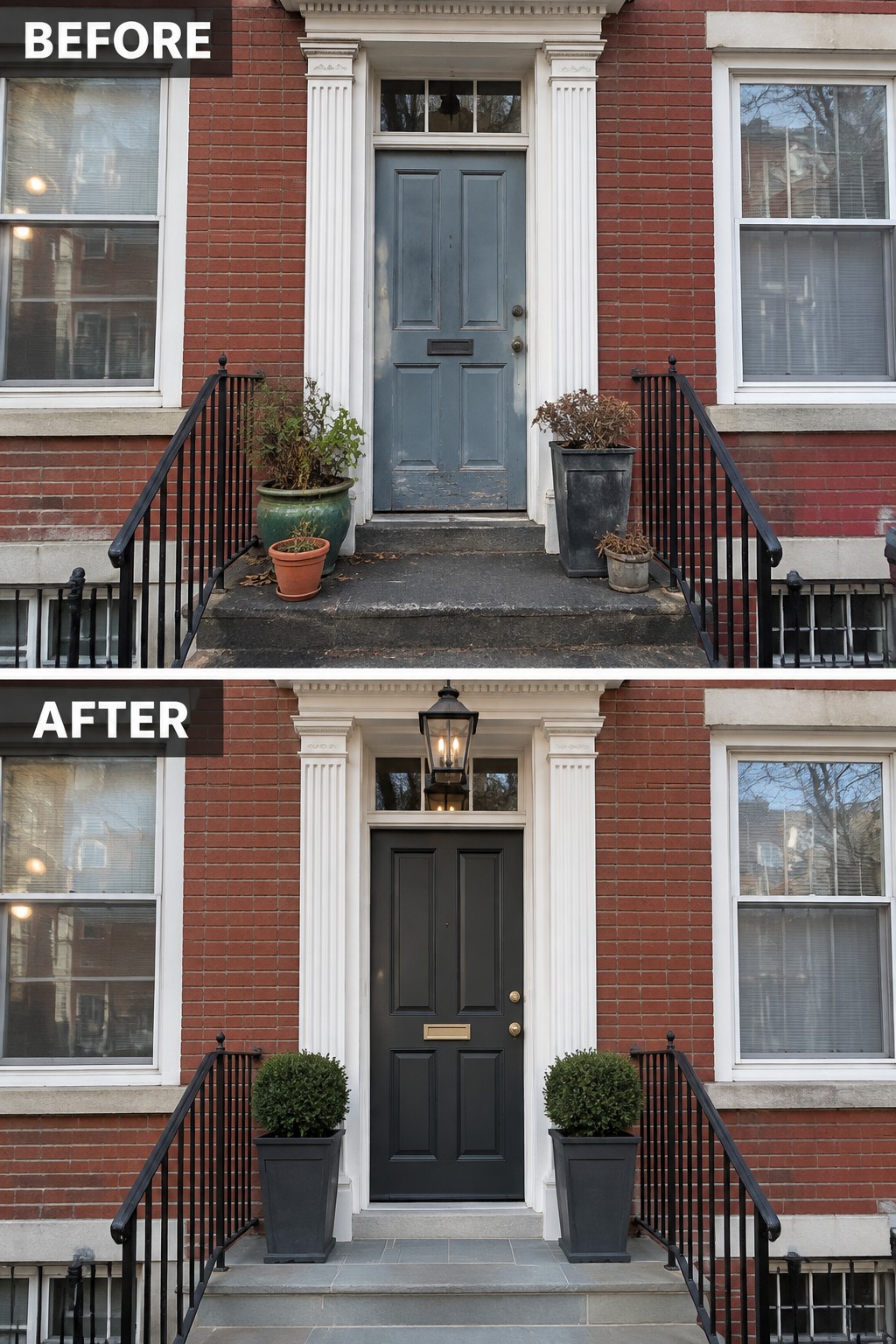
A historic entry can look neglected even when its original details are still worth keeping. Here, a clean black finish replaces the worn door’s faded blue paint, while the entry steps are renewed with neat stone treads. The door remains the focal point without changing the home’s traditional character.
If your original door is sound, repair and repaint it rather than replacing it. Clean and prepare the surface carefully, and check that the door opens smoothly before choosing a finish. A simple, well-kept entry suits older brick homes especially well.
Give A Plain Side Entry More Character
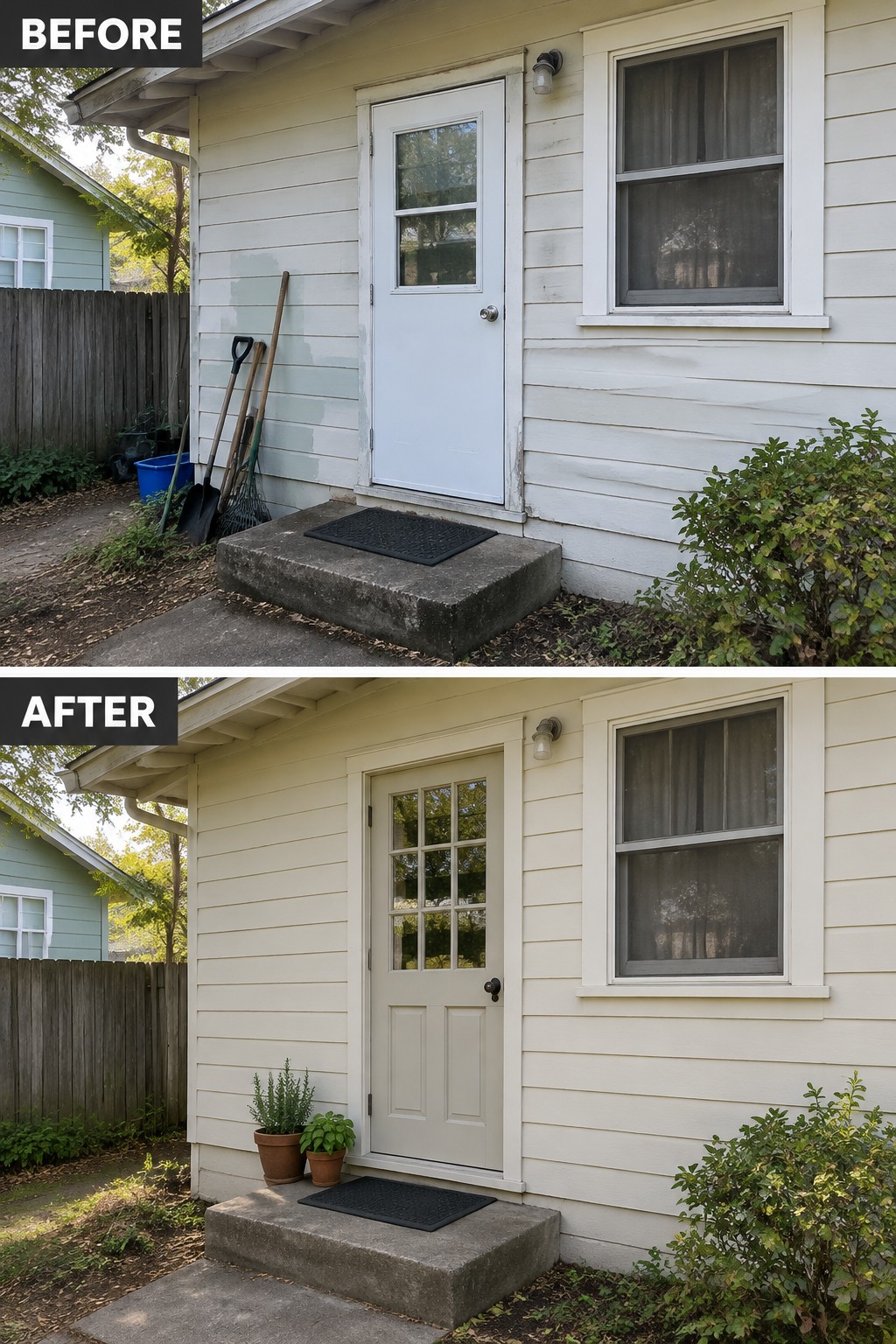
Replacing the blank-looking door with a divided-light wood door gives this side entry a more finished look while keeping the house’s simple exterior intact. It’s a useful example of how the right door can refresh an older home without changing the whole facade.
When replacing a door, look for a style that suits the home’s age and proportions. A glazed upper section can bring in light, while a durable finish and well-fitted trim help the new door sit comfortably with the existing siding.
Give A Historic Entry A Careful Refresh
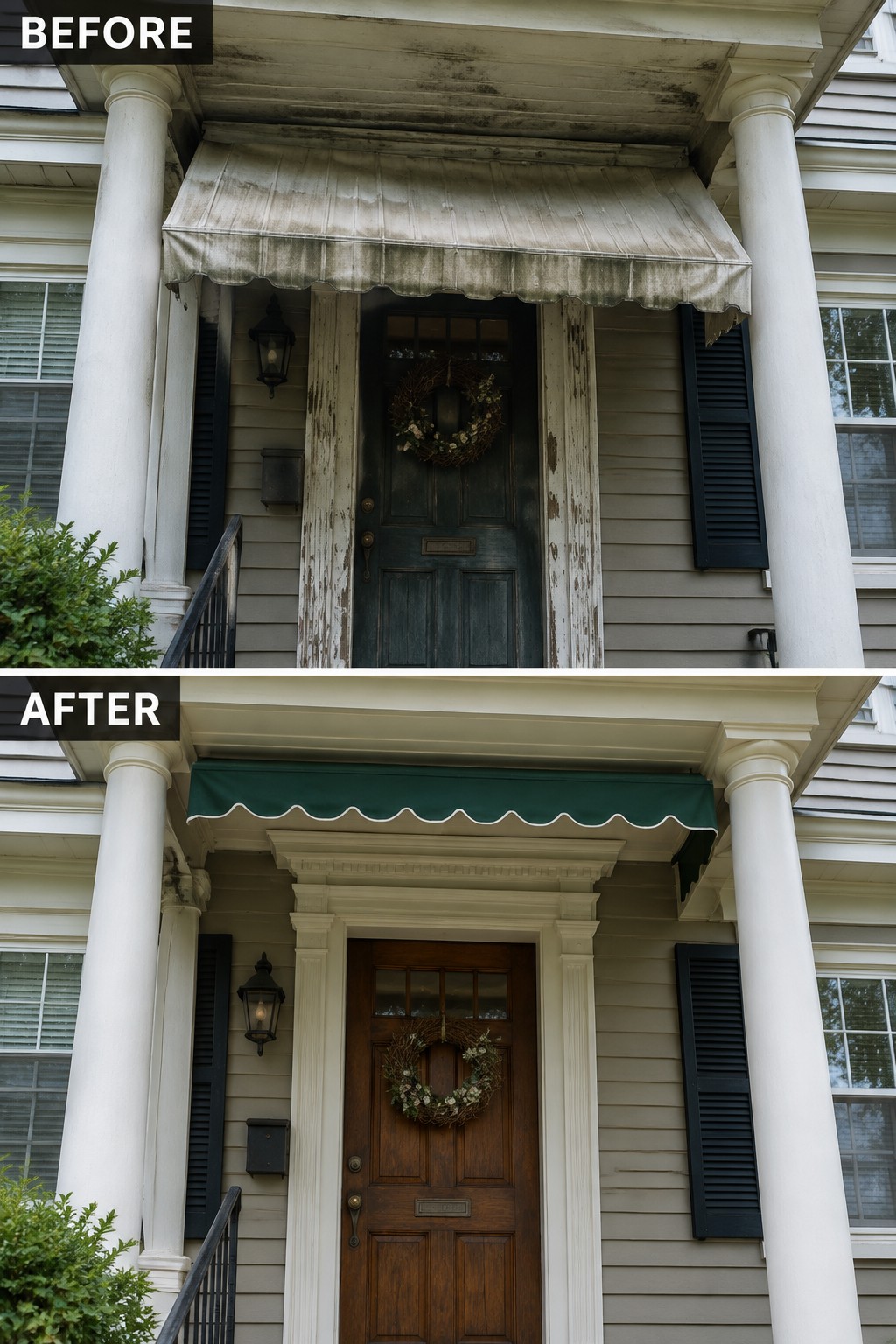
The entry looks cared for again without losing its traditional character. Repainting the trim and replacing the faded awning bring attention back to the original wooden door, which remains the focal point.
For an older home, repair sound wood and preserve original hardware where possible before choosing new finishes. A simple awning can protect the doorway, but keep its shape and color in keeping with the house.
Repair The Steps And Keep The Original Door

The worn stone steps and peeling door made this historic entry look neglected. Repairing the steps and replacing the loose-looking handrail with a sturdy metal one gives the entrance a cleaner, safer approach, while the original door remains part of the home’s character.
For a similar entry, start by checking that the steps are stable and the railing is secure before adding decorative touches. A repaired original door can sit comfortably alongside practical updates, as long as its size and historic details are preserved.
Restore Original Doors To Refresh A Historic Entry
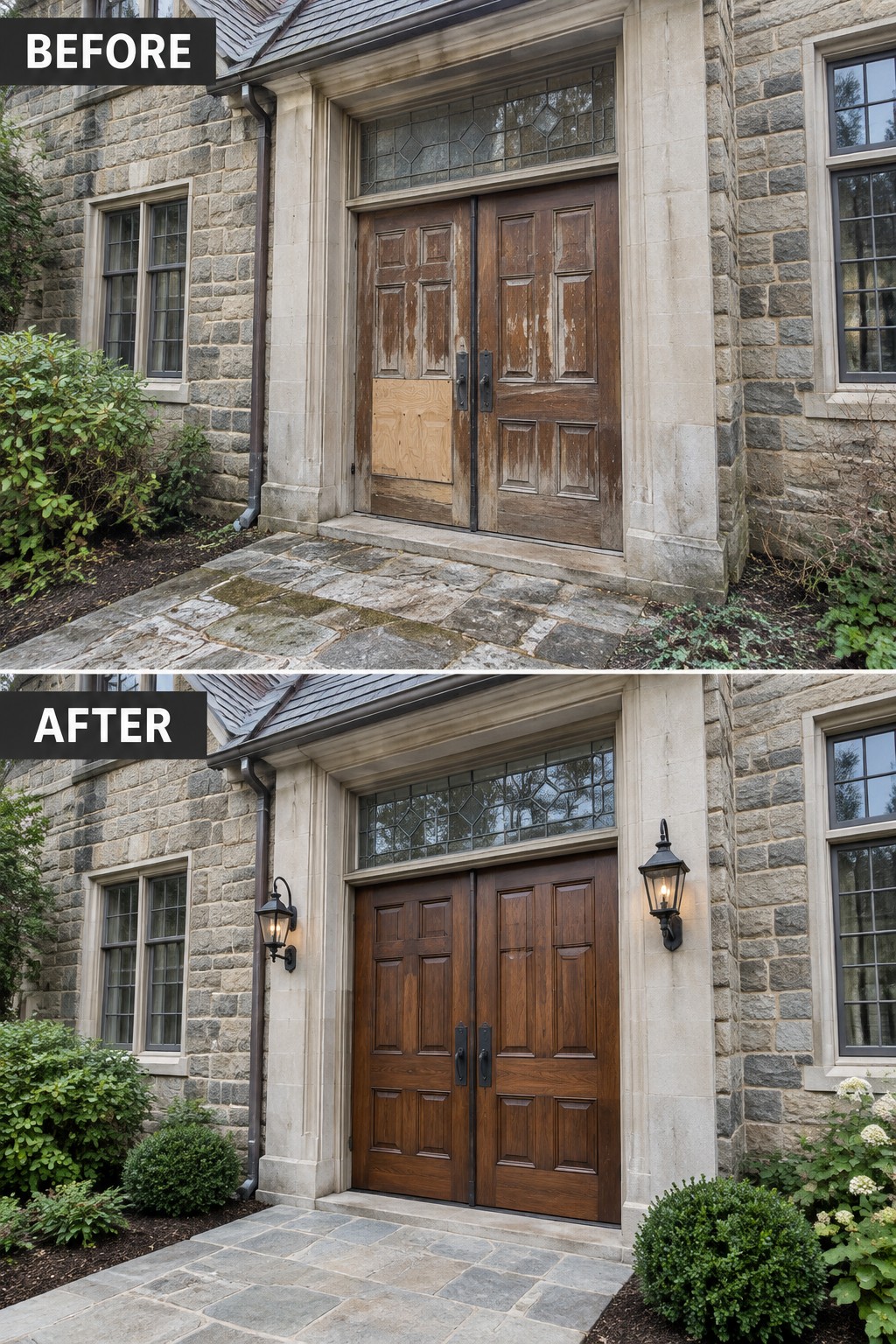
Repairing and refinishing an original door can improve a historic entry without changing its character. Here, the damaged wood doors are restored to a rich finish, making the entrance look cared for while keeping its traditional design.
If the doors are sound, start by assessing the wood and hardware before considering replacement. Remove failing finish, make necessary repairs, and choose a stain or paint suited to the home’s age. A careful restoration can also help preserve details that would be difficult to match in a new door.
Add A Screen Door Without Hiding The Original Door

The worn entry feels more finished with a new wood screen door, while the original door remains visible behind it. This is a practical way to improve a historic porch without replacing the feature the home already has.
Choose a screen door that suits the house’s proportions and lets the original door remain the focus. A simple wood design can work well on older homes, but make sure the frame fits the opening and the door swings freely.
Repair The Original Stained Glass Above The Front Door

The stained-glass fanlight gives this historic entry much of its character, but cracked or loose sections can make it look neglected. Repairing the glass and securing the leadwork restores the detail without replacing an original feature, while the cleaned-up arch helps the whole doorway look cared for.
For an older home, have a stained-glass specialist assess damaged pieces before attempting repairs. Keep the original design and materials where possible, and make sure any protective glazing does not trap moisture against the glass.
Repaint The Front Door To Refresh The Entry
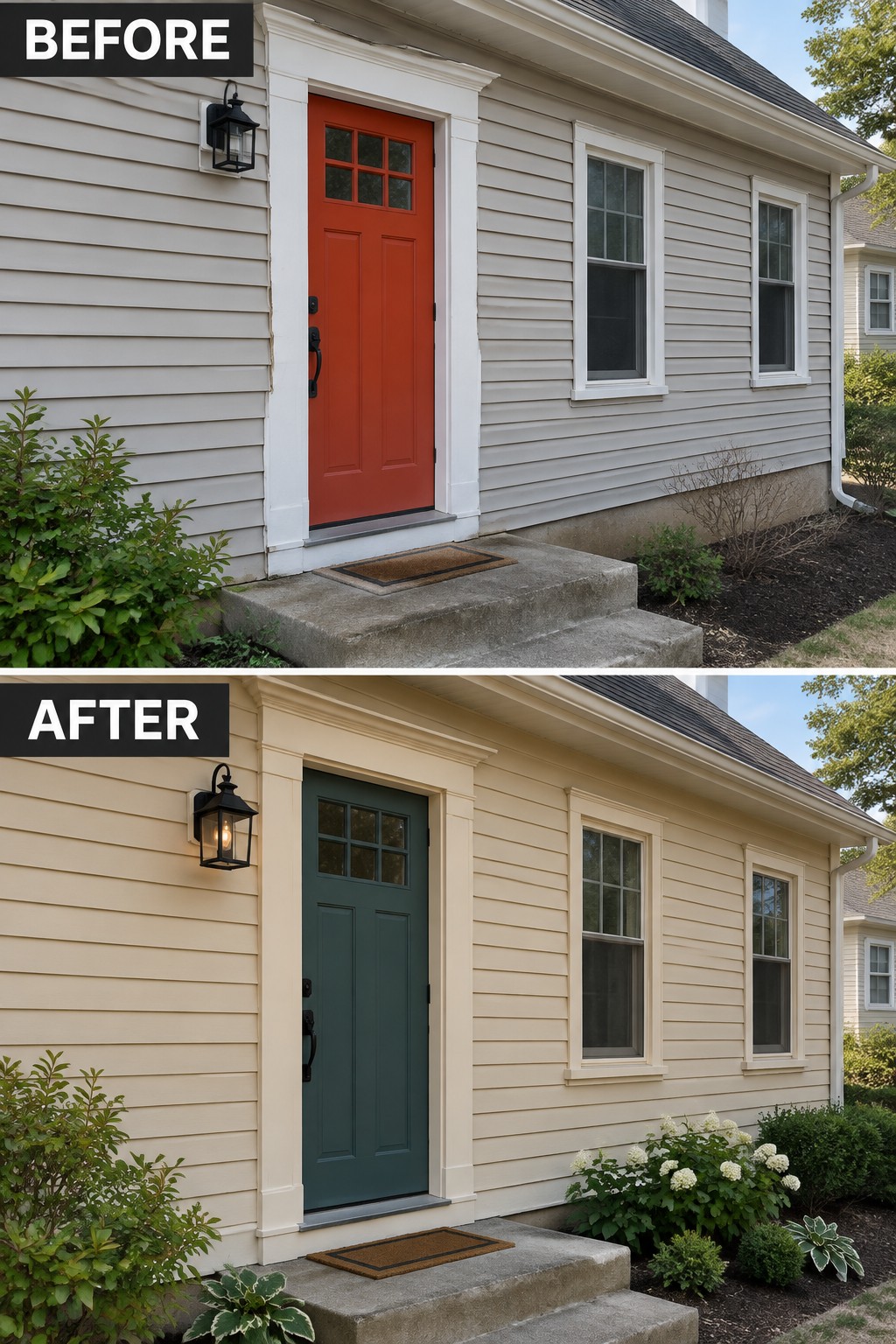
Changing the red door to a deep green gives this plain-sided exterior a clearer focal point without replacing the door. The fresh color makes the entry feel more considered, while keeping the original door’s shape and character.
For a similar update, choose a color that suits the age and style of the house, then prepare the door properly before painting. A new coat can go a long way, but keep the trim and hardware in good repair so the entry still feels true to the home.
Make A Covered Porch More Welcoming
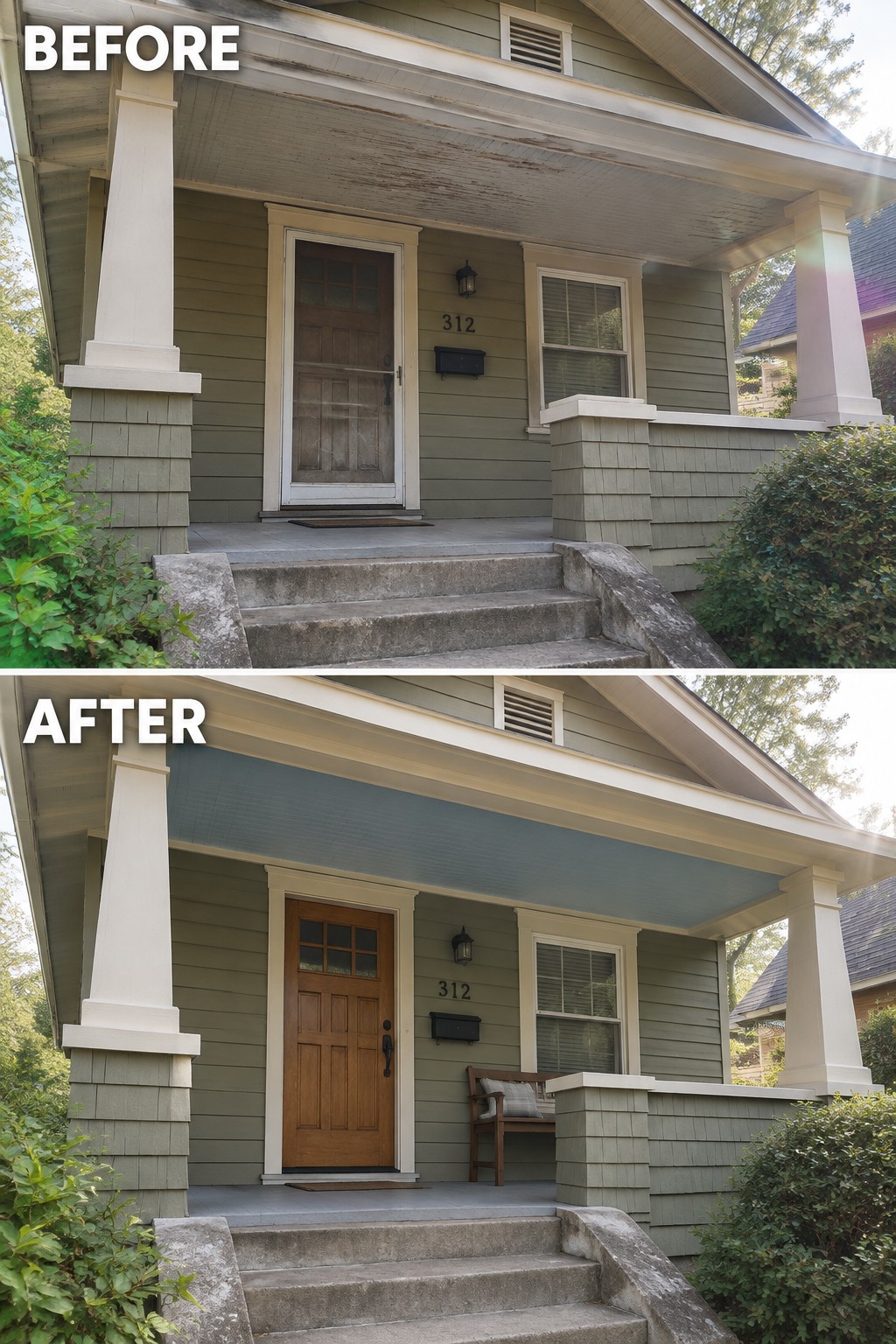
The porch feels more useful after a simple refresh: the worn front door is restored, and a small bench gives the covered space a clear purpose. Keeping the original door lets its character remain part of the entry rather than replacing it with something that feels out of place.
For a similar porch, start by repairing and refinishing the door, then add just enough seating to make the space comfortable. A compact bench works well where room is limited, but leave the main path to the door clear.
Refinish The Original Door To Refresh The Entry
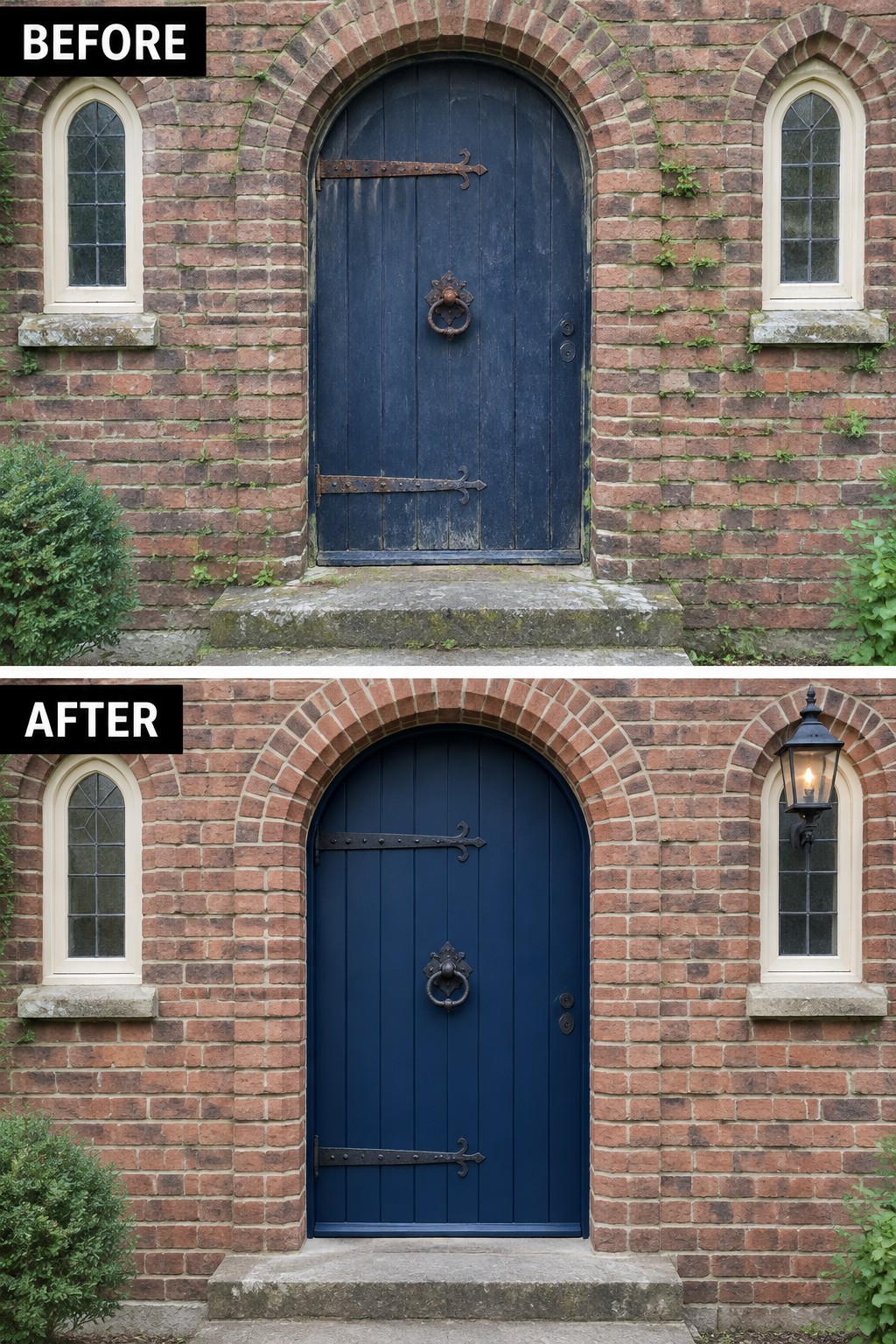
The arched wooden door remains the focus, but a clean coat of deep blue paint makes it look cared for without changing its historic character. Repainting can be a practical way to refresh an old entry when the door itself is still sound.
Before painting, check for loose or peeling finish and repair any damaged wood. Use a paint suitable for exterior doors, and keep the original hardware if it can be cleaned and reused. A simple restoration like this suits older brick homes where preserving the existing door matters.
Repair A Damaged Door Threshold
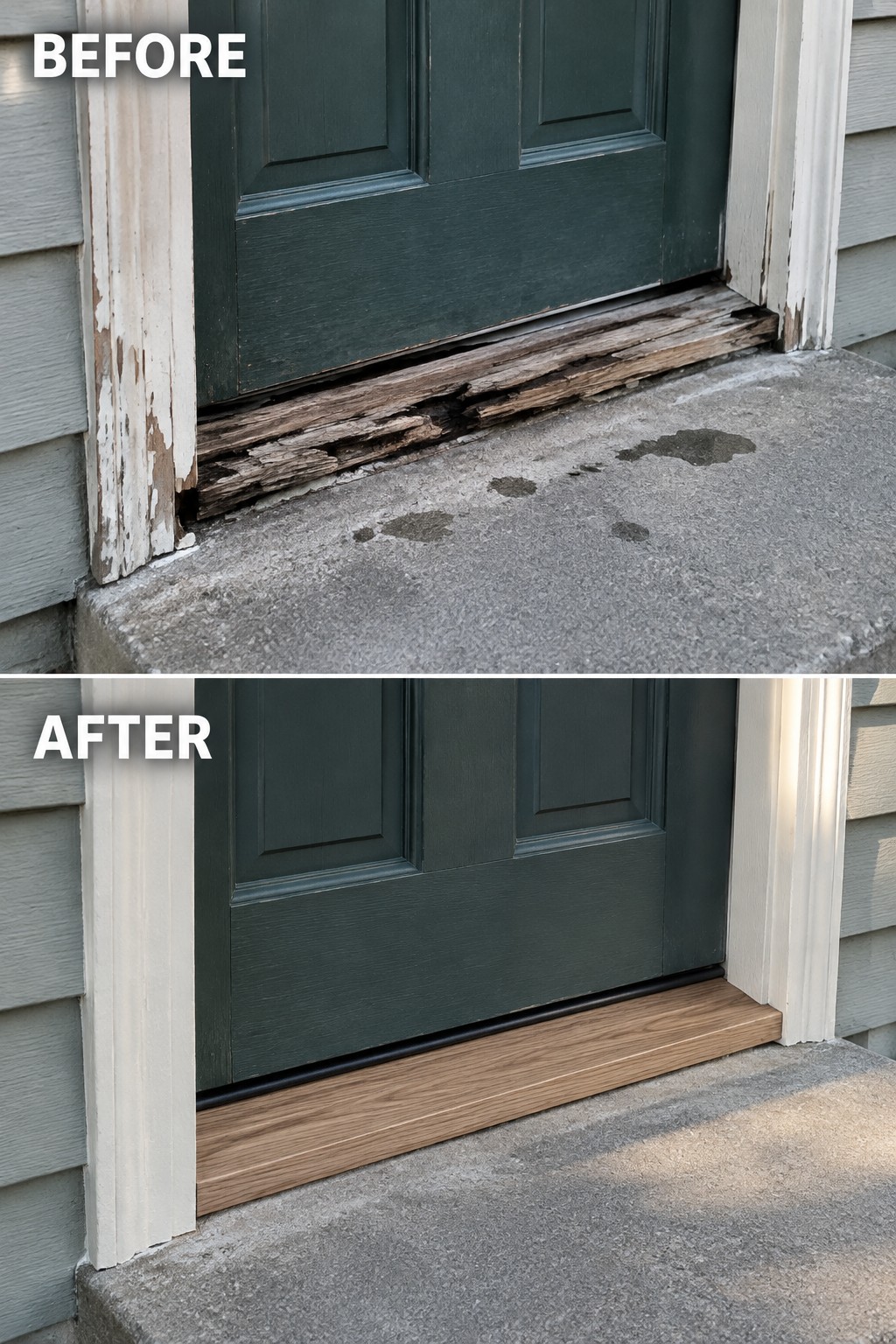
A rotted threshold can make an otherwise sound front door look neglected and may let water reach the surrounding wood. Replacing the crumbling piece with a solid new threshold tidies the entry while leaving the original door in place.
For an older home, match the new piece to the doorway’s width and height, and make sure it sheds water away from the house. Repairing the threshold and nearby trim can be a practical first step before taking on larger door restoration work.
Frequently Asked Questions
Q: How can I tell whether an old door is worth restoring?
A: Check for solid wood, original hardware, and details that match the rest of the house. Cracks or peeling paint may look alarming, but a carpenter can often repair them without replacing the door.
Q: Is it okay to strip old paint from a historic door myself?
A: Be cautious, especially if the paint may contain lead. Test it before sanding or scraping, and use a qualified professional if lead is present. Gentle cleaning and small repairs may be all the door needs.
Q: What if the restored door no longer fits the frame?
A: Small gaps or sticking can often be fixed by adjusting the hinges or repairing the frame. Avoid trimming the door right away, since that can remove original details and leave it too small if the house shifts again.
Q: Can I add modern weatherstripping to an original door?
A: Usually, yes. Choose a discreet option that seals drafts without requiring cuts to the door, and make sure the latch still works smoothly.
