

Old houses often have details worth keeping, but worn finishes, awkward layouts, and years of piecemeal repairs can make them feel less comfortable than they should.
I like seeing how owners work with a home’s original character while making practical choices about light, storage, materials, and flow.
Some updates focus on one room, while others rethink the exterior or bring neglected spaces back into use.
The clearest changes are often satisfying because they make a house feel cared for without erasing what gives it personality.
I’d save ideas that suit the age and structure of your own home, then adapt them to what it actually needs.
Make The Front Porch Feel Welcoming

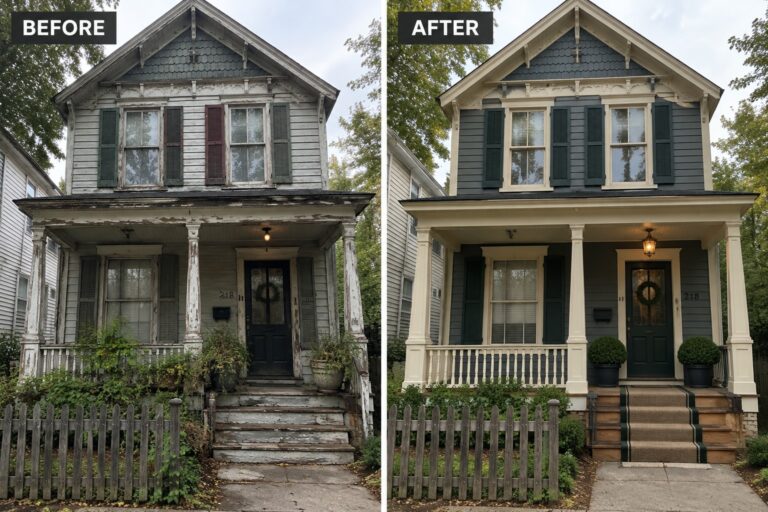
A tired porch can make an older house look neglected, even when the rest of the home has plenty of character. Here, fresh white trim and a more substantial railing give the entry a cleaner, cared-for look without changing the house’s basic style.
If you’re updating a similar exterior, start by repairing and painting the porch details before adding decor. A coordinated front door and simple planters can finish the entry, but leave enough room on the steps and porch for people to move comfortably.
Make A Dated Living Room Feel Finished
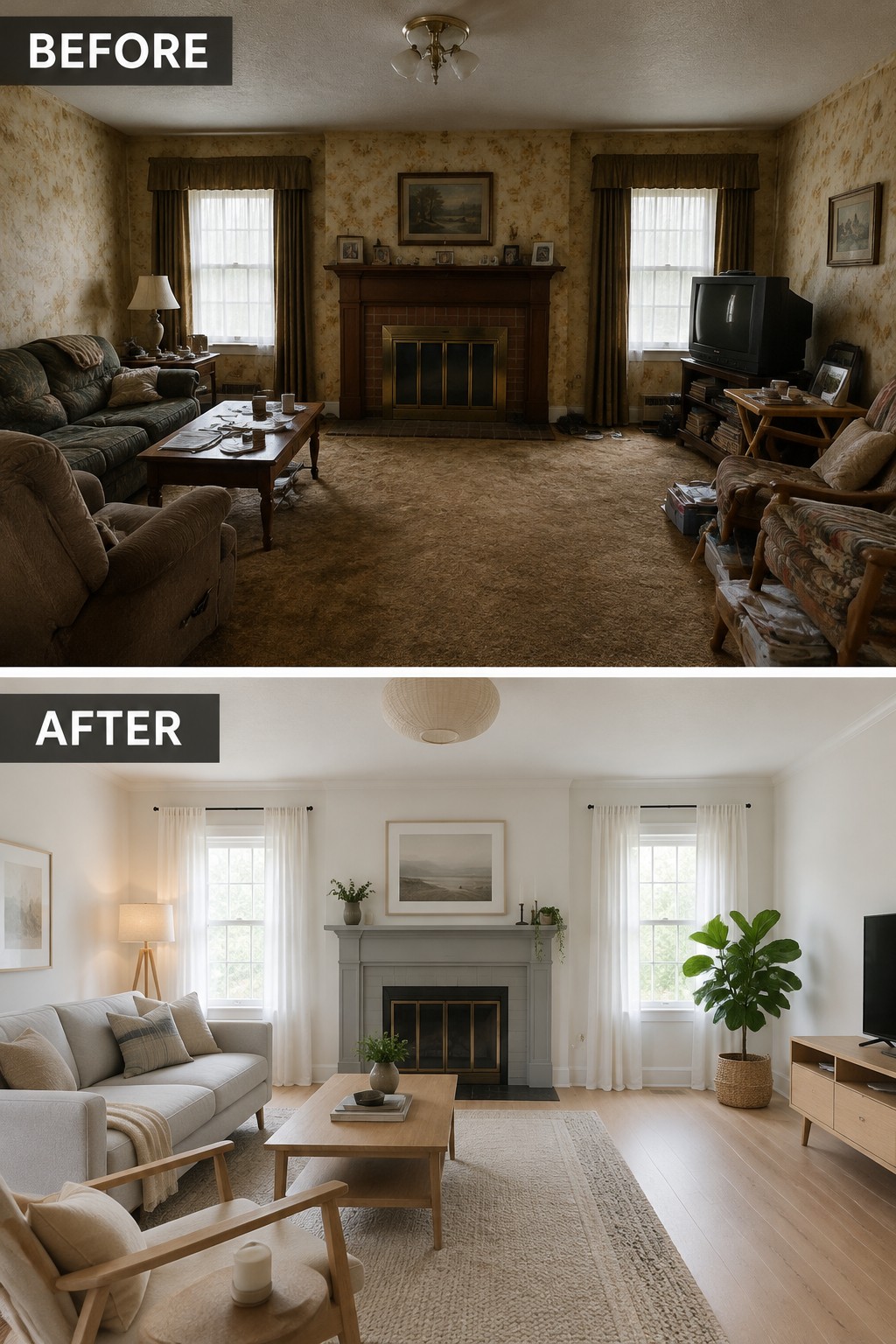
A living room can feel much more current without changing its basic layout. Here, a lighter palette and a simple fireplace update replace the room’s dated, crowded look, while a rug helps define the seating area.
In an older home, start by clearing out excess furniture, then choose a comfortable sofa and a rug sized to fit the main seating group. Keeping the fireplace as the focal point helps the room feel settled without adding too much decor.
Make A Narrow Kitchen Feel Brighter And More Practical
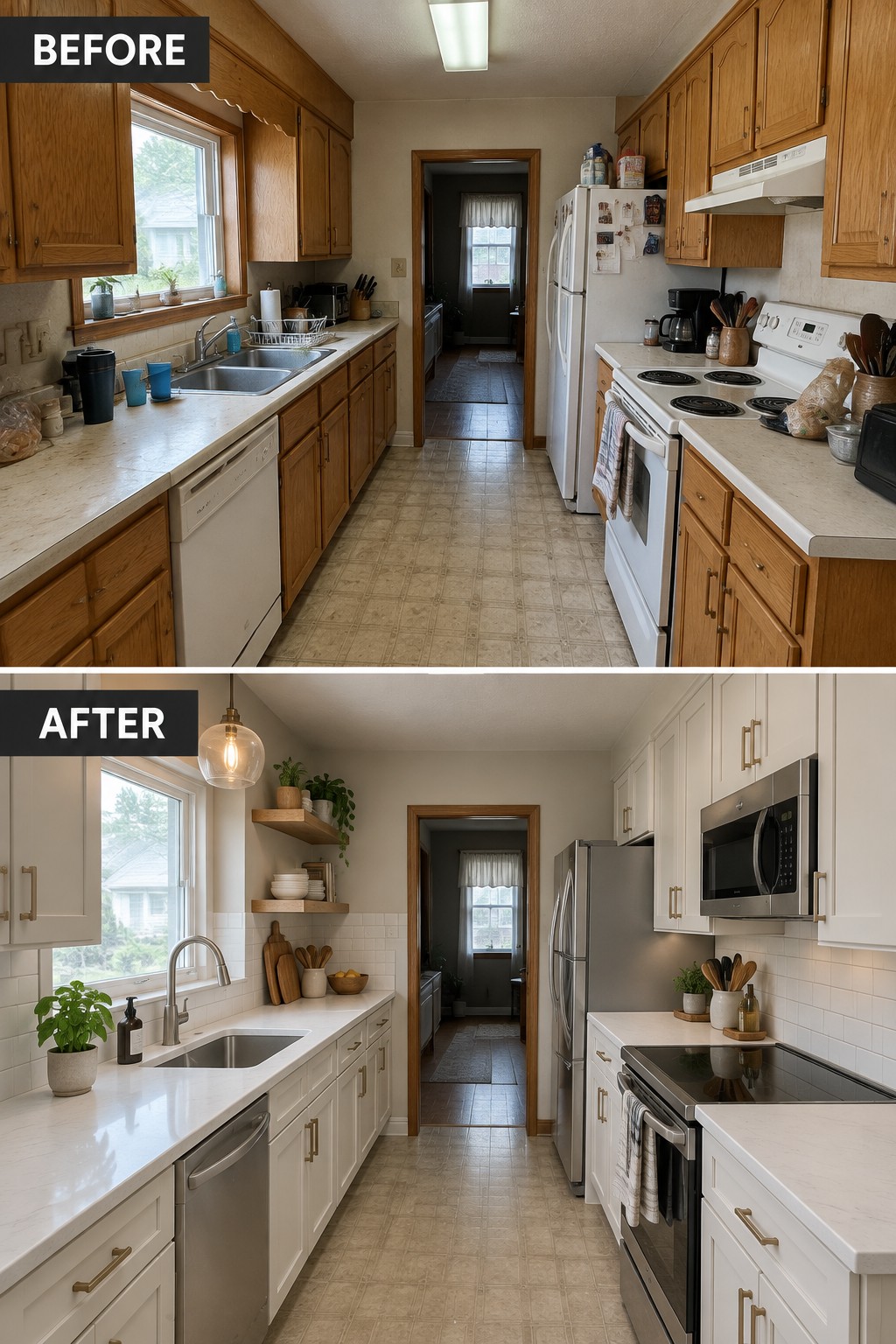
Replacing dated wood cabinets with simple white cabinetry gives this narrow kitchen a cleaner, brighter feel without changing its basic layout. The white cabinets and counters also make the room feel more open, while the updated appliances help it work better for everyday cooking.
In a galley kitchen, keeping the main layout can be a sensible way to update the room without taking on a major rebuild. Choose light finishes, make sure there is enough counter space for prep, and avoid adding bulky items that narrow the walkway.
Replace An Old Tub With A Walk-In Shower
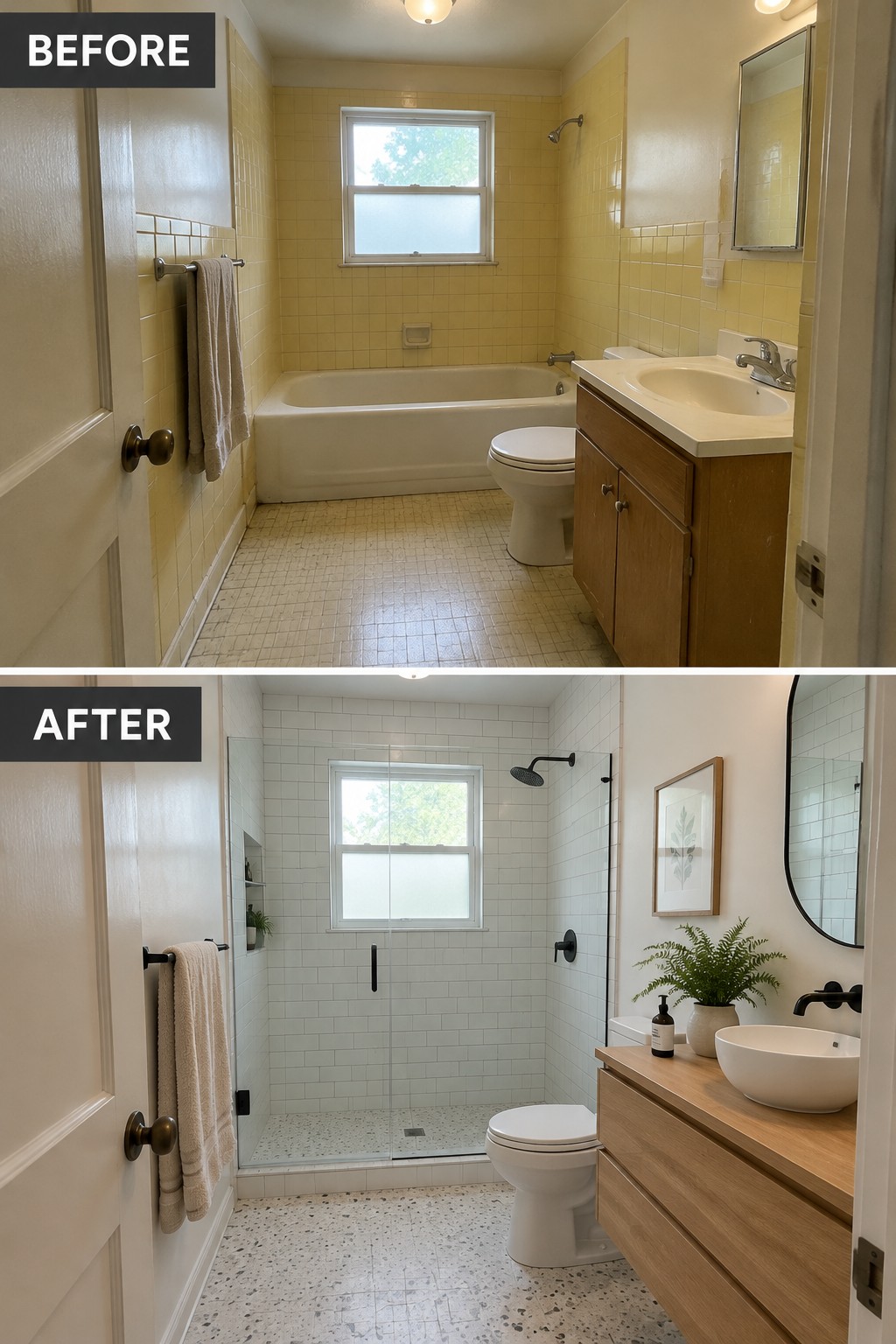
Swapping a dated bathtub for a walk-in shower can make an older bathroom feel cleaner and more useful. Here, the shower area keeps the window but replaces the tub with a low, open floor, making the room feel less crowded.
This idea works well in bathrooms where a tub rarely gets used, though it’s worth checking that the household still has bathing options elsewhere. Keep the shower layout simple and choose practical, easy-to-clean finishes.
Give An Overgrown Front Yard A Clear Path
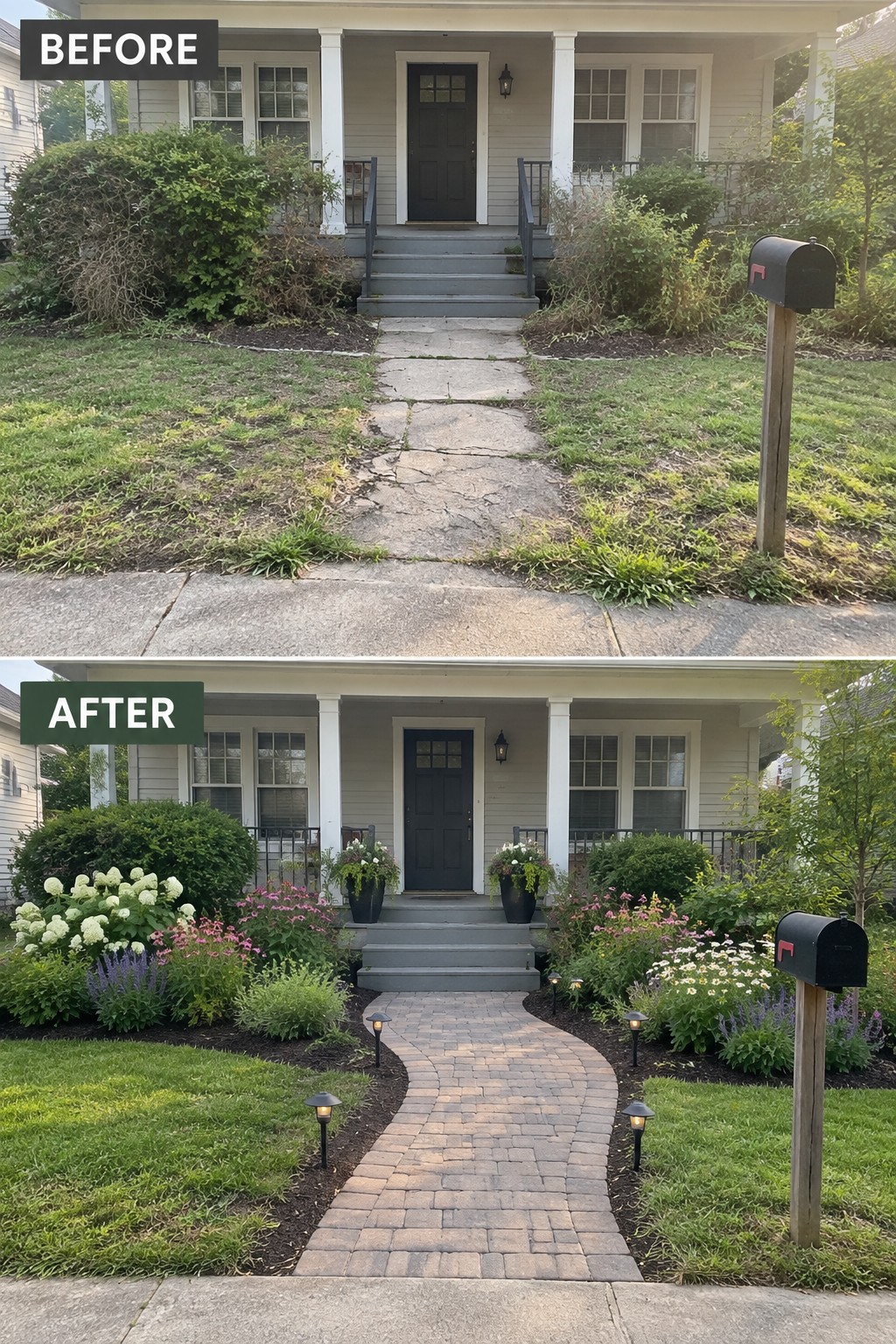
A defined walkway can make an older home’s entrance feel cared for without changing the house itself. Here, the cracked path is replaced with pavers that curve through tidy garden beds, giving visitors a clear route to the steps.
For a similar yard, clear the overgrowth first, then choose a path shape that follows the natural approach to the door. Keep the planting beds contained so they don’t spill onto the walkway, and leave enough room for people to pass comfortably.
Turn An Old Deck Into A Usable Outdoor Room
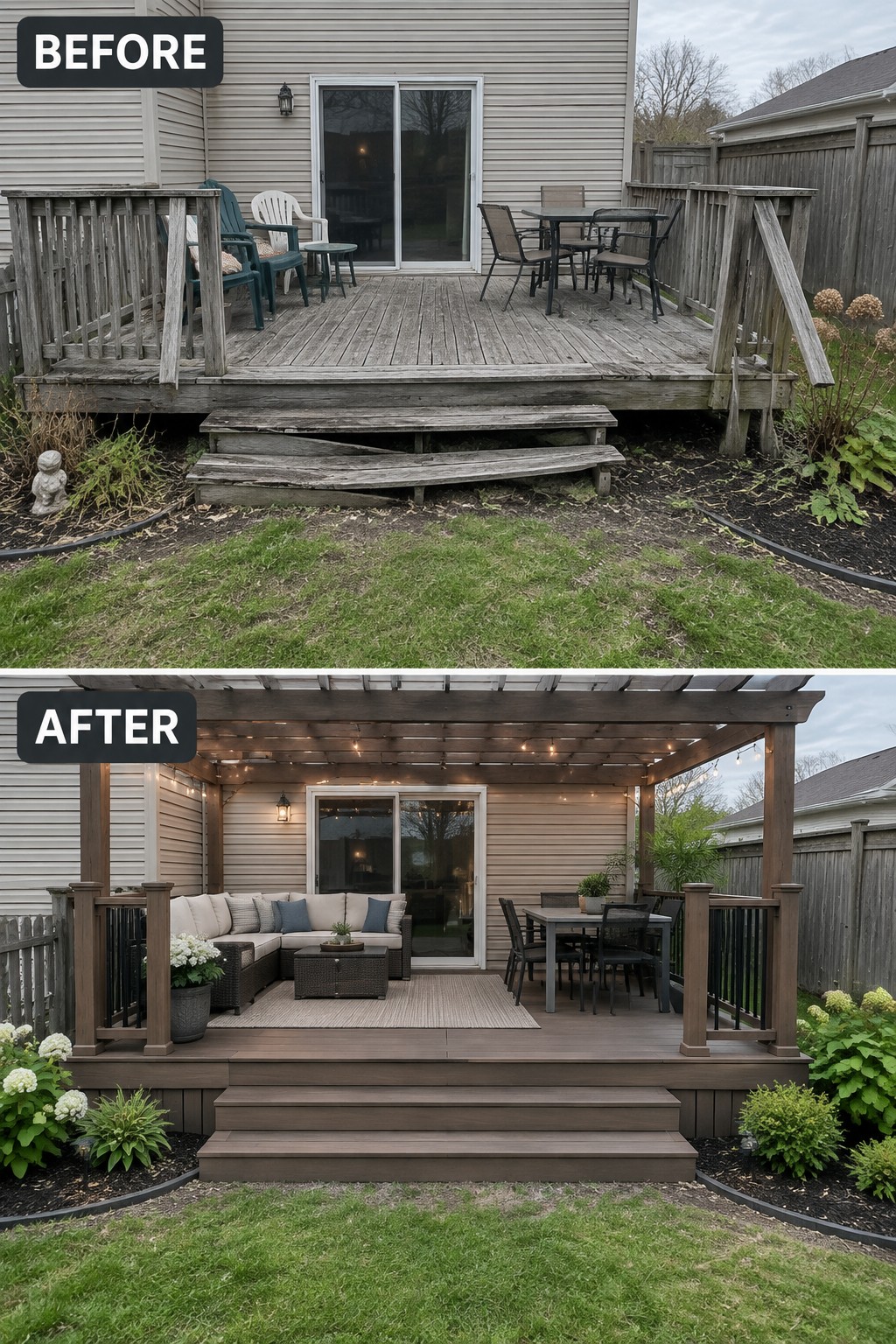
The weathered deck feels more useful once it has a covered seating area. A roof over the space and a comfortable lounge setup turn an exposed, worn deck into a spot for relaxing outdoors.
For a similar update, start by making sure the deck and steps are safe, then plan the seating around how you want to use the space. A simple cover can provide shade and shelter, but leave enough room to move between the seating and dining areas.
Turn An Empty Basement Into A Family Room
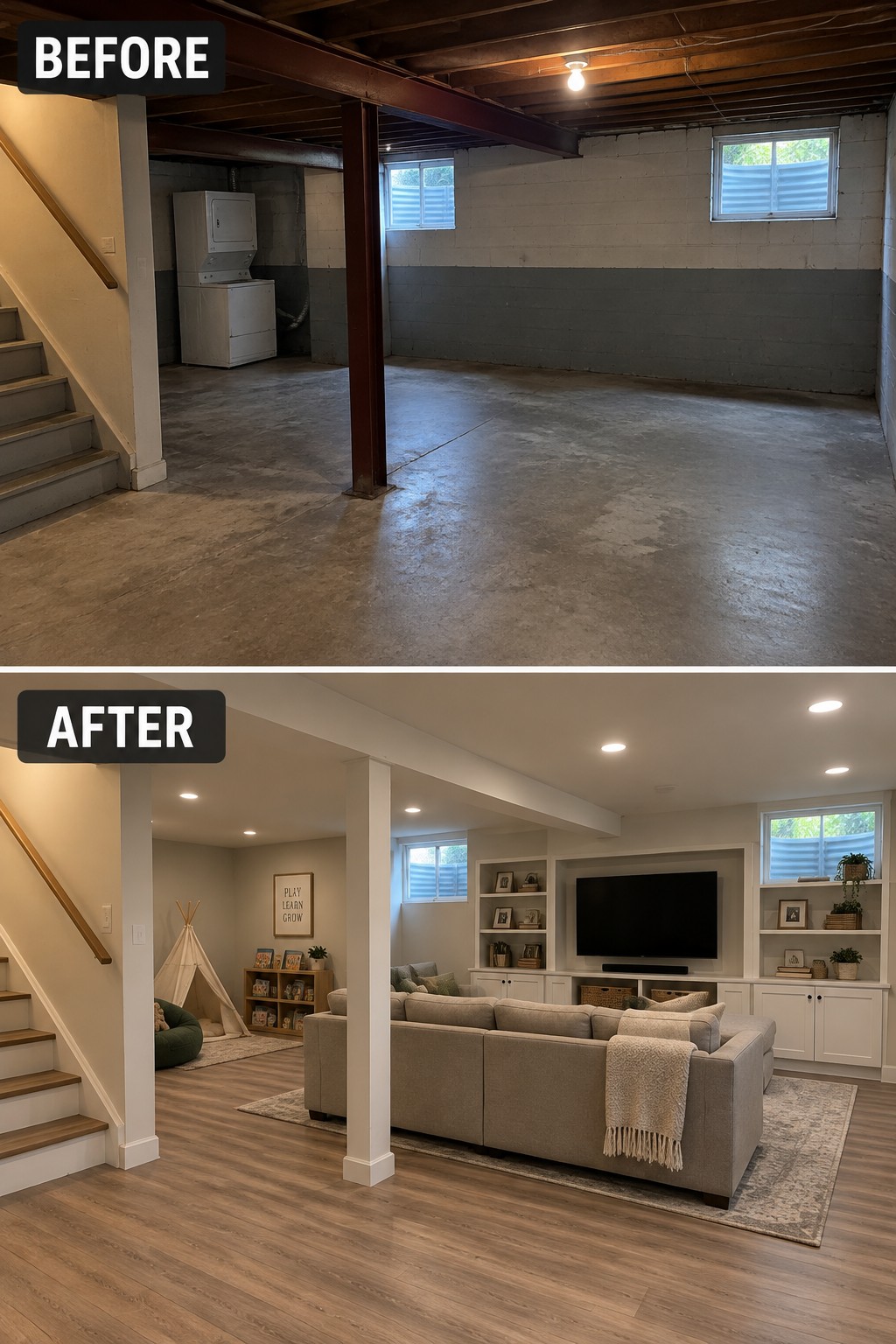
An unfinished basement can become a useful family room when it has a clear place to sit and relax. Here, built-in storage and a sectional turn the bare concrete space into a comfortable hangout.
In a basement with low ceilings, keep furniture to a sensible scale and leave clear paths around support posts. A rug can help define the seating area, while built-ins make it easier to keep everyday clutter out of sight.
Turn A Narrow Entryway Into A Useful Mudroom

The entryway works better when coats and shoes have a proper place instead of piling up along the floor. Replacing the crowded hook-and-shoe setup with a built-in bench and open cubbies makes this narrow hall more orderly without changing its basic layout.
In a small entry, use the wall for storage and keep the walking path clear. A bench with baskets underneath can offer the same practical idea if built-ins are not an option.
Turn An Unfinished Attic Into A Bedroom
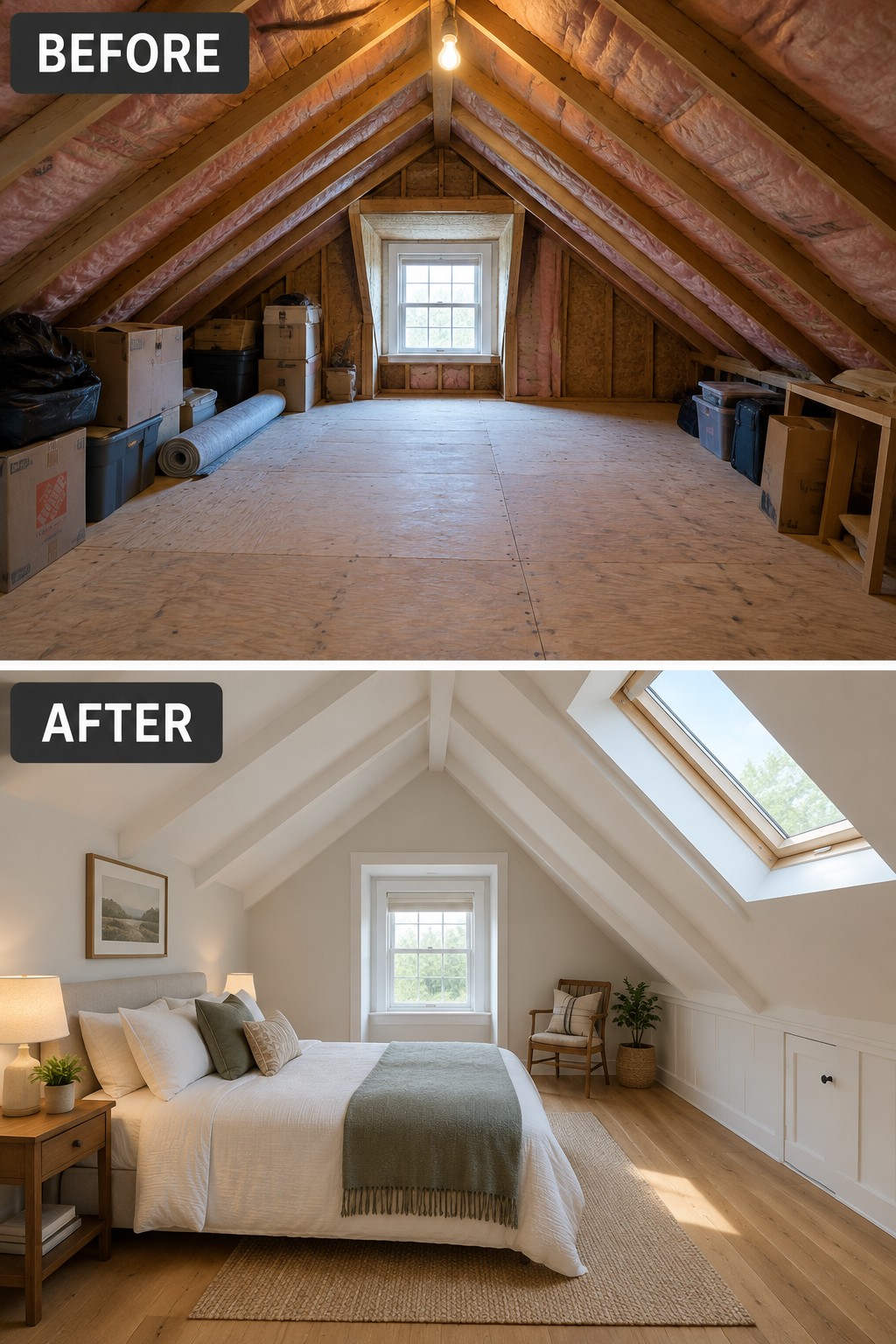
An attic used for storage can become a comfortable bedroom when the exposed structure is finished and the floor plan is kept simple. Here, painted rafters and a skylight make the sloped ceiling feel like part of the room rather than a problem to hide.
This idea works well in older homes with unused roof space, especially when there is enough headroom to move around safely. Keep storage tucked into the low eaves, and choose furniture that fits without crowding the walking space.
Update A Dated Exterior With A Lighter Color Scheme

The dark brown upper siding and garage made this older facade feel heavy. Repainting the siding and brick in light colors gives the house a cleaner, more consistent look without changing its basic shape.
For a similar update, choose a simple exterior palette and repeat it across the siding, brick, trim, and garage door. Test paint samples on different parts of the house first, since colors can look quite different in shade.
Make A Dark Dining Room Feel Lighter
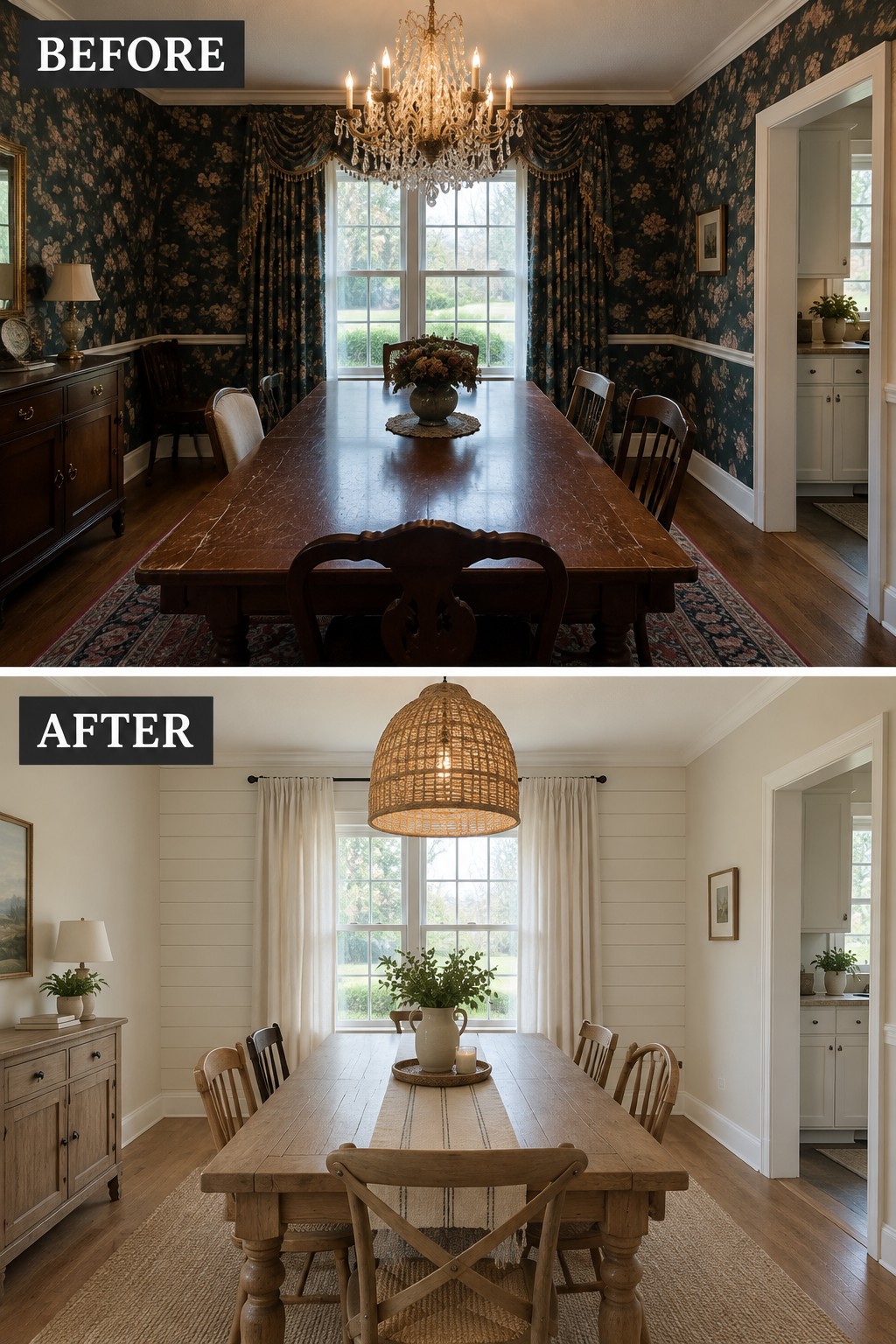
The dining room feels more open after its dark patterned walls are replaced with pale paneling. The lighter finish lets the room’s natural light reach farther, while the long table still gives the space a clear purpose.
In an older home, light paint or simple paneling can update a dining room without changing its layout. Keep the wall treatment fairly subtle, and use curtains that let in daylight so the room stays bright rather than busy.
Make A Laundry Room Work Harder
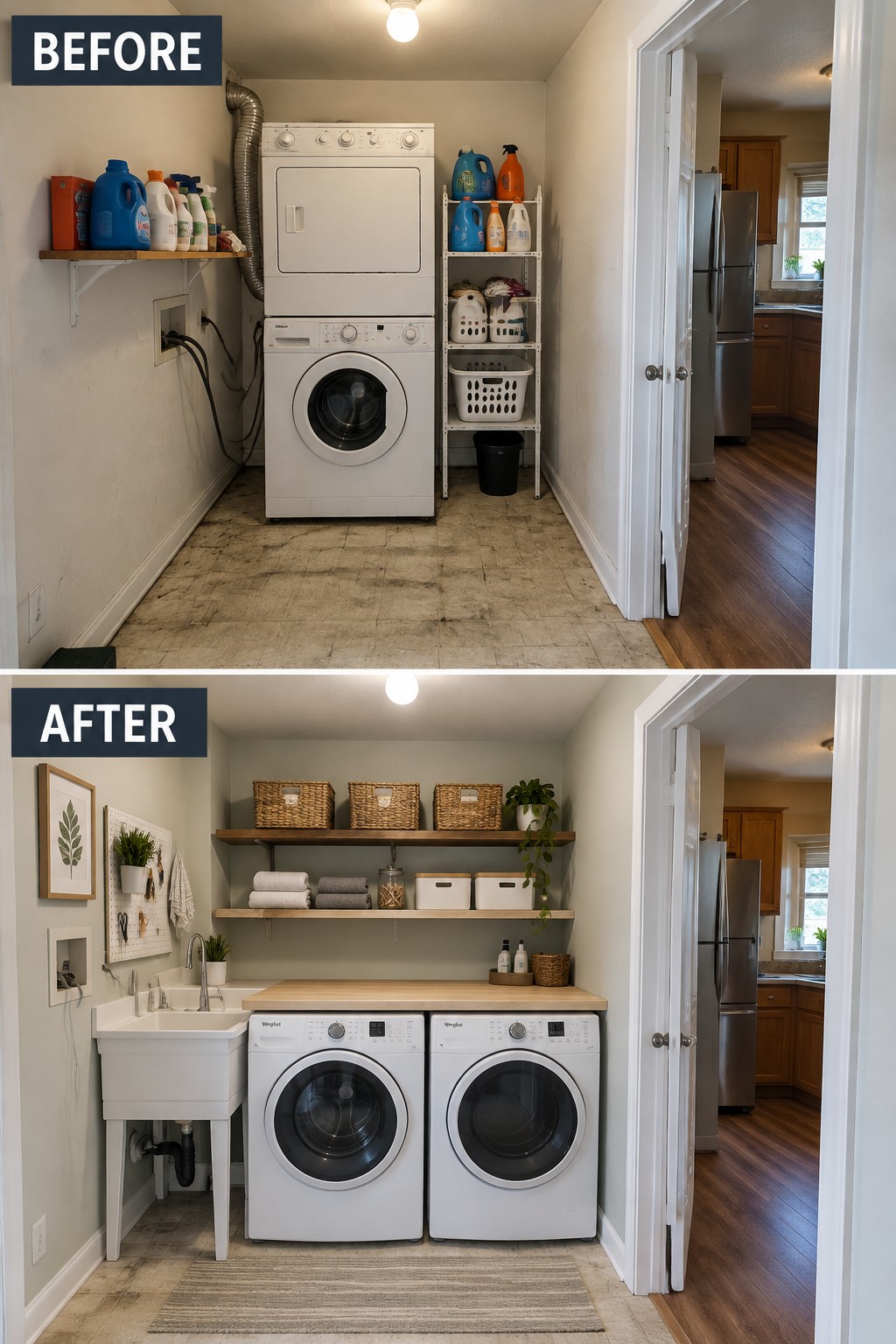
This laundry room works better because the appliances sit side by side, leaving a clear work surface above them. The old stacked setup and crowded supply shelf gave way to a more useful arrangement with room to sort clothes and keep essentials close by.
In a narrow room, measure carefully before changing the appliance layout, and leave enough space to open the doors and move around. A simple counter and wall shelves can provide useful storage without taking up the floor.
Turn A Screened Porch Into An Outdoor Living Room

The porch feels far more usable once it has a proper seating area. Replacing scattered plastic chairs with a sofa and a rug gives the space a clear purpose, without changing the basic porch structure.
For a similar covered porch, start with seating that fits without blocking the walkway, then use an outdoor rug to mark the sitting zone. Choose weather-resistant furniture, and keep the layout simple so the porch still feels easy to move through.
Refresh The Front Entry For Better Curb Appeal
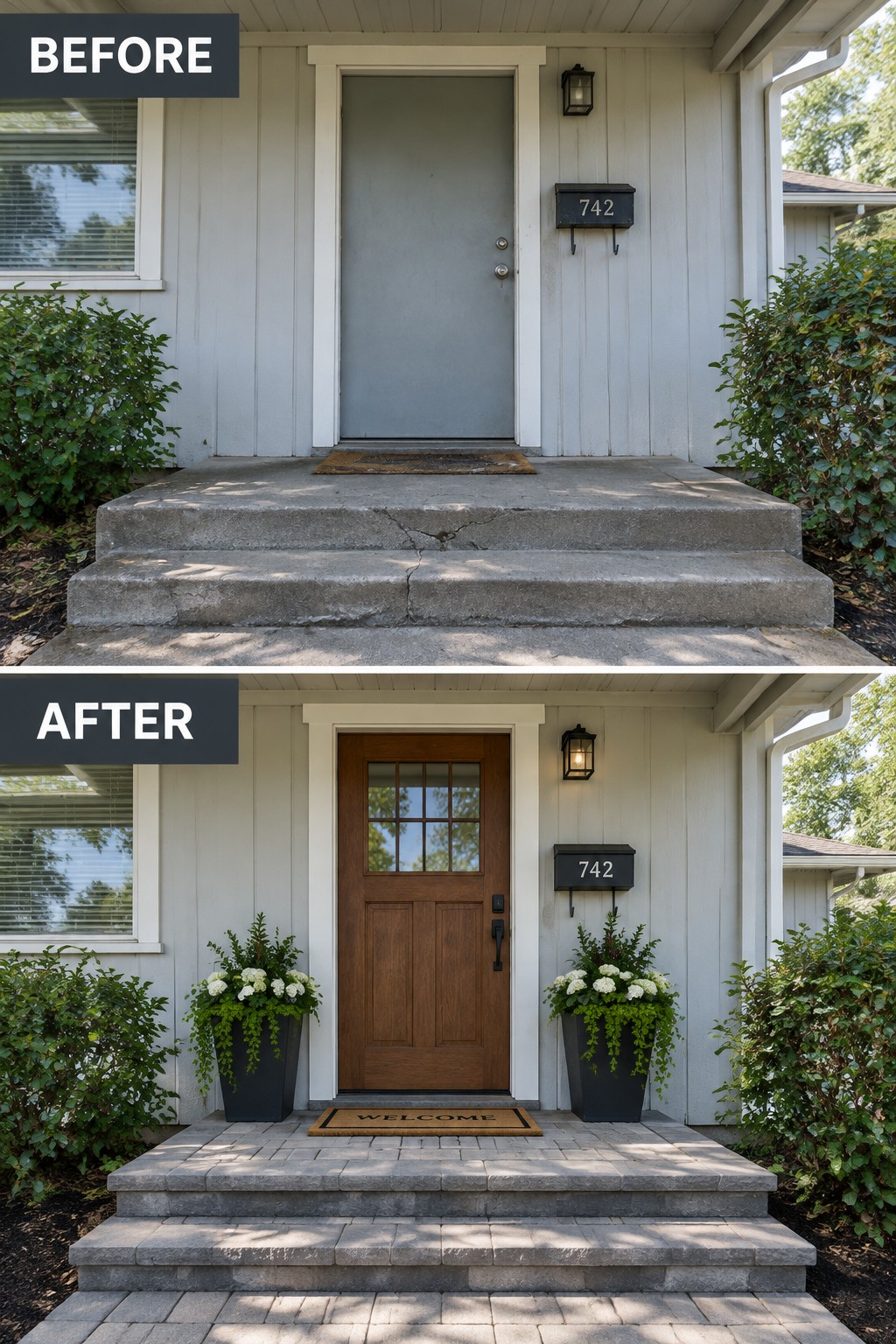
A new front door can make an older home feel cared for without changing the whole facade. Here, replacing the plain gray door with a wood door gives the entry a clear focal point, while the updated steps make the approach look more finished.
If your entry feels tired, start with the door and make sure the steps are in good repair. A couple of planters can help mark the entrance, but leave enough space to walk comfortably.
Make A Bedroom Feel Lighter And More Finished
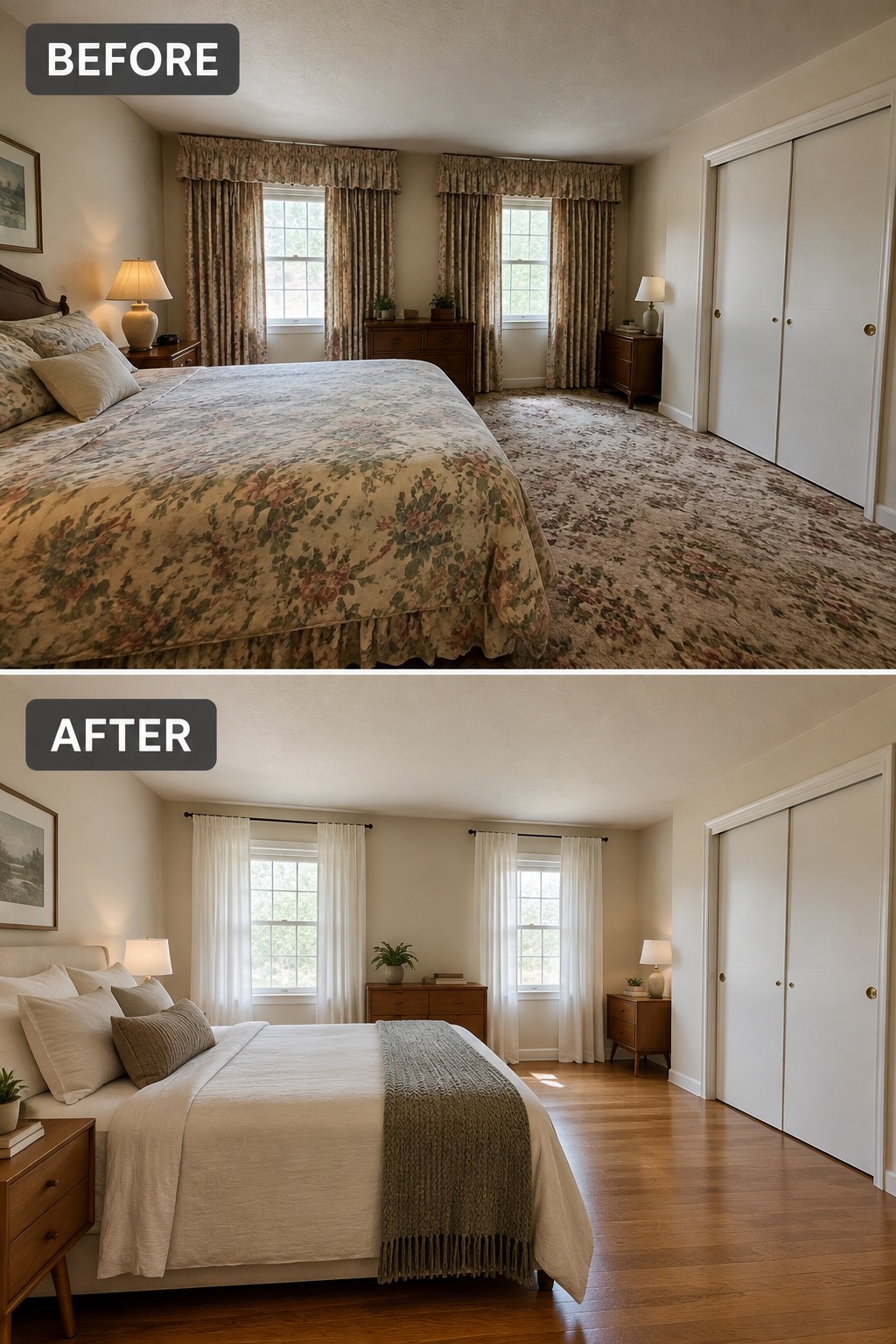
Replacing the heavy patterned bedding and curtains with simple, light-colored fabrics makes this bedroom feel calmer and less crowded. The change works because the room’s main pieces can stay in place while a few large textiles give it a cleaner look.
Try this in a bedroom that feels dated but does not need a full renovation. Keep the bedding fairly simple, then use curtains that let in daylight and a rug or throw for a little contrast. Avoid adding too many patterns, especially when the room already has substantial furniture.
Make The Fireplace The Main Feature
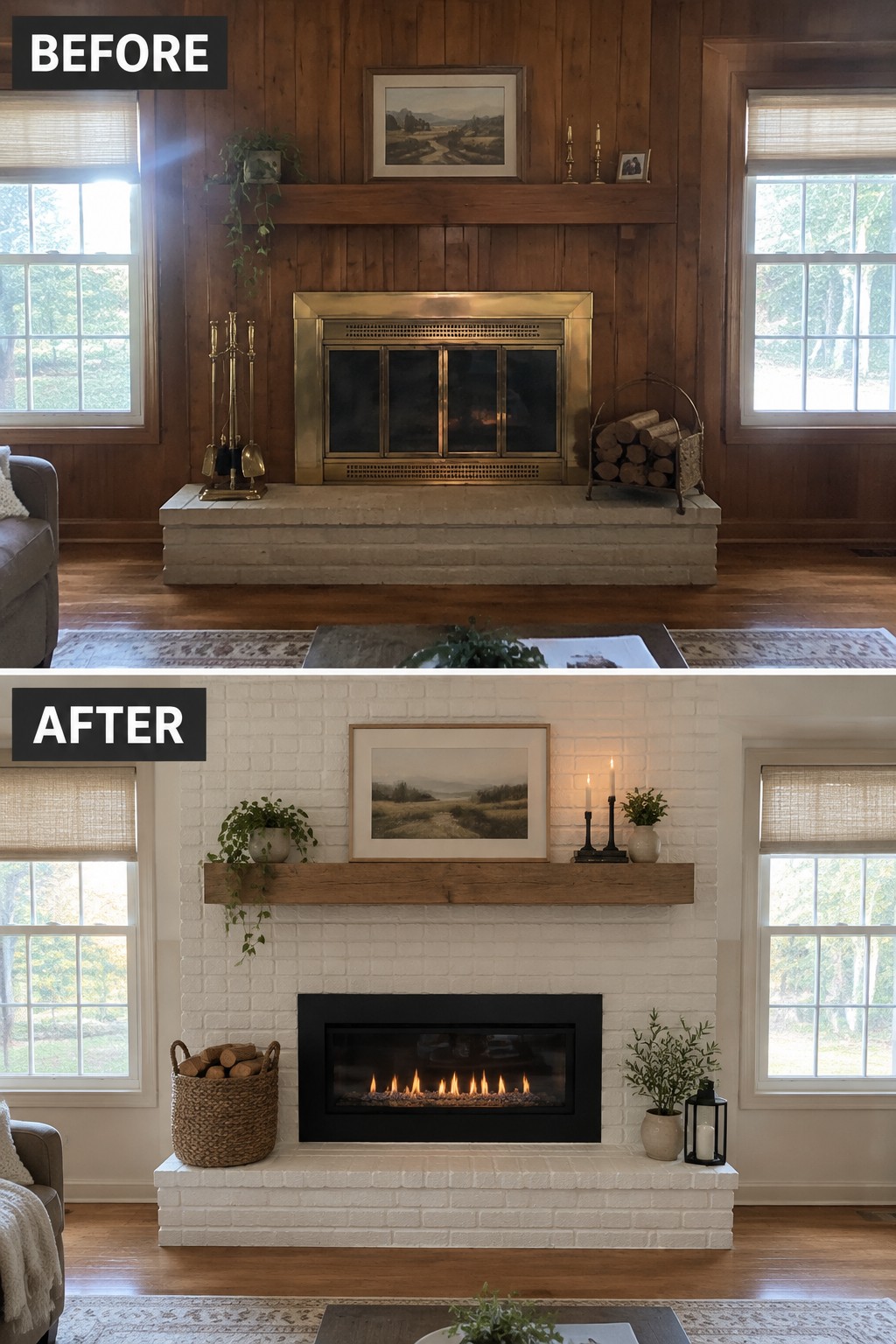
The old wood paneling made this fireplace wall feel dark and dated. Painting the brick a light color and using a simple black insert gives the fireplace a cleaner look while keeping it as the room’s focal point.
This idea can work well in older homes where a fireplace is already a natural gathering spot. A light finish can brighten the wall, but keep some wood or other natural material nearby so the room still feels comfortable rather than stark.
Replace An Outdated Tub With A Walk-In Shower

Removing the old tub and installing a walk-in shower gives this bathroom a cleaner, more open layout. Large, simple tiles and a clear glass panel help the shower feel less boxed in, while keeping the room’s footprint practical.
This approach works well in older bathrooms where the tub rarely gets used. Before choosing finishes, check that the shower has good waterproofing and enough room to move comfortably; a recessed shelf can keep everyday bottles off the floor.
Give An Old Garage Door A More Finished Look
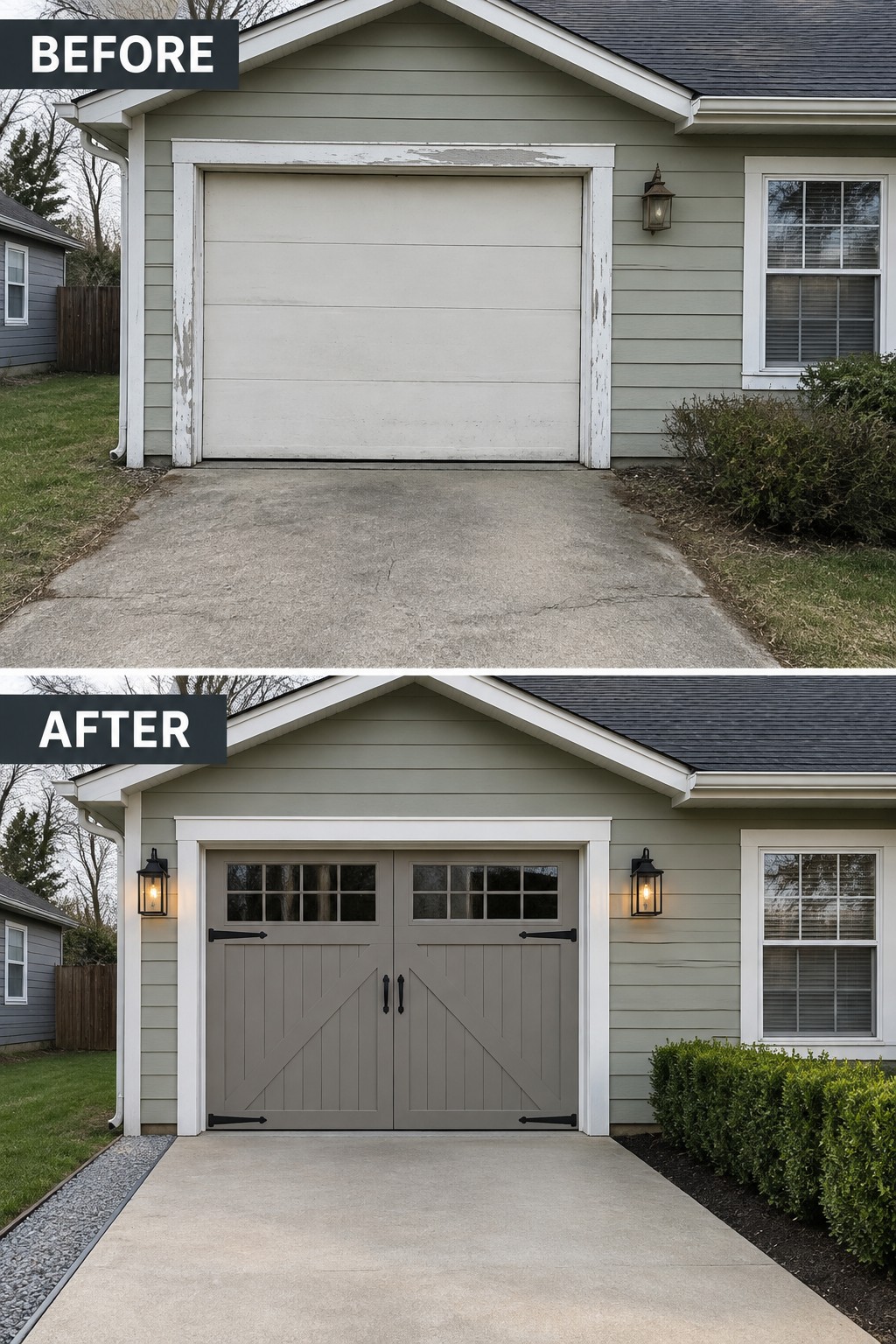
Replacing a worn, plain garage door with a simple carriage-house style can refresh the whole front of a home. The new door gives the garage a clearer focal point without changing the house’s basic structure.
This approach works well when the siding and trim are still in good shape but the garage door looks tired. Choose a style and color that suit the house, and keep decorative hardware simple so the door doesn’t feel out of place.
Add Structure To A Neglected Backyard
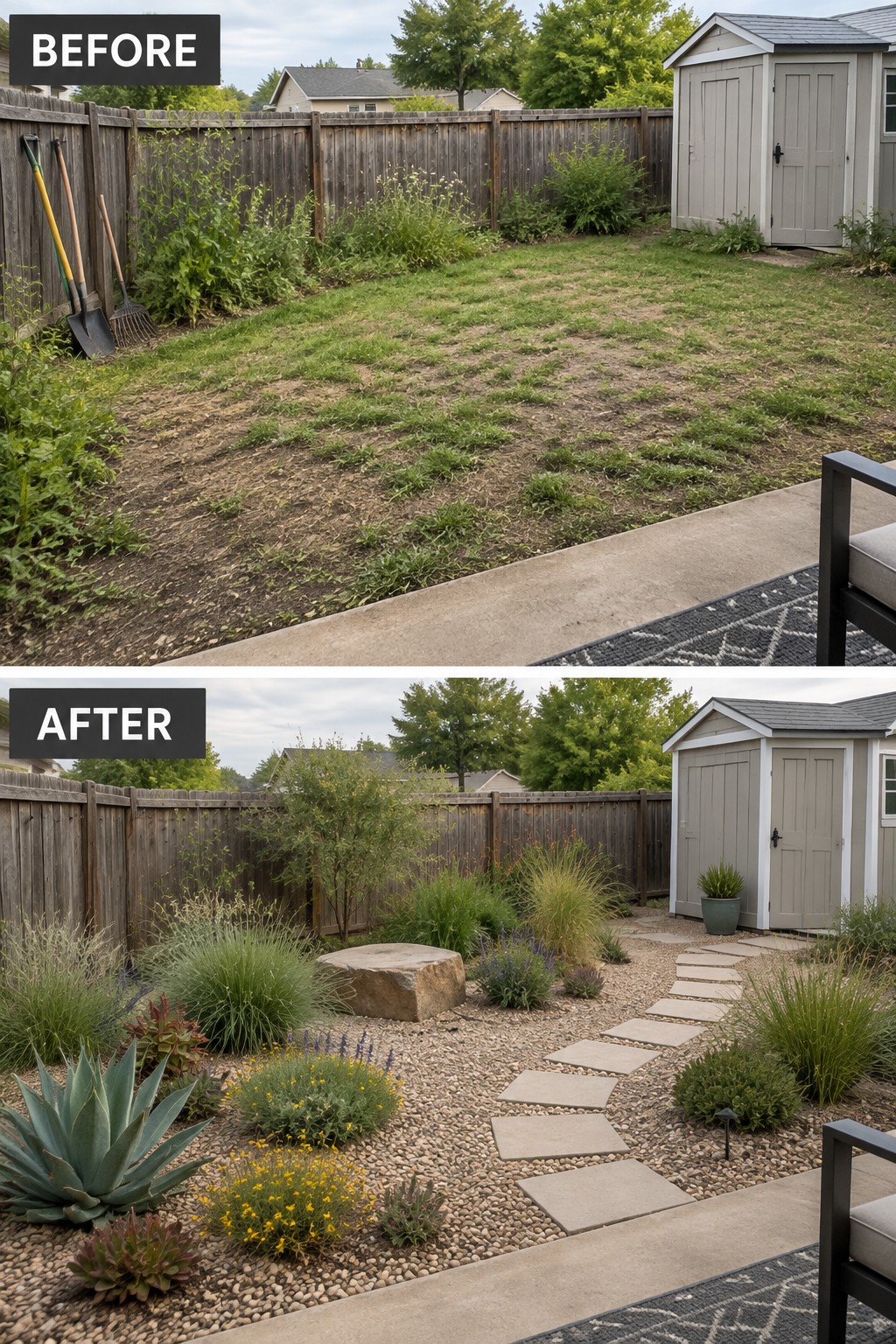
A patchy, weedy yard can feel hard to use, but it does not always need a new lawn. Here, gravel and stepping stones replace the bare, uneven ground with a clear route through the garden. The space feels more planned because there is a simple path to follow.
For a similar yard, clear unwanted growth first, then choose a path material and layout that suit the space. Gravel is a practical option where grass struggles, but keep the path wide enough to walk comfortably and leave room for plants to grow.
Turn A Cluttered Closet Into Useful Storage

A crowded closet is hard to use, even when it has plenty of space. Replacing loose piles and crowded hanging rails with clear storage zones makes it easier to find things and keep them tidy. Here, shelving and shoe cubbies make better use of the closet’s full height.
For a similar setup, sort through what you own first, then give clothes, shoes, and seasonal items their own places. In a narrow closet, keep the center aisle clear so you can still move comfortably.
Create A Clear Path Through An Overgrown Front Yard
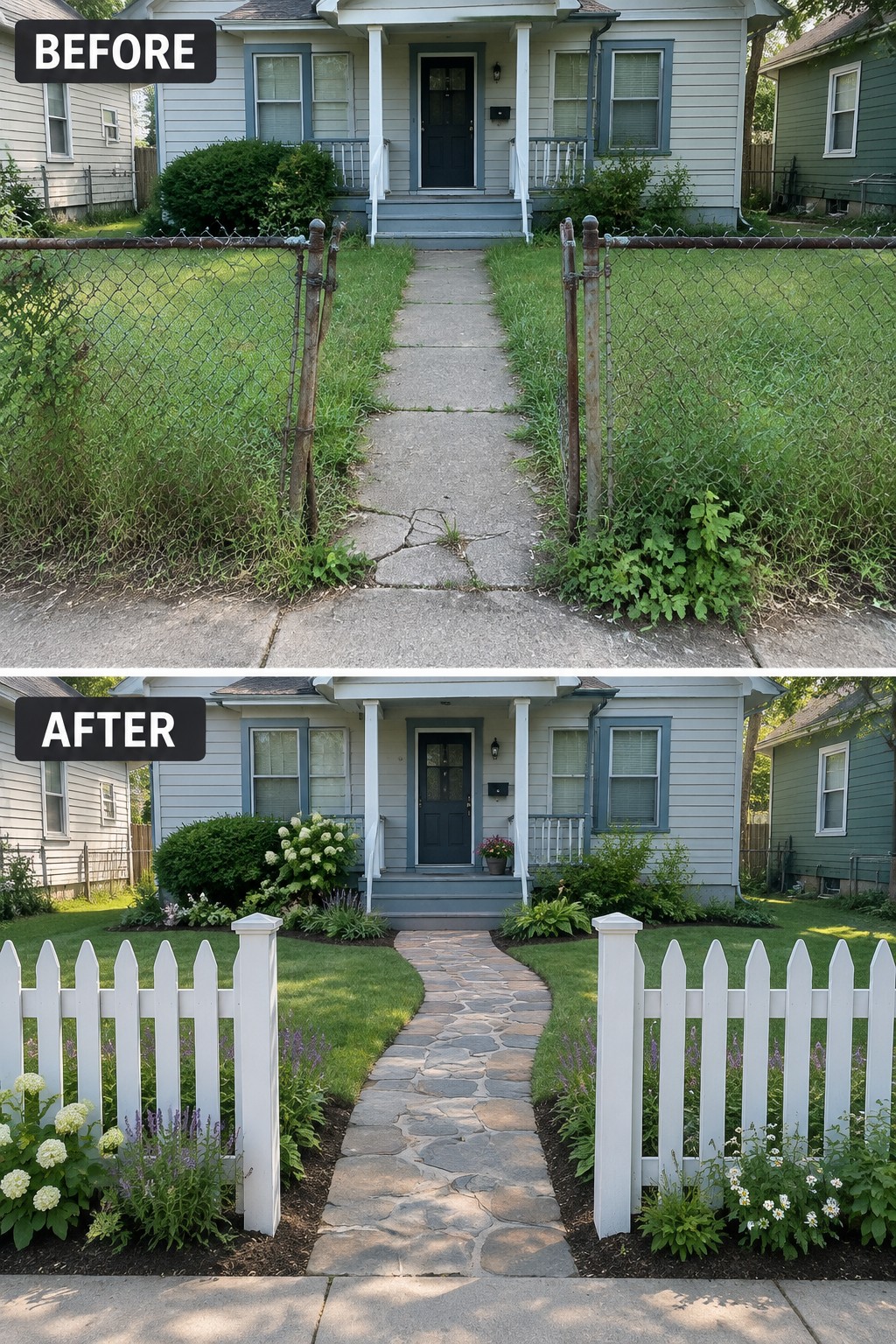
A worn, overgrown front yard can make the entrance feel neglected. Clearing the growth and replacing the broken walkway with a defined stone path gives the yard a more cared-for look and makes the route to the front door easier to use.
For a similar update, start by clearing weeds and deciding where people naturally need to walk. Choose paving that suits the house, then keep the planting along the path tidy so it stays easy to navigate. This idea works especially well in a small front yard where a clear route can bring order without adding more features.
Frequently Asked Questions
Q: What should I tackle first when renovating an old house?
A: Start with the things that keep the house safe and dry, like the roof, foundation, wiring, and plumbing. Once those are in good shape, you can focus on finishes and the fun before-and-after changes.
Q: How can I update an old house without losing its character?
A: Keep details that give the house its personality, such as original floors, trim, doors, or built-ins. Then pair them with simpler updates, like fresh paint and better lighting, so the old features still stand out.
Q: Do I need to renovate the whole house at once?
A: No. Working room by room can make the project easier to manage and lets you spread out the cost. Just plan ahead for how each phase will connect to the next.
Q: How can I keep renovation costs from getting out of hand?
A: Set a budget before work begins and leave some room for surprises, since old houses often hide repairs behind walls or under floors. Get clear quotes for the major work, and avoid changing plans once construction is underway.
