

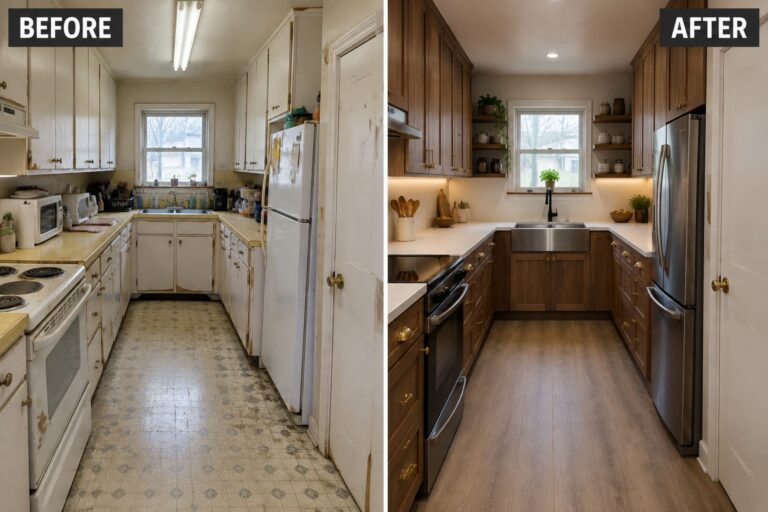
An old kitchen can feel tired when the layout wastes space, the finishes look dated, or the room lacks warmth.
Natural wood cabinetry can bring back that warmth while helping the kitchen feel more grounded and connected.
I like how the right wood tone can soften a plain room without making it feel overly styled.
Small choices in cabinet color, hardware, lighting, and layout can make a kitchen easier to use and more pulled together.
Some of these changes are worth saving as ideas to adapt to a real kitchen, even if a full renovation is not in the plans.
Replace Worn Cabinets With Natural Wood
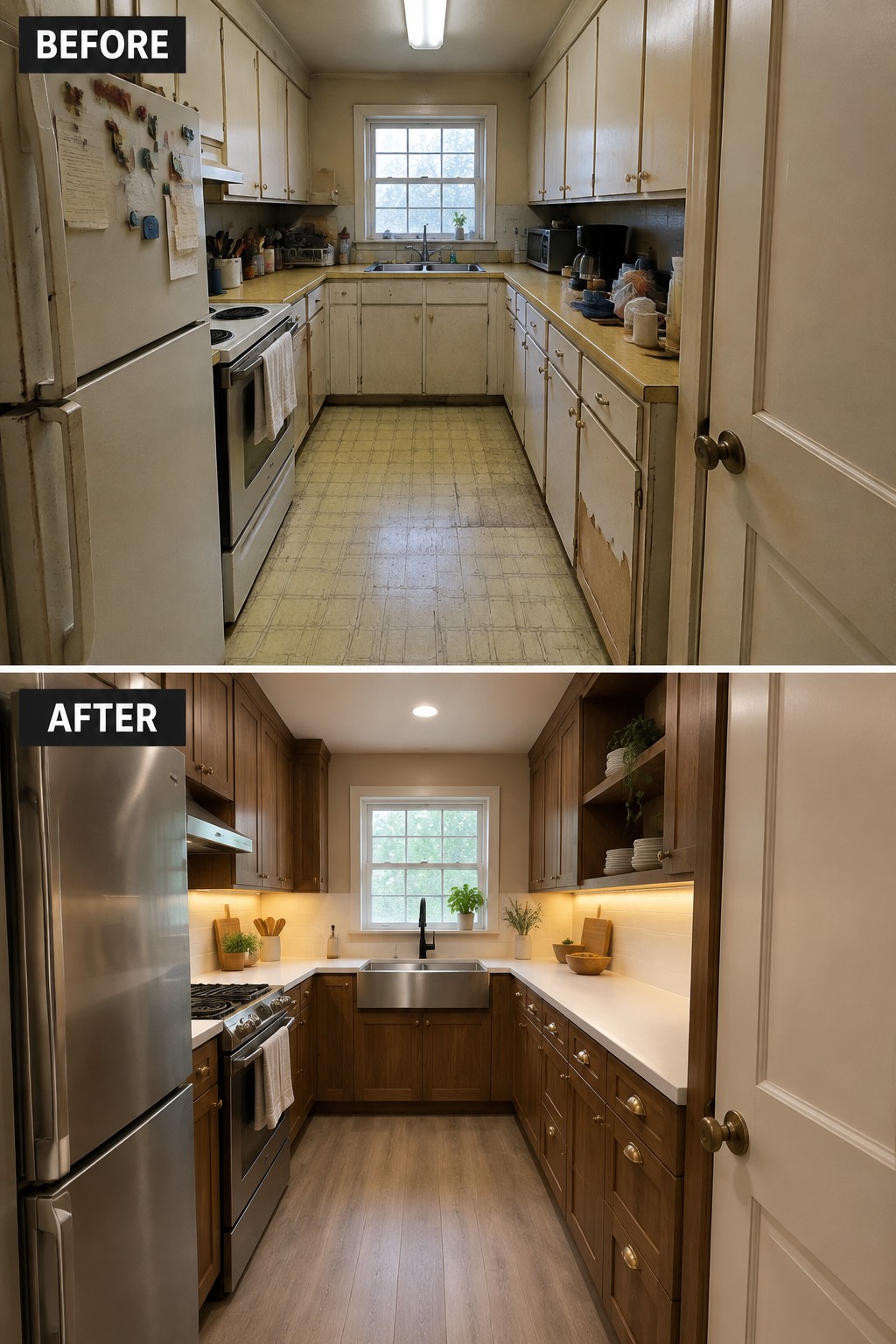
The dated kitchen feels much more usable after its worn cabinets are replaced with natural wood cabinetry. The wood gives the narrow room a consistent look, while the lighter counters keep it from feeling too dark.
This idea works well in older kitchens where the cabinet boxes or doors are beyond a simple refresh. Choose a wood tone that suits the room’s size, and keep the counters and backsplash fairly simple so the cabinetry can stand out without crowding the space.
Update Old Cabinets With Lighter Wood
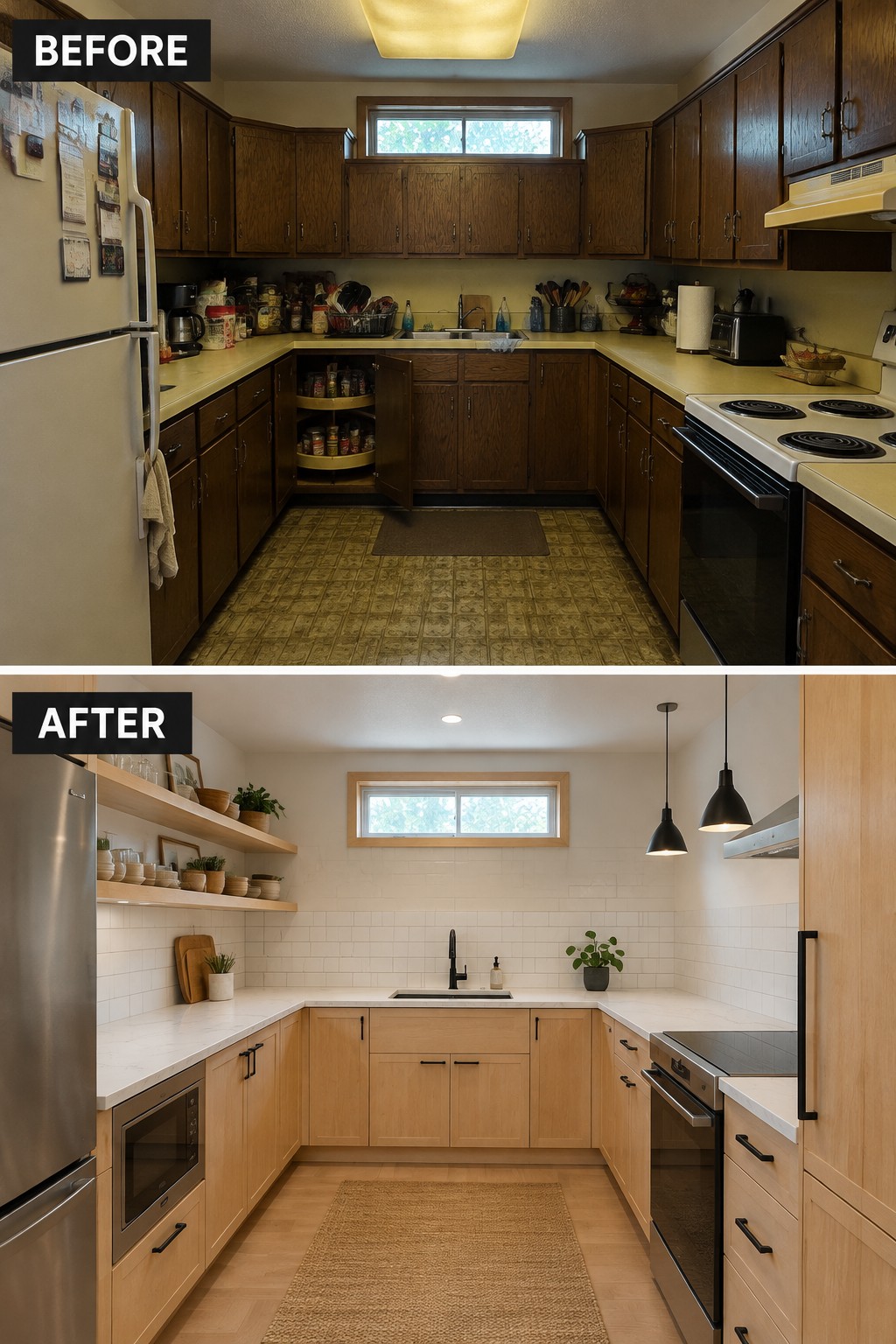
Replacing the dark, dated cabinets with lighter natural wood changes the feel of this kitchen without changing its basic layout. The pale cabinetry and simple white counters make the room feel brighter, while the wood still gives it a comfortable, lived-in look.
This approach works well in older kitchens where the cabinets are sound but the room feels too dark. Choose a light wood tone and keep the surrounding finishes simple. Open shelves can help, too, but leave enough closed storage so everyday items do not crowd the counters.
Give An Old Kitchen A Natural Wood Update
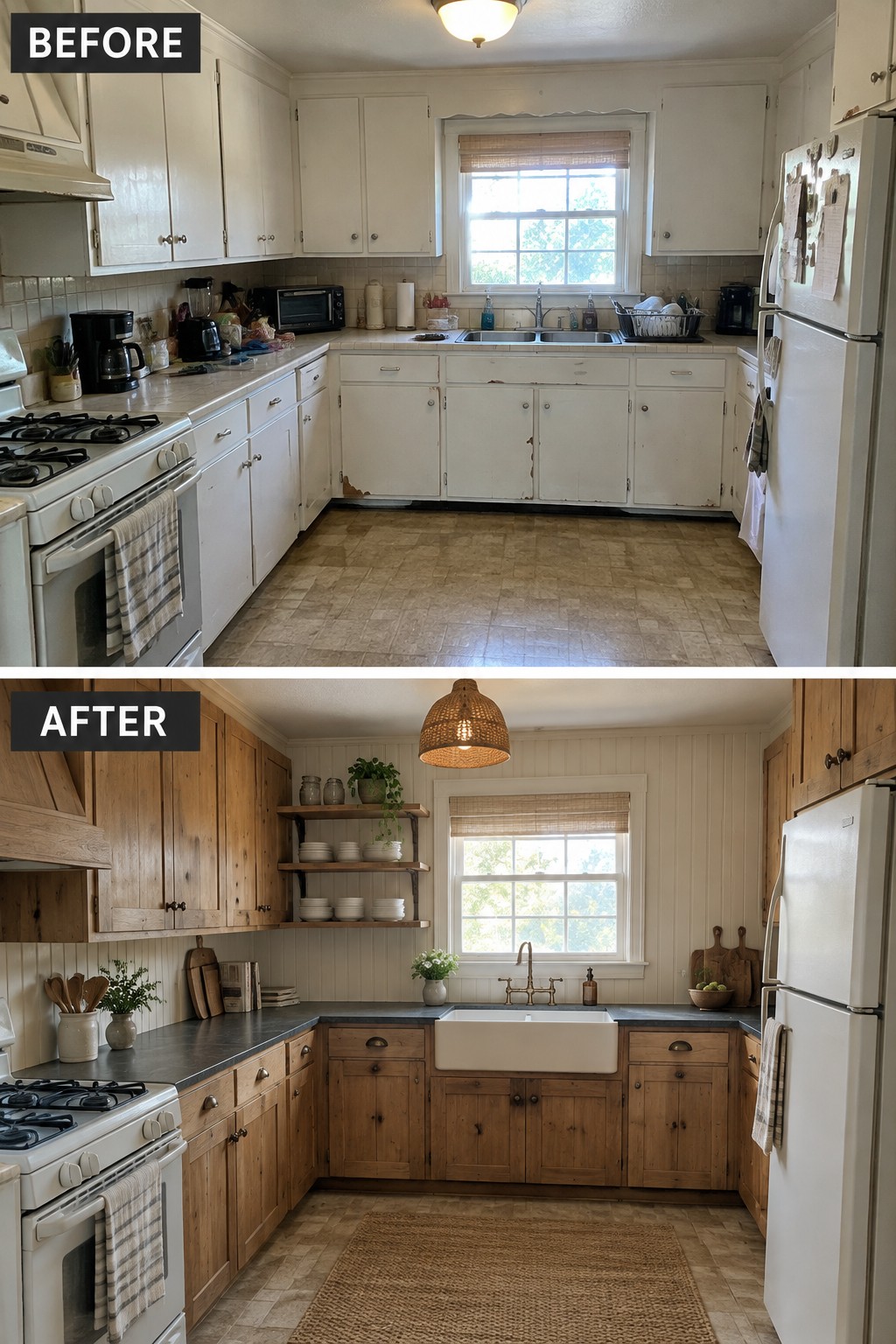
Replacing worn white cabinets with natural wood cabinetry gives an older kitchen a more consistent, lived-in look. Here, the wood cabinets bring the main change, while the simple open shelves help keep the upper wall from feeling crowded.
This approach can suit a modest kitchen where replacing the layout is not practical. Choose a wood tone that works with the existing floor and keep shelves useful rather than filling them with too many decorations.
Make A Small Kitchen More Practical
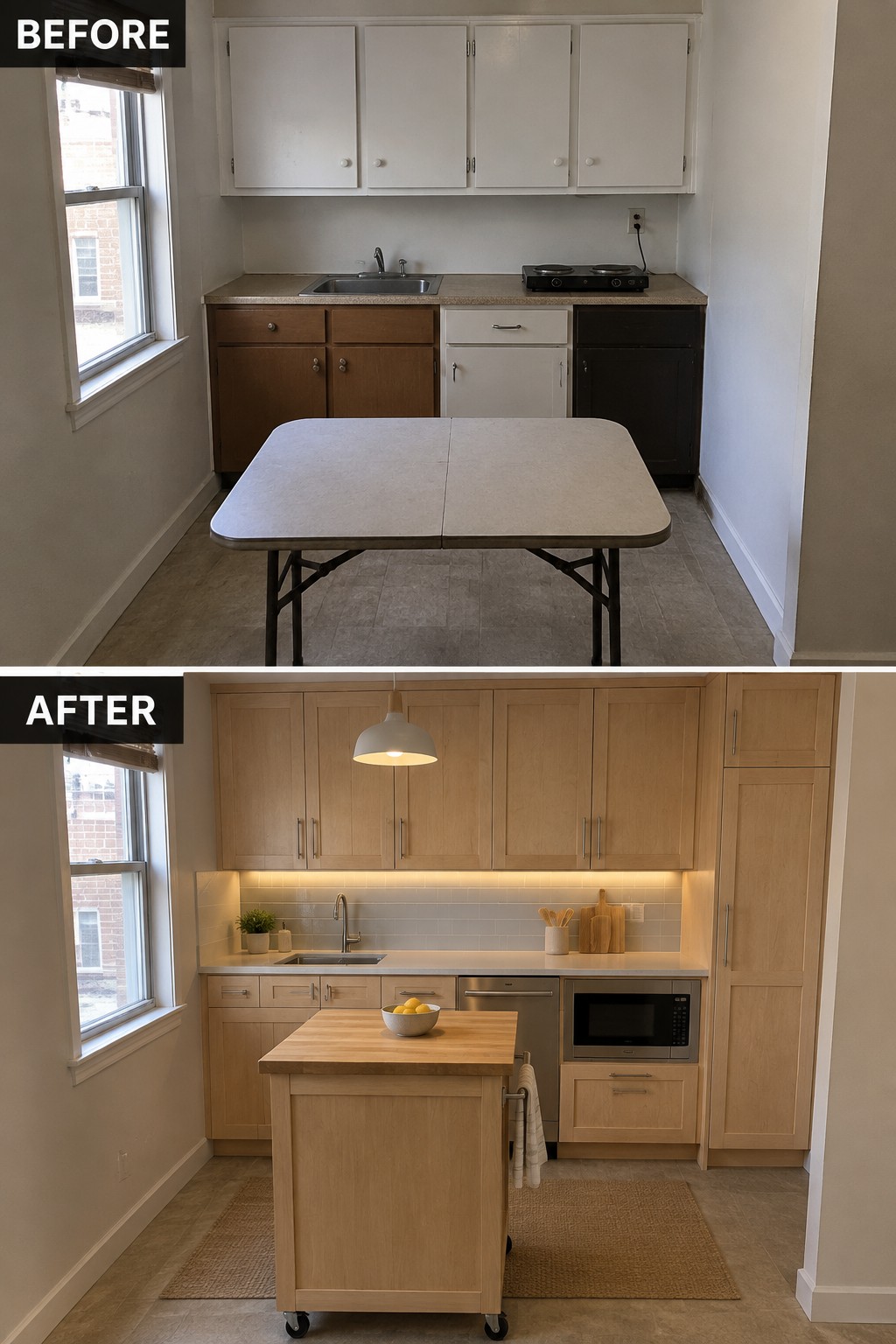
Replacing the mismatched cabinets and folding table with coordinated wood cabinetry and a compact island gives this narrow kitchen a more useful layout. The island adds prep space without taking over the room.
In a small kitchen, built-in storage can make better use of the wall space, while a slim island or movable cart provides extra work surface. Keep enough room around it to open cabinets and move through the kitchen comfortably.
Brighten An Old Kitchen With Natural Wood Cabinets
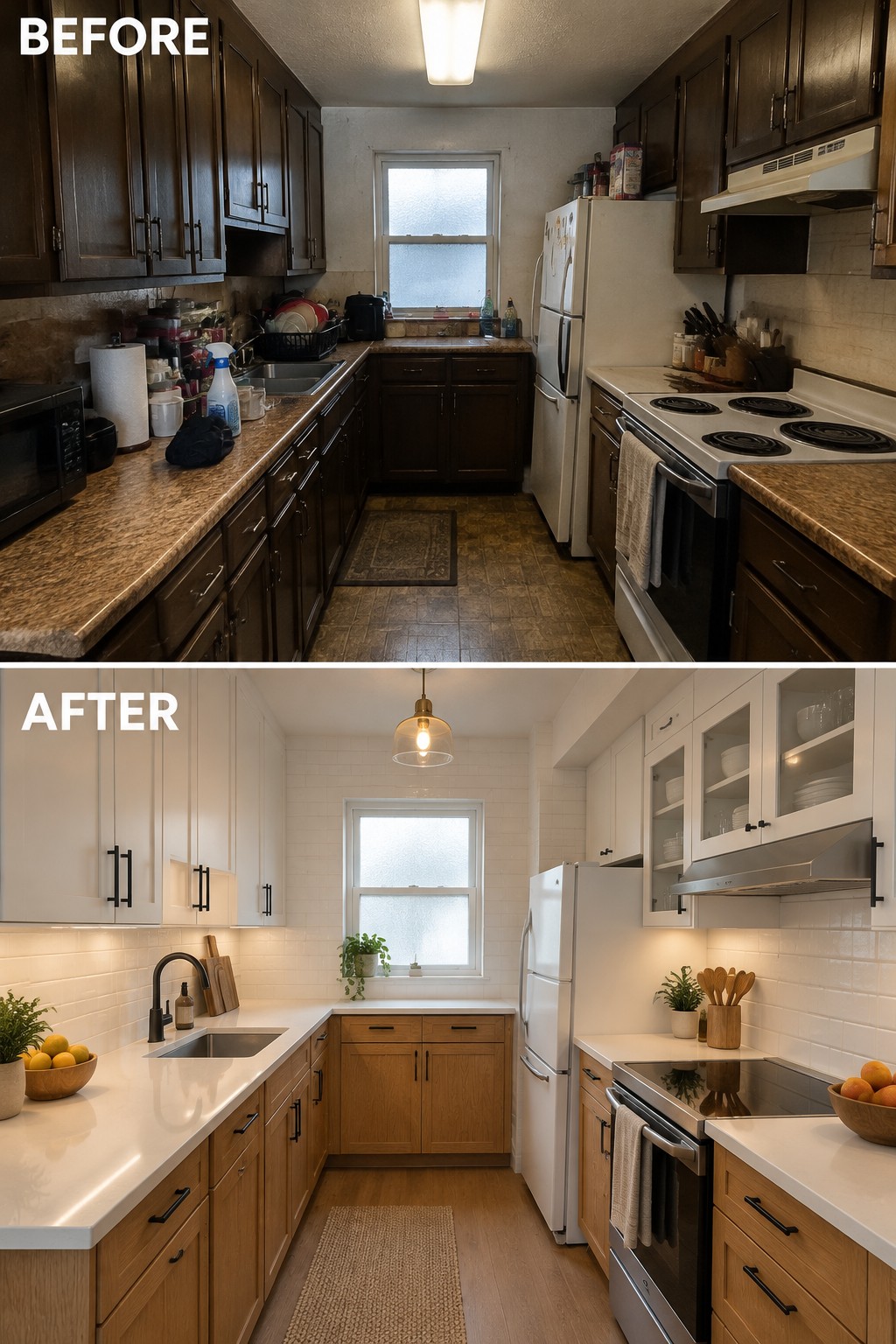
The dark cabinets and crowded counters made this narrow kitchen feel heavy. Replacing the old finishes with light upper cabinets and natural wood lower cabinets gives the room a brighter, more current look while keeping some of the warmth of wood.
This approach works well in a small kitchen where dark cabinetry can make the space feel closed in. Keep the wood tone simple, and use pale counters and backsplash tile to help reflect light. A mix of painted and wood cabinets can also be easier to adapt than replacing everything with one finish.
Replace Dated Cabinets With Natural Wood
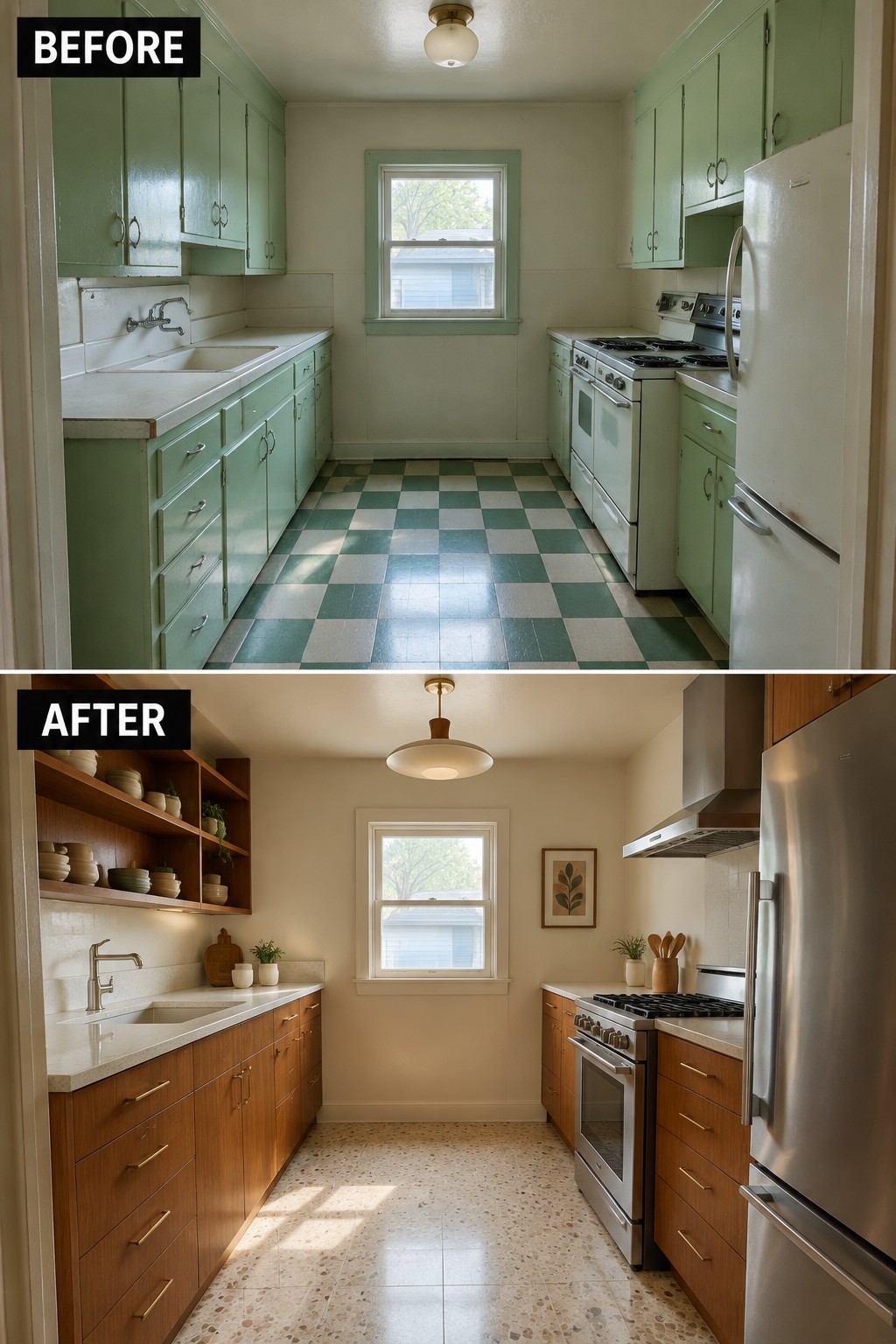
The old kitchen felt worn and closed in, while the natural wood cabinets give it a cleaner, more welcoming look without changing the room’s basic layout. Keeping the cabinets simple lets the wood become the main feature.
This approach works well in a narrow kitchen where a full redesign may not be practical. Choose a wood tone that suits the room, and keep the counters and hardware uncomplicated so the cabinets don’t make the space feel crowded.
Make The Kitchen Feel Warmer With Wood Cabinets

Replacing dated, mismatched finishes with natural wood cabinetry gives this kitchen a more settled, welcoming feel. The wood brings consistency to the room, while the simple light counters keep the cabinets from making the space feel too dark.
This idea suits an older kitchen that still has a useful layout but feels tired. Keep the wood tone consistent across the main cabinets, and use lighter surfaces nearby to make the room feel open. There’s no need to add lots of decor.
Make Dark Cabinets Feel Lighter With Natural Wood

The kitchen feels more open after the dark, heavy cabinets are replaced with pale natural wood and simple white fronts. Keeping the layout familiar makes the update feel practical, while the lighter cabinetry helps a narrow kitchen look less crowded.
For a similar change, use natural wood on the lower cabinets or a tall pantry, then keep nearby surfaces and upper cabinets light. A clear finish lets the grain show without making the room feel busy.
Make A Narrow Kitchen Feel More Finished

Replacing plain white cabinets with natural wood cabinetry gives this narrow kitchen a clearer, more finished look. The wood brings a consistent color through the room, while the light counters and backsplash keep the small space from feeling too dark.
This approach suits a galley kitchen where the cabinets take up much of the view. If you choose deeper wood, keep nearby surfaces fairly light and uncluttered so the room still feels open.
Replace Closed Upper Cabinets With Open Shelving
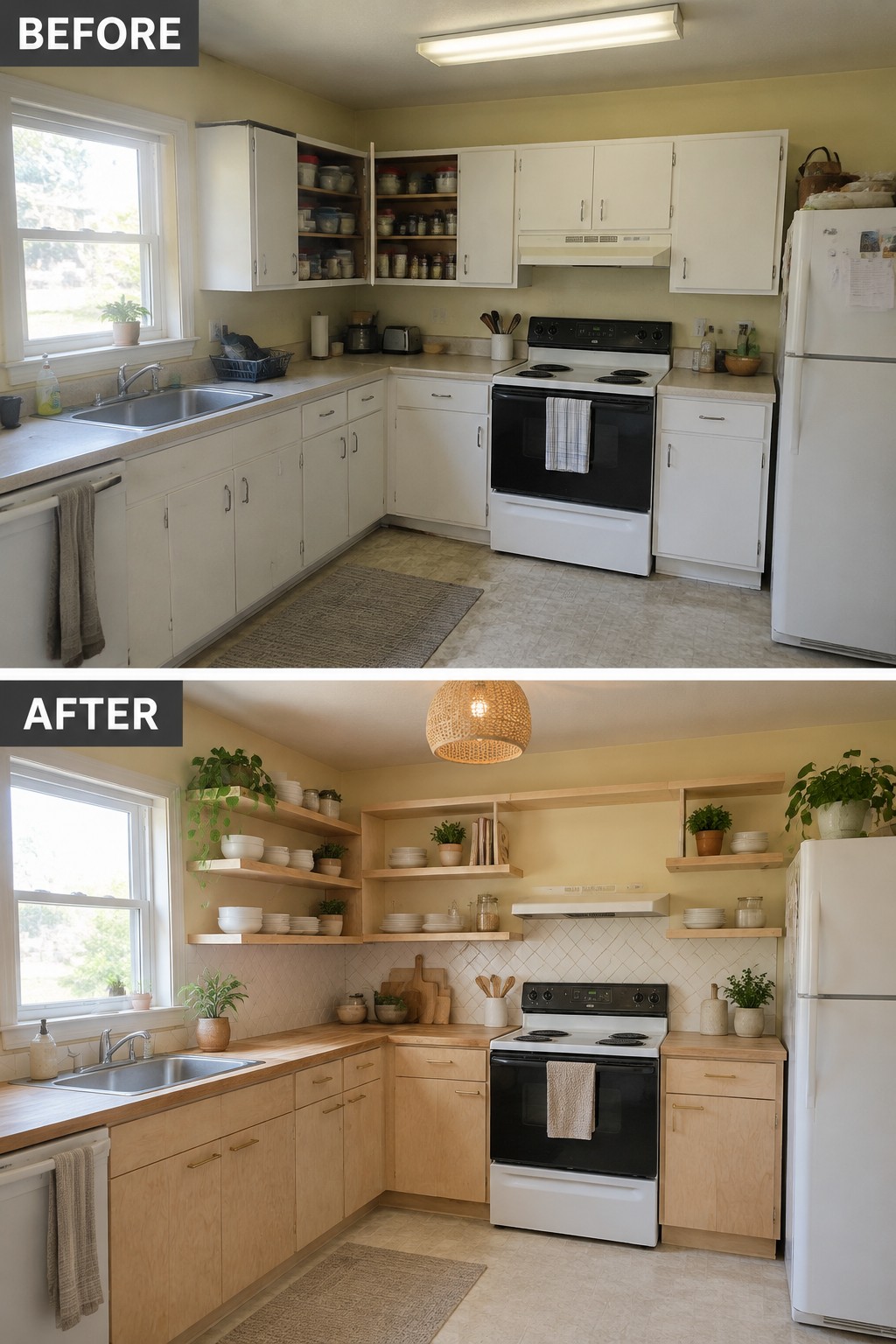
Removing the old upper cabinets makes this kitchen feel more open, while natural wood cabinetry gives the room a warmer, simpler look. The shelves keep dishes within easy reach and let the wall feel less crowded.
This idea works well in a small kitchen that feels boxed in by upper cabinets. Keep everyday dishes on the shelves and leave some space between items so they stay useful rather than cluttered. Natural wood is also a practical way to update older cabinets without making the room feel stark.
Make The Kitchen Island More Useful

The oversized, cluttered island was replaced with a smaller wood island that includes open storage and seating. That change makes the kitchen easier to use without losing a handy work surface.
In a kitchen with room to move around it, an island can serve as both prep space and a casual place to sit. Choose a size that leaves clear walking paths, then use shelves or cabinets to store the items you reach for most.
Give An Old Kitchen A Warmer Wood Update

Replacing plain white cabinets with natural wood gives this kitchen a more settled, welcoming feel. The patterned backsplash helps the wood stand out, while keeping the counters light prevents the darker cabinetry from making the room feel closed in.
This approach suits an older kitchen with a workable layout and cabinets ready for a full update. If you choose darker wood, repeat it across the main cabinets and island, then use lighter counters to keep the room from feeling too heavy.
Turn A Small Kitchen Corner Into A Dining Nook
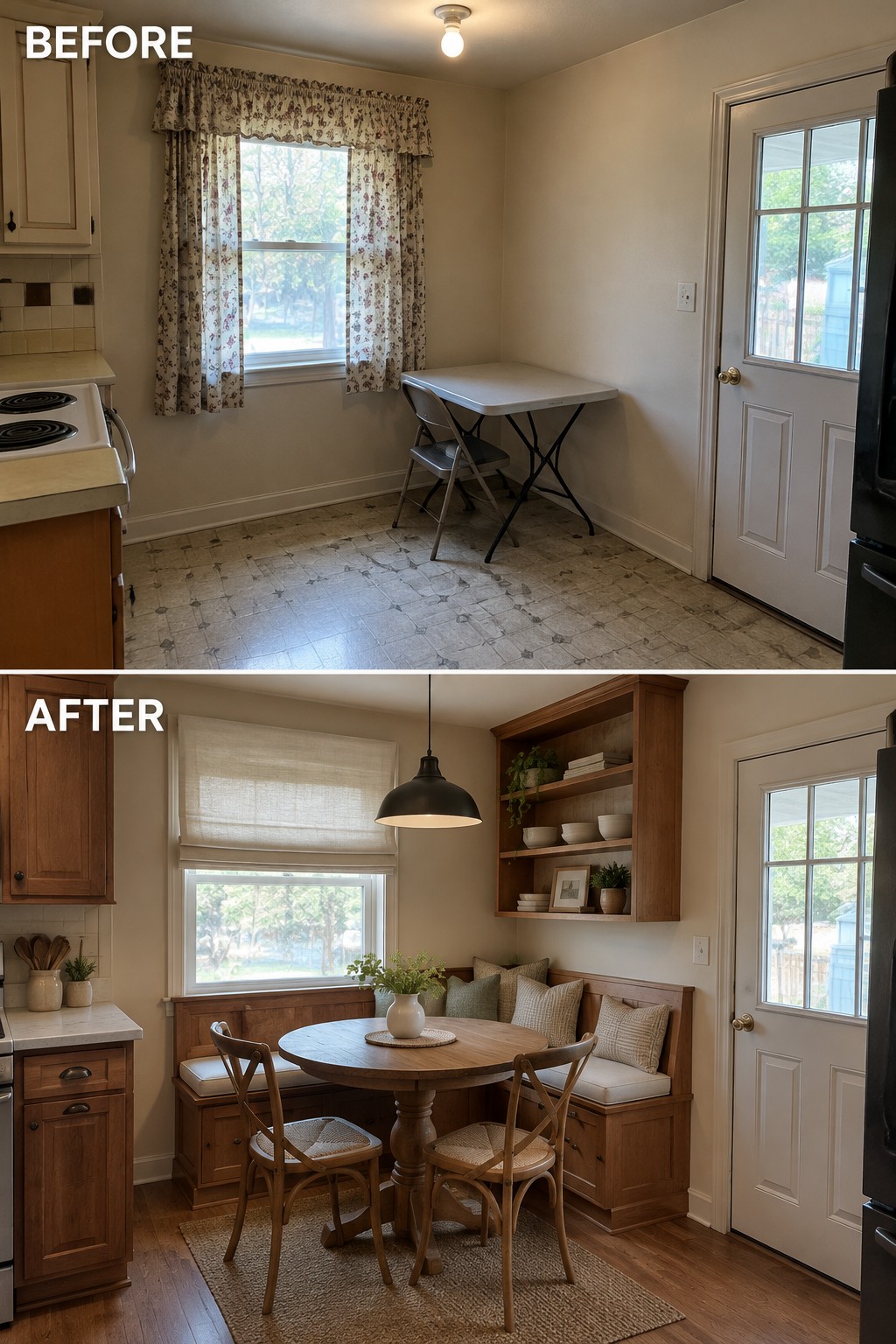
An unused corner can become a practical dining spot instead of holding a temporary table. Here, a built-in bench and round wood table make better use of the space, while the natural wood cabinetry gives the nook a consistent look.
This idea works well in older kitchens where there isn’t room for a separate dining area. Keep the table small enough to leave a clear path, and choose a bench size that fits the wall without crowding the room.
Give A Tired Kitchen A Fresh Wood Cabinet Update
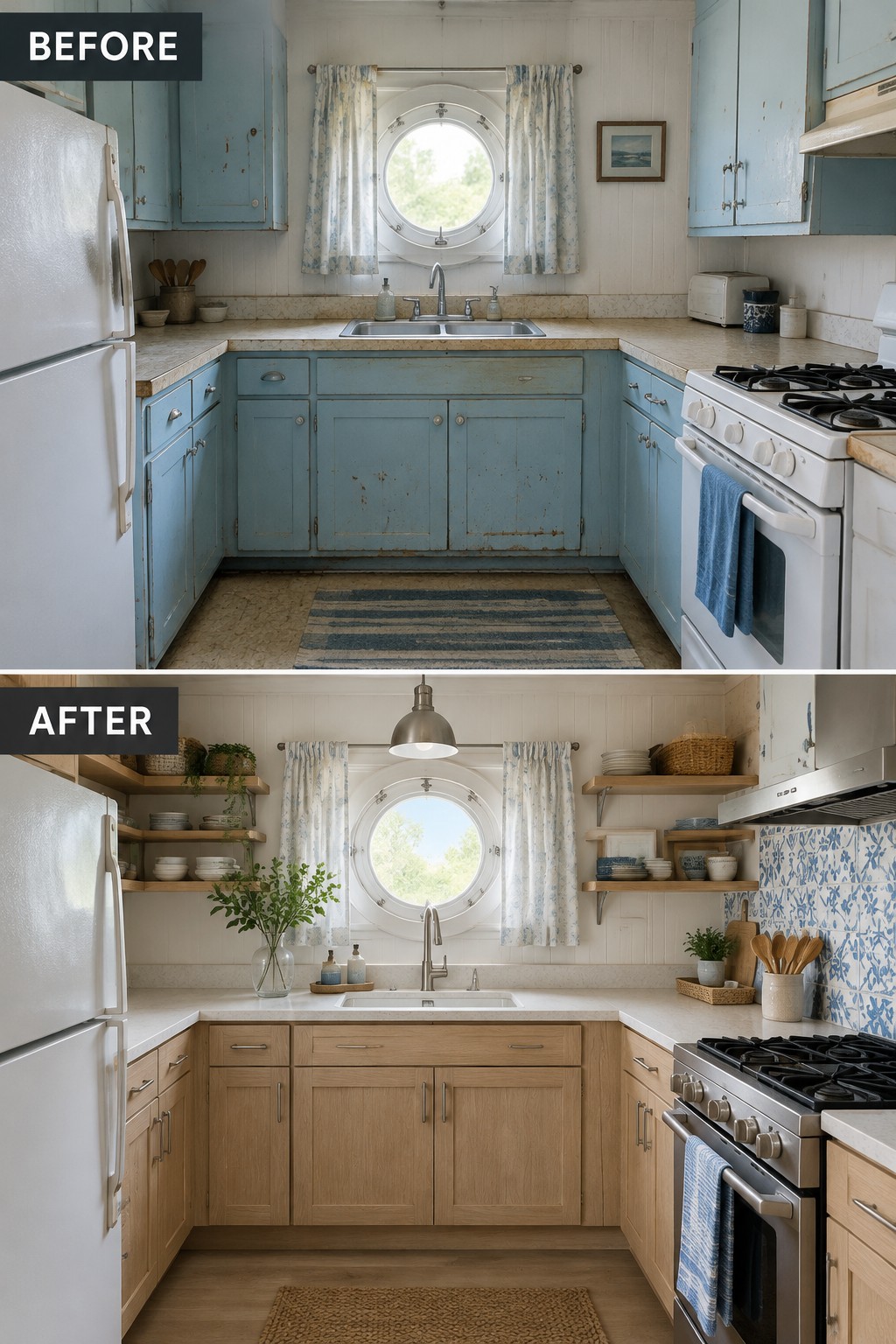
The worn blue cabinets make this kitchen feel dated, while the natural wood fronts give it a cleaner, warmer look without changing the basic layout. Keeping the cabinets simple lets the wood become the main update.
This approach works well in older kitchens where the counters and appliances are still usable. Choose a wood tone that suits the room, and keep the surrounding finishes fairly quiet so the cabinetry does not make a small kitchen feel crowded.
Use Light Wood Cabinets To Brighten An Old Kitchen
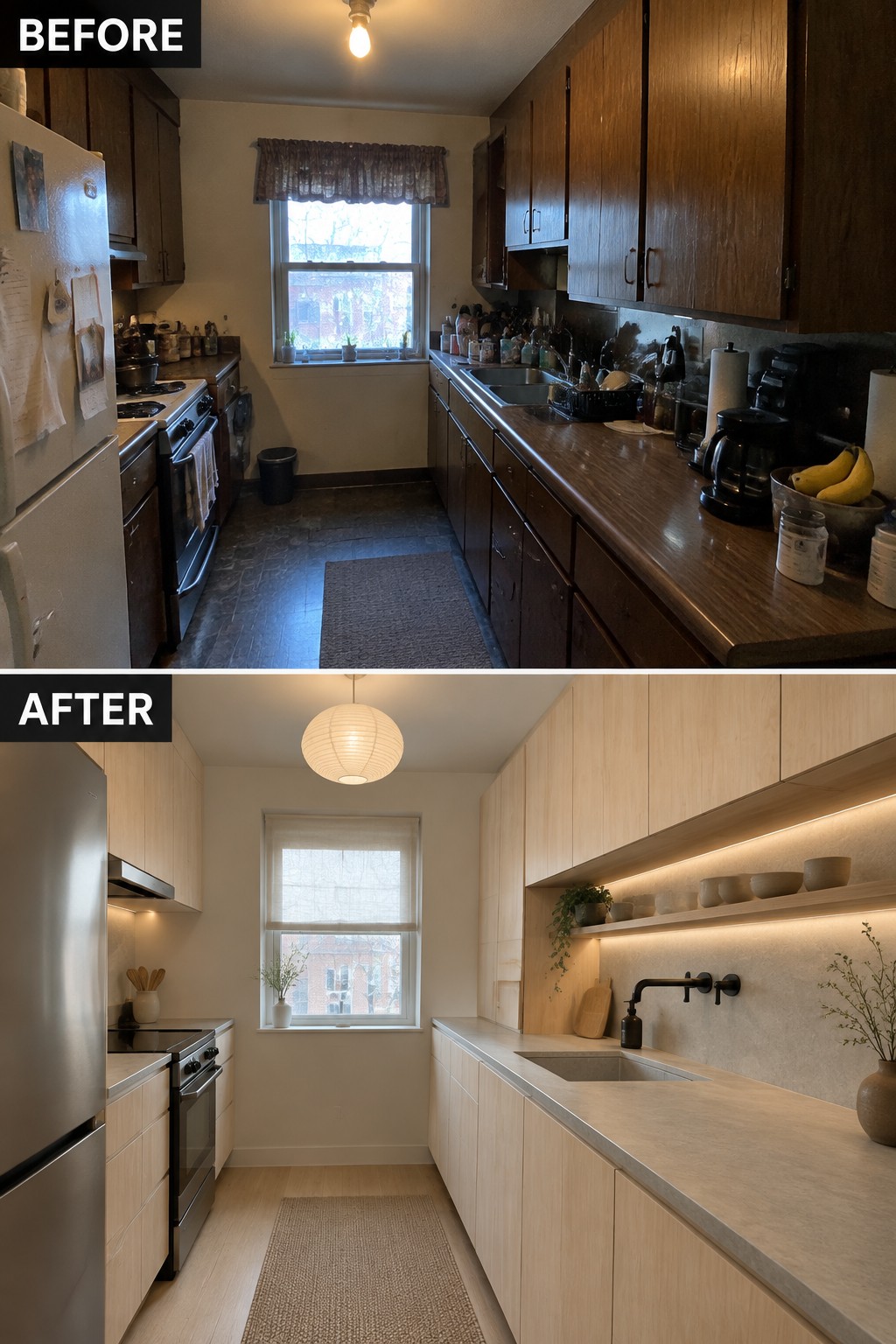
The dark, crowded cabinets made this narrow kitchen feel closed in. Replacing them with pale natural wood cabinetry gives the room a lighter look while keeping the warmth and character of wood.
This approach works well in older kitchens where a full layout change is not practical. Keep cabinet fronts simple, and use a light countertop so the wood does not make the room feel heavy.
Refresh An Old Kitchen With Natural Wood Cabinets

Replacing worn, mismatched cabinetry with natural wood gives this kitchen a cleaner, more cohesive look while keeping the room from feeling stark. The simple wood fronts work well alongside white cabinets and counters, and the updated floor helps the whole space feel more current.
In an older kitchen, natural wood is a practical way to bring in warmth without relying on a bold paint color. Choose a cabinet tone that suits the room’s light, and keep the hardware and surfaces simple so the wood remains the main feature.
Turn An Unused Kitchen Corner Into Pantry Storage
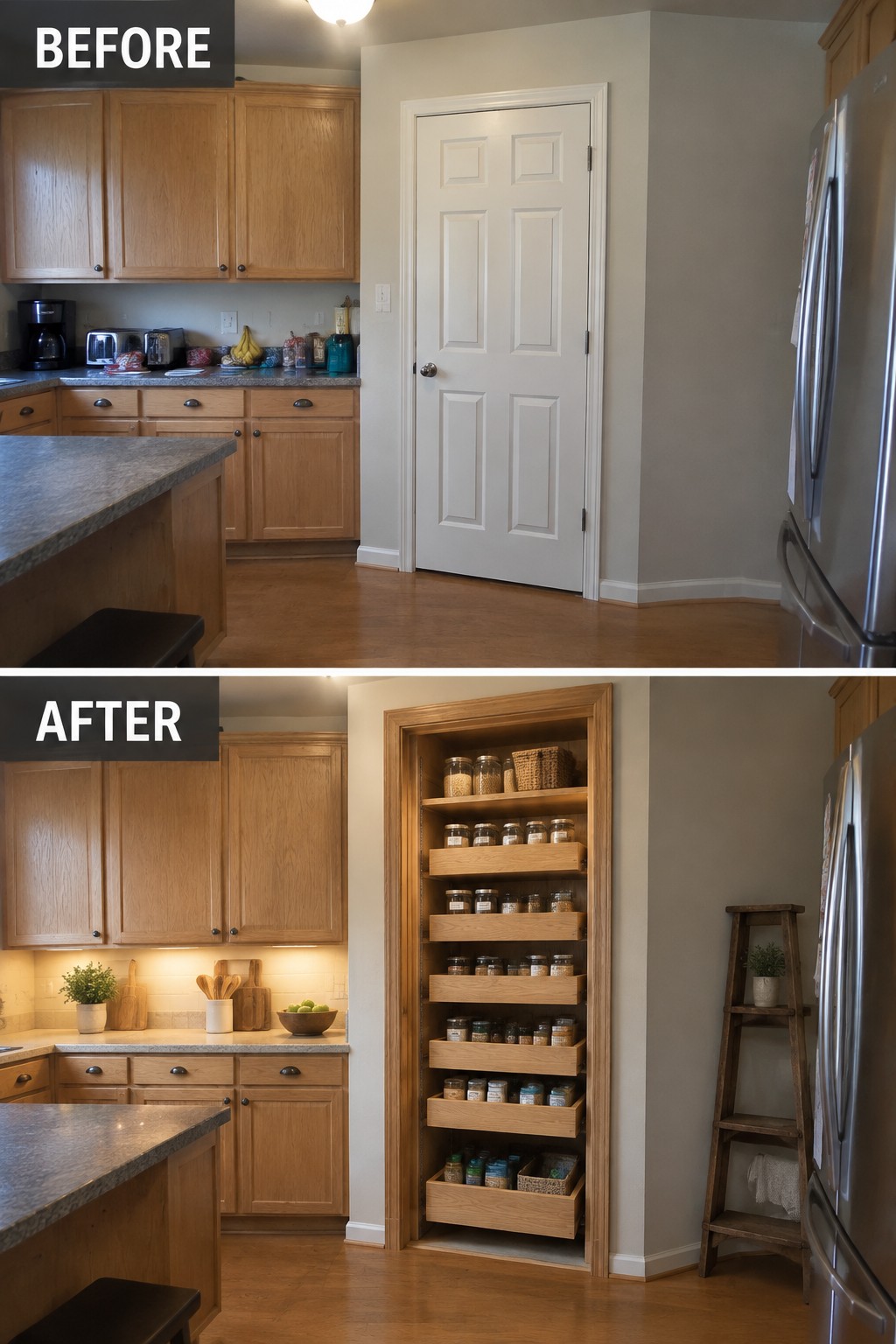
The closed door in this kitchen gave way to a tall, built-in pantry, making use of a corner that had little purpose before. The pull-out shelves keep jars and dry goods easy to reach without taking up counter space.
This idea can work well in an older kitchen with a shallow closet or an awkward gap near the cabinets. Use shelves that slide out fully so items at the back do not get forgotten, and match the wood trim to existing cabinetry for a more cohesive look.
Replace Dated Upper Cabinets With Open Shelving
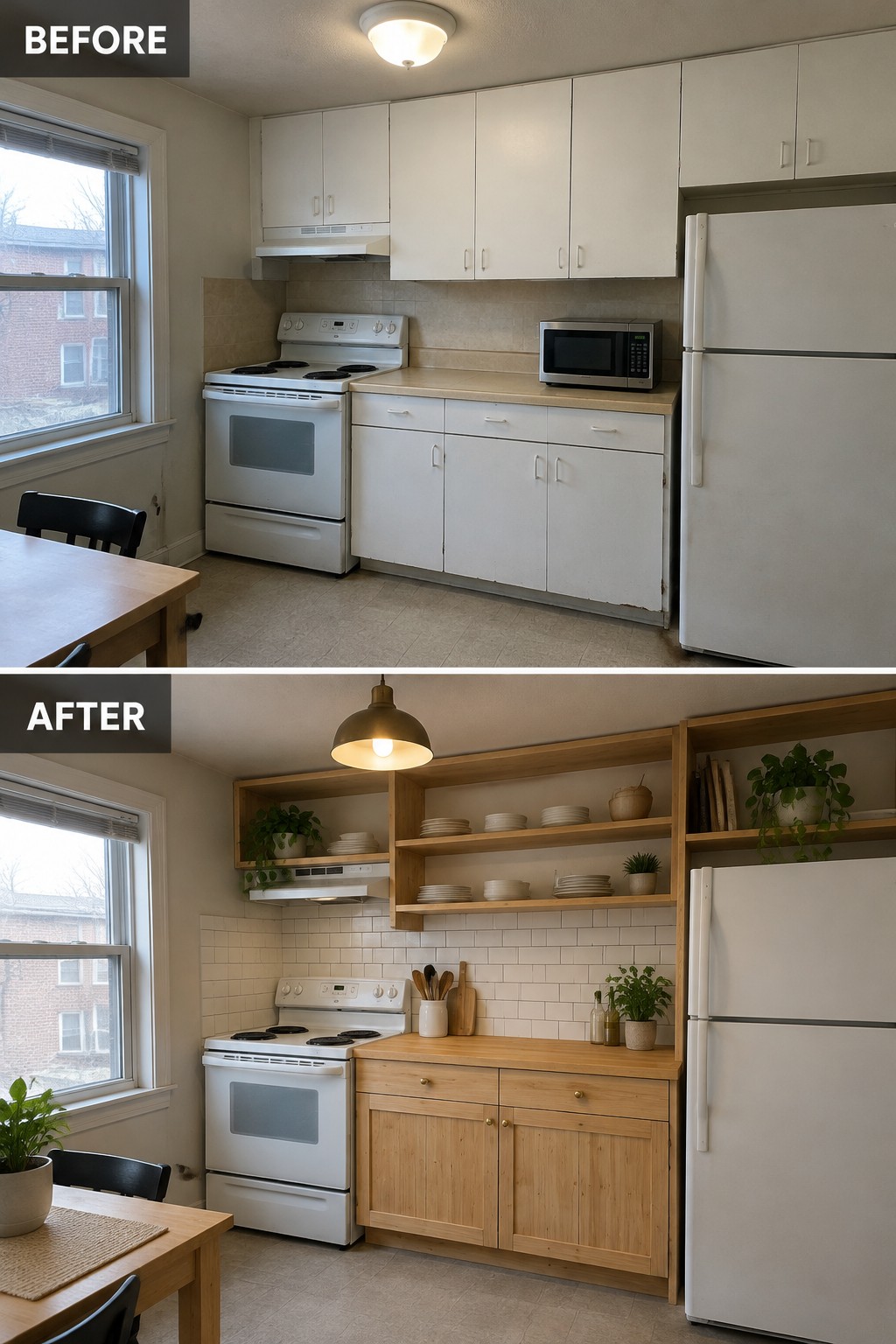
Replacing closed upper cabinets with open wood shelves can make an older kitchen feel less boxed in. Here, the natural wood cabinetry keeps useful storage below while open shelves make room for everyday dishes and give the kitchen a more relaxed look.
This idea works well in a small kitchen where a full row of upper cabinets can feel heavy. Keep the shelves for items you use often, and leave some open space so they stay practical rather than cluttered.
Frequently Asked Questions
Q: Can I keep my old wood cabinets if they look worn?
A: Often, yes. Clean them well and check for loose hinges, water damage, or peeling finish before deciding. A light sanding and a fresh coat of oil or stain can bring the wood back without hiding its grain.
Q: How can I make dark wood cabinets feel less heavy?
A: Pair them with lighter walls, a pale backsplash, or open shelving. Good task lighting also helps brighten the room and show off the wood’s natural texture.
Q: Will natural wood cabinets work with modern appliances?
A: Absolutely. Simple hardware and clean-lined appliances keep the combination feeling fresh, while the wood adds warmth. Try matching the cabinet finish to one other detail, such as a shelf or stool, rather than repeating it everywhere.
Q: What should I do if my cabinets have different wood tones?
A: Let one tone lead, then use the others as accents. A consistent wall color or countertop can help the mix feel intentional without forcing every piece of wood to match.
