

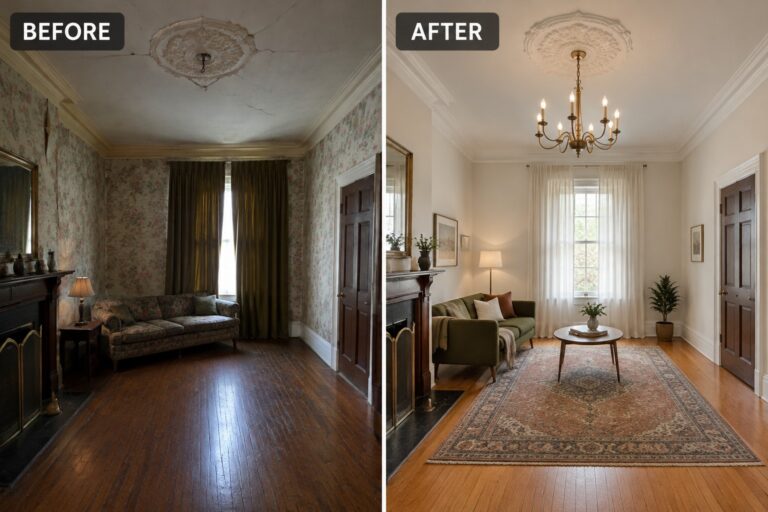
Older homes can feel disjointed when later updates cover up the details that once gave each room its character.
I’m always drawn to remodels that keep features like original trim, wood floors, and built-ins while making the layout and finishes work better for everyday life.
The best changes respect what is already there instead of trying to make an old house feel brand new.
Small, thoughtful choices can bring back a sense of cohesion without erasing the marks of time.
I’ve saved several ideas here that could be adapted to suit a real home and its original features.
Make An Old Living Room Feel Finished

The room feels more settled once the worn sofa is replaced and a rug defines the seating area. Keeping the original fireplace and trim lets the room’s older character remain part of the design.
In a historic home, start with the main seating area and choose a rug large enough for the furniture to sit partly on it. Then add a few simple comforts, such as curtains or a lamp, without crowding the room.
Make A Narrow Entryway Feel Finished
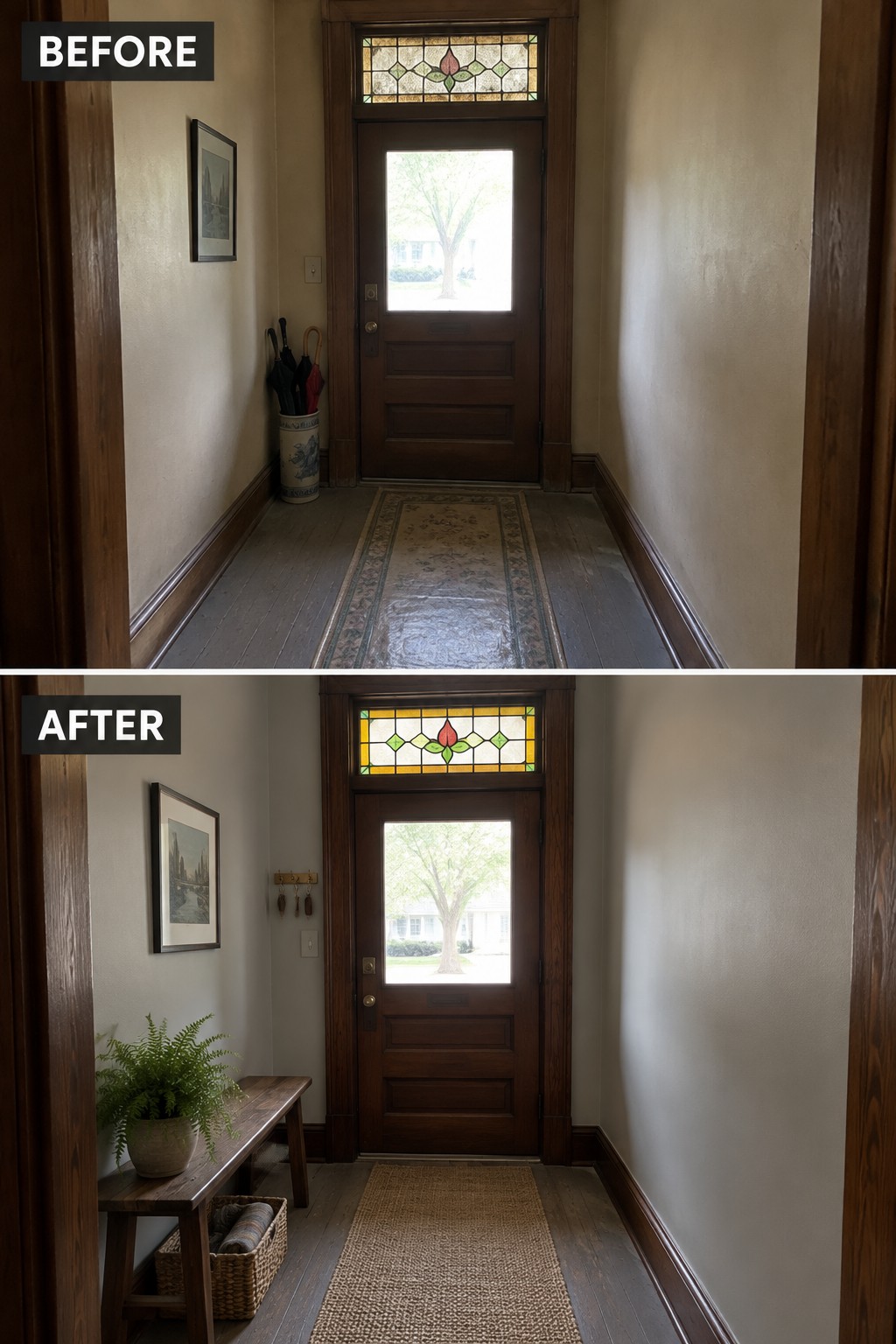
An entryway can feel more useful when a simple bench gives it a place to pause and set things down. Here, the bare hall becomes a small landing spot, and the runner helps define the walkway without crowding it.
This idea suits older homes with narrow halls and original woodwork. Choose a bench that leaves enough room to pass, then use a slim basket underneath for everyday items.
Make An Old Dining Room Feel More Finished
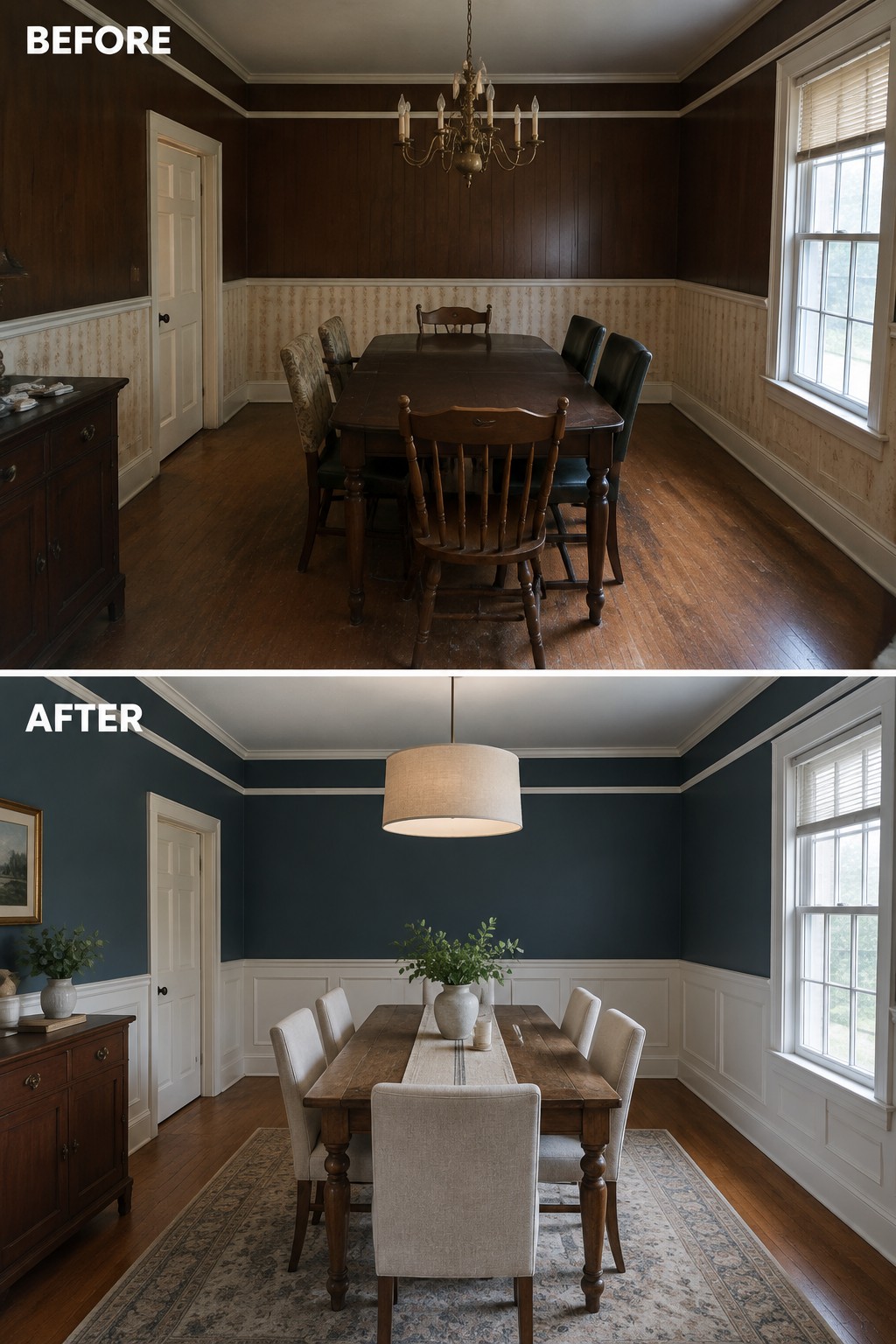
The room works better once the dark wall paneling is painted and the lower walls have clean white trim. The blue-green color keeps some character while the lighter wainscoting makes the dining area feel less closed in.
In an older home, paint and trim can update a dining room without hiding its original details. Keep the furniture layout simple, then use a rug to define the table area; just leave enough bare floor for chairs to slide back easily.
Give An Old Kitchen A More Open Feel

Replacing crowded upper cabinets with open shelving makes this kitchen feel less boxed in while keeping dishes within easy reach. The sage-green lower cabinets and wood counters update the room without hiding its exposed ceiling beams.
In an older kitchen, try removing a short run of upper cabinets and adding sturdy shelves instead. Keep only everyday dishes there, and check that the shelves leave enough clear counter space for cooking.
Refresh An Old Bathroom With A Lighter Look

Replacing dated wallpaper and a dark vanity with pale walls and a lighter vanity gives this old bathroom a cleaner, more open feel. Keeping the clawfoot tub lets an original feature remain part of the room rather than replacing everything.
In a small bathroom, lighter finishes can help the space feel less crowded. Keep the tub or other character pieces you like, then update the surfaces around them for a simpler look.
Make An Old Bedroom Feel Calm And Finished
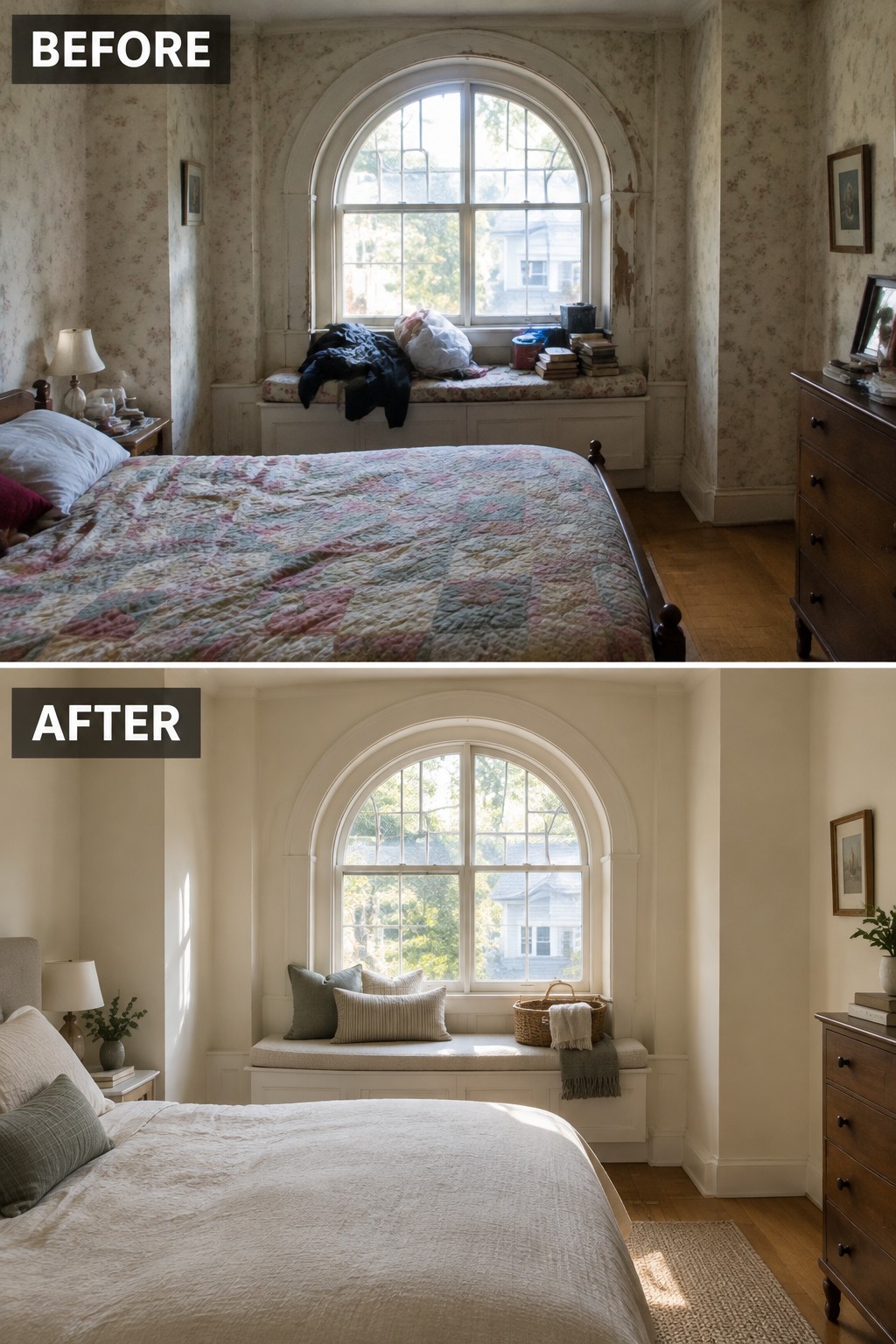
Replacing the busy floral bedding with a simple light coverlet gives this older bedroom a more restful feel while letting its arched window seat remain a feature. The room feels more settled without losing the original architectural detail.
For a similar update, start with a quiet bedding color and keep the window seat useful with a cushion and just a few pillows. This approach works well in older bedrooms where patterned walls or distinctive trim already give the room plenty to look at.
Make The Fireplace Wall The Main Feature

The fireplace already has the makings of a focal point, but the large TV and scattered mantel decor compete with it. Removing the TV and centering a framed landscape above the mantel lets the original brick stand out and gives the room a clearer point of focus.
For a similar update, keep the brick if it is in good shape and choose one substantial piece of art for above the mantel. A pair of lamps can help frame the display, but keep the mantel simple so the fireplace remains the main feature.
Turn A Narrow Hallway Into A Gallery
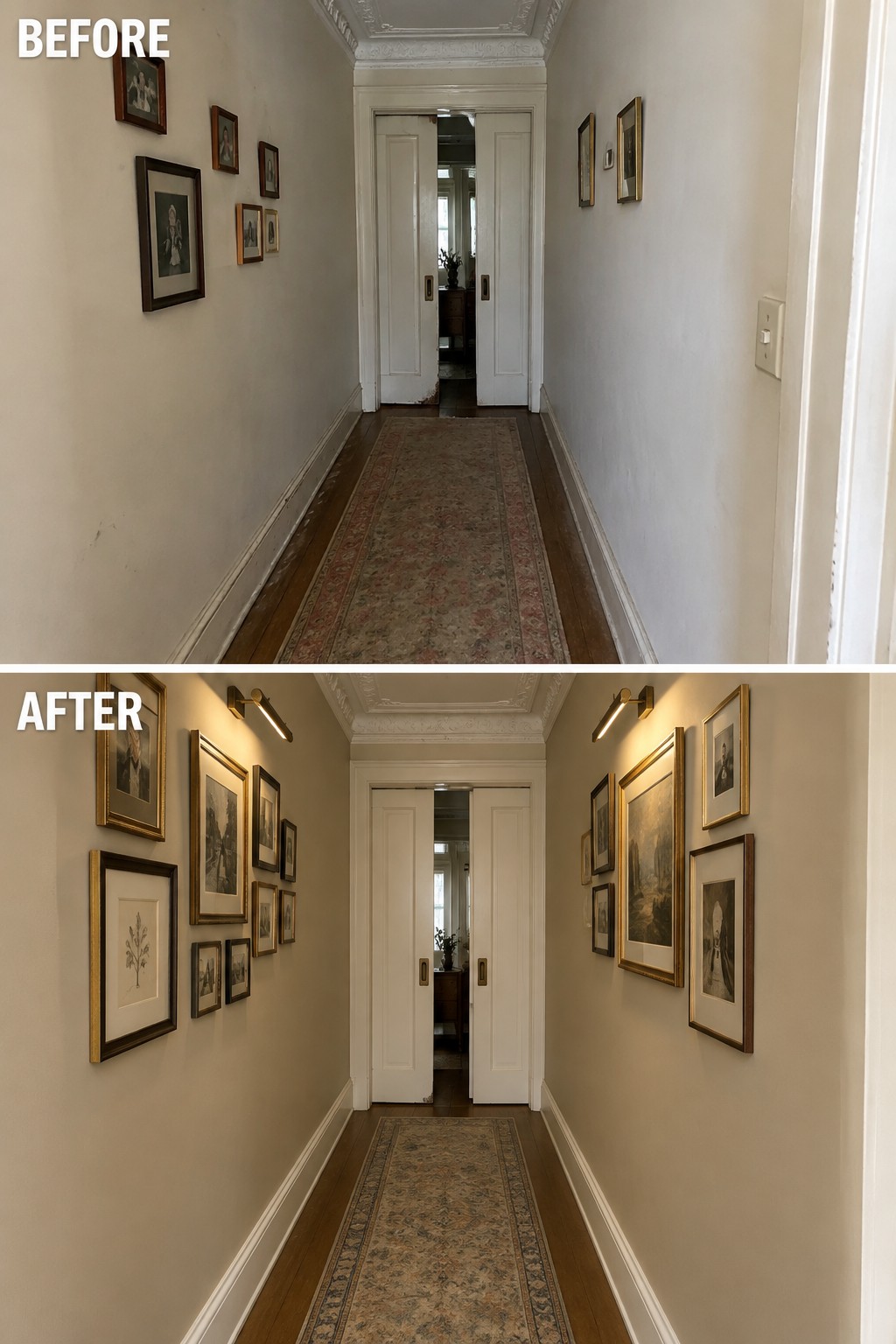
A few well-placed pictures can make a plain hallway feel more finished. In this makeover, adding artwork along both walls gives the narrow passage a clear purpose, while the original doors and trim remain part of the home’s character.
For a similar look, group frames at a consistent height and leave enough space for the hall to feel uncluttered. A pair of small wall lights can help illuminate the display, especially in a hallway with little natural light.
Make Built-In Shelves Work Harder

The shelves in an older home office can easily become catchalls for boxes and loose papers. Sorting them into useful storage and a few well-chosen books makes the built-ins feel like part of the room again. Here, lower cabinets hide clutter while the open shelves stay tidy.
If you have original shelving, keep its shape and give it a practical job before replacing it. Use baskets or closed storage for supplies, and leave some open space so the shelves do not feel crowded. This works especially well in a study or small room where storage is limited.
Turn A Bare Basement Into A Living Room
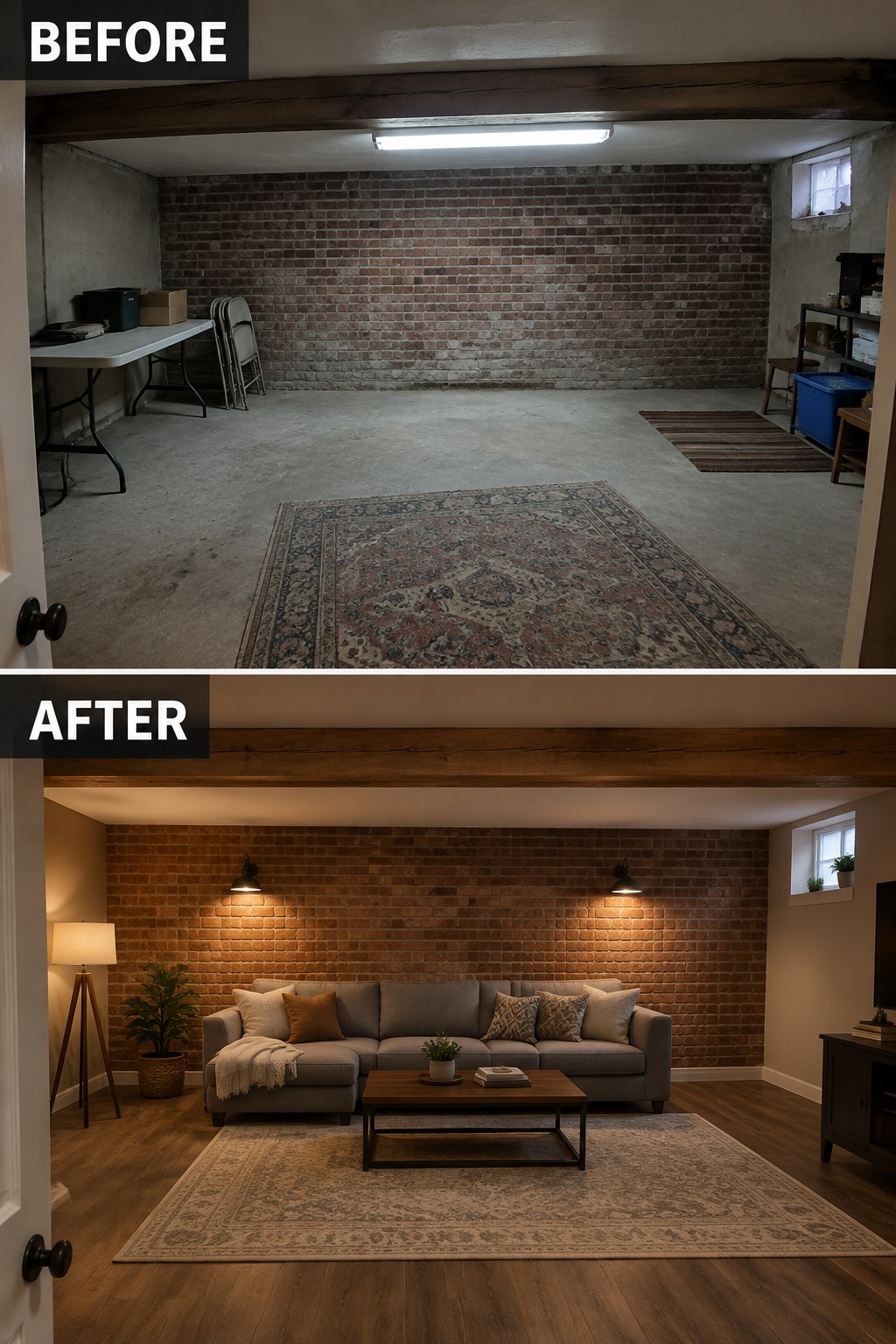
An unfinished basement can become a useful living room without hiding all of its original character. Here, the exposed brick stays as a feature while wood flooring, a rug, and comfortable seating make the room feel ready for everyday use.
If you have brick or timber details in an older basement, let one of them remain visible and build the room around it. A large rug can define the seating area, while warm lamps help make a space with limited natural light more comfortable. Keep the furniture size in proportion so there’s still room to move.
Make A Laundry Room More Practical
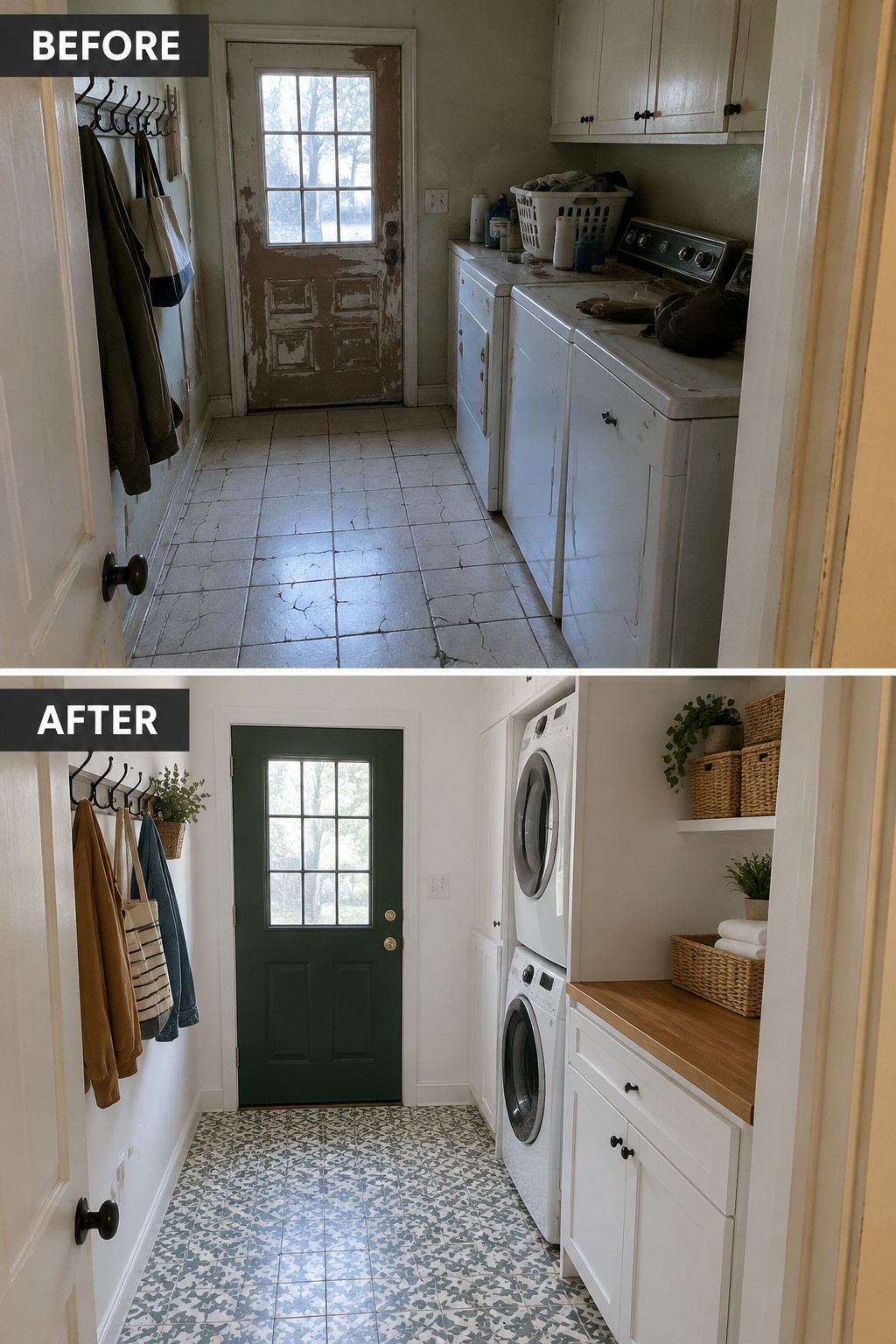
Replacing the worn machines and damaged floor with a stacked washer and dryer and a patterned tile floor makes this narrow laundry room easier to use. A countertop beside the appliances also gives everyday laundry a place to land.
In a small laundry room, use vertical space for appliances and keep the work surface to one side so there is still room to move. A durable floor is worth considering in an older home, especially where cracks or wear make the room harder to maintain.
Refresh An Old Staircase With A Simple Runner

Replacing a worn patterned runner with a plain, neutral one lets the original wood stairs stand out. The staircase feels cleaner and more cared for, while the runner still makes the steps comfortable and helps protect the treads.
This idea suits older homes with wood stairs worth keeping. Choose a durable runner that fits the stair width, and leave enough wood visible at the sides to show off the original detail.
Make A Breakfast Nook More Comfortable
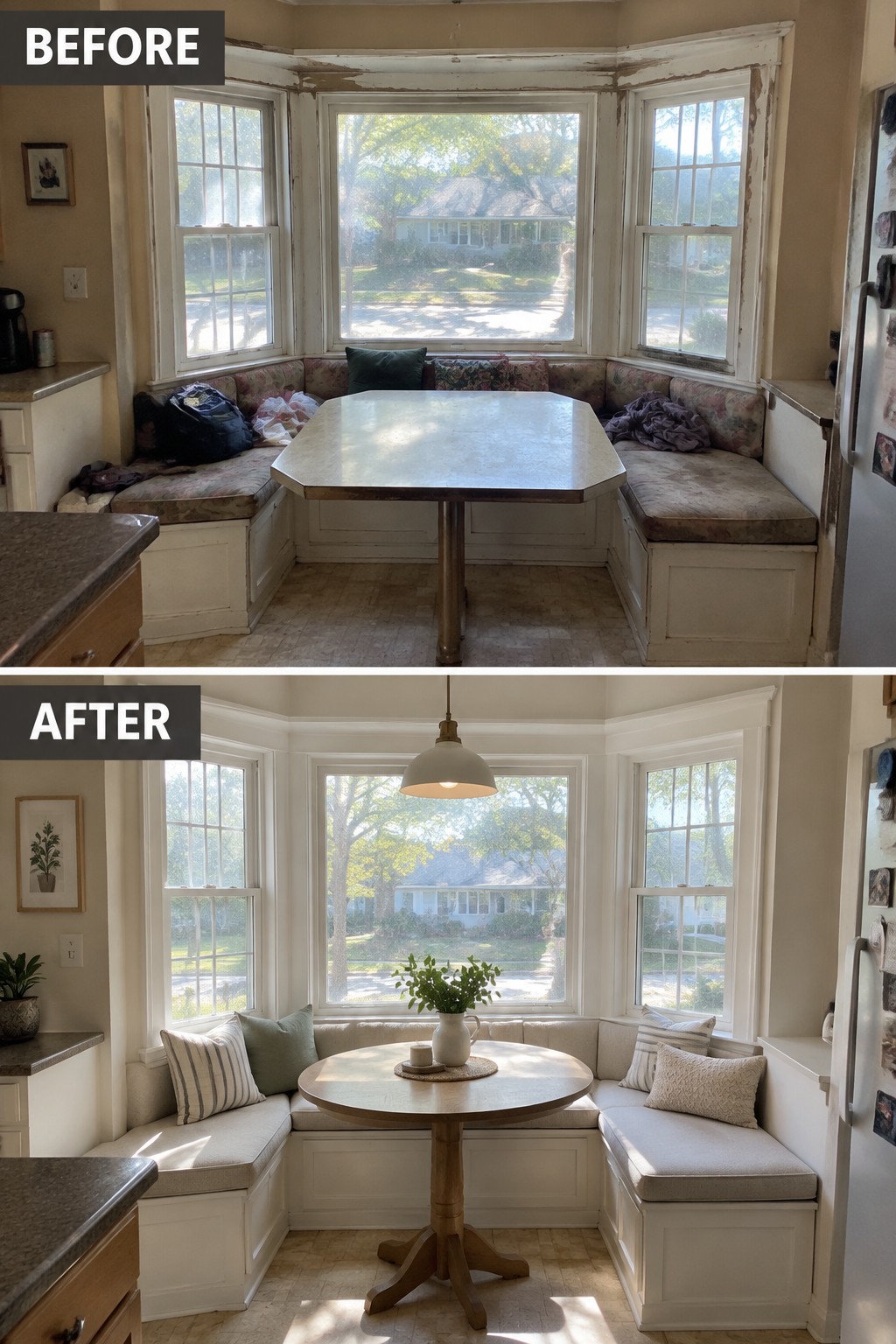
A built-in breakfast nook can be a useful feature in an older kitchen, but worn cushions and an awkward table can make it feel neglected. Replacing the tired seating and using a round table makes this corner more comfortable for everyday meals without changing its basic layout.
For a similar nook, choose cushions that fit the benches well and a table that leaves enough room to slide in and out. A round shape can work especially well in a compact corner, where sharp table edges may get in the way.
Replace A Pedestal Sink With A Small Vanity
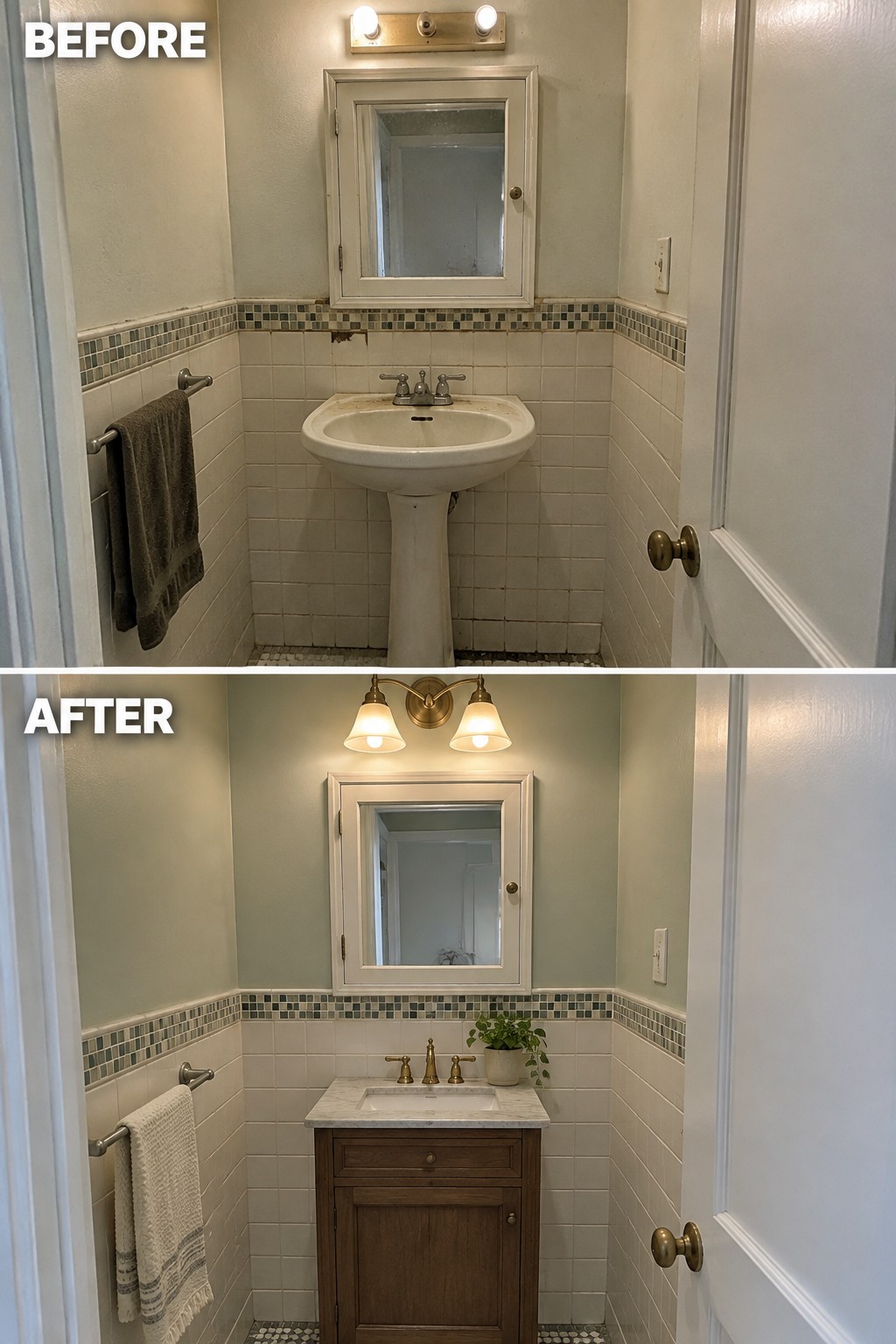
The pedestal sink left little room for everyday bathroom items. A compact vanity makes the old bathroom more practical by adding storage while keeping the original tile in place.
This idea works well in a small bathroom where a full remodel is not needed. Measure carefully so the vanity leaves enough room to move, and choose a simple finish that suits the existing tile.
Turn An Empty Nook Into A Reading Spot

The brick alcove had become a place to leave boxes, but a single comfortable chair makes it useful as a quiet reading spot. A rug helps mark out the small area, while the lamp makes it practical for reading without changing the original brickwork.
This idea works well in a narrow corner or an unused stretch beside a window. Choose a chair that leaves room to walk through, then add a lamp nearby; a small rug can help define the spot without crowding it.
Make A Small Pantry Easier To Use

Replacing crowded wire racks with sturdy open shelves gives a pantry a clearer, more useful layout. The neatly arranged storage in the finished space makes it easier to see what is on hand and reach everyday items.
For a similar setup, group foods in jars or baskets and leave some shelf space open so the room does not feel packed again. This approach works especially well in a small walk-in pantry, where keeping the center and counters clear makes moving around easier.
Keep The Original Shower Arch
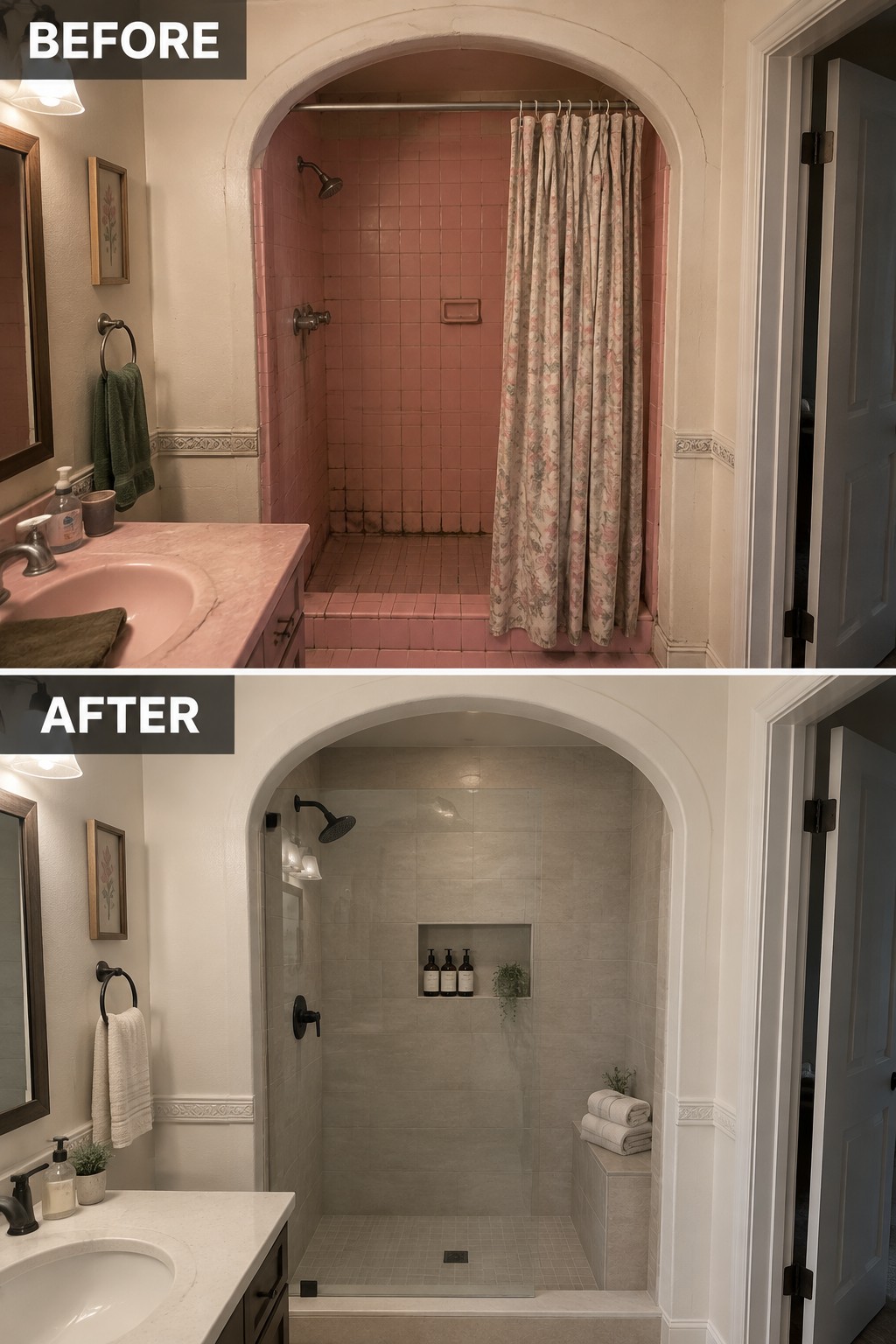
An old bathroom can feel more usable without removing the details that give it character. Here, the dated pink shower tile gives way to larger neutral tiles, while the original arched opening stays in place. The arch still gives the room a clear focal point, but the updated shower feels cleaner and more open.
If your home has a similar curved opening or other distinctive trim, consider keeping it and updating the finishes around it. A simple tile palette can make an older bathroom feel fresher without making it look like every detail was replaced. Check that the arch and surrounding walls are in good condition before starting.
Lighten Dark Wood Paneling Without Losing Its Character
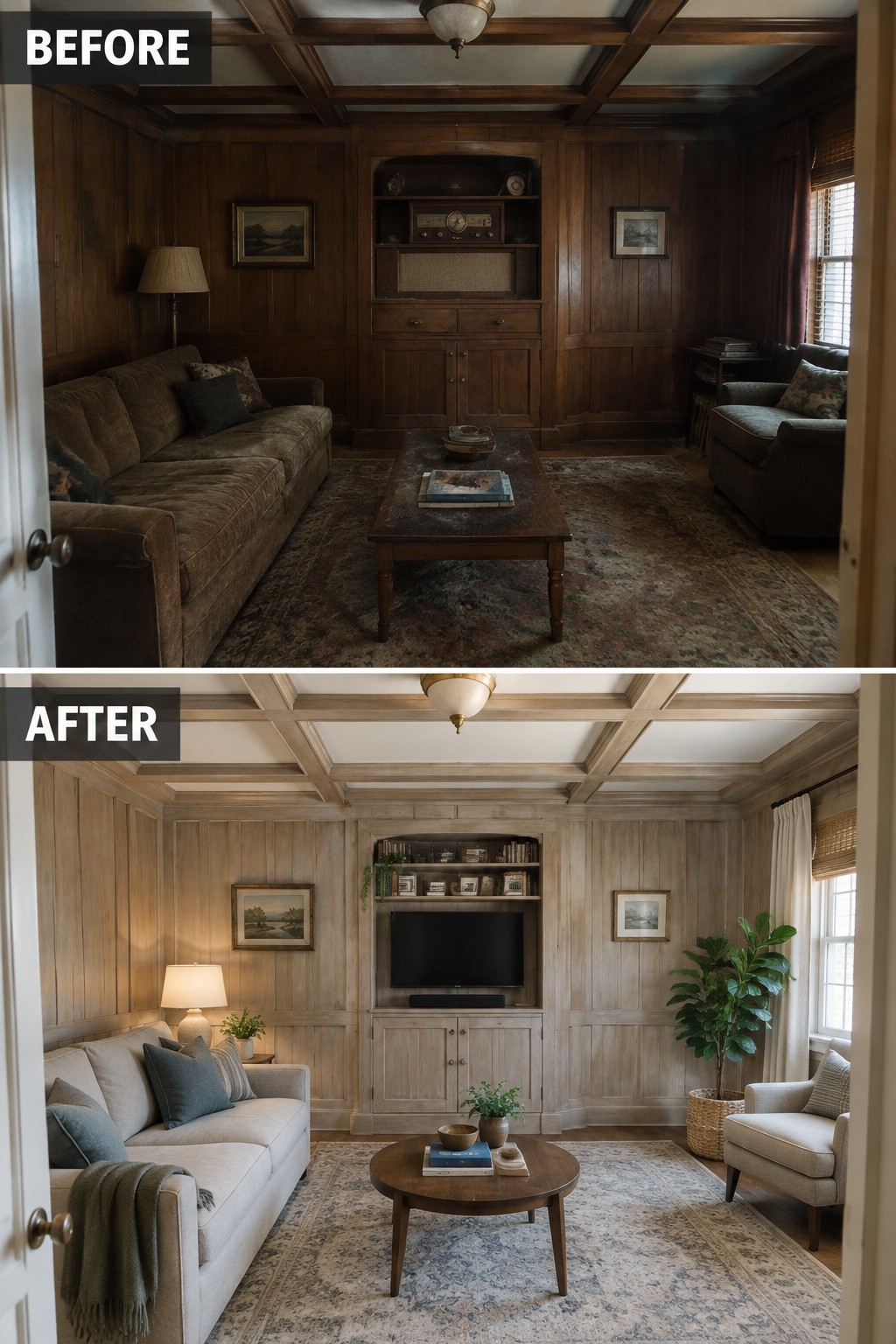
The room feels more usable once the dark wood paneling is refinished in a lighter tone. Keeping the original paneling and built-in cabinetry preserves the old-house character, while the paler finish lets the room feel brighter and less closed in.
If your woodwork is in good shape, consider a careful light stain or paint rather than removing it. Test a small area first, since the wood species and existing finish affect the result. Then keep the furnishings simple so the paneling remains part of the room’s character.
Make A Small Bedroom Feel Finished

A simple bed and a few well-chosen layers can make a small bedroom feel complete without changing its layout. Here, replacing the old metal bed with an upholstered one and adding a rug gives the room a more settled look.
In a small bedroom, keep the bed as the main focus and choose a rug that extends into the walkway without crowding it. A soft color palette can help the room feel restful, while a little wall art makes it personal.
Turn A Kitchen Pass-Through Into A Breakfast Bar

The kitchen pass-through works harder when it becomes a clear spot for quick meals instead of a place to collect papers and odds and ends. Here, a cluttered counter gives way to a clean wood bar, making the space feel more useful without changing its basic layout.
This idea suits older homes with a wide opening between the kitchen and living area. Choose a durable counter surface and stools that tuck in neatly, then keep the bar mostly clear so there’s room to eat or set down a cup.
Style Built-Ins To Give The Room A Focal Point
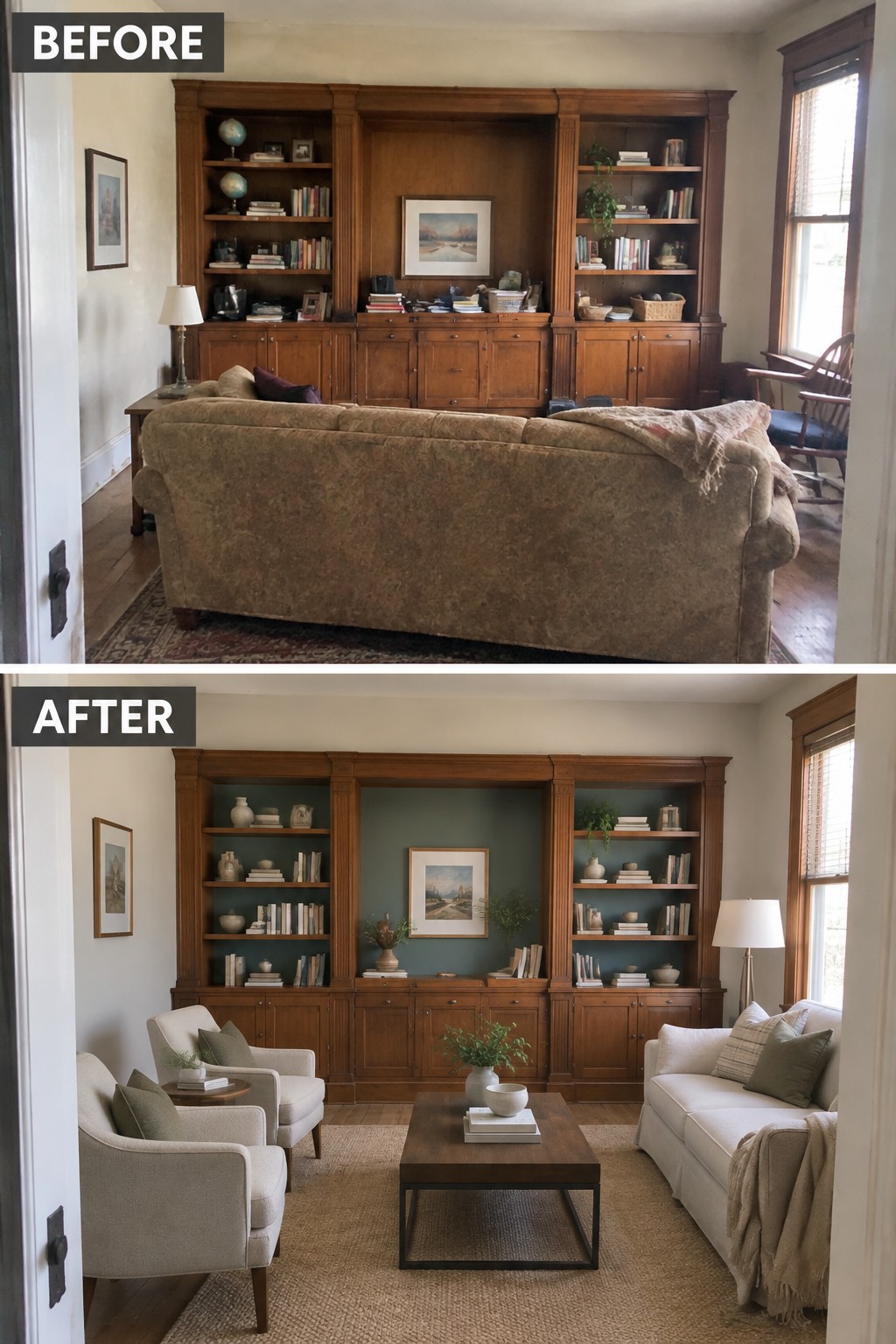
The built-in bookcase gives this living room a strong focal point, but the dark, cluttered shelves made it feel heavy. Painting the backs a muted green and arranging the shelves with more breathing room helps the original woodwork stand out.
This idea works well in older homes with built-in cabinetry worth keeping. Use a color that suits the room, then leave some open space among books and objects so the shelves don’t look crowded.
Let Natural Light Brighten An Old Bedroom
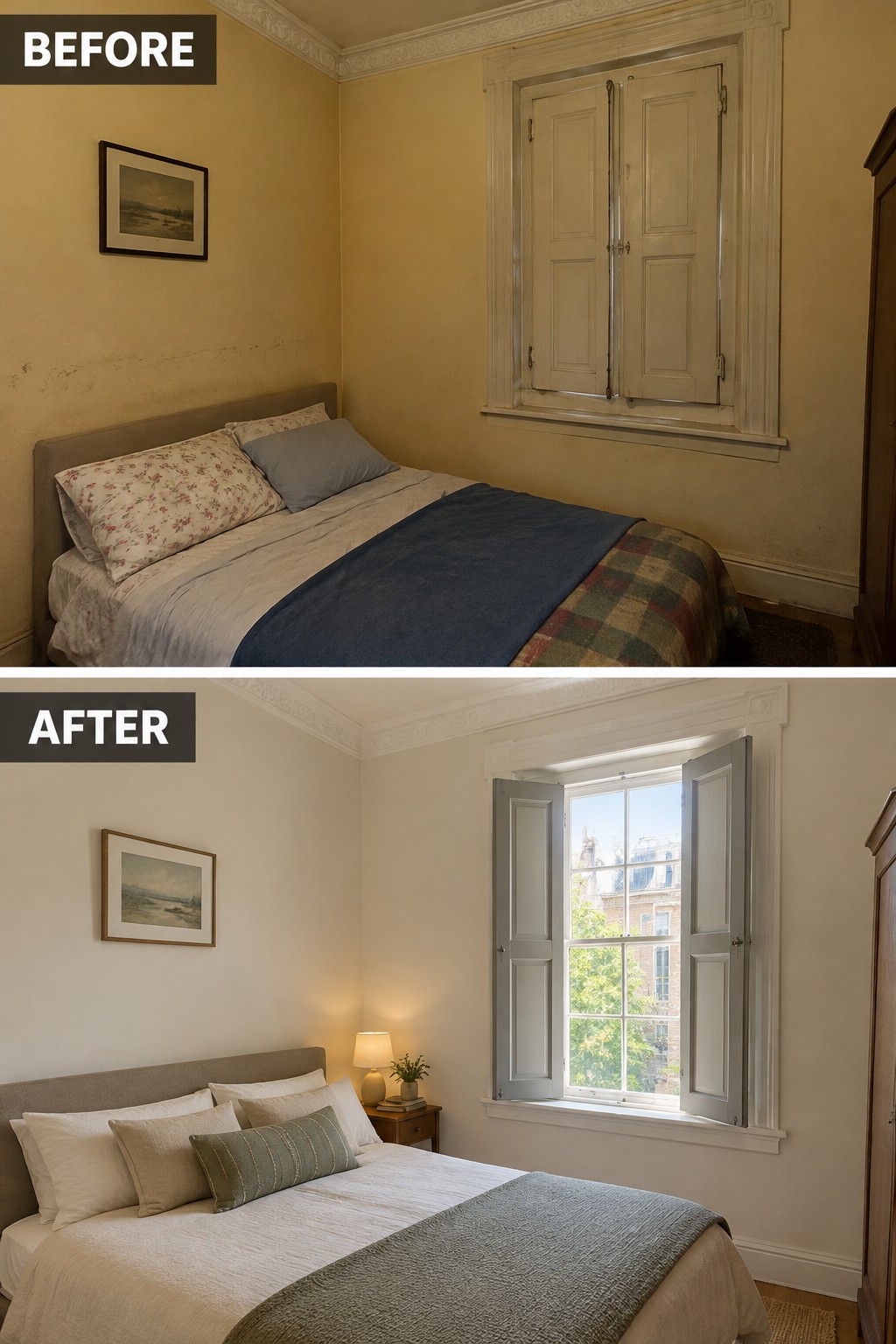
The bedroom feels much more settled once the window is opened up and the bed is dressed in light, simple layers. In the before photo, the closed shutters and mismatched bedding make the room feel dim; opening the shutters brings in daylight and gives the old architectural trim a chance to stand out.
In a period bedroom, keep the original window details and let them do their job. Use pale bedding and a few coordinated pillows to keep the bed restful, but avoid crowding it with too many layers or patterns.
Let Original Stained Glass Brighten The Room

The stained-glass doors are the room’s strongest original feature, but the dark, crowded furnishings make them easy to overlook. A simpler seating arrangement and lighter rug let the glass stand out while making the living room feel more settled.
In an older home, keep distinctive details like these and make the furniture work around them. Clear extra items from nearby surfaces, choose a rug that suits the room’s size, and leave the doors easy to see and use.
Frequently Asked Questions
Q: How do I remodel an old home without losing its original character?
A: Pick a few details worth preserving, such as original trim, doors, floors, or built-ins, and plan the new work around them. You can update kitchens and bathrooms while keeping those older features visible.
Q: What should I check before opening up a wall?
A: First, find out whether it supports the floors or roof above, and check for wiring or plumbing inside. A qualified contractor can help you make a plan that protects the home’s structure and its original details.
Q: Can I keep old windows if they’re drafty?
A: Often, yes. Repairing the sash and adding weatherstripping can make old windows more comfortable while preserving their look. If you replace them, match the original proportions and muntin pattern.
Q: How can I make original woodwork stand out?
A: Keep the trim clean and let it contrast with simpler wall colors or updated furnishings. If the wood has layers of paint, test a small area before stripping it, since the finish underneath may not be what you expect.
