


A front porch can feel neglected when its railings are loose or worn and its original columns have lost their crisp lines.
I like how careful repairs can bring back the home’s character while making the entry feel cared for, without requiring a full exterior renovation.
Small details make a real difference.
A sound railing adds definition and reassurance, while restored columns help the porch feel connected to the rest of the facade.
I’d save a few of these approaches for a home where preserving original details matters as much as improving curb appeal.
Restore The Porch Before Adding Decor

Repairing worn railings and restoring the original columns gives this older porch a cleaner, more cared-for look without changing its character. The fresh, consistent paint makes the entry feel finished, while the repaired wood keeps the porch’s familiar details in place.
If you have a similar porch, start by checking the columns, rails, and steps for loose or damaged wood. Make repairs and prep the surfaces before painting; then add just a few practical touches, such as planters or a small bench, so the entry stays easy to use.
Make A Porch Feel Ready For Sitting

The porch already had a useful covered space, but its worn railing made it feel neglected. Repairing the railing and repainting the columns gives the area a cared-for look, while a simple chair and bench make it clear that the porch is meant to be used.
For a similar update, fix loose or damaged railing sections before adding furniture. A small porch usually needs only a couple of seats, with enough room left to walk comfortably to the door.
Make A Plain Front Entry Feel Welcoming
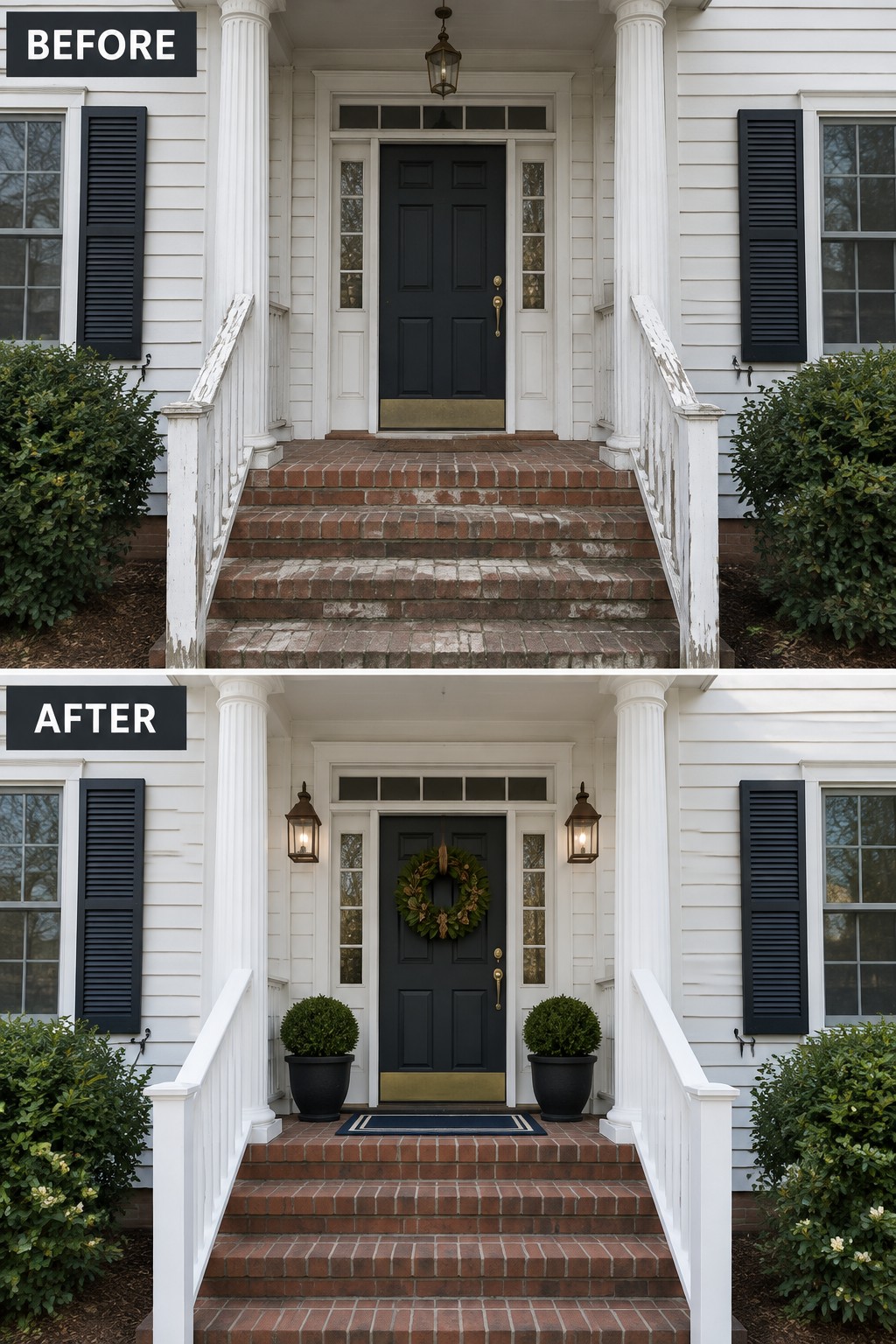
A front entry can feel neglected even when the house itself is in good shape. Here, fresh white railings give the porch a cleaner look, while a wreath and potted shrubs make the dark front door feel like a clear focal point.
For a similar update, repair or repaint the railings first, then add just a few pieces near the door. This approach suits older homes with original columns, and keeping the steps clear helps the entrance stay easy to use.
Make The Front Steps Feel Welcoming Again

Repairing worn railings and refreshing the steps can make an older entry feel cared for without changing its original character. Here, the rusty rails are finished in black and the cracked concrete is renewed, giving the front door a cleaner approach.
Keep the existing columns if they are in sound condition, and choose railing repairs that suit the home’s style. A fresh coat of paint on the door can finish the update, but make sure the steps and handrails are safe before adding decorative touches.
Turn An Empty Porch Into A Place To Sit
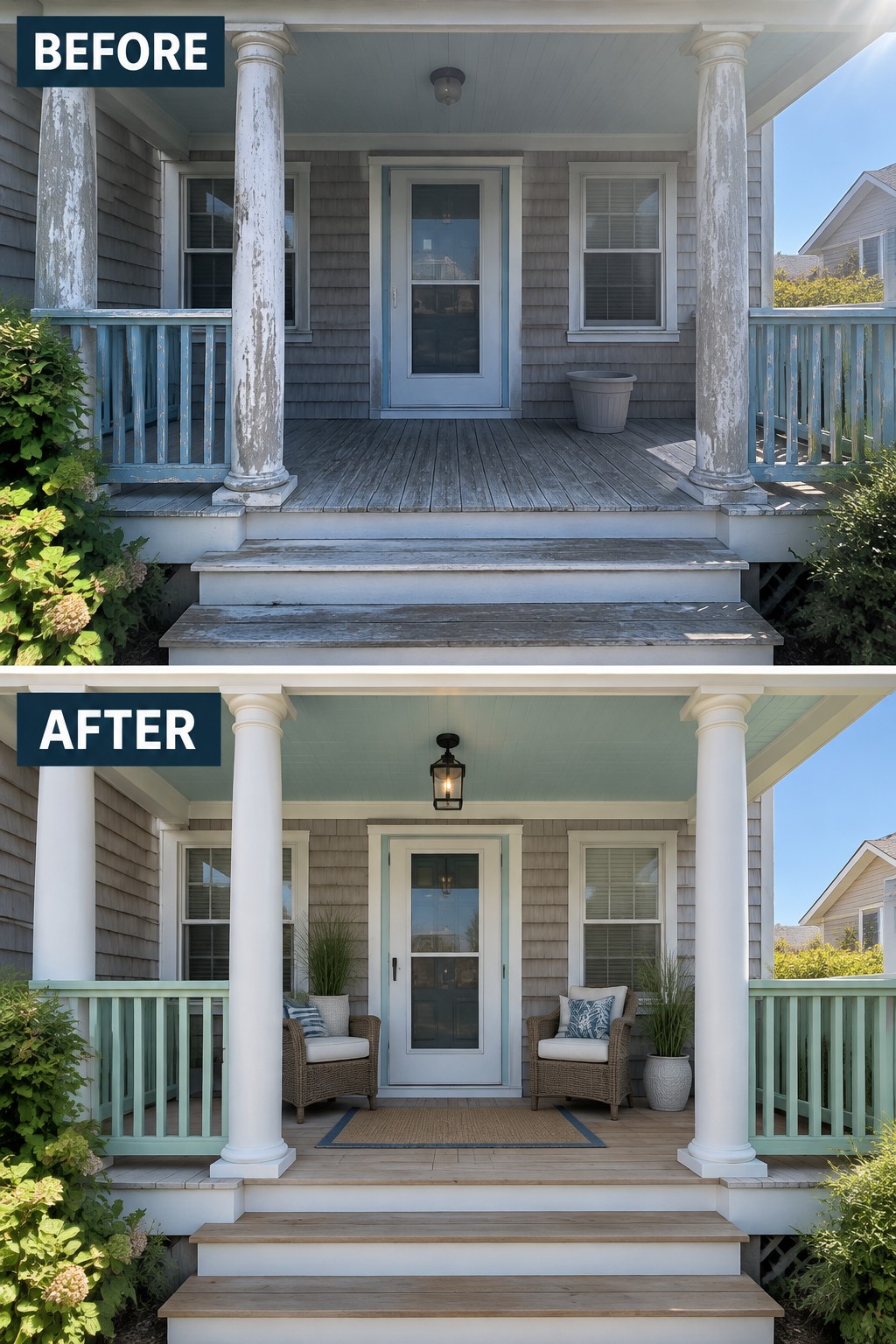
The porch feels more useful once it has comfortable seating and a rug to mark out the sitting area. In the before photo, the porch is bare; afterward, two chairs make it clear that there’s room to pause and enjoy the space.
For a covered porch like this, start with weather-friendly chairs and leave enough space to walk comfortably between them. A rug can help define the area, but choose one made for outdoor use.
Turn A Covered Porch Into A Seating Area

The porch feels more useful once the worn railing is replaced with a solid wood one and the space is set up for sitting. The railing gives the long, narrow porch a clearer edge, while a pair of chairs makes it feel like part of the home rather than just a walkway.
For a similar porch, choose weather-resistant seating that leaves room to reach the door and move along the porch. A simple railing update can make a big difference, especially when the original columns are still in good shape.
Give A Worn Porch A Fresh Start

A porch feels more welcoming when its basic structure looks cared for. Here, the peeling columns and railings were repaired and repainted, and the front door became a clear focal point. Fixing those larger surfaces first makes a bigger difference than adding decor to a porch that still looks neglected.
If your porch has original columns or railings, keep their shape and repair what you can before replacing them. A fresh coat of paint and a simple front-door update can suit older homes especially well. Check for loose or damaged wood first, and choose exterior paint made for the material.
Give A Worn Porch A Clear Purpose

A porch feels more welcoming when it is in good repair and ready to use. Here, the loose, weathered railings were replaced with sturdy dark ones, and the worn concrete steps were redone in brick. Those repairs give the entry a more finished look without changing the home’s basic character.
Start by fixing any loose railings or damaged steps, especially where people walk and sit. Then add just enough seating or a planter to make the porch useful, while keeping the path to the door clear.
Repair The Porch Before Styling The Entry

A worn porch can make the whole front of a house feel neglected. Here, repairing and repainting the columns, railings, and steps gives the entry a clean foundation, so the dark front door can stand out without extra decoration.
Start with the woodwork and any loose or damaged sections before choosing new accessories. This approach suits older homes especially well, where keeping the original porch features and restoring them can look more natural than replacing them.
Repair The Porch Before Furnishing It
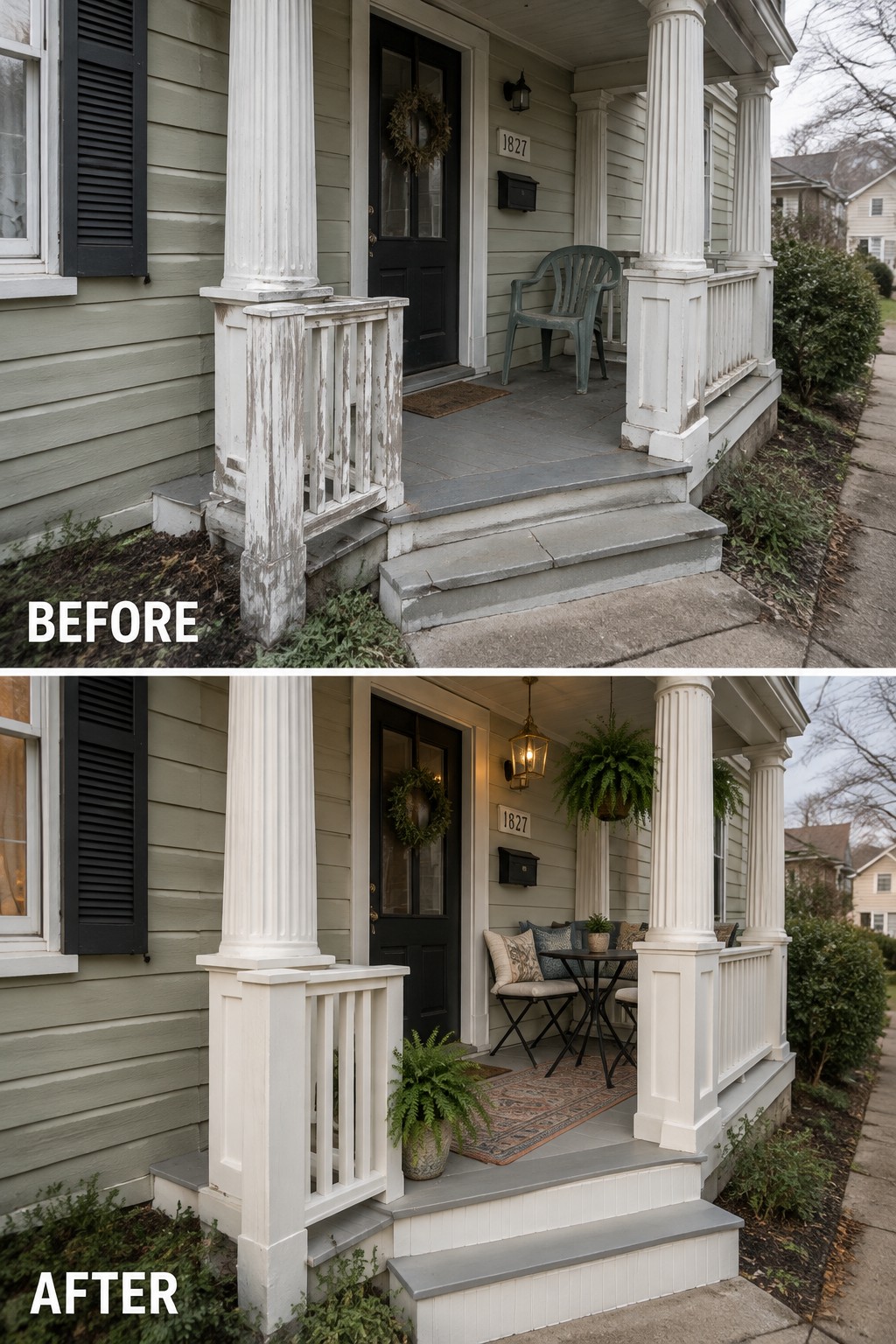
This porch feels more usable because the worn railings and steps were repaired before the seating was added. Fresh, solid porch details give the entry a neater look, while a small table and chairs make the space useful for sitting.
On an older home, start by checking that the railings, columns, and steps are sound, then repaint or replace damaged parts. Once the repairs are done, add modest furniture that leaves a clear path to the door.
Refresh The Porch For A More Welcoming Entry
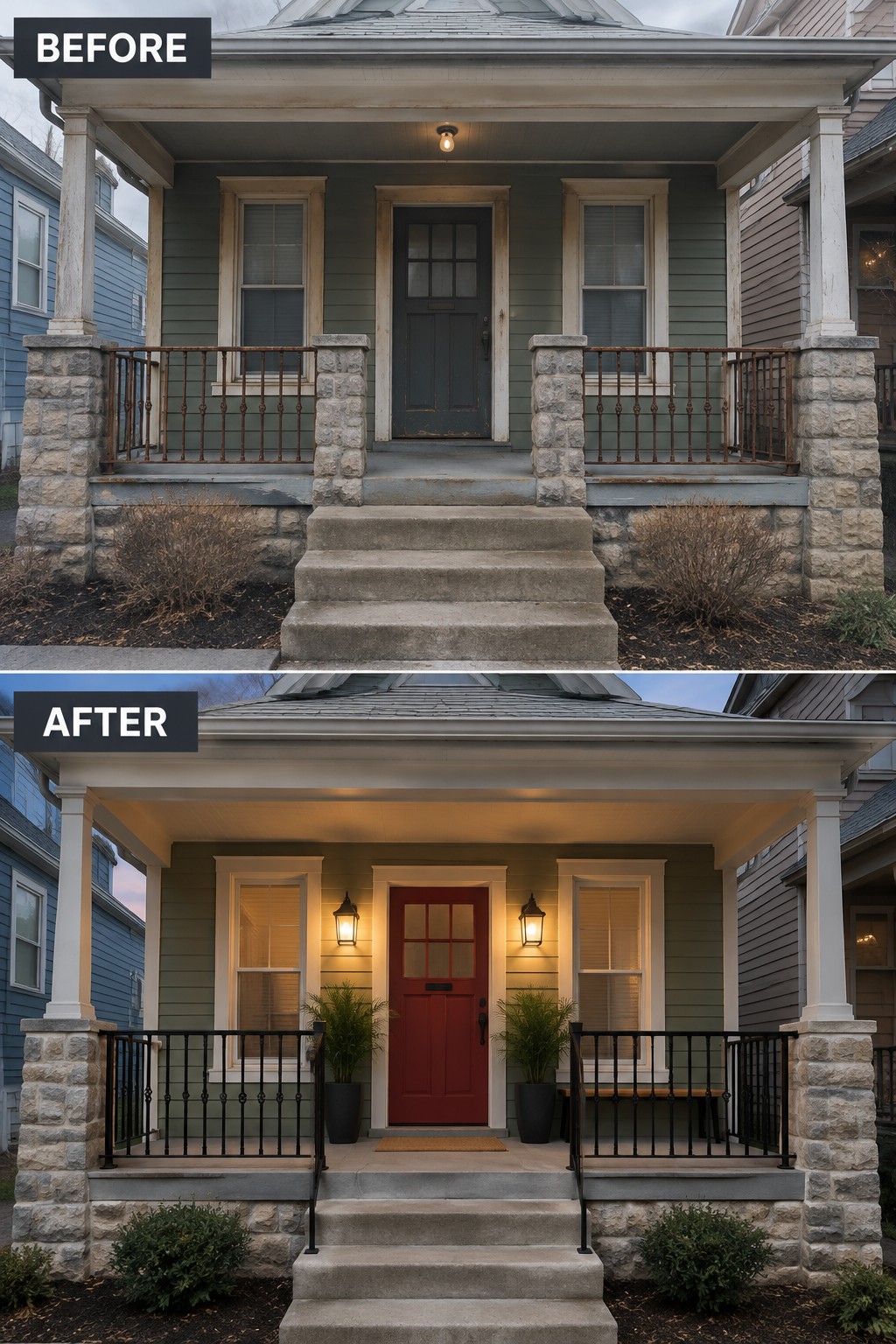
A worn porch can feel much more cared for when its original structure is repaired and the entry gets a clear focal point. Here, the refreshed railings and columns work alongside a red front door to make the approach feel finished without changing the porch’s basic layout.
For a similar update, repair loose or peeling parts before choosing new paint and hardware. A contrasting front door can give an older home character, while simple railings that suit the original columns help the porch feel cohesive.
Repair The Porch Before Styling It

The porch feels usable again once the damaged railing and worn columns are repaired. In the after photo, clean white railings and broad steps make the entrance look cared for, while the seating comes second.
If your porch has similar wear, start with sound repairs and a fresh coat of paint before bringing in chairs or accessories. Keep the railing sturdy and the steps clear, especially on a narrow porch.
Restore The Porch Before Adding Decor
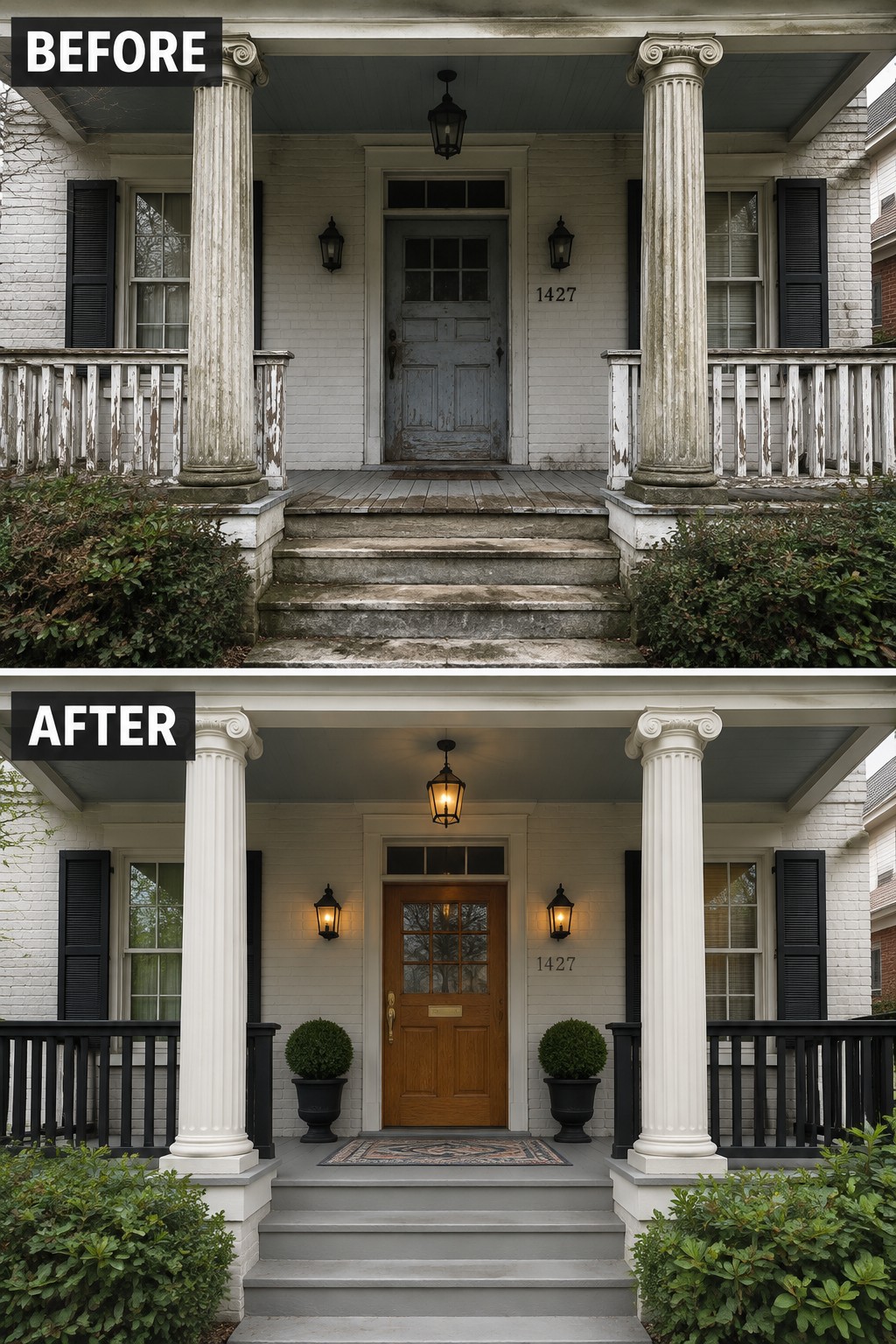
The porch feels more welcoming because the worn railings and steps have been repaired, and the columns have a clean, fresh finish. Taking care of those structural parts first gives the entry a tidy base, so even a few simple finishing touches look more at home.
If your porch has peeling paint or loose railings, handle those repairs before choosing accessories. Keep the railing style suited to the house, and use weather-resistant paint or stain so the refreshed entry holds up outdoors.
Repair The Porch Before Styling The Entry

The worn columns and damaged steps made the front entry feel neglected. Repairing those original features first gives the porch a sound, tidy base, so simple touches like matching planters and lanterns can finish the space without trying to hide the wear.
If your porch has original columns or railings, keep them where possible and focus on fixing loose or deteriorated sections. Then add a few practical details near the door, leaving a clear path up the steps.
Restore The Porch Before Adding Furniture
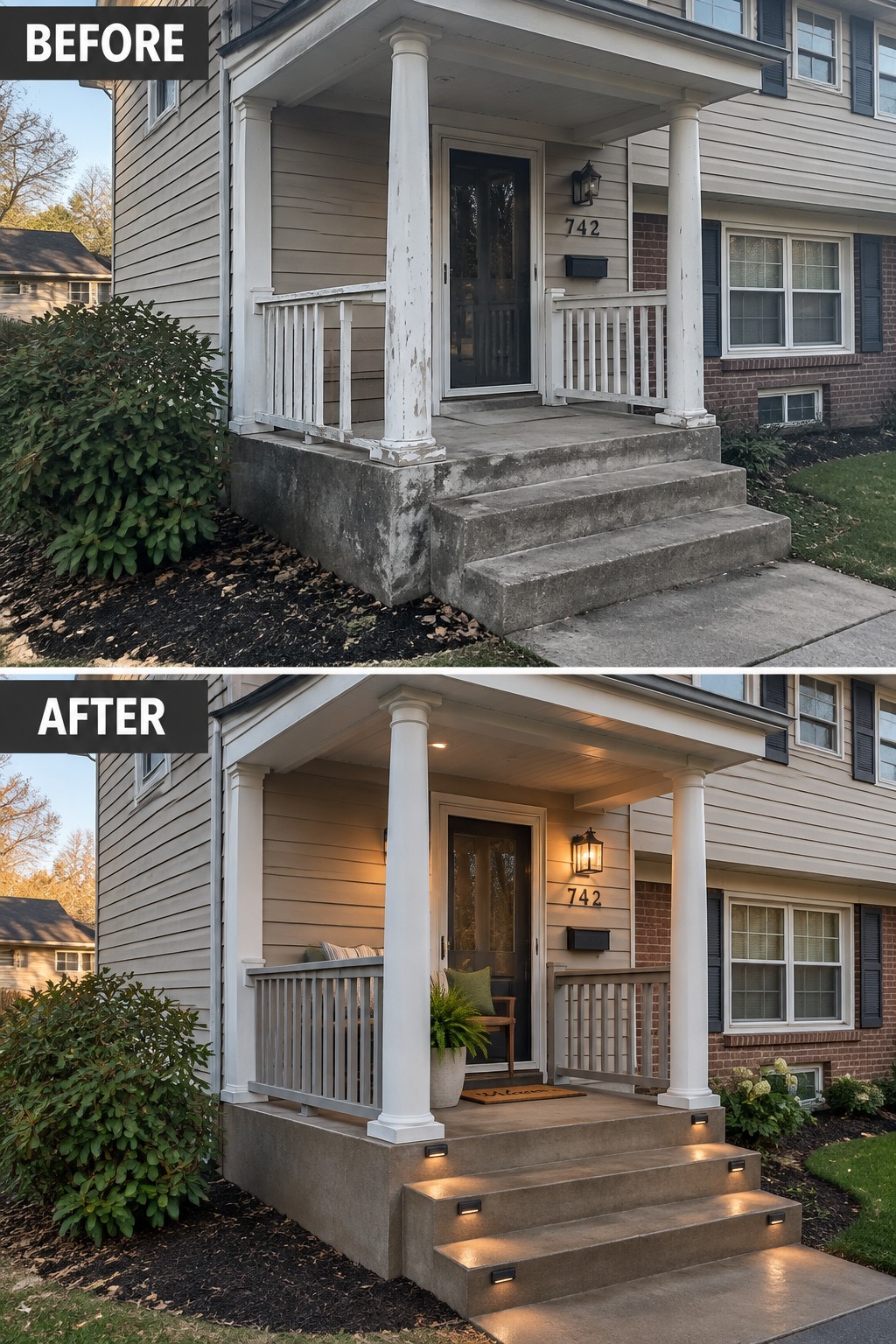
Repairing the porch first makes it feel useful, not just dressed up. Here, the peeling columns and worn steps are refreshed, then simple seating gives the entry a clear place to pause.
If your porch has original columns or railings, keep them when they can be repaired safely. Refresh the surfaces and make sure the steps are sound before bringing in a chair or two. Leave enough room to walk comfortably to the door.
Frequently Asked Questions
Q: Can I keep the original porch columns if they look worn or have peeling paint?
A: Often, yes. Scrape away loose paint and check for soft spots, cracks, or damage near the base before deciding whether a column needs repair or replacement. If it feels solid, a careful repair and fresh paint may be all it needs.
Q: How can I tell whether an old railing is safe to repair?
A: Give it a gentle shake and look closely at the posts and their connections to the porch. If the railing moves, has rotted wood, or has loose fasteners, fix those problems before using it. A carpenter can check any damage that reaches the porch structure.
Q: What paint colors work well with original porch details?
A: A simple palette usually lets the columns and railing stand out without making the porch feel busy. Try a light color on the trim and a deeper shade on the floor or front door, then test samples in daylight.
Q: Do I need to replace every part of a railing if one section is damaged?
A: Not necessarily. A carpenter may be able to match and replace just the damaged section, especially if the original railing is otherwise sturdy.
