


Colonial architecture has a way of capturing the heart, doesn’t it? Those beautiful exterior columns—from the simple Doric to the ornate Corinthian—add so much charm and character. They not only hold up the structures but also tell stories of cultural history and regional flair. As you scroll through these styles, you’ll see how they add to the timeless beauty of colonial homes. Who knows, you might even find a new favorite style along the way!
The Doric Column: Simplicity and Strength

When I think of the Doric column, its robust simplicity immediately comes to mind.
I love how its unadorned design embodies strength and stability, making it a perfect choice for colonial architecture.
The fluted shaft and sturdy base create a sense of groundedness, while the capital’s minimalistic approach enhances its timeless appeal.
The fluted shaft and solid base evoke a feeling of stability, while the capital’s simplicity adds a timeless charm.
The Doric column truly represents the beauty of functional elegance in construction.
The Ionic Column: Graceful Elegance

Although the Doric column exudes strength, the Ionic column captivates with its graceful elegance.
I love how the delicate scrolls at its capital add a touch of beauty to any structure. The slender proportions create a sense of lightness, making it perfect for enhancing porches or entryways.
When I see an Ionic column, I can’t help but admire its timeless charm and sophistication.
The Corinthian Column: Ornate Beauty
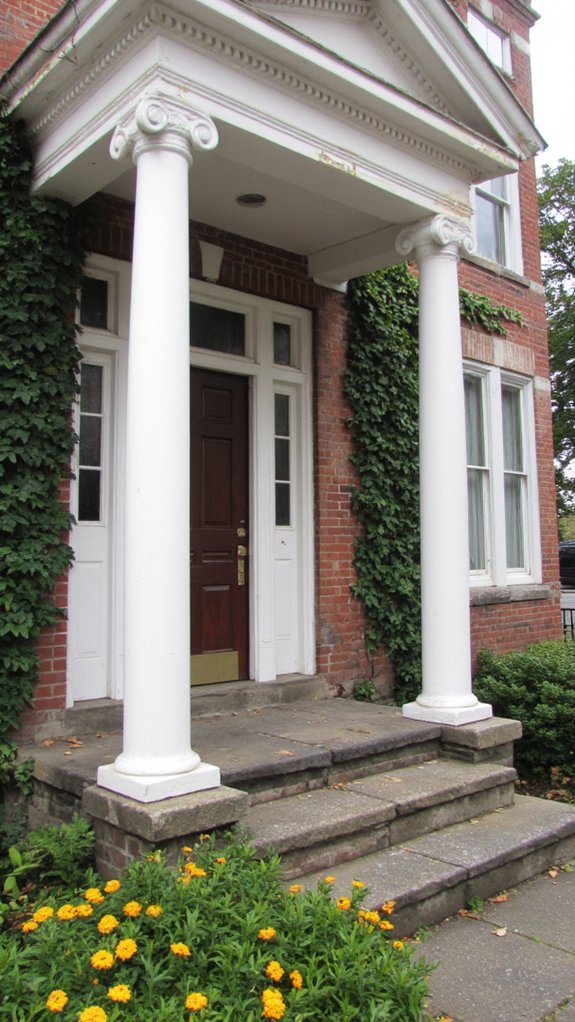
As I admire the Corinthian column, I’m often struck by its ornate beauty that sets it apart from its counterparts.
The intricate details of the acanthus leaves and the elegant capitals draw my eye. It embodies grandeur and sophistication, transforming any structure into a statement piece.
I can’t help but appreciate how it blends classic charm with artistic finesse, enhancing architectural elegance.
Tuscan Columns: Rustic Charm
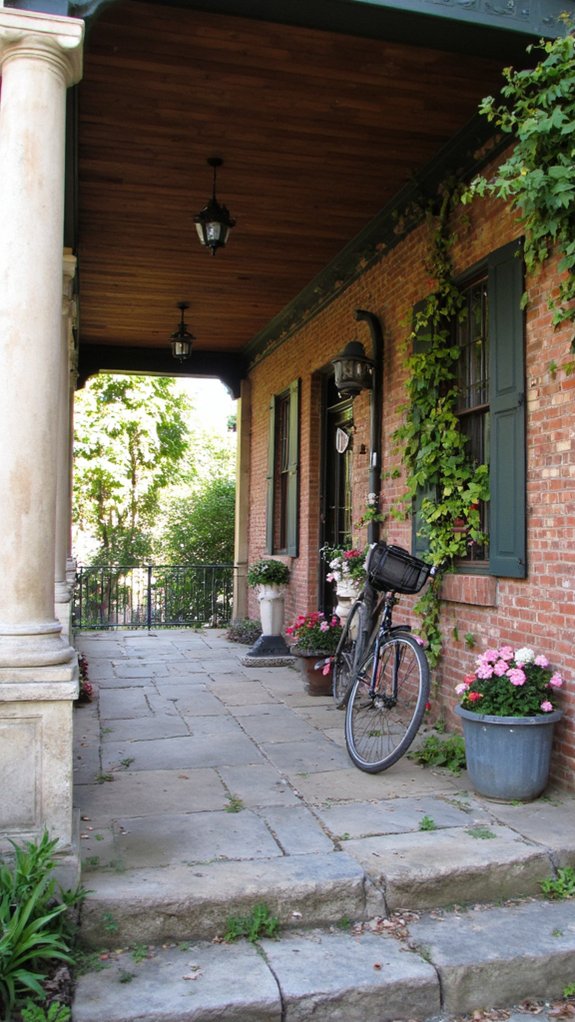
While the Corinthian column captivates with its ornate beauty, the Tuscan column offers a different allure, embodying rustic charm that feels both inviting and grounded.
I love how its simplicity and sturdiness create a warm, welcoming atmosphere. These columns remind me of the countryside, where nature influences design.
They bring a timeless elegance that feels effortlessly connected to the earth beneath them.
Composite Columns: A Fusion of Styles
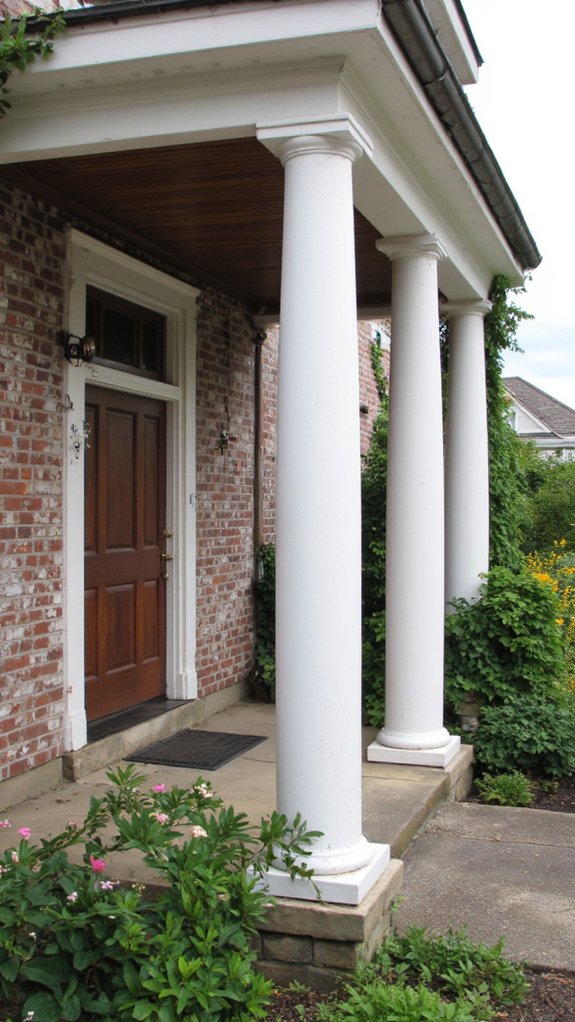
The beauty of Composite columns lies in their ability to blend different architectural styles, creating a unique aesthetic that can complement various exterior designs.
I love how these columns combine elements from both Doric and Corinthian styles, giving my home a distinctive look.
They’re versatile enough to fit modern and traditional aesthetics, making them a fantastic choice for anyone looking to enhance their curb appeal.
Fluted Columns: Timeless Texture
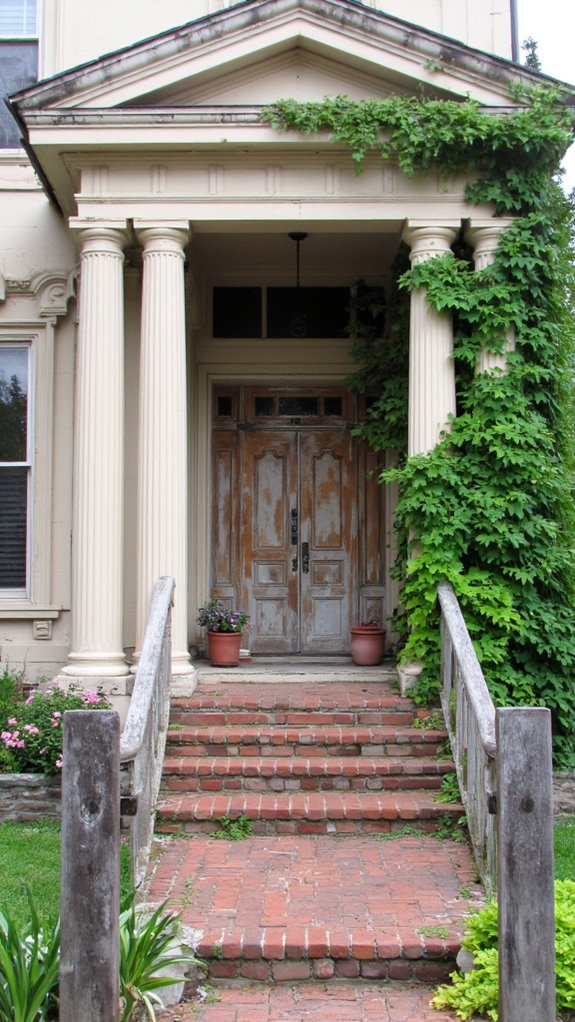
Fluted columns instantly elevate any home’s exterior with their elegant texture and classic appeal.
I love how their vertical grooves catch the light, creating a play of shadows that adds depth and character.
Whether you’re going for a traditional or more modern look, these columns bring sophistication that truly stands out.
They’re a timeless choice that never goes out of style.
Plain Columns: Understated Sophistication

When it comes to enhancing a home’s exterior, plain columns offer a unique charm that contrasts beautifully with the ornate details of fluted designs.
I love how their simplicity creates an air of understated sophistication, allowing other architectural elements to shine.
These columns serve as a perfect backdrop, grounding the overall aesthetic while adding a touch of elegance without being overly flashy.
Engaged Columns: Architectural Interest

While plain columns exude understated elegance, engaged columns bring a dynamic architectural interest that can’t be overlooked.
I love how these columns, partially embedded into walls, add depth and texture to a structure. They create a sense of rhythm and movement, drawing the eye upward.
Incorporating engaged columns into a design elevates the overall aesthetic, making any home feel more inviting and sophisticated.
Portico Columns: Welcoming Entrances
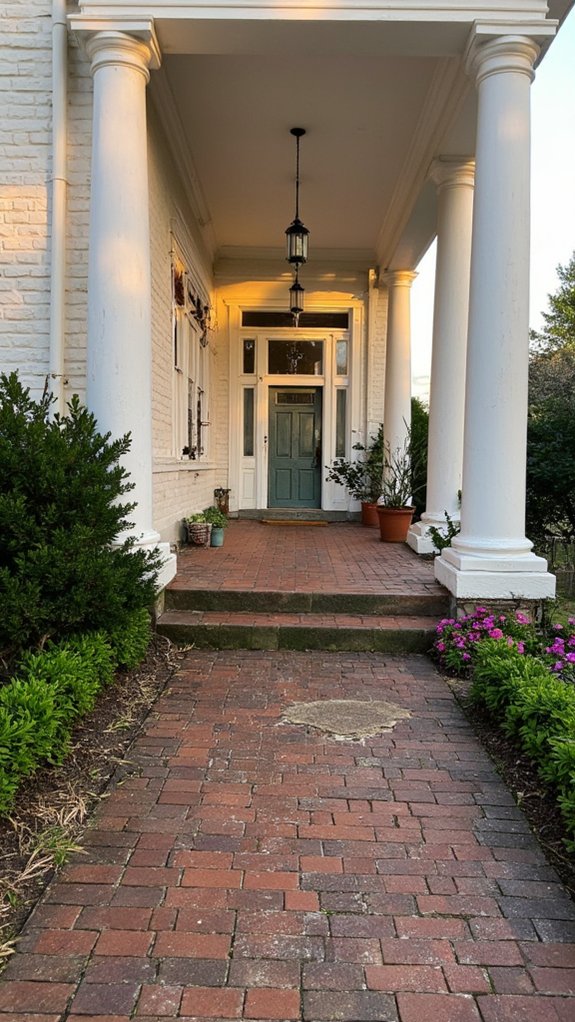
Portico columns instantly transform a home’s entrance into a grand statement, inviting guests to step inside.
I love how they frame the door, adding elegance and charm.
These columns not only enhance the architectural beauty but also create a sense of warmth and welcome.
They beckon you in, setting the tone for what lies beyond and making every entrance memorable.
Square Columns: Modern Adaptations
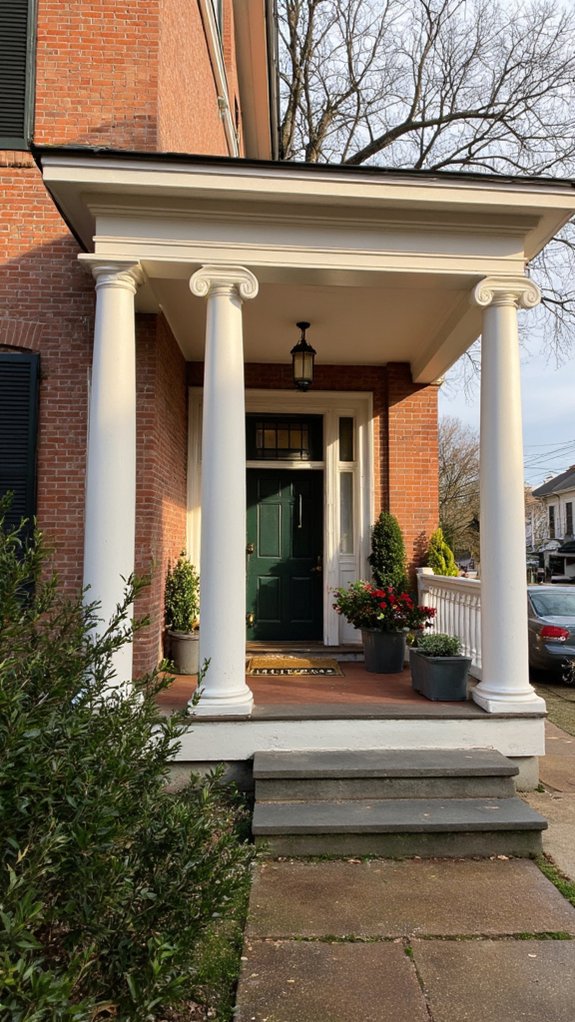
Square columns have become a popular choice for homeowners looking to blend modern aesthetics with classic charm.
I love how they add a sleek, contemporary feel while still honoring traditional design elements. Their clean lines work beautifully with various architectural styles, making them versatile.
Plus, they can be customized with different materials and finishes, allowing for unique expressions of personal style.
Round Columns: Classic Proportions
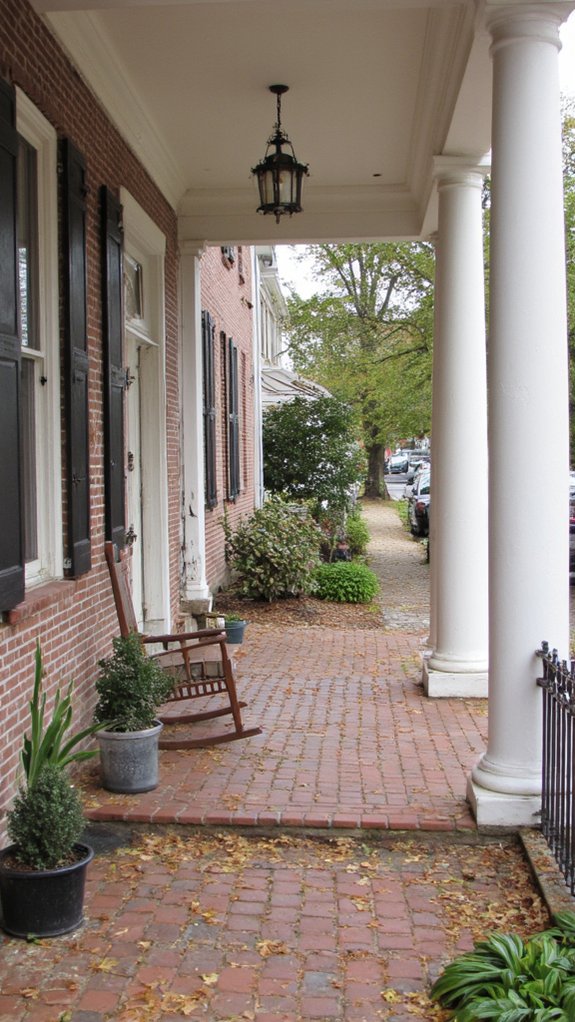
When considering the timeless elegance of round columns, I find their classic proportions truly enchanting.
Their smooth, cylindrical forms create a sense of harmony and balance that’s hard to resist.
I love how they effortlessly elevate any colonial façade, enhancing both grandeur and simplicity.
Round columns embody a refined aesthetic, reminding us of the beauty rooted in historical architecture and enduring design principles.
Tapered Columns: Dynamic Lines
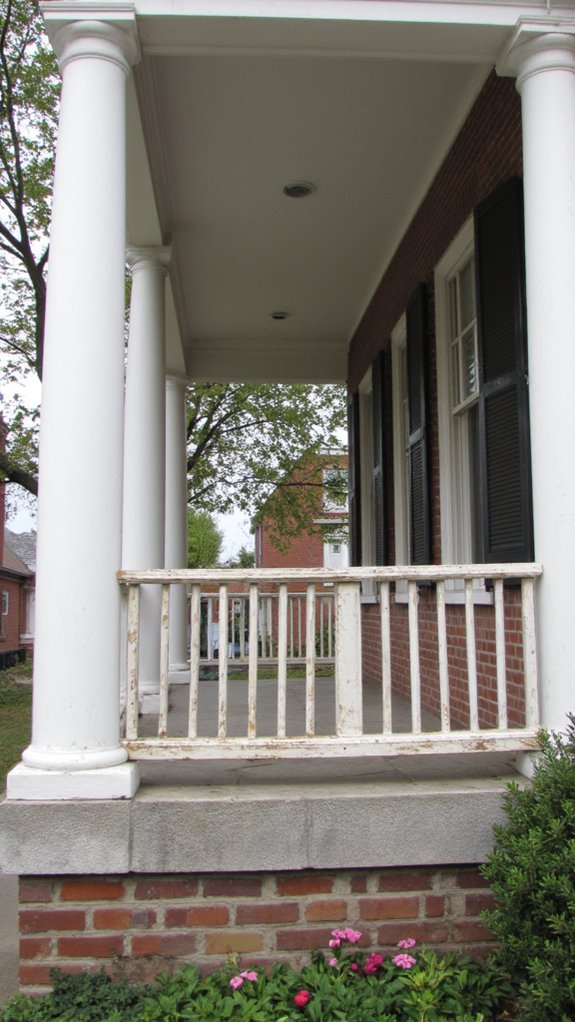
While round columns exude a sense of timelessness, tapered columns bring a dynamic energy to colonial architecture.
I love how their narrowing form creates an illusion of height and elegance. These columns draw the eye upward, enhancing the building’s stature.
They add a modern twist to classic designs, making every entryway feel inviting and impressive. Tapered columns truly elevate a home’s aesthetic.
Recessed Columns: Depth and Dimension
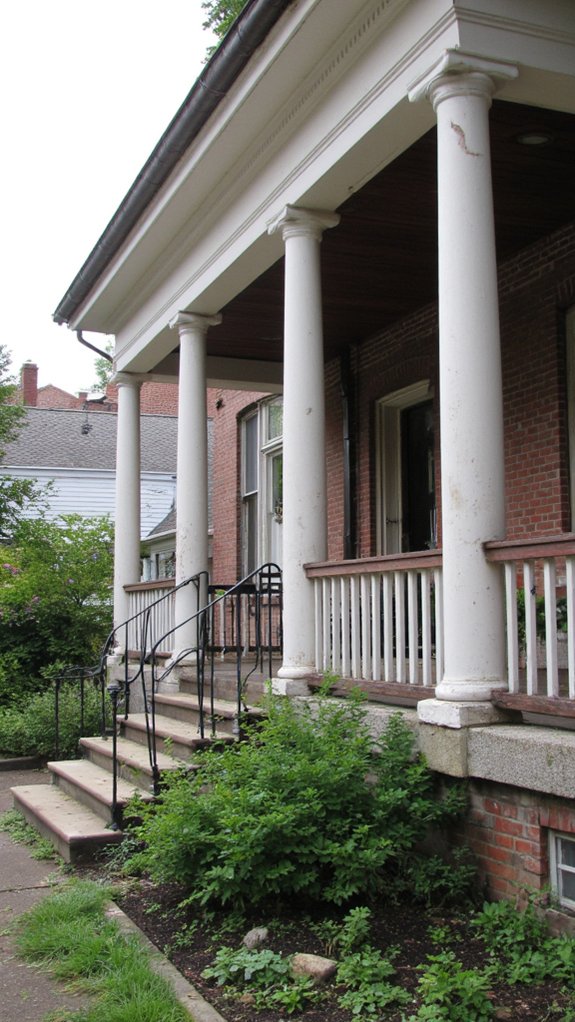
How do recessed columns transform the facade of a colonial home? They create an illusion of depth, drawing your eye in and adding a sense of dimension.
I love how they provide a subtle elegance that enhances the overall aesthetic.
These columns can frame entryways beautifully, making them feel more inviting.
Their presence can truly elevate the character of any colonial-style house.
Decorative Capitals: Artistic Finishes

Recessed columns set the stage perfectly for the finishing touch of decorative capitals.
I love how these artistic finishes elevate a home’s architecture, adding elegance and character. From intricate carvings to simple, clean lines, capitals showcase craftsmanship and style.
They draw the eye upward, highlighting the beauty of the entire column. Choosing the right capital can truly transform the overall look of your colonial home.
Column Bases: Foundation of Style
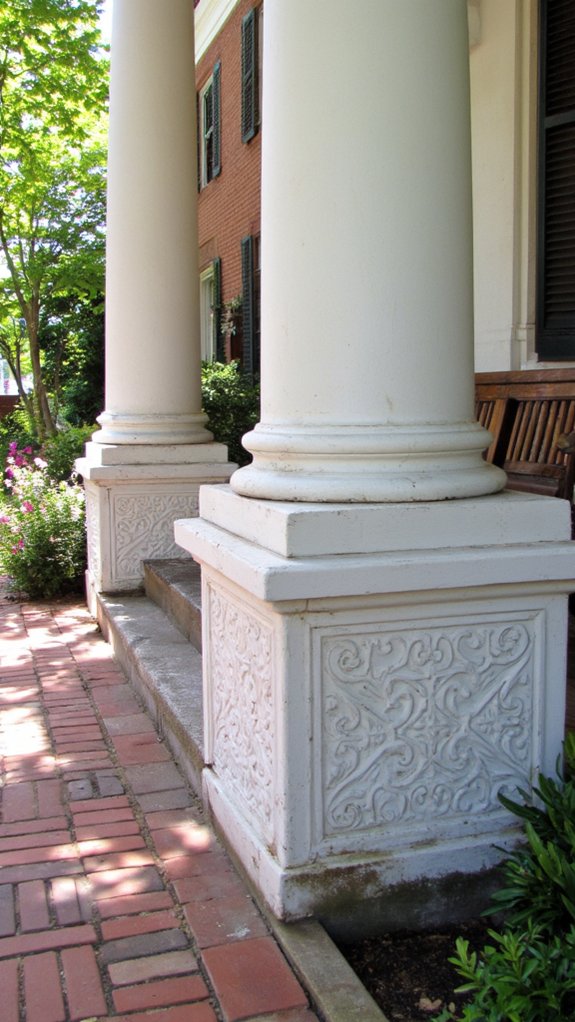
Column bases serve as the sturdy foundation that supports and enhances the elegance of a colonial home.
They’re more than just functional; they add character and depth to the overall design.
Whether you choose a simple, understated base or a more ornate style, these elements ground your columns and create a cohesive look that embodies the timeless charm of colonial architecture.
Column Spacing: Proportional Balance
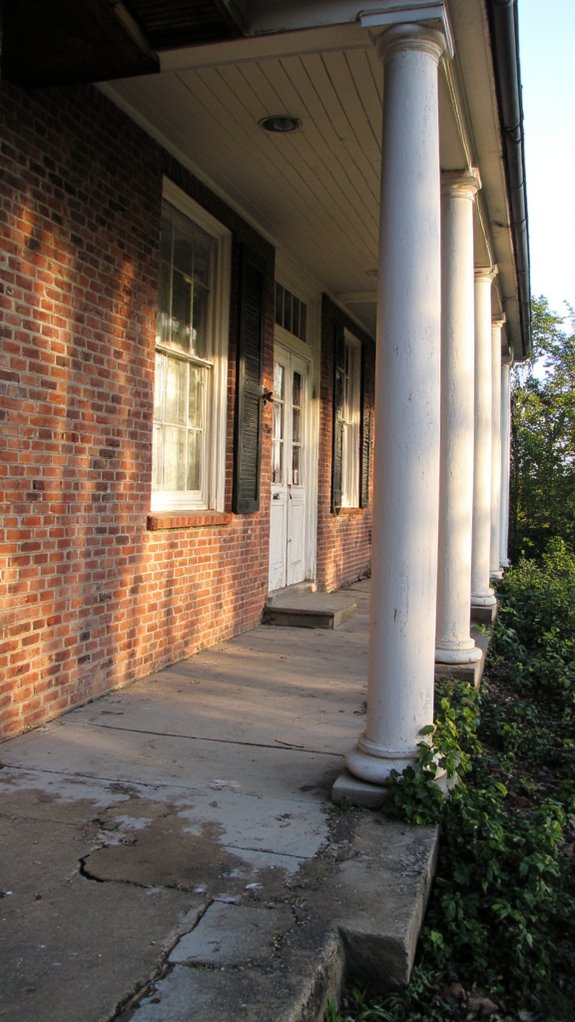
After establishing a strong foundation with column bases, the next step is to contemplate the spacing of your columns.
Proper spacing creates a sense of proportional balance, enhancing your home’s overall aesthetic. I find that evenly spaced columns draw the eye and provide harmony to the design.
Aim for consistency, as irregular spacing can disrupt the visual appeal of your colonial architecture.
Color and Material: Enhancing Architectural Features
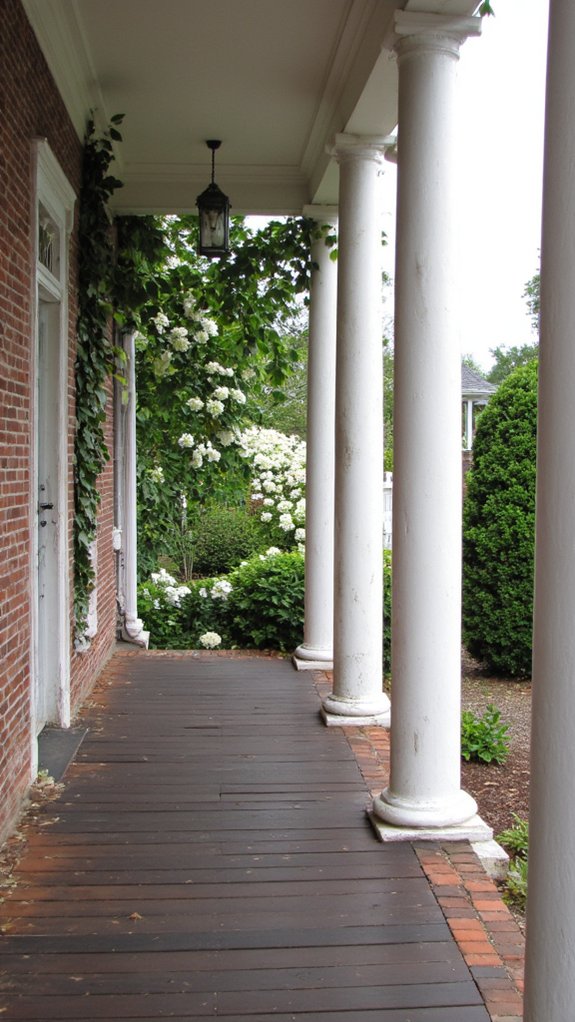
Color and material play an essential role in enhancing the architectural features of your colonial house.
When I choose a paint color for the columns, I consider how it complements the overall façade.
Using natural materials like wood or stone can add richness and texture, creating a timeless look.
The right combination truly elevates the elegance and character of your home.
Historic Restoration: Preserving Column Integrity

Maintaining the architectural beauty of a colonial house goes beyond just choosing the right colors and materials; it also involves preserving the integrity of its columns.
I’ve found that regular inspections can reveal cracks or wear that need attention.
When restoring, using historically accurate materials guarantees authenticity, and professional help can make all the difference in retaining that classic charm we love.
Regional Variations: Unique Local Styles

While exploring colonial architecture, I’ve noticed that regional variations can greatly influence the design and style of columns.
For instance, in the South, you’ll find elegant, slender columns that evoke grace, while New England often showcases sturdier, simpler designs.
Each area reflects its climate and culture, creating unique interpretations of colonial style that speak to local history and aesthetic preferences.
Columns in Landscape Architecture: Bridging Home and Nature

Regional variations in column design not only reflect architectural preferences but also influence how these structures interact with their surroundings.
I’ve noticed how columns can enhance the landscape, connecting a home to nature. Whether they support a porch or frame a garden, columns create inviting connections.
They invite us to experience the beauty of both architecture and the natural world seamlessly intertwined.
