

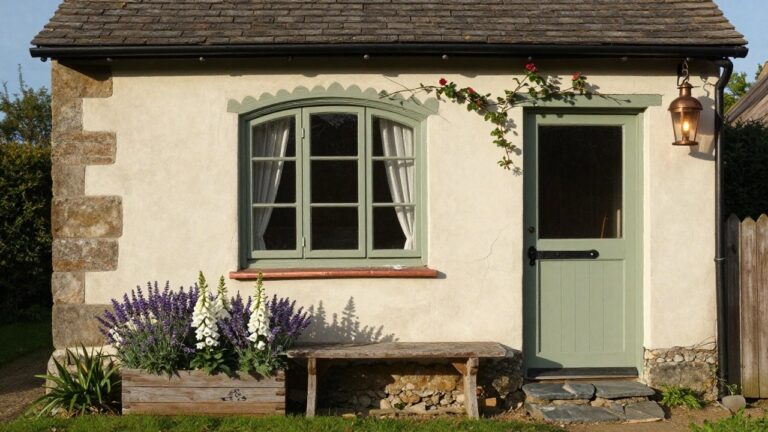
When you pull up to a cottage, the window trim on the facade often sets the tone for the whole exterior.
I’ve walked around plenty of older homes where mismatched trim made the siding and roofline feel off, no matter the charm underneath.
Smart choices in shapes and materials around those windows boost curb appeal without overwhelming the simple lines most cottages rely on.
Details like beveled edges or subtle brackets draw the eye just right from the street or driveway.
I noted a few designs here that I’d sketch out for my own place to see how they play with the actual light and angles.
Sage Green Trim on Cottage Windows
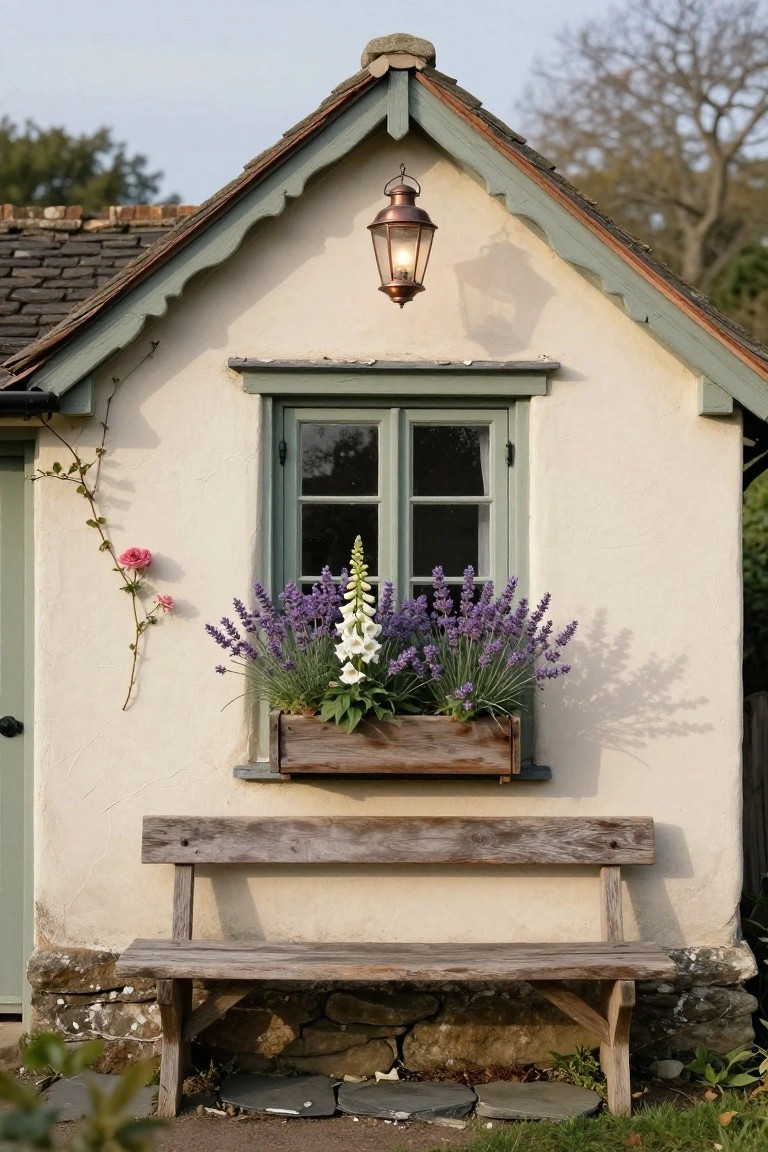
Soft sage green paint on window trim gives a cottage that fresh garden feel. Against plain white walls, it picks up colors from nearby plants like the lavender and foxgloves spilling out of the wooden box below. It’s subtle. Ties the house right into the yard without shouting.
Try this on small homes with stone bases or plaster siding. A weathered bench nearby keeps things grounded. Just clean the frames first, and use exterior paint that holds up to weather. Fits English-style cottages best…or anywhere you want quiet charm.
Bracketed Wooden Window Canopy
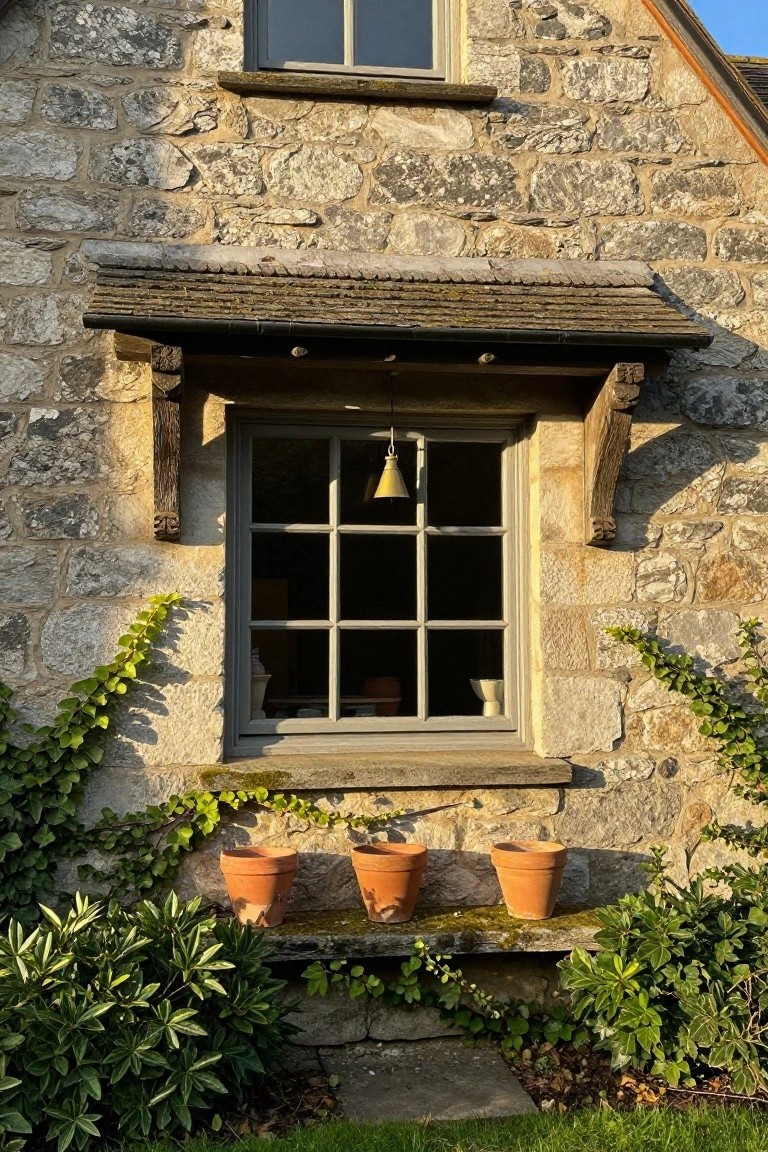
A simple wooden canopy over a cottage window like this one brings out that old-world feel without much fuss. The exposed timber hood sits right on the stone wall, held up by chunky carved brackets that look hand-made. Hang a bell from one side, and it turns the whole setup into a quiet focal point. Paired with ivy creeping up nearby, it softens the rugged stone just enough.
This works best on traditional stone or brick homes where you want to highlight windows without painting or big changes. Bolt the brackets securely into the wall first, then add the hood beams. Keep pots or plants below to echo the rustic vibe. Skip it on super modern houses, though. It suits cottages in the country or older neighborhoods aiming for charm.
Rustic Wooden Shutters on Cottage Windows
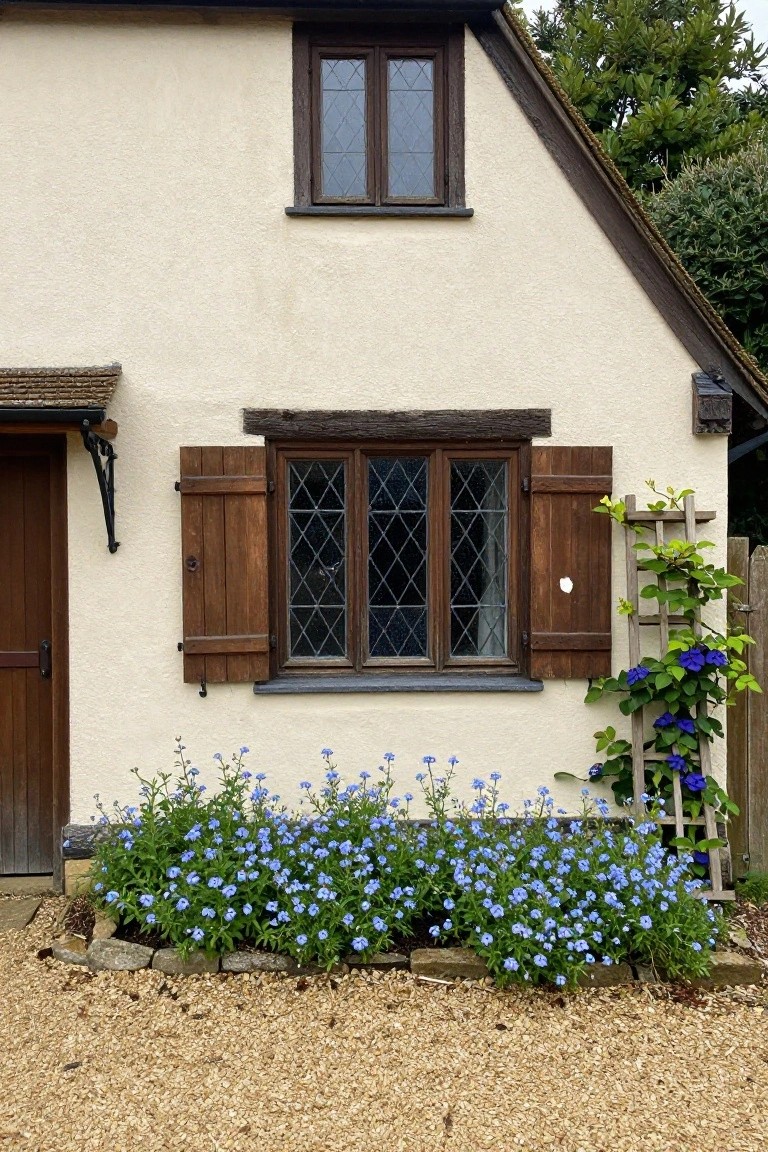
Wooden shutters like these make cottage windows pop without much effort. The dark frames and simple board style fit right into the cream walls and sloped roofline. They add that old-house feel, especially around the diamond-patterned glass that lets in soft light.
You can pull this off on most any small home facing a yard or driveway. Hang matching shutters on both sides of the window for balance, and keep the hardware basic, like iron hinges. Tuck in some low flowers at the base to tie it to the garden… works best where you want quiet charm over bold color.
Classic Green Window Trim
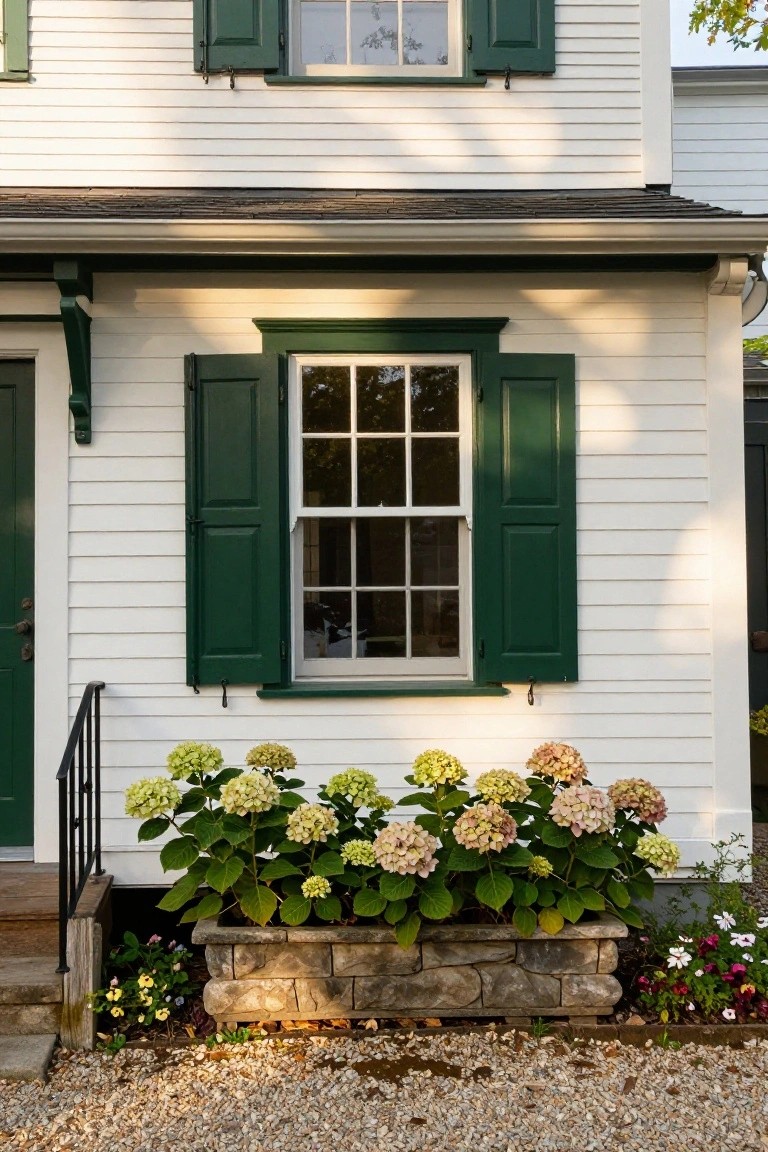
One simple way to give a cottage that pulled-together look is green trim around the windows and matching shutters on white siding. It stands out just right, framing each window without overwhelming the clean lines of the house. The green pops against the white, pulling in the door color too for a cohesive feel.
You can pull this off on most any clapboard-style home, especially in casual neighborhoods or rural spots. Pick a muted green to keep it timeless, and add low planters nearby if you want. Avoid glossy paint, though. Matte holds up better outside.
Scalloped Trim Above Windows
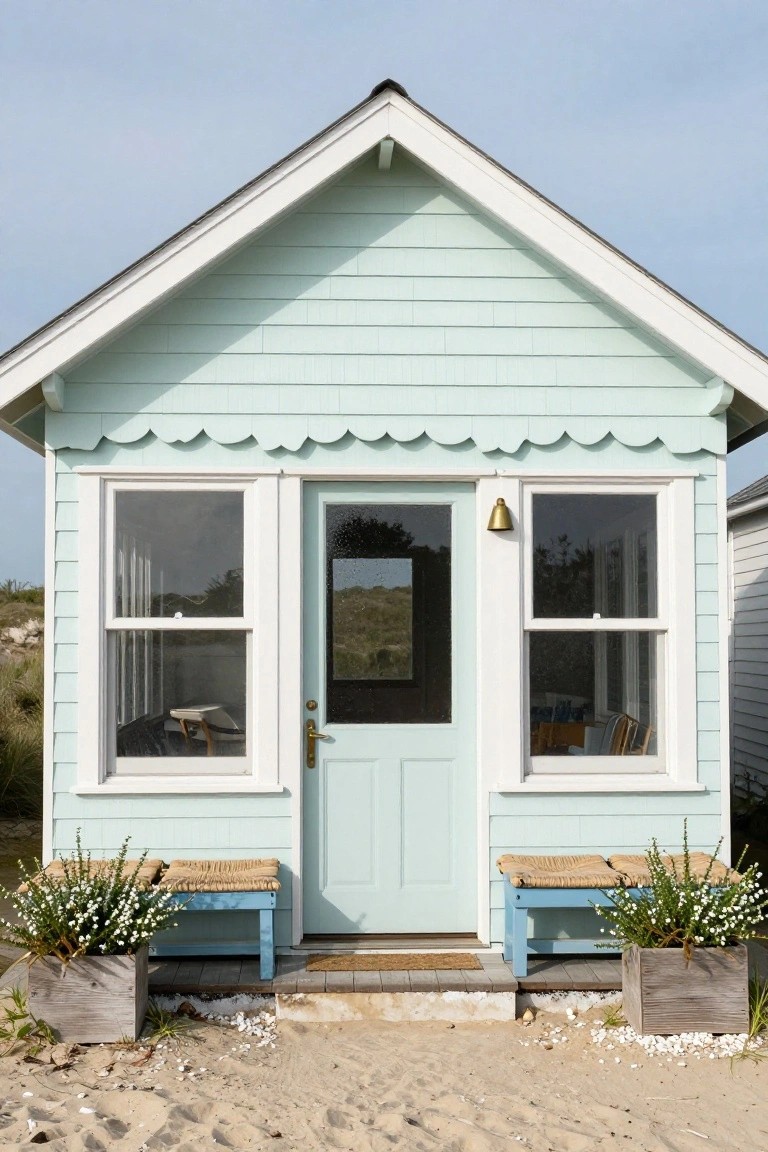
A simple scalloped edge runs along the top of the windows and door on this beach cottage. That wavy line breaks up the straight clapboard siding and gives the whole front a bit more playfulness without overdoing it. It’s a small touch that nods to old seaside style.
You can add this trim to any cottage or bungalow exterior, especially where you want subtle character. It works best on light-colored siding like this pale aqua. Just keep the scallops soft, maybe 4 to 6 inches deep, and paint the trim white for crisp contrast. Skip it on larger homes, though. It shines on compact facades.
Contrasting Gray Window Trim
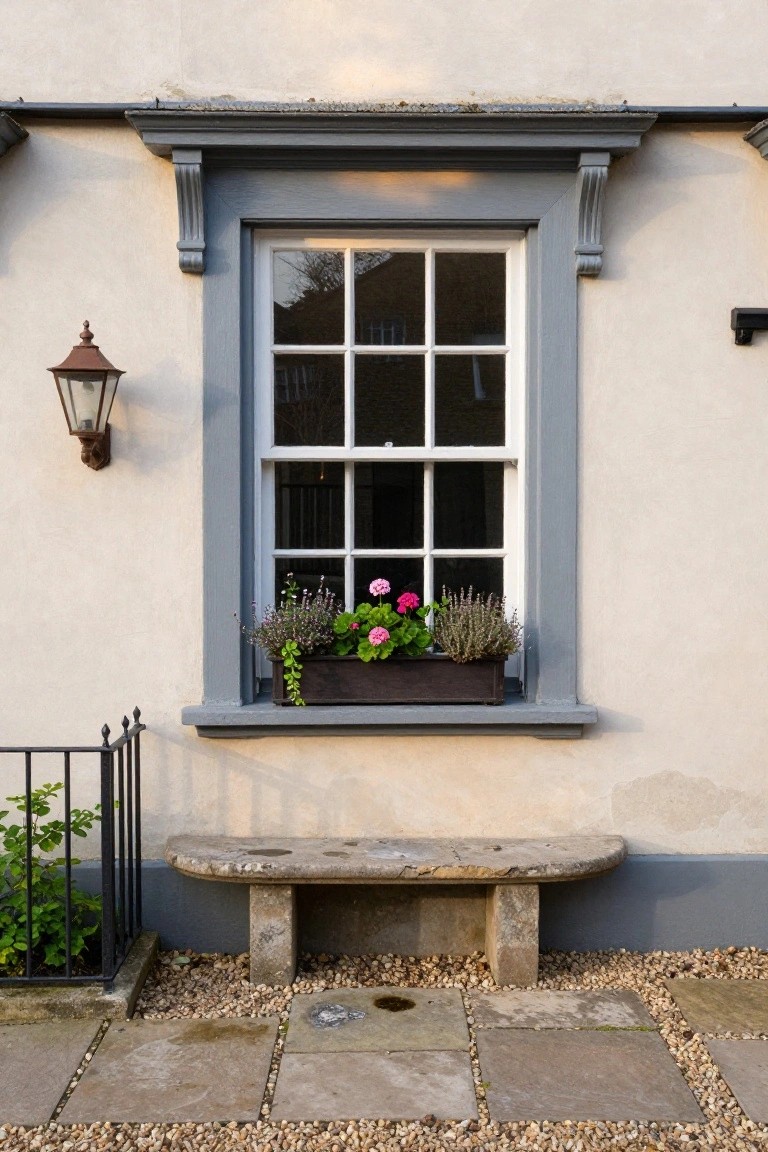
Gray trim painted around a sash window stands out against pale cottage walls. It gives the whole facade more shape without much effort. Those carved brackets under the sill add a touch of old-house detail, and the window box spilling over with flowers keeps things lively.
Try this on any simple exterior where the walls are light and plain. A shade like this gray works on stucco or plaster finishes. It suits traditional cottages best, but scale it down for smaller homes. Just make sure the paint holds up to weather, maybe with a good primer first.
Simple White Window Trim on Clapboard Siding
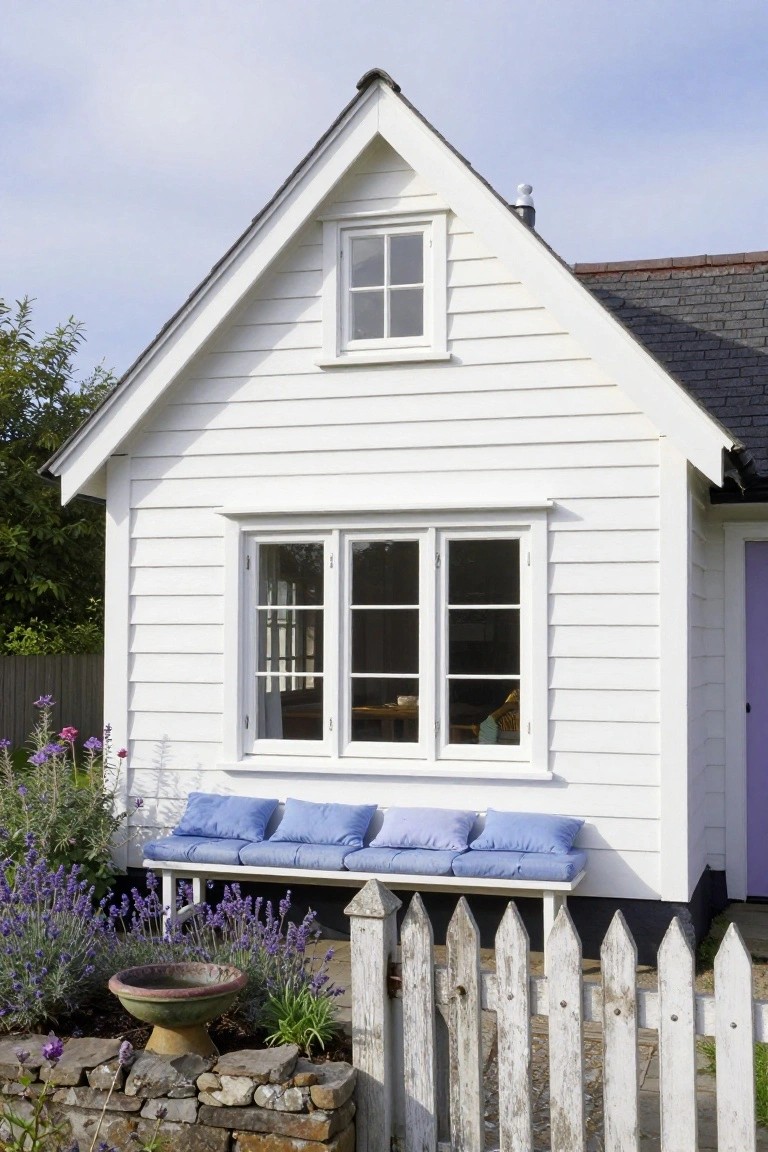
White clapboard siding looks plain on its own, but simple trim around the windows changes that. Here it’s just straight casings painted the same shade as the siding, creating clean lines on this little cottage. The large front window gets extra shape from the trim, and you catch a glimpse inside to a table and chair. That subtle edge keeps the house feeling tidy and cottage-like without any fancy details.
This trim works best on small homes like bungalows or beach houses where you want easy upkeep. Match the paint to your siding for a smooth flow, and add a bench below like this one for seating. Skip bold colors unless your door pulls it off… purple does here with the lavender nearby. It’s straightforward to install and ages nicely.
Crisp White Trim on Shingle Siding
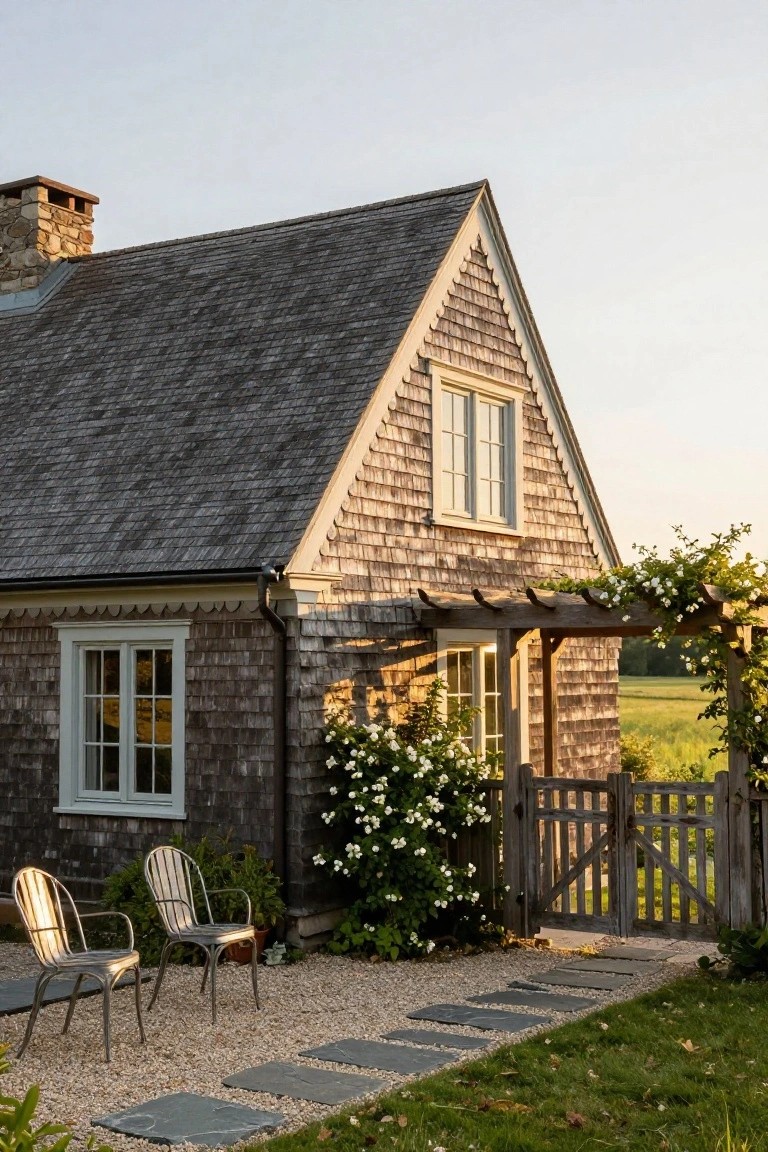
A cottage like this one uses basic white trim around its double-hung windows to set them off against the dark, textured shingles. That clean white pops nicely in the late light, giving the whole facade a crisp look without much effort. It’s a straightforward way to add some definition where the shingles might otherwise blend together.
You can pull this off on any shingle-style home, especially ones with steep roofs or coastal vibes. Just paint the trim bright white and keep the lines square and simple, maybe six-over-six panes inside the frames. It suits older places that need a refresh, but watch the scale so it doesn’t overwhelm smaller windows.
Dark Pilaster Trim on Windows
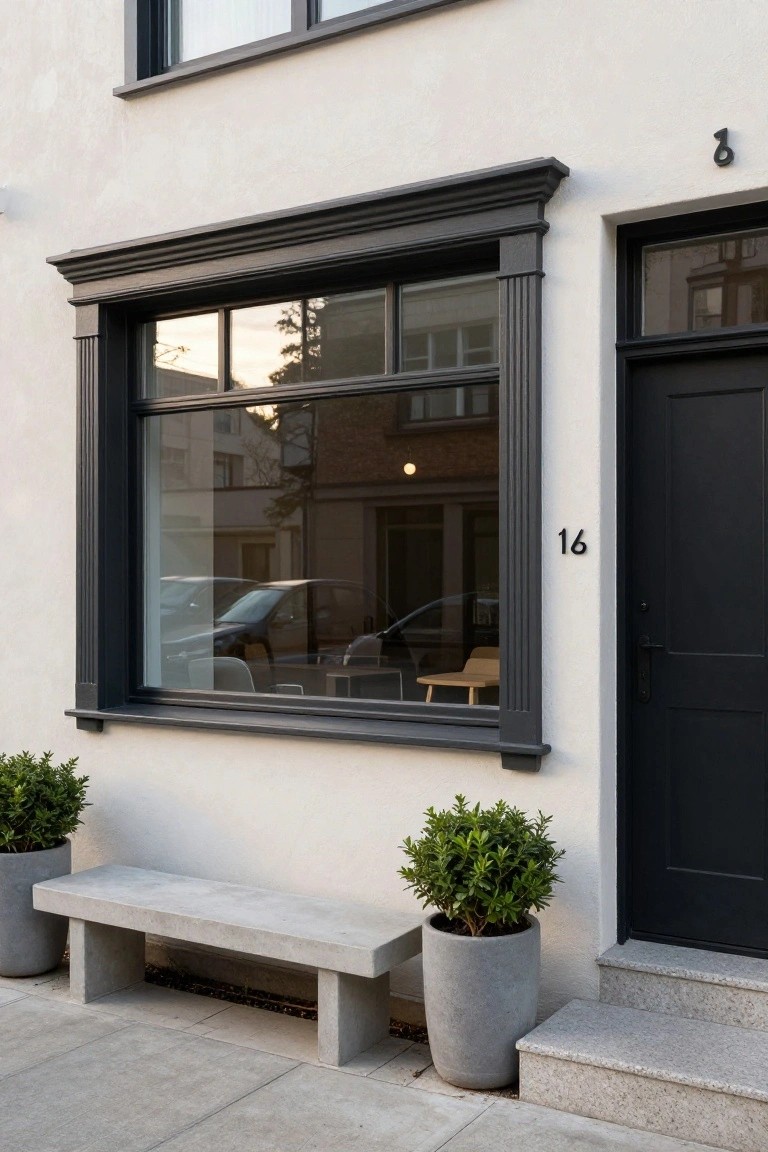
A simple way to give cottage windows more presence is dark pilasters framing them out. Here the black fluted columns run up the sides of a big multi-pane window, set against a plain white wall. It pulls in some classical style without much fuss, and makes the whole facade feel put-together.
This trim works best on light stucco or plaster homes that need a touch of detail. Use it around entry windows or living room ones facing the street. Keep the rest minimal, like adding a bench and a couple boxwoods nearby… it keeps things grounded and welcoming for row houses or small urban cottages.
Ornate Trim Around Arched Entries
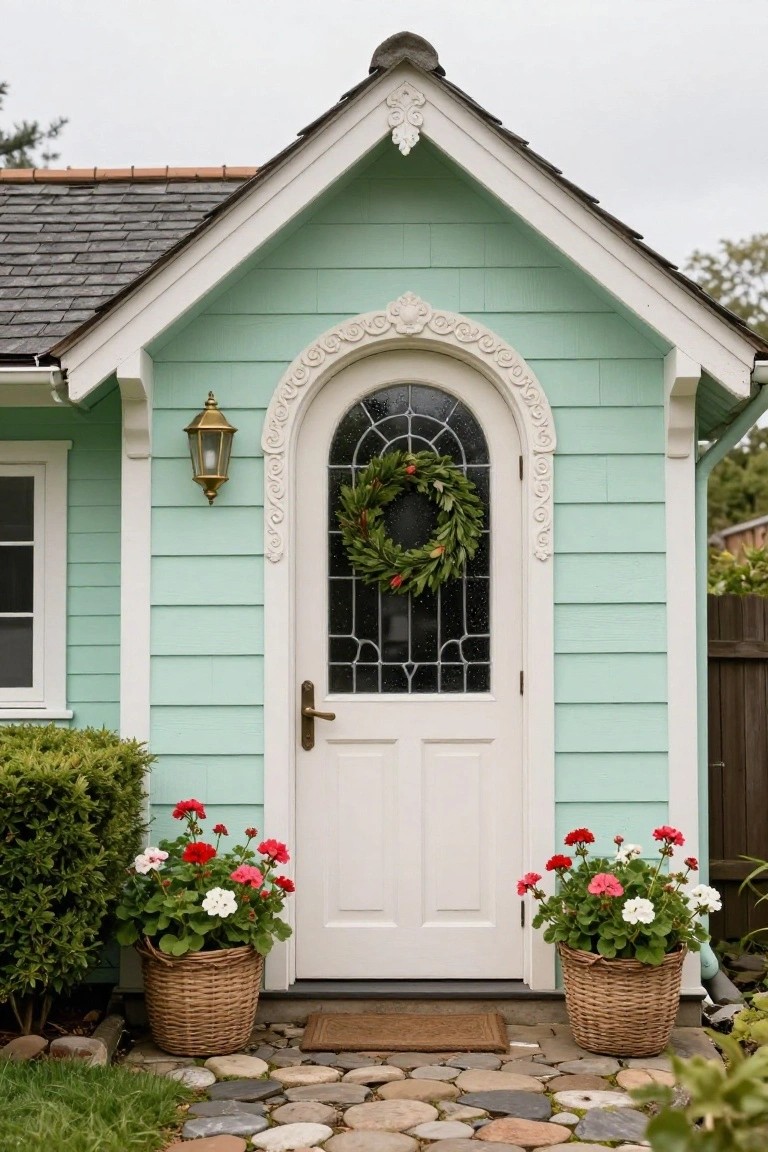
Ornate white trim like this wraps right around the arched glass door and makes the whole entry pop. It follows the curve smoothly with those scroll details that catch your eye but don’t overwhelm the soft mint green siding. Homes with this kind of trim feel more like a cozy cottage straight out of a story.
You can add it to any front door or window that’s arched or even just topped with a gentle curve. It suits older bungalows or new builds aiming for charm, especially if the house has clapboard siding. Just match the trim color to keep things crisp, and use potted flowers nearby to echo the welcoming vibe without much fuss.
Scalloped Eaves Over Bay Windows
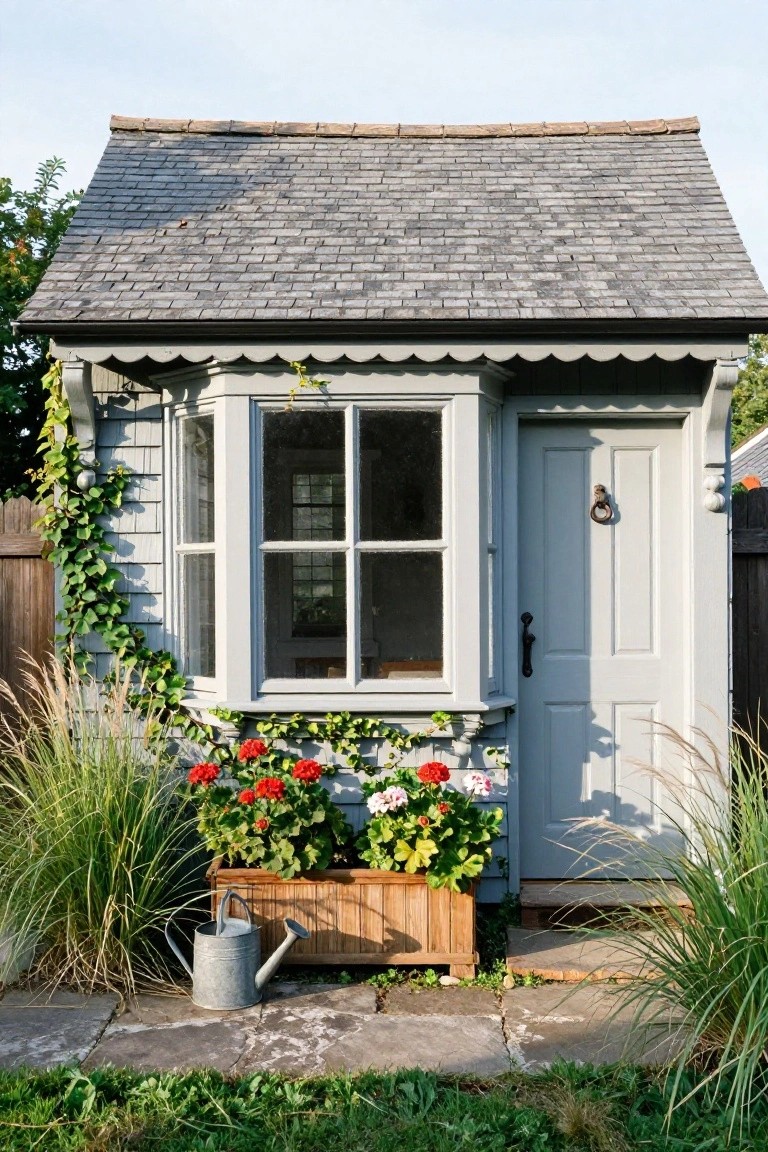
A simple scalloped edge along the eaves makes a bay window pop on a cottage exterior. It adds that bit of whimsy without overdoing it. Here, the soft gray siding pairs with crisp white trim around the multi-pane window, and the scallops up top give it a handmade feel. Folks notice it right away, but it doesn’t shout.
Try this on smaller garden sheds or home additions where you want cozy character. It works best on clapboard or shingle siding in neutral tones. Keep the trim paint fresh, and let climbing ivy soften the edges if you like. Avoid big houses, though. It suits humble spots.
Frequently Asked Questions
Q: Can I tackle installing window trim myself as a weekend warrior?
A: Grab a miter saw and some sturdy ladders, then start with the simplest designs like plain shaker styles. Cut pieces to fit snugly around each window frame, secure with galvanized nails, and caulk all joints for a clean seal. Practice on scrap wood first to nail those angles.
Q: What’s the toughest part about picking a trim design for my cottage?
A: Walk around your house and snap photos of the roofline, siding texture, and door details. Match the trim’s scale to those elements, like chunky profiles for stone facades or delicate ones for clapboard. That way it feels right at home.
Q: How do I keep exterior trim looking fresh year after year?
A: Hose it down twice a year and scrub with mild soap to knock off dirt and pollen. Spot touch-up any scuffs right away before they spread. Fresh paint every three to five years seals out moisture.
Q: But will fancy trim like gingerbread hold up in rainy climates?
A: Opt for cedar or composite materials that shrug off water. Prime and paint every surface before install, even the backs. It’ll charm for decades.
