

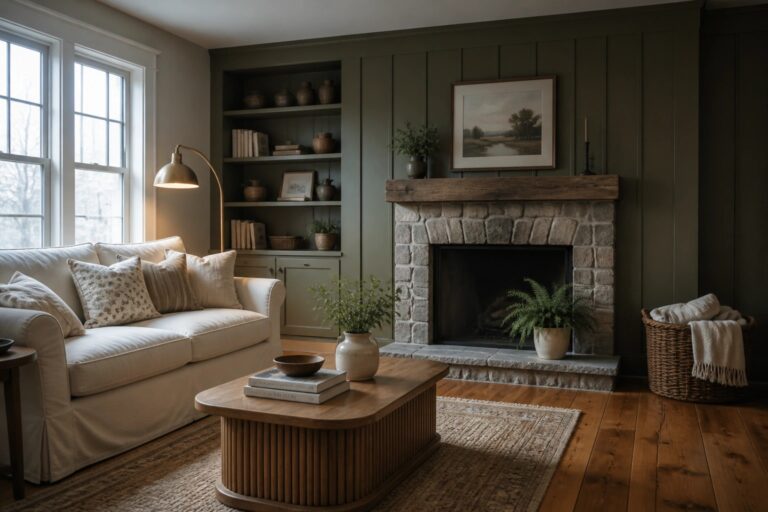
I often notice that green tones borrowed from the outdoors tend to settle a room in ways that feel steady rather than busy.
Last winter I repainted my dining area and learned how much the undertones matter once furniture and textiles are back in place.
The light changes throughout the day so a color that looks soft in the morning can turn flat by afternoon if it does not have the right balance.
Sample first.
I keep a few swatches on hand now so I can hold them up in different spots before making a final choice for any room.
Green Paint on Built-Ins and Walls
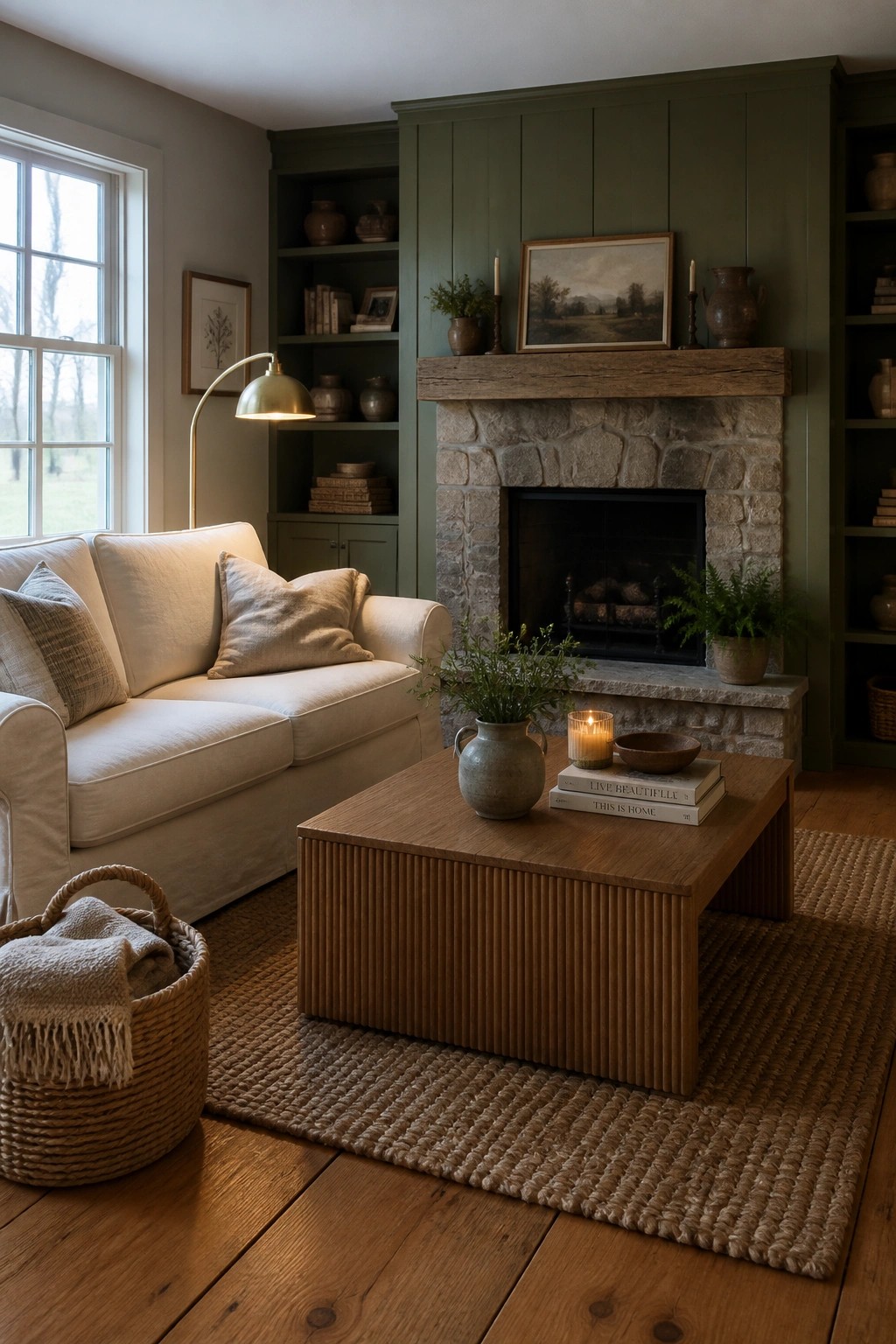
A deep green works well when it covers both the walls and the built-in shelves around a fireplace. It creates a quiet backdrop that lets the stone and wood tones stand out without extra effort.
This color choice suits older homes or farmhouse rooms where you want the fireplace to feel grounded. Try it in spaces that already have wood floors and simple furniture so the green can tie everything together without feeling heavy.
Green Paint On Kitchen Cabinets
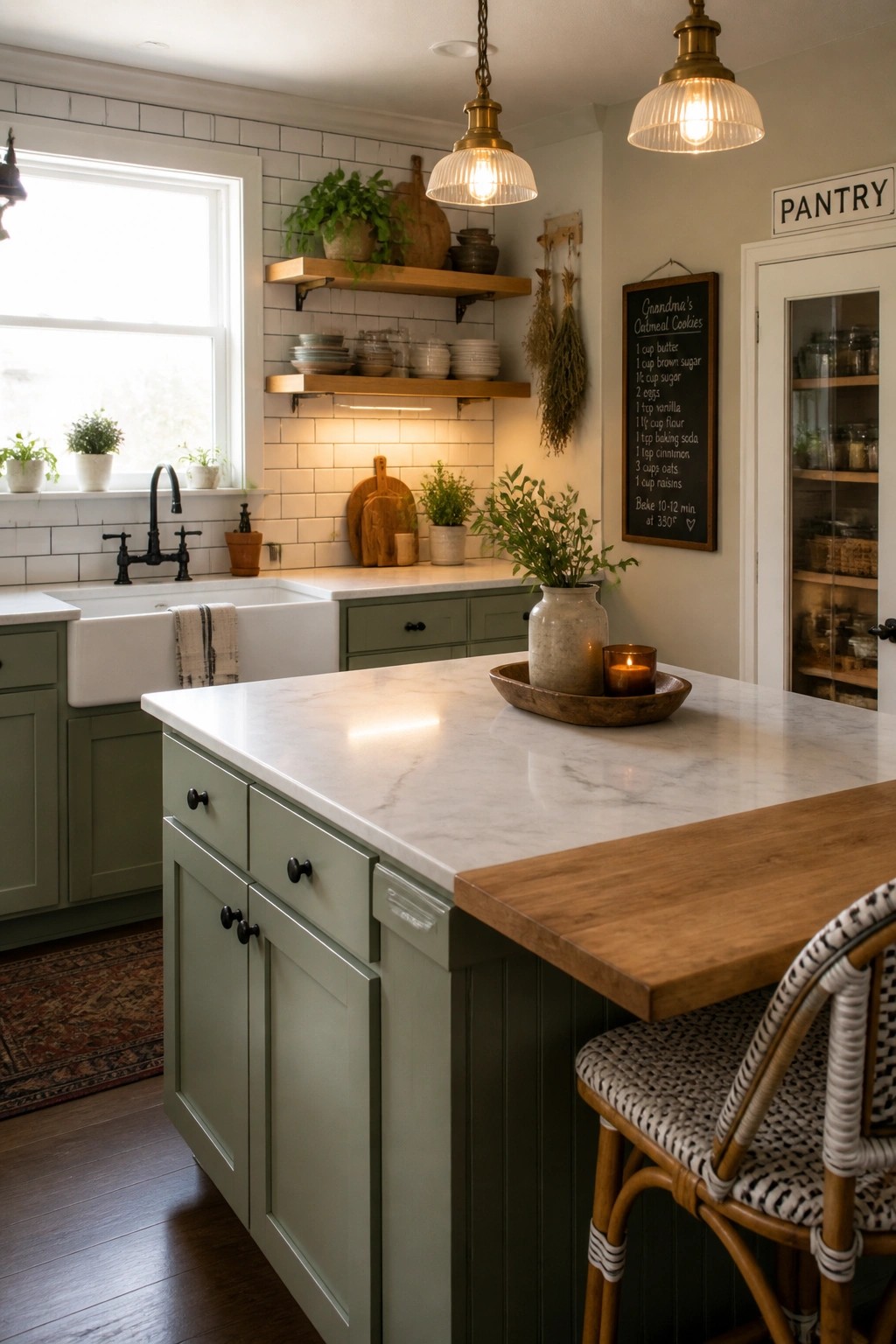
A muted green on cabinets gives a kitchen a quiet connection to the outdoors without making the room feel dark. It pairs easily with white counters and simple tile, and the color stays calm even when the space gets busy with daily use.
This works best in homes that already lean toward natural materials like wood and stone. Test the paint on a few cabinet doors first, since the shade can shift quite a bit depending on how much light the room gets throughout the day.
Soft Green Walls For A Calm Bedroom
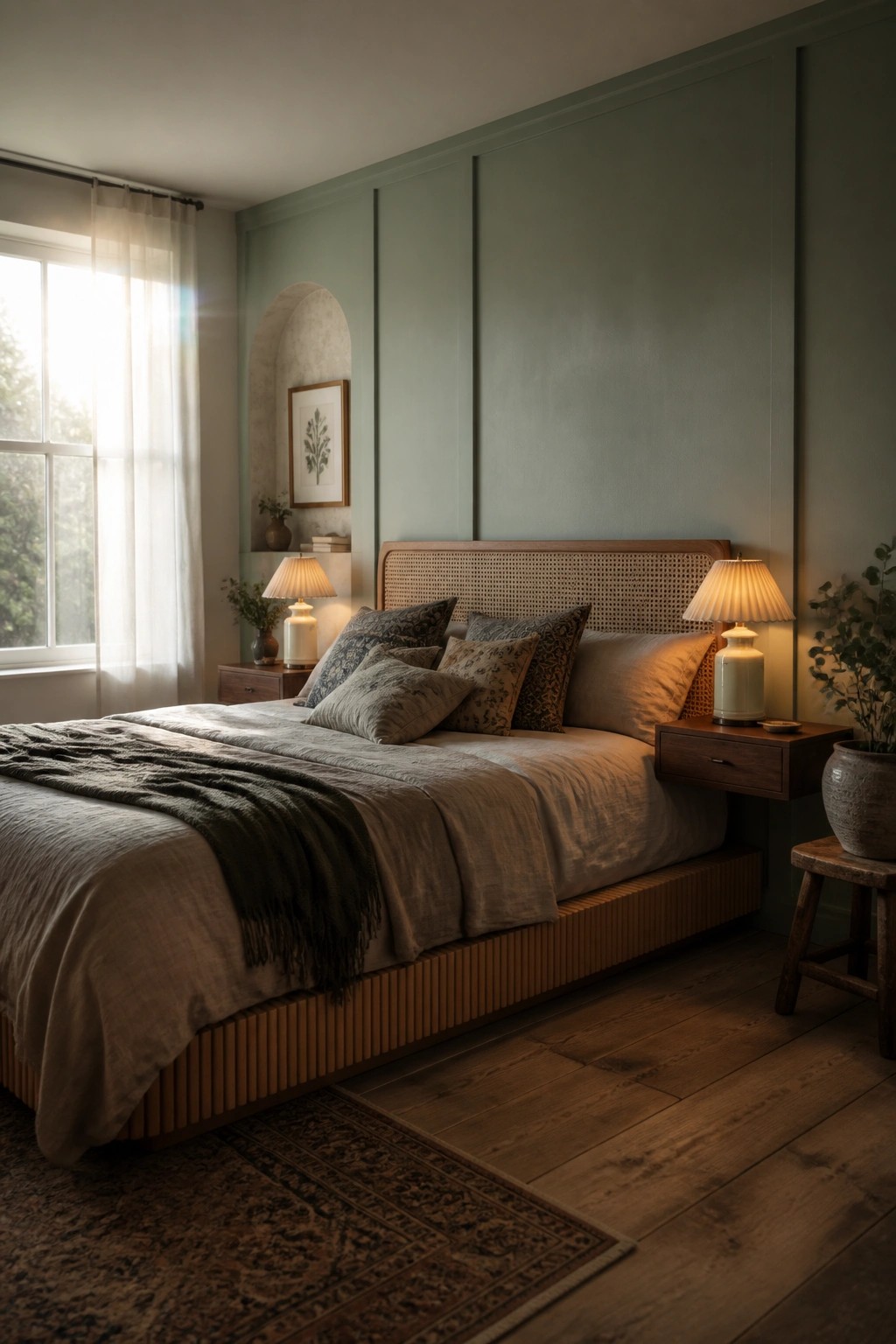
A soft green on the walls gives a bedroom a quiet, settled feel that works well for rest. The color stays gentle even when the light changes, and it blends easily with wood tones and simple fabrics.
This shade suits rooms that already have some natural texture, like wood floors or linen bedding. Test it on one wall first if you are unsure how deep it will read in your space.
Green Paint On Cabinets And Wainscoting
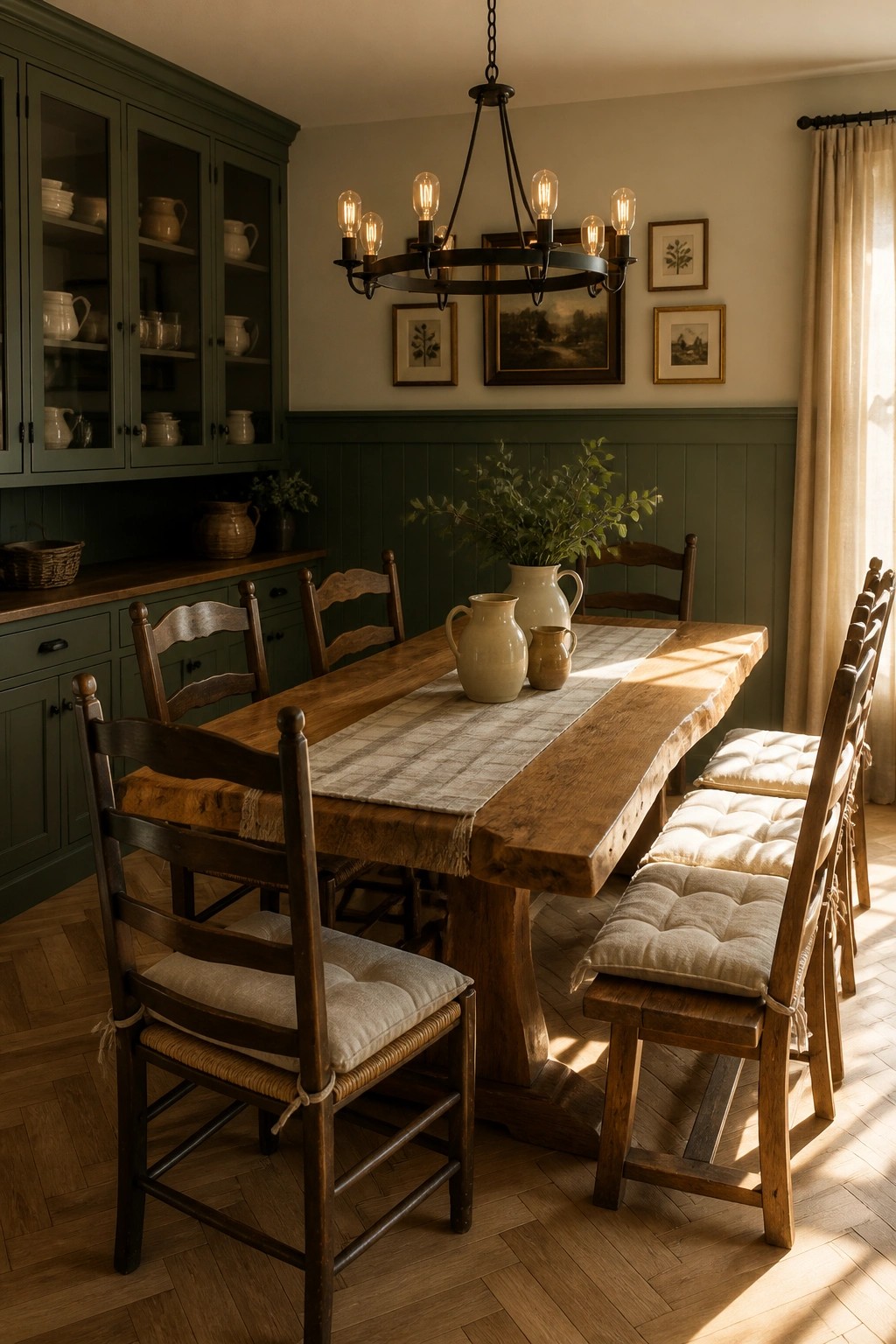
Many people like using the same green on both the cabinets and the lower walls. It creates a calm, pulled-together look that feels natural in a farmhouse dining room. The color wraps the space without needing extra trim or contrast pieces.
This approach works best in rooms that already have wood tones and simple furniture. It suits older homes where you want the walls and storage to feel like one quiet background. Just keep the shade muted so it stays soft in different lighting.
Soft Green Walls In The Entry
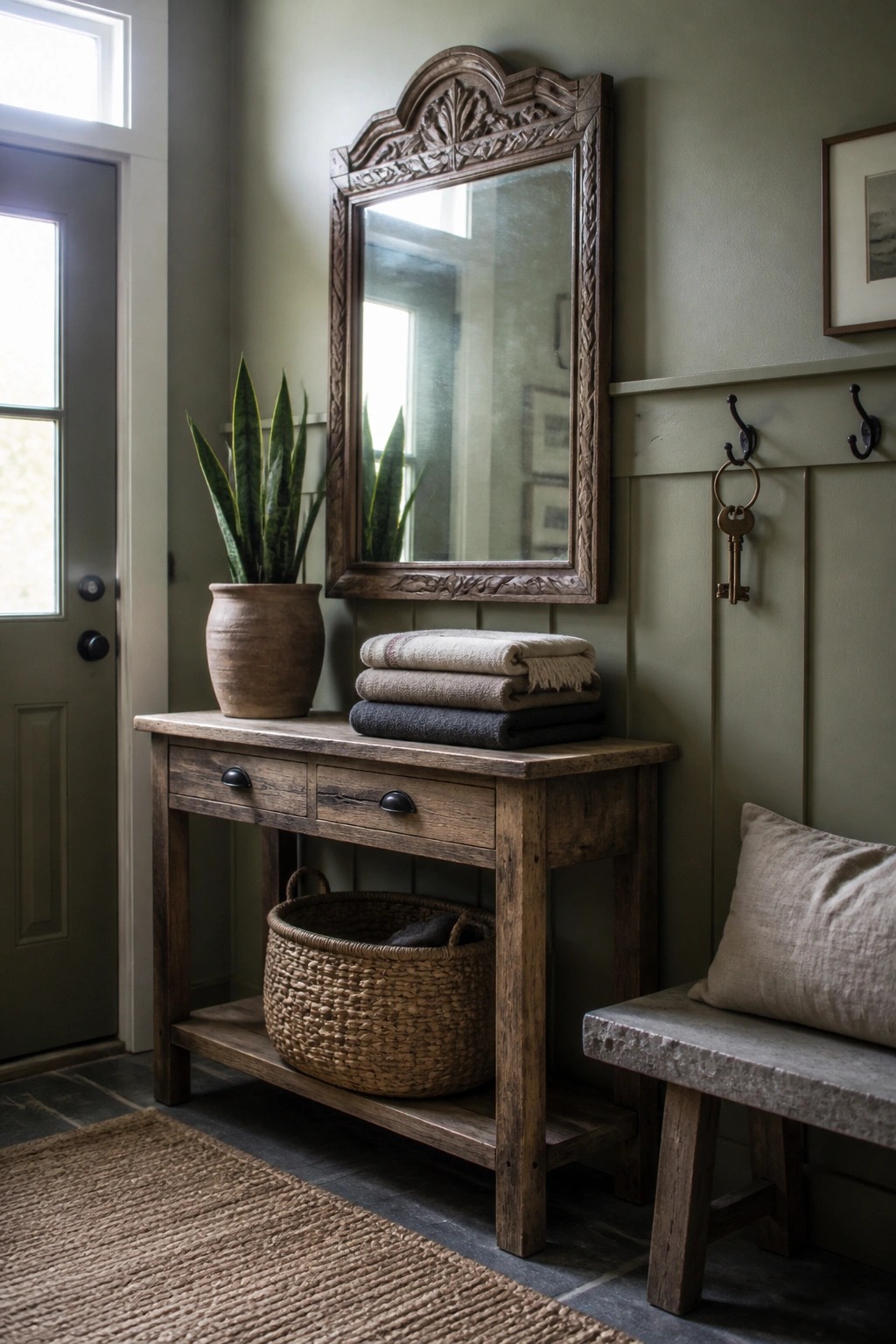
A muted green on the walls gives an entry a quiet, grounded feel that works well with wood and natural textures. It keeps the space from looking too stark while still feeling like part of the house rather than just a pass-through spot.
This shade suits older homes or simpler farmhouses where you want color without making a small area feel closed in. Keep the trim light and let the wood furniture carry some warmth so the green stays soft instead of heavy.
Match Desk Paint to the Wall Color
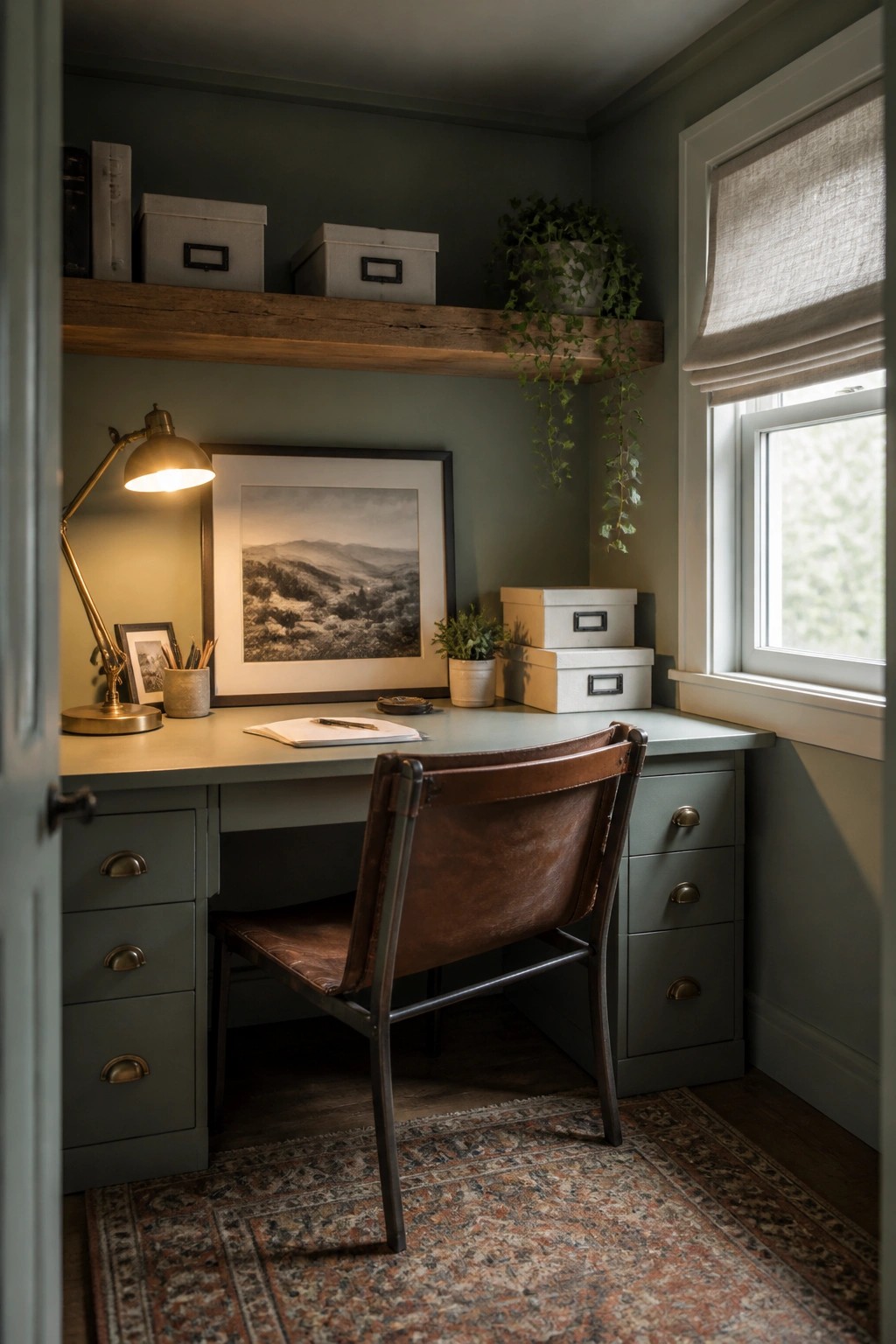
Painting the desk the same soft green as the walls makes a small workspace feel like part of the room instead of a separate piece of furniture. The color carries through without any hard breaks, so the whole corner stays calm and simple. It works especially well with farmhouse style where you already have wood tones and a few natural textures.
This approach suits tight nooks or rooms that need to stay quiet. Pick a muted green that reads well in both natural light and lamp light, and keep the hardware and any open shelves in wood or metal so the space does not feel flat. Avoid using it in very large rooms where the single color might start to feel heavy.
Soft Green Walls for a Nursery
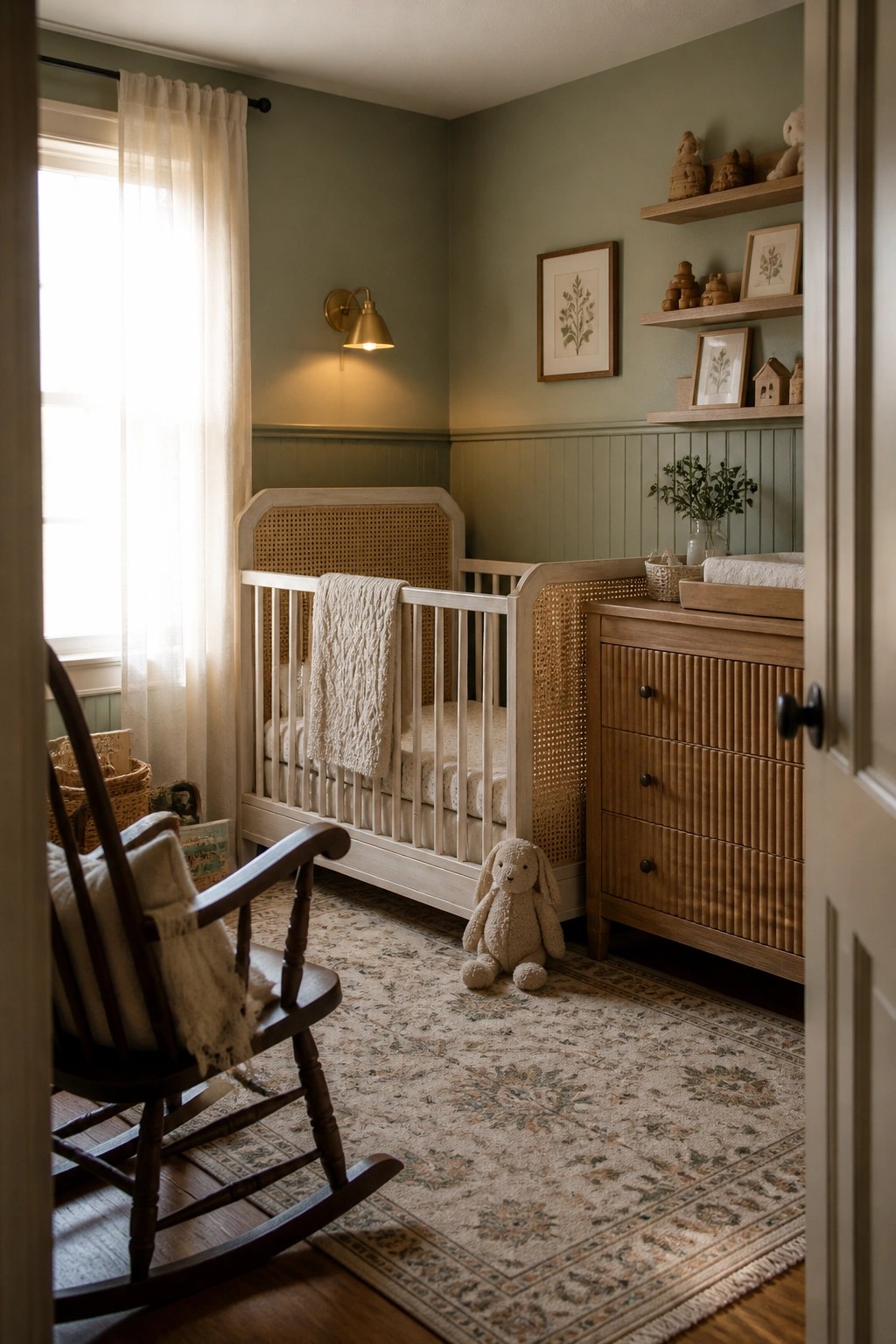
A soft green like the one on these walls gives a room a calm, grounded feeling that works especially well in a nursery. It feels connected to nature without needing a lot of extra decoration, and it pairs easily with wood tones and simple white trim.
This color works best in spaces that get good natural light and already have some warmth from wood furniture or floors. It suits farmhouse homes that want a gentle, lived-in look rather than something too bright or trendy.
Soft Green Walls For Farmhouse Bathrooms
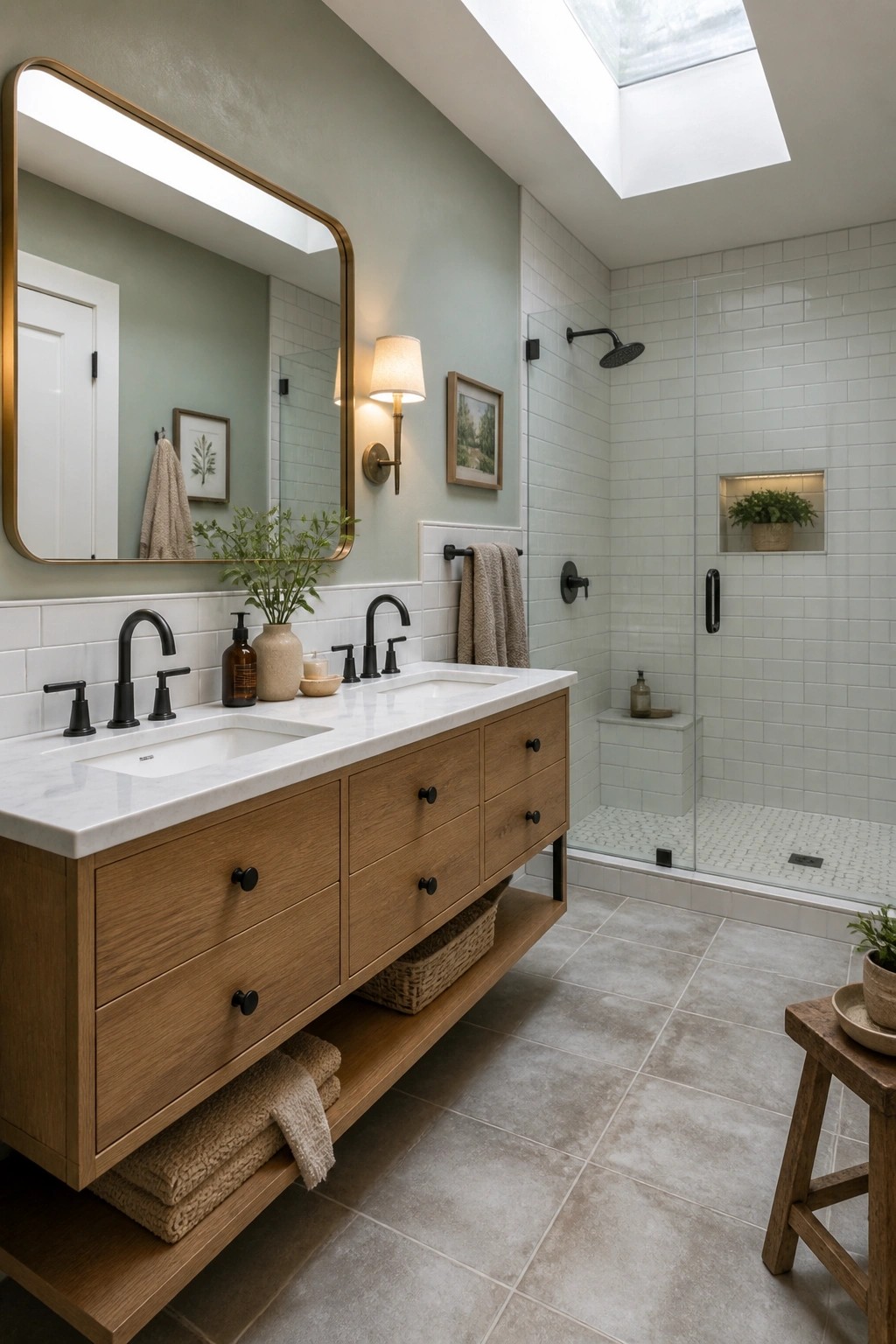
A soft green like this works well in bathrooms because it keeps the space feeling calm without making it feel cold. The color sits nicely between gray and green, so it pairs easily with wood tones and white tile.
It suits smaller bathrooms especially, where stronger colors can close the room in. Try it on all four walls if the room gets decent light, and keep the trim and ceiling bright to hold the balance.
Green Cabinets In Farmhouse Utility Rooms
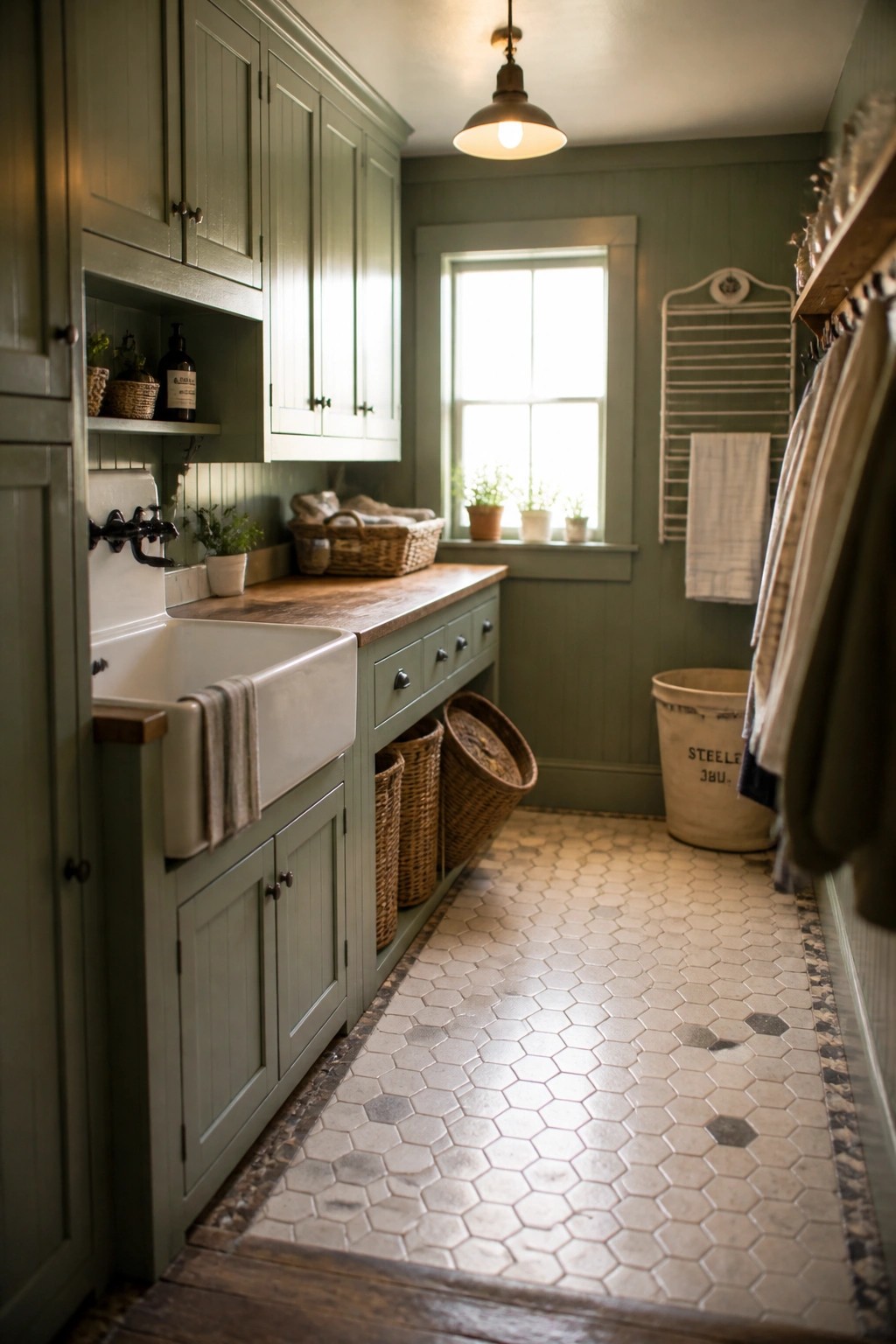
Painting cabinets green in a laundry or utility space gives the room a calmer feel without making it look like a plain work area. The color pulls the space together with the rest of the house and keeps it from feeling cold or forgotten. A soft, nature-inspired shade works especially well here because it stays easy on the eyes even under bright light.
This approach suits older homes or any farmhouse style where you want the utility rooms to match the main living areas. Stick with a muted green that has some gray in it, and keep the rest of the finishes simple so the color stays the focus. It is a small change that makes daily tasks feel a little less like chores.
Deep Green Walls In A Small Bathroom
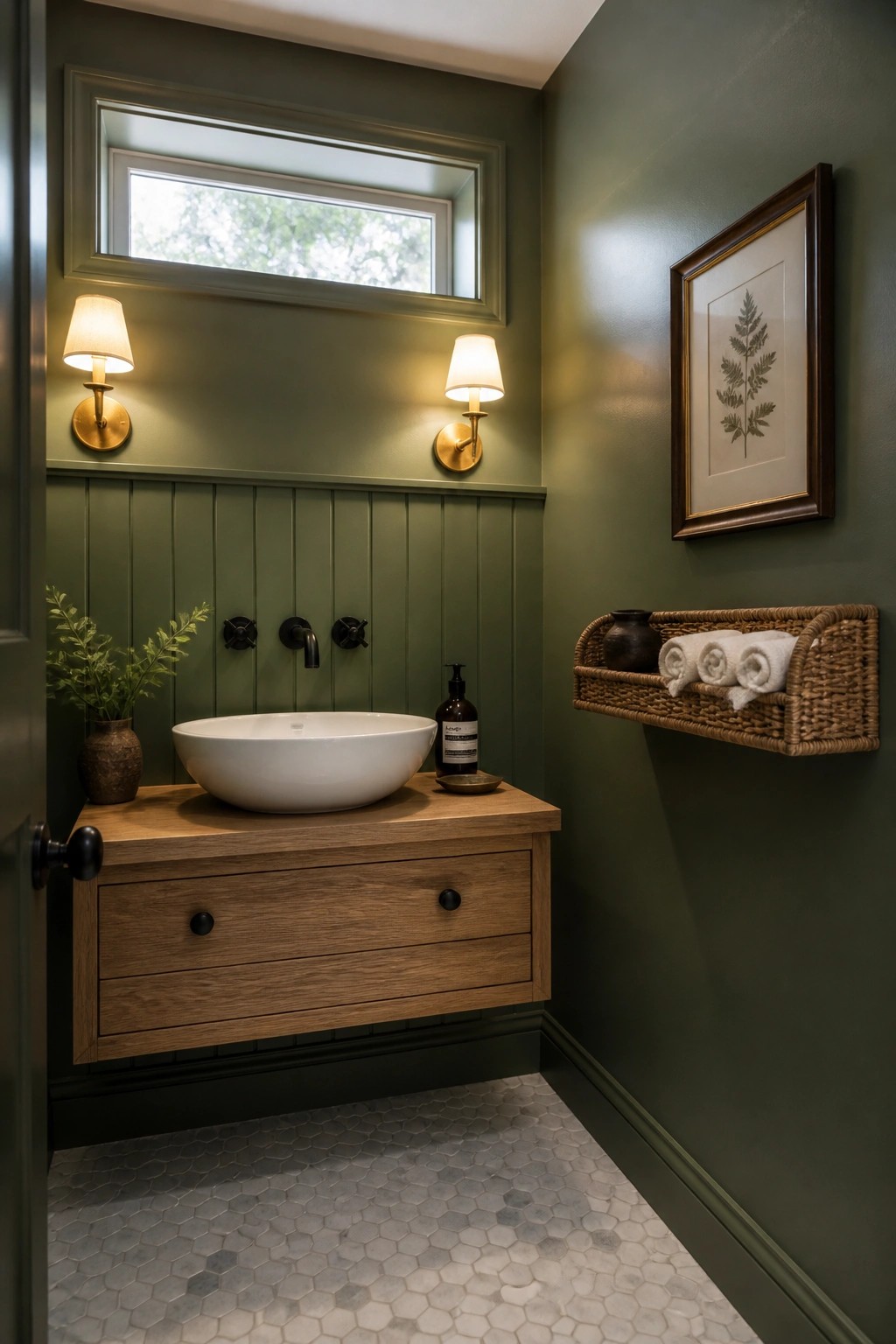
A deep green paint color can make a small bathroom feel grounded and calm. It brings in that nature-inspired look without needing a lot of extra decor or pattern.
This shade works especially well when paired with wood tones and simple black fixtures. It suits older homes or any space where you want the walls to feel substantial rather than stark. Test the color on a large sample first since greens shift a lot with the light.
Soft Green On Kitchen Built-Ins
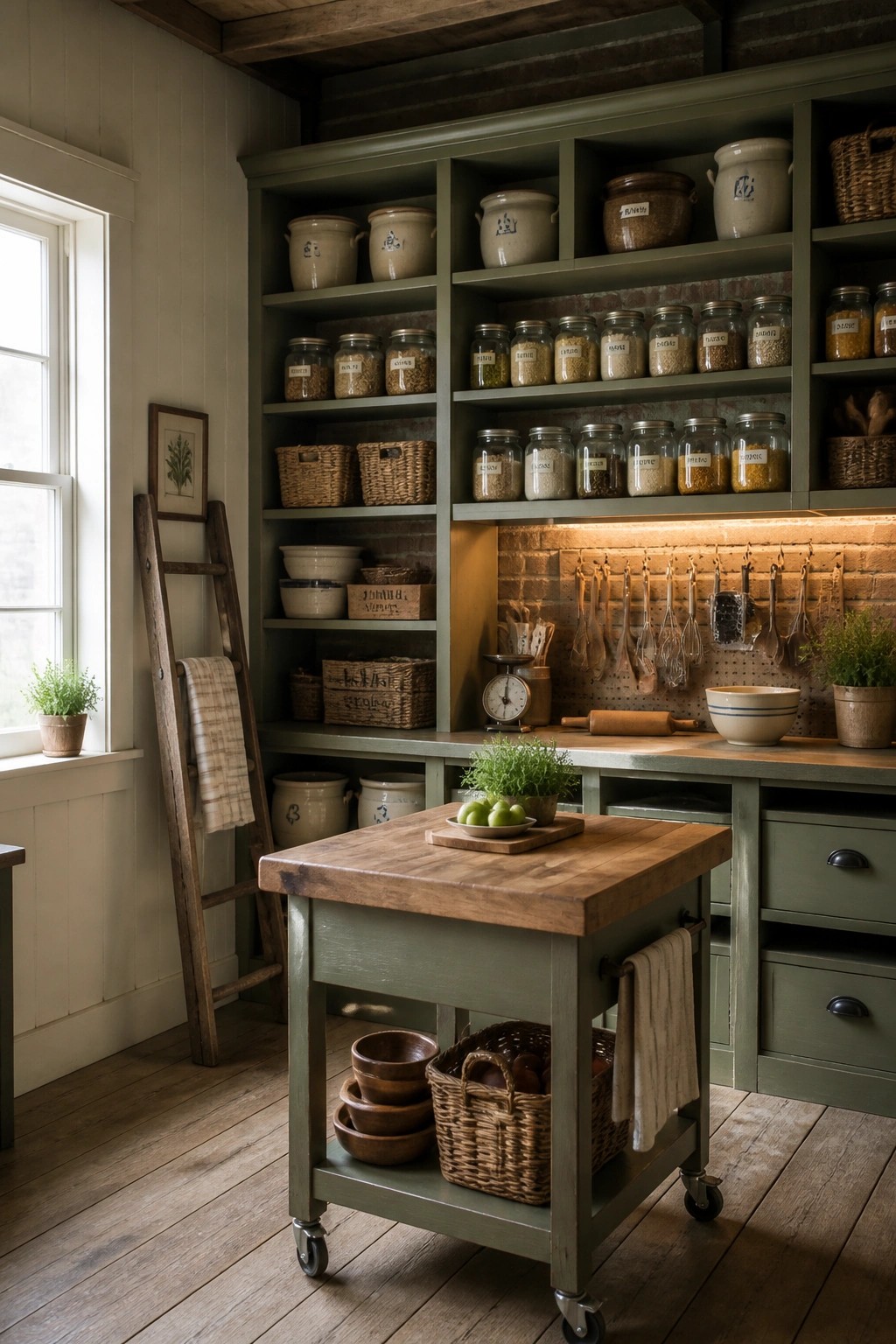
A soft green works well on cabinetry because it brings a quiet outdoor feel into the room without overpowering the wood tones or everyday clutter. It pairs easily with open shelving and simple storage pieces that already lean toward a natural look.
This approach suits older homes or any kitchen where you want the painted surfaces to feel settled rather than new. Keep the same color on both the tall built-ins and a rolling island so the space stays calm and connected.
Soft Green Walls In The Bedroom
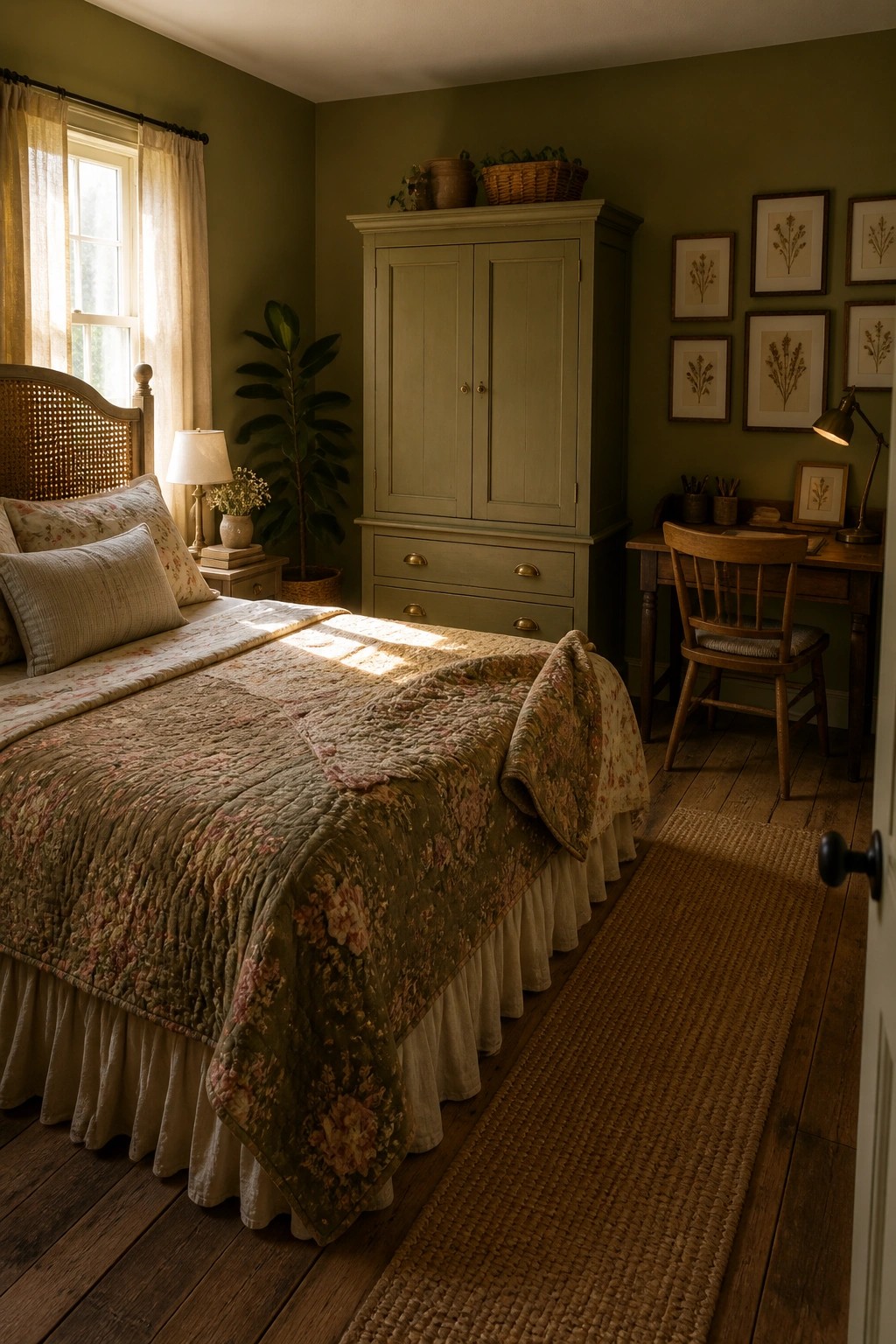
A soft green on the walls gives a bedroom that quiet, settled feeling many people want at the end of the day. It works especially well when the room gets morning light, since the color shifts gently and never feels flat.
This shade suits older homes and simple farmhouse layouts where you want the walls to feel connected to the outdoors. Keep the trim light and let wood furniture carry some warmth so the green stays calm rather than heavy.
Soft Green Paint For Farmhouse Dining Rooms
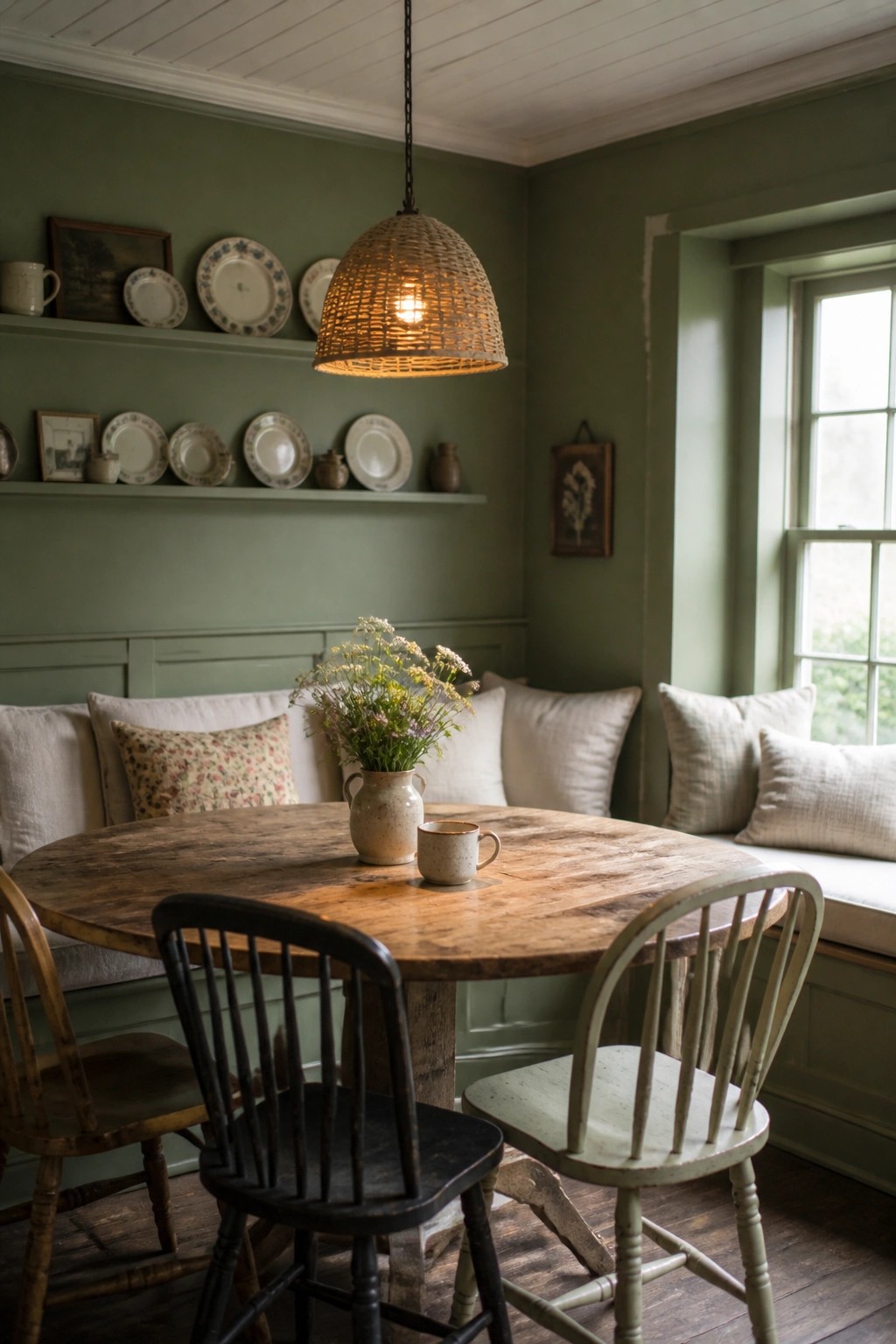
A soft green on the walls gives a dining room a calm, lived-in feel without trying too hard. It pairs naturally with wood tones and simple fabrics, which is why it shows up often in older homes that lean farmhouse.
This color works best in rooms that get steady daylight and already have some wood or linen already in place. Keep the trim light and let the green cover most of the wall so the space stays feeling open rather than closed in.
Soft Green Paint For Stairwells
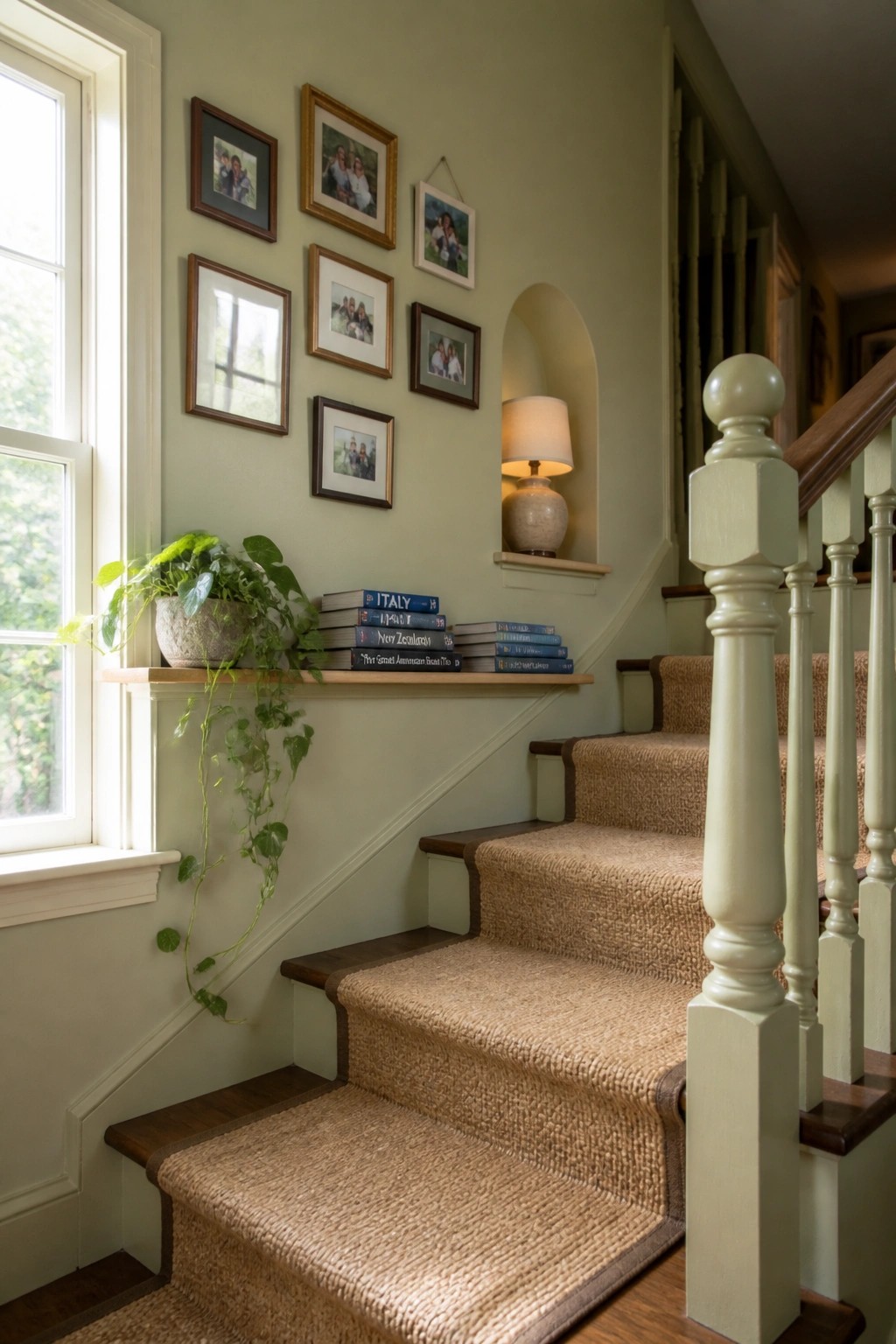
A soft green works nicely on stairwell walls because it adds a quiet bit of color without making the space feel closed in. The tone sits between gray and sage, so it shifts gently with the light and keeps the area feeling open as you move through the house.
This color pairs best with wood tones and simple trim in homes that already lean toward farmhouse style. It helps the stairwell feel like part of the living space rather than just a passageway, especially when there is some natural light from a nearby window.
Green Paint For Mudroom Walls
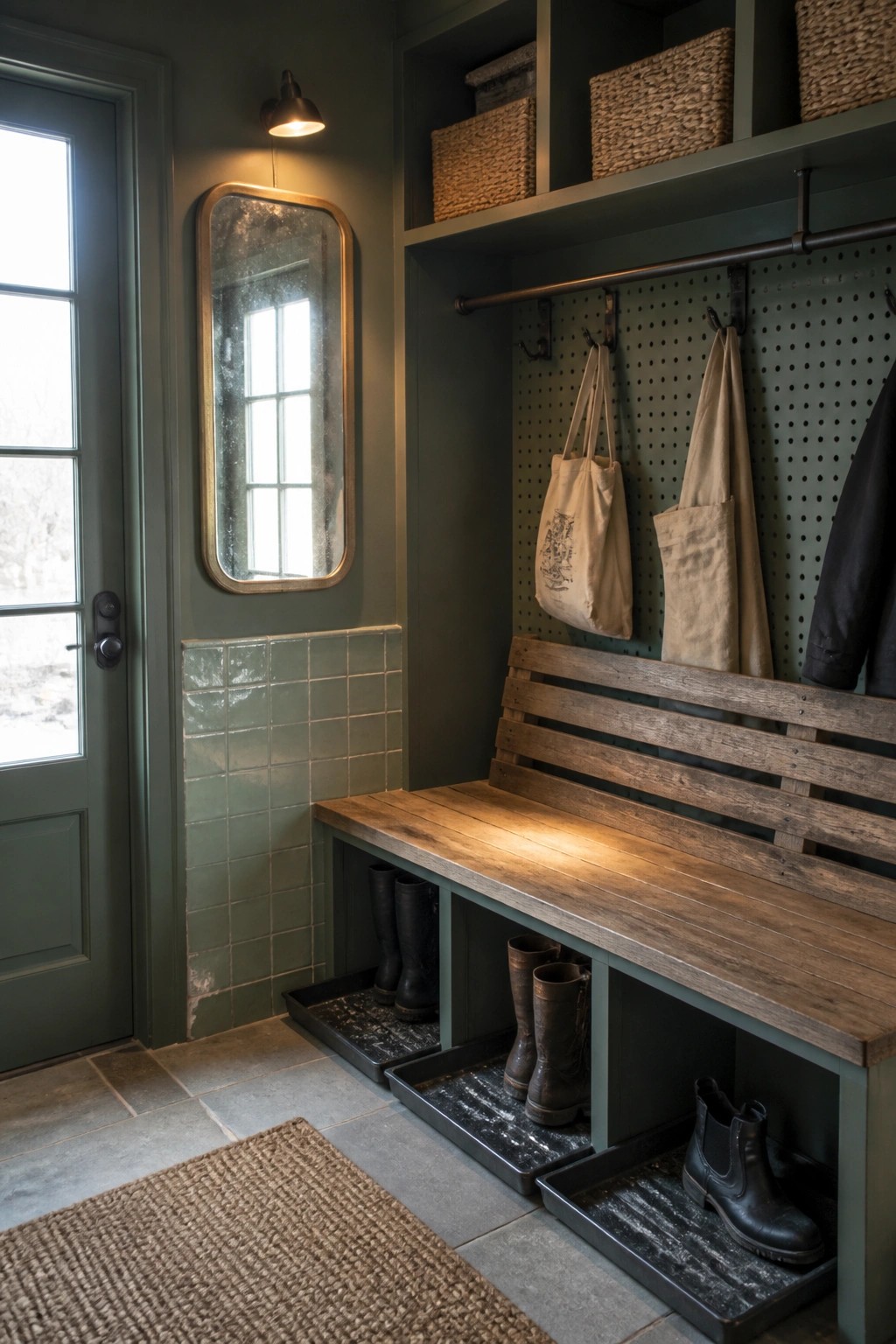
A deep green works well in a mudroom because the color stays calm even when the space gets busy with boots, bags, and coats. It gives the room a grounded feel without making it feel dark or closed in, especially when paired with wood tones and simple storage.
This color choice suits homes that want a bit of nature indoors without extra decoration. Use it on all the walls in a similar setup with a bench and hooks, and keep the trim and ceiling light to avoid a heavy look. Test the shade on a small board first since green can shift under different lights.
Window Seats With Soft Green Accents
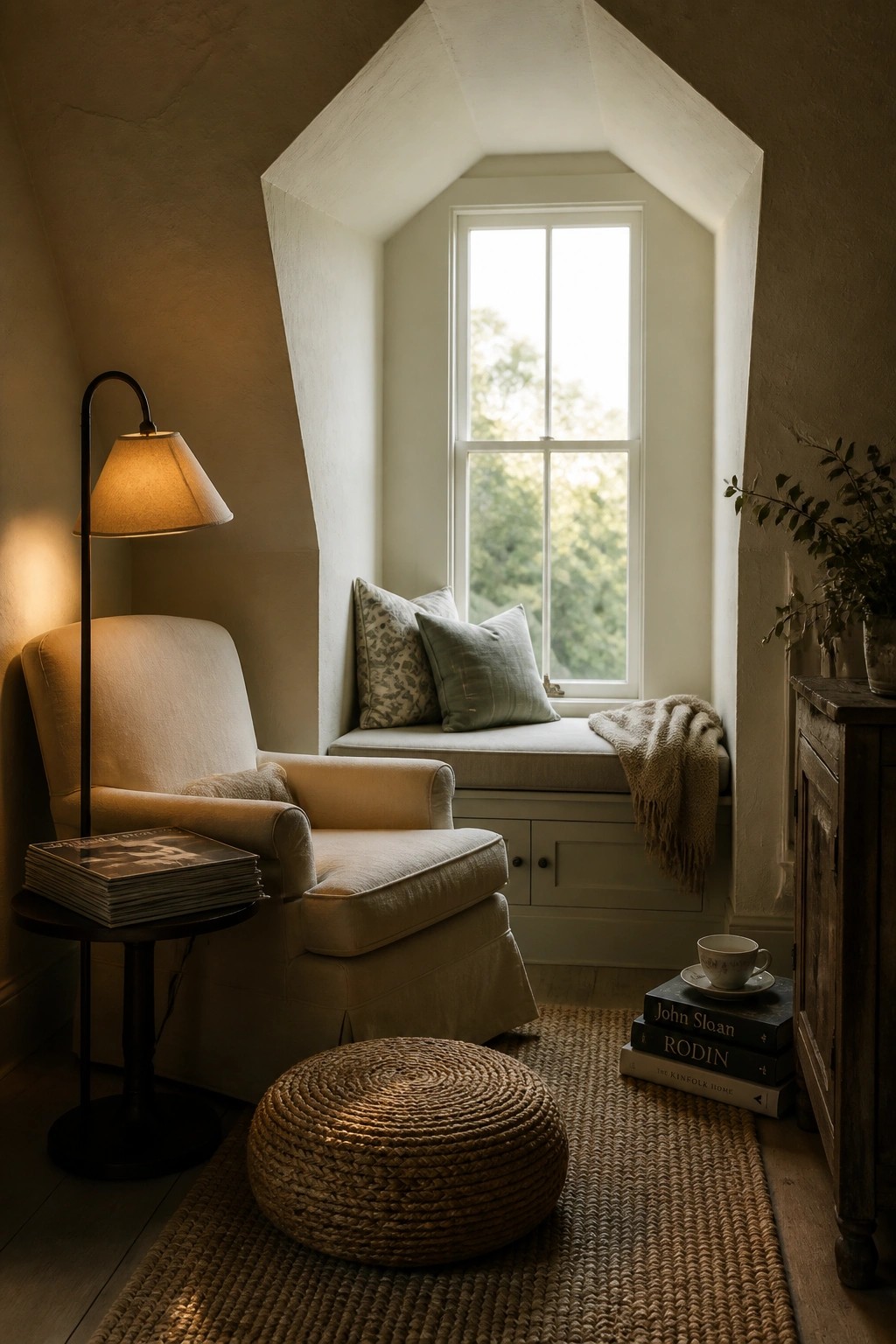
A window seat built into a small alcove creates an easy spot to pause during the day. The sage green pillows here pick up the colors from the trees outside and keep the corner feeling calm without much effort.
This setup suits older homes or simple farmhouse rooms where you want to add a bit of nature without painting a whole wall. Keep the surrounding walls light and let the green show up mostly in the cushions and maybe a throw.
Painting Built-Ins And Walls In One Green Shade
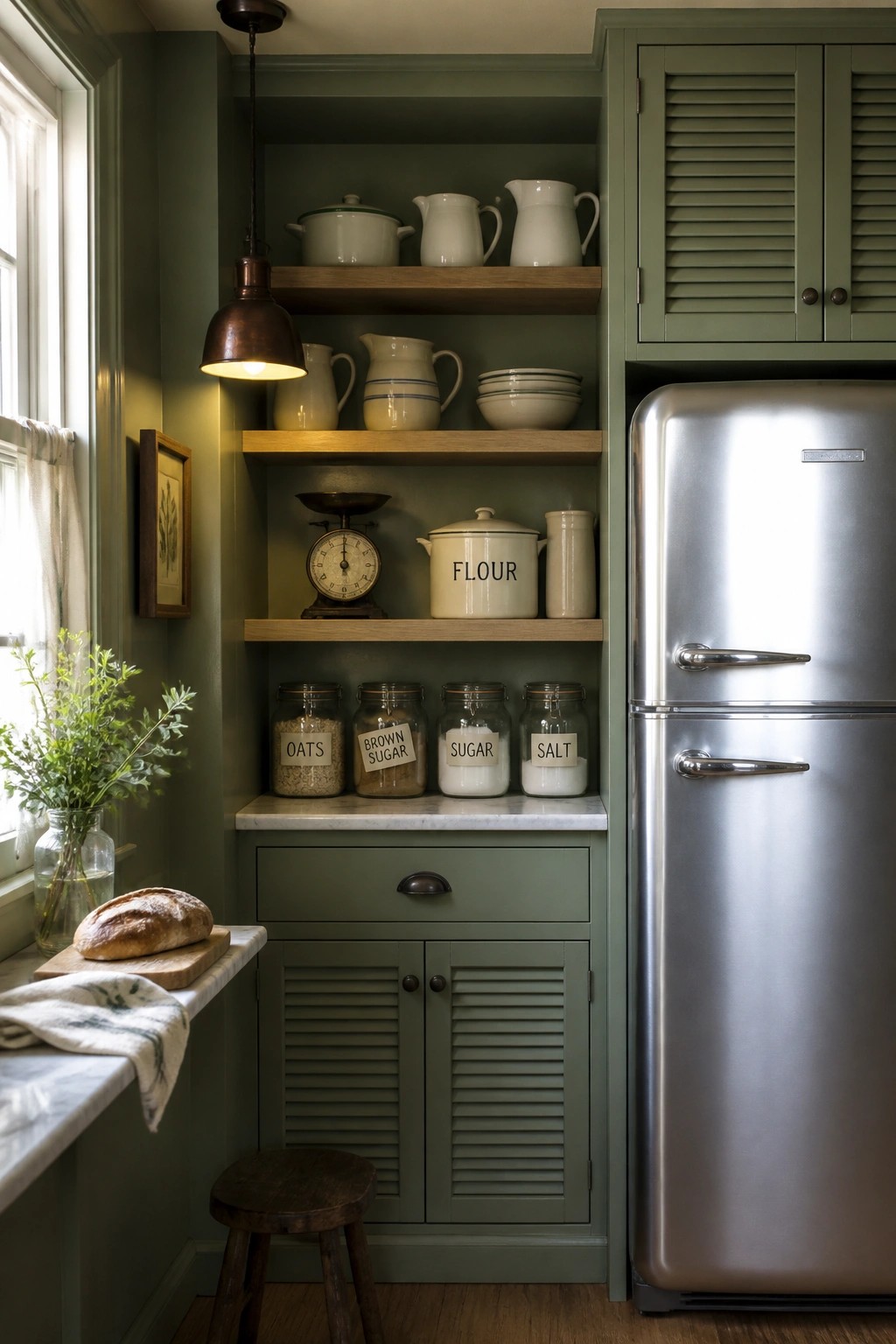
Many people paint both the walls and the cabinetry in the same soft green so the storage areas feel like part of the room instead of separate pieces. It keeps the space from looking too busy and gives it a quiet, steady feel.
This approach works best in smaller kitchens or pantry corners where you already have open shelves mixed with closed doors. Pick a green with a bit of warmth so it stays friendly under normal indoor light, and test it on a larger board first before committing to every surface.
Soft Green Paint In A Playroom
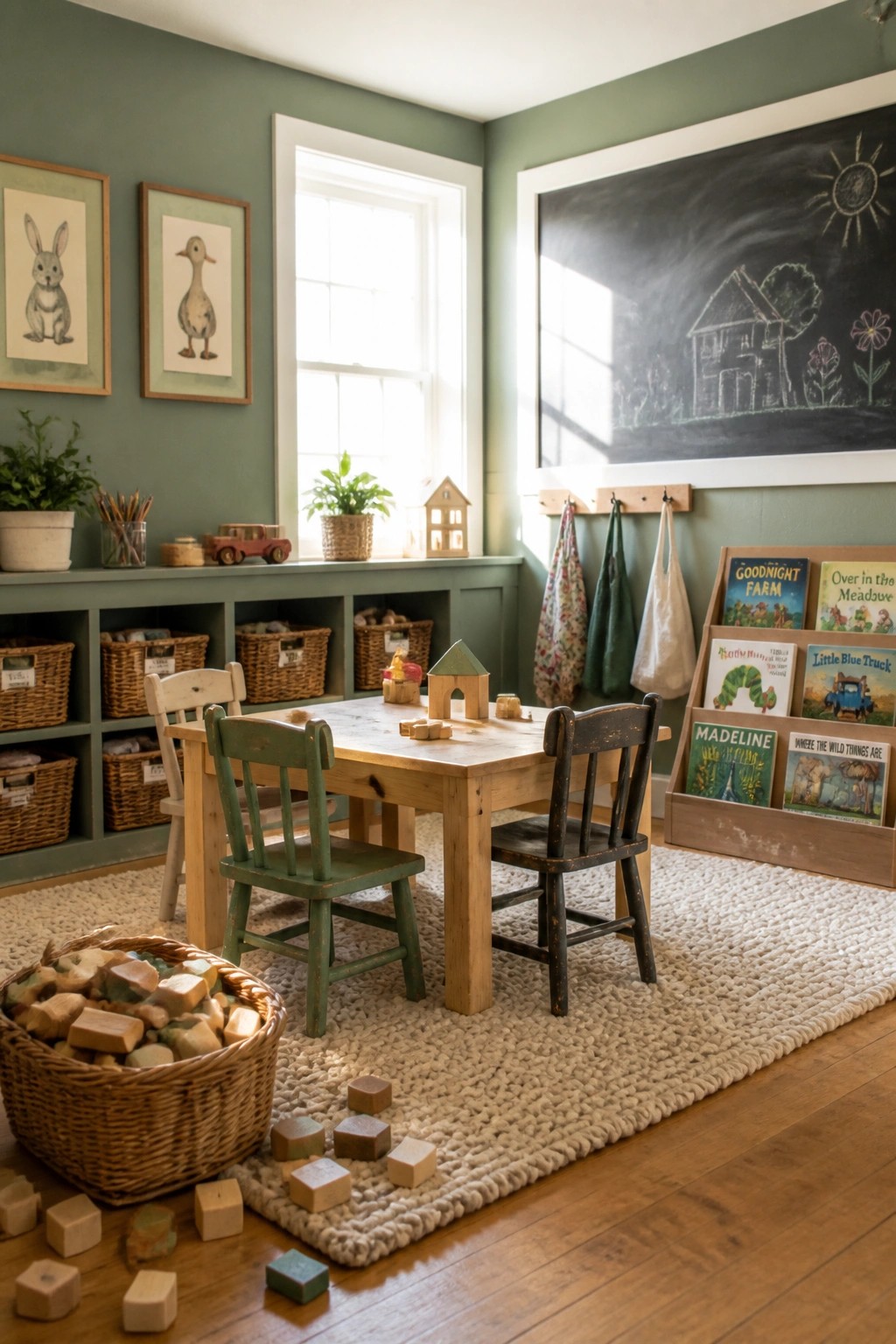
A muted green on the walls gives a playroom a calm feeling that still feels connected to nature. It avoids the brightness of primary colors while keeping the space light enough for kids to play comfortably.
This color works especially well in farmhouse homes that already lean on wood tones and simple textures. Try it on all four walls if the room gets good daylight, and keep the trim white so the green stays soft rather than heavy.
Green Walls in a Craft Room
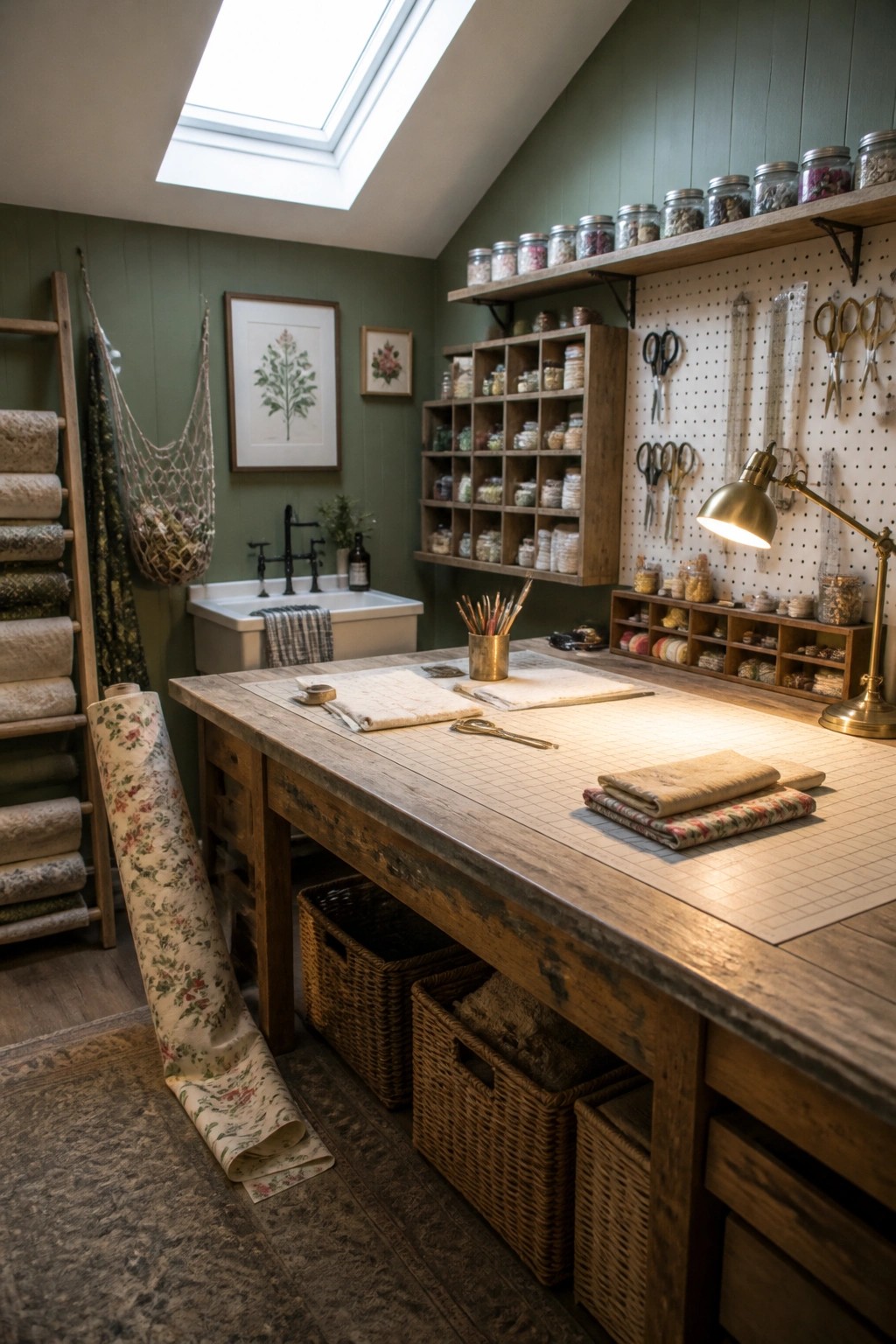
A soft green on the walls works well in a room that gets heavy use. It keeps the space from feeling too stark while still letting the wood tones and fabric piles stand out. Many people find this shade calming when they spend hours at a table cutting and sorting.
This color suits older homes or any space where you want a simple backdrop that does not compete with supplies. Pair it with open shelving and a sturdy table so the room stays easy to clean and rearrange. Avoid using it in very dark rooms, since the green can turn muddy without enough natural light.
Soft Green Paint On Kitchen Cabinets
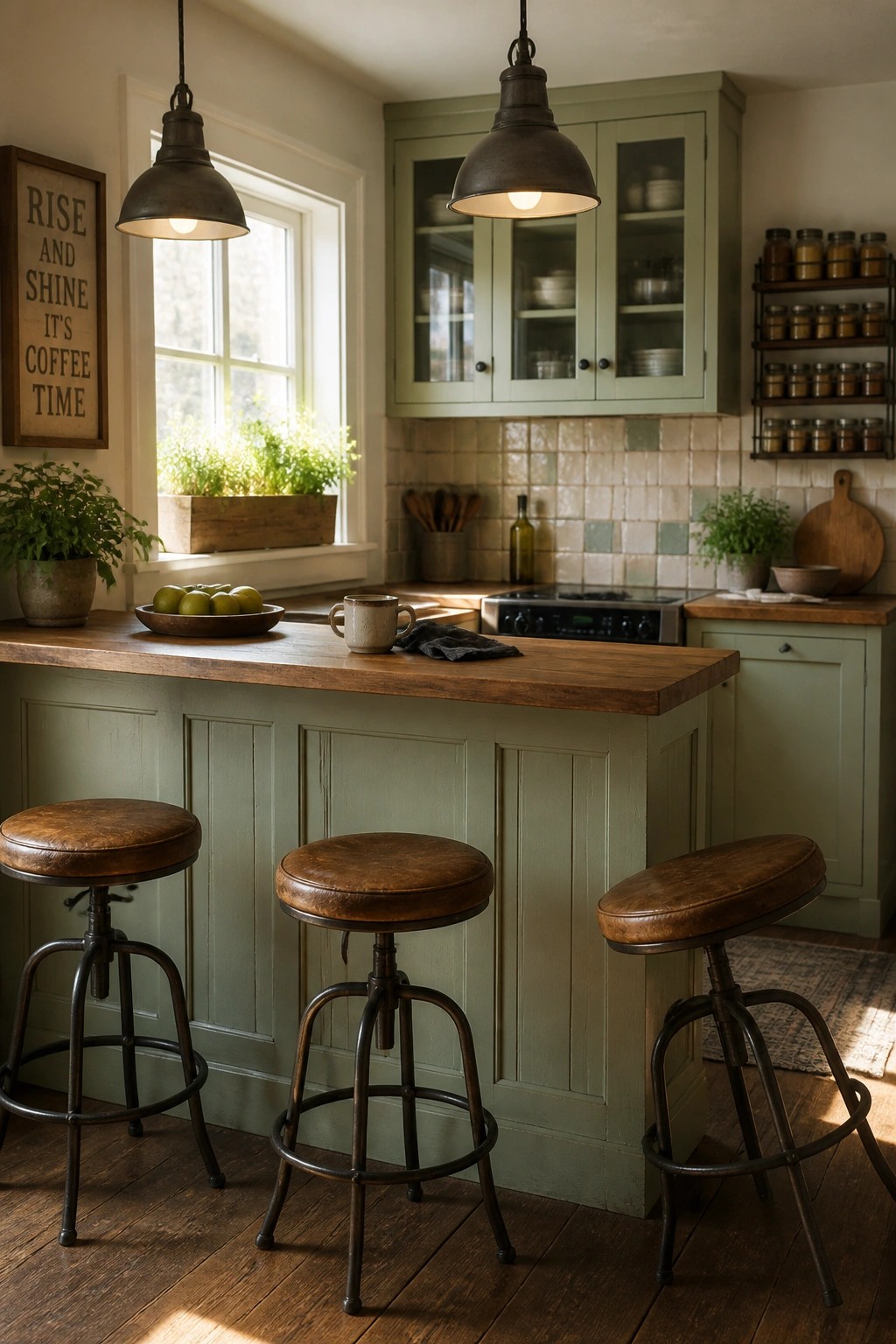
A muted green on cabinetry gives a kitchen a grounded feel without making the space feel heavy. It pairs naturally with wood tones and simple hardware, which is why many people reach for shades like this when they want something a little softer than white or gray.
This color works best in rooms that already have wood floors or butcher block surfaces. It suits older homes or any farmhouse style where you want the cabinets to blend rather than stand out. Just test the paint in different lights first, since greens can shift more than you expect.
Green Paint For Bathroom Walls
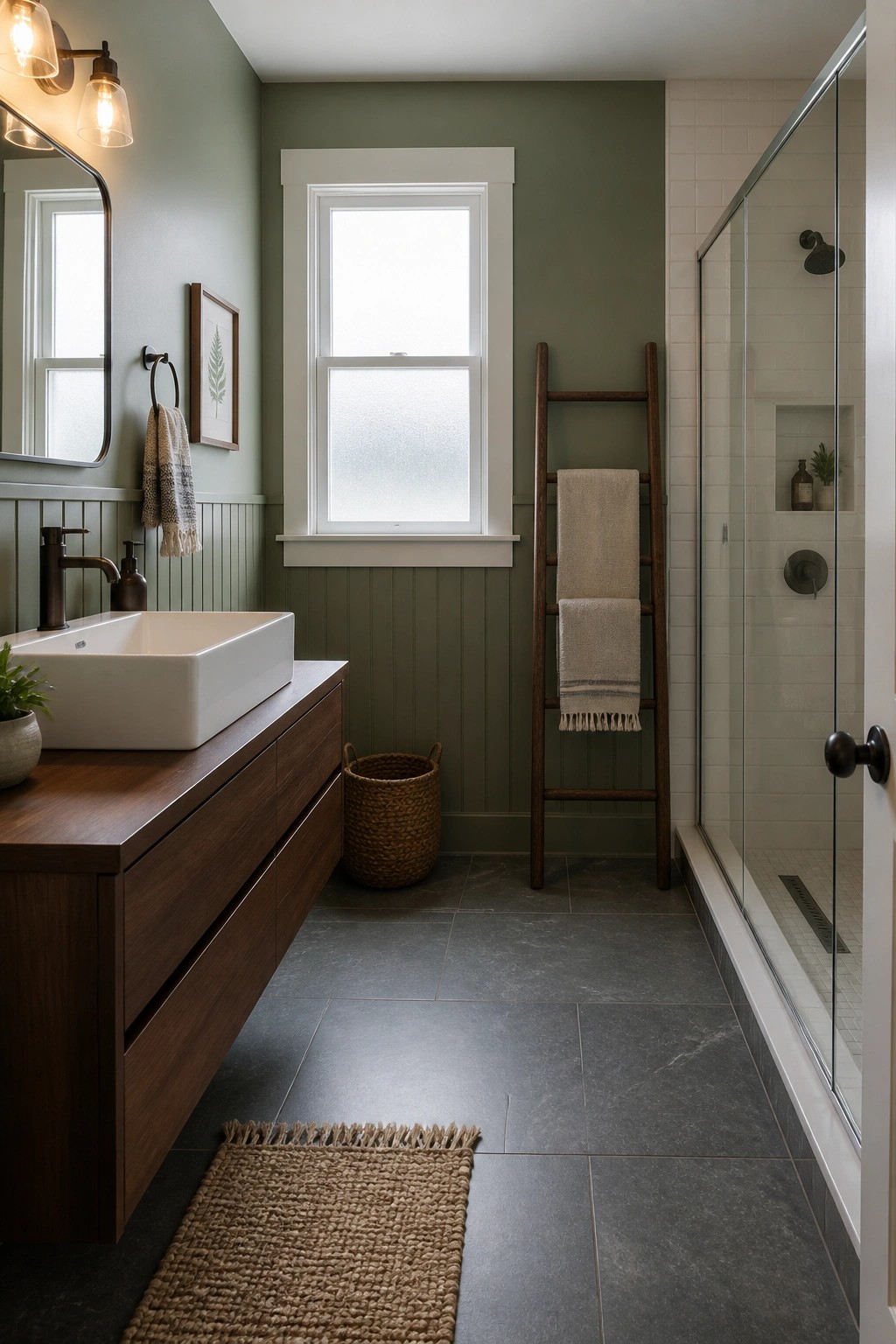
A soft green on the walls gives a bathroom that calm, grounded feeling many people want in a smaller space. It works nicely with white trim and wood accents, and it feels more natural than the usual neutrals without making the room feel dark.
This color choice suits homes that already have wood vanities or simple built-ins. Just keep the finish matte or eggshell so it does not fight with the light coming through the window.
Deep Green Walls For Bedrooms
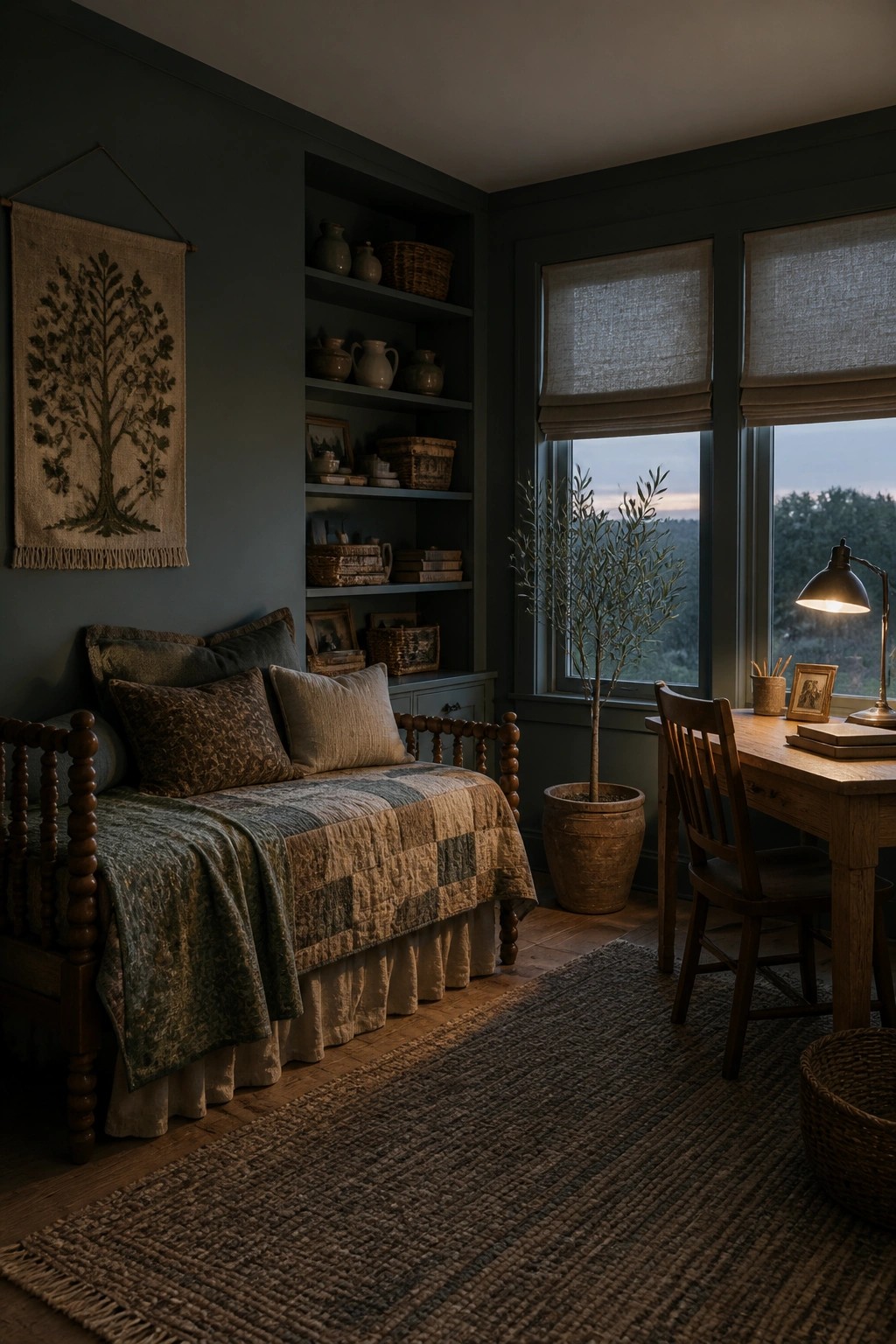
Deep green walls give a bedroom a calm, enclosed feeling that fits farmhouse style. The color works especially well when the room already has wood furniture and simple textiles, since the green adds depth without extra decoration.
This shade suits homes that want a quiet sleeping space rather than a bright one. Use it in rooms with built-in shelves or steady daylight so the color stays balanced and does not feel heavy.
Soft Green Walls In The Bathroom
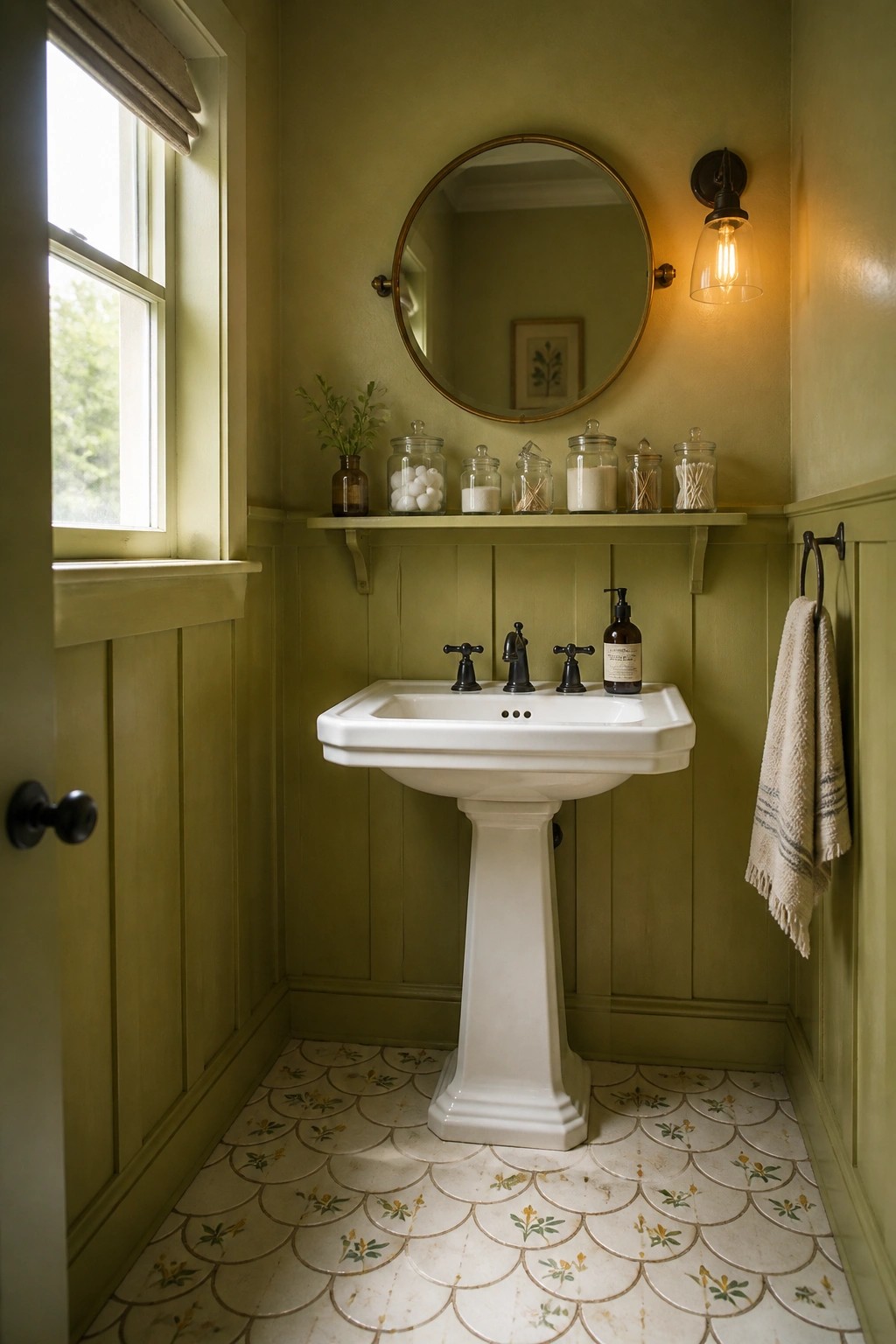
A soft green paint color can make a small bathroom feel calmer and more connected to the outdoors. It pairs well with white fixtures and simple wood trim, which keeps the space from feeling closed in.
This shade works best in rooms that get some natural light. It suits older homes or farmhouse styles where you want a little color without making the room look busy. Test a few samples on the wall first since greens can shift depending on the time of day.
Frequently Asked Questions
Q: How do these greens look once the sun moves through the room? A: They warm up a bit in morning light and settle cooler by afternoon. Paint a big sample board and move it around to different walls so you see the shift before you buy gallons.
Q: Will one of these greens work with my old pine floors? A: The nature-based tones sit nicely against wood grain. Brush a patch right onto a scrap of trim or baseboard and live with it for a day or two.
Q: What if the color still feels too soft after I roll it on? A: Bump up to the next deeper shade on the same card. One extra step darker usually gives the grounded feel without changing the whole palette.
Q: Can I use these greens in a small powder room? A: Keep the ceiling and trim bright white. The green then adds just enough outdoor calm without making the space feel tight.
