

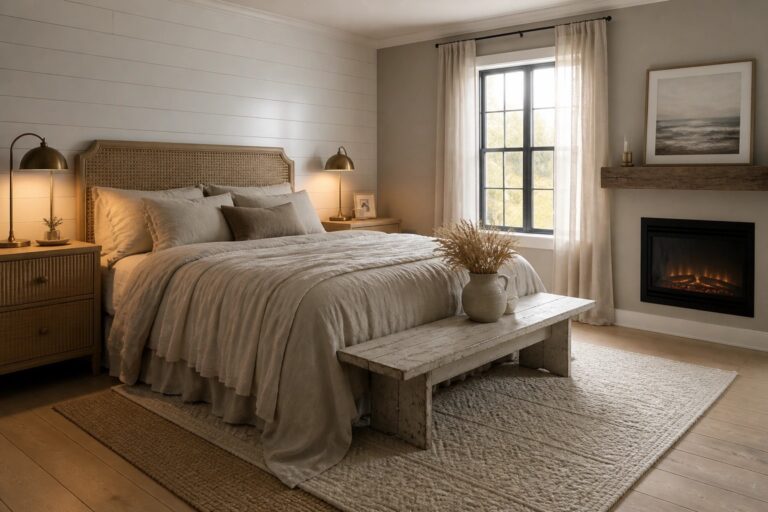
I have noticed that soft neutrals in a farmhouse interior tend to make rooms feel steadier once the furniture and daily clutter are in place.
When light moves across the walls during the day the colors shift in ways that either settle the space or leave it looking flat.
Trying a few samples on actual walls often reveals which ones hold up better than they first appear on a screen.
The balance between warm and cool tones matters more than people expect when wood floors and textiles come into the mix.
I usually start with the main living areas because that is where the palette has to work through changing seasons and constant use.
Layering Soft Neutrals in the Bedroom
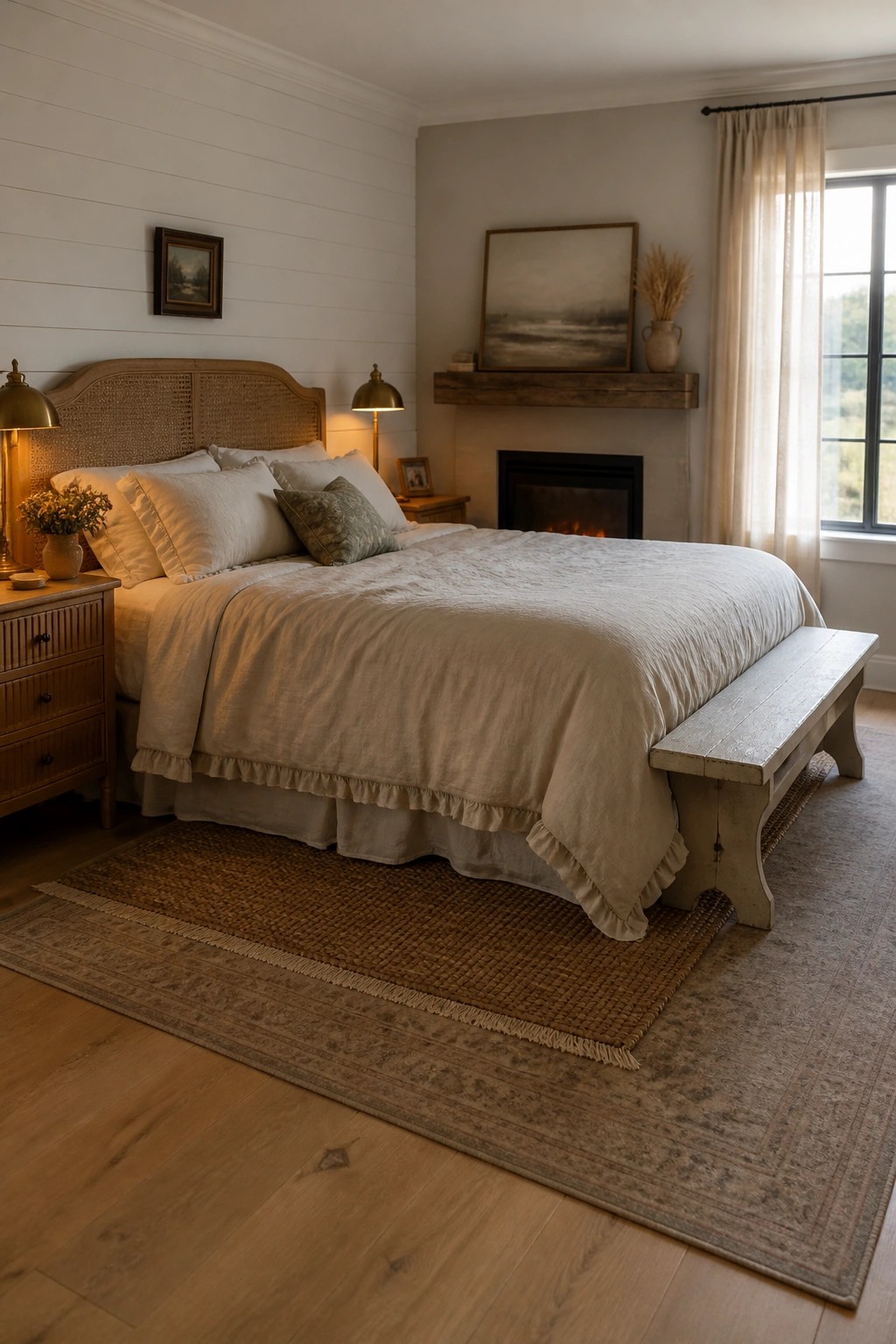
A bedroom often feels more restful when everything stays within a narrow range of soft neutrals. The bedding, rugs, and walls can all sit close in tone so nothing jumps out and breaks the calm.
This works especially well in older homes or spaces with wood floors and simple trim. Keep the layers light, like a linen coverlet over a cotton sheet and a flat-weave rug over a larger jute one, and the room stays easy to live in without constant rearranging.
Built-In Shelves For Linen Storage
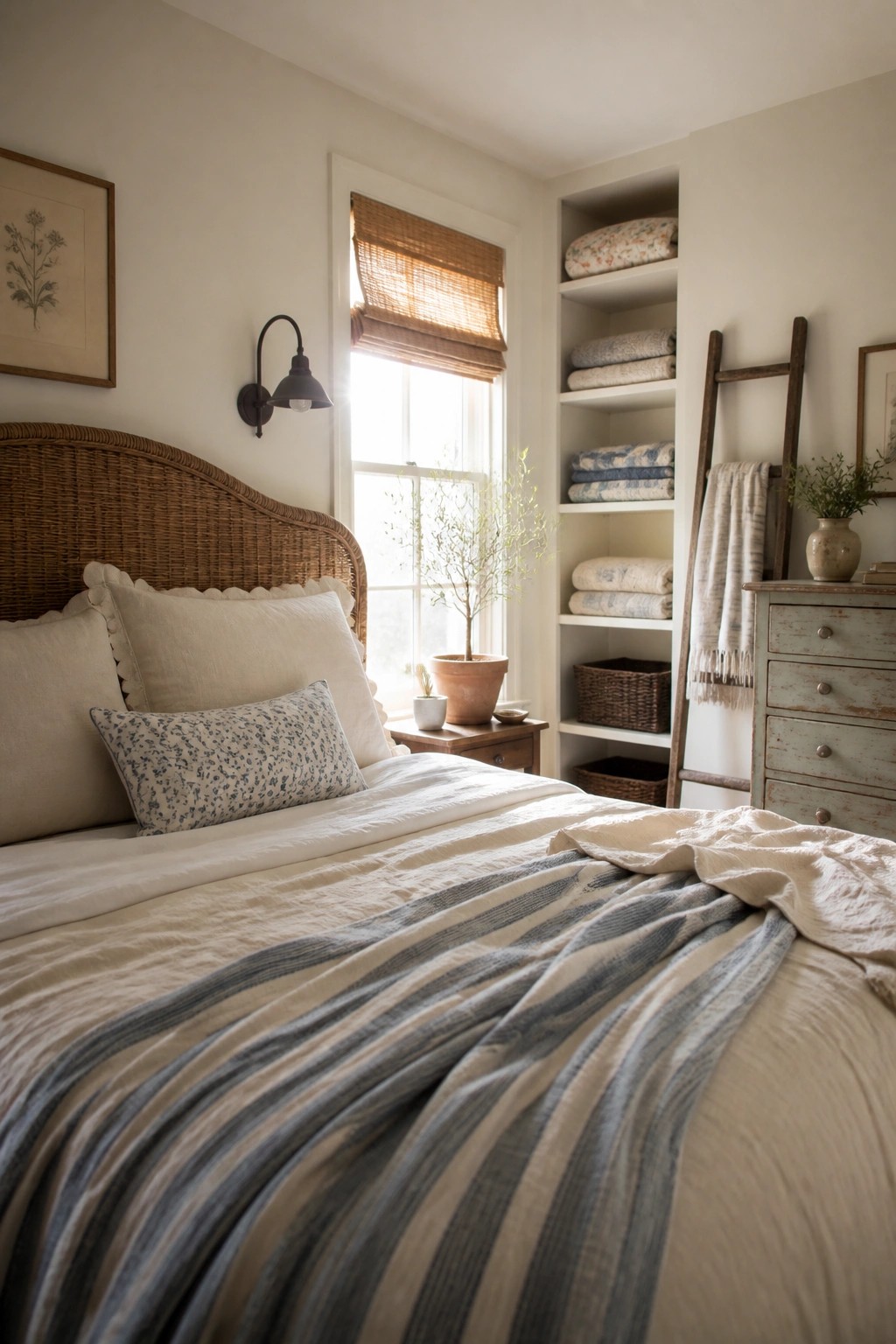
Built-in shelves give you a place to keep extra linens without adding more furniture to the room. When they are filled with folded textiles in soft neutrals and light blues, the storage stays part of the overall palette instead of feeling like clutter.
This approach works best in bedrooms where you want easy access to sheets and towels. Keep the stacks simple and repeat similar tones so the shelves look calm rather than busy.
Soft Green Wainscoting With Warm Neutrals
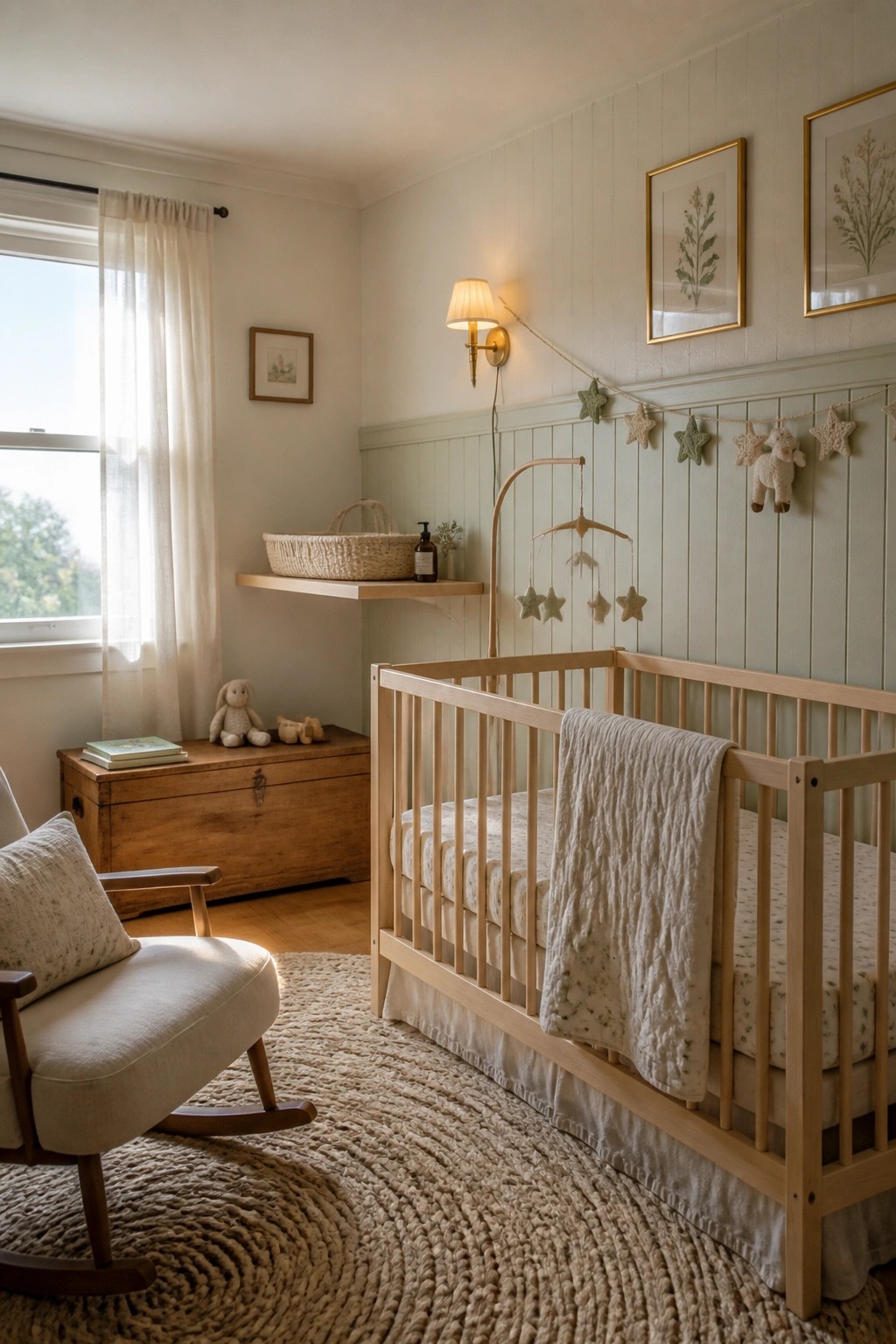
A soft green on the lower walls gives a nursery just enough color without pulling it away from the soft neutral palette most farmhouse homes already use. The green feels calm next to the natural wood tones and creamy textiles, and it keeps the room from feeling too plain or too stark.
This approach works well in smaller bedrooms where you want a gentle shift in tone rather than a full color change. Keep the upper walls and trim in a warm white, and let the wood furniture carry the warmth so the green stays as a quiet layer instead of the main focus.
Layer Soft Neutrals With Natural Textures
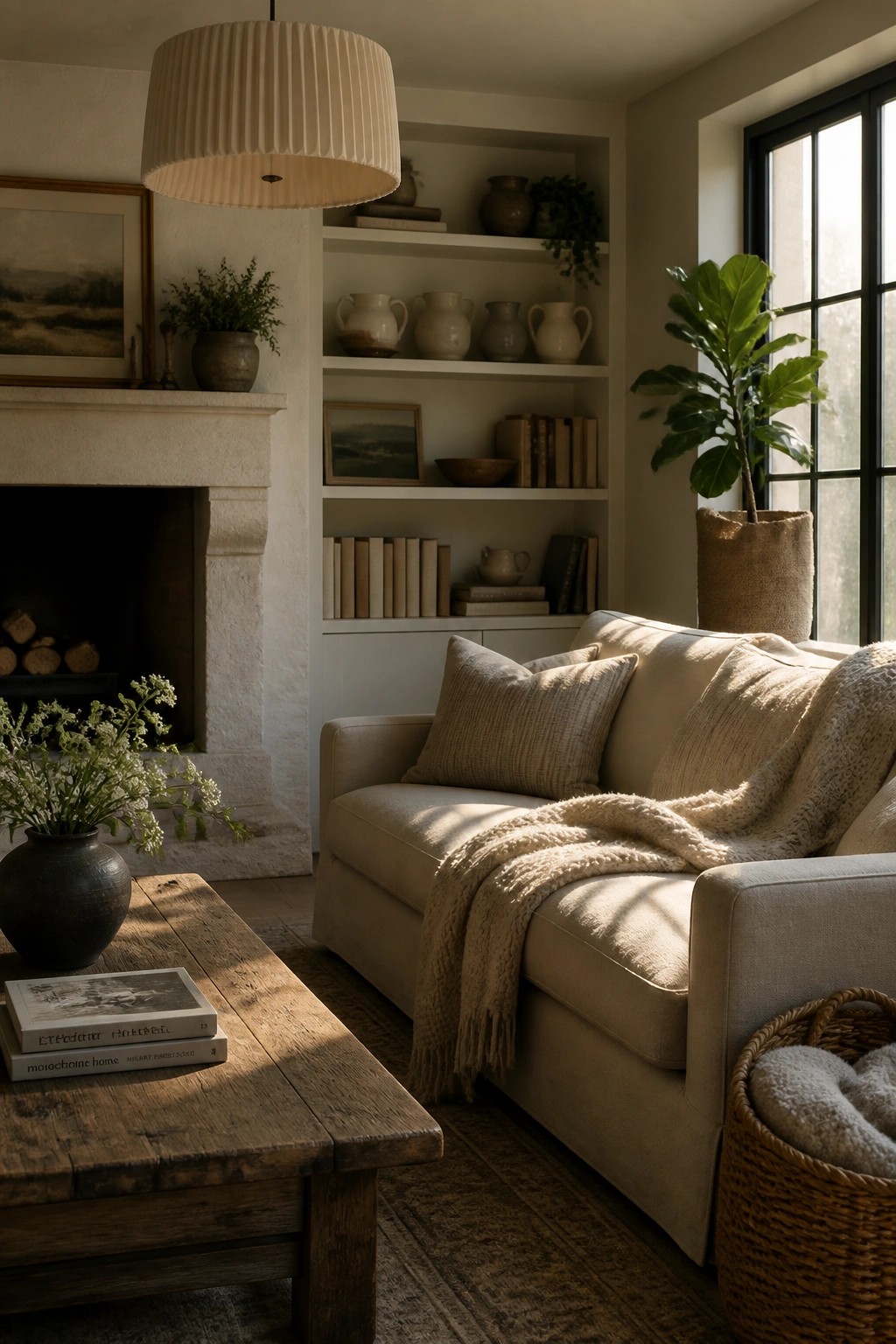
Soft neutrals work well in a farmhouse living room when you let texture carry the interest. A sofa in warm beige, a chunky knit throw, and rough wood surfaces keep the space feeling lived in rather than flat.
This approach suits rooms with plenty of natural light and simple architecture. Use it in older homes or newer ones that need warmth. Keep the palette tight and add interest through linen, wool, and raw wood instead of adding more color.
Soft Neutrals With Dark Wood Trim
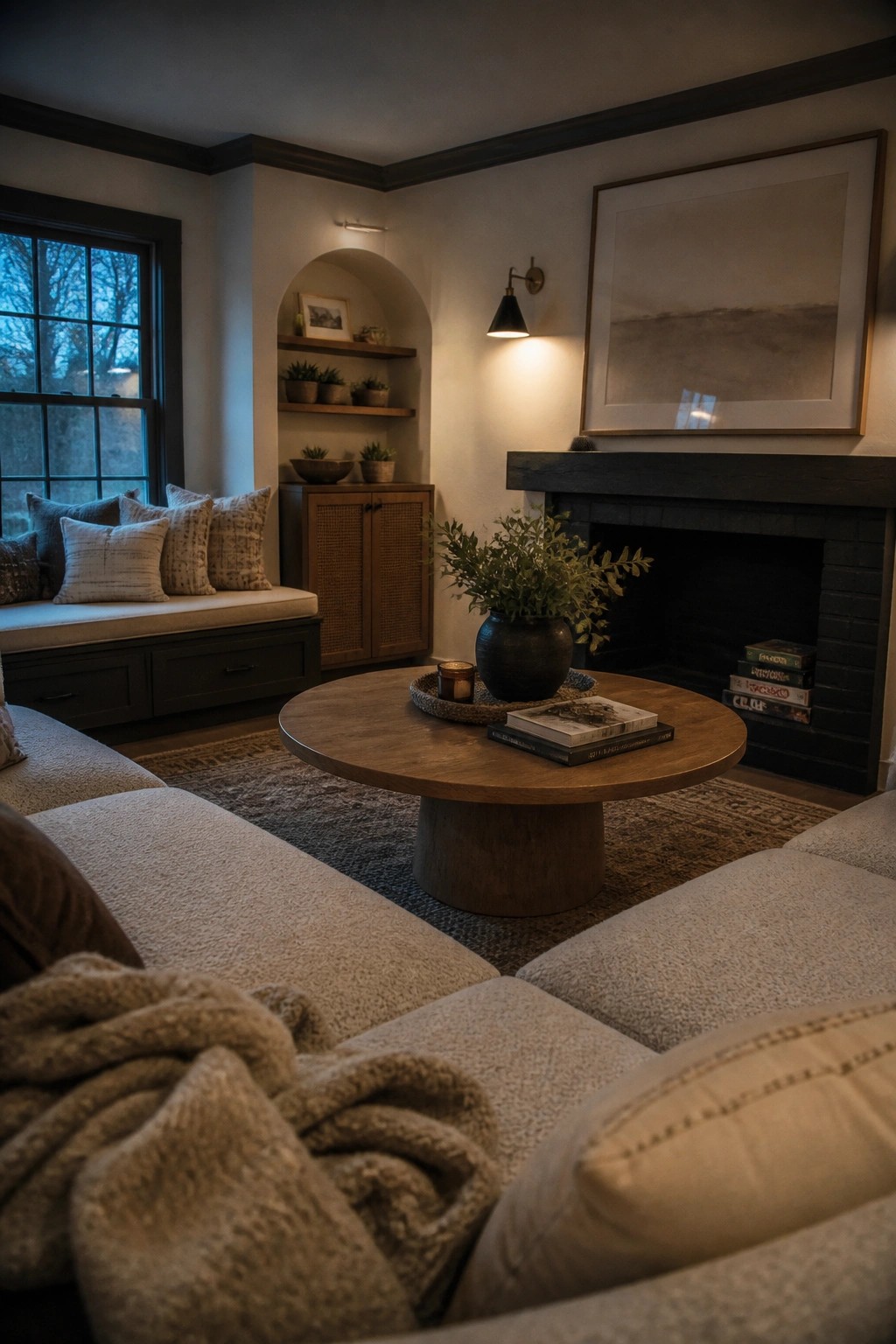
Soft neutrals work well in farmhouse living rooms when the walls and main fabrics stay light. This keeps the space feeling open while the darker wood trim and furniture provide contrast without needing strong color.
It suits homes that already have painted woodwork or want to add it. Stick with beige or warm gray upholstery and layer in wood tones through tables or built-ins so the palette stays calm but still has some weight.
Soft Neutrals In Farmhouse Kitchens
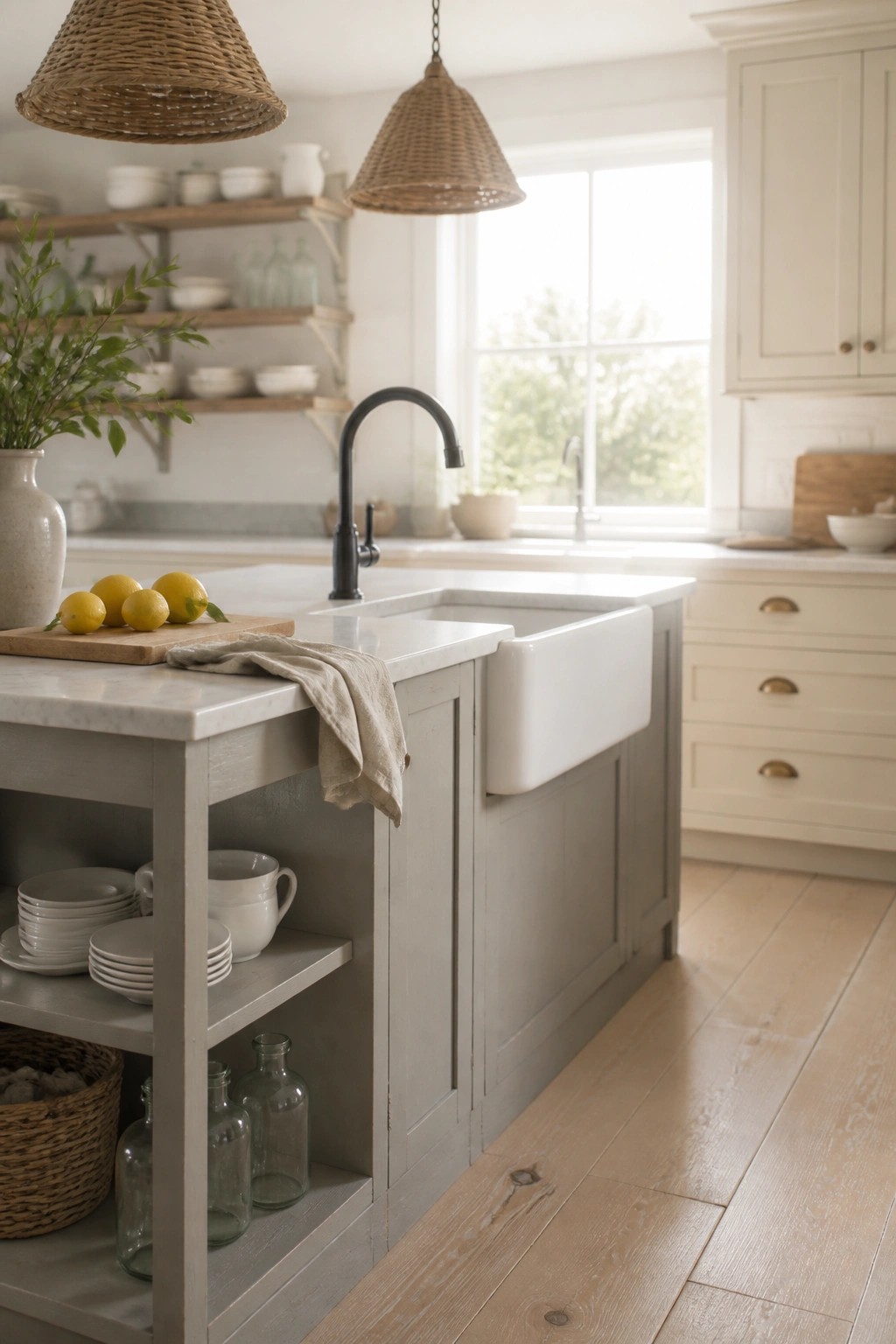
Soft neutrals work well in a farmhouse kitchen because they keep the room feeling open without looking too plain. The gray cabinet color here pairs easily with white surfaces and light wood, which helps the space stay calm even when there is a lot of activity.
This palette suits homes that already have older trim or simple built-ins. It also leaves room to add warmer accents like linen or wood later if the room starts to feel too cool.
Soft Green Cabinets For Farmhouse Kitchens
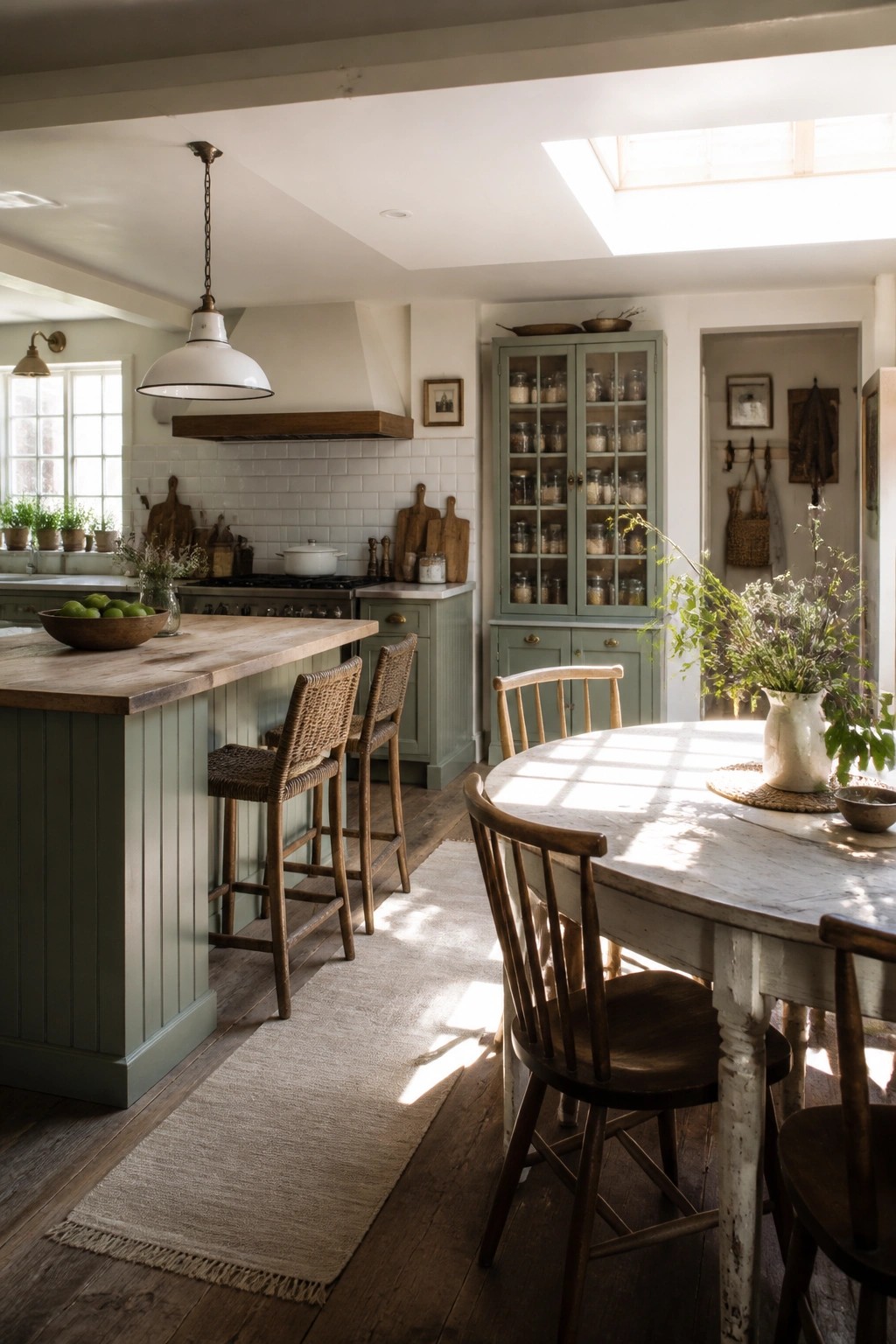
Soft sage green cabinets bring a gentle touch of color without overpowering the soft neutrals that define most farmhouse kitchens. The shade pairs naturally with wood tones and white surfaces, creating a calm look that still feels warm and lived in.
This approach works best in spaces with plenty of natural light and simple materials like wood floors and open shelving. Keep the rest of the palette quiet so the green stays subtle rather than bold.
Soft Neutrals In The Dining Room
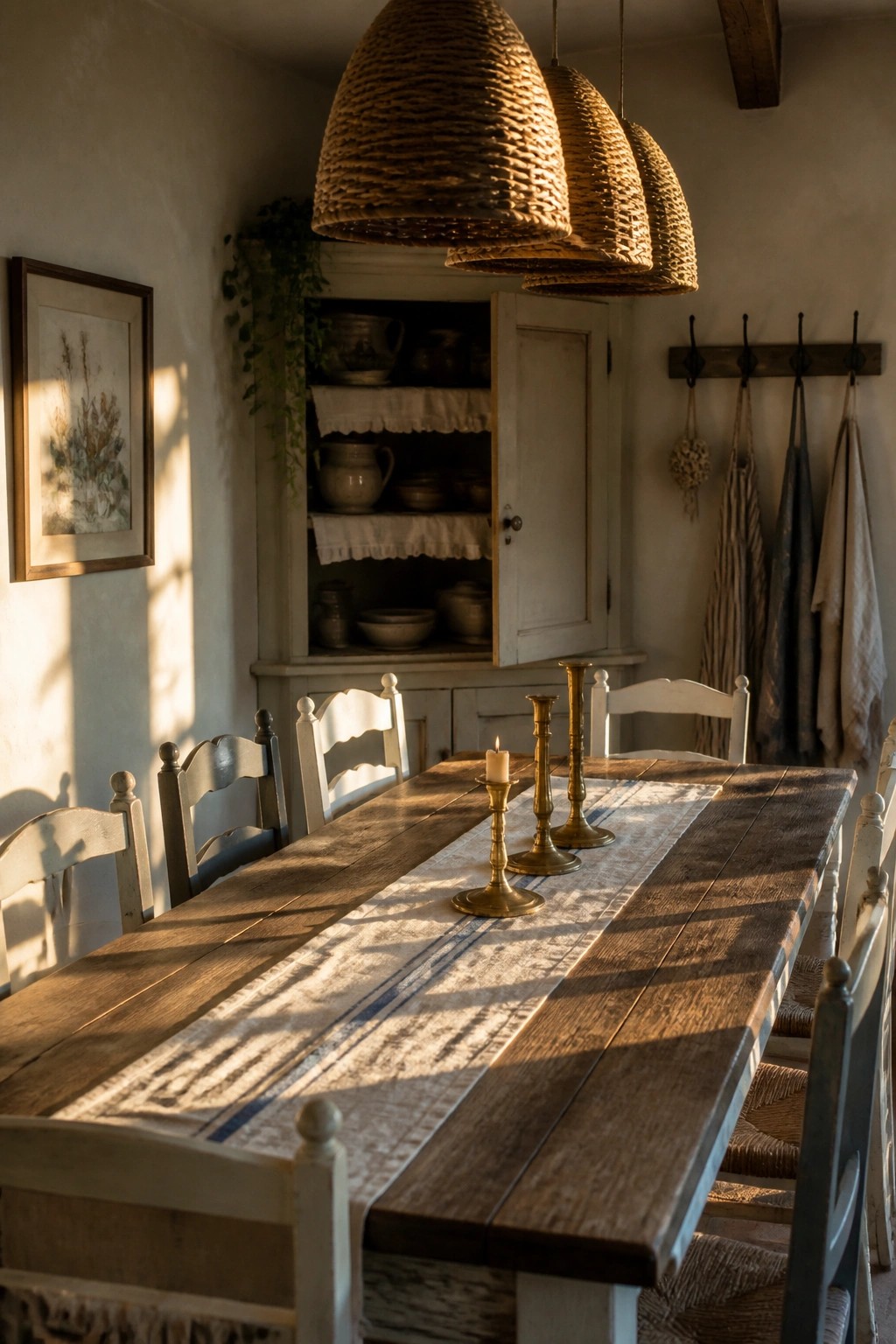
Many farmhouse dining rooms feel more comfortable when the colors stay soft and close together. Warm wood on the table pairs with painted chairs and simple textiles to keep the whole space calm without much effort.
This works especially well in rooms that get strong daylight. Use off-white walls, light wood tones, and a few natural textures like woven shades or linen so the neutrals do not turn flat or cold.
Soft Neutrals For A Functional Mudroom
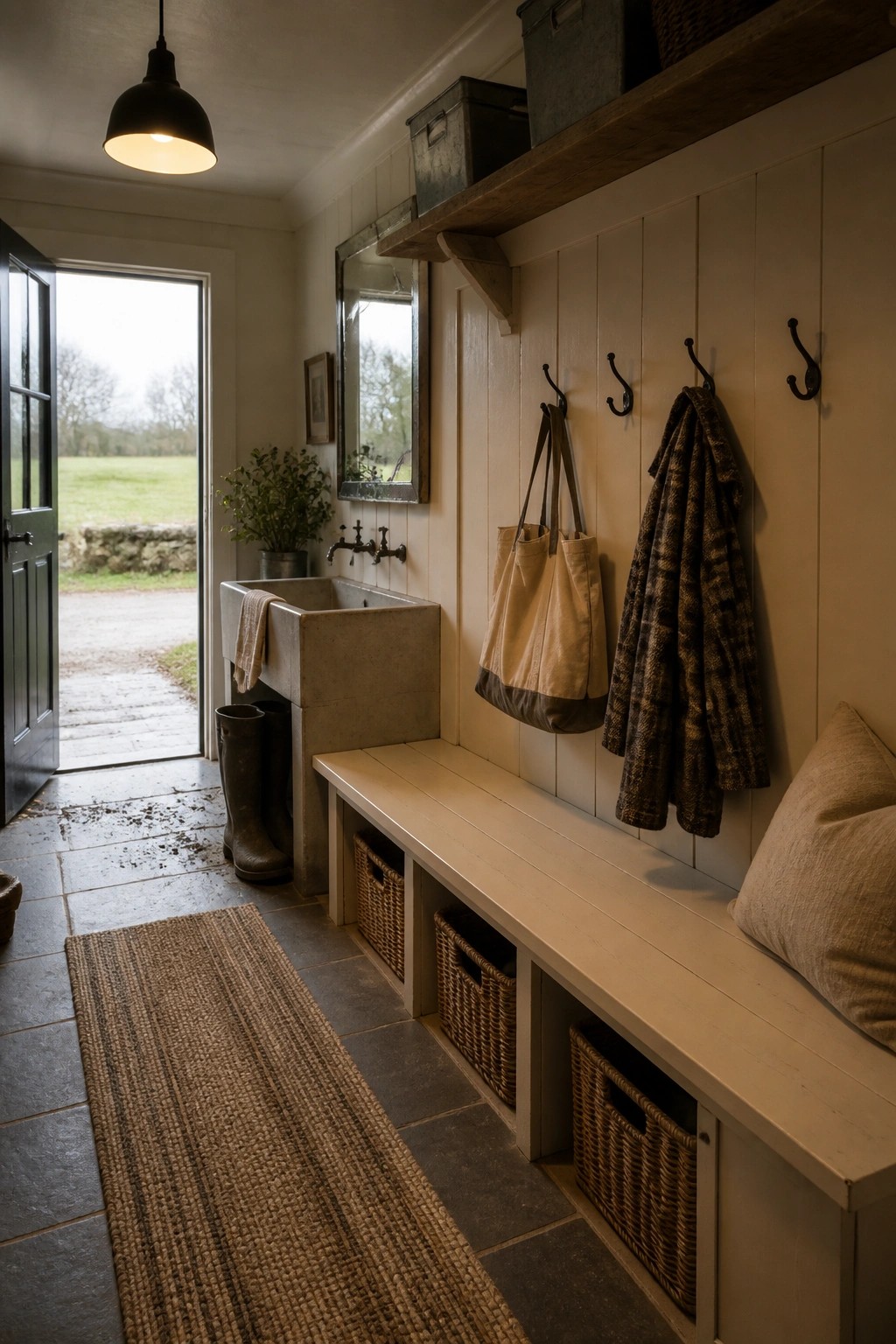
A mudroom sees a lot of daily wear, so a soft neutral palette helps it stay calm instead of feeling stark or overwhelmed. Light walls and a pale bench keep the space from closing in while still showing the wear of real life in a gentle way.
This works best in homes that need storage without turning the entry into a dark cave. Choose warm off-whites and natural wood tones, then add texture through baskets or a simple runner so the room stays practical but never feels cold.
Soft Neutrals For A Calm Workspace
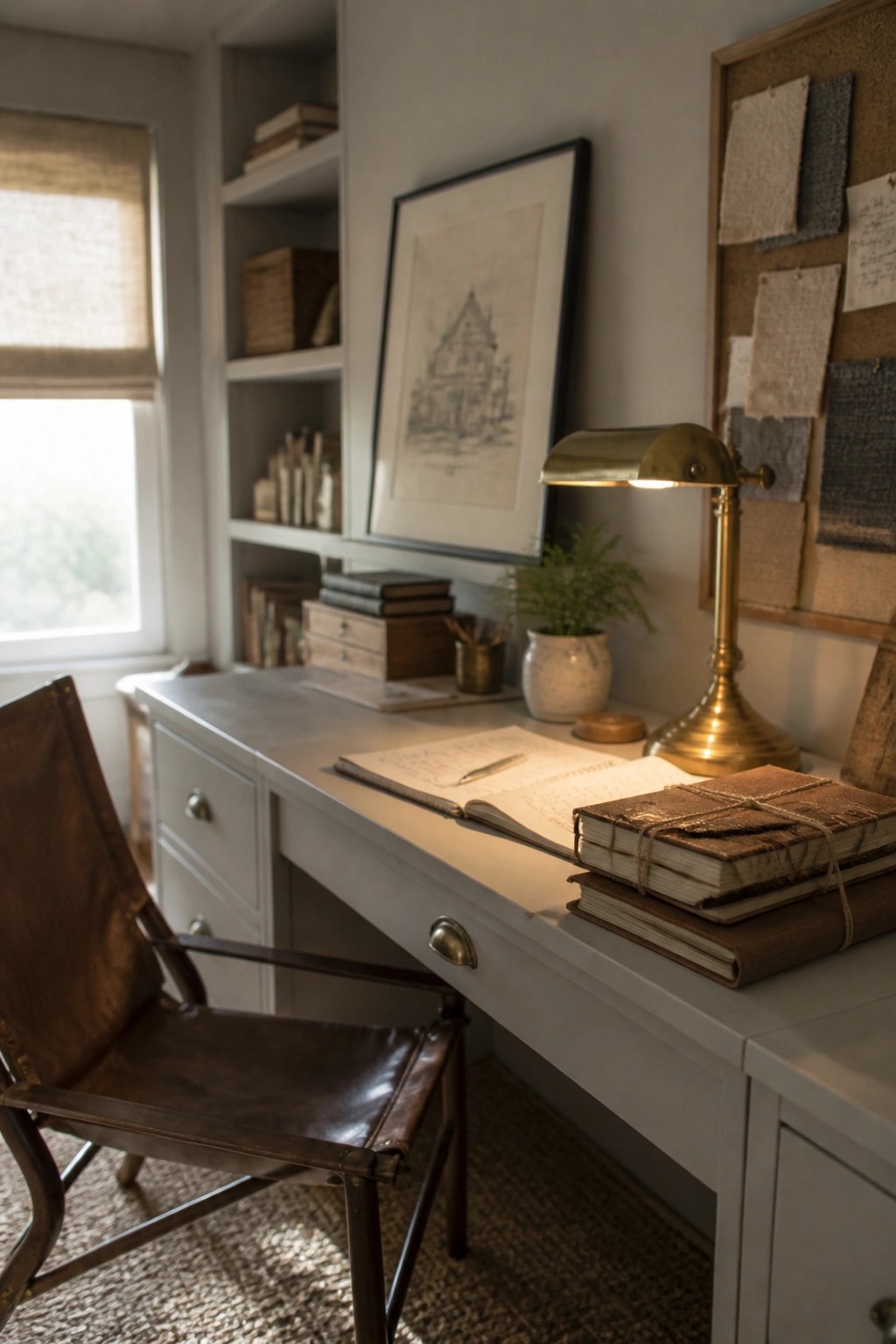
Soft neutrals on the walls and main furniture pieces help a workspace feel open and steady. The light gray desk and walls keep the focus on the task instead of competing colors or patterns.
This approach works well in smaller rooms or any area used for reading and writing. Pair the neutrals with wood and leather so the space stays warm while still feeling simple and farmhouse friendly.
Soft Neutral Walls in the Bathroom
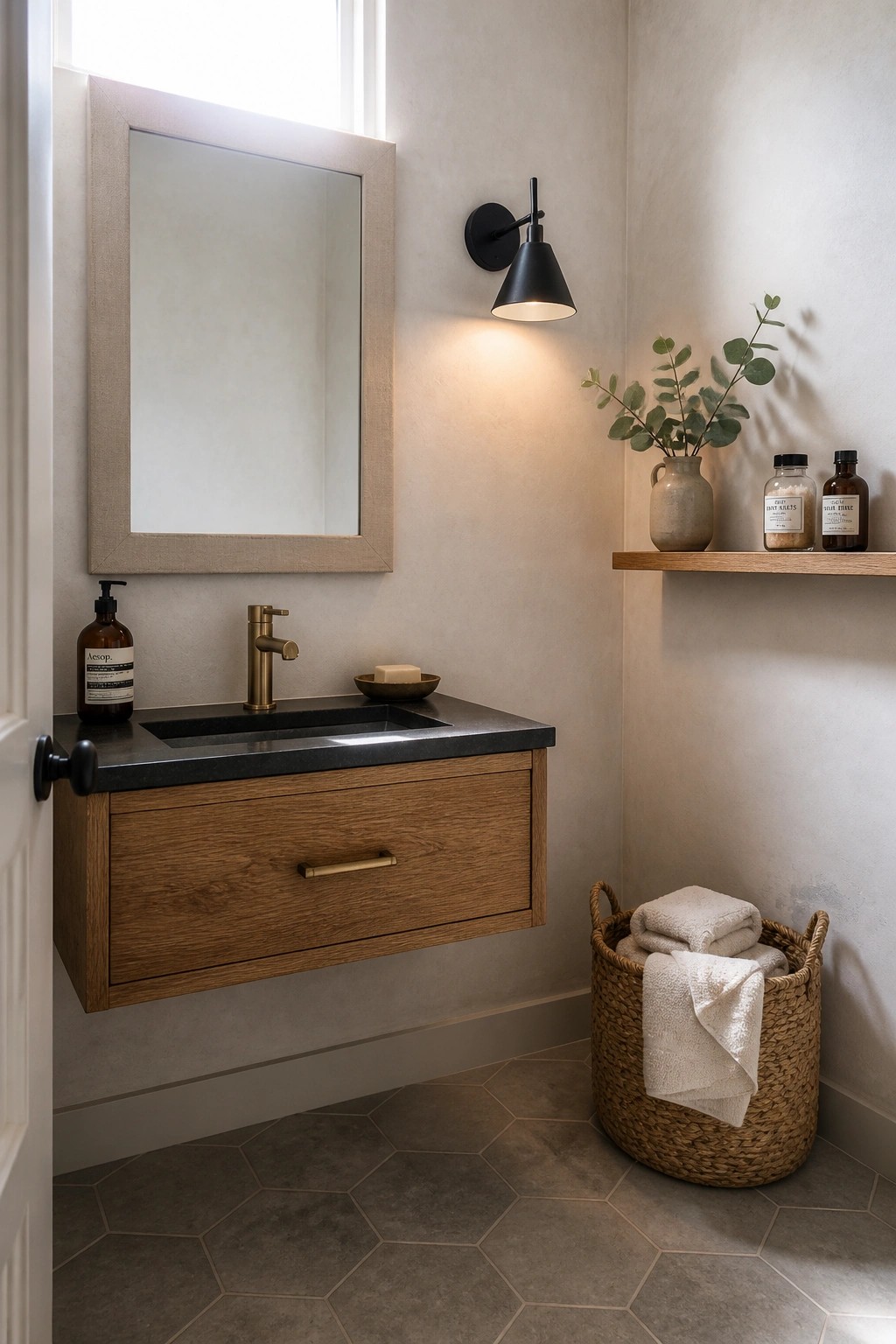
Soft neutral wall colors help a bathroom feel calmer and more open without much effort. The warm beige tone here blends easily with the wood vanity and keeps the whole space from feeling cold or busy.
This works especially well in smaller bathrooms or homes with a farmhouse lean. Choose one soft neutral for the walls, then let the natural wood and simple fixtures carry the rest of the look.
Soft Taupe Vanities For Neutral Bathrooms
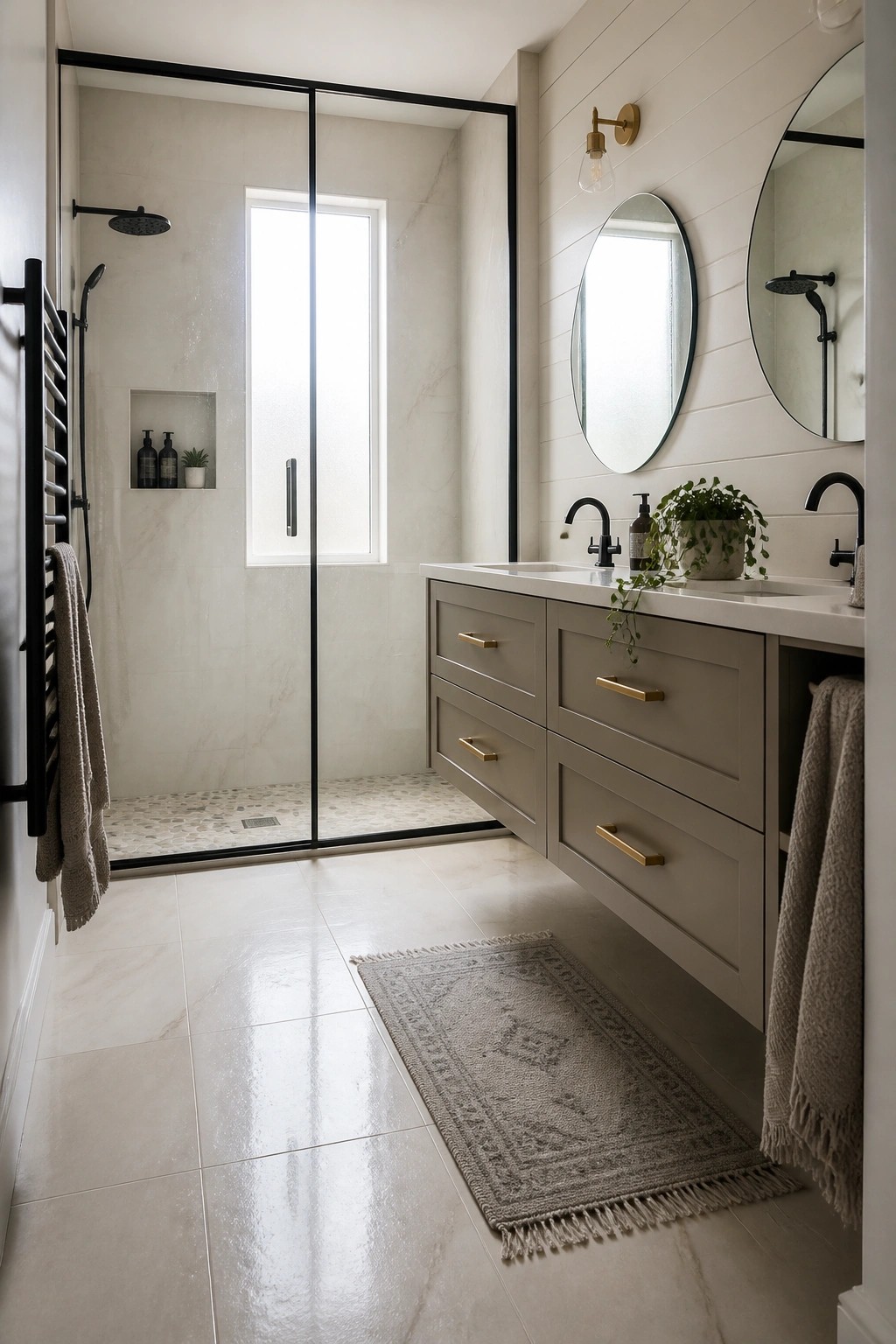
A soft taupe vanity works well in a neutral bathroom because it adds just enough warmth without pulling the space into darker territory. The color sits comfortably between gray and beige, so it pairs easily with white tile and marble surfaces while still giving the room some weight.
This choice suits farmhouse homes that want a calm, lived-in look rather than a bright all-white scheme. Stick with simple gold or black hardware and keep other finishes light so the taupe stays the main anchor.
Soft Neutral Tones In A Farmhouse Dining Nook
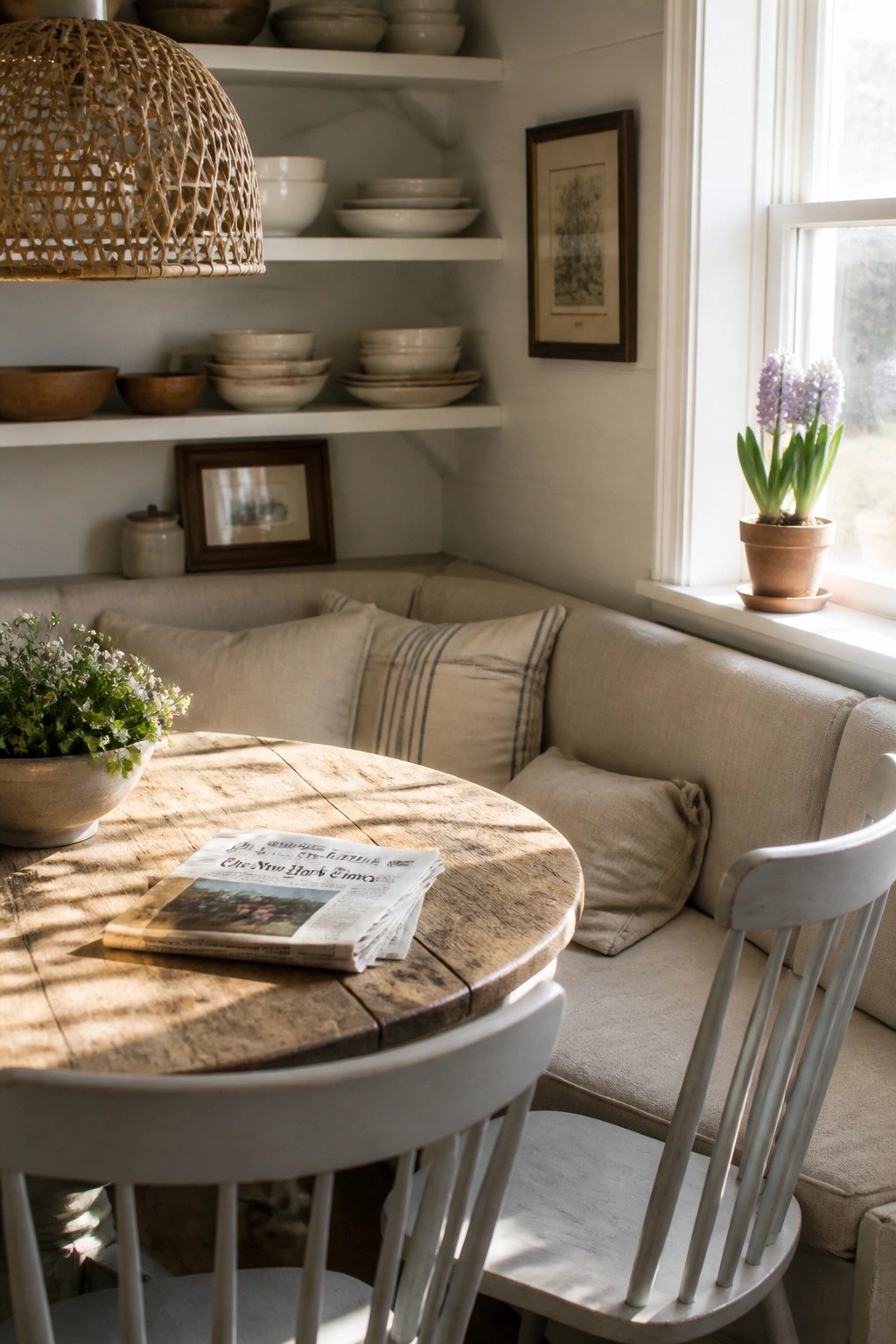
Soft neutrals make this corner feel calm and open even with the built-in bench taking up space. The walls, upholstery, and cushions stay in the same light range so the room does not feel busy or closed in.
This works best in smaller eating areas or kitchen nooks where you want things to stay simple. Use linen or cotton in warm off-whites and beiges, then bring in wood tones and one or two plants for a little life.
Soft Neutrals In The Laundry Room
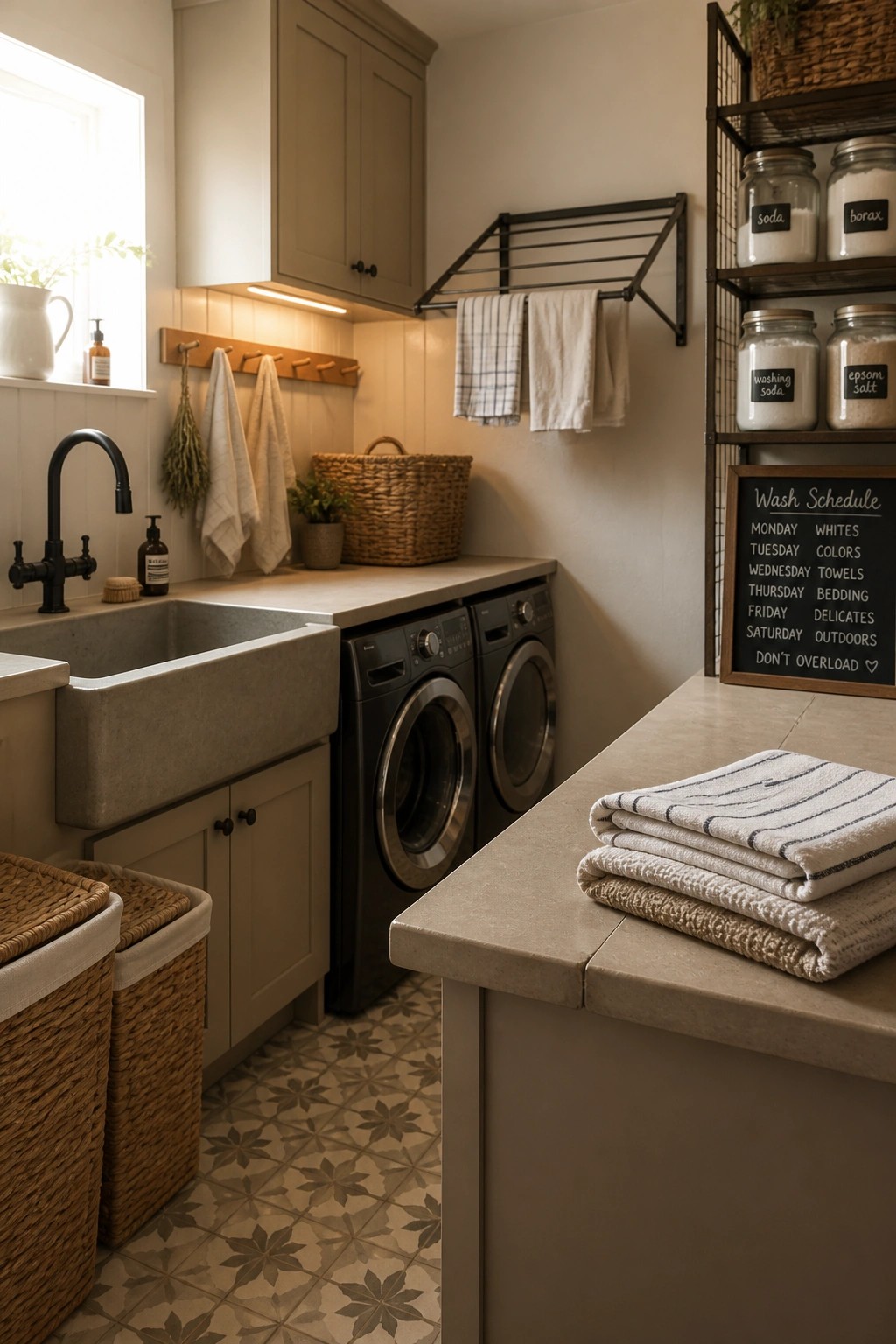
Soft neutrals keep a laundry room from feeling like a purely functional space. The warm greige cabinets and matching counter tie everything together without competing with the patterned floor or the concrete sink.
This palette works best in smaller utility rooms where you want things to feel calm rather than busy. Use the same soft tones on walls and cabinetry, then bring in texture through baskets and linens so the room stays simple but still practical.
Soft Pastels On Natural Wood
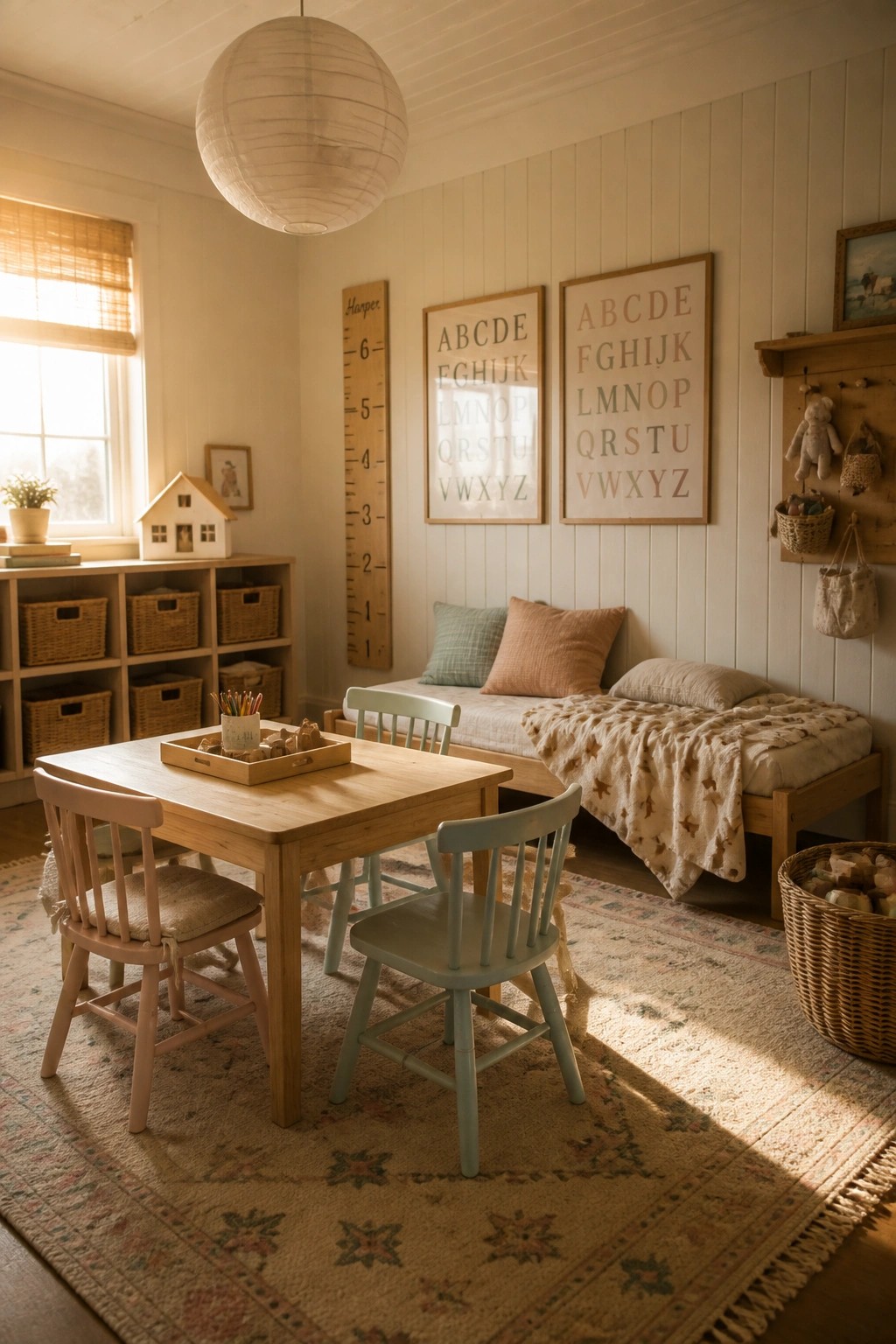
A simple way to add interest to a soft neutral palette is to bring in a few pastel furniture pieces against wood tones. The table stays warm and steady while the chairs introduce gentle color that feels playful rather than bold.
This works well in a child’s room or any space where you want light color without losing the calm base. Keep the walls and larger textiles neutral so the pastels stay easy to change later.
Soft Neutrals Layered With Wood And Texture
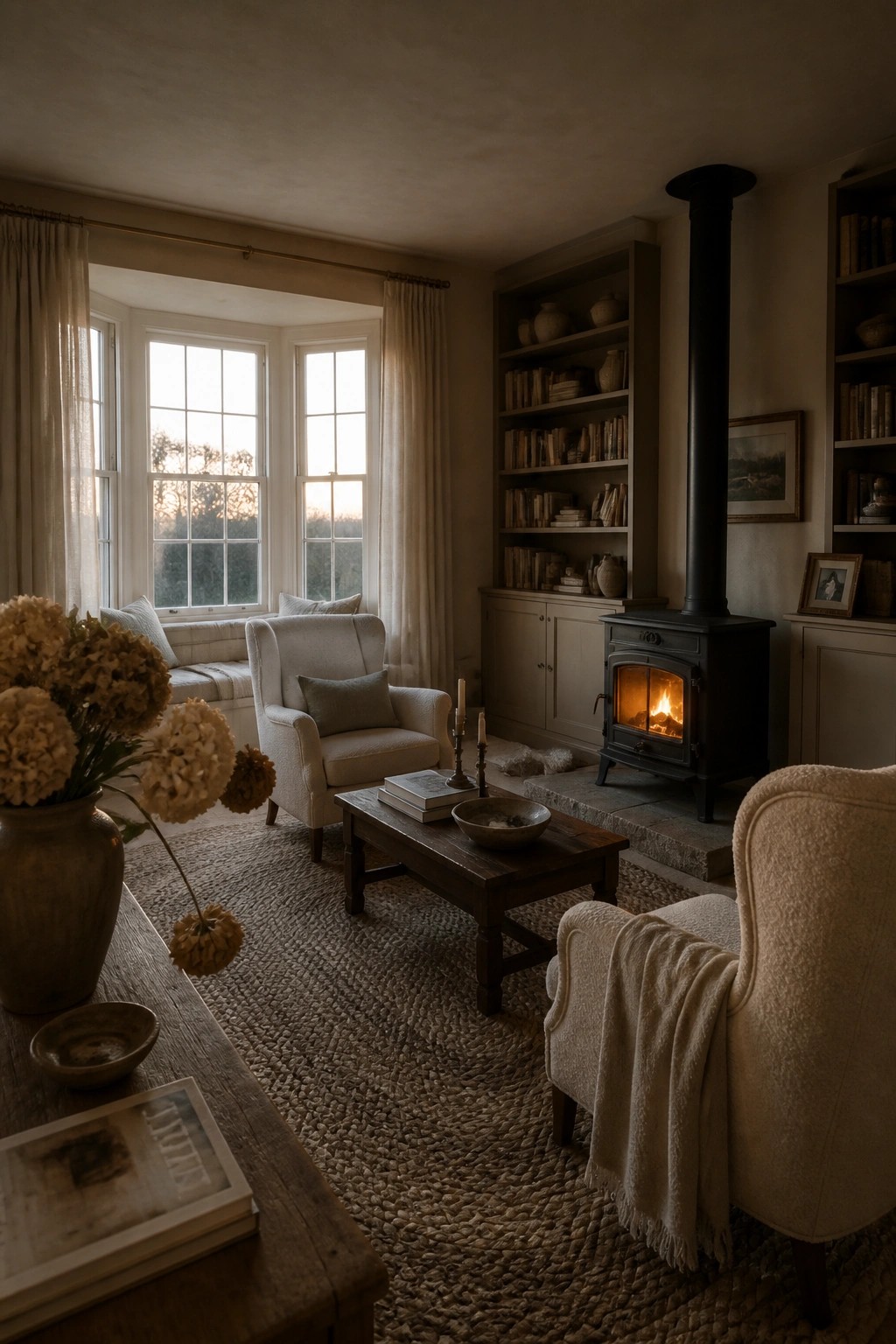
Many farmhouse rooms feel calmer when the colors stay quiet and the interest comes from the mix of materials. Soft creams, warm beiges, and grayed woods sit together without competing, which keeps the space from feeling flat or too styled.
This works especially well in living rooms that get used every day. Start with the largest surfaces like walls, rugs, and seating, then bring in wooden tables and simple linen or wool pieces on top. The goal is low contrast so the room stays easy to live with over time.
Soft Neutral Walls For Open Shelving
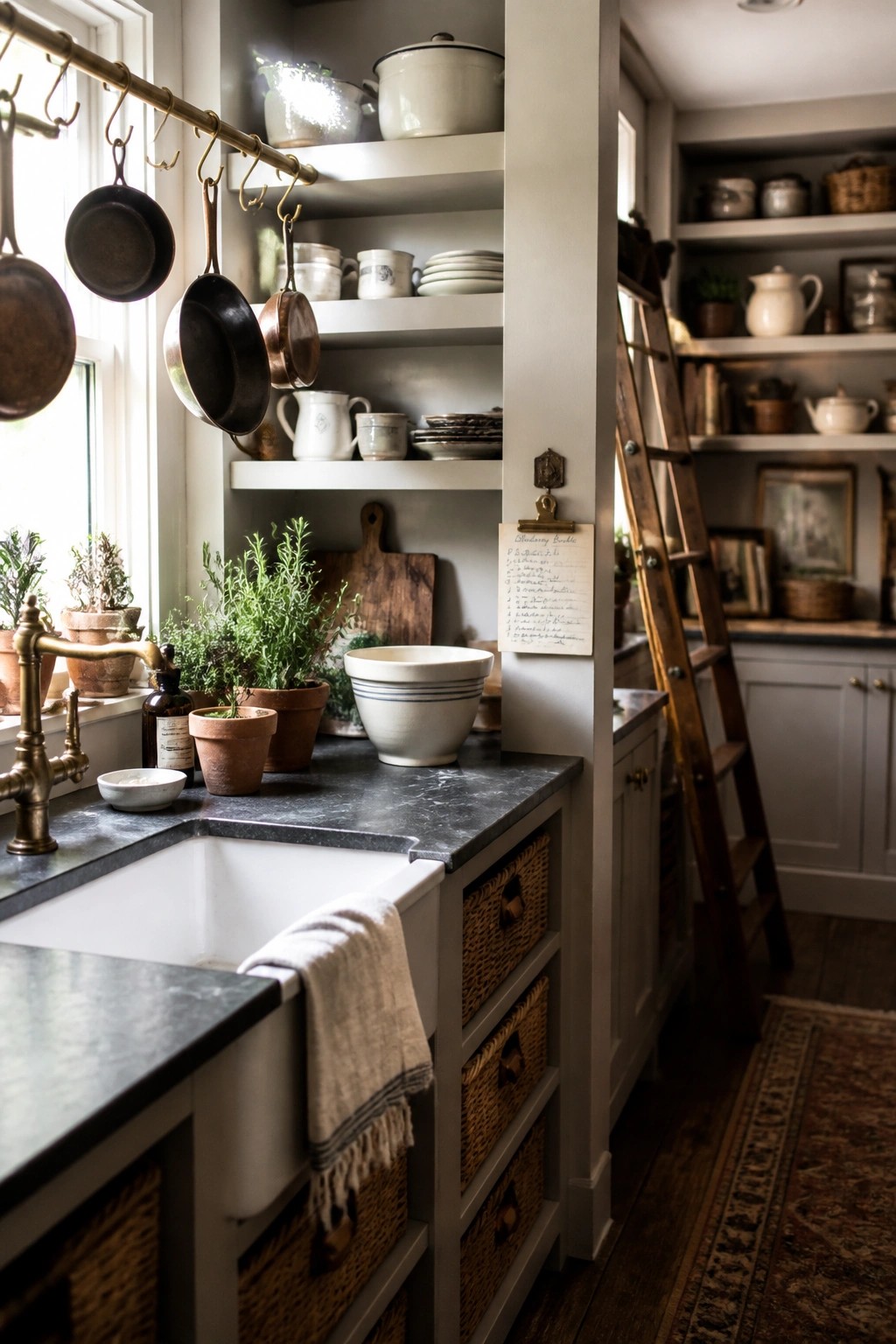
Soft gray walls give open shelving room to breathe without looking cluttered. The pale tone keeps the whole area feeling light even when the shelves hold stacks of dishes, pots, and everyday pieces.
This approach works best in kitchens that already have some wood and dark stone, since the neutral wall color balances those heavier elements. Stick with white, cream, and light stoneware on the shelves so the soft wall color stays the main background.
Soft Neutrals in Farmhouse Entries
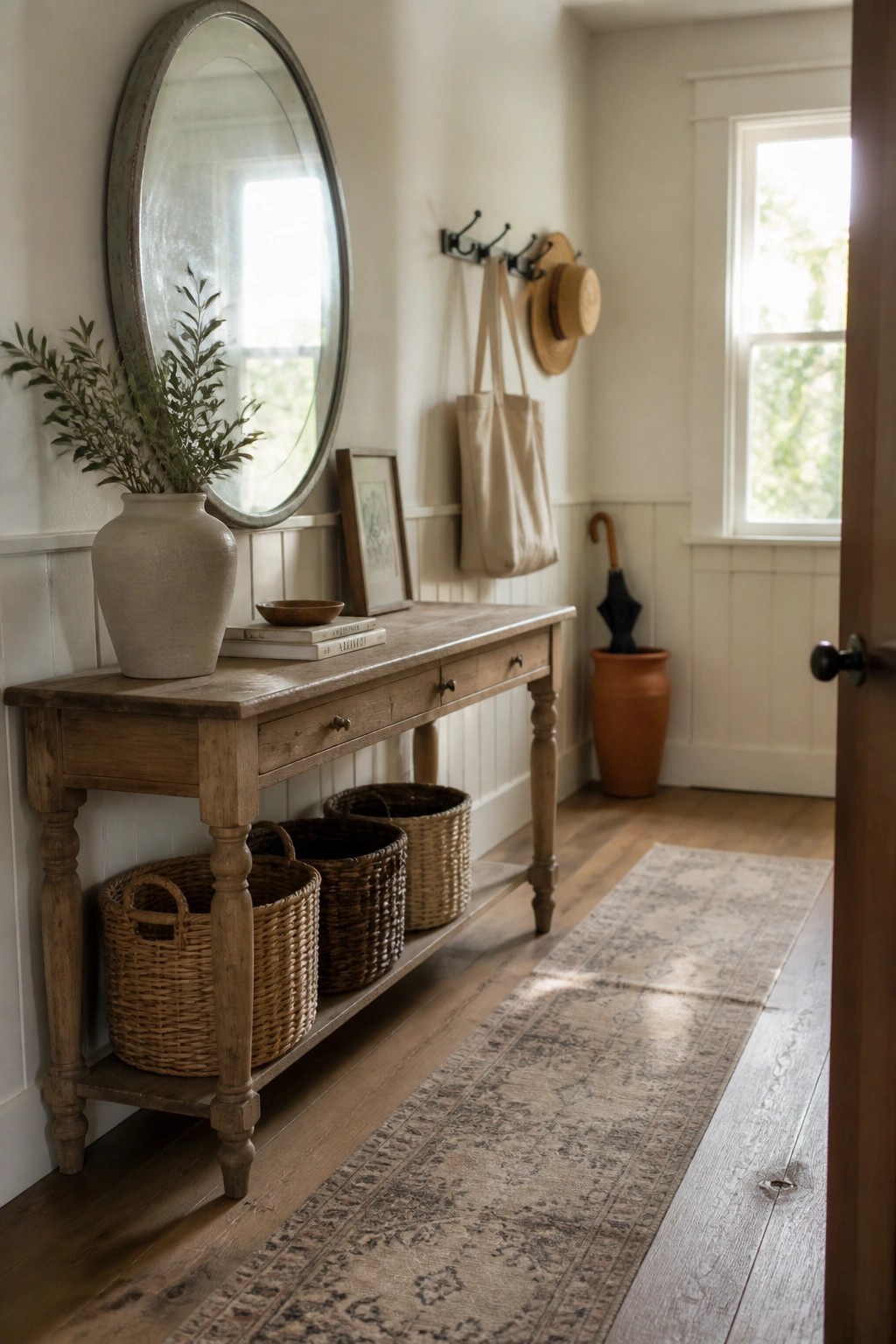
A soft neutral palette keeps an entryway feeling open and easy to live with. The mix of light wood tones on the console, off-white walls, and natural baskets shows how these colors can handle daily use without looking tired or heavy.
This works best in homes that want a simple, unfussy look. Choose similar warm woods and pale walls, then bring in baskets or other woven pieces for storage that stay quiet within the palette.
Soft Neutrals In The Bedroom
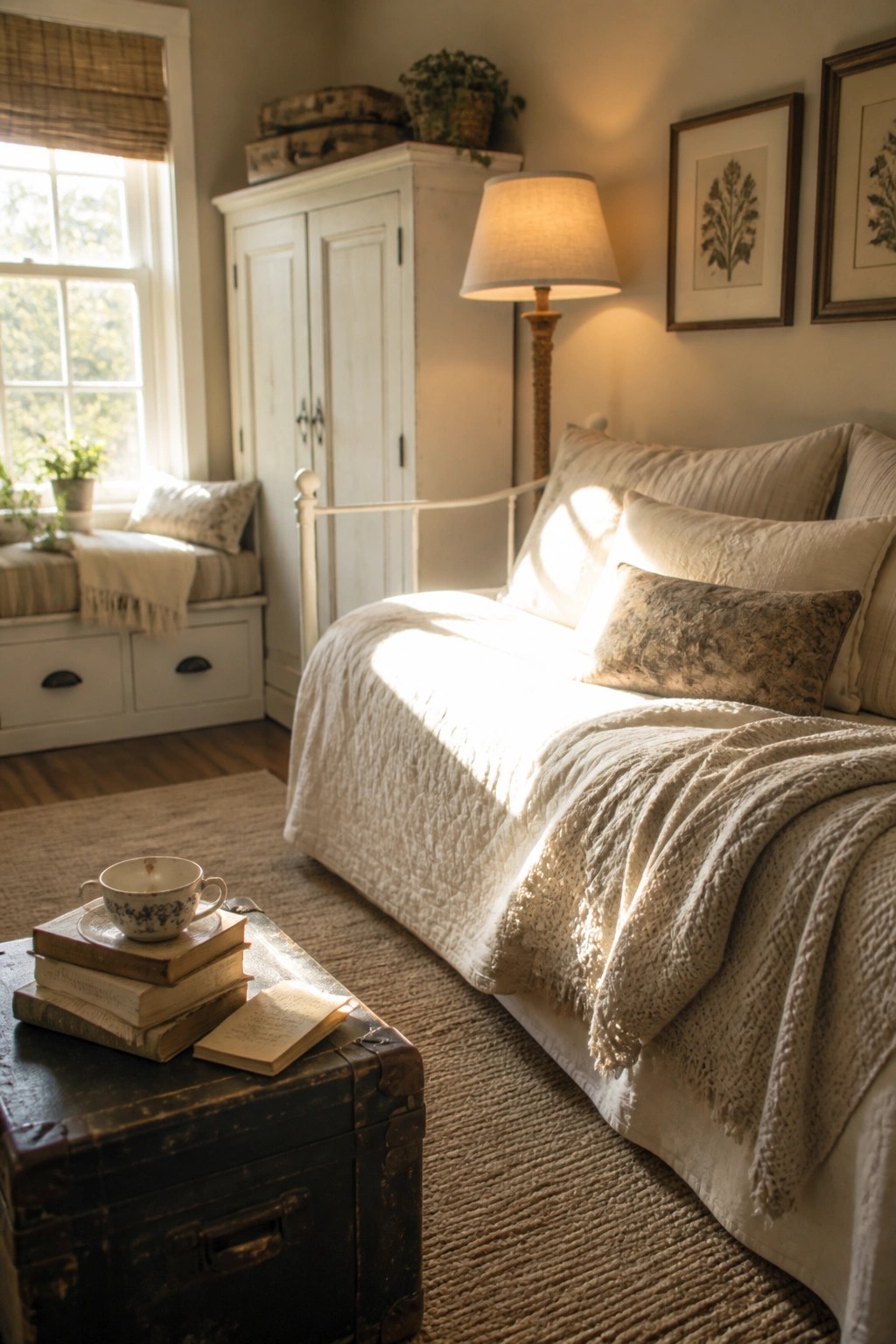
Soft neutrals work well in a bedroom because they keep the space feeling open and calm without much effort. Creams, whites, and light beiges on the walls and bedding blend together and let the natural light do most of the work.
This palette suits older homes or simple farmhouses that already have wood floors and basic trim. Add a few textured fabrics and one or two darker wood pieces so the room stays interesting but still restful.
Warm Wood Against Soft White Walls
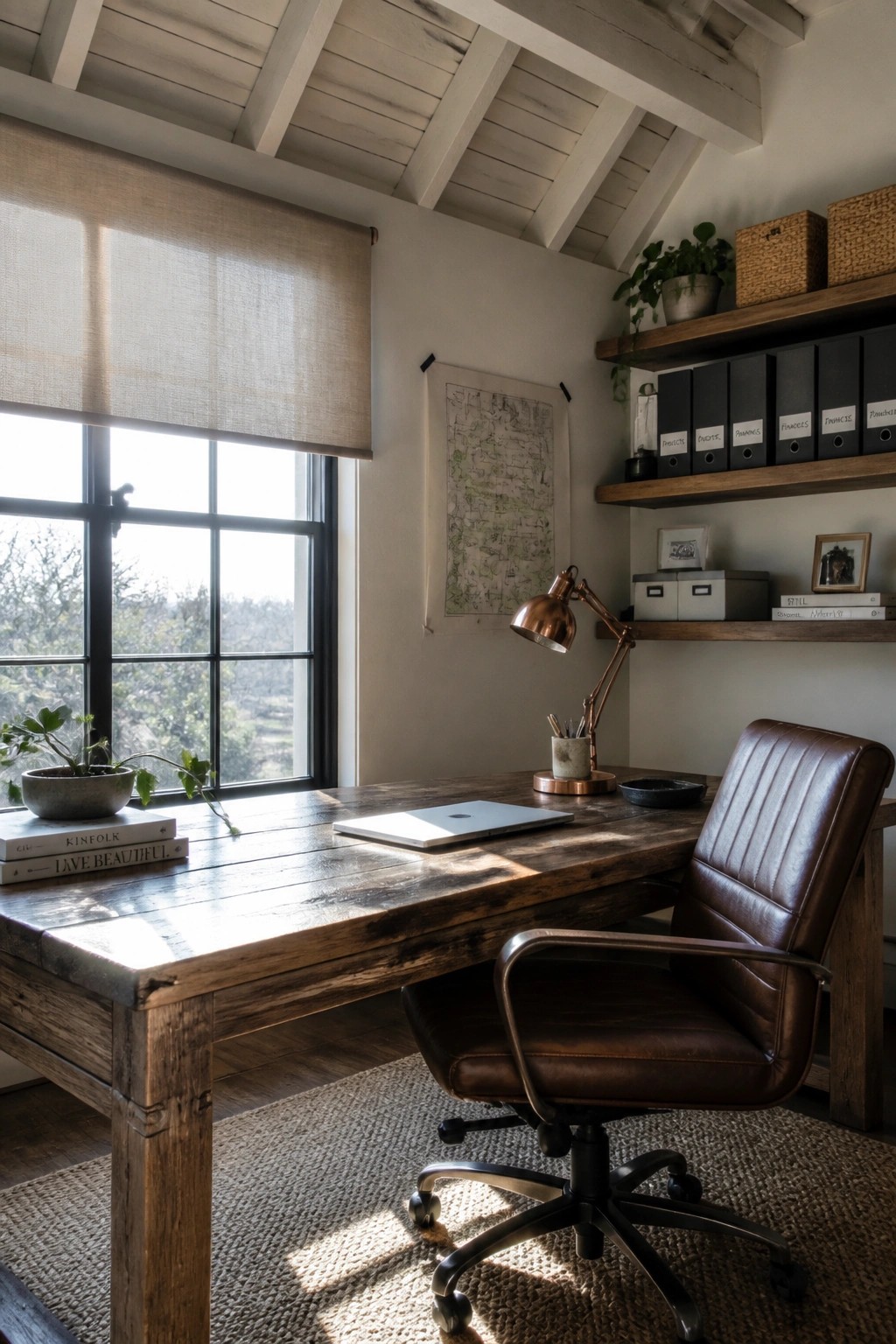
Many farmhouse interiors stay calm when the walls and ceiling stay in a soft white. This leaves room for wood furniture and leather pieces to add warmth without competing for attention.
It suits home offices and studies that get steady daylight. Keep the larger surfaces light and let one or two wood and leather items carry the color. The look stays simple and easy to live with over time.
Soft Neutrals With A Painted Ceiling
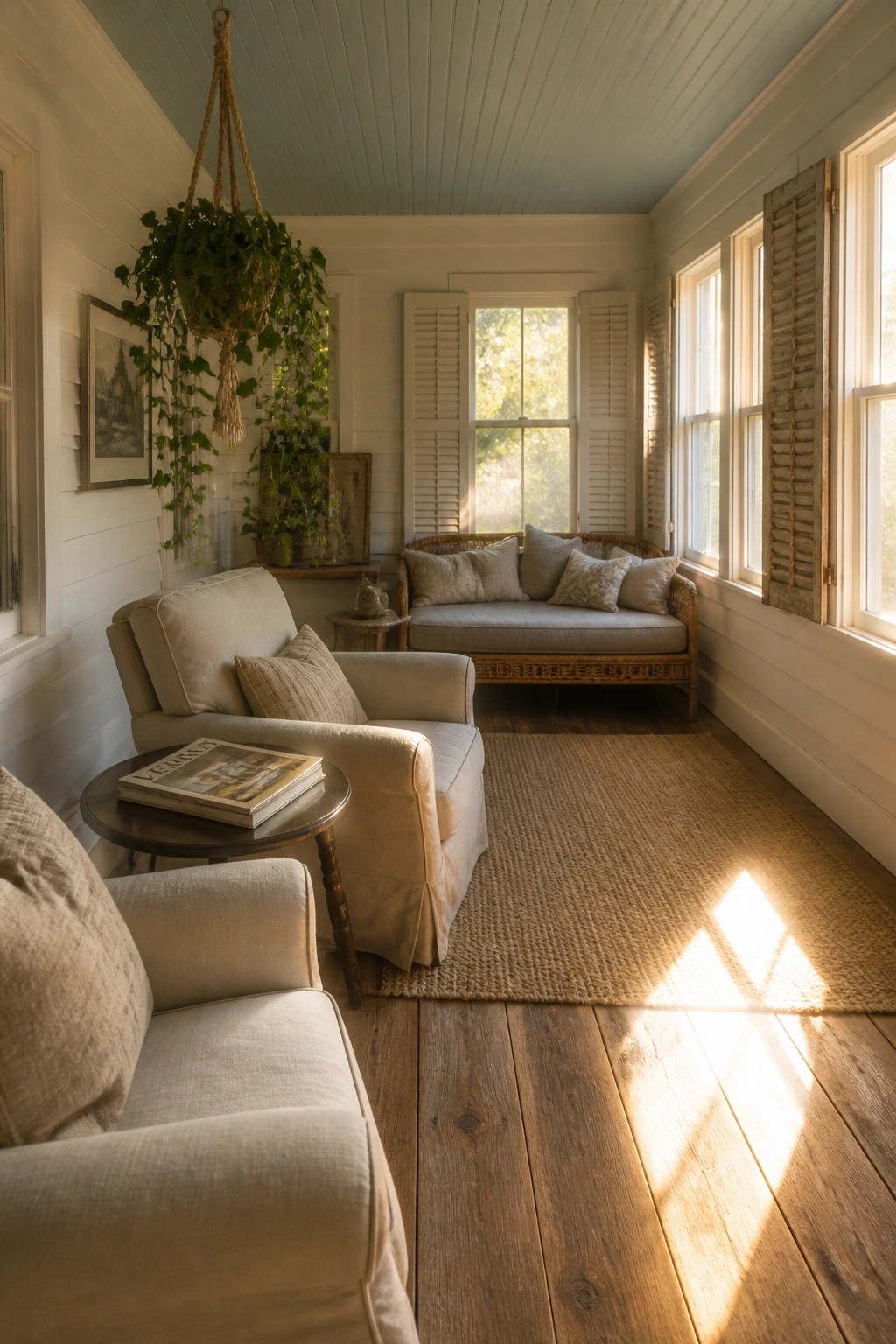
Soft neutrals work well in rooms that get strong natural light. The beige seating and wood floors stay quiet while the ceiling color adds a gentle lift that keeps the whole space from feeling flat.
This approach suits older homes or farmhouse additions where you want the walls and furniture to stay simple. Keep the ceiling color soft and test it on a large sample first since the light changes throughout the day.
Soft Neutrals on Bedroom Walls
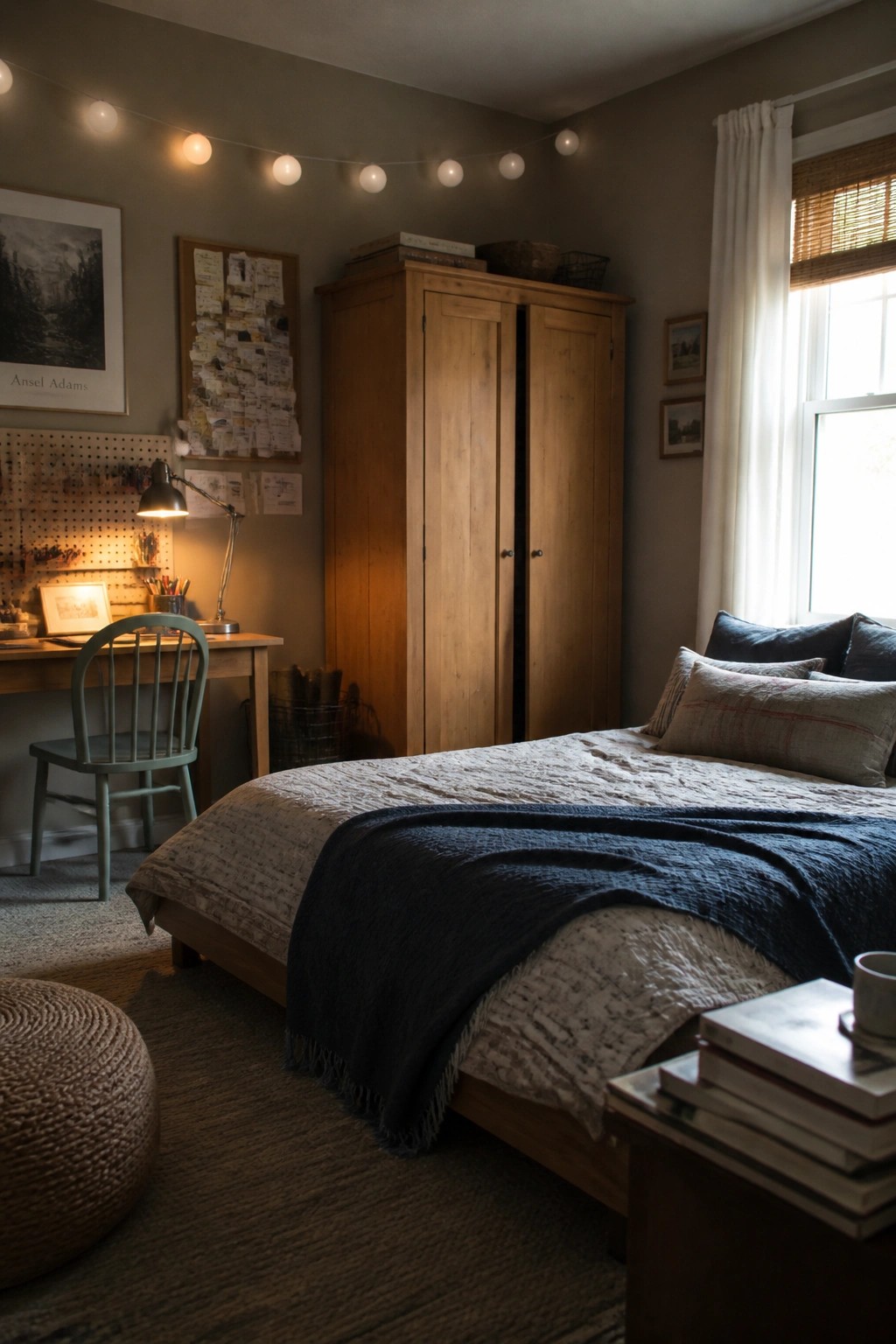
A muted wall color gives a bedroom an easy starting point. It keeps the space feeling calm while letting wood furniture and simple bedding do most of the work. The soft gray green here pairs well with the oak pieces and keeps everything from looking too stark.
This kind of palette works best in rooms that get steady daylight. It suits farmhouse homes that want a restful feel without a lot of contrast. Keep the bedding and curtains in the same range of creams and light grays so the room stays quiet.
Sage Green Cabinets in Soft Neutral Kitchens
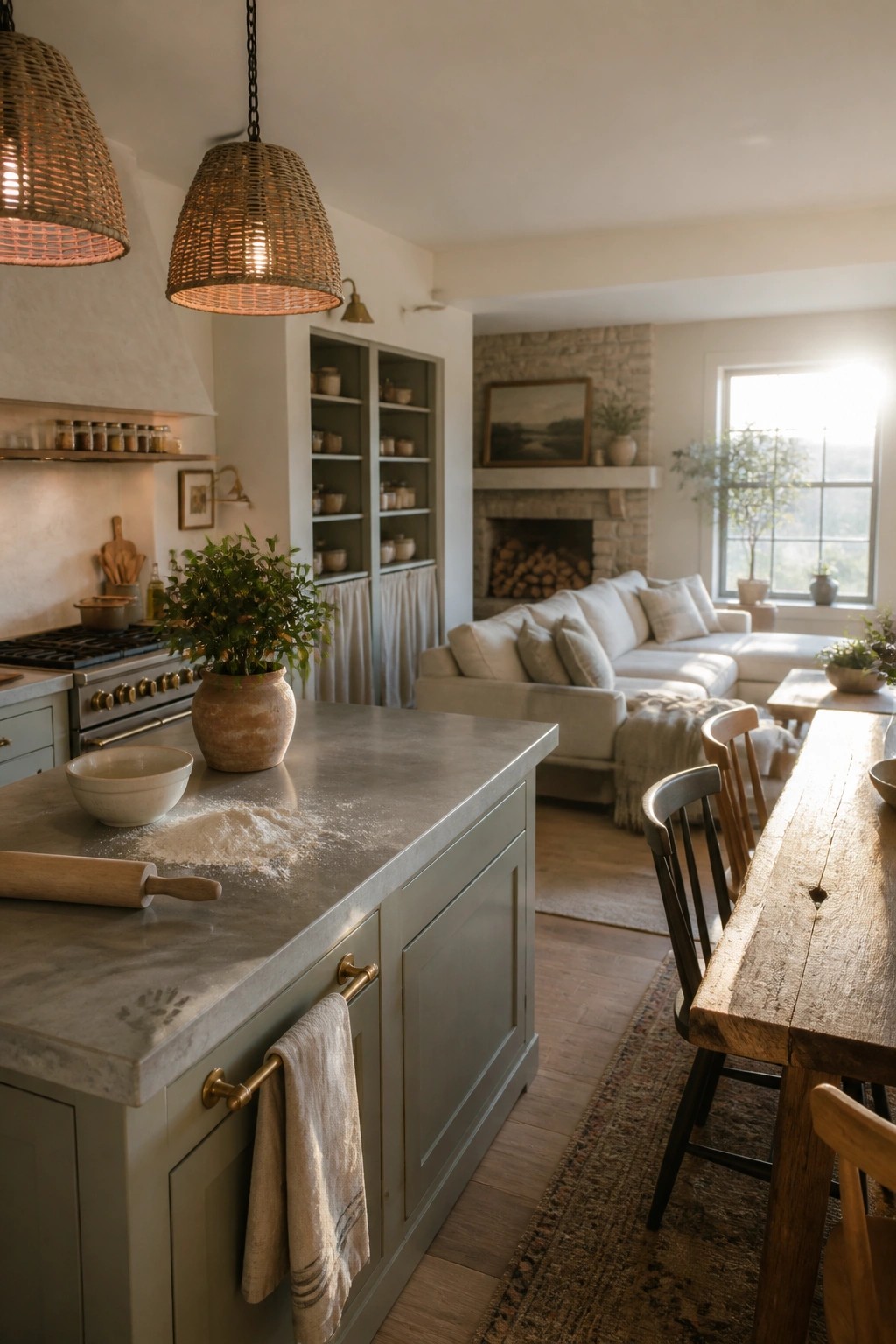
A soft sage green on cabinets gives a farmhouse kitchen some color without pulling away from the neutral palette. It blends easily with gray counters and warm wood tones, which helps the whole space feel calm and connected to the living area nearby.
This color works best in open layouts where the kitchen sits beside seating areas. Stick to off-white walls and light upholstery so the green stays as a quiet accent rather than taking over.
Soft Neutrals For Everyday Utility Rooms
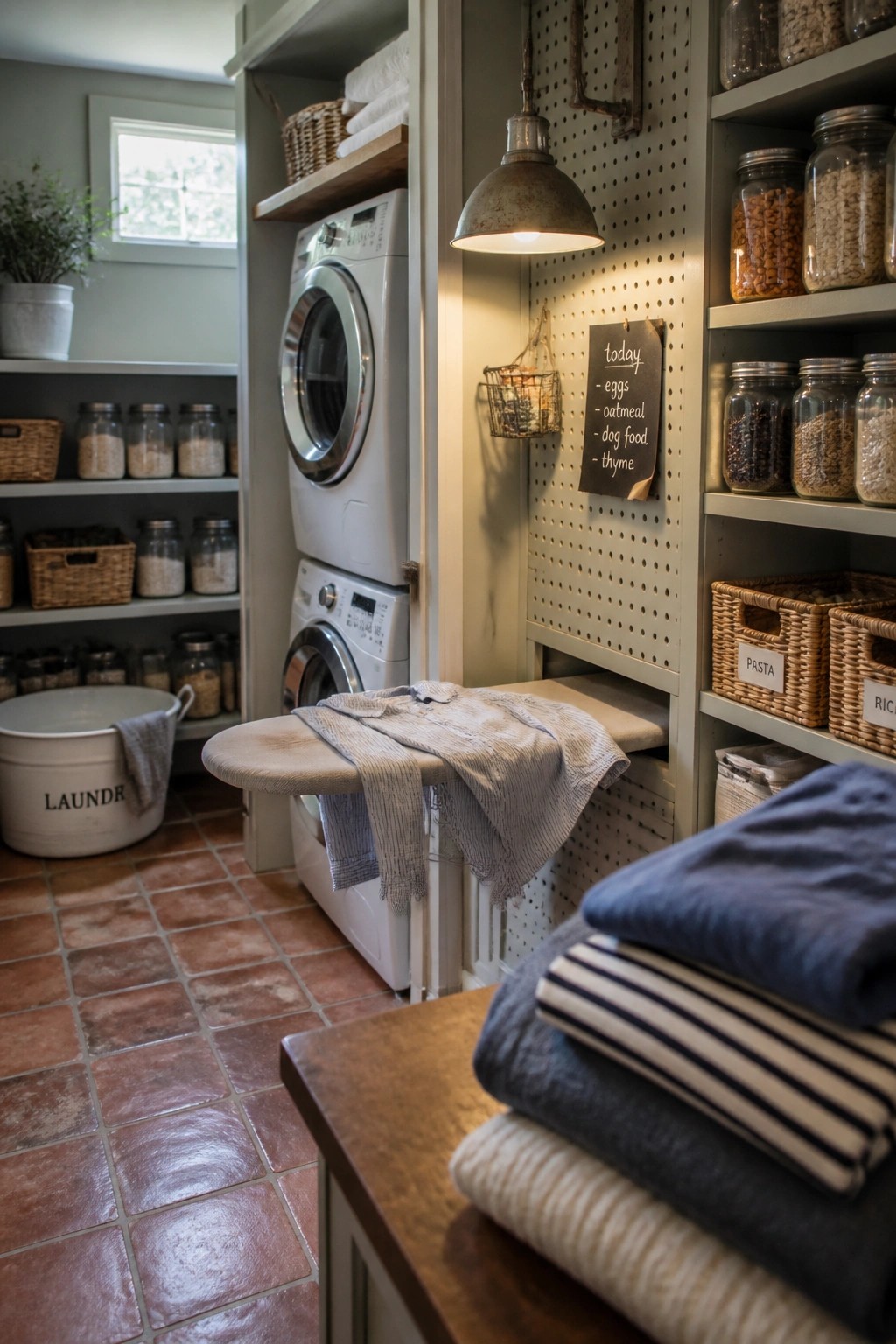
Many people use the same soft gray on laundry room walls that they already have in the kitchen or hallways. It keeps the space from feeling cut off from the rest of the house and makes the room feel calmer even when it is full of baskets and supplies.
This approach works best in smaller homes where the laundry area sits near main living spaces. Keep the floor in a warm terracotta or wood tone and use simple open shelves so the neutral walls stay the main background.
Frequently Asked Questions
Q: Which soft neutral works best if my farmhouse has lots of exposed beams?
A: Go with a cool gray to contrast the warm wood tones. It keeps the room balanced and lets the beams stand out as a feature.
Q: How can I test colors before committing to a full paint job?
A: Paint large poster boards and move them around the room. Check them at different times to see the true effect.
Q: Should I stick to one palette throughout the house?
A: Vary the shades slightly from room to room. This adds subtle interest while keeping the soft neutral theme consistent overall.
