

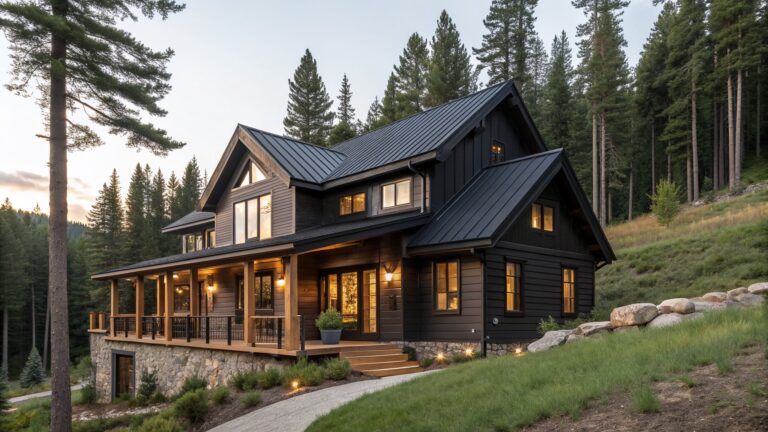
I have always noticed that the siding color and texture on a cabin set the tone long before anyone reaches the front door.
Dark rustic finishes tend to anchor a structure in the woods when the materials match the surrounding trees rather than fight them.
I learned this the hard way after updating my own cabin with the wrong shade.
Window frames and roof edges then decide whether the whole exterior feels settled or still temporary.
A couple of these material choices look worth testing on a small section first to see how they age in real shade.
Dark Siding Helps a Cabin Blend Into the Trees
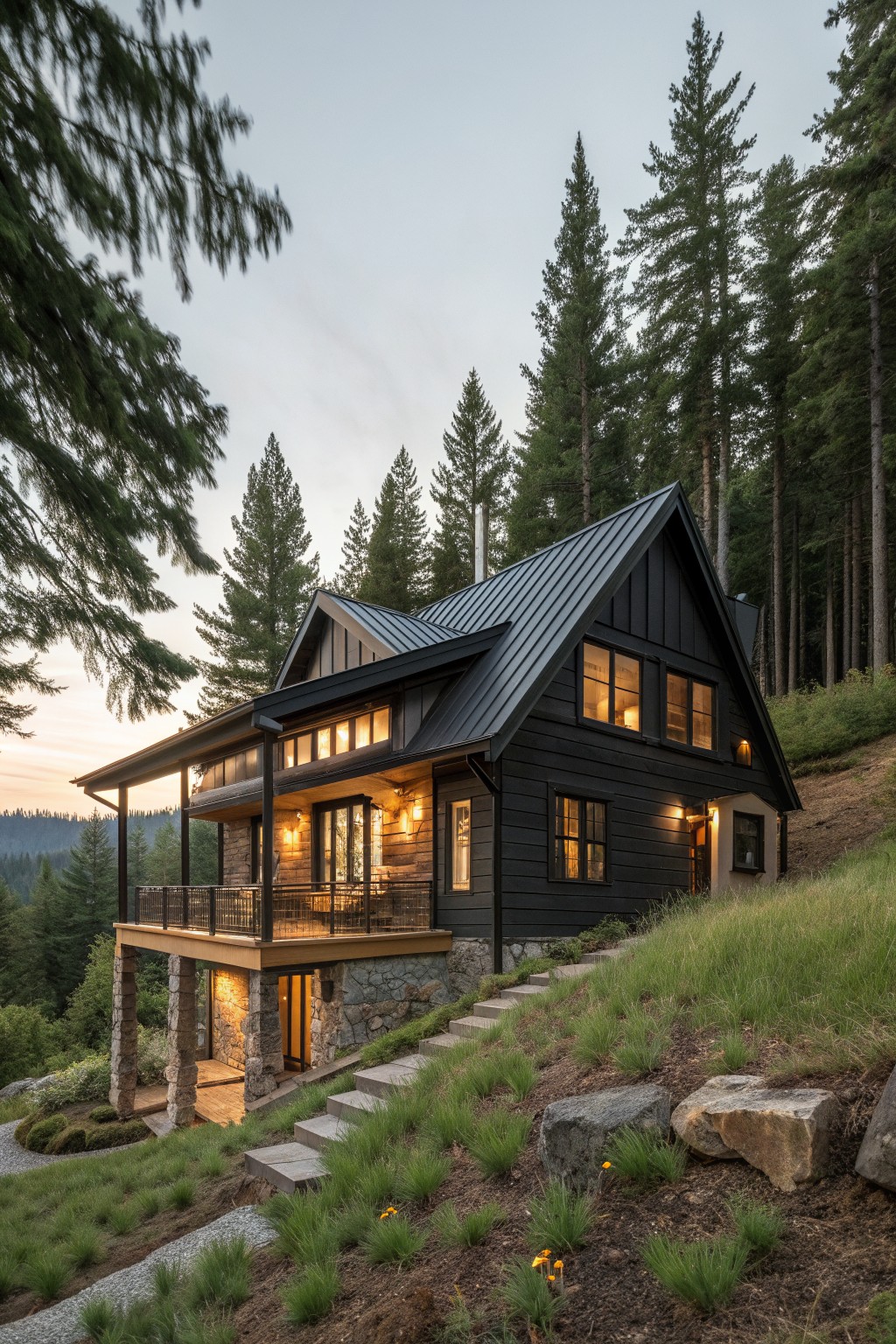
Dark siding works well on cabins because it lets the house sit back in the landscape instead of fighting for attention. The black finish on this example keeps the structure from feeling heavy even though it is fairly large, and it pairs naturally with the surrounding evergreens.
This approach suits wooded lots best, especially when the roof is a dark metal and the base uses stone. Just watch the window trim and any lighting so the house does not fade away completely once the sun goes down.
Dark Siding For Woodland Cabins
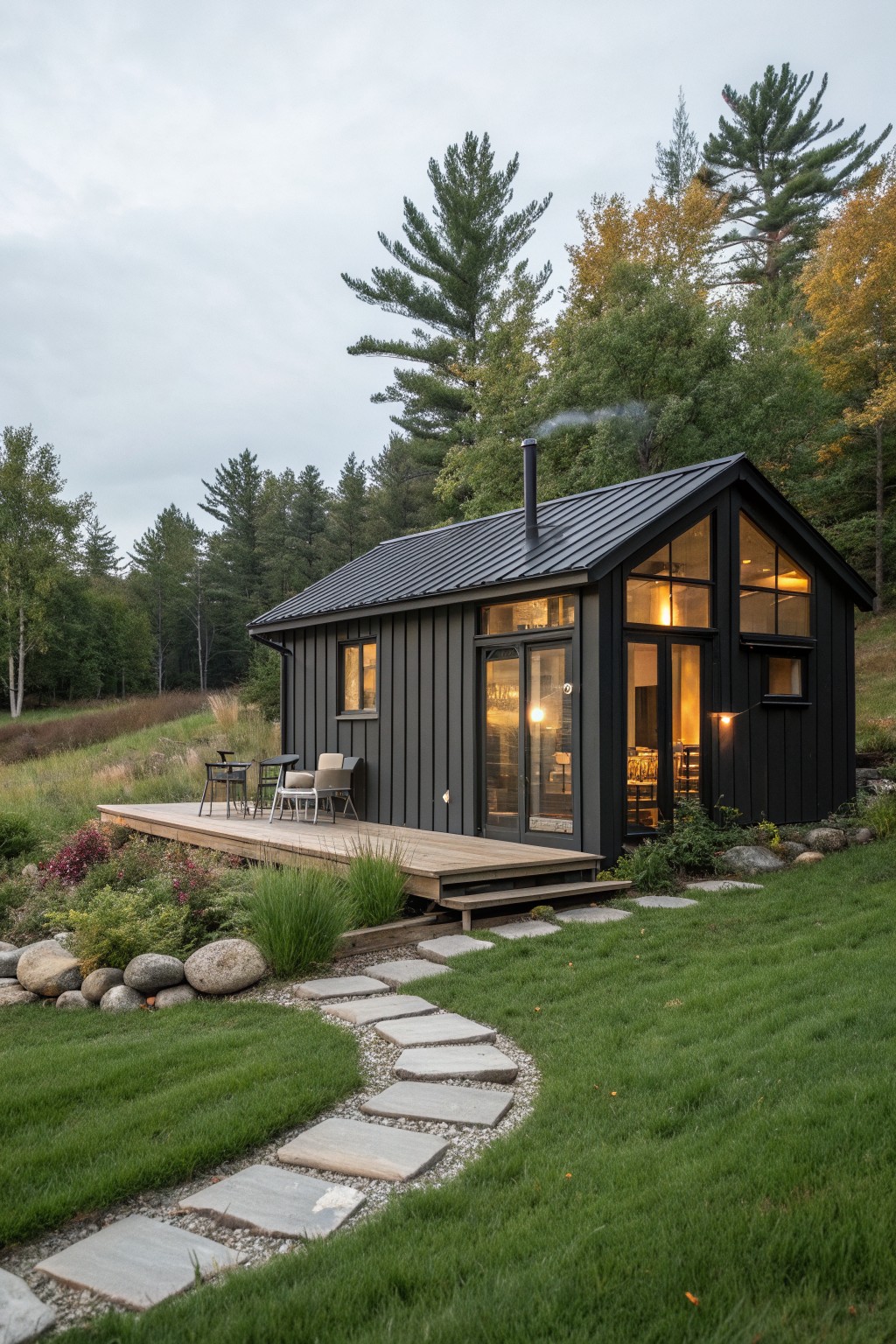
A dark exterior makes a cabin feel more settled in a wooded setting. The near black siding absorbs light and lets the structure sit back among the trees instead of competing with them.
This works especially well on smaller builds where you want a low profile. Keep the trim simple, add a metal roof for contrast, and let the surrounding plants stay fairly natural so the whole thing reads as part of the landscape rather than something added on top of it.
Dark Wood Exteriors That Settle Into the Woods
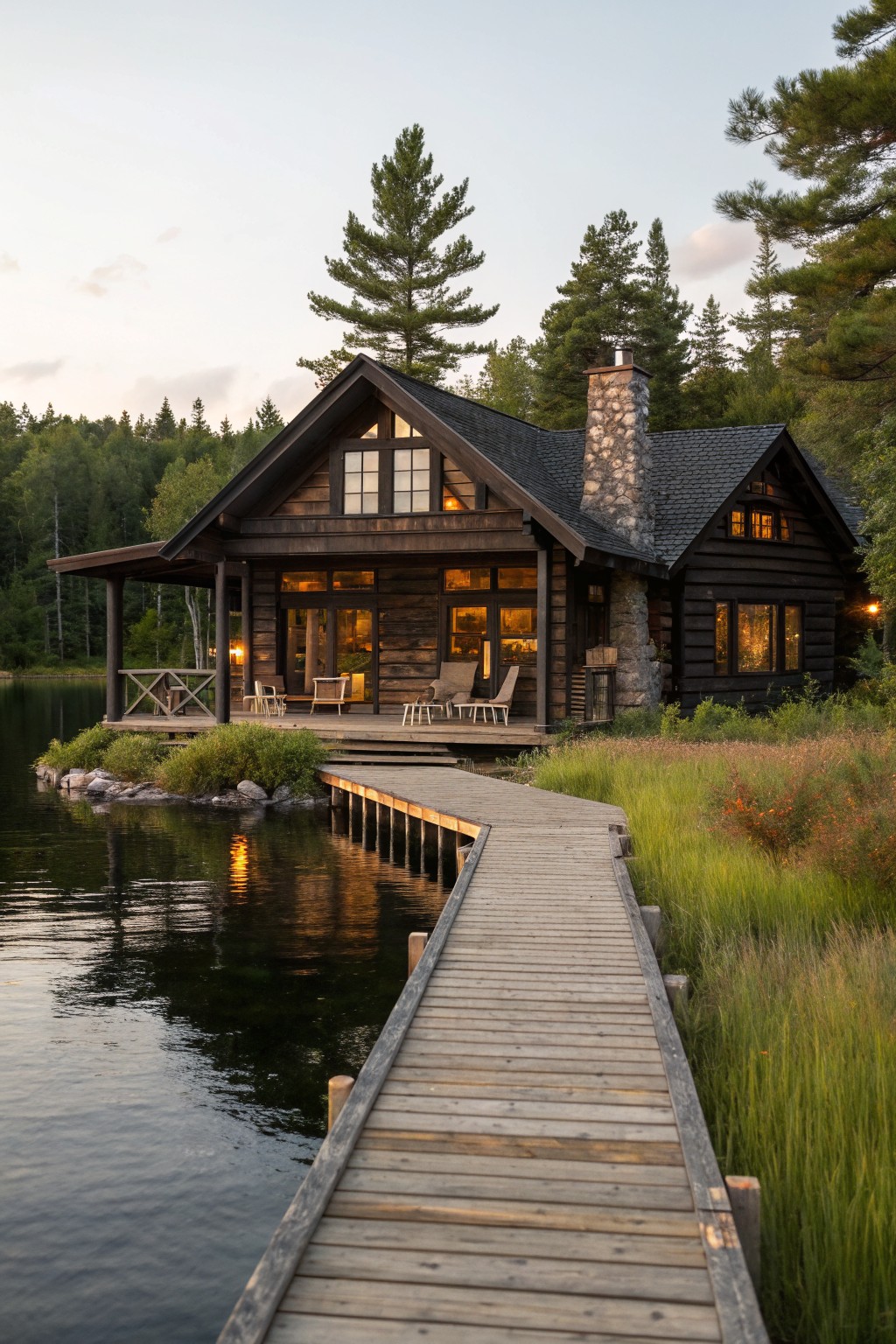
Dark wood siding works well on cabins because it lets the building blend into the trees rather than fight them for attention. The deep color picks up the shadows from the surrounding pines and makes the whole structure feel more sheltered and quiet.
This finish suits homes in dense woodland settings where you want the architecture to feel part of the landscape. Use it on the main body of the house and keep accents like stone chimneys to add weight without breaking the calm effect.
Dark Siding With Wood Accents
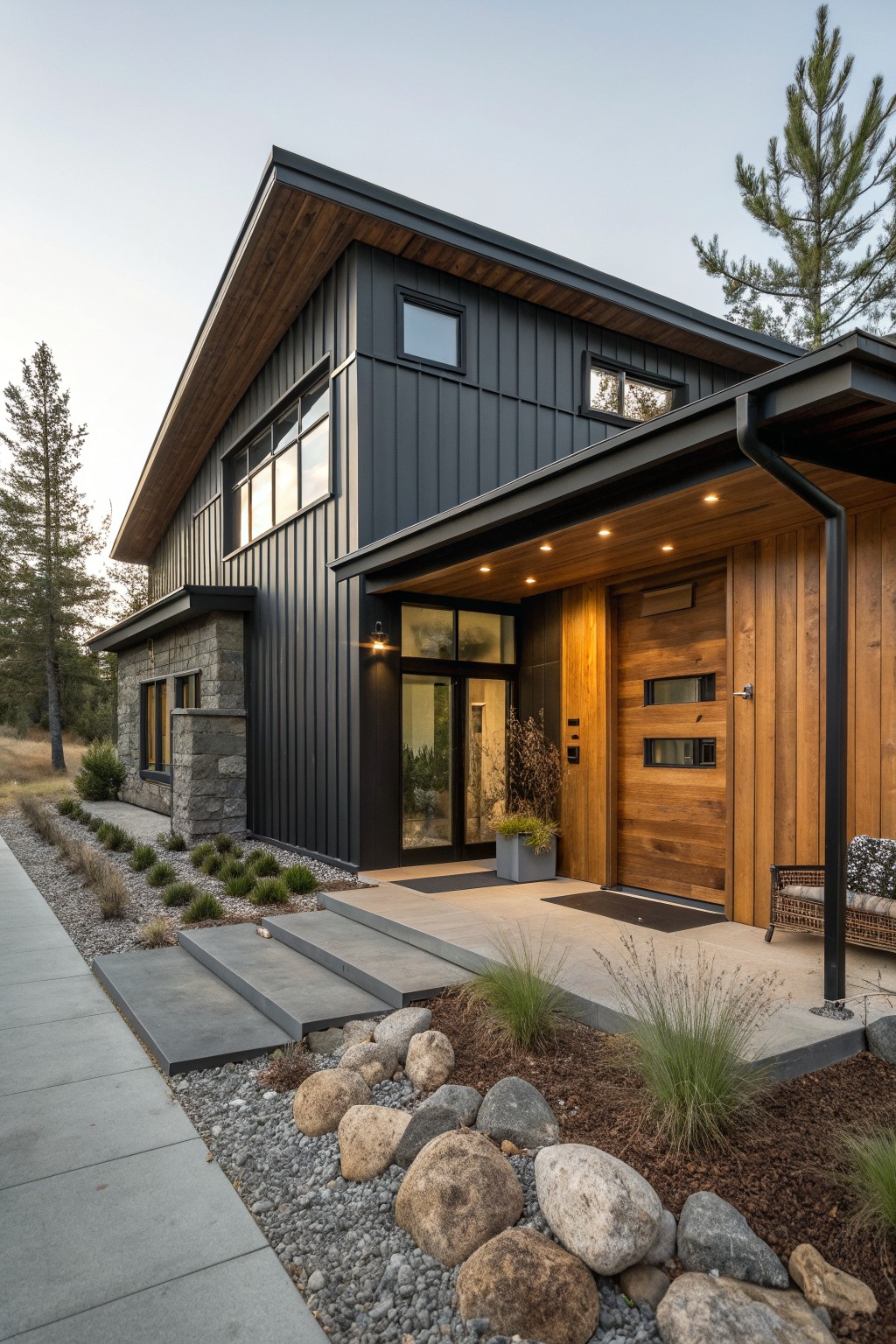
Dark siding works well on cabin exteriors because it helps the house sit quietly among trees without disappearing completely. The vertical panels keep the look clean and fairly simple, which suits wooded lots where too much detail can start to feel busy.
Adding wood around the entry and on sections of the facade brings in warmth and texture that dark surfaces alone can lack. This mix suits homes that want a modern edge without losing the cabin feel, and it holds up better than all-wood exteriors in damp climates.
Stone Bases Under Timber Posts
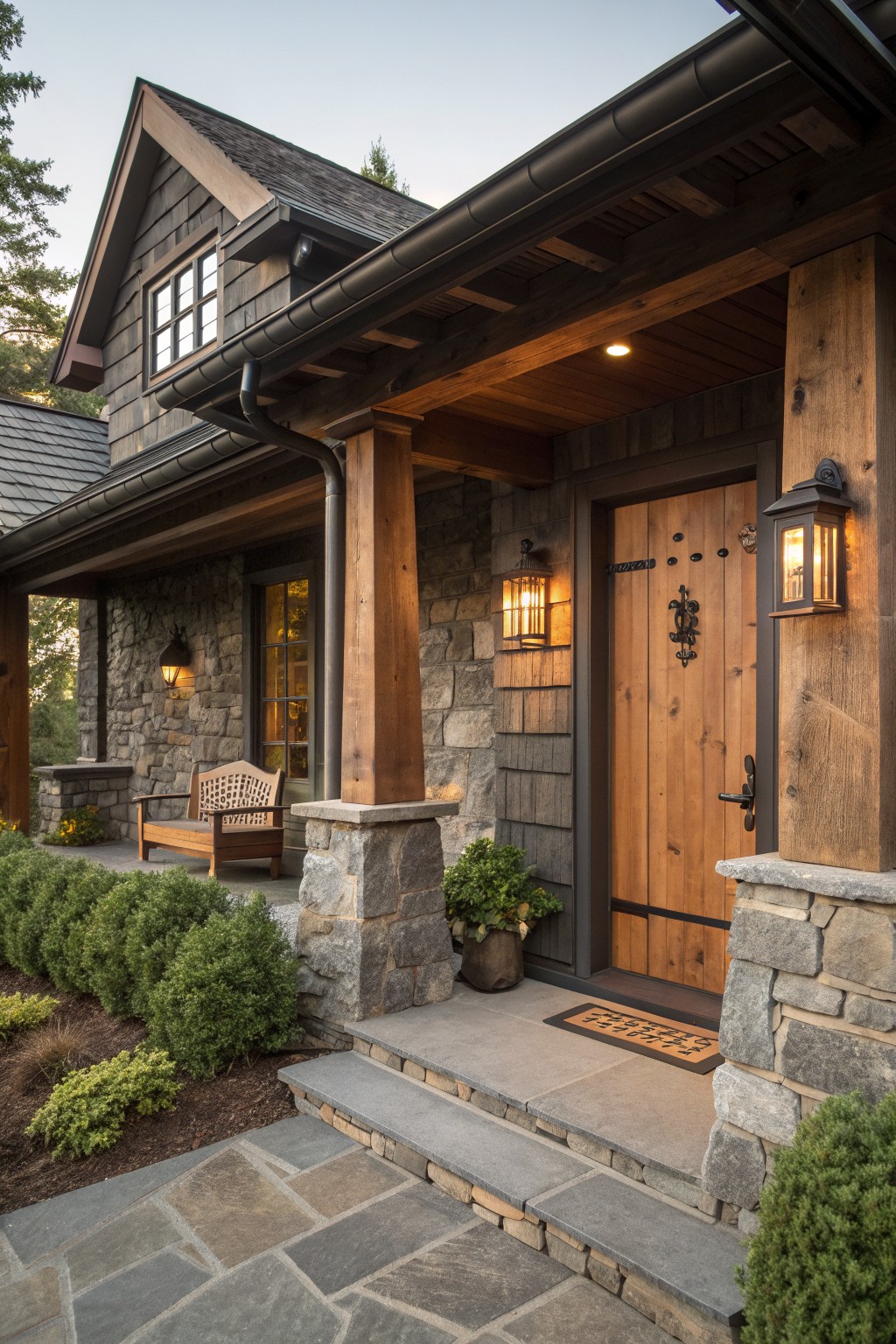
Stone bases under the main porch posts give a cabin that settled, grounded look right away. They break up the height of the wood so the whole front does not feel too tall or light, and they tie in nicely with any stone already on the house.
This detail works best on homes that already use both wood and stone. Keep the stone section low, around knee or waist height, and match the stone to the foundation if you can. It also keeps the bottom of the posts drier in wet weather.
Fire Pit Patios That Extend the Living Space
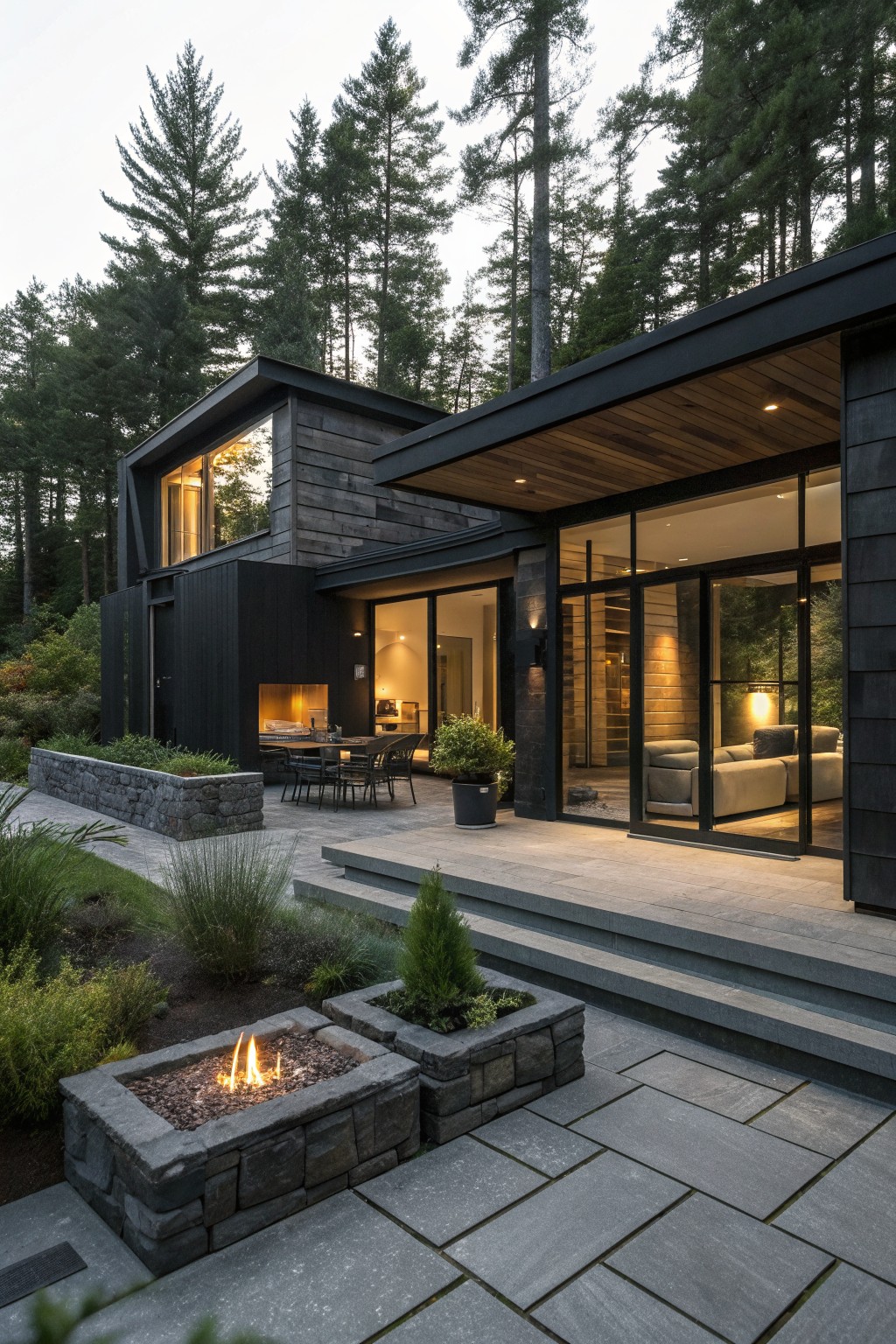
A fire pit set into a stone patio gives the outdoor area a clear purpose. It turns the space right outside the doors into a place people actually use after dark. The dark siding on the house helps the glow from the fire stand out without extra lighting.
This setup works best on cabins that already have a paved area off the main living room. Keep the pit low and the seating simple so the focus stays on the fire and the surrounding trees. Avoid crowding the edges with too many plants if you want easy movement between the house and the patio.
Dark Siding on Cabin Exteriors
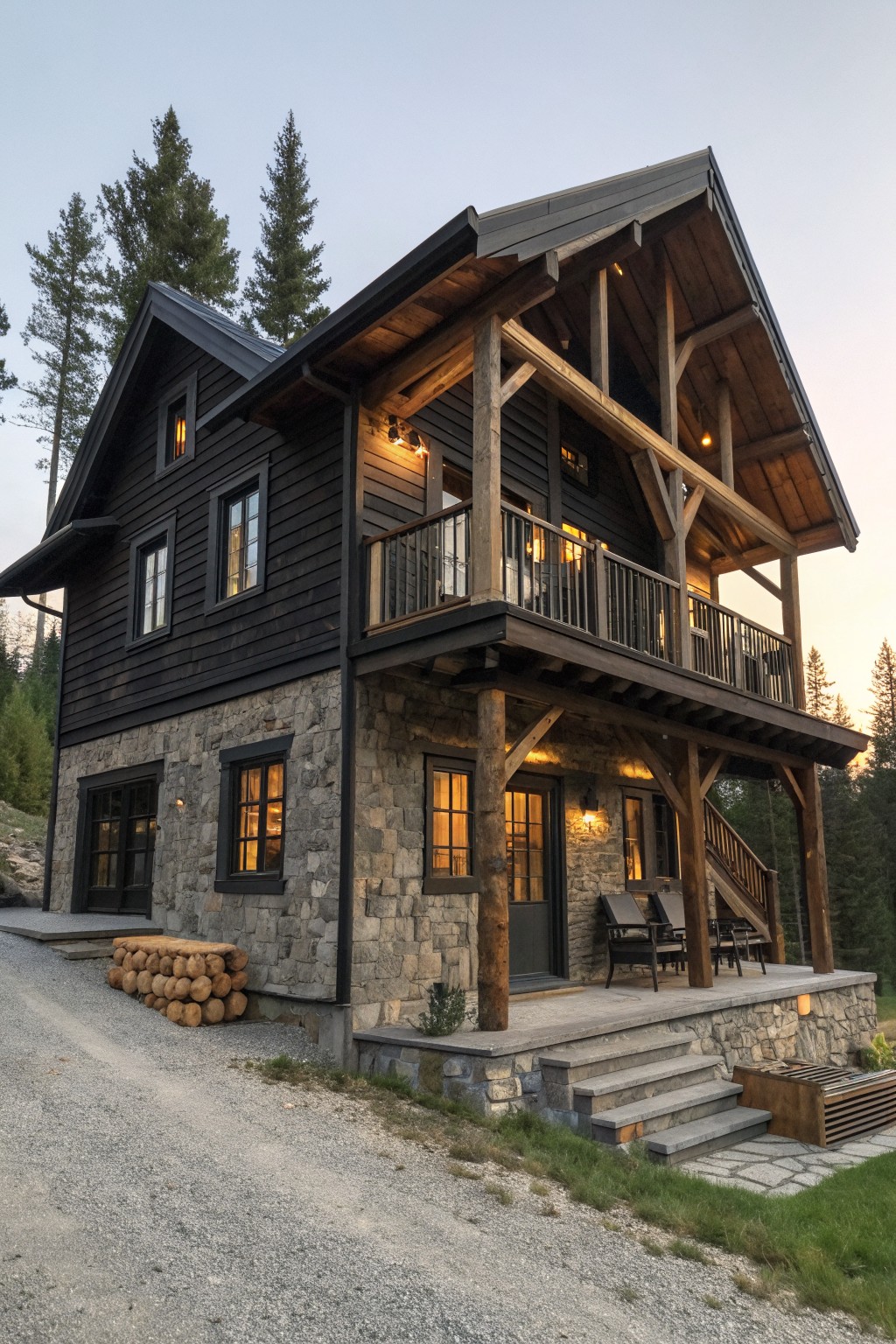
Many cabins look better with dark siding because it helps them sit more naturally among trees. The color picks up the shadows from the woods and keeps the building from feeling too bright or out of place in a wooded setting.
This works best on cabins that already have some stone or heavy timber details. Those materials give the dark color weight so it reads as intentional instead of just gloomy. Keep the trim simple and let the siding do most of the work.
Dark Siding on a Cabin Exterior
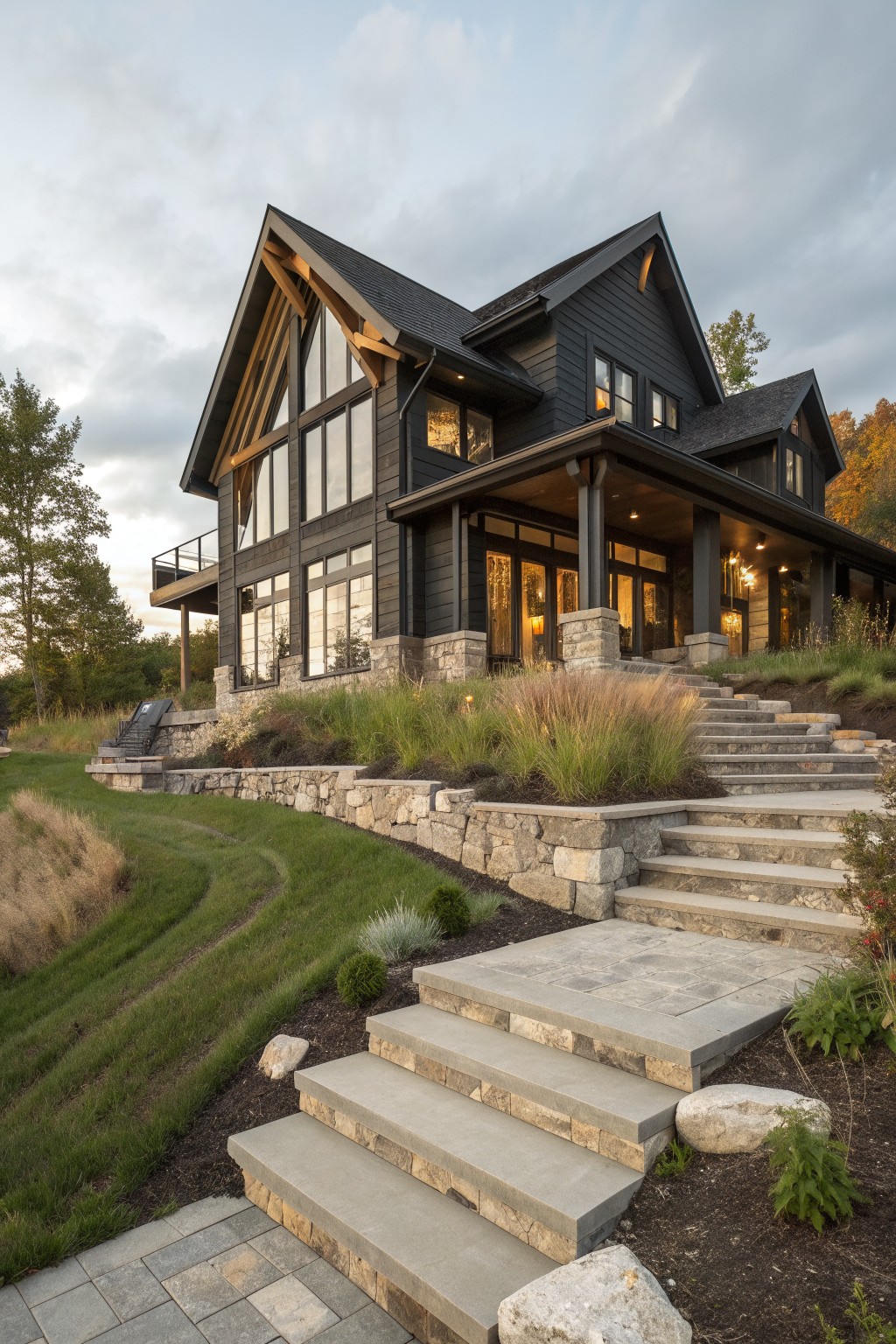
Dark siding gives a cabin a solid, settled look that works especially well in wooded settings. It lets the house feel like part of the landscape instead of standing apart from it, and the color holds up nicely against changing light and seasons.
This approach suits homes with strong rooflines and stone bases. Keep the trim simple and let the siding carry the weight, but test the shade on a sample board first since dark tones can shift more than expected once applied to the full facade.
Dark Siding for a Woodland Cabin
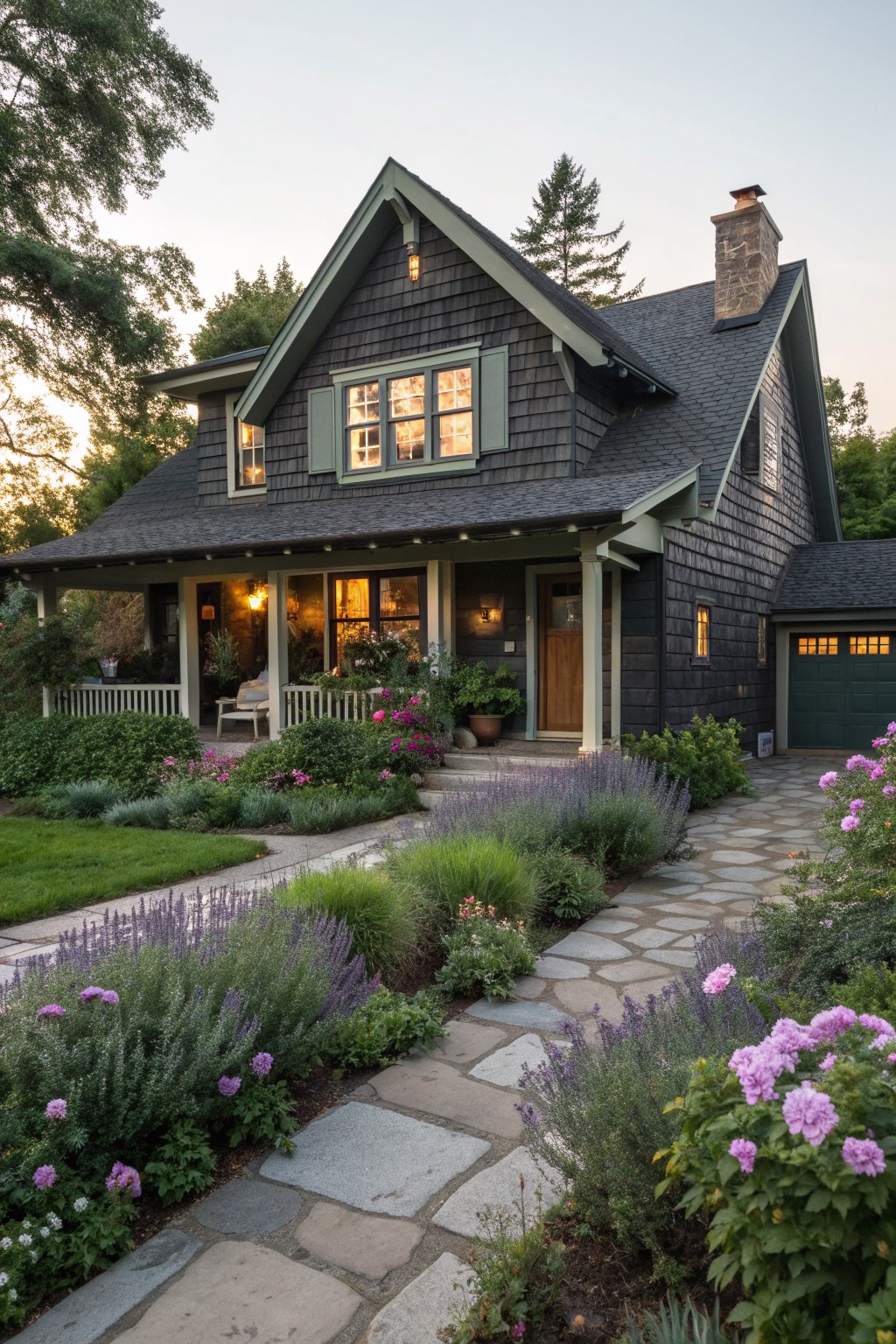
Dark exterior siding works well on cabins because it helps the house settle into the trees instead of standing out. The deep charcoal shingles on this house give it a solid, grounded look that feels right at home in a wooded setting, while the lighter trim keeps the whole thing from feeling too heavy.
This approach suits homes that sit among evergreens or mature trees. Keep the trim soft and the accents minimal so the dark color does the main job. Avoid bright or busy details that fight the natural surroundings.
Dark Siding on a Small Cabin
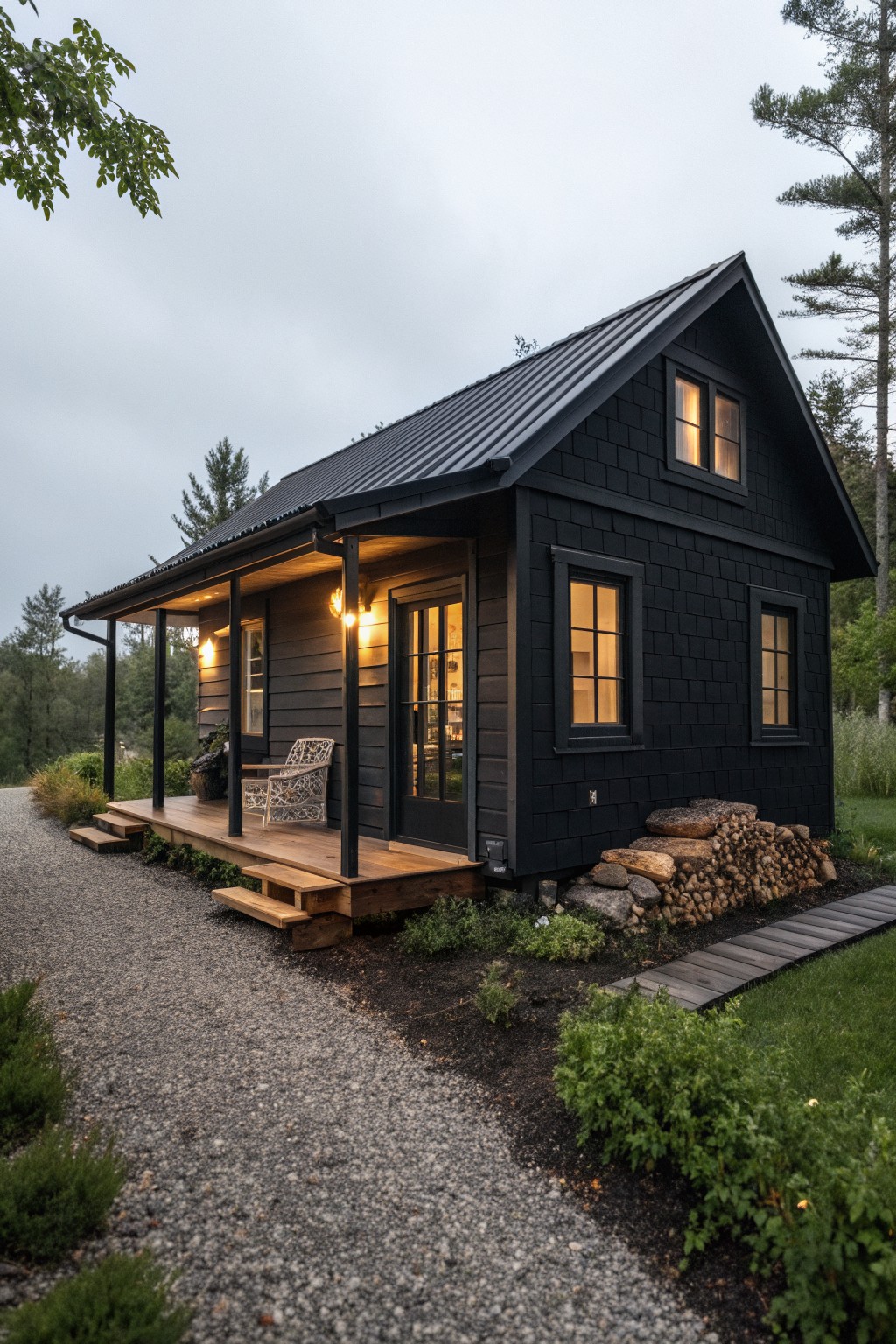
A dark exterior color gives a cabin more presence without making it feel larger than it is. Black siding and trim help the building settle into the trees instead of standing out against them.
This approach works best on simple shapes with a metal roof and minimal trim details. It suits wooded sites where you want the cabin to feel part of the setting rather than fighting against it.
Dark Siding on a Modern Cabin
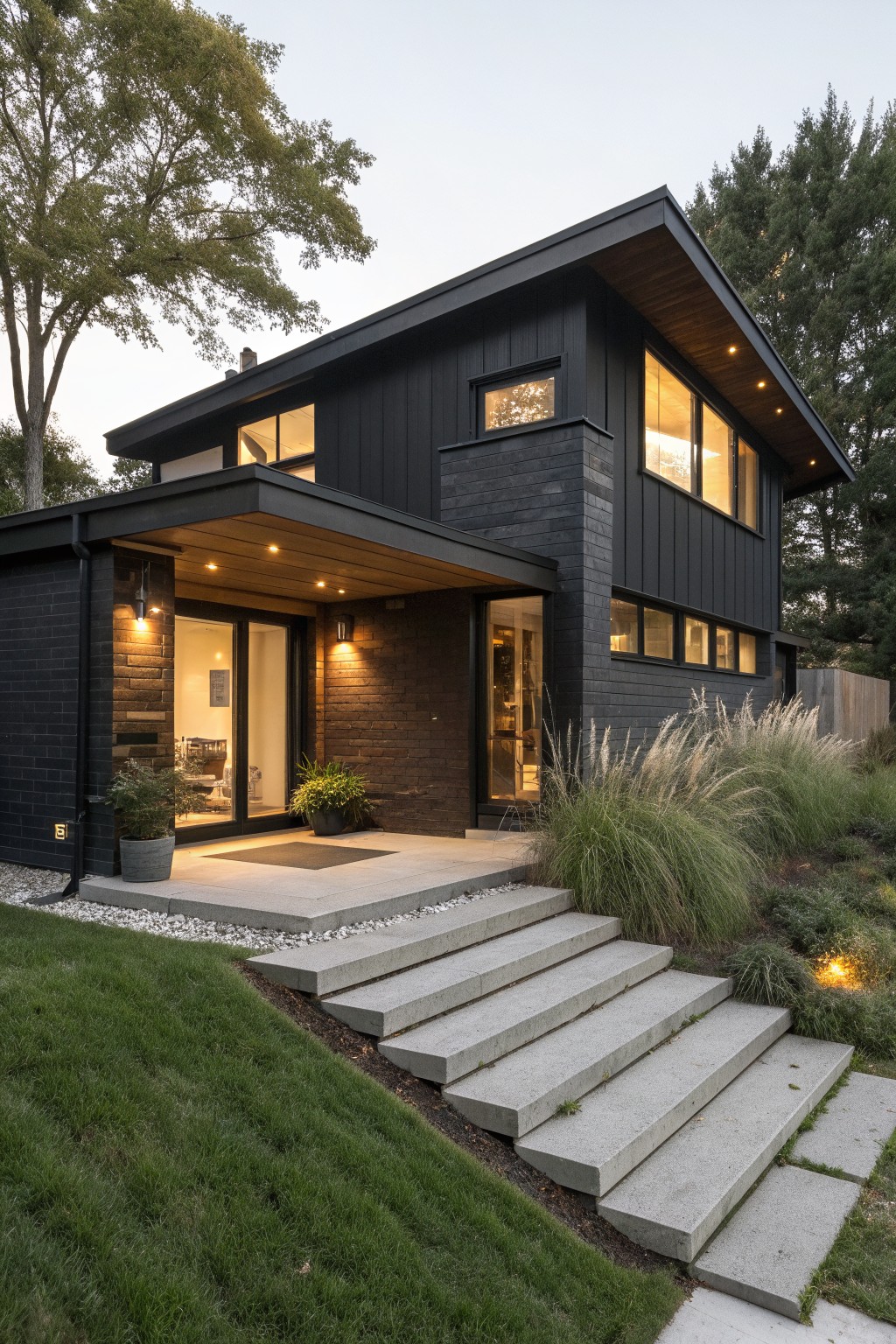
Dark siding gives a cabin a quiet presence in the woods. It lets the house blend into the trees instead of standing out, and the simple lines keep the look clean rather than busy.
This works best on homes with a straightforward roof shape and a few warmer materials near the door. Use it when you want the building to feel settled rather than showy, and keep the entry area well lit so the dark finish does not turn the front too heavy.
Dark Siding Helps a Cabin Settle Into the Woods
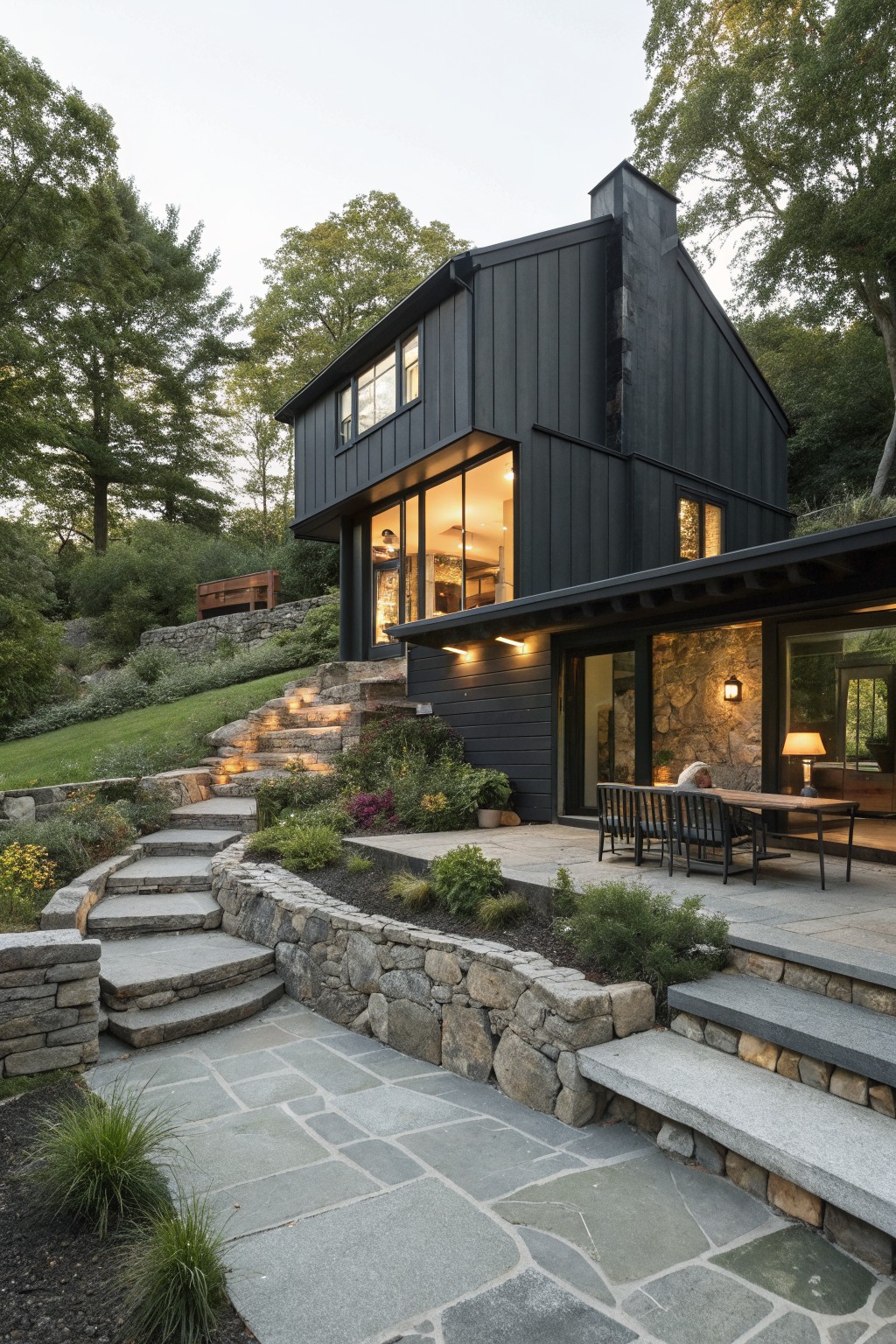
A dark exterior color keeps the cabin from competing with the trees around it. The black siding absorbs light and lets the structure feel smaller and more settled on the slope.
This works best on wooded lots where you want the house to read as part of the landscape instead of a new addition. Use it with stone walls or paths so the darker surfaces do not feel too stark against the ground.
Dark Siding for a Cabin Exterior
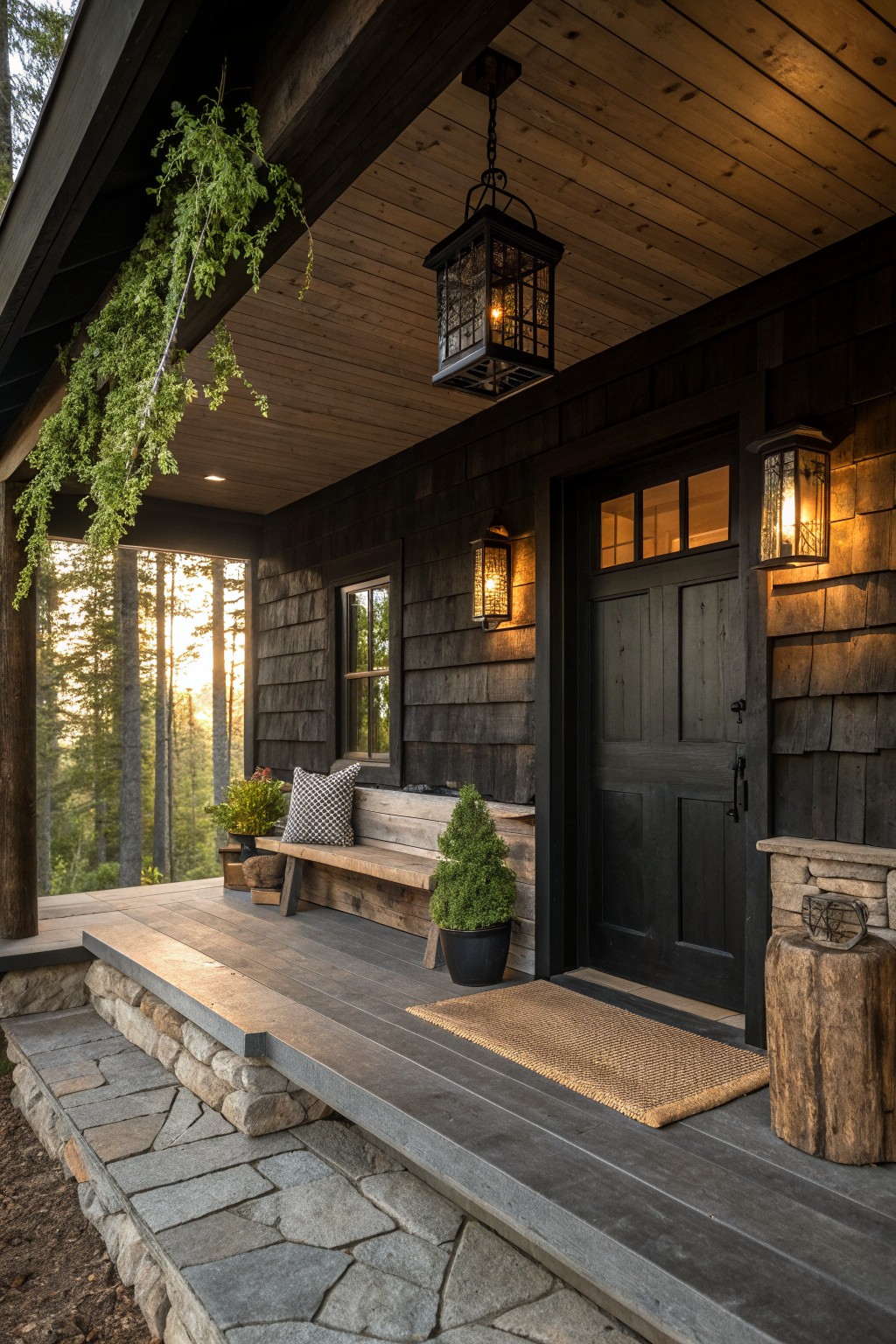
Dark siding helps a cabin settle into the trees instead of fighting them. The deep tones keep the whole structure from feeling too bright or exposed, especially when the porch gets some evening light.
This look suits wooded sites where you want the house to feel sheltered. Use it on the main walls, then add simple lighting and a bench near the door so the entry stays easy to find and use.
Dark Siding for a Woodland Cabin
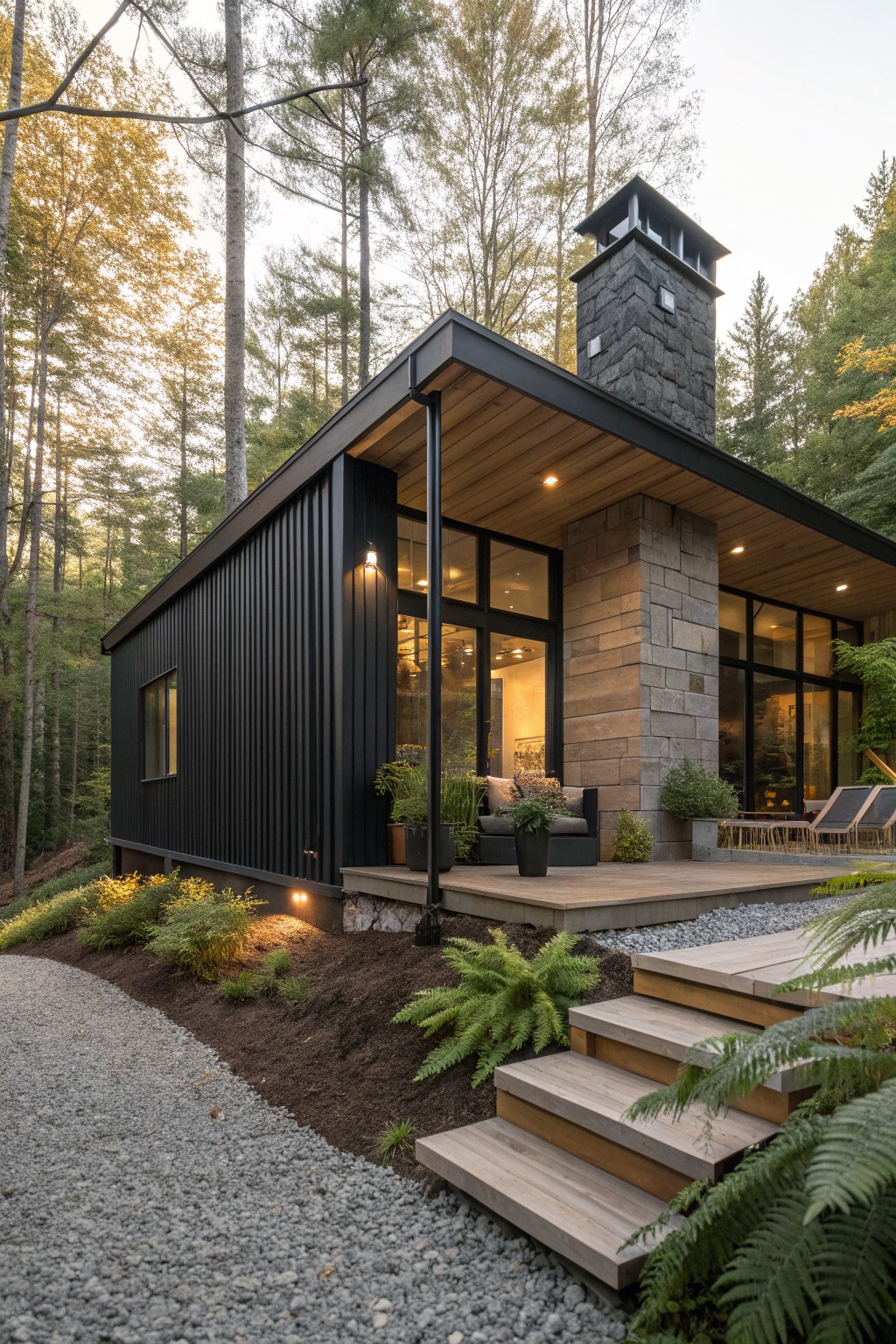
Dark siding gives a cabin a solid, settled look against the trees. It keeps the whole structure from standing out too much while still showing clear lines and shape. The black finish works with the shadows in the woods instead of fighting them.
This approach suits homes set in dense forest or on sloped lots where you want the building to feel grounded. Pair the dark color with stone or wood details so it does not go flat, and keep the trim simple to hold the clean shape.
Match The Deck Wood To The Cabin Siding
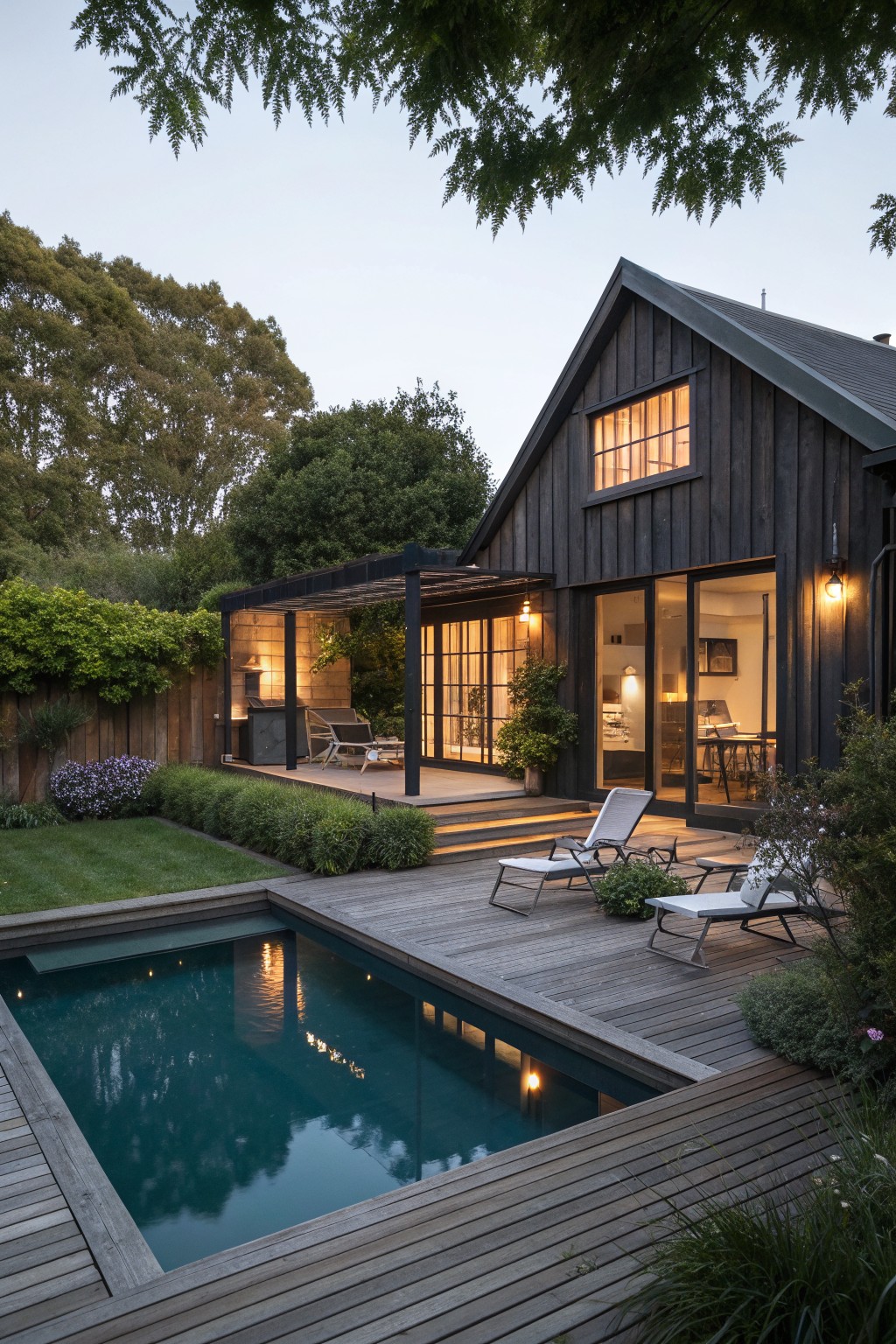
One idea worth copying is running the same dark wood from the cabin walls straight across the deck boards. It pulls the whole space together so the outdoor area feels like part of the house instead of a separate addition.
This works especially well on smaller woodland lots where the cabin already has a strong dark finish. Keep the wood tones close and let the surrounding plants handle the rest of the transition.
Dark Wood Siding With Stone Accents
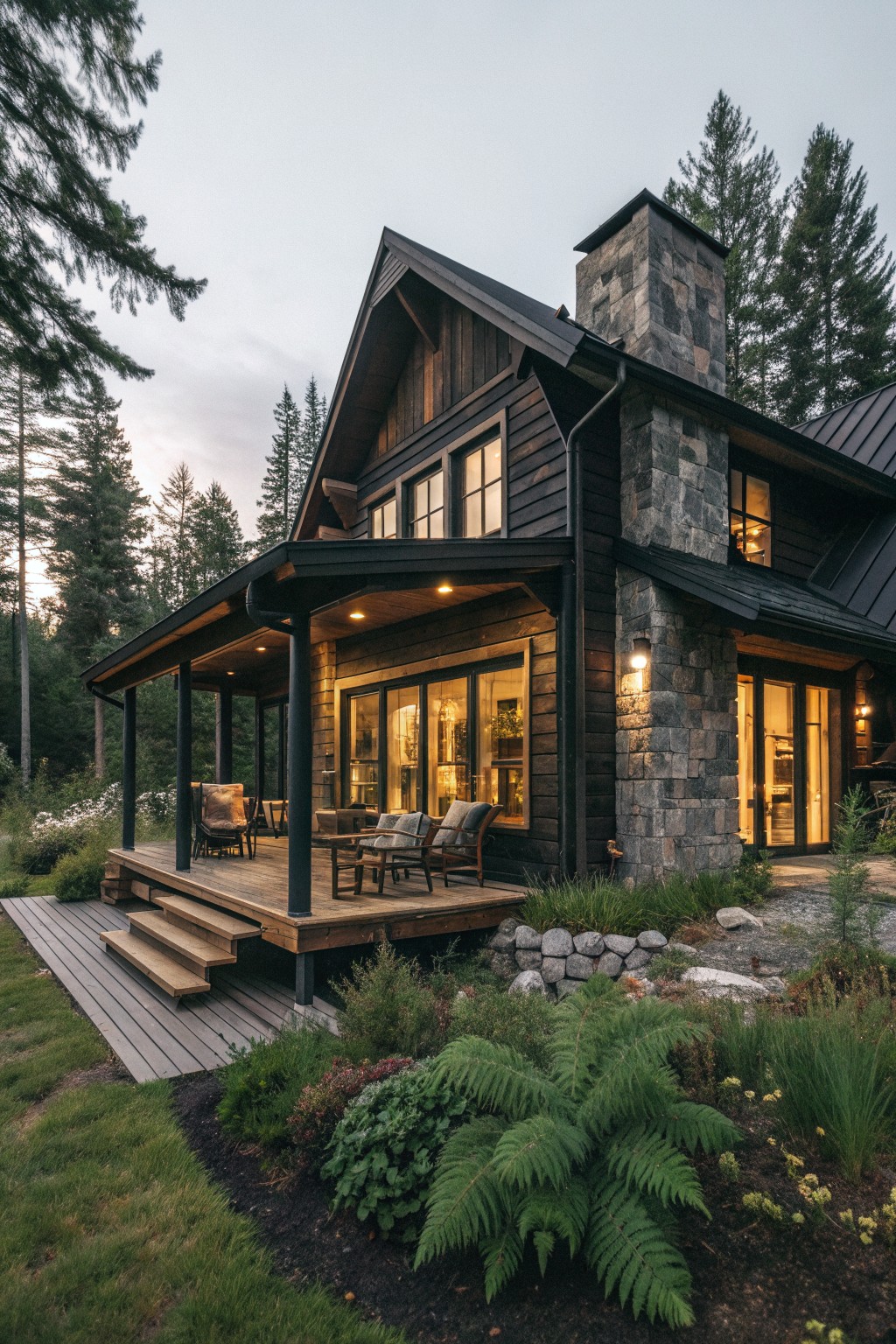
Dark siding works well on cabins because it helps the house settle into the trees instead of standing out against them. The deep tone pairs with stone around the chimney and base to add weight and texture without needing extra trim or color changes. This approach keeps the look simple while still feeling substantial.
It suits wooded lots where you want the house to feel part of the setting rather than on top of it. Use the same dark finish on the main body and let stone handle the high-wear areas like the foundation and chimney. Avoid mixing too many other materials or the contrast can start to feel busy.
Dark Siding With A Wood Door
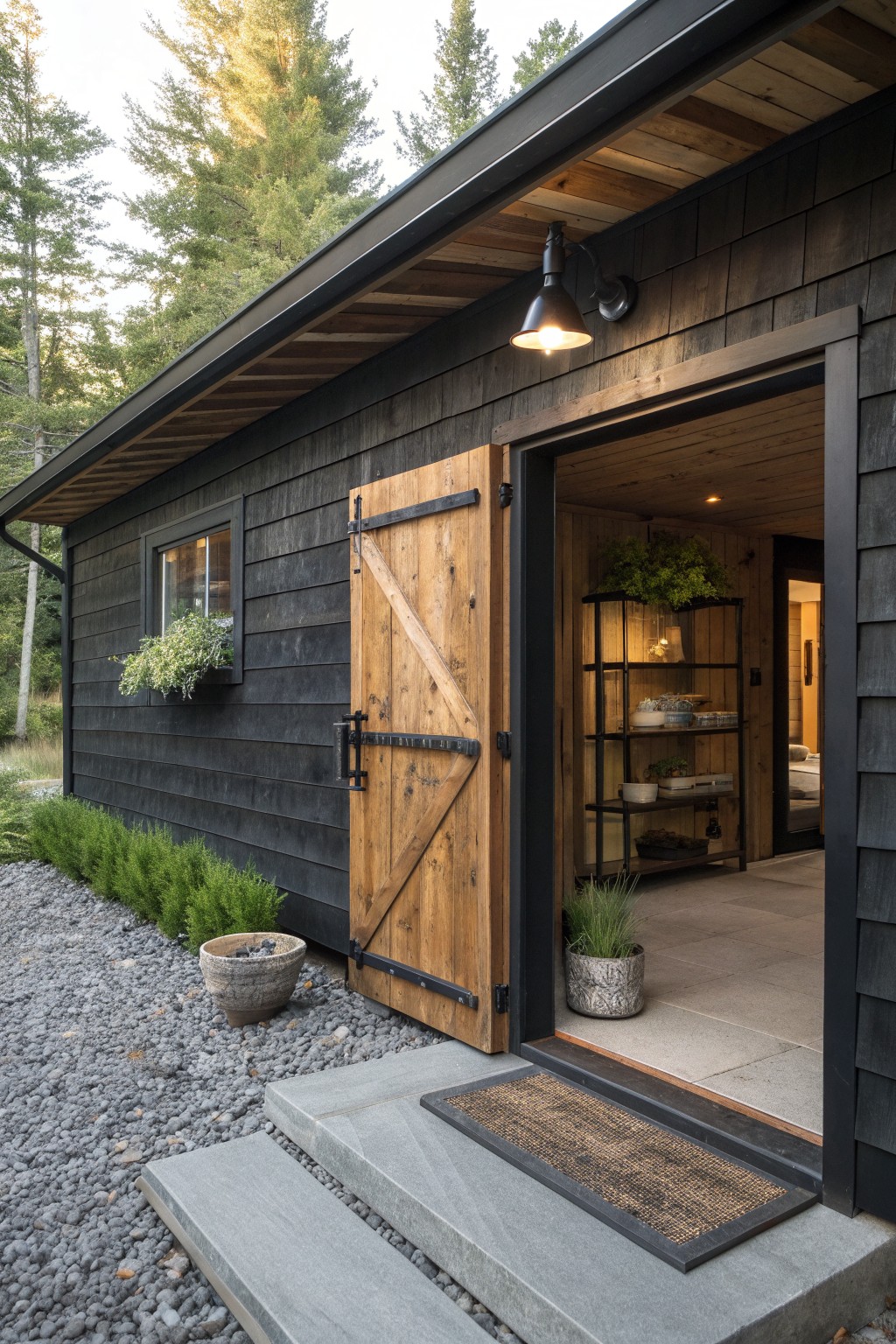
Dark siding works well on cabins because it lets the building sit quietly among the trees instead of standing out. The deep color recedes into the background, which keeps the whole place from feeling too big or bright in a wooded setting.
A single natural wood door breaks up the darkness and gives the entry a clear focal point. This works best on smaller cabins where you want the structure to feel grounded without extra trim or bright paint. Keep the rest of the hardware simple so the wood tone does the work.
Dark Siding for Woodland Cabins
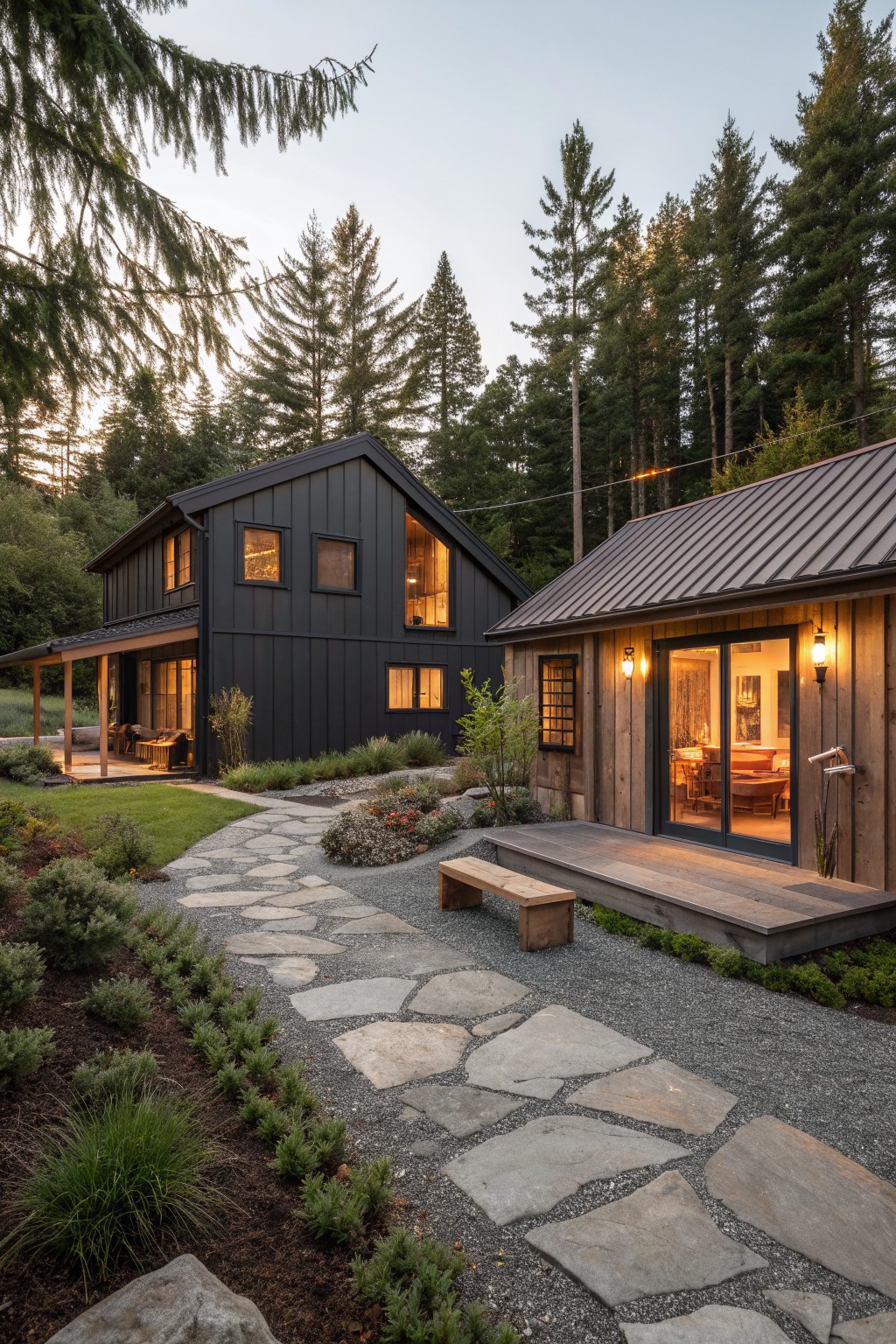
Dark siding lets a cabin settle into its surroundings instead of competing with them. The deep color keeps the structure from feeling too bright or out of place among tall trees and changing light.
This approach works best on homes with straightforward shapes and simple trim. It pairs well with gravel paths or low plantings at the base, and it tends to age gracefully in shaded settings.
Frequently Asked Questions
Q: Will dark siding make my cabin feel too hot in summer?
A: Dark colors pull in more heat from the sun so the inside can warm up faster on clear days. Go with a breathable stain that has UV blockers and add thicker insulation behind the boards. A few well placed trees nearby will cast shade without blocking your view.
Q: How do I stop dark wood from looking faded after a couple winters?
A: Reapply a quality exterior oil every two years and clean off moss or mildew as soon as it shows. Focus on the south and west sides first since they take the hardest hits from weather. This keeps the rich tone without a full repaint.
Q: Can I paint just the trim dark and leave the main walls lighter?
A: Yes that mix still reads rustic and saves money on product. Keep the trim color deep and matte so it frames the lighter wood nicely. Test a small section first to see how the contrast looks from the driveway.
