

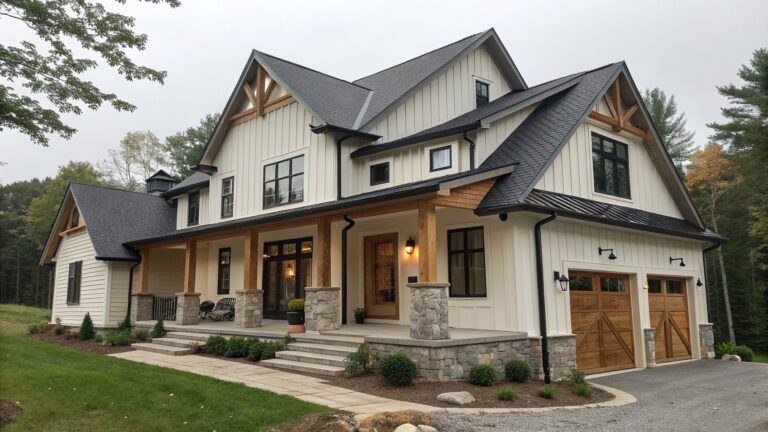
I have always noticed that the first impression of a house comes from how the roofline meets the siding and how the entry sits against the rest of the facade.
Materials like reclaimed wood and dark metal accents tend to age in ways that either add warmth or start to feel mismatched depending on the climate.
Some combinations just feel right when you drive up to them.
I usually try out a new trim color or porch detail on a small section of my own home before scaling it up, because the scale can shift once it is applied to the full exterior.
Seeing these ideas on real houses rather than sketches makes it easier to picture what might actually suit the light and setting where I live.
Mix Stone With White Siding
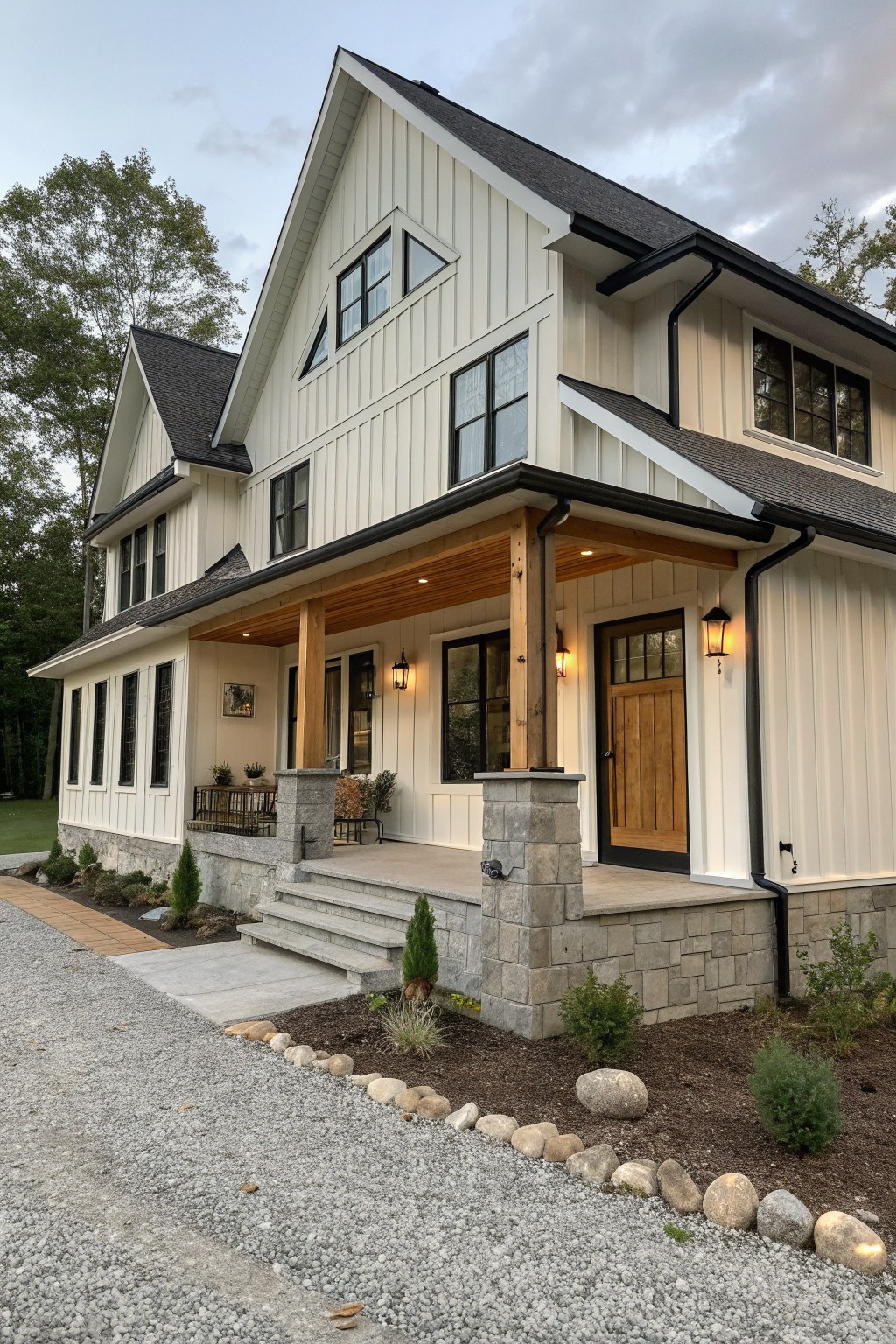
Stone on the base and porch columns gives a white farmhouse a solid feel without making it heavy. The contrast keeps the whole front bright while still looking grounded and a little rustic.
This approach works best on homes with a front porch or a visible foundation line. Keep the siding simple and let the stone run along the bottom and up the main supports. It suits two-story houses that want some weight at ground level but still aim for a clean, current look.
Mix Stone With Wood Siding
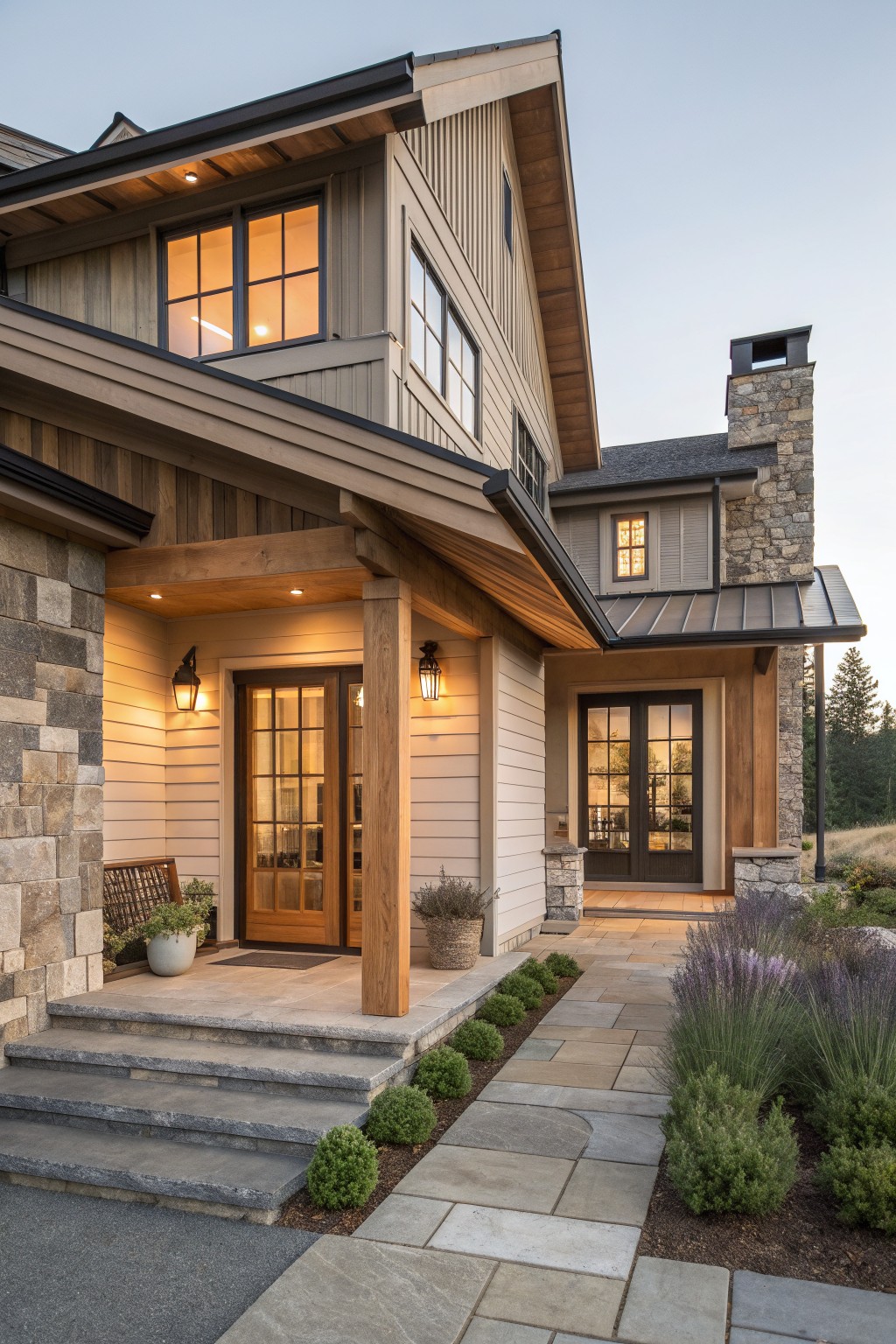
Many homes feel more grounded when stone and wood are used together on the outside. The stone adds weight and texture at the base while the wood brings warmth across the upper walls.
This approach works best on homes that already have a simple shape. Keep the stone low and let the wood run above it so the house does not feel too heavy.
Mixing Materials on the House Exterior
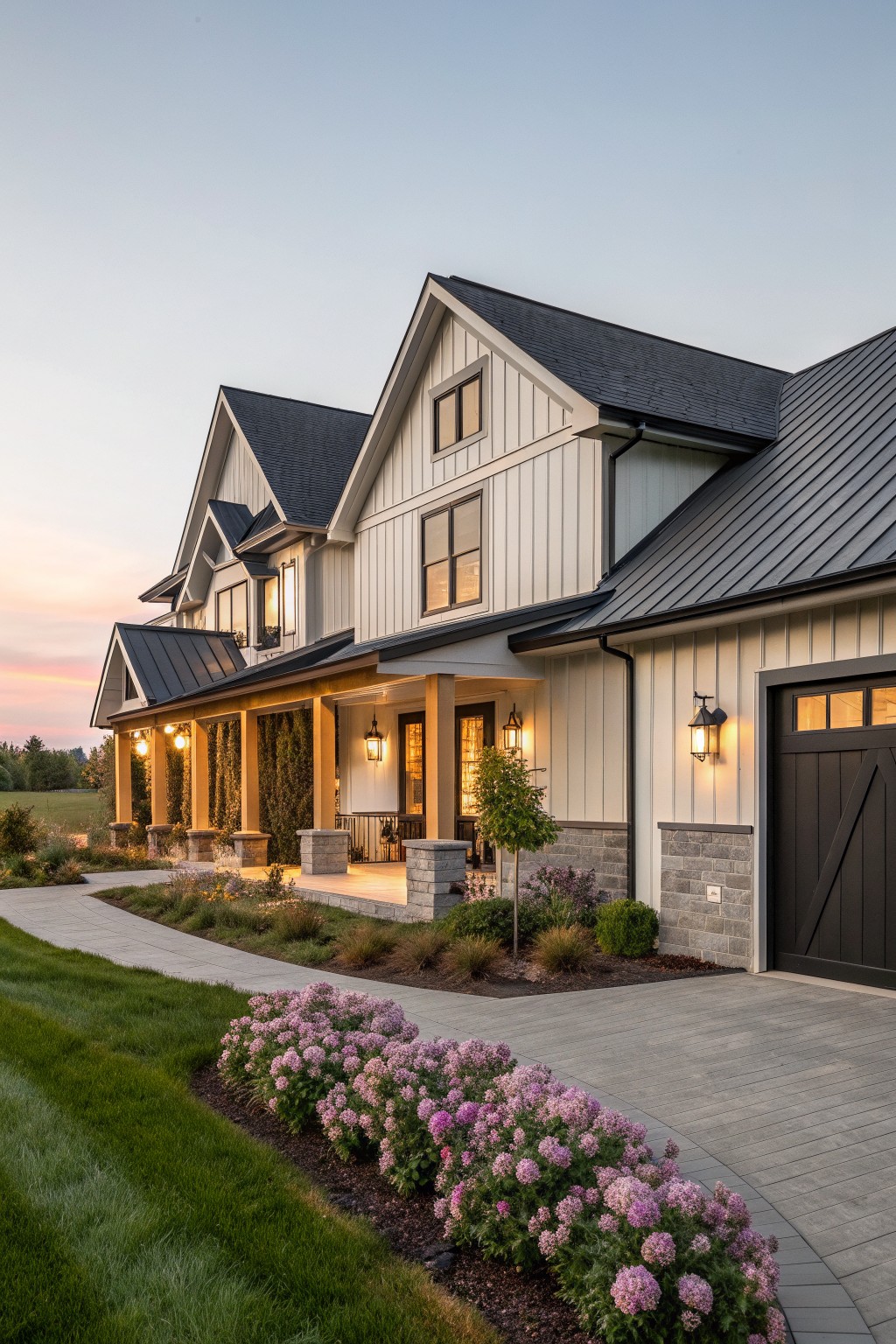
One straightforward way to add interest to a farmhouse exterior is to combine a few materials instead of sticking with just one. Light vertical siding works nicely against stone on the base and a dark metal roof overhead. The contrast gives the house some depth while keeping the overall look clean and simple.
This mix suits homes with several rooflines or gables, since it helps define each section without extra trim. Keep the color range tight so the materials do not compete. It also holds up well in different climates because each material serves a practical purpose.
Add a Fireplace to Your Covered Porch
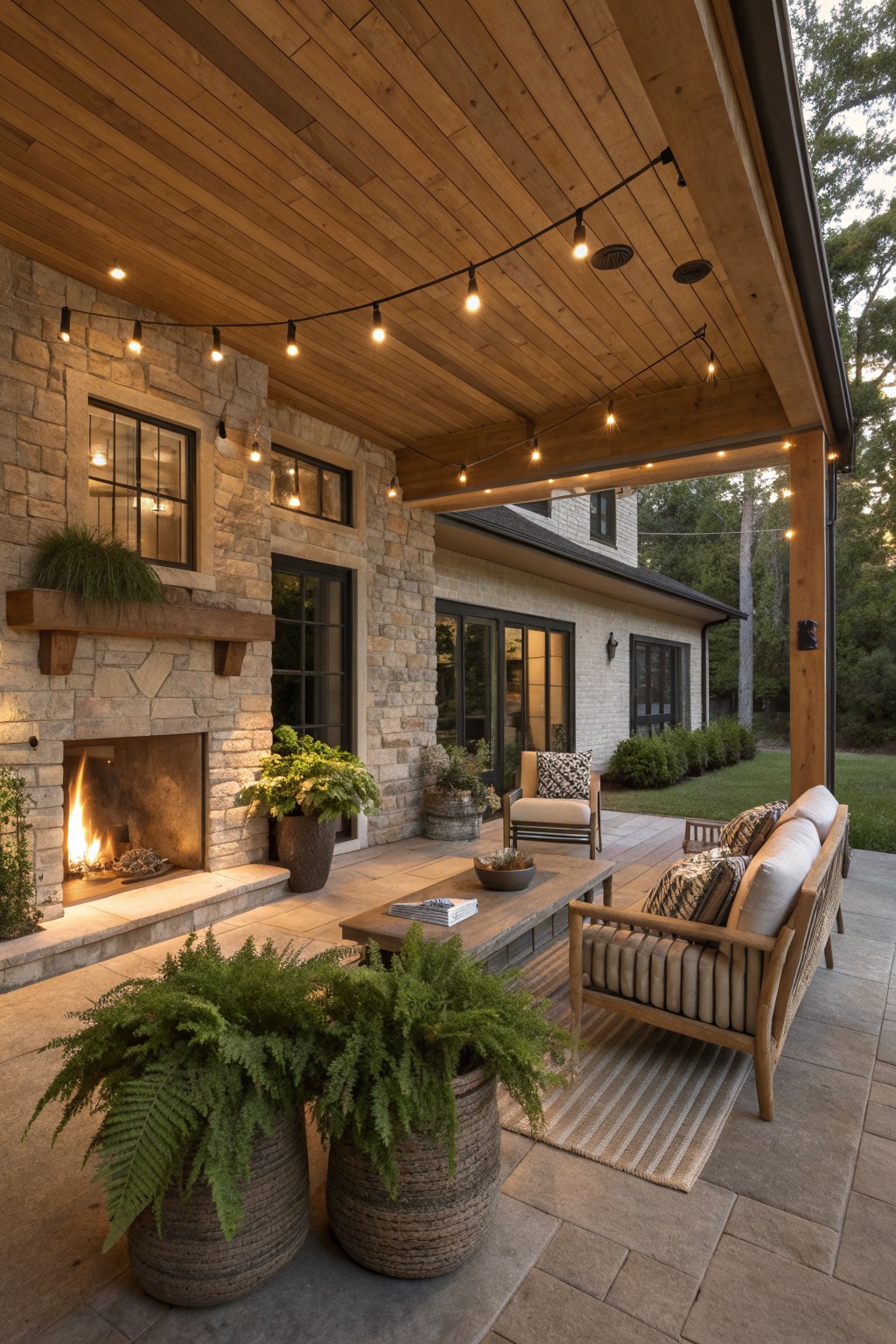
An outdoor fireplace gives a covered porch a real reason to be used once the sun goes down. It creates a focal point that pulls seating toward it and adds enough warmth to extend the season.
This approach works best on homes that already have a solid roof overhang and some wall space to build into. Keep the rest of the materials simple so the firebox stays the main feature instead of competing with too many other textures.
Raised Beds Along the Foundation
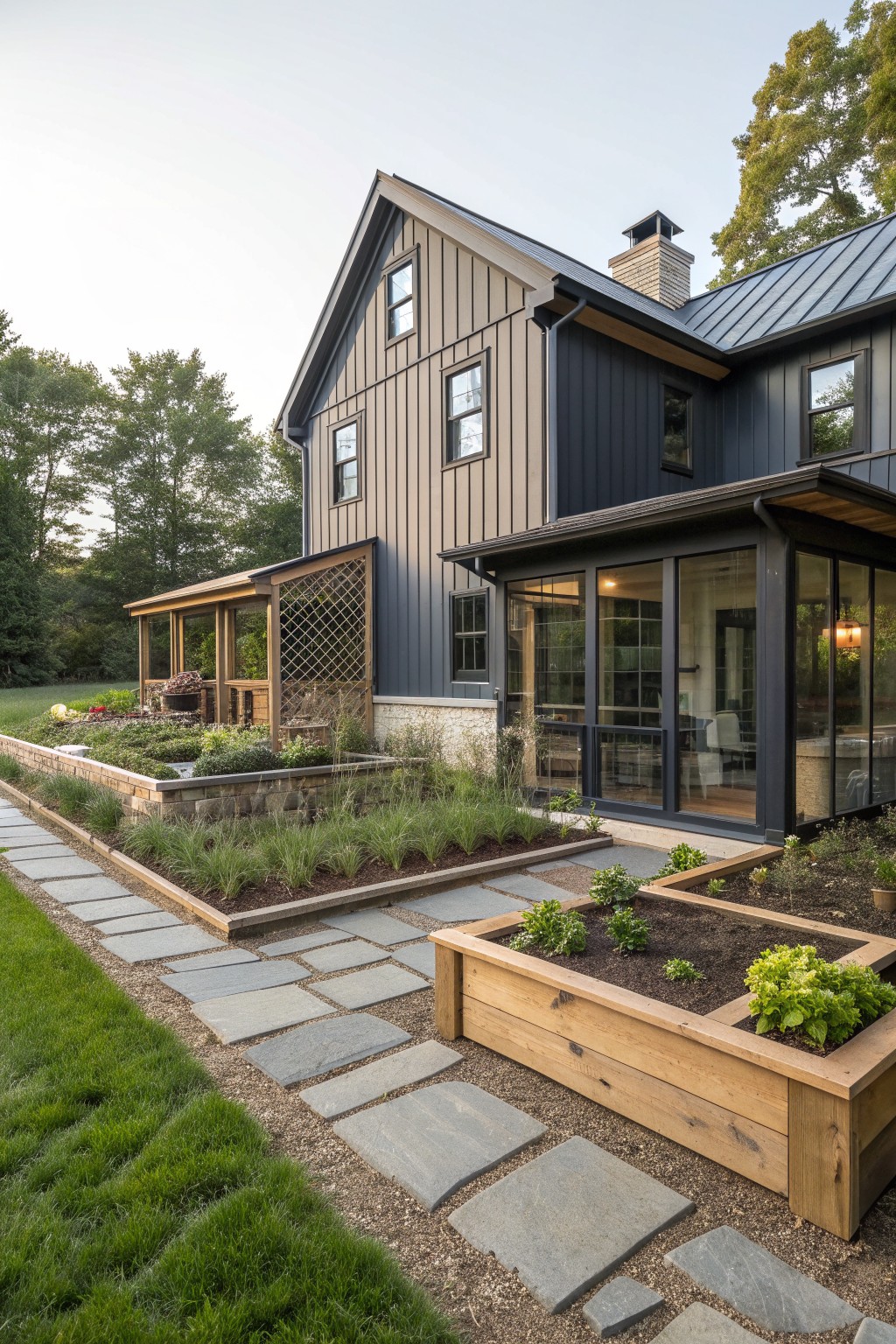
Raised wooden beds give a farmhouse exterior a practical edge without much fuss. They lift the planting area off the ground so soil stays contained and roots stay happy, while the wood itself adds a warm, natural note that pairs well with dark siding and simple trim. In this setup the beds sit right against the house and help the whole front feel more grounded.
They work best on homes where the foundation sits a bit high or where you want vegetables and flowers within easy reach. Keep the beds at a comfortable height for weeding and choose a wood that will weather to gray over time. Just be sure to leave a small gap between the bed and any wood siding so moisture does not become an issue.
Use Heavy Timber Posts on a Deep Porch
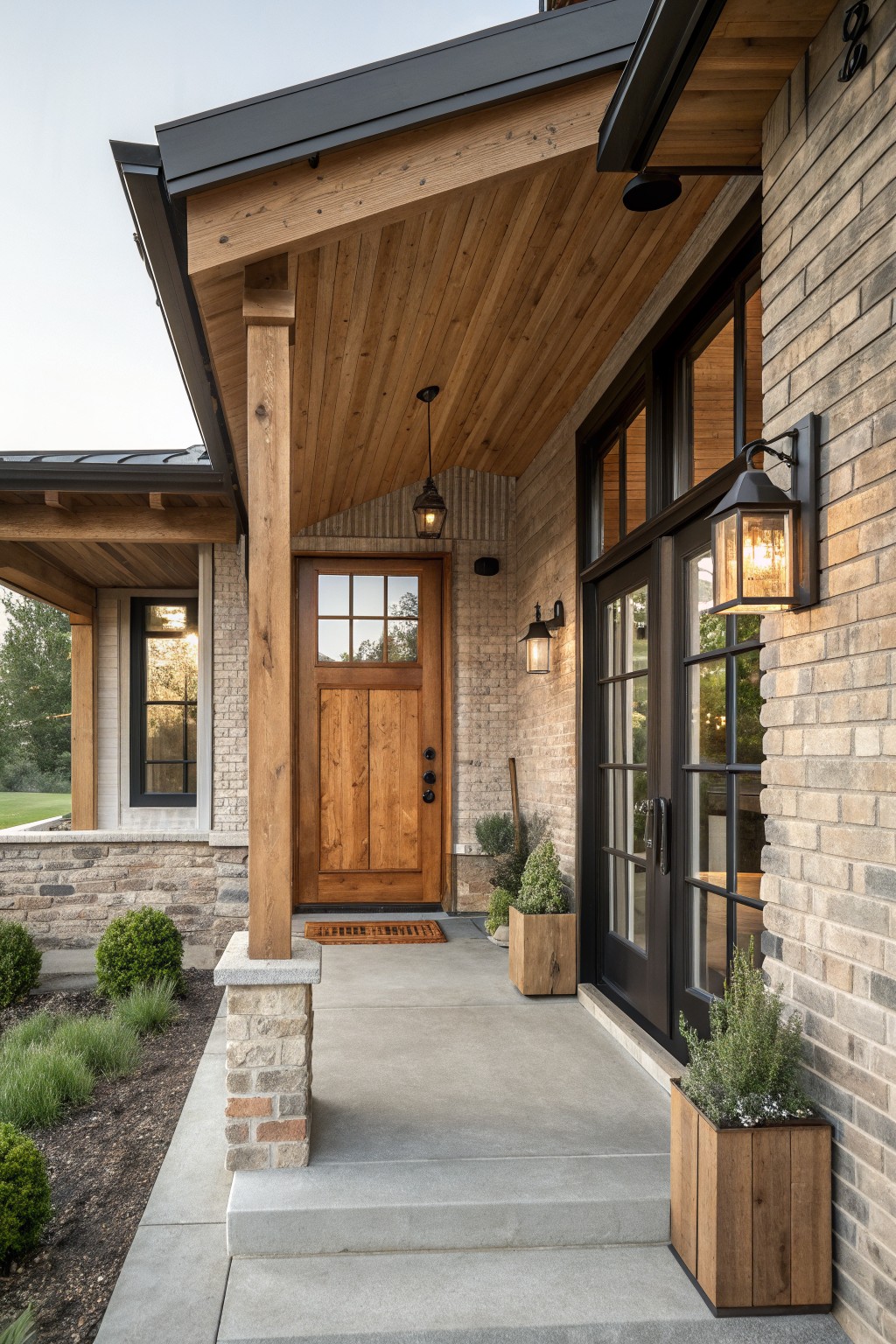
A deep porch supported by thick wood posts gives the front of the house real presence. The posts carry the roofline out far enough to create shade and shelter, and the exposed wood ties the whole entry together without needing extra trim or detail.
This approach works best on homes that already use brick or stone on the lower half of the facade. Keep the posts simple and substantial, and let the natural grain show. Avoid painting them or adding brackets if the goal is a clean, contemporary look.
Anchor a Patio With an Outdoor Fireplace
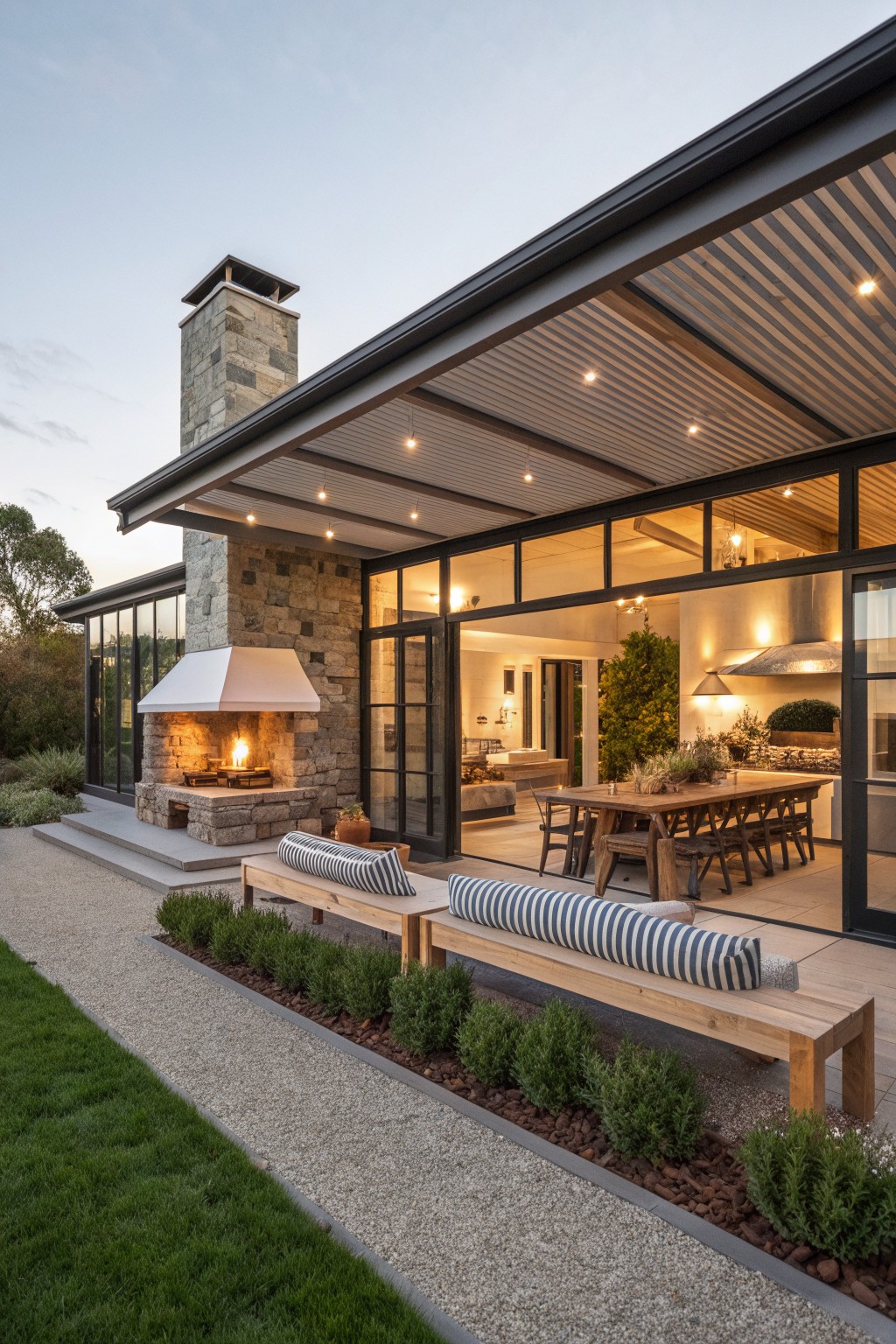
An outdoor fireplace gives a patio a clear reason to be used even when the evenings turn cool. It creates a natural spot for seating and turns the whole area into an extension of the house rather than just a place to pass through.
This works best on homes that already have a covered roofline or can add one without much trouble. Keep the fireplace material simple and match it to the house so the patio feels like part of the main structure instead of an afterthought.
Stone And Wood Work Well Together Outside
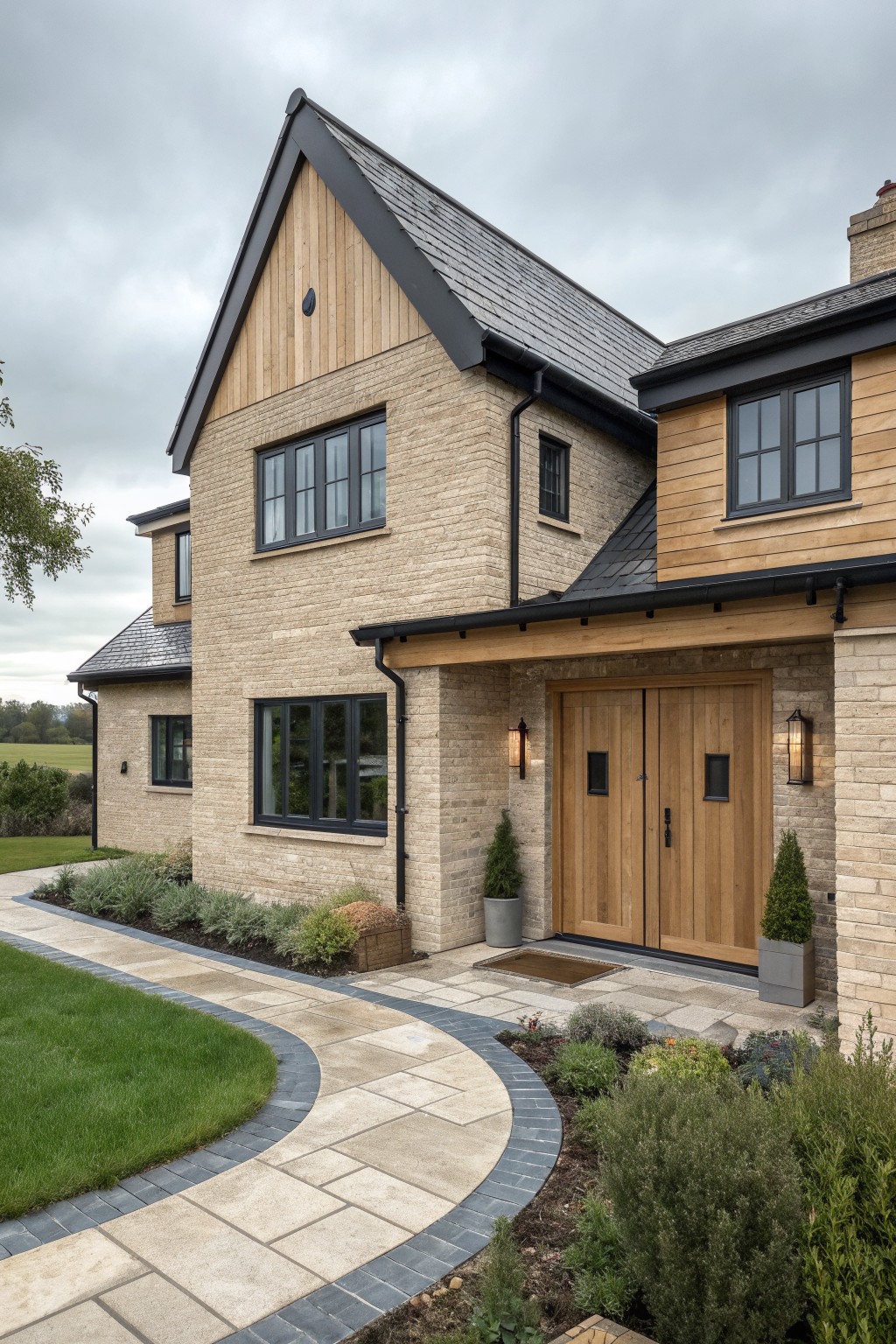
A stone base with wood accents on the gables and entry area gives this house a solid yet welcoming feel. The mix keeps the exterior from looking too heavy while still feeling grounded and current.
This approach suits homes that want a farmhouse touch without going full rustic. Keep the wood tones natural and let the stone handle most of the wall space. Dark window frames help tie the two materials together.
Adding A Wood Ceiling To The Front Porch
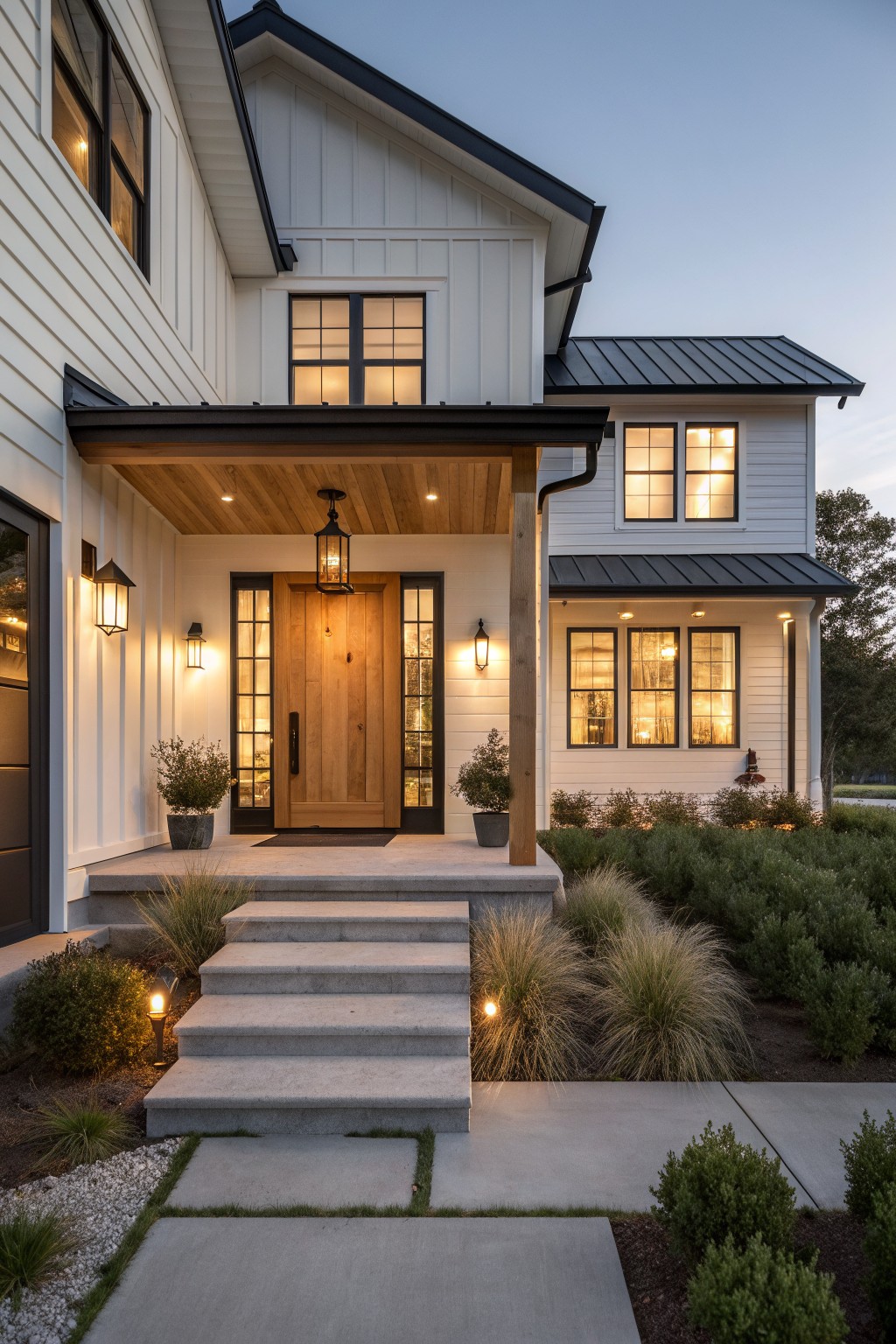
A wood ceiling under the porch roof brings a natural warmth that balances the clean lines of a modern farmhouse. It softens the look of white siding and black trim while making the entry feel more grounded and lived-in.
This detail works especially well on homes with straightforward rooflines and simple materials. Keep the wood tone light to medium so it does not overpower the rest of the exterior, and make sure the lighting under the porch highlights the texture without adding too much contrast.
Dark Roofing for Clear Contrast
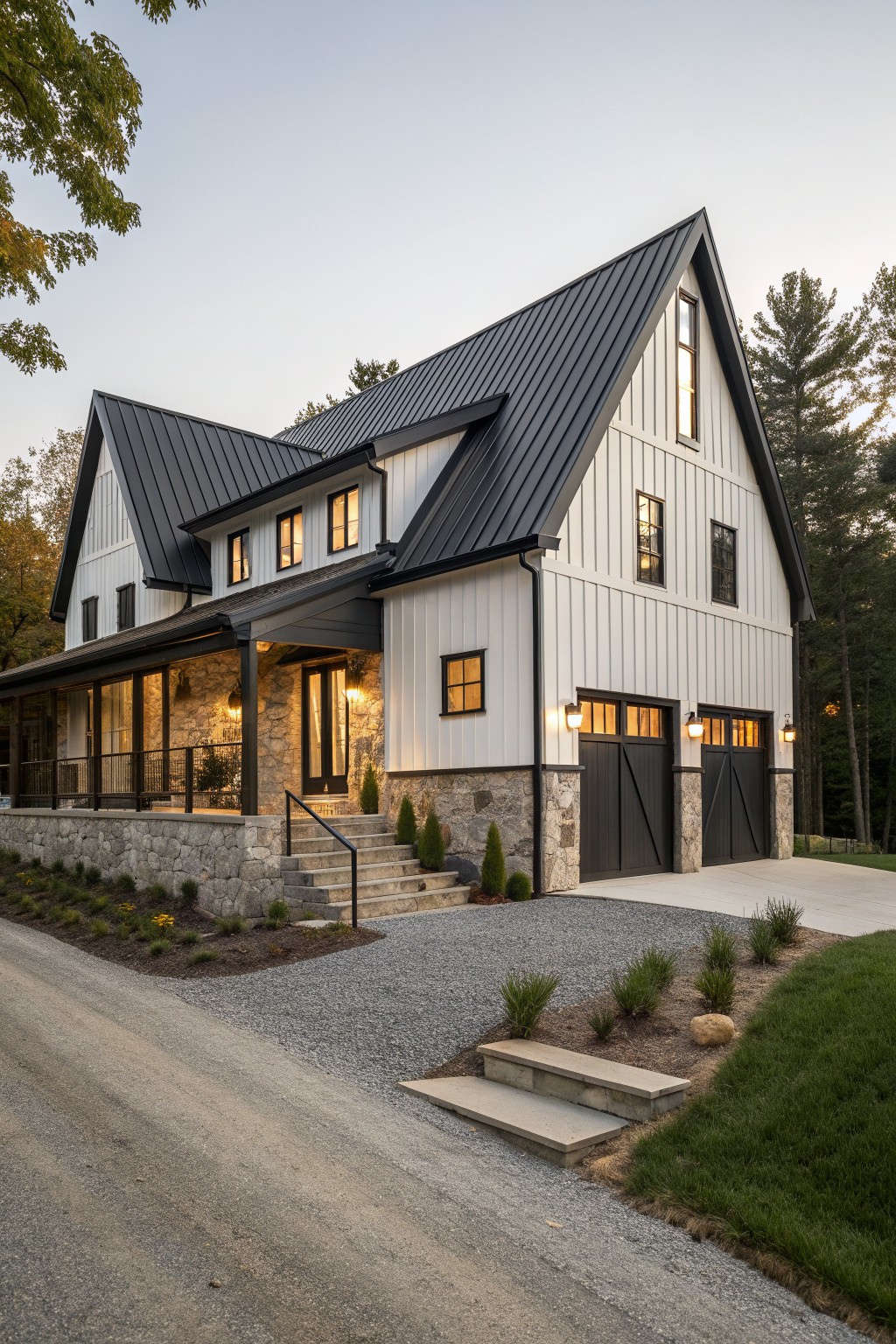
A dark metal roof paired with black trim gives a farmhouse exterior more definition against light siding and stone. The contrast keeps the whole look sharp and current while the gabled shape still reads as traditional.
This works best on homes with simple white or light siding and a stone base. Use it when you want the roofline to stand out without adding lots of extra detail. Keep windows and doors straightforward so the dark elements do the work.
Add a Covered Outdoor Dining Area
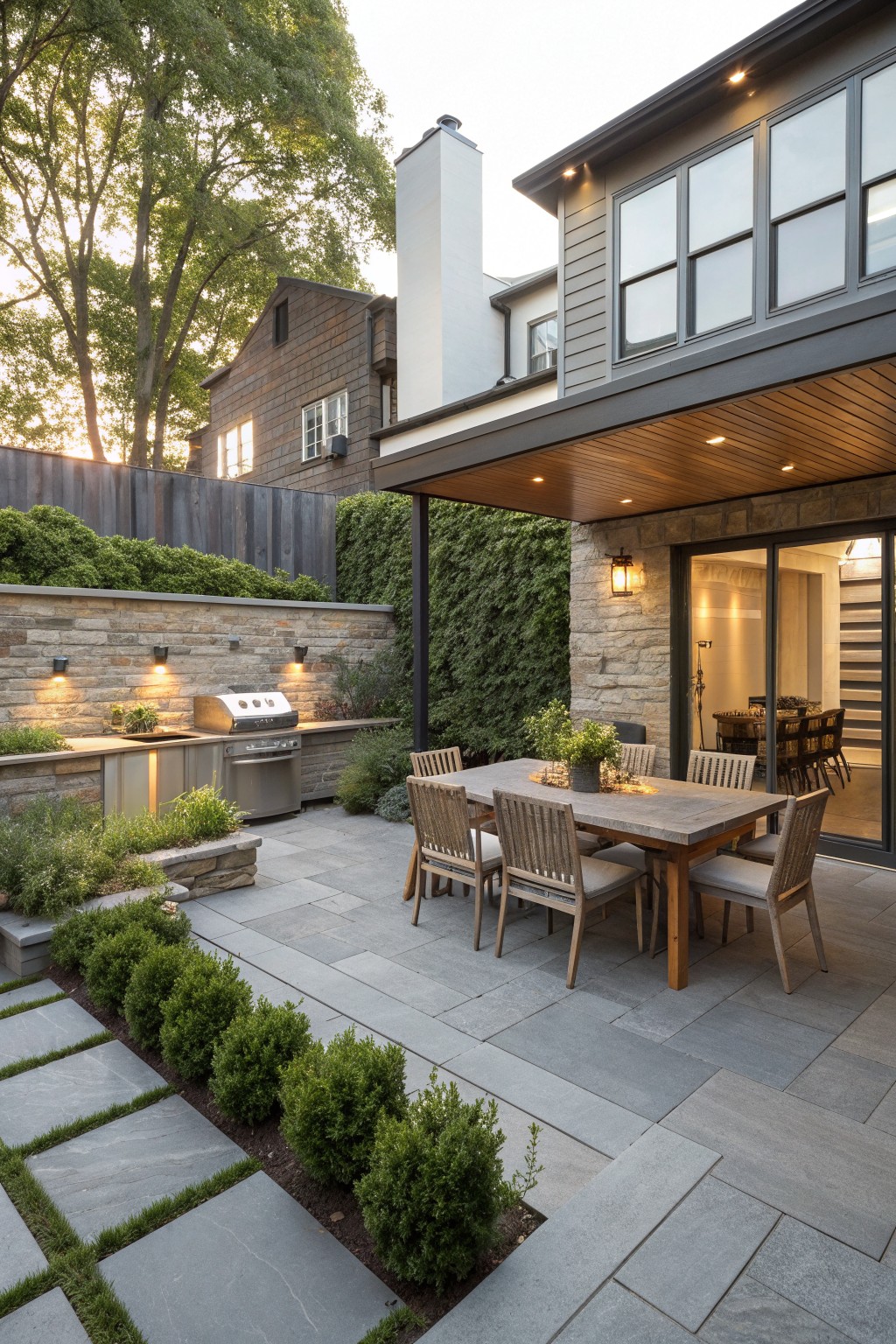
A covered patio makes outdoor meals feel more reliable, especially in places where the weather can shift quickly. The roof structure protects the table and chairs while still letting in light, so the space stays usable from spring through fall without needing to move everything inside.
This setup works best on homes that already have a bit of backyard room next to the main living areas. Keep the furniture simple and weather friendly, and add a few lights under the ceiling so the space can be used after dark.
Mix Materials on the Facade
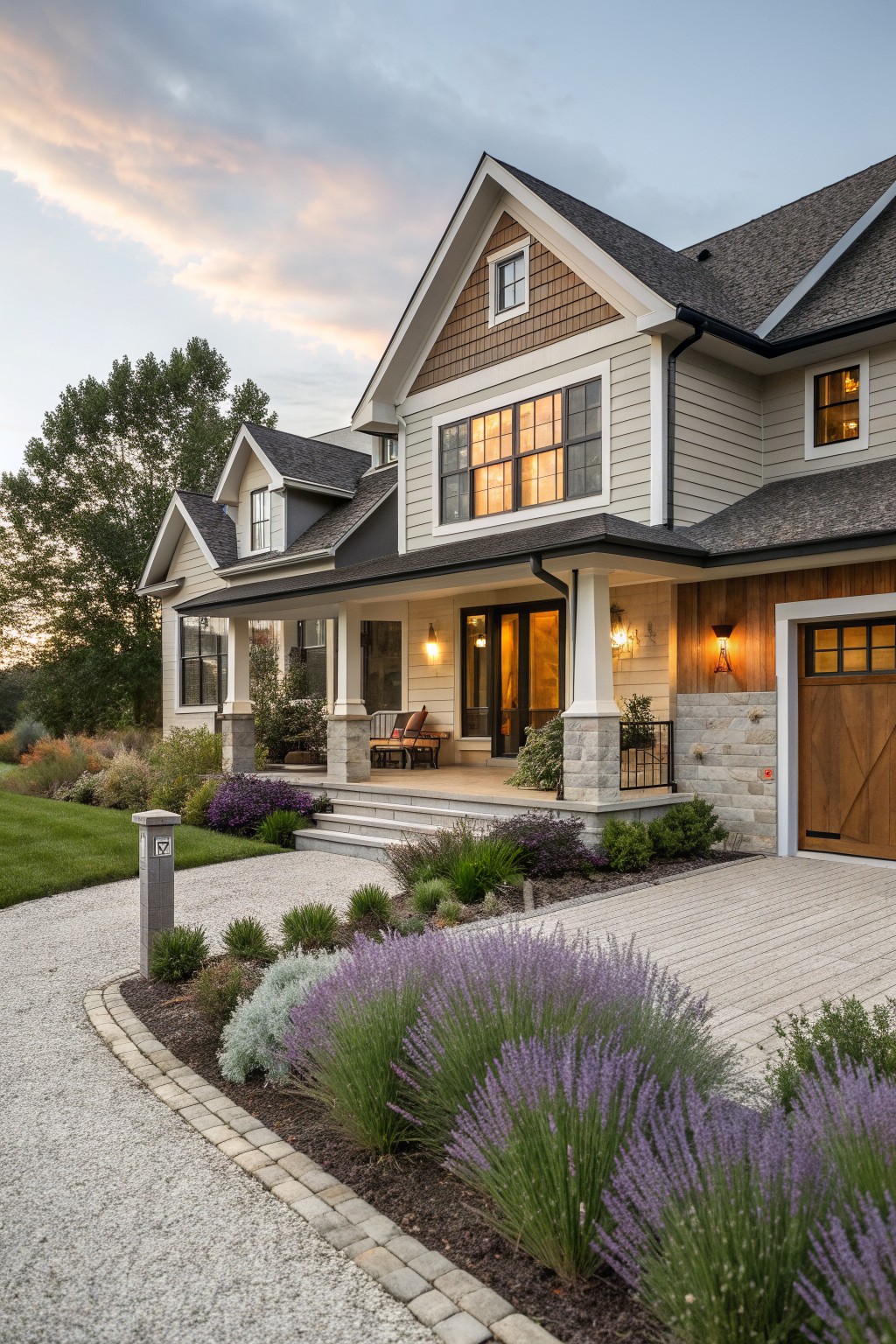
A simple way to give a modern farmhouse more character is to use several materials together on the exterior. Light siding, dark shingles on the gables, stone at the base, and wood accents around the garage all work together here. The mix keeps the house from looking flat while still feeling cohesive.
This approach works best on homes with clean lines and a clear roof shape. Keep the palette limited so the materials complement each other instead of competing. It suits newer builds that want a bit of rustic warmth without looking overly styled.
Stone Fireplaces On Covered Porches
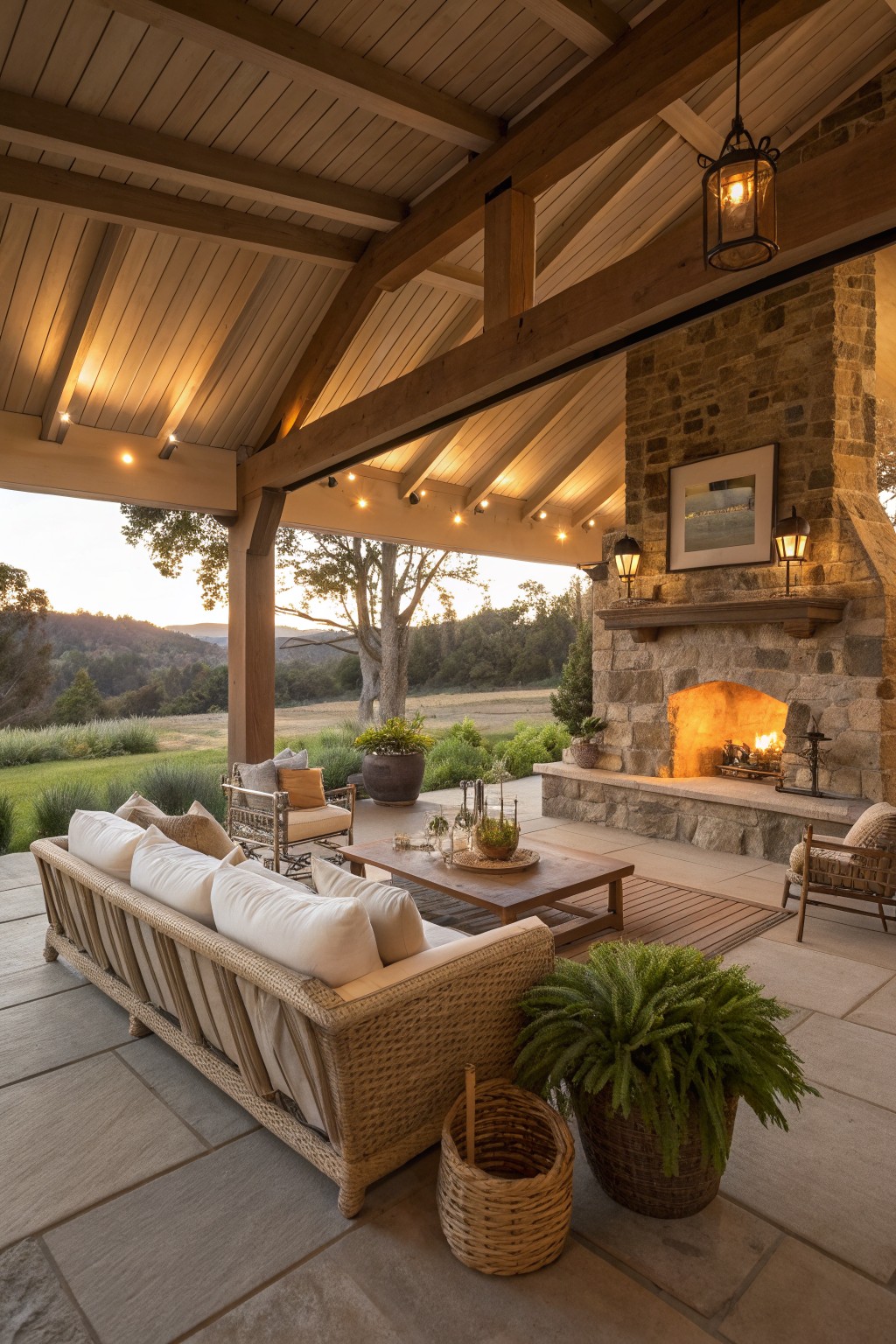
A fireplace built into the porch adds real comfort once the weather cools. It turns the space into something you can actually use in the evenings instead of heading back inside right away. The stone gives it weight and keeps the whole setup grounded with the rest of the house.
This setup works best on a larger covered area where seating can face the fire without blocking the view. Keep the materials simple so the fireplace stays the main feature and does not compete with too many other details.
Flagstone Paths for a Natural Entry
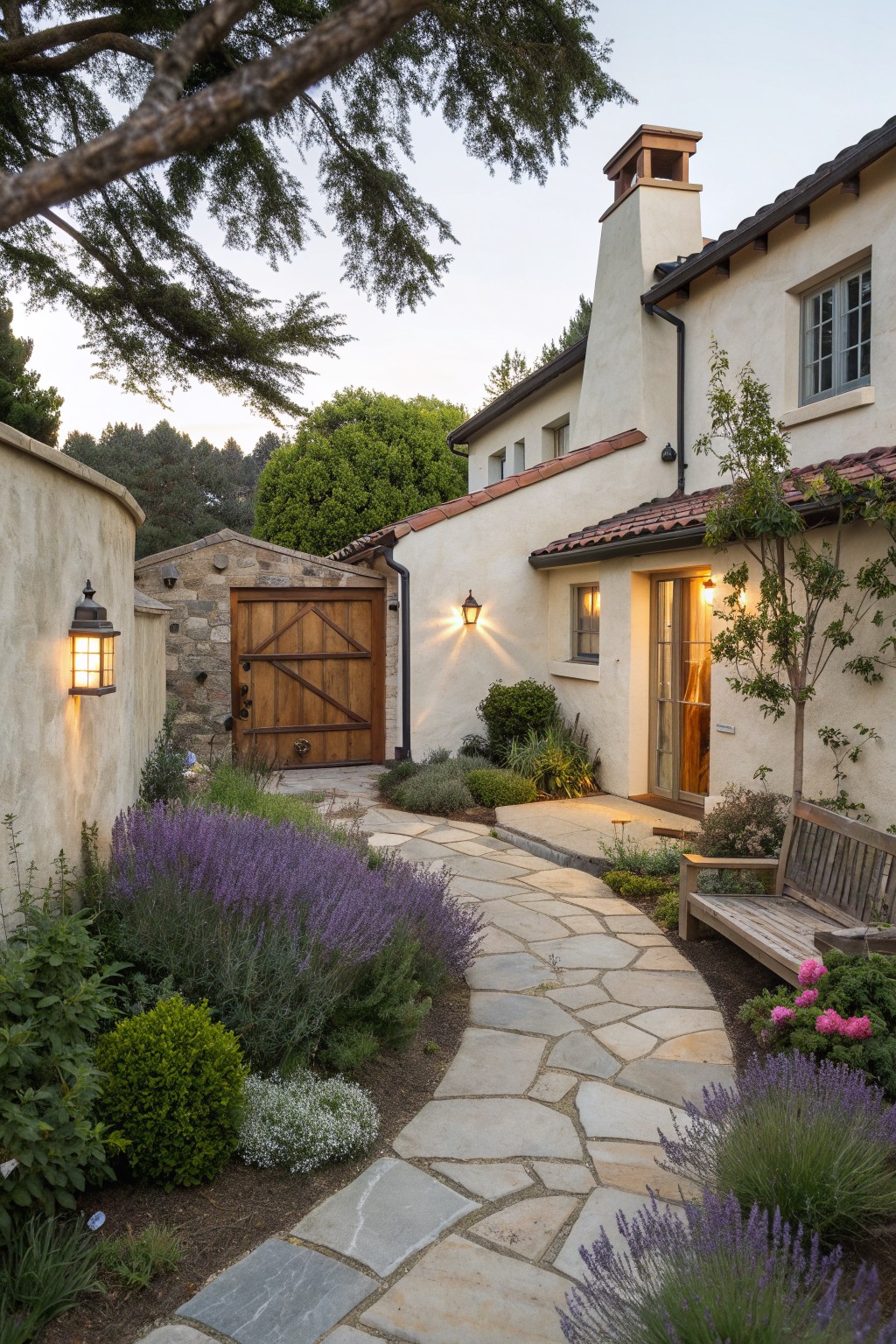
A winding flagstone path works well when you want the garden to feel connected to the house instead of separated by a hard edge. The irregular shapes and slight curves keep the walk from looking too formal, and the plants along the sides help it blend into the surrounding beds.
This approach suits a rustic modern farmhouse because it adds texture without competing with the stucco and wood details. Keep the path wide enough for two people and use low plants like lavender or small shrubs so the edges stay soft and the walkway stays easy to follow.
Mix Wood Siding With Stone
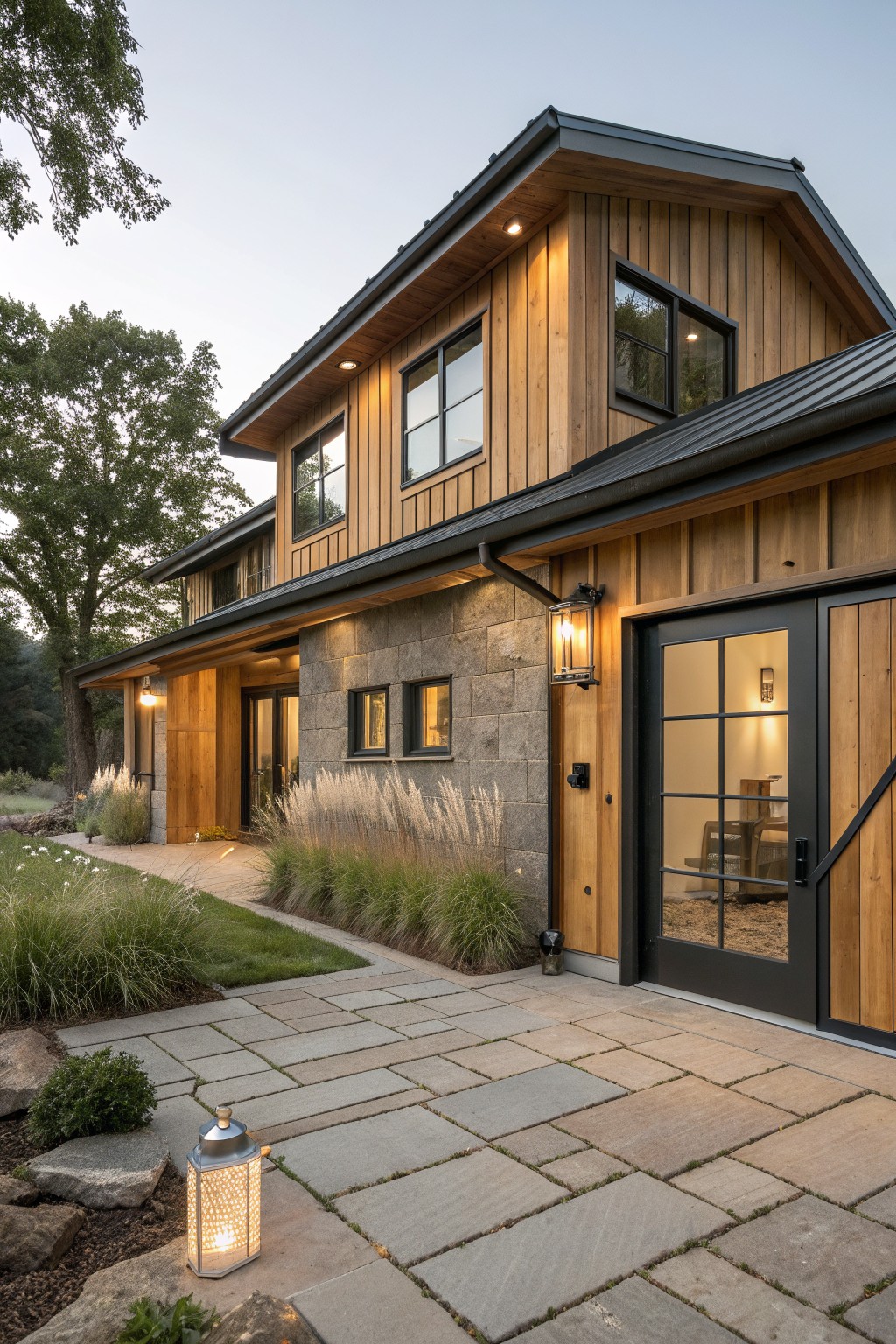
Wood siding paired with stone gives a house real texture while keeping the overall look clean. The wood brings warmth and the stone adds weight at the base, so the two materials balance each other instead of competing.
This approach works best on homes that want a modern farmhouse feel without looking too rustic or too stark. Keep the trim dark and simple so the materials stay the focus.
Mix Wood and Stone at the Entry
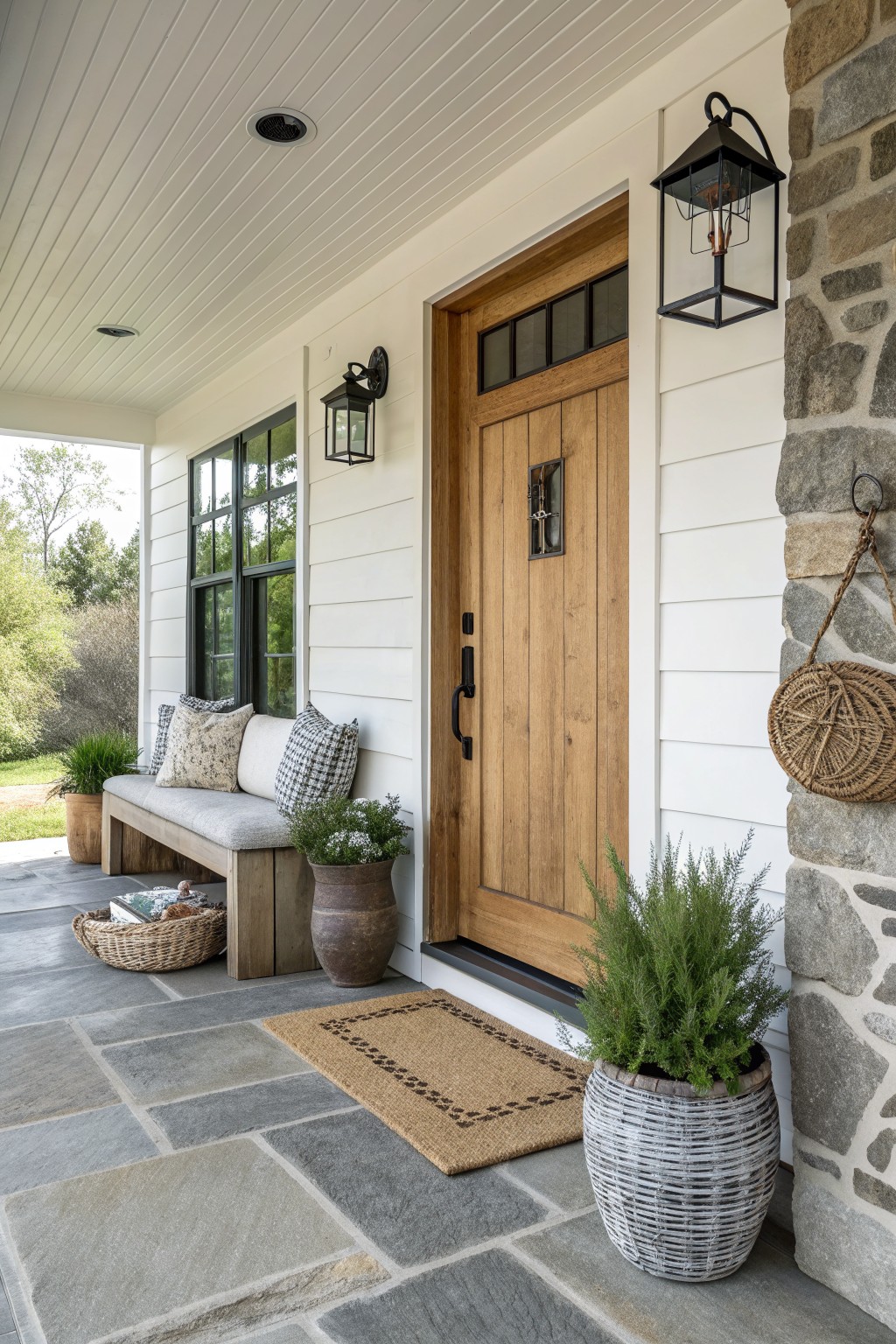
One simple way to give a farmhouse exterior more character is to pair a wood door with stone right around the entry. The wood brings warmth while the stone adds texture, and together they stand out against white siding without looking overdone.
This works best on homes that already have clean lines and want a bit of rustic contrast. Keep the hardware dark and simple so the materials stay the focus.
Mix Stone With Light Siding
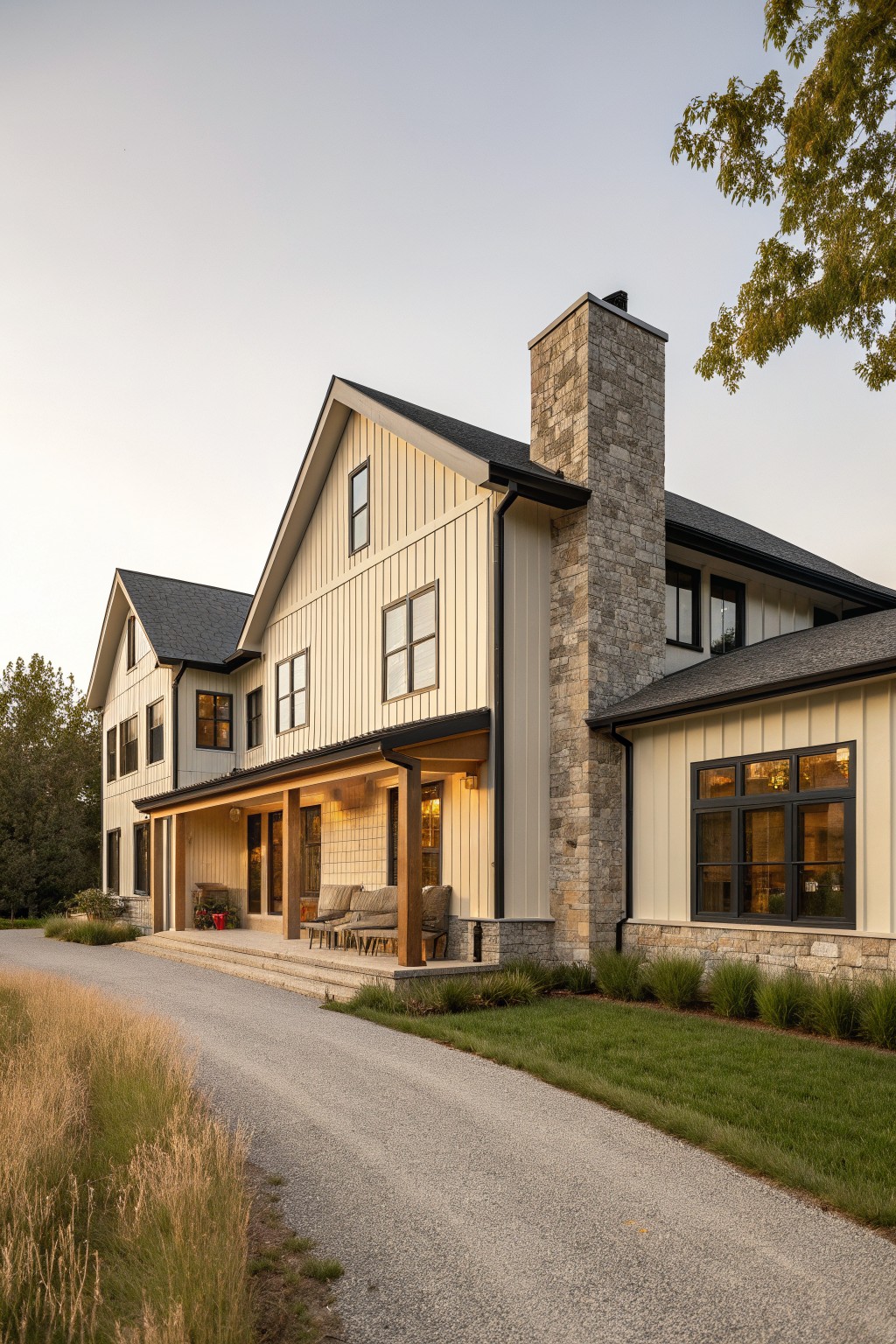
Stone and light siding make a strong pair on a farmhouse exterior. The stone gives weight to key spots like the chimney while the vertical siding keeps the rest of the house feeling bright and simple. This mix stops the design from looking too flat or too heavy.
It works well on larger homes that need some texture without extra trim or color. Keep the siding in a soft off-white and let the stone stay natural so the contrast stays clean.
Adding an Outdoor Bar to the Pool Patio
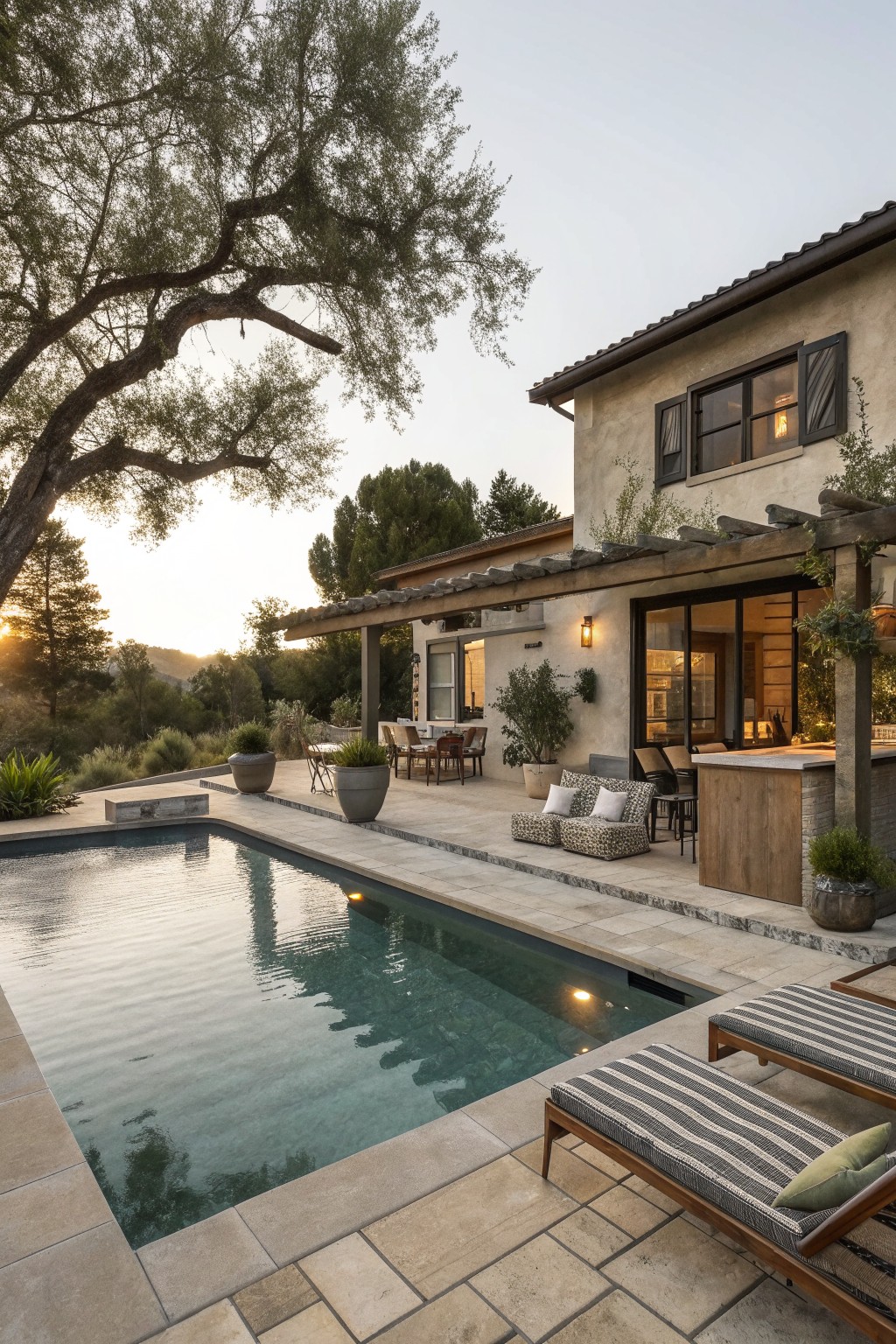
An outdoor bar makes the pool area feel more complete because it keeps everything in one spot. Guests can grab a drink without heading back inside, and the space ends up working harder for parties or quiet evenings.
This layout works best when the bar sits at the edge of the patio near the house so it does not block the pool view. Use wood and stone to match the rest of the exterior, and leave enough room for a couple of stools plus easy walking paths around the loungers.
Wood Doors Against White Siding
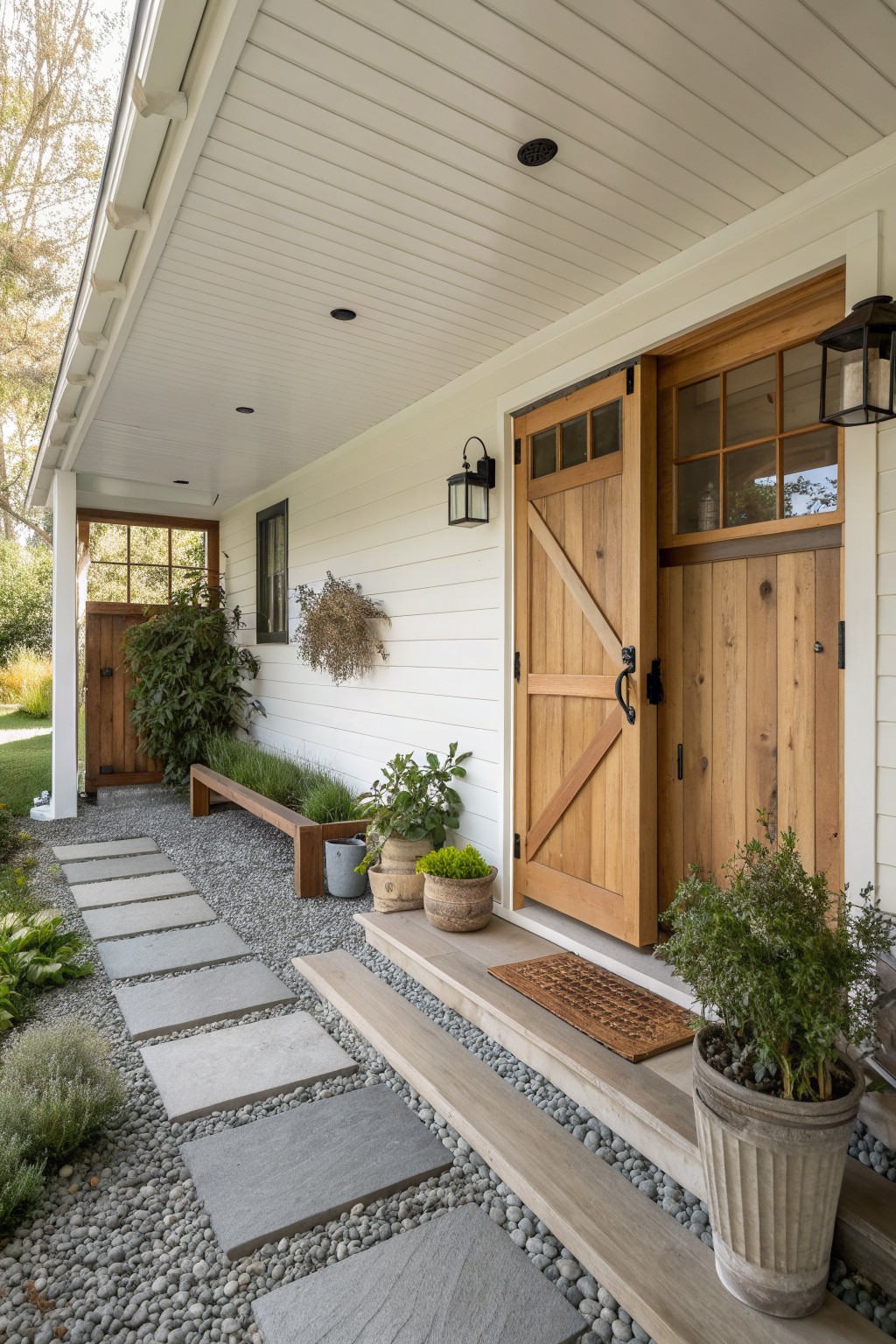
Using natural wood doors on a white exterior is one of the simplest ways to bring warmth to a farmhouse without adding too much detail. The wood gives the entry weight and character while the white siding keeps the whole front looking clean and open.
This works especially well on homes that sit in bright light or have simple lines already. Keep the wood tone natural, match the hardware to something dark and simple, and let the doors be the main feature rather than adding extra trim or decor around them.
A Gabled Porch Creates a Clear Entry Point
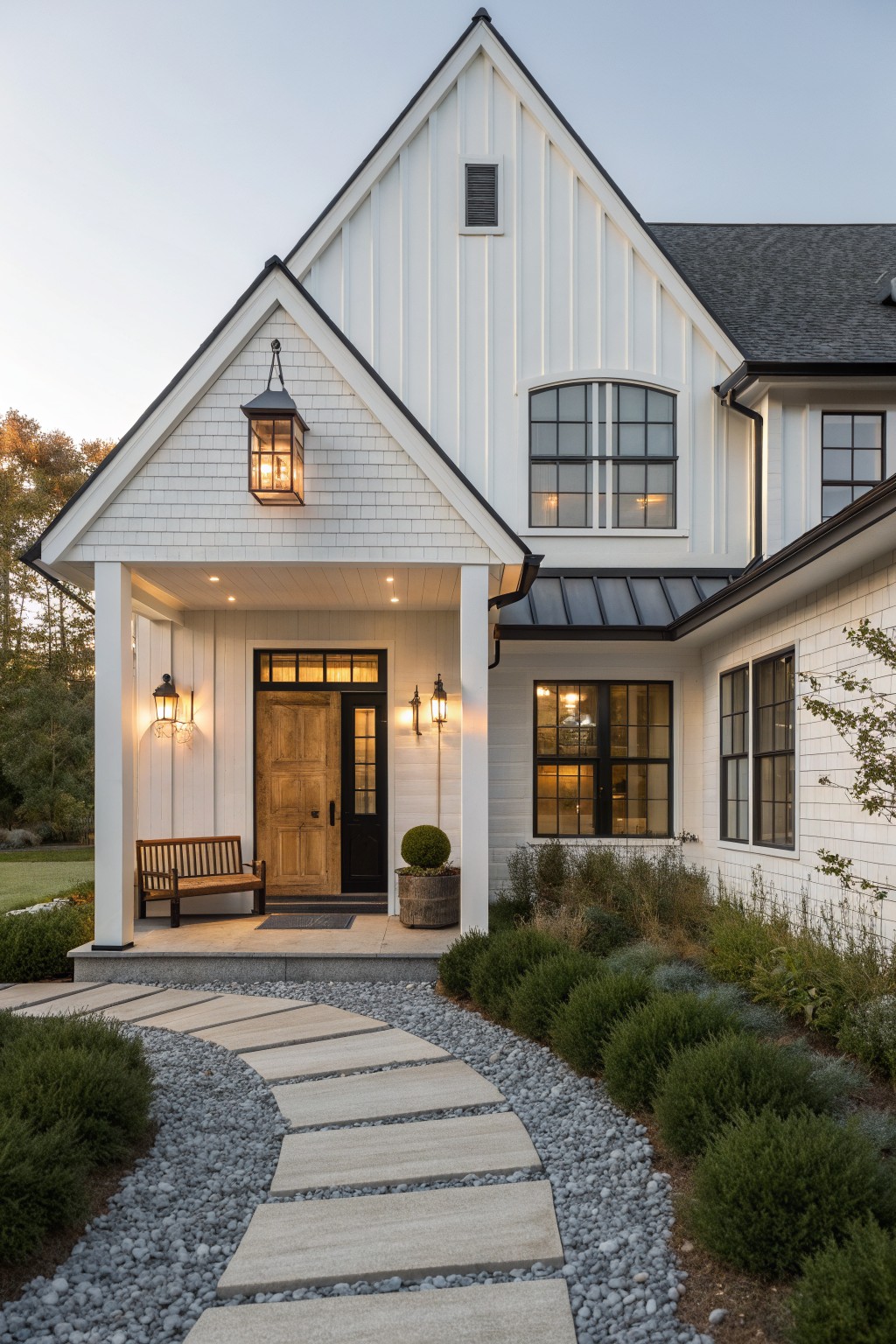
Many modern farmhouses rely on a simple gabled porch to mark the front door. It gives the house structure and makes the entrance easy to spot without extra trim or decoration.
This works best on homes with white siding and dark accents. Keep the porch depth modest so it feels useful but does not overwhelm the facade. A wood door helps the space feel warmer.
Defining the Patio With Raised Wooden Beds
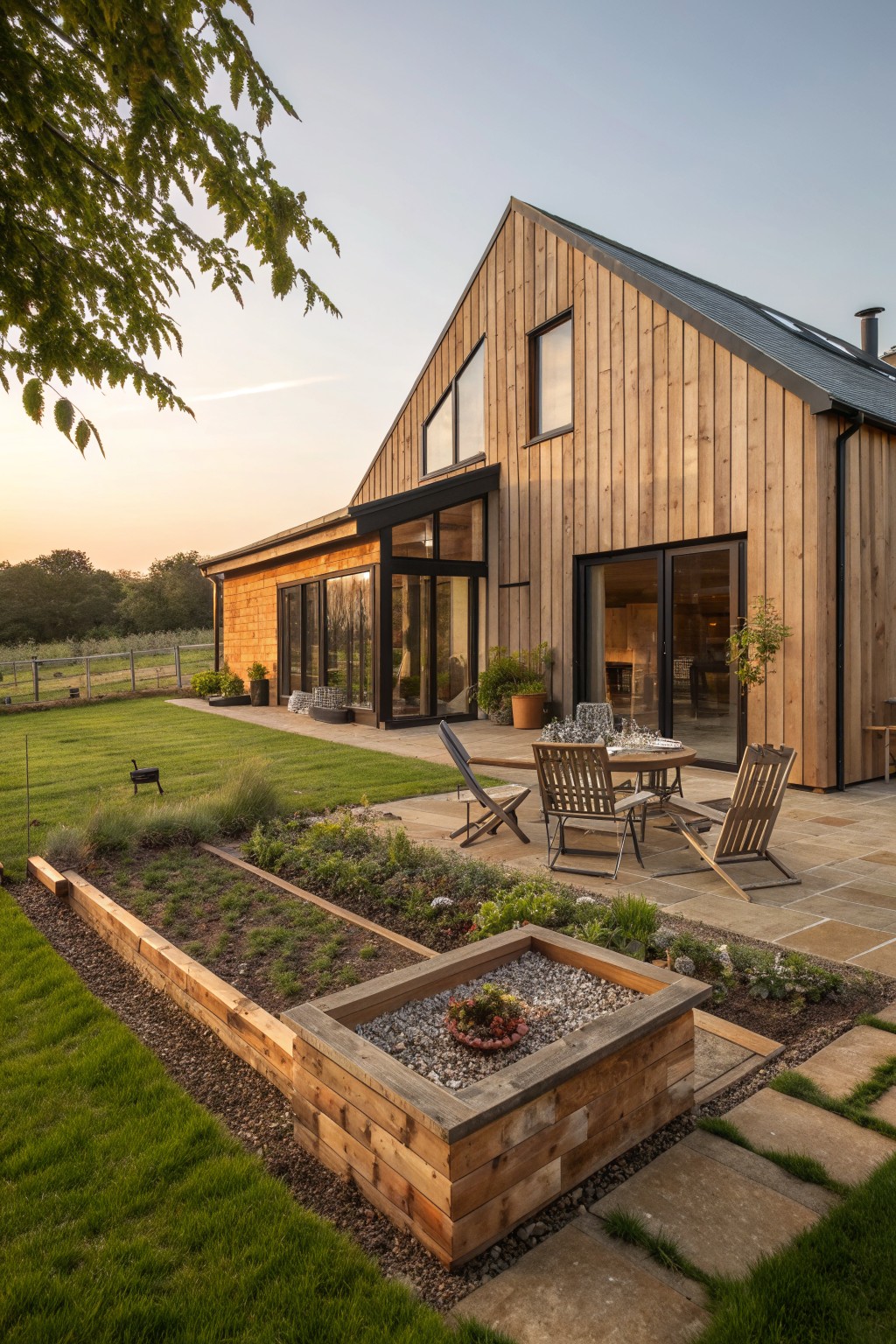
Raised wooden beds work well for breaking up a large patio into more usable zones. They add planting space right where people sit without needing a separate garden area, and the wood grain ties in naturally with the house siding.
This approach suits homes that already use wood on the exterior. Keep the beds low and simple so they do not block views or make the seating feel crowded. Use the same finish on the beds as on the house for the cleanest look.
Frequently Asked Questions
Q: Can I mix a metal roof with wood siding on my current house? A: Start by choosing a dark matte roof color that blends with your trim. Add wood accents only on the gables and porch posts first. This keeps the update focused and avoids a patchy look.
Q: What if my brick exterior feels too orange next to modern windows? A: Paint the brick in a warm greige tone that softens the color. Leave the original texture showing through so it still reads rustic. The windows will then sit nicely without fighting the brick.
Q: How do I make sure the front porch does not look too new? A: Use reclaimed beams for the posts and ceiling if you can find them. Add simple black hardware and skip fancy lighting. The slight wear on the wood helps everything feel settled right away.
