

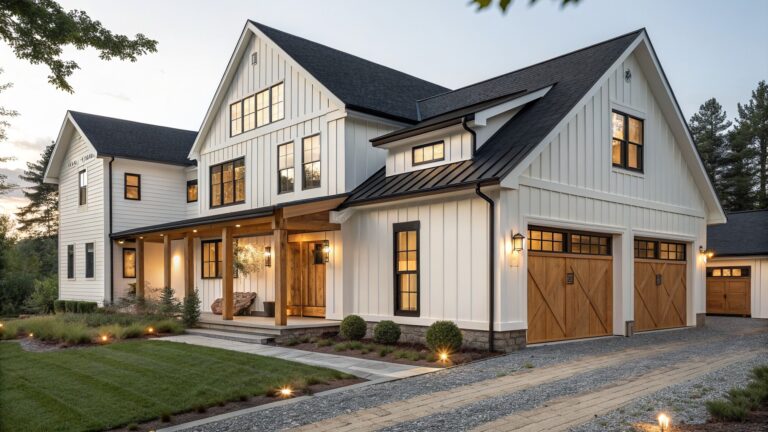
I have always noticed how the front of a house reads first from the street, and the right balance of white siding with wood accents can soften what might otherwise feel too sharp or plain.
The contrast often works best when the wood tones sit against simple rooflines and entry details rather than trying to cover every surface.
Over time I have seen that some pairings hold up better in real light and weather than they do in initial plans.
It rarely translates exactly from sketches.
That is why I usually test one small section of wood against the white before deciding how far to take the look across the whole facade.
White Siding With Natural Wood Accents
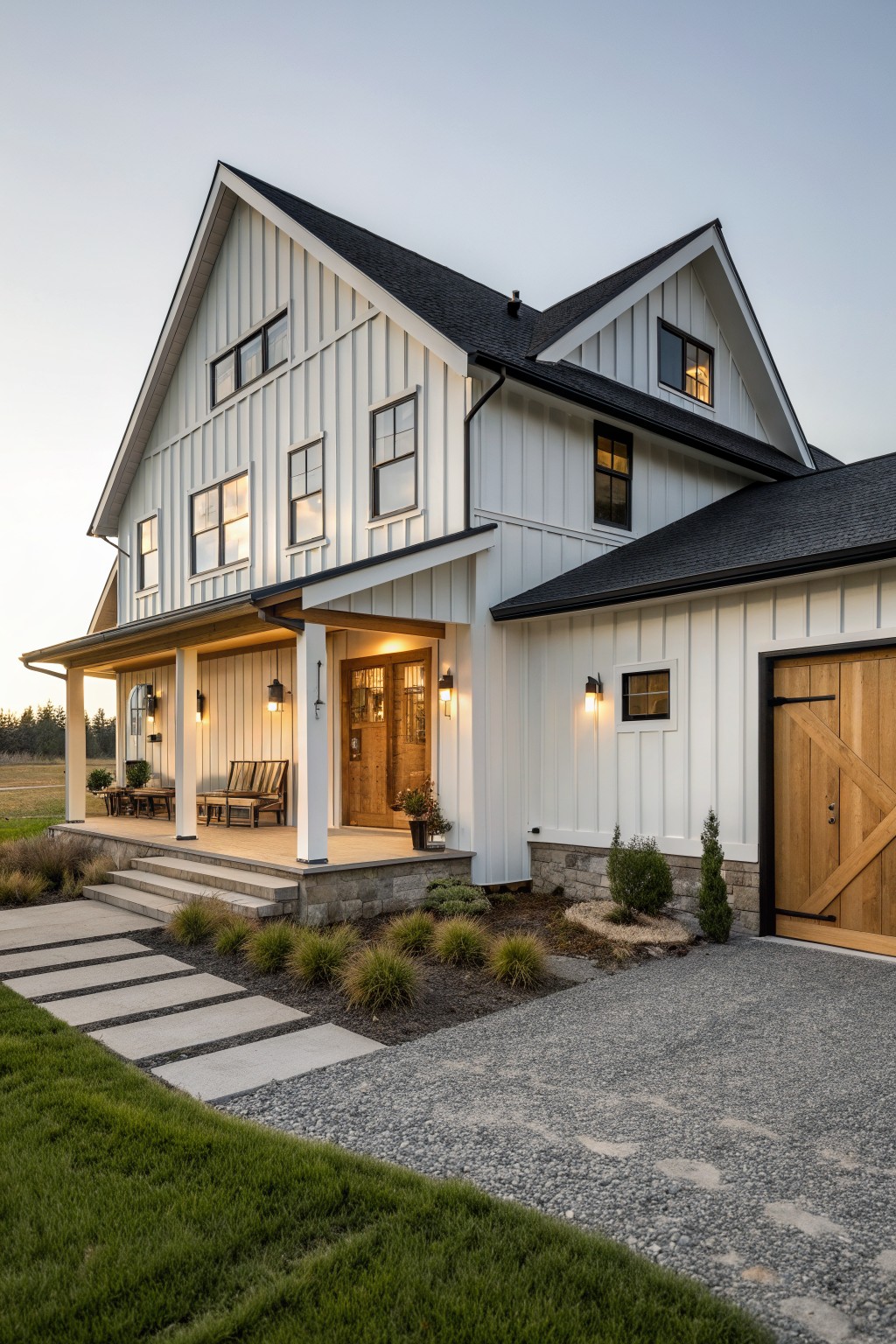
White siding keeps the whole house looking clean and bright, but the wood accents stop it from feeling too plain or cold. The mix gives the exterior a softer edge while still reading as modern.
Use the wood on the front door, garage door, and porch ceiling to pull the look together. It works especially well on homes with simple gable lines and a clear entry point. Just keep the wood tones warm and consistent so the contrast stays balanced rather than busy.
White Siding With Wood Accents
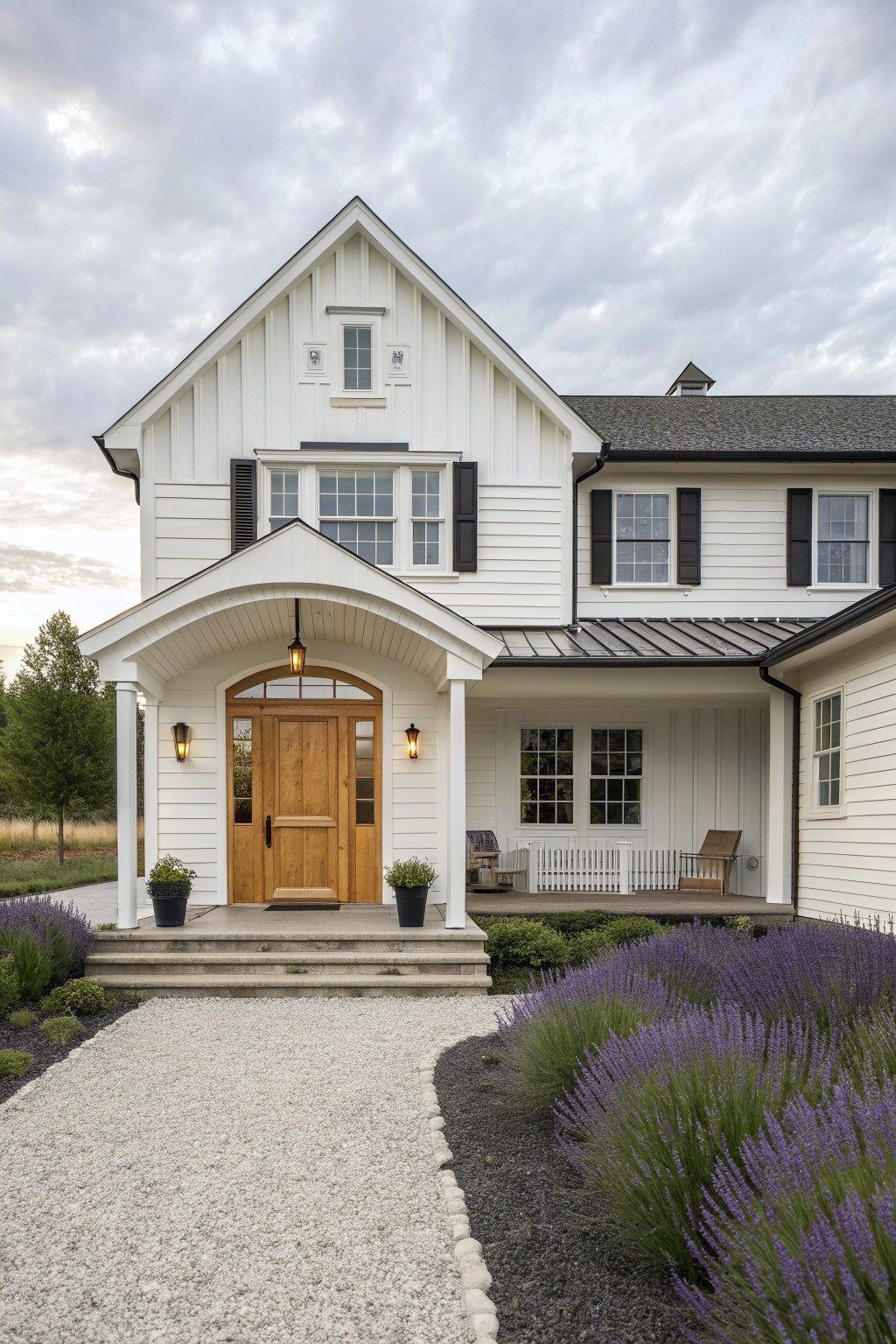
A white farmhouse gains a lot of warmth when the main door and some trim are left in natural wood. The contrast keeps the house looking clean but stops it from feeling too stark or cold. It works especially well on simpler gable forms where the wood can stand out without competing with lots of other details.
This approach suits most suburban or rural lots that already lean traditional. Keep the wood tone on the lighter side so it reads as fresh rather than heavy, and limit it to the entry and a few shutters or brackets. Too much wood and the white loses its crisp effect.
Wood Doors Against White Farmhouse Siding
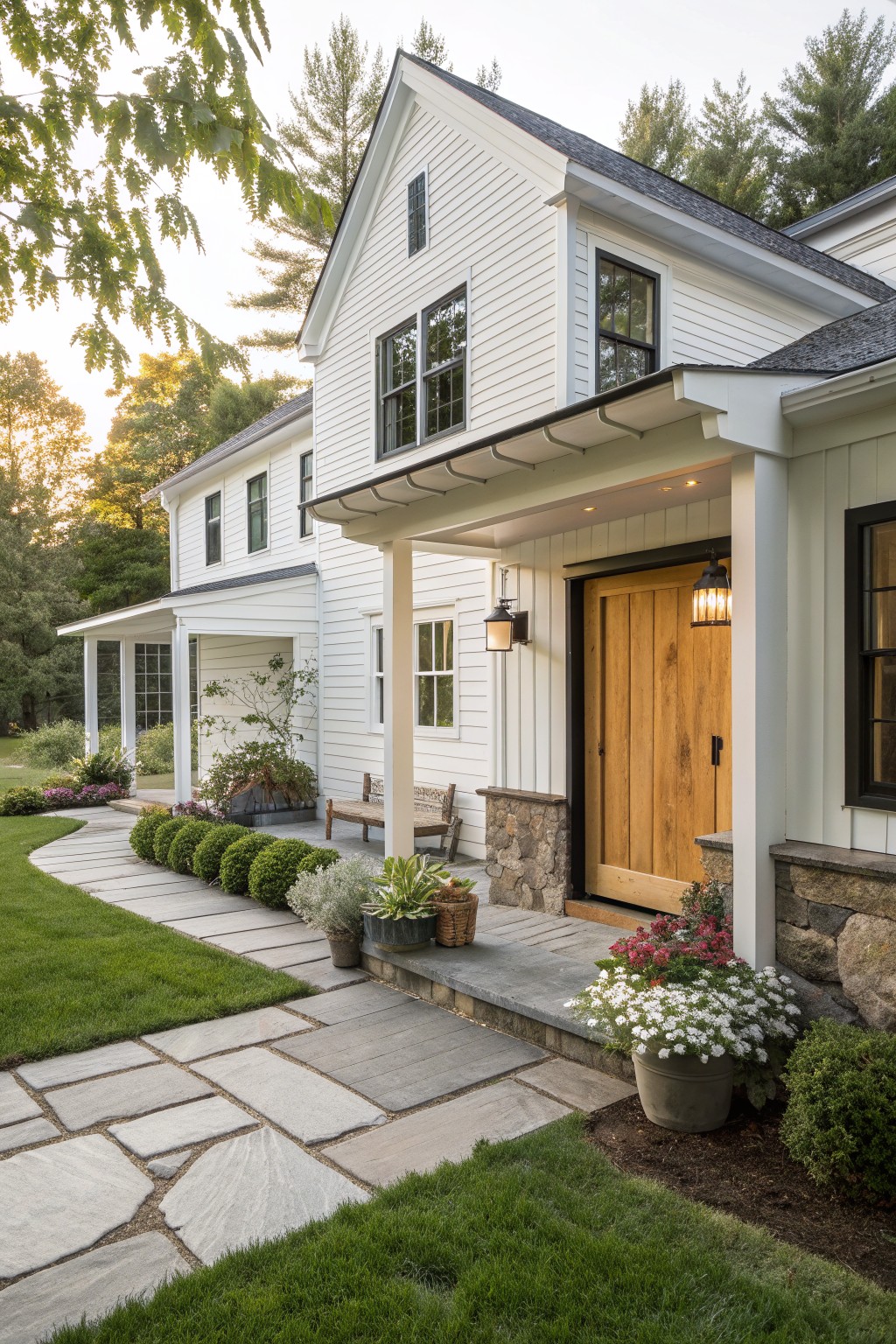
A natural wood door on a white exterior adds just enough warmth without complicating the overall look. The contrast keeps the house feeling bright and current while still nodding to classic farmhouse materials.
This works best on homes with clean lines and minimal trim. It suits both new construction and updates where you want a simple way to bring in texture without adding extra colors or busy details.
White Brick with Wood Garage Doors
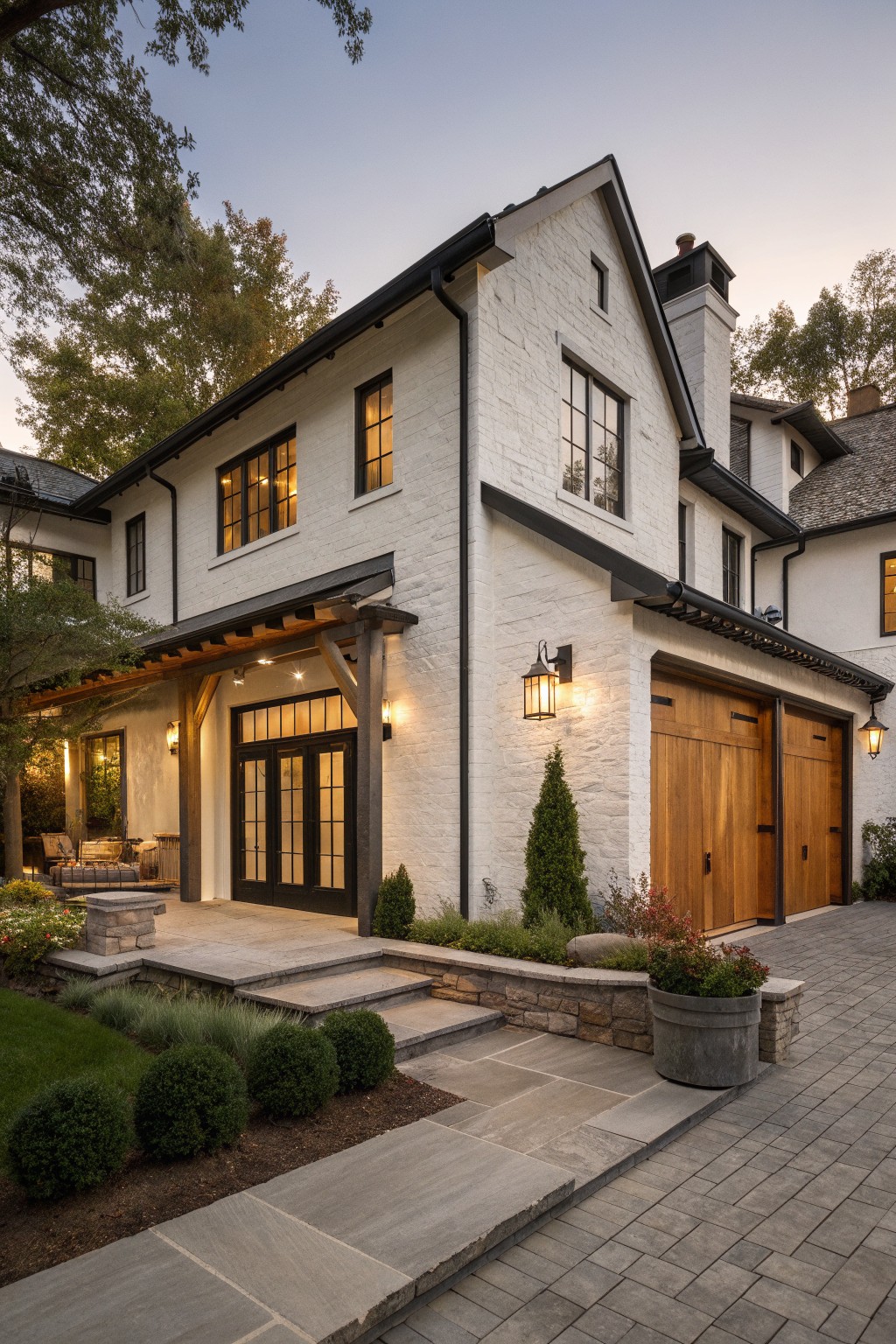
White brick exteriors can look a little stark on their own, so adding wood garage doors brings in just enough warmth to soften the whole front. The natural tone of the wood stands out nicely against the bright brick and pairs with the black trim for a cleaner modern edge.
This approach suits farmhouse homes that want contrast without extra ornament. Keep the wood to larger elements like doors or entry framing, and let the brick and dark accents handle the rest of the look.
Wood Door with Sidelights at the Entry
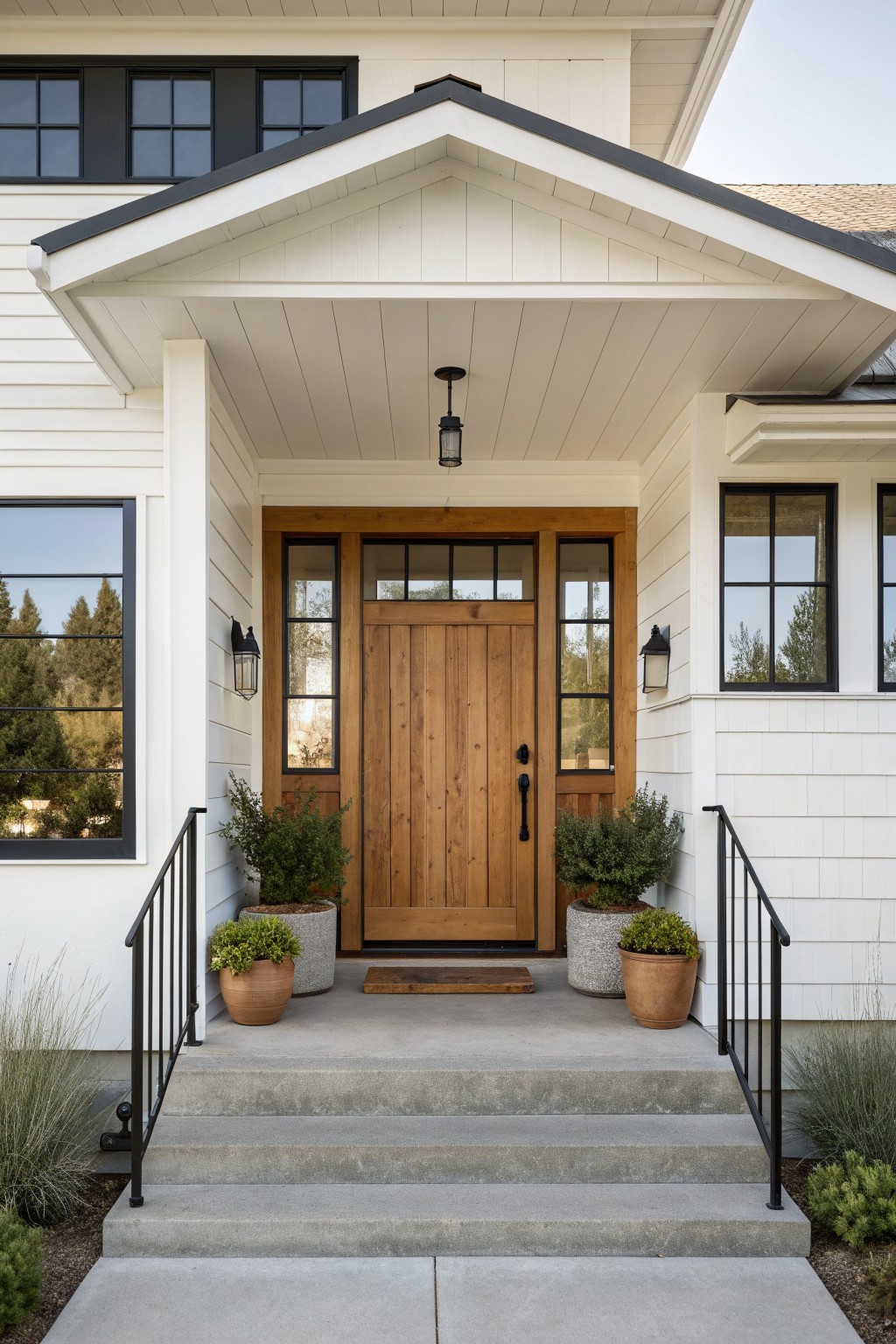
A wood front door flanked by sidelights gives the entry a balanced look that feels both traditional and current. The natural wood stands out against white siding without needing extra trim or decoration, and the glass panels let light reach the inside while keeping the door the clear focal point.
This setup works especially well on simpler farmhouses where the roofline already creates a small overhang. Black hardware and a dark porch ceiling keep the contrast sharp, while the wood itself softens the overall white exterior. It suits homes that want a welcoming entry without adding columns or heavy ornament.
String Lights On A Pergola Extend Deck Use
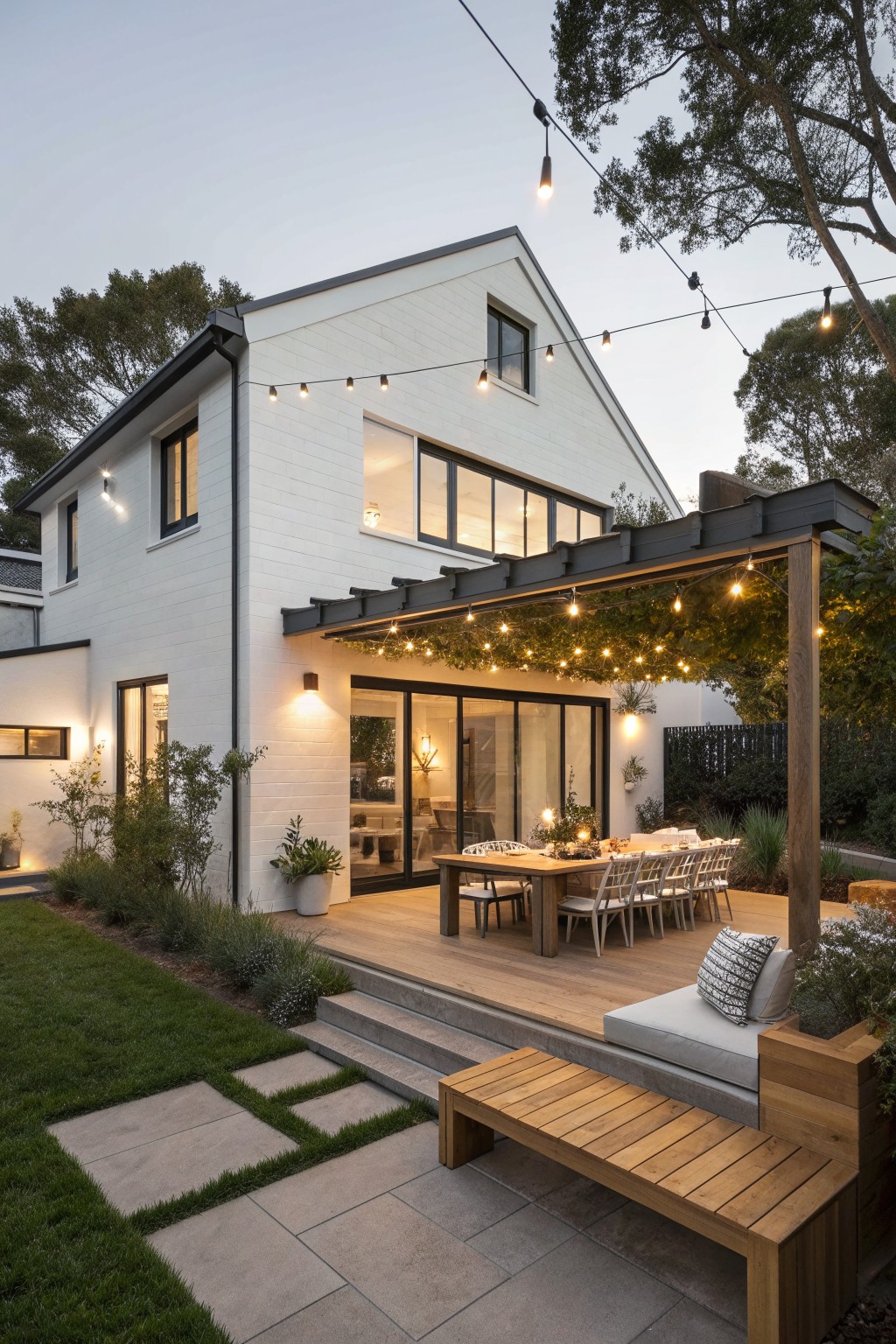
A pergola strung with lights gives the deck a simple roofline that makes the space feel finished and ready for evening meals. The lights add just enough glow to keep the area comfortable after sunset without needing extra fixtures along the house.
This works best on homes where the back or side yard sits close to the main living areas. Keep the structure low enough to feel sheltered but open on the sides so the view to the yard stays open.
White Siding With A Natural Wood Door
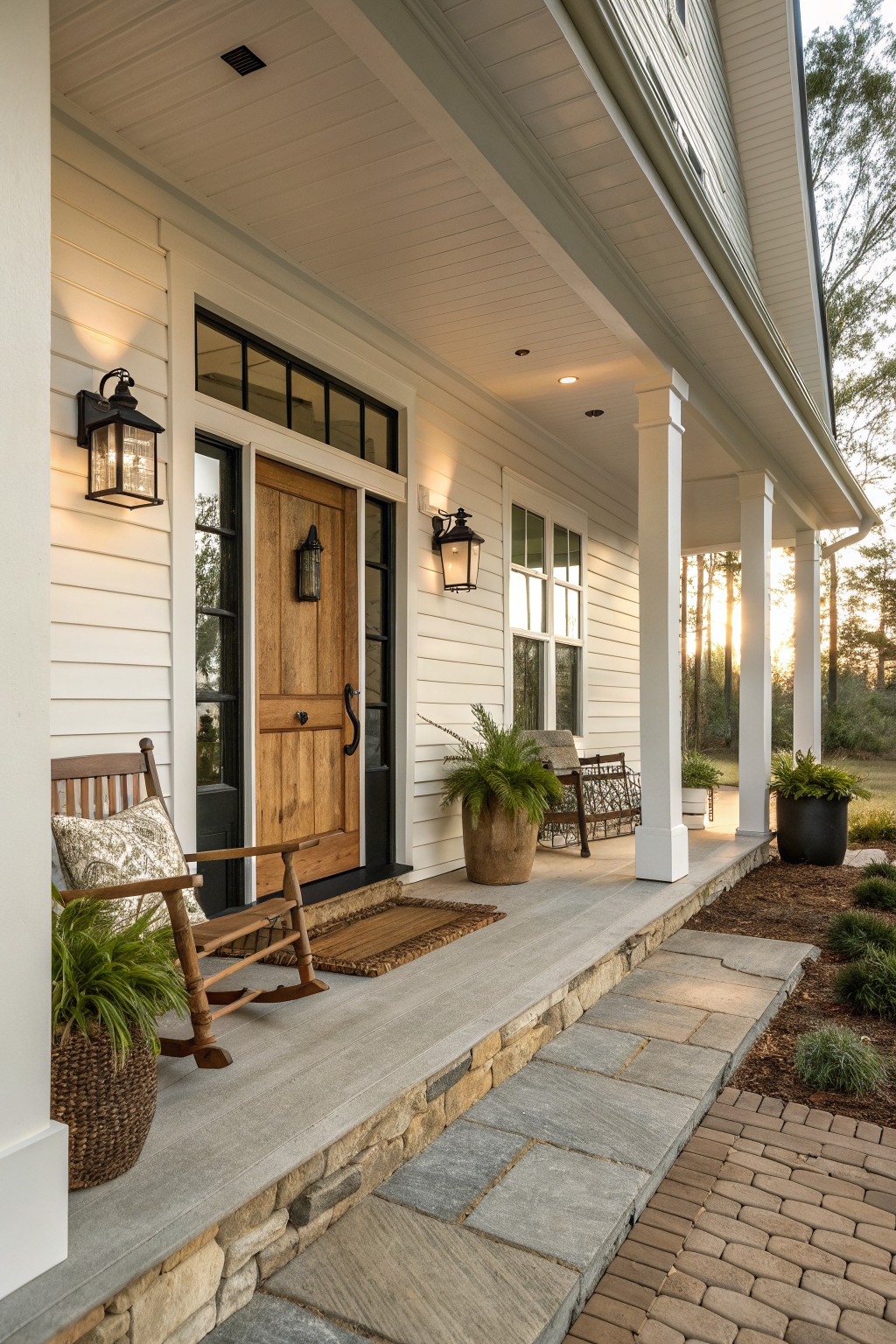
A natural wood door gives white siding a warmer touch without adding much extra color. The contrast keeps the look clean but stops it from feeling too stark or plain.
This works best on simpler farmhouses where the rest of the trim stays white or black. Keep other wood pieces to a minimum so the door stays the main focal point.
White Siding With Natural Wood Accents
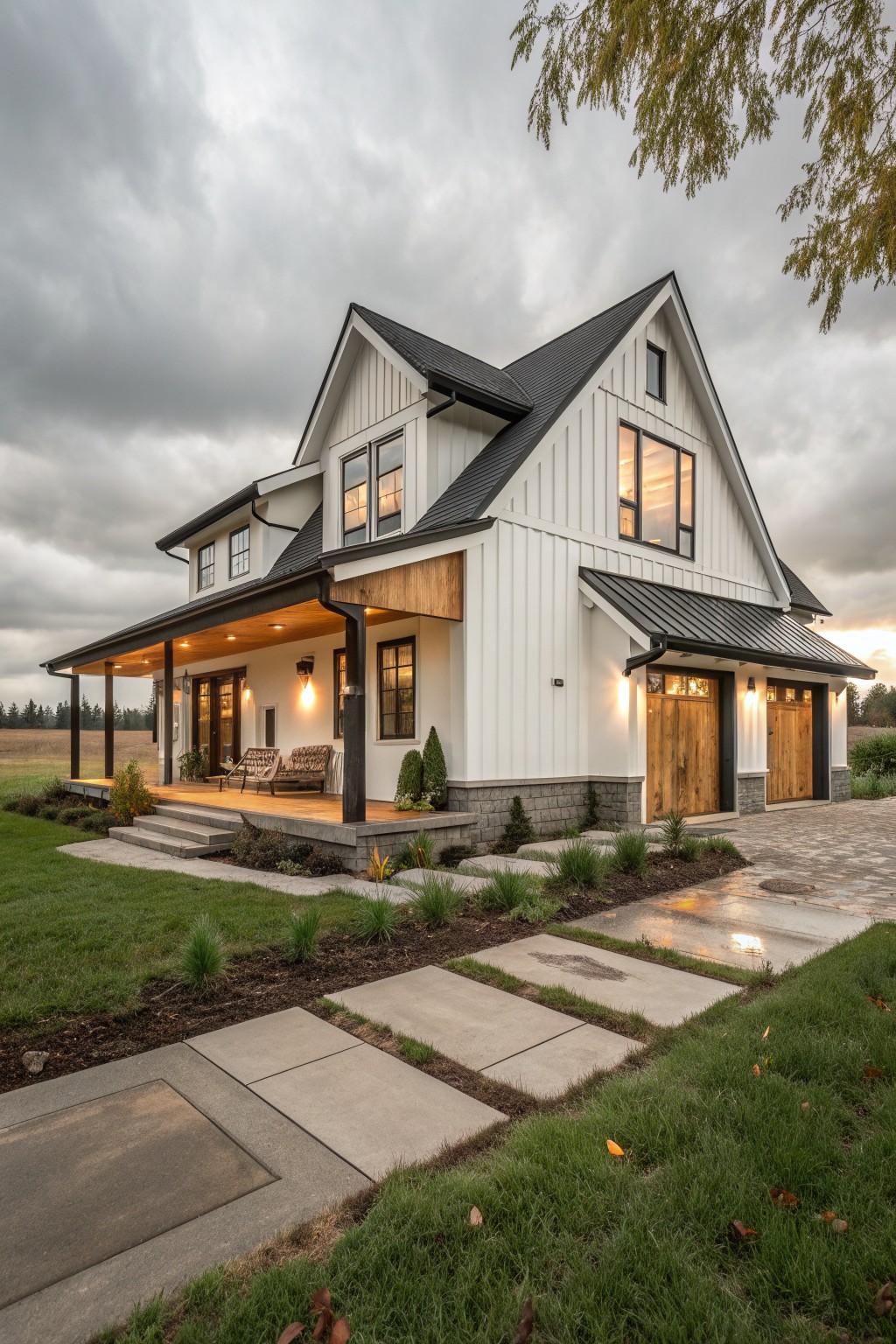
White siding gives a house a clean base, but it can feel flat on its own. Adding wood in a few key spots brings warmth and a bit of texture without making the whole exterior busy.
This works best on farmhouses that want a softer modern look. Keep the wood to smaller areas like porch ceilings or trim around doors so the white still reads as the main color.
Adding Natural Wood To White Farmhouse Exteriors
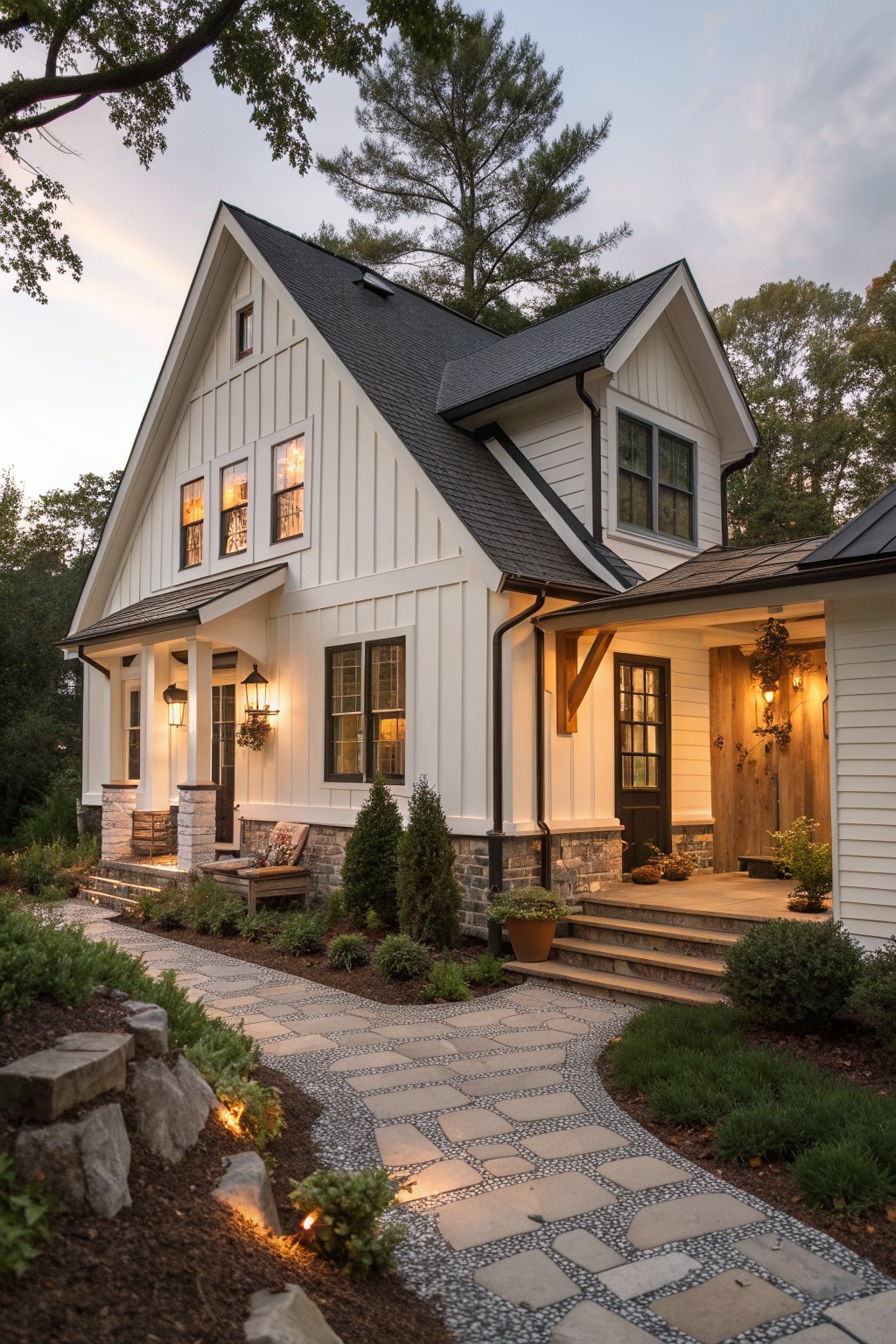
White exteriors can feel a little stark on their own, so bringing in wood tones helps soften the overall look. The contrast keeps the house feeling bright and clean while adding just enough warmth to make it inviting.
This approach works best when the wood stays limited to a few key spots like the front door, porch beams, or trim around windows. It suits homes that want a modern touch without losing the simple farmhouse character.
Adding Wood Ceilings To White Exteriors
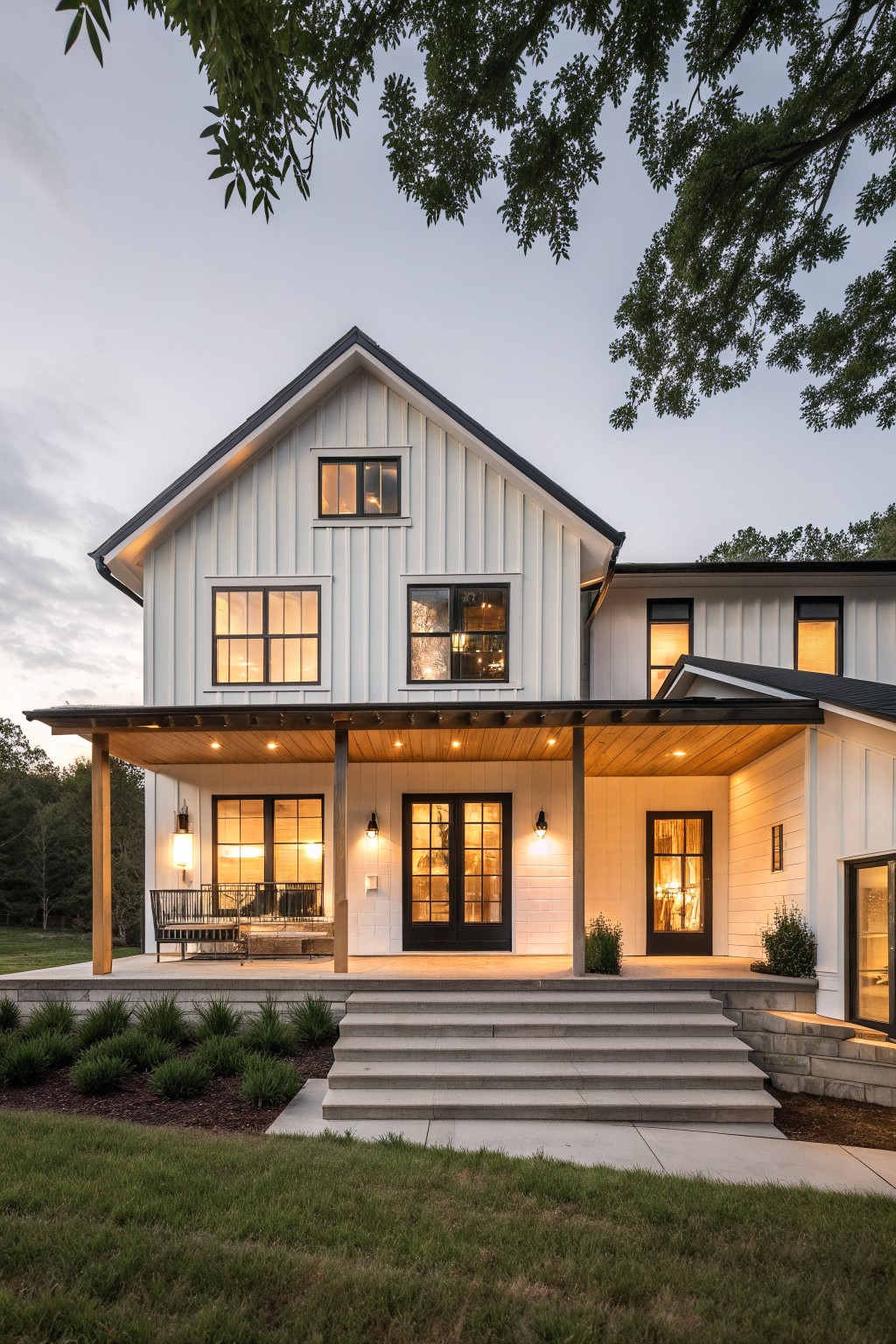
The wood ceiling on the porch gives the white siding a softer edge without changing the overall clean shape of the house. It adds a bit of warmth and texture right where the eye lands first, which helps the whole front feel more welcoming.
This works best on farmhouses that already have a simple roofline and want to avoid a flat or cold look. Keep the wood tone natural and let the white siding stay the main surface so the contrast stays balanced rather than busy.
White Stone With Wood Doors For Soft Contrast
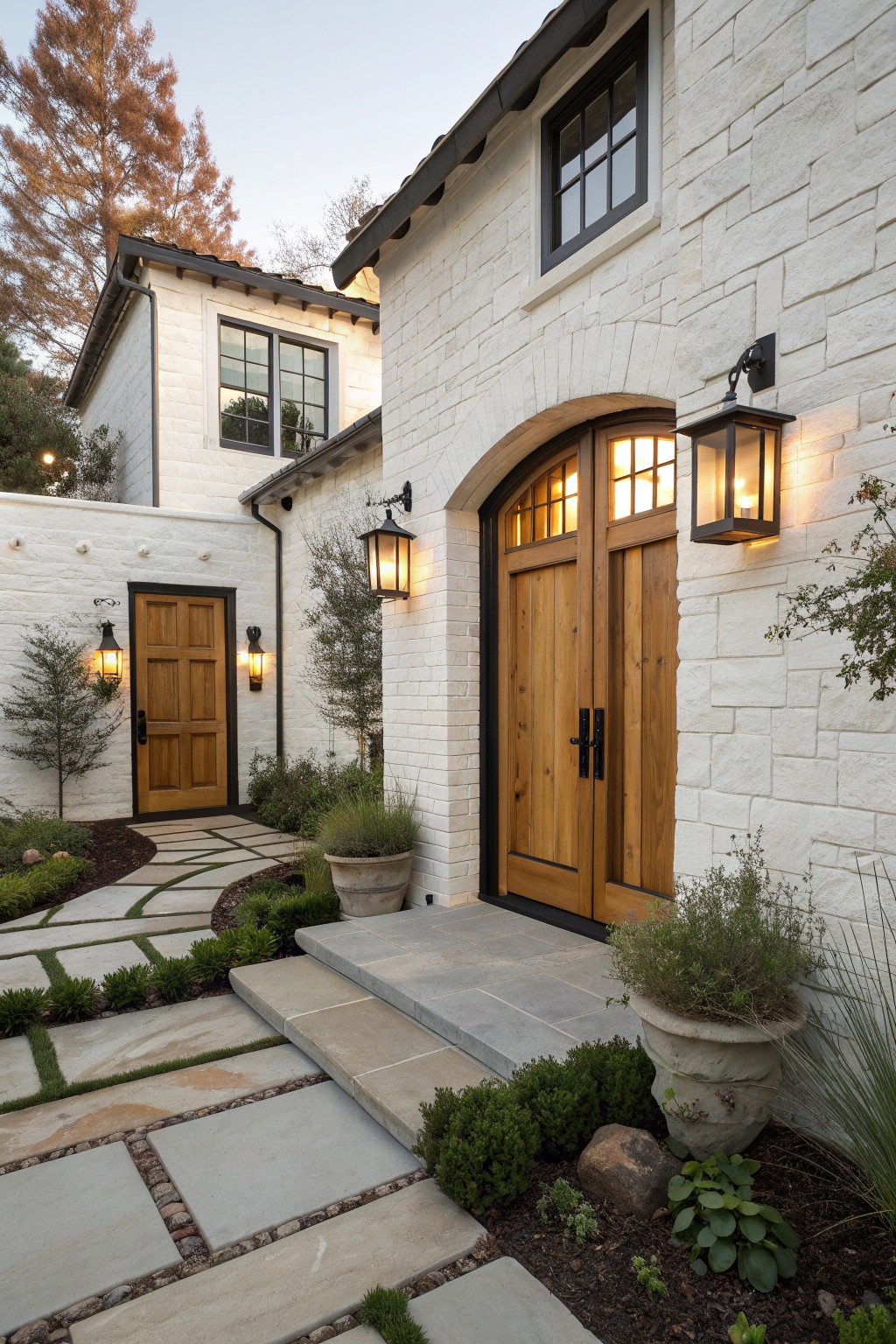
White stone gives a house a clean, solid base, but it can feel a bit stark on its own. Adding natural wood doors brings in warmth and keeps the look from turning too cold or modern.
This mix works best on farmhouse exteriors that already have simple lines. Use it at the main entry, choose a medium wood tone, and let the stone stay the main material so the wood reads as an accent rather than an afterthought.
Covered Patios That Match The House
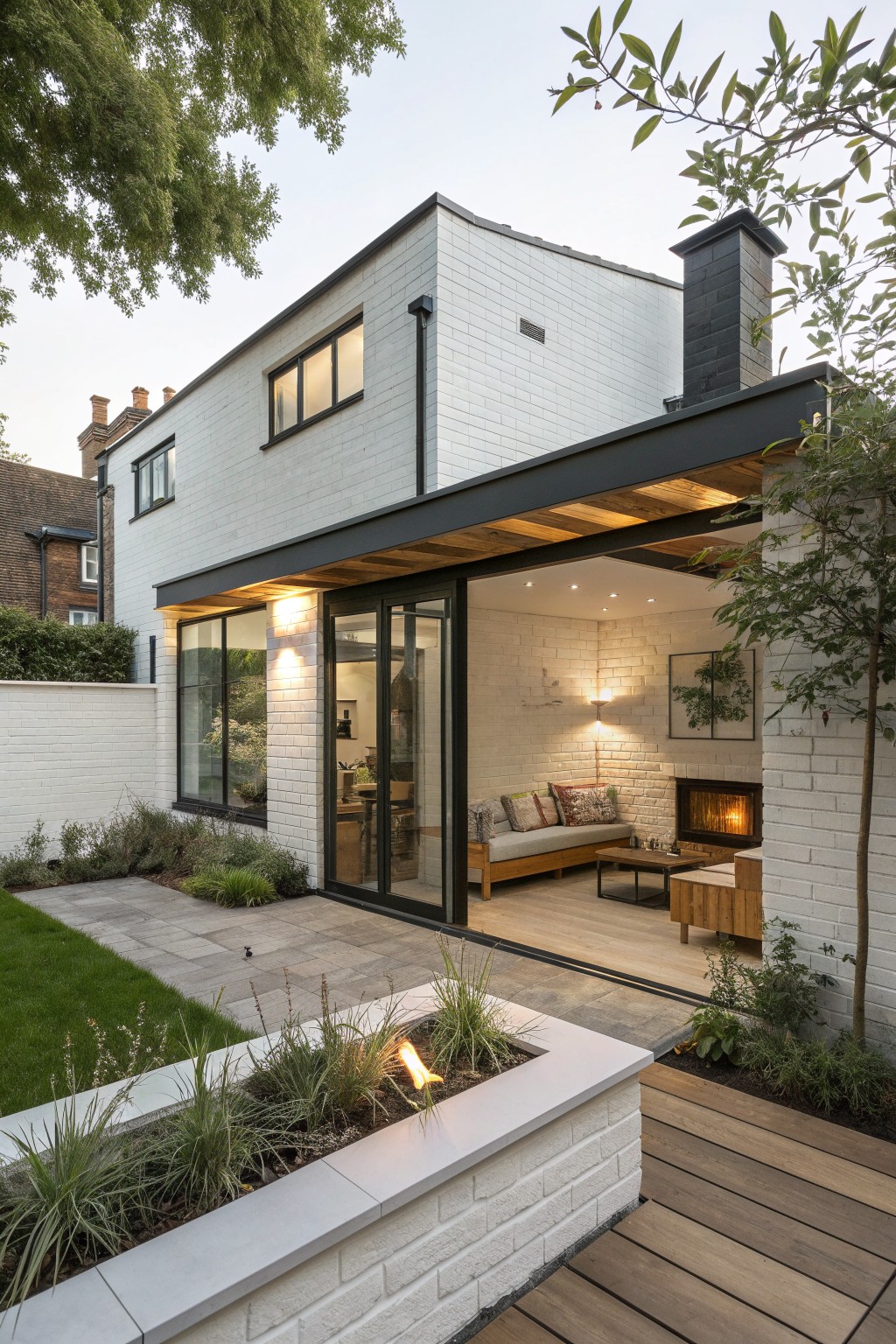
One way to make an outdoor space feel more connected is to carry the same white brick and wood tones from the house into the covered patio area. This keeps the look consistent and lets the seating zone read as a natural extension rather than a separate addition.
It works well on homes where the main materials are already simple and light. Use the wood on the ceiling and a few built-in pieces, keep the walls in white brick, and add a fireplace so the space stays comfortable in cooler months. Just make sure the roof overhang is deep enough to give real shelter.
White Siding With Wood Accents
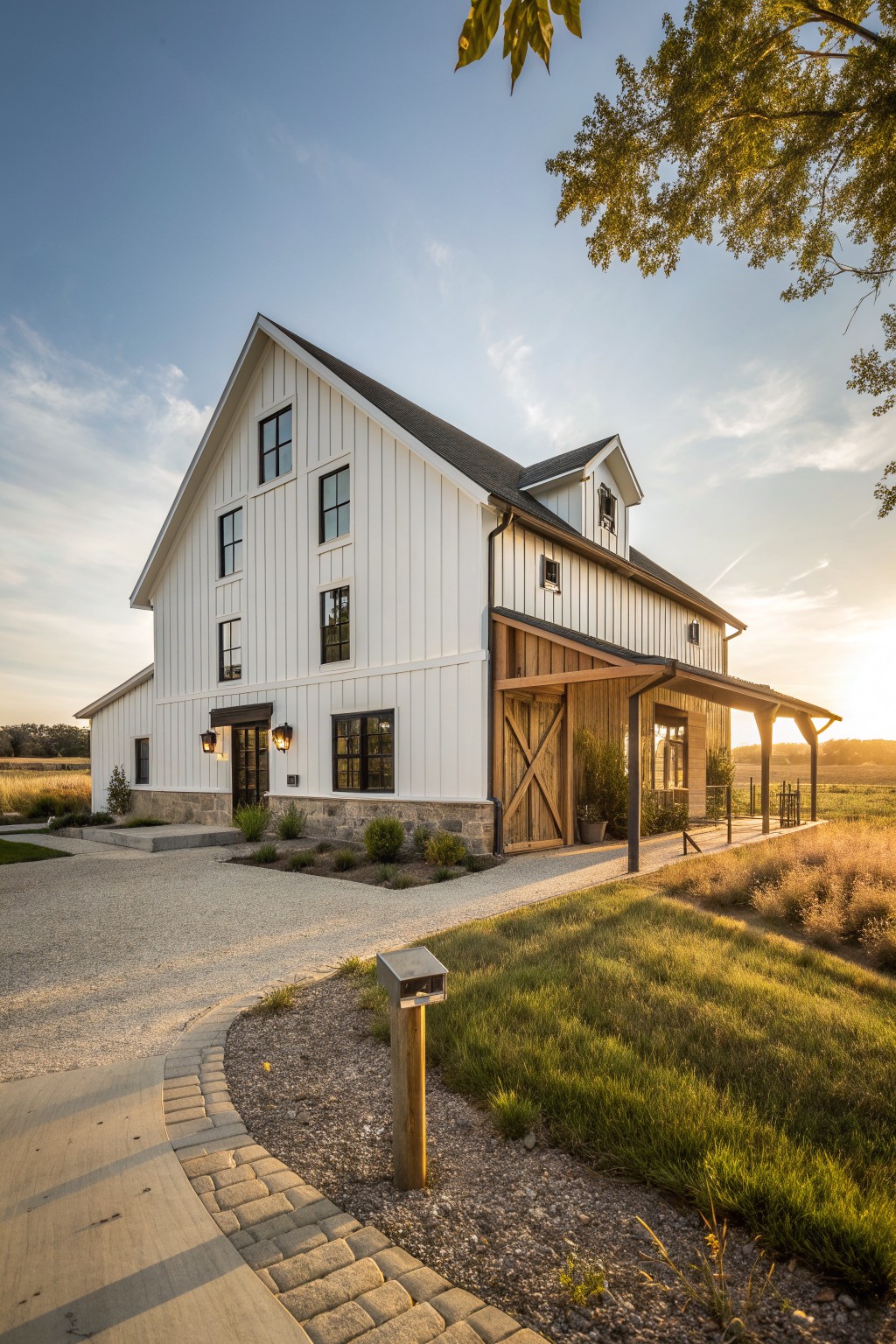
White siding paired with natural wood gives a farmhouse a cleaner profile without losing its familiar warmth. The contrast keeps the house from looking too stark while still feeling updated.
This works best on homes that already have simple rooflines and a few strong architectural features. Use the wood on doors, porch beams, or small extensions so it highlights those spots without overpowering the white.
White Siding With Wood Accents
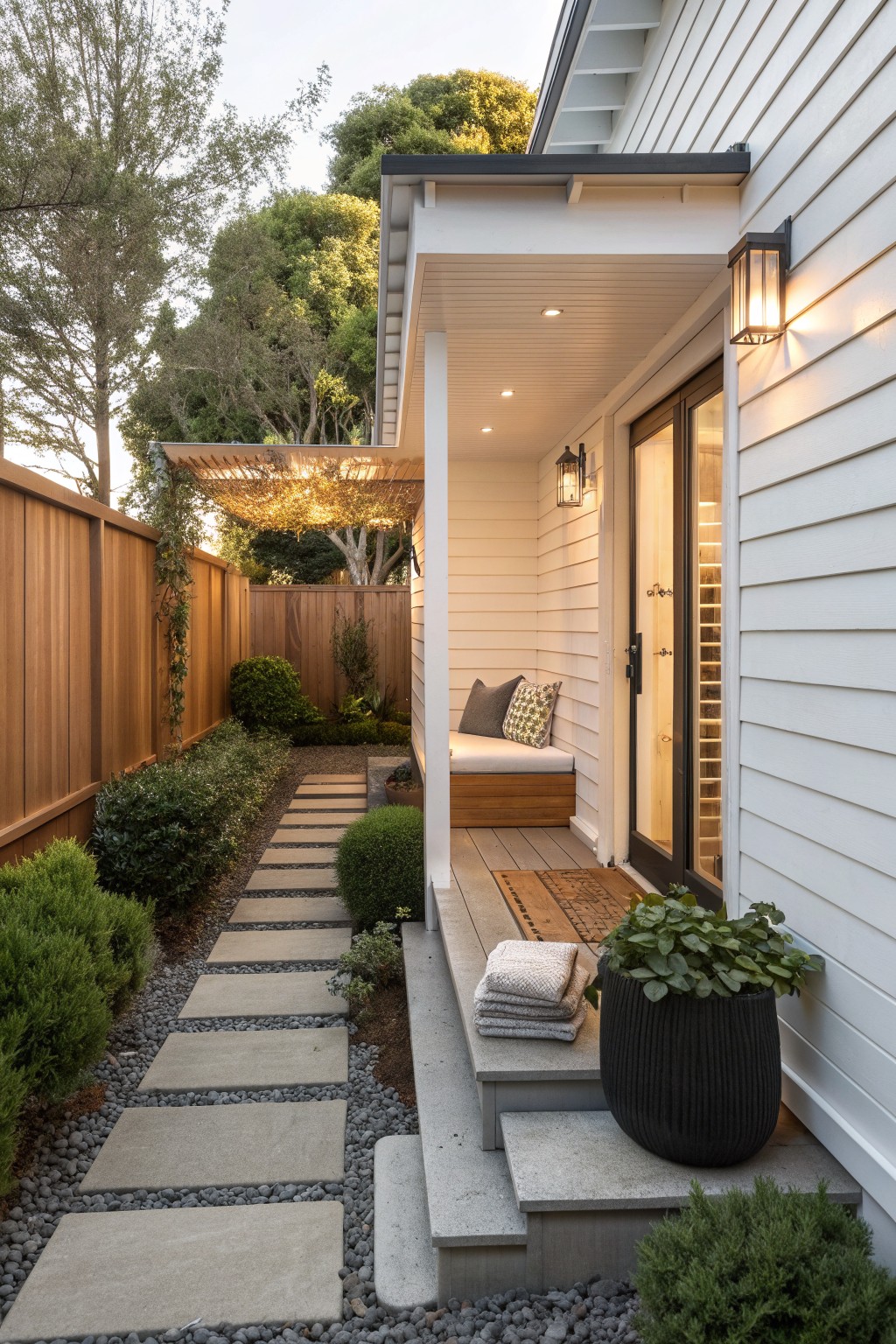
White siding gives a clean base that feels light and open. Adding wood on the porch ceiling, bench, and trim brings in warmth without making the whole house feel heavy. The mix keeps things simple while giving the exterior a bit more character.
This approach works well on smaller homes or side entries where you want the space to feel welcoming. Stick with natural wood tones and keep the white crisp so the contrast stays soft. It also helps the entry stand out without needing extra trim or bold colors.
White Siding With Wood Accents
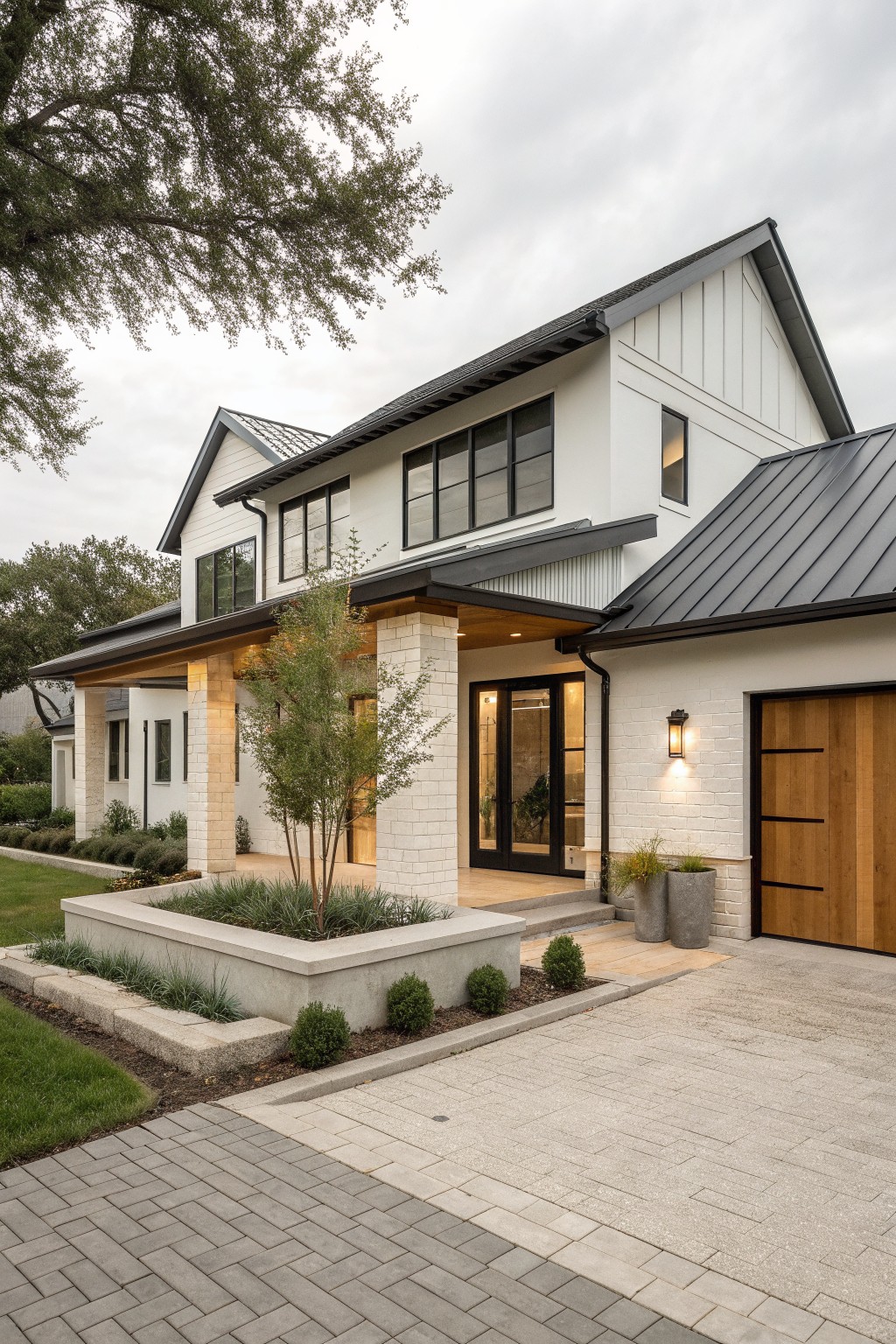
White exteriors often look crisp on their own, but adding wood tones helps them feel a little softer and more grounded. The natural wood on the garage door and porch beams gives the house some warmth without making it feel heavy or busy.
This mix works best on newer farmhouses that already have clean lines. Start with one or two wood elements like a door or beam if you want to test the look before committing to more.
White Siding with Wood Accents
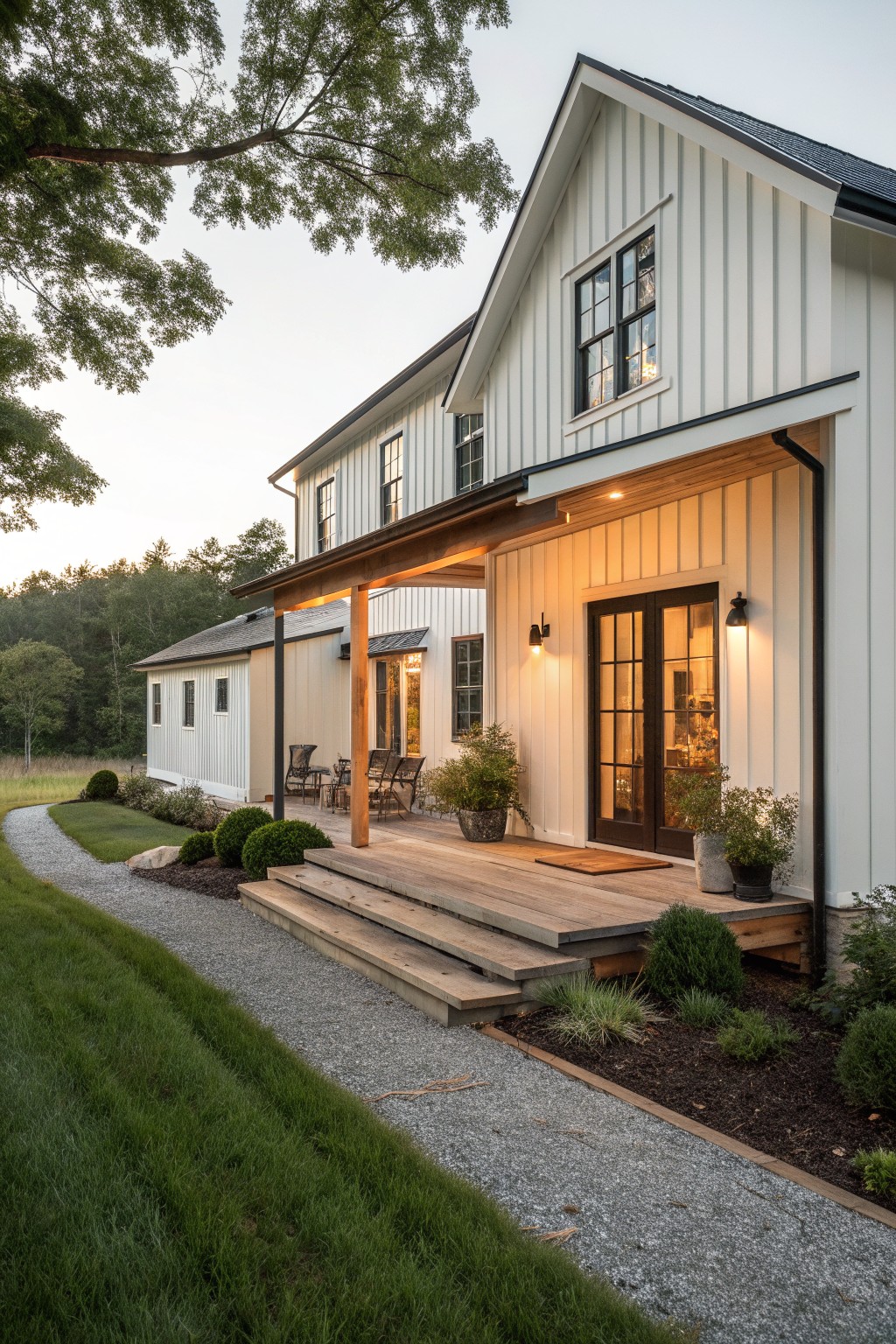
White board and batten siding works well when it is paired with natural wood on the porch and overhang. The wood adds warmth without making the whole house feel heavy, and it keeps the look simple while still giving it some character. Many people like this mix because it feels current but still ties back to classic farmhouse style.
This approach works best on homes that already have a clean roofline and a front porch or entry area. Keep the wood tone fairly natural and limit it to the structural parts like beams and posts so it does not compete with the white siding. It suits both new builds and older houses that need a lighter refresh.
White Brick With Wood Doors
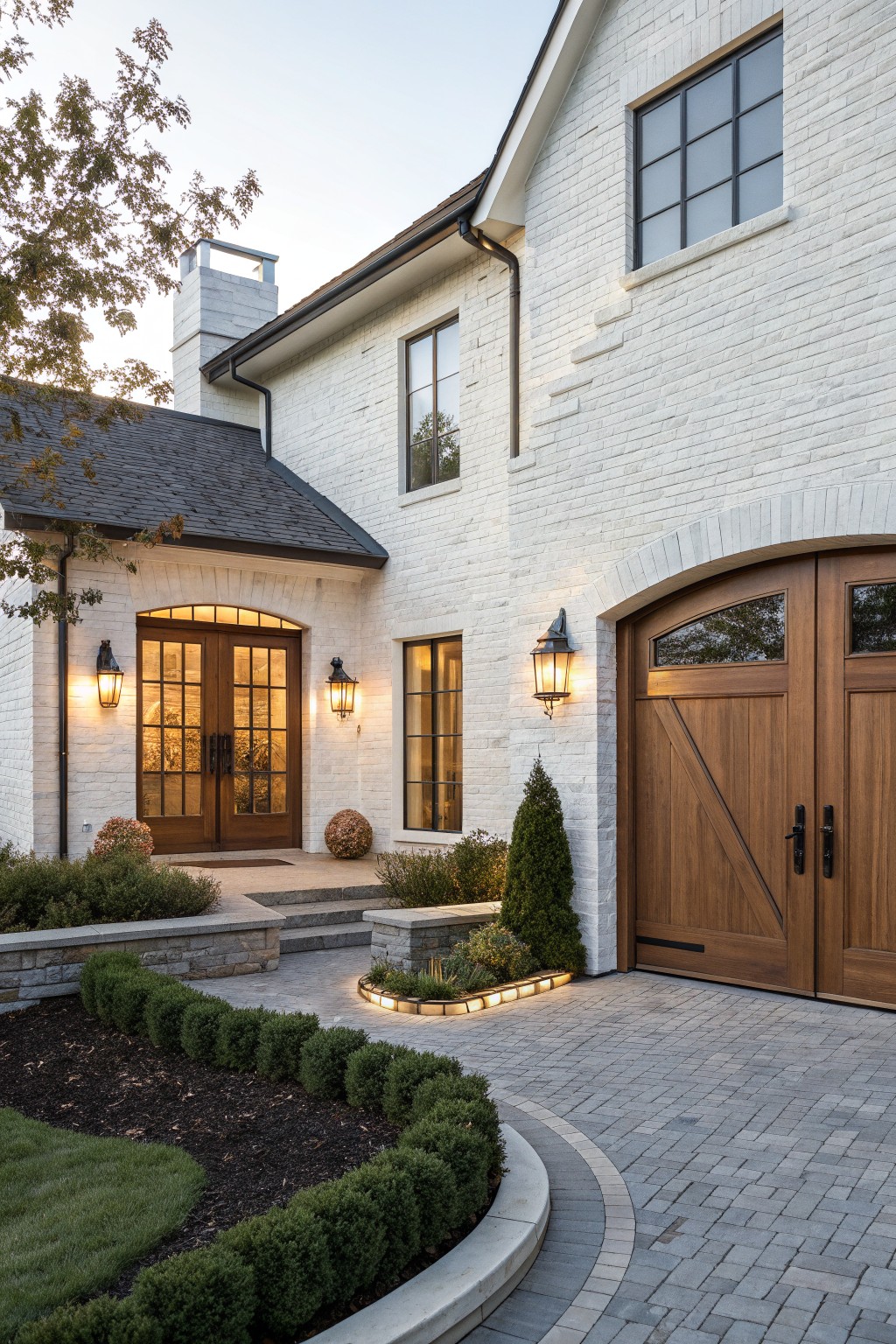
White brick paired with natural wood doors keeps a farmhouse exterior feeling bright but still grounded. The contrast adds warmth without needing extra colors or heavy trim details.
This approach works best on homes that already have clean lines and simple rooflines. Use it on the main entry and garage to create a consistent look that reads modern while staying welcoming.
Create an Outdoor Room With a Wood Ceiling
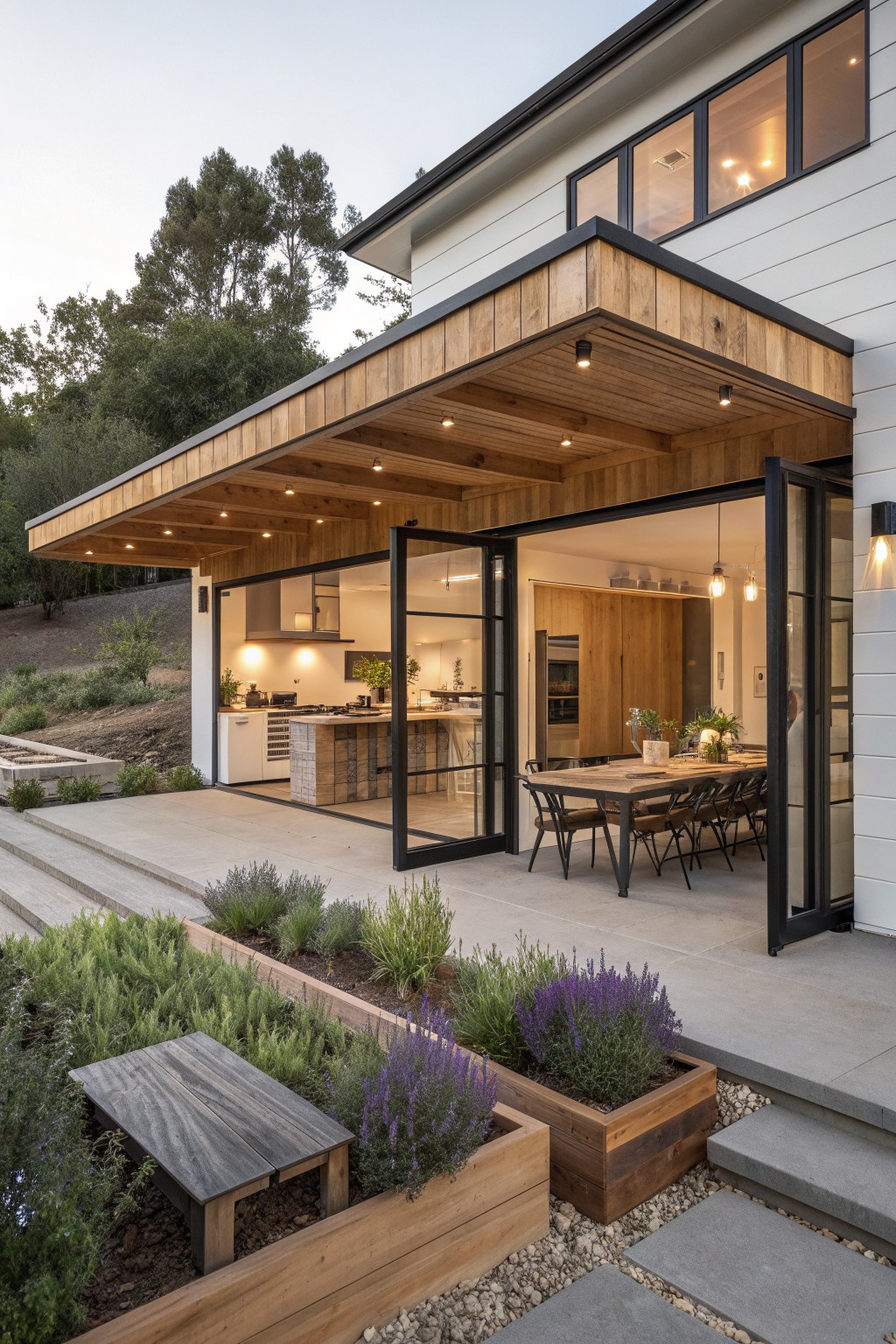
A wood ceiling over a patio gives the space a finished feel that makes it more usable through more of the year. It turns what could feel like a basic deck into something closer to an extra room, especially when the same wood tones show up on the house itself.
This works well on homes that already use wood accents because it keeps the materials consistent without adding too much new color. Just watch the depth of the overhang so the area stays shaded in summer but still gets some light when the sun is lower.
Frequently Asked Questions
Q: How do I keep the white from feeling too bright next to the wood accents? A: Pick a warm off-white with a touch of gray in it. That softens the contrast and lets the wood grain stand out more naturally.
Q: Should I stain the wood or leave it raw? A: Go with a light stain on most projects. It protects the surface while keeping the modern farmhouse look fresh instead of weathered.
Q: What if I only want to update a few spots on my house? A: Swap just the front door and porch posts to wood. The white siding stays dominant and the change feels balanced without much work.
