

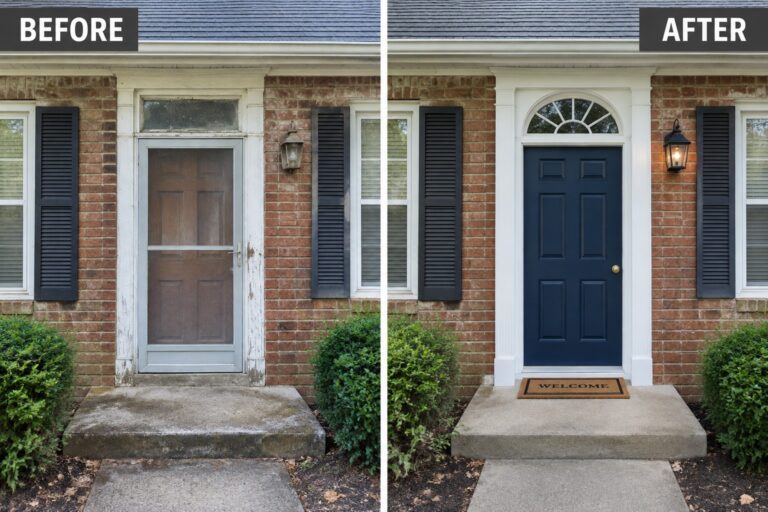
Colonial homes have a strong sense of symmetry, but faded trim, plain doors, or windows that feel out of scale can leave the facade looking a little flat.
I find that thoughtful updates to the windows and entryway can make a home feel more cared for without taking away its original character.
Fresh paint, balanced shutters, and a well-defined front door often do more for curb appeal than a full renovation.
The best changes respect the home’s familiar lines while making the exterior feel brighter and more welcoming.
I’d save the ideas that suit your house’s proportions and test those details first.
Update The Front Entry For Better Curb Appeal
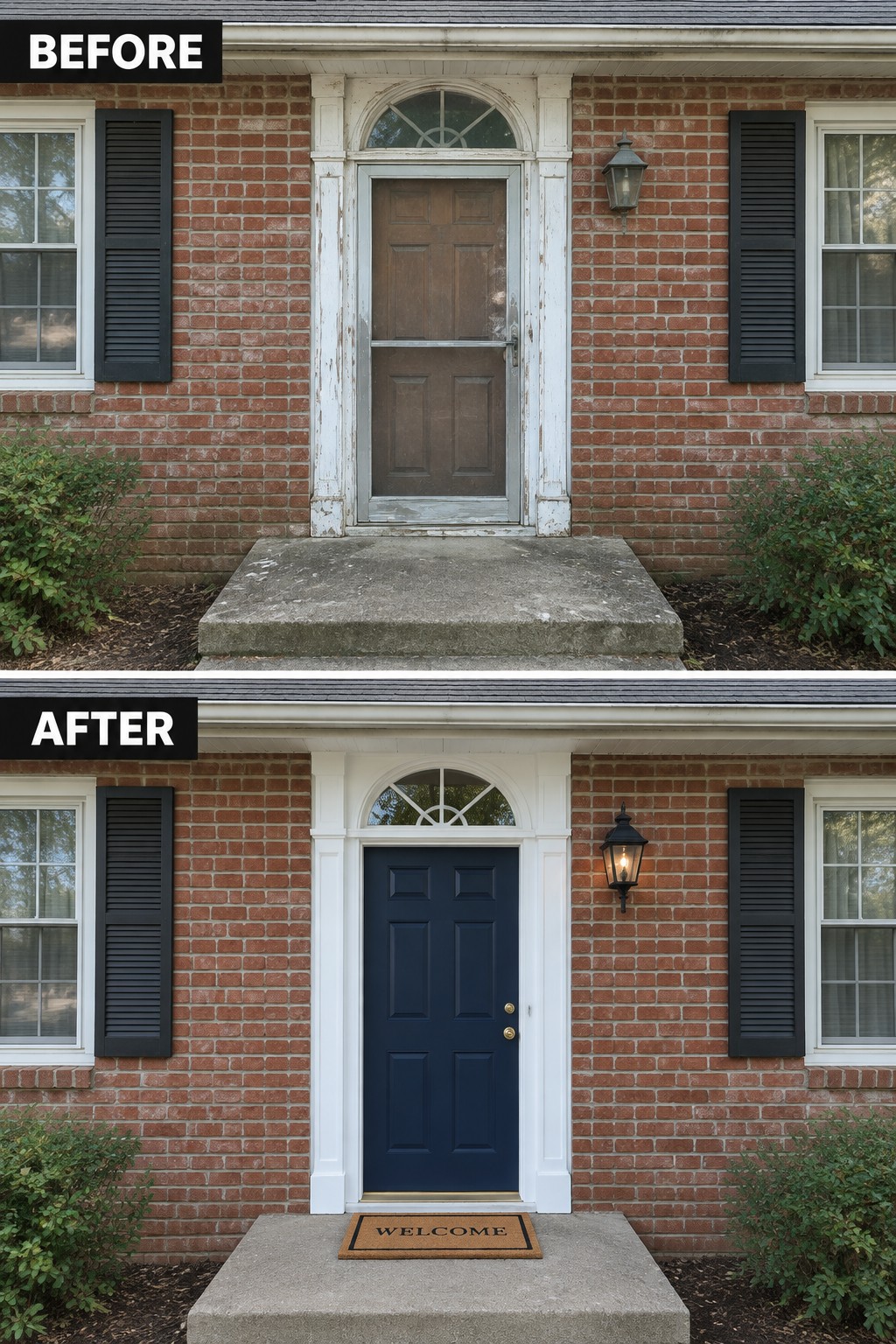
Replacing a worn front door with a clean, dark blue one gives this Colonial entry a clearer focal point. Fresh white trim around the doorway helps the update feel connected to the home’s traditional style.
For a similar change, choose a door color that suits your brick and keep the trim in good repair. A new door can make a noticeable difference without requiring a full exterior renovation.
Refresh A Colonial Facade With Simple Updates
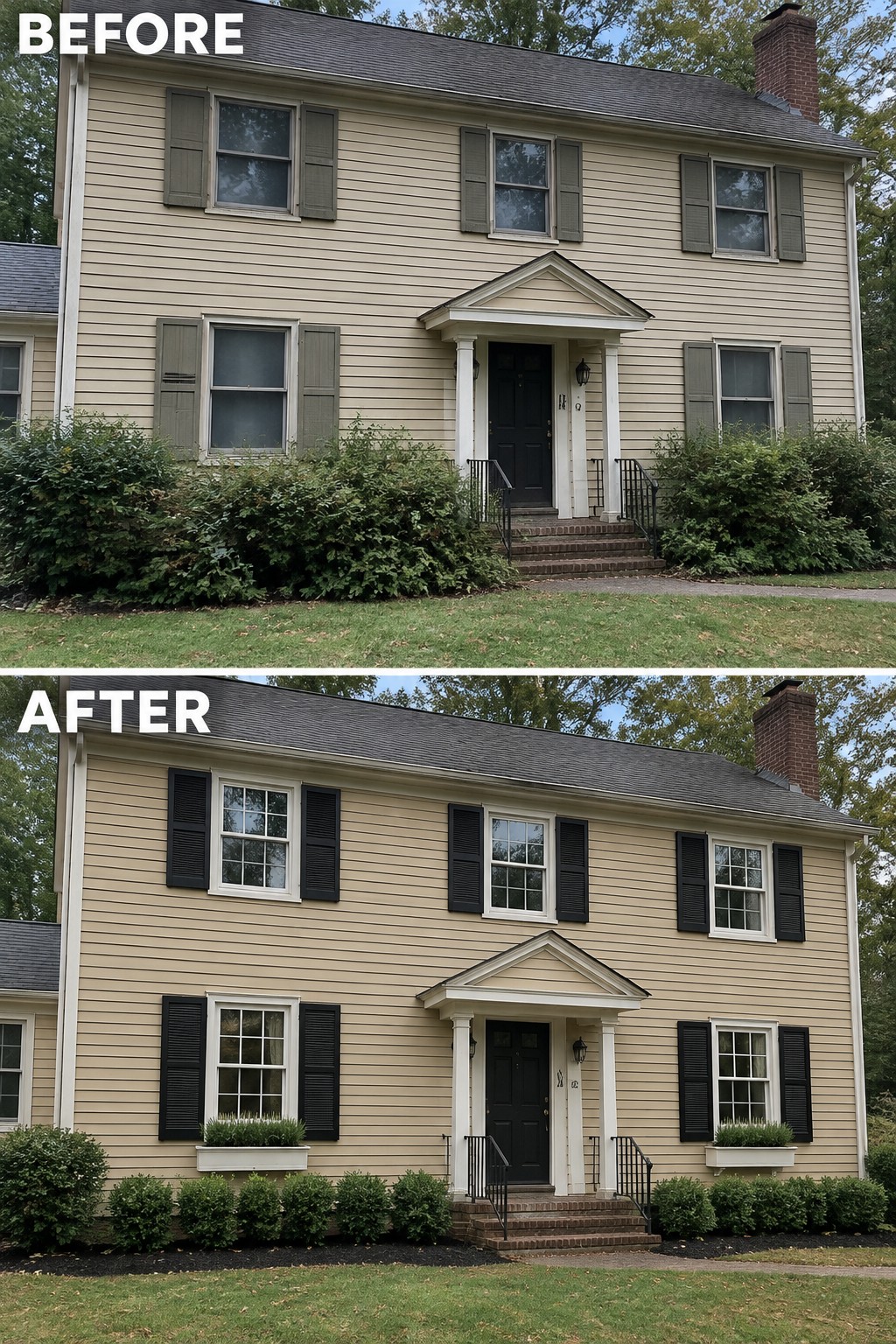
The house feels more cared for after the overgrown shrubs are replaced with neat foundation plantings and the faded shutters are updated in black. Together, these changes sharpen the classic facade without changing its basic character.
This approach works well on Colonial homes, where simple, repeated details suit the architecture. Tidy the planting beds first, then choose one shutter color that complements the siding and trim.
Give The Front Entry A Clear Focal Point

A plain entrance can feel more welcoming when the doorway becomes the main feature. Here, a simple overhang was replaced with a small gabled portico supported by columns, giving the front door more presence without changing the whole facade.
This approach suits traditional homes where the entry feels overlooked. A modest portico can add shelter and definition, but keep its size in proportion to the house so it does not overwhelm the windows or roofline.
Add Shutters To Give A Colonial Facade More Character

Adding dark shutters and traditional divided-light windows gives this brick facade a clearer Colonial look. The entry stays much the same, while the windows become a stronger part of the home’s exterior style.
This approach works well on older brick homes with simple window openings. Choose shutters sized to look as if they could close over the windows, and keep their color consistent across the facade.
Replace A Plain Entry Door With A Classic Wood Door
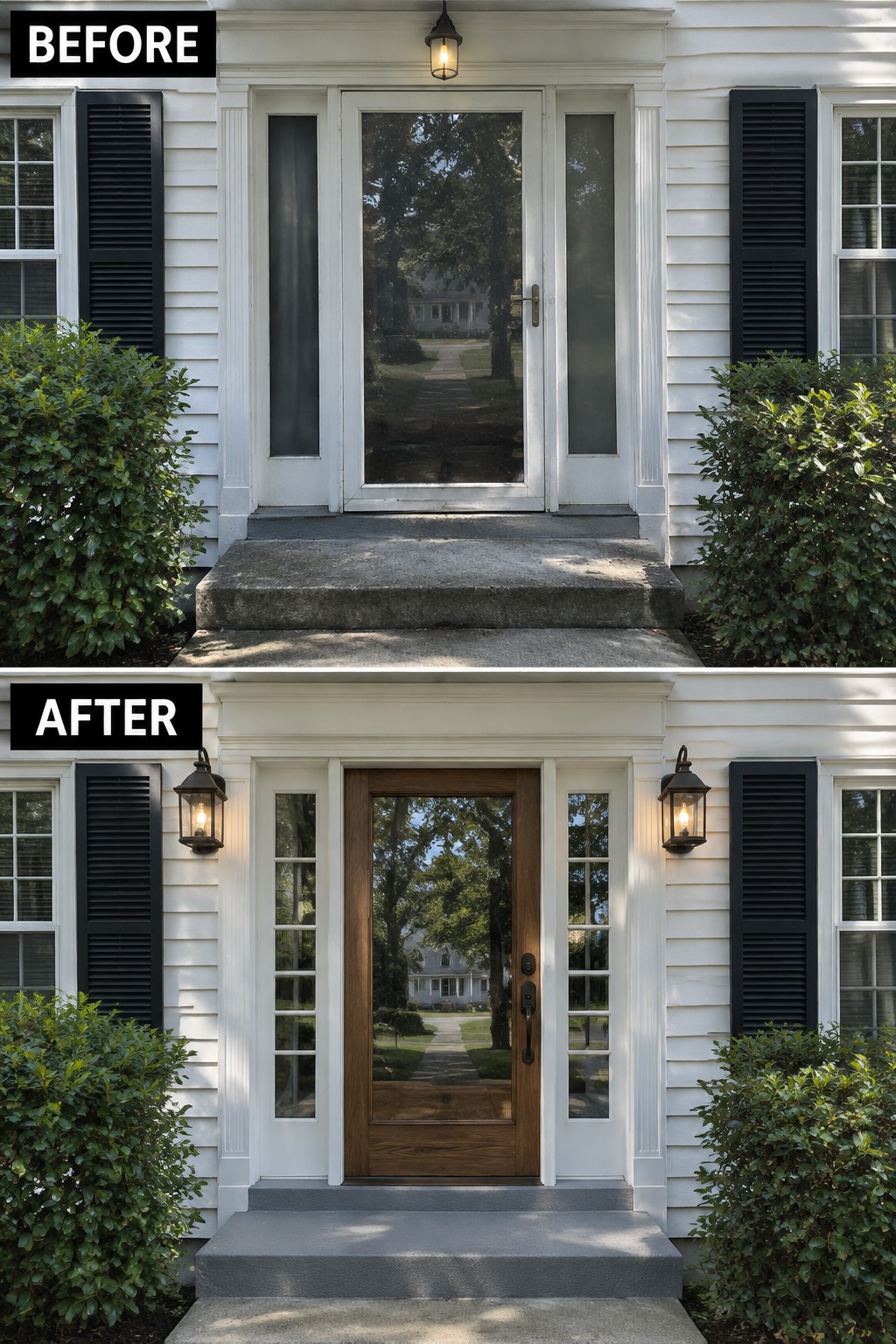
The front entry feels more intentional after the plain glass door is replaced with a wood door and sidelights. This is a useful update when the entry looks dated but the rest of the Colonial facade is in good shape.
Choose a door style that suits the home’s trim and keep the surrounding details simple. A wood finish can bring character to a white exterior without changing its traditional look.
Refresh Worn Shutters And Window Trim
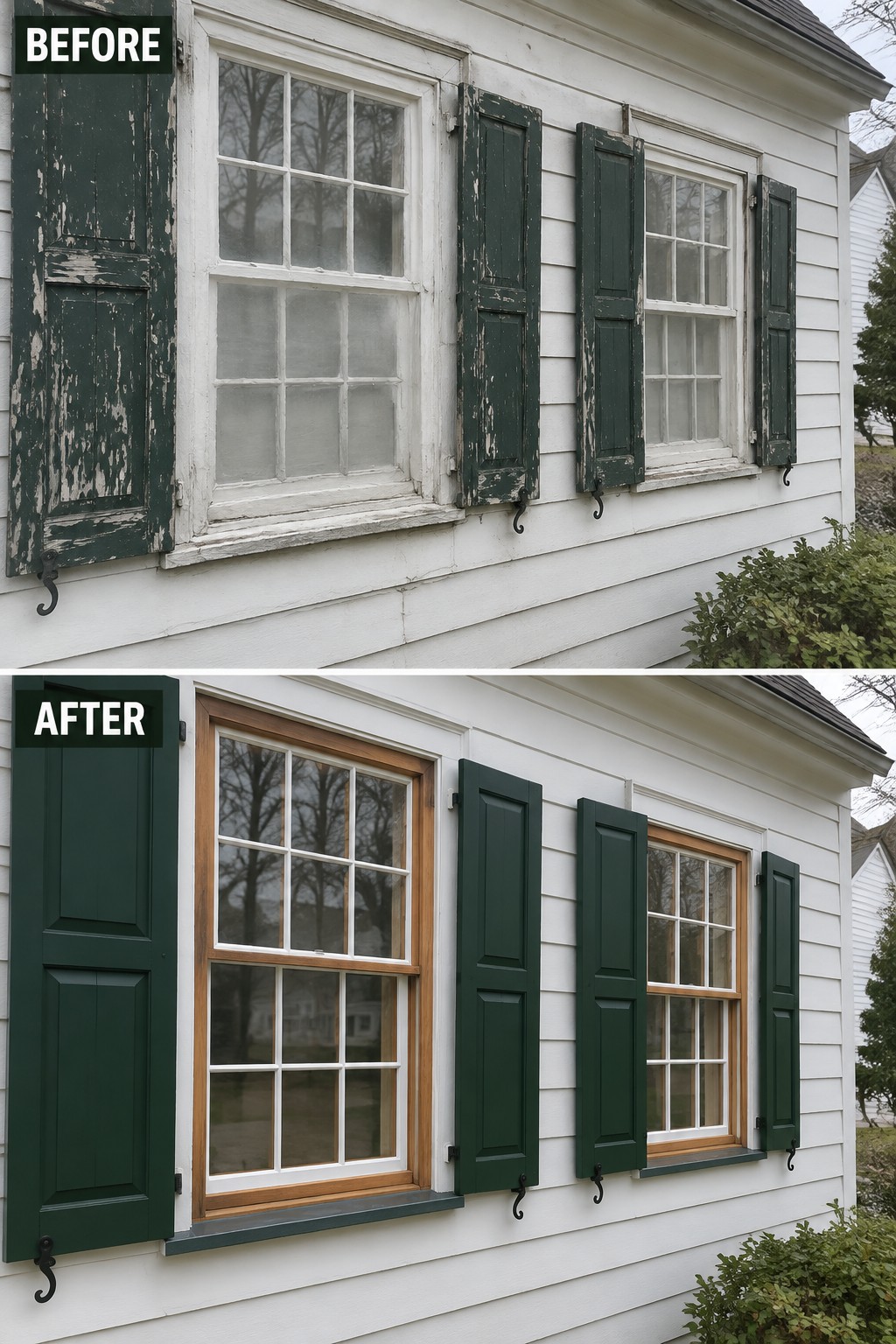
Replacing peeling shutters and refreshing the window trim can make an older colonial exterior look cared for without changing its familiar style. Here, clean dark green shutters and natural wood trim give the windows a clearer, more finished appearance.
For a similar update, choose a shutter color that suits the siding, then repair or repaint the trim around the windows. Keep the original window proportions and shutter style where possible so the house still feels like itself.
Improve Curb Appeal With A Defined Entry Walk

The entry feels more welcoming when the walkway leads clearly to the front door. Here, the plain concrete path was replaced with brick pavers, giving the Colonial facade a stronger approach without changing its basic character.
For a similar update, choose a paving style that suits the age and scale of the house, and keep the path wide enough for comfortable access. A clear, well-maintained route can make a noticeable difference even when the larger exterior stays much the same.
Turn A Worn Porch Into A Welcoming Entry
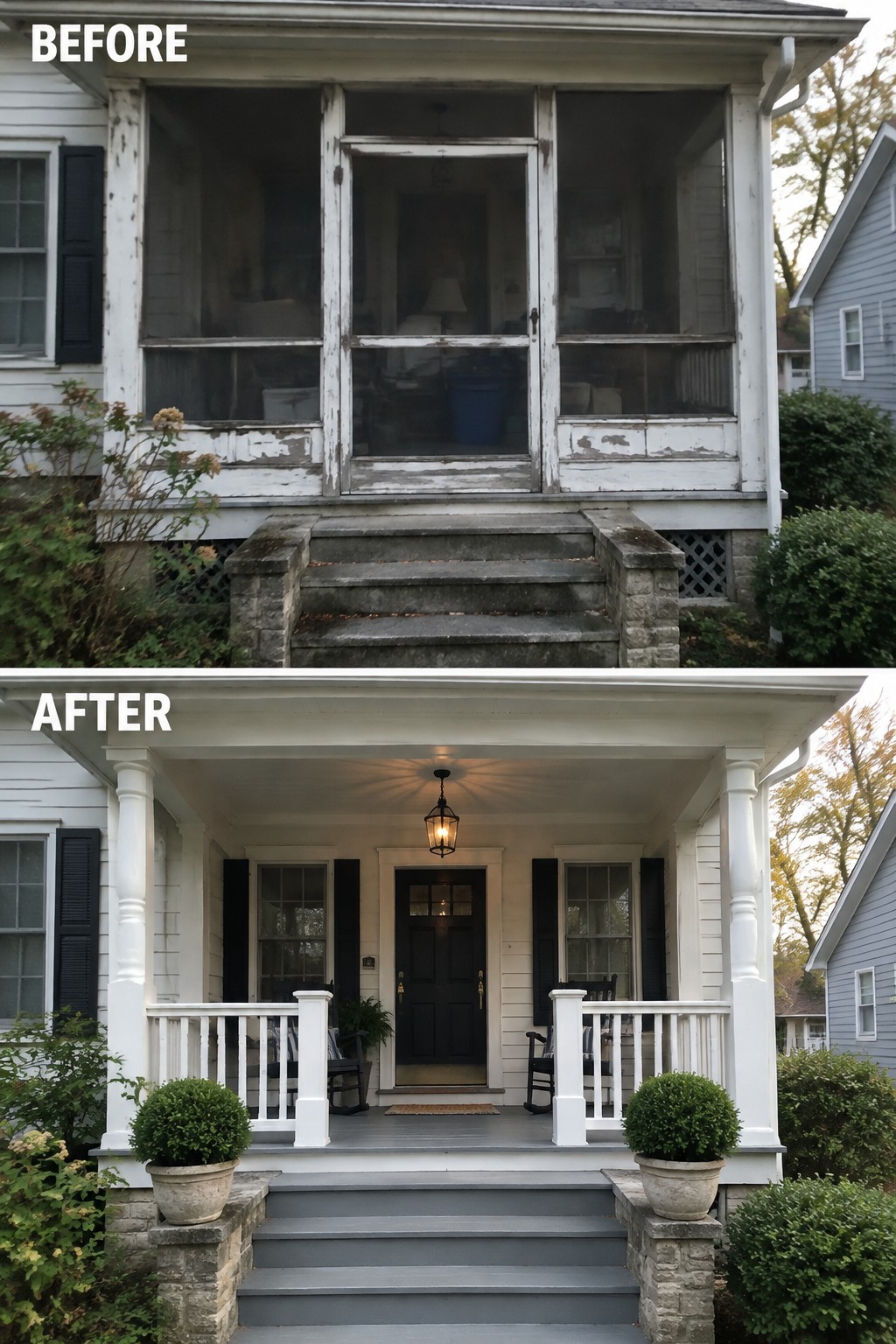
A neglected porch can make the whole front of a Colonial home feel tired. Rebuilding it as a clear, usable entry gives the facade a lift; here, the screened-in porch became an open porch with a simple railing and a fresh front door.
For a similar update, focus on the porch structure first, then keep the details practical. A small rug or a pair of planters can finish the entry without crowding the walkway.
Create A More Welcoming Front Entry
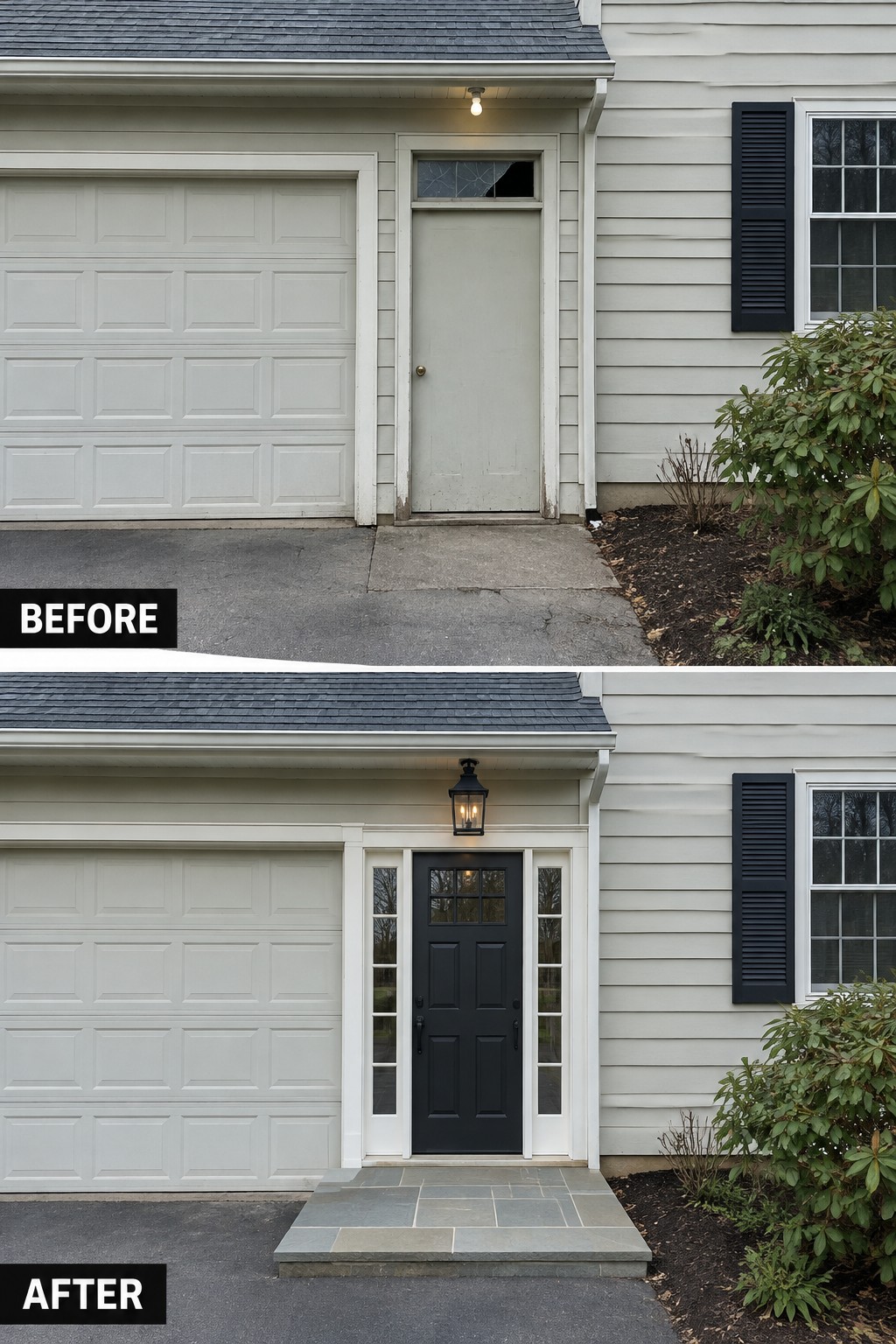
Replacing the plain side door with a black paneled entry and sidelights gives this Colonial home a more defined entrance. The new stone landing also helps mark where visitors should approach, instead of leaving the door opening onto a narrow strip of concrete.
For a similar update, start by making the entry easy to see and reach. A door with glass panels or sidelights can brighten a shaded entrance, while a small landing can give people room to pause. Keep its size in proportion to the house and leave a clear path to the driveway.
Add Shutters To Give A Plain Facade More Character
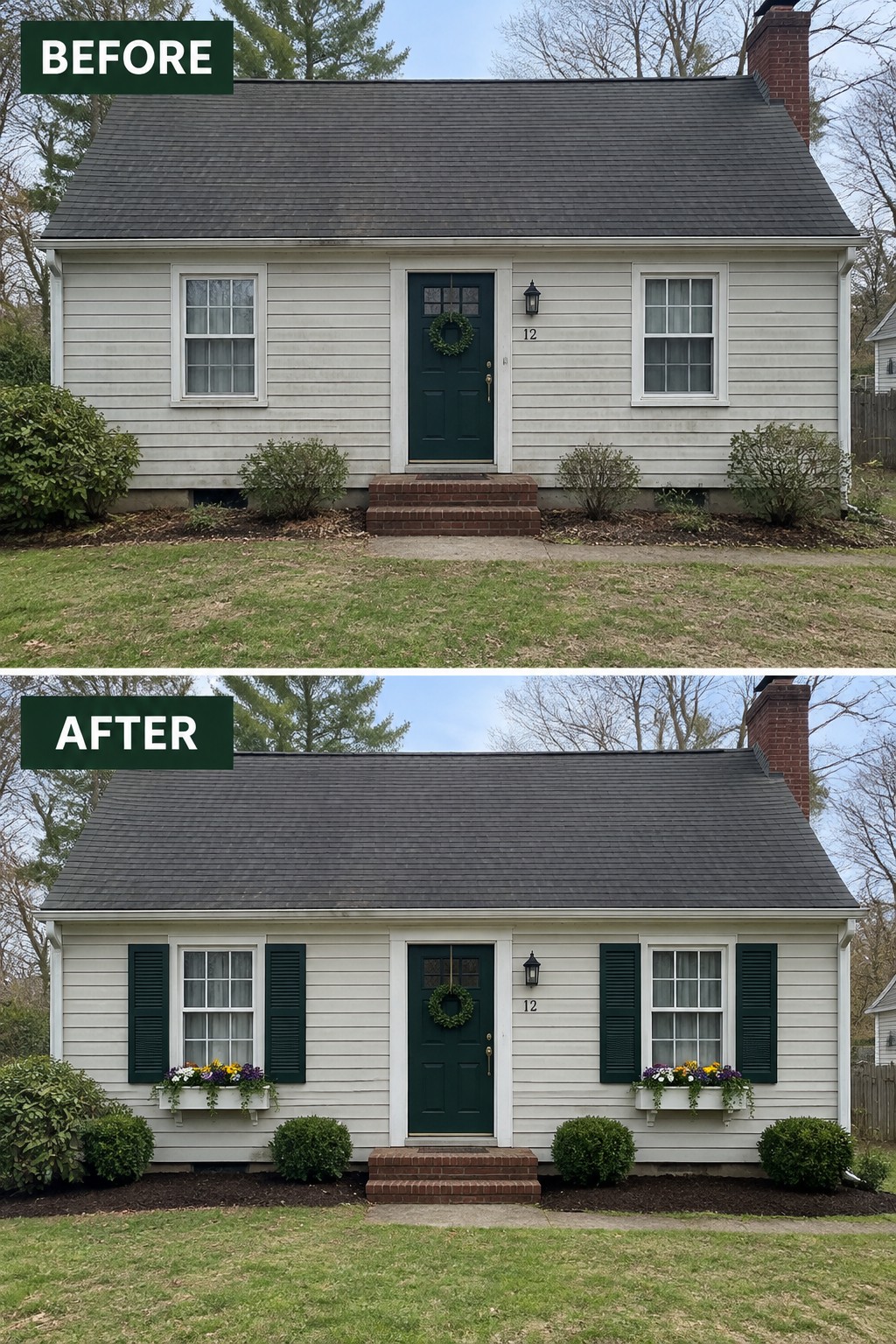
The house feels more finished after dark green shutters were added beside the windows. They give the simple facade a little more definition without requiring a major exterior renovation.
This is an easy idea to adapt on a Colonial-style home with windows that can accommodate properly sized shutters. Repeat a color already used on the front door for a connected look, and make sure the shutters suit the window proportions rather than appearing like a small decorative afterthought.
Repaint The Brick To Refresh The Facade

Painting the brick a light color changes the whole feel of this Colonial exterior without altering its traditional shape. The fresh finish also makes the dark front door stand out more clearly.
This approach can suit brick that is in good condition but looks tired or dated. Before painting, check that the masonry is suitable and prepare it properly, since paint can be difficult to remove later.
Add Shutters To Give Plain Windows More Character
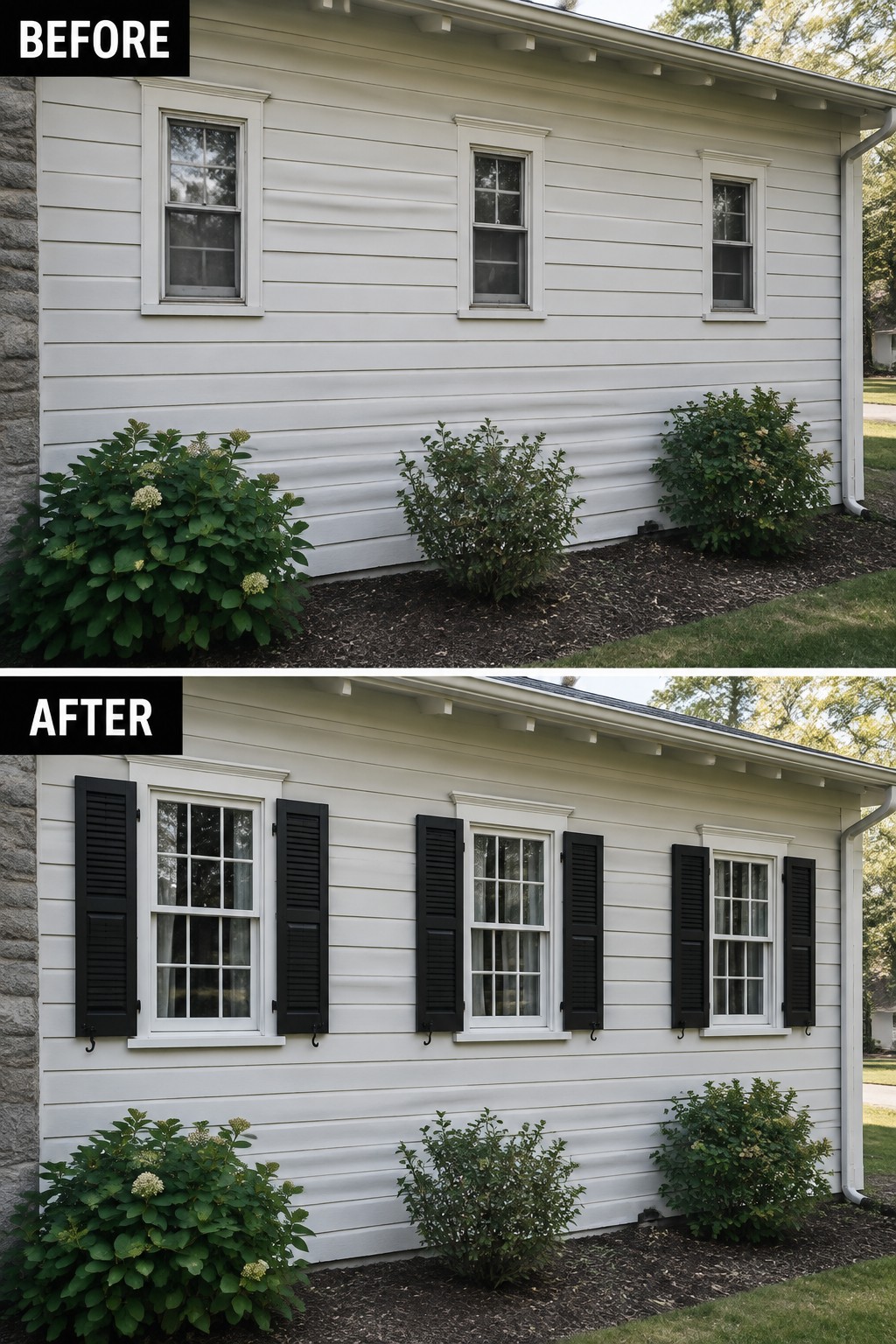
The narrow windows make this side of the house feel a little bare. Adding black shutters and updating the window grids gives the facade a more traditional Colonial look without changing the siding or roof.
This is a useful update when the exterior is in good shape but still feels plain. Choose shutter sizes that suit each window, and keep the color consistent so the details look intentional rather than added as an afterthought.
Make The Front Door More Welcoming
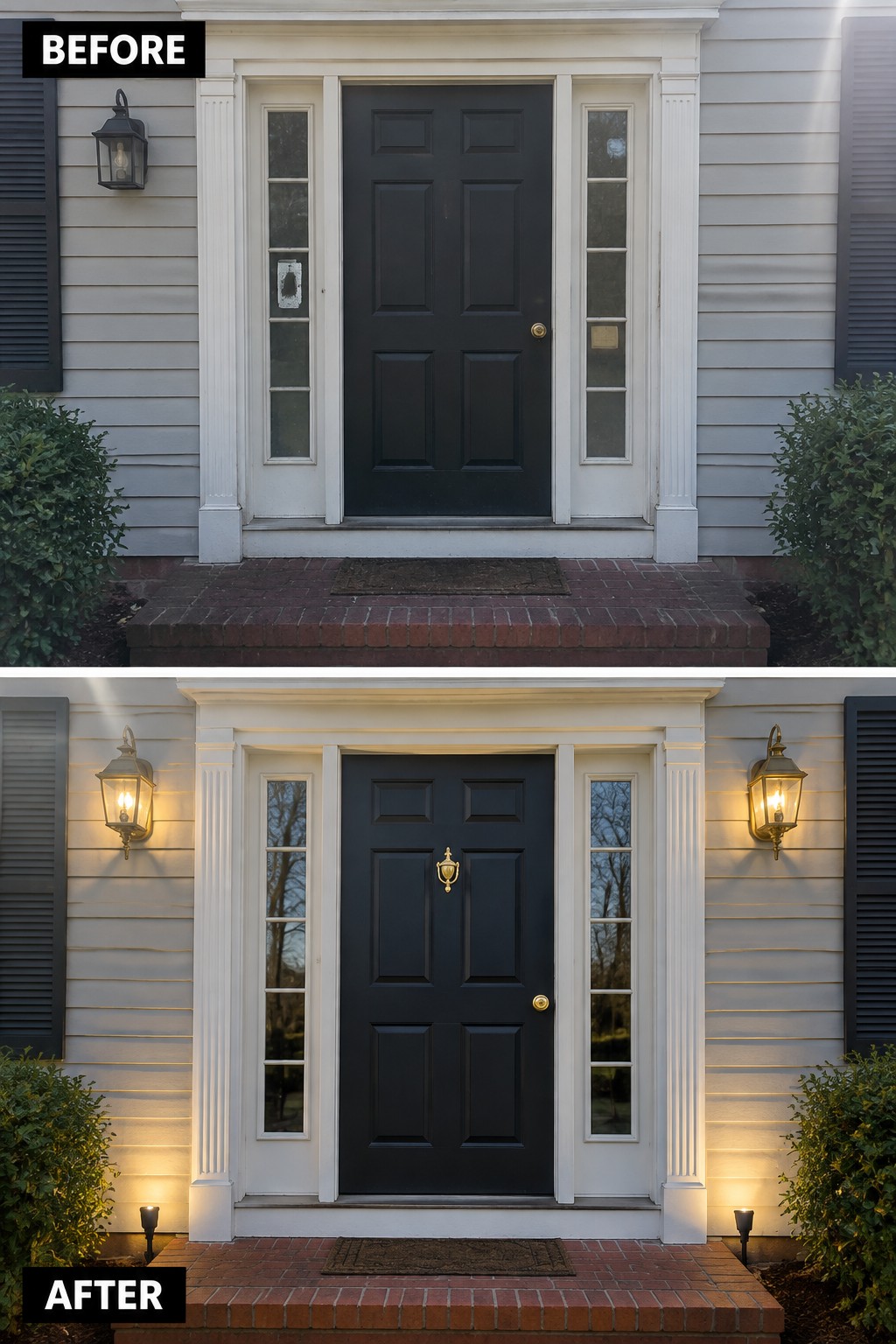
The entry feels more cared for when the door area has a clear focal point and good lighting. Here, the black door stays in place, while brighter exterior lanterns and a brass knocker give it more presence.
For a Colonial-style home, updating the hardware and adding matching lights can make a plain entry feel finished without changing the whole facade. Choose fixtures suited to the house’s scale, and place them where they light the doorway and steps.
Refresh The Colonial Facade With New Siding And Trim
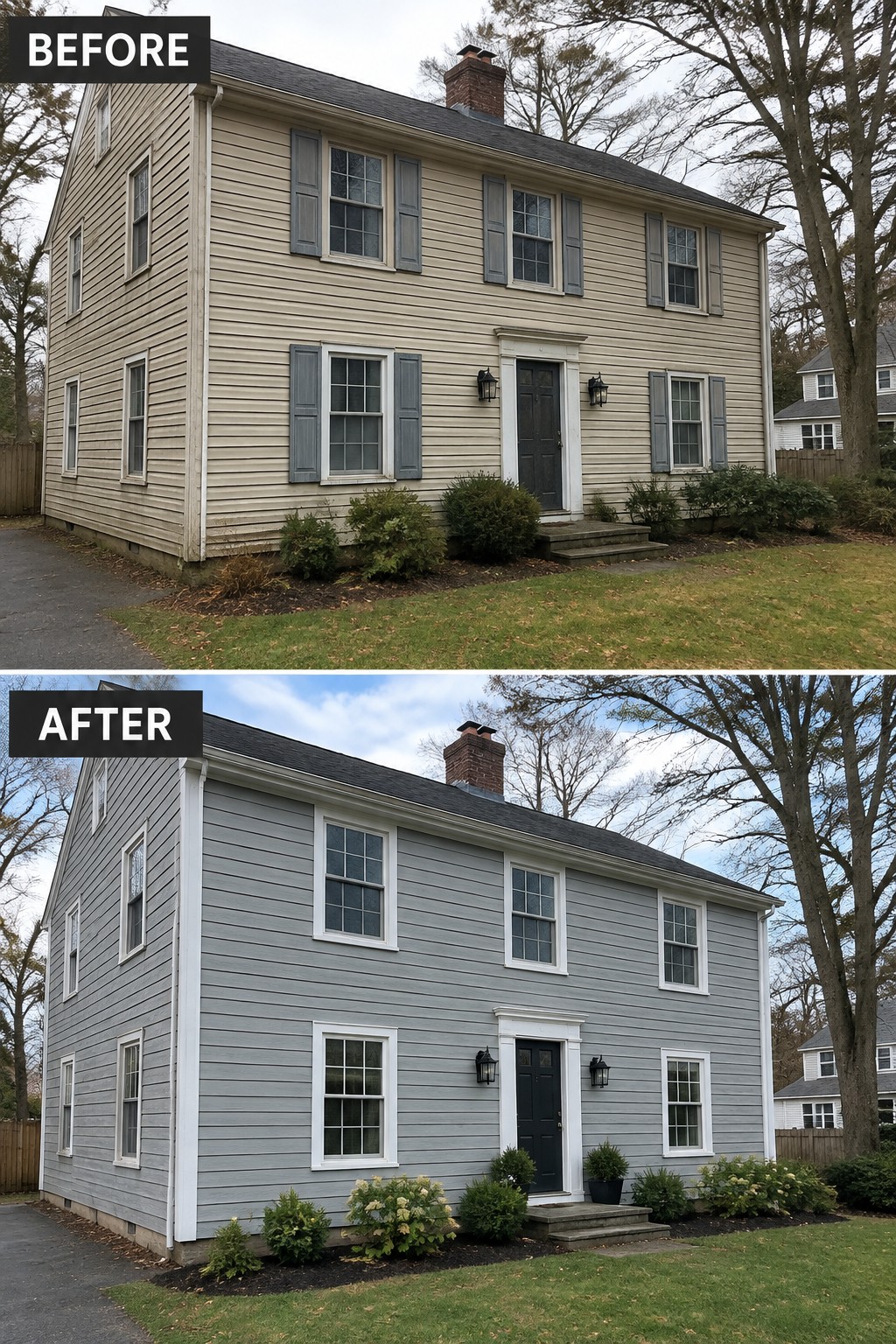
The dated beige siding and blue-gray shutters make this Colonial look a little tired. Replacing the siding with a clean gray finish and using white trim around the windows gives the facade a simpler, more current look while keeping its traditional shape.
For a similar update, choose a siding color that suits the home’s brick, roof, and surroundings, then keep the trim consistent across the windows and entry. This approach works well when the layout is already sound but the exterior finishes need a refresh.
Restore The Entryway Windows
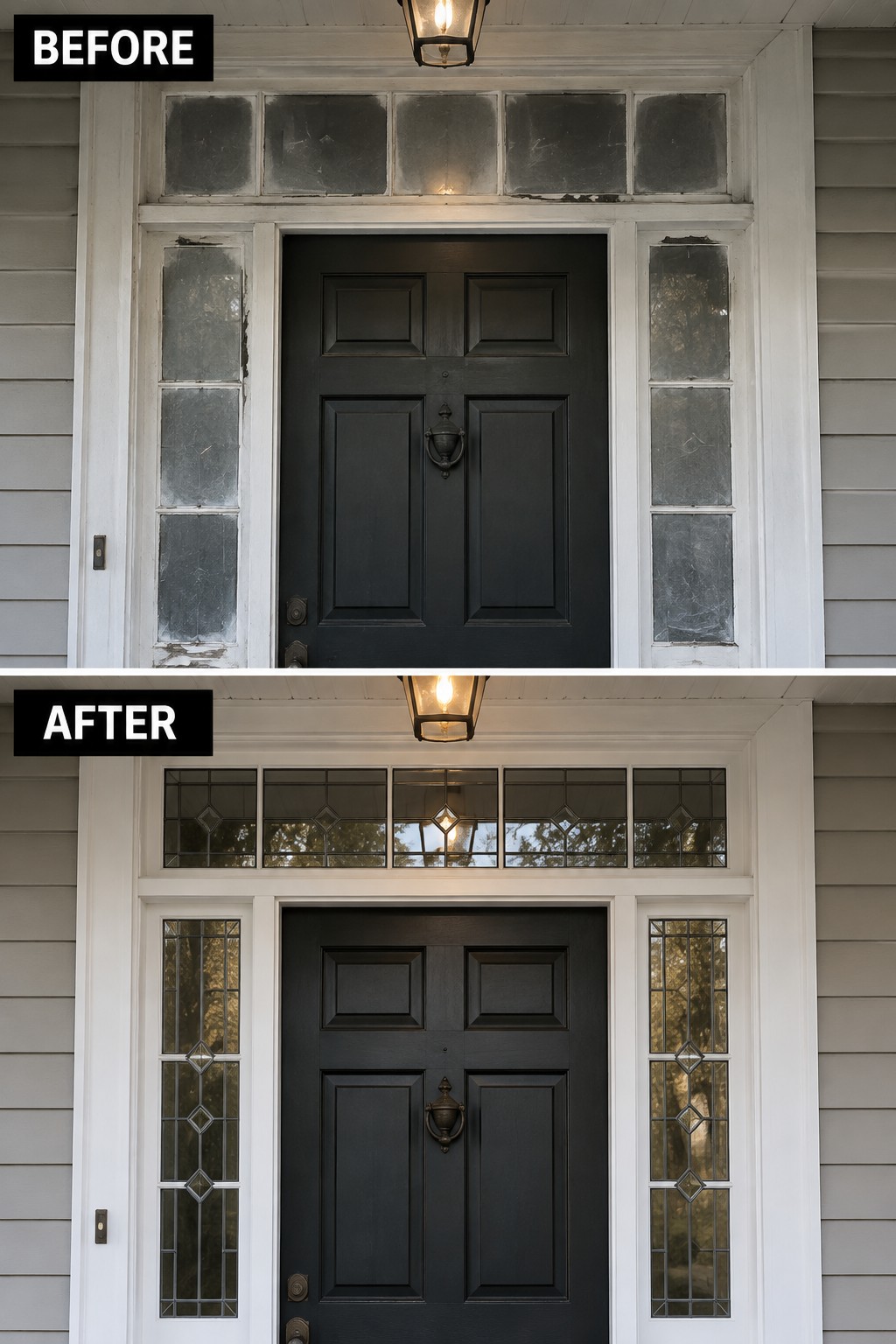
Replacing the cloudy, damaged glass with clear, decorative panes gives this Colonial entry a cleaner, more finished look while keeping the dark front door as the focal point. The side lights and transom suit the home’s traditional style and let the doorway feel more open.
If the original windows are beyond repair, look for replacement glass or inserts that fit the existing openings and echo the home’s period details. Keeping the trim simple helps the glass stand out without making the entry feel busy.
Give The Colonial Entry A More Finished Look
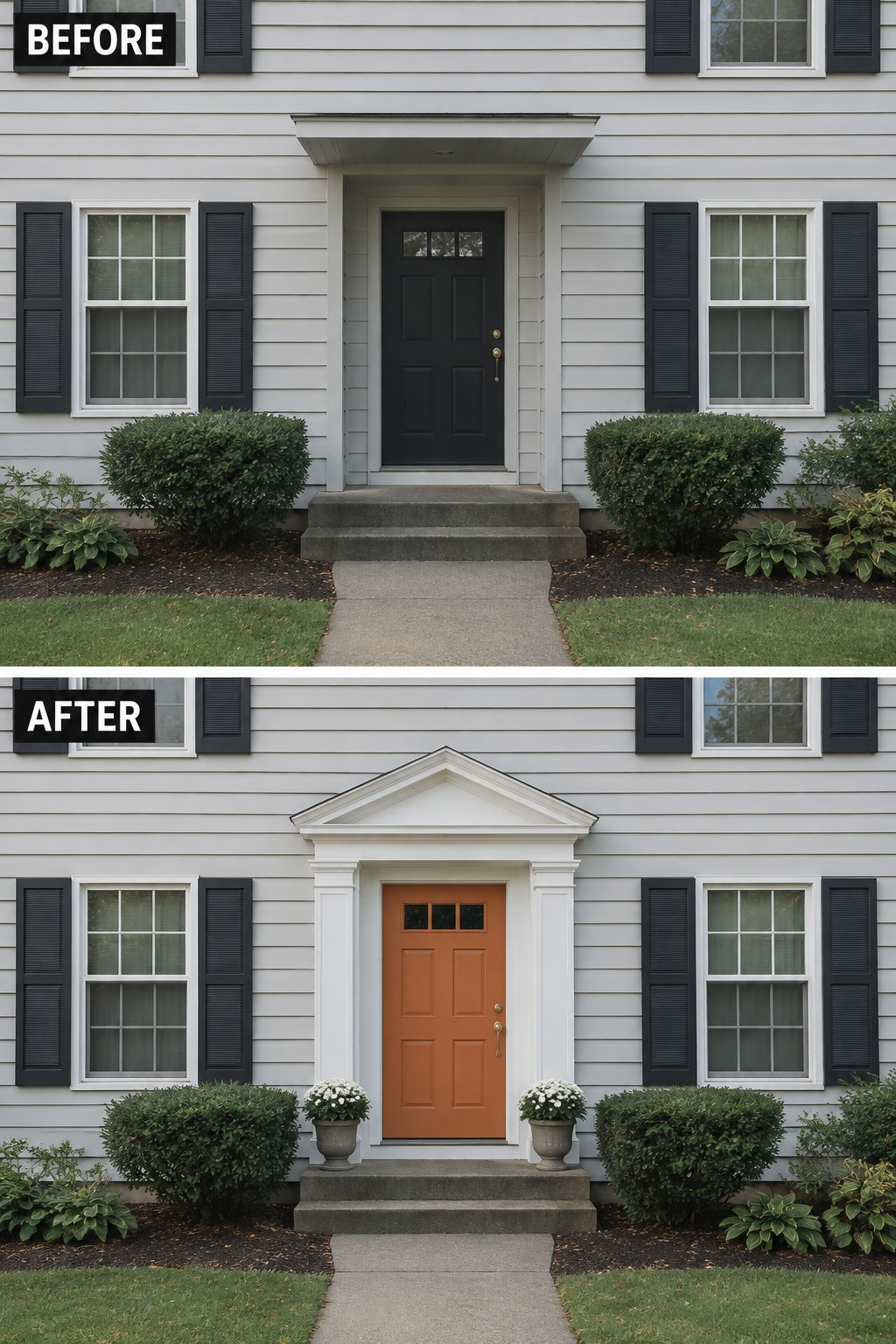
The recessed doorway feels plain, so the makeover gives it a proper entry surround. A white pediment and trim, along with a warm wood-toned door, make the front entrance easier to notice and give the facade a more traditional Colonial look.
For a similar update, focus on the doorway as one feature rather than changing the whole exterior. Use trim that suits the scale of the house, and choose a door color that works with the siding and shutters.
Replace Deteriorating Front Steps With A Safer Entry
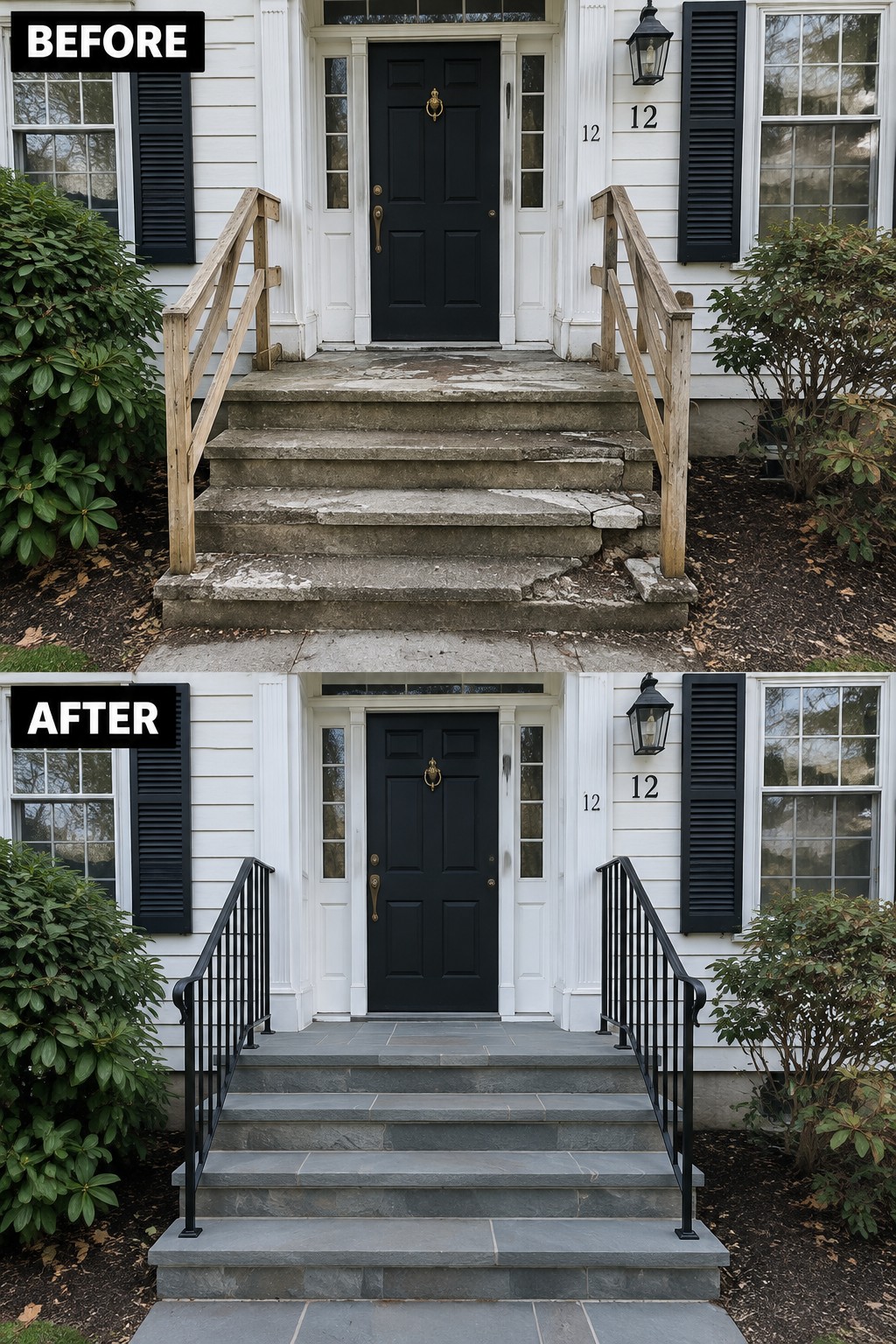
The cracked, worn steps and temporary-looking wooden rails make this Colonial entry feel neglected. Replacing them with clean, even stone steps and sturdy black metal railings gives the entrance a more finished look while making it easier to use.
This approach works well when the front steps are the main issue, rather than the facade itself. Choose a durable surface that suits the house, and make sure the railings are firmly installed and comfortable to grip.
Add Shutters To Give The Windows More Definition
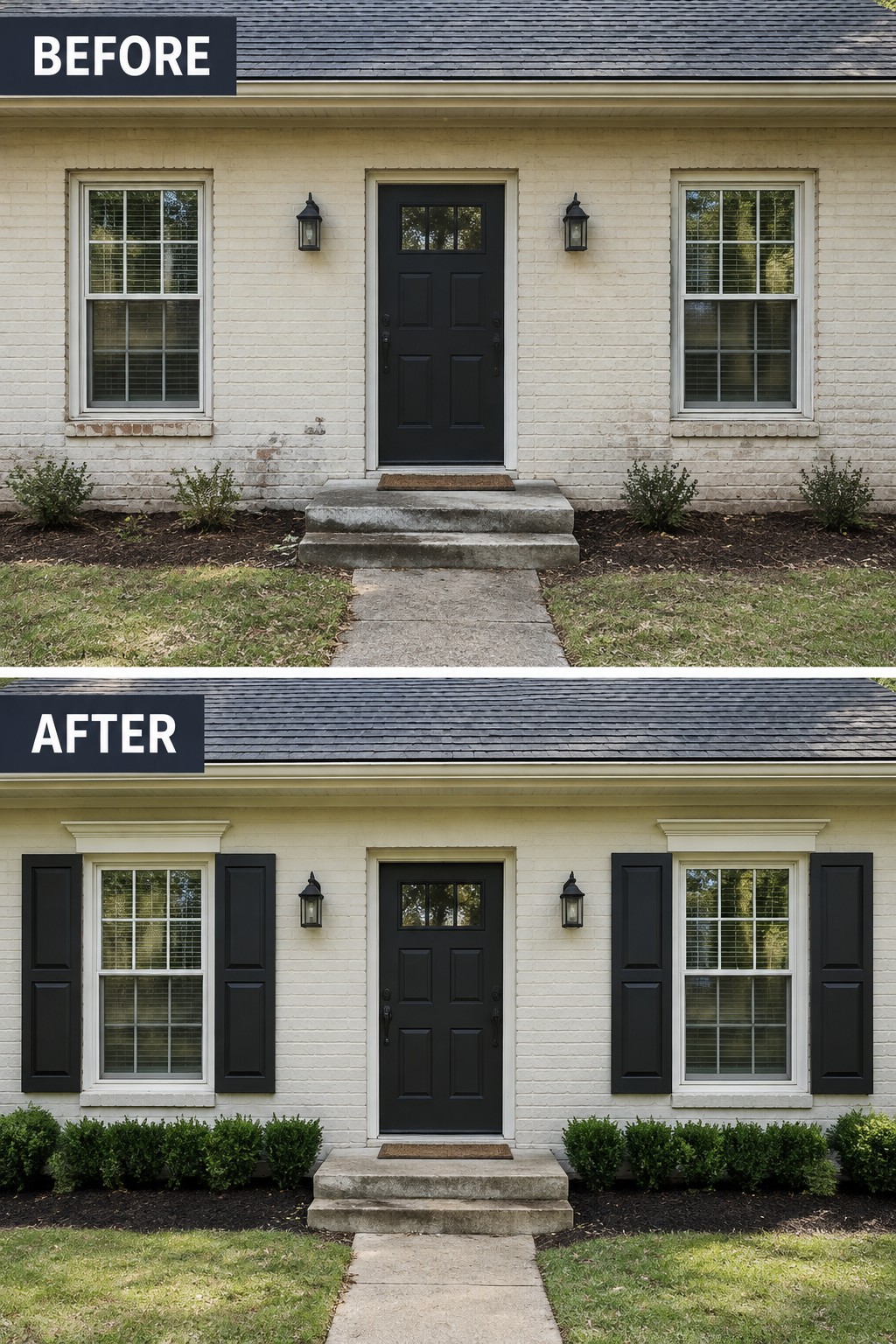
The plain windows make this Colonial facade feel unfinished. Adding dark shutters gives each window a clearer outline and brings a little more character to the front of the house.
This is a straightforward update for a brick home that needs a stronger exterior focal point without a major renovation. Choose shutters sized to suit the windows, and keep their color in step with the front door for a cohesive look.
Add A Gabled Portico To Define The Entry

The small metal awning in the original entry did little to mark the front door. Replacing it with a gabled portico gives the Colonial facade a clearer focal point and makes the entrance feel more substantial.
This approach suits a traditional home with a simple front door that gets lost in the facade. Keep the portico’s trim in keeping with the existing windows, and make sure its size leaves the door and nearby windows in proportion.
Refresh A Colonial Entry With A New Front Door
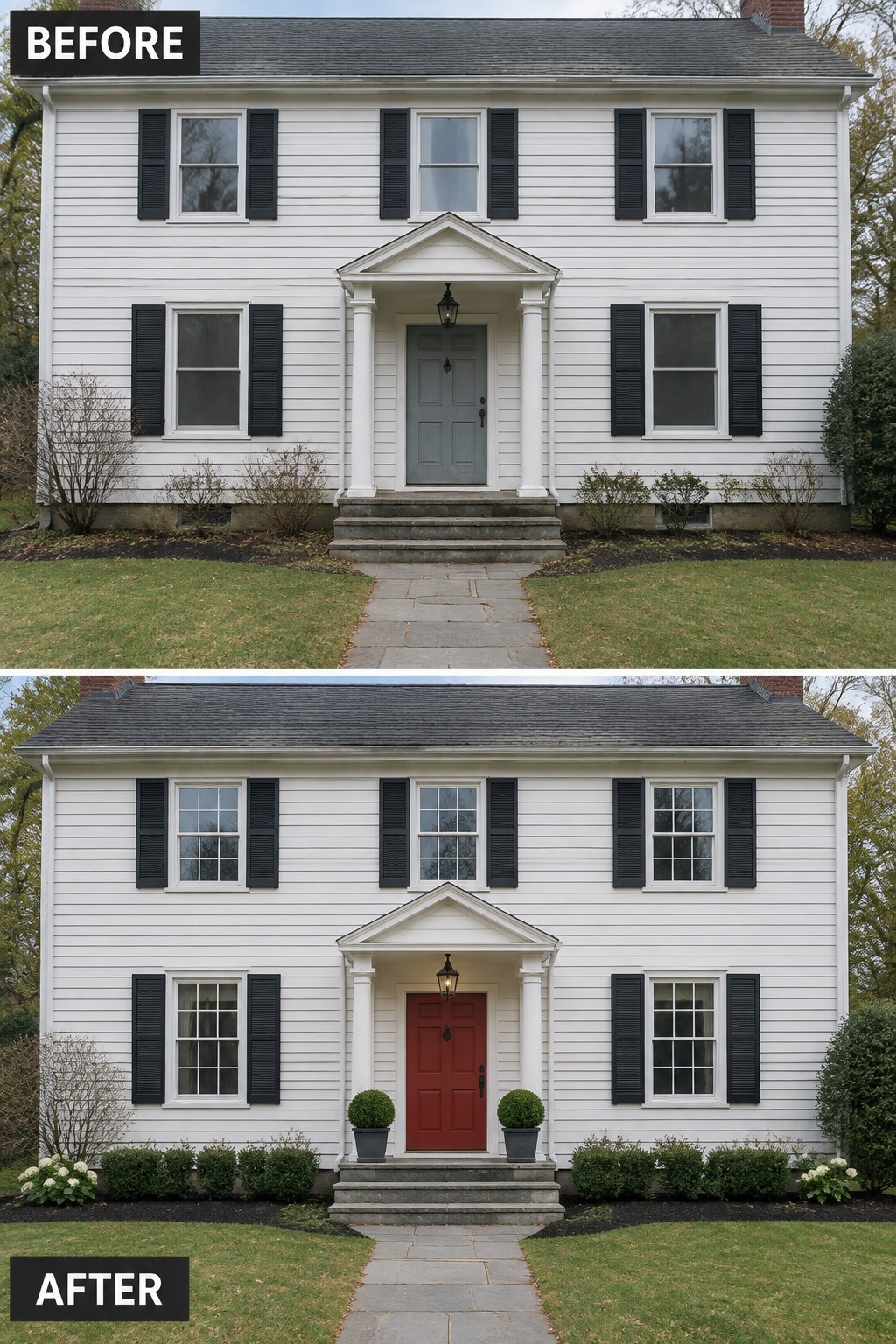
A fresh front door can change the feel of a Colonial facade without altering its classic shape. Here, replacing the muted door with a deep red one gives the centered entry a clear focal point and makes the house feel more welcoming.
This is a useful update when the siding and trim are still in good condition. Choose a door color that suits the home’s traditional details, and keep the surrounding entry simple so the color can stand out.
Frequently Asked Questions
Q: How can I update a colonial entryway without losing its traditional look?
A: Keep the door’s classic shape, then refresh the paint, hardware, or porch lighting. A simple lantern and a clean, welcoming path can make the entrance feel current without looking out of place.
Q: Are black window frames a good fit for a colonial house?
A: They can be, especially when the rest of the exterior stays fairly traditional. Try black on a few front-facing windows first, and check how it looks against your siding and trim in different light.
Q: What’s the best way to improve old windows without replacing them?
A: Start by fixing drafts, worn weatherstripping, and sticking sashes. If the original windows are in good shape, fresh paint and simple repairs can preserve their character while making them more comfortable.
Q: Can I add a larger window to a colonial home?
A: Yes, but match the new window’s proportions and divided-light pattern to the rest of the house. A change that looks balanced from the street will feel more at home than a large modern window that stands apart.
