

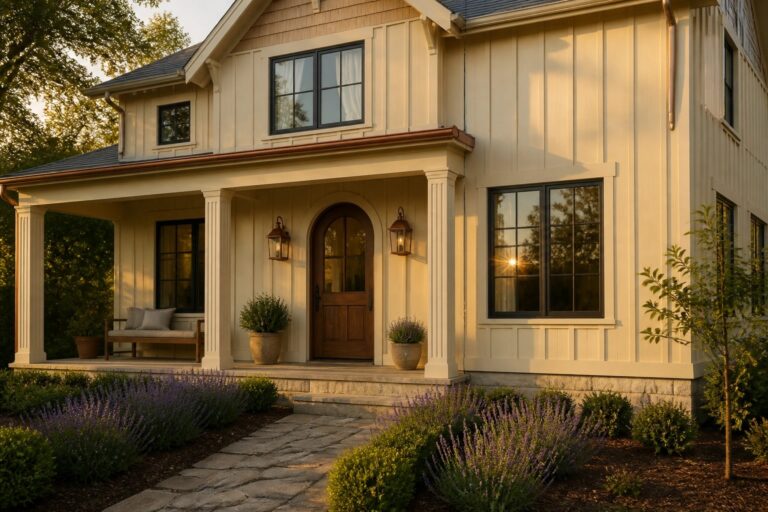
When I look at cream colors for a modern farmhouse outside, I notice how much they change with the time of day and the direction of the light.
A shade that feels warm at noon can turn cooler by late afternoon once it sits next to the roof and any stone details.
I have learned to check how each option looks next to the trim and landscaping before making a final choice.
Testing matters more than the photos suggest.
Some of the softer creams hold their warmth even when the weather turns gray.
Warm Cream Siding With Natural Stone Accents
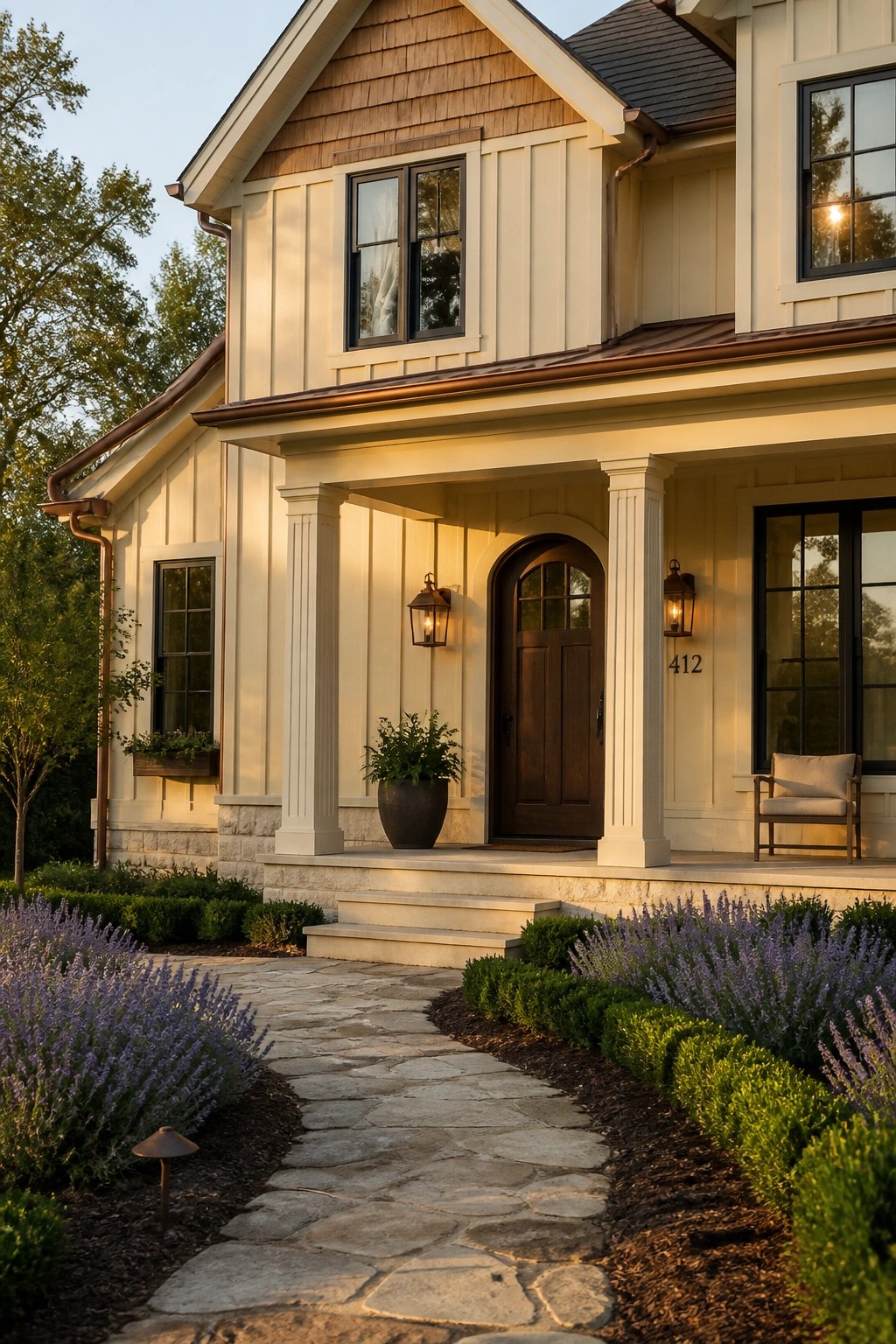
A warm cream works well on this kind of modern farmhouse siding. It gives the house a soft look that still feels grounded and not too stark against the natural surroundings.
The color has a gentle yellow undertone that helps it sit nicely next to wood accents and stone. It works best on homes with similar roof tones and trim, though it can start to feel washed out if the light is very harsh or the landscaping stays too minimal.
Warm Cream Siding With Dark Roof Contrast
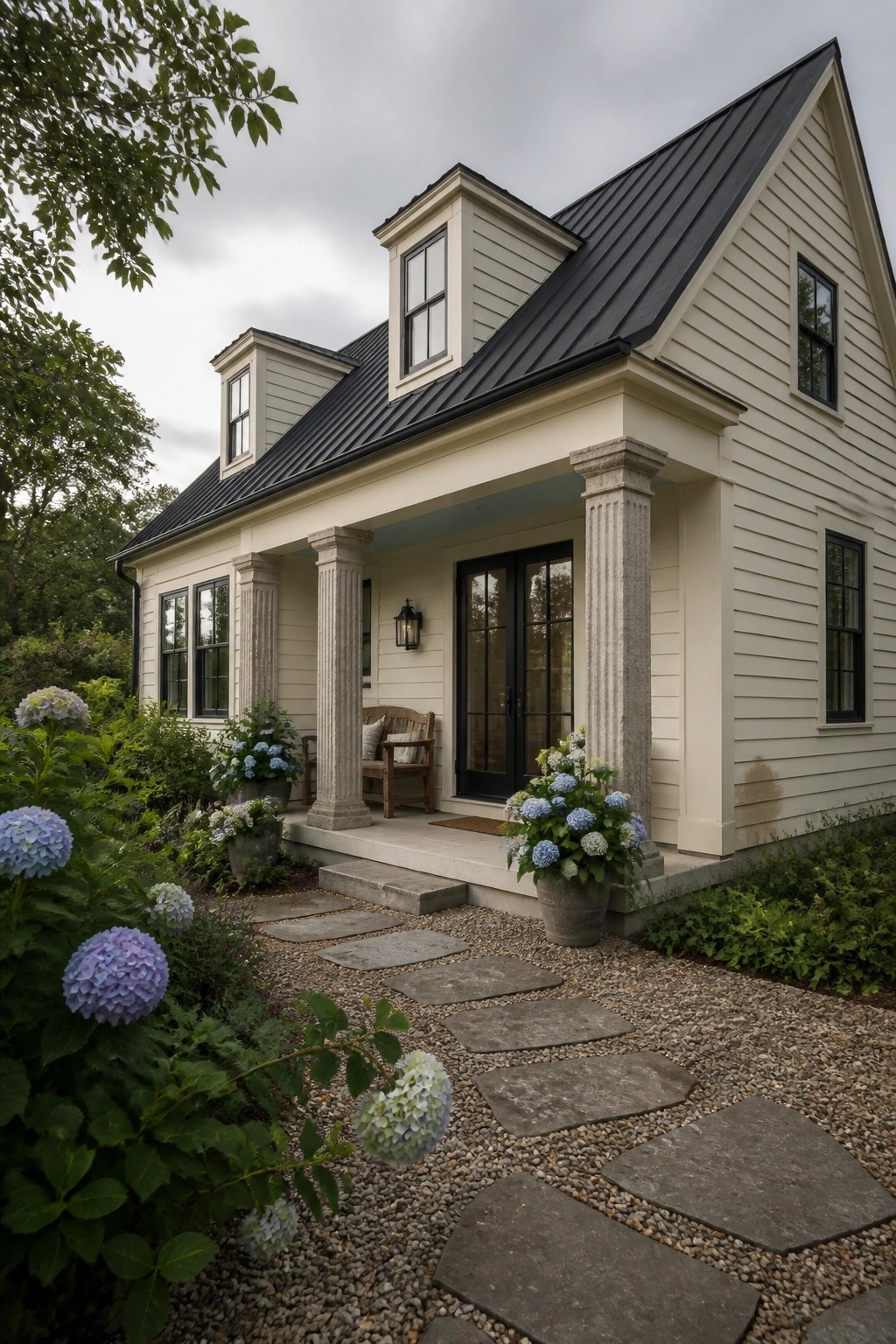
This house uses a warm cream on the siding. It is a soft neutral that avoids looking too stark or yellow while still feeling inviting on a modern farmhouse.
The color sits with a light beige undertone that works well against dark roofing and stone accents. It suits homes that want a clean look without going full white, and it holds up nicely next to natural wood or black trim.
Warm Cream Siding Inspired by Alabaster and Navajo White
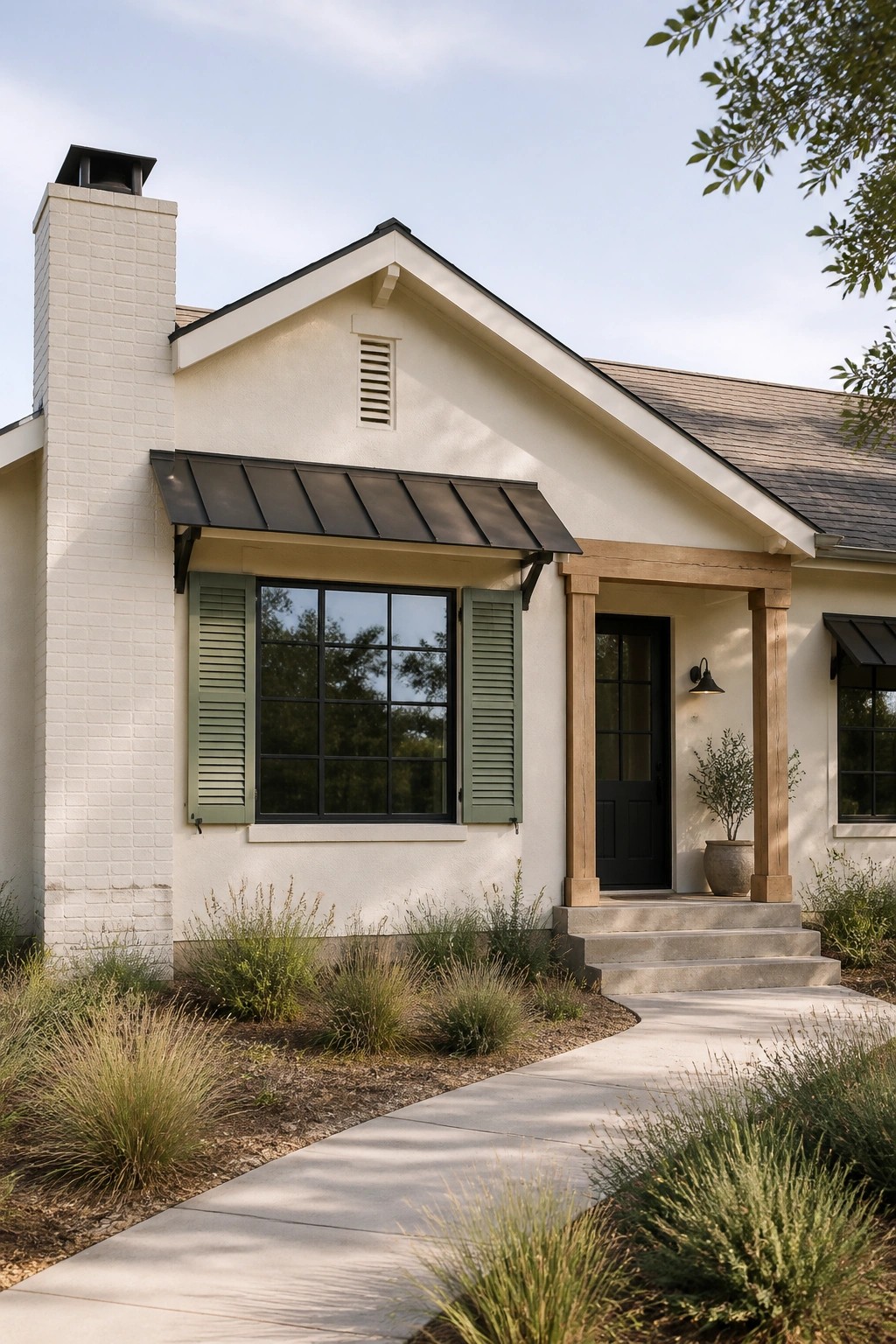
This cream paint on the siding has a soft warmth that keeps the house from looking too stark. It sits in that middle ground between white and beige, and it reads closest to Sherwin Williams Alabaster or Benjamin Moore Navajo White.
The color holds up well next to wood beams and darker accents without competing with them. It works best on homes that get plenty of natural light, since the warmth can lean a little cooler in shade.
Warm Cream Siding With Wood Garage Doors
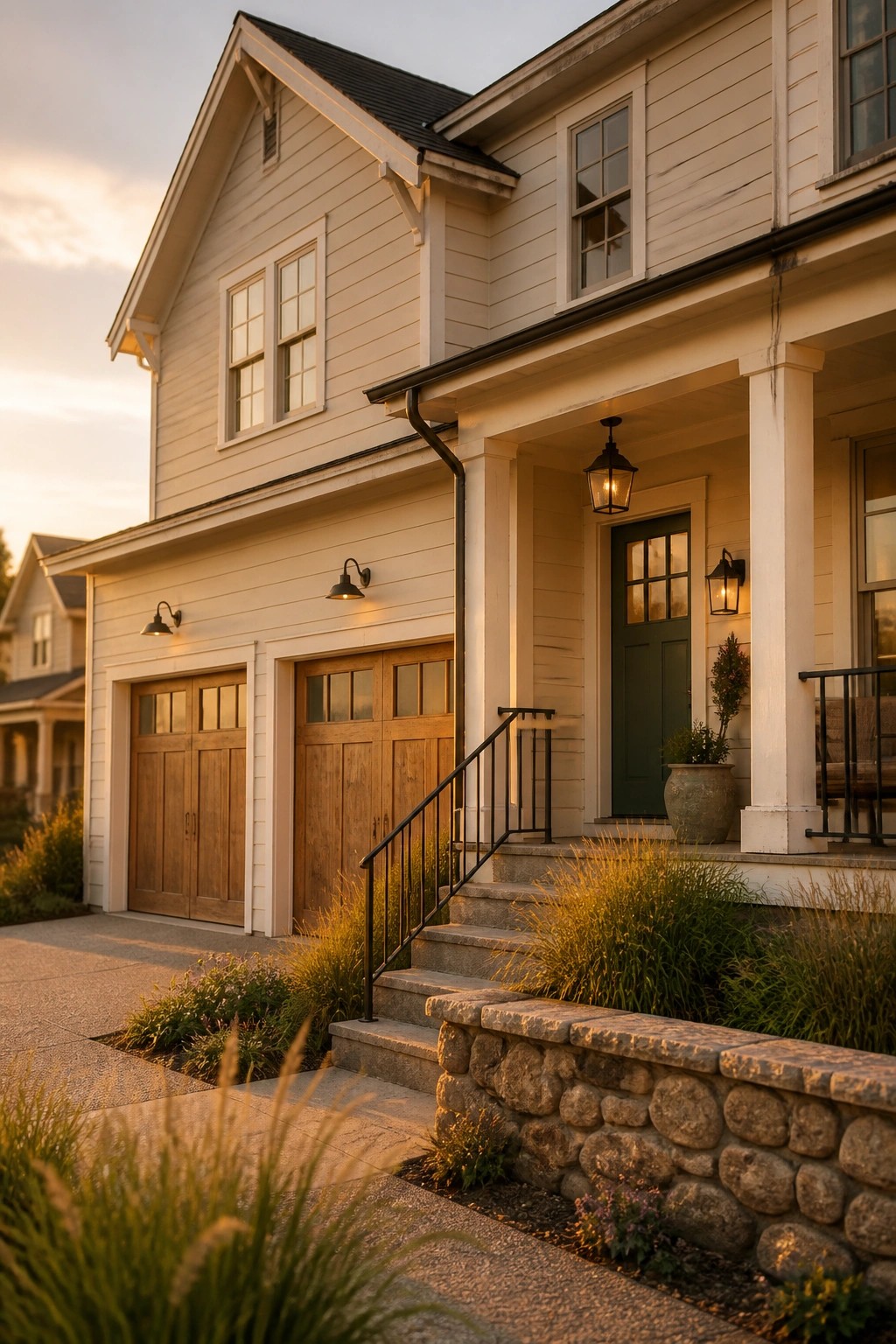
This house uses a warm cream on the siding. It is a soft neutral that feels cozy without looking stark or too bright against the rest of the exterior.
The color sits right between white and beige. It works well with wood garage doors and stone details, and it stays looking clean even when the light shifts during the day. Good matches include Sherwin Williams Creamy, Benjamin Moore Cloud Cover, Behr Creamy White, and Farrow & Ball Slipper Satin.
Warm Cream Brick Siding
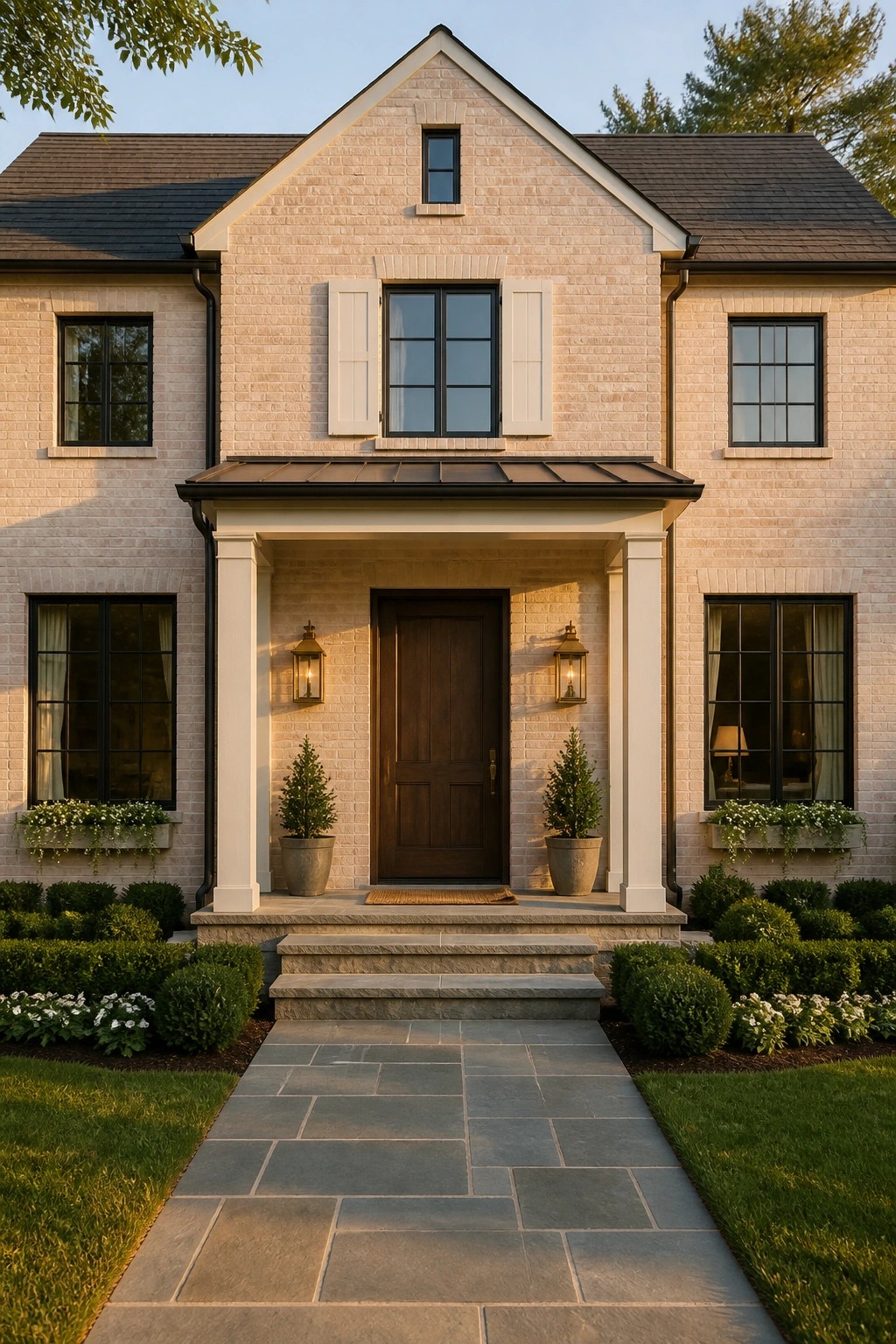
This warm cream on the brick gives the house a soft look that still feels grounded. It sits in that light neutral range with just enough warmth to avoid looking stark against the darker roof and windows.
The color has a mild beige undertone that shows up nicely in natural light. It works best on brick or siding when you want something calmer than white but not as heavy as a full beige. Try Sherwin Williams Creamy, Benjamin Moore White Dove, Behr Almond Wisp, or Farrow & Ball Pointing if you are looking for close matches.
Warm Cream Siding With Black Windows and Roof
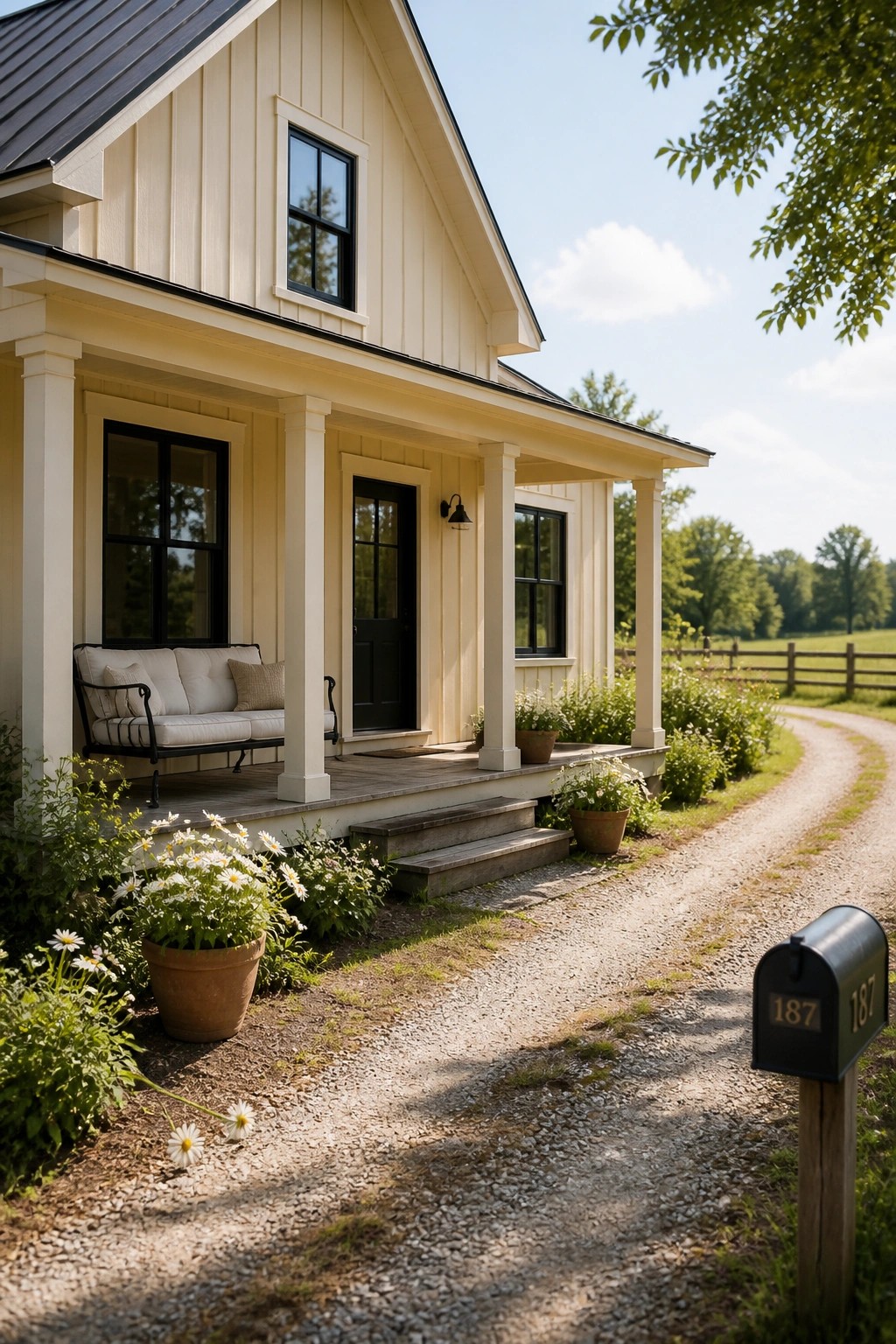
This warm cream siding gives the house a soft, quiet look that still feels current. It sits somewhere between white and beige, with a gentle yellow undertone that keeps it from looking too stark next to dark windows and a dark roof.
The color works well on farmhouses because it pairs easily with black trim and natural wood accents. It can read a little brighter in full sun, so testing a sample on the actual wall helps avoid surprises once the house is painted.
Soft Cream Siding With Wood and Stone Details
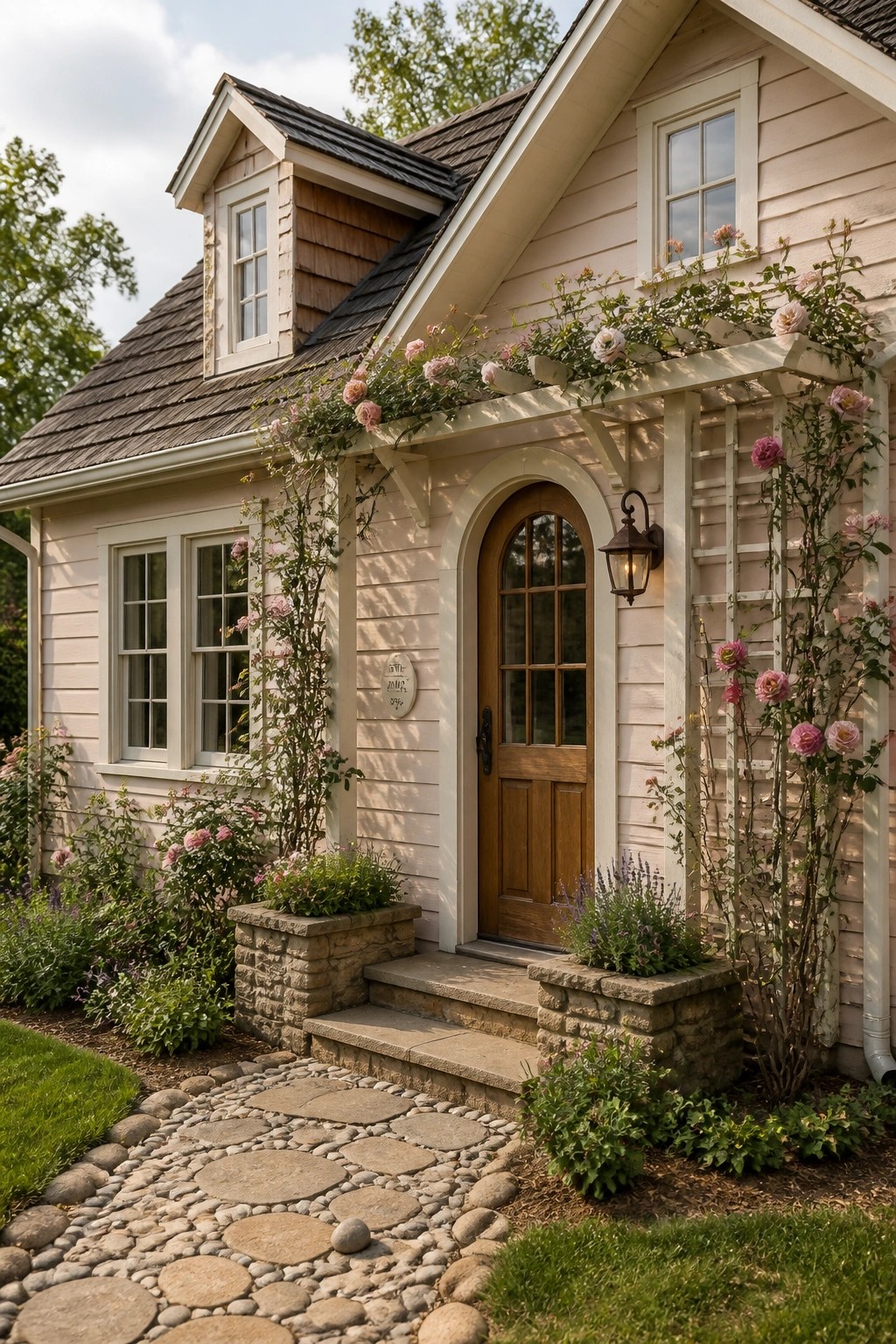
This house uses a soft cream on the siding that reads as warm and gentle rather than stark white. It has that slightly off-white quality that feels cozy next to wood and stone without turning too yellow in the light.
The color works best on homes that already have natural wood accents or darker roofing. It keeps the whole look soft while still showing enough contrast to feel clean. Try pairing it with warm white trim if you want it even softer.
Warm Cream Siding That Blends With Stone and Wood
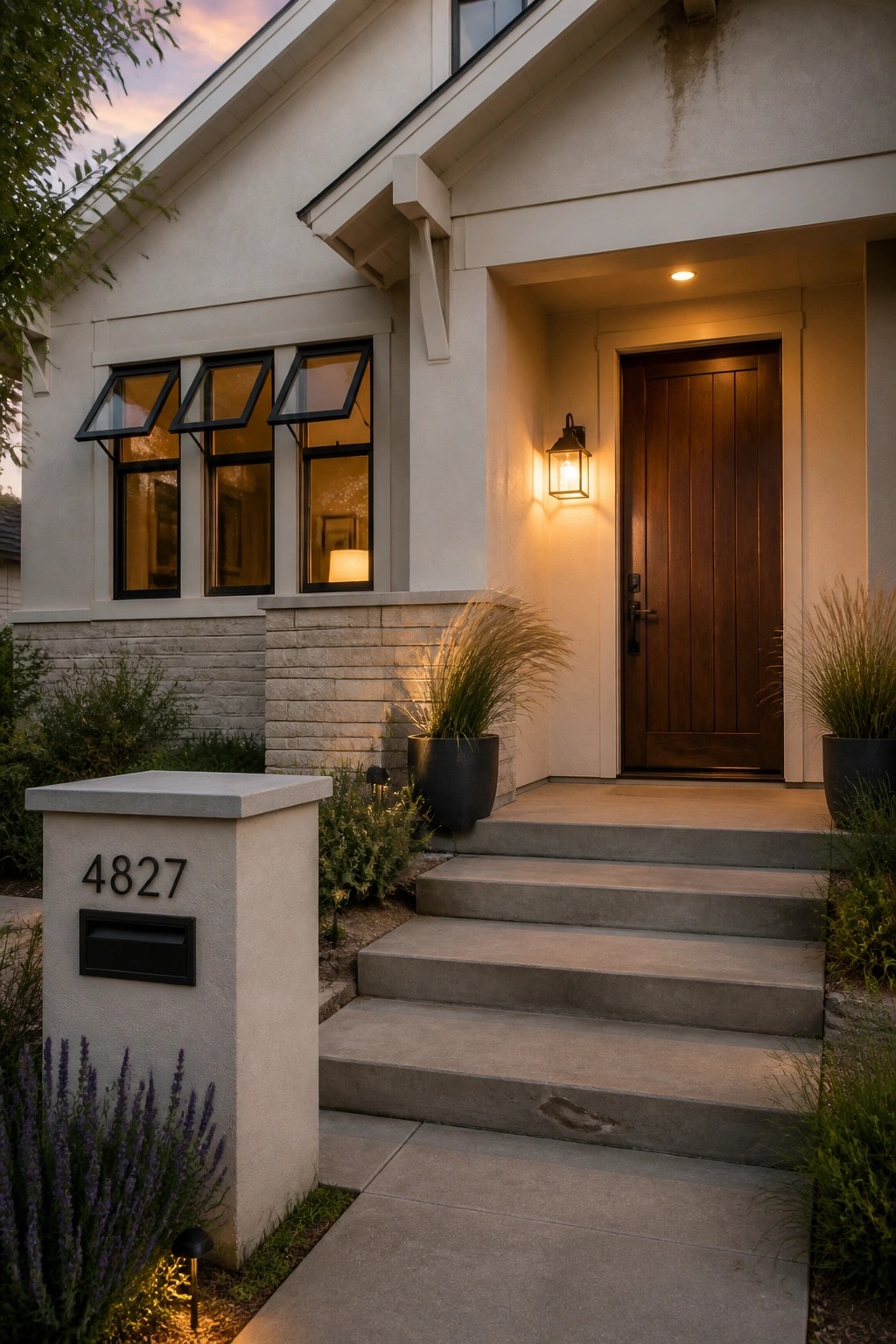
This warm cream paint on the siding gives the house a soft look that still feels grounded. It sits somewhere between white and beige, which helps it blend with the stone and wood without looking too bright or cold.
The color has a slight warmth that shows up more as the light changes through the day. It works well on modern farmhouse homes when you want something gentle that still lets the natural materials around it stand out. Sherwin Williams Alabaster or Benjamin Moore White Dove would be close matches to try.
Warm Cream Siding With Dark Roof and Wood Door
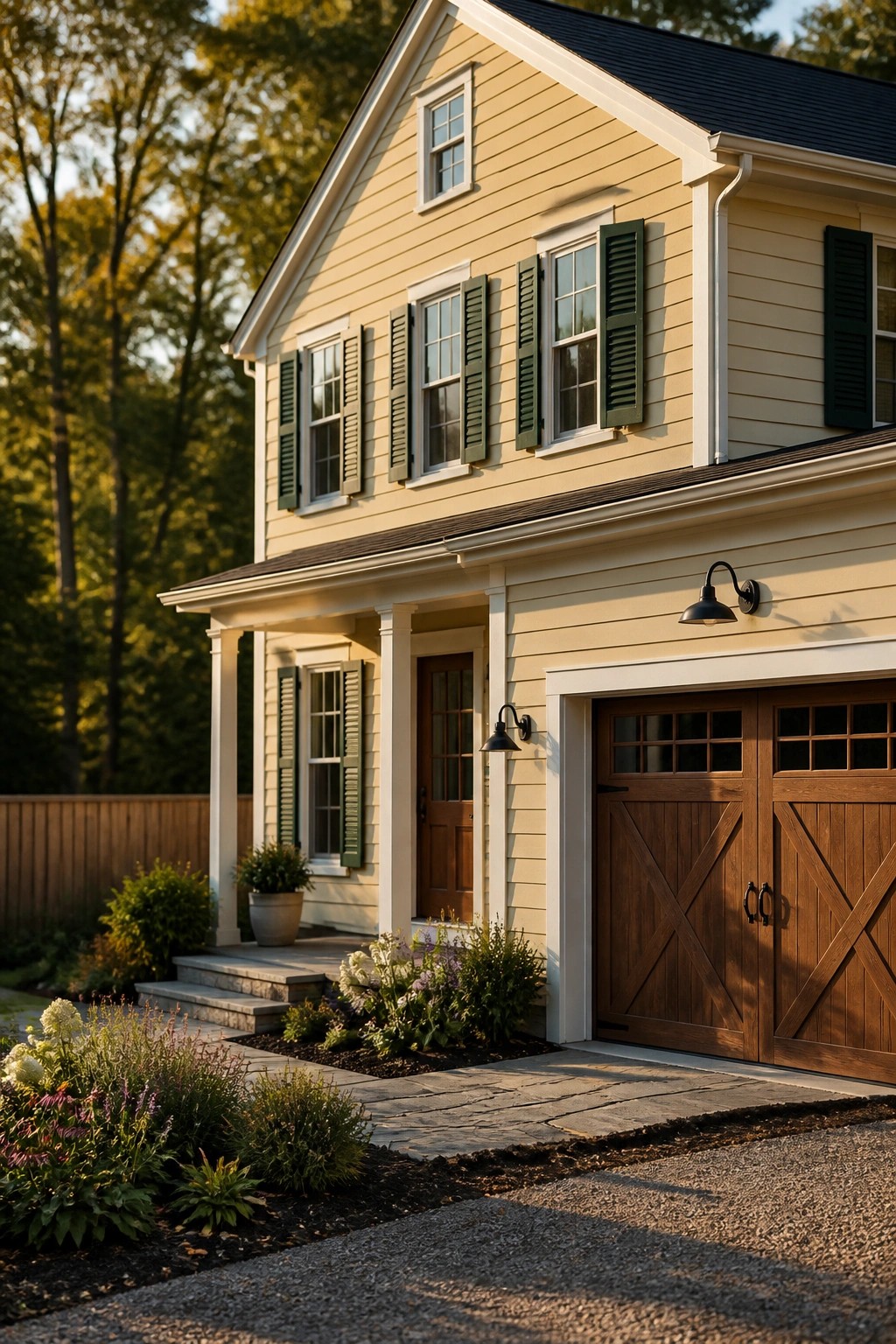
This warm cream color on the siding gives the house a soft look without going too pale. It sits right in that middle ground between white and a light yellow, which helps it feel inviting rather than stark.
The tone has a gentle warmth that works well with dark roofs and wood doors. It tends to look best on houses that get decent sunlight, since it can read a little flat in deep shade. Good matches include Sherwin Williams Creamy, Benjamin Moore Linen White, Behr Cottage Cream, and Farrow & Ball Cream.
Light Cream Siding With Soft Beige Undertones
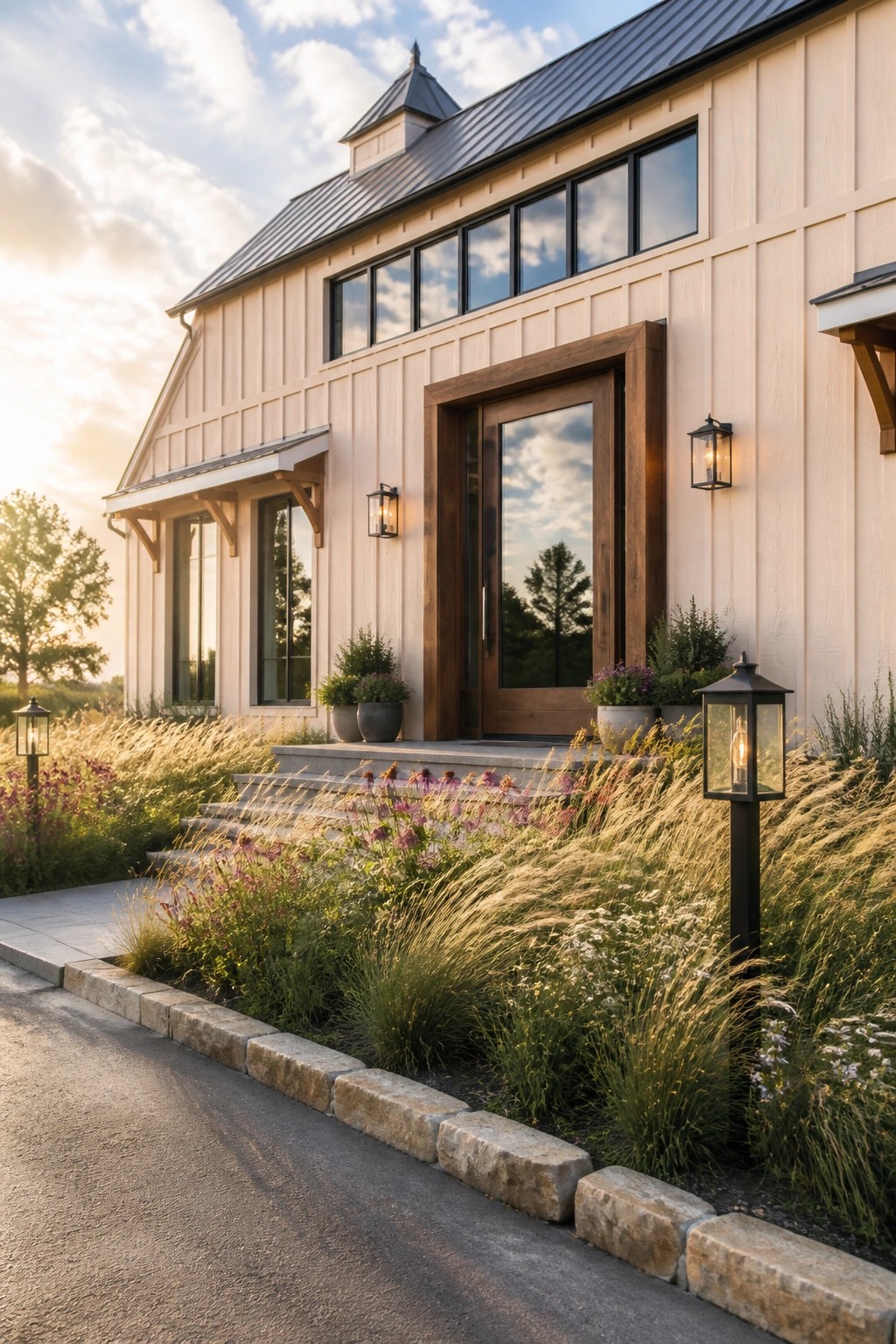
This warm cream paint on the siding gives the house a soft neutral look that feels easy to live with. It falls into that light beige family and reads closest to Sherwin Williams Creamy or Benjamin Moore Pale Oak.
The color has a gentle warmth that keeps the whole exterior from looking too stark. It pairs nicely with wood accents and holds up well against stone without shifting too cool in shade.
Warm Cream Siding With White Trim and Wood Accents
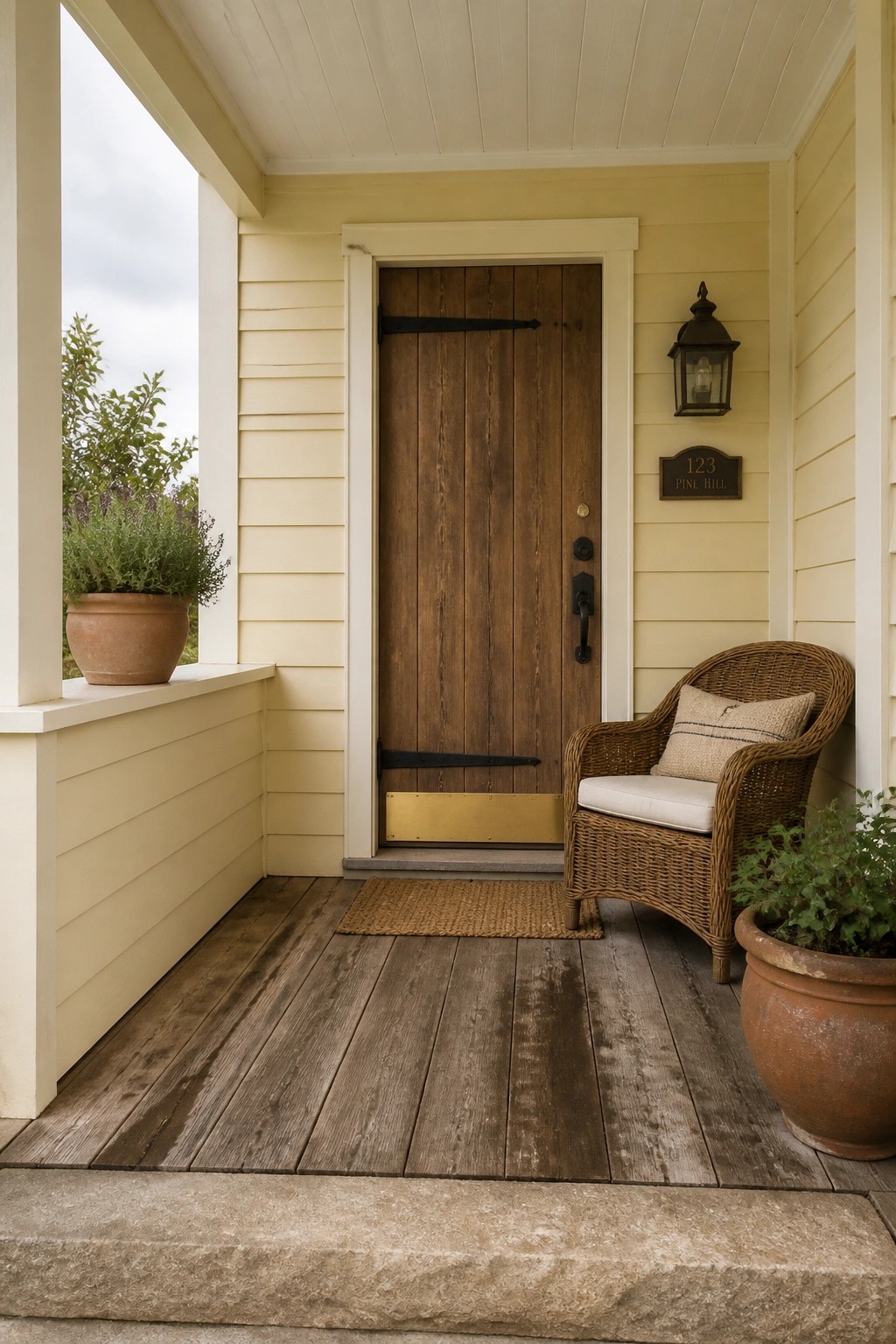
This warm cream gives modern farmhouse exteriors a soft, lived-in feel. The color has a gentle yellow undertone that keeps the house from looking stark while still reading clean next to white trim.
It works best on siding where you want something a little warmer than plain white. Pair it with natural wood doors or black hardware, and watch how it shifts in morning versus afternoon light.
Warm Cream Siding With Black Trim and Natural Wood Doors
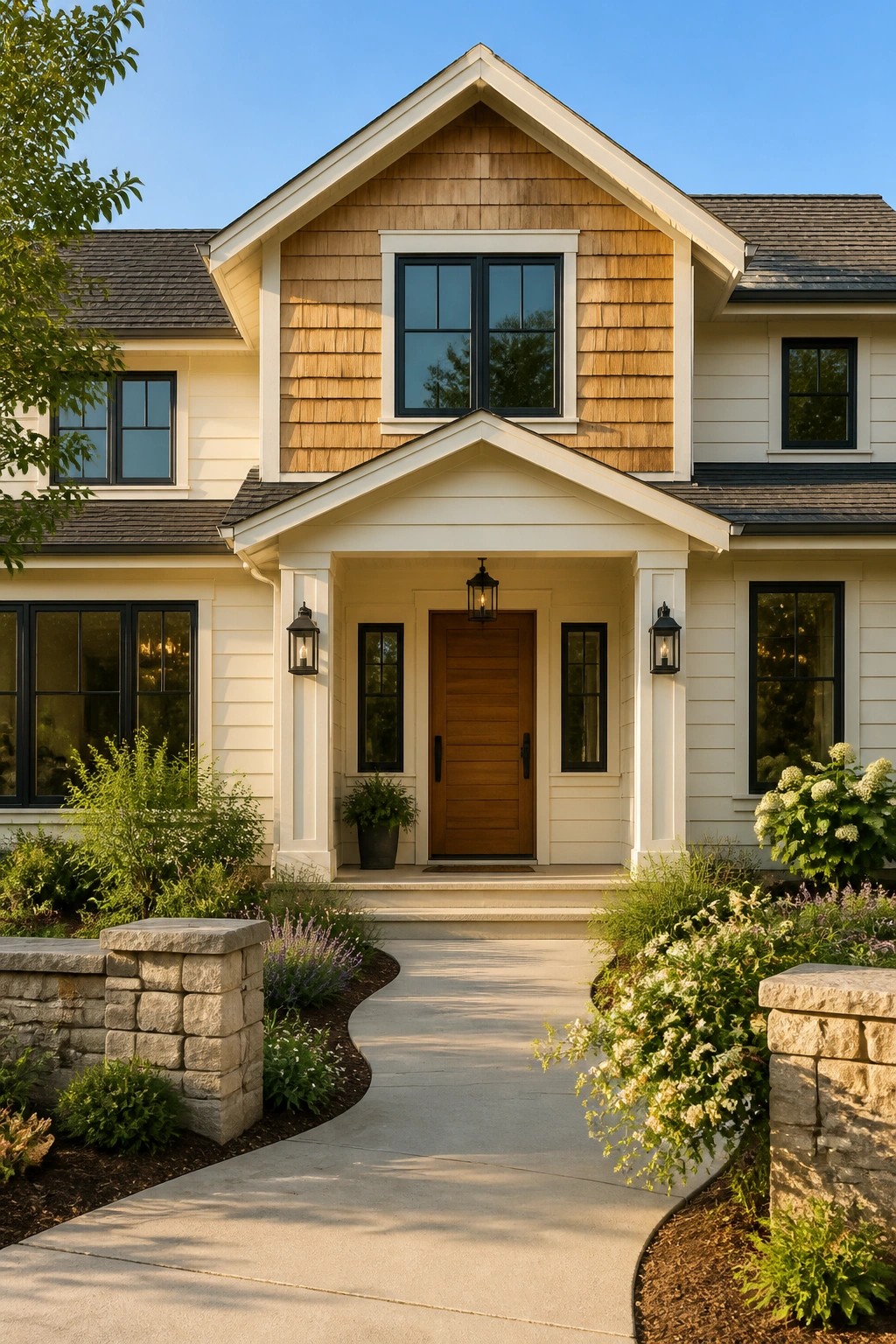
This house uses a warm cream on the siding that feels soft rather than stark. It is a light neutral with enough warmth to keep the exterior from looking too cool next to the wood accents and dark windows.
The color sits nicely with black trim and natural wood doors because it has a gentle beige undertone. It works well on modern farmhouses that want a clean look without going all the way to bright white.
Warm Cream Siding With Golden Undertones
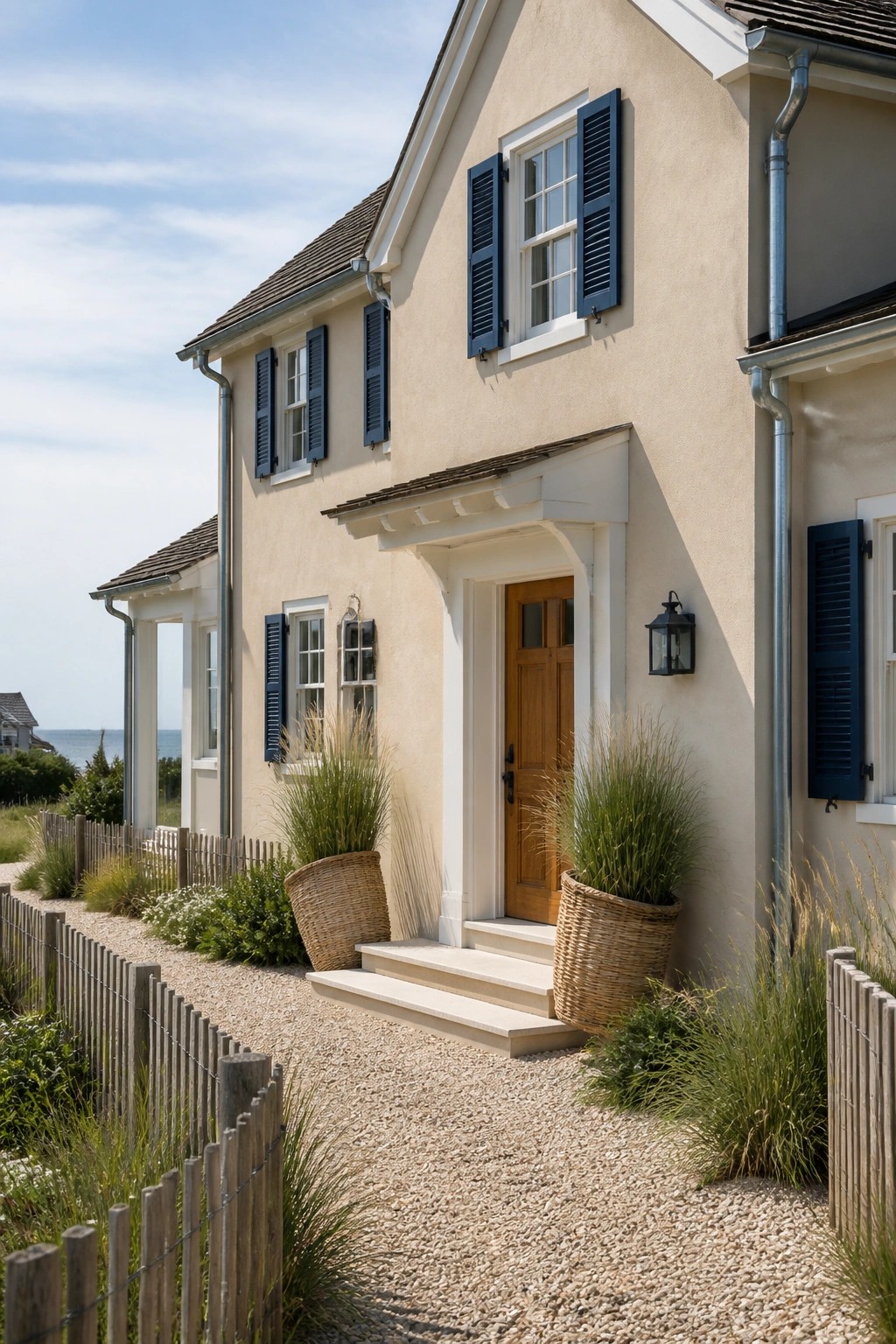
This warm cream color on the siding gives the house a soft look that still feels grounded. It sits right between beige and off-white, with enough warmth to keep the whole exterior from feeling stark or cold.
The tone has a light golden undertone that works well with wood doors and gravel. It suits modern farmhouses best when paired with simple white trim and natural textures, though it can start to look flat if the lighting is very cool or gray.
Soft greige siding
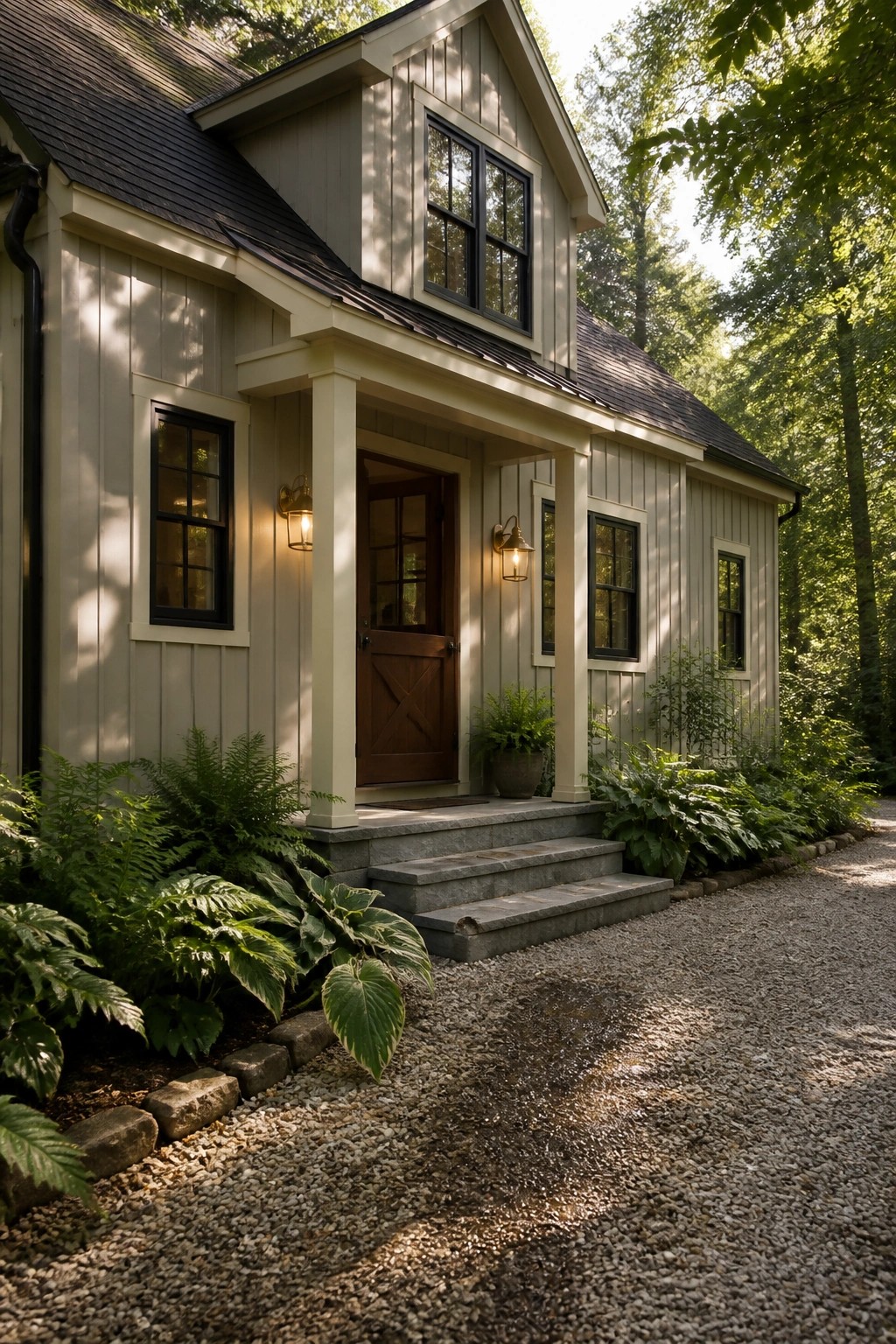
This house uses a soft greige on the siding. It sits right between gray and beige with a gentle warm undertone that feels calm rather than stark. The color gives the whole exterior a quiet, settled look that still reads modern.
It works especially well next to the warm wood door and the stone steps because the undertone keeps everything from feeling too cool. Pair it with off-white trim and a dark roof if you want the same balance. Just watch how it shifts in strong afternoon light since some greiges can pull greener than expected.
Soft Cream Siding
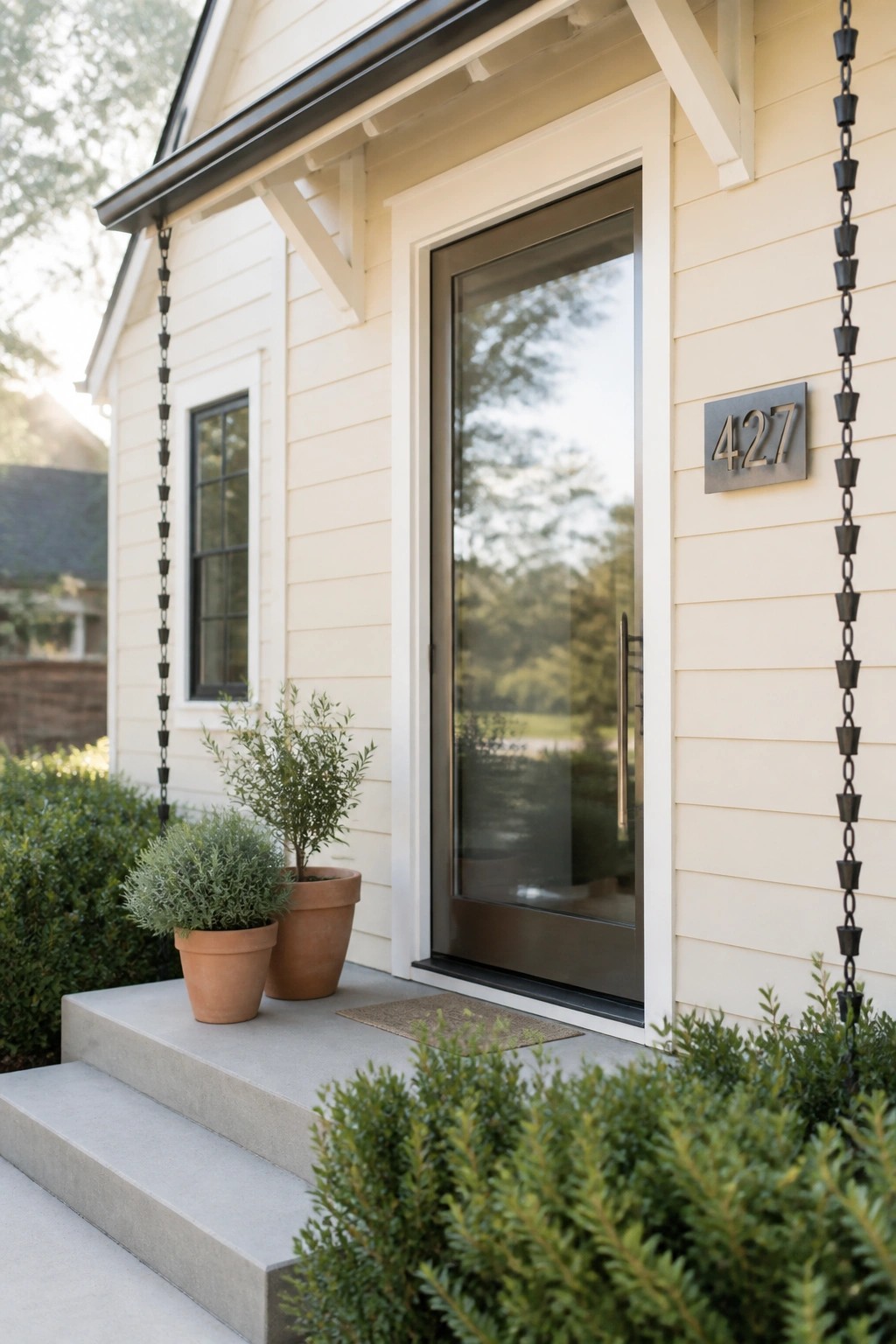
This pale cream on the siding is a warm off-white that sits right between white and a light yellow. It keeps the house looking bright but still soft, which is why it works so well for a modern farmhouse look. The color feels calm and approachable rather than stark.
It has a gentle warmth that shows up more in certain lights and pairs nicely with white trim. Most people like it because it stays clean without feeling cold. Good matches include Sherwin Williams Alabaster, Benjamin Moore Cloud White, Behr Almond Wisp, or Farrow & Ball Cream.
Warm Cream Exterior With Linen White Inspiration
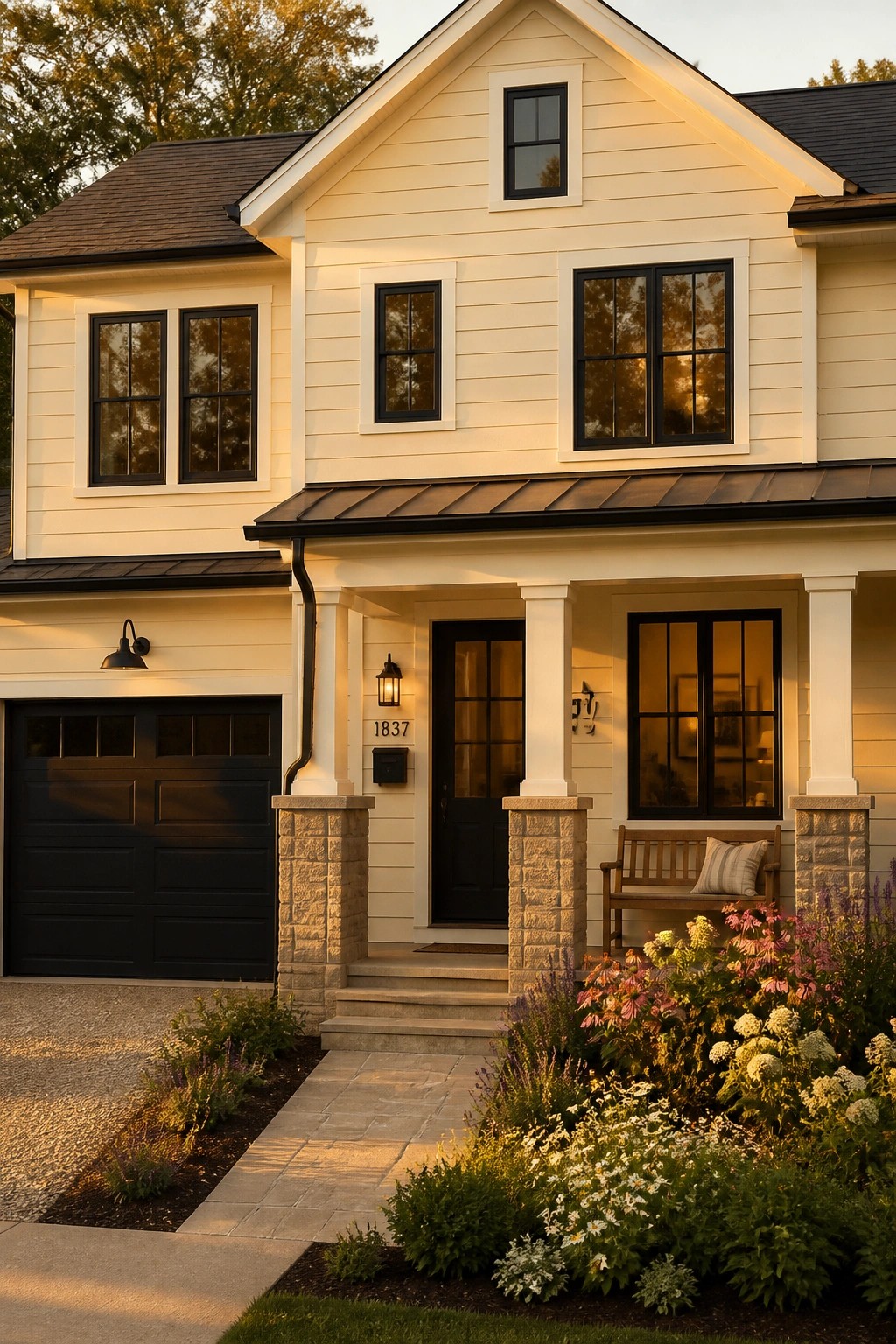
A warm cream is the main color on this house. It sits in that soft middle ground between white and beige, with just enough yellow undertone to keep it from feeling stark. Many people like it because it still reads clean but adds a bit of warmth that works with the modern farmhouse look.
It looks closest to Sherwin Williams Creamy, Benjamin Moore Linen White, Behr Almond Wisp, or Farrow & Ball Cream. The color stays gentle next to dark windows and stone, though it can shift a little yellower as the light changes later in the day.
Warm Cream Brick
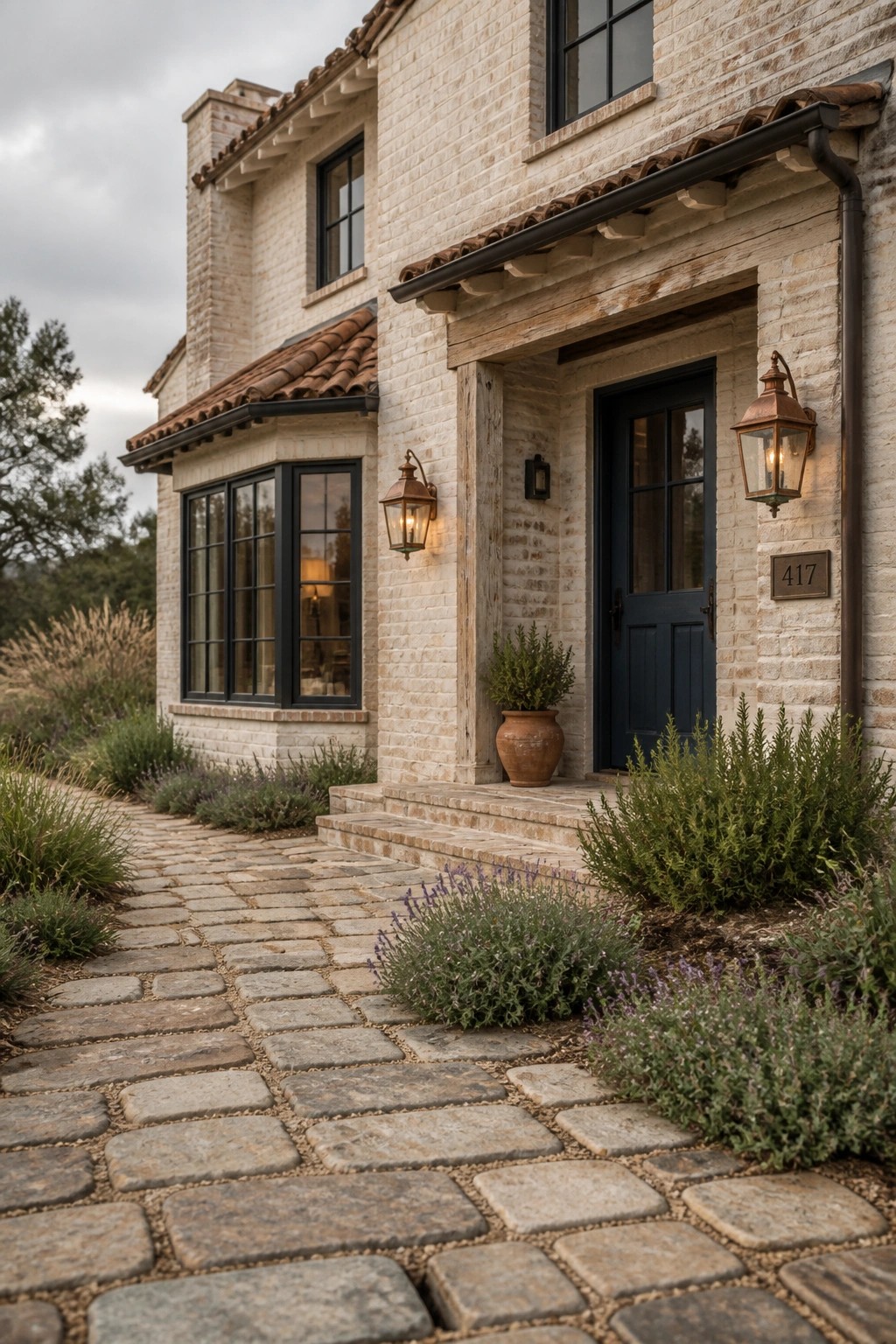
This warm cream on the brick gives the house a soft look that still feels grounded. It sits in the light neutral family with a gentle warmth that avoids looking too stark or cool against natural materials.
The color has a soft yellow undertone that helps it blend with terracotta roofing and stone paths. It works best on painted brick where you want texture to show through, and it pairs easily with dark window frames or simple wood accents.
Warm Cream Siding Paired With Cedar and Gray Roofing
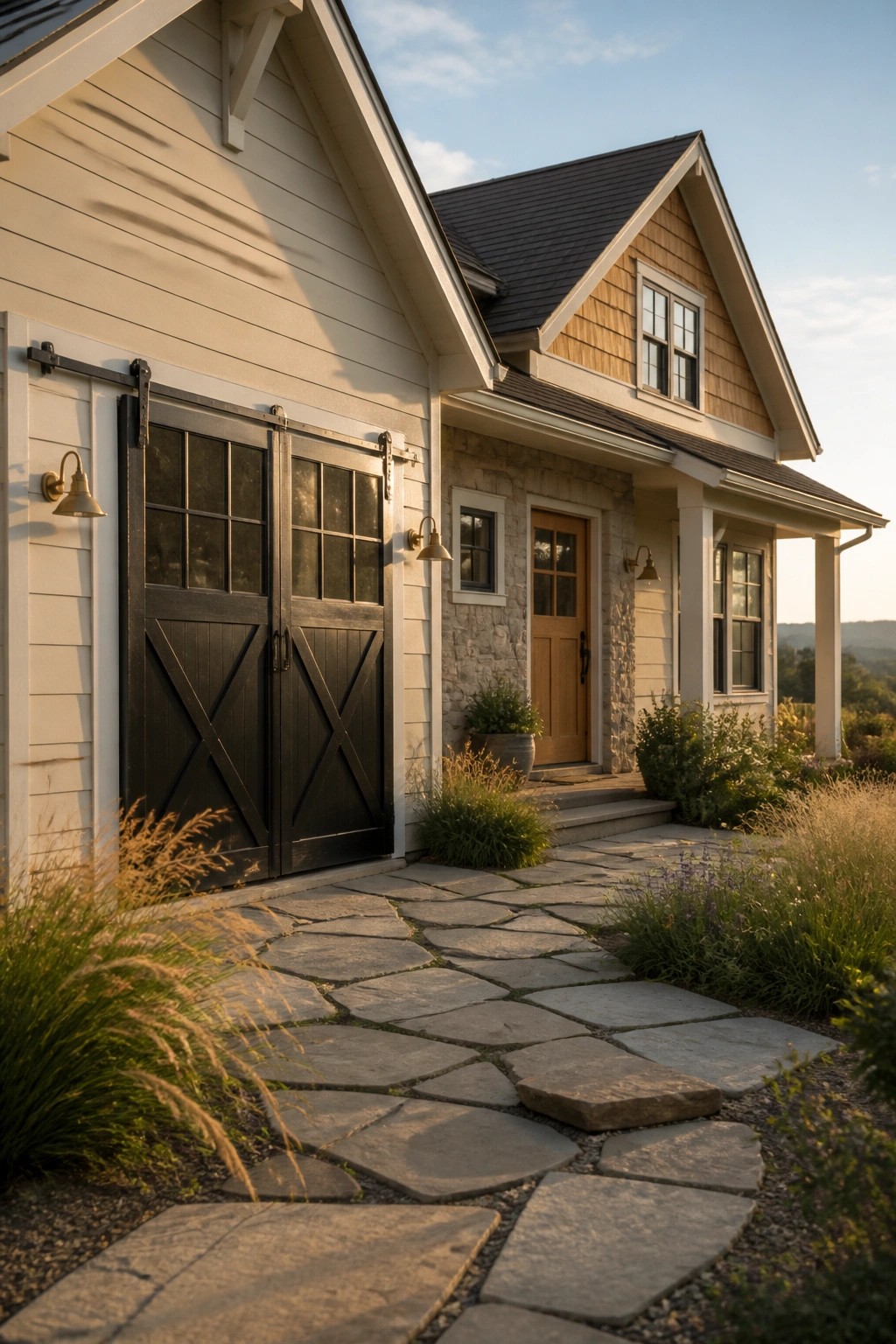
A warm cream works well on modern farmhouse exteriors because it stays soft without looking stark. This color sits somewhere between white and light beige, with just enough warmth to feel inviting next to stone and wood.
It tends to read a little softer in morning light and pairs best with natural materials like cedar accents or gray roofing. Watch how it shifts against darker trim or masonry, since the undertone can lean more yellow outdoors than it does on a paint chip.
Frequently Asked Questions
Q: Should I try the paint on a small section before committing?
A: Grab a couple of sample pots and paint test boards. Stick them on the house for a week so you see how the cream shifts with sun and shade.
Q: What trim color works best with these warm creams?
A: Go for a crisp white or soft greige. It frames the house nicely without making the cream feel too stark.
Q: How do these colors hold up in rainy areas?
A: They stay looking fresh if you pick one with a bit of warmth. Avoid anything too pale since moisture can make it seem dull after a while.
