

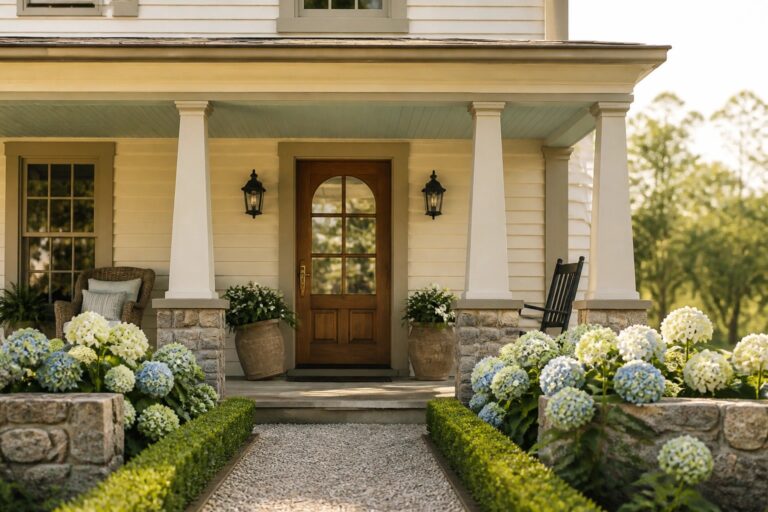
I pay close attention to how paint colors on a farmhouse shift once they cover the full siding and sit next to the roof, trim, and any stone details.
Some shades that read soft on a small board turn cooler or lose depth when the sun moves across them during the day.
I usually bring home several samples and paint them on different walls to see those changes in real outdoor light.
Samples help.
That step shows whether a color will stay balanced next to landscaping and hold its tone through different weather.
Soft Pale Yellow Siding
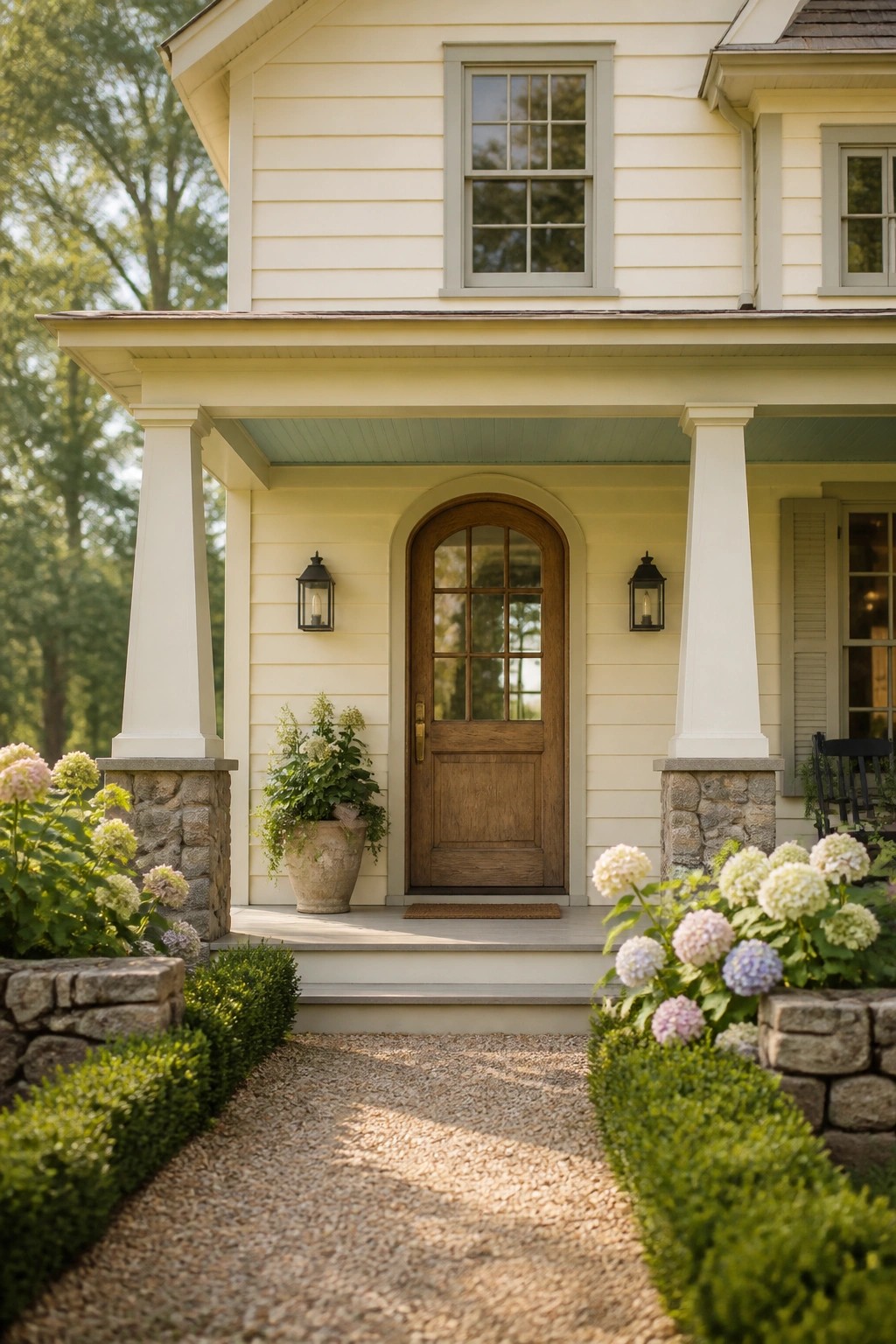
The main color on this house is a soft pale yellow. It sits in that gentle middle ground between cream and yellow, giving the siding a warm but quiet look that still reads clean from the road.
This shade has a light warm undertone that holds up well against white trim and stone bases. It works best on farmhouses or similar styles where you want color without making the house feel heavy or too bold. Pair it with off-white trim and avoid anything too stark on the windows.
Soft Sage Green Siding
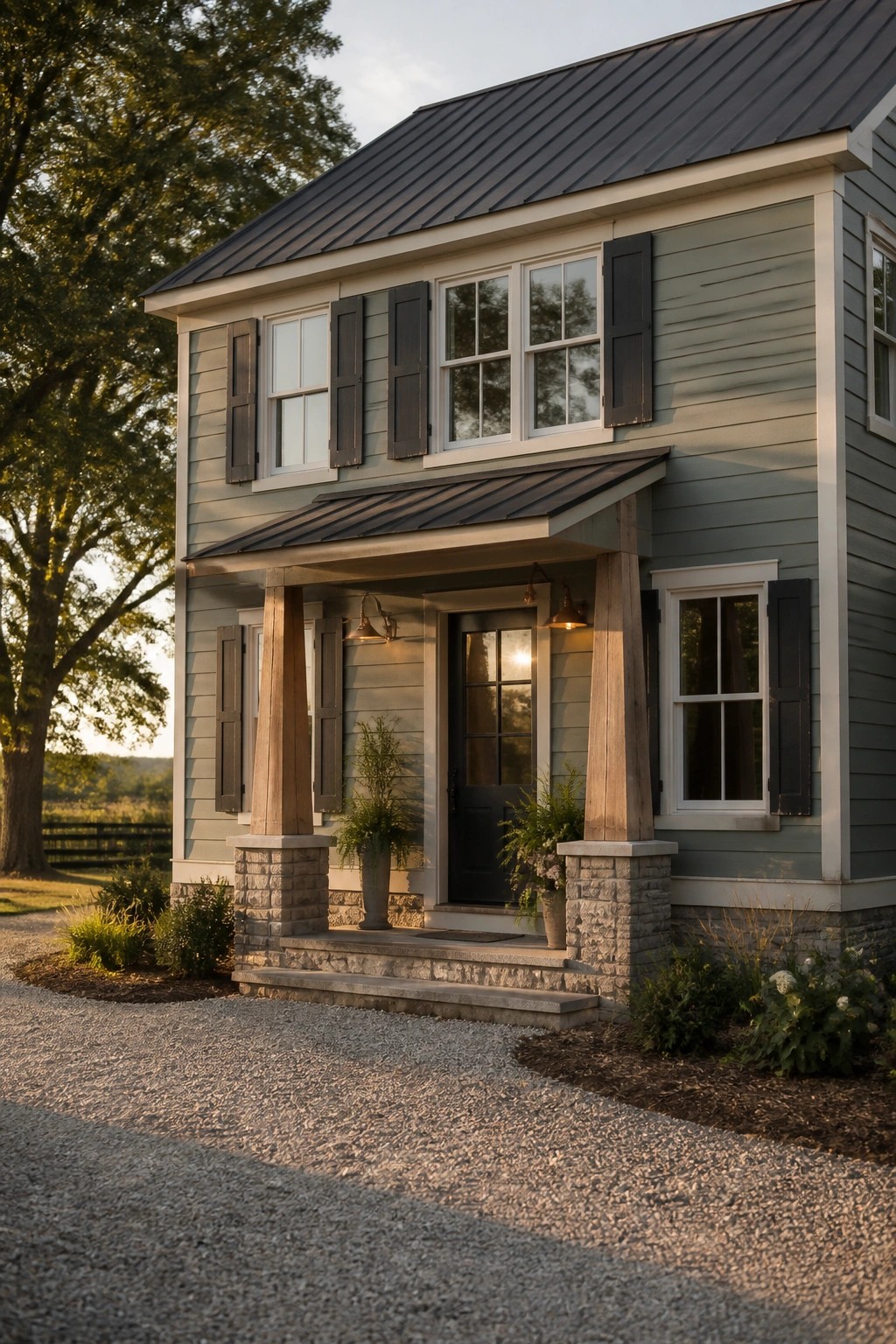
This house uses a soft sage green on the siding. It is a muted green gray that feels calm and a little earthy without going too dark or bright.
It reads closest to Sherwin Williams Evergreen Fog or Benjamin Moore Saybrook Sage, with Behr Mossy Green as another close option. The gray undertone helps it sit nicely next to dark roofing and wood posts, and it works well on farmhouses where you want something softer than a straight gray but still low key.
Cool Sage Green Siding
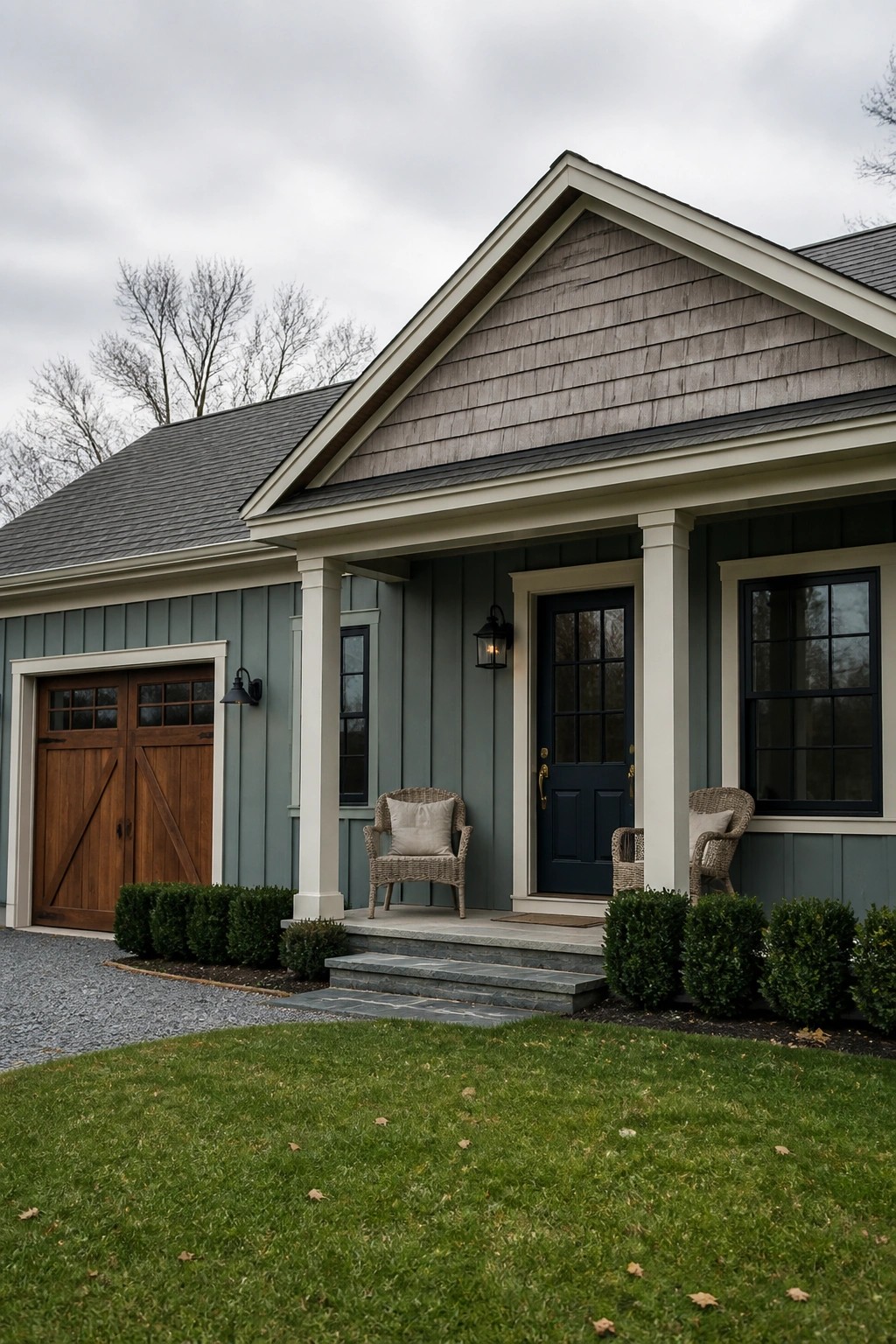
A soft sage green like the one on this house siding sits right between gray and green. It gives the exterior a calm, settled look without feeling too bold or too washed out. This color family works especially well on farmhouses because it blends with the landscape while still showing off the architecture. It reads closest to Sherwin Williams Evergreen Fog, Benjamin Moore Saybrook Sage, or Behr Balsam.
The undertone leans slightly cool, so it pairs best with warm white trim and natural wood accents to keep the whole house from feeling chilly. It also holds up nicely against darker doors and roofing. Avoid using it in very shady spots where the gray side can start to dominate.
Soft Greige Siding
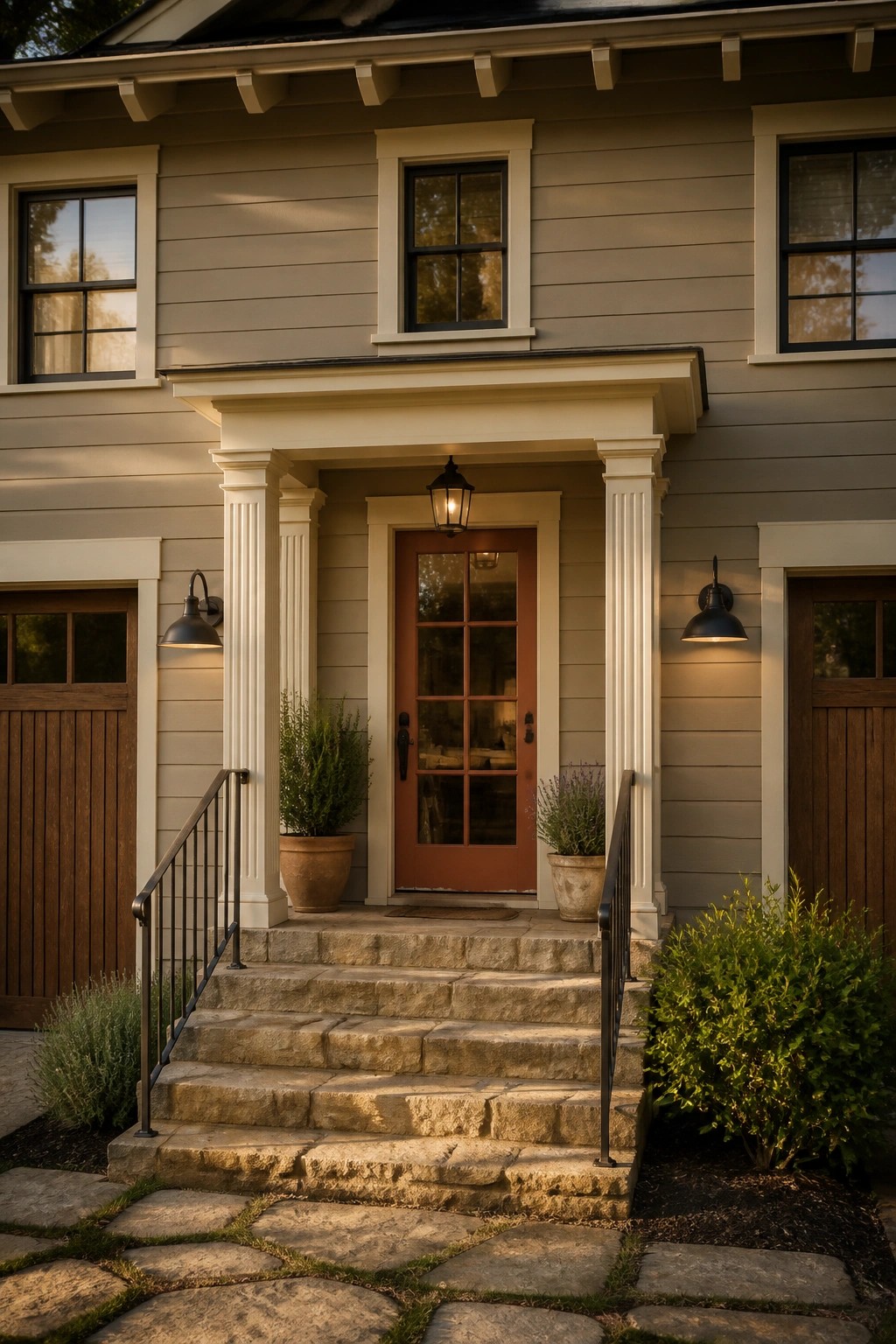
A soft greige works well on farmhouse exteriors because it sits right between gray and beige without pulling too far in either direction. This one has a gentle warmth that keeps the house from feeling cold or flat against the stone and wood details.
It tends to read a little lighter in full sun and picks up warmth from nearby wood tones. Pair it with bright white trim and natural stone to keep the look balanced. Good matches in this range include Sherwin Williams Accessible Beige, Benjamin Moore Revere Pewter, Behr Silver Satin, and Farrow & Ball Elephant’s Breath.
Soft Blue Gray Siding
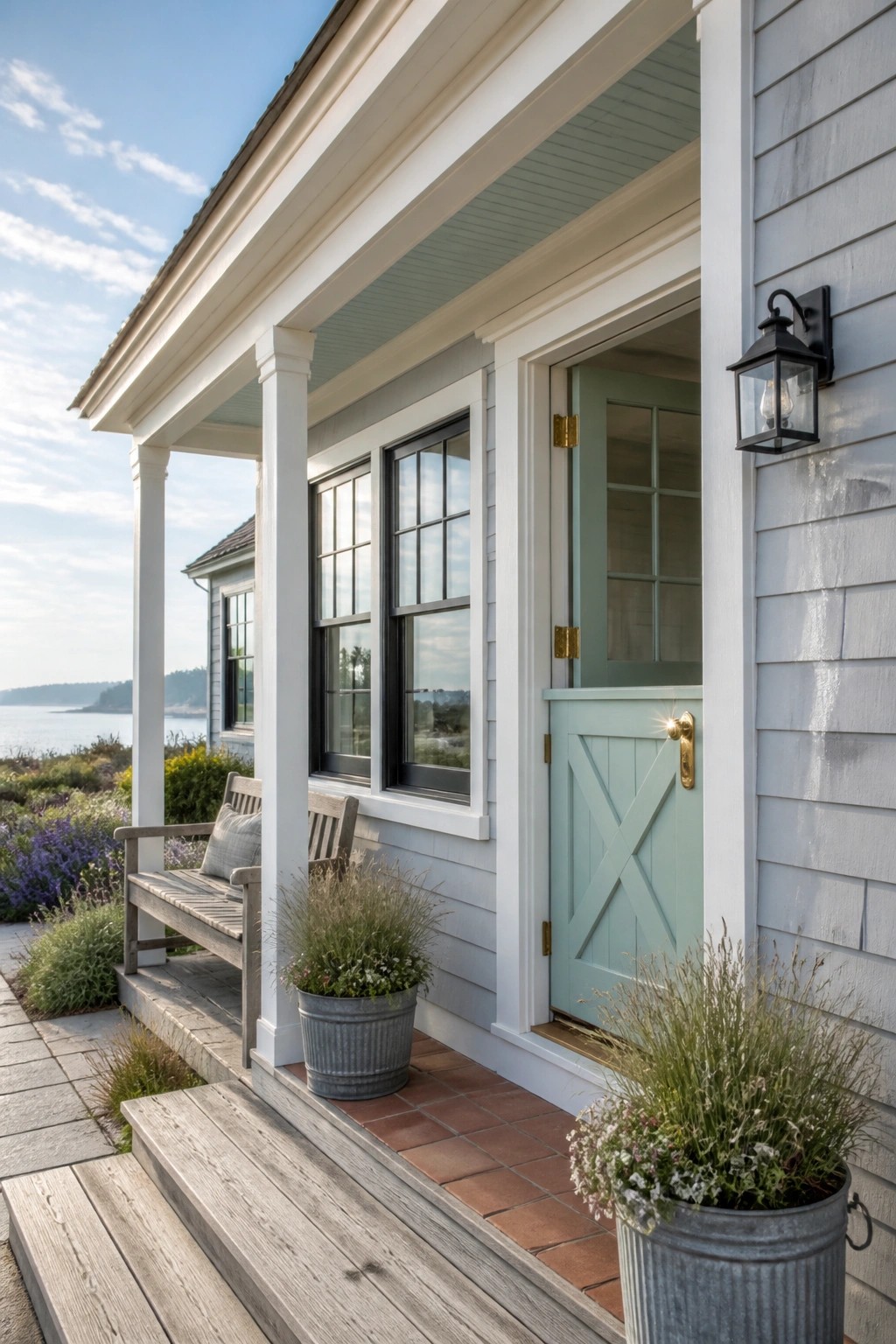
This light blue gray siding gives the house a quiet, coastal feel without looking too stark. It reads as a cool neutral with a soft blue undertone that stays gentle next to white trim. The color works well on farmhouse exteriors because it feels fresh but still grounded.
It pairs easily with natural wood doors or simple black hardware and holds up nicely in bright light. Watch the undertone if your site gets a lot of direct sun, since cooler grays can lean a bit icy in some settings. Best matches would be Sherwin Williams Silver Strand, Benjamin Moore Palladian Blue, Behr Silver Drop, or Farrow & Ball Skylight.
Soft Greige Brick
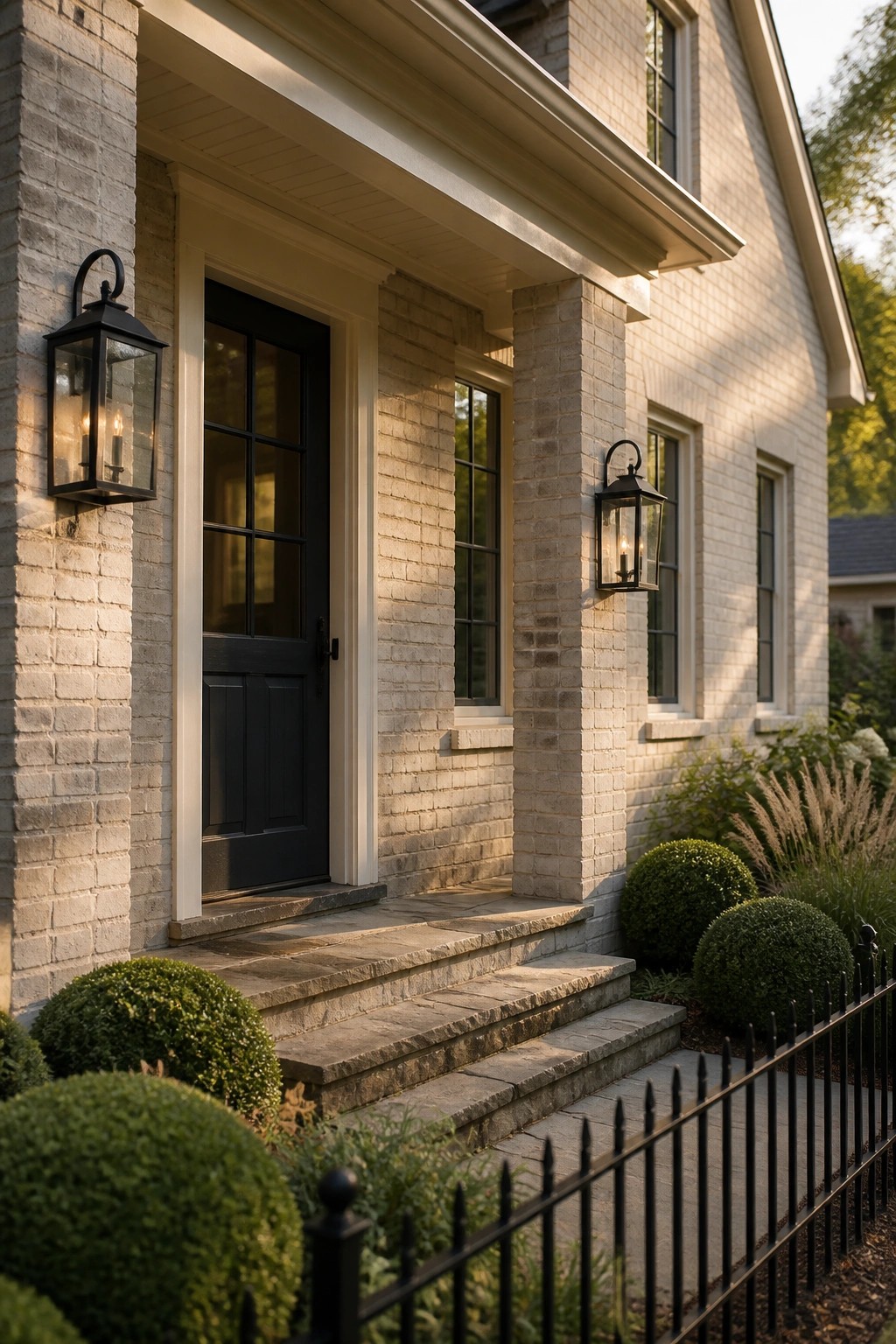
This brick has a soft greige tone that sits right between warm beige and light gray. It keeps the house looking calm without going too cool or too yellow, and it works nicely with the stone steps and simple trim.
The color has a light warmth that shows up best in morning or afternoon light. It pairs easily with black fixtures and dark windows, though it can start to feel flat if the surrounding greens or roof get too dark.
Dark Charcoal Siding
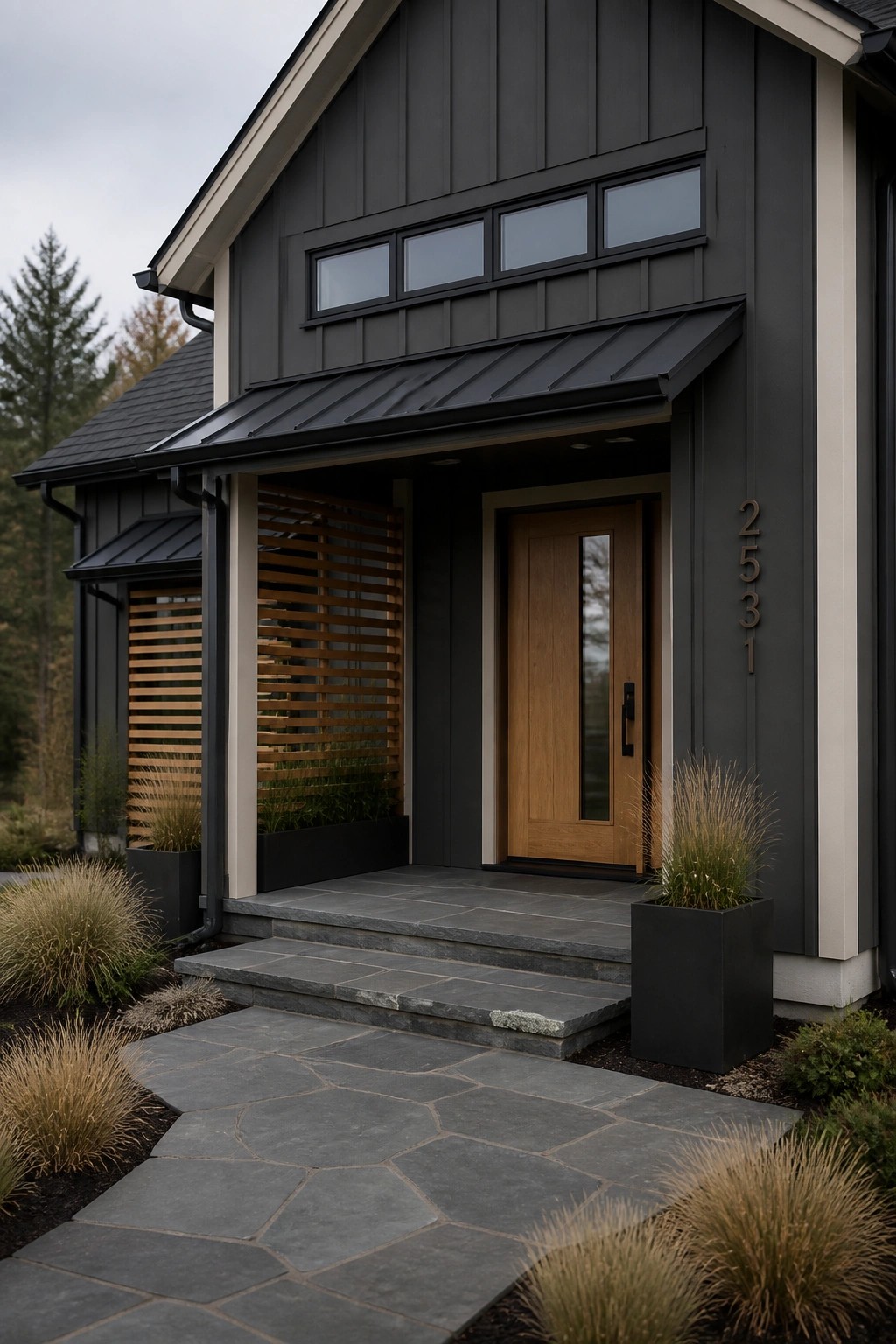
This dark charcoal gray siding gives the house a solid, grounded look without going full black. It sits in that in-between space where the color feels substantial but still works with natural materials like wood and stone. Many people reach for this kind of gray when they want something that holds up well outdoors and does not show dirt as fast as lighter shades.
It carries a cool undertone that reads a little deeper in low light. The color pairs nicely with warm wood doors and simple black metal accents. It works best on farmhouses or modern cottages that already have some texture in the roof or trim. Watch how it shifts next to lighter stone or paving, since those can make the gray look even stronger.
Muted Sage Green Farmhouse Siding
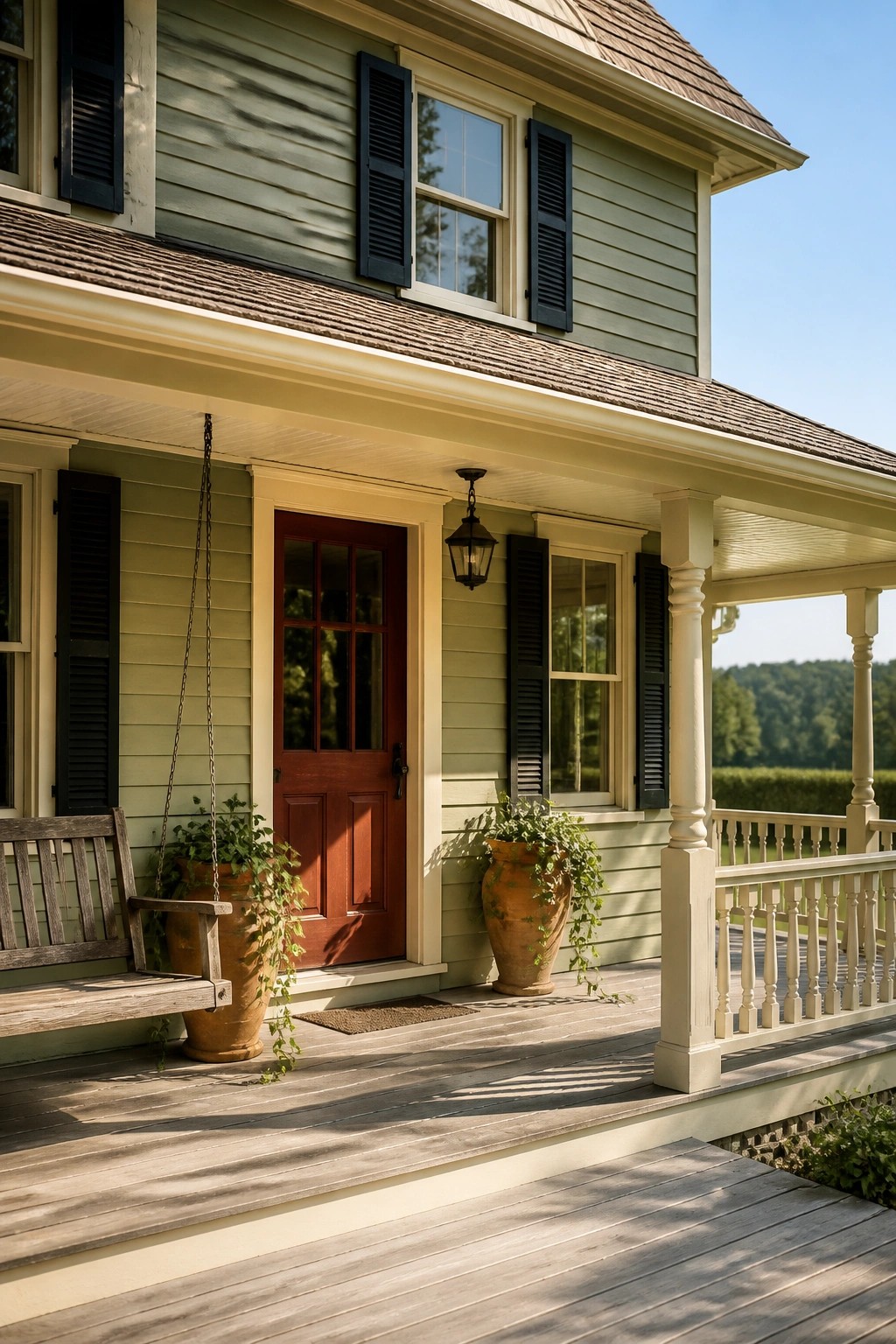
This soft sage green on the siding sits between green and gray, giving the house a calm look that still feels grounded. It works well on farmhouses because it does not fight with the roof or the natural wood elements around the porch.
The color has a slight cool undertone that stays steady in bright light. It pairs best with warm white trim and simple wood details, and it can look a bit flat if the trim is too stark or the roof is very dark.
Soft terracotta siding
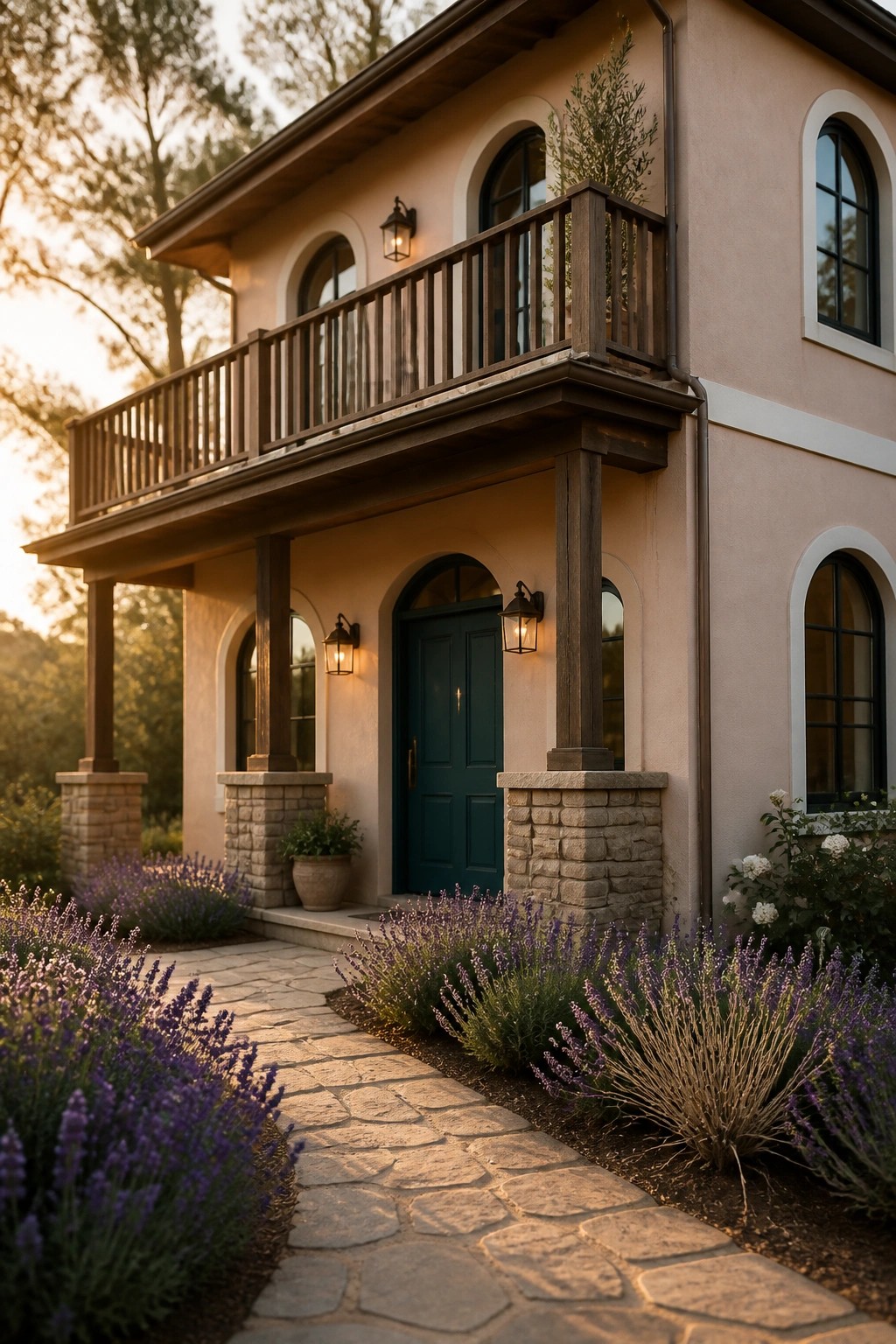
This siding color is a soft terracotta beige that sits right between warm neutral and light peach. It feels gentle on the house and does not fight the wood beams or stone bases.
The pinkish undertone keeps it from looking too flat outside. It works best on stucco or similar textures and pairs easily with dark wood, light stone, and simple landscaping.
Soft Blue Siding
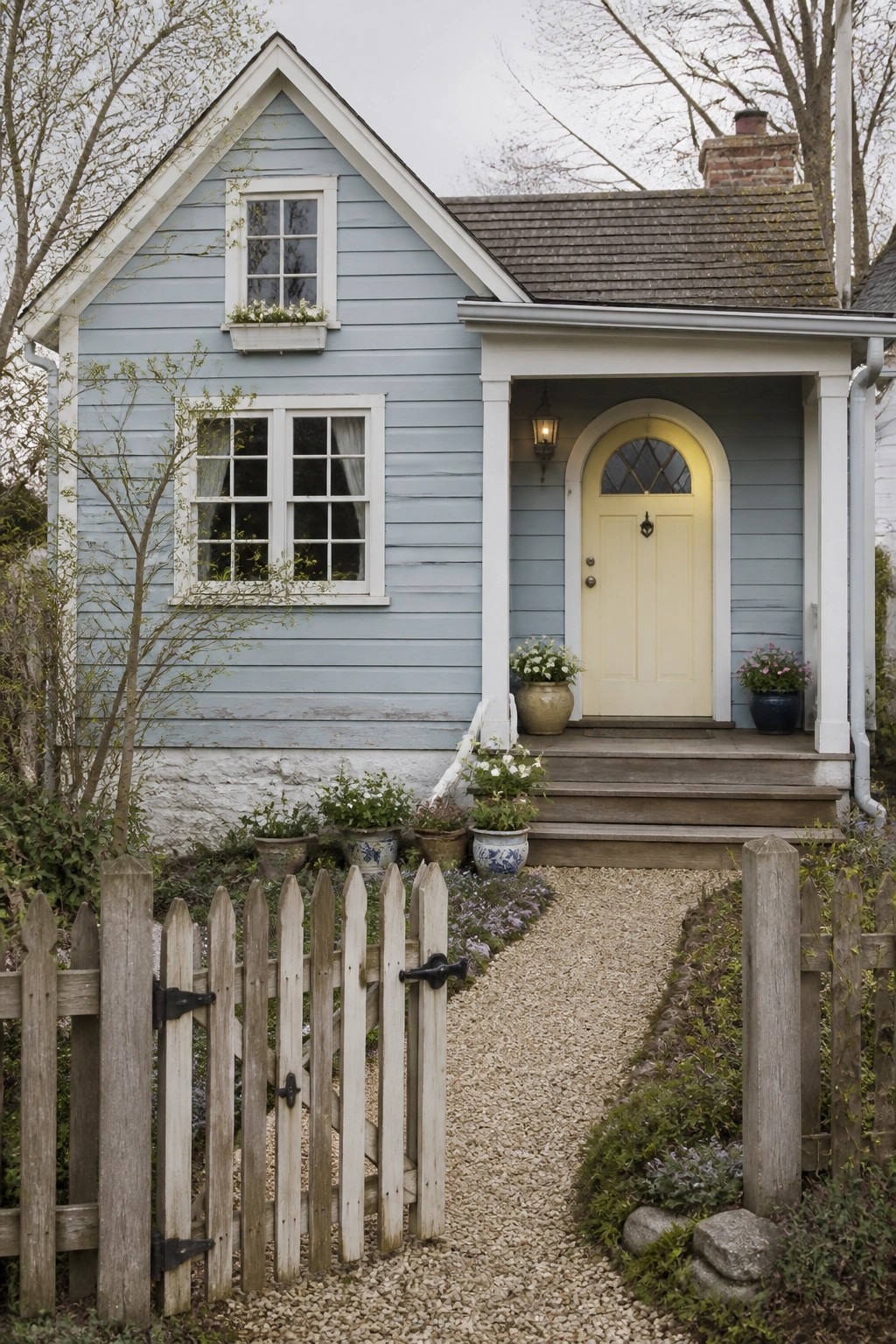
A soft blue-gray works well on farmhouse siding because it stays calm without looking flat. This color family has a cool base with just enough gray to keep it from feeling too bright or childish. It reads closest to Sherwin Williams Rainwashed, Benjamin Moore Palladian Blue, Behr Silver Blue, or Farrow & Ball Skylight.
The shade sits nicely against white trim and wood elements. It tends to look best on homes with simple lines and some greenery nearby. Watch the light though, since this blue can shift cooler in shade and may need testing on a larger patch before committing.
Light Taupe Greige Siding
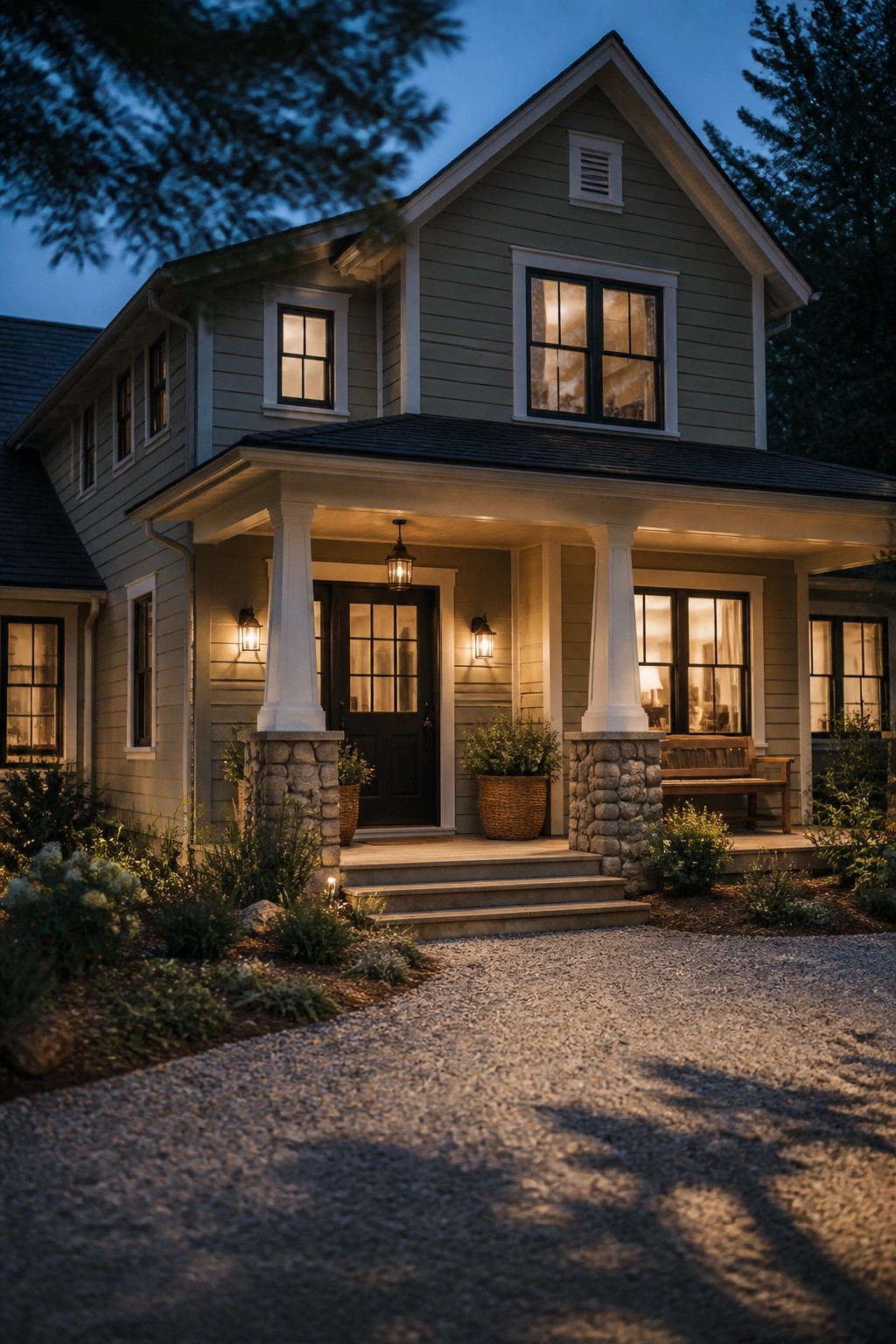
This siding color is a soft greige that sits right between warm gray and light taupe. It gives the house a calm, settled look without feeling flat or too cool against the stone bases.
The color holds up well in changing light and pairs easily with dark windows and natural wood accents. Sherwin Williams Worldly Gray or Benjamin Moore Revere Pewter come close, as does Behr Silver Satin if you want something a little lighter.
Coastal Blue Gray Siding
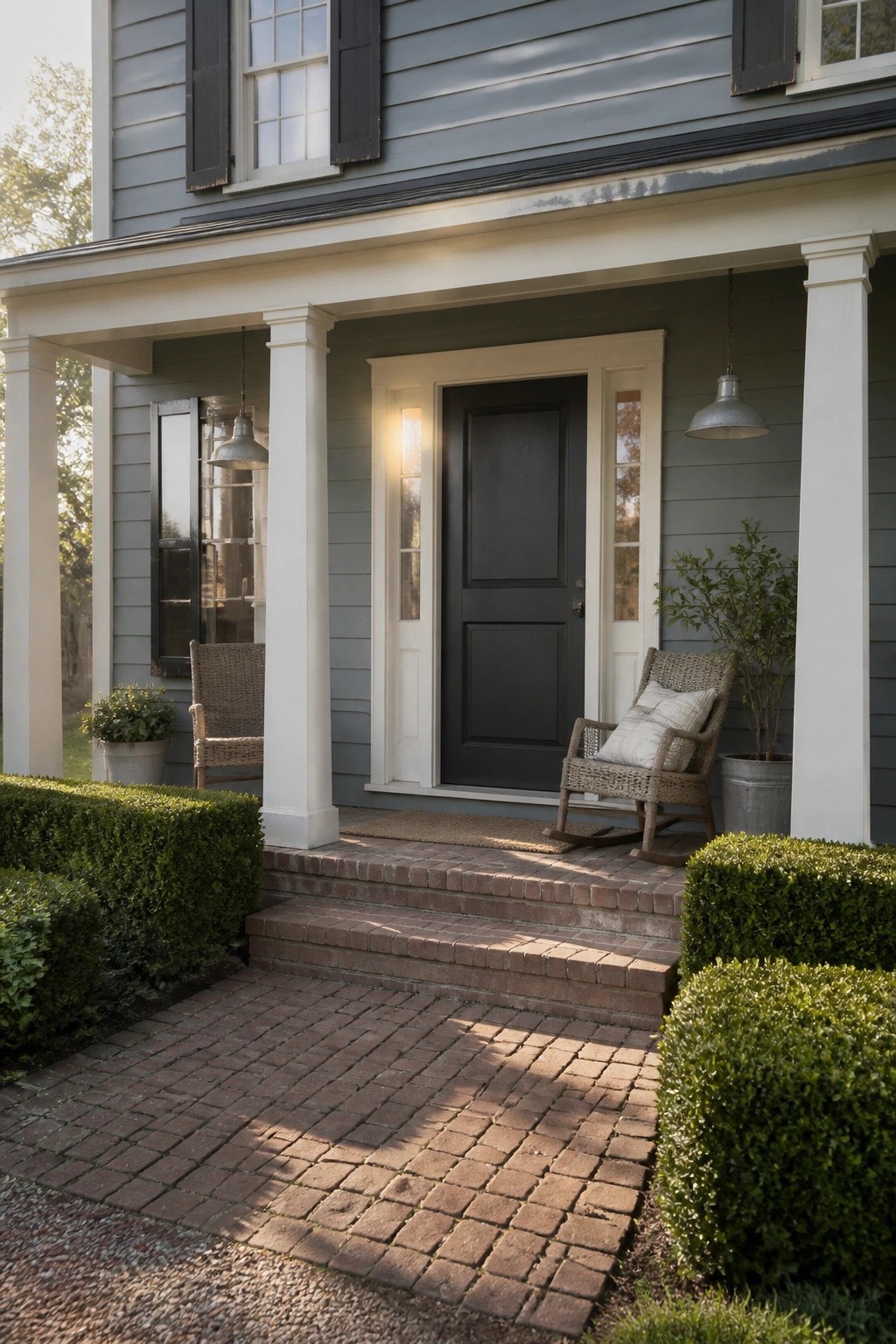
A soft blue gray siding gives a calm, settled look to a farmhouse exterior. This color sits right between gray and blue with a cool undertone that feels steady rather than sharp. It comes close to Sherwin Williams Rainwashed, Benjamin Moore Harbor Gray, and Farrow & Ball Blue Gray.
White trim helps it stay clean and balanced. The cool tone works best on homes with simple details and pairs well with brick or stone, though it can feel a little flat if there is not enough contrast from trim or roofing.
Warm Gray Beige Siding
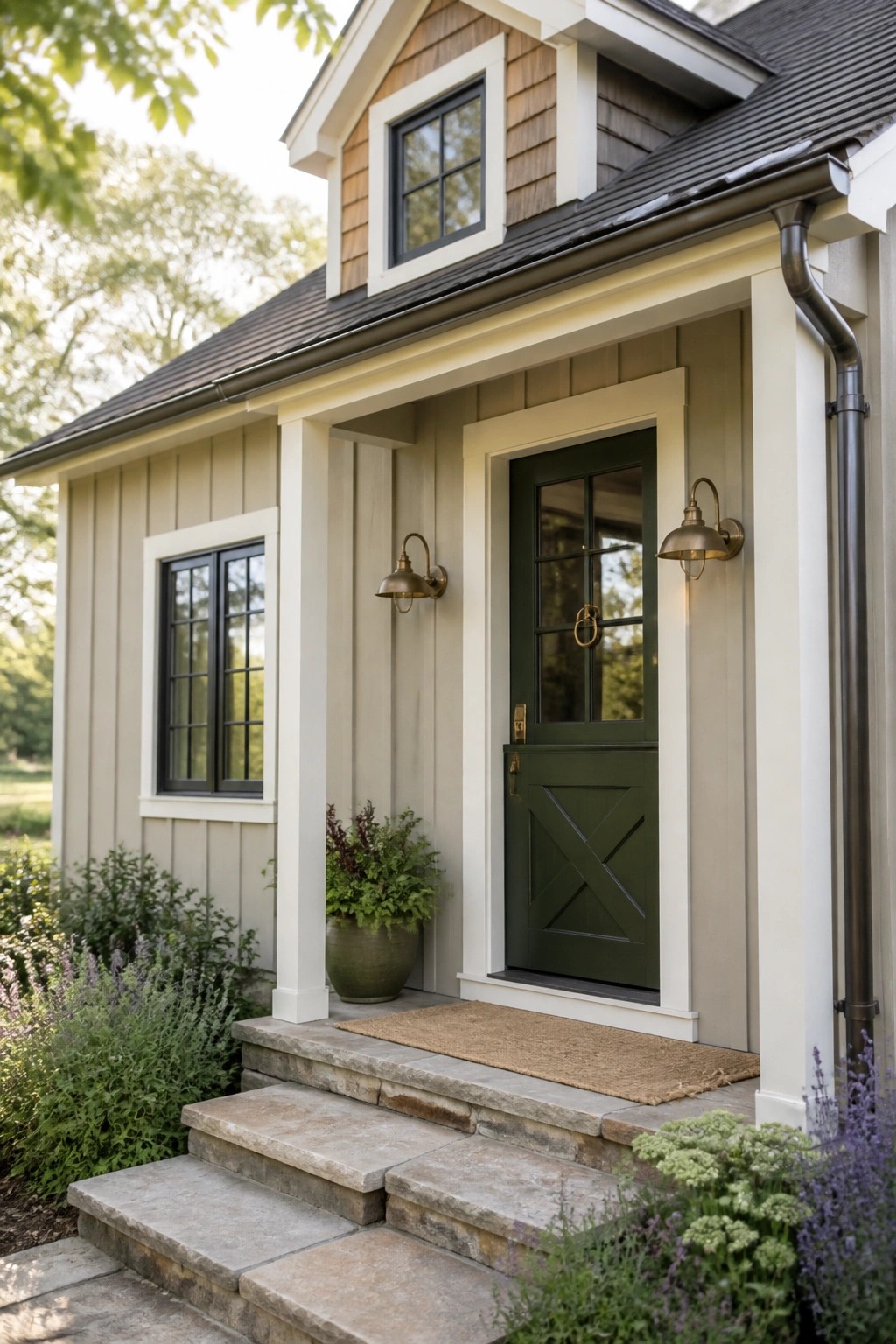
This siding is painted a soft greige that sits between gray and beige. The color feels calm and slightly warm, which helps the house look settled rather than stark.
It pairs easily with white trim and darker accents without competing. Greige like this works well on farmhouses because it holds up in changing light and still reads clean next to stone or wood details.
Soft Warm Beige Siding
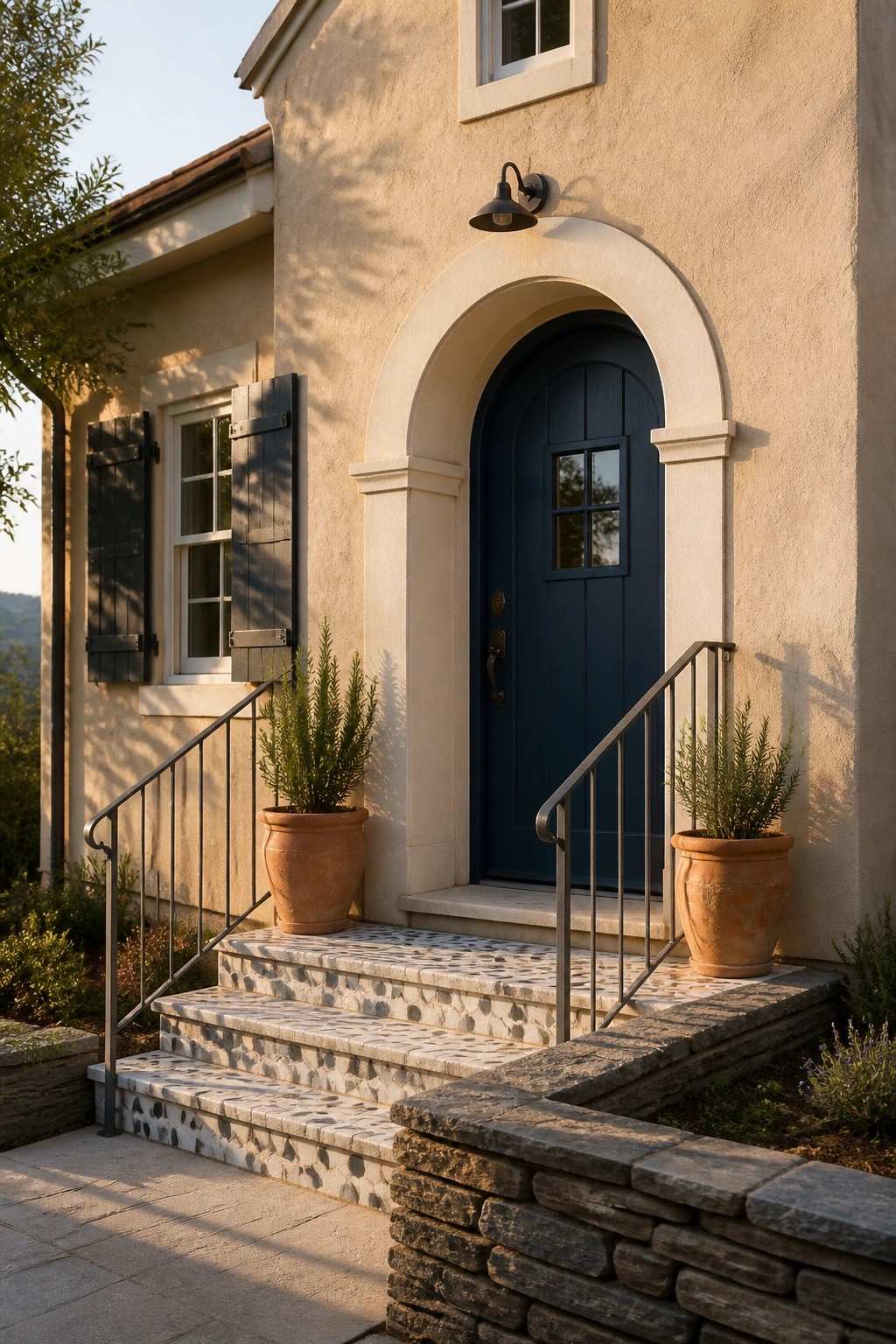
This soft warm beige on the house walls gives a calm, balanced look that suits many farmhouse exteriors. It has a gentle earthy tone that feels natural rather than stark and works well with stone details.
The color sits a little warmer in afternoon light. It pairs easily with white trim or a deeper door color. Colors like Sherwin Williams Accessible Beige, Benjamin Moore Manchester Tan, or Behr Almond Wisp come close.
Classic Farmhouse Greige Siding
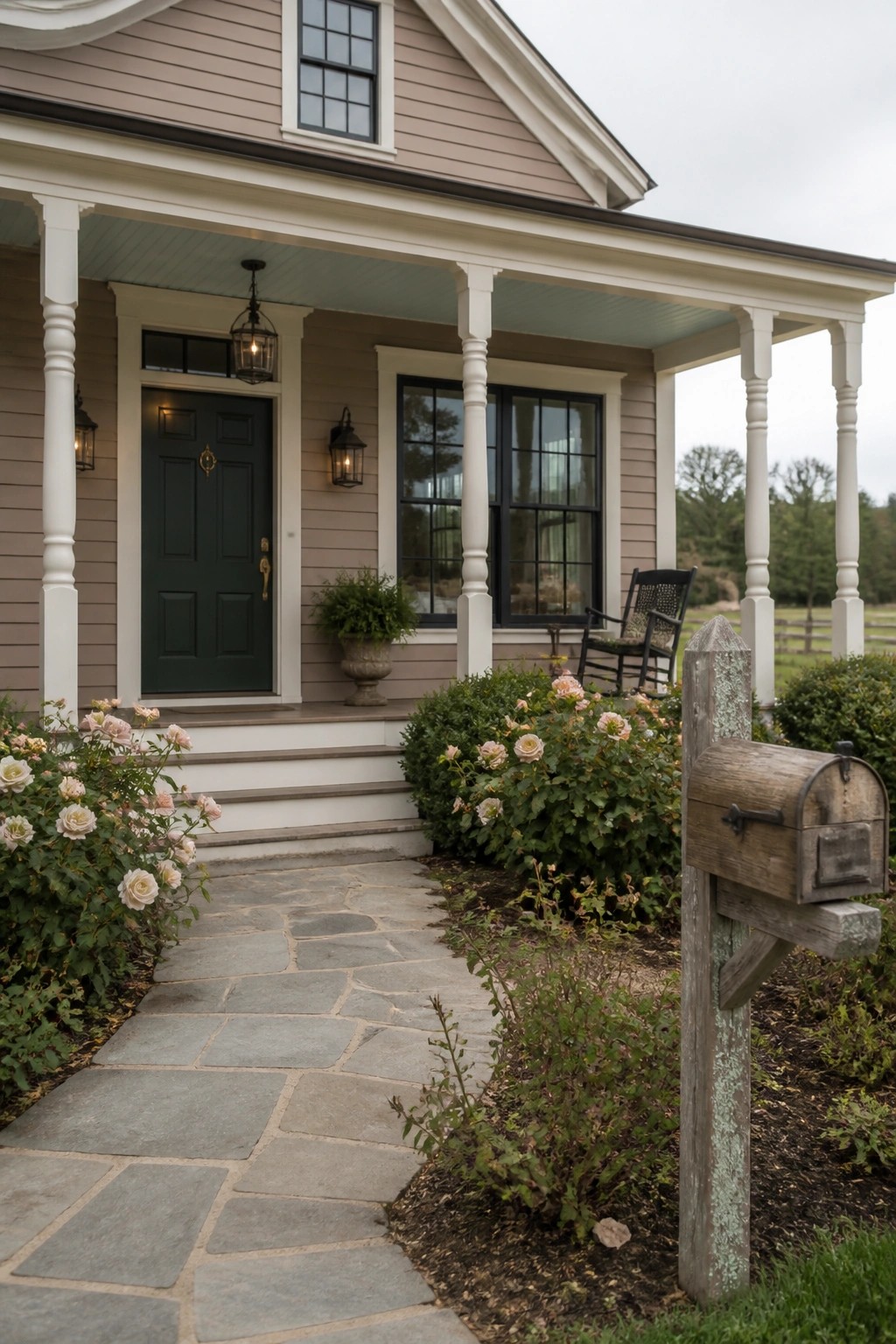
This siding color is a soft greige that sits right between gray and beige. It gives the house a quiet, updated look that still feels like a farmhouse without going too cool or too brown.
The color has a light warm undertone that works well with white trim and dark window frames. It handles changing light nicely and pairs easily with stone or wood accents. A few good matches are Sherwin Williams Agreeable Gray, Benjamin Moore Revere Pewter, and Behr Silver Fox.
Warm Greige Siding
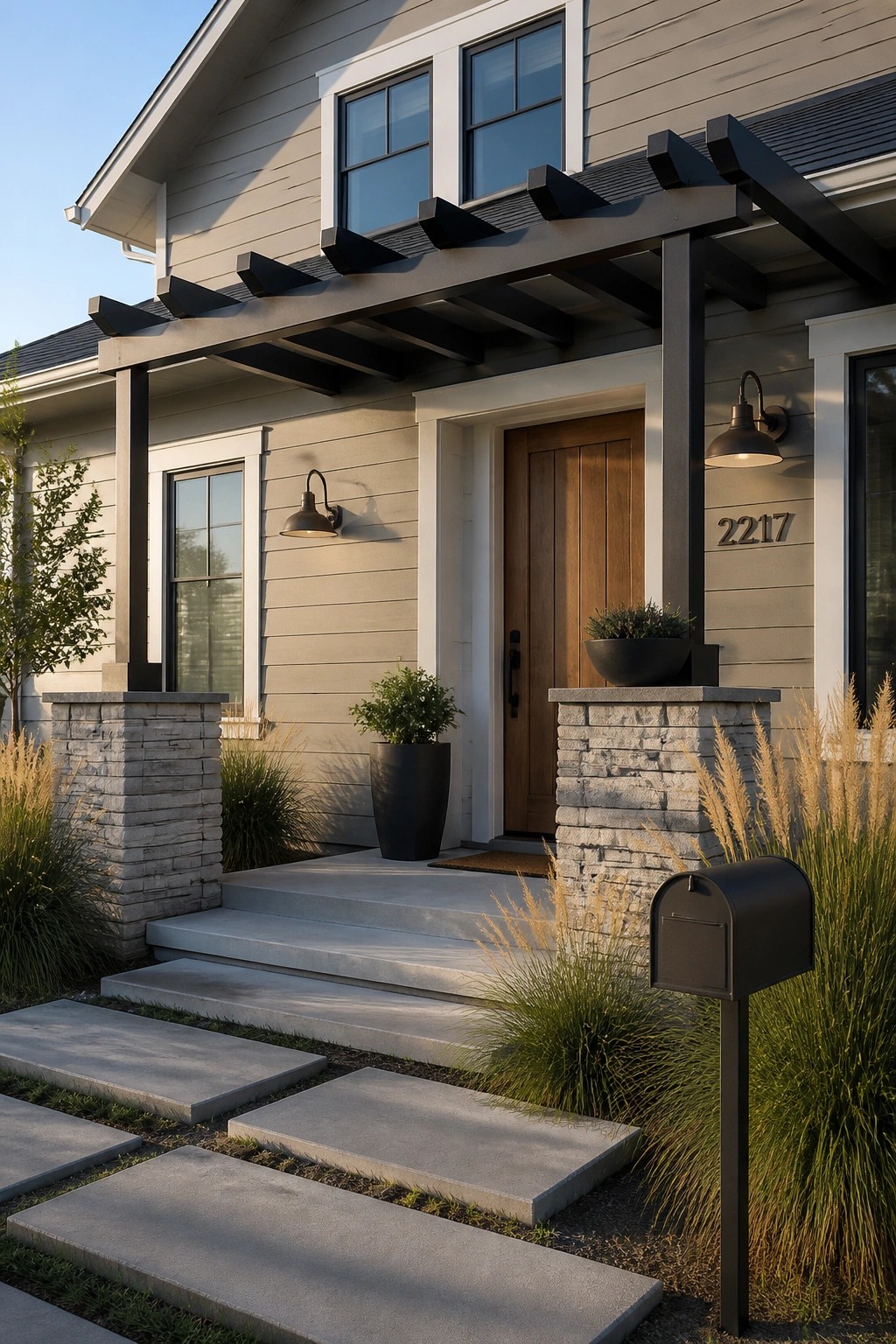
This house uses a soft warm greige on the siding. It sits right between gray and beige so it feels calm and easy on the eyes without looking flat or cold.
The color has a light warm undertone that helps it blend with wood and stone. It works best on farmhouses that already have natural materials because it stays soft even in bright light and pairs well with both dark and light trim.
Warm Cream Siding
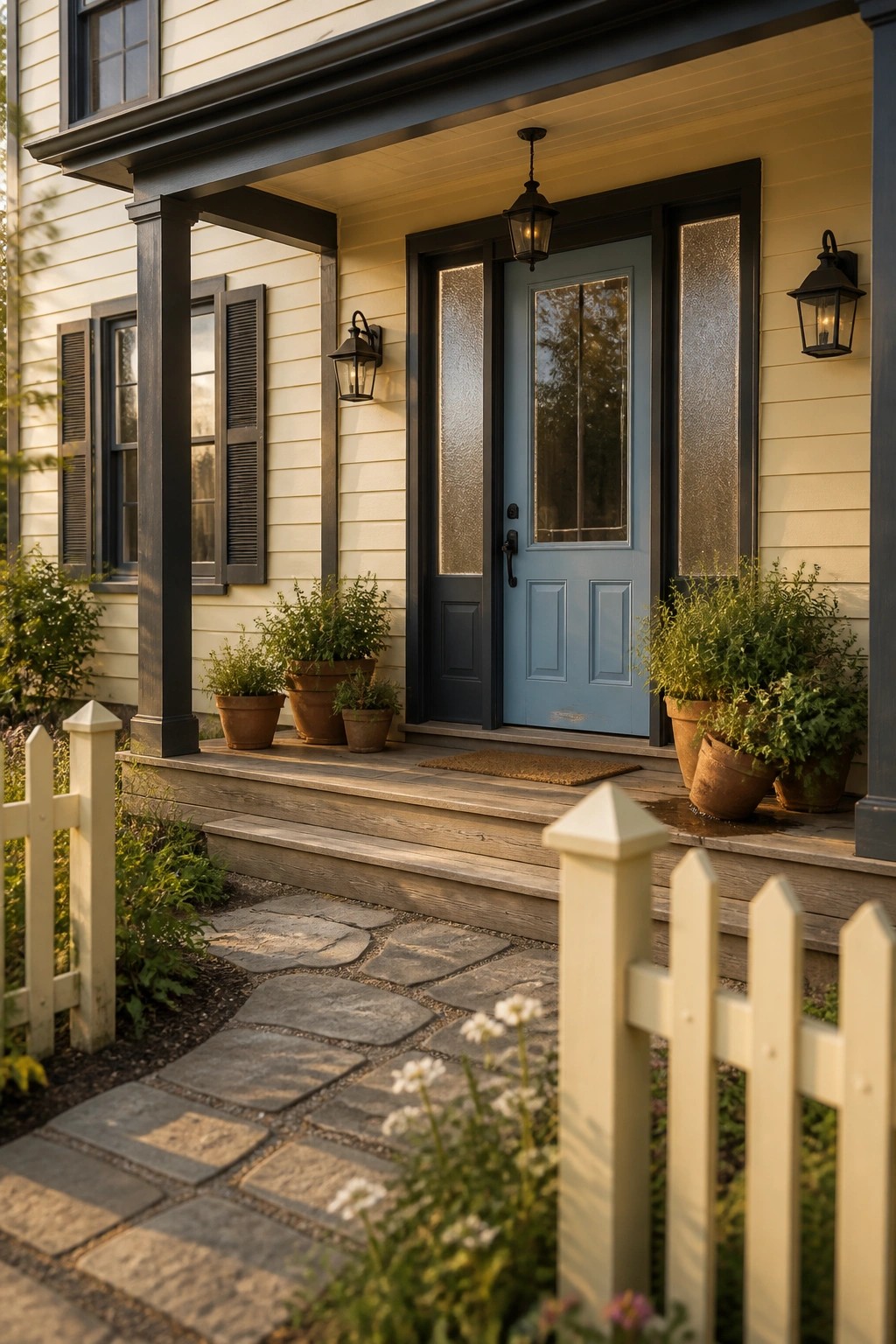
This warm cream siding gives the house a soft, sunlit look without feeling stark. It sits in that yellow-tinged neutral family that works well on older farmhouses. The color feels closest to Sherwin Williams Dover White, Benjamin Moore Linen White, or Behr Canvas Cloth.
It has a gentle warmth that plays nicely against dark trim and wood tones. On an exterior this light, the paint can look a little more yellow in strong sun, so testing a sample on the actual wall helps avoid surprises. Pair it with black or deep charcoal accents if you want a bit more contrast.
Muted Gray Siding
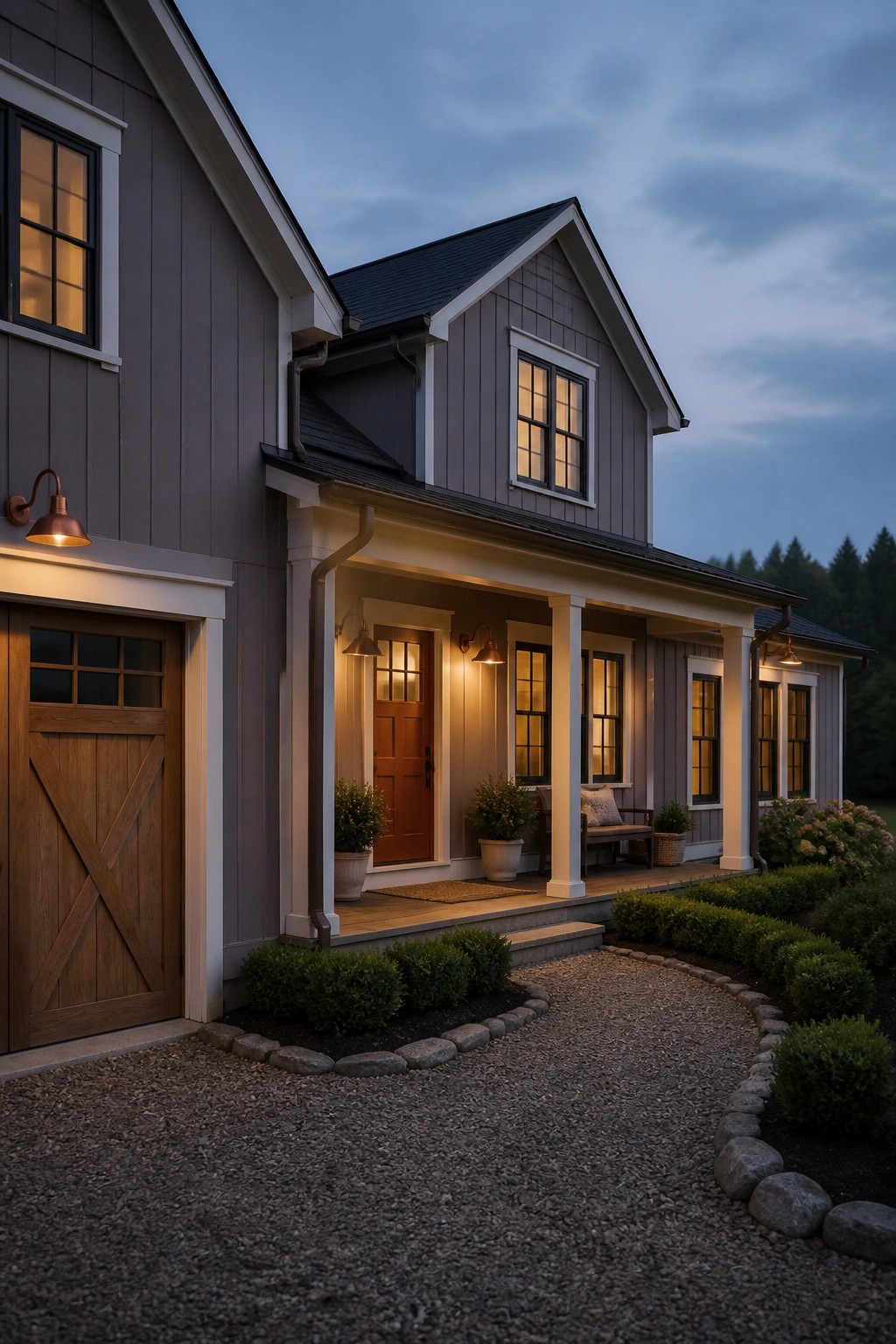
This muted gray siding sits in that soft middle ground between gray and greige. It has a slight warmth that keeps the house from feeling cold or flat next to the white trim.
The color holds up nicely in different lights and pairs easily with wood doors or dark roofing. It suits farmhouses that want something current without straying too far from a classic look. Watch the undertone though, since a pink or purple cast can show up more than expected on bigger surfaces.
Blue-Toned Sage Green Siding
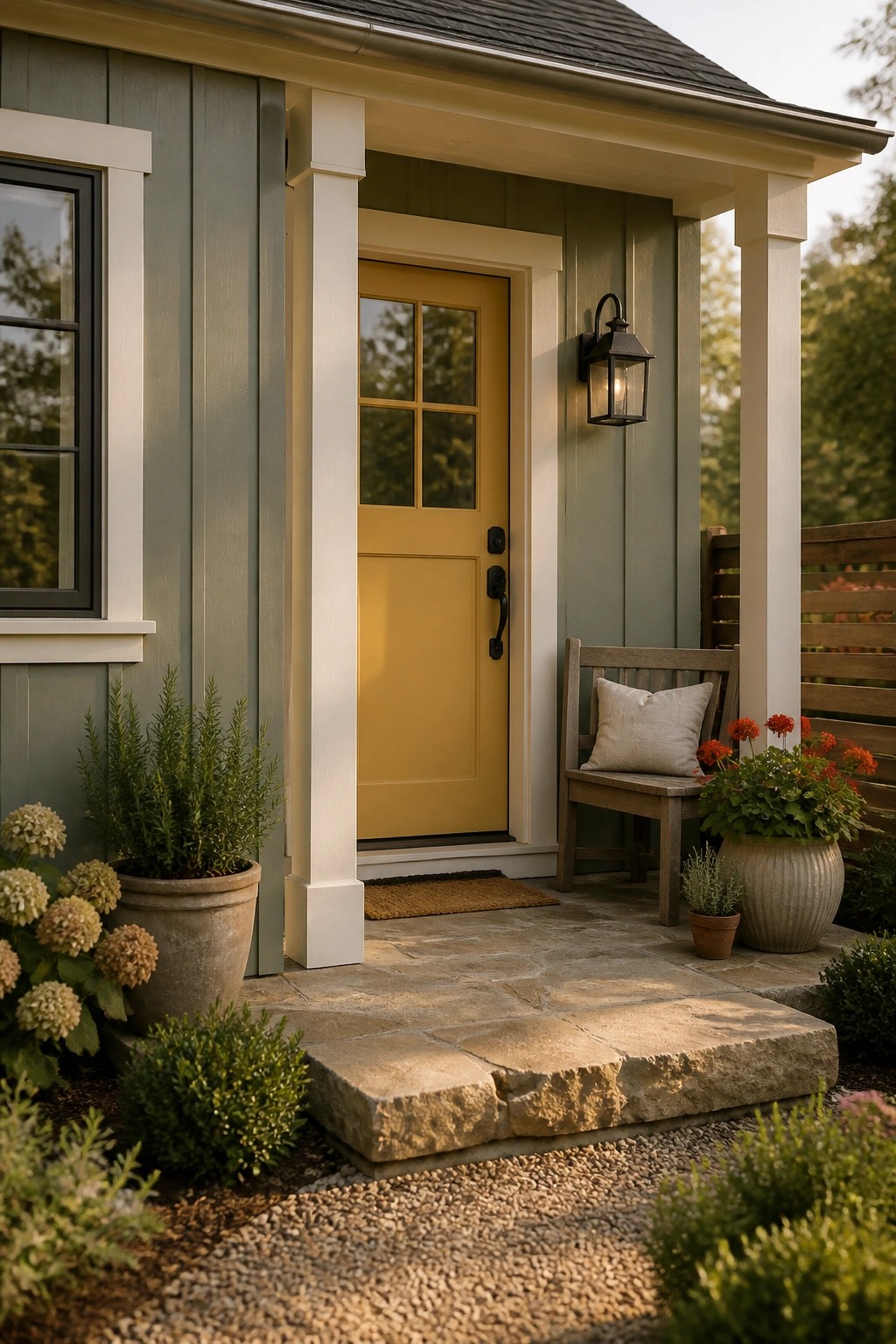
This soft sage green gives the siding a quiet, balanced look that feels right for a farmhouse. It sits between gray and green, so it stays calm but still reads as a color instead of just another neutral.
The tone has a slight blue cast that keeps it from turning too yellow in sunlight. It works best with white trim and a darker or warmer accent like a door, and it holds up well next to stone or gravel at the base without feeling too stark.
Frequently Asked Questions
Q: What if my house has existing brick on the foundation? A: Stick with schemes that pull soft taupes or creams from the brick. These choices make the whole exterior feel balanced. They avoid any jarring contrast while keeping things elevated.
Q: How do these colors perform over time with weather exposure? A: Most soft neutrals hold up well if you choose quality paint made for exteriors. They fade less than bold shades. Repainting every few years keeps them looking fresh.
Q: Can I mix two schemes from the list for my porch and main siding? A: Try it if the tones share similar warmth levels. Start small on the porch to see how they play together.
