

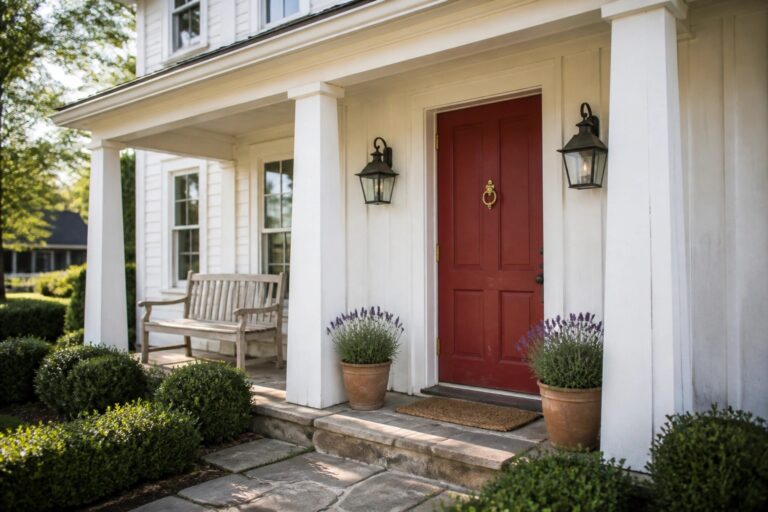
I have spent hours staring at my own front door trying to decide on a color that would hold up once the sun moved across the yard.
Paint always looks different once it is up on the house and you see it against the roof and the trim in changing light.
I usually test a few samples on the actual door before committing because the undertones can shift a lot depending on the weather.
Landscaping and any stone or brick around the entrance also play a bigger role than people expect when the light hits at different angles throughout the day.
A few colors still surprise me every time.
Rich Red Front Doors
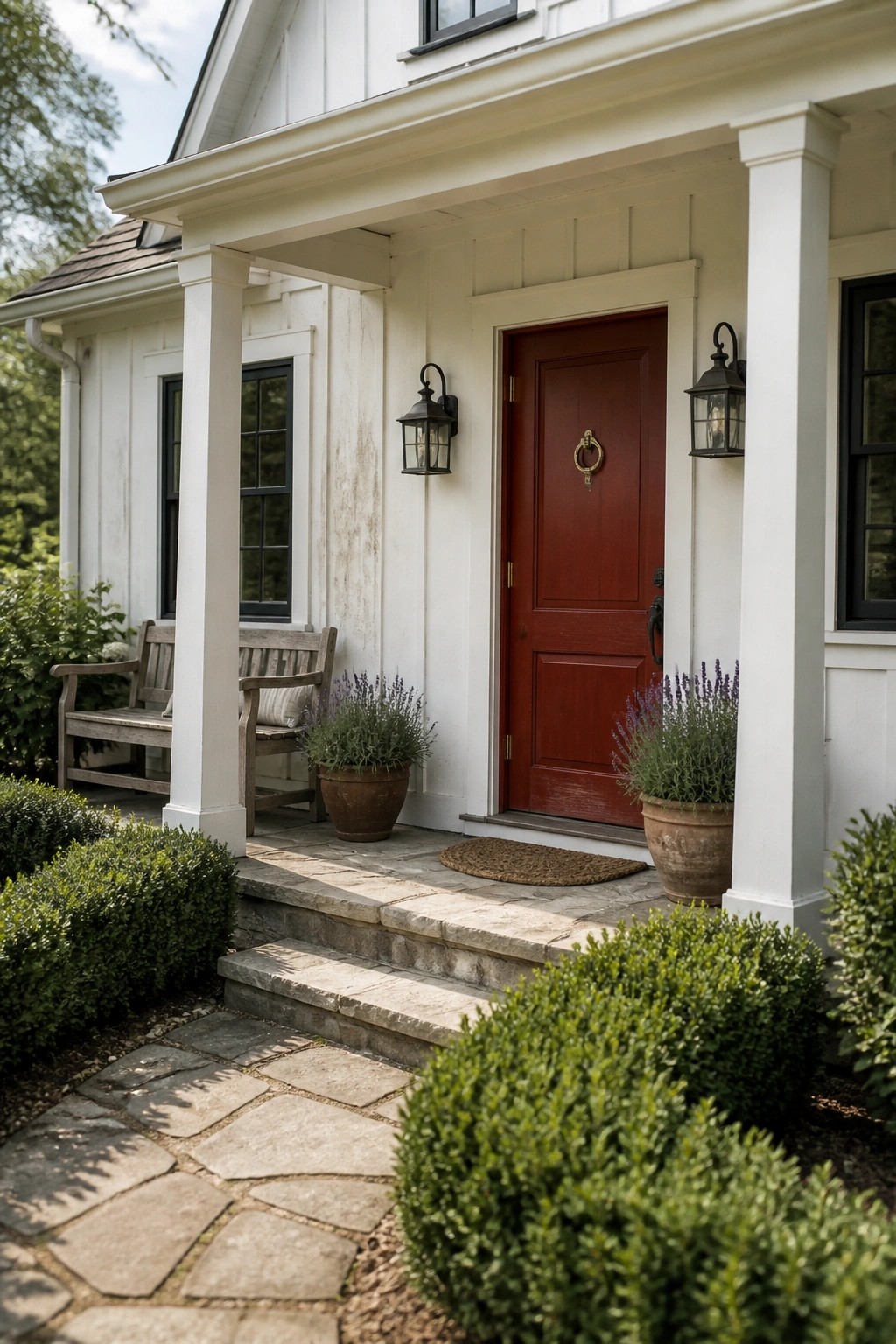
A deep red door brings a warm, grounded feel to a farmhouse exterior. This shade sits between a true barn red and a softer brick tone, giving it that lived-in look without going too dark or too bright.
It has subtle brown undertones that help it sit comfortably against white siding and stone steps. Colors like Sherwin Williams Red Barn or Benjamin Moore Heritage Red come close, and both hold up well next to natural wood accents or black hardware.
Classic Deep Burgundy Front Doors
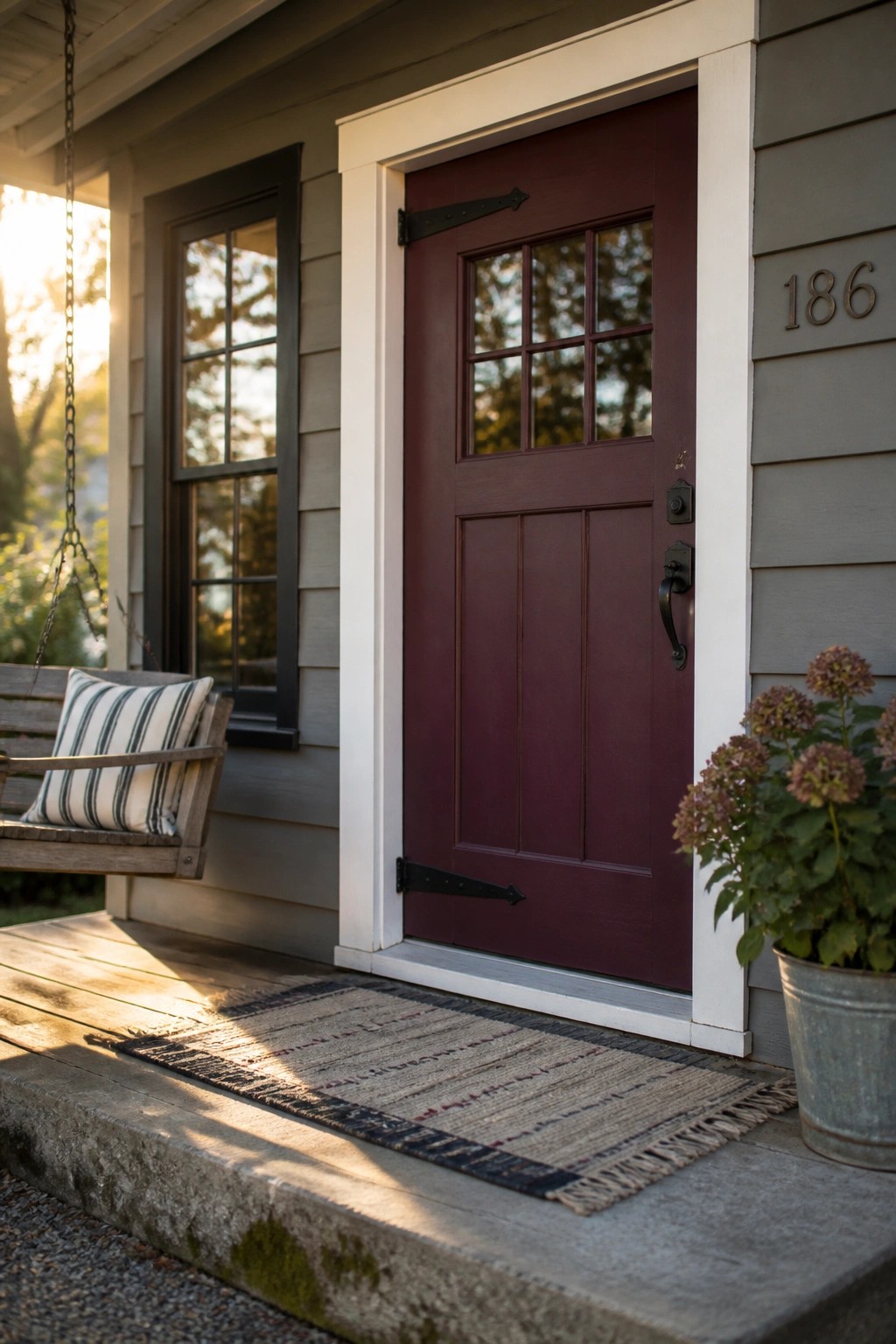
A deep burgundy front door brings a solid, grounded look to a farmhouse exterior. This shade sits between red and brown, so it feels richer than a bright red without going fully dark.
It works best against gray or taupe siding and white trim. Black hardware keeps the whole thing simple. The color can shift a bit depending on the light, so test it on the actual door before committing.
A Deep Navy Front Door
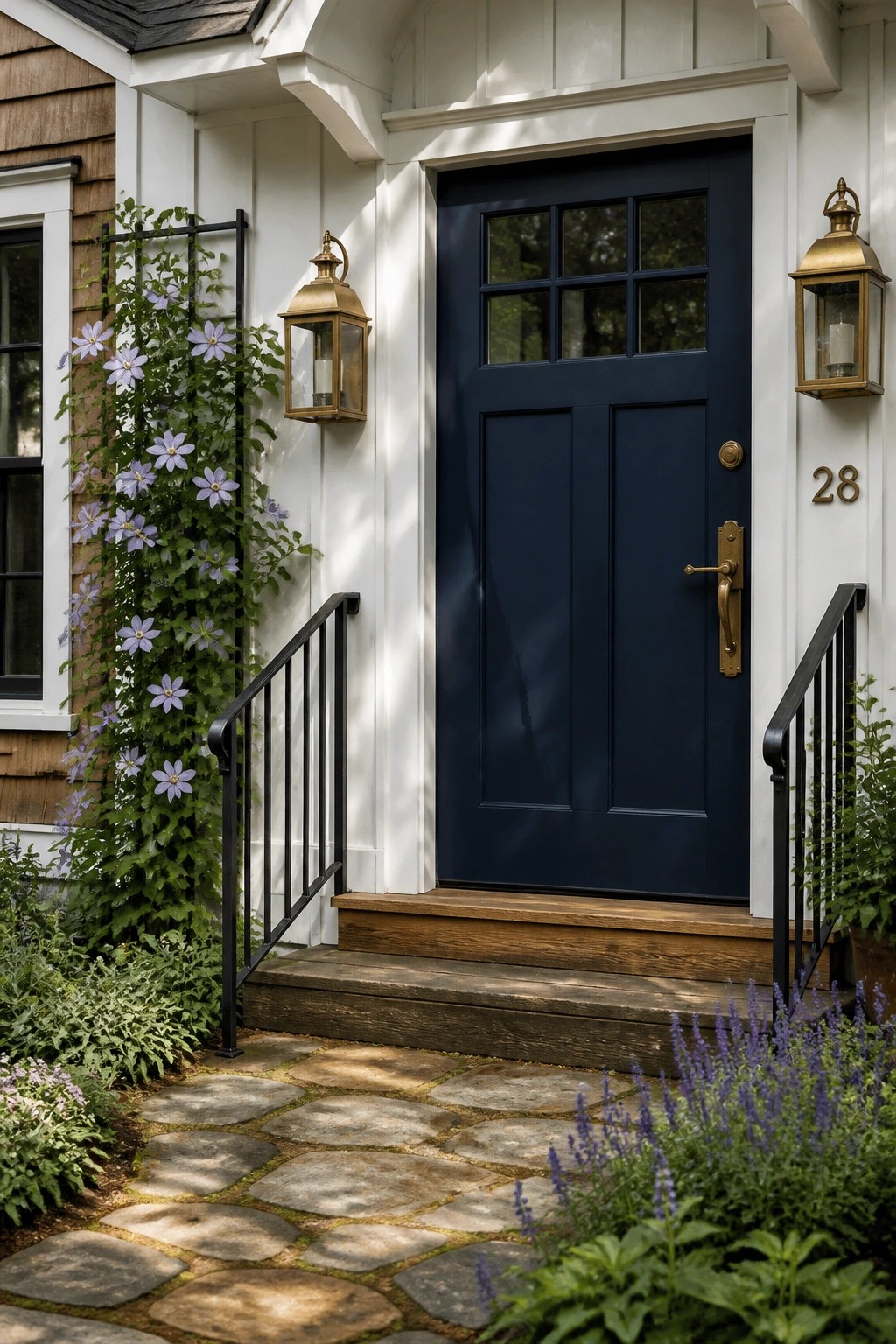
A deep navy blue front door gives a farmhouse that solid, grounded look without going full black. This color sits right in the middle between navy and charcoal, which keeps it from feeling too stark next to white siding. It reads closest to Sherwin Williams Naval or Benjamin Moore Hale Navy, with Behr Midnight showing up similar in some lights.
The undertone runs slightly cool, so it pairs best with warm wood steps or brass hardware to keep things balanced. It works well on homes that already have white trim and simple lines, though it can start to feel heavy if the surrounding roof or landscaping is also very dark.
A muted blue gray front door
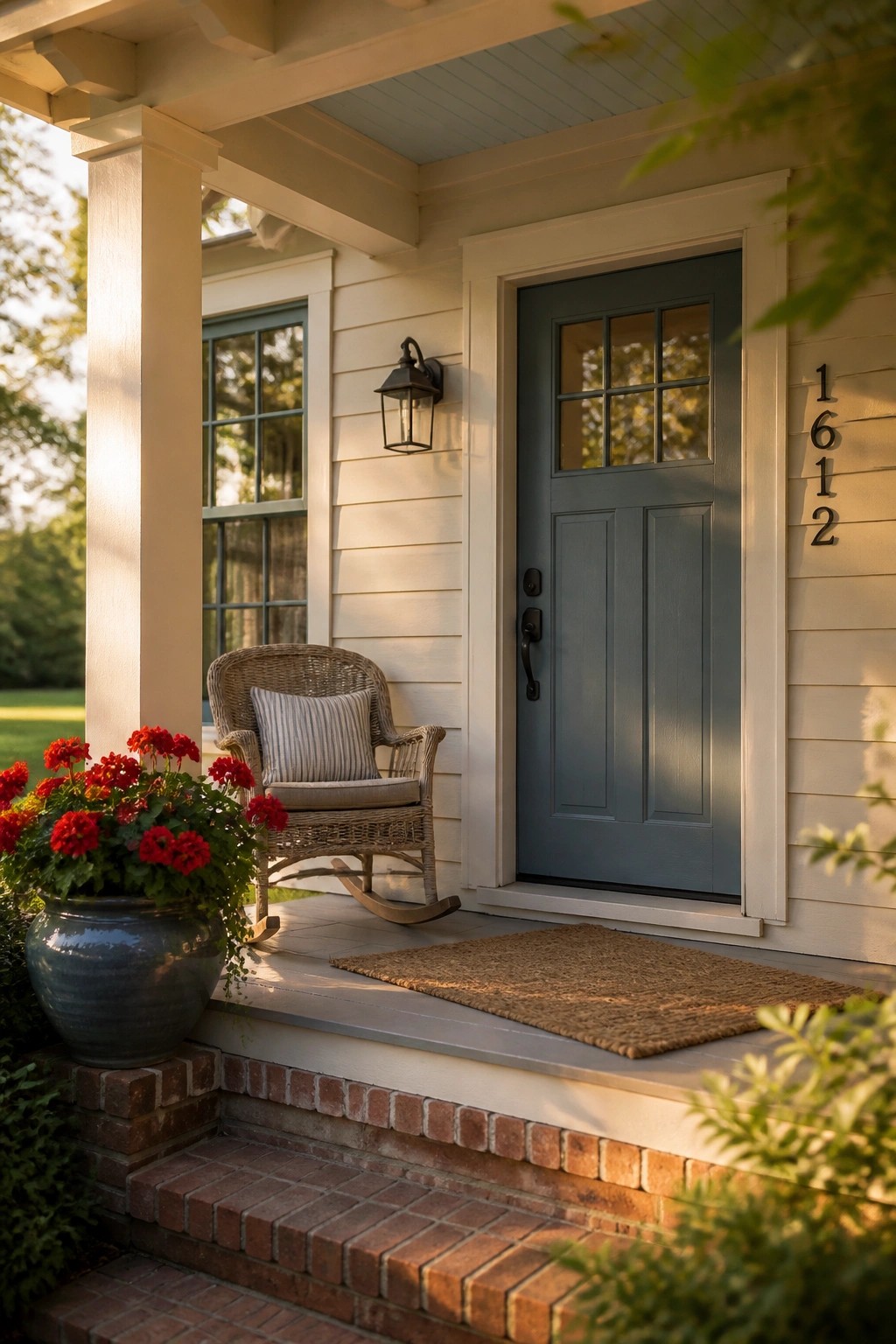
This muted blue gray gives a front door a steady, unfussy look that suits farmhouse exteriors. It sits between blue and gray, so it adds color without feeling too bold against light siding.
The tone has a soft cool cast that holds up well next to brick and natural wood. It works best with white or cream trim and simple greenery, though it can look a little dull if the house has heavy dark accents.
Classic Teal Front Doors
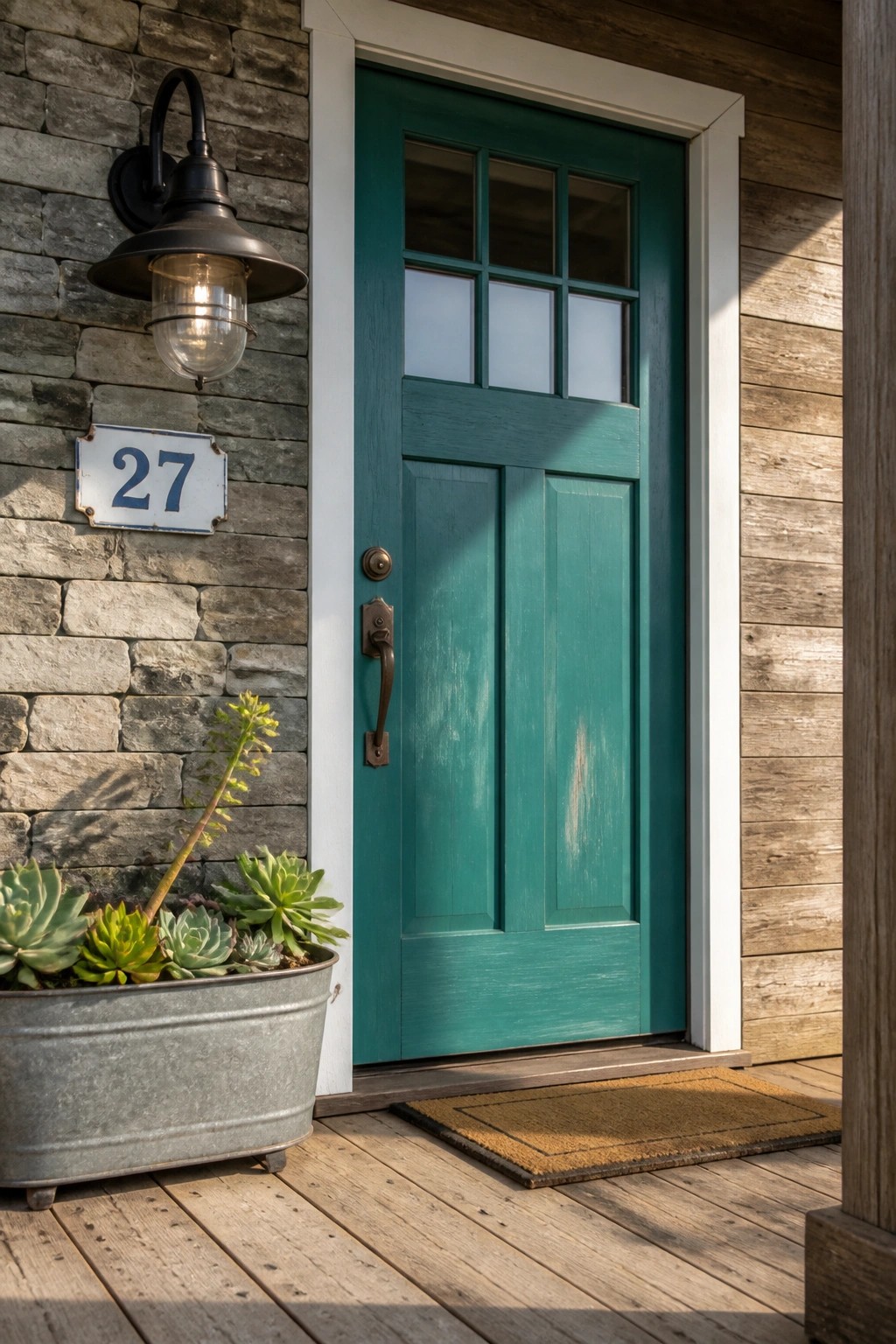
A teal front door gives a farmhouse exterior a quiet bit of color that still feels grounded. This shade sits between green and blue with a soft, slightly weathered look that works well next to stone and wood.
It has a cool undertone that shows up more in bright light but stays calm next to natural materials. Pair it with warm white trim or simple black hardware and it tends to hold up nicely over time.
Soft Sage Green Doors
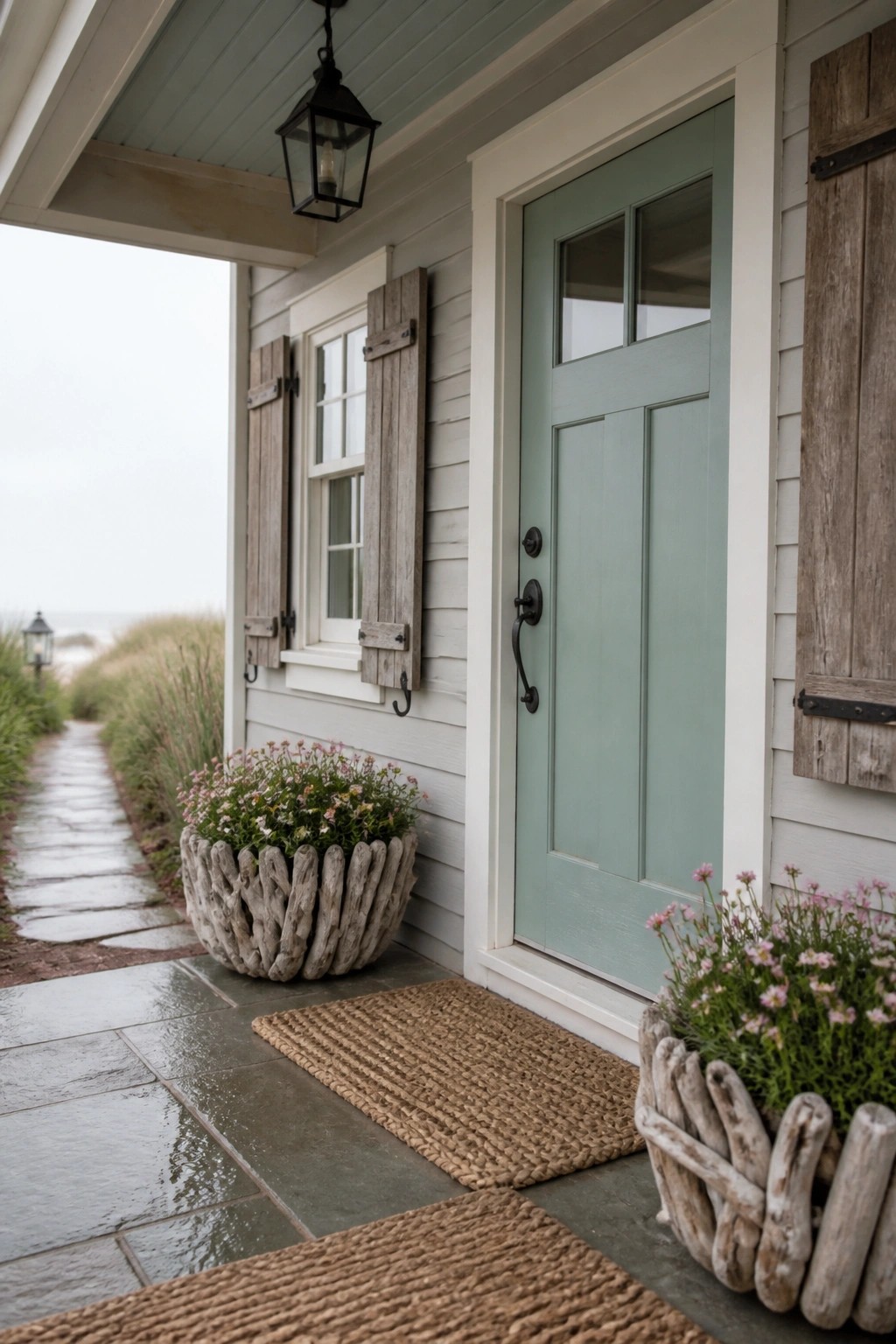
A soft sage green works well on farmhouse front doors because it feels calm and a little earthy without being too bold. This color sits in that middle ground between green and gray, which helps it blend with light siding and natural wood tones around the entry.
It tends to read cooler in bright light but can pick up a hint of warmth when the sun is lower. Pair it with white or off-white trim and keep the hardware simple in black or oil-rubbed bronze. It suits homes with clean lines and some greenery nearby. Best matches would be Sherwin Williams Evergreen Fog, Benjamin Moore Saybrook Sage, or Behr Soft Sage.
Cool-Toned Sage Green Front Doors
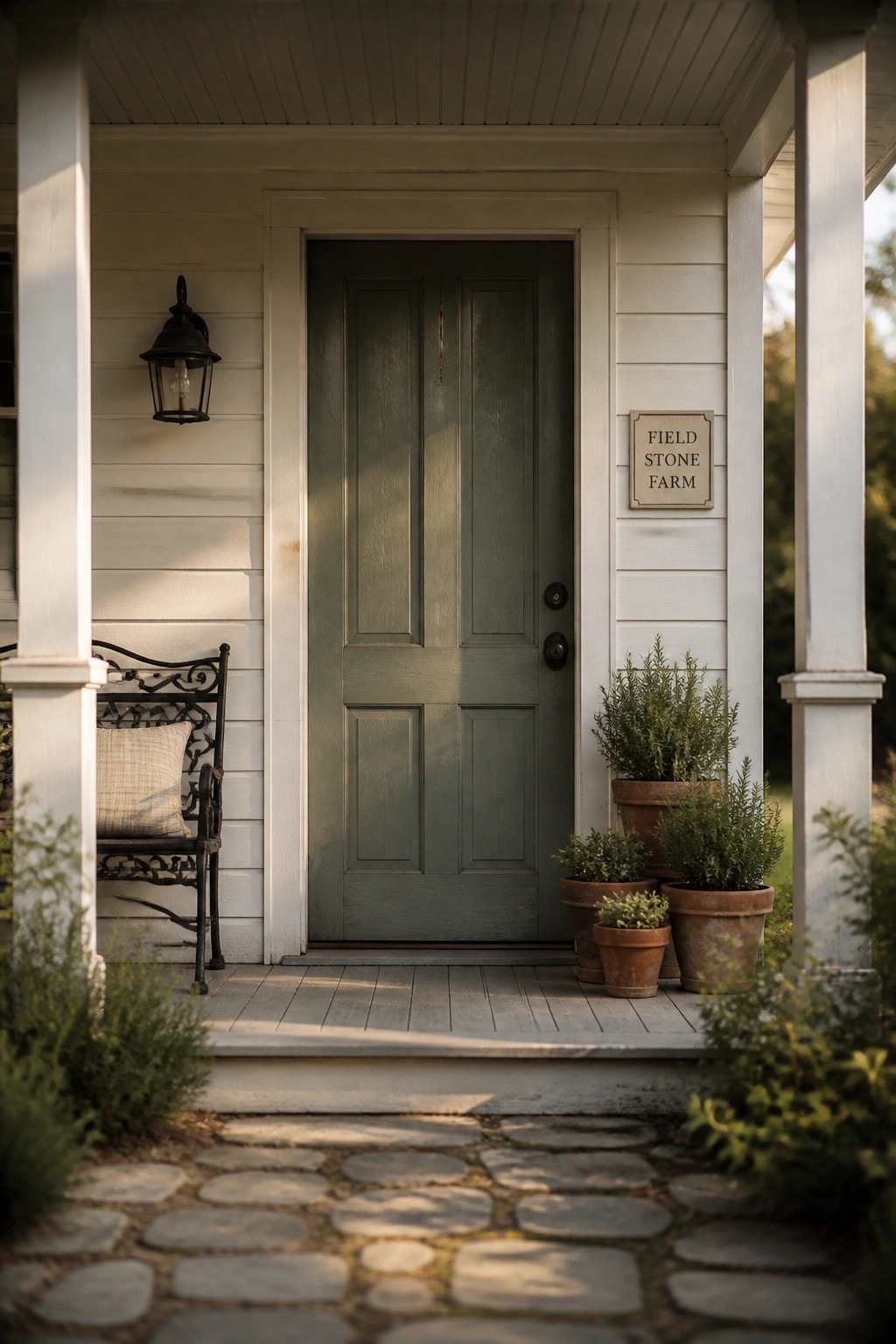
A soft sage green door works well on farmhouse exteriors because it feels calm and grounded without trying too hard. This color sits somewhere between gray and green, which keeps it from looking too bright or too dull against white siding.
It has a slightly cool undertone that shows up more in bright light, so it pairs nicely with warm wood accents or natural stone. Watch how it shifts through the day, since the gray side can pull stronger in shade.
Gray-Green Sage Front Doors
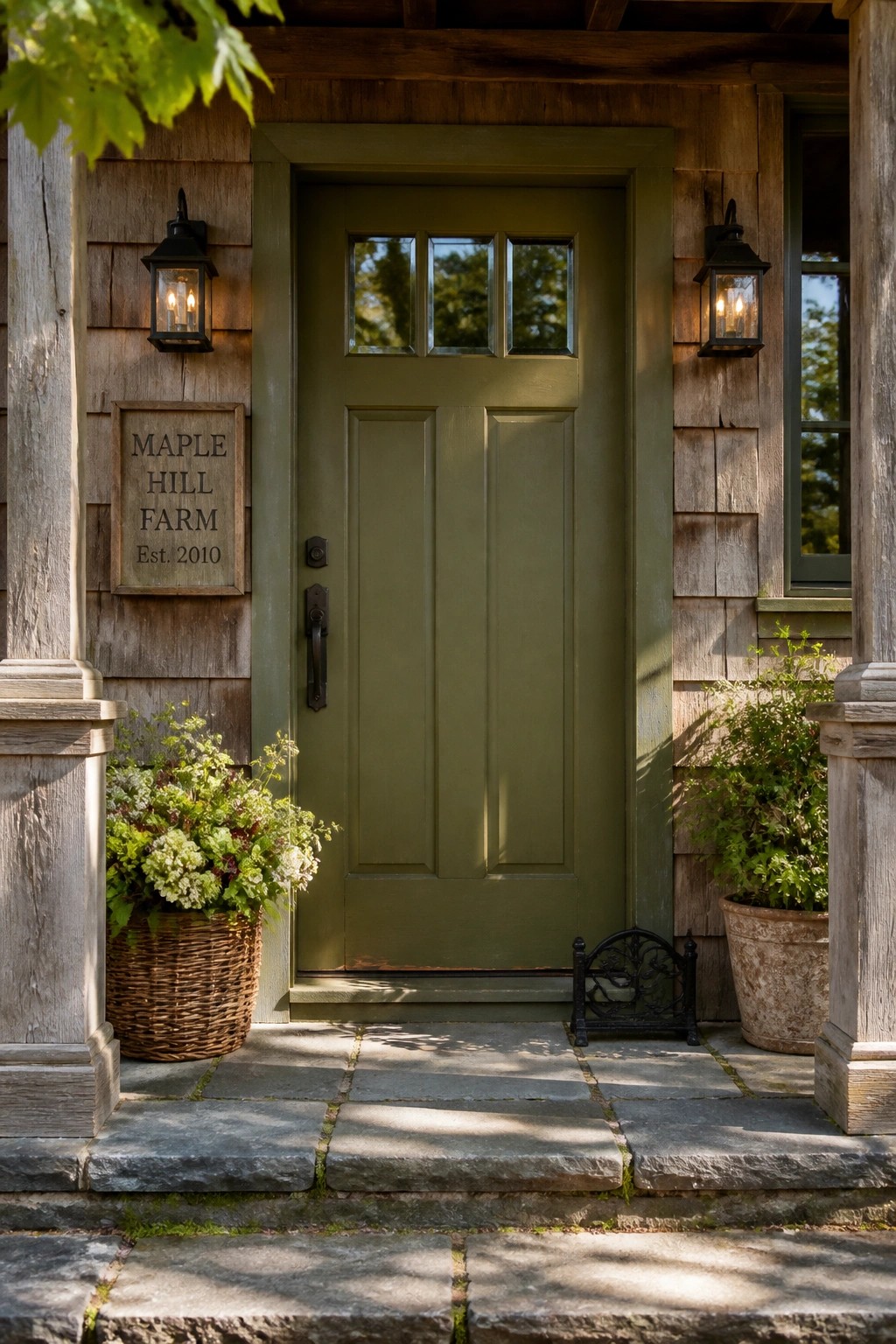
A muted sage green works well on a farmhouse front door because it sits between gray and green without leaning too hard either way. This color family feels natural next to wood siding and stone, and it keeps the entry looking settled rather than bright. Good matches include Sherwin Williams Evergreen Fog, Benjamin Moore Saybrook Sage, Behr Aged Olive, and Farrow & Ball Lichen.
It has a slight gray undertone that helps it stay calm in full sun and still read softly in shade. The color pairs easily with dark hardware and unpainted wood, though it can look flat if the trim is also painted green. Many people use it on older homes where they want something a little different from the usual black or red doors.
Golden Yellow Front Door
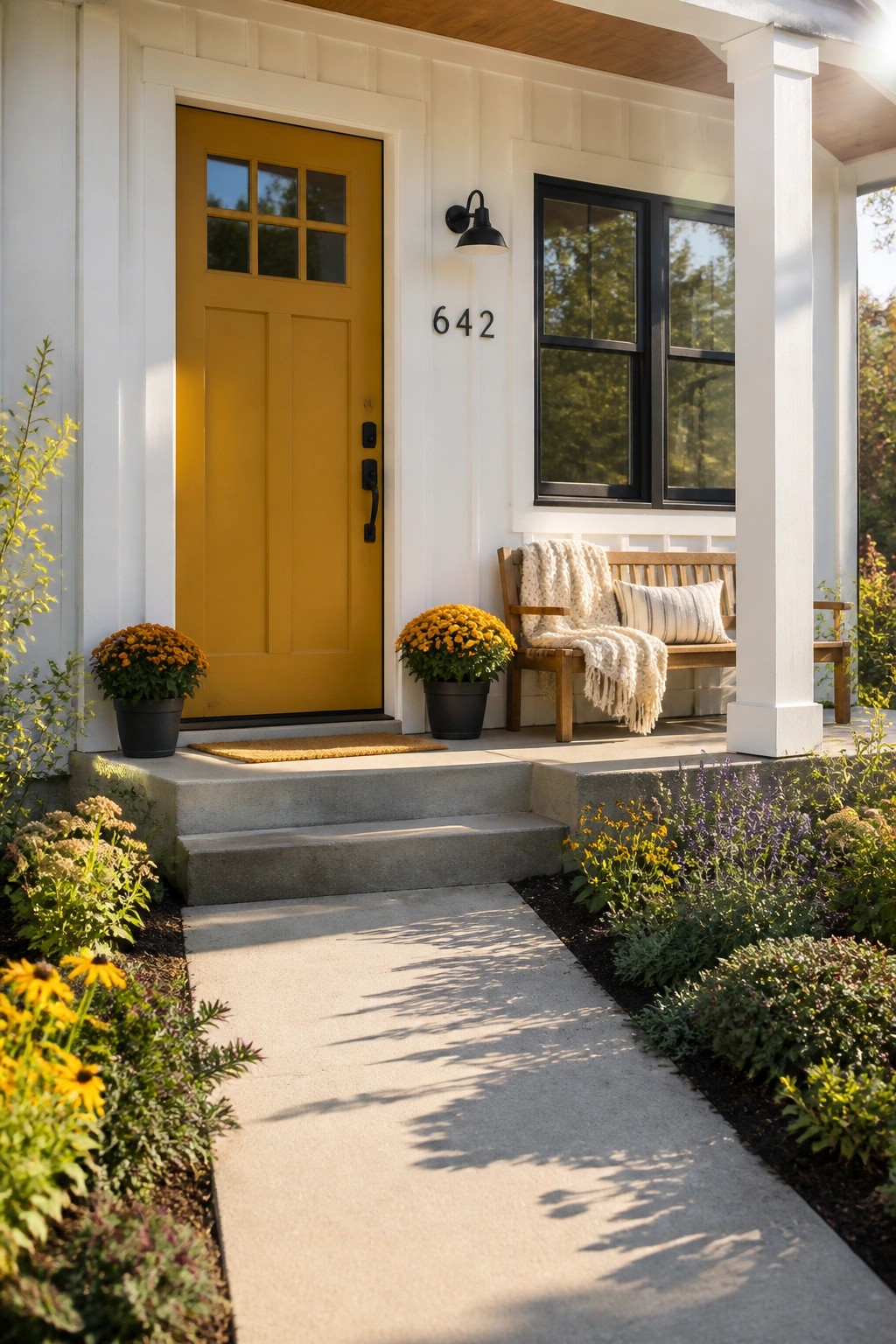
A warm golden yellow works well on a farmhouse front door because it feels cheerful without being too loud. This shade sits somewhere between mustard and marigold and gives the entry a bit of personality while still looking grounded next to white siding.
It carries soft orange undertones that show up more in afternoon light. The color pairs easily with black hardware and wood tones, though it can start to feel strong if the surrounding trim is also painted in a bold shade.
Warm Beige Front Door
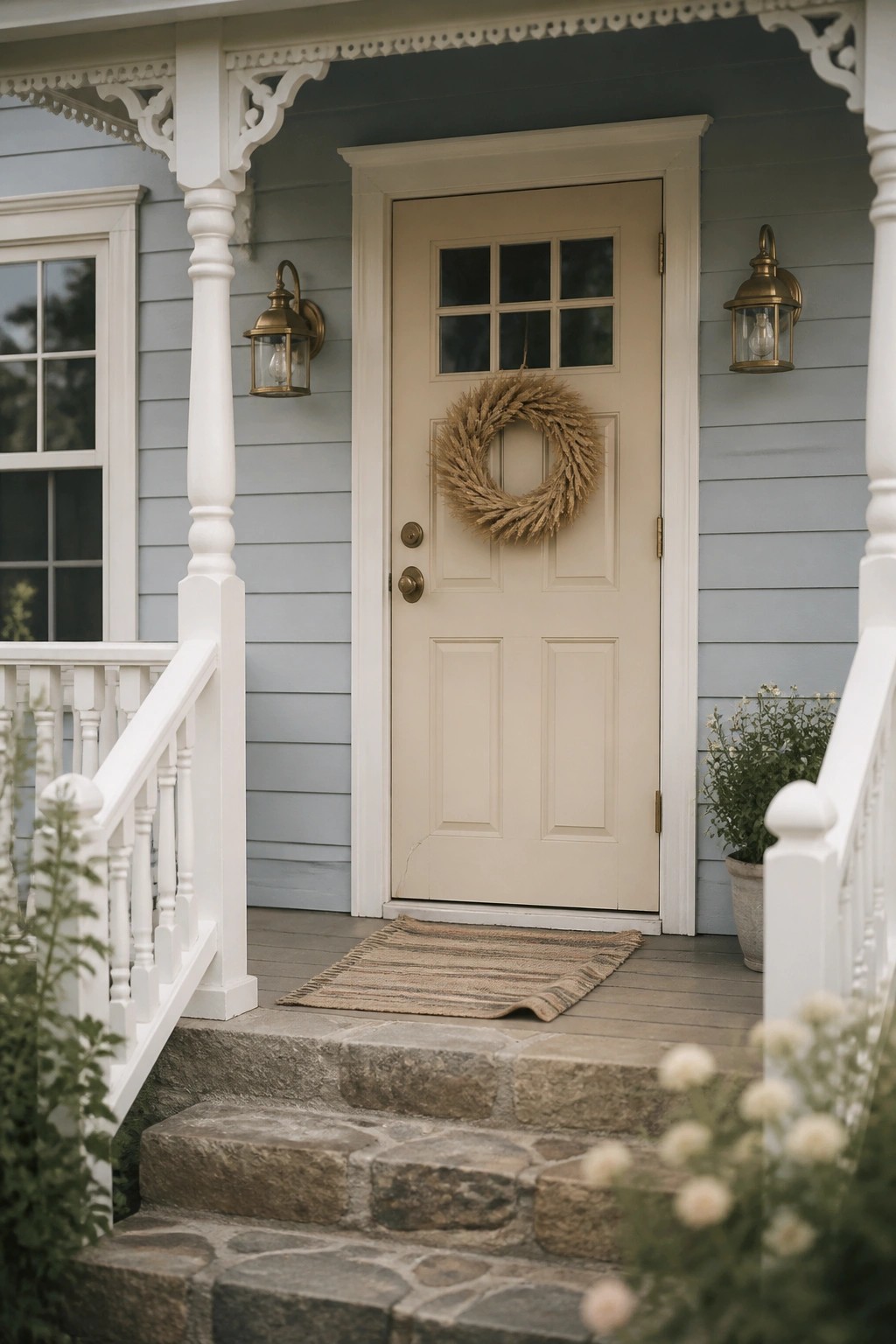
This front door uses a warm beige that feels soft without going too light or too dark. The color sits in that middle ground between beige and greige, which helps it blend with different siding tones. It reads closest to Sherwin Williams Accessible Beige or Benjamin Moore Edgecomb Gray, with Behr Almond Wisp as another close option.
The undertone stays warm enough to keep the door from looking cold next to stone or wood. It works best on homes that already have light or muted siding, since the beige adds a bit of softness without competing. Watch how it shifts in full sun, as the warmth can show up more once the light hits it directly.
Earthy Warm Red Front Doors
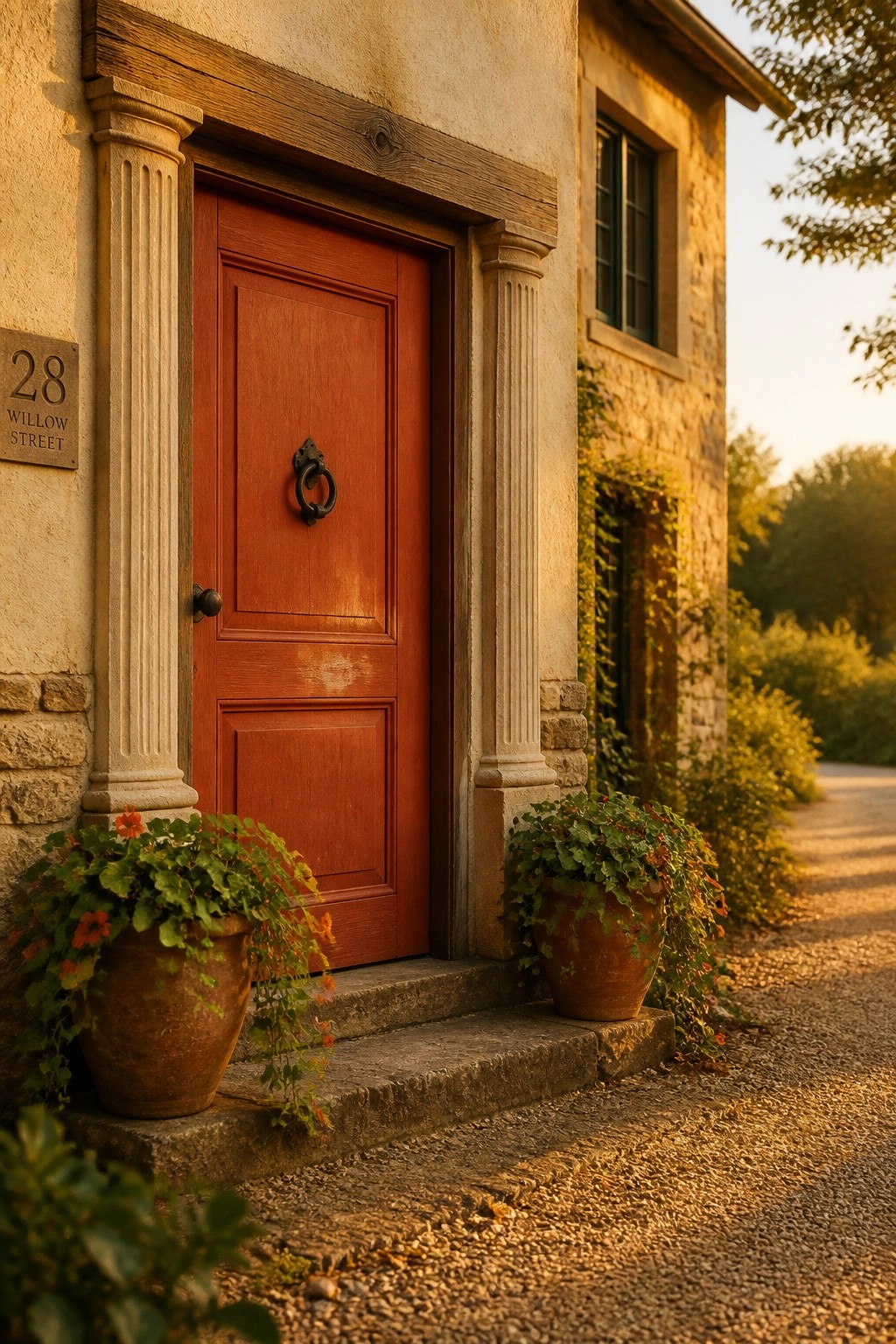
A warm red door like this gives a farmhouse exterior a straightforward boost. It lands in that classic red family with a touch of earthiness, and colors such as Sherwin Williams Red Barn, Benjamin Moore Heritage Red, or Behr Moroccan Red read very close.
The slight depth keeps it from feeling too sharp against stone. It holds up well with natural wood tones and simple trim, though it can start to look flat if the surrounding masonry is too pale or cool.
Warm coral front doors
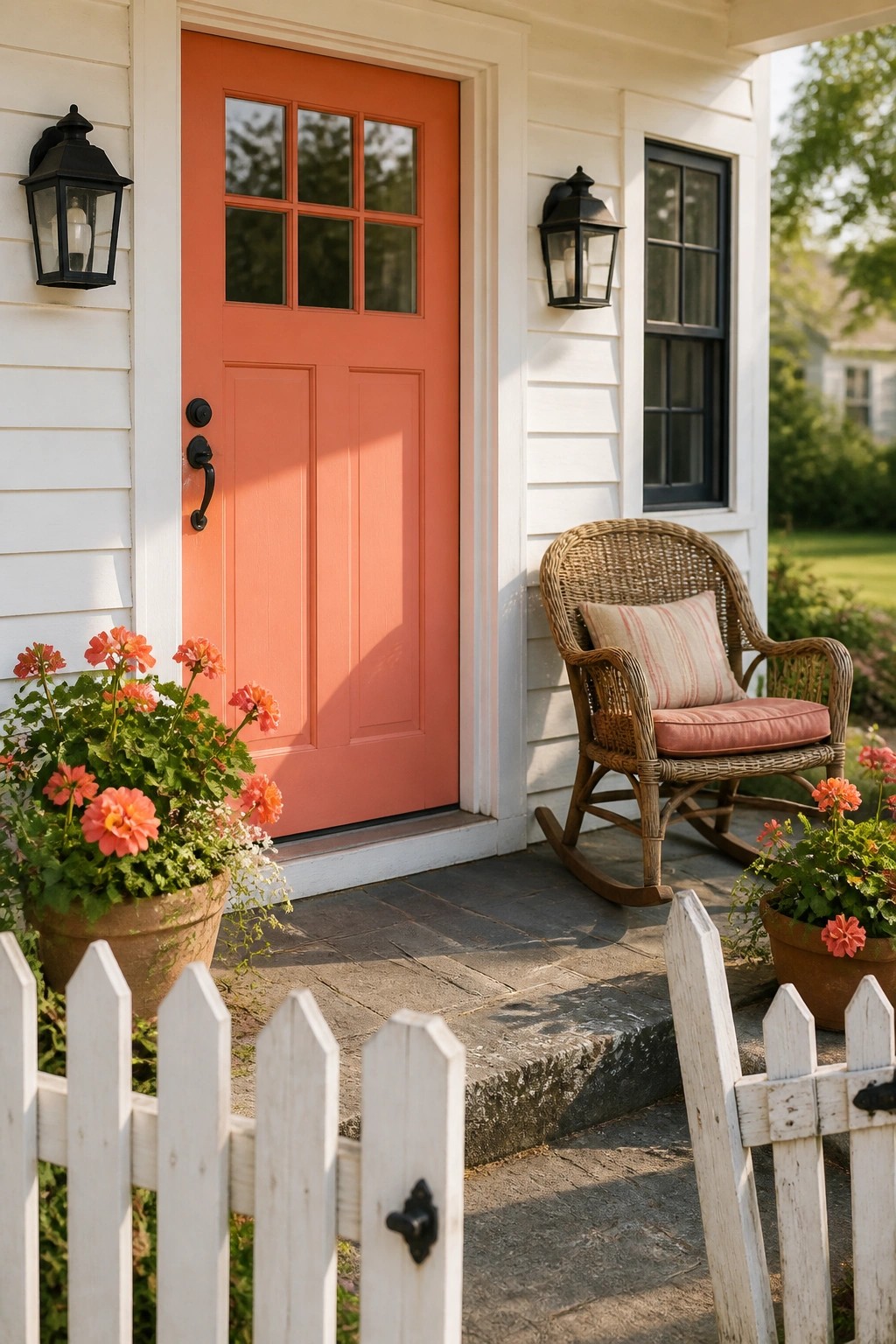
A warm coral makes a good choice for farmhouse front doors because it adds color without going too bright or trendy. This shade sits between orange and red with a soft earthy feel that works on older homes and newer builds alike.
It looks best against white siding and trim, and it holds up well next to natural wood pieces or simple metal hardware. Just keep an eye on how the undertone shifts in full sun since it can read a bit deeper than expected on some houses.
muted rose front door
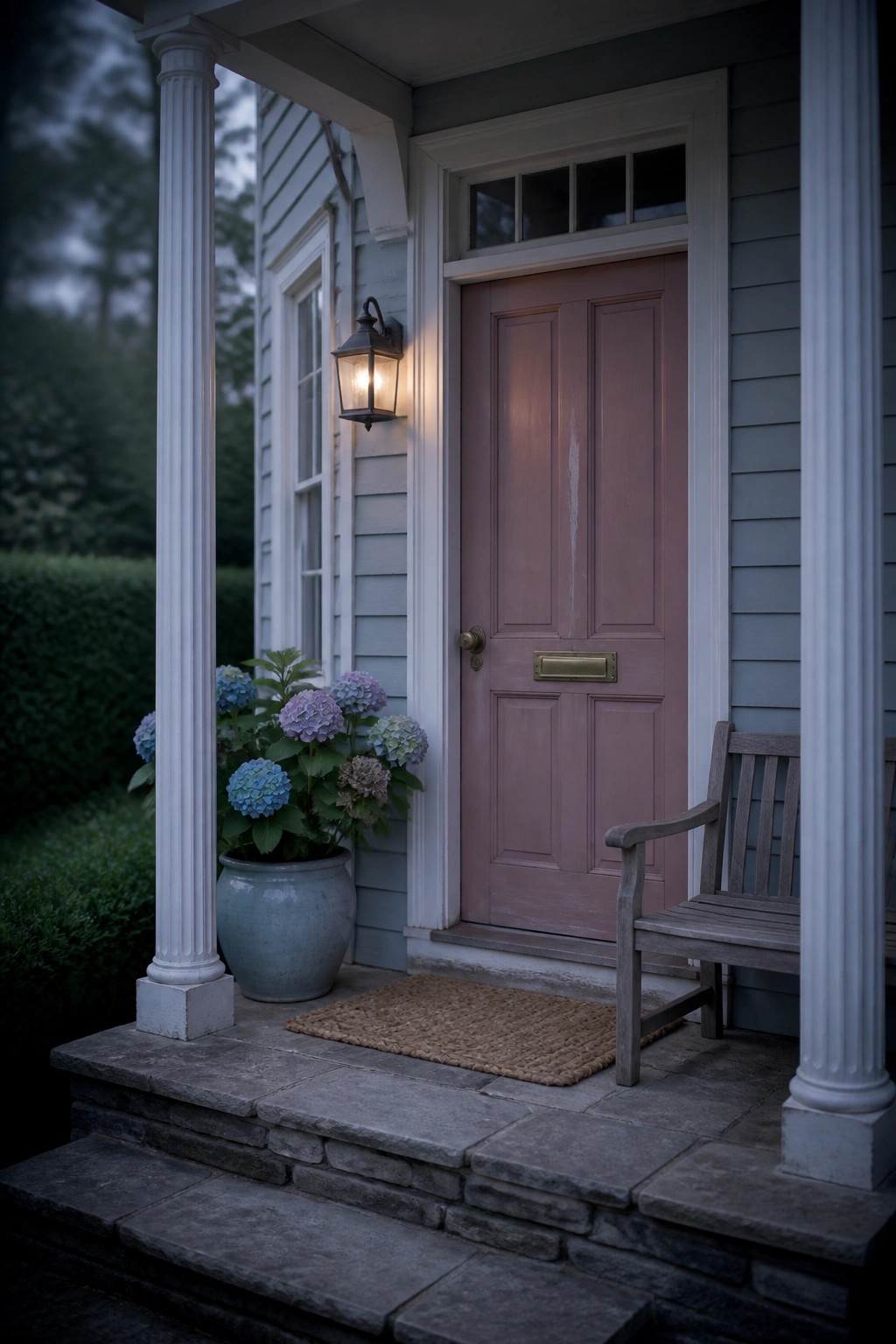
A dusty rose like this gives a farmhouse door a soft, lived-in look without going too sweet. It sits in that muted pink family that feels gentle against cooler siding and stone. This one reads very close to Benjamin Moore Pink Harmony, Sherwin Williams Rosy Outlook, Behr Mauve Mist, and Farrow & Ball Cinder Rose.
The gray undertones help it stay calm outdoors and avoid looking too bright in daylight. It works best on homes with light or gray siding where you want a bit of warmth but still need the color to feel grounded.
Cabernet Burgundy Front Doors
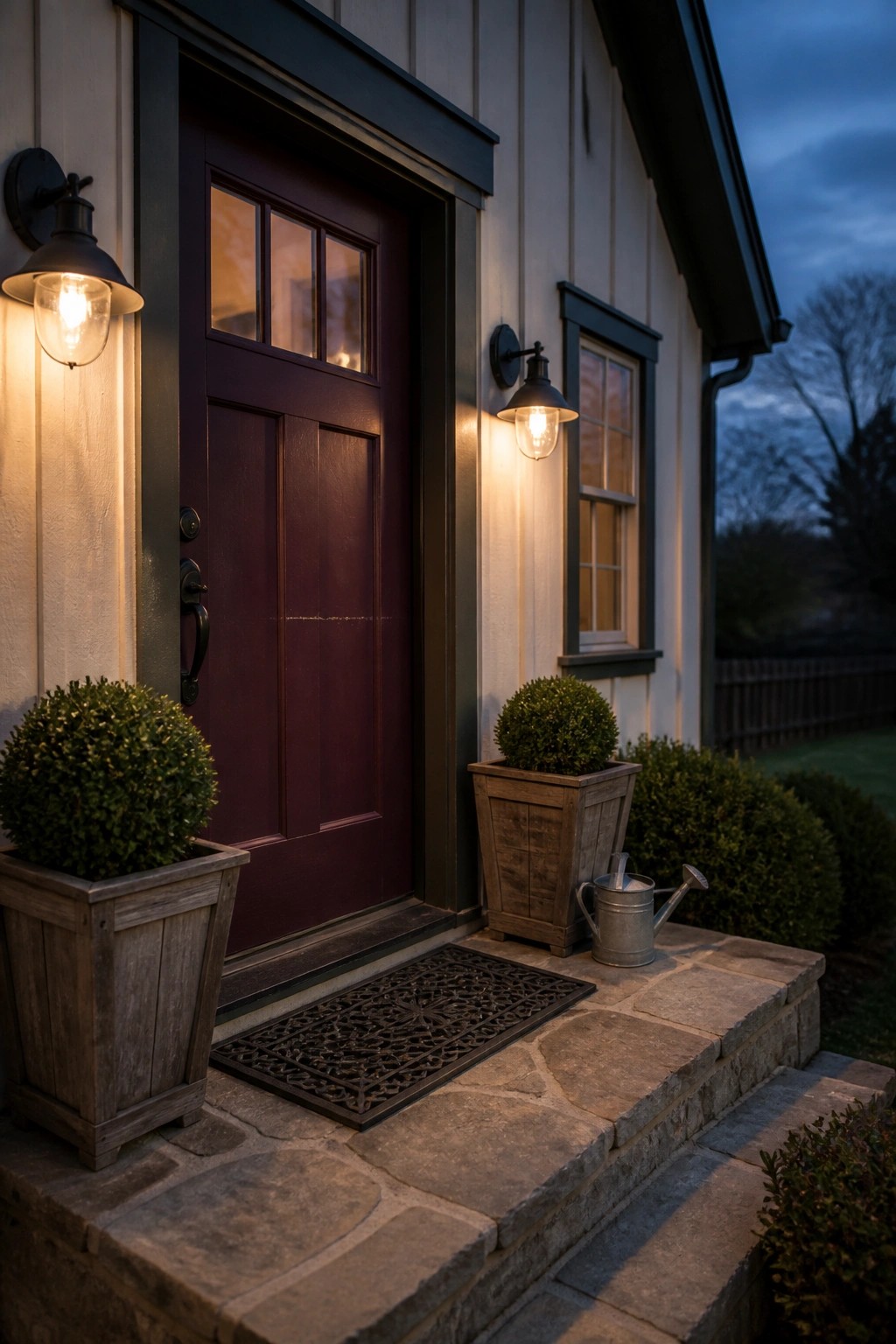
A deep burgundy front door brings a solid, grounded feel to a farmhouse exterior. This color sits between red and brown, so it reads warm rather than harsh. It stands out just enough while still looking like it belongs on an older home.
The undertone stays fairly neutral, which helps it work with light siding and stone. It pairs best with warm white trim or simple black hardware. Colors like Sherwin Williams Cabernet, Benjamin Moore Burgundy, Behr Bordeaux, or Farrow & Ball Eating Room Red all sit close to this shade.
Classic Black Front Doors
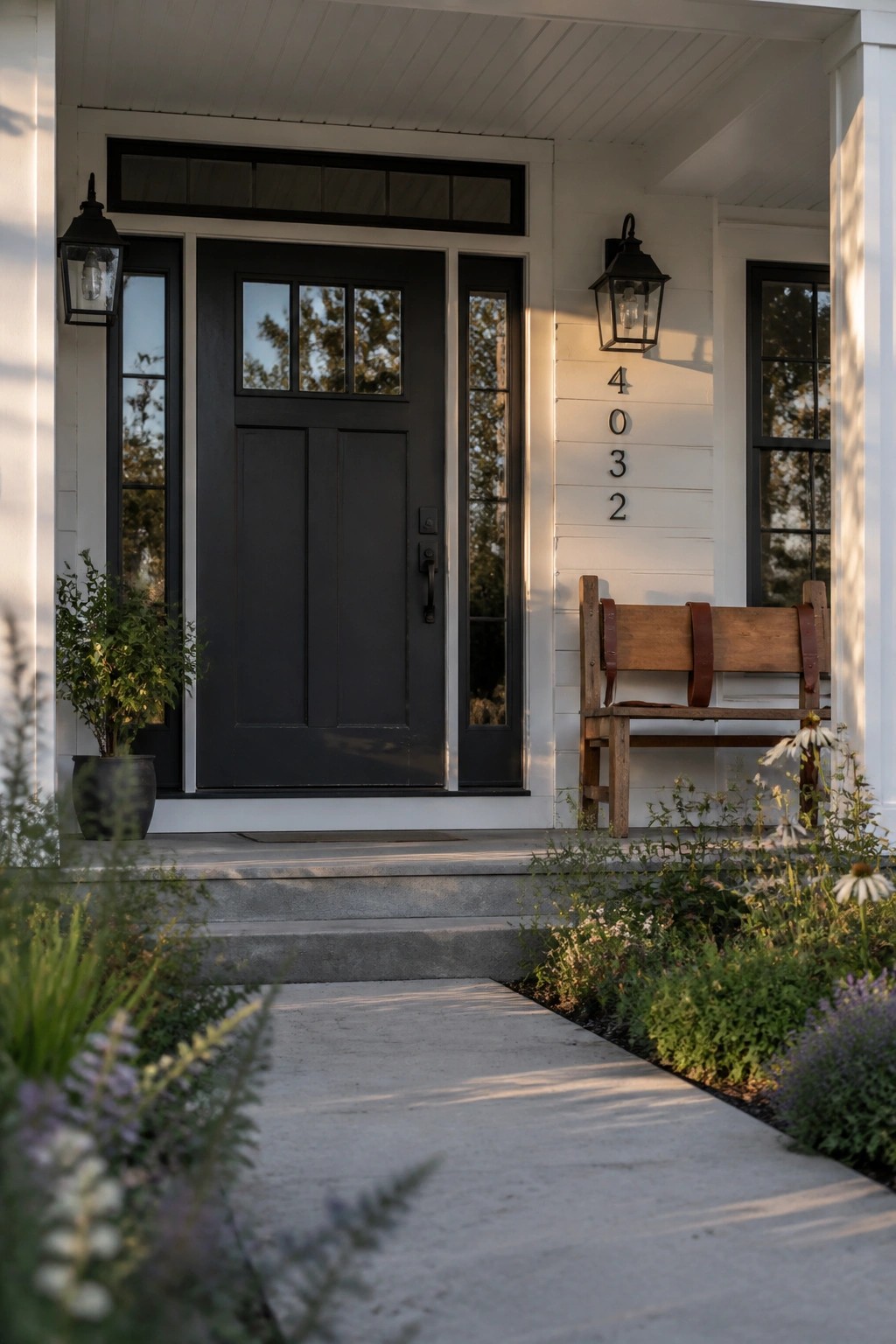
A black front door brings a clear, bold look to a farmhouse exterior. This one sits in the true black family with almost no visible undertone, which helps it read crisp against light siding.
It works best with white or off-white walls and simple wood or metal accents nearby. Good matches include Sherwin Williams Tricorn Black, Benjamin Moore Black, Behr Deep Onyx, or Farrow & Ball Black Blue. A flat or low-sheen finish usually holds up better outside than anything too glossy.
Slate blue front doors
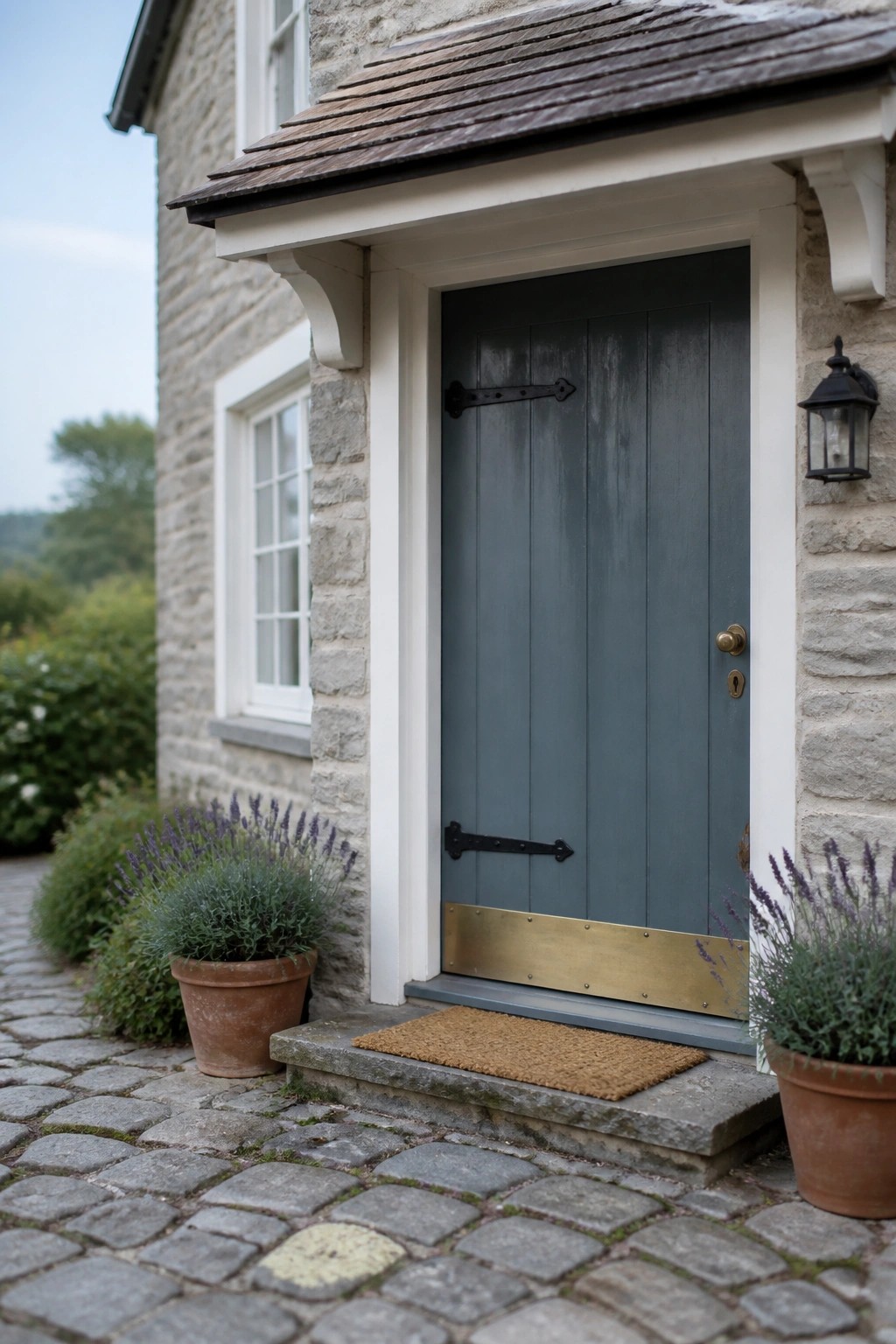
A slate blue door gives a farmhouse that solid, calm look without going full navy. This shade reads as a cool blue gray and seems closest to Sherwin Williams Rainstorm, Benjamin Moore Hale Navy, Behr Midnight in the Mountains, or Farrow & Ball De Nimes.
It sits nicely against stone and works best with warm white trim or natural wood accents. Watch how it shifts a bit cooler in bright light.
True Black Front Doors
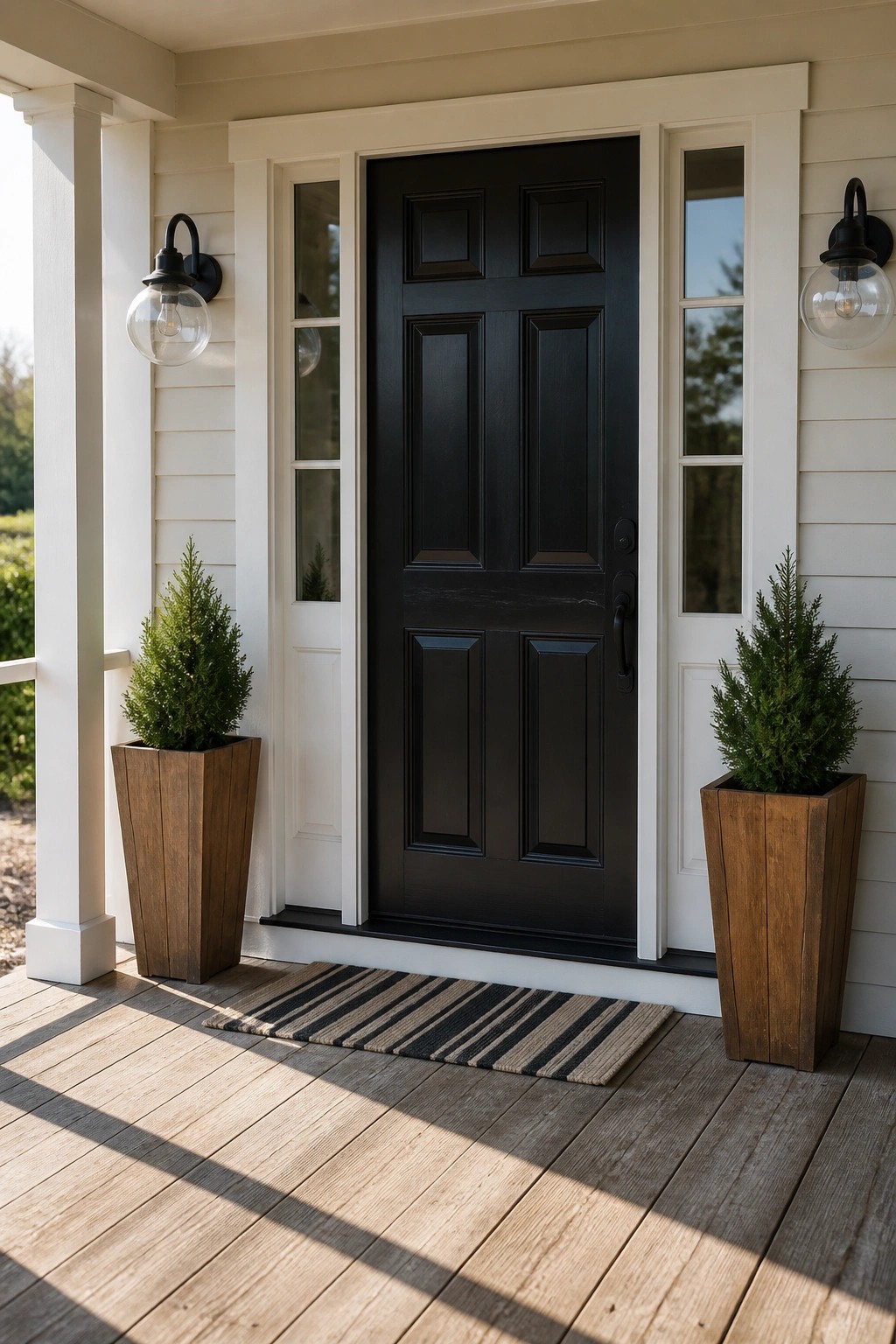
A deep black front door gives a farmhouse exterior that solid, grounded look many people want. This color sits right in the true black family with very little undertone showing, which helps it read clean next to white trim and light siding.
It works best on homes that already have strong contrast in the trim and some natural wood nearby. Watch how it holds up in full sun, since flatter finishes tend to show dust less but can feel flat if the lighting stays harsh all day. Good matches include Sherwin Williams Tricorn Black, Benjamin Moore Black, Behr Deep Onyx, and Farrow & Ball Black Blue.
Warm brown front doors
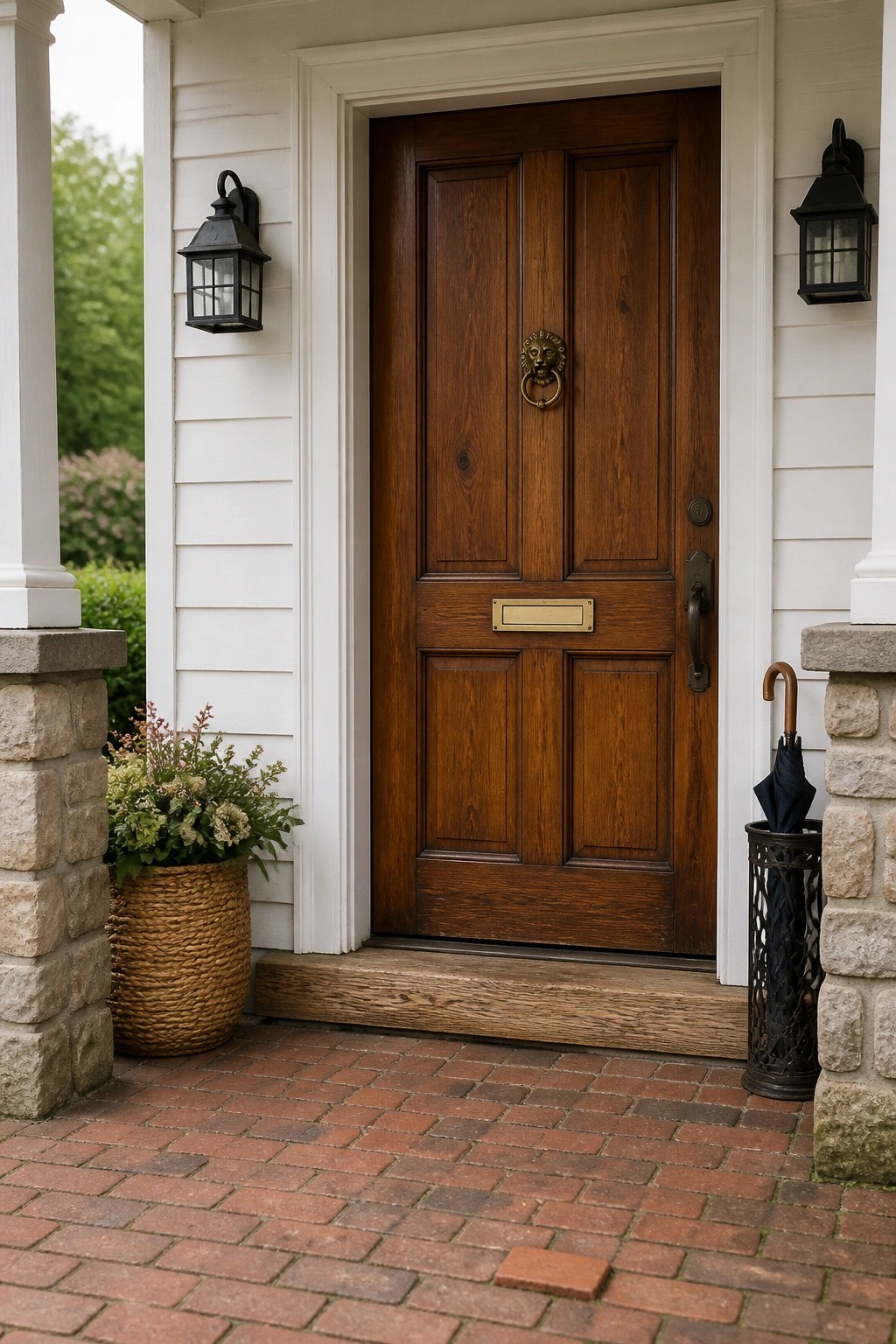
A warm brown front door gives a farmhouse that solid, lived-in look without trying too hard. This color sits in the deeper brown range with a soft reddish undertone that keeps it from feeling flat or cold next to white siding.
It pairs easily with natural stone and brick paths. Try it with black or oil-rubbed bronze hardware. In bright sun it can warm up a little more than expected, so test a sample on the actual door before committing.
Weathered teal front doors
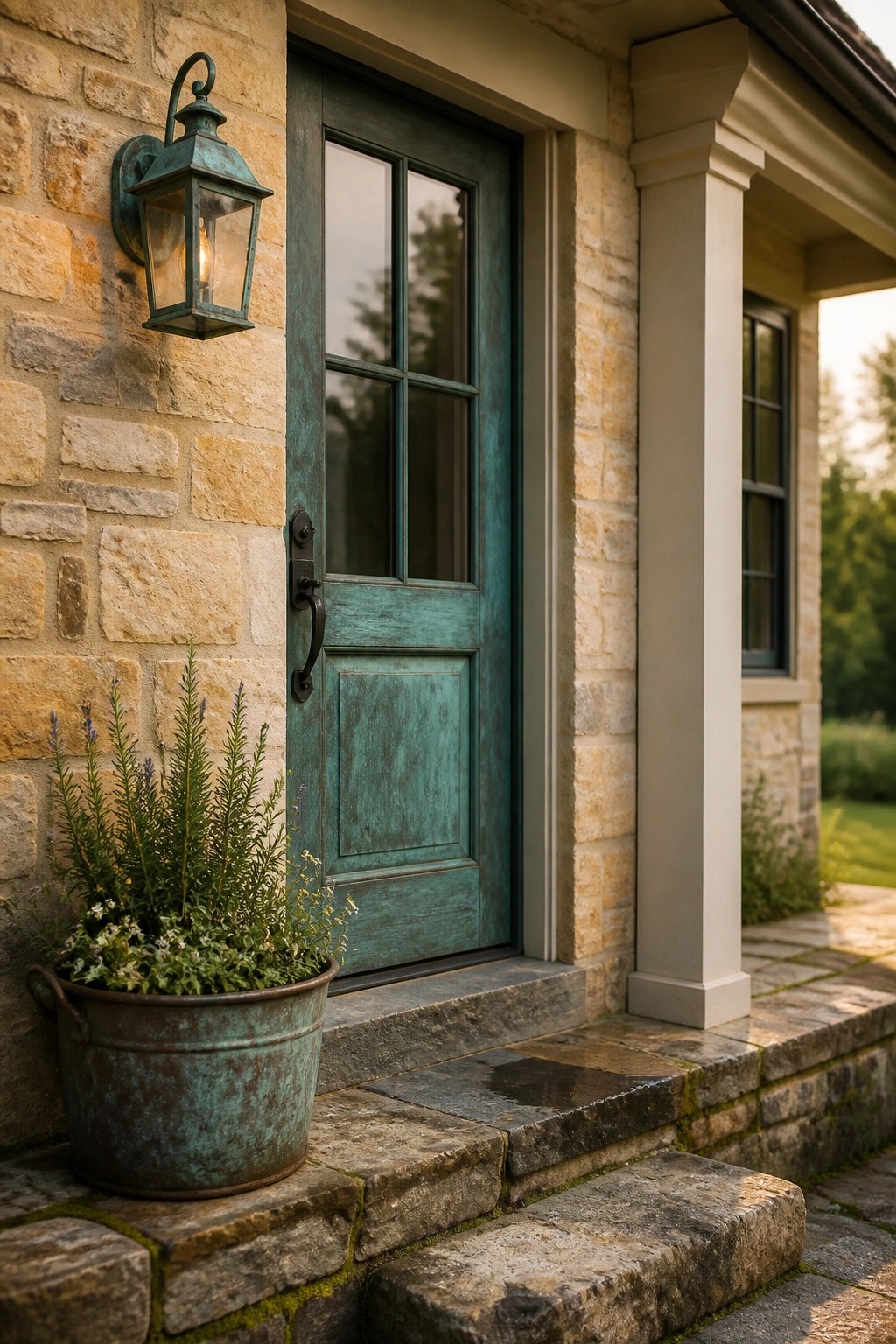
This teal door color gives the entrance a soft blue-green tone with some green undertones showing through. It reads as muted rather than bright, which helps it sit comfortably next to stone and other natural materials on a farmhouse.
The finish looks slightly aged, which adds to the appeal on older homes. It works best with warm white trim and simple black hardware, though it can start to feel flat if the surrounding surfaces are too cool or gray.
Vibrant Teal Front Doors
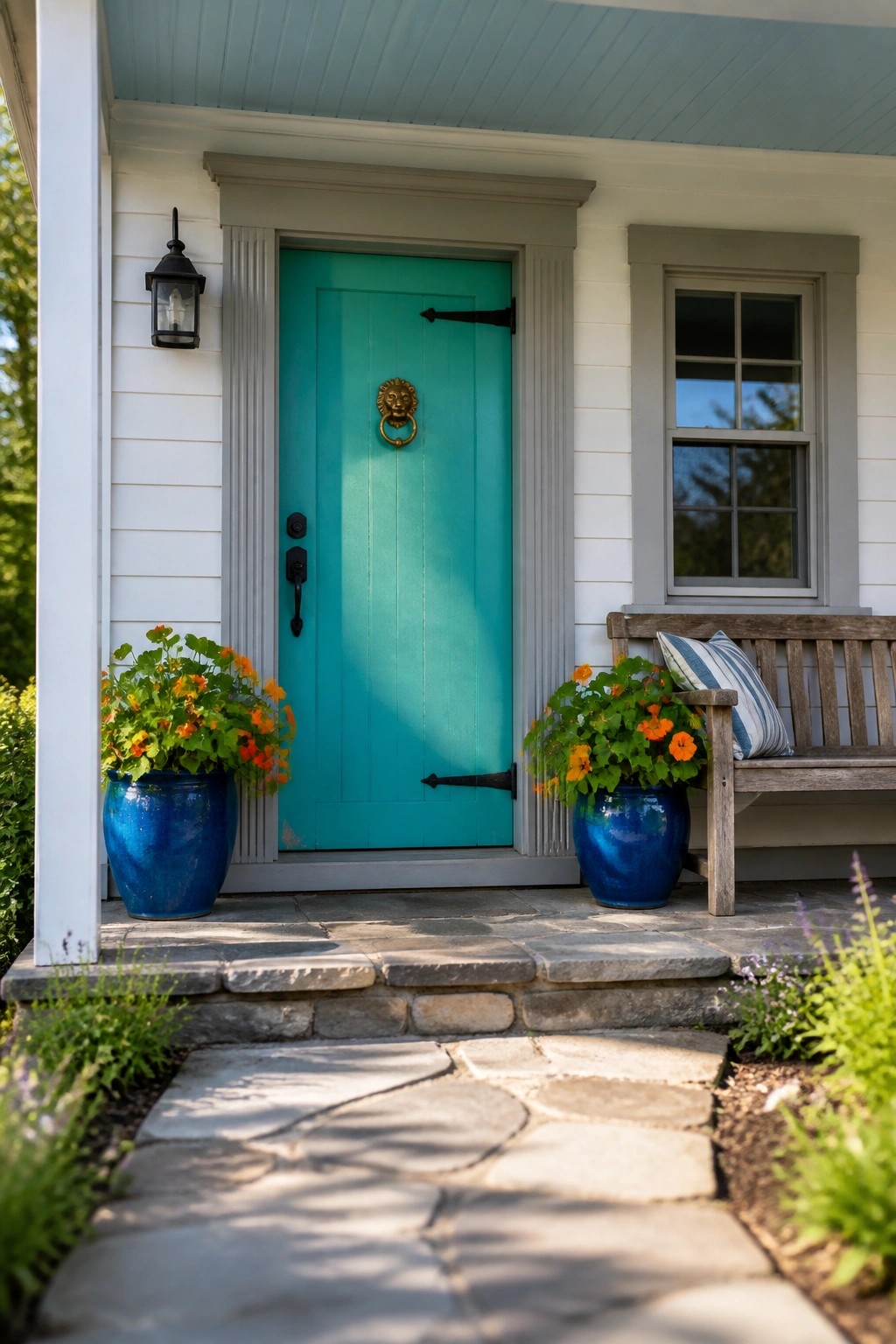
A bright teal door works well on farmhouse exteriors because it adds color without overpowering the rest of the house. This shade sits in the blue-green range and brings a clean, fresh look that still feels grounded next to white siding.
It has cool undertones that stand out nicely against gray trim and stone. Colors like Sherwin Williams Bora Bora Shore, Benjamin Moore Jamaican Aqua, or Behr Tropical Sea give a similar effect on wood doors.
Warm Cream Front Doors
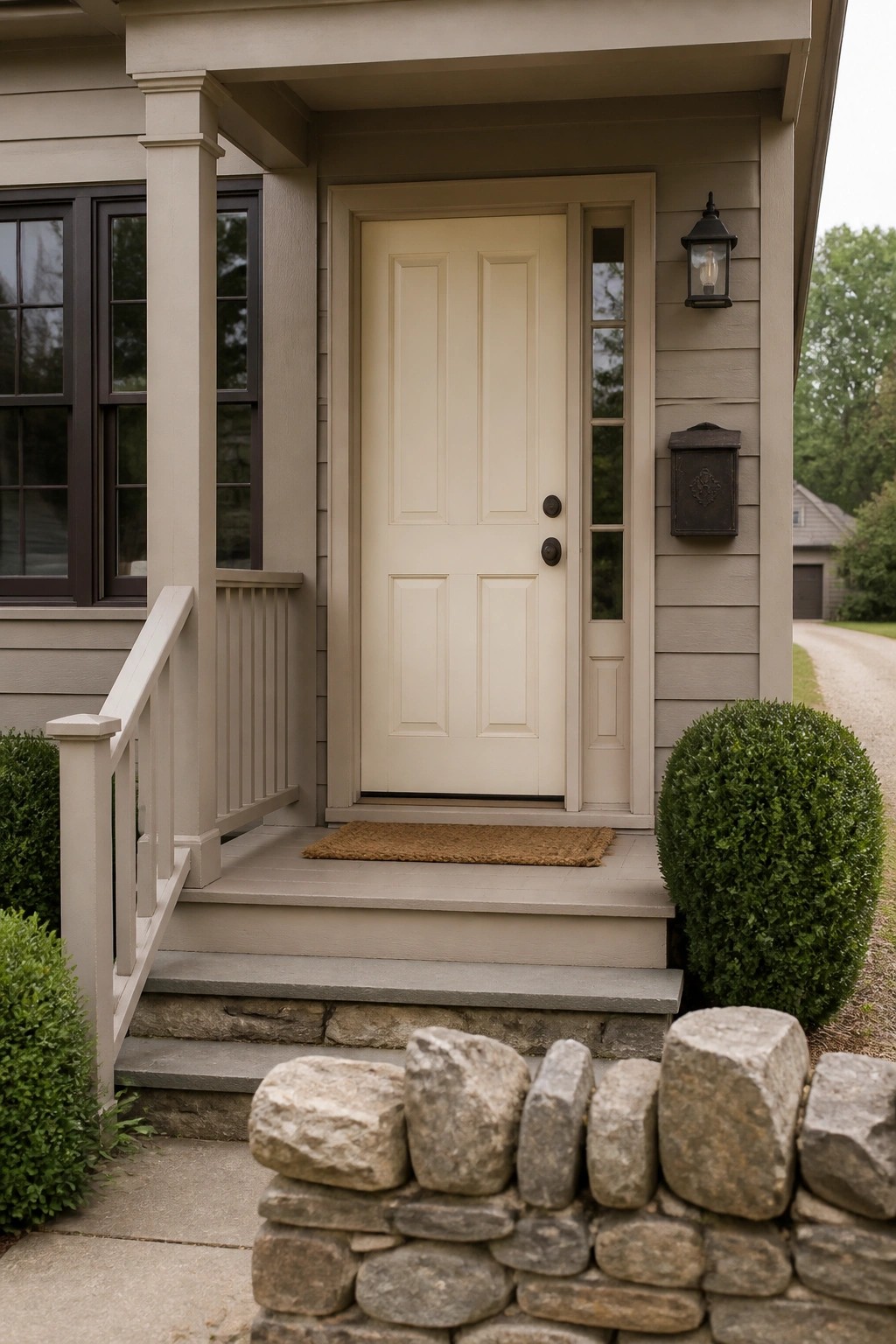
This warm cream shade on the front door gives the house a soft, welcoming look without feeling stark. It sits nicely between white and beige, which helps it blend with the gray siding and stonework around the steps. Colors like this often read as Sherwin Williams Alabaster, Benjamin Moore White Dove, or Behr Almond Wisp.
The undertone leans slightly yellow, so it stays friendly in both morning and afternoon light. It pairs well with dark hardware and natural materials like wood or stone, though it can look a bit flat if the surrounding trim is too cool.
deep green front door
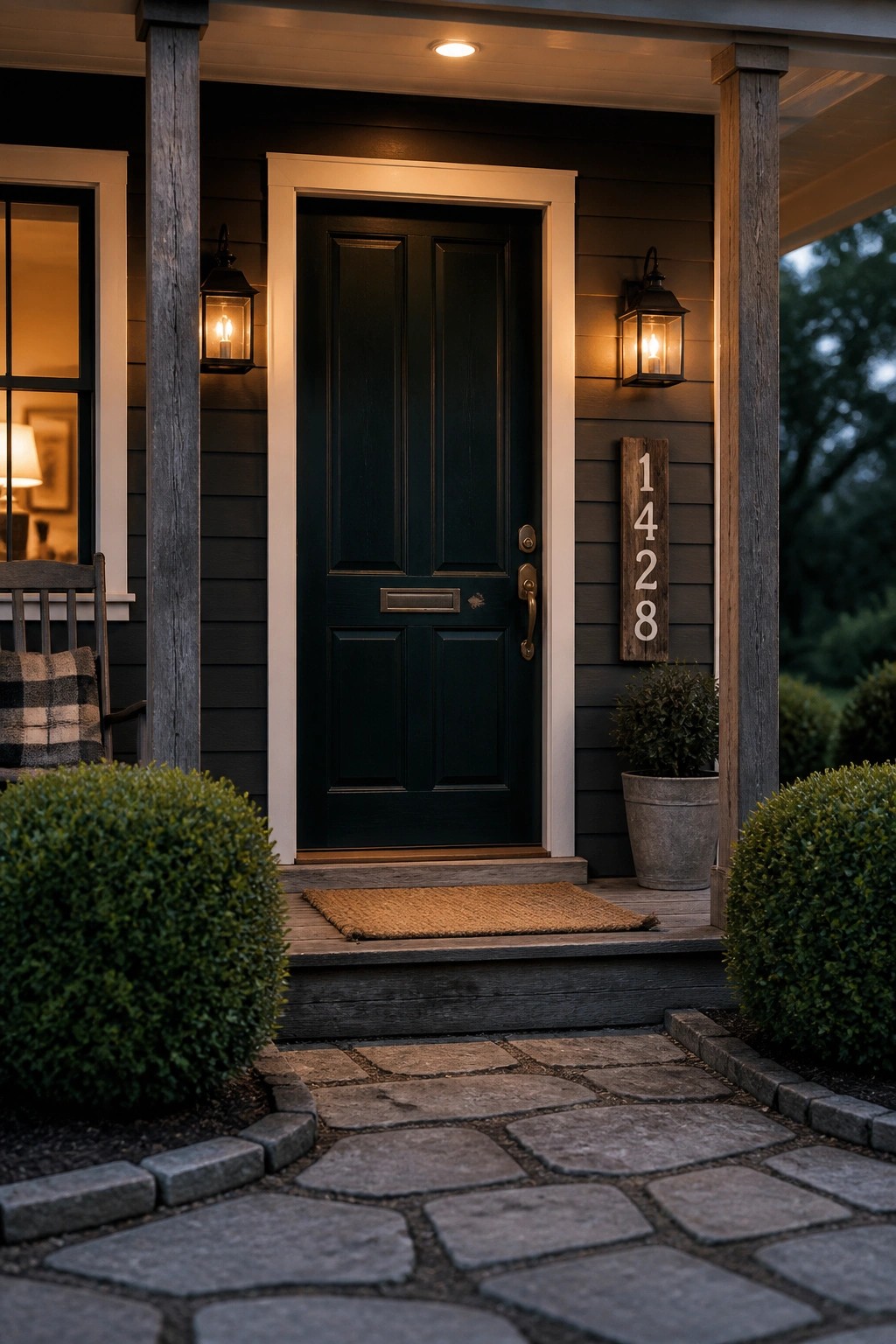
This deep green makes a solid choice for a farmhouse front door. It sits in that dark forest green family and feels steady next to gray siding without looking stark.
The tone stays fairly neutral with just a hint of warmth, so it holds up well against wood trim and stone paths. It works nicely on traditional farmhouses and pairs best with soft whites or natural wood accents rather than bright contrasts.
Frequently Asked Questions
Q: How do I know if a bold color like navy will still feel right on my farmhouse once the seasons change? A: Hold a few sample boards against your siding at different times of day. Watch how the shade shifts in morning light versus afternoon shade. That quick check usually shows whether it stays inviting year round.
Q: What if my current trim is a warm gray and none of the article colors seem to match it exactly? A: Pick a door color that pulls from the same undertones instead of trying for a perfect match. A soft green or deep burgundy often sits nicely next to warm gray without fighting it.
Q: Can I use one of these colors on a steel door without it looking flat? A: Yes. Start with a good primer made for metal, then add two coats of exterior paint in the color you want. The extra layer gives it the same depth you see on wood doors in the photos.
Q: Will a lighter color show every handprint and bug mark near the handle? A: Lighter shades do show dirt faster, so wipe the area around the hardware every couple weeks with a damp cloth. That small habit keeps the door looking fresh without extra scrubbing.
