

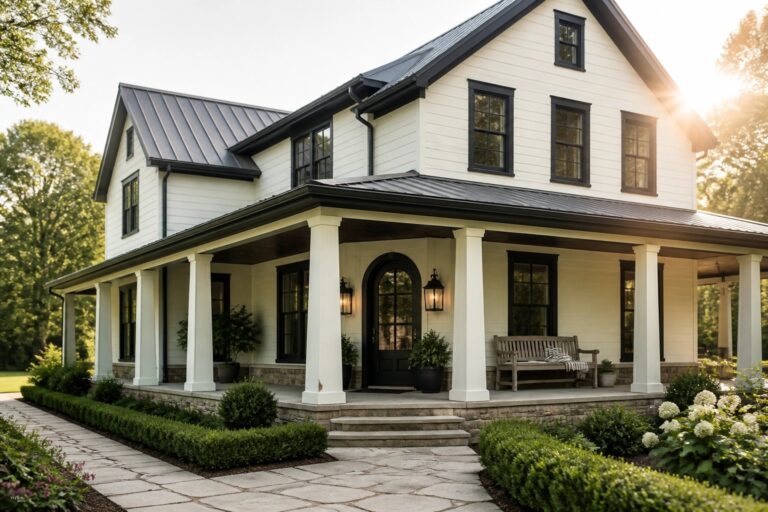
I often notice that exterior colors on a farmhouse shift more than expected once the dark trim goes on and the siding catches real sunlight at different angles.
The right balance keeps the house looking settled against the roof, any stonework, and the surrounding trees without the main shade fading into the background.
Testing helps.
I have watched colors that seemed solid on a sample board turn warmer or cooler by midafternoon when they sit next to landscaping and change with passing clouds.
Seeing a few options on the actual walls over a couple of days shows which ones hold their edge once the trim is in place.
Crisp white siding
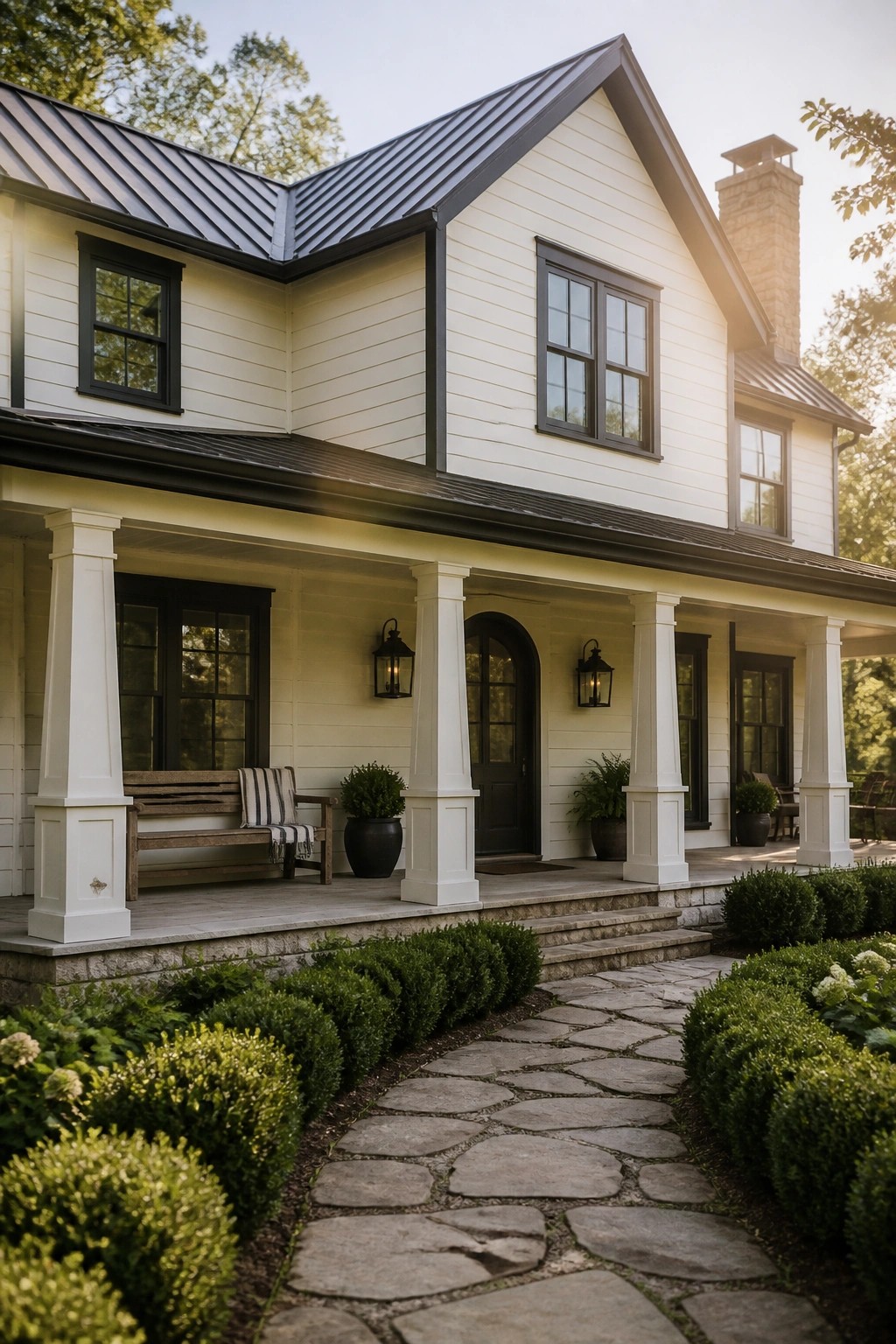
This crisp white siding gives a farmhouse that clean, bright base that lets the dark trim do its job. It reads very close to Sherwin Williams Pure White, Benjamin Moore Chantilly Lace, or Behr Ultra Pure White.
The color has a soft warm undertone that keeps it from looking too cold next to stone and roofing. It pairs best with black or deep charcoal trim and works well on homes that need a simple, classic backdrop rather than anything too creamy or gray.
Soft Sage Green Siding
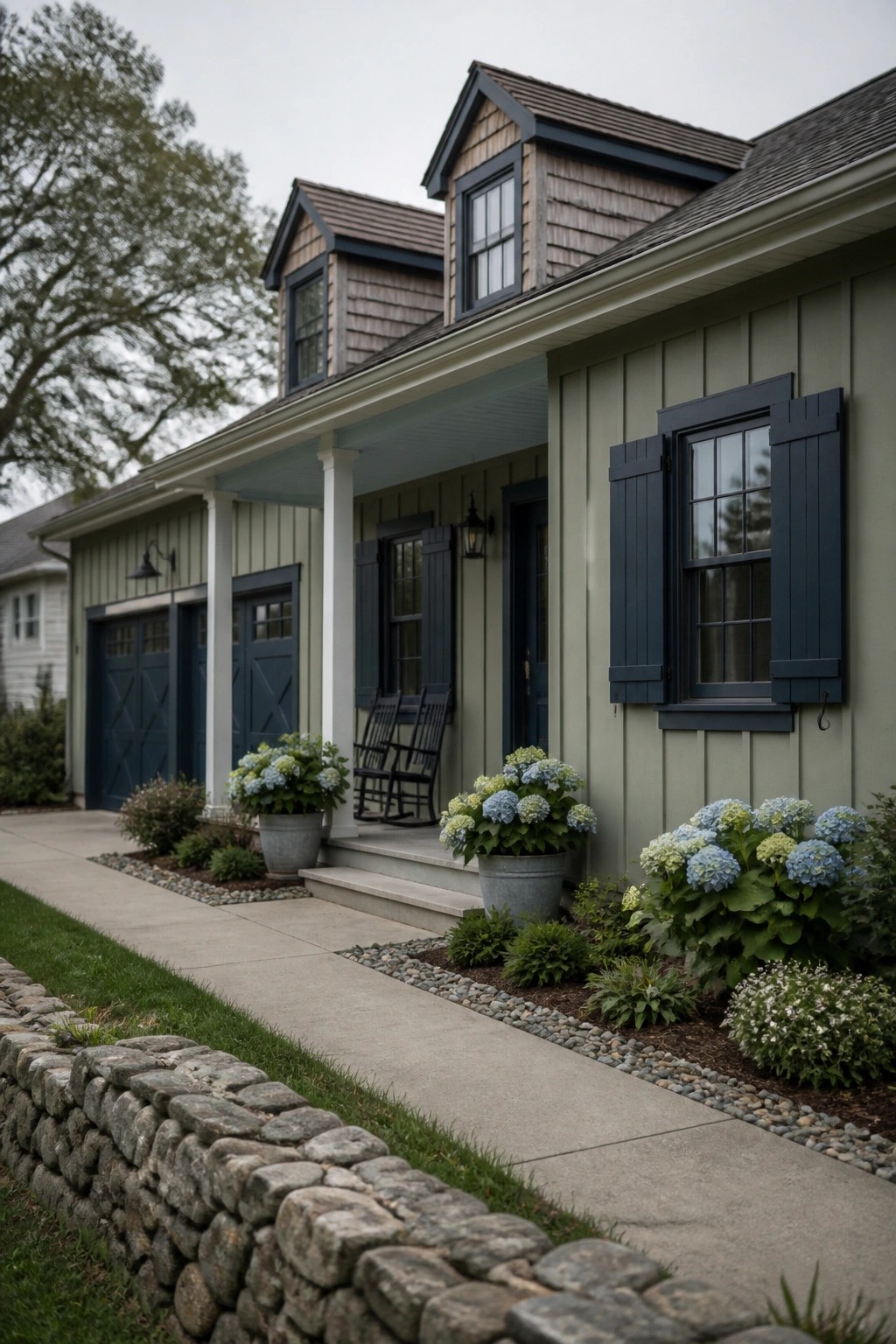
Soft sage green siding brings a calm, slightly earthy feel to a farmhouse exterior. This color sits between green and gray, so it avoids looking too bright or too dull against dark trim and a dark roof.
It works best on homes with white columns or light masonry, since those keep the green from feeling heavy. Watch how it shifts in full sun, as the gray undertone can come through more than expected. Matches to consider include Sherwin Williams Evergreen Fog, Benjamin Moore Saybrook Sage, Behr Mossy Green, and Farrow & Ball Pigeon.
Warm Barn Red Siding
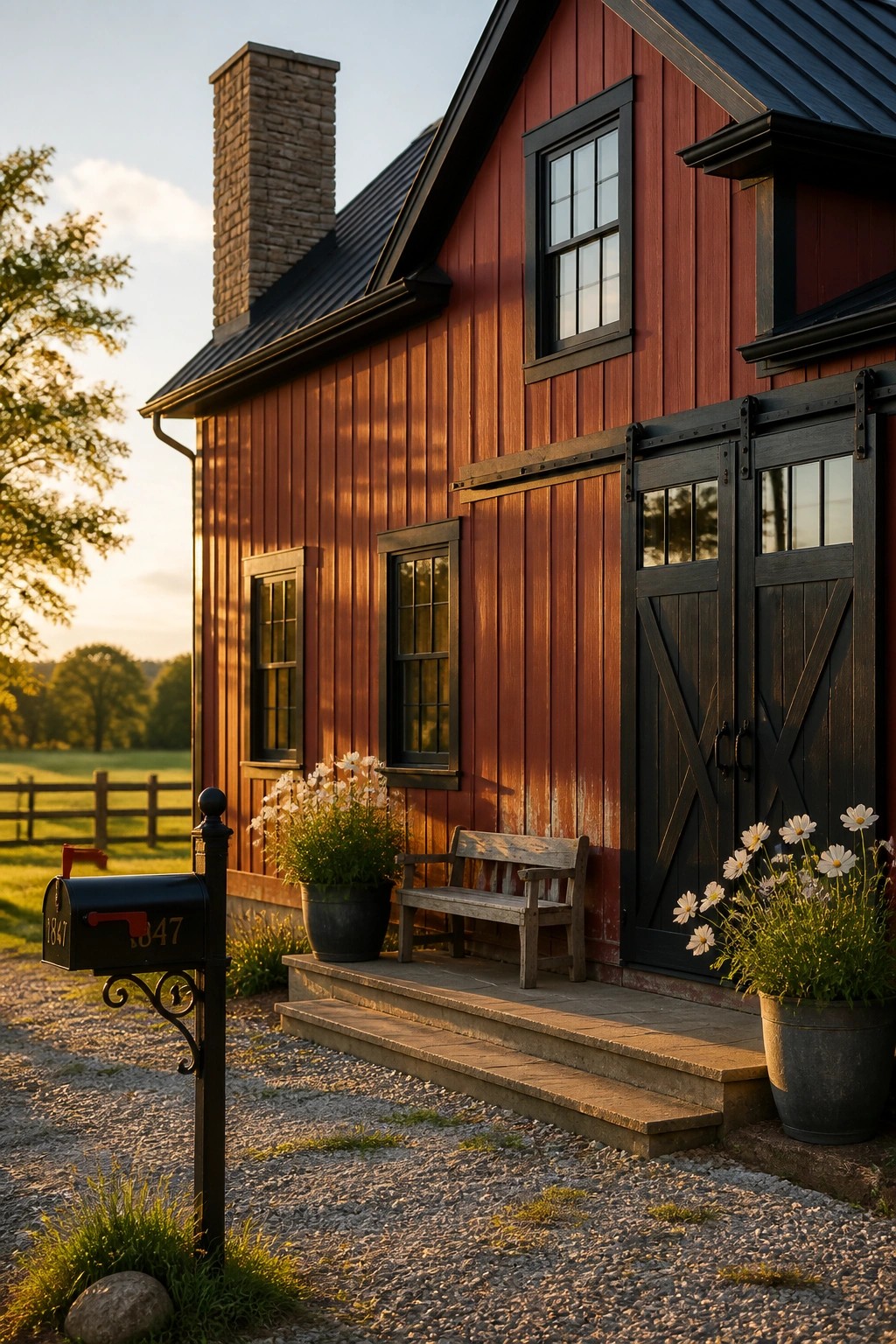
This warm barn red siding brings a solid, traditional feel to a farmhouse exterior. It sits somewhere between a true red and a deeper brick tone, which helps it look grounded next to dark trim and natural materials. Colors like this hold up well outdoors and give the house a settled look without trying too hard.
It pairs best with black or charcoal windows and doors, as shown here. The red has a slight earthy undertone that keeps it from feeling too bright in full sun. Watch the finish though, since a flat or matte version will weather more gracefully than a glossy one.
Soft Blue Gray Siding
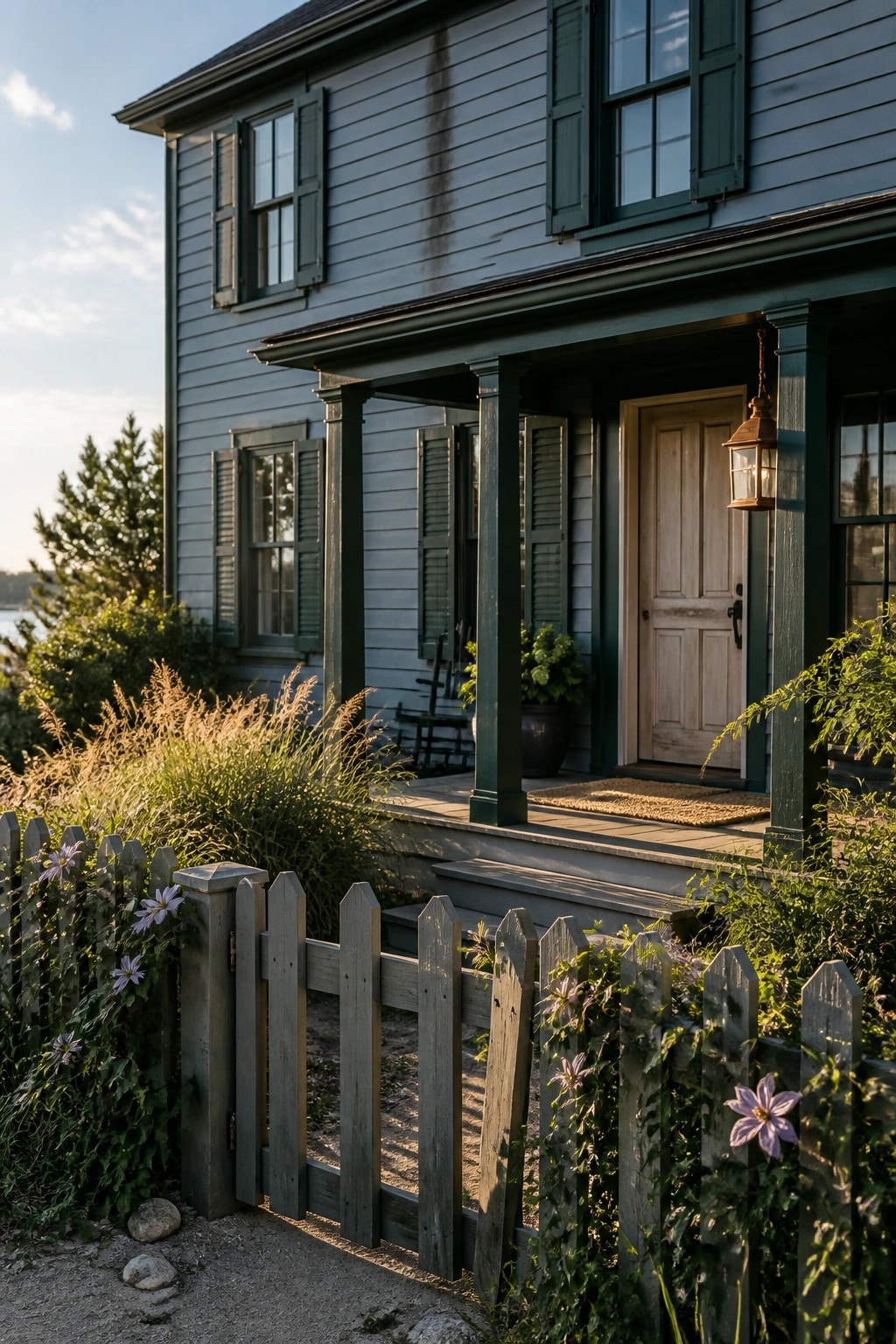
This blue gray siding color gives a quiet, steady look that works well on farmhouses. It sits in a cool family with soft gray undertones that keep it from feeling too bright or too dark outside.
The tone pairs easily with dark trim and holds up in changing light. It suits older homes or those near water, though it can look flat if the trim color is too close in depth.
Warm Greige Siding
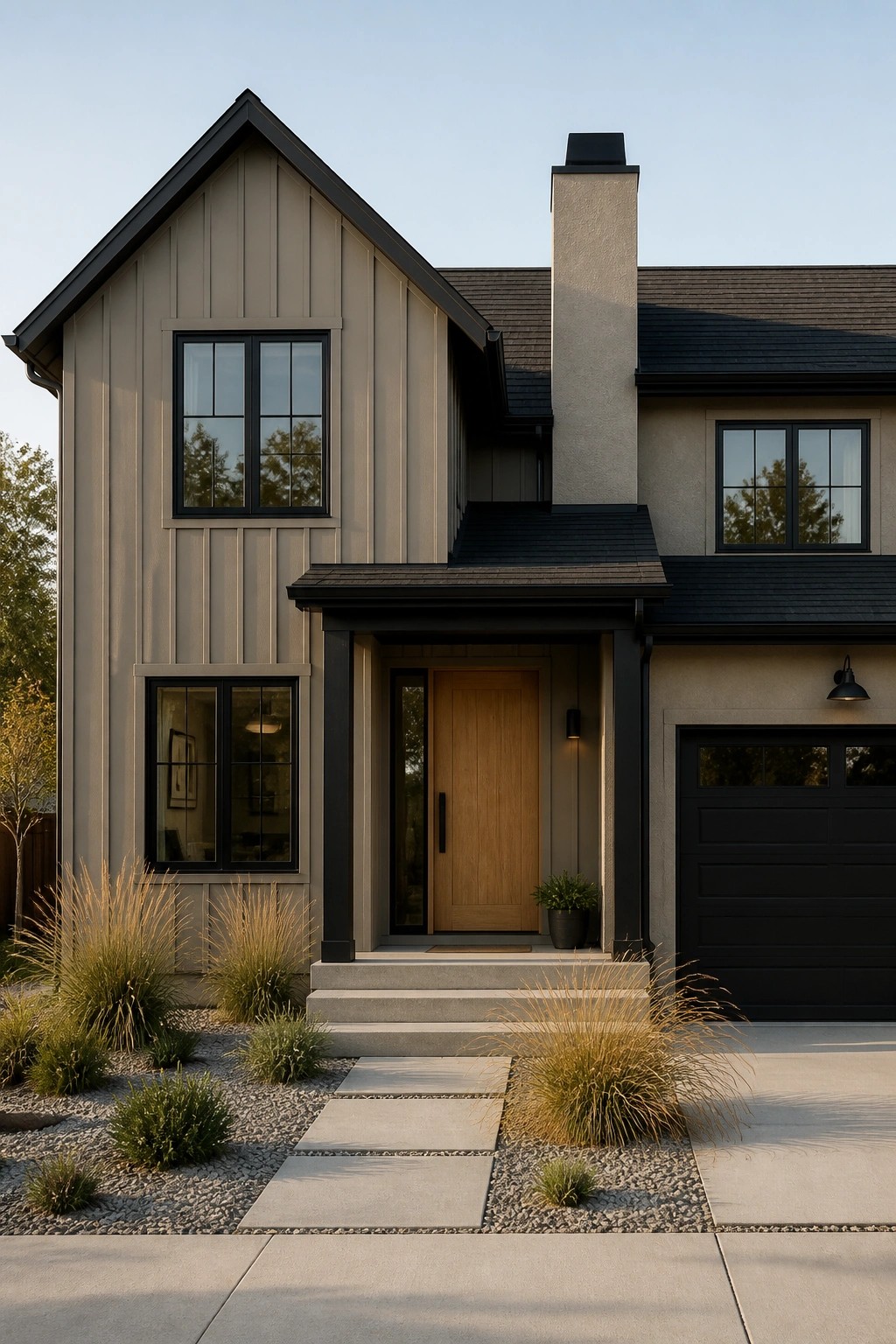
This siding color is a warm greige that sits right between gray and beige. It gives the house a soft neutral look that still feels solid and tied to the ground rather than washed out.
The undertone runs a touch yellow, which helps it sit nicely next to the black trim and wood door without turning too cool in daylight. It works best on farmhouses or simpler homes where you want the dark trim to stand out cleanly.
Soft Greige Siding
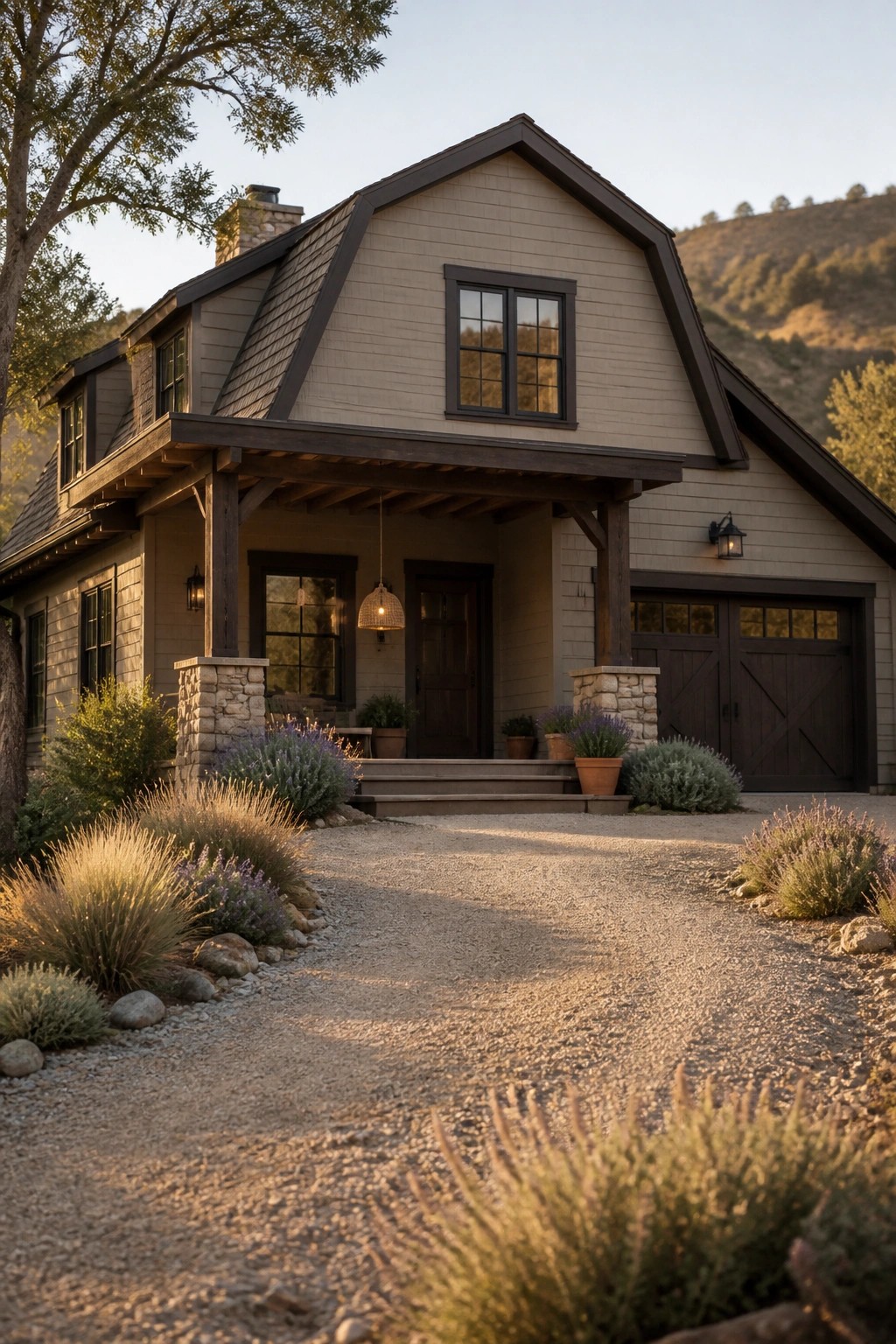
This siding color is a warm greige that sits between gray and beige. It gives the house a relaxed neutral look without feeling too cool or too yellow.
The undertone stays steady in bright light and pairs cleanly with dark trim. It works best on farmhouses that have stone or wood accents nearby.
Soft Yellow Siding
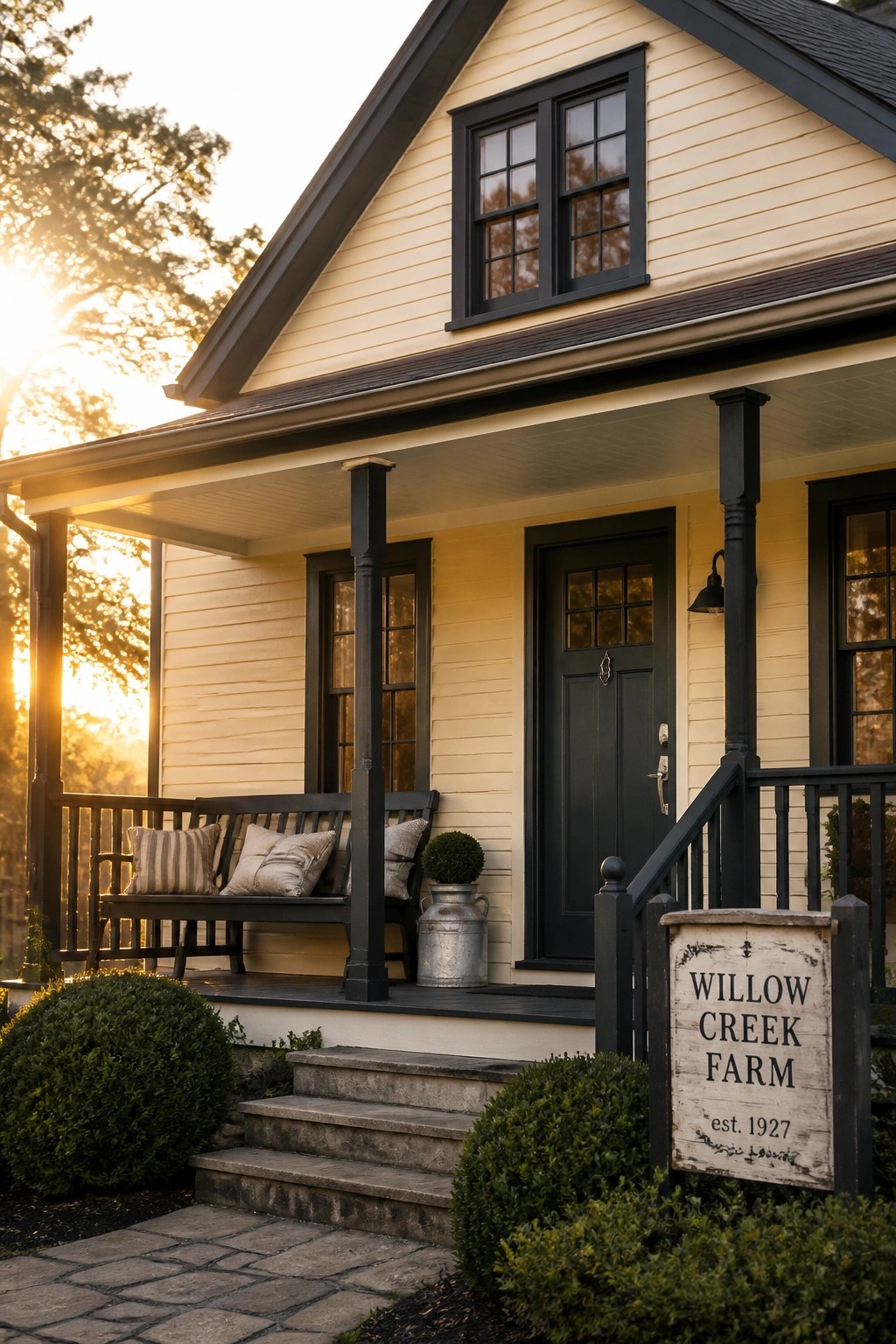
This soft yellow siding gives a farmhouse a gentle, warm look without feeling too bright. It sits in the light yellow-cream family and seems closest to Sherwin Williams Biltmore Bisque, Benjamin Moore Ivory Cream, or Behr Pale Honey. The color stays friendly and easy to live with on larger surfaces.
It pairs nicely with dark trim because the contrast keeps the lines clean. The yellow has a slight warm undertone that can read a touch richer in direct sunlight, so test it on a few boards first. It suits traditional farmhouses best when the trim stays deep and the roof is a neutral charcoal or brown.
Rainwashed Blue Gray Siding
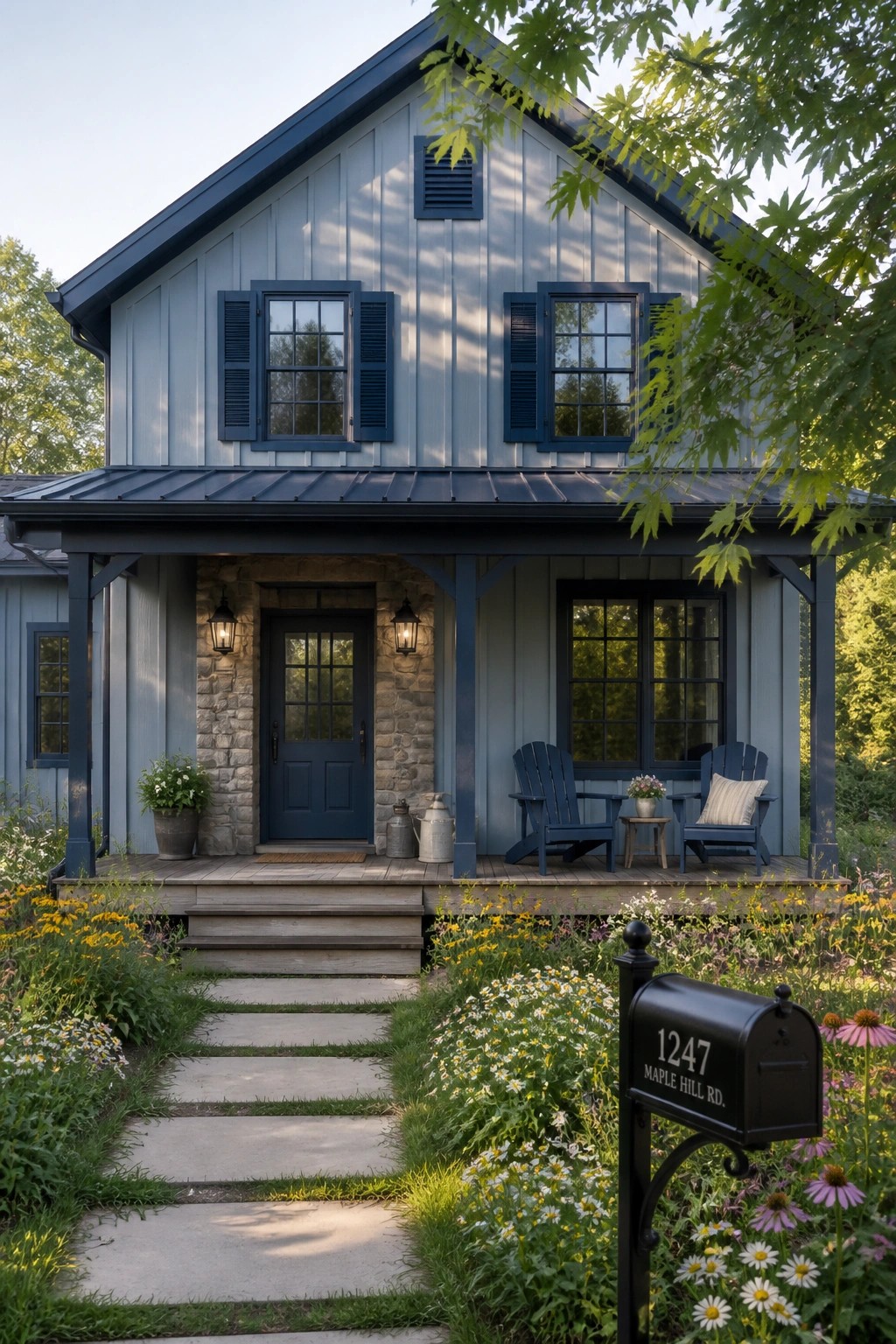
This house uses a soft blue gray on the siding. The color has a cool, muted tone that feels calm and pairs cleanly with dark trim for a sharp but simple look.
It reads very close to Sherwin Williams Rainwashed or Benjamin Moore Wythe Blue. The gray base keeps the blue from feeling too bright in full sun, and it works well on homes with stone or wood accents.
Accessible Beige Greige Siding
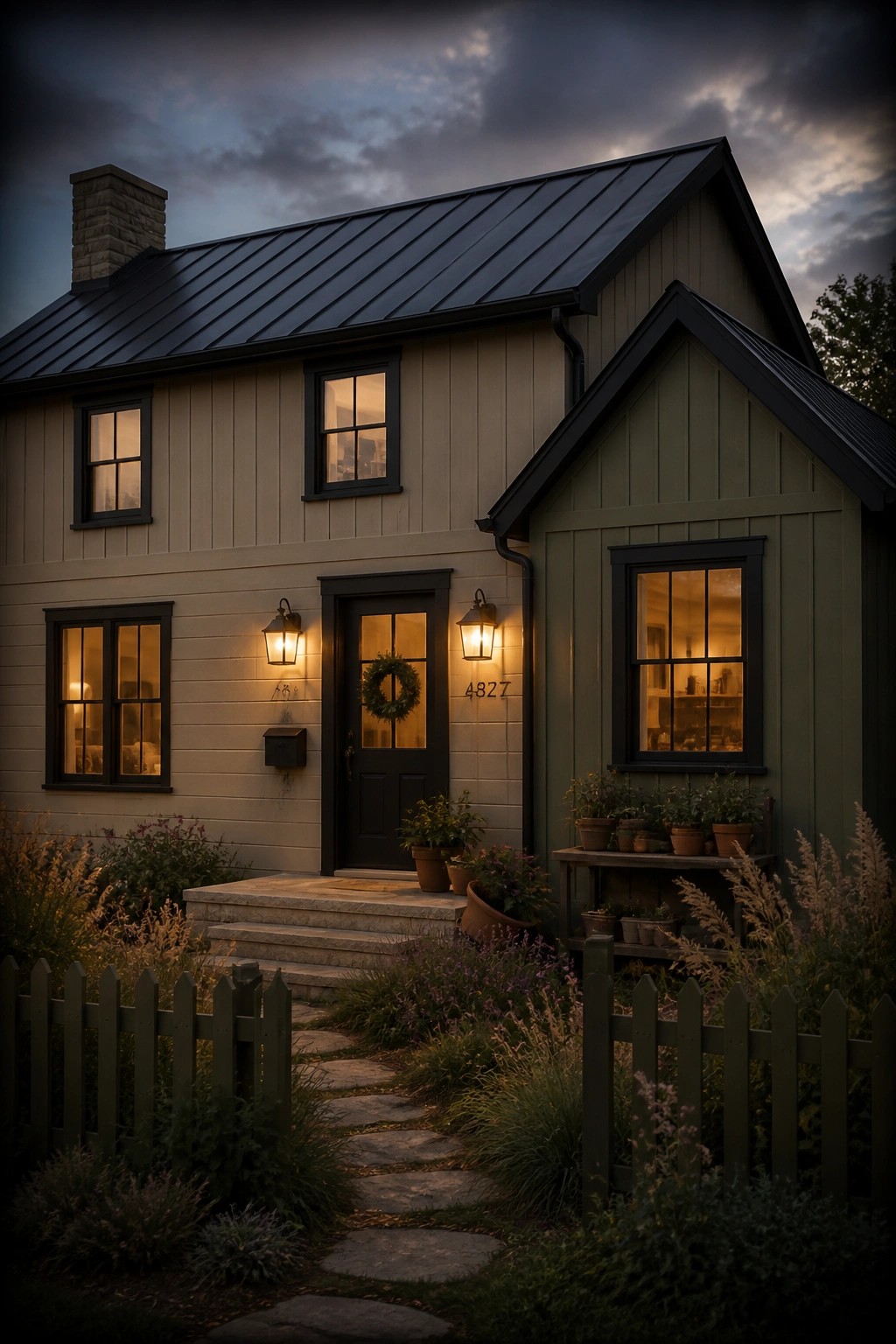
This warm greige color gives the house a soft, grounded look that still feels fresh. It sits right between gray and beige, so it reads neutral without going flat against the dark trim and roofing.
It works best on farmhouses where you want the siding to blend with natural surroundings while the black windows and door provide the contrast. Colors like Sherwin Williams Accessible Beige or Benjamin Moore Revere Pewter come close, and Behr Greige is another option if you prefer something slightly deeper.
Warm Stone Greige Siding
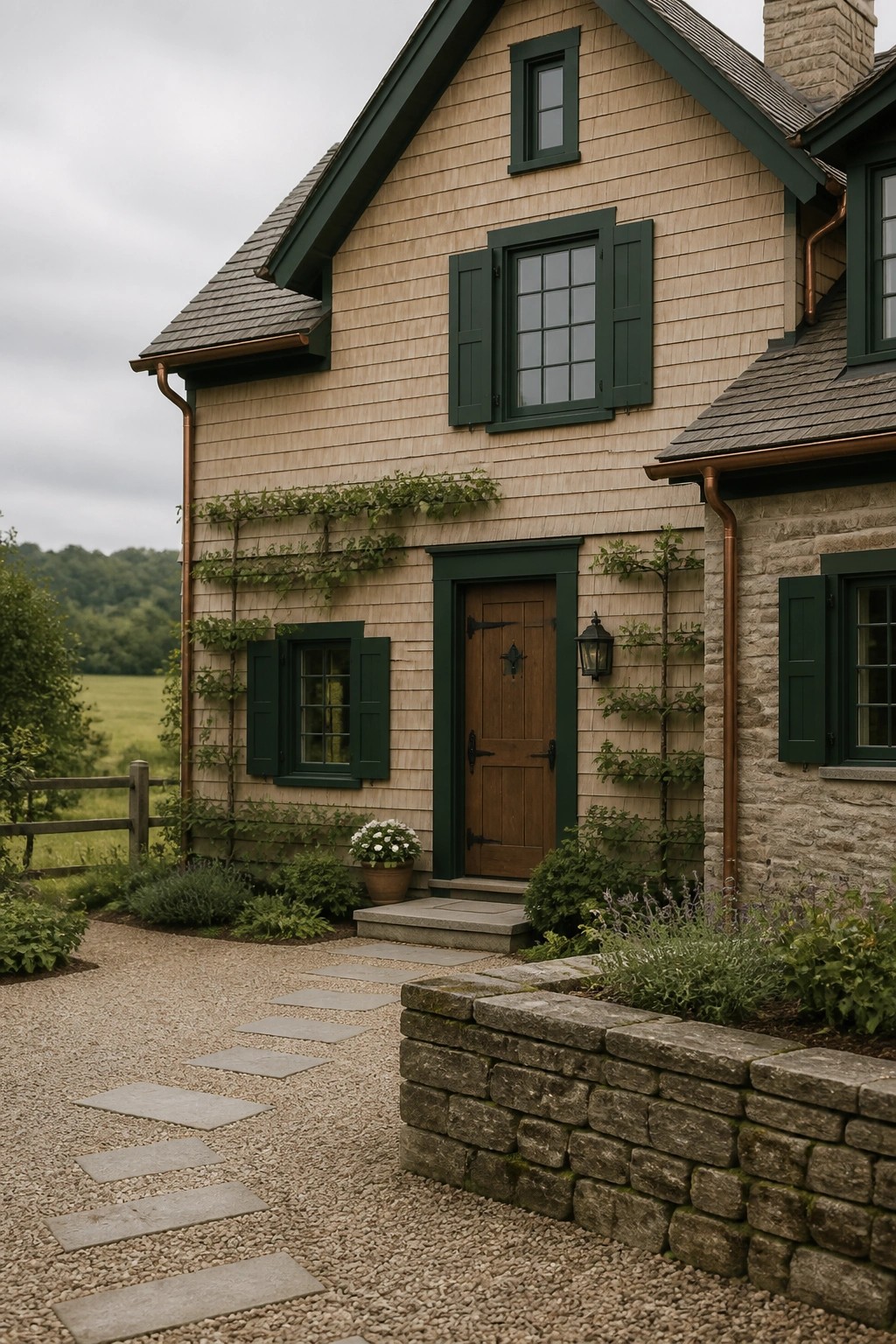
A soft greige works well on this kind of farmhouse siding. It sits in that middle space between beige and gray, which keeps the house from feeling too stark or too plain next to the dark trim. Colors like Sherwin Williams Accessible Beige, Benjamin Moore Pale Oak, Behr Almond Wisp, or Farrow & Ball Skimming Stone all read close to this.
The tone stays fairly warm, so it pairs easily with stone and wood without turning cold in shade. It can start to look flat if the trim is too dark or the light is very gray, so testing a couple of samples on the actual wall helps.
Light Neutral Greige Siding
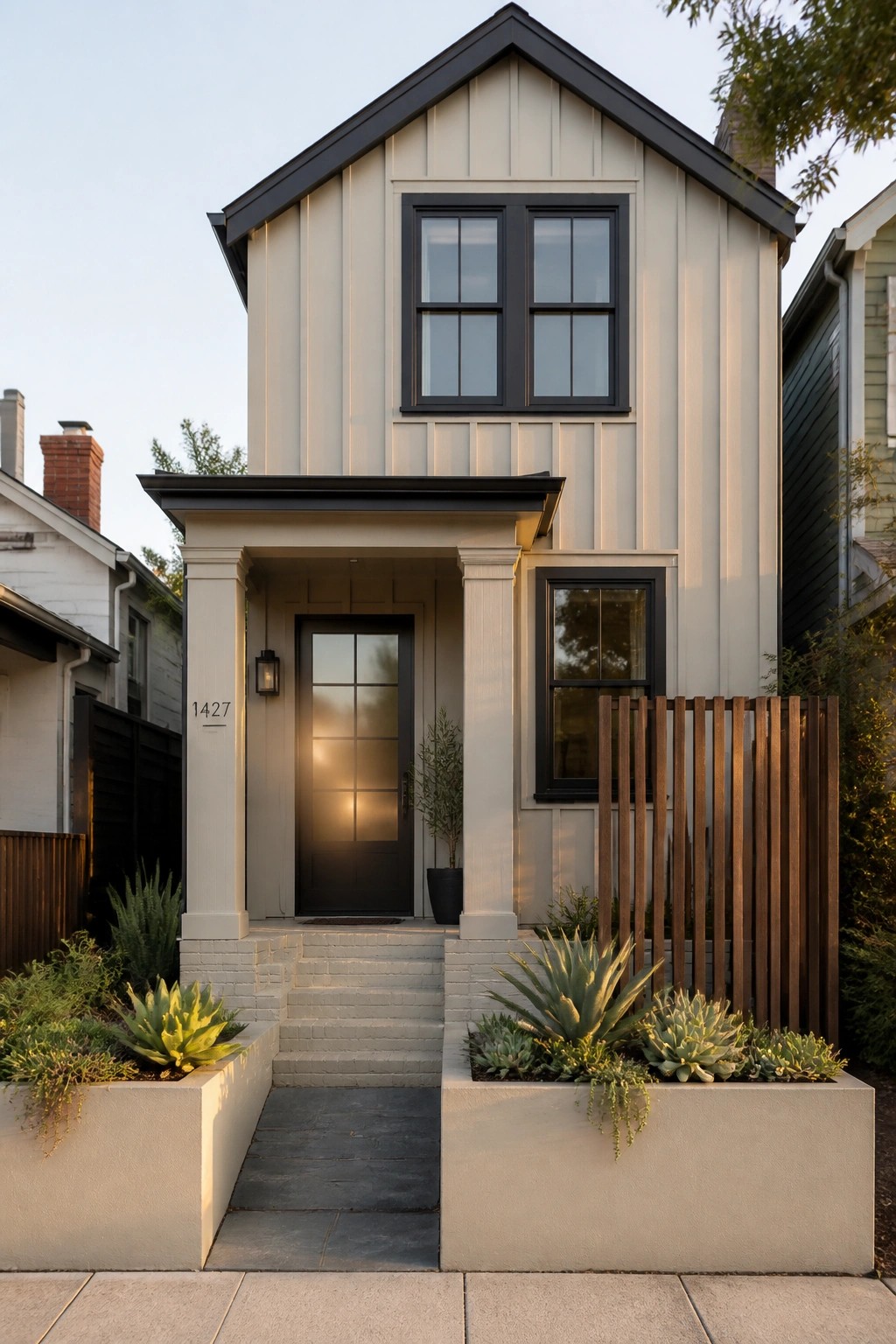
This house uses a soft warm greige on the siding. The color sits right between beige and gray, which helps it feel clean next to the dark trim and roof without looking too stark or cold.
It has a light neutral base with just enough warmth to keep the whole exterior from feeling flat. Most people like this shade on farmhouses because it works with black windows and natural wood accents. It can shift a bit depending on the light, so testing a sample on the wall is worth doing.
Warm terracotta siding
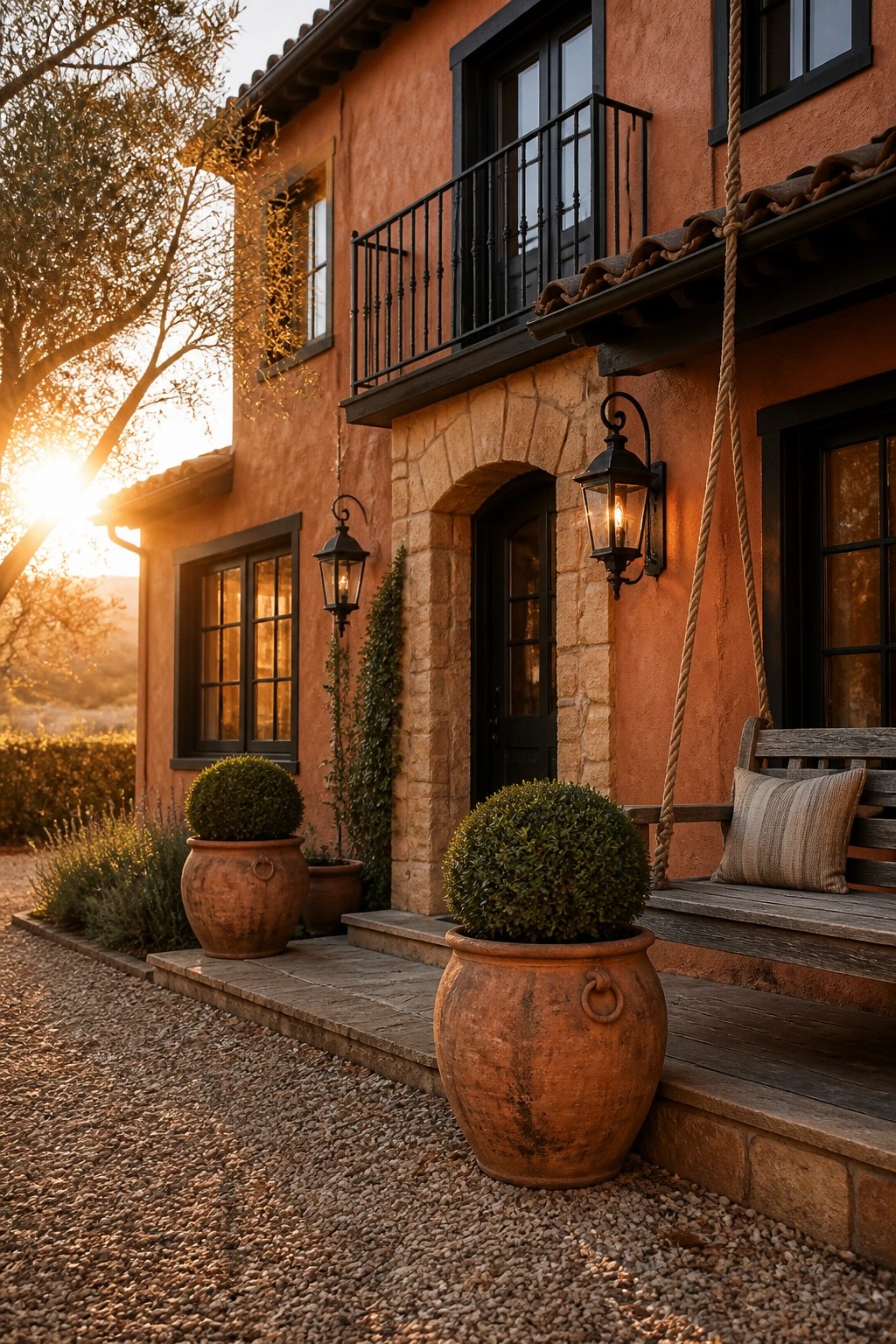
This warm terracotta stucco gives a farmhouse a soft but solid look. It reads closest to Sherwin Williams Rookwood Terra Cotta, Benjamin Moore Heritage Red, or Behr Clay Pot.
The color carries a gentle orange undertone that stays steady next to dark trim and stone. It suits homes that already have natural textures and works best when you keep the trim and accents deep rather than light.
Soft Blue Green Siding
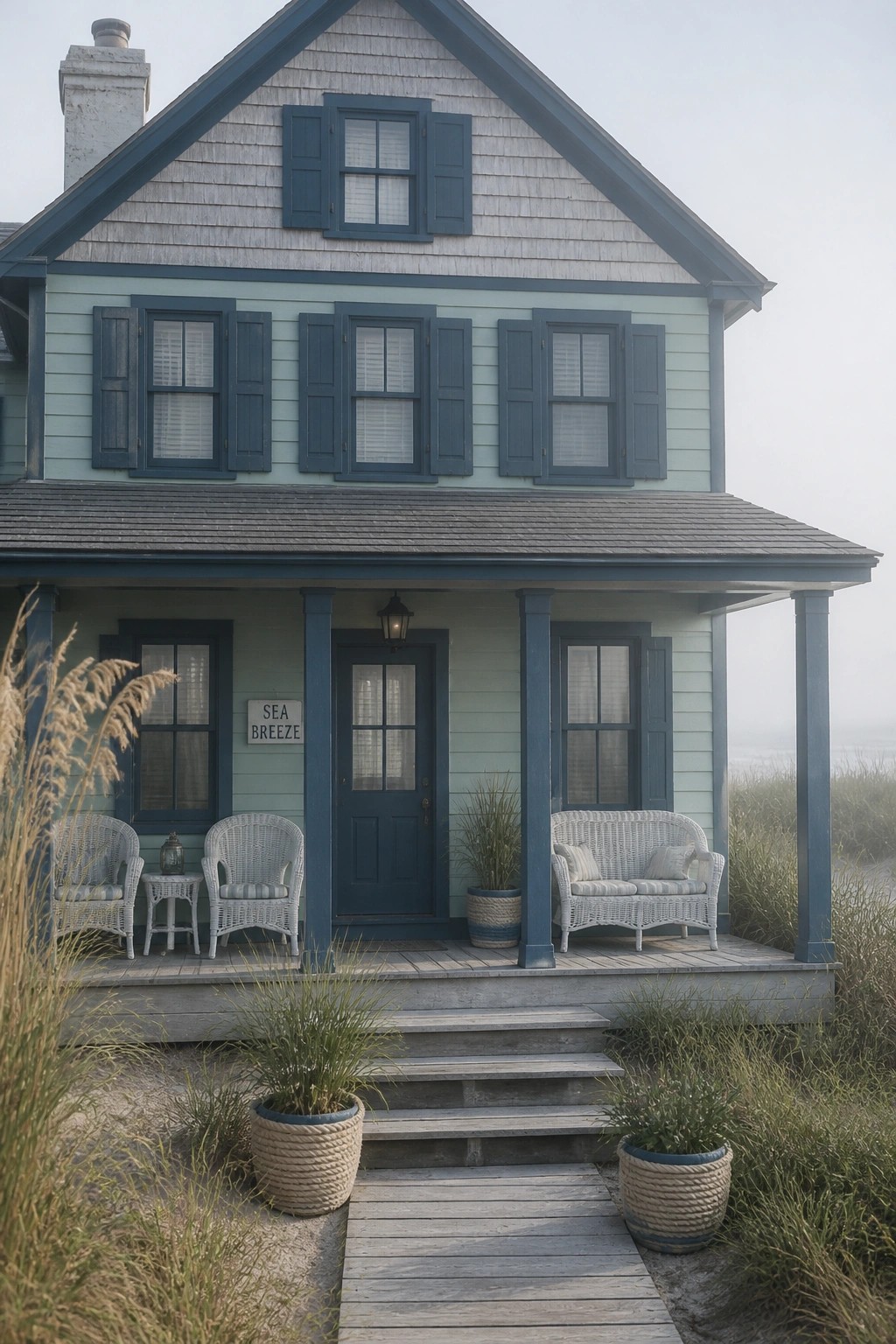
This soft blue green on the siding sits right in that in-between space, more muted than a true teal but fresher than a plain gray. It has a cool lean that keeps the whole exterior feeling light without going too bright next to the dark trim.
The color works best on farmhouses or cottages where you want a touch of coastal without the full beach look. It pairs cleanly with natural wood, stone paths, and darker accents, though it can feel a bit flat if the light is very harsh or if you skip the contrast on the trim.
Soft Gray Siding
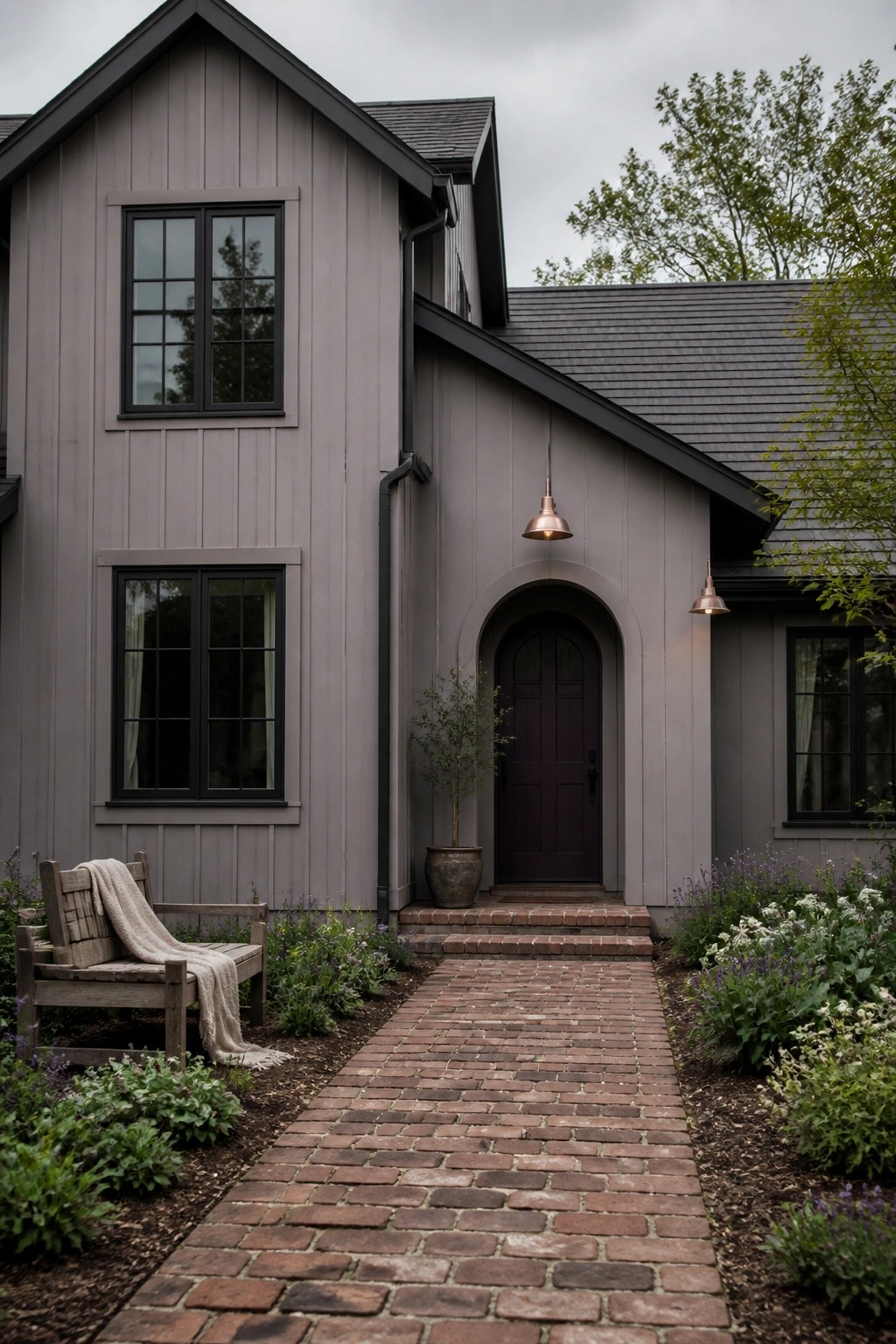
This soft gray siding color keeps things simple while still feeling fresh. It reads as a muted gray with a touch of warmth and seems closest to Sherwin Williams Repose Gray, Benjamin Moore Horizon, or Behr Silver Chain.
The color sits nicely next to the dark trim without looking too cold outside. It works well on farmhouses that have brick or wood accents and holds up in both bright and overcast light.
Muted Sage Green Siding
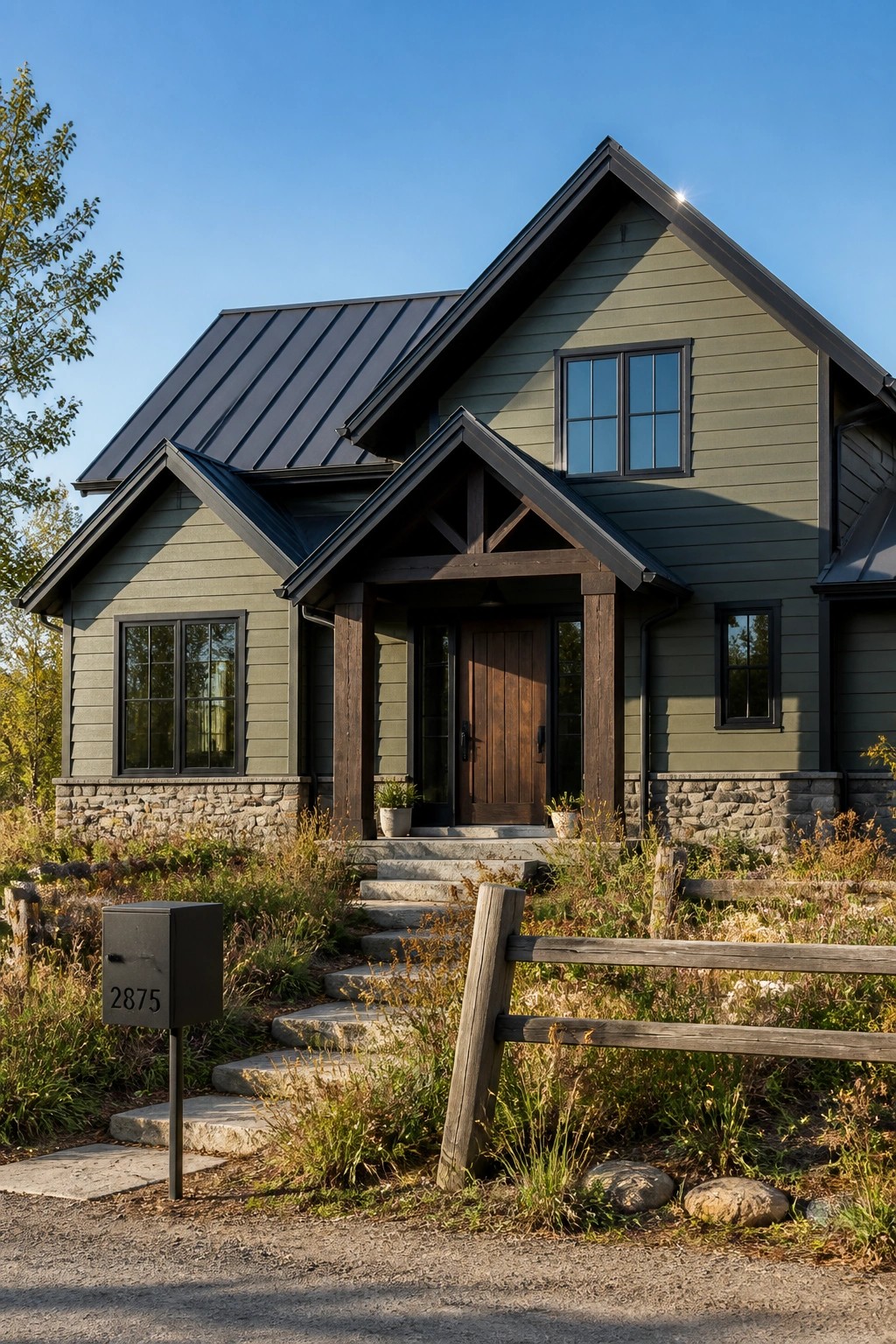
This muted sage green on the siding gives the house a calm, grounded look without feeling too bright or bold. It sits somewhere between green and gray, which helps it work with both the stone foundation and the dark trim around the windows and roofline. Many people like this kind of color because it still reads as a farmhouse but does not demand attention.
The undertone stays fairly cool, so it holds up well in bright sunlight and pairs cleanly with black or deep charcoal details. It tends to suit homes with natural materials like wood or stone nearby. If your trim is already dark, this green keeps the whole exterior feeling balanced rather than heavy.
Farmhouse Greige With Black Windows
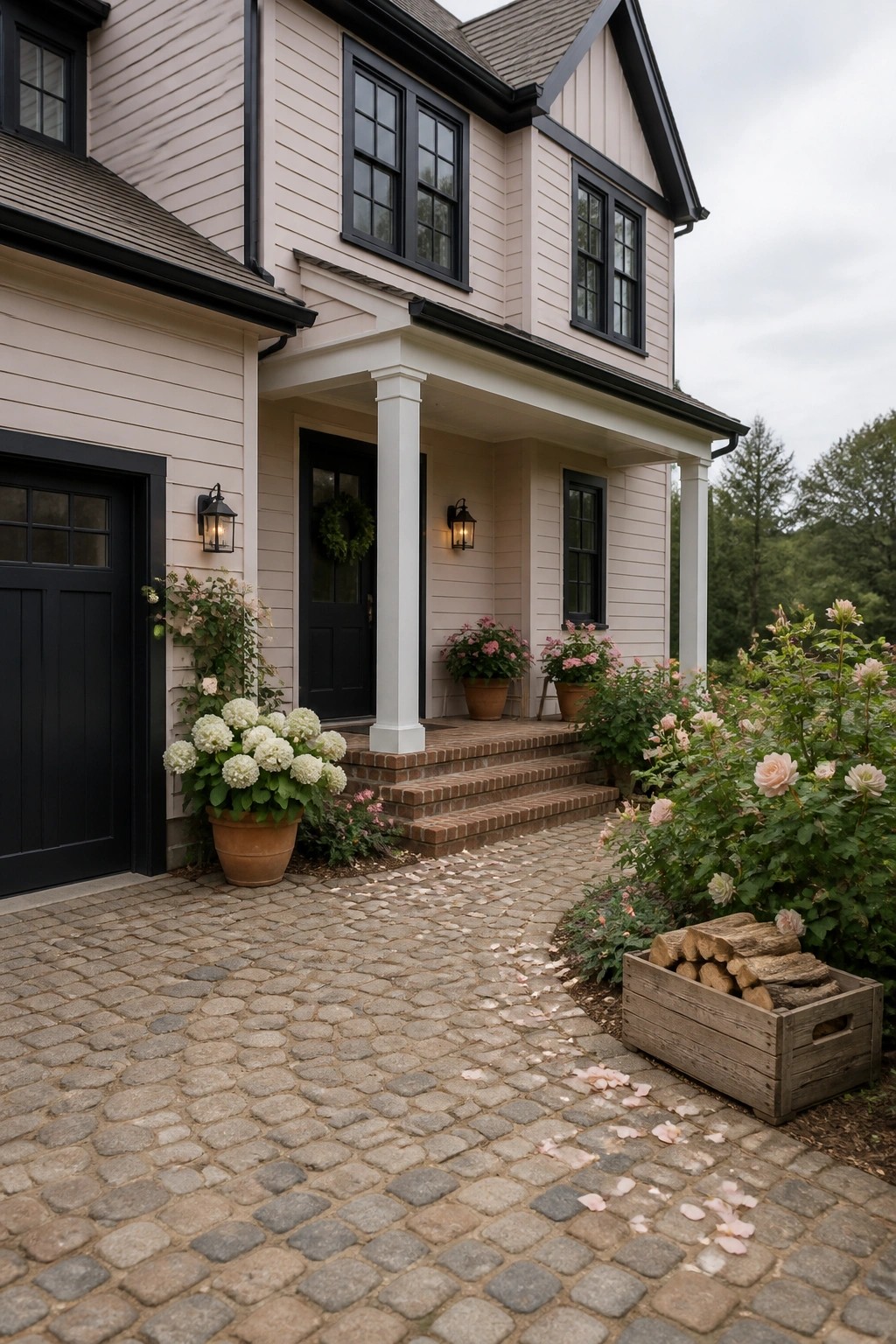
This soft greige siding gives the house a quiet, lived-in look that still feels fresh. It sits in that middle ground between beige and gray, with a touch of warmth that keeps it from going flat next to the dark trim.
The color works well on farmhouses because it plays nicely with black windows and roofing without looking too stark. It holds up outside in different lights and pairs easily with brick or stone details if you want a bit more texture on the lower part of the house.
Muted blue gray siding
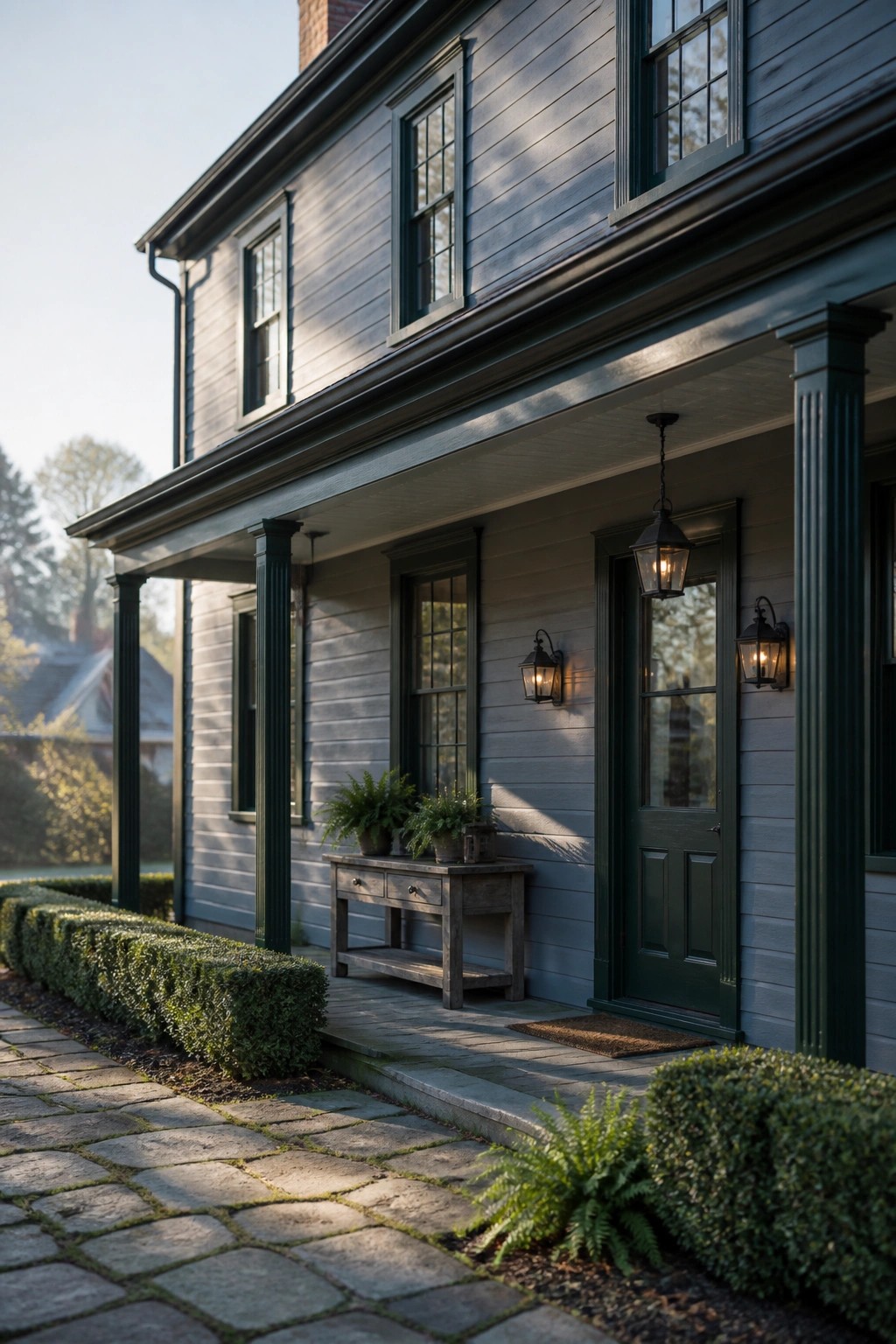
This blue gray siding brings a quiet, steady feel to a farmhouse exterior. It falls into the cool blue gray family and stands out best against dark trim for that clean definition. Colors in this range often lean slightly green or blue based on the light and nearby materials.
It suits homes with simple trim lines and works well alongside dark green or black accents. Pair it with warm wood doors or stone paths if you want to soften the cool tone. Too much shade can make it feel flat so test a sample on site first.
Warm Beige Siding
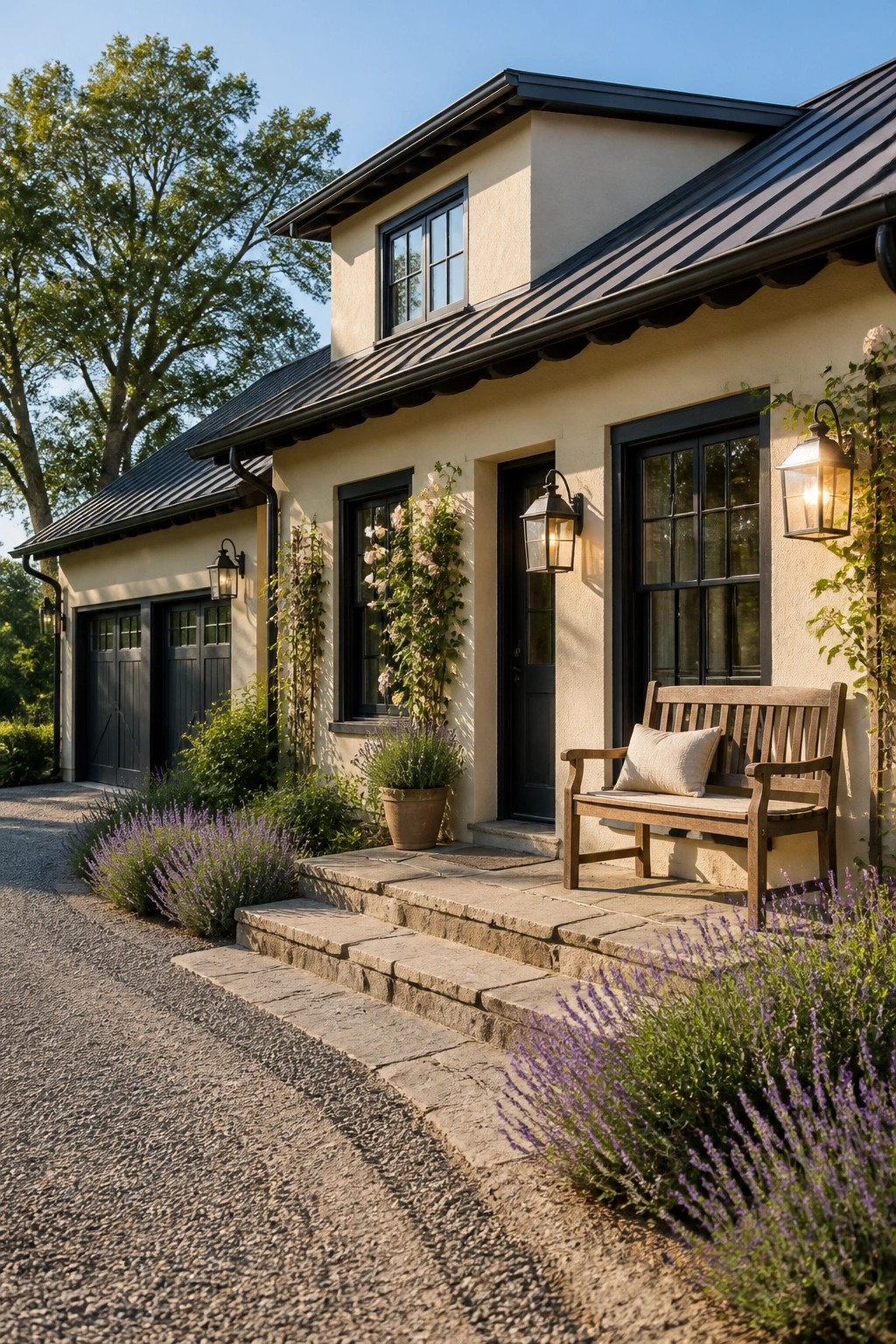
This warm beige siding gives a farmhouse exterior a soft, grounded look that still reads clean. It sits between a light tan and a greige, with a gentle warmth that keeps the house from feeling too stark next to dark trim. Colors like Sherwin Williams Accessible Beige, Benjamin Moore Edgecomb Gray, Behr Almond Wisp, or Farrow & Ball Elephant’s Breath all land close.
The undertone stays warm enough to work with stone and gravel, but it can pick up a hint of pink in late-day light. Pairing it with black windows and doors keeps the whole thing sharp without needing extra contrast. Testing a patch on the actual wall is worth it before committing.
Light Greige Farmhouse Siding
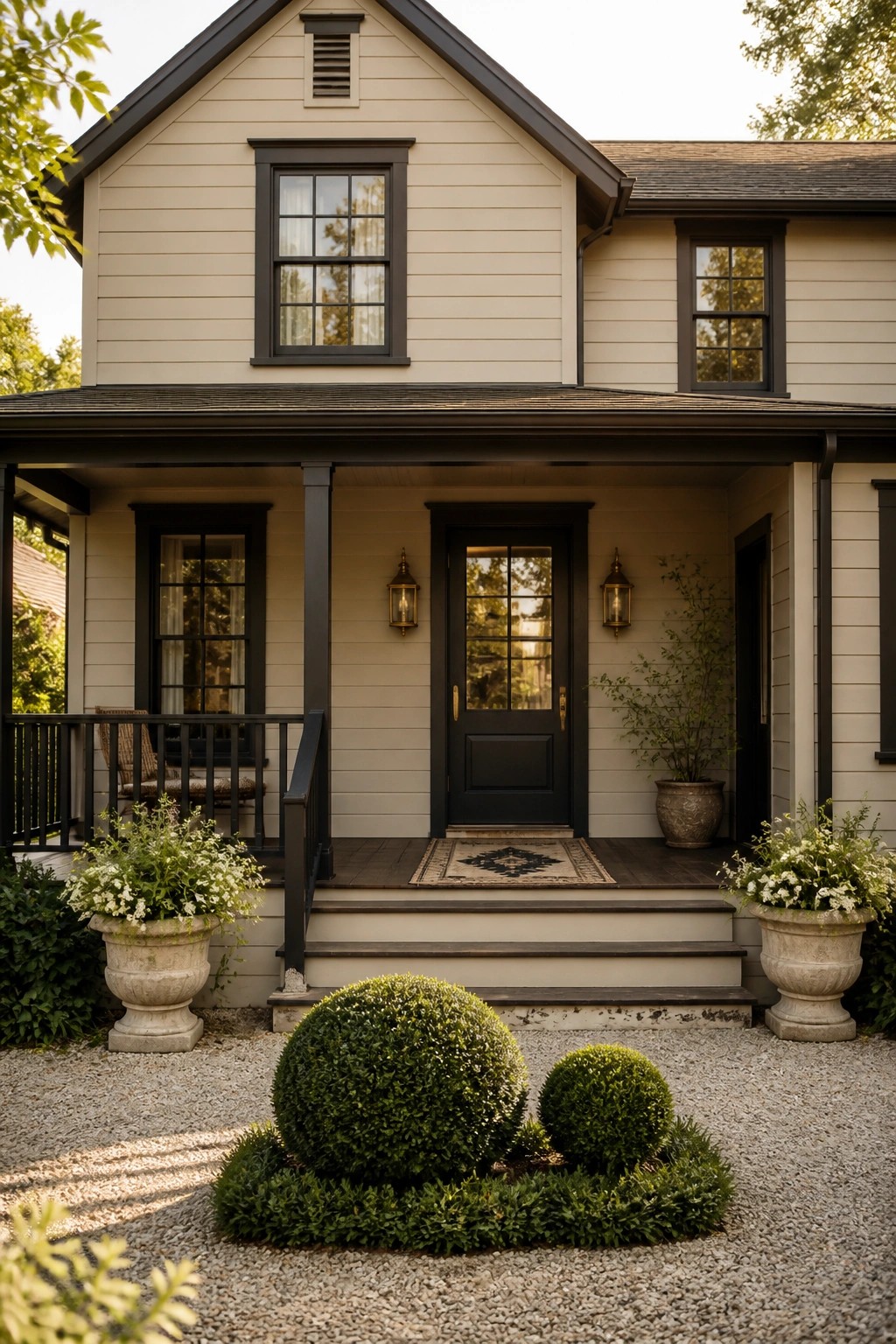
This house uses a light greige on the siding that sits right between beige and gray. It feels warm enough to look inviting but stays neutral enough to work with dark trim without clashing.
The color has a soft warm undertone that holds up well next to gravel and stone. It pairs best with black or charcoal accents and suits simple farmhouse exteriors that need a little softness. It looks closest to Sherwin Williams Accessible Beige, Benjamin Moore Edgecomb Gray, Behr Greige, and Farrow & Ball Light Gray.
Dark Navy Siding
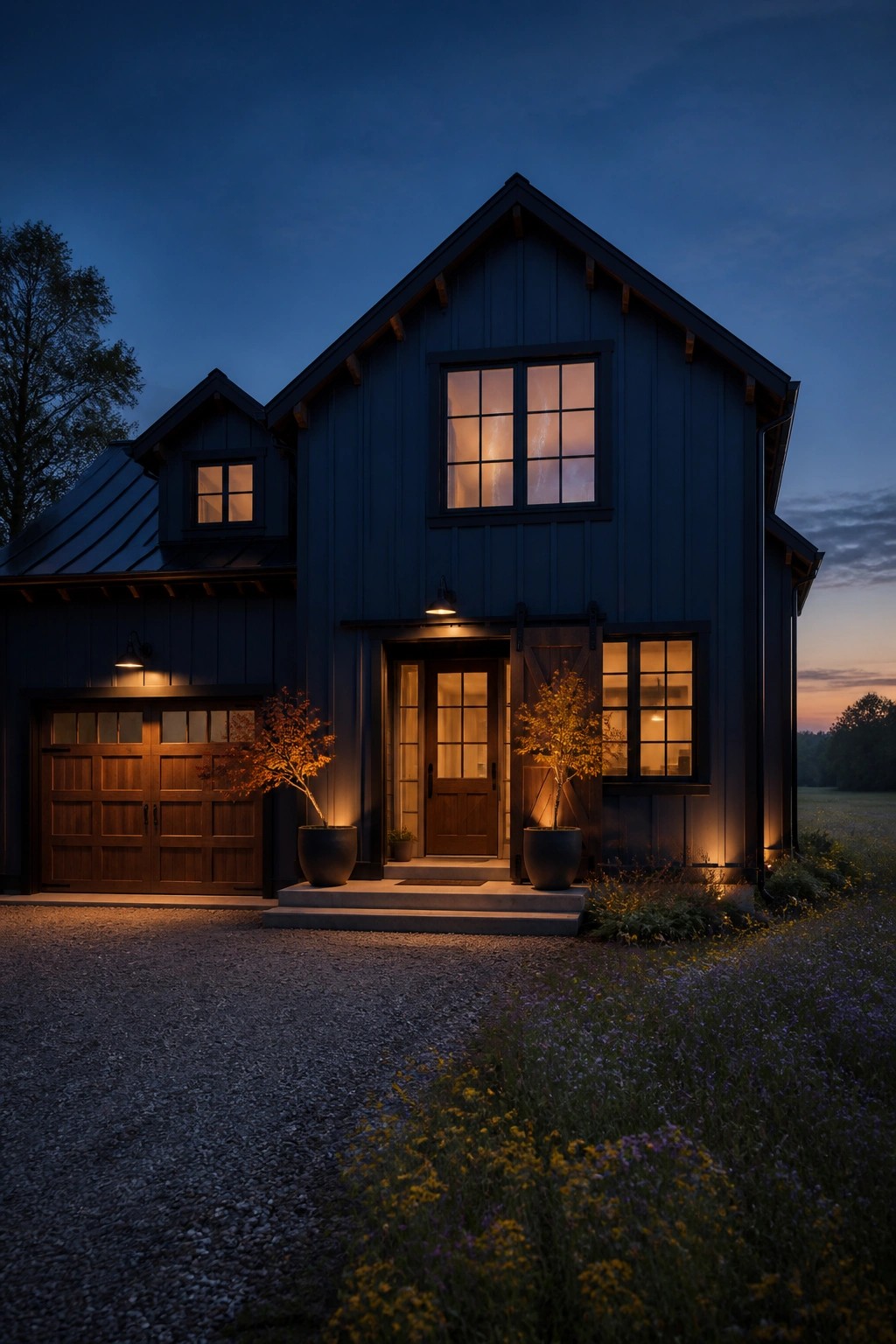
This deep navy blue on the siding gives the house a strong but simple look. It sits in that cool blue family and reads darker than most navy shades once the light starts to fade. The color holds up well against the dark trim and helps the wood doors stand out without needing extra contrast.
It works best on farmhouses that already have black or charcoal trim and a metal roof. Pair it with natural wood doors or warm gravel paths to keep the whole exterior from feeling too cold. Watch how it shifts in full sun though, since the blue can pull a bit greener in bright light.
Bright White Siding
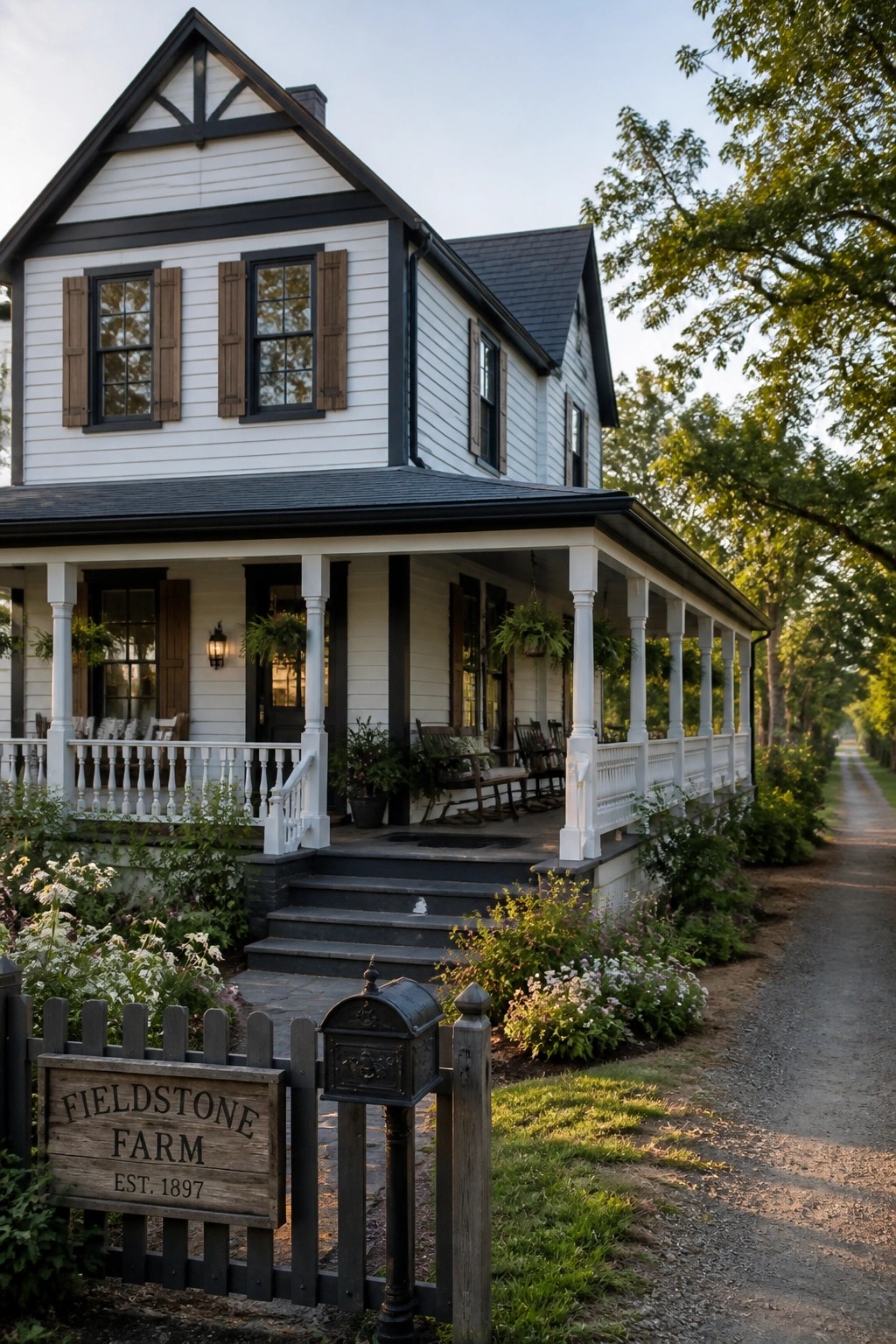
This bright white siding gives the house a clean, simple look that works well with dark trim. The color stays light and fresh without feeling too stark, which makes the whole exterior feel sharp and put together. It reads as a true white rather than something with heavy warmth or coolness underneath.
It looks closest to Benjamin Moore Simply White or Sherwin Williams Pure White, with Behr Ultra Pure White as another close option. The white holds up nicely next to dark windows and wood accents. Just make sure the trim color is deep enough so the siding does not wash out.
Frequently Asked Questions
Q: How do I pick a dark trim shade that works with my siding color? A: Test a few samples right on your house at different times of day. Go one or two shades deeper than your main color to keep that crisp outline without overpowering the whole look.
Q: Will dark trim make my house feel smaller or darker inside? A: It can if you go too heavy on every edge. Stick to trim only on windows doors and corners so the main walls still reflect light and the rooms stay bright.
Q: What if my roof is already a deep black? A: Match the trim to the roof for a strong unified frame. This pulls the whole exterior together without adding extra colors that might compete.
