

I spent a whole afternoon last fall staring at paint chips against my own siding and realized greens never look the same once the sun moves.
The way a shade sits next to roof shingles or landscaping can either soften the whole house or make it feel out of place by midday.
Testing a few quarts on the actual exterior walls is the only way to see how they shift through the seasons.
Some greens hold their depth even under overcast skies while others wash out next to brick or stone.
I always check how the color reads at dusk before committing to the full project.
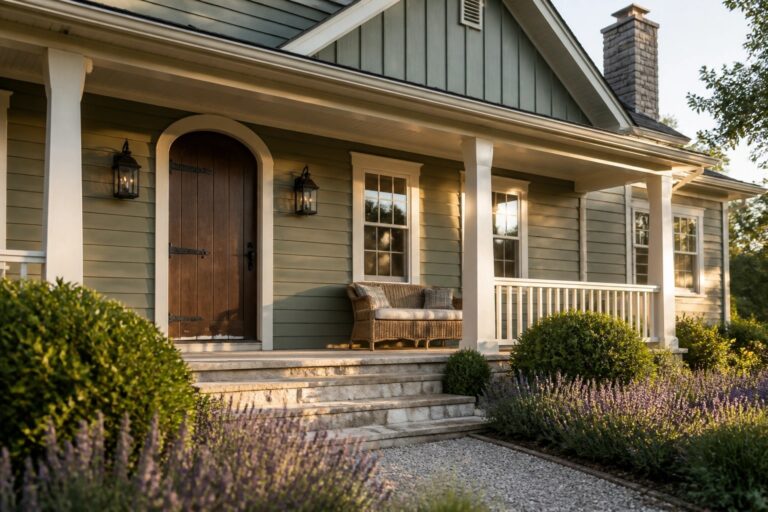
Soft Sage Green With Gray Undertones
This soft sage green siding gives a farmhouse that calm, lived-in look without trying too hard. It sits in a muted green family with a slight gray cast. The color reads closest to Benjamin Moore Saybrook Sage, Sherwin Williams Clary Sage, Behr Aloe, or Farrow & Ball Lichen.
The gray undertone keeps it from turning too bright outdoors and helps it blend with white trim and stone. It works best on traditional or updated farmhouses where you want the house to feel grounded rather than bold.
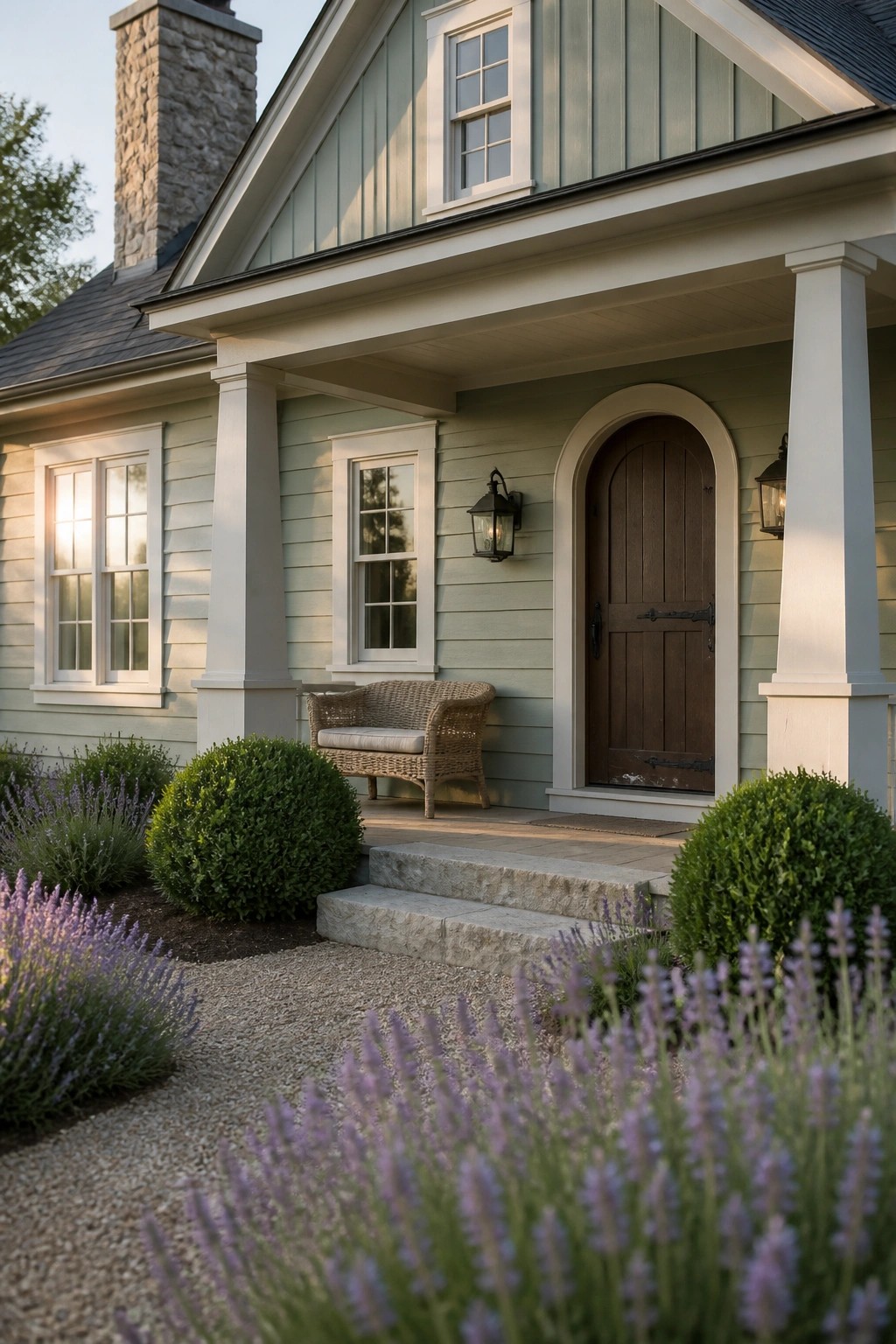
Muted sage green siding
This muted sage green on the siding gives the house a soft, grounded look that sits nicely between green and gray. It feels natural without being too bright or too dark, which makes it easy to live with on a farmhouse exterior. The color has a cool undertone that keeps it from feeling overly earthy.
It pairs well with stone foundations and dark metal roofs, and it holds up nicely against surrounding greenery. Watch how it shifts in different light, since the gray tones can read cooler in shade and a bit warmer in sun. Popular matches include Sherwin Williams Evergreen Fog, Benjamin Moore Saybrook Sage, Behr Aged Olive, and Farrow & Ball Lichen.
Sage Green With White Trim and Wood Accents
This house uses a muted sage green on the siding. It is a cool green with gray undertones that feels earthy rather than bright, and it sits nicely against the white trim and wood door.
The color works best on traditional farmhouses or older homes where you want the house to blend with trees and fields. It pairs well with natural wood and black metal details, though it can look a little flat if the light is very harsh.
Calm Sage Green for Simple Farmhouse Exteriors
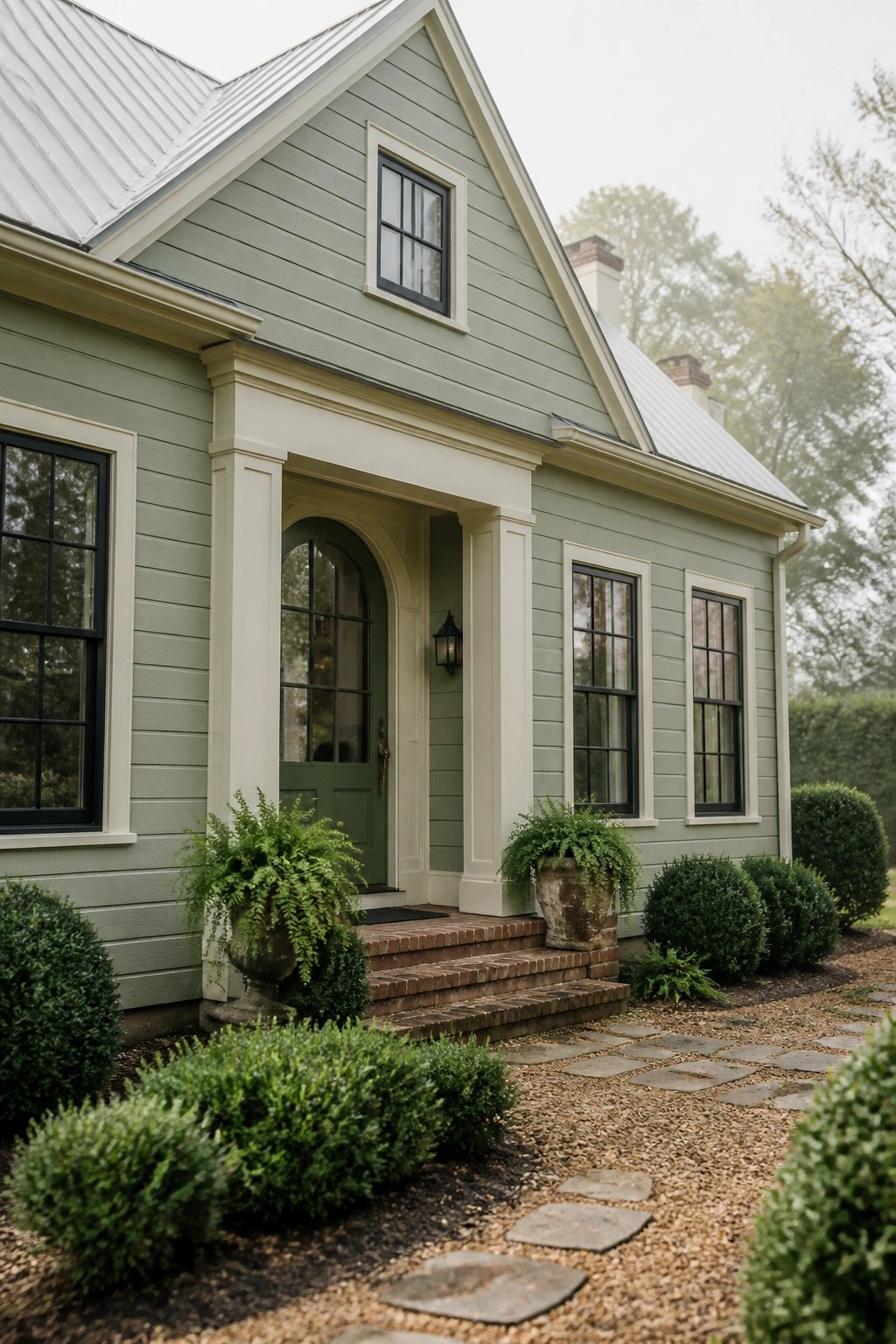
This soft sage green brings a calm look to a farmhouse exterior. It has a muted tone that feels easy and natural rather than bright or trendy.
The color has a slight cool undertone that reads best with white trim. It works well on simple homes and pairs nicely with black windows or red brick steps.
Sage Green Paired With Stone and Wood Trim
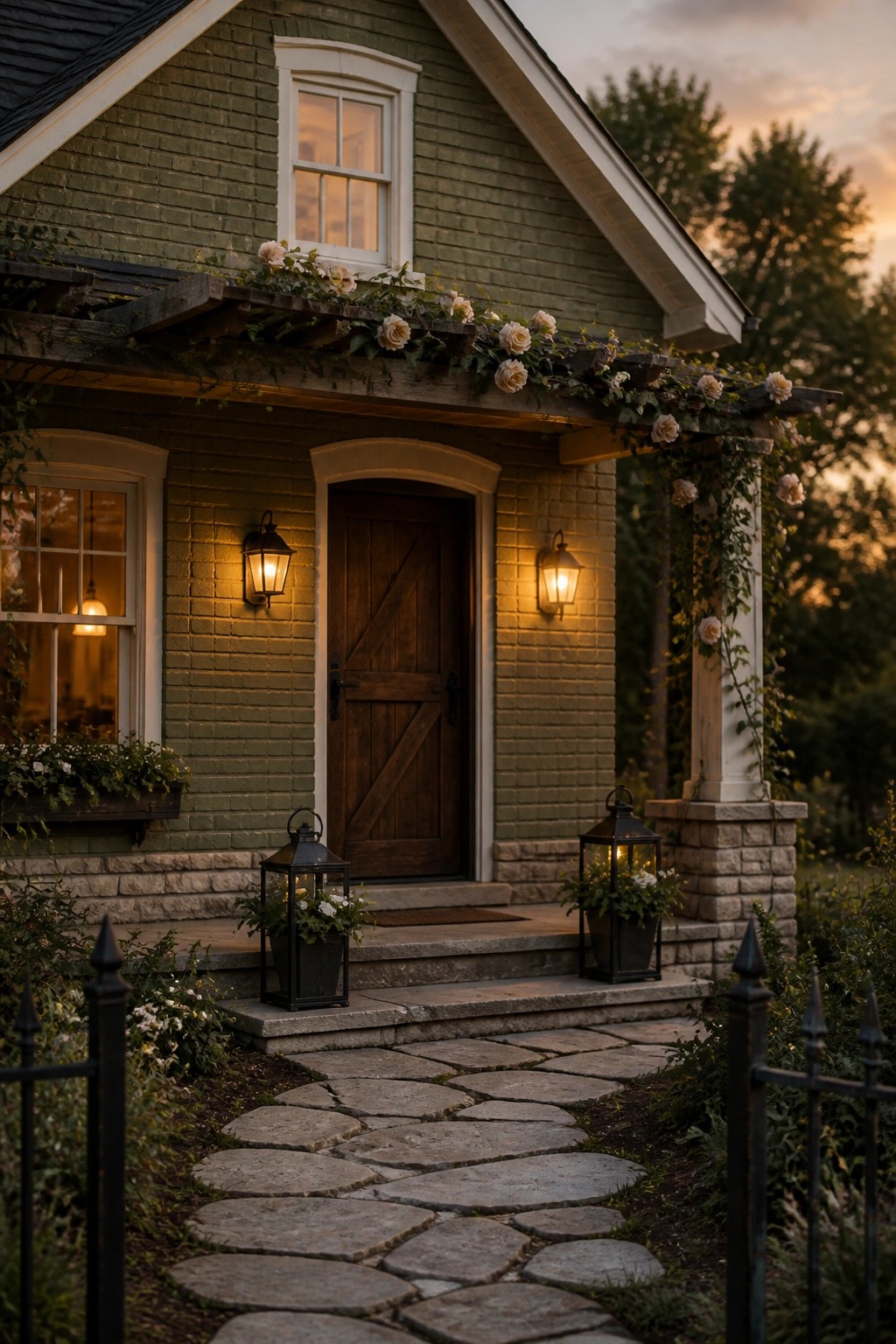
This muted sage green works well on farmhouse siding because it blends into the landscape without looking too bright or too dull. It has a grayish cast that keeps the house from standing out too much against trees or fields.
The color sits nicely next to stone and wood trim. It looks closest to Sherwin Williams Clary Sage, Benjamin Moore Saybrook Sage, or Behr Dried Thyme. Avoid pairing it with cool gray tones or it can start to feel flat.
Cool-Toned Sage Green for Large Farmhouses
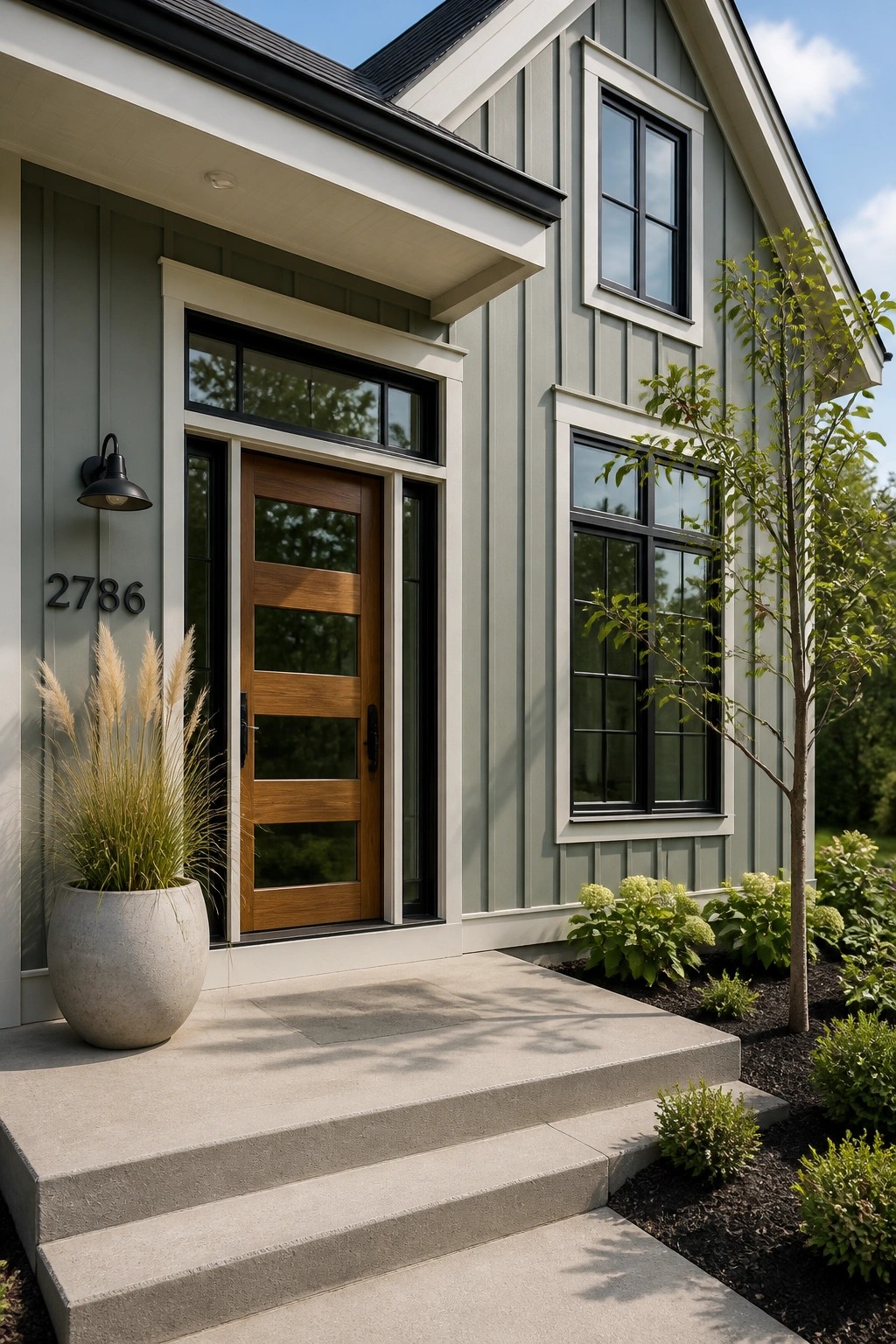
This house uses a muted sage green that sits between gray and green. It feels calm and blends easily with natural surroundings without looking too bright or too dark. The color works well on larger siding areas because it stays soft even in full sun.
It has a cool undertone that pairs nicely with white trim and black window frames. Try it on homes with simple architecture where you want the color to feel grounded rather than bold. Watch how it shifts in different light since the gray side can come forward on overcast days.
Light Sage Green for Bright Farmhouse Exteriors
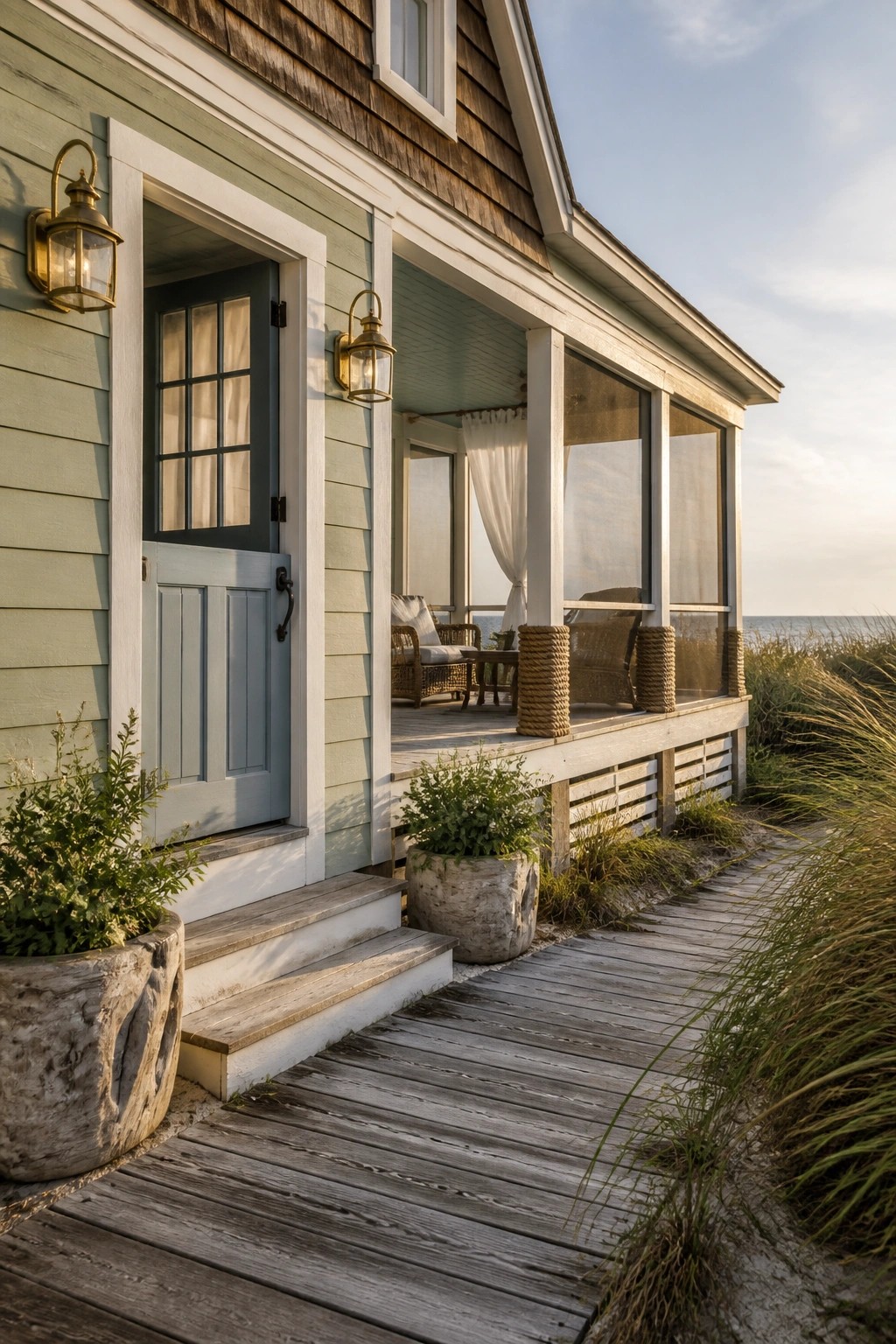
This light sage green on the siding is a good pick for farmhouse exteriors. It has a soft, slightly gray feel that keeps the house from looking too bright or too dark against natural surroundings.
The color works best with white trim and wood details. It can lean cool in strong sun, so testing it on a large patch helps avoid surprises once the whole side is painted.
Dark Green Siding
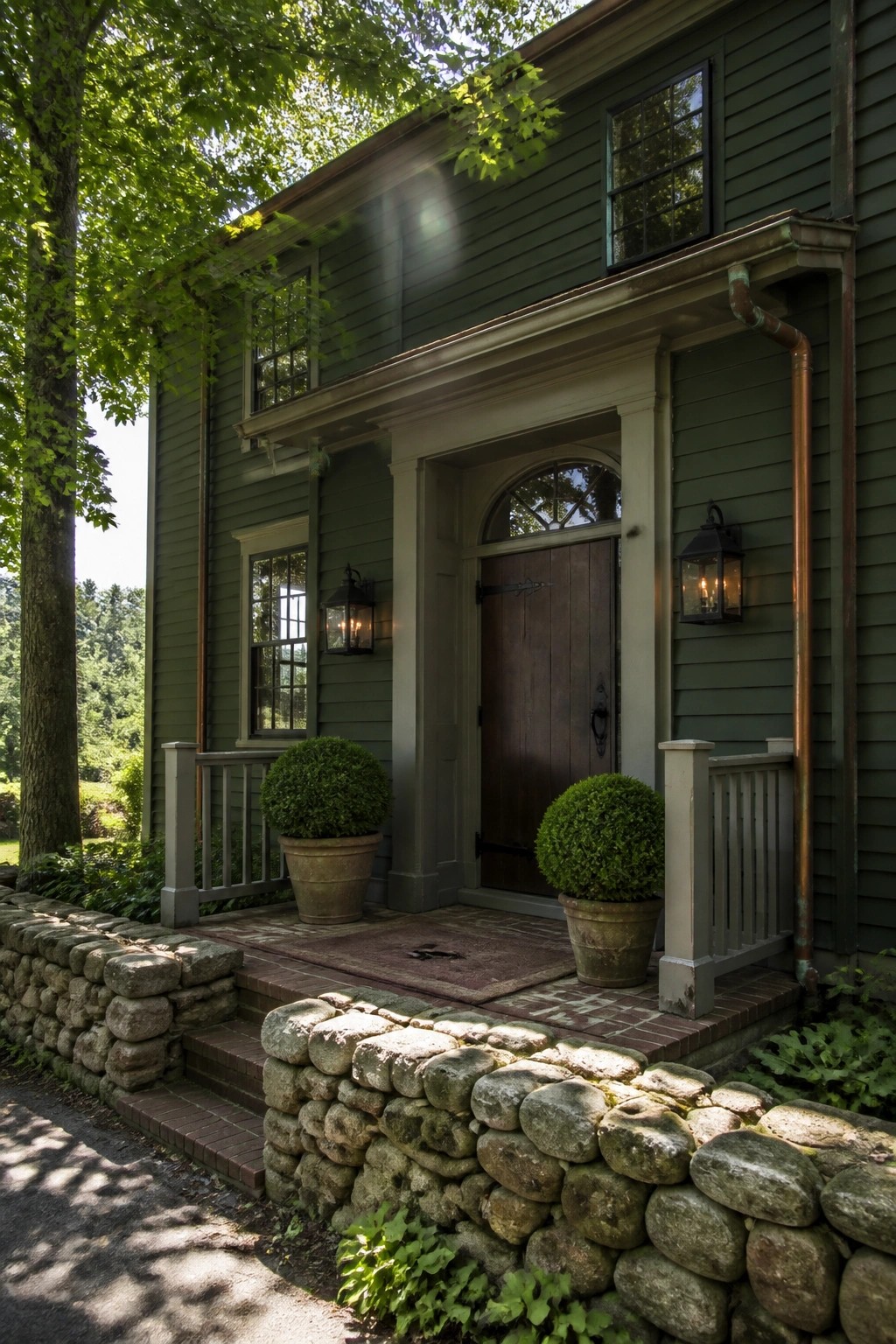
This dark green siding has a muted tone that leans slightly gray, giving it an earthy feel without looking too bold. It works as a solid option for farmhouses because it blends with natural surroundings while still standing out from lighter trim or brick details.
The color holds steady in changing light and pairs well with stone walls or wood accents. Sherwin Williams Evergreen Fog comes close, as do Benjamin Moore Saybrook Sage and Behr Olive Grove.
Blended Gray-Green Farmhouse Siding
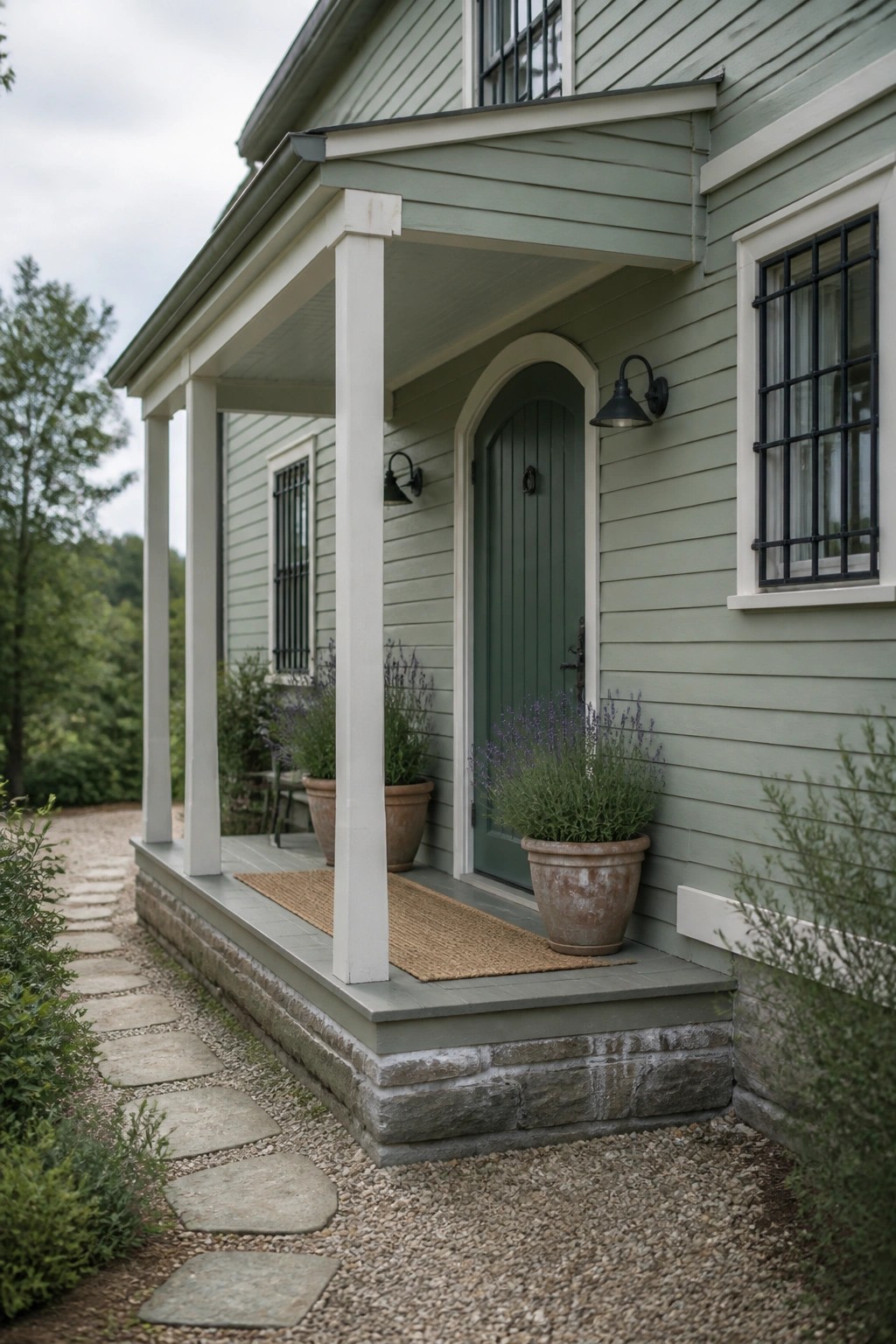
This soft sage green on the siding gives a calm, natural look that works well for farmhouse exteriors. It sits somewhere between gray and green with a muted tone that feels easy on the eyes outdoors.
The color has a cool undertone that shows up more in shade and pairs cleanly with white trim and stone. It suits homes with simple lines and works best when you want the green to blend rather than stand out.
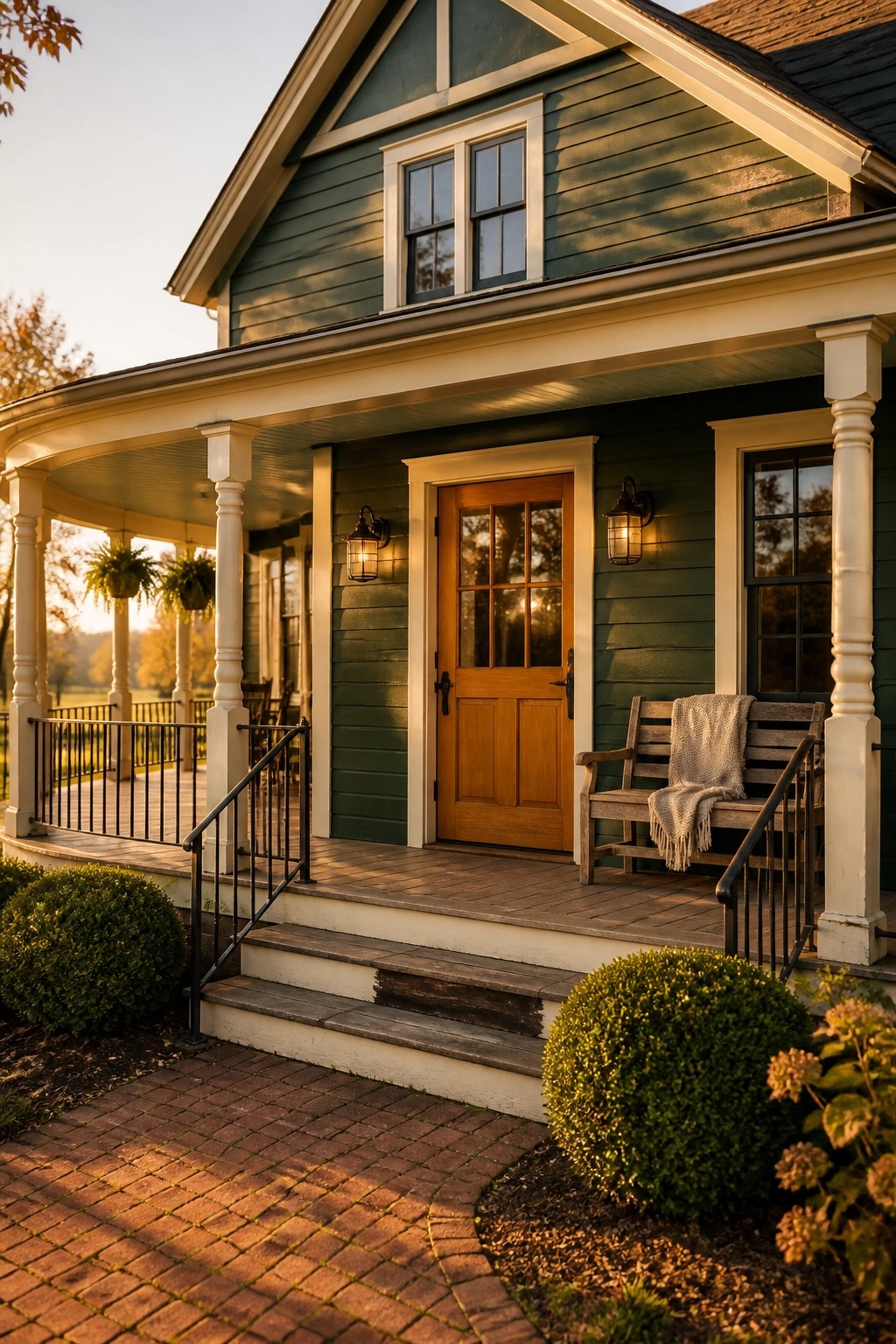
Deep green siding
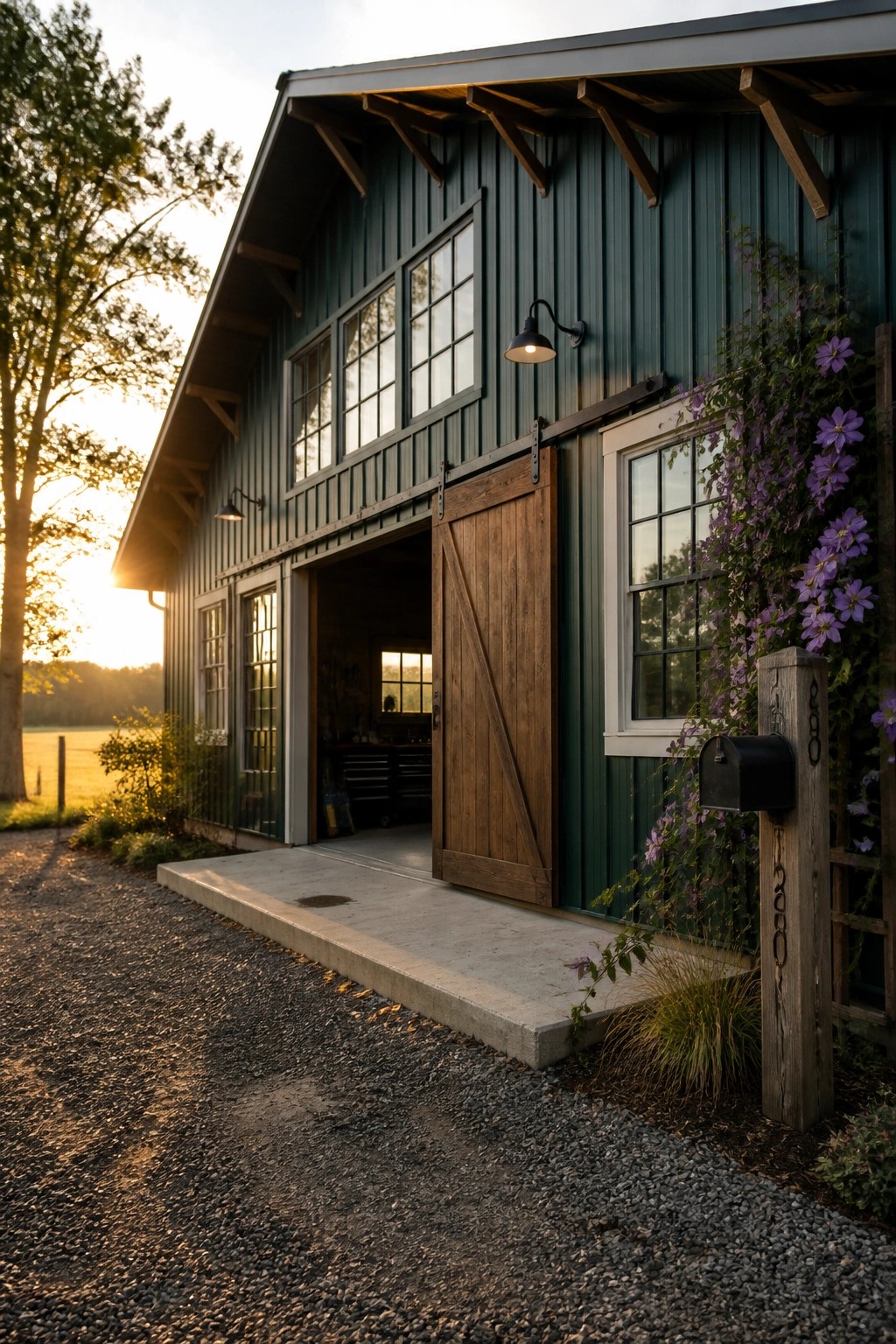
This deep green sits right in the forest green family. It has a cool blue undertone that keeps the color from feeling too earthy or flat, and it works especially well on larger surfaces like siding where you want something that still reads calm. Colors like Sherwin Williams Forest Green, Benjamin Moore Hunter Green, Behr Black Forest, or Farrow & Ball Green Smoke all land close to this shade.
It pairs easily with warm wood doors and simple trim without competing. On an exterior this dark, watch how it shifts in full sun versus shade since the blue undertone can look slightly cooler in bright light.
Warm Sage Green for Older Farmhouses
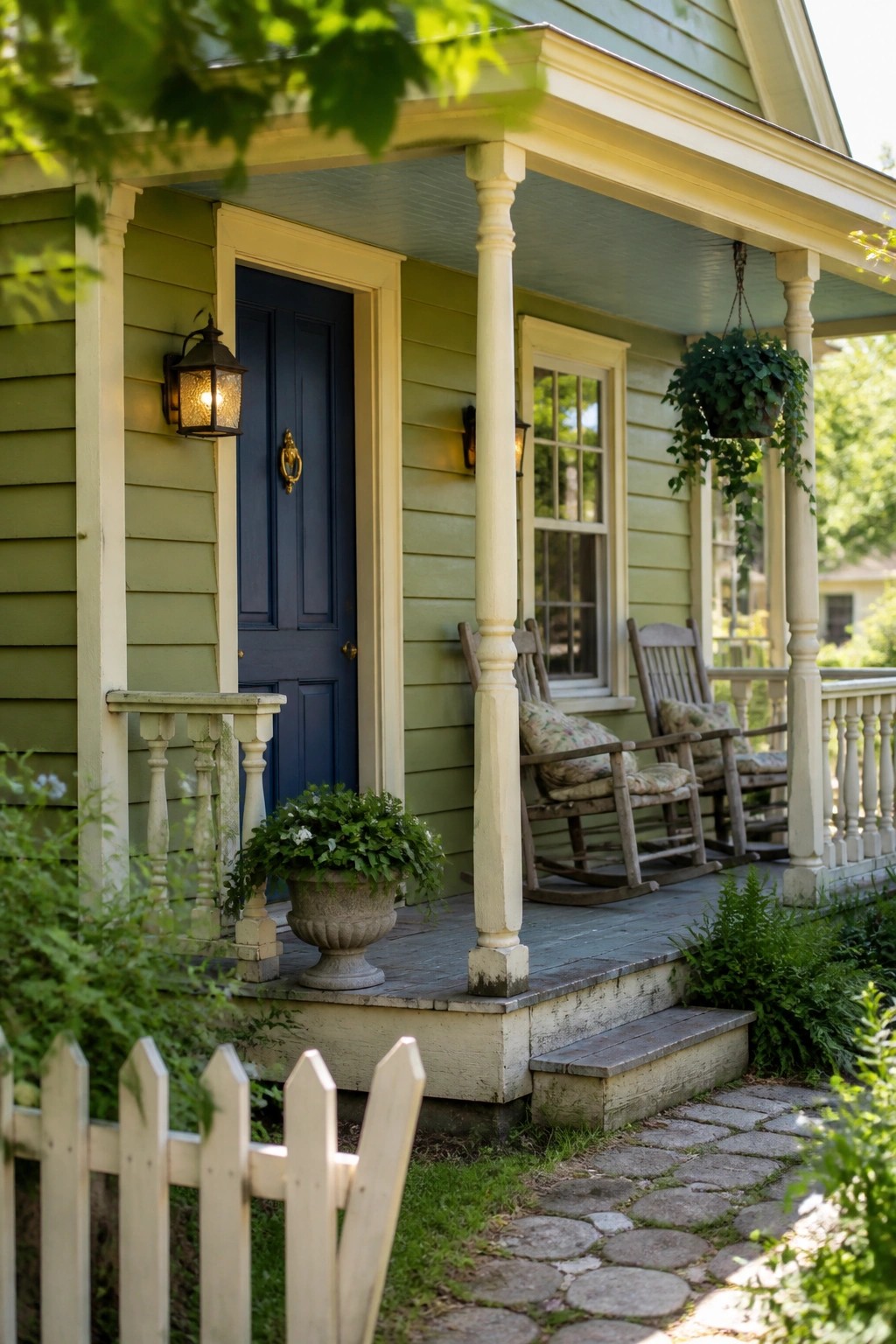
This house uses a soft sage green that feels calm and natural on the exterior. The color sits somewhere between gray and green, with just enough warmth to keep it from looking too cool next to the white trim.
It works best on older homes where you want the siding to blend into the landscape rather than stand out. Pair it with warm white or cream trim and avoid anything too stark, since the green already has a muted quality that can look washed out against bright contrasts.
Earthy Sage Green With Gray Undertones
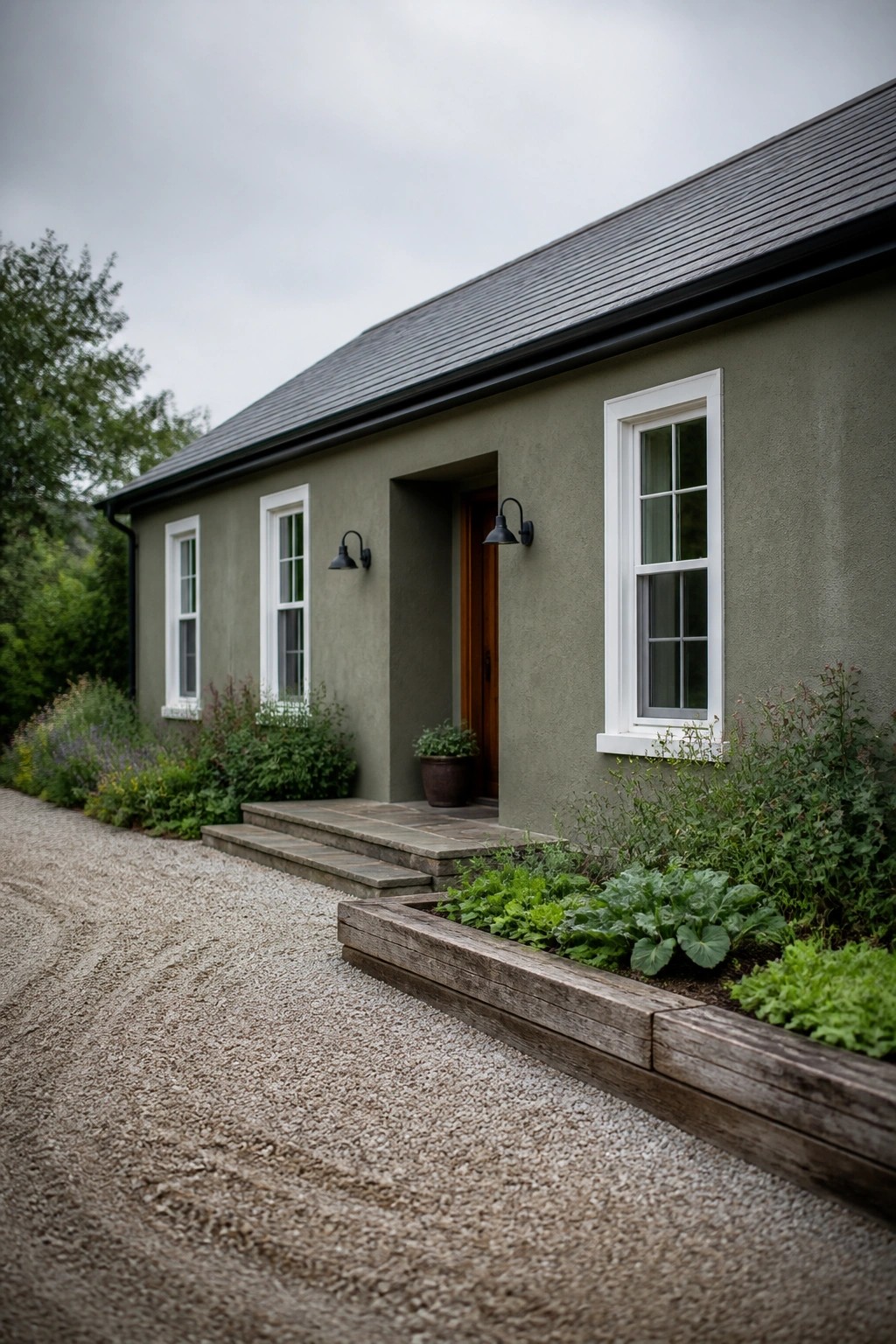
This muted sage green on the house siding gives a calm, earthy look that fits right into a natural setting. It sits somewhere between gray and green without leaning too far either way. Colors like this often read closest to Sherwin Williams Dried Thyme, Benjamin Moore Soft Fern, Behr Aged Eucalyptus, or Farrow & Ball Lichen.
The slight gray undertone helps it stay steady in different lights and pairs easily with white trim and natural wood doors. It works best on farmhouses or simple cottages where you want the color to feel grounded rather than bright. Just watch how it shifts against dark roofing or gravel paths.
Soft Green Siding
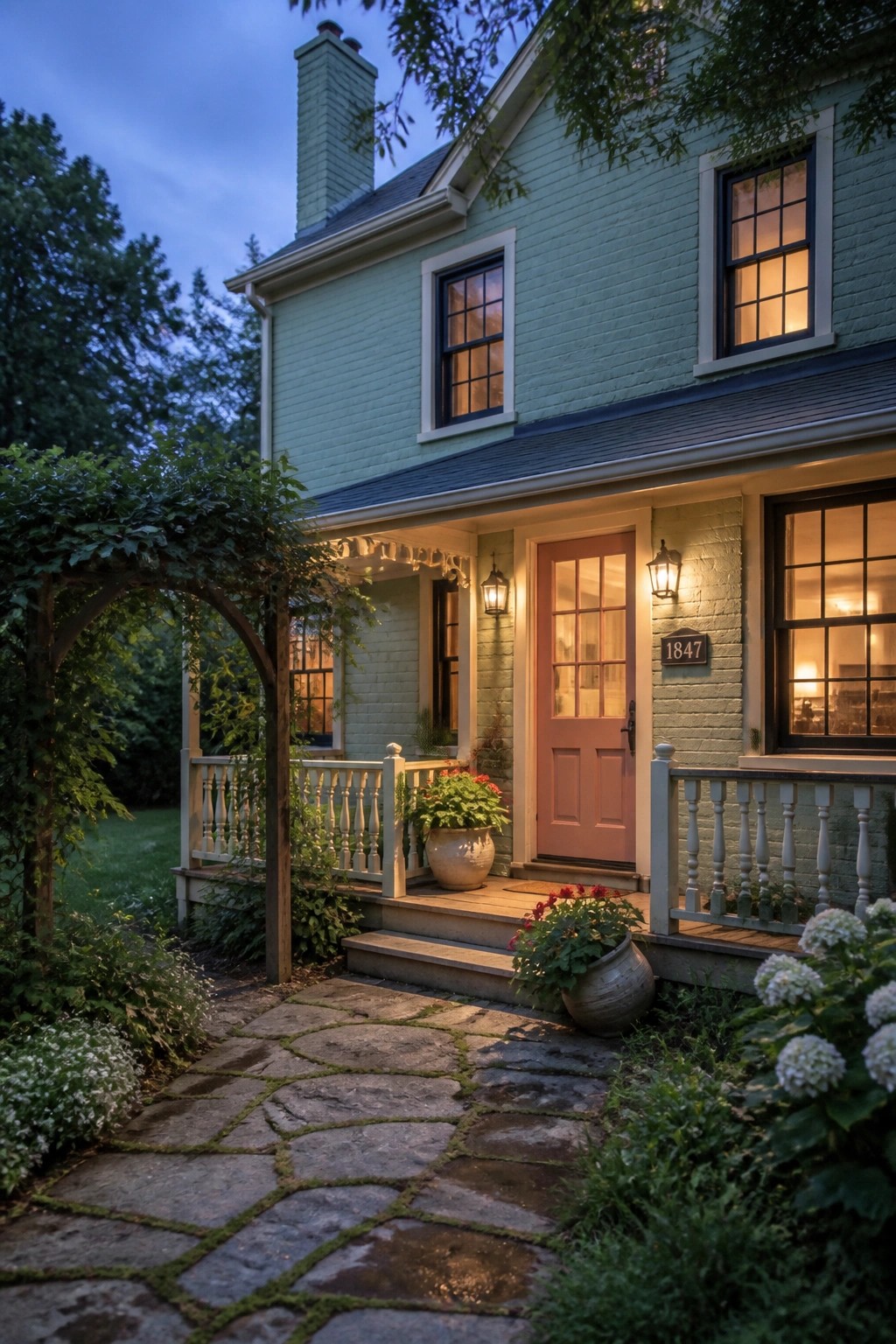
This light sage green on the house siding brings a gentle, nature-based feel that works especially well on older farmhouses. It sits in a cool-leaning family with just enough gray to keep the color calm rather than bright.
It reads very close to Sherwin Williams Quietude, Benjamin Moore Saybrook Sage, or Behr Aged Sage. The color pairs best with warm white trim and sits nicely against brick and stone without competing with them.
Textured Sage Green for Dark Roof Homes
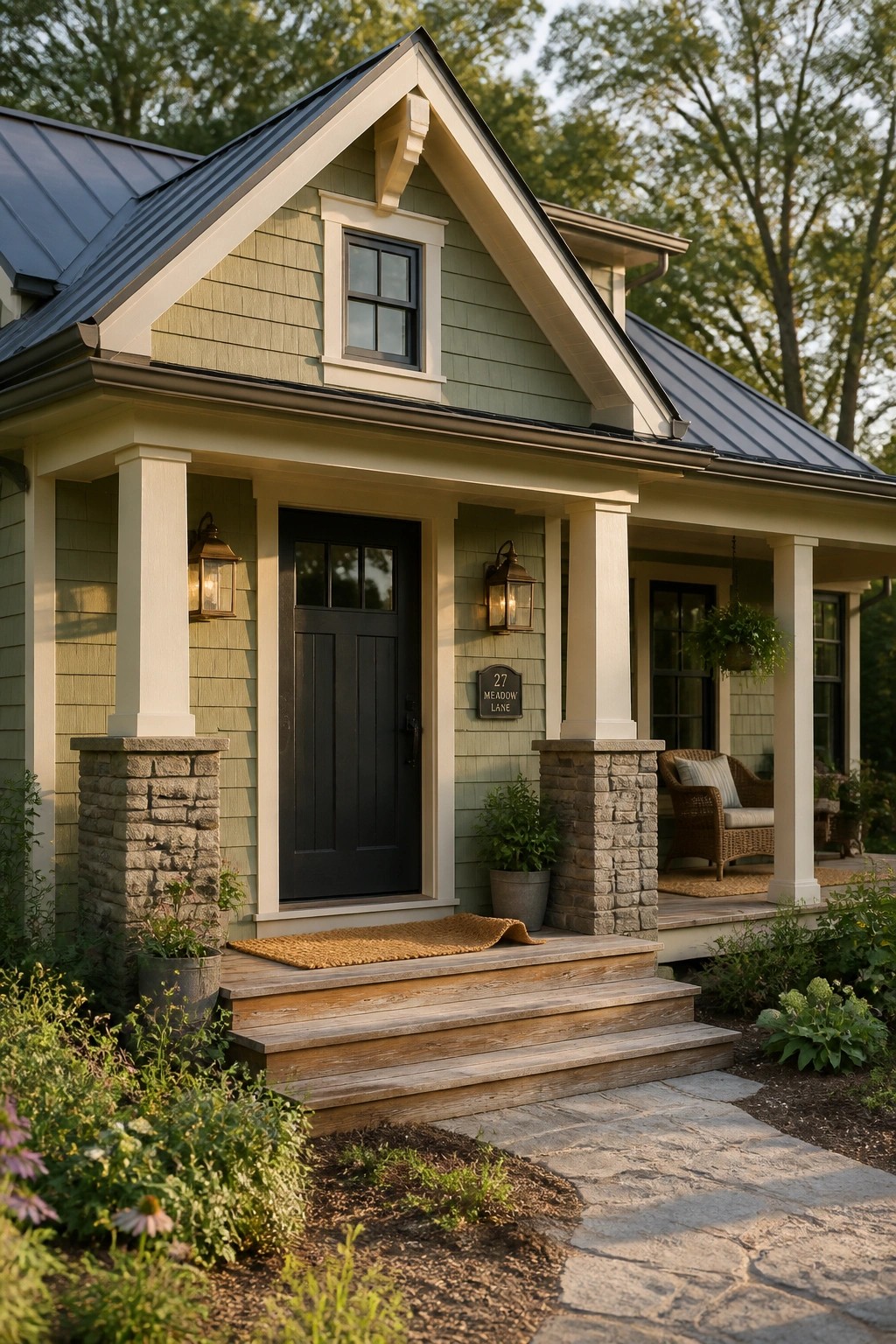
This soft sage green siding gives a farmhouse a quiet, natural look that feels right at home in the landscape. It sits somewhere between gray and green, with enough depth to show texture on wood but not so much that it feels heavy.
The color has a mild gray undertone that keeps it from turning too yellow or blue outside. It pairs easily with white trim and stone bases, and it works well on homes with dark roofs or simple wood accents.
Gray-Green Farmhouse Siding With Warm Trim
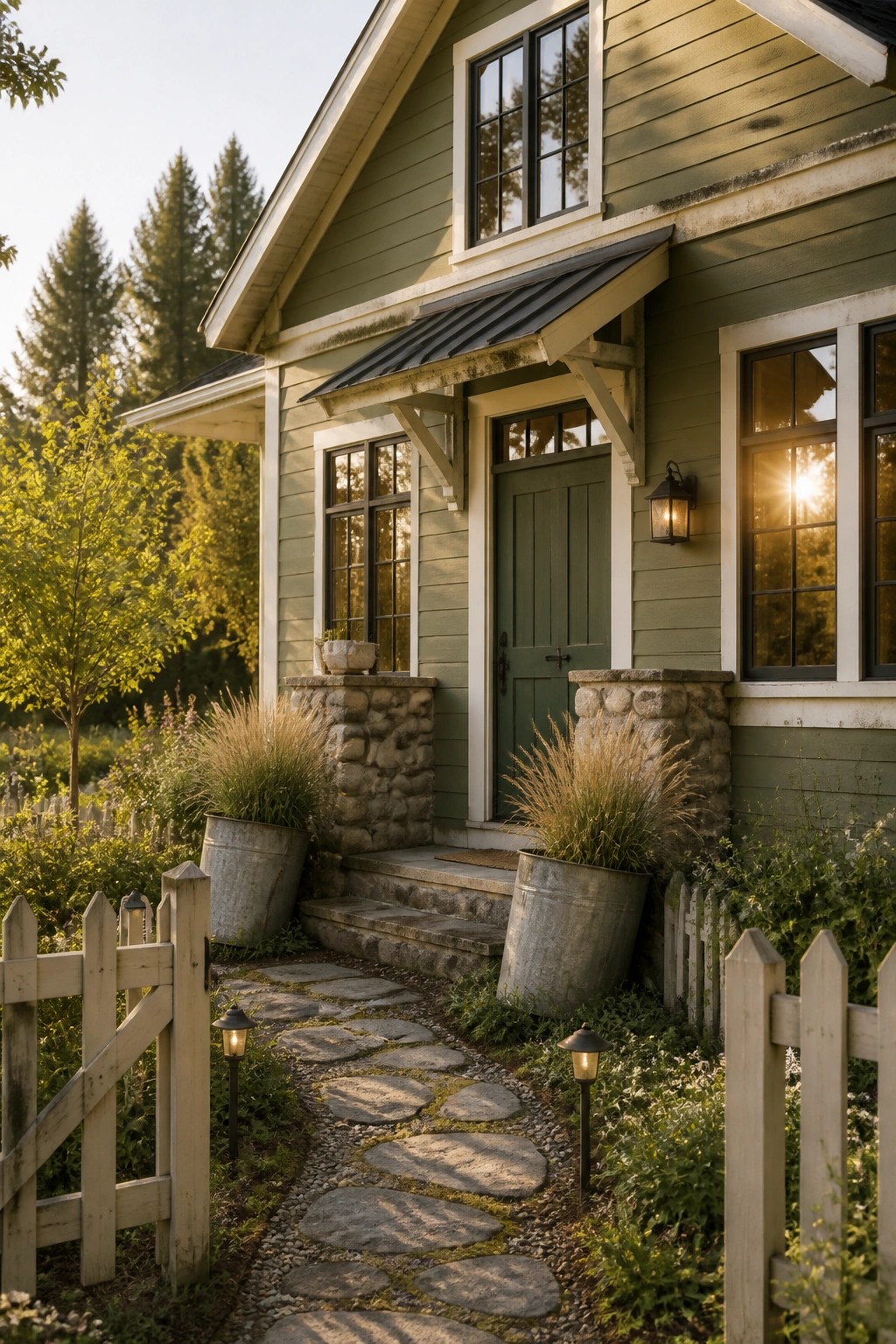
This muted sage green on the siding gives a farmhouse a calm, natural look. It sits somewhere between green and gray, which helps it blend with trees and stone without standing out too much.
It works best with warm white trim and darker accents like the door. Watch how it shifts in different light since the undertones can lean cooler in shade.
Gentle Sage Green With Wood Doors
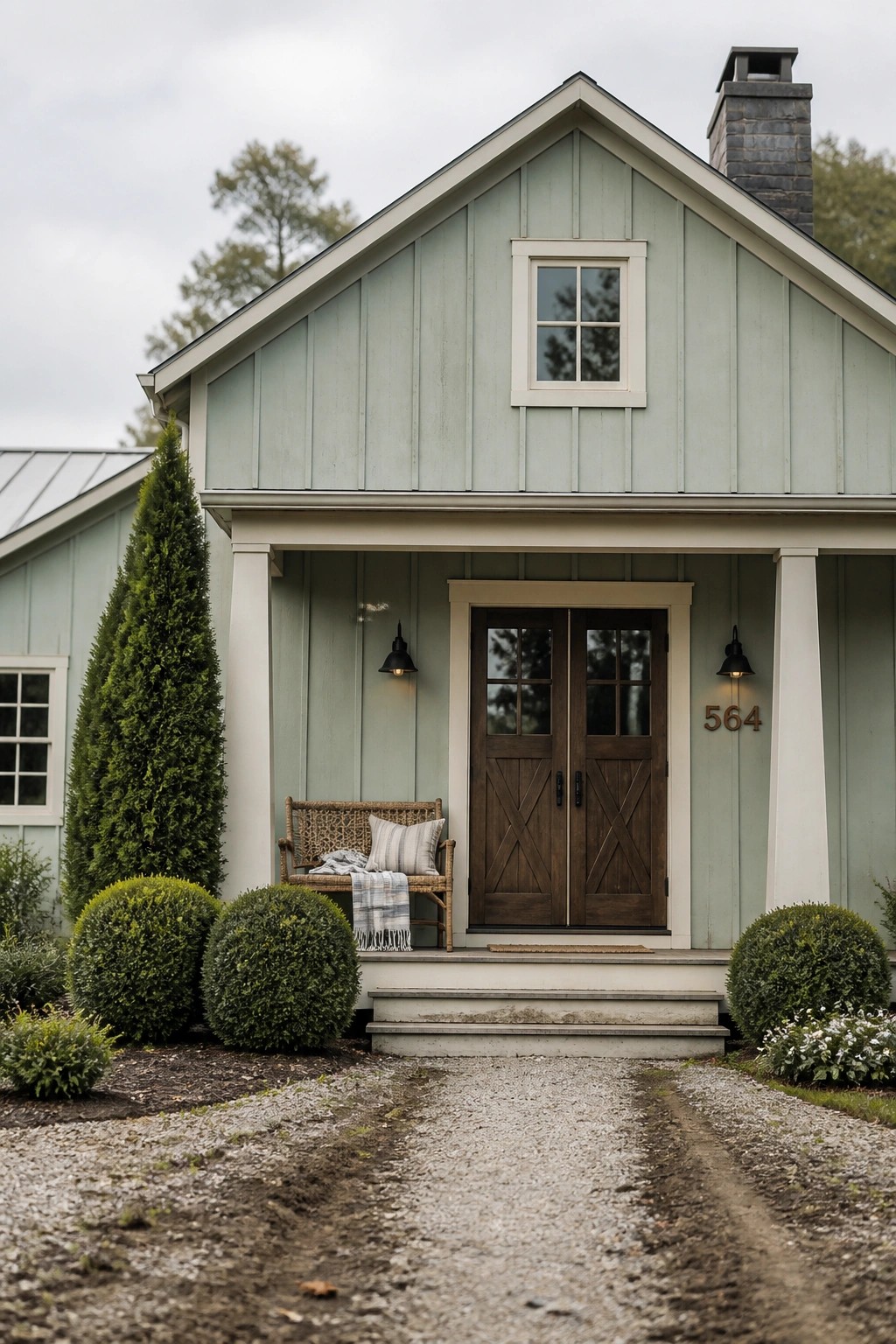
This house uses a soft sage green on the siding. It is a muted green with a touch of gray that feels calm and blends easily into a natural setting.
The color works well with white trim and wood doors. It suits farmhouses that want something gentle rather than bold. Try Sherwin Williams Clary Sage, Benjamin Moore Saybrook Sage, Behr Aged Sage, or Farrow & Ball Lichen.
Rich Forest Green Farmhouse Exterior
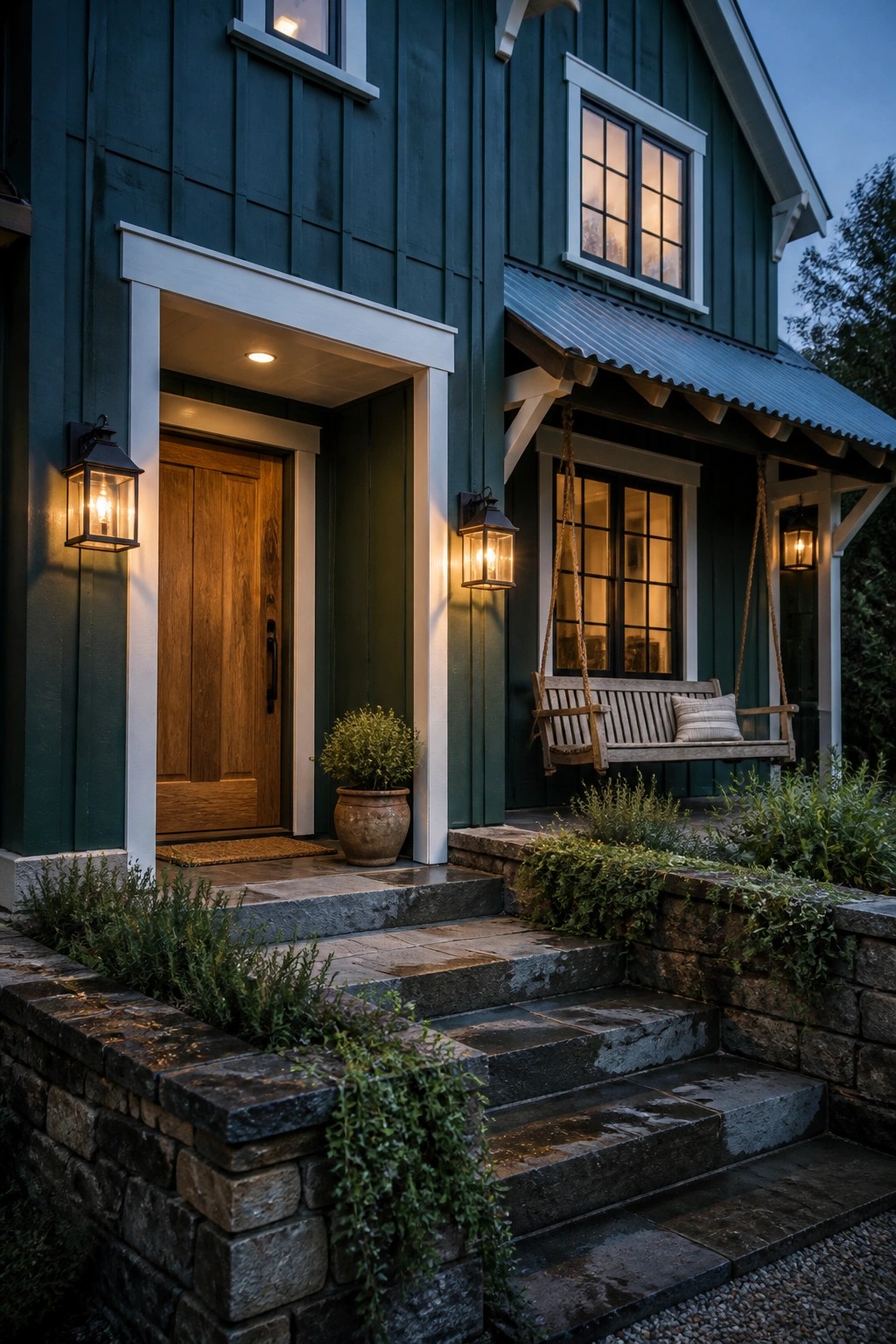
This dark green siding has a rich, earthy tone that feels right at home on a farmhouse. It sits somewhere between a forest green and a deep pine, and the color holds up nicely next to both white trim and natural stone.
The shade works best on homes with good natural light since it can read a bit darker than expected in shade. It pairs well with wood doors and simple metal roofing, though it can feel heavy if the trim is also dark.
Cool Sage Green With Evergreen Fog Influence
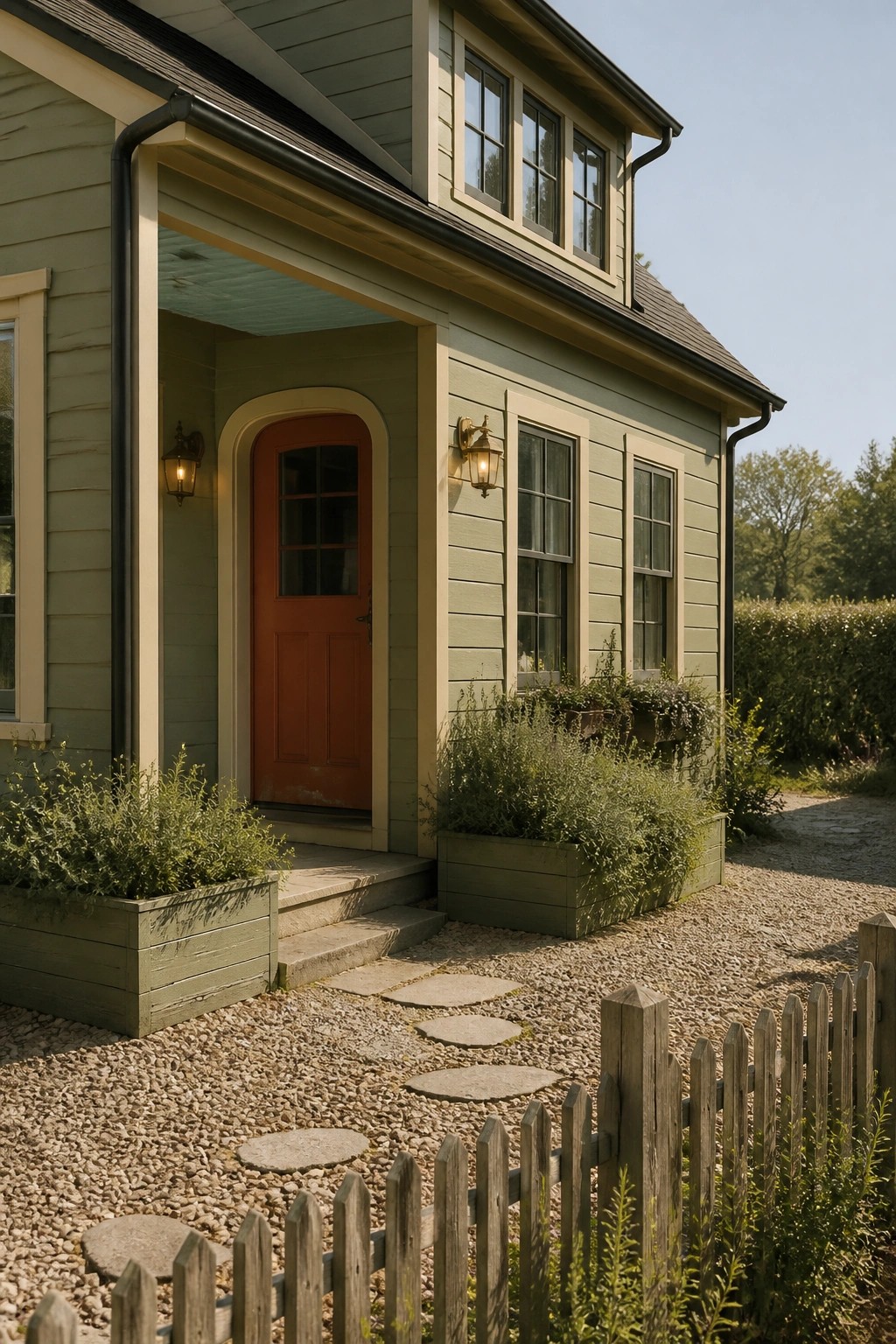
This muted sage green on the siding gives a farmhouse a calm, settled look without feeling too bold. It sits in that middle ground between gray and green, which helps it blend with natural surroundings while still standing out from plain neutrals.
The color has a slight cool undertone that shows up more in bright light, so it works best on homes with warm trim or wood details to balance it out. Try something close to Sherwin Williams Evergreen Fog, Benjamin Moore Saybrook Sage, Behr Dried Thyme, or Farrow & Ball Lichen.
soft sage siding
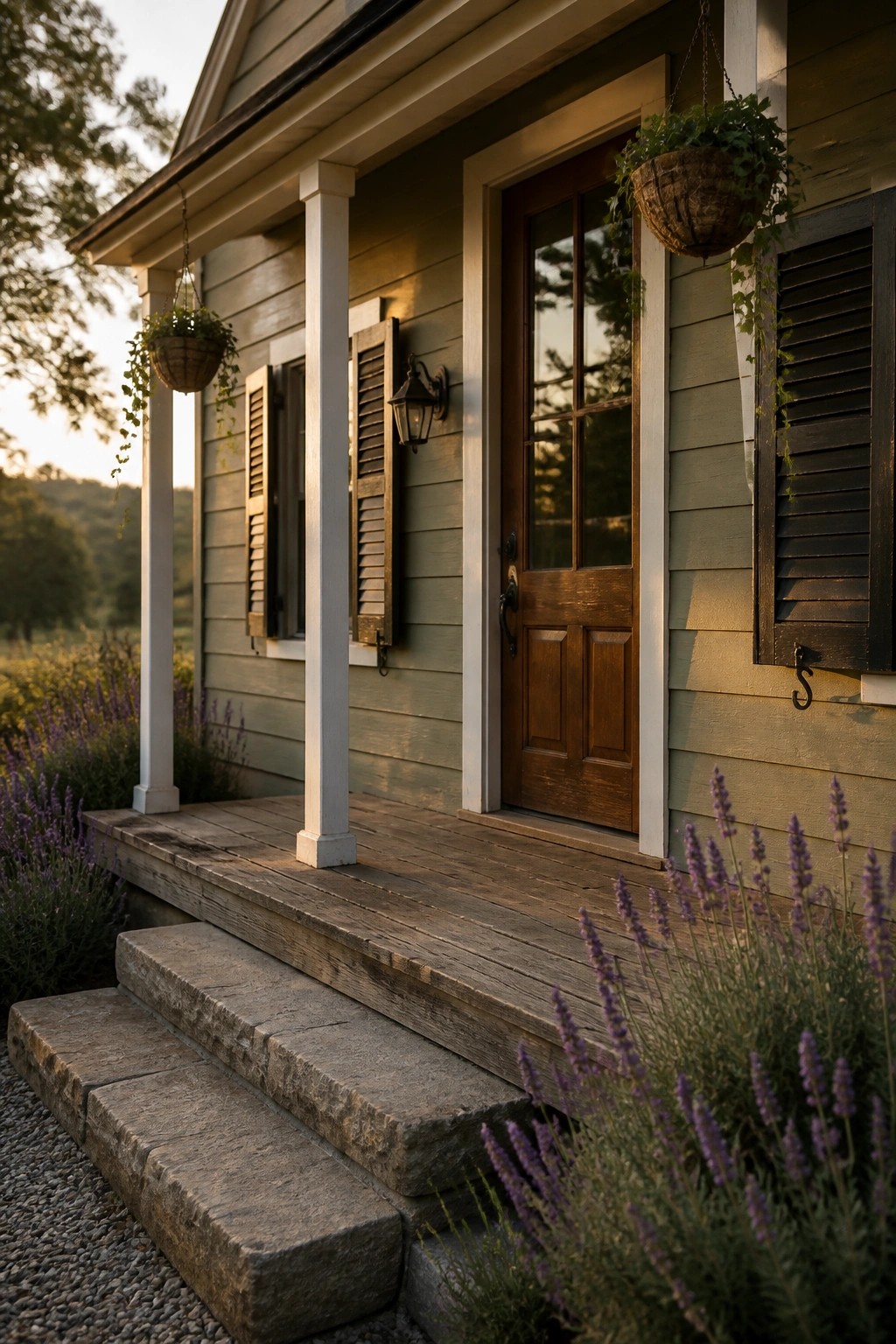
This soft sage green on the siding has a gentle gray undertone that makes it feel calm and lived-in. It reads as a muted green rather than a true forest shade, which helps it sit comfortably next to natural wood and stone without competing.
The color works best on traditional farmhouses where you want the house to blend with its surroundings. Sherwin Williams Evergreen Fog or Benjamin Moore Saybrook Sage come close, as does Behr Aged Sage. It looks good with warm white trim but can turn cooler next to gray stone.
Soft Sage Green for Stone and Wood Exteriors
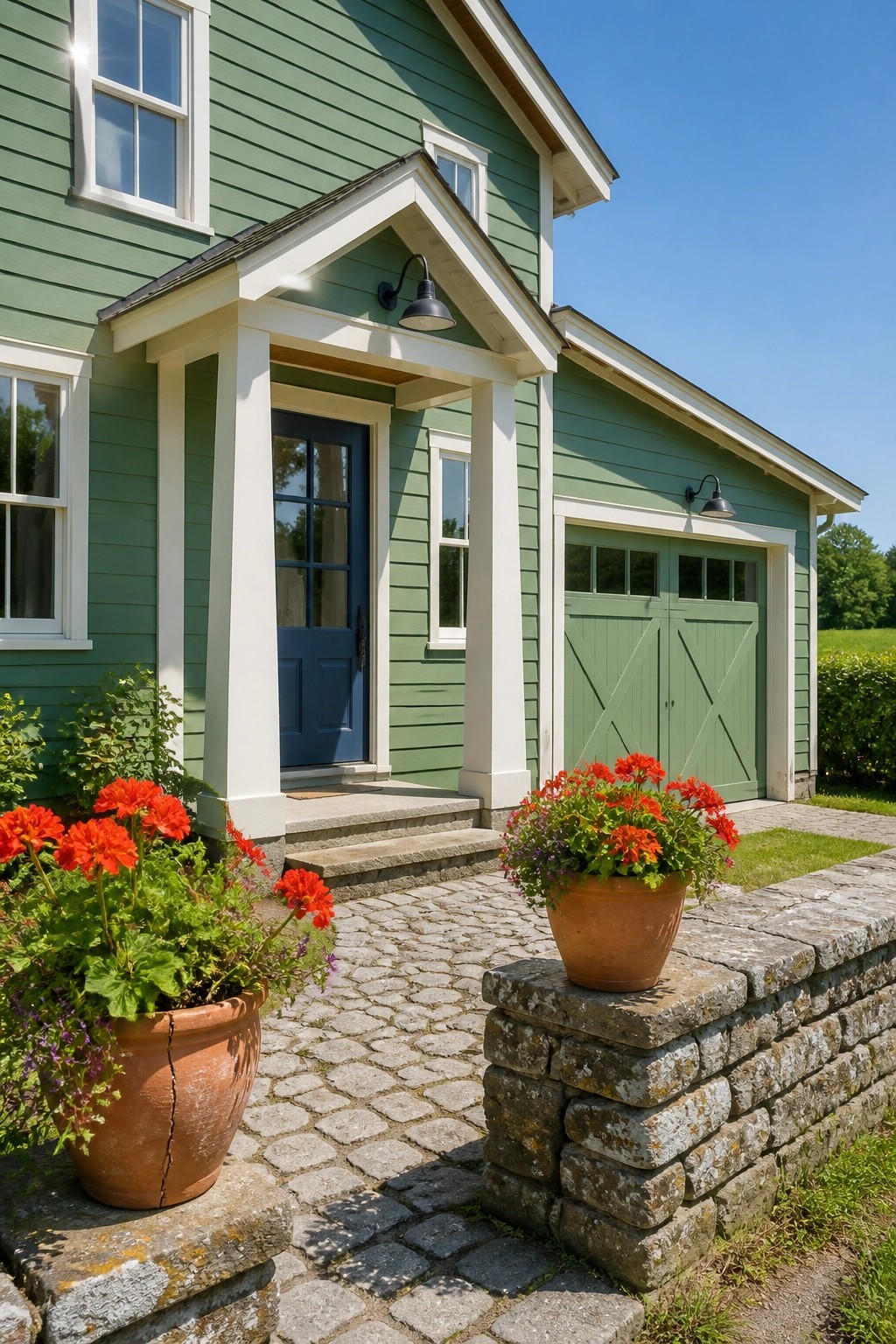
This soft sage green on the house siding feels calm and easy to live with. It sits in that middle ground between gray and green without leaning too far either way. The color works especially well on larger surfaces like this because it stays quiet even in bright sun.
It pairs naturally with white trim and keeps the whole look simple. A few good matches to consider are Sherwin Williams Rainwashed, Benjamin Moore Saybrook Sage, Behr Green Mist, or Farrow & Ball Lichen. The gray undertone helps it blend with stone and wood without fighting them.
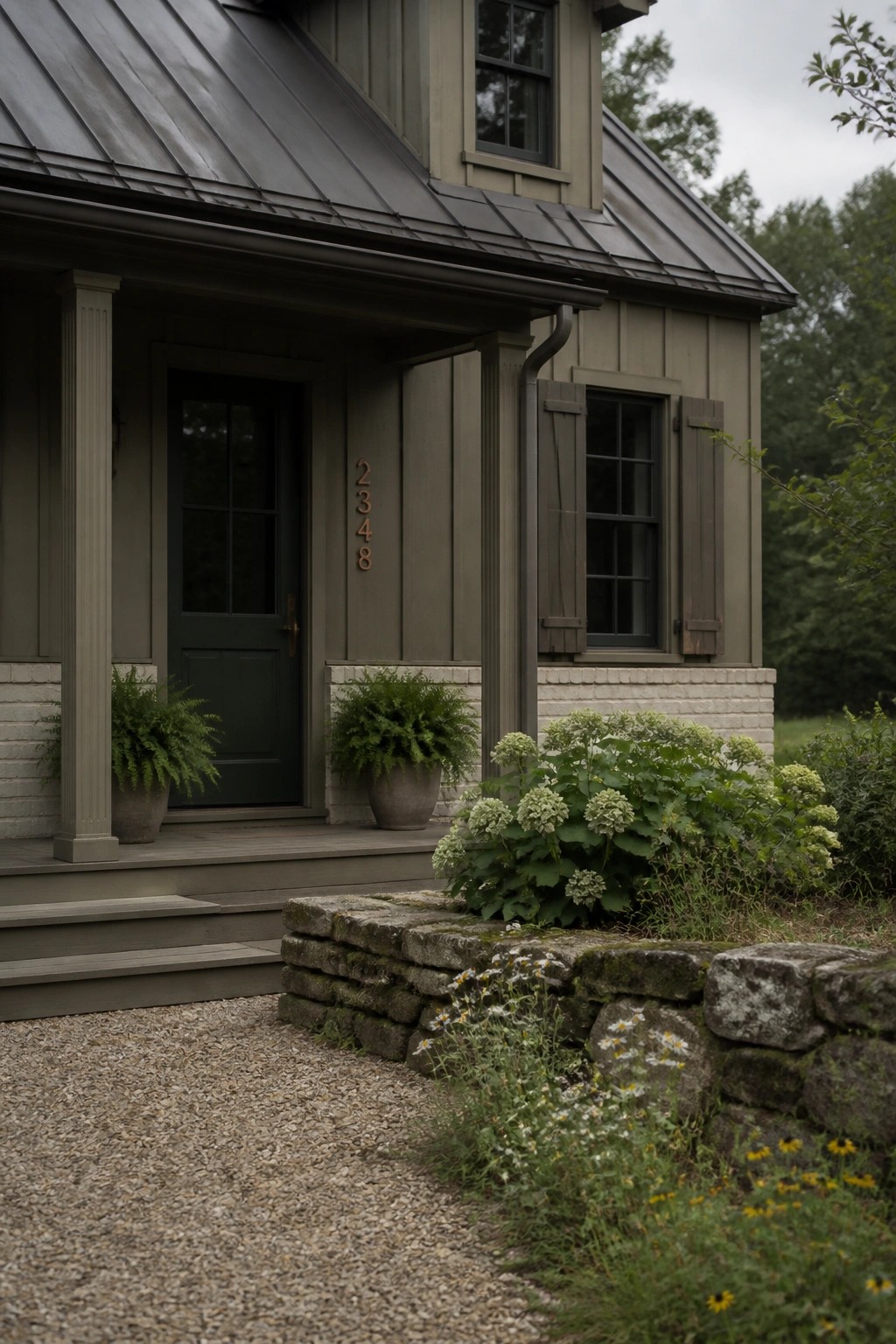
Olive Green Siding
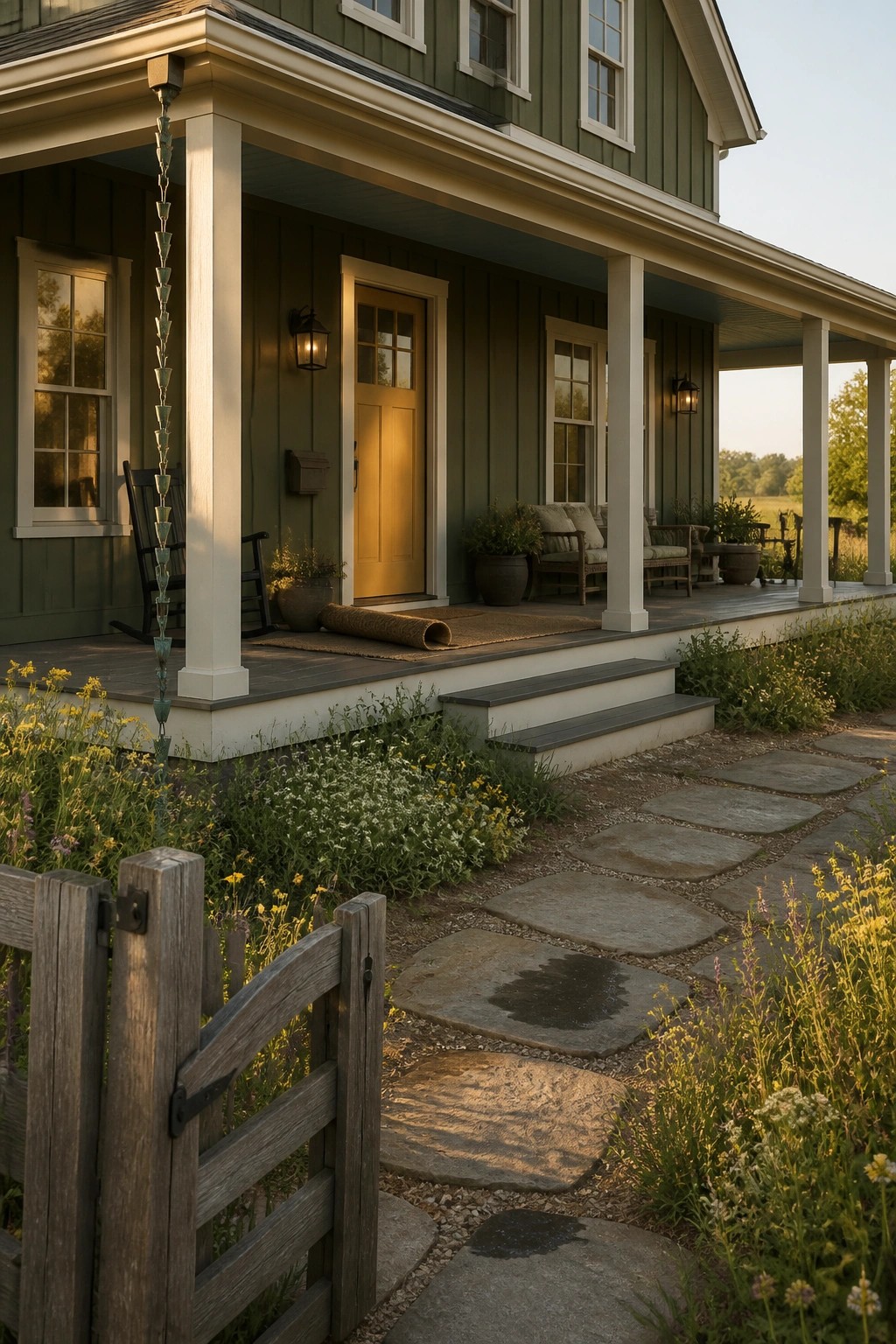
This deep olive green on the siding gives a solid, earthy look that suits farmhouse exteriors. It sits between gray and green without tipping too far either way. Colors in this range often land near Sherwin Williams Olive Grove, Benjamin Moore Forest Green, Behr Olive Branch, or Farrow & Ball Bancha.
It holds up nicely against white trim and keeps the whole house from feeling too stark. The color can shift a little warmer once the sun hits it, so testing a sample on the actual wall helps.
Muted Sage Green Siding
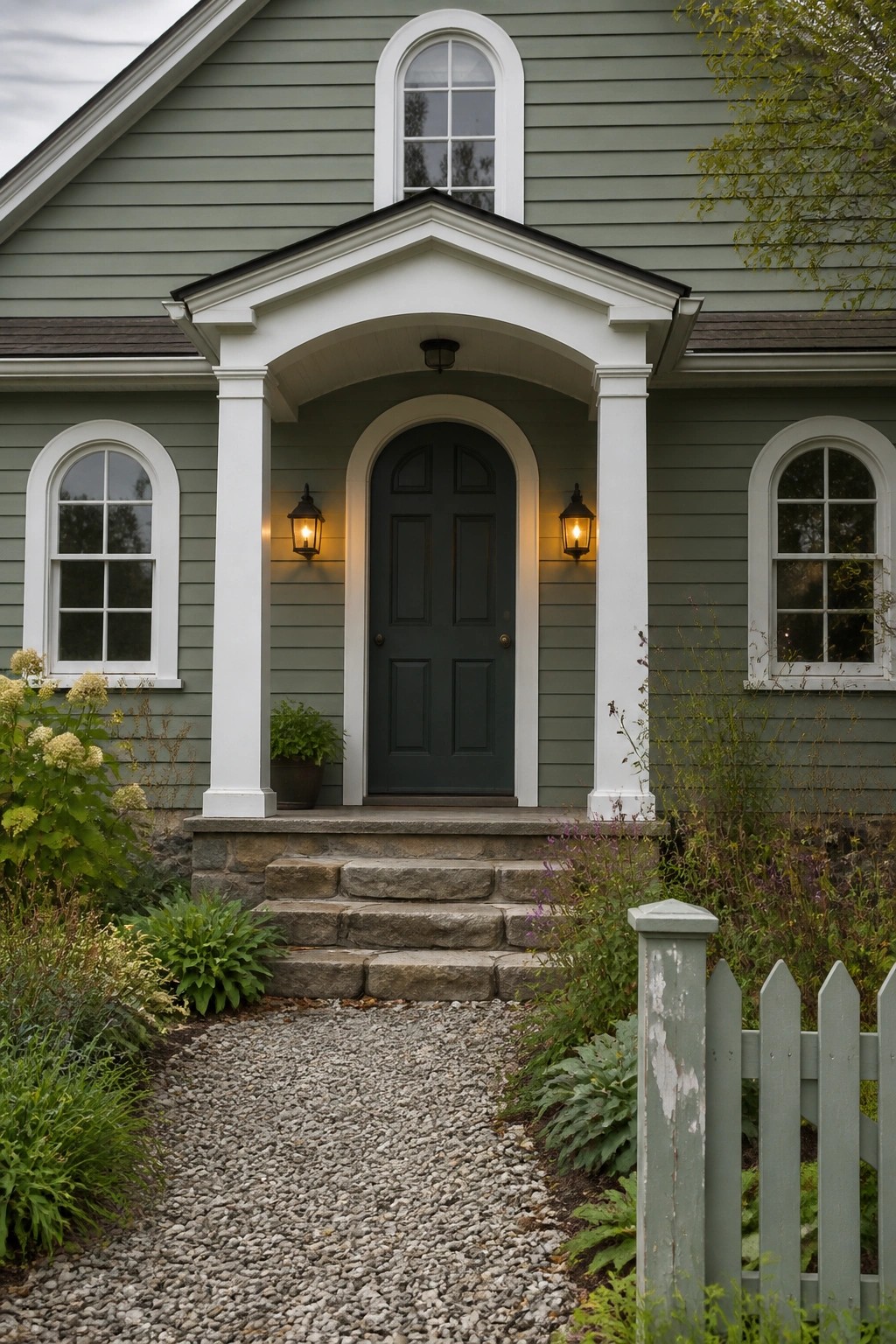
This muted sage green reads as a soft gray-green that feels grounded without being too dark. It works well on farmhouse siding because it blends into the surroundings while still giving the house some presence.
The color has a cool undertone that shows up more against white trim. It pairs best with natural stone and simple wood accents, and it can look a little flat if the light is very harsh.
Frequently Asked Questions
Q: What green shade holds up if my house sits in full sun all afternoon? A: Go with a deeper tone that has some gray mixed in. It keeps the color from fading too fast under strong light. Try the paint on a test board first so you catch how it shifts by mid day.
Q: Can I use one of these greens on the siding and still keep white trim? A: Yes but choose a green with cool undertones to balance the bright white. The contrast makes the farmhouse lines stand out without feeling harsh. Walk around the yard at different times to see how the pair looks from the road.
Q: How do I check if a green will work with my existing red metal roof? A: Hold paint samples next to a piece of the roof material in natural light. Look for greens that share the same warm or muted feel as the red so nothing clashes. One solid match is all you need to pull the whole exterior together.
