

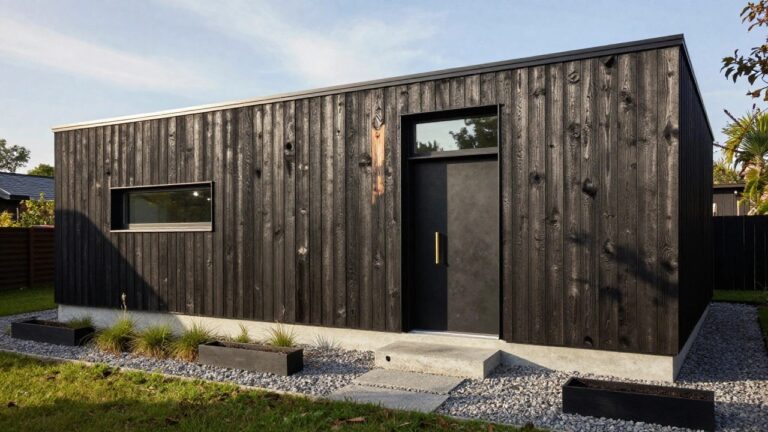
When you pull up to a modern house, the cladding on the facade hits you first, defining whether it feels sleek and grounded or just flat.
I’ve noticed over the years how some cladding materials blend seamlessly with rooflines and entries to make the whole exterior read as one thoughtful piece, while others disrupt that flow from the street.
Choosing the right option means thinking about how it weathers real elements like rain and sun, turning what could be a bland front into something that ages well.
People often get drawn to bold contrasts or subtle textures that elevate curb appeal without overwhelming the design.
Save a couple that match your setup.
Black Charred Wood Cladding
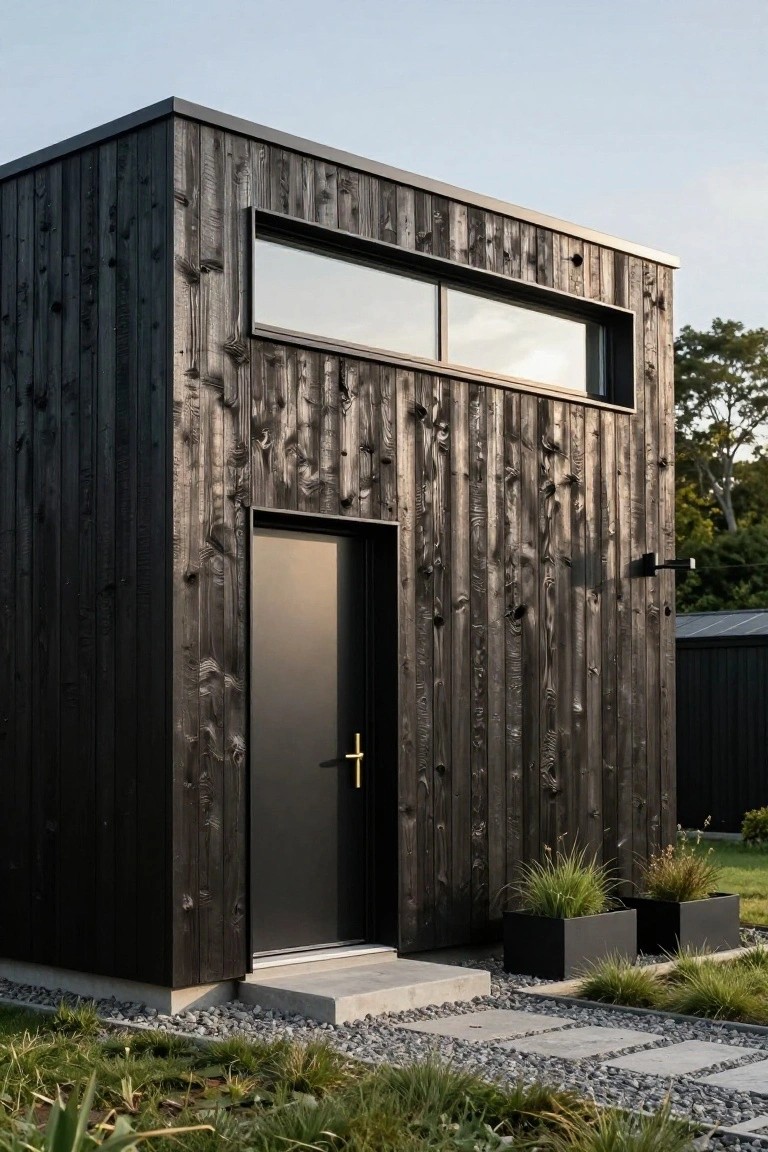
Charred wood cladding gives this little house a deep black finish with lots of texture from the vertical boards. It’s a simple way to make a modern build look established right away, like it’s been there for years. That rough, burned surface holds up to weather without much fuss.
Try it on cabins, sheds, or even a full home if you want something low-key but striking. It works best in rural spots or with trees around. Just keep the entry clean, like that black door and gold handle here, and add gravel paths to tie it to the yard.
White Stucco Facade with Wood Door Entry
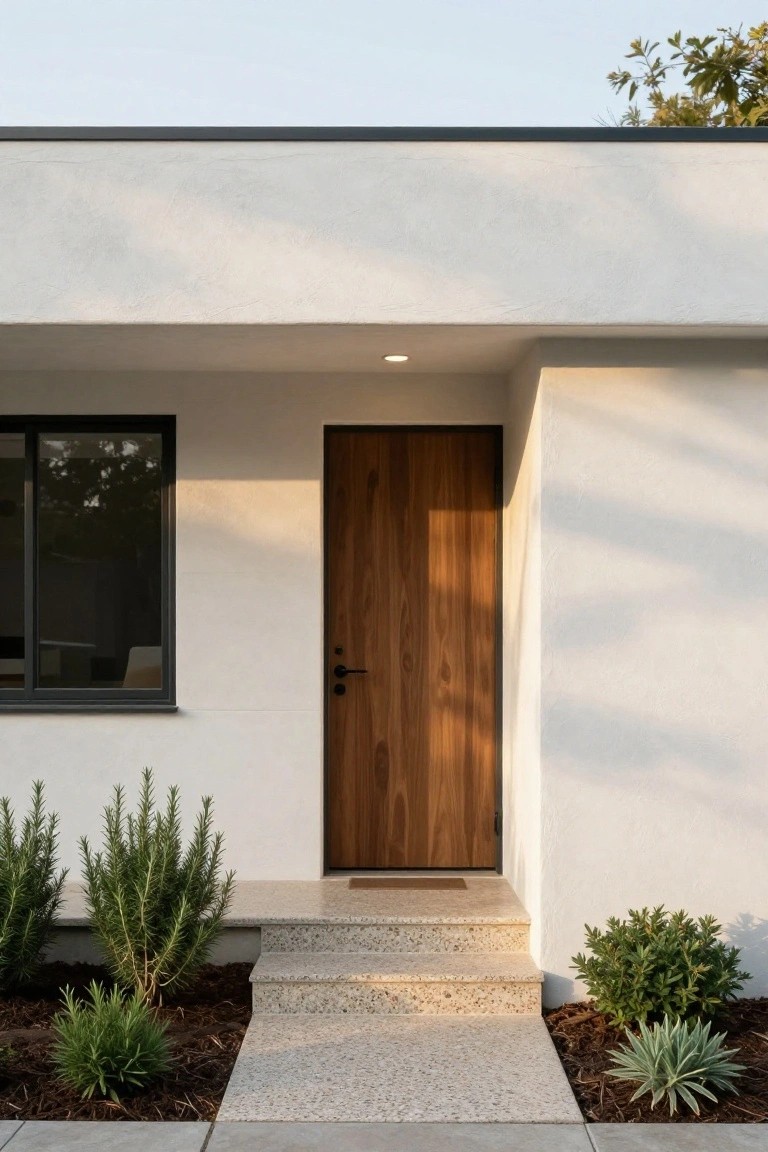
A simple white stucco exterior like this one keeps the house looking clean and modern. The smooth walls reflect light nicely, especially in the afternoon sun. But what makes the entry pop is that walnut wood door. It adds a bit of natural warmth without overdoing it. Folks like this combo because it feels fresh yet welcoming, not cold or stark.
You can pull this off on ranch-style or contemporary homes in dry areas. Pair the stucco with black-framed windows for more contrast. Seal the door to handle weather, and keep plantings low like rosemary around the base. It boosts curb appeal without much upkeep.
Black Siding with Wood Cladding Accents
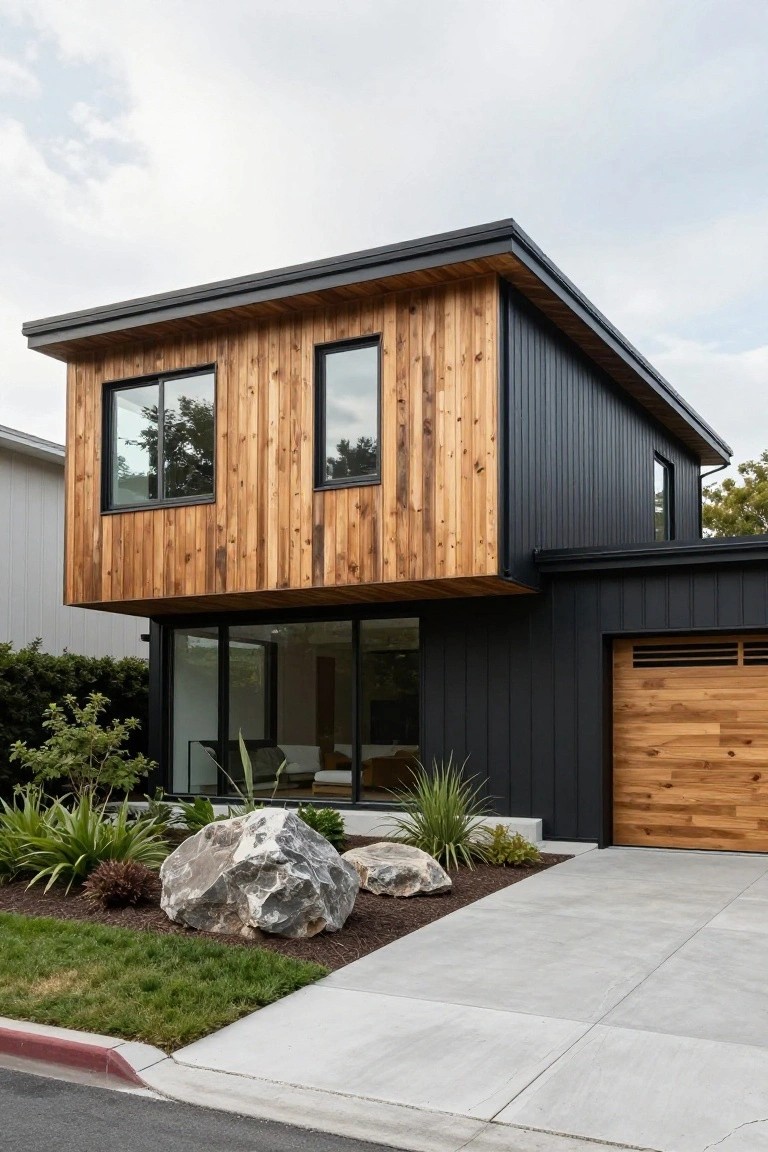
One look that keeps popping up in modern homes is pairing matte black siding with panels of natural wood cladding. It gives the house a clean, bold base while the wood adds some warmth and texture right where you need it. Here, the vertical wood planks cover the upper front and side, wrapping around big glass windows, and the black siding fills out the rest for that sharp, contemporary edge.
This setup works great on narrower lots or two-story homes where you want height without bulk. Use it on the street-facing side to boost curb appeal, matching the garage door in wood to tie it together. Stick to low-maintenance cedar or similar for the wood so it ages nicely alongside the black. Just keep the landscaping simple underneath, like a few boulders and agave, to let the cladding do its thing.
Recommended Products

🪵 DEEP BLACK WOOD FINISH: Create a bold, rich black appearance on bare, untreated wood surfaces. This mineral-based wood treatment enhances natural wood grain while delivering a dark, modern finish

Color Match: Seamlessly blend with your home’s style. Our thick, textured vinyl siding mounting block features a paintable black surface, allowing you to paint it to match your siding or outdoor lights. No more mismatched vinyi siding mounting blocks ruining your curb appeal,Good snug fit on 4 inch to 10 inch lap siding

Soft and homely:The wall sconce supplied with a Energy-saving and Non-flickering 9W LED G9 bulb (3000K warm white) without switch. The bulb can be replaced,max 40w. NO battery operated.
White Cladding Paired with Stone Base
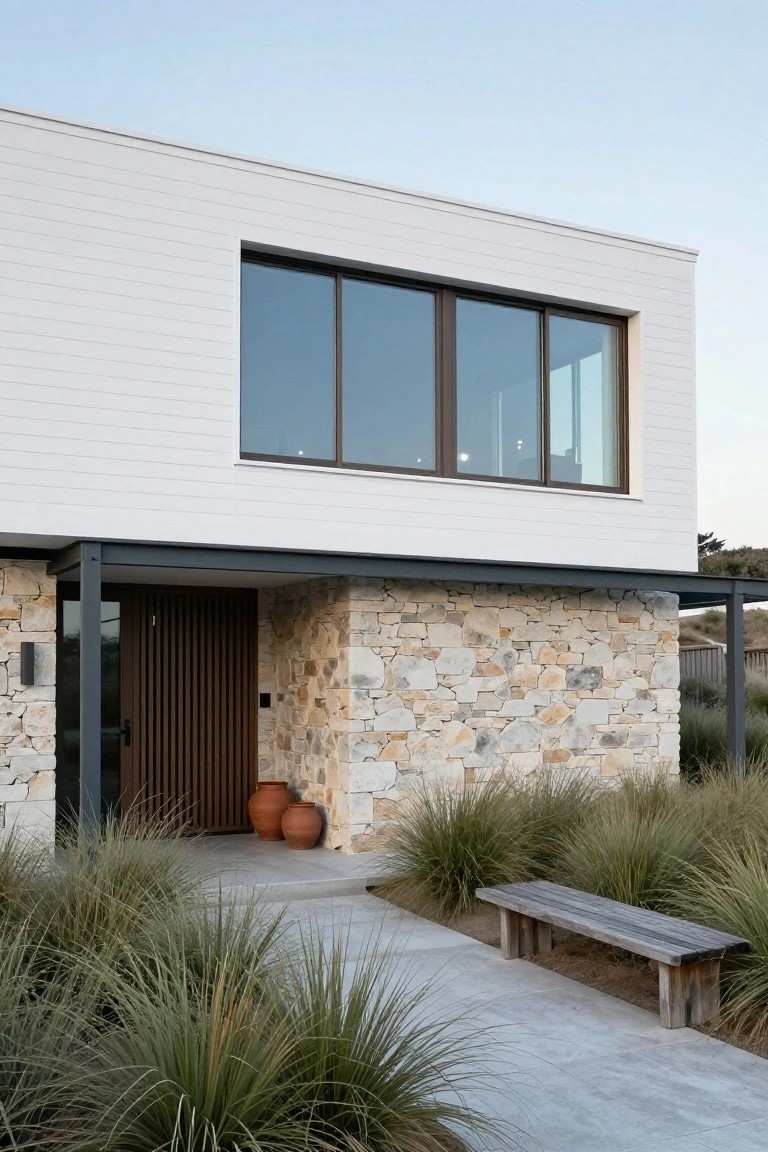
White weatherboard cladding like this keeps the upper walls looking sharp and modern. Paired with a rough stone base, it adds real texture right where the house meets the ground. That combo avoids a boxy feel. The stone brings in some natural warmth too, especially around the entry.
Try this on low-slung homes near the coast or in open country. Source stone that matches your area for better flow. Flank the path with tough grasses, toss in a couple pots by the door. Watch the cladding lines so they line up clean with the stone top. Works best where you want simple upkeep.
Dark Gray Stone Cladding
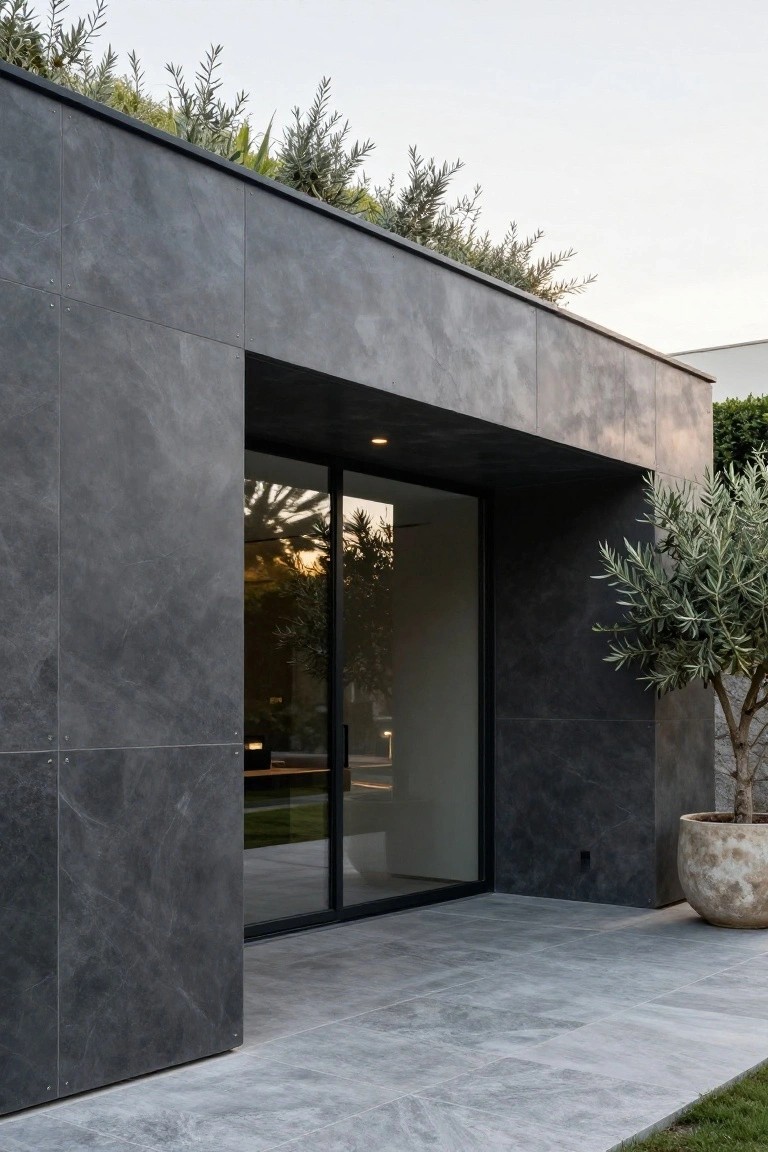
Dark gray stone cladding like this covers the walls in large tiles that look natural but feel modern. The matte texture keeps it from shining too much in the sun. It makes the house look sturdy and pulls the eye right to the entry without extra fuss.
This works best on flat or simple facades where you want low upkeep. Pair it with glass doors and a bit of green on top, like the planted roof edge here. It suits homes in mild areas since the tiles resist weather well. Skip it if your place gets heavy snow, though.
Rusted Steel Cladding for Modern Facades
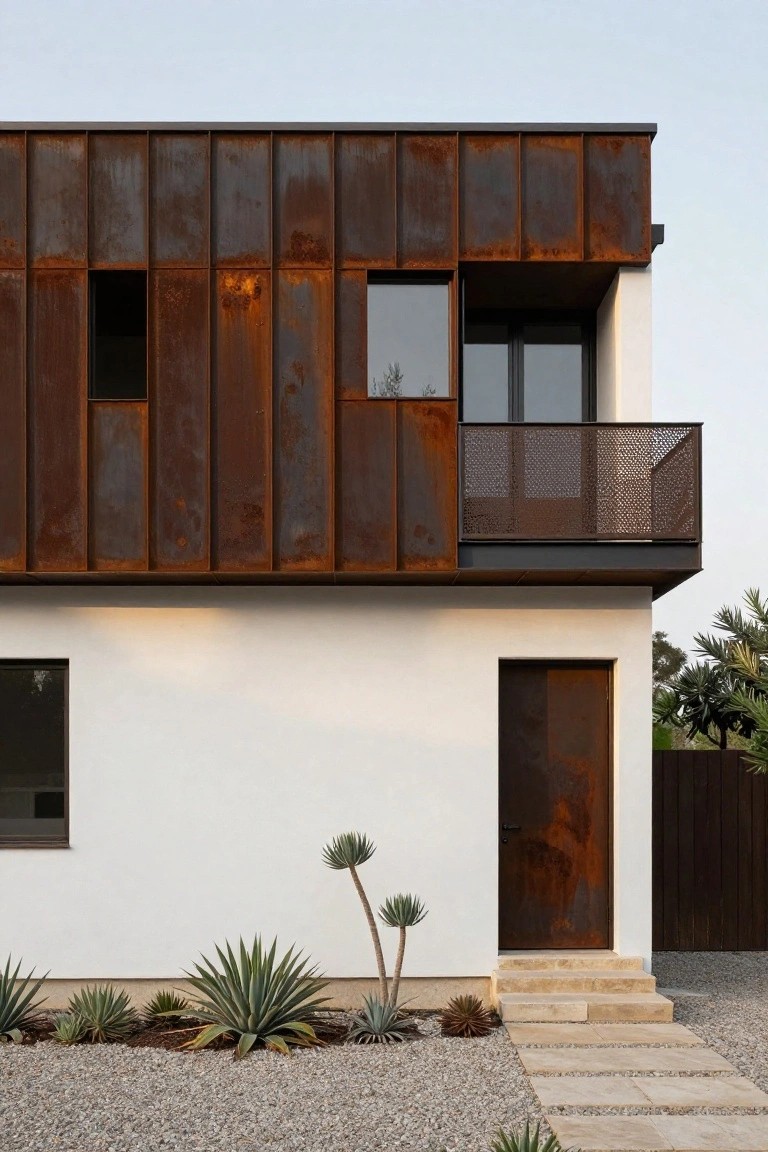
Rusted steel panels give this house a tough, industrial look up top that sets it apart from everyday siding. The corten-style metal develops that natural patina over time, adding real texture without much upkeep. Paired with clean white stucco below, it creates a strong horizontal split that makes the whole facade feel more dynamic and current.
This cladding works best on homes in dry climates where the rust won’t run or stain nearby surfaces. Try it on a two-story design to highlight the upper level, maybe around windows or a balcony like here. Keep the lower part simple so the metal really pops, and it suits modern or minimalist styles without overwhelming the yard.
Dark Metal Cladding Panels
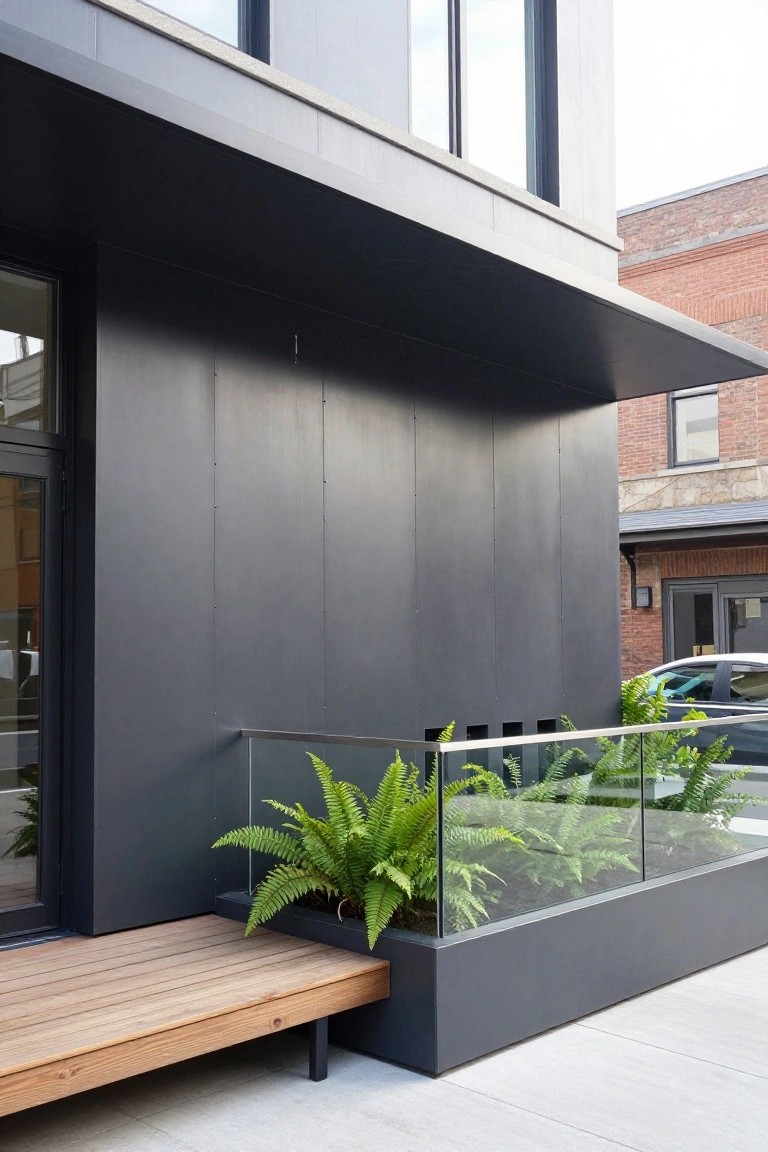
Tall vertical panels in a deep charcoal finish make this exterior stand out. The metal surface looks smooth and sturdy, catching light just enough to add some life without any fuss. It keeps the house looking sharp and contemporary, especially next to simpler brick neighbors.
You can use this cladding on side walls or full facades where you want a clean modern update. It works well on townhouses or new builds in city spots. Just add plants nearby, like ferns in a matching box, to soften things a bit. Watch the scale though. Too much on a small house might overwhelm.
Cedar Siding with Stone Accents
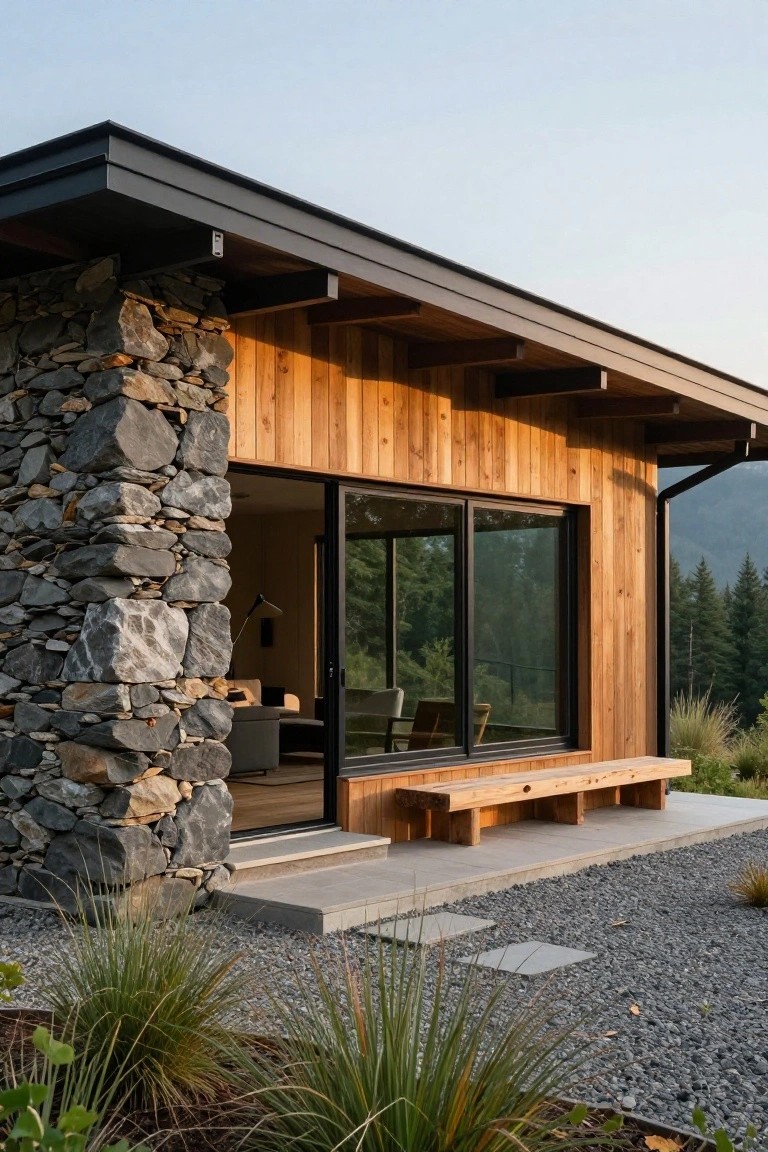
One look that keeps showing up in modern homes out west is cedar siding mixed with natural stone. The warm wood boards run vertically here, giving the house a clean, cabin feel without going overboard. That tall stone pillar on the side pulls in local rocks for a rugged touch. It makes the place look like it belongs right there among the trees and hills.
You can pull this off on a sloped lot or anywhere you want the house to blend into nature a bit. Pick cedar that’s not too fancy, maybe rough-sawn, and stack the stone loose like dry wall. Keep windows big and dark-framed to let light pour in. Works best on single-story spots or additions. Just seal the wood well if rain’s an issue.
Brick Accent on Corrugated Cladding
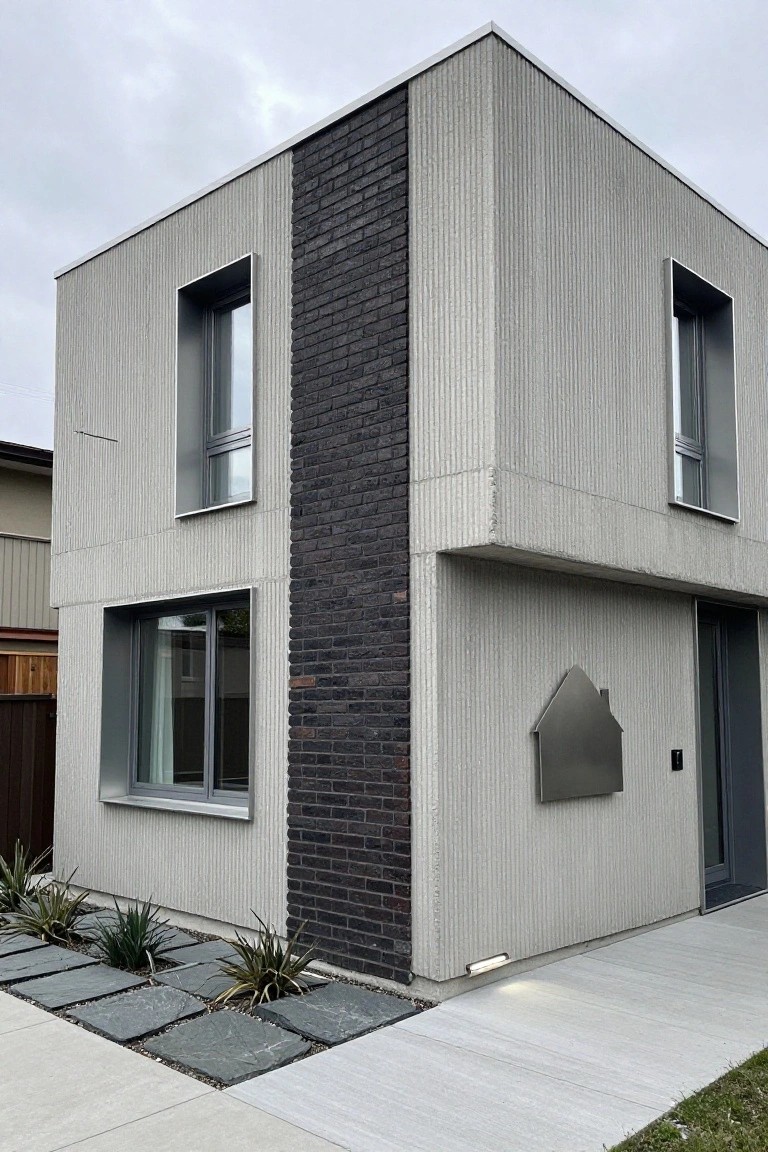
A slim vertical band of black brick runs up this house’s corner, set against wide gray corrugated panels. That simple contrast keeps the look modern and crisp. It breaks up the flat surfaces without much fuss.
This setup fits boxier homes that need some edge. Use it on a street-facing side to draw the eye. Stick to dark brick on lighter panels so it stays bold but not overwhelming. Works in town or suburbs.
Wood Accents on Stucco Exteriors
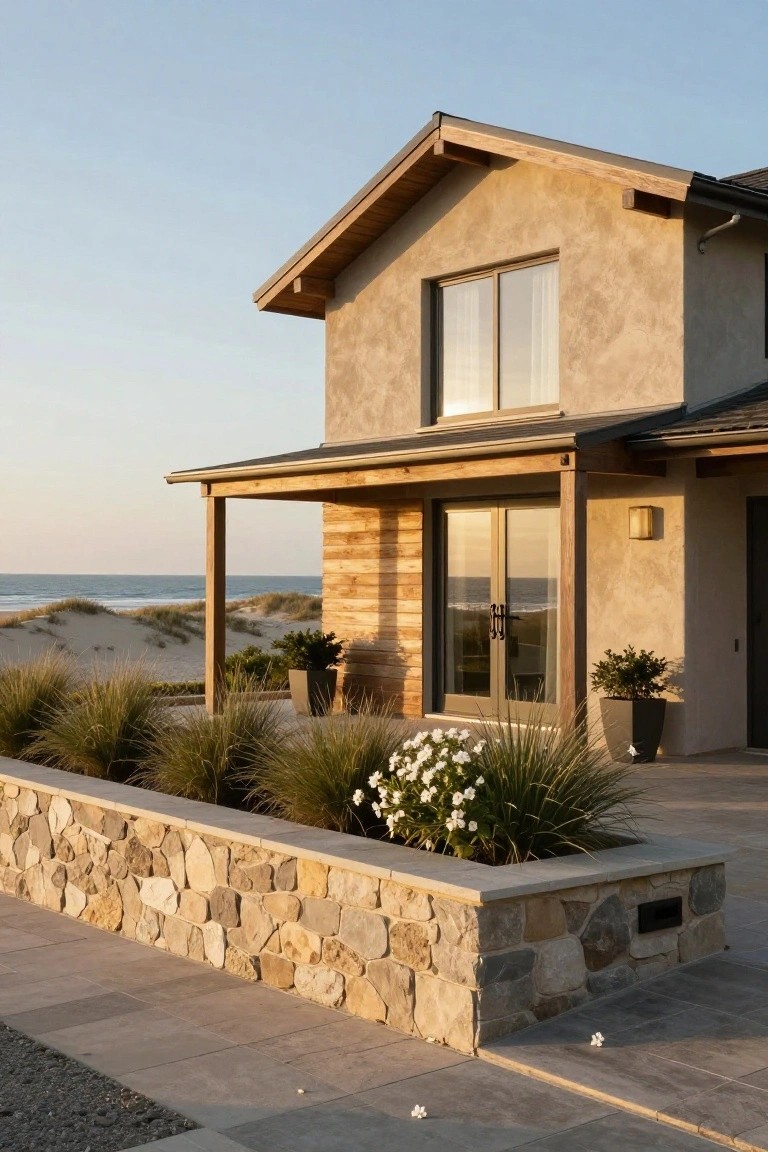
A simple way to update a stucco house is adding wood accents like you see here. The main walls stay in that smooth beige stucco finish, but horizontal wood boards wrap the entry area and run under the porch roof. Those wood details add just enough texture to keep things from feeling too plain. They warm up the look nicely, especially with the ocean right there.
This setup fits modern homes in coastal spots or anywhere with sunny weather. Use cedar or similar treated wood for the accents so it holds up outside. Build the porch cover with matching beams and posts, and run the wood down to meet a low stone wall at ground level. It pulls the house into the yard without much fuss. Skip it if your area gets heavy rain, though. Wood needs protection.
Light Wood Cladding on Modern Facades
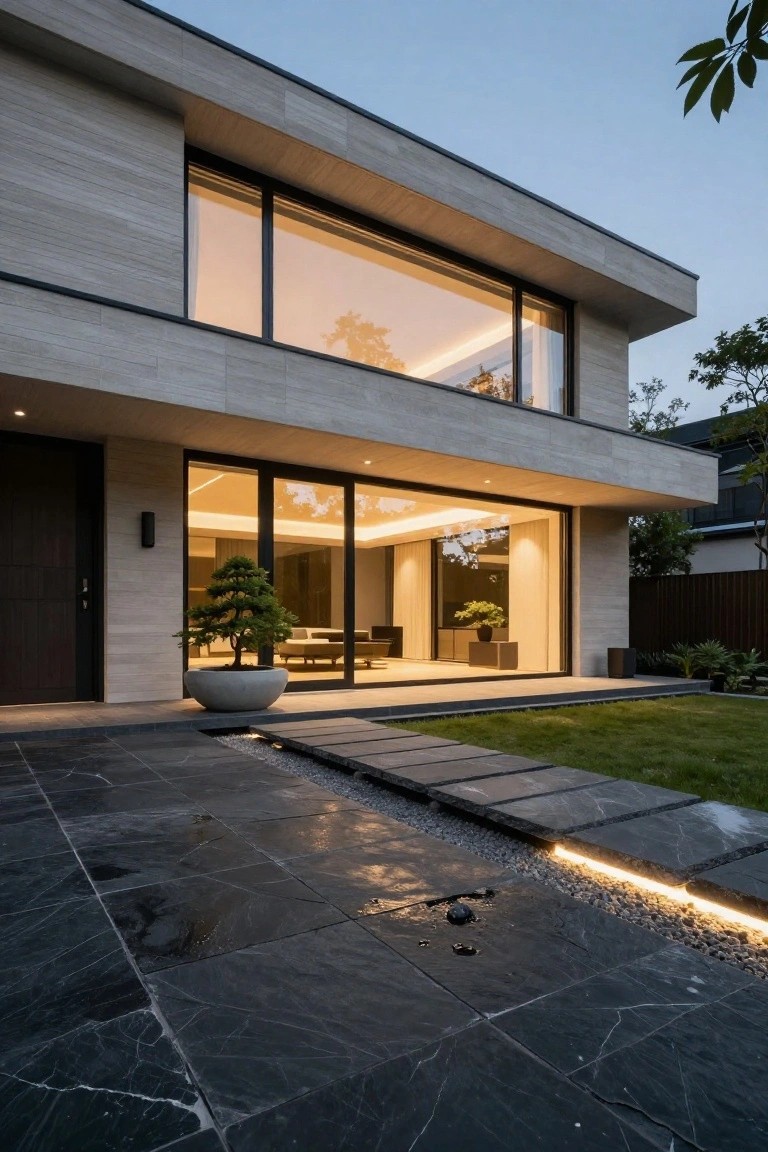
Wood cladding like this brings a natural touch to otherwise stark modern homes. The light planks cover the walls smoothly, softening those big glass windows and the clean lines without making things feel too boxy. It stands out at dusk when the interior lights glow through.
You can pull this off on mid-sized homes in wooded areas or suburbs. Stick to horizontal planks for flow, and add dark stone paths out front for some ground. Just seal the wood well if rain is common around your place.
Textured Glass Cladding Around Entries
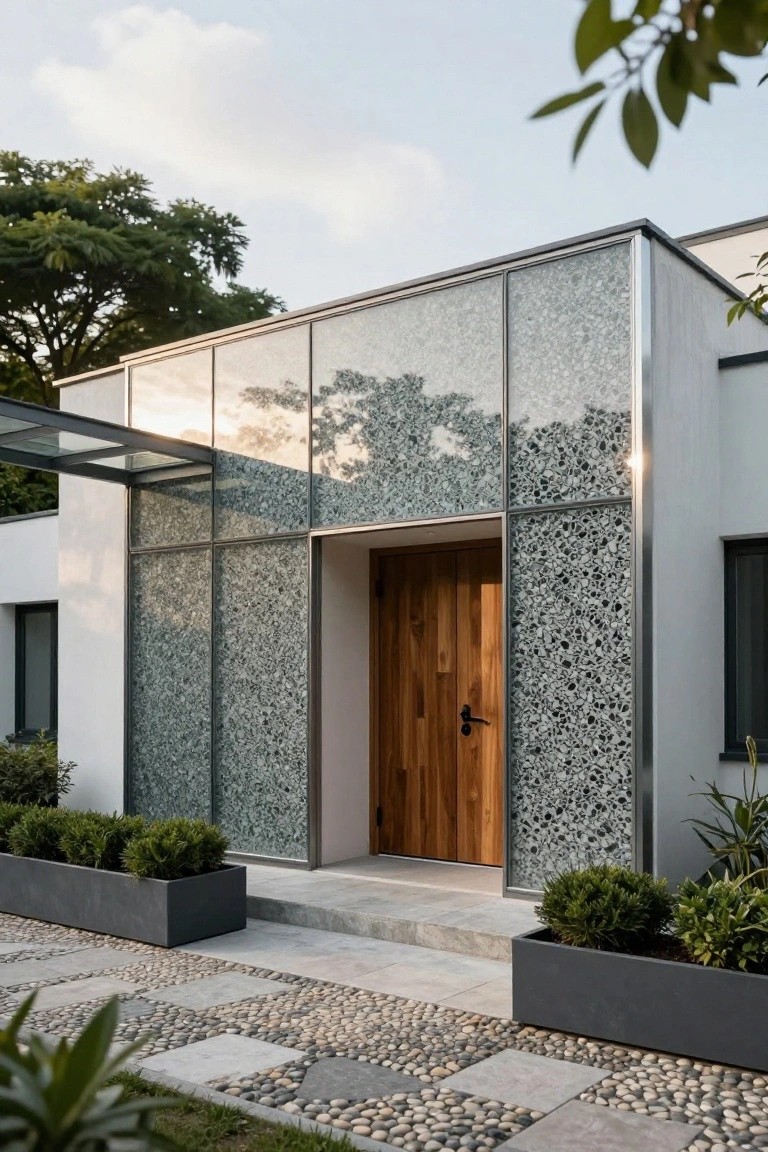
Textured glass panels like these make a solid choice for modern house exteriors. The pebble finish scatters light across the facade but blocks clear views inside, giving privacy right at the entry. Paired with clean white walls and a simple wood door, it keeps things fresh without much fuss.
You can add this to homes that need a bit more interest up front. It suits flat urban lots or spots with close neighbors. Just frame it with low planters and a stone path to tie it in. Watch the scale though… too big and it might overwhelm a smaller house.
Sage Green Board-and-Batten Siding
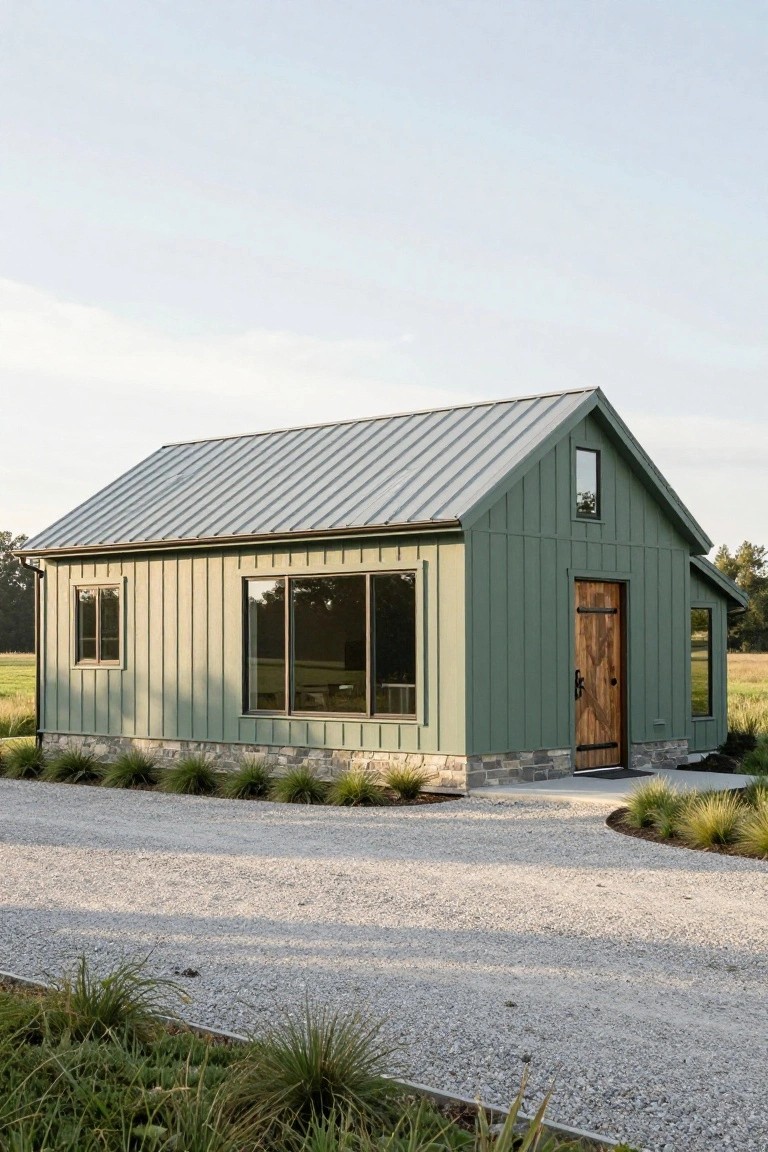
Board-and-batten siding painted in a soft sage green brings a fresh, modern feel to simple structures like sheds or garages. The vertical boards create clean lines that look sharp against a standing-seam metal roof, while the muted color ties into natural surroundings without overpowering them. It’s a straightforward way to update that old farmhouse style.
This cladding works best on smaller outbuildings where you want low upkeep and a bit of style. Pair it with a wooden entry door and a stone base for some contrast. It fits rural spots or even suburban backyards… just make sure the paint is exterior-grade to handle weather.
Vertical Wood Cladding with Stone Accents
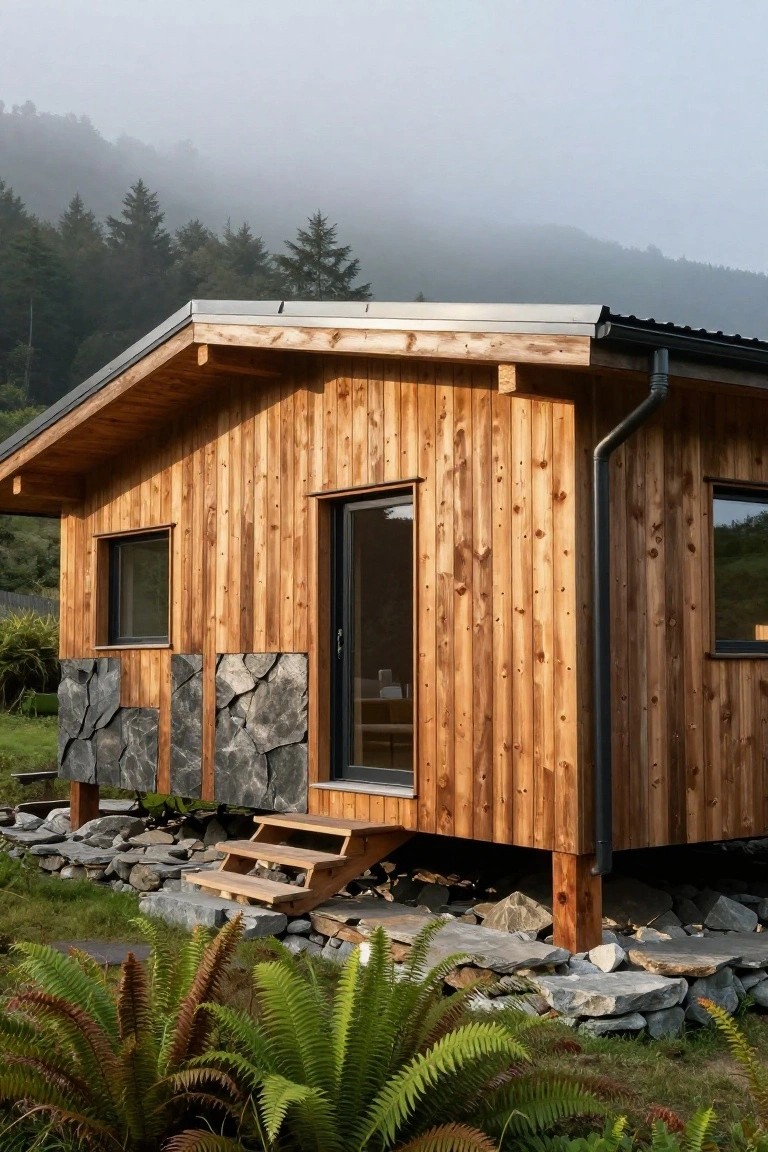
Vertical wood cladding like this keeps a house looking sharp and simple. The dark planks run straight up the sides, giving the whole facade a tall, sleek feel that fits right into wooded spots. Stone pieces at the base add some weight down low, so the house doesn’t float above the ground. It’s a straightforward way to mix natural materials without overdoing it.
This setup works best on sloped sites or places with lots of rain and trees. Go for durable woods like cedar or larch, treated against moisture. Keep the stone rough and local if you can, around steps or entries for that grounded look. Just make sure the cladding overlaps well at corners… keeps water out.
Vertical Wood Cladding
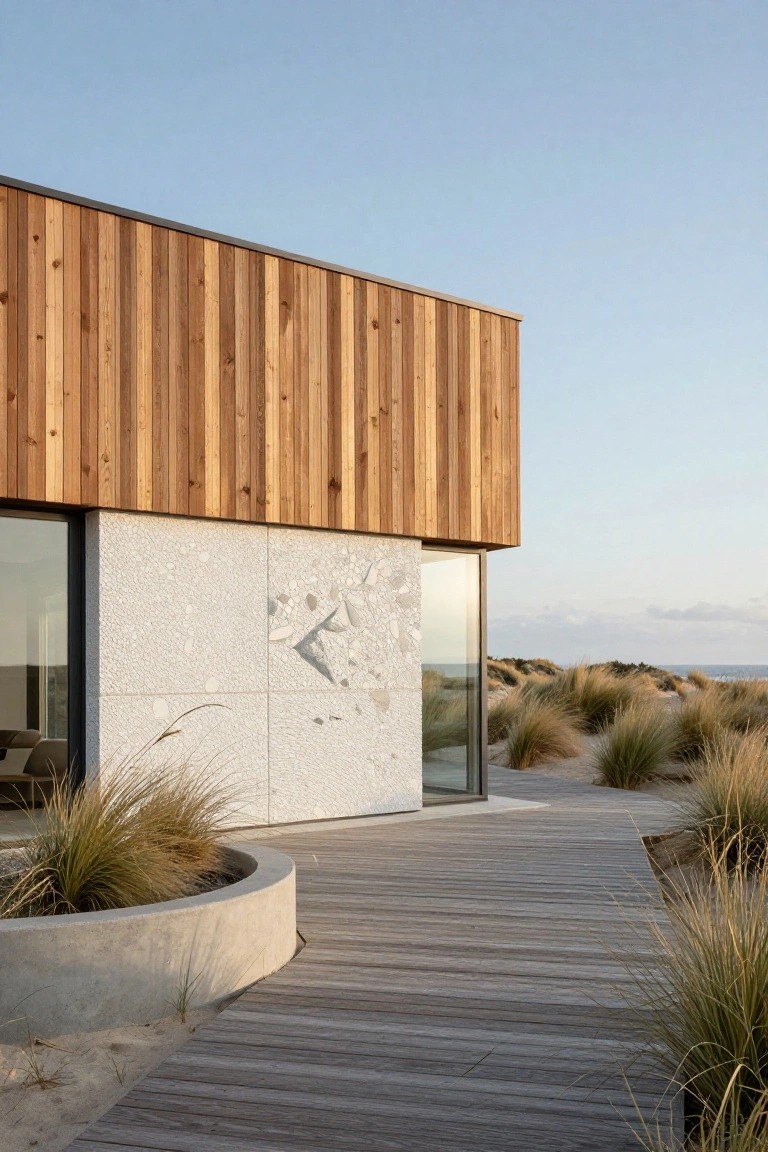
Vertical wood cladding like this brings a bit of warmth to otherwise stark modern lines. On this beach house, the cedar-like boards run straight up the facade, catching the light in a way that softens the look without losing that clean edge. It pairs nicely with the textured white wall nearby, which has those subtle shell-like inserts for a coastal nod.
You can pull this off on homes near water or in open areas where wind and salt are factors. Pick naturally durable woods like cedar or treat pine to hold up. It works best on taller facades to emphasize height, but keep the boards narrow for a sleeker vibe. Just seal them well upfront.
Dark Metal Cladding
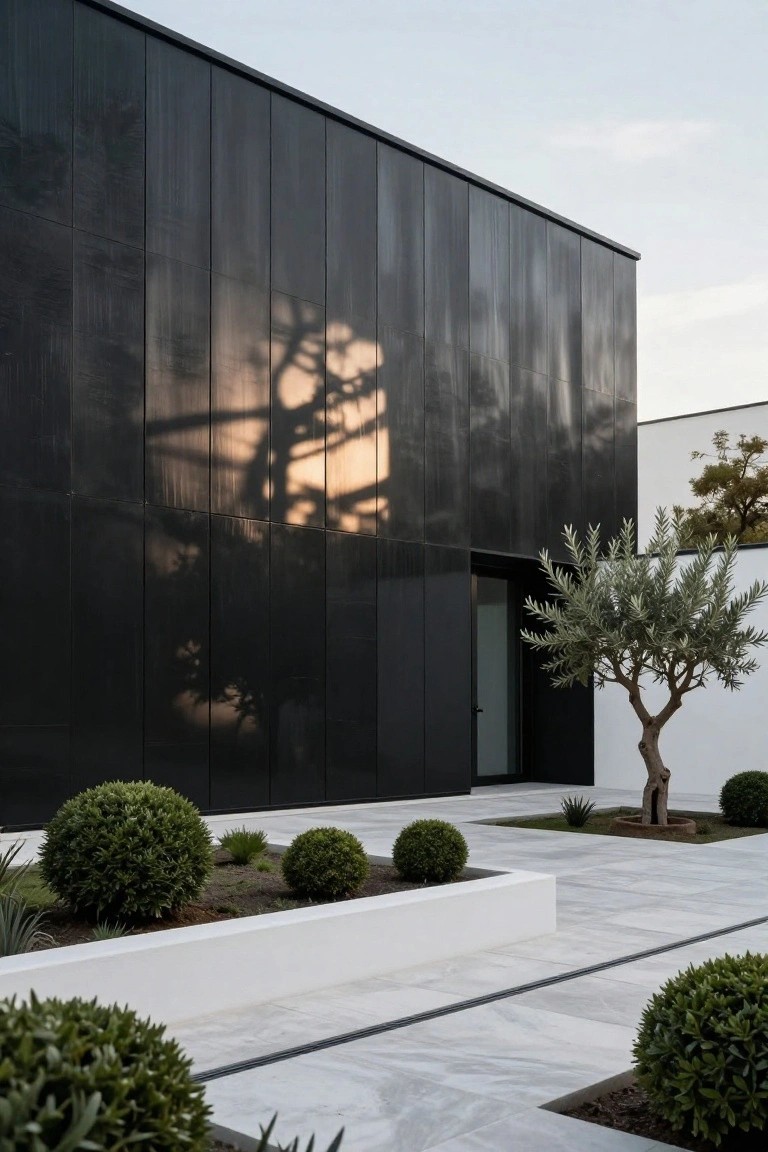
One look that turns heads on modern homes is dark metal cladding. These panels give the house a solid, almost fortress-like feel while keeping things sleek and simple. The texture catches shadows from nearby trees just right, adding some movement without extra decoration. It’s a clean way to make a big statement.
You can pull this off on flat facades facing the street or courtyard. It works best with crisp white accents around doors and simple plantings like boxwoods or an olive tree nearby. Keep the lines straight and avoid too much color elsewhere so the black stays strong. Just check local weather, since metal can dent in hail country.
Exposed Concrete Cladding
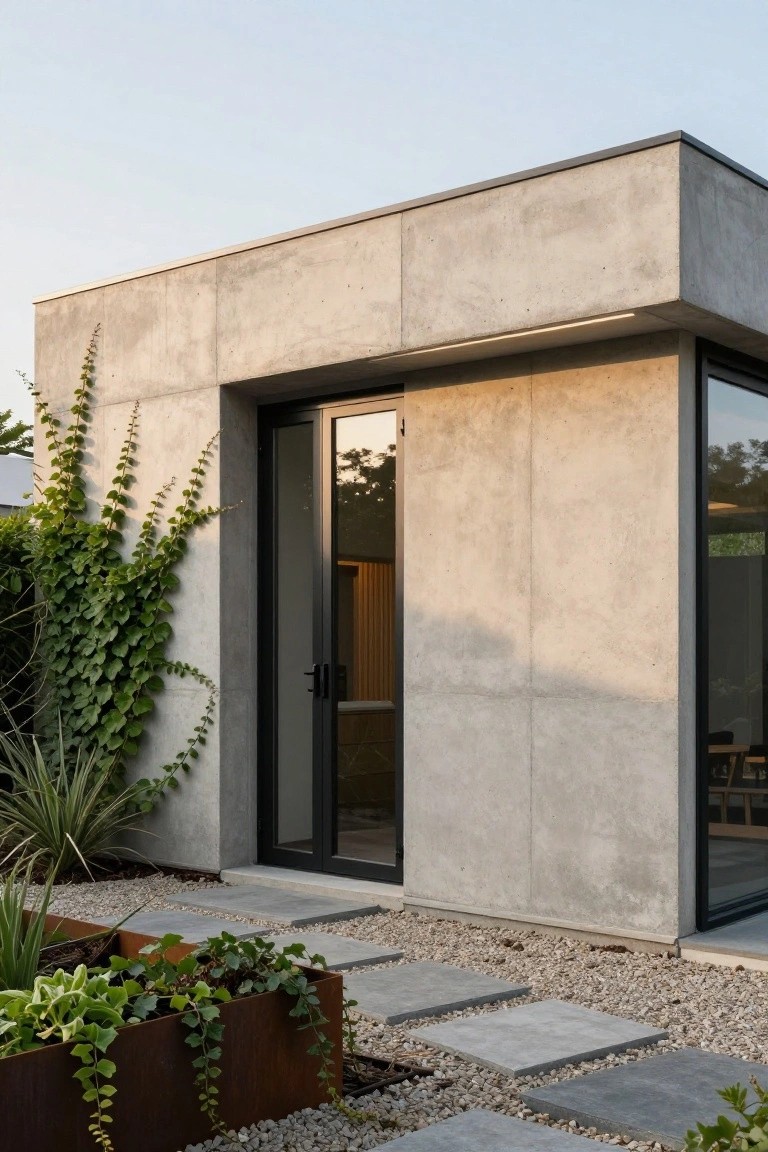
Concrete cladding like this gives a house a solid, modern edge without much fuss. It’s raw and textured, so it catches light in interesting ways during the day. That entry with the big glass door pulls it together nicely, letting you see inside just enough.
You can use it on side walls or around entries to keep things simple and tough against weather. It works best on newer builds or updates where you want low upkeep. Throw in some climbing plants along the edges… they soften it up without hiding the concrete. Just make sure the mix matches your climate.
Frequently Asked Questions
Q: Can I install modern cladding myself or do I need pros?
A: Skip the DIY unless you’re tackling simple panels like fiber cement shakes. Pros handle the tricky stuff like aligning metal sheets or sealing stone veneer perfectly. It saves headaches and looks pro in the end.
Q: Which cladding works best if I live somewhere rainy?
A: Pick aluminum or fiber cement. They shrug off water without rotting or fading fast. Slap on a good sealant at the joints and you’re set for years.
Q: How do I clean and maintain the cladding?
A: Hose it down twice a year with mild soap and a soft brush. Skip the pressure washer, it scratches the finish. And yeah, trim back overhanging branches to cut down on dirt buildup.
Q: Can I mix a couple claddings on my house?
A: Totally, pair sleek metal with wood accents for depth. Stick to one or two types max… keeps it modern, not messy. Mock it up with photos first.
