

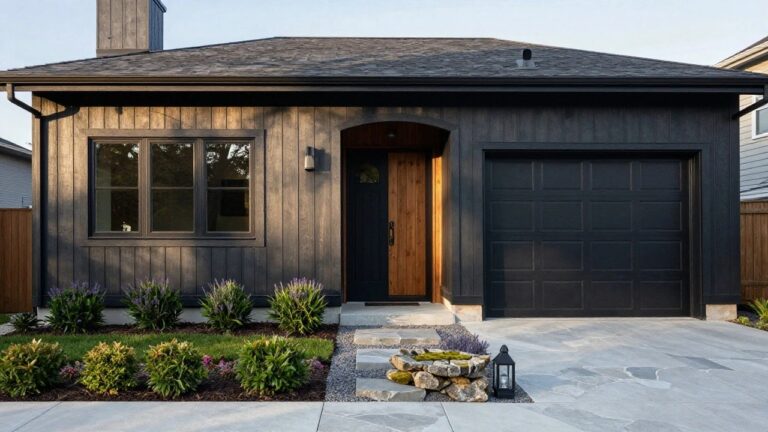
I’ve driven past enough homes to know that exterior color often makes or breaks the first impression from the curb. It pulls together the facade, roofline, and entryway materials into something that feels cohesive and alive. When we tested a muted sage on our siding last summer, it grounded the whole front against the brick without overpowering the yard. That shift alone made the house read better from down the street. Shades like these are straightforward to adapt, depending on your light and surroundings, and a few have me rethinking trim options.
Dark Siding with a Wood Garage Door
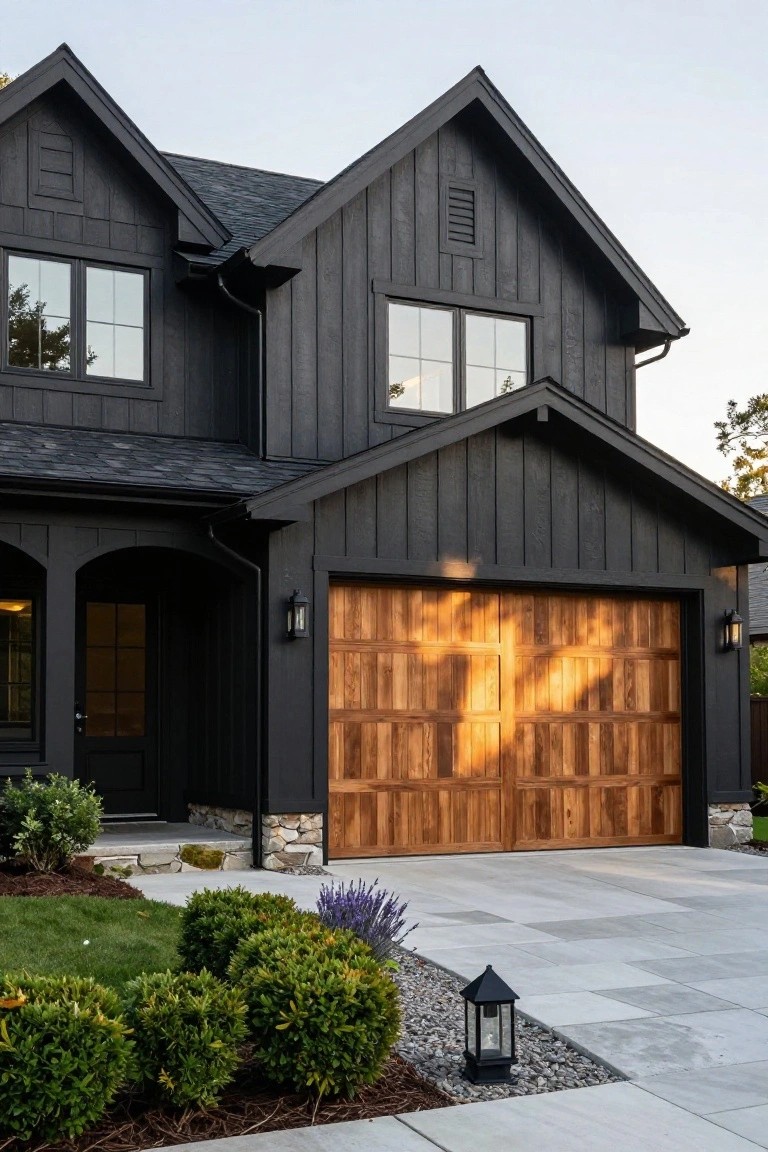
One simple way to add interest to a dark house exterior is with a wooden garage door in natural tones. Here the black-stained siding covers most of the facade, but that lighter wood door pulls in warmth right where eyes land first. It keeps the modern look sharp without going cold or flat.
This setup suits farmhouses or craftsman homes in wooded spots… or anywhere you want curb appeal that lasts year-round. Pick cedar or reclaimed wood, seal it well, and let simple landscaping like boxwoods frame the driveway. Skip it if your climate is too wet, though. The wood needs some care.
Warm Terracotta Stucco
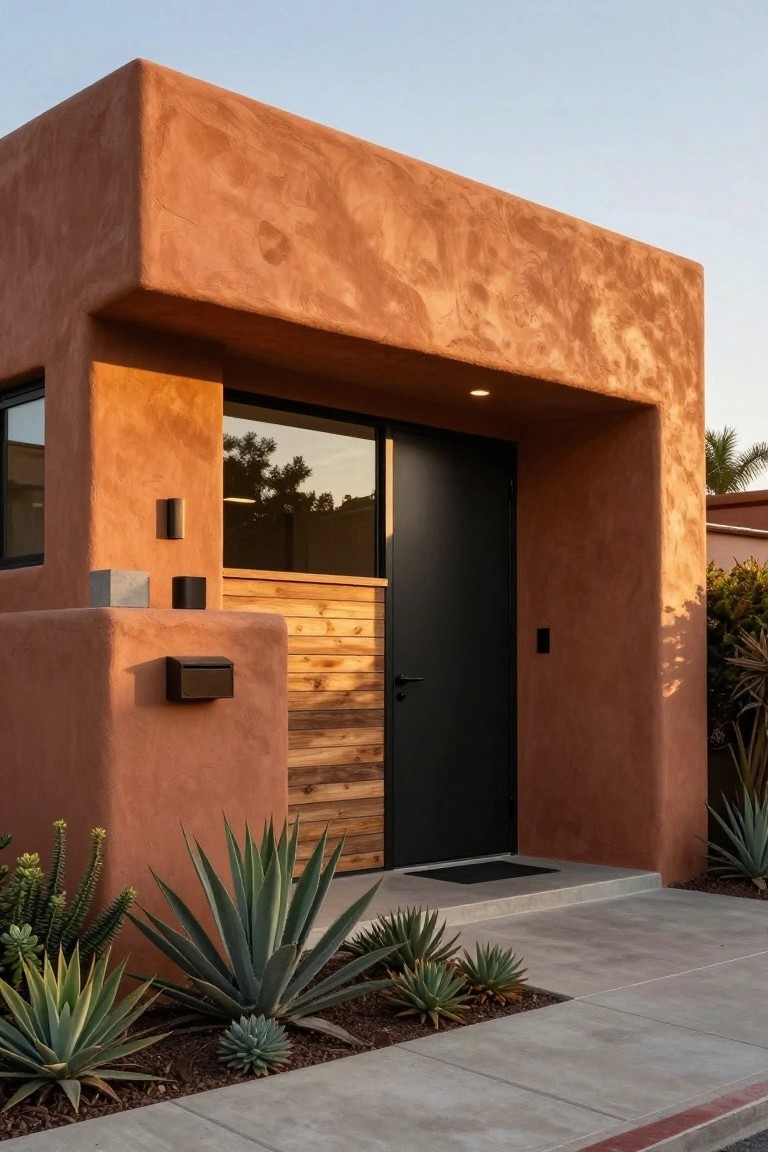
That rich, earthy terracotta color on stucco walls catches the eye right away. It pulls from old Southwest adobe homes but fits right into a modern boxy shape like this one. Paired with a simple black door and some wood accents, it feels grounded and fresh at the same time. The warm tone plays well in sunset light too.
Try this on homes in dry climates or anywhere you want low-key curb appeal without bright paints that fade fast. It works best on flat or angular facades, and those agave plants at the base keep things simple. Just make sure the trim contrasts enough so doors and windows pop.
Teal Door on Neutral Siding
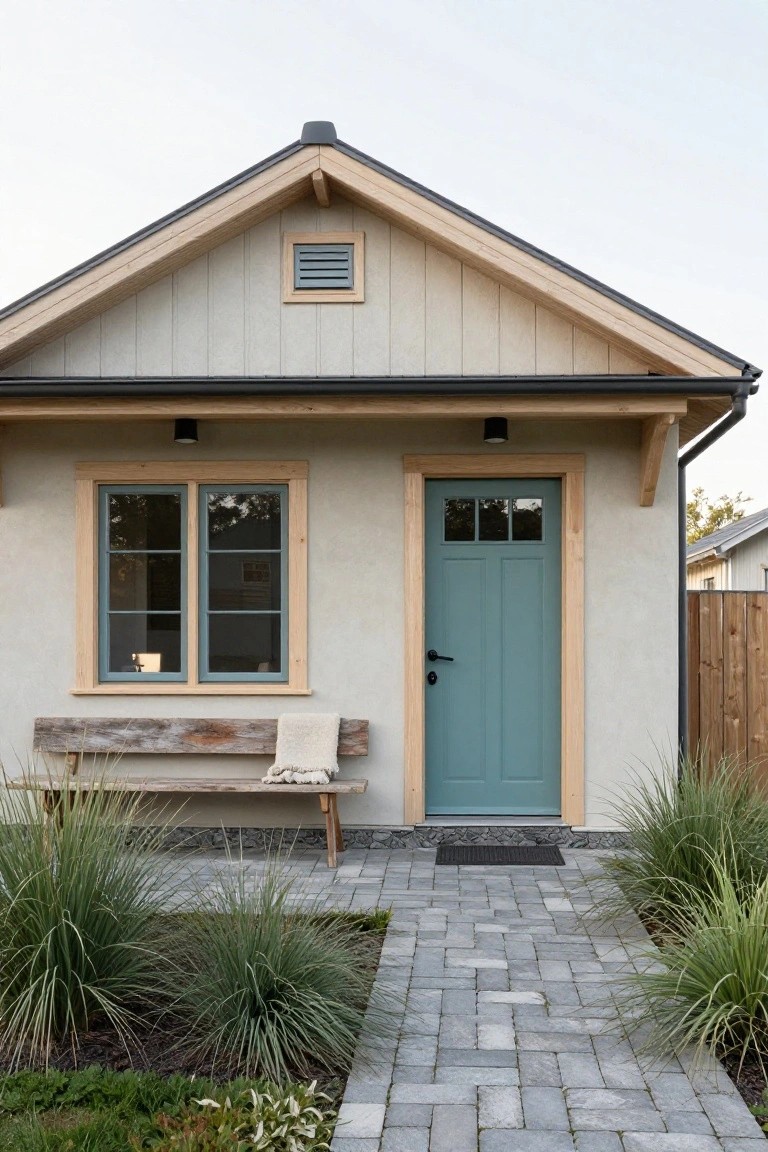
A soft teal front door stands out nicely against light beige siding on this little house. The same color on the window frames ties it together without much fuss. It adds just enough color to make the entry feel fresh and welcoming, especially with the simple bench nearby.
This look works well on smaller homes like cottages or bungalows where you want curb appeal but not too bold. Use it on a clean facade with wood trim accents. Stick to low-key plants around the path so the color stays the focus. Avoid darker shades if your house faces north, they might look dull.
Teal Door on Brick with Green Trim
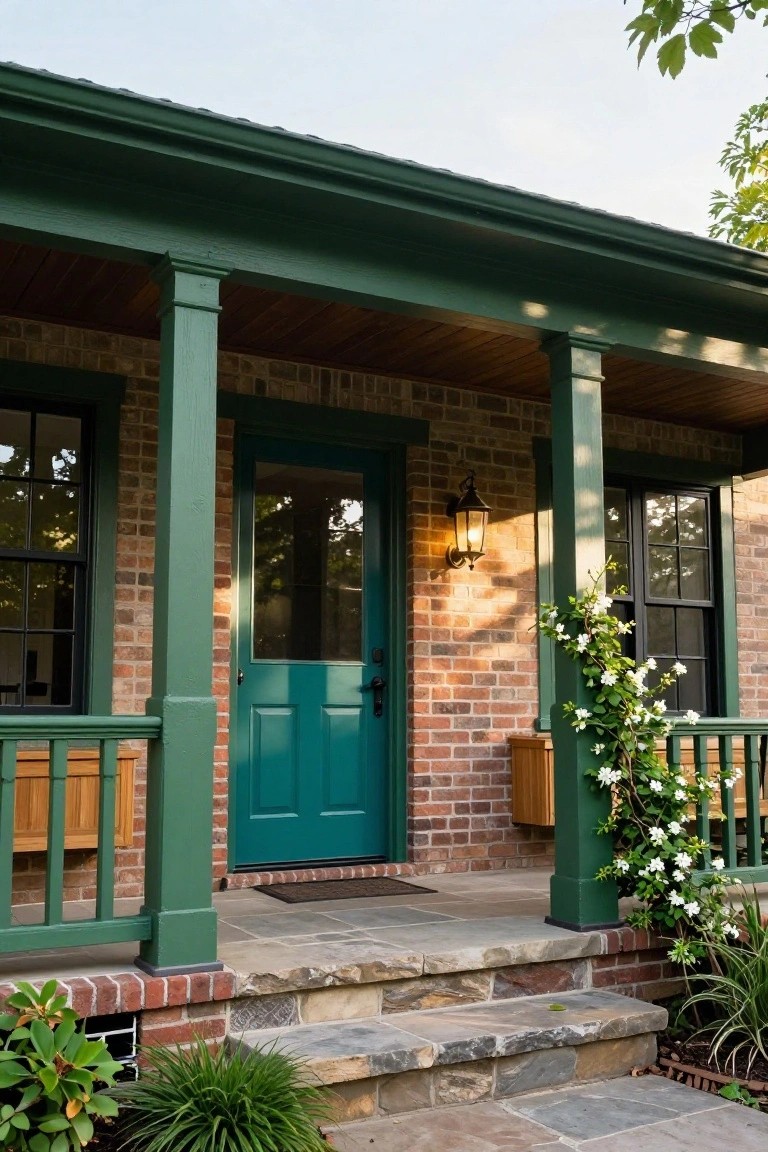
A teal front door like this one gives a brick house that extra pop without going overboard. The deep green trim on the porch columns and roofline ties right into it, making the whole entry feel pulled together. Brick can sometimes look plain, but these colors warm it up and draw your eye straight to the door. It’s a simple switch that makes the house look fresh and lived-in.
Try this on older brick homes or cottages where you want some color but not too much. Match the green trim to nearby plants or shutters for easy flow. Just make sure the door color isn’t too bright in full sun, or it might fade faster. Works great facing a street or walkway.
Dark Siding Paired with Warm Wood Accents
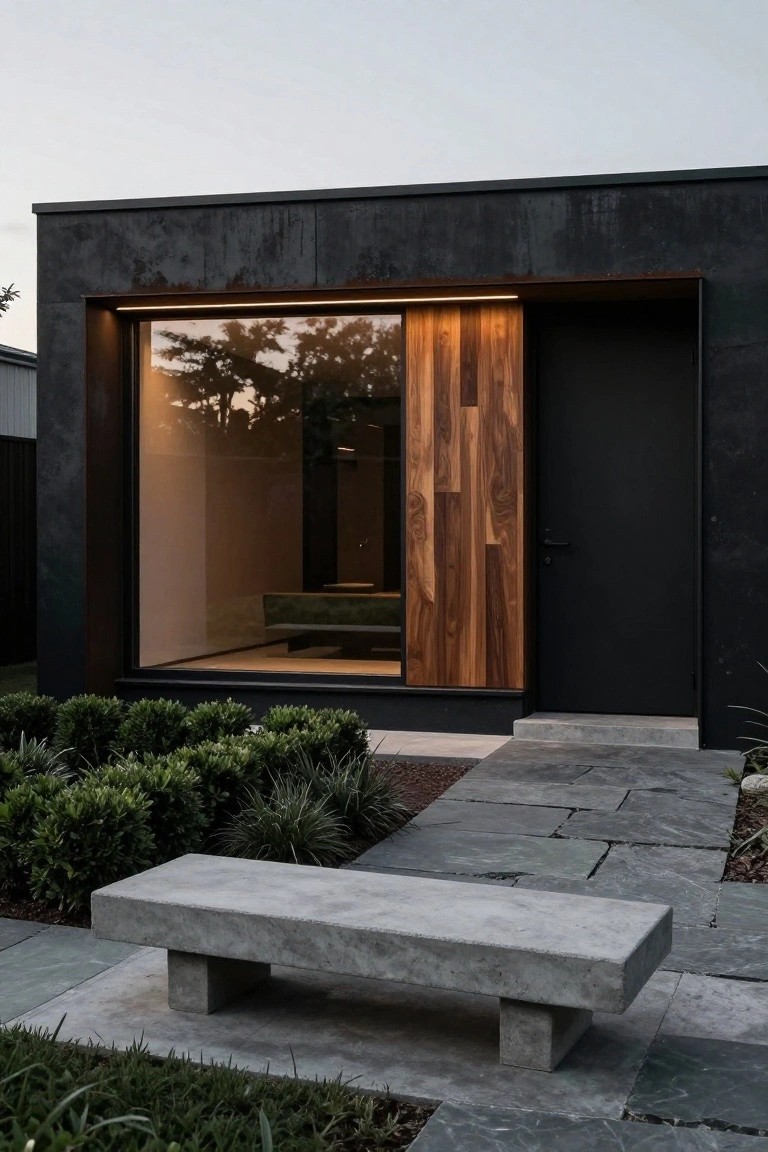
One look at this setup shows how dark siding can feel heavy until you add warm wood right at the entry. The charcoal-gray walls have a rough texture that gives the house some grit. Then those vertical walnut panels slide in next to the black door. It pulls your eye forward and makes the front door less stark. That mix keeps things modern without going cold.
Try this on a smaller home or one that’s all straight lines. The wood softens the dark color so it doesn’t overwhelm. Works best facing south or where you get good evening light… highlights the wood tones nicely. Just keep the wood protected from weather, maybe with a clear sealant. Skip it if your lot is super shady. The contrast won’t pop as much.
Blue Doors on White Stucco
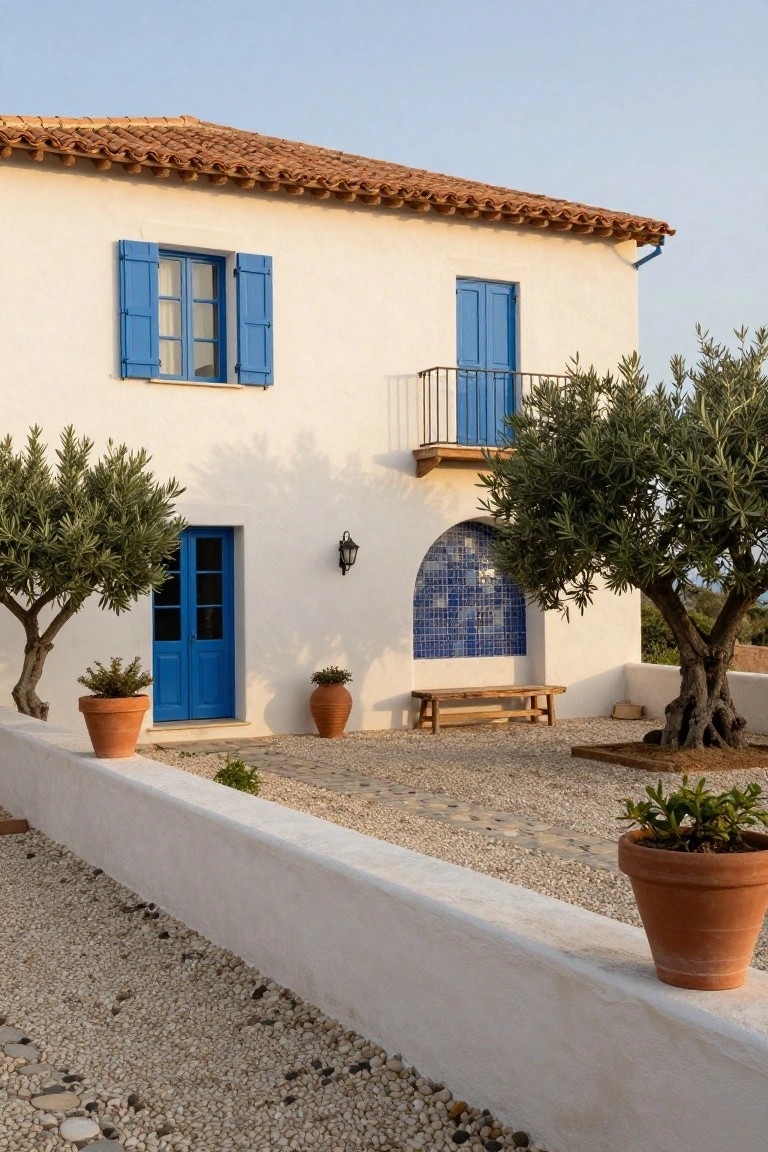
A simple way to add pop to a plain white house is painting the doors and shutters a strong blue. It works because the color jumps out against the white walls without overwhelming things. You get that clean Mediterranean style right at the curb. Olive trees nearby keep it natural.
Try this on warmer climates where the sun makes the blue glow. It suits older stucco homes or new builds wanting a relaxed look. Just match the blue shade to your roof tiles… terracotta pairs well. Skip it if your area stays gray and overcast.
Bright Yellow Door on Neutral Gray Siding
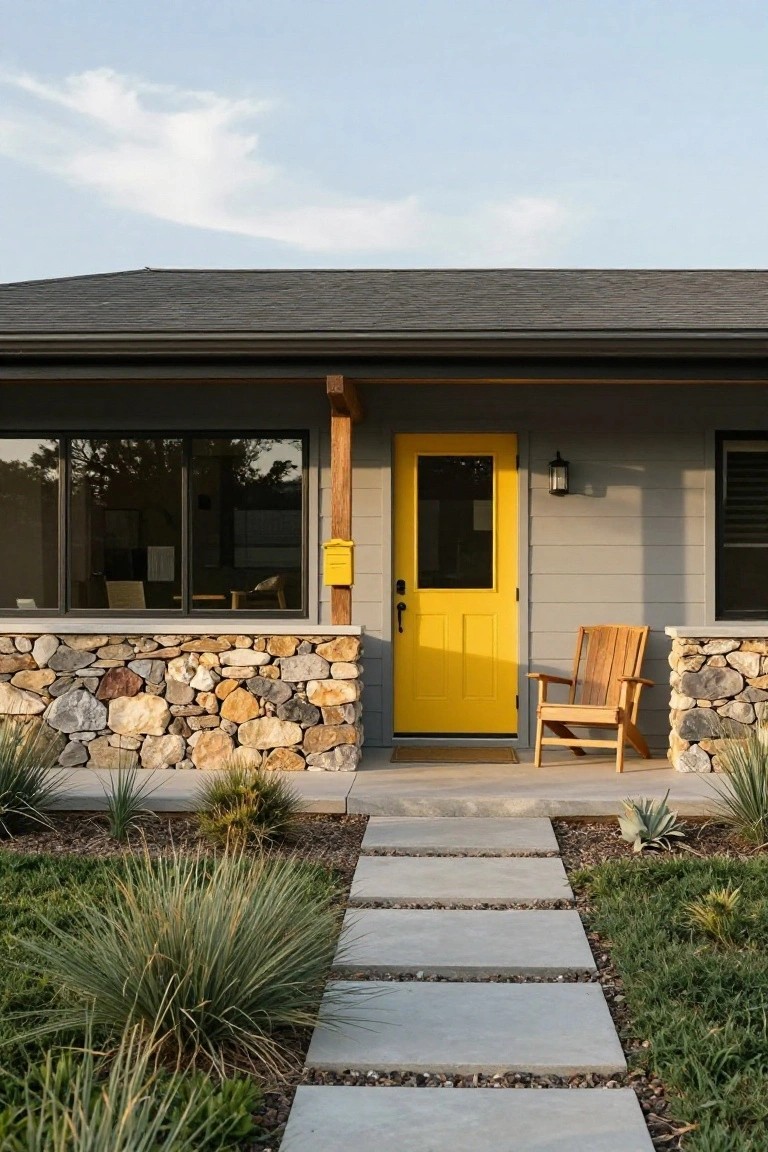
A bright yellow front door like this one grabs your eye right away on a mostly gray house. The siding stays low-key in soft grays, with some stone at the base and wood accents around the entry. That yellow pops without overwhelming everything else. It makes the whole front feel more welcoming and modern, especially on a simple mid-century style home.
You can pull this off on ranch houses or any modern build with neutral walls. Pair it with stone or wood details to keep things grounded. Just make sure the door hardware is simple black or brass so it doesn’t compete. Works best in sunny spots where the color really shines.
Warm Beige Walls with Dark Door Contrast
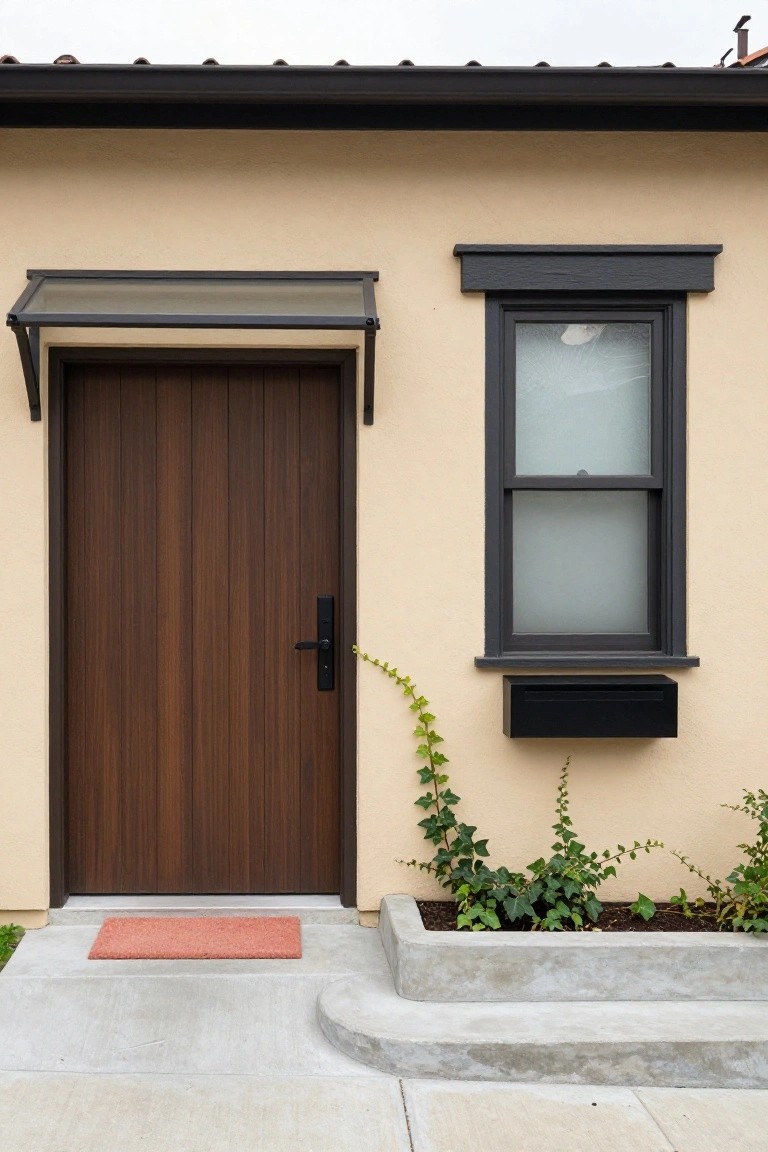
Warm beige walls set a calm base for the whole facade. They let the dark wood door take center stage at the entry. That bold contrast makes the house look more put-together and modern right away. A black-framed window nearby adds just enough edge.
This setup fits homes with simple shapes, like ranch or contemporary styles. It holds up well in sunny spots since beige hides dust better than white. Keep plantings light around the door to avoid cluttering the look.
Navy Blue Accents on White Siding
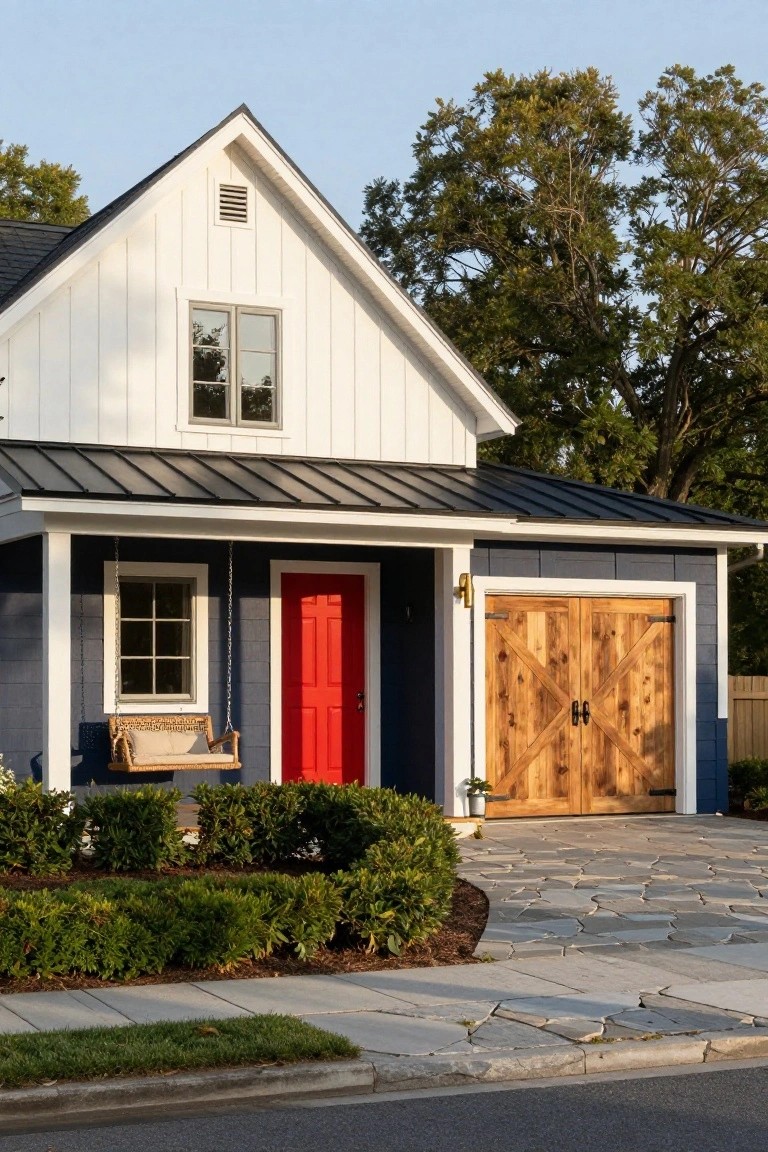
A simple mix of crisp white siding with navy blue on the porch and garage makes this house stand out right away. That red front door adds just the right punch to pull you toward the entry. It’s clean and bold at once. Folks notice the contrast from the street, and it fits a modern farmhouse look without trying too hard.
Use this color setup on ranch or cottage styles too, especially if you have a side-load garage or covered porch. Stick to matte paints for a low-key feel, and let wood details like barn-style doors warm it up. Skip it on super traditional colonials though…might feel off there.
Light Blue Siding for Coastal Homes
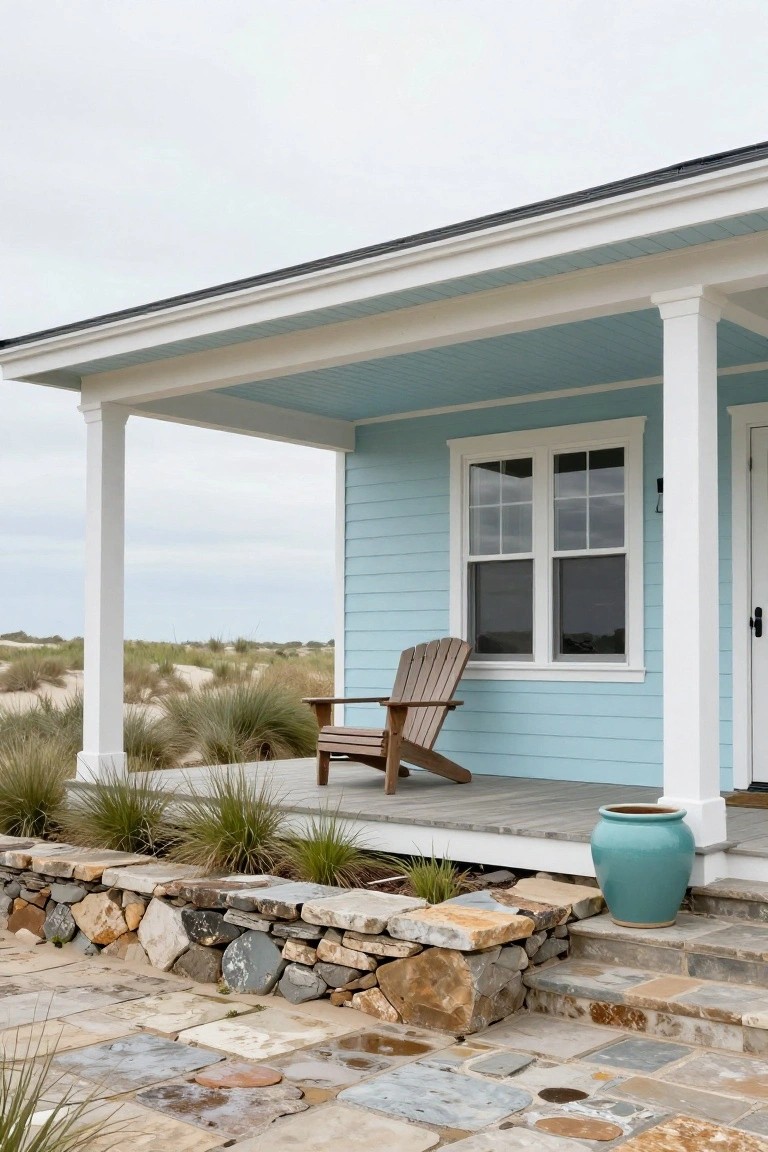
A soft light blue siding like this one keeps things calm and ties right into a beach setting. It looks fresh against the white porch posts and trim. That same blue on the porch ceiling adds a little extra without overdoing it. Folks notice how it makes the house feel part of the dunes instead of fighting them.
This color works best on simple cottages or bungalows near water. Go for vertical boards or clapboard to keep lines clean. Add wood furniture on the porch and low grasses around the base. Skip darker shades if you want it to stay light and easy to live with year round.
Copper Accents on Gray Facades
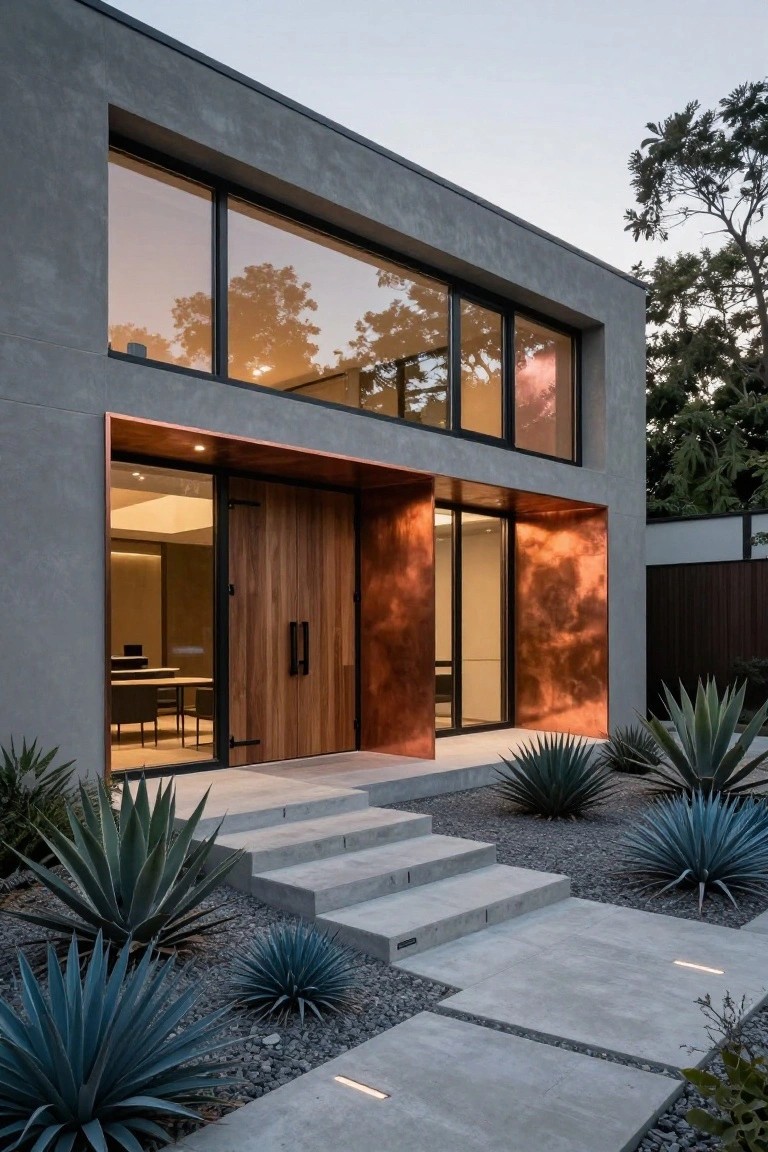
Warm copper panels frame the entry on this gray stucco house. They pick up the late light nicely and pull your eye right to the front door. The wood doors inside that frame add another natural layer, but it’s the copper that gives the whole facade some life against all that neutral tone.
This works best on simple modern homes where you want a bit of contrast without going overboard. Copper holds up well outside and gets better with age as it patinas. Just make sure the scale fits your entry, nothing too big for a smaller house.
Recommended Products
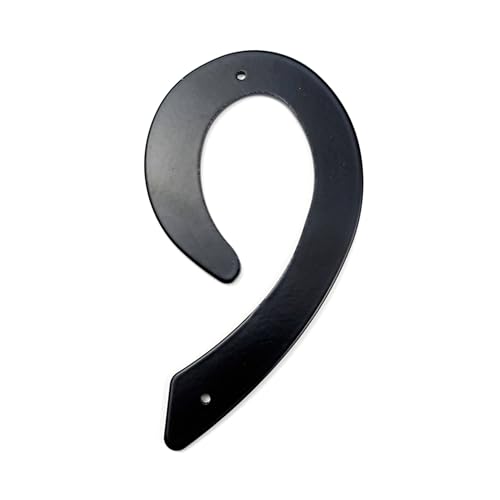
【Premium Thin Aluminum Alloy Material】 Made of lightweight thin aluminum alloy, these 4 inch house numbers feature smooth matte black finish. Waterproof & anti-rust, durable for long-term outdoor use, offering great cost performance for budget homeowners and rental property owners.

【Premium Thin Aluminum Alloy Material】 Made of lightweight thin aluminum alloy, these 4 inch house numbers feature smooth matte black finish. Waterproof & anti-rust, durable for long-term outdoor use, offering great cost performance for budget homeowners and rental property owners.

【Premium Thin Aluminum Alloy Material】 Made of lightweight thin aluminum alloy, these 4 inch house numbers feature smooth matte black finish. Waterproof & anti-rust, durable for long-term outdoor use, offering great cost performance for budget homeowners and rental property owners.
Bold Red Brick Exterior
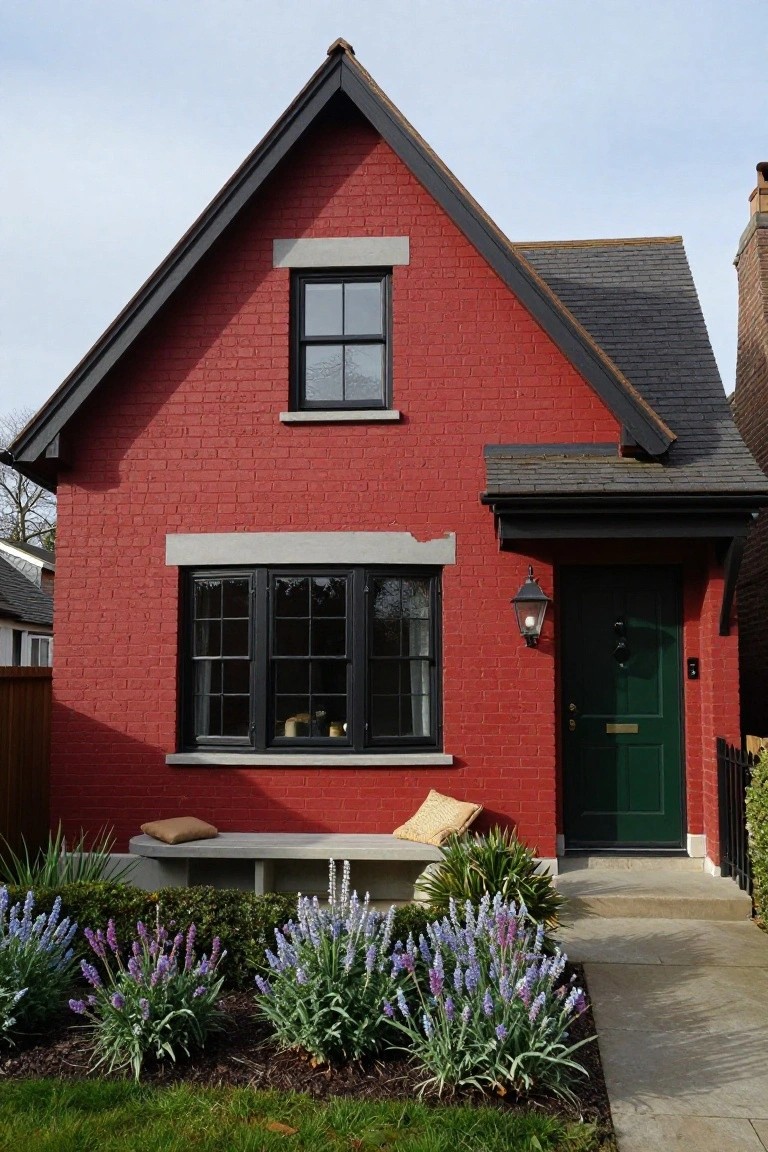
Red brick exteriors like this one catch your eye right away. The deep red color feels warm and sturdy, but the black trim around the windows and roofline keeps it from looking too traditional. It turns a simple house into something that stands out on the block without trying too hard.
This color combo suits compact homes or older neighborhoods where you want some punch. Go for it on a gable roof setup with clean lines. Pick a bold door shade, like green here, to pull folks to the entry. Keep the brick pointed neatly so it stays fresh year round.
Red Front Door on Neutral Stucco
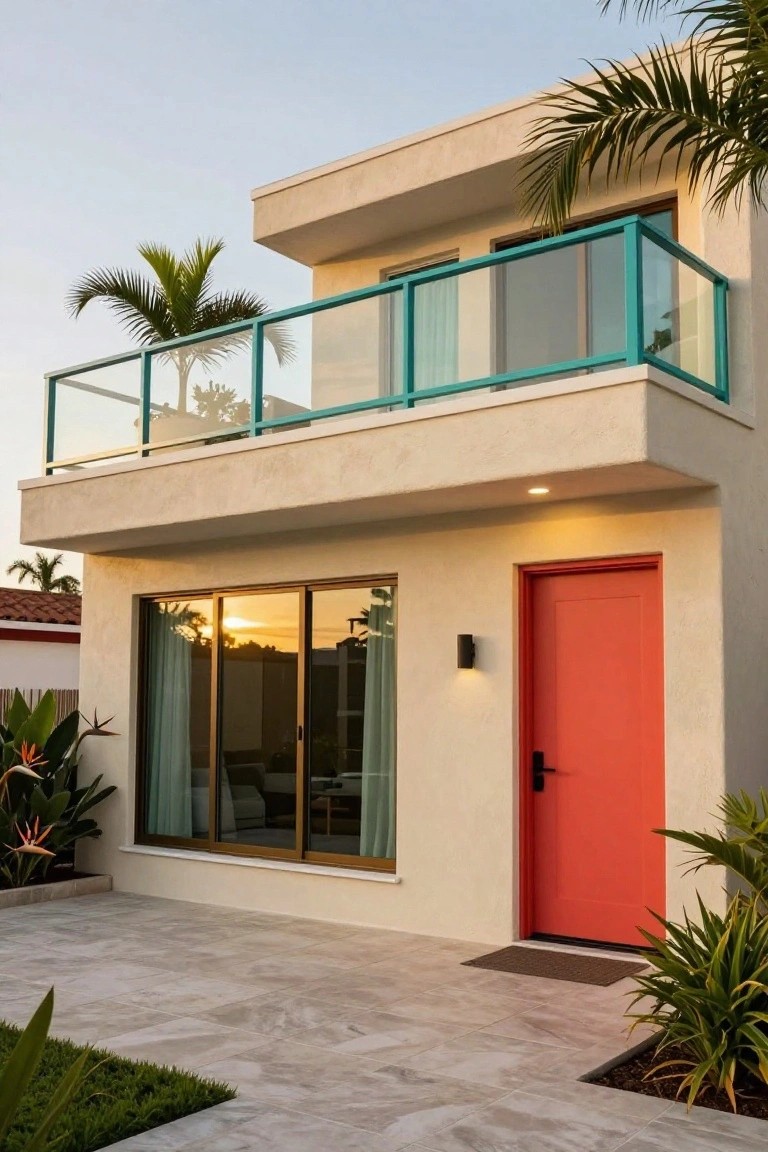
A bright red front door stands out nicely against the creamy stucco walls of this modern house. It pulls your eye right to the entry without making the whole facade feel busy. That simple color choice adds some life to the clean lines and glass balcony railing.
This works best on homes with light walls in sunny spots, like coastal areas with palms nearby. Go for a solid red paint that’s weather-tough, and keep plantings low around the door so it doesn’t get lost. Just one strong color like this can make the house feel more welcoming from the street.
Sage Green Shingles Boost Backyard Charm
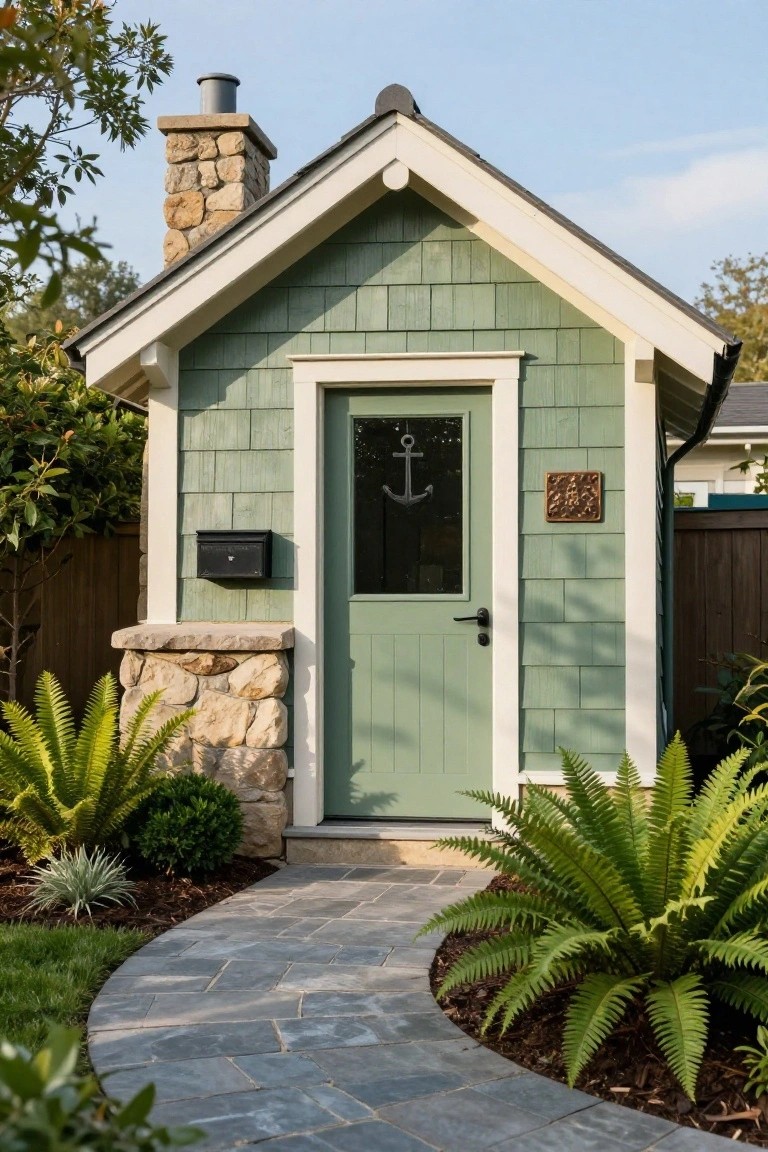
Soft sage green shingles like these wrap a small backyard structure in a color that feels fresh and tied to nature. It picks up on nearby plants without overpowering them, and that subtle texture in the siding adds interest up close. The nautical anchor on the door keeps things fun and on theme.
Try this shade on sheds, guest cottages, or even a playhouse where you want low-key appeal. It suits craftsman bungalows or coastal homes best, especially with stone bases or flagstone paths. Just make sure the green isn’t too bright, or it might clash in full shade.
Gray Siding Over Stone Base
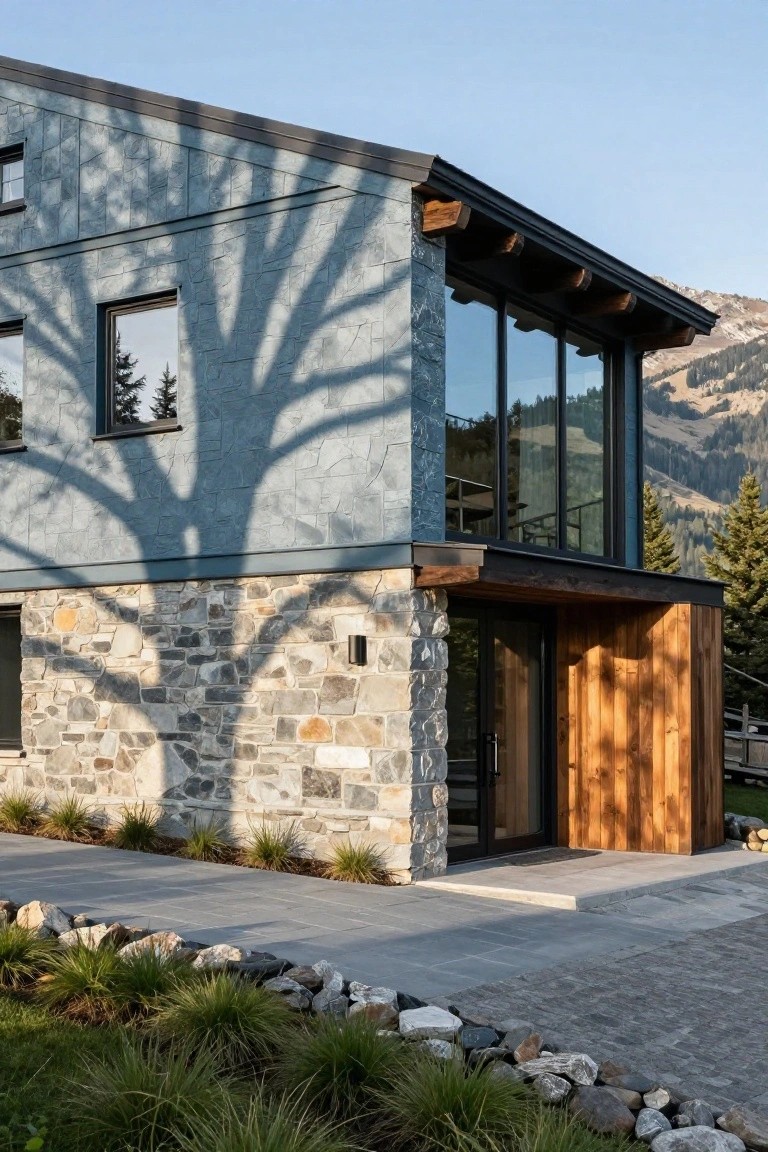
Gray siding like this gives a house a clean, modern feel without trying too hard. Here, the cool blue-gray panels cover most of the upper walls, sitting right on top of a rugged stone base. That mix keeps things grounded while the siding picks up the mountain tones around it. The large windows and wood entry pull it together nicely.
It works best on homes in hilly or wooded spots where you want the house to fit in but still stand out. Use a similar gray on siding or panels, then add stone at the bottom for weight. Skip busy colors elsewhere so the gray stays the focus. Just right for a place that sees some weather.
Sunny Yellow Front Door
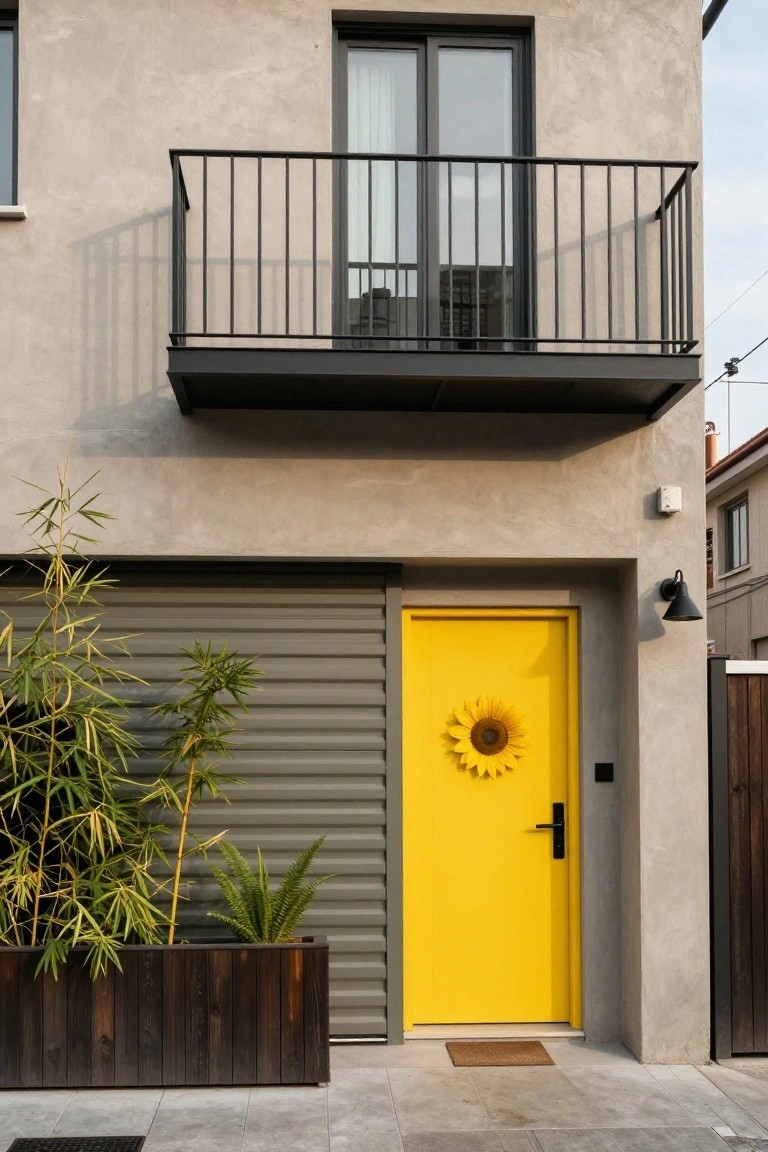
A sunny yellow front door stands out nicely against neutral walls and a gray garage door. That big sunflower wreath on it just adds to the cheerful vibe. It’s a simple way to make your house entry feel more inviting without overdoing things.
This color choice suits modern stucco homes like this one. It pulls the eye right to the door and boosts curb appeal on a quiet street. Stick to one bold accent like this… and let plants nearby soften the look a bit.
Deep Teal Front Door
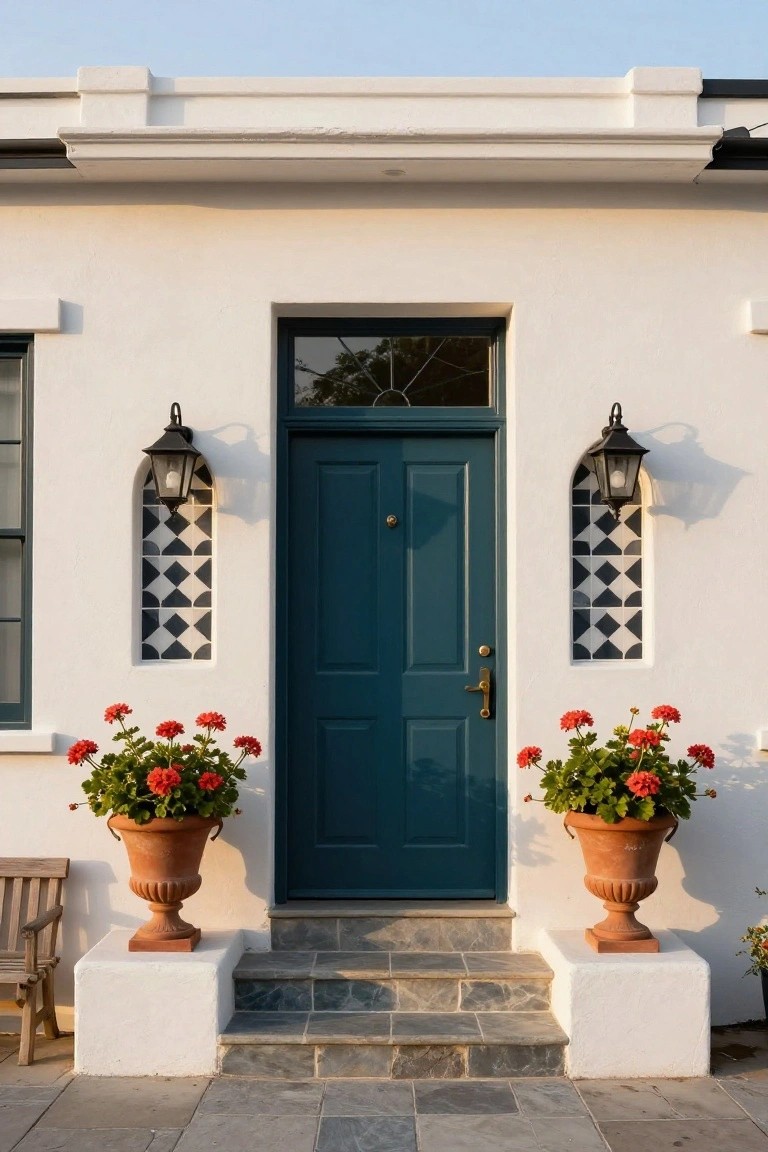
A deep teal door like this one brings real life to a plain white exterior. It adds just enough color to make the entry feel special and pull people right up the walk. The shade has a modern edge but nods to older coastal homes too.
Put it on stucco or plaster walls where the contrast shows up best. Flank the door with big geranium pots in red for extra punch. It suits milder climates…think California or the South…and keeps things low fuss if you stick to simple hardware.
Gray Exterior with Warm Wood Cladding
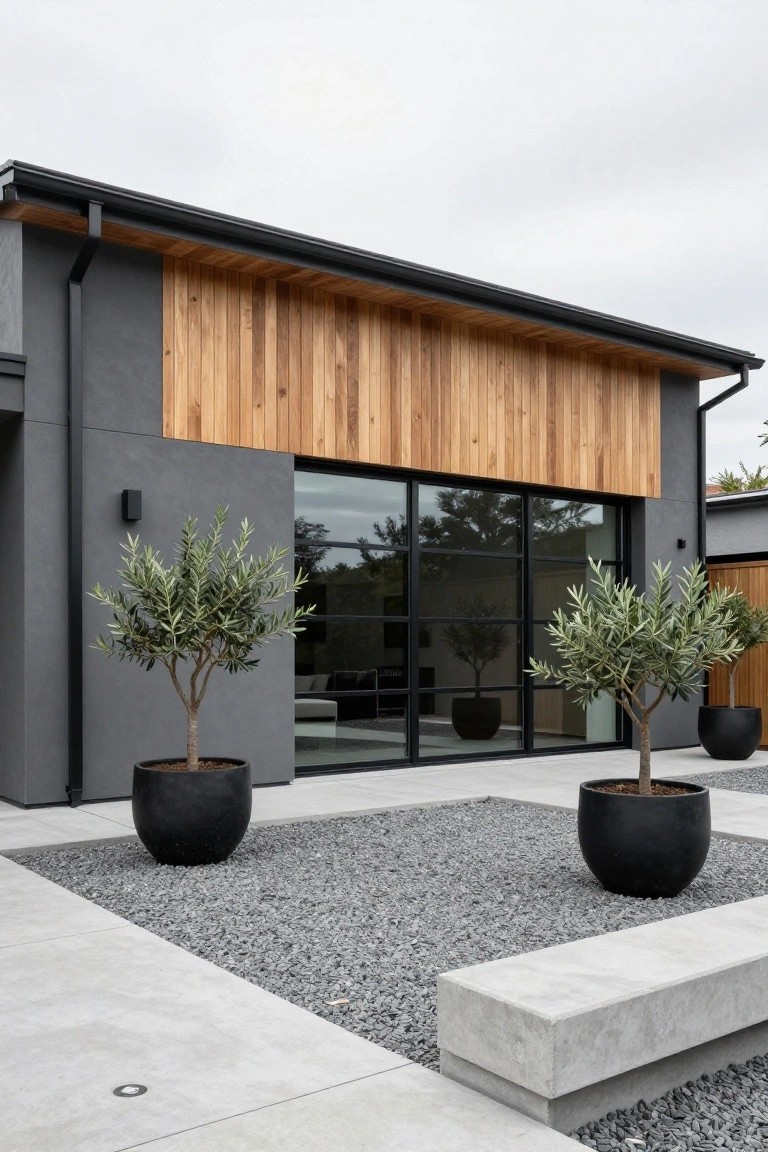
One simple way to make a modern house stand out is adding a band of warm wood cladding to a mostly gray exterior. Here the dark gray siding sets a sleek base, while the horizontal wood planks up top add texture and a bit of natural warmth. It keeps things contemporary without going all bold or colorful. Those large glass doors below pull in light and connect inside to out nicely.
This look works great on mid-sized homes in suburban spots or even urban edges. Pair the gray with black window frames and simple plant pots out front, like olives in black containers. Skip busy patterns or too much trim. It suits homes wanting low-key curb appeal that lasts through seasons.
Bold Turquoise Door on Earthy Walls
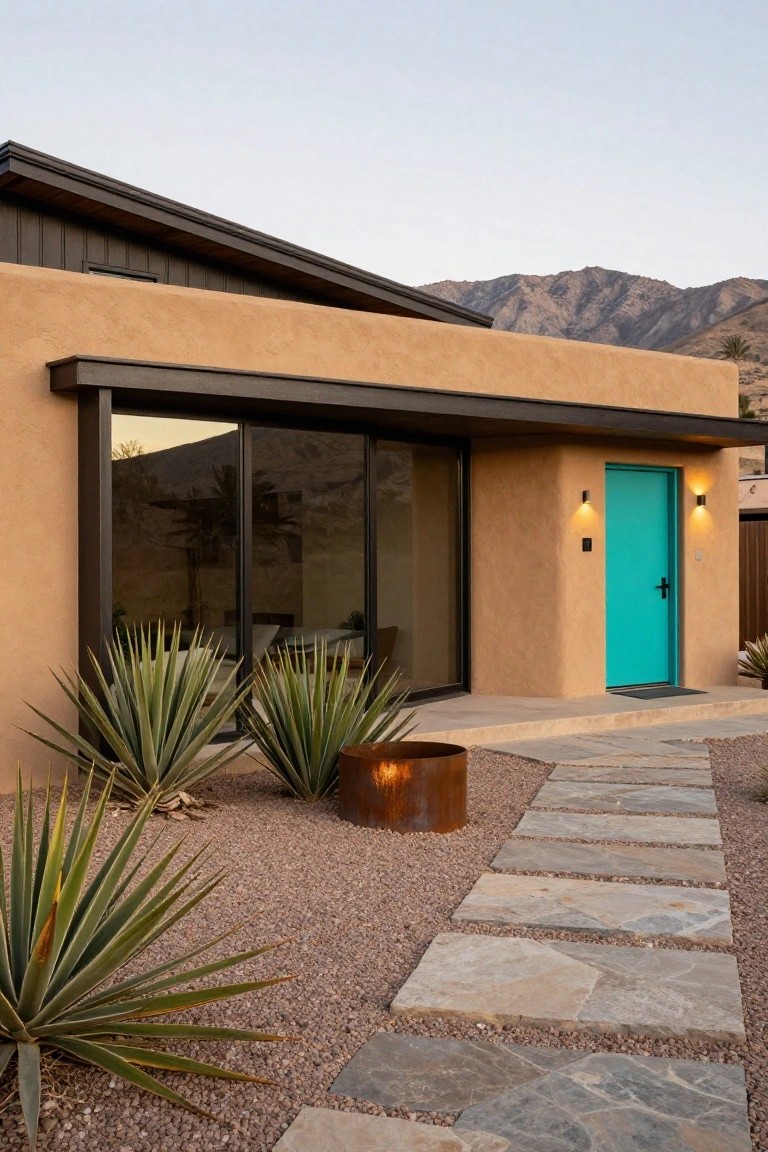
A bright turquoise door like this one grabs your eye right away against warm tan stucco. It adds a fresh pop of color to what could be a plain desert-style exterior. The earthy walls and simple plants keep things grounded, so the door does the work of making the entry feel lively and modern.
This look suits homes in dry, sunny spots where bold colors hold up well. Paint a sturdy front door in turquoise and pair it with neutral siding like adobe or light stucco. Skip busy hardware. It pulls together the facade fast, especially if your house has clean lines and big windows already.
Teal Door on Neutral Siding
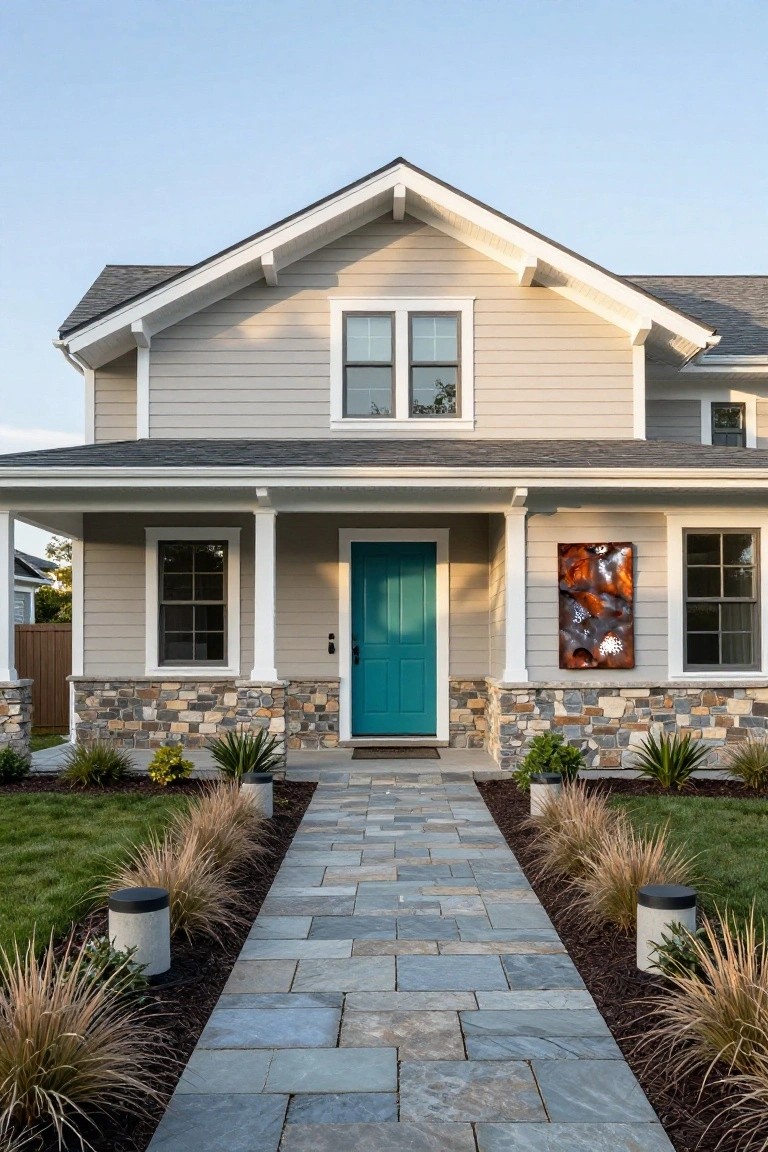
A bright teal front door grabs attention on this otherwise quiet beige house. The siding stays light and neutral, with white trim and a touch of stone at the base. That one pop of color makes the whole entry feel fresh and approachable. It works because it points right to the door without changing much else.
Try this on a craftsman or modern farmhouse style. Stick to earthy neutrals around it so the door does the talking. Just make sure the shade plays nice with your roof shingles… darker teals hold up better in full sun.
Frequently Asked Questions
Q: How do I test these colors on my actual house before committing?
A: Head to the paint store for quart samples of your top picks. Slap them on foam core boards, big enough to see from the street, and prop them against your siding. Walk around at different times of day to catch the real vibe.
Q: Will a bold color like deep green clash with my brick foundation?
A: Pair it with crisp white trim to tie everything together. The contrast makes the brick pop instead of fighting it. Brick loves earthy tones that echo its warmth.
Q: Do light colors really make a house look bigger?
A: Yes, they bounce light and open up the facade. Go for soft beiges or pale blues on smaller homes. Dark shades work better on larger ones.
Q: What’s the best way to keep new paint looking fresh year-round?
And here’s the trick.
Clean the siding once a year with gentle soap and a hose. Skip harsh chemicals that strip the finish. That simple rinse fights dirt buildup and fading.
