

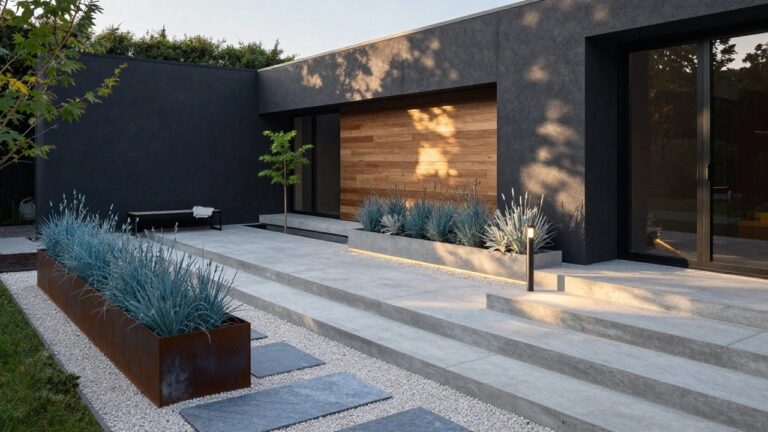
When I drive up to a modern house, the landscaping around it either pulls the whole exterior together or throws it off balance right away.
Clean planting beds that mirror the home’s sharp lines make the facade read stronger from the street, especially with structured evergreens anchoring the edges.
I’ve tested a few path layouts myself, and the ones that curve gently toward the entry feel most natural without looking forced.
Over time, smart edging and layered heights keep the yard from turning wild, holding that fresh curb appeal through seasons.
Some of these setups are straightforward enough to tweak for any lot size.
Entry Path Lined with Raised Planters
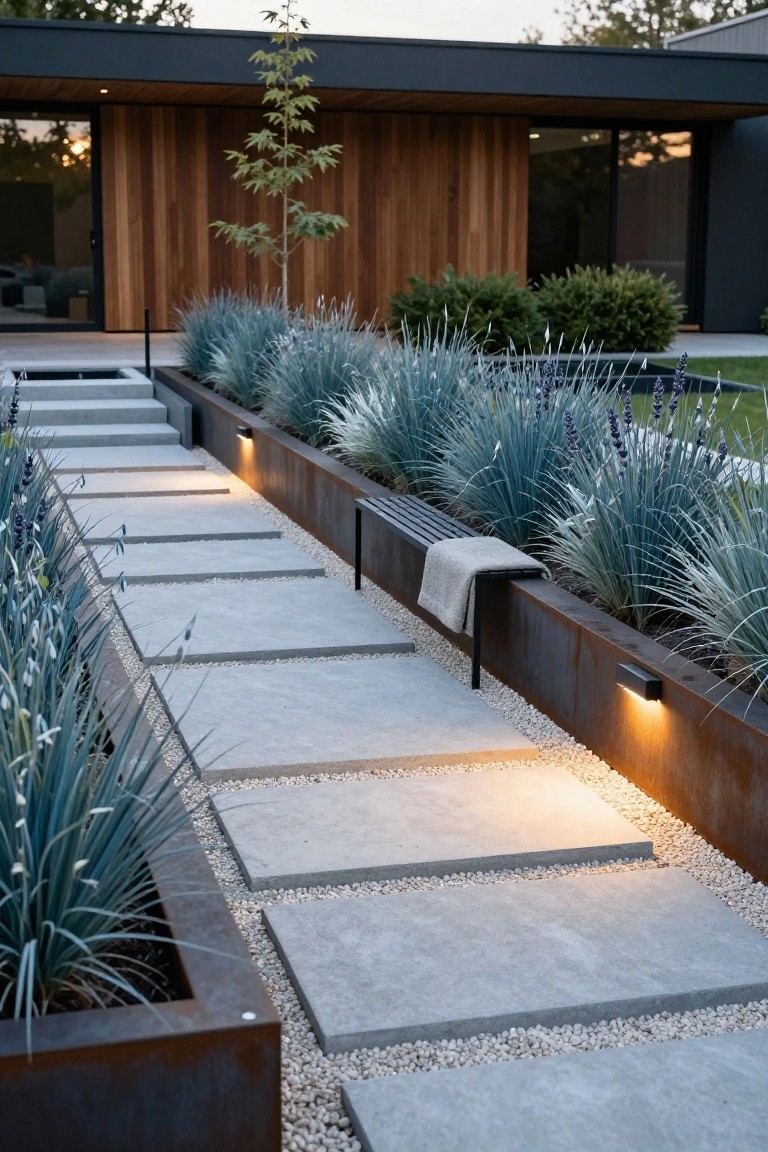
One straightforward way to boost curb appeal is lining your walkway with tall raised planters. Here, corten steel beds filled with spiky blue agave create clean lines that draw the eye right to the front door. The rusted metal gives a rugged, lived-in look that fits modern homes without much upkeep. Those plants stay tidy year-round and add height without blocking the house view.
You can pull this off in narrow side yards or front entries where space is tight. Go for drought-tolerant stuff like agave or yucca in corten or similar edging. Space the concrete pavers loosely with gravel in between for easy drainage. It works best on flat ground leading to steps. Just make sure the beds have good soil mix so roots don’t heave the path.
Terraced Retaining Walls for Sloped Entries

Sloped front yards can be tough to handle, but terraced retaining walls like these make the climb easy and look sharp at the same time. Rough natural stone faces the concrete steps, with gravel strips tucked in for drainage and a clean edge. Ornamental grasses and olive trees fill the beds, keeping things low fuss while framing the path up to the house.
This works best on modern homes with clean lines, especially in dry climates where drought-tolerant plants thrive. Pick stone that matches your area’s rock, keep steps wide enough for two people, and add gravel to handle water runoff. Skip it on flat lots, though. It’ll just feel out of place.
Metal-Edged Beds for Driveway Landscaping

A straight planting bed edged with rusted steel metal adds clean structure to a plain driveway. Placed right between garage doors, it uses tough plants like agaves and grasses over loose pebbles. That setup keeps things modern and low fuss, drawing attention without crowding the walk.
It fits homes with double garages or narrow front approaches. Go for drought plants that handle sun and dry spells. The steel patinas over time for a natural look against stucco and concrete. Keep the bed narrow, maybe three feet wide, so it stays practical.
Recommended Products

【Vertical Woven Tapestry】The long narrow size 16.5"X37.5"(41X95cm) is a great fit for your wall, great size to place at any place of your house, especially for narrow and tall walls. The leaves may be curly during transport, gently comb the tassels and hang it up for a few days and let it spread naturally, you will get a more beautiful wall hanging decor.

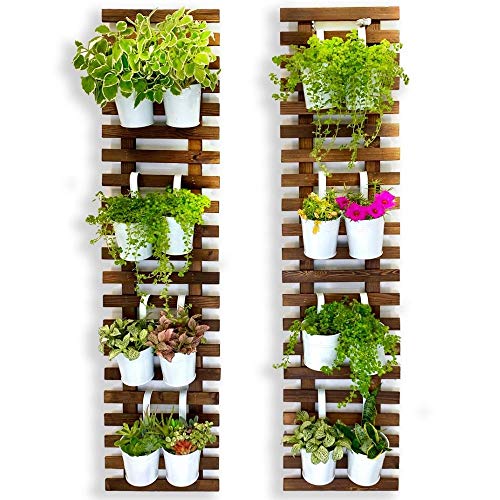
29x120cm (11.4" x 47.2") x 2 pcs. Plants, flowers, pots, decorations are NOT included
Vertical Green Walls on Brick
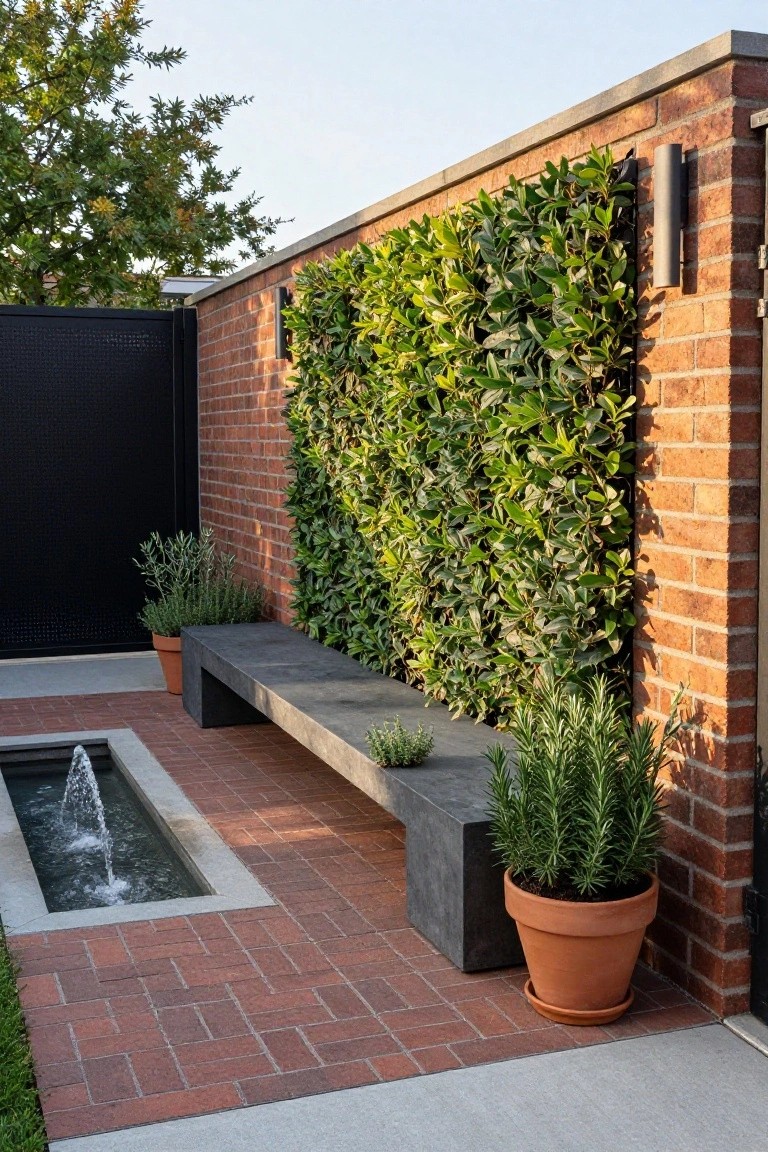
One simple way to boost curb appeal is covering a plain brick wall with a vertical green wall. Here you see lush ivy-like plants climbing right up the bricks, turning a stark boundary into a living backdrop. It softens the hard lines without much ground space, and keeps things low-maintenance once established.
This works great in small side yards or courtyards where you want privacy but not a full fence. Plant something tough like ivy or euonymus that grips well, add a bench below for seating, and maybe pots of rosemary nearby for scent. Skip it on super shady spots though, since the greenery needs some sun to thrive.
Gravel Pathways with Stepping Stones
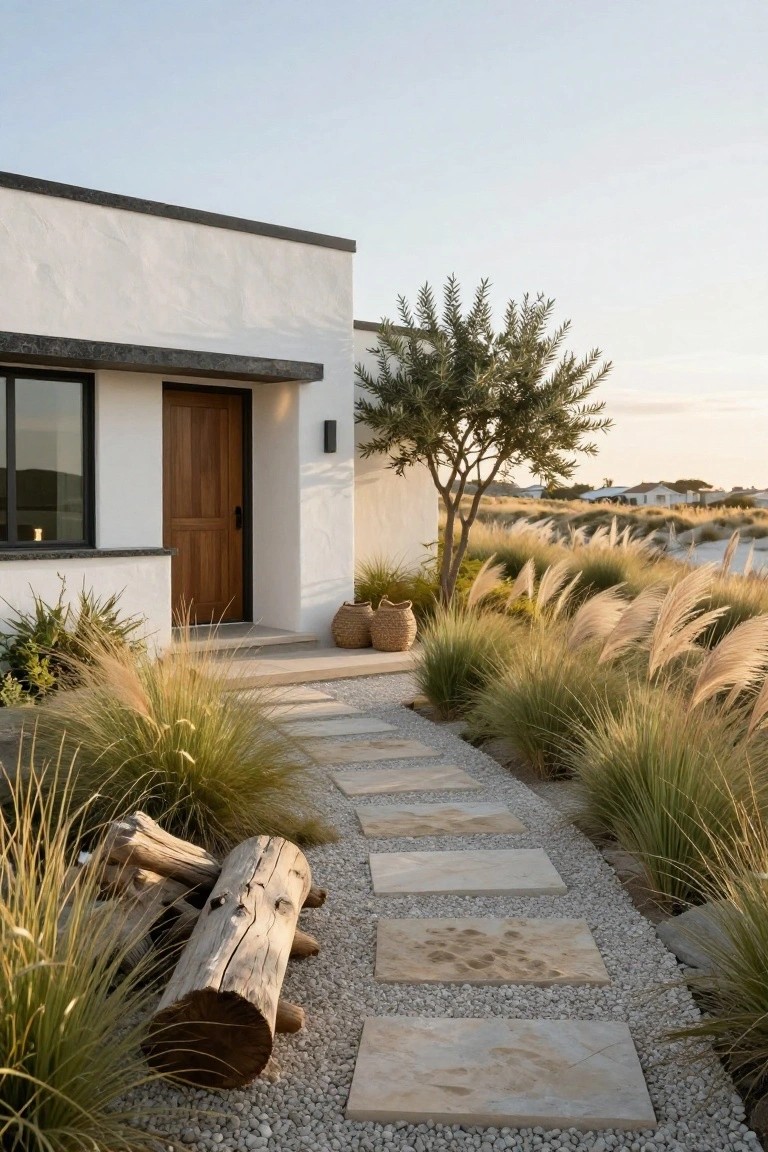
A gravel path like this one uses wide, rough stone slabs set loosely in white pebbles. Tall grasses edge it on both sides, with a big driftwood log adding a natural touch. It pulls you toward the simple wooden door without feeling too fussy. The whole thing stays low-maintenance and fits right with a clean white house wall.
Try this for homes in dry areas or near the beach. Pick local grasses that don’t need much water, like pampas types. Space the stones unevenly for a casual walk up to the entry. It softens hard architecture… just watch that gravel doesn’t scatter too much in wind.
Stepping Stones Over a Reflecting Pond
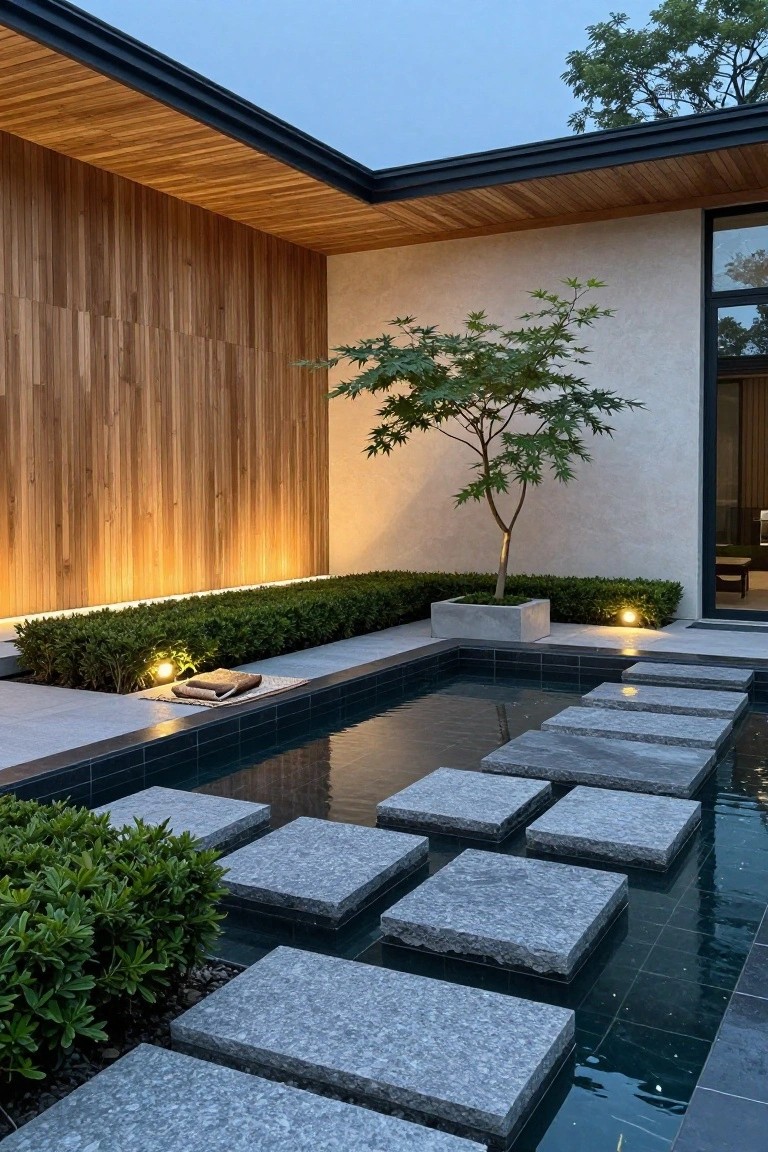
One simple way to add interest to a courtyard or entry area is laying large flat stones across a shallow pond. The gray granite slabs here lead right across the dark water, making you want to step from one to the next. It pulls the eye through the space and ties the hard edges of the house to softer plantings like the low boxwood hedges.
This works best in modern homes with clean lines, where you have room for a 4 to 6 foot wide water feature. Keep the water just a few inches deep for safety, and plant a single tree nearby for scale. Skip it if you have young kids or steep drops around. It’s low upkeep once set up right.
Paver Paths Set in Grass
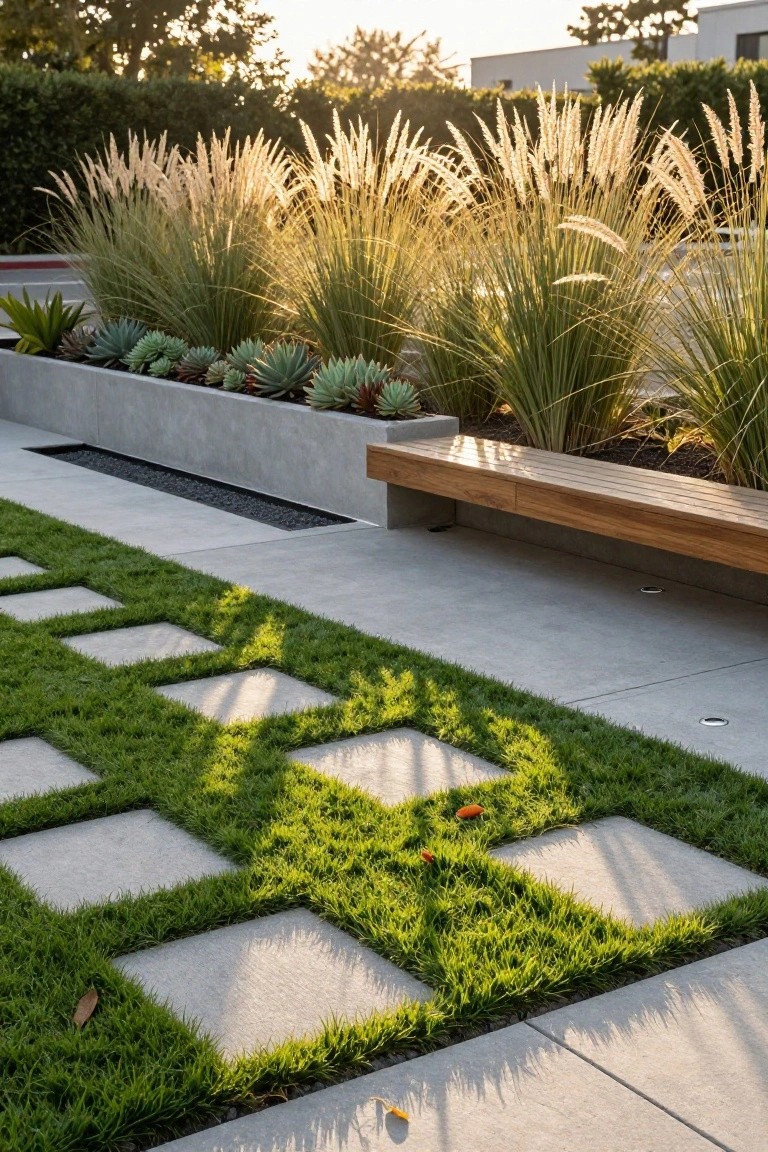
One clean way to guide foot traffic through a yard is by setting square concrete pavers right into a bed of grass. It keeps things simple and modern without paving over everything. The green grass fills in around each paver, making a path that blends soft and hard surfaces nicely. In this setup, the pavers lead toward a bench area, easy on the eyes and practical too.
This works best in side yards or patios where you want access without much upkeep. Go for larger pavers if the space gets heavy use, or smaller ones for a dotted look. It suits modern homes with clean lines… just make sure the grass variety handles your climate, or it might thin out over time.
Border the Entry Path with Hydrangeas
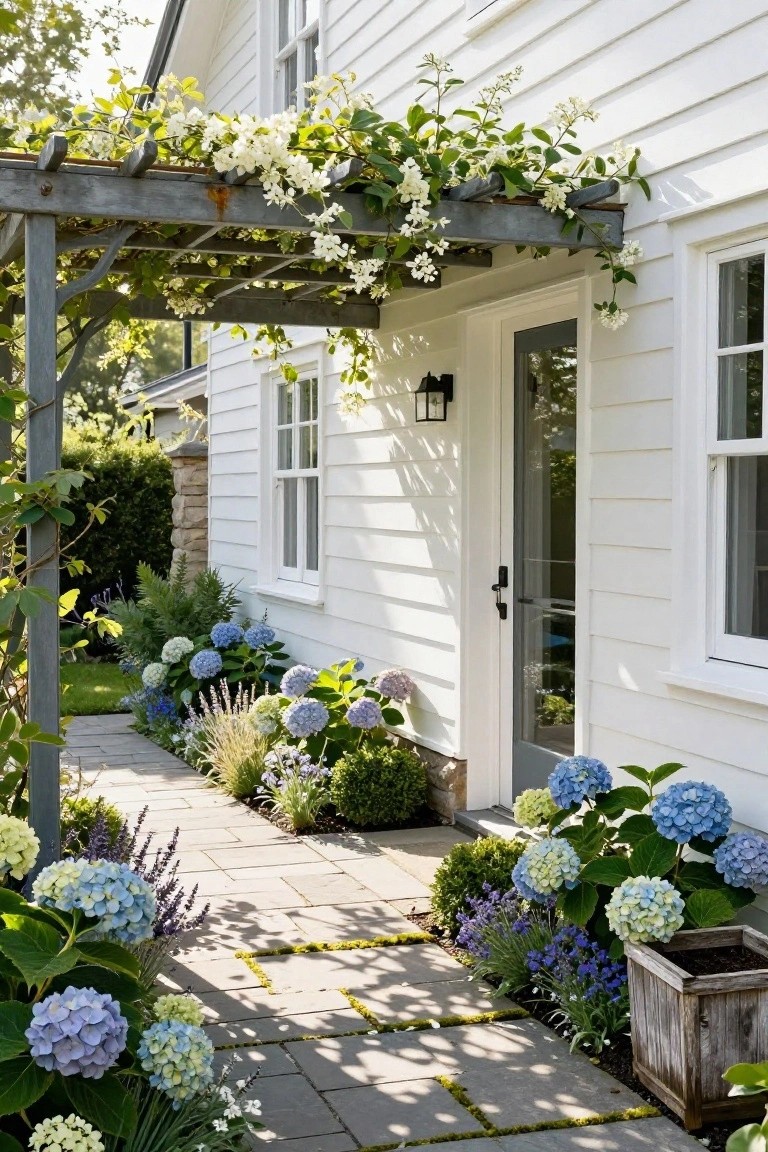
One simple way to boost curb appeal is planting hydrangeas right along the walkway to your front door. These big blue and white blooms fill out the edges nicely, making the path feel like it’s leading somewhere special. They mix well with lavender and other low plants, keeping things full without blocking the house view. That soft color pop against a white exterior just draws the eye in a calm way.
This works best on homes with clean lines, like a modern farmhouse. Pick a spot with partial shade since hydrangeas like it that way. Lay gravel or stone for the path first, then edge beds with the taller shrubs. Keep it low maintenance by grouping the same plants together… easier to care for. Avoid overcrowding the door itself.
Build a Curved Fire Pit Bench

A curved bench built right around a central fire pit turns a plain patio into a spot where people actually gather. The smooth concrete here keeps things clean and modern, and that round shape just feels right for evenings with friends or family. No extra chairs needed.
This setup fits best in backyards with room for a 10-foot circle or so. Go for gas-powered to skip the wood mess, add gravel inside the curve for drainage. It suits flat paver patios near the house… pairs well with a dining table nearby if you want zones.
Stream Path Beside the Walkway
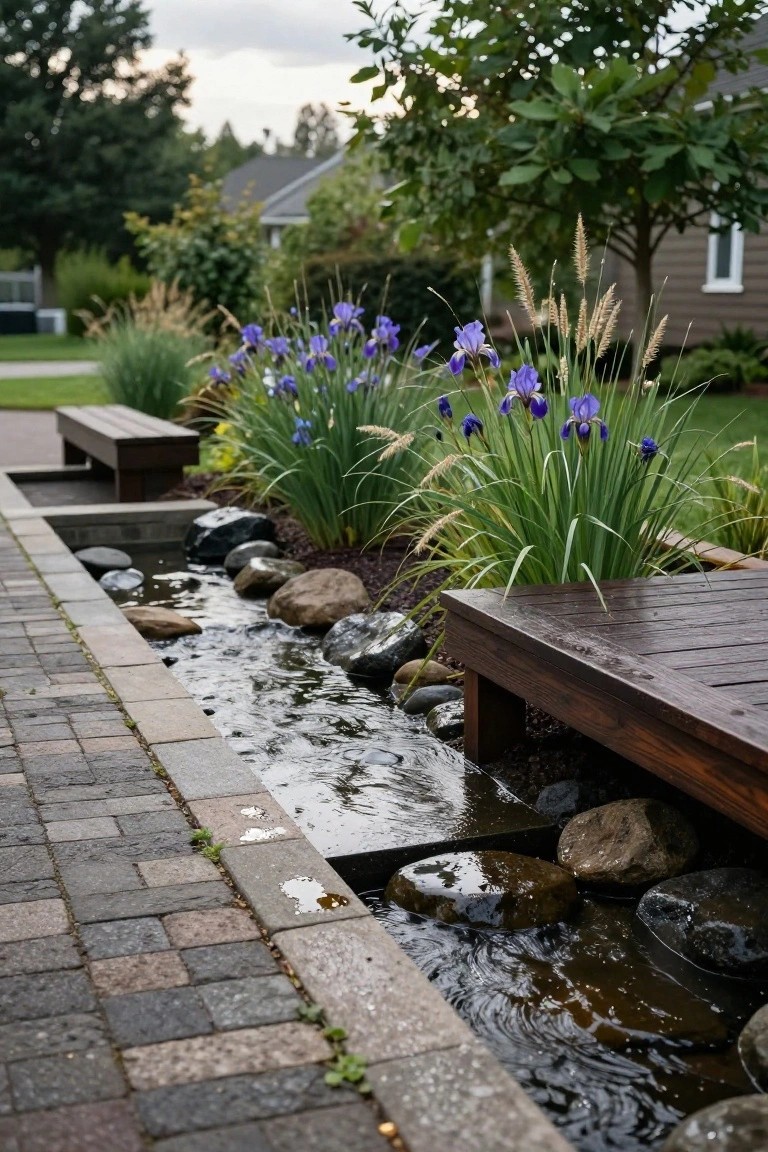
A narrow stream running right along a walkway adds quiet movement to front yard landscaping. Here rocks line the edges to keep water in place, while tall grasses and purple irises fill in around them. It turns a plain path into something alive and draws folks right to the door.
This works best on a side yard or entry path where space is tight. Line a shallow trench with a rubber pond liner and rocks, then add a small recirculating pump. Plant tough perennials that handle wet feet. Watch the water level in dry spells… simple upkeep for real curb appeal.
Recommended Products

Nursery-Grown Seedling Starter Plant: Pack of 3 professionally rooted 2-inch starter plants shipped in grower pots, ready to transplant into larger containers or landscape settings

Luminous Edges - Blue-green leaves accented with red and golden margins that appear to glow in sunlight.

Gravel and Stone Slab Entry Paths
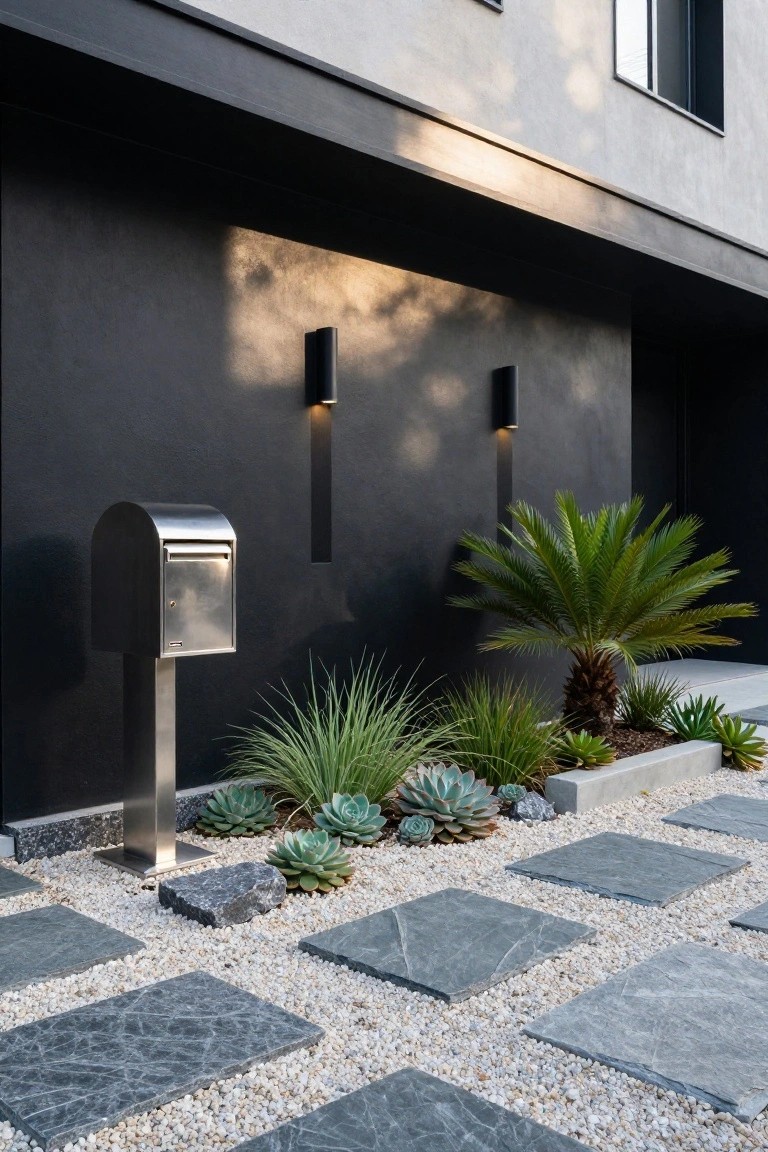
One clean way to guide visitors to your front door is with a path made from chunky gray stone slabs set right into white pebble gravel. It shows up strong against a dark house wall like this one, and the loose spacing lets the gravel peek through for a natural, unfussy feel. Tough plants tucked along the edges, like those blue-green succulents and spiky grasses, fill it out without crowding the walk.
This works best on modern homes in dry climates, where low-water plants keep things easy year-round. Start with a gravel base, drop in the slabs unevenly for interest, then edge with a few bold succulents or a palm for height. Skip tight mowing or weeding. Just rake the pebbles now and then.
Frame the Front Door with Potted Lavender
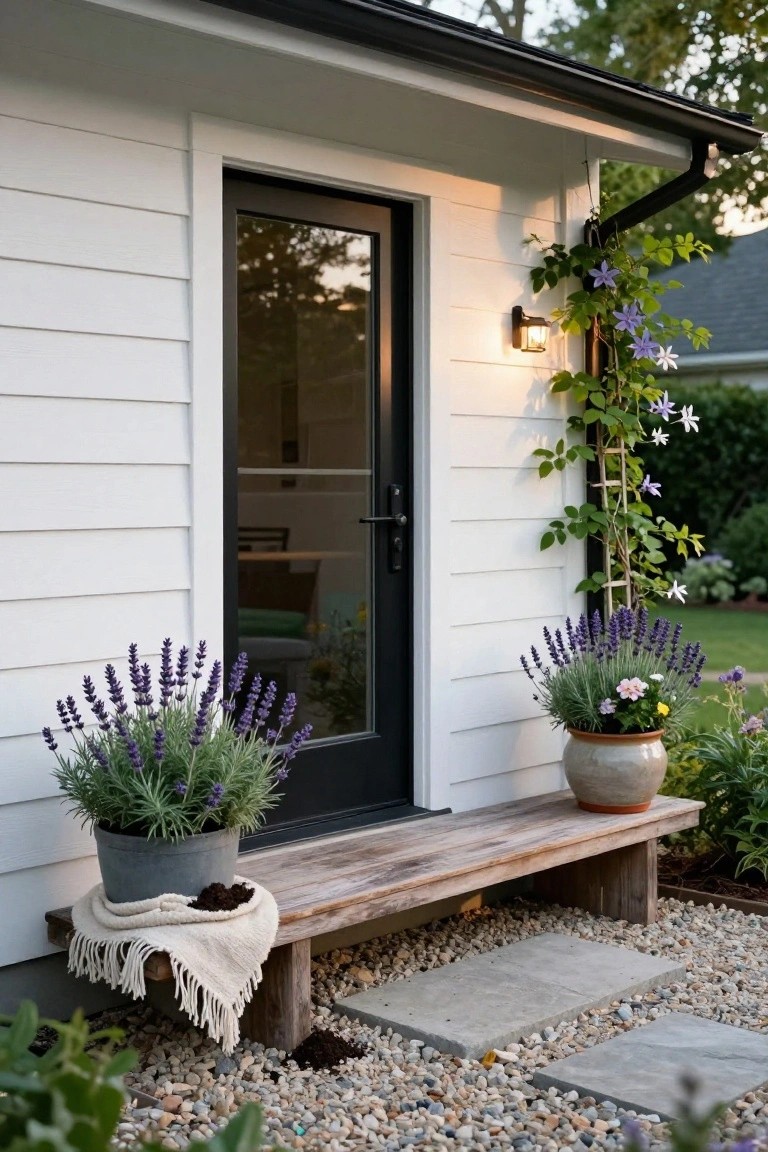
Tall pots of lavender planted right next to the entry door make a simple welcoming touch. The purple spikes stand out against white siding and a black door. They add some height and color without taking up bed space. Plus lavender smells nice when you walk by.
This works best on stoops or small front landings where you want low upkeep. Pick mature plants in big containers like metal or clay pots. Set them symmetrical on either side. Pair with a plain bench if there’s room. Skip it on super windy spots since pots can tip. Good for modern or cottage style homes.
Large Boulders as Focal Points
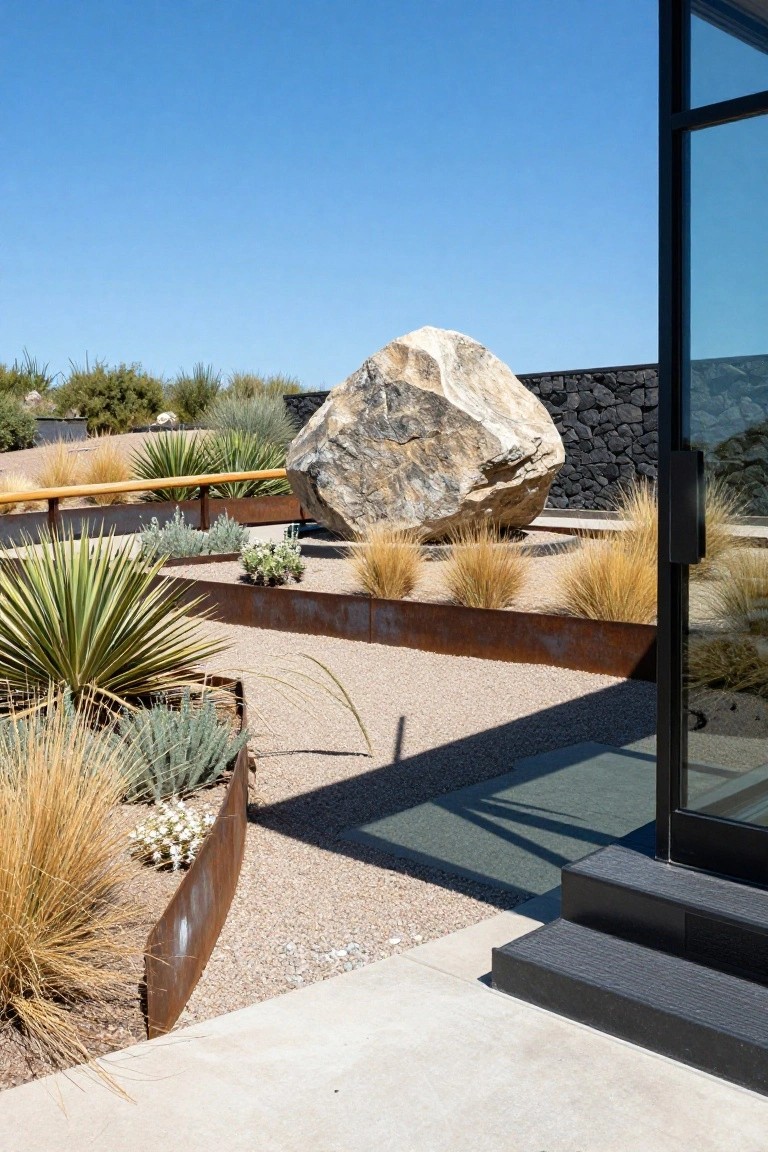
One simple way to add real presence to a yard is dropping in a big natural boulder. In this setup, a massive pale rock sits right in the middle of things, surrounded by low grasses and gravel. It pulls your eye immediately and gives the whole space a rugged, timeless feel without much upkeep. No need for fancy statues or water features. Just one good rock does the job.
This works best in dry climates or modern homes where you want low-water plants like agaves and to avoid busy flower beds. Place it near an entry or patio, maybe tie it in with rusted steel edging for clean lines. Keep the area around it simple so the boulder stays the star. It’s practical for sloped yards too, since it anchors everything naturally.
Plunge Pool Beside Simple Bench Seating
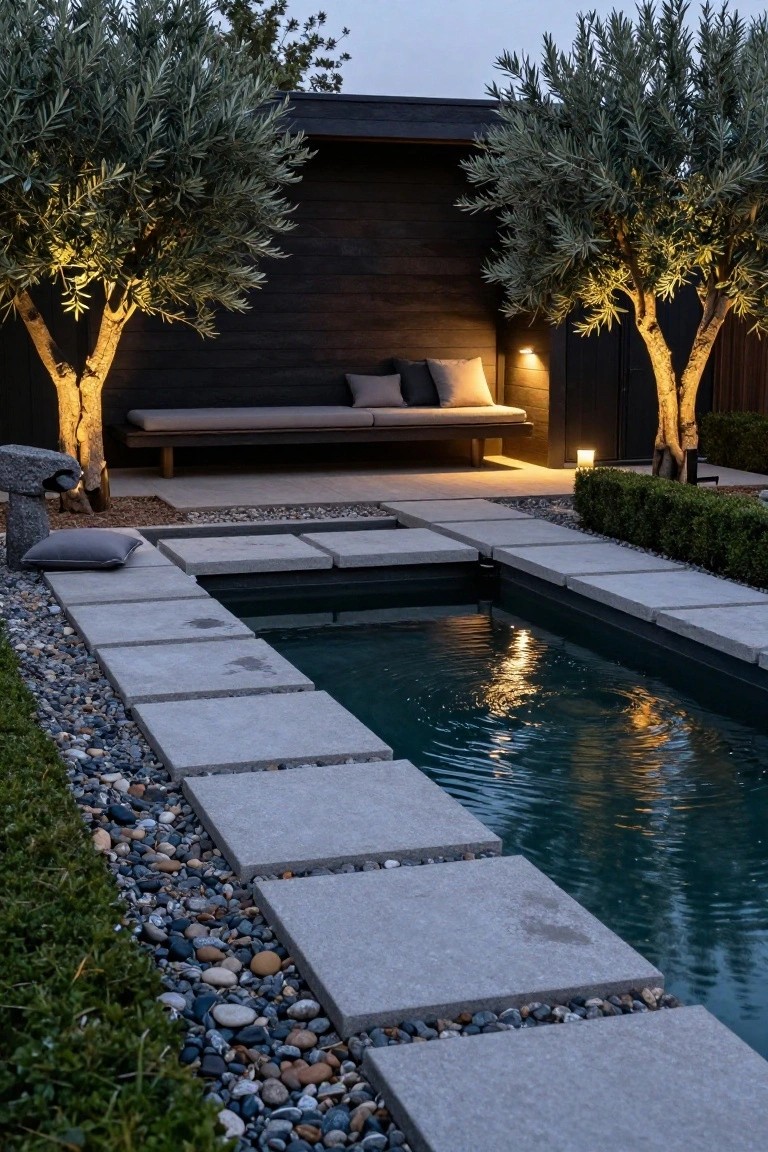
A narrow plunge pool tucked right up against a bench makes for an easy outdoor spot to unwind. No need for a big yard. The water stays close, almost like an extension of the seat, and those uplit olive trees add a soft glow after dark. It keeps things calm and contained.
This works great in modern courtyards or side yards where space is tight. Line the edges with wide stone pavers and gravel for clean lines. Toss pillows on the bench for comfort. Skip it if you want room for laps, but it’s spot on for dipping feet or just sitting with a drink.
Birch Trunk Fencing for Privacy
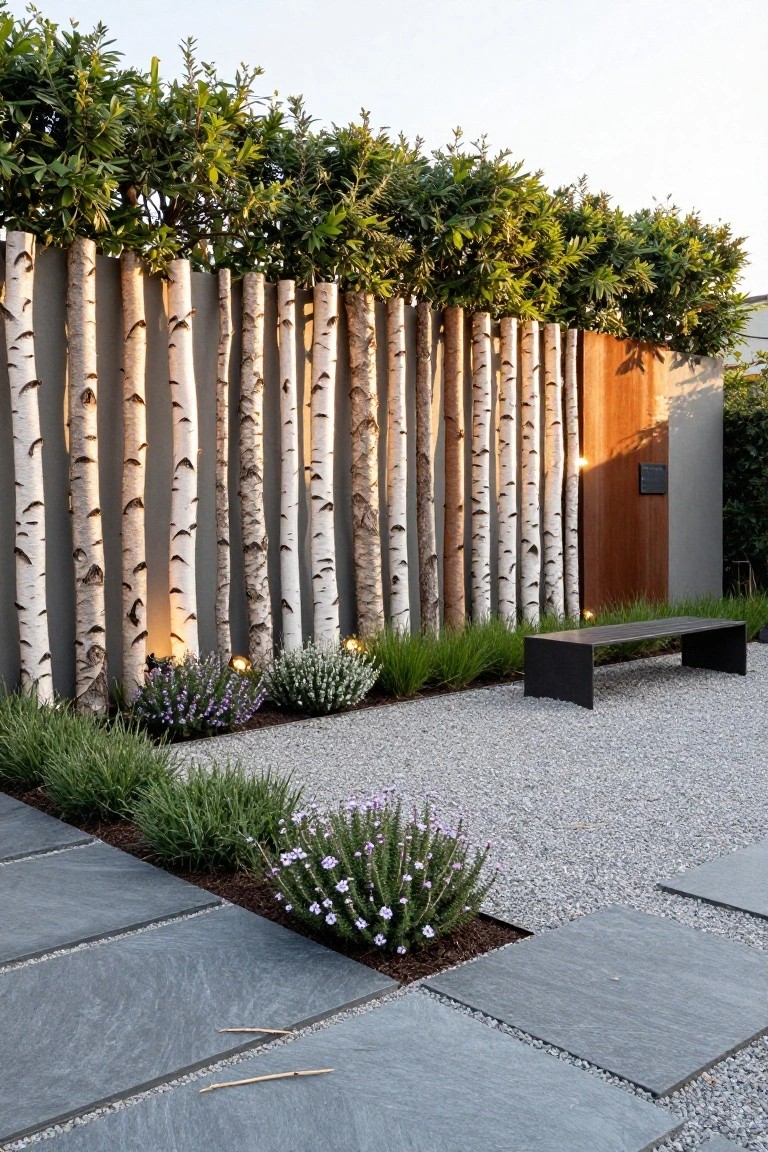
One simple way to add privacy to a backyard is stacking tall birch trunks vertically for a fence. These pale poles catch the light nicely and give a natural texture without feeling too heavy. Top them with low shrubs for extra screening, and it keeps the look open yet enclosed.
This works best in smaller yards or along a side path where you want some separation from neighbors. Pair it with gravel ground and stone steps for easy upkeep. It suits modern homes with clean lines, but watch the trunks for rot in wet climates, you might need sealant.
Pergola-Shaded Pool Loungers
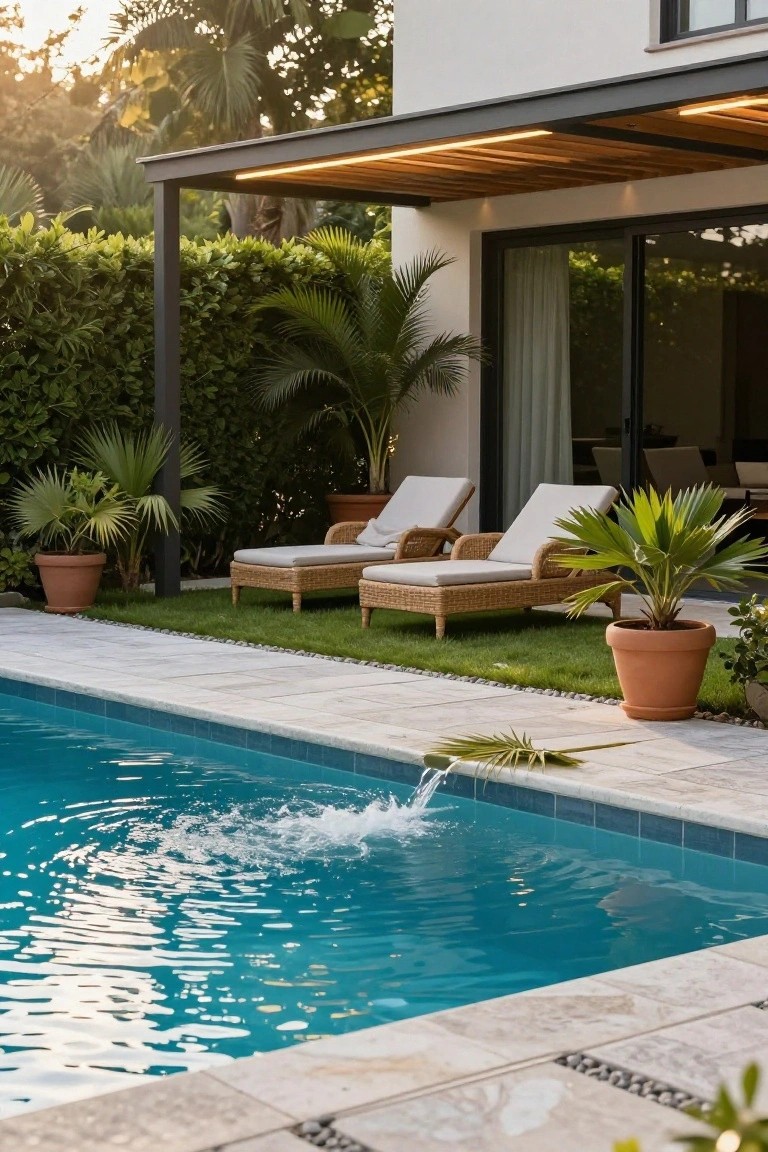
A pergola stretched over loungers parked right by the pool turns a basic backyard into a spot where you actually want to hang out. The wooden beams and slim LED strips keep it modern and not too heavy, while the chairs stay dry from quick rain or harsh sun. It’s that easy cover that makes the difference on hot days.
This works best in warmer spots where shade matters more than open sky. Pick durable rattan or teak furniture that holds up outdoors, and add a few big potted palms nearby for some green without mowing. Skip it if your yard is small… the structure needs room to breathe.
Brick-Edged Fern Path
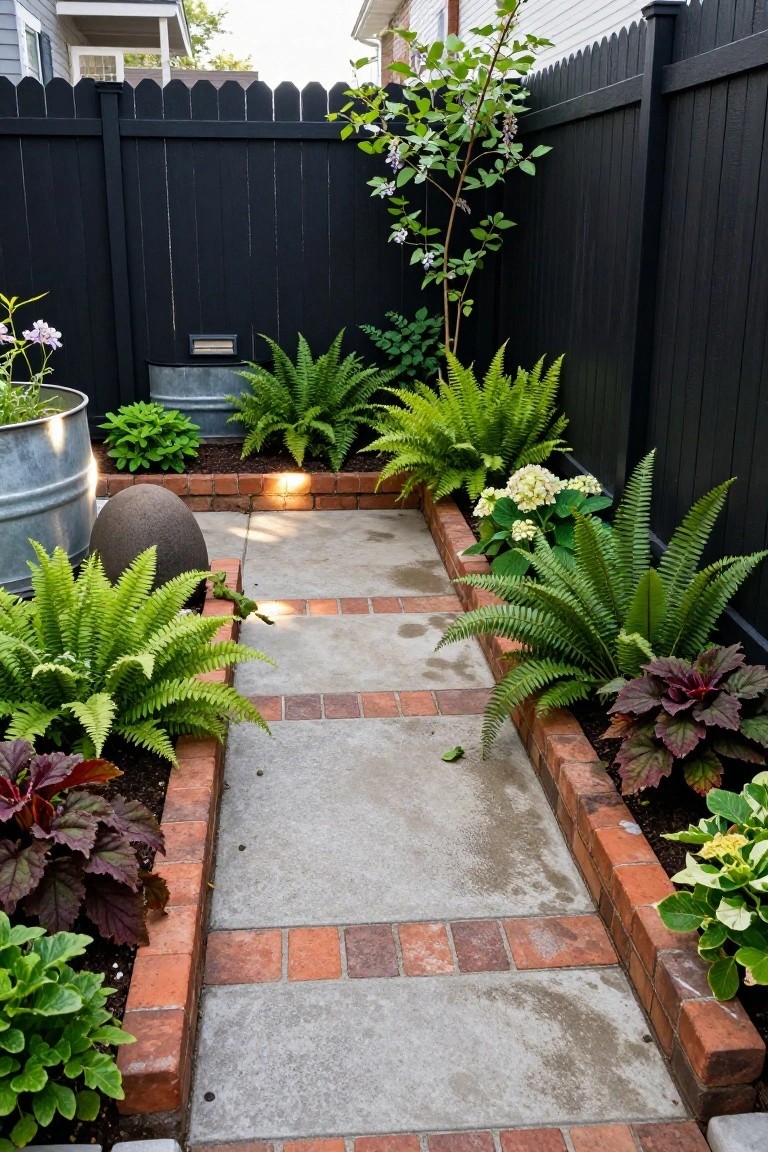
A simple concrete walkway gets a big lift from low raised brick beds packed with ferns. The green fronds hang over the edge a little, softening the hard lines and filling the narrow space. Black fences keep it private, and that repeating fern look builds a quiet rhythm as you walk.
This works great for side yards or alleys leading to the back. Stack bricks low for easy planting, then layer in ferns for shade tolerance and fullness. Mix in a few colorful leaves for interest. It’s low fuss once established, suits small lots, and ties plain hardscape to the planting without overwhelming.
Grasses and Lavender Along House Walls
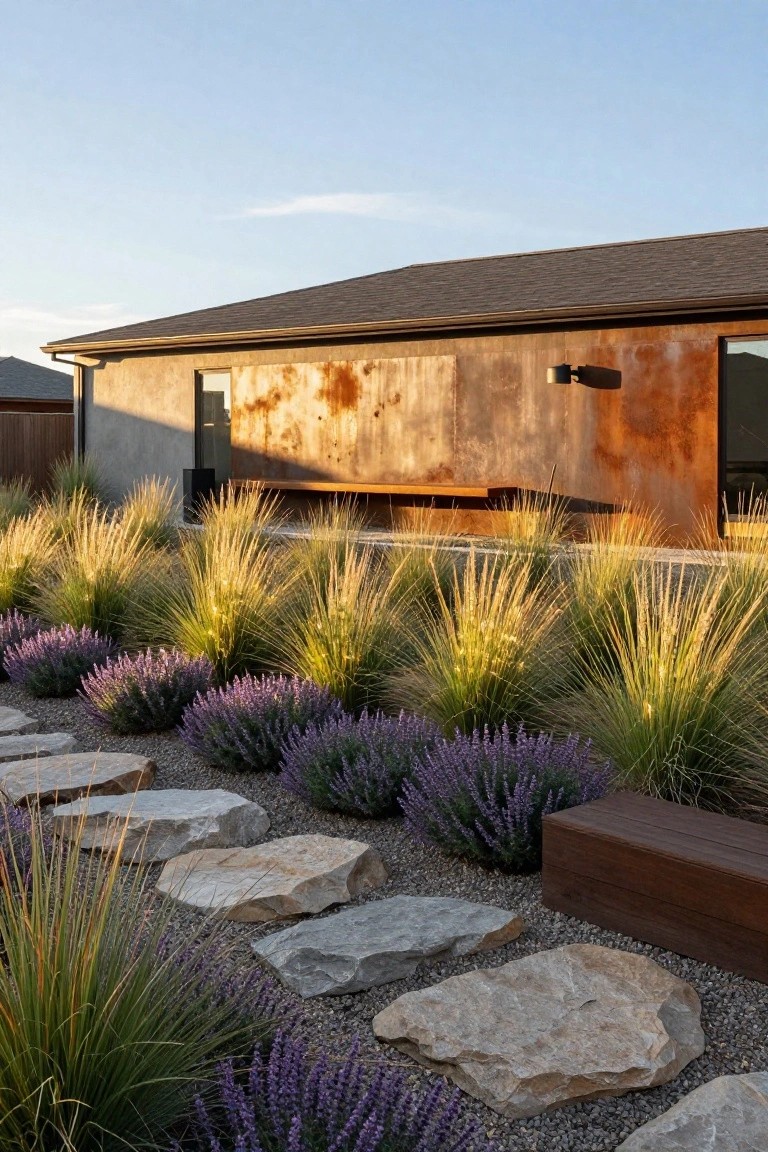
Tall ornamental grasses paired with lavender bushes make a simple way to edge a modern house. The grasses grow upright and feathery, giving movement, while the lavender stays low and bushy with purple flowers. Gravel mulch keeps it all neat and dry, and those big stepping stones lead right to a bench by the wall. It ties the hard siding to the yard without looking fussy.
This works best in sunny spots with well-drained soil. Plant the grasses in back and lavender up front for layers. Suits drought areas or anyone short on watering time. Trim the lavender after bloom, and let grasses do their thing through winter. Avoid shady yards though.
Frequently Asked Questions
Q: Which of these ideas works best for a super small front yard?
A: Go for vertical elements like tall planters flanking the door. They add height without eating space. Pair with gravel mulch for clean lines.
Q: How do I stop weeds from ruining my new modern beds?
A: Lay down landscape fabric before mulching thick. Pull any stragglers weekly at first. That keeps it sharp.
Q: …my house has a lot of slope. Any ideas that tame it?
A: Build simple terraced steps with concrete pavers. Plant low grasses that spill over edges. It flows right into the modern vibe.
Q: What’s one easy maintenance hack for that sleek look?
A: Edge your beds sharp every couple weeks with a half-moon tool. And top with fresh mulch yearly. Your yard stays crisp.
