

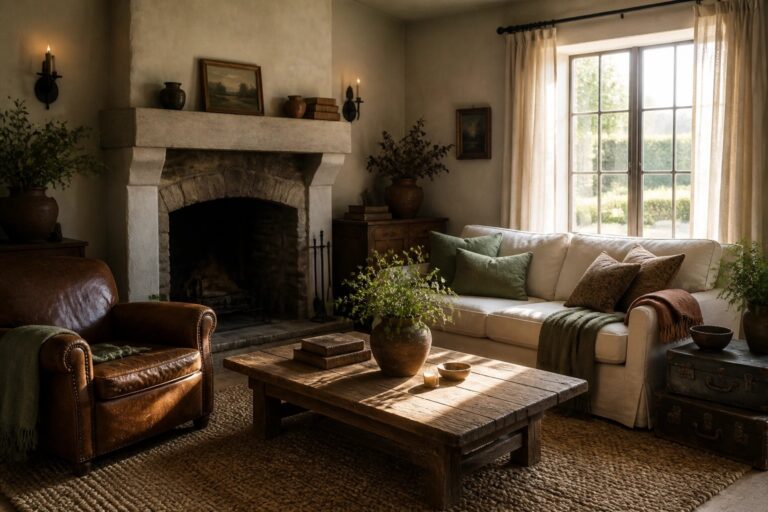
When I repaint a room the colors only settle once the furniture and light move in for real.
Earthy neutrals can look flat on a chip but suddenly feel grounded once they meet wood grain and faded fabrics across an entire space.
I usually tape samples at different heights and check them at dawn and dusk before committing.
Some of these palettes hold together better in busy rooms like kitchens where surfaces get touched all day while others suit slower corners that stay quiet.
A couple already make me want to repaint the hallway just to see how the same tones shift with less window light.
Layering Earthy Neutrals With Textiles
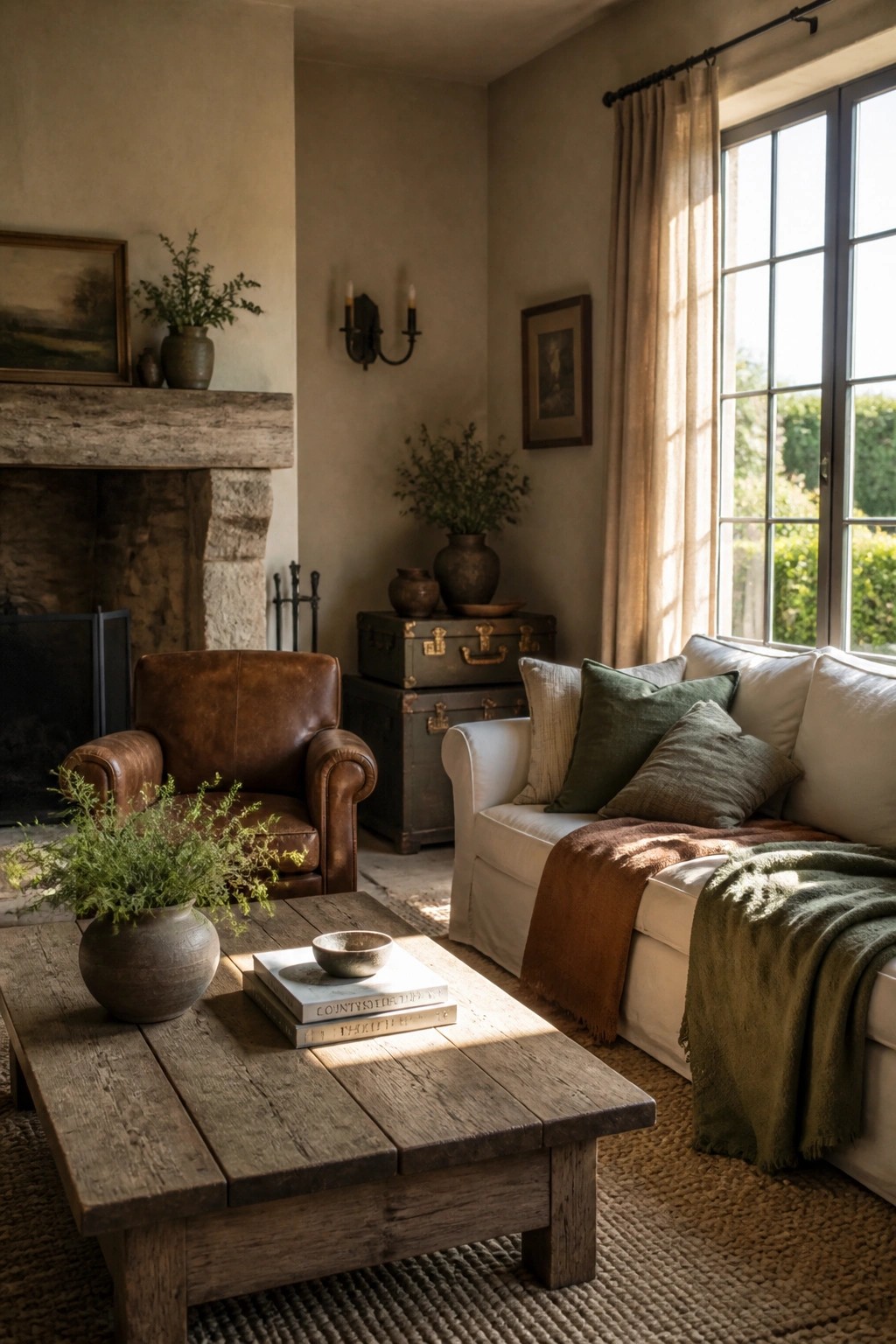
Many rustic rooms come together more easily when the main colors arrive through fabric layers instead of paint or big furniture pieces. A simple white sofa gains warmth from green and beige pillows along with a terracotta throw that sits against a darker green blanket.
This works best in spaces that already have wood and stone. Keep the larger pieces quiet and let the textiles carry the earthy tones. It suits older farmhouses or new homes that want a relaxed, grounded feel without much fuss.
Gray Cabinets With Warm Wood Tones
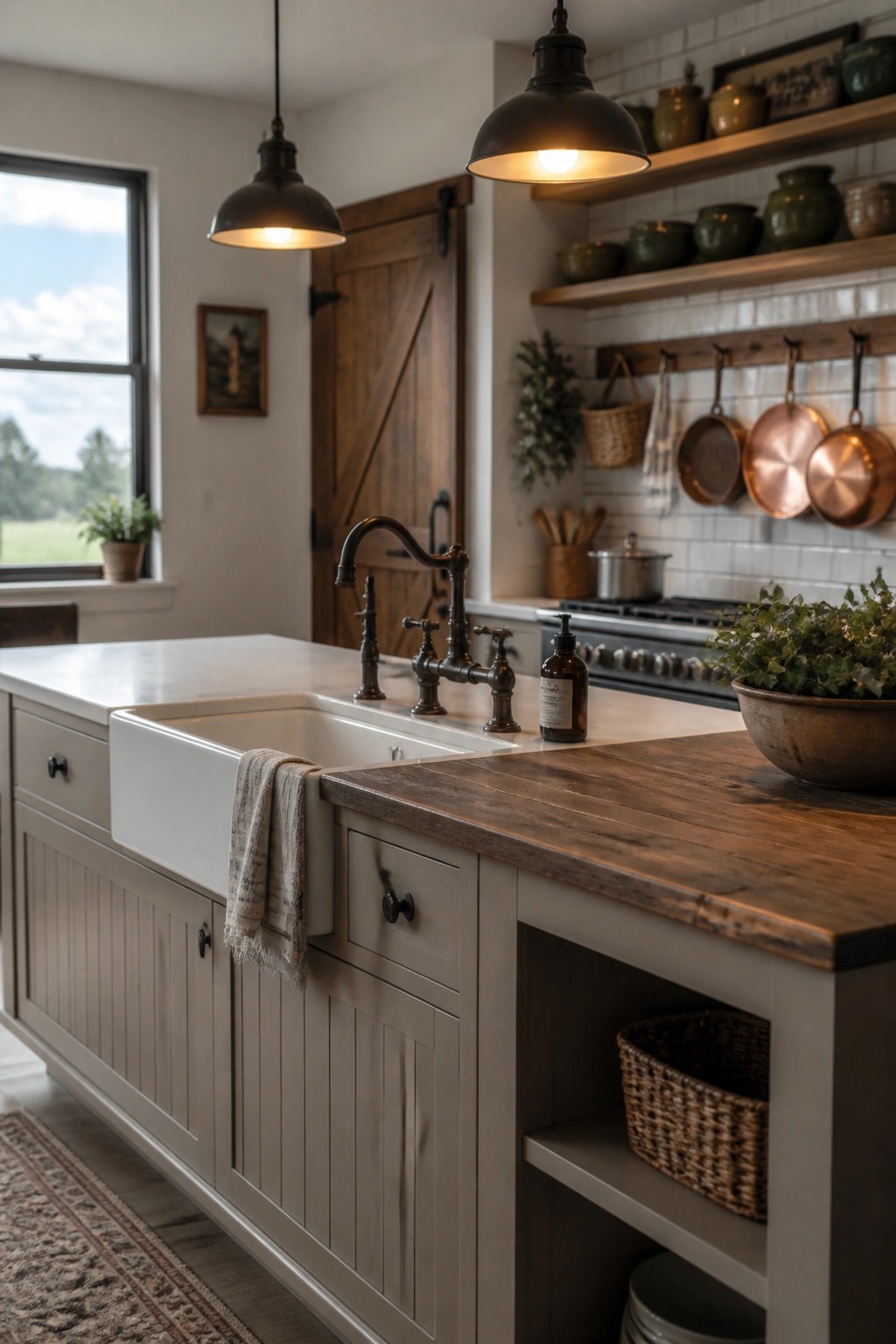
A soft gray base on the cabinets paired with natural wood surfaces keeps the kitchen feeling calm and practical at the same time. The wood adds just enough warmth so the gray does not read too cool or flat, and the mix works especially well when there is plenty of light coming in from nearby windows.
This combination suits most farmhouse kitchens that need to feel lived in rather than decorated. Use the gray on lower cabinets or the main run, then bring in wood on an island top or open shelves so the tones can play off each other without competing.
Building Around Warm Wood Neutrals
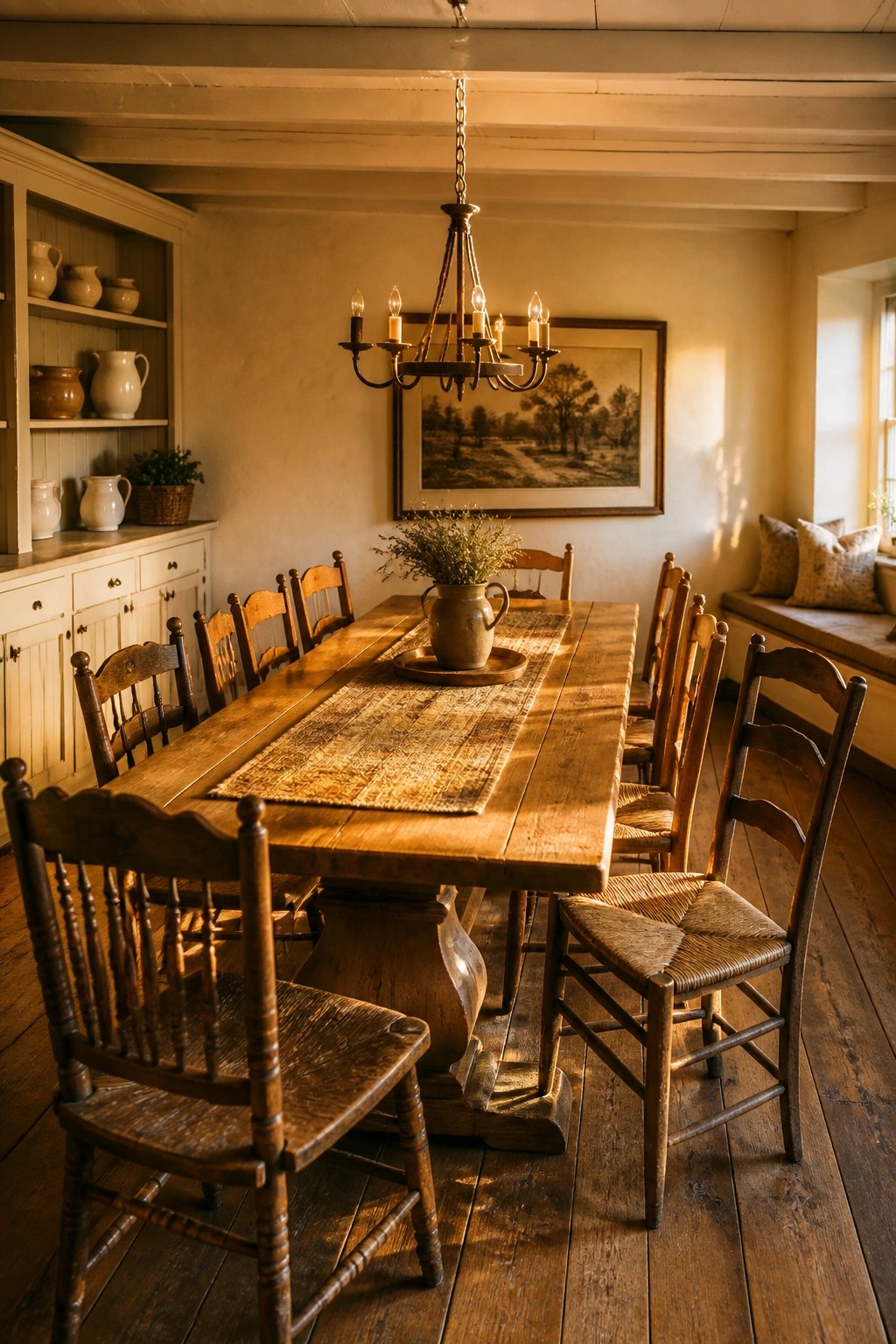
A large wooden table often sets the tone in a rustic farmhouse dining room. The mix of lighter and darker wood tones on the furniture and floor gives the space its earthy base without needing much else.
This approach works well in rooms with plenty of natural light. Keep the walls in a soft warm neutral so the wood stays the focus, then add simple pottery or a woven runner to pull the palette together.
Layering One Neutral Family in the Bedroom
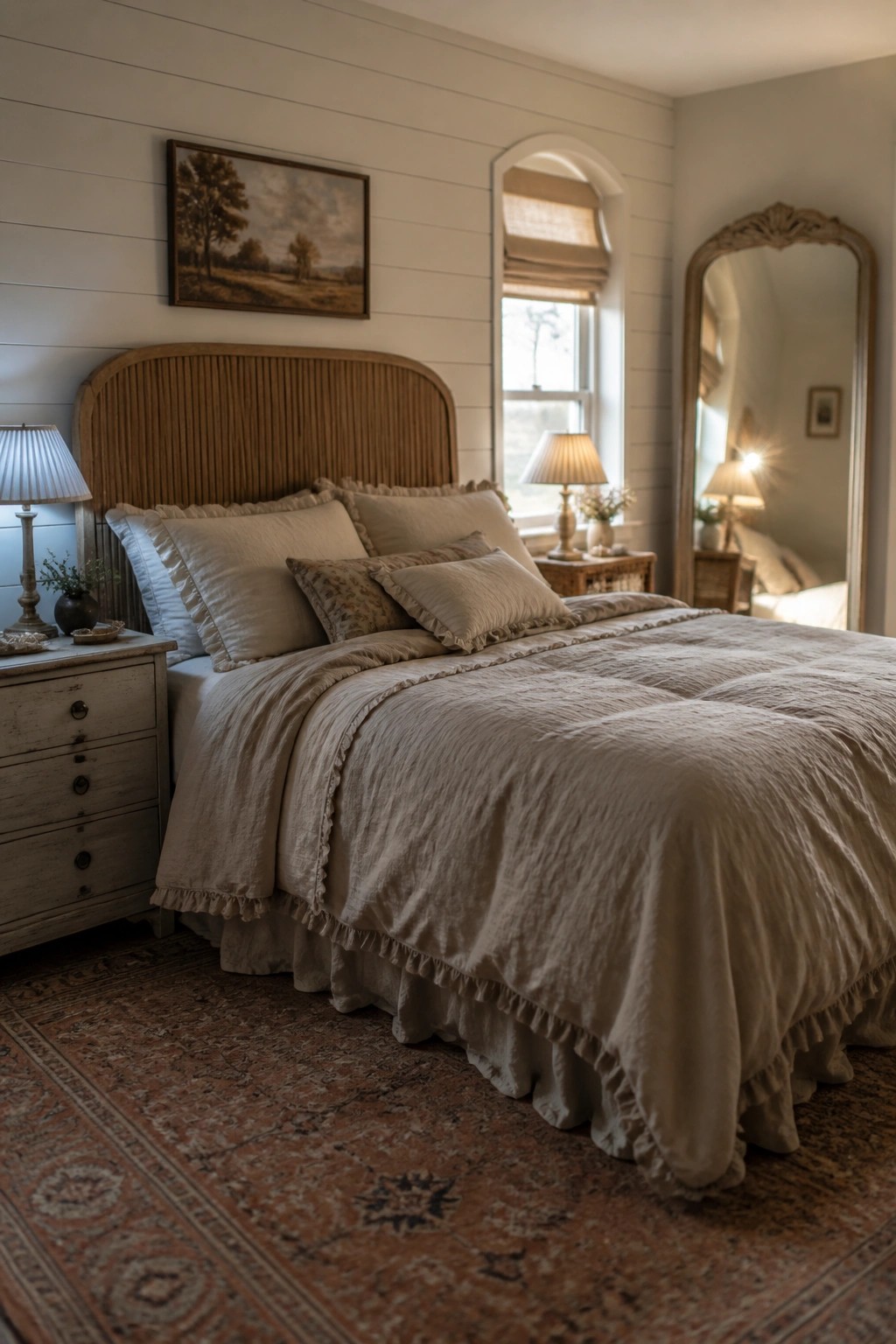
A narrow range of earthy neutrals across the bedding keeps the room feeling calm and put together without extra color. The linen layers and wood tones sit in the same soft band, so nothing jumps out or fights for attention.
This approach works best in farmhouse bedrooms where you want the space to feel restful. Pick sheets, blankets, and pillows in similar beige and taupe shades, then let the wood furniture add the only real contrast. Watch the scale of the patterns so they stay quiet.
Layering Earthy Neutrals in the Bedroom
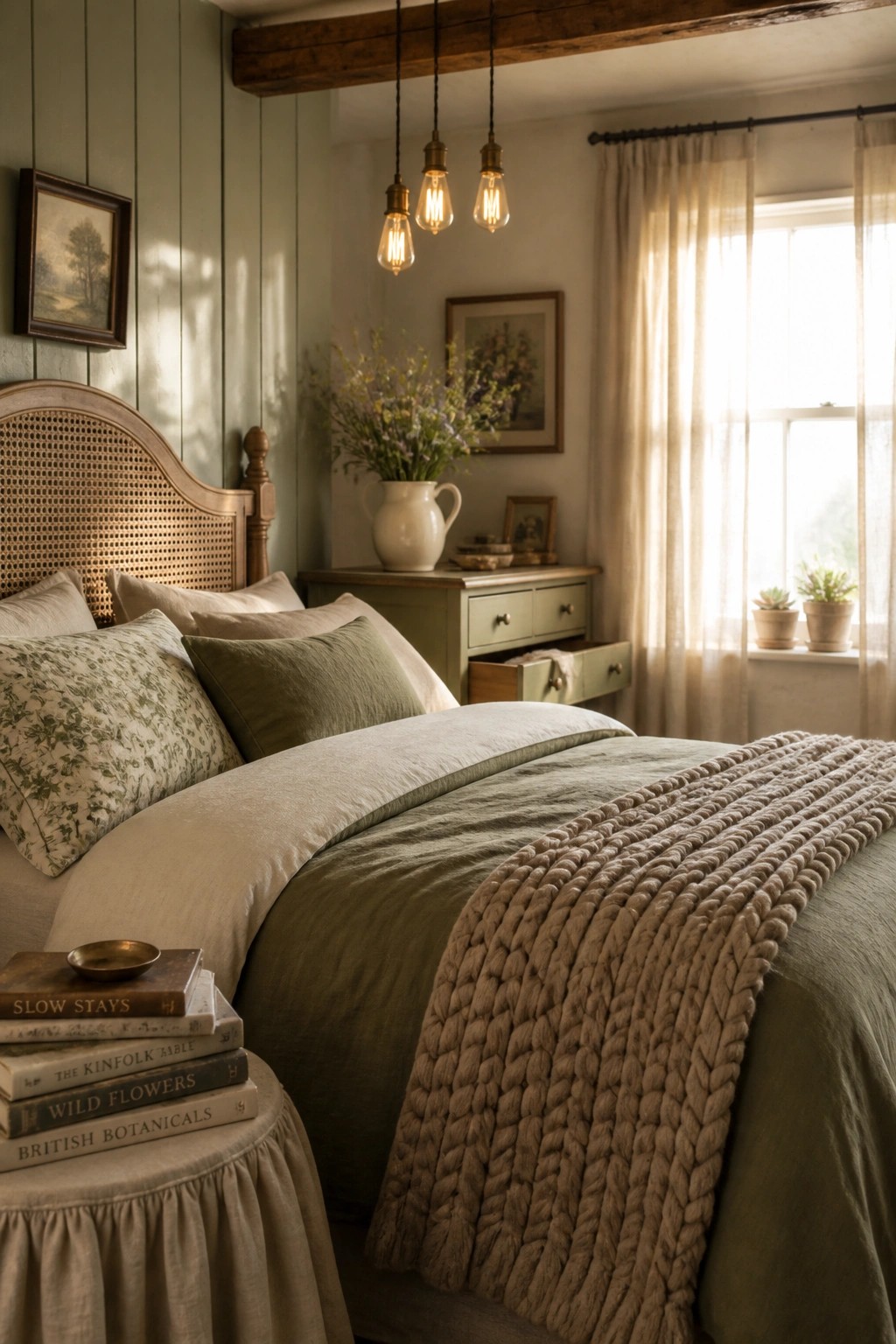
Earthy neutrals give a bedroom a calm, settled look that feels right at home in a rustic farmhouse. The soft green on the walls works quietly with the beige and olive bedding, and the chunky knit throw adds another layer of the same tone without breaking the flow.
This palette suits older homes or simpler spaces where you want warmth without a lot of contrast. Stick to two or three muted colors, then bring in texture through linen, wool, and a few patterned pillows so the room stays interesting but never busy.
Sage Green in Earthy Neutral Nurseries
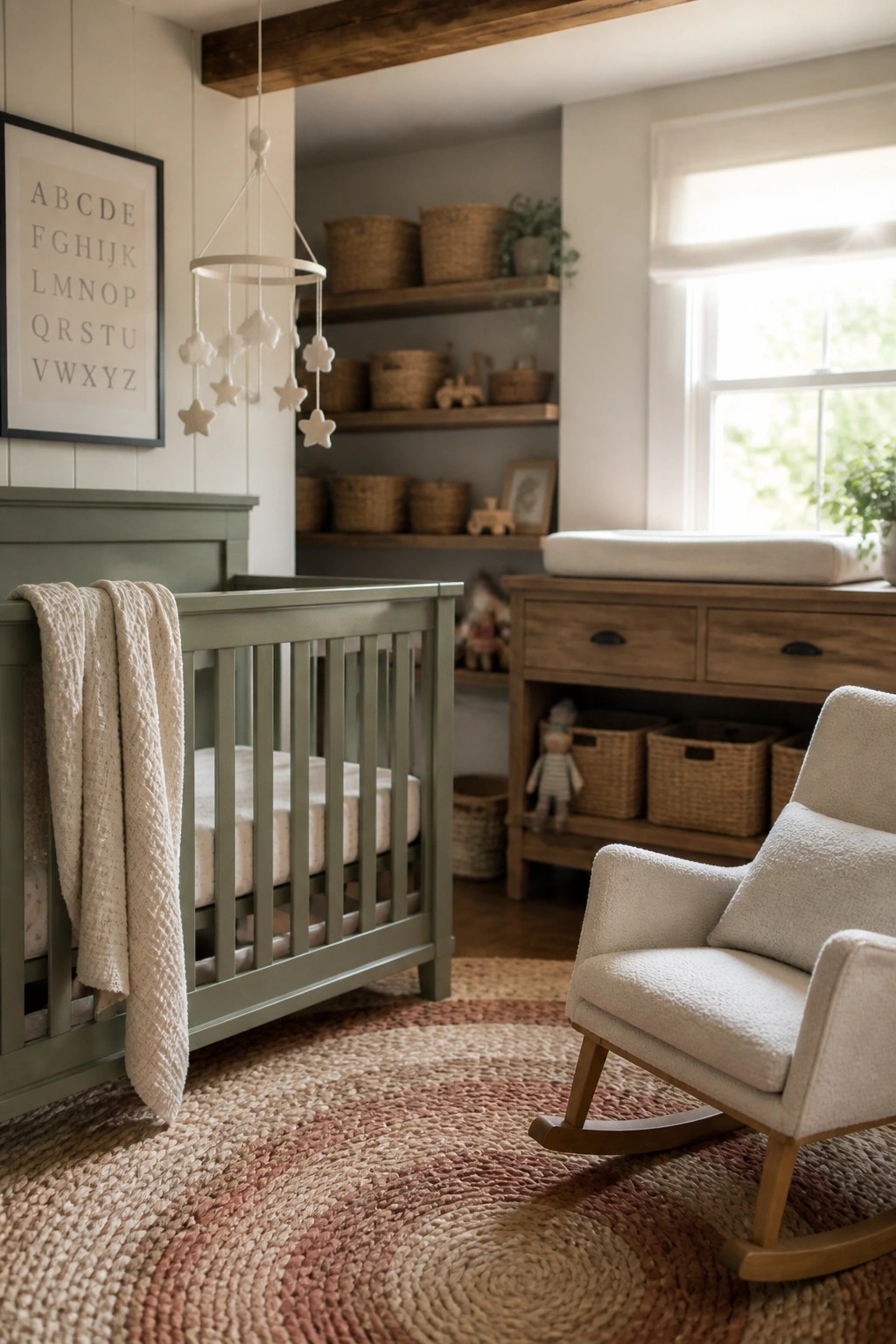
A soft sage green crib stands out nicely against the warm wood tones and woven neutrals in this space. It gives the room a calm, grounded feel without pulling too much attention, which works especially well when you want a nursery that still feels connected to the rest of the house.
This approach suits homes that already lean on wood, linen, and basket textures. Keep the green limited to one or two larger pieces so the rest of the palette stays light and easy to live with.
Built-In Desks In Earthy Neutrals
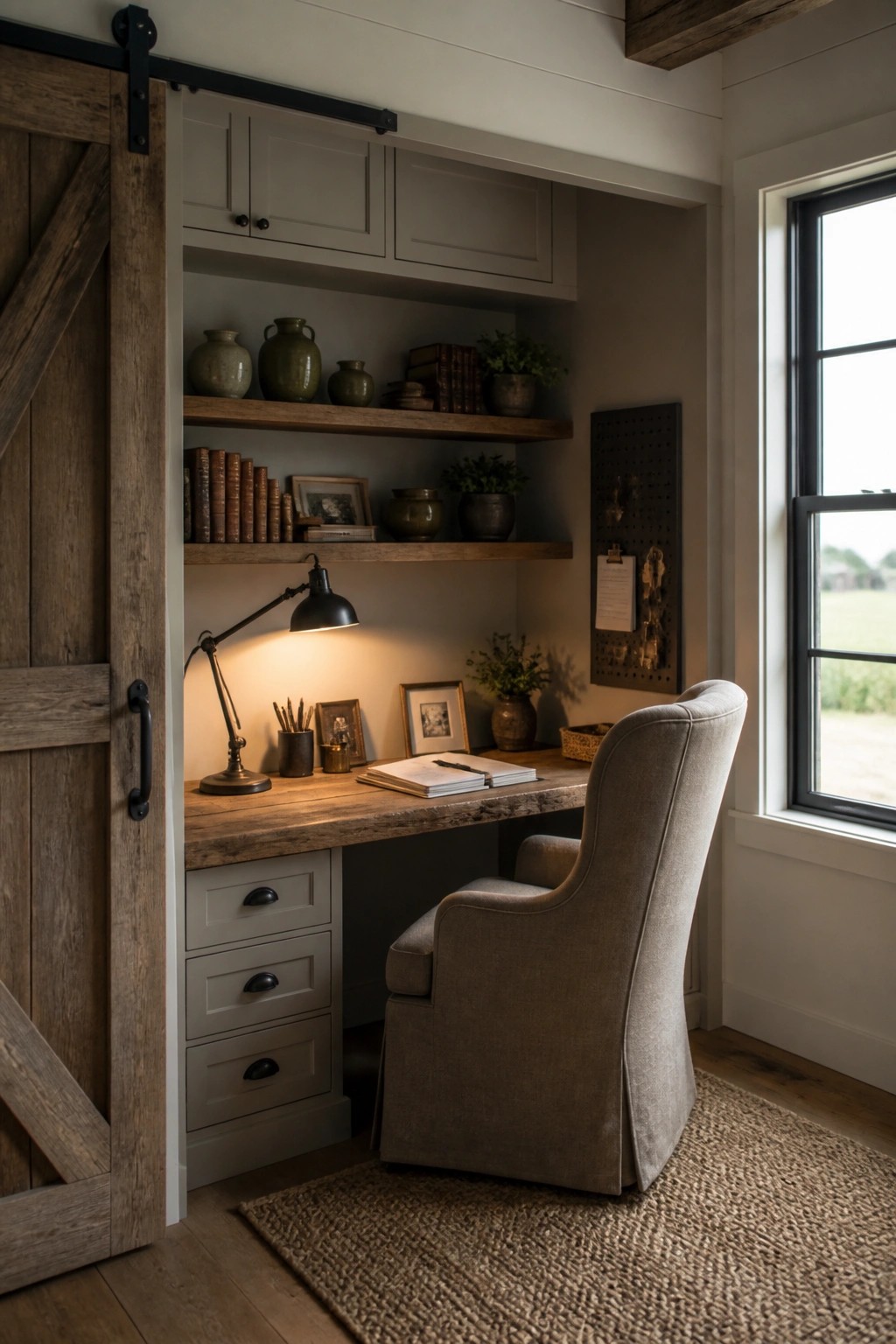
A small workspace built right into the room often feels more useful than a full separate office. Keeping the colors to warm wood and soft grey helps it blend in instead of standing out as a work zone.
This setup works best in homes that already lean on natural tones throughout the main rooms. Paint the lower cabinets and walls a muted grey, then let the wood desk and shelves bring the warmth.
Storage Benches For Mudroom Organization
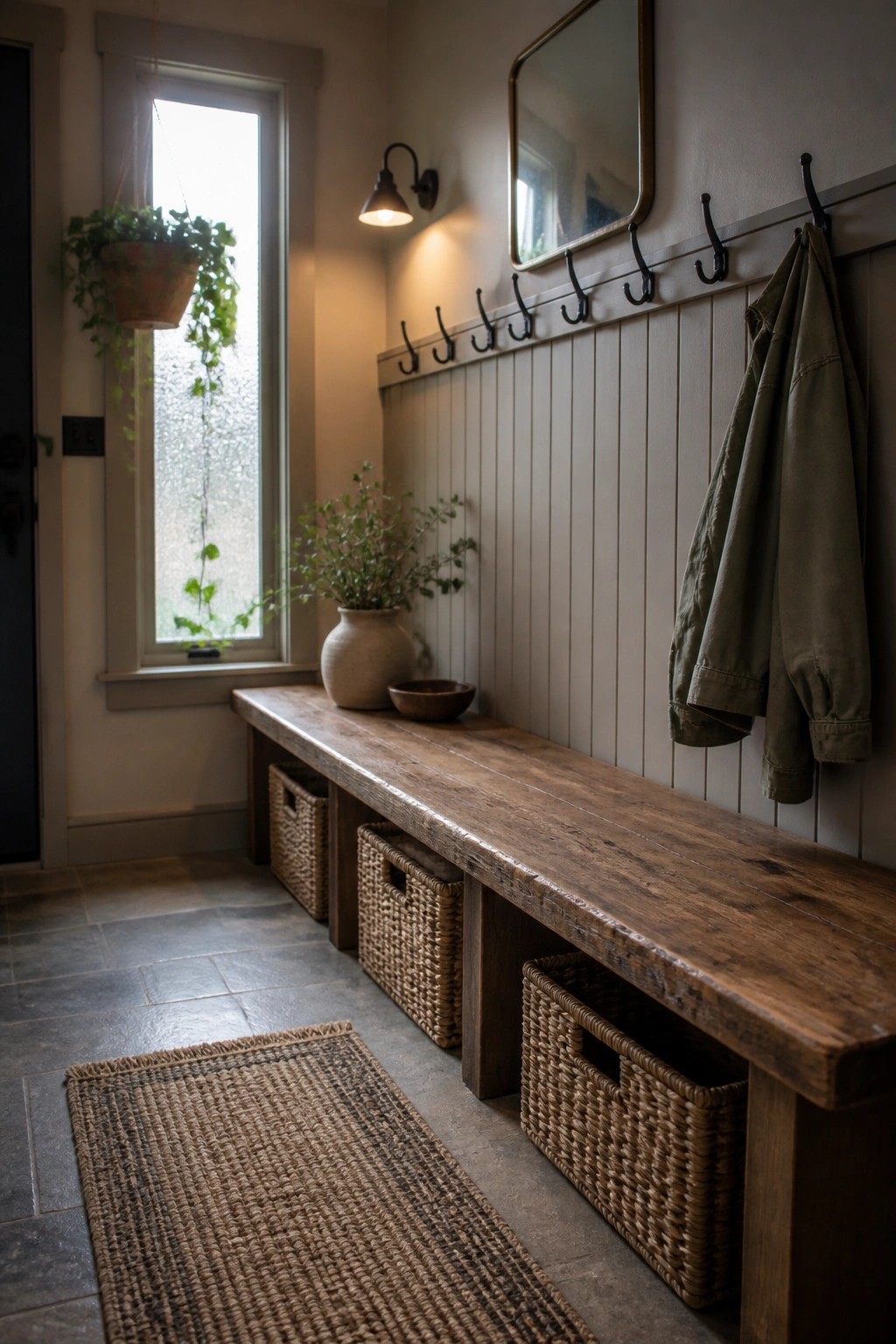
A long wooden bench with baskets underneath gives an entry a place to handle daily mess without spreading it around the house. The natural wood tones and simple woven baskets blend right into an earthy neutral palette and keep the space from feeling bare.
This idea works well in homes that get a lot of foot traffic through the front door. Keep the wall color soft and warm so the wood and baskets stay the main focus, and add hooks above for coats if the space allows it.
Earthy Neutrals In A Working Laundry Space
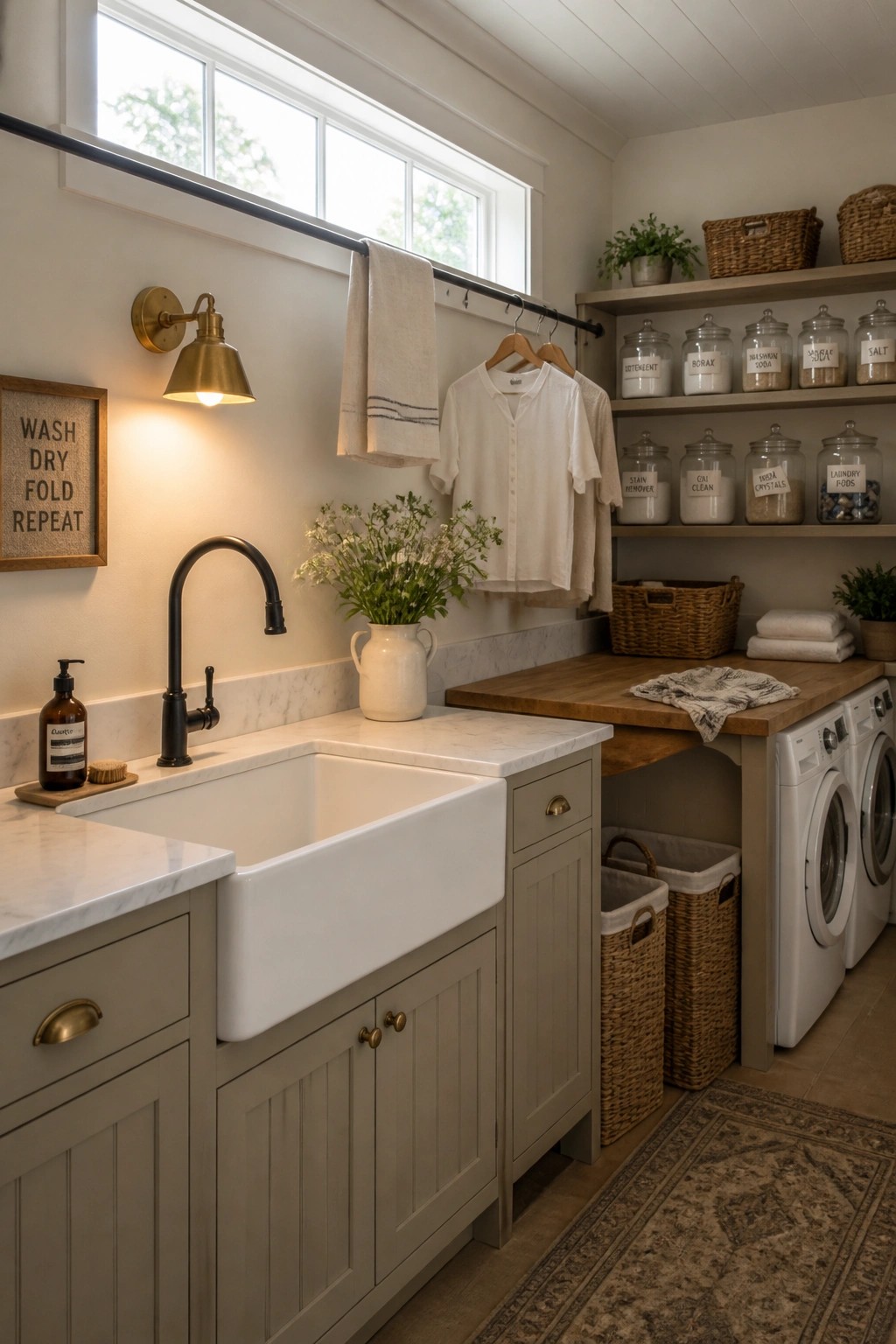
Many laundry rooms get painted bright white or left plain, but a soft range of earthy neutrals makes the space feel calmer and more connected to the rest of the house. The muted greige cabinets and warm wood tones keep the room from feeling like a pure utility zone.
This palette suits older homes or any space that already leans toward natural materials. Keep the colors close in tone and add simple wood or woven pieces so the room stays practical without turning cold.
Earthy Neutrals In The Bathroom
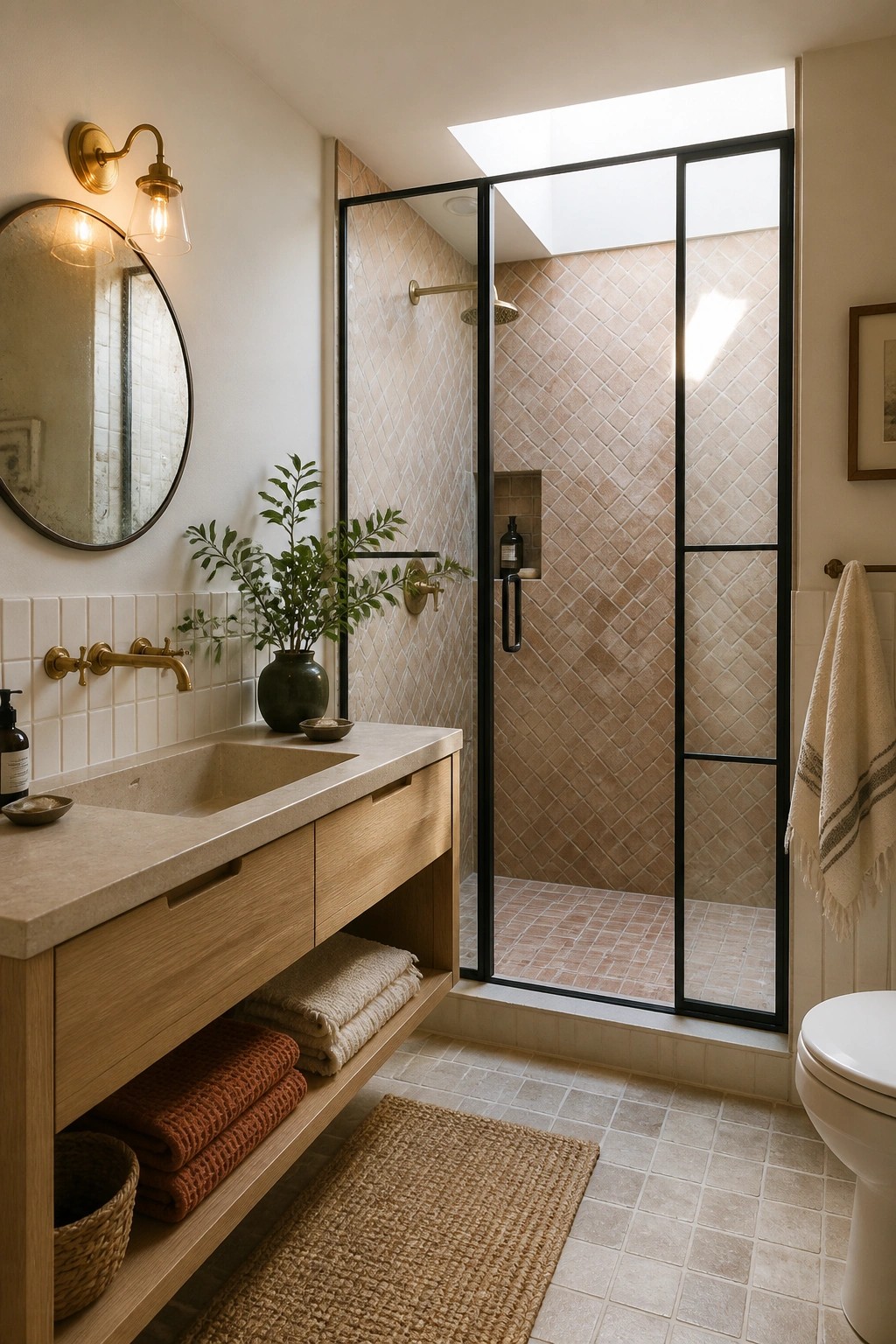
Many bathrooms end up feeling stark when everything stays white or gray. Warm beige and soft terracotta tiles paired with natural wood give the space a calmer, more lived-in feel that suits a rustic farmhouse look.
This palette works especially well in rooms with decent natural light. Keep the fixtures simple and add a few woven or linen pieces so the tones stay relaxed rather than overwhelming the space.
Deep Neutral Walls In Small Bathrooms
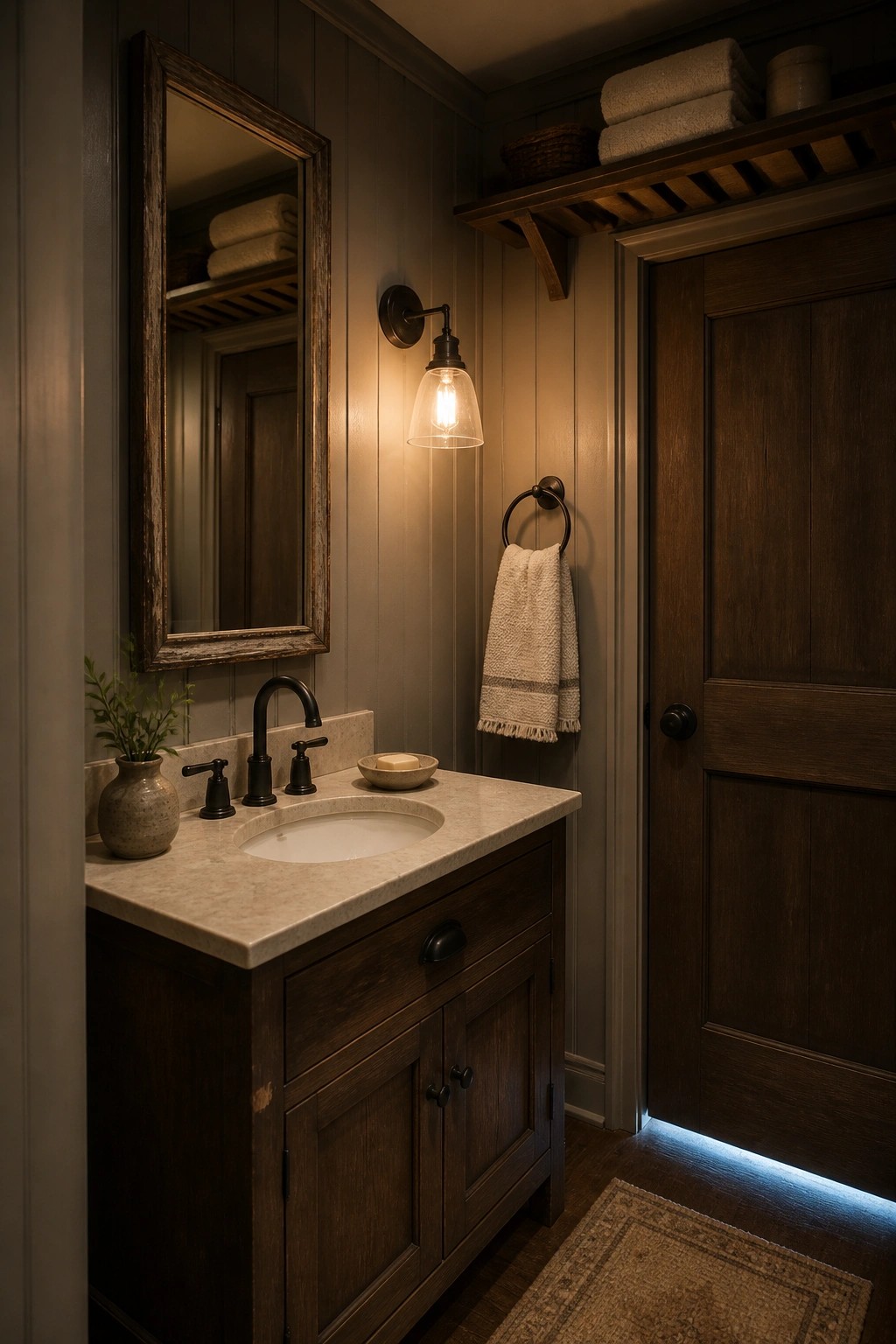
A deep neutral wall color can make a small bathroom feel more grounded and cozy without closing it in. The muted tone blends with the wood tones and stone surfaces to create a calm, enclosed space that still feels warm rather than heavy.
This approach works best in compact rooms where you want the palette to feel intentional rather than scattered. Keep the trim and ceiling light so the dark walls stay the focus, and let wood cabinetry and simple fixtures carry the rustic feel.
Open Wood Shelves for Everyday Storage
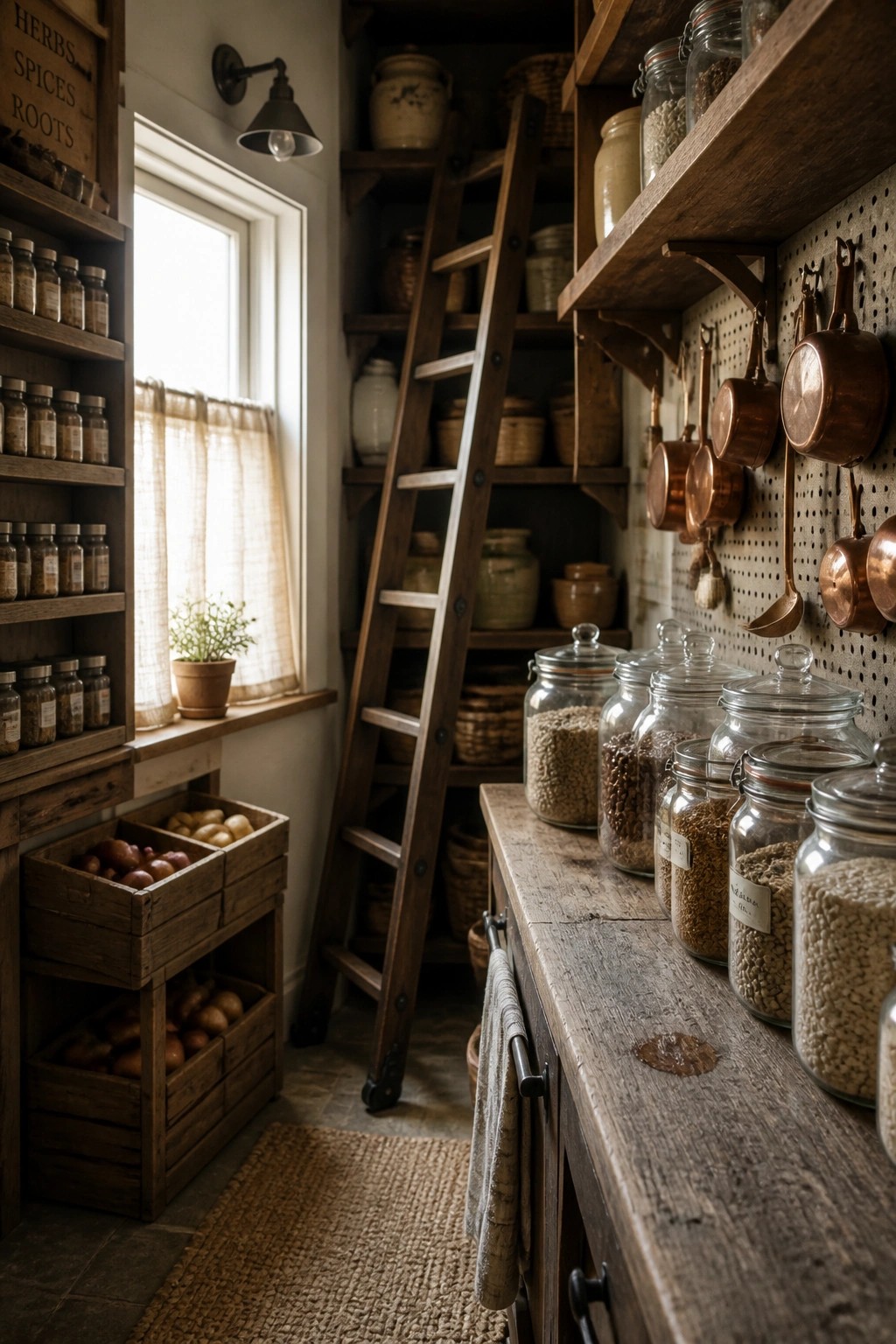
Open wood shelves work well in a pantry because they keep everything visible and easy to reach while letting the natural tones do the work. The mix of unfinished wood, glass jars, and simple crates creates a calm, grounded look that fits right into an earthy neutral palette without needing extra color.
This approach suits older homes or smaller rooms where closed cabinets can feel heavy. Stick to similar wood tones throughout and avoid overcrowding the shelves so the space stays practical and easy to maintain.
Earthy Neutrals Around a Simple Wood Table
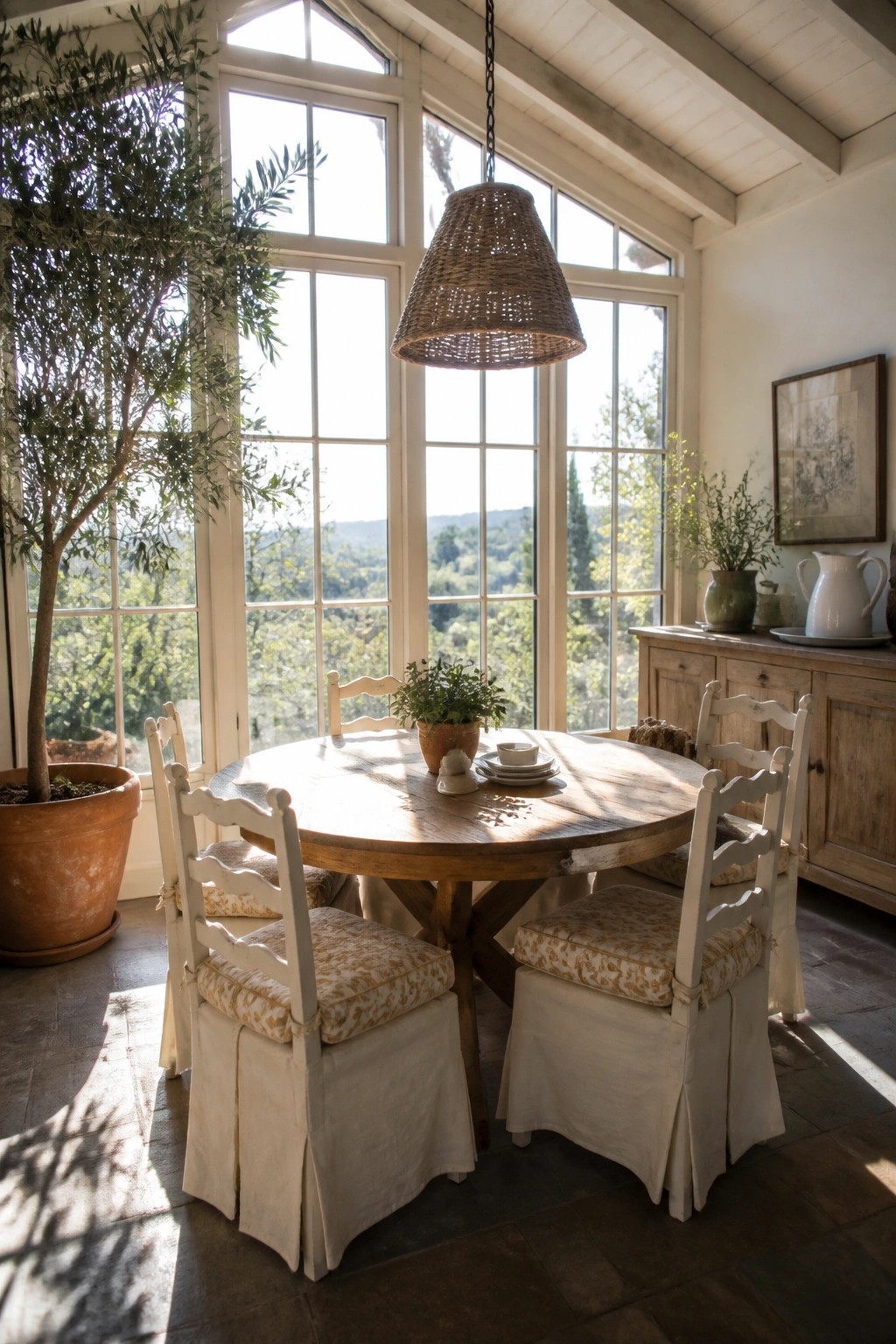
A round wood table in a warm tone works well as the starting point for a rustic farmhouse dining room. It brings in that natural color without needing much else, and the soft white chairs and slipcovers keep everything calm and balanced.
This setup suits homes that already get plenty of daylight. Stick to a few textured pieces like woven shades or a clay pot plant, and avoid adding too many extra colors so the wood and neutrals stay the main focus.
Built-In Seating In Earthy Neutrals
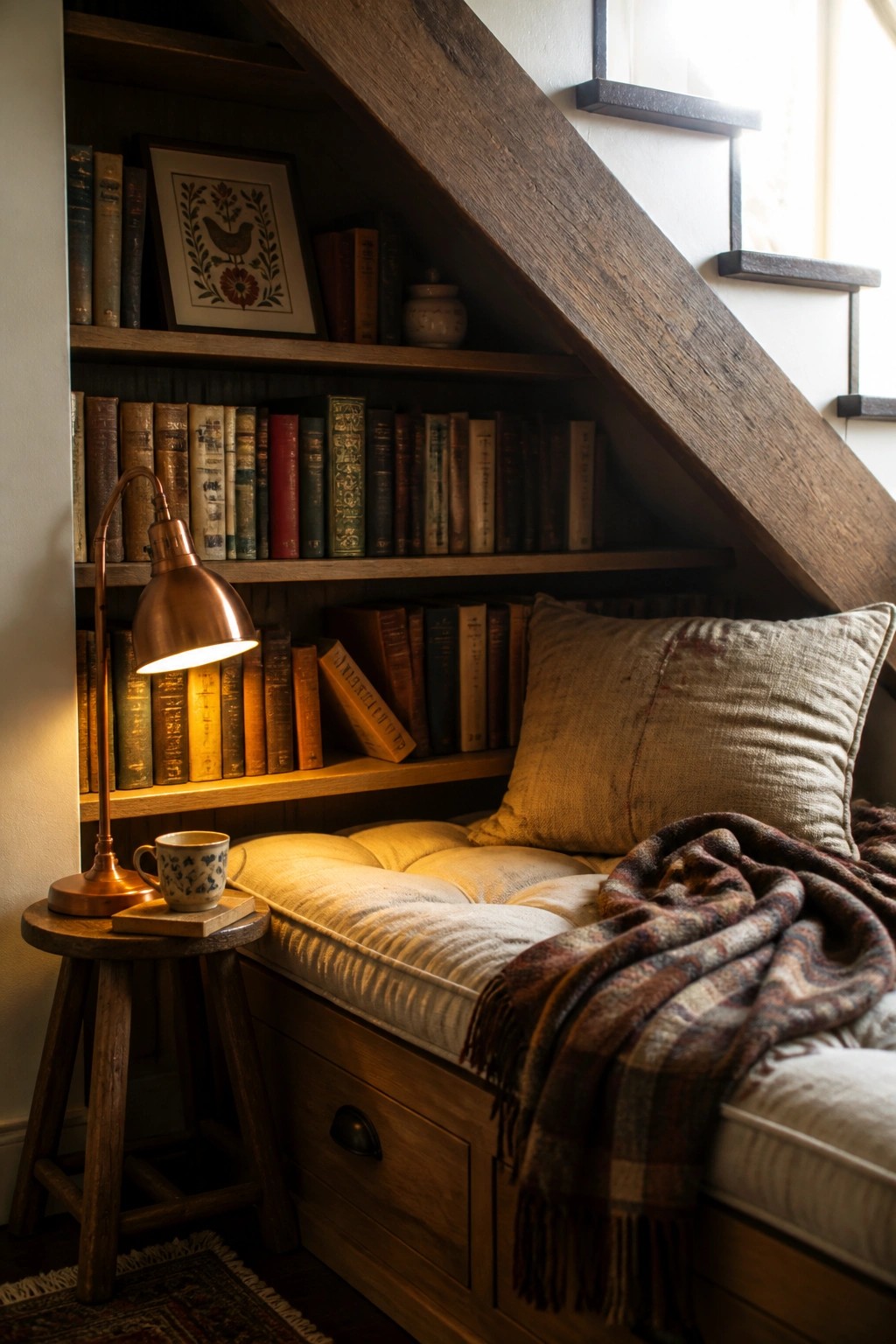
A small built-in bench under the stairs turns an awkward spot into a useful place to sit and read. The key is keeping everything in the same range of warm woods and soft neutrals so the area feels calm instead of busy.
This setup works best in homes that already have wood trim or older floors. Use the same tone of wood for the bench and shelves, then add a simple cushion and throw in a slightly lighter neutral. It stays practical while blending into the rest of the room.
Earthy Neutrals In The Living Room
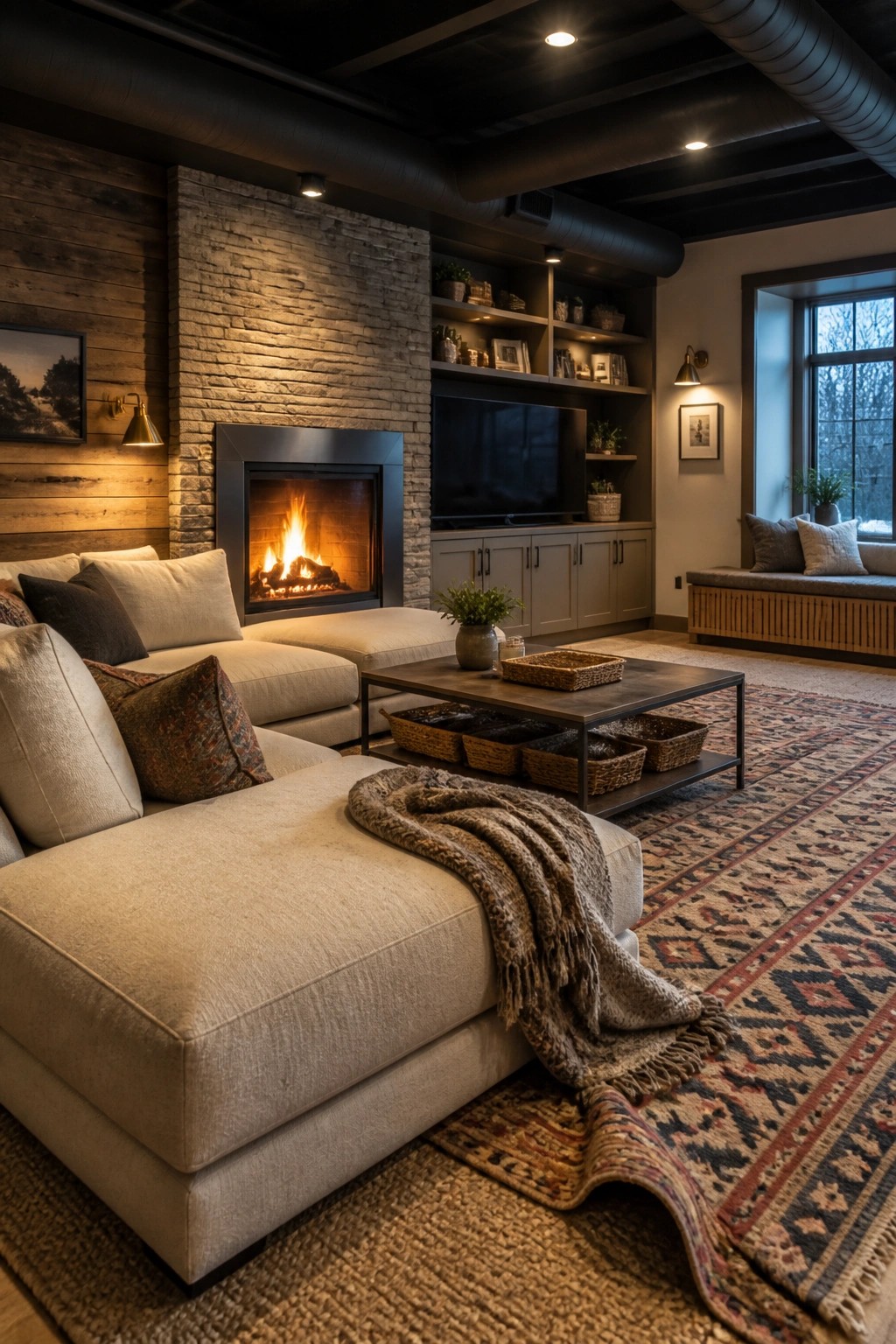
Many people find that keeping the main living space in soft earthy neutrals makes the room feel settled and easy to use every day. The stone around the fire and the wood on the walls give a natural base that pairs well with plain fabrics and simple woven accents.
This works best in homes that already have wood or stone features and want to avoid strong color shifts. Repeat the same tones in rugs and throws so the space stays calm instead of busy.
Layering Earthy Neutrals Through Bedding
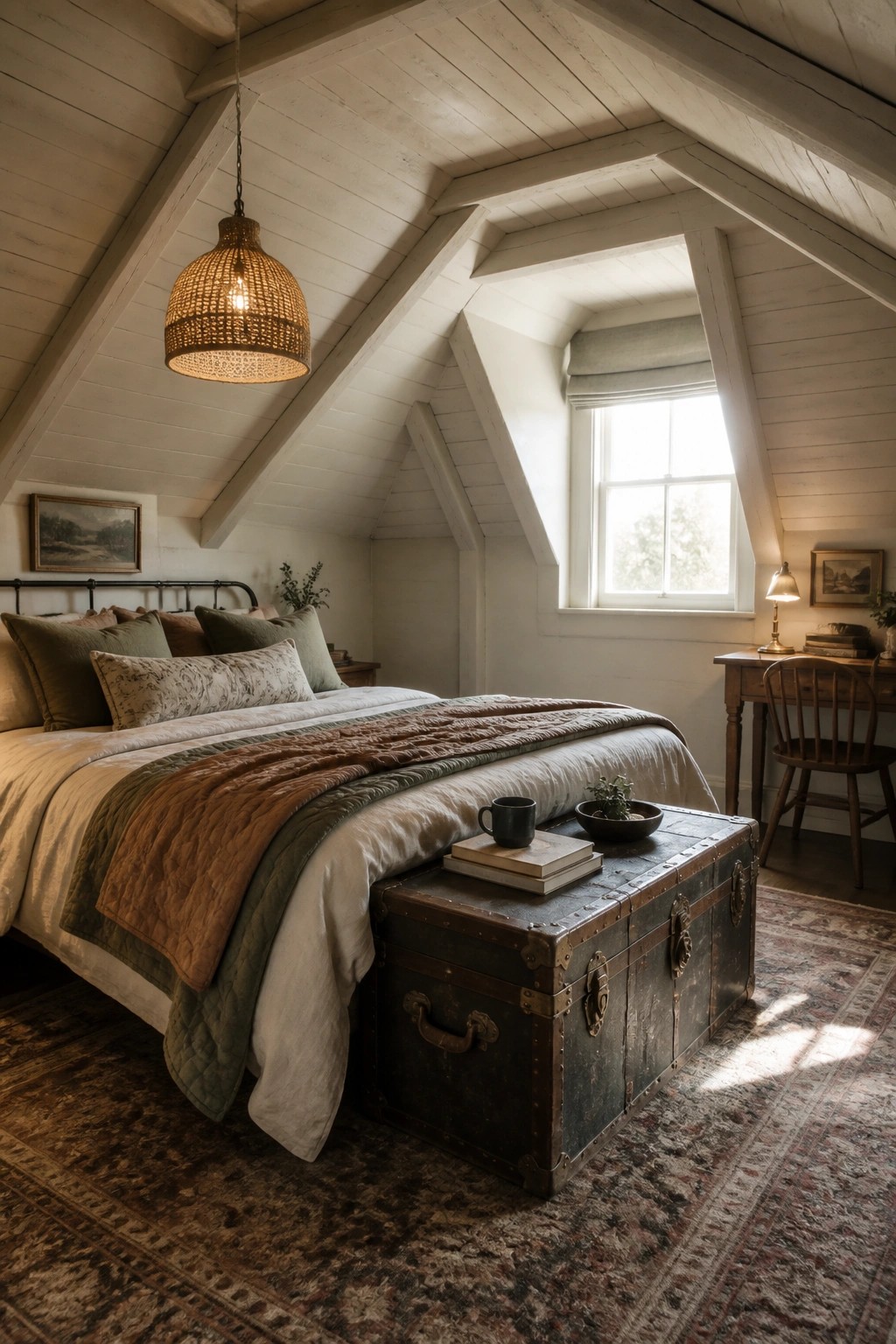
Many farmhouse bedrooms feel more comfortable when the main color comes from layers of bedding instead of the walls. Soft browns, muted greens, and warm creams can sit together over a white base without making the room feel heavy or dark.
Start with a simple white duvet and add a couple of quilts or blankets in those same tones. This works well in rooms with sloped ceilings or smaller windows, since the layers add warmth while the light walls keep everything feeling open.
Warm Wood And Neutral Textiles In Everyday Spaces
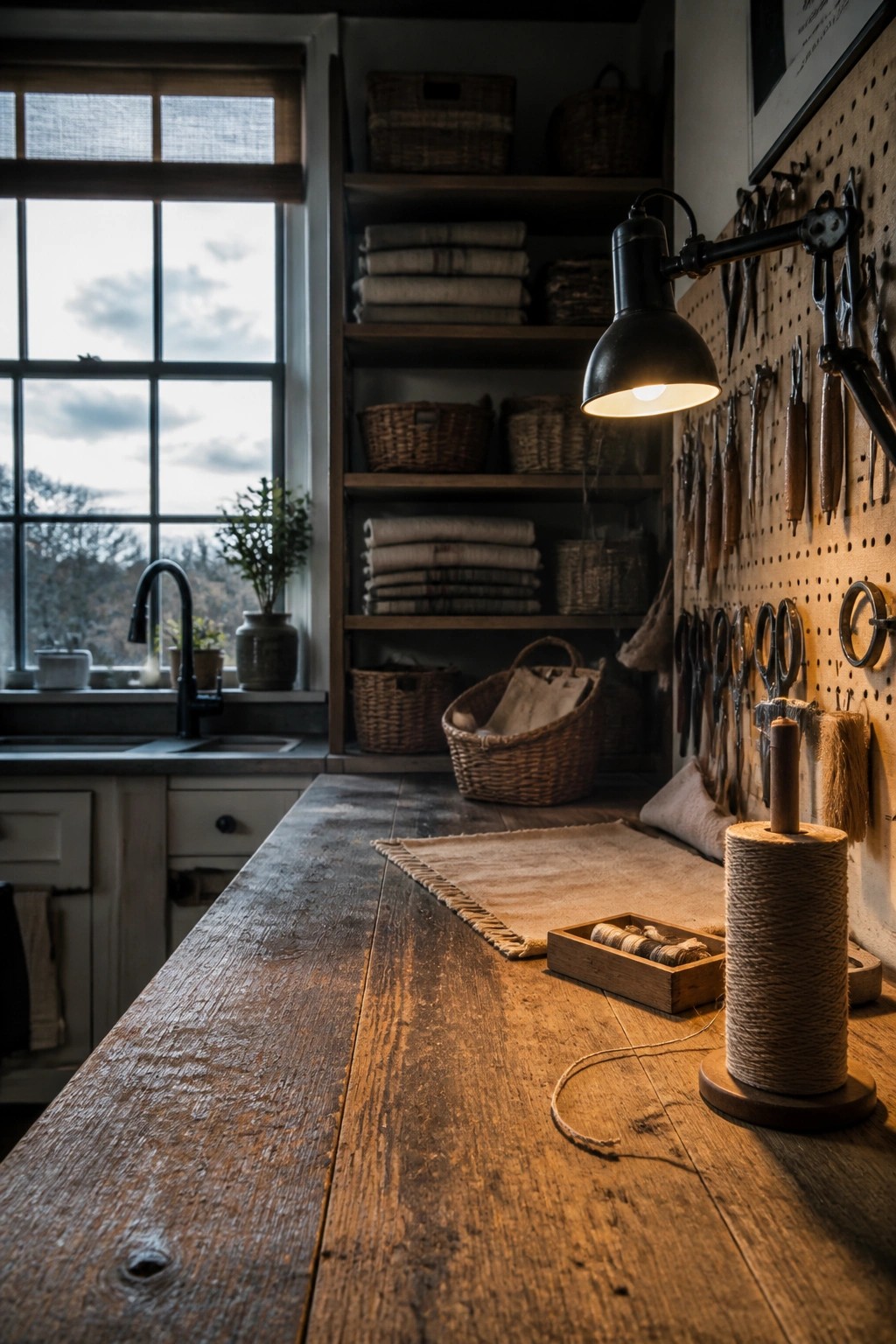
A workspace feels more settled when the main surfaces stay in the same warm wood tone and the fabrics stay soft and undyed. The wood table and shelves here show how one material can carry the whole room without needing extra color.
This approach suits any room that gets daily use, like a kitchen, mudroom, or laundry area. Keep the wood natural or lightly finished, choose linen or cotton in the same range of beige and gray, and let baskets handle the storage so the palette stays simple and easy to live with.
Floor Cushions in Earthy Greens
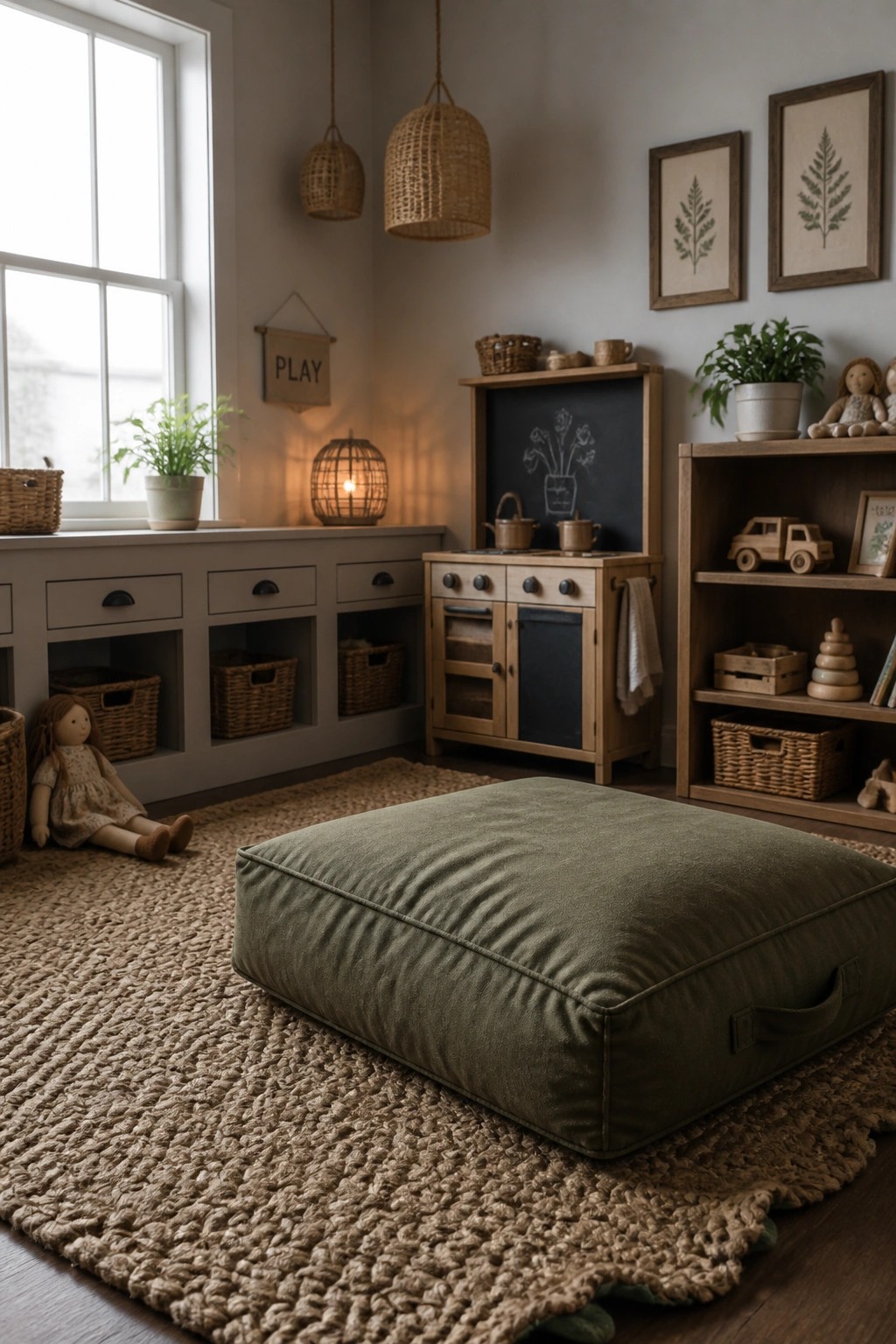
A large floor cushion in a soft olive green works well in a playroom because it adds a place to sit without taking up much space or adding more furniture. The color stays quiet next to wood tones and woven rugs, so the room still feels calm instead of busy.
It suits homes that want flexible seating for kids that can be moved around easily. Keep the cushion in a neutral fabric that hides wear, and place it on a textured rug so the whole area feels grounded without extra layers.
Earthy Neutral Pillows On Built In Seating
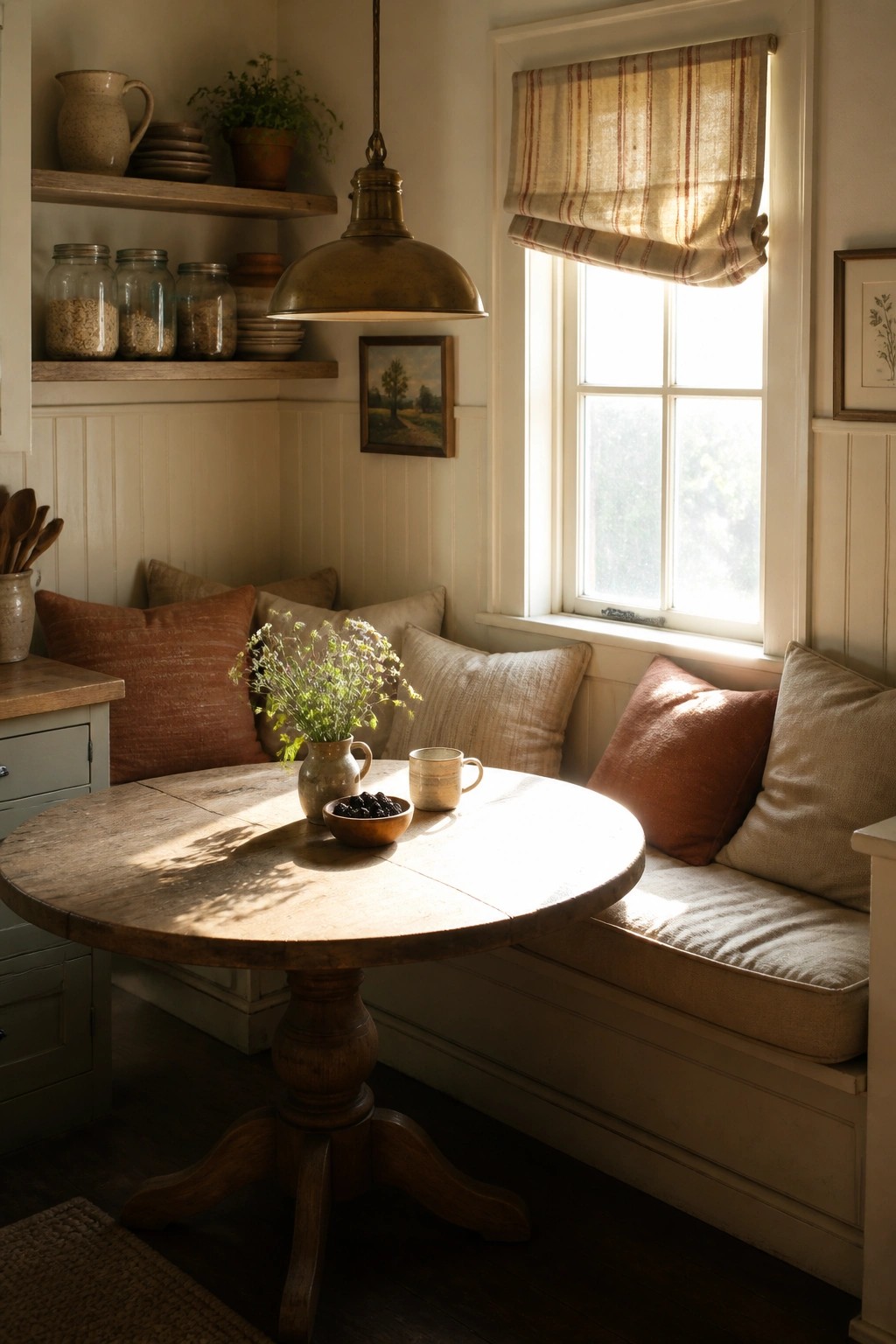
A built in bench gets a lot of use in a kitchen or breakfast area. Layering pillows in soft beige and warm rust tones keeps the space feeling calm while adding just enough color to match the wood tones around it.
This approach works best in smaller eating spots where you want the seating to feel comfortable without crowding the room. Stick with textured fabrics that show a little wear over time and pair them with simple wood tables and shelves in matching tones.
Built-In Wood Storage With Earthy Neutrals
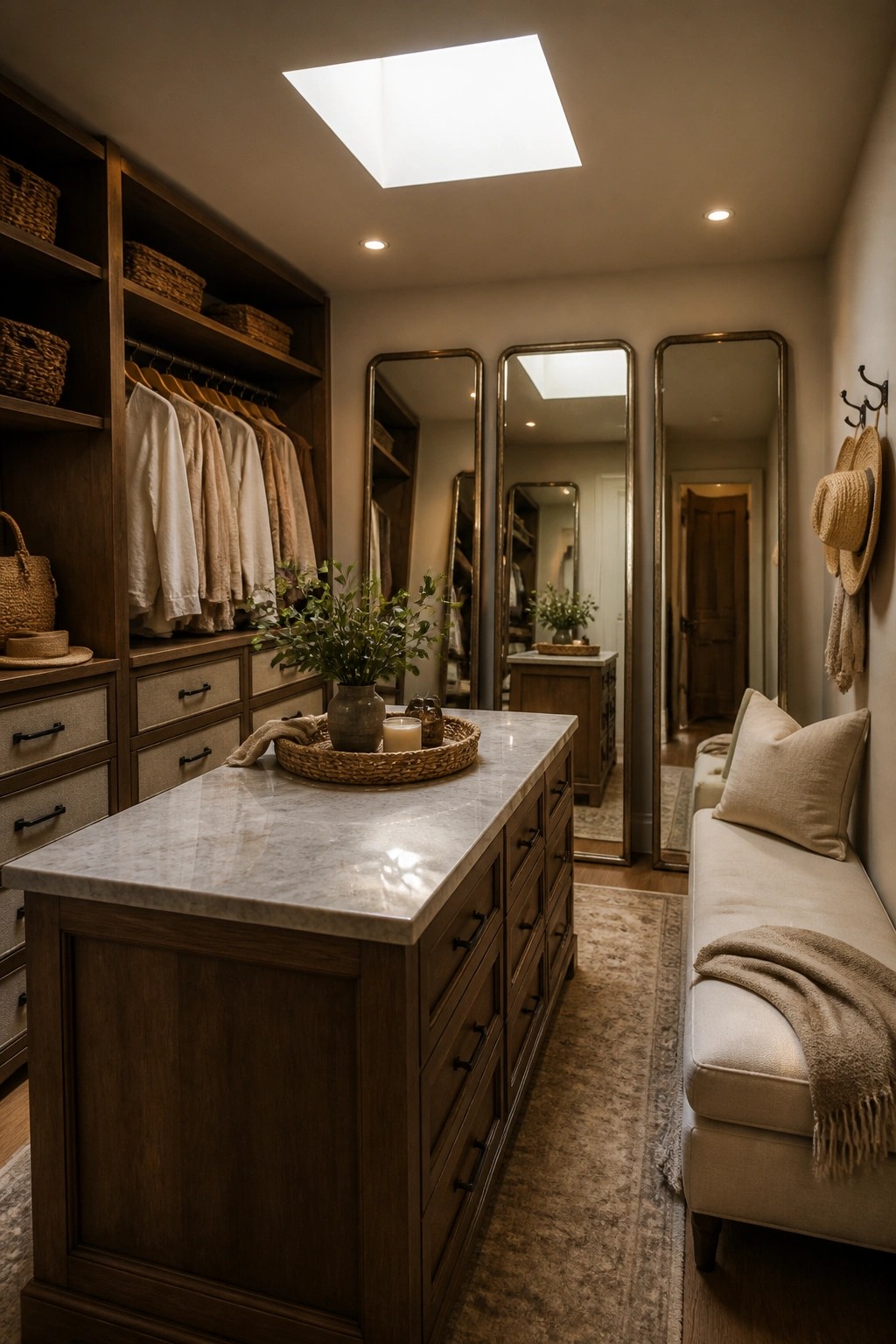
Many people turn to built-in wood cabinetry when they want a closet to feel calm and practical at the same time. The warm wood tones pair easily with soft neutral surfaces and textiles, which keeps the space from feeling too closed in or overly busy.
This works especially well in homes already using earthy palettes throughout. It gives solid storage without adding extra color decisions or visual noise.
Blending Warm Wood With Neutral Tones
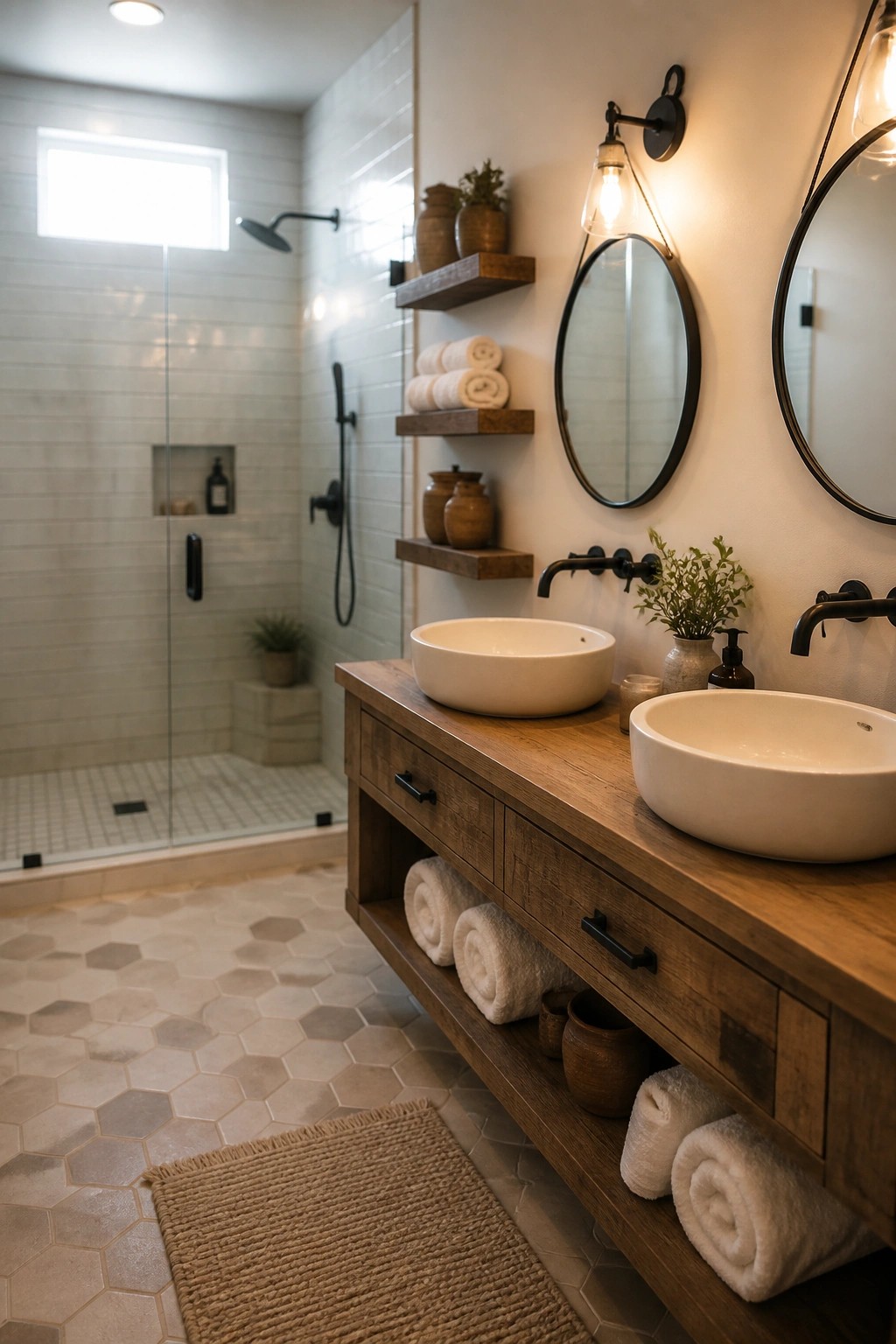
This combination gives a bathroom an easy, grounded feel without making it heavy. The wood adds natural warmth while the lighter tiles and white fixtures keep the space from closing in.
It suits most farmhouse homes and works especially well in guest baths or smaller rooms. Keep the hardware simple and limit extra textures so the palette stays calm and balanced.
Using Dark Wood Furniture to Anchor Neutrals
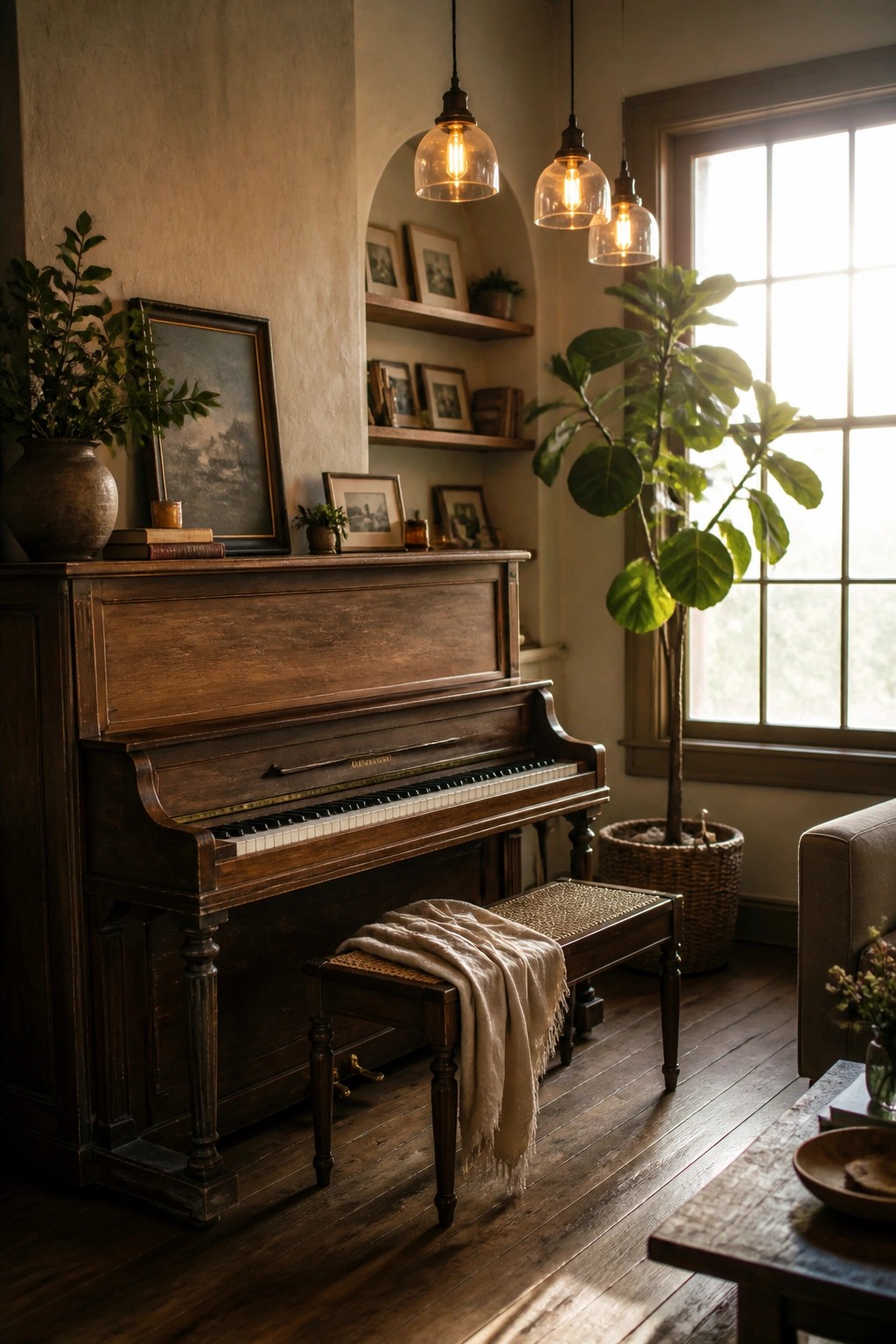
A dark wood piano works well as the main piece in an earthy neutral room because it brings depth without fighting the palette. The warm brown tones feel natural against soft walls and help everything else settle into place.
This approach suits older homes or spaces where you already have one strong wood item. Keep the rest of the room simple with light textiles and a few plants so the wood stays the focus instead of getting lost in too many layers.
Rustic Console Tables In Hallways
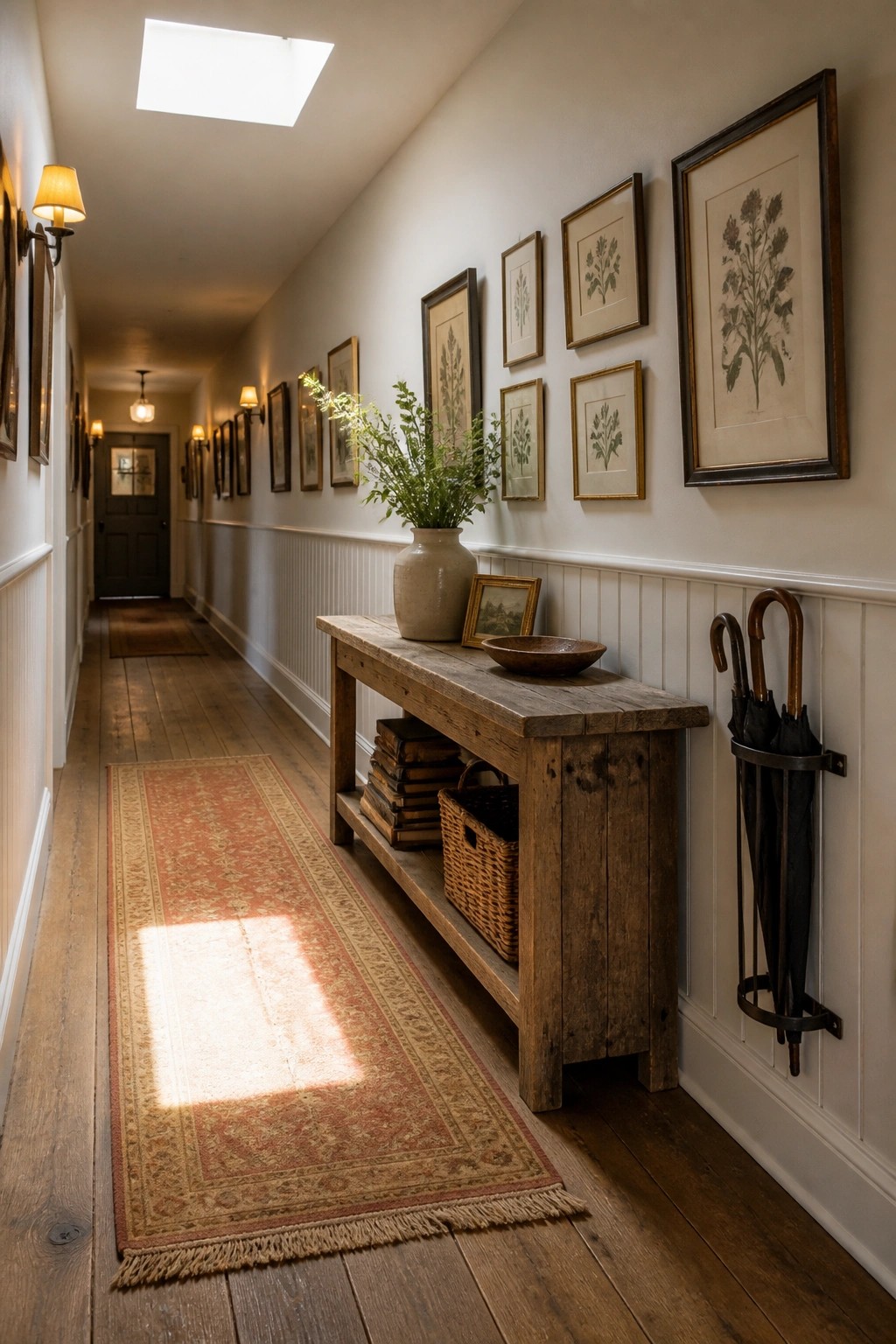
A long wooden console works well in a hallway because it gives you a place to set things down without taking up much floor space. The natural wood tone blends right into an earthy neutral palette and keeps the area from feeling empty or stark.
It suits older homes or farmhouses where you want a bit of storage and display without crowding a narrow passage. Keep the top fairly simple with just a few items like books or a basket underneath so the walkway stays clear.
Olive Green Seating In Neutral Rooms
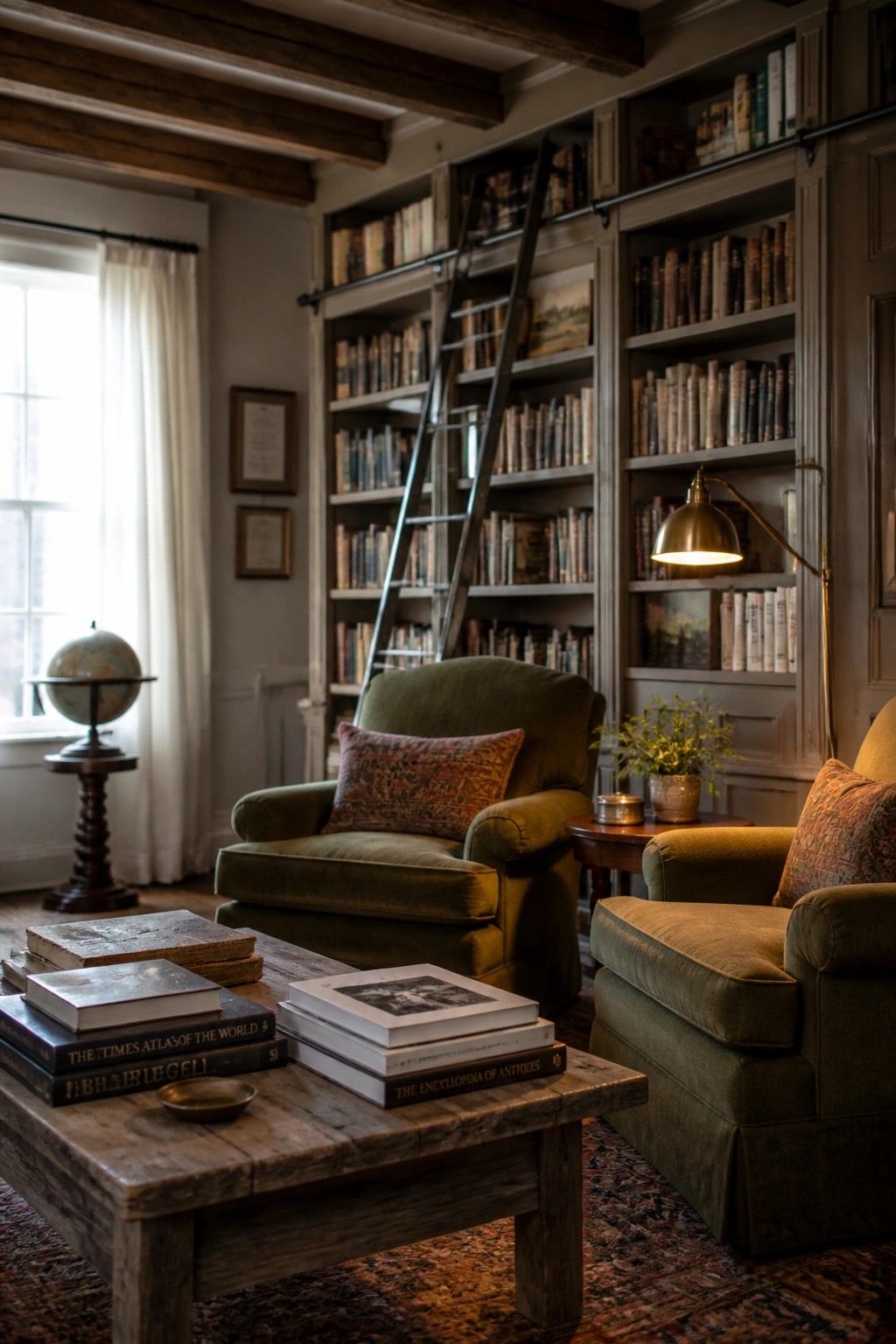
Olive green upholstery brings a natural depth to rooms built on earthy neutrals. The color sits comfortably with wood tones and soft wall colors, giving the space warmth without pulling focus from the overall palette.
This approach suits older homes or farmhouse interiors that already have wood trim and built-ins. Keep the walls and larger surfaces light so the green reads as an accent rather than a bold statement.
Frequently Asked Questions
Q: How do I choose between warm beige and cool taupe for my living room walls?
A: Start with the light in your space. Warm beige pulls out golden tones from wood floors and makes the room feel cozy at night. Cool taupe works better if you get strong afternoon sun that could turn everything yellow.
Q: What if my sofa is already a deep brown?
A: Layer lighter neutrals around it. Paint the walls a soft greige that sits between your sofa and any trim. Add linen curtains in the same family so the brown anchors the palette instead of fighting it.
Q: Can I use these colors on kitchen cabinets?
A: Yes, but pick a durable finish and go one shade darker than your wall color. The earthy tone will feel grounded next to stone counters. Keep hardware simple so it does not compete with the rustic look.
