

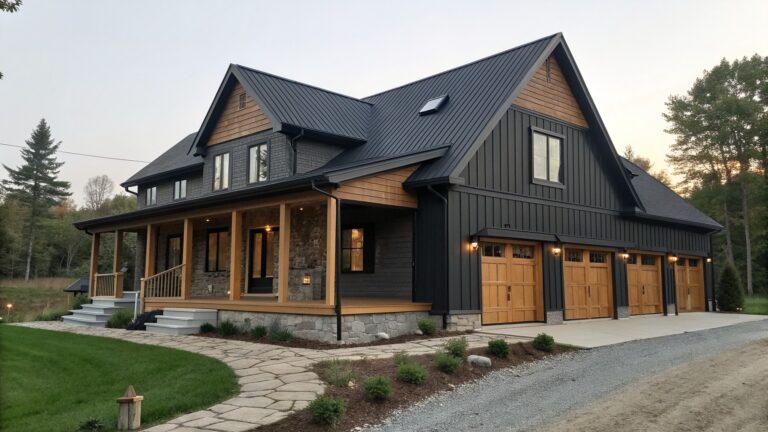
I have noticed that dark farmhouses can start to feel heavy unless the materials bring some warmth back into the mix.
Cedar accents often handle that job by breaking up large dark surfaces and giving the facade a steadier rhythm from the street.
When I drive past homes in my neighborhood the ones that mix deep tones with wood always read as more settled than those that skip the contrast.
Small choices like where the cedar wraps the porch posts or frames the windows tend to decide whether the whole exterior feels pulled together or just dark.
Proportion decides the rest.
Cedar Accents Against Dark Siding
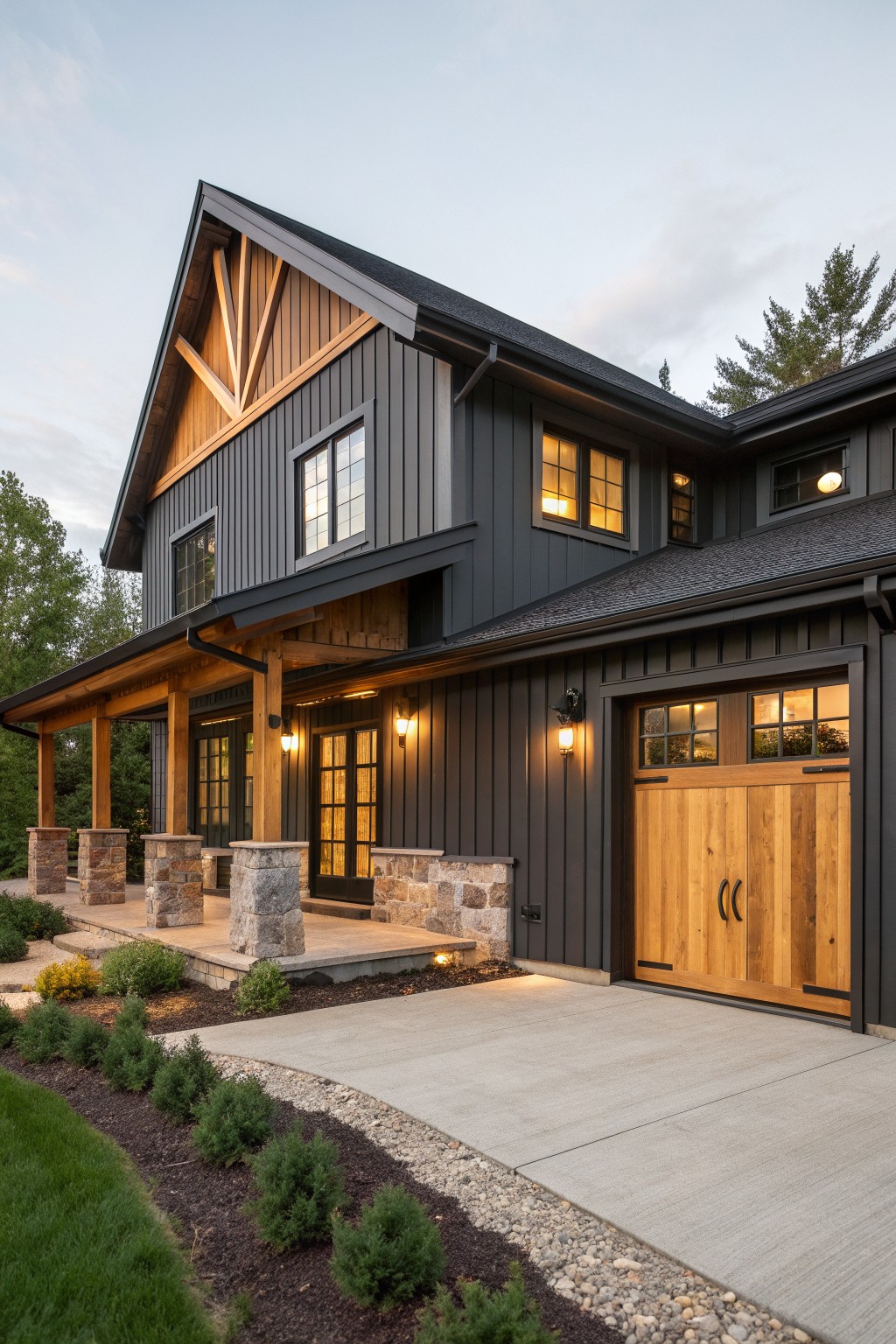
Dark siding can feel heavy on a farmhouse, but cedar accents change that quickly. The wood brings warmth and texture that keeps the dark color from looking flat. A few well placed cedar pieces on the gable or around the entry make the whole house feel more balanced and inviting.
This approach works best on homes that already have a simple roofline and clean window placement. Keep the cedar natural or lightly stained so it stands out against the dark paint. Too many accents can start to feel busy, so stick to one or two main areas like the porch posts or garage door.
Cedar Garage Door Accents on Dark Siding
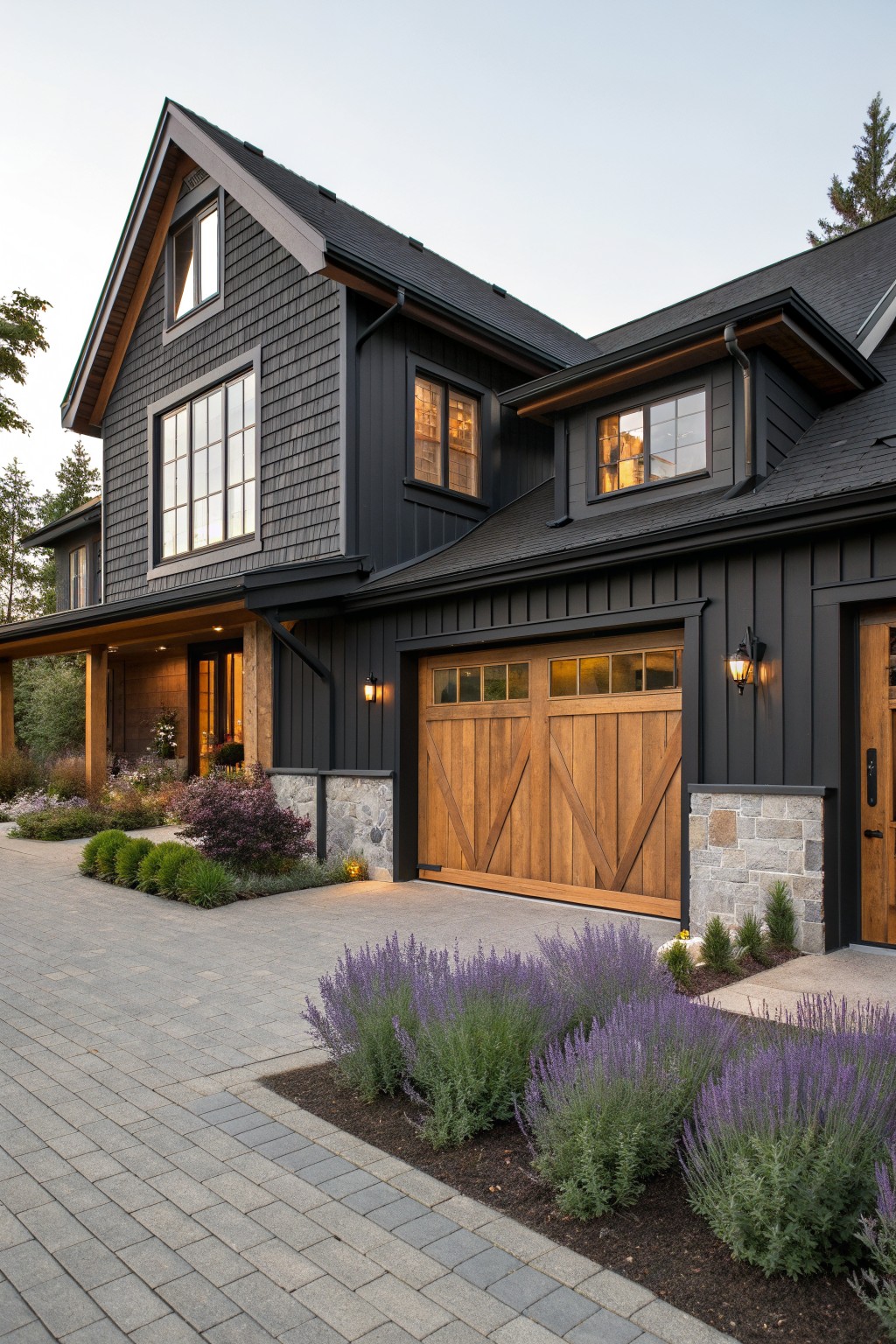
Many dark farmhouses risk looking flat or too stark when the siding covers most of the exterior. Cedar accents, especially on a large garage door, add warmth and grain that break up the dark surface without losing the clean modern feel.
This approach works best on homes with straightforward rooflines and minimal trim. Use the wood on the garage or a secondary door first, then carry smaller cedar details to the entry if needed. It keeps the dark palette grounded while giving the house a more balanced, lived-in look.
Cedar Gable and Trim Accents on Dark Siding
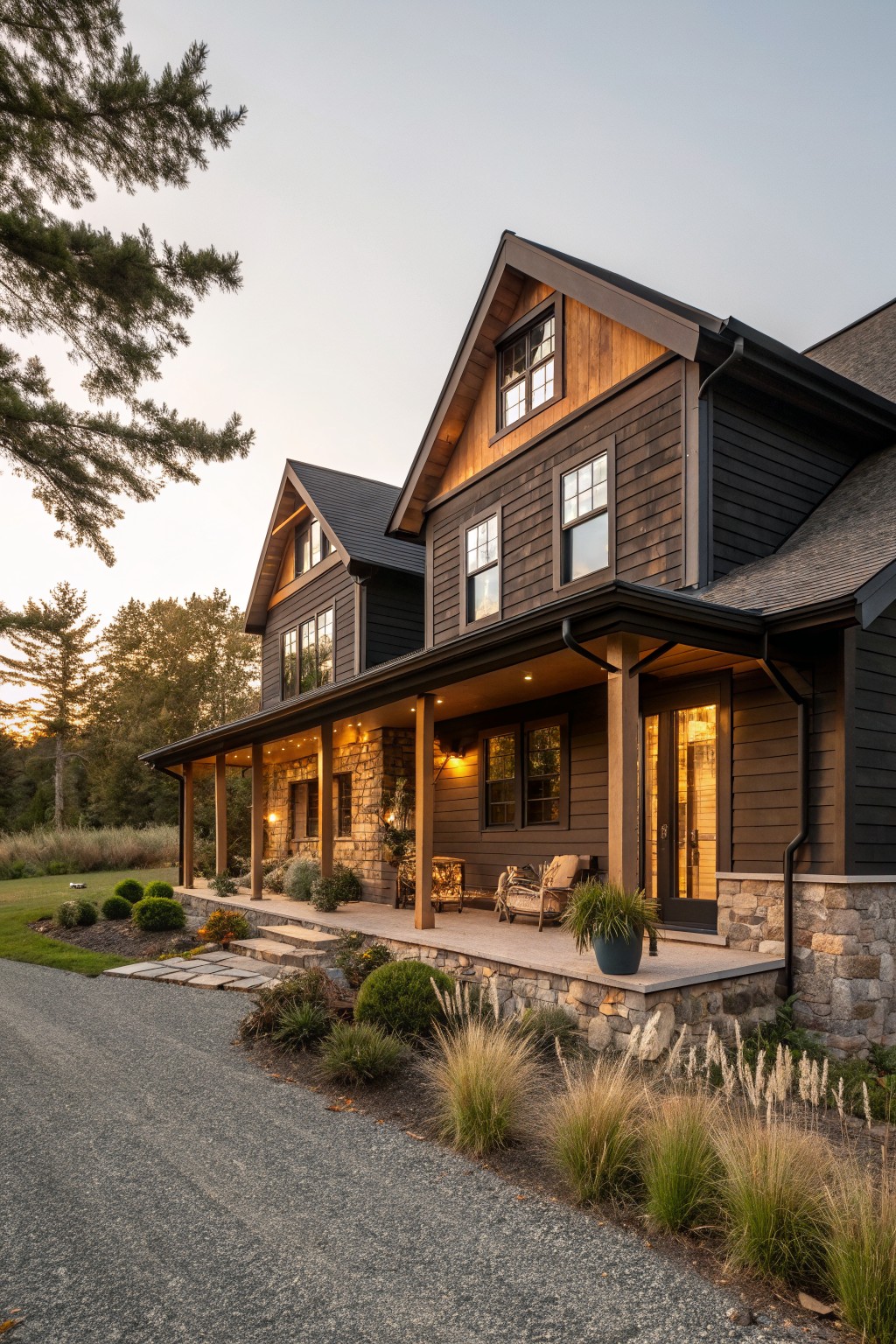
Cedar accents stand out against the dark siding because they add just enough natural tone to keep the whole exterior from feeling flat or heavy. The wood softens the look without shifting the house into a lighter color scheme.
This approach works best on farmhouses that already have a strong roofline and simple window placements. Use the cedar on gables and trim first, then let the rest of the siding stay dark so the contrast stays balanced rather than busy.
Cedar Posts Balance Dark Farmhouse Exteriors
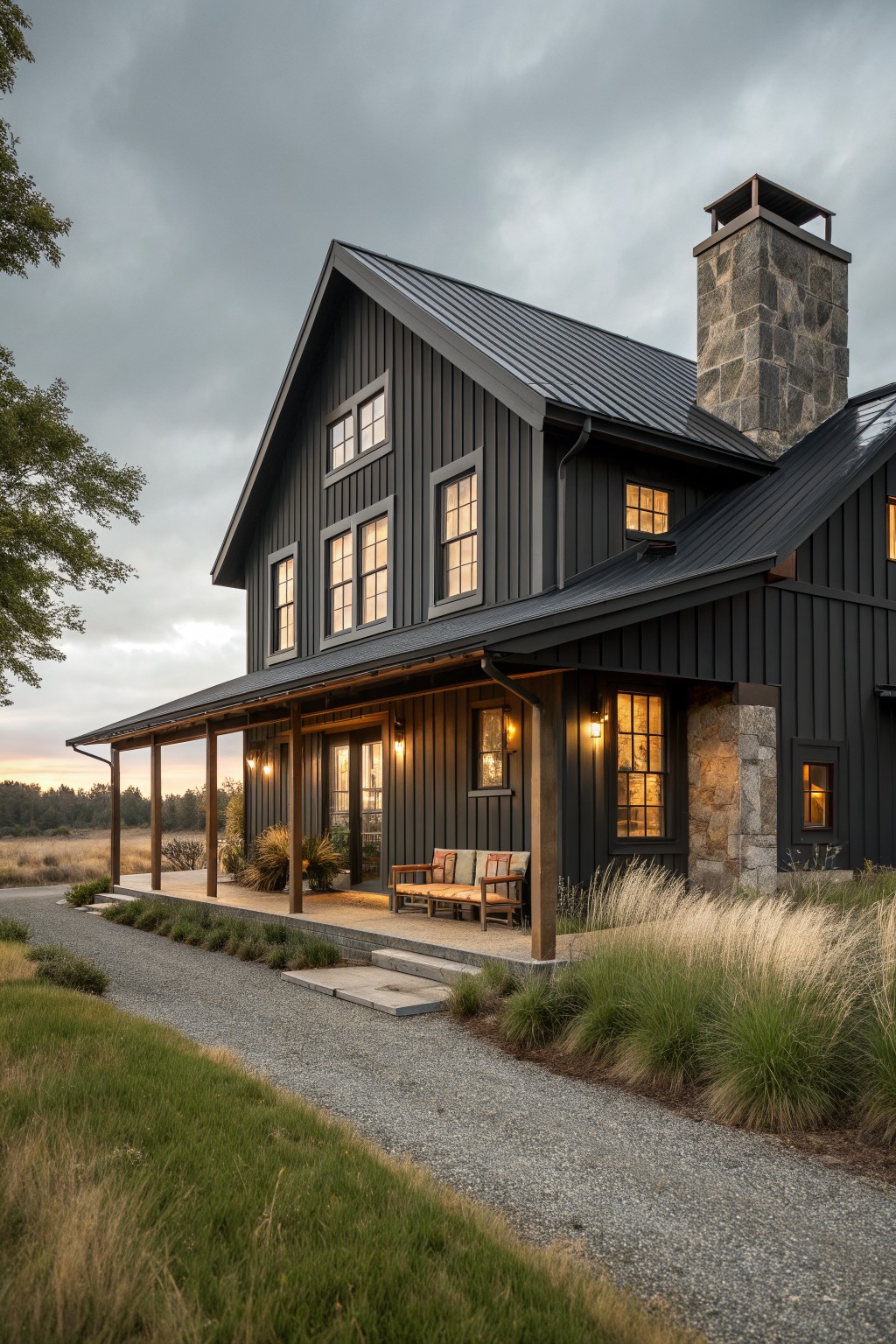
Dark siding can look a bit stark on its own, especially on larger homes. Adding cedar posts and beams along the porch brings in a natural tone that softens the whole front without losing the strong, simple shape of the house.
This works best on homes that already have a decent overhang or covered entry. Keep the wood in its natural state or use a light stain so it reads as a clear accent rather than another dark layer. It pairs easily with stone details too, so you do not need many other changes to get the balance right.
Cedar Door Against Dark Siding
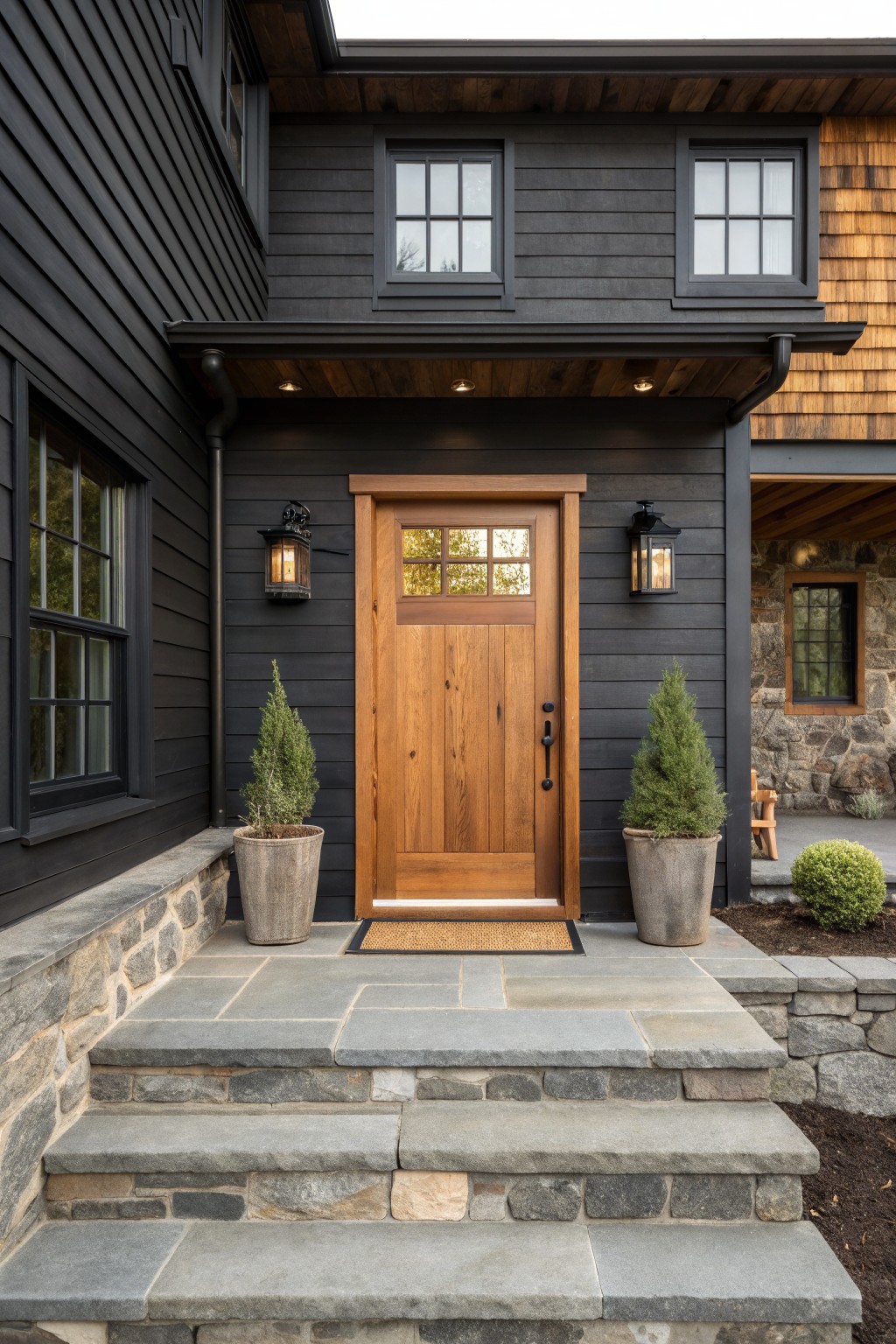
A cedar door brings just enough warmth to a dark exterior without breaking the overall mood. The natural wood grain stands out against the black siding and gives the entry a grounded, lived-in feel that many dark farmhouses need.
This approach works best on homes with straightforward shapes and minimal trim. Keep the hardware simple and let the wood do the work. It pairs especially well with stone details or gravel paths that echo the same natural tones.
Central Fire Pit on the Deck
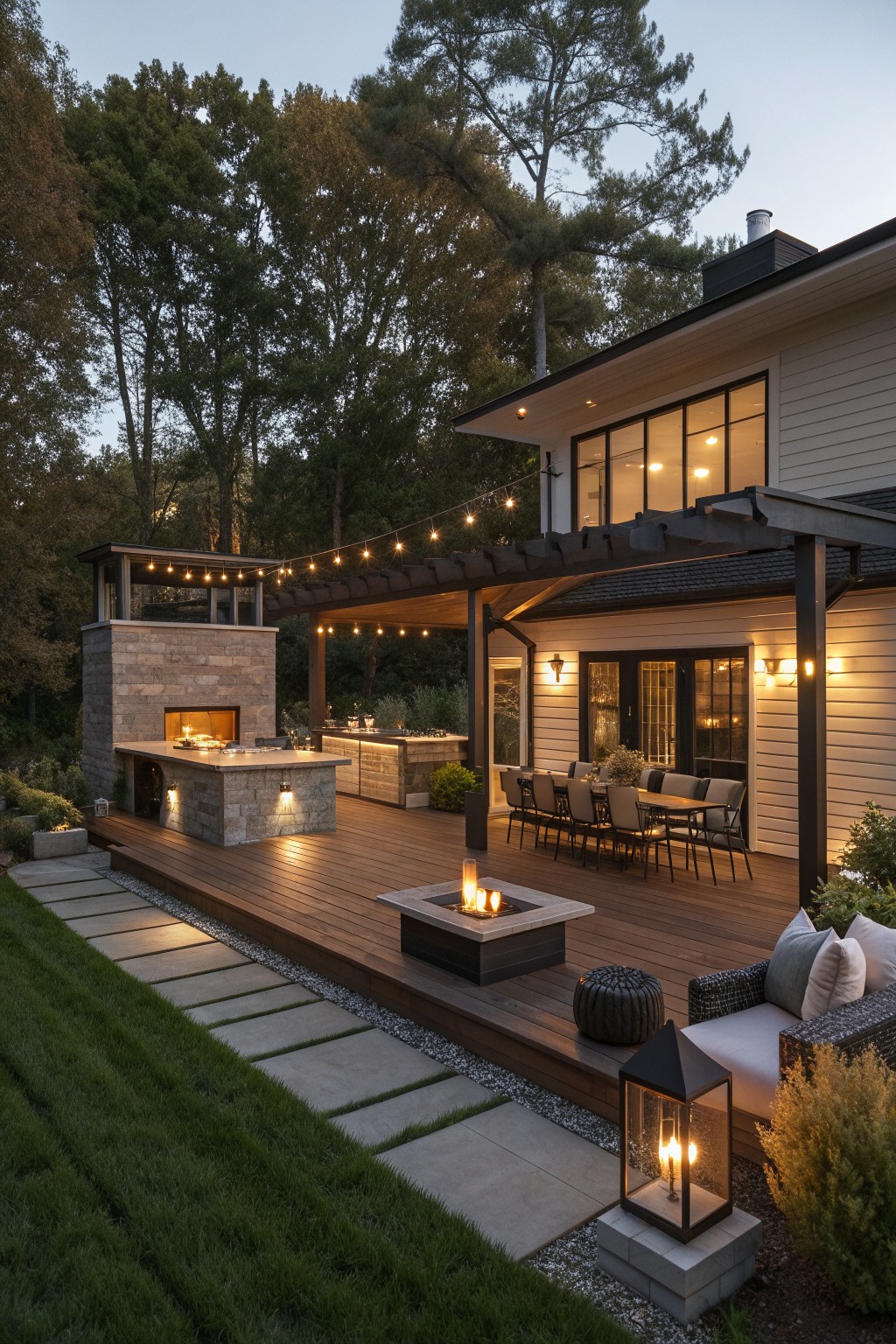
A fire pit set right in the middle of a wooden deck gives the whole space a natural spot to gather after dark. It works especially well on larger decks where people need a reason to stay outside once the sun goes down. The stone surround keeps the heat contained while the wood decking adds the right amount of warmth underfoot.
This setup suits homes that already have a good amount of outdoor room and want to use it year round. Keep the seating close but not too tight so people can move around the fire easily. Watch the distance from the house so smoke does not drift inside through open doors.
Cedar Gable and Porch Accents Warm Up Dark Siding
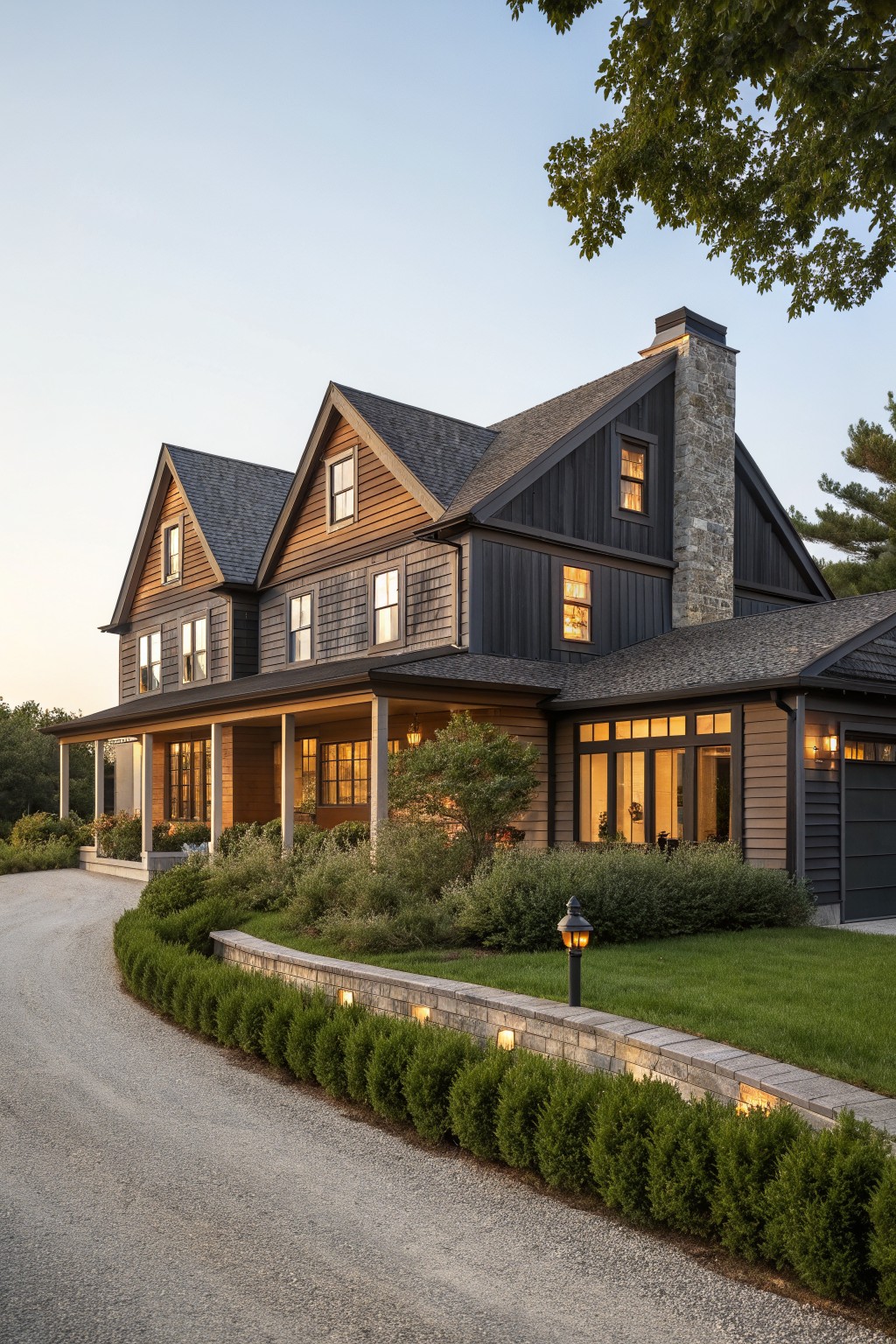
Dark siding can make a house feel solid and grounded, but it sometimes needs a softer touch to avoid looking flat. Cedar accents bring in that natural warmth and keep the whole exterior from feeling too heavy or modern.
This approach works best on farmhouses where the main body stays dark while wood shows up on gables, porch ceilings, or sections of the siding. Keep the cedar natural or lightly stained so it contrasts nicely with the paint and any stone details.
Cedar Window Boxes on Dark Siding
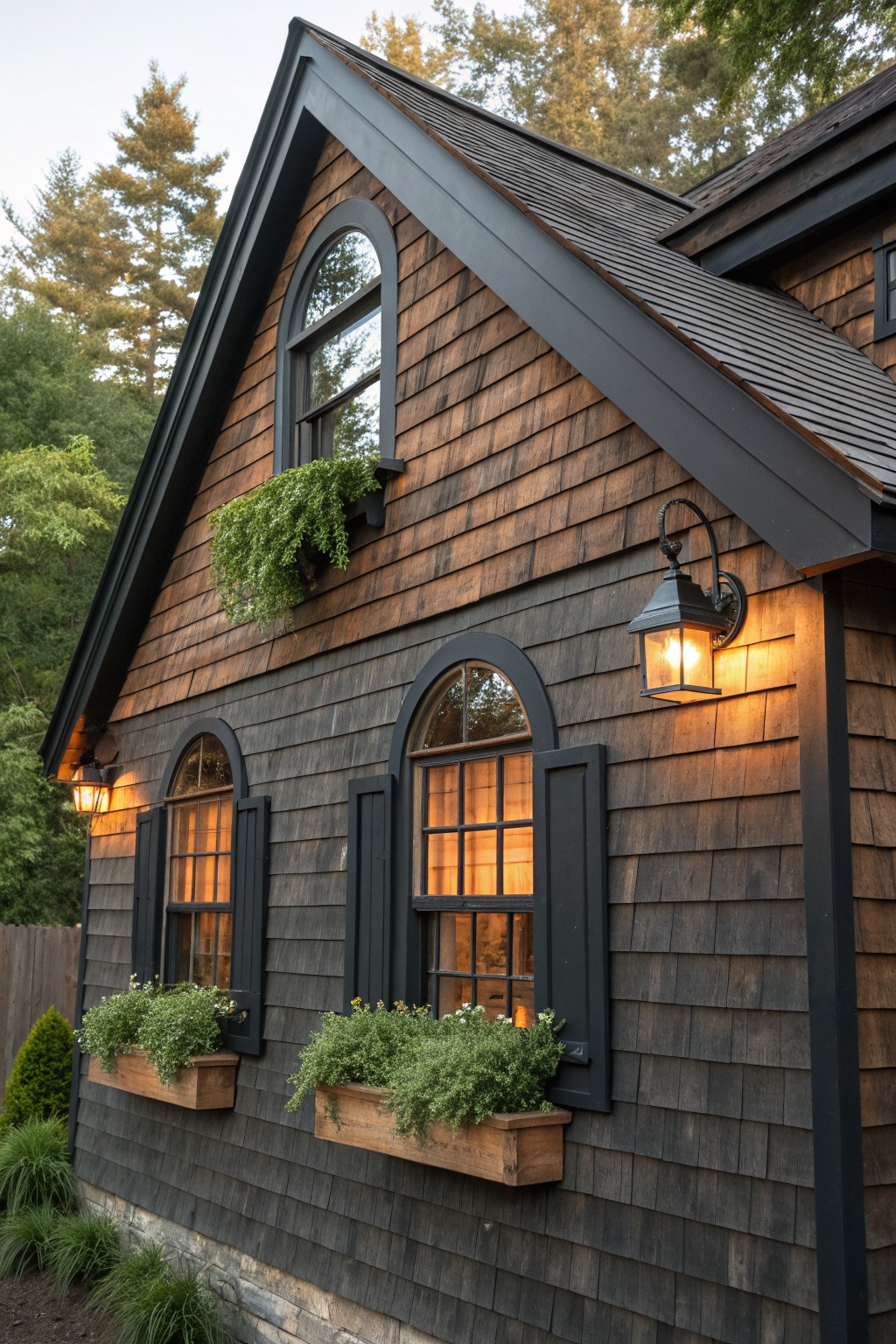
Cedar window boxes bring a simple rustic note to a dark exterior without overpowering it. The natural wood tone stands out nicely against the dark shingles and black trim, and it gives the whole front a warmer feel that many people want in a farmhouse.
This works best on homes with fairly plain wall surfaces where you can place the boxes right under the windows. Keep the wood finish natural so it ages to a soft gray, and choose plants that spill over the edge a bit for a relaxed look.
Cedar Pergola Over an Outdoor Kitchen
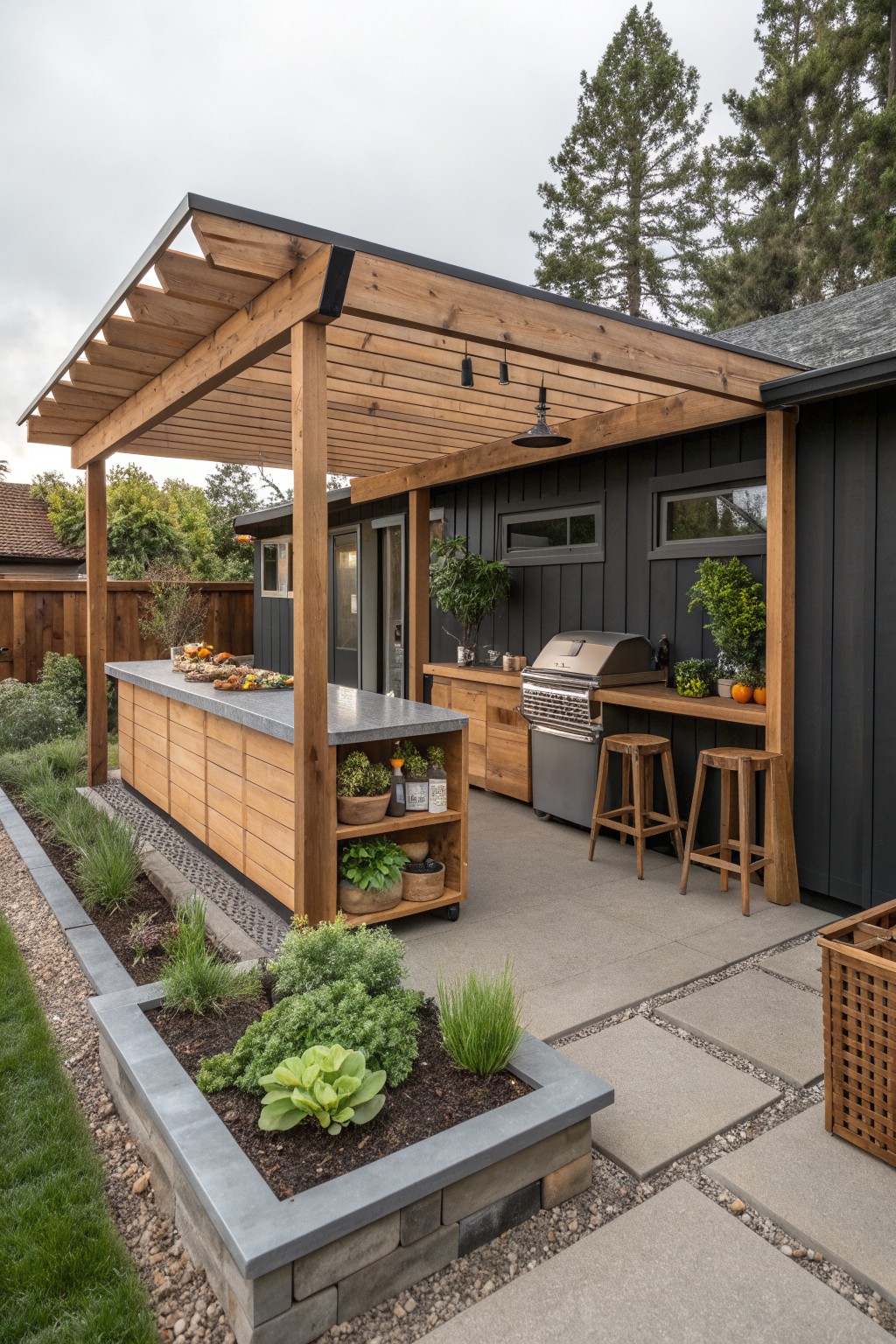
A cedar pergola gives an outdoor kitchen real presence without making the space feel closed in. The wood brings warmth to dark siding and creates a clear spot for cooking and sitting that feels connected to the house rather than tacked on.
This setup works best on homes with a fairly open backyard where you want a dedicated cooking zone. Keep the pergola simple, match the wood tone to any other cedar details on the house, and make sure the roofline lines up with existing windows and doors so the addition feels intentional.
Cedar Ceilings On Covered Decks
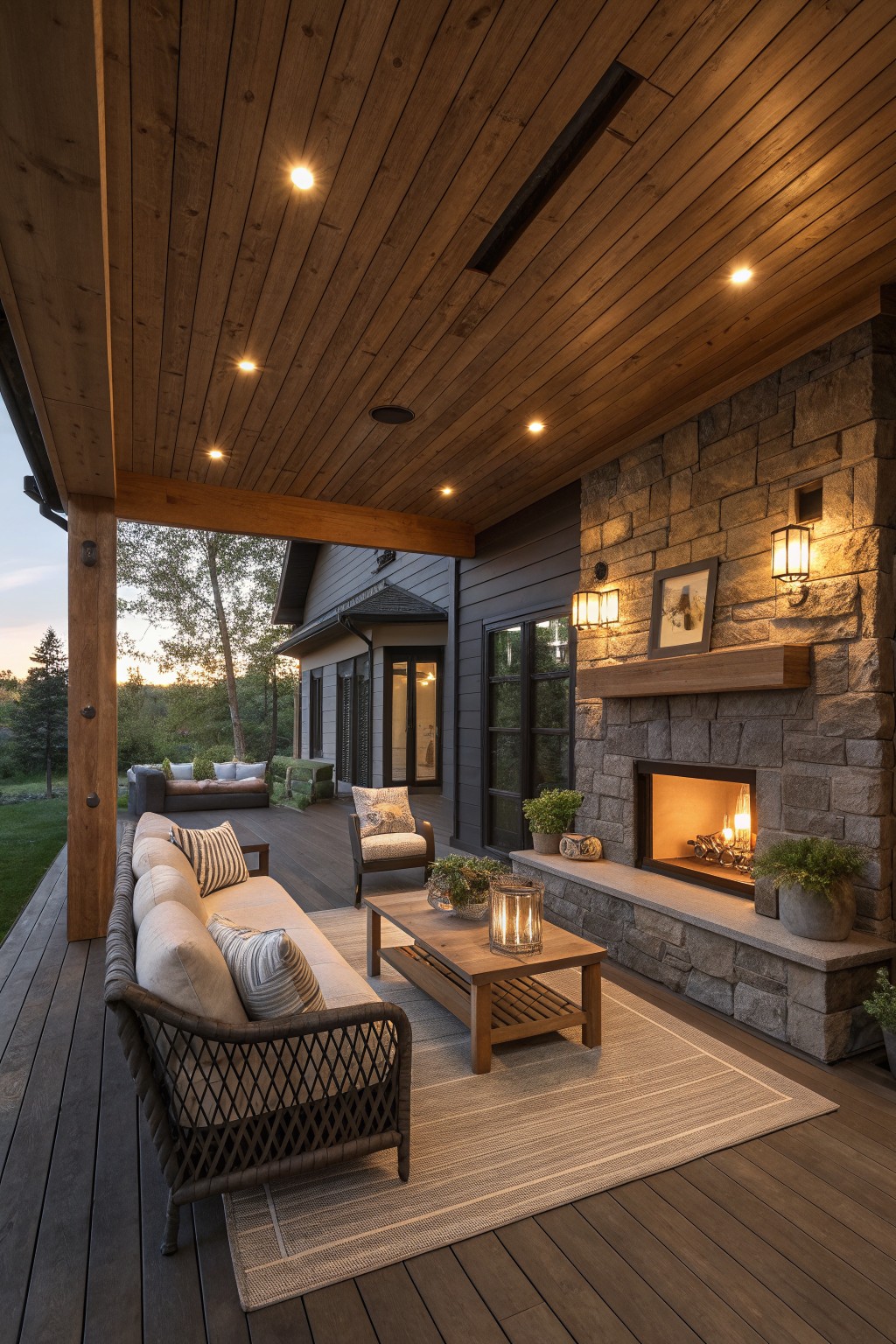
Cedar on the ceiling of a covered deck helps warm up the space and ties in with the dark siding on the house. It keeps the outdoor area from feeling too open or cold, especially when paired with a stone fireplace along one wall.
This approach works best on homes with similar wood tones or dark exteriors. It creates a simple way to make the deck feel like an extension of the house rather than a separate zone.
Cedar Door, Window, and Porch Accents on Dark Farmhouse Siding
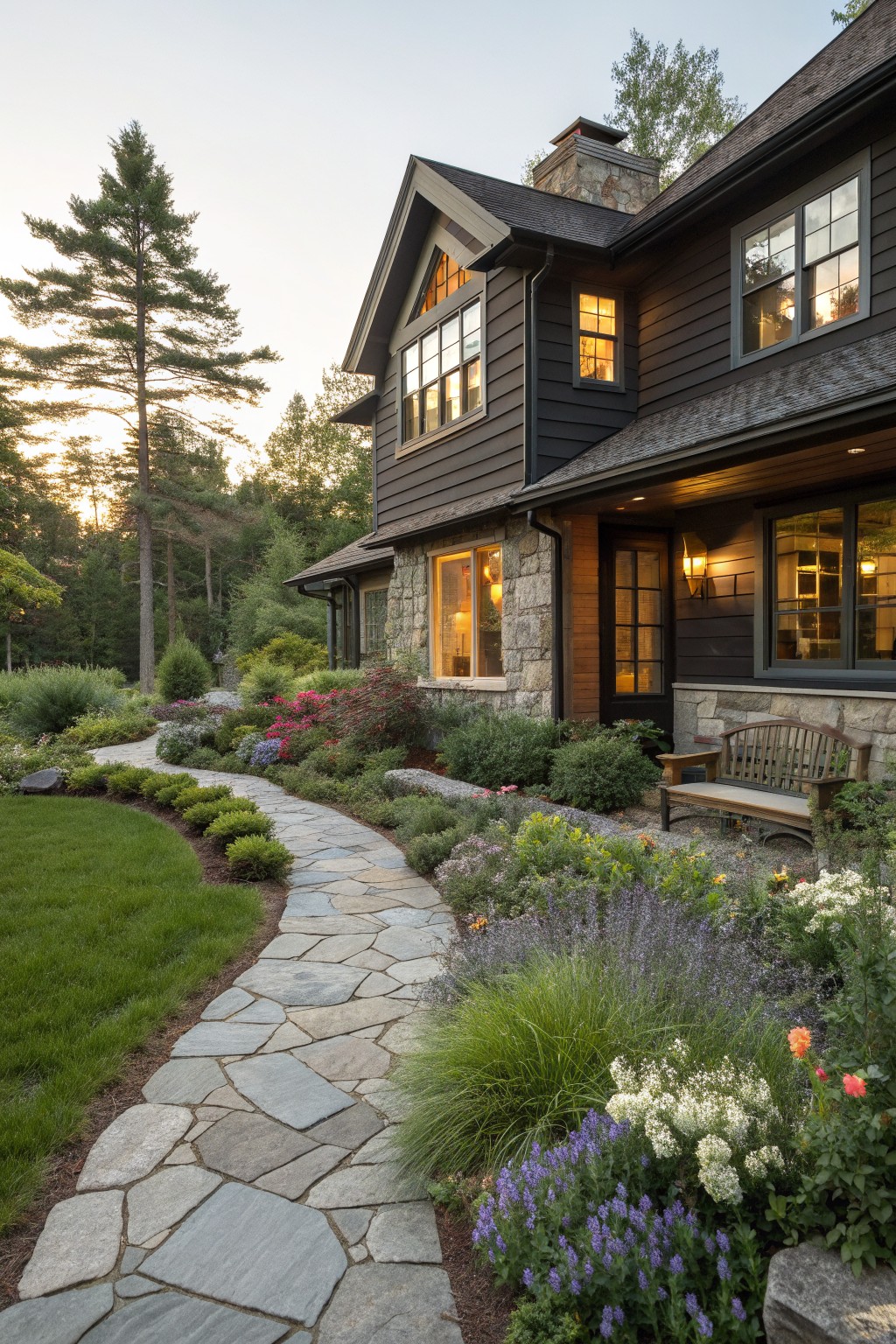
Dark siding gives a farmhouse that strong, grounded look, but it can feel flat without some contrast. Cedar accents add just enough warmth to keep the color from turning cold, especially when paired with stone at the base.
This approach works best on homes that already have natural surroundings or wood details elsewhere on the property. Keep the cedar to key spots like doors, window trim, and porch posts so the mix stays balanced rather than busy.
Cedar Garage Doors Against Dark Trim
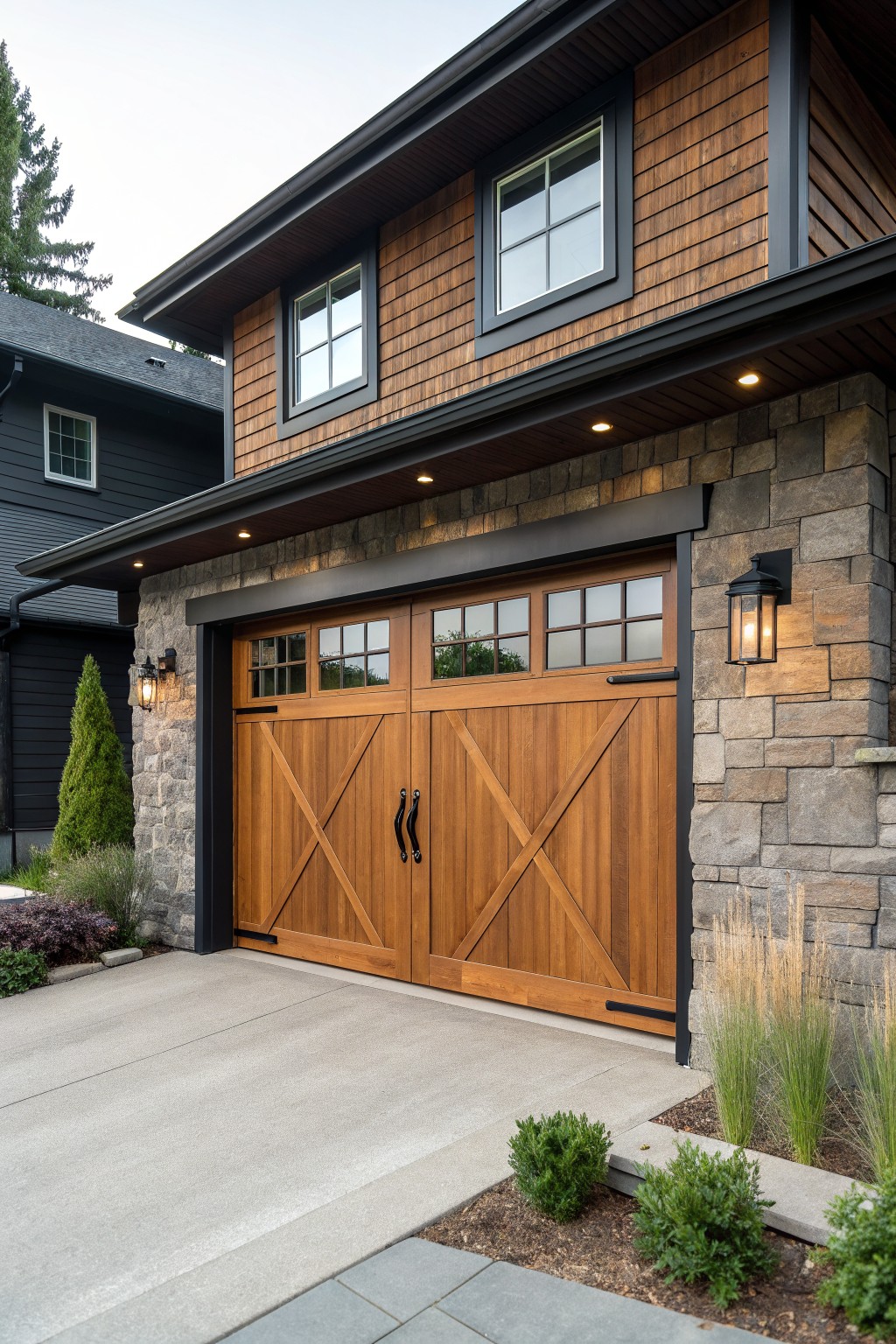
Cedar garage doors give a dark farmhouse a warmer front without softening the overall look too much. The natural wood grain and simple bracing break up the dark siding and trim while still fitting the style.
This approach works best on homes where the garage faces the street and takes up a large part of the facade. Keep the doors in a natural or lightly stained cedar and pair them with dark window frames and stone or dark siding so the contrast stays balanced.
Dark Farmhouse Entry With Cedar Door and Porch Accents
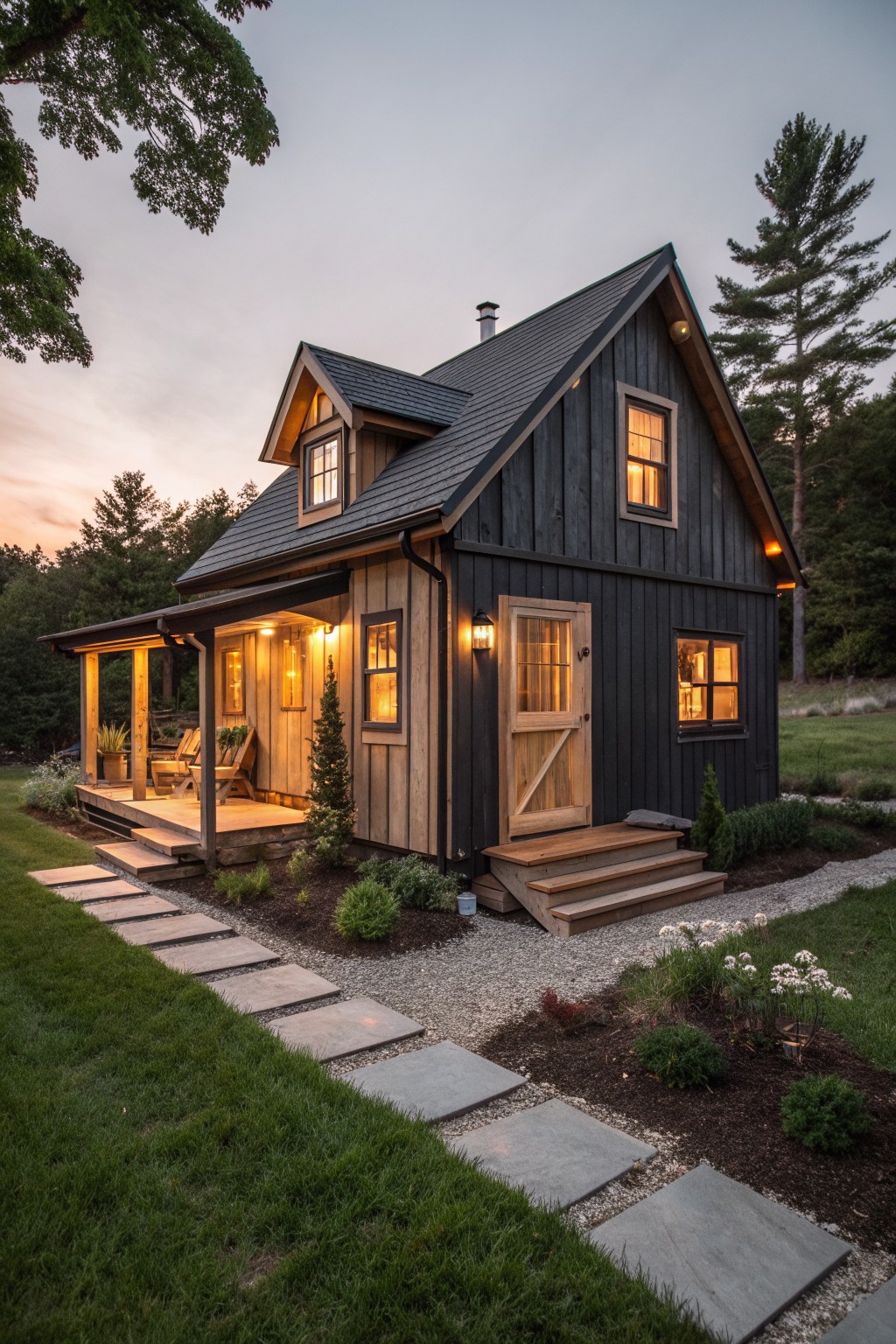
A dark farmhouse exterior can feel heavy without something to warm it up. Cedar accents on the door, trim, and porch posts do that job well. They bring in natural tone and texture that keeps the black siding from looking flat or too stark against the landscape.
This approach works best on simpler gable shapes where the wood can stand out. Keep the cedar in key spots like the entry door and porch structure rather than spreading it everywhere. It suits homes that want a rustic touch without adding extra trim or color layers.
Cedar Decking Balances Dark Siding
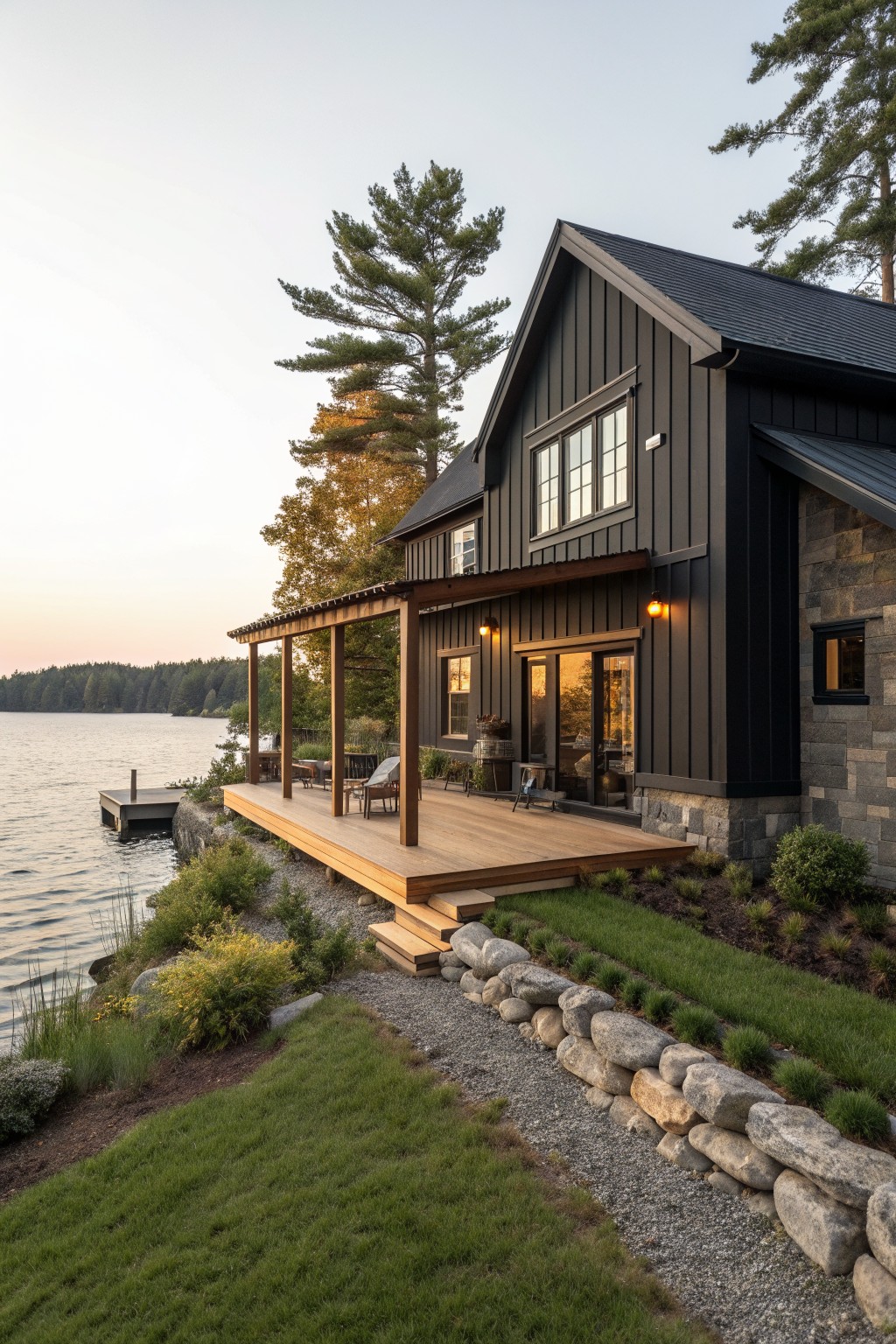
A wide cedar deck softens the look of a dark farmhouse and gives the exterior a warmer, more grounded feel. The wood tones stand out nicely against the black siding and help tie the house into the surrounding landscape without adding extra trim or decoration.
This approach works best on homes that already have strong simple lines. Keep the deck structure straightforward and let the natural wood provide the contrast. It suits properties near water or in wooded areas where you want the house to feel connected to its setting.
Cedar Gable and Porch Beam Accents
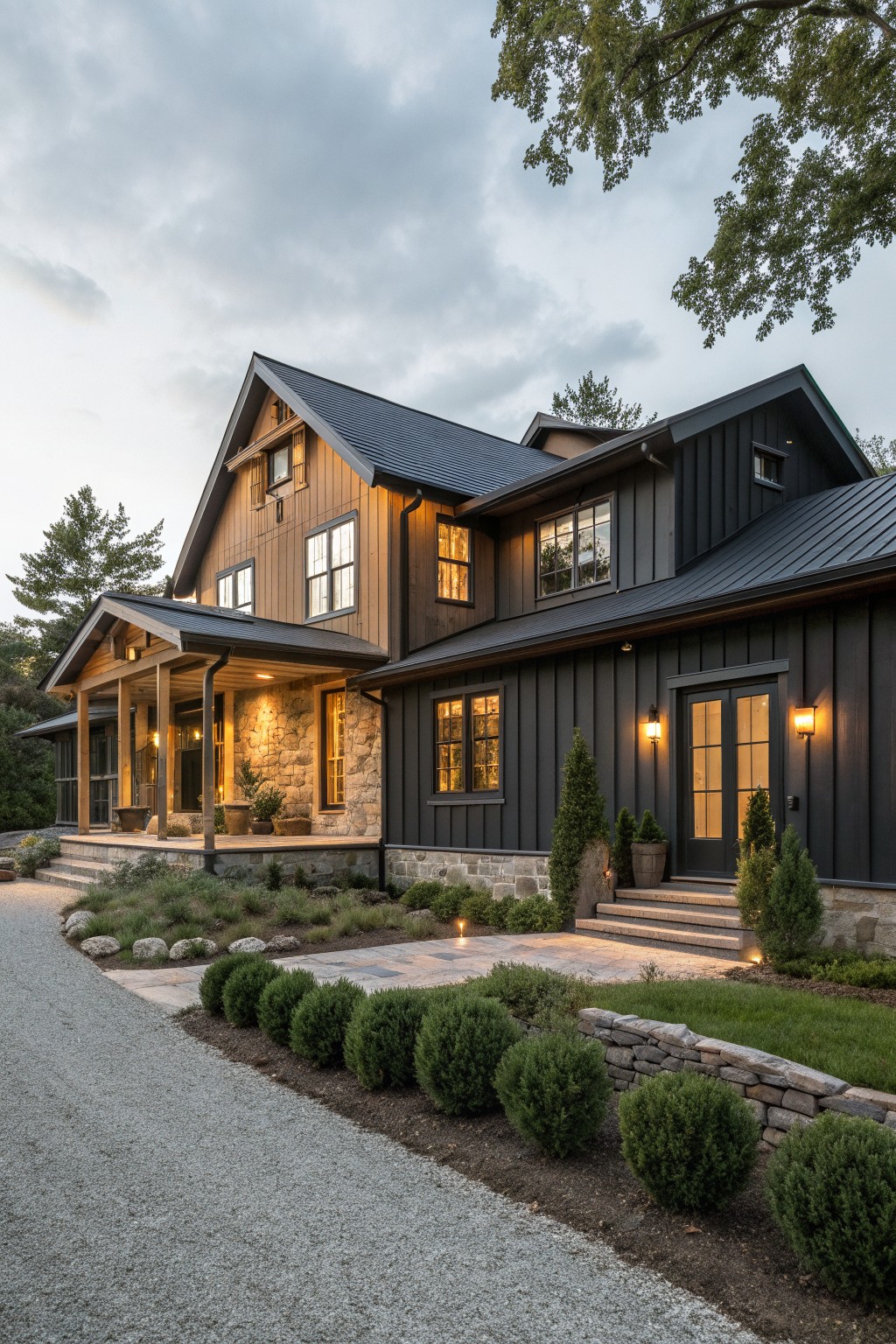
Dark siding can look heavy on a farmhouse, but cedar accents change that fast. Placing the wood on gables, porch beams, and trim brings out the warmth without softening the overall strength of the dark color. The contrast keeps the house grounded while still feeling approachable.
This approach works best on homes with simple rooflines where the cedar can highlight a few key spots rather than cover everything. It suits both new builds and older farmhouses that need a bit more life on the exterior. Keep the cedar natural or lightly stained so it ages evenly with the siding.
Cedar Accents Around a Dark Farmhouse Patio
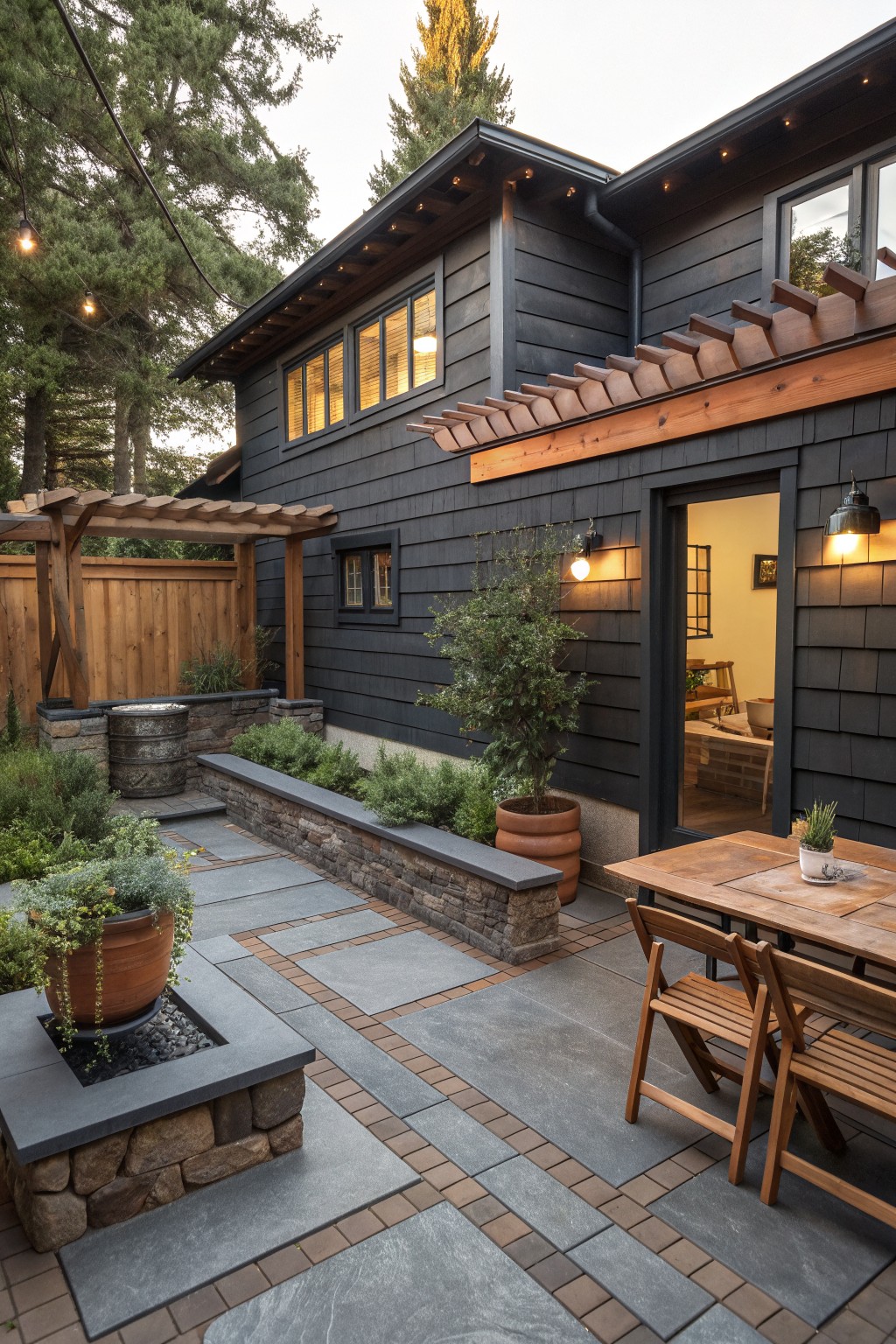
Dark siding can feel heavy on its own, but cedar accents give it just enough warmth without losing the bold look. The wood softens the overall feel and ties the house to the outdoor space in a simple way.
This approach works best on homes where the patio sits right against the house. Use the cedar on overhangs or trim near seating areas so the two materials play off each other without competing.
Cedar Deck and Trim Accents on Dark Siding
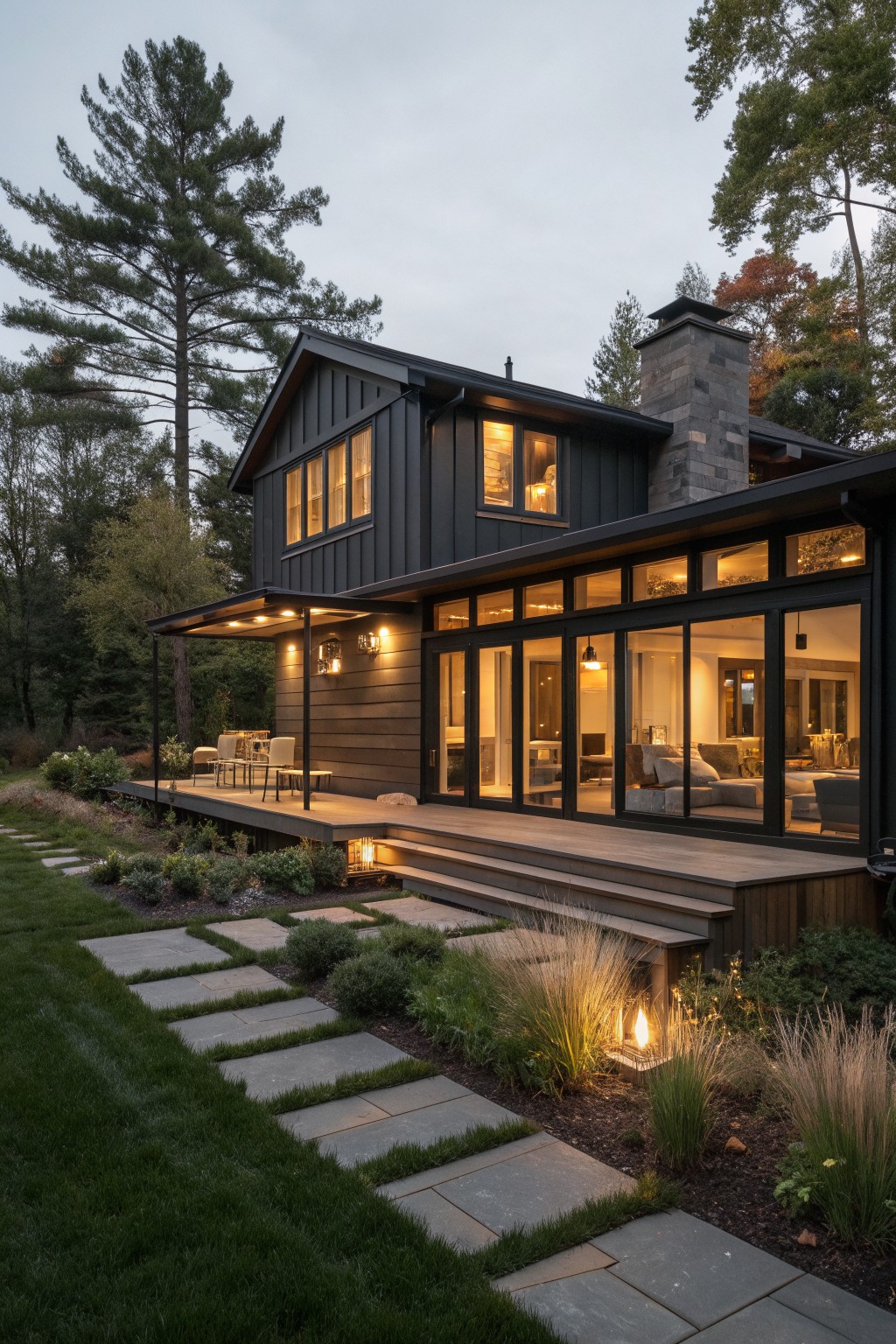
Dark siding gives a house a strong, grounded look, but it can feel a bit stark on its own. Adding cedar accents in places like the deck, trim, or lower boards brings in just enough warmth and texture to keep the whole exterior balanced. The contrast makes the dark color feel more inviting without losing its modern edge.
This approach works especially well on farmhouses or similar styles where you want some rustic character. Keep the cedar natural or lightly stained so it ages gracefully, and use it in limited spots rather than covering large areas. It pairs best with simple landscaping and plenty of windows to let light through.
Cedar Trim and Front Door Accents on Dark Siding
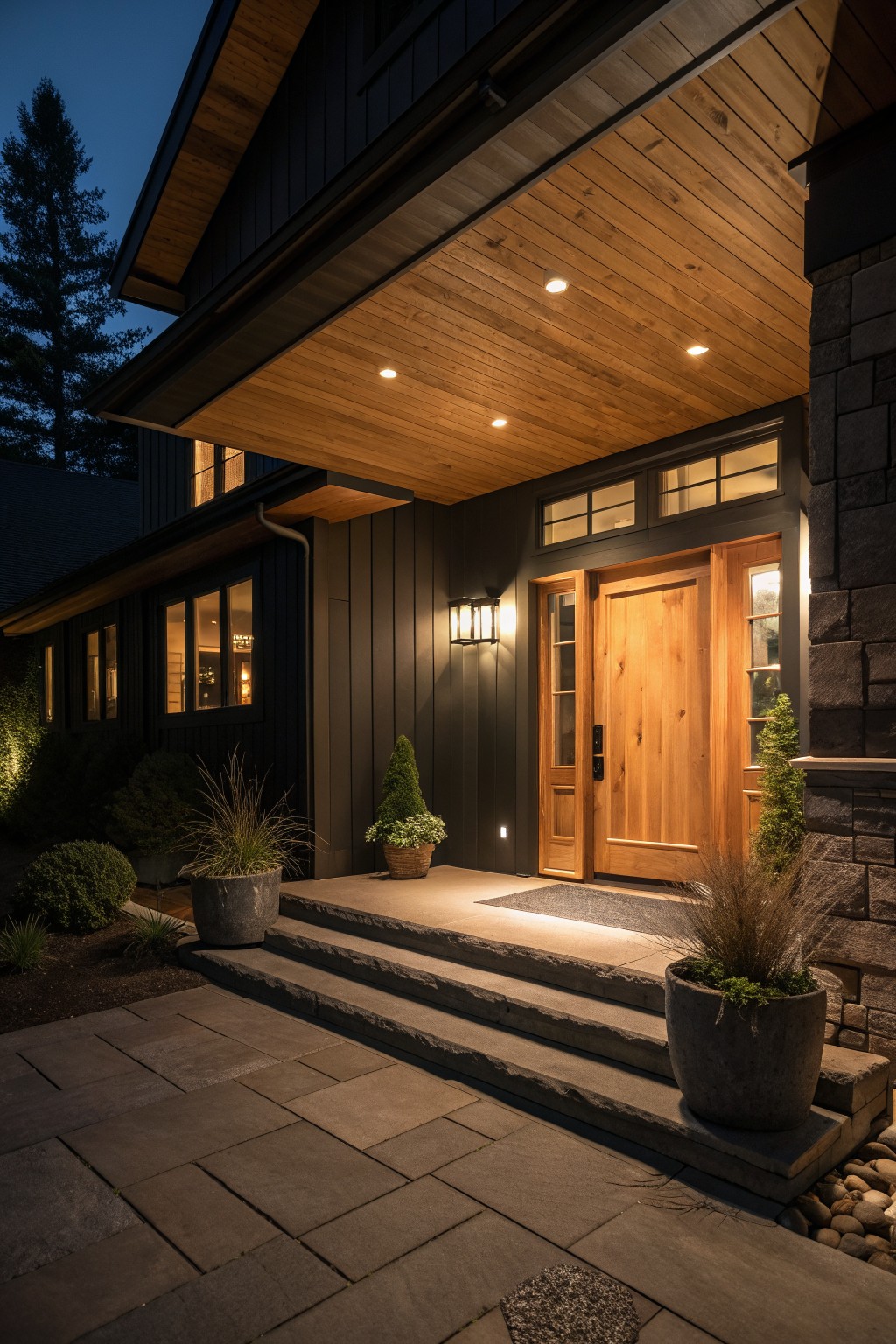
A dark exterior can feel heavy unless you add something warmer to break it up. Cedar trim and a matching front door do that job well here. The wood brings just enough contrast without fighting the overall dark look.
This works best on farmhouses or similar styles where you want some rustic character. Keep the cedar limited to the entry area and any porch ceiling so it stays focused. Too much wood and the dark siding loses its impact.
Cedar Pergola for a Dark Farmhouse Patio
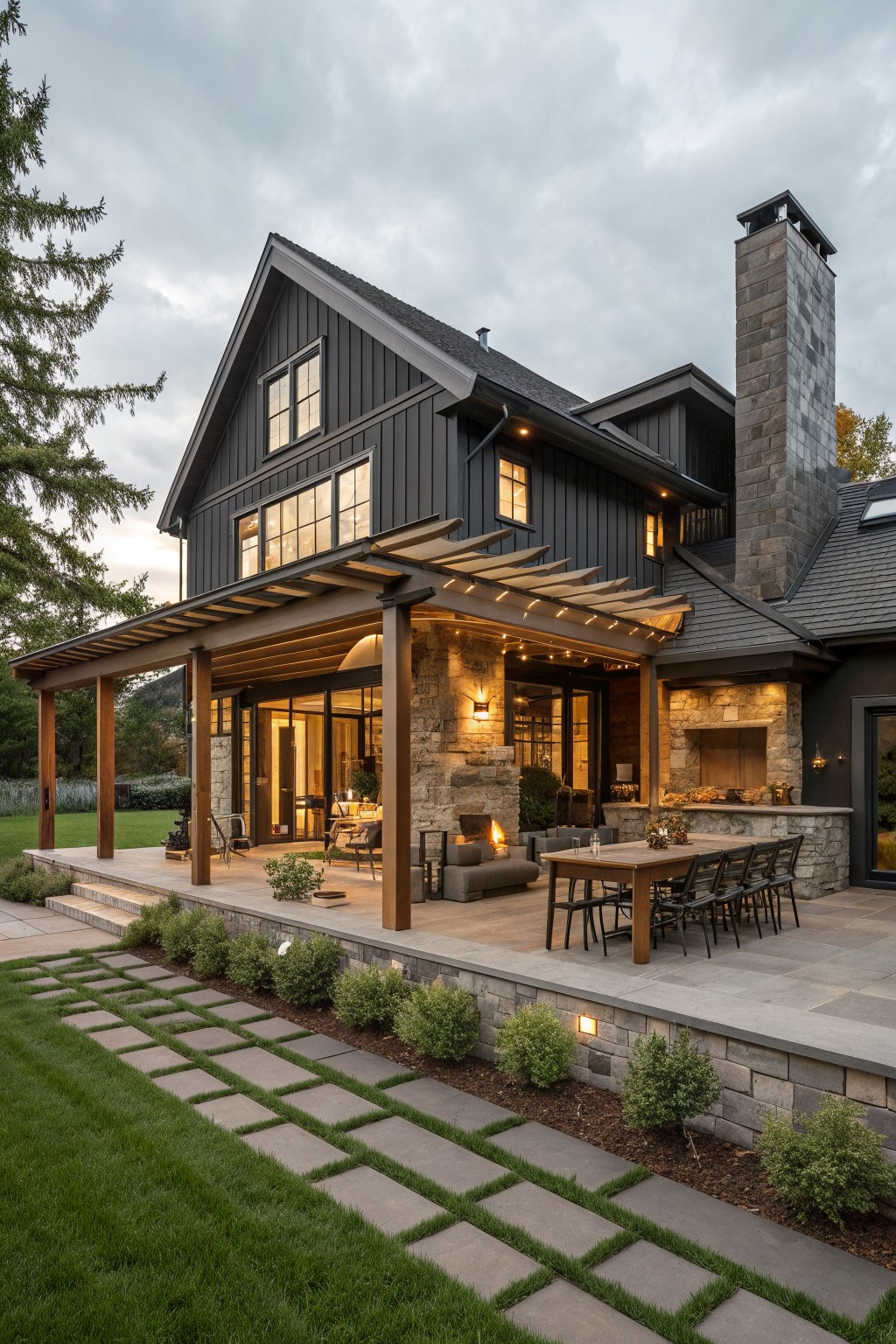
A cedar pergola gives the patio a clear sense of structure without closing it in. The wood brings a natural warmth that softens the dark siding on the house and makes the whole outdoor space feel more inviting for meals or evening gatherings.
This works well on homes with strong dark exteriors because the wood tones create balance and keep the area from feeling too heavy. Place the pergola to cover the main seating or dining zone and let the posts line up with the house edge so the addition feels like part of the original build rather than an afterthought.
Frequently Asked Questions
Q: How much cedar should I use so the dark siding still feels balanced? A: Focus on the porch posts and a few window frames first. That amount pulls in the warm tones without breaking up the dark exterior too much. Anything more starts to compete instead of complement.
Q: Will the cedar turn orange and clash with my deep paint color? A: Pick a weathered gray stain for the cedar rather than a clear finish. It softens the natural tone so it sits nicely against the dark walls. Reapply the stain every couple of years to hold that softer look.
Q: Can I try this on my house if it has vinyl windows already? A: Paint the vinyl frames a matte black to blend with the siding. Add cedar trim pieces around the edges and the warmth comes through without any big replacements.
