

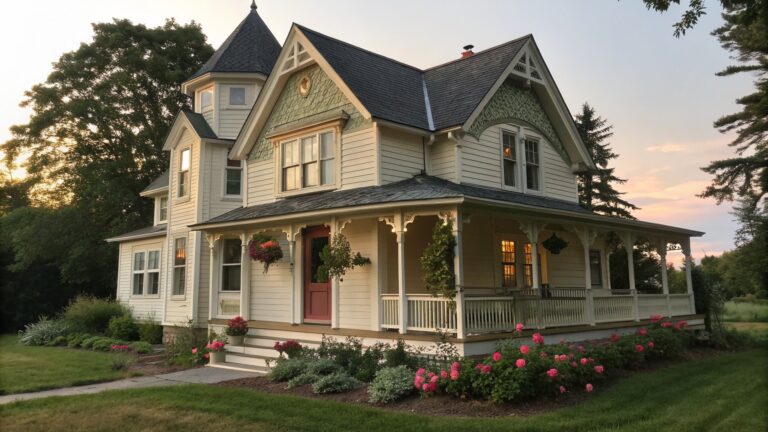
When I drive past rural homes that blend Victorian trim with farmhouse simplicity, the curb appeal usually comes down to how the porch and roofline work together to frame the front.
I have noticed that some exteriors end up looking flat because the materials do not have enough variation in texture or color to catch the light properly.
Entries often make or break the first impression.
Looking at these examples, I see how small shifts in window placement or siding can help a cottage feel more settled into its landscape.
It seems worth trying out a few of those material combinations on a small section of wall before committing to the full exterior.
Climbing Vines on Cottage Walls
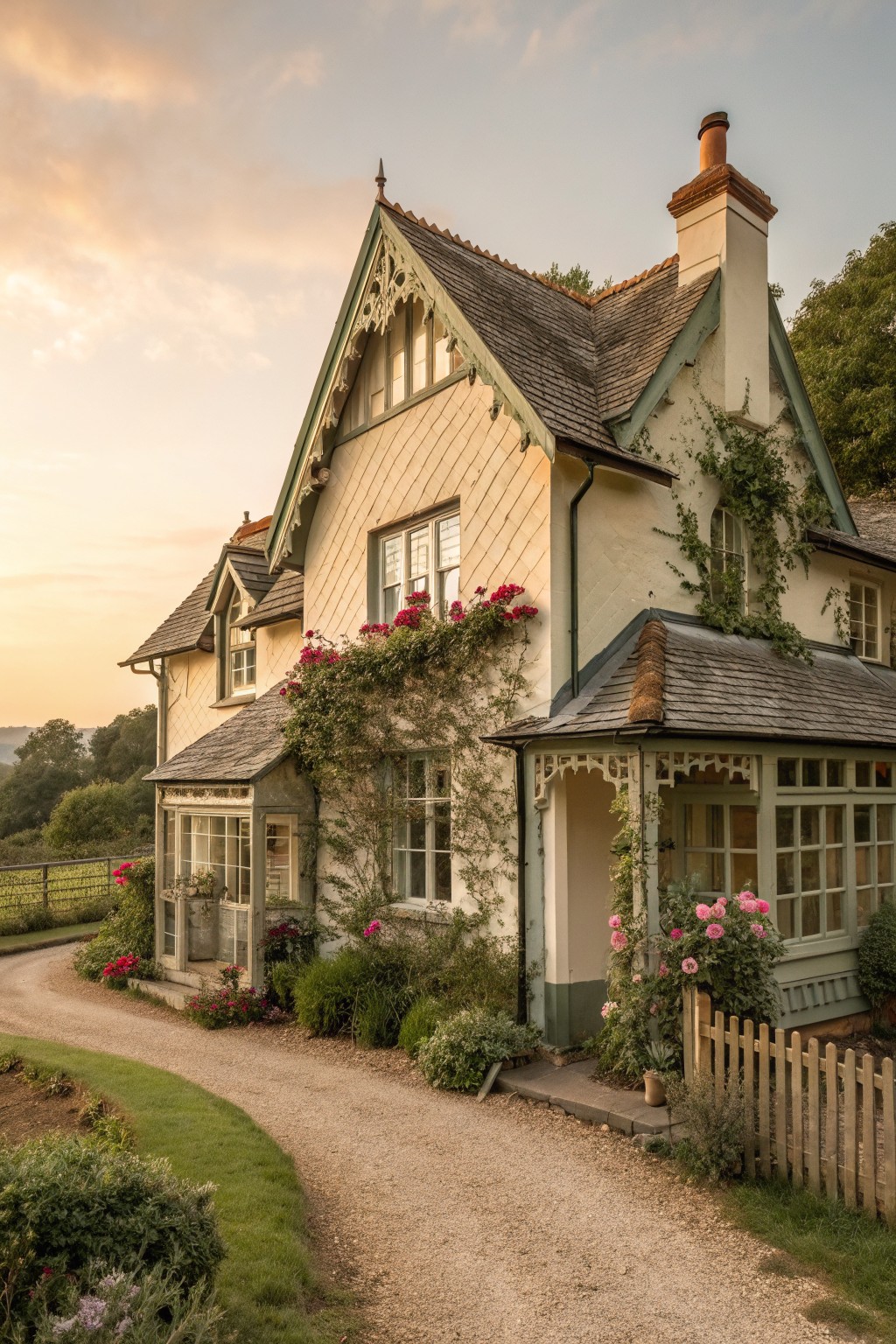
Climbing vines and roses give a Victorian farmhouse cottage that soft, lived-in look without much extra effort. They break up the flat wall surfaces and add color that changes through the seasons, which helps the house feel more connected to the garden around it.
This approach works well on homes with plain siding or stucco where you can add simple trellises or let the plants grip directly. Just keep the growth away from wood that needs regular painting and pick varieties that match your climate so they do not take over windows or gutters.
A Gabled Porch Highlights the Front Entry
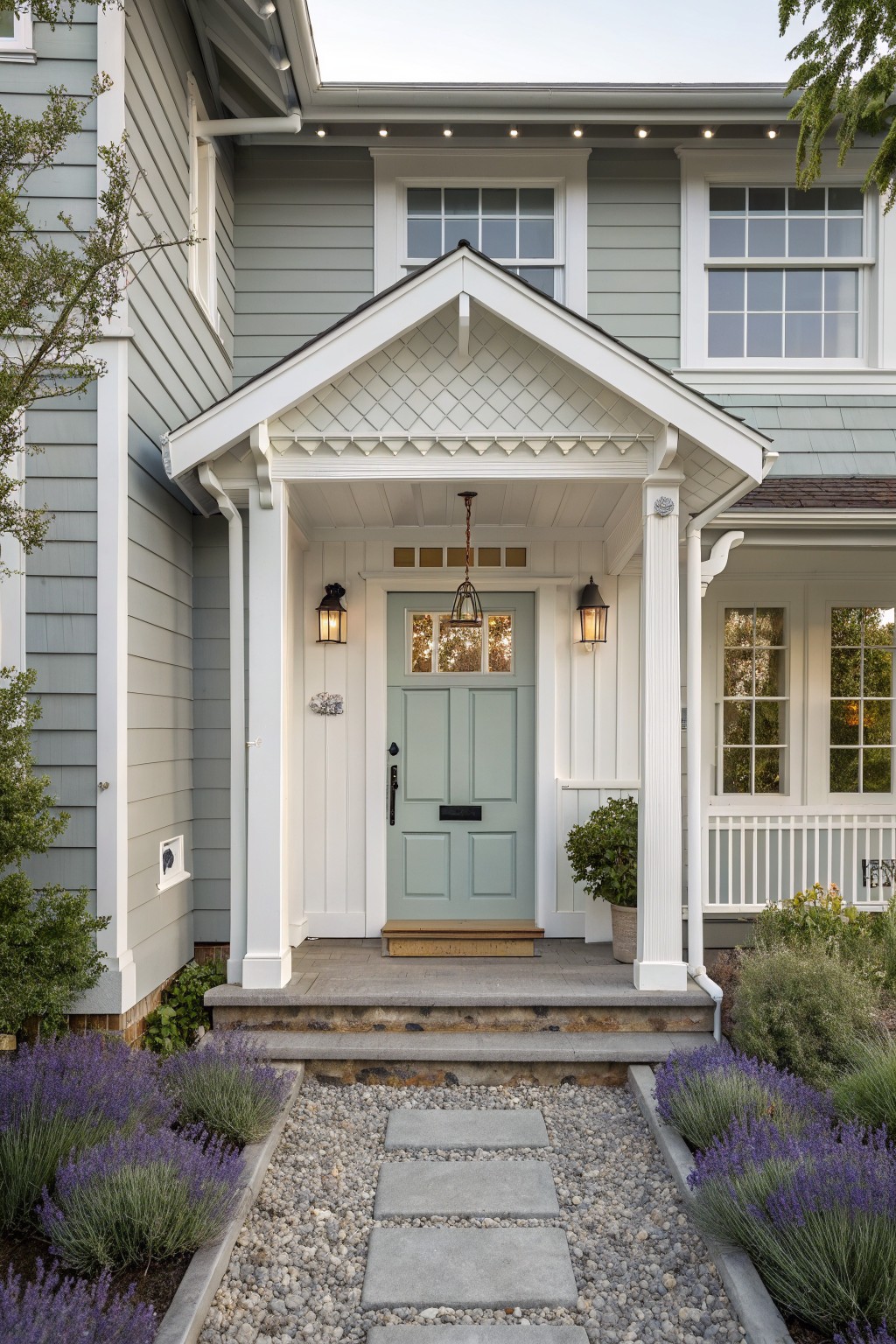
A small gabled porch over the door helps define the entrance on a simple farmhouse. The peaked roof and basic columns give the facade a bit more shape without adding much bulk.
This setup works well on rural cottages that already have clean siding and white trim. Keep the door color soft so it stands out just enough against the rest of the house.
White Siding Over Brick For A Light Cottage Feel
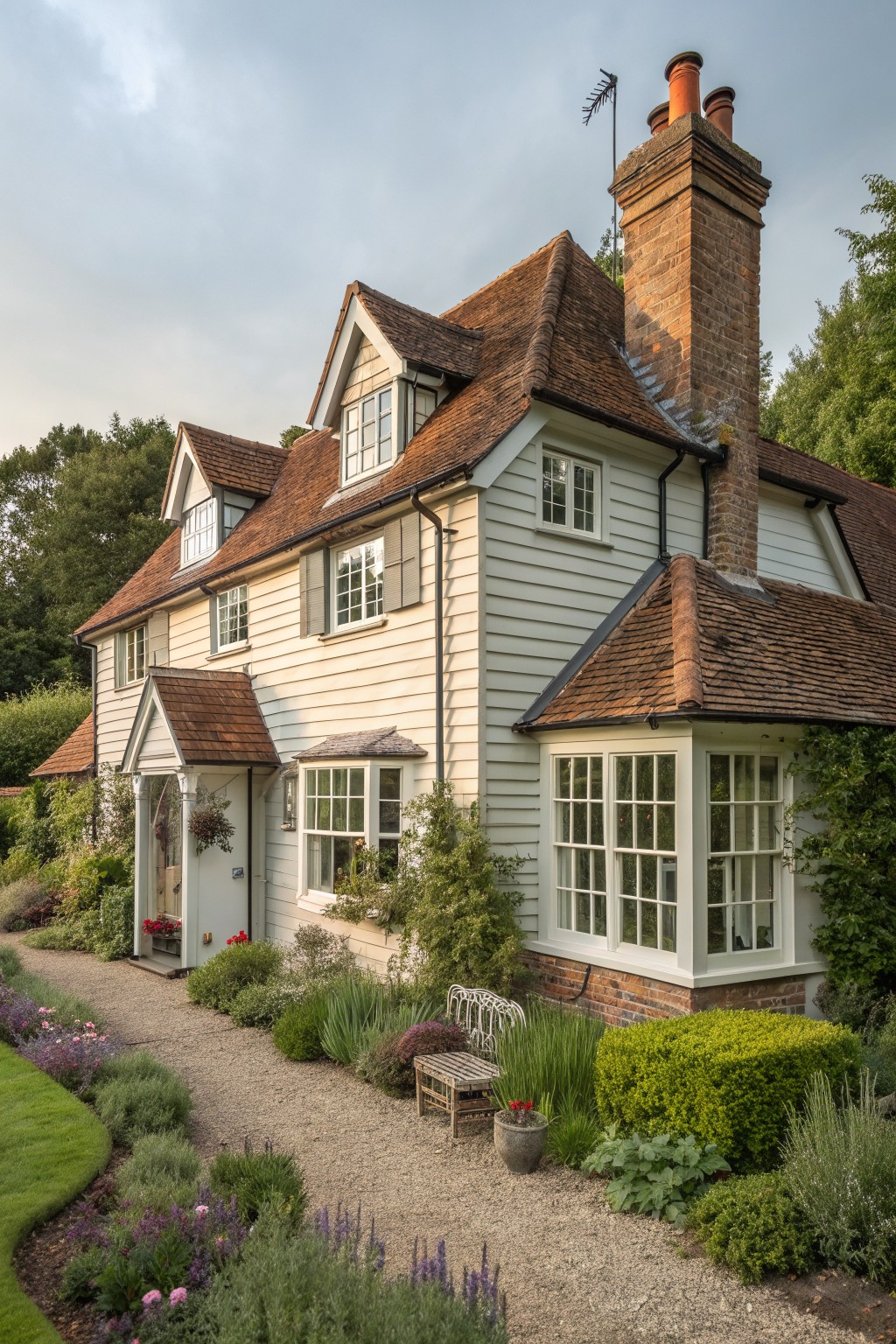
White siding paired with a low brick base keeps the whole house looking bright without feeling stark. The contrast gives the steep roof and multiple gables room to stand out while the pale walls reflect light back into the garden.
This approach works best on smaller rural homes that already have some planting around the foundation. Keep the trim simple and let the gravel path and flower beds do the rest of the work.
Soft Green Paint On Cottage Exteriors
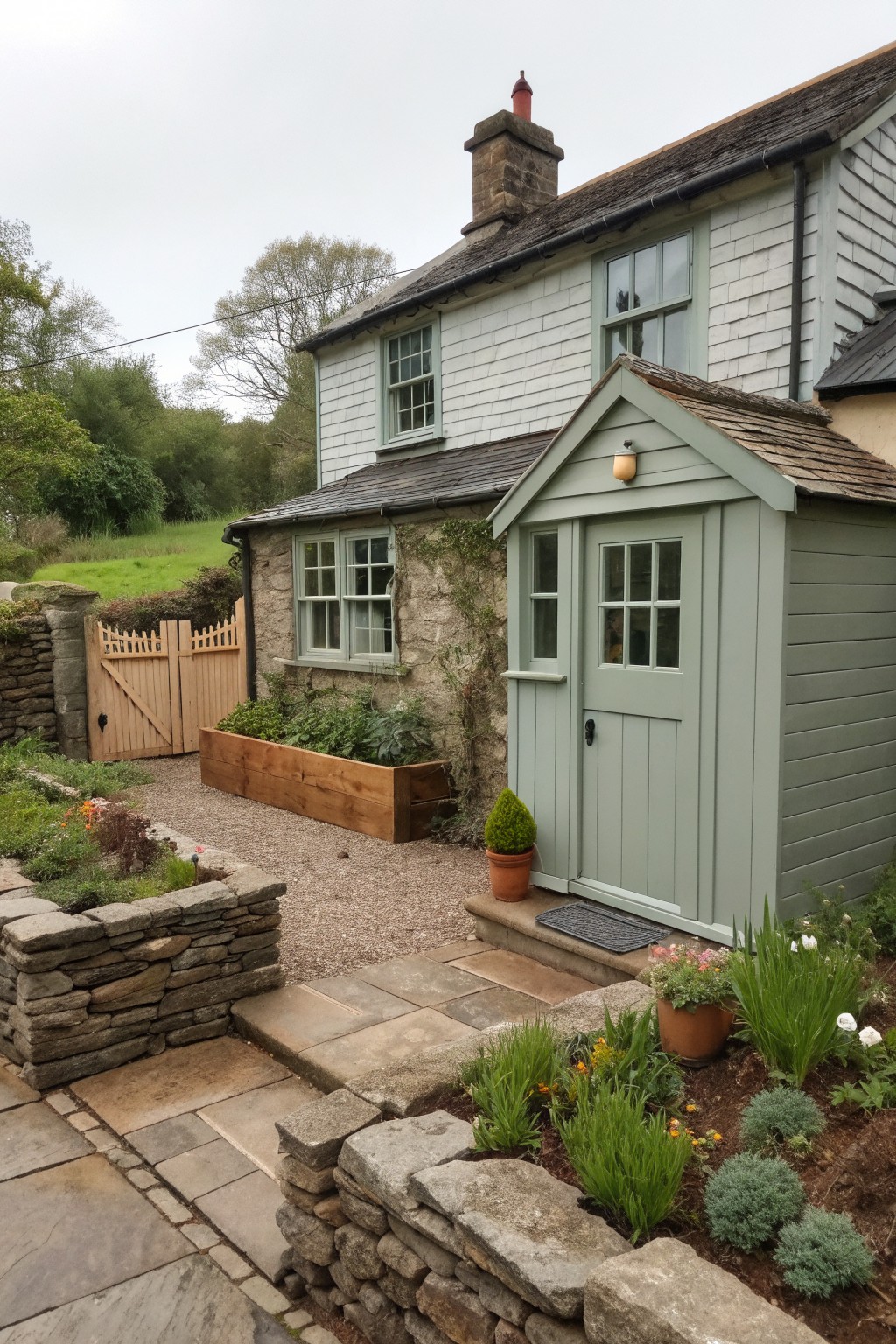
A soft sage green works well on older cottage exteriors because it tones down the white siding and helps the house sit comfortably with the surrounding stone and plants. It keeps the look calm rather than stark, especially when the same green is used on doors, trim, and small additions.
This color choice suits rural homes with mixed materials like stone bases or wood details. It reads best on trim and secondary structures rather than the whole house, and it pairs naturally with gravel paths and simple garden beds without needing extra contrast.
String Lights Along the Porch
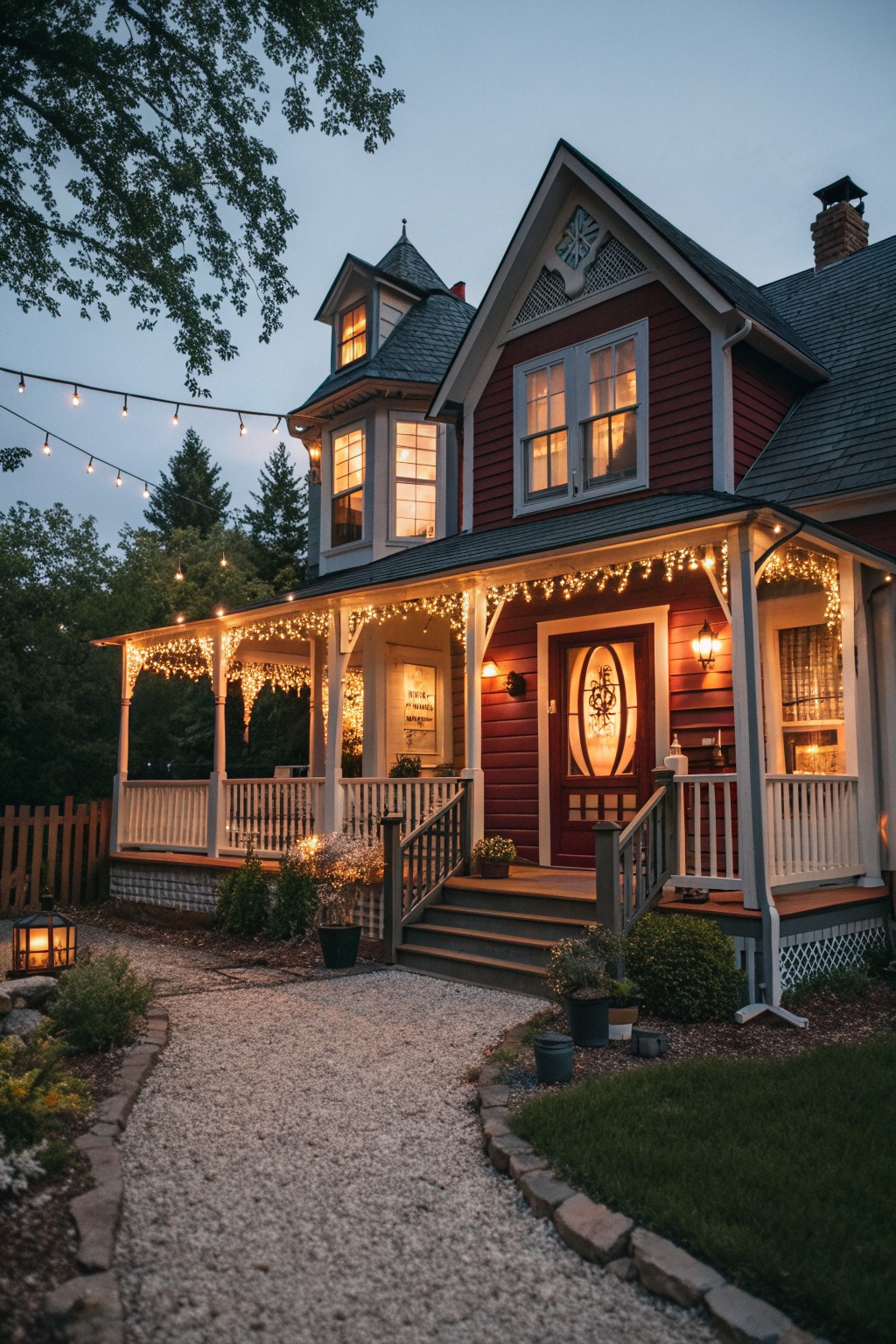
String lights give a Victorian farmhouse a gentle evening glow without much effort. They follow the porch roof and railings, softening the lines of the house while keeping the overall look simple and warm.
This works best on homes with a decent sized porch in a quiet setting. Hang them in loose rows with warm bulbs so the light stays even and welcoming rather than harsh.
Bold Front Door Color
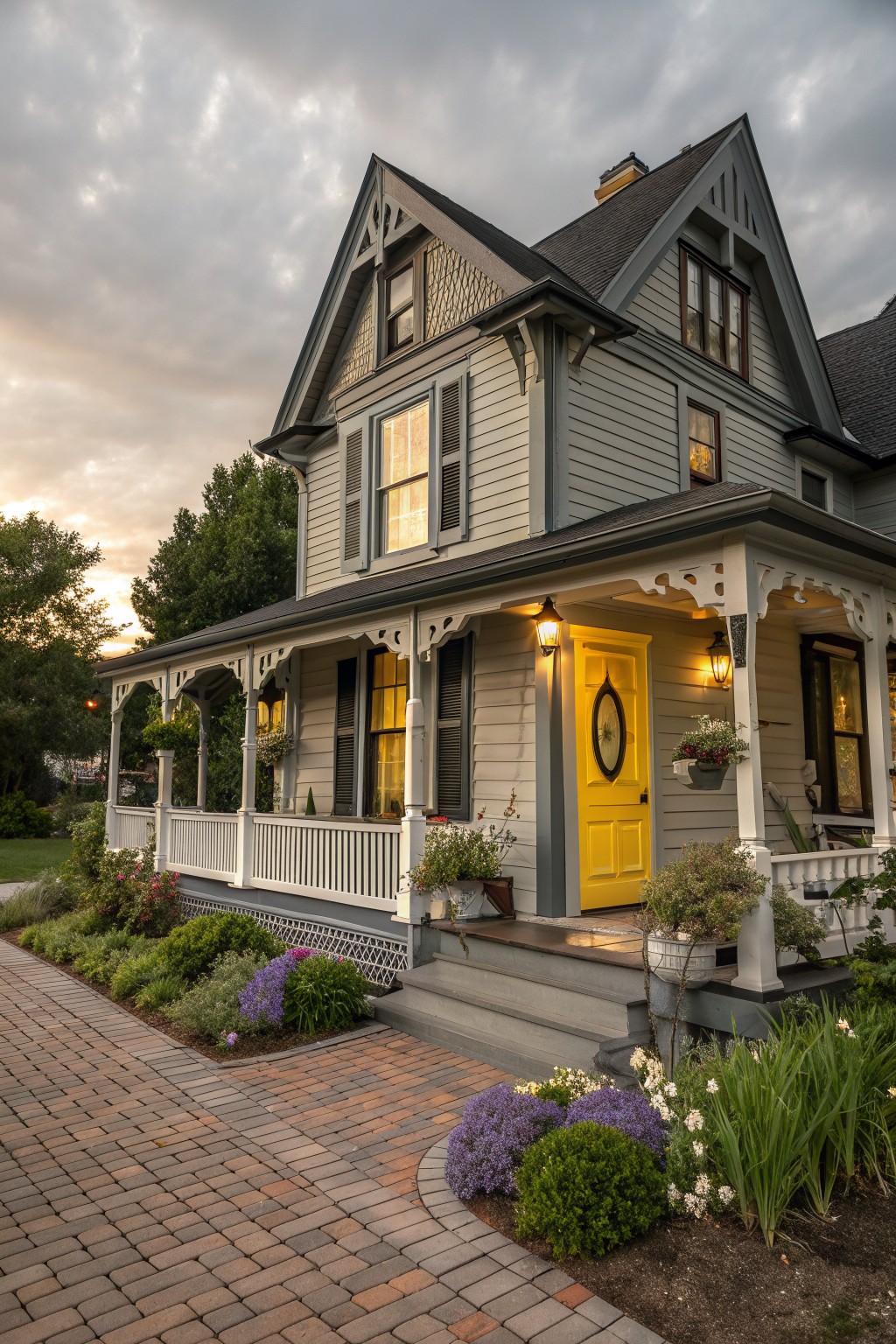
A bright front door stands out on a gray Victorian farmhouse and gives the whole exterior a clear focal point. The yellow door here pulls attention straight to the entry and keeps the look simple while still feeling lively.
This approach works best on homes with fairly plain siding and trim. Pick a color that contrasts without clashing, and test a sample on the actual door before committing.
Arched Stone Entries for Cottage Homes
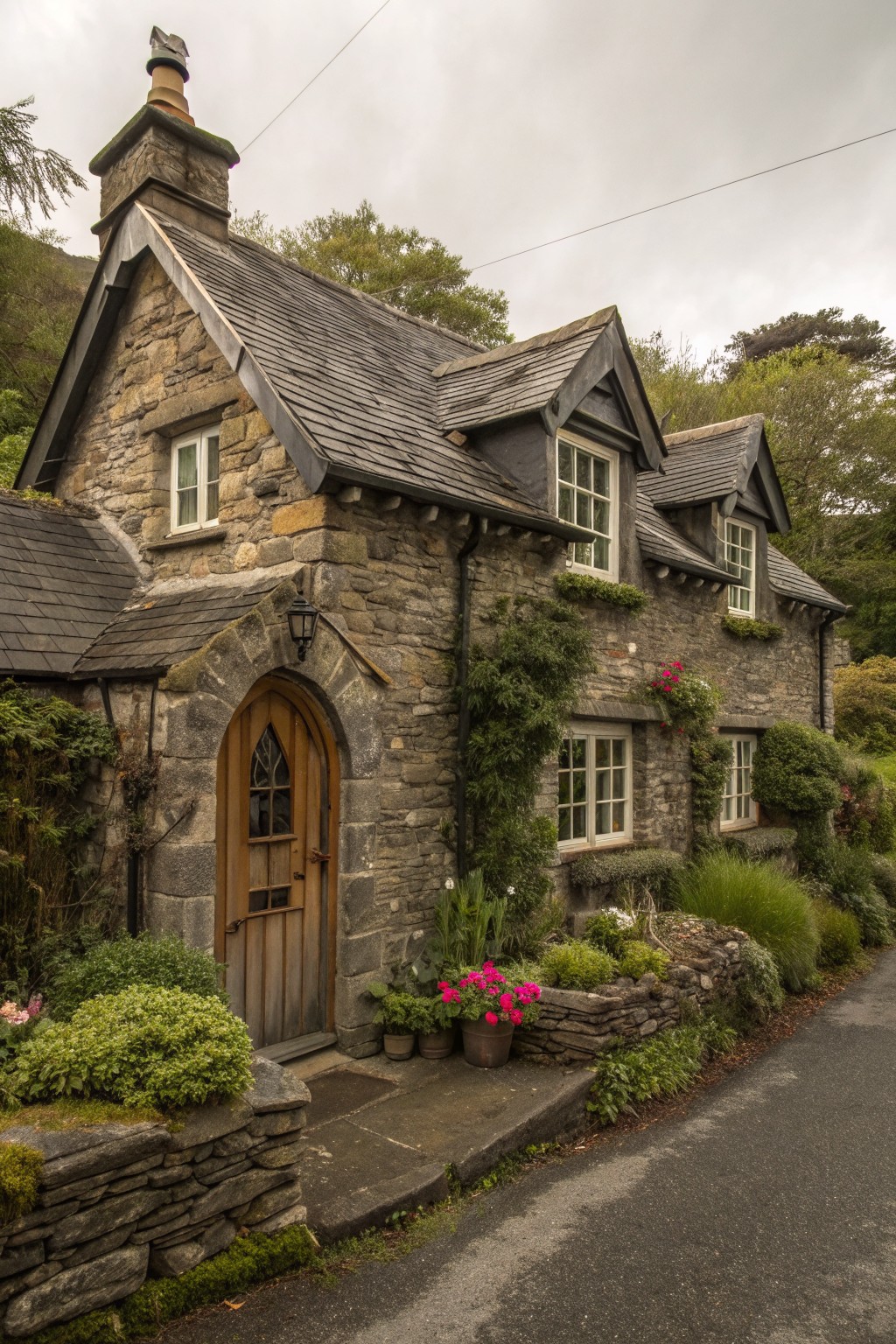
An arched entry built into stone gives a small cottage a settled, welcoming feel right away. The curve softens the heavy material while the wood door keeps things simple and practical.
This works well on rural homes that already use local stone or similar textures. Keep surrounding plantings low and let the doorway stand out on its own.
Rounded Towers Add Character to Cottage Exteriors
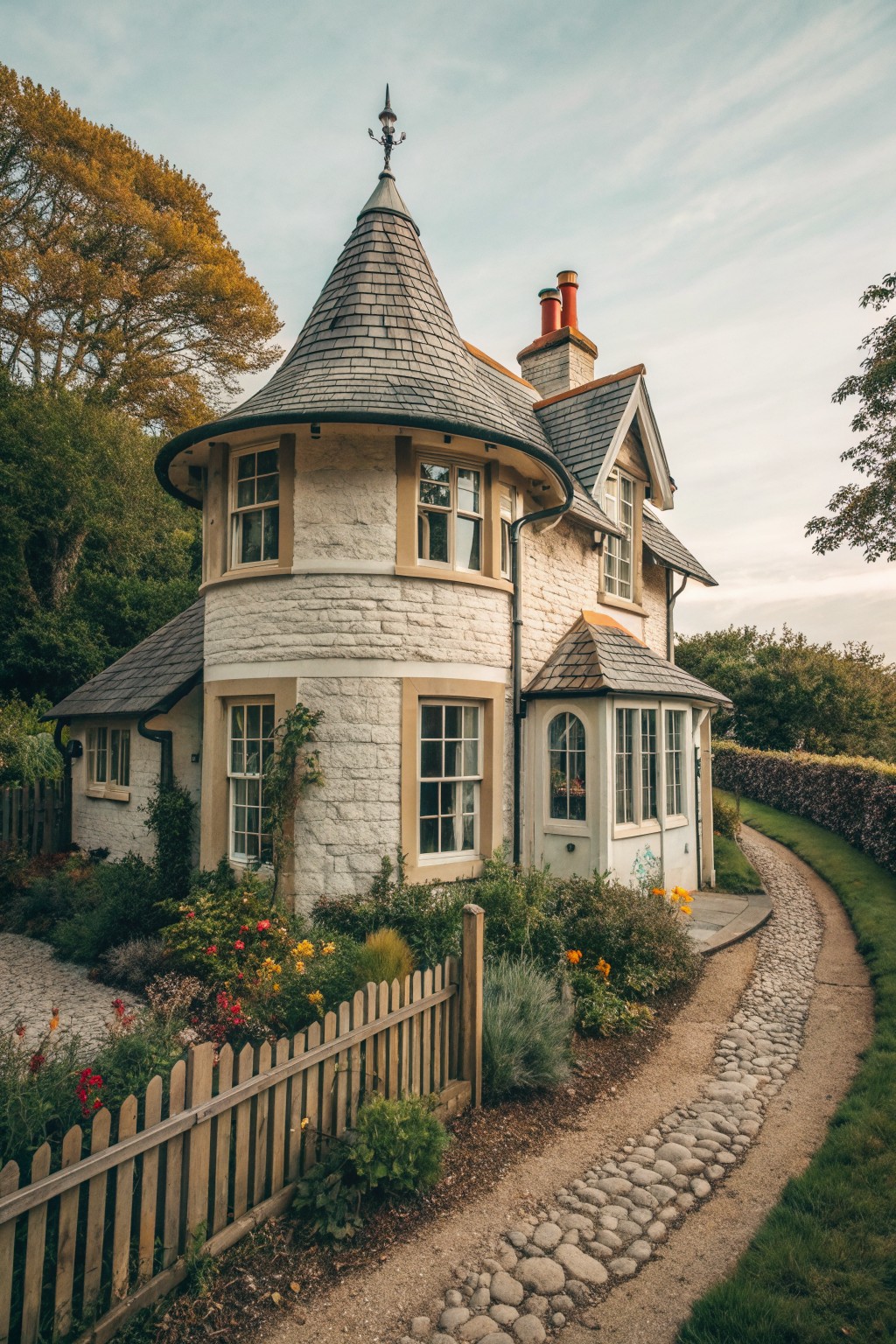
A rounded tower section gives a cottage exterior an instant lift in personality. The curve breaks up straight walls and creates a softer profile that feels more welcoming than a flat facade.
This works best on smaller homes where the tower can serve as the main focal point. Keep the rest of the materials simple, like stone or painted siding, so the shape stands out without competing elements.
Create a Small Courtyard Seating Spot
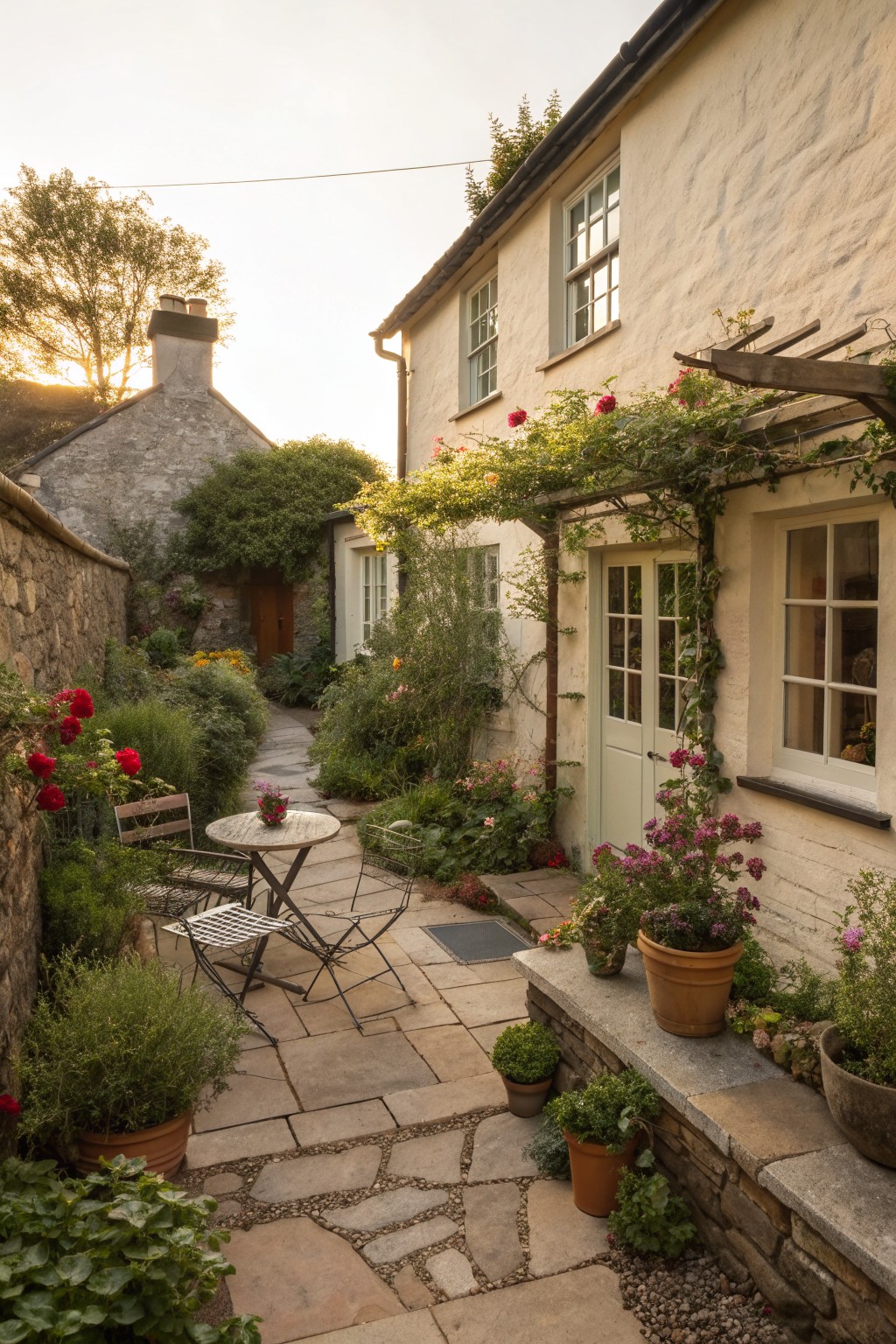
A simple paved area right outside the door can become a useful outdoor room when you add just a table and chairs. The pots and climbing plants around the edges keep the space feeling enclosed without any heavy construction.
This setup works best on cottages or older homes where the side or back door opens onto a narrow strip of paving. Use lightweight furniture that can be moved around, and let the pots handle most of the decoration. It suits homes that lack a large garden but still want a place to sit outside.
Dark Doors on Light Cottage Walls
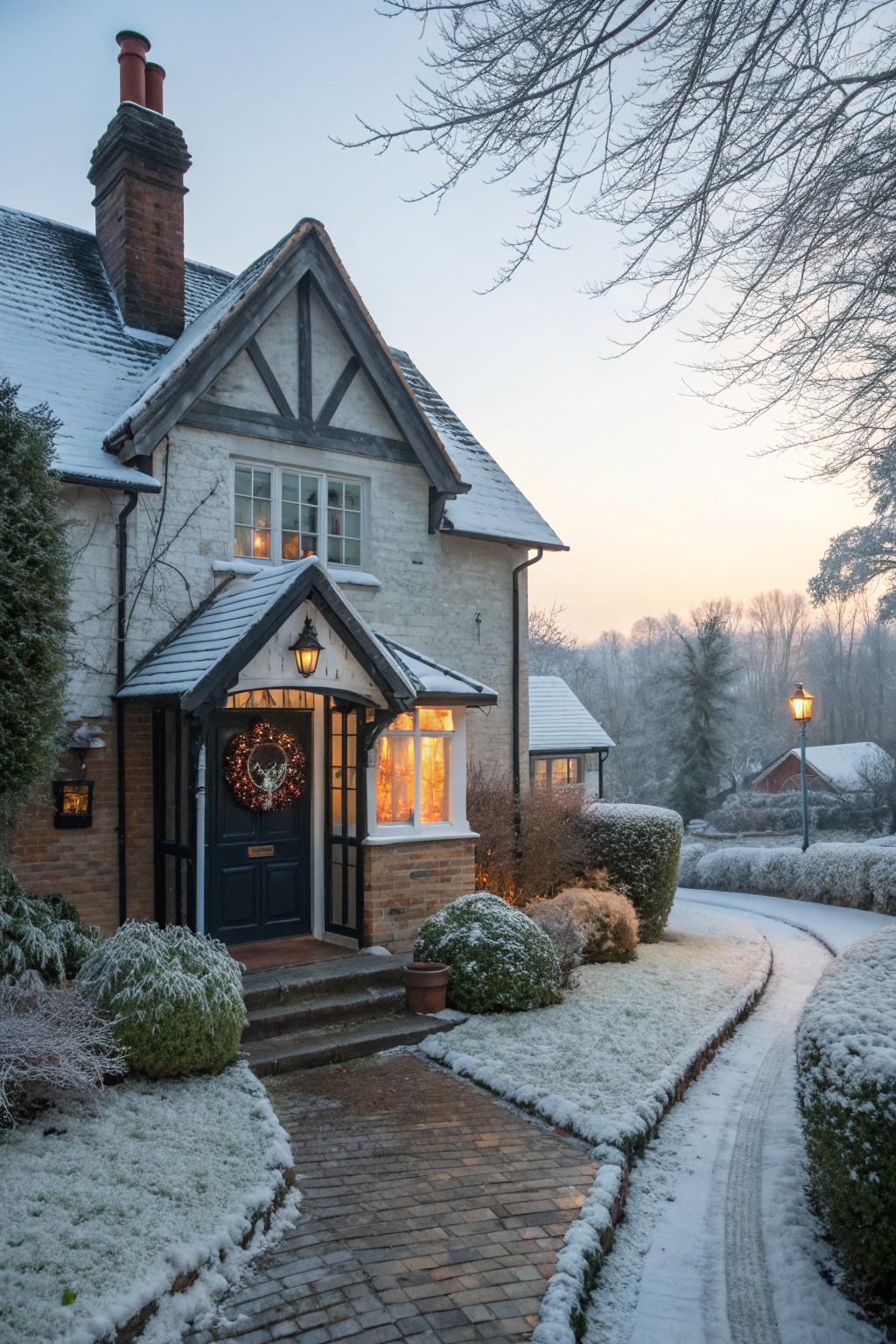
A dark front door gives a cottage a clear focal point without any extra trim or detail. It stands out against the light plaster and brick, and the small gabled porch above it keeps the look simple while still feeling finished.
This works best on homes with mostly pale siding or stucco. Keep the door color deep and matte, add a single light fixture, and let the contrast do the rest. Avoid busy hardware or multiple colors around the opening.
Adding a Porch to Enhance Cottage Style
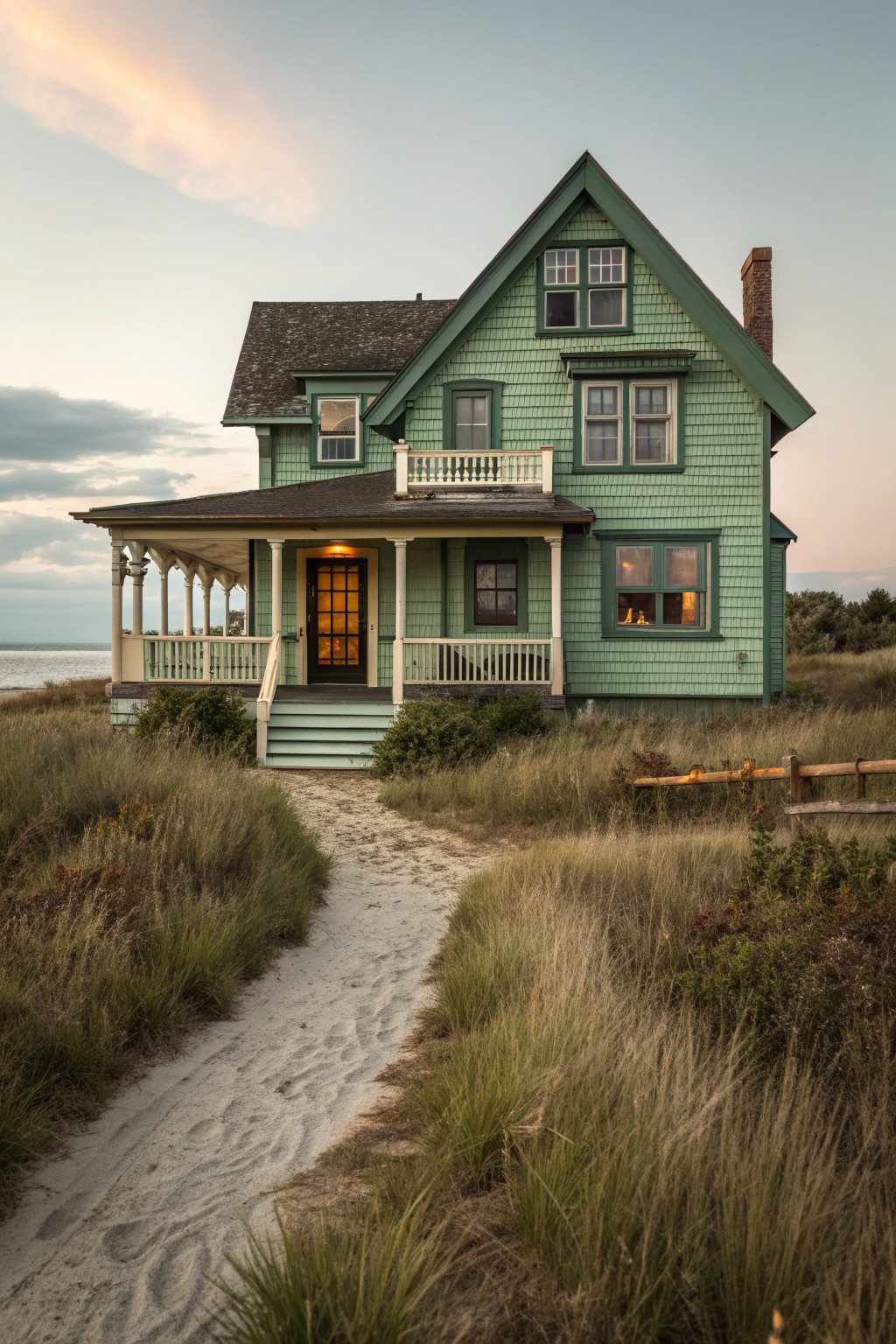
A covered porch with simple columns and white railings can soften the front of a house and make it feel more approachable. This works especially well on older farmhouses where the entry needs a bit of extra presence without adding much bulk.
It suits rural settings where people arrive by foot or along a path, and it gives a place to add lighting that stays on at night. Just keep the trim light and the structure open so it does not block windows or make the house feel heavier.
Edge the Path with a Low Stone Wall
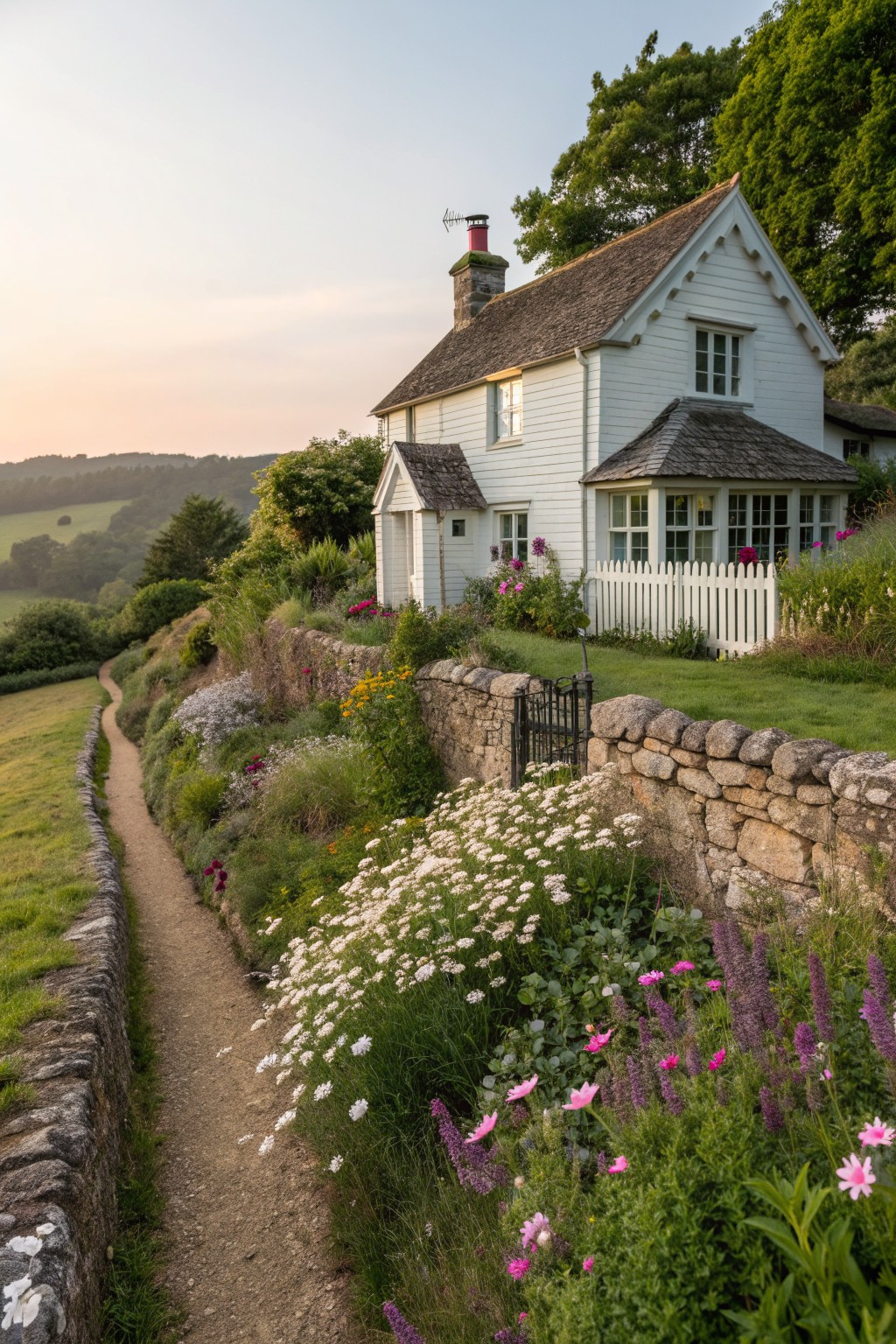
A low stone wall next to a garden path gives the approach to a cottage a settled, lived-in feel. It holds the flowers in place without cutting off the view of the house or making the space feel closed in.
This works best on homes with a bit of slope or where the garden sits right beside the walkway. Let the plants spill over the top a little so the wall looks like it has always been there.
Gingerbread Trim for Cottage Charm
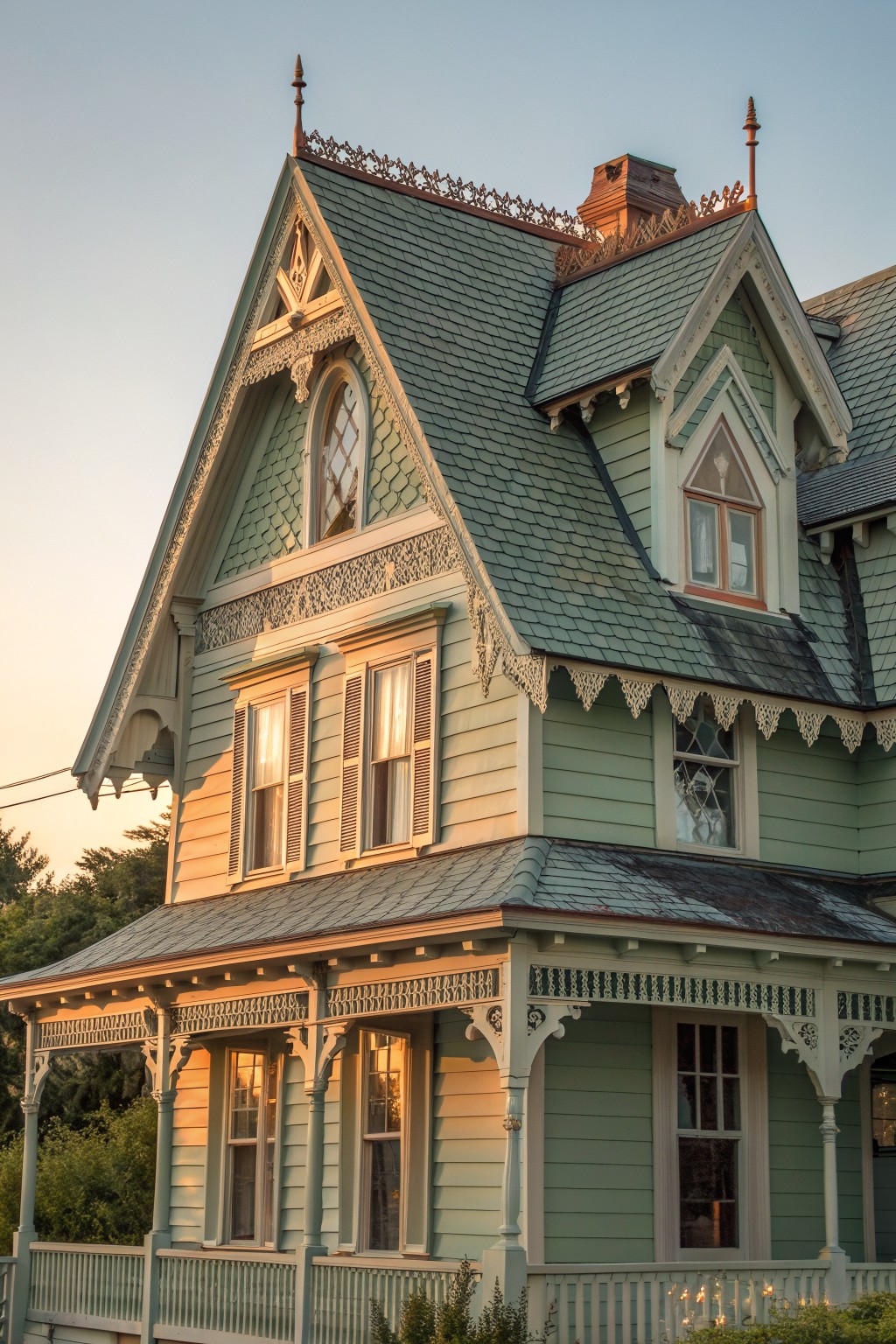
Many Victorian farmhouses rely on delicate wood trim along the rooflines and gables to give the exterior its romantic feel. The trim breaks up the simple siding and adds visual interest without needing bold colors or extra materials.
This approach works well on homes with steep pitches where the details can catch light throughout the day. Use it sparingly on the main gables and porch edges so the house still reads as a simple farmhouse rather than an overly busy structure.
Add a Traditional Lamppost by the Driveway
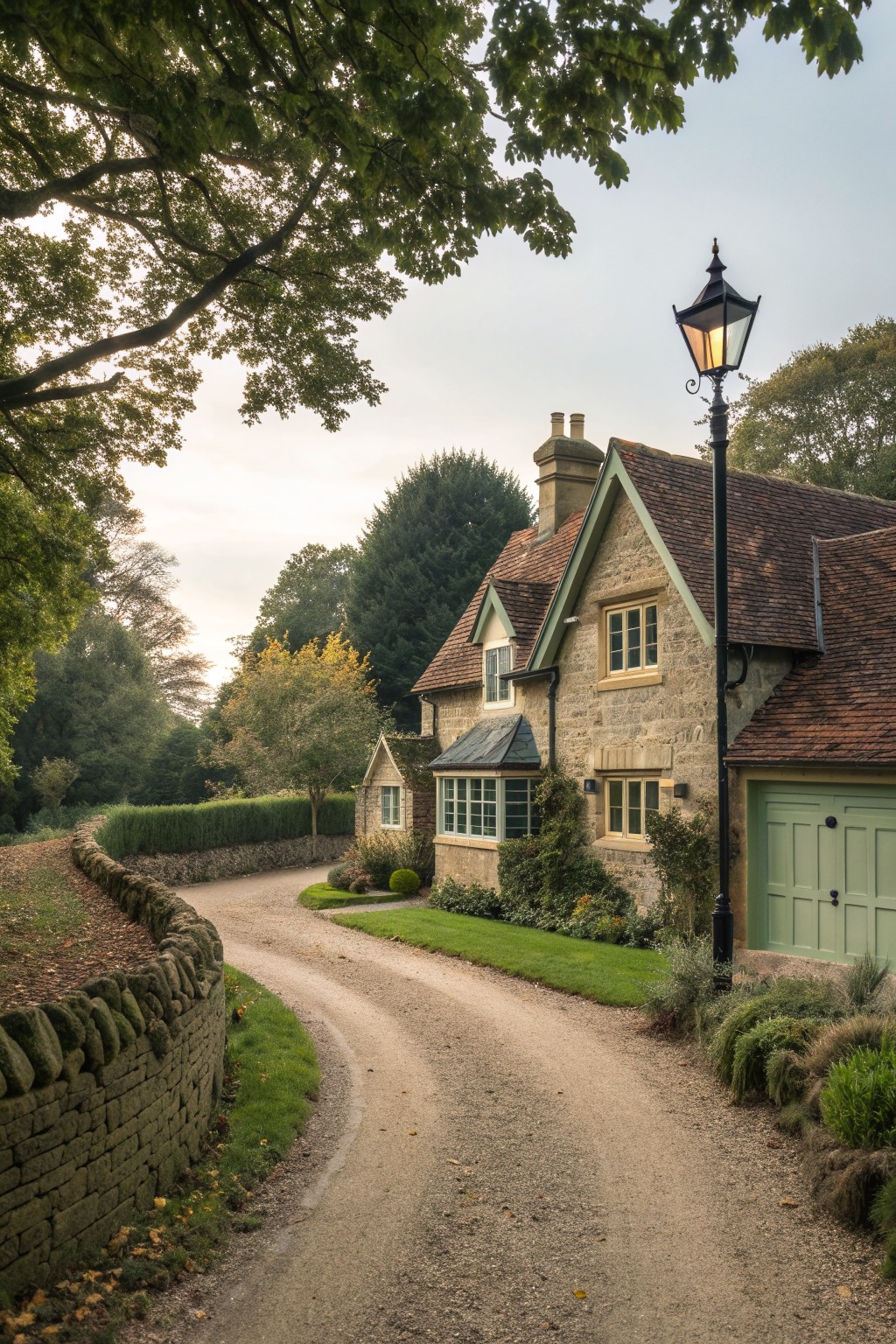
A lamppost placed along the approach gives the front of a cottage both practical light and a settled, old-fashioned feel. It marks the path clearly at night and helps the house look more complete during the day.
This works best on homes with gravel drives or gentle curves that lead up to the door. Keep the post simple in style and dark in finish so it blends with stone walls and greenery instead of competing with them.
Outdoor Table Right by the Door
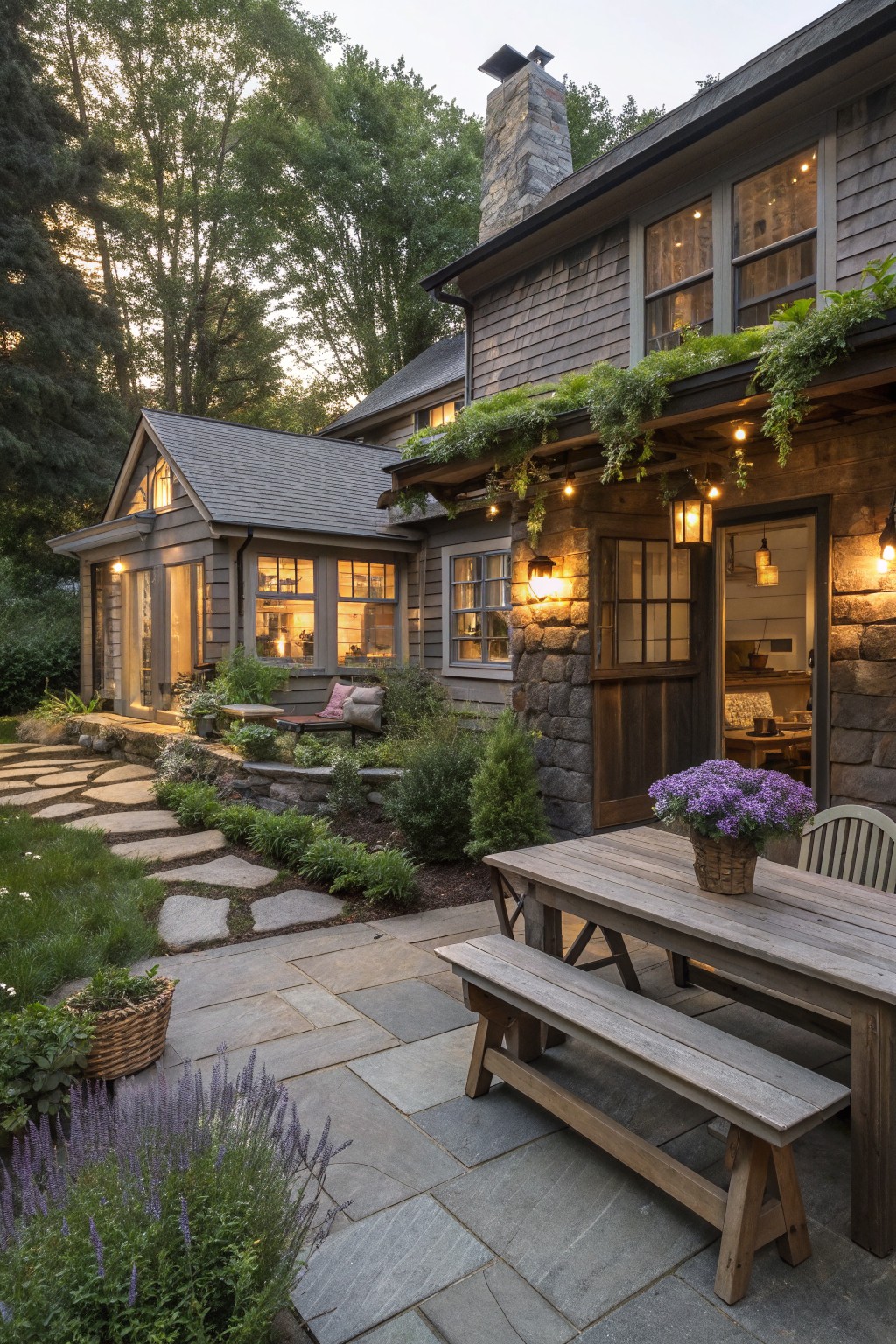
A plain wooden table placed close to the house entrance makes it easy to step outside for meals without planning ahead. The setup turns a small patio into a daily spot rather than something used only on special occasions.
This works well on farmhouses or cottages that already have a bit of level ground near the door. A bench on each side keeps the look simple and lets people sit without needing extra chairs. Just be sure the table stays out of the main walkway.
Add A Greenhouse Extension
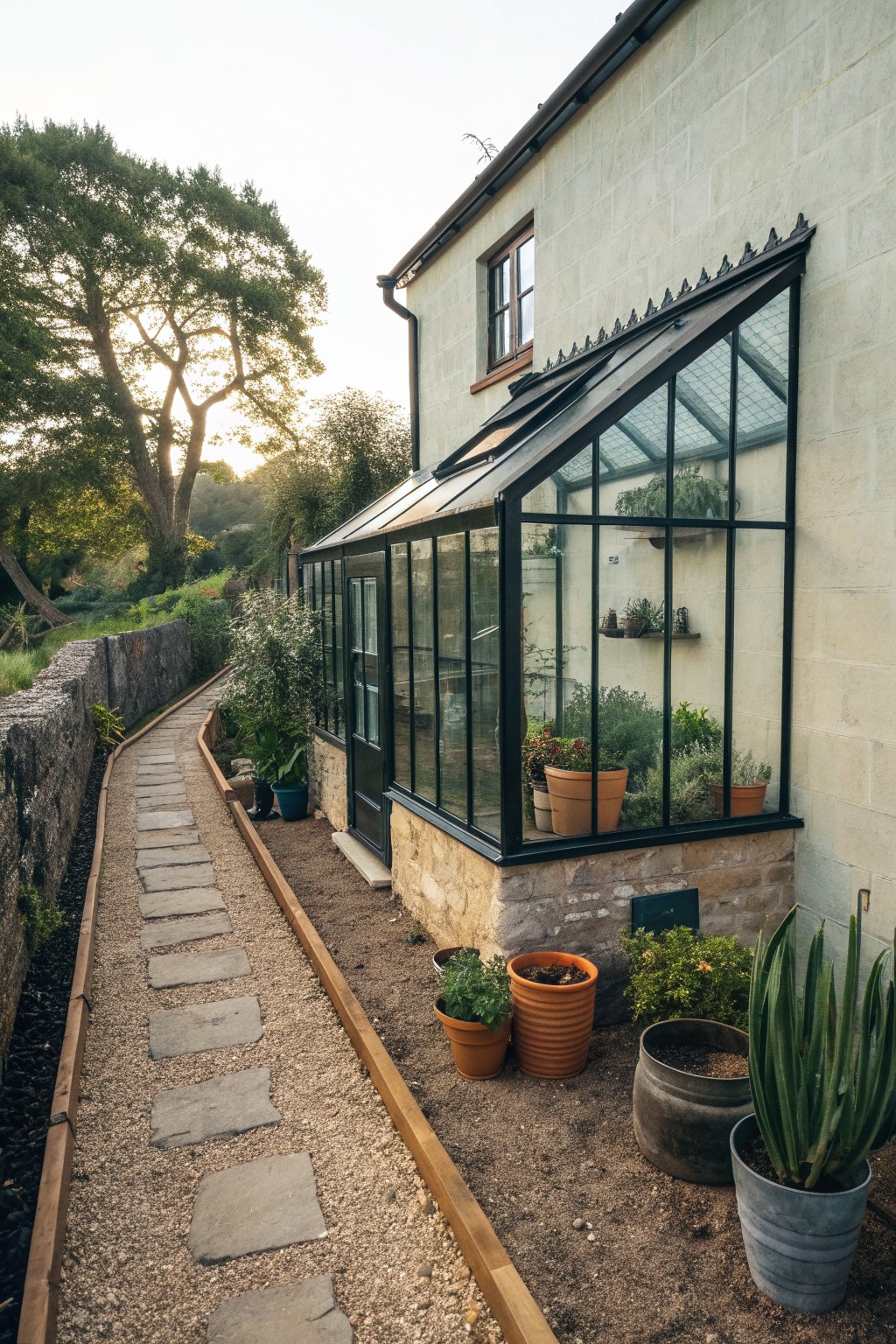
Many farmhouses and cottages look more complete once a greenhouse gets added right onto the side. It turns an empty wall into a place for plants while keeping everything connected to the main house.
This works best on stone or brick exteriors that already have some age to them. Set the greenhouse on a sunny wall and keep the frame dark so it does not fight the look of the house.
Stone Arch Gateways for Cottage Entries
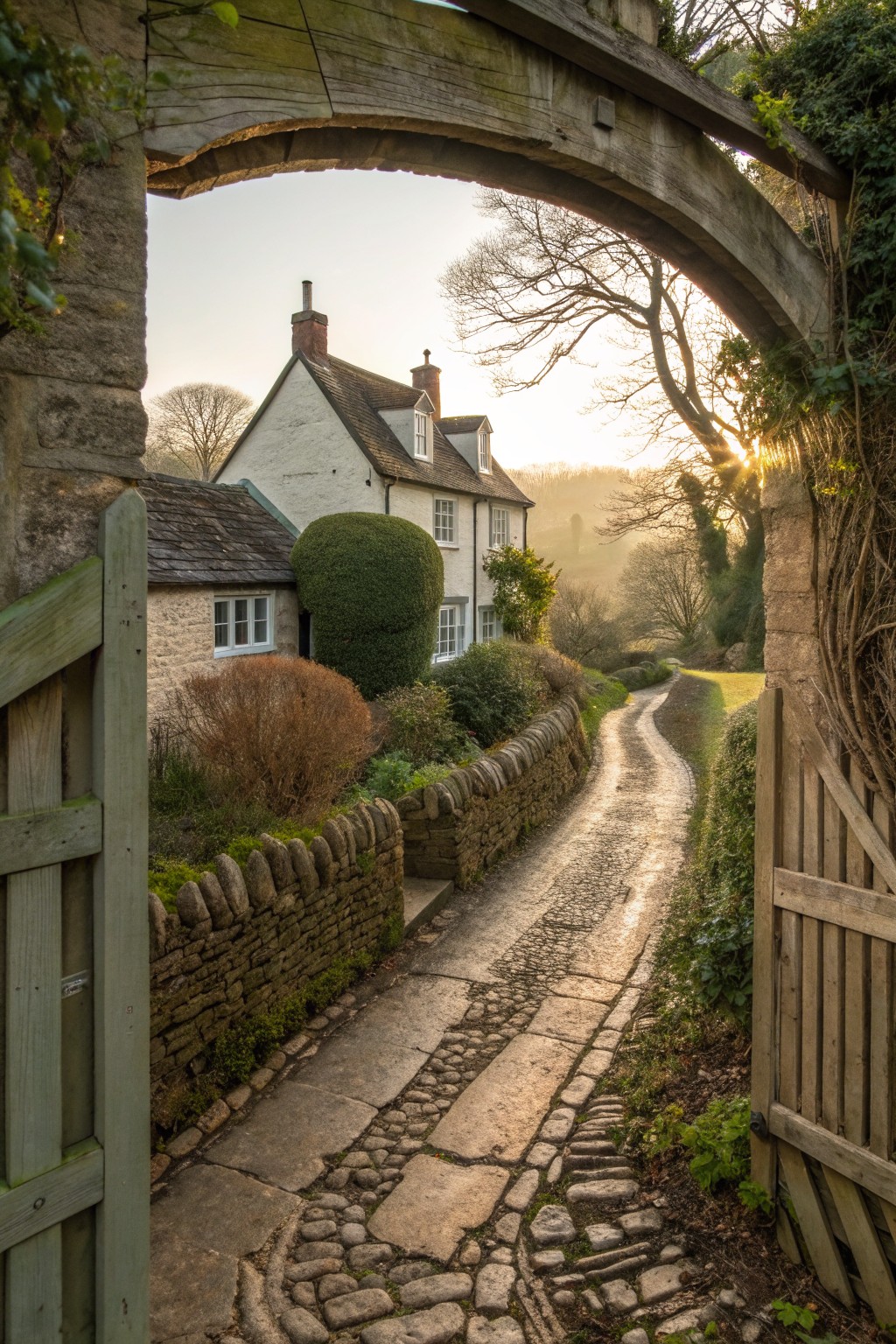
A stone arch with a wooden gate gives the front approach a clear sense of arrival. It frames the house and path without adding much extra detail, which keeps the overall look simple and fitting for older cottages.
Use this at the edge of the property where the driveway or garden path begins. It works especially well on rural homes that already have some stonework, and it helps separate the public road from the more private garden area ahead.
White Picket Fences Frame Cottage Entries
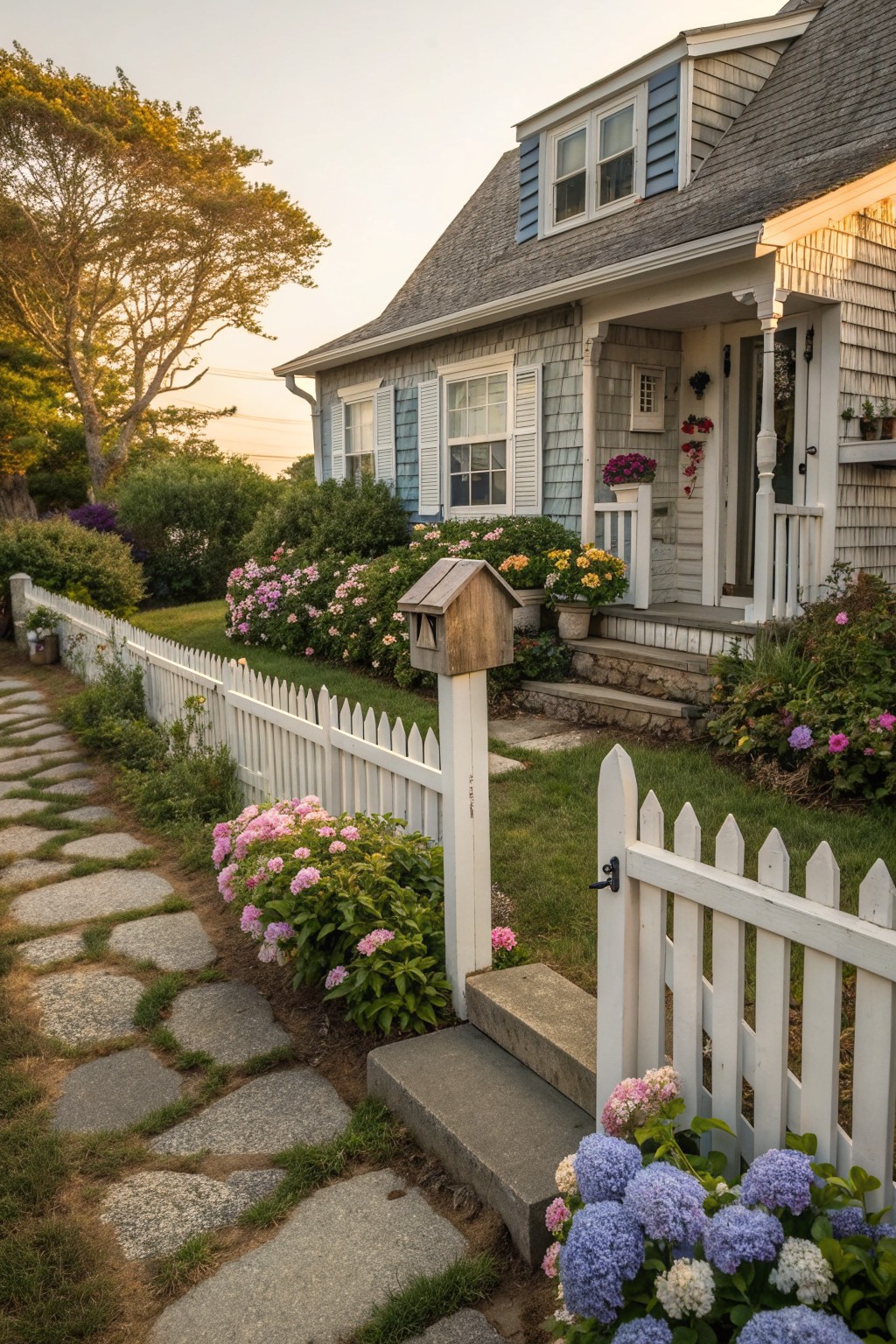
A white picket fence paired with a stone path gives the front of a cottage a clear sense of arrival. It marks the boundary without closing off the yard and makes the walk to the door feel intentional.
This setup works best on smaller lots or homes with simple facades where you want a bit of structure. Keep the fence low, paint it white to match trim, and let flowers spill along the edge so the whole approach stays soft.
Fire Pit Seating for Evening Use
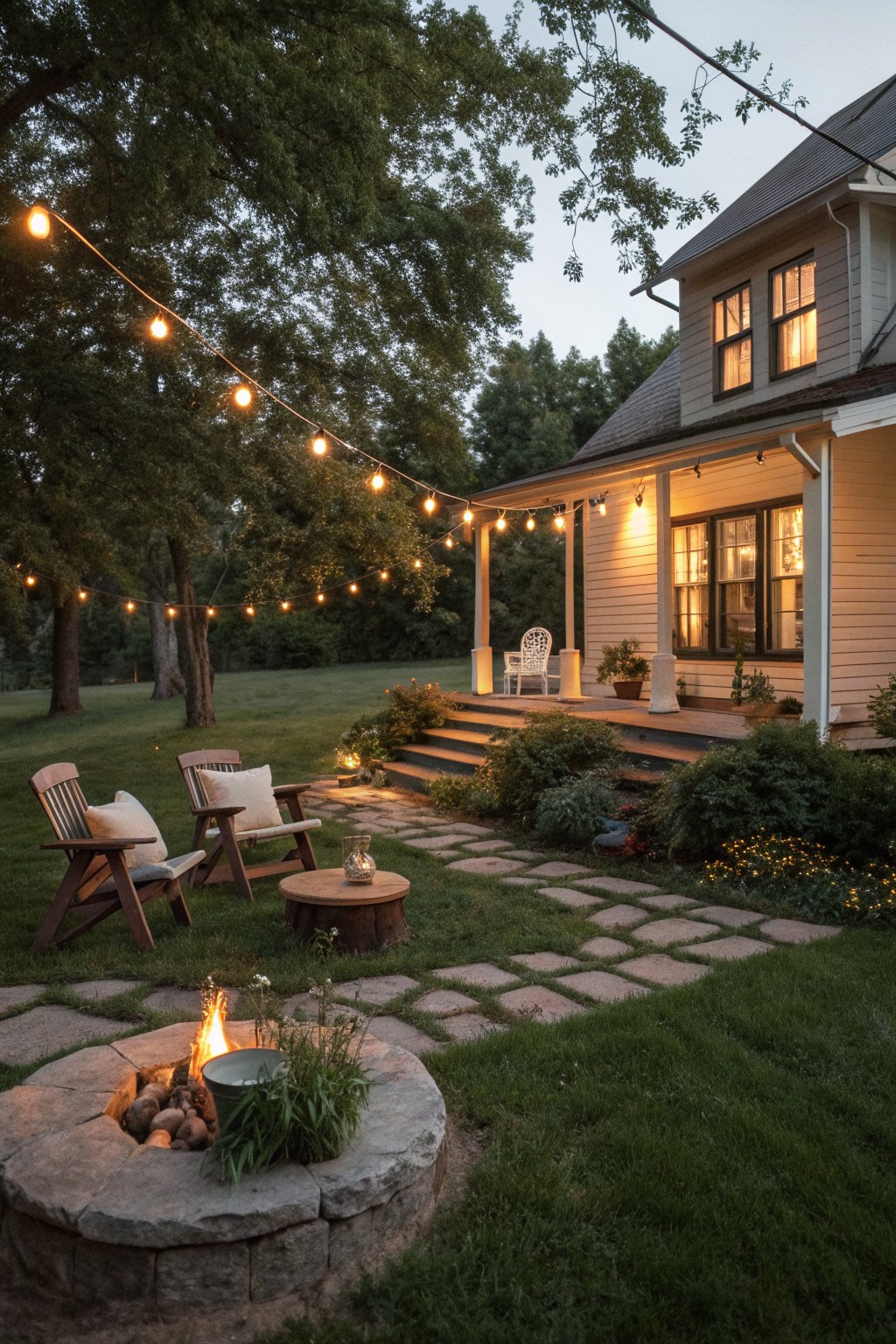
A simple fire pit with a pair of chairs nearby gives people a reason to stay outside once the sun drops. It turns an open patch of yard into a spot that feels purposeful rather than leftover.
This works best on homes with some lawn space and a clear view of the back or side of the house. Keep the seating low and sturdy, and run a string of lights overhead so the area stays comfortable without needing much else.
Soft Door Colors for Stone Exteriors
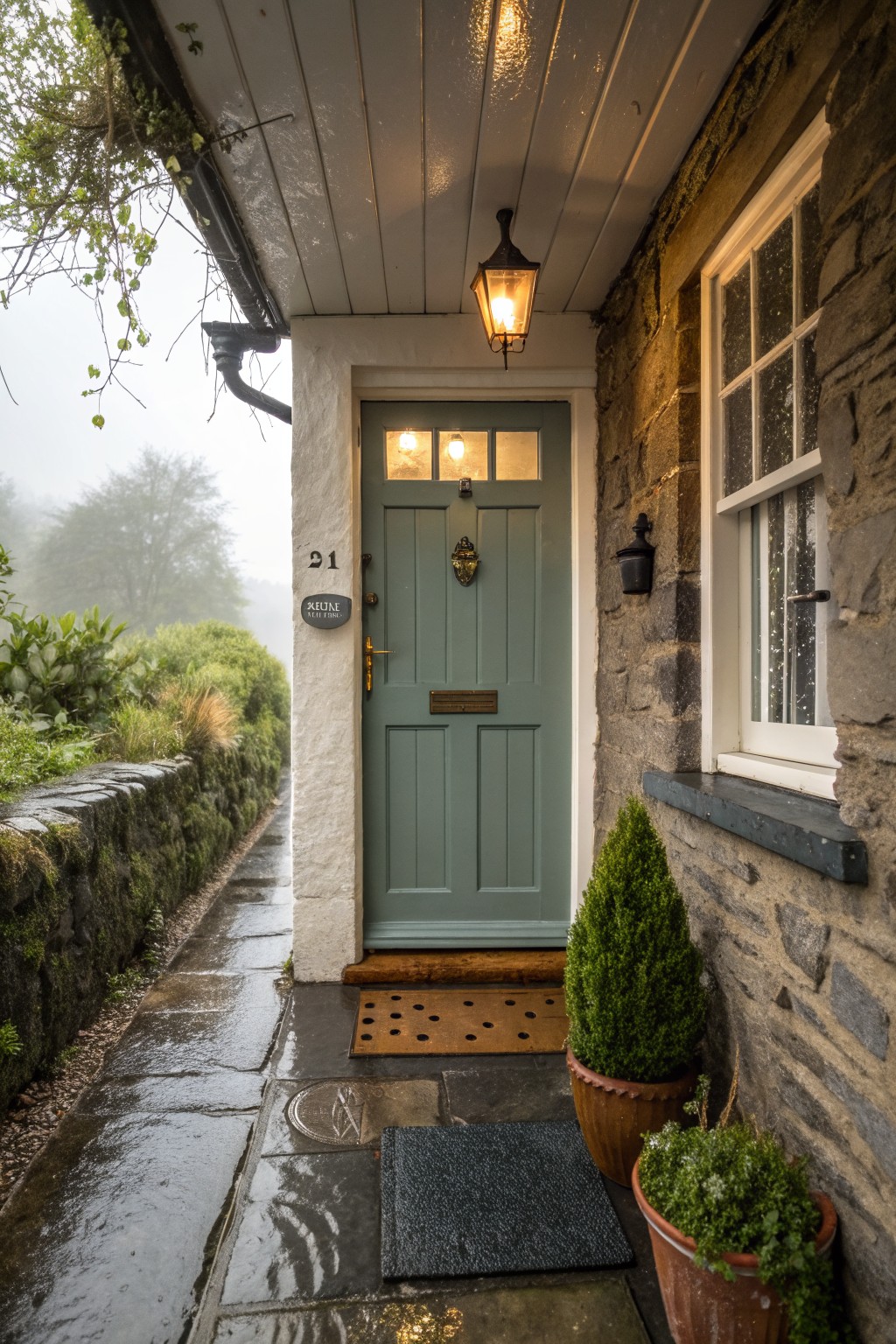
Painting the front door a soft shade like sage green gives a stone cottage a friendly look without trying too hard. The color stands out nicely against the rough texture of the walls and makes the entrance feel more inviting.
This works especially well on older rural homes where the stone already provides a lot of character. Stick to muted tones that echo the surrounding greenery and avoid anything too bright that might clash with the natural materials.
Entry Lighting for Cottage Homes
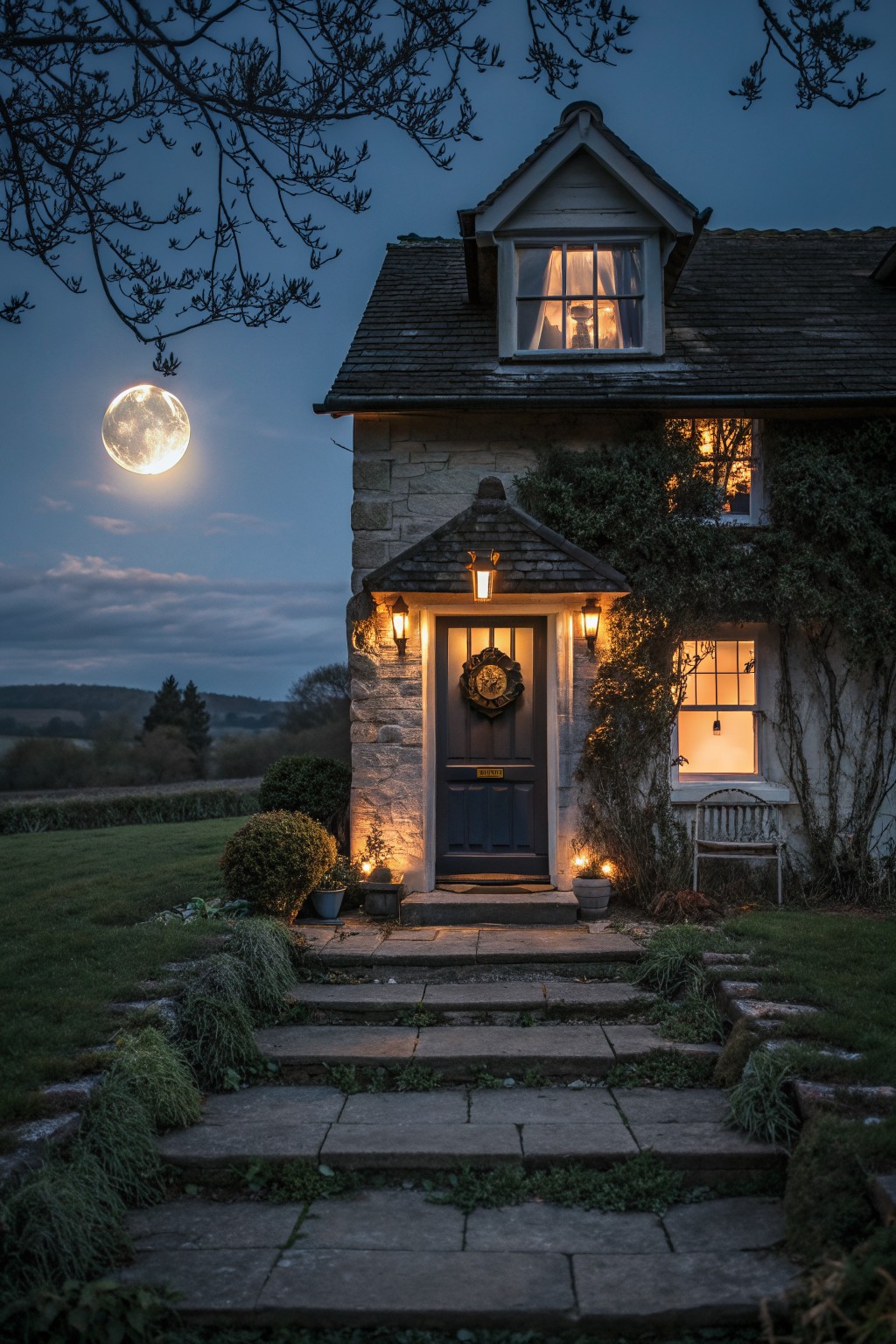
Many older cottages look better with a few well placed lights around the front door. The soft glow brings out the stonework and makes the entrance feel settled and easy to find at night.
This approach suits rural homes that already have simple trim and natural materials. Keep the fixtures small, use warm bulbs, and avoid over lighting the whole facade so the effect stays quiet and welcoming.
Climbing Roses on Stone Walls
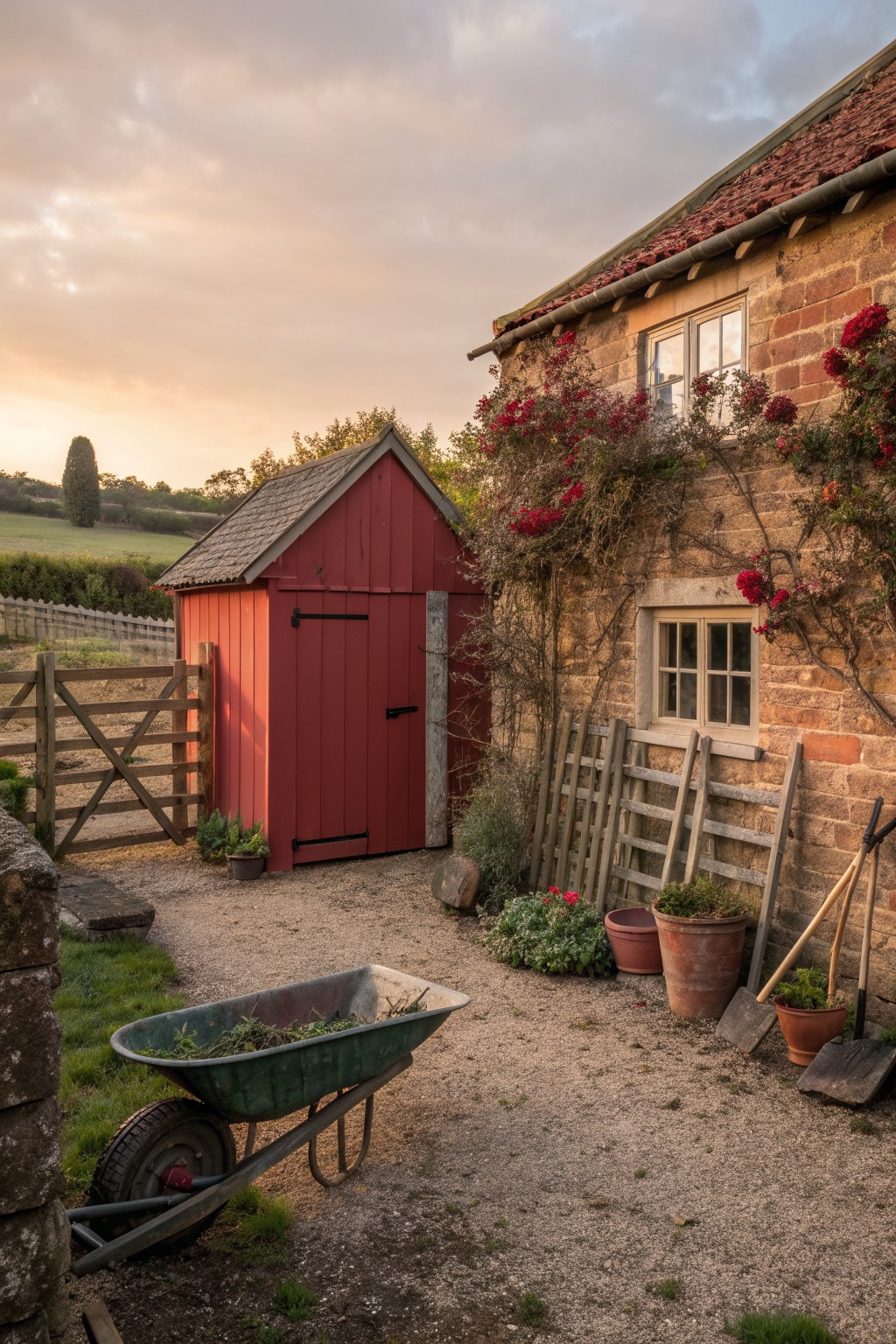
Climbing roses soften the look of stone exteriors in a simple way. They bring color and texture that makes an older farmhouse feel more welcoming without changing the main structure.
Plant them where they can reach windows or corners and let them grow at their own pace. This approach works best on rural homes with enough sun and a bit of wall space to spare.
Frame the Entry with Matching Lanterns
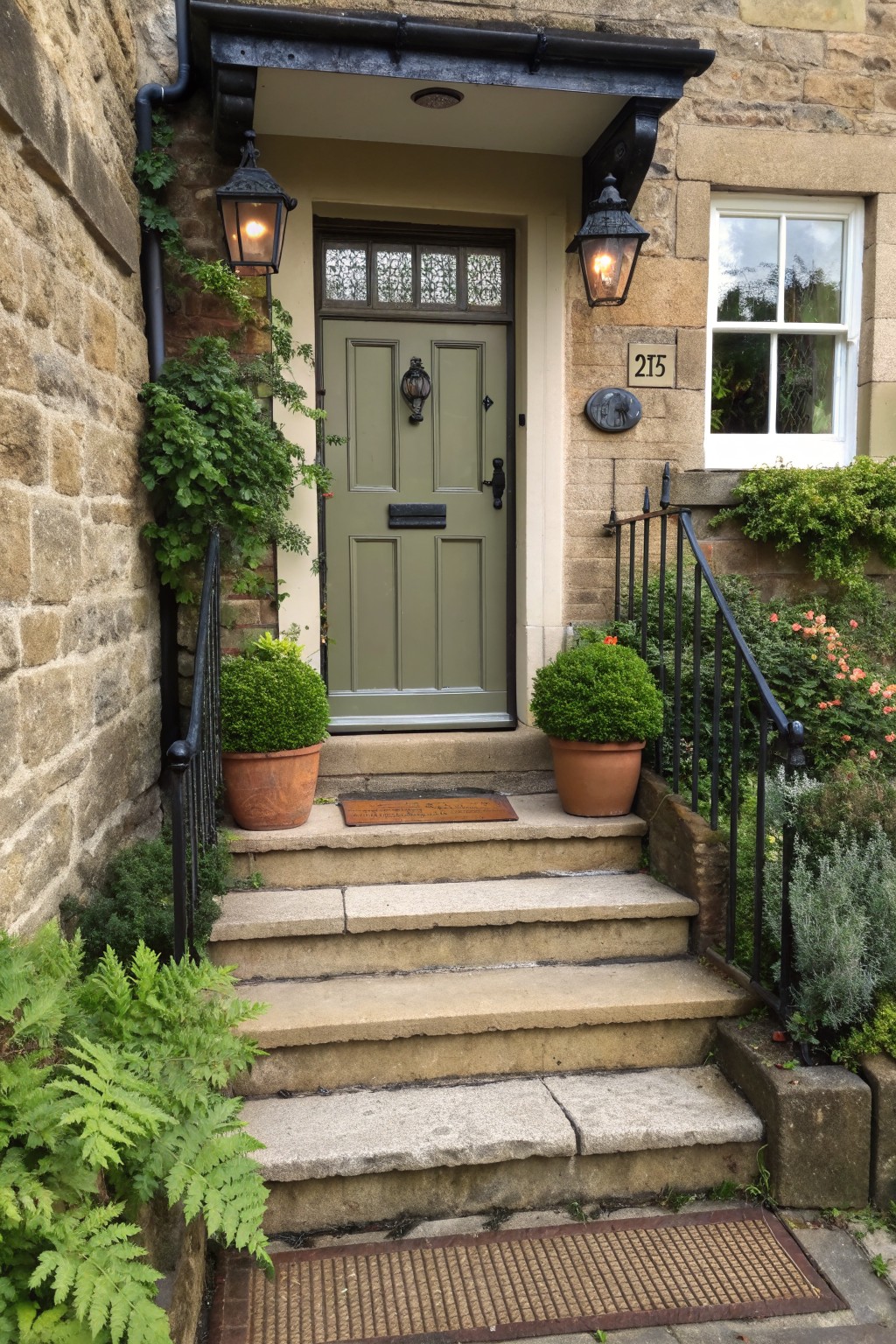
Placing a pair of lanterns on either side of the front door gives the entry a finished look that feels balanced and welcoming. The light they cast at night also makes the steps safer and draws attention to the door itself.
This works especially well on stone or brick cottages where the facade is already busy. Keep the lanterns the same color as the door hardware and add two matching pots on the top step so the whole setup feels intentional rather than scattered.
Frequently Asked Questions
Q: What siding works best if I want that Victorian cottage feel on my farmhouse? A: Go with wood or fiber cement planks in a soft white or cream tone. These materials take paint evenly and show off the trim details without looking too modern. Focus on vertical or horizontal boards that match the scale of your windows. Q: How can I add a welcoming porch without rebuilding the whole front? A: Start by extending a simple gable roof over the door and adding turned posts at the corners. A wooden bench and some climbing vines finish the romantic touch. Keep the floorboards painted to match the house body. Q: Do I need special windows to capture the quaint look? A: Divided light panes in wood frames make the biggest difference right away. Place them symmetrically around the door and on the upper story. This draws the eye upward and keeps the proportions feeling balanced.
