

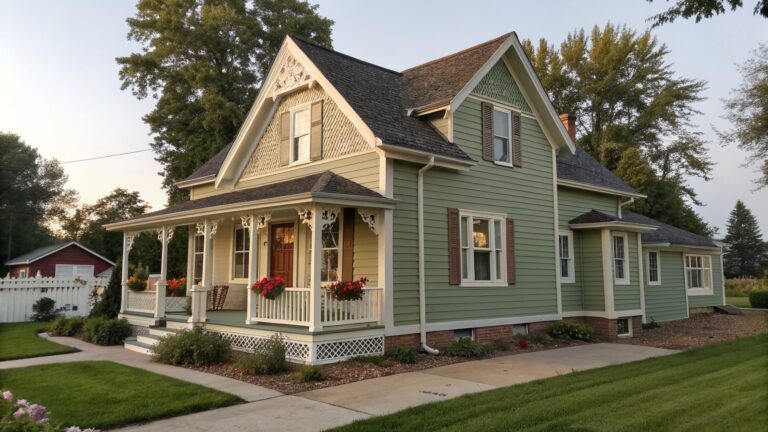
When I walk past compact Victorian farmhouses in older neighborhoods, the way the front facade sits on the lot often determines whether the house feels balanced or cramped from the street.
Paying attention to details like window placement and entry steps makes a real difference in how the home reads to anyone passing by.
Roof pitch choices can either add height or keep things low and snug.
That balance is tricky.
I usually test small adjustments to the trim or porch first because they show up quickly without major changes.
Add a Front Porch
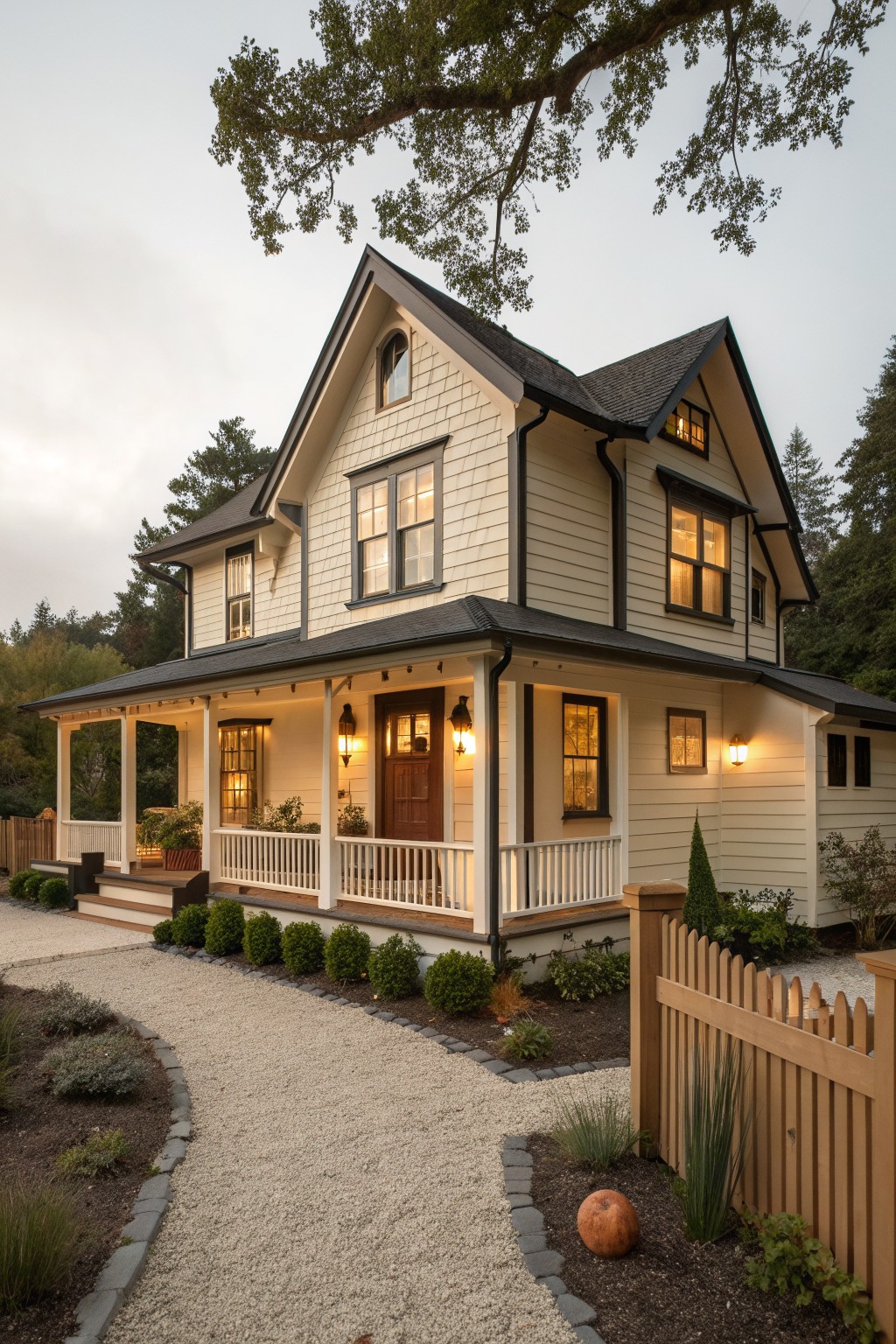
A front porch gives a small Victorian farmhouse a more balanced and welcoming look without making the house feel bigger than it is. It softens the vertical lines of the gables and creates a clear entry point that draws people in.
Keep the railing simple and white so it contrasts with the siding. Add a pair of lanterns by the door to light the space at night. This works best on compact historic homes where the porch can run the full width of the main facade.
Add a Bench to the Porch
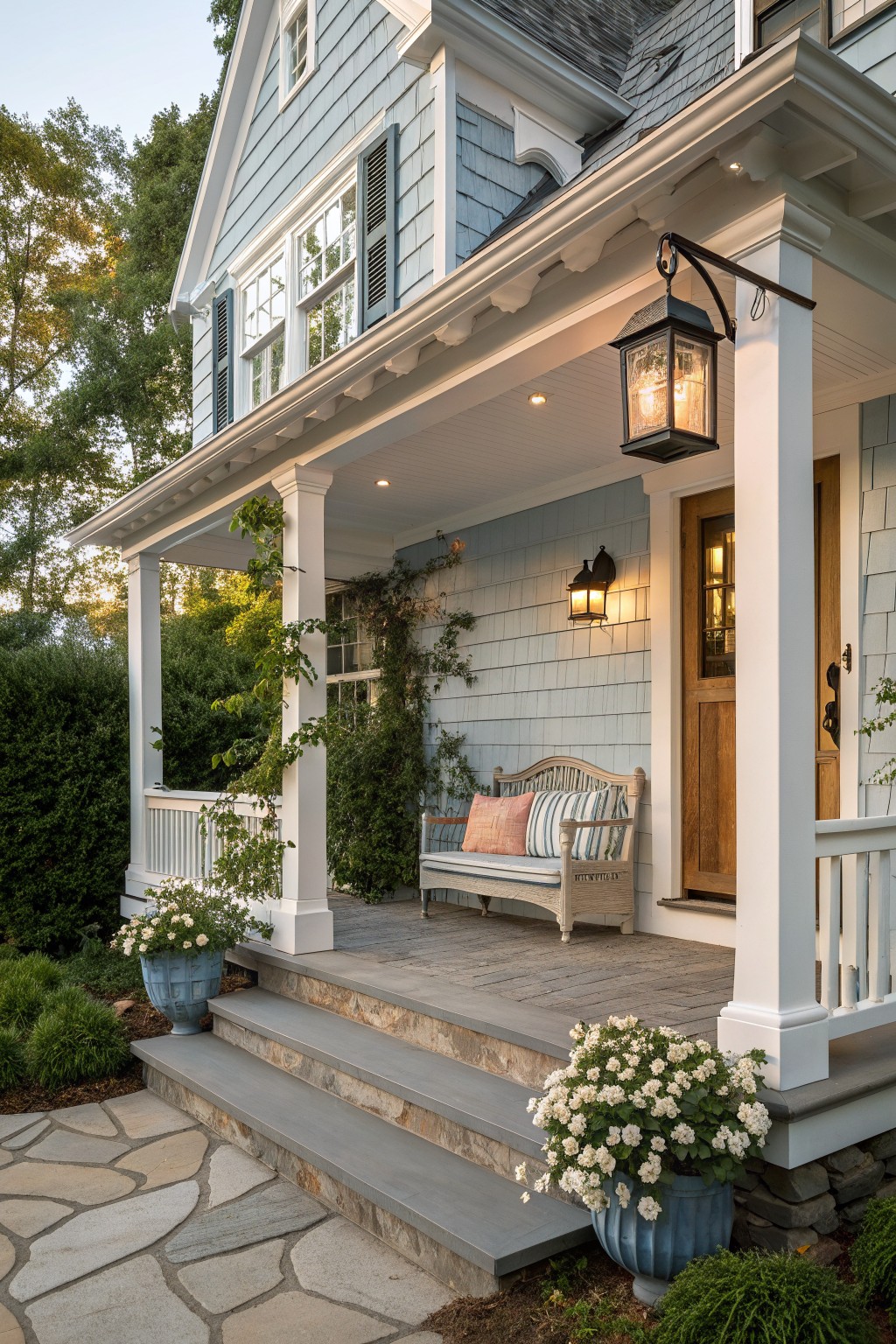
A bench gives a small porch a clear spot to pause without crowding the space. On compact Victorian farmhouses it adds a lived-in look that feels right for the style and keeps the entry from looking empty.
Set the bench against the house wall and add two pillows for comfort. Keep one or two pots of flowers at the base and you have a simple setup that works on most older homes with modest porches.
Curved Paths Add Welcome Without Extra Space
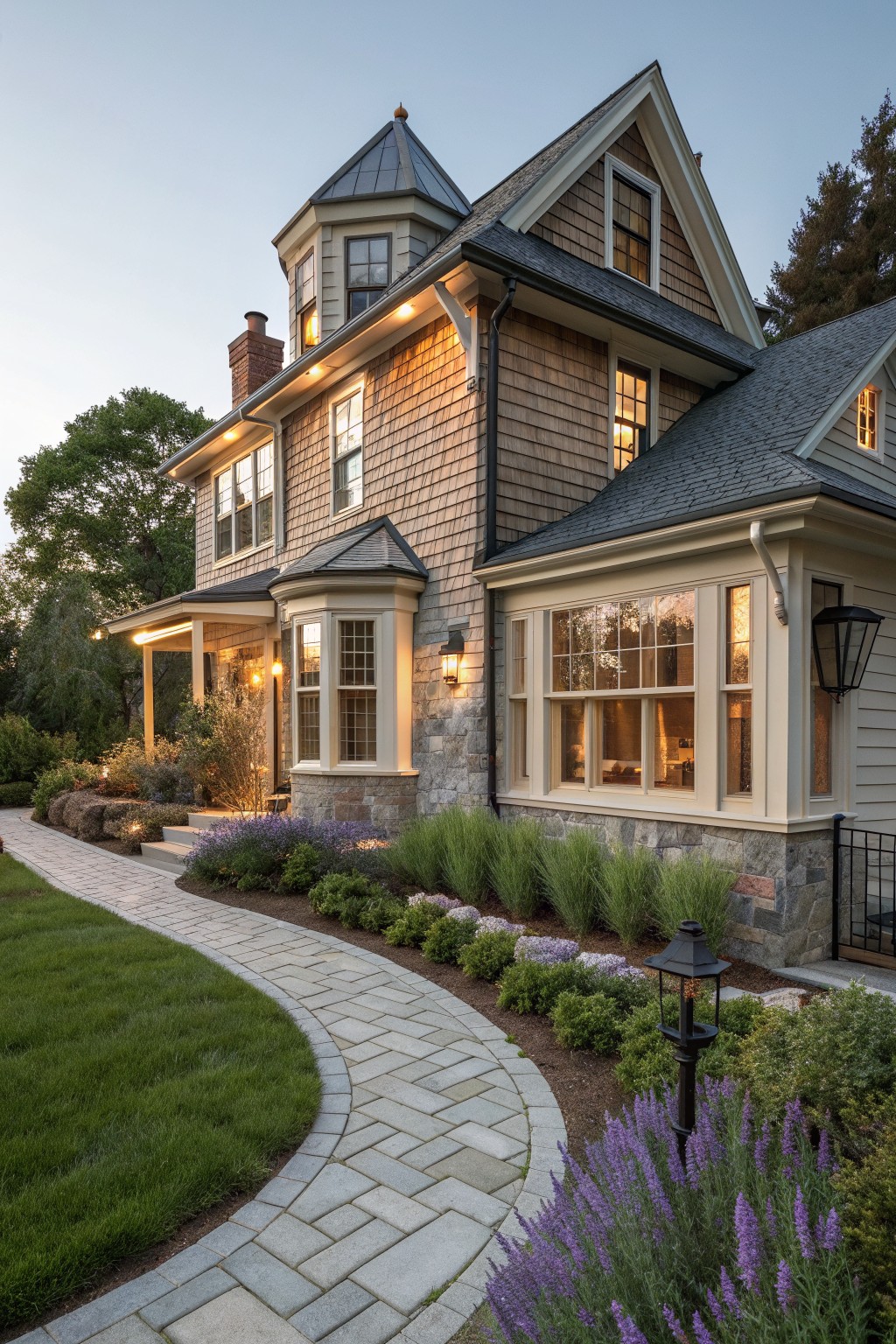
A curved stone path works especially well on small Victorian farmhouses because it softens the approach and makes the lot feel larger than it is. The gentle bend keeps the walk from looking like a straight shot at the door and gives room for planting beds on both sides.
This layout suits compact historic homes that sit close to the street or have narrow side yards. Keep the path width modest, use simple pavers or stone, and let low plants spill over the edges a bit. Avoid sharp turns or overly wide walks that can crowd the front of the house.
Dark Siding With White Trim
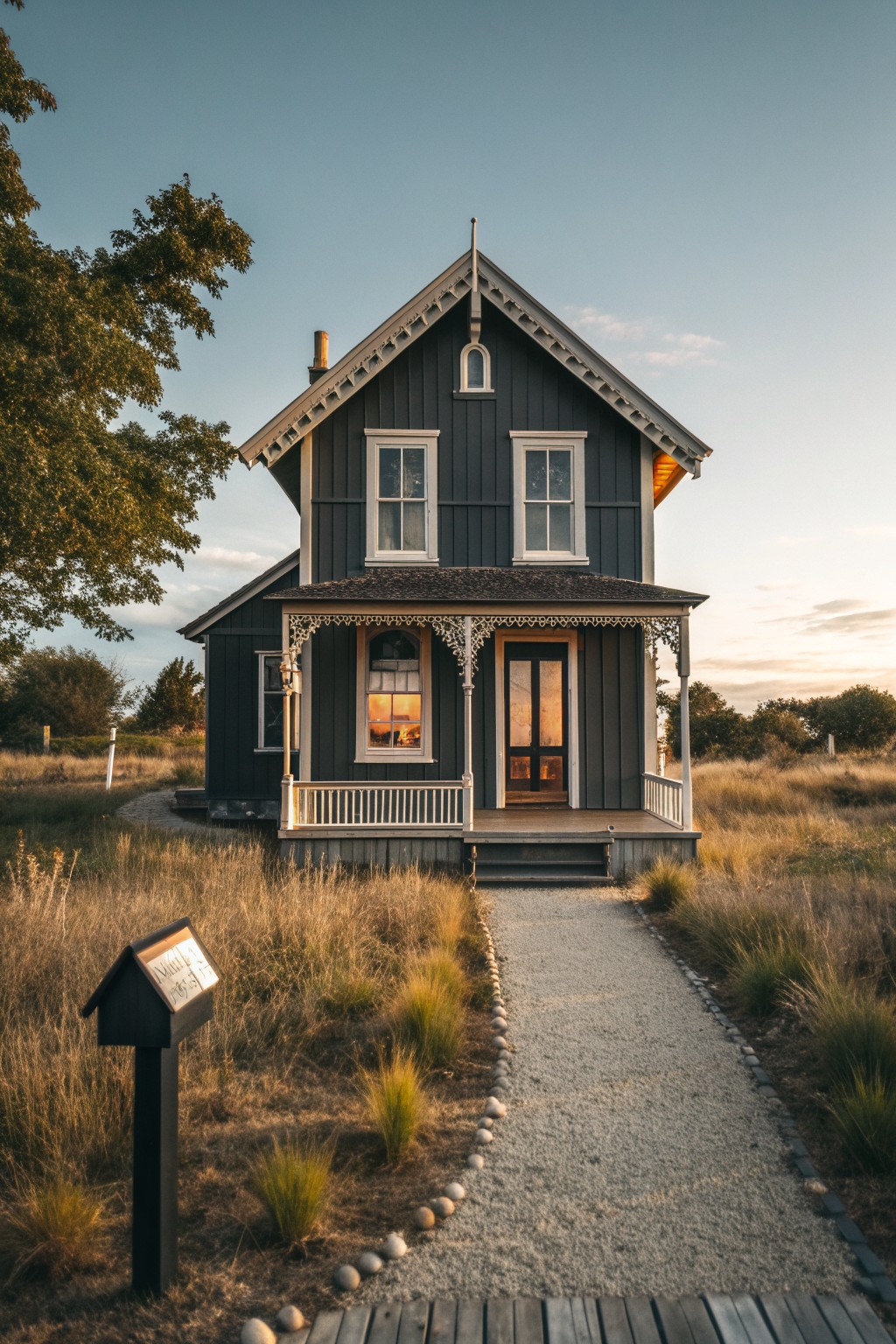
A dark exterior color works well on small Victorian farmhouses because it gives the house more weight without adding extra details. The deep tone helps the shape feel solid, and the white trim around the windows and porch stands out right away.
This approach suits compact historic homes that already have some trim work worth showing. Keep the siding color consistent across the main body and use white on the railings and window frames so the contrast stays clean.
Center The Entry With A Modest Porch
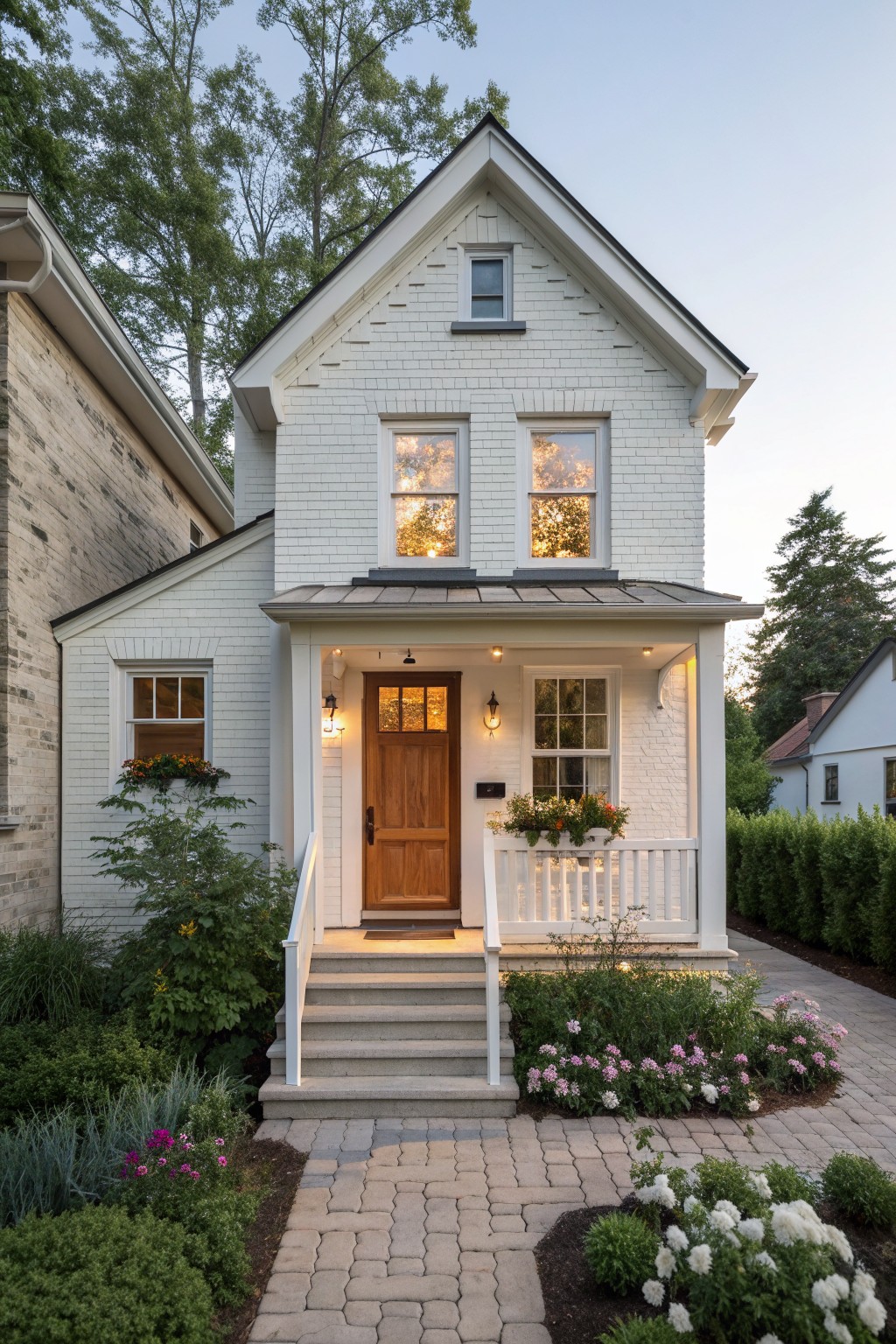
A small porch that sits right under the main gable helps a compact Victorian farmhouse feel more grounded and welcoming. The simple roof extension and short flight of steps create a clear focal point without adding much width or depth to the house.
This approach works well on narrow lots or homes with tight setbacks. Keep the railing low and the posts slender so the porch does not overpower the facade, and match the door style to the age of the house for a more natural look.
Climbing Roses on the Porch
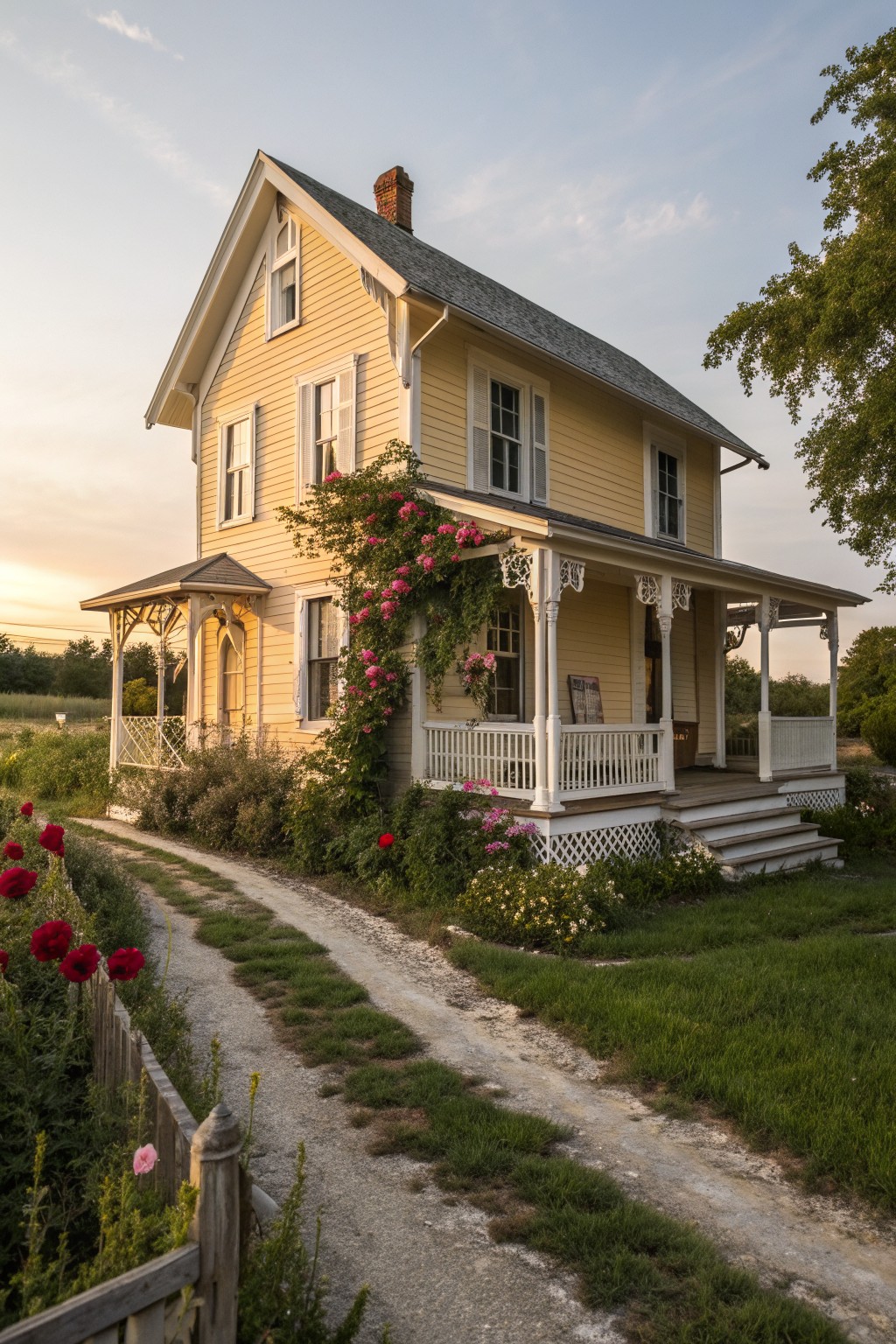
Many compact Victorian farmhouses benefit from a bit of softness along the front. Climbing roses trained up the porch posts and railings add color without crowding the small lot or blocking windows.
This approach works best on homes with simple wood siding and white trim. Plant the roses in narrow beds along the foundation and guide the canes as they grow. Keep the vines thinned each season so they stay neat and do not trap moisture against the house.
Curve the Front Path
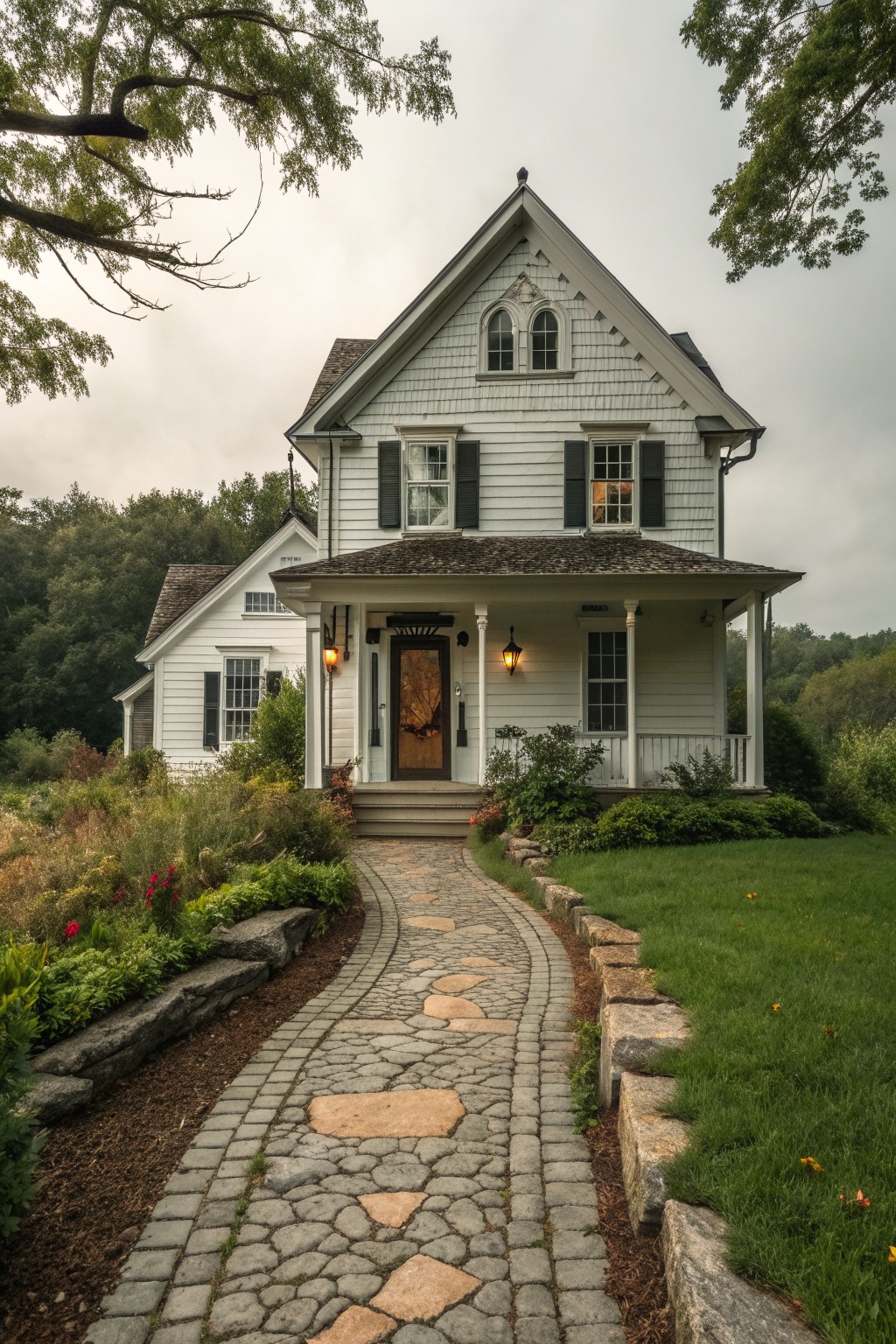
A curved stone path does more than just get you to the door. It slows the approach and makes a small Victorian farmhouse feel a bit more settled on its lot instead of sitting square to the street. The mix of small cobbles with a few larger stepping stones keeps the look simple and not too formal.
This works especially well on compact historic homes where the front yard is narrow. Keep the curve gentle so it still feels practical, and let low garden beds follow the edge instead of fighting it. Avoid sharp turns or overly wide paths that can crowd the house.
Mix Siding Materials for Added Texture
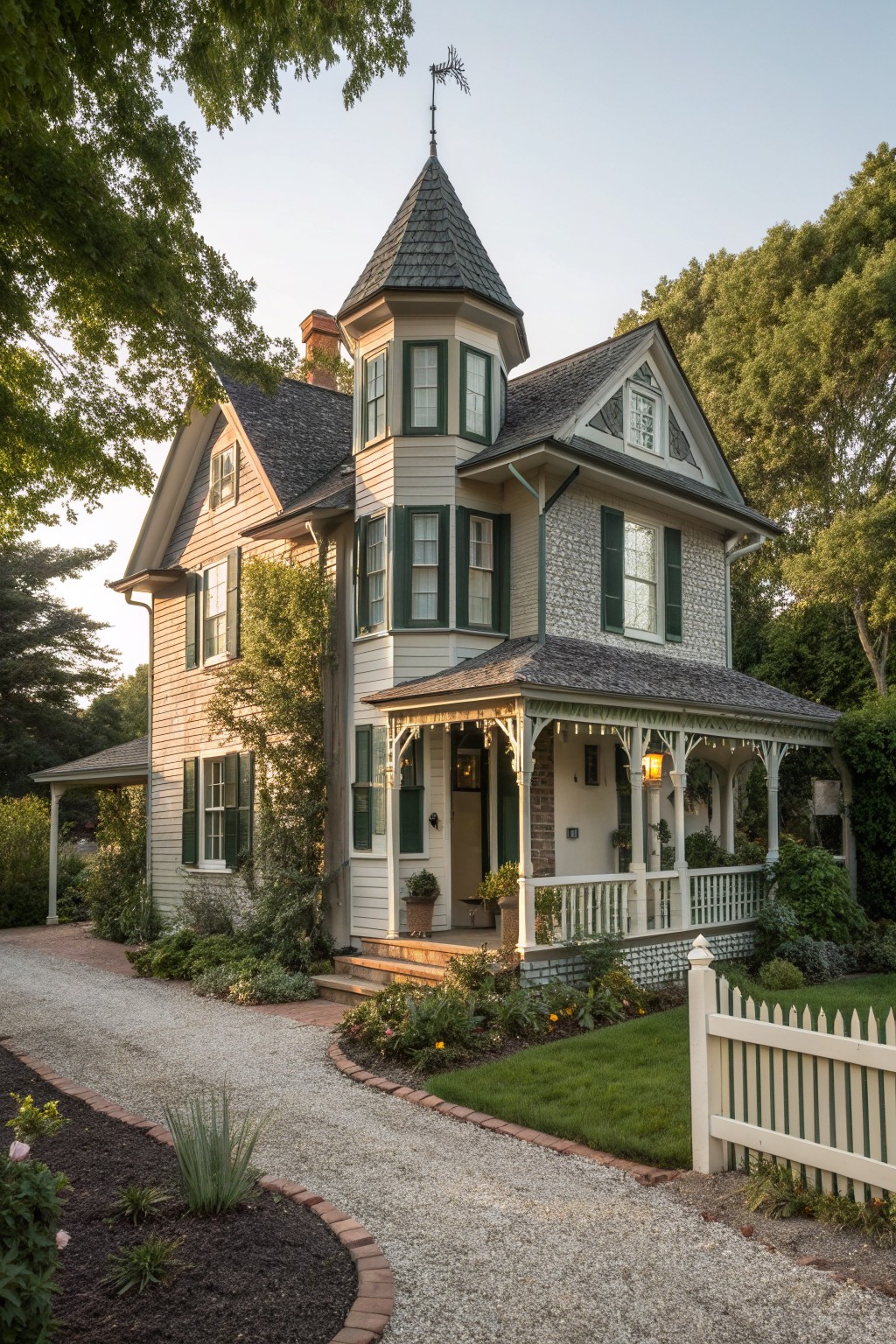
Mixing siding types gives a small Victorian farmhouse more depth without adding square footage. The shift from plain horizontal boards to patterned shingles breaks up the walls and keeps the whole house from feeling flat or boxy.
This approach works especially well on compact historic homes where you want to highlight the original shape. Stick to two or three materials at most, and keep the colors close so the changes read as texture rather than clutter.
Add a Covered Porch Over the Front Door
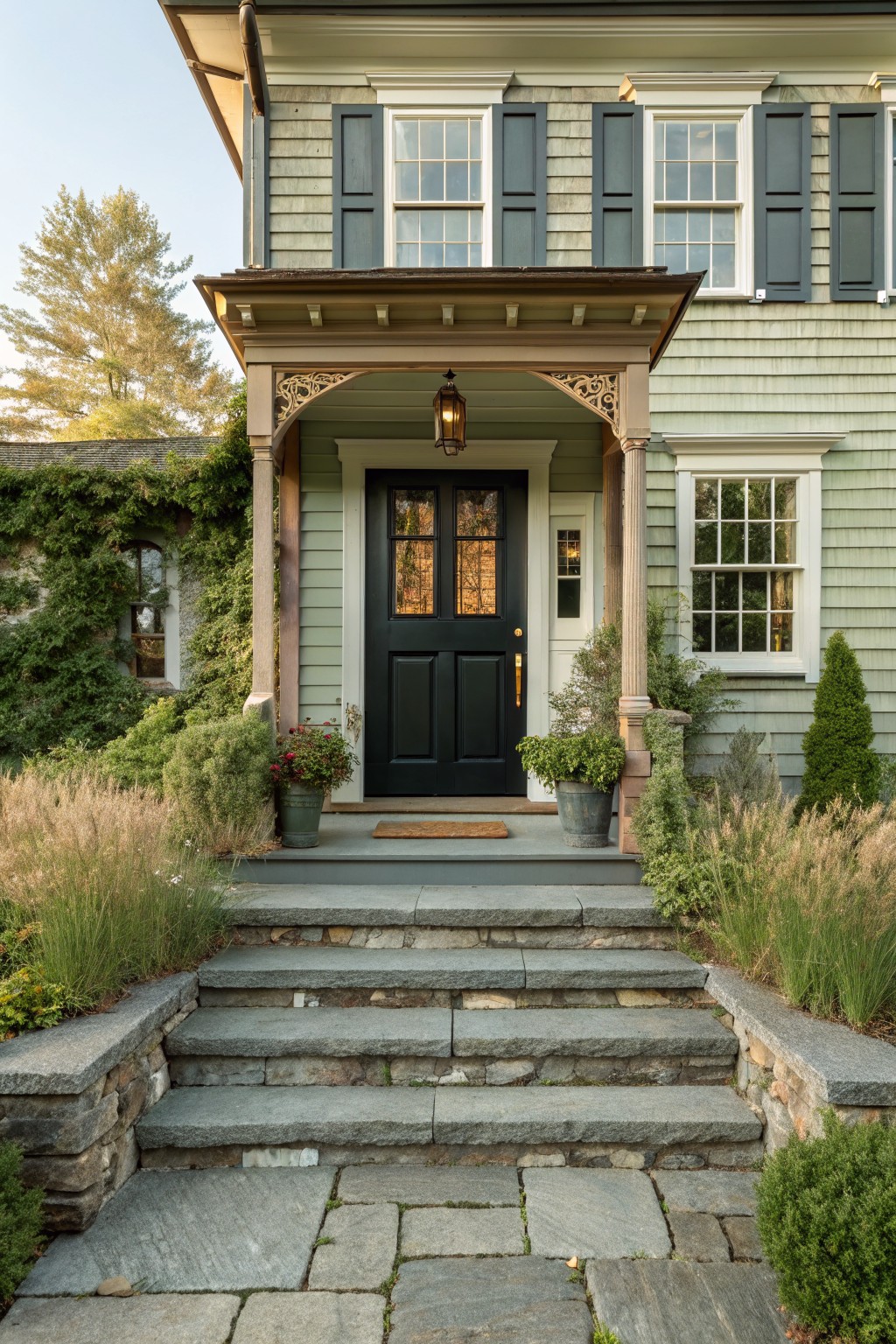
A small covered porch makes a compact Victorian farmhouse feel more grounded and complete. It gives the entry a clear sense of arrival without taking up much space or adding extra ornament. The simple columns and roof overhang help the door stand out while protecting it from weather.
This approach works especially well on smaller historic homes where the facade can otherwise feel flat. Keep the columns plain and the roofline modest so the porch does not overwhelm the scale of the house. Dark door colors can add contrast against lighter siding, but the real benefit comes from the shelter and structure the porch provides.
Add a Wraparound Porch
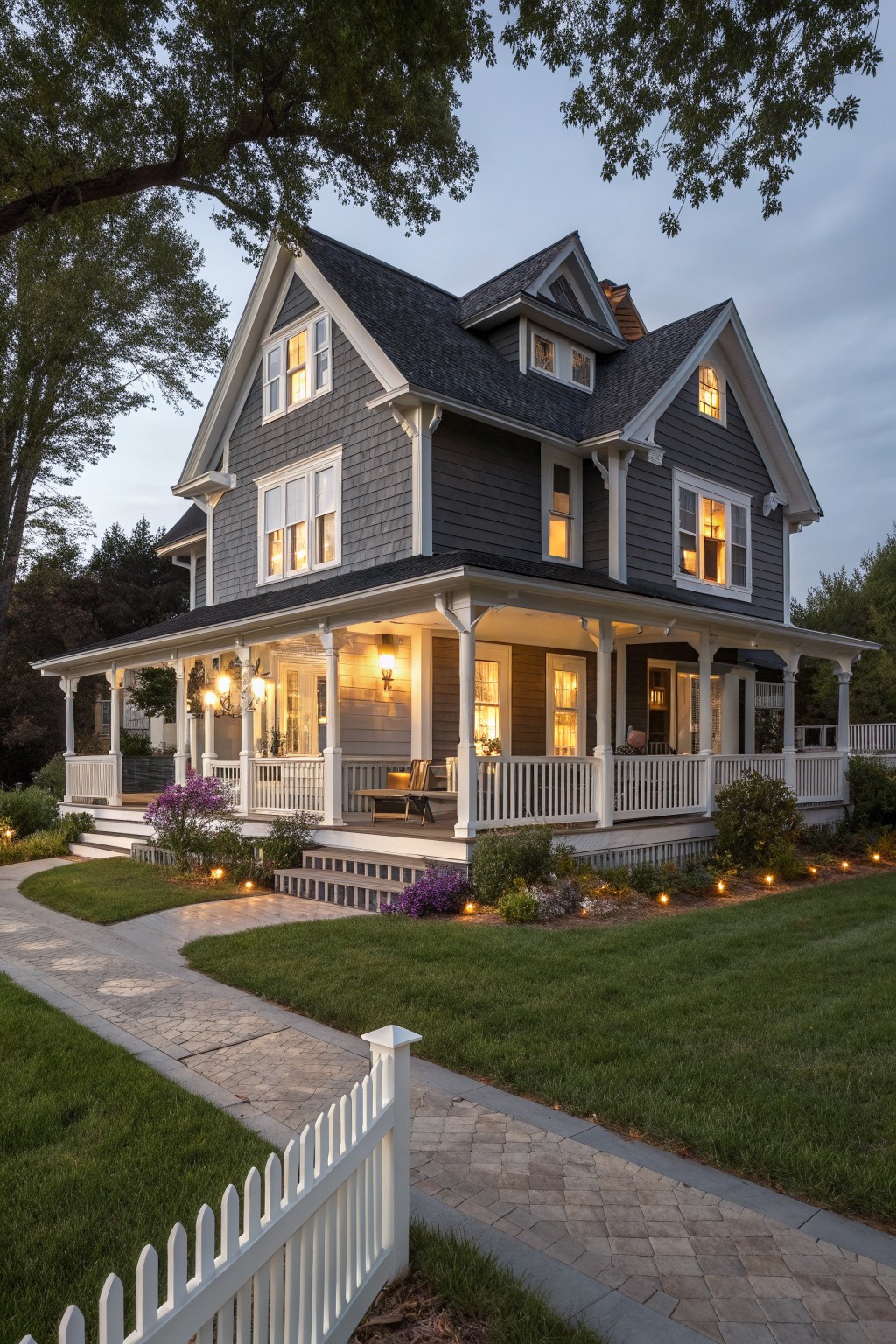
A wraparound porch gives a compact Victorian farmhouse extra room to live without adding to the footprint. It turns the front into usable space for sitting or gathering while keeping the scale of the house in check.
This approach works best on small lots where indoor space is limited. Keep the posts and railings simple so the porch feels open rather than heavy, and match the trim color to the rest of the house for a clean look.
Try a Soft Pastel for the Siding
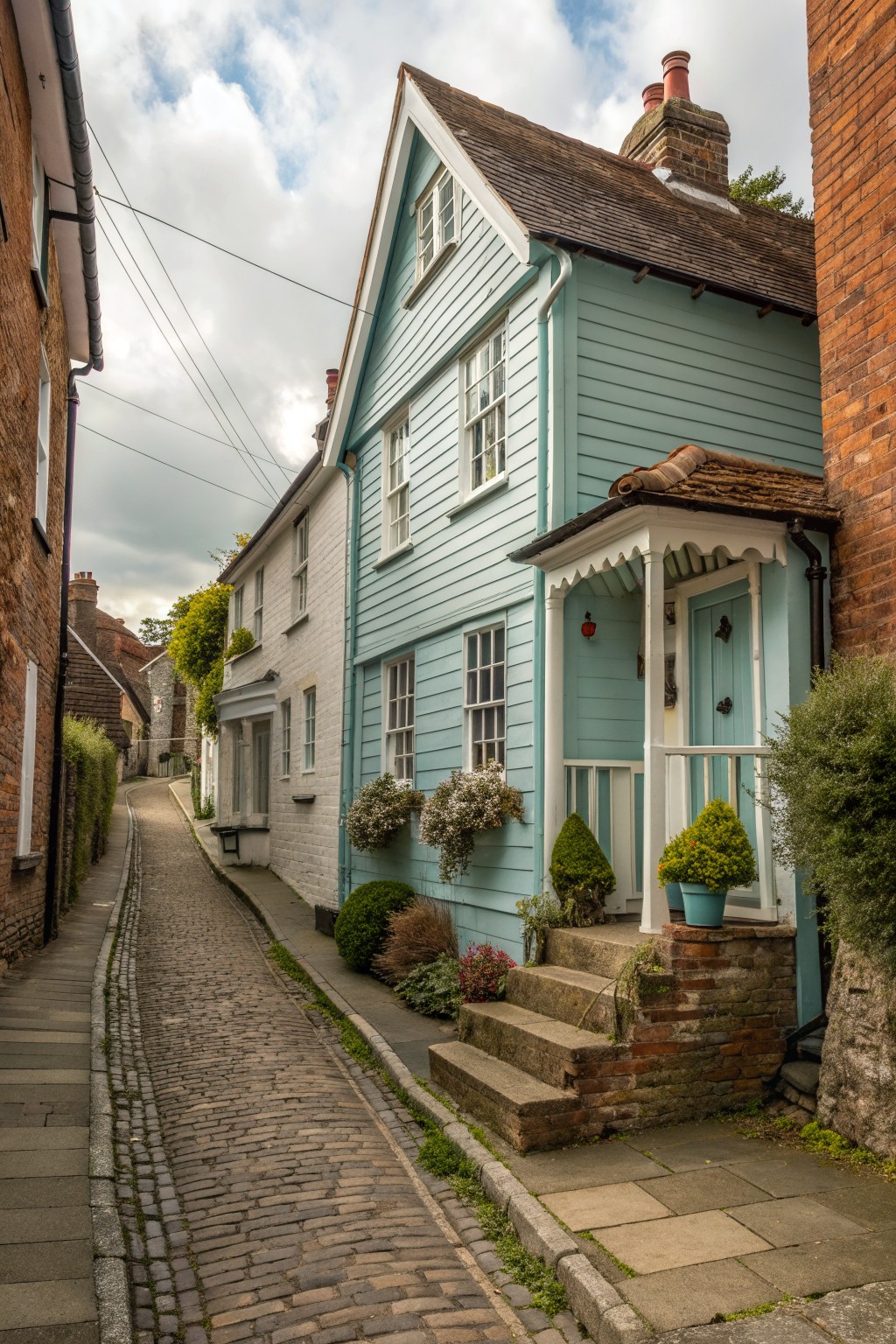
A light pastel color on the exterior helps a small Victorian farmhouse feel brighter and less cramped on a narrow lot. The pale blue shown here keeps the traditional look while giving the house a fresher appearance against the older brick buildings nearby.
This approach works best on compact historic homes where darker shades would make the space feel tighter. Choose a muted tone that matches the age of the house, and test it on a small patch of siding first to check how it looks in different light.
Frame the Entry With Potted Shrubs
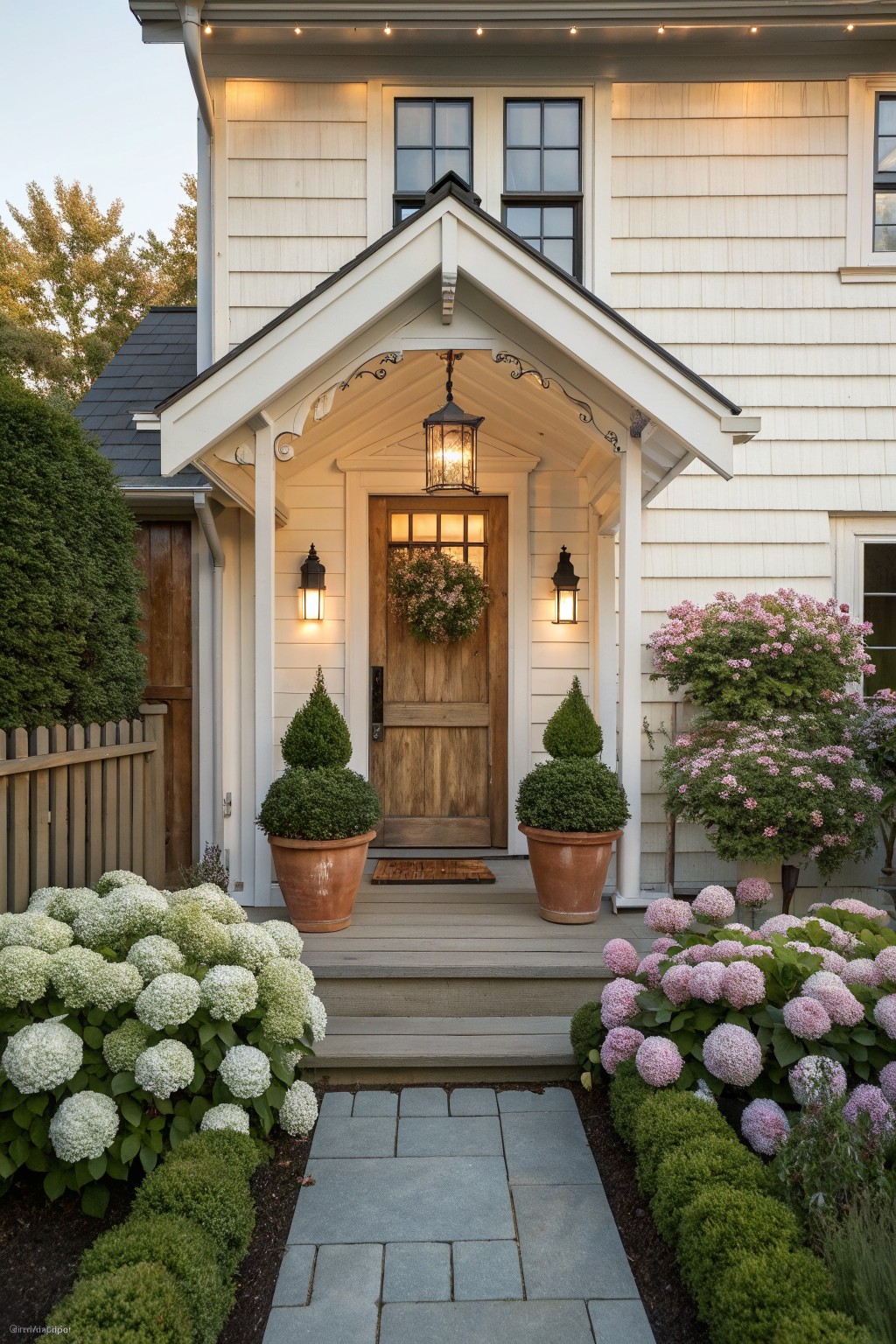
Potted shrubs give a small Victorian farmhouse entry some height and shape without taking up permanent space. The matching terracotta pots on either side of the steps create a simple frame that makes the door feel more pulled together.
This approach works best on compact lots where you want to keep the walkway open. Repeat the same plant and pot style on both sides, then fill in lower beds along the path with softer flowers for contrast.
Pick A Soft Green Paint Color
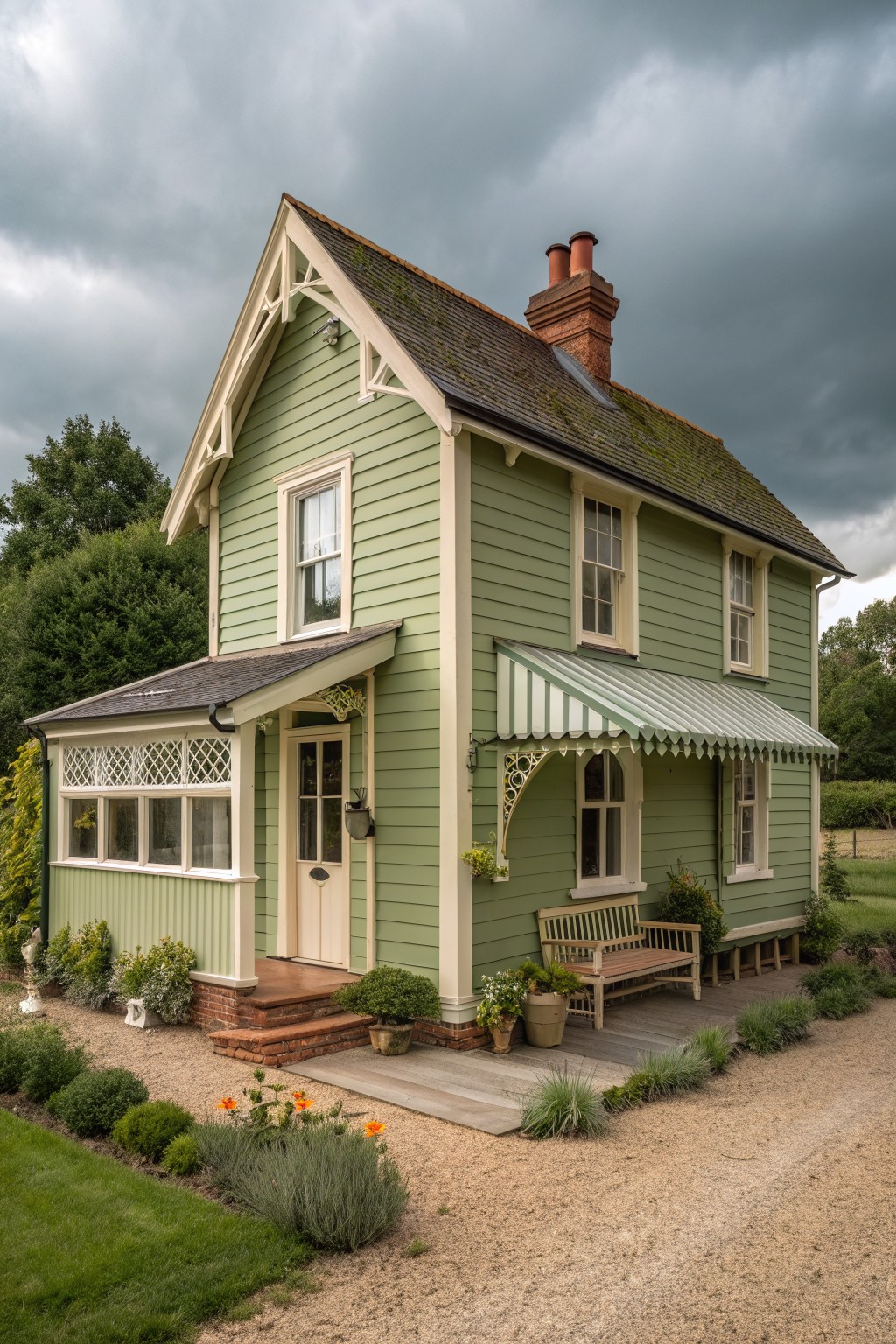
A soft green works well on small Victorian farmhouses because it keeps the house feeling light instead of heavy. The color sits nicely against white trim and helps the home blend with the garden without disappearing into it.
This shade suits compact historic homes that already have simple rooflines and modest porches. Keep the trim crisp and limit bold accents so the green stays the main feature rather than competing with too many other colors.
Define the Entry with a Gravel Path
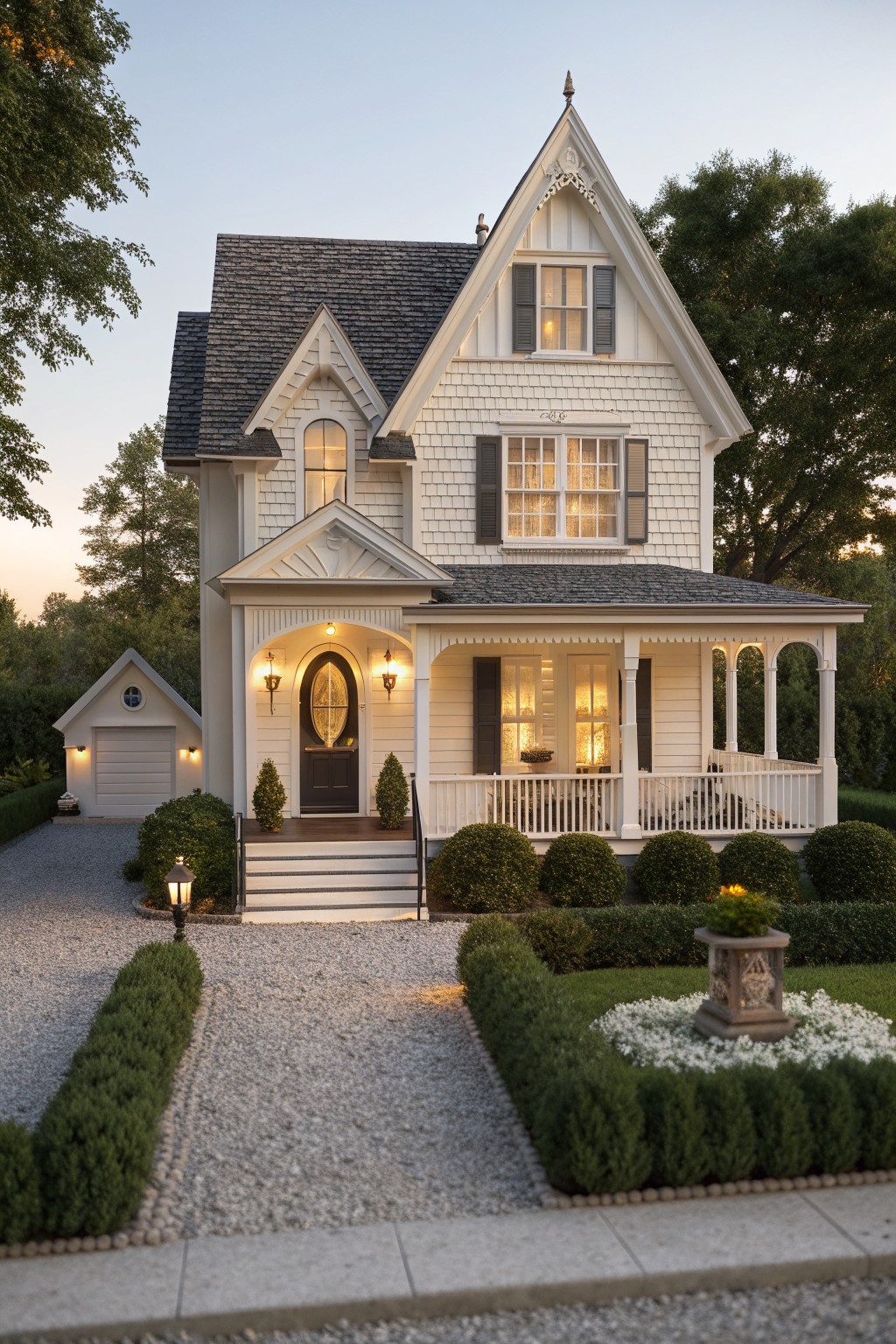
A gravel path gives a small Victorian farmhouse a clear sense of arrival without taking up much space. It breaks up the front yard, draws attention straight to the door, and keeps the whole approach feeling open rather than cramped. The low shrubs on either side add structure while still letting the house remain the main focus.
This works best on compact lots where you want to avoid a wide paved driveway. Keep the shrubs low and rounded so they frame the walk without blocking windows or the porch. Stick to simple edging and a single material for the path to prevent the front from looking busy.
Add a Covered Porch to a Stone Facade
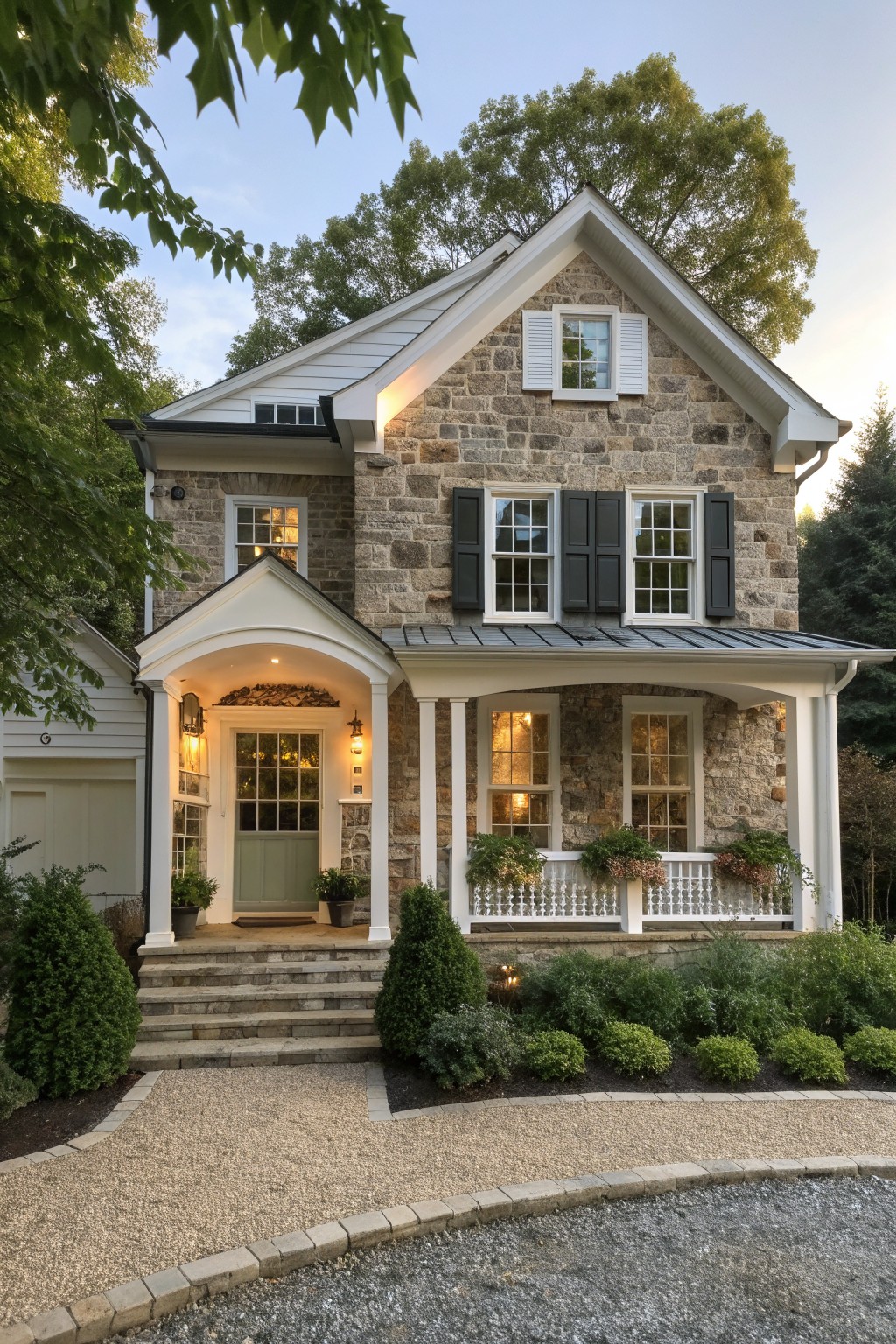
A covered porch with simple white columns helps soften a stone exterior on a compact Victorian farmhouse. It creates a clear entry point and breaks up the solid look of the stone without adding much width or depth to the house.
This works best on smaller homes where you want to keep the scale modest but still give the front some presence. Stick with plain columns and a low roofline so the porch feels like part of the original structure rather than an add-on.
Add a Wraparound Porch for More Charm
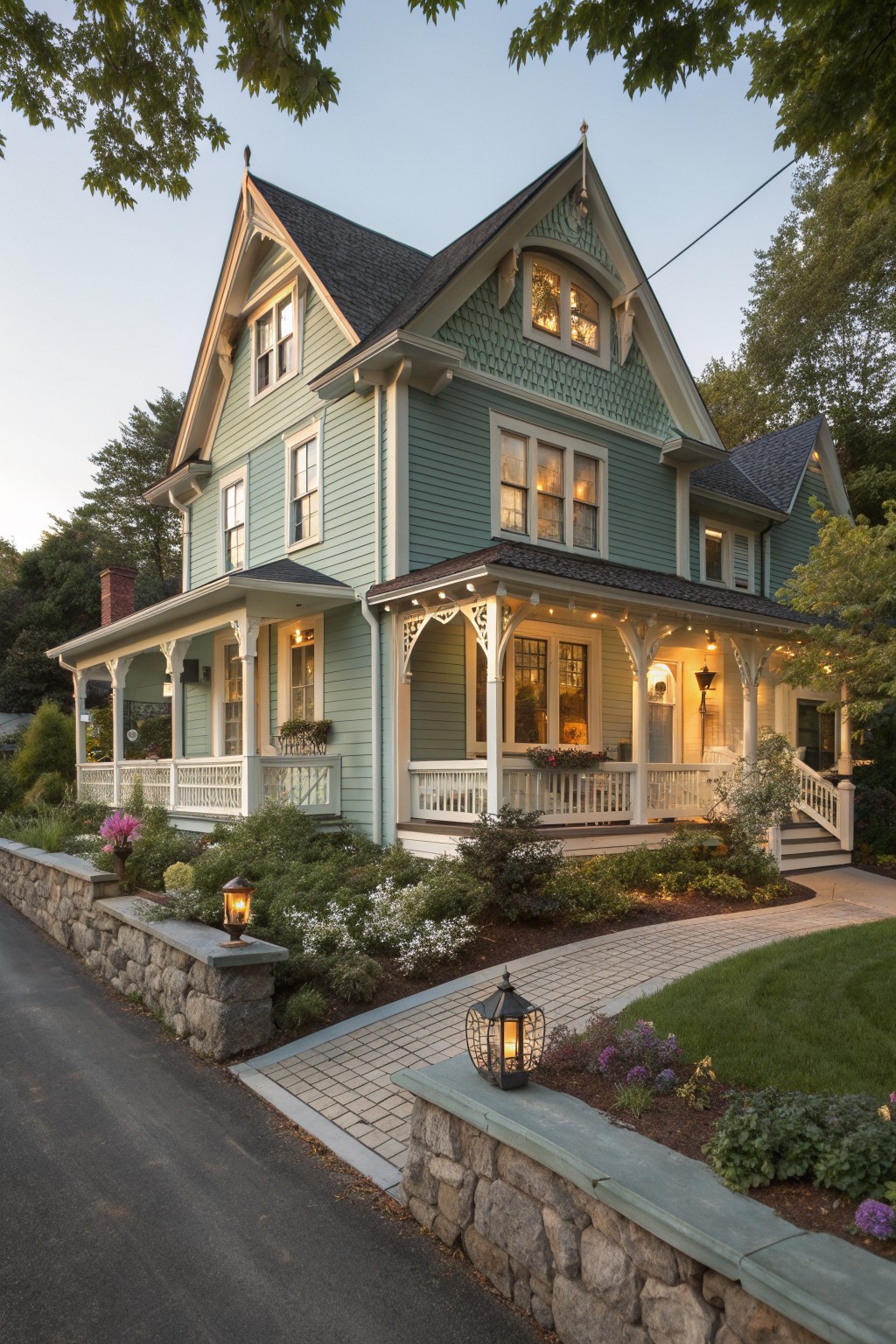
A wraparound porch gives a small Victorian farmhouse extra presence without needing a bigger lot. The white railings and posts stand out against the soft siding and help the house feel more balanced from the street.
This works best on compact historic homes where the porch can follow the shape of the house and create a bit of outdoor space right at the entry. Keep the trim simple and add lighting along the posts so the area stays useful after dark.
Frame the Front with a White Picket Fence
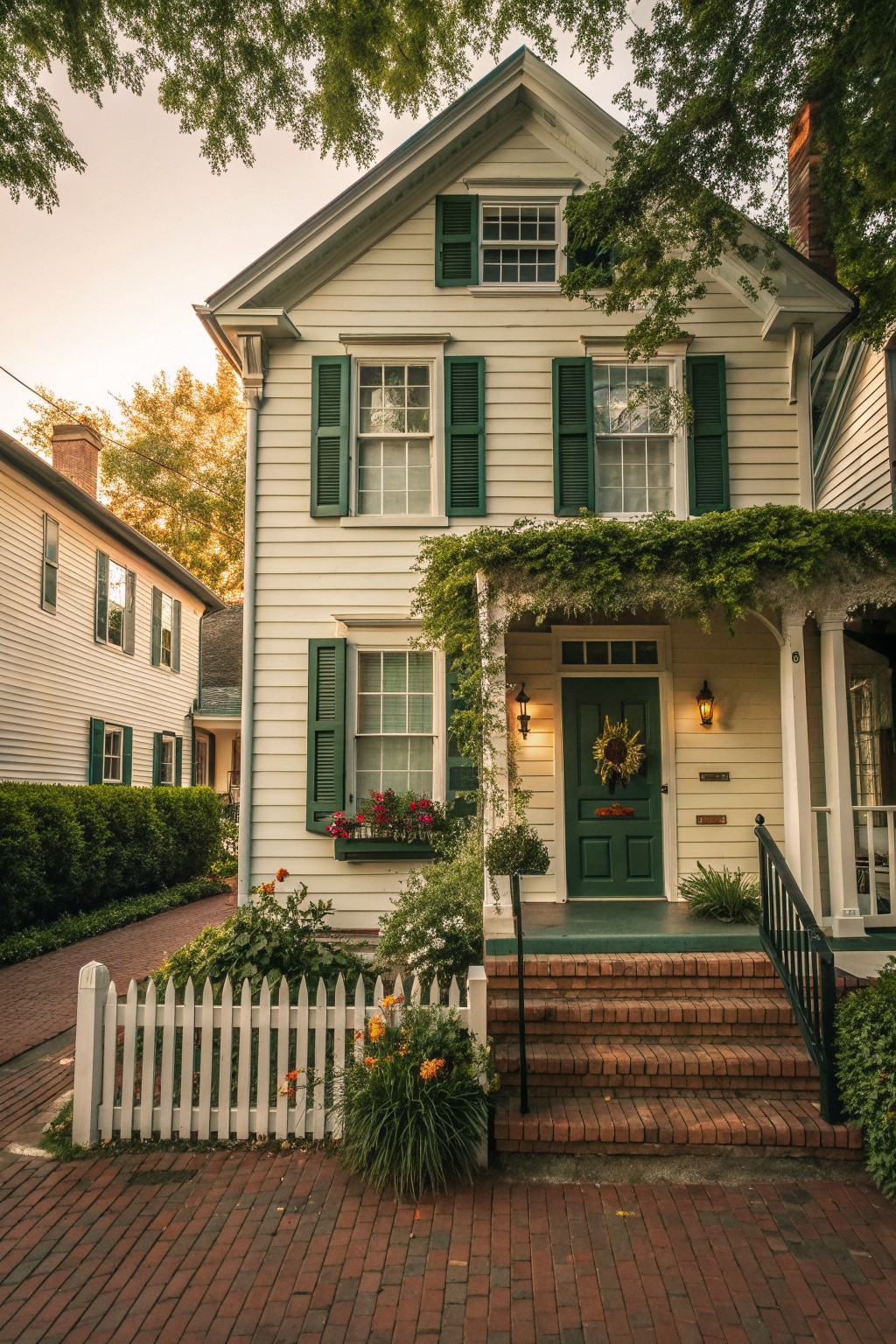
A low white picket fence gives a small Victorian farmhouse a clear front boundary without crowding the house. On compact lots it helps the home feel settled and complete rather than just sitting on the edge of the sidewalk.
Keep the fence simple and painted white so it does not compete with the siding or shutters. Place a narrow flower bed right behind it to soften the line and guide visitors toward the steps. This approach suits older homes that already have a balanced facade and need only a modest addition to look finished.
Center the Front Door on a Small Facade
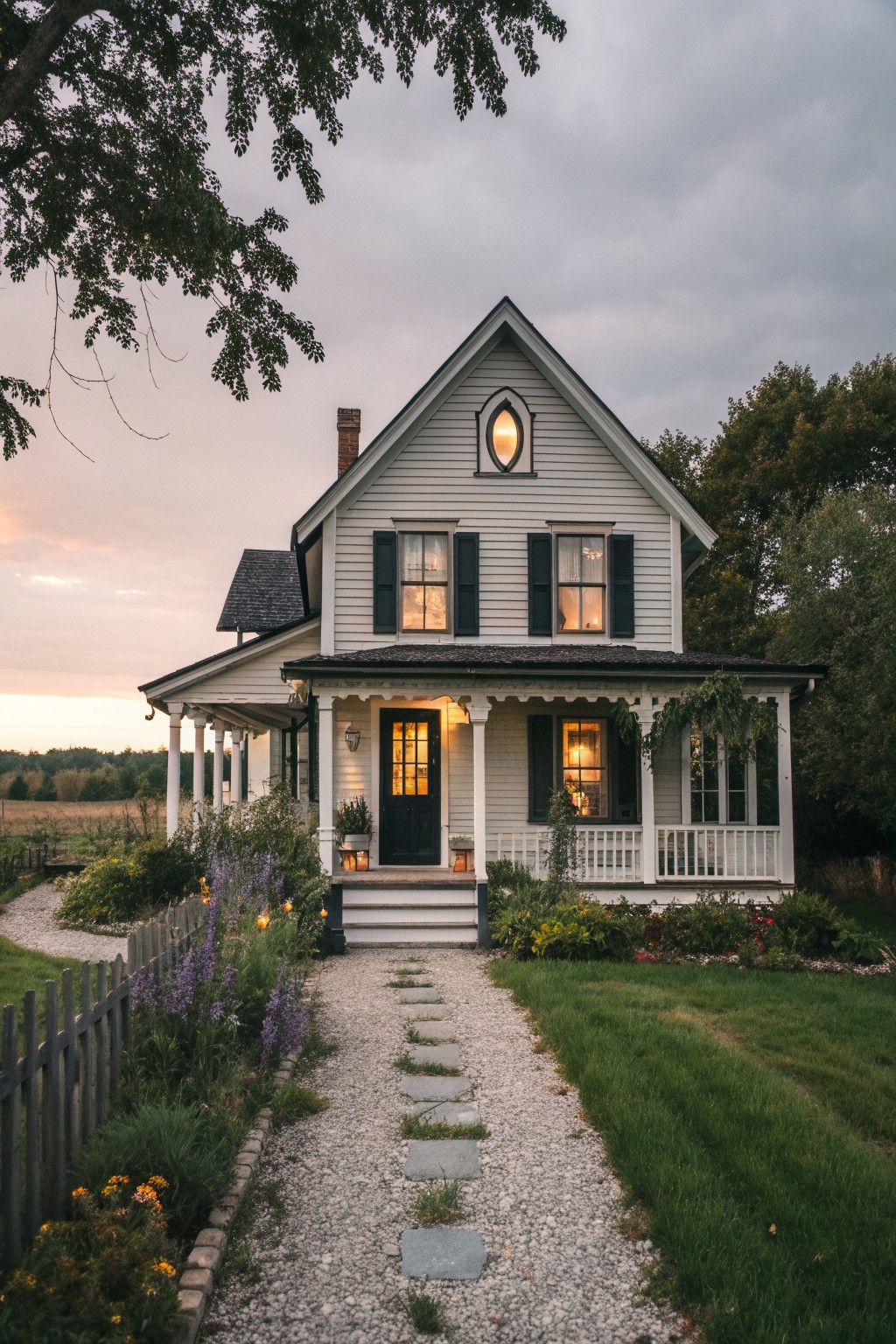
A centered front door with a simple porch overhead gives a compact Victorian farmhouse a clear sense of welcome without adding extra width or fuss. The dark door stands out against the white siding and draws the eye straight to the entry, which helps the whole front feel balanced even when the house itself is modest in size.
This approach works best on homes with a straightforward gable or roof peak above the door. Keep the door color deep and the surrounding trim light so the entry reads as the main feature. Avoid crowding the door with too many decorations or wide plantings that could make the space feel tighter.
Add Ornate Trim To The Gable
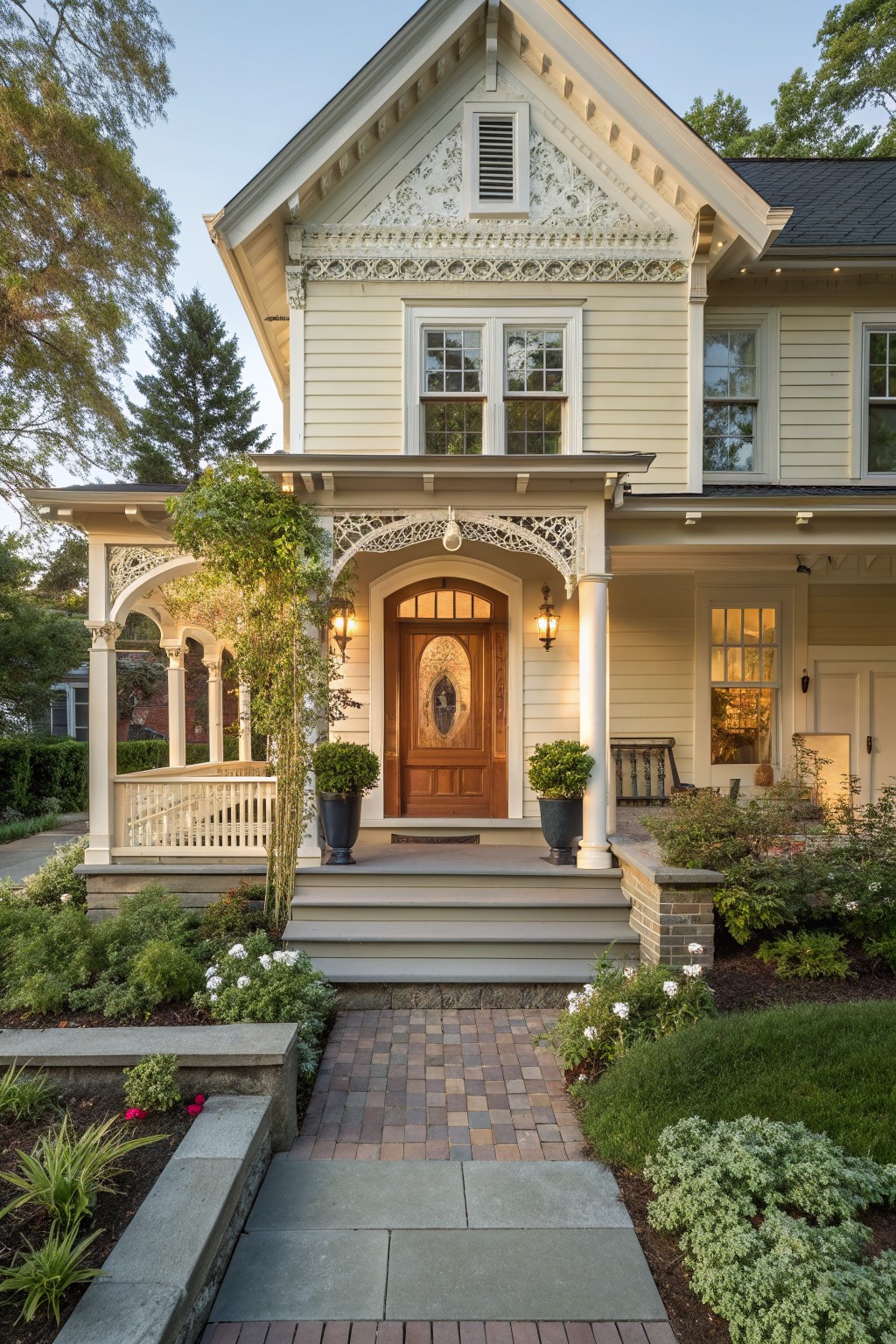
Many compact Victorian farmhouses gain character when the gable gets a layer of delicate trim. The pattern draws the eye upward and gives the roofline presence without adding bulk to the overall size of the house.
This approach works best on homes with simple siding where the trim can stand out clearly. Keep the design light and open so it does not overpower the scale of a smaller facade.
Frequently Asked Questions
Q: What paint colors work well on a small Victorian farmhouse without shrinking the look? A: Light neutrals like soft gray or cream make the house feel larger. Add a bold color on the door or shutters for that Victorian pop. Stick to two or three shades max so it stays simple.
Q: How can I add a small porch to my compact historic home? A: Build a narrow covered entry with simple posts and brackets. This gives the classic farmhouse feel without taking up much space. Keep the roofline low to match the scale of the house.
Q: Do I need to replace all my windows to get the Victorian look? A: No need to swap everything out. Focus on adding trim around existing windows and painting the frames a contrasting color. This updates the exterior fast and keeps costs down.
