

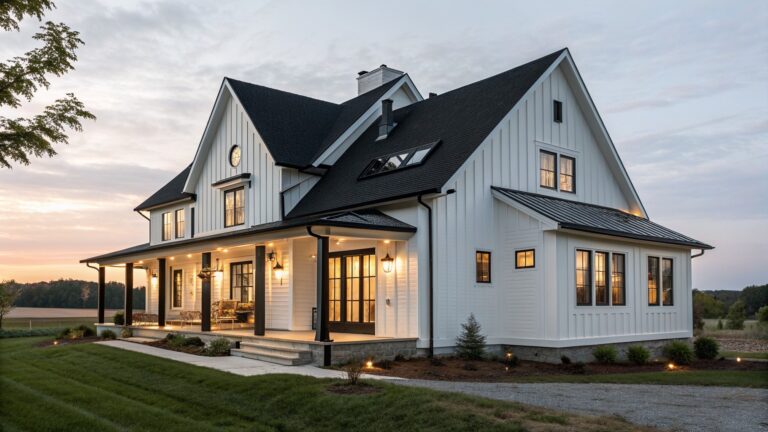
I often notice that the best modern Victorian farmhouses succeed because their rooflines and siding choices create a balance that feels steady from the curb.
Materials matter more than people expect here, especially when old trim details meet simpler window frames without clashing.
Some attempts fall flat once you see them in person.
I would try mixing those porch columns with a cleaner foundation treatment first if I were updating a similar home.
It changes how the whole facade reads when the proportions line up right.
Black Metal Roofing on White Farmhouse Exteriors
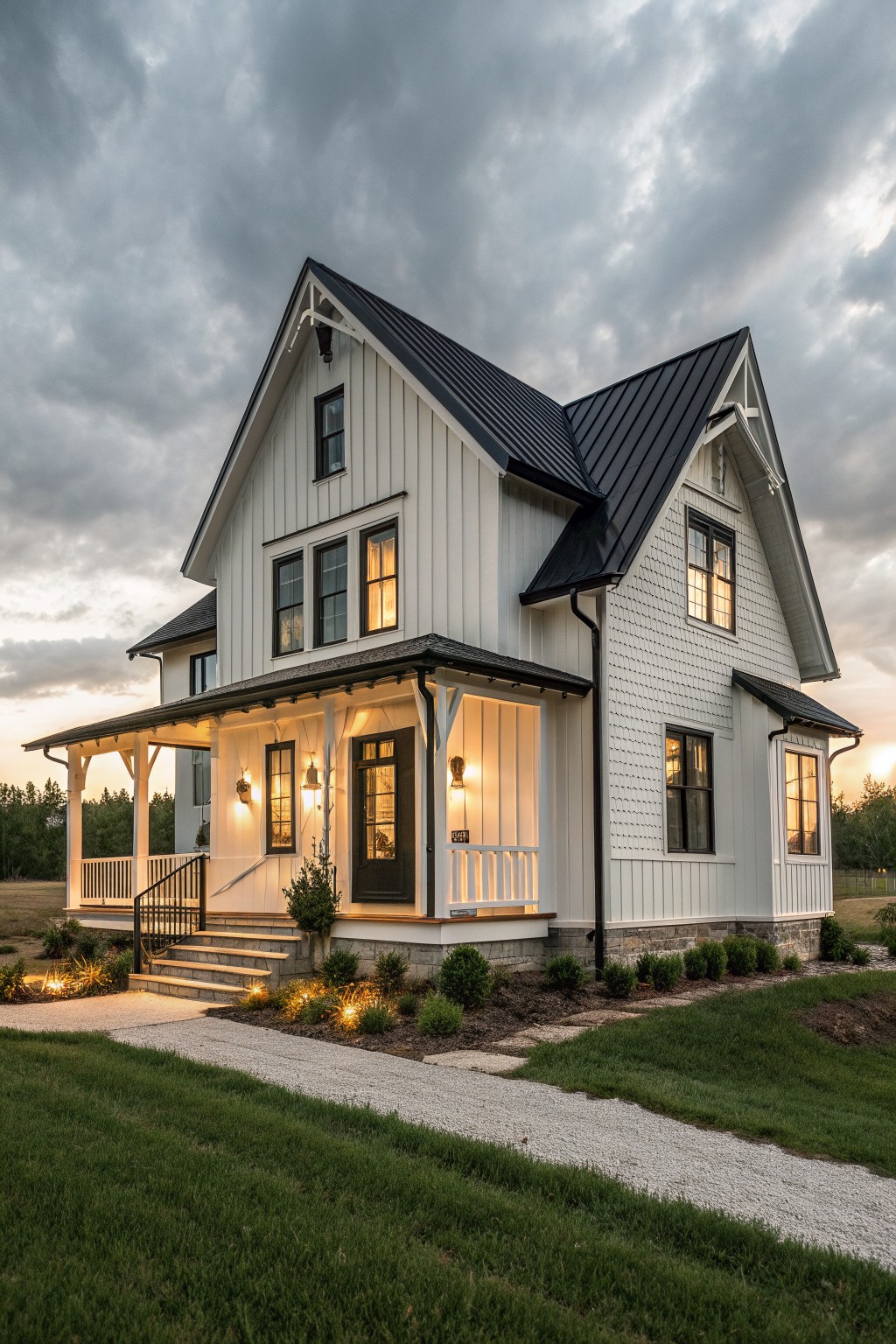
A dark metal roof against white siding gives a farmhouse that crisp edge without losing its traditional shape. The contrast pulls the eye up to the gables and makes the whole roofline feel more defined, which works especially well on homes that already have strong architectural lines.
This approach suits houses in open settings where the roof gets plenty of light. It keeps the look clean but still grounded, and the darker surface holds up well against weather while adding just enough modern weight to balance the white exterior.
Letting the Gable Carry the Victorian Details
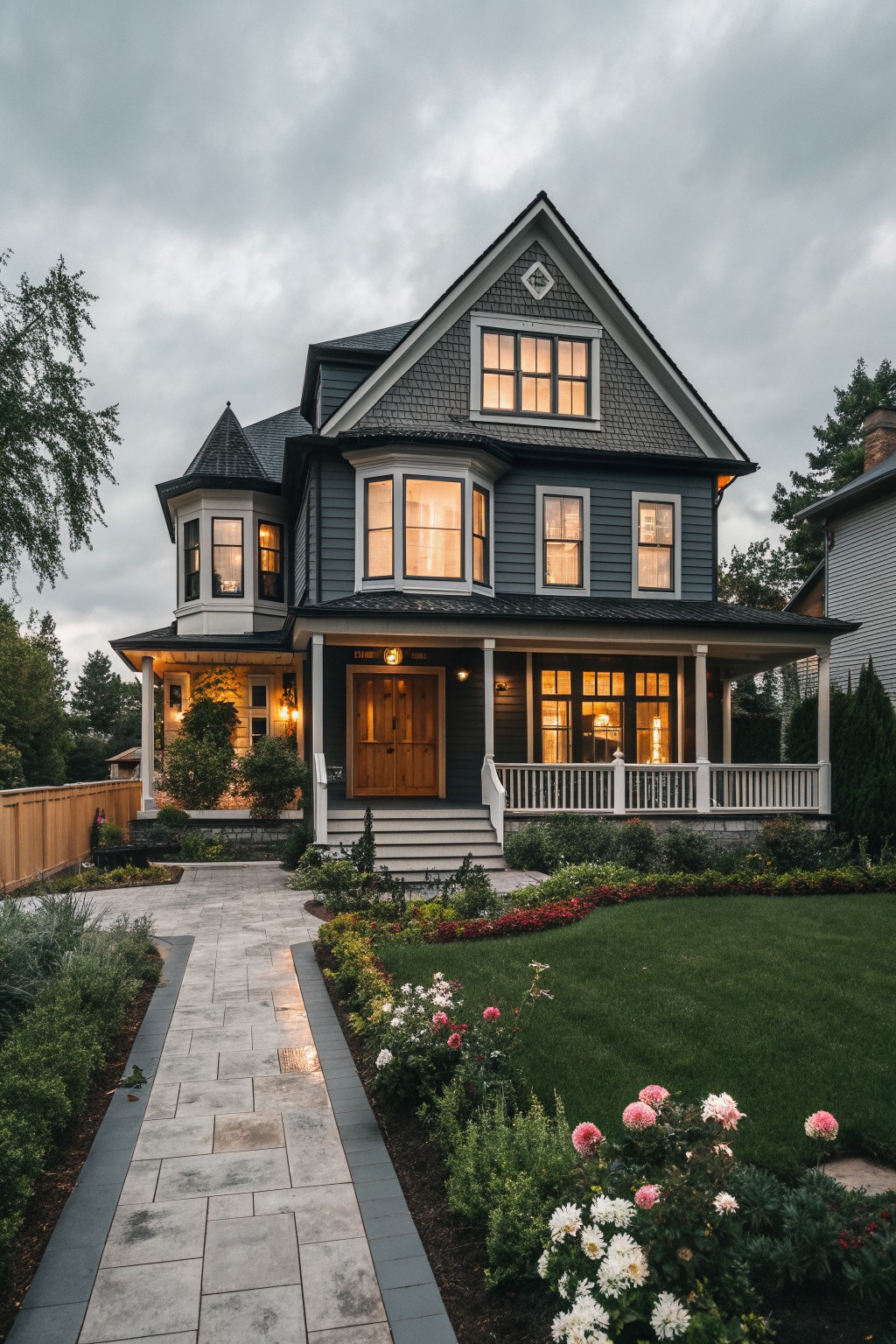
A strong central gable gives this house its clear Victorian reference without needing extra trim or ornament. The steep pitch and simple diamond detail at the peak stand out against the plain horizontal siding, which keeps the rest of the facade feeling current and straightforward.
This approach works best on homes that want a bit of historic shape but not a full traditional look. Keep the siding and window frames clean, use a dark color to make the gable pop, and let the roofline do most of the work. It suits two-story houses in neighborhoods that already have older gabled homes nearby.
Dark Paint Colors Modernize Victorian Farmhouse Exteriors
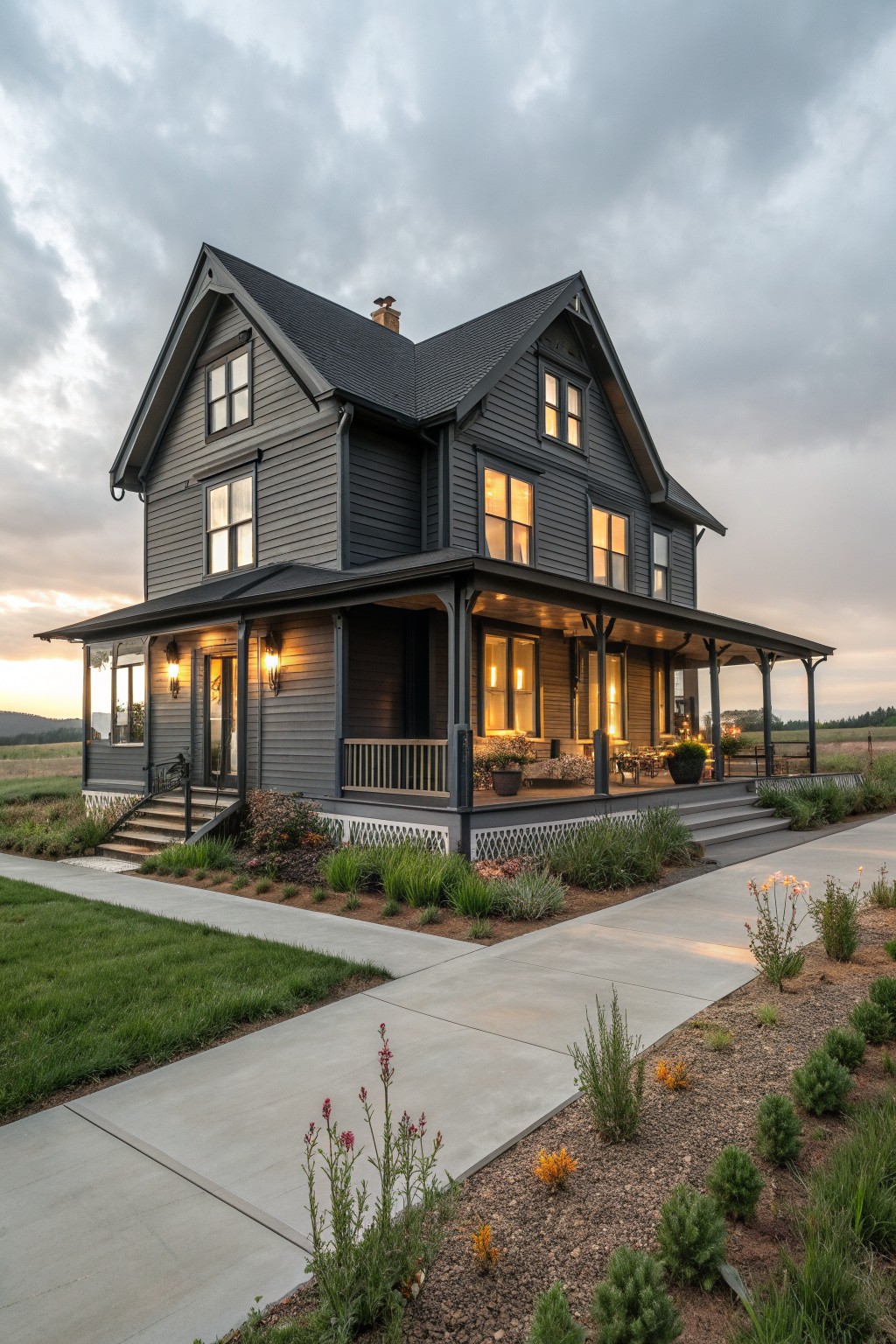
Many older Victorian farmhouses look sharper when the siding is painted a deep charcoal or dark gray instead of the usual lighter shades. The strong rooflines and gables still read as classic, but the darker finish pulls everything together and gives the house a cleaner, more current feel.
This works well on homes that already have a good porch or simple trim details. Keep the accents sharp and the lighting warm so the shape stays easy to read from the street.
Mixing Siding And Brick For Contrast
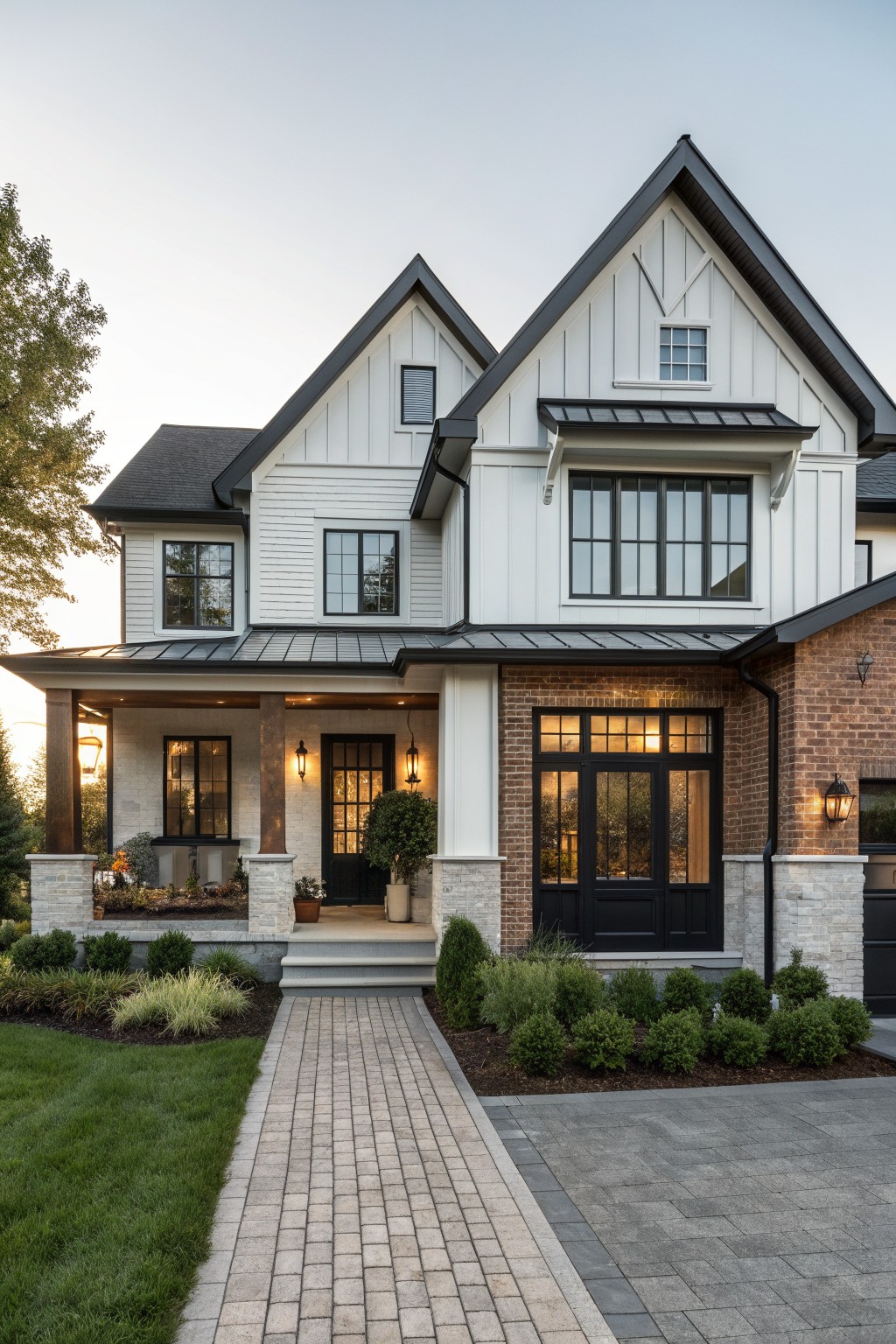
This mix keeps the house from feeling too plain or too heavy. White siding on the upper part lightens the look while the brick base adds weight and texture where it matters most.
It suits homes with a simple roofline and a clear front entry. Keep the black trim consistent on windows, doors, and the roof edge so the two materials read as one clean whole rather than separate pieces.
Front Porches That Blend Old And New
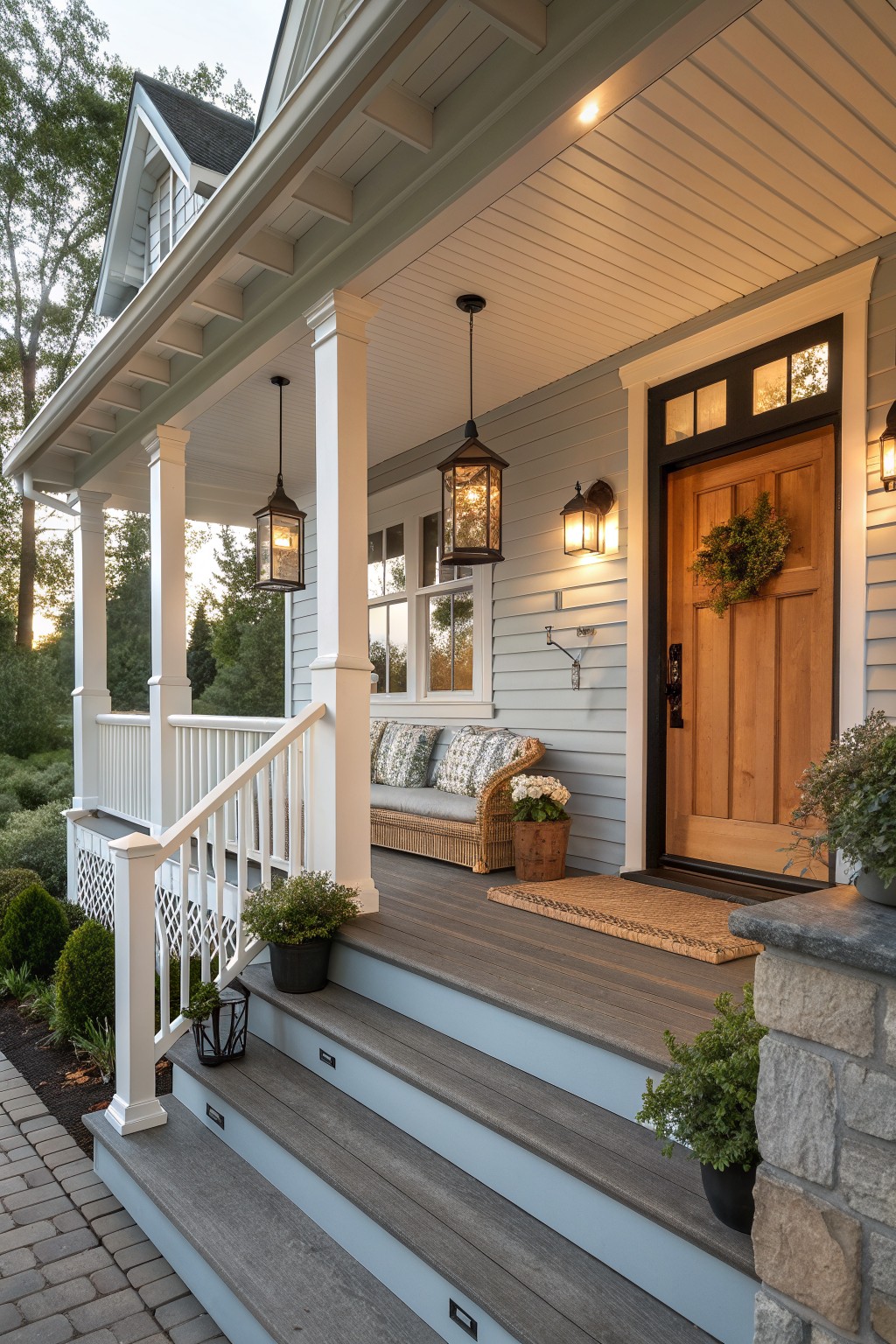
A generous front porch often helps tie together the historic and modern sides of a Victorian farmhouse. The white columns and railings keep the traditional shape while a simple wood door and updated fixtures stop the look from feeling stuck in the past.
This works best on homes with enough roof overhang to shelter the space. Keep furnishings light so the porch feels open rather than crowded, and choose lighting that matches the scale of the columns without adding too much ornament.
Modern Glass Additions For Older Farmhouses
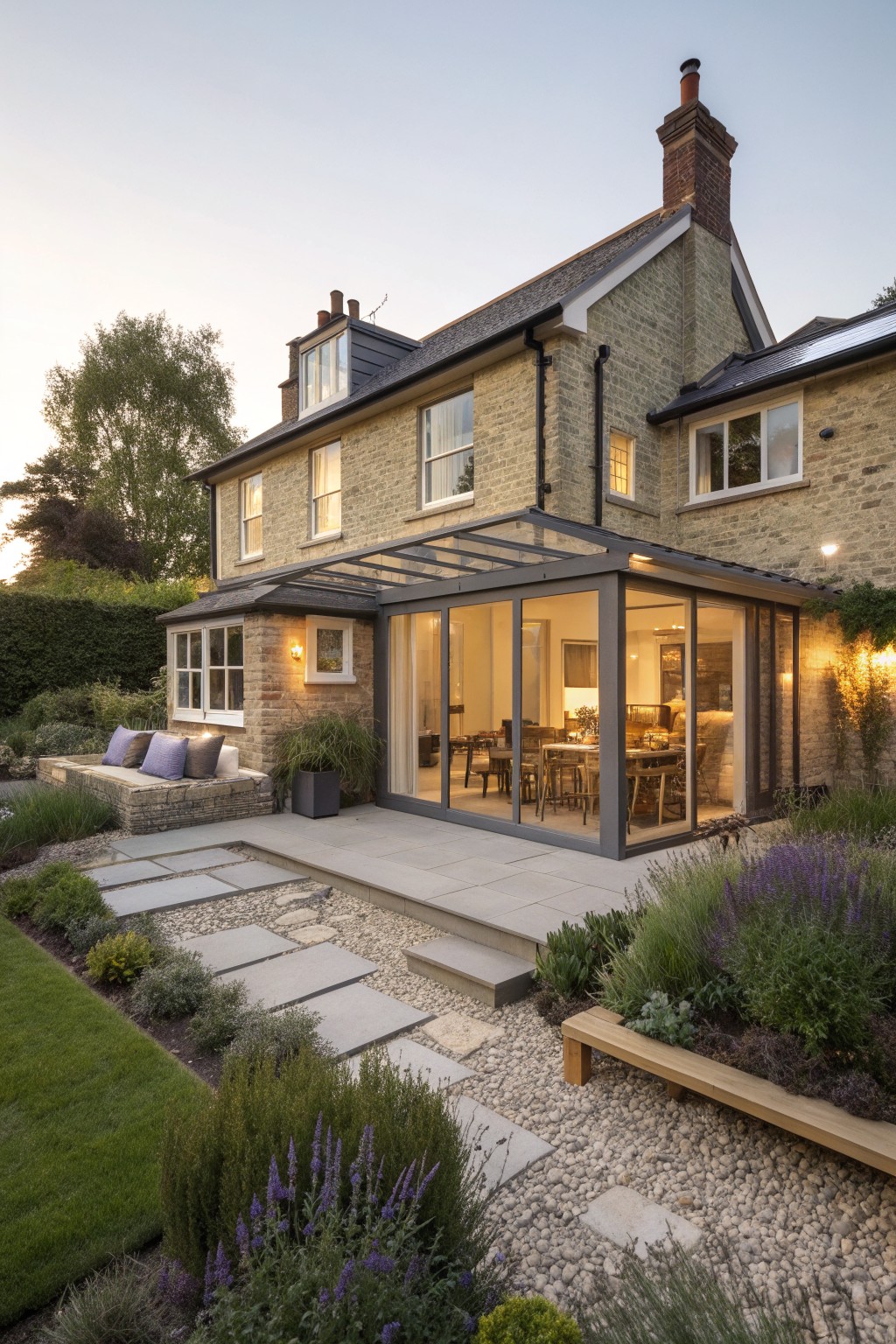
A glass extension can give an older home more light and living space without changing the original structure. It lets the inside connect directly to the garden while the stone walls and rooflines stay exactly as they were.
This works best on homes that already have solid traditional materials. Keep the new section simple in shape and lower than the main roof so the addition feels like a quiet update rather than a replacement.
Mixing Stone and Siding
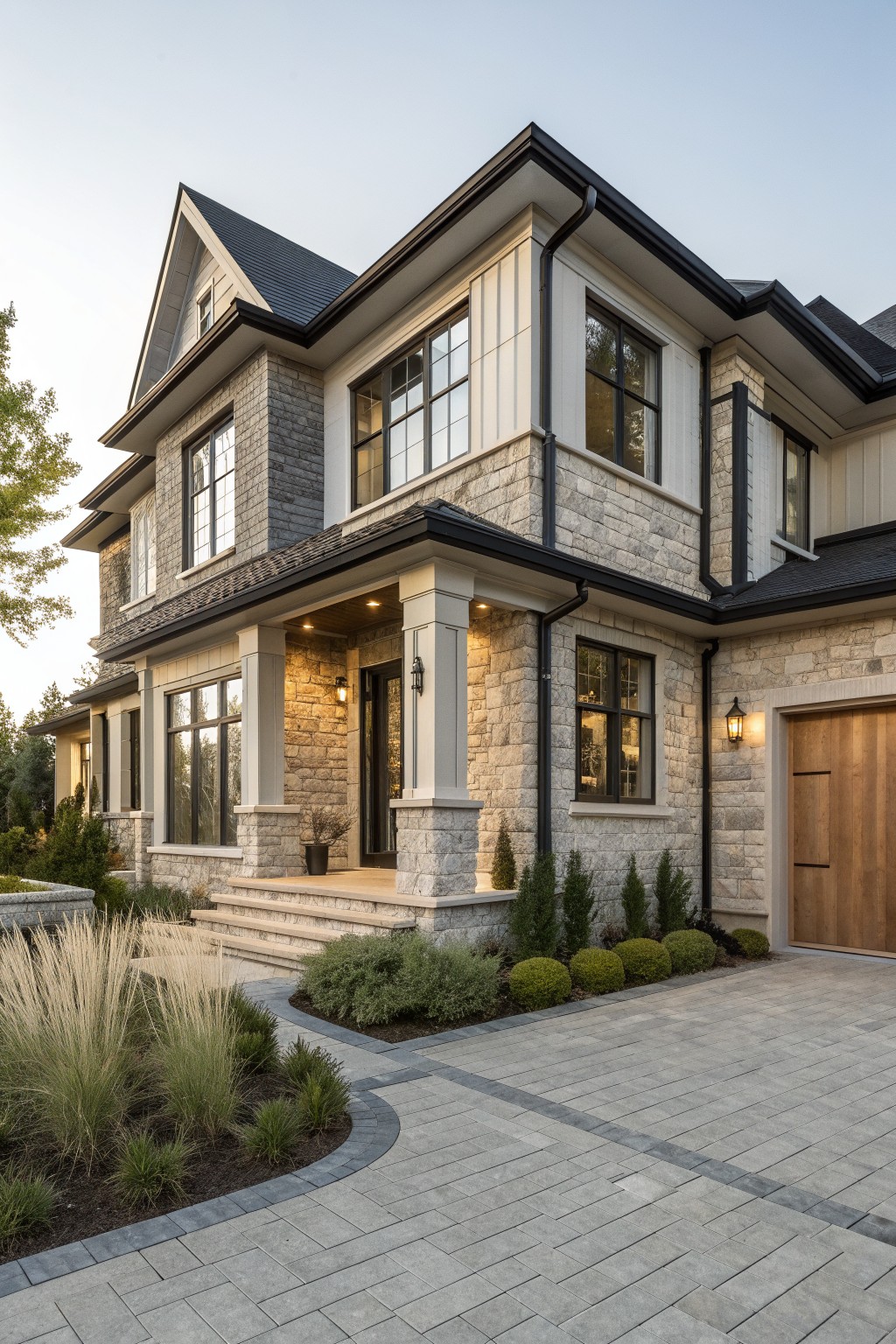
Mixing stone and siding gives a house weight at the base while keeping the rest of the facade lighter and cleaner. The contrast helps the style feel both traditional and updated at the same time.
This works best on larger homes where the stone can anchor the porch and lower walls without taking over the whole exterior. Keep the siding a soft white or light gray so the two materials read as one house instead of competing sections.
Stone Bases That Ground Painted Siding
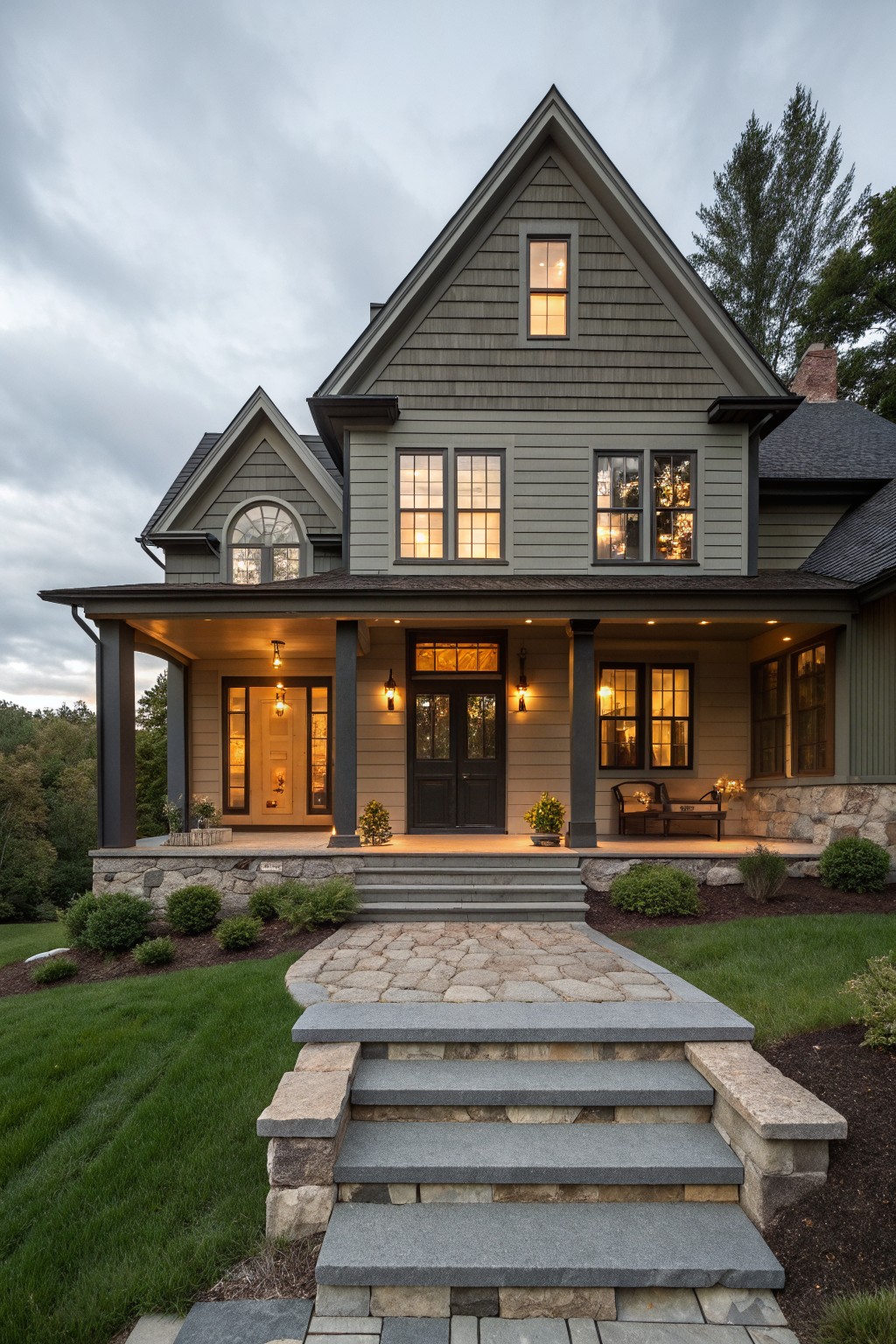
A stone foundation gives the house a solid base that keeps the lighter siding from feeling too light or floating. It adds weight at the bottom where it belongs and helps the whole exterior read as more settled. Many people like this mix because it nods to older farmhouses without making the house look heavy or old-fashioned.
This approach works best on homes with a clear two-story shape and a simple roofline. Keep the stone low and let it stop under the porch or at the first floor windows. Avoid carrying it too high or using too many colors in the stone, since the point is to create a clean break rather than a busy pattern.
Mixing Siding Styles With Brick
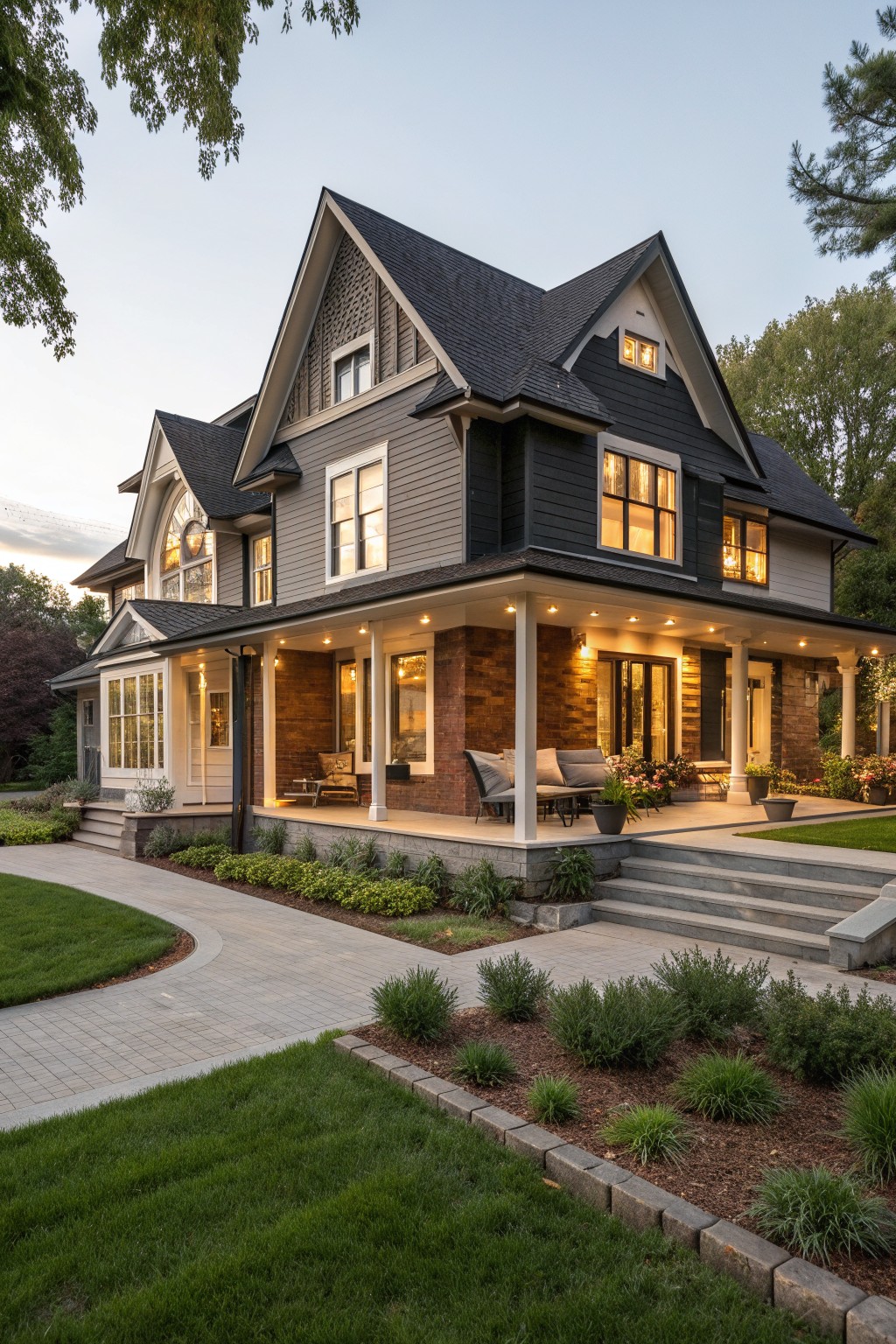
Many people update older farmhouse shapes by mixing horizontal siding with vertical board and batten on the same elevation. The change in direction breaks up the mass without adding extra trim or ornament. It keeps the look clean while still nodding to the original Victorian details.
Brick comes in at the porch level to add weight and a bit of texture. This works best on homes that already have a wide porch or multiple gables. Use it when you want the lower part of the house to feel solid and the upper part to feel lighter.
Black Window Frames Give a Modern Edge to White Siding
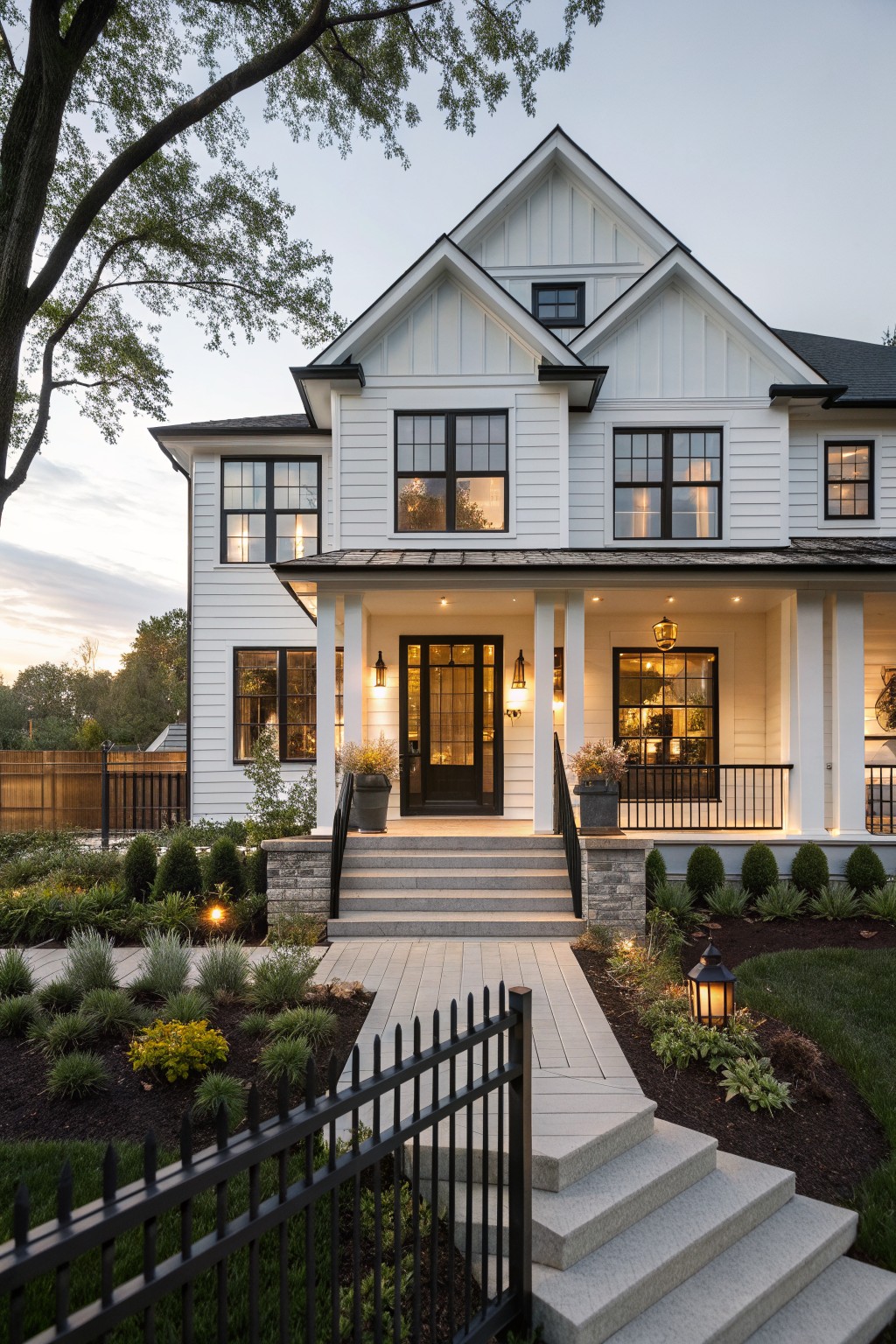
Black frames on windows and doors stand out against white siding in a way that feels both crisp and intentional. The contrast sharpens the look of the whole facade without needing extra trim or color elsewhere. It works because it respects the gabled rooflines and porch structure while adding a cleaner, more current layer.
This move suits Victorian farmhouses that already have good proportions. Keep the rest of the exterior simple so the frames do the work. It is easiest to pull off when the siding is bright white and the frames are a true black rather than a dark gray.
Creating Room for Outdoor Dining on the Patio
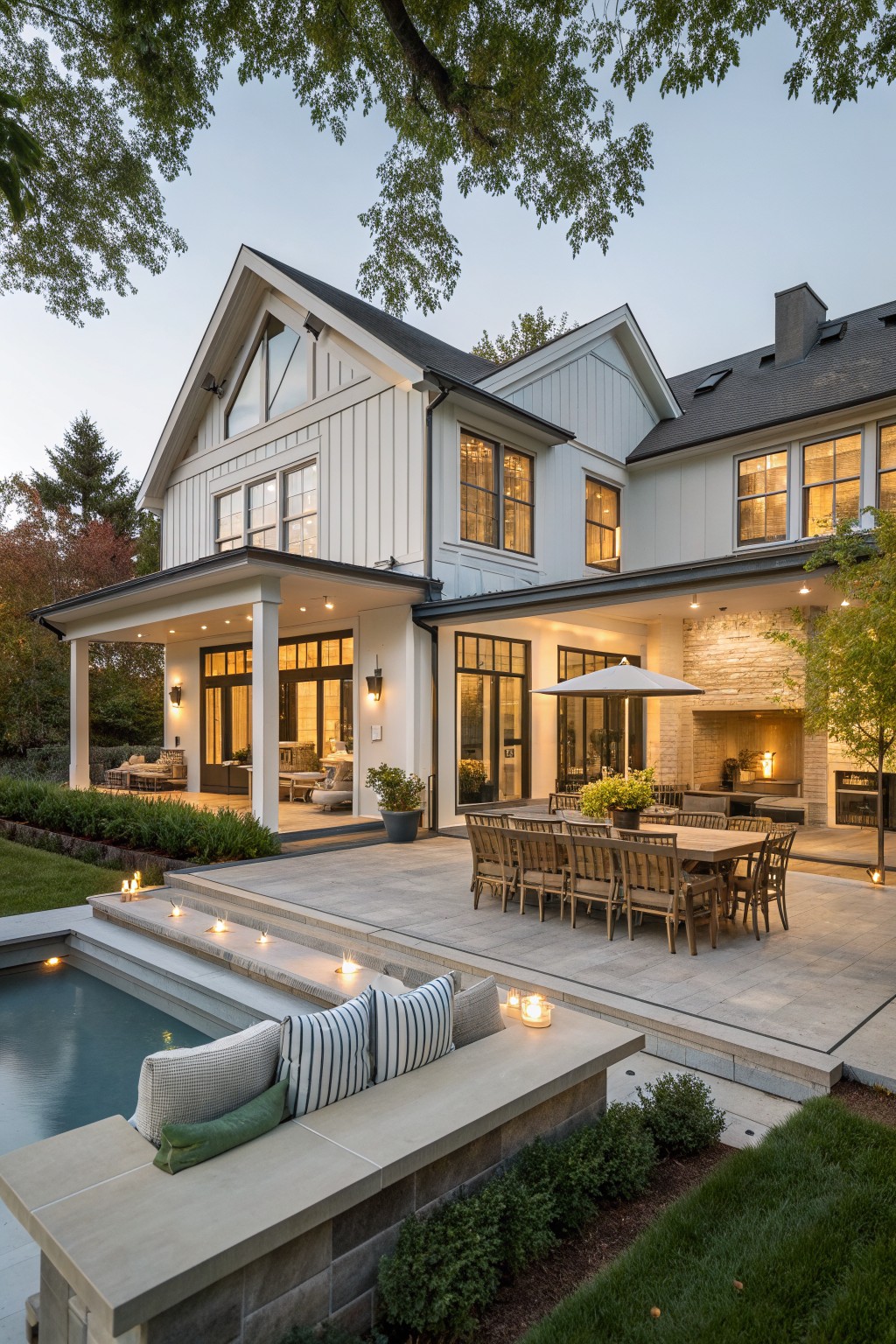
A long table placed right on the patio next to the pool turns the backyard into a place meant for meals rather than just looks. It keeps the seating close to the house so food and dishes move easily back and forth.
This setup works best on homes where the patio can sit level with both the interior and the pool edge. Keep the table under cover and add simple lighting so the space stays useful after dark without needing extra furniture.
Frame the Entry with a Black Arch
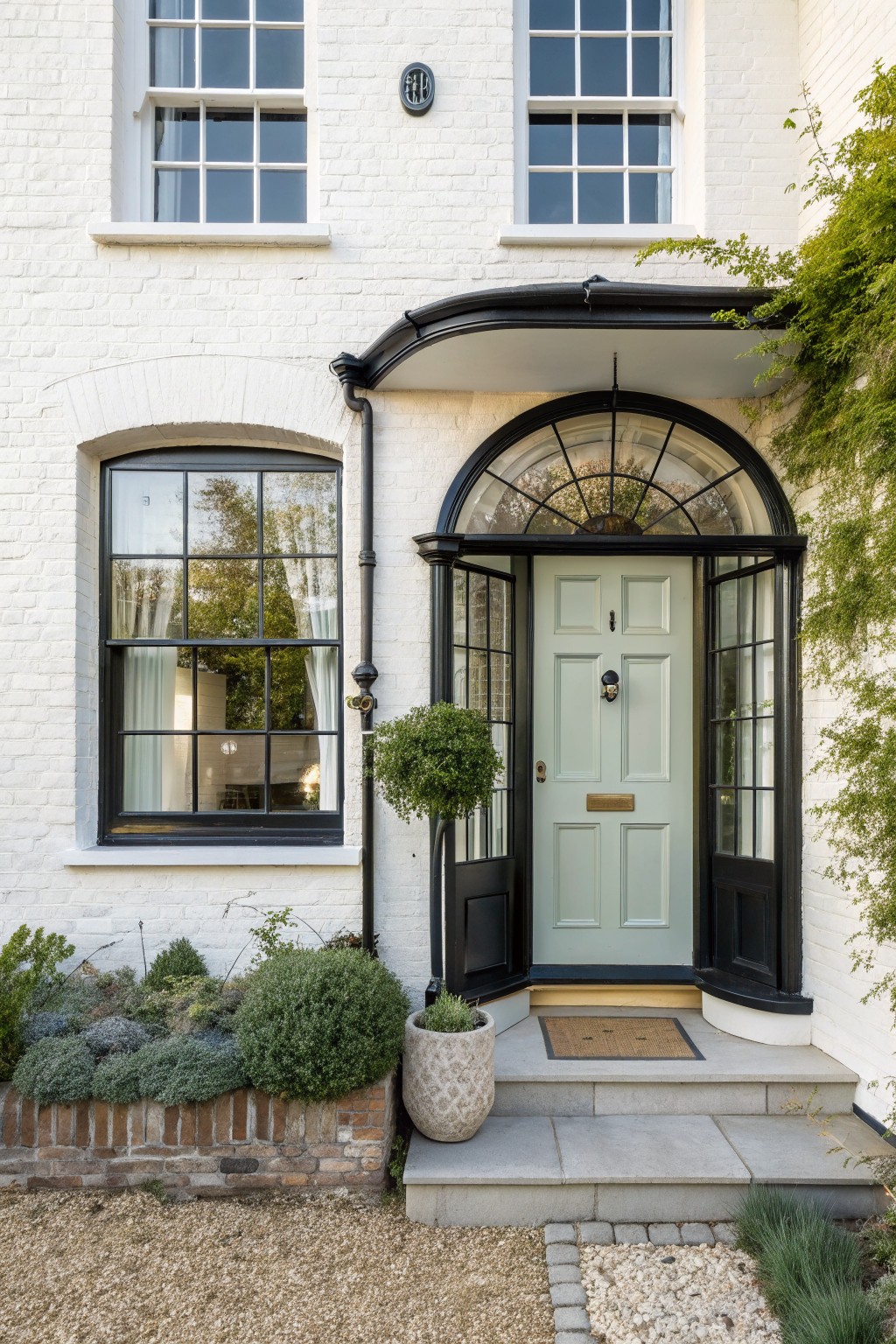
An arched entry with a strong black frame gives a white brick house a clean update while keeping its older character intact. The dark surround makes the door stand out without adding extra ornament, and it works especially well when the rest of the facade stays simple.
This approach suits homes that already have some Victorian lines but need a modern edge. Keep the door color soft and the surrounding brick or siding light so the arch becomes the clear focal point rather than competing with other details.
Using A Wraparound Porch To Blend Styles
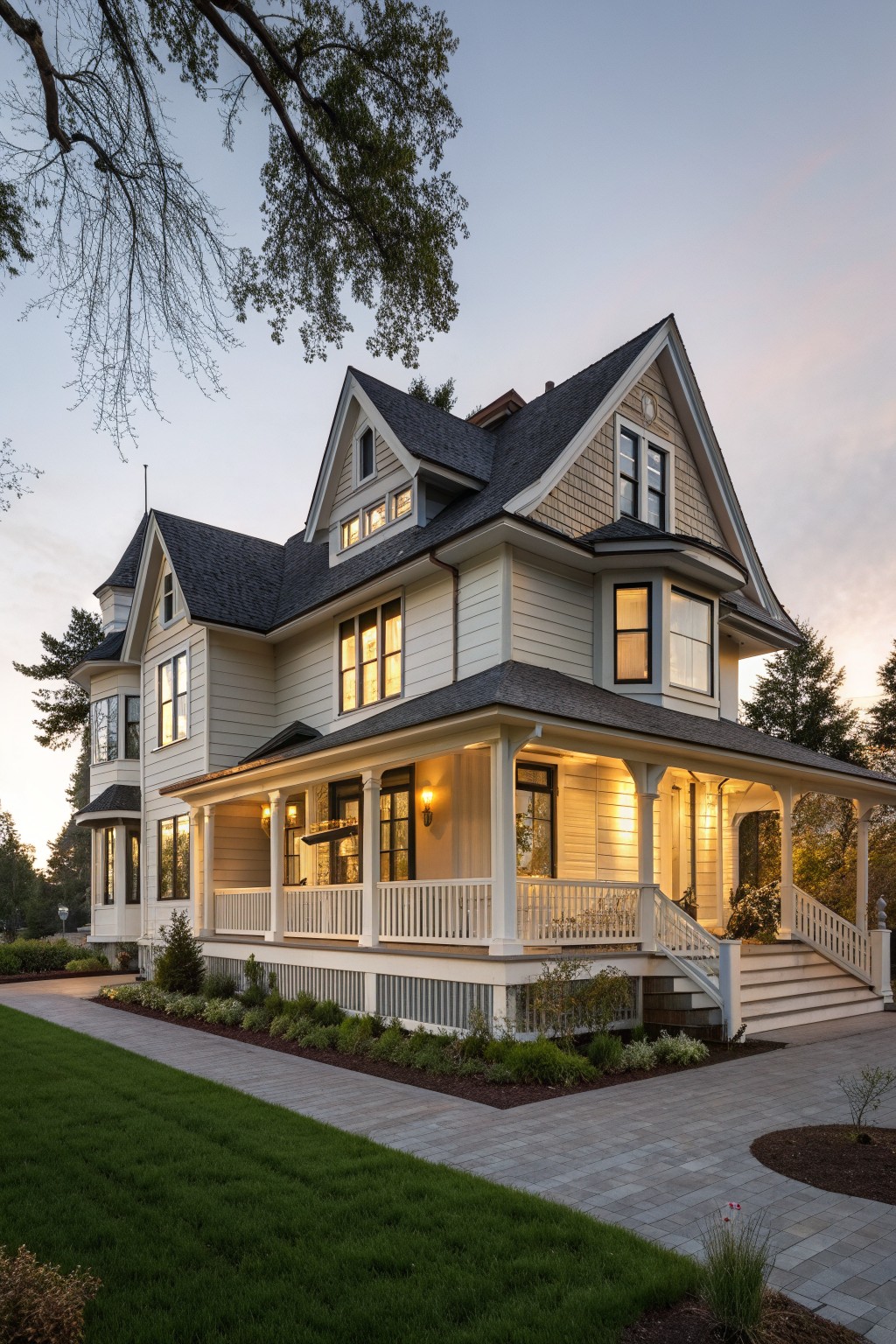
A wraparound porch works well here because it gives the house a grounded base that feels more farmhouse than Victorian. The clean railings and simple posts keep the lower level from competing with the steep gables and rooflines above.
This move suits homes that already carry some traditional detail and need a way to feel more approachable. Stick with straightforward materials and add a few lights along the posts so the porch stays useful after dark without turning ornate.
An Arched Entry Adds Classic Character
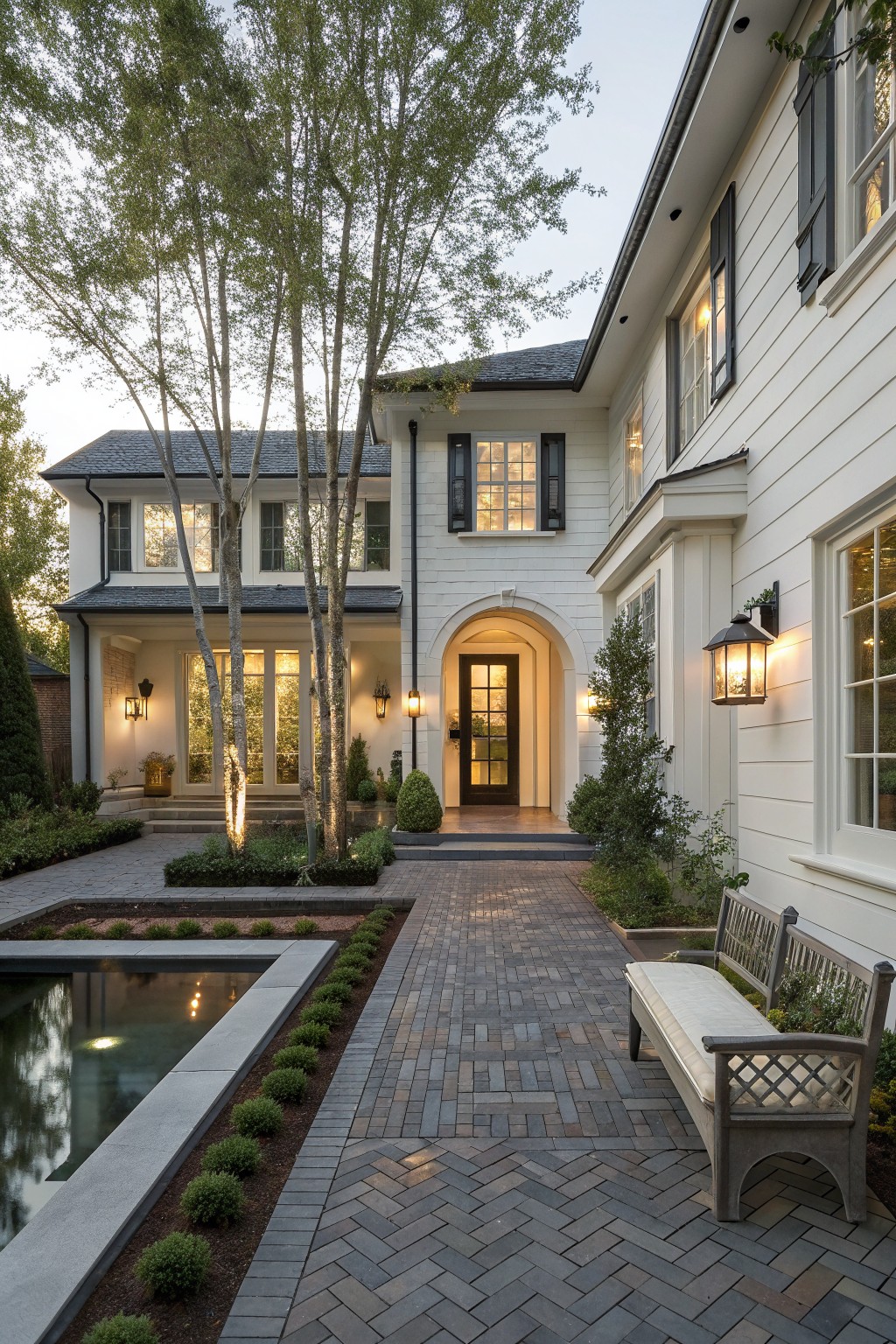
An arched entry gives a house that timeless farmhouse feel while still looking fresh. It frames the door in a way that feels intentional and balanced, especially on a clean white exterior with simple lines.
This approach works best on homes that already have some symmetry in the windows and roof. It pairs well with darker doors and shutters, and it helps the front feel more inviting without adding a lot of extra trim or detail.
Dark Accents On White Siding
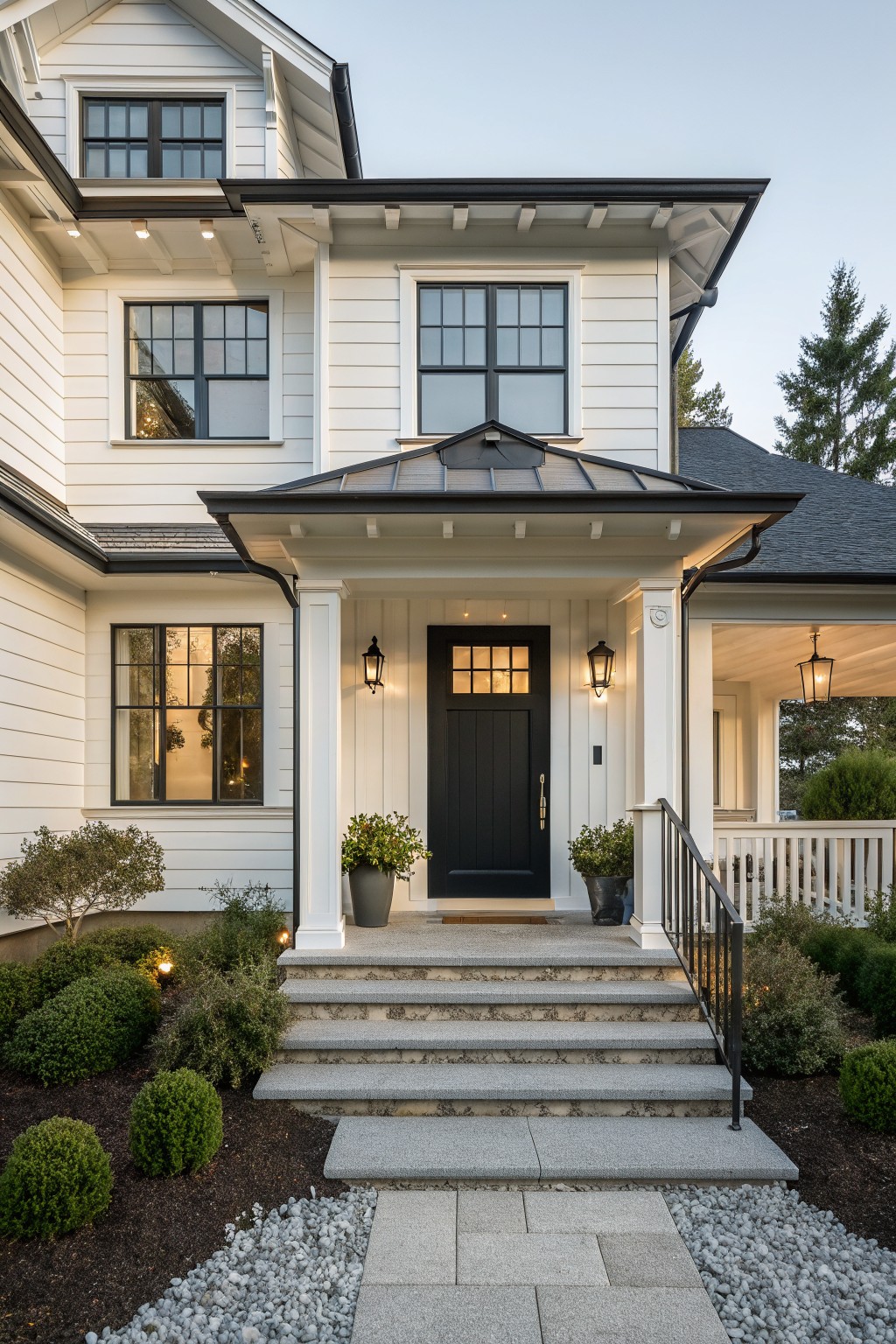
A black front door with matching trim gives a white farmhouse exterior a clearer modern edge. The contrast draws attention to the entry while still respecting the traditional shape and window layout of the house.
This approach works best on homes with simple siding and balanced proportions. Use it when you want the entry to feel updated without adding extra ornament or changing the roofline.
Dark Frames on White Farmhouse Siding
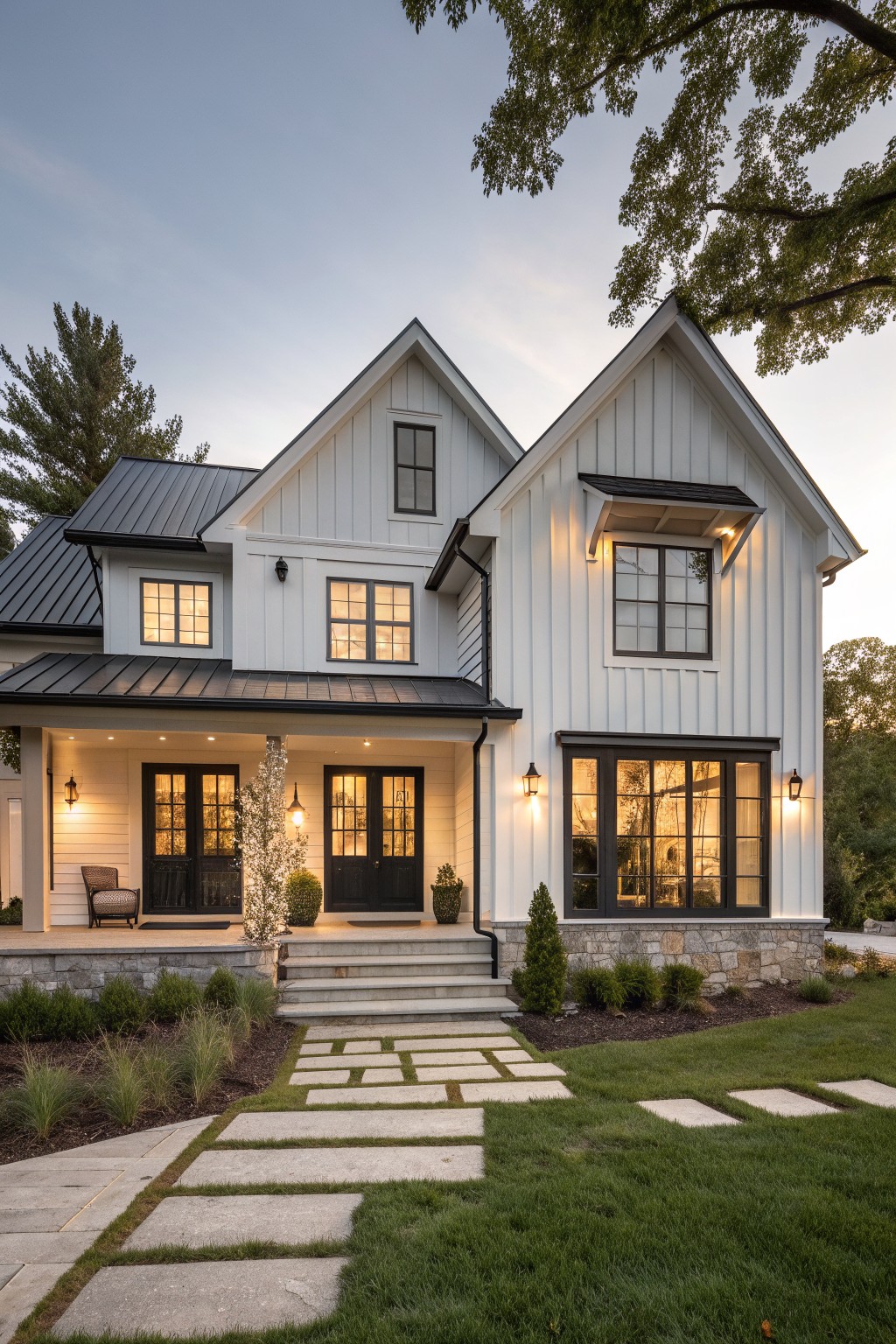
Black window frames and doors stand out against white siding in a way that feels both familiar and fresh. The contrast keeps the house from looking too soft while still honoring the simple lines of a classic farmhouse.
This works best on homes with straightforward shapes and few extra details. It suits people who want the look of an older house without the heavy trim work that often comes with it. Just keep the rest of the exterior fairly plain so the dark accents stay the focus.
Dark Front Doors Against White Siding
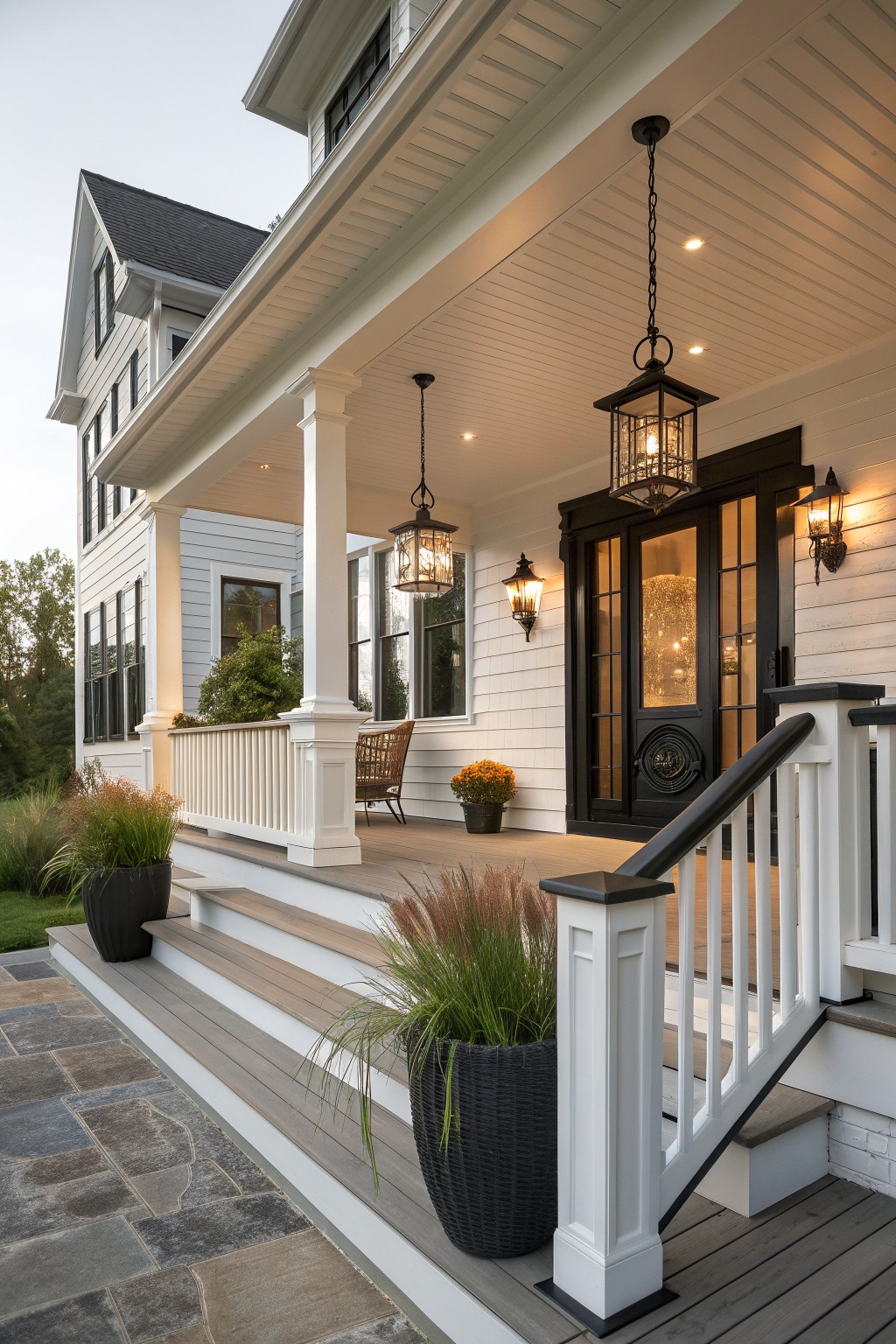
A dark front door gives a white house more presence without needing a lot of extra trim or color. The strong contrast pulls the eye straight to the entry and keeps the look from feeling too soft or plain.
This move works best on homes with a porch or simple columns already in place. Stick with matte black or deep charcoal and let the door hardware and a single light fixture do the rest.
Dark Siding Gives A Victorian Farmhouse Modern Edge
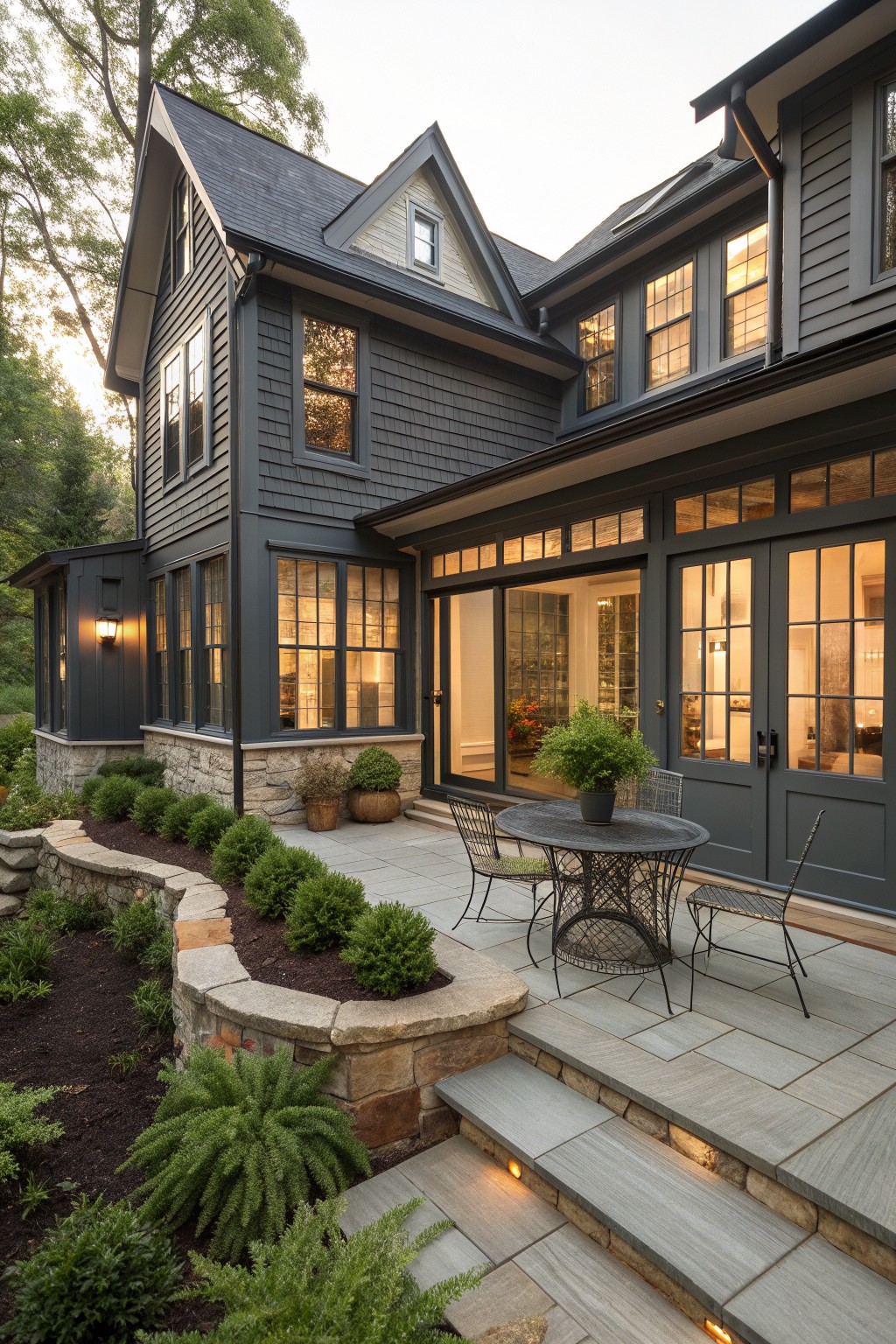
A deep charcoal exterior can take the familiar gables and steep roof of a Victorian farmhouse and make them feel current instead of dated. The color strengthens the shape of the house while letting the window patterns and trim stay visible without competing for attention.
This works best on homes that already have clear architectural lines and some stone at the base. Keep the rest of the palette simple so the dark siding does not overwhelm the proportions or make the house feel closed in.
Dark Accents Against White Siding
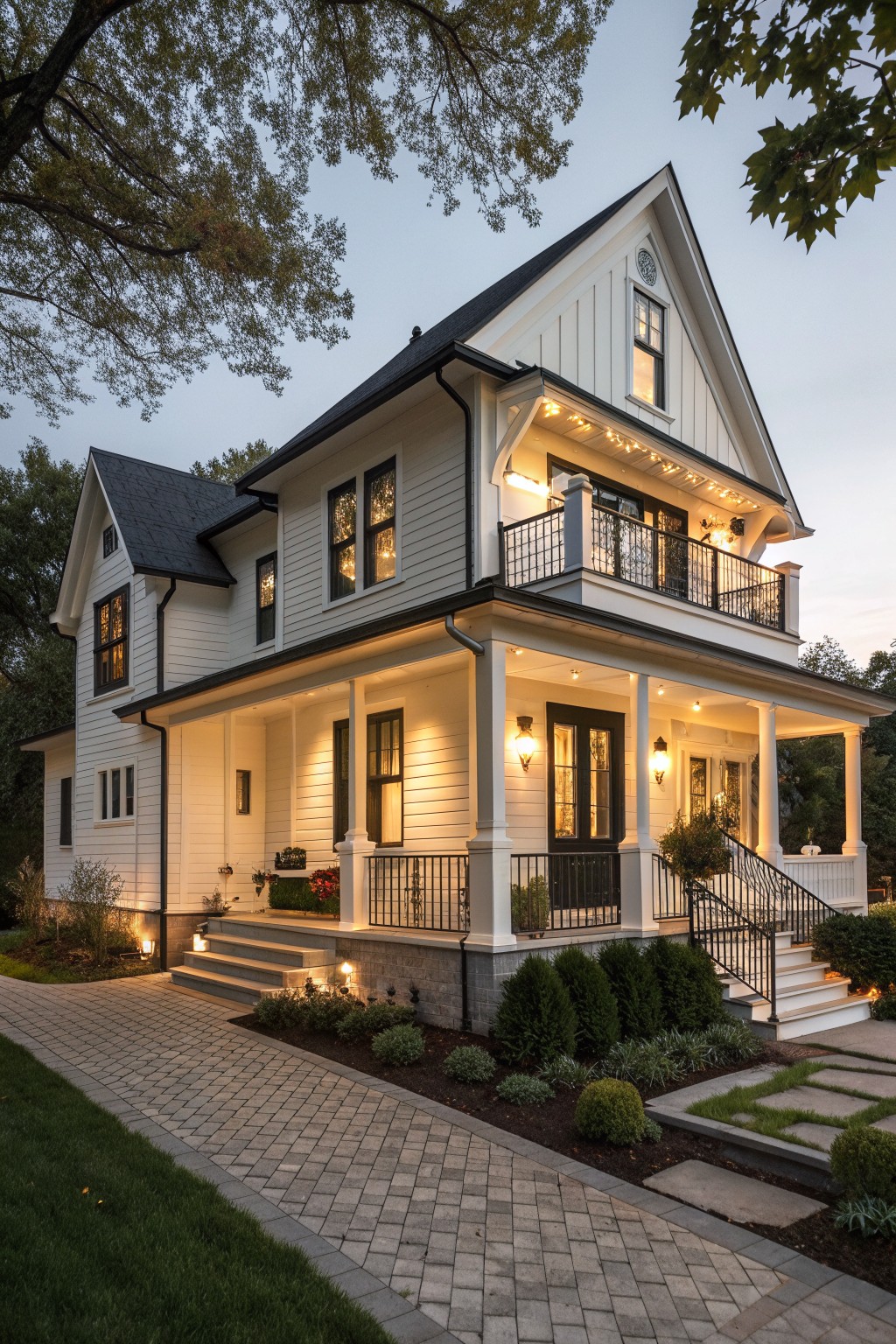
Many modern Victorian farmhouses gain a sharper look when dark trim and railings are set against light siding. The contrast keeps the traditional shape intact while making the lines read cleaner and more current.
This approach suits homes that already have a strong porch or multiple windows, since the dark elements highlight those features without added decoration. It works best on houses with a light base color and can feel too heavy if overused on smaller structures.
Dark Paint Modernizes Victorian Farmhouse Exteriors
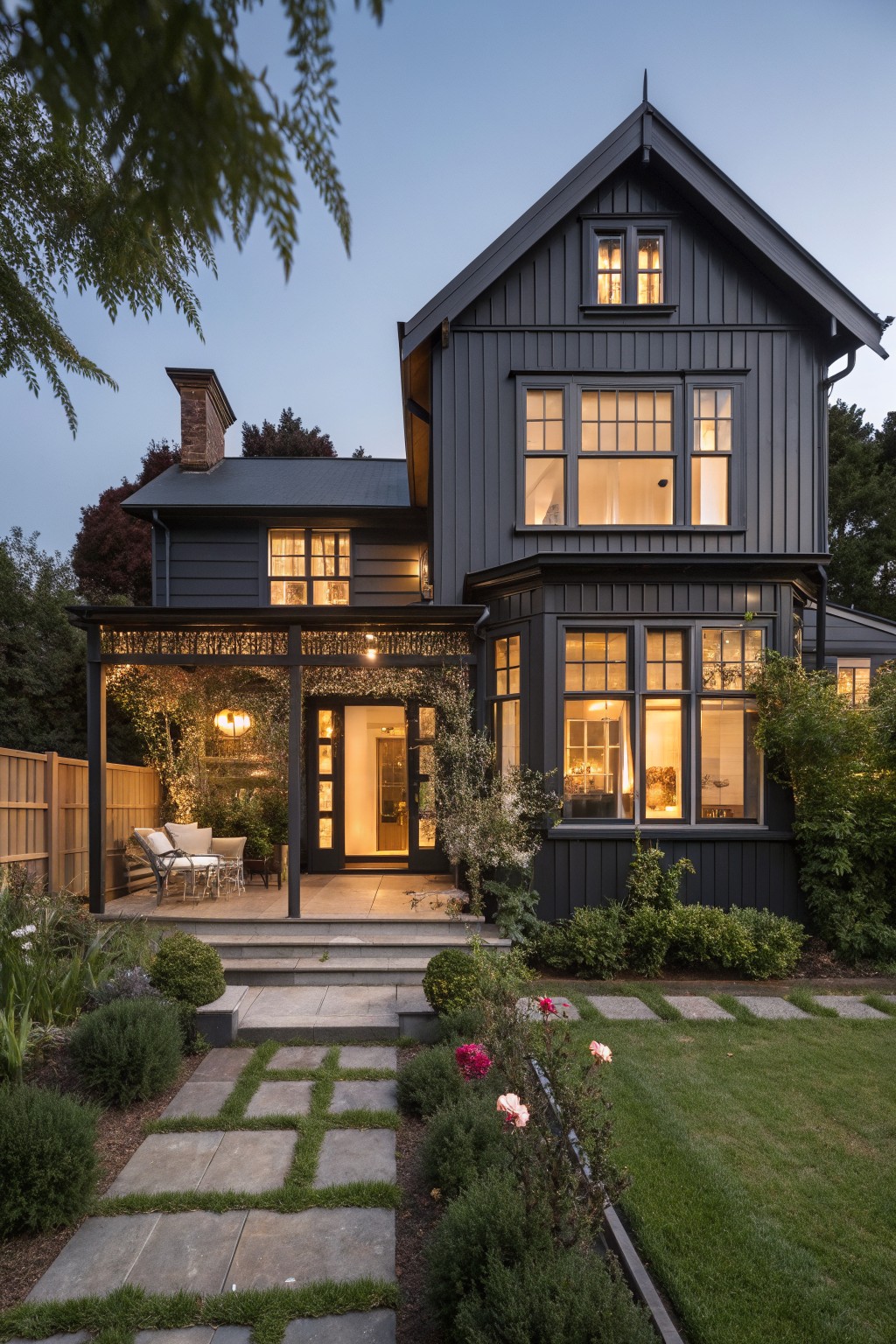
Many older Victorian shapes feel too busy or dated when left in lighter colors. A deep dark finish on the siding pulls the whole exterior together and gives it a cleaner, more current look without changing the rooflines or window placements.
This approach works well on homes that already have good proportions and some architectural detail worth keeping. It suits suburban streets where you want the house to stand out at night but still blend with trees and landscaping during the day. Keep the trim sharp so the contrast stays intentional rather than heavy.
Frequently Asked Questions
Q: Can I swap in modern windows on an old Victorian without losing the charm? A: Choose simple black frames that sit flush with the siding. They give clean lines while the original trim stays intact around them.
Q: What roof style works when mixing Victorian details with modern farmhouse looks? A: Go for a metal roof in a dark matte finish. It handles weather well and lets the ornate eaves stand out below it.
Q: How should I handle the front porch if I want both historic railings and a current feel? A: Keep the railings but paint them to match the house trim. Add straight wooden posts instead of turned ones to pull the whole thing together.
