

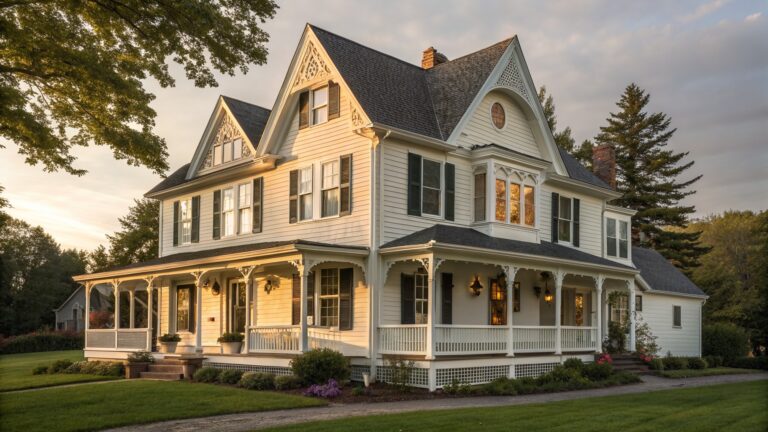
Walking past older homes, I notice how the gingerbread trim draws attention to the rooflines and porch details in ways that change the entire facade.
The right amount of carving can highlight the entry without making the rest of the house look too busy or fussy.
Details matter here.
I tend to test these ideas on paper before committing because the proportions rarely match what you imagine from drawings alone.
Some of the examples show how paint choices help the trim stand out against the siding in a balanced way.
Gingerbread Trim Along The Roof Peaks
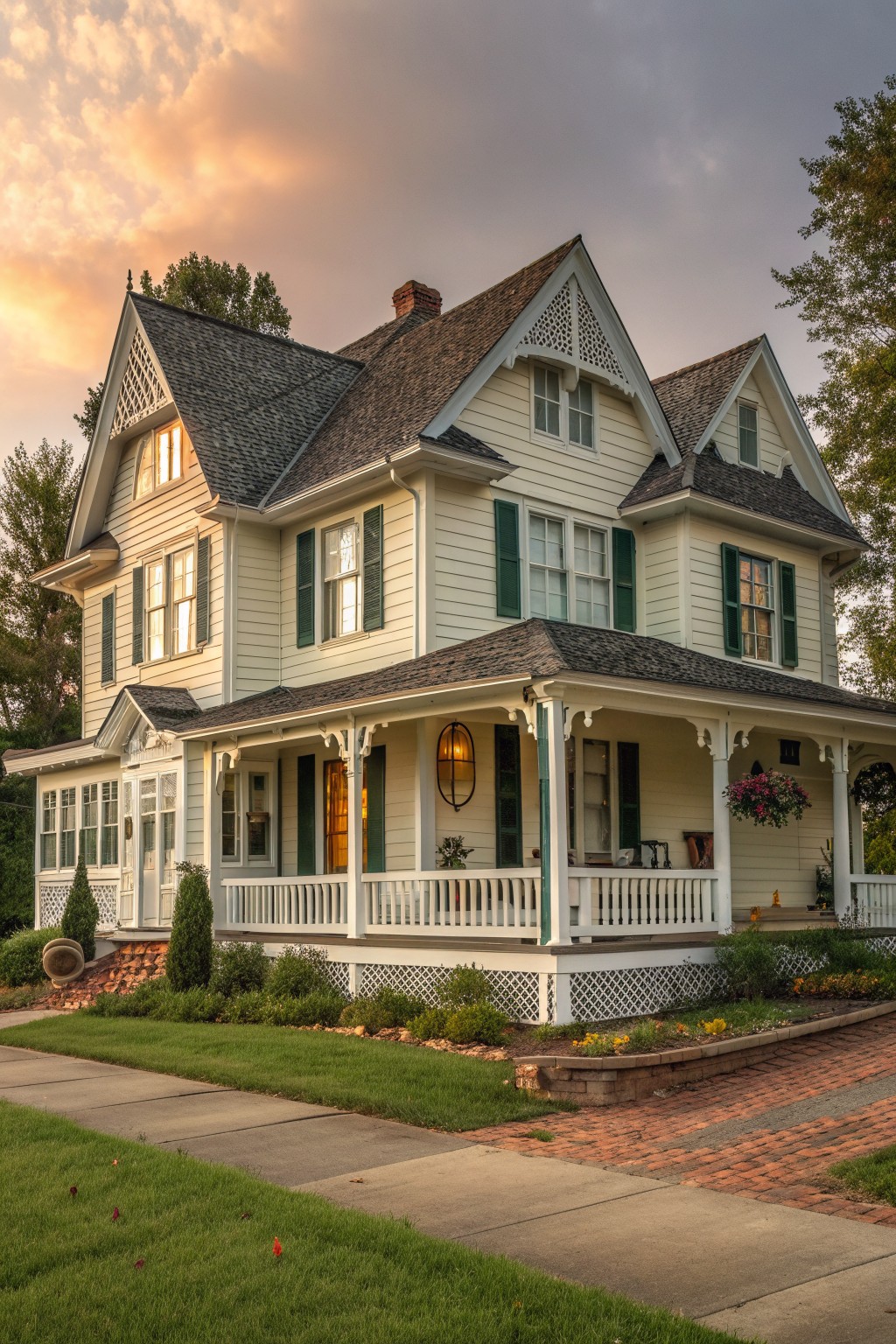
Gingerbread trim gives a Victorian farmhouse that extra bit of character along the roof. It draws attention to the gables and makes the whole exterior feel more finished without changing the siding or windows.
Place it on the main peaks first, then add a smaller version along the porch if the house has one. This works best on homes with steep roofs where the trim can catch the light and stand out from a distance.
Gingerbread Trim Accentuates Steep Roof Peaks
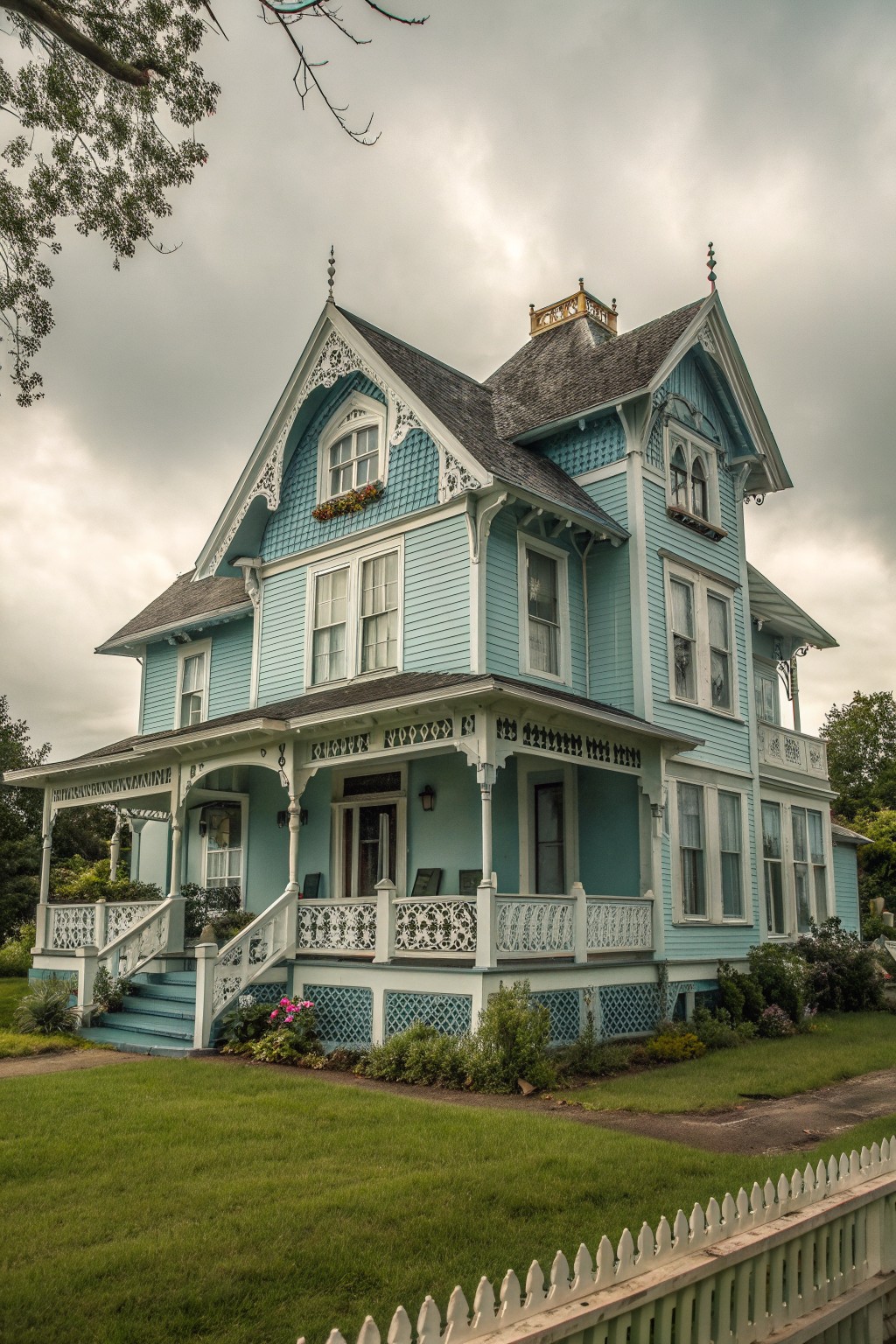
Many Victorian farmhouses rely on gingerbread trim to bring out the shape of the roof and gables. The detail draws attention to the peaks without needing bold color changes or extra materials.
It suits homes with steep roofs and multiple gables best. Use it sparingly on the porch and main roof edges so the trim adds character without covering every surface.
Gingerbread Trim Against Dark Siding
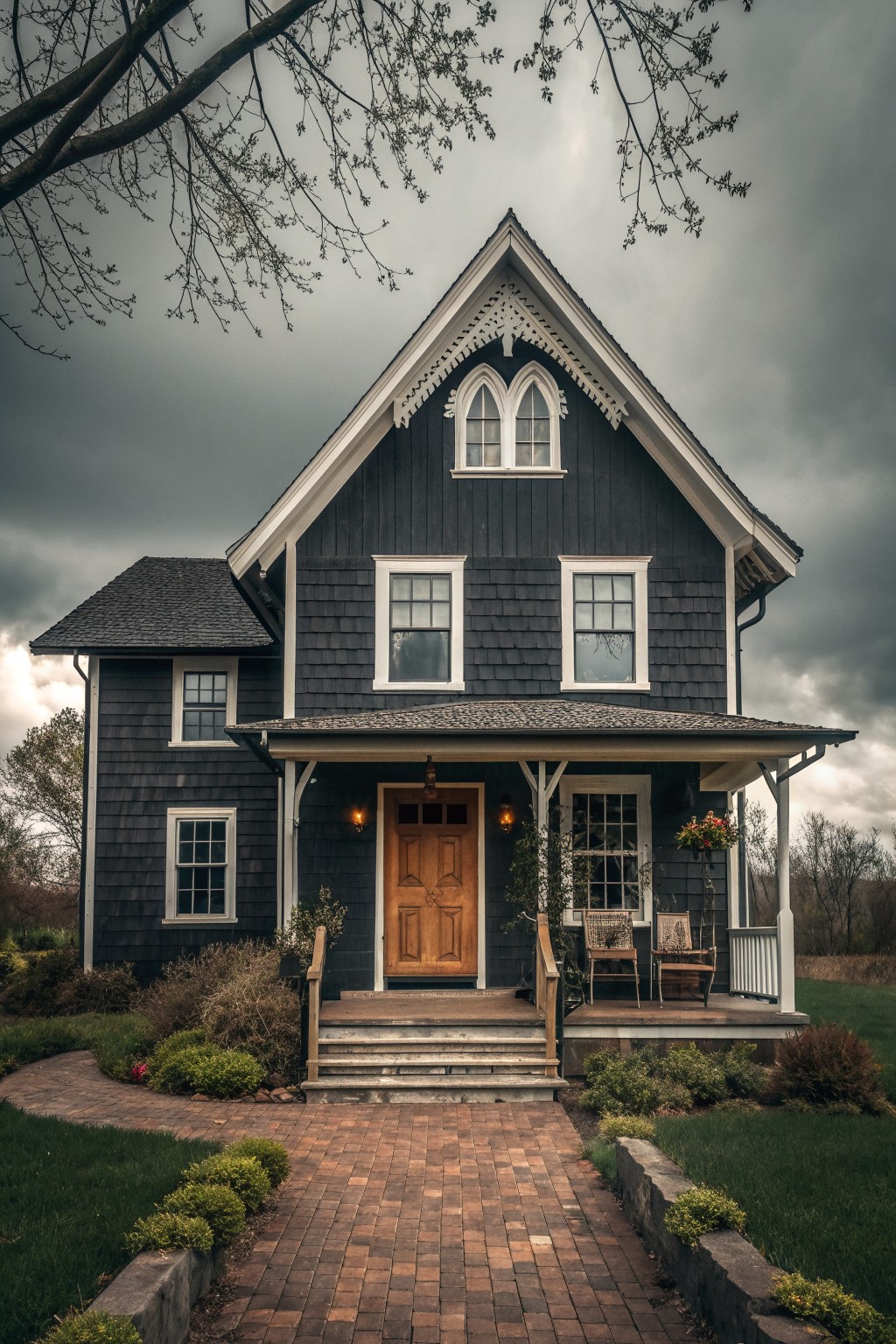
White gingerbread trim shows up well on a dark painted farmhouse. It gives the steep front gable extra shape and keeps the whole front from looking too plain or heavy.
This detail works best on houses that already have a strong roof peak. Paint the trim a crisp white or off-white so it catches light and stands out from the siding.
Gingerbread Trim On The Porch
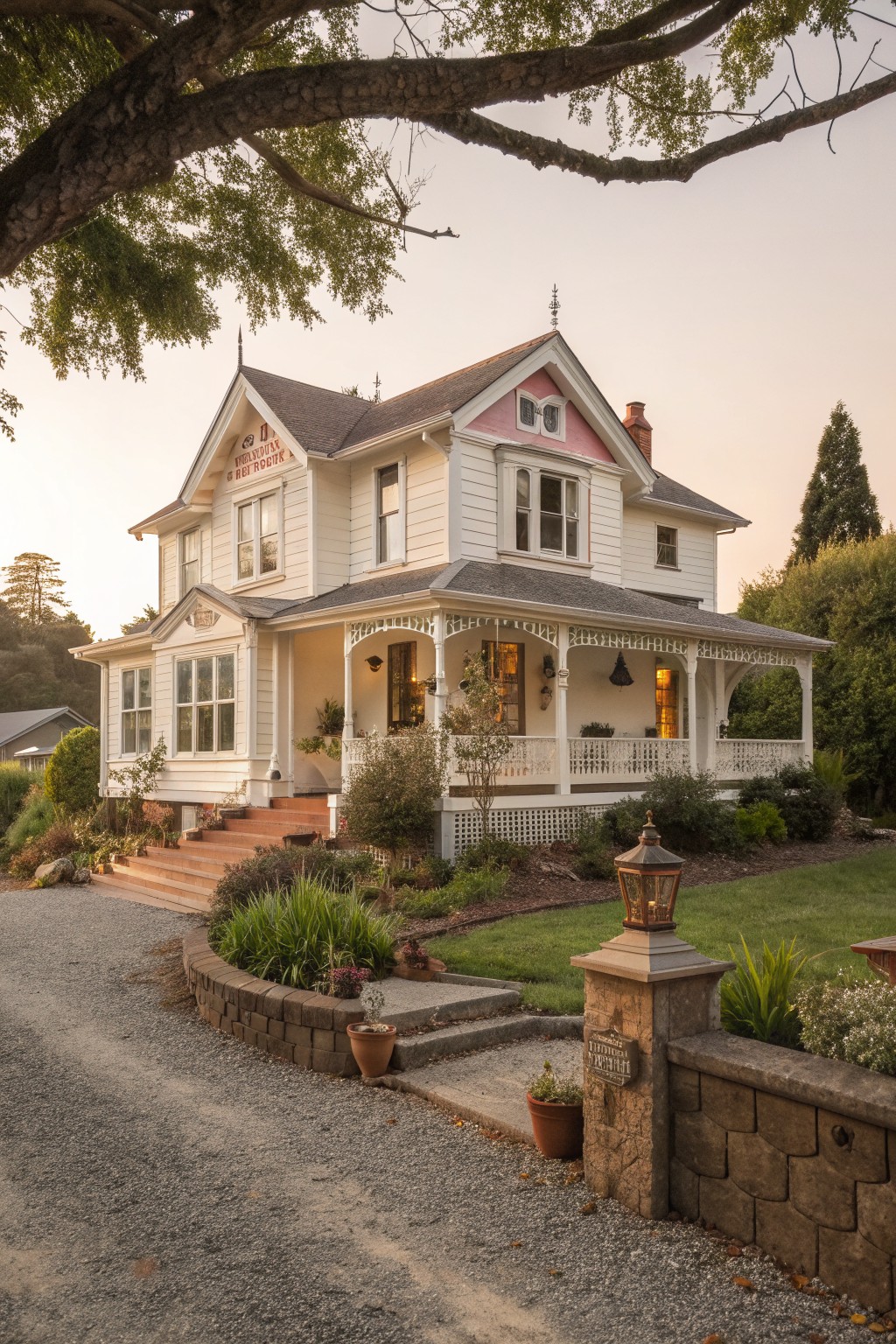
Gingerbread trim gives a Victorian farmhouse porch that extra bit of detail without taking over the whole look. It shows up here along the eaves and railings, creating a light pattern that softens the straight lines of the house.
This works best on homes with a simple color scheme like white siding and a few accent tones. Stick to one or two trim styles so the porch stays readable instead of busy.
Gingerbread Trim On The Gables
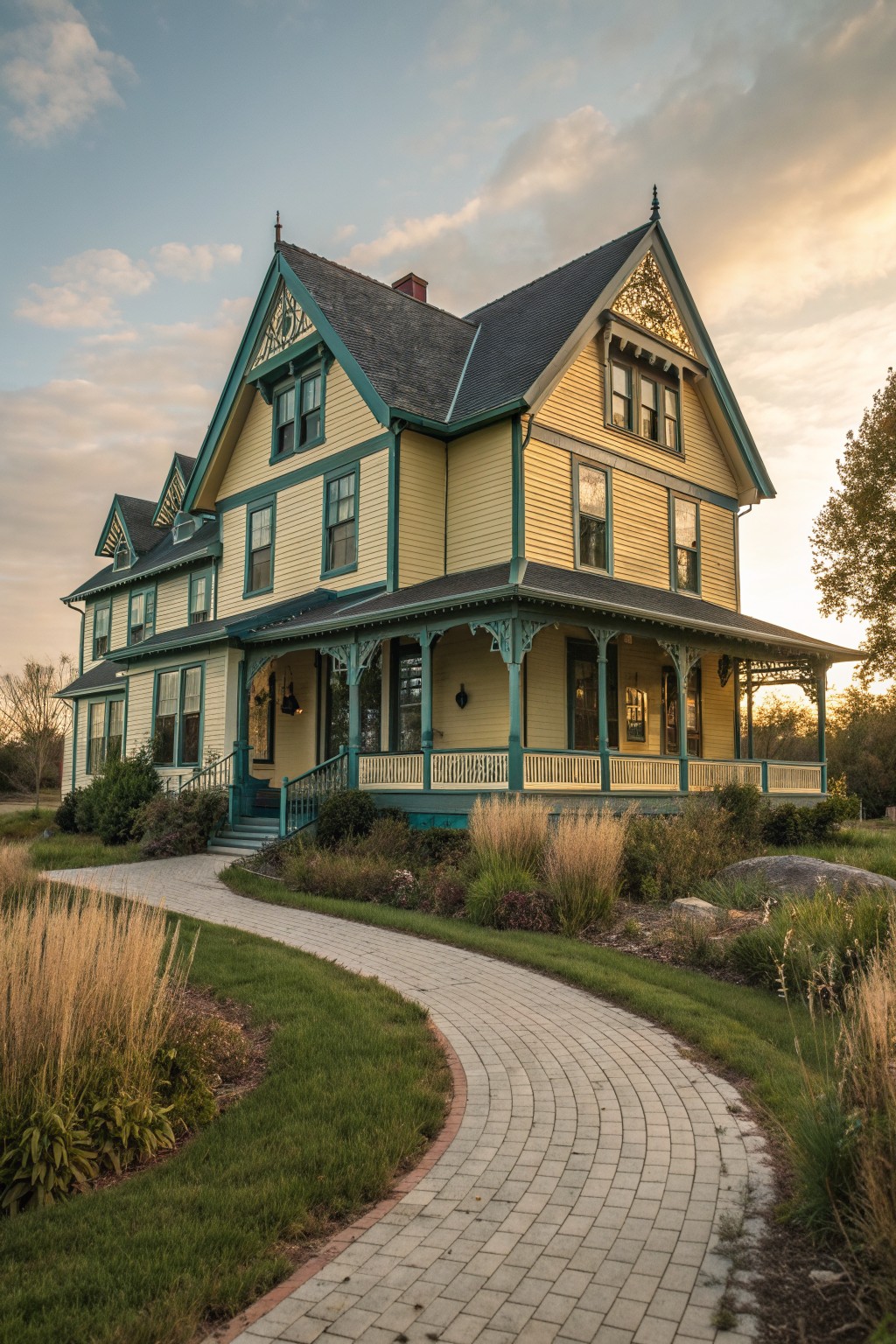
Gingerbread trim gives a Victorian farmhouse its signature look by breaking up large roof sections with delicate patterns. On this house the cutouts sit right at the peaks and draw the eye upward along the steep gables.
Place the trim only where it will be seen from the street and paint it a shade or two darker or lighter than the siding. This keeps the detail crisp and avoids extra maintenance on lower areas that get more wear.
Gingerbread Trim Adds Detail to Farmhouse Exteriors
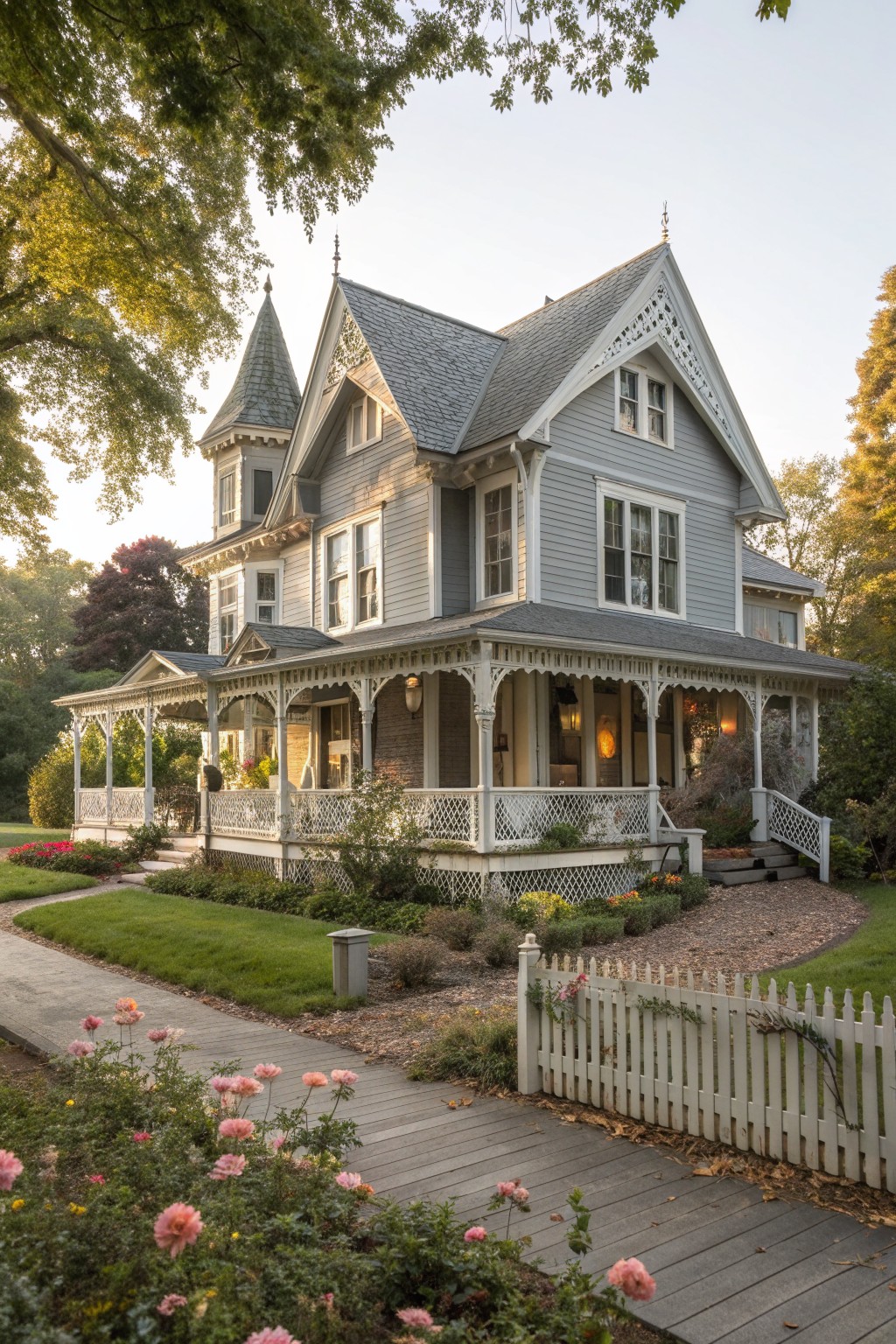
Gingerbread trim stands out on many Victorian farmhouses because it breaks up large rooflines and porch areas with simple repeating patterns. The white cutwork along the eaves and railings gives the light siding more definition while keeping the overall shape straightforward.
This trim suits homes with multiple gables and a wide porch where the details can be seen from the street. It works best on older homes or new builds meant to match that style, though the wood needs regular painting to stay in good shape.
Gingerbread Trim On The Upper Gables
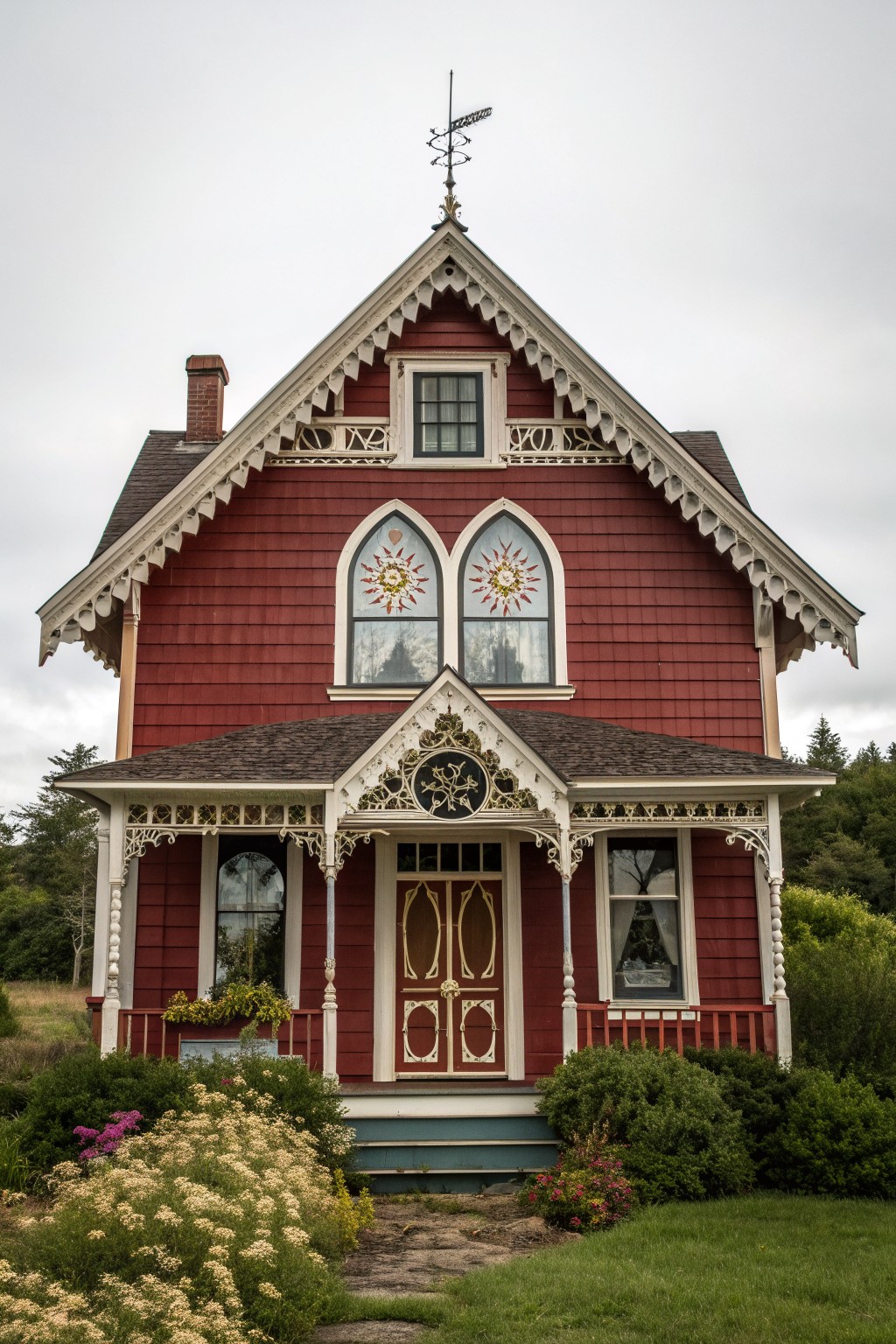
Gingerbread trim stands out most when it sits high on the gables rather than just along the porch. The white cutouts against the red siding draw the eye upward and make the roofline feel more finished without adding bulk.
This approach works well on older farmhouses that already have steep pitches. Keep the trim simple in pattern and limit it to two or three key spots so the detail reads clearly from the road. Too many layers can start to look busy once the house is viewed from farther away.
Gingerbread Trim Along The Gables
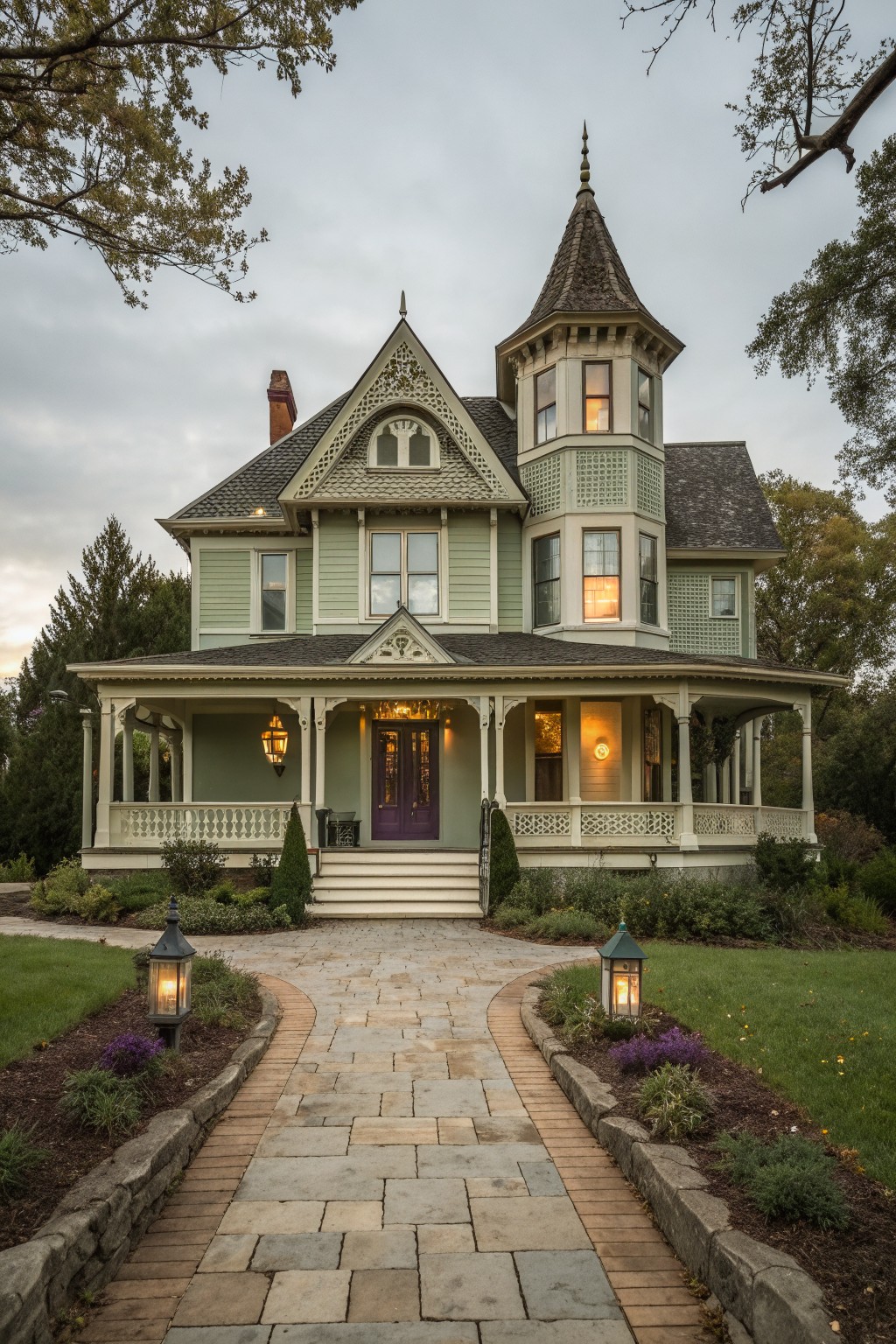
Gingerbread trim works well on Victorian farmhouses because it adds fine detail to the roof peaks without making the whole house feel busy. The white cutouts here sit cleanly against the green siding and give the front a finished look that still reads as farmhouse simple.
Place the trim mainly on the main gable and porch edge so it frames the entrance without covering every surface. It suits homes with a similar roof shape and looks best when the trim color contrasts with the siding rather than matching it.
Gingerbread Trim On The Porch And Gables
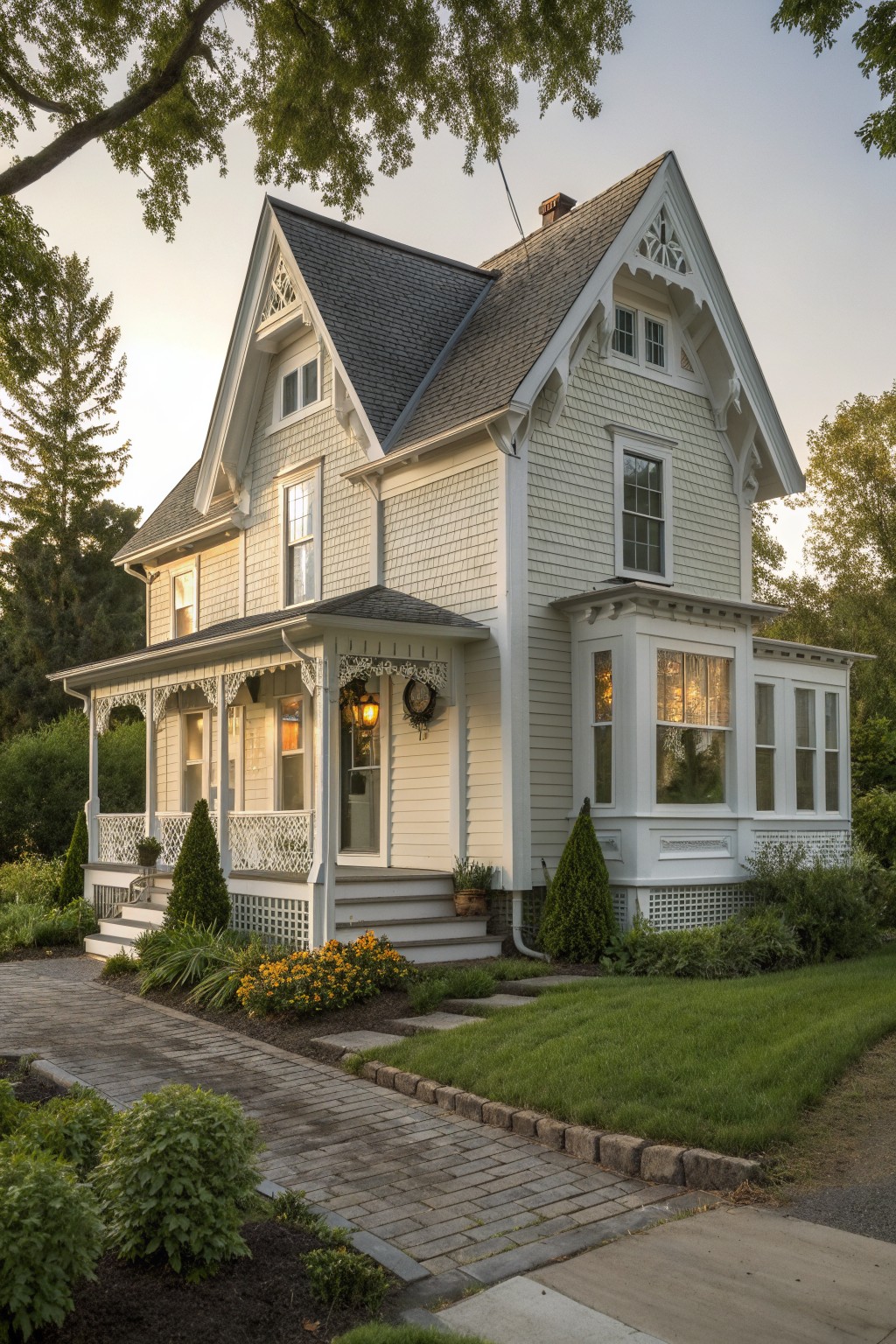
Gingerbread trim gives a Victorian farmhouse that extra layer of detail without needing a lot of color or bold materials. The white cutouts along the porch edge and up in the gables catch the light and make the simpler siding look more finished.
This approach works well on homes that already have a steep roofline and a front porch. Keep the trim pattern fairly open so it does not feel heavy, and match the paint to the window frames for a clean look overall.
Consistent Gingerbread Patterns Across Roof Edges

Gingerbread trim stands out when it follows the rooflines and gables on a Victorian farmhouse. It adds fine detail that makes the upper part of the house feel more finished and true to the style without changing the main siding color.
This works best on homes with steep roofs and multiple peaks. Paint the trim white or a light shade so it contrasts with the siding, and keep the patterns consistent across the gables and eaves for a clean look.
White Trim That Highlights Gingerbread Details
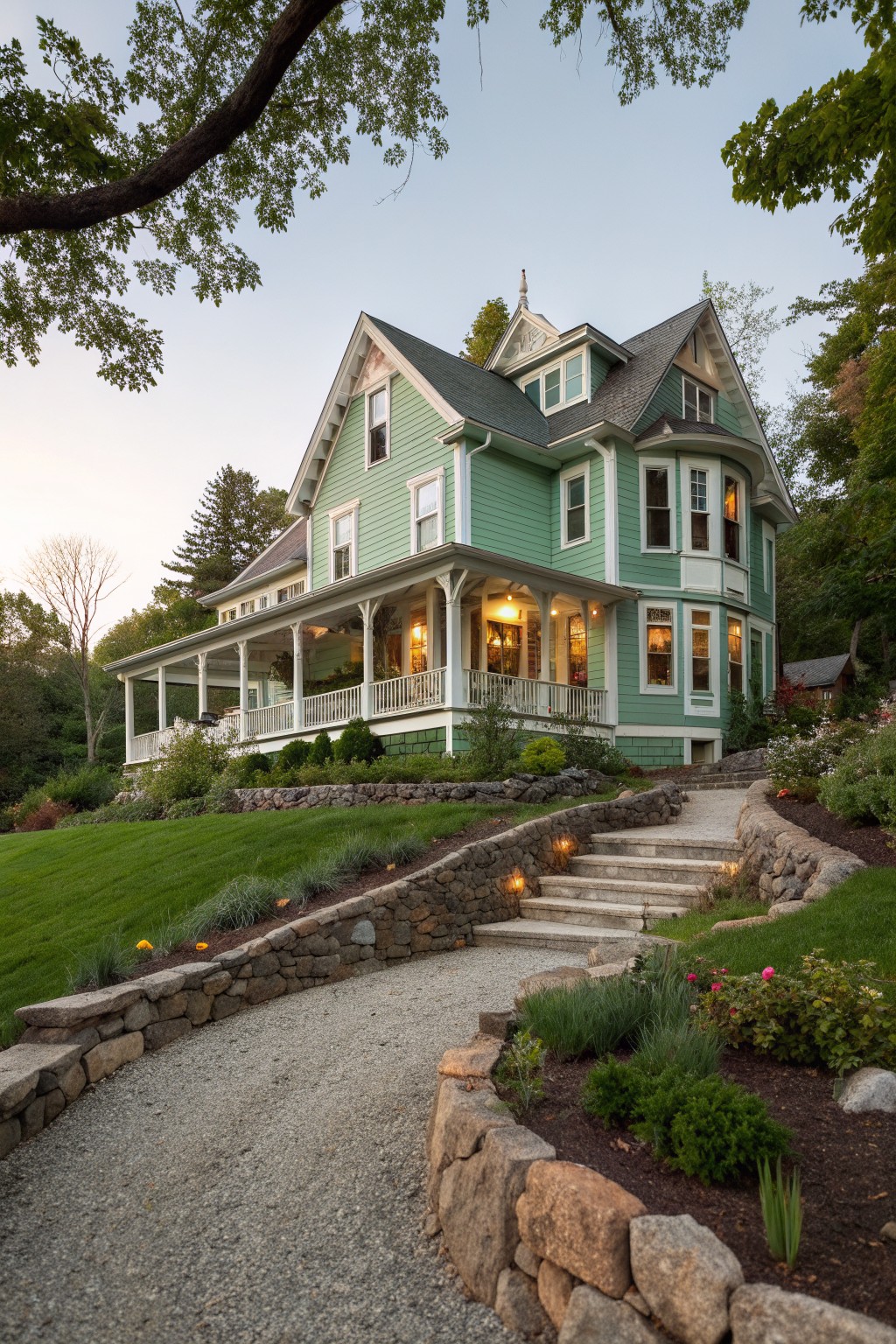
Painting the trim white on a soft green house helps the gingerbread work show up without any extra effort. The contrast draws attention to the porch railings and gable accents in a simple way that feels right for this style of home.
This approach works best on Victorian farmhouses where the trim already has some detail. Stick with a clean white rather than a warm off-white so the lines stay sharp against the siding.
Gingerbread Trim Accents Porch Railings And Eaves
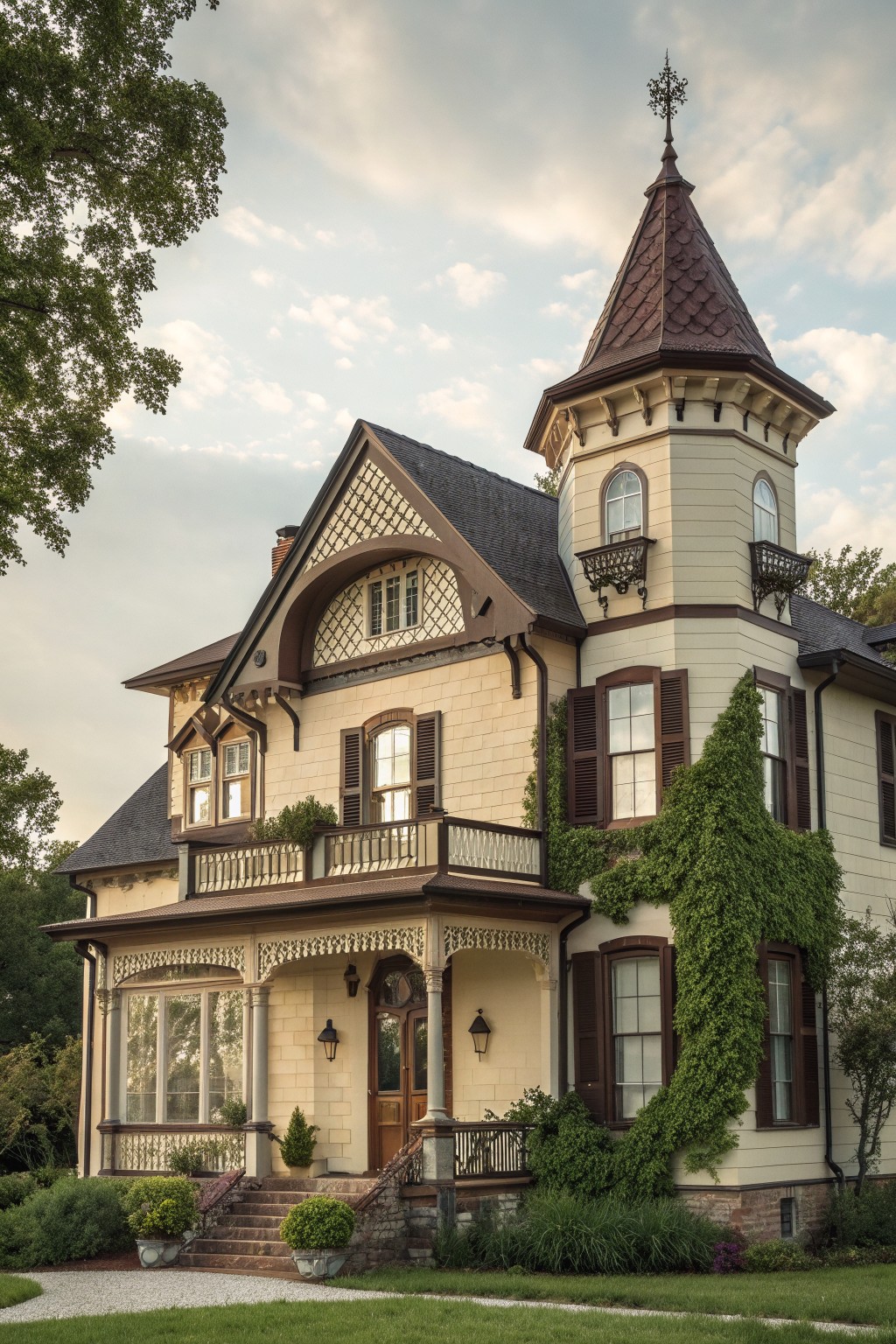
Gingerbread trim gives a Victorian farmhouse porch that light, detailed look without needing a lot of other decoration. It shows up clearly against the plain siding and draws attention to the entry in a simple way.
This works best on homes that already have a strong roofline and some height to the facade. Keep the trim to the porch area and gable if you want the detail to stand out without making the whole exterior feel busy.
Adding Bracket Details to a Farmhouse Porch
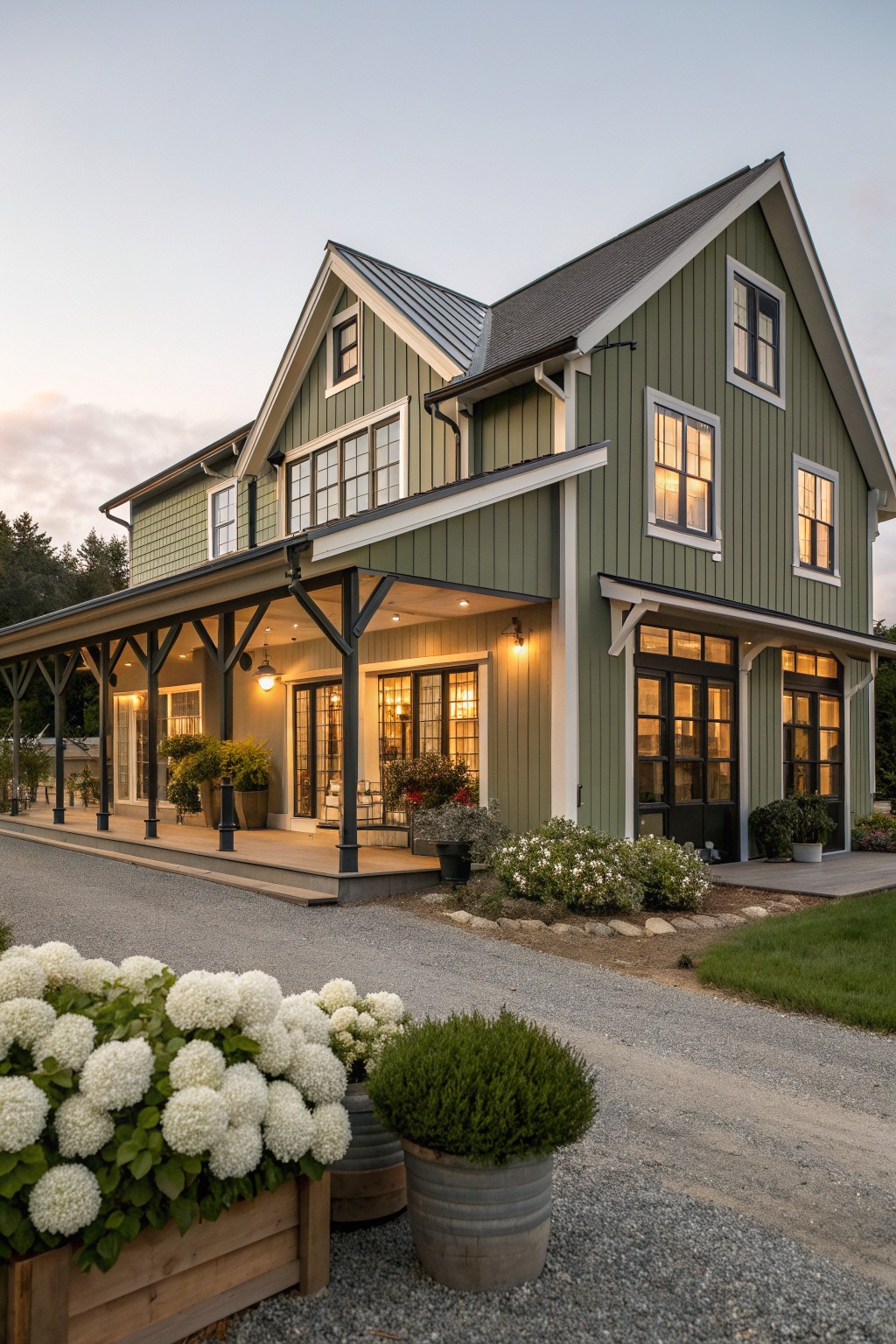
A long covered porch with simple brackets under the eaves gives the house real presence. The dark supports stand out against the green siding and make the whole front feel more finished and welcoming.
This approach works best on Victorian farmhouses that already have a strong roofline and gables. Keep the brackets straightforward in shape and color so they add interest without turning fussy. It suits homes where you want a bit of trim but still need the porch to feel usable every day.
Gingerbread Trim Frames The Porch
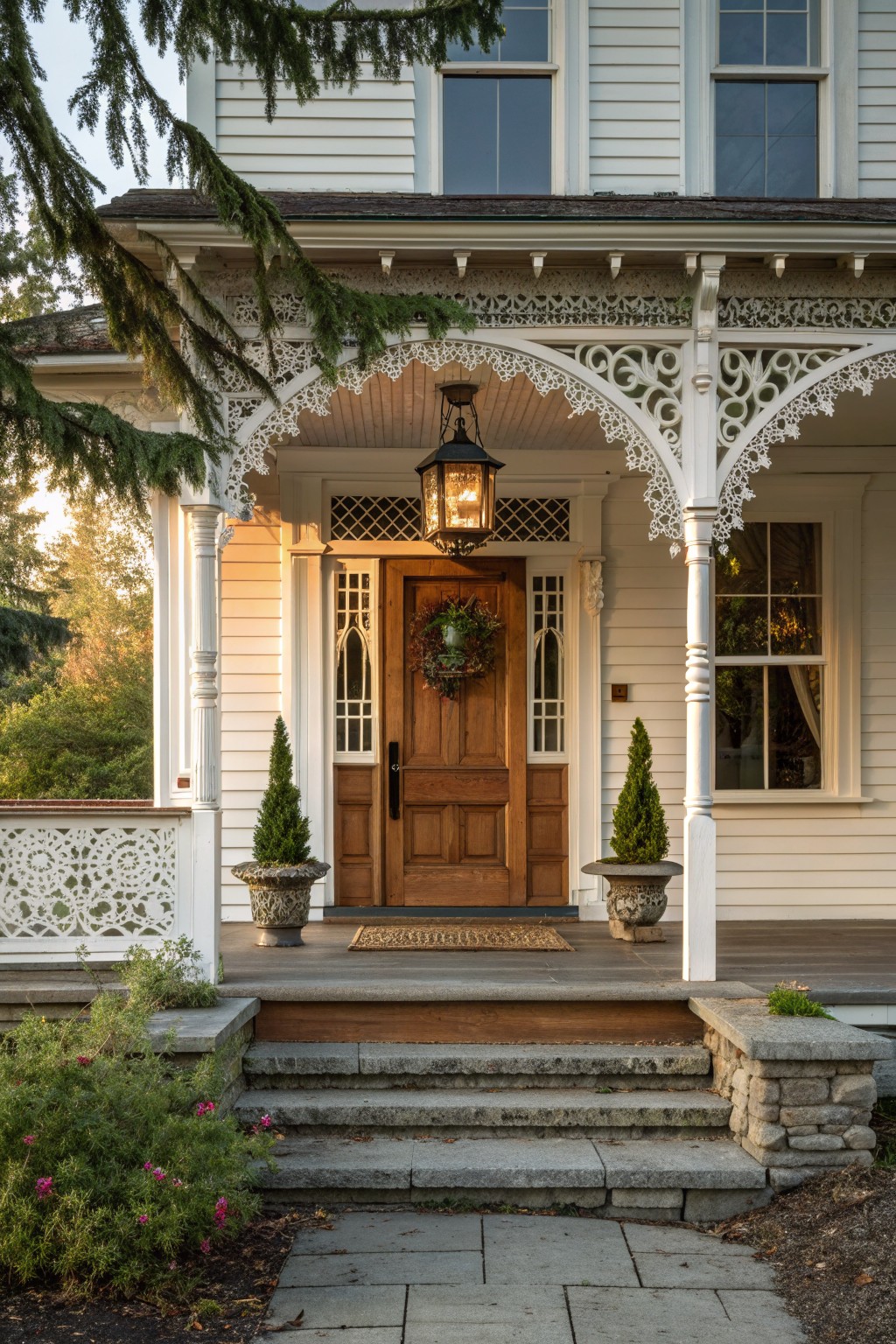
Gingerbread trim gives a Victorian farmhouse porch its signature look. The delicate cutouts along the arches and eaves add detail that makes the entry feel more finished and inviting.
This trim works best on homes with a simple base structure so the pattern can stand out. Keep the color light to match the siding, and pair it with a solid wood door for contrast.
Delicate Gingerbread Cutouts For A Welcoming Porch
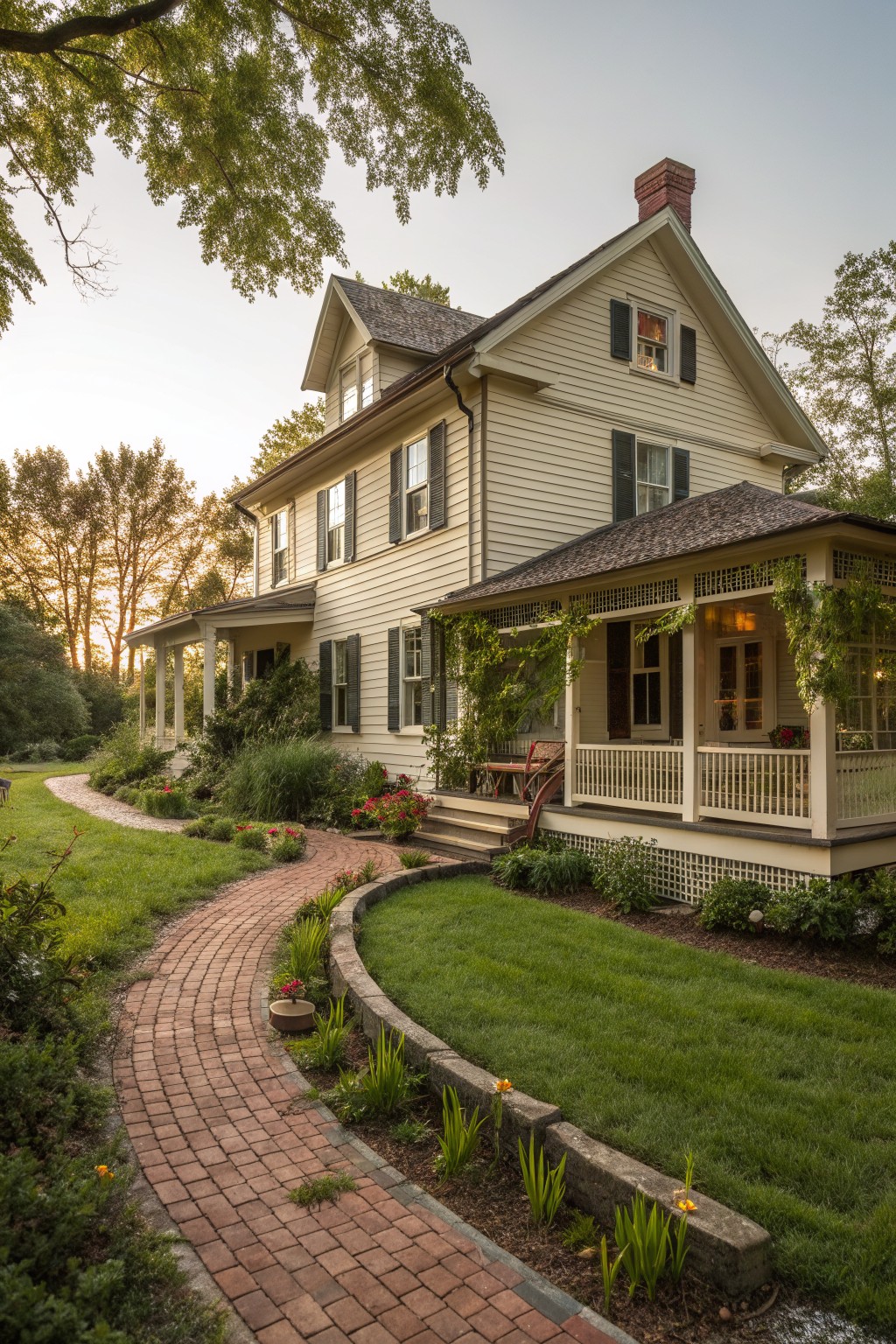
Gingerbread trim gives a Victorian farmhouse porch that extra layer of character. The delicate cutouts and rail details break up the flat surfaces and make the entry feel more finished without adding bulk.
This approach works best on houses where the porch is a main feature visible from the road. Paint the trim in a soft contrast to the siding so it stands out in daylight but still feels tied to the rest of the exterior.
Decorative Gingerbread Detail On The Front Gable
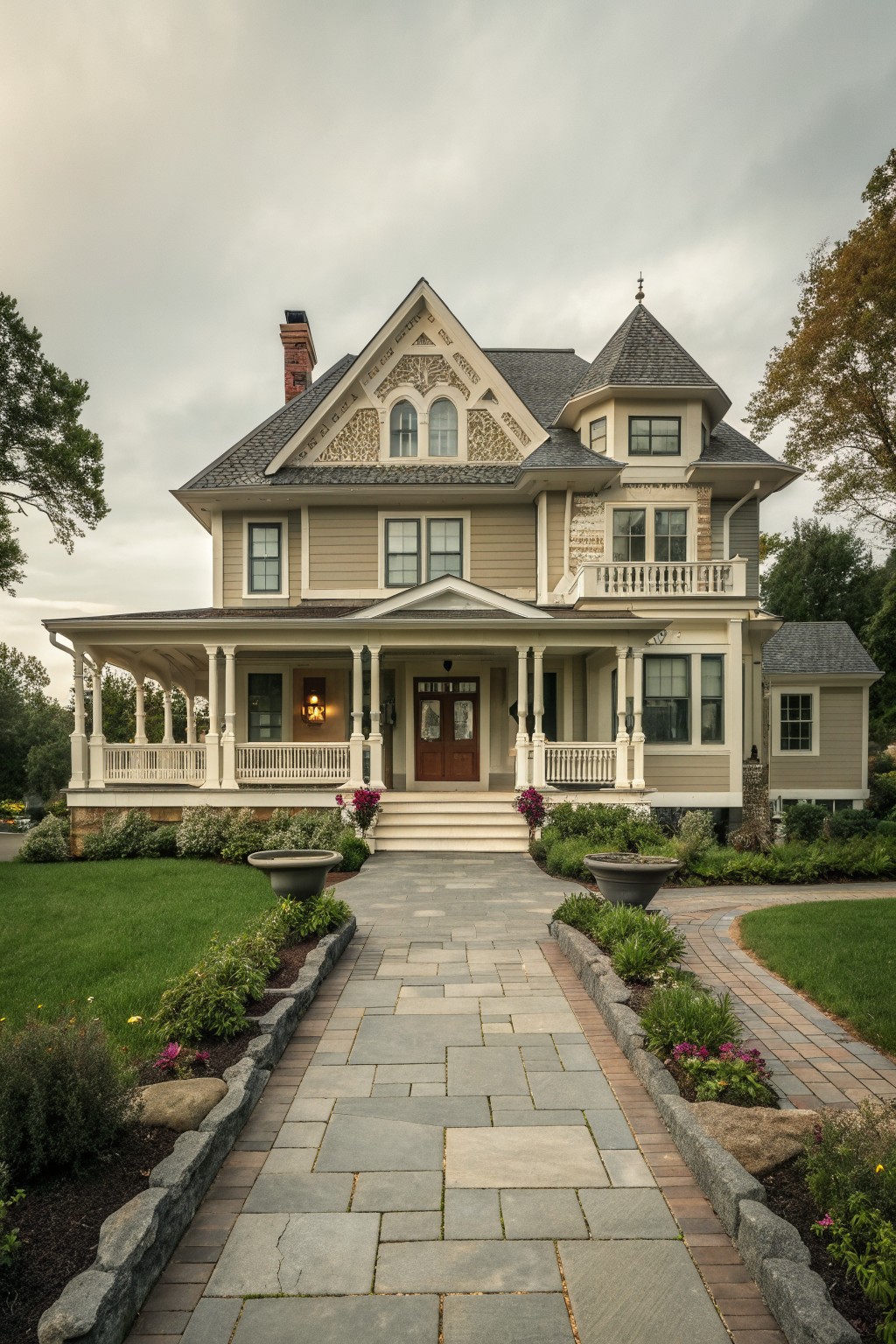
Gingerbread trim gives a Victorian farmhouse a finished look that plain siding alone cannot provide. It draws attention to the roof peak and adds a layer of detail that feels true to the style without needing lots of extra ornament elsewhere.
Place it on the front gable first, then consider repeating a simpler version along the porch eaves if the house has a wrap-around. This works especially well on homes with light or mid-tone paint where the white cutouts can stand out clearly.
Gingerbread Trim on Upper-Level Balconies
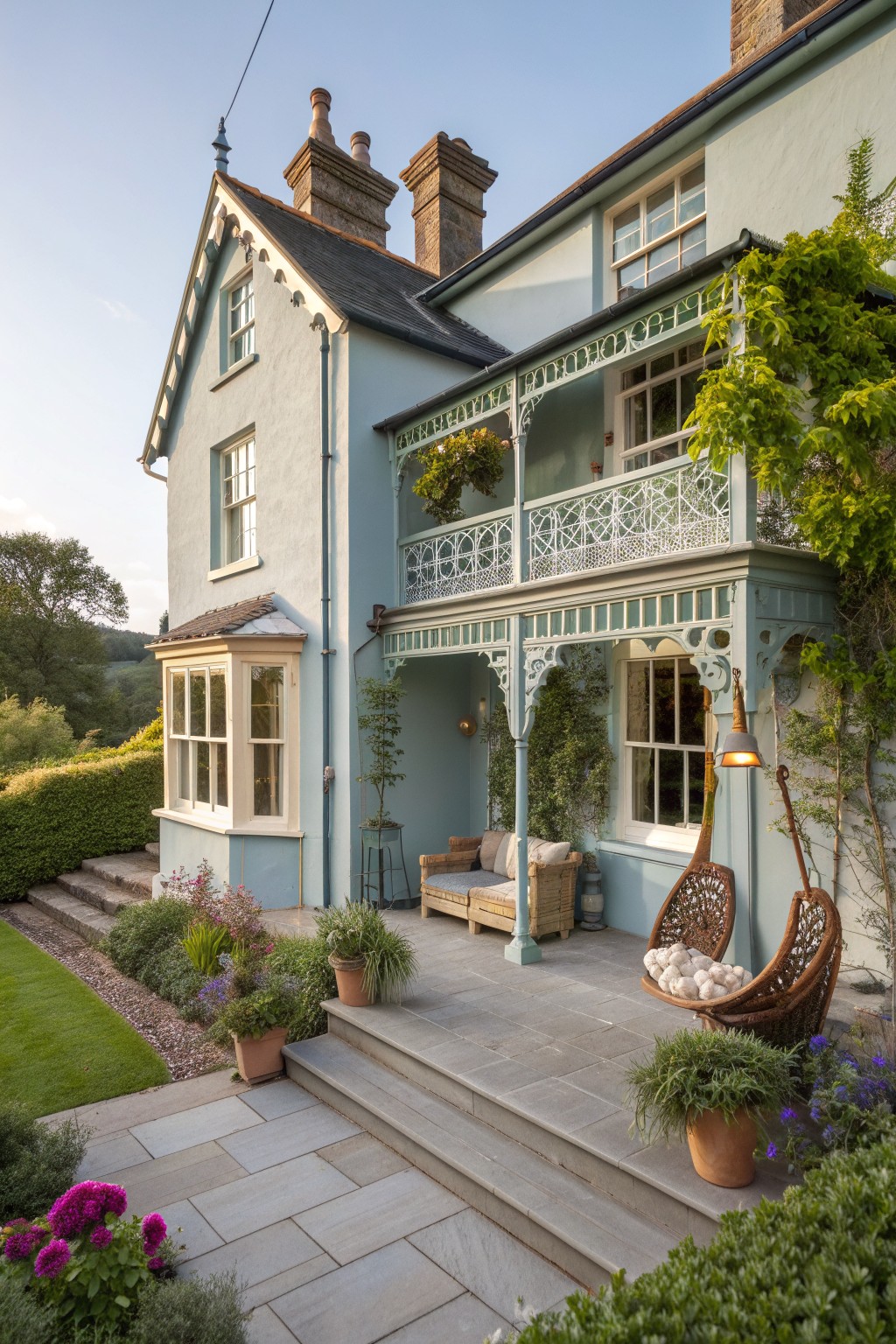
Many Victorian farmhouses gain a lot of character from decorative trim placed higher up on the house. A balcony with this kind of detail adds visual interest without needing extra color or heavy ornamentation elsewhere.
This approach works best on homes with straightforward siding and a soft paint color. The trim can highlight the balcony railing and posts while keeping the rest of the facade clean. It suits older houses that already have some traditional window shapes and rooflines.
Coordinated Trim Across Porch Roofs And Gable Peaks
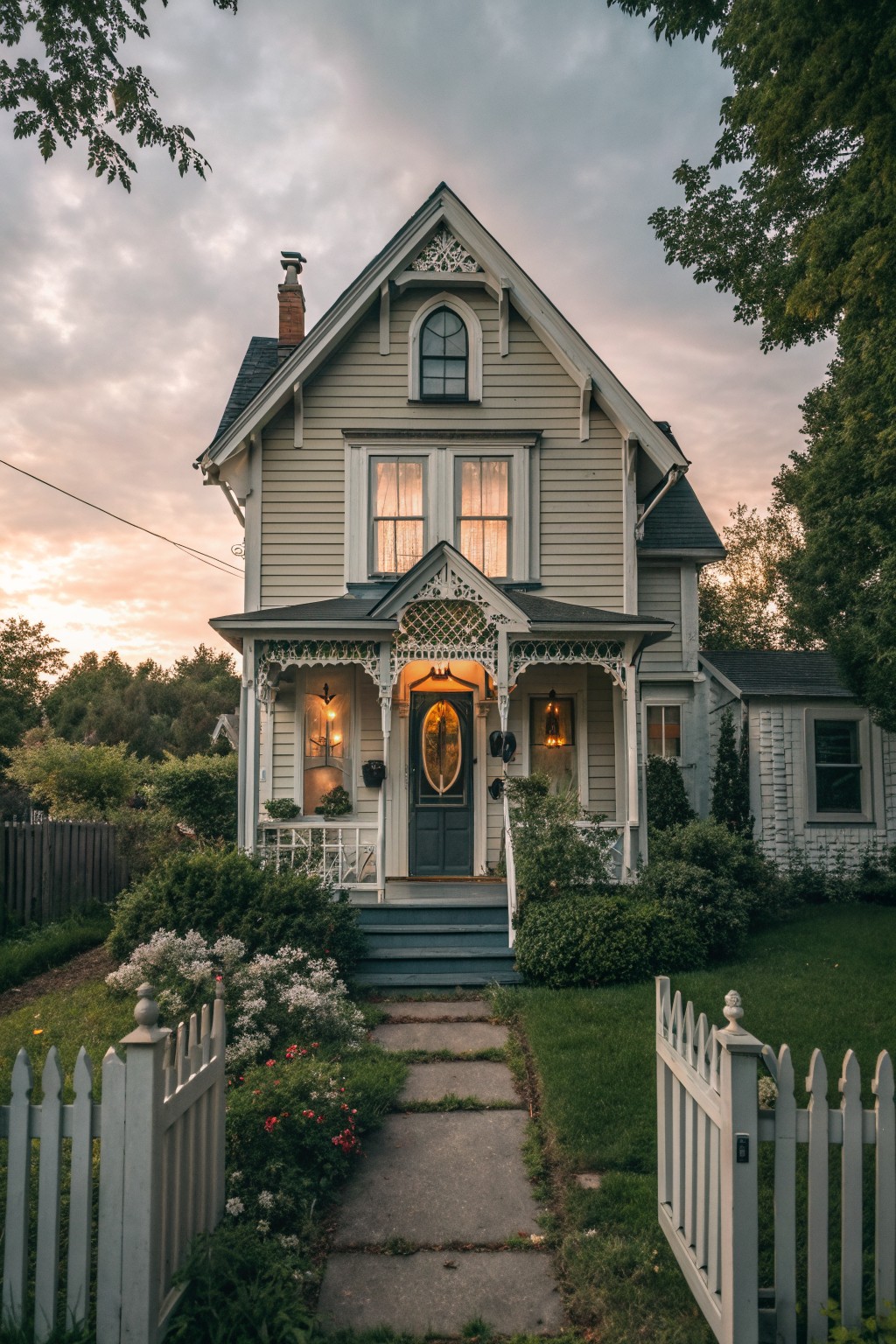
Gingerbread trim gives a Victorian farmhouse that extra layer of detail without needing a lot of other ornament. On this house the white cutouts sit right along the porch roof and gable peak, breaking up the plain siding and making the entry feel more finished.
The look works best on homes with straightforward shapes and simple paint colors. Keep the trim in a contrasting shade so it reads clearly from the street, and limit it to the main porch and one or two rooflines so it does not feel busy.
Modest Gingerbread Accents On Steep Gable Rooflines
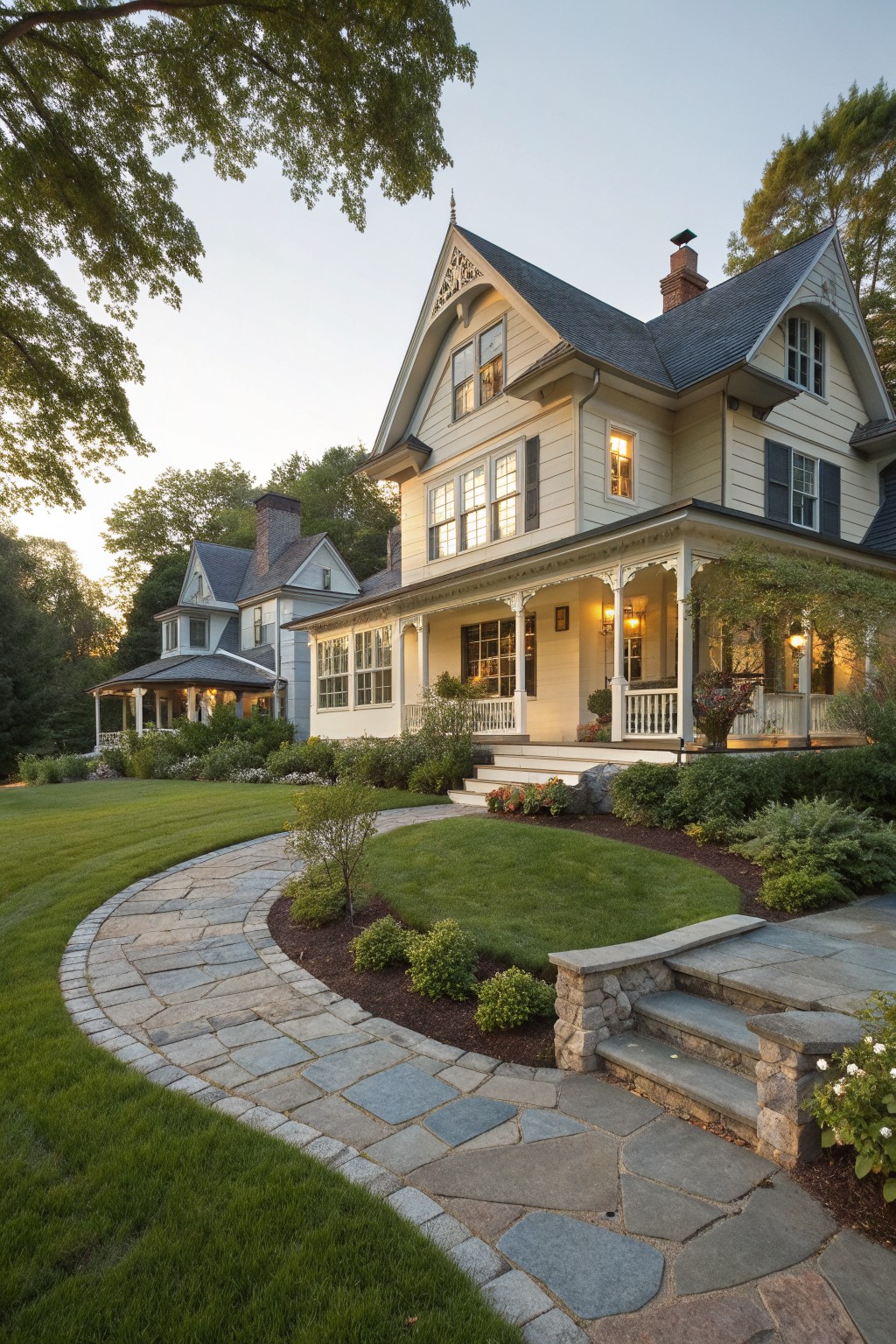
Gingerbread trim stands out most when it is kept to the main gable peaks. The house in the photo uses a modest amount of it along the steep roofline, which adds character while the rest of the exterior stays simple with light siding and dark shutters.
This approach works best on farmhouses that already have a clear roof shape and a front porch. Keep the trim painted to match the trim color rather than the siding so it reads as detail instead of decoration. It suits older homes that need a bit more presence from the street without major changes to the structure.
Gingerbread Trim Gives Farmhouses Extra Personality
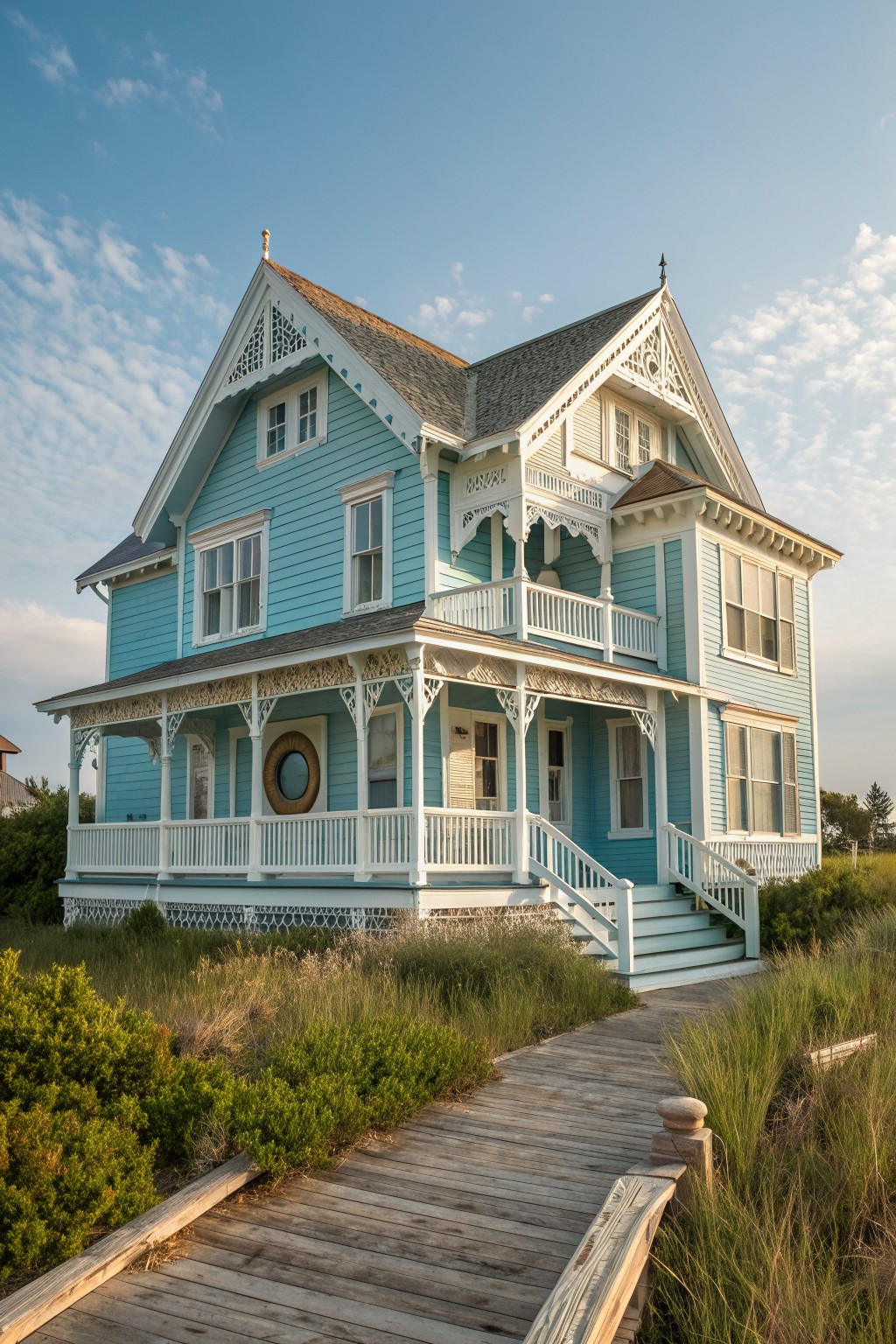
The white gingerbread trim on this house stands out nicely against the light blue siding. It adds just enough detail to make the facade feel finished without looking busy or overdone.
This approach works well on older farmhouses that already have a strong roofline and porch structure. Paint the trim a light color so it catches the light and shows up from the road.
Repeating Gingerbread Patterns Along Porch Railings
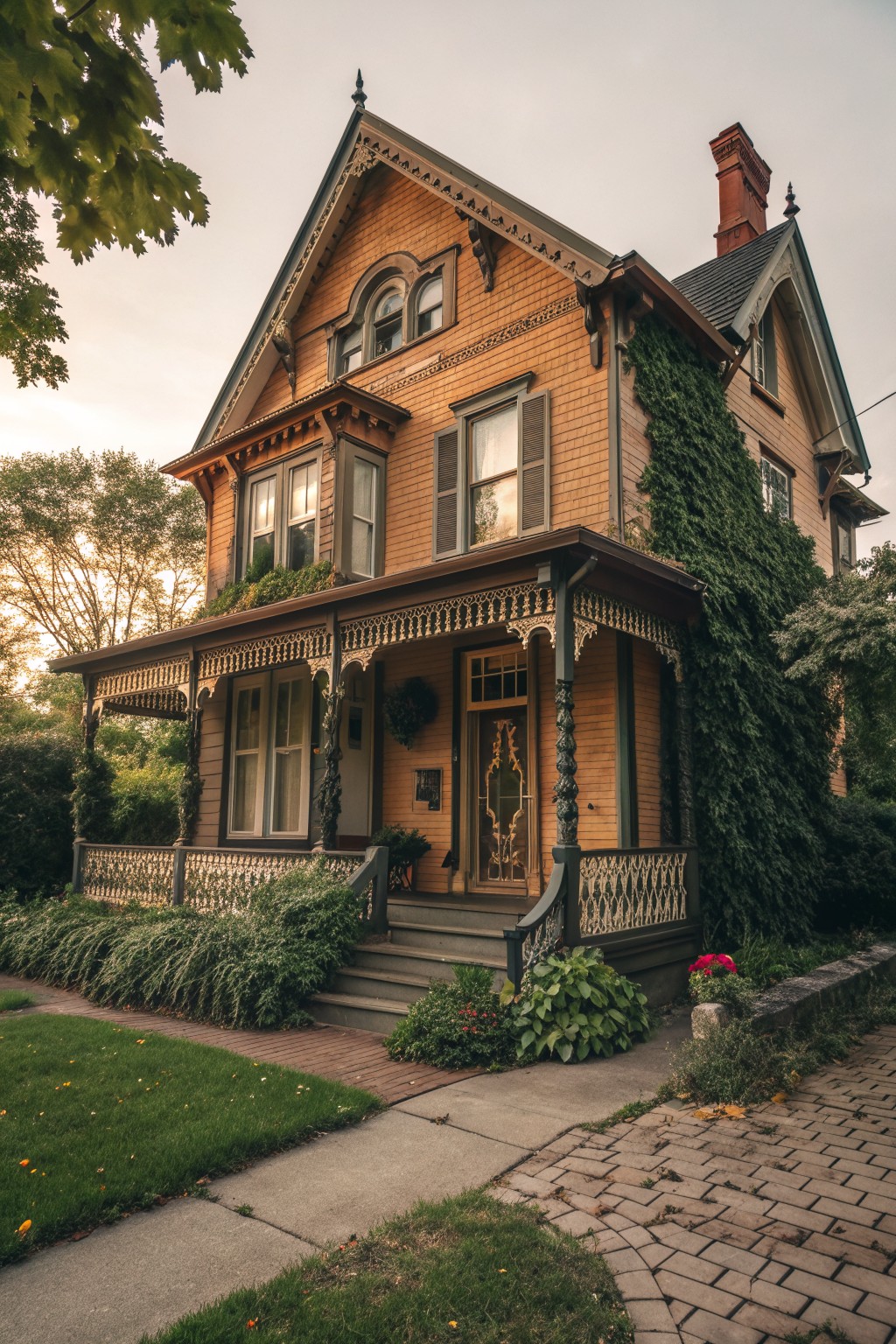
Gingerbread trim works well on Victorian farmhouses because it adds detail right where people notice it most. Here the trim runs along the porch roof and railings in a repeating pattern that breaks up the flat wood siding without covering the whole house.
It suits homes that already have some architectural lines to follow. Keep the scale modest and repeat the same motif so the trim feels like part of the original build rather than an added layer.
An Arched Portico Over the Front Door
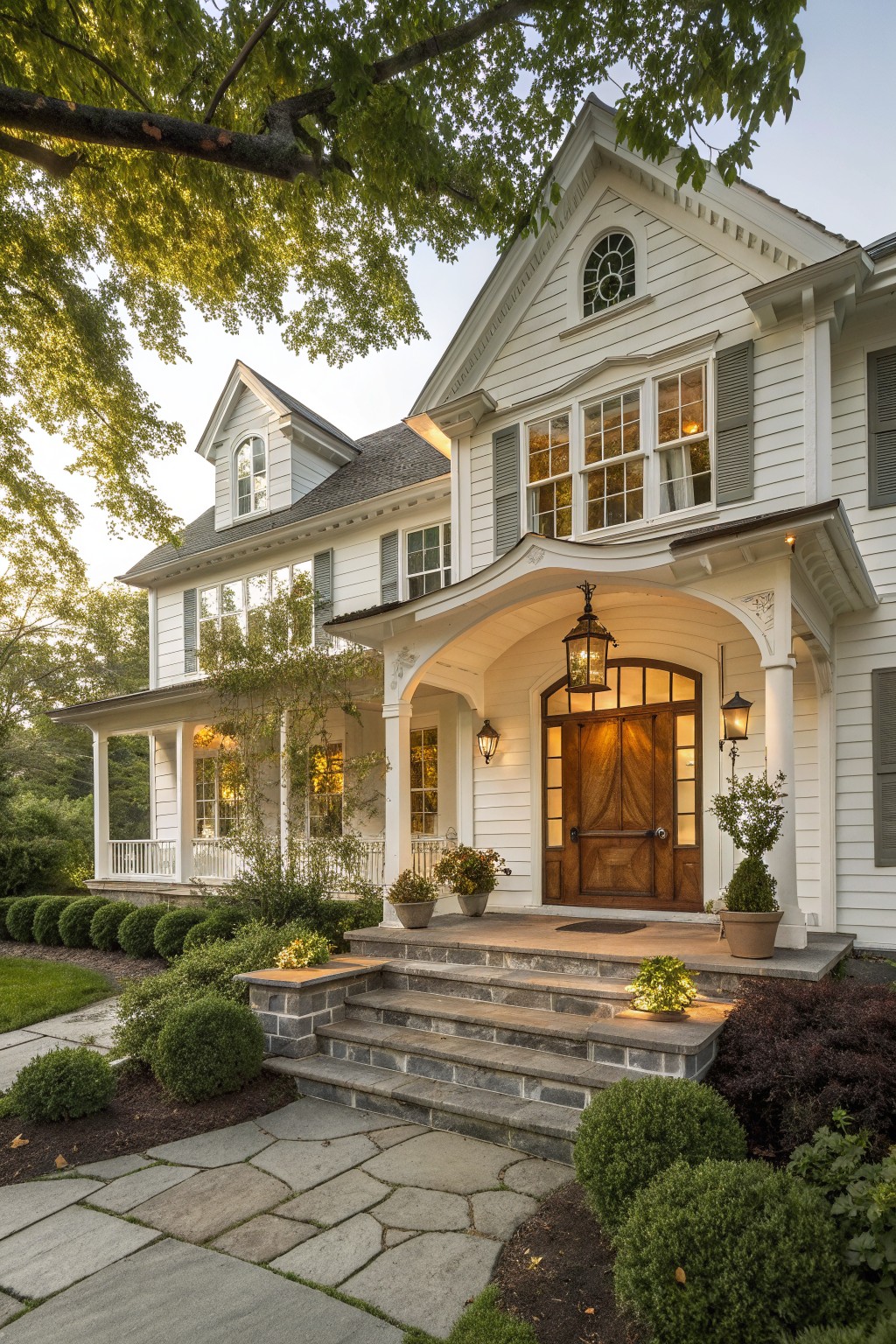
An arched portico gives a white Victorian farmhouse a clear focal point without adding too much ornament. It frames the wooden door and creates a natural transition from the yard to the house, which helps the whole front feel balanced and welcoming.
This approach works best on homes that already have gabled roofs and rows of windows. Keep the arch simple, use matching white trim, and let the wood door provide the contrast so the entry stands out on its own.
Connected Gingerbread Details Across Gables And Porch Brackets
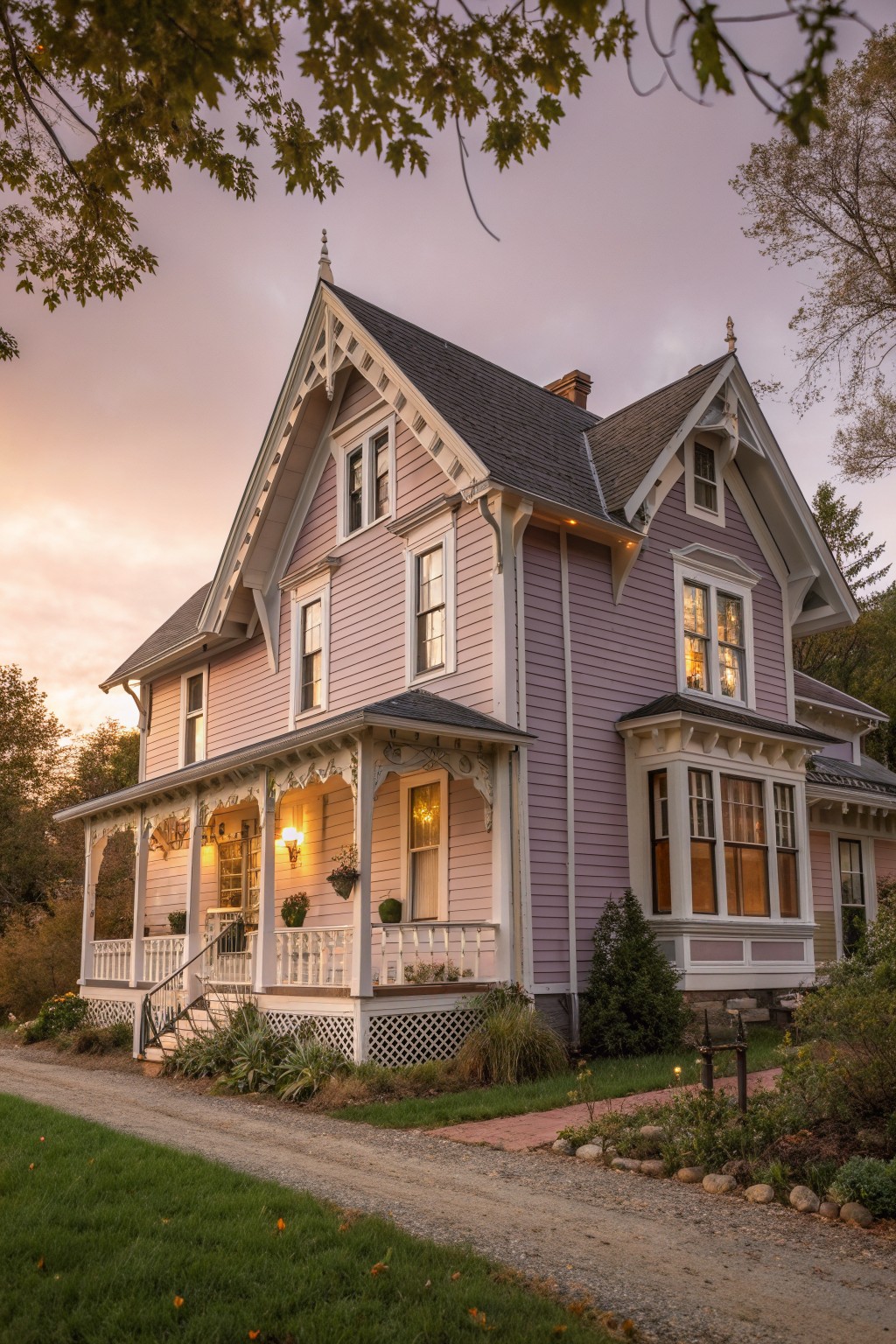
Gingerbread trim gives a Victorian farmhouse its signature look by outlining the roof peaks and porch edges. The detail breaks up large wall surfaces and draws attention to the house shape without needing extra color or ornament.
This approach works best on homes with steep roofs and a front porch. Match the trim pattern on the main gables and the porch brackets so the details feel connected rather than scattered.
Light Gingerbread Patterns On Multiple Gable Peaks
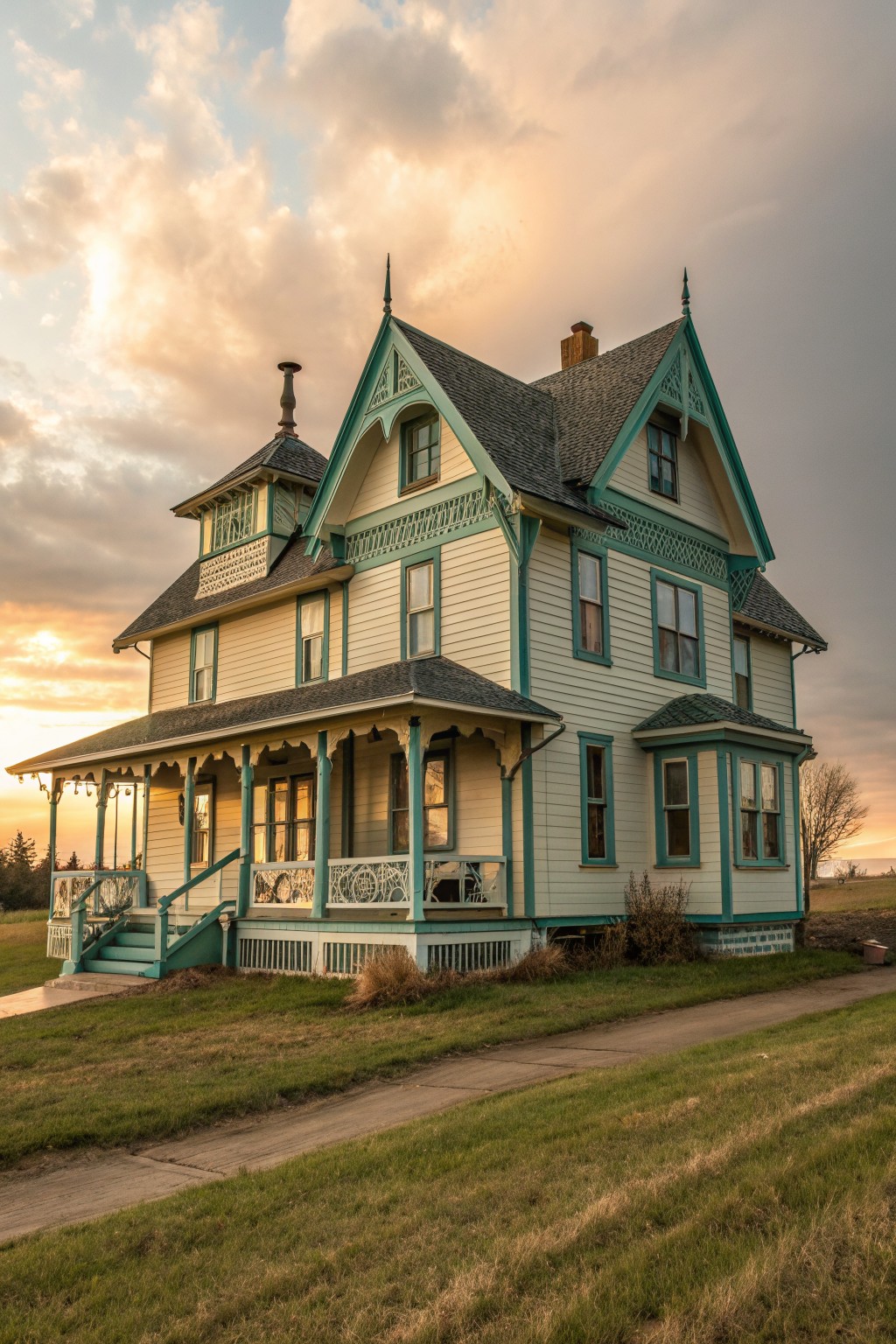
Gingerbread trim on the gables gives a Victorian farmhouse extra detail without needing a lot of other decoration. The patterns break up the roofline and add a light, lacy look that still fits the simple shape of the house.
This approach works best on homes with several pointed gables and a light siding color. Match the trim color to the porch or window frames so the details feel connected rather than scattered.
Frequently Asked Questions
Q: How do I protect gingerbread trim from weather damage?
A: Seal the wood well before painting. Check for cracks every spring and fill them right away. This keeps the details looking sharp for years.
Q: What colors pair nicely with gingerbread on a farmhouse?
A: Stick to soft pastels or deep tones that were common back then. Avoid modern brights that clash with the delicate cuts. Try a couple of shades on scraps to see what feels right.
Q: Will the trim make my house harder to maintain overall?
A: The extra nooks do collect dust and need occasional cleaning. But a good paint job cuts down on the work. Focus on one section at a time if it feels overwhelming.
