

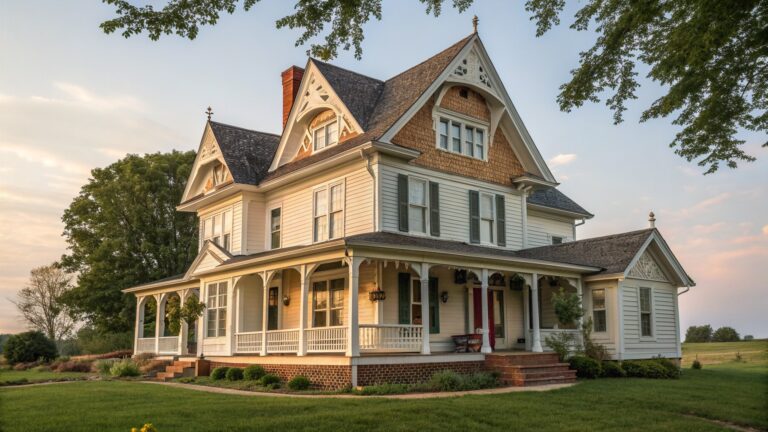
When I study Victorian farmhouses the rooflines usually catch my eye first because they shape how the whole front reads from the street.
The way gables sit above the windows and doors can either tie the facade together or leave it looking flat and unfinished.
Small changes here matter more than most people expect.
I have walked past houses where a simple gable detail made the place feel older and more settled than the rest of the block and I keep that in mind when I consider updates on my own home.
Testing a few of these roof ideas on paper first helps me see which ones might actually suit the existing lines without fighting them.
Ornate Gable Trim Brings Historic Character
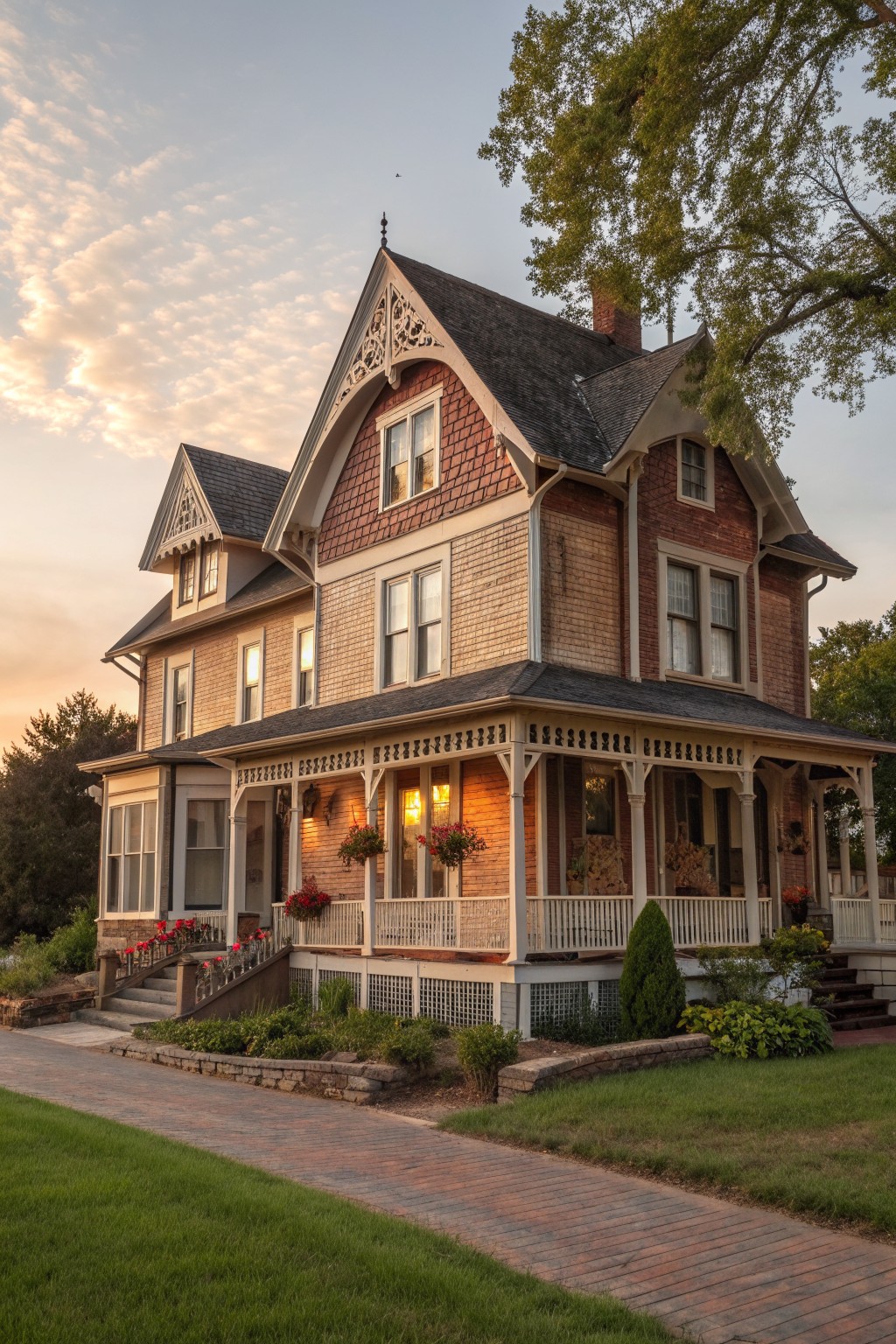
Many older farmhouses already have strong roof shapes, and adding carved trim along the gables makes those lines stand out more clearly. The detail keeps the house from looking plain while still letting the roof form do most of the work.
This approach works best on homes with steep pitches and simple siding. Start with one main gable if the rest of the exterior feels busy, and match the scale of the trim to the size of the roof so it reads as original rather than added on later.
Ornate Gable Trim Adds Historic Detail
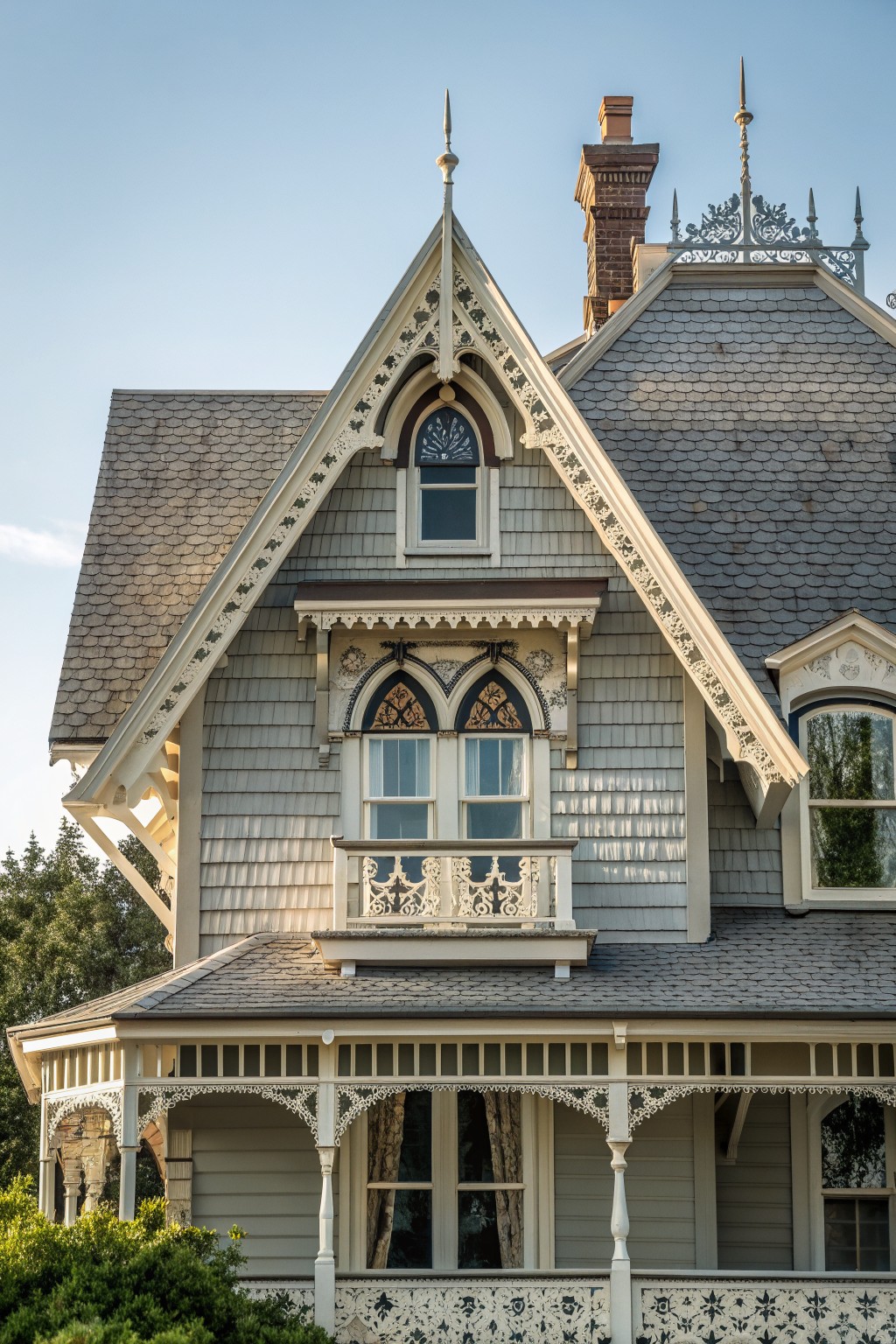
The steep gable with its fine white woodwork stands out because it breaks up the roofline and gives the house more presence. That kind of trim turns a plain peak into something that feels older and more intentional.
It suits farmhouses that already have simple siding and a few other Victorian touches. Match the scale of the trim to the size of the gable so it does not look too busy or too small.
Add Ornate Trim to Your Gables
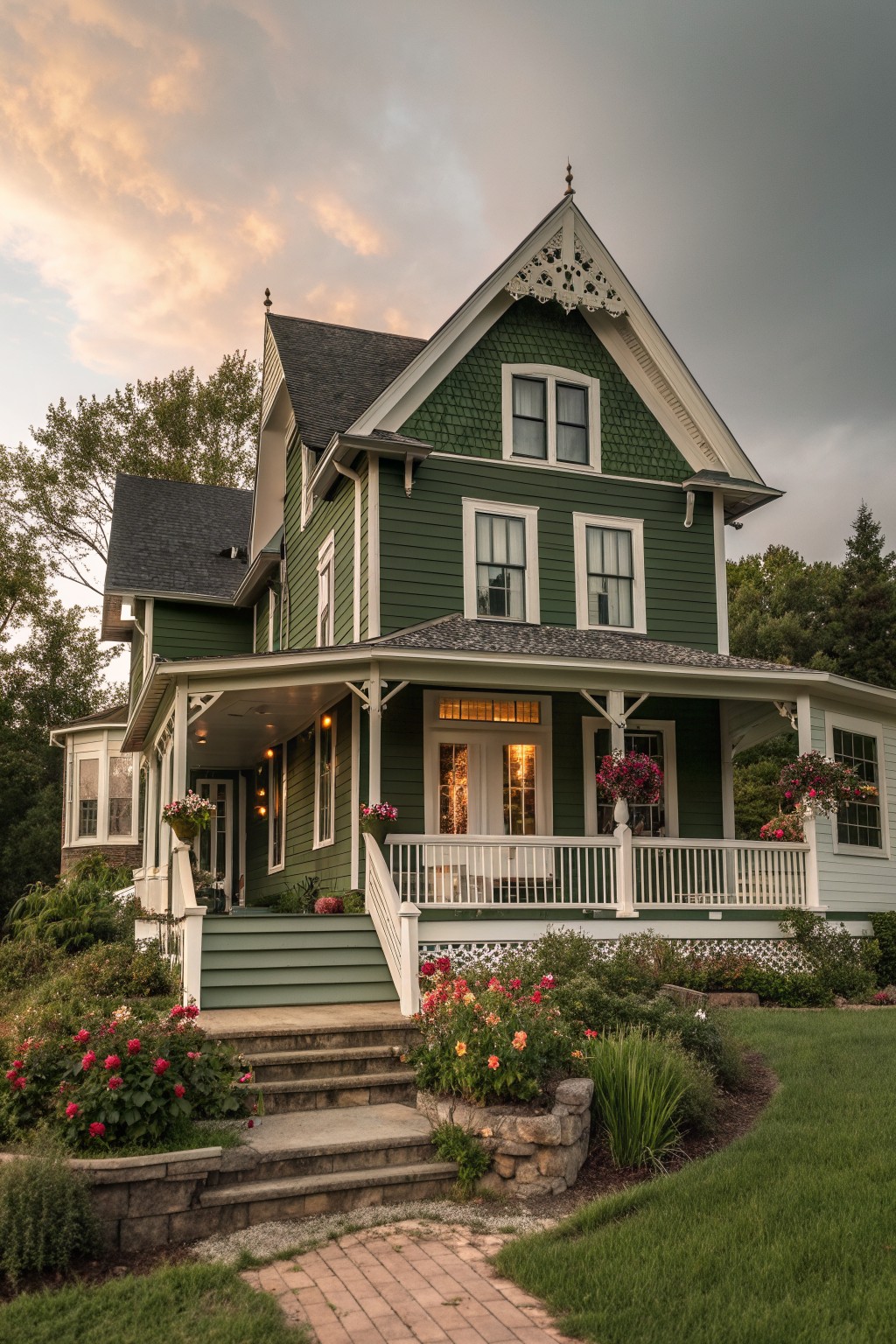
Ornate trim along the gable gives a Victorian farmhouse that extra layer of historic detail. It draws attention to the roofline and makes the whole front feel more finished without needing a lot of other changes.
This approach works best on homes with a steep roof pitch. Keep the siding color solid and let the white trim stand out against it. Just make sure the pattern stays simple enough to read from the street.
Latticework in the Gables
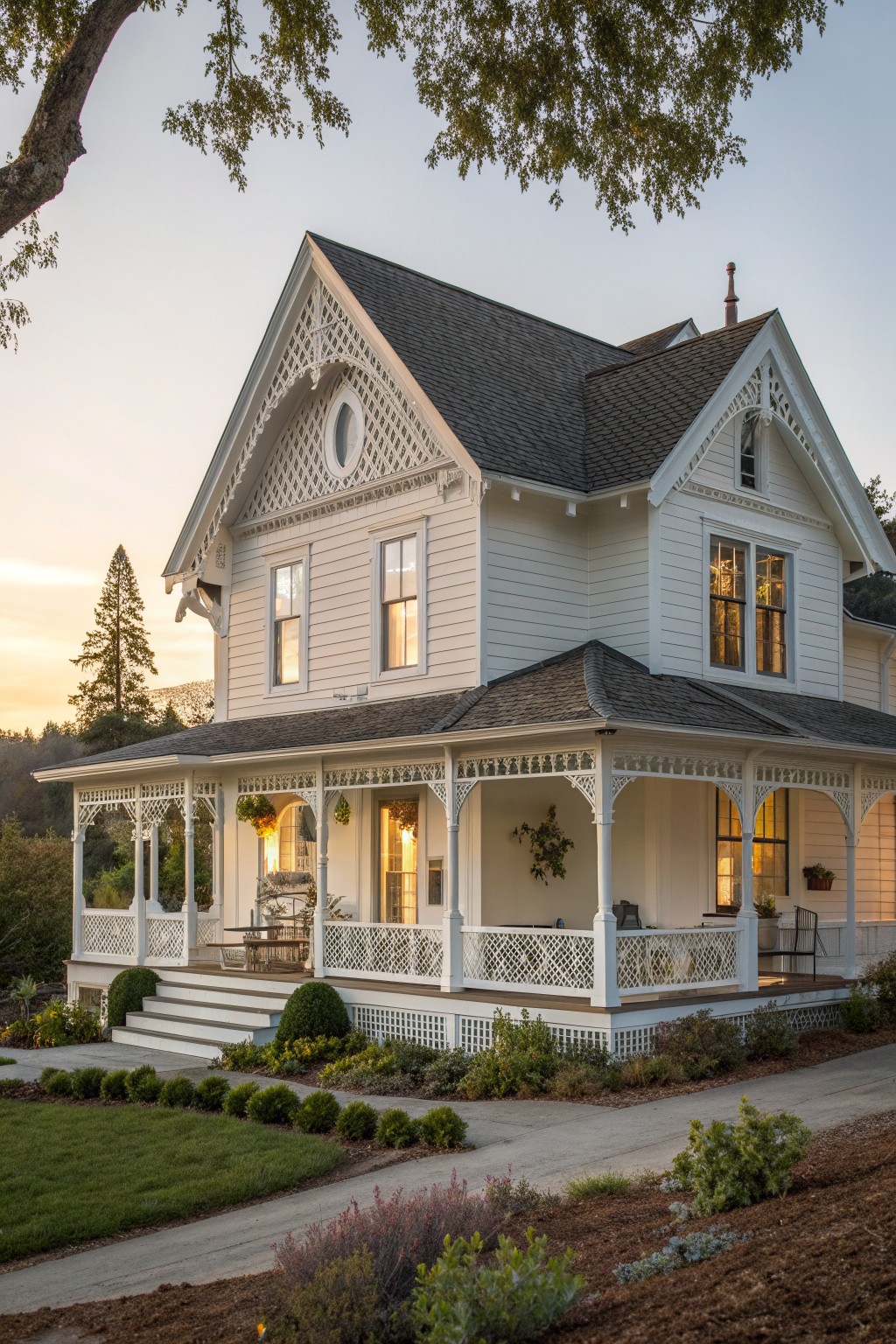
Lattice panels set into the gables give a Victorian farmhouse extra historic detail without adding heavy trim everywhere. The open pattern breaks up the roof peak and lets light through, which keeps the upper part of the house from looking too solid.
This detail works best on homes with steep rooflines and simple siding. Keep the lattice painted to match the trim so it reads as part of the architecture rather than an added ornament.
Creating Dimension With Multiple Gables
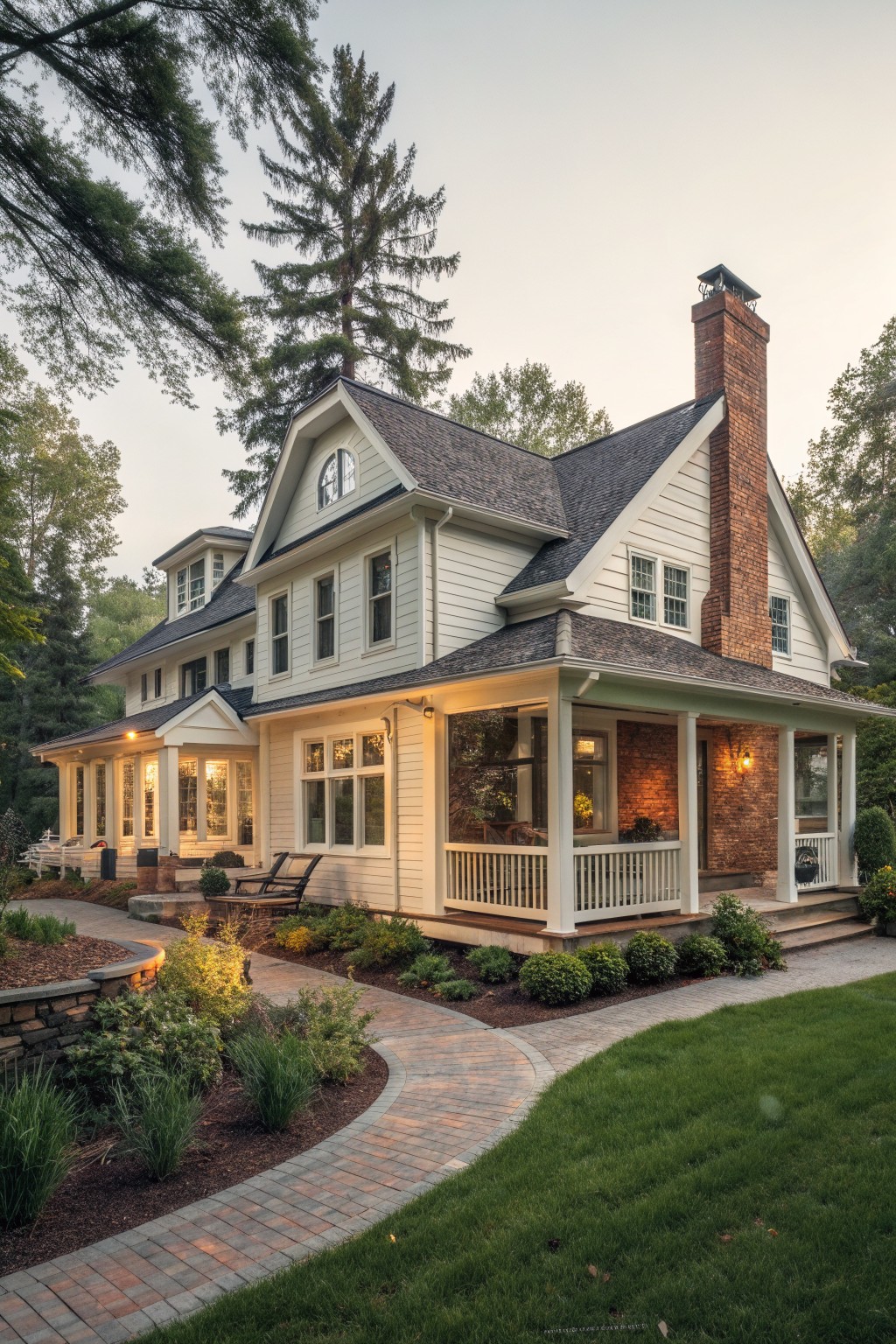
Multiple gables give a Victorian farmhouse that layered, historic look without needing a lot of extra trim or ornament. They break up a big roof and let the house feel taller and more interesting from the street. In this case the varied sizes and angles keep the front from looking flat.
This approach works well on homes with enough roof space to play with different widths and heights. Keep the siding simple so the gables stay the main feature, and make sure the porch roof ties in cleanly underneath. Too many small gables can start to feel busy, so aim for two or three that feel balanced.
Use Gable Trim To Emphasize Rooflines
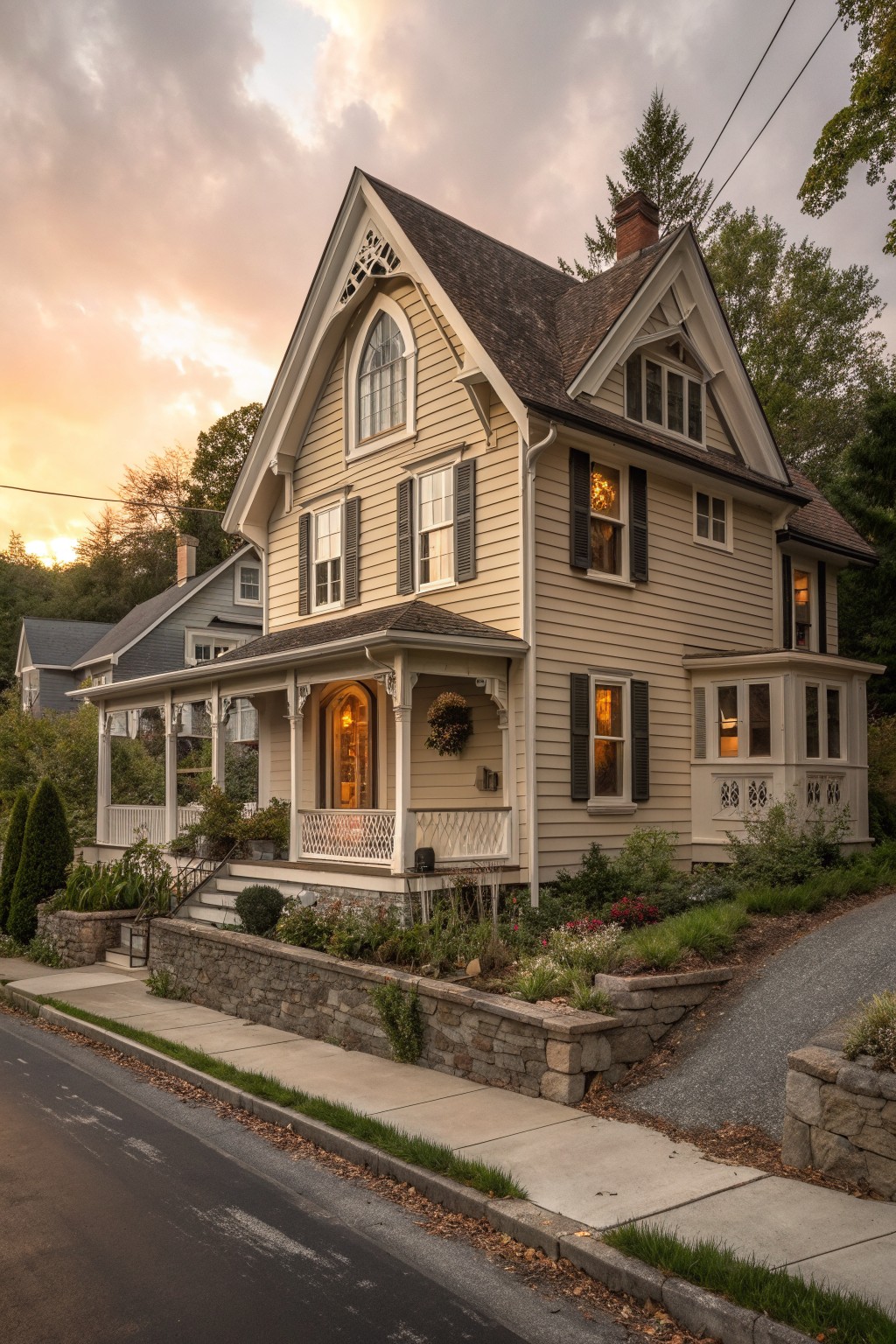
Gable trim adds a simple layer of detail that makes the roofline feel more finished and historic. On this house the white cutouts along the peak create contrast against the siding and give the front a clear focal point without overwhelming the rest of the facade.
This approach works best on homes that already have some height to their gables. Keep the pattern straightforward and match the paint color to the trim elsewhere so it looks like it belongs rather than an afterthought.
Gables With Decorative Woodwork
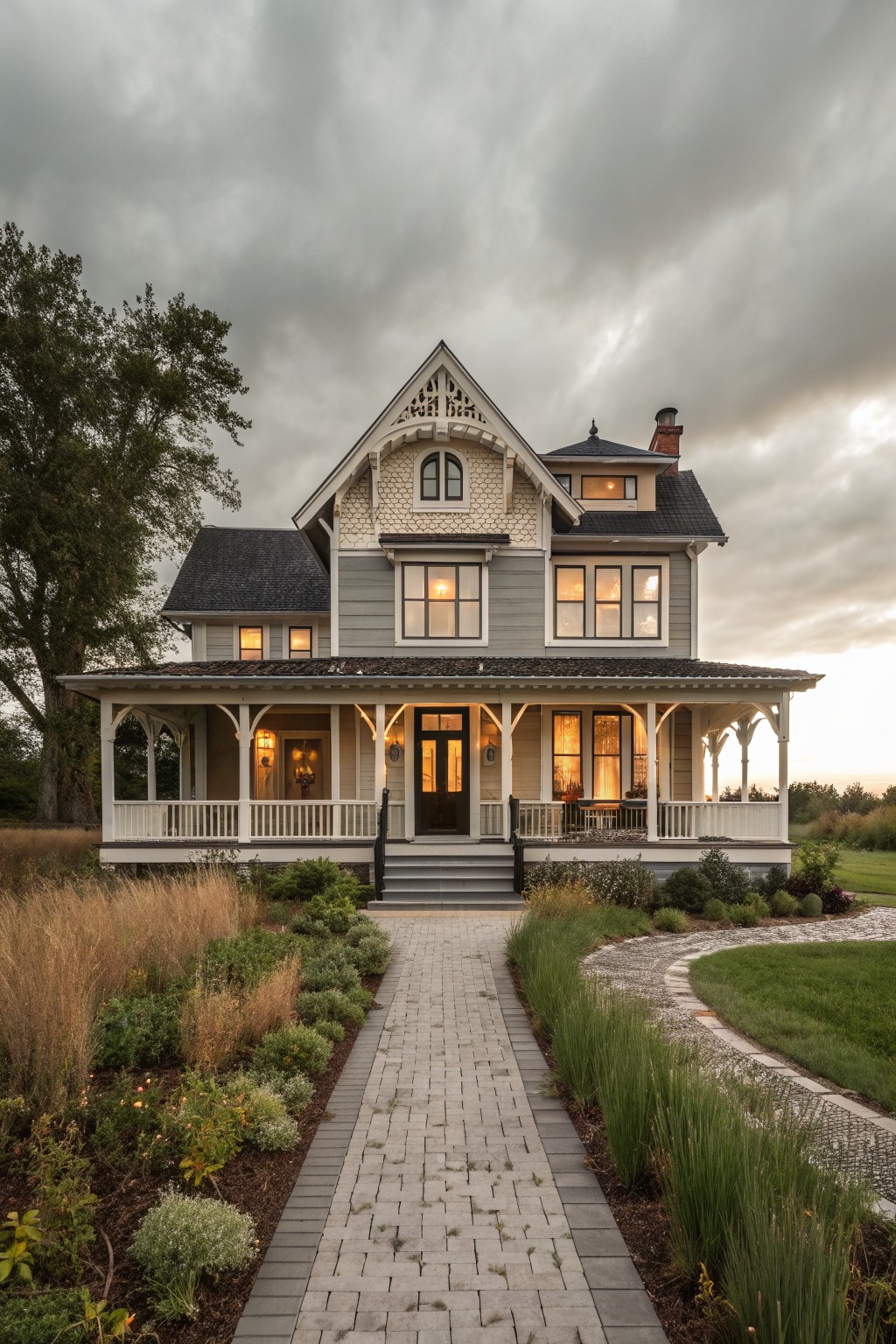
Adding cutout patterns and trim inside the gable gives the roofline more presence without needing extra height or size. The detail draws the eye upward and keeps the facade from looking too plain, especially on homes with simple siding.
This approach works best on Victorian farmhouses where the gable is already a strong shape. Keep the trim color light against the siding so it stands out, and avoid filling every gable the same way if you have several on one roof.
Using Multiple Gables for Added Dimension
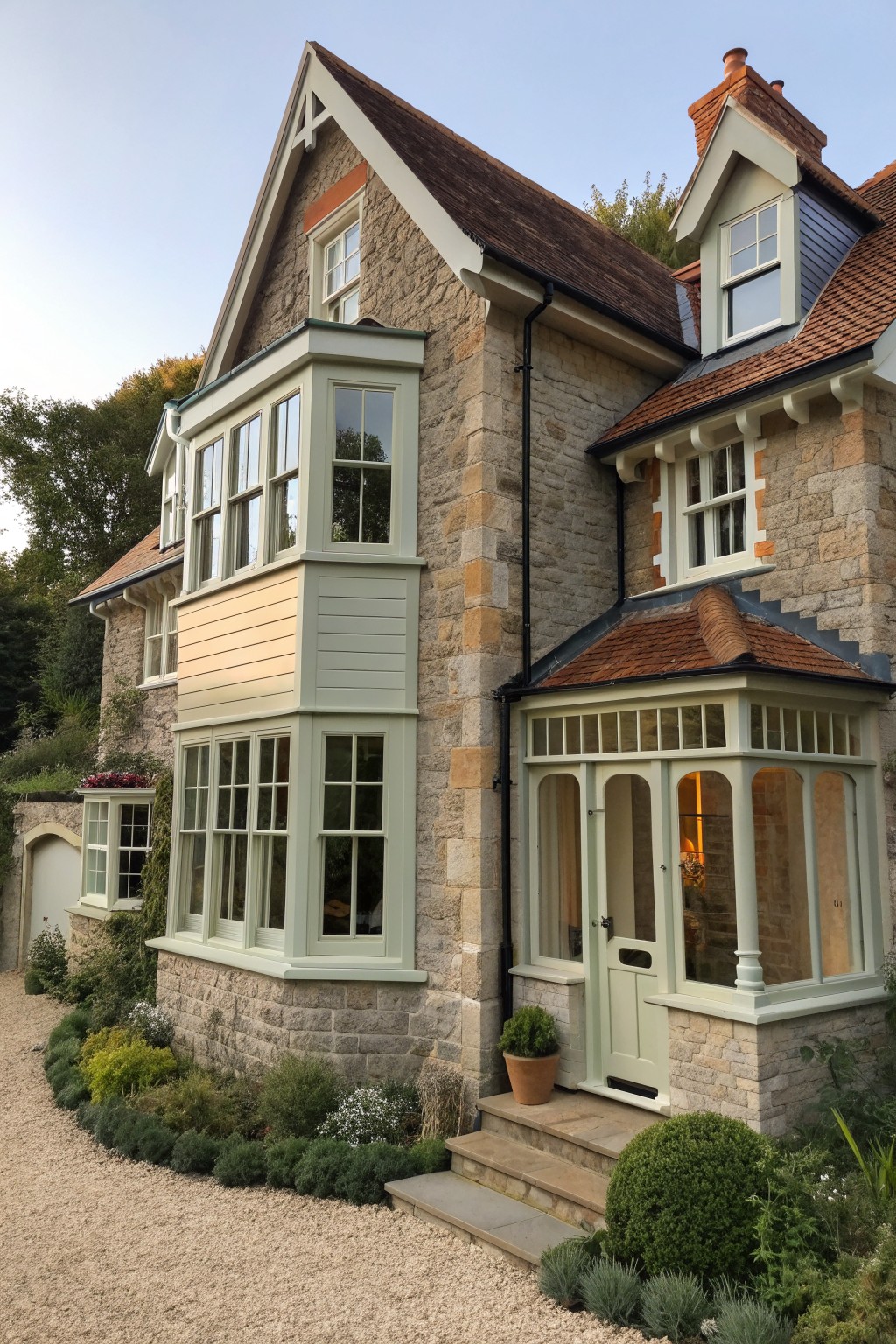
Gables stand out here because they break up the roofline and give the whole front a stronger shape. The mix of stone walls and painted trim keeps the look balanced instead of heavy.
This approach works best on stone or brick homes where you want some historic character without adding lots of ornament. Keep the gable peaks fairly plain and let the roof angles create the interest. It suits farmhouses or similar older styles where the goal is dimension rather than decoration.
Ornate Gable Trim on Brick Exteriors
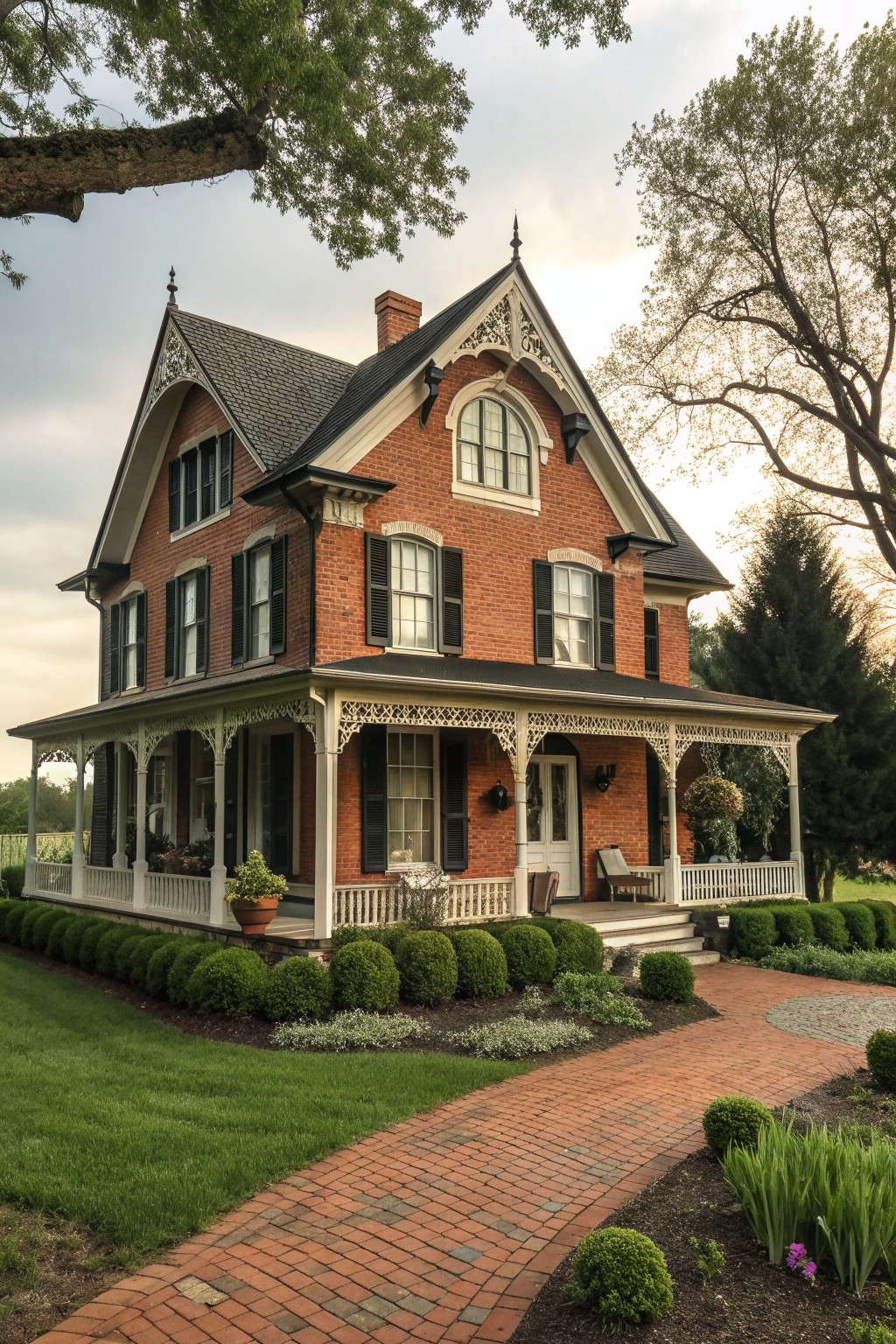
Multiple gables with cutout trim give this house its character without needing extra colors or materials. The white details stand out against the brick and dark roof, creating a clean historic look that still feels grounded.
This works best on straightforward brick or siding homes where the roofline can carry the interest. Match the trim style across all gables and keep other roof features minimal so the details read clearly from the street.
Adding a Turret to Break Up Gabled Rooflines
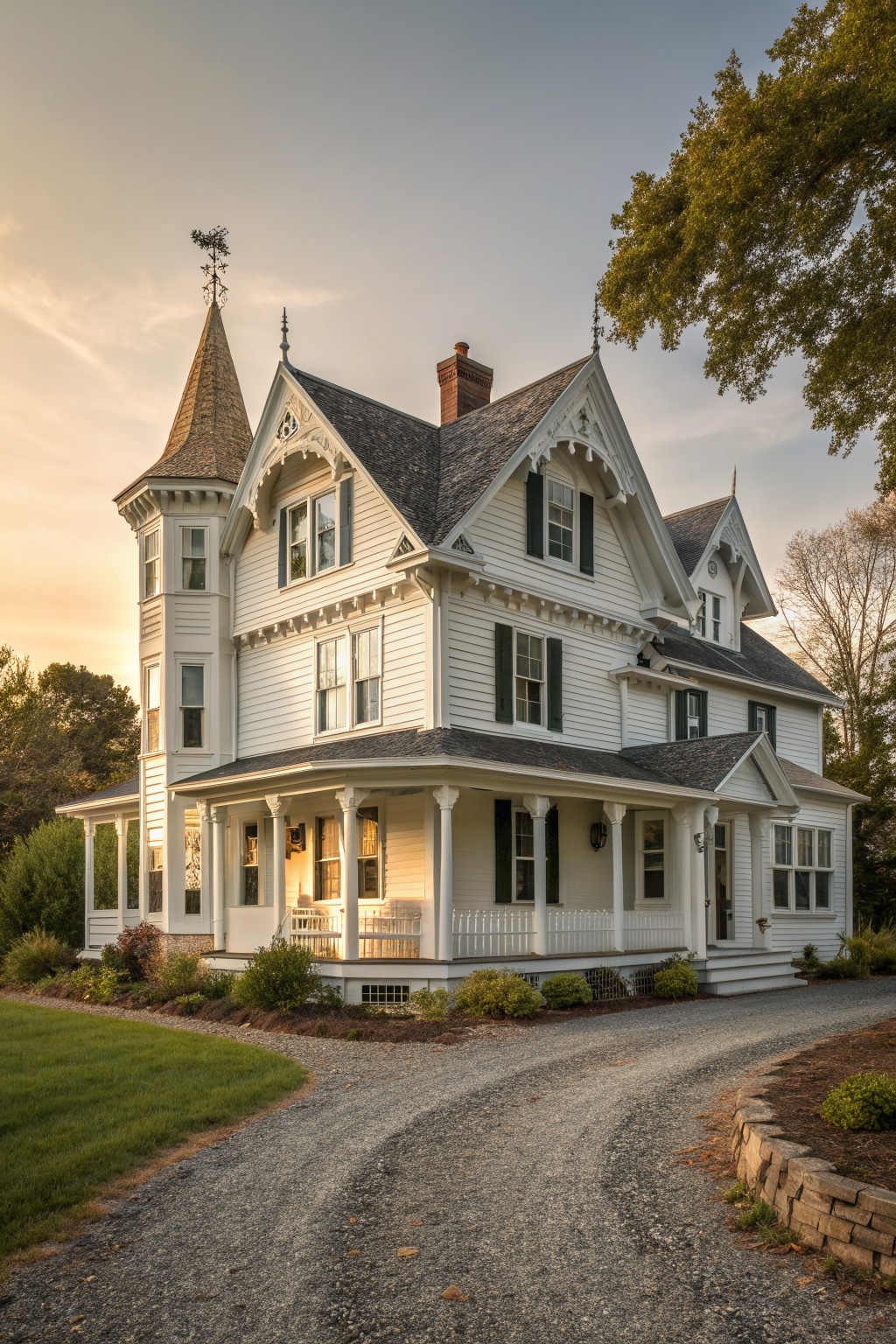
A turret adds height and a rounded shape that stands out against the sharp angles of multiple gables. On this house the tall tower sits beside several steep roof sections, which keeps the overall roofline from looking flat or repetitive.
This move works best on Victorian farmhouses that already have strong gable forms. Match the siding and roof material so the turret feels built in from the start instead of added later.
Gable Trim with Patterned Siding
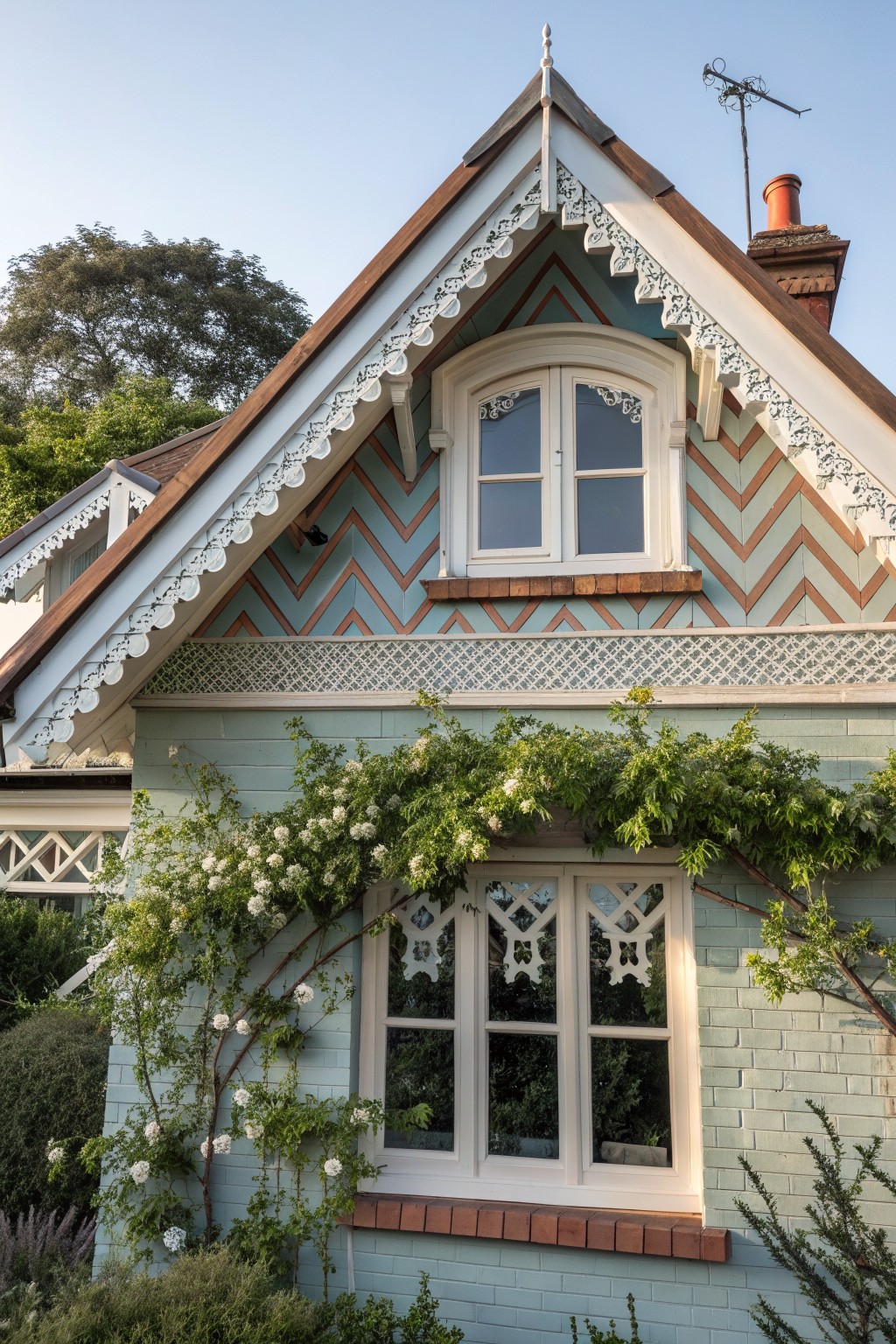
Many older farmhouses rely on trim along the edges of the gable to give the roofline more presence. The white detailing stands out against the siding and helps the triangle shape read clearly from the street.
A simple repeating pattern on the wall below the trim adds another layer without crowding the design. This works best on homes that already have some age or character, where the goal is to strengthen what is already there rather than start from scratch.
Pattern the Gables
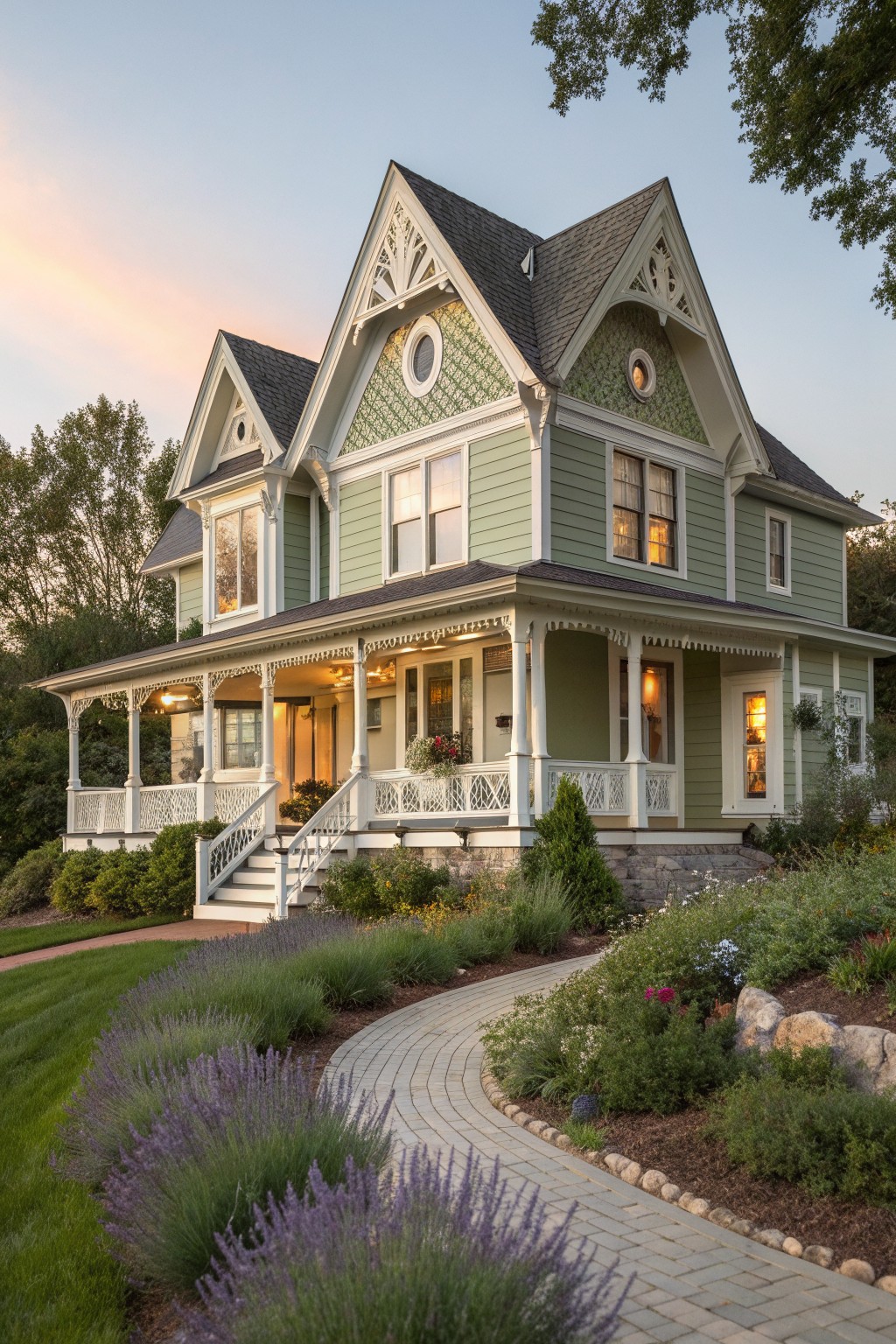
Patterned shingles inside the gables give a Victorian farmhouse roofline more depth and character. The contrast against the siding makes the gables stand out without needing extra trim or color changes.
This approach works well on homes that already have several gables or a steep roof pitch. Keep the pattern bold but limited to the peak areas so it does not overwhelm the rest of the facade. It suits both restored older homes and new builds that aim for classic detail.
Central Gables Add Historic Dimension
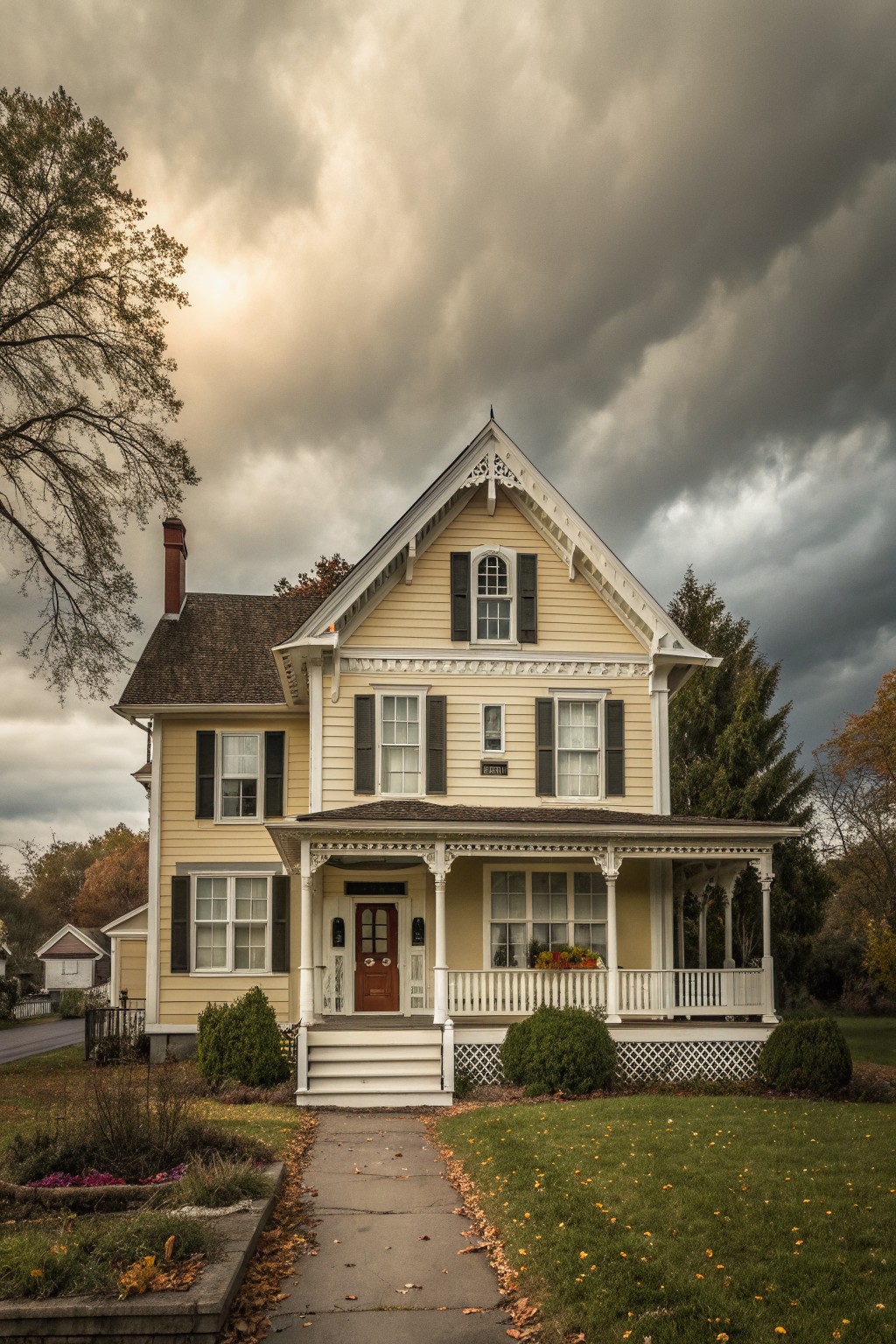
A strong central gable with decorative trim gives a Victorian farmhouse its signature shape and keeps the front from looking flat. The steep pitch and extra detailing along the edges create a clear focal point that feels true to the style.
This works well on homes with simple siding and balanced windows. Keep the trim light and the main color soft so the gable reads as the main feature rather than competing with other details.
Steep Gables With Ornate Trim
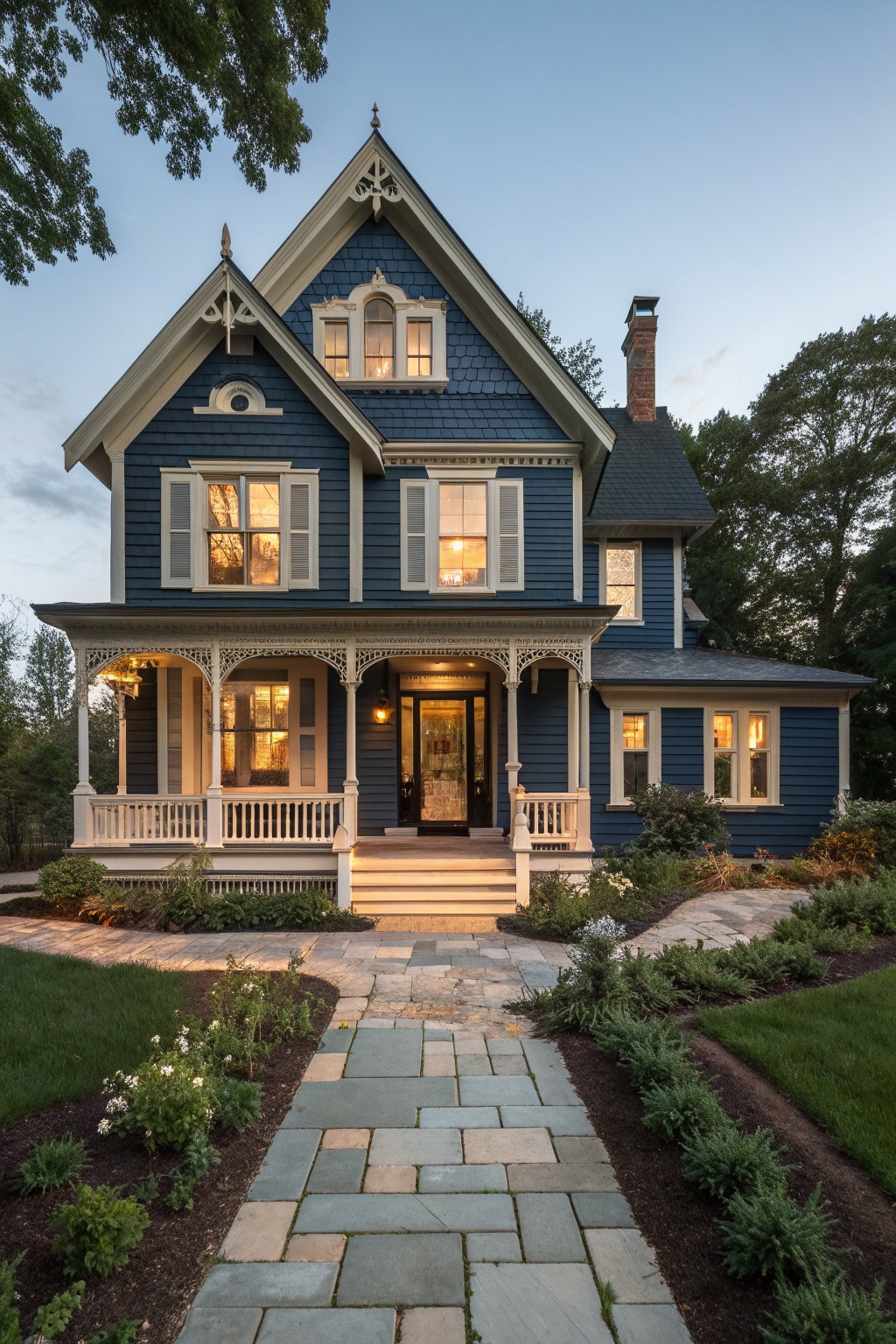
Steep gables give a Victorian farmhouse its classic silhouette and help the roofline feel more interesting. The sharp pitch combined with white decorative trim around the edges creates contrast against the siding and makes the upper story stand out from the street.
This works best on homes with straightforward wall planes and simple window arrangements. Keep the trim details limited to the gable peaks and eaves so the shape itself carries the weight. Too many patterns across the whole facade can start to feel busy.
Combining Different Gable Sizes
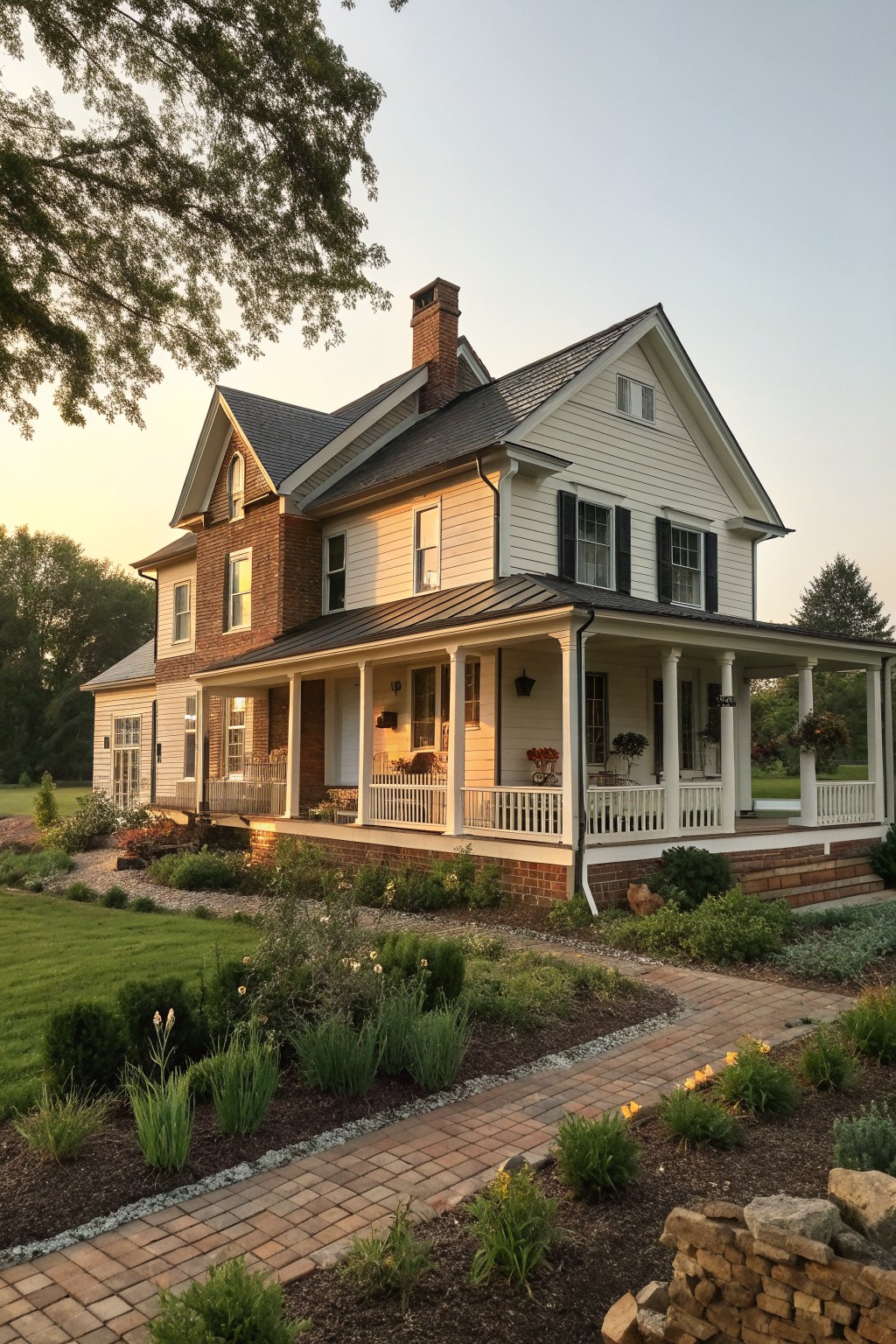
One simple way to give a Victorian farmhouse more character is to combine gables of different sizes and angles along the roof. The mix breaks up the mass of the house and keeps the exterior from looking too flat or boxy.
This approach works well on larger homes where there is room to stagger the peaks. Keep the tallest gables over main living areas and use smaller ones to cover secondary wings so the proportions stay natural.
Add Ornate Trim to Gables
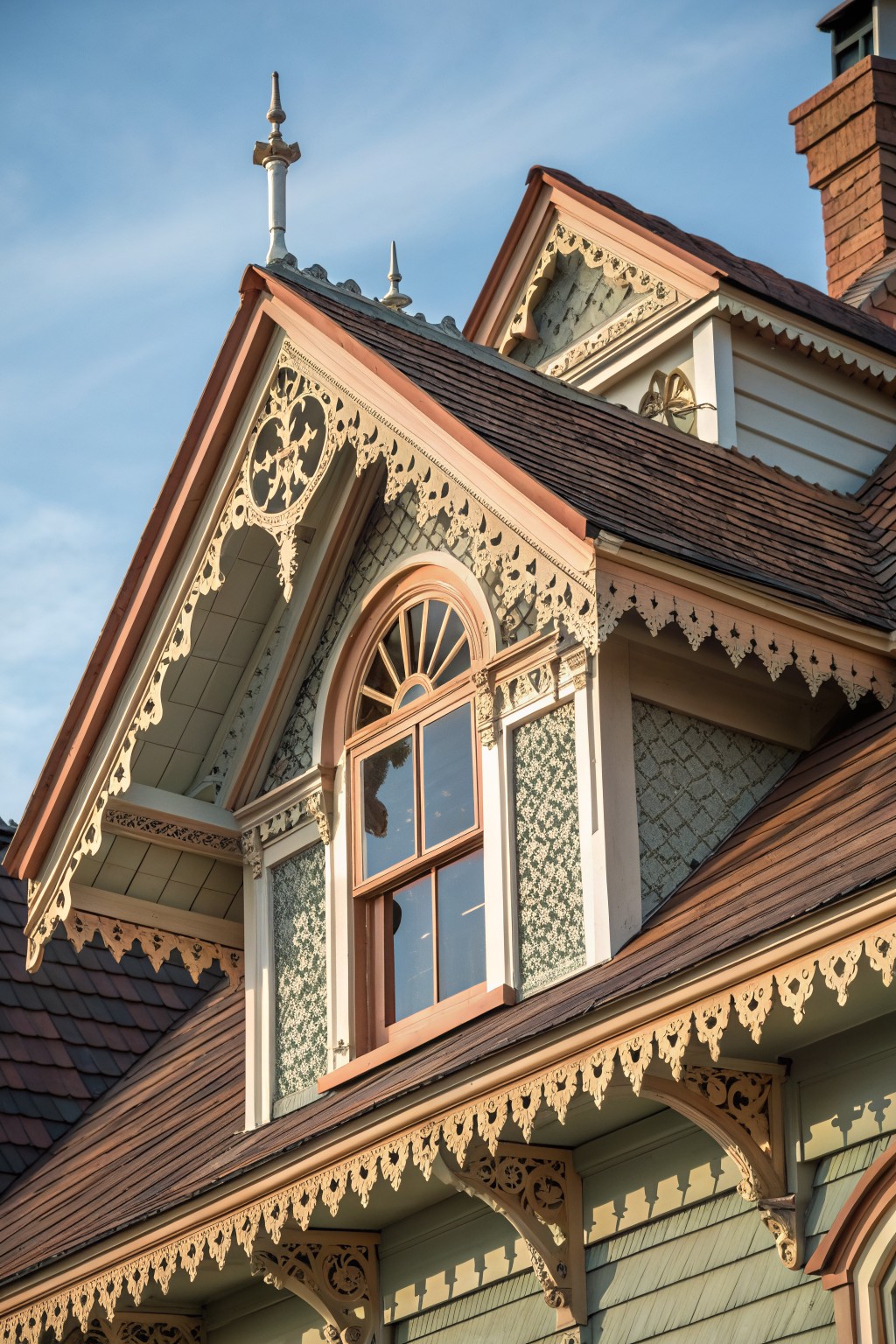
Victorian farmhouses often gain their character from the woodwork along the roof edges. Intricate cutouts and layered trim give the gables presence and keep the roofline from looking plain.
This approach suits homes with multiple peaks and works best when the trim color contrasts just enough with the siding. Stick to one or two repeating patterns so the details read clearly without becoming overwhelming.
Varying Gable Sizes Adds Dimension
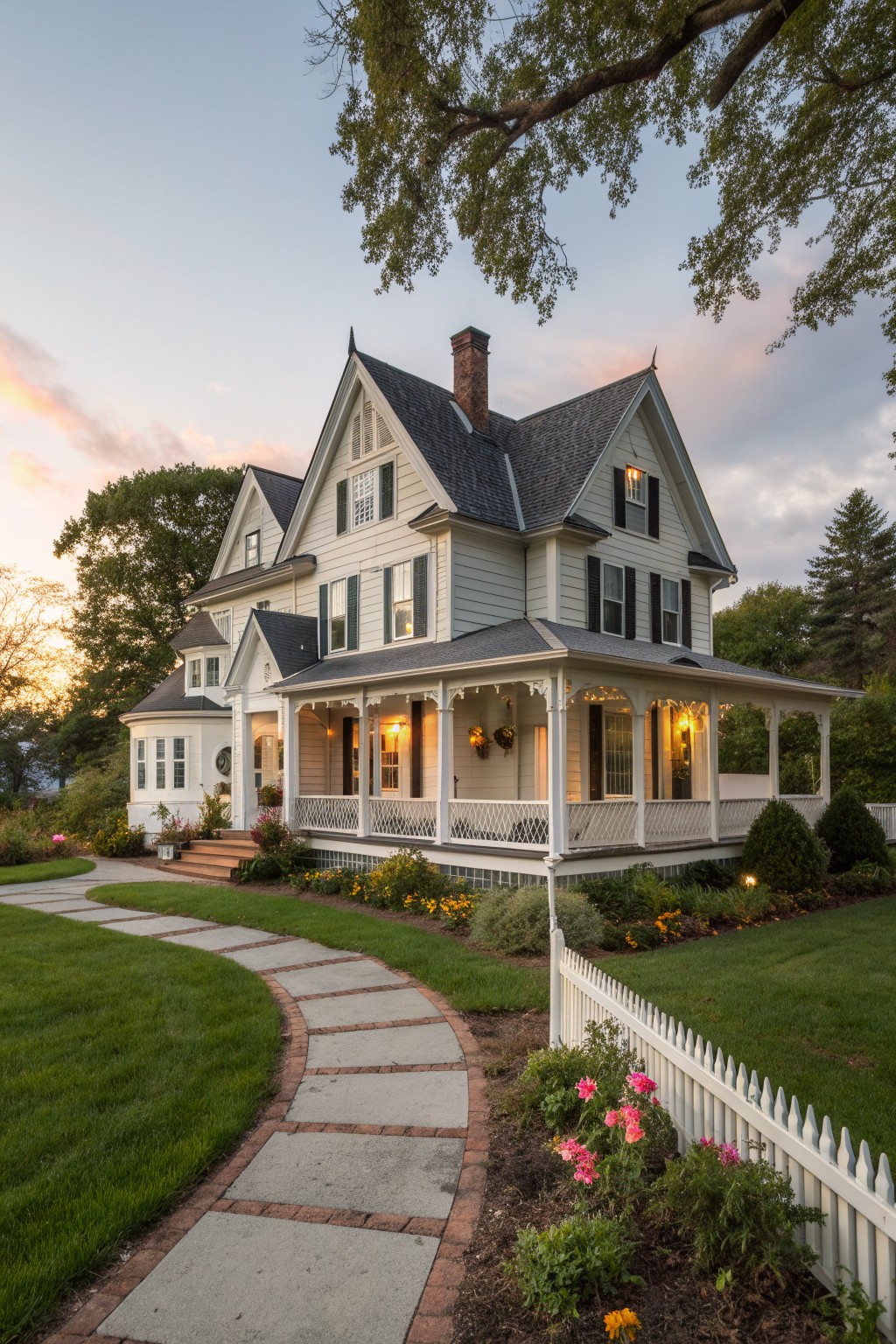
One simple way to give a Victorian farmhouse more historic presence is to use several gables of different widths and heights across the roof. This breaks up the roofline and keeps the upper part of the house from feeling flat or plain.
It suits homes that already have some traditional trim and works best when the largest gable sits near the center. Keep the smaller side gables slightly lower so the whole roof feels balanced rather than crowded.
Dress Gables with Patterned Shingles
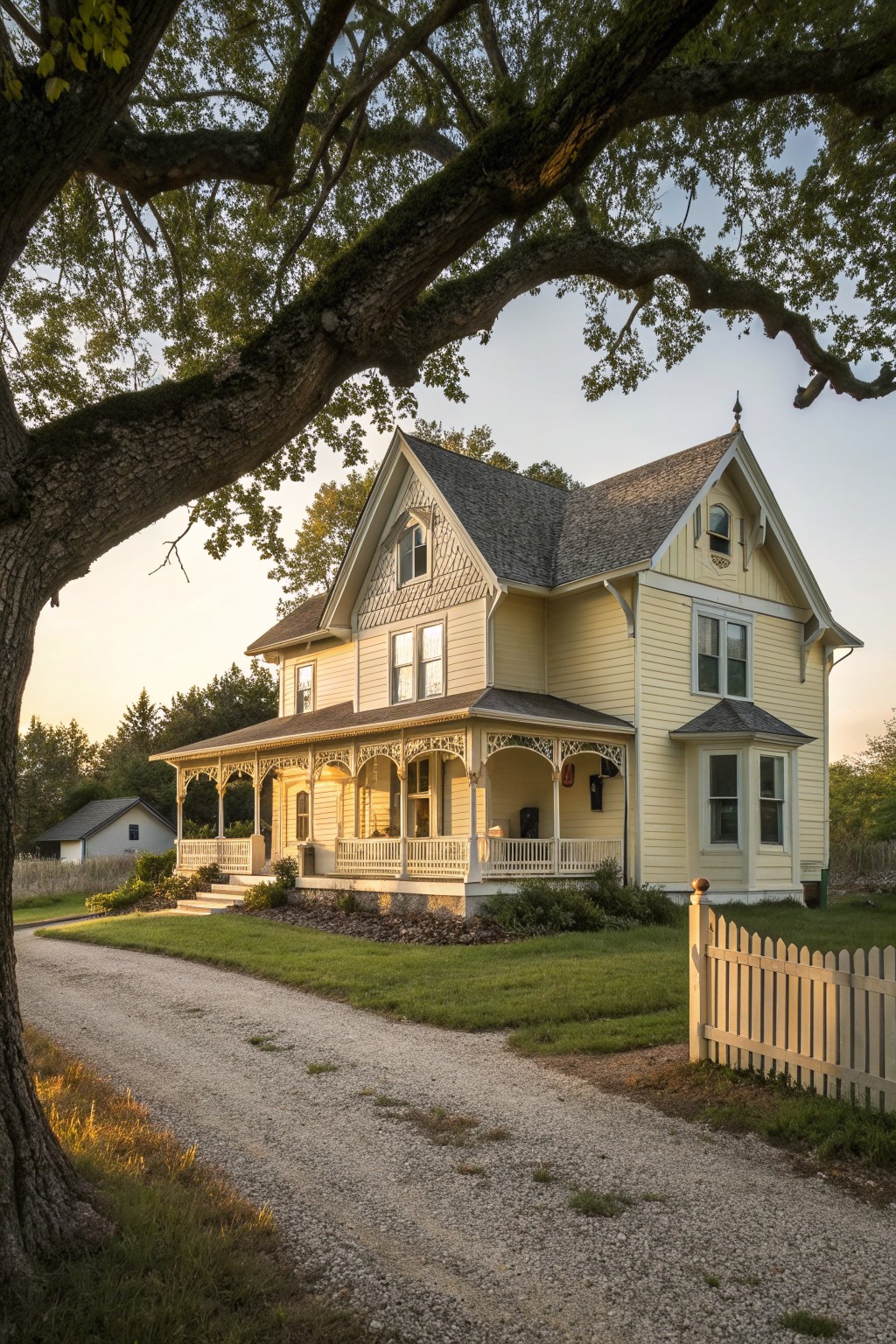
Patterned shingles on the gables give a Victorian farmhouse a layer of texture that flat siding cannot match. The contrast draws the eye upward and makes the roofline feel more finished and intentional.
This approach works best on homes with steep or multiple gables. Keep the pattern size in scale with the gable so it adds interest without looking busy, and match the shingle color to the trim for a cohesive look.
Lattice Detailing on the Gable
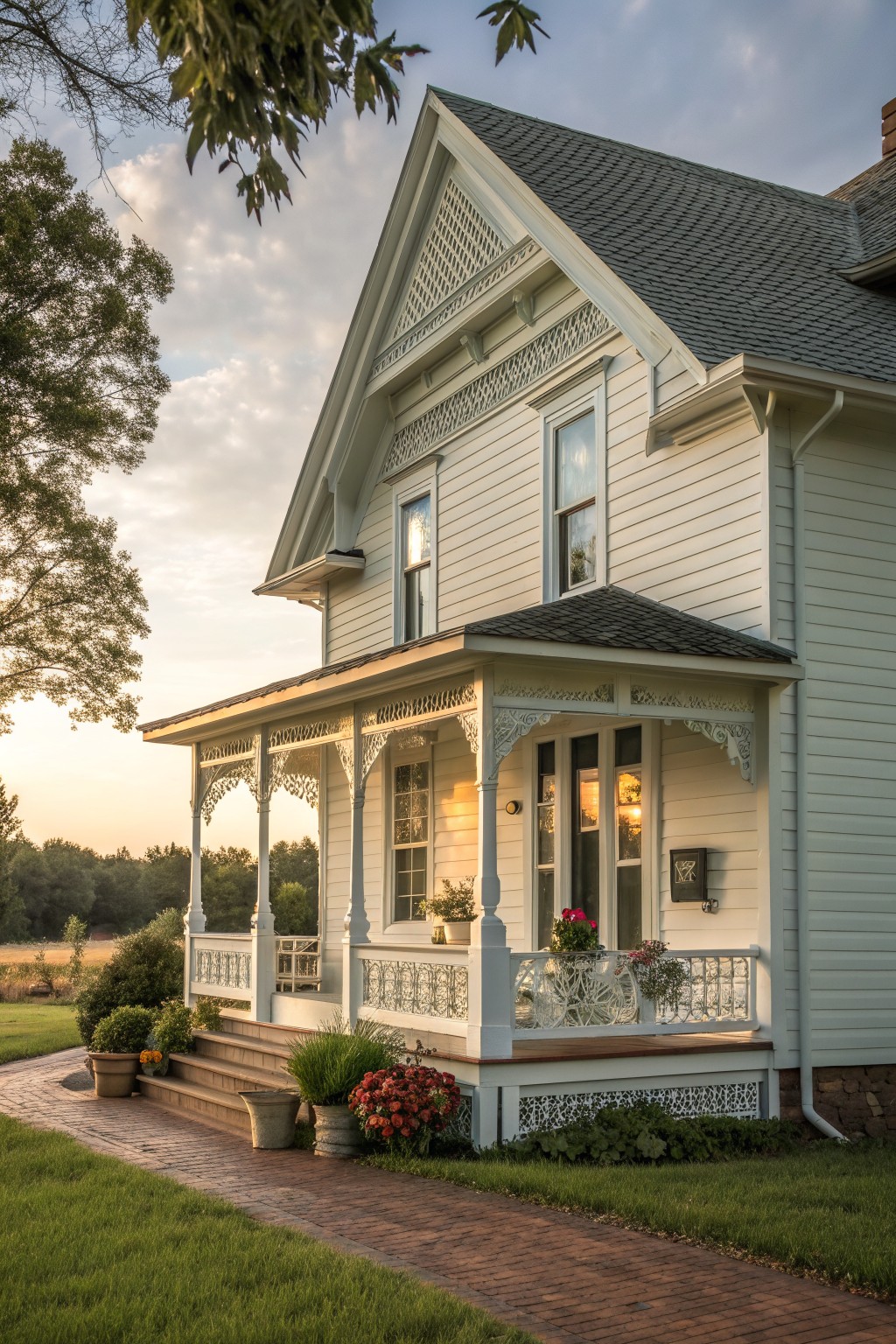
Lattice in the gable gives a Victorian farmhouse that extra layer of historic interest without needing a lot of new trim. It breaks up the roofline and adds texture that feels right at home on an older style house.
This works best on the front-facing gable where it can be seen from the street. Keep the pattern open and simple so it does not fight with the porch details below.
Frequently Asked Questions
Q: Which gable idea works best if my roof already has some trim? A: Choose a simple arched detail that echoes the lines you already have. This keeps the addition from clashing. Add brackets only if the existing trim feels too plain.
Q: Do these Victorian touches hold up in wet climates? A: Use treated wood or composite materials for the accents. Seal all joints well during installation. Repaint on schedule to prevent water damage.
Q: Can I mix gable styles on one house? A: Stick to one main style across the visible gables. Mixing can look scattered.
