

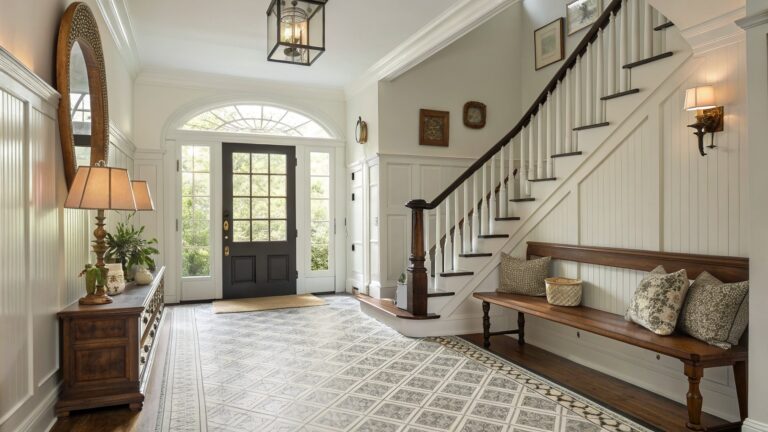
I often find myself walking through older homes and noticing how even small changes to trim or fixtures can throw off the original flow if they do not match the scale of the rooms.
The updates that hold up best are the ones that build on what is already there instead of trying to replace it outright.
I have tested a few ideas in spaces like this and learned that the details people notice first are usually the quiet ones, such as how a new cabinet door sits next to an existing window casing.
Some houses end up looking patched together when that step gets skipped.
It helps to start with the parts of the structure that still work and then decide what can be refreshed without erasing the lines that make the place feel settled.
Built-In Shelving Around the Fireplace
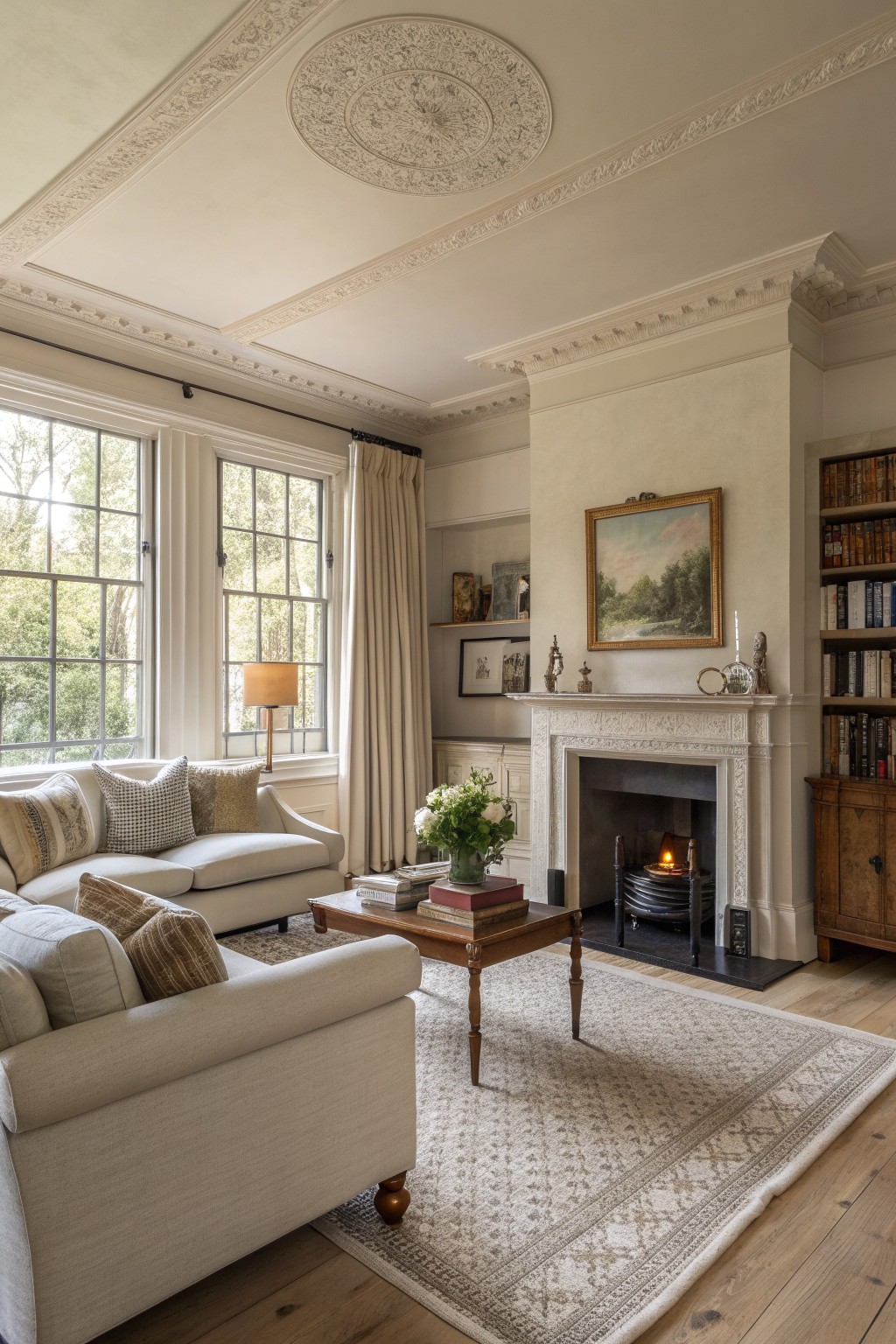
Built-in shelves and cabinets next to a fireplace add useful storage without covering up the original trim or mantel. They keep the room feeling organized while letting the Victorian details stay front and center.
This setup works best in living rooms that already have a strong fireplace. Fill the open shelves with books and a few smaller pieces, and use the lower cabinets for items that do not need to be on display all the time.
Open Shelving For Everyday Use
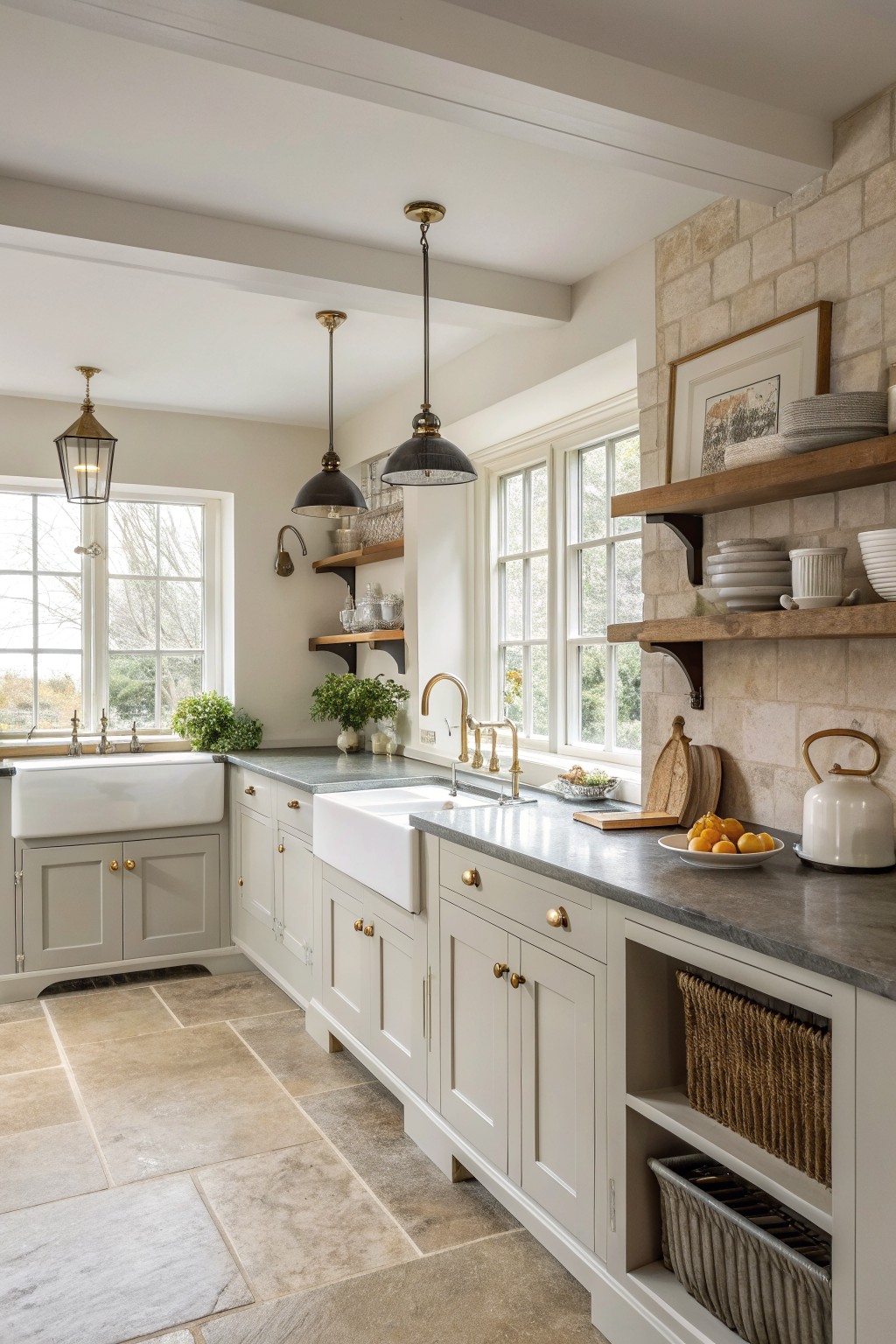
Open shelving works well in a farmhouse kitchen because it keeps daily items within reach while adding a bit of texture. Wooden shelves mounted on a stone wall give the space a practical spot for dishes and bowls without needing extra cabinetry. This approach feels natural in older homes that already have some built-in character.
Place the shelves near the sink or main workspace so they get used often. They suit kitchens with neutral cabinets and simple hardware, since the wood brings in warmth without crowding the look. Just keep the arrangement loose so it does not start to feel cluttered over time.
Large Wooden Hutches For Storage
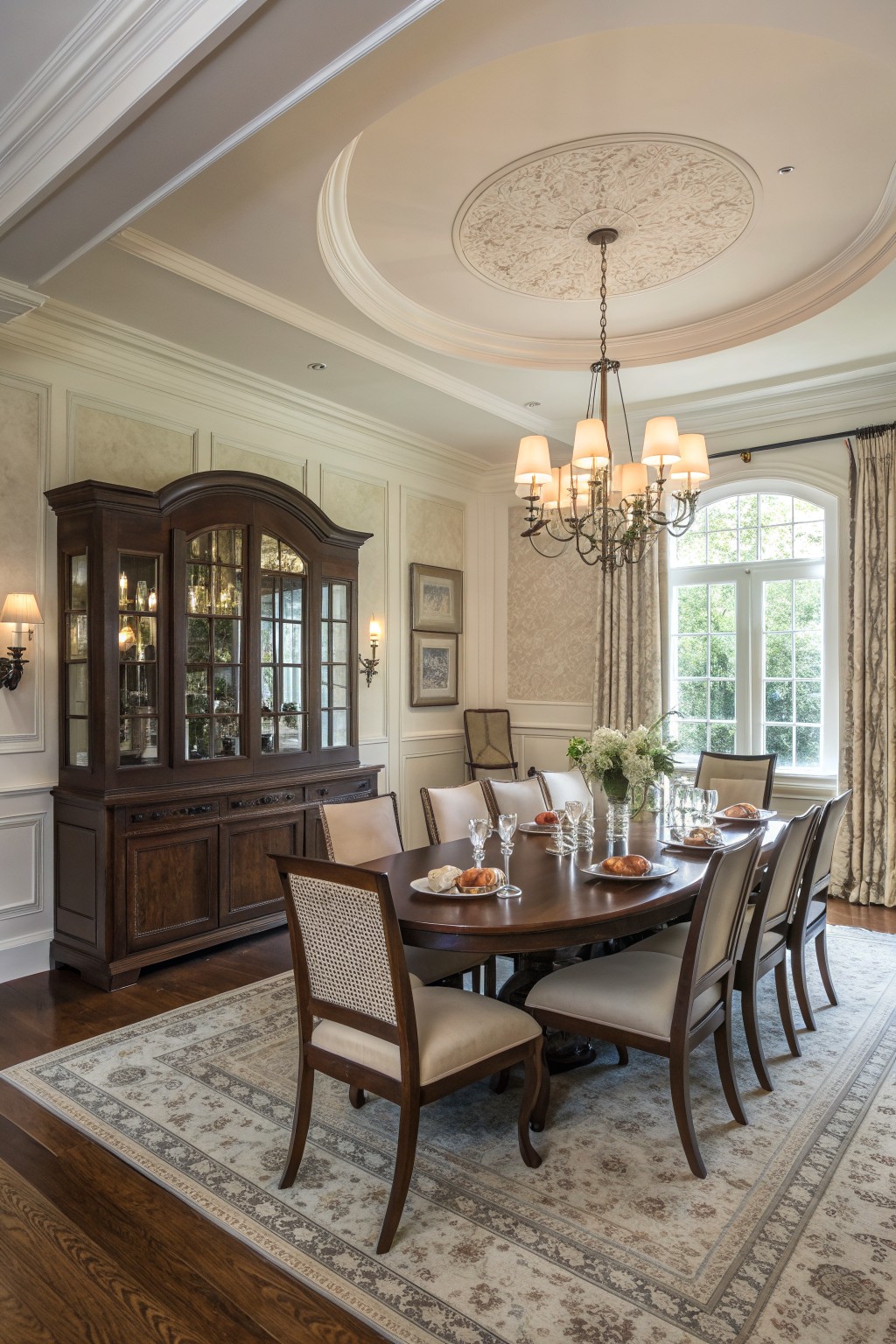
A large wooden hutch brings real storage to a dining room while respecting the period details already in place. The dark finish and glass doors let you show off a few nice pieces without turning the space into a showroom.
This approach suits Victorian farmhouses that need extra room for dishes and linens but do not want to add modern cabinetry. Keep the scale balanced with the table and chairs so the hutch anchors the room instead of crowding it.
Arched Details In The Bath
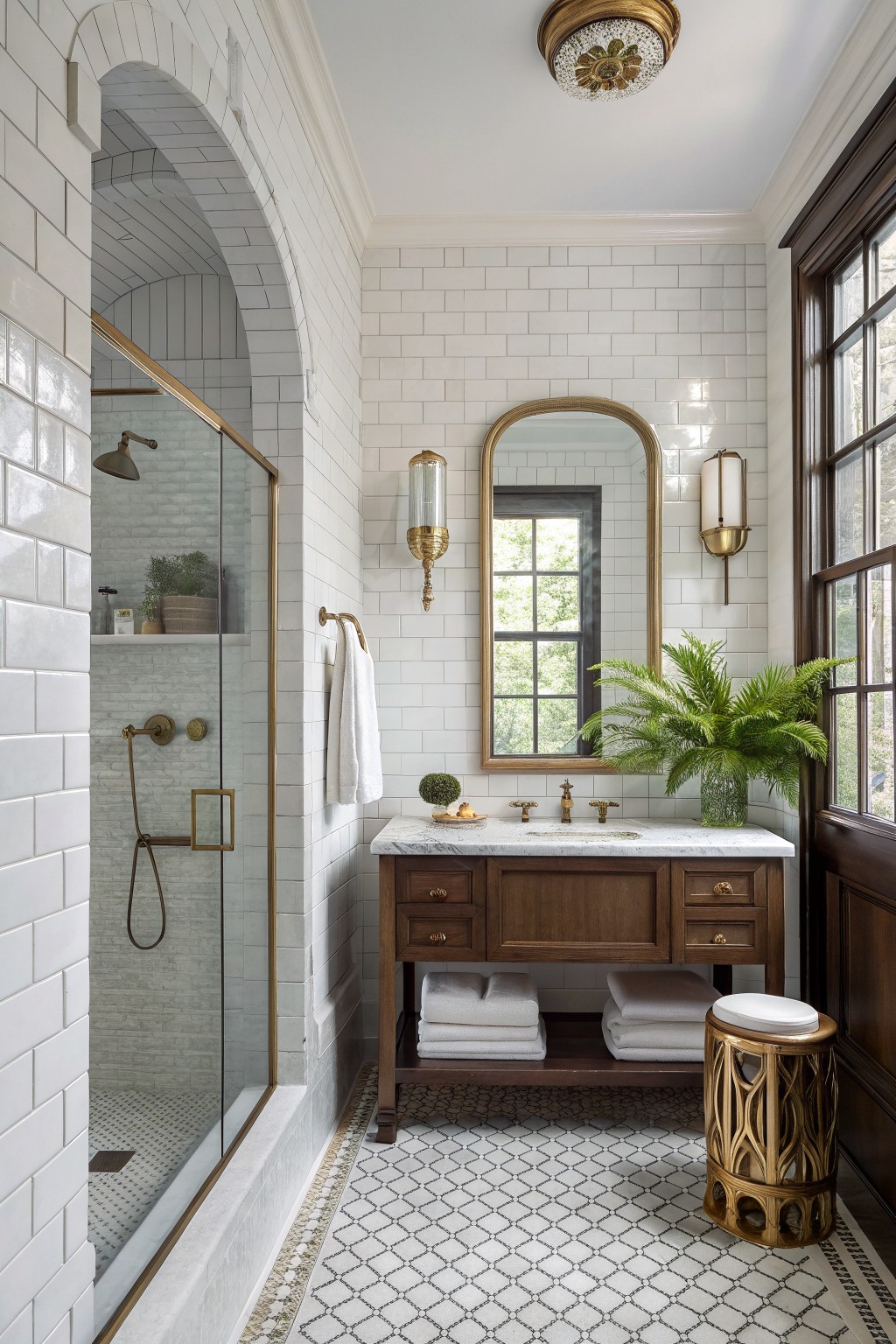
Arches show up in older homes more often than people expect, and they still work well in updated bathrooms. In this space the arched shower opening and the matching mirror frame keep the Victorian lines without making the room feel heavy or closed in.
They suit homes that already have some period trim or want a gentle nod to it. Keep the curves simple, match the finish on the hardware, and let the rest of the room stay fairly plain so the arches stay the main feature.
Cane Weave On Bed Frames
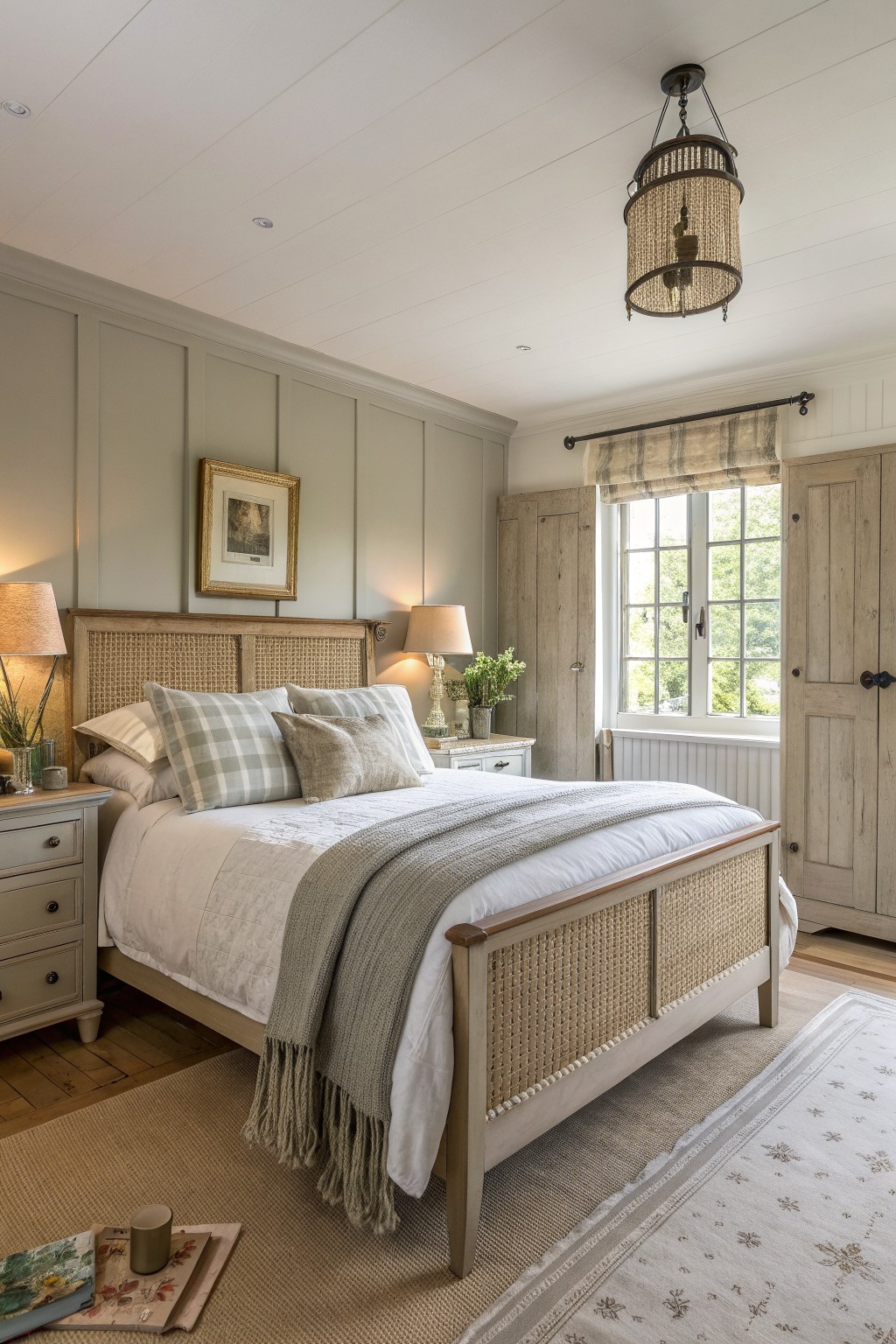
Cane weave on bed frames brings a light natural texture into Victorian farmhouse bedrooms. The open pattern keeps the piece from feeling heavy while the wood frame holds onto the period shape.
This works best in rooms that already have wall paneling and simple trim. Stick to quiet colors so the weave reads as a small update rather than a big change.
Add Botanical Wallpaper for Quiet Victorian Detail
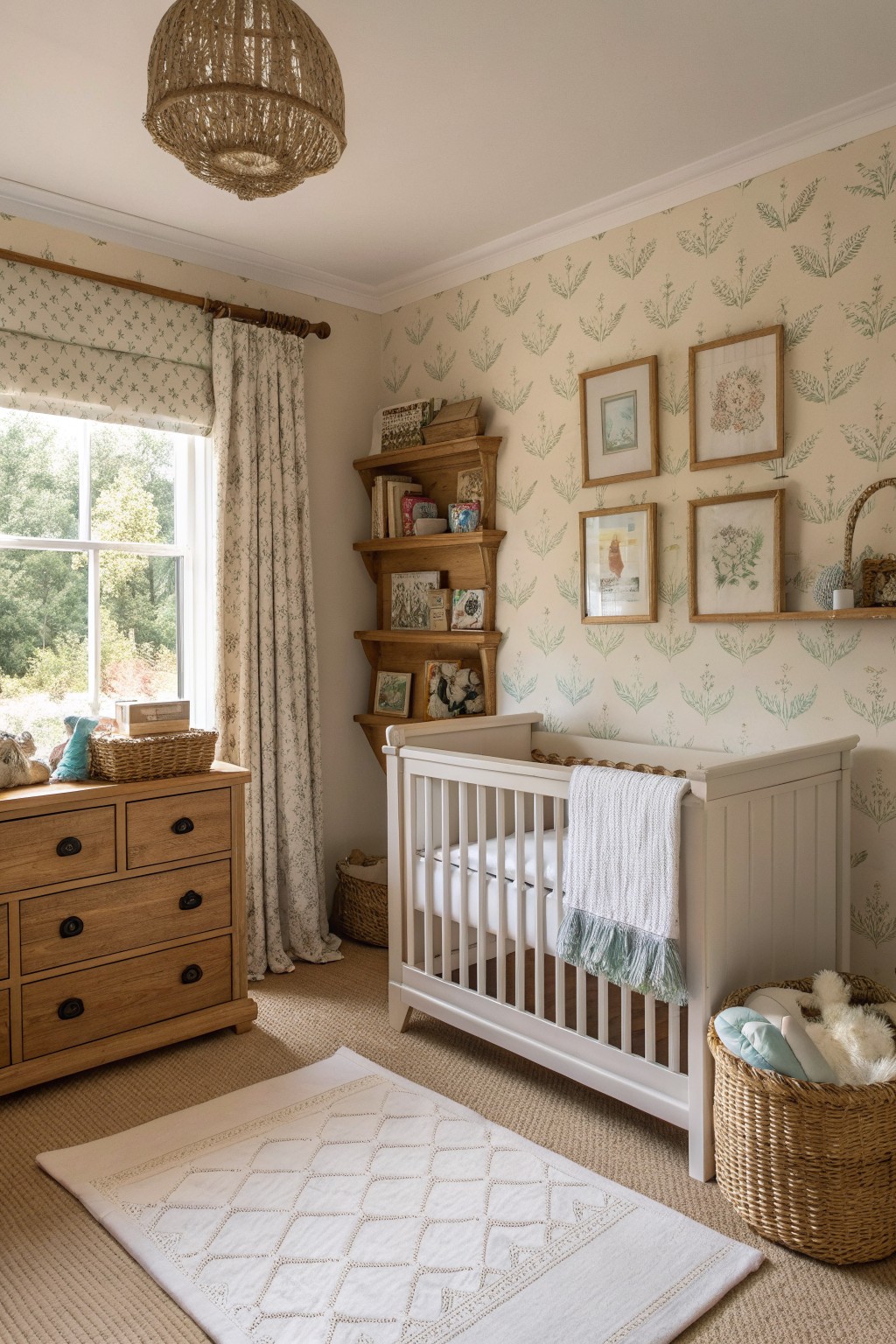
Botanical wallpaper gives a Victorian farmhouse room just enough pattern to feel rooted in its period without taking over the space. The soft green print here keeps the walls from feeling plain while still letting light bounce around and the room stay calm.
It works best in rooms where you want character but not clutter, like a nursery or bedroom. Stick to one wall or a smaller scale print, then balance it with white trim and simple wood furniture so the overall look stays light and farmhouse friendly.
Built-In Storage With Open Shelves
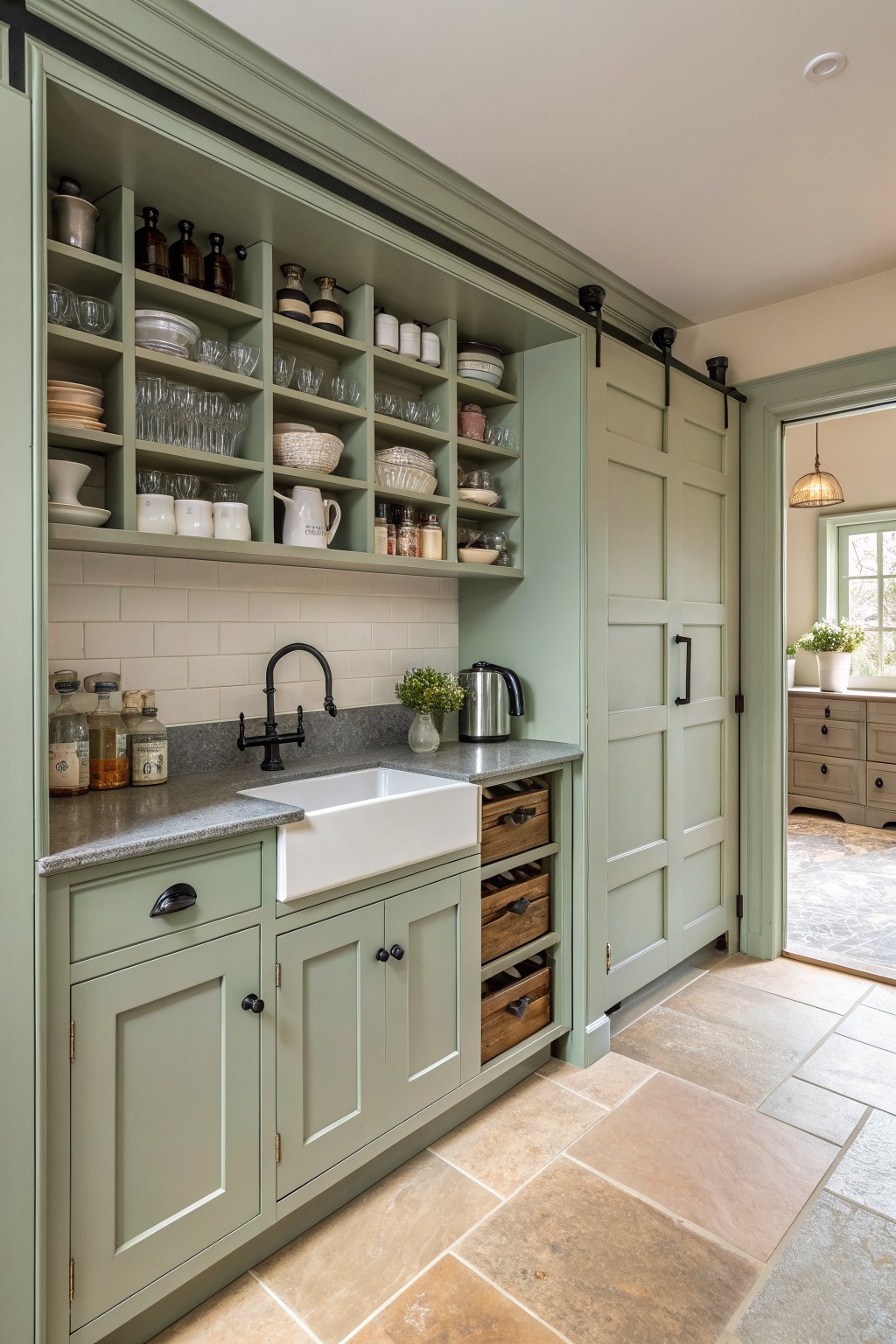
Built-ins like these give a kitchen or pantry extra room without needing a full renovation. The mix of closed lower cabinets and open upper shelves keeps things organized while letting you show off everyday dishes and glassware. It works especially well in older homes where you want more function but still need to honor the original layout.
This setup suits Victorian farmhouses that already have some trim detail and solid walls. Keep the color soft so it blends with the rest of the room, and leave enough open space on the shelves so it does not feel crowded. A sliding door nearby can help close off the area when needed without taking up floor space.
Built-In Storage For Mudrooms
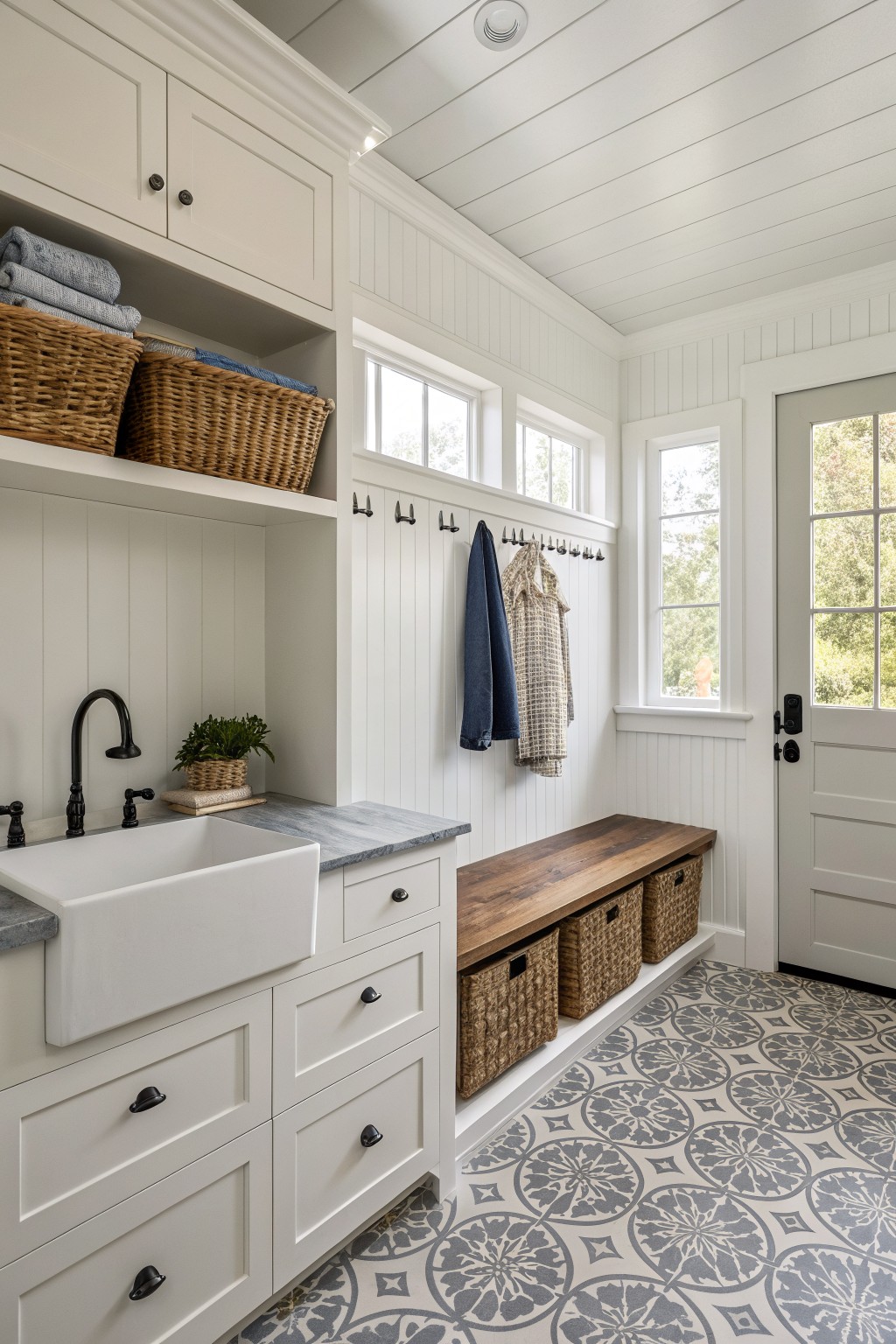
Built-ins like these give a mudroom plenty of places to put things away without crowding the space. Open shelves hold baskets for quick access while the bench and lower drawers keep everyday items out of sight.
This approach works well in older homes that need more function but still want to keep the trim details and paneling that fit the original style. It suits houses with busy entries where coats, boots, and cleaning supplies need a regular spot.
Built-In Seating in Rooms With Sloped Ceilings
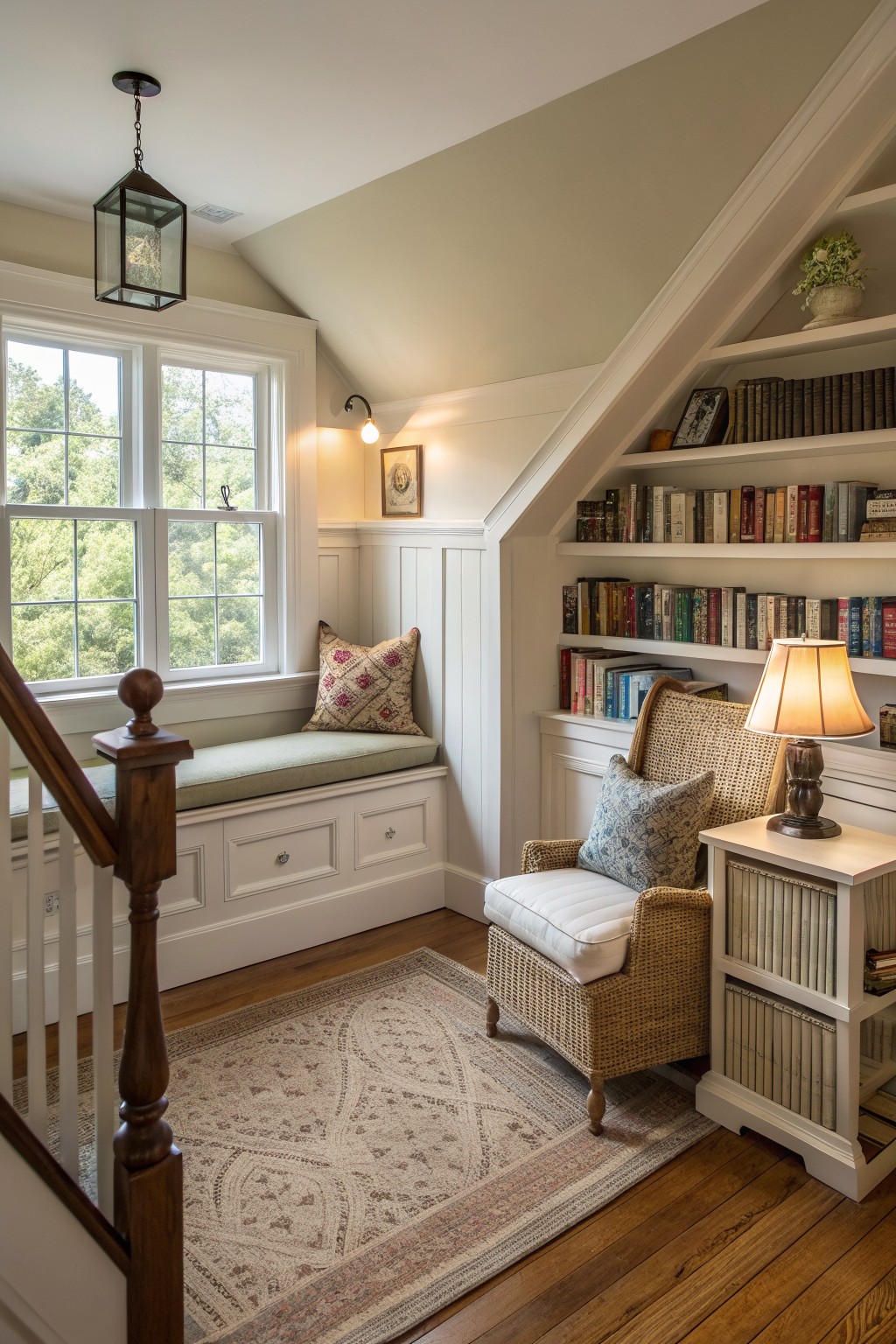
Rooms with angled ceilings often leave awkward corners that feel hard to use. A built-in window seat paired with matching shelving turns that space into something practical while keeping the original shape of the room intact. The low storage drawers underneath add function without adding extra furniture that might crowd the area.
This approach works especially well in older farmhouses where upstairs rooms have steep rooflines. It gives you extra seating and book storage without covering up trim details or changing the ceiling height. Keep the finish simple so the built-ins blend with existing woodwork rather than standing out as new additions.
Built-Ins That Add Storage Without Changing The Room’s Feel
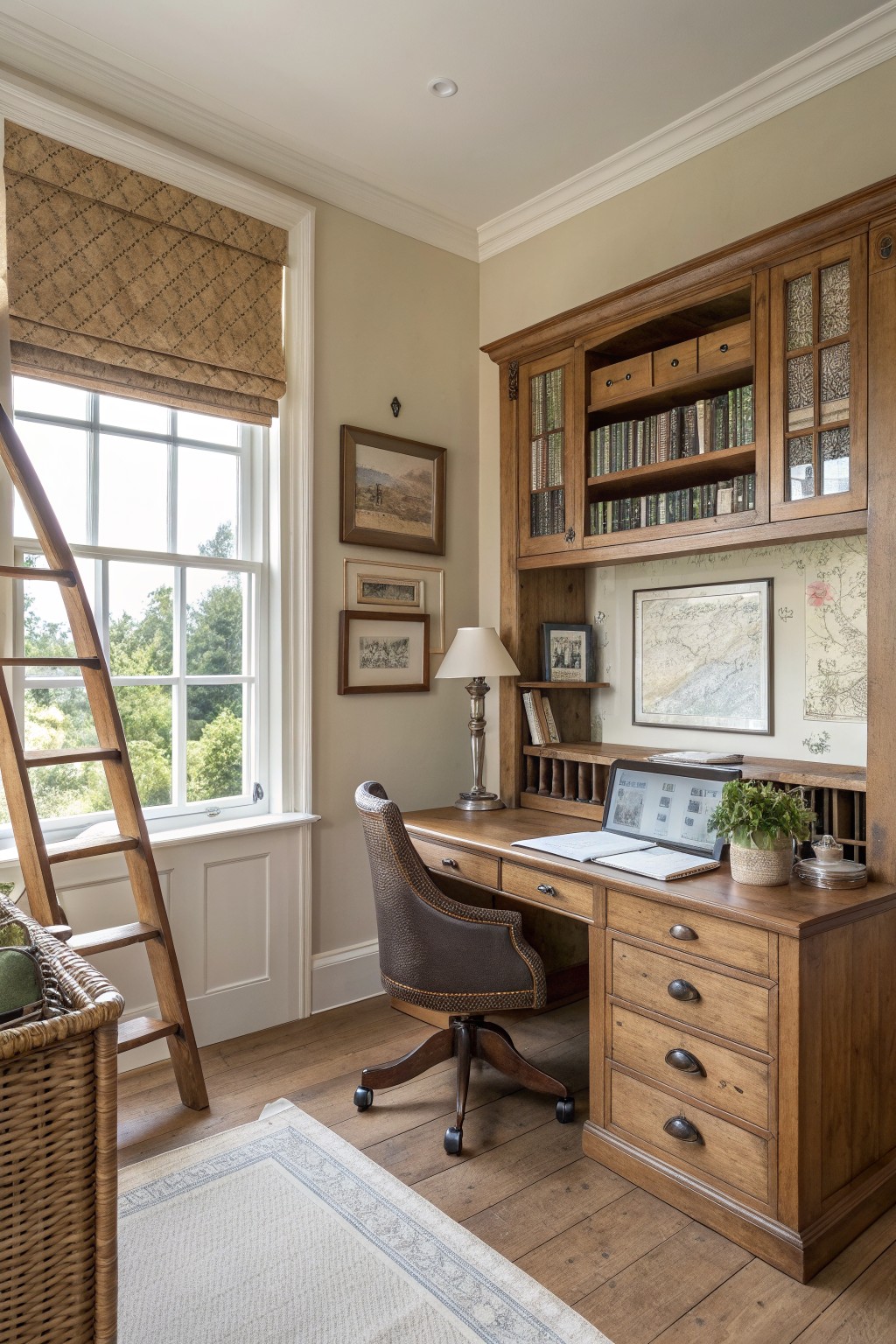
A built-in desk and cabinet unit like this one gives you a solid place to work while keeping everything tucked away in the same wood tones as the rest of the house. It turns what could feel like an added-on office into something that looks like it has always been there.
This approach works best in older homes where you need real workspace but do not want to cover up trim or fight the existing architecture. Keep the wood finish close to the original floors or doors, and limit the hardware to simple pulls that match the period.
Hang Curtain Rods Higher to Frame Tall Windows
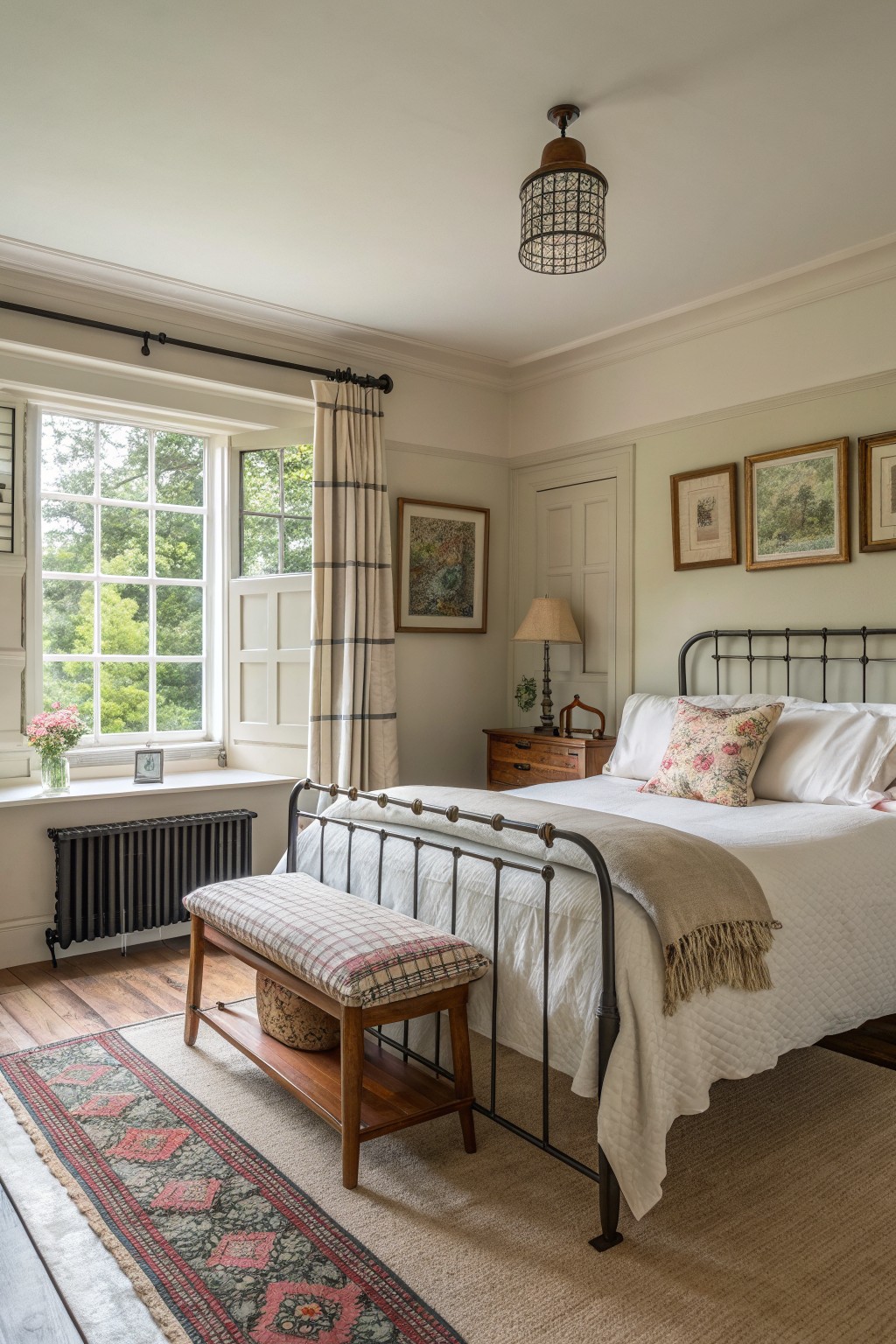
Raising the rod a few inches above the window trim gives older windows more presence and keeps the proportions feeling right in a Victorian farmhouse bedroom. A simple linen panel in a quiet stripe adds softness without covering up the molding or the light coming through the glass.
This approach works best in rooms that still have their original trim and tall openings. Use a dark rod to match other metal details like a bed frame, and choose a fabric that hangs straight so the focus stays on the architecture rather than the treatment itself.
A Wood Vanity Adds Everyday Storage
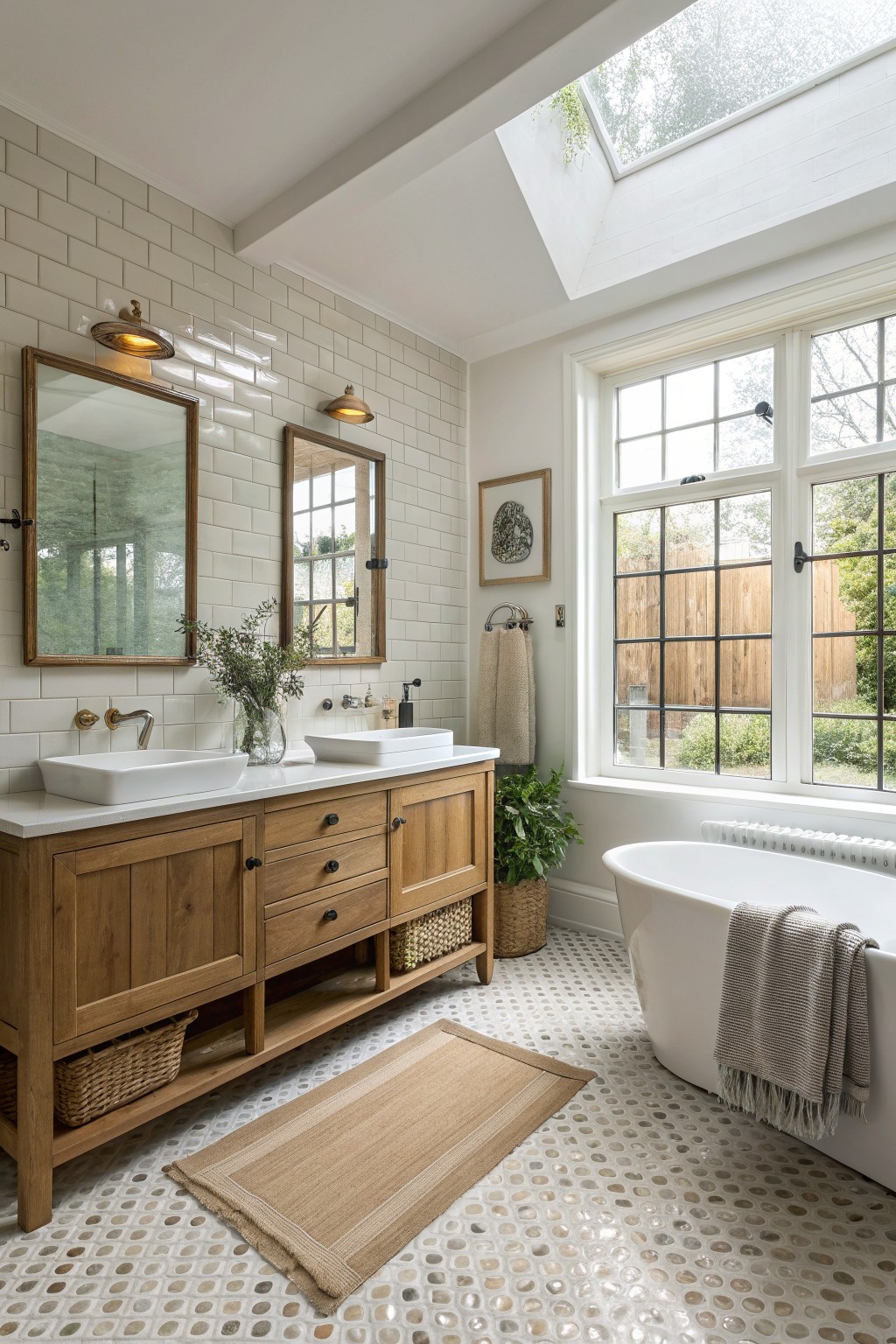
A wood vanity gives a bathroom real storage without making the room feel built in or too modern. The natural wood grain brings warmth that pairs well with classic tile and simple fixtures, and the open lower shelves make it easy to keep baskets or extra towels on hand.
This works best in homes that already have some period detail, since the furniture style of the vanity keeps the space from looking too polished or new. Stick with a simple countertop and understated hardware so the wood stays the main feature rather than competing with other elements.
Built-In Seating Along The Windows
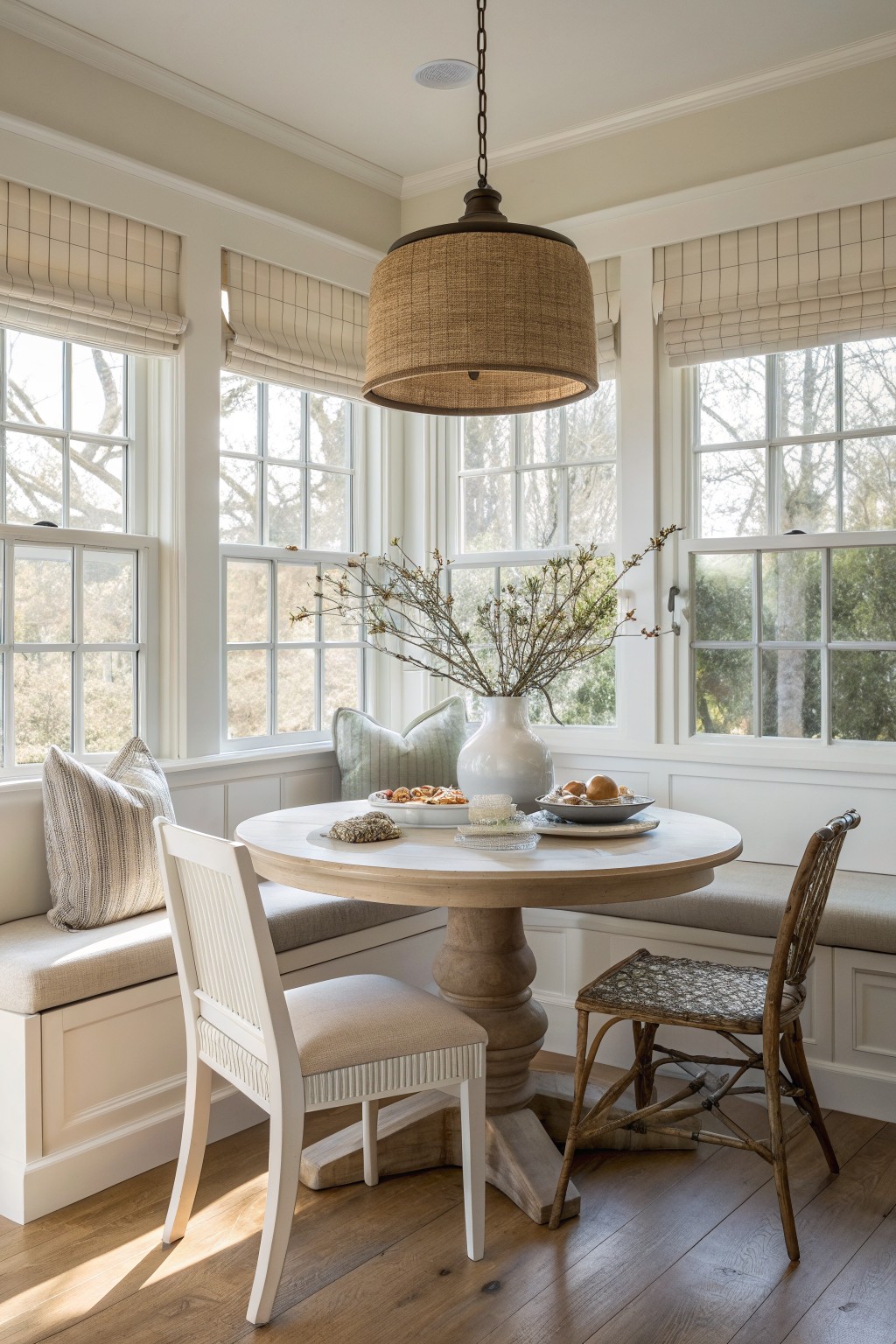
Built-in benches that follow the line of the windows turn an ordinary corner into a useful dining spot. The setup keeps the room feeling open while giving people a comfortable place to sit without crowding the floor with extra chairs.
This approach suits older homes that already have nice window trim and good natural light. Keep the cushions simple in light fabrics so the original architecture stays visible and the space does not feel too heavy.
Wood Vanities Add Warmth To White Bathrooms
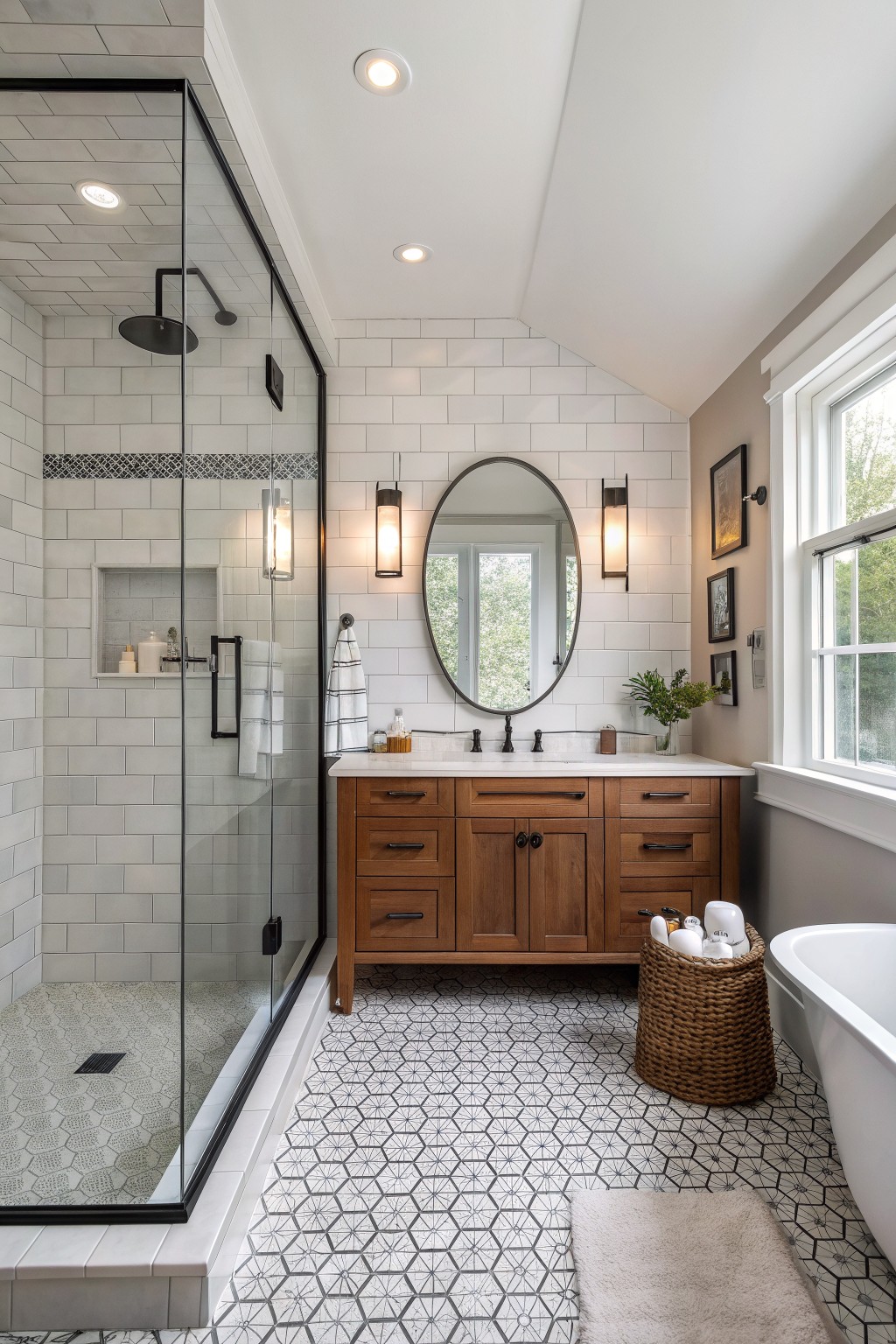
White tile can make a bathroom feel clean and bright, but it often needs something to soften the look in an older home. A wood vanity does that job well by adding natural tone and a bit of weight that keeps the space from feeling too plain.
This approach works best when the vanity has simple doors and drawers that echo traditional cabinetry. It gives you real storage without needing extra pieces that might crowd the room. Keep the tile bright and let the wood do the balancing.
Wall Storage Above a Work Table
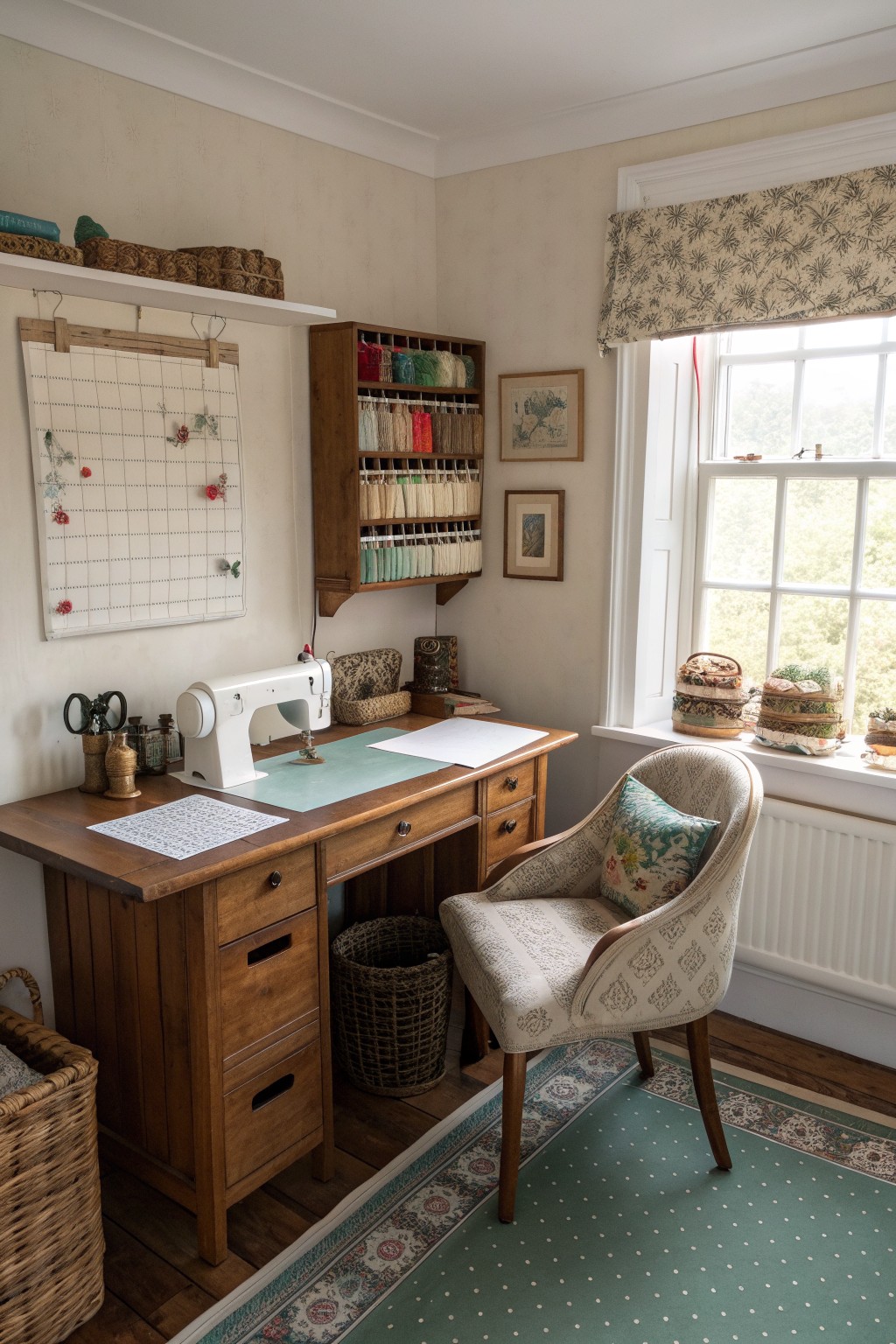
Many older homes gain a lot from adding a wall cabinet right above a sewing table. It keeps threads, fabrics, and tools sorted and visible without crowding the floor or the surface where you actually work.
This setup suits Victorian farmhouses because the wood cabinet can echo the trim and built-ins already in the house. Keep the design plain so it feels like it has always been there rather than added on later.
Built-Ins That House A Piano
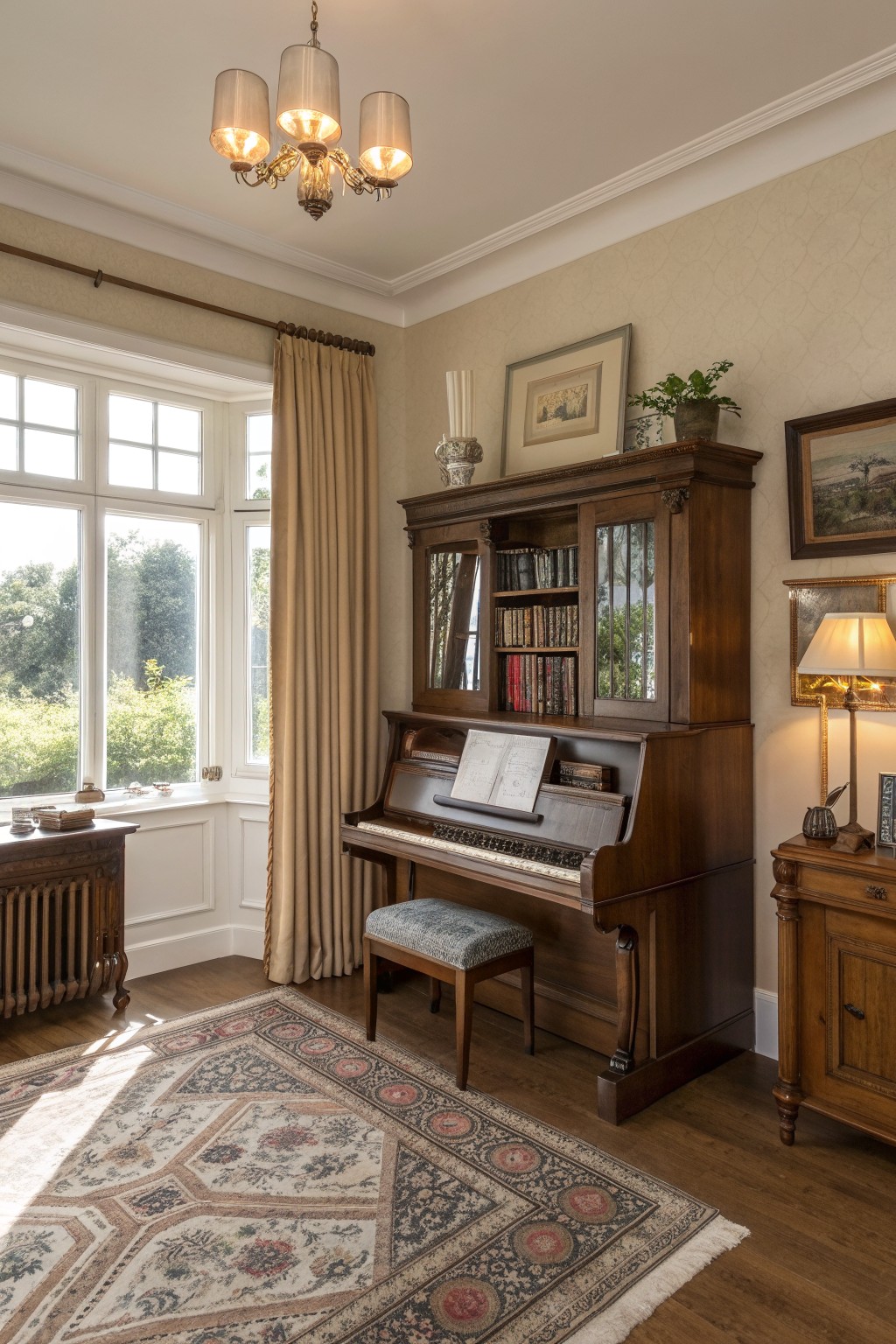
One practical way to keep a music space from feeling crowded is to set the piano inside a larger built-in cabinet. The unit can hold books and sheet music above and beside the keyboard, so the instrument becomes part of the room’s architecture rather than a separate piece of furniture.
This works best in older homes that already have wood trim and millwork. Match the wood tone and door style to what is already in the room, and leave enough clearance for the bench so daily use stays comfortable.
Built-In Storage That Fits Period Homes
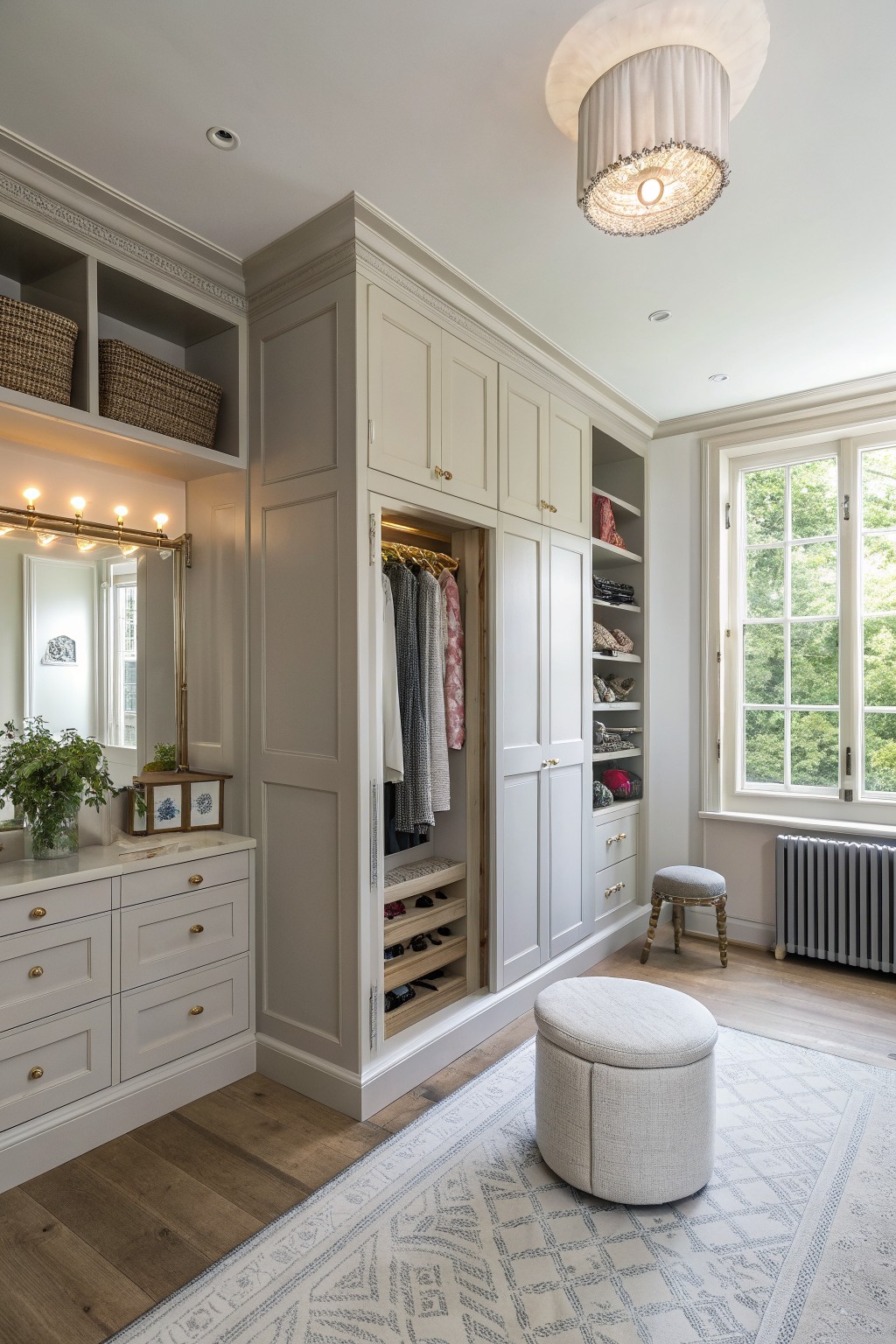
Many older homes come up short on closet space, so adding built-ins can solve the problem without changing how the room feels. Simple cabinet doors and open shelving keep everything organized while still looking like they belong with the original trim and moldings.
This works best when the new work stays in the same scale and finish as the rest of the house. Pick hardware and door styles that match what is already there instead of going for something more current.
Frequently Asked Questions
Q: What if my original trim is damaged beyond repair? A: Match the profile exactly when you order replacements. Source wood from salvage yards if you can. This keeps the details consistent across the room.
Q: How should I handle adding a bathroom without losing the house’s charm? A: Tuck it into an existing space like a former closet. Use fixtures with simple lines that echo the era. Skip anything too flashy.
Q: Is it worth keeping the old radiators? A: They add real character. Clean them up and paint them to blend with the walls. Modern heating can work around them easily.
