

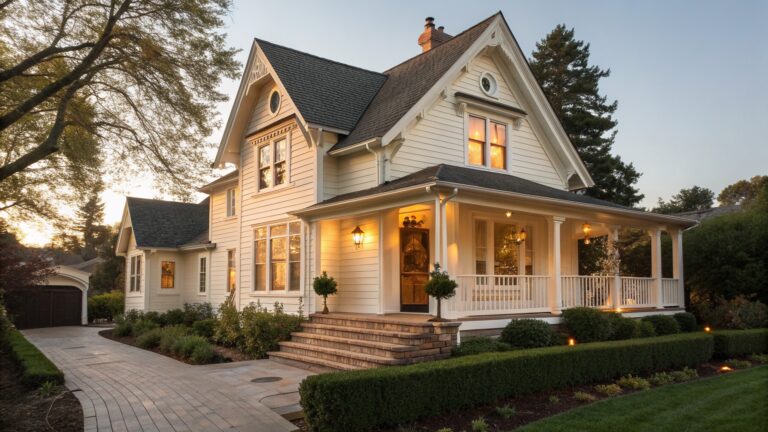
When I look at houses that try to mix Victorian details with farmhouse lines, the real test shows up in how the roof pitch meets the porch columns and window trim.
Some blends end up looking like two houses fighting for attention from the curb, especially when the trim gets too heavy or the siding choices clash in color and texture.
I have found that starting with the simpler farmhouse massing and adding Victorian accents only at the entry and gable ends tends to keep the whole front readable.
Materials play a bigger role than sketches suggest because certain woods and roof metals either tie the styles together or pull them apart depending on the light.
A few of these combinations are worth sketching on my own place before committing to any changes.
Add a Covered Porch to Blend the Styles
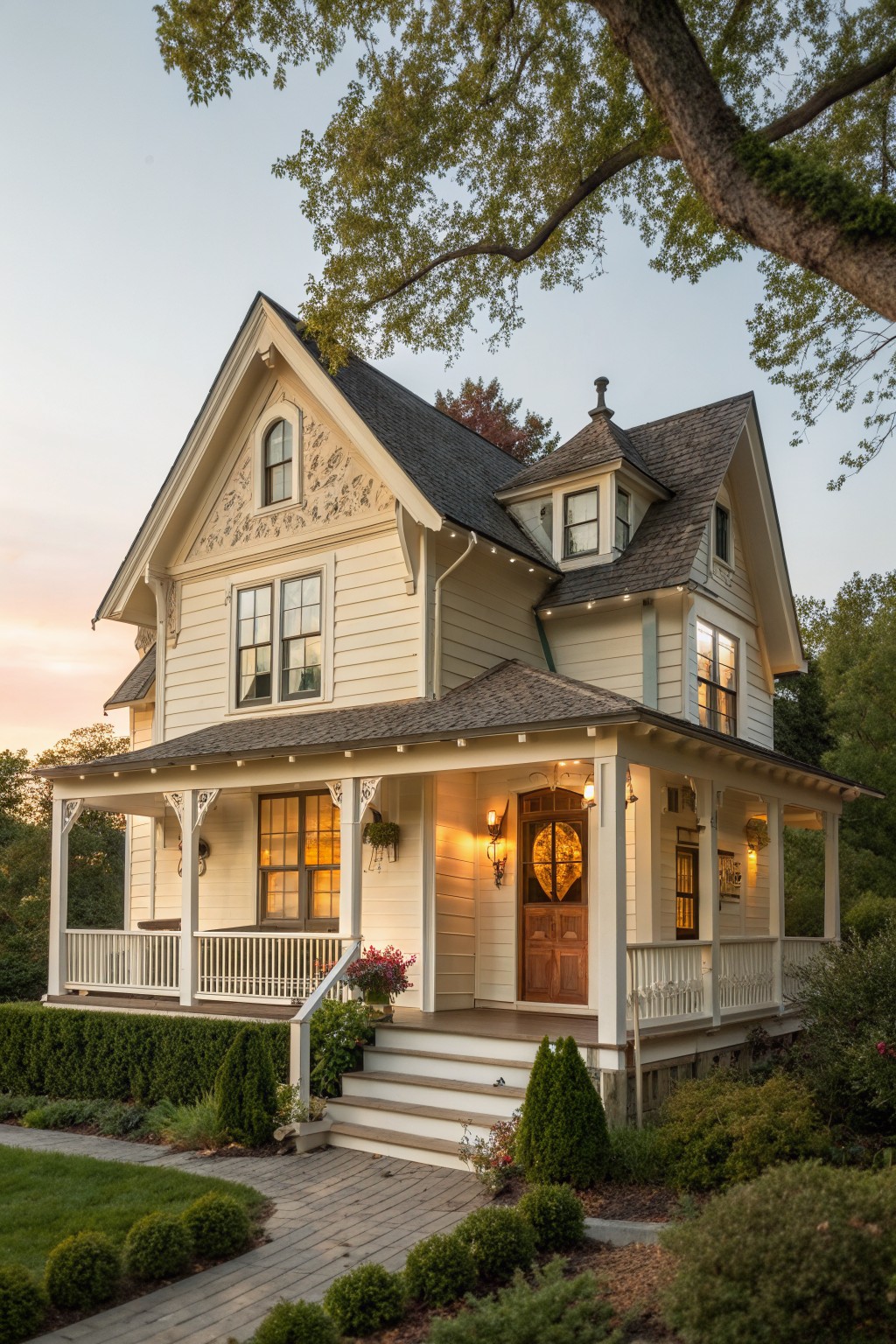
A covered porch gives a Victorian cottage farmhouse room to breathe. It softens the steeper rooflines and ornate trim while adding the simple, usable space most people want from a farmhouse. The wide overhang and basic railings keep things practical without losing the character of the older details.
This works best on homes that already have some Victorian trim or gables. Keep the porch depth generous so it feels like an extension of the living space rather than a narrow afterthought. Stick with painted wood railings and simple brackets so the porch reads as farmhouse first and Victorian second.
Built-In Storage Benches for the Entry
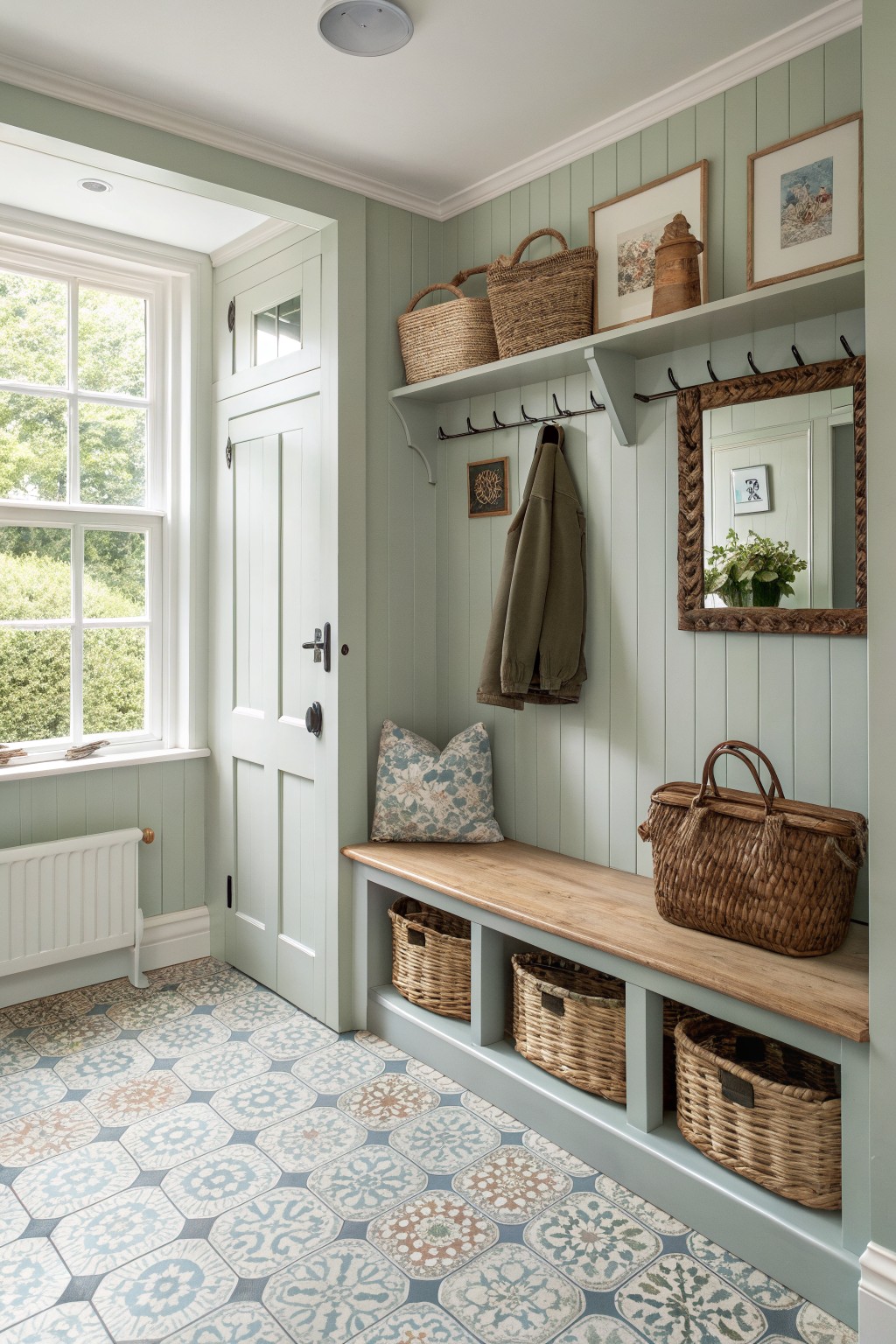
A built-in bench with open cubbies underneath gives an entry a spot to sit and a place to tuck away everyday items without crowding the floor. The simple wood top and soft color blend easily into older homes while keeping things practical for daily use.
This setup works best in smaller entries or cottages where space is tight. Add a few hooks on the wall above and baskets below to hold shoes, bags, or outerwear so the area stays organized without extra furniture.
Built-In Bookshelves Around the Fireplace
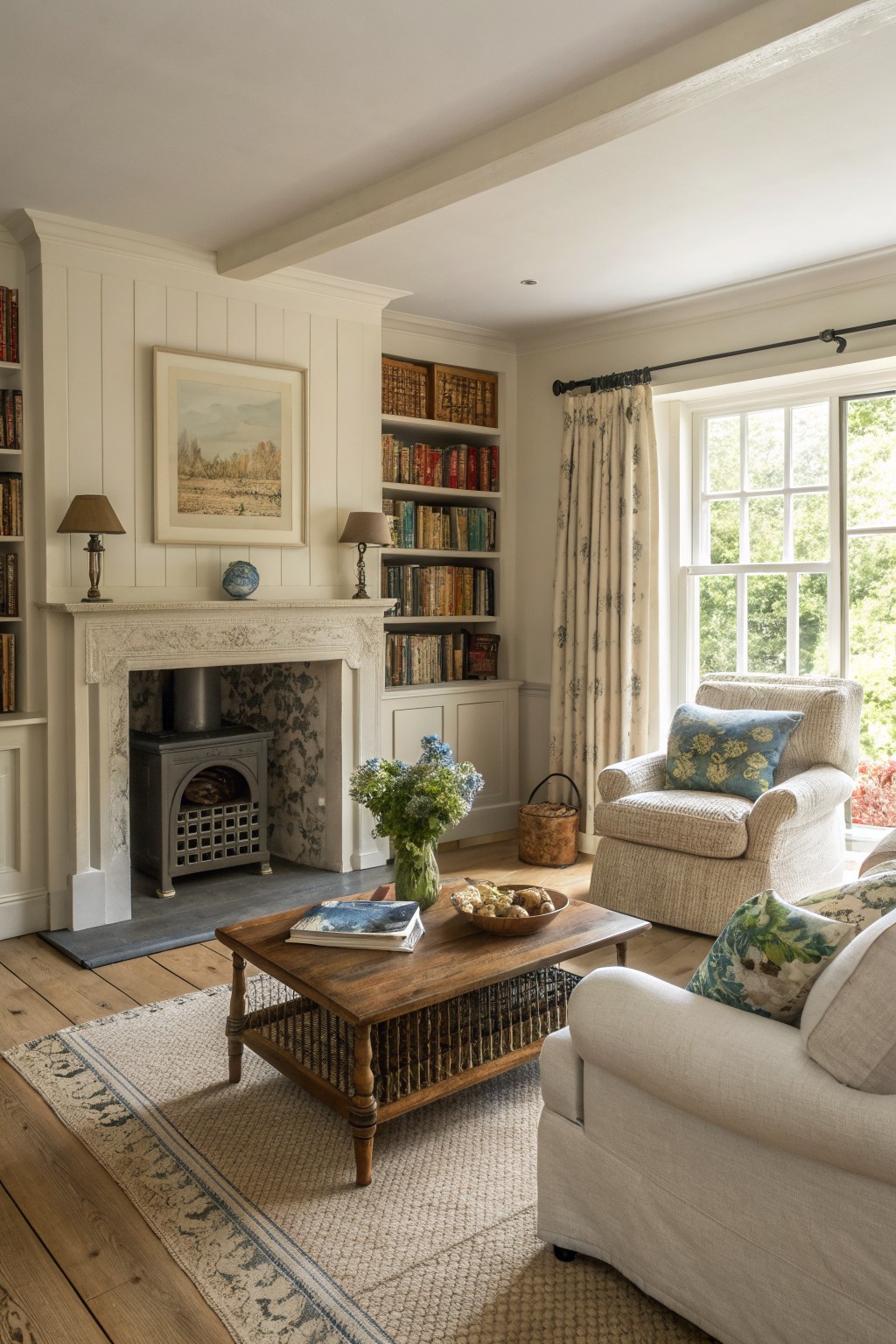
Built-in shelves on either side of a fireplace give you a practical way to add storage while keeping the room feeling settled. The books and a few simple objects help balance the more detailed mantel without making everything look too formal.
This setup works best in living rooms that already have some architectural trim or paneling. It suits homes blending Victorian and farmhouse styles because the shelves can hold both older books and everyday items without needing extra furniture.
Pair White Cabinets With Warm Wood Tones
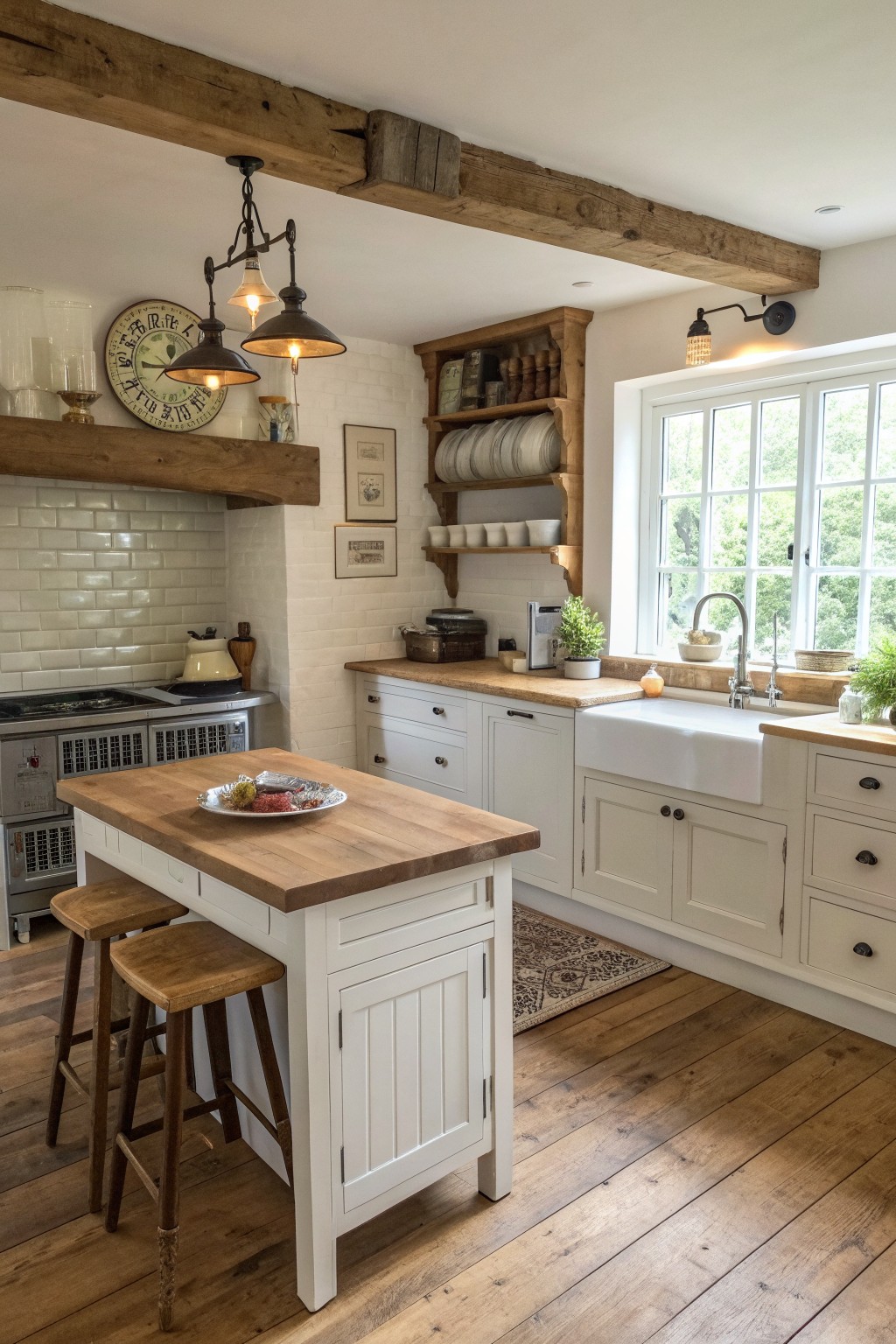
White cabinets give a clean base that suits both Victorian detail and simple farmhouse lines. The wood on the island top, open shelves, and ceiling beams adds the warmth and texture that keeps the room feeling lived in rather than stark.
This combination works well in kitchens that get steady use. Keep the white on the larger surfaces for light and let the wood show up on counters and accents where it can handle daily wear.
Round Table with Built-In Window Seating
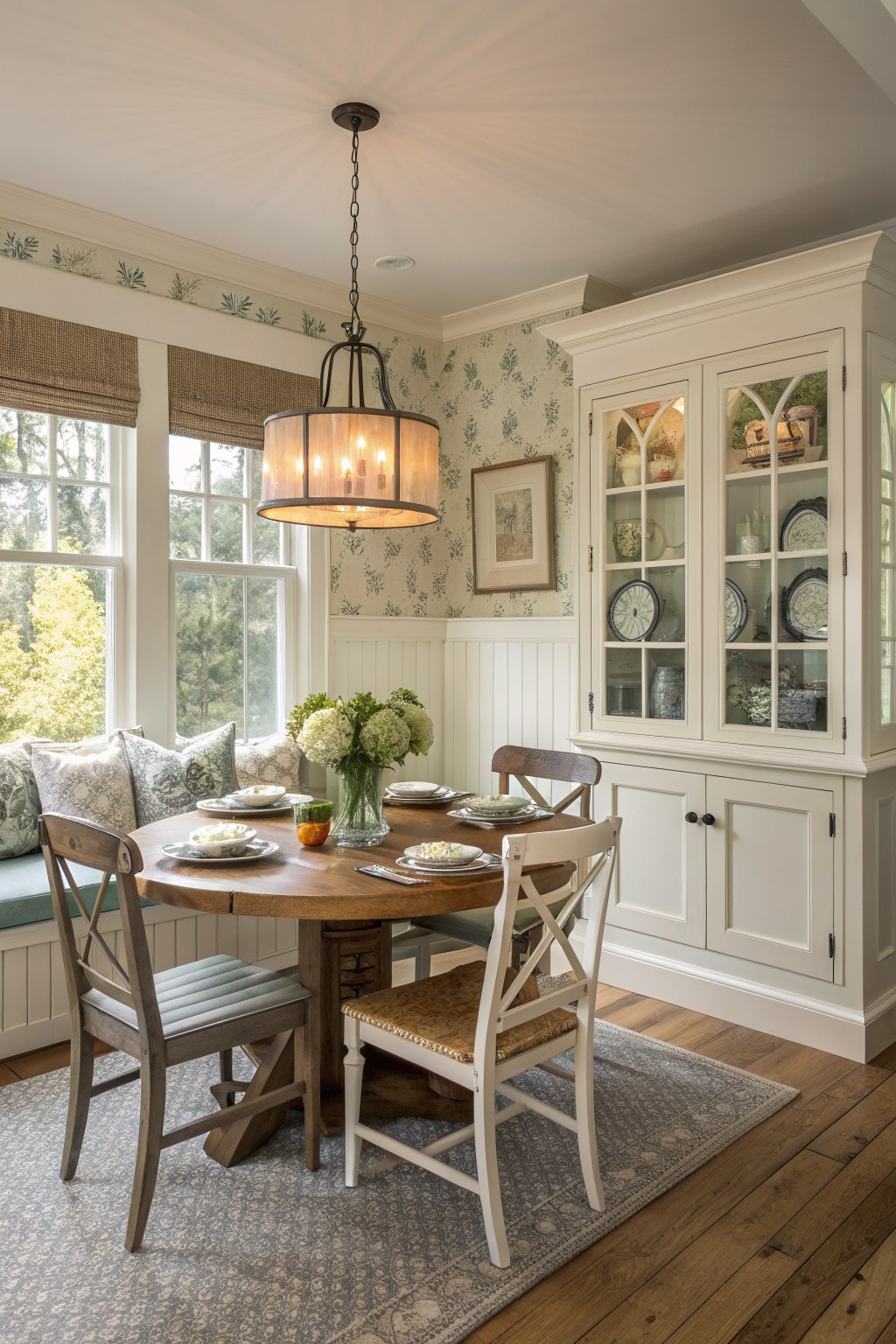
A round table works especially well when placed right in a bay window with built-in bench seating. The curved shape leaves room to walk around the table and makes the whole spot feel less formal than a big rectangular one would. It also pulls in plenty of natural light without blocking the windows.
This setup suits smaller dining areas in cottage or farmhouse homes where you want extra seating without crowding the floor. Keep the bench cushions simple and add just a couple of different chairs so the space stays easy to use every day.
Built-In Cabinetry For A Home Study
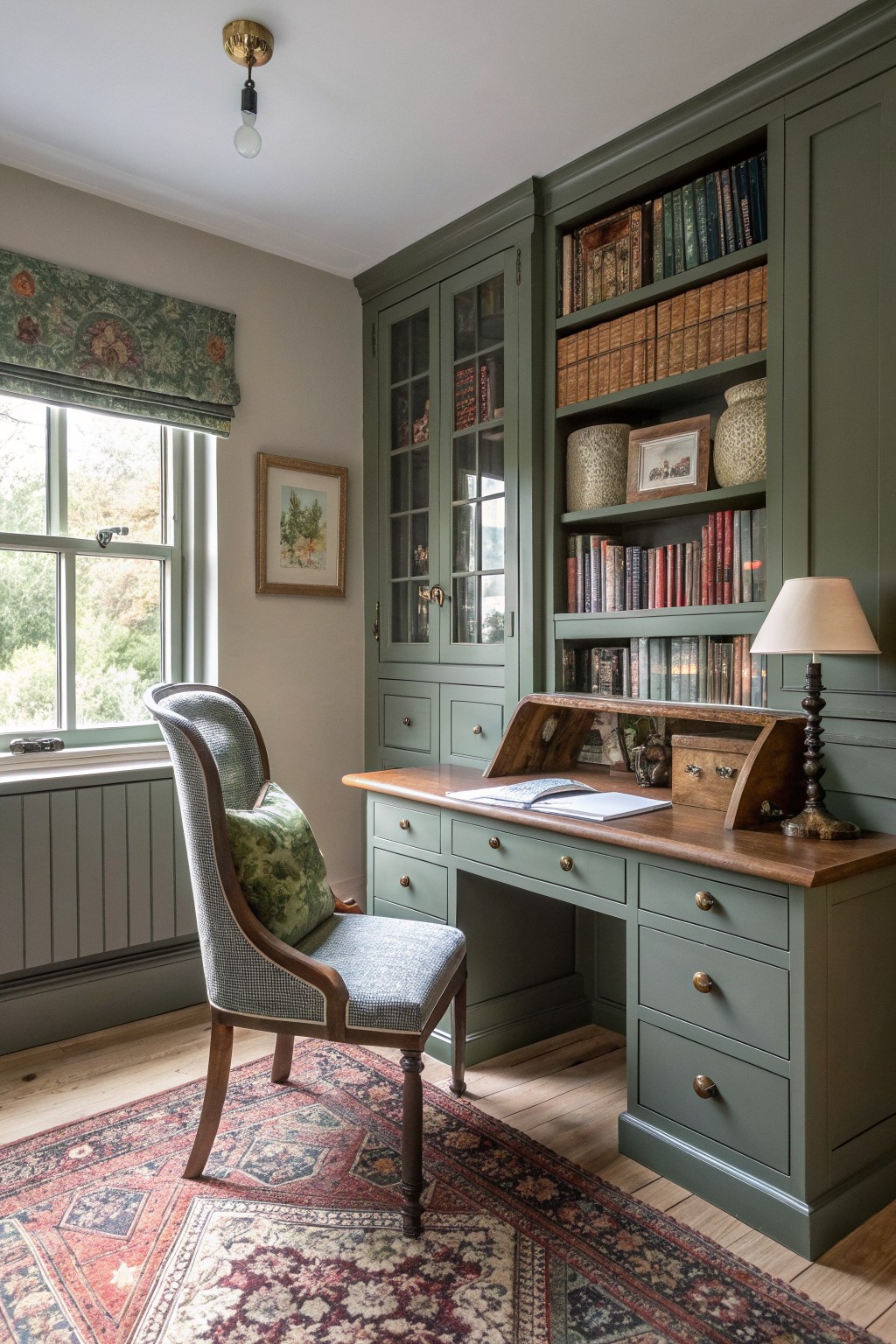
Built-in cabinetry works well in a study because it turns one wall into both storage and a workspace. The painted finish keeps the room feeling light while the wood desk surface adds a bit of warmth. This setup suits Victorian cottage farmhouse homes that need practical storage without looking too modern or too formal.
It works best in rooms that already have decent natural light and some wall space. Keep the cabinet color soft so it blends with the walls, and use the open shelves for books or a few favorite pieces rather than filling every inch. A simple rug and one comfortable chair are usually enough to finish the space.
Canopy Beds That Blend Victorian Detail With Farmhouse Ease
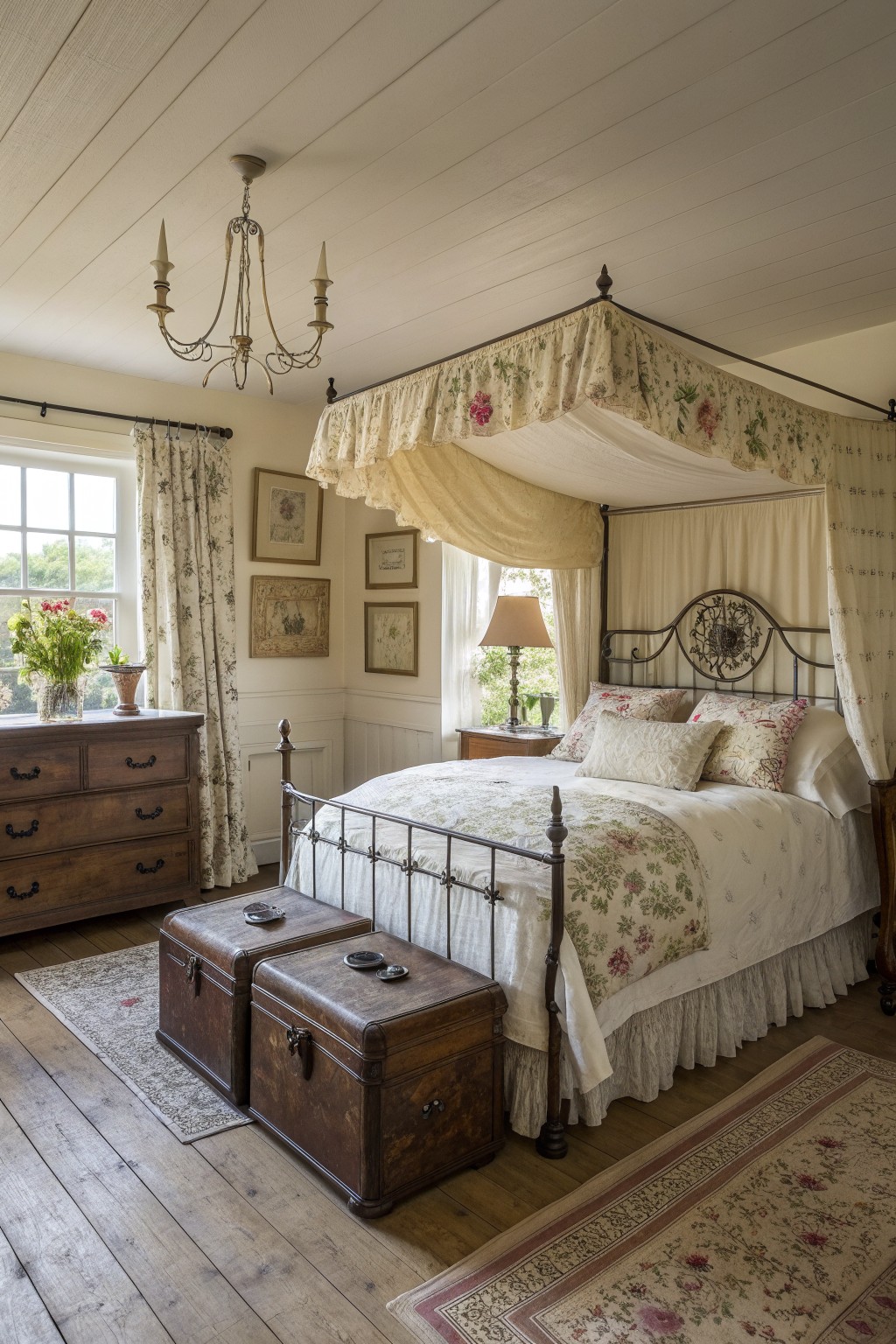
A canopy over a metal bed frame adds softness without making the room feel heavy. The fabric valance and light draping bring in pattern and a touch of Victorian romance, while the simple iron structure keeps the look grounded and practical for everyday use.
This works best in bedrooms where you want a bit of height and texture but still need the space to feel open. Keep the fabric light in color or pattern so it does not overpower the room, and pair it with plain bedding and wood pieces to hold the balance between the two styles.
Wood Vanity With Marble Top
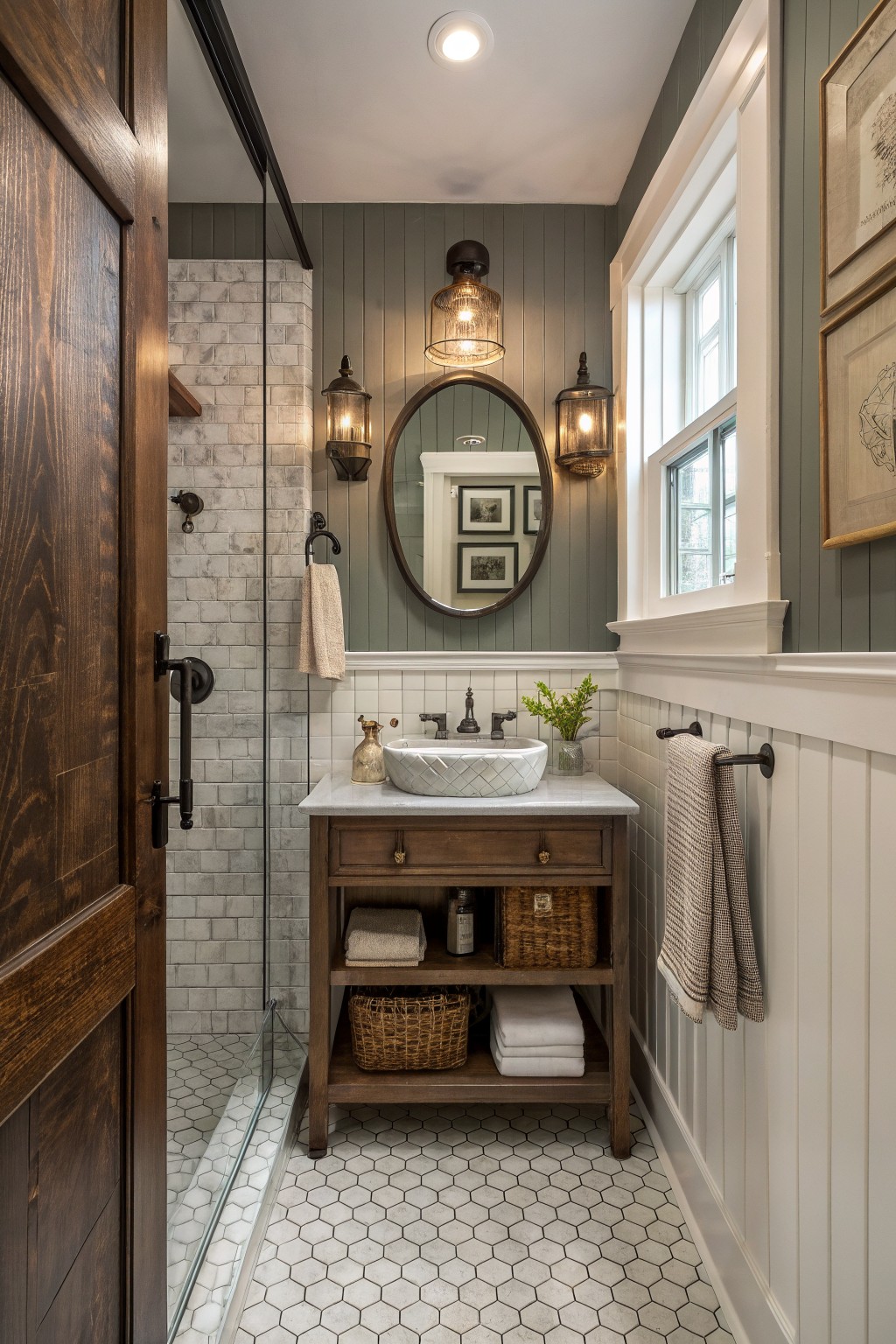
A wood vanity topped with marble gives a bathroom that quiet mix of warmth and polish. The darker wood adds depth while the stone keeps things feeling clean and a little more refined, which works especially well when you want both farmhouse comfort and a touch of Victorian detail.
This combination suits smaller bathrooms best because the open lower shelf keeps the space from feeling closed in. Stick to simple fixtures and soft paint colors on the walls so the vanity stays the main focus without competing.
Painted Cabinetry For Utility Rooms
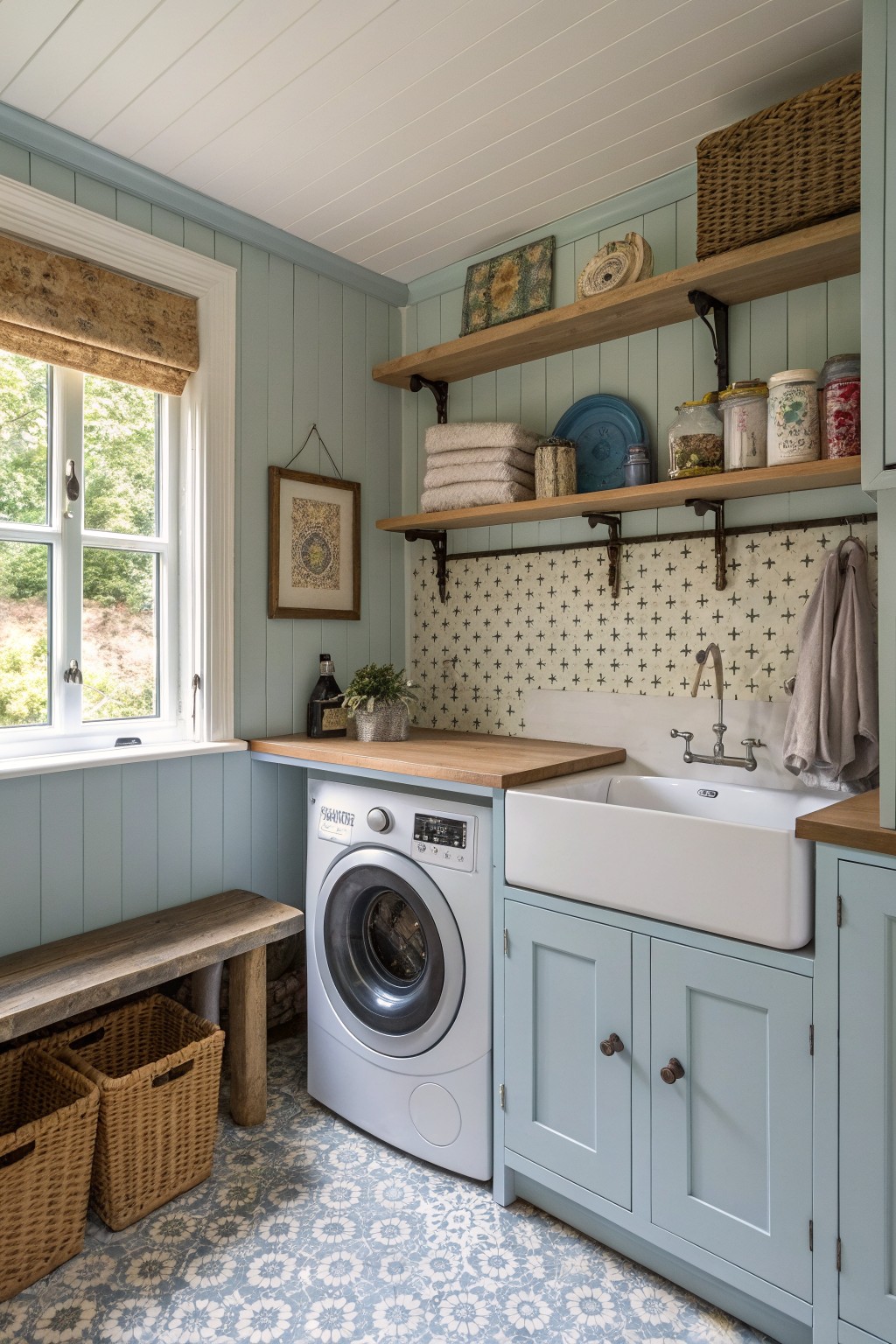
Many older homes tuck the washer and dryer into a small back room that ends up feeling forgotten. Painting the cabinets a soft color and pairing them with a simple wood counter turns the space into something that matches the rest of the house instead of standing apart.
This works especially well in cottages where you want the practical side of the home to feel connected to the rest. Keep the hardware simple, leave room for open shelves above, and let the floor pattern add a bit of interest without crowding the small space.
Use a Wooden Bench for Porch Seating
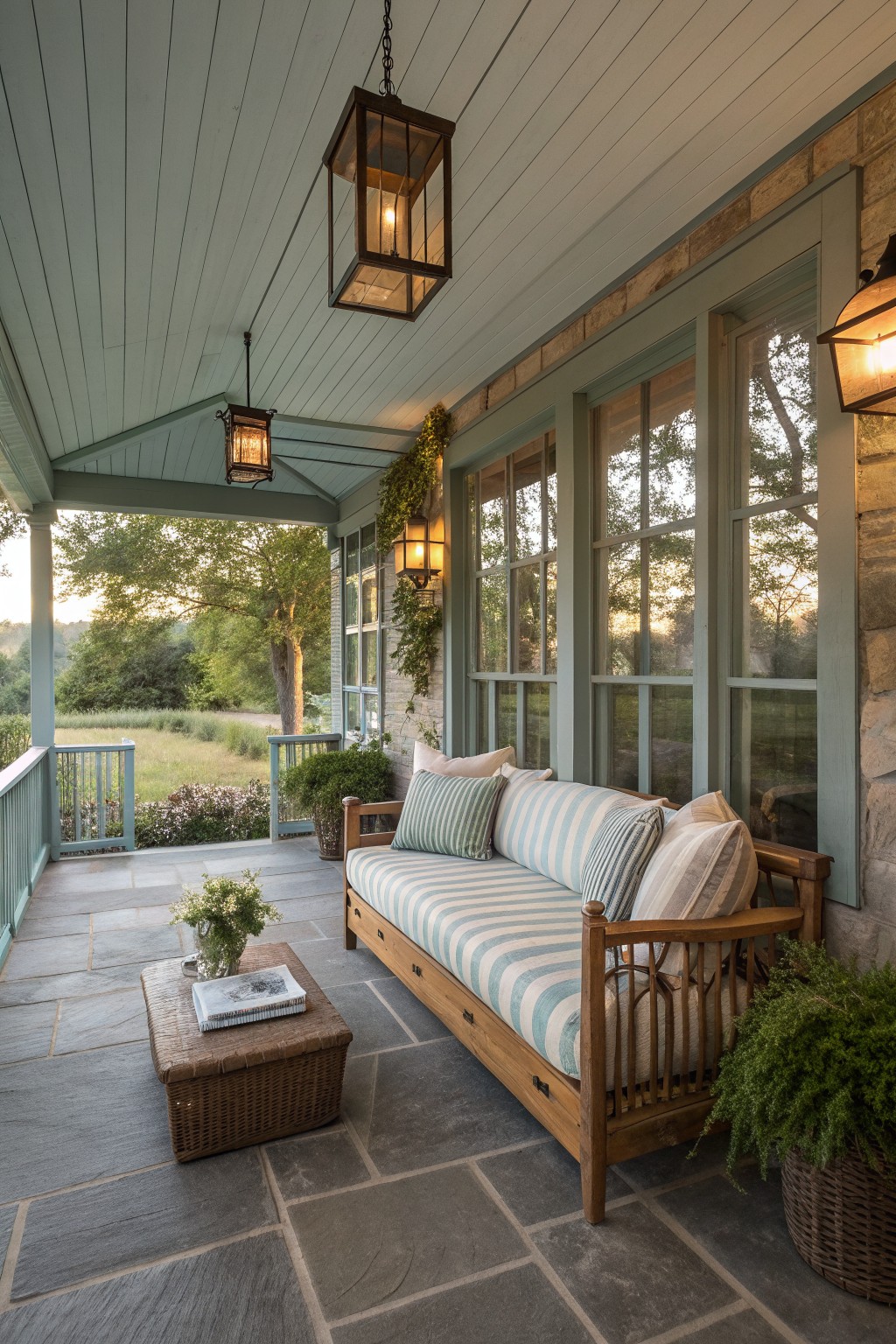
A long wooden bench gives a porch real function without crowding the space. The simple frame and low profile work with both farmhouse and cottage details, and cushions make it comfortable enough for morning coffee or evening reading.
Set the bench against the house wall and add a couple of pillows in soft stripes. Keep the rest of the area open so the bench becomes the main spot to sit rather than just decoration. This setup suits older homes where the porch already has some character from siding or stone.
Sunroom Storage With Soft Green Cabinets
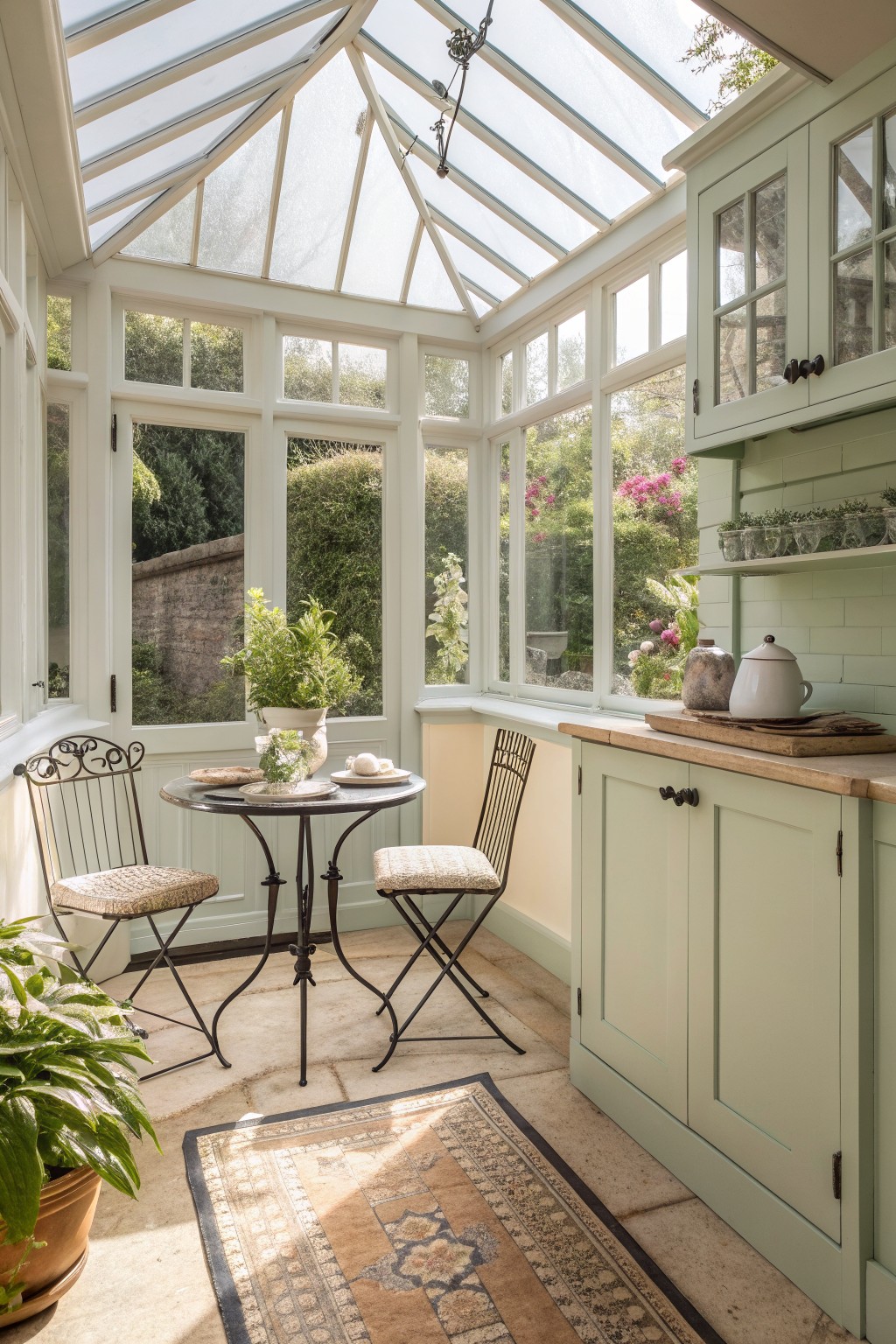
A sunroom gains real function when you add painted cabinets along one wall. The soft green color works with the white trim and glass roof to keep the space bright, while the cabinets give you a place to store everyday items without making the room feel cluttered.
This setup suits a Victorian cottage or farmhouse that needs an extra spot for breakfast or coffee. Stick with simple seating and a small table so the room stays easy to use instead of turning into another formal space.
Built-In Window Seats Under Stairs
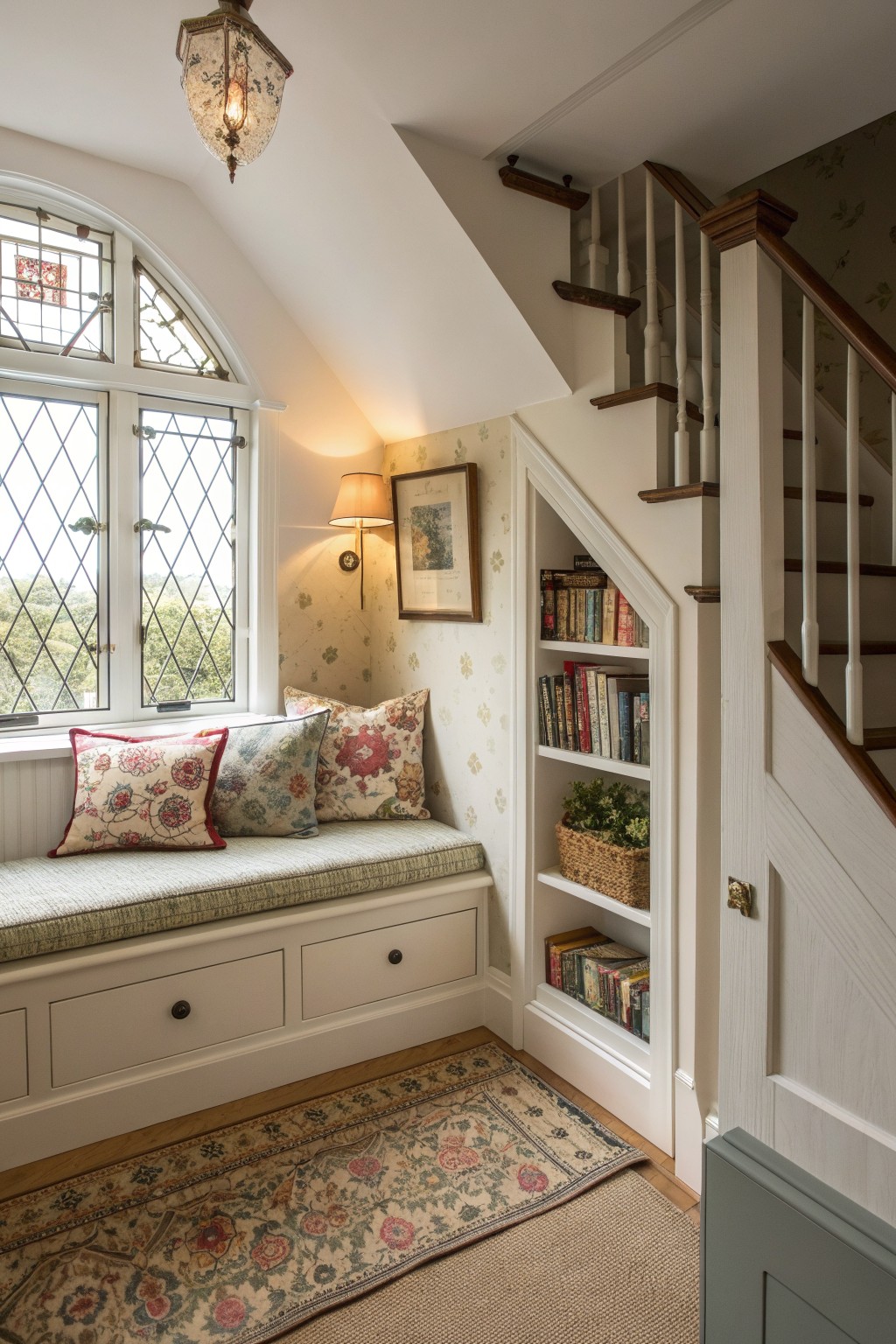
This idea makes good use of the space beneath a staircase by adding a window seat and shelves in one built-in unit. It creates a quiet spot to sit without crowding the room or blocking the walkway.
The approach suits smaller homes or older cottages where every corner counts. Keep the shelves simple and match the trim to the existing woodwork so it feels like part of the original structure rather than an add-on.
Keep Outdoor Seating Close to the House
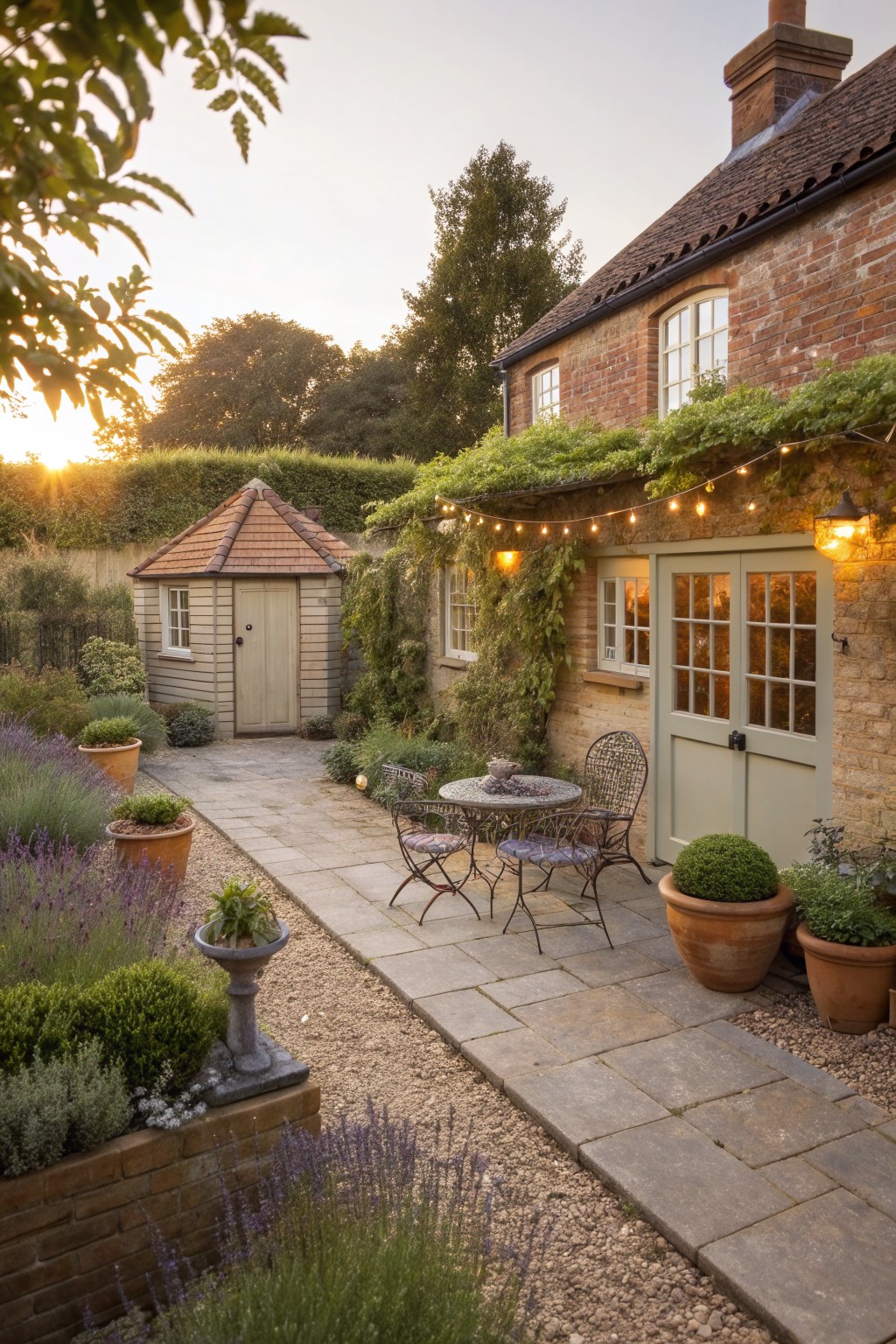
A small stone patio set right against the cottage wall turns a narrow side area into a useful spot for meals. It keeps the table and chairs within easy reach of the kitchen door while still feeling like part of the garden rather than an afterthought.
This layout suits older homes where the backyard may be modest or shaped around existing beds. Stick with a simple round table and a couple of chairs, then use a few large pots along the edges to soften the hard surface and add height without crowding the space.
Curved Paths With Layered Plantings
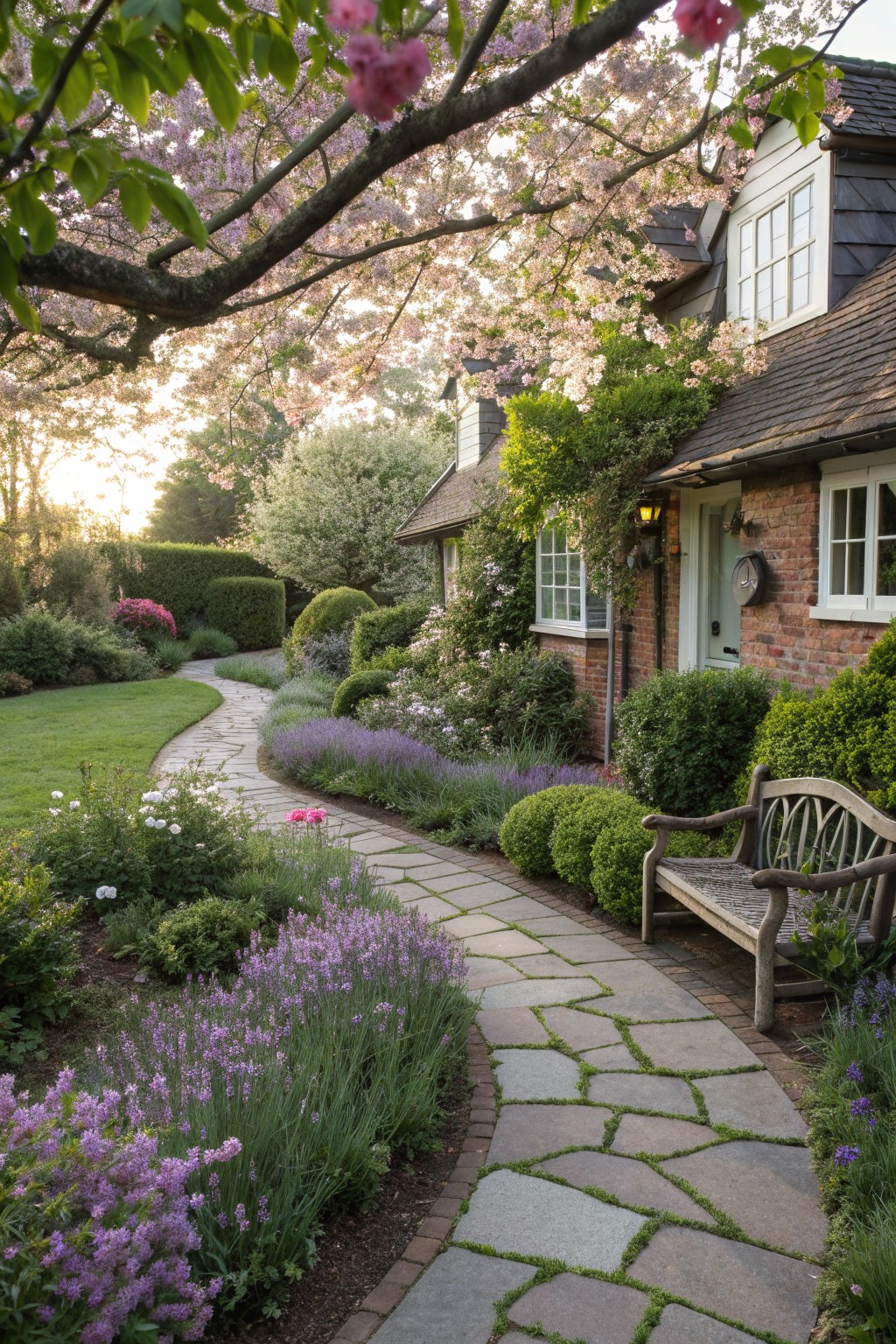
A curving stone path lined with layers of lavender, low shrubs, and taller perennials softens the walk up to the house and makes the whole front feel more welcoming. The plants spill gently over the edges instead of sitting in straight lines, which helps the path feel like part of the garden rather than just a way to get from the lawn to the door.
This approach works well on smaller lots or older homes where you want the garden to feel established without looking formal. Keep the layers simple, repeat a few plants you know will thrive, and let the curve do the work of slowing people down as they approach.
Extend the Kitchen With a Covered Pergola
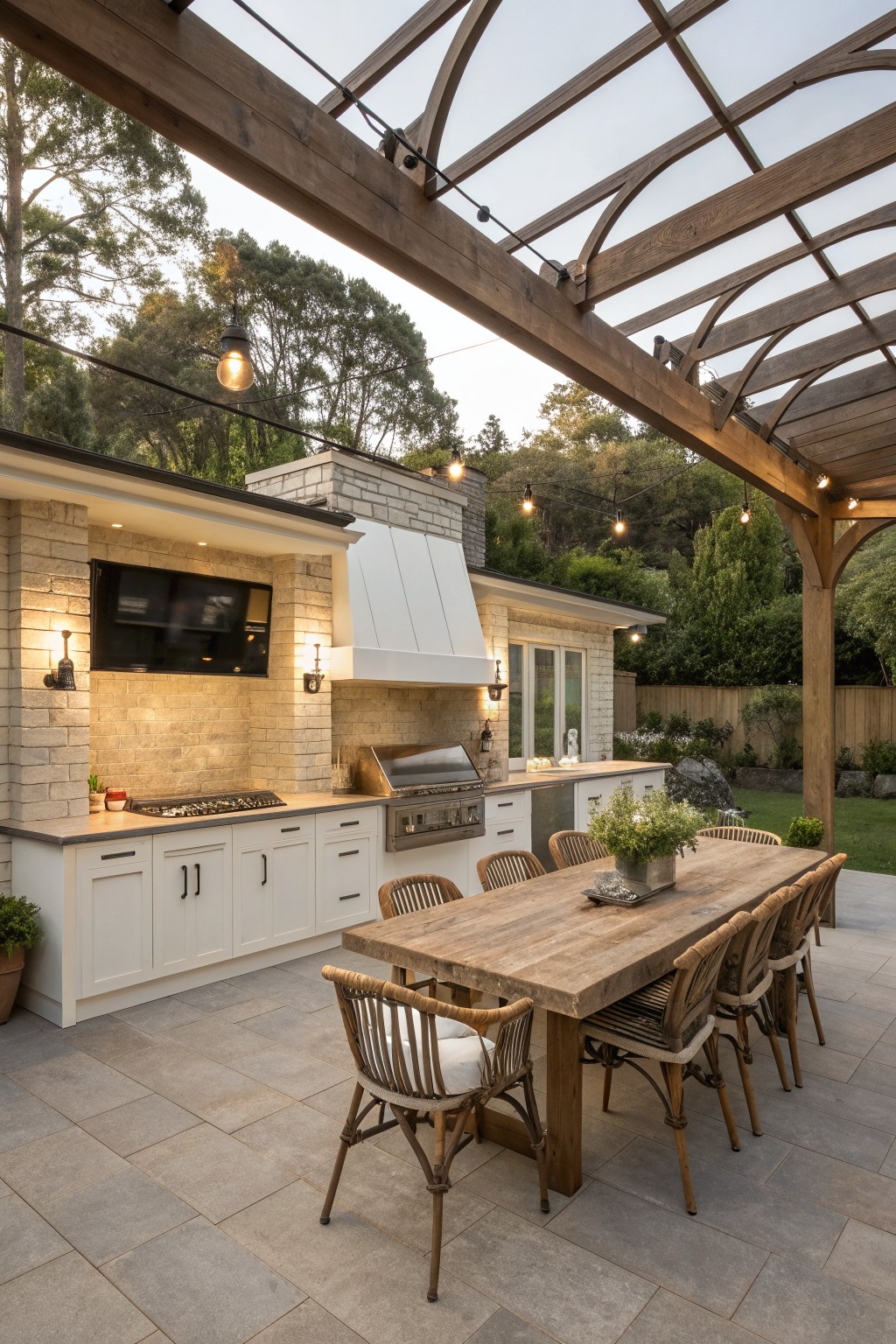
A covered pergola turns a basic patio into a real outdoor kitchen and dining spot. The wood beams and open roof structure keep the space feeling light while protecting the cooking area from weather, so the setup works in more seasons than an open deck would.
This works best on homes that already lean farmhouse or cottage, since the mix of wood, stone, and simple white cabinetry carries those styles outside without looking forced. Keep the footprint practical by placing the grill and counters along one wall and leaving room for a large table nearby.
Floral Wallpaper In The Nursery
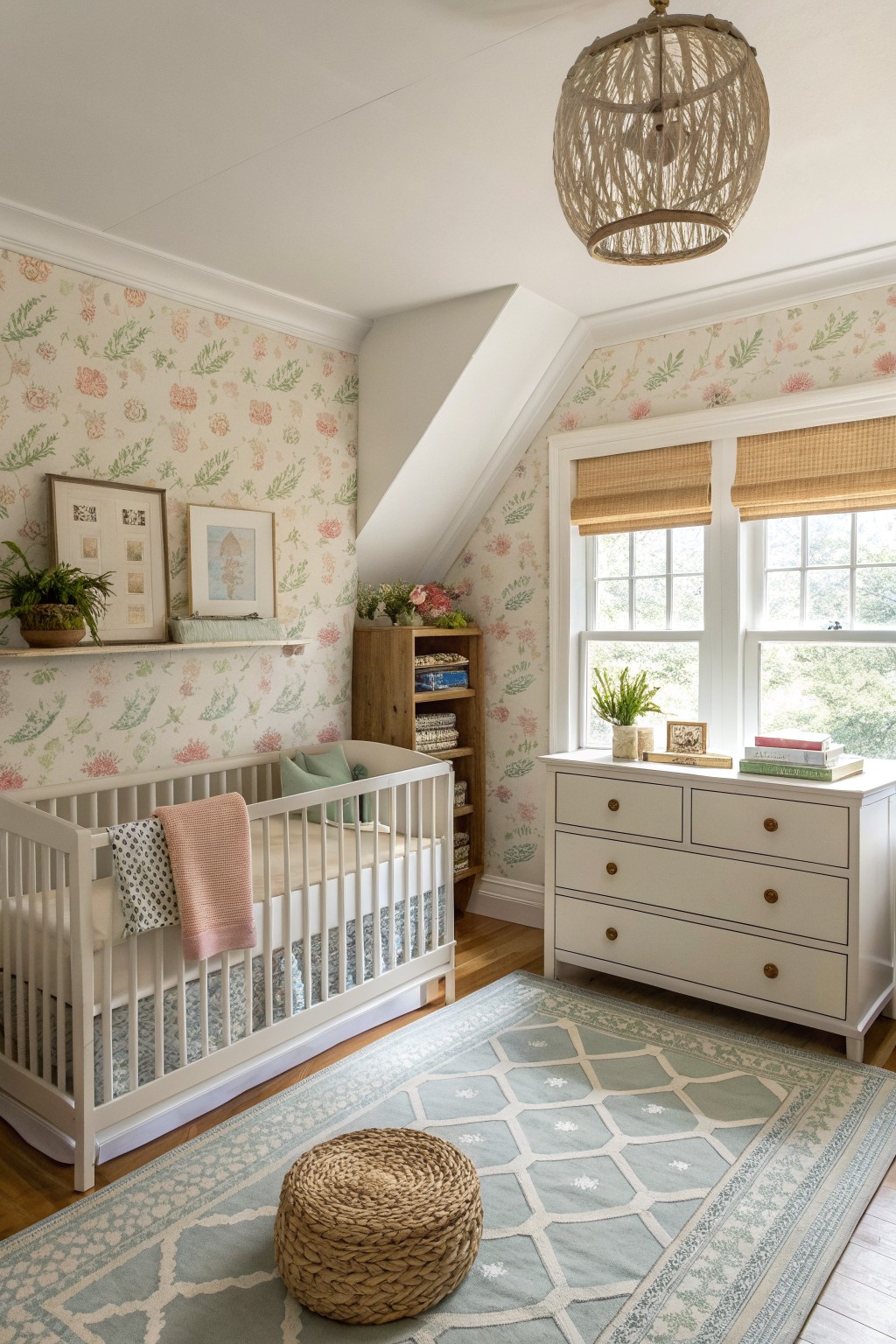
Floral wallpaper works well in a nursery because it adds pattern without needing a lot of extra decor. The soft colors keep the room feeling calm while still giving it that cottage touch that mixes nicely with simpler farmhouse pieces.
This approach suits smaller rooms or spaces with angled ceilings, since the pattern can fill the walls without making everything feel busy. Stick with light furniture and natural textures so the wallpaper stays the main focus rather than competing with other elements.
Stone Paths With Gravel In Small Gardens
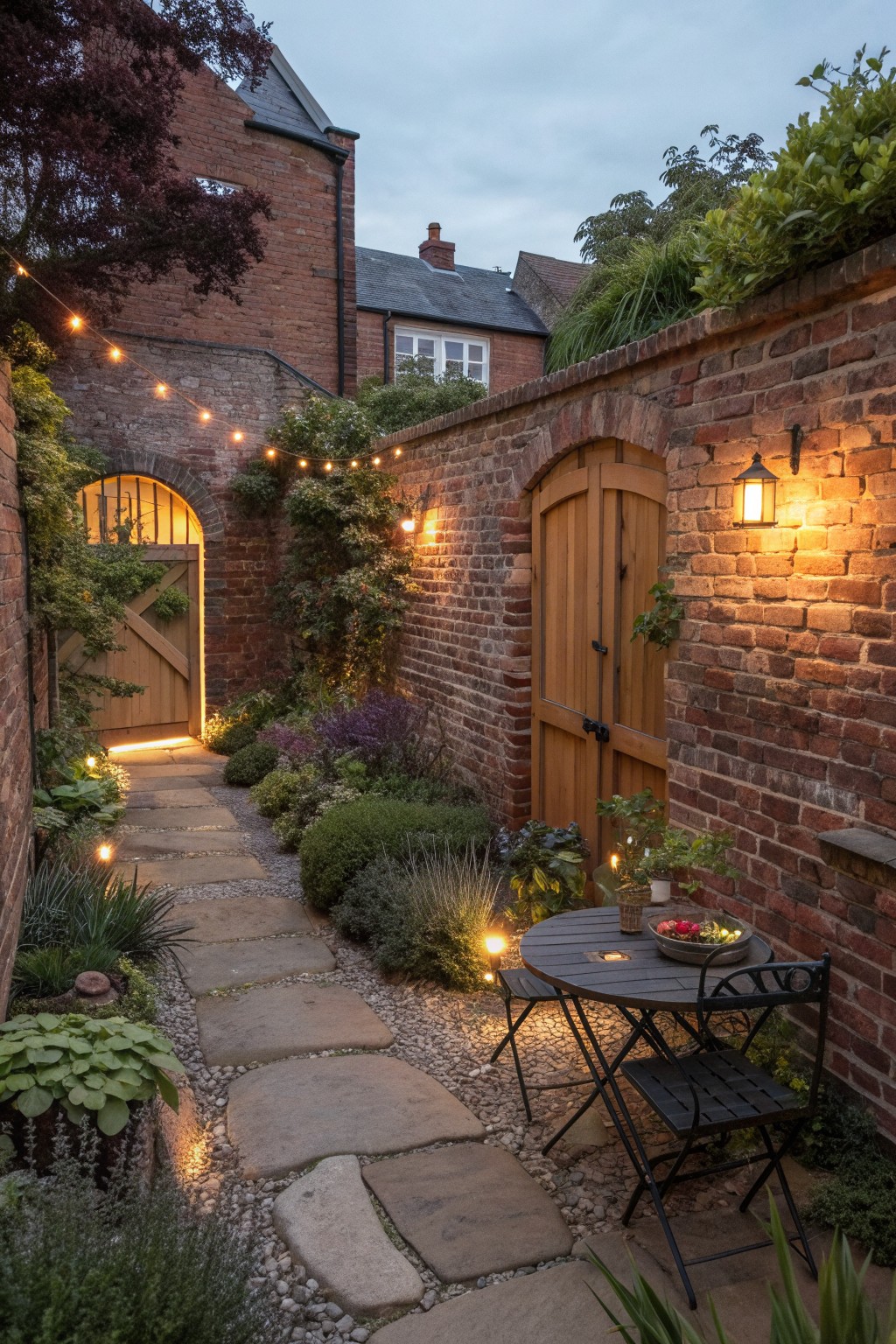
A stone path set in gravel works well when you want to guide movement through a tight garden space without making it feel crowded. The irregular pavers give a relaxed look while the gravel keeps the surface practical and helps with drainage.
This approach suits narrow side yards or brick-walled courtyards on older homes. Use low plants along the edges so they soften the hardscape but still leave room to walk, and add a few simple lights so the path stays usable after dark.
Arrange Porch Seating Around a Central Table
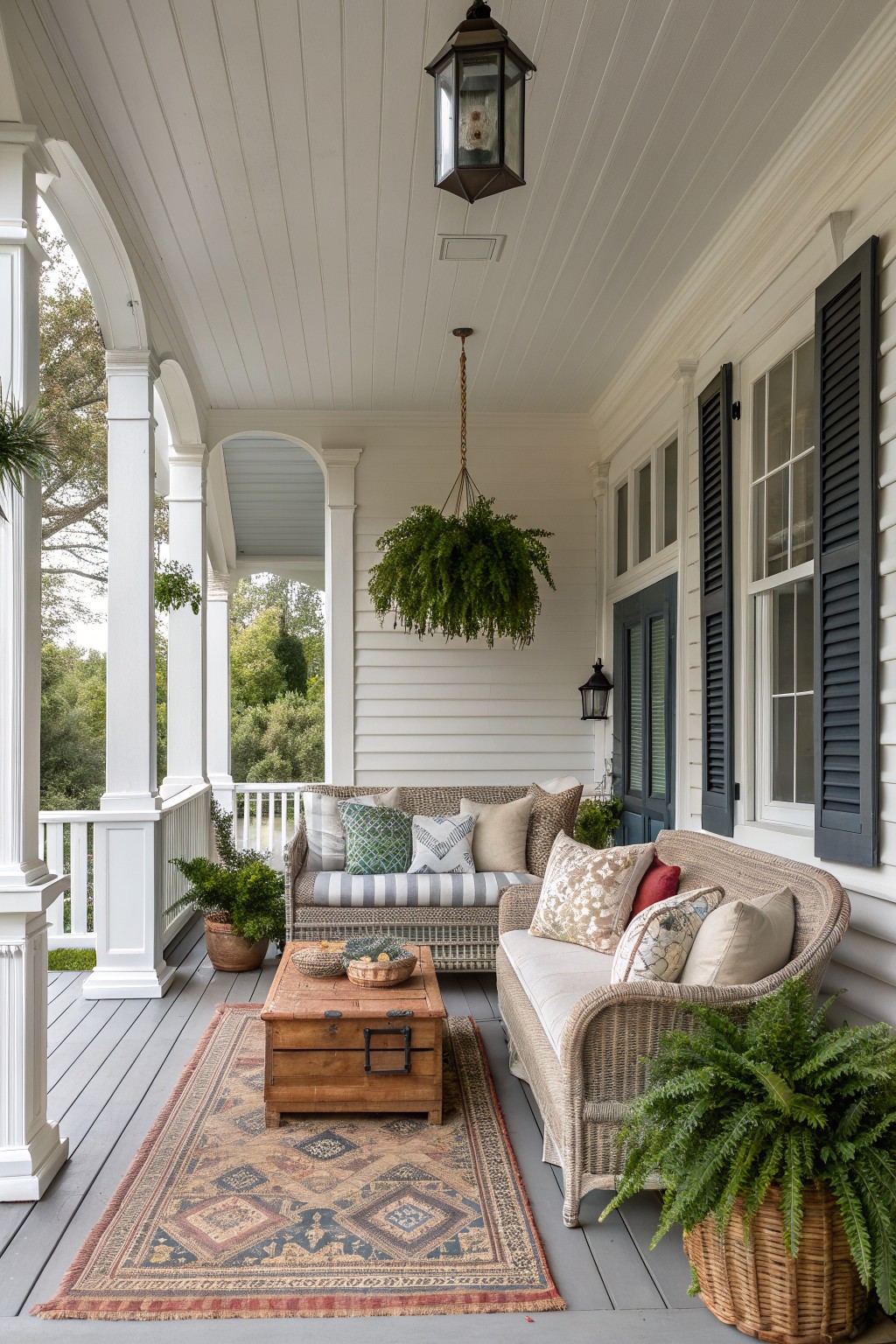
A simple trunk placed between two wicker sofas turns the porch into a real sitting area instead of just a row of chairs. The wooden chest gives a solid spot for drinks or plants while the rug underneath pulls everything together and keeps the space feeling grounded.
This setup works best on a covered porch that gets regular use. Keep the table low and sturdy so people can actually reach across it, and leave enough room on either side for feet and easy movement. It suits older homes that already have some trim detail and a decent amount of floor space.
Raised Beds Along the House
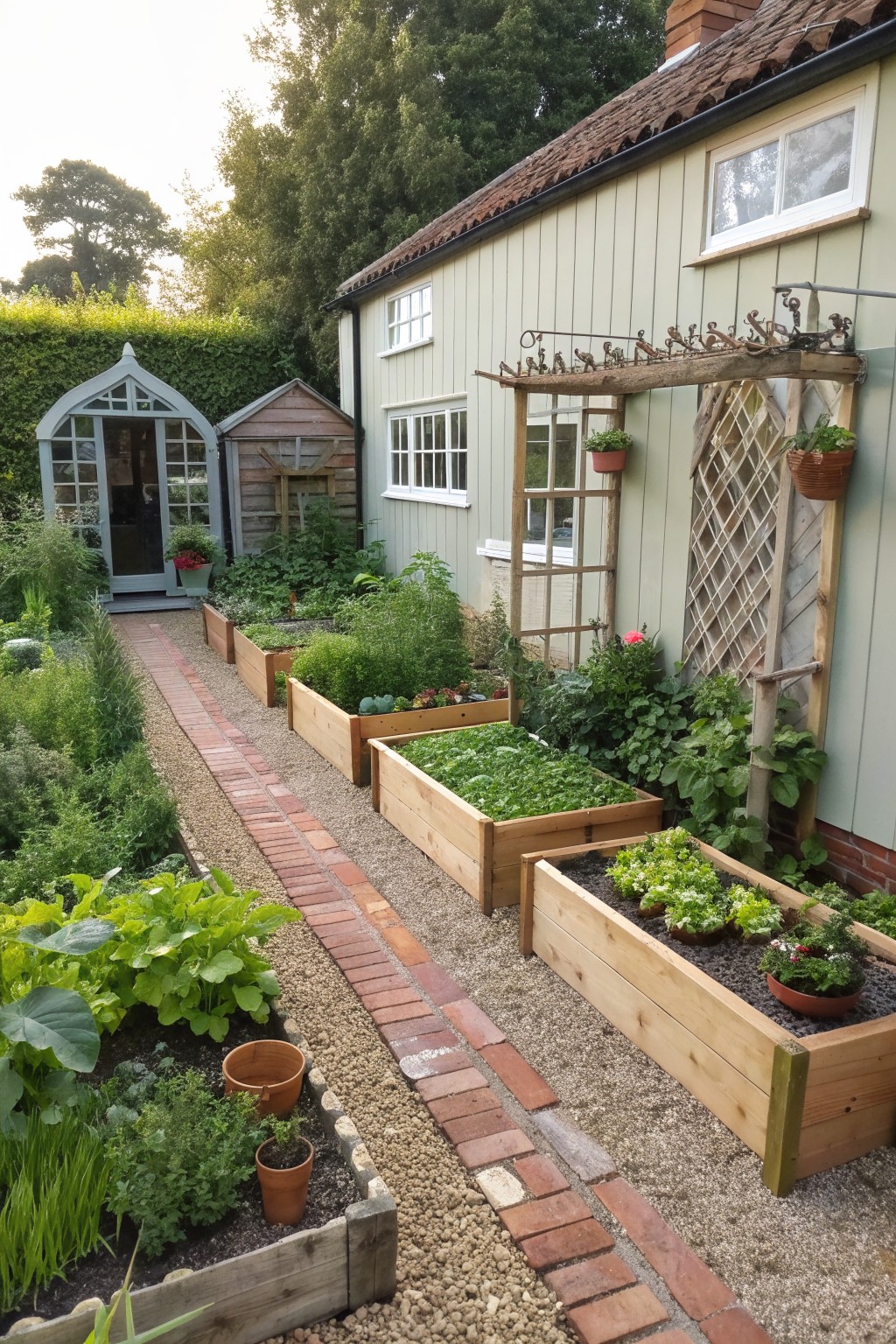
Raised beds placed right against the house give a garden clear structure while keeping vegetables and herbs within easy reach. The straight wooden frames create order without feeling stiff, and they work especially well when the beds sit at different heights and lengths along the wall.
This setup suits a Victorian cottage farmhouse because it adds a productive layer that still feels tied to the home. Use a simple gravel path with brick edging beside the beds so the ground stays firm and the beds stay contained.
Frequently Asked Questions
Q: How do I start blending Victorian details into a basic farmhouse structure?
A: Begin with the exterior trim around windows and doors. Add a few gingerbread accents but keep the roofline and porch posts simple and sturdy.
Q: What if my lot is small and I want that charming cottage feel?
A: Scale down the Victorian elements to just the front gable and entryway. Use farmhouse board and batten siding on the sides to keep things proportional.
Q: Should I add a wraparound porch or stick with a smaller one?
A: Go with a smaller front porch that has Victorian railings. This gives you the detail without losing the compact cottage shape.
