

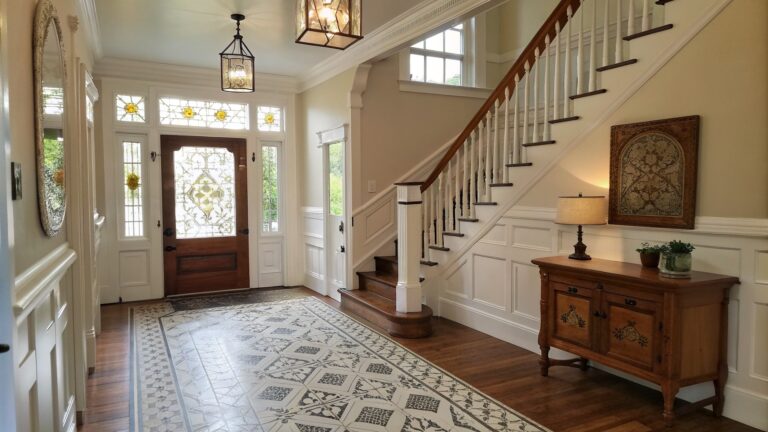
When restoring a Victorian farmhouse the original woodwork and fixtures shape how the whole place holds together day to day.
I have watched people remove too many layers at once and then wonder why the rooms no longer feel grounded.
Small choices matter here.
Keeping the way light moves through an old transom window or the way a stair rail sits in your hand often decides whether the house stays usable instead of just looking restored.
Those details tend to reward the extra time spent matching them rather than swapping them out.
Preserve the Original Entry Floor Tiles
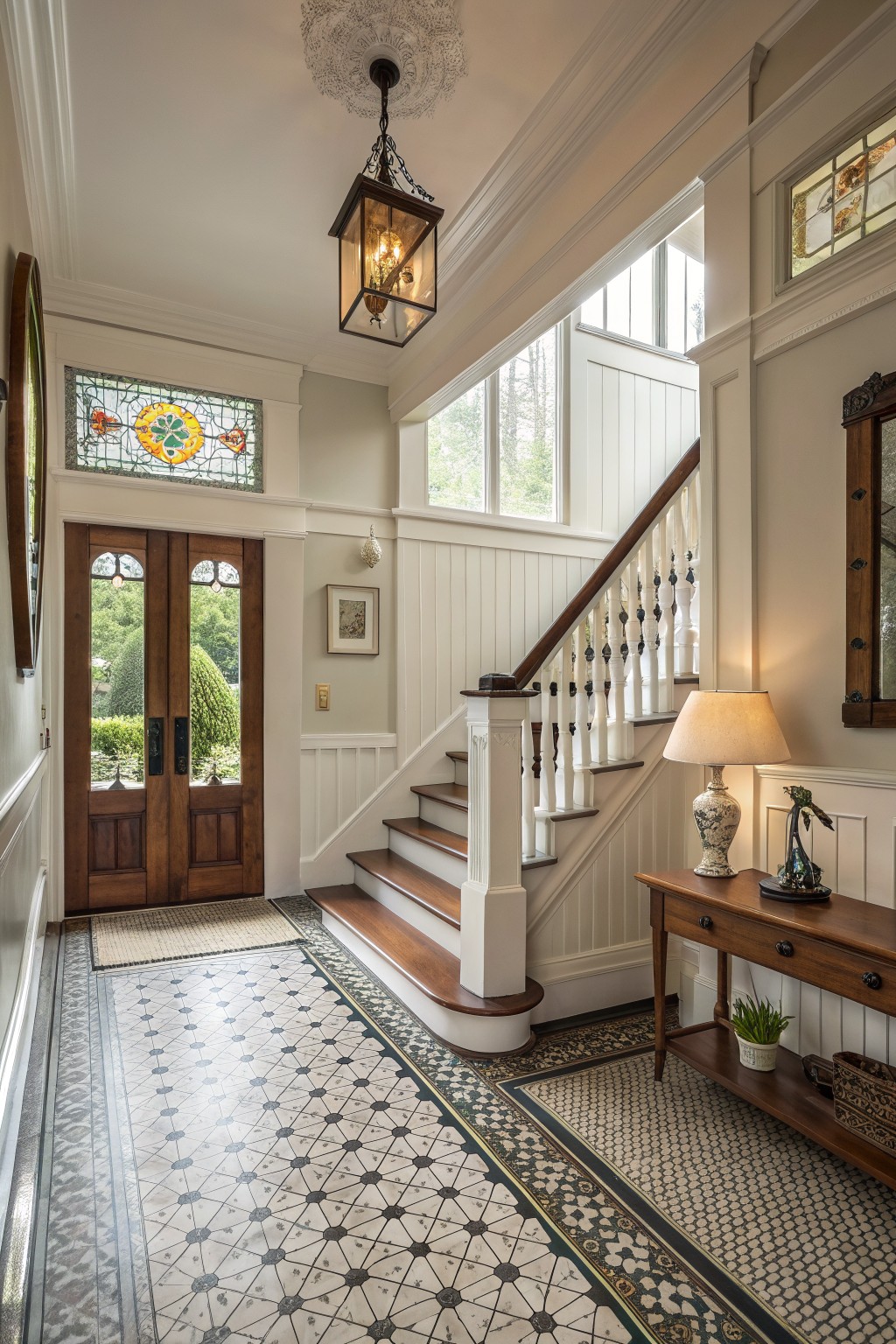
Many restored Victorian farmhouses still show their original tile floors right at the front door. These patterned designs were built to last and give the entry a finished look that feels tied to the house itself.
If the tiles are in decent shape, clean them gently and leave them exposed. They suit homes where the goal is to keep as many early details as possible without adding new materials that fight the old ones.
Retain Original Ceiling Details
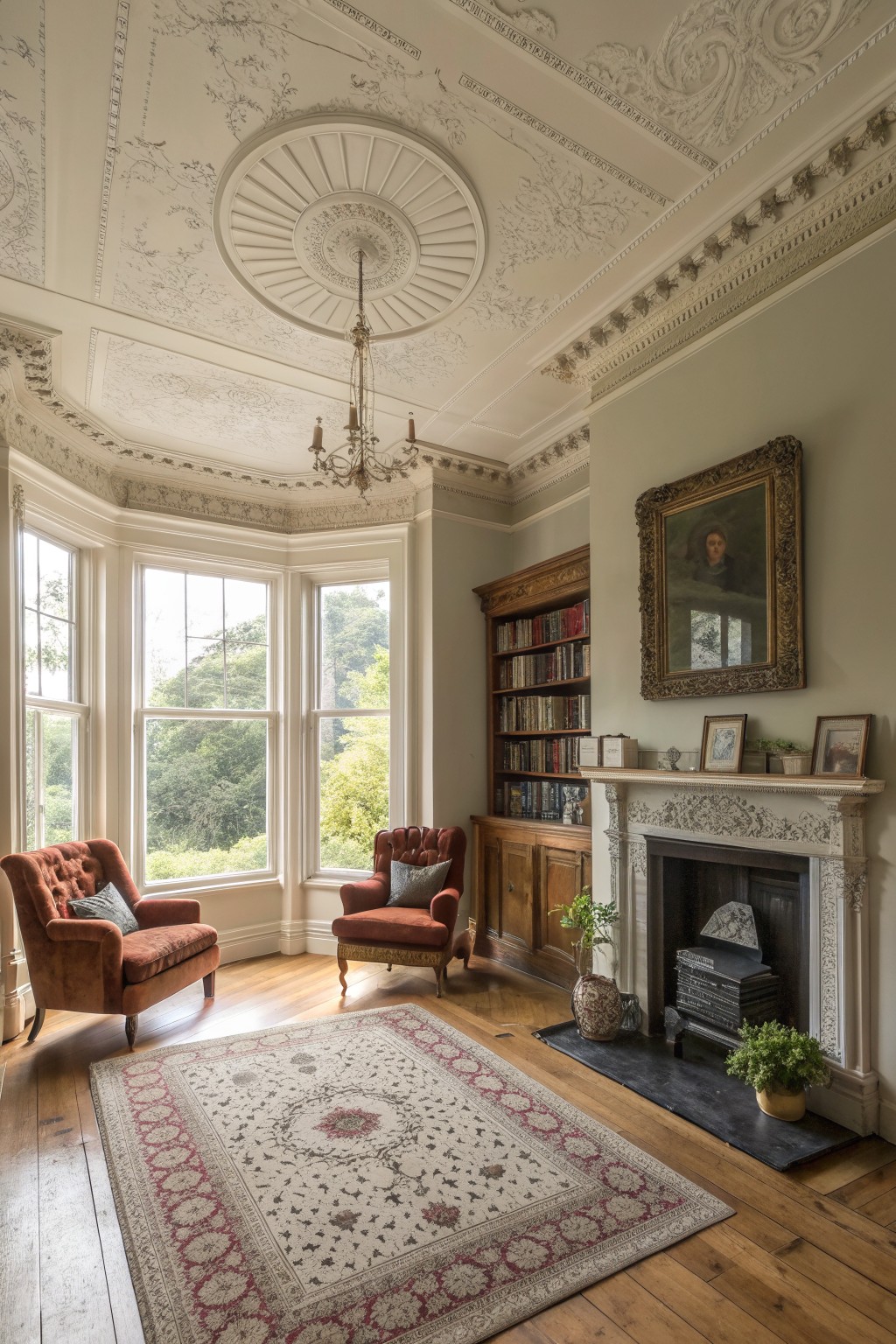
In many Victorian farmhouses the plaster ceiling gets covered or stripped out during updates. Keeping the original medallion and cornice adds real character that new work rarely matches.
This approach suits living rooms and parlors best. Use simple furnishings and let the ceiling stand on its own so the details stay the focus.
Preserve Original Wainscoting and Trim
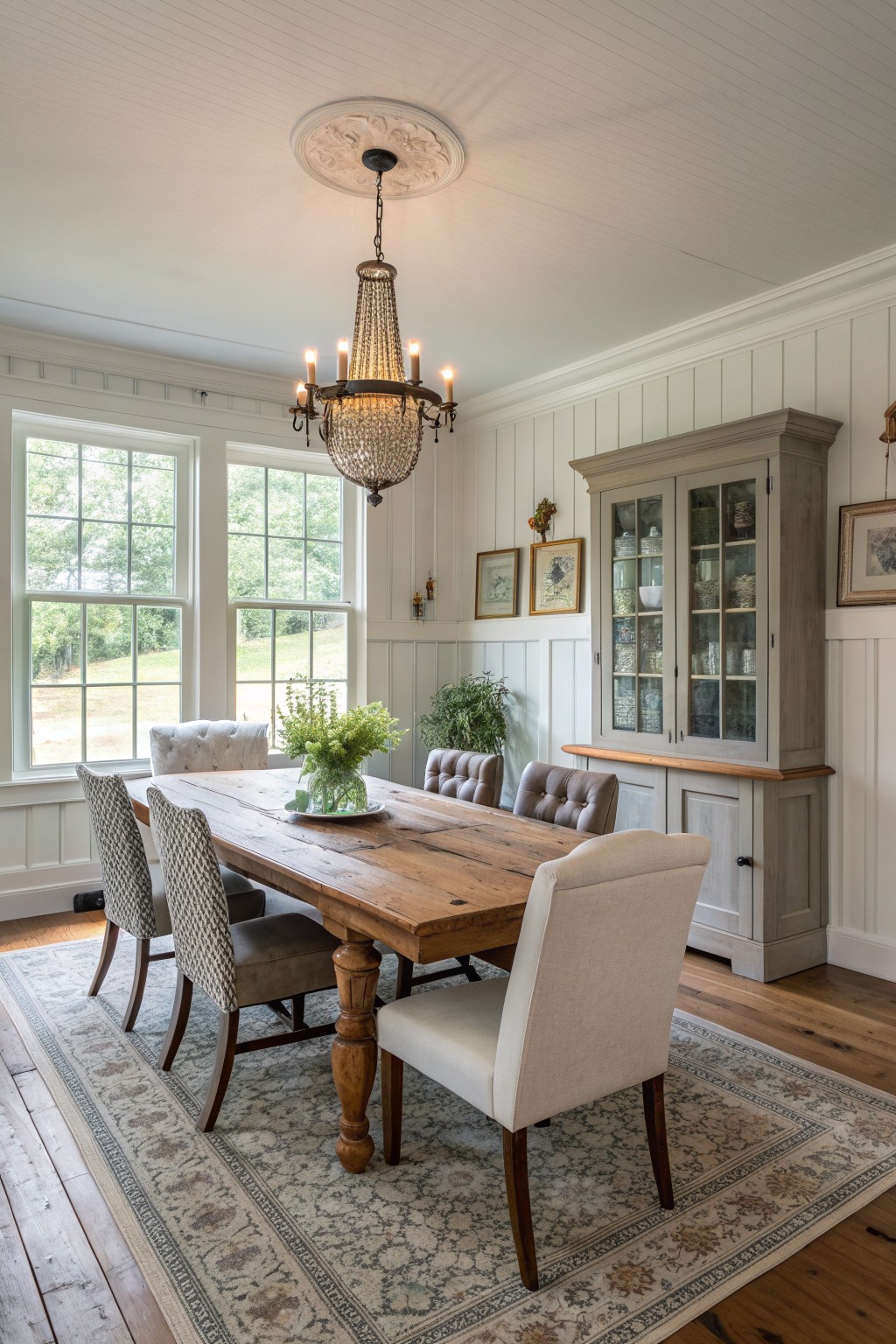
Many older farmhouses still have their original lower wall paneling and trim in place. Keeping those details intact helps the room feel connected to the house’s history instead of starting from scratch.
This approach works best when new pieces like a big wooden table or mixed chairs stay simple and let the trim remain the main feature. It suits homes where the goal is steady restoration rather than a full redesign.
Leave Original Ceiling Beams Exposed
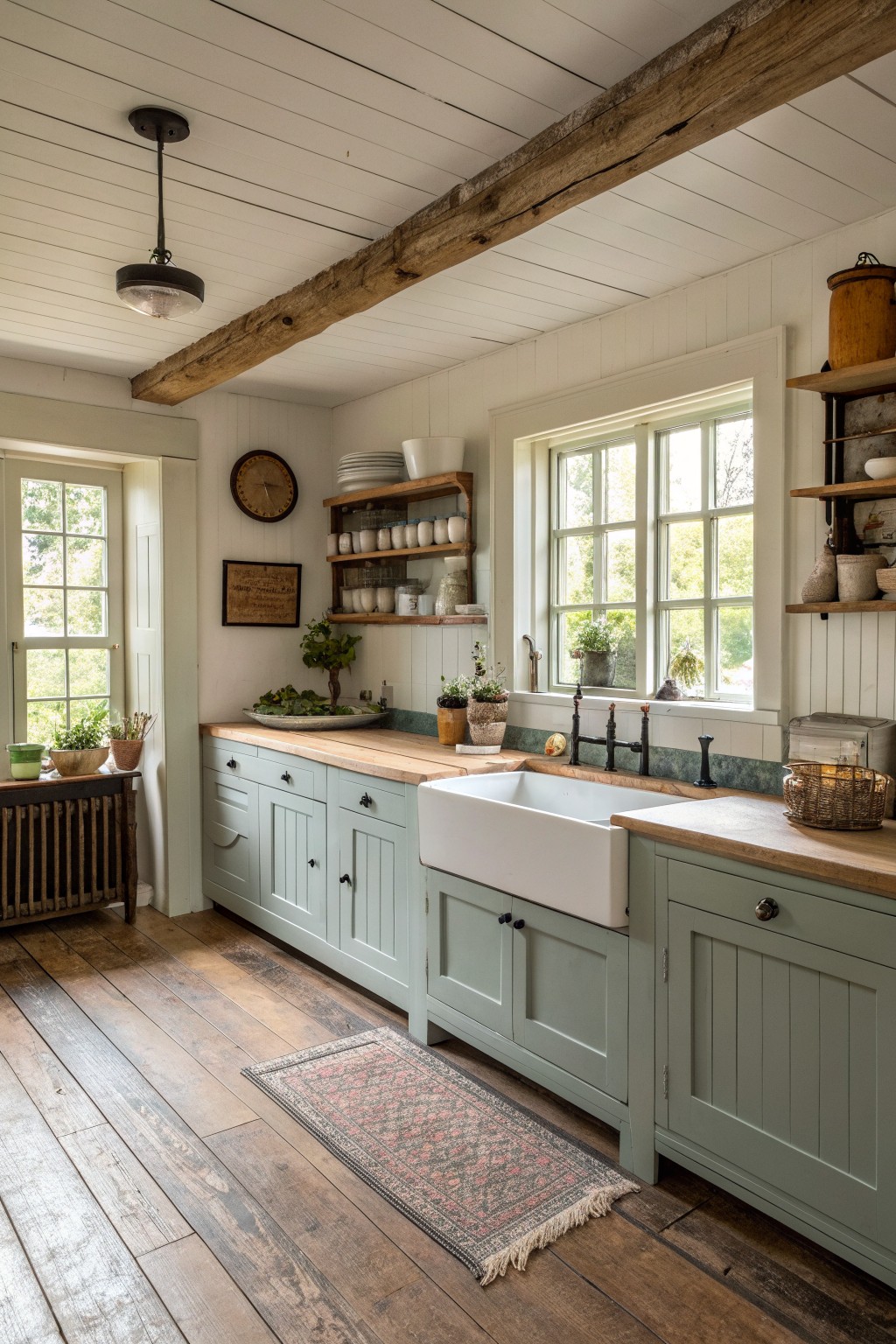
An exposed ceiling beam keeps a direct link to the house’s past. It shows the structure that was already there instead of covering it up with drywall or new trim. In a kitchen this choice keeps the room from feeling too finished or new.
This works well in homes where the beam runs over the main counters and sink area. Pair it with light wall color and simple open shelves so the beam stays noticeable but not heavy. Avoid adding too many other wood tones that might compete with it.
Built-In Storage That Works With Original Paneling
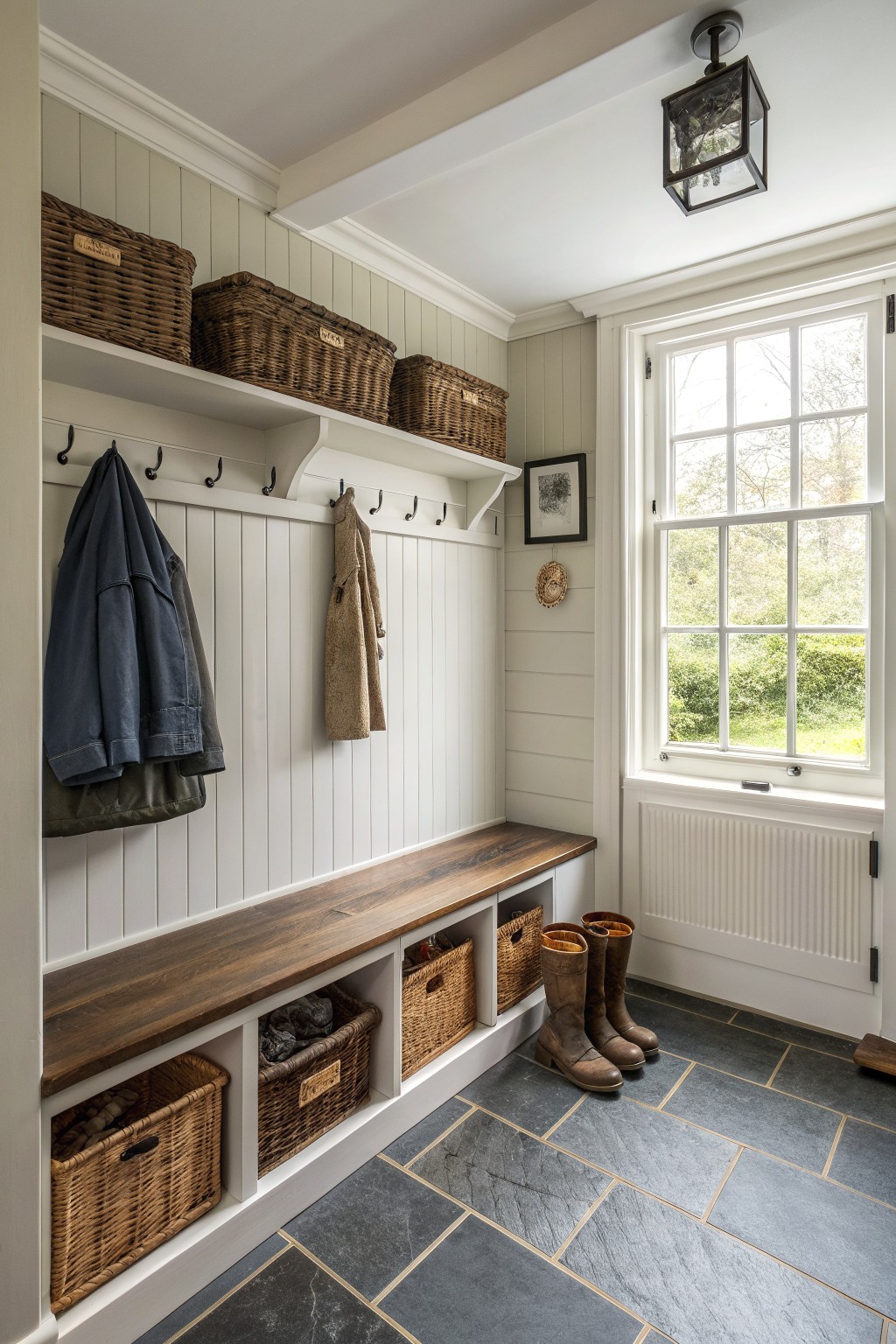
Many older farmhouses already have solid wainscoting in the entry or back hall. Adding a low bench with open cubbies below keeps the paneling visible while giving a place to drop boots and baskets without needing new walls or cabinets.
This kind of storage works best in homes where the trim is still in good shape. Keep the bench top simple and match the cubby fronts to the existing woodwork so the whole wall reads as one built feature rather than a later addition.
Built-In Shelving For Everyday Storage
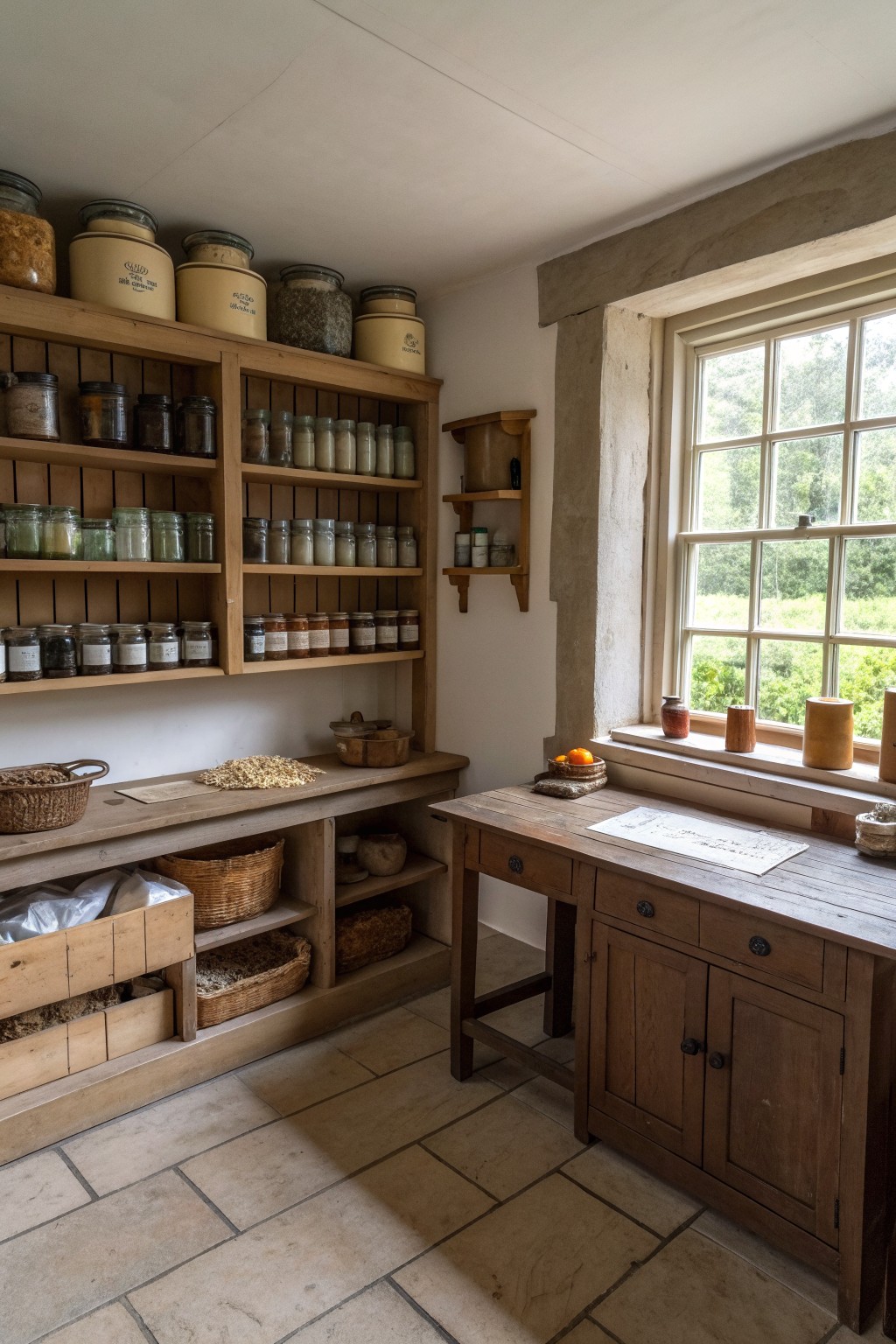
Built-in wooden shelves give you a simple way to keep dry goods visible and within reach. They make the most of the original structure in a Victorian farmhouse without needing new cabinetry added later.
This approach works well in a pantry or kitchen where you want quick access to staples. It suits homes that still have their old shelving in place, and it keeps the space practical rather than overly styled.
Preserve Original Wood Floors
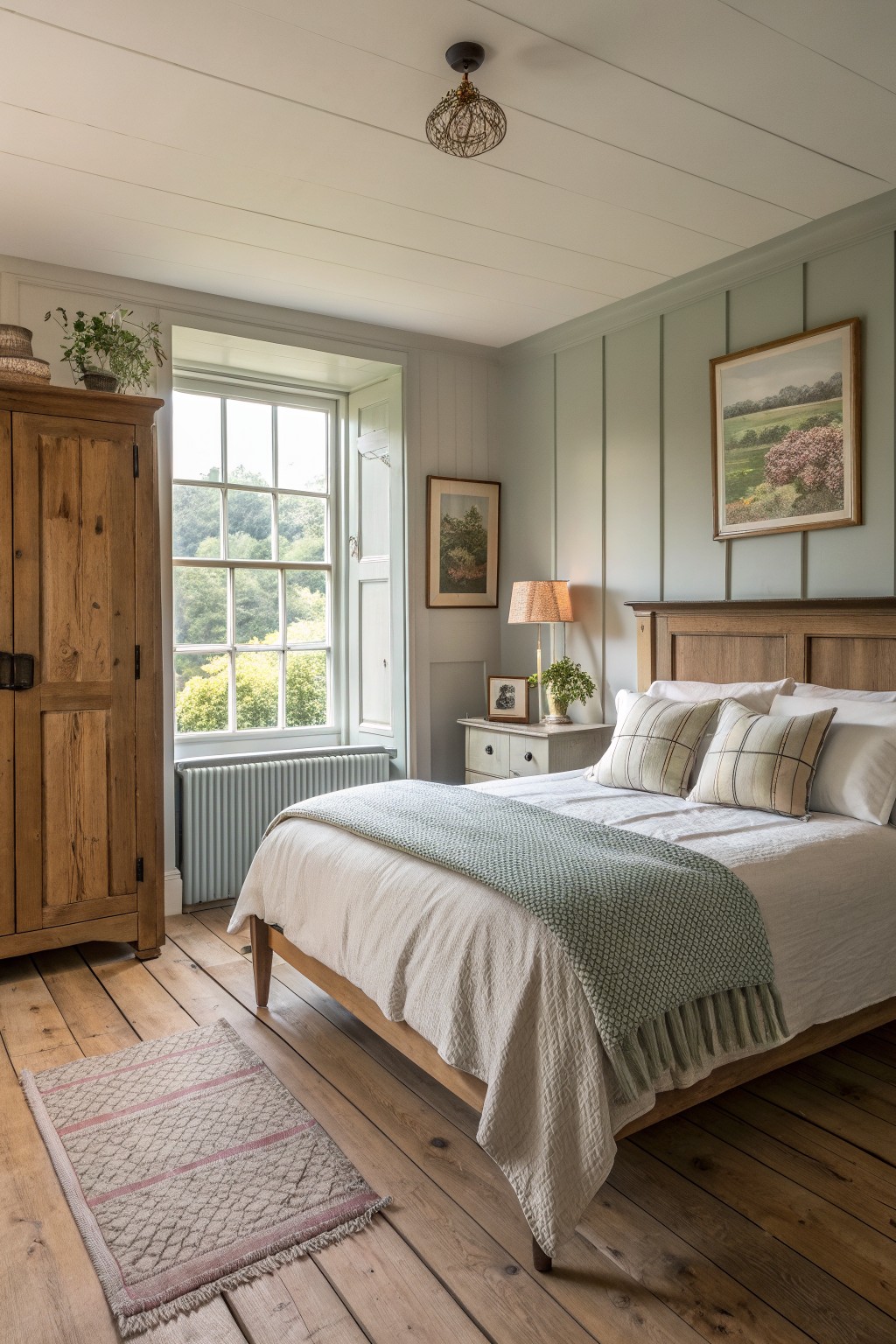
Many Victorian farmhouses still have their original wide plank floors, and leaving them exposed is one of the simplest ways to keep the character of the house intact. The wood adds warmth and shows the age of the home without needing much extra work.
This approach works best in bedrooms where you want a calm, unfussy feel. Sand and seal the boards if they are worn, then add a simple rug or two so the floor still reads as the main surface. Avoid wall to wall carpet if you can, since it hides the very detail that makes the room feel authentic.
Built-In Window Seats
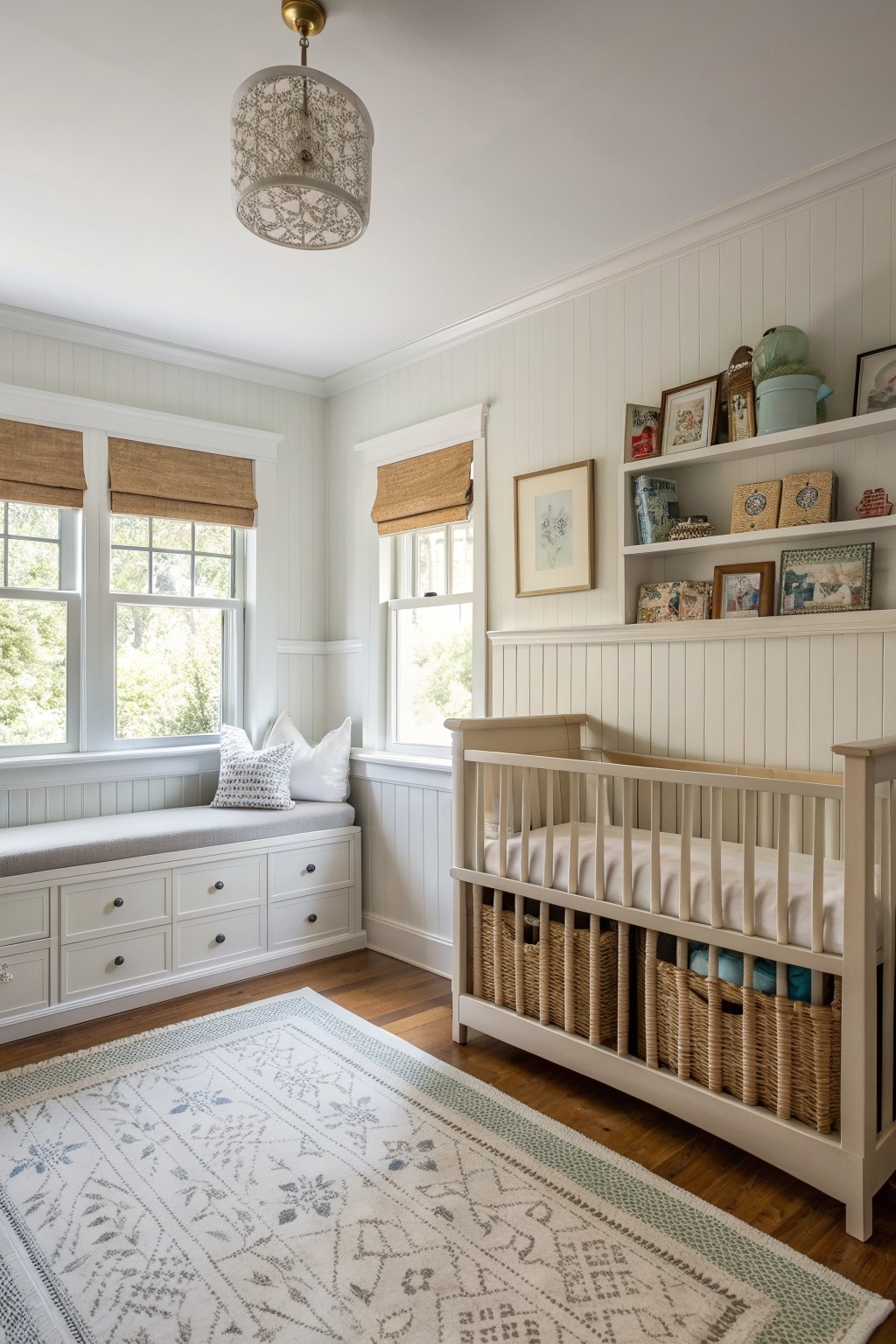
Built-in window seats with drawers underneath give you extra storage without adding bulky furniture that would crowd an older room. They sit neatly into the existing trim and paneling so the original details stay front and center instead of getting covered up.
This approach works especially well in Victorian farmhouses where you need practical storage but want to keep the beadboard and window surrounds looking untouched. It suits any bedroom or nursery that already has good natural light and solid window framing.
Fit Laundry Built-Ins Around Preserved Trim
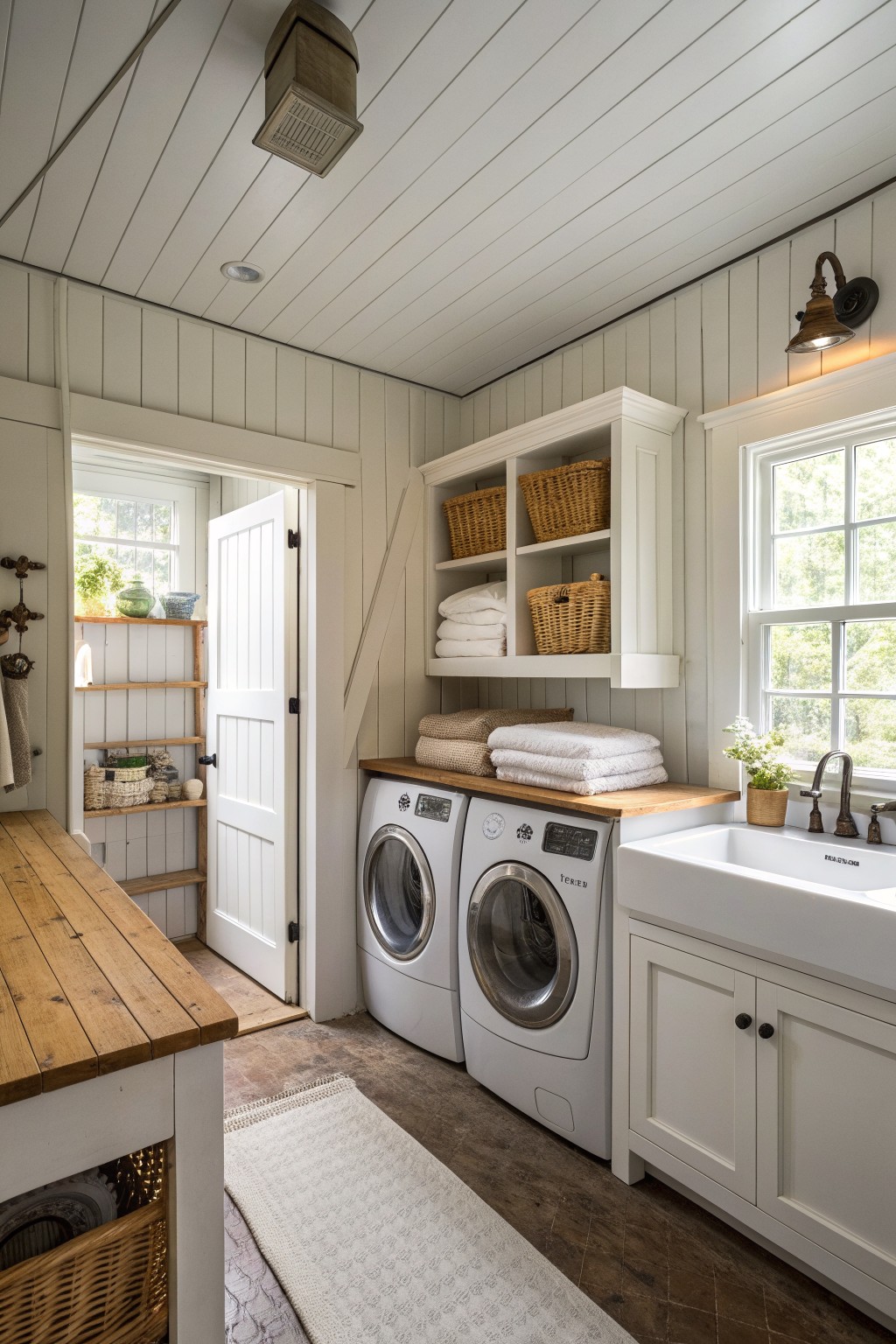
One of the simplest ways to update a utility space in an older home is to work new storage around the trim and paneling that is already there. The white beadboard walls and the original door stay front and center while the shelving and counter are added in the same finish, so nothing feels like it was forced in later.
This approach works best in homes where the original woodwork is still in good shape. Keep the cabinet depth shallow enough to sit neatly between existing window and door casings, and match the paint on the new pieces to the old walls so the room reads as one continuous space rather than a mix of old and new.
Built-Ins That Work With Original Paneling
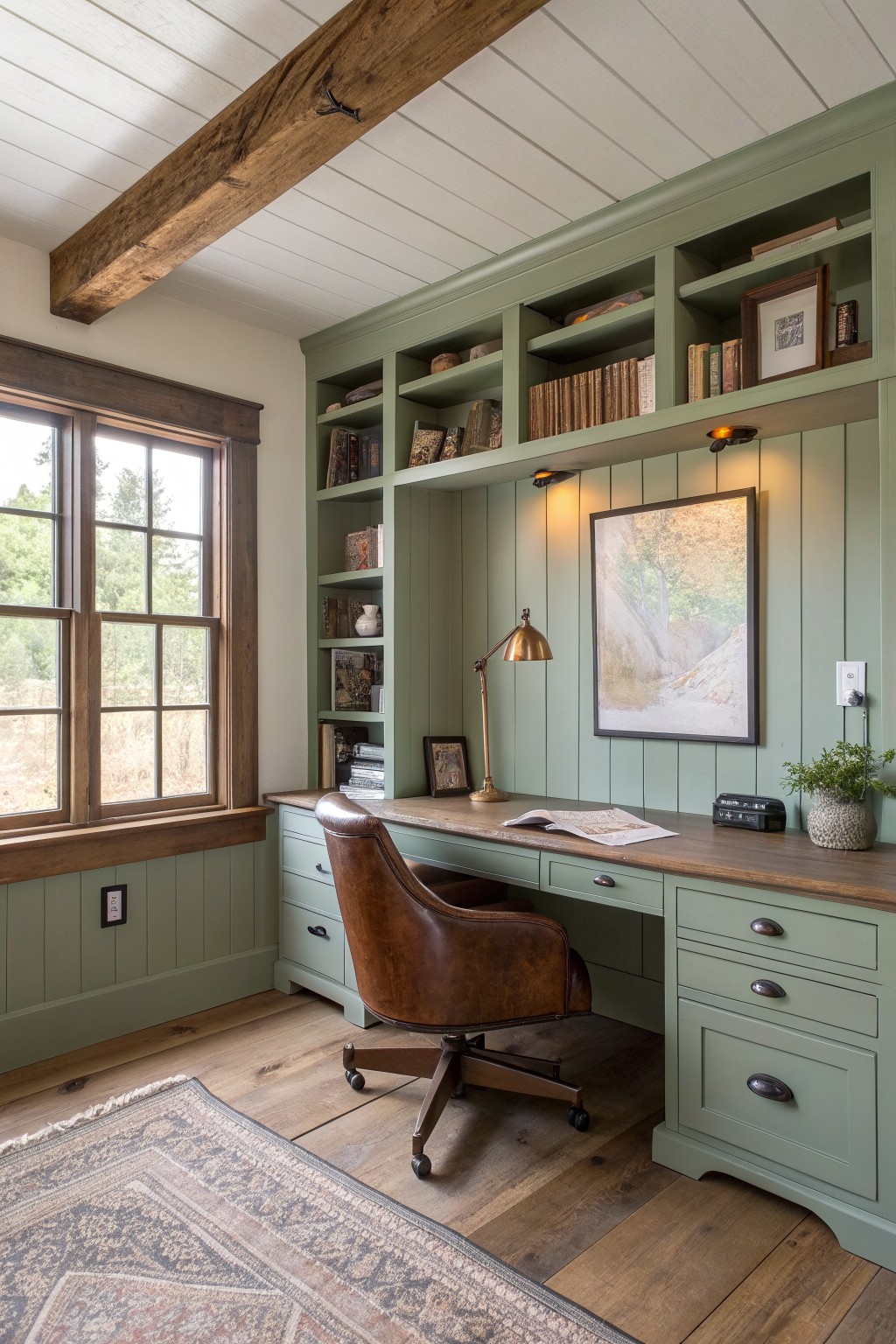
Running a desk and shelves along a wall that already has wainscoting lets you add storage without covering up the older details. The built-ins here sit right against the existing paneling and keep the window trim fully visible, so the room still feels like it belongs to the house.
This approach works well in older homes that have decent original woodwork but need more function. Keep the new pieces the same color as the walls and let a wood desktop or simple hardware do the rest.
Use Open Shelving In A Wood Vanity
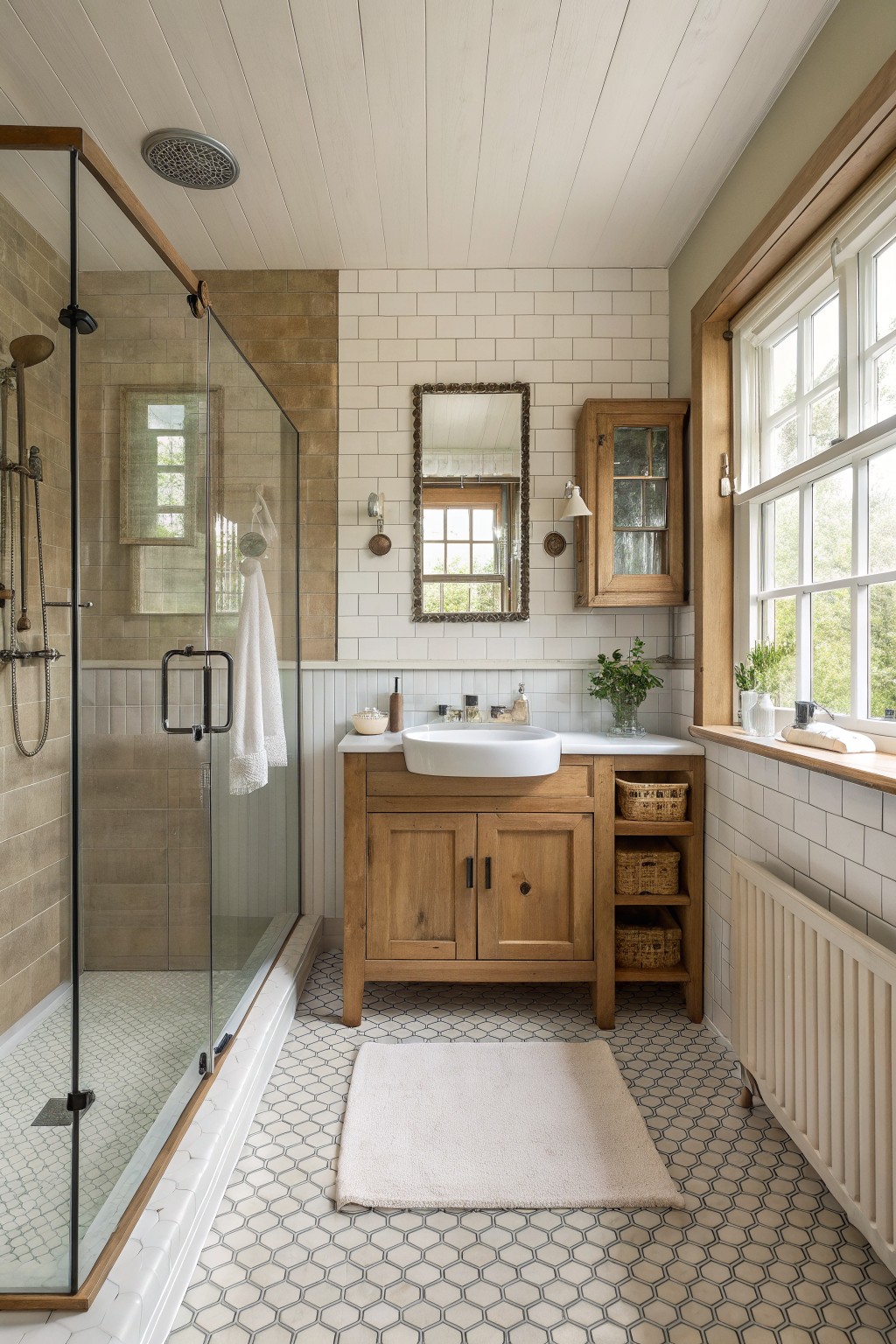
A wood vanity with open lower shelves gives you storage that feels natural in an older bathroom. Baskets hold everyday items without covering up the grain or making the space look closed off.
This works especially well in Victorian farmhouse restorations where you want to keep the room practical. Match the wood tone to any existing trim and skip heavy hardware so the focus stays on the original details rather than new additions.
Glass Front Cabinets For Everyday Storage
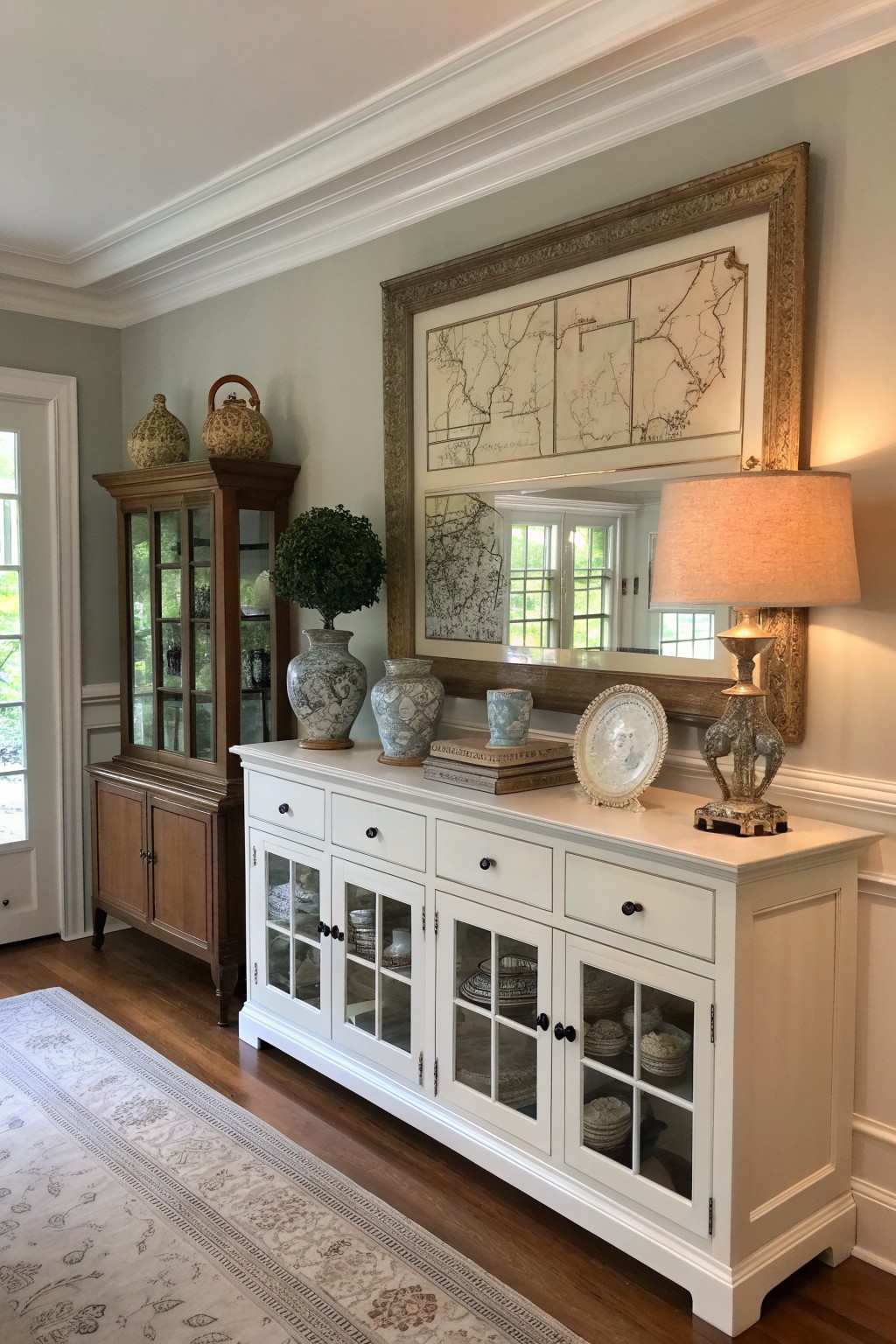
Glass front cabinets work well in older homes because they let you store and show things at the same time. In a Victorian farmhouse this keeps the room from feeling too closed off while still giving you practical space for dishes, linens, or other items you reach for often. The see-through doors also let light move through the piece so the original trim and moldings stay noticeable.
This approach suits homes where you want to keep built-in character but still need more storage than the original layout provides. Place the cabinets along a long wall rather than blocking windows or doorways, and keep the contents fairly simple so the focus stays on the room itself. Avoid overcrowding the shelves if you want the space to feel calm.
Preserve Original Porch Brackets
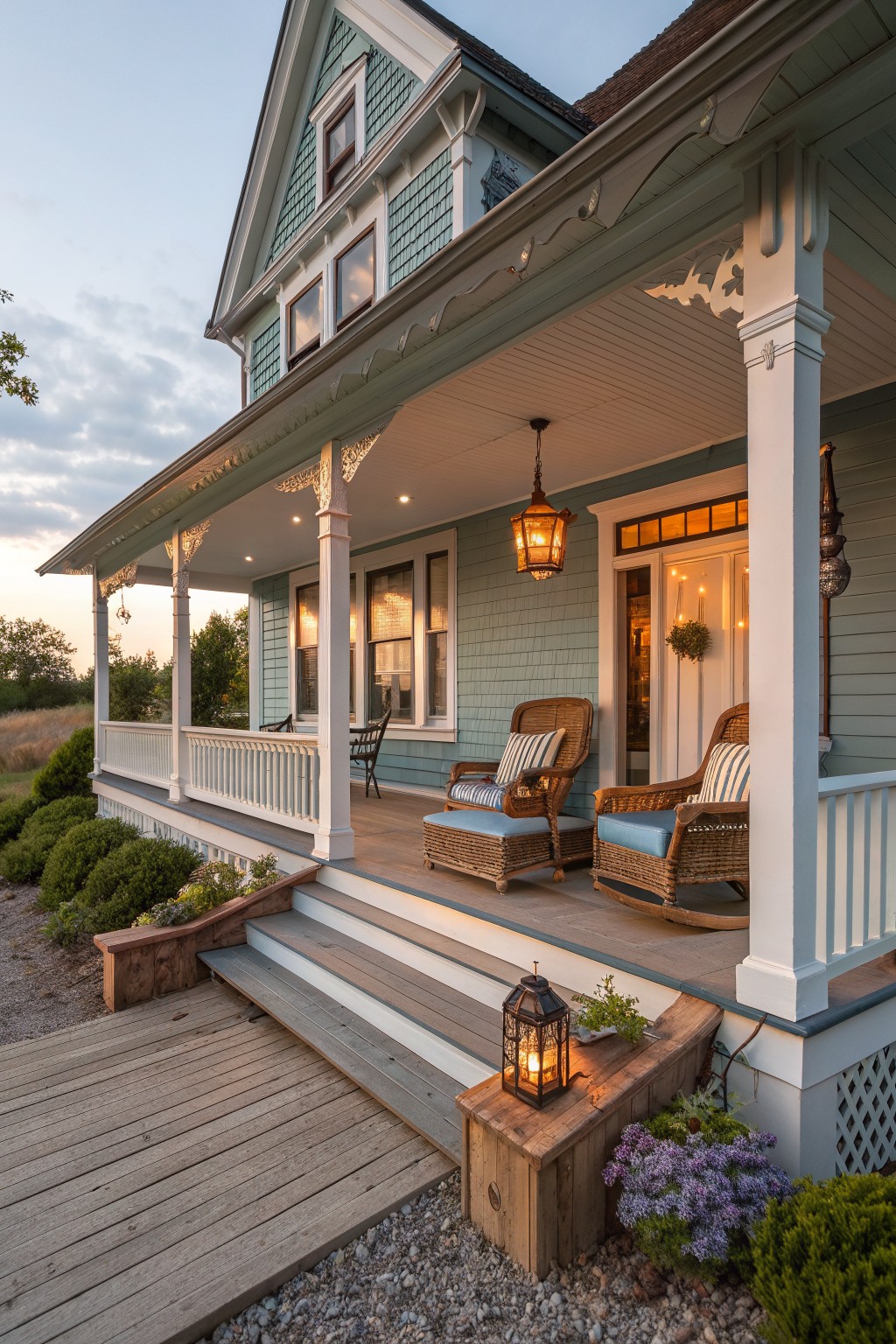
One simple way to keep a Victorian farmhouse looking true to its age is to leave the porch brackets and trim exactly as they are. These details add real character and help the whole front feel balanced instead of stripped down or overly cleaned up.
When repairs are needed, match the profile and paint color of any new pieces to the old ones. This keeps the look consistent and avoids turning the porch into something that feels added on later.
Extend the Porch With Matching Stonework
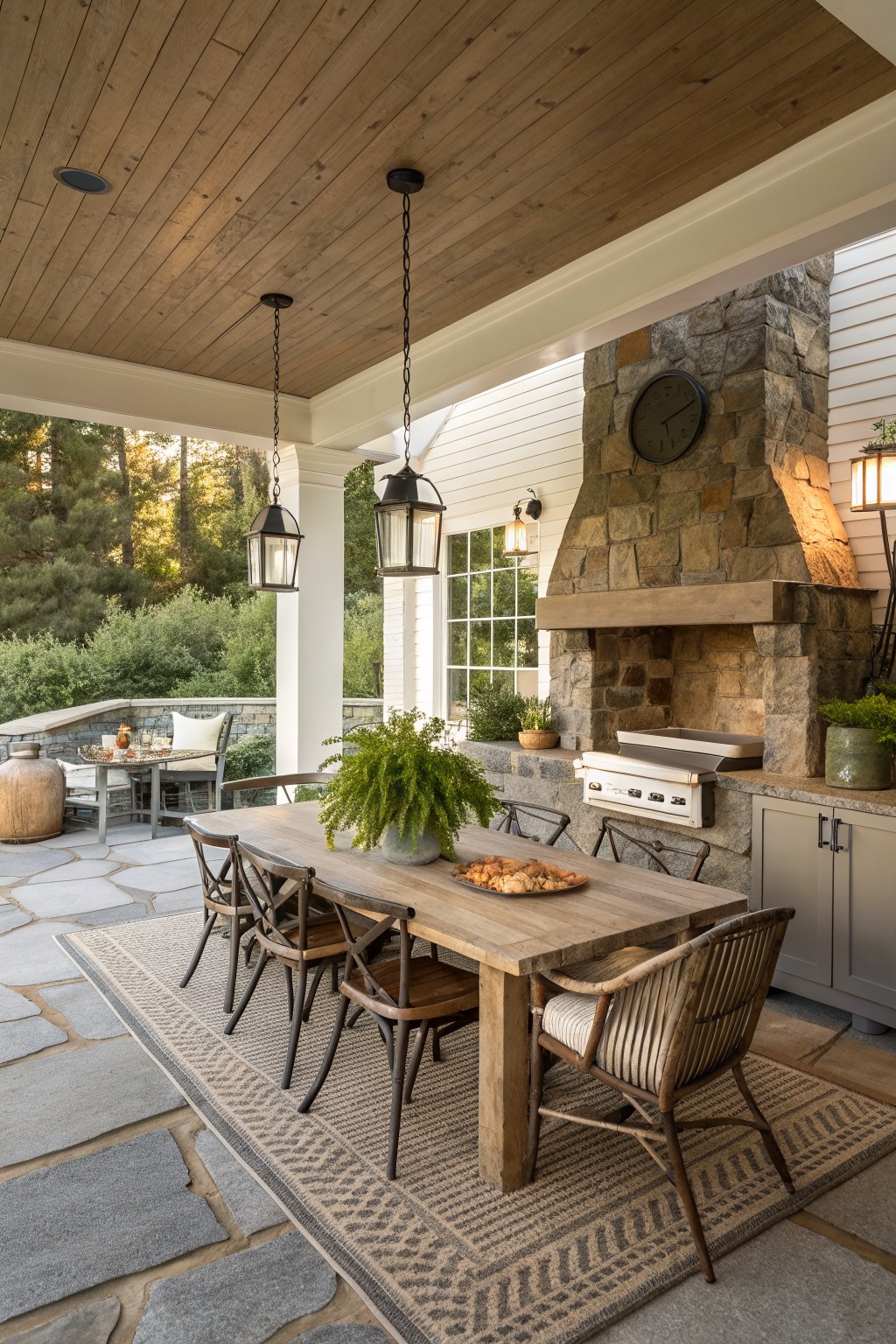
A covered porch gains a lot more use when you carry the same stone and wood from the house out into the outdoor space. The built-in fireplace and grill here sit right against the siding and use the same rough stone, so the whole area feels like part of the original structure instead of something added later.
This works best on homes where the porch already has a wood ceiling and simple posts. Keep the new stone in the same range as any existing foundation or chimney so it reads as one material choice rather than a new style. Avoid thin veneers that will look tacked on after a few seasons.
Curved Stone Paths for Farmhouse Entries
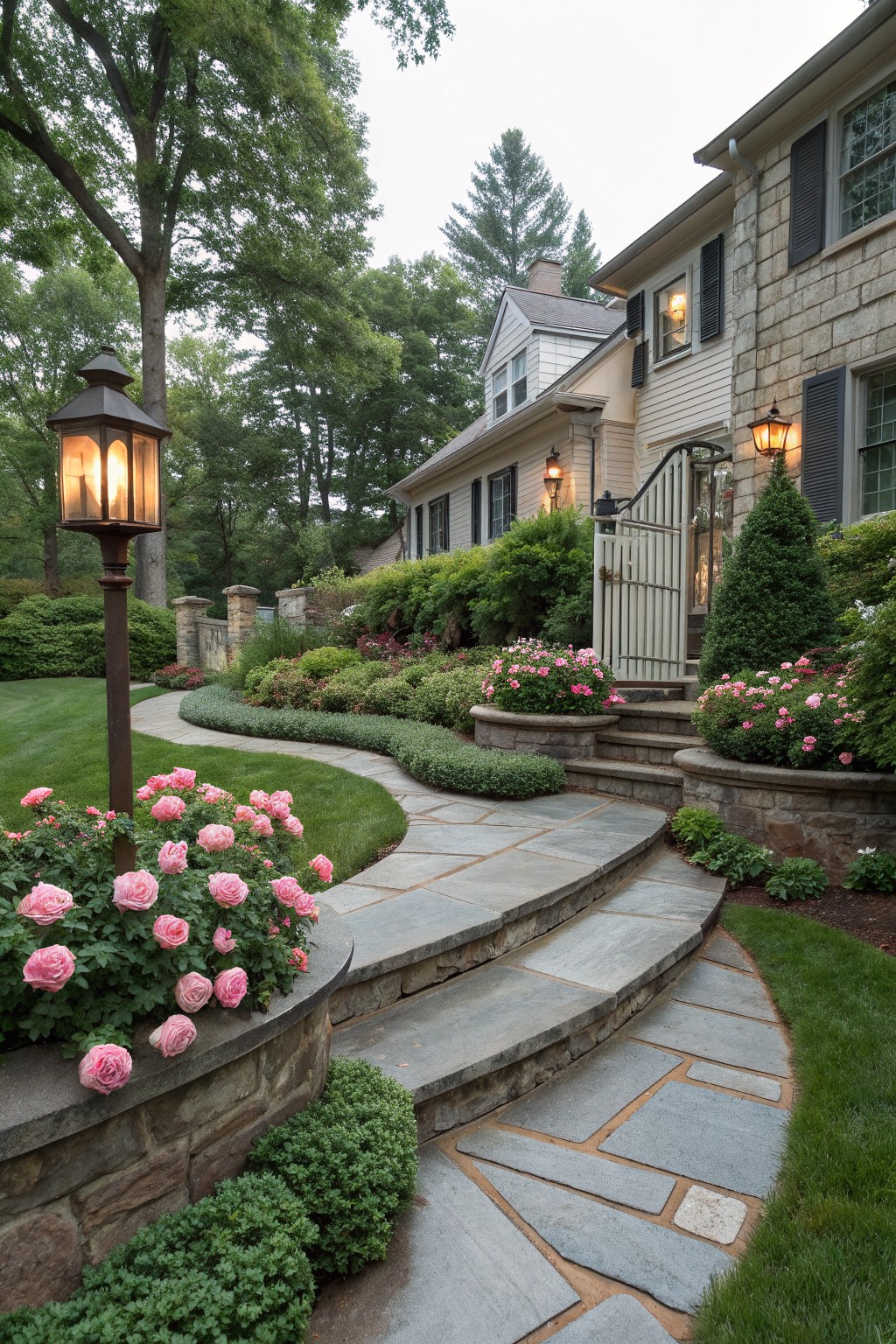
A curved path gives the front approach a relaxed feel that suits older farmhouses. It avoids the stiff look of a straight line and lets the garden feel like part of the entry instead of something separate.
Keep the path width generous enough for two people and line it with low shrubs and flower beds that rise gradually toward the house. This setup works best on lots where the house sits back from the road and you want the walk itself to feel inviting rather than rushed.
String Lights Extend Evening Use
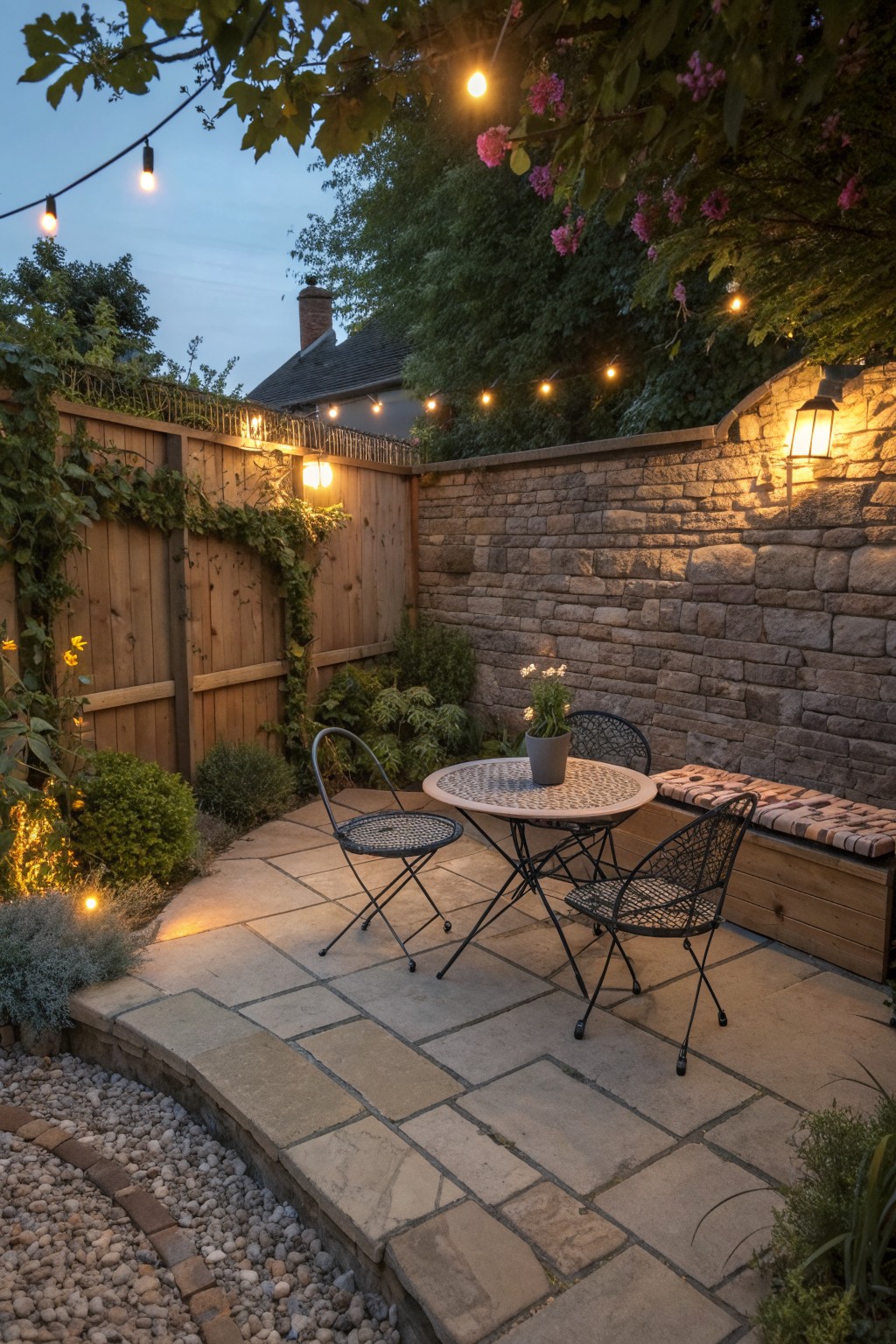
String lights work well on older homes because they add light without changing the structure or adding bulky fixtures. They keep the focus on the original walls and fencing while making the space comfortable after dark.
Run them along the top of a fence or wall so the light stays low and even. This approach suits Victorian farmhouses that already have simple outdoor details and need only a light touch to feel finished.
Preserve Original Window Shutters
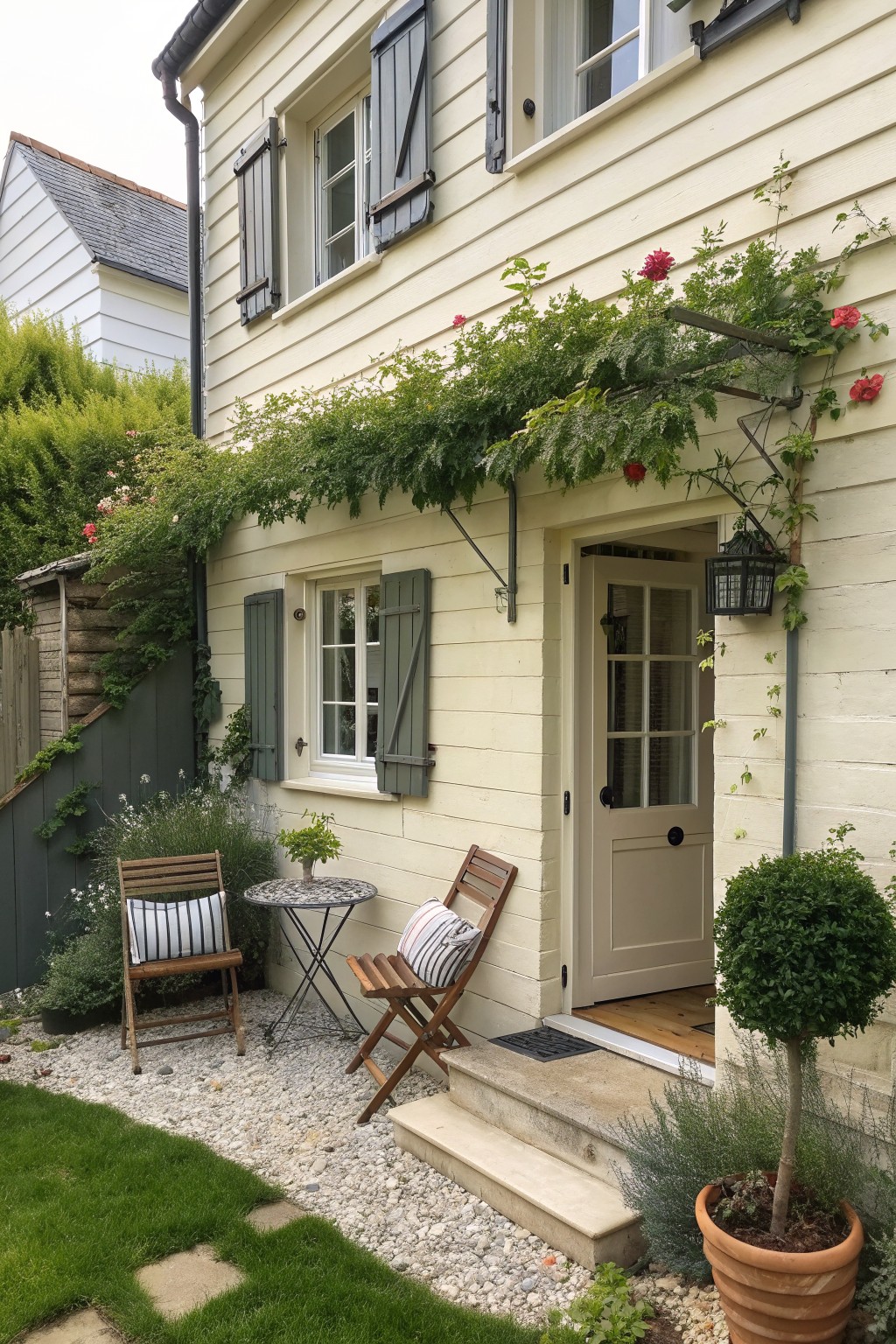
Many Victorian farmhouses still have their original shutters, and keeping them is one of the simplest ways to hold on to the home’s character. They frame the windows without adding anything new and help the whole front feel consistent with the age of the house.
Clean them, tighten the hinges, and repaint in a muted tone that contrasts lightly with the siding. This approach works on any home where the windows remain in good shape and you want to avoid modern replacements that can flatten the look.
Preserve Original Ceiling Details
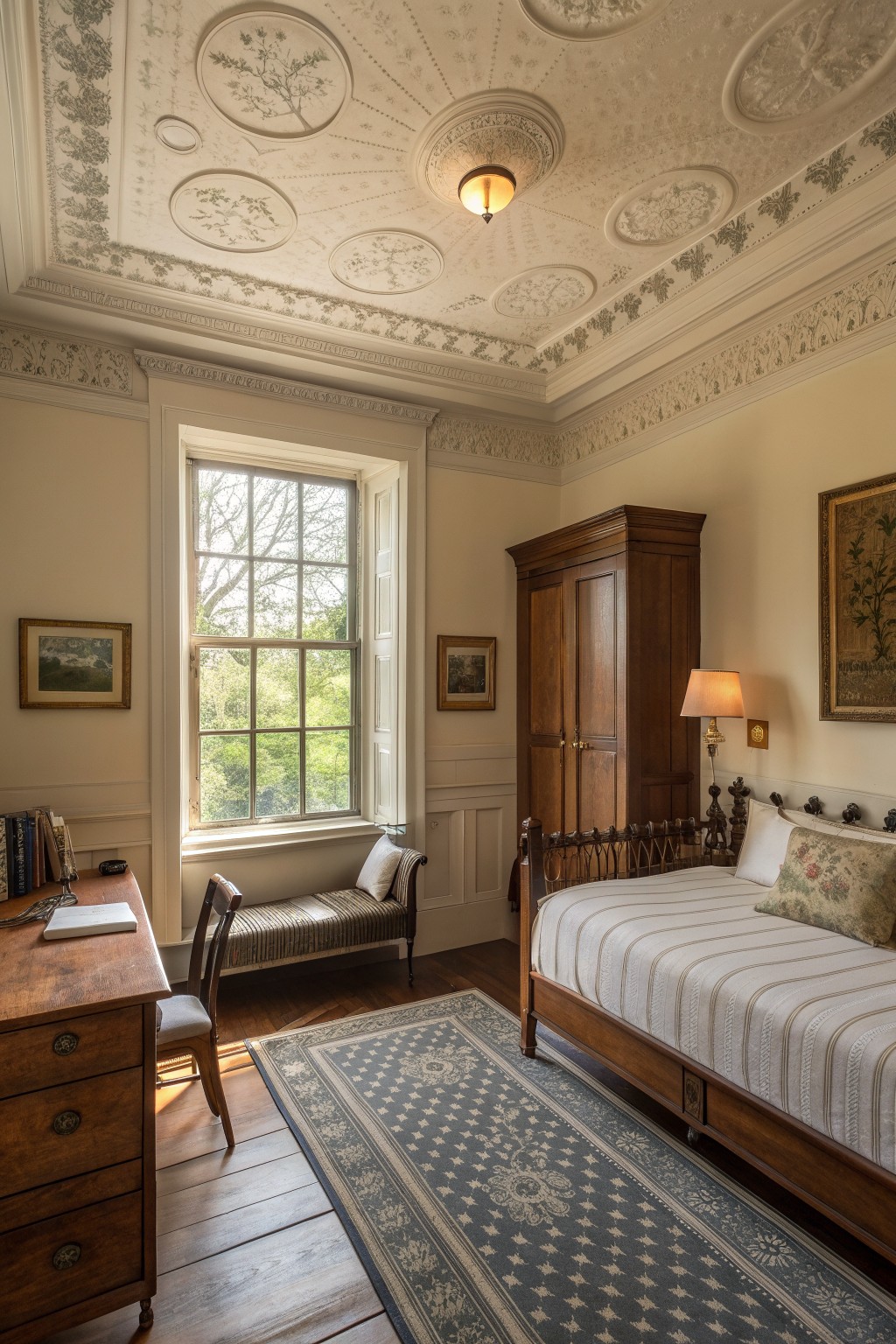
Many Victorian farmhouses still have the original plaster ceilings with their medallions and repeating patterns. Keeping those intact gives the room its character right away and avoids the cost of recreating something similar later.
This works best in bedrooms or smaller rooms where the ceiling stays in view most of the time. Clean the surface gently during restoration and skip new paint layers that could fill in the fine lines.
Preserve Original Skylights In Sunrooms
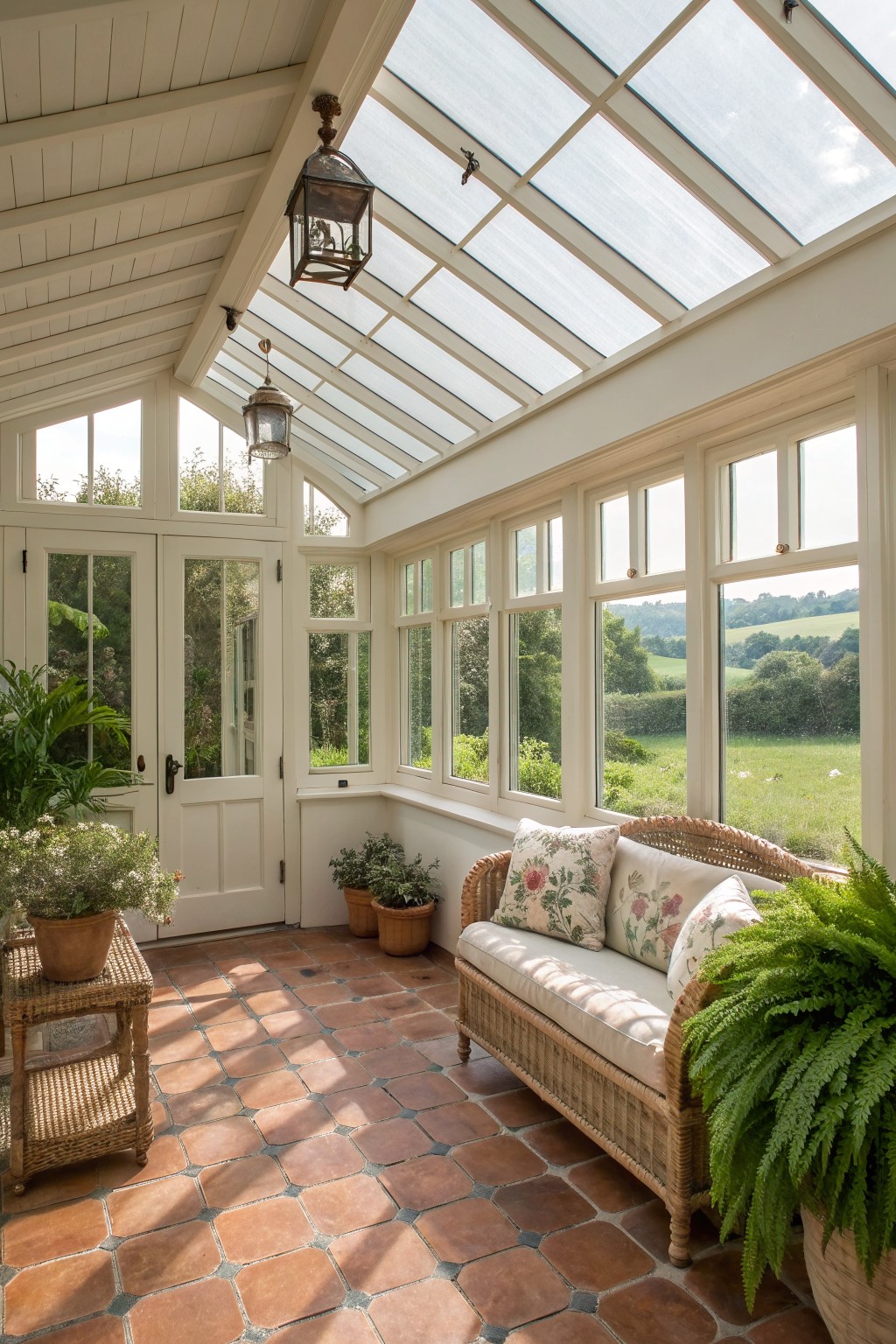
Many Victorian farmhouses included sunrooms with glass ceilings that let in steady light and kept the indoor space connected to the garden. Holding on to that original roof structure during restoration keeps the room feeling authentic instead of turning it into a generic addition.
Repair the existing frame and glass where possible rather than swapping in new materials. Simple white paint on the trim and a couple of period-style lanterns are usually enough to show off the detail without covering it up.
Frequently Asked Questions
Q: How do I decide which details to keep when the house has many layers of changes? A: Focus first on elements that still show the Victorian style like crown molding or door casings. Remove later additions only if they cover something older and better. This way you uncover the real character without losing too much history.
Q: Can damaged original floors be saved or do they need full replacement? A: Repair sections with matching wood where possible instead of ripping everything out. Fill gaps and refinish to a natural sheen that highlights the wear patterns from past owners. Your floors end up with stories intact.
Q: How do I update the kitchen while protecting any remaining original features? A: Work around built in cabinets or wainscoting by designing new layouts that leave them untouched. Add modern appliances in areas away from those details.
