

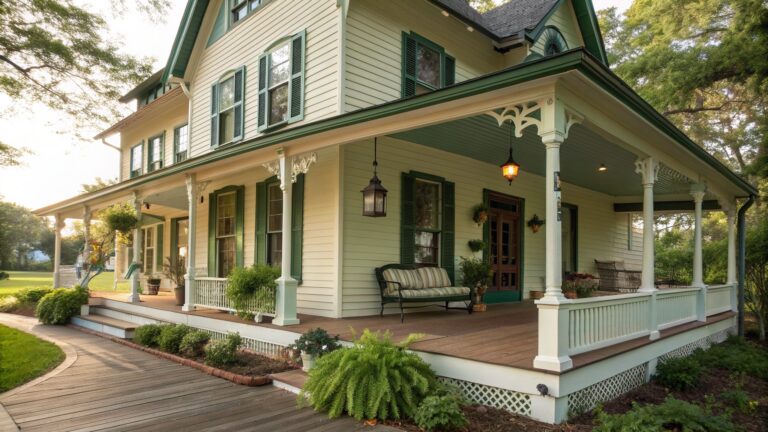
Looking at Victorian farmhouses, I find that the wraparound porch usually determines how welcoming the front appears long before anyone reaches the door.
The way the porch connects to the main roof and wraps the corners affects the overall silhouette more than most people expect when they first sketch out changes.
Materials like wood or metal for the supports need to match the age of the house, or the whole exterior starts to feel patched rather than restored.
Scale is easy to misjudge.
Testing a few of these classic approaches on paper first helps me see which ones would actually suit the proportions of a real farmhouse without overwhelming it.
Place a Long Table on the Porch for Everyday Dining
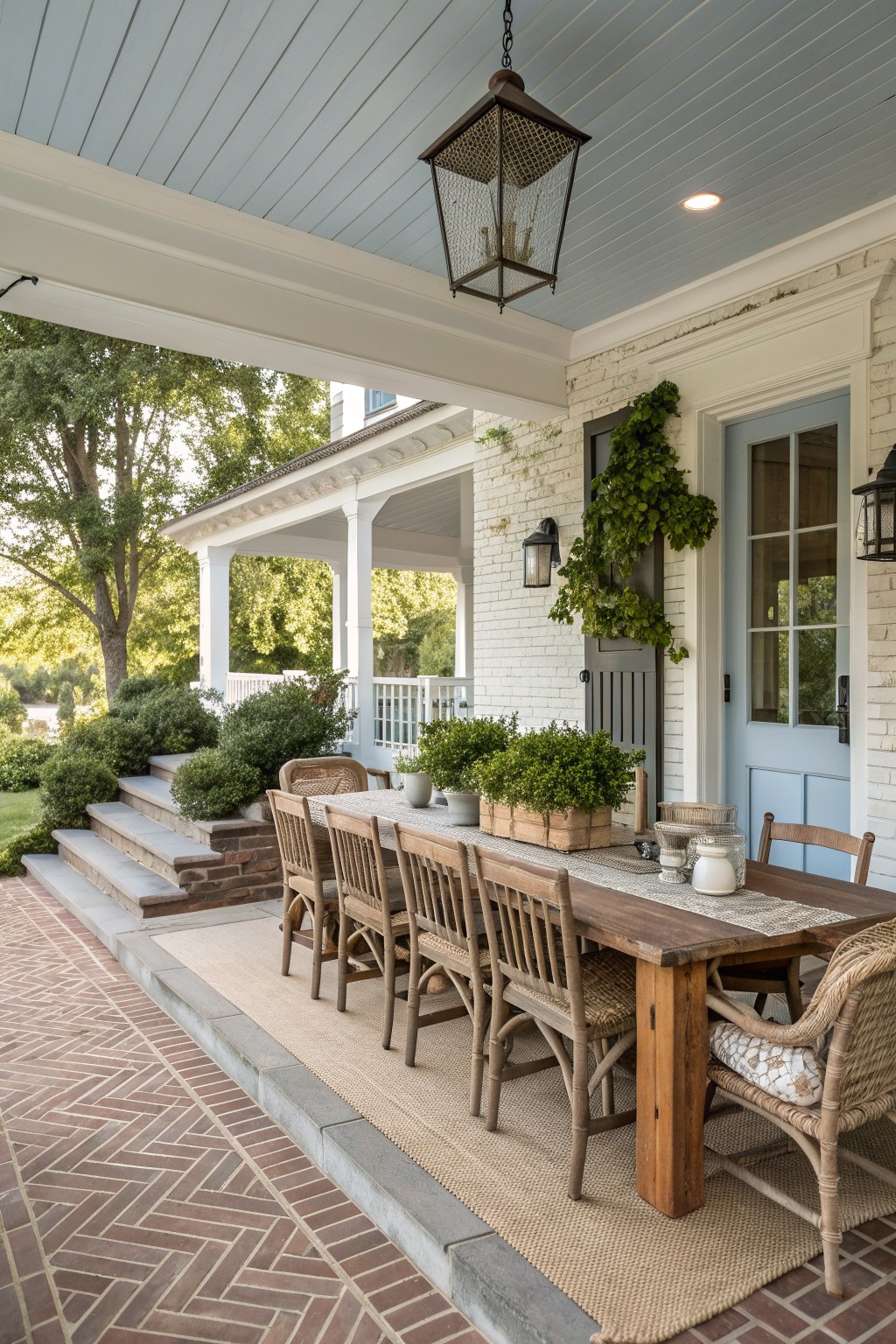
A long wooden table gives the porch a clear purpose beyond just sitting. It turns the space into somewhere you can actually eat meals outside without moving things around each time.
This works best on a covered wraparound porch where the table can stay in place year round. Pair it with simple woven chairs and keep extra seating to a minimum so the area stays open and easy to use.
Define Seating Zones with an Outdoor Rug
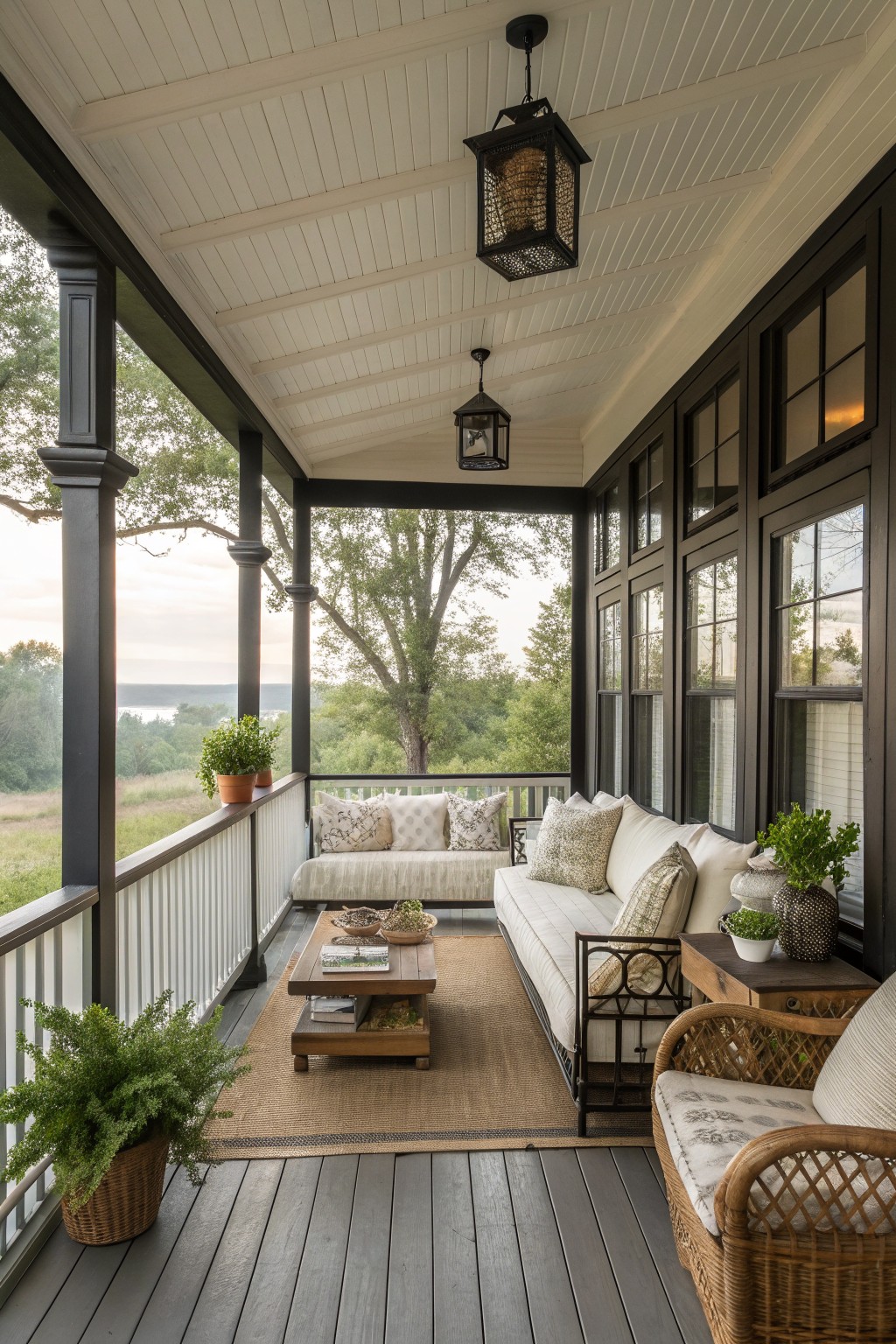
A large rug gives structure to a wraparound porch and turns scattered furniture into a clear sitting area. It helps the space feel more like an extension of the house instead of just open decking.
This approach works best on older farmhouses where the porch runs along multiple sides. Keep the rug centered under the main seating group and leave some floor showing around the edges so the layout still feels open and connected to the rest of the porch.
Wicker Seating Suits Wraparound Porches
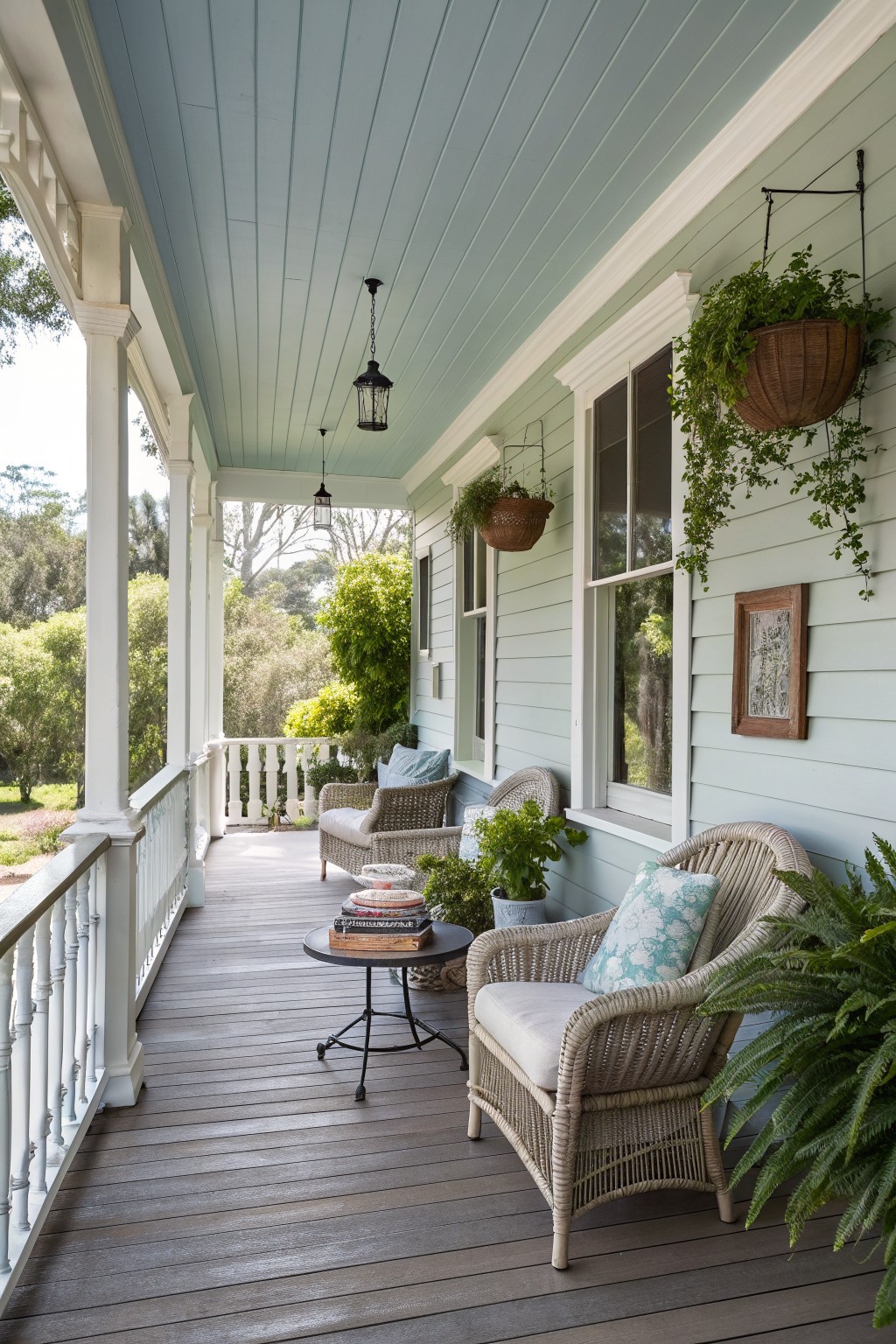
Wicker chairs hold up well on a long porch because they feel light and do not block the view or the flow of traffic. The natural weave also pairs easily with painted wood siding and simple railings, which is why it shows up often on older farmhouses.
Set two or three chairs around a small table near the windows so people can talk without shouting across the space. A couple of hanging baskets keep the planting off the floor and add softness without taking up room to walk.
Add Built-In Bookshelves to Your Porch
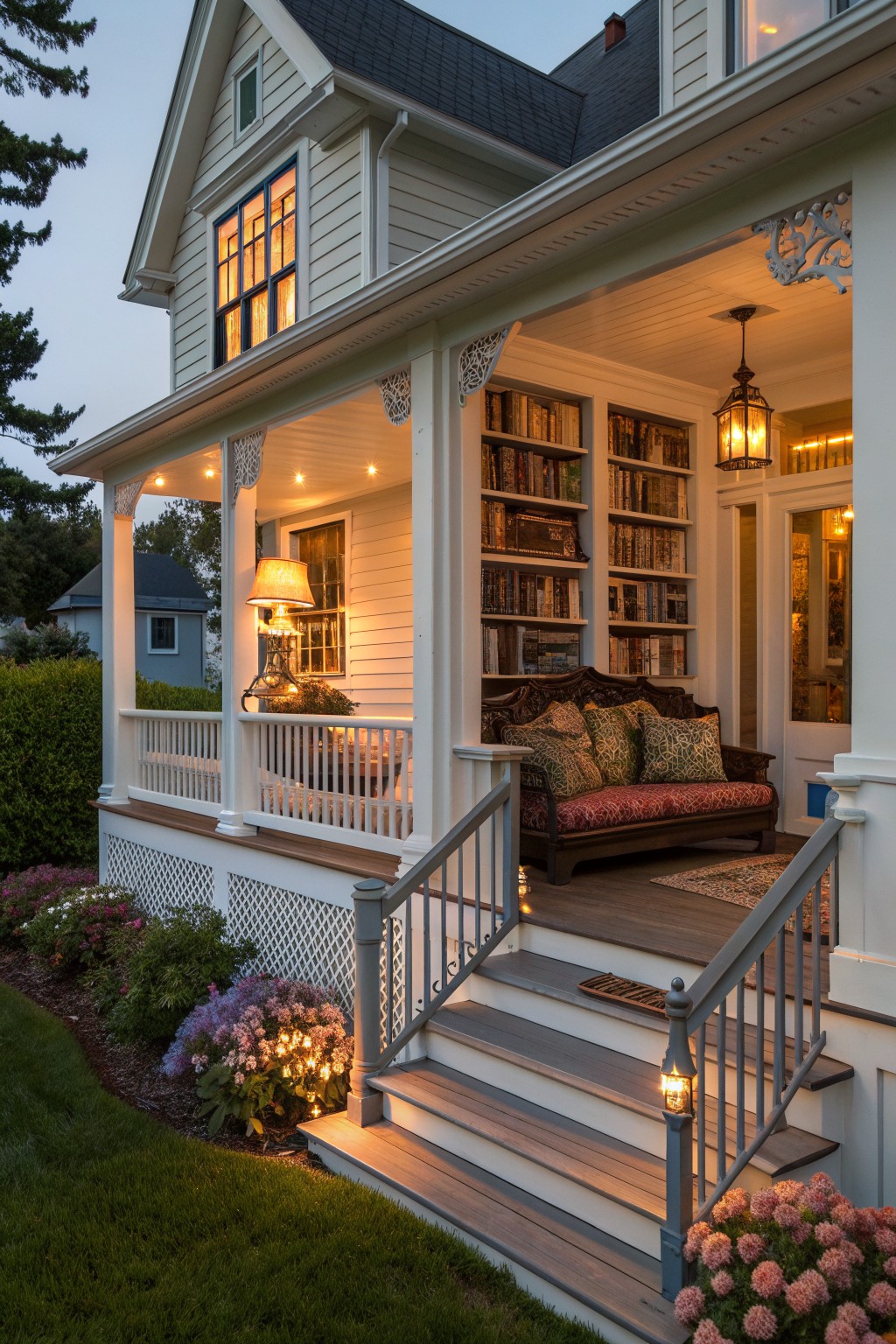
Built-in bookshelves give a wraparound porch a purpose beyond just sitting outside. They turn the space into somewhere you can spend real time, especially in the evening when the lights come on and the area feels enclosed and quiet.
This works best on deeper porches that already have some protection from weather. Keep the shelves stocked with older books that can handle a little humidity, and place seating right in front so the area feels like one complete spot rather than shelves added on later.
Wicker Rockers Along a Wraparound Porch
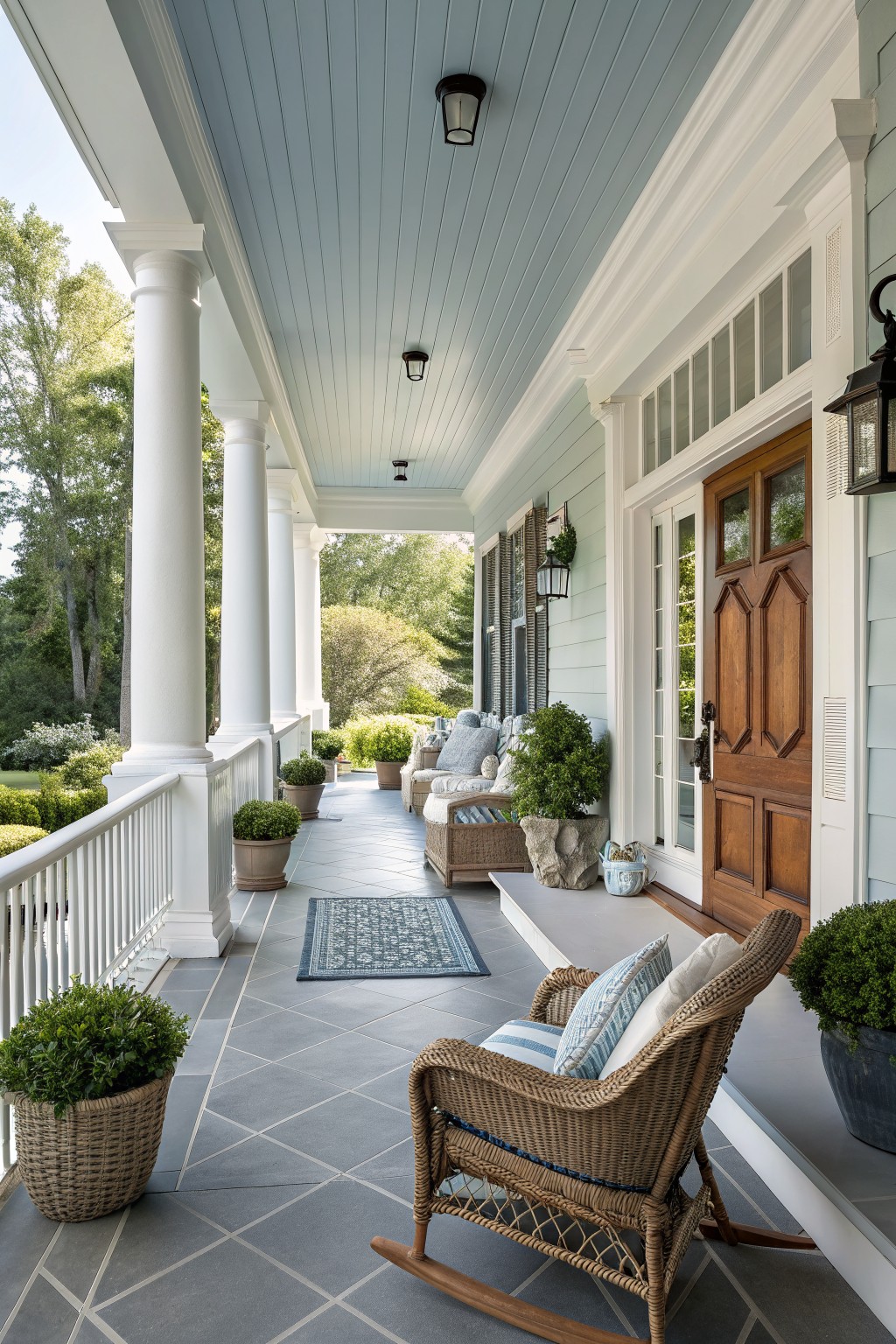
Wicker rocking chairs fit wraparound porches because they stay light enough to move around and hold up well outdoors. They give the space a relaxed feel without taking over the view or the flow from one end to the other.
Place them near the railing with simple striped cushions so people can sit and watch the yard. This works best on older farmhouses where the porch already has good columns and trim, and it keeps the seating practical rather than fussy.
Define Porch Seating With A Large Rug
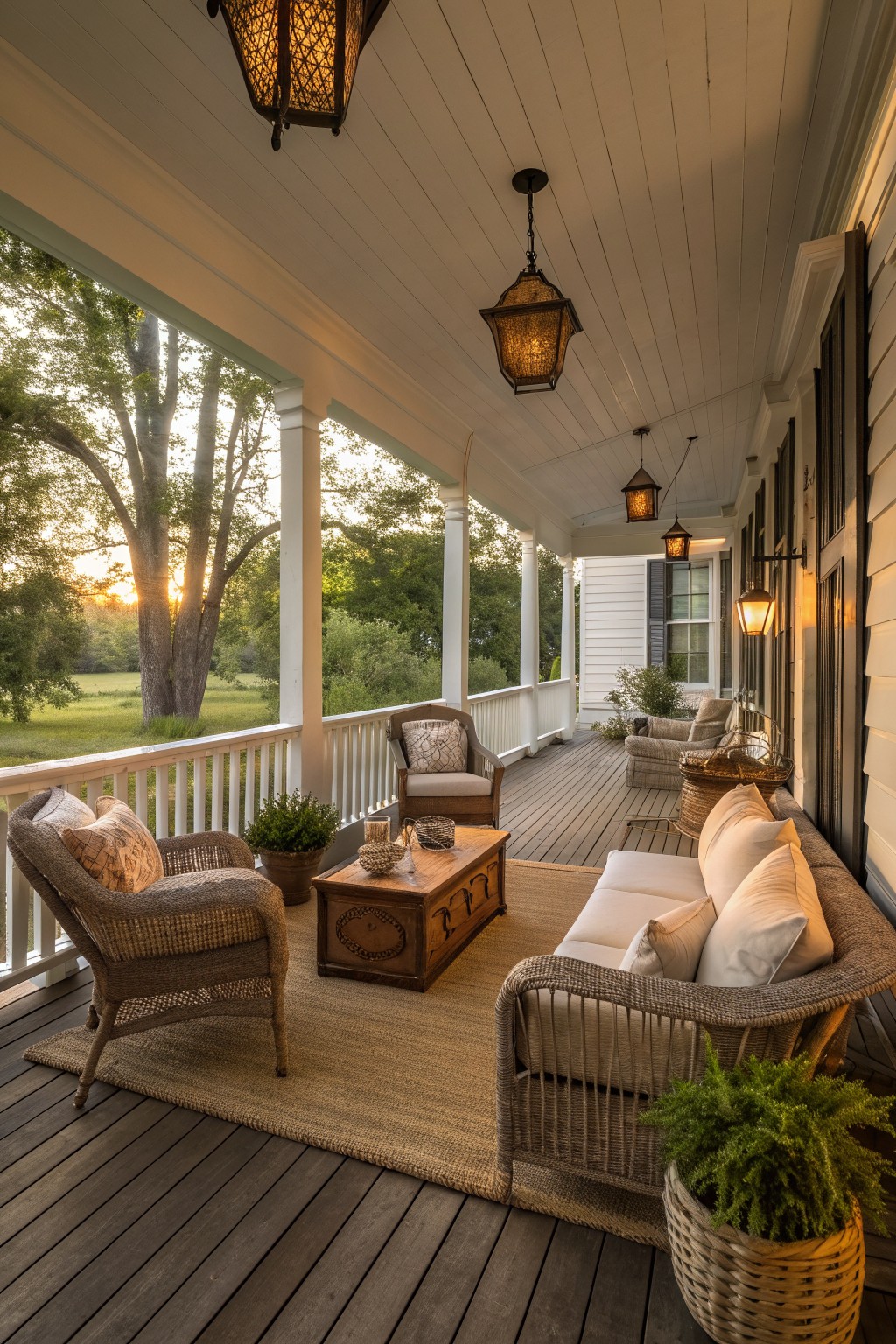
A large rug turns an open porch deck into a real sitting area. It brings the furniture together and keeps the space from feeling like random chairs scattered across bare boards.
This works best on wraparound porches where you want one section to read as an outdoor room. Pick a sturdy outdoor rug that is big enough for every front leg of the seating to rest on it, and keep the color simple so it does not fight the house.
Layer Textiles on Wicker Seating
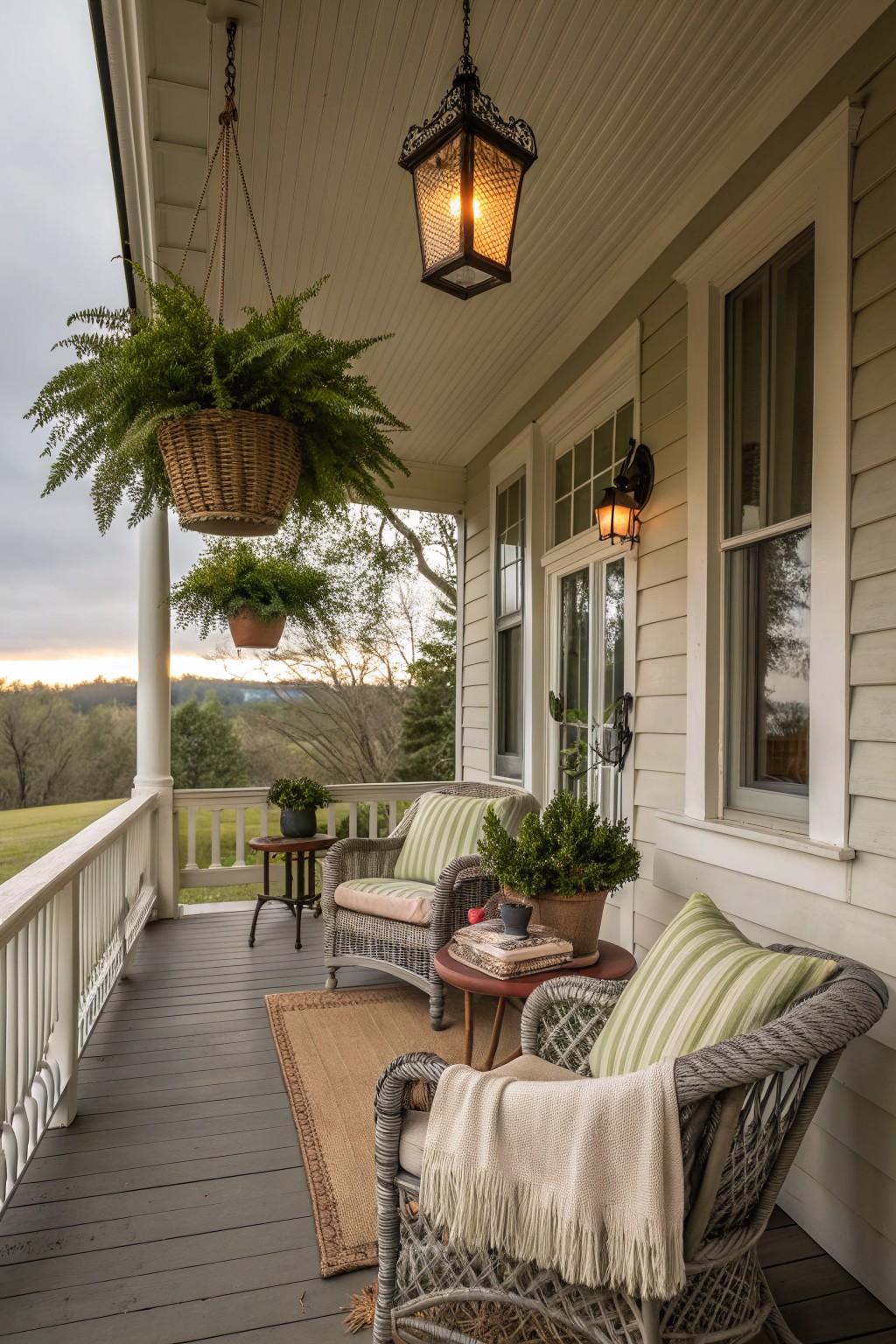
Wicker chairs already suit a classic wraparound porch, but they feel much more usable once you add cushions, pillows, and a throw. The layers turn basic seating into a place where people linger instead of just passing through.
Pick weather-friendly fabrics in simple patterns and place a flat rug underneath to mark the spot. This works best on older farmhouses where the porch gets daily use and needs to feel relaxed rather than styled.
Built-In Bench Seating For Everyday Meals
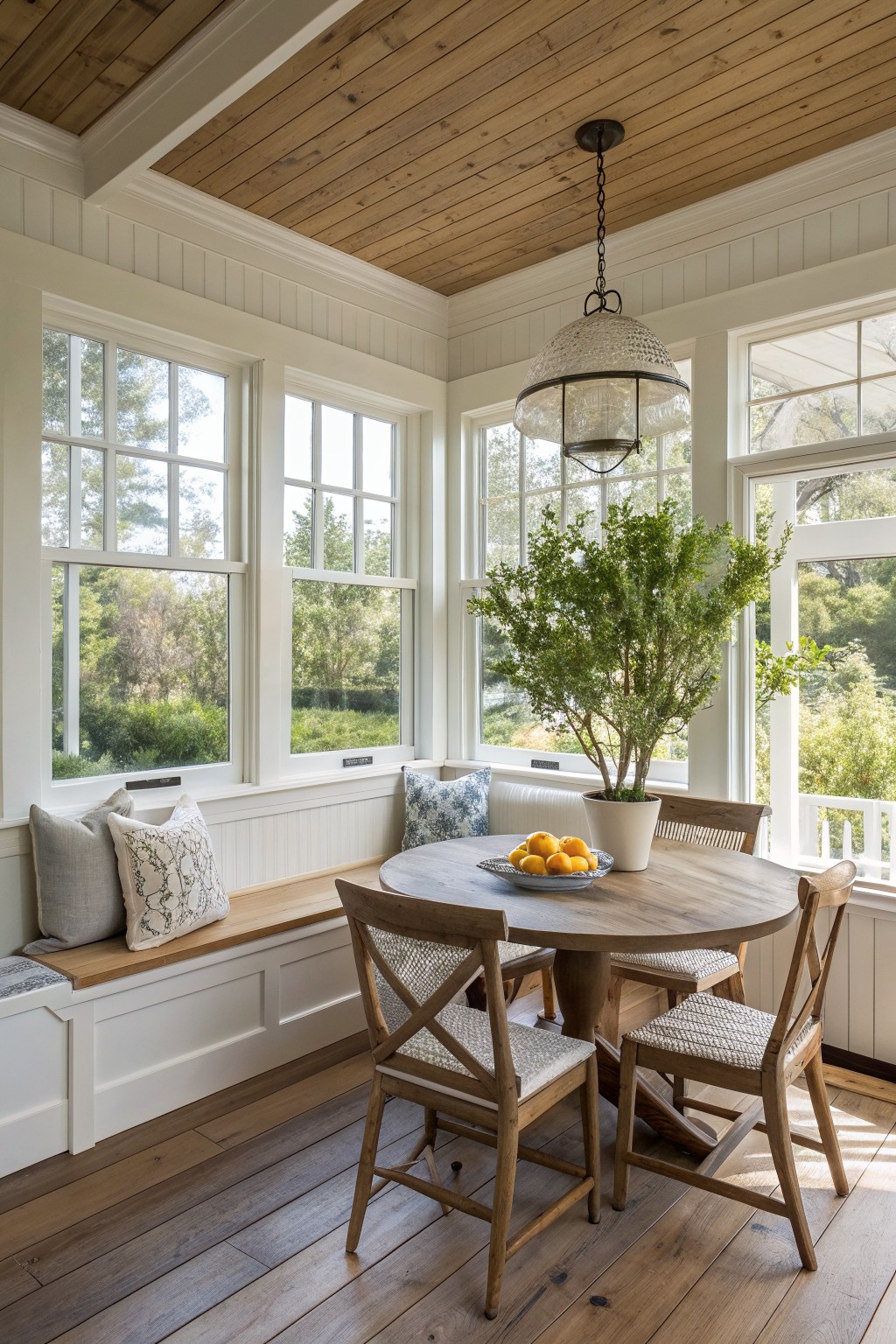
A built-in bench under a long stretch of windows turns a bright corner into a useful spot for daily meals. It adds seating without crowding the floor and keeps the view open so the room still feels light and connected to the outdoors.
This setup works best in older homes where you have a porch or sunroom with multiple windows in a row. Keep the bench low and simple so it fits the trim, then use a round table in front to make the space easy to move around.
Wraparound Porch That Follows the House Shape
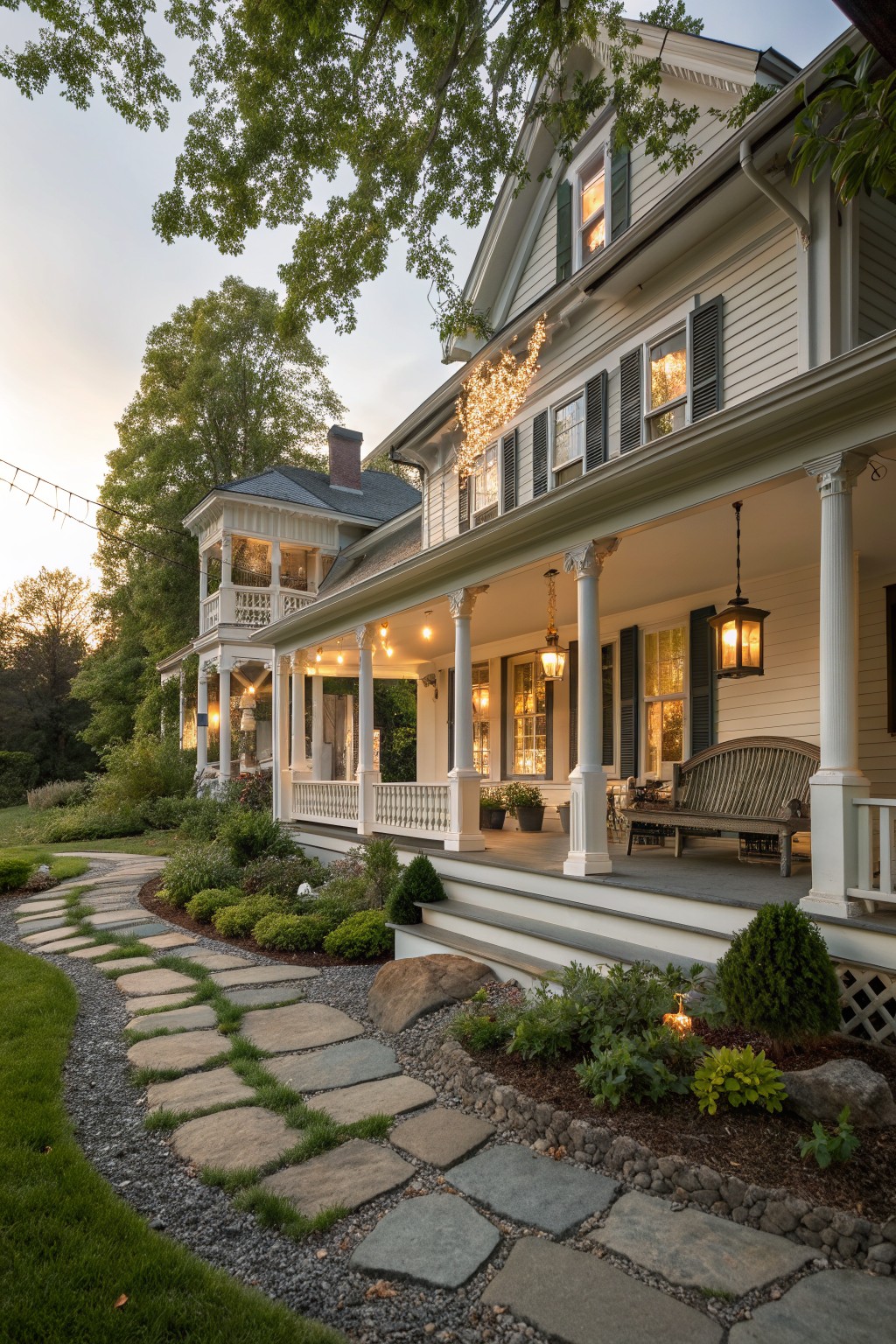
A wraparound porch works well on Victorian farmhouses because it adds usable outdoor space without fighting the shape of the house. The porch can run along two or more sides, giving you different spots to sit as the light changes through the day.
Keep the columns simple and painted to match the trim so the whole thing feels like part of the original structure. This layout suits older homes with multiple gables and rooflines, and it pairs easily with a garden path that leads up to the steps.
Ornate Columns for a Classic Porch Look
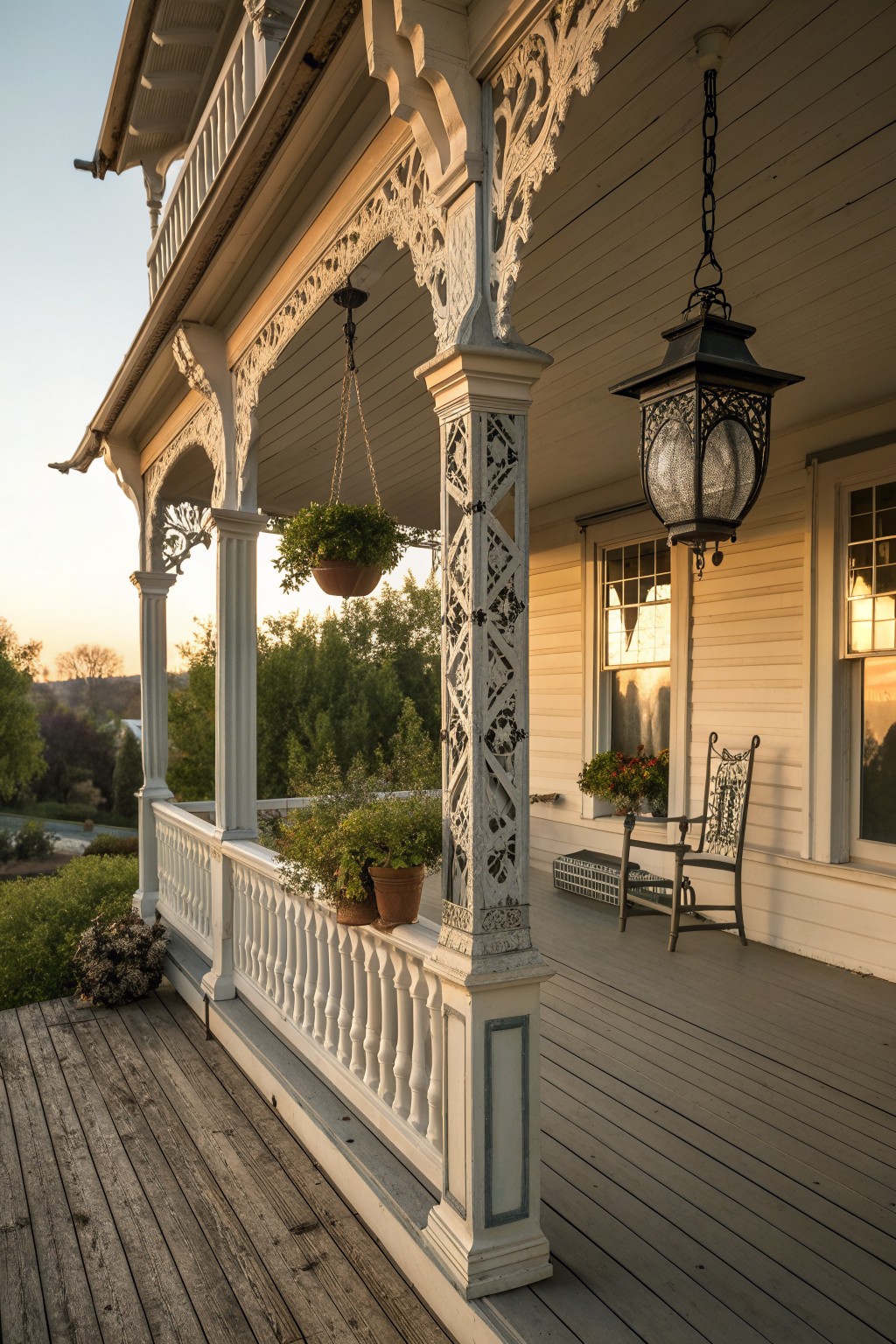
Many Victorian farmhouses use detailed woodwork on the porch columns to give the space its character. The cutout patterns and brackets add interest without needing extra decoration or heavy furniture.
This approach suits older homes where the goal is to highlight the original architecture. Keep the seating and floor simple so the posts remain the main feature.
Wraparound Porches That Follow The House Shape
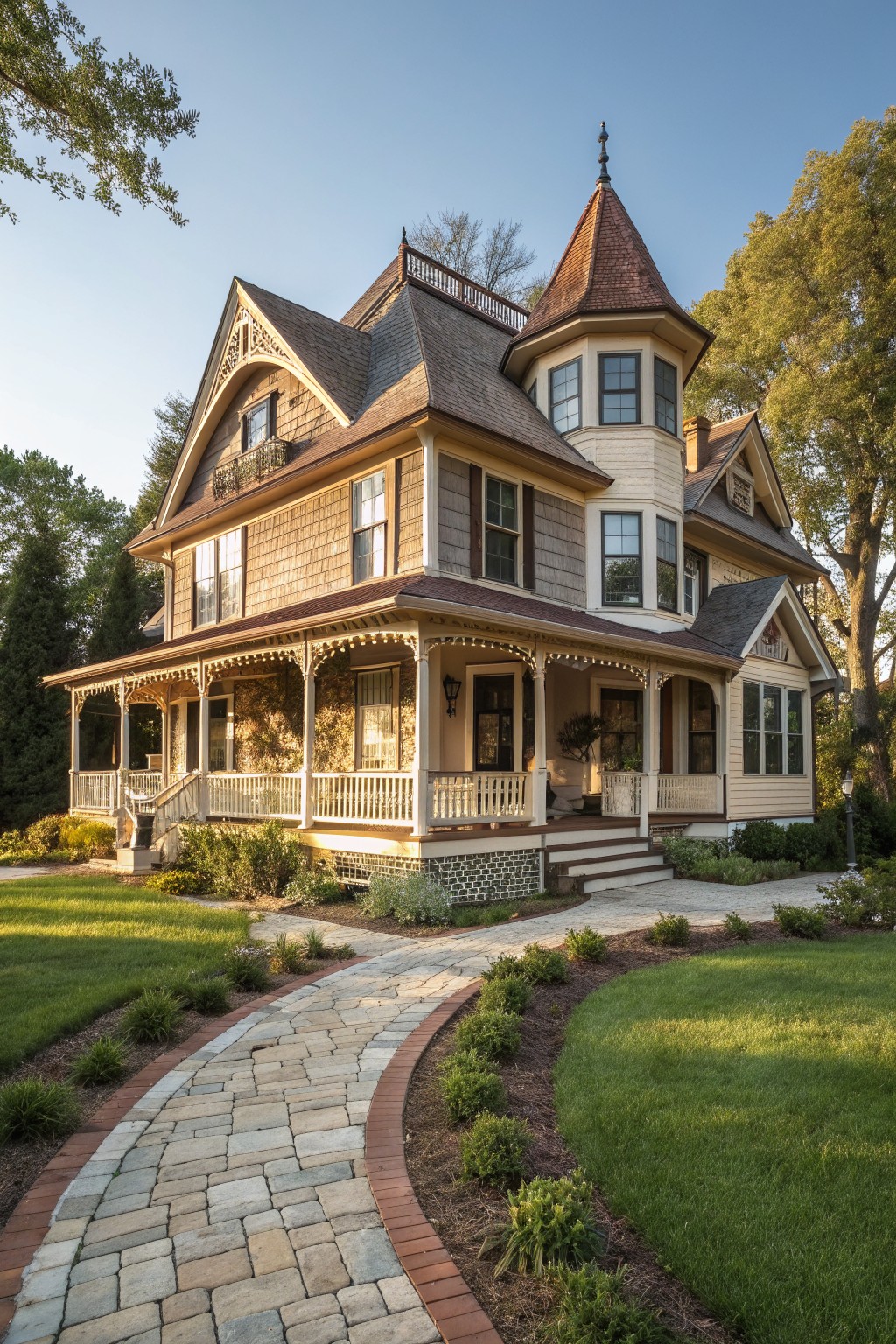
A wraparound porch works best when it keeps going past the main entrance and turns the corners with the house. This approach gives the home a more complete look and creates usable space on more than one side without feeling like separate additions stuck on later.
It suits Victorian farmhouses that already have irregular rooflines and angled walls. Keep the railing height consistent and match the post style to the rest of the trim so the whole thing reads as one continuous structure rather than a collection of pieces.
Add Seasonal Garlands Along the Porch
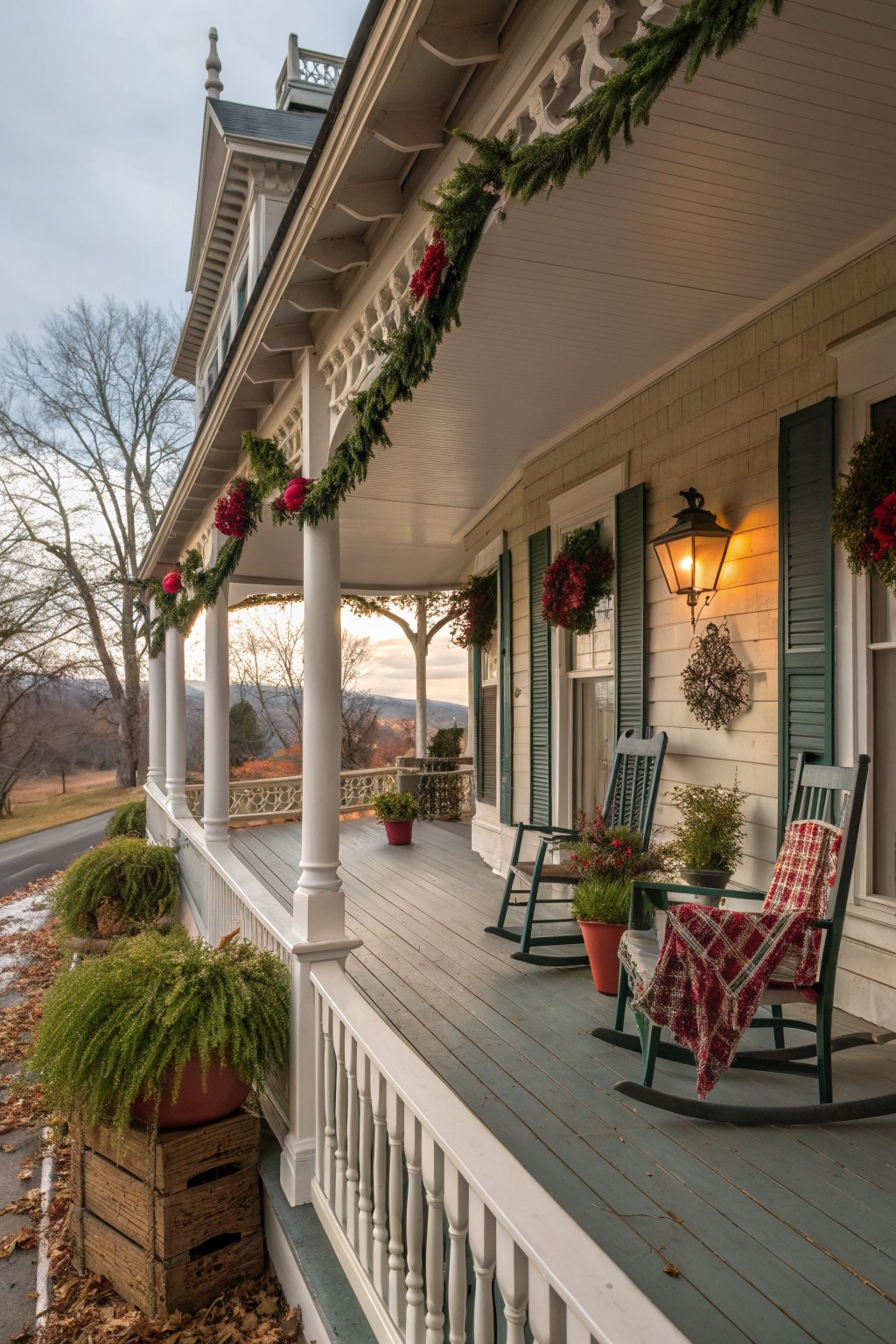
Wrapping garlands around the posts and along the railings turns a wraparound porch into something that feels ready for the holidays. The greenery adds color and texture that stands out against the white trim and siding common on older farmhouses.
Keep the garlands simple and use real or good faux evergreens with a few red accents. This approach works best on porches that already have columns and railings to support the weight, and it is easy to swap out when the season changes.
Using A Bench For Plant Displays
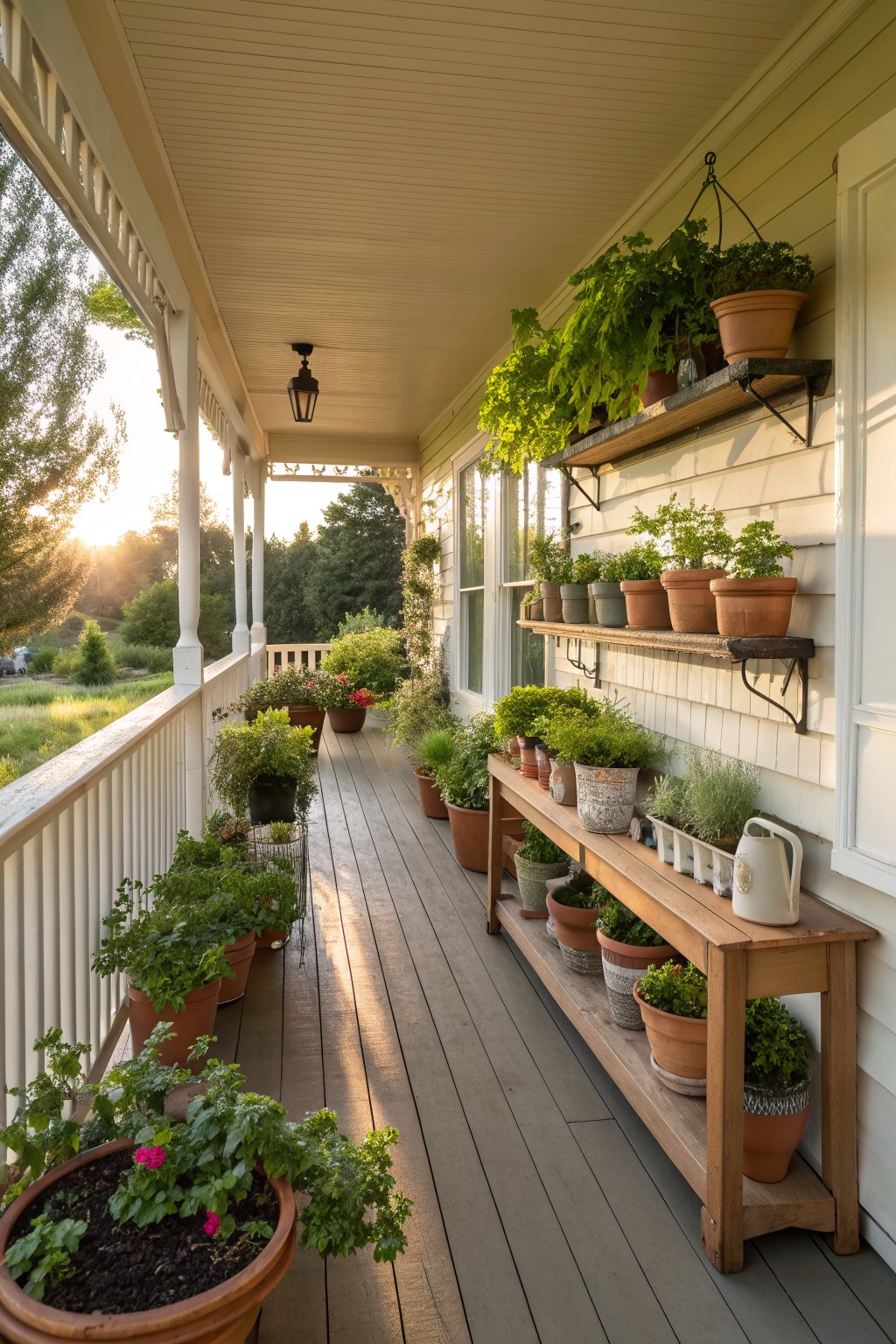
Many wraparound porches gain a lot from having one long surface that can hold plenty of plants without crowding the floor. A simple wooden bench placed below wall shelves creates two levels for pots and keeps the walkway clear while still showing off a full collection.
This approach suits Victorian farmhouses that already have long porch walls. It works best when the bench is low and sturdy, and the shelves sit high enough to leave room for taller plants underneath. Just check the weight limits if you plan to load it with heavy terracotta pots.
String Lights Overhead
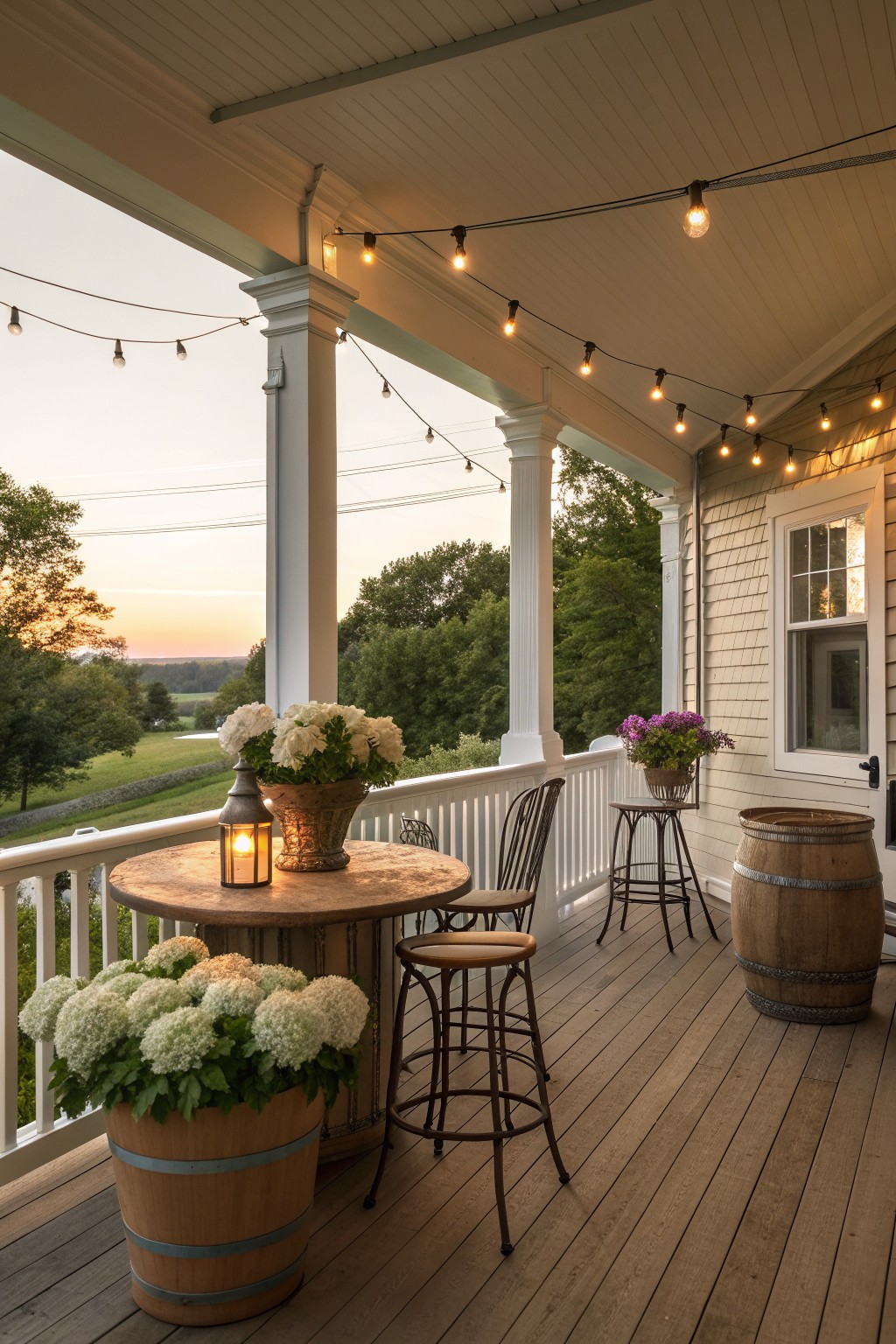
String lights give a wraparound porch a simple way to stay usable after dark. They run along the roof edge and cast a gentle light that feels natural on an older house without needing extra poles or heavy fixtures.
Place them where people sit most, like near a table and chairs. This works best on farmhouses that already have a long porch line, since the lights follow the shape without crowding the space.
A Stone Ledge Adds Planting Space to a Porch
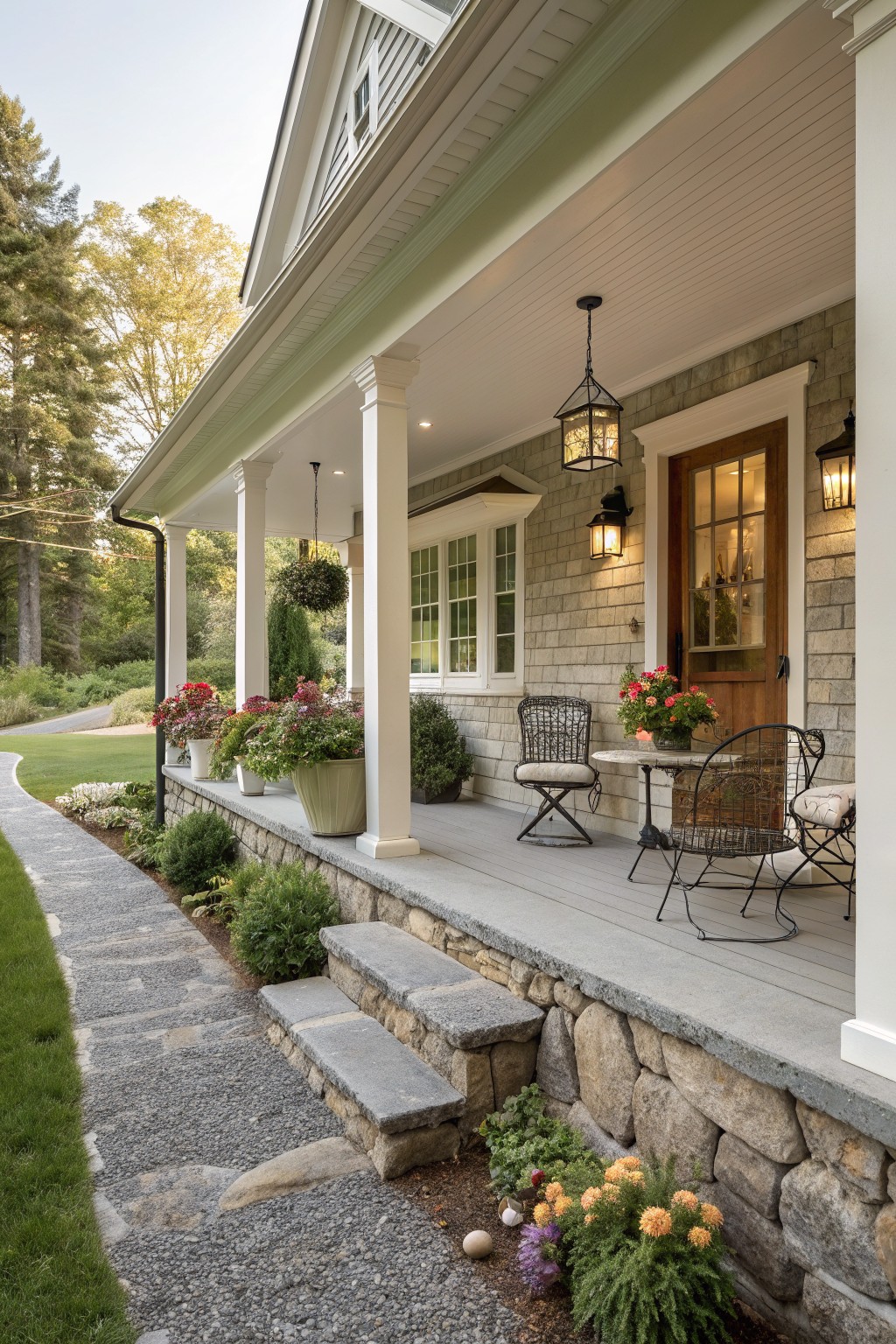
A stone ledge built along the front of a wraparound porch gives you room for big planters without taking up floor space. It keeps the seating area clear while still letting flowers sit right at the edge where they soften the whole look.
This works best on older homes that already have some stone in the foundation. Keep the ledge low and fairly wide so the pots stay stable and the plants can trail down a bit. It also helps the porch feel more connected to the yard instead of just floating above it.
Built-In Bench Seating Along The Porch
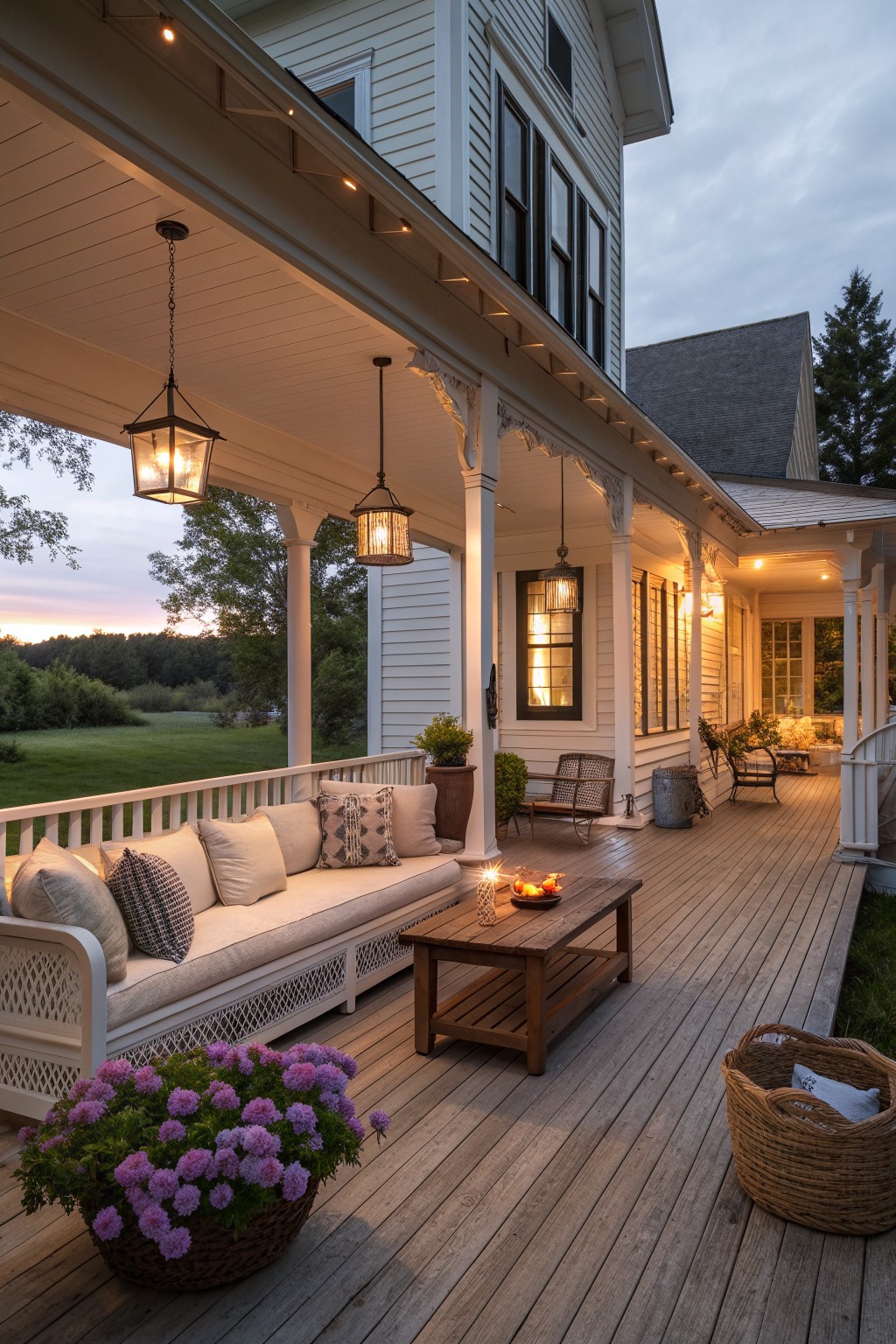
A built-in bench along the railing turns the porch edge into usable seating without crowding the deck. It keeps the middle open for a table and chairs while still giving people a place to sit comfortably for long stretches.
This layout suits older farmhouses with wide porches because it works with the existing structure instead of adding freestanding furniture that can shift around. Keep the bench height even with the railing and add simple cushions so it feels like part of the house rather than an afterthought.
Checkered Floors on Wraparound Porches
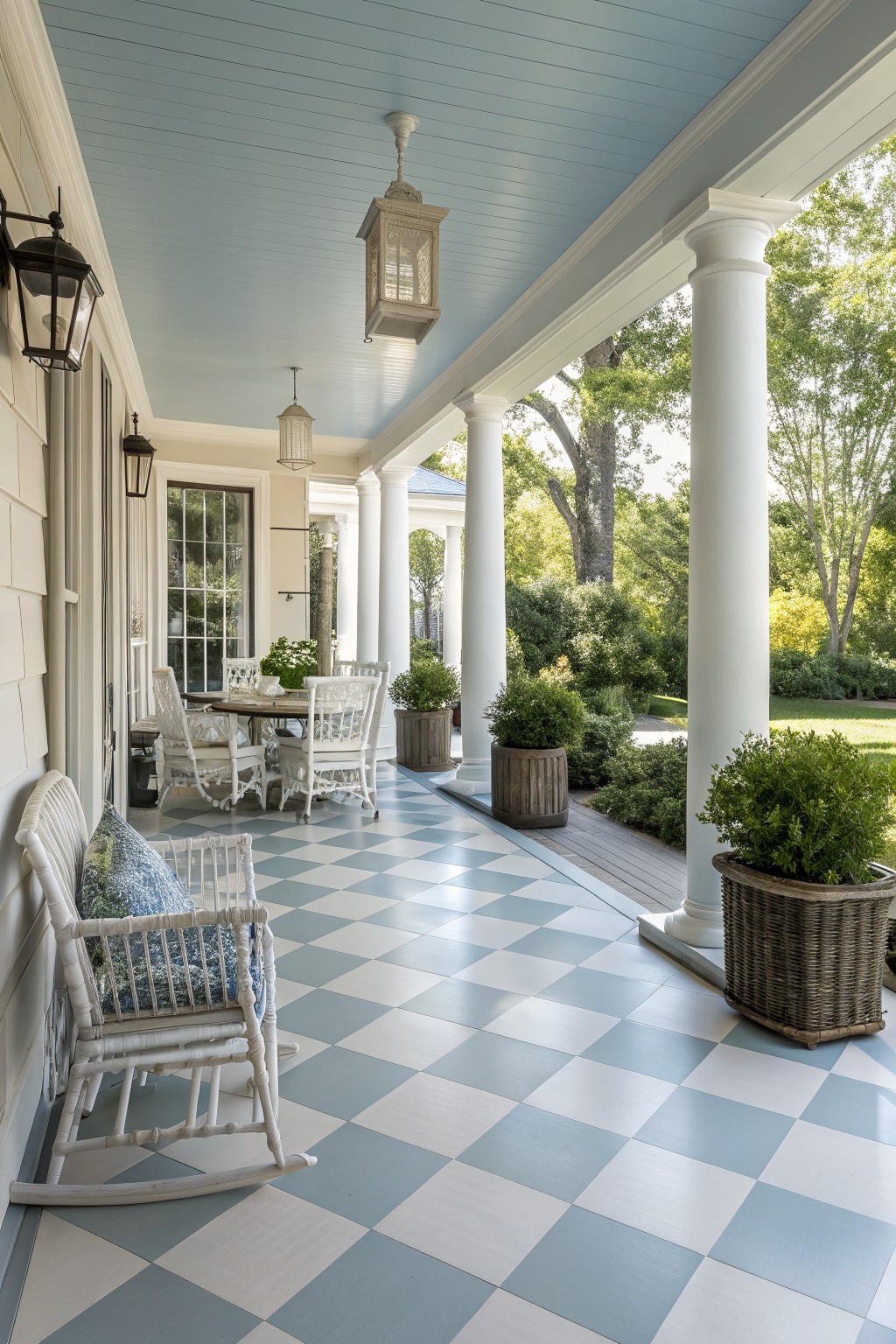
A checkered floor adds a strong visual rhythm to a porch and helps the space feel more defined. The pattern stands out against the white columns and railings, giving the whole area a crisp, settled look that suits older homes.
This approach works best on larger wraparound porches where there is room for the pattern to read clearly. Stick with two light tones so the floor does not feel heavy, and keep furniture and plantings simple so the pattern remains the main feature.
Brick Planter Ledges Along the Porch
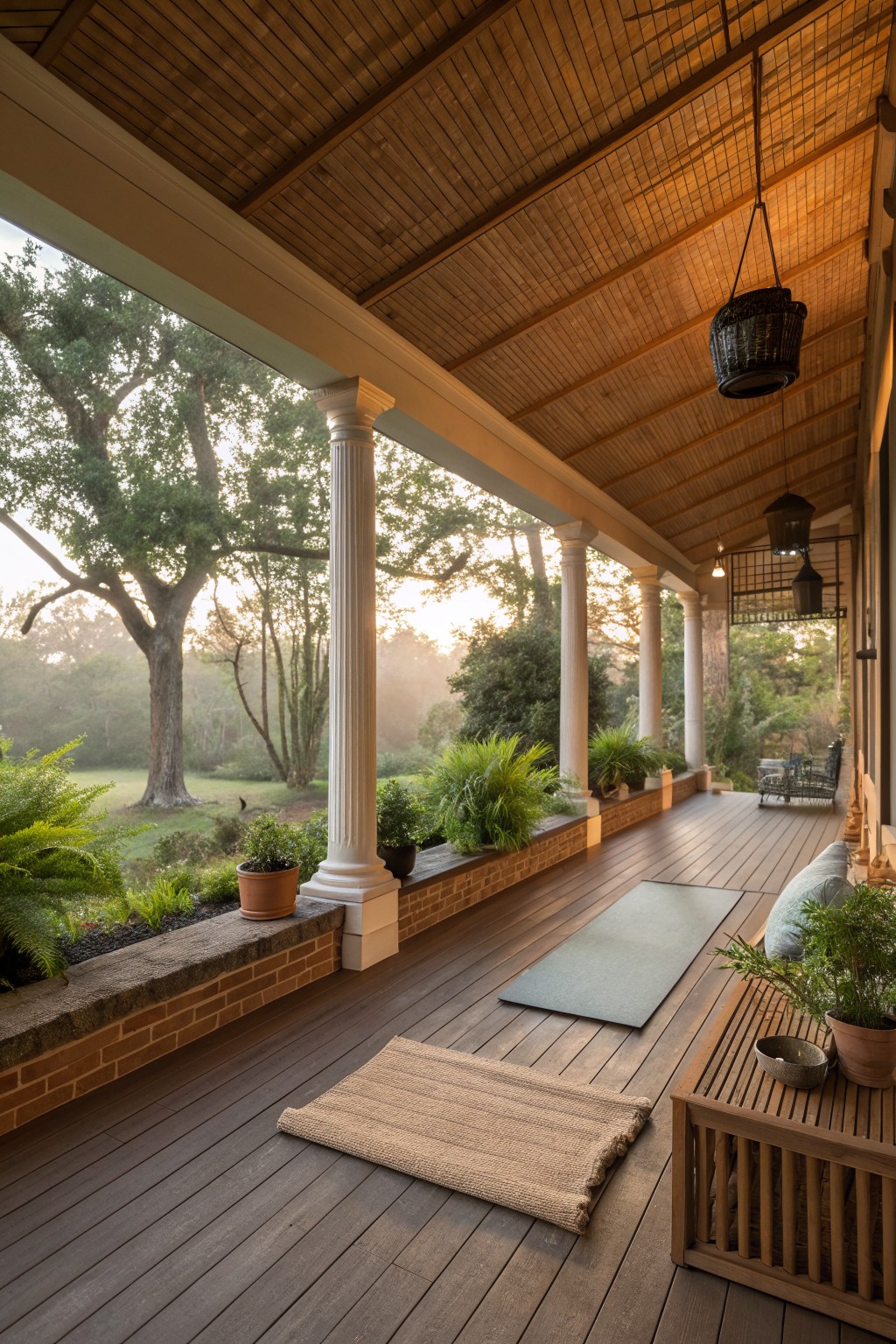
A low brick ledge built into the porch edge gives you room for plants without crowding the deck floor. It turns the railing area into a planting strip that feels like part of the house rather than something added later.
This setup works well on Victorian farmhouses where the porch wraps around several sides. Match the brick to the foundation, keep the ledge about knee height, and use it for ferns or small shrubs that soften the view without blocking the open feel of the deck.
Add a Long Table Along the Porch Edge
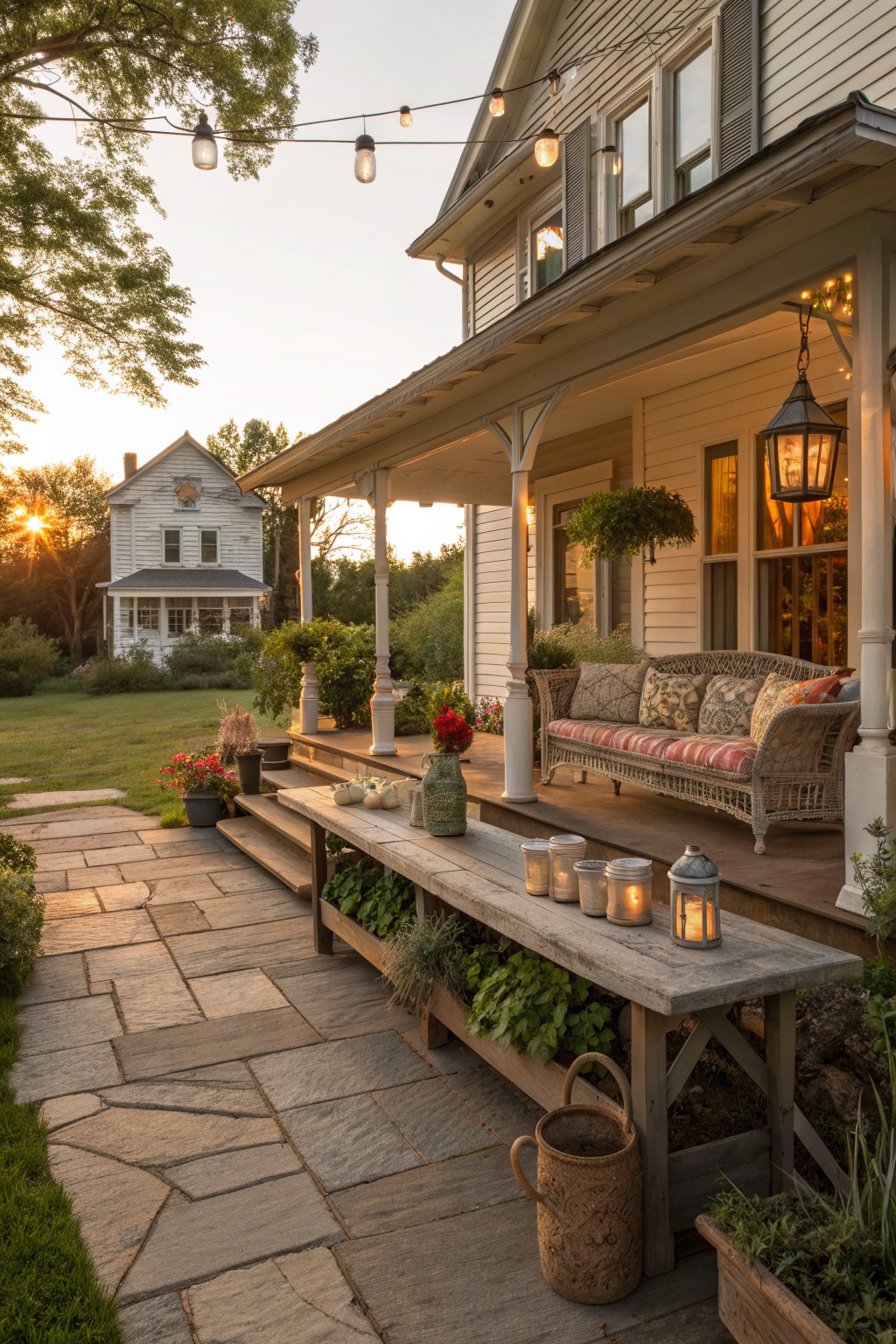
A long wooden table placed along the porch gives you extra room for drinks, candles, and plants without taking up floor space needed for chairs. It keeps the seating area open while still feeling full and useful.
This setup works best on older farmhouses where the porch already has a simple structure. Keep the table weathered or painted to match the house trim, and use the space below it for more pots so the whole area stays practical.
Frequently Asked Questions
Q: Can I add a wraparound porch to my existing Victorian farmhouse without tearing up the yard? A: Check the foundation first and match the new posts to the original trim details. Hire a contractor familiar with old homes so the roofline flows naturally around the corners. This keeps the addition looking like it has always been there.
Q: What wood works best if I want low upkeep on a wraparound porch? A: Cedar or redwood resists rot and takes paint well for that classic look. Seal it every couple of years and the boards stay solid through rain and sun. Skip pressure-treated pine if you want the grain to show.
Q: How do I arrange seating so the whole porch feels usable? A: Place a bench or two chairs at each turn so every section gets its own spot. Leave walking space clear between groups and face some seats toward the yard. Simple cushions in neutral tones tie the areas together without clutter.
Q: Will a wraparound porch block light from my front rooms? A: Keep the roof overhang shallow and use open railings instead of solid walls. This lets morning light reach the windows while still giving shade on the deck itself. Test the angle with temporary posts before you build.
