

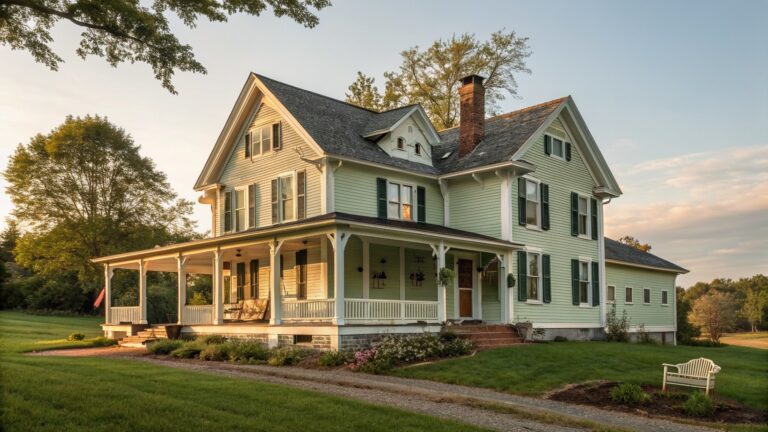
When I repaint rooms in an older home the colors need to work with the existing trim and how light actually moves across the walls during the day.
Historic shades often read differently once the furniture is back in place and the space starts getting used again.
I have learned to test samples on more than one wall because corners and alcoves change how the tone settles in.
It rarely works the first time.
Trying a few options in the actual rooms helps me see which ones feel right for the way we live in the house.
Soft Green Paint for Victorian Farmhouse Exteriors
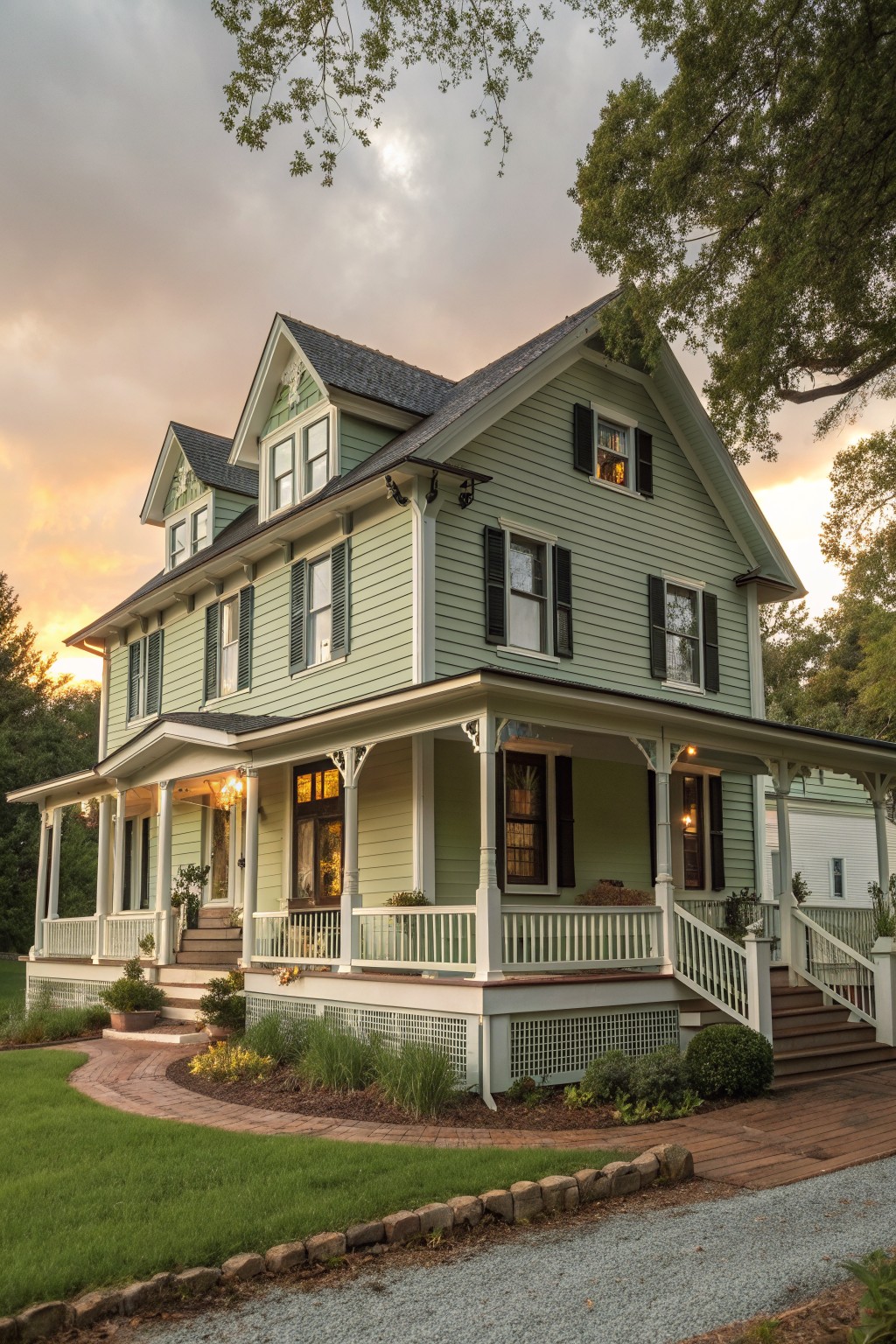
A muted sage green gives Victorian farmhouses a calm, historic look that still feels current. The color keeps the siding from appearing too stark while letting the rooflines and trim details stay visible.
This shade works best on wood-sided homes with white or cream trim and dark shutters. It suits properties with mature trees and open yards, where the green helps the house feel settled rather than brand new.
Deep Red Paint for the Exterior
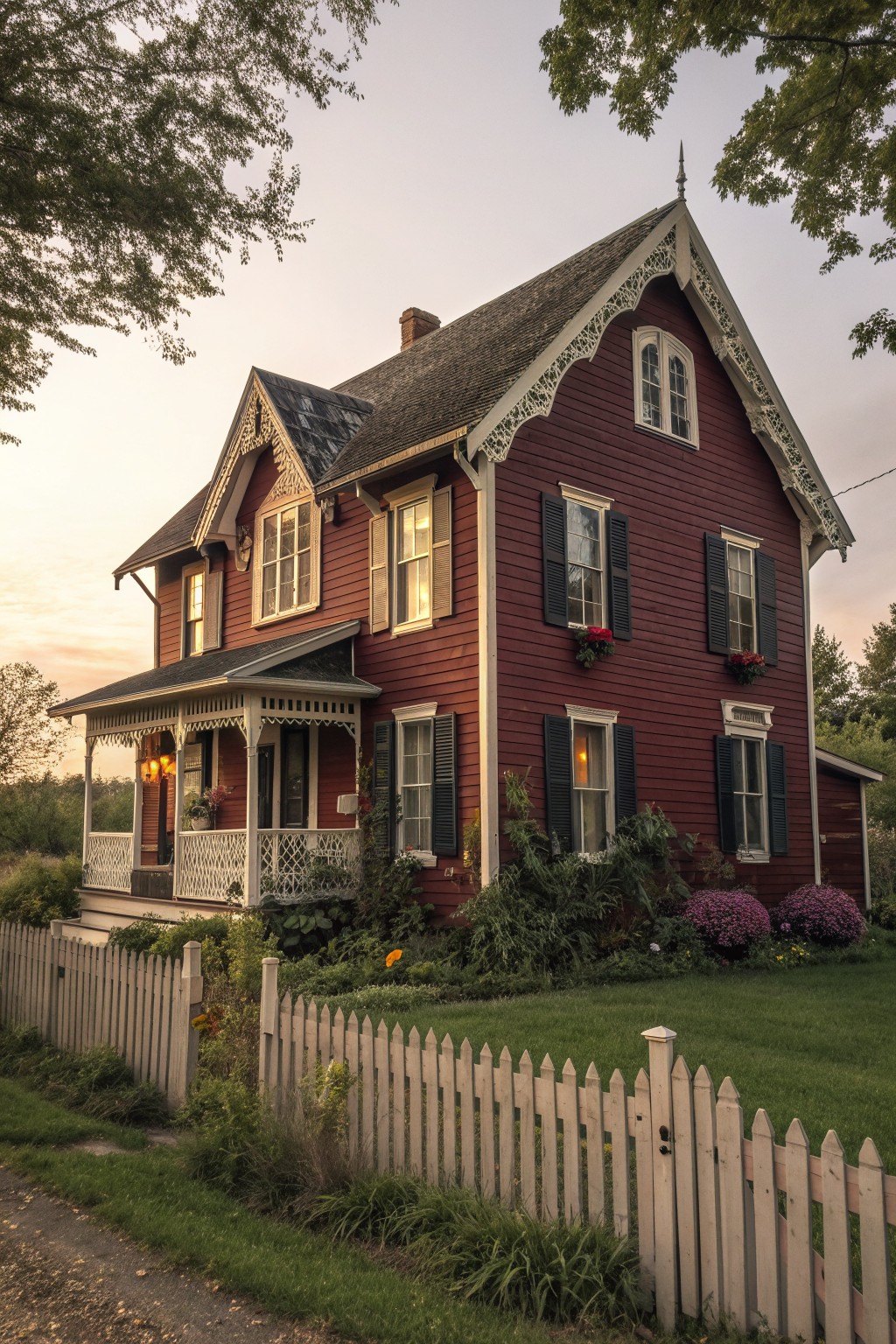
A deep red on the siding gives a Victorian farmhouse real presence without needing extra ornament. The color holds up well against white trim and dark shutters, and it reads as both historic and grounded.
This approach works best on homes with simple rooflines and good window placement. It suits older farmhouses or new builds that want that same weight, though it does need a clean trim color to keep the red from feeling heavy.
Soft Purple for Victorian Farmhouse Exteriors
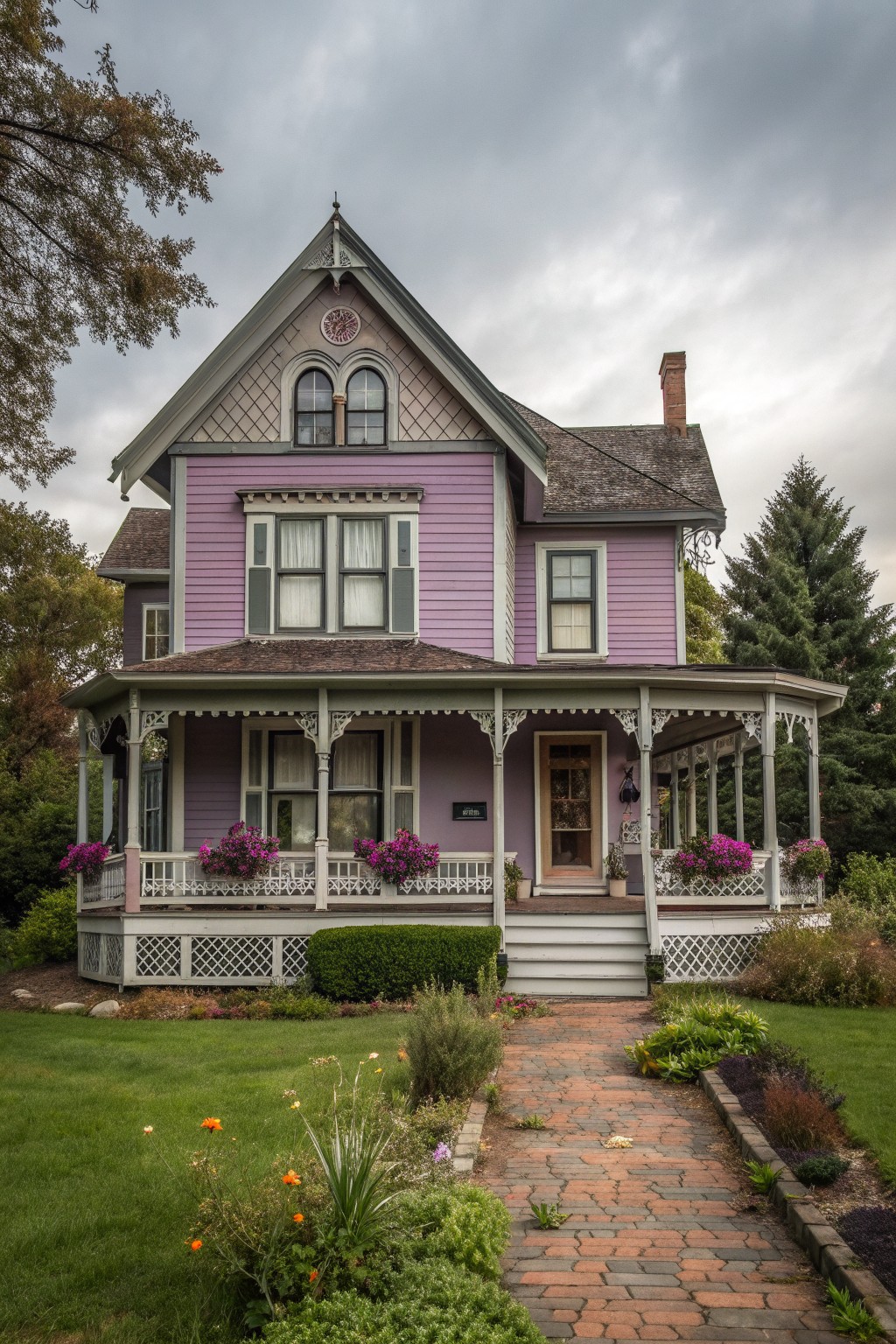
A muted purple like the one on this house gives a Victorian farmhouse real personality while still feeling calm. The color highlights the shape of the gables and the porch without shouting.
It works best on homes with plenty of trim details. Pair the purple with light gray or off-white on the trim so the architectural lines stay clear. This approach suits older neighborhoods where a touch of color feels more welcoming than plain white or gray.
Soft Yellow Siding With Green Trim
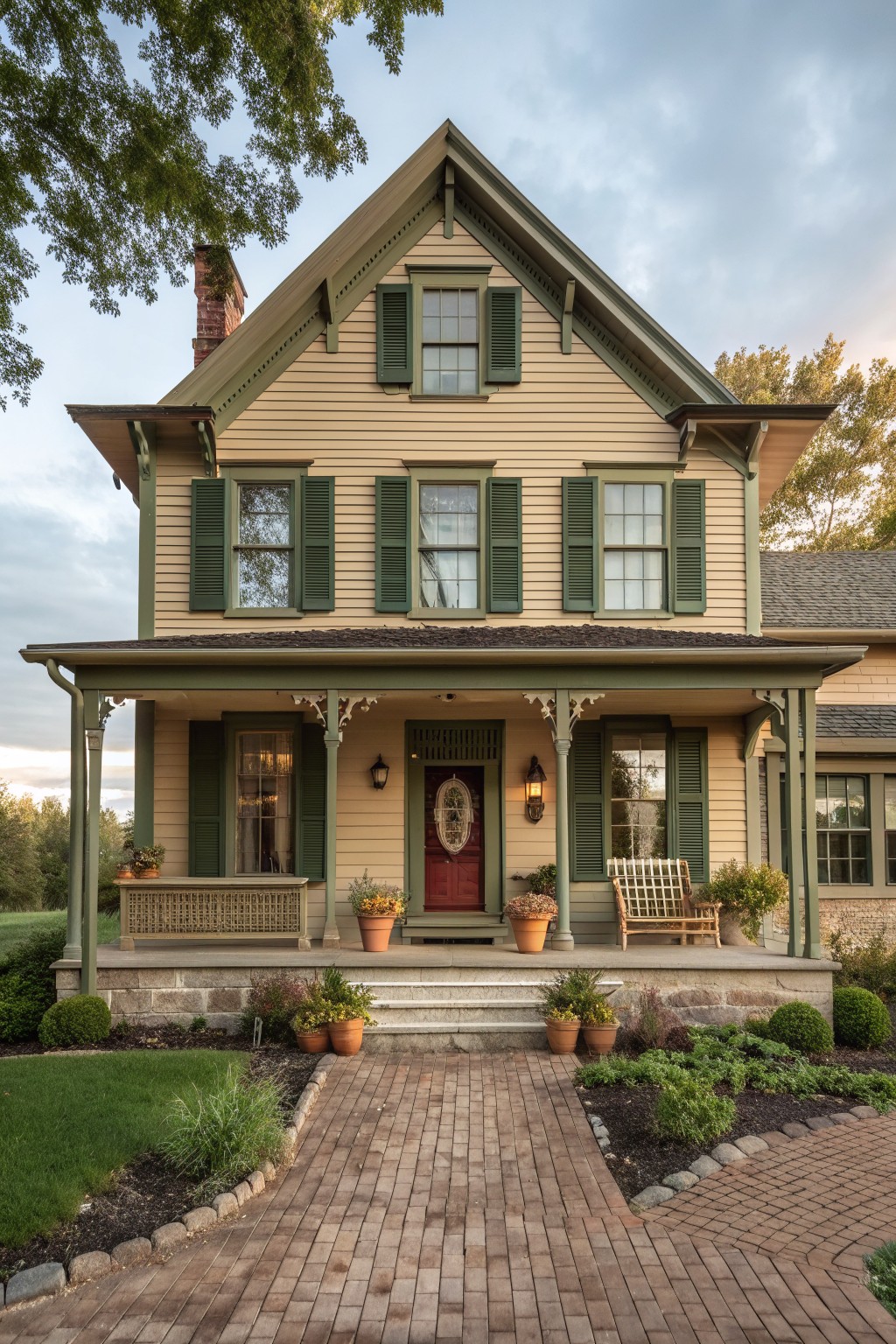
A soft yellow siding color paired with deep green trim gives a Victorian farmhouse that light, open look without losing any of its character. The trim pulls out the window shapes and porch details so the house feels balanced instead of flat.
This palette works best on homes with similar rooflines and porches where you want the architecture to read clearly. Keep the main color muted, use the green on shutters and trim only, and add one stronger accent like a red door if the entry needs more weight.
Dark Paint Colors on Victorian Farmhouse Exteriors
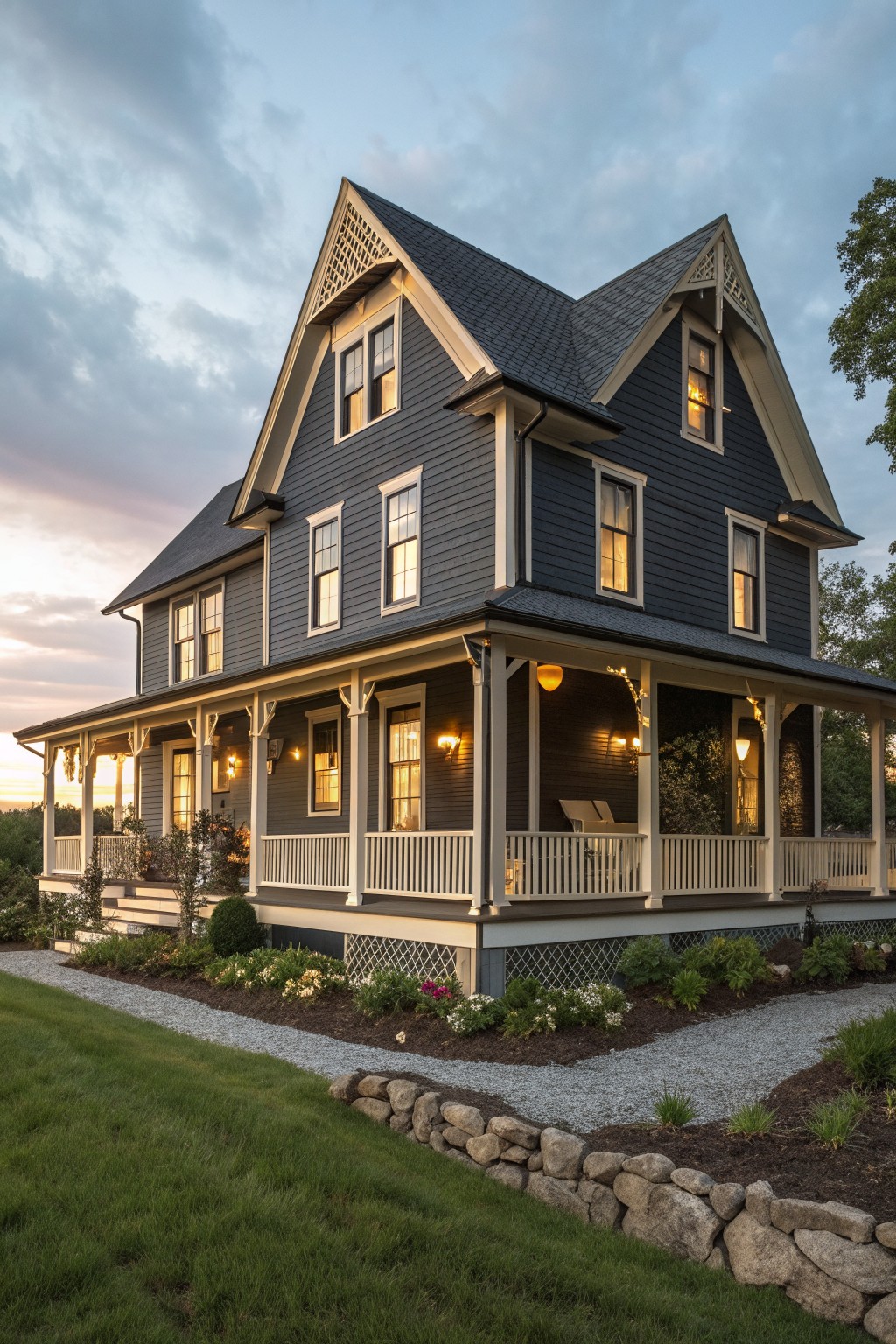
Many older farmhouses gain a stronger presence when the main siding gets a deep historic color instead of a lighter shade. The contrast with white trim helps the rooflines and window details stand out more clearly.
This works best on homes that already have plenty of architectural trim and a front porch. Test the color on a large board first, since deep tones shift noticeably from morning light to evening.
Yellow Siding With Green Trim
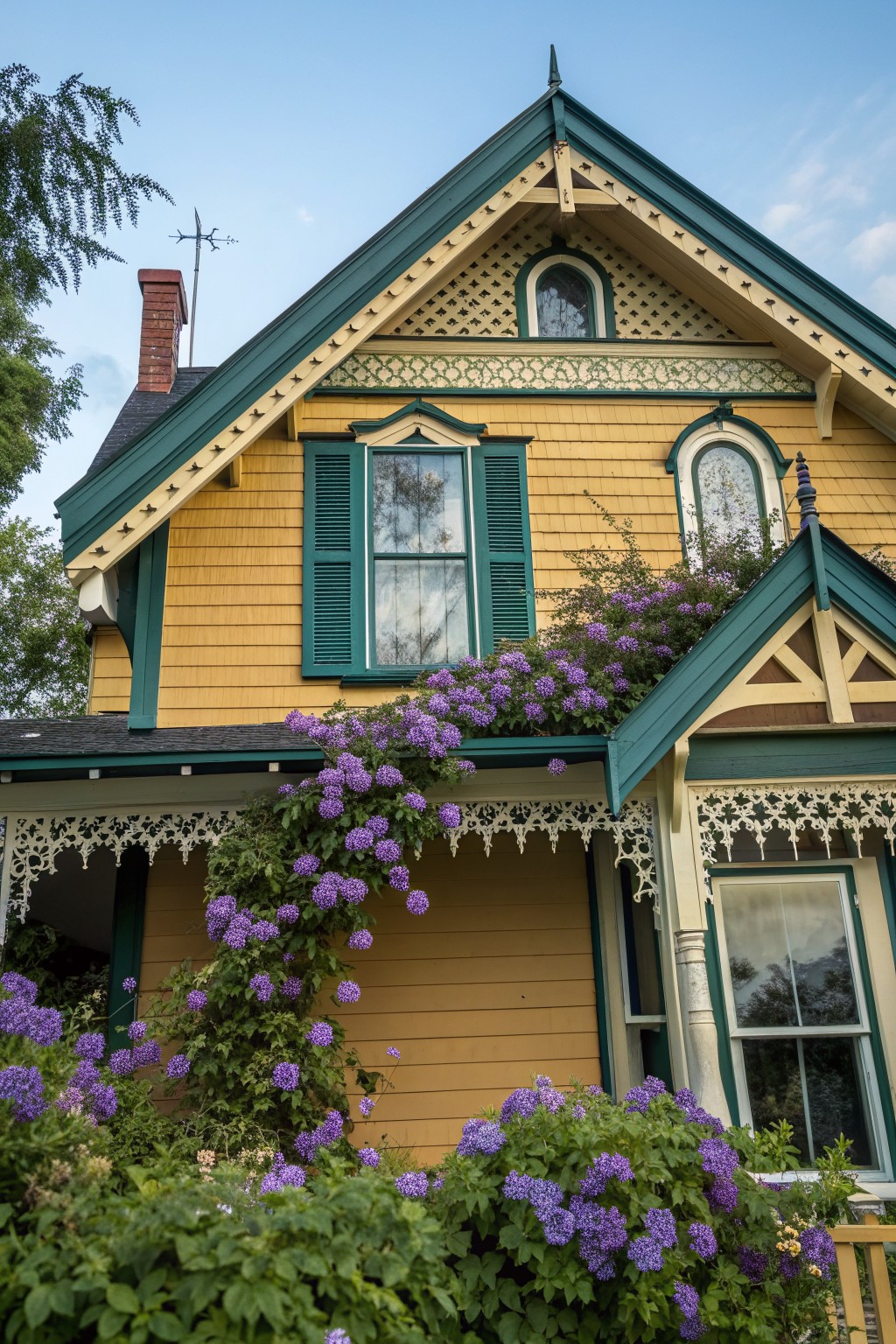
Yellow siding paired with green trim gives a Victorian farmhouse a bright but settled look. The contrast highlights the rooflines and window details without needing extra color elsewhere.
This works best on homes with similar trim work and a bit of landscaping around the base. Stick to a warm yellow and a deeper green to keep the colors feeling historic rather than modern.
Soft Blue Siding for Victorian Farmhouse Exteriors
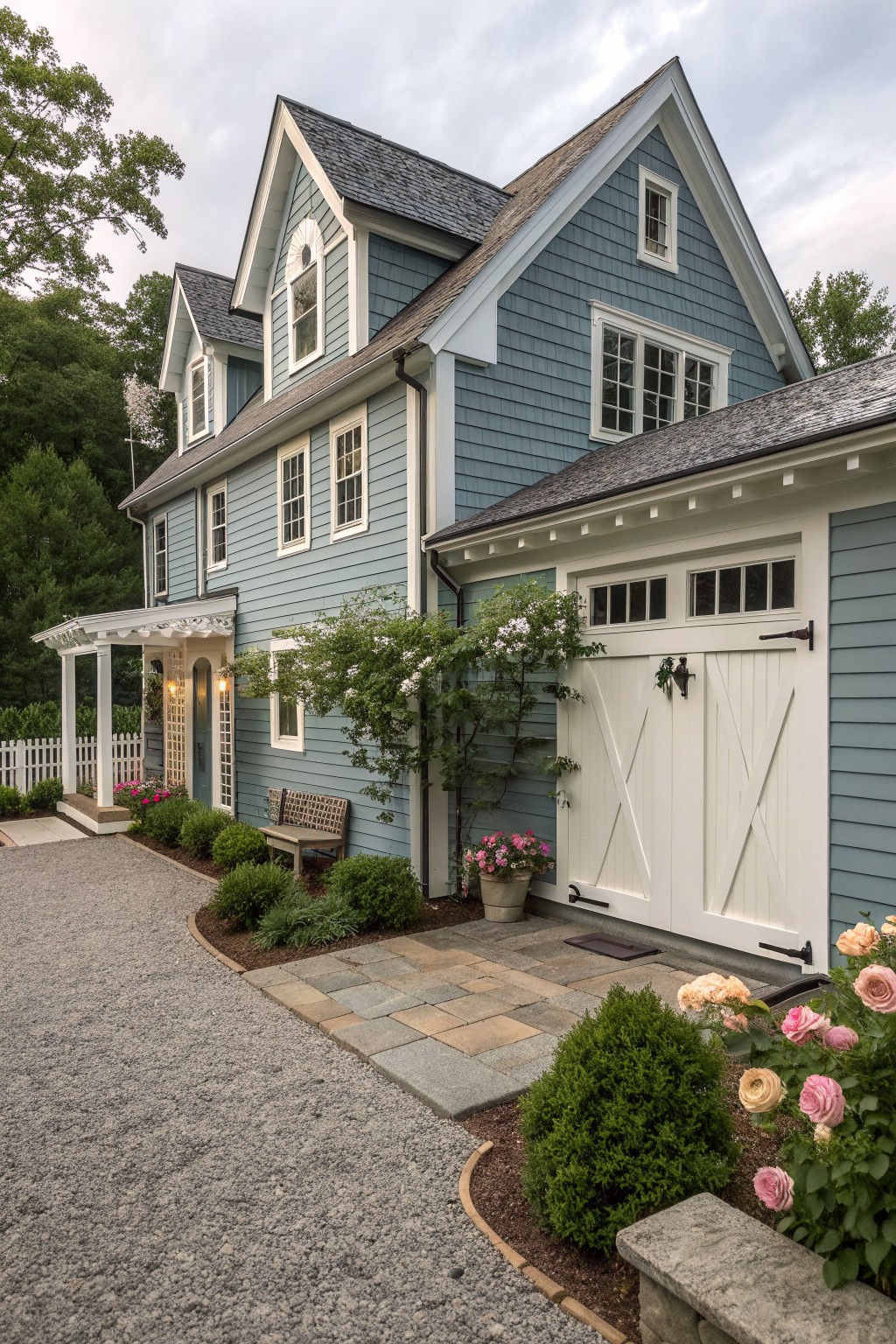
A muted blue like this one gives a farmhouse exterior a calm, historic feel without looking too bold or trendy. It works especially well on homes with varied rooflines and multiple windows because the color stays quiet enough to let the architecture stand out.
Try this shade on houses that already have white trim and simple detailing. It pairs best with older styles when the blue has a touch of gray so it does not read too bright in full sun.
Light Blue Siding With Green Trim
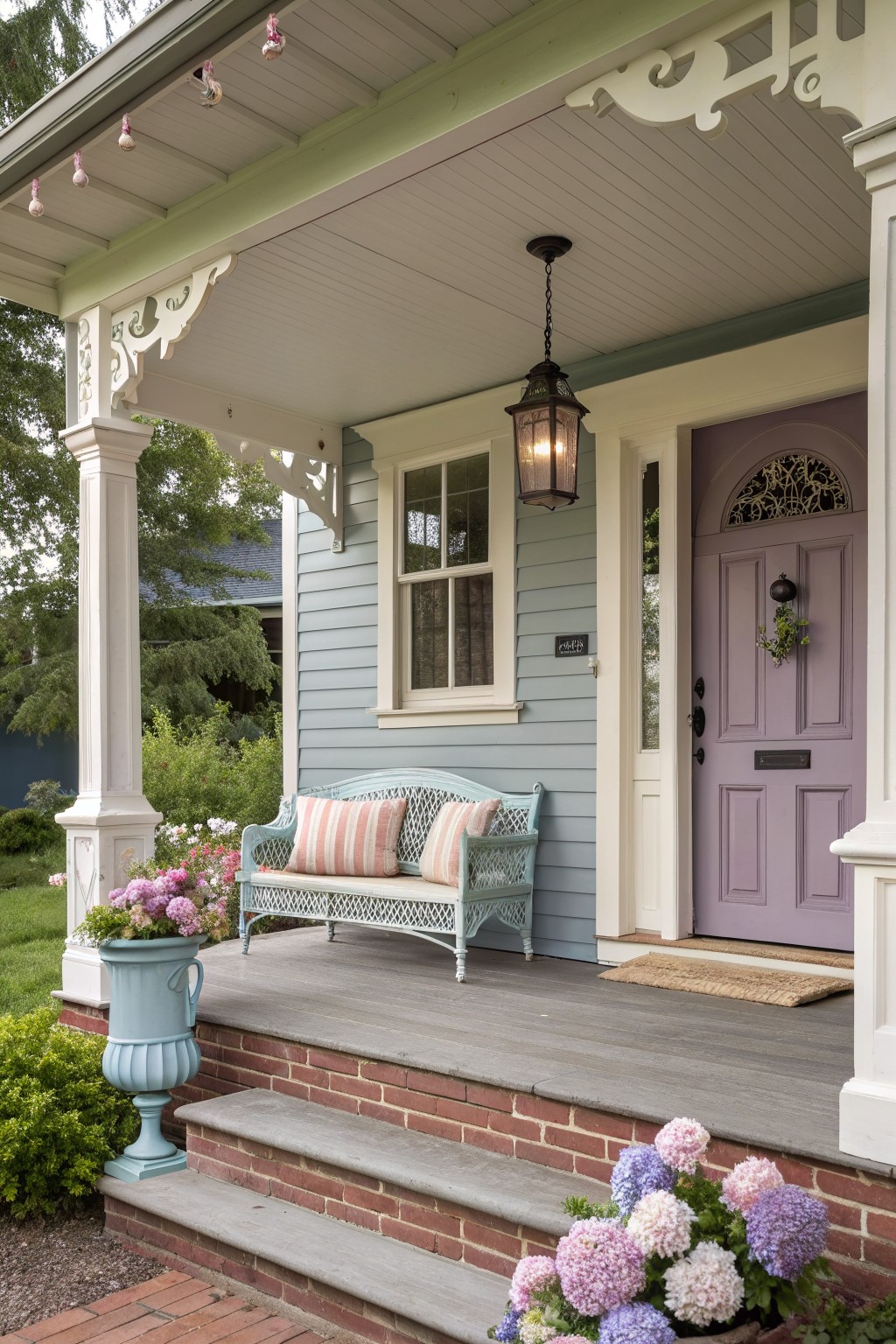
Light blue siding with green trim creates a calm, historic look that still feels fresh on older homes. The soft tones keep the house from looking too stark while the trim color adds just enough definition to the roofline and porch details.
This combination suits Victorian farmhouses that need a gentle update without losing their character. Keep the main body in a pale shade and use the trim color to highlight brackets and eaves so the overall effect stays balanced rather than busy.
Red Paint on Victorian Farmhouse Exteriors
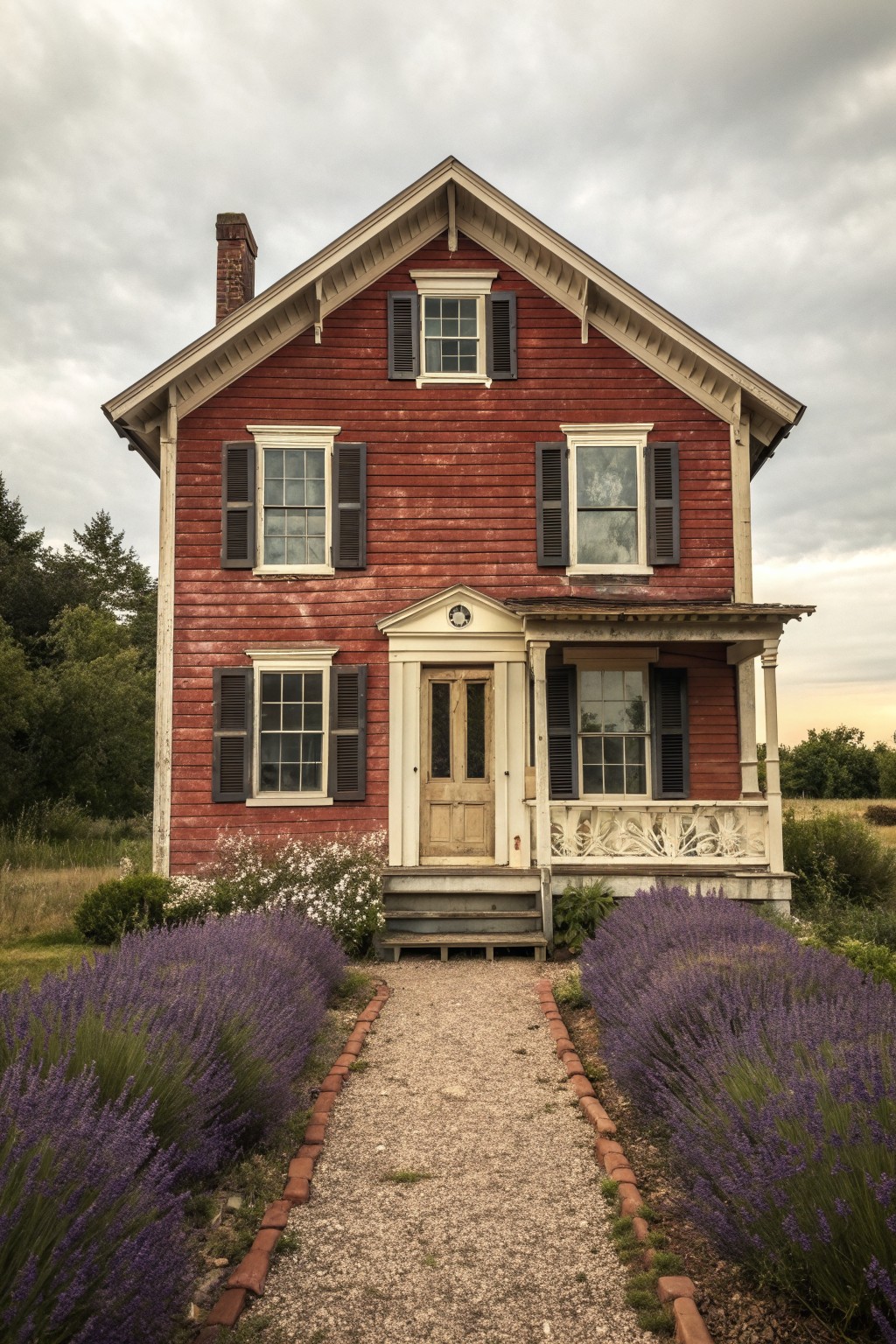
A deep red paint on the siding gives a Victorian farmhouse real presence without needing extra trim details or fancy accents. It holds up well against changing light and pairs naturally with the simple lines and gabled roof common on these older homes. The white window frames and door in the photo show how the color stays grounded even when the rest of the exterior stays fairly plain.
This approach works best on wood-sided homes that already have some age or character. Keep the trim in a clean white or cream and use a darker shade on the shutters so the red does not feel too bright. It suits rural settings or properties with open yards where the house needs to stand out from a distance.
Soft Yellow Siding For Farmhouse Exteriors
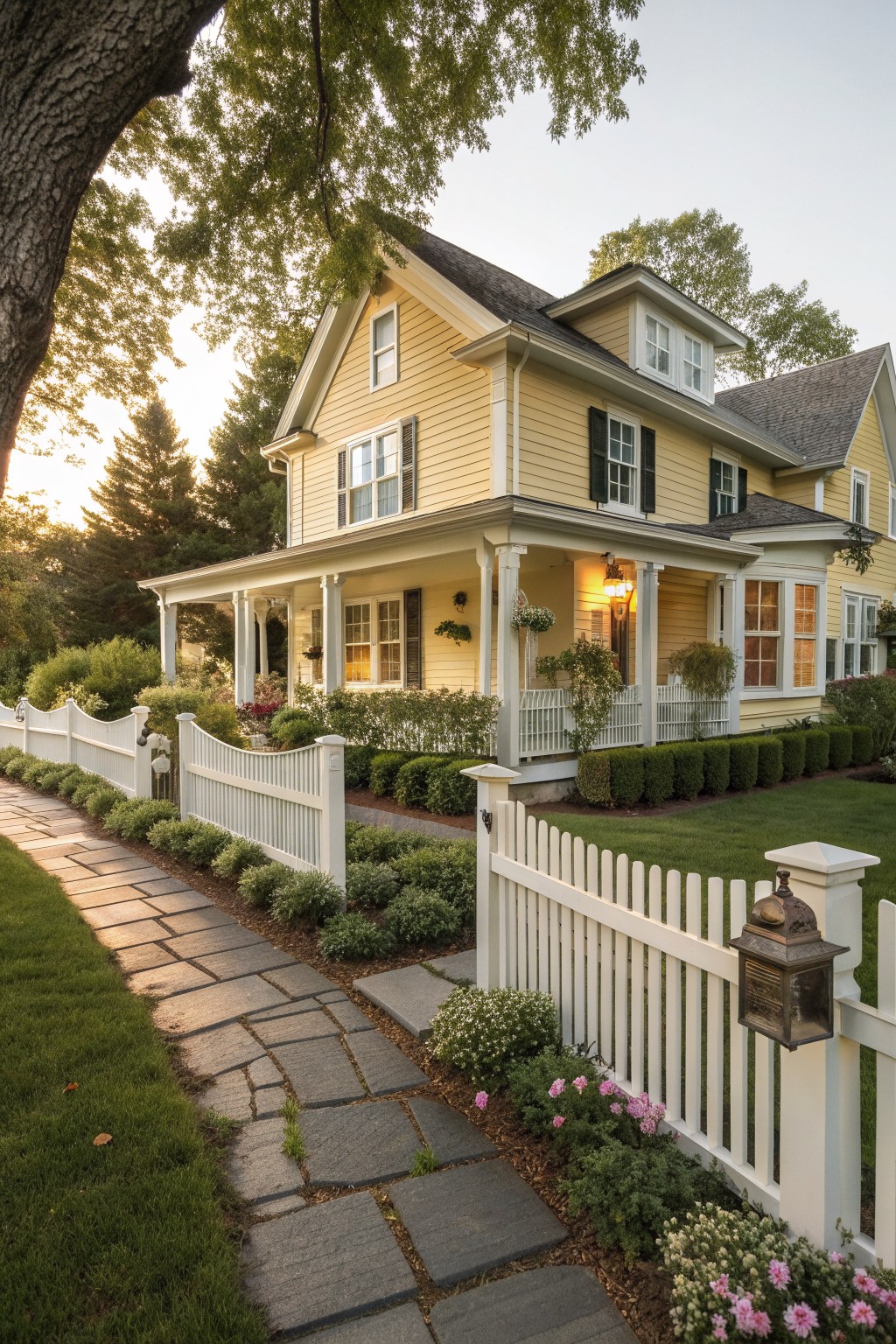
A soft yellow like this one gives a Victorian farmhouse a welcoming feel without looking too bold. It works especially well on homes with simple trim and a mix of gables, because the color keeps the whole exterior light and balanced.
This shade suits older homes in suburban or rural settings where you want some historic charm but still need something that reads fresh. Pair it with white trim and a white fence to let the yellow stand out without competing with other colors.
Soft Blue Gray Siding For Victorian Farmhouses
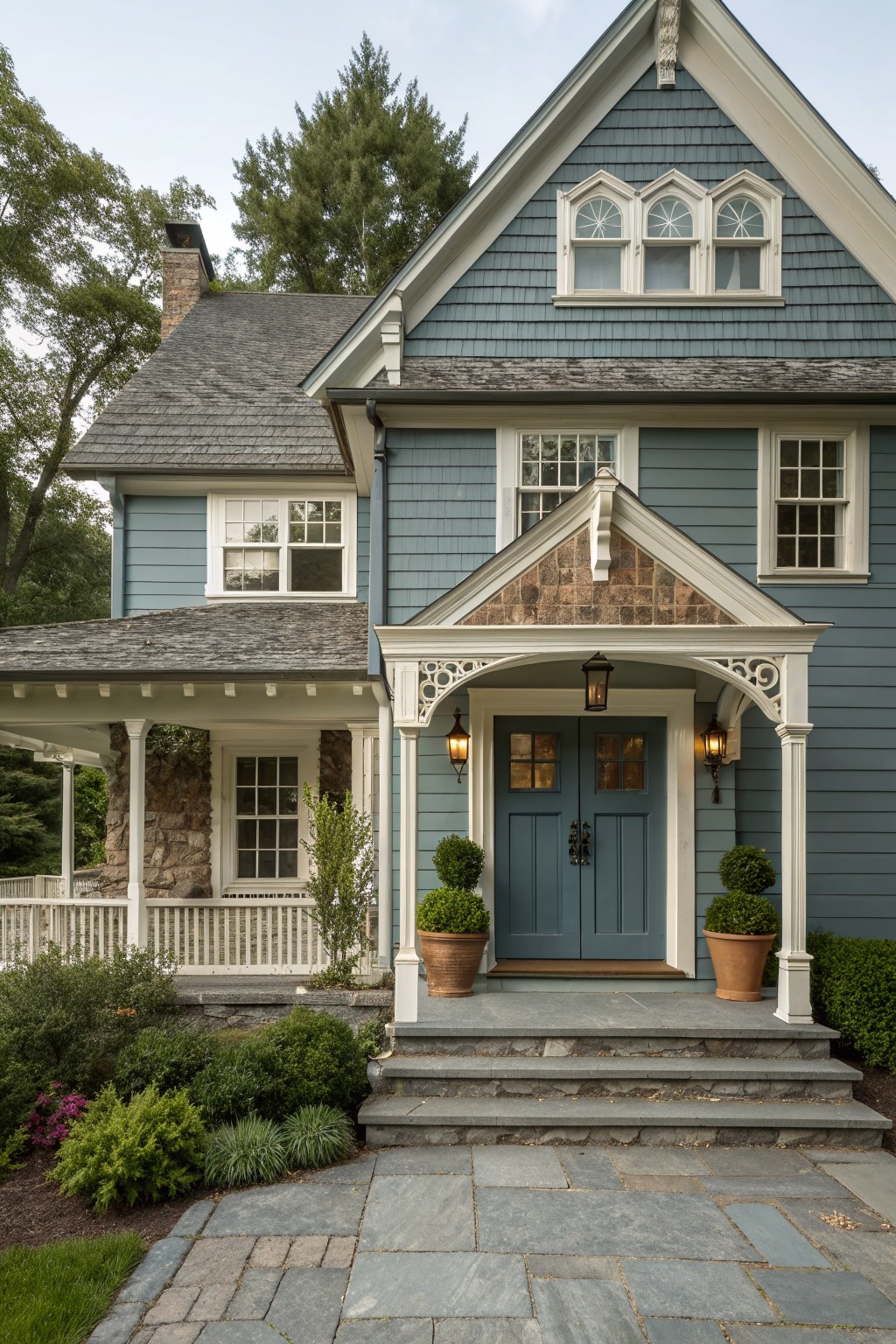
A soft blue gray gives Victorian farmhouses a calm, updated look that still feels rooted in older palettes. The color sits between gray and blue, so it avoids looking too bold or too washed out on larger siding areas.
It works best when paired with crisp white trim and a few stone details around the entry. This approach suits homes with gabled roofs and porches, especially in areas with trees or softer natural light. Keep the door a similar or slightly deeper tone so the whole house stays cohesive.
Muted Green Paint For Historic Farmhouse Facades
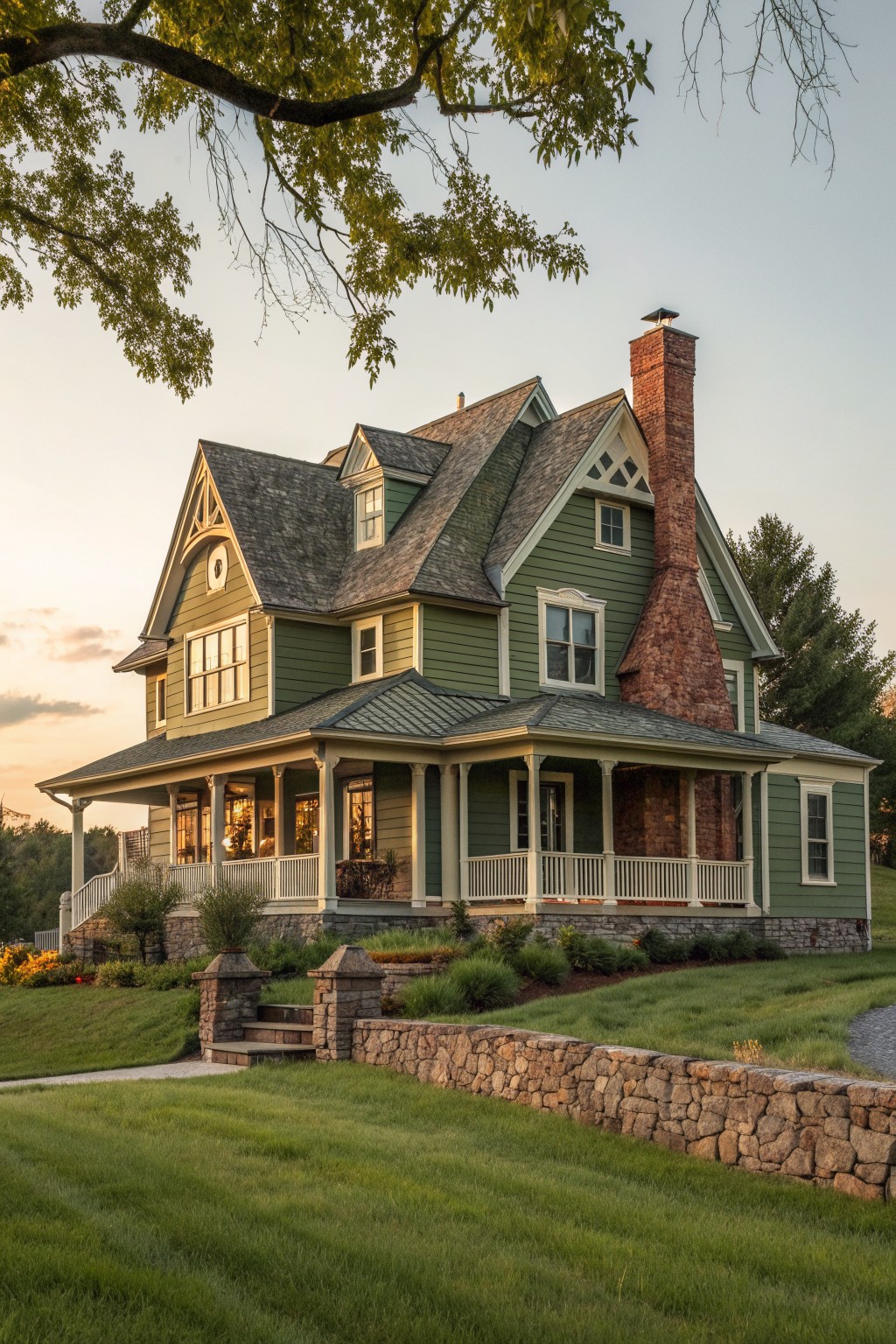
A soft green shade works well on Victorian farmhouses because it keeps the look traditional while letting the house blend into its surroundings. The color feels fresh without standing out too sharply against older details like stone bases or brick chimneys.
This approach suits homes with similar rooflines and trim work. Use a light color on the trim and accents so the green does not overwhelm the facade, and test the shade in different lights before committing.
Soft Green Siding for Victorian Farmhouses
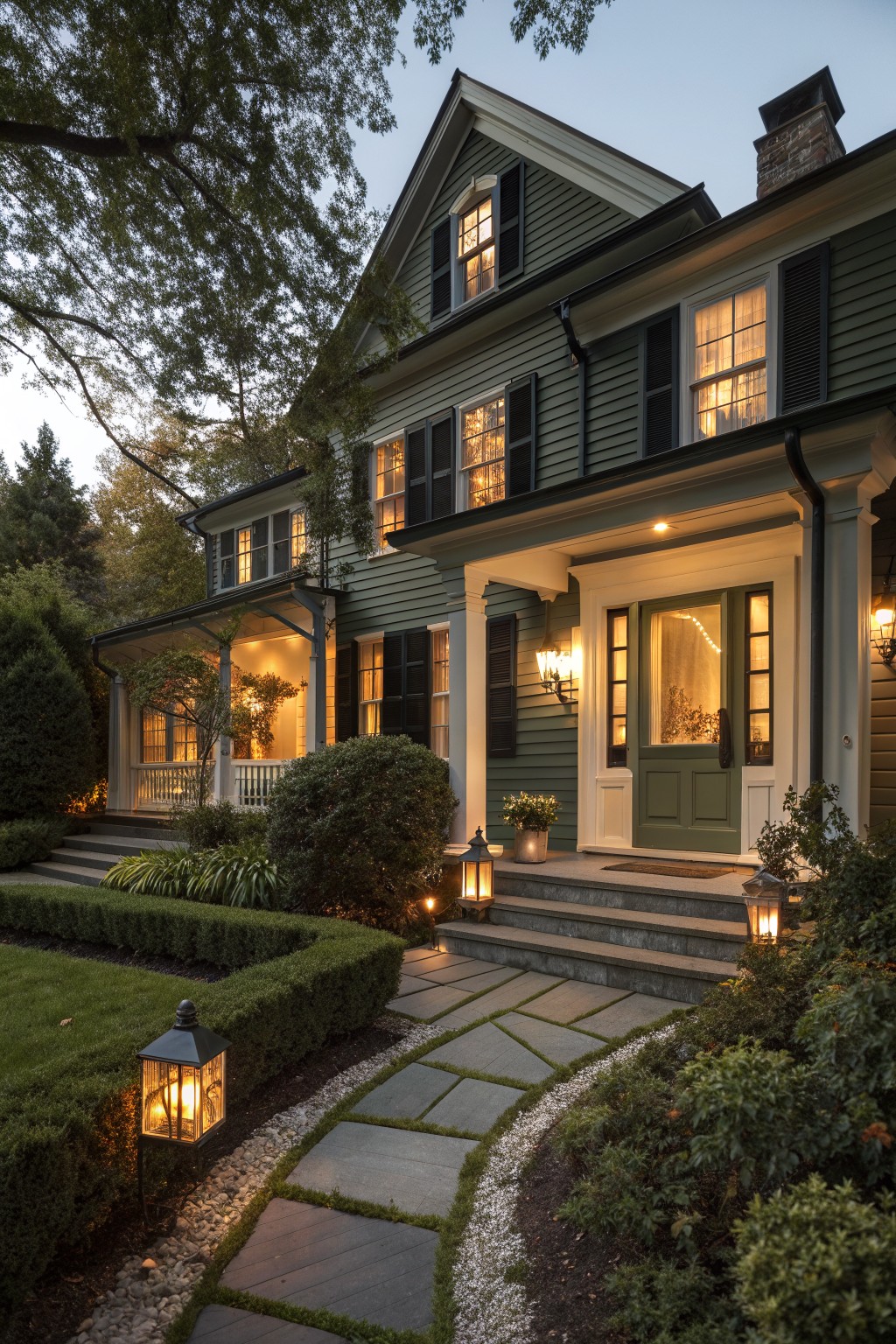
A soft green paint on the main siding gives a Victorian farmhouse a calm, settled look without feeling too bold. It works especially well on older homes because the color sits nicely with white trim and darker shutters, keeping the whole facade balanced and easy to live with.
This approach suits homes that already have simple lines and some architectural detail. Stick to historic-inspired greens in the sage or gray-green range, and test them on a large board first since the light changes how they read throughout the day.
Light Base Color With Bold Trim On A Farmhouse
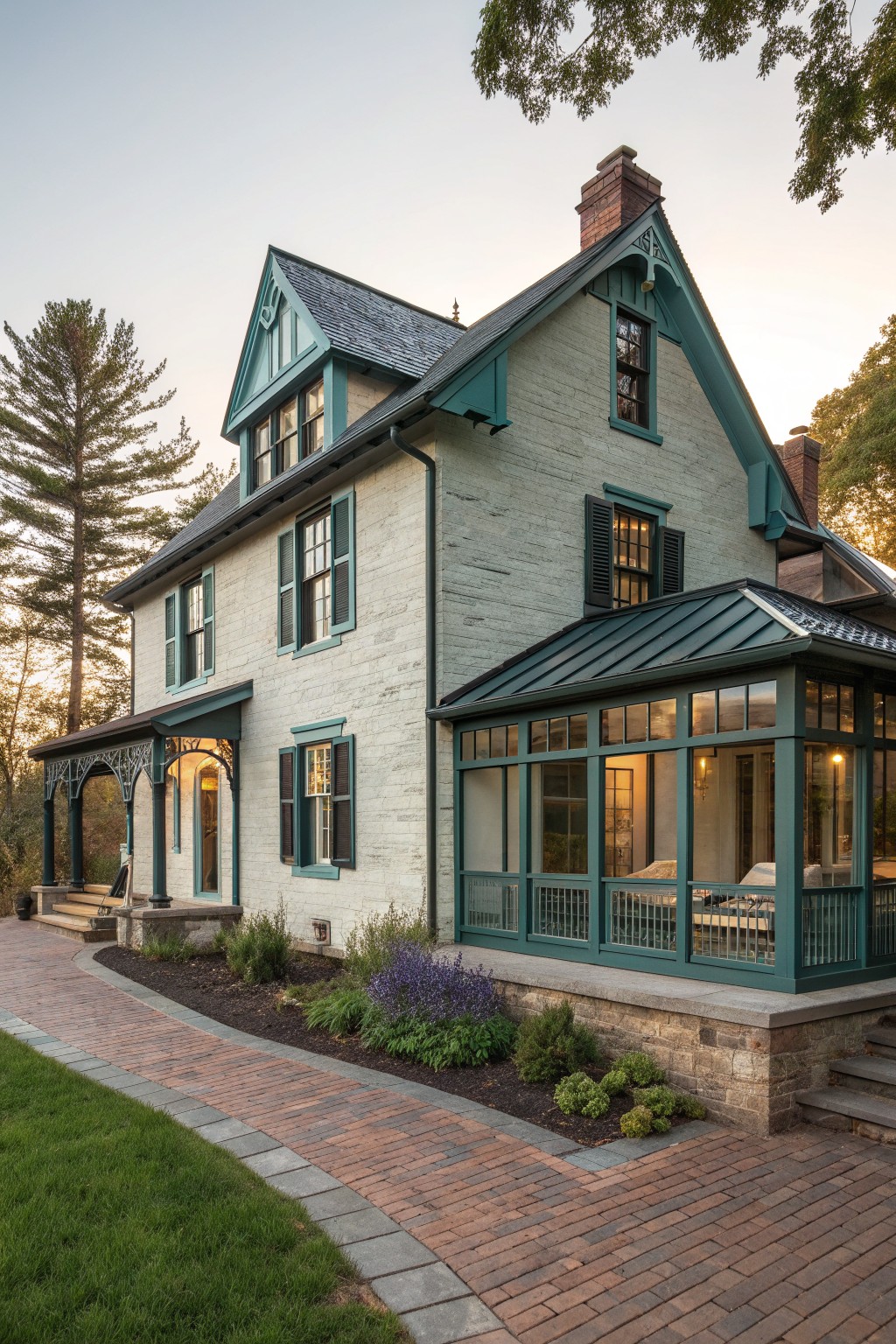
A pale base paired with a stronger accent trim helps older homes show off their details without looking busy. The white siding keeps the overall feel light and open while the teal brings focus to the rooflines, window frames, and porch edges.
This color move works best on Victorian or farmhouse exteriors that already have plenty of trim and gables. Use one clear accent shade across the main architectural lines and keep everything else simple so the contrast stays clean.
A Yellow Front Door
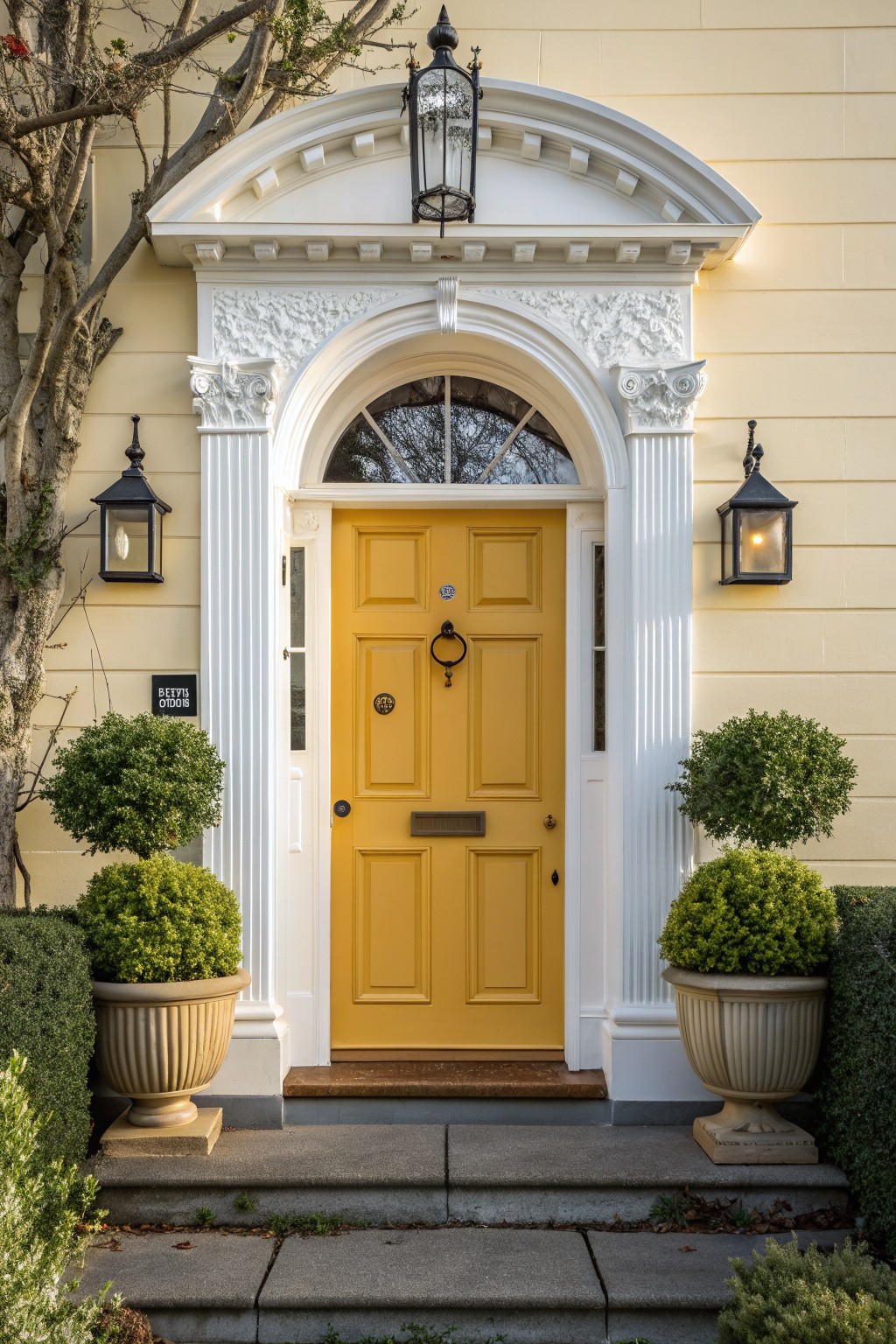
A bright yellow door gives the entry a clear focal point without much else needed. It stands out against the pale siding and white trim while still feeling at home with the older details.
This color works best on houses that already have some trim or archwork around the door. Keep the hardware simple and let the paint carry the contrast.
Blue Shutters With Natural Wood Shingles
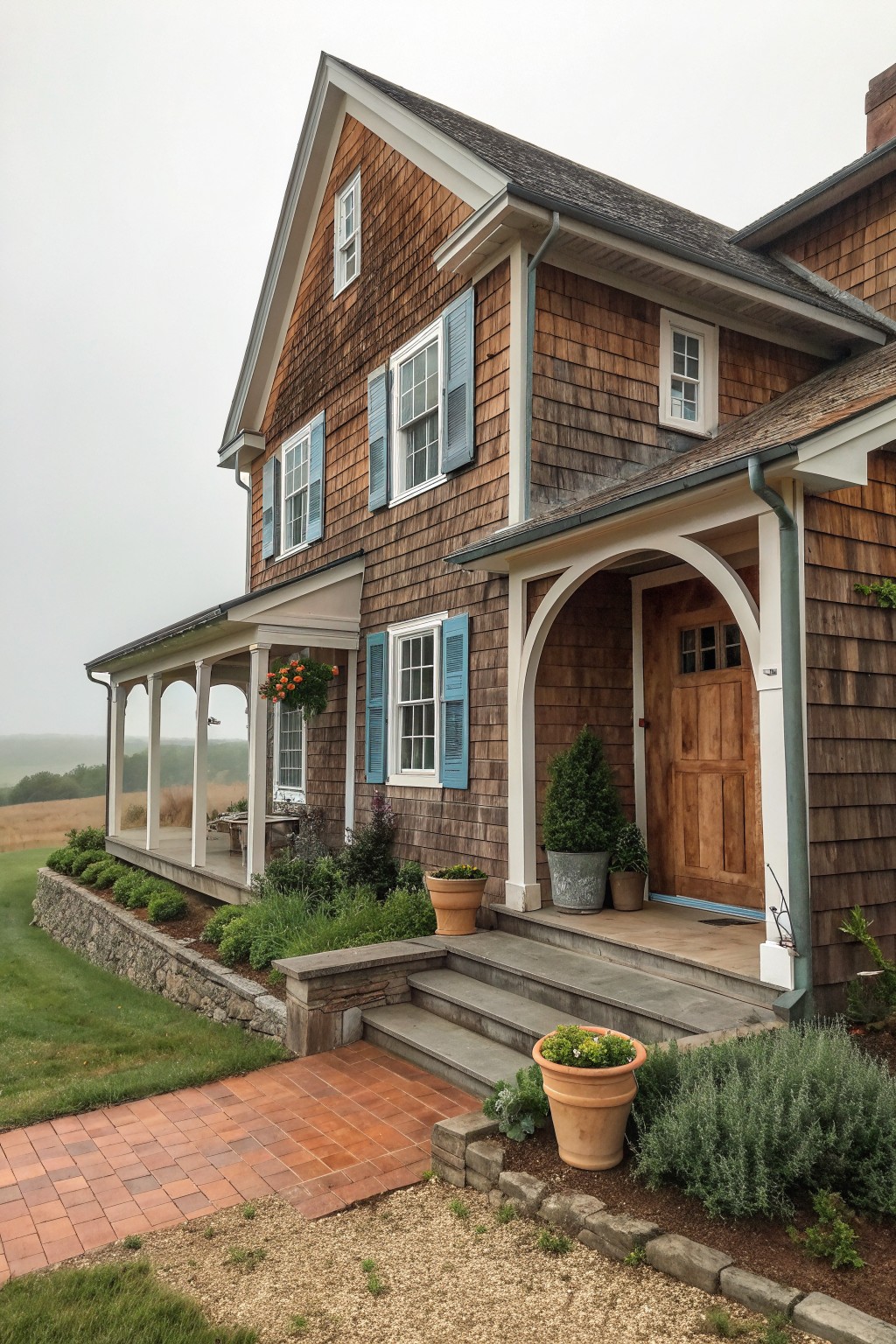
Blue shutters bring a clean contrast to natural wood shingles without overpowering the siding. The color choice feels rooted in older farmhouses while still reading as fresh today, especially when the shingles are allowed to weather rather than painted over.
This approach works best on homes where the siding already has texture and depth. Keep the trim and porch details in white or off-white so the blue reads as an accent instead of competing with other colors.
Soft Green Siding For Victorian Farmhouses
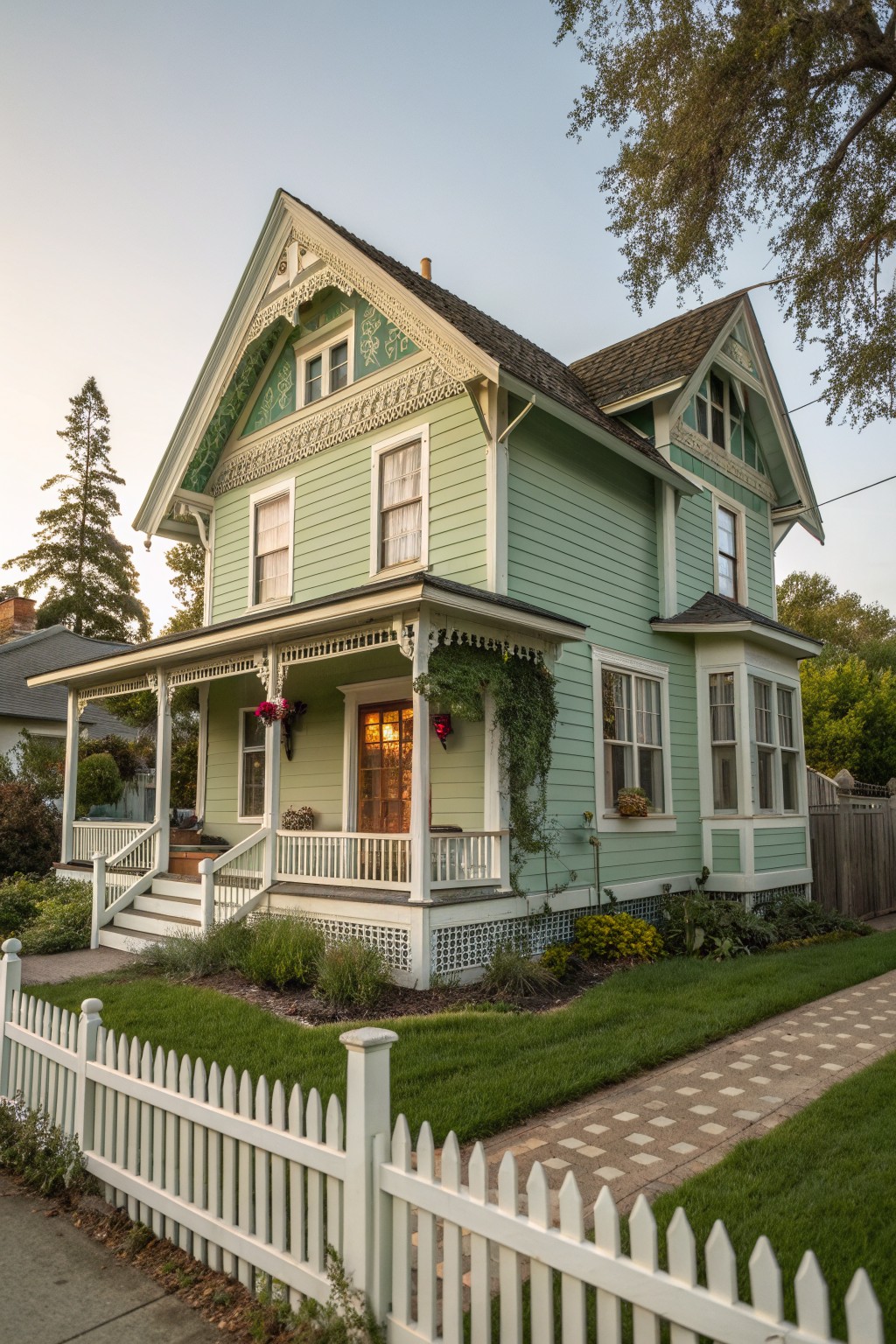
A soft green shade like this one gives a Victorian farmhouse a lighter feel without losing its historic character. The color sits back just enough to let the trim and roof details stand out, and it avoids the heavy look that darker greens can bring to older homes.
This approach works best on houses with strong porch lines and decorative gables. Keep the trim white or off-white and use the green only on the main siding. It suits neighborhoods where other homes already lean toward muted tones and helps the house blend in while still looking intentional.
Frequently Asked Questions
Q: Can these colors work in a newer house without looking out of place? A: They fit right in because the shades come from classic mixes rather than strict period rules. Try a soft sage on the walls and keep your trim simple to bridge old and new styles.
Q: How do I test a color before painting a whole room? A: Buy small samples and brush them onto large boards. Move the boards around at different times of day to watch how the light shifts the tone.
Q: Which color hides everyday wear in a farmhouse kitchen? A: Lean toward the mid-tone grays or taupes from the list. They mask smudges and scuffs better than crisp whites while still feeling fresh.
