

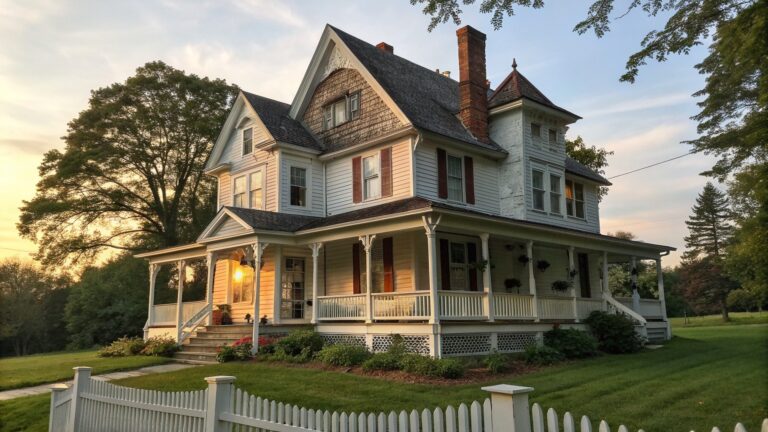
Walking down a quiet road lined with older homes, I often catch myself slowing down to take in how the original porch and trim on a Victorian farmhouse still shape its presence from the street.
The choice of paint colors, the way the roofline sits, and the condition of the entry all add up to that first impression that either draws you in or leaves the house feeling overlooked.
Details like these are easy to overlook until they are gone.
Over time I have come to see that preserving the original curb appeal usually comes down to keeping the proportions and materials that were there from the start rather than trying to modernize everything at once.
When I think about my own home, I keep coming back to which of those exterior choices would actually hold up once I started living with them every day.
Wrap-Around Porches On Victorian Farmhouses
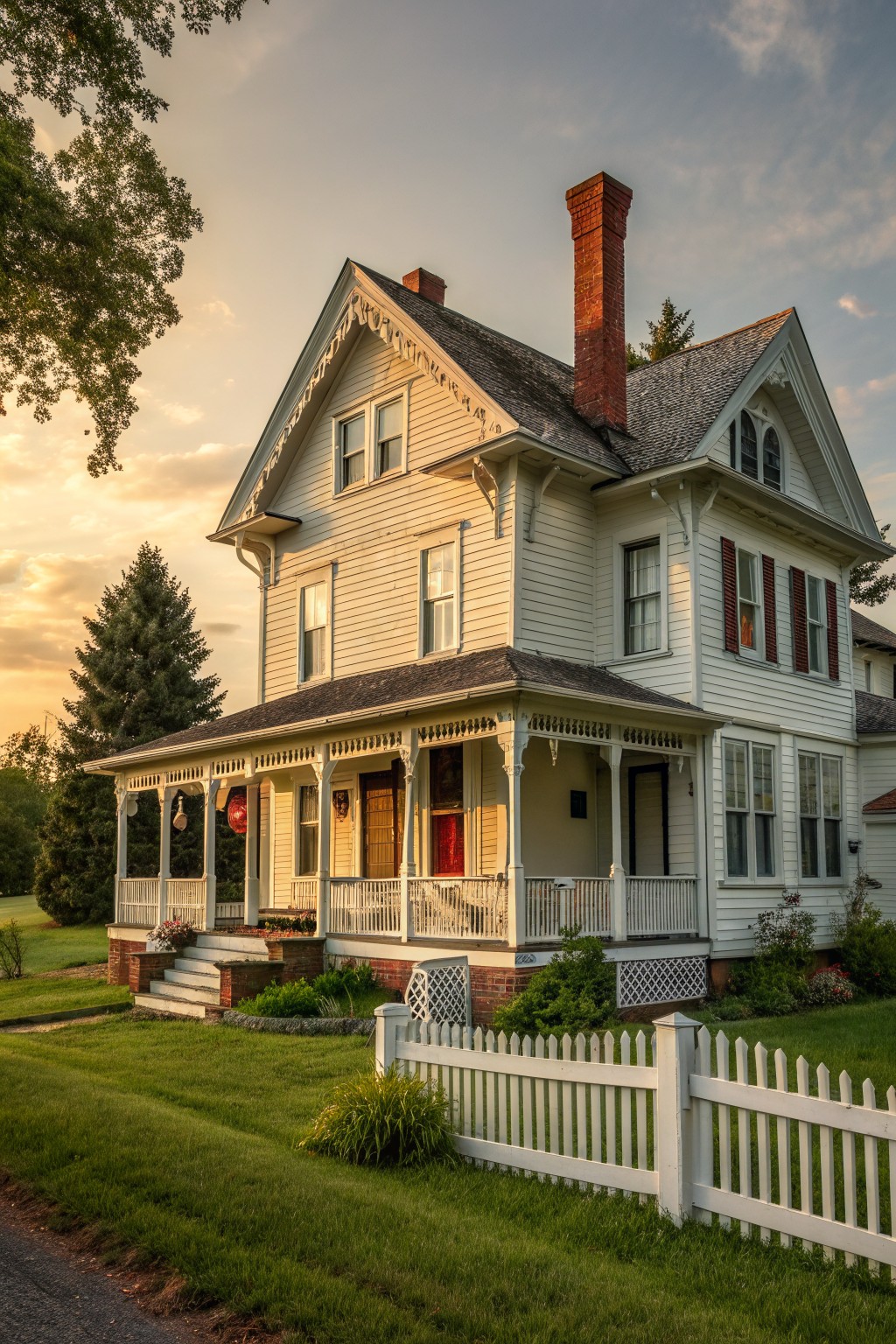
A wrap-around porch gives a Victorian farmhouse extra depth and makes the front feel more open. It follows the shape of the house instead of sitting flat against one wall, which helps the whole place look balanced and lived in.
This approach works well on homes that already have a wide front and side exposure. Keep the posts and railings simple so they match the original trim rather than compete with it.
Wrap-Around Porches That Hold Up Well
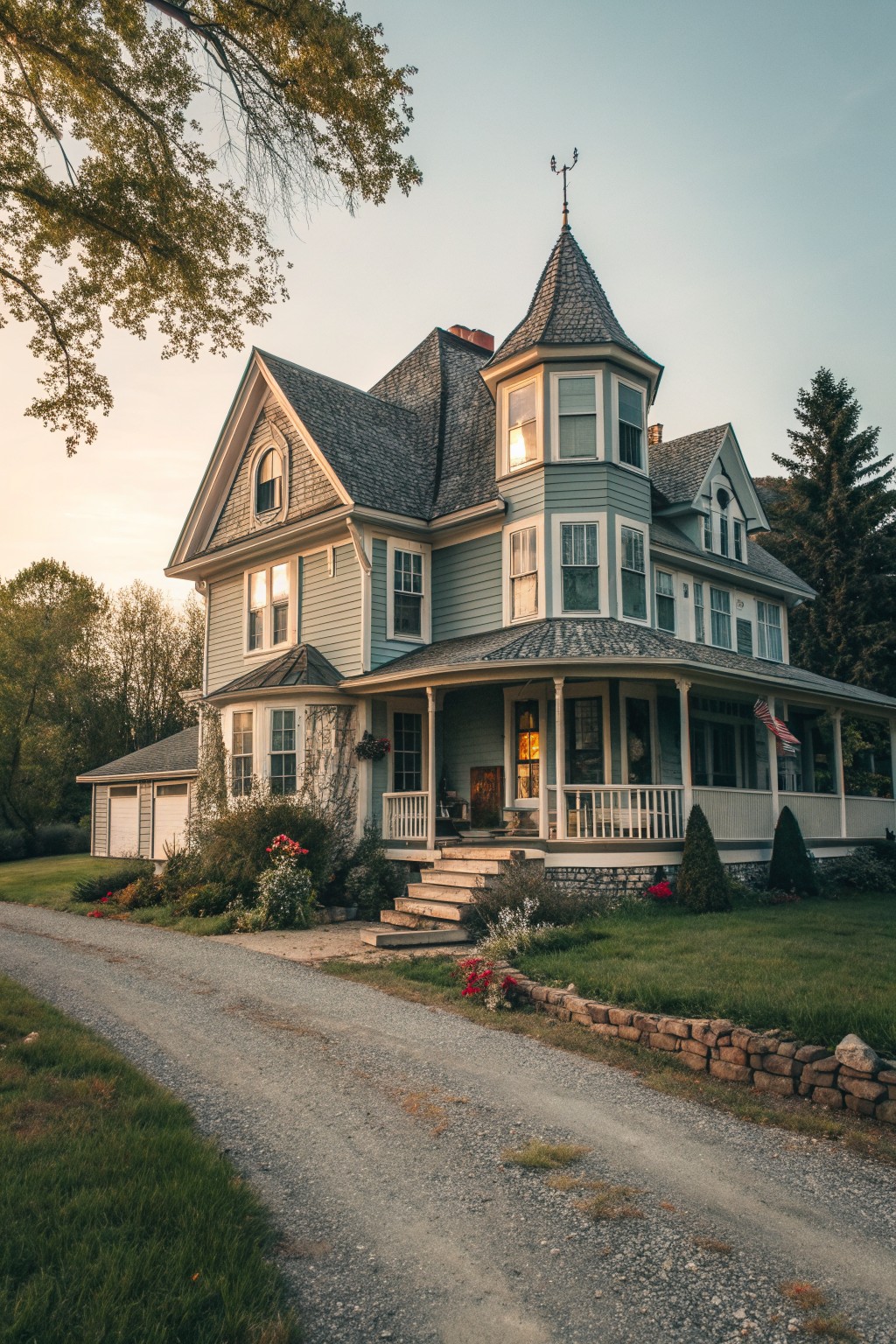
A wrap-around porch gives a Victorian farmhouse the kind of presence that still reads as original even after many years. It stretches across the front and turns the corner, which softens the tall lines of the house and makes the entry feel more open without adding anything new.
This works best on homes that already have some roof detail and a bit of land in front. Keep the railing simple and match the post style to what was there before, because anything too modern will stand out against the rest of the siding and trim.
Building Curb Appeal with a Detailed Entry Porch
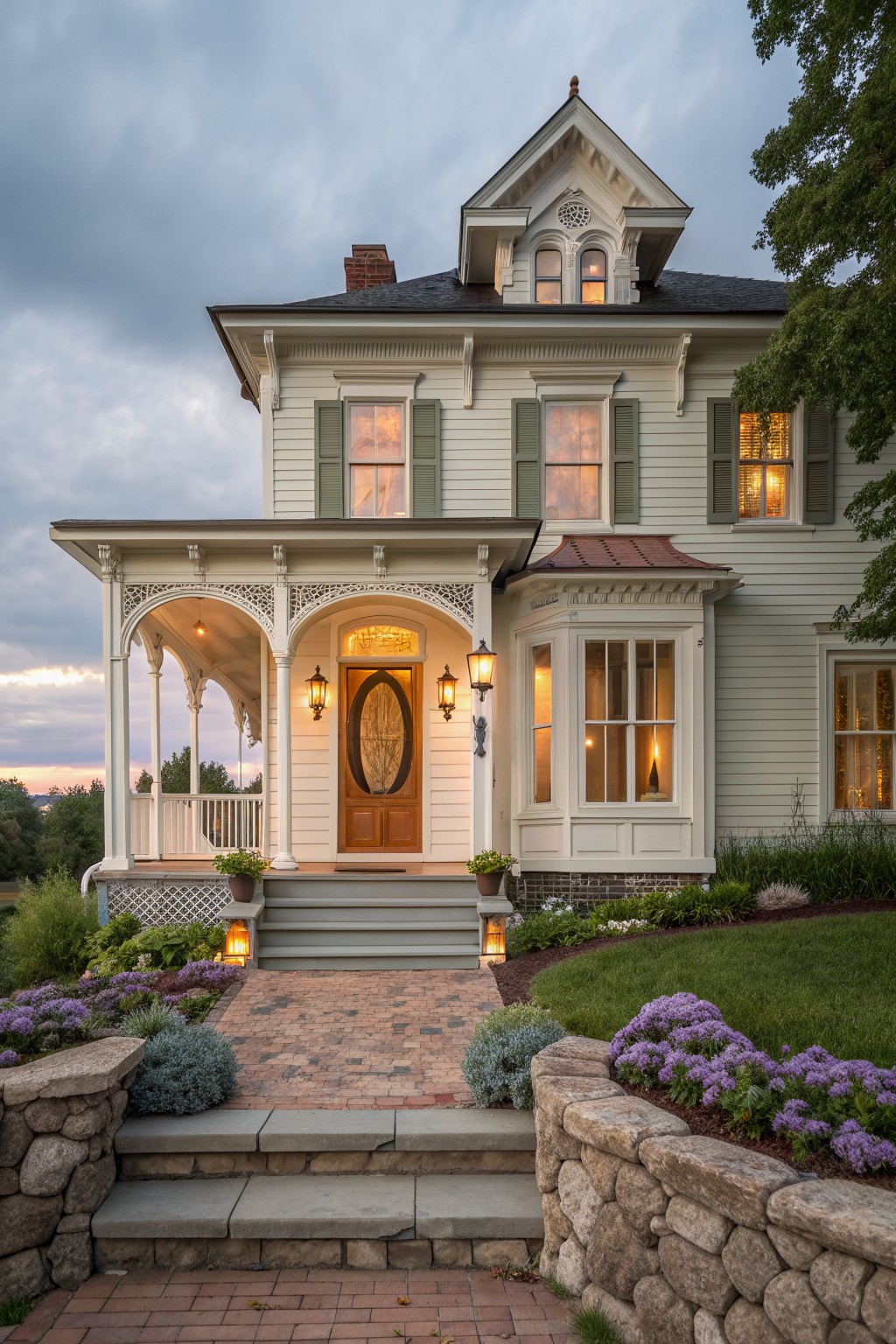
A front porch with arched openings and crisp trim can pull the whole facade together. It gives the house a clear focal point and keeps the Victorian character front and center without any extra fuss.
This works well on older homes that still have their original porch structure. Keep the arches and trim simple, add a pair of lights beside the door, and let the entry do the rest of the work.
Wrap-Around Porches That Keep Victorian Homes Welcoming
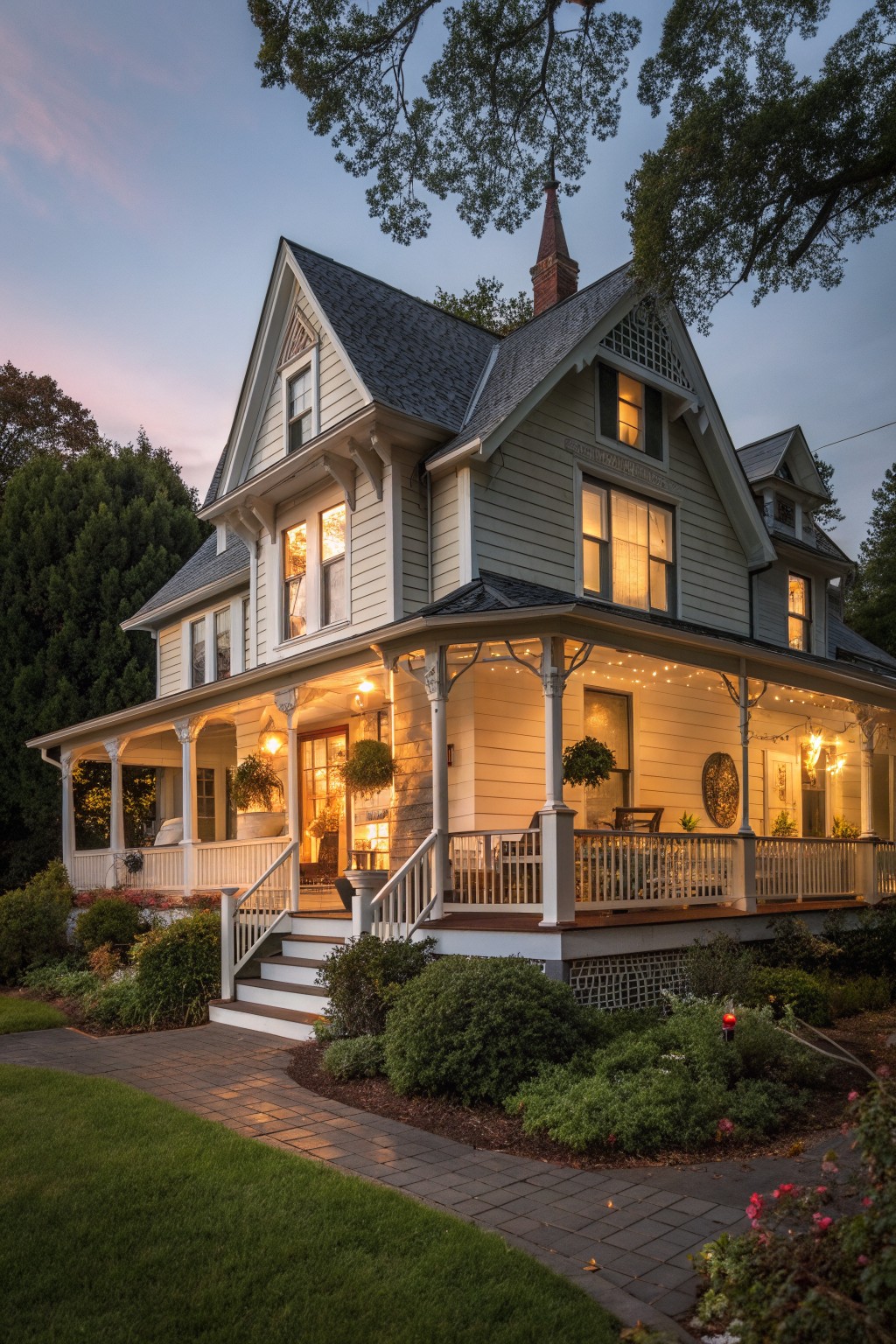
A wrap-around porch gives a Victorian farmhouse a settled look that works from the street. It stretches across the front and side, softening the tall shape of the house and making the entrance feel more open without changing the original lines.
This approach suits older homes where the porch was part of the first design. Match the posts and railings to the rest of the trim, and add simple lighting along the edge so the space stays useful after dark.
Central Entries on Victorian Farmhouses
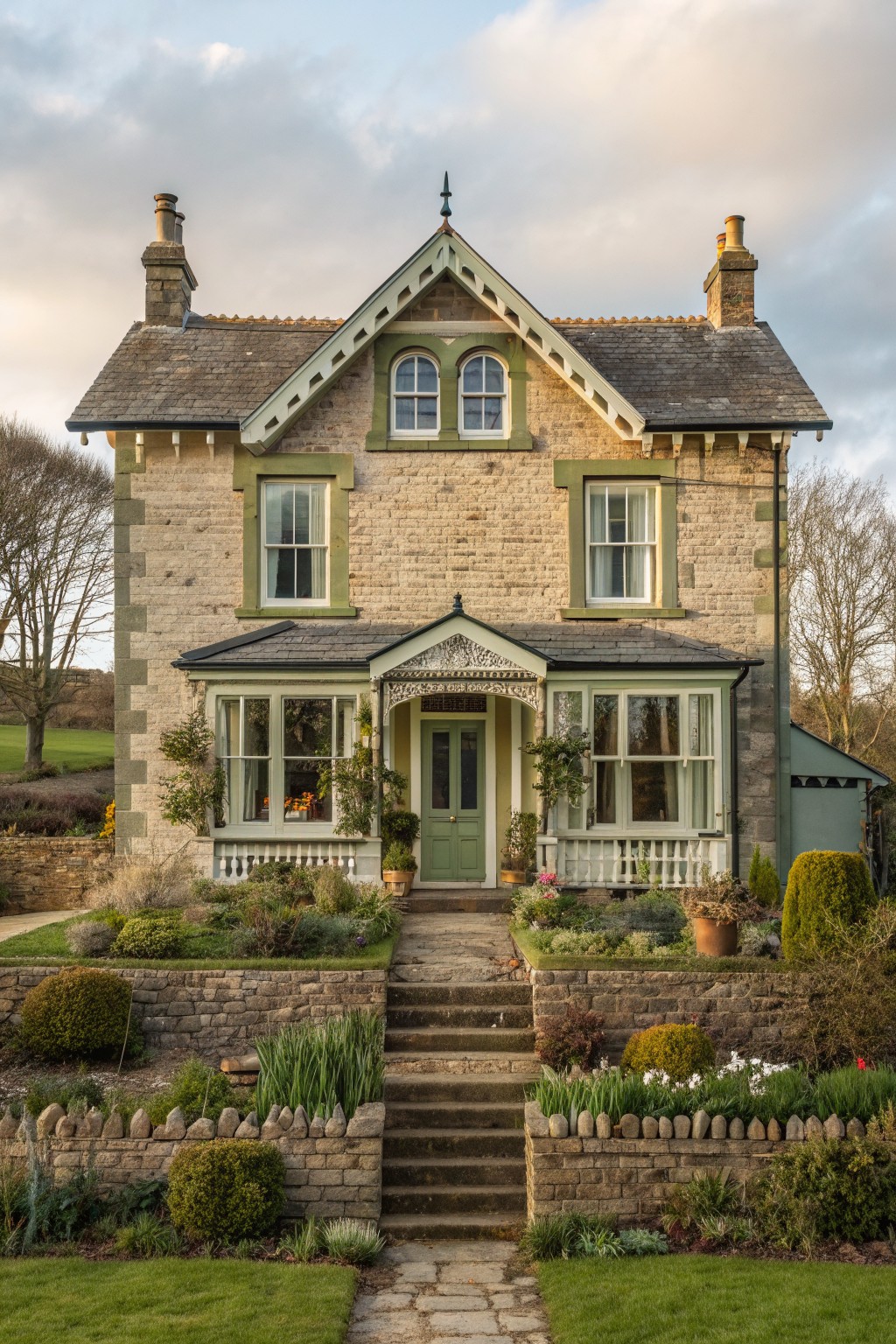
A clear central entry helps a Victorian farmhouse feel grounded and easy to read from the street. The small gabled porch with its carved trim and green door gives the stone facade a natural focal point without overpowering the rest of the house.
This works best on homes that already have balanced windows and a straightforward roofline. Keep the trim color simple and let the door stand out so the entry stays welcoming rather than busy.
Wraparound Porches That Frame the Home
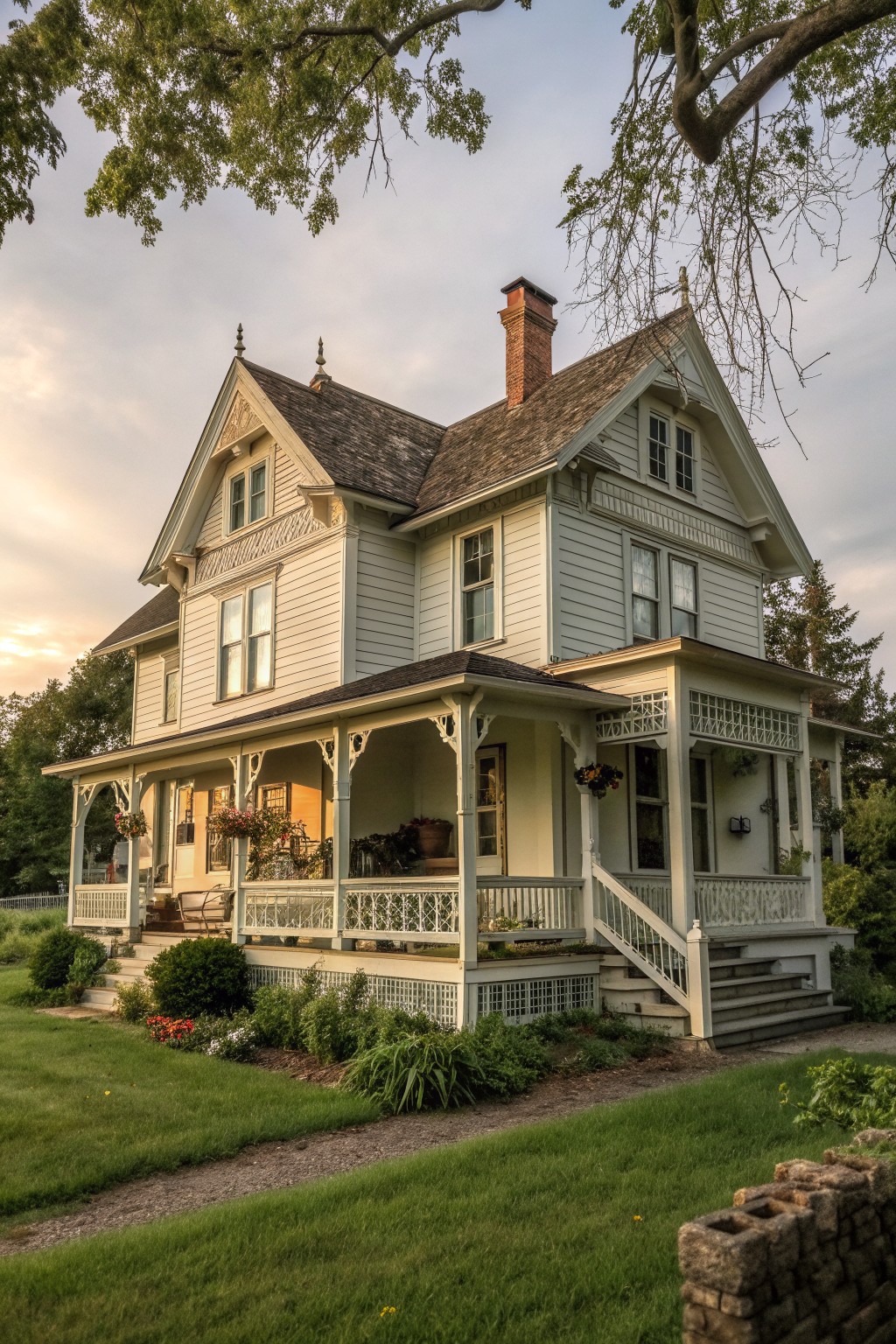
A wraparound porch gives a Victorian farmhouse extra depth without changing the basic shape of the house. The railing and post details break up the long wall and make the front feel more open and lived in. This simple addition keeps the original character while giving the house a stronger presence from the street.
It works best on homes that already have a wide front and side elevation. Keep the railing height and spacing close to what was typical for the period so the new work still reads as part of the old structure. Avoid filling the porch with too much furniture if you want the architectural lines to stay clear.
Front Porches That Keep The Entry Simple
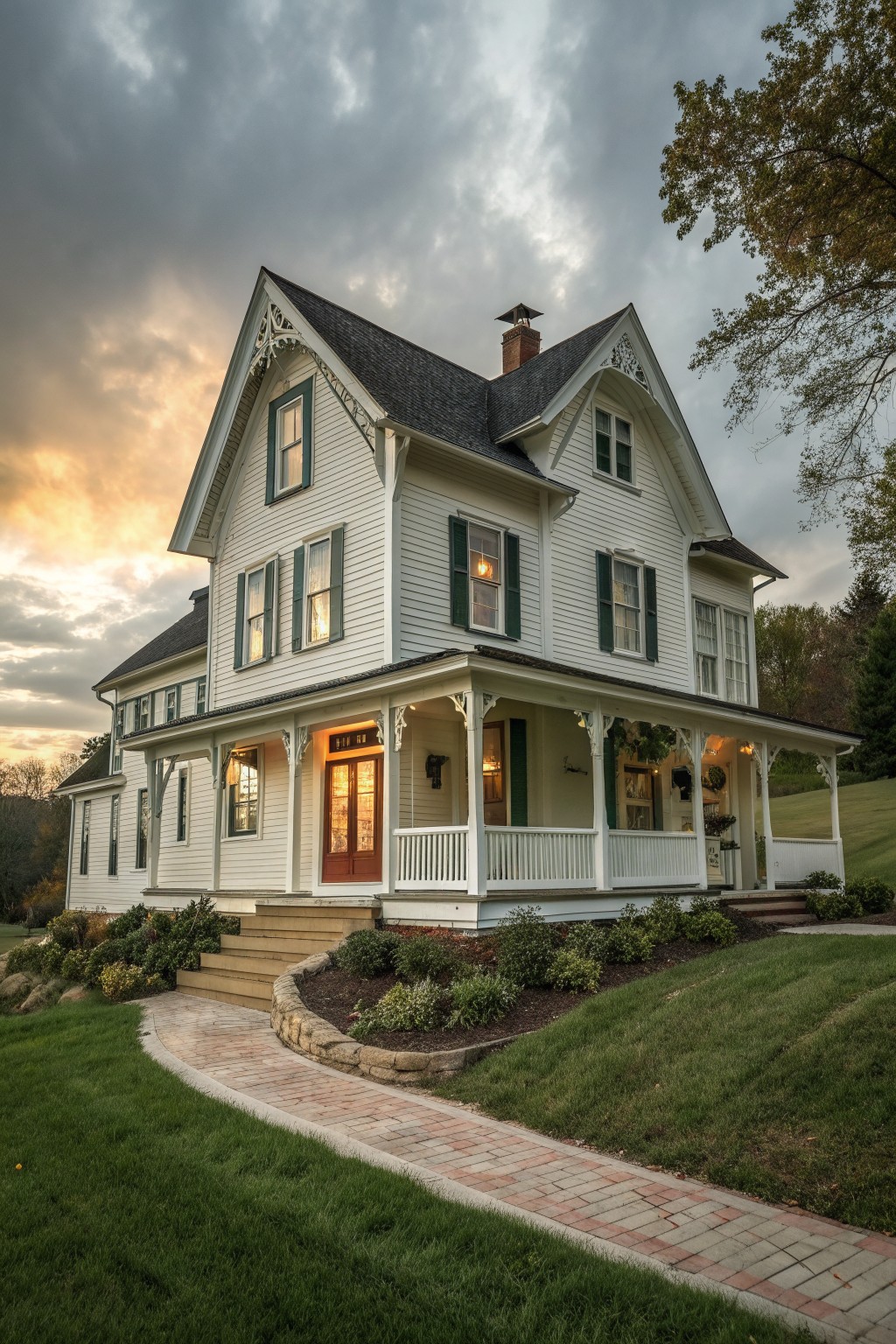
A front porch works well on Victorian farmhouses when it stays open and straightforward. The white railings and wide steps here let the double doors stay the main focus while still giving the house a clear place to pause before going inside.
This approach suits older homes that already have strong rooflines and trim. Keep the railings plain, add just enough lighting for safety, and let the path do the rest of the work guiding people forward.
Wrap-Around Porches on Victorian Farmhouses
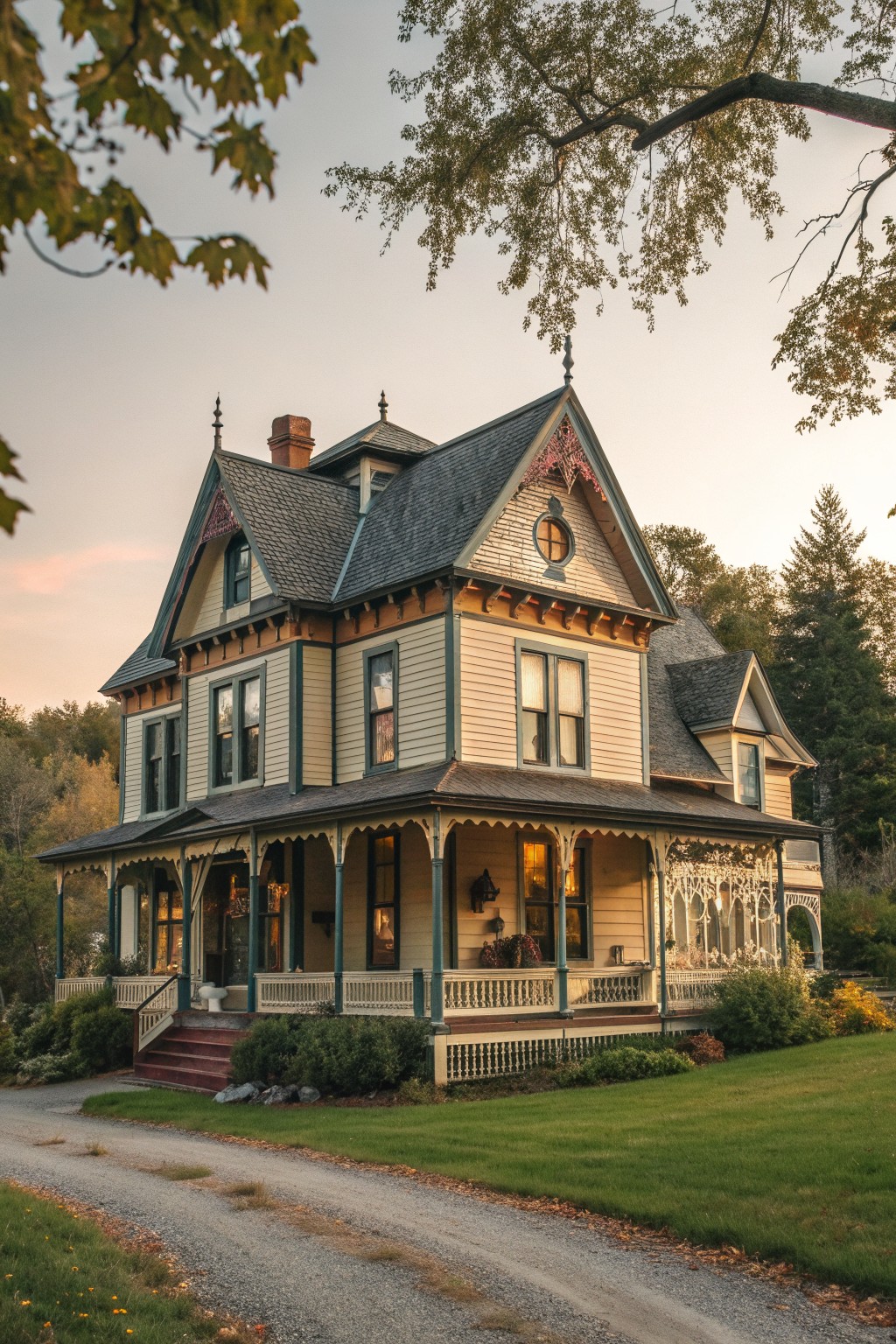
A wrap-around porch often becomes the main reason a Victorian farmhouse feels welcoming from the road. It stretches the front elevation, adds usable space right at ground level, and breaks up the height of the steep roof without changing any of the original lines.
This approach works best on houses that already have good width on at least two sides. Keep the porch posts and railings fairly plain so the existing trim and gable details stay the focus.
Adding Lanterns Beside The Door
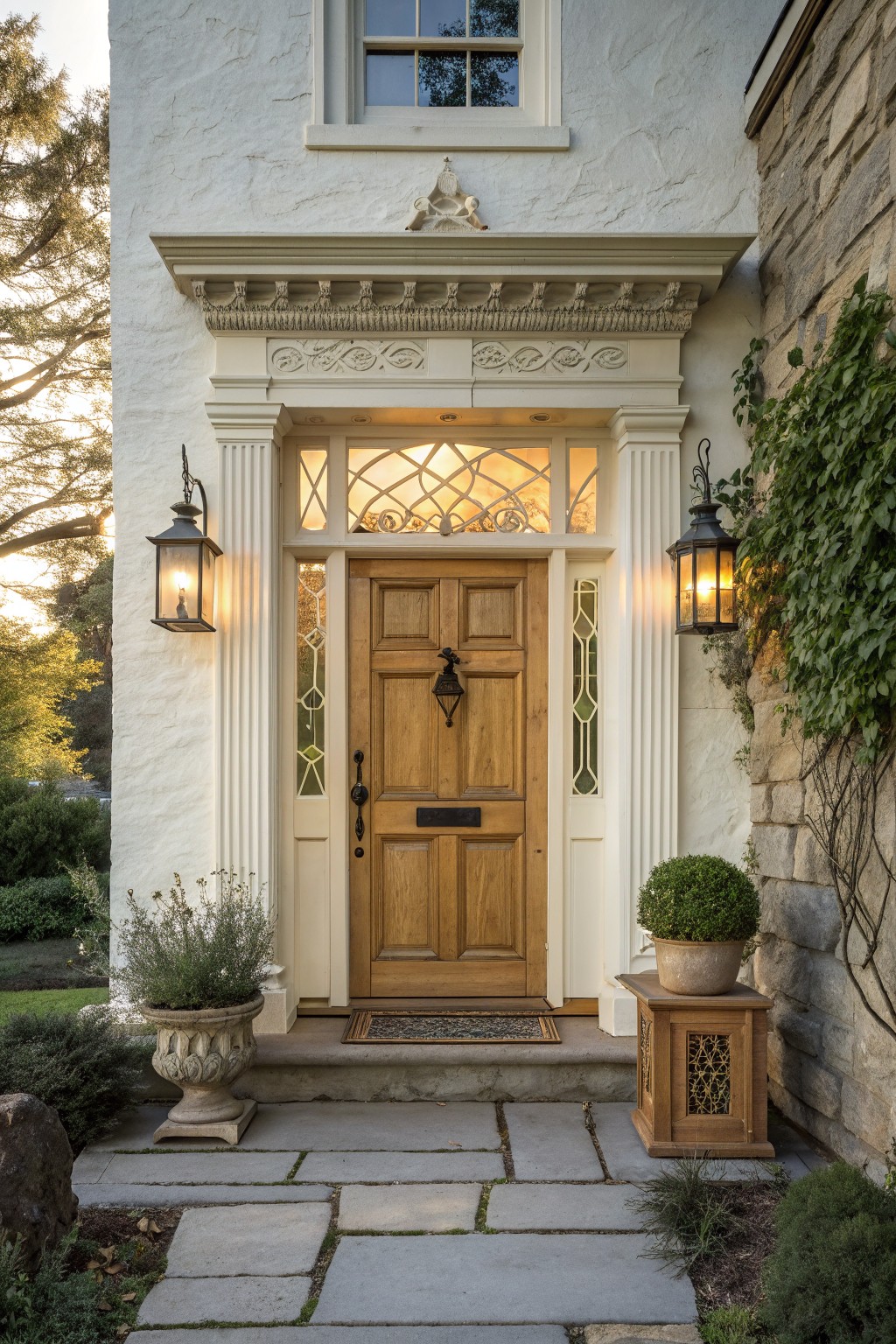
Many Victorian farmhouses gain a lot from simple lighting placed right at the entry. A lantern on each side of the door adds balance and makes the entrance feel more intentional without adding extra trim or color.
This approach works best on homes that already have a solid wood door and some vertical lines like columns or sidelights. Stick with black or dark metal fixtures and let the wood tone of the door do the rest so the look stays consistent with older farmhouse style.
Curved Walkways for Historic Farmhouse Entries
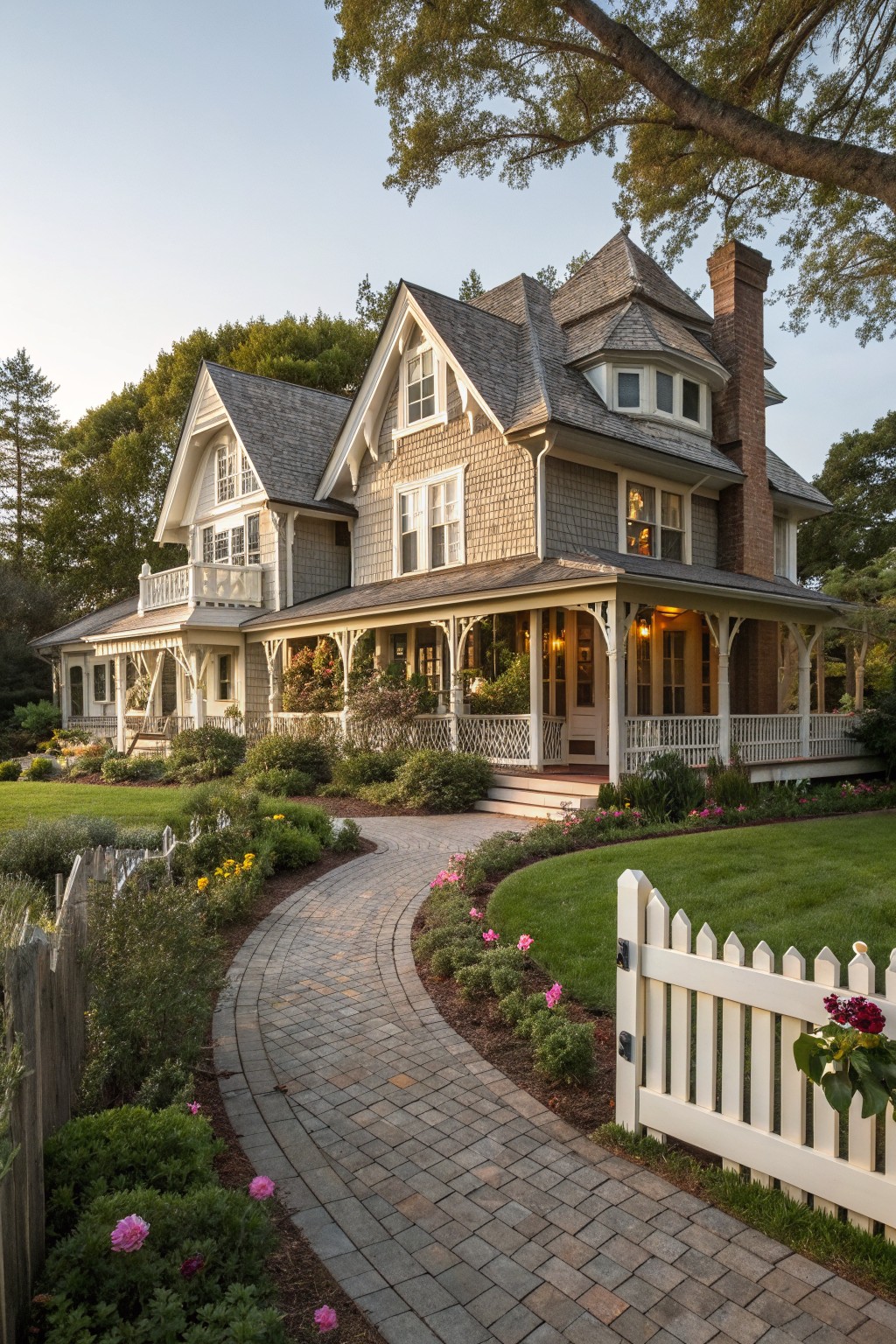
A curved brick path gives the front of an older home a softer approach without changing the architecture itself. It lets people take in the full facade as they walk up and avoids the stiff look of a straight line right to the steps.
This layout suits Victorian farmhouses that already have a strong porch and roofline. Keep the path narrow enough to feel personal, and let low garden beds follow the curve so the planting supports the house instead of hiding it.
Retain the Original Porch Details
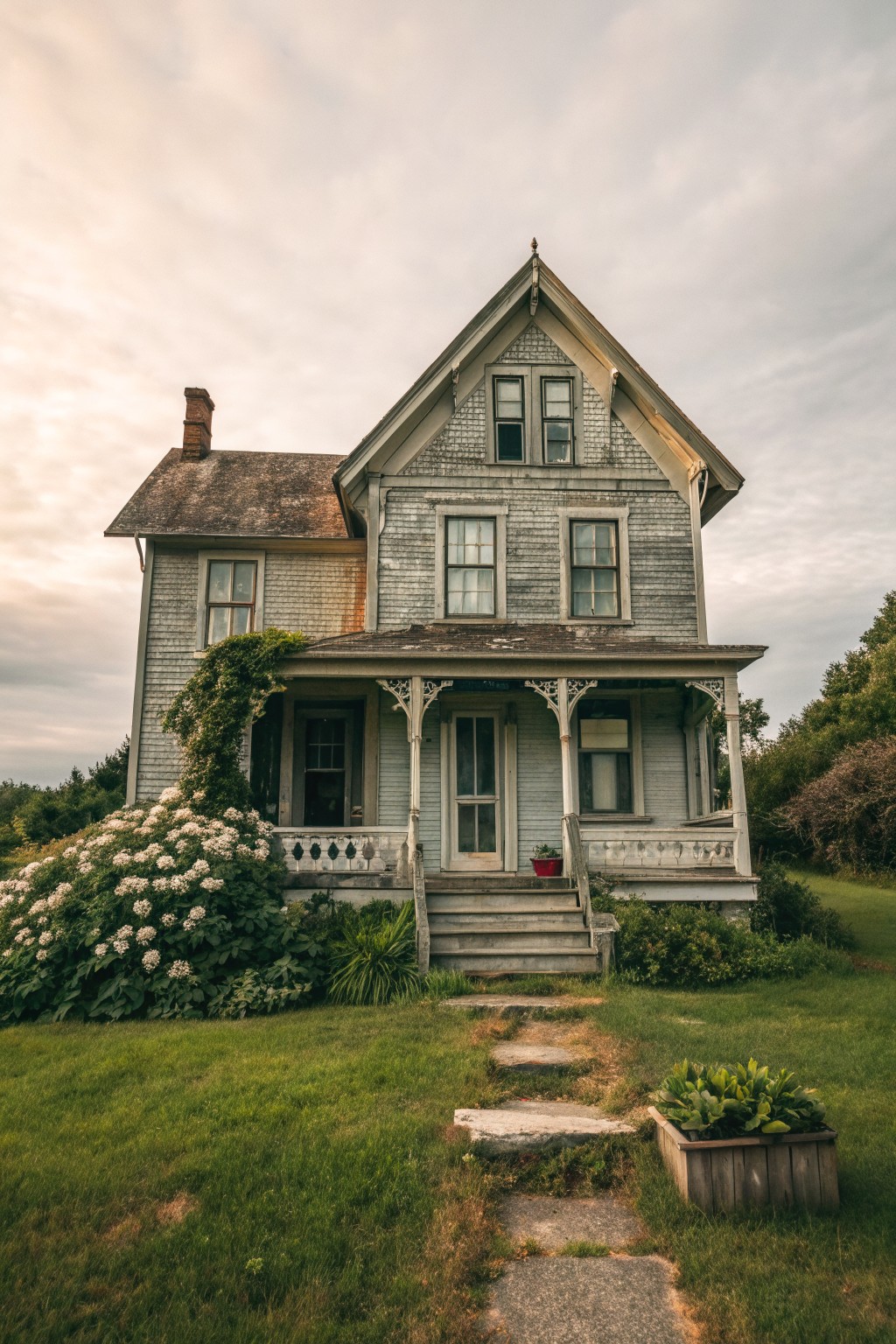
Many Victorian farmhouses still have their front porches, but those details often get stripped away during updates. Keeping the turned posts, brackets, and railings in place helps the house hold onto its original scale and character.
This works best when the rest of the exterior stays simple. Match new wood to the old patterns instead of swapping in modern railings, and let the trim stay painted white against the siding so the porch reads as part of the house rather than an add-on.
Wrap-Around Porches That Ground the House
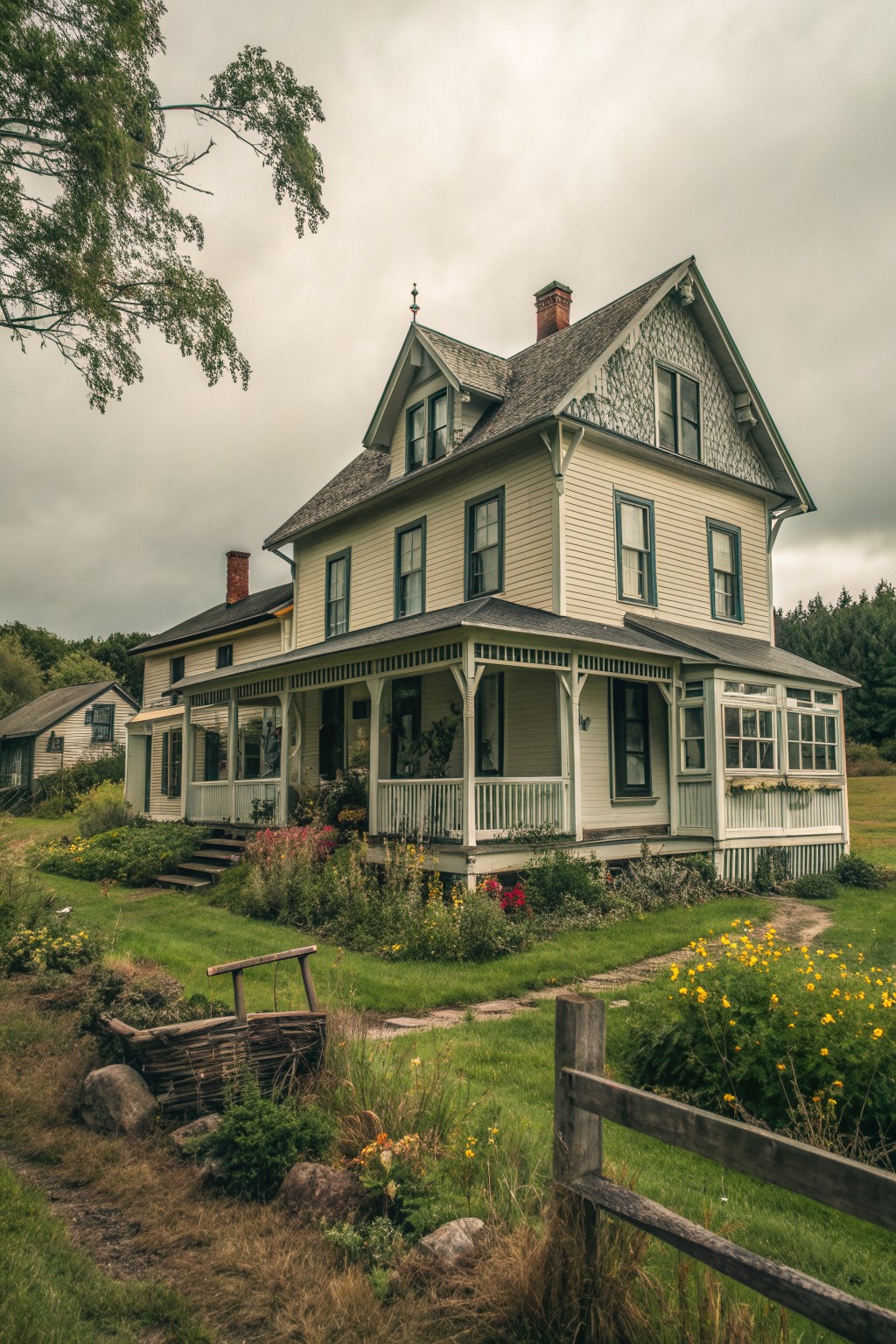
A wrap-around porch helps a tall Victorian farmhouse feel more settled on its site. The wide deck and railing break up the vertical lines of the siding and gables, so the whole front reads as one connected shape instead of a stack of stories.
This layout works best on homes that already have a complex roofline. It gives people a place to sit while keeping the original rhythm of windows and trim visible from the street. Just match the porch posts and railings to the existing trim color so the addition looks like it has always been there.
Adding String Lights Along The Porch
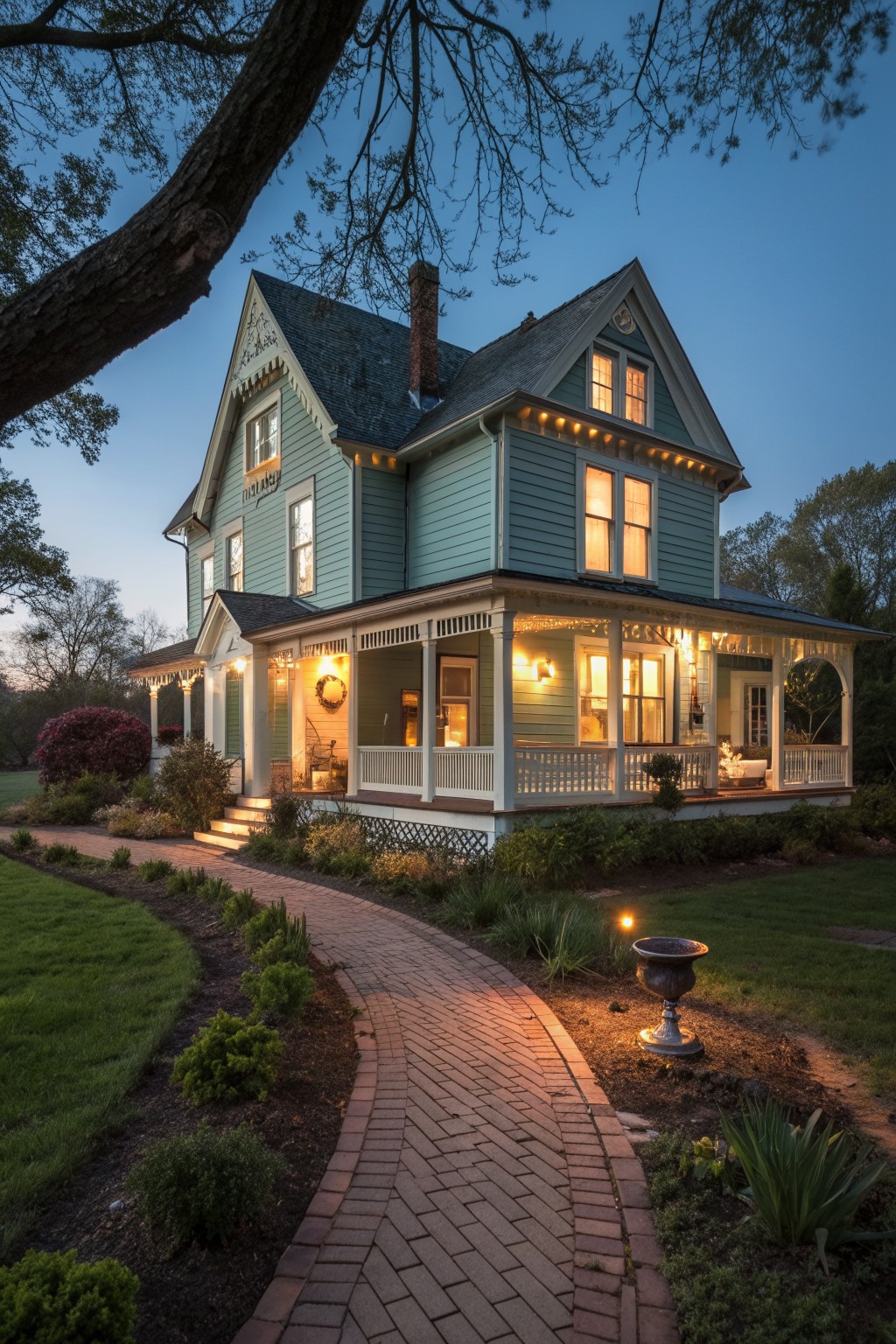
Many Victorian farmhouses already have strong porch architecture, and a simple run of string lights can make that feature stand out once the sun goes down. The lights follow the roof edge and wrap the posts without covering any trim or competing with the original details.
This works best on homes that sit back from the road and get used in the evening. Run the lights on a dimmer so the glow stays soft, and keep the bulbs warm rather than bright white. It suits older farmhouses that still have their original porches and need a low-key way to improve nighttime curb appeal.
Dark Shutters Against Light Siding
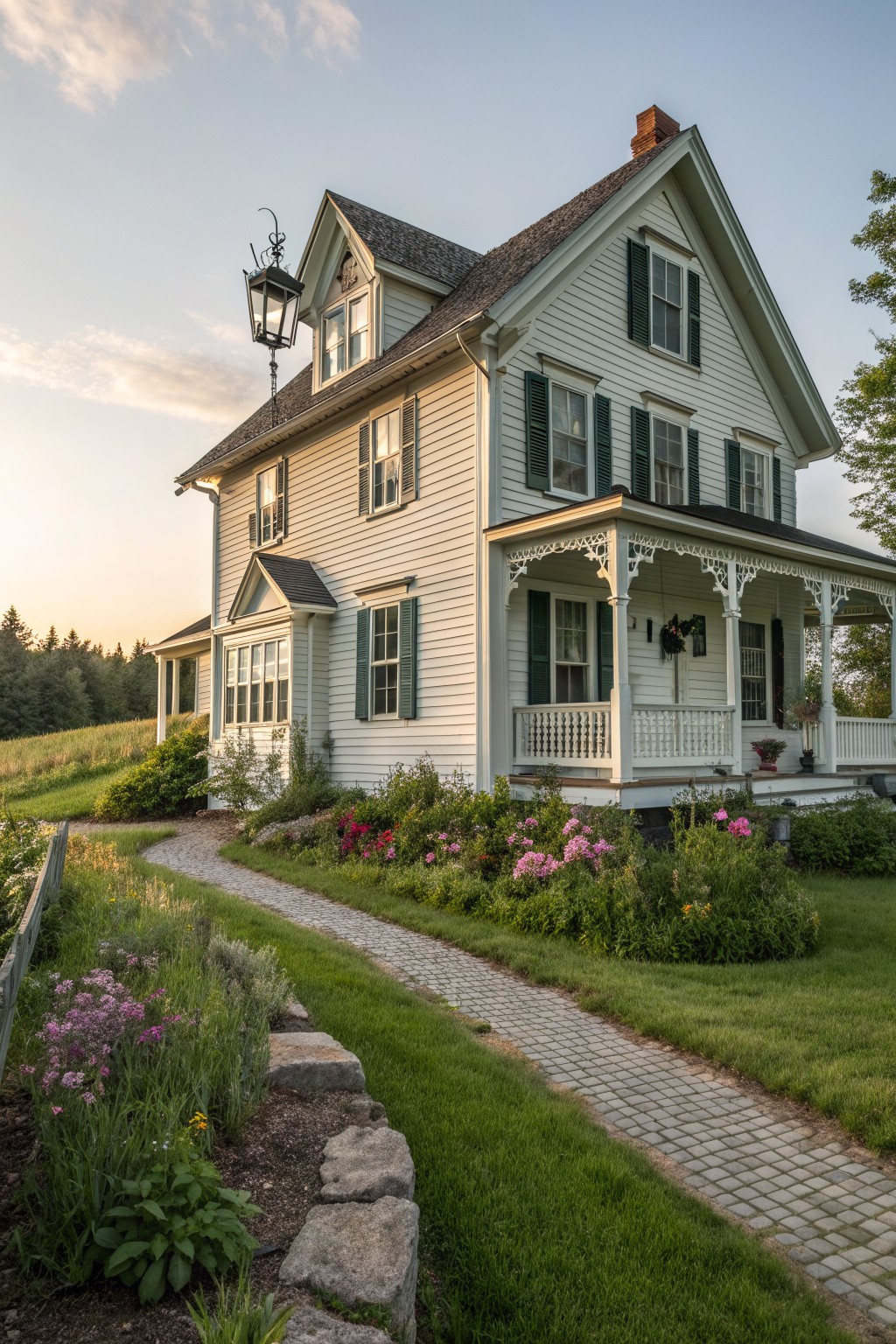
Dark green shutters give this Victorian farmhouse a clear and traditional look against the white siding. They frame the windows without adding anything new, which helps the house keep its original character from the road.
This choice works best on older homes that still have their basic shape and window placement. It stays simple, needs little upkeep, and fits farmhouses where the goal is to hold onto the historic curb appeal rather than update it.
Wrap-Around Porches Keep Victorian Homes Approachable
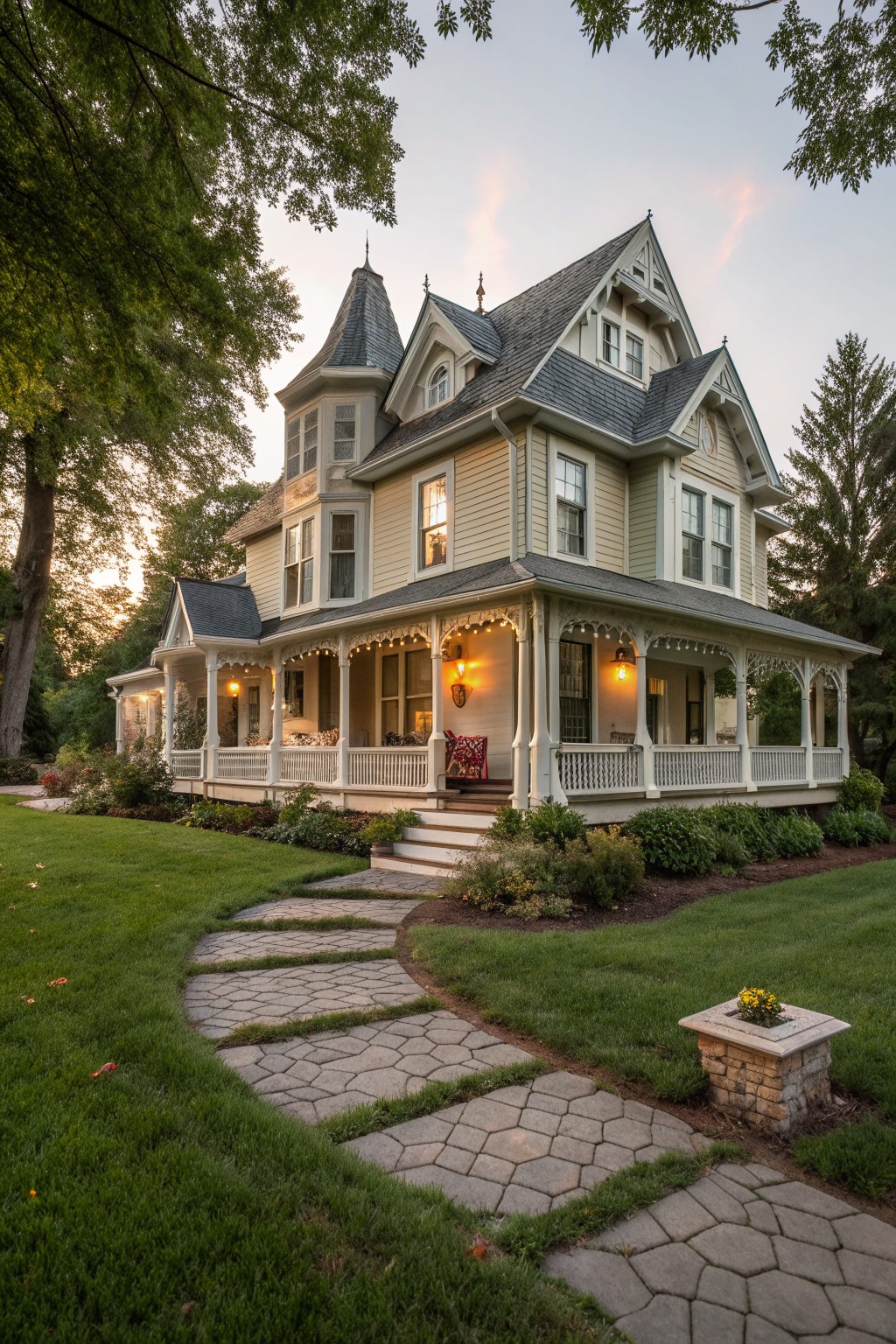
A wrap-around porch gives a Victorian farmhouse that lived-in look from the street. The railings and trim add detail without making the house feel stiff, and the open space invites people to sit outside.
This style works best on homes that have enough frontage for the porch to turn a corner. Keep any lighting soft and low so it highlights the architecture instead of competing with it.
Corner Towers That Keep Victorian Farmhouses Distinctive
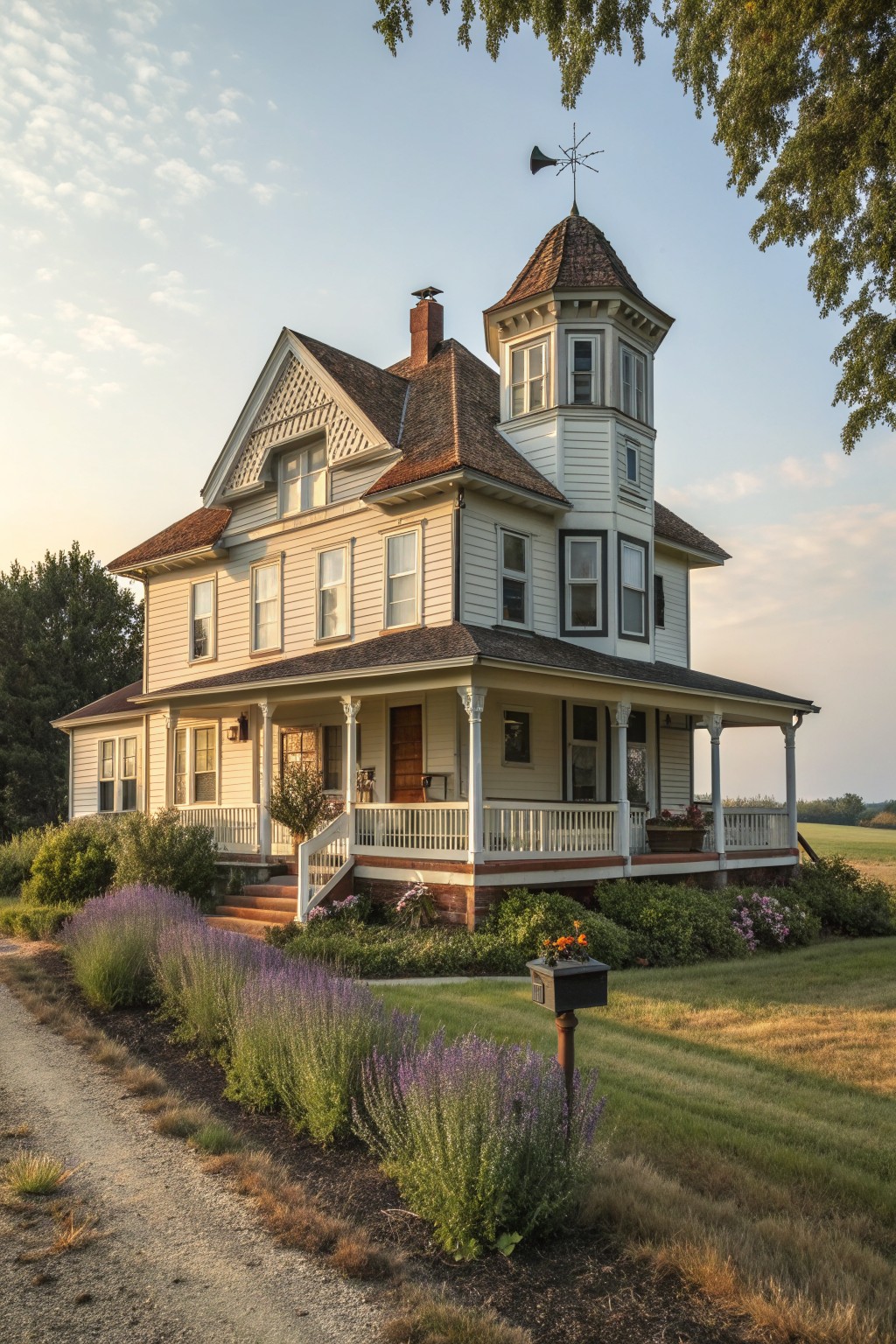
A corner tower gives a Victorian farmhouse extra height and a clear focal point that stands out from the road. It breaks the roofline in a way that feels true to the original style while still letting the house read as a working farmhouse rather than a grand mansion.
This detail works best when the tower stays modest in width and the windows match the rest of the house. Pair it with a wraparound porch underneath so the vertical element does not feel top-heavy or out of scale with the rest of the exterior.
Stone Walls That Ground Victorian Farmhouses
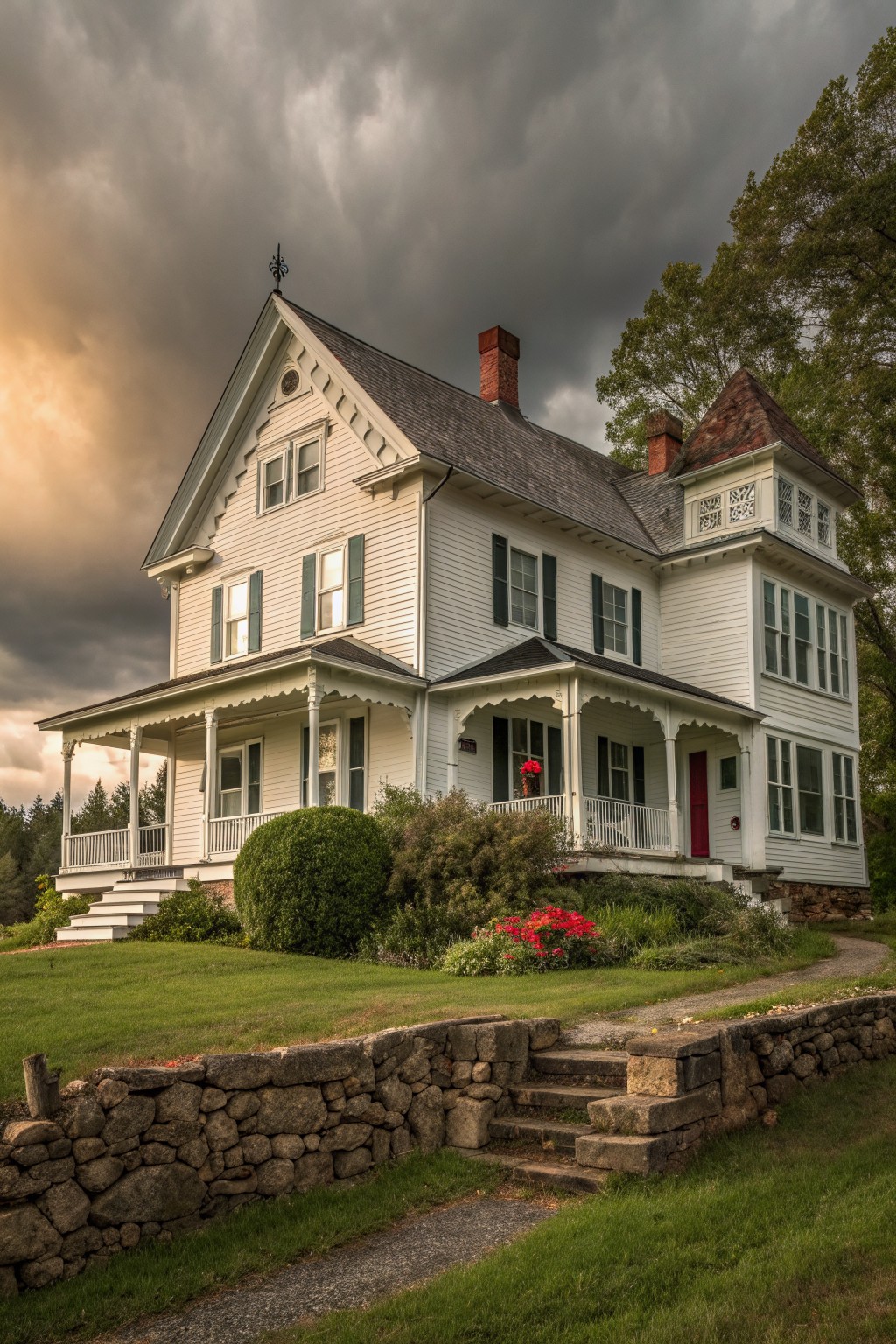
A low stone wall gives a Victorian farmhouse a settled look right from the street. It creates a clear edge without blocking the view of the house and adds texture that works well with white siding and simple trim.
This detail suits homes on slightly sloped lots or those that need a bit more definition along the front. Keep the wall height modest and match the stone color to any existing foundation so the whole approach feels natural rather than added on later.
Preserve Original Gable Trim
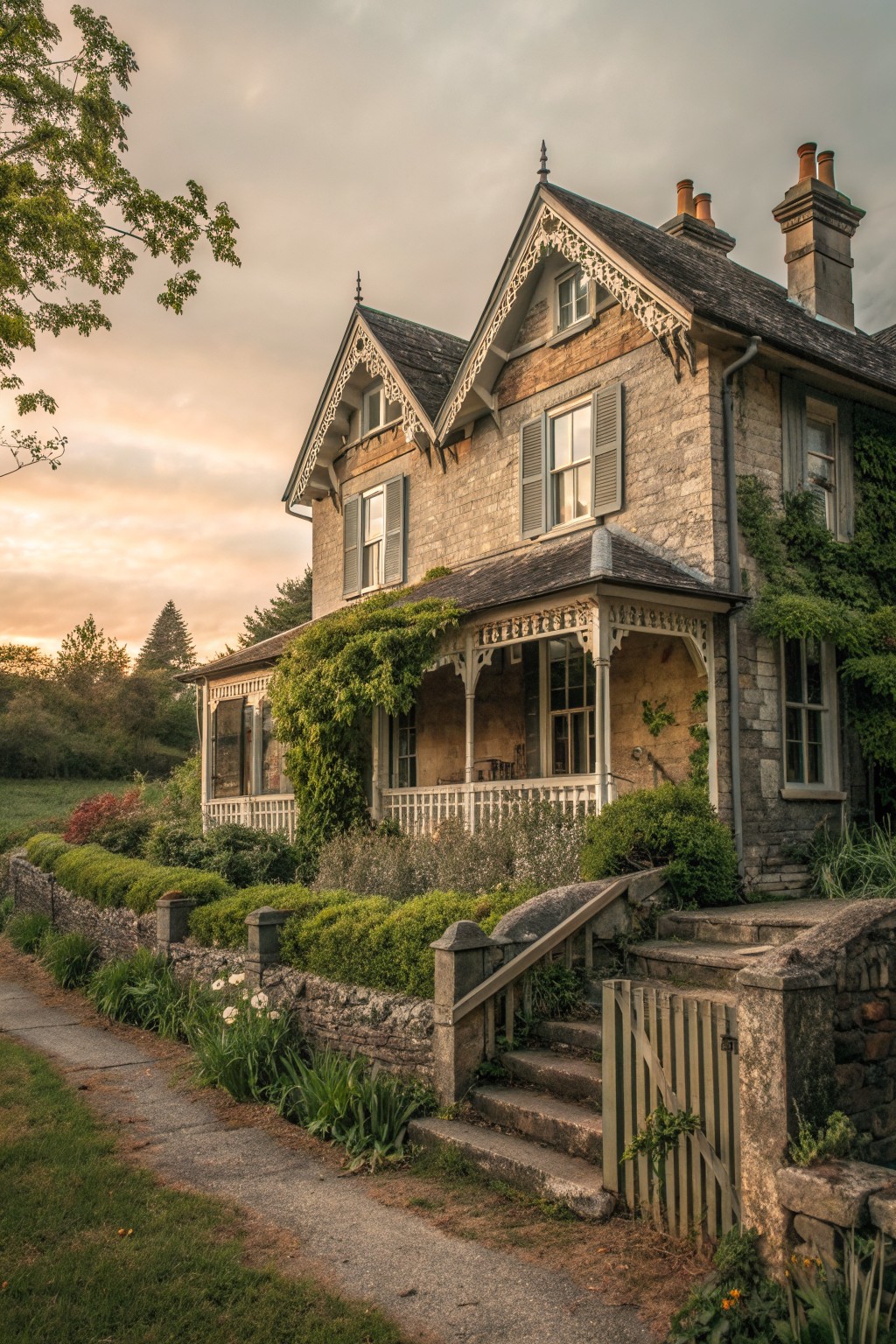
The ornate trim along the rooflines and porch is what gives this house its clear Victorian identity. It stands out against the stone and wood siding without feeling fussy, and it keeps the whole exterior from looking plain or overly updated.
Use the same approach on a similar home by repairing or replicating the existing trim rather than replacing it with simpler versions. This works especially well on older farmhouses where the rooflines are already complex. Stick to the original scale and pattern so the details still read from the street.
Preserving Original Porch Details
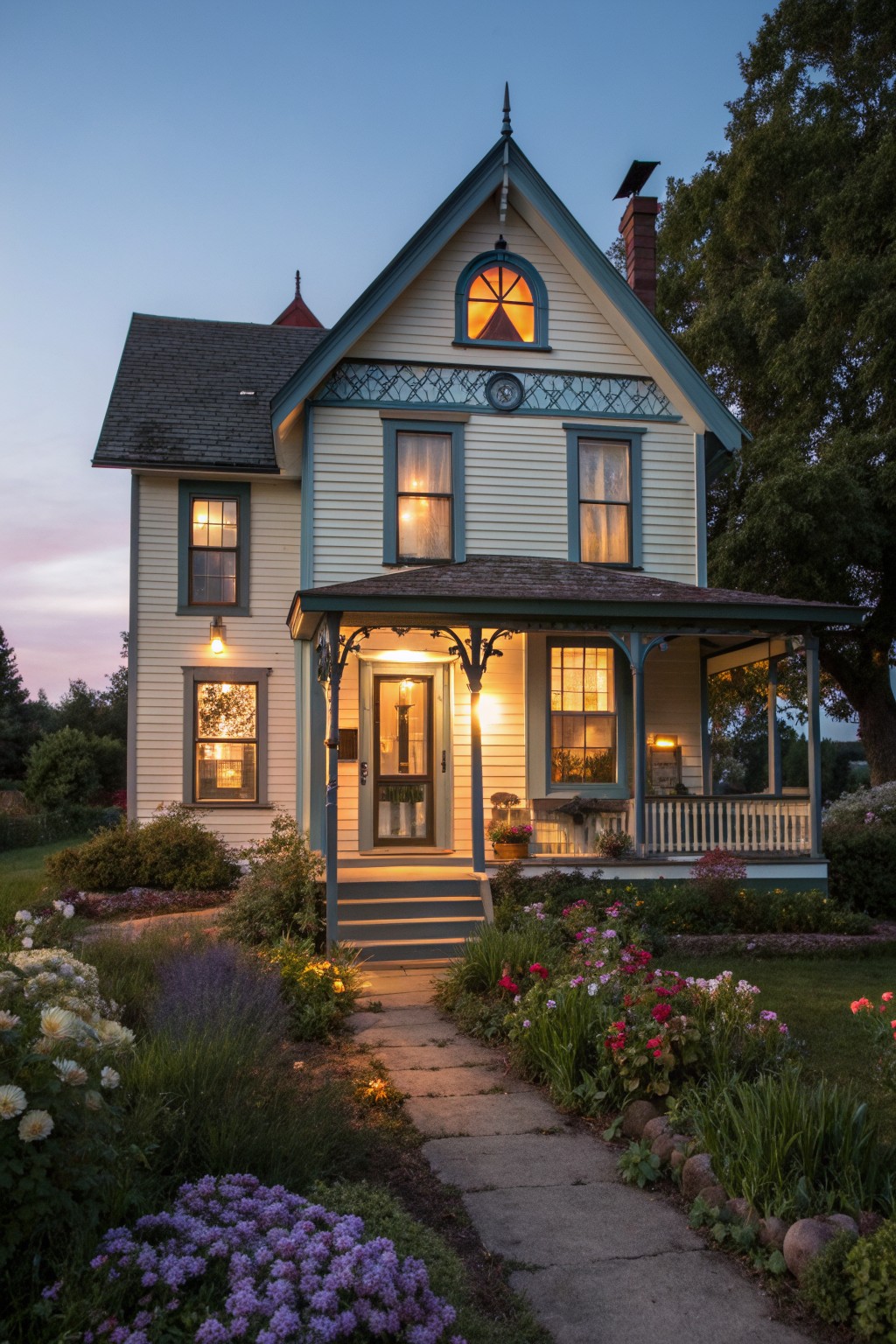
A covered porch with its original brackets and posts often becomes the part of a Victorian farmhouse that people notice first. Keeping those elements in place helps the house hold onto its historic character instead of looking updated or generic.
This works especially well on farmhouses where the porch structure is still solid. Focus on careful repairs to the trim and railings rather than replacing the whole thing, and stick with colors that match the rest of the exterior woodwork.
Preserve Intricate Trim Details
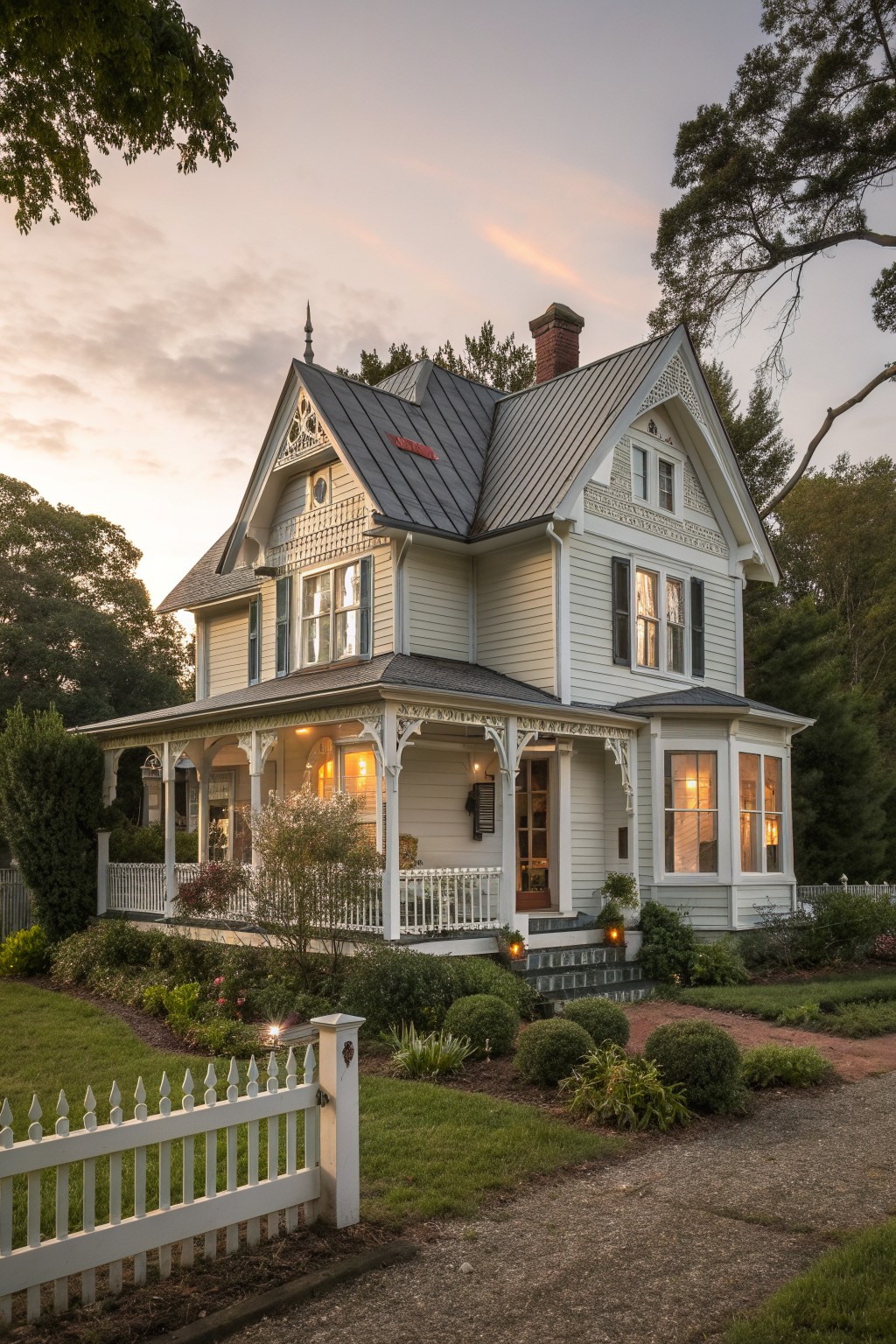
Victorian farmhouses often gain their character from the trim that runs along the gables and porch edges. Keeping those pieces in place helps the house read as original rather than updated, even when the siding gets a fresh coat of paint.
This approach works well on homes where the trim is still sound. Focus repairs on broken brackets or missing sections instead of removing the details altogether. The contrast between the trim and the darker roof makes the shapes stand out without extra effort.
Wrap-Around Porches That Extend Everyday Living
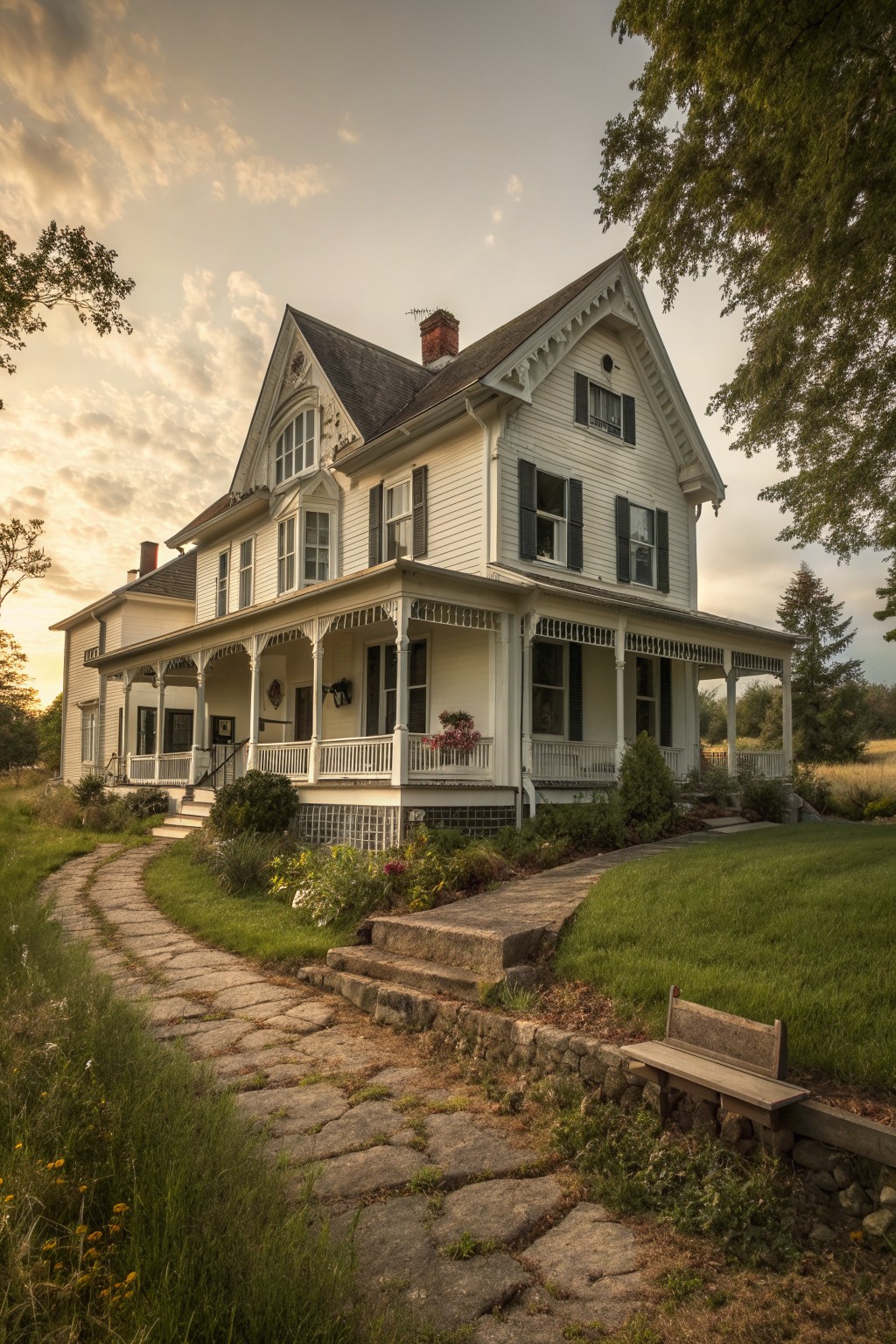
A wrap-around porch gives a Victorian farmhouse a practical way to add outdoor space without changing the main structure. The porch here follows the front and side of the house, turning what could be a plain wall into usable seating areas that stay connected to the yard.
This layout works best on homes that already have some side yard room so the turn does not feel cramped. It suits older farmhouses that need curb appeal without major additions, though you want to match the railing style and column spacing to the original trim so the new work does not stand out.
Add Contrast With Painted Trim
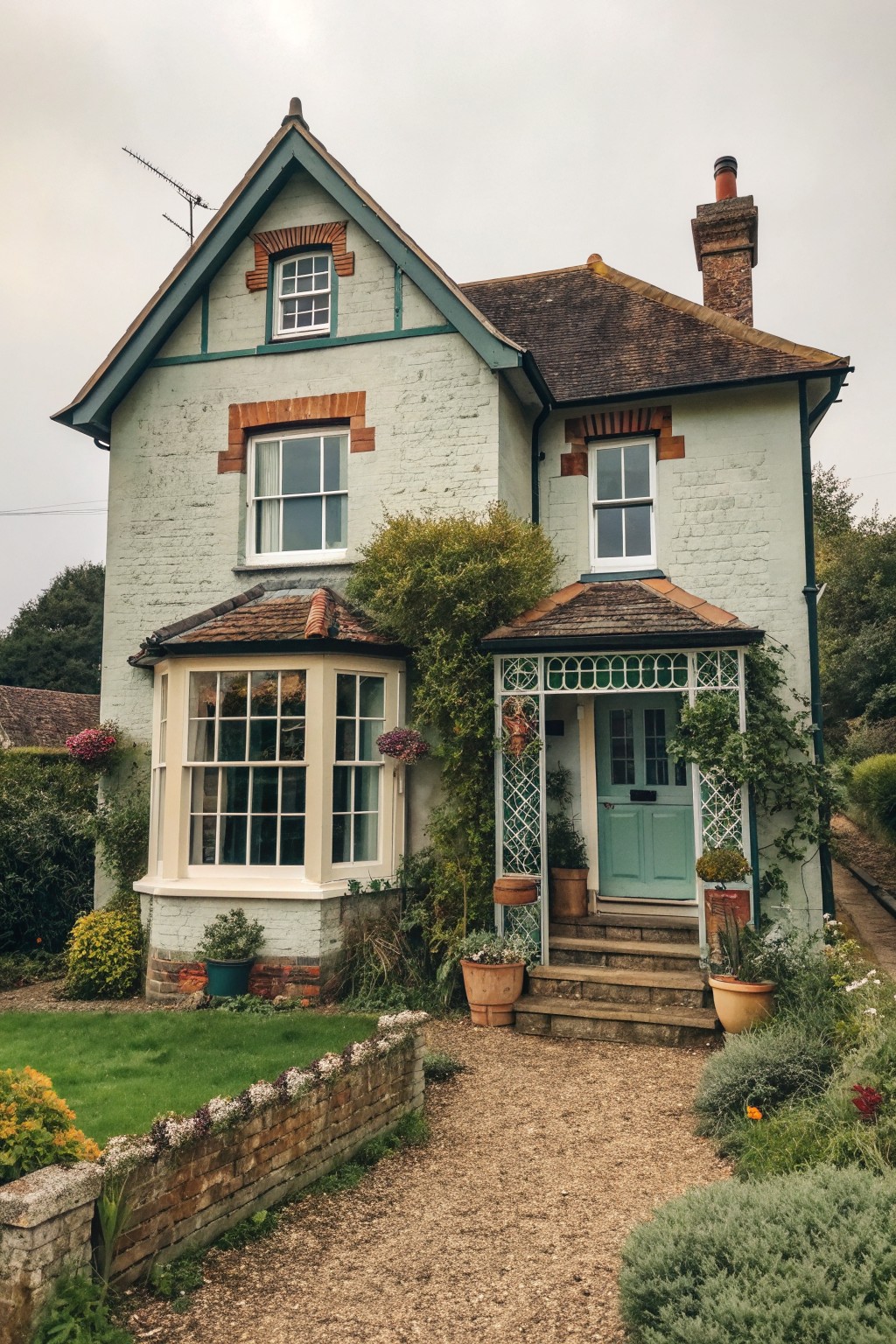
Painting the trim in a soft contrasting shade helps the windows and rooflines stand out on a painted brick house. It keeps the original Victorian details visible without adding new shapes or heavy ornament.
This approach works best on farmhouses that already have clean brick surfaces and multiple window sizes. Stick to two or three trim colors at most and test them on a small section first so the look stays balanced rather than busy.
Frequently Asked Questions
Q: How can I tell if my windows are original to the house?
A: Check the glass for waves or bubbles that show up in older panes. You might also spot hand-planed wood on the frames from inside.
Q: What materials work best for replacing a damaged porch floor?
A: Go with tongue-and-groove wood boards that match the era. They hold up well and look right with the rest of the exterior.
Q: Should I paint the trim a different color from the siding?
A: Yes, contrasting trim highlights the Victorian details like brackets and spindles. Pick a shade that complements the main color without clashing (old photos help here).
