

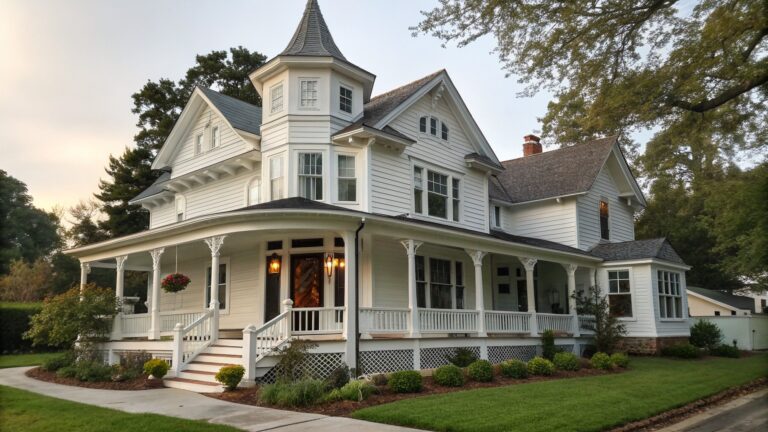
I have always noticed that the right trim can completely change how a farmhouse reads from the street.
White Victorian exteriors often rely on those layered details to add depth without overwhelming the simple shape of the house.
Some choices work better up close than from a distance.
When I drive past older homes I find myself studying the gables and porches to see what makes the trim stand out against the siding.
Testing a few of these trim ideas on a smaller scale first can show whether they suit the proportions of your own place.
Keeping the House All White
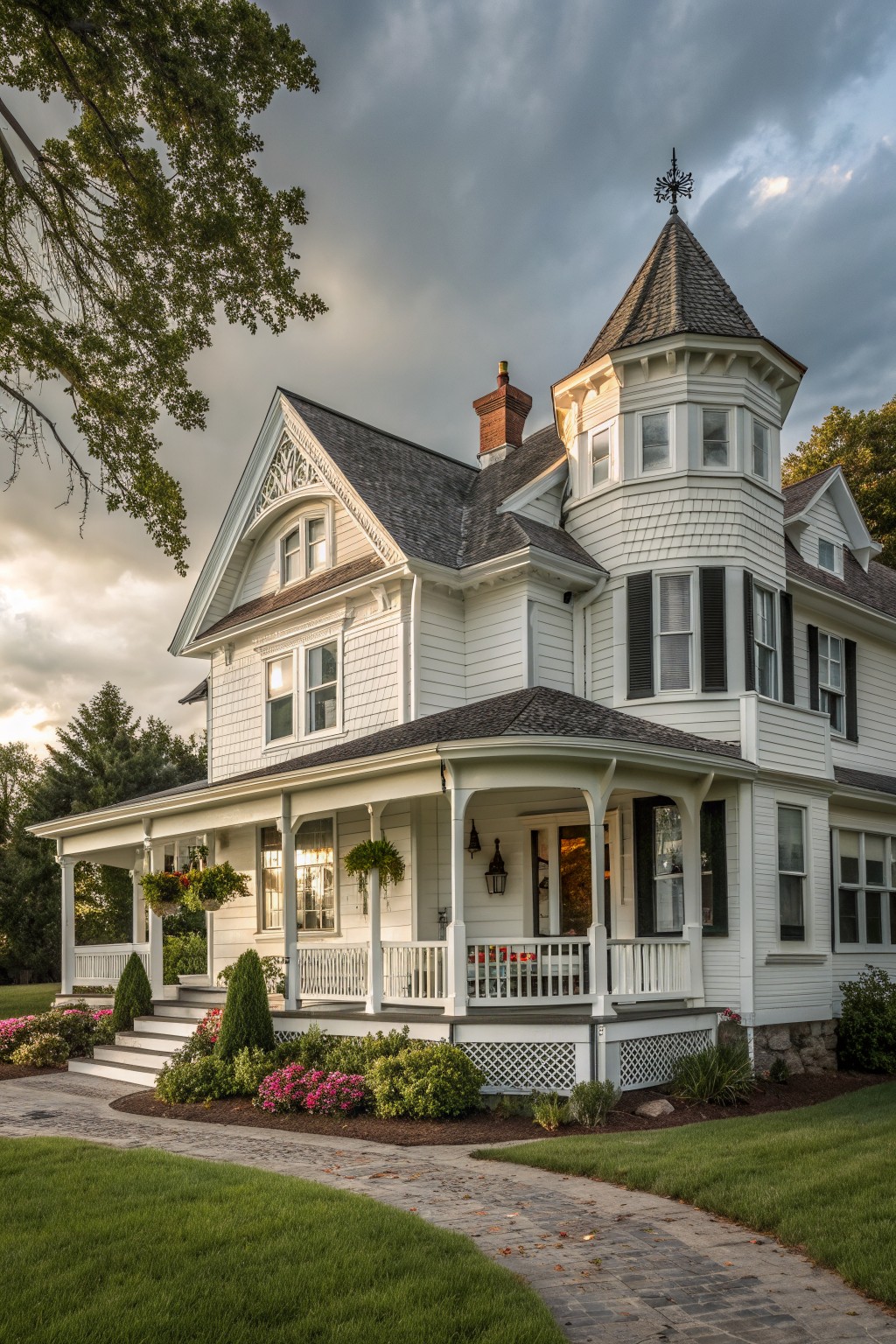
Painting the entire exterior white helps the decorative trim stand out without any competing colors. The clean background makes every piece of molding and scrollwork along the gables and porch read more clearly against the siding.
This works especially well on Victorian farmhouses that already have strong original details. It suits homes where you want the architecture to feel bright and classic while keeping the overall look simple and cohesive.
Decorative Trim Brings Character To White Exteriors
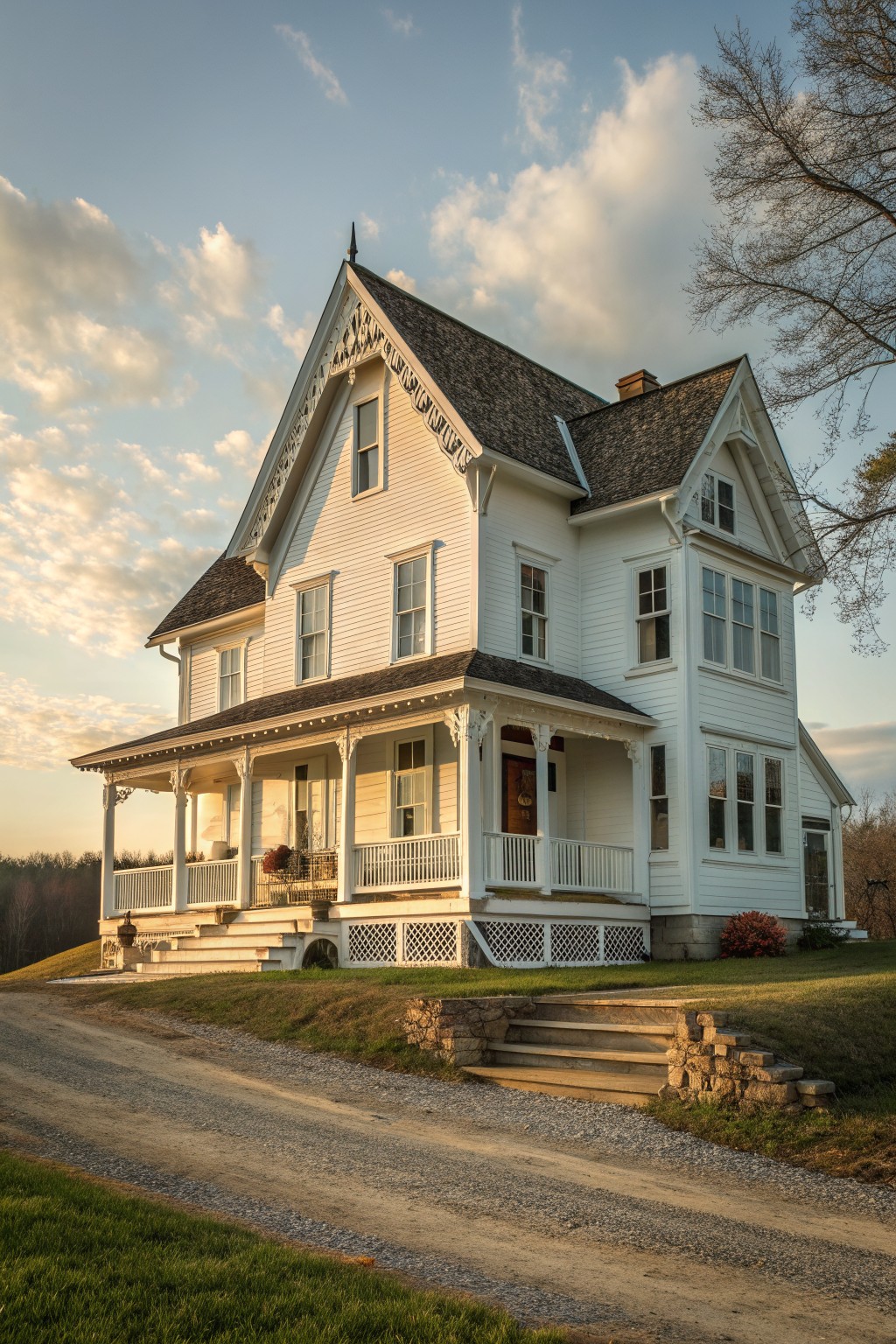
White siding on its own can look plain, but the right trim changes that fast. On this farmhouse the gable ends and porch edges carry detailed cutwork that gives the whole house its shape and age. The trim stays white too, so it reads as part of the architecture instead of an add-on.
Use the same approach on any Victorian or farmhouse style home where you want the lines to stand out. Match the scale of the trim to the size of the gables and keep the paint crisp. It works especially well when the roof is dark, since the contrast makes every bracket and spindle count.
Decorative Trim Around the Front Entry
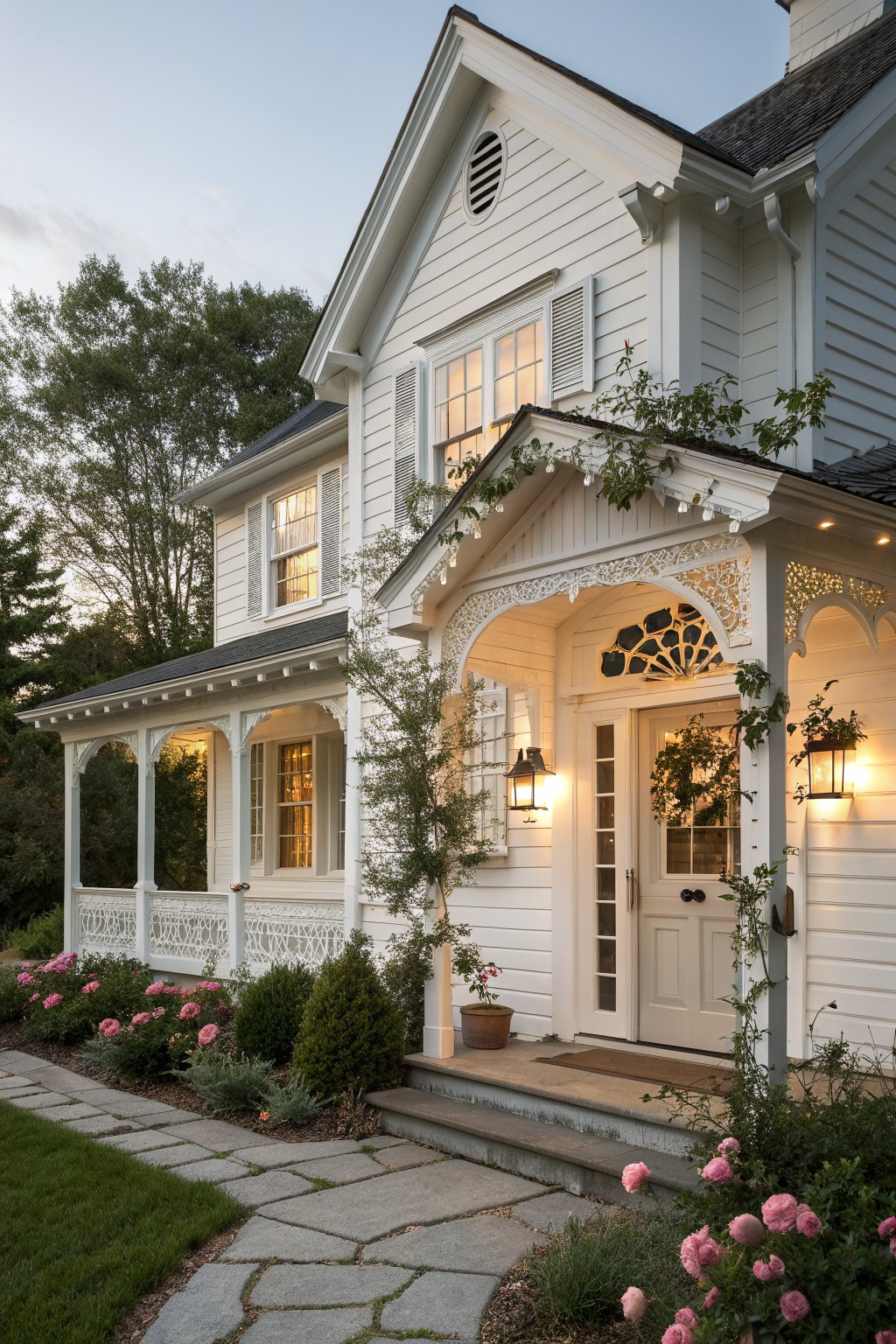
Decorative trim makes the entry feel like the main feature on a white Victorian farmhouse. The lacy details above the door and along the porch give the whole front a finished look without needing extra color or bold materials.
This works best when the trim stays white and the rest of the facade stays simple. It suits homes that already have a porch and a centered door, and it helps the entry stand out from the street without much extra work.
White Paint Highlights Decorative Trim
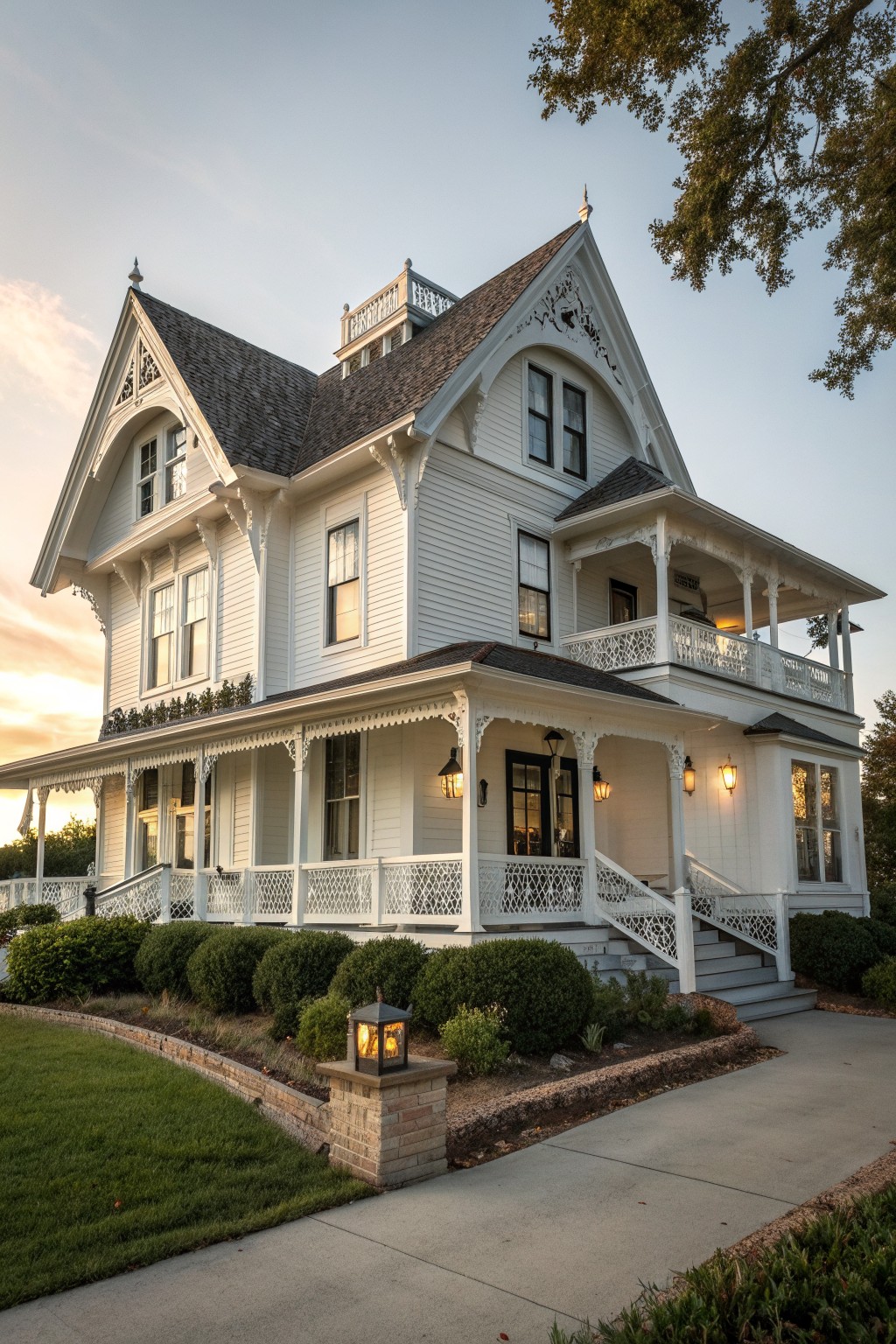
Many Victorian farmhouses gain a cleaner look when the entire exterior is painted white. The single color lets the carved gables, brackets, and porch railings stand out instead of getting lost against darker siding.
This approach works best on homes that already have strong trim details. Keep the white bright and touch up the edges often so the pattern stays sharp from the street.
Lacy Trim on White Victorian Gables
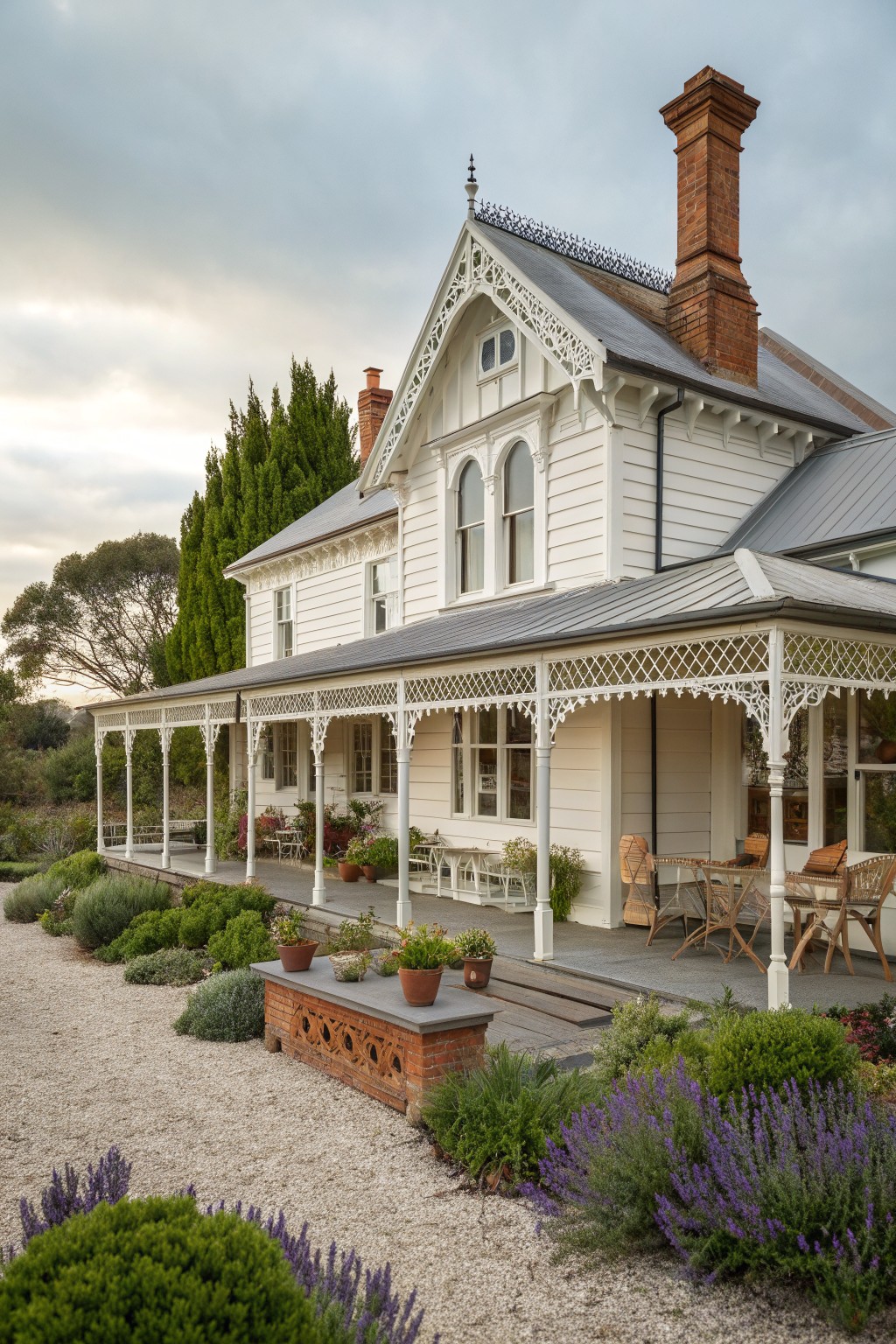
White farmhouses often look their best when the trim gets a chance to stand out on its own. Here the gable shows off a full pattern of cutouts and brackets that give the roofline shape without needing any color change.
This works especially well on older homes that already have strong roof angles. Keep the trim and siding the same white so the details read clearly, and avoid adding too many extra pieces that might crowd the pattern.
Decorative Trim That Defines A White Victorian Look
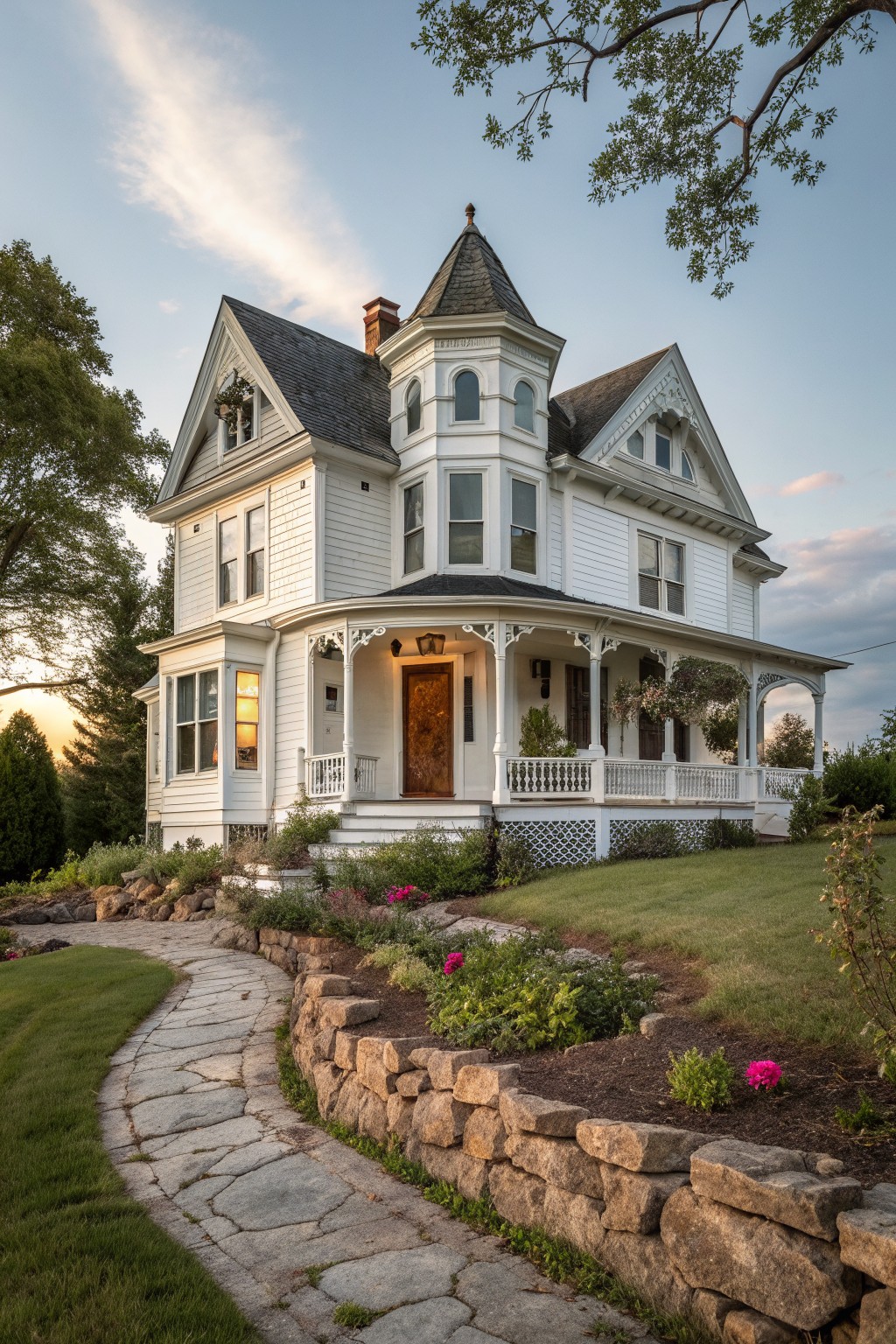
White siding makes trim stand out in a way that feels balanced rather than busy. On this house the trim runs along the porch roof, gables, and turret edges, giving the whole exterior a clear structure without needing extra color or materials.
This works well on homes that already have strong rooflines and porches. Keep the trim painted the same white or a close off-white so the details read as part of the architecture instead of added decoration.
White Trim Details on Victorian Farmhouses
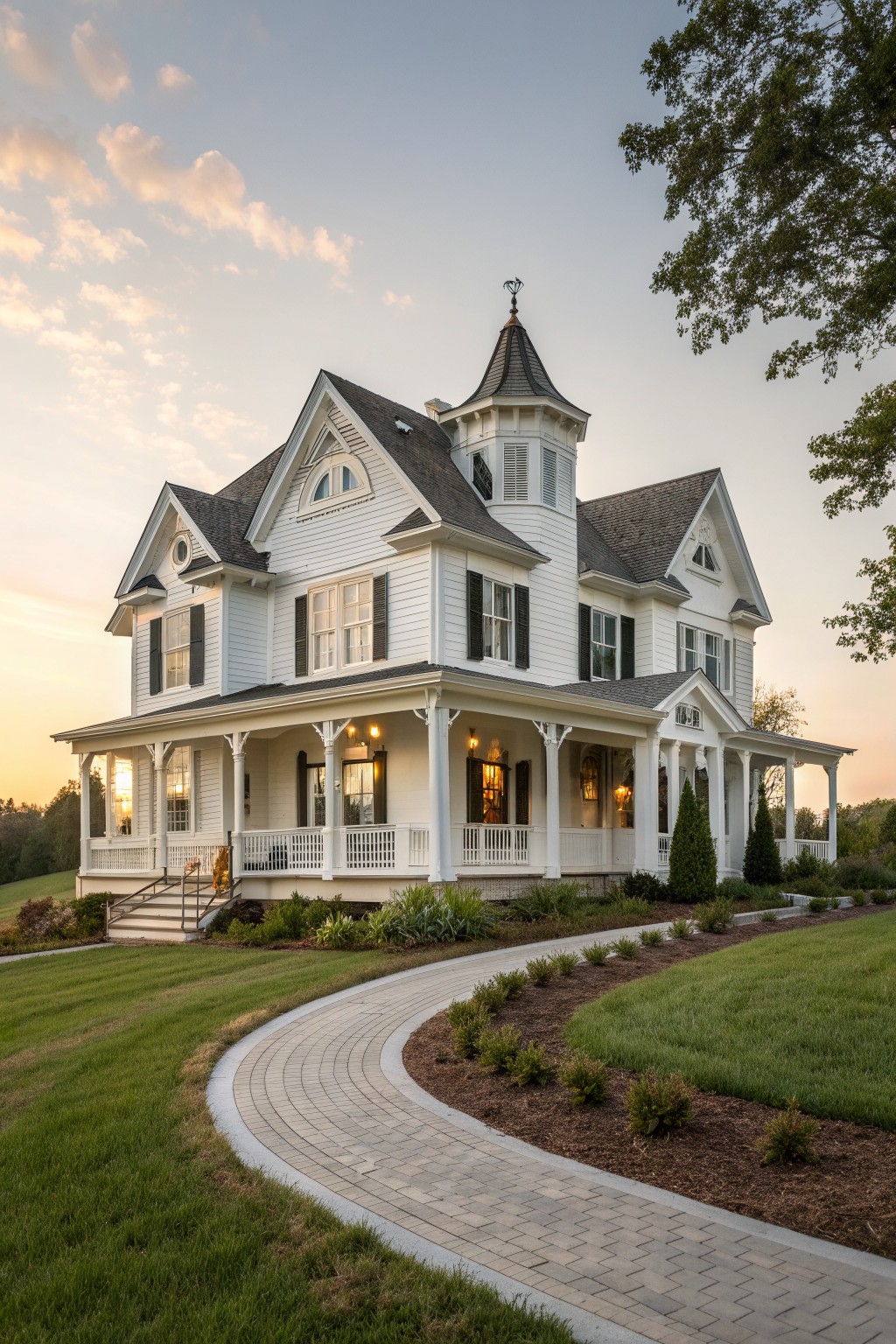
A white exterior lets the trim do the talking. The brackets, railings, and gable cutouts stand out clearly when everything stays the same color, giving the house shape without needing extra paint or contrast.
This approach works well on farmhouses that already have strong rooflines and a front porch. Keep the trim crisp and avoid heavy landscaping right against the foundation so the details stay visible from the road.
Letting White Siding Highlight The Trim
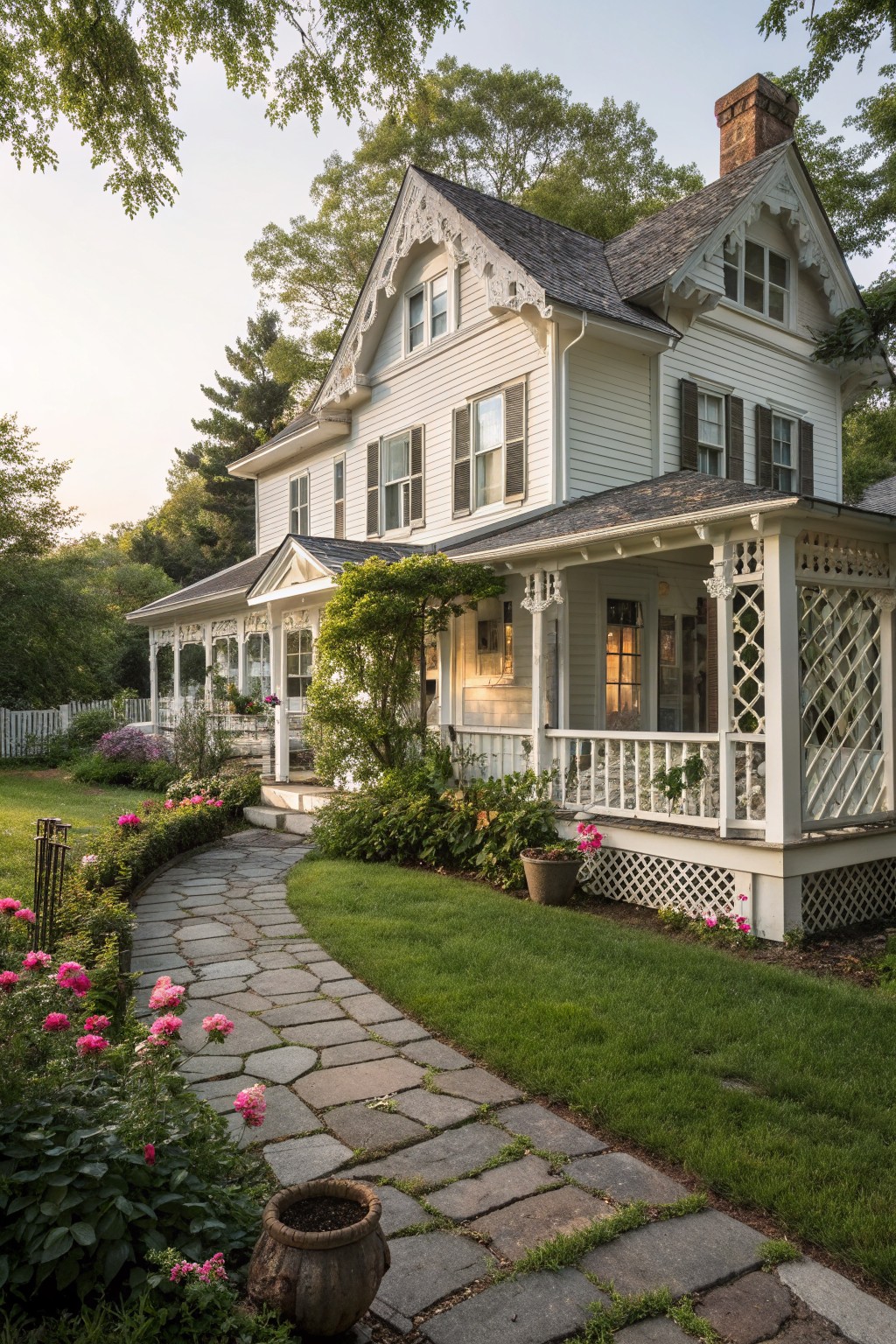
White siding gives decorative trim room to show up without any extra color. On a Victorian farmhouse the flat background turns every bracket, scroll, and cutout into clear detail instead of letting it blend into darker paint.
This approach works best on homes that already carry strong trim work. Keep the siding and trim in the same white family so the shapes read as texture, and avoid adding bold accent colors that pull attention away from the original patterns.
White Paint Lets Decorative Trim Stand Out
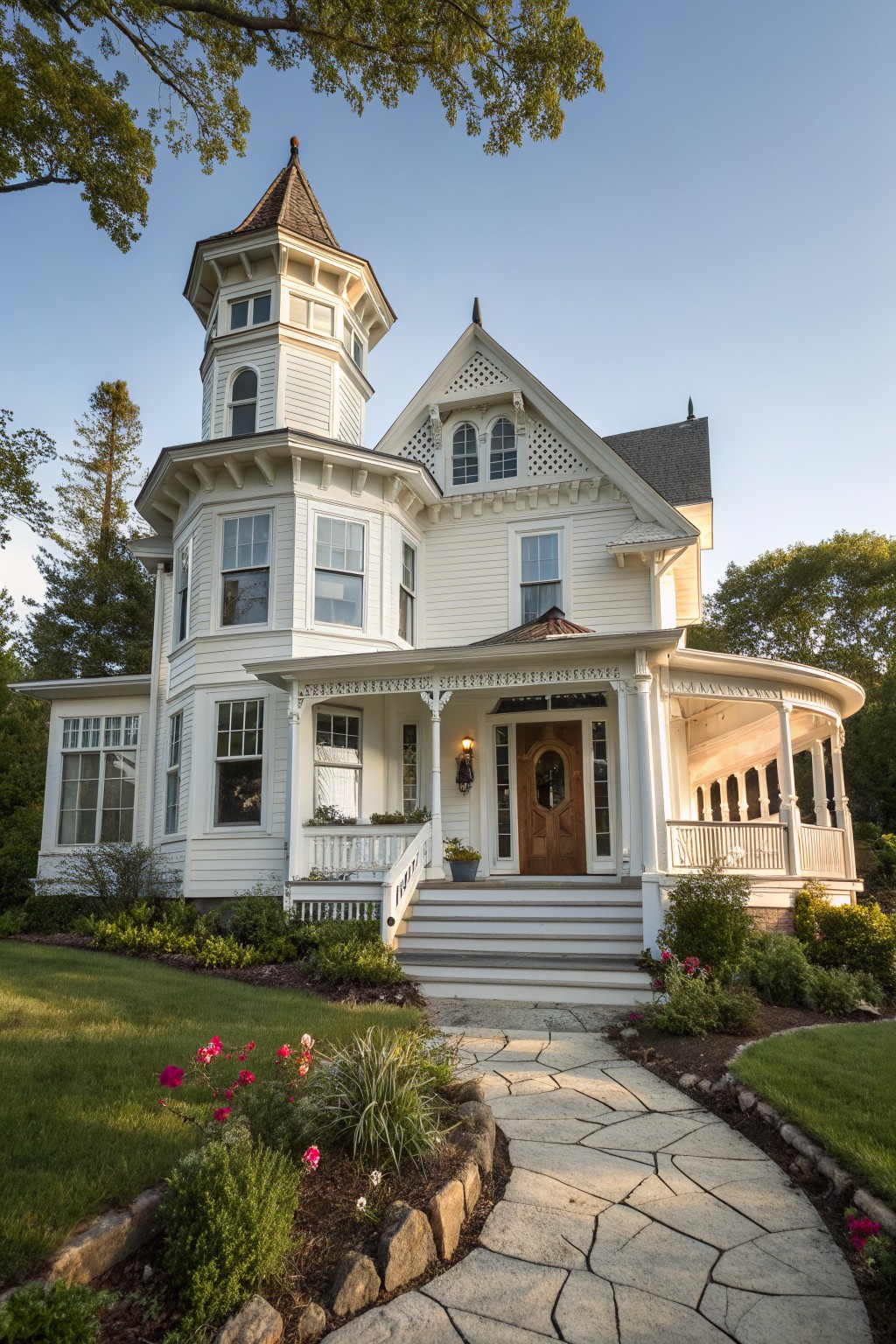
White works especially well on Victorian farmhouses because it turns the trim into the main feature. The clean background keeps every piece of lattice, scrollwork, and spindle visible instead of letting darker colors swallow the details.
This approach suits homes that already have strong architectural lines. Stick with one consistent white on both siding and trim if you want the shapes to read clearly from the street.
Keep the Exterior All White to Highlight the Trim
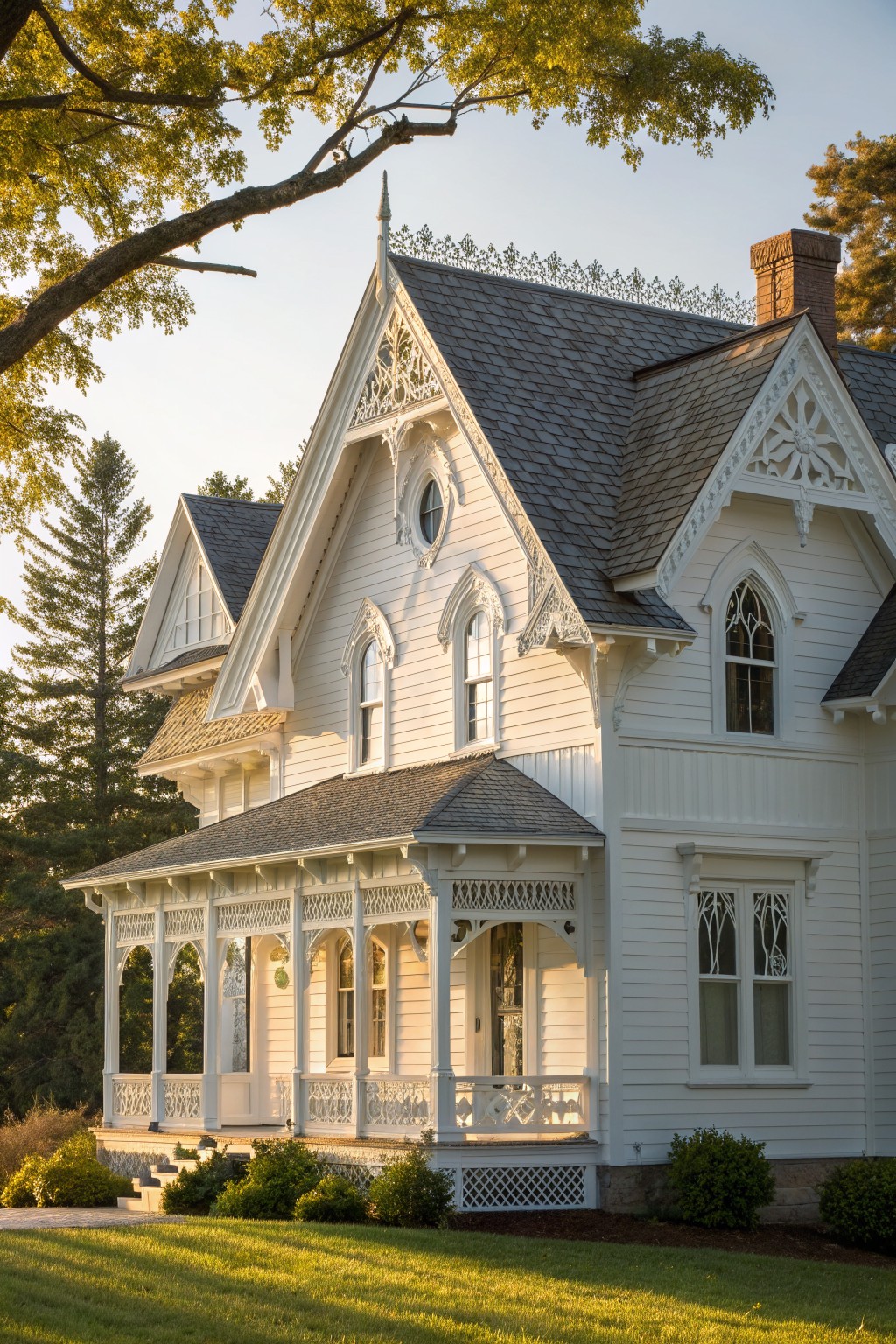
An all-white paint job works well on Victorian farmhouses because it lets the trim stand out through texture and shadow instead of color contrast. The carved brackets, porch railings, and gable details become the main feature without any competing tones pulling attention away.
This approach suits homes that already have strong architectural lines and plenty of trim to work with. Just watch the depth of the details so they still read from the street on overcast days.
White Paint Highlights Decorative Trim
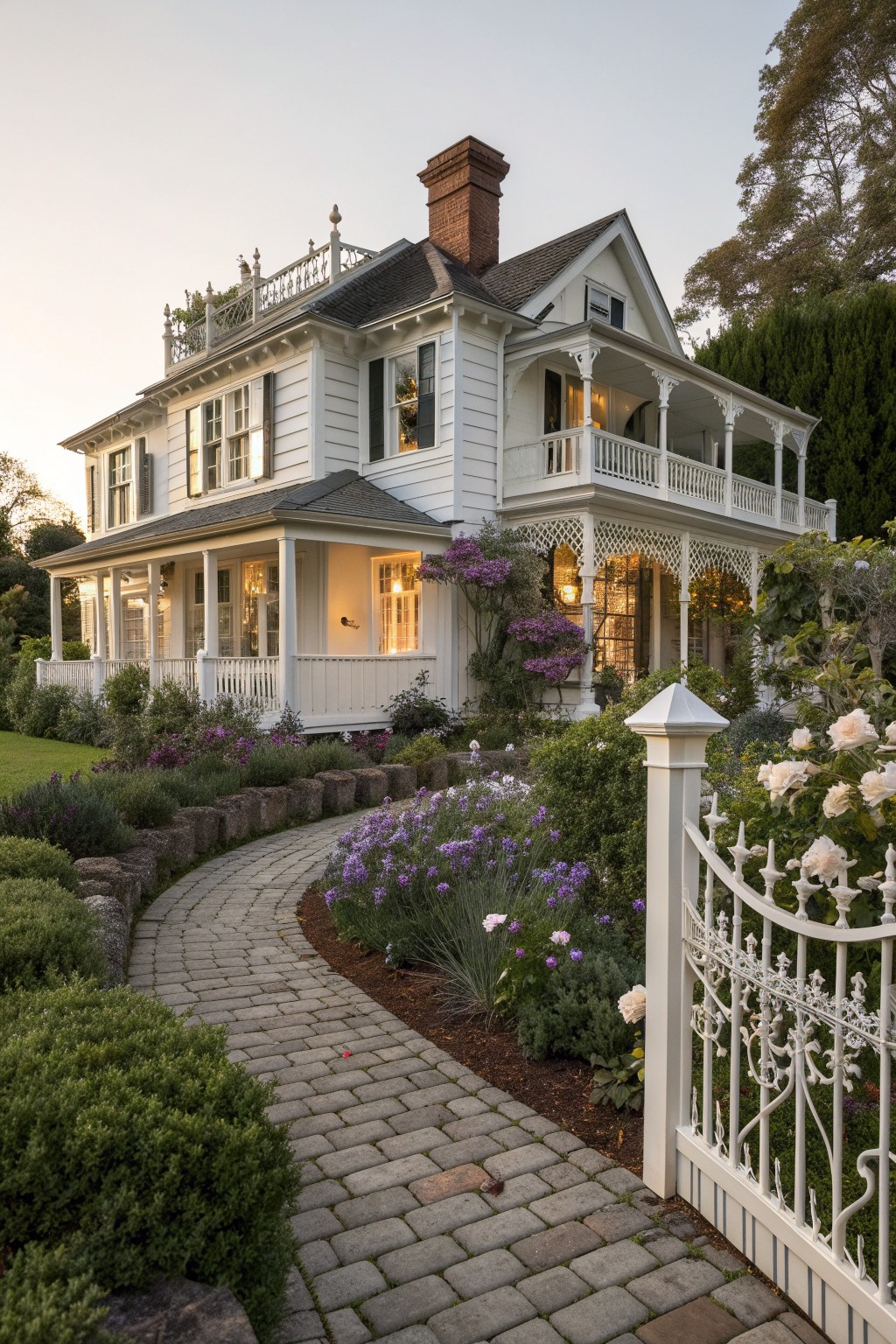
White siding gives Victorian trim the room it needs to stand out. The clean background lets every railing, bracket, and gable detail read clearly instead of getting lost against darker colors.
This works best on farmhouses that already have strong porch and roofline details. Keep the trim the same white or only a shade or two off so the patterns stay crisp from the street.
White Paint Highlights the Trim
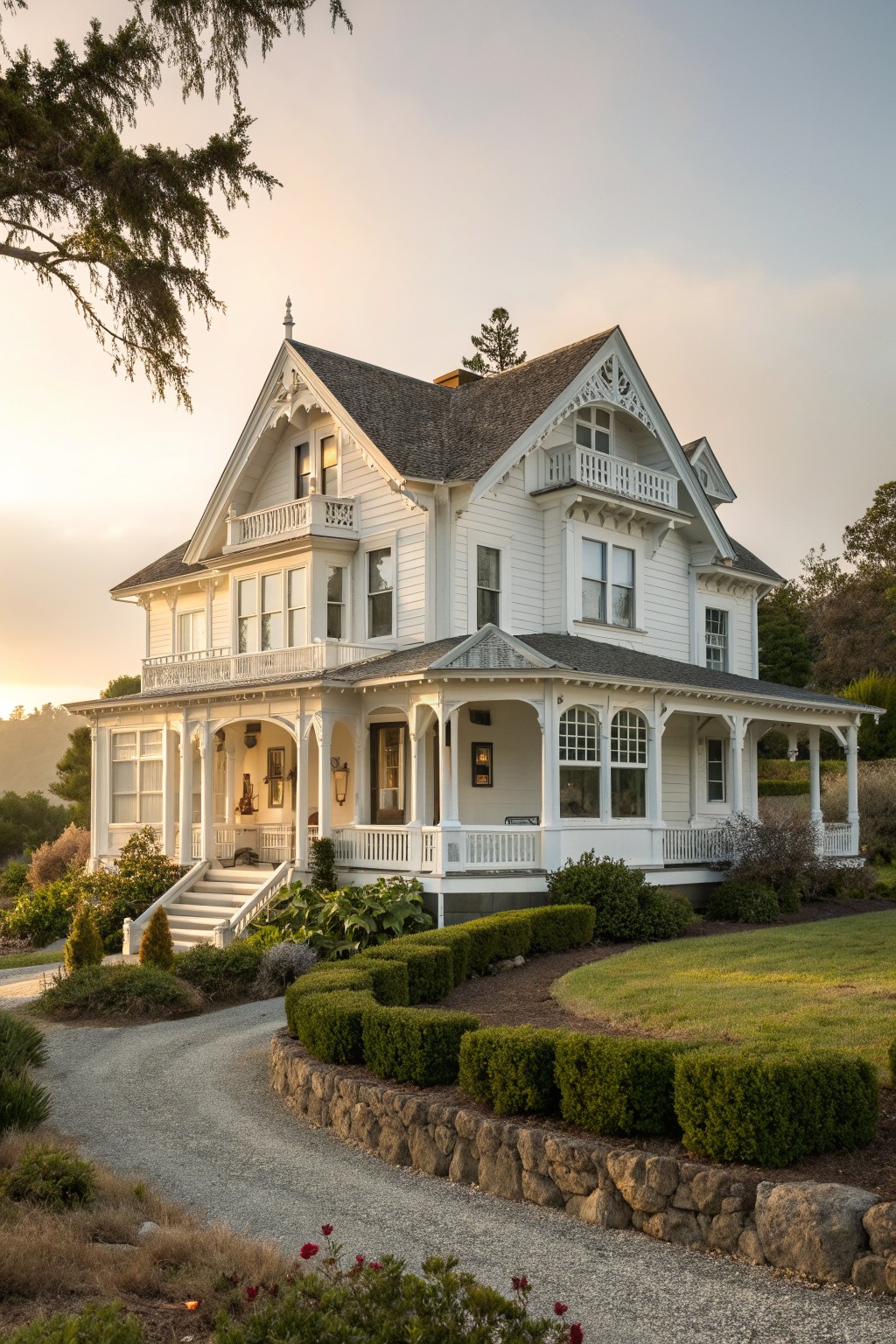
A white exterior is one of the easiest ways to let decorative trim stand out on a Victorian farmhouse. The clean background makes brackets, spindles, and gable details read clearly instead of getting lost.
This works best on homes that already have strong architectural lines. Keep the trim bright white and let the roof or foundation provide the only contrast so the details stay the focus.
White Paint That Lets Trim Details Stand Out
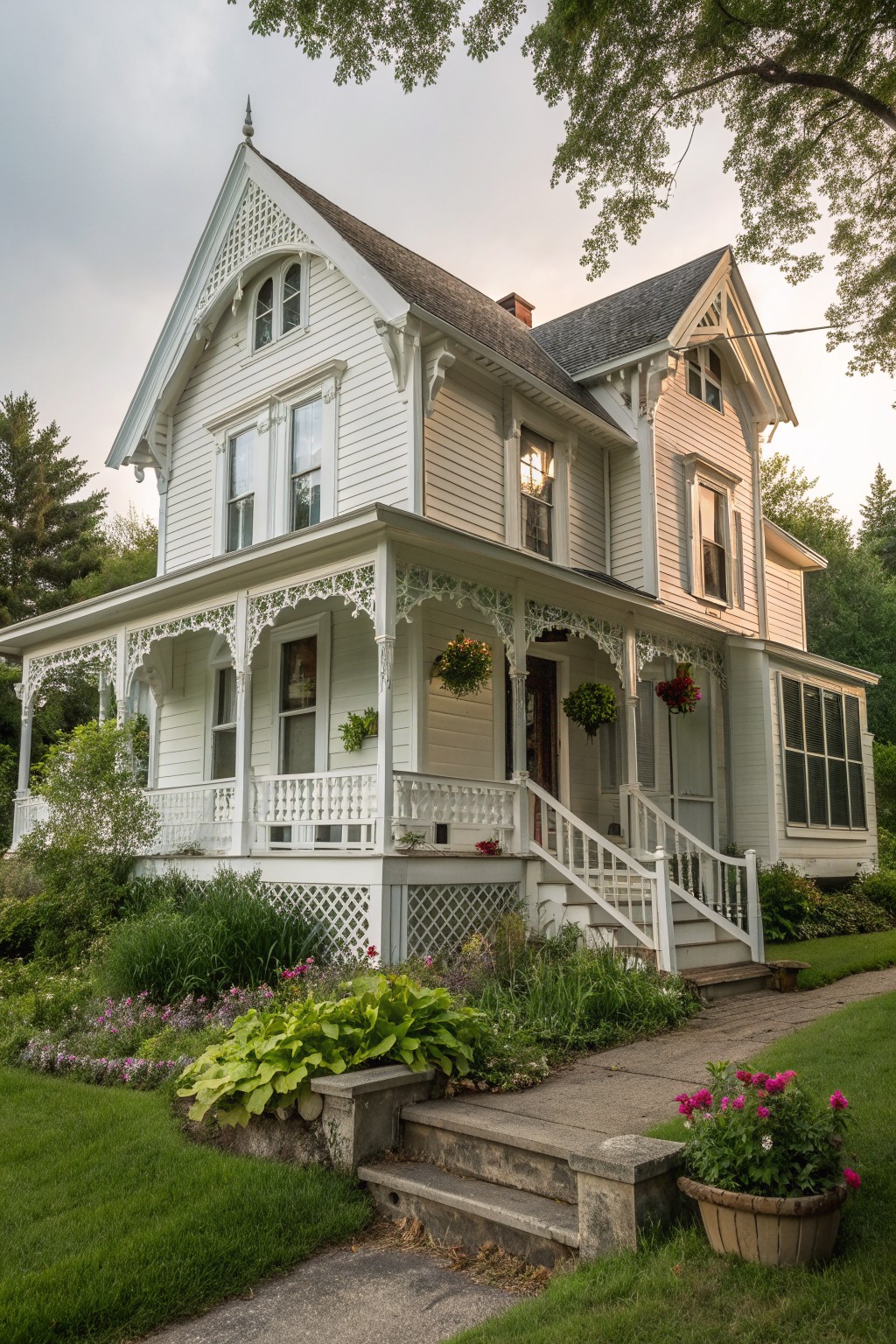
White paint works especially well on Victorian farmhouses when the goal is to show off the trim rather than compete with it. The single color keeps the overall look calm while the patterns on the porch railings and gable ends become the main point of interest.
This approach suits homes that already have good trim condition and a fairly simple roofline. It also helps the house read as classic instead of fussy, which is useful if the property sits on a larger lot with mature trees nearby.
White Paint Lets Trim Shine
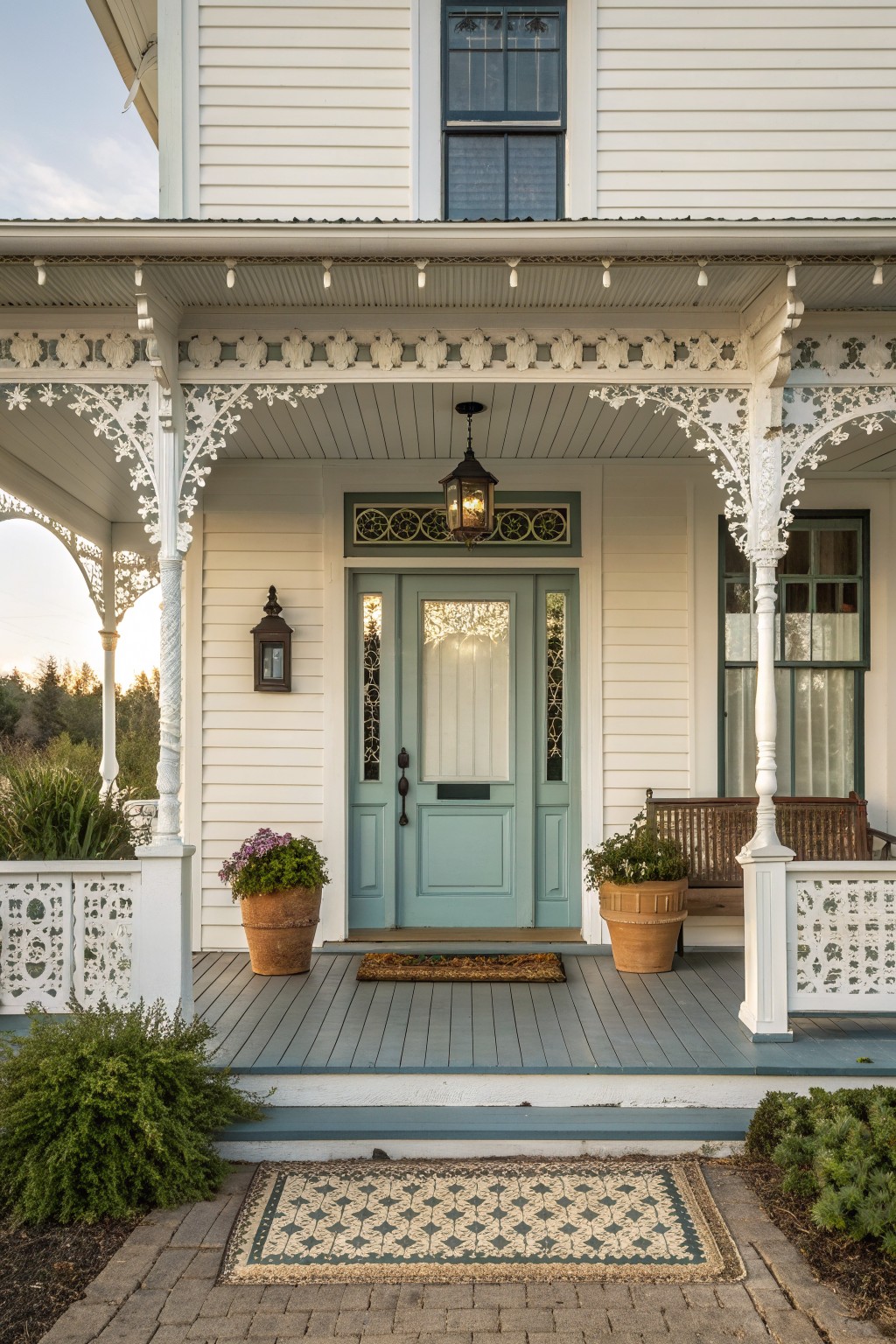
Painting the house white puts all the attention on the decorative trim around the porch and entry. The plain background keeps those carved details from getting lost and makes the whole front feel more defined without extra color.
This works best on Victorian farmhouses that already have strong trim details. Use one consistent white on the siding and let the trim stay crisp so the pattern reads clearly from the street.
Decorative Trim Defines White Victorian Exteriors
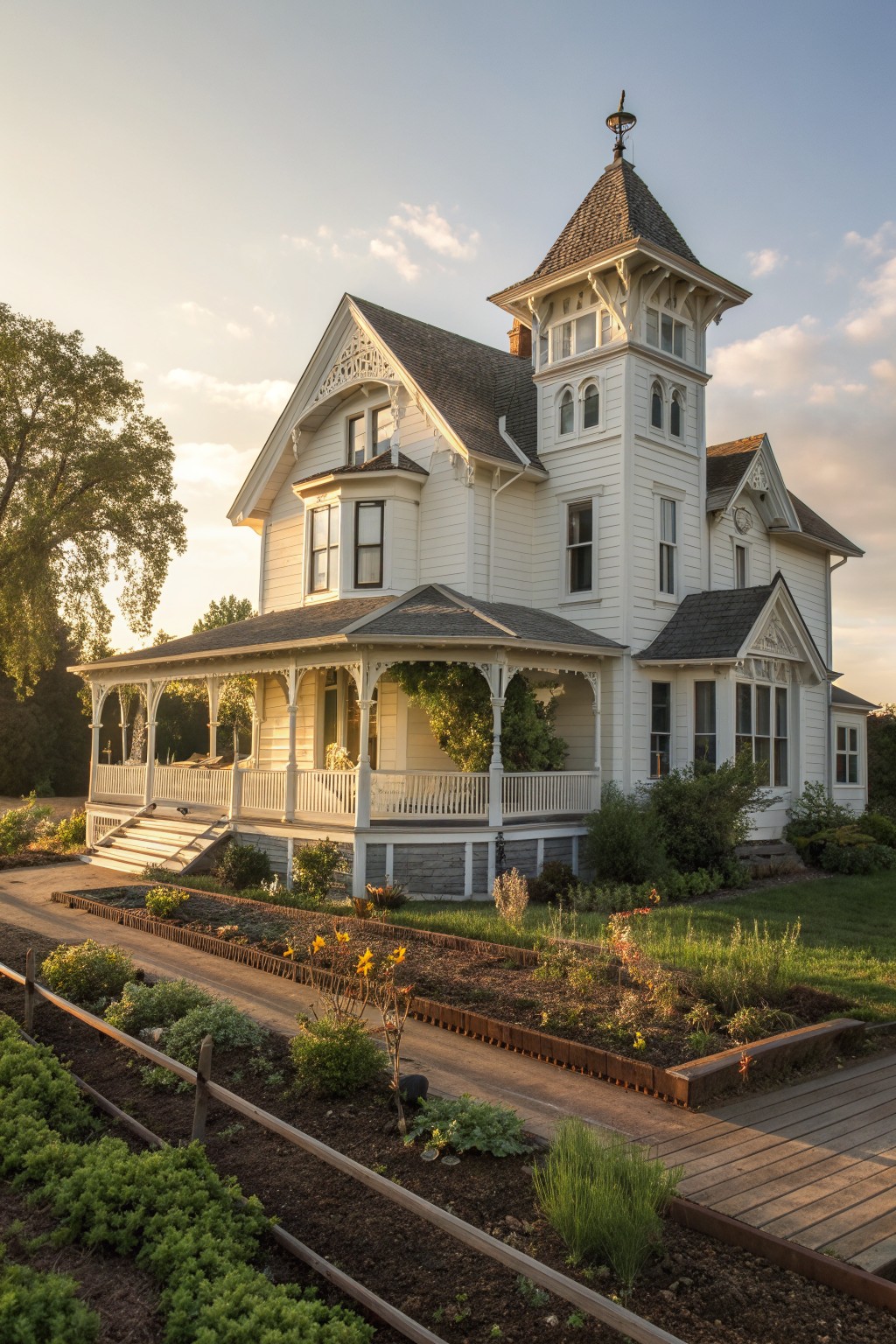
White siding makes every bit of trim stand out, and this house shows how well that works on a Victorian farmhouse. The details around the porch, gables, and tower give the whole exterior shape and character without any extra color.
This approach suits homes that already have strong rooflines and porches. Paint the trim the same white or a very close shade so the patterns read clearly instead of getting lost against the siding.
White Paint Highlights Victorian Trim Details
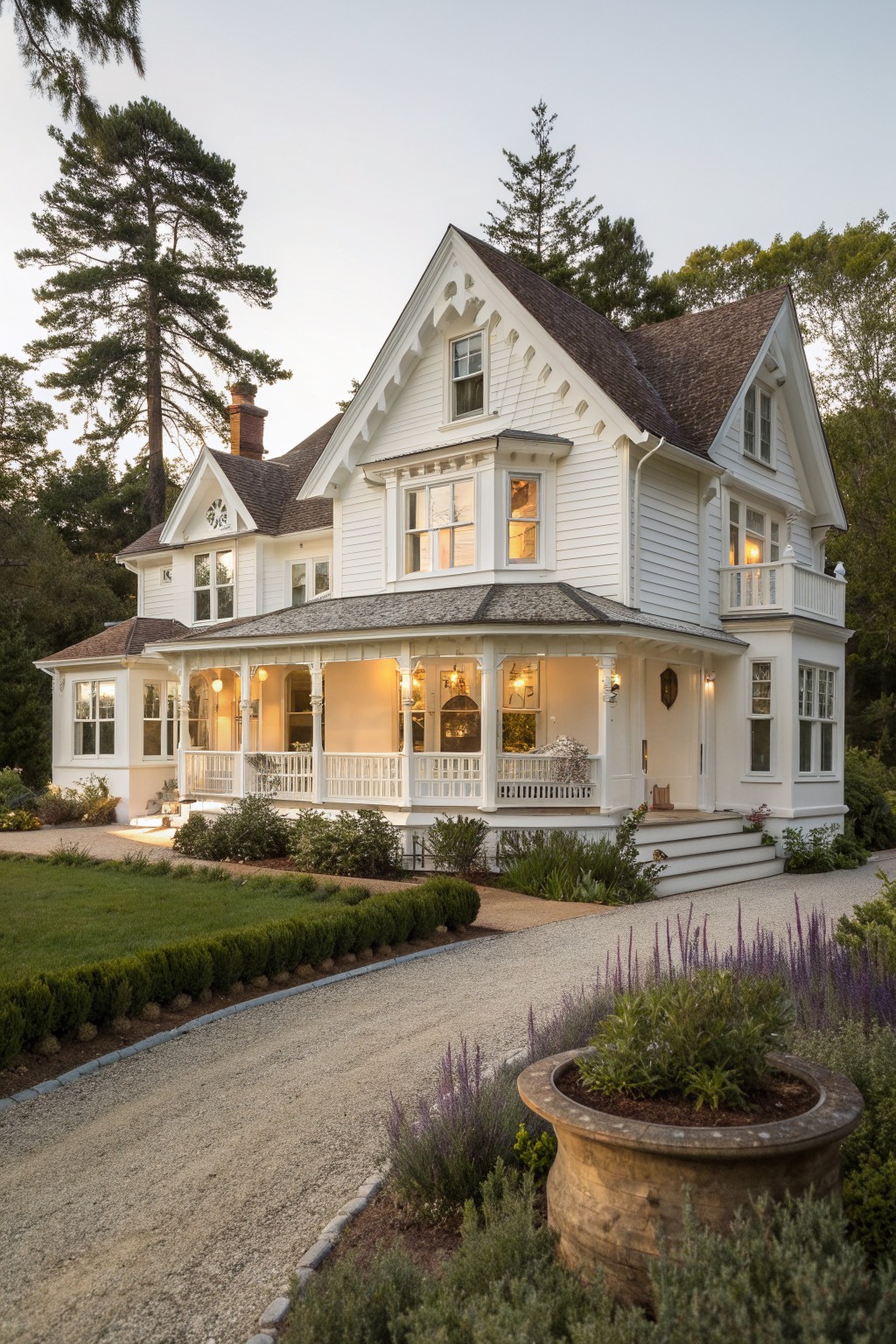
An all-white exterior works well on Victorian farmhouses because it lets the trim stand out through shape and shadow instead of color. The clean background keeps the focus on the brackets, spindles, and window details that define the style.
This choice suits homes that already have strong architectural trim and gives them a crisp look without adding extra colors to maintain. It works best when the trim profiles are deep enough to catch light and create contrast on their own.
Letting Decorative Trim Define A White Farmhouse
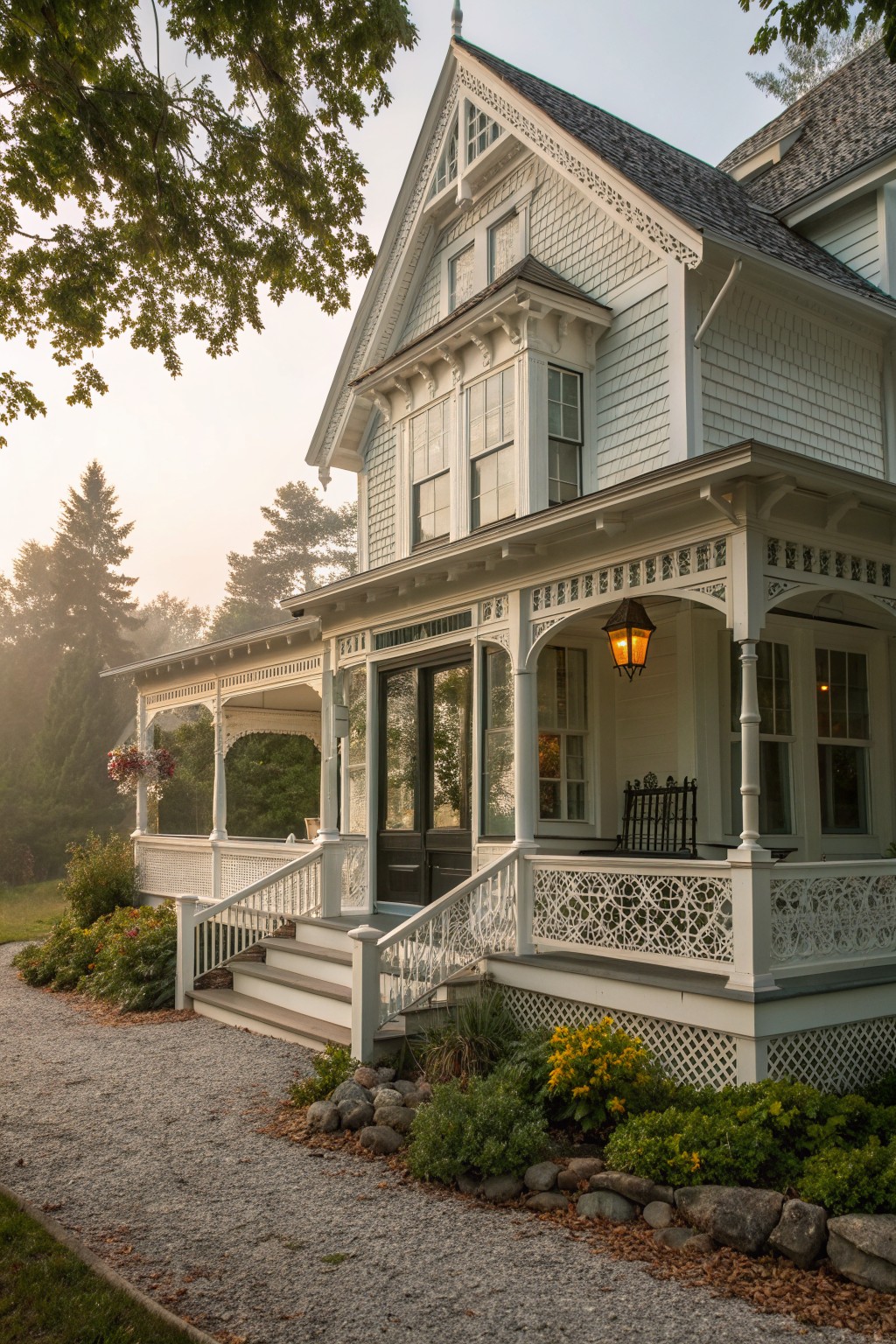
White paint makes the trim the real star on a Victorian farmhouse. The clean background lets every cutout and spindle stand out, especially along the porch and roofline where the details are most visible.
This works best on homes that already have good original woodwork. Keep the siding and roof simple so the trim stays the main point of interest instead of getting lost in extra color or pattern.
Decorative Trim On All White Exteriors
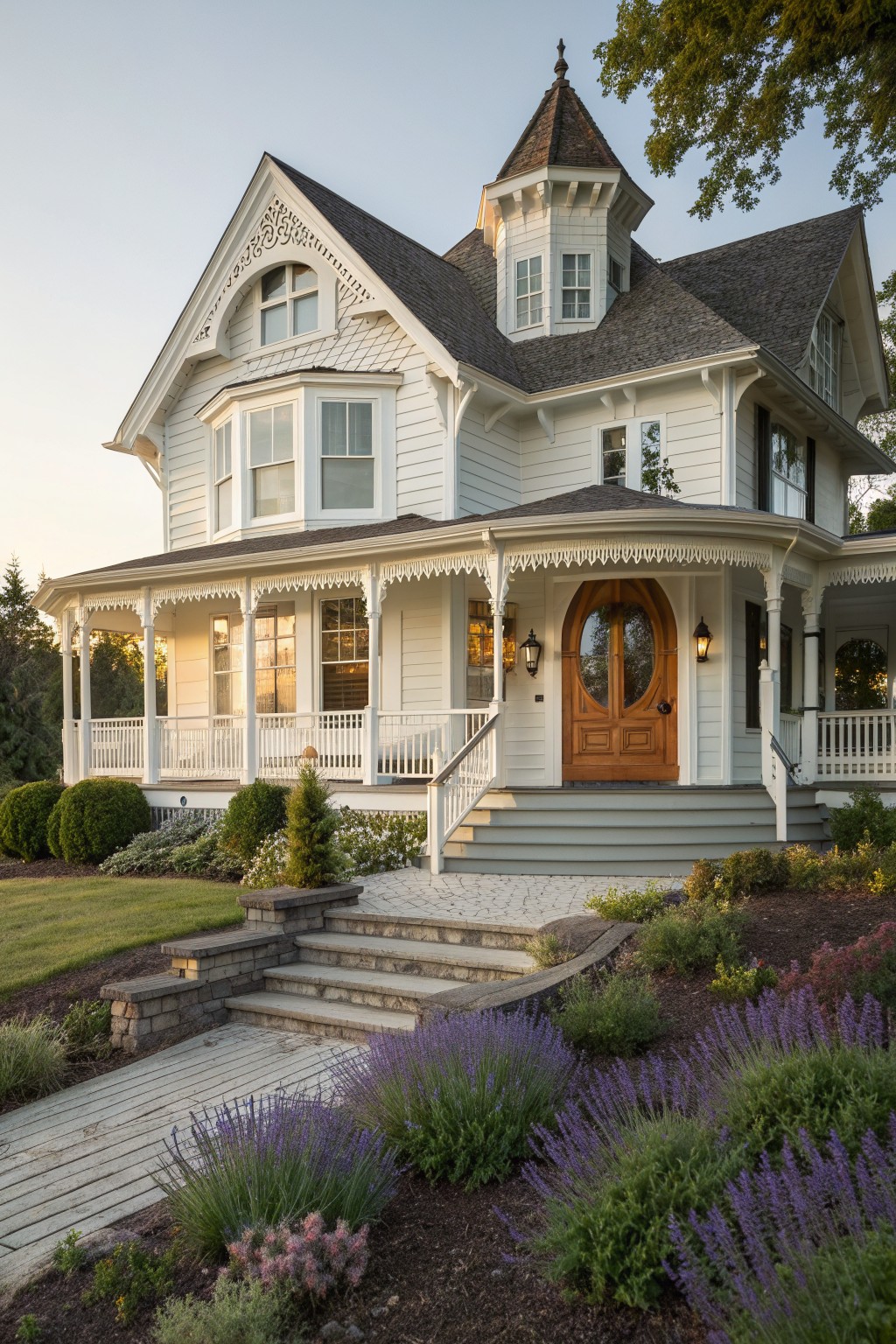
White exteriors can feel flat without something to break them up. Intricate trim gives the house shape and character by creating shadows and patterns across the surface. It turns a simple color choice into something more interesting without adding any other hues.
This works best on Victorian and farmhouse styles where the trim already has detail. Keep the siding and trim the same color so the shapes stand out clearly. Watch the scale of the patterns too, since smaller details can get lost from the street.
Frequently Asked Questions
Q: How much trim should I add to get that classic look without going overboard? A: Focus on key spots like windows and the porch first. Those areas show off the decorative details best against the white siding. Add more only if it still feels light and airy.
Q: Can I paint my existing trim white to match these farmhouses? A: Yes, a fresh coat of white paint transforms plain trim quickly. Choose a durable exterior paint that holds up to weather. Sand and prime first for a smooth finish that lasts.
Q: How do I make sure the trim details stand out on a white house? A: Use a gloss or semi-gloss finish on the trim pieces. The slight shine catches light differently than flat siding paint. This simple change highlights every curve and edge.
