

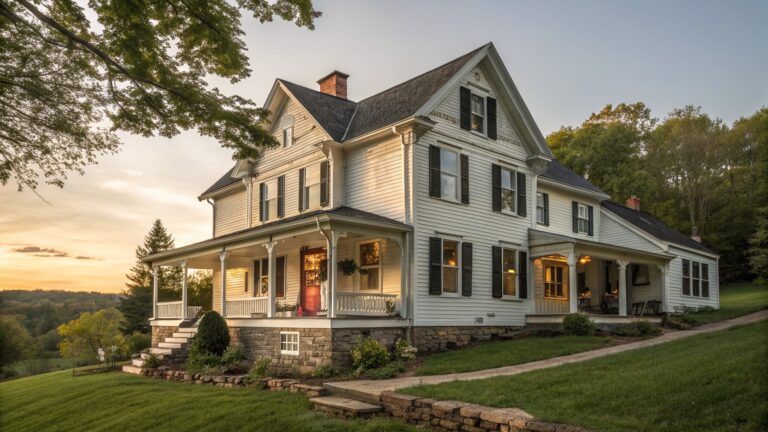
I’ve always noticed that the best Victorian farmhouses balance ornate trim with simple lines so the exterior feels both detailed and welcoming from the road.
Choosing paint colors and siding materials matters more than people expect because they need to hold up against weather while still looking right on an older structure.
Some details stand out more once you see them in person.
Adapting those porch railings or window surrounds can shift how the whole front reads without changing the core layout of the home.
Over time I have found that testing one or two elements first helps avoid choices that might not suit the age or setting of the property.
Wide Porches That Balance a Tall House
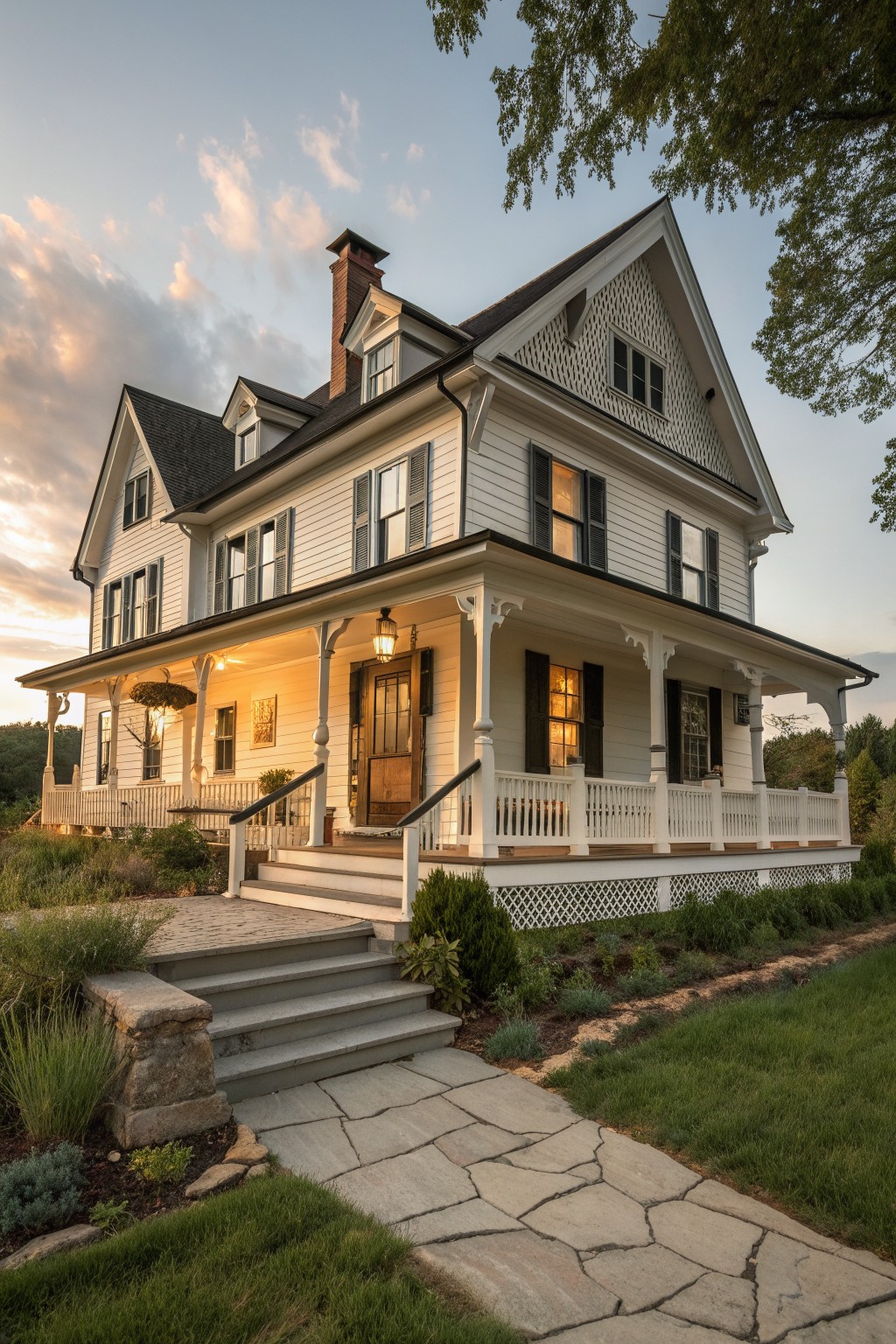
A wide front porch helps keep a tall Victorian farmhouse from feeling too vertical. The low roofline and steady row of columns pull the eye outward, which makes the whole place feel more settled on the ground. Homeowners often find this layout works especially well on older homes where the second story already sits high.
Use the same white railing and simple post style that already appear on the house so the porch reads as part of the original structure rather than an add-on. It suits country settings where people want a spot to sit without building a separate deck. Just keep the depth generous enough for chairs and still leave room for the front door to open outward.
Green Trim Against White Siding
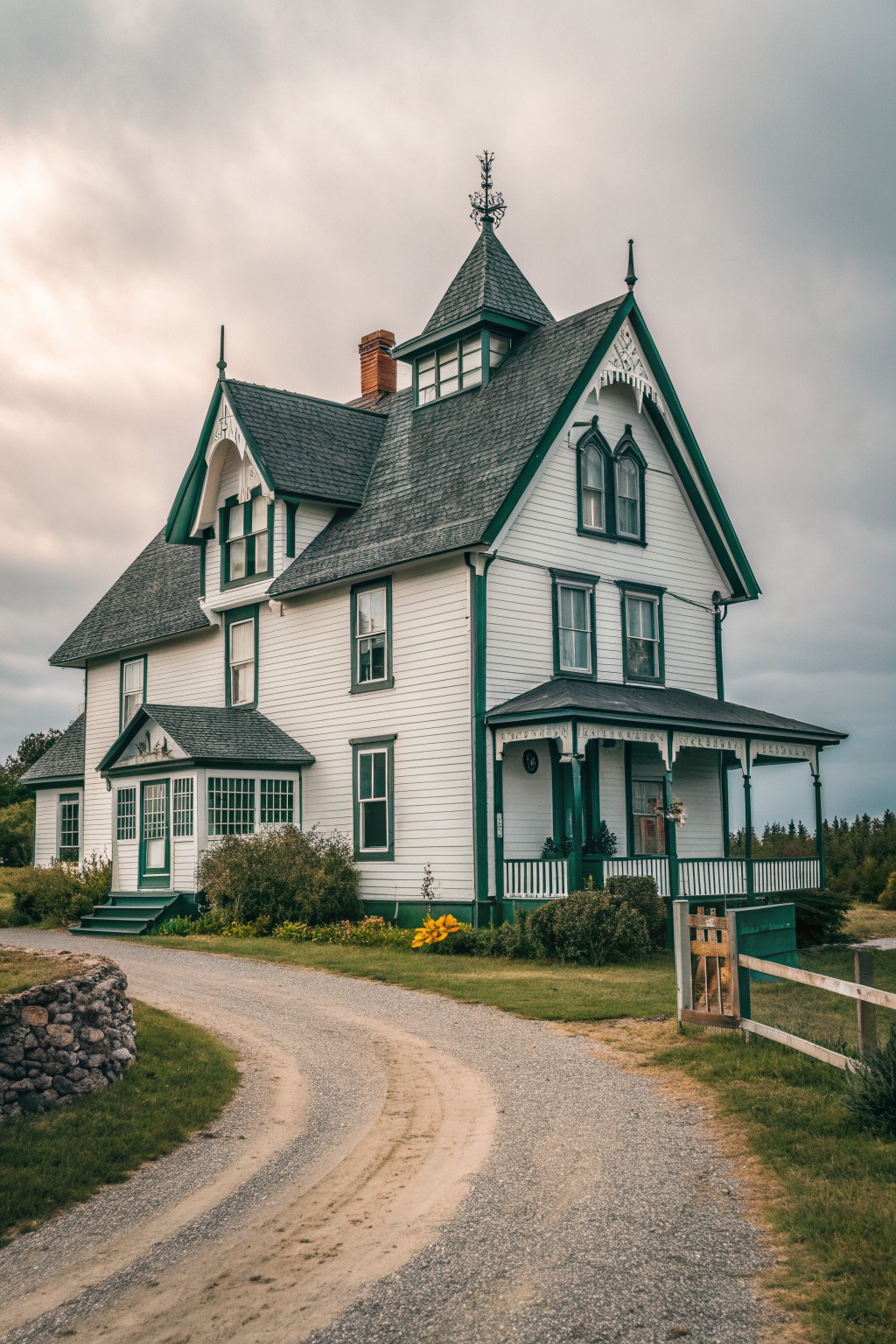
White siding paired with deep green trim gives Victorian farmhouses a clean look that still shows off all the roof peaks and window shapes. The contrast makes the details stand out without adding extra decoration.
This approach works best on older country homes that already have strong gable lines and a front porch. Keep the green on the darker side so it reads well from the road and holds up against the white over time.
Add Rugs and Textiles to Your Porch
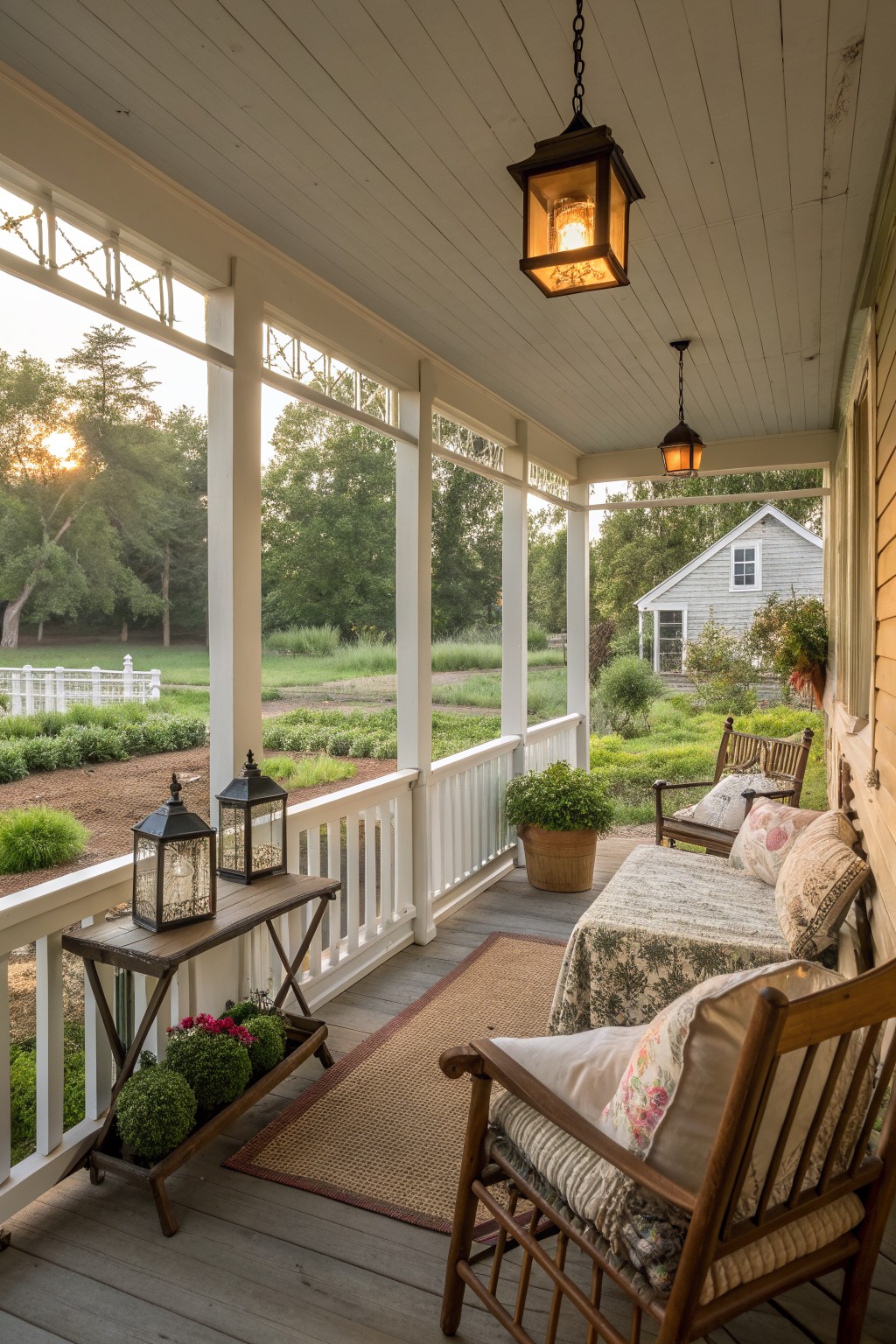
One simple way to make a porch feel more usable is to bring in a rug and some soft cushions. The woven rug under the seating pulls the chairs and daybed together so the space reads like an outdoor room instead of a row of furniture along the railing.
This approach suits older farmhouses with wide covered porches. Pick sturdy outdoor fabrics that can handle sun and moisture, and keep the layers light so everything is easy to move or store when the weather turns.
Add a Pergola for Simple Outdoor Seating
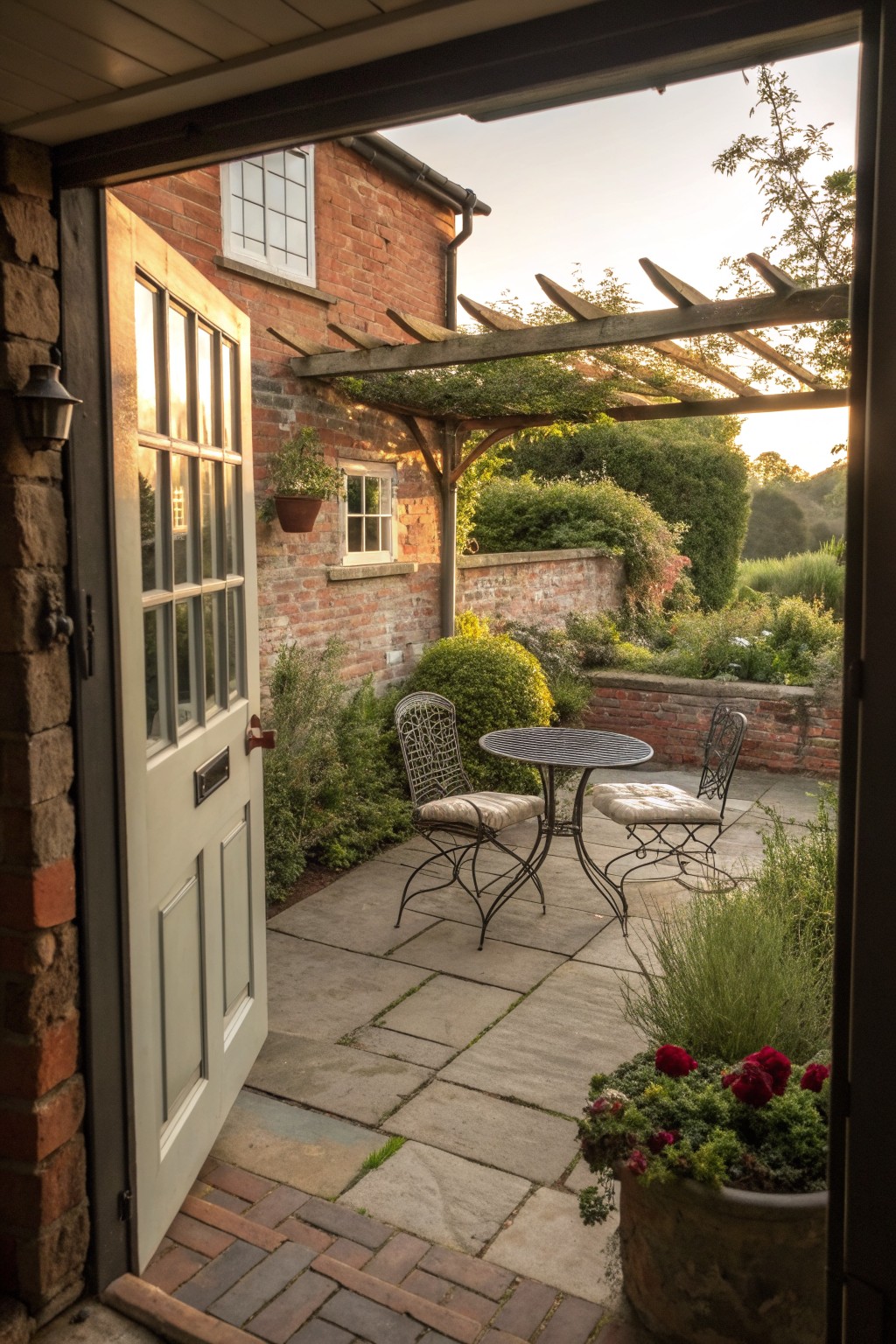
A small patio placed right outside the back door gives a Victorian farmhouse an easy place to sit without needing a large yard. The pergola adds just enough overhead cover while still keeping the area open to the garden and sky.
This setup works best on homes where the back door leads straight to a paved spot. Use simple metal furniture that can stay out year round and let climbing plants cover the beams over time. It stays practical and does not compete with the brick walls or older windows nearby.
Add Ornate Trim to Gables and Windows
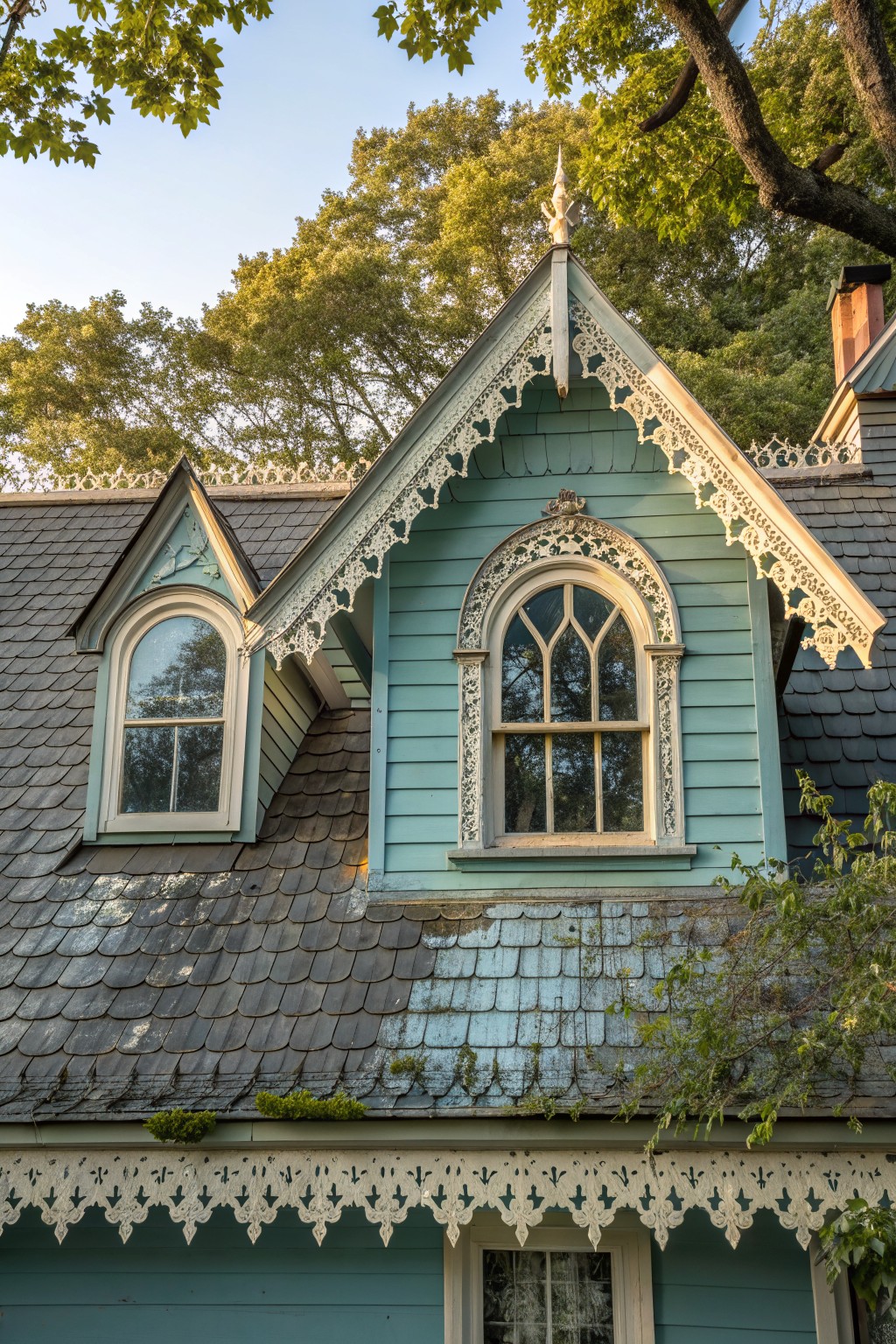
Many Victorian farmhouses stand out because of the detailed wood trim along the roof peaks and around the windows. That extra layer of scrollwork and brackets gives the house its classic shape without needing a lot of other changes.
Place the trim where the eye naturally lands, such as on the front gable and the main window. Keep the color light against darker siding so the pattern reads clearly from the road. This works best on homes that already have a steep roof and simple wall surfaces.
Layer Outdoor Lights Along A Porch For Evening Use
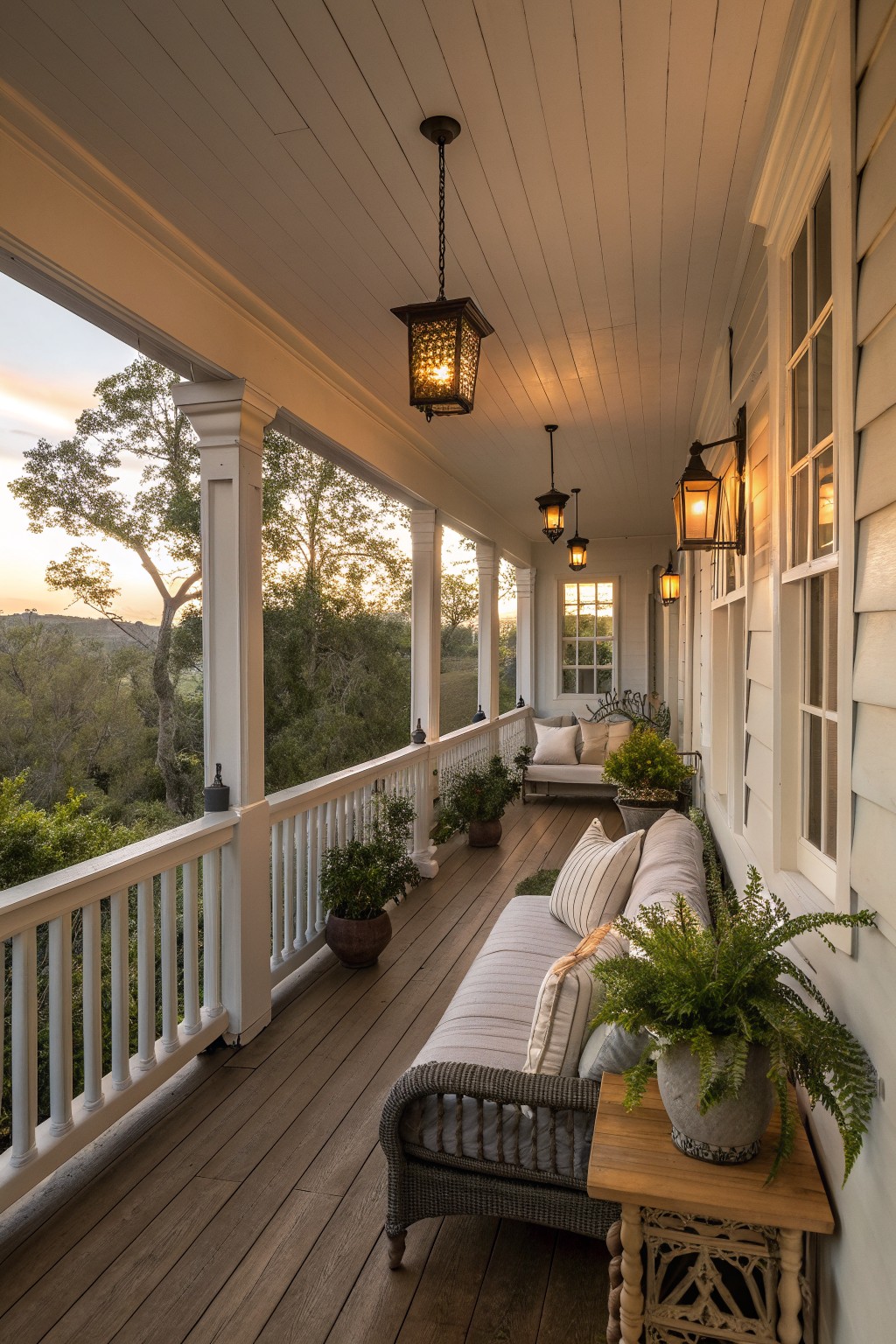
Many Victorian farmhouses have wide porches that sit empty after dark. A simple mix of hanging lanterns and wall-mounted lights turns the space into an area people actually use once the sun goes down.
Run one or two larger fixtures from the ceiling and add smaller sconces along the siding. This approach suits long porches on historic homes and keeps the light even without needing modern fixtures.
Cupolas Add Height to Farmhouse Rooflines
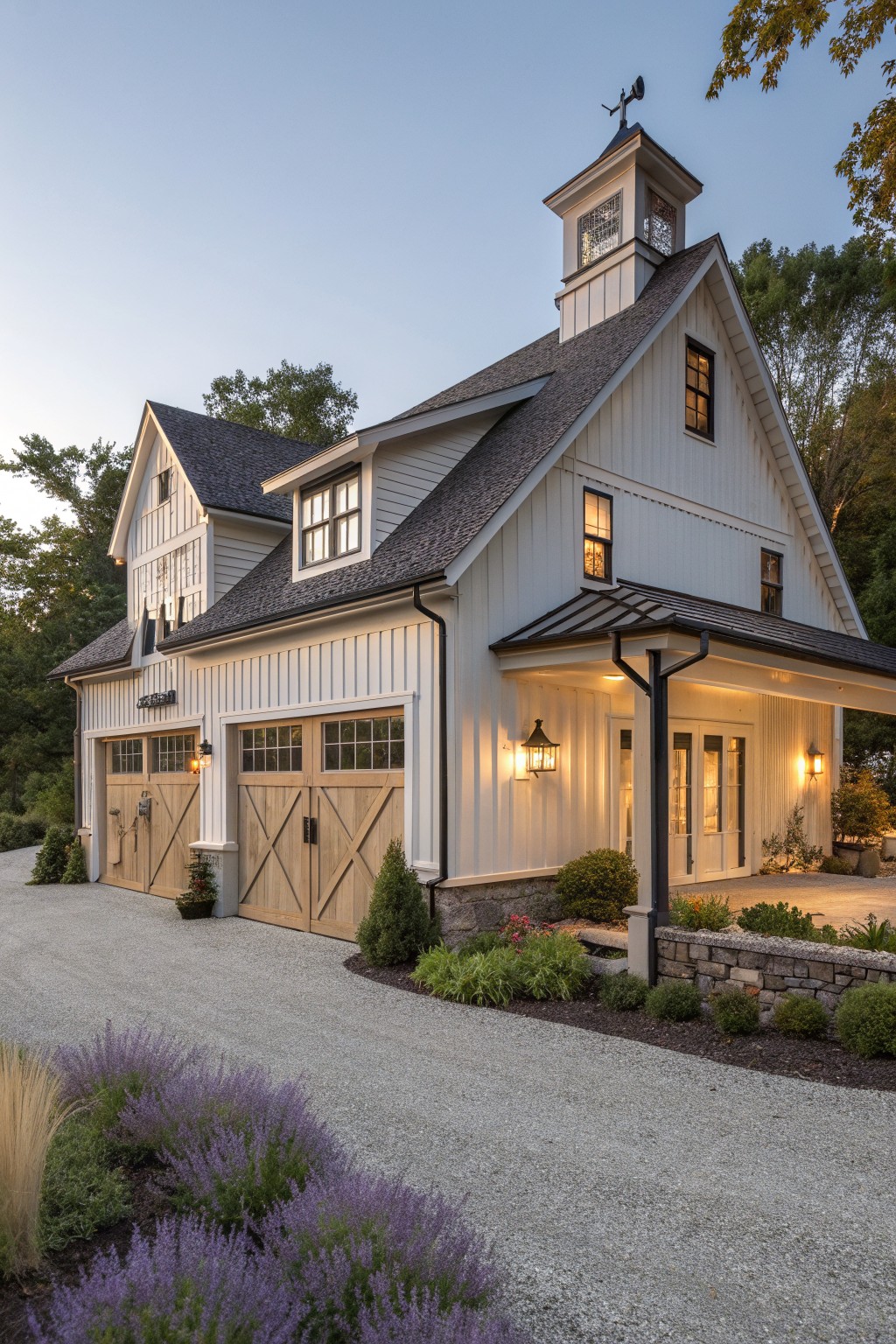
A cupola gives a Victorian farmhouse roof the lift it often needs. It breaks up a large roof surface and creates a focal point that feels natural on older country homes rather than added later.
Place one centered on the main ridge when the roof pitch is steep enough to support it. Keep the size in proportion to the house so it reads as part of the original design instead of an afterthought.
Use an Arched Entry with Columns
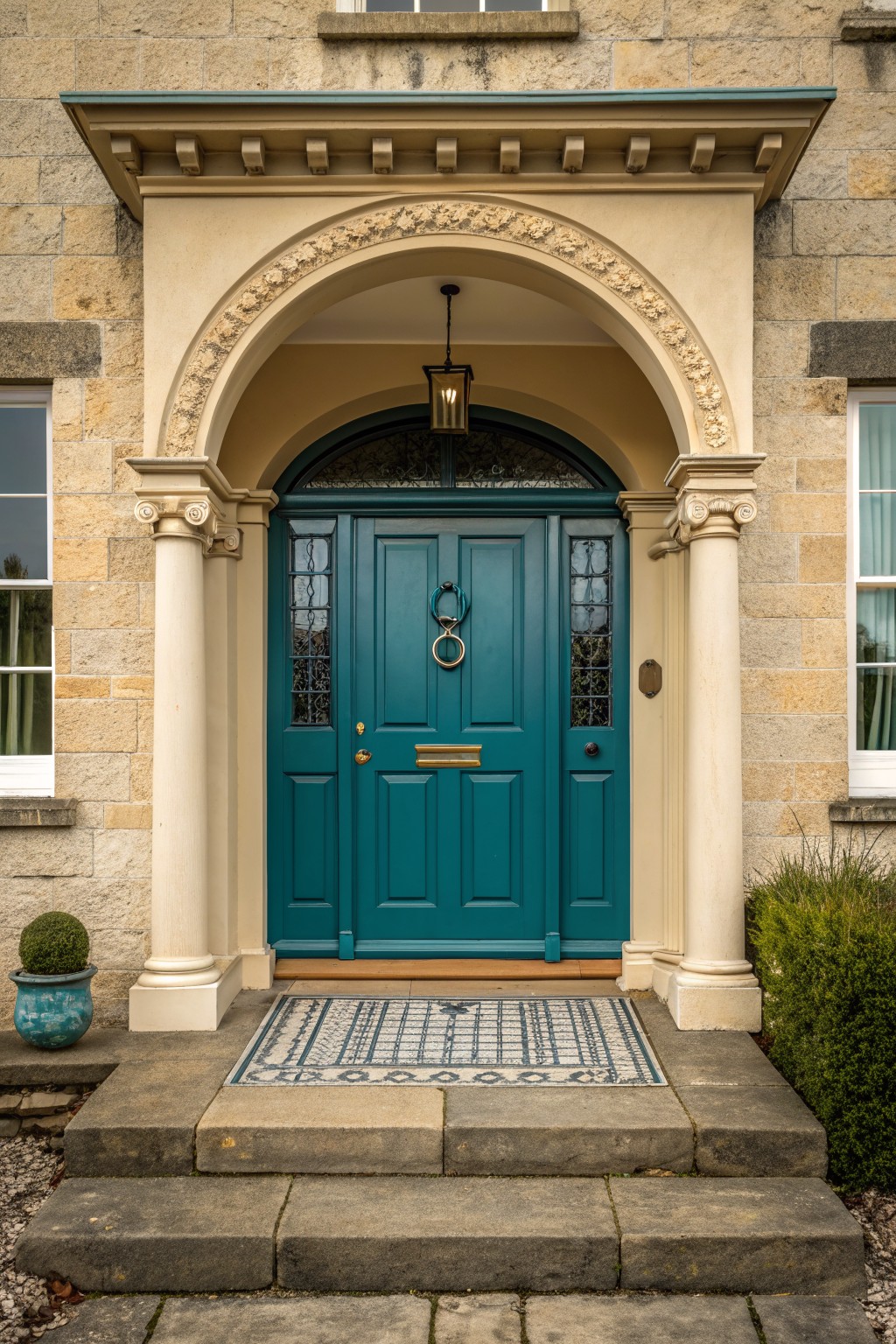
An arched entry framed by columns gives a farmhouse exterior more structure and presence. It draws attention to the door without needing extra trim or ornament, and the curve softens the straight lines of the stone facade.
This detail works best on homes with masonry walls where the arch can sit naturally above the opening. Pair it with a solid door color that stands out against the stone, and keep the columns simple so the whole entry feels balanced rather than busy.
Conservatory Additions for Farmhouses
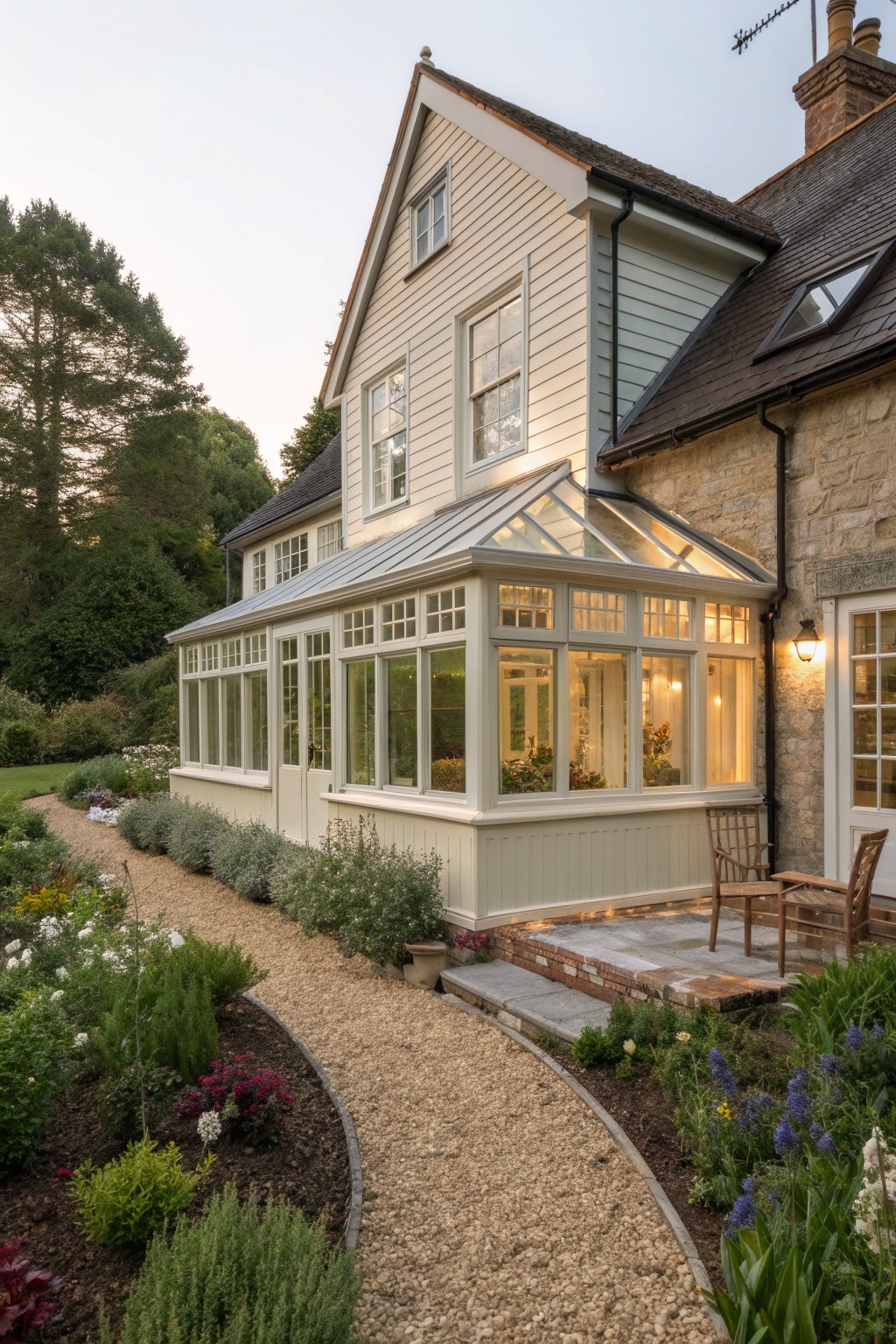
A glass conservatory gives a Victorian farmhouse extra light and a direct link to the garden without changing the main structure. It works especially well on homes that already have some stone or siding, since the lighter frame keeps the addition from feeling heavy.
Place it on a side or rear wall where the path can curve around it naturally. Keep the base simple with painted wood to match the house, and let the surrounding beds soften the edges so the whole thing feels like part of the original layout rather than a later addition.
Winding Stone Paths
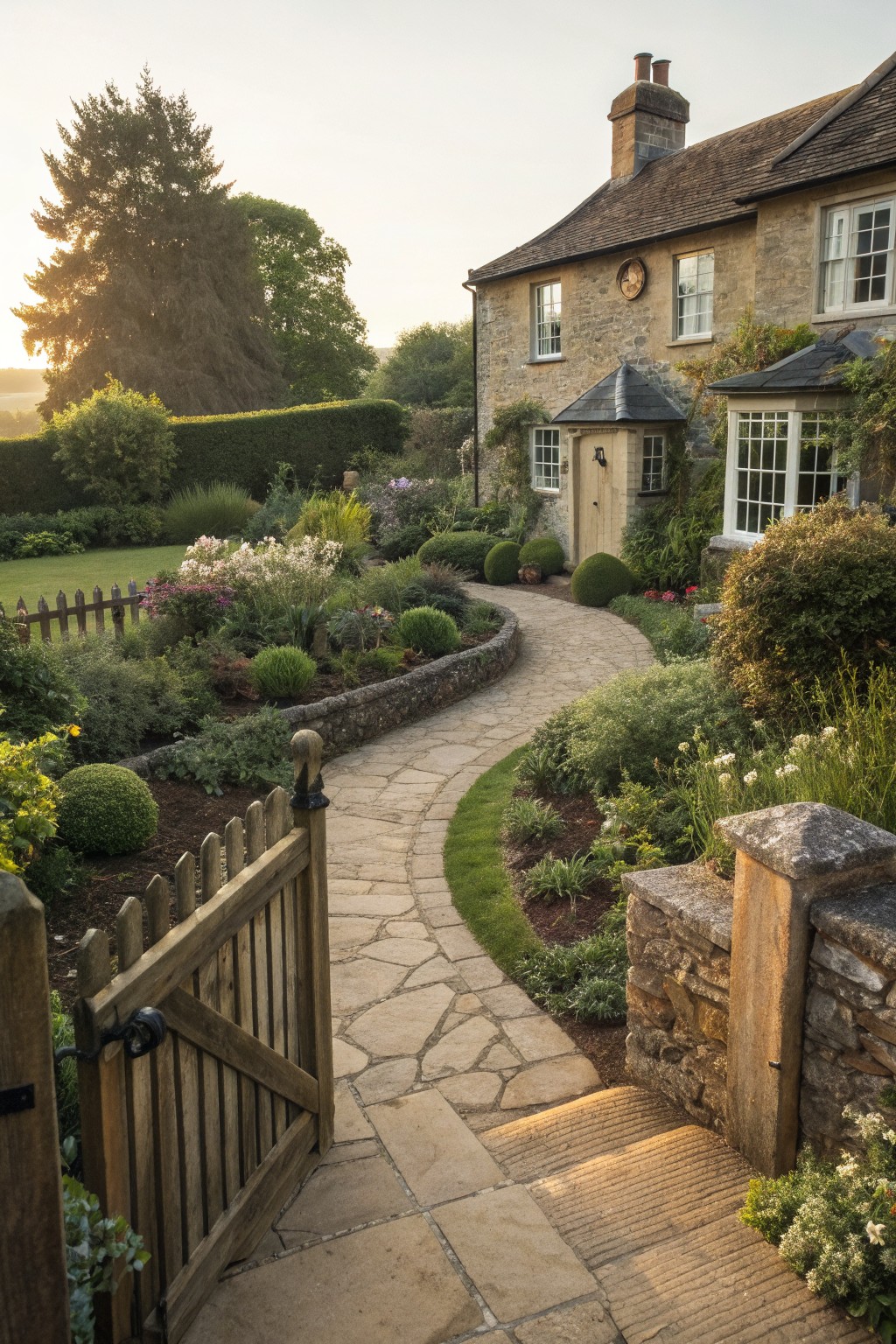
A gently curving stone path does more than just get you to the door. It slows the approach, softens the transition from garden to house, and gives the whole front yard a settled, lived-in feel that suits older farmhouses.
This works especially well on homes with a bit of distance from the road or a larger front garden. Keep the path narrow enough to feel intimate, use irregular stones so it looks established rather than new, and let the planting beds on either side grow a little loose at the edges.
Set Up a Long Table for Outdoor Dining
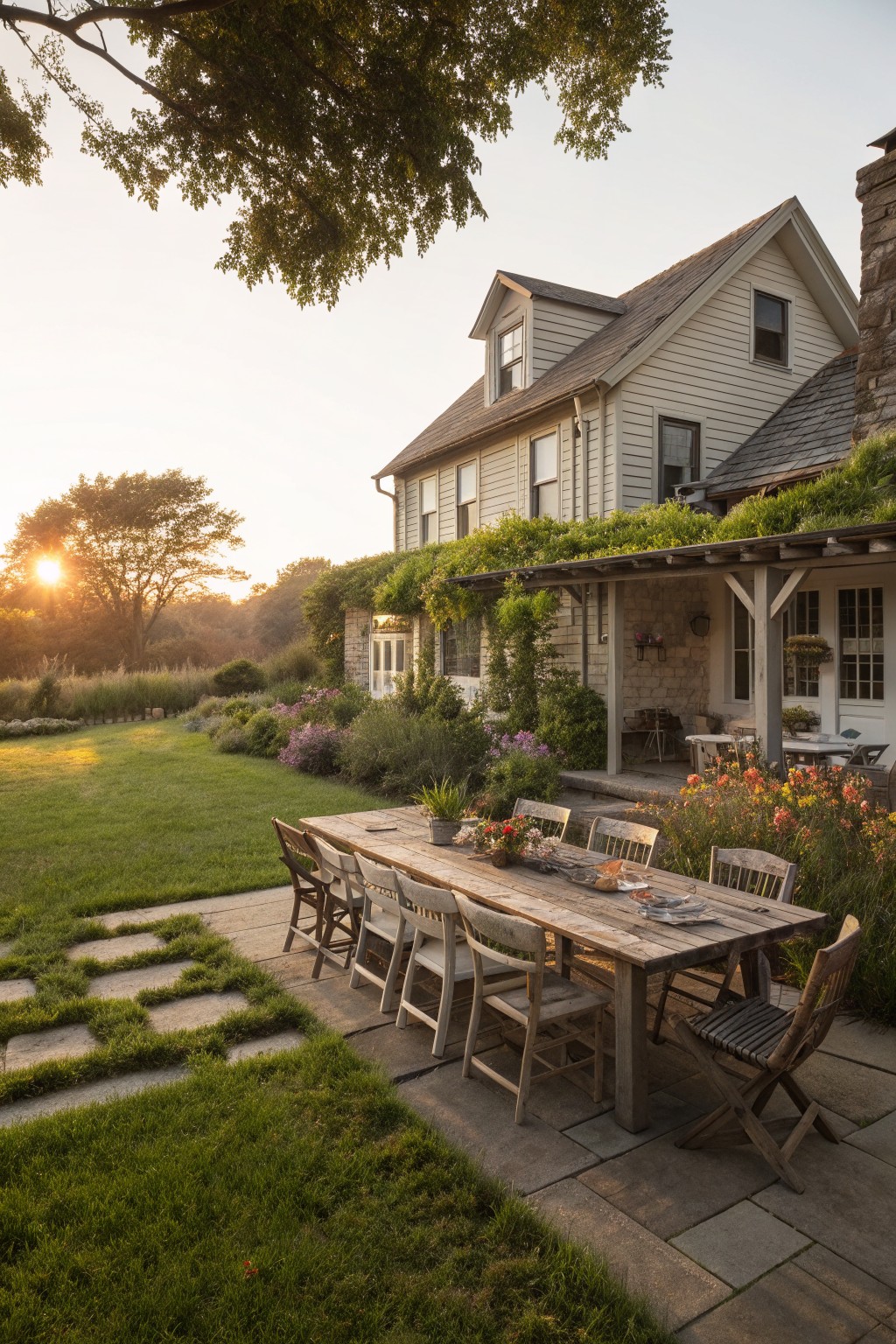
A long wooden table right off the house gives the patio a clear purpose. It turns an open side area into a place where meals happen without needing to go inside, and the scale of the table helps the space feel settled next to the older architecture.
This works best on homes that already have some hard surface next to the back or side wall. Keep the chairs simple and varied so the setup stays casual. Make sure the table leaves room to walk around it and does not crowd doors or windows.
Wraparound Porches on Farmhouses
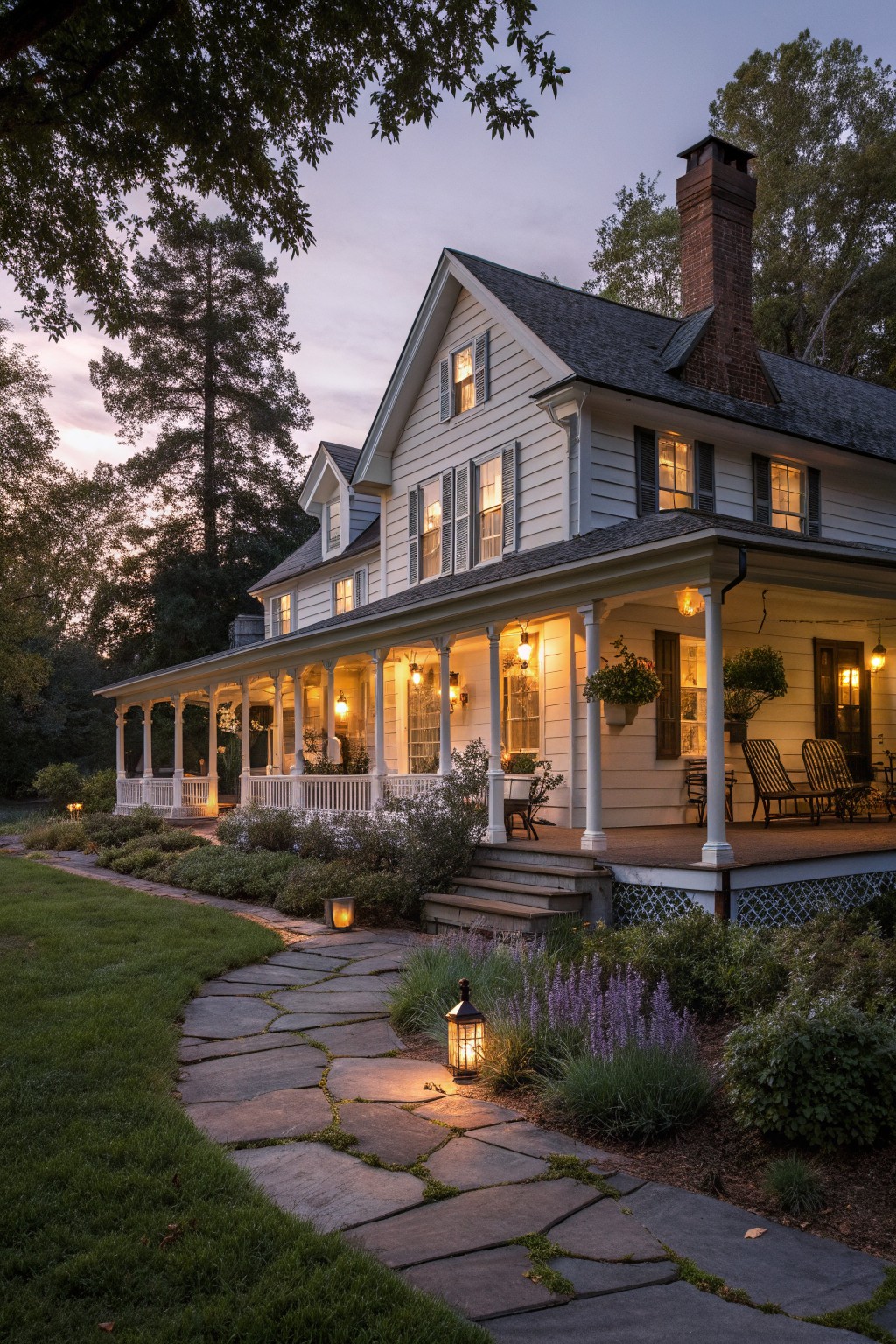
A wraparound porch gives a Victorian farmhouse its easy, settled look. The porch stretches along the front and side, turning what could be a plain wall into usable space that feels part of the house rather than an add-on.
This works well on both older homes and newer ones built in a similar style. Keep the columns and railings plain and painted white, then add simple lights along the edge so the porch stays usable after dark. Just make sure the roofline stays in proportion with the rest of the house.
Dark Siding With White Trim
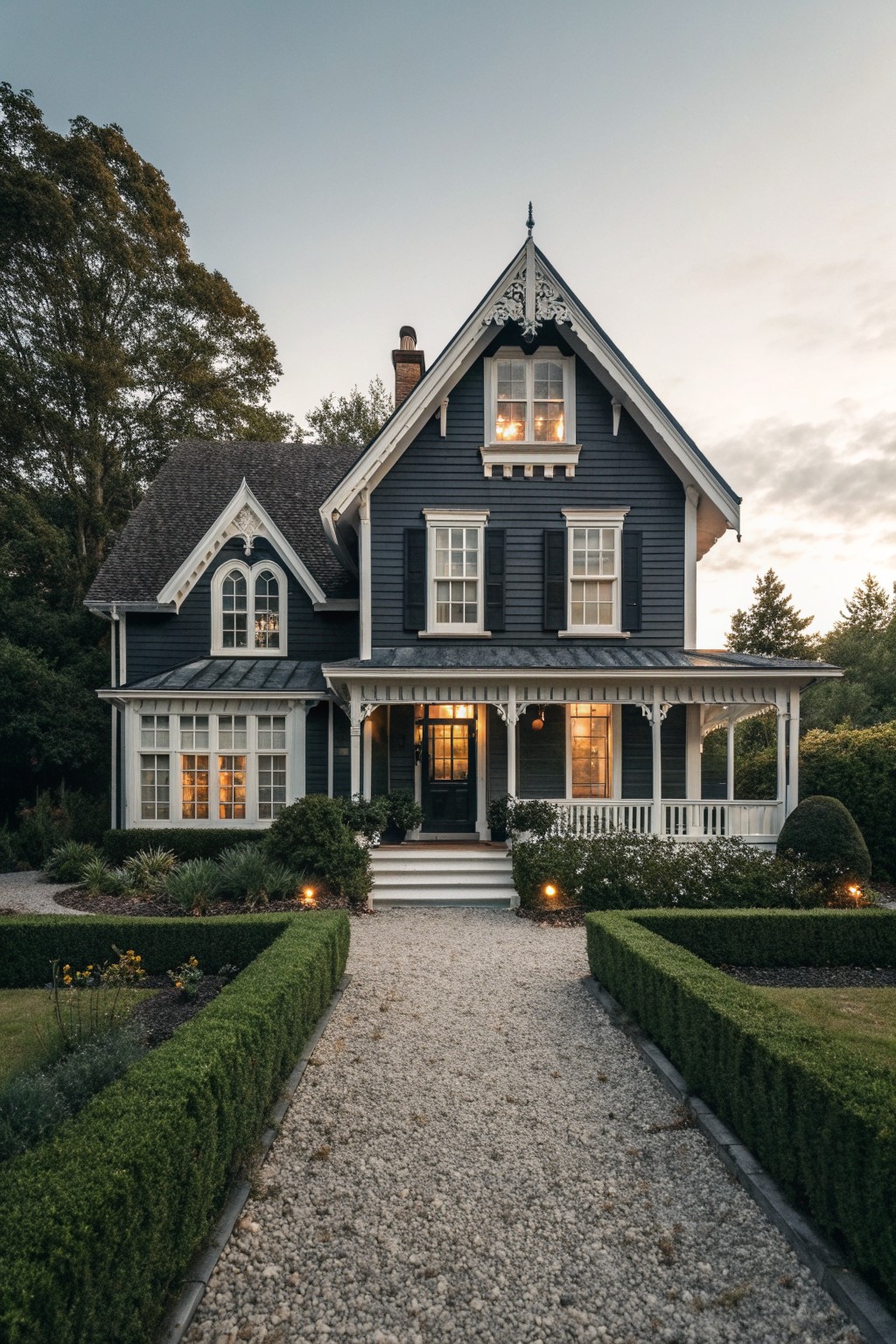
Dark siding paired with crisp white trim gives a Victorian farmhouse a clean, classic look that holds up over time. The contrast helps the gables, brackets, and window frames stand out without any extra ornament.
This works best on older country homes where the goal is to keep the architecture visible from the road. Use a flat or eggshell finish on the siding so the white trim stays sharp and does not compete with glare.
Classic Entry Porticos on Stone Homes
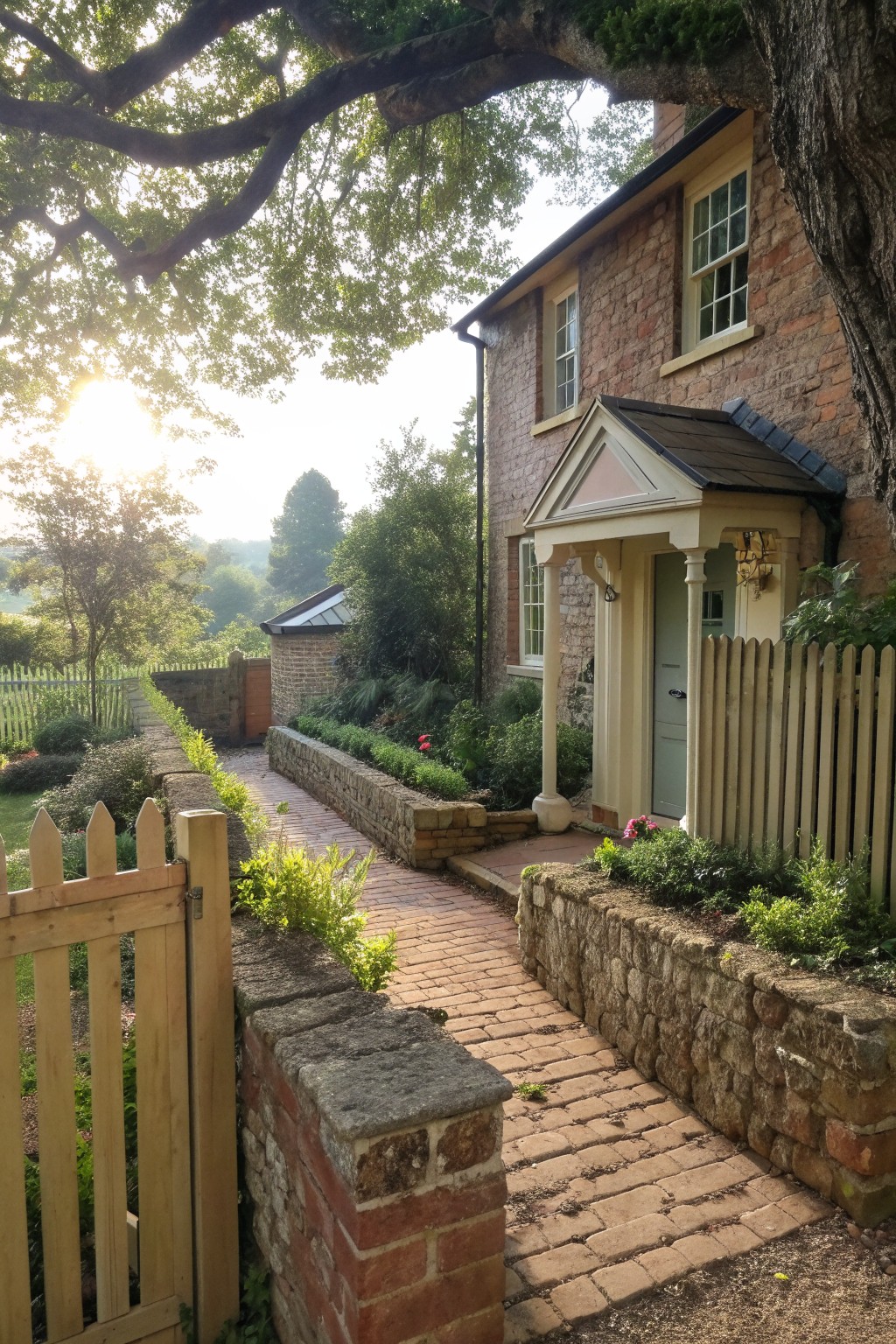
A small portico over the front door gives a stone farmhouse a clear focal point without adding too much extra detail. It breaks up the flat wall, marks the entrance, and keeps the overall look simple and balanced.
This approach works best on older homes with solid masonry walls. Keep the portico modest in scale, use painted columns, and match the roof pitch to the main house so it feels like it belongs rather than an add-on.
Match Stone From House To Patio
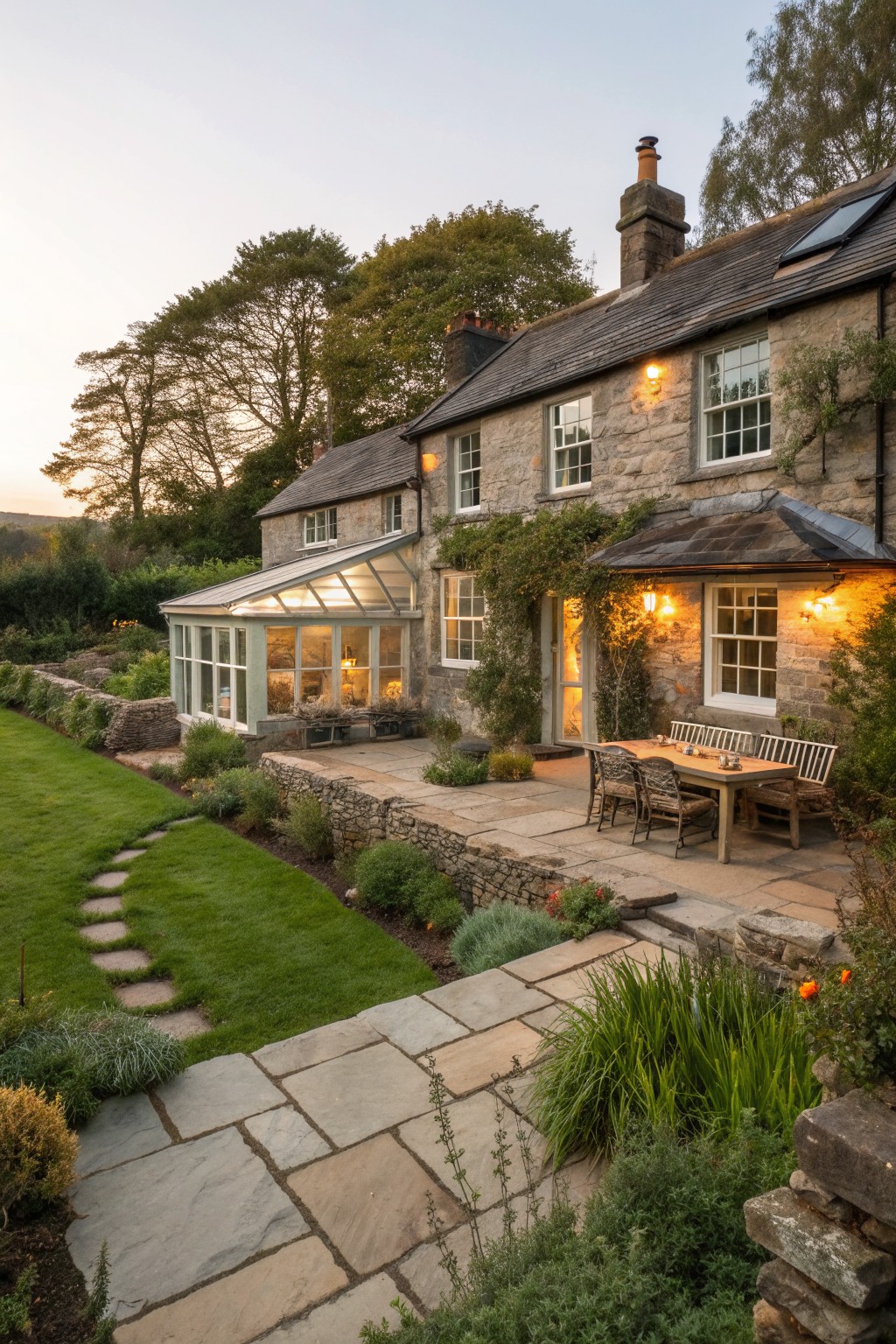
Using the same local stone for both the house walls and the patio creates a natural connection that feels right for older farmhouses. The material carries through without any sharp breaks, so the outdoor space looks like it belongs instead of being added later. This approach works especially well on homes that already show their age and texture.
It suits country properties where you want the garden areas to feel like an extension of the building itself. Keep the stone cuts fairly simple and let the plants soften the edges over time. Avoid mixing in too many other paving types, since that can break the quiet, settled look.
Frame the Entry With Climbing Roses
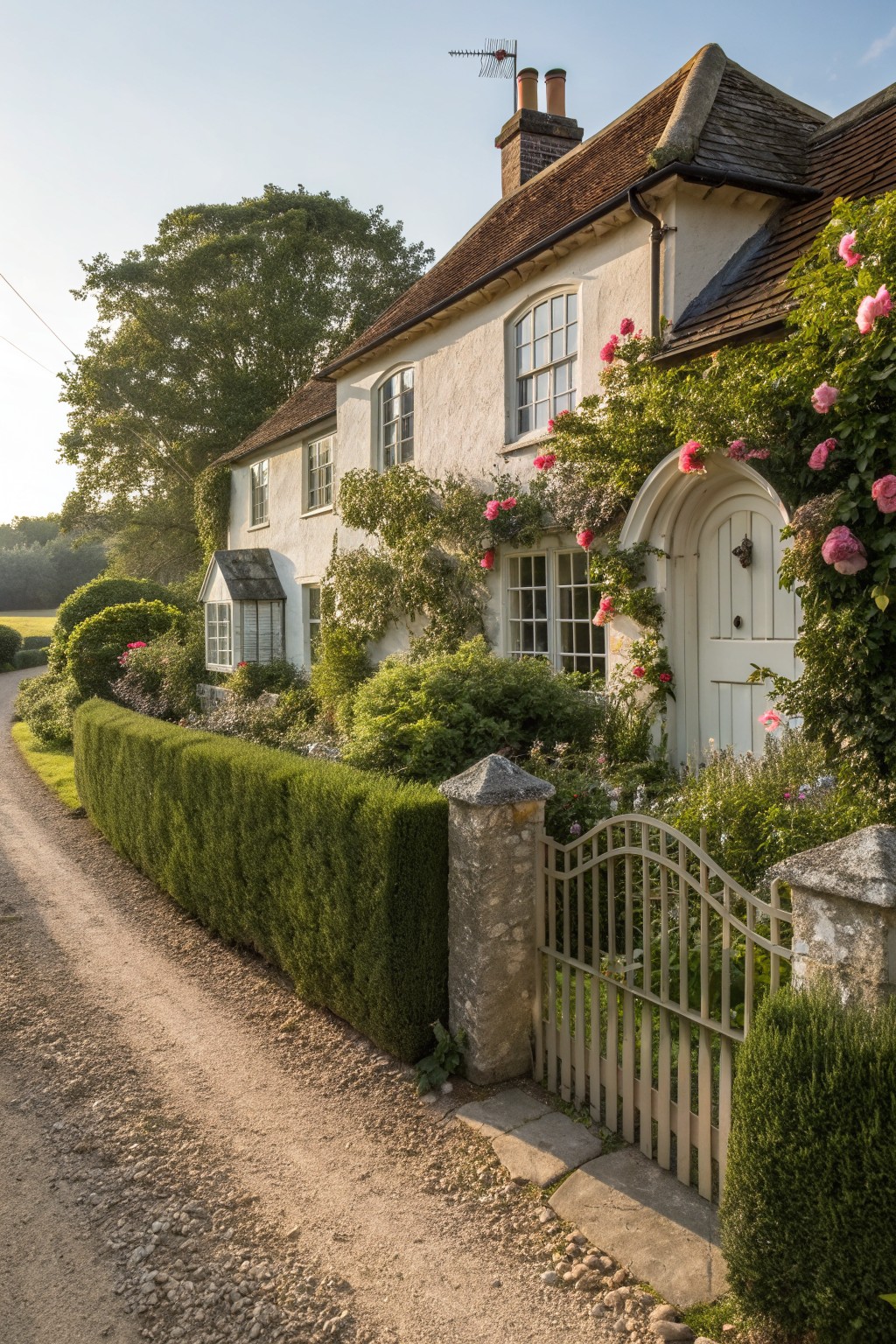
Many Victorian farmhouses gain a softer look when roses are allowed to climb around the front door. The flowers break up the plain wall surface and make the entry feel more inviting without any major changes to the structure itself.
Plant them in beds right against the house and guide the canes along simple wires or a light trellis. This approach suits older homes with light walls and works best when the roses are kept trimmed so they do not cover windows or block light.
Frequently Asked Questions
Q: Which of these ideas works best if my farmhouse sits on a hill? A: Focus on sturdy foundations and lower porches that follow the slope. Add railings with simple spindles for safety and style. This keeps the look balanced from the road.
Q: Can I tackle these changes one at a time on a tight budget? A: Yes. Start with paint and shutters since they make a big impact right away. Then move to bigger projects like trim work when you have more saved up.
Q: Is wood the only option for those detailed brackets and trim? A: You can find good vinyl versions that mimic the look. They hold up better in wet weather and need less upkeep.
