

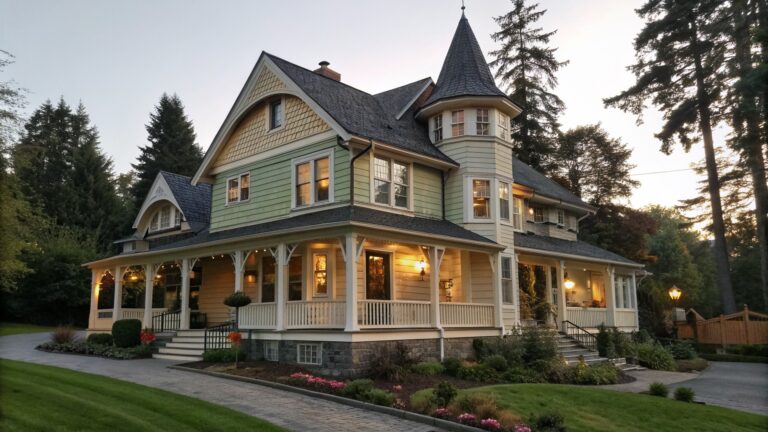
When I study Victorian farmhouses the rooflines and trim details often decide if the front reads as balanced or just busy from the street.
Materials like board and batten siding paired with metal roofing help these homes settle into their lots and hold up to weather without looking stark.
Some details only click once you stand at the curb and watch how light hits the gables.
I have noticed that the entry choices from door surround to window placement tend to shape how welcoming the whole facade feels after a single pass by car.
A few of these trim ideas seem worth testing on a small section of my own house to see if they translate beyond photos.
Wrap-Around Porches on Victorian Farmhouses
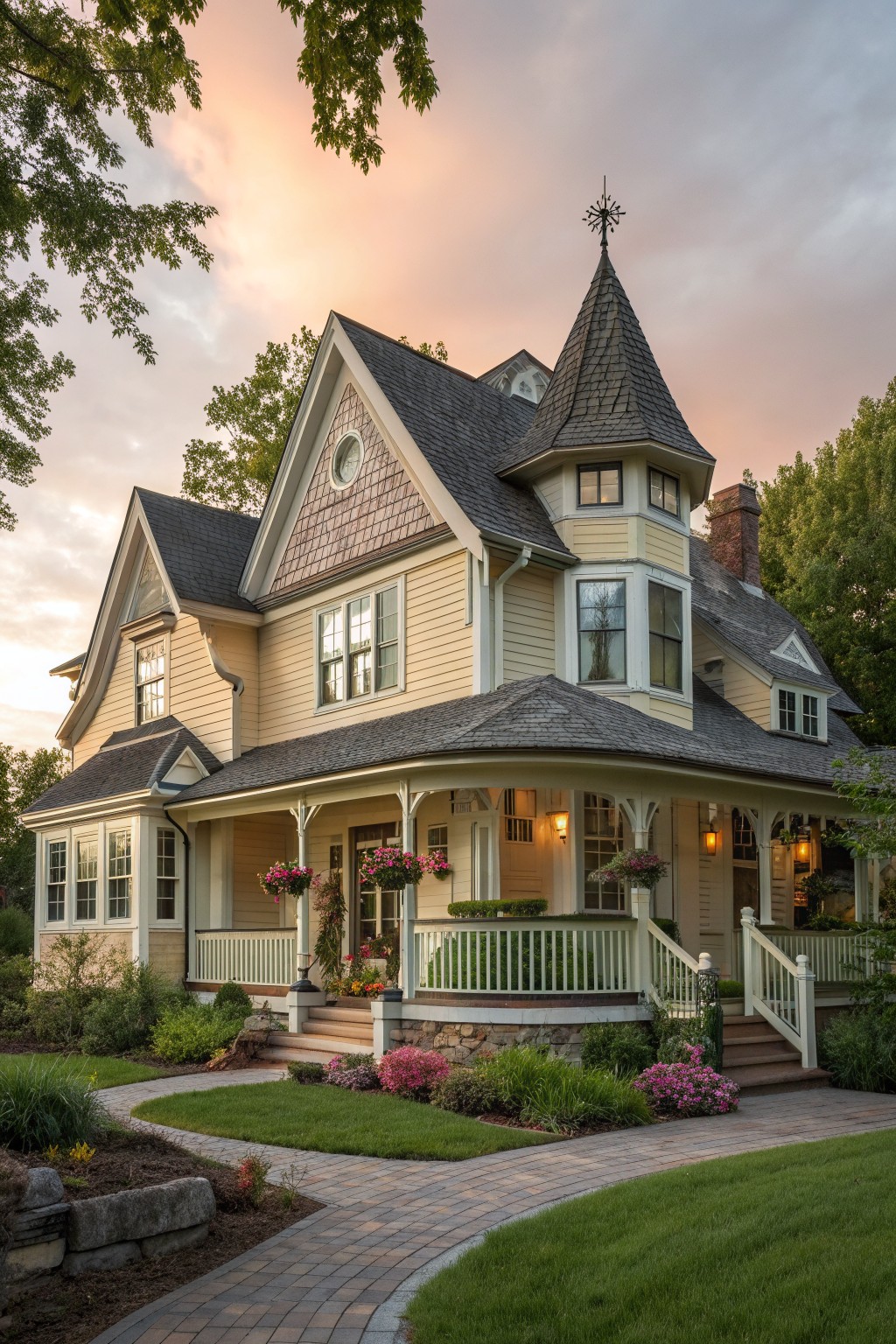
A wrap-around porch gives a Victorian farmhouse a more settled look. It connects the different sides of the house and creates a clear place to spend time outside without needing a separate deck or patio.
This works best on homes that have a corner lot or several gables already in place. Keep the railing and post style consistent with the rest of the trim so the porch feels like part of the original structure rather than an add-on.
Wrap the Porch Around the House
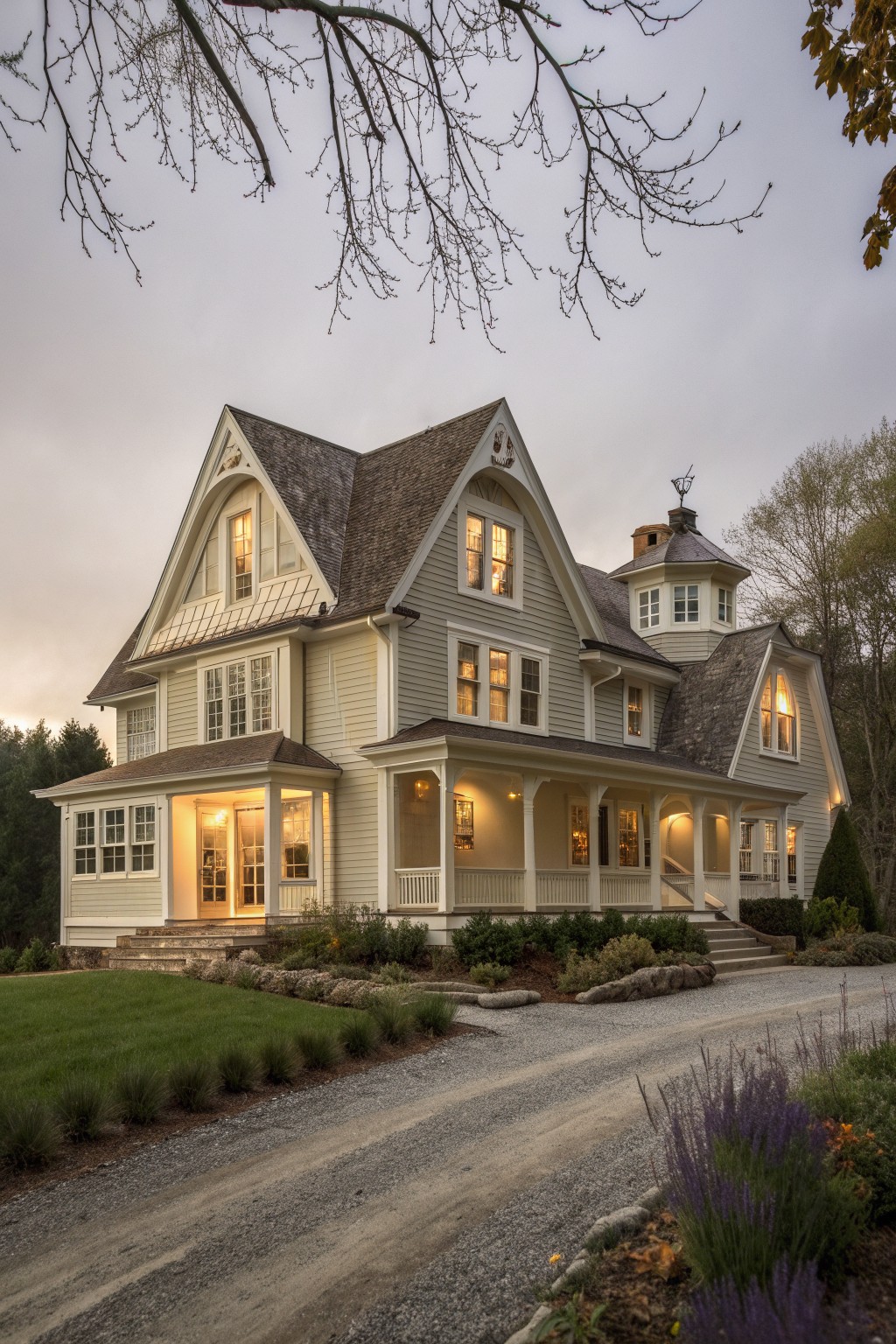
A wrap-around porch gives a Victorian farmhouse its main point of welcome. It stretches across the front and turns the corner, which breaks up the height of the gables and keeps the whole facade from feeling too tall or formal.
This layout works best on homes that already have some width at the base. Use simple white columns and a low railing so the porch stays open and usable instead of turning into another room.
Decorative Trim on Victorian Porches
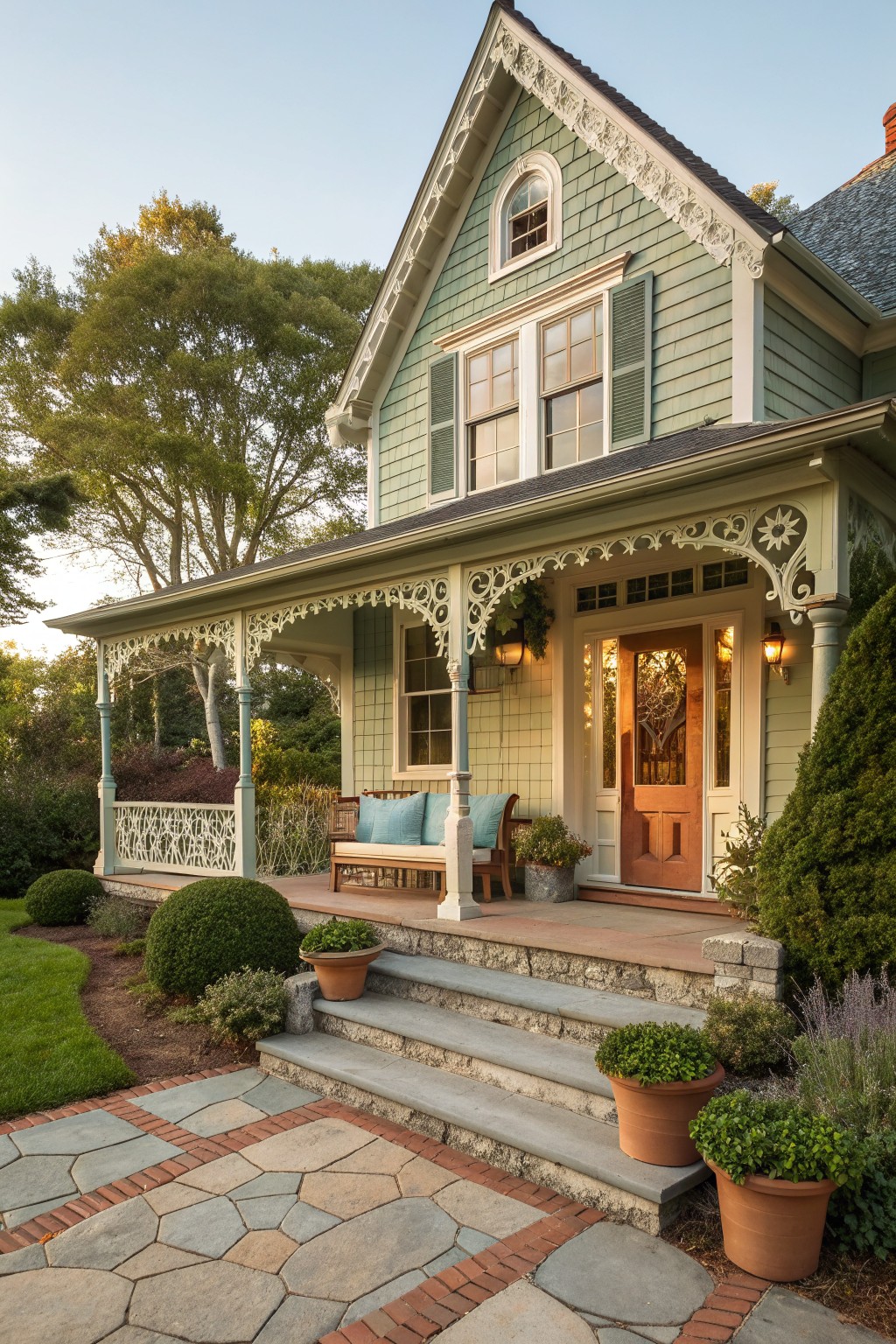
Many Victorian farmhouses use detailed wood trim to give the exterior more personality. The scrollwork and brackets around the porch and gable ends stand out against simpler siding and help the house feel finished.
This works best on homes that already have a strong roofline or front porch. Keep the trim color light so it reads clearly from the street, and match the scale to the size of the house so it does not feel fussy.
Ornate Gable Trim
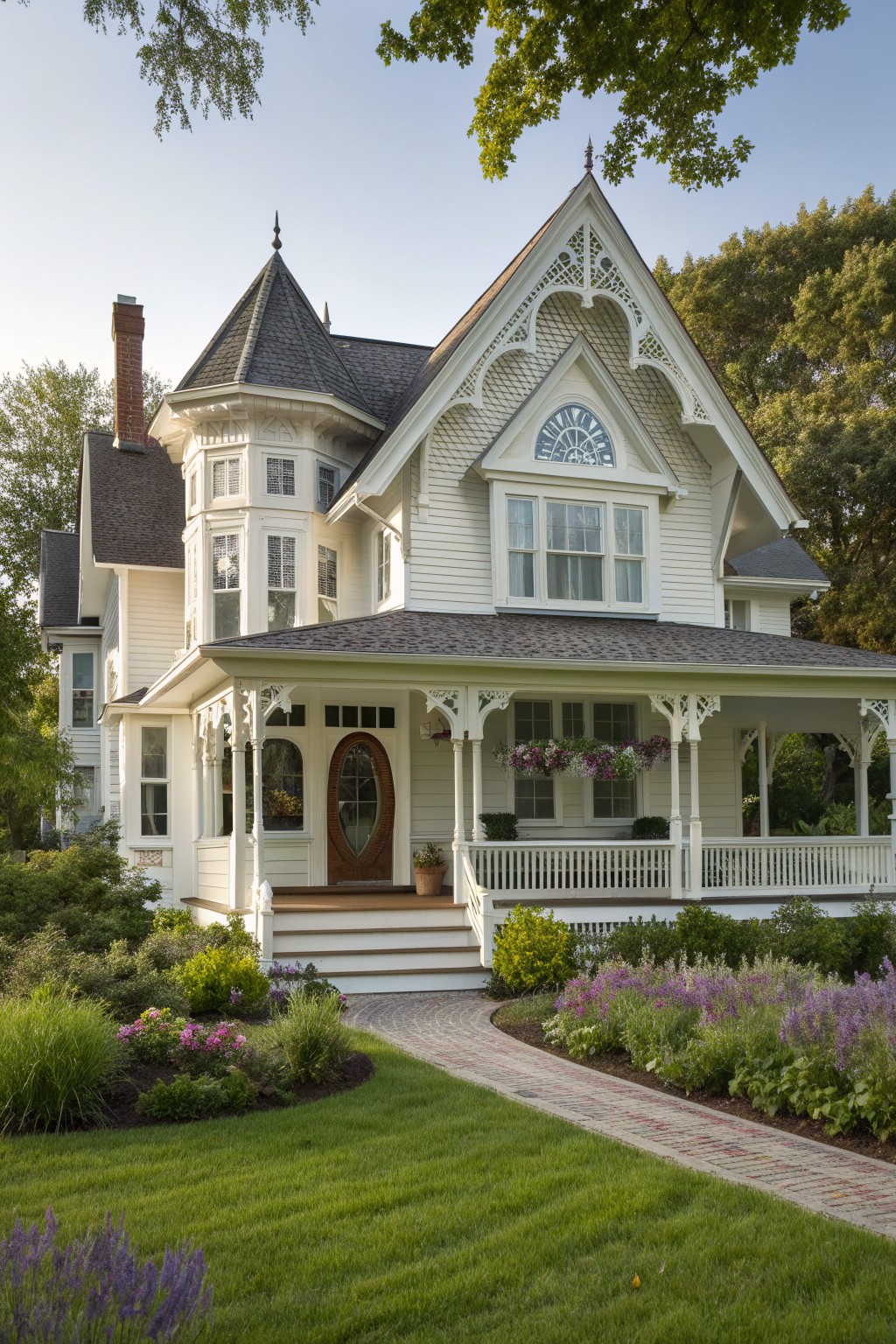
The pointed gable with its delicate white cutouts gives the house a light storybook quality that feels right at home on a Victorian farmhouse. It draws attention upward without making the whole exterior feel busy.
This kind of trim works best on homes that already have strong rooflines and simple siding. Keep the pattern fairly open so it does not trap dirt or look heavy from the street.
Painted Benches For Easy Porch Seating
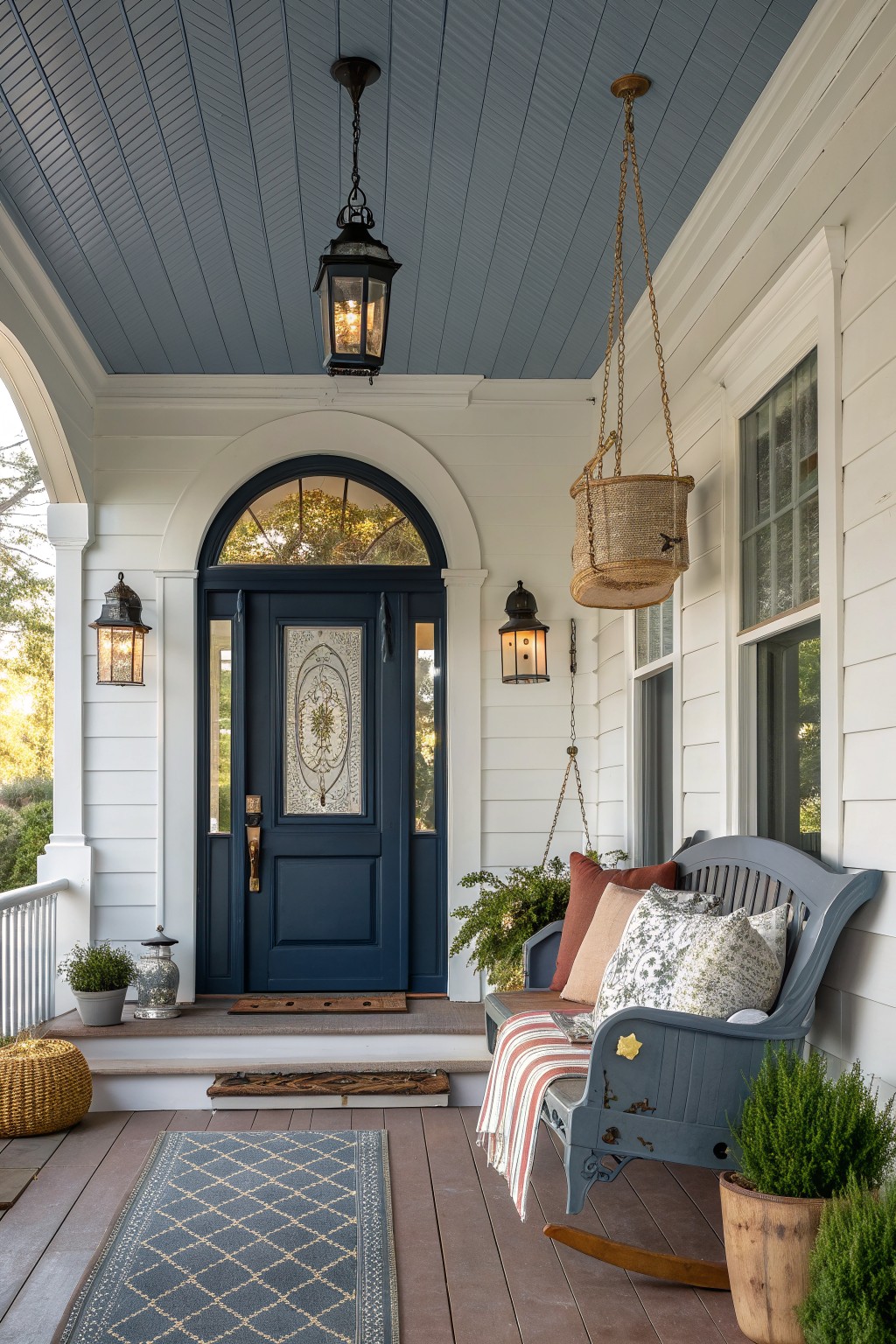
A painted bench gives a porch a simple place to sit while adding some character without much effort. It works especially well on farmhouse entries where the goal is to keep things relaxed and welcoming rather than formal.
This approach suits older homes with decent porch depth. Choose a bench in a color that picks up the door or trim, add a few cushions and a light throw, and keep the rest of the space open so people can still walk through easily.
Gable Trim That Adds Real Character
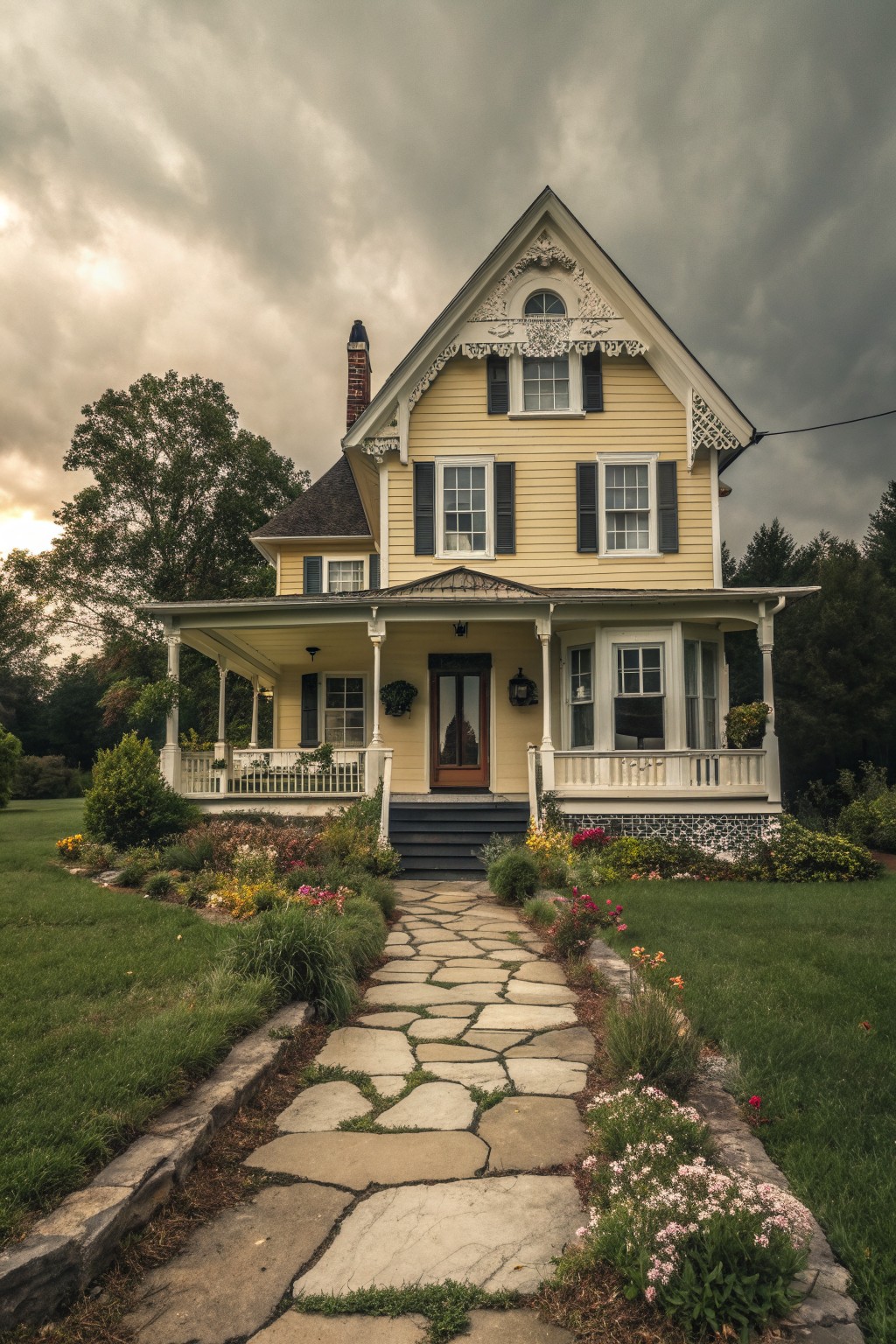
One simple way to give a Victorian farmhouse more presence is to let the gable stand out with detailed trim. The white scrollwork against the yellow siding draws the eye upward and gives the roofline a finished, storybook quality without needing extra color or complicated materials.
This approach works best on homes with a clear front gable or two. Keep the siding color calm so the trim can do the work, and make sure the scale of the pattern fits the size of the gable. Too small and it gets lost. Too large and it can feel busy.
Ornate Trim on Victorian Exteriors
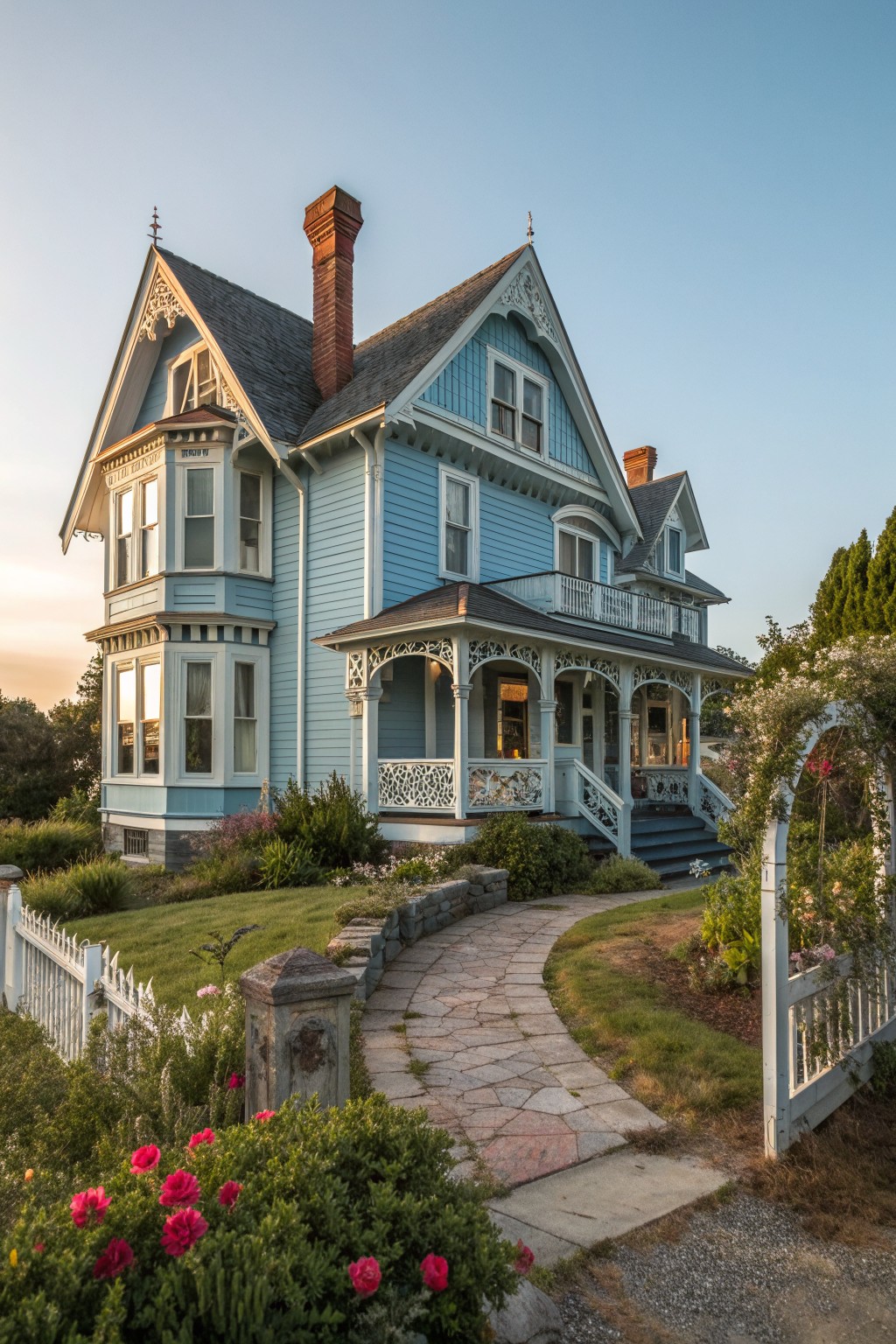
Many Victorian farmhouses get their character from the carved wood trim along the gables and roof edges. That detail breaks up the siding and keeps the whole house from looking too plain or heavy.
It works best on homes with several roof peaks and a front porch. Paint the trim a lighter shade than the siding so it stands out, and keep the pattern simple enough to maintain without constant repairs.
Turrets Give Victorian Farmhouses Their Storybook Silhouette
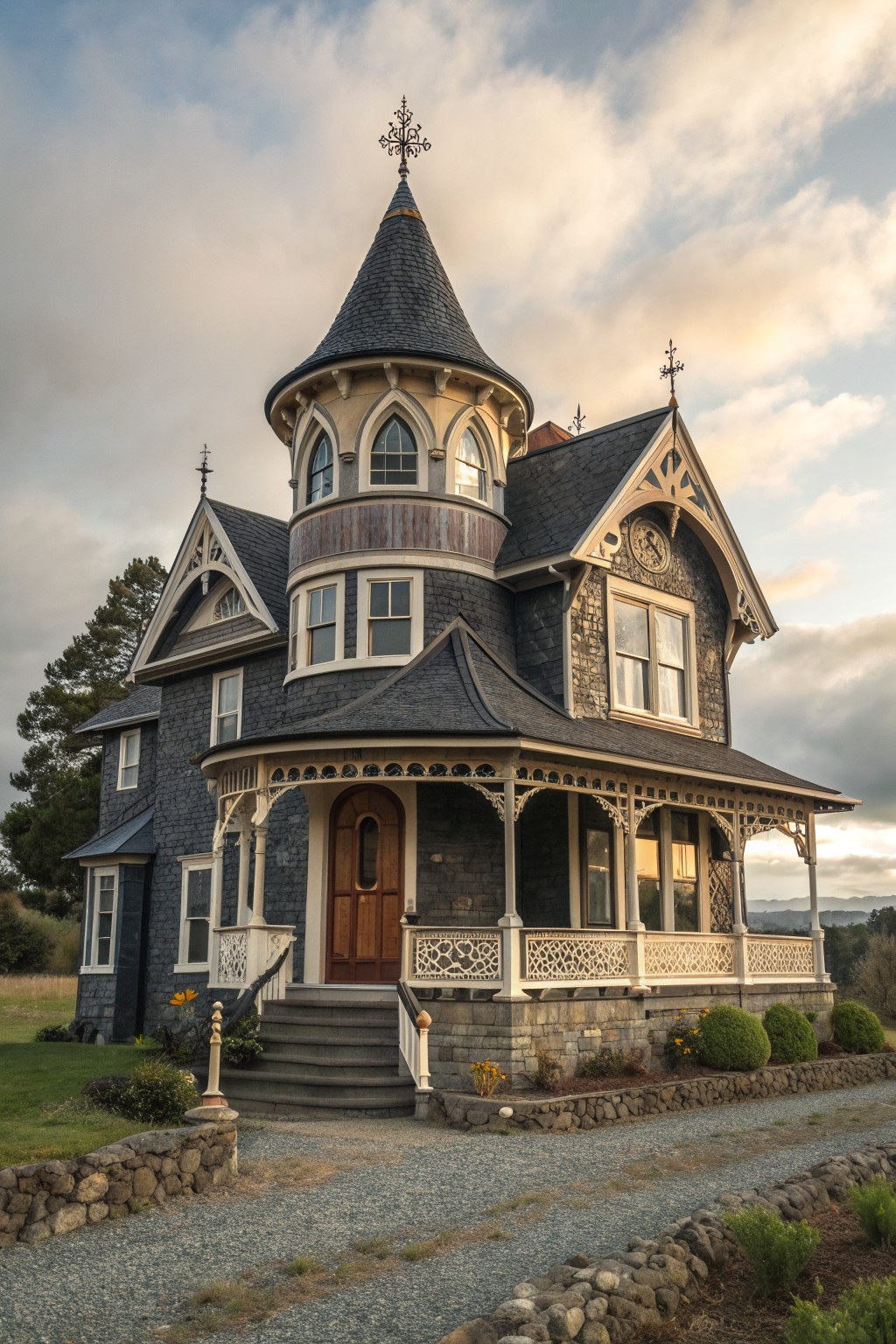
A turret breaks up the roofline and adds height that makes the whole house feel lighter and more playful. It works especially well on a farmhouse because the rest of the structure stays simple and grounded.
Place the turret near the front entry so it draws the eye without overpowering the rest of the facade. Keep the siding and trim fairly plain so the shape itself carries the charm.
Arched Entries for Welcoming Farmhouse Porches
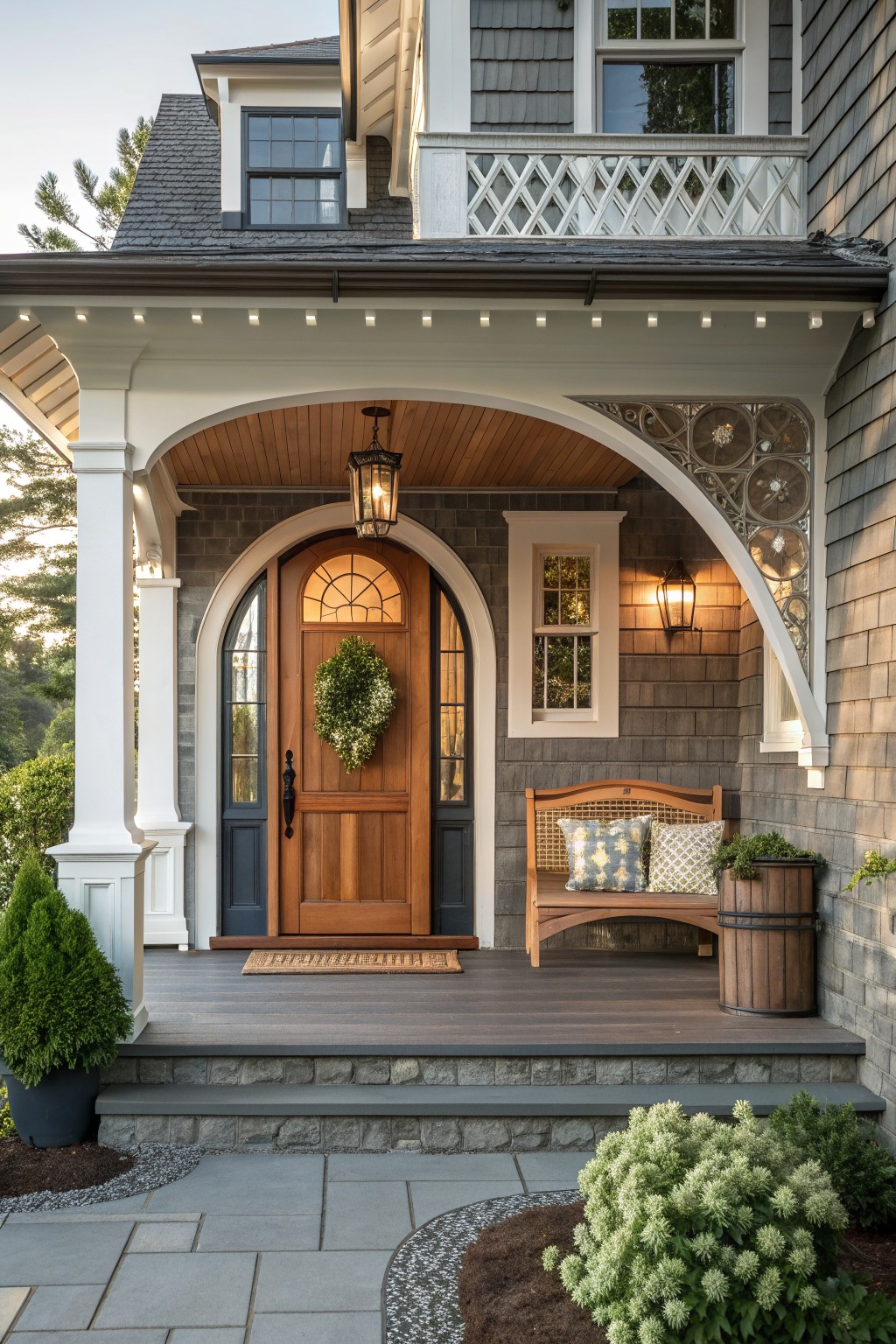
An arched opening over the front door gives the whole entry a softer shape that feels more inviting than a plain rectangle. It highlights the door without needing lots of extra trim and works well with shingle siding and simple wood details.
This approach suits Victorian farmhouses or similar styles where you want a bit of character at the entrance. Keep the bench and planting low so the arch stays the focus rather than competing with other elements.
Stone Paths That Lead Straight to the Porch
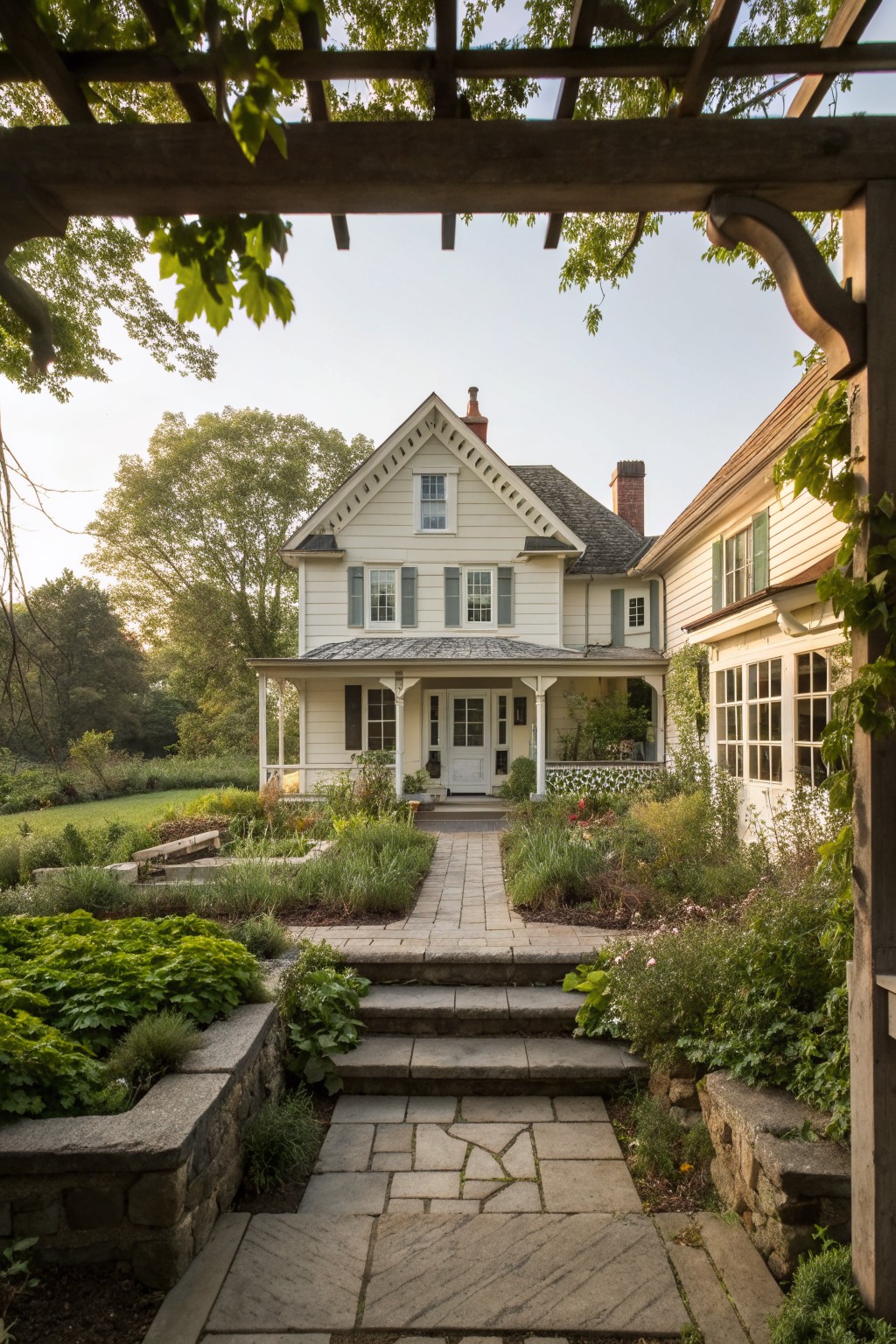
A simple stone path with a short flight of steps gives the house a clear, welcoming approach. It keeps the focus on the centered door and porch while the surrounding garden softens the edges.
This layout suits Victorian farmhouses that already have strong rooflines and trim details. Use irregular stones set in a straight line and let the beds on either side stay full so the path feels like a natural part of the yard rather than an added feature.
Stone Walkways That Feel Natural
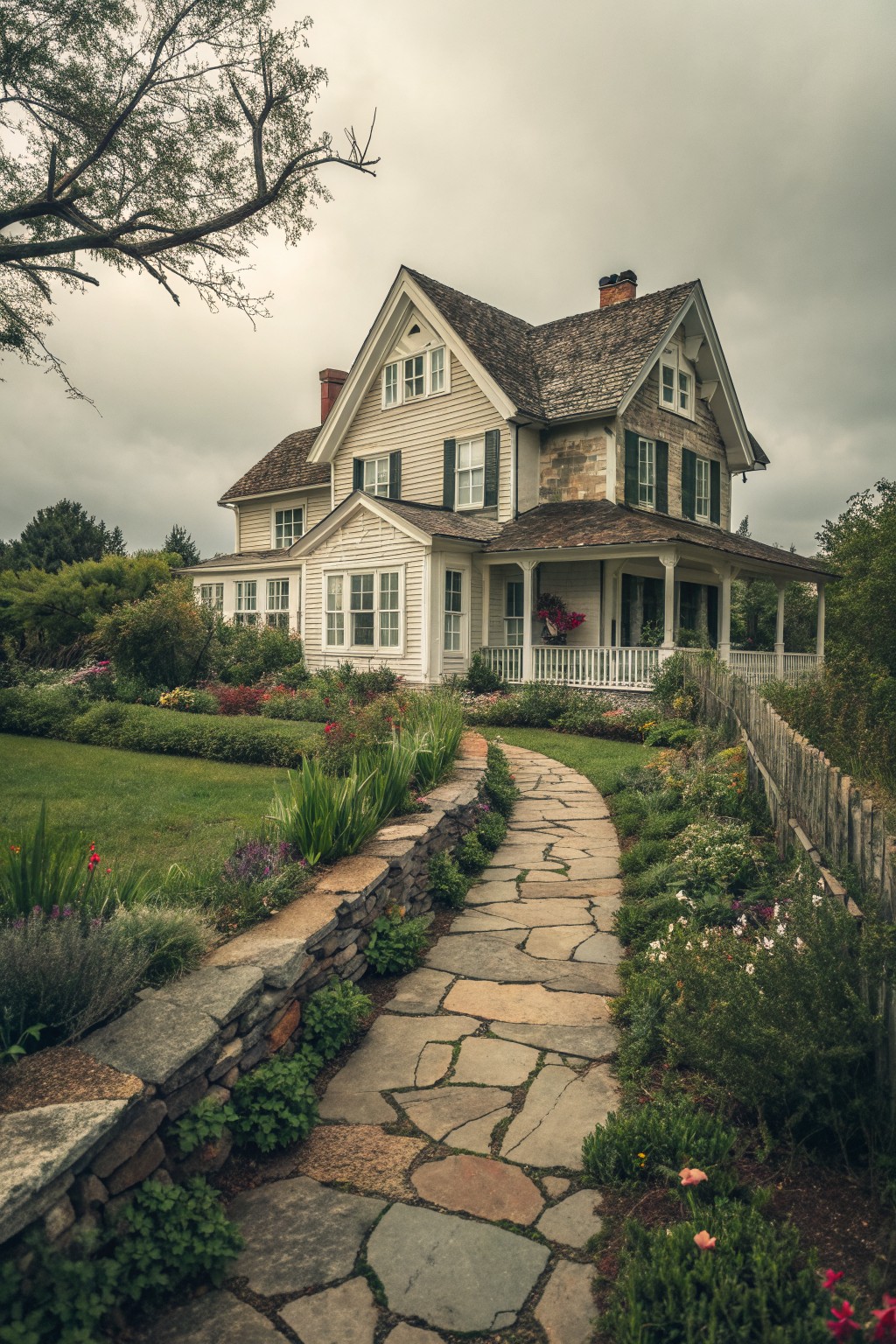
A gently curving stone path gives the front of a farmhouse a settled look without trying too hard. It breaks up the open lawn and lets the garden beds on either side feel connected to the house rather than just added on.
This approach works best when the stones are irregular and set at slightly different angles so the walk looks like it has been there for years. Keep the planting low and mixed along the edges so the path stays the main line of movement without feeling hemmed in.
Wraparound Porches That Fit Victorian Farmhouses
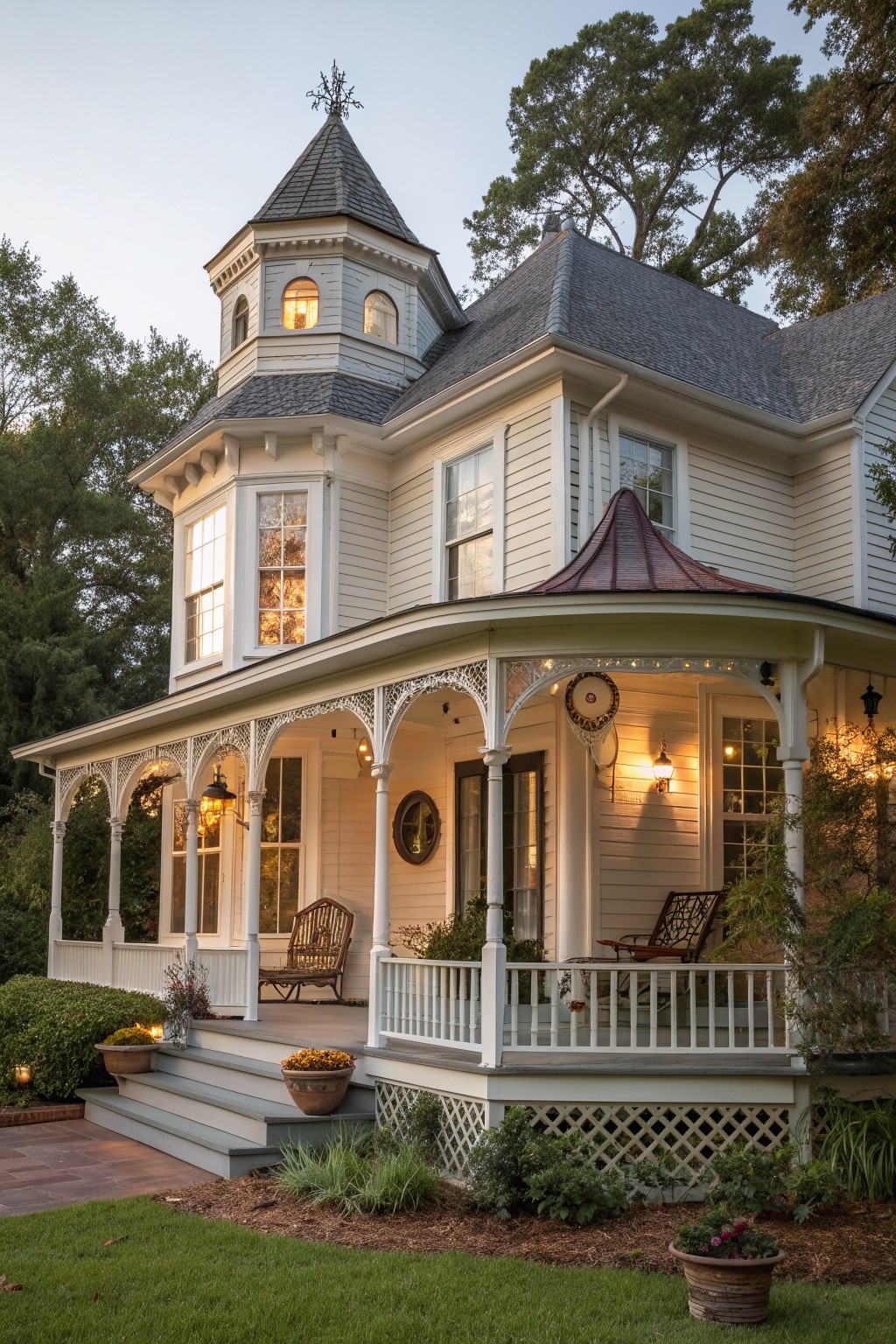
A wraparound porch with fine trim can make a larger Victorian farmhouse feel more approachable. The delicate railings and posts break up the siding and give the front a lighter touch while still matching the scale of the house.
This works best on homes that already have a turret or similar vertical feature because the porch helps balance the height. It suits older farmhouses in open settings where you want room for seating without adding another structure.
White Trim Brings Out Victorian Details
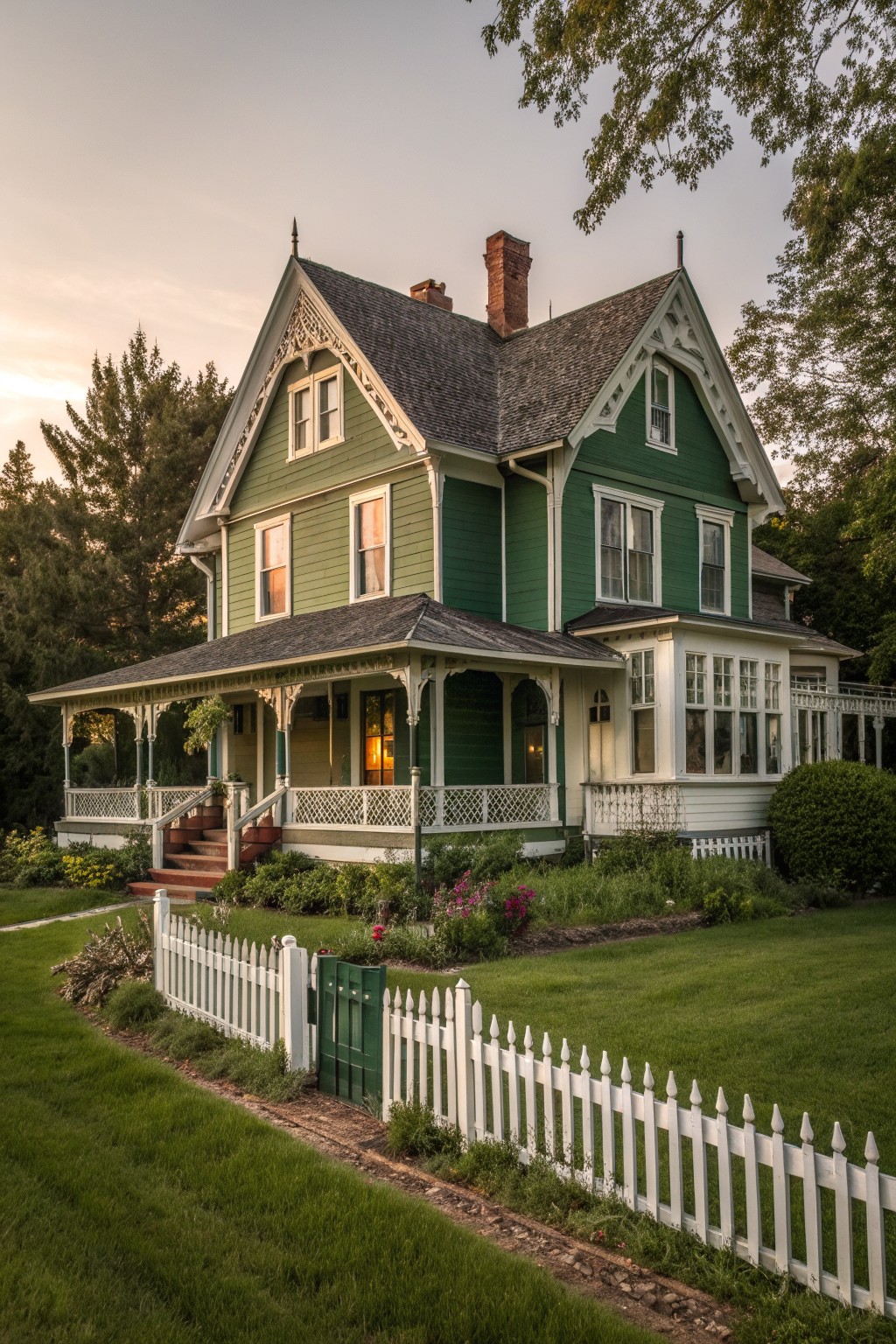
Green siding works especially well on Victorian farmhouses when the trim stays bright white. The contrast makes the gables, brackets, and porch railings read clearly instead of blending into one flat color. Many older homes already carry this palette, and it still feels fresh because the white keeps the shape of the rooflines and windows easy to see from the street.
Try the same approach if your house has similar carved woodwork or multiple gables. Start with the main body in a soft green, then paint all the trim, posts, and decorative pieces white so nothing gets lost. It suits homes with generous roof overhangs and needs only occasional touch-ups to stay sharp.
Rose Arches Guide the Path
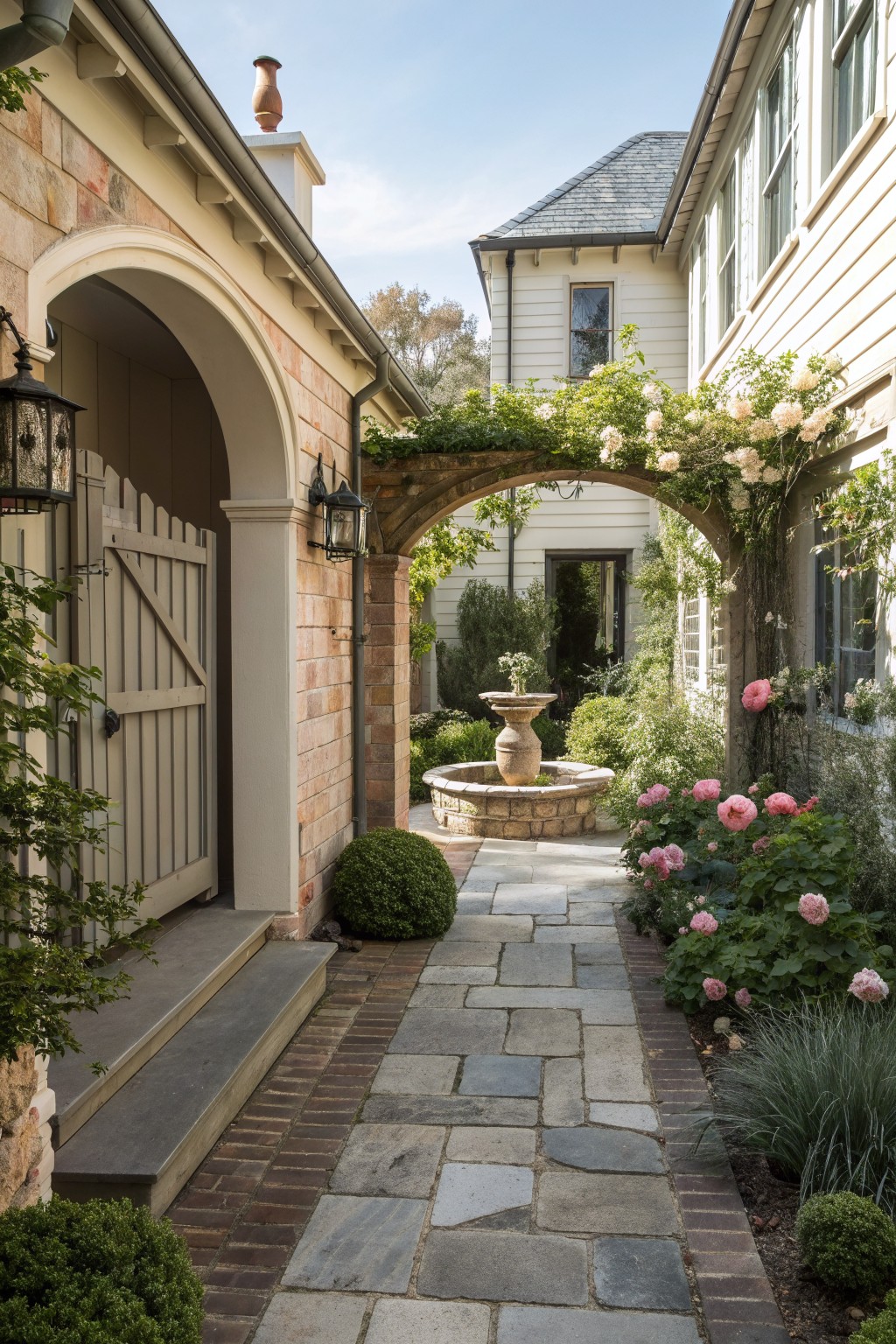
A rose-covered arch placed over the garden path gives a Victorian farmhouse that storybook feeling without needing a lot of extra work. The arch turns a basic walkway into the main feature and helps tie the house to the surrounding plantings.
This approach works best on homes with a clear path from the street or side entrance. Plant climbers on both sides so they meet overhead, and keep nearby beds simple so the arch stays the main point of interest.
Let Ornate Trim Define The Gables
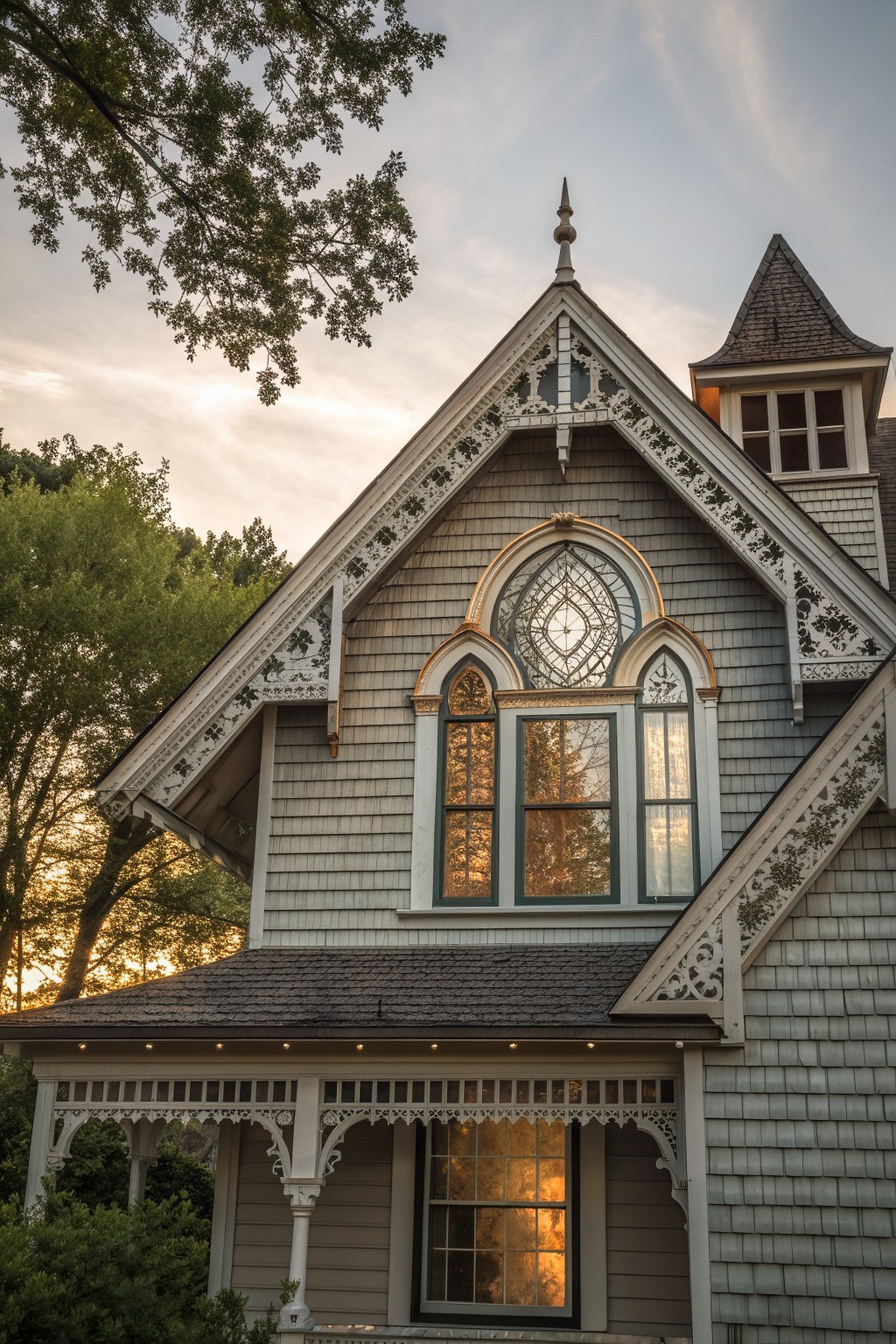
Many Victorian farmhouses gain their charm from the trim that runs along the roof edges and gables. The detailing breaks up large roof planes and gives the house a finished look without needing extra color or texture.
Place similar trim on homes with steep rooflines and multiple peaks. Keep the siding and other surfaces simple so the trim stays noticeable. It works best on older homes or new builds that follow traditional proportions.
An Arched Porch Adds Charm to the Entry
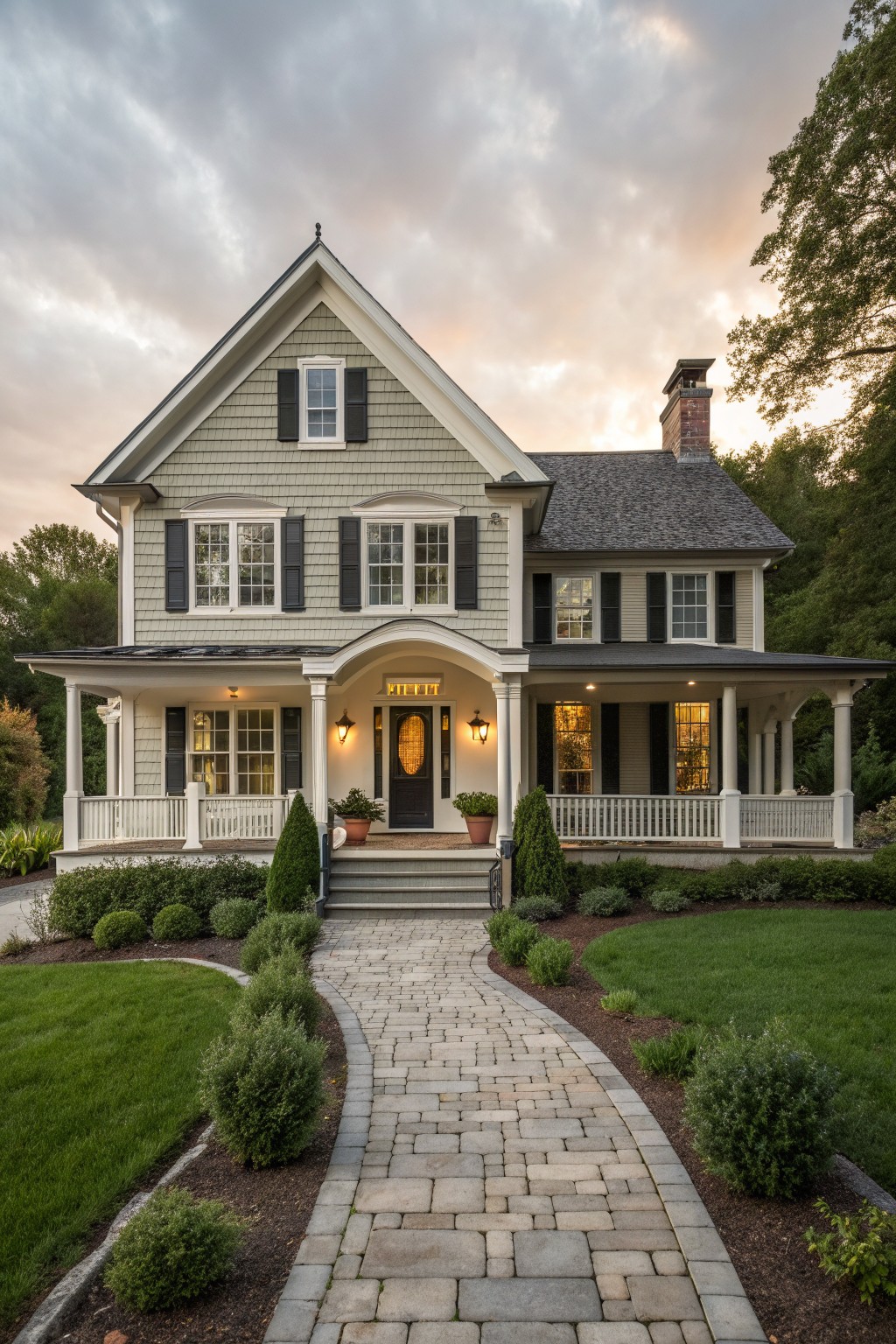
Many older farmhouses use a soft arch over the porch to frame the front door and make the entry feel more inviting. It breaks up the flat roofline and gives the whole facade a little extra character without needing heavy decoration.
This approach works well on homes that already have a centered door and enough roof overhang to support the curve. Keep the columns simple and match the arch width to the steps so the scale stays balanced.
Turrets Add Height and Character
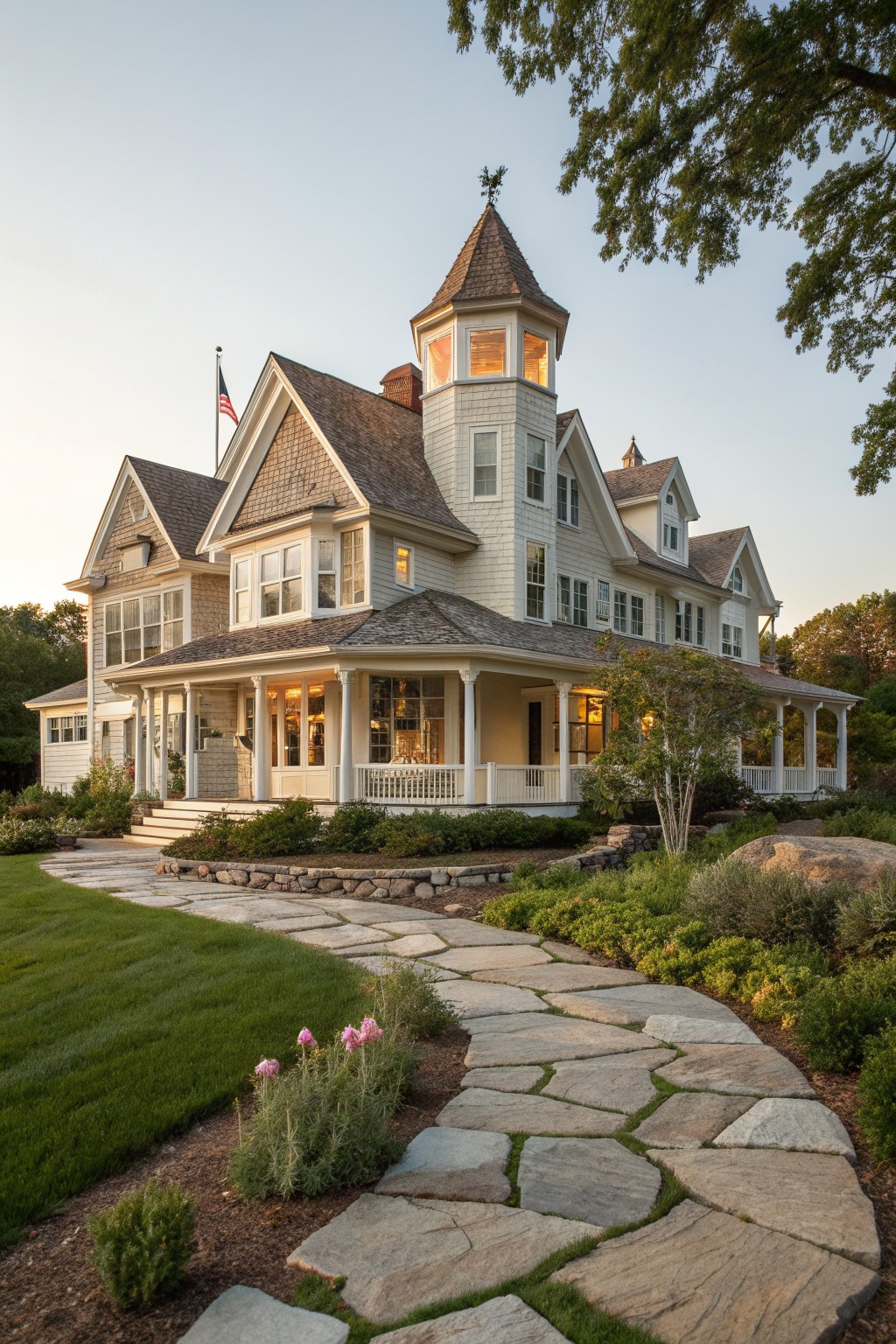
A turret breaks up a long roofline and gives the whole house a lifted, balanced look. It draws the eye upward without needing extra height everywhere else.
This works well on wider farmhouses where the main mass needs a single strong accent. Keep the turret modest in size, add a few windows, and let the rest of the roof stay simple so the detail feels intentional rather than busy.
Built-In Seating on the Porch
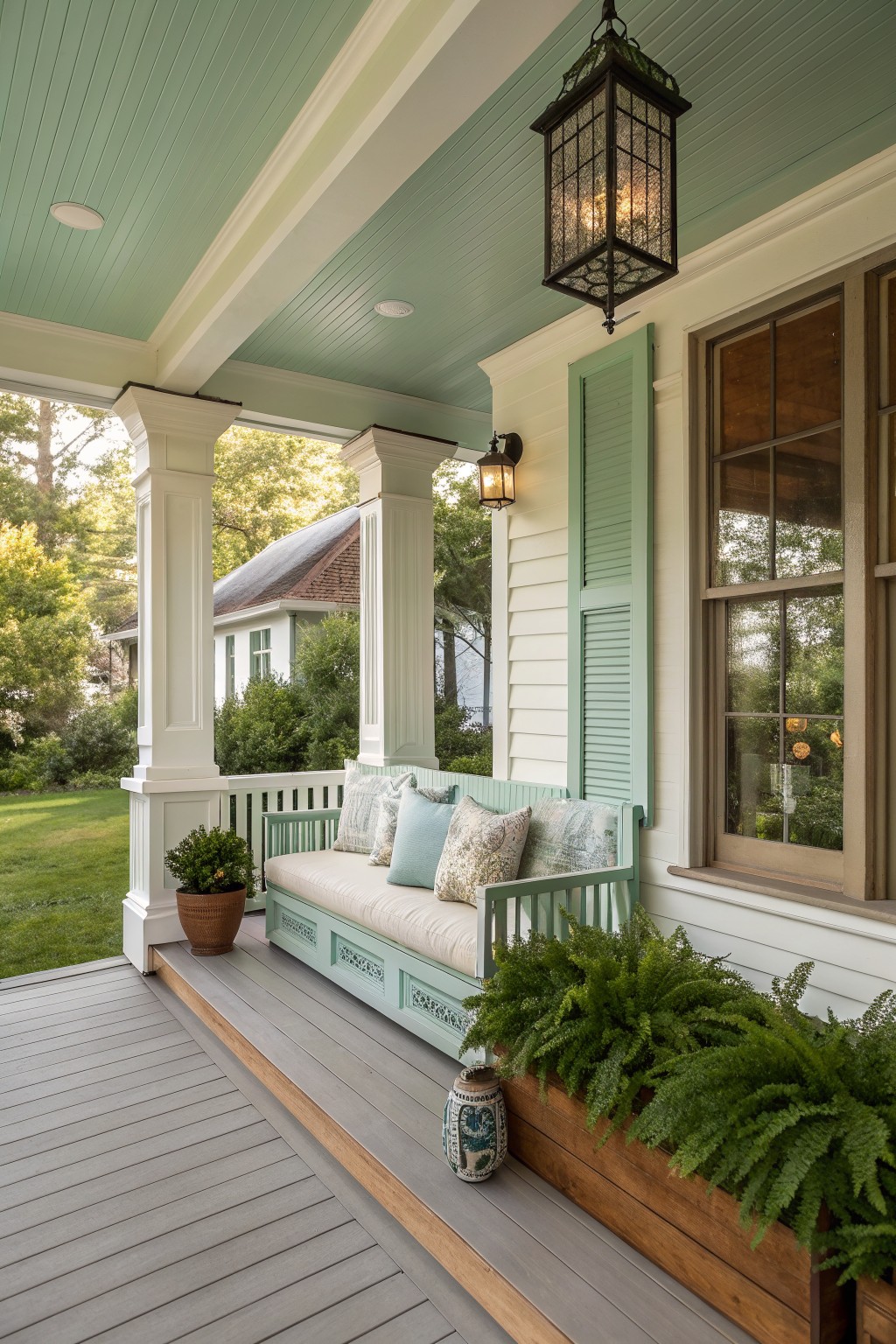
Many older farmhouses add a built-in bench along the porch because it turns the space into a real sitting area without crowding it with separate chairs. The bench stays in place through every season and feels like it belongs to the house itself rather than something added later.
This works best on homes that already have trim or shutters in the same color family. It keeps the porch simple, gives you a place to sit without blocking the walkway, and suits Victorian farmhouse styles that already lean on built-in details.
Arched Entries on Farmhouses
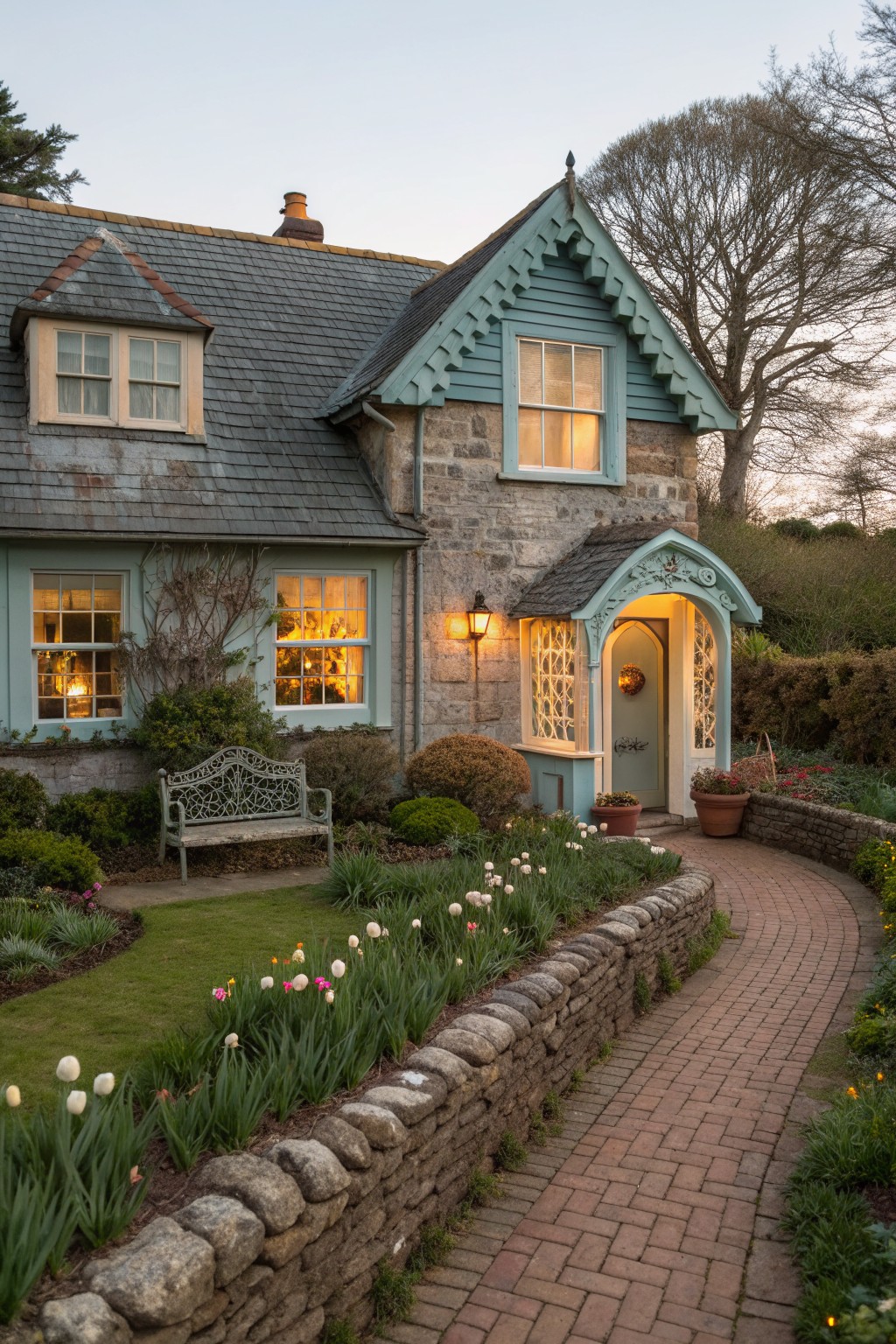
An arched entry can soften the look of a stone facade and make the whole front feel more welcoming. The light trim around the curve stands out nicely against the heavier stone and helps the door area feel like a clear focal point without needing much else.
This detail works especially well on older homes that already have some texture in the walls. Keep the arch fairly simple, match the paint to other trim, and let the shape do the work rather than adding extra layers of decoration.
Wraparound Porches That Add Usable Space
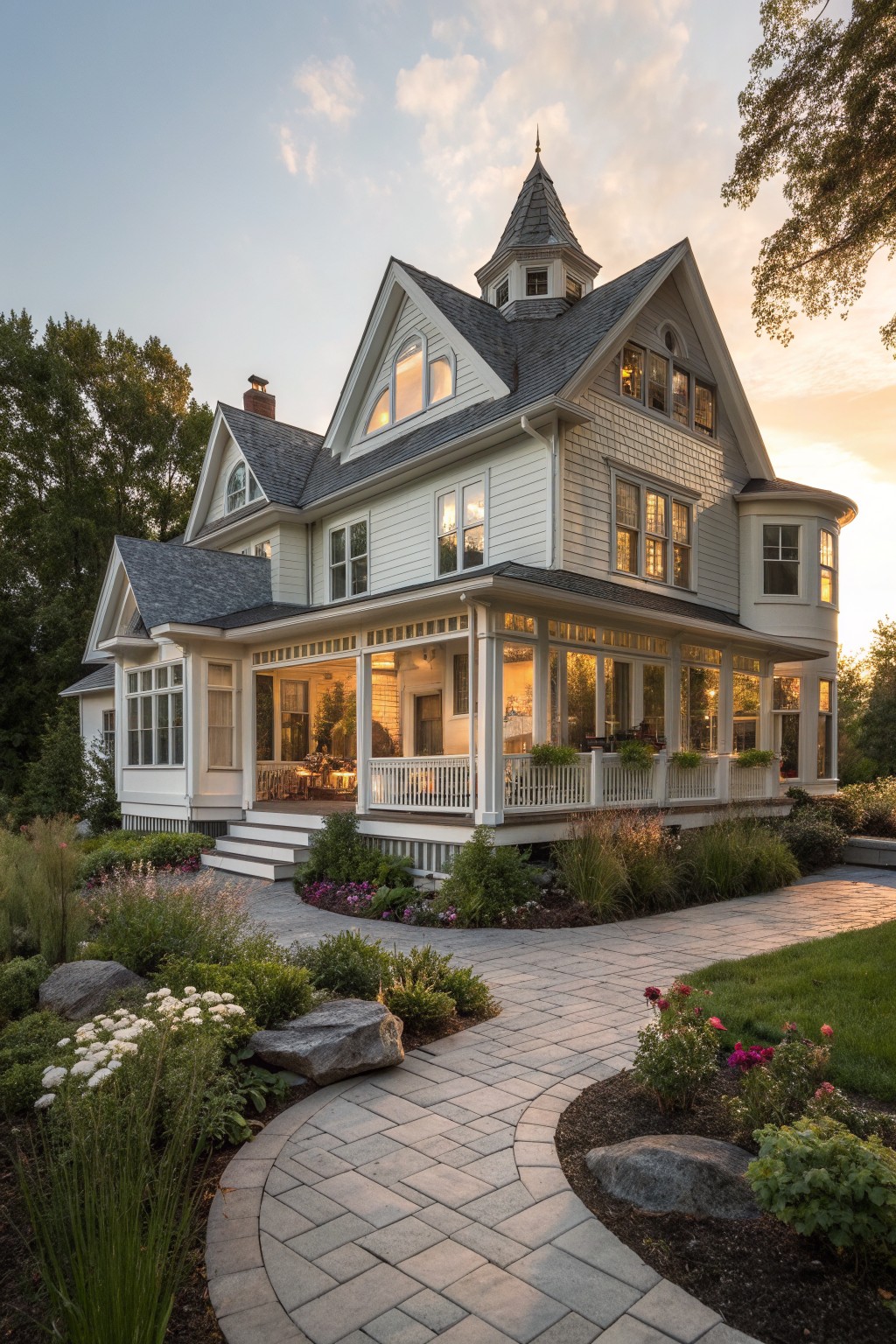
A wraparound porch gives a Victorian farmhouse real everyday value by turning the outside into an extension of the house. It creates spots for seating all along the front and side without crowding the yard or breaking up the shape of the building. The simple white railings keep the view open while still giving the porch a finished look.
This approach works well on larger lots where the house sits back from the road. Place chairs in small groups rather than one long row, and make sure the roof covers the main seating areas so the space stays comfortable in different weather.
Stone Arches At The Entry
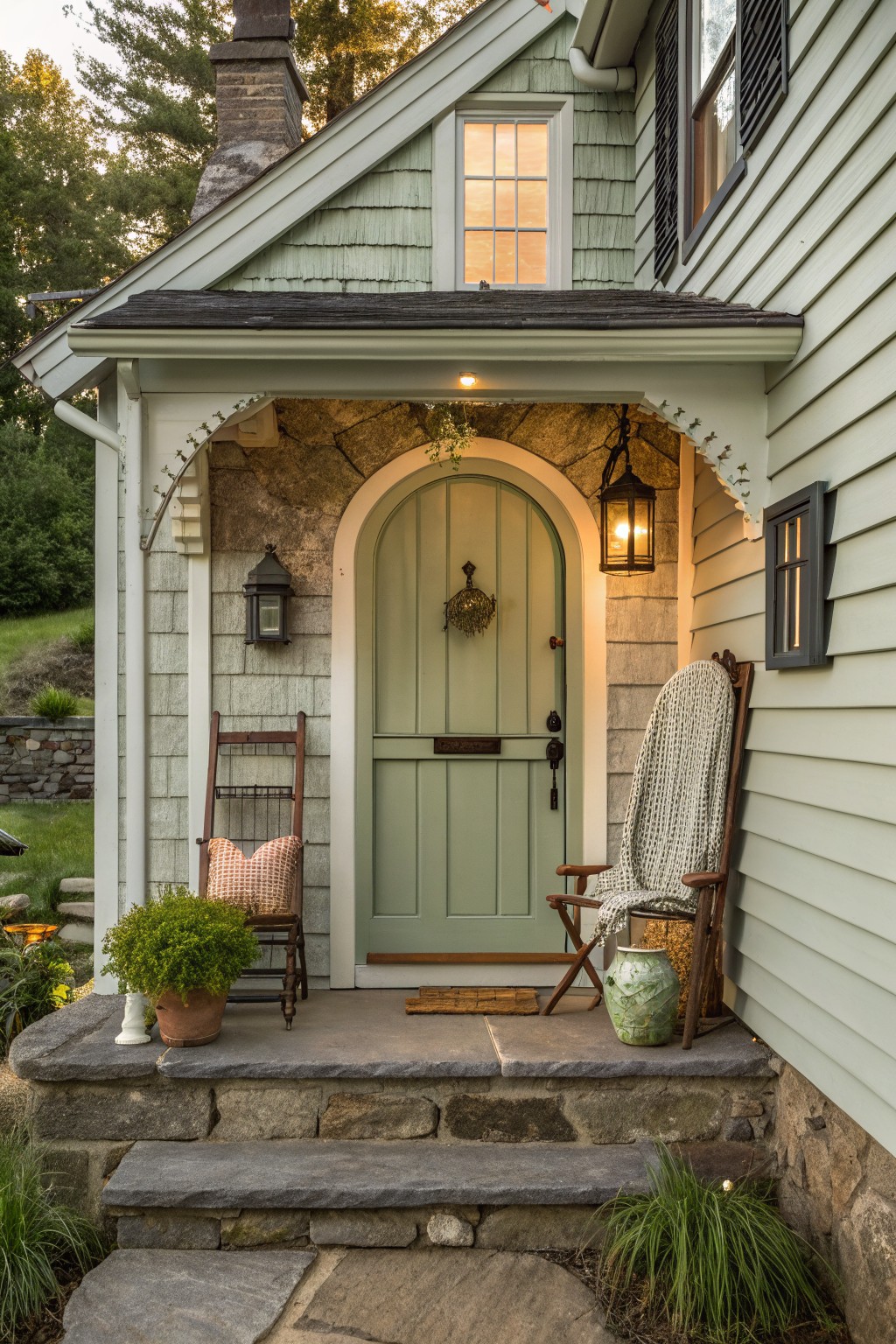
An arched stone surround around the front door gives a farmhouse that storybook touch without making the whole house feel fussy. The curve softens the roofline and siding while still keeping things practical and tied to the land.
This detail works well on homes with simple shingle or clapboard siding where you want one strong feature to carry the charm. Keep the door color soft, add just one light fixture, and let the stone do most of the work so the entry stays welcoming rather than busy.
Stone Paths Shape the Entry
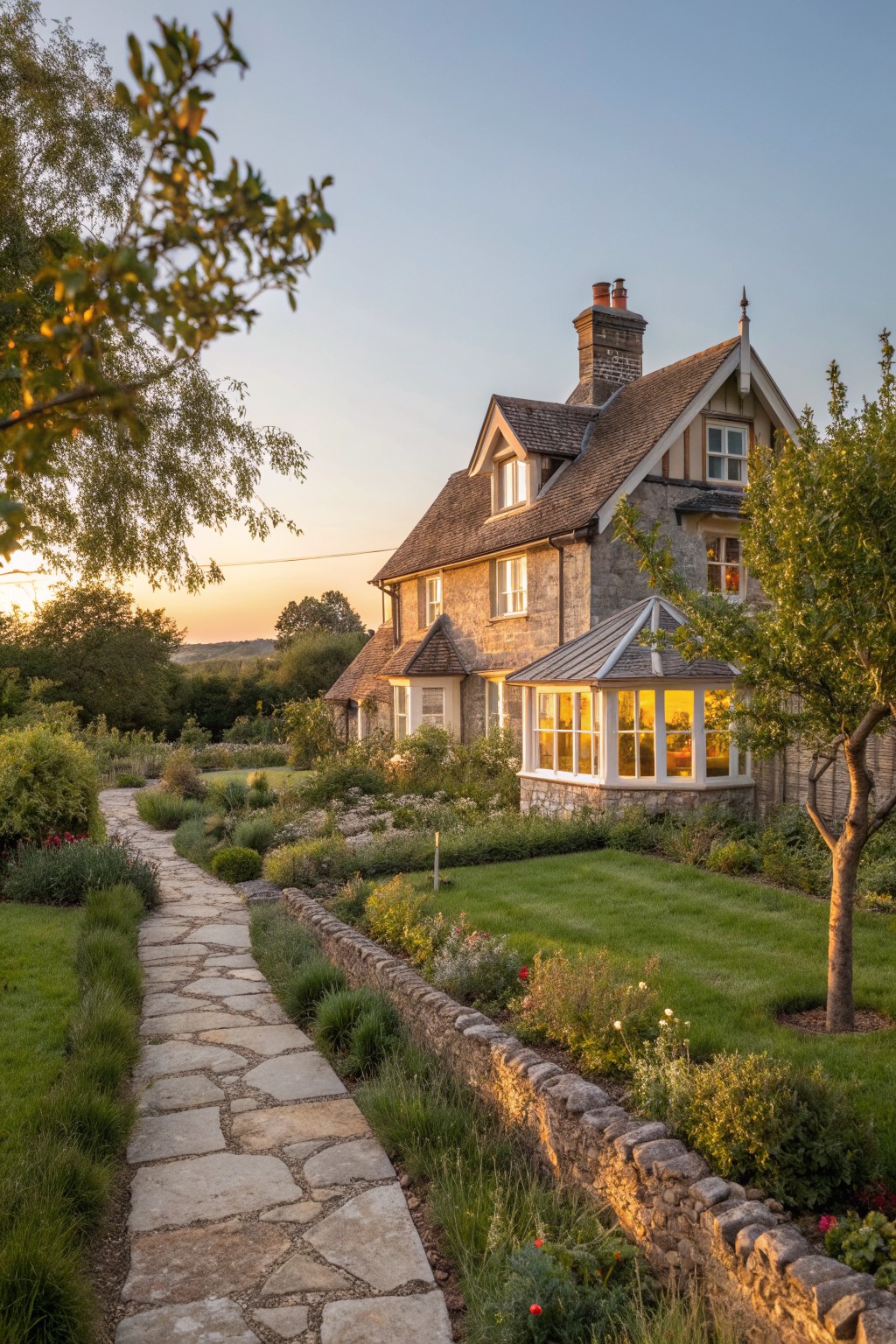
A winding stone path gives a Victorian farmhouse that storybook feel without any extra effort. It draws the eye along the route and makes the front door feel like a natural destination instead of something you notice all at once. The low wall that runs beside it keeps the garden beds tidy while still letting the plants spill over in a relaxed way.
This approach works best on homes with a bit of distance from the road or a side garden that needs a clear route. Keep the path narrow enough to feel intimate and use the same local stone for the wall so everything reads as one simple gesture. Avoid straight lines if the lot has any slope or curves already in place.
Outdoor Dining Under a Pergola
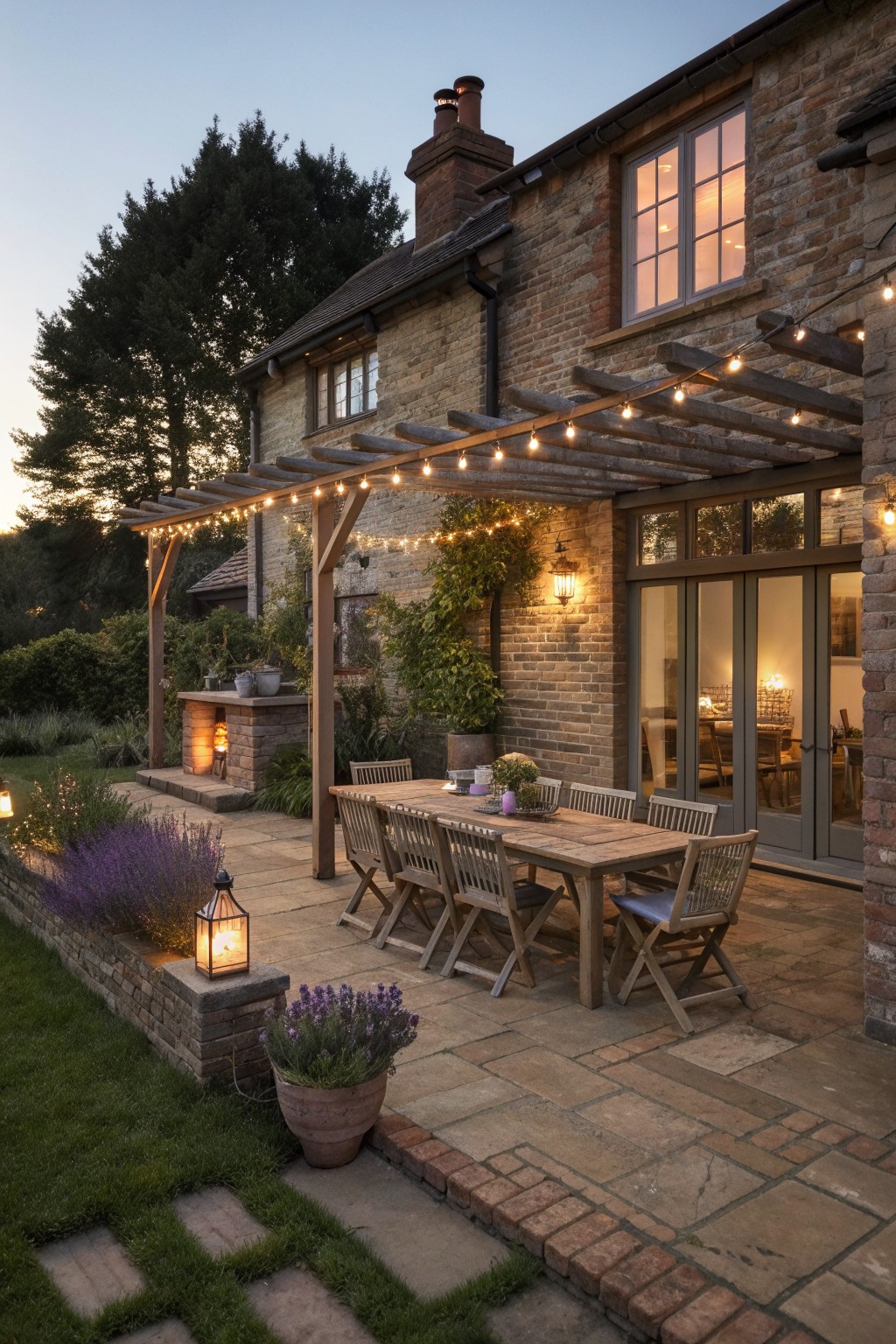
A pergola gives the patio a clear purpose and turns it into a usable dining spot instead of just open space. The overhead structure and lights make the area feel set apart from the rest of the yard while still keeping it open to the air.
This setup works best on homes with simple brick or stone exteriors where you want to add function without heavy construction. Place the table in the center, keep the seating casual, and run the lights along the beams so the space stays usable after dark.
White Trim Highlights Victorian Details
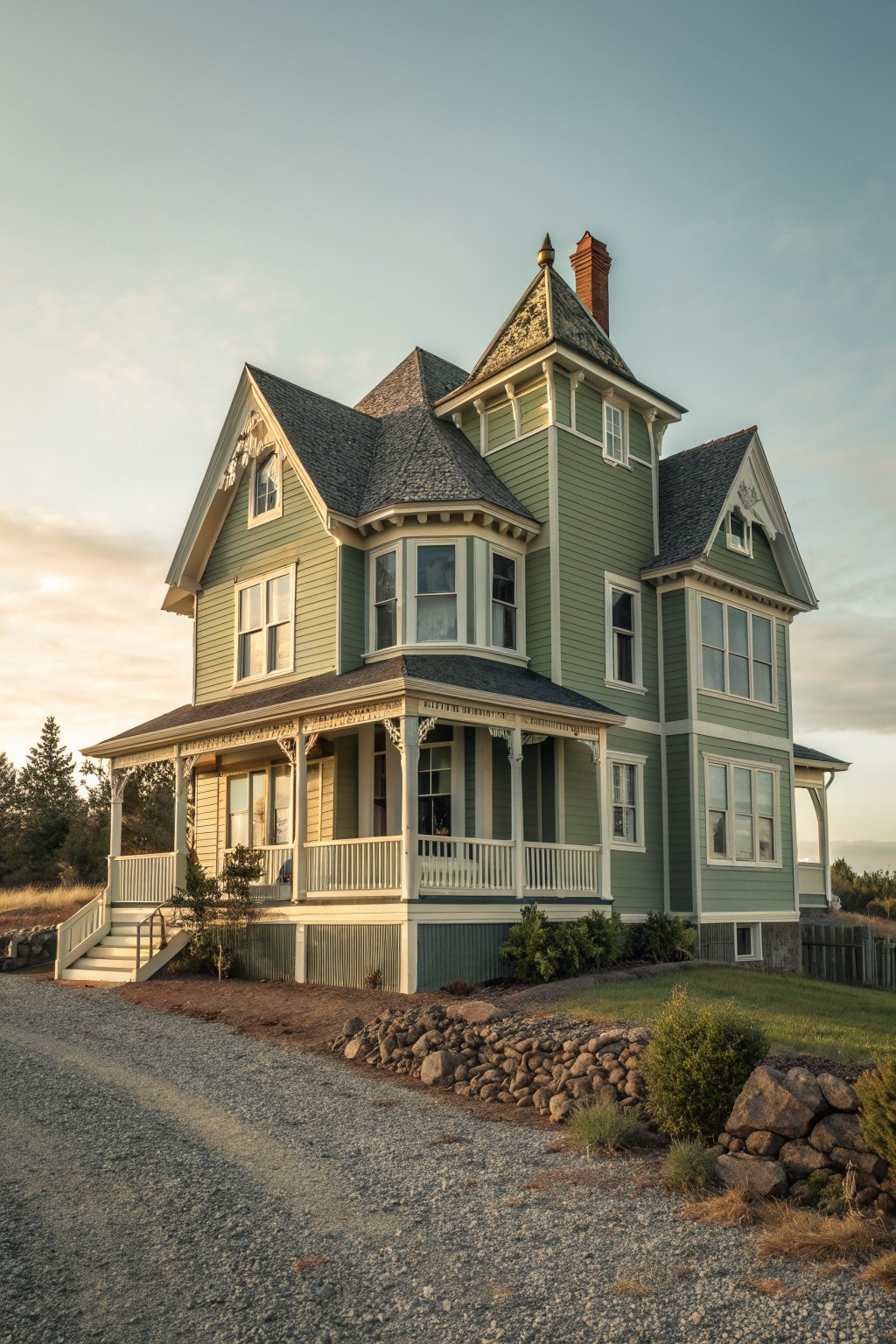
Painting the trim a bright white against a soft green siding color is one of the simplest ways to make all the small brackets, spindles, and eaves stand out on a Victorian farmhouse. The contrast keeps the details from getting lost and gives the whole exterior a cleaner, more finished look without adding any extra pieces.
This approach works best on homes that already have plenty of woodwork to show off. Stick with a true white rather than an off-white so the trim stays crisp even from a distance, and touch up the paint every few years to keep the edges sharp.
Frequently Asked Questions
Q: What paint colors highlight the architectural details on a Victorian farmhouse? A: Soft pastels like sage green or butter yellow make the trim pop against white. Pick shades that echo the era without going too bright. Test samples on your siding first to see how light changes them throughout the day.
Q: Can I add gingerbread trim to an existing farmhouse exterior? A: Start with the porch eaves and gable ends where it shows most. Measure carefully so the new pieces fit the existing lines. A local carpenter can cut simple patterns that still feel authentic.
Q: How do I choose windows that fit the storybook look? A: Go for tall double-hungs with divided lights on top. These keep the charm while letting in plenty of light.
